
Sunday Morning Stroll With John Claridge
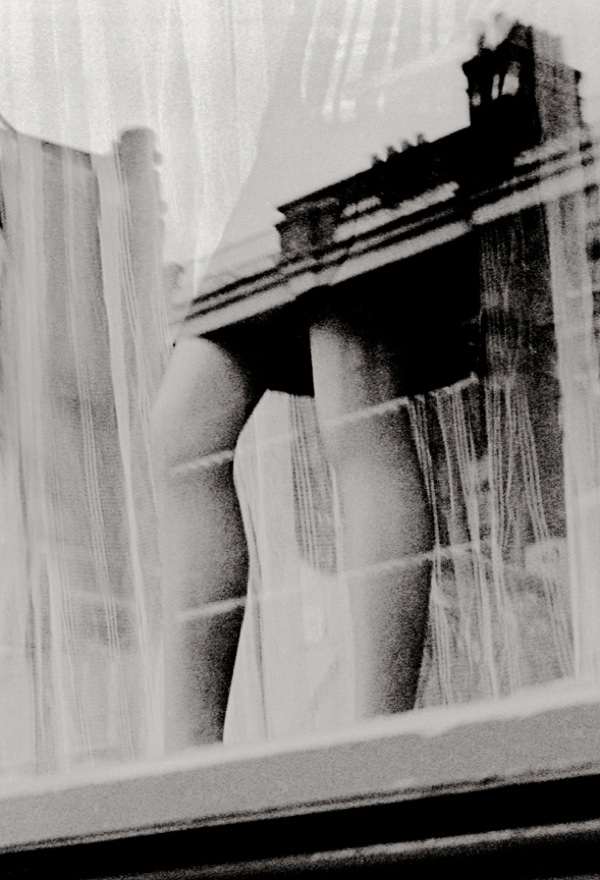
Legs, Spitalfields 1960
Shall we join photographer John Claridge for an early Sunday morning stroll through the East End? Maybe John is coming back at daybreak from a party in Chelsea that he went to one Saturday night in 1960 and he stopped of at Rinkoff’s in Vallance Rd for a smoked salmon beigel on his way home to Plaistow? And maybe he looked up at a window in Spitalfields and saw these legs, and to this day he does not know if they were real or a mannequin? Or maybe John was out on his paper-round early one snowy day in the harsh winter of 1961 and he noticed an old bike frame abandoned on the Sewer Bank, and just in that moment it looked like a horse? Or maybe John was riding his motorbike along Narrow St in the dawn mist in 1963 and saw a ship emerging like a vision from the fog, and he stopped and got off his bike to capture it with his camera?
There is no doubt that John is a man of an early morning disposition, as these pictures – published here for the first time – testify. In John’s youth, when the London Docks were still in operation and the East End was full of manufacturing, people went to work early and the streets were crowded at six or even earlier on weekdays, yet Sunday morning stood in contrast as the time when there was almost nobody out. This was when John chose to explore with his camera, delighting in the surrealism of these hours at the crack of dawn when familiar places became strange and the territory was his alone. And the smog, and the fog, and the smoke, and the early morning mist all contributed to the melancholy beauty that John photographed in these soulful East End streets, when – emptied of people – they became the landscape of his dreaming.
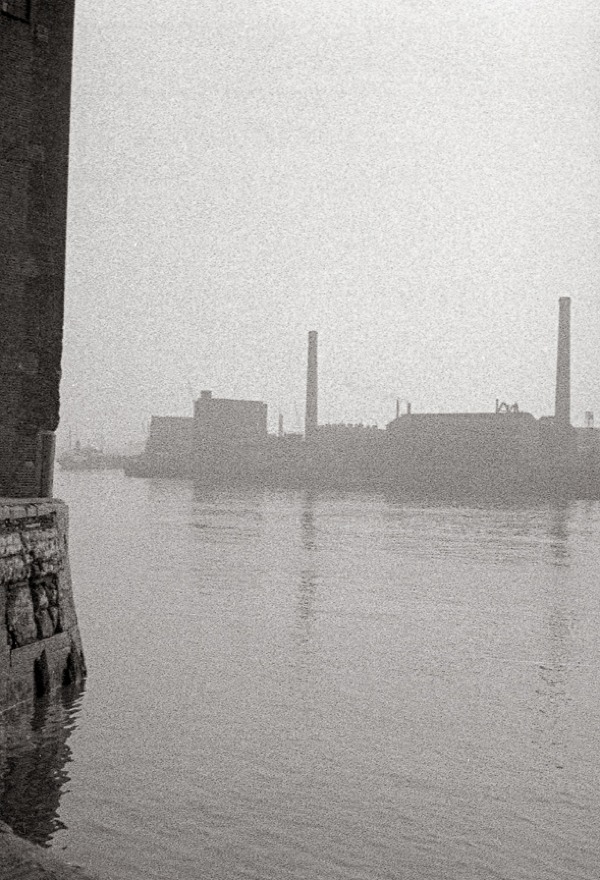
Wapping, 1963 – “Can you see the ship just entering the river?”
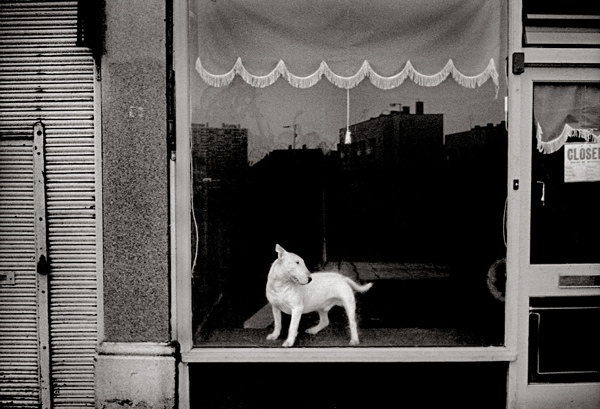
White dog, E13 1978 – “A little bull terrier looking at the world.”

Hough’s Wharf in Narrow St, 1963.
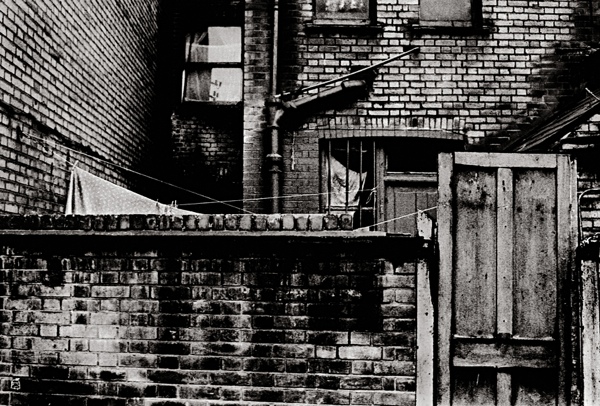
Back door in Spitalfields, 1982 – “There was obviously a gate that had gone, and then they got this big door from a factory and wedged it in place.”
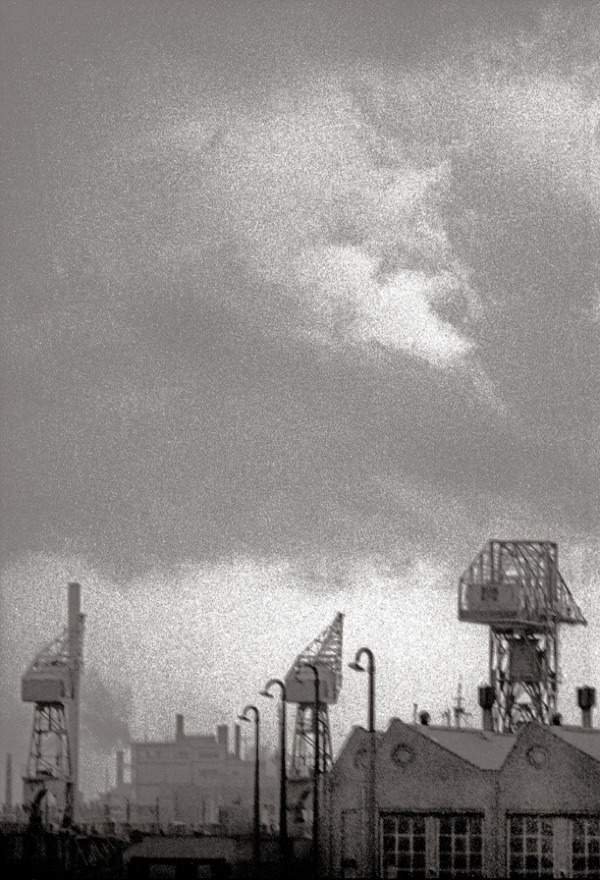
Three cranes, E16 1962 – “That morning light again, it just smells nice. There’s smoke in the distance, something was working.”
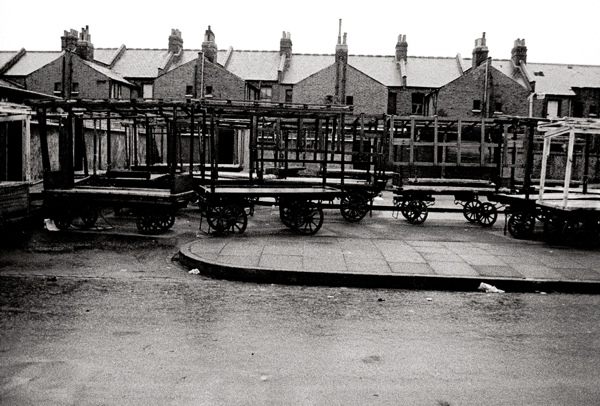
Queens Rd Market, E13 1959 – “I wonder what happened to all the old trolleys.”

Warehouse, Silvertown, 1963 – “I got off my motorbike, just to watch the light coming up in the mist.”

Horse, Sewer Bank Plaistow, 1961.
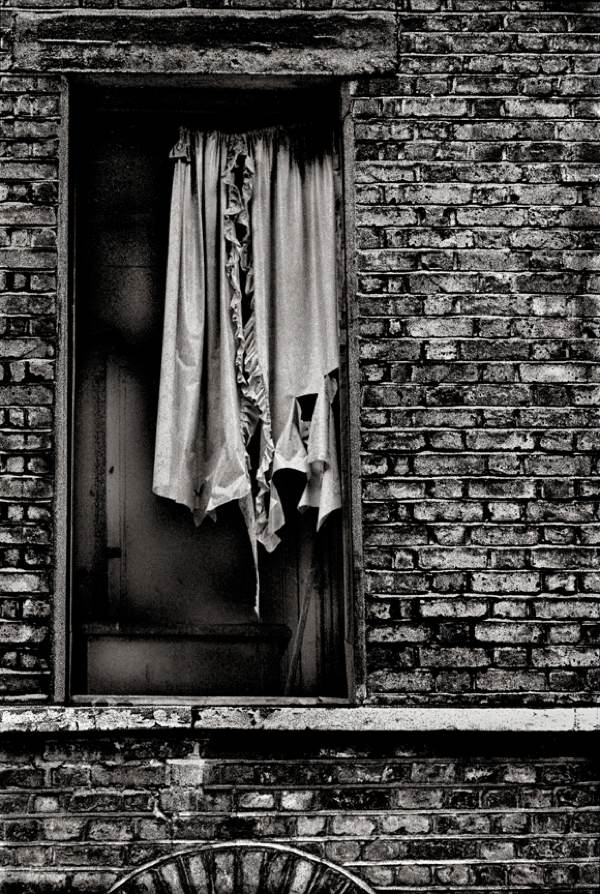
Torn Curtain, Spitalfields 1964 – “I walked by and I thought this was almost a piece of modern art – that very cheap plasticky ragged curtain was very beautiful in contrast with the bricks around it.”
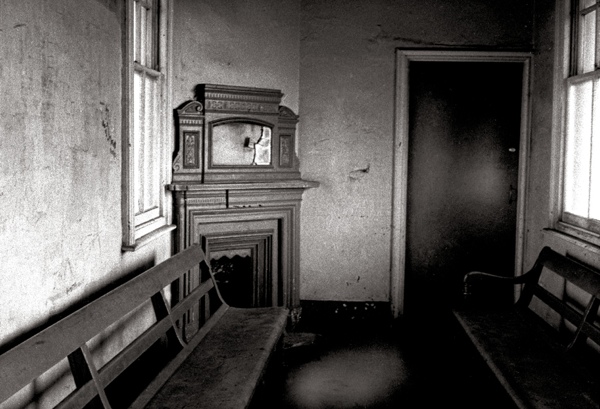
Upton Park Station, E13 1969 – “There used to be old ladies sitting in there by the fire.”
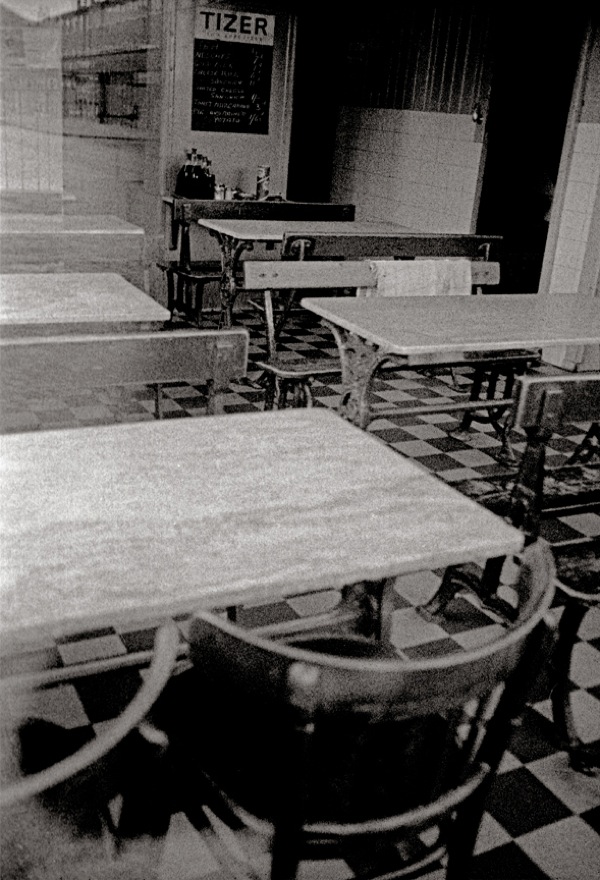
Pie & Mash Shop, London Fields 1966.
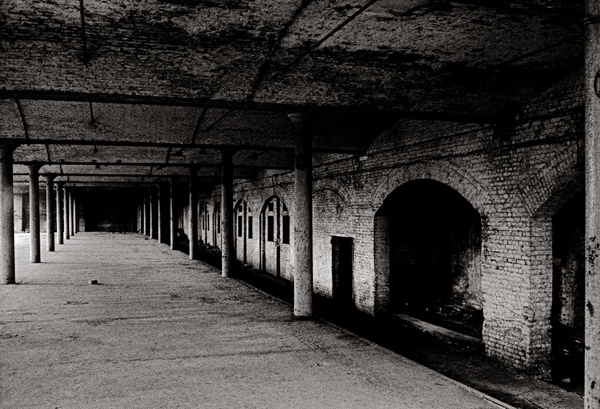
Under the Railway, E2 1982 – “Drunks slept down there under the arches.”
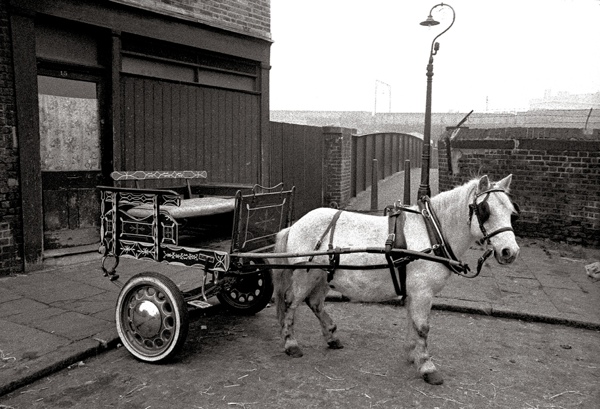
Pony Cart, Spitalfields 1968 – “This guy kept this pony and on Sunday mornings he went for a ride.”
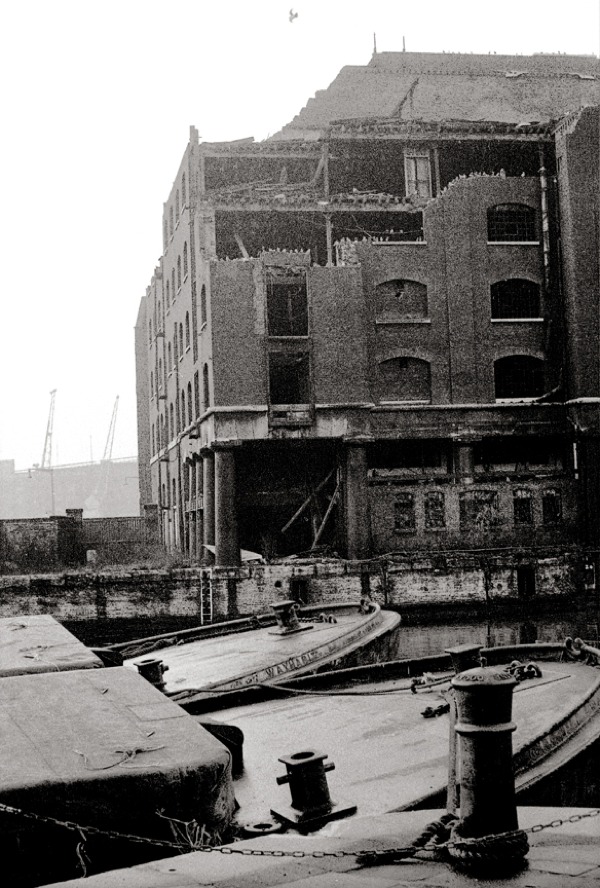
Dockside, E16 1968 – “It looks like they started work on the building and then left it.”
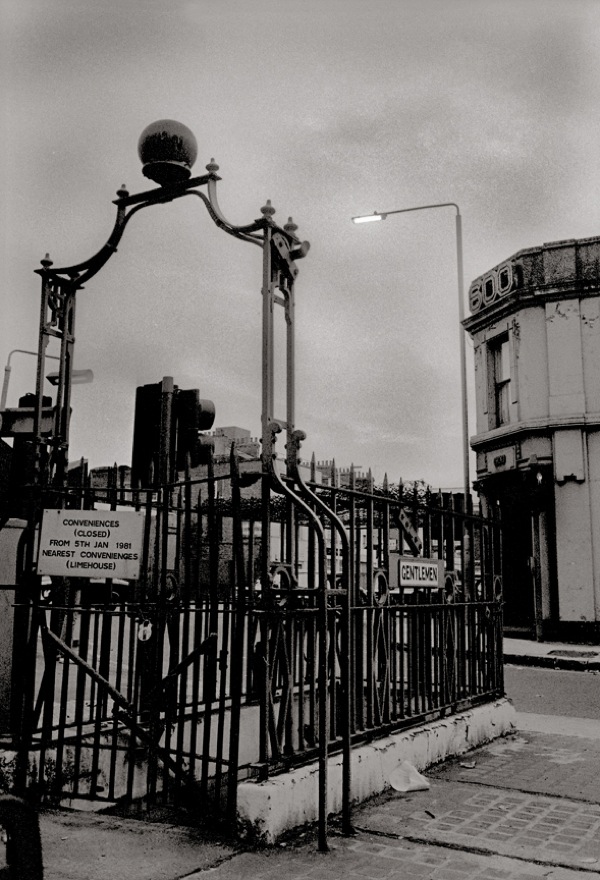
Gents, E14 1982 – “Very early morning when the street light hadn’t yet gone off.”
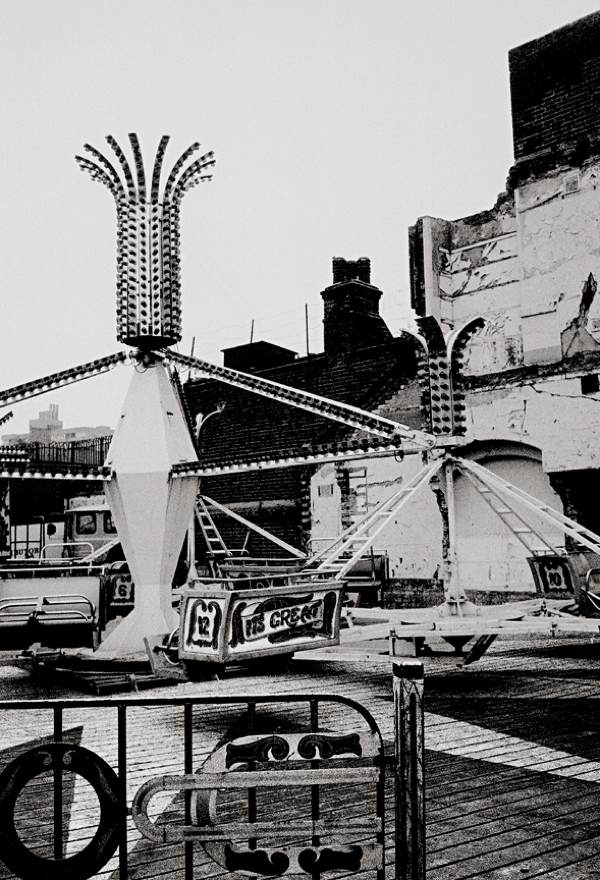
It’s Great, E3 1982 – “A fair set up on an old bombsite and I thought it was fucking ace.”
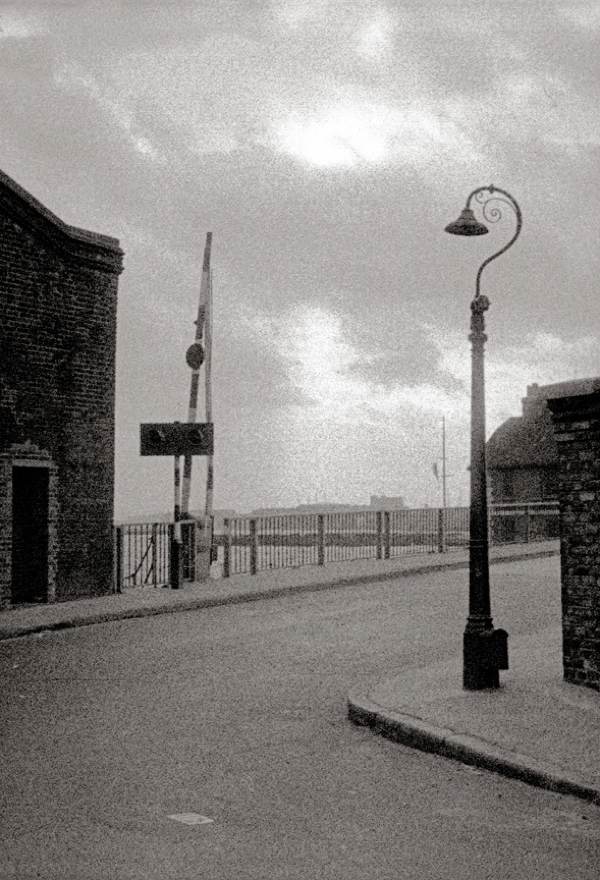
The Bridge, E14 1963.
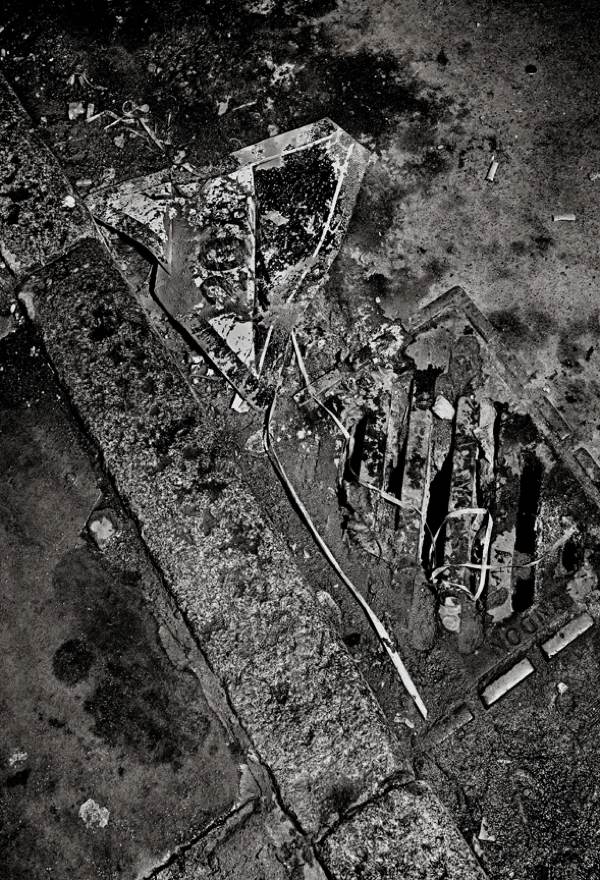
Drain, E1 1970 – “I want to know what a 20% incline sign was doing in Wapping when there is no such gradient in the East End.”
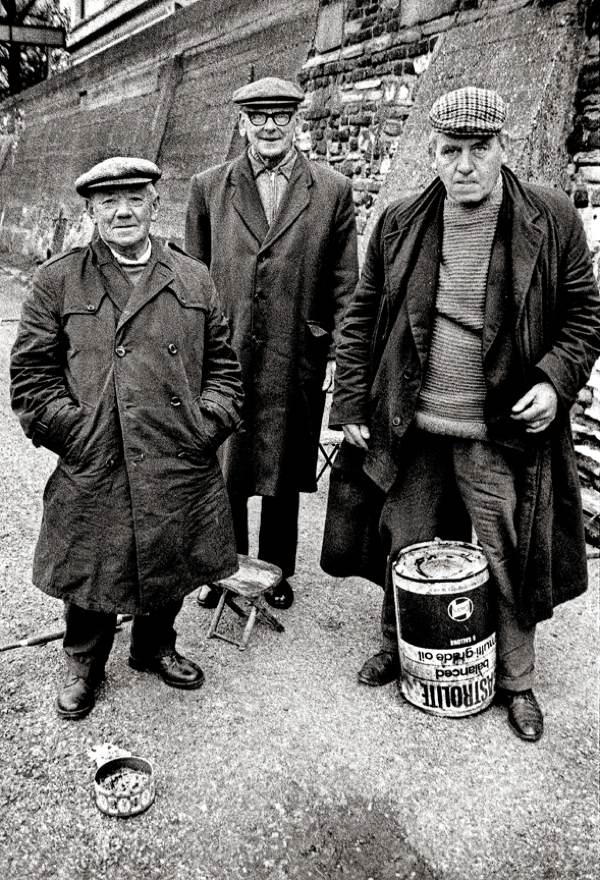
Early morning fishermen on the Regent’s Canal beside Victoria Park, 1972. –“I asked this man, ‘Have you caught anything?’ He said, ‘I haven’t got a bait, I just like sitting here.’ You can’t argue with that.”
Photographs copyright © John Claridge
You may also like to take a look at
Along the Thames with John Claridge
At the Salvation Army with John Claridge
A Few Diversions by John Claridge
Signs, Posters, Typography & Graphics
Views from a Dinghy by John Claridge
In Another World with John Claridge
Along the Ridgeway

They say it is the oldest road in Britain, maybe the oldest in Europe. Starting from the highest navigable point of the Thames in prehistoric times, the Ridgeway follows the hilltops to arrive at Salisbury Plain where once wild cattle and horses roamed. When the valleys were forested and impenetrable, the Ridgeway offered a natural route over the downland and into the heart of this island. Centuries of cattle driving wore a trackway that curved across the hillside, traversing the contours of the landscape and unravelling like a ribbon towards the horizon.
Over thousands of years, the Ridgeway became a trading route extending from coast to coast, as far as Lyme Regis in the west and the Wash in the east, with fortresses and monuments along the way. Yet once the valleys became accessible it was defunct, replaced by the Icknield Way – a lower level path that skirted the foot of the hills – and there are burial mounds which traverse the Ridgeway dated to 2000BC, indicating that the highway was no longer in use by then.
In fact, this obsolescence preserved the Ridgeway because it was never incorporated into the modern road network and remains a green path to this day where anyone can set out and walk in the footsteps of our earliest predecessors in this land, as I did last week. Leaving Spitalfields early and taking the hour’s rail journey to Goring & Streatley from Paddington, I was ascending the hill from the river by eleven and onto the upland by midday. In this section, the flinty path of the Ridgeway is bordered with deep hedges of hawthorn, blackthorn and hazel, giving way to the open downland rich with the pink and blue flowers of late summer, knapweed, scabious and harebells.
A quarter of a century has passed since I first passed this way and yet nothing has changed up there. It is the same huge sky and expansive grassy plain undulating into the distance with barely a building in sight. This landscape dwarfs the human figure, inducing a sense of exhilaration at the dramatic effects of light and cloud, sending patterns travelling fast across the vast grassy wind-blown hills. When I first began to write and London grew claustrophobic, I often undertook this walk through the different seasons of the year. I discovered that the sheer exertion of walking all day, buffeted upon the hilltops and sometimes marching doggedly through driving rain, never failed to clear my mind.
As a consequence, the shape of the journey is graven into memory even though, returning eighteen years since my last visit, the landscape was greater than I had fashioned it in recollection. And this is the quality that fascinates me about such epic terrain, which the mind cannot satisfactorily contain and thus each return offers a renewed acquaintance of wonder at the scale and majesty of the natural world.
In those days, I was in thrall to endurance walking and I would continue until I could go no further, either because of exhaustion or nightfall. This vast elevated downland landscape encouraged such excessive behaviour, leading me on and on along the empty path to discover what lay over the brow and engendering a giddy sense of falling forward, walking through the sky – as if you might take flight. I walked until I thought I could walk no more and then I carried on walking until walking became automatic, like breathing. In this state my body was propelled forward of its own volition and my mind was free.
One day’s walk brings you to Uffington and the famous White Horse, carved into the chalk of the downland. Placed perfectly upon the crest of a ridge within a vast fold of the hills, this sparsely drawn Neolithic figure looks out across the arable farmland of Oxfordshire beyond and can be seen for great distances. A mystery now, a representation that may once have been a symbol for a people lost in time, it retains a primeval charisma, and there is such an intensity of delight to reach this figure at the end of a day’s walking. Breathless and weary of limbs, I stumbled over the hill to sit there alone upon the back of the hundred foot White Horse at dusk, before descending to the village of Bishopstone for the night. There, at Prebendal Farm, Jo Selbourne offers a generous welcome and, as well as the usual bed and breakfast, will show you the exquisitely smoothed ceremonial Neolithic axe head found upon the farm.
The second day’s walk leads through the earthen ramparts of Liddington Hill and Barbary Castle, and on either side of the path the fields are punctuated by clumps of trees indicating the myriad ancient burial mounds scattered upon this bare Wiltshire scenery. It is a more expansive land than the fields of Berkshire where I began my journey, here the interventions made in ancient times still hold their own and the evidence of the modernity is sparser. As I made the final descent from the hill towards Avebury, a village within a massive earthwork and stone circle which was the culmination of my journey, I could not resist the feeling that it was all there for me and I had earned it by walking along the old path which for thousands of years had brought people to arrive at this enigmatic location of pilgrimage.
In two days upon the hilltops I had only passed a dozen lone walkers, and now the crowds, the coach parties, the shops and the traffic were a startling sight to behold. And so I knew my journey had fulfilled its purpose – to reacquaint me freshly with the familiar world and restore a sense of proportion. My feet were sore and my face was flushed by the sun. I began my journey in August and ended it in September. In Berkshire, the ripe fields of corn were standing, in Oxfordshire, they were being harvested and, in Wiltshire, I saw the stubble being ploughed in. It had been a walk to arrive at the end of the summer. It had been a walk through time along the oldest road.

Goring Mill

“Join it at Streatley, the point where it crosses the Thames, at once it strikes you out and away from the habitable world in a splendid purposeful manner, running along the highest ridge of the downs.” Kenneth Grahame, 1898

A ninety-two year old man told me this year is the worst harvest he could remember. “It doesn’t want to come in the barn,” he lamented.


At East Illsley

“A broad green track runs for many a long mile across the downs, now following the ridges, now winding past at the foot of a grassy slope, then stretching away through cornfield and fallow.” Richard Jefferies, 1879

“A rough way, now wide, now narrow, among the hazel, brier and nettle. Sometimes there was an ash in the hedge and once a line of spindly elms followed it round in a curve.” Edward Thomas, 1910

On White Horse Hill

“The White Horse is, I believe, the earliest hill drawing we have in England. It is a piece of design, in another category from the other chalk figures, for it has the lineaments of a work of art. The horse, which is more of a dragon than a horse, is cut on the top of the down’s crest, so that it can only be seen completely from the air, or at a long view, from the surrounding country – but it was precisely this aspect of the Horse design that I found so significant.” Paul Nash, 1938
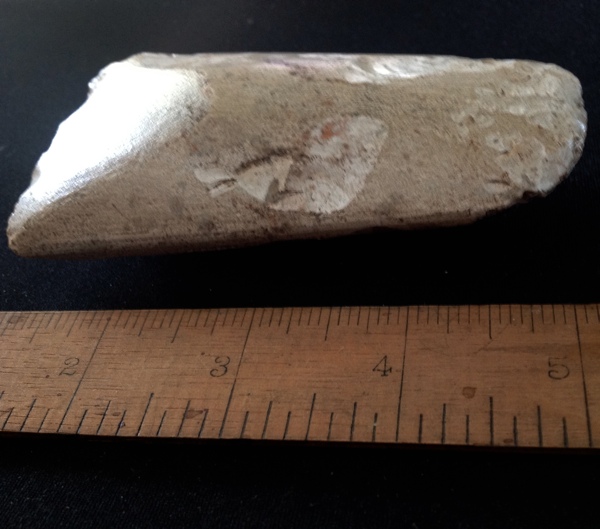
The Neolithic axe head found at Prebendal Farm, photo by Rob Selbourne.

At Bishopstone


At Barbary Castle


“The origin of the track goes back into the dimmest antiquity: there is evidence that it was a military road when the fierce Dane carried fire and slaughter inland, leaving his nailed bark in the creeks of the rivers, and before that when the Saxons pushed up from the sea. The eagles of old Rome were, perhaps, borne along it and yet earlier the chariots of the Britons may have used it – traces of all have been found: so that for fifteen centuries this track of primitive peoples has maintained its existence through the strange changes of the times, til now in the season the cumbrous steam ploughing engines jolt and strain and pant over the uneven turf.” Richard Jefferies, 1879

Since the man suspected of making crop circles died, his protege has adopted a different style of design.

At Avebury


You may like to read about my previous trips beyond Spitalfields at this time of year
On Sunday Morning
On Sunday – when I was a child – my father always took me out for the morning. It was a routine. He led me by the hand down by the river or we took the car. Either way, we always arrived at the same place.
He might have a bath before departure and sometimes I walked into the bathroom to surprise him there lying in six inches of soapy water. Meanwhile downstairs, my mother perched lightly in the worn velvet armchair to skim through the newspaper. Then there were elaborate discussions between them, prior to our leaving, to negotiate the exact time of our return, and I understood this was because the timing and preparation of a Sunday lunch was a complex affair. My father took me out of the house the better to allow my mother to concentrate single-mindedly upon this precise task and she was grateful for that opportunity, I believed. It was only much later that I grew to realise how much she detested cooking and housework.
A mile upstream there was a house on the other riverbank, the last but one in a terrace and the front door gave directly onto the street. This was our regular destination. When we crossed the river at this point by car, we took the large bridge entwined with gryphons cast in iron. On the times we walked, we crossed downstream at the suspension footbridge and my father’s strength was always great enough to make the entire structure swing.
Even after all this time, I can remember the name of the woman who lived in the narrow house by the river because my father would tell my mother quite openly that he was going to visit her, and her daughters. For she had many daughters, and all preoccupied with grooming themselves it seemed. I never managed to count them because every week the number of her daughters changed, or so it appeared. Each had some activity, whether it was washing her hair or manicuring her nails, that we would discover her engaged with upon our arrival. These women shared an attitude of languor, as if they were always weary, but perhaps that was just how they were on Sunday, the day of rest. It was an exclusively female environment and I never recalled any other male present when I went to visit with my father on those Sunday mornings.
To this day, the house remains, one of only three remnants of an entire terrace. Once on a visit, years later, I stood outside the house in the snow, and contemplated knocking on the door and asking if the woman still lived there. But I did not. Why should I? What would I ask? What could I say? The house looked blank, like a face. Even this is now a memory to me, that I recalled once again after another ten years had gone by and I glanced from a taxi window to notice the house, almost dispassionately, in passing.
There was a table with a bench seat in an alcove which extended around three sides, like on a ship, so that sometimes as I sat drinking my orange squash while the women smoked their cigarettes, I found myself surrounded and unable to get down even if I chose. At an almost horizontal angle, the morning sunlight illuminated this scene from a window in the rear of the alcove and gave the smoke visible curling forms in the air. After a little time, sitting there, I became aware that my father was absent, that he had gone upstairs with one of the women. I knew this because I heard their eager footsteps ascending.
On one particular day, I sat at the end of the bench with my back to the wall. The staircase was directly on the other side of this thin wall and the women at the table were involved in an especially absorbing conversation that morning, and I could hear my father’s laughter at the top of the stairs. Curiosity took me. I slipped off the bench, placed my feet on the floor and began to climb the dark little staircase.
I could see the lighted room at the top. The door was wide open and standing before the end of the bed was my father and one of the daughters. They were having a happy time, both laughing and leaning back with their hands on each other’s thighs. My father was lifting the woman’s skirt and she liked it. Yet my presence brought activities to a close in the bedroom that morning. It was a disappointment, something vanished from the room as I walked into it but I did not know what it was. That was the last time my father took me to that house, perhaps the last time he visited. Though I could not say what happened on those Sunday mornings when I chose to stay with my mother.
We ate wonderful Sunday lunches, so that whatever anxiety I had absorbed from my father, as we returned without speaking on that particular Sunday morning, was dispelled by anticipation as we entered the steamy kitchen with its windows clouded by condensation and its smells of cabbage and potatoes boiling.
My mother was absent from the scene, so I ran upstairs in a surge of delight – calling to find her – and there she was, standing at the head of the bed changing the sheets. I entered the bedroom smiling with my arms outstretched and, laughing, tried to lift the hem of her pleated skirt just as I saw my father do in that other house on the other side of the river. I do not recall if my father had followed or if he saw this scene, only that my mother smiled in a puzzled fashion, ran her hands down her legs to her knees, took my hand and led me downstairs to the kitchen where she checked the progress of the different elements of the lunch. For in spite of herself, she was a very good cook and the ritual of those beautiful meals proved the high point of our existence at that time.
The events of that Sunday morning long ago when my father took me to the narrow house with the dark staircase by the river only came back to me as a complete memory in adulthood, but in that instant I understood their meaning. I took a strange pleasure in this knowledge that had been newly granted. I understood what kind of house it was and who the “daughters” were. I was grateful that my father had taken me there, and from then on I could only continue to wonder at what else this clue might reveal of my parents’ lives, and of my own nature.
You may also like to read about
The Cockney Alphabet
Jonathon Green, the notorious lexicographer of slang, introduces Paul Bommer’s beautiful print celebrating Cockney culture.
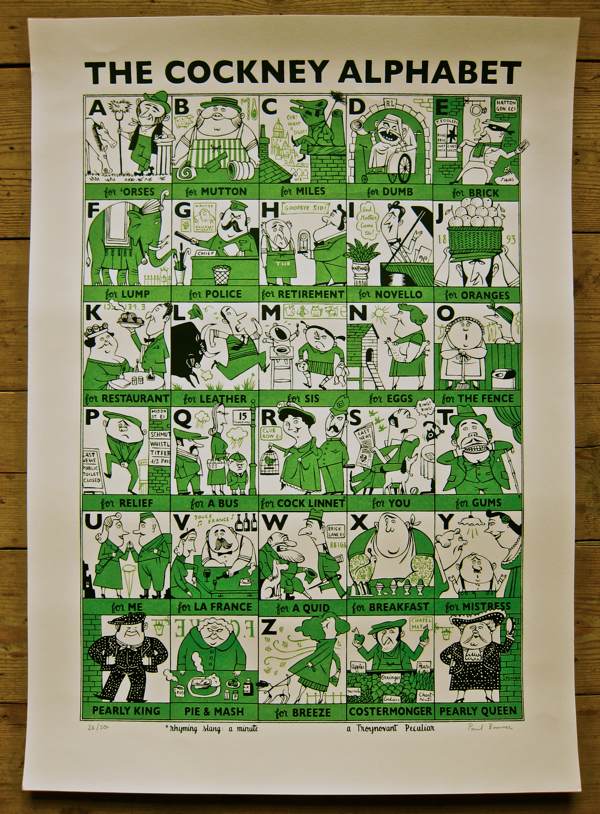
Illustrated with characteristic brio by Paul Bommer, this is The Cockney Alphabet, sometimes known as the Surrealist Alphabet. It is first recorded in the late 1920s, and was seen as a parody of the mnemonic-didactic lists of letters and words that have been taught to children from at least the mid-nineteenth century. It seems to require English as its base language, and while it has been offered in a variety of forms, it pays a consistent tribute to that much-loved linguistic freak: the pun.
It must, because in language as in life we demand our creation myths, have an origin. My predecessor in slang lexicography, Eric Partridge, who in 1961 published a monograph on the subject, sought links to the children’s alphabets of the nineteenth century when A was most commonly either an ‘Apple’ or an ‘Archer’, and the practical ones of World War I signallers when clarity was all and the letter was enunciated as ack (able and alpha would follow later, products of a new cataclysm). Pushing further back, he made reference to Old English. But this was surely wishful thinking and the origins, or to be more precise the first recorded appearance, remains less than a century old.
It all starts around 1930. There are roots of course and attributions, not least to a throwaway line from Jonathan Swift’s Polite Conversation – his skewering of supposedly smart society’s verbal clichés – of 1734, and Swift was also responsible for a humorous alphabet in which each phrase was created by prefixing a letter of the Greek alphabet to the word guinea, e.g. alpha guinea (half a…), beta guinea (bet a…), gamma (i.e. game which also means bet) guinea etc., but for the genuine beginnings we must return to the palmy, not to mention stilted days when Lord Reith still sat on high and all was right with the BBC:
There have been alternatives – A, for instance, can stand for ‘ism’, E for ‘brick’, N for ‘mation’, T for ‘painful’ and Z for ‘effect’ and each letter can muster half a dozen or so – but this is the canonical list. Paul Bommer’s version follows very much on these lines. It has an added dimension, denied other examples of this popular, if skewed A-Z, of referring whenever possible to Spitalfields landmarks, for instance the action of K for Restaurant ‘takes place’ in E. Pellicci. R for Cock Linnet offers a sign for the one-time animal market of Club Row, P for relief is set on Middlesex Street (with ads for ‘Schmutter,’ ‘Whistles’ and ‘Titfers’) and so on.
Charlie Clapham and Bill Dwyer, the cross-talk double act who were the first of their kind to be broadcast on the BBC, and the first to air this version of the A-Z, called it the ‘Surrealist Alphabet’; more often it is known as the Cockney one. The question must be asked; is it in fact either? As for the former, the French poet Apollinaire, who coined the term in 1918, would not have recognised it as especially avant garde. If it is surrealist then it is not ‘super-realism, the literal meaning, but a weaker, popularised use: quirky or eccentric. As for Cockney… listening to the scratchy recording of Clapham and Dwyer from 1933, it is apparent that the former, who had been a clerk in legal chambers, was no East Ender. Photos have him in a stereotyped ‘silly ass’ monocle, sometimes even a topper, and his accent is to match. Dwyer, who had been a commercial traveller, is a candidate for Cockneydom, but if his syllables suggest a Londoner, they are nothing like the self-consciously tortured tones of such music hall ‘costermongers’ as Gus Elen.
[youtube mCbOx1q06-Y nolink]
It was not the first word-game that used the alphabet as its source. For instance there was the nursery sequence, again based on that ubiquitous apple, in this case en-pastried: ‘A was an Apple-pie, B bit it, C cut it, D dealt it, all the way to ‘X,Y,Z and Ampersand’ who ‘All wish’d for a piece in hand’. Nor is it the last. In December 2000 Jeff Aronson, a clinical pharmacologist, published his ‘medical alphabet’ in The Lancet:
The list ended with ‘Z for de doctor (I’be got a code iddy doze)’, although that combination had already been used in less specialist phonetic compilations.
It is, however, the most important, or at least the source from which all others have stemmed. The reality seems to be, and again I nod to Partridge, that the alphabet was generated sometime in the Twenties, as a form of game conjured up by the touring casts of Variety shows, playing with words to help while away the tedium of provincial boarding houses. Its basis is indeed the old children’s alphabets, which it parodies. Somewhere along that line Clapham and Dwyer must have picked it up (although they had had no Variety career themselves); the radio gave it a popularity among the uninitiated. It was not especially Cockney – Spitalfields references aside, it is only the dropping of the aitches in the first line (and in L, i.e. ’ell, and R, i.e. ’arf) that suggests the connection (and Cockneys are hardly unique in that omission) – but after the pre-war radio duo, it was heard most commonly on the lips of comedians, again BBC stars, such as Flanagan and Allen (they of the Crazy Gang), Arthur Askey (and R, in one version is ‘for Askey’ and in time ‘for Daley’) and Ted Ray, all of whom played the metropolitan card.
So if not surrealist and if – strictly speaking – Cockney has to be declared a misnomer, then what is the alphabet? The answer must be what Partridge if few others have termed it: a comic phonetic alphabet. Ultimately it is about pronunciation and beyond that, puns. Sometimes ‘for’ may need to be pronounced ‘fer’ but at others it requires the sound of standard English. As in rhyming slang certain popular figures, e.g. ‘I for Novello,’ have been sustained within its playfulness, but again, they are not especially Cockney. Others have vanished, e.g. ‘K for ancis’: Kay Francis, a twenties star, having left little trace. ‘K for Restaurant’ has succeeded, and is timeless. That it depends on the pronunciation ‘kayf’ rather than the Frenchified café does nod Eastwards, but the word is far more usually sounded ‘caff’.
Clapham and Dwyer were big enough to be included in early TV’s programming for the 1937 Coronation but they seem to have faded with the Thirties. Their alphabetical creation – or at least popularization – is in robust health. The ludic potential remains. Y for ‘unts, anyone? Z for Elli?
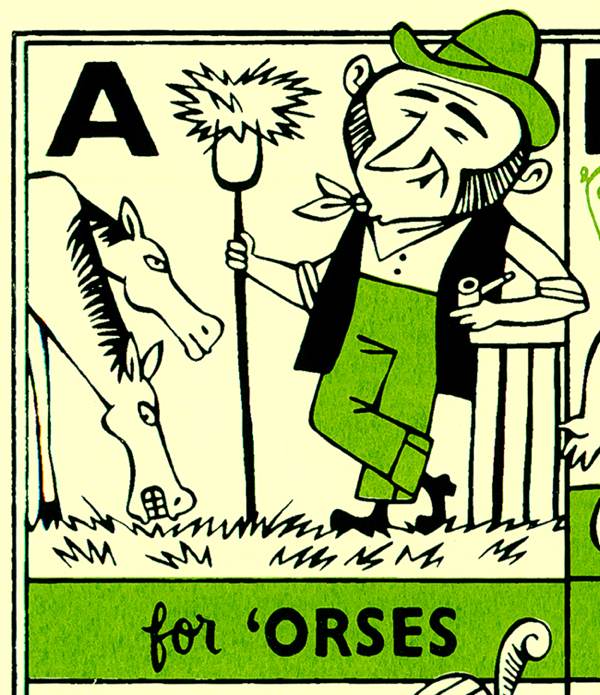


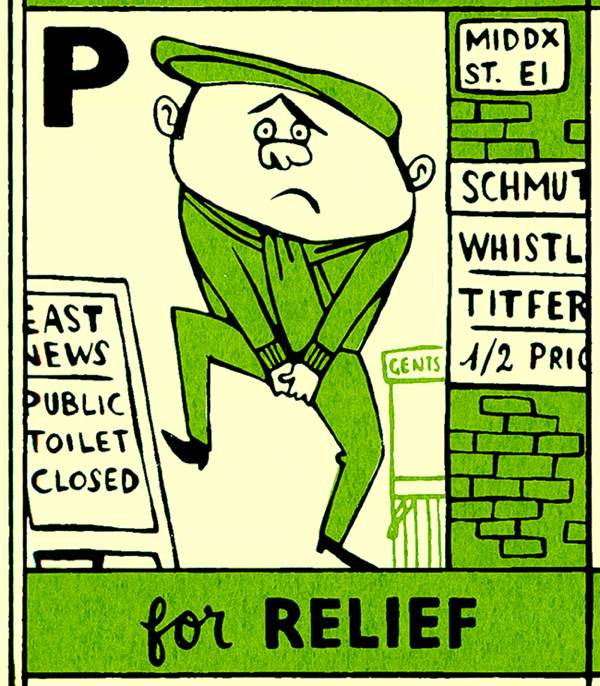


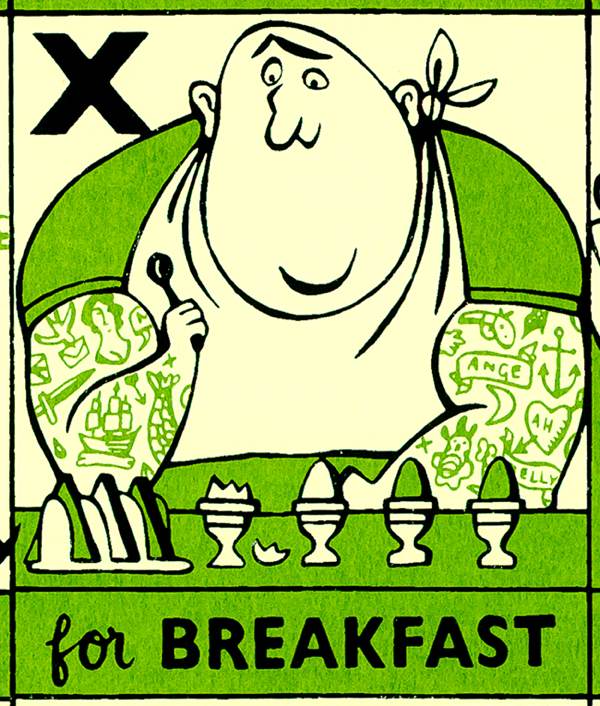

Copies of Jonathon Green’s epic three volume masterpiece ‘Green’s Dictionary of Slang’ are available here.
Copies of Paul Bommer’s print ‘The Cockney Alphabet’ are available from the Spitalfields Life online shop.
You may like to read my original profile
The Last Fish Porters of Billingsgate Market

John Schofield, porter for thirty years
The fish porters of Billingsgate Market have been abolished. On 28th April this year, a centuries-old way of life came to an end as the porters who have been in existence since Billingsgate started trading in 1699 had their licences withdrawn by the City of London Corporation. Long-established rights and working practises – and a vibrant culture possessing its own language and code of behaviour handed down for generations – were all swept away overnight to be replaced by cheaper casual labour.
Thus, a cut in economic cost was achieved through an increase in human cost by degrading the workforce at the market. The City recognised the potential value of the land occupied by the Billingsgate fish market at the foot of the Canary Wharf towers, and the abolition of the porters was their first step towards moving it out and redeveloping the site.
While the news media all but passed this story by, photographer Claudia Leisinger took the brave initiative herself to be down at the market continuously throughout the last winter, documenting the last days of this historic endeavour, and taking these tender portraits of the porters in the dawn, which record the plain human dignity they have shown as their livelihood and identity were taken from them .
“My interest in the Billingsgate porters’ story stems from a fascination with the disappearance of manual labour, work generally considered menial by our society, yet carried out with a great deal of pride and passion by those small communities involved.” Claudia told me, and it is to her credit that in a moment of such vulnerability these men trusted her to be their witness for posterity.
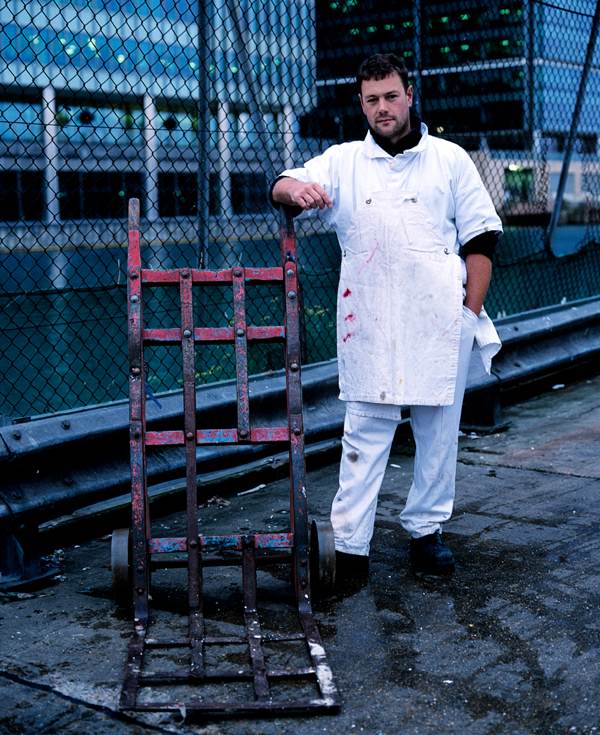
Bradley Holmes, porter for twenty years.
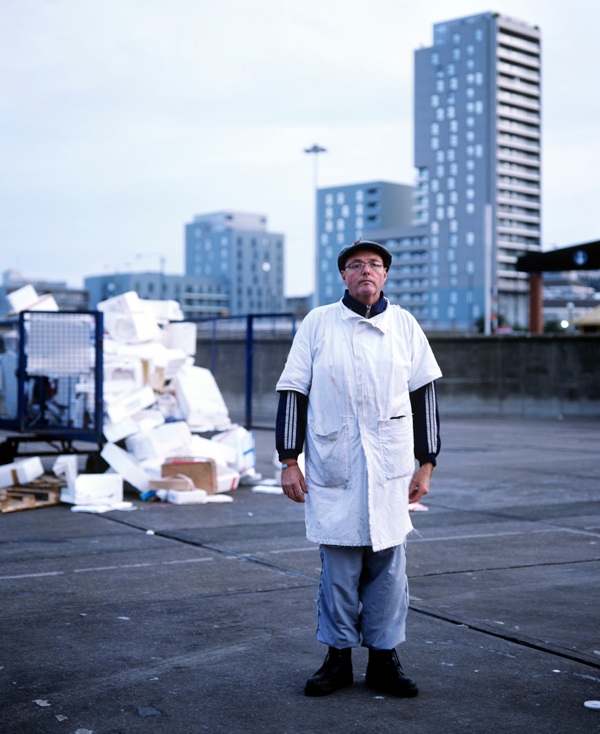
Nick Wilson, porter for twelve years.

Micky Durrell, porter for forty-five years.
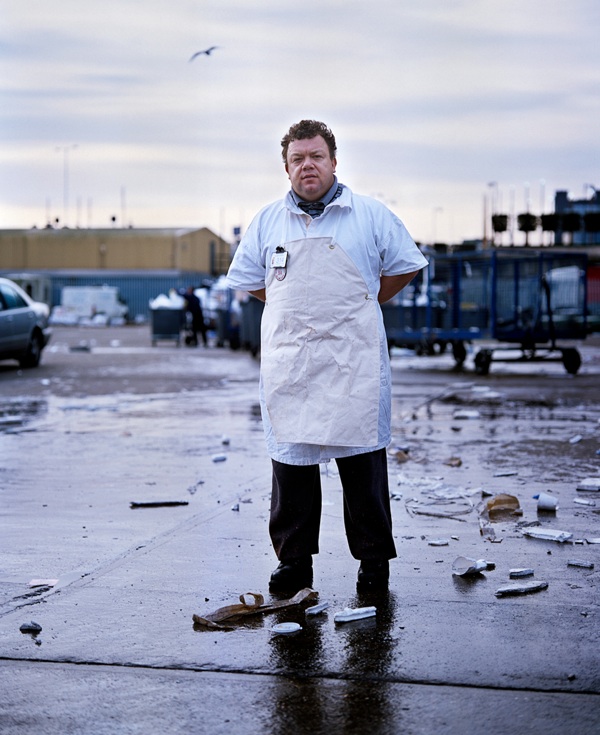
Jeff Willis, porter for twenty-five years.
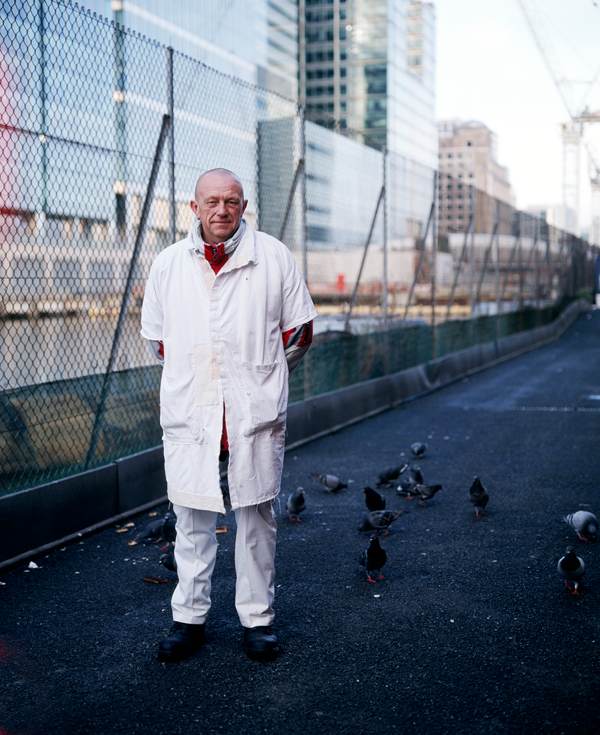
Gary Simmons, porter for thirty-three years.
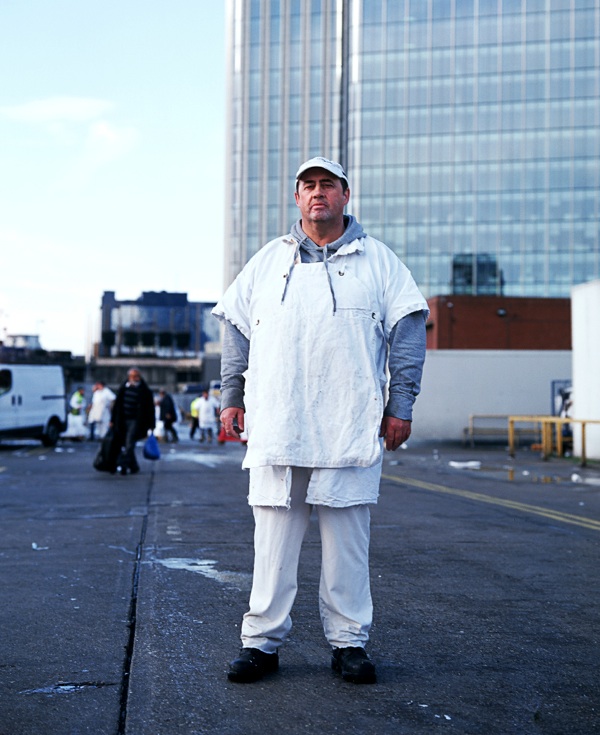
Dave Bates, porter for twenty-two years.
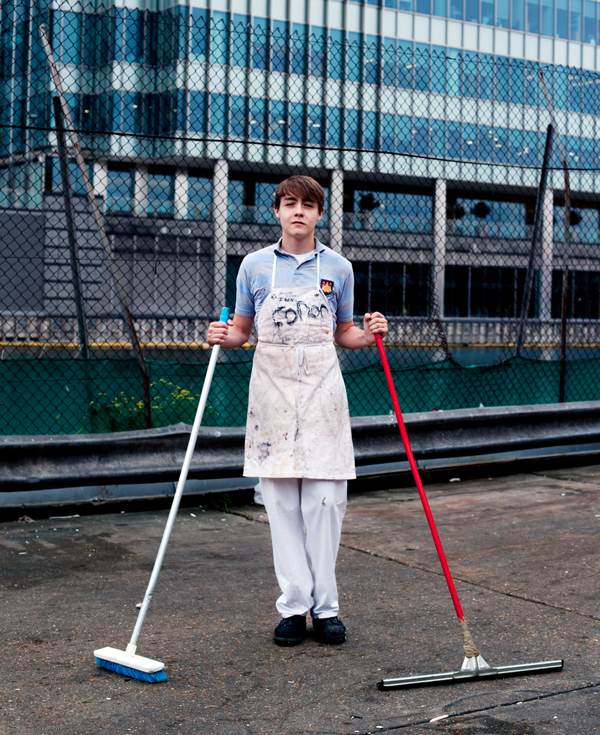
Conor Olroyd, apprentice porter.
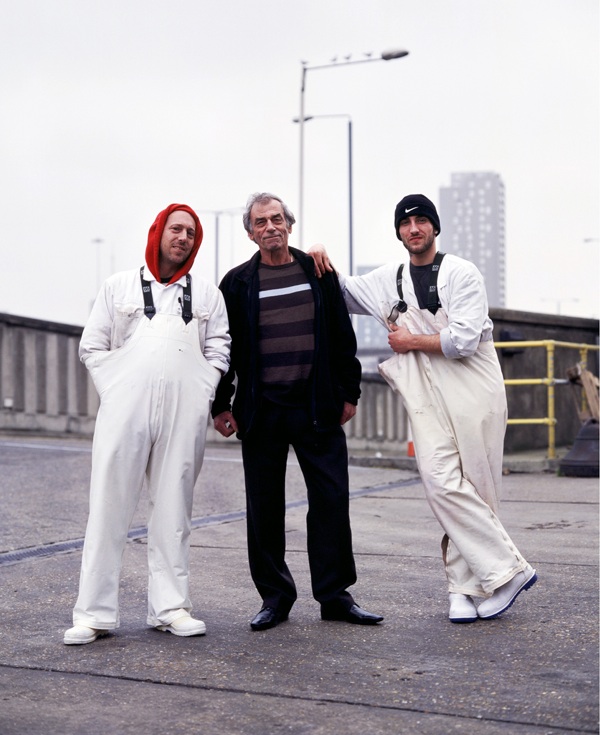
Three generations – Edwin Singers, porter for fifty-three years, with his son, Leigh Singers, porter, and grandson, Brett Singers, porter.

Steven Black, porter for twenty years.
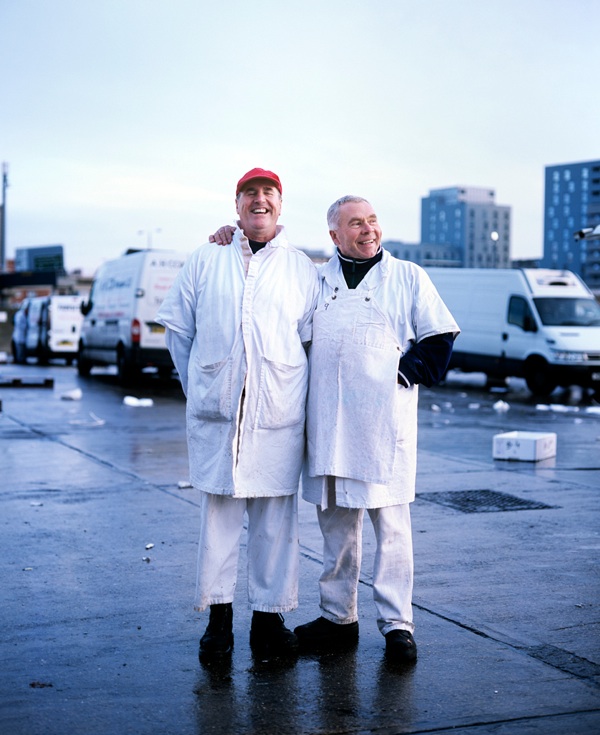
Tony Mitchell & Steve Martin, both porters for over thirty-two years.
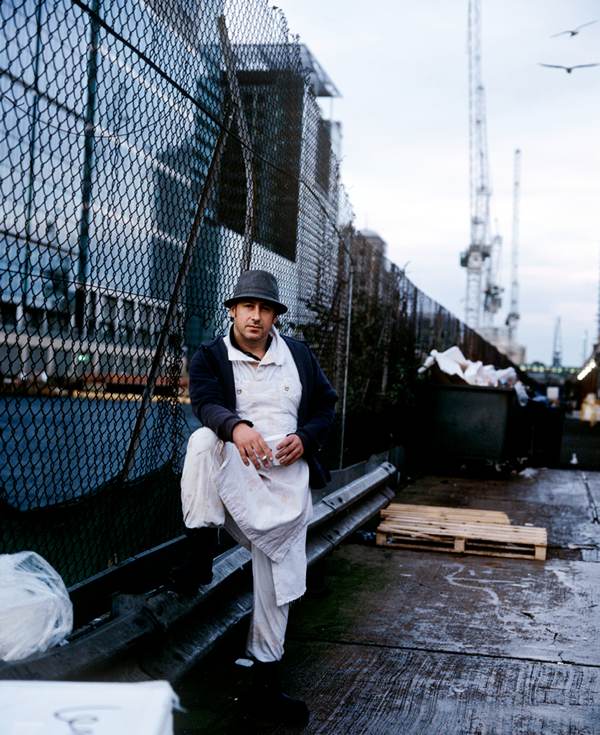
Martin Bicker, porter for twenty-four years.
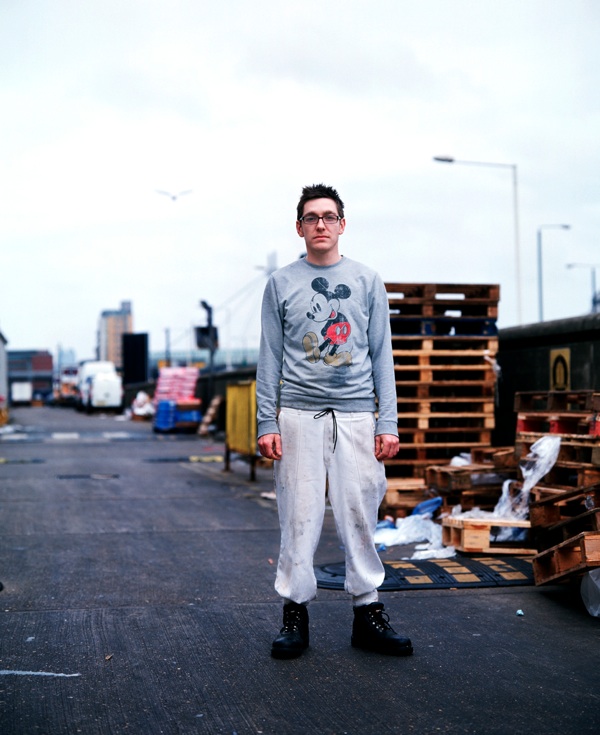
Andy Clarke, porter for two years.
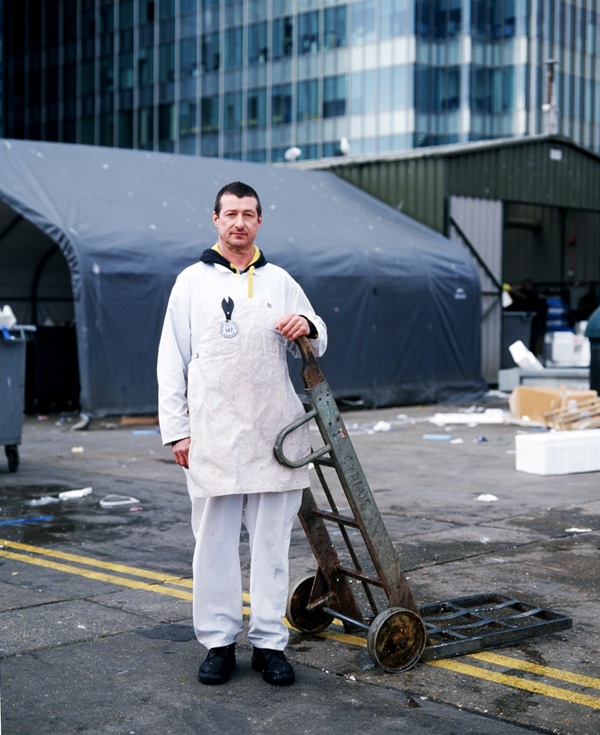
Laurie Bellamy, porter for thirty-one years.
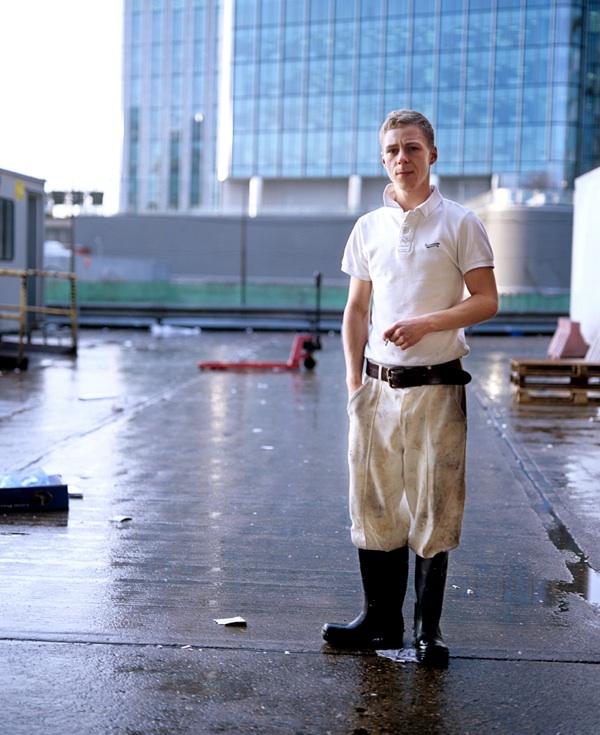
Alfie Sands, shopboy.
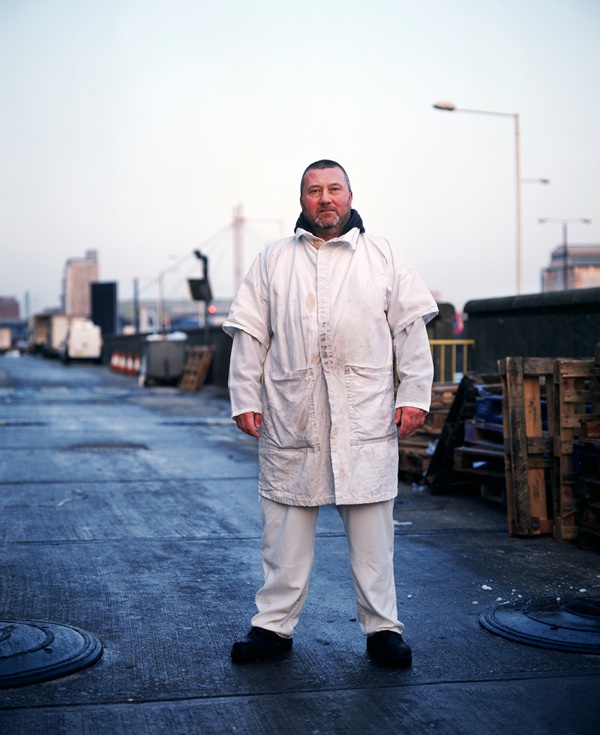
Gary Durden, porter for thirty-one years.

Jack Preston, porter for two years.

Dicky Barrott, porter for twenty years.
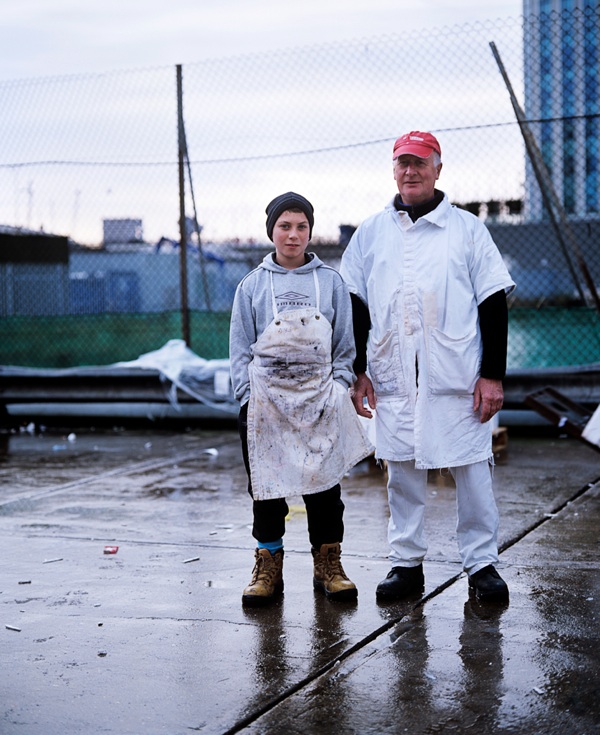
Alan Downing, porter for forty-five years, with his grandson Sam who comes down on Saturdays.

Dave Auldis, porter for six years.

Colin Walker, porter for forty-six years.
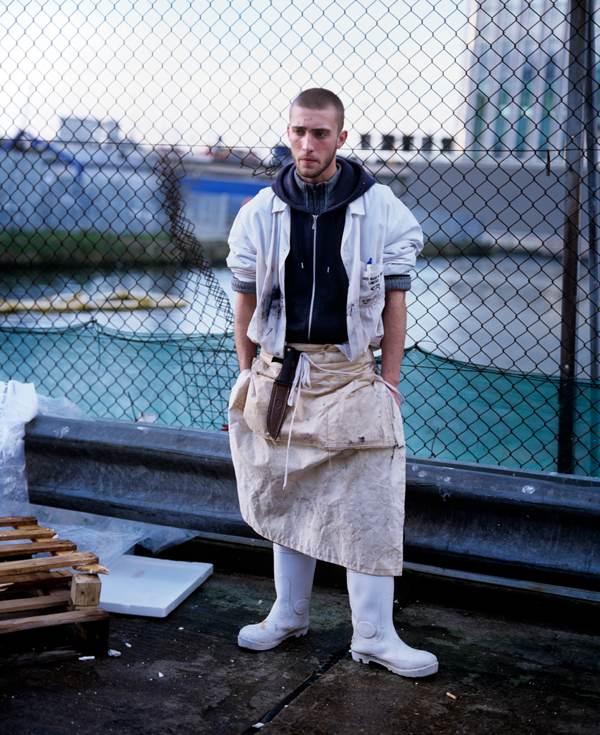
Brett Singers, shopboy for three years.
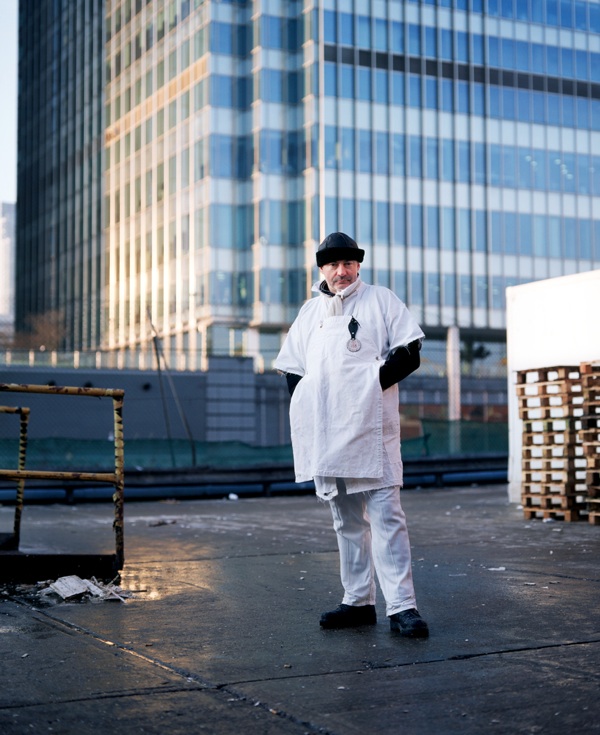
Bobby Jones, porter for thirty years.
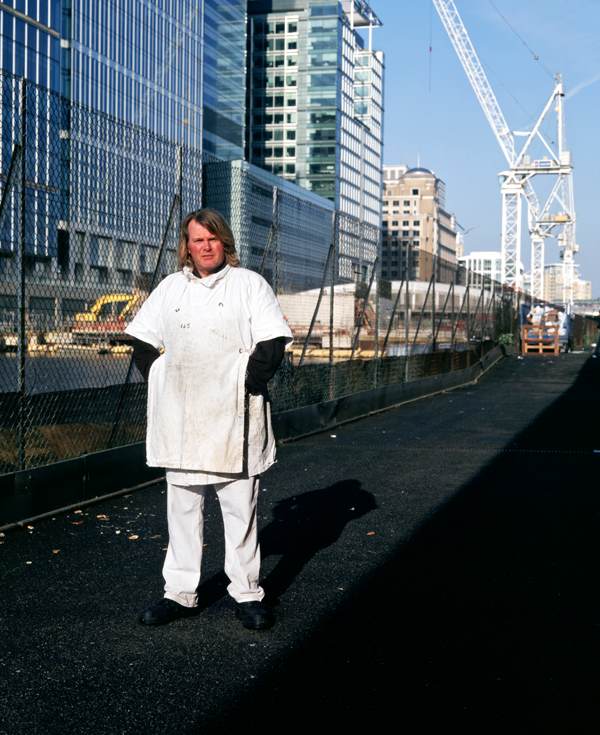
Basil Wraite, porter for thirty-one years.
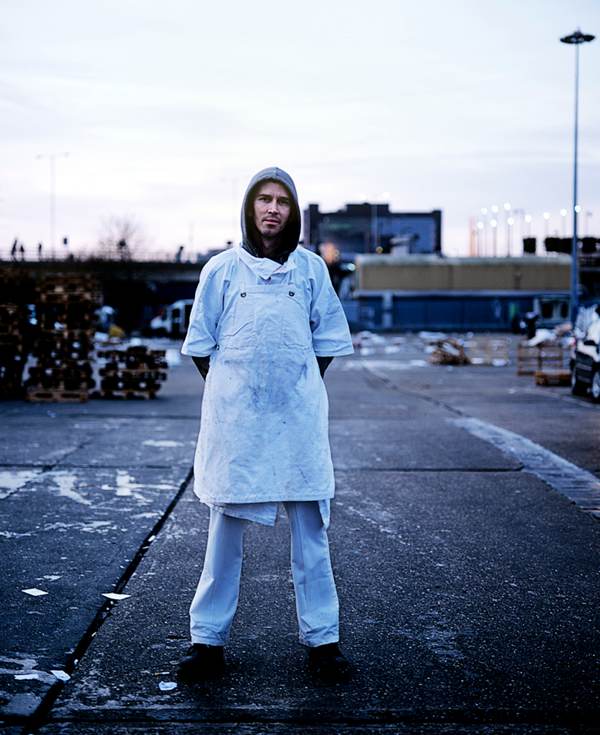
Steve Sheet, porter for fifteen years.
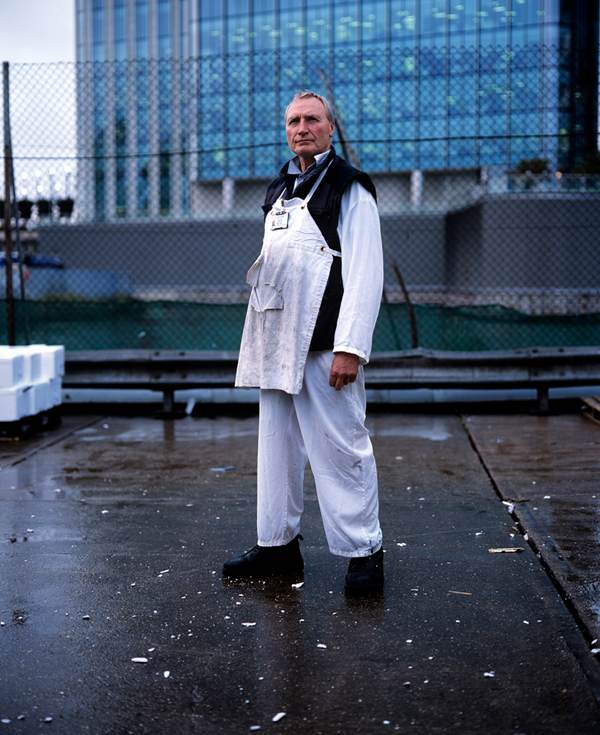
Steve Jones, porter for thirty years.
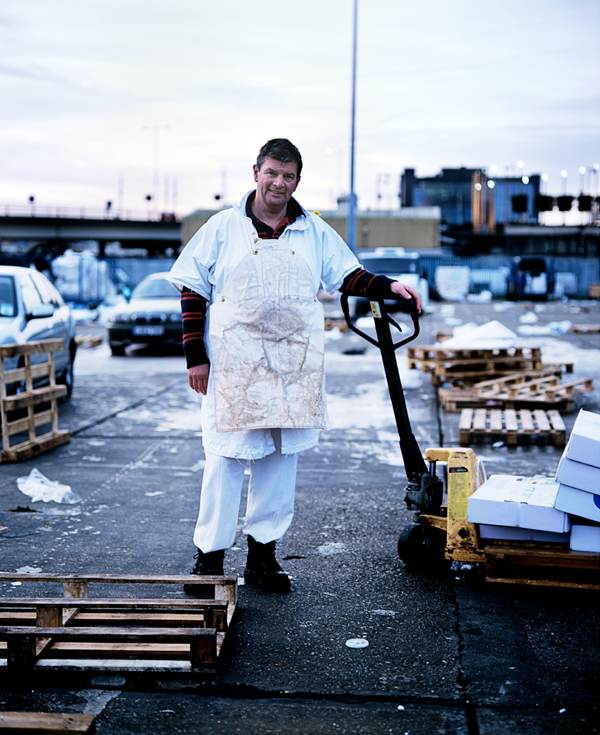
Greg Jacobs, porter for thirty-two years.
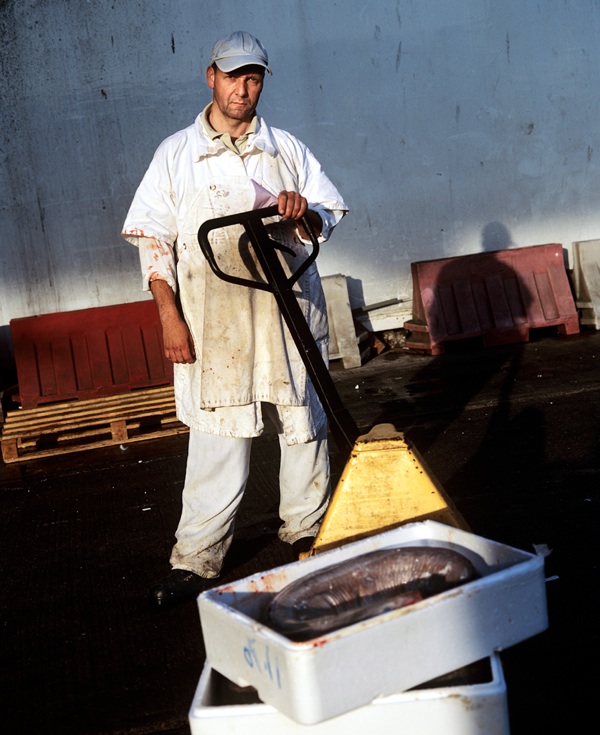
Chris Gill, porter for thirty-two years.
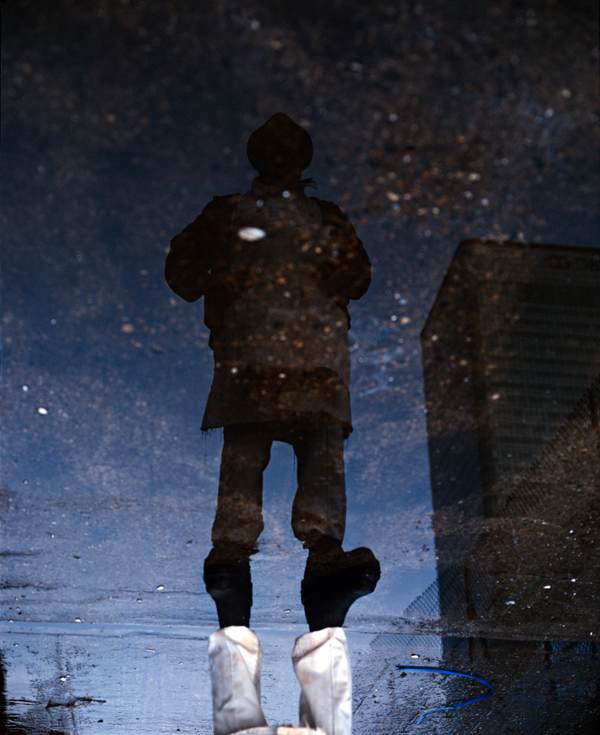
Photographs copyright © Claudia Leisinger
See more of Claudia Leisinger’s Billingsgate pictures and hear the voices of the porters by clicking here
You may like to read these other Billingsgate stories
Graffiti at the Tower of London

Once the tourists grow scarce and the trees begin to turn, it suits me to visit the Tower of London and study the graffiti. The austere stone structures of this ancient fortress by the river reassert their grim dignity when the crowd-borne hubbub subsides, and quiet consideration of the sombre texts graven there becomes possible. Some are bold and graceful, others are spidery and maladroit, yet every one represents an attempt by their creators to renegotiate the nature of their existence. Many are by those who would otherwise be forgotten if they had not possessed a powerful need to record their being, unwilling to let themselves slide irrevocably into obscurity and be lost forever. For those faced with interminable days, painstaking carving in stone served to mark time, and to assert identity and belief. Every mark here is a testimony to the power of human will, and they speak across the ages as tokens of brave defiance and the refusal to be cowed by tyranny.

“The more affliction we endure for Christ in this world, the more glory we shall get with Christ in the world to come.” This inscription in Latin was carved above the chimney breast in the Beauchamp Tower by Philip Howard, Earl of Arundel in 1587. His father was executed in 1572 for treason and, in 1585, Howard was arrested and charged with being a Catholic, spending the rest of his life at the Tower where he died in 1595.

Sent to the Tower in 1560, Hew Draper was a Bristol innkeeper accused of sorcery. He pleaded not guilty yet set about carving this mysterious chart upon the wall of his cell in the Salt Tower with the inscription HEW DRAPER OF BRISTOW (Bristol) MADE THIS SPEER THE 30 DAYE OF MAYE, 1561. It is a zodiac wheel, with a plan of the days of the week and hours of the day to the right. Yet time was running out for Hew even as he carved this defiant piece of cosmology upon the wall of his cell, because he was noted as “verie sick” and it is low upon the wall, as if done by a man sitting on the floor.

The rebus of Thomas Abel. Chaplain to Katherine of Aragon, Abel took the Queen’s side against Henry VIII and refused to change his position when Henry married Anne Boleyn. Imprisoned in 1533, he wrote to Thomas Cromwell in 1537, “I have now been in close prison three years and a quarter come Easter,” and begged “to lie in some house upon the Green.”After five and half years imprisoned at the Tower, Abel was hung, drawn and quartered at Smithfield in 1540.

Both inscriptions, above and below, have been ascribed to Lady Jane Grey, yet it is more likely that she was not committed to a cell but confined within domestic quarters at the Tower, on account of her rank. These may be the result of nineteenth century whimsy.

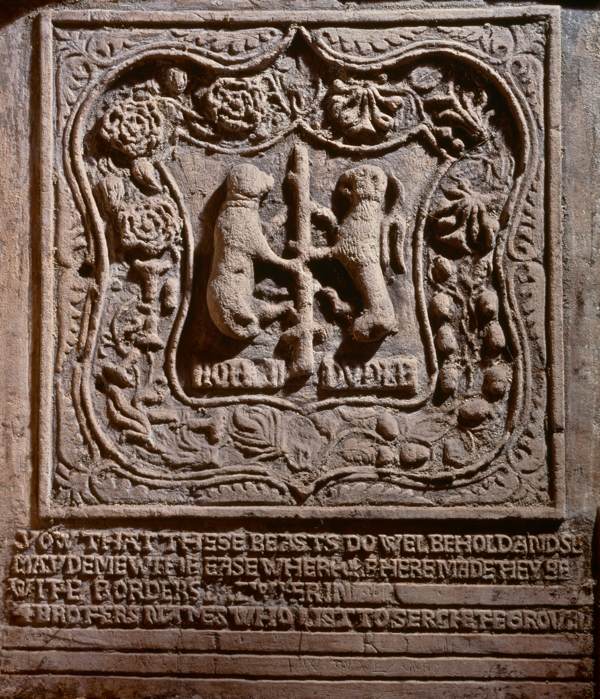
JOHN DUDLE – YOU THAT THESE BEASTS DO WEL BEHOLD AND SE, MAY DEME WITH EASE WHEREFORE HERE MADE THEY BE, WITH BORDERS EKE WHEREIN (THERE MAY BE FOUND) 4 BROTHERS NAMES WHO LIST TO SERCHE THE GROUNDE. The flowers around the Dudley family arms represent the names of the four brothers who were imprisoned in the Tower between 1553-4 , as result of the attempt by their father to put Lady Jane Grey upon the throne. The roses are for Ambrose, carnations (known as gillyflowers) for Guildford, oak leaves for Robert – from robur, Latin for oak – and honeysuckle for Henry. All four were condemned as traitors in 1553, but after the execution of Guildford they were pardoned and released. John died ten days after release and Henry was killed at the seige of San Quentin in 1557 while Ambrose became Queen Elizabeth’s Master of the Ordinance and Robert became her favourite, granted the title of Earl of Leicester.

Edward Smalley was the servant of a Member of Parliament who was imprisoned for one month for non-payment of a fine for assault in 1576. Thomas Rooper, 1570, may have been a member of the Roper family into which Thomas More’s daughter married, believed to be enemies of Queen Elizabeth. Edward Cuffyn faced trial in 1568 accused of conspiracy against Elizabeth and passed out his days at the Tower.

BY TORTURE STRANGE MY TROUTH WAS TRIED YET OF MY LIBERTIE DENIED THEREFORE RESON HATH ME PERSWADYD PASYENS MUST BE YMB RASYD THOGH HARD FORTUN CHASYTH ME WYTH SMART YET PASEYNS SHALL PREVAIL – this anonymous incsription in the Bell Tower is one of several attributed to Thomas Miagh, an Irishman who was committed to the Tower in 1581 for leading rebellion against Elizabeth in his homeland.

This inscription signed Thomas Miagh 1581 is in the Beauchamp Tower. THOMAS MIAGH – WHICH LETH HERE THAT FAYNE WOLD FROM HENS BE GON BY TORTURE STRAUNGE MI TROUTH WAS TRYED YET OF MY LIBERTY DENIED. Never brought to trail, he was imprisoned until 1583, yet allowed “the liberty of the Tower” which meant he could move freely within the precincts.

Subjected to the manacles fourteen times in 1594, Jesuit priest Henry Walpole incised his name in the wall of the Beauchamp Tower and beneath he carved the names of St Peter and St Paul, along with Jerome, Ambrose, Augustine and Gregory – the four great doctors of the Eastern church.


JAMES TYPPING. STAND (OR BE WEL CONTENT) BEAR THY CROSS, FOR THOU ART (SWEET GOOD) CATHOLIC BUT NO WORSE AND FOR THAT CAUSE, THIS 3 YEAR SPACE, THOW HAS CONTINUED IN GREAT DISGRACE, YET WHAT HAPP WILL IT? I CANNOT TELL BUT BE DEATH. Arrested in 1586 as part of the Babington Conpiracy, Typping was tortured, yet later released in 1590 on agreeing to conform his religion. This inscription is in the Beauchamp Tower.

T. Salmon, 1622. Above his coat of arms, he scrawled, CLOSE PRISONER 32 WEEKS, 224 DAYS, 5376 HOURS. He is believed to have died in custody.

A second graffito by Giovanni Battista Castiglione, imprisoned in 1556 by Elizabeth’s sister, Mary, for plotting against her and later released.

Nothing is known of William Rame whose name is at the base of this inscription. BETTER IT IS TO BE IN THE HOUSE OF MOURNING THAN IN THE HOUSE OF BANQUETING. THE HEART OF THE WISE IS IN THE MOURNING HOUSE. IT IS MUCH BETTER TO HAVE SOME CHASTENING THAN TO HAVE OVERMUCH LIBERTY. THERE IS A TIME FOR ALL THINGS, A TIME TO BE BORN AND A TIME TO DIE, AND THE DAY OF DEATH IS BETTER THAN THE DAY OF BIRTH. THERE IS AN END TO ALL THINGS AND THE END OF A THING IS BETTER THAN THE BEGINNING, BE WISE AND PATIENT IN TROUBLE FOR WISDOM DEFENDETH AS WELL AS MONEY. USE WELL THE TIME OF PROSPERITY AND REMBER THE TIME OF MISFORTUNE – 25 APRIL 1559.

Ambrose Rookwood was one of the Gunpowder Plotters. He was arrested on 8th November 1606 and taken from the Tower on 27th January 1607 to Westminster Hall where he pleaded guilty. On 30th January, he was tied to a hurdle and dragged by horse from the Tower to Westminster before being hung, drawn and quartered with his fellow conspirators.
Photographs copyright © Historic Royal Palaces
You may also like to read about
Chris Kelly & Dan Jones in the Playground

Hopscotch at Columbia School, Bethnal Green, 1997
When photographer Chris Kelly sent me these exuberant pictures taken in East End primary schools, I realised it was the ideal opportunity to invite Dan Jones to select children’s rhymes to complement her playful images, drawing from the thousands he has collected in playgrounds here and elsewhere since 1948.
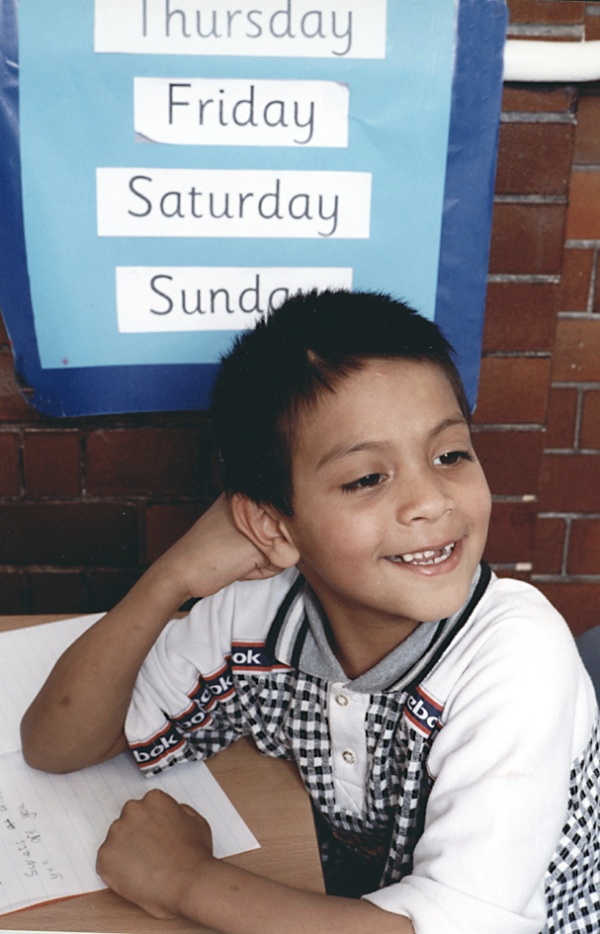
Asked to produce photographs for an education brochure, Chris Kelly turned up at six schools between 2000 and 2002 with camera, lights and optimism. There was never any shortage of ideas or young art directors, and the pictures you see here are the result of a collaboration between photographer, teachers and pupils, with the children aways having the biggest say.
Meanwhile, the heartening news from the playground that Dan Jones has to report is that the culture of rhymes is alive and kicking, in spite of the multimedia distractions of the modern age. The endless process of repetition and reinvention goes on with ceaseless vigour.
(Click here to go to an interactive painting by Dan Jones commissioned by The Museum of Childhood entitled “The Singing Playground” where you can to listen to recordings he made of all the different rhymes in the picture.)

Susan Lawrence Junior School
School dinners, school dinners,
Squashed baked beans, squashed baked beans,
Squiggly semolina, squiggly semolina.
I feel sick! Get a bowl quick!
It’s too late, I done it on the plate!
(Manya Eversley, Bow)

Susan Lawrence Junior School
Everywhere we go
Everywhere we go
People always ask us
People always ask us
Who we are
Who we are
And where we come from
Where we come from
So we tell them
So we tell them
We’re from Stepney
WE’RE FROM STEPNEY
Mighty, mighty Stepney!
MIGHTY, MIGHTY STEPNEY!
And if they can’t hear us,
IF THEY CAN’T HEAR US
We sing a little louder
WE SING A LITTLE LOUDER!
(Call and response chat from Rushmore Junior School)

Bonner Primary School
Inky Pinky Ponky,
Daddy had a donkey.
Donkey died,
Daddy cried,
Inky pinky ponky!
(Dip from St Paul’s Church of England School, Wellclose Sq)

Susan Lawrence Junior School
Zum gali gali gali,
Clap clap clap
Zum gali gali
Clap clap clap
Zum gali gali
Clap clap clap
Zum
clap clap clap
We can work with joy as we sing
Clap clap clap
We can sing with joy as we work
Clap clap clap
(Israeli round from the children of Kobi Nazrul School)

Olga Primary School
Pepsi Pepsi came to town,
Coca Cola shot him down,
Dr Pepper picked him up,
Now they order Seven Up!
(Clapping game from Honor, Sadia, April and Jahira of Bangabundu Junior School)

Bangabandhu Primary School
Im Pim Safety pin
Im pim
Out!
Change your nappies inside out
Not because they’re dirty
Not because they’re clean
Not because your mother says
You’re the Fairy Queen!
(Counting out rhyme from the children of Bangabandhu Primary School)

Holy Family Roman Catholic Primary School
London Bridge is falling down, falling down, falling down.
London Bridge is falling down, My Fair Lady.
Build it up with sticks and stones, sticks and stones, sticks and stones.
Build it up with sticks and stones, My Fair Lady.
Sticks and stones will wear away…
Build it up with iron and steel…Iron and Steel will rust away…
Build it up with bricks and clay…Bricks and Clay will wash away…
(Arch game from children of Bluegate Fields School, Stepney)

Susan Lawrence Junior School
Down in the valley where nobody goes,
There’s an ooky spooky woman who washes her clothes.
With a rub-a-dub here and a rub-a-dub there,
That’s the way she washes her clothes.
(Clapping game from children of St Paul’s Church of England School, Wellclose Sq)

Susan Lawrence Junior School
Please Mr Porter, may we cross your water
To see your lovely daughter, swimming in the water?
(Chasing game for running across the playground at St Paul’s Church of England School, Wellclose Sq)

Marion Richardson School
Once I had a snail
And I 1 it
I 2 it
I 3 it
I 4 it
I 5 it
I 6 it
I 7 it
I ATE (8) it
(Riddle from Colin and his mother at Museum of Childhood, Bethnal Green)

Holy Family Roman Catholic Primary School
Racing car number 9
Losing petrol all the time
How many gallons did you lose?
(6!)
1, 2, 3, 4, 5, 6
You’re OUT!
(Counting out rhyme from Shamima, Natalie Abida and Shazna of Hermitage School, Wapping)
Susan Lawrence Junior School
Twinkle, twinkle, chocolate bar, Daddy (or Mummy) drives a rusty car
Push the button, pull the choke,
Off we go in a puff of smoke,
Twinkle, twinkle, chocolate bar, Daddy drives a rusty car.
(Miming game from infants at Christchurch School, Brick Lane)

Olga Primary School
I like coffee
I like tea
I like climbing up the tree
1, 2, 3, 4, 5
(Dip from the children of Year 4 Christchurch Primary School, Brick Lane)

Holy Family Roman Catholic Primary School
Ta-ra-ra Boom-de-ay!
My knickers flew away
They came back yesterday
From a little holiday
I said “Where have you been?”
They said ‘To see the Queen
At Windsor Castle!”
You little rascal
(Comic song from Katie, Lizzy Alison (Ashford) at Museum of Childhood, Bethnal Green)

Susan Lawrence Junior School
Olicker Bolicker
Suzie Solicker
Ollicker boliker
Knob!
(Dip from Sonny and Marina of Wapping)

Holy Family Roman Catholic Primary School
Ecker decker,
Johnny Cracker,
Ecker decker do,
Ease, cheese,
Butter, bread,
Out goes you
(Counting out rhyme from Columbia School, Bethnal Green)

Bonner Primary School
Jee Jai Jao (Brother-in-law)
Kabhi upor Kabhi nicheh (You’re going up, you’re going down)
Kabhi ageh Kabhi pitcheh (You’re going in front, you’re going behind)
Kabhi eke Kabhi ekh dui teen (Going 1. Going 2. Going 1, 2, 3)
Pushu! (Punch!)
(Hindi dip from Christchurch Primary School, Brick Lane)

Susan Lawrence Junior School
Boom Boom
Shakalaka
Out goes you
Out goes another one
And that is YOU
(Dip from children of Bangabundhu School)

Holy Family Roman Catholic Primary School
In a golden treasure, with an East and a West,
I took my boyfriend to the Chinese shop.
He bought me ice-cream, he bought me a cake,
He sent me home with a bellyache.
I said: “Mama, Mama, I feel sick.
Call me a doctor quick, quick, quick!
Doctor, Doctor, am I gonna die?”
“Count to five if you’re alive
With a 1, 2, 3, 4, 5, 6, 7, 8, 9, 10
You’re dead again!”
(Skipping song from children of year 5 at Arnhem Wharf School)

Holy Family Roman Catholic Primary School
Miss Polly had a dolly that was sick sick sick
(Rock baby in arms)
She called for the Doctor to come quick quick quick
(Hold telephone to ear)
The doctor came with his bag and his hat
(Touch imaginary bag and hat)
And he knocked on the door with a Rat Tat Tat Tat!
(Knock on door)
He looked at the dolly and he shook his head
(Shake head)
He said “Miss Polly, put her straight to bed”
(Wag finger to indicate telling her off)
He wrote out a paper for a pill pill pill
(Write on imaginary paper)
“I’ll be back in the morning with my bill bill bill”
(Clapping and miming game from Rukhaya and Siobhan at Christchurch Primary School, Brick Lane)

Holy Family Roman Catholic Primary School
Sally go round the sun,
Sally go round the moon,
Sally go round the chimney pots
on a Sunday afternoon.
WHOOPS !
(Dancing game from Redriff Primary School, Rotherhithe)
Photographs copyright © Chris Kelly
You may also like to take a look at
Chris Kelly’s Columbia School Portraits 1996
Chris Kelly’s Cable St Gardeners
and read about
Here are some earlier collections of photography of children in the East End












