Lennie Sanders, Cab Driver
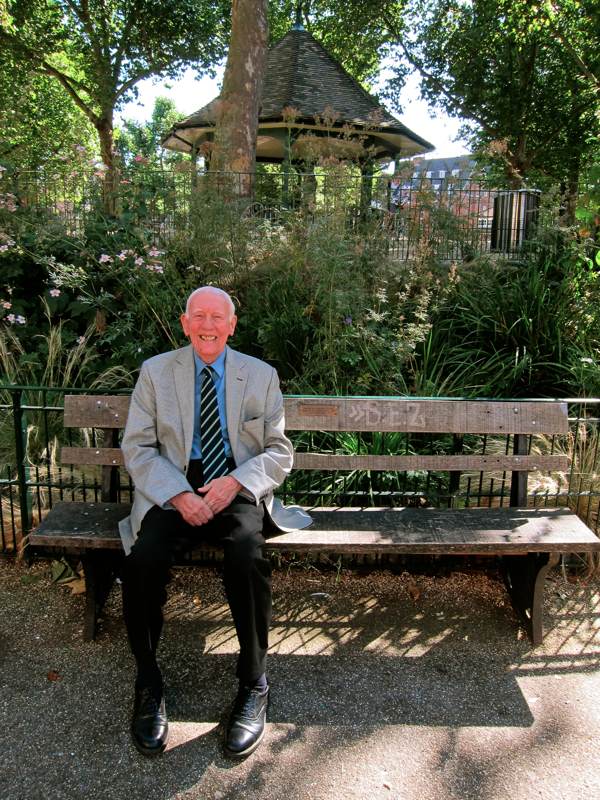
If you are around Arnold Circus on a Sunday morning, you may very likely see Lennie Sanders upon his regular pilgrimage, coming on the 67 bus from Stamford Hill to sit upon the first bench on the left beneath the bandstand, the one donated by the Cambridge & Bethnal Green Boys’ Club. He was born ninety years ago in Padbury Court nearby, close to where his wife Annie grew up on the Boundary Estate, and, when they first married, they lived in Cookham Buildings where their son Roy was born. Lennie confided to me that it consoles him – now that Annie and Roy are no longer alive – to return to Arnold Circus on Sunday and sit in quiet contemplation of those years which brought him so much happiness.
“My mother was a very religious woman and she used to bring her friends back from church for sandwiches on a Sunday evening,” Lennie informed me, introducing his story, “But my father was quite the opposite, he used to come home when the pub shut on Sunday night and say, ‘You lot, out!”
As we walked over to Padbury Court (known as Princes Court when Lennie was growing up as the youngest of nine) he paused constantly to point out all the things that existed for him but which were no longer there. “I used to know everybody but now I am a foreigner here,” he declared to me, breaking from his reverie,“Everyone I knew has moved to Stamford Hill.”
“I’m always happy when I’m here, because I feel as if I am back home.” Lennie continued, regaining his absorption as we turned the corner from Brick Lane into Padbury Court, halting for a moment of devotion at the site of the terrace on the north side where he grew up, demolished half a century ago. Further along, where the road becomes Gibraltar Walk, and passing the old furniture workshops, we came to the junction with the Bethnal Green Rd where the event took place which Lennie considers to be the turning point in his childhood.
“We were skylarking at the water fountain and someone pushed me and my arm went underneath me and broke. They carried me to the Mildmay Mission who said they couldn’t do anything, so my father took me in a taxi to the Royal London Hospital in Whitechapel, where they were going to cut it off,” Lennie related, rolling his eyes for effect and twisting his arm to demonstrate what happened, “but my father asked his governor, Mr Jackson at the compositing works,”They’re talking about cutting my son’s arm off!” And Mr Jackson sent his surgeon, he said, ‘He’ll patch it up.'”
“To be honest, I never knew my mother because she died when I was eight,” Lennie revealed with a shrug – moving on unexpectedly – and outlining the lengthy rehabilitation that preoccupied his attention in those years. A process compounded by the subsequent discovery that the accident had affected his hearing, which kept Nennie out of school for four years. “When my mother died, my father had a bad heart attack and couldn’t work no more,” Lennie added under his breath, amplifying the nature of the circumstances and lowering his eyelids in regret.
Then, one night in 1932, everything changed for Lennie when met his pal, Willy Greenhough, in the street and he said, “Where are you going? There’s this Jewish boys’ club, but they don’t bar anyone so we could go along there and get some cocoa.” It was a highly significant cup of cocoa because it led to membership of the Cambridge & Bethnal Green Boys’ Club and a circle of friendships that Lennie enjoys to this very day. “The only reason they dropped the word ‘Jewish’ from the name was because Mosley and his fellows used to come along and smash their windows – so they took it off,” Lennie explained wryly before asserting gravely, “The Jew and the Gentile were always very close in Bethnal Green.”
As it turned out, Lennie’s rehabilitation encouraged a love of sport and very soon he was leading the boys of the club in nightly runs down to Trafalgar Sq and back. “If they wasn’t very fit, I would let them wait at St Paul’s and join us again on the way back,” he confessed with an indulgent grin, “I was always a very fit boy.” Leaving school, Lennie went to work as one of more than a hundred Western Union messenger boys based in Great Winchester St in the City of London, which further exercised his athletic ability. “Mostly we delivered round the Stock Exchange, but sometimes we had to cycle to Shepherd’s Bush,” he recalled gleefully. In fact, Lennie played football and cricket at professional level for Clapton Orient, the club that became Leyton Orient. “My doctor kept going on about having my arm straightened, but I refused – I never made it a handicap.” he confirmed.
Much to Lennie’s regret, his poor hearing prevented him joining the Navy when the War came along and so, unable to enlist, he worked as glazier and then in demolition upon bomb sites, staying in London throughout the blitz. Memorably, he took his wife-to-be Annie Hiller up to the West End to see a film only to return to Shoreditch to discover an unexploded bomb was stuck in the chimney of the wash house on the Boundary Estate. “Annie couldn’t go home, so I took her back to Princes Court to meet my father for the first time,” Lennie confessed. In 1942, they were married and moved into Cookham Buildings where their son Roy was born two years later.
“I started cab-driving in 1946. My brother-in-law said ‘You already have the Knowledge from when you were a messenger boy.’ When I began, the cab was open, so you had to wear a hat and a big coat in winter. I did it for fifty-five years until I retired in 2000.” Lennie told me. It was in 1951, when Roy was ten, that the family moved to a two bedroom flat in Stamford Hill, where Lennie lives alone today yet where seventy people attended his recent ninetieth birthday party.
All this time, Lennie cradled a bag of two cheese beigels which he bought that morning in Brick Lane. Completing his story, he revealed that an old friend had recognised him in the crowd and called out to him, a recurring event on these Sunday visits to the market. “I get off the bus at Shoreditch High St, and I walk through Brick Lane and then back up towards Bethnal Green, and I go down my street, Padbury Court,” he recounted – as much to himself as to me – recapping our journey that morning. We shook hands at the top of Brick Lane before he went to catch the 67 bus for his return journey. “I’ll be alright, I’ll take it slowly,” Lennie reassured me, taking one last affectionate look around, “I’ll go home and eat my beigels.”
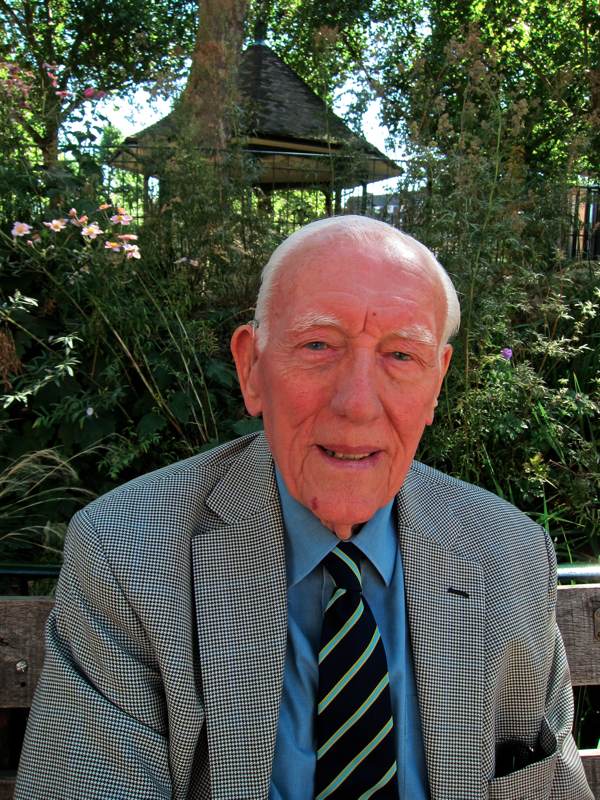
Lennie Sanders
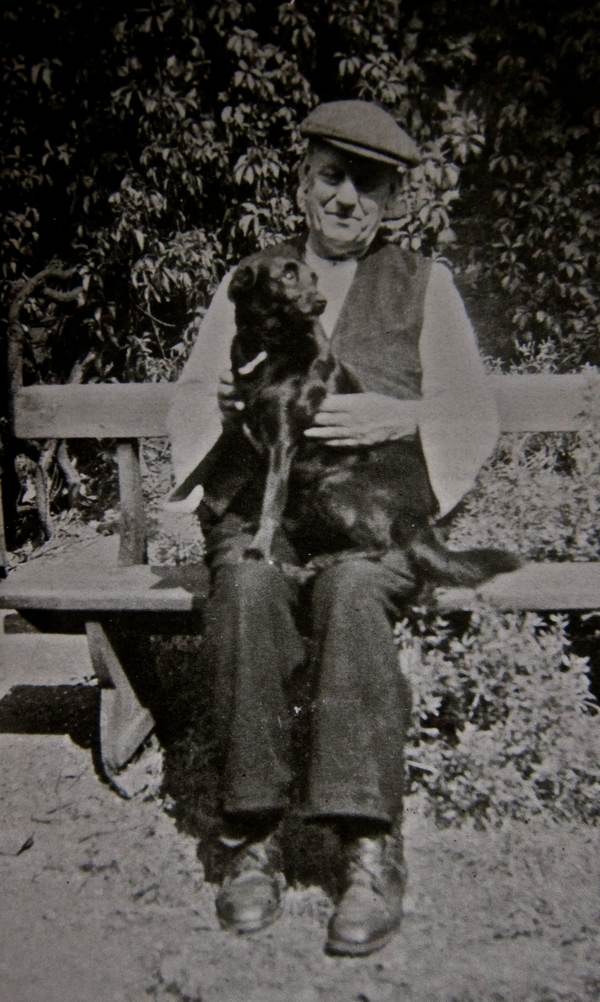
Lennie’s father Basil (he called himself George) with his dog Nobby in the garden of 7 Padbury Court.
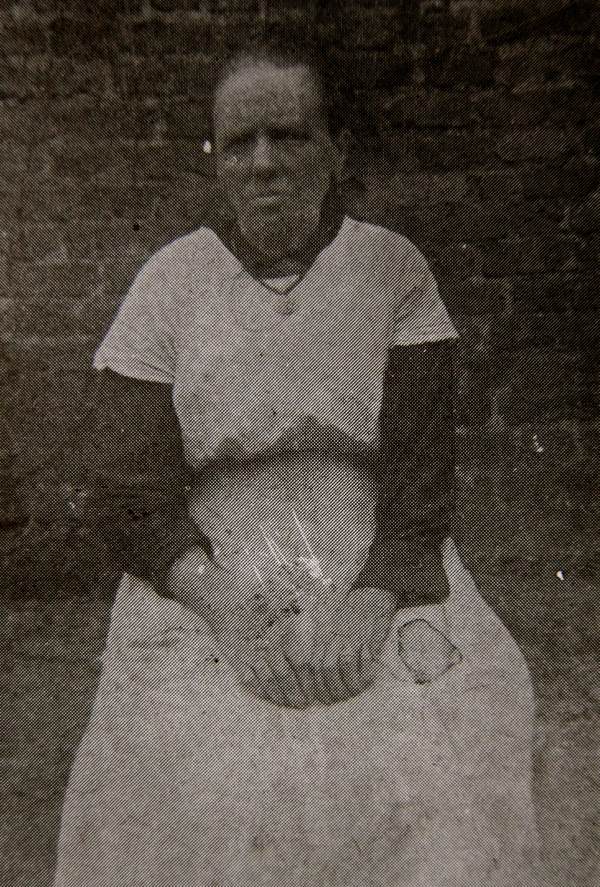
Lennie’s mother Ellen wore an apron of sacking but put on a white one for this picture.
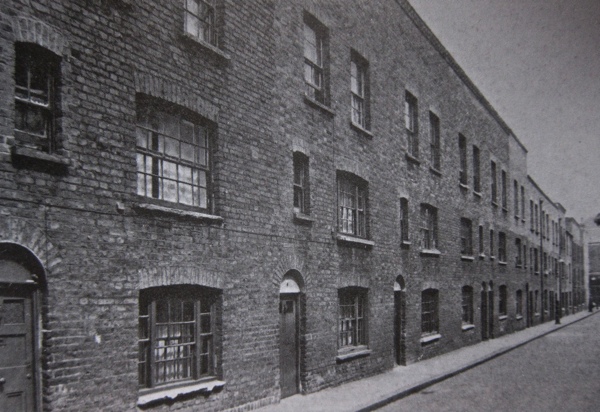
The north side of Padbury Court (known as Princes Court then) where Lennie was born in 1922.
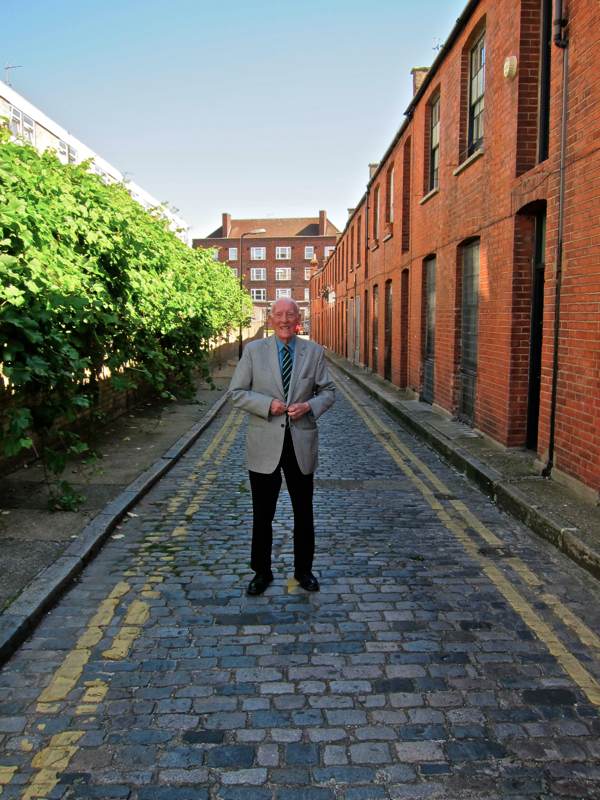
Lennie visits Padbury Court today – the northern side was demolished over fifty years ago.
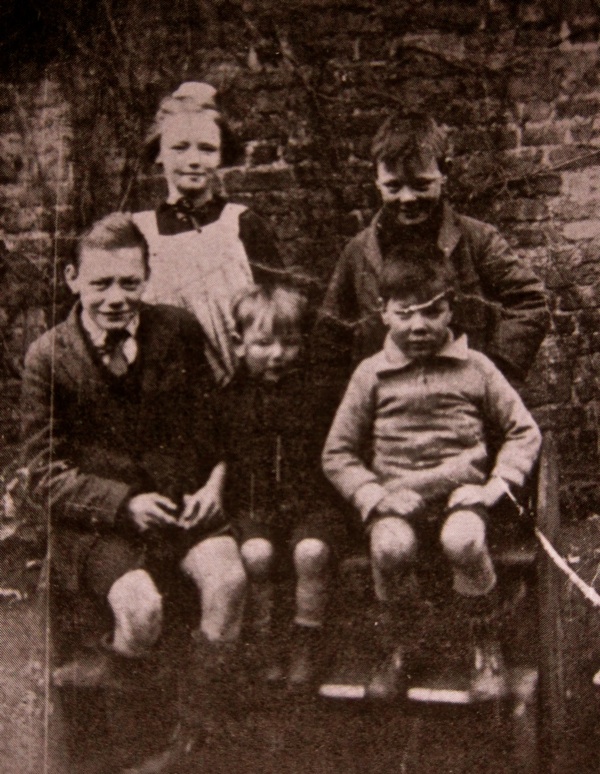
Lennie was the youngest, here aged four in 1926 photographed with (clockwise) Bunny, Eddie, George & Jess in the back garden of 7 Princes Court.
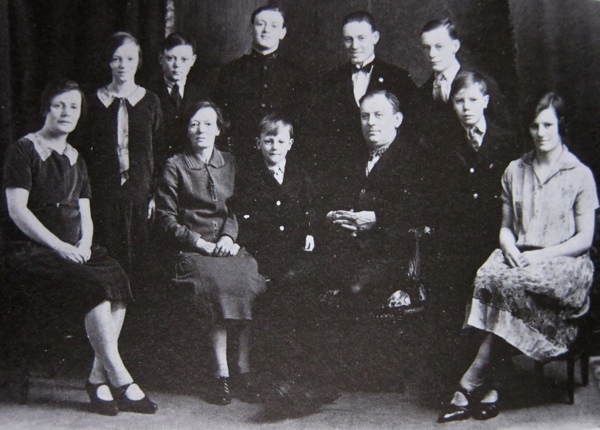
The family in 1928, Lennie stands at the centre aged six.
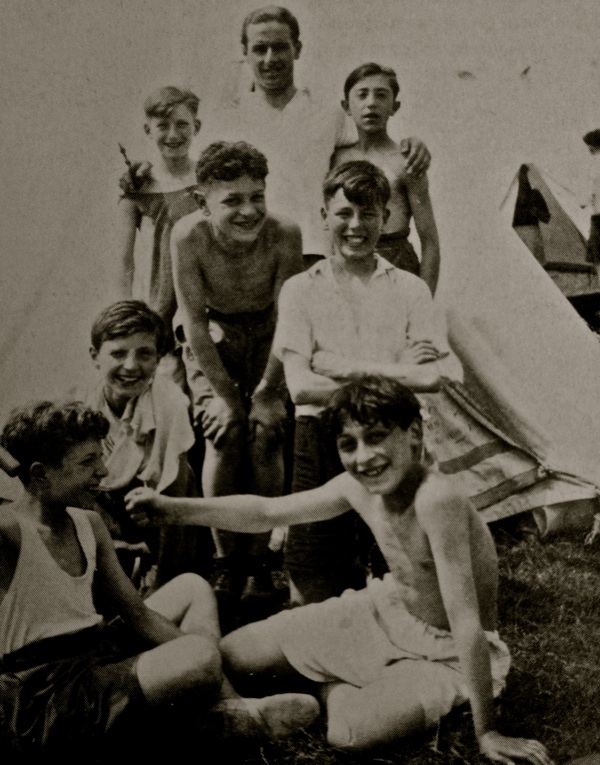
Lennie (in the white shirt) camping with the Cambridge & Bethnal Green Boys’ Club, 1936.
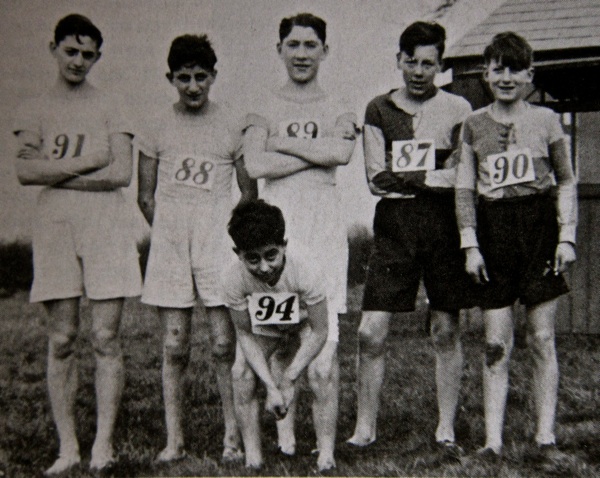
Lenny is number 87 in the club cross-country team.
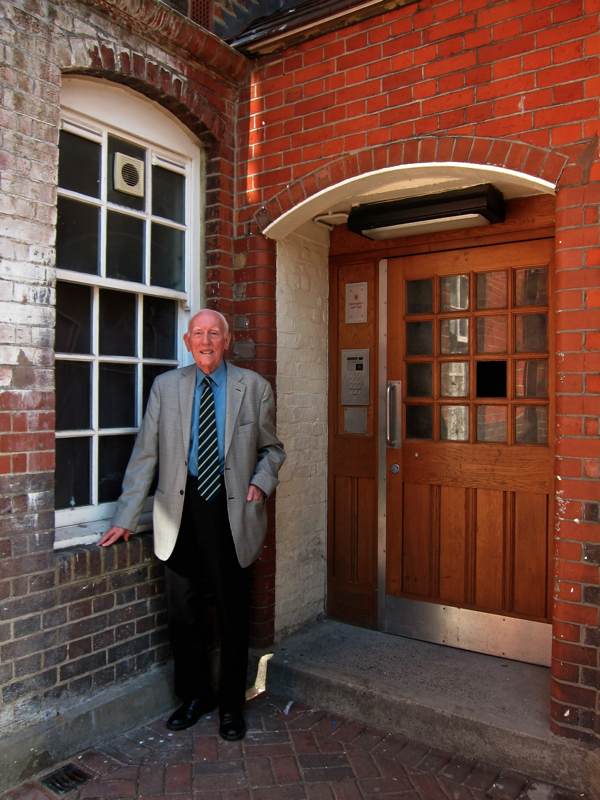
Lennie at Cookham Buildings where he lived when he was first married and his son Roy was born.
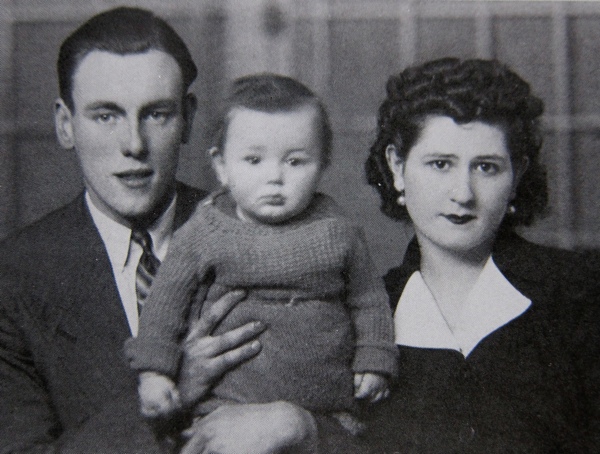
Lennie and Annie with their son Roy in 1944.
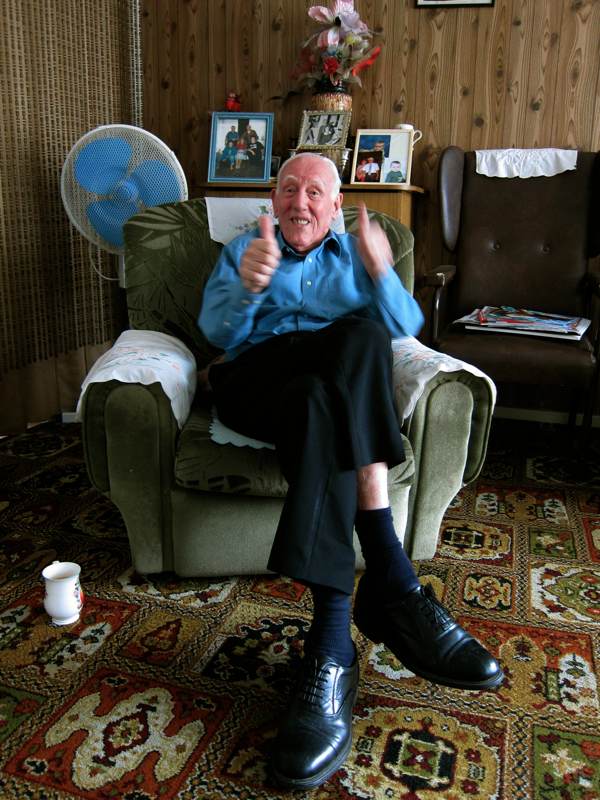
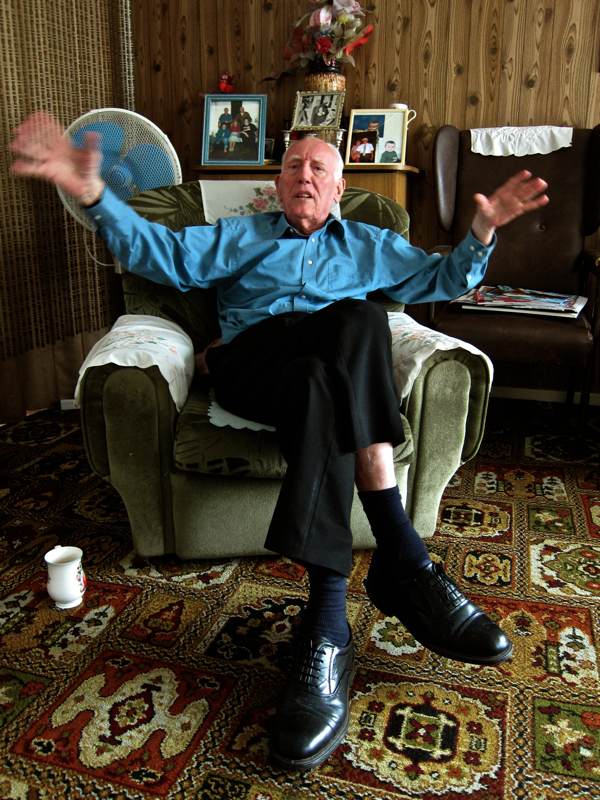
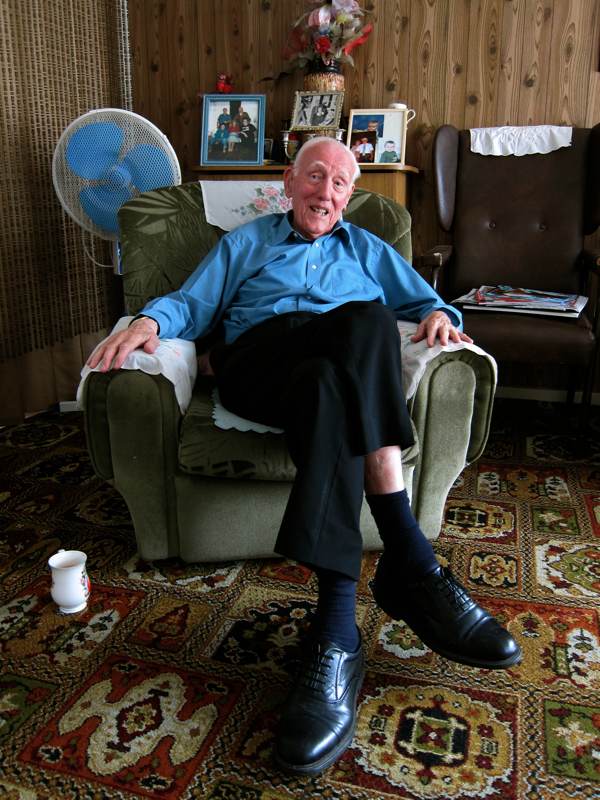
Lennie Sanders, Cab Driver
Read my other Cambridge & Bethnal Green Boys Club Stories
Maxie Lea MBE, Football Referee
At the Cambridge & Bethnal Green Boys Club 86th Annual Reunion
John Claridge’s Cafe Society
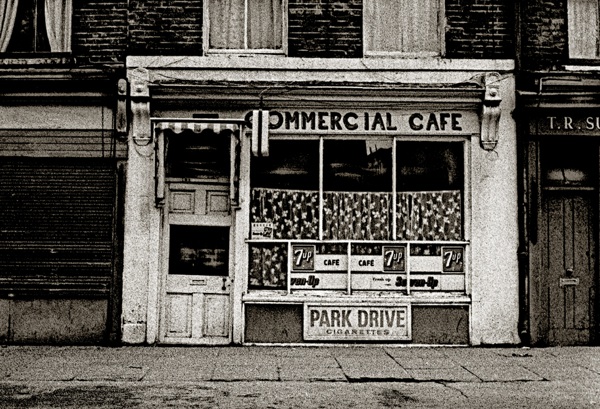
Commercial Cafe, Commercial Rd 1965
“This was one of those places you could just pop in from the cold and warm up,” photographer John Claridge recalled affectionately while contemplating this beloved cafe of yesteryear, “I love the front of it – it was just beautiful, especially the typography. The window above the curtain used to get all steamed up. It was very welcoming, you know, and it was was gorgeous to come in and have a nice cup of tea.”
In this set of photographs, published here for the first time, John shows us his collection of cherished East End cafes, accompanied by some random portraits of people that you might expect to meet in them. “Everywhere you went, you would find a cafe where you could go in and get a bacon sarnie and a cup of tea,” he told me ,“they were not fancy restaurants but you could always rely on getting a cuppa and a sandwich.” In John’s youth, the East End was full of independently-run cafes where everyone could afford to eat, and his pictures celebrate these egalitarian and homely places that were once centres for the life of the community.
“You don’t have to build things up, you just show people the beauty of what is.” John assured me, neatly encapsulating his modest aesthetic which suits these subjects so well.
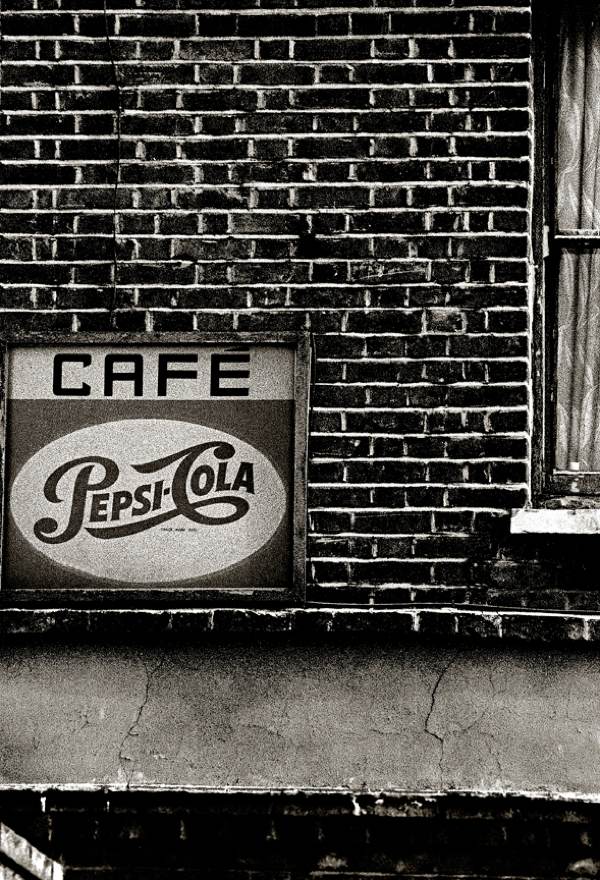
Pepsi, Narrow St 1963 – “I just love these graphics, and when you see it you hope it’s not going to go.”
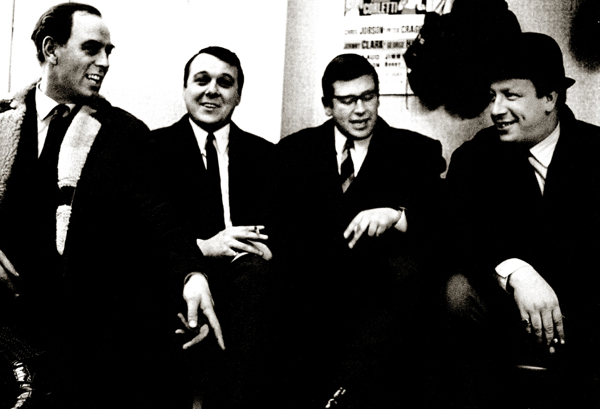
Boxing managers at Terry Lawless’ Gym, E16 1969.
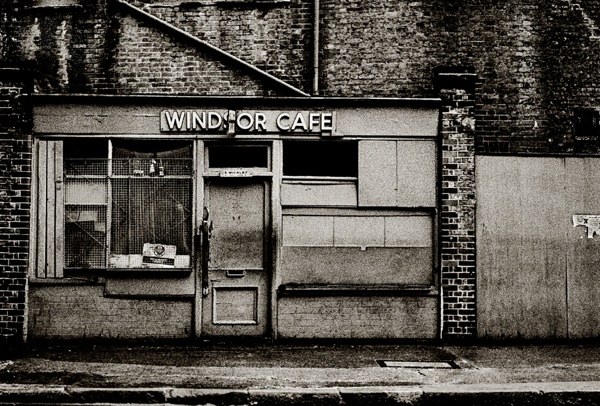
Windsor Cafe, 1982.
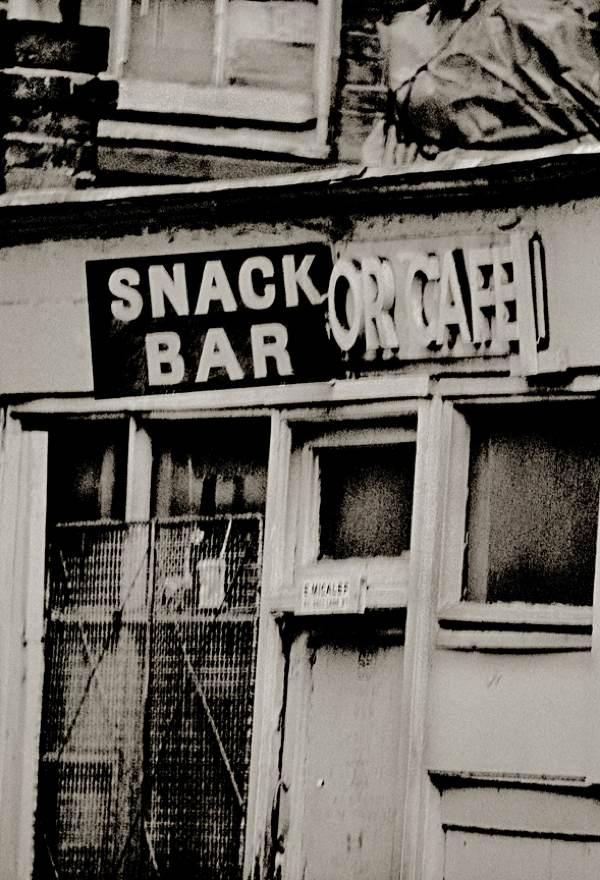
Windsor Cafe, 1982 – “As I walked past the Windsor Cafe, I looked back and saw ‘Snack Bar or Cafe.’ Genius!”
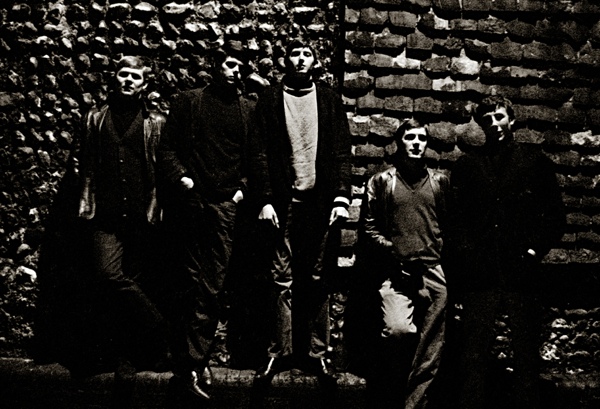
The Wall, 1961 – “We were all seventeen. At weekends we’d go down Southend. Peter on the left, his sister was going out with Georgie Fame.”
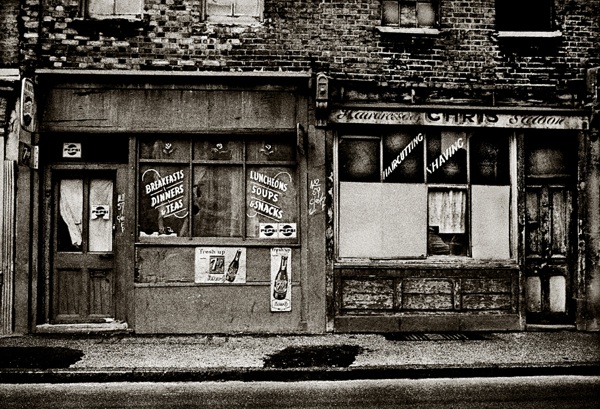
7Up, Spitalfields 1967.
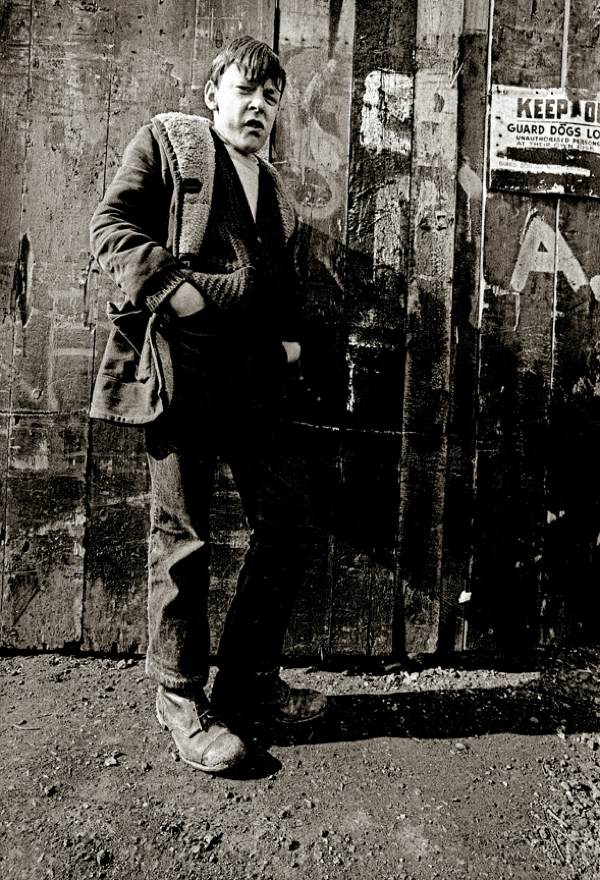
Michael Ferrier, Breaker’s Yard, E16 1975 – “He looks like the artful dodger.”
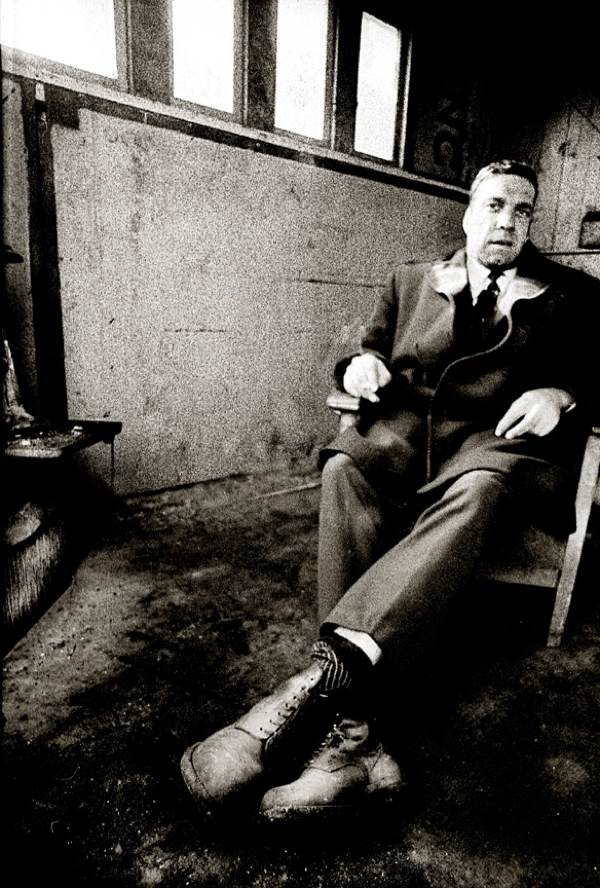
Alfie Ferrier, Breaker’s Yard, E16 1975 – “Michael’s father was sitting inside the hut with his little wood-burner, where he had his cup of tea and a cigarette.”
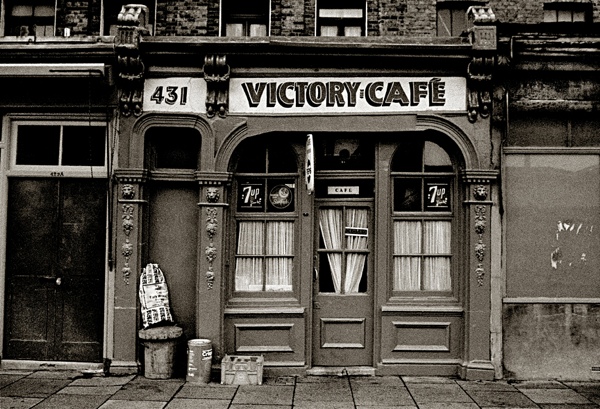
Victory Cafe, Hackney Rd 1963 – “This was very early, they’d just delivered the sack of potatoes.”
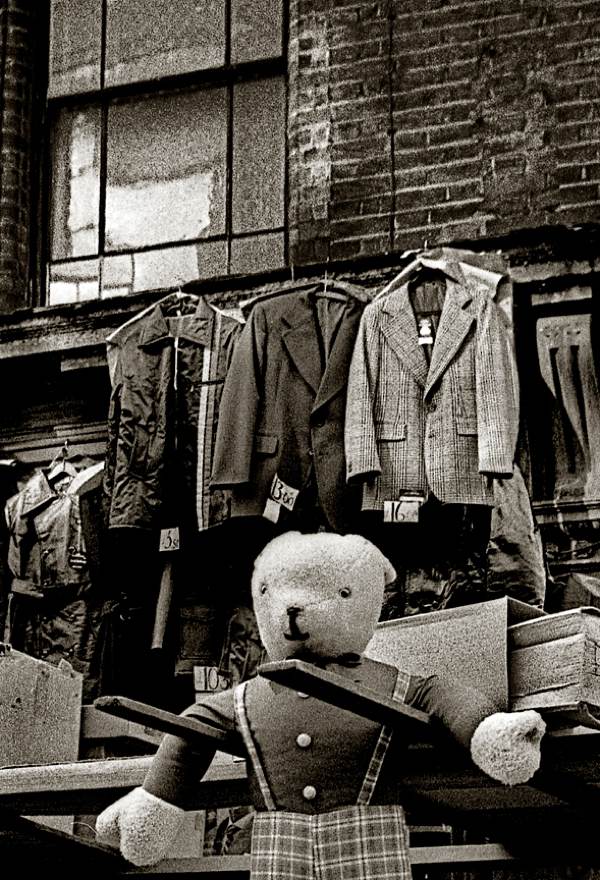
Ted, Cheshire St 1967 – “This made me laugh, it’s his wardrobe in the background hanging there. It’s as if he’s about to burst into song or something!”
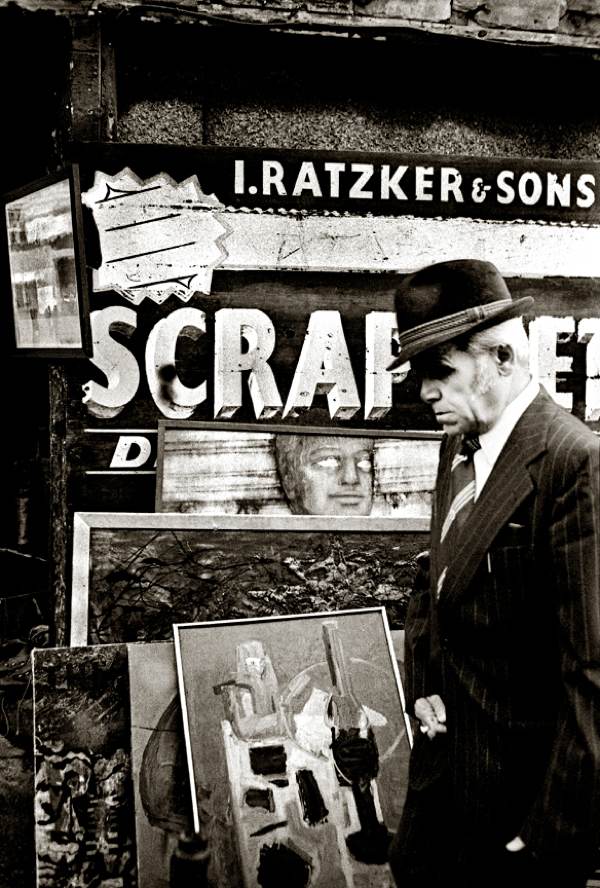
Scrap, Brick Lane 1966.
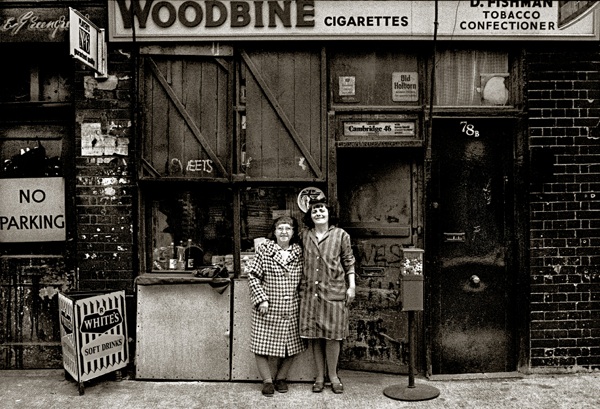
78b, Spitalfields 1967 – “You remember the lady in the kiosk? This is her with her friend.”
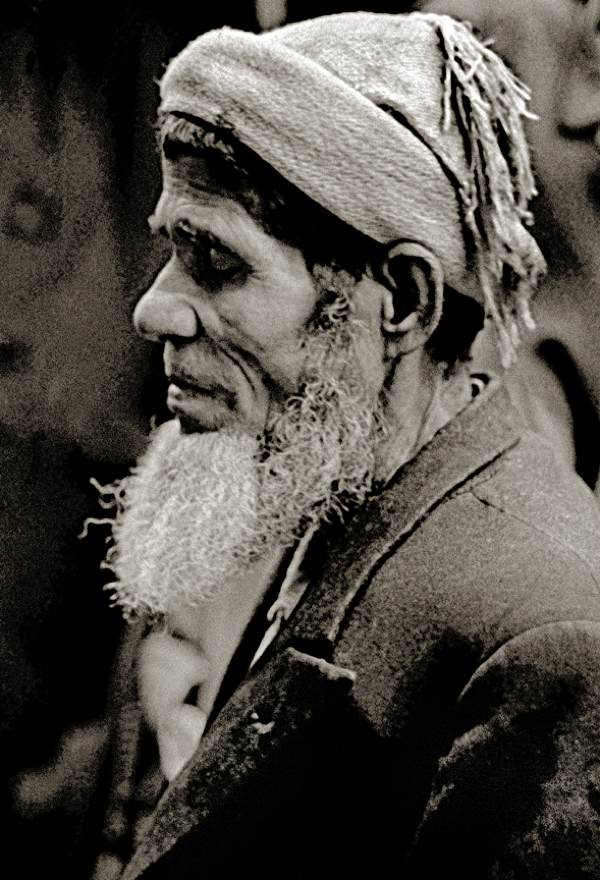
Spitalfields 1963 – “Just a chap standing with his eyes closed. He looked content and I didn’t want to disturb him.”
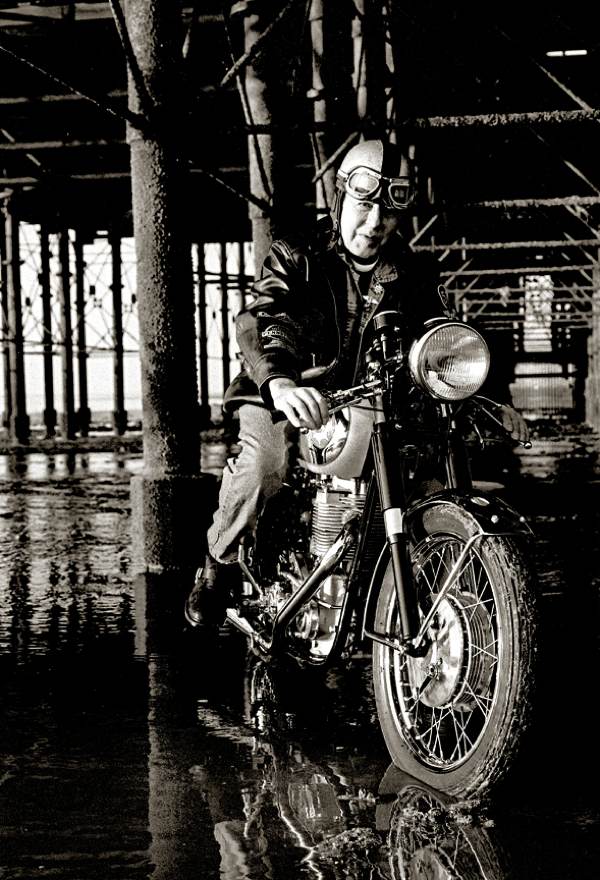
Father Bill Shergold, founder of 59 Club, at Southend – “I met him at the 59 Club to say hello. And someone wanted me to do a portrait for a charity thing, so I said, ‘Absolutely, we’ll get him down to Southend.'”
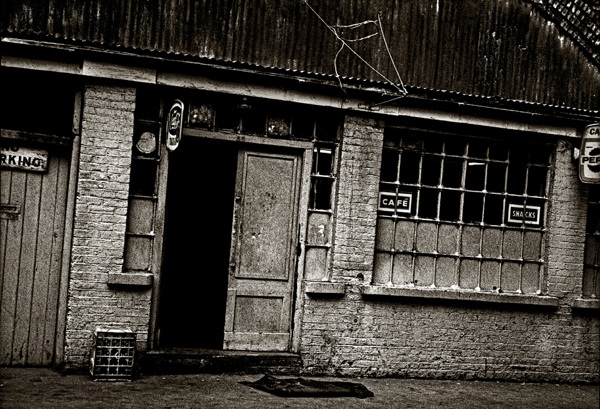
Cafe under a railway arch, E1 1968.
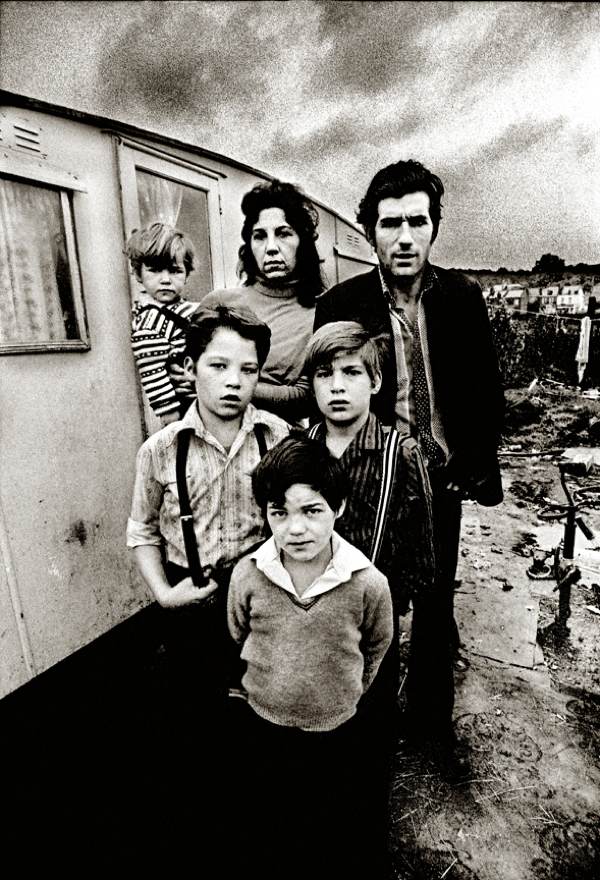
Isle of Dogs, 1970s – “This couple with the four kids lived in that tiny caravan. I did this picture for a charity to make people aware of poor living conditions.”
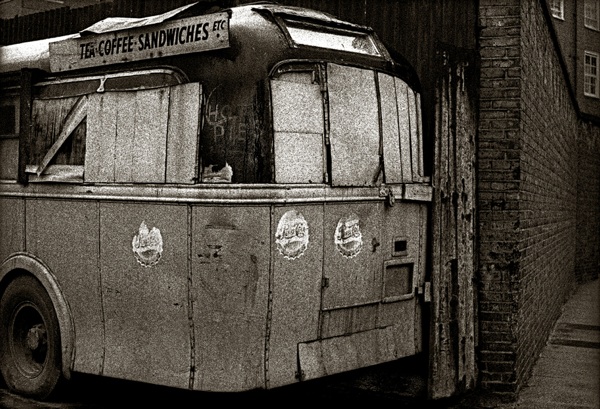
Hot Pies, E2 1982 – “It makes you think twice whether you would eat one of their hot pies.”
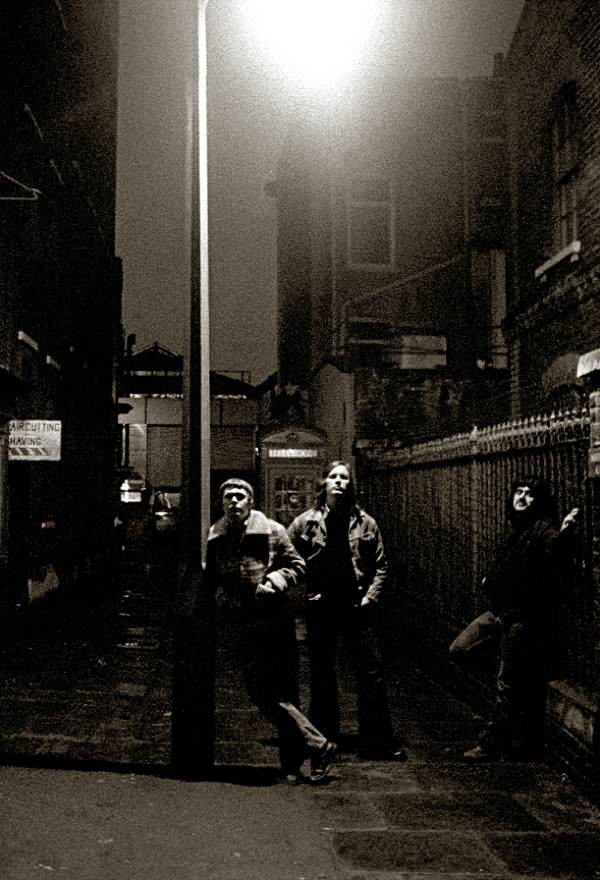
Under the Light, Puma Court, Spitalfields 1970 – “Two of my ex-brother-in-laws with Santi, a Spaniard who became a squash champion – we were on the way to the pub. Keith was working at the Truman Brewery in Brick Lane at the time and I had a studio in the City, so I said, ‘I’ll meet you after work for a drink.'”

Dog, Wapping – “This was taken for anti-litter campaign and the headline was ‘You foul the pavement more than he does.'”
Photographs copyright © John Claridge
You may also like to take a look at
Along the Thames with John Claridge
At the Salvation Army with John Claridge
A Few Diversions by John Claridge
Signs, Posters, Typography & Graphics
Views from a Dinghy by John Claridge
In Another World with John Claridge
A Few Pints with John Claridge
Rob Ryan at Charleston Farmhouse

Throughout my childhood there were a pair of Staffordshire dogs on the window sill at the the top of the stairs which impressed themselves upon my consciousness. They had been the property of the “lost” grandparents on my father’s side of the family who died before I was born yet – somehow – these dogs still manifested their presence, possessing a melancholy aura as if they contained the dispossessed souls of the dead.
Since then, I have been fascinated by Staffordshire figures as inscrutable embodiments of household spirits and I am spellbound by the recent work of Rob Ryan (the papercut supremo of Bethnal Green) – painting new designs upon Staffordshire figures cast from old moulds and giving expression to the latent emotional presence of these ubiquitous vernacular sculptures. An attractive selection of these pieces is currently on display alongside his papercuts and tiles at Charleston Farmhouse, the former home of Vanessa Bell and Duncan Grant near Lewes in Sussex, until Sunday 28th October.
Inspired by the colour palette and spontaneous gestures of the Omega Workshops, Rob applied his designs freely with a paint brush upon ceramic blanks to create gloriously idiosyncratic pairs of Staffordshire dogs which are entirely at home at Charleston, imbuing them with a lively painterly quality and a playful spirit in sympathy with the collective visual style we associate with Bloomsbury. But, more than this, Rob has inscribed his figures with texts of vivid sentiment, addressing experiences of loss, loneliness, ageing and death – which, upon close examination, transform these Staffordshire dogs into sentinels of mortality, emphasising the fragility of such familiar ceramics that have occupied many households through generations as insentient witnesses of the passing of human life.
Rob first encountered the creations of the Omega Workshops in the early eighties as an art student from Trent Polytechnic on a day trip to London. “What I saw with my own eyes was all I needed to know. Amongst that (quite crudely) painted and decorated furniture, screens and ceramics was a joy in making that I just didn’t see in the contemporary art of the eighties that surrounded me.” he admitted. So, by exhibiting his pieces at Charleston, Rob has completed the circle by making homage to these early inspirations.
The modestly proportioned timber-framed barn at Charleston provides an elegant setting for Rob’s intricate works and, during this Indian Summer, it makes a pleasurable excursion to visit his exhibition and wander in the gardens with their magnificent displays of September colours, as I did last week.


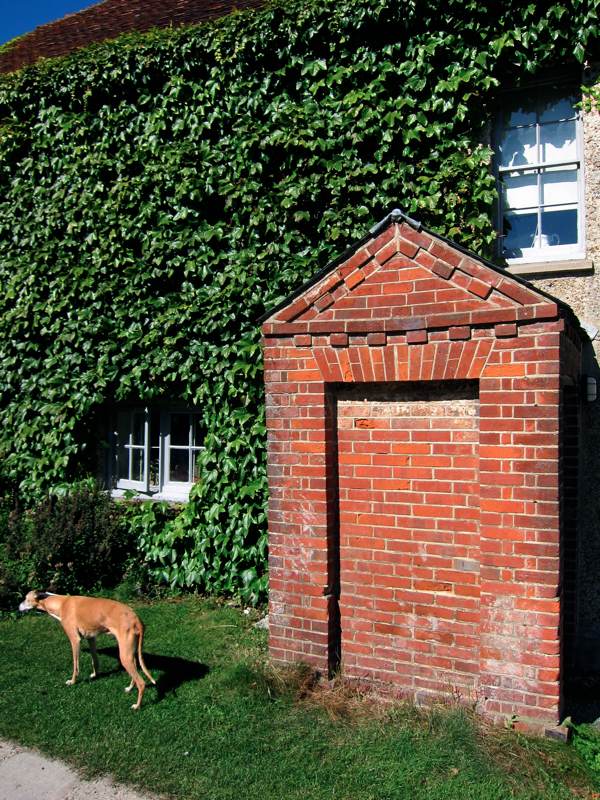




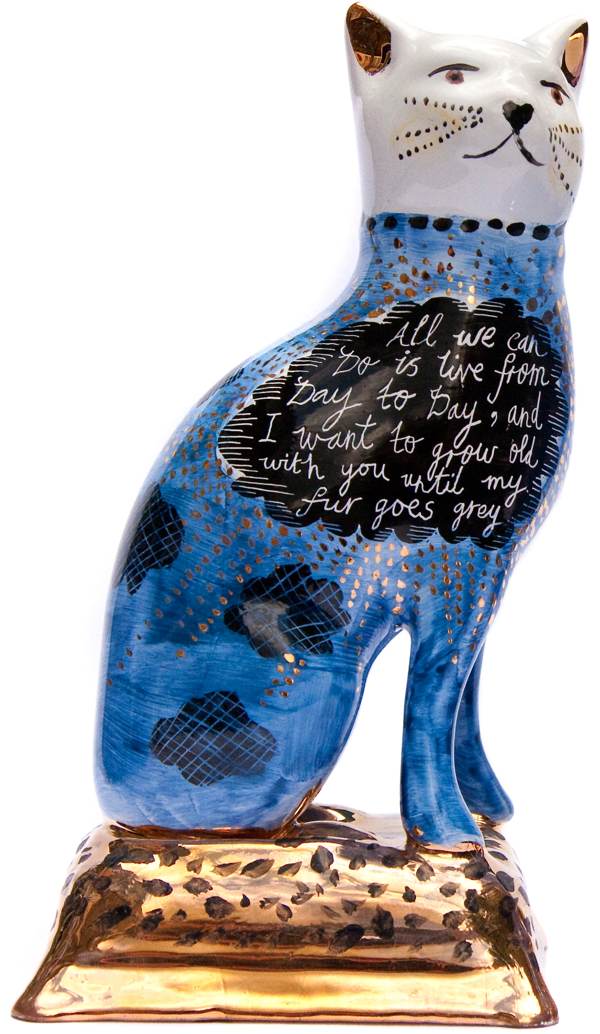


 The pair of Staffordshire dogs that Rob Ryan made for Spitalfields Life.
Ceramics copyright © Rob Ryan
Rob Ryan’s exhibition runs at Charleston until 28th October.
You may also like to read
Spitalfields Life at the Redchurch St Party

Click to view this party on Redchurch St drawn by Adam Dant
Please join us at the SPITALFIELDS LIFE STORYTELLING PARTY next Saturday 15th September at 3 o’clock sharp, at 63 Redchurch St, hosted by Forster Inc & The Literary Platform.
Come and be regaled by storytellers from the pages of Spitalfields Life – including JOAN ROSE, who grew up in the Boundary Estate in the nineteen thirties, VISCOUNTESS BOUDICA, trendsetter and collector of domestic appliances, HENRIETTA KEEPER, octogenarian ballad singer, and KING SOUR, rapper of Bethnal Green, among others.
This event is part of a day of activities comprising the REDCHURCH ST PARTY which runs from midday until evening on Saturday 15th September.

Joan Rose‘s grandparents opened the grocers on Calvert Ave in 1900 and her father ran it until 1966.
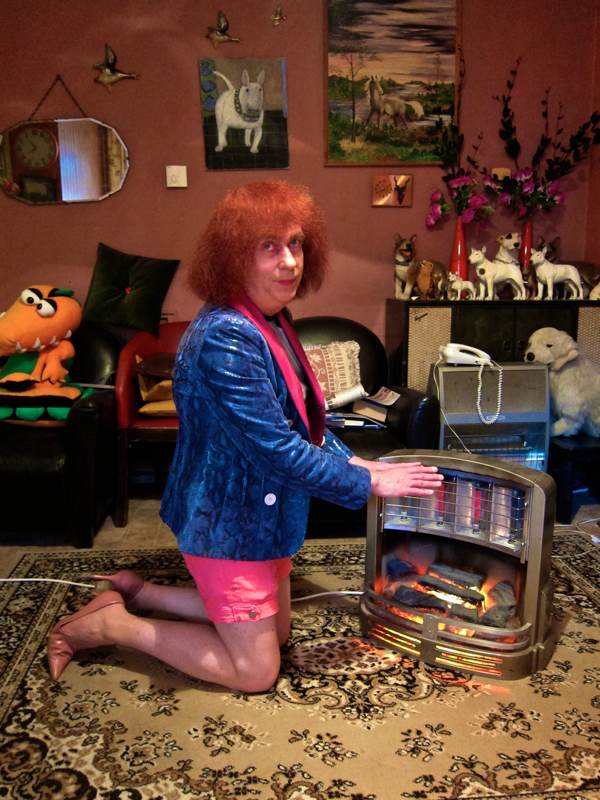
Viscountess Boudica has the best collection of vintage domestic appliances in East London.

Henrietta Keeper was in the Tate & Lyle concert party for thirty years and now sings at E. Pellicci.

Lorraine & Owen Bartlett Lashley, Farmers

This is Lorraine & Owen Bartlett Lashley who grow vegetables upon an allotment in Goodmayes, Ilford, and come up on the bus each Saturday to sell their surplus under the awning outside Leila’s Shop in Calvert Avenue, where you will find them tomorrow morning behind a small table laden with some of the freshest produce you could buy in London.
There is a special quality to vegetables that have been grown by a smallholder and picked that day, which transcends any other produce you could buy. And, each Saturday morning, the table under the awning is a wonder to behold with piles of glistening green spinach, perfect specimens of beans and fragrant bunches of herbs, all proudly arranged. Lorraine & Owen are eager to show off their horticultural achievements and, with so few places to buy fresh vegetables around Spitalfields and Shoreditch, their weekly stall is especially welcome.
Originally from Barbados, Owen came to London in the nineteen sixties and Lorraine joined him in the seventies. The couple share a life-long enthusiasm for growing vegetables, which they have pursued zealously even in the most unpromising of urban environments and, recently, Lorraine told me the story of their life together in horticulture while Owen made up bunches of herbs, tying each one elegantly with a piece of vine.
“Before we came to this country we were both farmers, I lived on an estate of five acres and we grew vegetables to feed ourselves and sell locally. I’ve been here thirty-four years now, since Owen came back to Barbados in 1978 and we got married. When I first came to Britain, Owen was studying at Manchester University and I was a youth worker. We searched for a plot of land where we could grow vegetables as we had done in Barbados, but we couldn’t find one so we used the long garden that we had and grew organic vegetables there. We had some of the biggest veg you could imagine, marrows, carrots, beetroots and cabbages. We grew everything naturally, without putting any chemicals on the soil.
When we moved down to London in 2003, we were searching to find where to grow vegetables and a friend of ours told us about an allotment at Seven Kings that needed people, so we got one plot and then another and we ended up with four plots. It took a lot of work to get the land into condition. No-one had grown anything there for fifteen years and people had dumped broken beds and toilets on it, so we had to do a proper clear out and build the soil up again with a lot of compost and manure and comfrey. We ended up with more vegetables than we could eat or give away.
We feed ourselves from our allotment. We only buy oil, flour and rice. We would like to pass on our skills to the younger generation and teach children to understand of the fundamentals of how we eat and farm – and how to do it in a way that’s good for the environment. We plant marigolds among our vegetables that attract butterflies and drive away pests. We don’t use sprays, we pick off insects one by one with our fingers.
This week we have brought nasturtiums, green beans, purple beans, runner beans, mazuma oriental greens, bull’s blood sorrel, chard, spinach, beet leaf spinach, courgettes and herb bunches. We come up on the bus from Ilford which is free for us because we both have freedom passes, and it takes about two hours. I get up at five and I pick the vegetables at seven, then we are on the bus by nine-thirty and here around eleven. The first week was brilliant, we took fifty pounds which is enough to pay for the vegetables to plant for next year’s plots.
There is no other city like London, it is unique. My country is called Little England because we were colonised by the English and all we know is English, so we don’t have to adapt when we come here, we are already adapted and it is easy to fit in. We even had a Trafalgar Sq before the one in London. This is our second home, it’s like coming home to come here from where we come from. The only difference is the weather!”
Tomorrow, Lorraine & Owen will be out at dawn to pick the choicest vegetables from their allotment in Ilford and then they will bring them up on the bus to arrange them on the small table under the awning outside Leila’s Shop in Calvert Avenue as usual. So, if you wish to enjoy the privilege of London’s freshest produce, you know where to look.

Lorraine shows off her spinach and chard which she picked that morning.

Owen offers one of his sweet-smelling bunches of home-grown herbs.

Lorraine & Owen Bartlett Lashley
You may also like to read about
Spinach & Eggs from Spitalfields City Farm
Growing Vegetables at Virginia Rd School
Buying the Vegetables for Leila’s Shop
From The Library Of Dr London

Shewing passage through the capital from its gullet to its arse
Click on this plate to enlarge and savour the full detail of Adam Dant‘s map which describes a journey through London as if through the human digestive tract from the mouth in Whitehall to the rectum in Whitechapel. Adam has taken liberties with anatomy to place the brain in Westminster, the liver in Fleet St, the heart at St Paul’s, the stomach in the City and the genitals in the East End. Yet it all serves to illustrate his notion that “London is akin to a voracious and hungry organism with the Thames running through it as a peristaltic gut continually in motion.”
This is just one of series of ingenious maps of big cities that Adam has contrived to capture their essential qualities, portrayed in huge ink drawings of double-page plates from volumes in the mythical Library of Dr London – all executed while touring around European capitals this summer and exhibited in a show which opens tonight at Hales Gallery.

Map of the City of London as a stained glass of Gog & Magog – Logos of corporate finance stand in place of crests of the livery companies.

The capital as a phrenological diagram, indicative of the desire for social order expressed by London’s squares.

Paris – The Bones of Liberty. The figure of “Liberty Leading the People” by Delacroix is manipulated to correspond to Baron Hausmann’s street plan.

Zurich as Hellmouth – The mouth is located at the Bahnhof and the journey to its arse, where it shits coins into Lake Zurich, runs through the Bahnhofstrasse which is home to the biggest banks with vaults containing more gold than anywhere else on earth.

The Nerves of Istanbul – The inspiration was a medieval Persian medical diagram with the head turned upside down and, on this map, it corresponds to the more European areas – while the coloured nerves correspond to the ferries, which cross the Bosphorus carrying commuters who live on the Asian shore.

New York. Manhattan stripped bare in the four different ways – the vessels, the entrails, the organs and the ribs.

Toyko – Shunga Metro Map. Tokyo is personified in a subterranean fashion through wrestling figures intertwined to form the lines of the subway.

Adam Dant spent the summer touring Europe with his peripatetic atelier to create the exhibition.
Drawings copyright © Adam Dant
Adam Dant’s exhibition From the Library of Dr London opens tonight at Hales Gallery in the Tea Building, 7 Bethnal Green Rd, and runs until 6th October.
You may like to take a look at some of Adam Dant’s other work
The Redchurch St Rake’s Progress
Map of the History of Shoreditch
Map of Shoreditch in the Year 3000
Map of Shoreditch as the Globe
Map of the History of Clerkenwell
Map of the Journey to the Heart of the East End
Meeting of the Old & New East End in Redchurch St
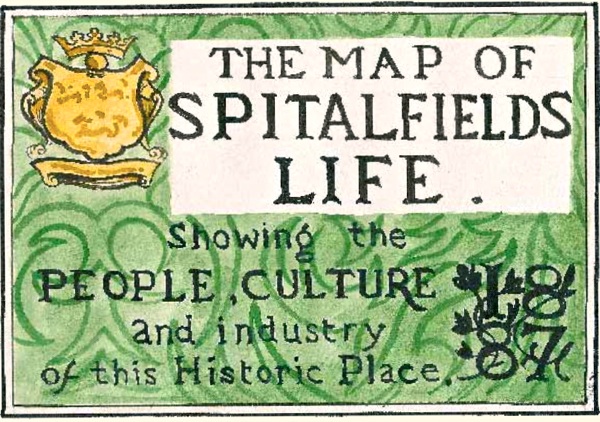
Click here to buy a copy of The Map of Spitalfields Life drawn by Adam Dant with descriptions by The Gentle Author
Gardening on the Roundabout

An annual ritual in Victoria Park Village at this season is the harvesting of the lavender on the roundabout, where Caroline Bousfield has been gardening for the past ten years with spectacular results. So I went along to lend Caroline a hand last week, out of curiosity at this extraordinary horticultural endeavour which happens in the midst of the traffic.
Wearing the regulation high-visibility vests that are an essential safety requirement for gardening on a roundabout, we crossed the road carrying secateurs and baskets. Even now at the end of summer when most city gardens are frazzled, the roundabout presented an impressive display of flowers, including valerian, marigolds, evening primrose, cosmos, achillea and euphorbia – all set against the dramatically contrasted foliage of Caroline’s planting which creates such a luxuriant vision for those passing on the bus or shopping on the other side of the street.
“It was before the days of guerrilla gardening,” Caroline informed me, revealing that when she first began gardening on the roundabout, it was borne out of a gardener’s frustration in witnessing the neglect of such an attractive location for planting.“There was just a mass of green vegetation with straggly weeds around the edge. Every time I walked past it my fingers would itch to pull some of it out and plant something better in its place. And I think I did, once or twice, before I realised I should ask permission.” she admitted, as if she had no choice in her actions. Over the intervening years, Caroline has entered into an agreement with the council to lease the roundabout so that she can continue tending it on their behalf. “I think things have changed and Hackney Council is more open to this kind of thing nowadays,” she confirmed sagely, as we started work, cutting the lavender in handfuls while the buses and trucks sped past just feet away.
Yet the pungent scent and the absorption of the work induced a state of concentration in which the presence of the traffic did not register. We were consumed by our task, gathering three large baskets of lavender – but leaving enough for the bees that swarmed upon the plants, equally preoccupied in their work. And, once the lavender was cut, it was time for tidying up. I undertook the unravelling of bindweed which was choking the smaller shrubs, while Caroline pruned the buddleias that had reached the end of their flowering. As the branches were cut away, she called me over to see the scattered paper and foil food packets revealed beneath the buddleia – the debris of foxes’ takeway dinners scavenged from the bins and enjoyed here in peace, as a moonlight picnic within the depths of the shrubbery at the heart of the roundabout.
Carrying the armfuls of pruned branches off the roundabout proved to be an activity which required a certain knack to find the gap in the traffic and haul it across to the pavement in time. In this task, Caroline demonstrated expertise borne of experience and an innate sense of timing, while I undertook the less challenging work of carrying the lavender. Then we stashed the sweet-smelling baskets in Caroline’s pottery workshop nearby where she has been making and selling her own pots since 1975. Here she stores the lavender in the loft of this former carriage house, and when Caroline fires the kiln it fills the entire workshop with a powerful and intoxicating scent. By making her lavender up into bags and selling it through the local shops, Caroline makes enough money to pay for any new plants that are added to the roundabout each year. Although she also confided to me that she was off on holiday to Cornwall, where she hoped to get some seeds of a deeper-coloured valerian which grows wild on the cliffs there.
People driving past and travelling on buses may wonder about the mystery of the familiar “lady on the roundabout,” but there is no secret. Over ten years, Caroline has created a widely-admired garden and a known landmark, distinguished by a more lyrical style of planting than the standardised design of the corporate-sponsored roundabouts which exist elsewhere. During this time, Caroline’s roundabout has become a centrepiece for the life that surrounds it and a symbol of the thriving community in Victoria Park Village. Today, Caroline’s roundabout pays for itself and sustains itself without watering. Caroline’s roundabout owes its existence to her knowledge, insight and imagination, and her passionate and committed gardening.
“People do notice,” she confided to me in modest satisfaction, as she sat in the cool of the workshop to take a break, drink a glass of water and catch her breath.


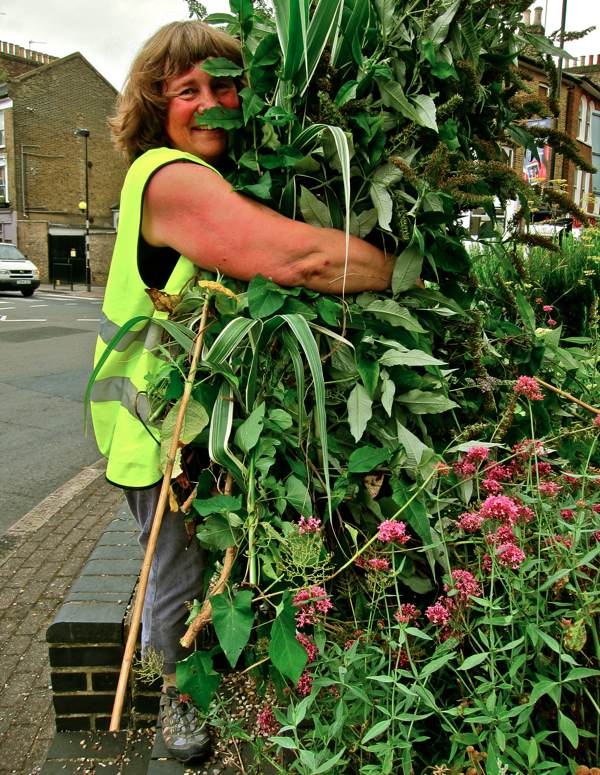


“a certain knack to find the gap in the traffic and haul it across to the pavement in time”

Enough lavender left to satisfy the bees.


The lavender harvest of 2012 in Victoria Park Village.

Caroline Bousfield – “People do notice.”
You may also like to read about