
The Return of David Power
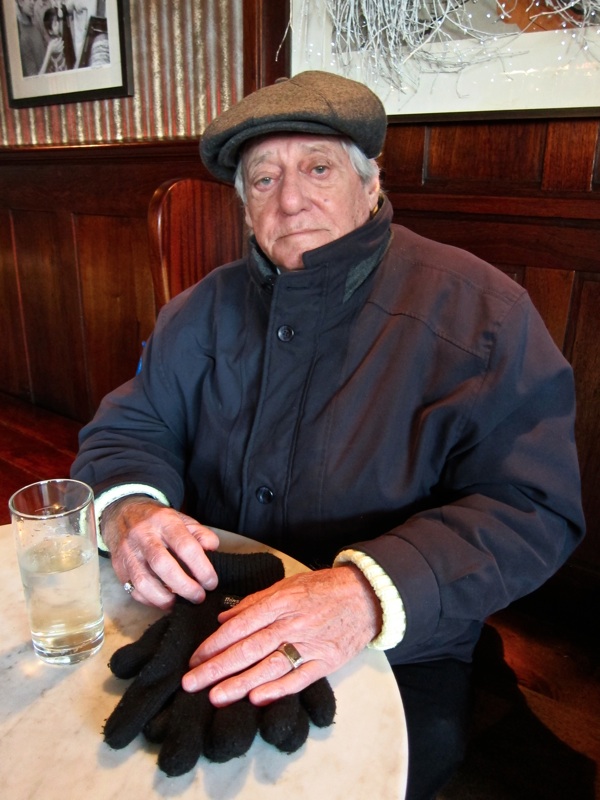
David Power at The Golden Heart where he played the piano in 1946
By chance, I bumped into David Power, the Showman & Ex-Musical Prodigy at the London Ex-Boxers Christmas shindig recently, where I had the pleasure of introducing him to Frances Mayhew of Wilton’s Music Hall. So yesterday, after he had paid a visit upon Frances at Wiltons to arrange a date for an evening of Music Hall in the spring for which he will be impresario and compere, David walked up from Wapping through the frost to Spitalfields for a celebratory drink with me by the fireside at The Golden Heart. “I was spellbound,” admitted David, in wonder at seeing Wilton’s for the first time, “I closed my eyes and expected to hear Burlington Bertie…”
David’s appearance at Wilton’s Music Hall marks his return to the East End as an entertainer for the first time since he performed in Spitalfields as a youth. “I played the piano in here when I was fourteen years old, in the nineteen forties just after the war.” he recalled, casting his soulful eyes around the empty barroom of The Golden Heart, “I had to wear a hat and a false moustache because I wasn’t old enough to go in a pub. I played Friday, Saturday and two sessions on Sunday, and I got a pound.”
“They mostly sold stout in them days and there were very few women in here. Instead, the men took their wives and mothers home a bottle of stout just to keep them quiet. The piano player had fallen ill and they heard me playing the piano from the window of my Aunt Sarah’s at 98 Commercial St. Now I loved my Aunt Sarah, but every word out of her mouth was swearing, while my Uncle Jimmy, he was the gentlest, mildest man you could imagine and my cousins were the same. Yet Aunt Sarah made up for the lot of them, she had more front than Tower Bridge.”
We braved the cold to revisit the doorstep of the notorious Aunt Sarah at 98 Commercial St and found her long gone. “It’s very difficult for me to explain to you, because it was a very tough life round here,” David confided to me with a grimace. “‘You’ve been with the kurwas?’ they used to ask,” he said, raising a significant smile as we entered the park next to Christ Church, known to David as Itchycoo Park, “That means you’ve been in here having sex on a gravestone with a prostitute.”
Crossing Commercial St, we entered Toynbee St passing the Duke of Wellington. “That’s where Stafford murdered his son, he got involved in slot machines,” David declared dryly, in passing, as we approached the former premises of Hymie the Barber. “All the stars used to come here for a shave and a haircut for a half crown,” he announced, “all the market boys.” Turning down Brune St, we crossed into the old market building where David started work at fifteen. He stood and scratched his head, surveying the chain restaurants and office workers doing their Christmas shopping, on the site where he was once employed in the fruit & vegetable market. “This place, years and years ago, it was alive,” he assured me, “People came from miles and miles around. At three o’clock in the morning it was buzzing, like a great theatre, and the cafes were open twenty-four hours a day. Most of those men were strong as lions.”
“I’m going back seventy years, I’ve never been back before,” David protested, in trepidation, as we walked down Commercial St, turning into Thrawl St in search of Faulkner St where he grew up. We found the buildings were gone and the street renamed Nathaniel Close. Similarly, in Old Montague St, where David’s grandparents lived there was no trace of the two-up-two-down cottages that he remembered. We stood amidst the chaos of the building works at the rear of the London Metropolitan University. “My grandfather, David Solomon, was the British Lightweight Bare-Fisted Boxing Champion,” David asserted, as if to conjure him into existence to spite the erasure of his world.
Seeking refuge from the chill, we entered a cafe in Middlesex St for hot mugs of tea, and within five minutes a woman came in and asked David, “How’s your cousin?” Thereby confirming the unexpected truth that even after all this time, the movements of people and the rebuilding of neighbourhoods, ties of kinship among East Enders do survive. David was heartened enough to order a sausage and tomato. “Whether it was good or bad, we didn’t know any different,” he ruminated, as he cut his sausage.“But I think you would have liked it, living in my time, in the nineteen fifties,” he conceded tenderly.
As we tucked in to our lunch, I realised we had been on an emotional journey together and I understood how it important it will be for David to perform in the East End for the first time, after all these years. “There’s going to be a lot of top professionals. I’ll get the TV down, they have nothing on for over forty-fives. All you see is murder and killing and X Factor, but there’s so much more talent out there.” he bragged, “We’ll have an opera singer and a Russian musical prodigy and a magician, and I’m going to get Roy Hudd.”
I was already looking forward to being at Wilton’s Music Hall next year and hoping you will be there with me to celebrate the triumphant return of David Power, the Showman.
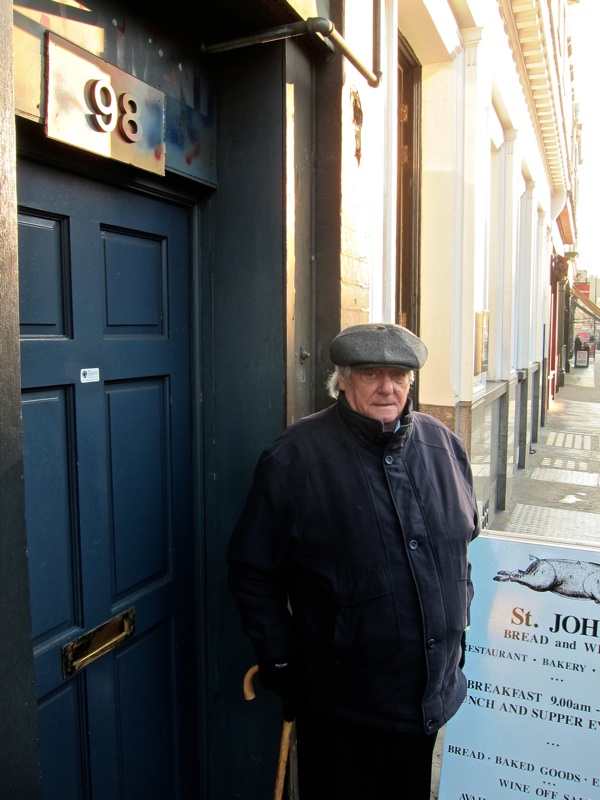
Outside 98 Commercial St where David’s Aunt Sarah lived in the thirties and forties – “She had more front than Tower Bridge.”
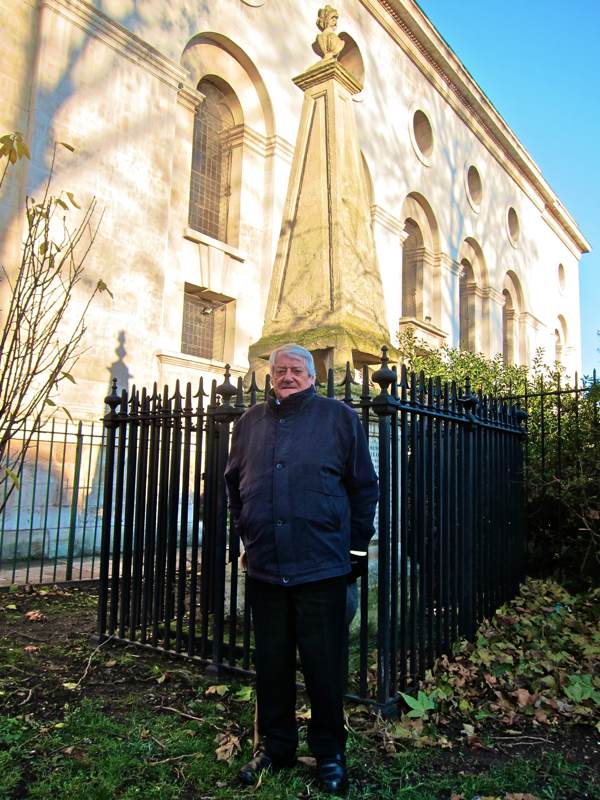
In Itchycoo Park, “‘You’ve been with the kurwas?’ they used to ask…”
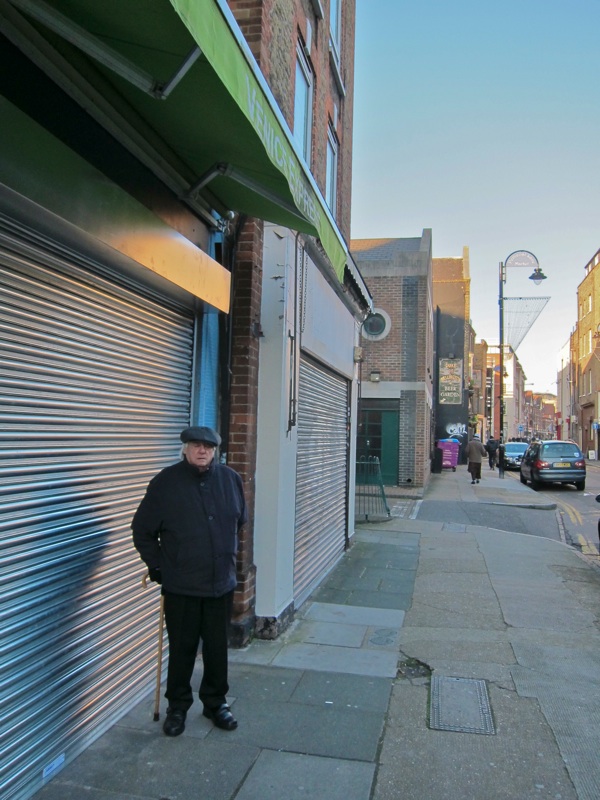
At the former premises of Hymie the Barber in Toynbee St -“All the stars came here, all the boys in the market.”
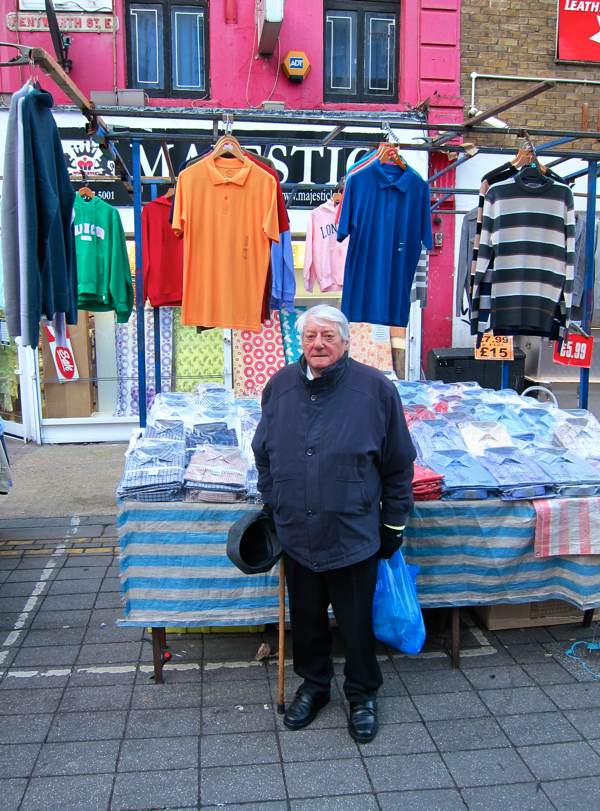
“My cousin Sammy Lissner stood here for seventy years on the corner of Wentworth St selling fruit & vegetables.”
Read my original profile
At Two Temple Place
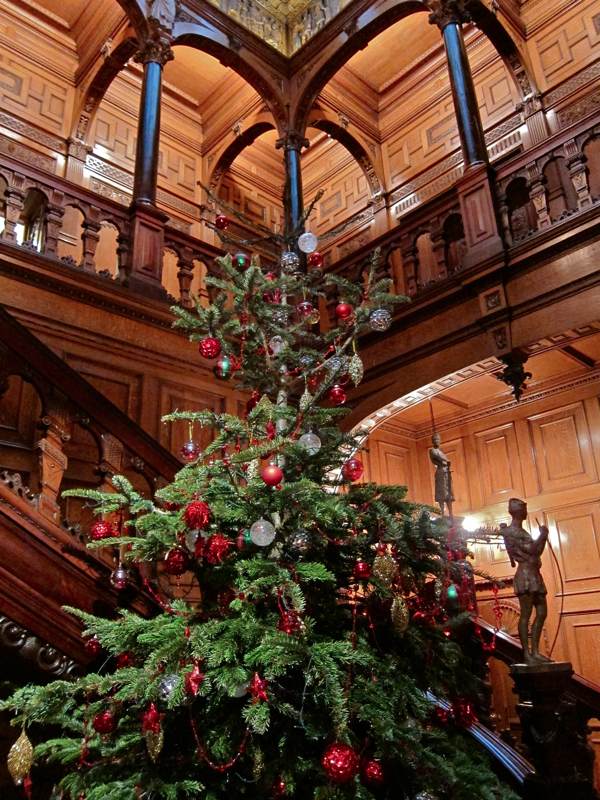
If you were to take a turning off the Strand, walk down Essex St, then descend Milford Stairs to Milford Lane, emerging within the shadow of the nineteenth century edifice of Two Temple Place, then sneak between the ornate railings and slip in through a crack in the panelled door – you might find yourself alone, as I did, in the hallway of the extravagant mansion built for the reclusive William Waldorf Astor when he inherited a hundred million dollars in 1890, became the richest man in the United States and fled to London in exile.
“America is not a fit place for a gentleman to live,” he declared after receiving death threats and kidnap attempts upon his children. Yet even before you know the details or learn that Astor employed pre-eminent architect, John Loughborough Pearson – luring him with an unlimited budget – you sense that you are at the portal to a fantasy. The staircase is oak, the panelling is mahogany, the pillars are solid ebony and the marble floor is inlaid with jasper, porphyry and onyx. Twelve characters from Robin Hood sculpted by Thomas Nicholls upon the newel posts emerge from the gloom, harbingers of another world that awaits you at the head of the stair.
So frustrated was Astor that, in 1892, he released announcements of his own death in the vain hope of winning greater privacy, only compounding his personal enigma once they were revealed as false. After Astor’s wife died in 1894, he often retreated from his family home in the more fashionable Carlton House Terrace to sleep at Two Temple Place, built as the headquarters of his sprawling business empire. “There I am safe,” he confided to Lady Warwick and showed her a lever upon the first floor which locked every entrance to the building. Similiarly at Hever Castle, Astor’s primary country residence, he had a drawbridge constructed that could be raised each night.
Two Temple Place is the glorious product of an idiosyncratic and unfettered imagination. After Astor’s death in 1919, it was rented and then sold for use as offices, only opened to visitors a year ago by the Bulldog Trust as the venue for an exhibition of William Morris, when it was revealed to the wider public as a lost masterpiece of late nineteenth century architecture. Thus it was that I was granted the privilege of a visit to savour this fantastical interior for myself.
Standing at the foot of the staircase, you understand why Astor felt “safe,” in the sense that you are entirely enclosed by the wood-lined room which permits no window to the outside world. Comprising a square stairwell, the space rises to an enclosed gallery with arches similar to those in engravings by Esher.
The bitter aroma of pine from the Christmas tree rises in the soporific warmth of the central heating as you ascend in the shadows to the gallery, where the extent of the literary iconography which recurs throughout the building becomes apparent. At each corner of the stairwell stand Astor’s favourite protagonists from novels – Hester Prynne, Rip Van Winkle, The Pathfinder and The Last of the Mohicans – characteristically, all are outsiders who are misunderstood. Above them is a Shakespearian frieze with eighty-two identifiable characters from Anthony & Cleopatra, Henry VIII, Othello and Macbeth, significantly chosen as plays that dramatise the torments of power. Yet, remarkably, the proportion and order of the space, the lustre of the materials and the expertise of the workmanship place everything in perspective – the chaos of human endeavour is reconciled within this sanctuary of the imagination.
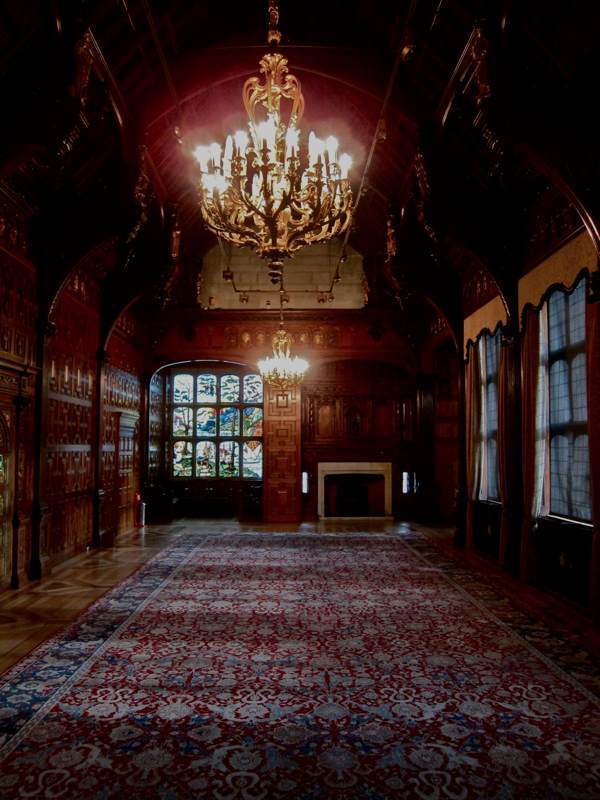
Unsurprisingly, Astor’s private office is equipped with both a secret door and discreet drawers for the storage of champagne, the latter hinting at a brighter side to his nature. Through the secret panel is the largest room in the building, known as The Great Hall or The Mediation Room, where Astor summoned those he chose to do business with. I was told that Pencil Cedar was chosen for the panelling in this room, emitting a relaxing aroma calculated to dispel any tension, yet such is the grandiose nature of the seventy-foot long hall, I doubt anyone would seek controversy in the face of its creator.
At either end, stained glass windows portray the rising and setting sun while the epic mahogany hammer-beam ceiling above is modelled upon the design of the roof in Middle Temple Hall, a wooden frieze depicts a mixture of personalities from history and myth, including Bismarck and Pocahontas, and characters from Ivanhoe perch upon the beams – gilded, just in case you might fail to notice them in the flurry of literary references. Once the time comes to leave, overwhelmed by the wealth of detail, your eye falls upon the Arthurian heroines by George Frampton languishing upon the rear of the door.
You stumble back into the vestibule, intoxicated by the decorative excess yet seduced by the dazzling assurance of your host. There are so many corners and doors within this intricate building, which retains the presence and personality of its creator so vividly, you half-expect William Waldorf Astor to appear at any moment and pull the lever to lock all exits. Yet who could object to spending Christmas holed up by the fire at Two Temple Place and letting the outside world recede far away?
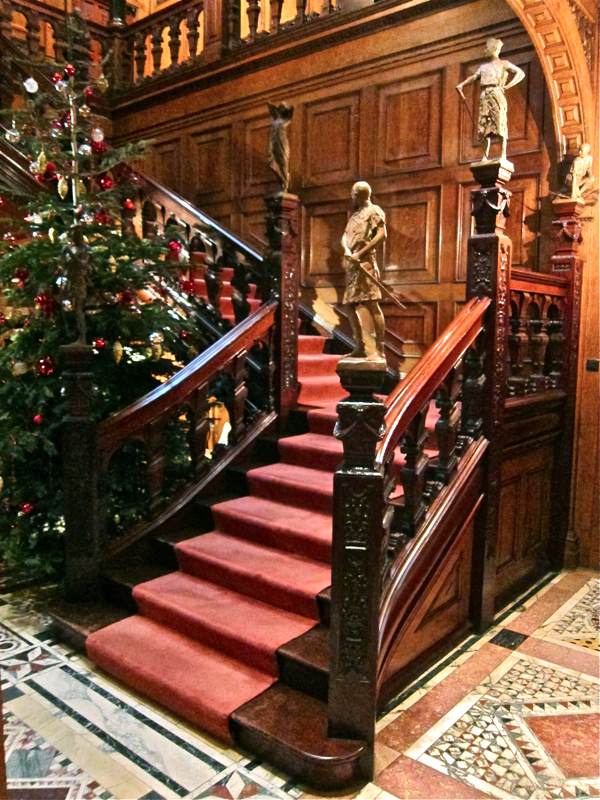
Twelve characters from Robin Hood sculpted by Thomas Nicolls adorn the newel posts.
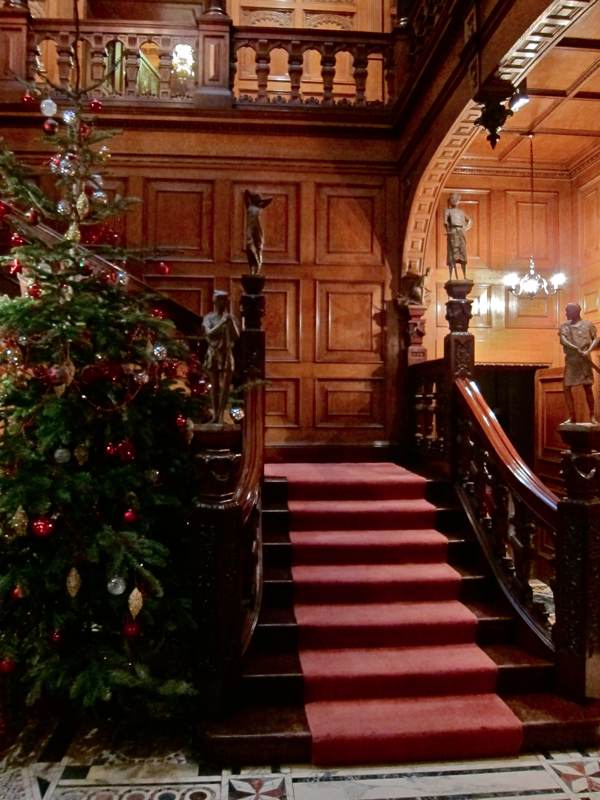
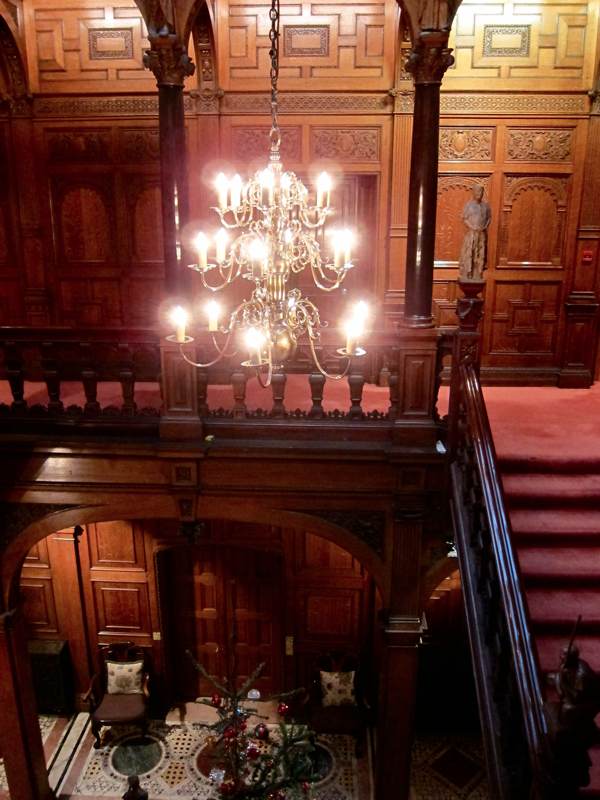
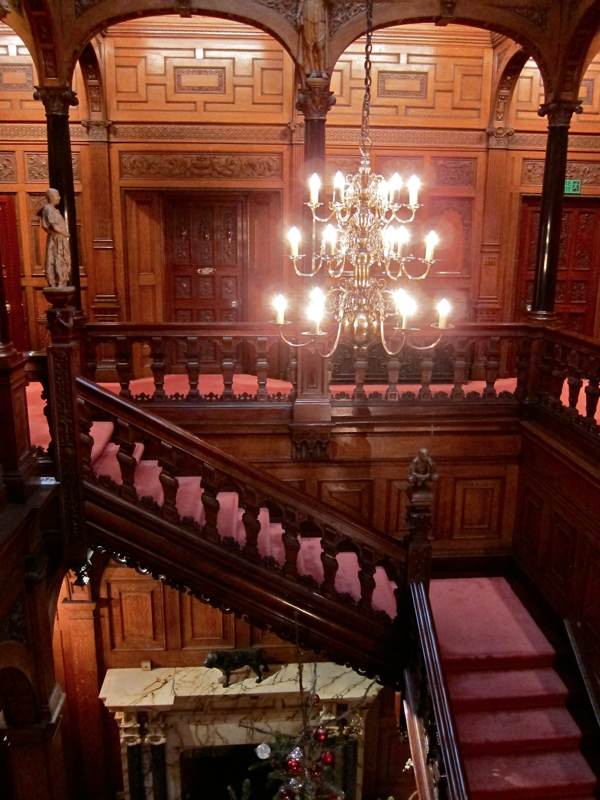
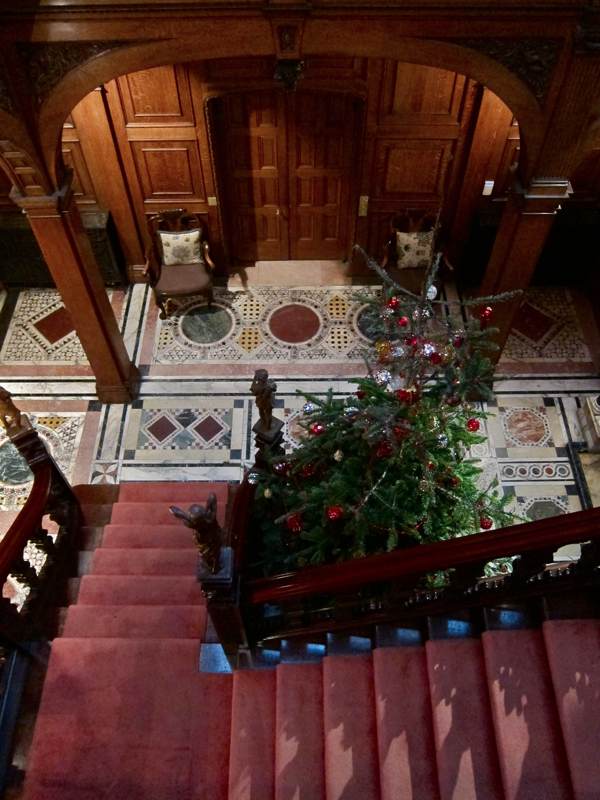
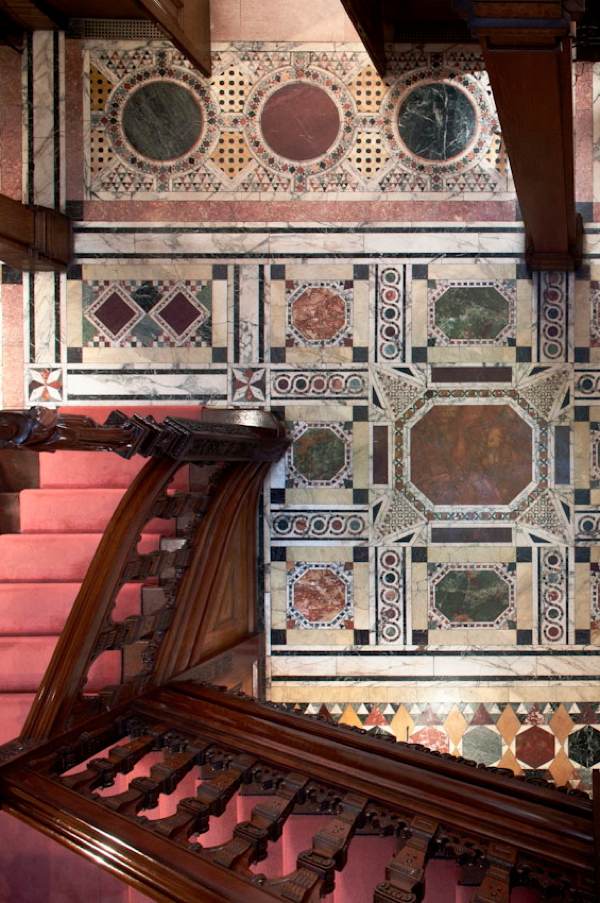
The floor is inspired by the Cosmati pavement in Westminster Abbey.
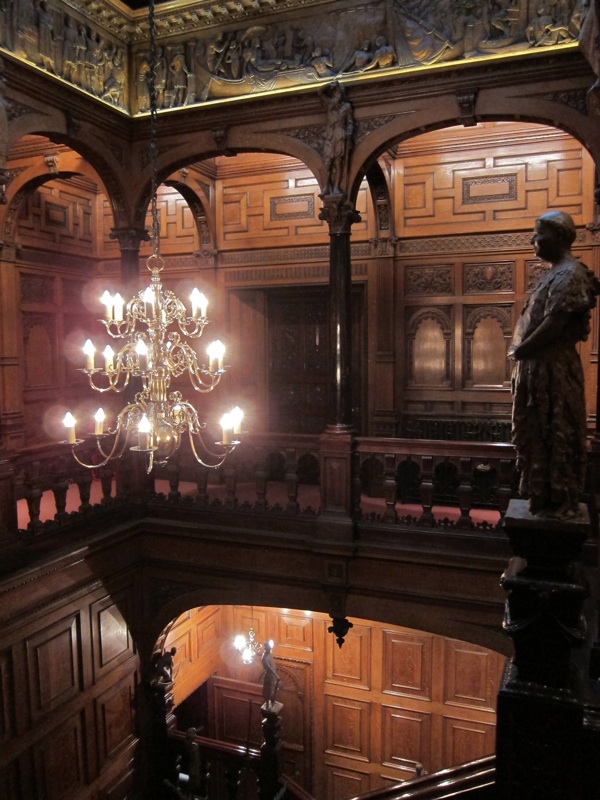
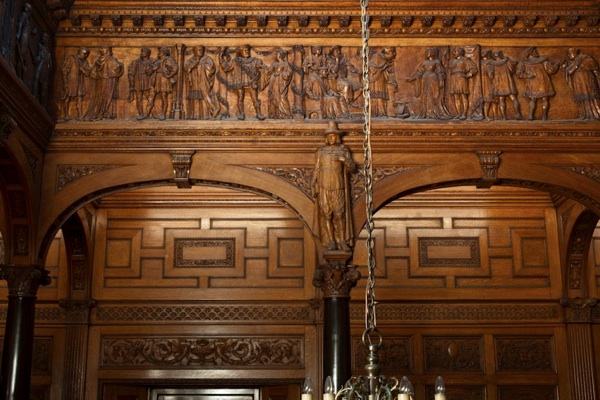
Scenes from Shakespeare with eighty-two identifiable characters filling the frieze above the stairwell.
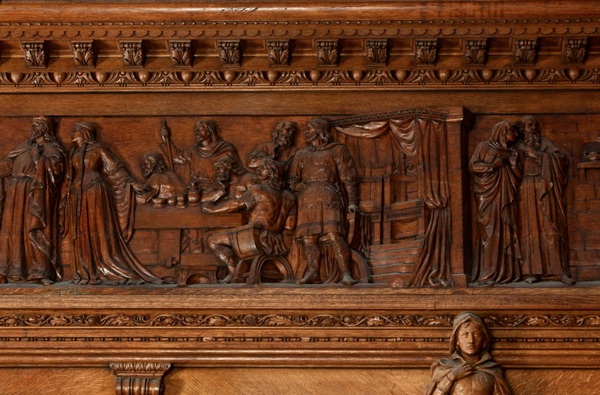
Frieze of a scene from Macbeth.
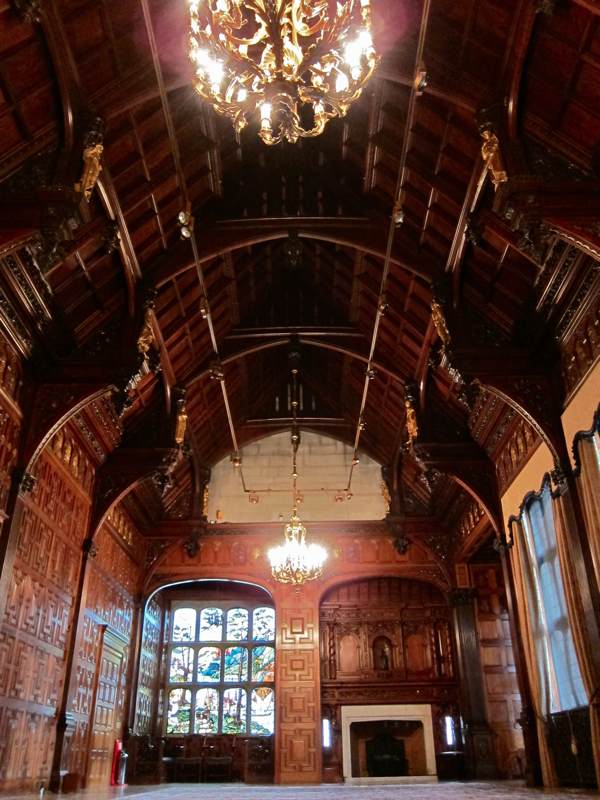
The Great Hall
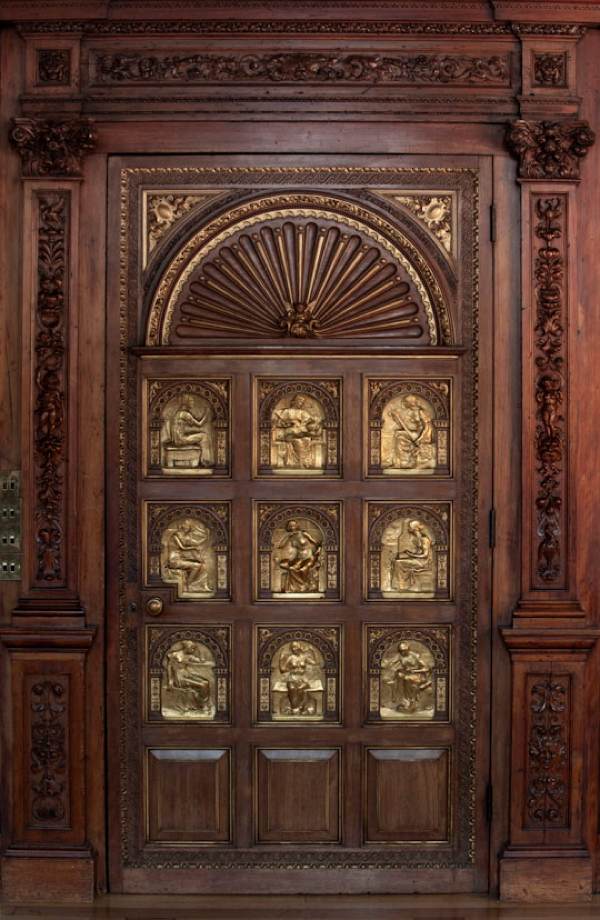
Gilt panels by George Frampton upon the door in the Great Hall depict heroines of Arthurian myth.
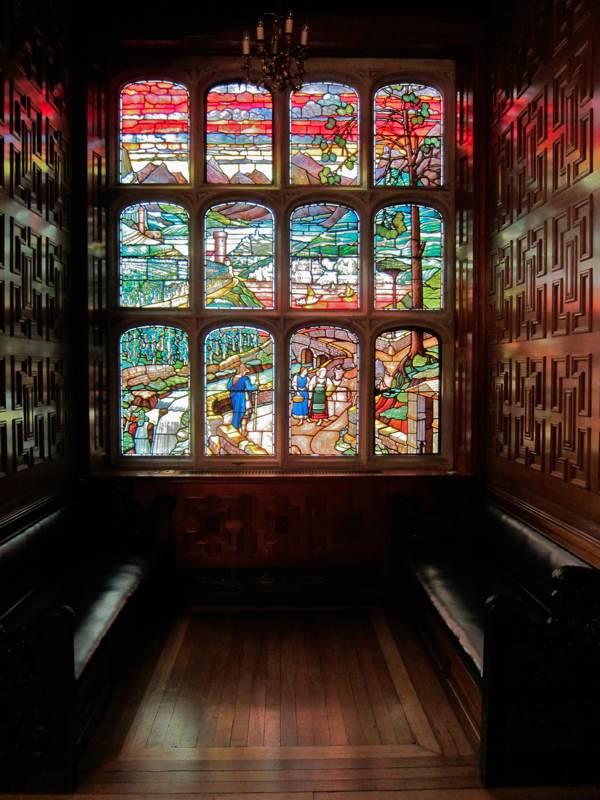
The window by Clayton & Bell at the west end of the Great Hall depicts sunset in the Swiss Alps.
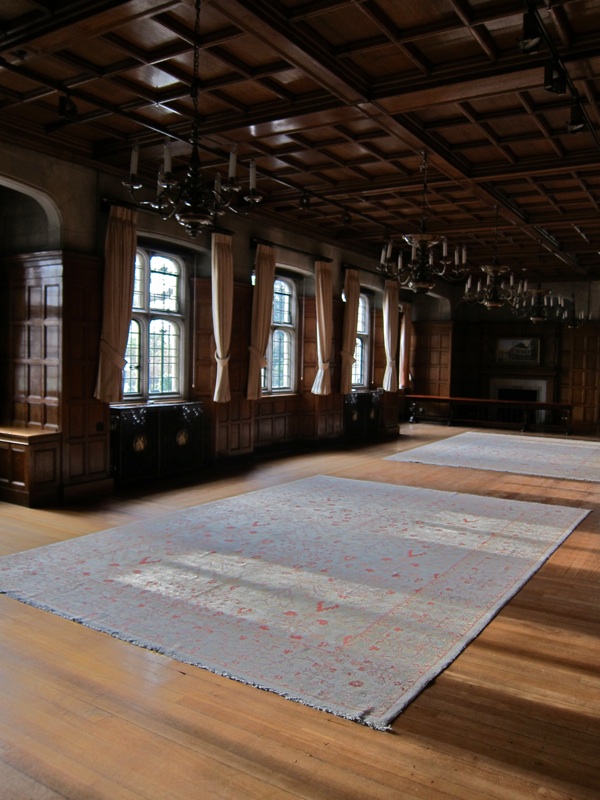
Ground floor reception room overlooking the Thames.
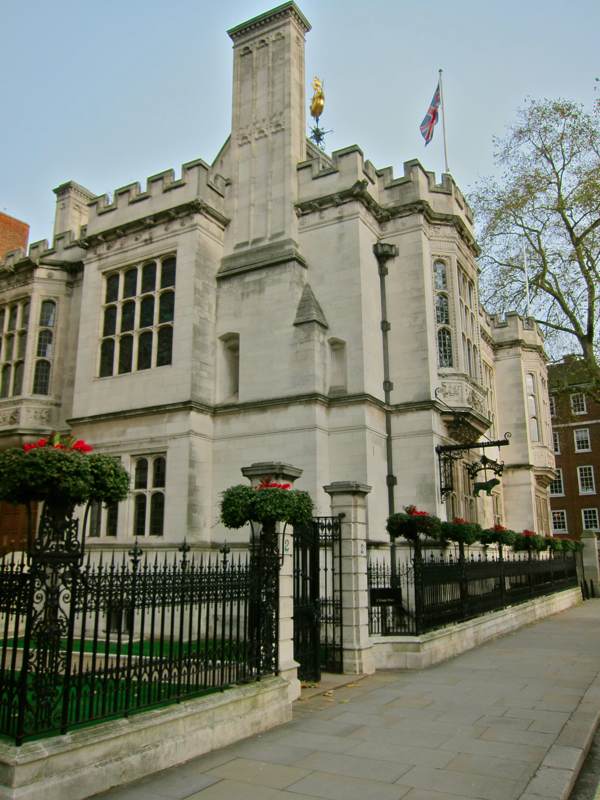
The entrance on Temple Place
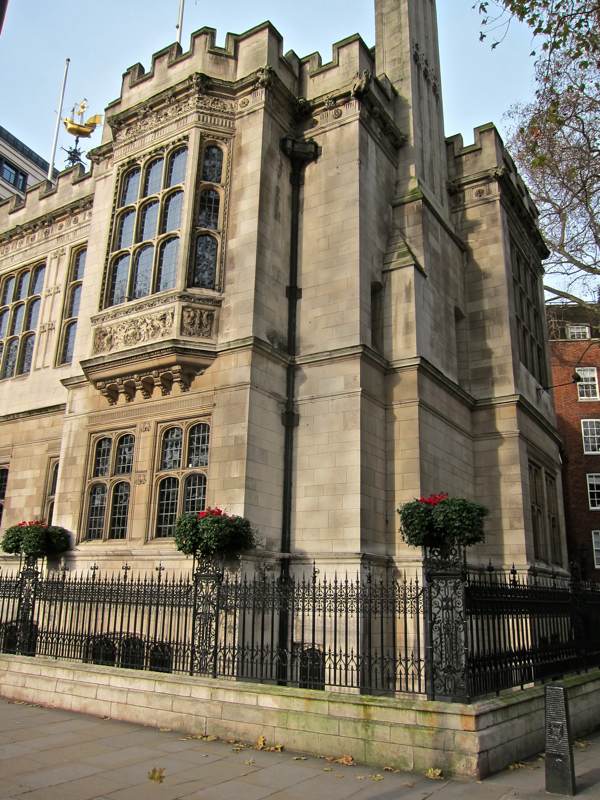
Weathervane by J. Starkie Gardner depicts Columbus’ caravel in which he discovered America.
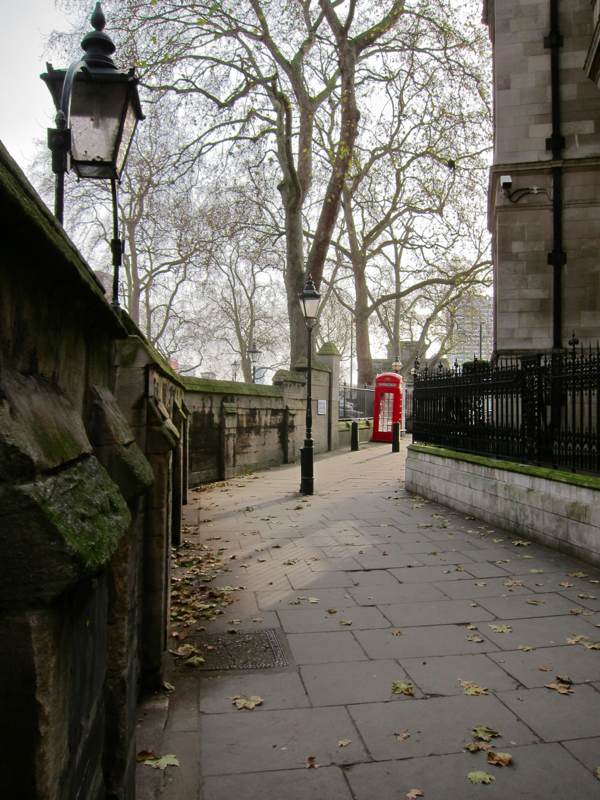
In Milford Lane
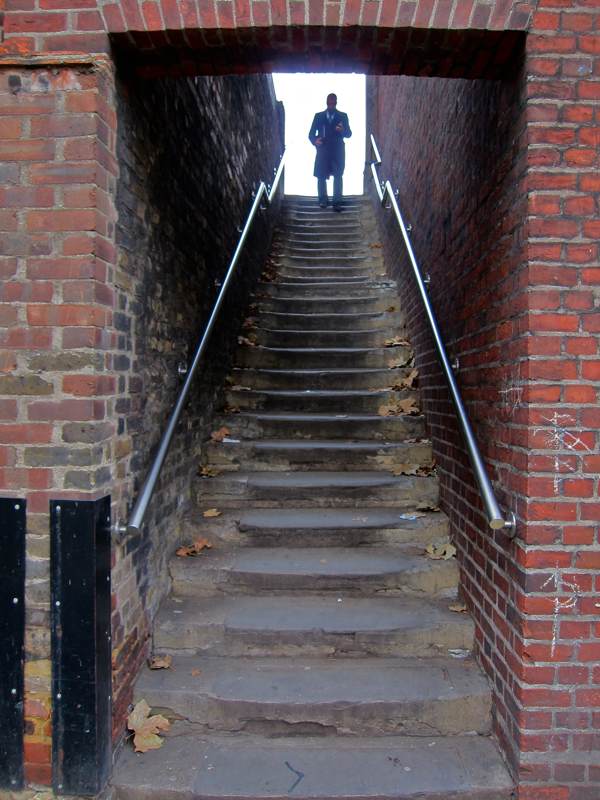
Milford Stairs leading to Essex St.
Amongst Heroes – The Artist in Working Cornwall, paintings from the Royal Cornwall Museum opens at Two Temple Place on 26th January – Admission free.
John Claridge’s Boxers (Round Seven)
Contributing Photographer John Claridge & I joined our boxer pals of the London Ex-Boxers Association for their Christmas shindig at the William Blake in Old St last weekend. John set up a booth in the corner while I searched the crowd to find worthy opponents for him. Starting at eleven in the morning, the day proved to be a raucous celebration amongst lively company yet, at ten in the evening, John was still standing – unbroken and unbowed. And here you see the photographic evidence of his unsurpassed talent in Round Seven of this ongoing series.
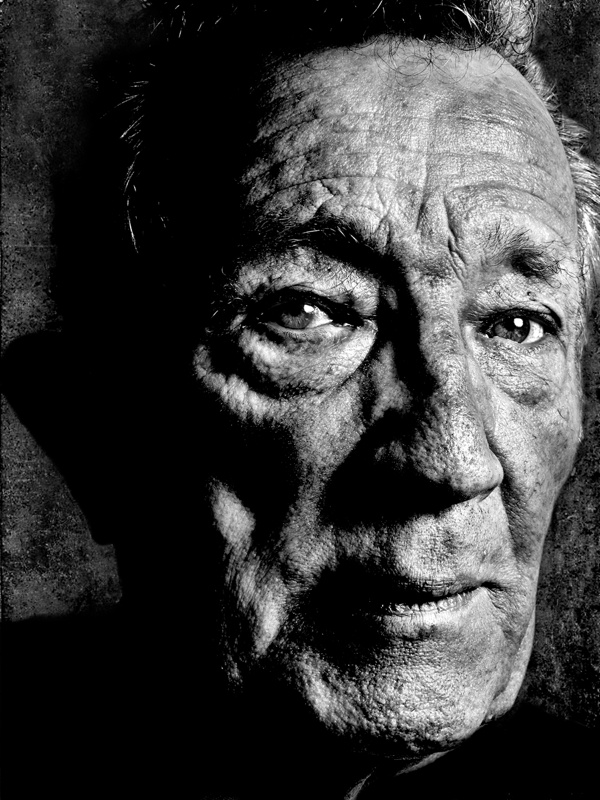
Johnnie Anderson (First fight 1950 – Last fight 1956)
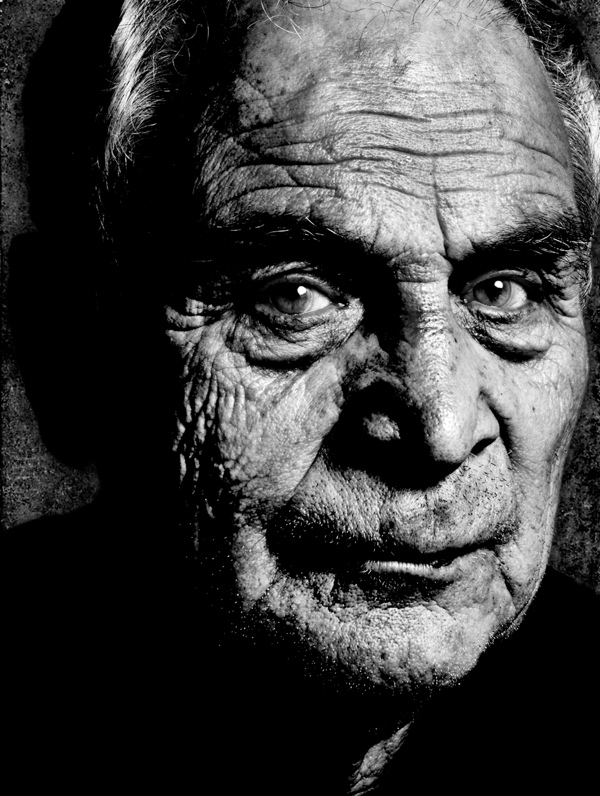
Hyman Kern (First fight 1951 – Last fight 1953)
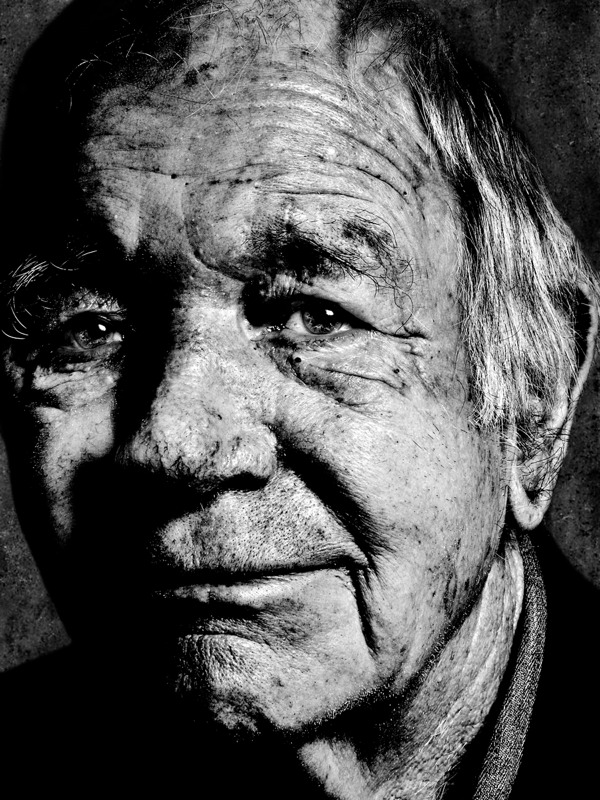
Ron Bebbington (First fight 1938 – Last fight 1950)

Michael Lordan (First fight 1969 – Last fight 1972)
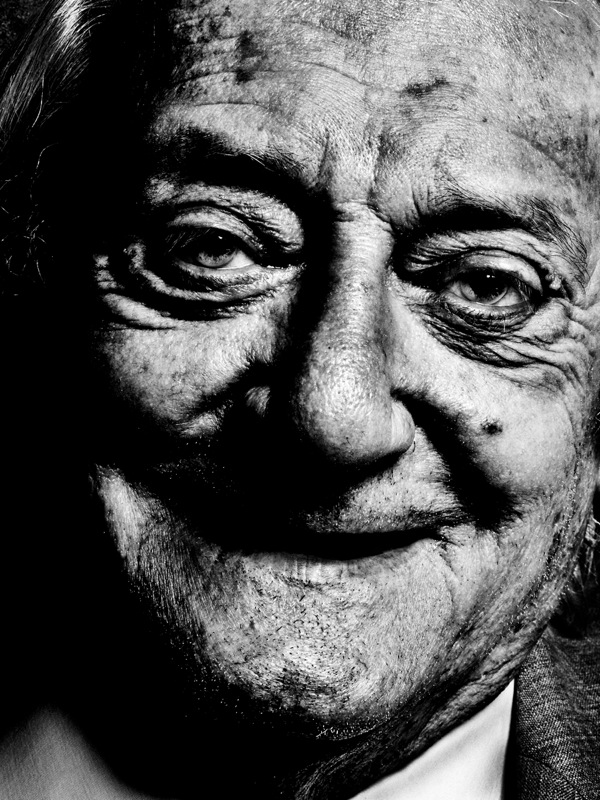
David Power (First fight 1949 – Last fight 1960)
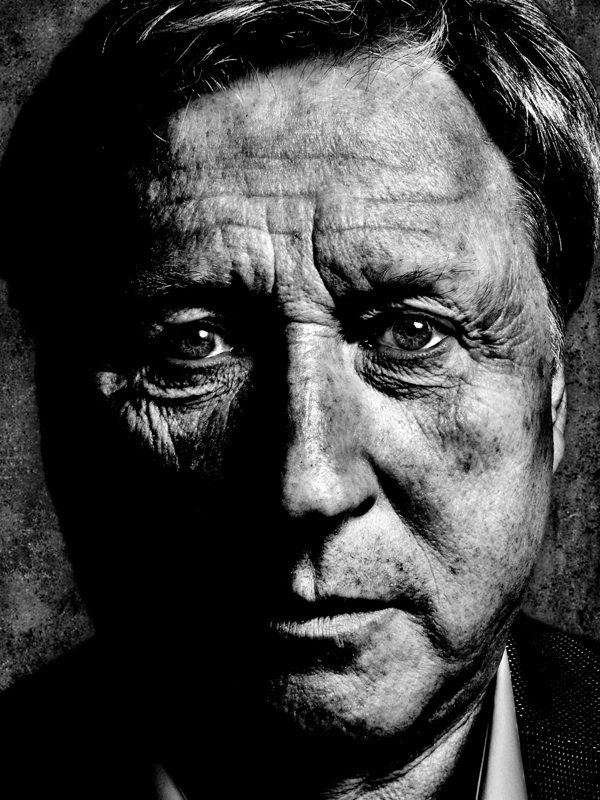
Bob Cheeseman (First fight 1962 – Last fight 1968)

Joe Looker (First fight 1941 – Last fight 1955)
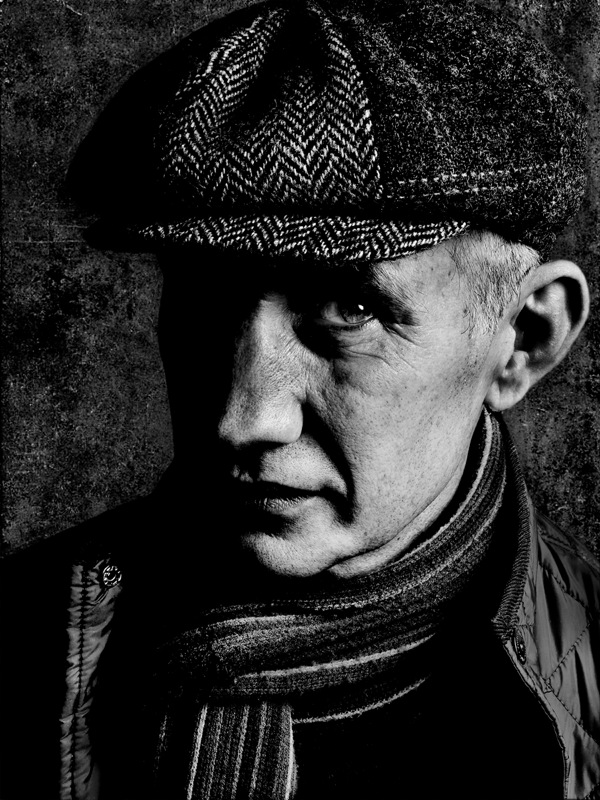
Dominic Bergonzi (First fight 1971 – Last fight 1984)
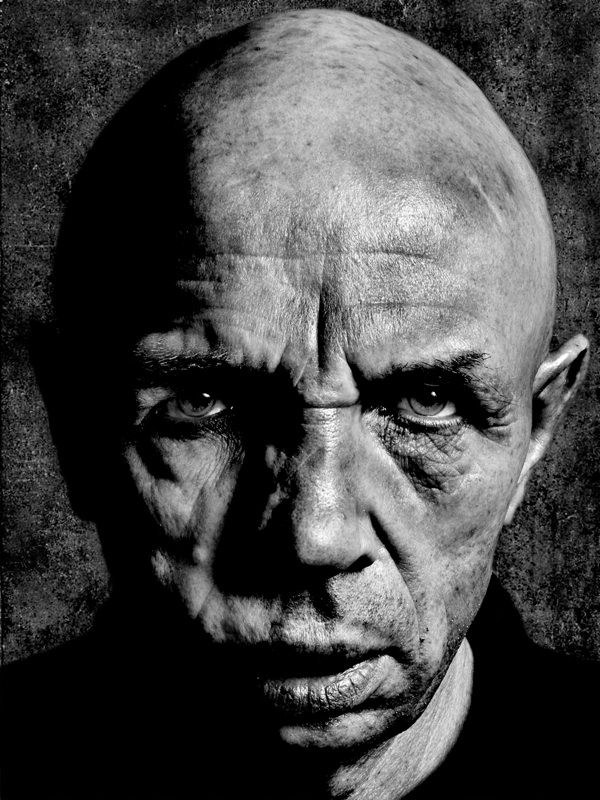
Steve Fox (First fight 1977 – Last fight 1979)
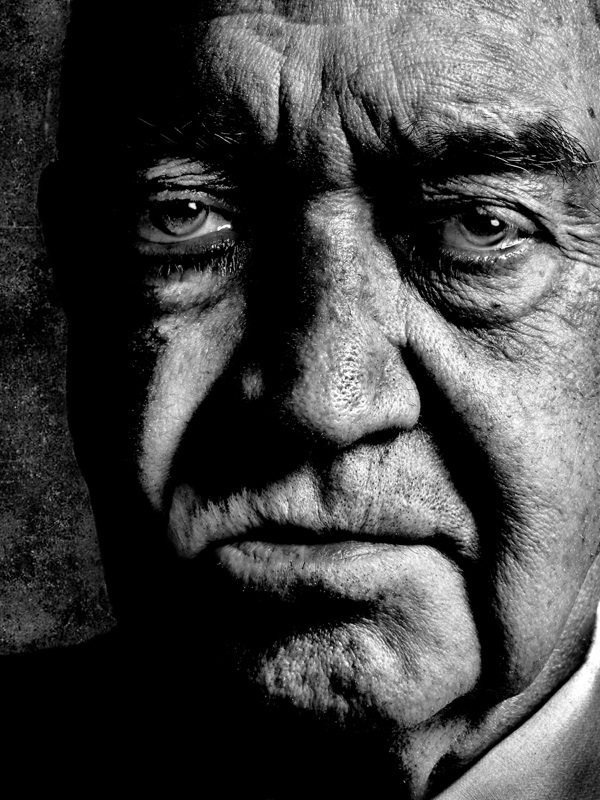
Eddie Richardson (First fight 1949 – Last fight 1957)
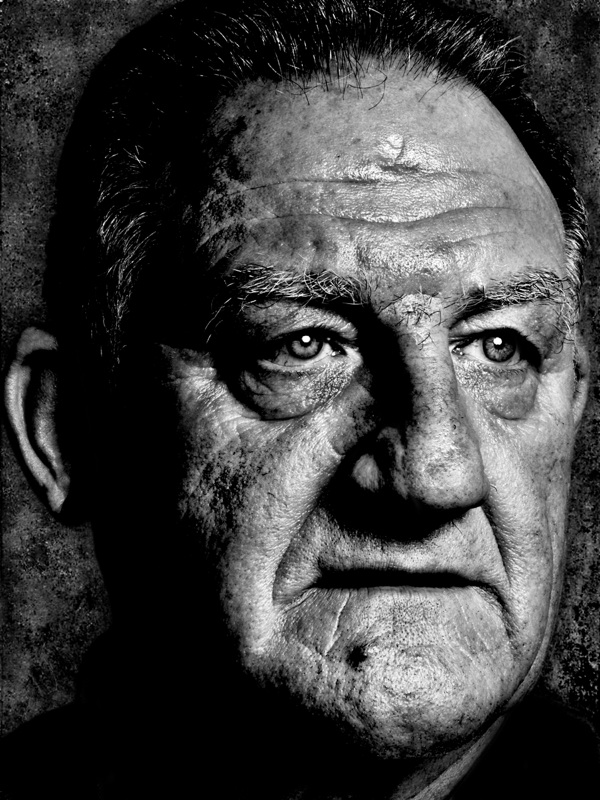
Fred Harrison (Boxed in the sixties)
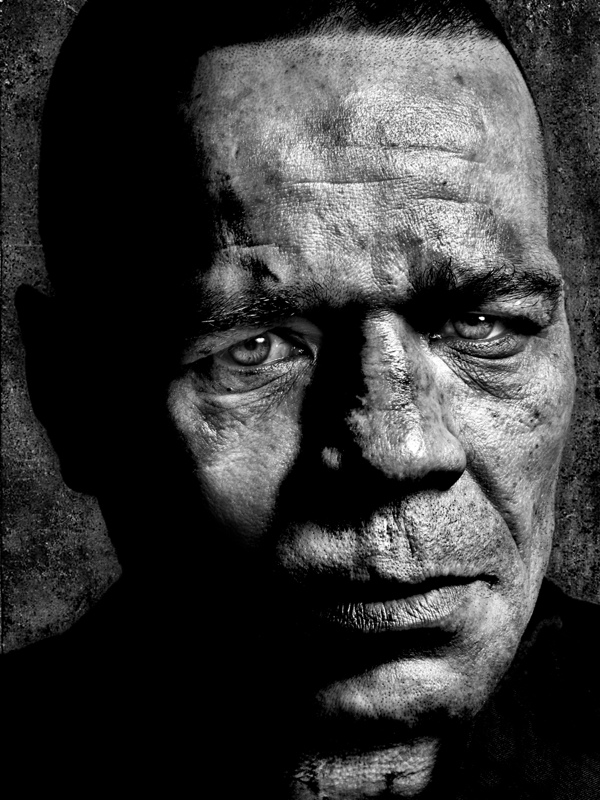
Rocky Kelly (First fight 1981 – Last fight 1989)
Photographs copyright © John Claridge
Take a look at
John Claridge’s Boxers (Round One)
John Claridge’s Boxers (Round Two)
John Claridge’s Boxers (Round Three)
John Claridge’s Boxers (Round Four)
John Claridge’s Boxers (Round Five)
John Claridge’s Boxers (Round Six)
and these other pictures by John Claridge
Along the Thames with John Claridge
At the Salvation Army with John Claridge
A Few Diversions by John Claridge
Signs, Posters, Typography & Graphics
Views from a Dinghy by John Claridge
In Another World with John Claridge
A Few Pints with John Claridge
Some East End Portraits by John Claridge
Sunday Morning Stroll with John Claridge
More Cats of Spitalfields
Contributing Photographer Chris Kelly, author of book of cat photography The Necessary Cat – A Photographer’s Memoir, has been making a survey of the cats of Spitalfields and following the first selection last Sunday, I am delighted to publish more of her portraits of famous local felines and their human slaves.
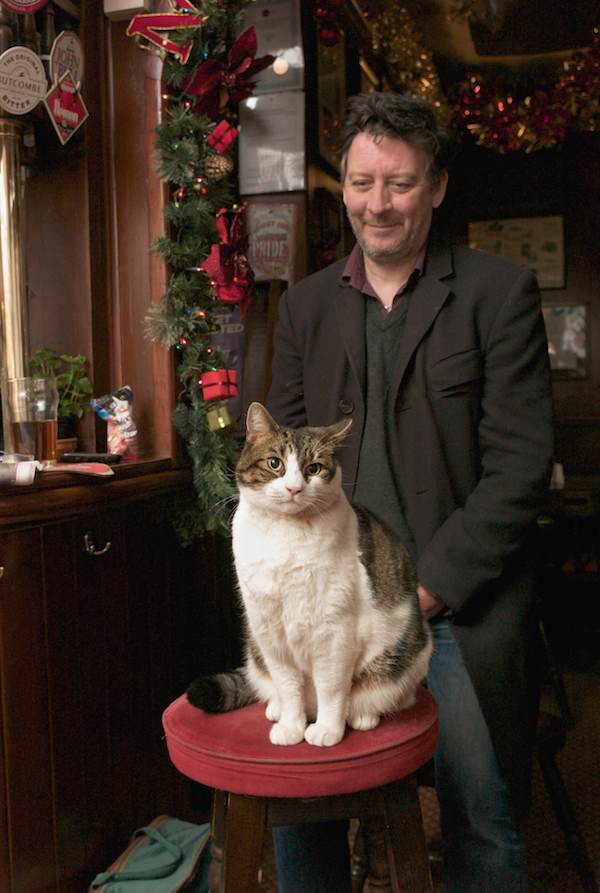
Lenny, pub cat at The Pride of Spitalfields, with admirer Dean Whatmuff.
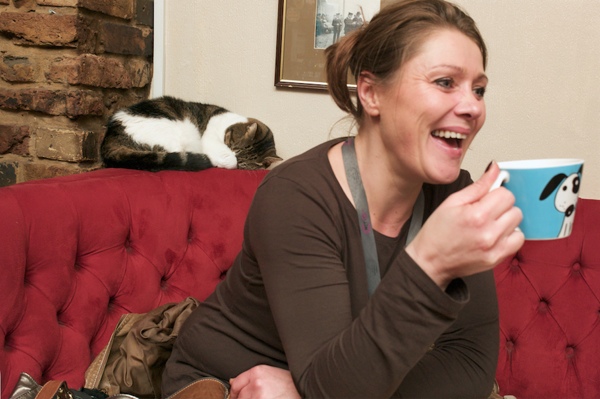
Lenny snuggles in a cosy corner.
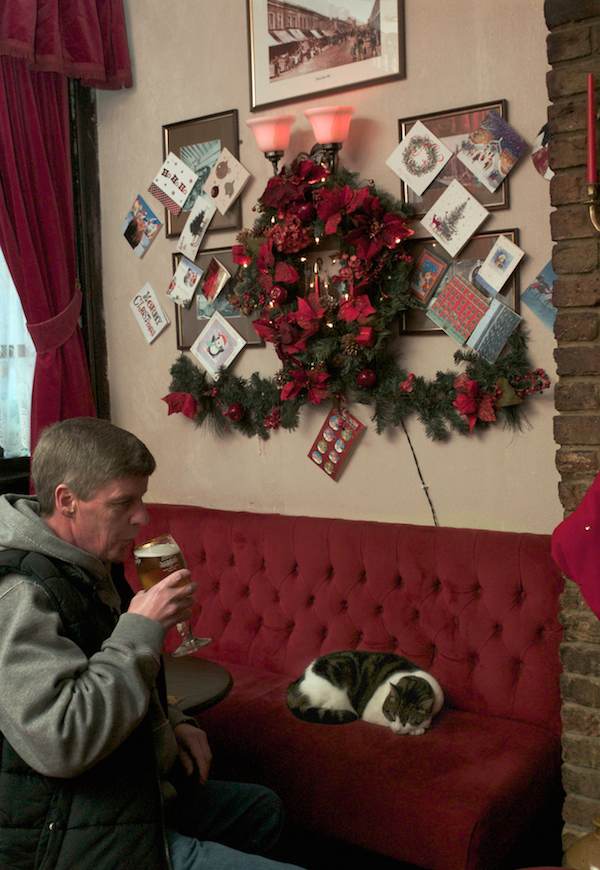
Lenny napping watched over by Terry Hutton.
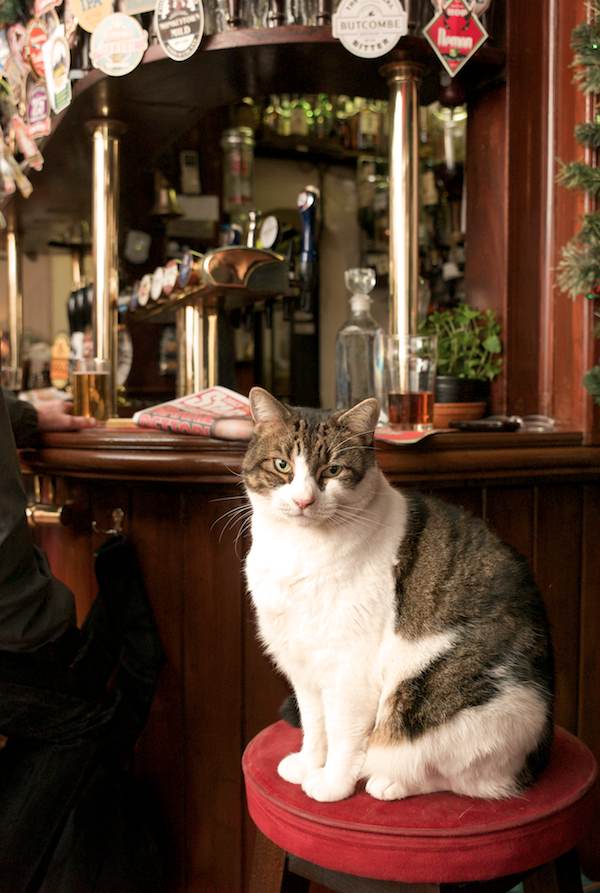
Lenny at The Pride of Spitalfields with Anne Butler, landlady & Terry Hutton & Dean Whatmuff, regulars.
Anne Butler – “Lenny is from a Liverpool refuge centre. He is nine years old and immediately took to being among the customers, but moving for no-one. He is very good with my other cat, Patch, although they fight a bit, he is always cleaning him and lets Patch get to his dinner first. He has a real good fan base and affection for all those who give him titbits.”
Terry Hutton – “Iʼve been coming here since I was fourteen. I like the atmosphere – and the cat. I was born in Spelman St and the old chicken market used to be nearby, so there were always a lot of stray cats and sometimes the cat lady used to feed them.”
Dean Whatmuff – “Iʼm from Yorkshire and Iʼve lived in Spitalfields since 1981. I went to the Slade in 1983 and my first studio was near here in the early eighties. Shoreditch was like a ghost town at night then and you had to come to the beigel shop to get something to eat. Iʼve been sketching the customers here for a while now. Itʼs part of a long term project and I hope theyʼll be displayed locally. I do some building work at the pub too and rehang the pictures occasionally. It doesnʼt change much. And Iʼm a DJ at the disco here every Monday at six. Itʼs called ‘mondayvinyl’ and weʼre the ‘one-deck-wonders.’”
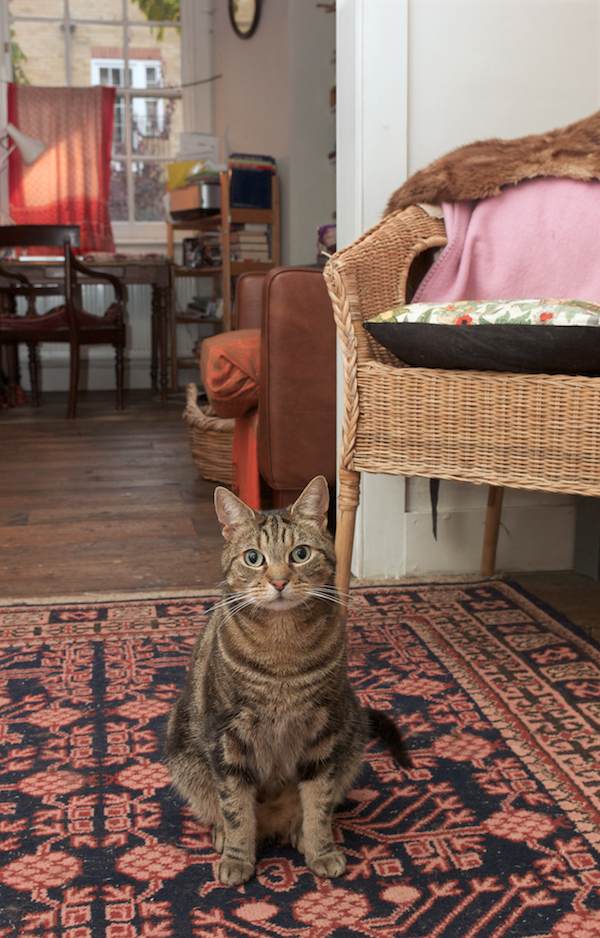
Battie
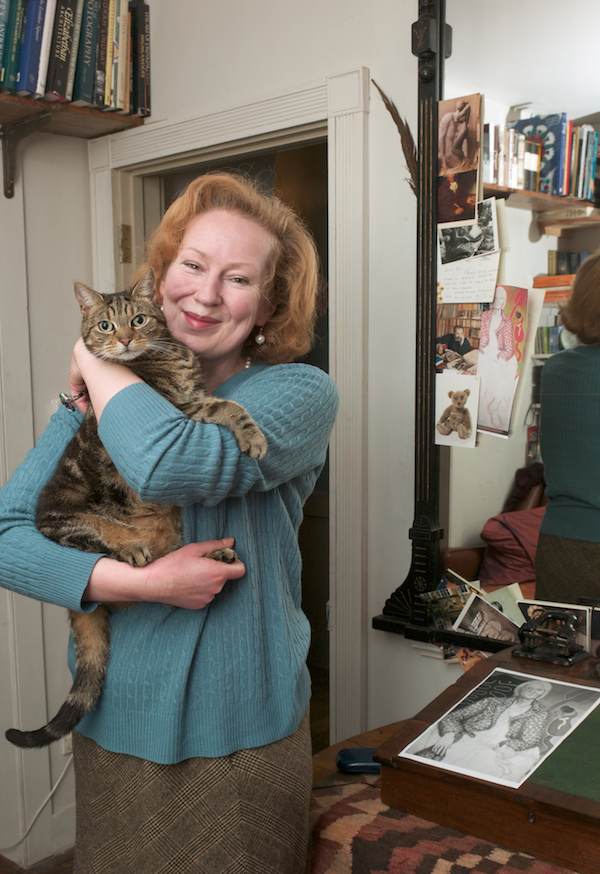
Battie with Philippa Stockley
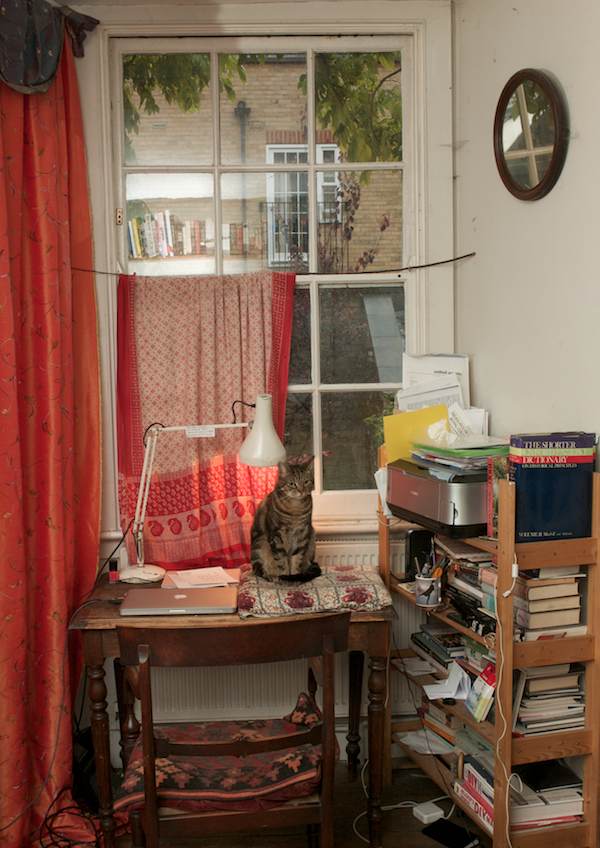
Battie & Philippa Stockley
“Battie is a rescue cat, heʼs half Bengal and half Fat Tabby. There was a pair of kittens and this little cat on its own in a box looking miserable. Suddenly, he jumped into my arms – and I gave him back because Iʼm heartless. So he walked round my legs and sprayed me like a tree. Iʼd been marked out as his.
He was frightened at first but now heʼs my constant companion. Heʼs nearly seven, heʼs always waiting when I come home and heʼs only happy if Iʼm within smelling distance. And heʼs a most beautiful jumper.”
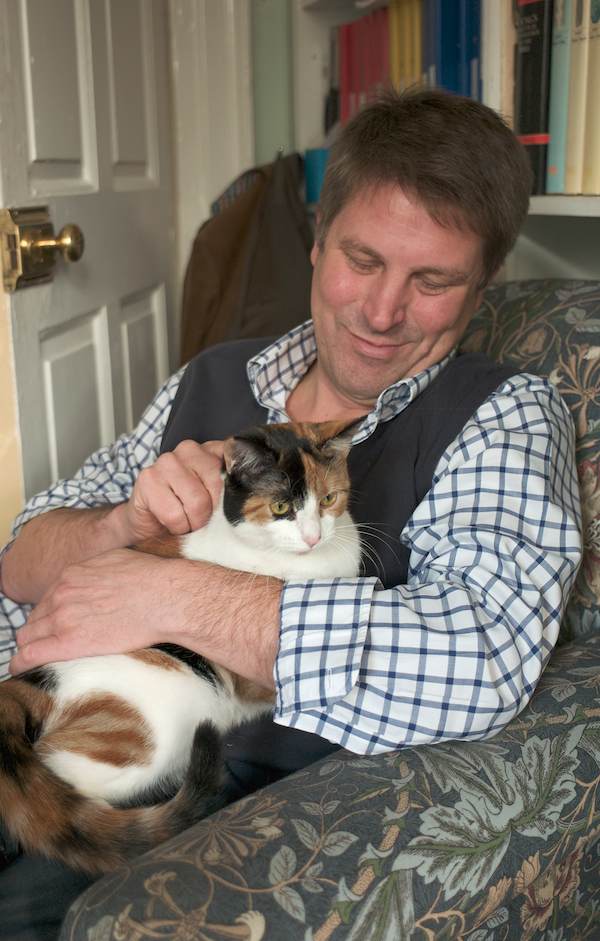
Ambrosia & Rev Andy Rider, Rector of Christ Church

Ambrosia & Rev Andy Rider, Rector of Christ Church, Spitalfields
“Weʼve only had Ambrosia for four and a half months. We wanted a tortoiseshell and her name had to begin with the letter A, so sheʼs named after my favourite pudding. Our golden retriever, Archie, is her role model. She definitely aspires to be a dog and she doesnʼt realise sheʼs quite small. Sheʼll make a dive and hang on to Archieʼs leg but, luckily, heʼs very tolerant.
I always say Iʼm not all that bothered about pets, but my wife would dispute that. Our first cats here came from Eric Elstob, who lived in Fournier St. He was one of the great champions of the restoration of Christ Church and, when he died in 2003, his house-keeper asked us to take on the two cats Julio & Antonio. Towards the end of their lives, we thought weʼd better have a new cat to take over mousing duties. So far no results from Ambrosia, but weʼre encouraged by some scurrying under kitchen cupboards.
The painting by Alison Neville, where Ambrosia is sitting, was part of an exhibition in the Rectory gallery. Itʼs a detail of St. Johnʼs, Smith Sq and the sale of that church paid for part of the rebuilding work at Christ Church.”
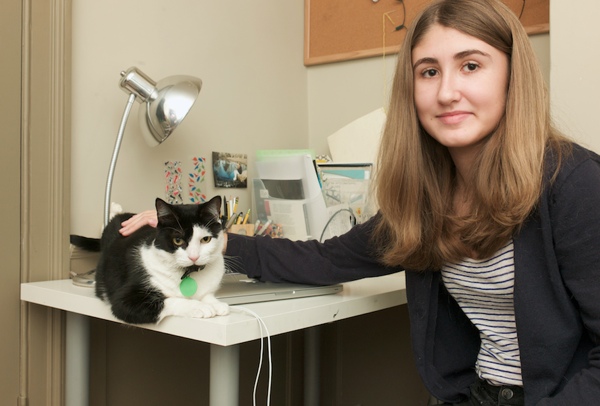
Mittens & Yasmin
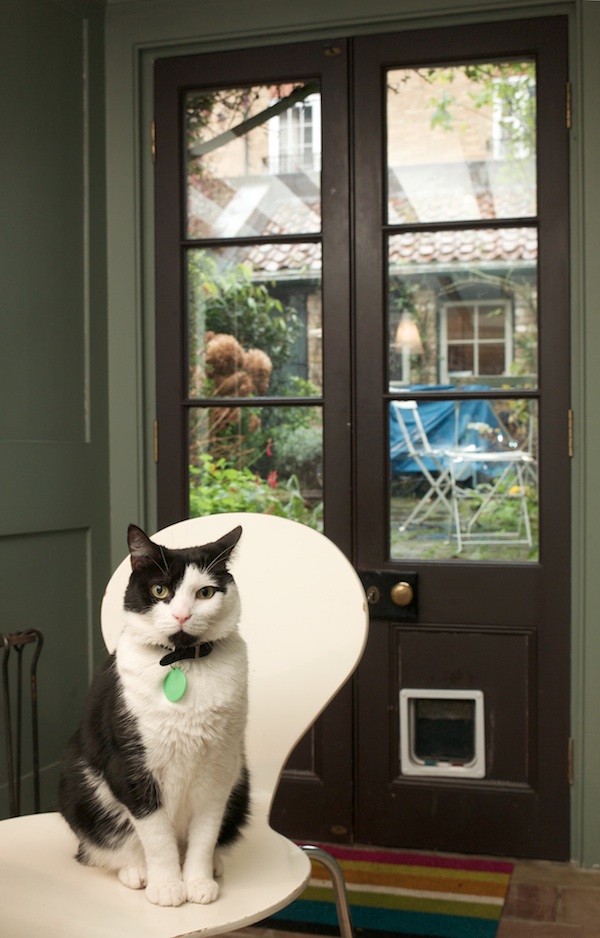
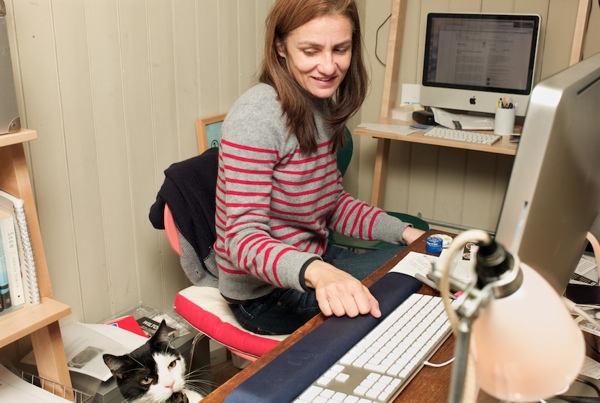
Mittens & Rosie Dastgir & her daughter Yasmin
“Mittens came from the 5th Ave Cat Clinic, Brooklyn. Sheʼd been in the window for a while with a sign saying CAT FOR SALE. My daughter Yasmin used to walk past the window and she really wanted this cat. When she saw the SOLD sign she was so disappointed. Luckily for her, Iʼd just bought the cat.
Bringing her back to this country was a complicated business – there were problems with the microchip (the vet put in an American chip instead of a European standard one), there were questions about the size of the crate, she was driven from Heathrow to Aldgate in a Defra endorsed van, and the whole operation cost a fortune.
But now sheʼs taken control of her territory better than she did in New York. There was an aggressive stray where we lived that used to fight with her. We named it Evil Kitty. So far, we find the London cats more friendly.”
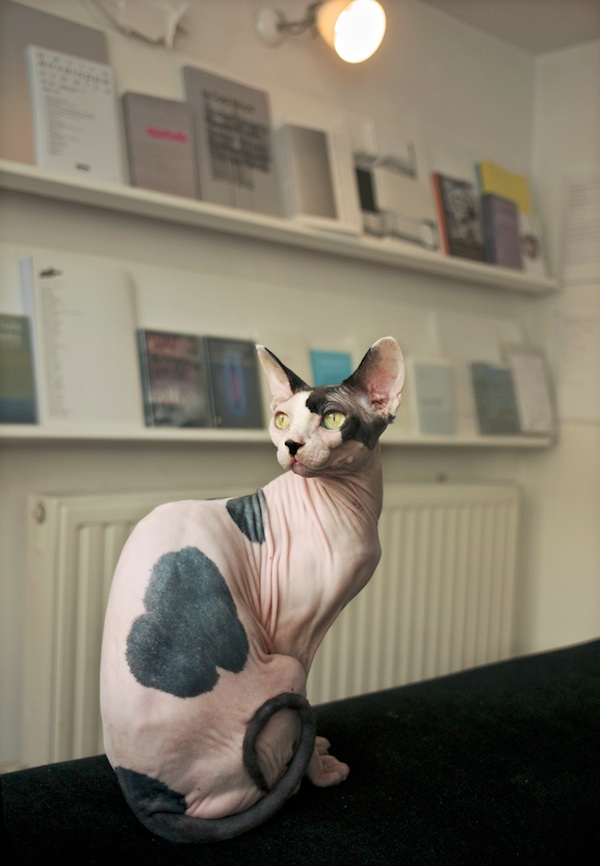
Sebastian
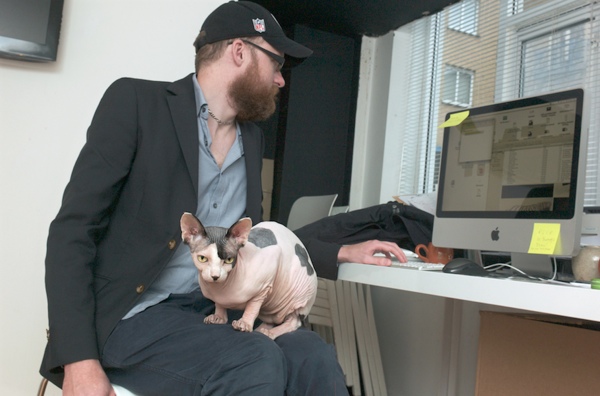
Sebastian & Mark
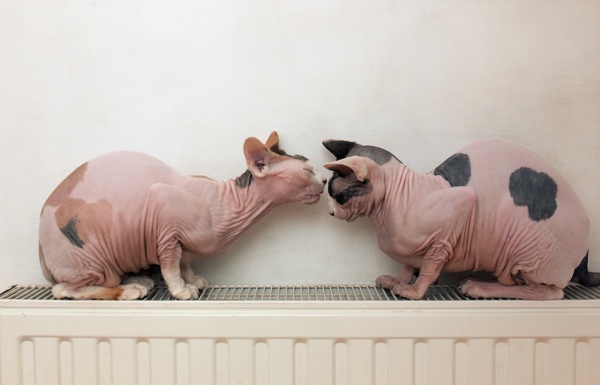
Sebastian & Cordelia & Lindsay Friend & Mark Jackson at IMT Gallery
“Sebastian & Cordelia are Sphinx cats. They are named after characters in Brideshead Revisited and theyʼve grown into their namesakes. Sebastian is a bit roguish and he eats anything he can find – he once tried to eat staples – whereas Cordelia is more sensible, she tells him off and looks after him a bit.
Iʼve always liked this breed. I saw a picture of them in a book once when I was a child and immediately wanted to have one. And theyʼre the friendliest of all breeds. Mark likes them because he studied axolotl salamanders in a biology class and he thinks their faces are similar.
They came from a north London breeder. We just wanted Sebastian, but at our interview Cordelia took a shine to Mark so then we had to have them both. Theyʼre brother and sister and they were three and a half years old in March. Theyʼre quite high maintenance, they have to be bathed once a week and have their ears and claws cleaned.
They live with us at the gallery, so thereʼs constant stimulation and they are always around when people come to the gallery. Our exhibitions are constantly changing and some of our artists produce particularly cat-friendly work. Sebastian & Cordelia joined in during a session of voice recording recently.
The little girl who lives opposite, who is about eight, likes to come and see the cats when theyʼre sitting on the window sill. They adore her and sheʼs transfixed by them. We once overheard her telling her friend, ‘These are my cats. Well, theyʼre not actually my cats but they love me.’ She has two cats of her own now but she still comes to see Sebastian & Cordelia.”
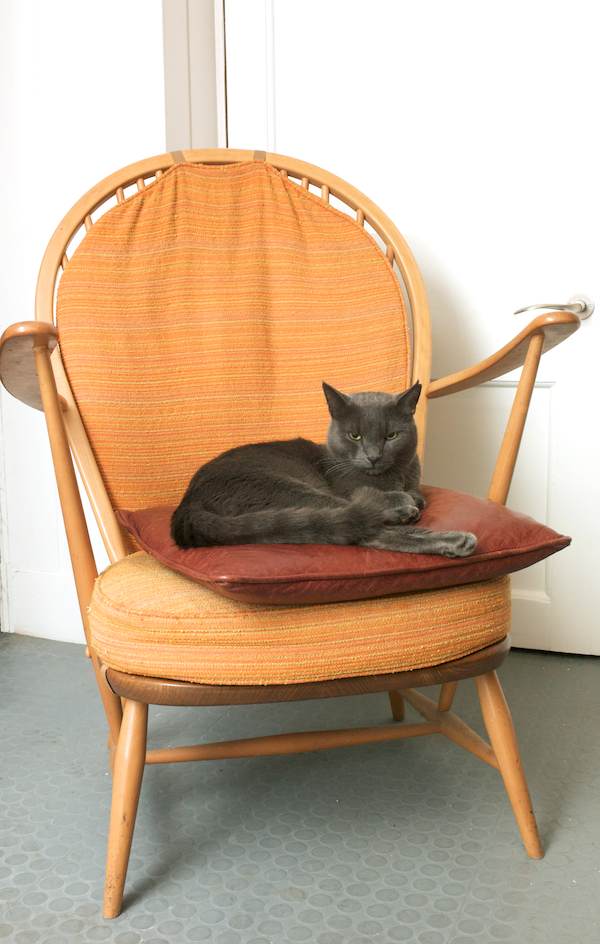
Truman
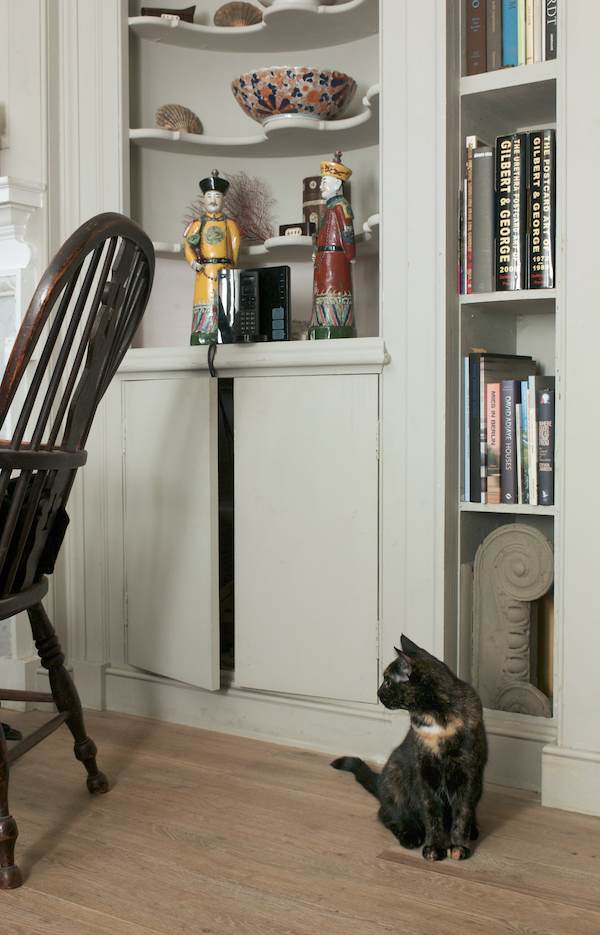
Stella
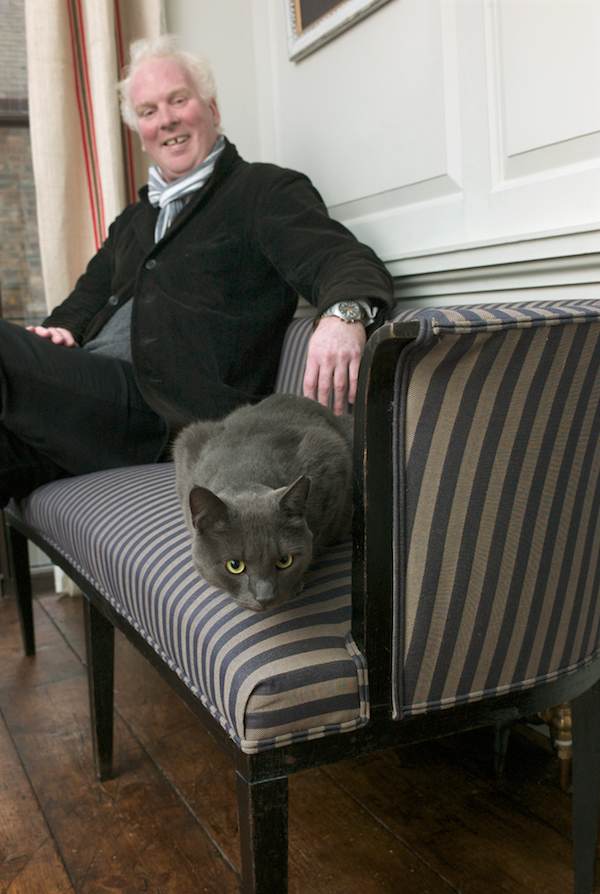
Truman & Stella & Chris Dyson
“Truman came from a Mare St pet shop. His father is a Russian Blue and his mother a Norwegian Long Hair. We bought him as a kitten in 2009 and our other cat, Stella, came six months later. We found her very pregnant mother on the doorstep of Number Eleven and took her to Samantha Morton who lives nearby because we knew she looked after cats. So when the cat produced her litter the very next day, we felt obliged to have one of the kittens. And Truman was going slightly nutty on his own – these cats love company, they always want to join the party.
You never know with cats how the chemistry will work. Stella is basically a street cat, sheʼs a mixture of ginger tabby and tortoiseshell and sheʼs always been very nervous. The two of them get on reasonably well although Truman picks on her if he gets bored. But she fights back and now heʼs got a bit of ear missing, so heʼs more careful.
Theyʼve both fallen from the parapet of the gallery. Truman used to run around on the rooftops and, one wet day, he fell off. Fortunately, he landed on all fours but his chin was bruised. He never did it again. Stella has done the same too, so theyʼve both fallen three storeys to solid ground and are still standing.
Truman sometimes disappears for a few days but we know he calls on friends. He likes the girls in offices nearby who feed him titbits and someone else said recently, ‘Your cat calls on me on Thursday afternoons.'”
Photographs copyright © Chris Kelly
Chris Kelly’s THE NECESSARY CAT – A PHOTOGRAPHER’S MEMOIR is available from many independent bookshops including Brick Lane Books, Broadway Books & Newham Bookshop.
You may also like to see
The Cats of Spitalfields (Part One)
and read about
and take a look at these other pictures by Chris Kelly
Chris Kelly’s Columbia School Portraits 1996
Chris Kelly’s Cable St Gardeners
From Viscountess Boudica’s Album
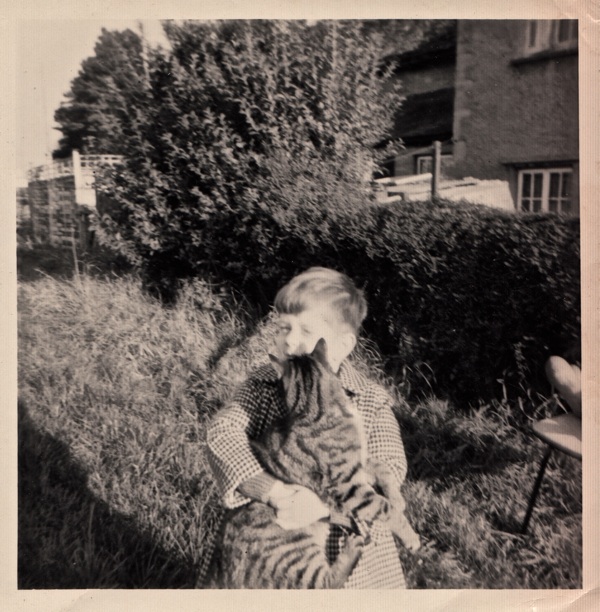
A tender scene from the childhood of Viscountess Boudica
For the past seven months, Viscountess Boudica of Bethnal Green has been writing an autobiography – absurd, bawdy and magical by turns – in daily installments. Entitled There’s More to Life than Heaven & Earth, it is like nothing else upon the internet. Last week, the Viscountess and I met for a chat to take stock of her brave endeavour and select a few key excerpts.
“The blog is like justice in a way,” she confided to me. Ascribing her storytelling instincts to her Celtic roots, Viscountess Boudica is a latter-day Mother Goose, intertwining poignant tales of lost love with unexplained visionary encounters and broad comic stories to weave a mythological universe that is entirely her creation.
With an unerring instinct for the ironies of existence, Boudica reconciles herself to the painful contradictions of life by taking fearless narrative delight in personal humiliations others might choose to forget. Viscountess Boudica understands she can advance herself in actuality through becoming the author of her own story.

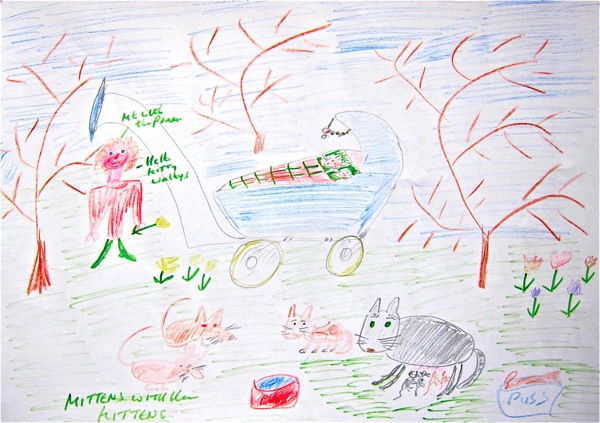
My clothes designing started down on the farm at five years old, when I was taking care of the pigs, Paul & Keith. When the cats were expecting, I used to hide them in the barn so my uncle wouldn’t drown them. They were all feral and interbred. I used to make clothes for the kittens and they lay in a pram which I used to wheel around the village. I tried to dress the pigs too, but it didn’t quite work out because they ripped them off and rolled in the mud.
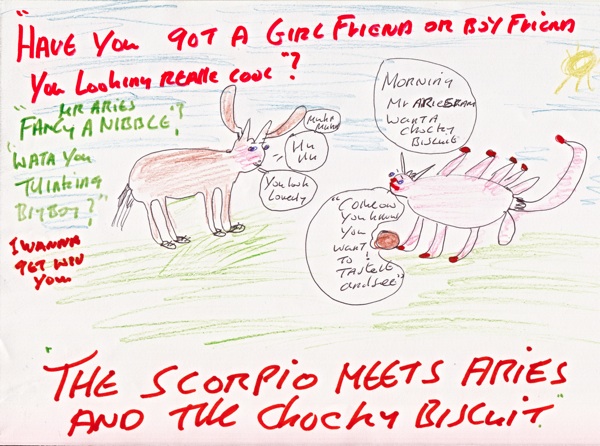
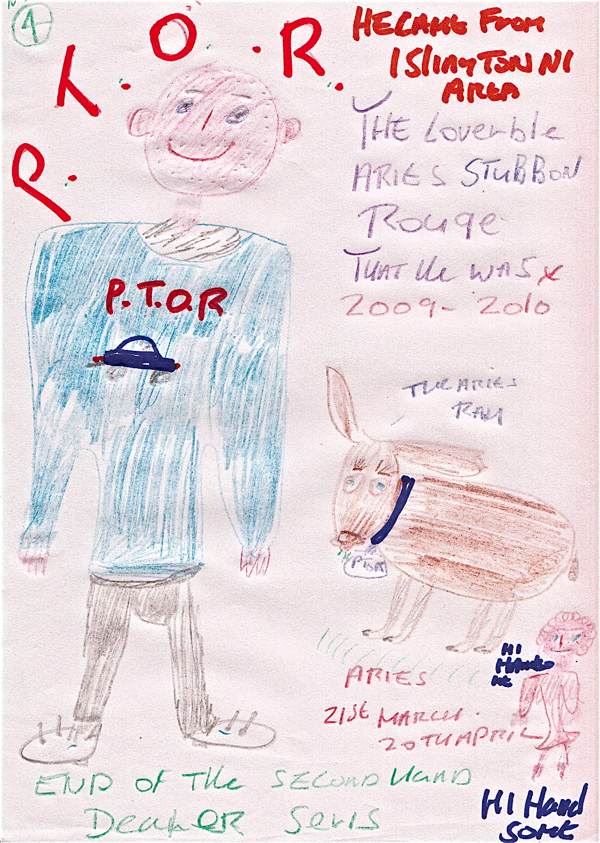
Paul O’R, when I first met him, I asked if he was an Aries. So the second time I met him I took him a chocolate biscuit and – you know what – he said, “You look lovely,” and he bowed his head and I stroked his hair.
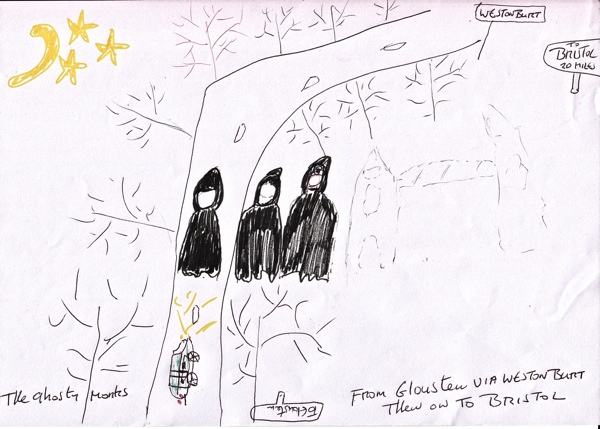
The Monks of Moreton. The engine of my car stopped and I saw all these monks crossing the road to the abbey. Apparently, it’s a well-known local sight.
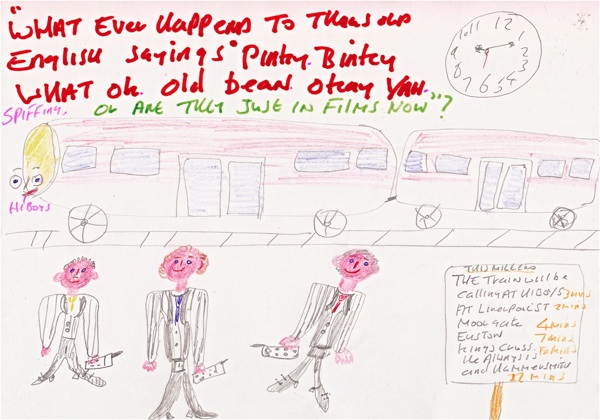
Whatever happened to the old English sayings? They just don’t say, “What ho!” anymore, except in period films.
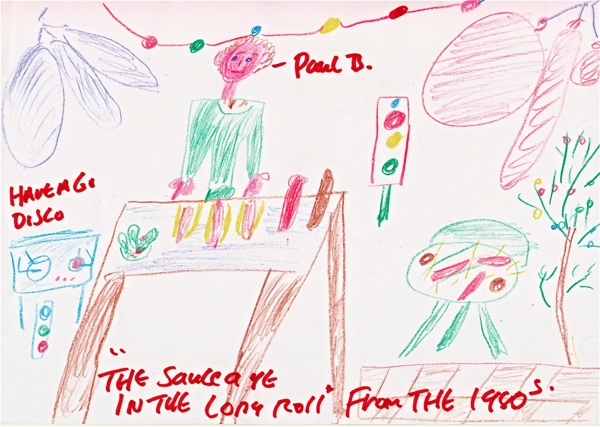
Paul B. said, do I fancy going to a barbecue and off we went to the wilds of Colchester. He was barbecuing sausages and there were four on the grill at one pound each. The one in the middle looked under-done and I am sure it winked at me. So I grabbed it to put some mustard on it and as I pulled it Paul’s eyes were watering.
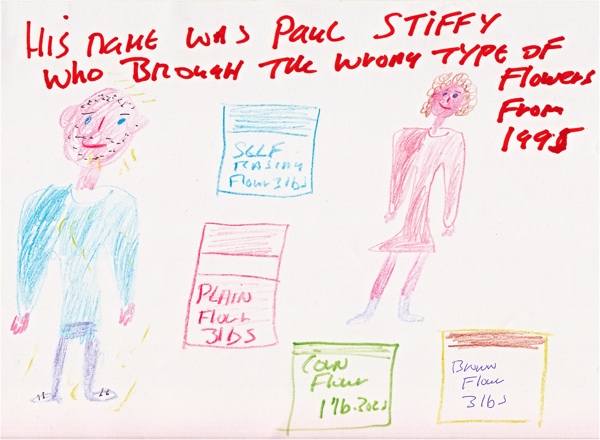
Paul S., a white South-African, I met him in 1995 at Tesco in Tollerton. He’d had a row with his boyfriend and said, “Could you put me up for a couple of days?” As a present, he got me some flours as a joke when I expected flowers. Eventually, his boyfriend came to pick him up but they didn’t think it was so funny when I poured the flours over them.
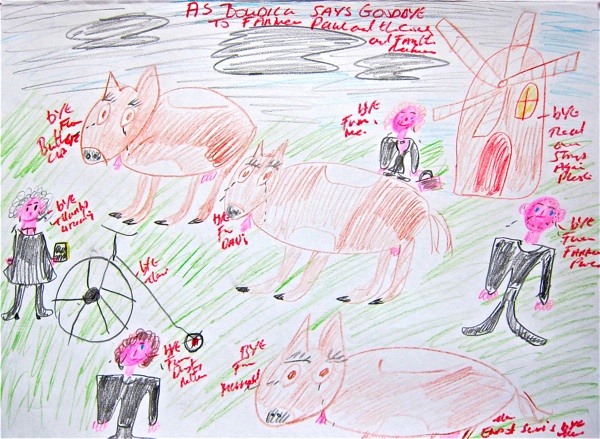
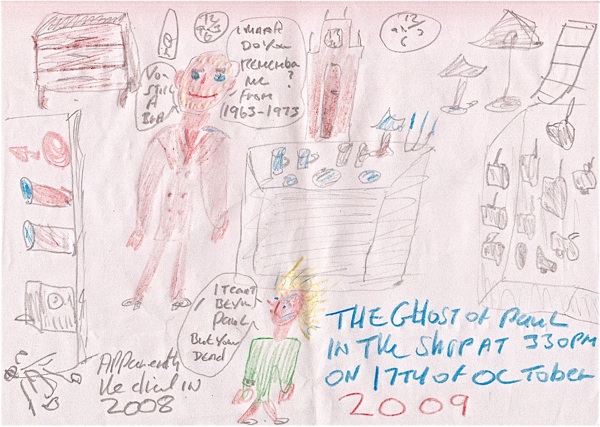
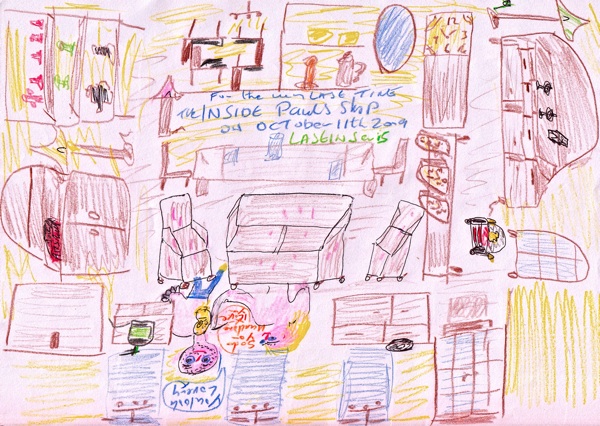
I went into Des & Lorraine’s Shop in Bacon St and it was full of people. Then as I looked where Des was standing, I thought I’d seen this bloke somewhere before. It was quarter past three and my watch stopped and everything stopped and the man said to me, “Do you remember who I am? Do you remember that day in 1965 when you got banned from the farm?” It was Farmer Paul and recalled I used to sit on his lap as a child and I could feel something hard, and he used to put his hand on my chest and say, “It’s getting bigger.” He said to me, “Something’s going to happen, you’ll find out.” I ran out through the shop and my watch dropped on the pavement. He followed me and said, “I will come for you when you die.” So then I went home and rang Chris from Southend, and when he said his mother died at 3:15pm, I realised I had experienced some kind of vision.
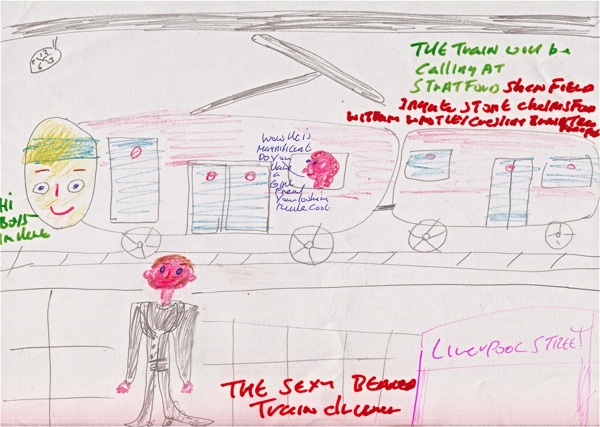
One time, I went to Braintree Freeport to sell some photos and this sexy bearded train driver walked past the carriage.
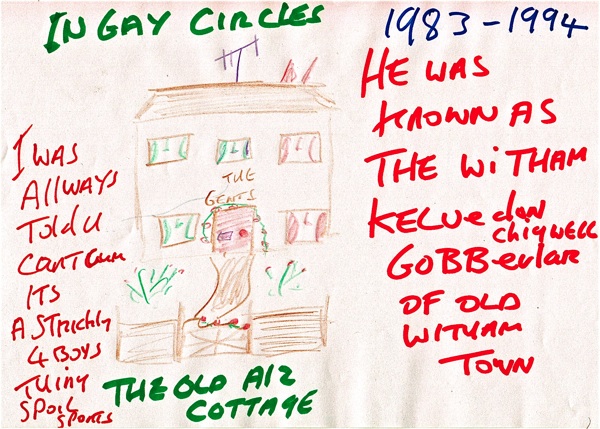
There was this brickie called Eric in Braintree and he told me about this cottage on the A12, and I imagined a cottage with a thatched roof and roses round the door. But when I asked if I could come, he said, “It’s strictly for boys and we have prayer meetings.” So when I passed my driving test, I went to find this mystery building, but it wasn’t until years later that I discovered it was a public toilet.
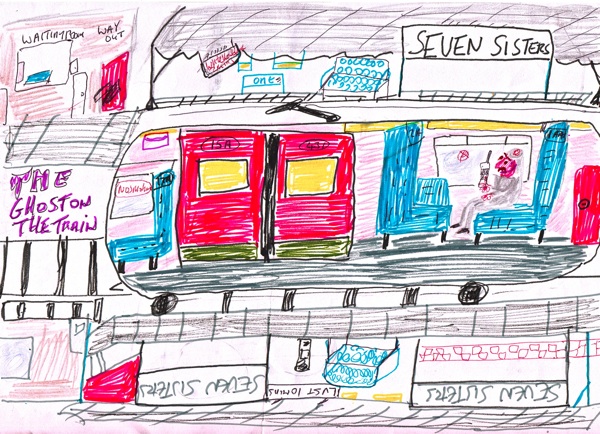
My friend Ted in Braintree worked for the BBC and had a love of Islington, so he moved back to Finsbury Park and then Bounders Green. Four years later, after I moved to London on Halloween 1994, he was dead. Then, five years ago, I got on a train at Cambridge Heath and this guy got on at Seven Sisters and sat opposite me and smiled. He pulled out an old square mobile phone with an aerial and he kept looking at me. At Bruce Grove, he was gone, so I ran down the stairs and he was there. He said, “You remember who I was? There’s more to LIfe than Heaven & Earth.”

For thirteen years, I visited Keith at Lordship Cookers and held his hand outside the shop. That went on for years and I bought all these dodgy makes that never worked.

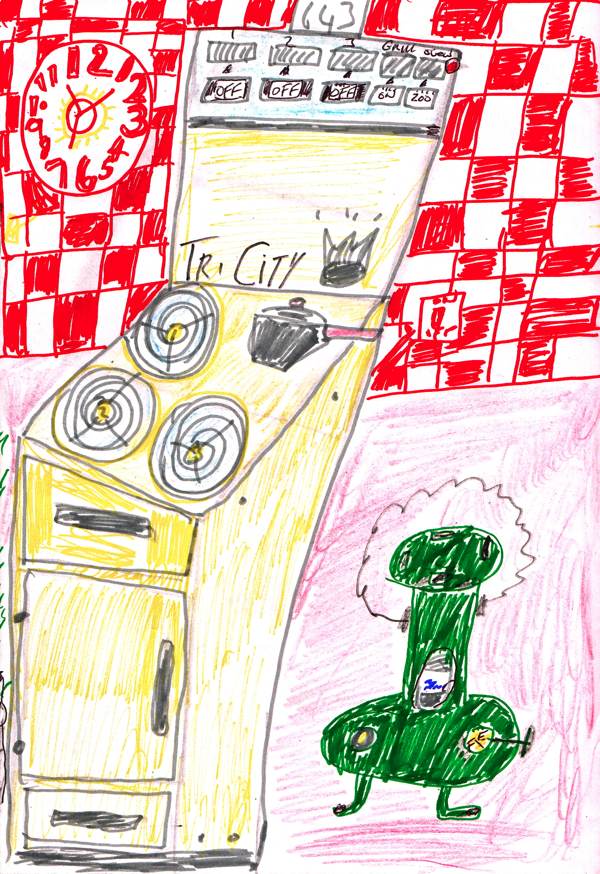
Now I’ve let go of the past, I’ve destroyed my diaries and got rid of my cookers but I’ll always have my memories. Since I changed my kitchen I got one of those ranges, because I’ve accepted that the Tricity 643 will never come.
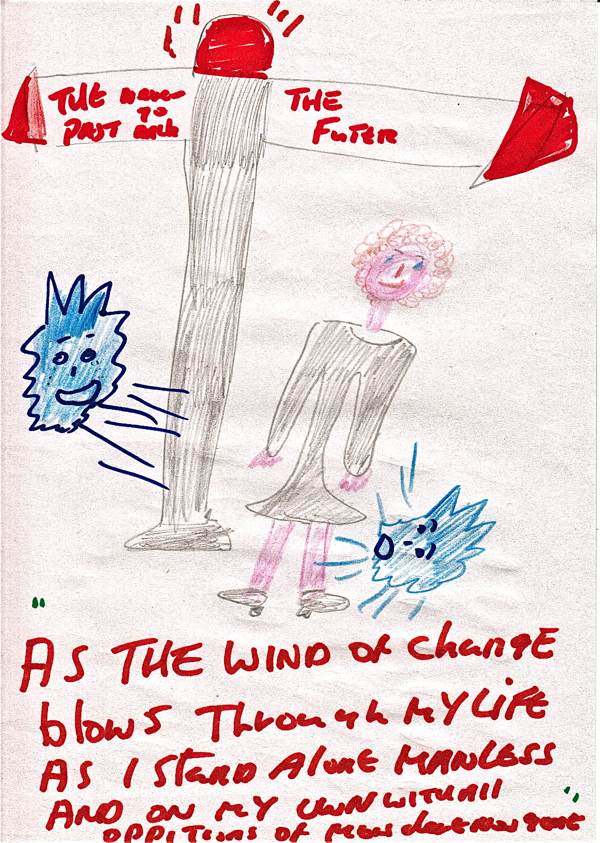
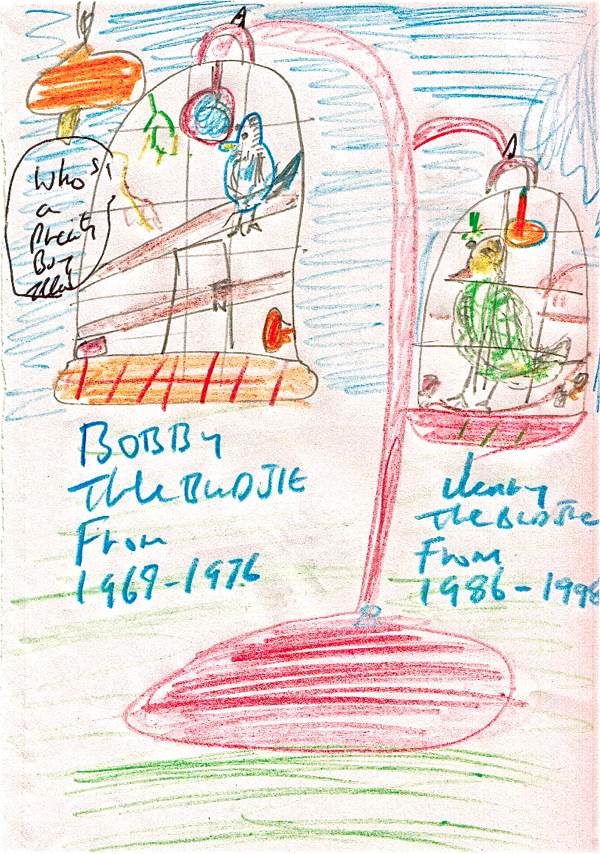
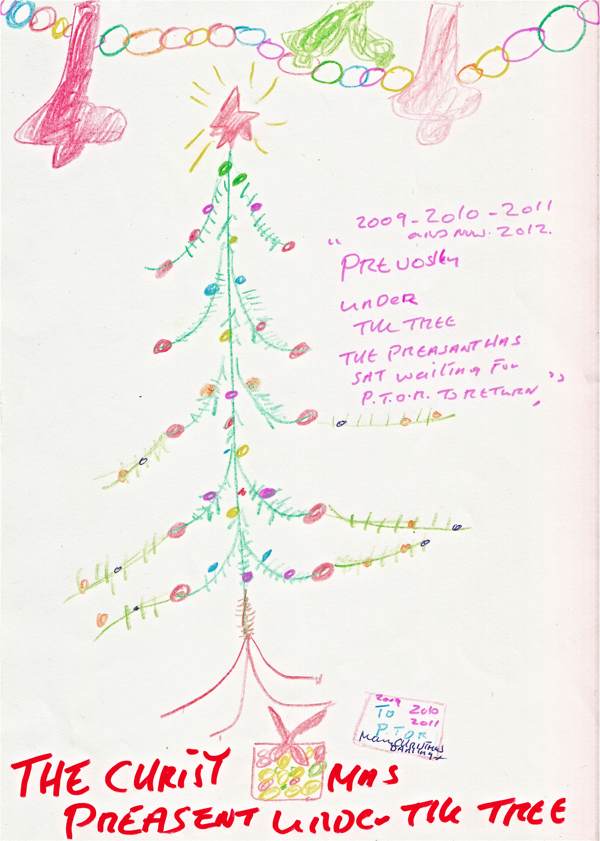
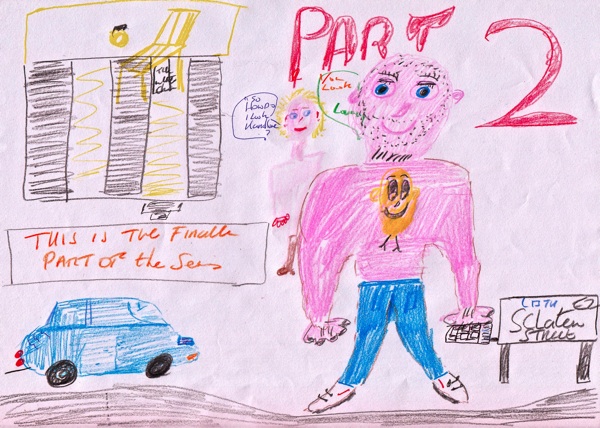
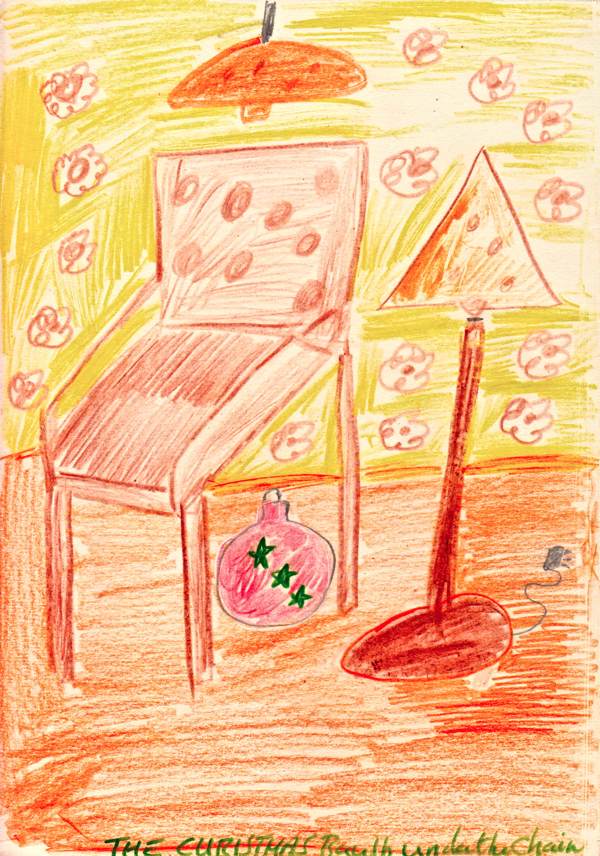
The last time I saw Paul O’R from Sclater St was in 2009 on 21st December, and I went home and put his present under the tree but he never came to get it. Maybe this year?
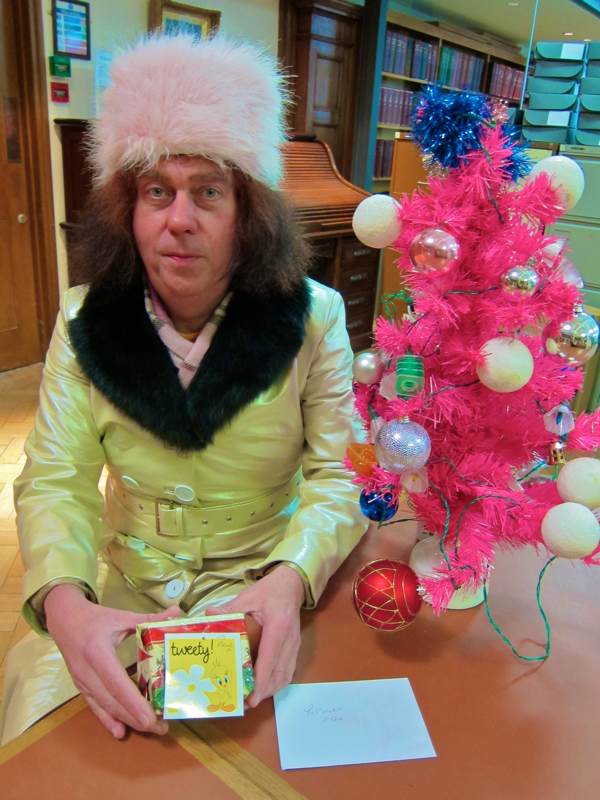
Viscountess Boudica with the Christmas present she has kept awaiting its recipient for the past three years. Like the spirit of Christmas Present, Boudica travels with a fully decorated tree at this season.
You my also like to read my other stories about Viscountess Boudica
Viscountess Boudica’s Domestic Appliances
Mark Petty’s Multicoloured Coats,
Mark Petty returns to Brick Lane
Due To Popular Demand


Colin O’Brien’s Pellicci Portraits (Part Two)
Contributing Photographer Colin O’Brien is becoming a weekly fixture at E. Pellicci, 332 Bethnal Green Rd – taking portraits of the lucky diners at London’s most celebrated family-run cafe. Yet what could be more appealing – as the temperature drops – than to escape into this cosy marquetry-lined sanctuary and feast upon meatballs, spaghetti and syrup pudding in the midst of some of the liveliest company the East End has to offer?
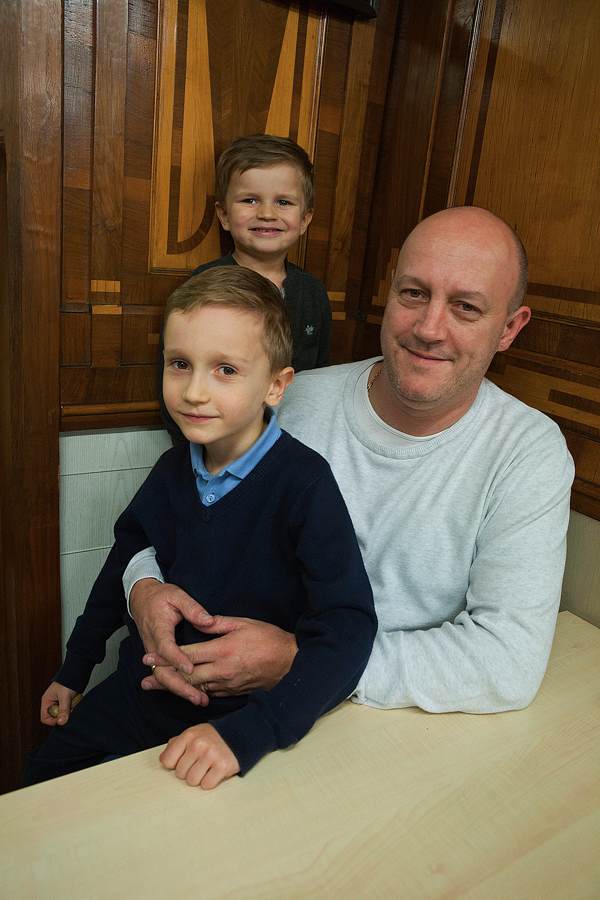
Stuart Faulkner with his sons Luke & Ben – “I used to work in the butcher’s next door. I came to Pelliccis when I was thirteen and now I’m forty-two.”

Shirley Pollock – “I’ve been coming her forever … since the eighties.”

Arren Baptiste – “I first came here years and years ago, when I was in my teens … at least five years. If I feel a bit down, I just come to Pelliccis…”

Henrietta Keeper – “I first came here in 1947 when my daughter Lesley was three. I remember Elide Pellicci, she was an old lady all in black.”

Albert Sadler – “I’ve been coming about fifty years, since I was Market Inspector in Bethnal Green.”

Lesley Keeper -“My mum brought me to Pelliccis when I was small and I always come once a week.”

Simon Menachy – “I’ve been coming here twenty years, I used to know old Mr Pellicci.”

Norah Nona – “I come every day. I’ve been coming here since I was twenty, about twenty years. I’m promoting this hat by Sharpeye.”

Rev Adam Atkinson of St Peter’s Bethnal Green – “If people left my church feeling as good as they do when they left Pelliccis, I’d know I’m doing my job! It’s full of the holy spirit.”

Carolyn Prior -“I’m from St Neots, this is my first time at Pelliccis.”

Norman Faw – “I’ve been coming for fifty-seven years at 7am every morning. My father brought me here when I was five years old and we had roast beef. He said, ‘Can you do that again?’ and I said, ‘Yes,’ and we did. There’s only one place to come in the Green and this is it.”
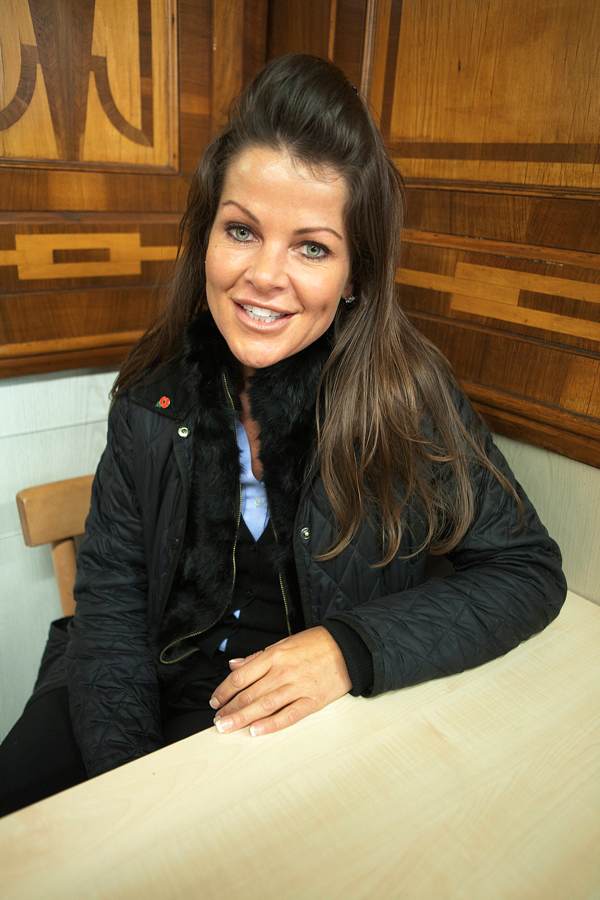
Kate Hale – “I’m from West London but I’ve been here a few times in the last five years.”
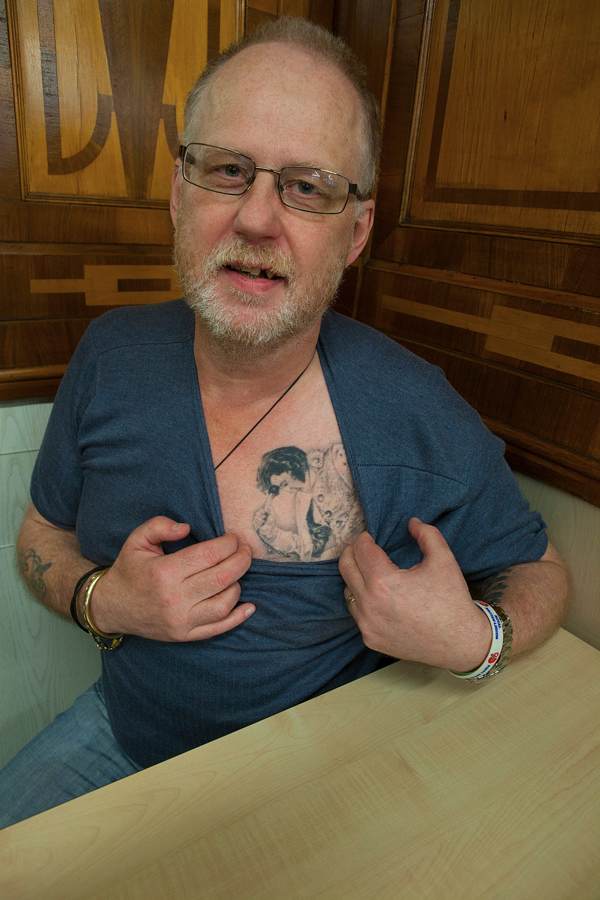
Robert Longstaff – “I’ve been coming here donkeys’ years, maybe twenty years? I come by all the time. After Hurricane Catriona, I went to New Orleans to show my Elvis tattoo in aid of the disaster fund.”

Julie Andersen – “I’ve been coming to Pelliccis on and off for a few years …”

Tony Salvatore – “I was born in Naples but I’ve been working at Pellicis in Bethnal Green since 11th July 1970.”
Photographs copyright © Colin O’Brien
You may like to see
Colin O’Brien’s Pellicci Portraits ( Part One)
and read these other Pellicci stories
Maria Pellicci, The Meatball Queen of Bethnal Green
and see these other Colin O’Brien stories
Colin O’Brien’s Clerkenwell Car Crashes
Colin O’Brien’s Kids on the Street
Travellers’ Children in London Fields
Colin O’Brien’s Brick Lane Market












