
Soerditch by Dant (Chapter Two)
Please join me tonight from 6:30- 8:30pm at Eleven Spitalfields Gallery for the opening of Adam Dant‘s exhibition of cartoons SOERDITCH, Diary of a Neighbourhood, satirising the culture of our dearly-beloved Shoreditch – comprising beautifully rendered views of the neighbourhood , captioned with clueless things overheard on the streets.

“No it’s not a brewery anymore, that must just be the drains … ”

“They say he buried a baby under all his churches … but it doesn’t seem to bother all the film stars that live here.”

“I’d offer to buy you a bagel but I spent my last tenner on that aniseed soap and a bit of coral.”

“Go back to work? Don’t be ridiculous, we haven’t tried the dessert wines let alone the calvadoses yet!”

“They were filming up here again yesterday, so far this week I’m in the background of a BT ad, a Ripper doc and a Jessie J. vid.”

“Oh, my nice hat pin fell out in the market last week, will you keep an eye out for it?”

“My Uncle Stan said he used to live round here.” … “Wow! He must have been sooo cool.” … “Not really, he was a meths drinker.”

“We got rid of the old sign, this is a photo of the new neon one.” … “Nice! What was there before?” … “Oh some nasty stone carving that said ‘1760’ or something.”

“No! Not the halter neck dress, that one would clash with my robot tat …”

“We’ve got to get over to my stupid brother’s new cake shop quickly…before he spells ‘cakes’ wrong again”

“My word, this is some stinky alley, Kev! Were you thinking of ‘doin me’ or ‘doin me in’ ? ”

“Here, hold my handbag. I’m nipping up this scarey Victorian alley for a wee.”
Soerditch is the old name for Shoreditch, quoted by the historian John Stowe in his Survey of London 1598, as “so called more than four hundred yeares.” It means sewer ditch, in reference to the spring beside Shoreditch Church, once the source of the lost River Walbrook which flowed from there towards the City of London.
Drawing from a pair of unlikely inspirations, namely Giles‘ cartoons for the Daily Express and Hiroshige‘s ‘One Hundred Famous Views of Edo,’ Adam Dant pulls off an astonishing sleight of hand – simultaneously portraying the urban landscape of Shoreditch with spare lines and flat tones that evoke the woodcuts of Hiroshige, while also satirising the manners and mores of the people through witty social observations in the manner of Giles.
The exhibition runs at Eleven Spitalfields Gallery from 7th March – 26th April and all one hundred and twenty-five cartoons are published in an album with an introduction by Jarvis Cocker, produced in the style of Giles’ celebrated annuals and available to buy online from Spitalfields Life Shop.
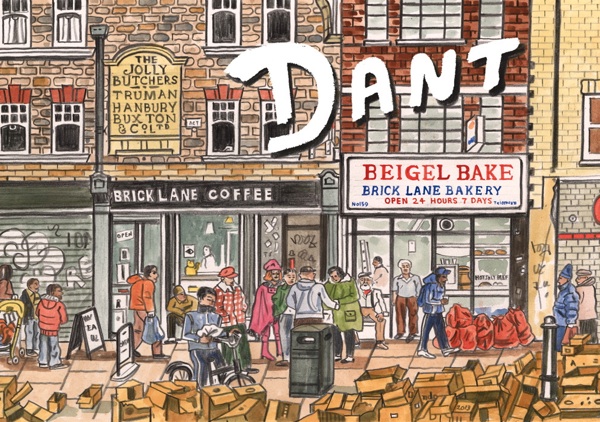
Click here to buy your copy of SOERDITCH by DANT – Diary of a Neighbourhood (125 Views of Shoreditch) – while stocks last!

Adam Dant hides behind his assumed identity of “Dant.”
Cartoons copyright © Adam Dant
Adam Dant is represented by Hales Gallery
You may also like to see this earlier selection of cartoons by Dant
Somali Portraits
Contributing Photographer Sarah Ainslie has been working on a series of Somali portraits in recent months and we publish a first selection today, accompanied with testimonies dictated by the subjects.
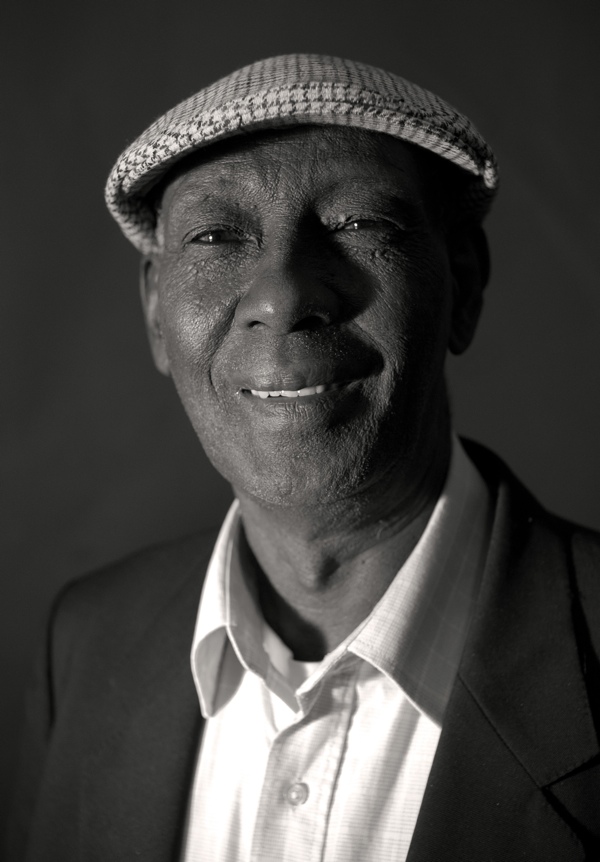
Adan Jama Mohammed – Seaman
“I came to this country when I was twenty years old in 1958. Before than I was in Aden, working on a small passenger boat, but when I came here I was thirty years as a seaman and living in Middlesbrough. I started on 8th April 1959 as a merchant seaman, earning £21.50 a month. Until 1980 it was my job, then I worked on big container ships. We didn’t have much to do. I married in 1987 and I had a family in Middlesbrough, but we had to leave because they closed the docks and the factories. I had a house and a family, and a mortgage I couldn’t pay. The building society said if I didn’t pay £70 a month, they would take the house back. I had to sell the house at half price, and now my children are grown up and don’t want to know me. I live on my own in a flat at the Seamen’s Mission in West Ferry Rd, Isle of Dogs, and my family live on the other side of London. I don’t like living here in this city, there’s too many people – but you can’t help it, if you don’t have a choice. I do have some friends at the Mission. It was a hard life as a seaman.”
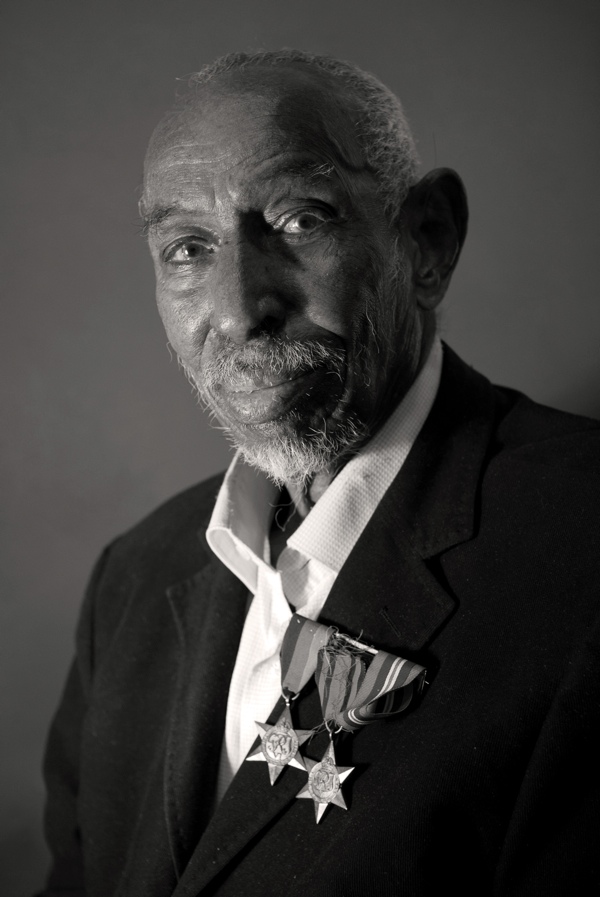
Ahmed Hassan Sulieman – Seaman
“I was born in Aden, when I was a schoolboy everyone over sixteen joined the army. My father was in the First World War and he was killed fighting for the British in Egypt in 1918, when I was four. So my brother and I, we wanted to join the army and take revenge on the people who killed him. All my family were in the army. All the army, they treated us very good – white and black together, no colour bar.
In 1944, I was shot in the leg while I was on a British ship that was sunk by two German U-boats off Durban. We were at sea on a raft for two days and two nights before we were marooned on land without food. I went inland and walked for six days to search for help before the British found us and took us to Durban, and when we recovered they sent us back to fight. In Egypt, four thousand people were being killed a day at that time.
I was also in Germany and Japan, the kamikaze pilots crashed into our ship. It was a very bad war, but we wanted to win – losing was nothing. I am brave because I wanted to beat the Germans and I fought for myself, I didn’t want to be captured. I was happy when we won the war and I’m happy that I’m still alive. I had four medals but I lost two recently, I never asked for them.
At the end of the war, they gave us a passport and a suit of clothes, and they brought us here to the Seamen’s Mission where I live today. So we were quite happy. I’ve been here seventy years. They said you are fit to work and I joined the Merchant Navy. I got £200 a month, before that I only got £24 a month and I had to shovel coal but the food was free. I worked as a merchant seaman until I got too old and I have lived in the Seamen’s Mission for the last forty years. I and my brother we used to go back to Somalia every year, until he was killed in a car crash in Poplar in 1980.
They told me I could bring my family over, but there’s nowhere here for them to stay. I had eight children, all grown up. Now haven’t seen them for over a year and I feel sick, and I want to go home for good. I’m too old and I want to see my children.”

Shamsa Hersi – Manager of Somali Elders Day Centre
“I was born in a town called Burao in Somaliland and I came to UK as a refugee in 1990 when I was a child. From an early age, I wanted to work for UNICEF and in those days my great uncle used to work for the United Nations, he talked to me about his work when I was eight. I cared for my family for many years in Somalia – it is second nature to me, but you have to train to be a Social Worker. I believe that if you can work with people to help them, then it gives you a more rewarding life. I studied at university in the UK and I have a qualification in psycho-therapy and a diploma in working with people who have had traumatic life experiences. It’s about giving something back for the support I received when I came to this country. It takes a lot of guts and hard work and skills to build relationships, but it’s a privilege to work with these people – they are survivors.”

Ali Mohammad – Day Care Officer
“In 1988, there was a civil war in Somalia and I fled to my brother Isaac who was a senior official at the Ministry of Education in Mogadishu. Then, in 1989, there was a massacre – fifty-six people in my tribe were shot. They dug a mass grave and shovelled them in, but there was boy who was not shot and fell in the grave too. He managed to get out and spread the news. My brother told me to go to South Africa or India, anywhere away from Somalia, and he gave me 200,000 Somali shillings and $100. I went to India and then to Bangladesh where I studied at Dhaka University, hoping to come to Europe. My grandfather Uma Hassan sent me some money from London and my visa came through before I graduated, so he told me to come at once and I arrived at Heathrow on August 21st 1992. Because I had a family address, I decided to surprise them. I took a minicab to Poplar and they couldn’t believe it was me when I arrived!
I shared a two bedroom flat with another guy in Woolwich. The country was in recession at that time and there were no jobs. Some of the Somalis who came before me didn’t try to find work, they were so negative. They said, ‘As a black guy, you haven’t got a chance.’ But I tried and, after a month, I got a job as a kitchen porter at Queen Elizabeth Military Hospital in Woolwich, all the kitchen staff and cleaners were employed by a contractor. At first, I found it hard to get all the work completed on time but it got easier after a while. I got £2.85 an hour. Language was a problem and it was a very physical job, I found it exhausting. I couldn’t understand the people I worked with because they spoke colloquially – innit? – whereas I spoke more formal English.
I enrolled at Greenwich University and while I was working seven until seven for five days, on the other two days I did my part-time course. What I earned, I sent home but there wasn’t much left after I paid the bills. I lost my job when the contract ended after one year and eight months but by the time I finished I was earning £4.50 an hour. After three years at university, I left with a diploma in computing but I was unemployed for three months. I could only get work one day a week, doing cleaning and security in the City, I couldn’t find a decent job – they were all shut to me.
Someone told me there was an apprenticeship in Social Care available for a resident of the Ocean Estate. I was still living in Woolwich but I thought, ‘I could move to the Ocean Estate.’ A Somali landlord had a four bedroom flat with an empty room, so I took it and I got the job. They paid £500 a month and I did six months working in Social Care with disabled people, seniors and children. I did well and, in 1995, I spotted a job for a Day Care Officer advertised. By then I had my certificate, so I applied and I won that one. And this is the job I do now here at the Somali Elders Day Centre. I got married in 1997 and I have three daughters and I live in Bethnal Green, five minutes walk from my work. I know everyone in this area.”
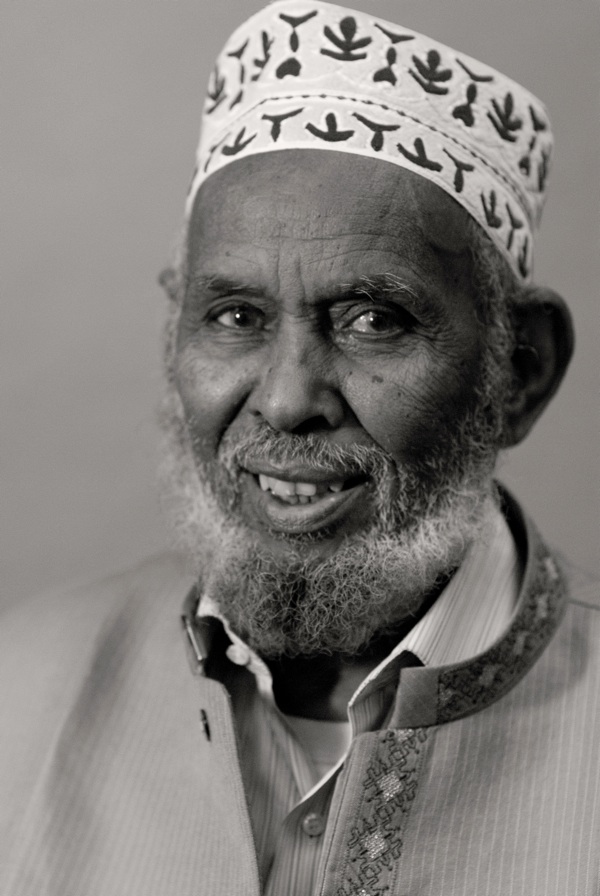
Ahmed Yunis – Seaman
“I came here in 1956 when I was a sailor in the Royal Navy. I felt comfortable in London because at that time my country was a British colony. I came on a Saturday and I left on the Monday. I was only here two days, I went to the Merchant Navy office and they gave me a job which lasted until 1982, when I retired. I lived in Liverpool for twenty-eight years but I consider London my home.
I am ninety-three years old. I have two wives, one here and one in Somalia. My London wife is forty-five and I have four children under eleven, the youngest is six. I am a grateful father. I am also a great-grandfather. If you don’t smoke or drink or kiss women, you stay healthy.”

Kinsi Abdulleh – Artist
“When I got off the plane in the eighties as an eighteen-year-old refugee, I had an older family of relations to go to in Cable St. I remember thinking, ‘We’re going to England.’ and we passed Westminster and the Tower, and we ended up in this run-down, dark little side street. I thought, ‘God, what have we come to? This is really poor, like being in Africa. I’m jumping from the frying pan into the fire!’ But, on the other hand, I fell in love with the place. I went to college and it was exciting that I could get up and go without supervision. I watched the Jackson 5 on TV and bought jeans, even though the older generation expected me to be more conventional. They said, ‘You’ve only been in the city two days and you’re going ice skating!’ They had a false outdated view of my country that I was supposed to believe. I came from the city not the village. People imagine you’ve come from Zululand and you live up a tree. I spent the formative years of my life being displaced, so I should be the one longing for tribal culture, but I am frustrated by the patriarchal tribal culture. I’ve been fortunate to end up in a place where people have extended a hand to me. I can go anywhere in Tower Hamlets, and that’s why I’ve stayed because I can walk down the street here and make my own history.”

Ali Mohammed Adan – Seaman
“I first came to London by ship in March 1958. I stayed in Aldgate for a night and went to Newport where my cousin had a house. There are many Somalis there. From that day until I retired in 1990, I was in the Merchant Navy, and I brought my family over from Somaliland. In 1970, I moved back to London to Bethnal Green but my wife and daughters chose to stay in Newport.
In Somaliland, I owned over a hundred camels and sheep. Nobody keeps camels anymore, everyone sold them and moved to the city. They say, ‘It’s too much work.’ But keeping camels and sheep and living on a farm, it’s a good life because you eat every day. Everybody wants to do it again now.”
Photographs copyright © Sarah Ainslie

These pictures form part of the new exhibition Don’t Just Live, Live To Be Remembered: the Somali East End produced by Tower Hamlets Local History Library & Archives. On view at Oxford House, Derbyshire St, Bethnal Green E2 6HG from 8th-31st March, with a programme of events and activities hosted at Idea Stores and other venues throughout the month.
You may also like to take a look at
The Modern Cries of London
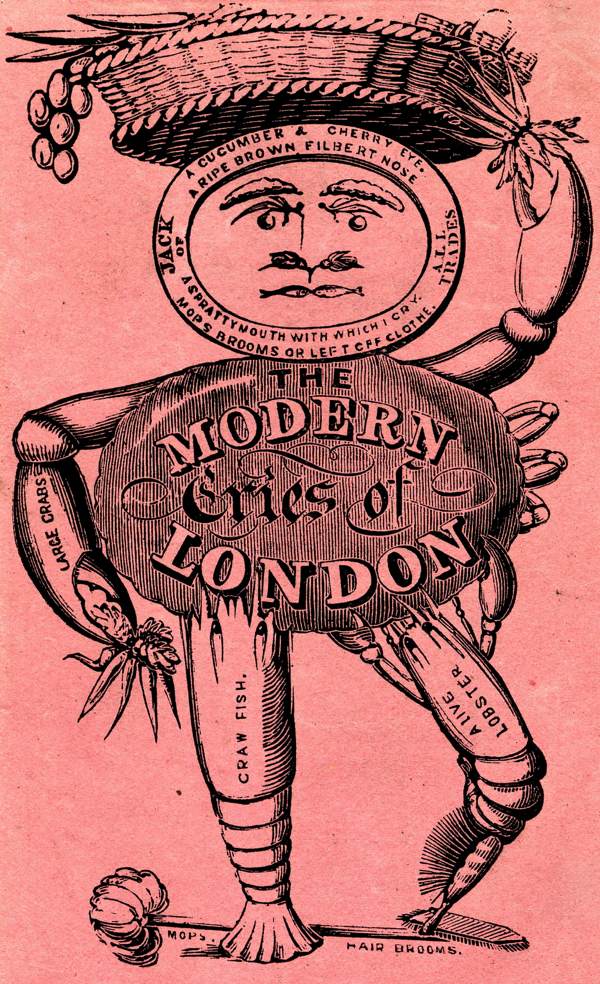
This comic series of The Modern Cries of London from the Bishopsgate Archive are the first I have discovered that are seasonal, illustrating produce to be bought upon the streets of Georgian London in March. These traders were struggling to sell their wares to customers without any money to spare, just as their counterparts do today – rendering this series of Cries of London “Modern” in the sense that they reflect impecunious circumstances.
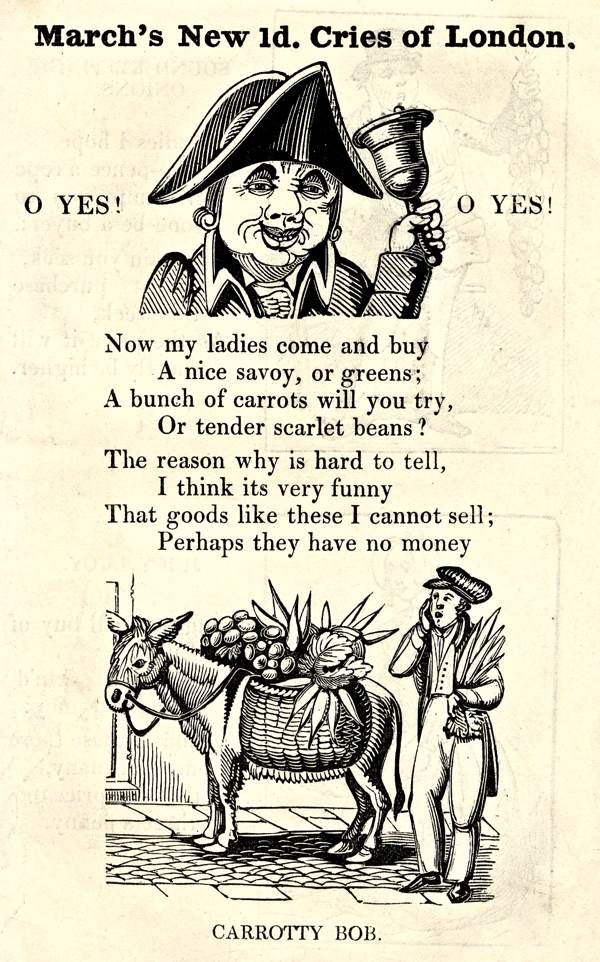
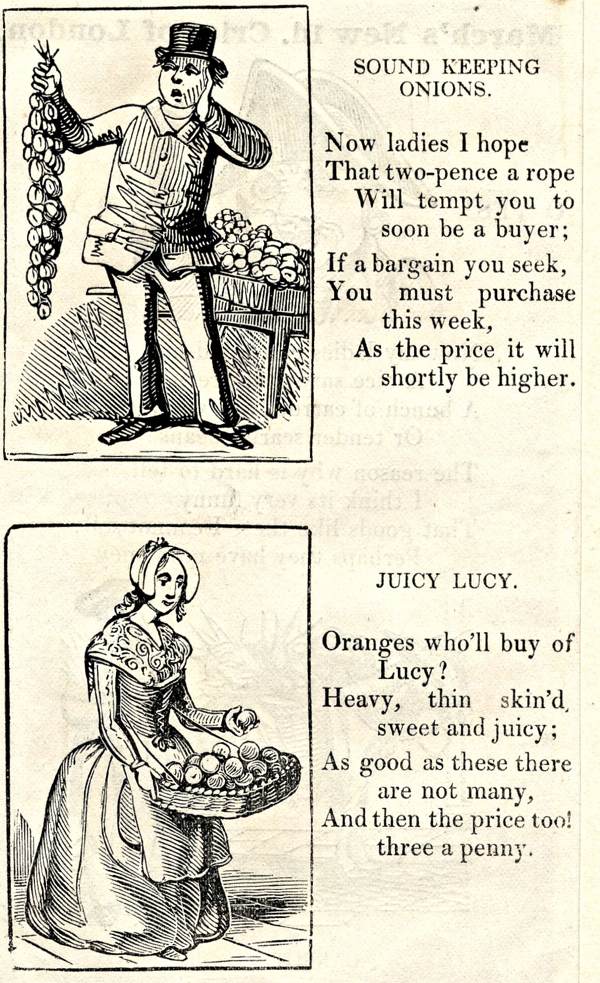
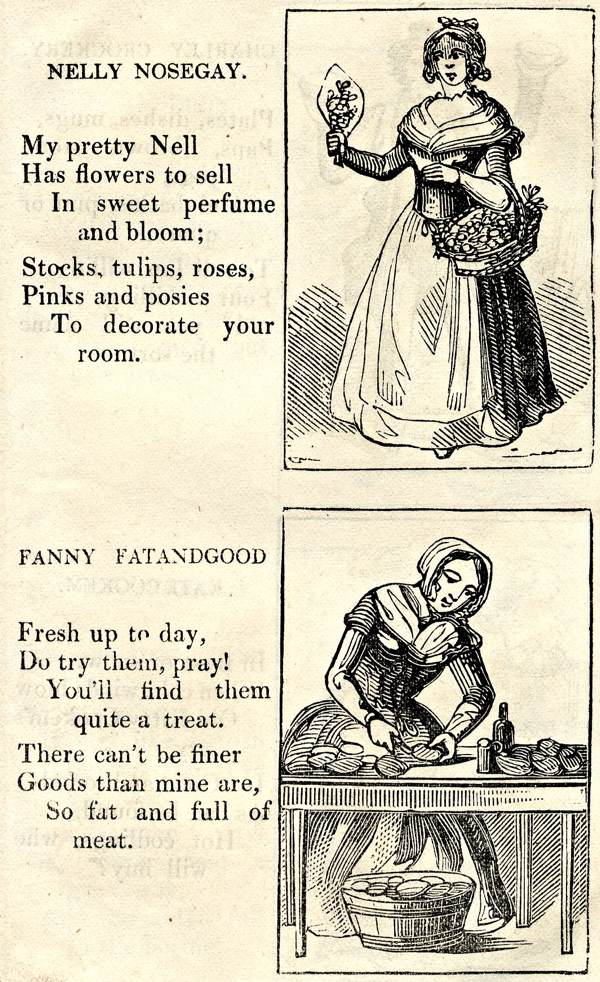
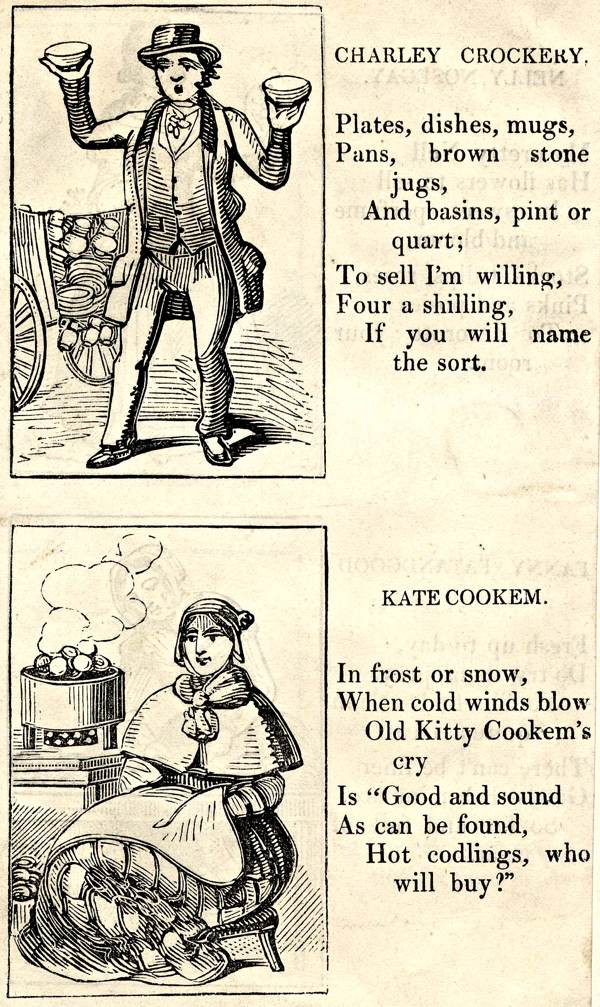

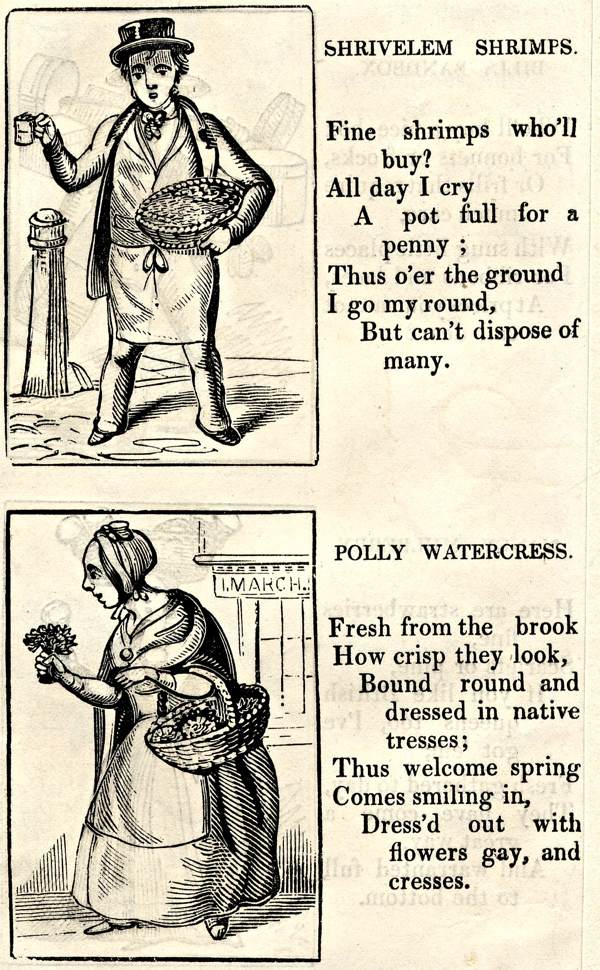
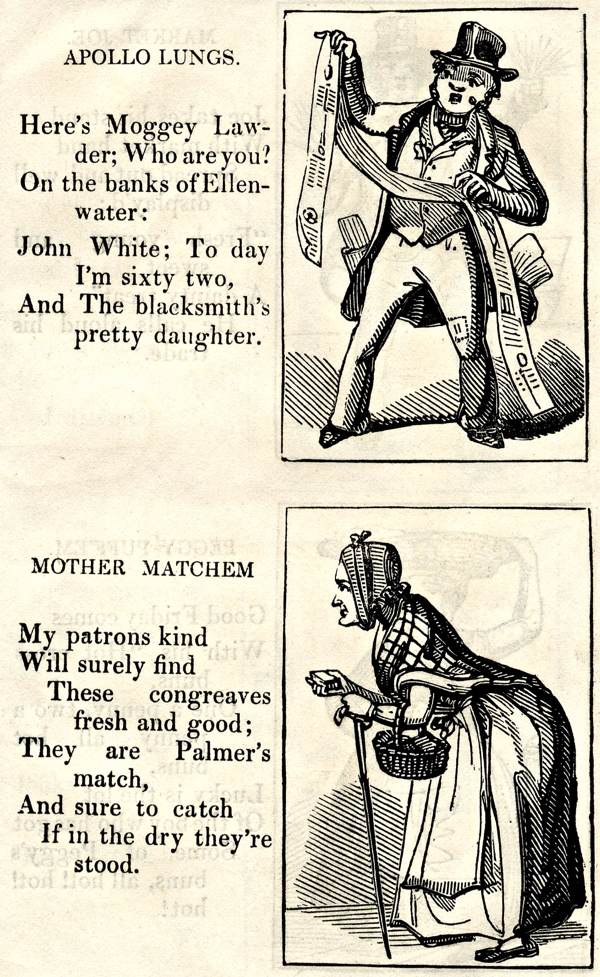

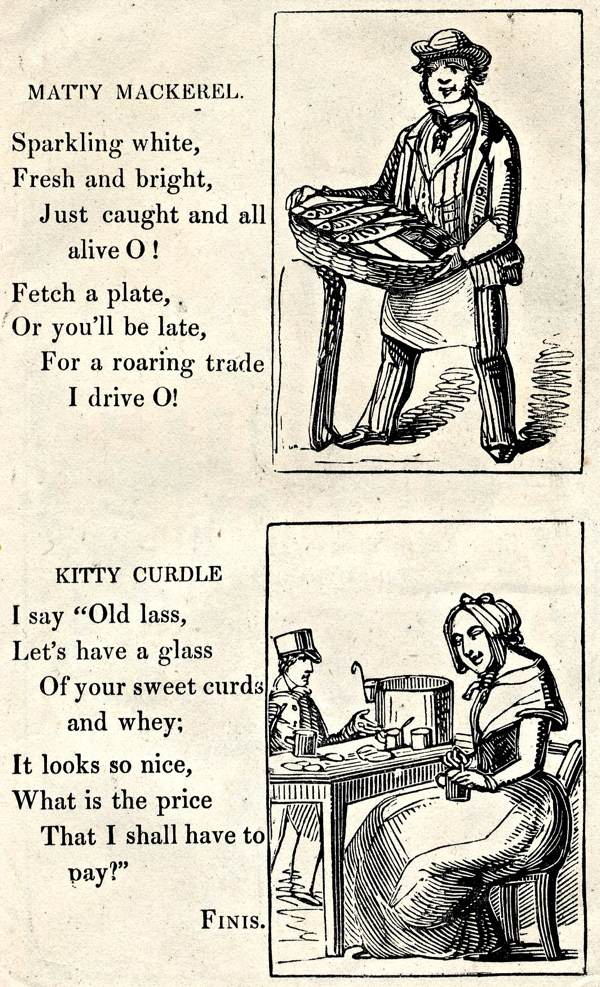
Images courtesy Bishopsgate Institute
You may also like to take a look at these other series of the Cries of London
Geoffrey Fletcher’s Pavement Pounders
William Craig Marshall’s Itinerant Traders
H.W.Petherick’s London Characters
John Thomson’s Street Life in London
Aunt Busy Bee’s New London Cries
Marcellus Laroon’s Cries of London
More John Player’s Cries of London
William Nicholson’s London Types
Francis Wheatley’s Cries of London
John Thomas Smith’s Vagabondiana of 1817
John Thomas Smith’s Vagabondiana II
John Thomas Smith’s Vagabondiana III
Thomas Rowlandson’s Lower Orders
Tony Bock on the Thames
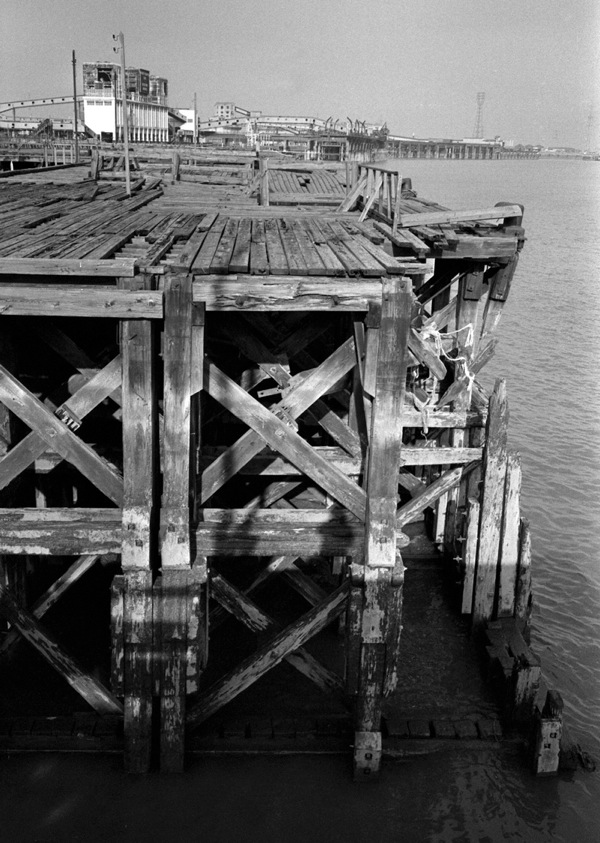
Pier at Beckton Gas Works
Photographer Tony Bock took these pictures of the dockland – published here for the first time today – between 1973 and 1978, when he worked on the East London Advertiser and lived in Wapping. Subsequently, he returned to Canada where he had been brought up and, for more than thirty years, enjoyed a career as a leading photojournalist on the Toronto Star. Yet Tony’s mother’s family had originated in the East End, and the pictures he took here comprise both an important testimony of a vanished era and the record of one photographer’s search for his roots.
“Although the Thames is such a fundamental part of London’s history, in my time it was difficult to get access to it. In East London, every foot was lined by warehouses and industry which meant there were few places I could peer into the life of the river. And the docks were surrounded by high walls, some even inspired by prison walls. The goods being handled were often fragrant, exotic and valuable, both to the importers and the Chancellor of the Exchequer. So accessing the water was often a challenge.
The seventies were a sad time. Starting upriver, the docks, wharves and warehouses were closing. St. Katherine, London and East India Docks were old, small and inefficient, and they had closed in the sixties. The Surrey Commercial Docks in Rotherhithe did not last any longer, and by the mid-seventies the West India and Millwall Docks on the Isle of Dogs and the Royals in Newham were just hanging on. They could only handle open-hold ships and there were fewer of them calling, by then most shipping had been containerized and moved downriver to Tilbury. And, as the dockers and rivermen moved or lost their jobs, there was a noticeable effect upon the old communities along the river.
There were still some barges being towed. A friend, Don Able, was a tug boat skipper who let me accompany his crew, delivering barges six at a time, to a cement works upriver. Don was a big advocate of shipping freight on the river and avoiding the traffic jams on the A13.
Wapping was changing too. The warehouses, built overhanging Wapping High St, looked just as they had for years but then there was an epidemic of fires – usually in the dead of night – and many of the finest nineteenth century riverside buildings were destroyed in scenes reminiscent of the Blitz.
My brother-in-law, Ian Olley, was one of the last to get his Lighterman’s license. It was another dying trade, so he went into the docks following his grandfather and uncles. My own grandfather, Edward Axton, had worked as as docker all his life. He started at Hay’sWharf in the the twenties. The building is still there, re-developed, on Tooley St on the South Bank between London Bridge and Tower Bridge. After a few years, he transferred to the Royal Docks and worked there through the war until he retired in the sixties. I still have his T.& G.W. union cards. I wonder, would that entitle me to get a job in the docks?”
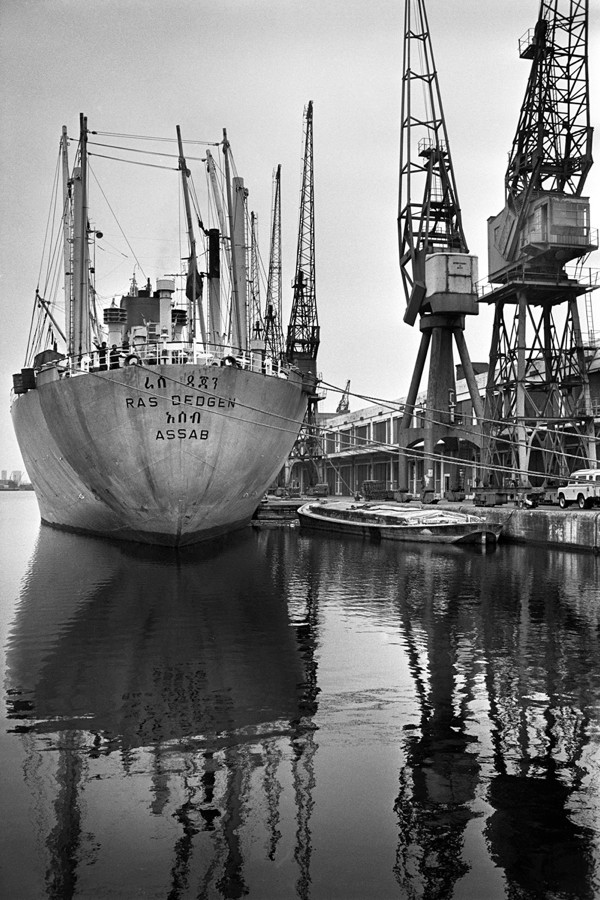
One of the last open-hold vessels to visit West India Dock.

Royal Dock on a winter’s day.
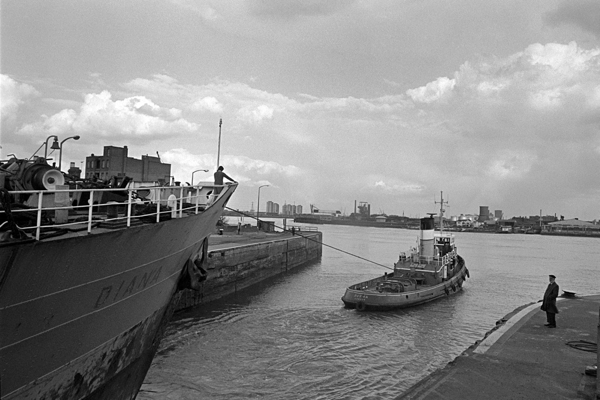
Heading downriver from West India Dock.
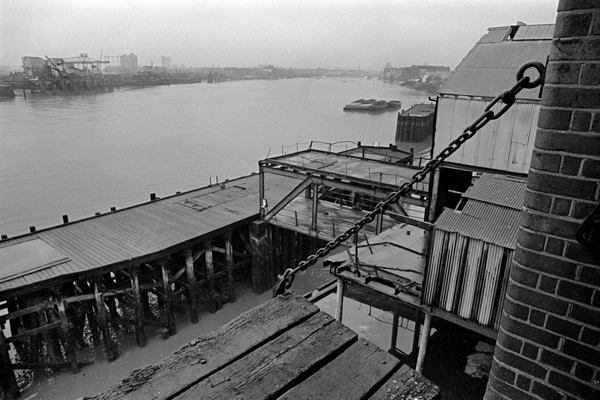
View from the abandoned Free Trade Wharf.
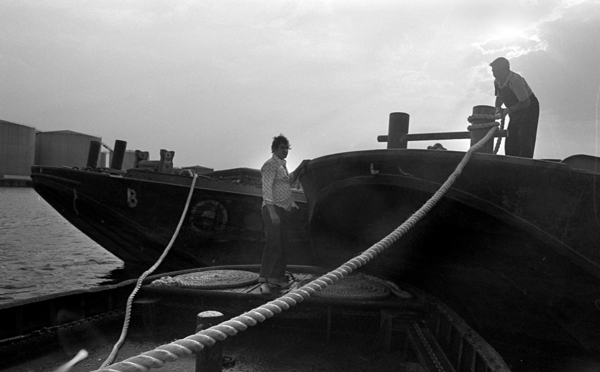
Lightermen.
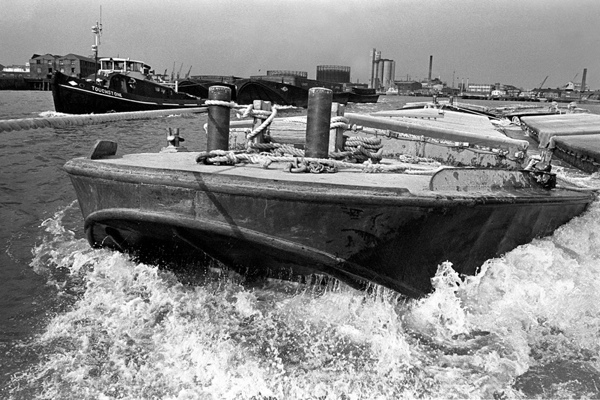
Barges hauled through East London.
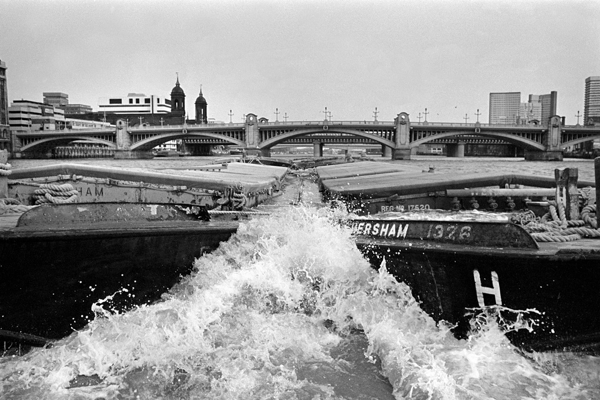
Barges hauled through Central London.
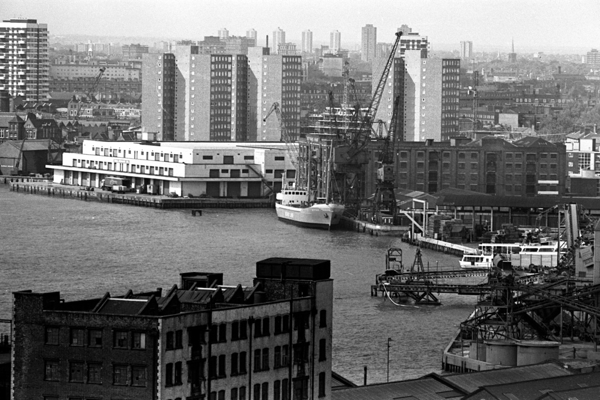
New and old buildings in Limehouse.
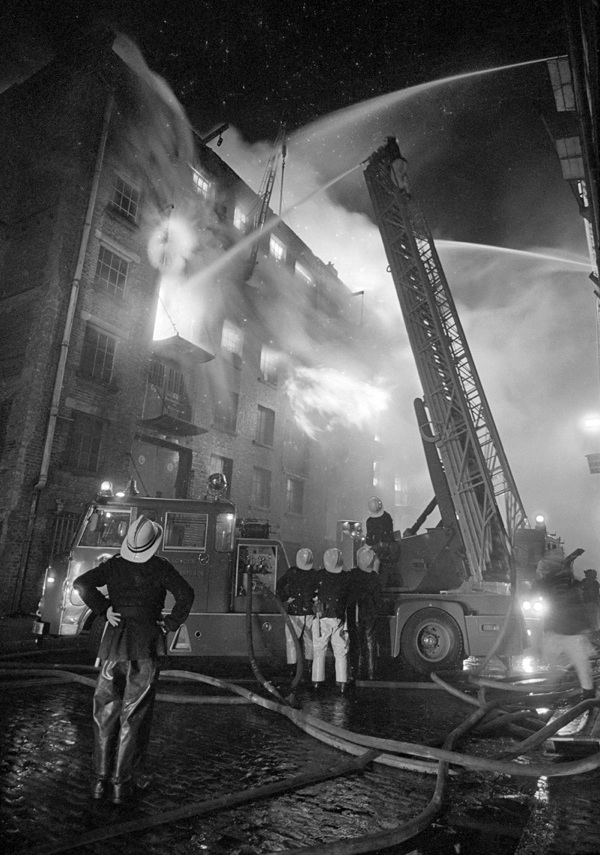
Firemen watch as yet another warehouse succumbs to fire in the middle of the night.
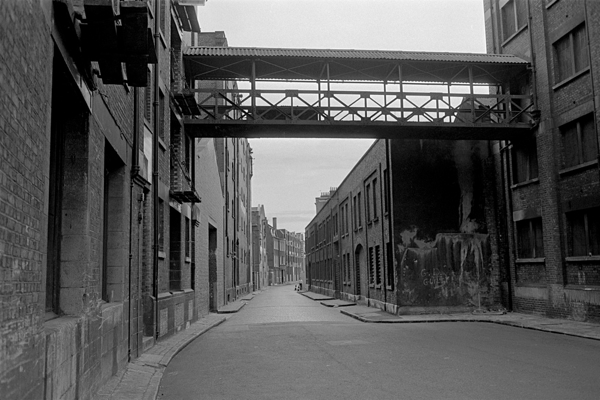
Wapping High St, deserted early on a Saturday morning.
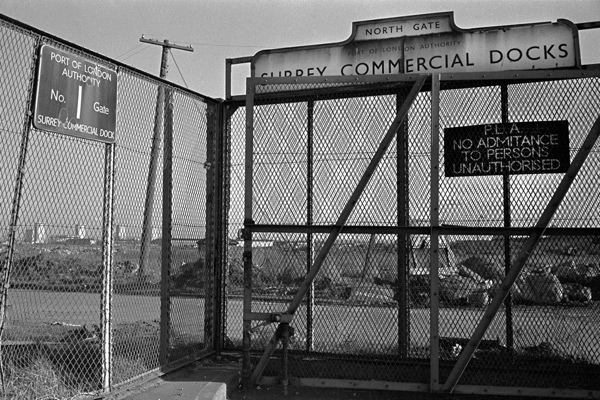
All that was left of Surrey Commercial Docks after the basins had been filled in.
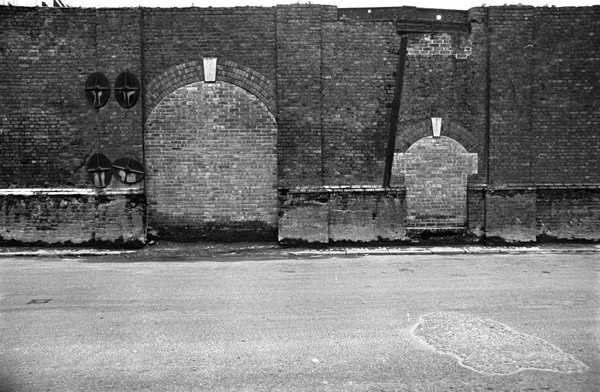
Old warehouses at Wapping Wall.

Demolishing Tobacco Dock, Wapping.
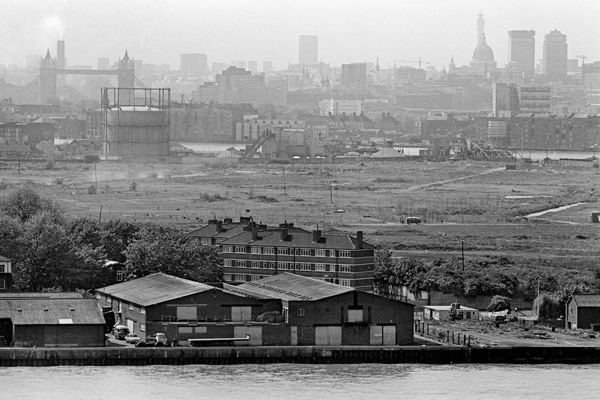
View from Isle of Dogs towards the City.
Photographs copyright © Tony Bock
You may like to see these other photographs by Tony Bock
and these other stories about Lightermen and the Thames
Bobby Prentice, Waterman & Lighterman

Chris Skaife & Merlin
Every day at first light, Chris Skaife, Master Raven Keeper at the Tower of London, awakens the ravens from their slumbers and feeds them breakfast. It is one of the lesser known rituals at the Tower, so Spitalfields Life Contributing Photographer Martin Usborne & I decided to pay an early morning call upon London’s most pampered birds last week and send you a report.
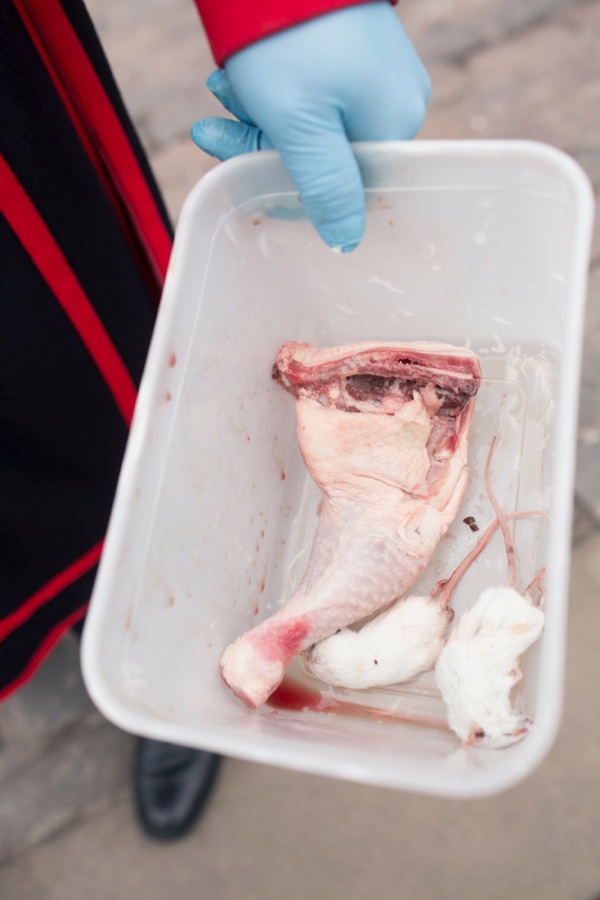
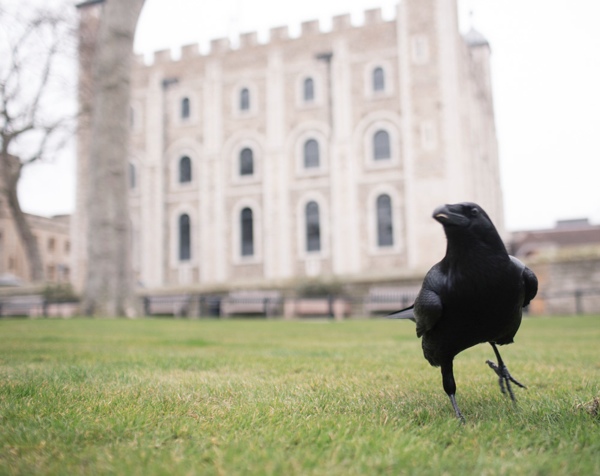
The keeping of ravens at the Tower is a serious business, since legend has it that, ‘If the ravens leave the Tower, the kingdom will fall…’ Fortunately, we can all rest assured thanks to Chris Skaife who undertakes his breakfast duties conscientiously, delivering bloody morsels to the ravens each dawn and thereby ensuring their continued residence at this most favoured of accommodations.“We keep them in night boxes for their own safety,” Chris explained to me, just in case I should think the ravens were incarcerated at the Tower like those monarchs of yore, “because we have quite a lot of foxes that get in through the sewers at night.”
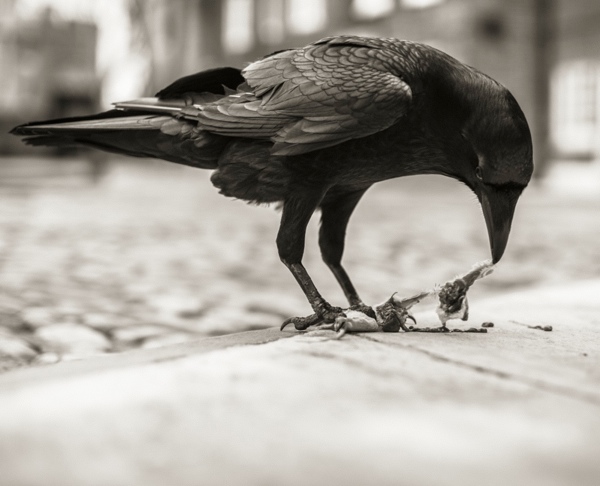
First thing, Chris unlocks the bird boxes built into the ancient wall at the base of the Wakefield Tower and, as soon as he opens each door, a raven shoots out blindly like a bullet from a gun, before lurching around drunkenly on the lawn as its eyes accustom to the daylight, brought to consciousness by the smell of fresh meat. Next, Chris feeds the greedy brother ravens Gripp – named after Charles Dickens’ pet raven – & Jubilee – a gift to the Queen on her Diamond Anniversary – who share a cage in the shadow of the White Tower.
Once this is accomplished, Chris walks over to Tower Green where Merlin the lone raven lives apart from her fellows. He undertakes this part of the breakfast service last, because there is little doubt that Merlin is the primary focus of Chris’ emotional engagement. She has night quarters within the Queen’s House, once Anne Boleyn’s dwelling, and it suits her imperious nature very well. Ravens are monogamous creatures that mate for life but, like Elizabeth I, Merlin has no consort. “She chose her partner, it’s me,” Chris assured me in a whisper, eager to confide his infatuation with the top bird, before he opened the door to wake her. Then, “It’s me!” he announced cheerily to Merlin but, with suitably aristocratic disdain, she took her dead mouse from him and flounced off across the lawn where she pecked at her breakfast a little before burying it under a piece of turf to finish later, as is her custom.
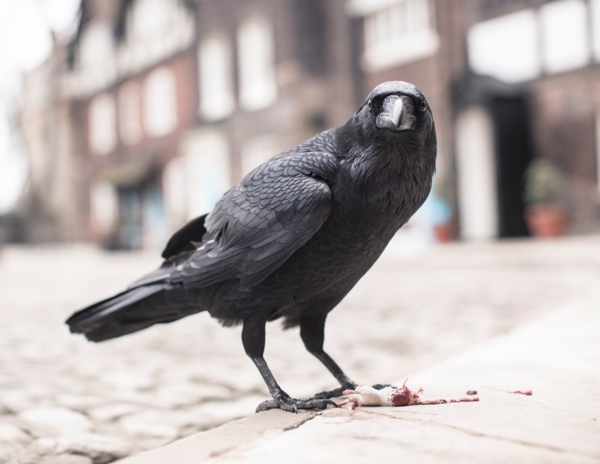
“The other birds watch her bury the food, then lift up the turf and steal it,” Chris revealed to me as he watched his charge with proprietorial concern, “They are scavengers by nature, and will hunt in packs to kill – not for fun but to eat. They’ll attack a seagull and swing it round but they won’t kill it, gulls are too big. They’ll take sweets, crisps and sandwiches off children, and cigarettes off adults. They’ll steal a purse from a small child, empty it out and bury the money. They’ll play dead, sun-bathing, and a member of the public will say, ‘There’s a dead raven,’ and then the bird will get up and walk away. But I would not advise any members of the public to touch them, they have the capacity to take off a small child’s finger – not that they have done, yet.”
We walked around to the other side of the lawn where Merlin perched upon a low rail. Close up, these elegant birds are sleek as seals, glossy black, gleaming blue and green, with a disconcerting black eye and a deep rasping voice. Chris sat down next to Merlin and extended his finger to stroke her beak affectionately, while she gave him some playful pecks upon the wrist.
“Students from Queen Mary University are going to study the ravens’ behaviour all day long for three years.” he informed me, “There’s going to be problem-solving for ravens, they’re trying to prove ravens are ‘feathered apes.’ We believe that crows, ravens and magpies have the same brain capacity as great apes. If they are a pair, ravens will mimic each other’s movements for satisfaction. They all have their own personalities, their moods, and their foibles, just like people.”
Then Merlin hopped off her perch onto the lawn where Chris followed and, to my surprise, she untied one of Chris’s shoelaces with her beak, tugging upon it affectionately and causing him to chuckle in great delight. While he was thus entrammelled, I asked Chris how he came to this role in life. “Derrick Coyle, the previous Master Raven Keeper, said to me, ‘I think the birds will like you.’ He introduced me to it and I’ve been taking care of them ever since.“ Chris admitted plainly, opening his heart, “The ravens are continually on your mind. It takes a lot of dedication, it’s early starts and late nights – I have a secret whistle which brings them to bed.”
It was apparent then that Merlin had Chris on a leash which was only as long as his shoelace. “If one of the other birds comes into her territory, she will come and sit by me for protection,” he confessed, confirming his Royal romance with a blush of tender recollection, “She sees me as one of her own.”
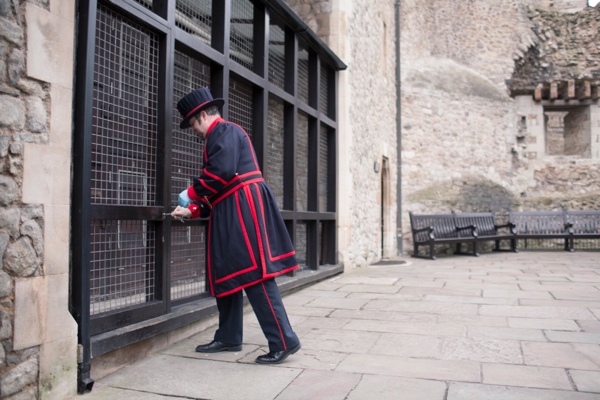
“Alright you lot, up you get!”

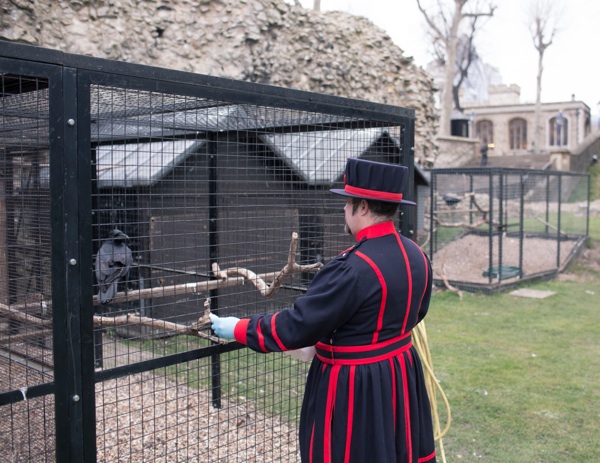
“A pigeon flew into the cage the other day and the two boys got it, that was a mess.”
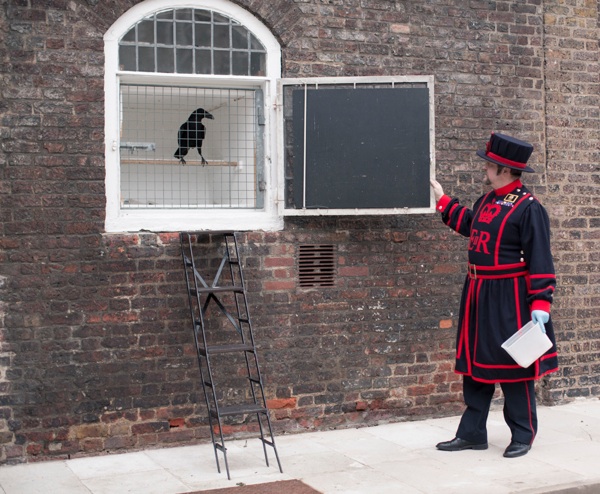
“It’s me!”


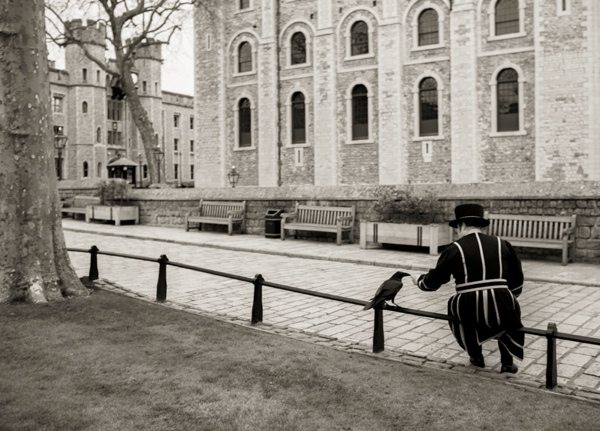
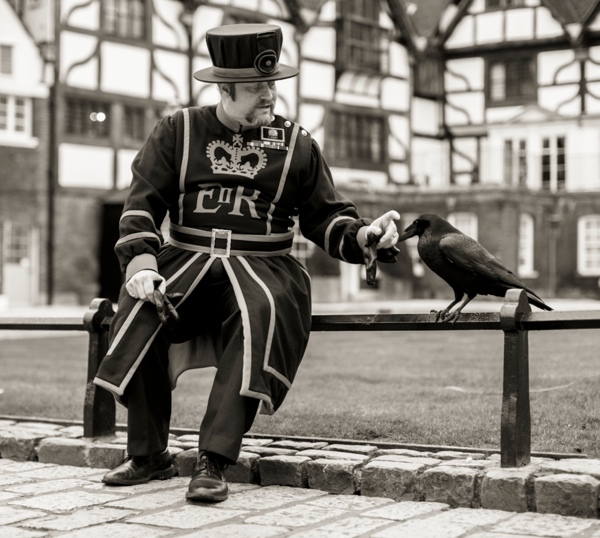
“She chose her partner, it’s me.”


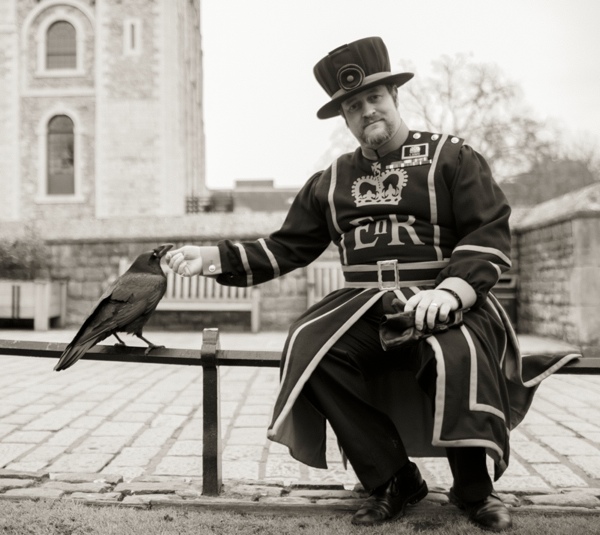
“She sees me as one of her own.”


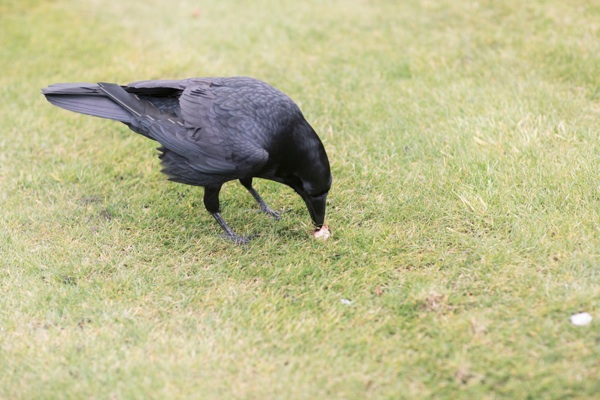
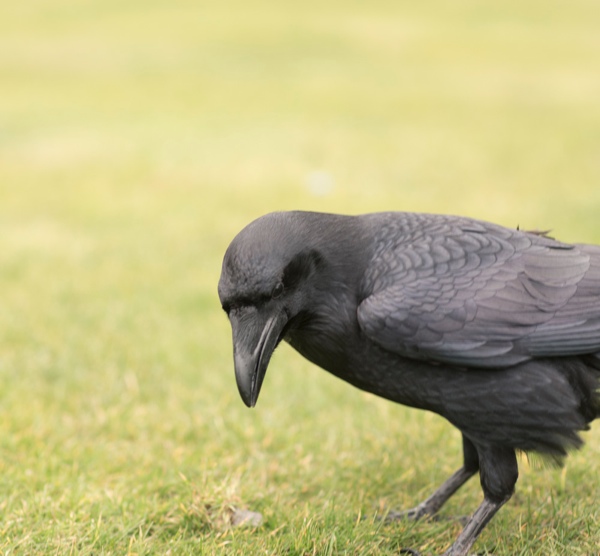
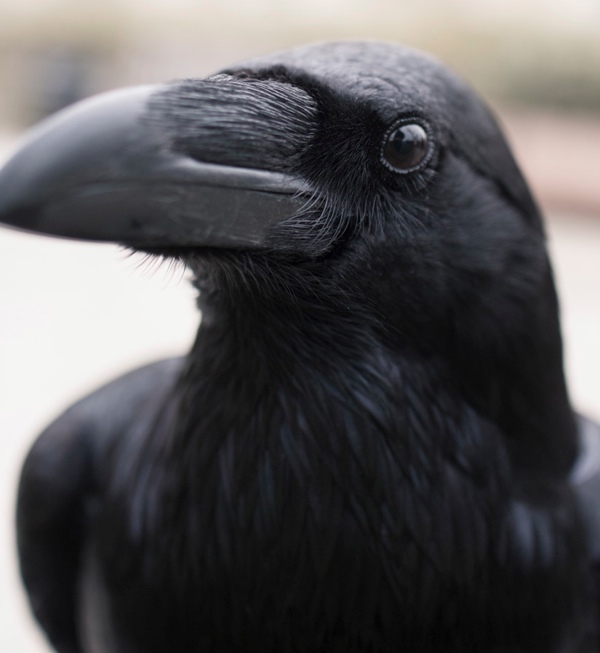
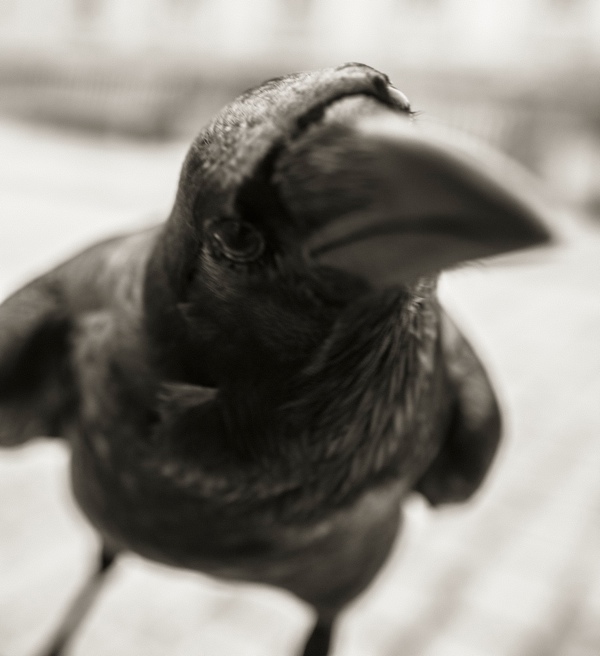
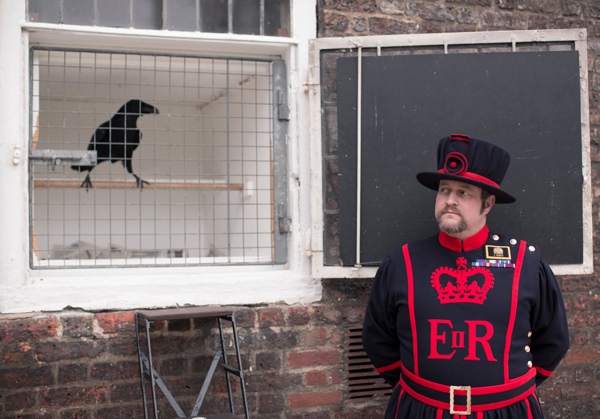
Chris Skaife & Merlin

Charles Dickens’ Raven “Grip” – favourite expression, “Halloa old girl!”
Tower photographs copyright © Martin Usborne
Residents of Spitalfields and any of the Tower Hamlets may gain admission to the Tower of London for one pound upon production of an Idea Store card.
Read Martin Usborne’s blog A Year to Help
You may also like to take a look at these other Tower of London stories
Alan Kingshott, Yeoman Gaoler at the Tower of London
Graffiti at the Tower of London
Beating the Bounds at the Tower of London
Ceremony of the Lilies & Roses at the Tower of London
Bloody Romance of the Tower with pictures by George Cruickshank
John Keohane, Chief Yeoman Warder at the Tower of London
Constables Dues at the Tower of London
The Oldest Ceremony in the World
A Day in the Life of the Chief Yeoman Warder at the Tower of London
John Claridge’s Clowns (The Final Act)
So this is where we bring down the curtain on John Claridge‘s Clowns photographed at the 67th Annual Grimaldi Service at Holy Trinity Dalston last month, courtesy of our friends at Clowns International. Being startled or even alarmed by their curious appearances, their gurning and their dopey japes, we recognise ourselves. This is the corrective that clowns deliver with a cheesey grin, confronting us with the ridiculous in life.

Chuckles the Clown (The Clown with 1000 Faces) – Clowning for sixty-three years. “I am the last one that was taught by Coco the Clown!”
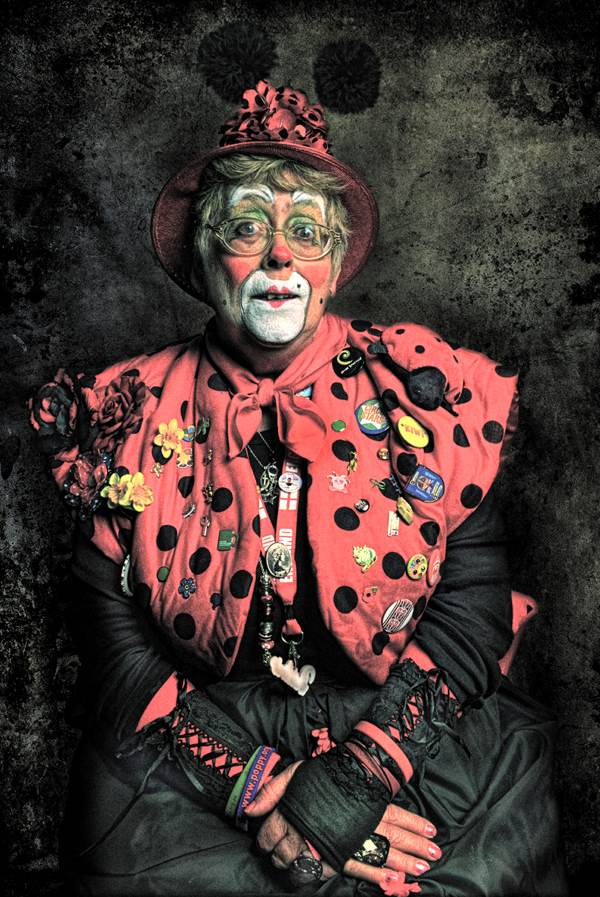
Lady Bird – Performer for many years and mother of Pippa the Clown.
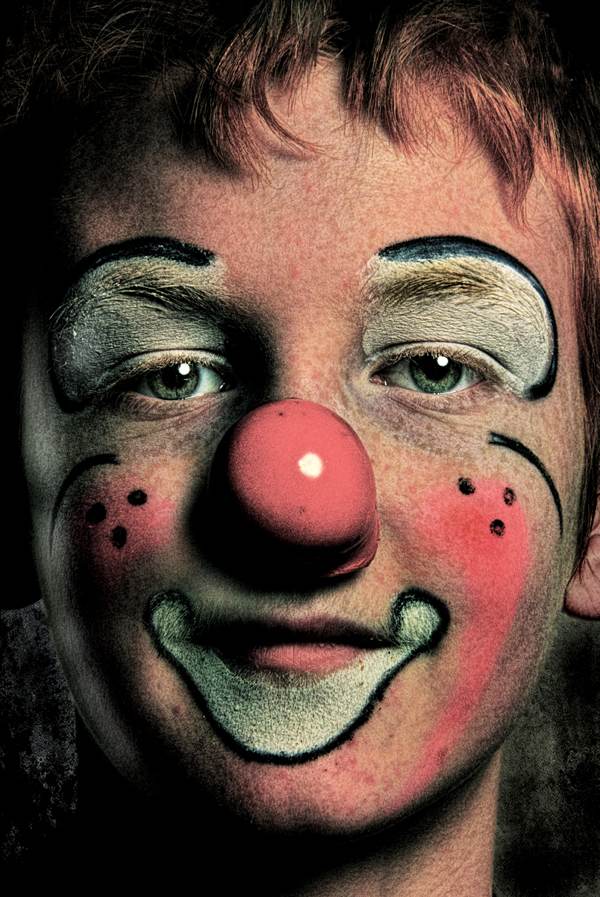
Jake – Clowning for three years, son of Mr Mudge and grandson of Mr Jingles.
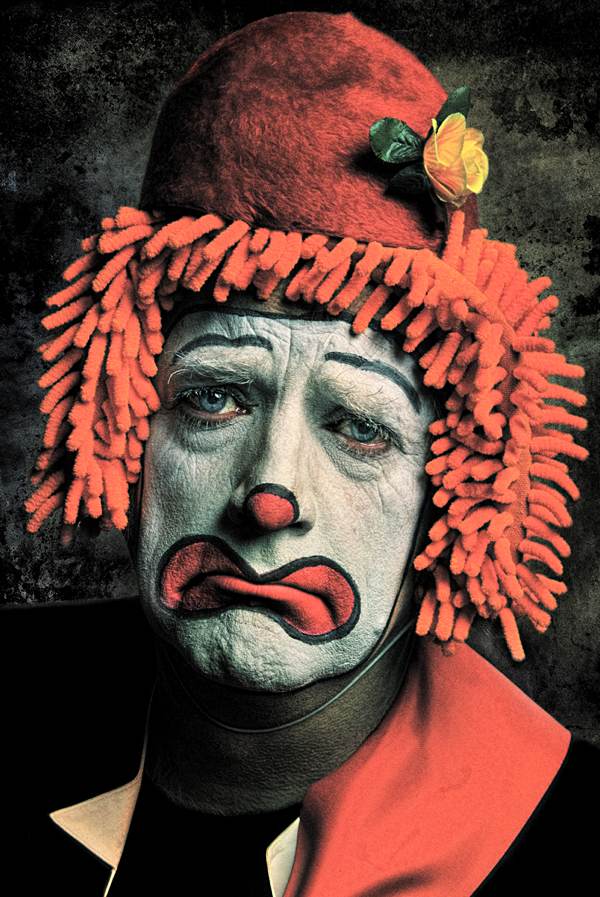
Stephen – On a visit from Adelaide.
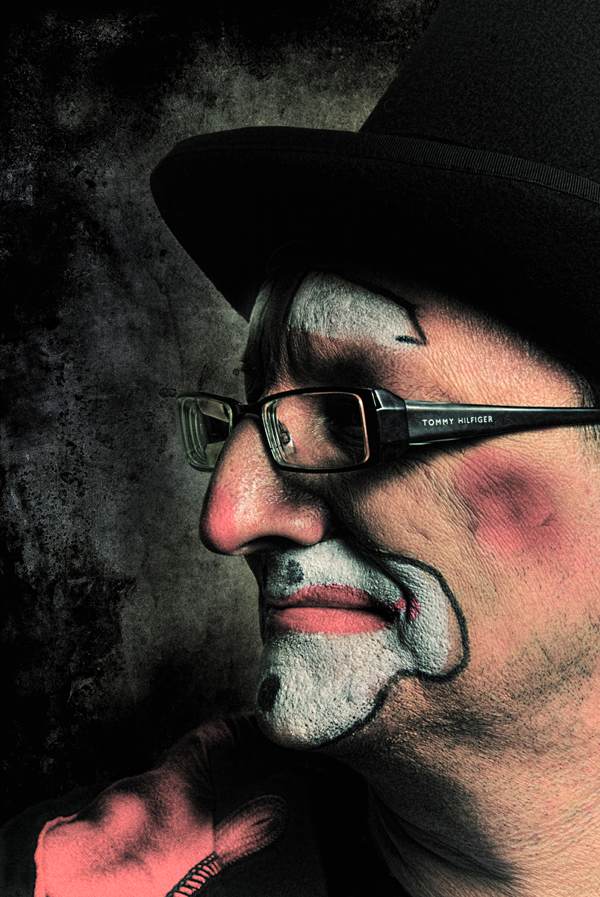
Gadget – Clowning for fifteen years and husband of Pippa the Clown.

Zaz – Clowning since the age of eight, now thirty-three.
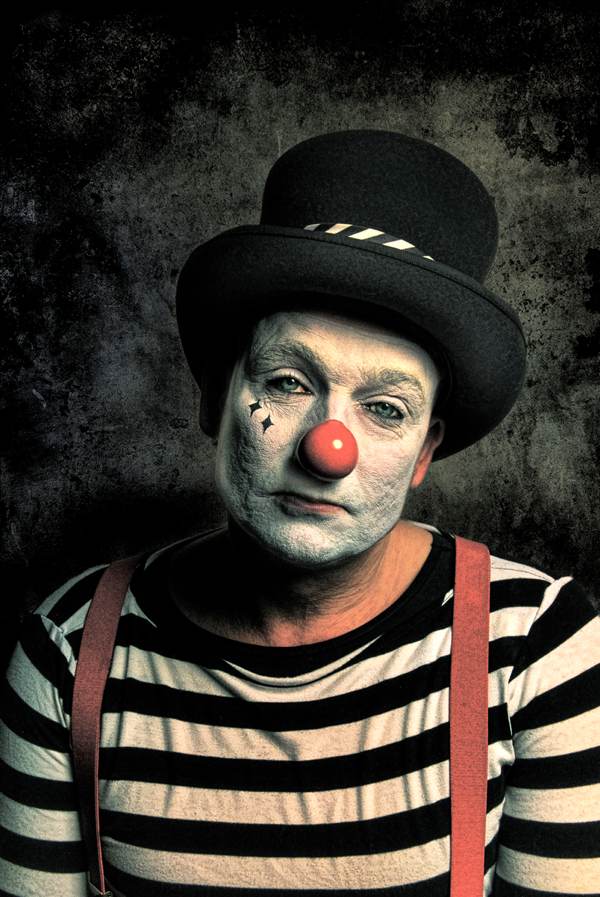
Mr Mudge – Performer for fourteen years, son of Mr Jingles.
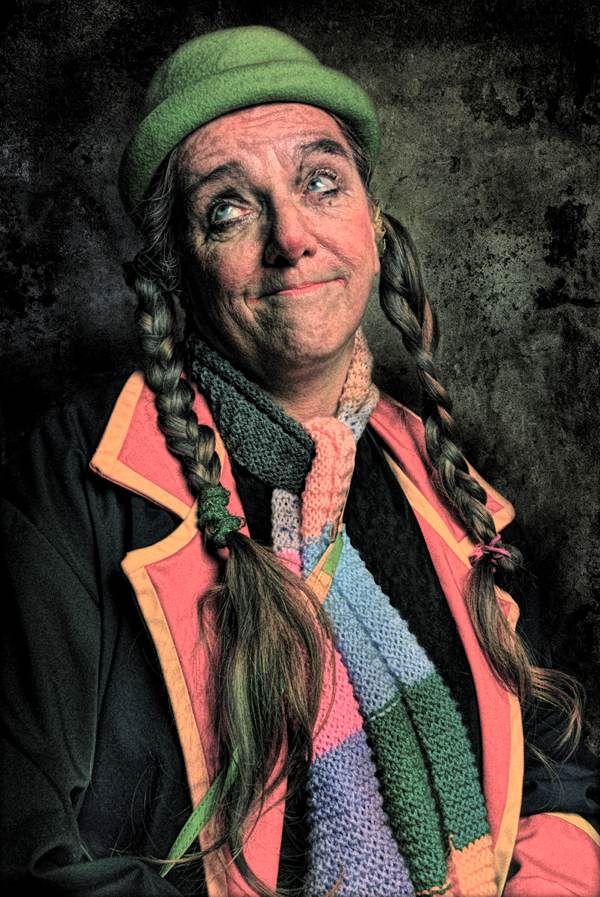
Susie Oddball – Clowning for thirty-five years. “I left my nose behind in Brighton!”

Bluebottle – Clowning for ten years, Secretary of Clowns International.
Photographs copyright © John Claridge
You might like to take a look at
John Claridge’s Clowns (Act One)
John Claridge’s Clowns (Act Two)
and read my account
At the 65th Annual Grimaldi Service
or read these other Grimaldi stories
Soerditch by Dant
Working under the assumed identity of Dant, Spitalfields Life Contributing Artist Adam Dant has drawn one hundred and twenty-five cartoons, satirising the culture of our dearly-beloved Shoreditch, all comprising beautifully rendered views of the neighbourhood and captioned with clueless things overheard on the streets.
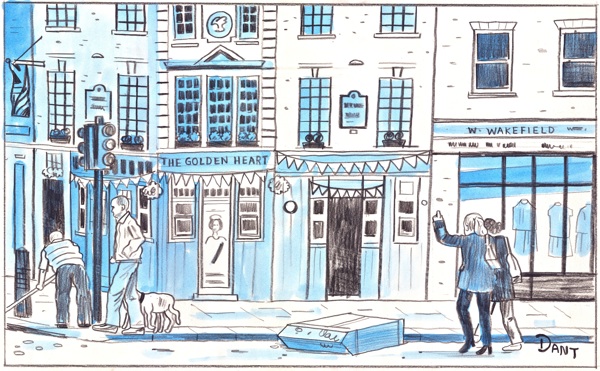
“Oh my God! This is the place where that Tracey Ermine told me to ‘fark orf’!”
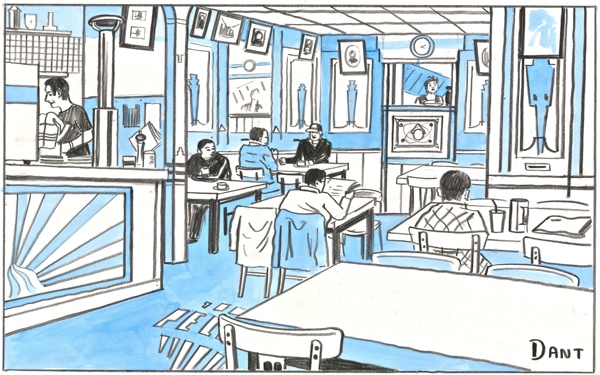
“It’s all www this & dot com that today … I’d tell people what I think of it all … if they weren’t on the phone all the time!”
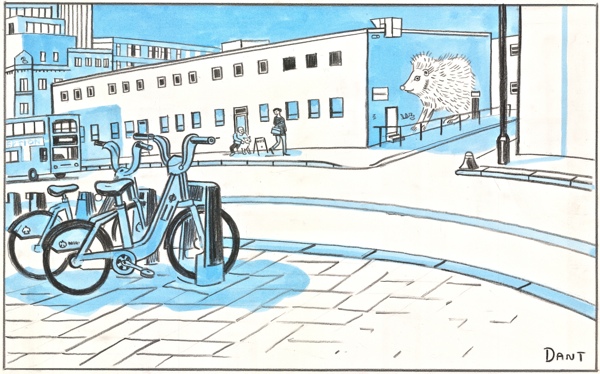
“Ere, Luv! Do you want to pet my dog? He likes long legs & nice tits …”
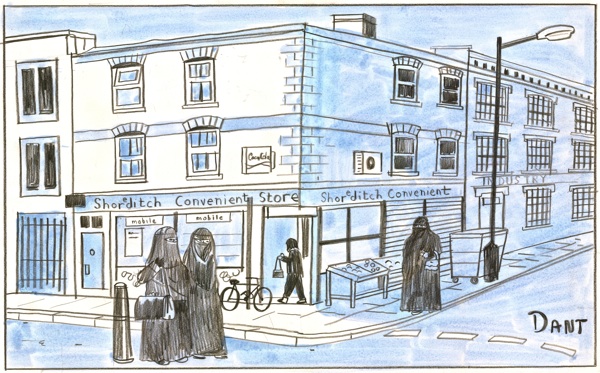
“There’s that Rupa … I can’t believe I lent her all my Henry Miller revision notes, she gets an A & can’t even be arsed to give them back, let alone say ‘thanks’ or anything! “
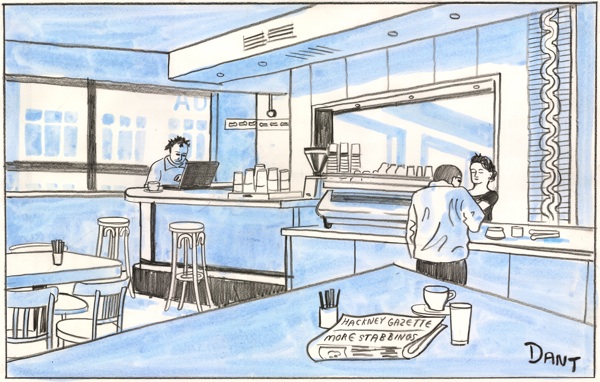
“Sorry Love – Scrub that … He just texted again, says he wants a ‘flat white’ instead …”
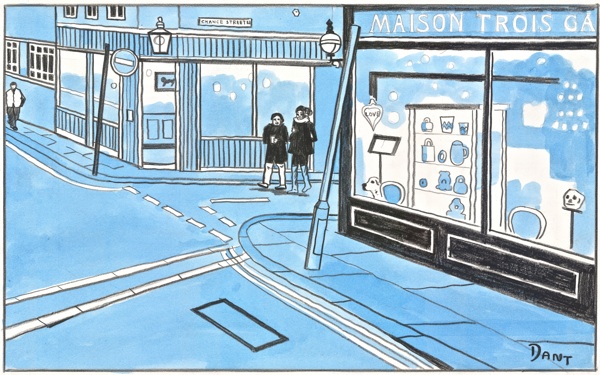
“I love the whole cobbley, Jack the Rippery feel of this area …”
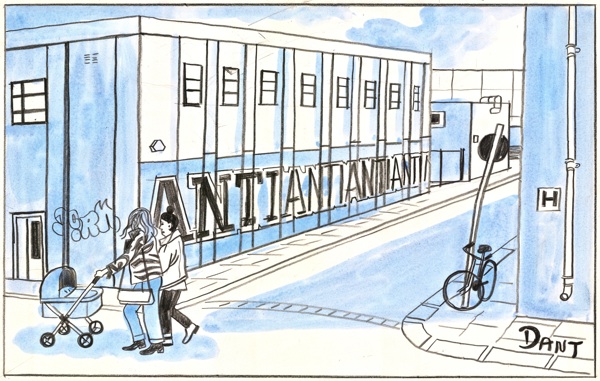
“I’m, like sooo Anti. How about you? Oh Ya! Absolutely.”
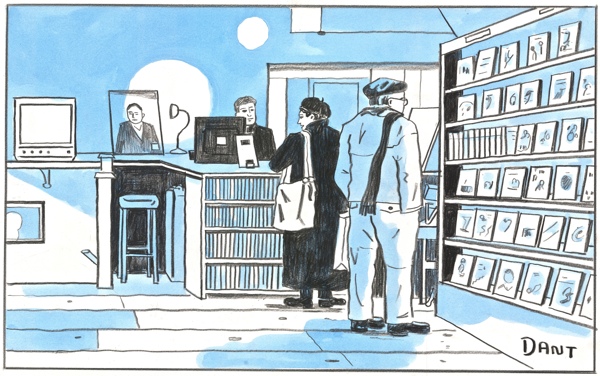
“Well I wanted to rent ‘Dodgeball’ but the guy who runs your video store said I wasn’t allowed to see it. He made me watch this Polish film about organ trafficking instead, which I didn’t really enjoy.”
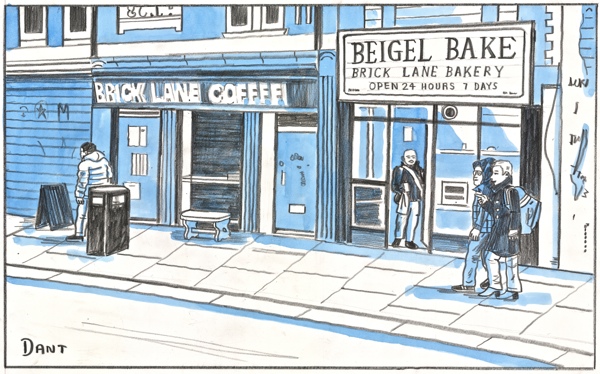
“This is the shop where the Huguenots invented the Donut …”
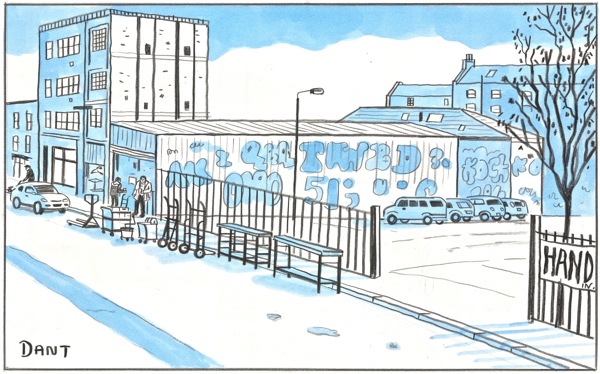
“Another one of those ‘Pop-up Shops’ seems to have gone & ‘popped-off’…”
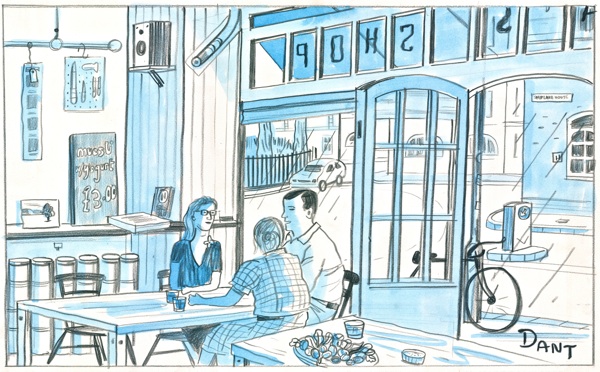
“Don’t get me wrong, it’s a great lido & all, it’s just, once you’ve seen something like that floating in it … puts you off your stroke!”
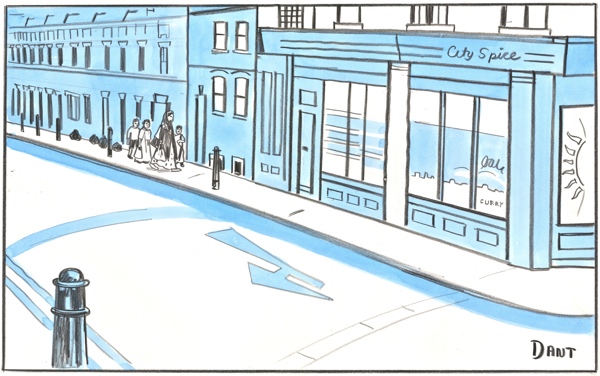
“Mum …can I have an ‘ipod touch,’ can I, can I, will you get one for me, can I have one, can we use my pocket money, can I have one, can I …?”

Drawing from a pair of unlikely inspirations, namely Giles‘ cartoons for the Daily Express and Hiroshige‘s ‘One Hundred Famous Views of Edo,’ Adam Dant pulls off an astonishing sleight of hand – simultaneously portraying the urban landscape of Shoreditch with spare lines and flat tones that evoke the woodcuts of Hiroshige, while also satirising the manners and mores of the people through witty social observations in the manner of Giles.
Soerditch is the old name for Shoreditch, quoted by the historian John Stowe in his Survey of London 1598, as “so called more than four hundred yeares.” It means the Sewer Ditch, in reference to the spring beside Shoreditch Church, once the source of the lost River Walbrook which flowed from there towards the City of London.
The exhibition runs at Eleven Spitalfields Gallery from 7th March – 26th April and all one hundred and twenty-five cartoons are published in a limited edition album with an introduction by Jarvis Cocker, produced in the style of Giles’ celebrated annuals and available to buy online from Spitalfields Life Shop.
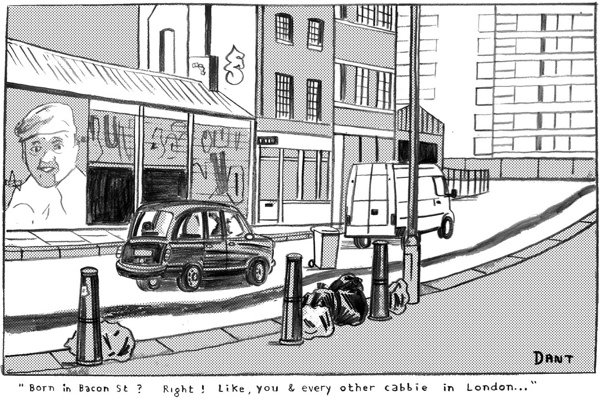
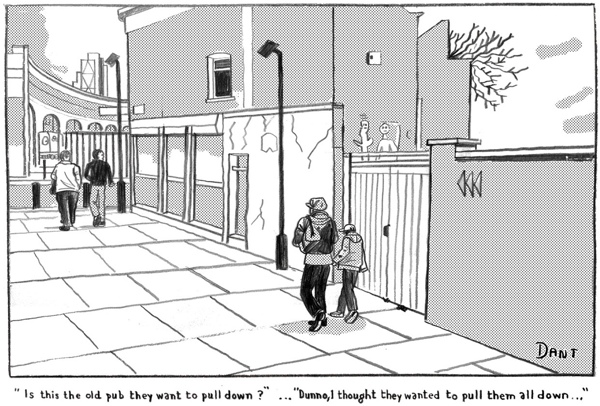
Click here to buy your copy of SOERDITCH by DANT – Diary of a Neighbourhood (125 Views of Shoreditch) – while stocks last!
Cartoons copyright © Adam Dant
Adam Dant is represented by Hales Gallery












