Michelle Attfield, Pointe Shoe Fitter
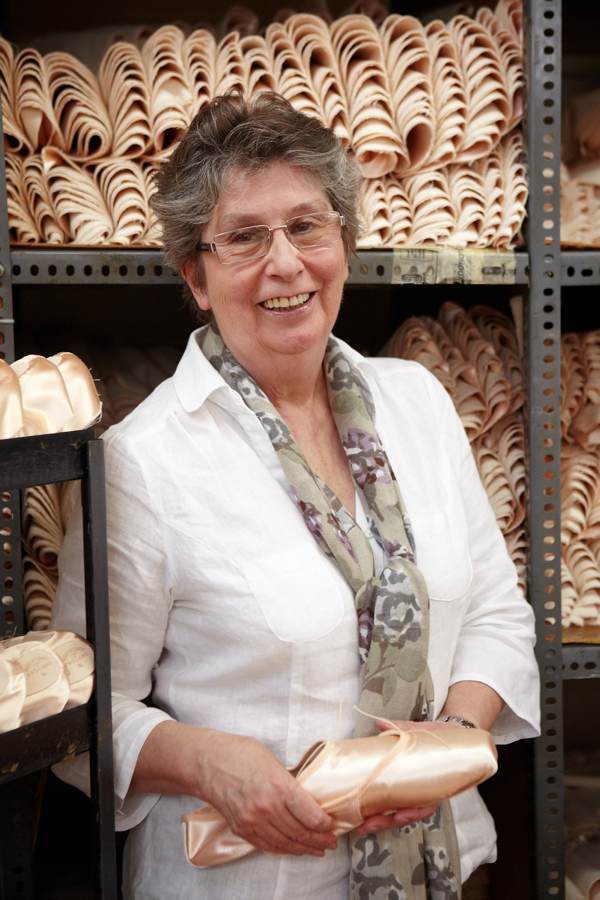
There is one woman, above all others, whom the world’s greatest ballerinas rely upon when it comes to fitting their shoes perfectly, Michelle Attfield of Freed of London. With generous spirit, self-effacing nature and fierce professionalism, Michelle is the queen of the pointe shoe and a legend in ballet circles.
In her half century at Freed, she has fitted ten-year-olds at the Royal Ballet School and accompanied them throughout the course of their careers, subtly modulating the design of their pointe shoes to accommodate both their physical change and the needs of their repertoire. “Sometimes I discover I know more than I think I do, when I look around for an expert and then realise that I have been around longer than anyone.” she admitted to me with a laugh of self-deprecation. In the volatile world of show business, Michelle is one of those rare figures whom dancers can always count upon for unwavering loyalty, appreciation and practical advice.
An ex-dancer and former customer of Freed, who was trained to fit shoes by Mrs Freed herself, Michelle embodies the spirit of the company that she has served all these years and which she delights to speak of. Yet she is the model of discretion, drawing a tactful curtain over the details of her intimate relationships with the great divas, and preferring to enthuse about show-business customers such as her beloved Patrick Swayze who visited Michelle at the shop after hours for extra fittings. “Supine with admiration,” is her verdict upon Mr Swayze.
“I’ve worked for Freed of London for forty-nine years, I’ve given my life to this company. I trained as a dancer but I wasn’t quite good enough to be a ballerina, so I qualified as a teacher and, since Freed’s shop in St Martin’s Lane were always advertising for staff in The Stage, I went along.
I was a Royal Academy of Dance student from the age of ten, so I had known Mrs Freed all that time. It was April and I had a teaching position starting in September, and when I told Mrs Freed she said ‘Why don’t you stay with us and stop all this nonsense?’ I said, ‘But I’ve got a job with the Royal Ballet.’ So I went to work at Freed permanently and never looked back. I tried to leave once when my daughter was born but, luckily for me, some of my customers refused to deal with anyone else. So they rang me and said, ‘You’ve got to come back.’
She was a monster. Mr Freed made shoes but Mrs Freed made the business. She was the dynamo. He was a shoemaker and a good one, she was a milliner. He did the making and she did the sewing. He invented the concept of making the shoe to fit the foot, prior to that they were very stylised, they propped you up but they didn’t let you dance. This development coincided with choreographers like Frederick Ashton and John Cranko wanting a little more and dancers who were willing to give a little more, and our shoes helped them to do it.
Mrs Freed visited the factory every day at seven-thirty and then she went and ran the shop all day – and she did that every day. I discovered the reason they always advertised in The Stage was because no-one could work for Mrs Freed. People exited from the shop very quickly, girls used to start in the morning and leave in the afternoon. I’d come back from lunch and ask ‘Where has she gone?’
Mr & Mrs Freed loved dancers but they didn’t want to go to the ballet. ‘No dear, you take the tickets and go to the ballet,’ they’d say to me, ‘we’ve had enough of that all day.’ You had to work uber-hard but I had been a dancer and dancers are used to hard work – class in the morning, rehearsal in the afternoon and performance in the evening. People either left at once or stayed forever, and it was the most wonderful place to work if you loved ballet – I fitted Margot Fonteyn!
I learnt to dance with one of the founder members of the Royal Academy of Dance and I learnt to fit shoes with Mrs Freed – the perfect foundation for this job. I try to be the bridge between the aspiration of the shoe and the reality of what can be achieved. Because Freed shoes are handmade, we can deliver exactly what an individual dancer needs and that’s why we have our reputation. A pointe shoe is a tool of the trade for a dancer, the shoe has to perform whatever she has to perform and, while a student may require longevity, a professional needs a show purposed for performance. The Freed pointe shoe is a chameleon because it will do anything for anyone.
I’ve fitted so many dancers that wherever I go in the world someone will come up and say, ‘Hello Michelle, I didn’t know you were going to be here.’ I’ve been all over to fit shoes, Japan, Australia, America, Milan, Verona, Paris – it goes on and on. But my greatest pleasure is what I regard as my ‘home companies,’ Royal Ballet, Birmingham Royal Ballet, English National Ballet, Scottish Ballet and Northern Ballet. I sit cross-legged on the floor and dancers come and stand in front of me, and I put shoes on them and decide which maker’s shoes would be best for them to wear. They chose the size but I choose the maker. It has to be a relationship of trust. I look at the whole dancer not just the feet. I say, ‘I know what you want and I’ll do it.’ You want the shoe to fit the dancer so well that you see the dancer not the shoe, you don’t want to see the shoe. And it’s a great feeling when you’ve got them where they want to be.
I think how lucky you are if you are involved with dance. Mine is a job that will never end because there will always be ballet. I used to take my daughter Sophie to the factory and she’d be crawling around on the floor getting dirty while I was picking up shoes. When she was eight, she stood in the wings when Nureyev was dancing, and she turned to me and asked ‘May I have a sandwich?’ She worked in the shop as a Saturday girl and Saturday in our shop is a baptism of fire. Then she went off to work in finance but after she got married, she asked to come back and now accompanies me when I do fittings. I’ve got to start handing over to her because I want to be like the Cheshire Cat, I want to disappear without people noticing me go.”
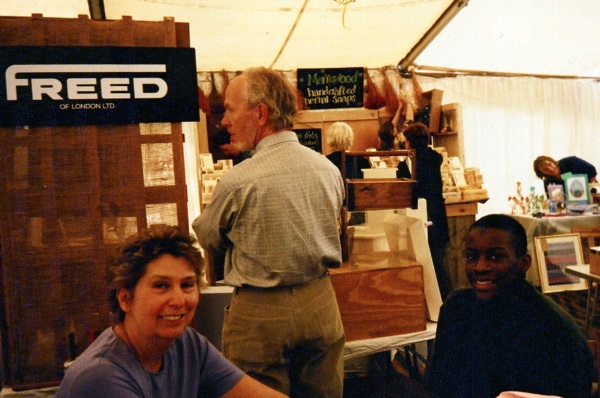
Michelle with Shevelle Dynott – “One of my darling boys…”
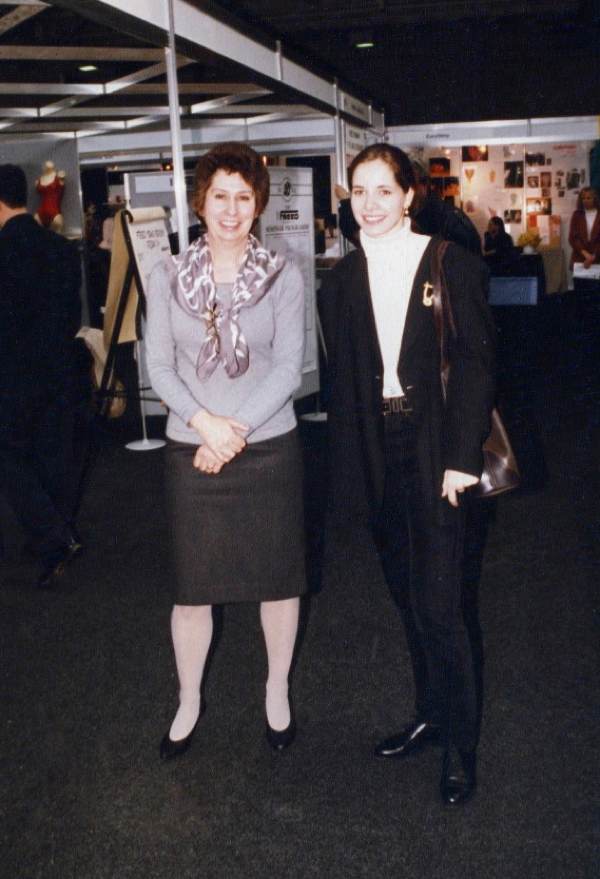
Michelle with Darcy Bussell.
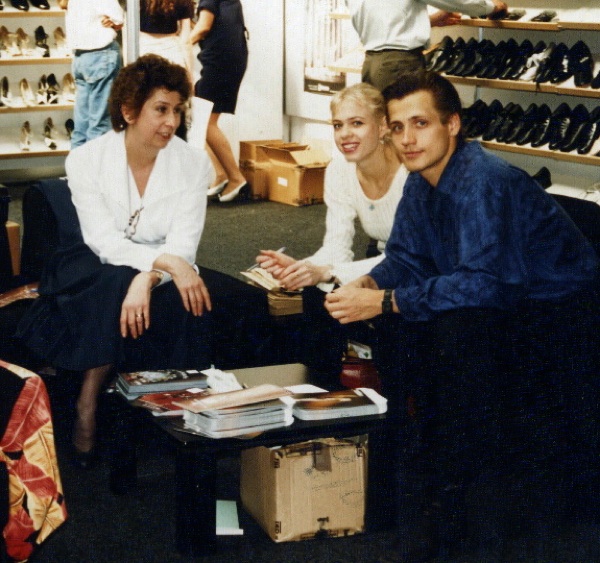
Michelle with Agnes Oaks and Thomas Edur, joint directors of the Estonian National Ballet.
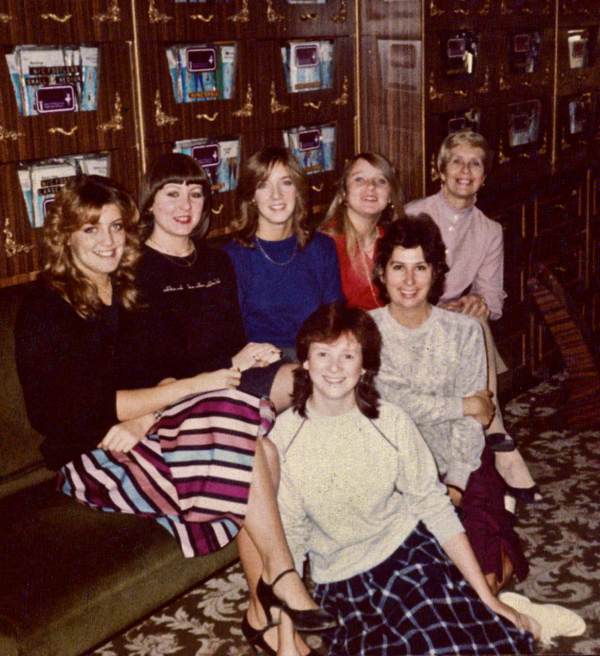
Michelle and fellow shoe fitters at the Freed shop in St Martin’s Lane in the eighties.

Frederick & Dora Freed in their shop.
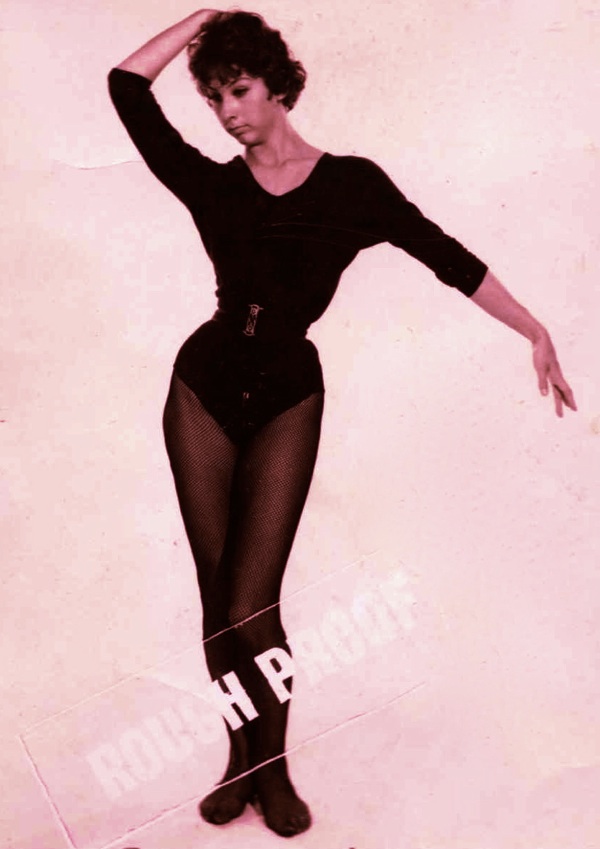
Michelle in her dancing days.
Portrait of Michelle Attfield copyright © Patricia Niven
You may also like to read about
Announcement To Subscribers
 Please accept my apologies for any disappointment that may have been caused by the non-appearance of the daily mailings since Sunday. The mailing system died and we are putting a new once in place. Normal service will be resumed later this week but in the meantime you can catch up on any stories you have missed at www.spitalfieldslife.com
Canal Dogs
Photographer Sarah Ainslie & Novelist Sarah Winman were up with the lark to undertake a survey of canine life along the towpath of the Regent’s Canal recently and here is their report.
“It was a balmy spring morning when we set out from The Narrow Boat pub in Islington and headed east in search of dogs and their owners. It was a Sunday, and London seemed slow to waken. The canal rippled in the breeze, and blossom fell like first-flurry snow and narrow boats rocked lazily in the sunlight. Billie Holiday sang out from one, Nina from another. But no dogs passed. Towpaths were overhanging with green, and the heat released a pungent scent of nettles and cow parsley and forget-me-nots, and sweet grass and that something other, hidden in the shady depths. Joggers and cyclists and walkers passed, late-night hipsters keen to keep going. But then as the sun rose higher, tails did too, and noses rose and sniffed the fecund air, and soon the patter of tiny feet echoed along the well-trodden path…” – Sarah Winman

Alfie (Staffordshire Bull Terrier) & Frankie
“I’ve only just got him. Alfie’s a rescue dog and I saw on Facebook that he needed a home because he came from an environment of domestic abuse. When his owner got pregnant it all got a bit too much, so they had to let him go. If I hadn’t taken him he might have got put down. I’ve always had dogs. He’s really friendly and nice, but he still needs a firm hand. At first, if I went to stroke him he would flinch. Guess he’d been slapped about a bit. He also liked to sleep under the covers. At first I was a bit like “Whoa, what have I taken on?” But I’ve got the time for him because I work from home. I’m a musician. Dogs need long walks twice a day and I can give him that. Unfortunately I have to get rid of his balls next week ‘cause we share a house with a female dog. I’ve known dogs to break down doors to get to a bitch on heat.”
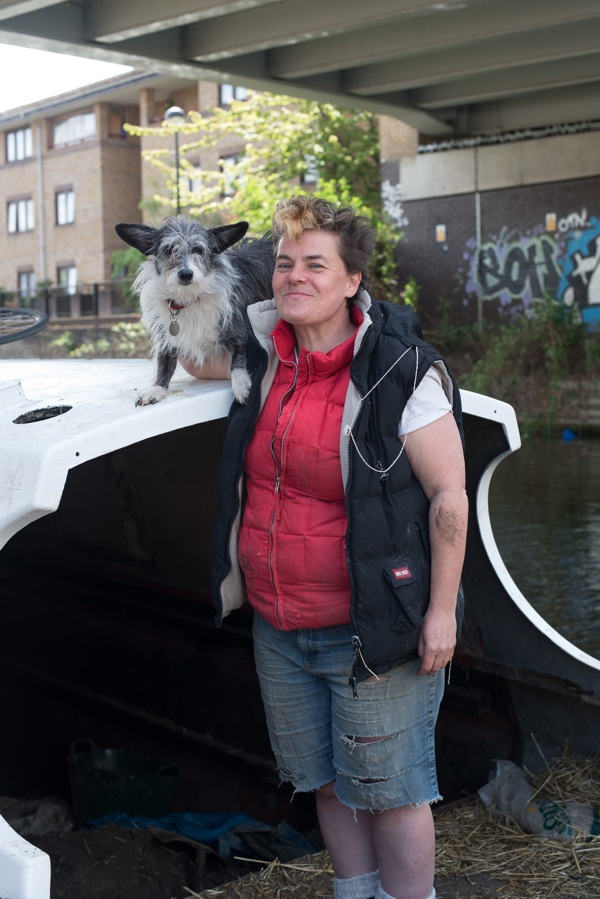
Lilly (Jack Russell/Collie mix) & Linda
“We’ve been together for six years now. Lilly was found in a cardboard box on the Holloway Road and taken to the RSPCA. Two years later, a neighbour who worked there said, “You know you wanted a naughty dog? Well I think I’ve found it.” She comes on all our cob builds. We use clay from excavations and build anything with it. We’re using clay from the Crossrail site at Tottenham Court Rd to build a community centre over at Meadow Orchard in Crouch End. She likes to come to parties with us and has eye lashes like a drag queen. She’s very loving and likes to rub herself against things and people a lot. She’s quite randy, but choosy. That’s why we call her a ‘Jackie Collins.'”

Cassie (Golden Retriever) & Chris
“After I got burgled I thought about getting a dog. I wanted an Alsatian but then I went to a puppy farm and Cassie was there and she jumped up at me and held on to me, so that was that. She’s a clever dog. Obsessed by food. She had a traumatic year two years ago when she was attacked by two dogs. Whilst she was being treated, the vet found a tumour behind her eye, and that’s how she lost it. She’s a very friendly girl, and is known by name by everyone. I’m not. She’s so well known at The Talbot that she’s even allowed to go behind the bar and serve.”

Hopper (whippet) & Nadia
“Both my boyfriend and I wanted a dog. We love dogs. We have a restaurant on Brick Lane – Fika – which is dog friendly. But we knew it was a big decision to make, so we chose a dog suitable for us and for where we live. We wanted a dog that didn’t bark too much and with an exercise routine that could fit around our life. We’ve had him since he was eight weeks old. He’s ten months now. I love having him around. He’s like a comedian and has great expressions. But he knows my boyfriend’s the master so it’s tougher on me. He’s a bit of a naughty teenager with me. Taking him off the lead at picnics is a definite no-no.”
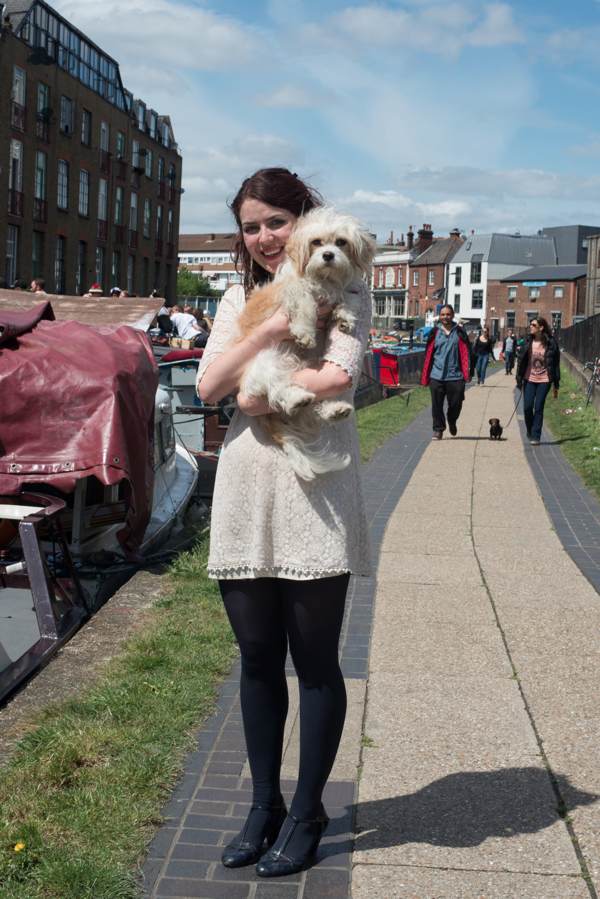
Moo (Cavalier King Charles Spaniel crossed with a Bichon Frise) & Katie
“I got her when she was seven weeks old. She’s eighteen months now. I got her from Gumtree. I typed in ‘dog.’ She was cheap and very pretty. When we go to the vets I love to hear the vet come out and go, ‘Moo! Moo!’ Once I dressed her up in a sailor outfit and we went out on a boat. She fell in though.”

Max & Tasha (Schnauzers) & Tony
“The dogs were born in Australia, near Newcastle just north of Sydney, and we all came over together. They love it here. Love the snow. They go mad in the snow. They’ve just met another Schnauzer back there, called Buster. I don’t know if they all knew they were Schnauzers or just dogs, but they seemed to love each other. They’re great dogs to be around and a lot of fun. Max & Tasha are a couple of nice eight year olds.”
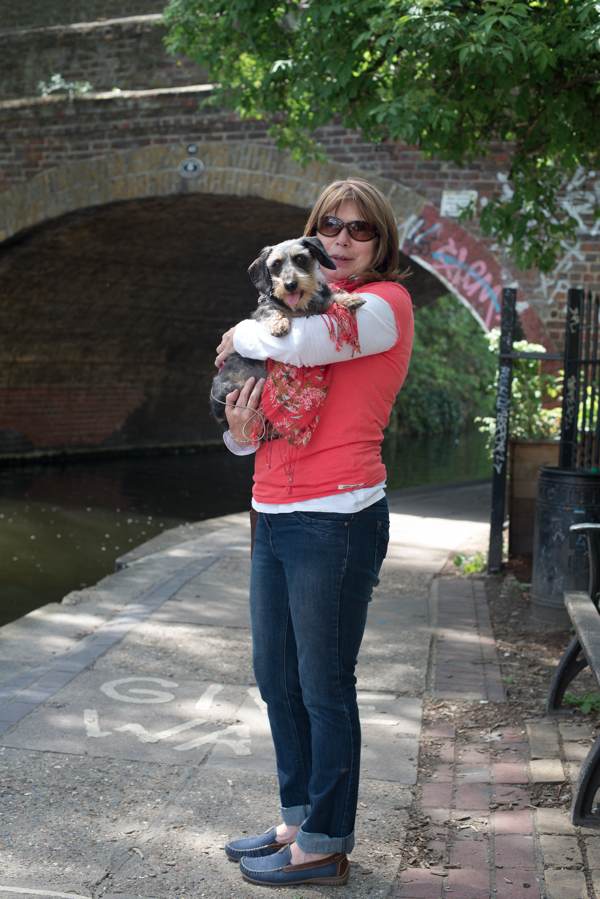
Bridget (Miniature Dachshund) & Carol
“We’ve been together three years. I got her as a puppy from a Breeder in Kent and she’ll be four in August. She’s beautiful. I named her after the Ray Steven’s song ‘Bridget the Midget,’ because she’s tiny. I thought Bridget was a German name too which would have gone with the Dachshund bit, but then I found out it was Irish. She loves playing ball. She plays ball continuously. She is a relentless player. You have to take the ball away physically to make her stop.”

Aggie (West Highland Terrier) & Jude
“We’ve been together three and a half years now. I got her from a breeder in Cambridgeshire. I always wanted a Westie. She likes to do tricks – she can beg and hop and she can pick what hand the treat’s in. She does rollover too, but only on grass. She can also massage herself with a tennis ball.”

Serge (Miniature Labradoodle) & Sophie
“I named him after the French singer Serge Gainsbourg (not Kasabian). I got him two years ago from Gumtree. There were only two left and I went for the curly-haired one because of Colin. Colin’s not a man but another dog I fell in love with from the office. Serge is very well-behaved because I took him to dog training (which I highly recommend) and feed him healthy sprouts. He comes to work with me every day. I run a charity called Trekstock which raises money through music and fashion for young people with cancer. He can do high-fives and was recently in the Sunday Times Style Section.”

Jessie (Cocker Poo) with Zoe & Nick
Zoe – “I’ve had Jessie for three years. I got her as a puppy. I really really wanted a dog (mum says I nagged) and then I got her for my birthday. Beforehand, mum had set me a test. Dad wasn’t too bothered because Dad says he’s chilled. Mum told me I had to pick up thirteen other dog poos to show her I could do it. I don’t have to do it anymore though, dad does that bit. Jessie’s really cute and cuddles me. She comes and jumps up at me after school. I’m ten.”
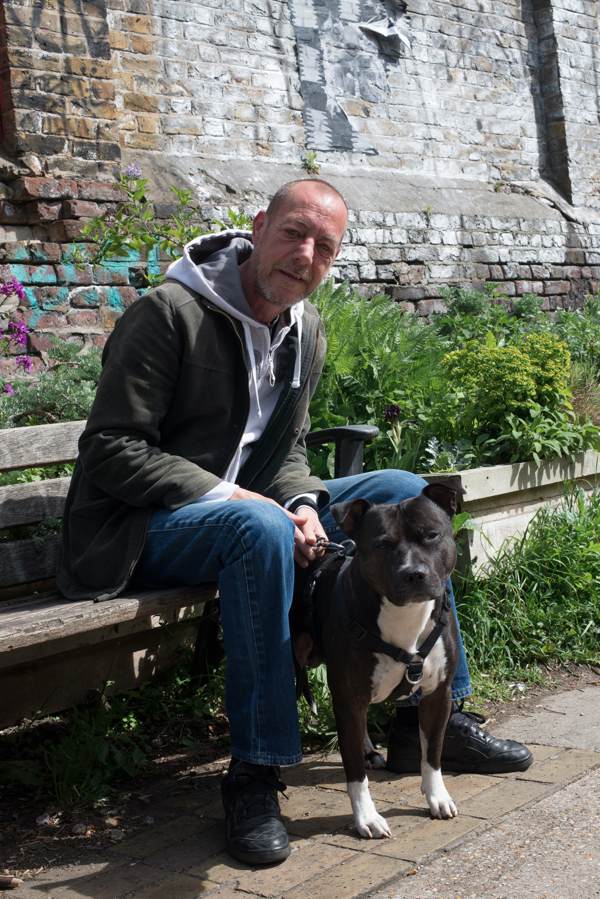
Romeo (Staffordshire Bull Terrier) & Dave
“Romeo was actually my partner’s nephew’s dog, but they couldn’t look after him. I’ve had him for five or six months now. He’s got such a friendly temperament and gets on with everyone. He’s slowly getting used to the traffic after living in the country. I walk him everywhere. Where I go, he goes. I walk him through Newington Green to Clissold Park to Finsbury Park along the railway tracks to Crouch End. I’ve done that walk on crutches before and in the snow. Romeo hasn’t found his Juliet yet. But he does love pigs’ ears.”
Photographs copyright © Sarah Ainslie
You may also like to take a look at
The Dogs of Spitalfields in Spring
The Dogs of Spitalfields in Autumn
The Dogs of Spitalfields in Winter
Photos from London’s Oldest Ironmongers
David Lewis, the proprietor of London’s oldest ironmongers – specialising in serving the coach-building trade and operating from the same location in the Hackney Rd since 1797 – is the proud custodian of this archive of photographs which illustrate the history of his business and some of its key protagonists over the past century.
Originally opened as H. M. Presland & Sons, the business became W. H. Clark Ltd in the eighteen-nineties and has traded as Daniel Lewis & Son Ltd – The One Stop Metal Shop since 2002 . In a rare and astonishing survival, the company trades from premises built to suit their purpose in the early nineteenth century, remaining largely unaltered over two hundred years later. Yet CCTV cameras enforcing parking restrictions have resulted in the loss of half their customers recently and as a consquence, this summer, they will be leaving the Hackney Rd forever.
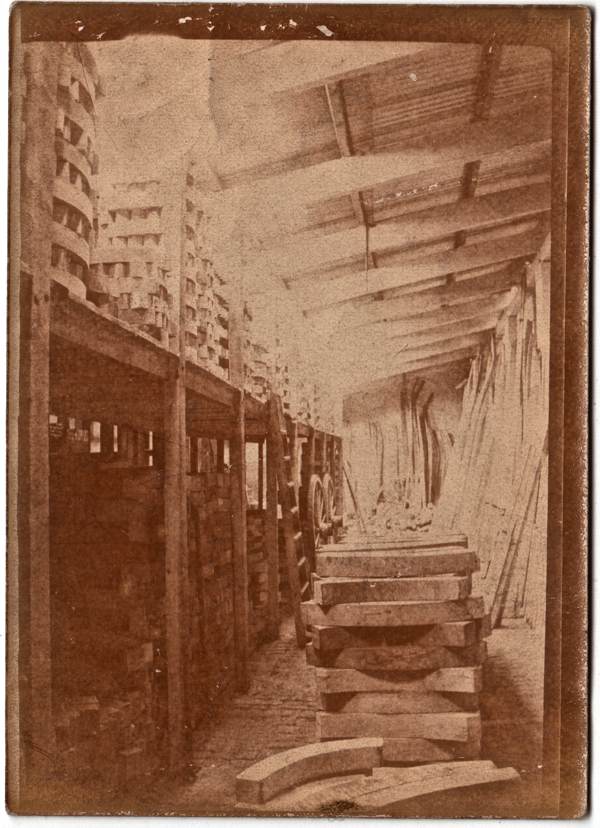 Timber components for assembling wagon wheels in the wheelwright’s shop, c.1900.
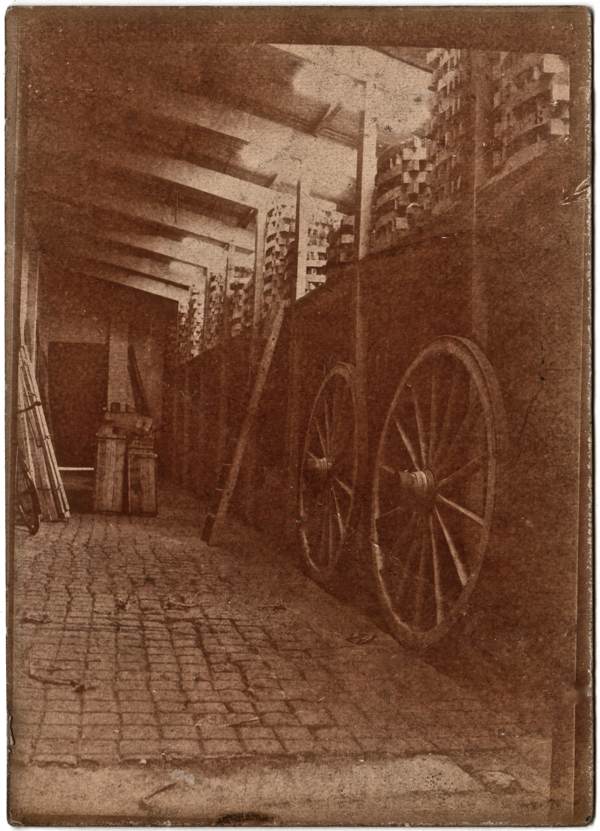
This wheelwright’s shop is unchanged today, c. 1900.

Mayor of Hackney, W.H.Clark’s car parked outside his business in 1920.
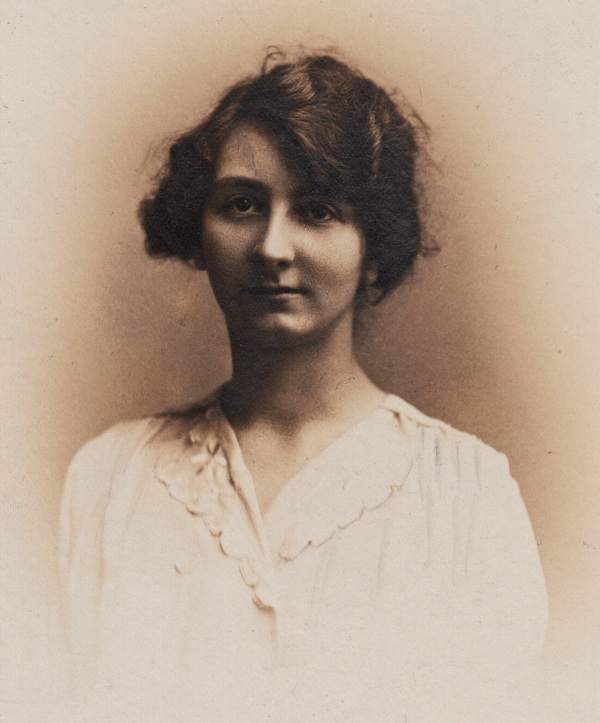
Mrs W.H.Clark who managed the business on her husband’s behalf – she was a member of the businesswomen’s league and an active participant in many local social charitable projects.
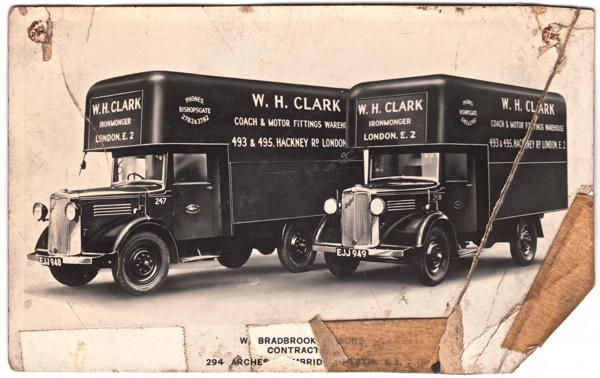
W.H. Clark vans, 1930
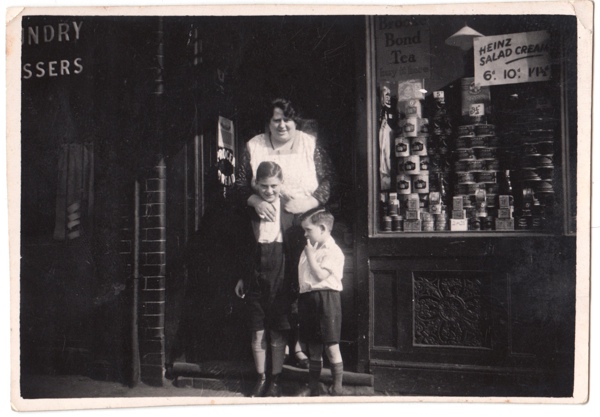
Gwladys Lewis outside her grocer shop and dairy in the Hackney Rd with her son Daniel on the right.

The gasometer at the rear of the premises next to the Regent’s Canal.
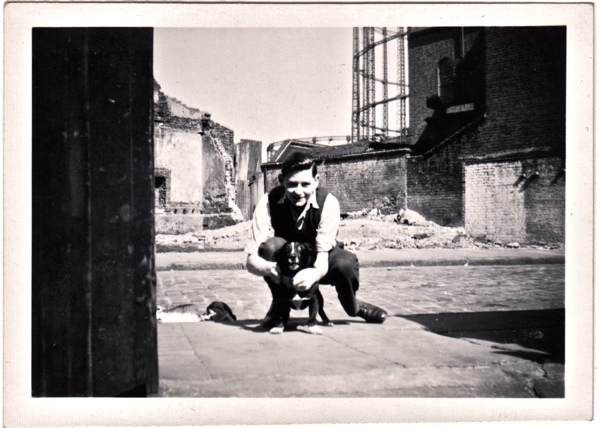
Daniel Lewis and his dog in the yard with the bombsite of the Chandler & Wiltshire Brewery, 1945.
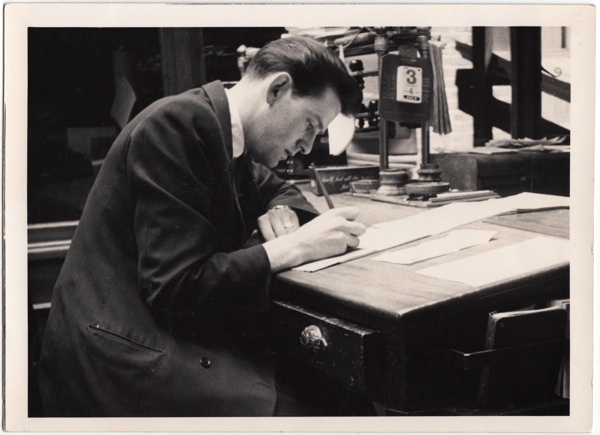
Daniel Lewis at his sloped-top desk in 1953.

Daniel & Audrey Lewis.
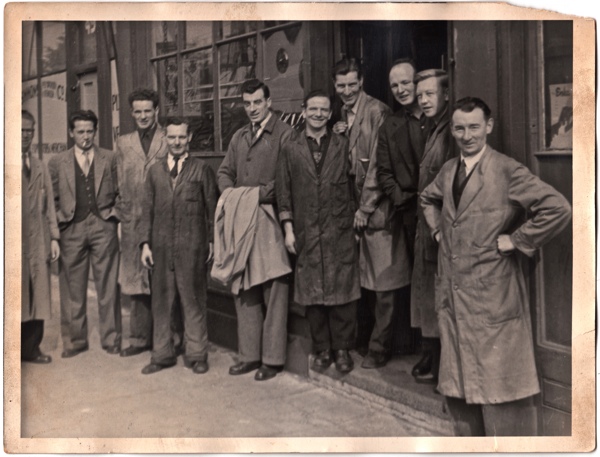
The staff, 1950.

Daniel Lewis outside the premises, 1963.
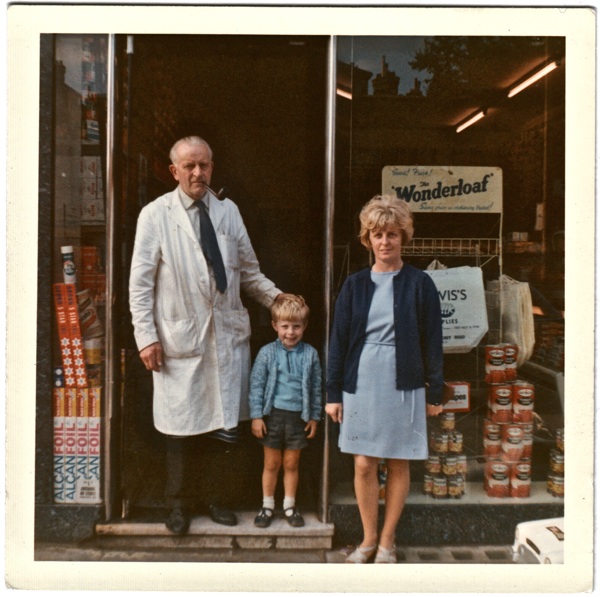
Lewis Lewis, dairyman, outside his grocer’s shop and dairy in the Hackney Rd with his grandson David and daughter-in-law Audrey, nineteen sixties.

Lewis Lewis and David in the nineteen sixties.

Daniel Lewis with the Royal Carriage for which he supplied two-hundred-year-old-oak panelling from his stock for restoration, 1975.
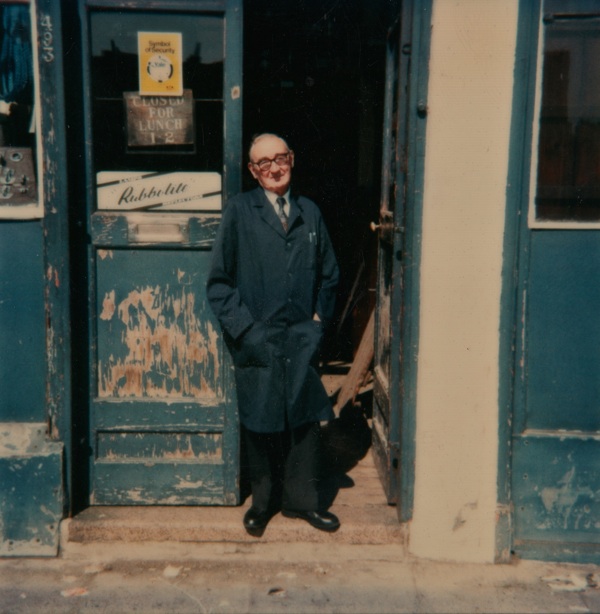
Arthur Hinton, shop manager, 1980.
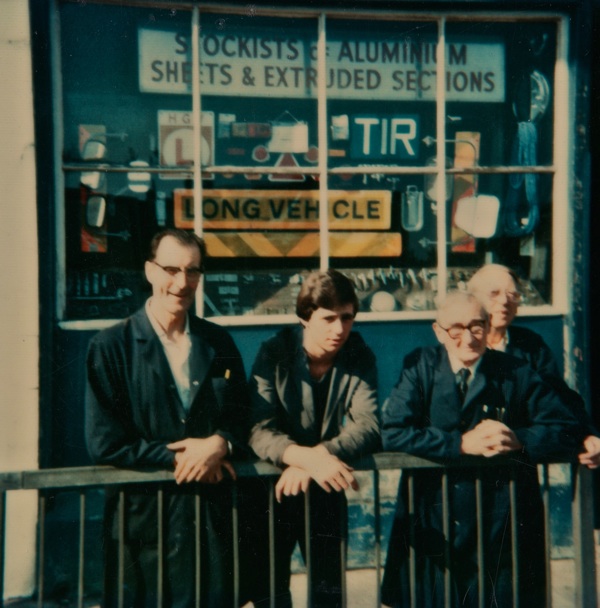
Shop staff, 1980
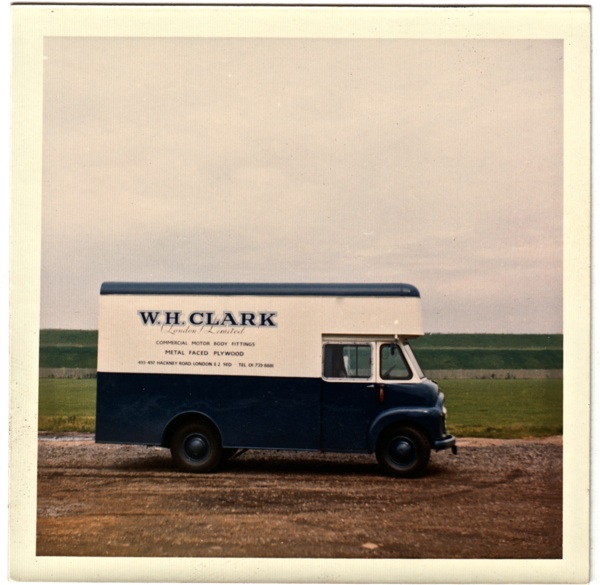
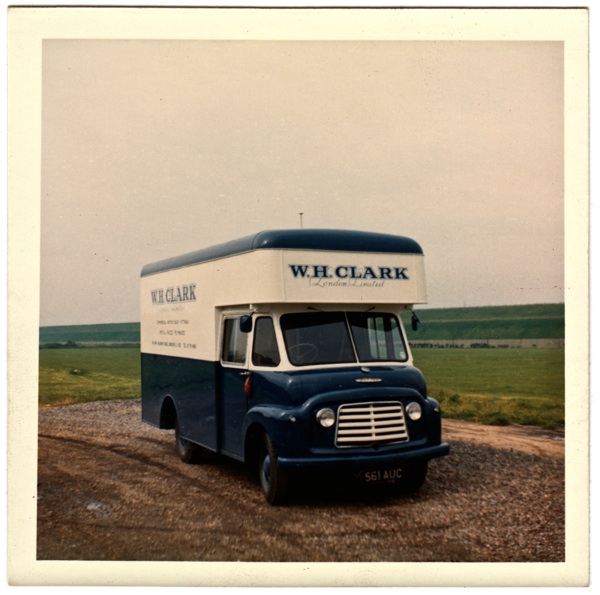
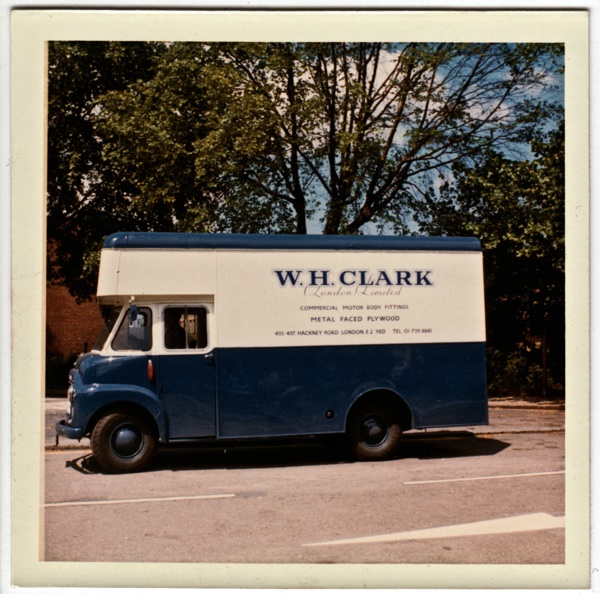
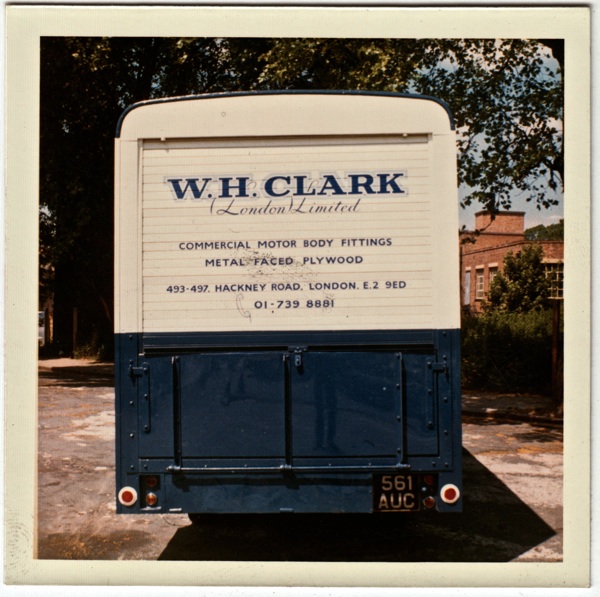
W.H.Clark van, 1960.
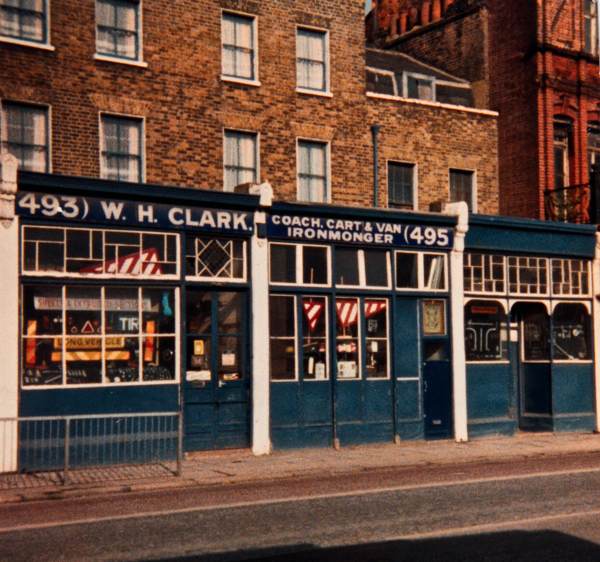
In the twentieth century.

In the nineteenth century.
The One Stop Metal Shop, Daniel Lewis & Son Ltd, 493-495 Hackney Rd, E2 9ED
You may also like to read about
Receipts from London’s Oldest Ironmongers
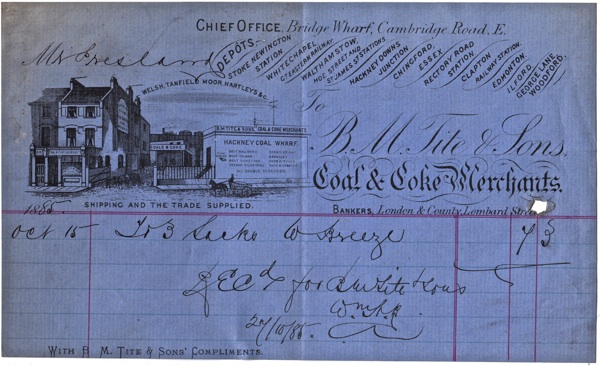
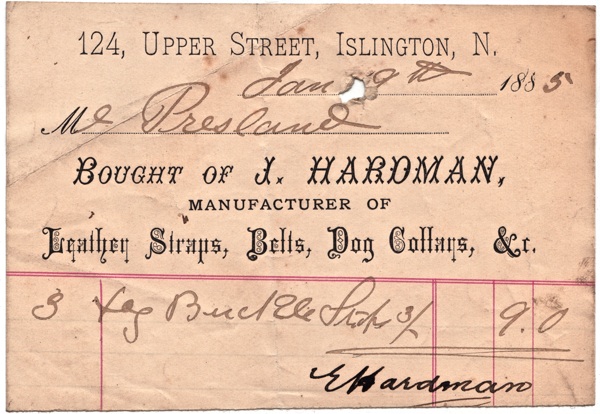
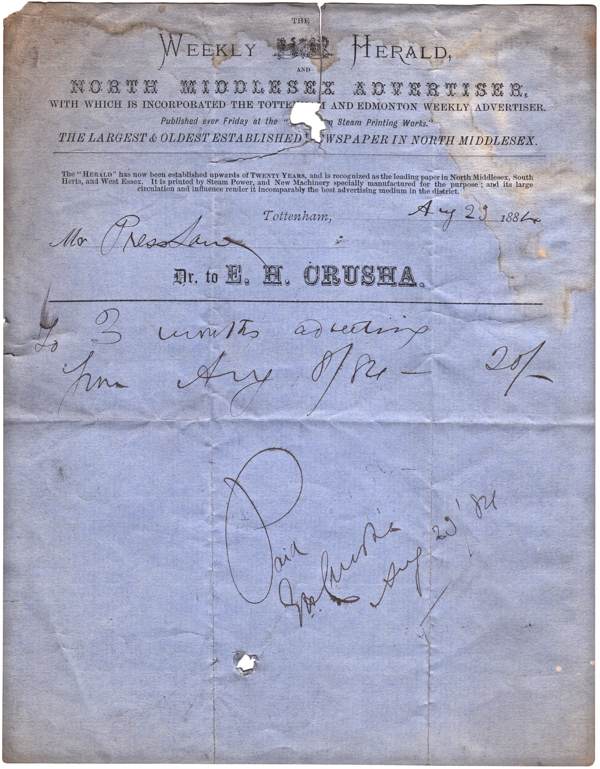
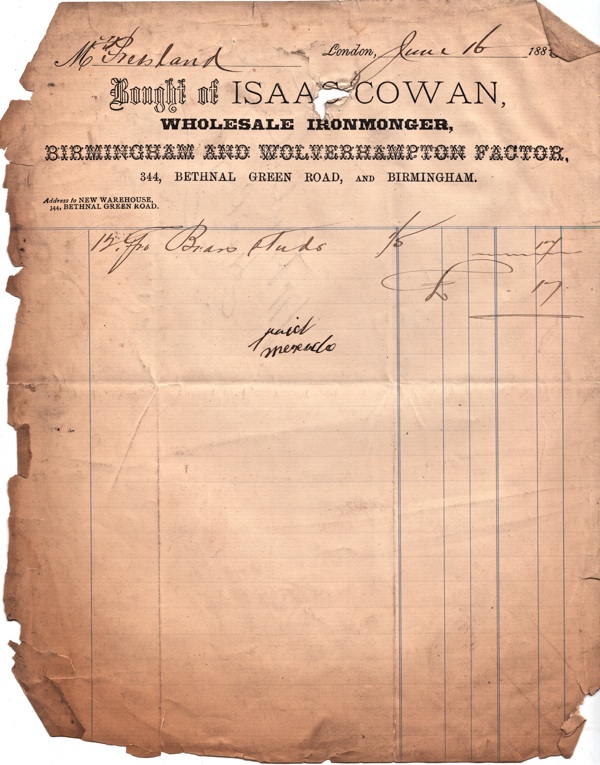
As any accountant will tell you – you must always keep your receipts. It was a dictum adopted religiously by the staff at London oldest ironmongers R. M. Presland & Sons, in the Hackney Rd since 1797 and still trading today as Daniel Lewis & Co Ltd – The One Stop Metal Shop , where this cache of receipts from the eighteen-eighties and nineties was discovered recently. One hundred and thirty years later, they may no longer be of interest to the tax man, but they serve to illustrate the utilitarian beauty of nineteenth-century typographic design and tell us a lot about the diverse interrelated trades which once filled this particular corner of the East End.
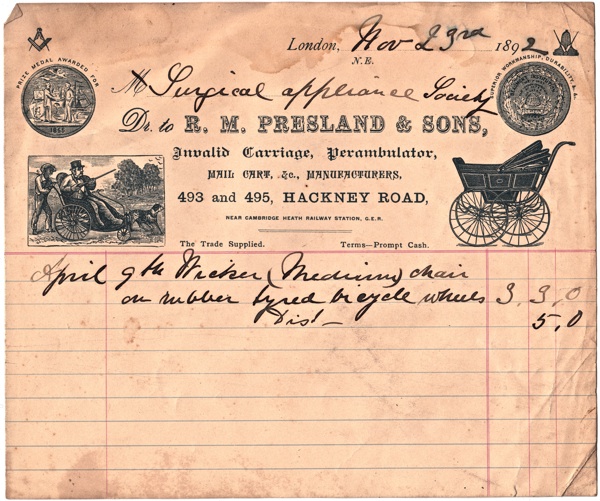
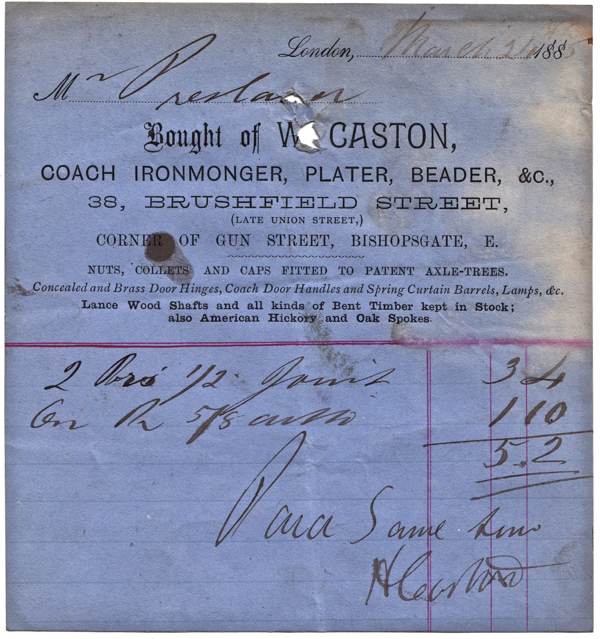
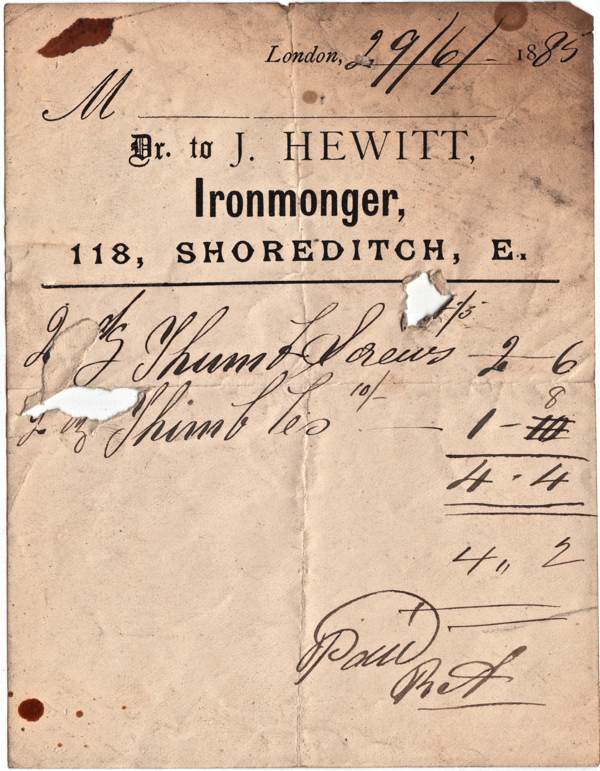




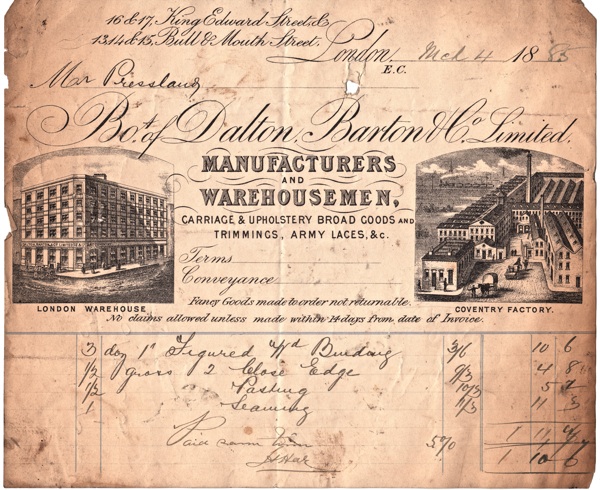

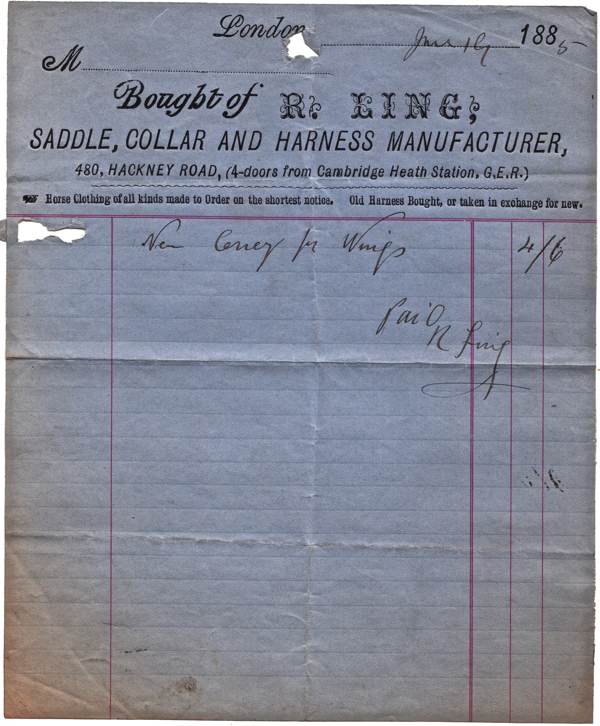

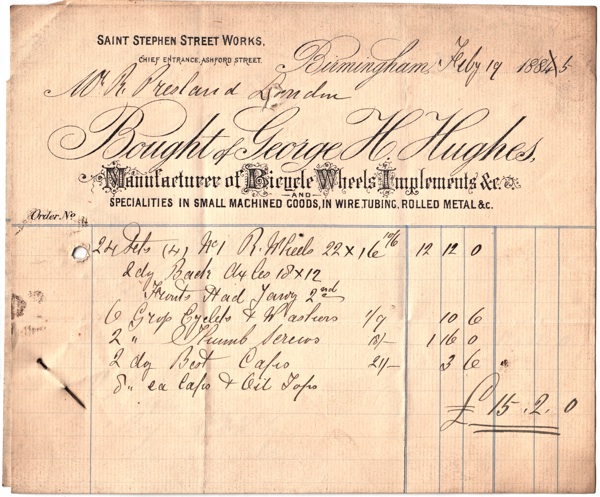


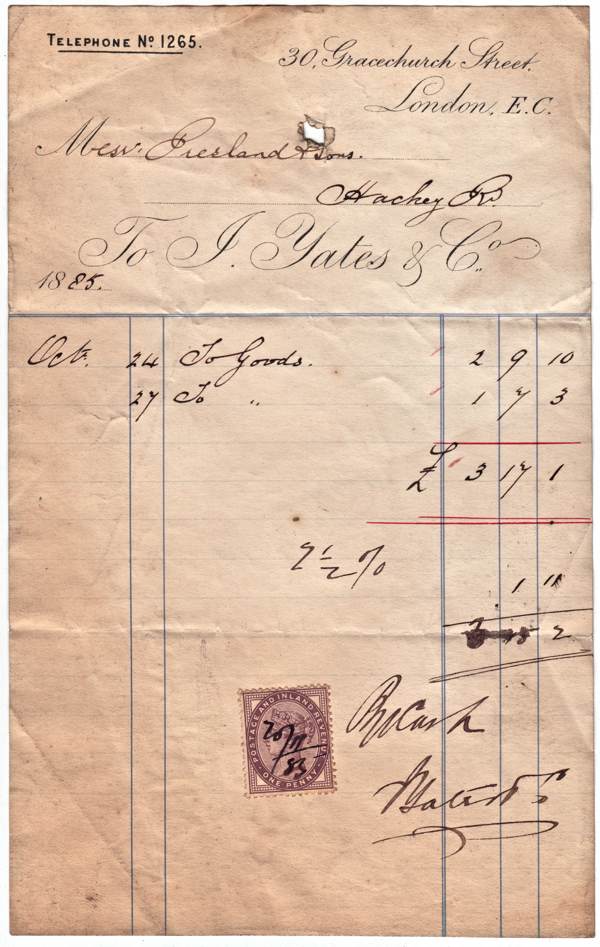


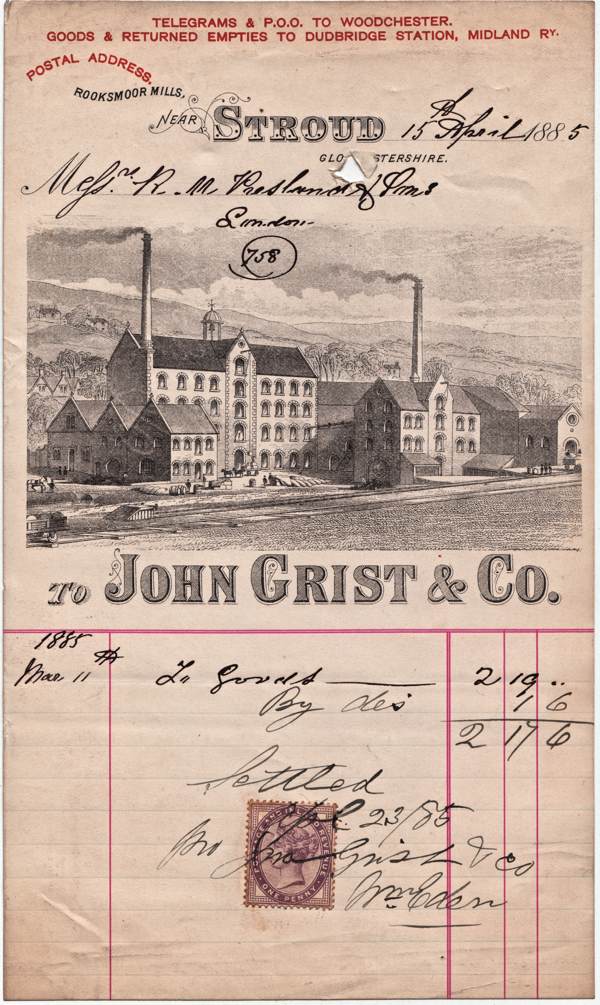
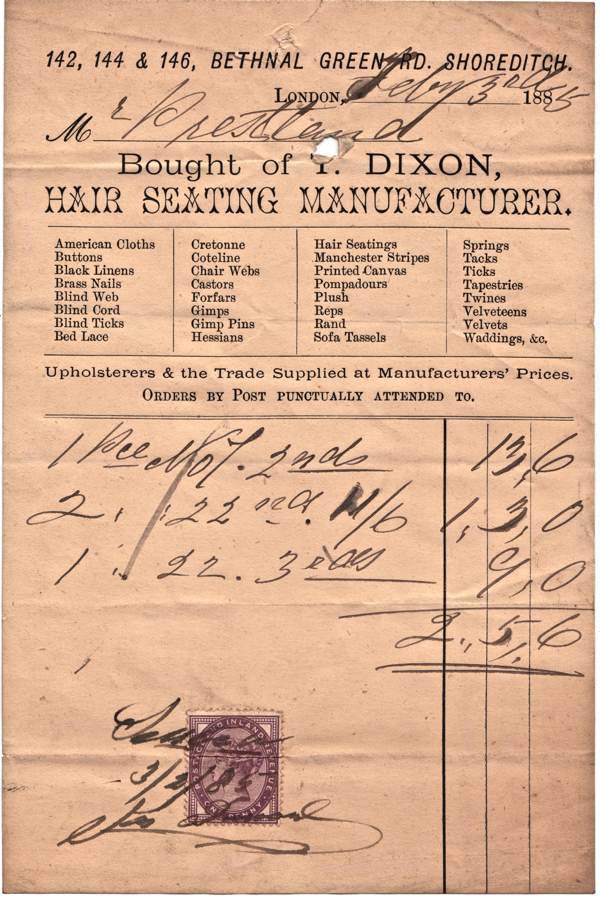


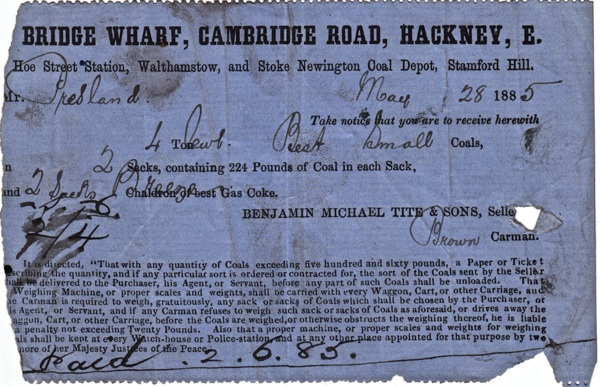

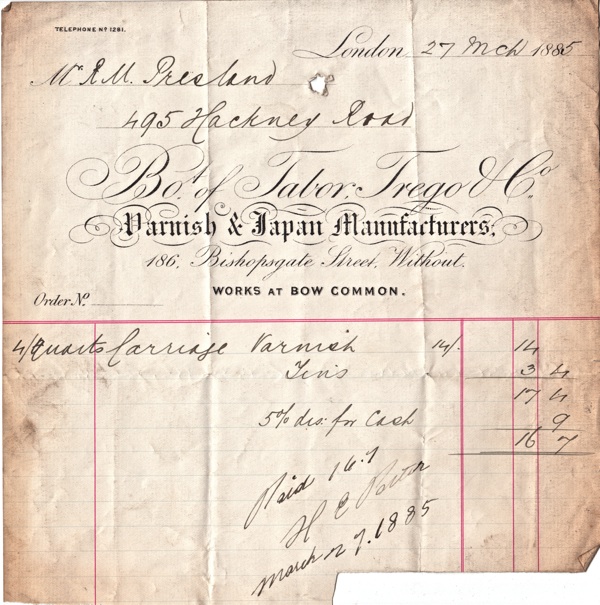
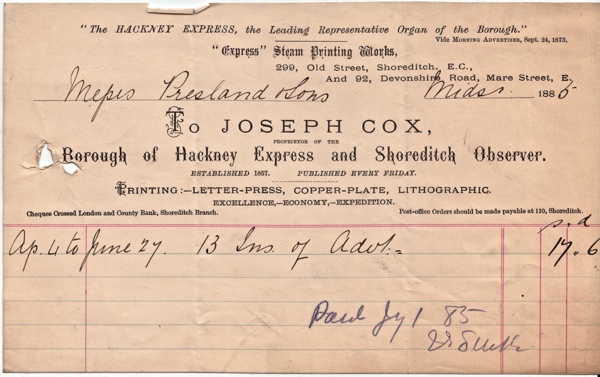
The One Stop Metal Shop, Daniel Lewis & Son Ltd, 493-495 Hackney Rd, E2 9ED
You may also like to read about
At London’s Oldest Ironmongers
The frontage at 493-495 Hackney Rd is unchanged to this day
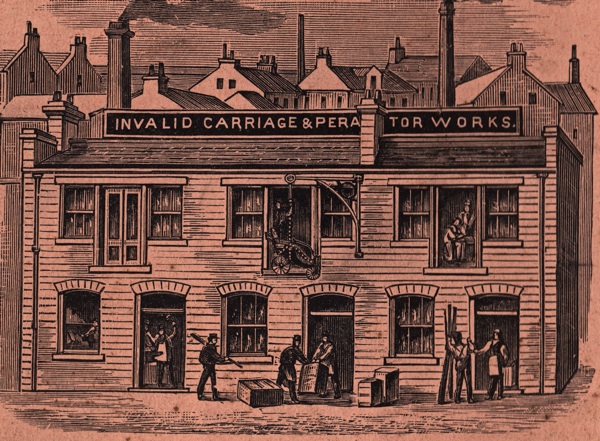
The factory at the rear of the shop remains just as in this engraving
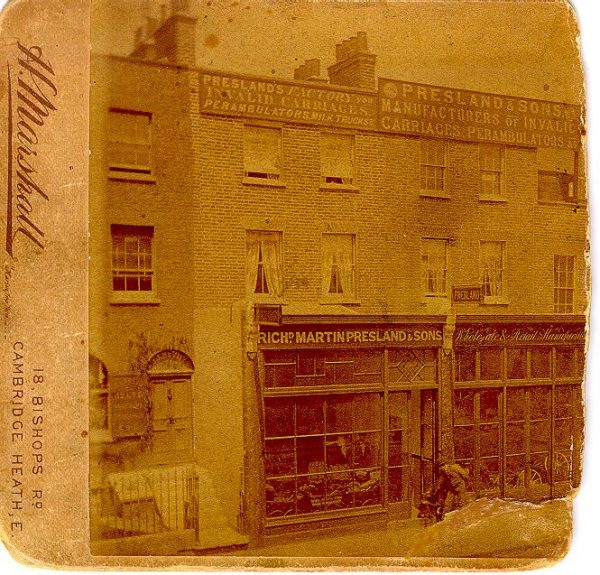
London’s oldest ironmongers opened for business in 1797 as Presland & Sons, became W.H. Clark Ltd in the eighteen-nineties and still trades from the same location, over two hundred years later, as Daniel Lewis & Son Ltd – The One Stop Metal Shop. Operating at first from a wooden shack built around 1760, they constructed their own purpose-built shop and factory at the beginning of the nineteenth century, which suited their needs so perfectly that – in an astonishing and rare survival – it stands almost unaltered today.
This is architecture of such a utilitarian elegance and lack of ostentation that it does not draw attention to itself. I had no idea there was a complete Georgian shopfront in the Hackney Rd until David Lewis, the proprietor, pointed it out to me and I compared it to the illustration above. Remarkably, even the decorative coloured-glass lozenge above the door is there today exactly as in the engraving.
When contributing photographer Simon Mooney & I went along to explore, we were amazed to discover a unique complex of buildings that carries two centuries of history of industry in the East End, with many original items of nineteenth century hardware still in stock.
“We were here before the canal, the railway and the docks,” David Lewis informed us proudly,“When the Prince Regent banned horses from being stabled in the city, this area became the centre of the carriage and coach-building industry.” An ironmonger with a lyrical tendency, David will remind you that Cambridge Heath Rd was once a heath, that Bishop Bonnar once built his mansion on this land before the Reformation and that an oval duckpond once existed where the Oval industrial estate stands today behind his premises – all in introduction to the wonders of his personal domain which has been here longer than anything else around.
You enter from the street into the double-height shop, glazed with floor-to-ceiling windows and lined to the roof with meticulously-labelled wooden pigeon-holes, built-in as part of the original architecture. A winding stair leads you into the private offices and you discover beautiful bow-fronted rooms, distinguishing the rear of the terrace that extends two storeys above, offering ample staff quarters. On one side, is an eccentric, suspended office extension built in 1927 and constructed with panelling and paint supplied by the Great Western Railway, who were customers. This eyrie serves as David’s private den, where he sits smoking at a vast nineteenth century desk surrounded by his collection of custom number plates, all spelling Lewis in different configurations of numbers and letters.
A ramp down from the shop leads to the rear, past cellars lined with pigeon-holes constructed of the flexo-metal plywood that was the source of the company’s wealth for decades. At the back, is a long factory building with three forges for manufacturing ironwork where you can feel the presence of many people in the richness of patina created by all the those who worked here through the last two centuries. Occasionally, David paused and, in delight, pulled out boxes full of brass fixtures and iron bolts necessary for nineteenth century carriage building. Upstairs, he showed us an arcane machine for attaching metal rims to wagon wheels, essential when the streets of London went from dirt to cobbles in the nineteenth century.
To the left of the factory, stands a long cobbled shed where the carriages came in for repair, and beneath a slab flows a stream and there are stones of the Roman road that ran through here. In the layers of gloss paint and the accumulation of old things, in the signs and the ancient graffiti, in the all the original fixtures and fittings, these wonderful buildings speak eloquently of their industrial past. Yet for David they contain his family history too.
“My dad was Lewis Daniel John Lewis, he was known as Lewis Lewis and his father was also known as Lewis Lewis. It went back to my great-great-great-great- grandfather and my father wanted me to be Lewis Lewis too but my mum wasn’t having it, so I am David Richard Lewis. I first came here with my dad as a nipper, when I was four or five years old, on Saturday mornings while he did the books. I played with all the nuts and bolts, and I was curious to see what was in all the boxes. And I used to run up and down the ramp, I was fascinated by it. I’ve learnt that it’s there because the Hackney Rd follows a natural ridge and there were once mushroom fields on either side at a lower level.
My dad started at W.H.Clark in 1948 as a young boy of fifteen, he had already studied book-keeping and he was taken on as an office junior. At eight years old, it was discovered he was diabetic when he was found lying on the pavement here in Hackney Rd, where my grandparents had a grocer and dairy. He always had to have insulin injections after that. He was tall, six foot one, and a little skinny because he didn’t have much of an appetite – except for chocolate biscuits which he shouldn’t have had, but he enjoyed them with a cup of tea.
He learnt the trade and he worked his way up to office manager. Then, in 1970, one of the partners retired and the other suffered a tragedy and turned to drink and became unsteady. So my grandfather bought the business for my father in 1971 and he took over the directorship of the company. He already knew how to run the business and he set out to build the company up with new customers – he got St Paul’s Cathedral as a customer and we still supply them.
Our biggest selling product was flexo-metal plywood, we had the exclusive distribution contract and we supplied it to the coach-building industry across the entire South-East of England for the construction of buses, coaches, lorries and trucks. They used to pull up outside with vehicles that had no body, no cab – just the engine and a chassis with the driver sitting on a tin bucket. They bought flexo-metal plywood to build the body and we could supply them with a windscreen, lights, chains for tailboards, everything – all the components. Any time I see a van in a fifties or sixties film, it is one of ours. At that time, we employed eighteen people.
I joined in 1992. I went to college and did business studies and I wanted to prove to my dad that I could do it on my own. I became a trademark lawyer, working for the Trademarks Consortium in Pall Mall that protected the trademarking for brands like Cadburys, Bass, Tesco and Schweppes. I’ve always been fascinated by labels because of looking at all the different trademarks on the boxes of screws here and I collect custom number plates.
When the business that supplied flexo-metal plywood went to the wall, my father employed Peter Sandrock who used to run it. He was approached by many global companies because he was a genius mathematician who could do figures in his head, but he wanted to work for my dad because they always got on well and would help each other. He worked for my dad for ten years until 1992 and that’s when I came in, just after I got married.
I started as an office junior like my dad but I found it boring because I had already done other things. So I said, ‘Can I go down and serve behind the counter?’ but he said, ‘You haven’t got the build to carry steel.’ I surprised him by developing muscles and soon I could do it with ease – I’ve got broad shoulders now when I didn’t use to have.
When I was made a director, all the carriage-building trade was moving up north, so I refocused the company towards aluminium and steel supply to metal fabricators, architects and sculptors. But in recent years, due to installation of cctv cameras and the council issuing £130 fines to our customers while picking up orders, our trade has dropped by fifty per cent. We have two to three hundred customers a day and I reckon the council have earned £63,000 a year in fines out of them and so, in a few months, after two centuries of business in this location, we are going to move from here .
It was in 2002, I changed the name of the company from W.H.Clark Ltd, who had been a Mayor of Hackney in the nineteenth century, to Daniel Lewis & Son Ltd, in memory of my father. I am the son.”

Nineteenth century storage filled with nineteenth century carriage fittings in the factory.

The enamel sign that was taken down from the frontage in 2002.

This is the cobbled workshop where the carriages were wheeled in for repair.

The ceiling in the storeroom is lined with timber painted with nineteenth century sign-writing.

Carriage bolts are still in stock.

The wooden pigeon-holes stretch to the ceiling in the double-height shop and are contemporary with the building.

Daniel Lewis & Son Ltd has collets in stock – pins used for attaching cartwheels to the shaft.


David in the factory building.

Bert left to in 1962 Good By

Machine for applying metal rims to cartwheels in the factory.


A threading machine in the factory.


This brick was laid by “Ole Bill” 1927 RIP
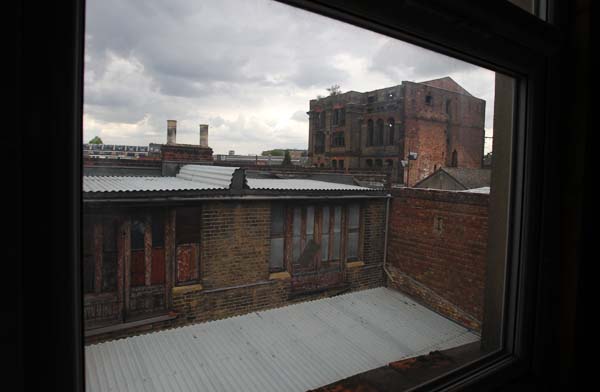
View towards the bonded warehouse of the Chandlers & Wiltshire Brewery – burnt out in World War II, it is London’s last bombsite and a memorial to the Blitz in the East End.

A display of Nettlefolds screws wired to a board in a gilt-crested frame that was displayed at the Great Exhibition of 1851.

The glass over the entrance is part of the original design of the building, dating from the early nineteenth century


Packaging for hinged metal indicator lights, still in stock.


Keep this door shut.

The crackle on the office wall is authentic, achieved by age, not a paint effect.

The name of W.H.Clark impressed upon a carriage shaft manufactured in the forge.

Before 1920, no road vehicle was permitted to travel at more than 20mph and had a plate attached to this effect – Daniel Lewis & Son Ltd has them in stock today.

The Ascot water heater in David’s office is fully-functional.

The shop with the ramp going down towards the factory at the back.

The steps from the shop going up to the office.

David Lewis at his desk in the rear office lined with panelling and paint supplied by the Great Western Railway.
Photographs copyright © Simon Mooney
The One Stop Metal Shop, Daniel Lewis & Son Ltd, 493-495 Hackney Rd, E2 9ED
You may like to read about these other East End hardware shops
The Gentle Author at the Royal Festival Hall

Coin from the Roman cemetery in Spitalfields worn around the neck of the Gentle Author
As part of London Literature Festival, I shall be giving a lecture at the Royal Festival Hall on Saturday 1st June at 2pm, telling the tales of things in my collection which carry stories from Spitalfields.
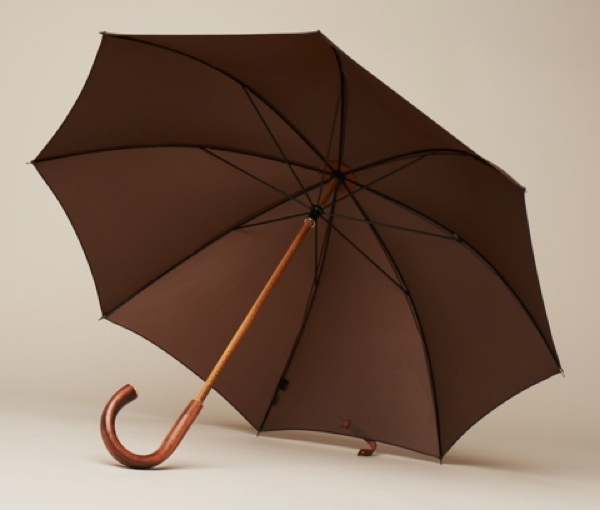
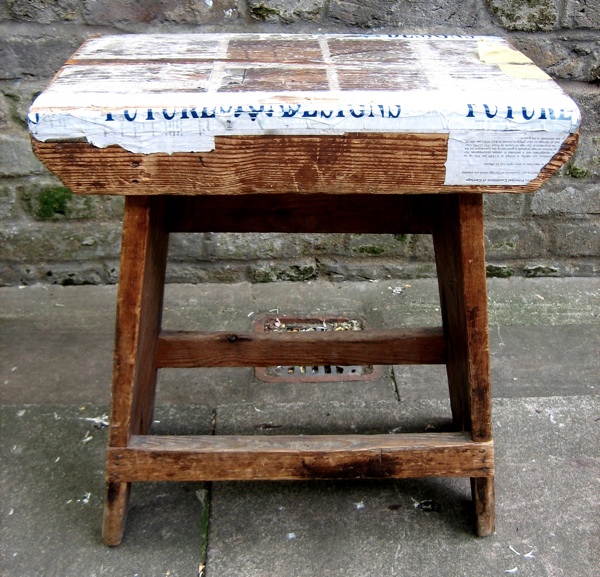
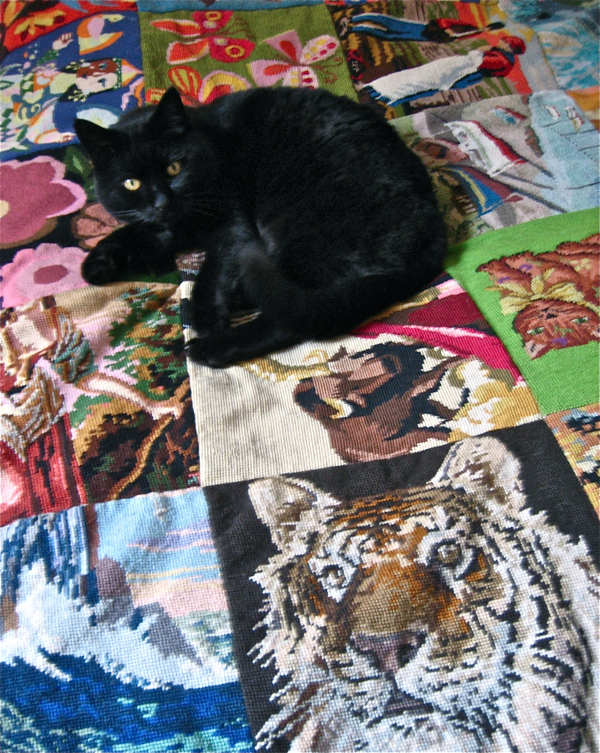
These include a copper coin from Spitalfields’ Roman cemetery, a sixpence from Shakespeare’s London, a shuttle from the last cloth warehouse in Spitalfields, a weavers’ stool, a crate from the fruit & vegetable market, an umbrella made by Britain’s oldest umbrella manufacturer, paper bags from London’s oldest paper bag shop, a tea-towel “In Celebration of the Labouring Classes” and a quilt of tapestries.