
Joan Brown, Secretary at Smithfield Market

“When the cat can’t decide whether to go out, I say ‘Make up your Smithfield mind!'”
At ninety-three years old, Joan Brown is not given to protest. In fifty-seven years working as a Secretary at Smithfield Market, she mastered the art of operating through diplomacy and accommodation. Yet earlier this year, Joan was driven to write a letter of objection to the City of London Corporation when she learned of the proposed demolition of the General Market. “The bustle and excitement of Smithfield became part of my life until I finally retired at the age of seventy-four,” she wrote, “You will appreciate my feelings at the thought of even part of those lovely buildings being destroyed.”
The General Market of 1868, where Joan first began her career in West Smithfield, contains one of Europe’s grandest market parades beneath a vast glass dome, designed by Sir Horace Jones who was also responsible for Tower Bridge. Although proposals exist to refurbish the historic building and reopen it as a retail market, revitalising this part of London, the City Corporation has granted planning permission for the structure to be replaced by three tower blocks, retaining only the facade of the original edifice.
On 11th February next year, a David & Goliath battle commences at the Guildhall when SAVE Britain’s Heritage and The Victorian Society face the Corporation of the City of London, Henderson Global Investments and the Greater London Authority. Although, regrettably, Joan will not be attending due to her advanced years, the Enquiry is open to the Public and she hopes some readers might like to go along on her behalf.
Last week, I visited Joan in her tiny bucolic cottage situated among overgrown gardens in a quiet cul-de-sac in Peckham. Of sprightly demeanour and impeccable manners, Joan has good claim to be the first woman to work in Smithfield Market. Yet, even though she was conscientious not to absorb the colourful vocabulary for which which the Market is famous,“When the cat can’t decide whether to go out, I say ‘Make up your Smithfield mind!'” she confessed to me.
“I went to work at Smithfield Market in 1937 when I was seventeen years old. I was studying at a school for commercial typists and, at that time, there was a recession so it was hard to find work, but my shorthand teacher was asked by a neighbour who worked at Smithfield if he knew of anyone reliable – so I was offered the job.
My mum was horrified – all those men and that bad language! But my dad said, ‘We’ll sort this out,’ and he went to take a look and discovered the office was in West Smithfield, not in the Market itself. So I took the job. It was a family business and I worked for John Jenkins, the son, as his Private Secretary. We were agents for Argentine Frigorifico and we had a stall in the market selling Argentine Chilled Beef, it was not ‘refrigerated’ but ‘chilled.’
It was very well organised, a number of Argentine famers formed a group and a ship of their meat arrived in the London Docks once a week. It opened up on a Monday and so much beef – only beef – was brought over to the market in time for the five o’clock opening. That went on each day until the ship was emptied at the end of the week. Then another one arrived and it happened all over again.
I worked there until the war came, when everything changed and I was employed by the Ministry of Food. We were evacuated to North Wales and the Ministry organised these Buffer Depots in every village in the country and my job was to keep a record of it all. I had to co-ordinate the corned beef supplies. It was incredibly complicated and there were no computers, I had a large sheet of paper – we called them ‘B*gger Depots.’
After the war, I came back to my old employer but I discovered we didn’t have an office anymore, it had been bombed. So I said, ‘John, why don’t we use one of the spaces over the shop in the Central Market?’ He said, ‘But we can’t expect customers to walk through the Market to get to our office.’ Then I reminded him that there was a door onto Charterhouse St, so they didn’t have to walk through the Market. We moved into an octagonal office in one of the rotundas above the Market and that was when I became part of Smithfield proper.
Before the War, women couldn’t go into the Market but afterwards we were allowed in. I always remember walking through the Market for the first time, the Bummarees were perfectly respectful. I walked down Grand Avenue and they all moved out of the way, calling ‘Mind the Lady!’ The Bummarees delivered the meat, they wore long overalls and they used absolutely appalling language and were famous for that. But it wasn’t real, they didn’t mean anything by it.
I worked for John for more than fifty years and sometimes we had visitors from the Argentine. After John died, the business was sold and I was taken on by the new owners, Anglo-Dutch Meats. I became Private Secretary to their Director, Mohammed El Maggot. He was Egyptian though he had been to school in England. He was known as ‘Hamdi’ in the Market and I worked for him for several years. He was a very polite young man and his father was determined that he was going to work, that’s why he bought the company to occupy his son. Mohammed came to work every day at five o’clock in the morning and he settled in to work.
One day, he walked into the office and announced, ‘I want you to come to my wedding – in Cairo!’ When we came back, he and his wife took a flat in the Barbican and he said, ‘I want you to come over and teach Imam how to make a proper cup of tea.’
As far as I was concerned, that was the end of my life in Smithfield – I was seventy-four and it was time to retire. Mohammed was terribly upset but I said, ‘It’s no good Hamdi, I have to go!’ I thought, ‘That’s where I cut my connections, otherwise it will be, ‘Can you go to Harrods to buy the baby a bottle?” So I cut myself off completely from Smithfield Market in 1994. I never married, I was always working in the Market. When I was sent to North Wales, I left all my boyfriends behind in London and I was surrounded by a lot of middle-aged men.
I was always happy to be in the Market, I was part of the Market. To look down from my office window upon the Grand Avenue and see everything going on. That was my life.”
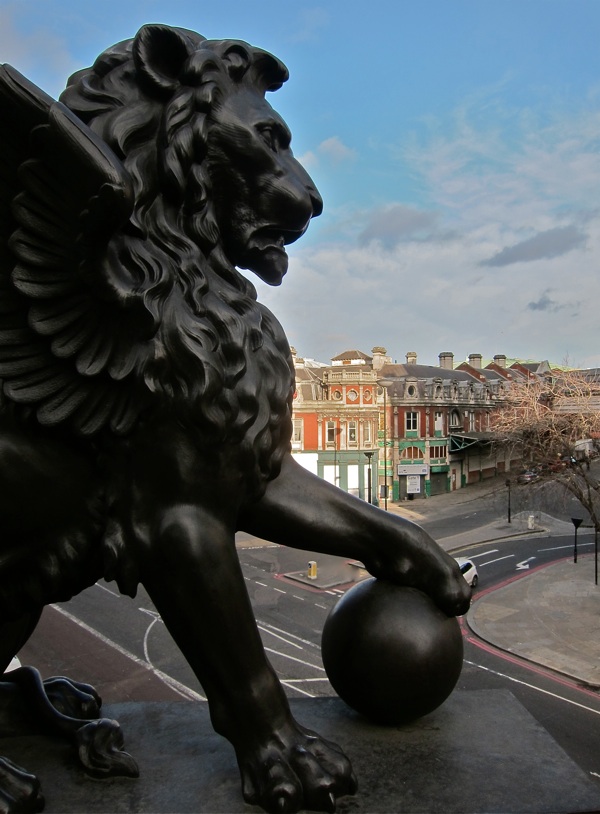
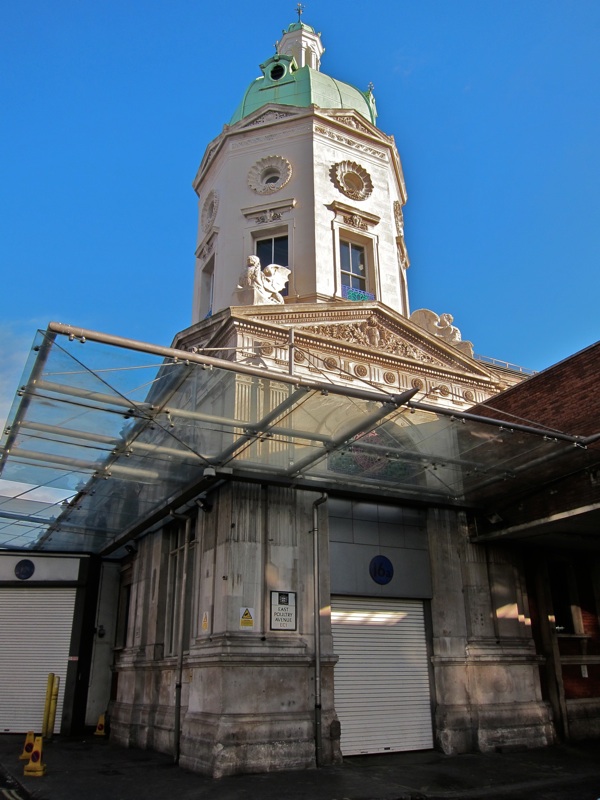
On Holborn Viaduct, the winged lion watches protectively over the Smithfield General Market currently under threat of demolition.
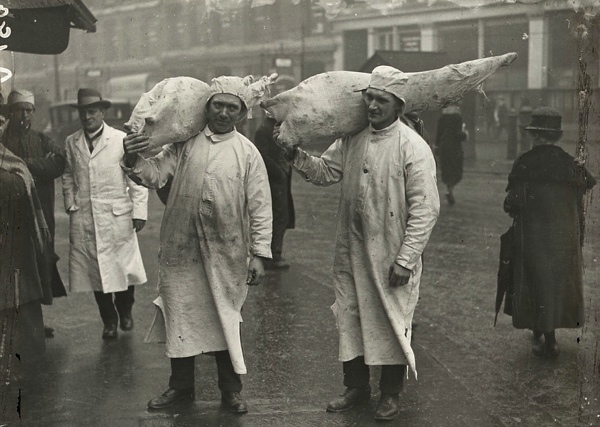
Smithfield Market as Joan Brown first knew it in the nineteen-thirties
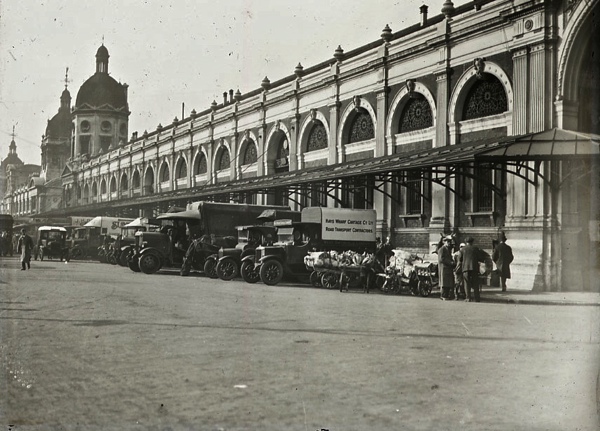
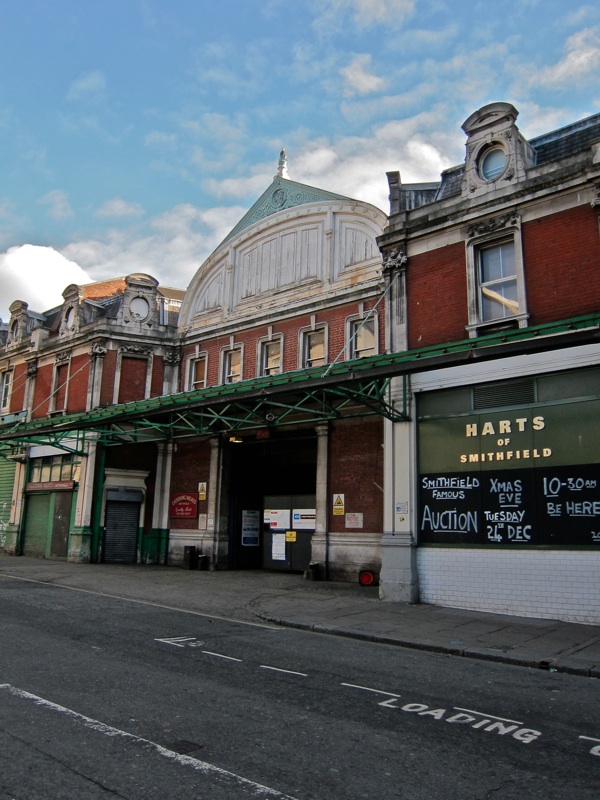
Entrance to the General Market on Charterhouse St, completed 1881
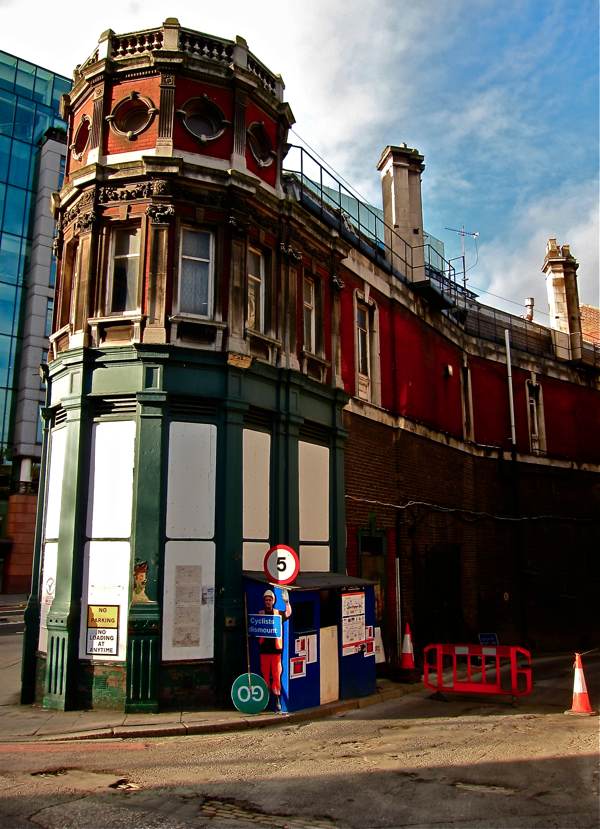
Entrance to the underground store at the General Market
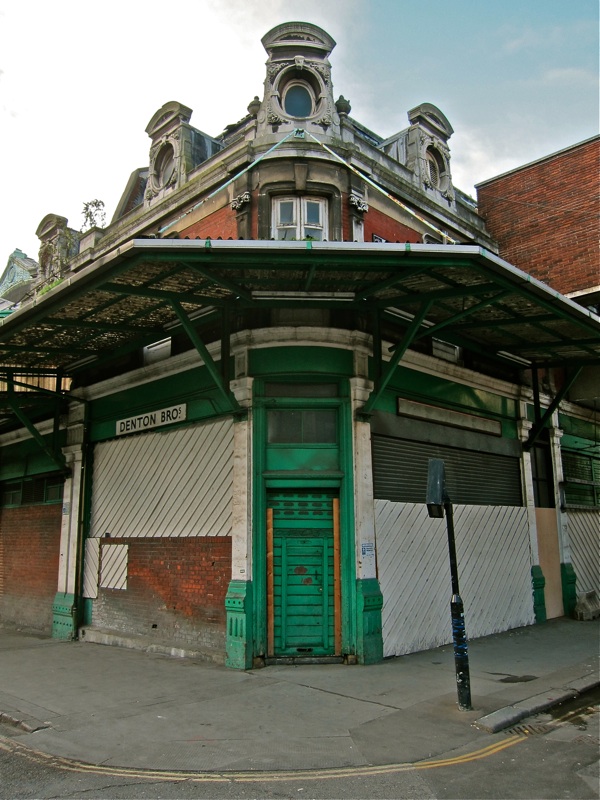
South-east corner of the General Market

North- east corner of the General Market
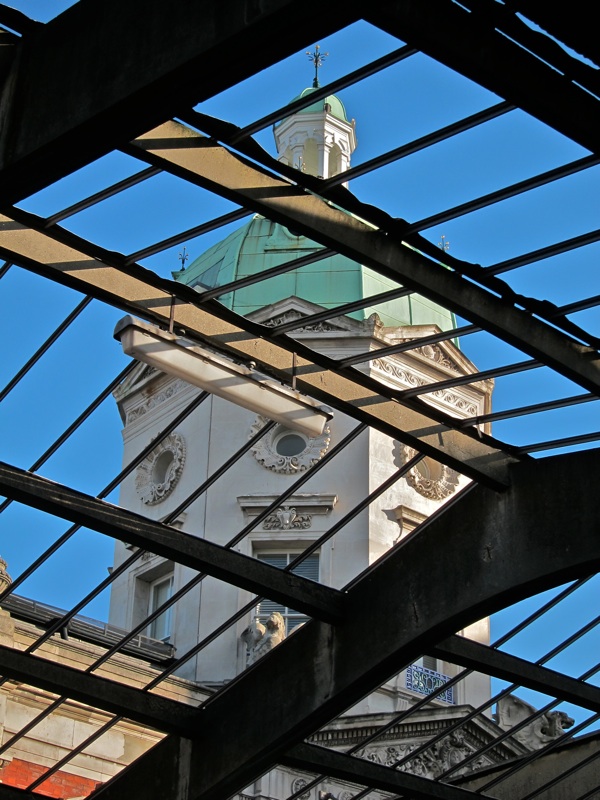
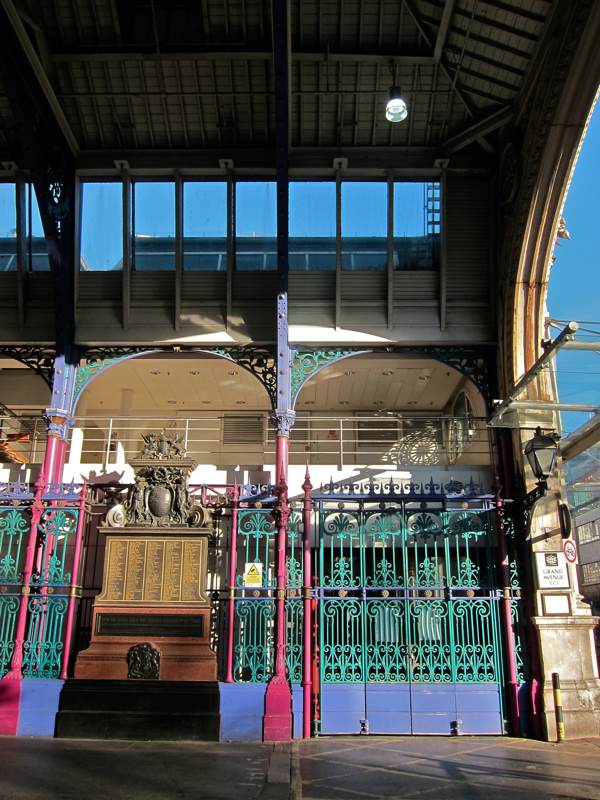
War Memorial in Grand Avenue in Central Market
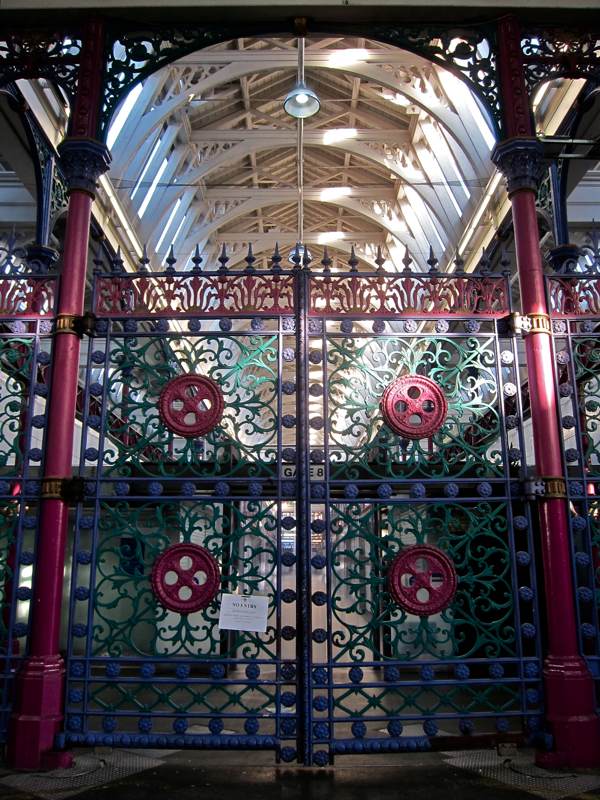
The Central Meat Market
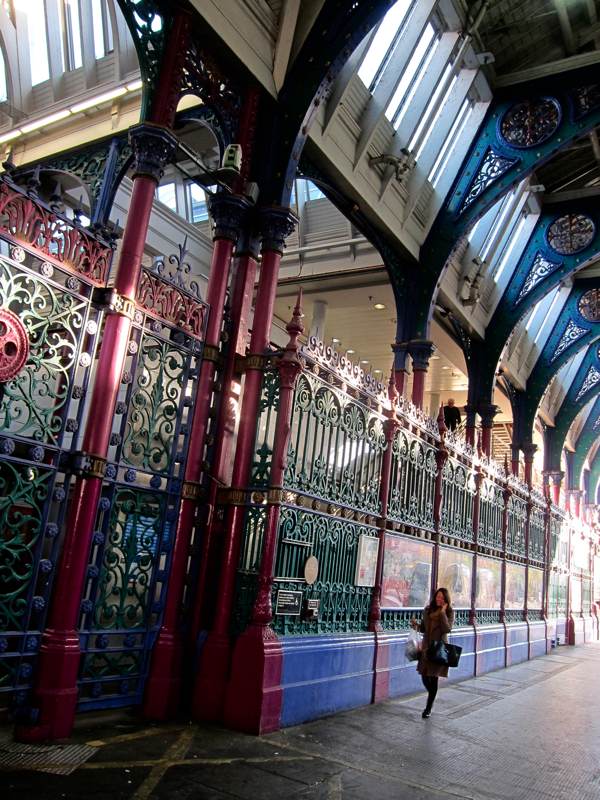
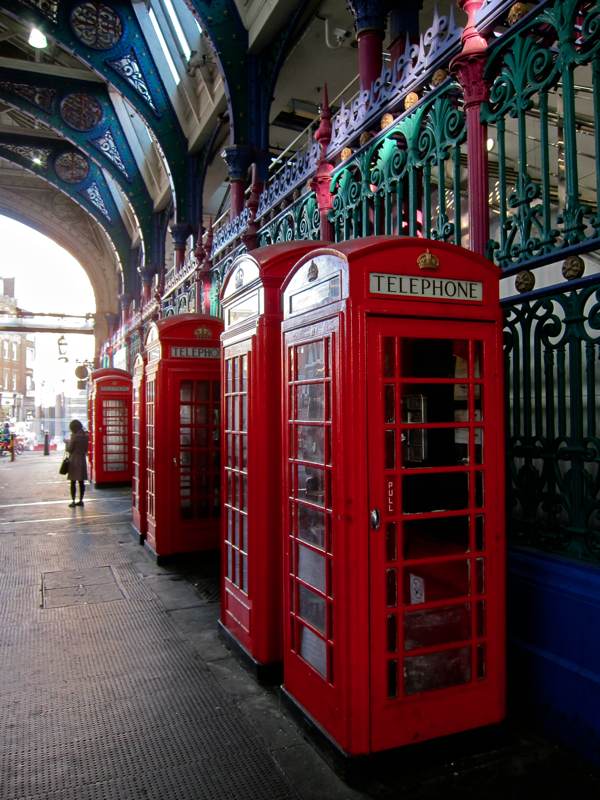
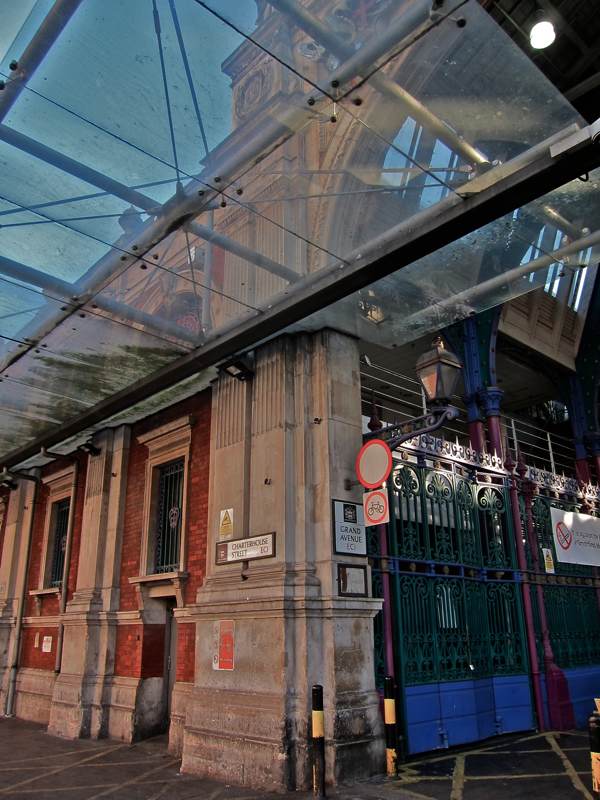
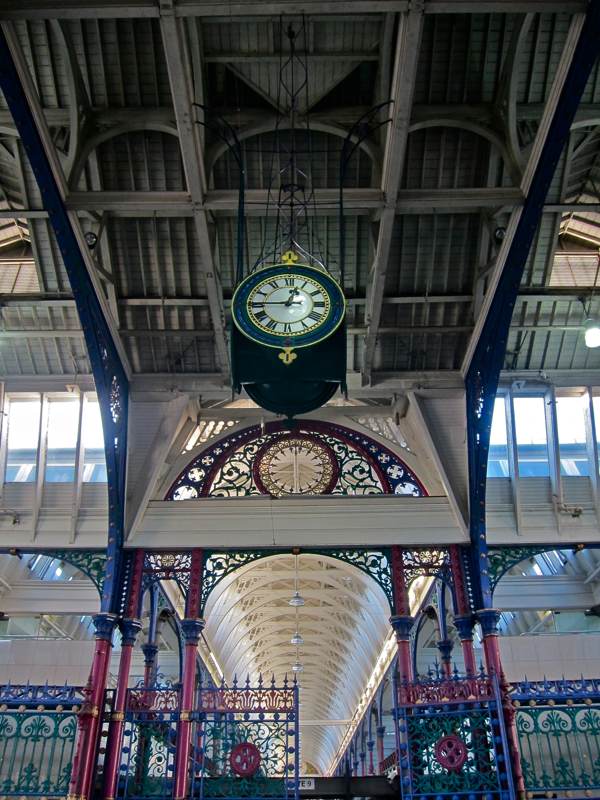
Joan Brown worked in an office in one of the rotundas at Smithfield’s Central Market

The Central Meat Market at Smithfield
Archive images courtesy Bishopsgate Institute
This Wednesday 11th December, SAVE Britain’s Heritage have organised a live theatre event at Smithfield from 5-7pm, telling the story of the Market. Locations will be on Holborn Viaduct, outside The Hope on Cowcross St and in the Market Grand Avenue.
Leon Kossoff At Arnold Circus
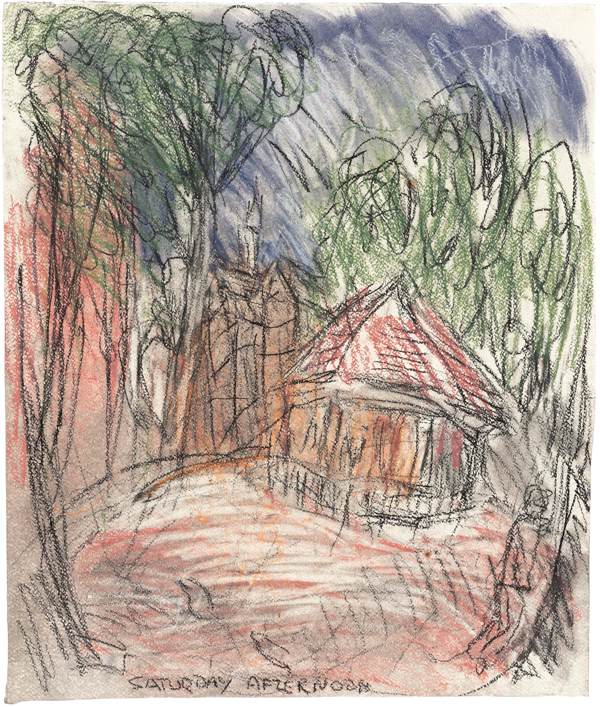
Arnold Circus, Saturday Afternoon 2012 by Leon Kossoff
Limited Edition of 300 prints produced for The Friends of Arnold Circus
British expressionist, Leon Kossoff, grew up on Arnold Circus in the thirties and, over the last five years, he has returned to create a magnificent series of drawings – reconciling himself to the place in which his journey as an artist began.
On one side of Arnold Circus is Rochelle School, where Leon was educated while, in Calvert Ave, the lettering spelling out the name of Kossoff’s Bakery, the family business, can still be distinguished upon the fascia. And in between, on the corner of Club Row, was the spot where the fascists handed out their propaganda leaflets during his childhood.
In the fifties, Leon Kossoff began painting Christ Church, Spitalfields, returning to the subject over and over again, as it became an increasingly-emotionalised and highly-wrought motif in his particular vein of expressionism, wrestling an enduring image of transcendence from the fleeting chaos of existence.
An intensely private man, at eighty-six years old Leon Kossoff still carries strong feelings towards the East End. He is unsentimental about the poverty and violence that he witnessed in his youth, yet fiercely protective about the architectural fabric of the territory. A few years ago, I spent a quiet afternoon sitting with him and Joan Rose, who was his childhood contemporary at Arnold Circus. As she spoke, fondly evoking the world of the Boundary Estate before the war, Leon became emotional to rediscover lost memories of his own through her reminiscence. He was amazed to hear Joan’s stories of a joyful childhood in a place that was overshadowed by loss and melancholy in his perception.
The Arnold Circus works divide into two series, before and after the renovation of the bandstand that happened in 2010. “The school was there, where I used to go, they were very kind to me, they gave me a little space in the shed where I could keep my drawing board and charcoal. It’s still there,” he explained. Initially wary to discover that the park was to be restored, Leon’s second series of drawings express something of his delight to witness his childhood landscape brought back to life and cherished once more. “Everyone seemed happy, London seemed transformed,” he admitted in surprise, speaking of drawing at Arnold Circus in the summer of of 2012.
How many of us have the privilege to return to our childhood home and find it intact, as Joan Rose and Leon Kossoff did at Arnold Circus? Now Leon’s recent drawings have been included in a major retrospective exhibition of his London Landscapes spanning half a century and, when the pupils from Virginia Rd School in Arnold Circus were taken to see it, they were inspired to make their own drawings recording their personal landscapes, which are reproduced below.
As a gesture of support to The Friends of Arnold Circus, who were responsible for the renewal of the bandstand and the park, Leon Kossoff has produced a limited edition digital print of three hundred copies of one of his Arnold Circus pictures from the summer of 2012. It is an intensely-worked drawing that manifests the homecoming of a great artist to the East End.
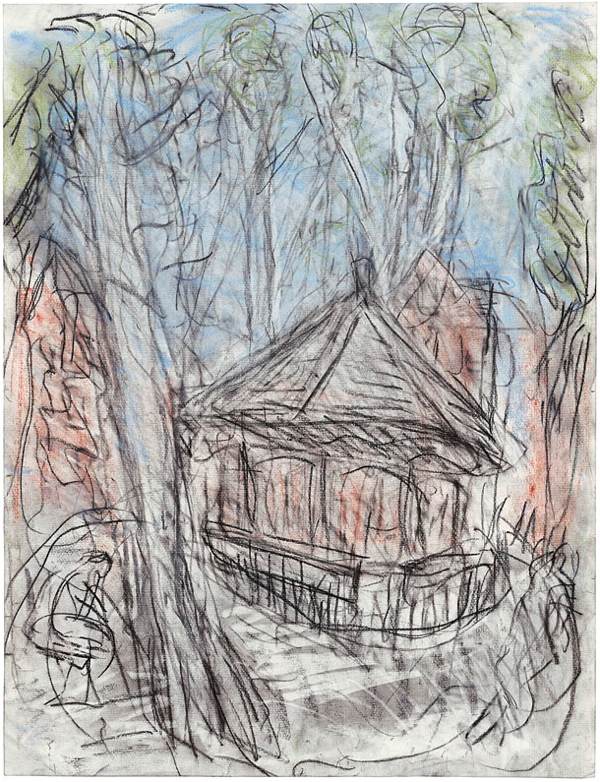
Arnold Circus 2008-10 by Leon Kossoff (charcoal and pastel on paper 65.3 x 50 cm) Copyright The Artist, courtesy Annely Juda Fine Art
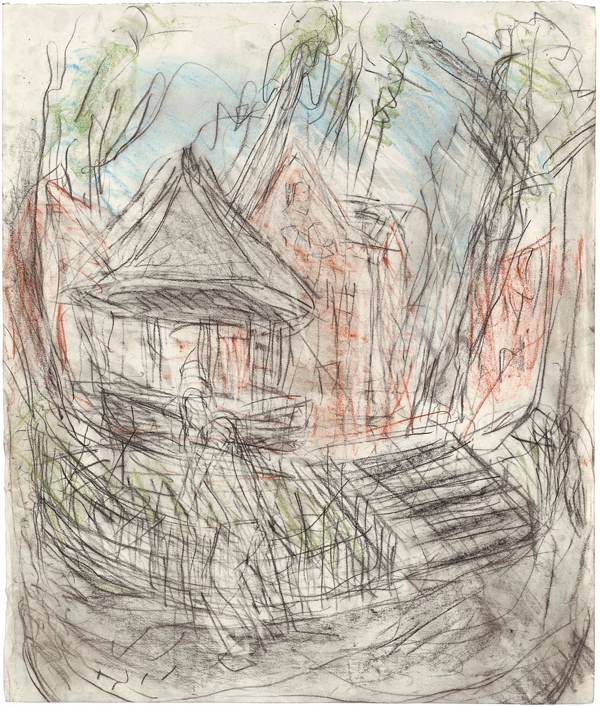
Arnold Circus 2008-10 by Leon Kossoff (charcoal and pastel on paper, 64.7 x 54.7 cm) Copyright The Artist, courtesy Annely Juda Fine Art
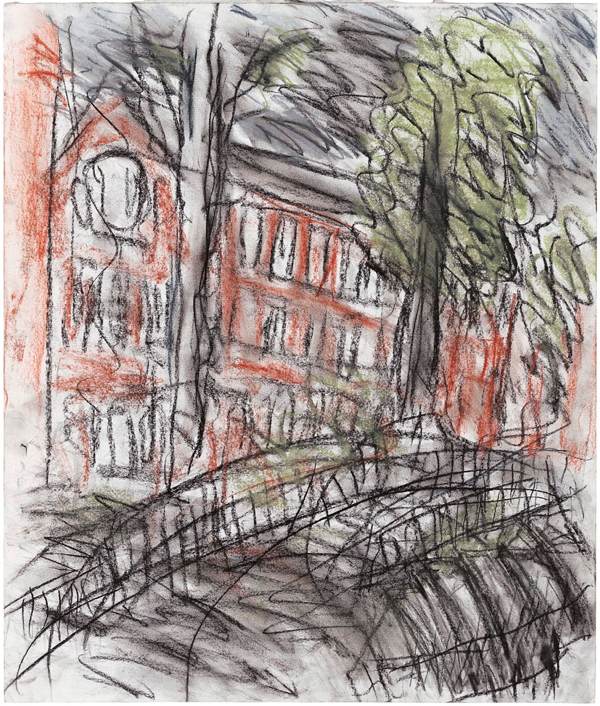
Arnold Circus 2008-10 by Leon Kossoff (charcoal and pastel on paper, 59 x 50 cm) Copyright The Artist, courtesy Annely Juda Fine Art
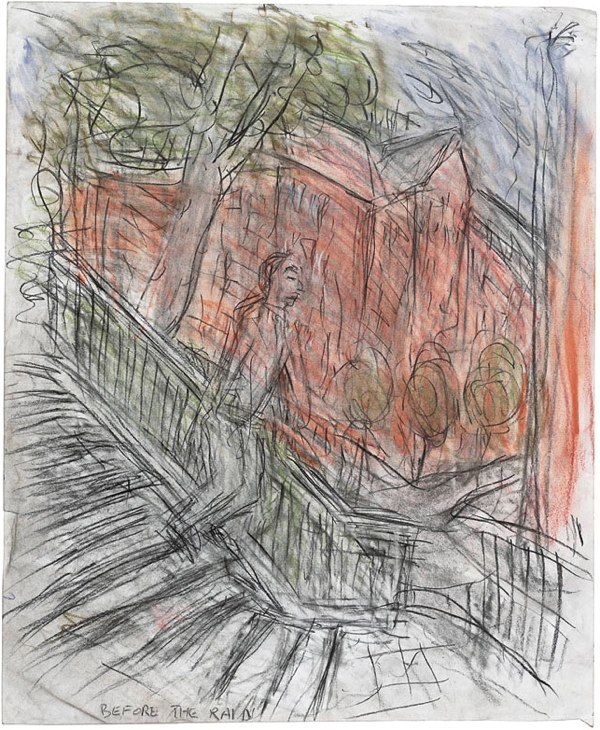
Arnold Circus, Before Rain 2012 by Leon Kossoff (charcoal and pastel on paper, 60.5 x 50 cm) Copyright The Artist, courtesy Annely Juda Fine Art
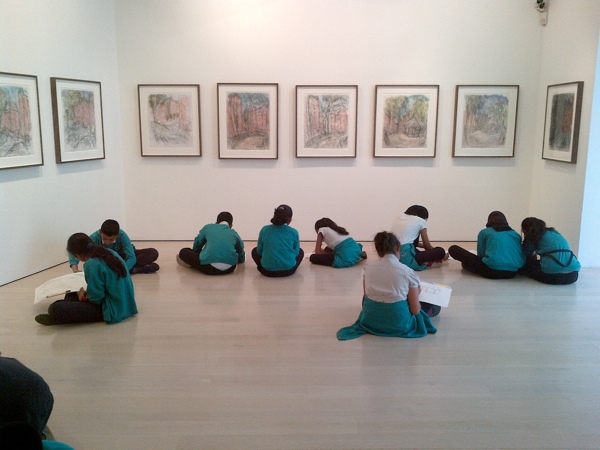
Pupils fron Virginia Rd Primary School at Arnold Circus visited Leon Kossoff’s London Landscapes exhibition at Annely Juda Fine Art last summer
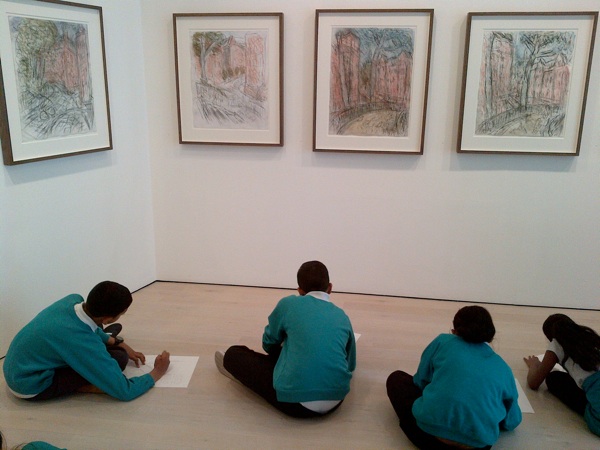
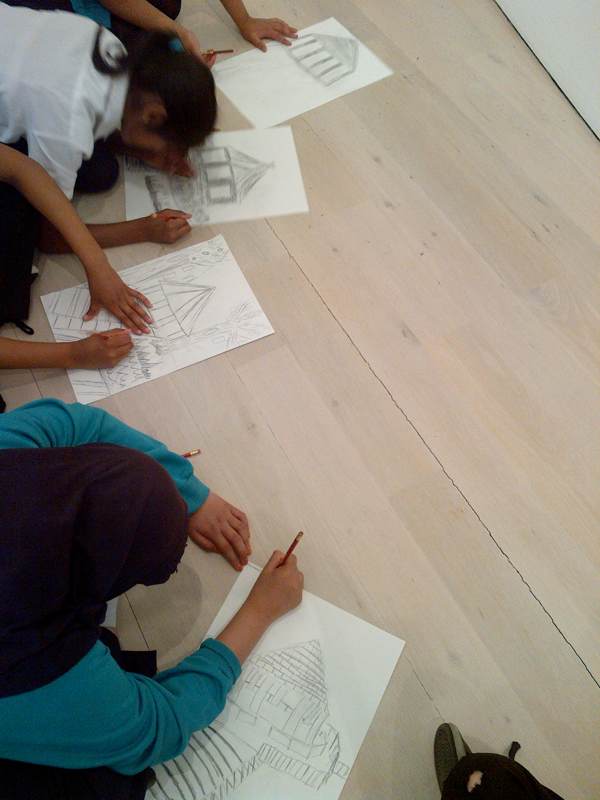
The children made their own drawings of Arnold Circus inspired by Leon Kossoff’s work
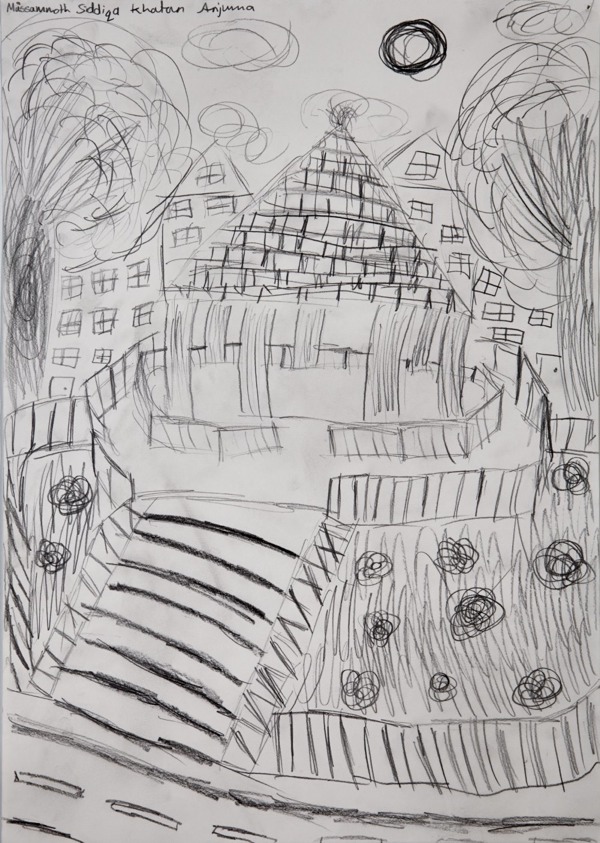
Mussammoth Siddiqa Khatun (Anjuna)
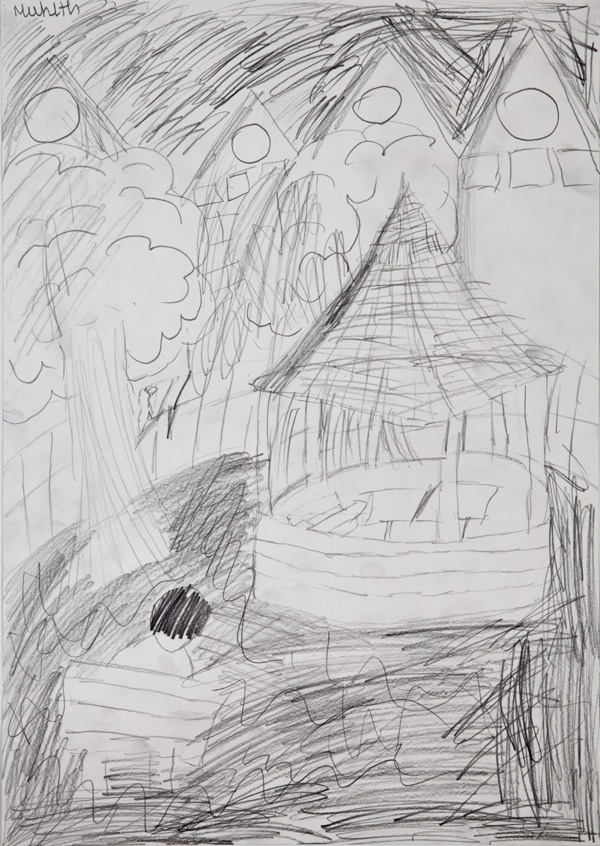
Mohamed Abdul Muhith Bilal
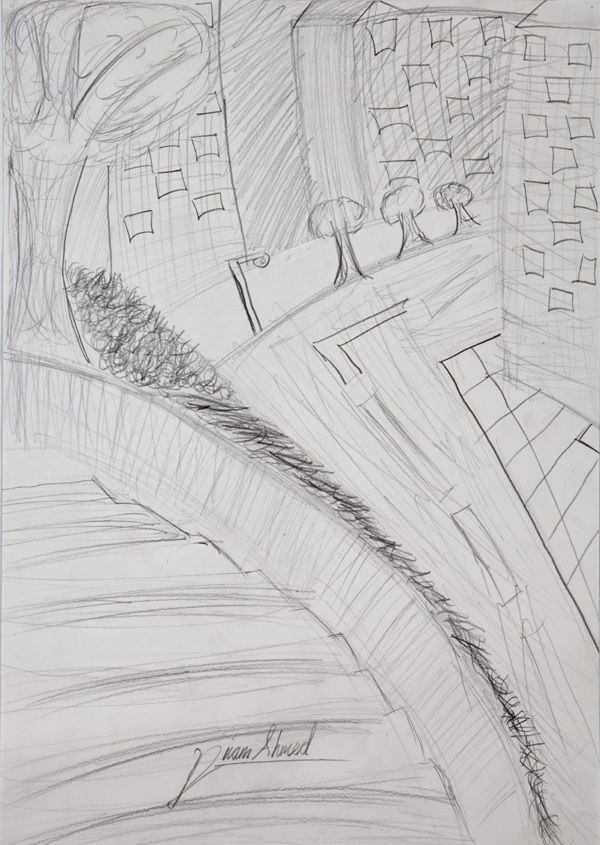
Priam Ahmed
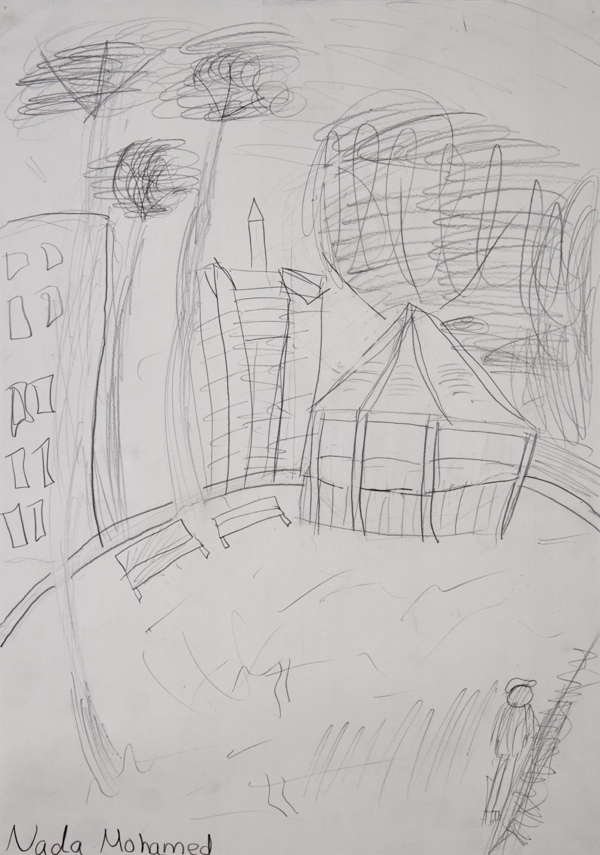
Nada Mohamed
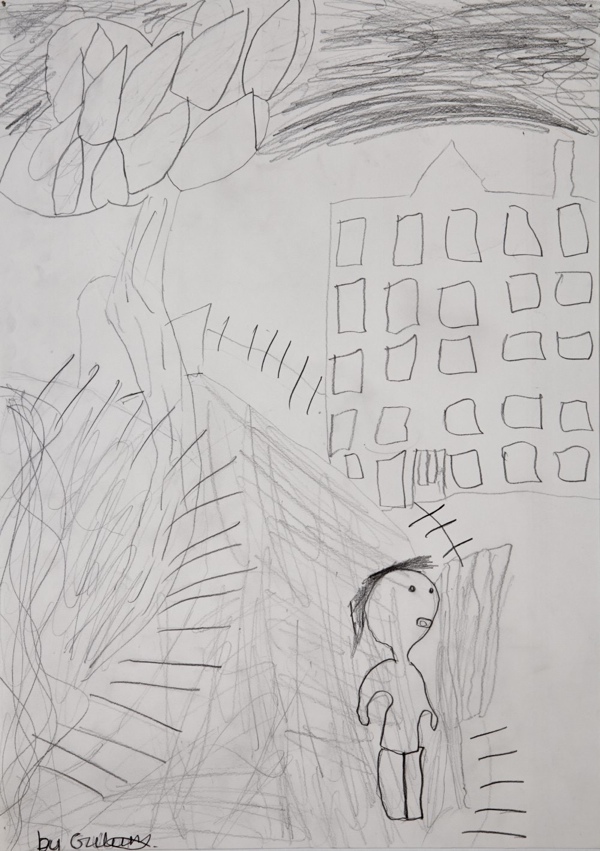
Gulam Mubeen
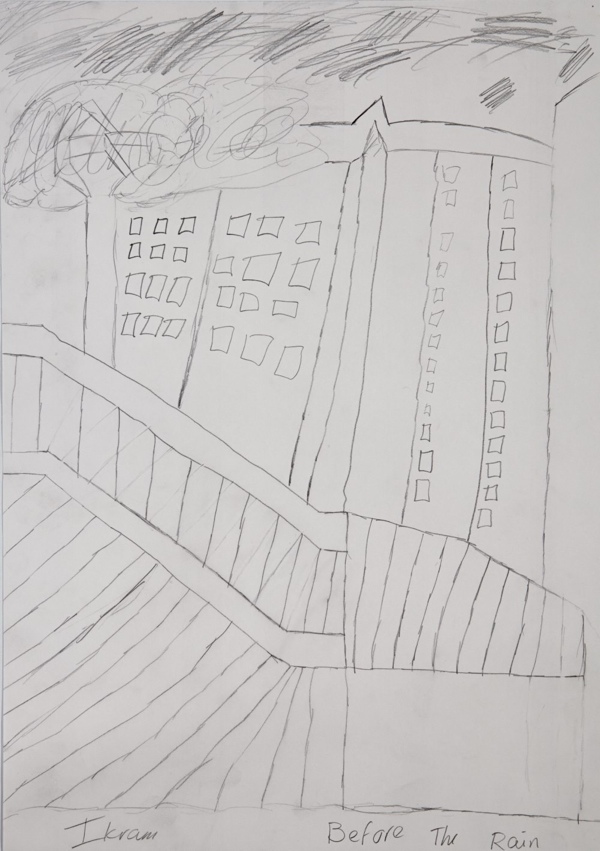
Mohamed Ikramul Haque
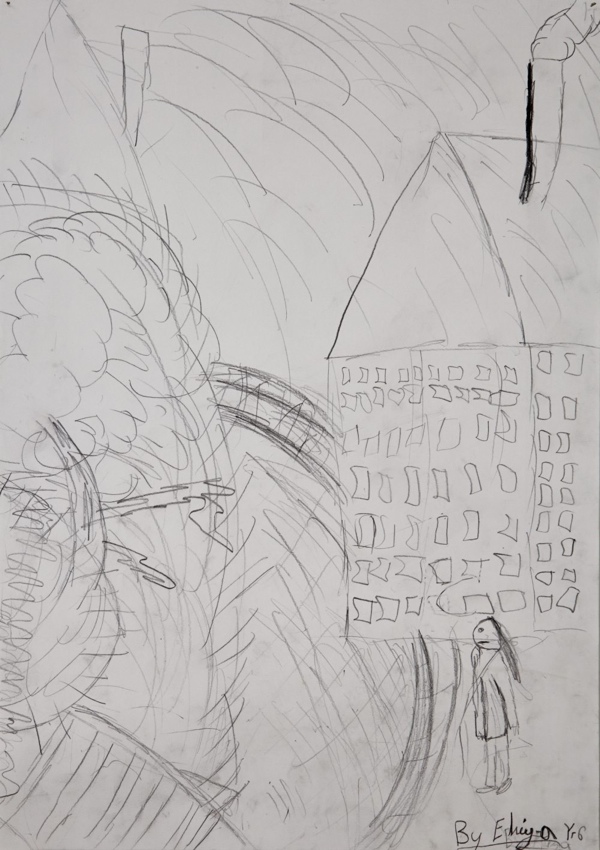
Sheikh Ehiya Miah
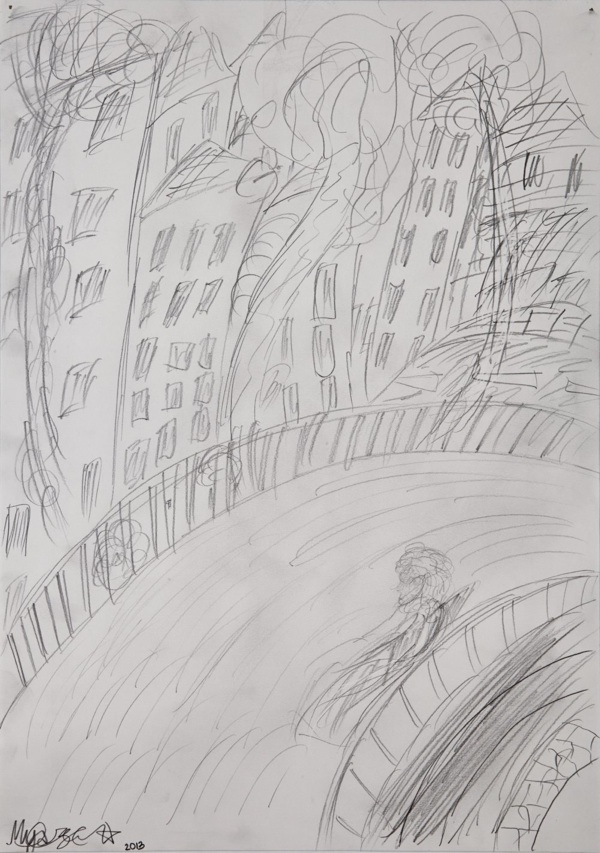
Mya Zahra Chowdury
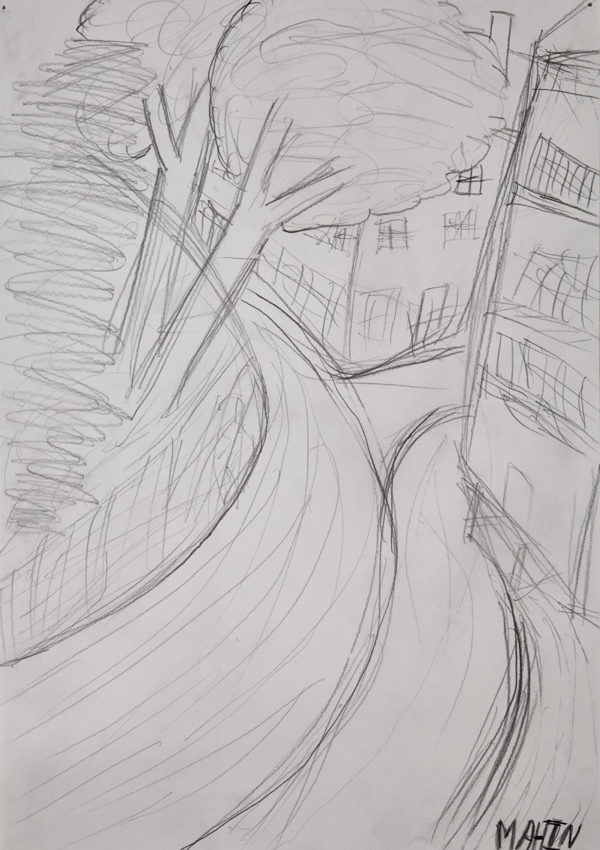
Mahin Ali Rabbi
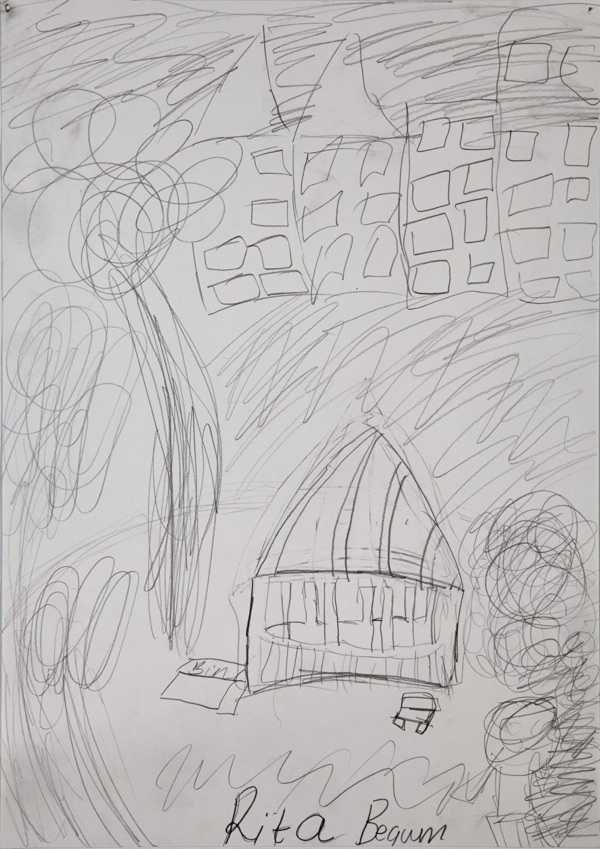
Rita Begum
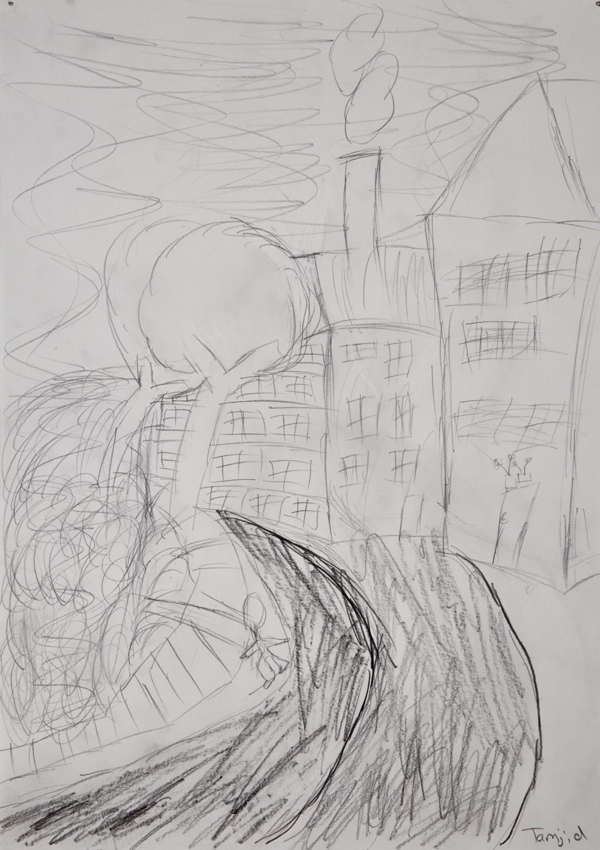
Shah Hafiz Tamjid
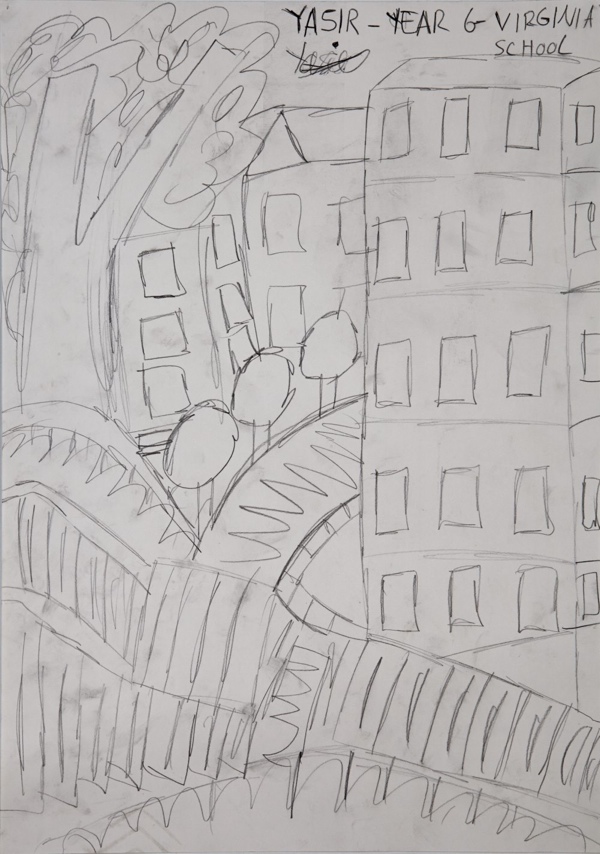
Mohamed Yasir Chowdhury
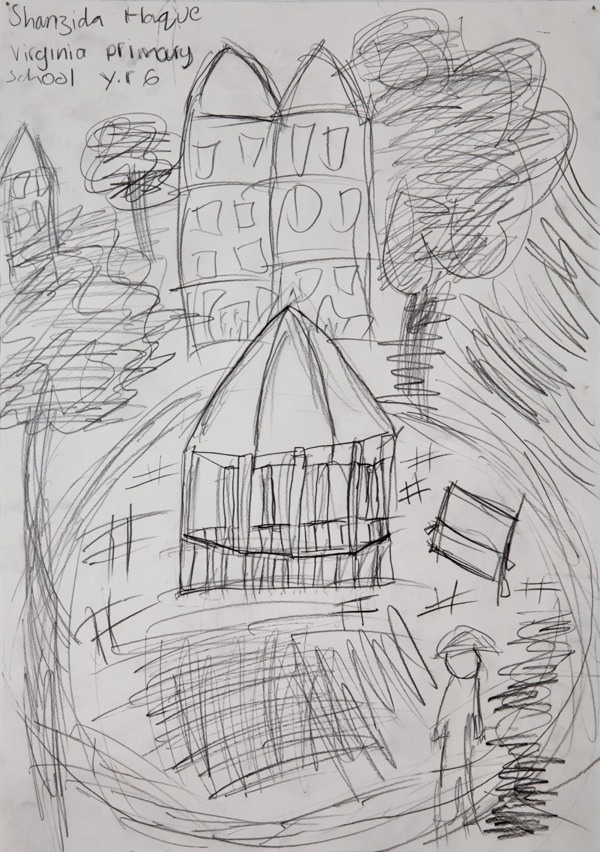
Shanzida Haque
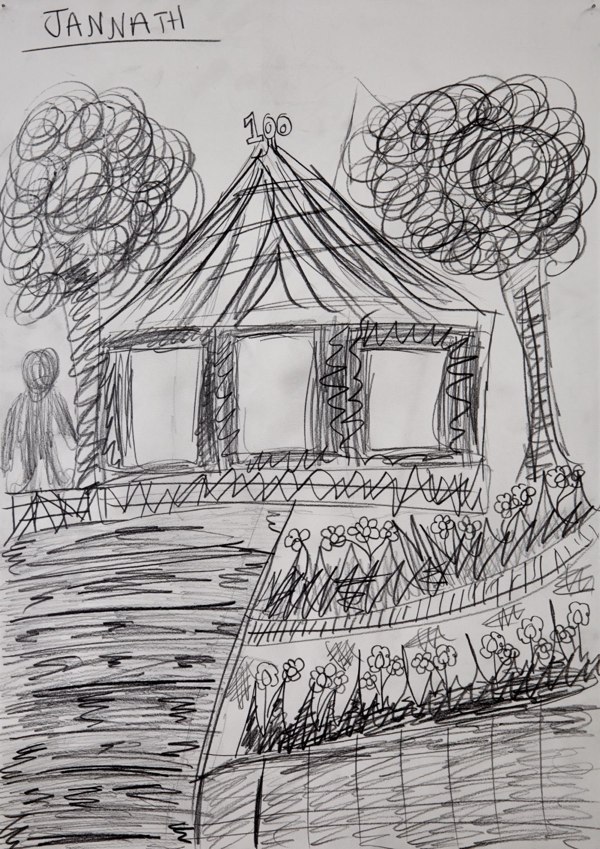
Jannath Inaya Ahmed
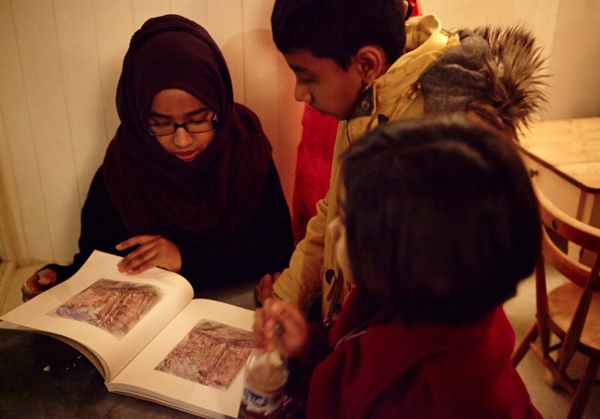
Virginia Rd School pupils at the print launch at Leila’s Shop last week
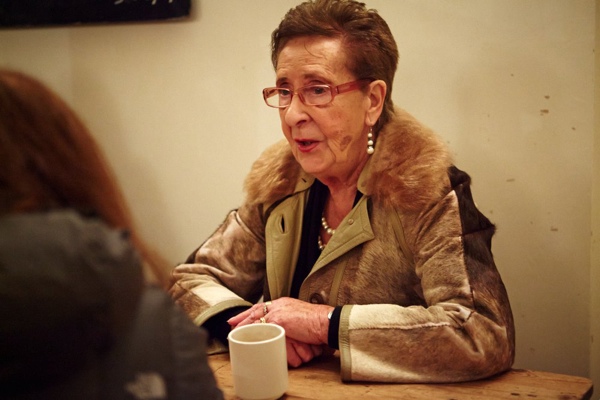
Joan Rose holds court – a contemporary of Leon Kossoff, Joan grew up at Arnold Circus where her grandfather Albert Raymond opened the grocers – now Leila’s Shop – at 17 Calvert Ave in 1900
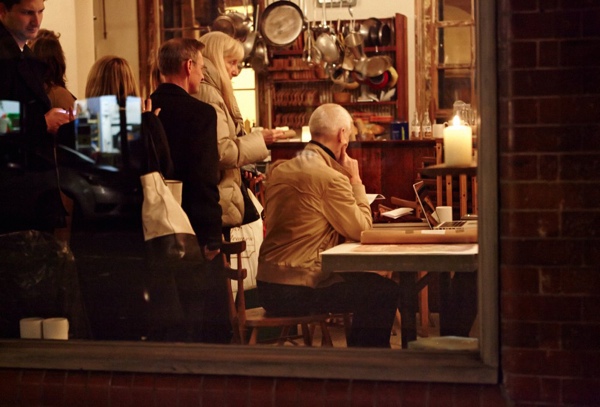
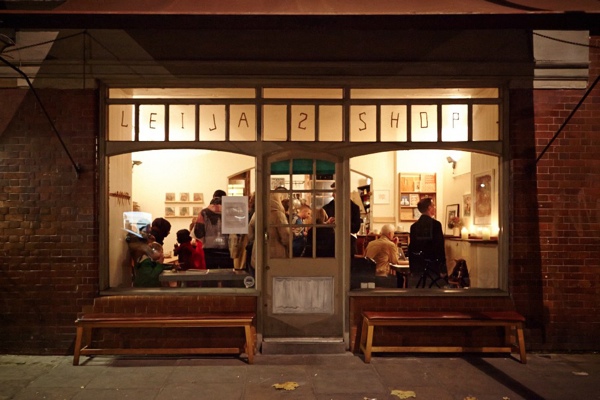
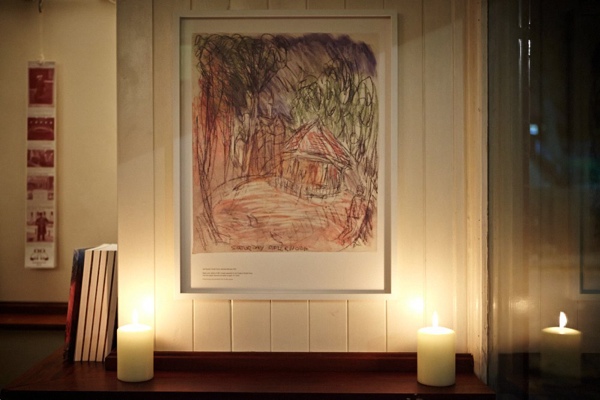
Click here to get a copy of Leon Kossoff’s Arnold Circus print for £30
Leon Kossoff’s drawings © The Artist, courtesy Annely Juda Fine Art
Photographs of Virginia Rd pupils at the gallery copyright © Alice Herrick
Photographs of the Print Launch copyright © Patricia Niven
Leon Kossoff’s, London Landscapes exhibition is currently at Mitchell-Innes & Nash, 534 West 26th St, New York City until 21st December and will be shown at L.A.Louver, 49 North Venice Boulvard, Venice, Los Angeles, from 23rd January until 1st March.
The Spitalfields Bowl

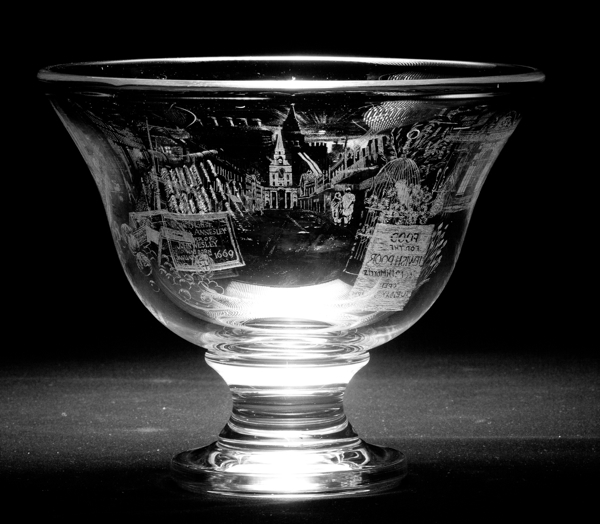
One of these streets’ most-esteemed long-term residents summoned me to view an artefact that – until today – few have seen, the fabled Spitalfields Bowl. Engraved by Nicholas Anderson, a pupil of the great master of the art, Laurence Whistler, it incarnates a certain moment of transition in the volatile history of this place.
I arrived at the old house and was escorted by the owner to an upper floor, and through several doors, to arrive in the room where the precious bowl is kept upon its own circular table that revolves with a smooth mechanism, thus avoiding any necessity to touch the glass. Of substantial design, it is a wide vessel upon a pedestal engraved with scenes that merge and combine in curious ways. You have the option of looking down upon the painstakingly-etched vignettes and keeping them separate them in your vision, or you can peer through, seeing one design behind the other, morphing and mutating in ambiguous space as the bowl rotates – like overlaid impressions of memory or the fleeting images of a dream.
Ever conscientious, the owner brought out the correspondence that lay behind the commission and execution of the design from Nicholas Anderson in 1988. Consolidating a day in which the glass engraver had been given a tour of Spitalfields, one letter lists images that might be included – “1. The church and steeple of Christ Church, Spitalfields, and its domination of the surrounding areas. 2. The stacks, chimneys and weaving lofts. 3. The narrowness of the streets and the list and lean of the buildings with their different doorways and casement windows.”
There is a mesmerising quality to Nicholas Anderson’s intricate design that plays upon your perception, offering insubstantial apparitions glimpsed in moonlight, simultaneously ephemeral and eternal, haunting the mind. You realise an object as perilously fragile as an engraved glass bowl makes an ideal device to commemorate a transitory moment.
“It took him months and months,” admitted the proud owner,“and it represents the moment everything changed in Spitalfields, in which the first skyscraper had gone up and there were cranes as evidence of others to come. The Jewish people have left and the Asians are arriving, while at the same time, you see the last of the three-hundred-year-old flower, fruit and vegetable market with its history and characters, surrounded by the derelict houses and filthy streets.”
Sequestered in a locked room, away from the human eye, the Spitalfields Bowl is a spell-binding receptacle of time and memory.


The Jewish soup kitchen

To the left is the Worrall House, situated in a hidden courtyard between Princelet St & Fournier St


A moonlit view of Christ Church over the rooftops of Fournier St

The bird cage with the canary from Dennis Severs House


“He was a tinker who overwintered in Allen Gardens and used to glean every morning in the market…”

To the left is Elder St and the plaque commemorating the birth of John Wesley’s mother is in Spital Sq.

An Asian couple walk up Brushfield St, with the market the left and the Fruit & Wool Exchange and Verdes to the right
Photographs copyright © Lucinda Douglas-Menzies
The Cries Of London
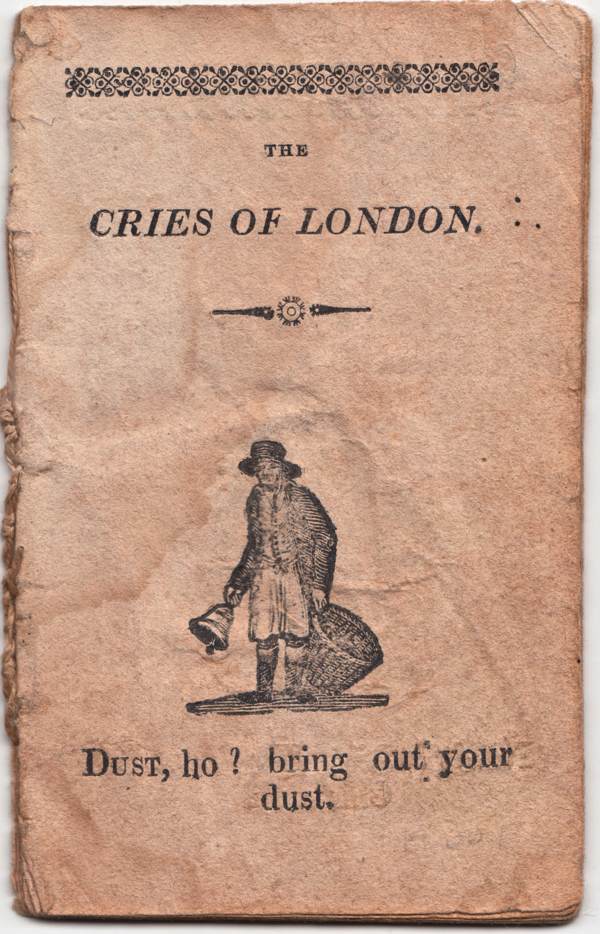
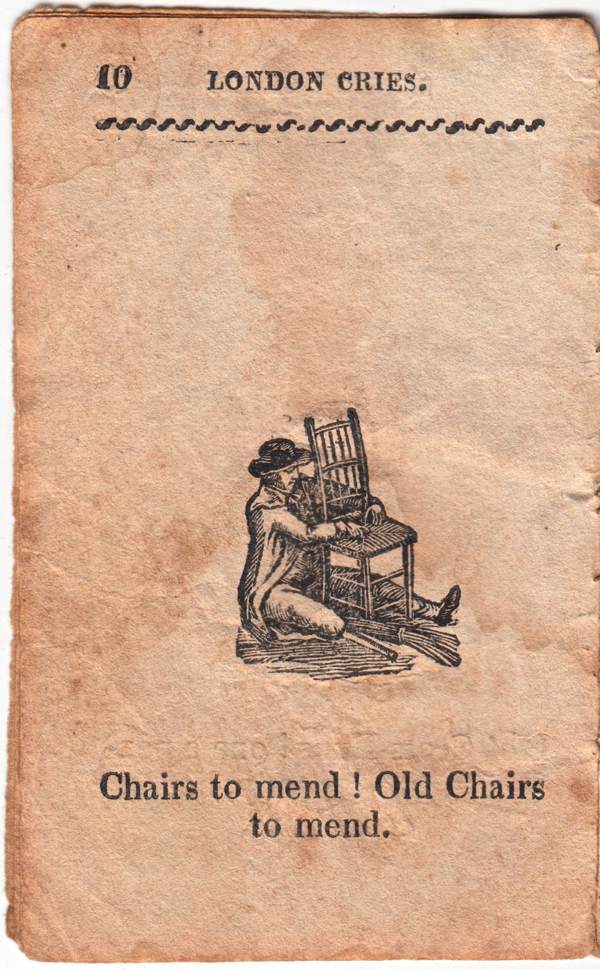
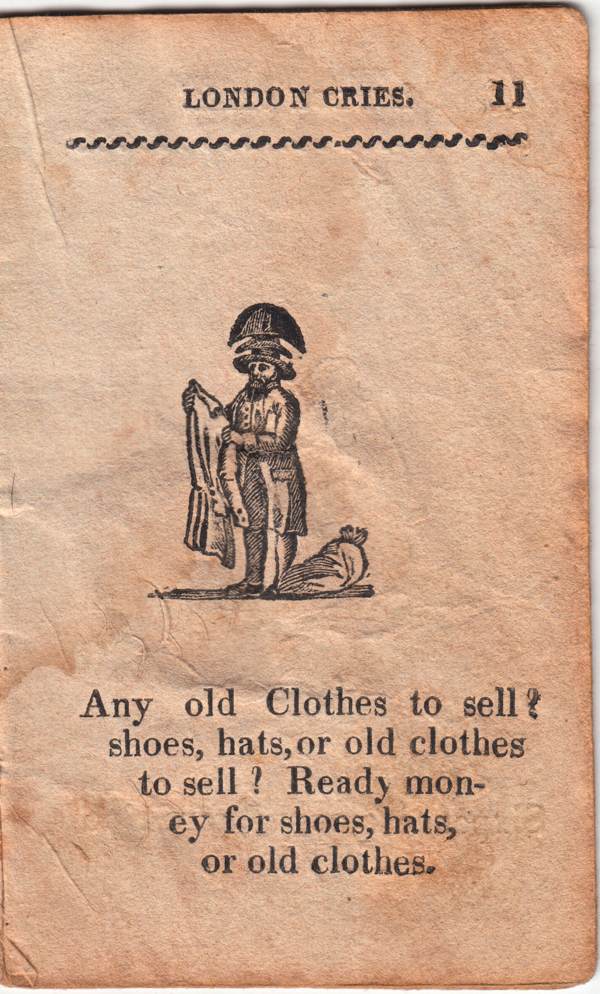
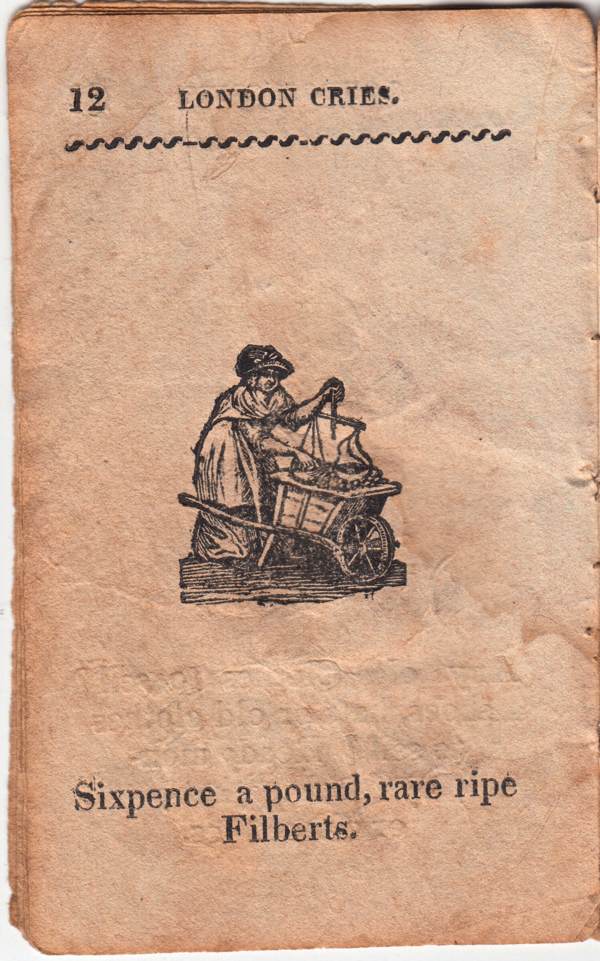
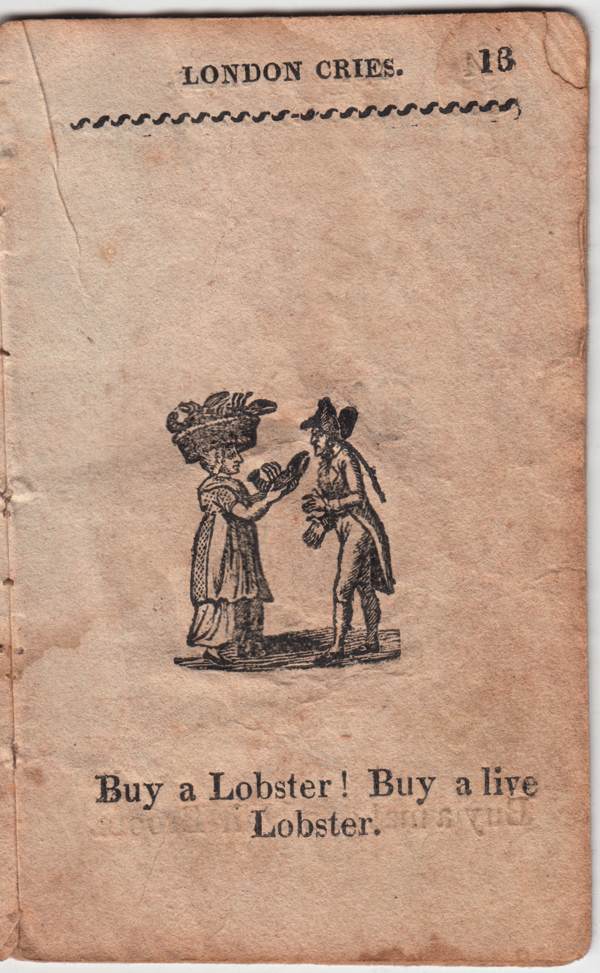
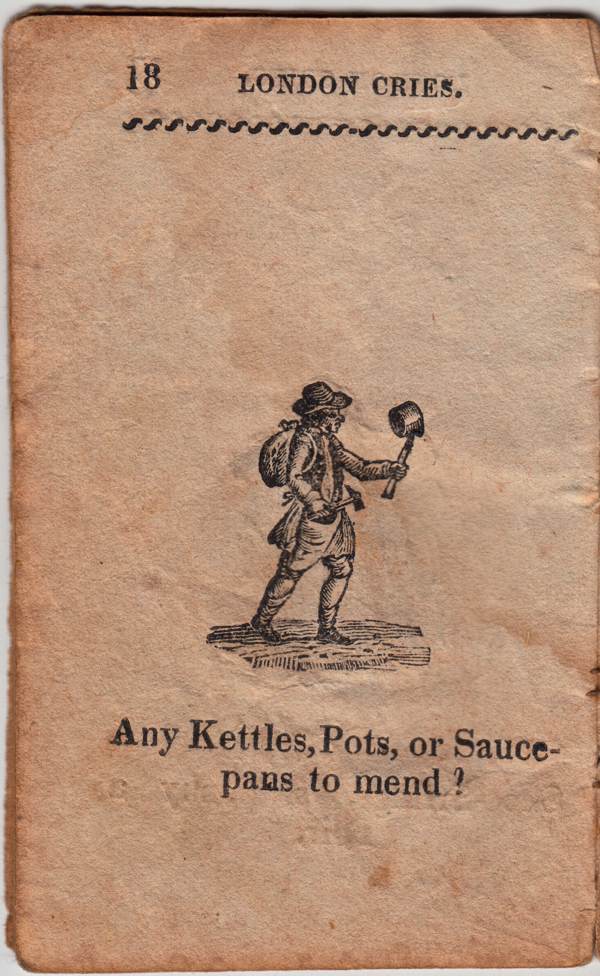
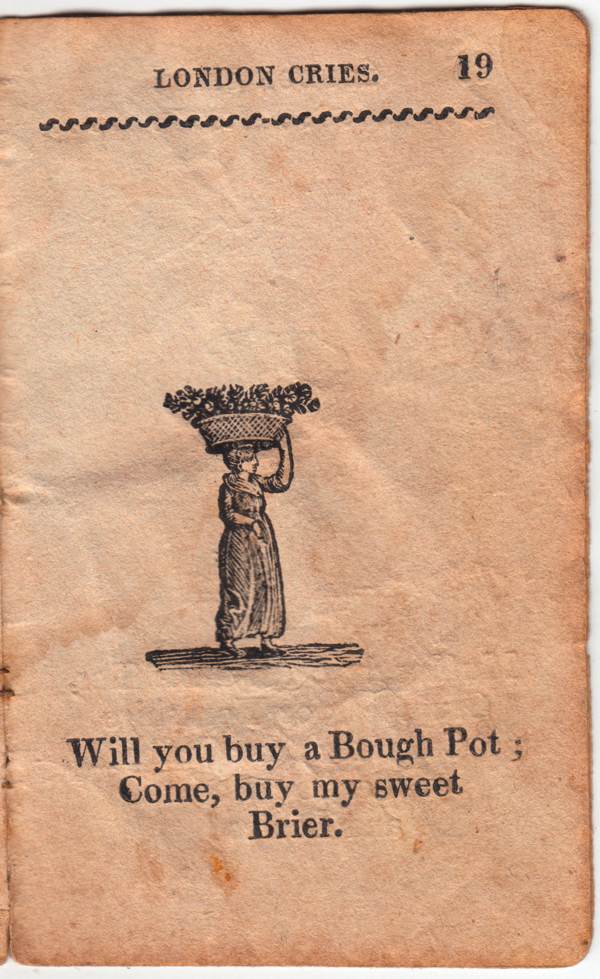
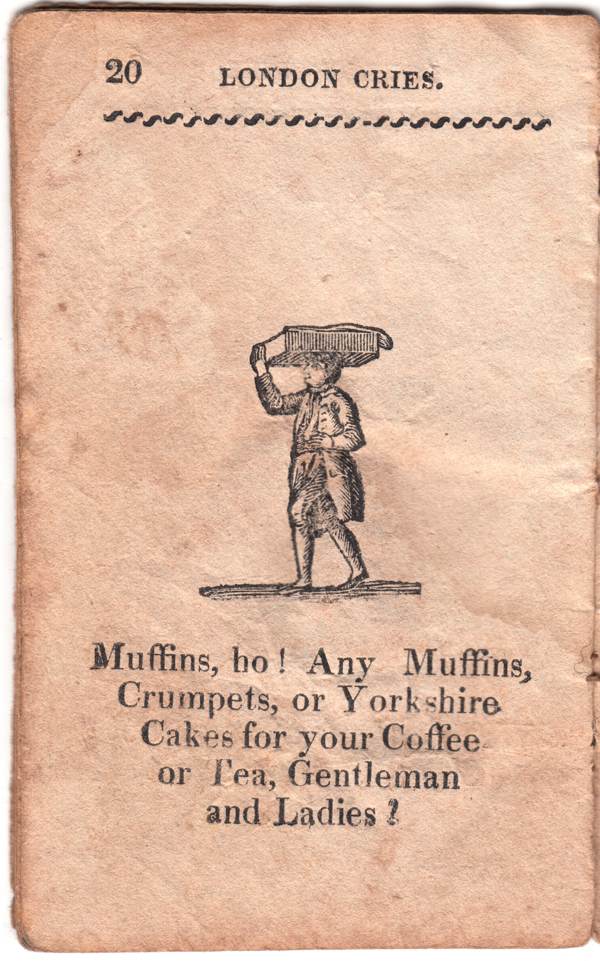
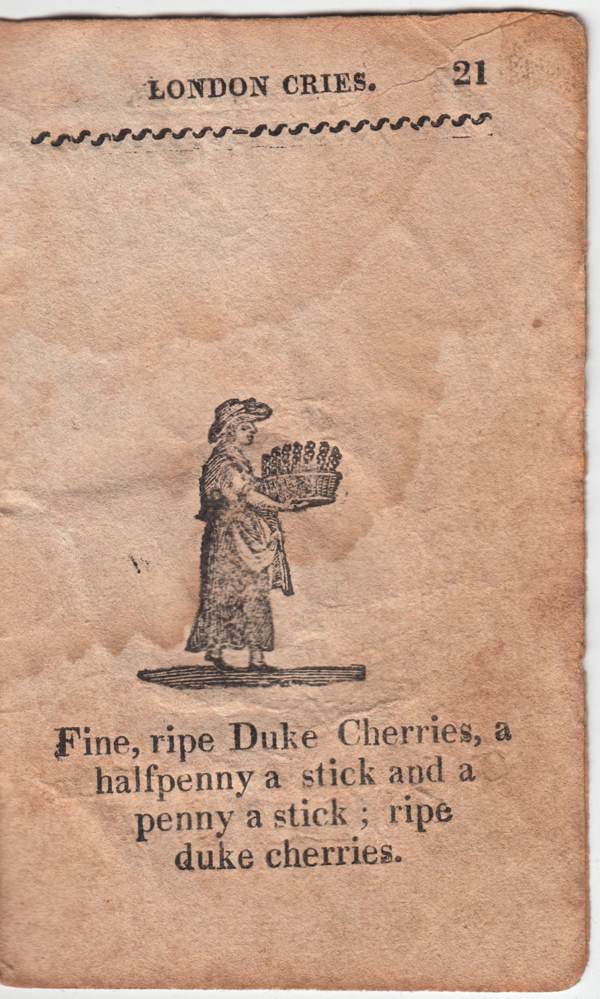
It is my delight to show you the latest addition to my collection – this tiny anonymous pamphlet no larger than a folded banknote entitled simply THE CRIES OF LONDON. More than two centuries old, it is one of innumerable publications on this subject down through the ages and consequently only of little monetary worth. Yet, to me, this shabby rag is one of my favourites in the series because of the modesty of its production. The stained pages evidence its fond usage by those who, once upon a time, actually saw these mythic characters upon the streets of London.
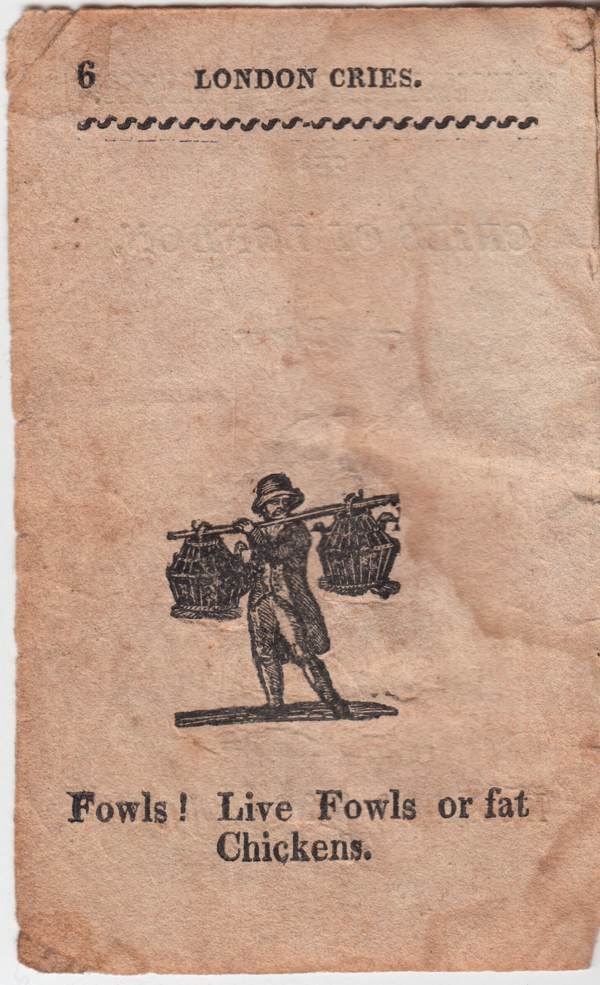
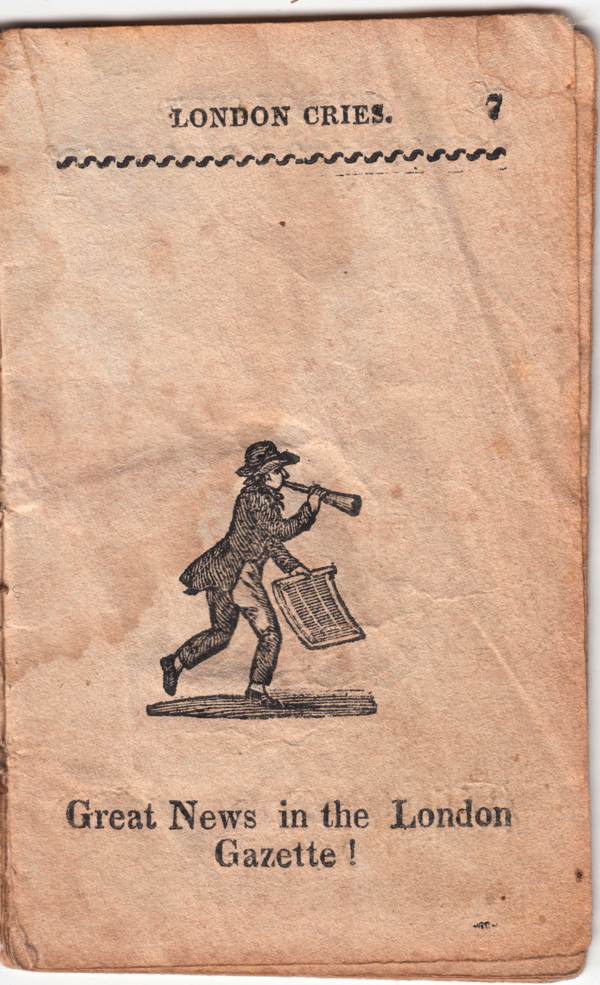
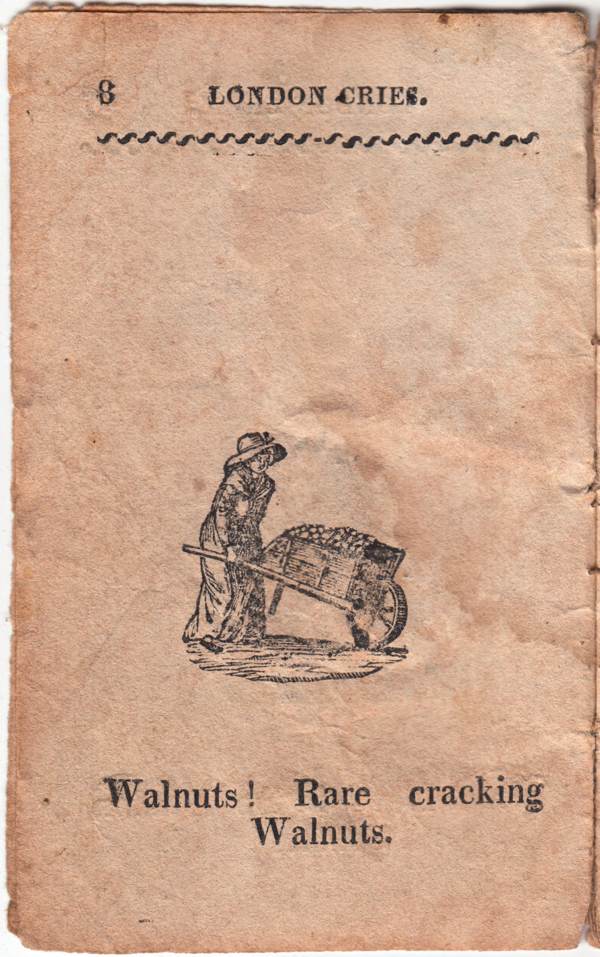
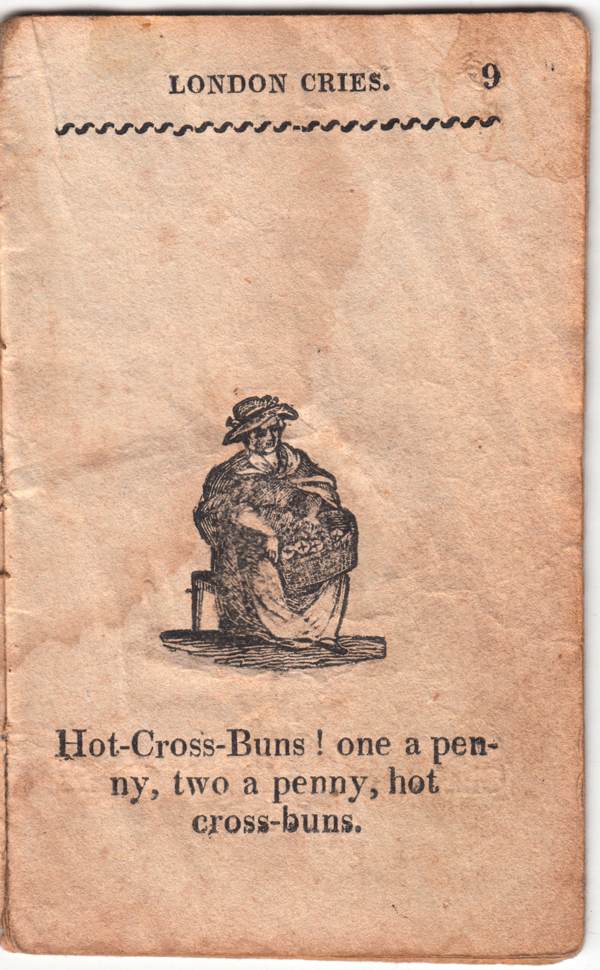
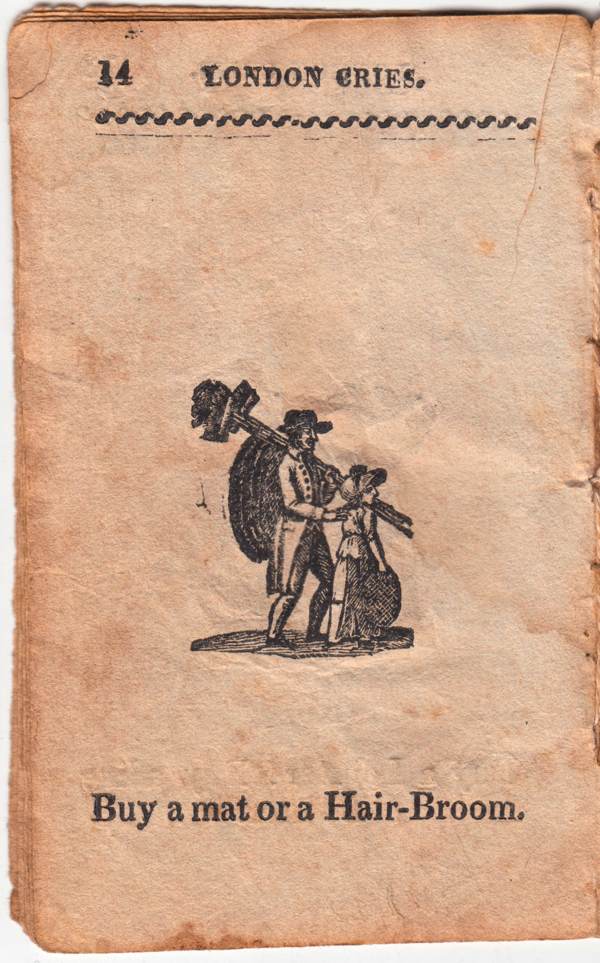
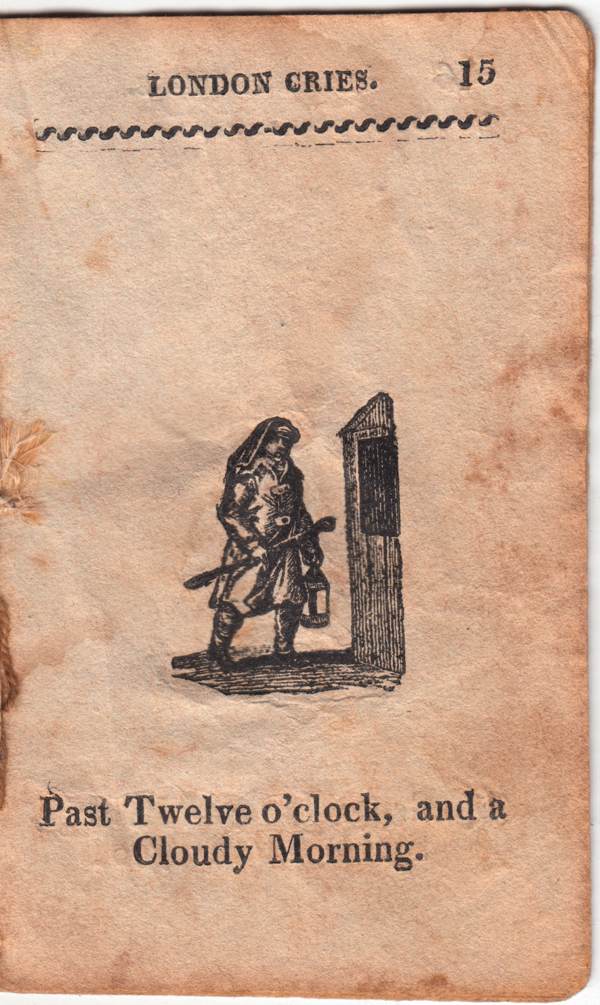
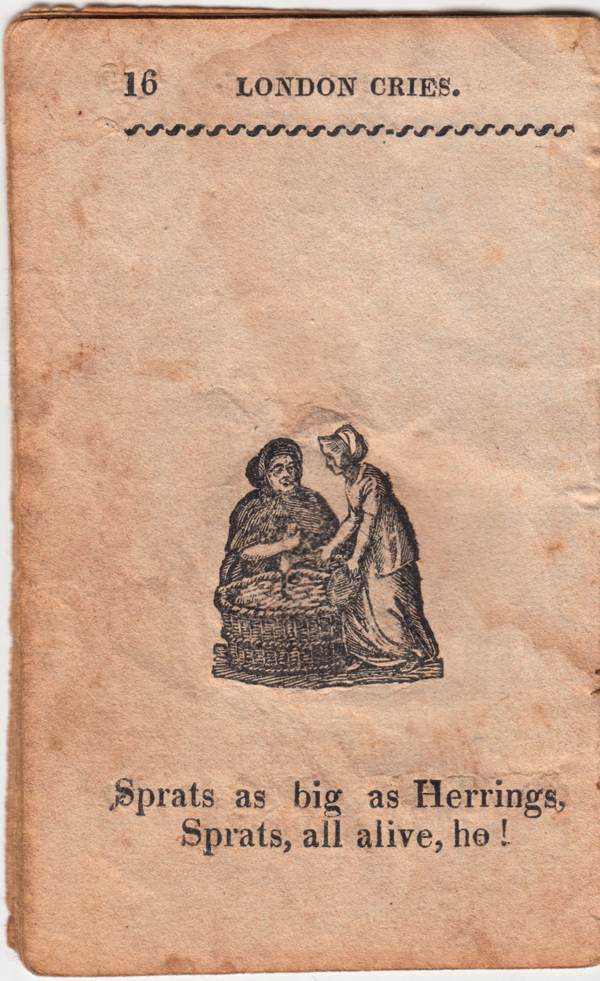
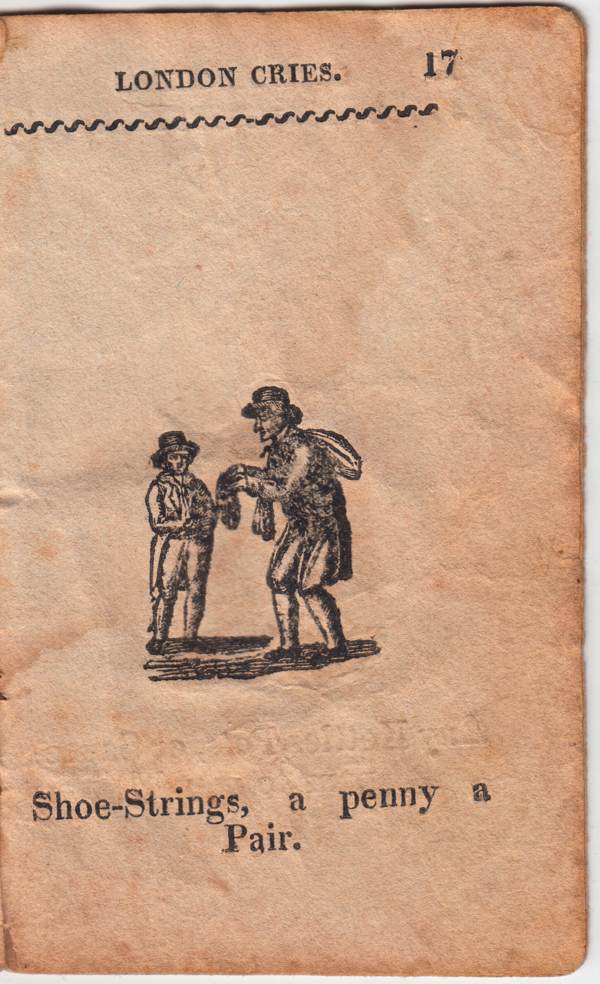
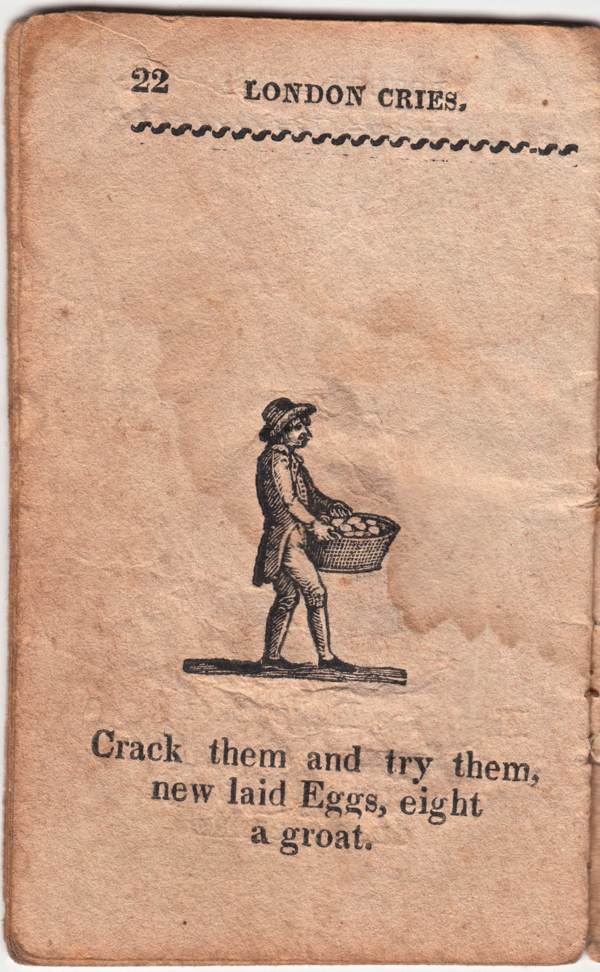
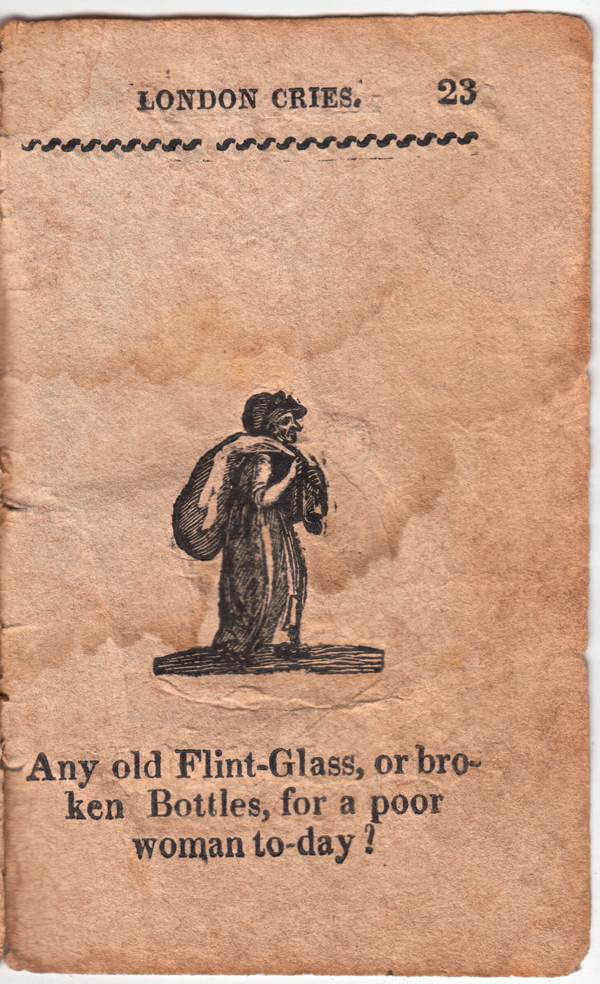
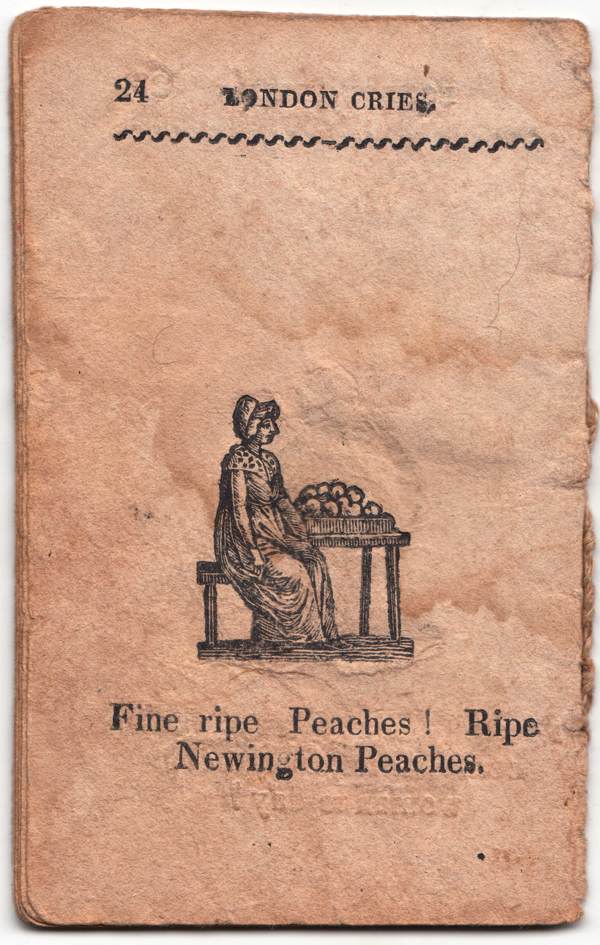
You may also like to take a look at these other sets of the Cries of London
More John Player’s Cries of London
More Samuel Pepys’ Cries of London
Geoffrey Fletcher’s Pavement Pounders
William Craig Marshall’s Itinerant Traders
H.W.Petherick’s London Characters
John Thomson’s Street Life in London
Aunt Busy Bee’s New London Cries
Marcellus Laroon’s Cries of London
William Nicholson’s London Types
Francis Wheatley’s Cries of London
John Thomas Smith’s Vagabondiana of 1817
John Thomas Smith’s Vagabondiana II
John Thomas Smith’s Vagabondiana III
Thomas Rowlandson’s Lower Orders
Rose Henriques’ Paintings
A few years ago, Clive Bettinson of the Jewish East End Celebration Society rescued a series of watercolours from the basement of the Whitechapel Library where they were being walked upon. Today, Rose Henriques’ Paintings have been restored and are the subject of a new exhibition at Tower Hamlets Local History Library & Archives researched by Sara Ayed.
Born into an Orthodox Jewish family in Stoke Newington, Rose devoted herself to life of altruistic endeavour, serving as a nurse at Liverpool St Station in the First World War and then as an ambulance driver based in Cannon St Row in the Second World War.
In 1917, she married Basil Henriques and together they established and ran the settlement in Berners St (later known as Henriques St) pursuing philanthropic work among the Jewish community in the East End for more than half a century.
Yet somehow Rose also managed to produce a stream of paintings that document the times she lived in intimate human detail, exhibiting her work at the Whitechapel Gallery from 1934 onwards and holding two solo shows there,’Stepney in War & Peace’ in 1947 and ‘Vanishing Stepney’ in 1961.
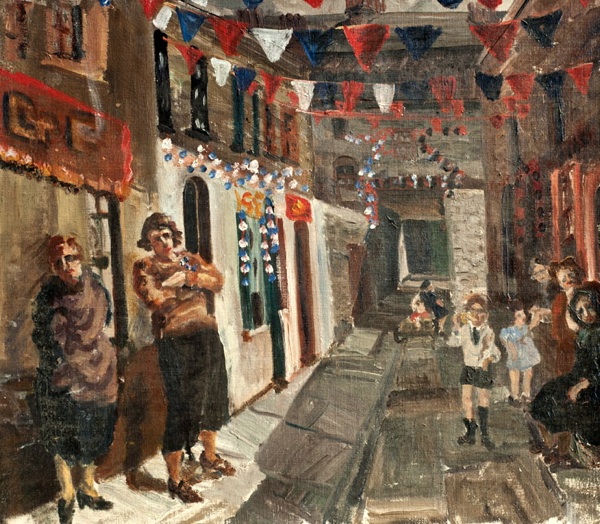
Coronation Celebrations in Challis Court, 1937
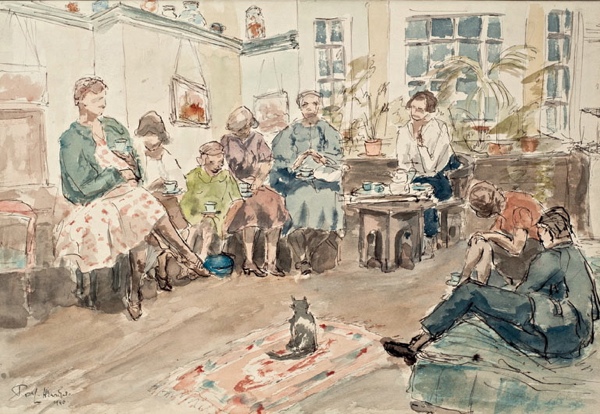
Nine O’Clock News, The Outbreak of War
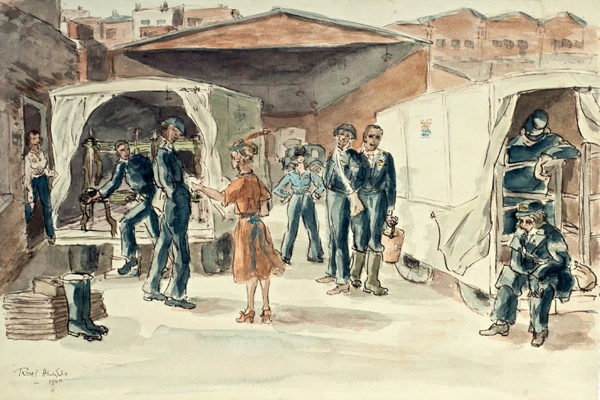
The New Driver, Ambulance Station, Cannon St Row

Next Day, Watney St Market, 1941
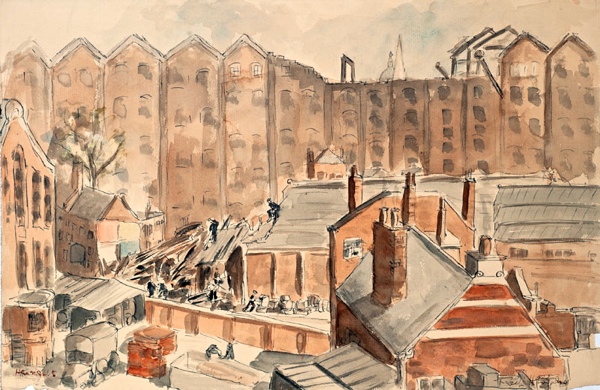
Bombed Second Time, The Foothills, Tilbury & Southend Railway Warehouses, 1941

Dual Purpose, School Yard in Fairclough St, Tilbury & Southend Railway Warehouses, forties
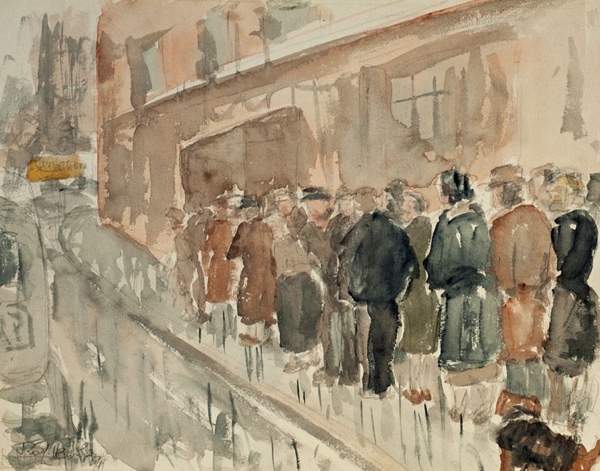
Line outside Civil Defence Shelter, Turner St, 1942
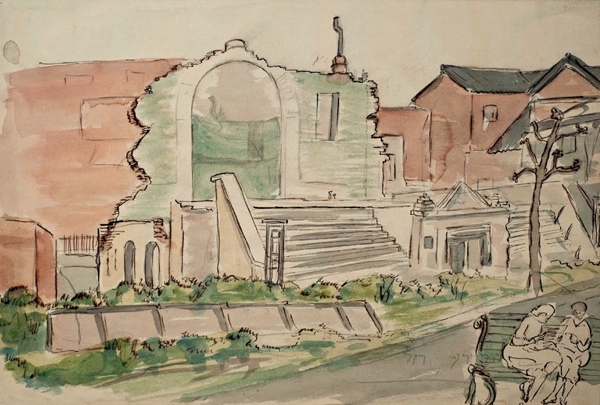
Stepney Green Synagogue, forties
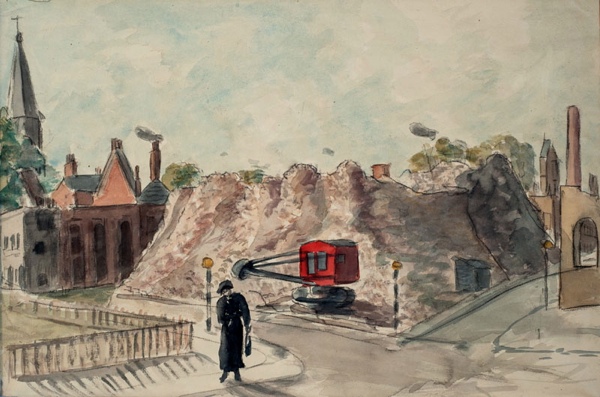 The Brick Dump, Exmouth St, forties

Club Row Animal Market Carries On, 1943
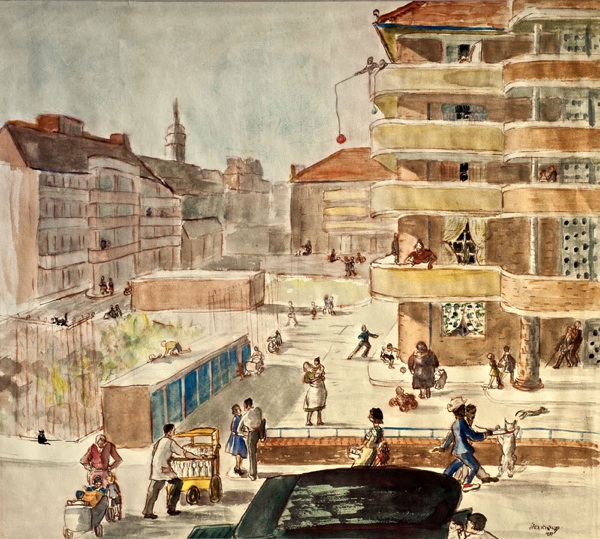
Fait Accompli, Berner St, 1951
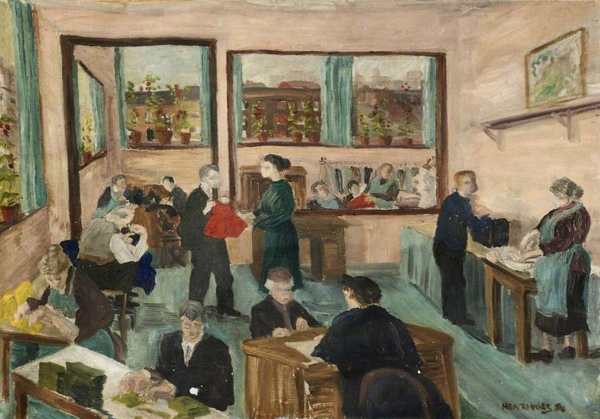
Workrooms for the Elderly, 1954
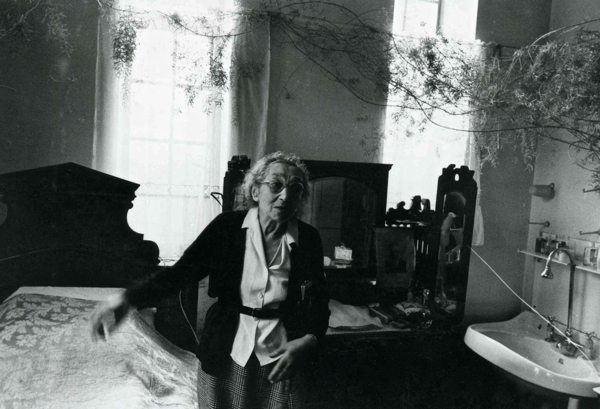
Rose Henriques (1889- 1972)
Portrait of Rose Henriques © Ian Berry
Archive images courtesy Tower Hamlets Local History Library & Archives
Stepney in Peace & War, The Paintings of Rose Henriques runs until 6th March at Tower Hamlets Local History Library & Archives, 277 Bancroft Rd, E1, with a talk by the curator on Thursday 30th January at 6:30pm
Antony Cairns’ Old Shops
Complementing Antony Cairn’s elegaic series of East End Pubs, today I present his ethereal portfolio of shops, created using the same nineteenth century Vandyke Brown process, and evoking those commercial premises which exist as receptacles of collective memory for the communities they served.
The first picture is of The Handy Shop, Tony’s first local shop when growing up in Plaistow, and the last picture is W.F.Arber & Co Ltd in Roman Rd, of which my friend Gary Arber is the proprietor.
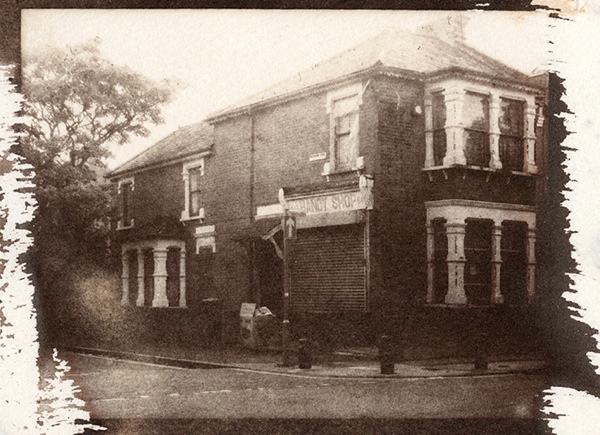
The Handy Shop, Ruskin Ave, E12
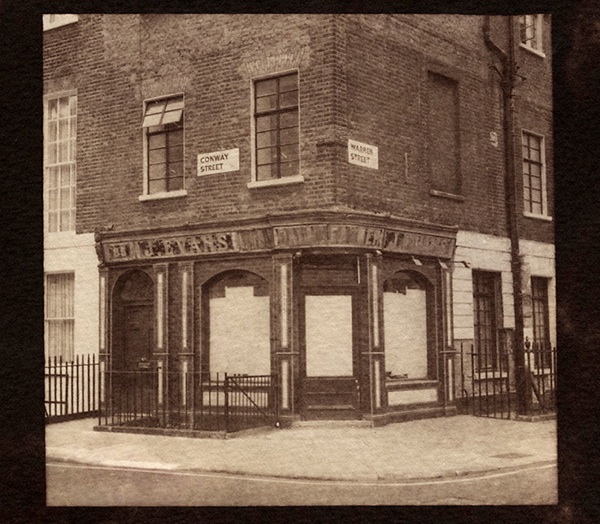
M.J. Evans, Warren St, W1
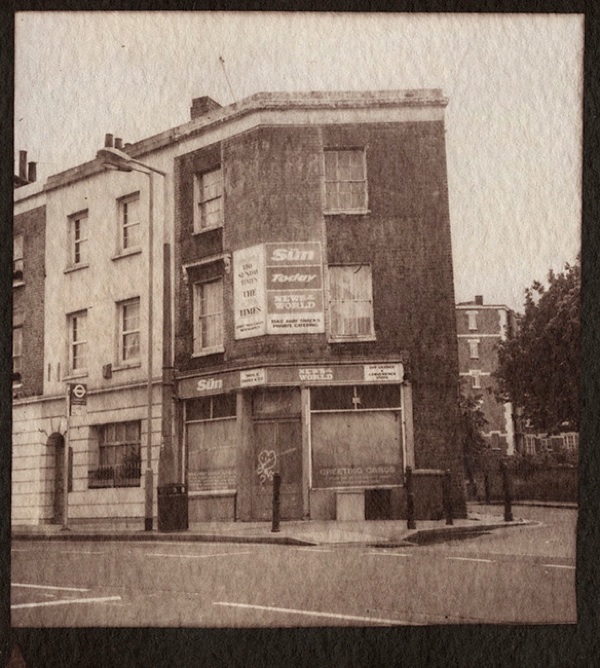
Unknown shop, Mile End, E12
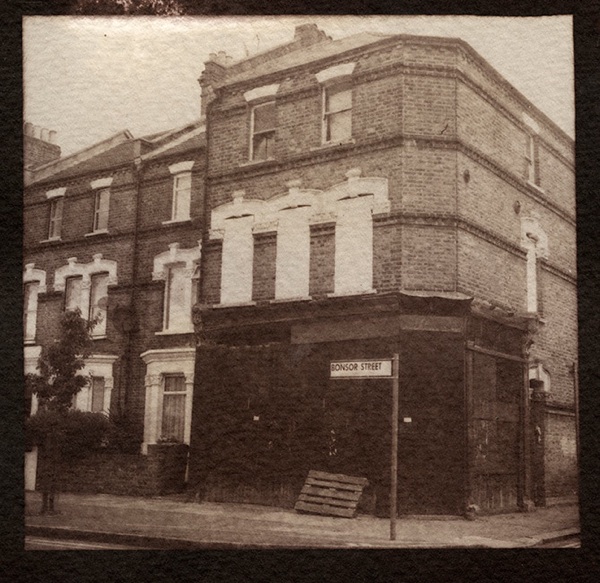
Unknown shop, Bonsor St, SE5
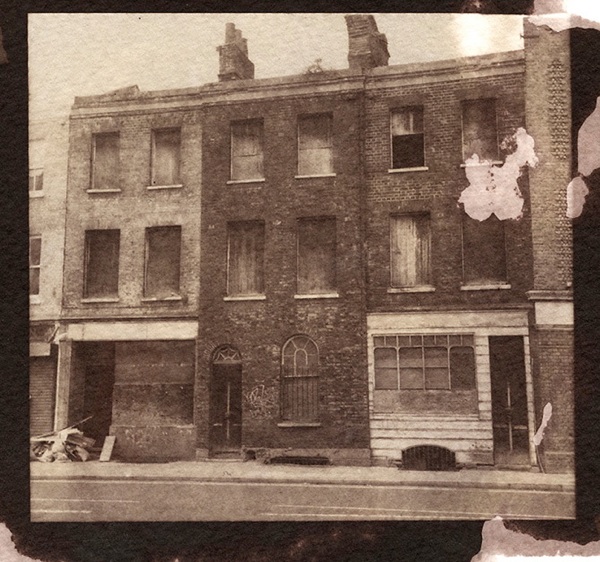
Unknown shops, unknown street
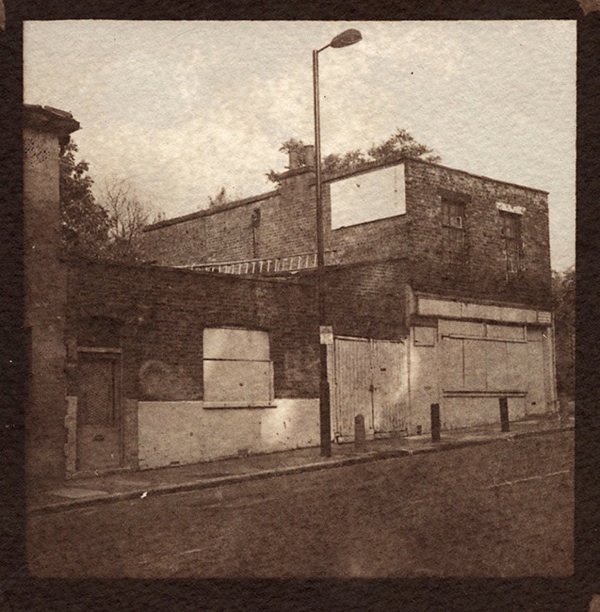
Unknown shop, Copenhagen St N.1
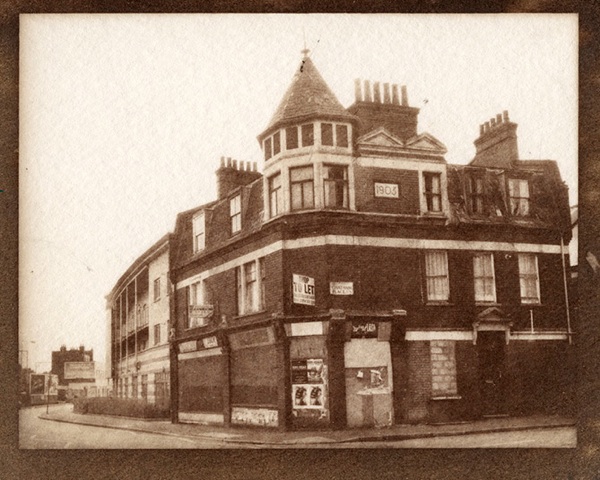
Unknown shops, Morning Lane, E8
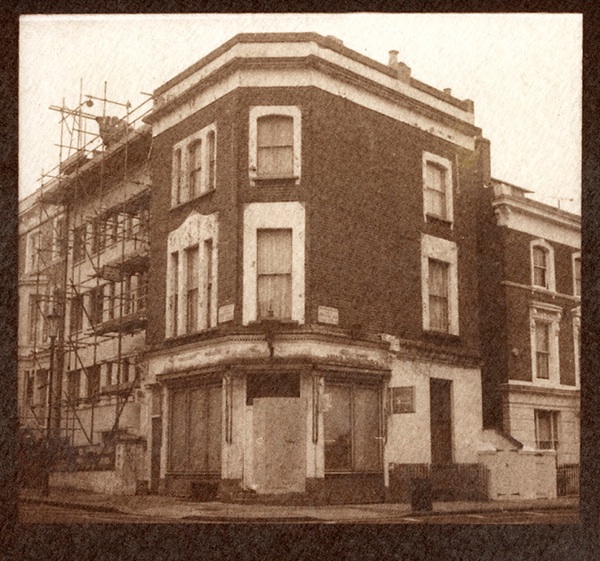
Unknown shop, Oswin St, SE11
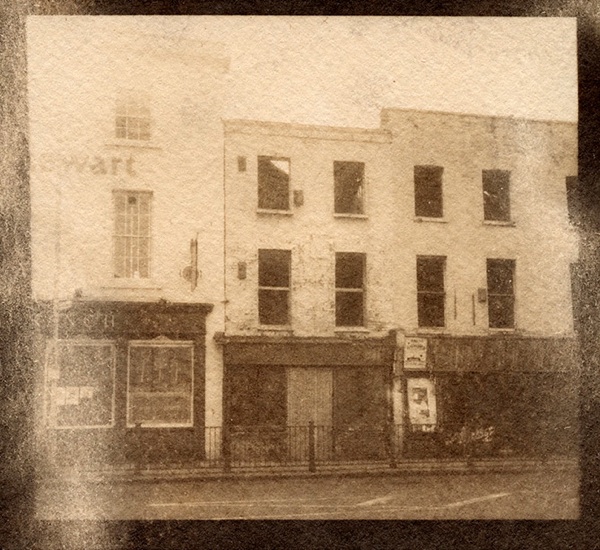
Unknown shops, Hackney Rd, E2
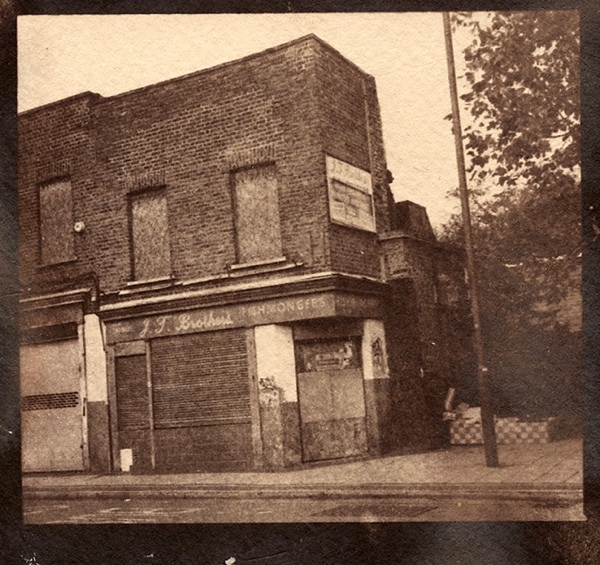
Fishmonger, Commercial Rd, E1
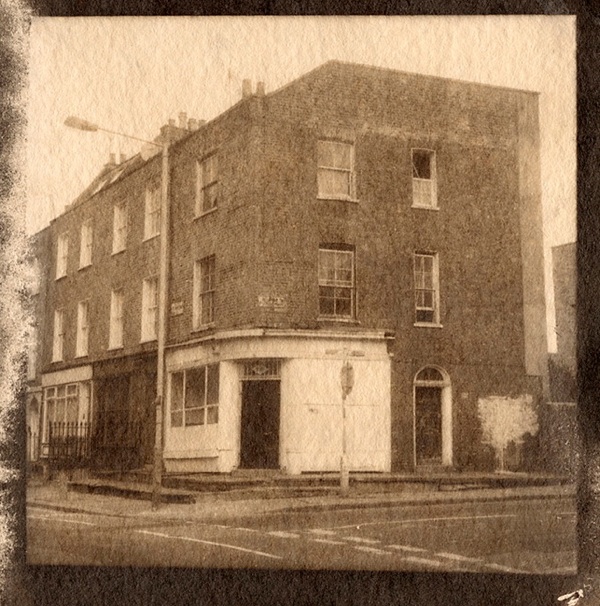
Unknown shop, St Pancras Way, NW5
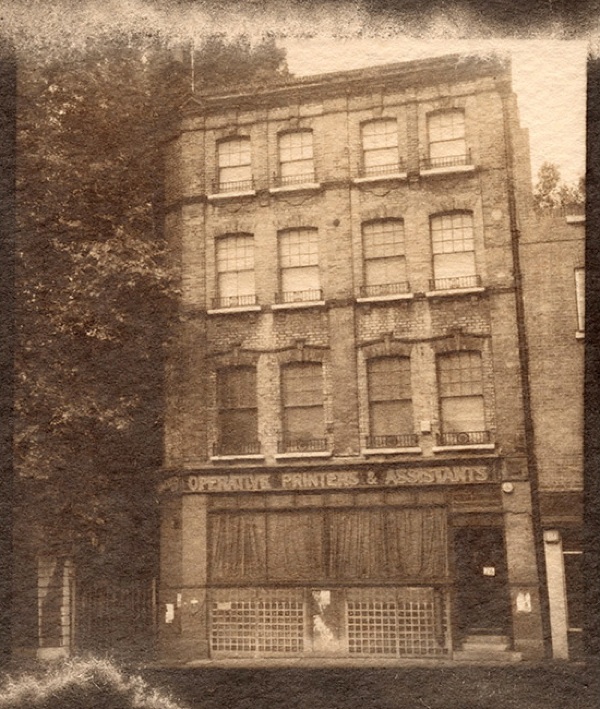
Printworks, Blackfriars Rd, SE1
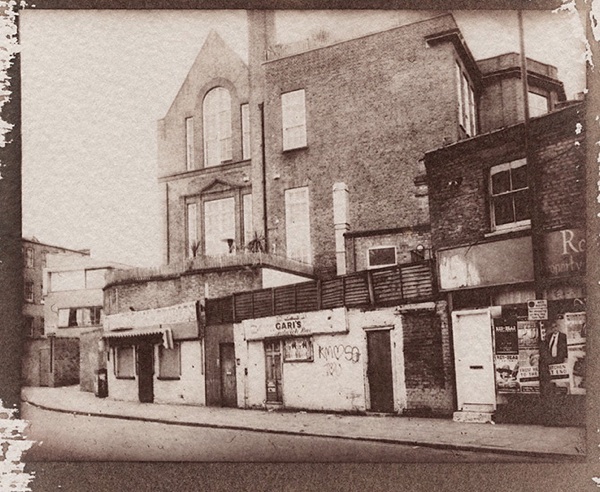
Gari’s, Northwold Rd, N16
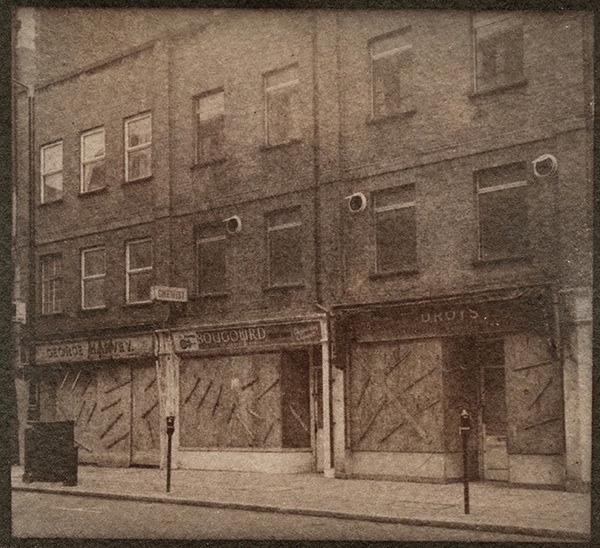
George Harvey, Bougourd Chemist & Droys, Rochester Row, SW1
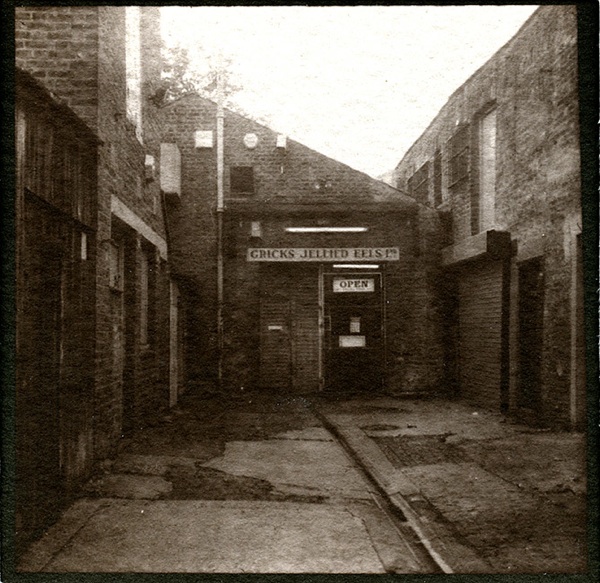
Gricks Jellied Eels, Rosebery Ave, Manor Park, E12
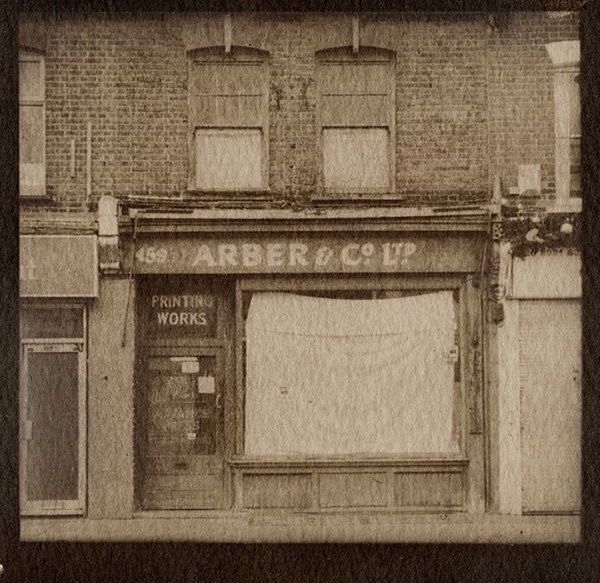
Arber & Co Ltd, 459 Roman Rd, E3
Photographs copyright © Antony Cairns
You may also like to take a look at
and these other photographs of shops
A Plaque For Nicholas Culpeper
Please help me to get a People’s Plaque to commemorate the famous herbalist, Nicholas Culpeper (1616-1654), who lived in Spitalfields. Residents of the Borough of Tower Hamlets have until this Sunday 8th December to cast their votes online here.
Culpeper’s Herbal has been continuously in print since he published it in the seventeenth century and – by example – he was one of the first to propose that healthcare should be given free as a basic human right. His house was demolished in the nineteenth century but 92 Commercial St is the closest to the site today – coincidentally the premises of Spitalfields Organics.
Read this portrait of Nicholas Culpeper by gardener & writer, Patricia Cleveland-Peck, to learn more about why he deserves to be remembered.
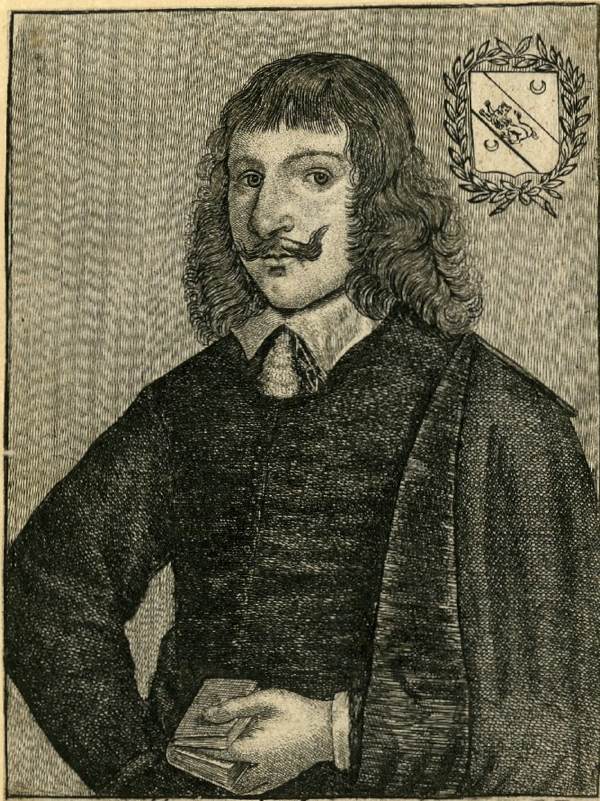
Of all Spitalfields’ past residents, one name stands out above others – Nicholas Culpeper, born on October 18th 1616, a herbalist and medical practitioner operating from Red Lion St (now Commercial St) who devoted his life to healing, and especially to healing the poor.
While apprenticed to the apothecary Francis Drake of Bishopsgate, Nicholas accompanied Thomas Johnson (later editor of the 1633 edition of Gerard’s Herball) on plant hunting excursions. He loved herbs since boyhood and became expert at their identification, essential in those days when almost all ailments were treated with plants. Herbals served as handbooks for doctors in which each plant was named together with its ‘virtues’ or uses. Nicholas’ skill in this subject, coupled with the fact that he was very caring, meant that the people of Spitalfields flocked to him – sometimes as many as forty a morning – and they commonly received treatment for little or no payment.
This was not popular among Nicholas Culpeper’s qualified medical colleagues who were infuriated by his view that, “no man deserved to starve to pay an insulting, insolent physician.” He also believed in “English herbs for English bodies,” and went out gathering his own herbs from the countryside for free which did not endear him to the apothecaries who often insisted on expensive imported exotic plants for their ‘cures’.
In those days, there were strict divisions between what university-educated physicians, apothecaries and barber-surgeons (who drew teeth and let blood) were allowed to do. Physicians were expensive, so for most sick people the first port of call would be their own herb garden or still room, the second the ‘wise woman’ down the road, the third a visit to the apothecary – after which, for many, there was no other option but to let the illness run its course.
In 1649, Nicholas inflamed the establishment by producing an English translation of their latin ‘bible’ the Pharmacopoeia Londinensis which included all the recipes for their medicines. Published as A Physical Directory, it not only revealed the secret ingredients but gave instructions on how to administer them – one of his most important contributions, as it provided the first effective self-help book to which people could turn.
Even more galling for the medical fraternity was the fact Nicholas had never completed his apprenticeship, and chose Spitalfields to set up a semi-legal practice because it was outside the City of London and thus not governed by the rules of the College of Physicians. Spitalfields in those days was quite different from today, beyond the site of huge priory of St Mary Spital stretched the farmland of Spital Field. The priory had been dissolved under Henry VIII although parts of the precincts were still inhabited, and it was an area which attracted outsiders like Nicholas who, as well as treating his patients, was something of a political radical. In his pamphlets, he railed against the king, priests and lawyers as well as physicians. Consequently he was no stranger to controversy and at one point was even accused of witchcraft – just one of the many troubles which accumulated to beset him during his life.
The first of these even occurred thirteen days before his life began, for it was then that his father died leaving his mother without support. She and the new-born Nicholas were obliged to return to the protection of her father, William Attersole, vicar of the little village of Isfield in Sussex. Attersole was not happy about this arrangement but, although he did not welcome the child, he did see it as his religious duty to provide instruction for him as he grew. Young Nicholas learned the scriptures and the classics, he studied mathematics and, under his grandfather’s guidance, began to take an interest in astrology which later featured in his own works. He even stole a book on anatomy out of the library (where he was only supposed to read the bible) and read it in a barn.
Importantly, he also spent a lot of time with his mother who we know owned a copy of Gerard’s Herball. She was responsible for the health of the household and, from his later works, we can glean the fact that he soon became familiar with all the local Sussex ‘simples’ or wild herbs. We know only little of this period of his life, although it is thought that he went to school in Lewes before – at the age of sixteen – setting off for Cambridge ostensibly to follow in his grandfather’s footsteps by studying theology. Once there, he began attending lectures on anatomy but, perhaps frustrated that he couldn’t change to medicine, spent most of his time smoking, drinking and socialising in taverns.
Yet the reason for his dropping out is a sad one. Young though he was, before leaving Sussex, Nicholas had fallen in love with Judith Rivers, a local heiress. She reciprocated his love and thus, knowing her family would never consent to the relationship, they planned to elope. They were to meet near Lewes and marry secretly, but on the way Judith’s coach was struck by lightning and she was killed. Nicholas was devastated and spent months sunk in melancholy. There was no question of his returning to Cambridge to study medicine or anything else. Eventually he chose to come to London and become an apothecary. Socially, this was a step down but he enjoyed his time at Bishopsgate and became very proficient.
Nicholas was twenty-four when he found love again. Called to treat a Mr Field for gouty arthritis, his eyes fell upon the fifteen-year-old daughter of the house, Alice. By a stroke of good fortune, she too was an heiress and it was her considerable dowry which enabled Nicholas to build a house in Red Lion St, Spitalfields from which he conducted his practice.
When the Civil War broke out two years later, the anti-royalist Nicholas signed up with Cromwell. Once his profession was discovered however, the recruiting offer commented, “We do not need you at the battlefield…come along as the field surgeon since most of the barbers and physicians are royal asses and we have use for someone to look after our injured.” Later, during the battle of Reading, Nicholas himself was wounded.
On his return to Spitalfields, he devoted himself to study and writing, and produced a number of books including a Directory for Midwives. Nicholas recognised that this was an unusual topic for a male herbalist, writing in the dedication, “If you (the matron) by your experiences find anything not according to the truth ( for I am a man and therefore subject to failings) first judge charitably of me…” Having grown up so close to his mother, Nicholas had a deep respect of women but this book may also have been inspired by some painful experiences in his own family for, although Alice bore him seven children, only one daughter lived to adulthood.
In 1652, Nicholas published his master work The English Physician also known as Culpeper’s Herbal which became the standard work for three hundred years and is still in print. It was sold cheaply and made its way to America where it had a lasting impact too. By 1665, ten years after his death, Nicholas’ name was so well-known that the Lord Mayor of London chose to use it alongside that of Sir Walter Raleigh in a pamphlet about avoiding infection from the Great Plague.
Nicholas Culpeper deserves to be remembered. He was always on the side of the underdog, he opposed the ‘closed shop’ of earlier physicians and he promoted sensible self-help. He also tried to offer reasonable explanations for what he wrote – “Neither Gerard nor Parkinson or any that ever wrote in a like manner ever gave one wise reason for what they wrote and so did nothing else but train up young novices in Physic in the School of Tradition, and teach them just as a parrot is taught… But in mine you see a reason for everything that is written.”
He died in 1654, aged only thirty-eight, of tuberculosis and is believed to be buried beneath Liverpool St Station.

Title page of the 1790 edition of Culpeper’s English Physician & Complete Herbal, published by C.Stalker, 4 Stationer’s Court, Ludgate St.


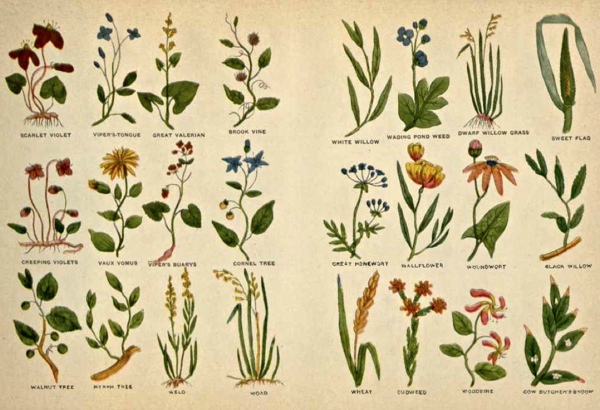


Plates from the edition published by Richard Evans, 8 White’s Row, Spitalfields, August 12th, 1814.
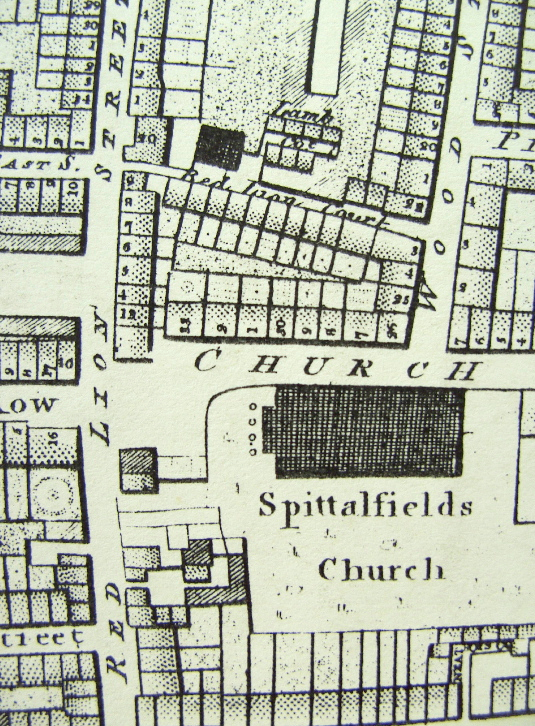
“Culpeper’s house, of which there are woodcuts extant, it is of wood, and is situated the corner of Red Lion Court and Red Lion Street, Spitalfields. It is now and has long been a public house, known by the sign of the Red Lion, but at the time it was inhabited by the sage herbalist, it was independent of other buildings. While in the occupation of Culpeper, who died in 1654, this house stood in Red Lion Field and was as a dispensary of medicines (perhaps the first) of very considerable celebrity.” The European Magazine and London Review, January 1812. Red Lion St and Red Lion Court as shown on John Horwood’s map (1794-99) before Commercial St was cut through in the nineteenth century.

Sebastian Harding’s model of Nicholas Culpeper’s house in Spitalfields.












