
Christmas Meat Auction At Smithfield
I am publishing my story of the Christmas Eve Meat Auction at Smithfield today as a reminder to any readers who may wish to go along tomorrow, because – unless SAVE Britain’s Heritage is successful in preventing the proposed demolition of the General Market next year – this could be your last chance to witness this annual tradition.

The carnivores of London converged upon Smithfield Market, as they do every year for the annual Christmas Eve auction staged by Harts the Butcher. At ten in the morning, the rainy streets were almost empty yet, as I came through Smithfield, butchers in white overalls were wheeling precarious trolleys top-heavy with meat and fowls over to the site of the auction where an expectant crowd of around a hundred had gathered, anxiously clutching wads of banknotes in one hand and bags to carry off their prospective haul in the other.
Contributing Photographer Colin O’Brien met me there. He grew up half a mile away in Clerkenwell during the nineteen fifties and, although it was his first time at the auction, he remembered his father walking down to Smithfield to get a cheap turkey on Christmas Eve more than sixty years ago. Overhearing this reminiscence, a robust woman standing next to us in the crowd struck up a conversation as a means to relieve the growing tension before the start of the auction which is the highlight of the entire year for many of stalwarts that have been coming for decades.
“You can almost guarantee getting a turkey,” she reassured us with the authority of experience, revealing she had been in attendance for fifteen successive years. Then, growing visibly excited as a thought came into her mind, “Last year, I got thirty kilos of sirloin steak for free – I tossed for it!”, she confided to us, turning unexpectedly flirtatious. Colin and I stood in silent wonder at her good fortune with meat.“We start preparing in October by eating all the meat in the freezer,” she explained, to clarify the situation. “Last night we had steak,” she continued, rubbing her hands in gleeful anticipation, “and steak again tonight.”
Yet our acquaintance was terminated as quickly as it began when the caller appeared in a blood-stained white coat and red tie to introduce the auction. A stubby bullet-headed man, he raised his hands graciously to quell the crowd. “This is a proper English tradition,” he announced, “it has been going on for the last five hundred years. And I’m going to make sure everybody goes away with something and I’m here to take your money.”
His words drew an appreciative roar from the crowd as dozens of eager hands were thrust in the air waving banknotes, indicative of the collective blood lust that gripped the assembly. Standing there in the midst of the excitement, I realised that the sound I could hear was an echo. It was a reverberation of the famously uproarious Bartholomew Fair which flourished upon this site from the twelfth century until it was suppressed for public disorder in 1855. Yesterday, the simple word “Hush!” from the caller was enough to suppress the mob as he queried, “What are we going to start with?”
The answer to his question became manifest when several bright pink loins of pork appeared as if by magic in the hatch beside him, held by butchers beneath, and dancing jauntily above the heads of the delighted audience like hand puppets. These English loins of pork were soon dispatched into the crowd at twenty pounds each as the curtain warmer to the pantomime that was to come, followed by joints of beef for a tenner preceding the star attraction of day – the turkeys! – greeted with festive cheers by the hungry revellers. “Mind your heads, turkeys coming over…” warned the butcher as the turkeys in their red wrappers set out crowd-surfing to their grateful prospective owners as the cash was passed hand to hand back to the stand.
It would not be an understatement to say that mass hysteria had overtaken the crowd, yet there was another element to add to the chaos of the day. As the crowd had enlarged, it spilled over into the road with cars and vans weaving their through the overwrought gathering. “I love coming for the adventure of it,” declared one gentleman with hair awry, embracing a side of beef protectively as if it was the love of his life, “Everyone helps one another out here. You pass the money over and there’s no pickpockets.”
After the turkeys came the geese, the loins of lamb, the ribs of beef, the pork bellies, the racks of lamb, the fillet steaks and the green gammon to complete the bill of fare. As the energy rose, butchers began to throw pieces of red meat into the crowd to be caught by their purchasers and it was surreal to watch legs of lamb and even suckling pigs go flying into the tumultuous mass of people. Finally, came tossing for meat where customers had the chance of getting their steaks for free if they guessed the toss correctly, and each winning guess was greeted with an exultant cheer because by then the butchers and the crowd were as one, fellow participants in a boisterous party game.
Just ninety minutes after it began, the auction wrapped up, leaving the crowd to consolidate their proud purchases, tucking the meat and fowls up snugly in suitcases and backpacks to keep them safe until they could be stowed away in the freezer at home. In the disorder, I saw piles of bloody meat stacked on the muddy pavement where people were tripping over them. Yet a sense of fulfilment prevailed, everyone had stocked up for another year – their carnivorous appetites satiated – and they were going home to eat meat.
As I walked back through the narrow City streets, I contemplated the spectacle of the morning. It resembled a Bacchanale or some ancient pagan celebration in which people were liberated to pursue their animal instincts. But then I realised that my thinking was too complicated – it was Christmas I had witnessed.


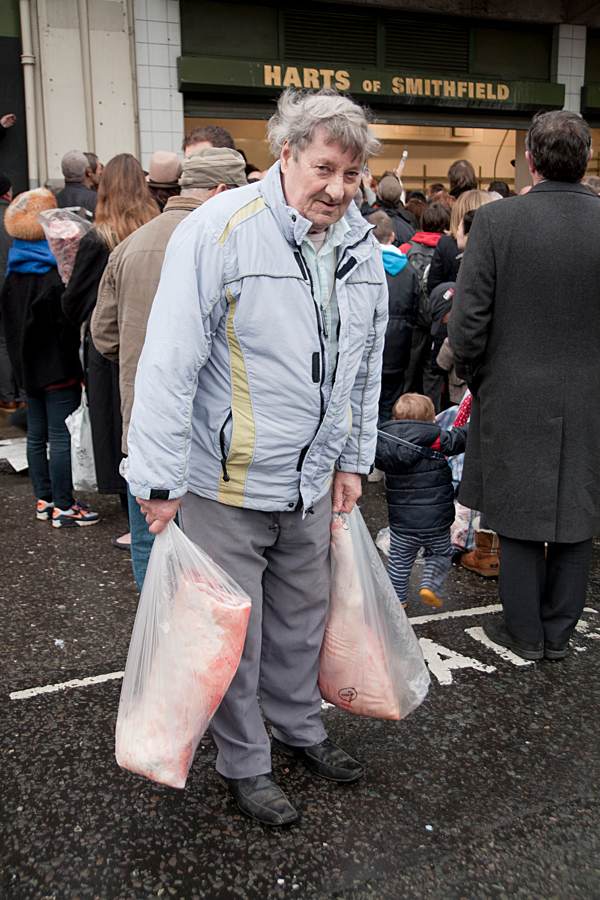


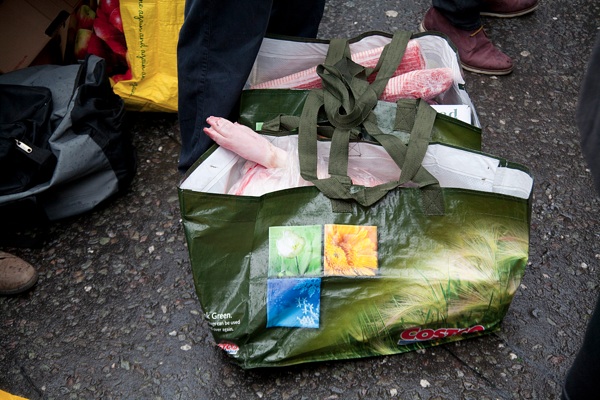
Photographs copyright © Colin O’Brien
You might also like to read about
David Hoffman At Crisis At Christmas
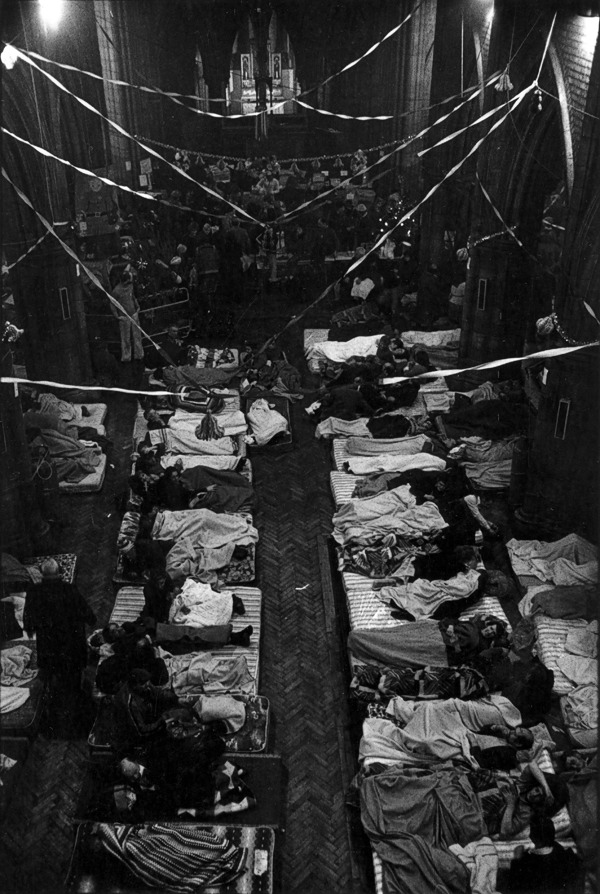
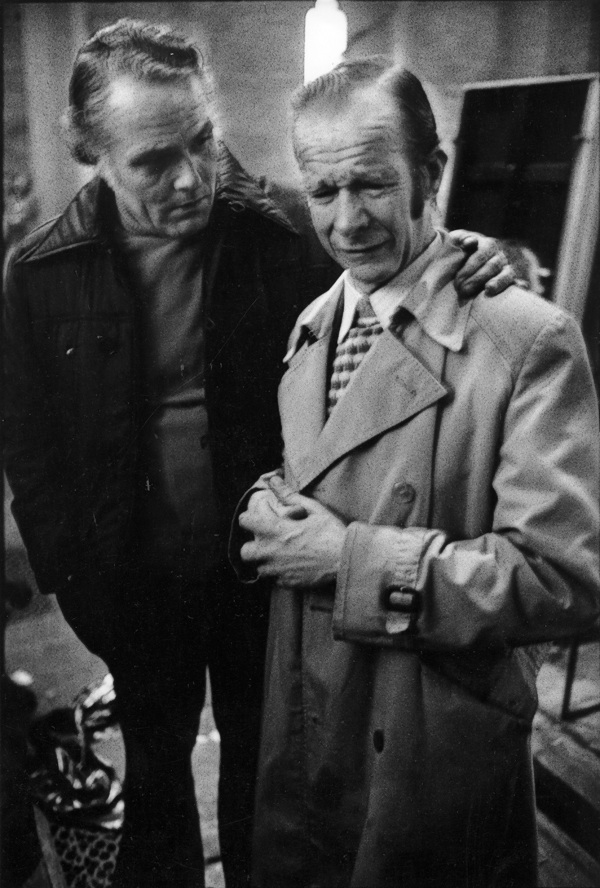
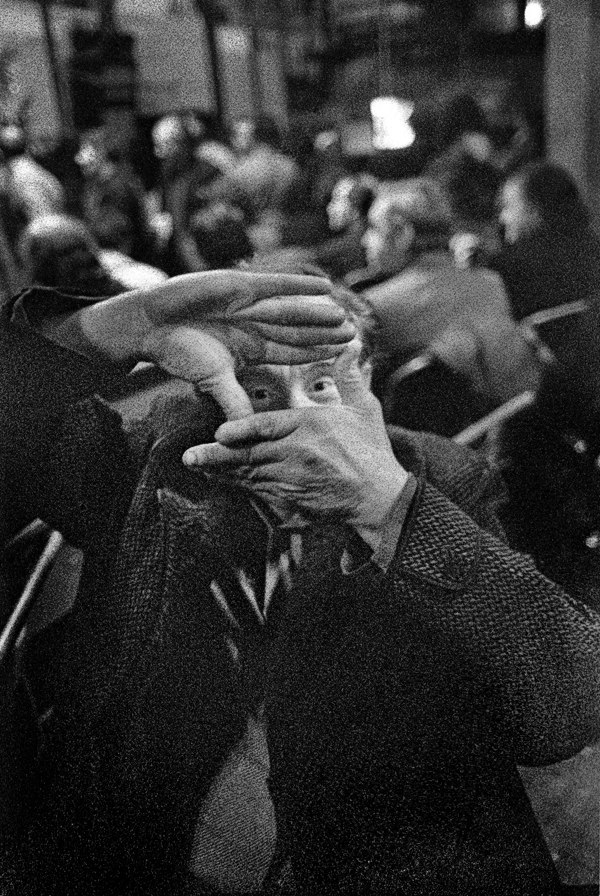
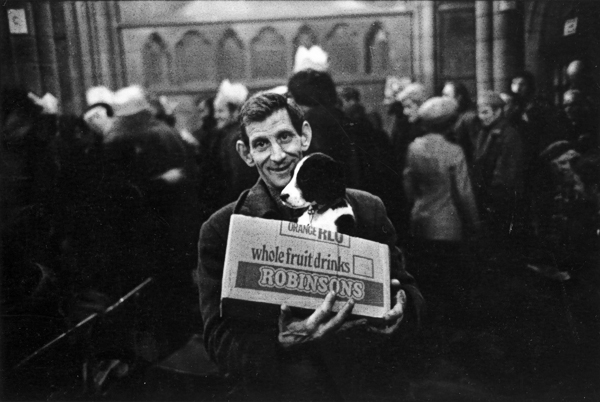
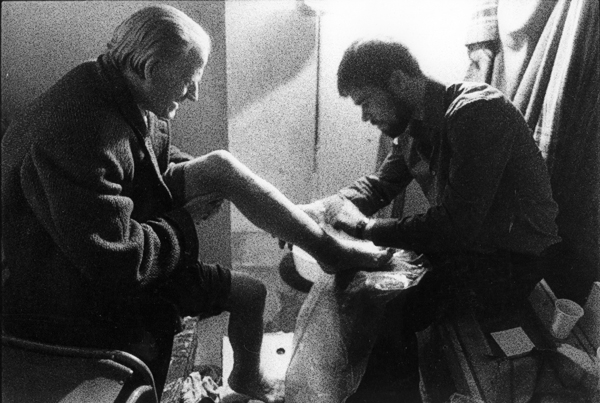
Almost by chance, at the end of the seventies, photographer David Hoffman found himself recording the formation of an organisation called Crisis at Christmas that opened up disused spaces and created temporary shelters staffed by volunteers to provide accommodation for the homeless through the holiday season when other shelters were shut.
As a participant rather than a visitor, David was able to take intimate photographs of those who sought refuge, capturing emotional images which are compassionate yet void of sentimentality.
There is a timeless quality to many of these pictures that could equally be of refugees from a war zone or in some apocalyptic dystopian vision of the future, yet this is London in the recent past and Crisis at Christmas is still with us and the work goes on.
“At the time, I was known for my photos of the homeless at St Botolph’s in Aldgate and I was going out with a girl named Peta Watts, who was working at Crisis at Christmas – so when she asked me to take pictures there, I leapt at the chance of becoming the Crisis photographer, and I did it for three years.
This was the early days of these shelters and they used derelict churches. One of them was St Philip & St Augustine in Whitechapel, round the corner from the squat where I lived in Fieldgate Mansions, and the next year it was at the Tradescant church of St Mary’s in Lambeth. So there were very little facilities – perhaps only a cold tap and one toilet for hundreds of people – and the whole thing was a chaotic feat of organisation, but somehow it all worked. They got donations of food and clothing and toys. And I remember some of the guys found an old bath tub in a skip and brought it in and filled it with water, so they could wash themselves. There was no regard to Health & Safety or regulation as we know it, but it all worked brilliantly and everyone was very well looked after. There was no hierarchy and the homeless people would be involved in the cooking and arranging the mattresses, and keeping the whole thing running.
I photographed it because it was a wonderful event and – like at St Botolph’s – some of the people were couples, and I took their pictures and brought them prints the next day. Many of these people had been living on the streets all year and the photographs helped them to have a more positive self-image.
Some would be shooting up and and others would be drinking, and an ambulance would come two or three times a day to pick people up. There were fights too, and I remember there was an unspoken rule that only one volunteer would approach to break it up by speaking softly – and it never failed. Many of the volunteers were middle class people who would work eighteen to twenty hours a day. What I liked about it was people coming together and doing things for themselves – and it just worked, and the homeless people looked after each other.”
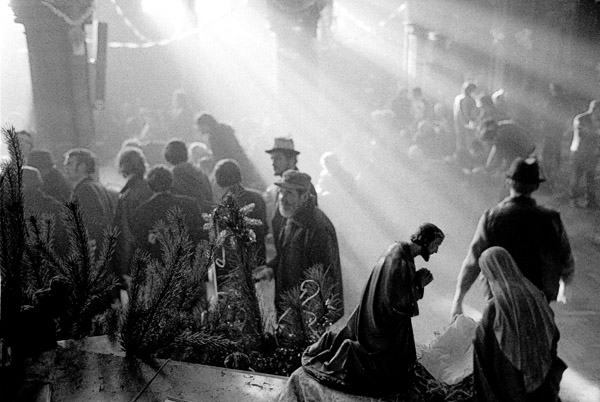






Photographs copyright © David Hoffman
Click here to donate to Crisis At Christmas
You may like to take a look at these other pictures by David Hoffman
Midwinter Light At Christ Church
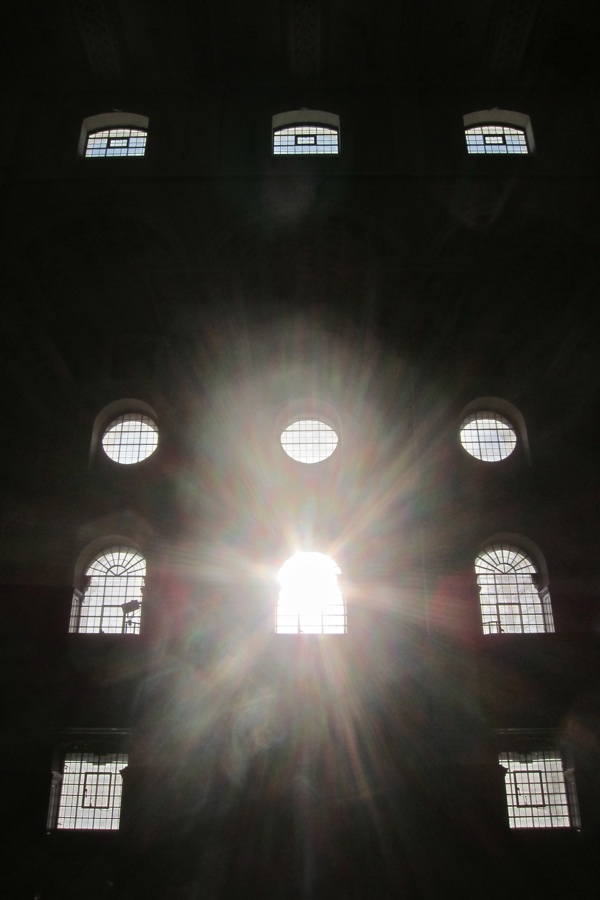
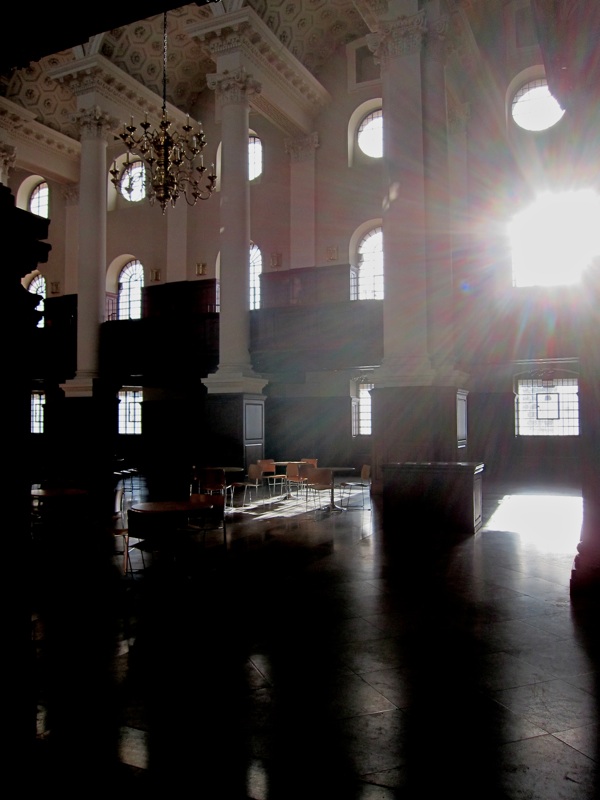
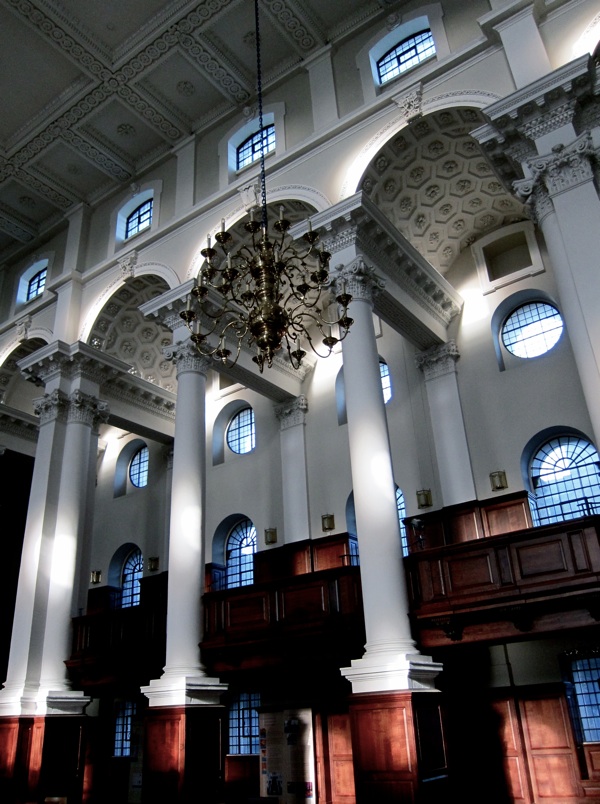
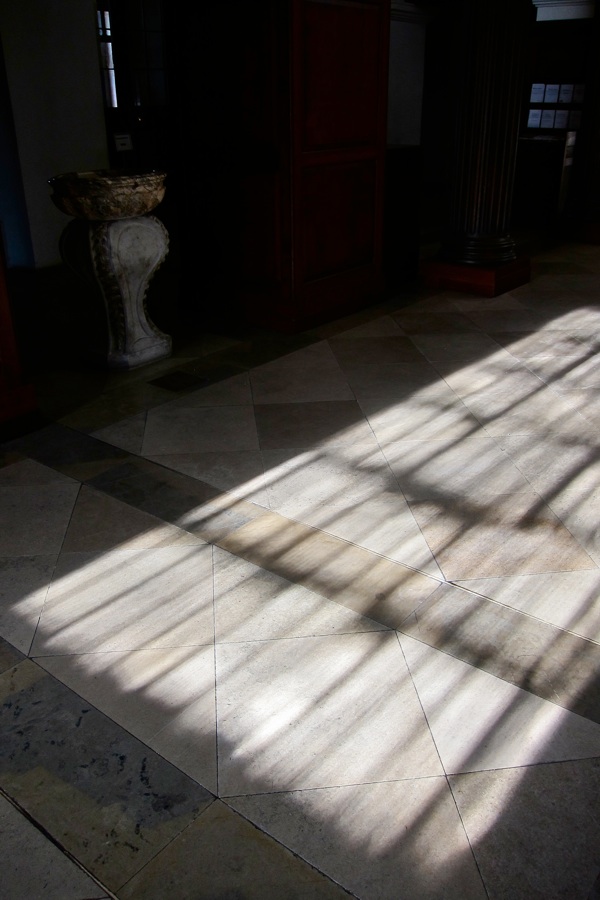
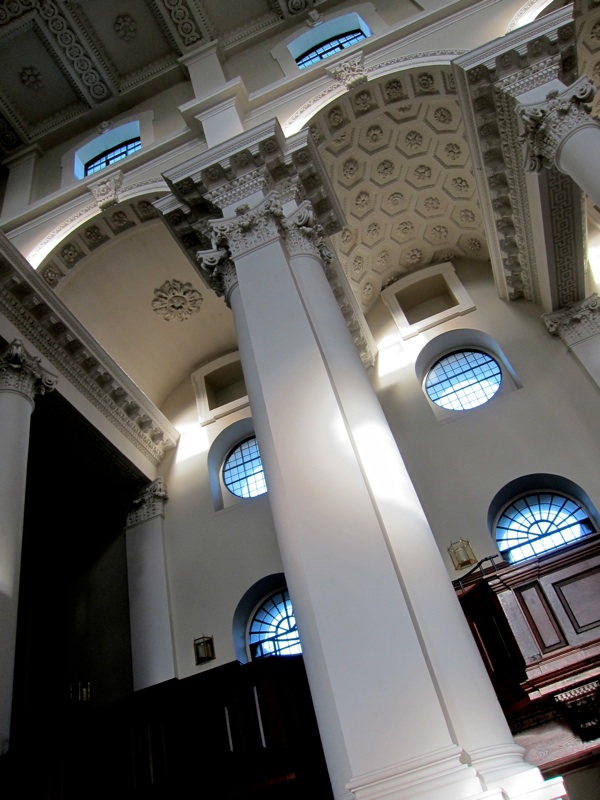
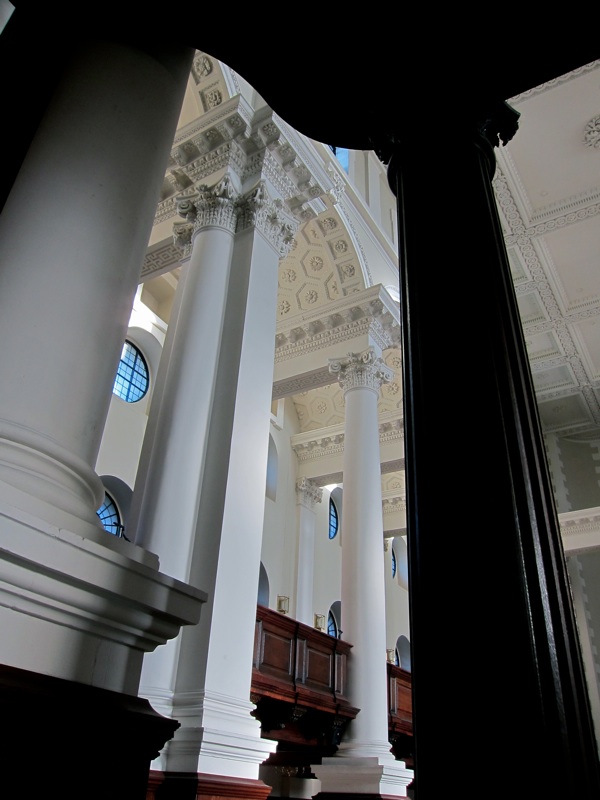
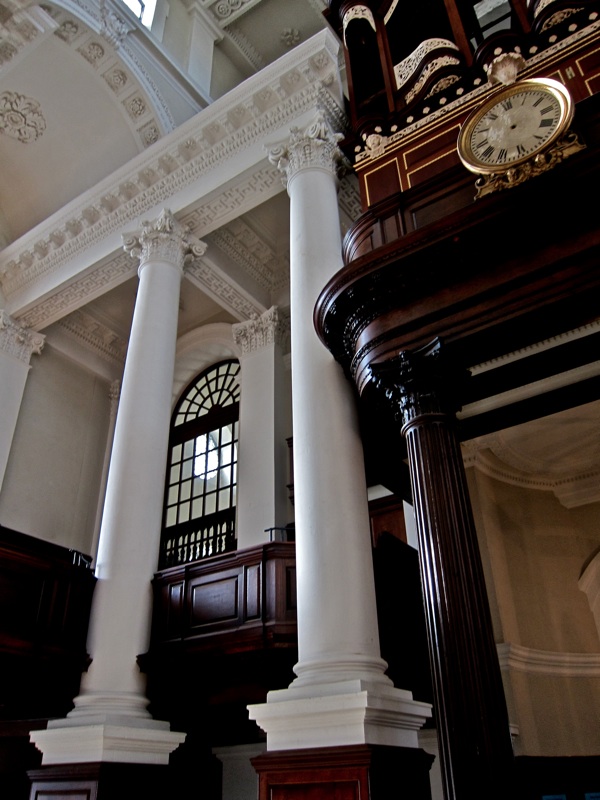
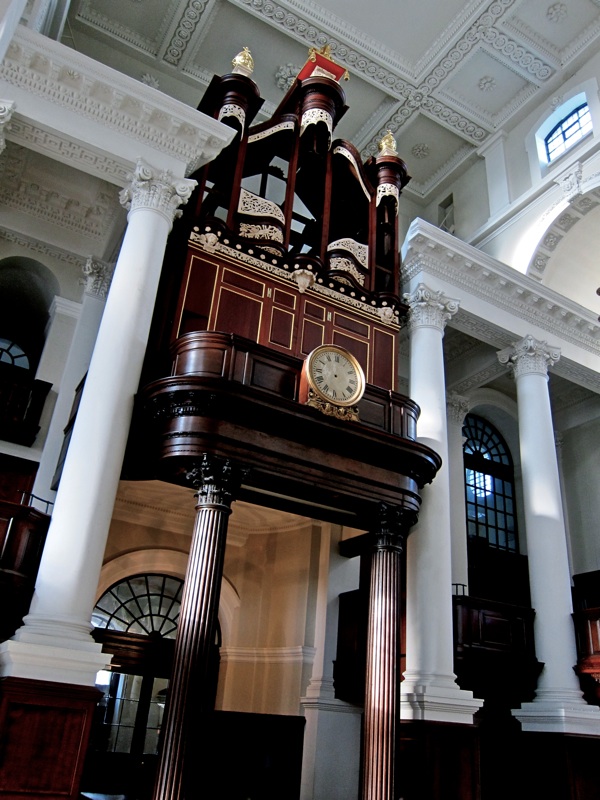
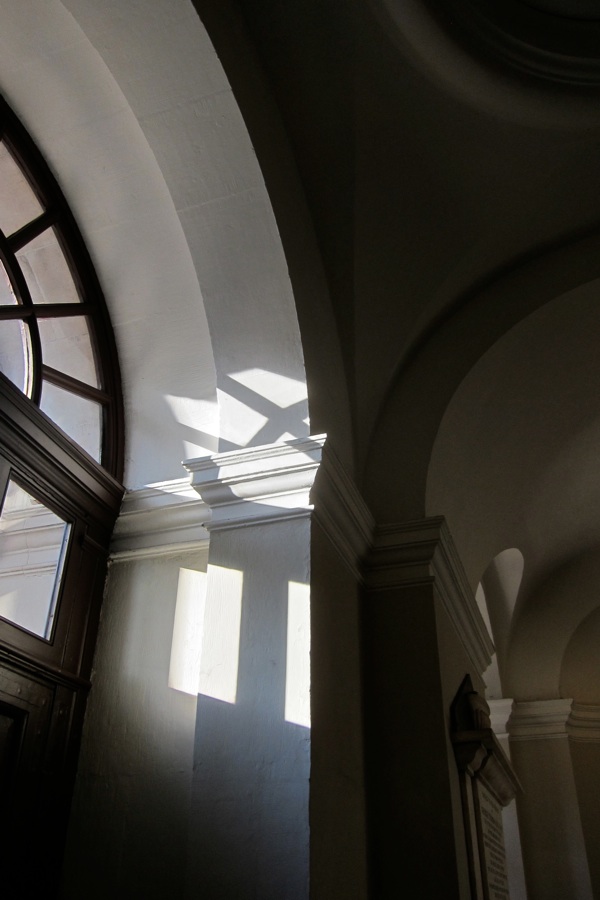
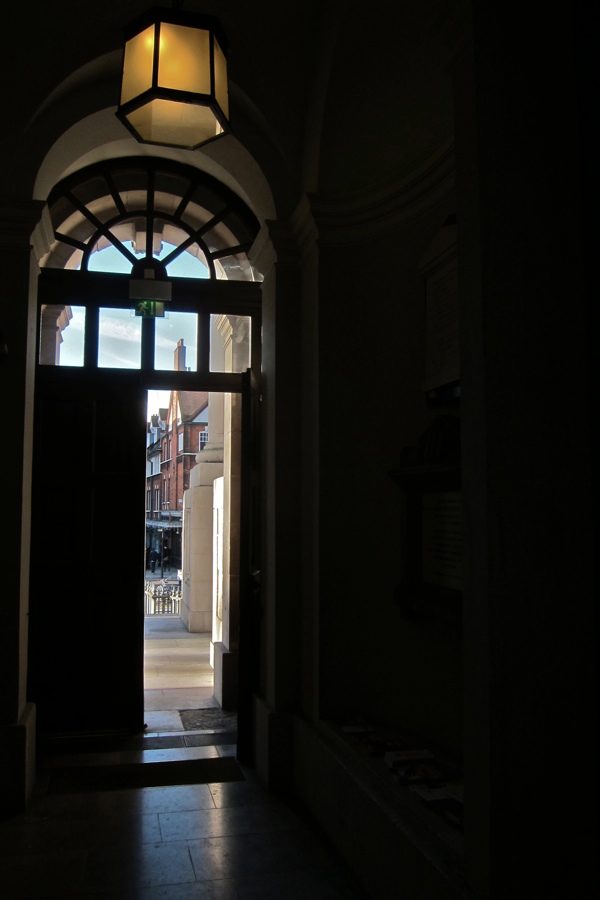
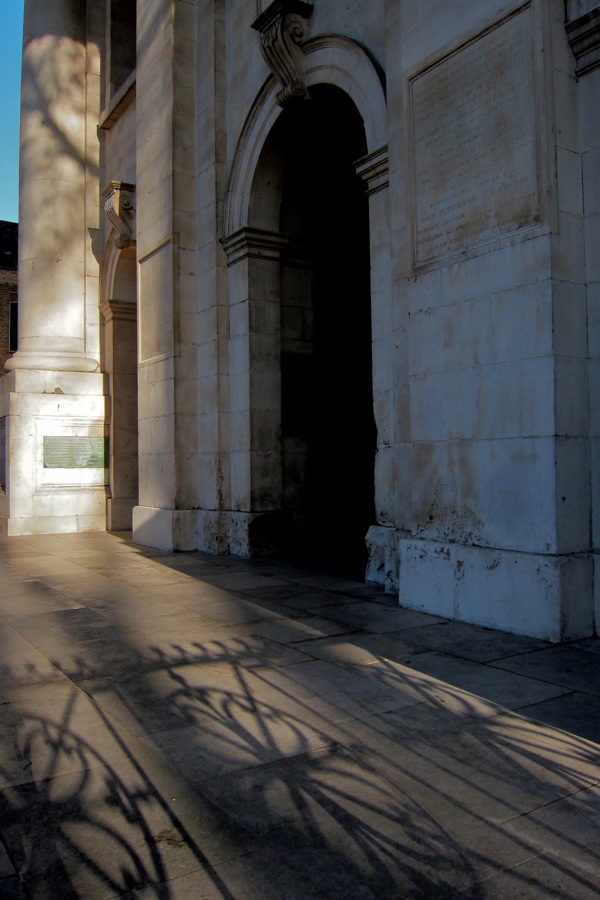
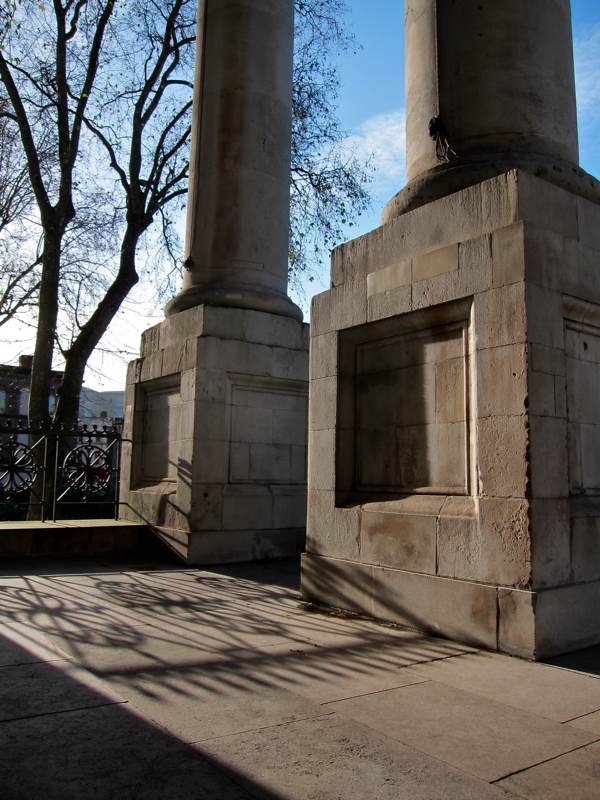
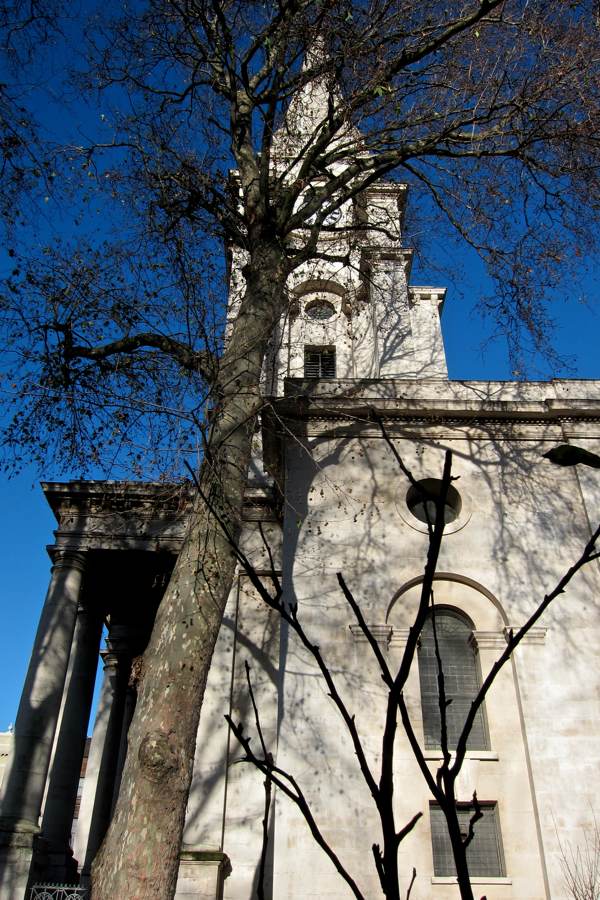
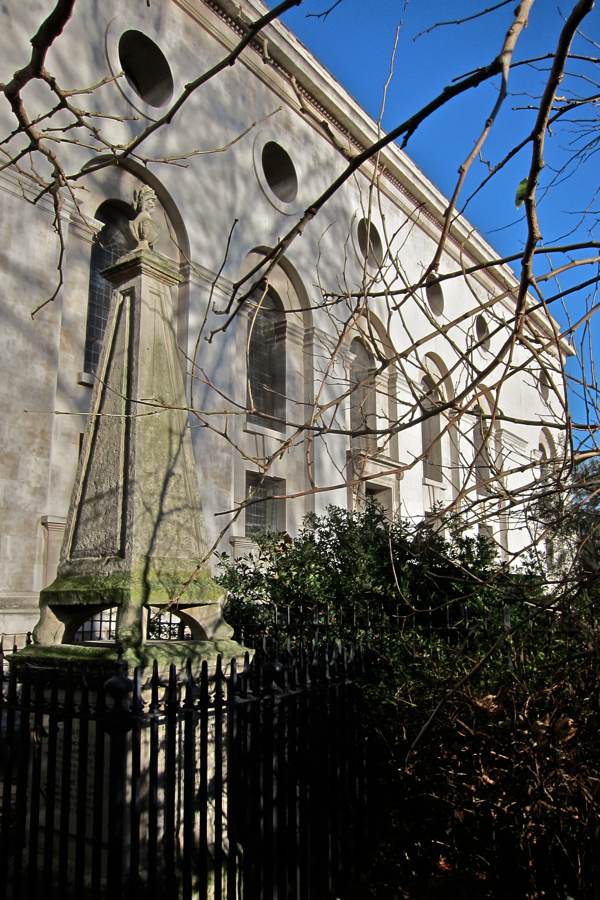
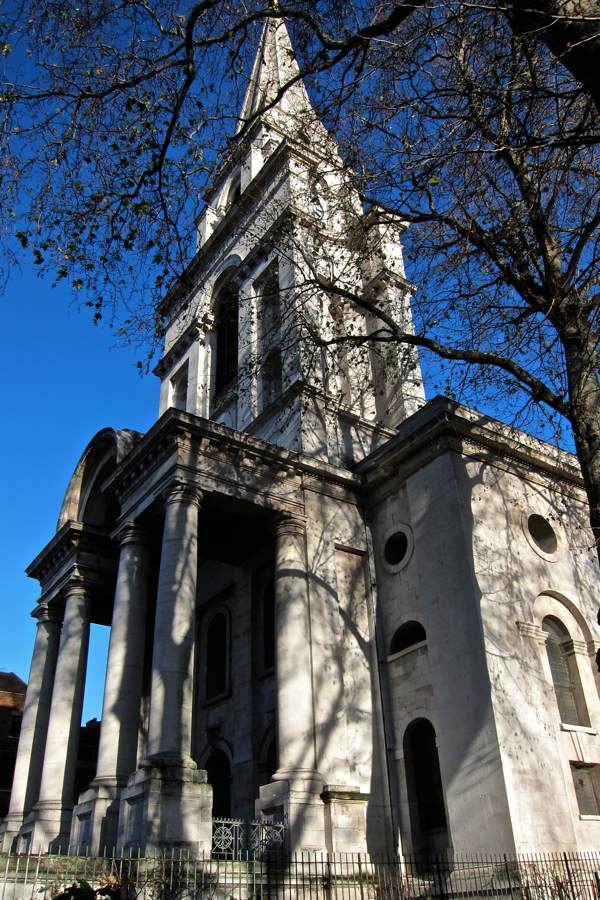
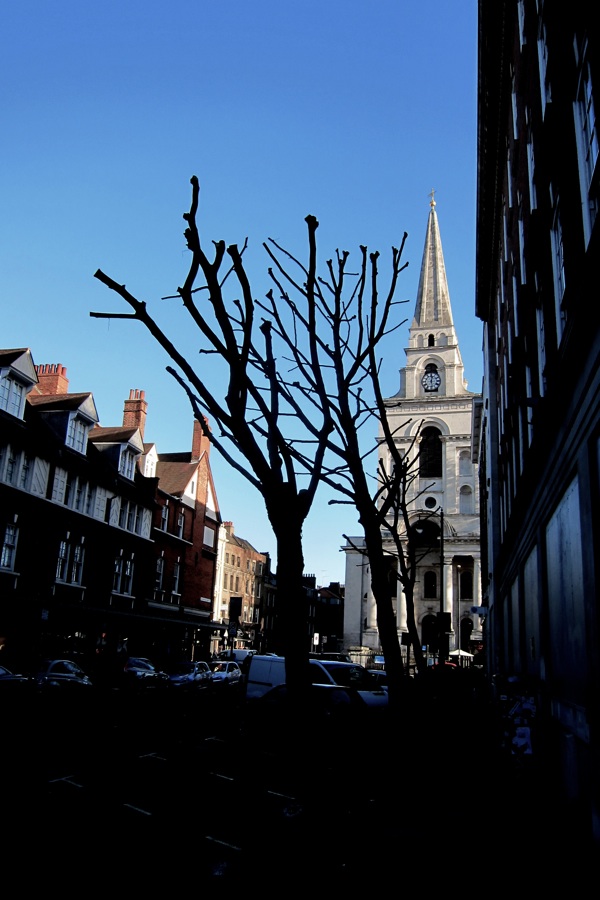
Today is the shortest day of the year and, at eleven minutes past five this afternoon, we pass the solstice taking us back towards shorter nights and longer days. At this time when the sun is at its lowest angle, Christ Church Spitalfields can become an intricate light box with powerful rays of light entering almost horizontally from the south and illuminating Nicholas Hawksmoor’s baroque architecture in startling ways. Yesterday’s crystalline sunlight provided the ideal conditions for such phenomena and inspired my to attempt to capture of these fleeting effects of light.
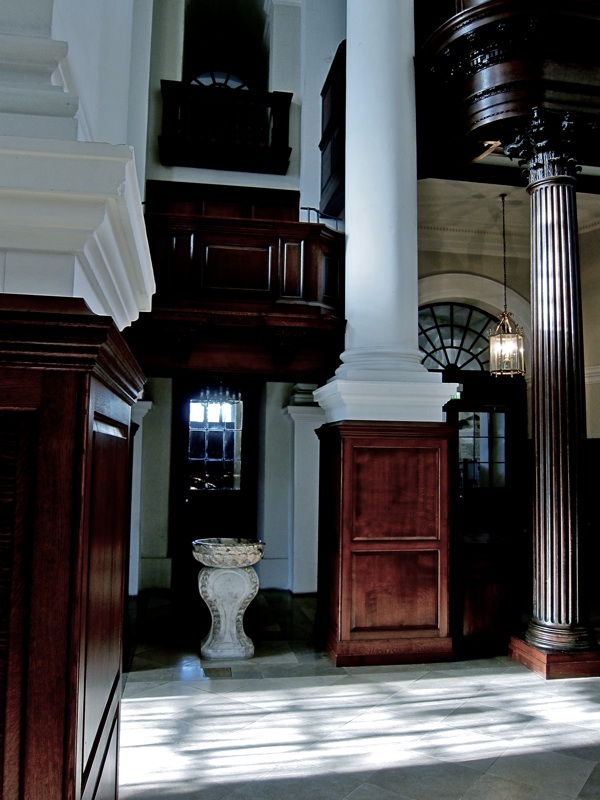
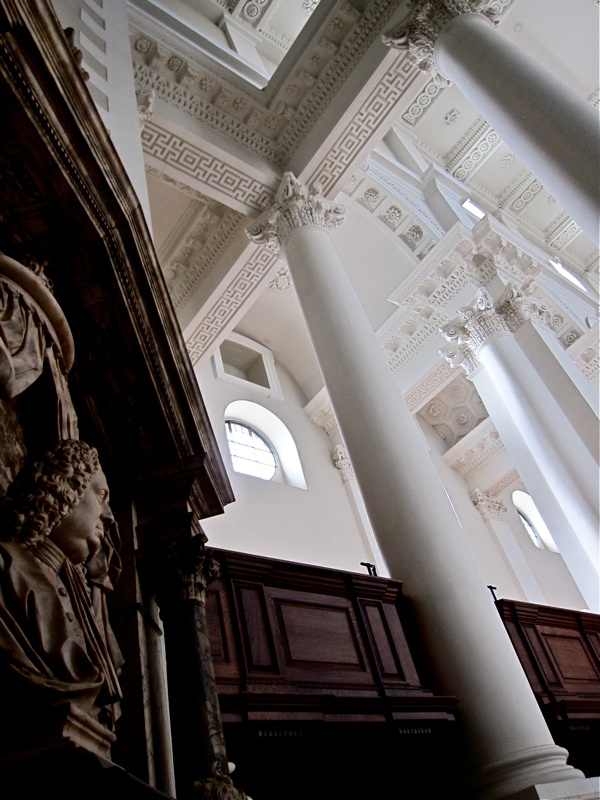
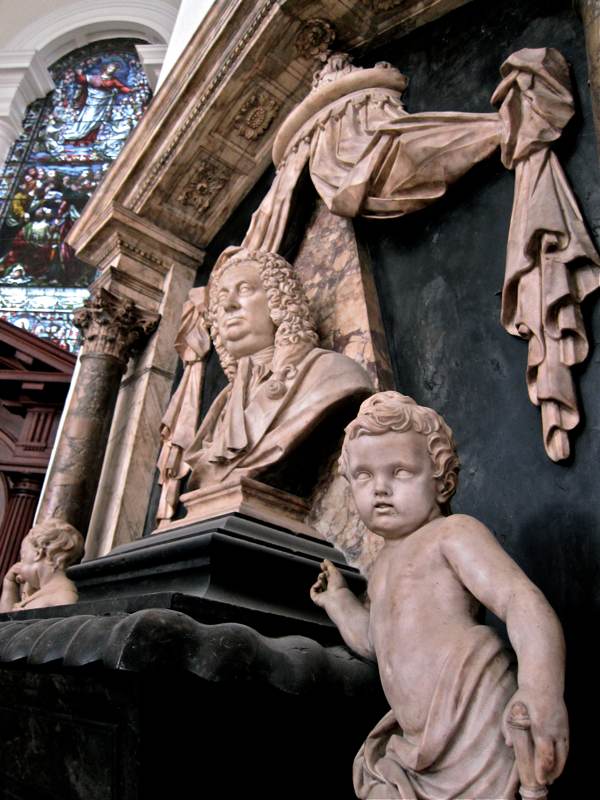
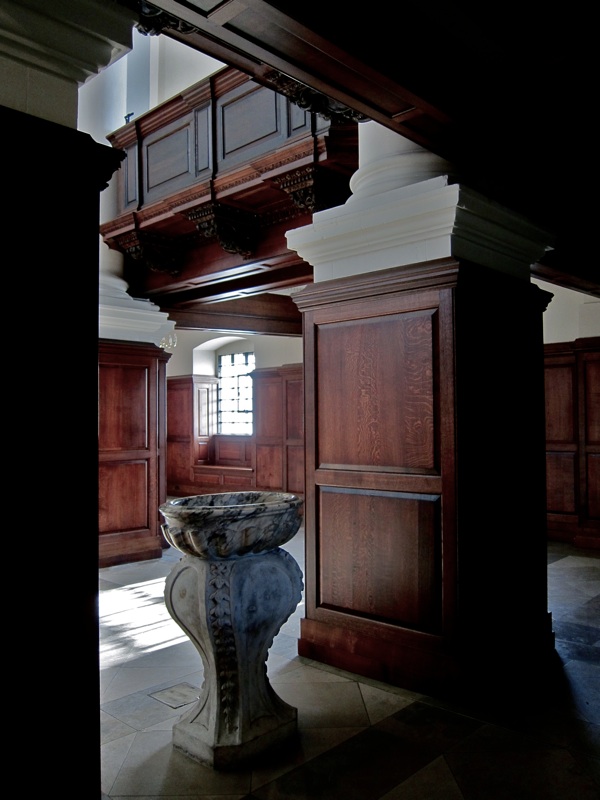
You may also like to read about
Stephen Armstrong, Postman
Occasionally, people write correspondence addressed simply to “The Gentle Author, Spitalfields” and it is to the credit of the East End postal service that these letters arrive on my doormat. So today I return the favour with this interview of Whitechapel Postman, Stephen Armstrong – and Contributing Photographer Colin O’Brien accompanied him on his round yesterday to take these pictures.
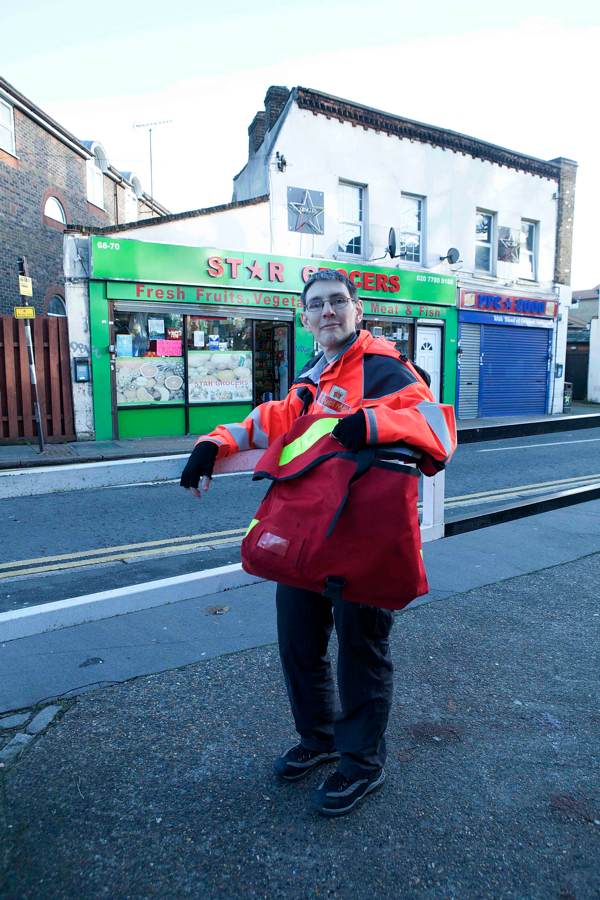
Stephen Armstrong
Stephen Armstrong and I met in the early afternoon in Whitechapel, once the day’s round was done, and he ate mince pies with hot chocolate to revive his flagging spirits, after being awake since before dawn.
We were just across the road from sorting office which is only five minutes walk away from where he lives to the south and ten minutes walk from his round, which is to the north.
Steve spends a lot of time pounding the pavements of Whitechapel and it is unlikely that anyone knows the minutiae of these streets better than he. Reserved in manners yet resilient in spirit, Stephen has found his metier in delivering letters and becoming the spiritual guardian of his particular corner of the East End.
“I’ve been up since five this morning, that’s late for me! It gives me a little time to myself, to get ready and pootle around – because six o’ clock is when I start.
I always remember when I joined the Post Office, because it was the the day after the Poll Tax Riot, 1st April 1990. I got myself sacked from an oil refinery for edible oils for not working hard enough, then I did thirteen months training to be be a Dispensing Optician. That was all because I had mucked up my A Levels and was a general under-acheiver all round. Then I failed my Optician exams, so I needed a way out and the Post Office seemed like the ideal place to get my head together. It started as a temporary job but I’ve been here ever since.
I grew up in Dartford and worked in Dartford, until they more or less shut down the sorting office there. By then, I had met my wife Karen and moved to Whitechapel and I’d been trying to get a job in the Whitechapel Sorting Office for years. It was very difficult for me to get from Whitechapel to Dartford to start work at five in the morning, so they offered me the possibility of a transfer to Rochester. Eventually they said, ‘We might be able to transfer you to Whitechapel but you’ve said you don’t like going out doing deliveries.’ I said, ‘I don’t know because I’ve never tried it,’ and when I did it was a baptism of fire, but I absolutely loved it. That was just last year, 2012.
I like being outdoors and walking across the same piece of ground everyday, you see the changes that people in the city are normally cut off from, the flowers opening and leaves falling. You are in touch with time passing.
I walk five minutes from my home in Adelina Grove and kick off at Whitechapel Sorting Office at six each morning. The machine will have sorted everything from yesterday in order, there is a slot for every letterbox in the frame. Then it’s ‘walk sorted’ and you sort whatever mail has come in during the night – that’s about an hour’s work. At nine o’clock, it is breakfast time. You go off and have breakfast, by which time anything from the other East End districts will come in and we sort that.
Once you have got all your work, you make it into bundles with those elastic bands – the notorious ones that we drop all over the place. You pack your bag with the first bundle of work, it cannot be more than sixteen kilos. Some postmen have a trolley but I don’t, instead I have dropboxes where the rest of the mail is dropped off to me at each end of my area. Generally, it takes about two and a half to three hours walking to make my deliveries. There are lots of streets where no-one notices you, you become part of the street furniture. A few old ladies ask you to do this and that and I don’t mind. I’m not a friend, I’m an acquaintance – but I like to think I can be trusted.
I don’t mind the weather, though I can’t really handle the heat because you can’t take off any more than the minimum. I’ve got a collection of silly hats – a sou’wester for rain and a sunhat for summer. I love dogs though there are a couple who jump up to take the letters out of your hands but, if you are careful, you can save your fingers. I desperately try to make friends with all the dogs on my route. I had a dog of my own, Laika, for seven years and I miss her a lot, so I’m borrowing other people’s dogs briefly.
I think there’s going to be more post in future but it’ll be more parcels not letters. A lot more comes through mail order these days, but all business is done by emails so there’s fewer letters. It would be a sad thing if the regular post goes, yet nobody writes anymore they just send texts and emails. Even I don’t receive any mail anymore.”

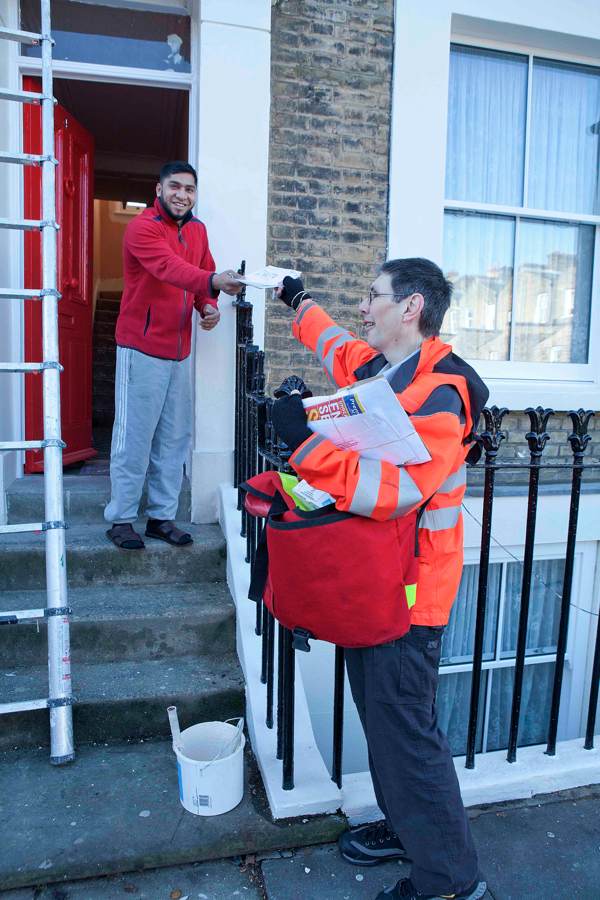
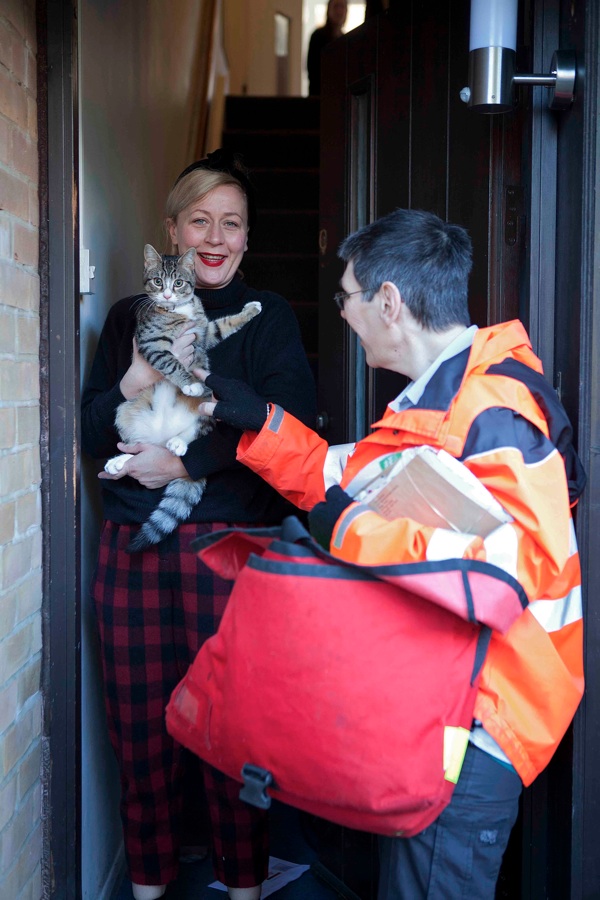
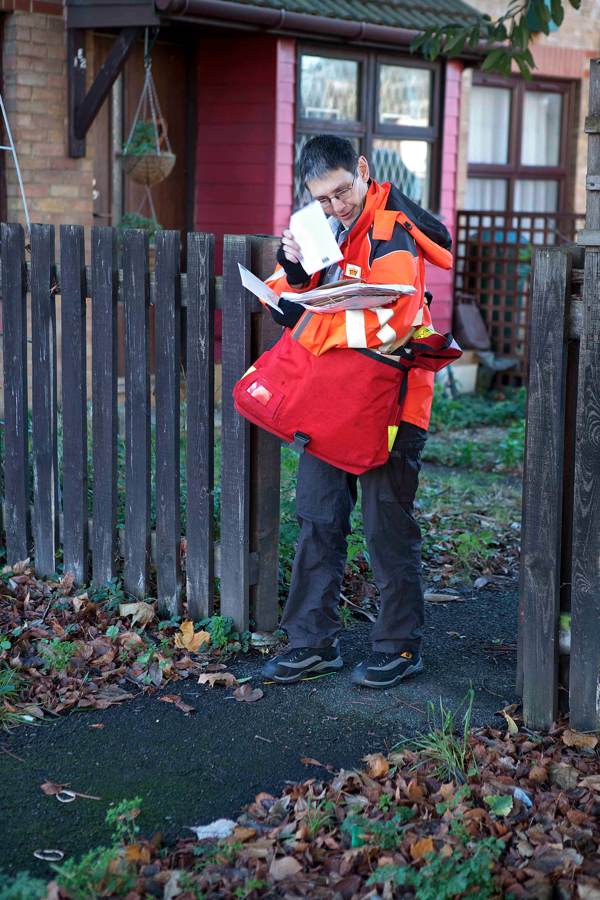
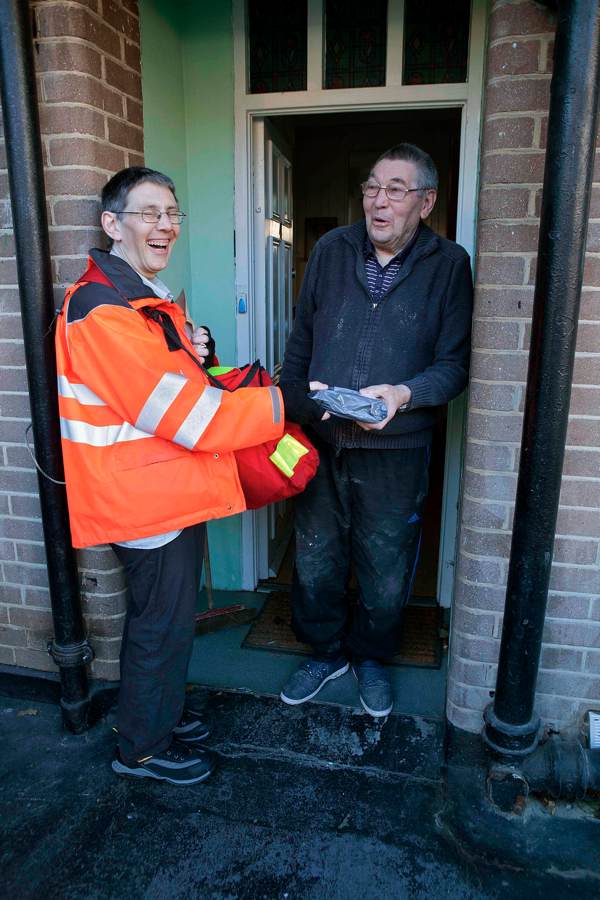

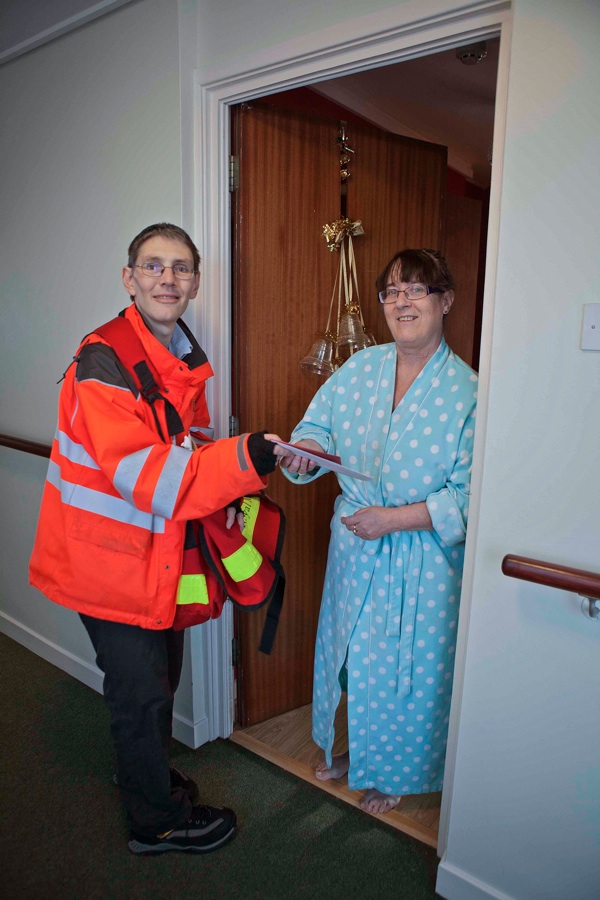
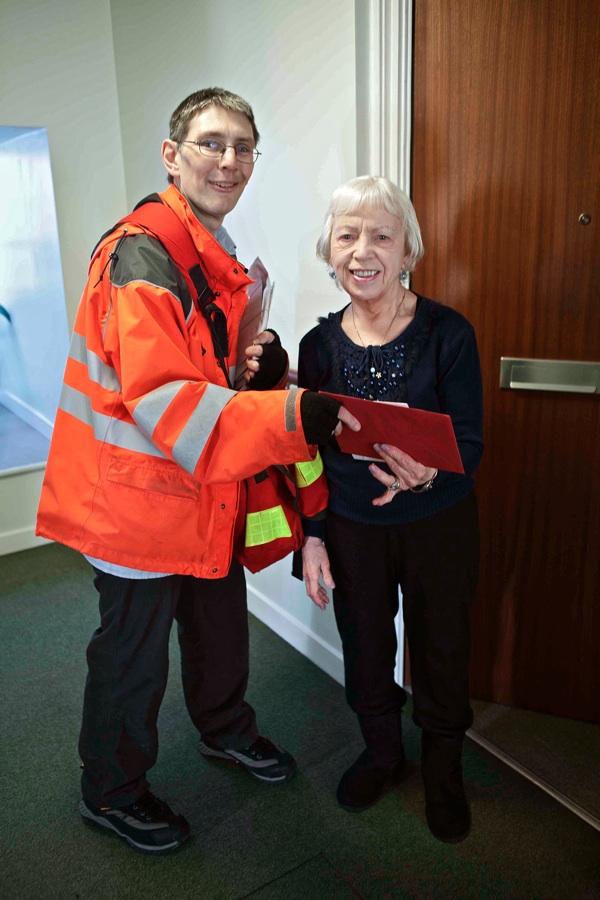
Steve delivers to Henrietta Keeper, Ballad Singer of Bethnal Green
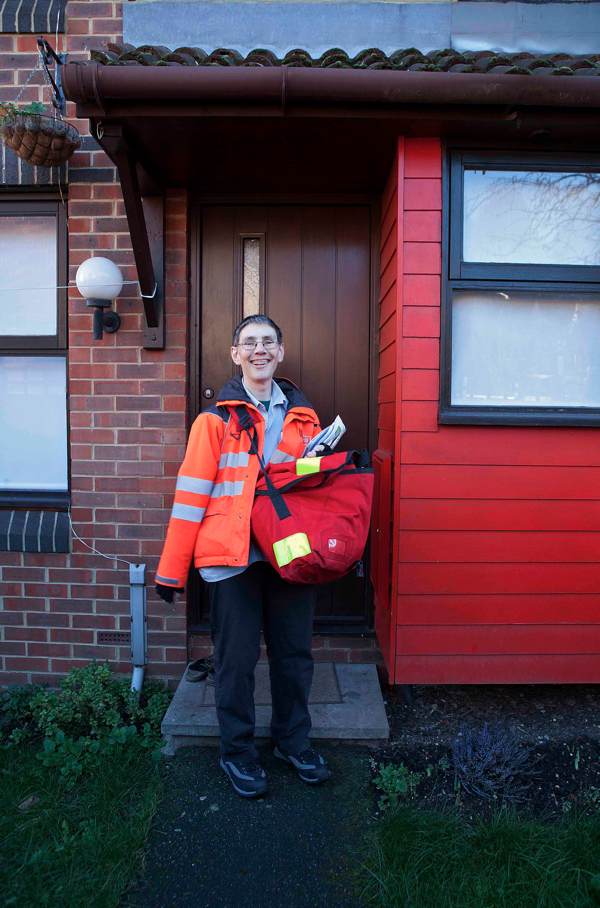

Back to the drop box to pick up another load of letters
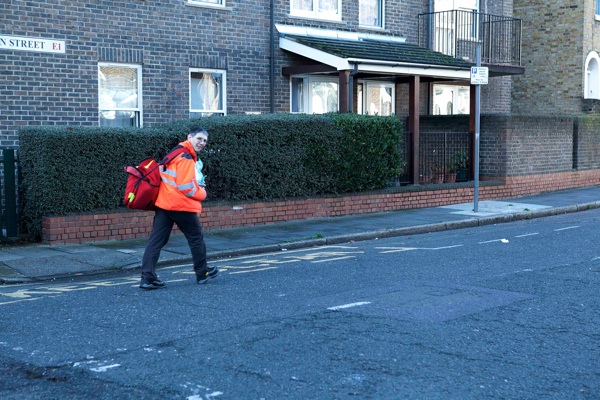
Off on the rounds again …
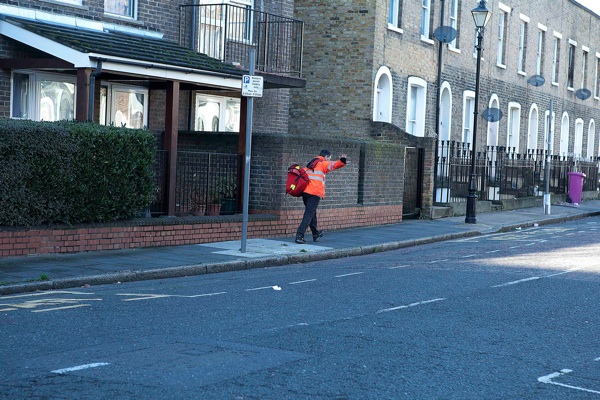
Bye!
Photographs copyright © Colin O’Brien
You may also like to read about
London Salt-Glazed Stoneware
As one who thought nobody else shared my passion for old salt-glazed stoneware, I was overjoyed to meet Philip Mernick and be granted the opportunity to photograph these fine examples from his vast and historically-comprehensive collection which is greatly superior to my modest assembly.
In London, John Dwight of Fulham ascertained the method of the salt glaze process for rendering earthenware impermeable in 1671, thus breaking the German monopoly on Bellarmine jugs. Yet it was Henry Doulton in the nineteenth century who exploited the process on an industrial scale in Lambeth, especially in the profitable fields of bottle-making and drainpipes, before starting the manufacture of art pottery in 1870.
It is the utilitarian quality of this distinctive London pottery that appeals to me, lending itself to a popular style of decoration which approaches urban folk art. “I like it for its look,” Philip Mernick admitted , “but because nothing is marked until the late nineteenth century, it’s the mystery that appeals to me – trying to piece together who made what and when.”

Jug by Vauxhall Pottery 1810
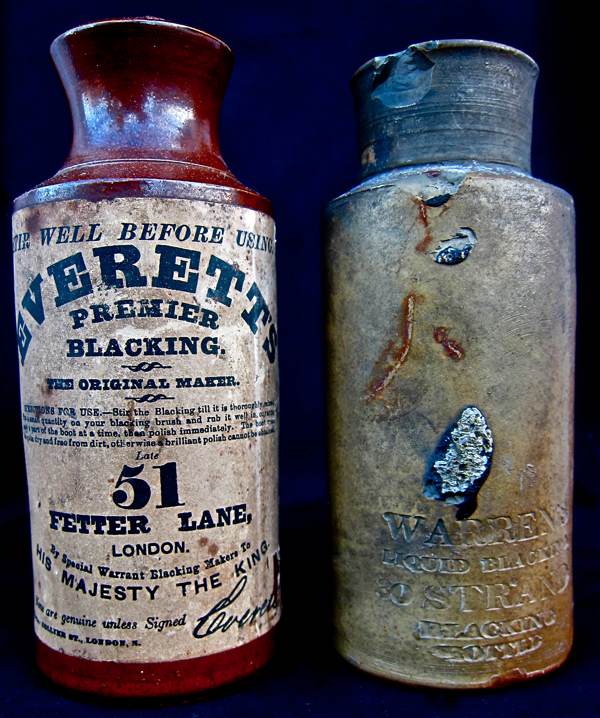
Blacking bottles – Everett 1910 & Warren 1830
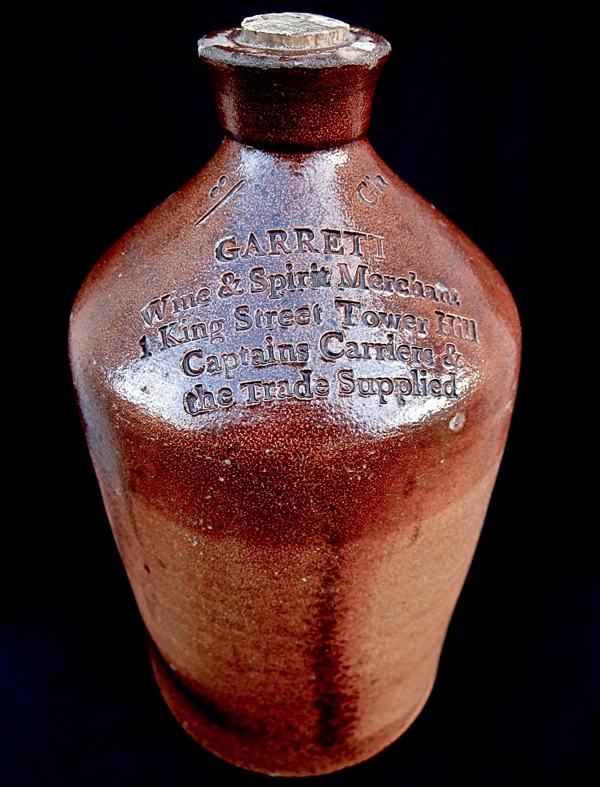
Gin Flagon, Fulham Pottery c. 1840
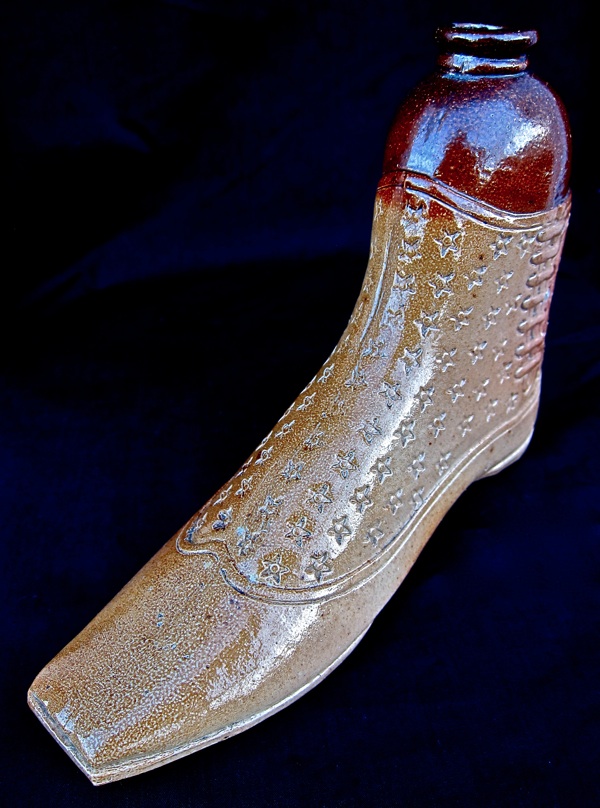
Spirit Flask in the shape of a boot by Deptford Stone Pottery c. 1840
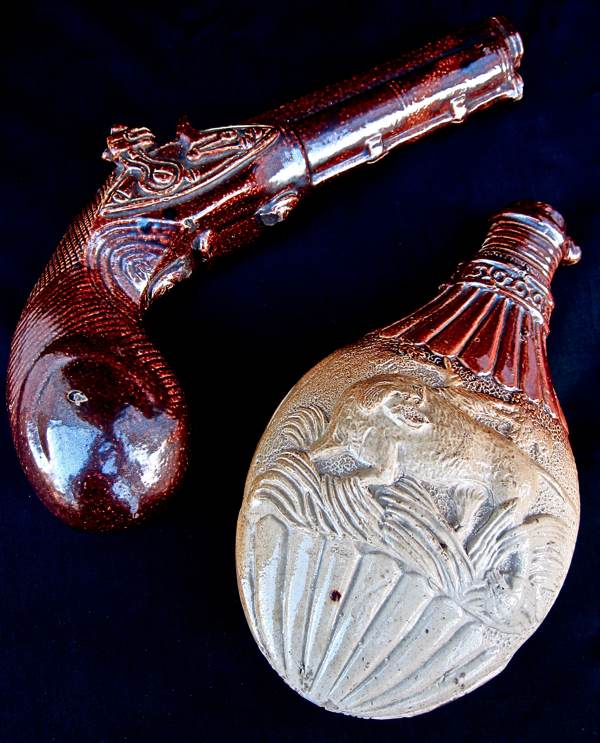
Spirit flask in the shape of a pistol by Stephen Green and in the shape of a powder flask by Thomas Smith of Lambeth Pottery c. 1840
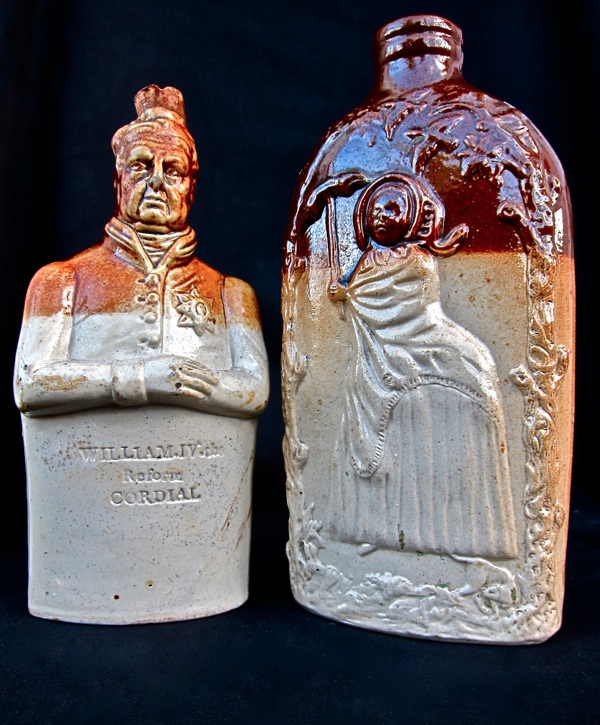
Reform flasks – Wiliam IV Reform flask by Doulton & Watts, eighteen- thirties, and Mrs Caudle flask by Brayne of Lambeth, eighteen-forties
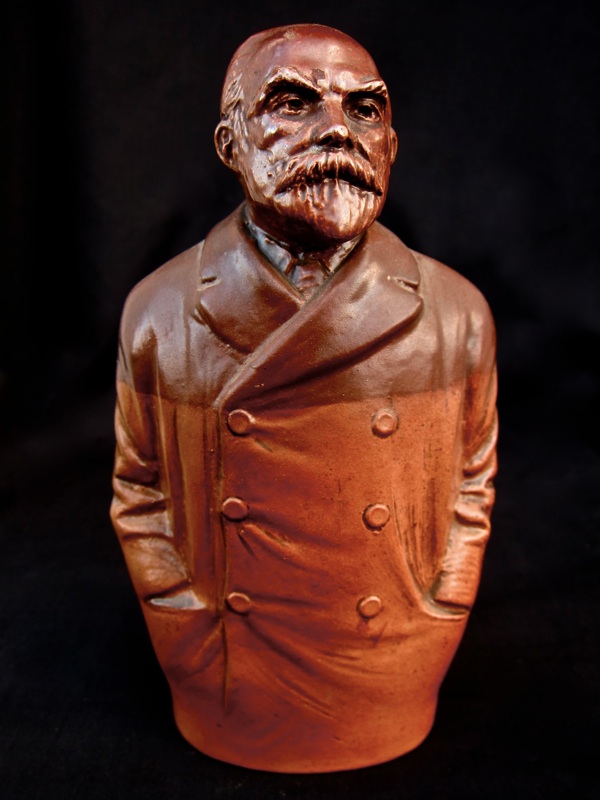
Spirit flask of John Burns, Docks Union Leader, Doulton Pottery 1910
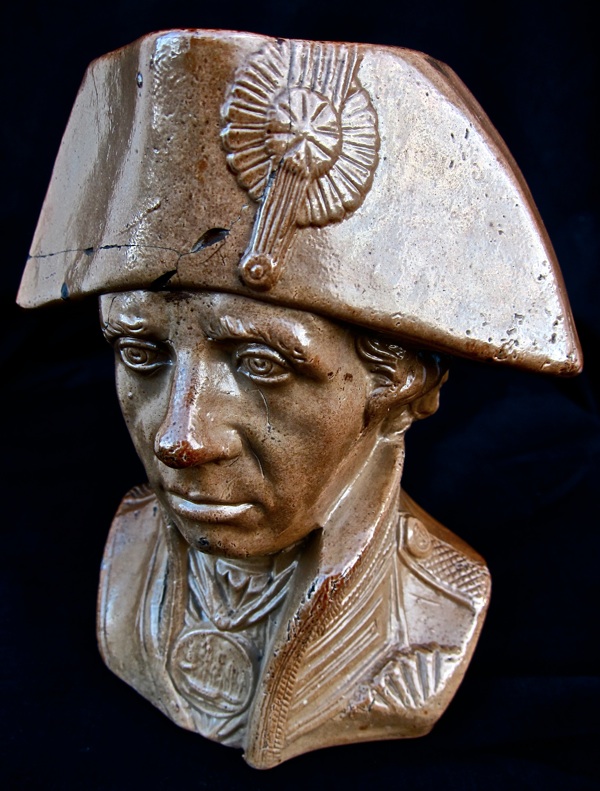
Nelson jug by Doulton & Watts 1830
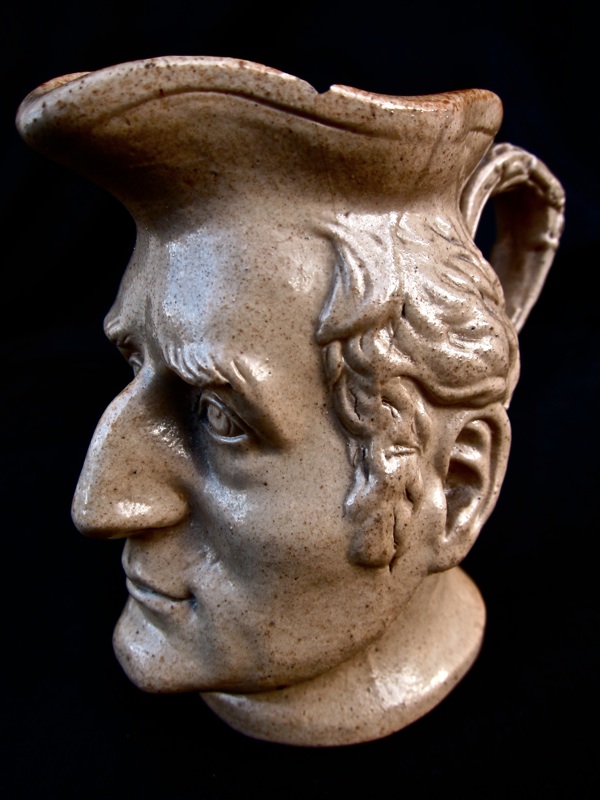
Duke of Wellington jug by Stephen Green of Lambeth Pottery 1830
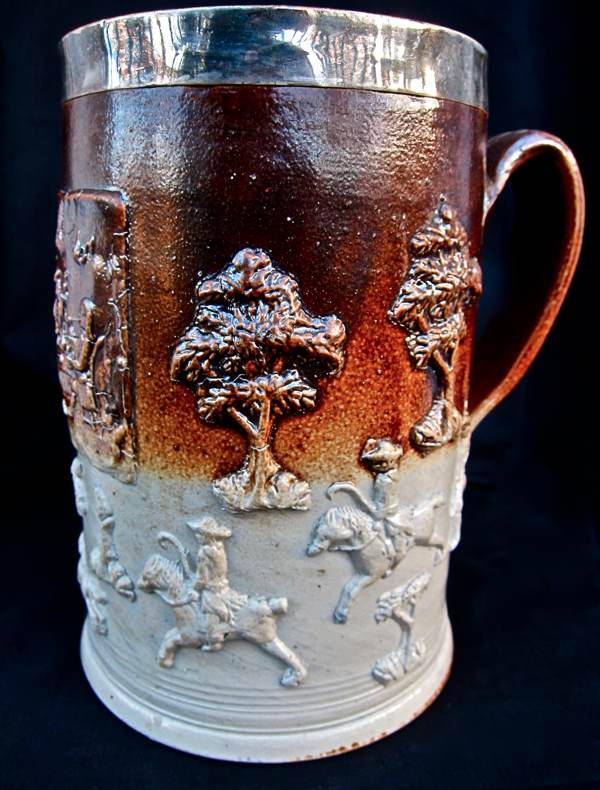
Mortlake Pottery Tankard, seventeen-nineties
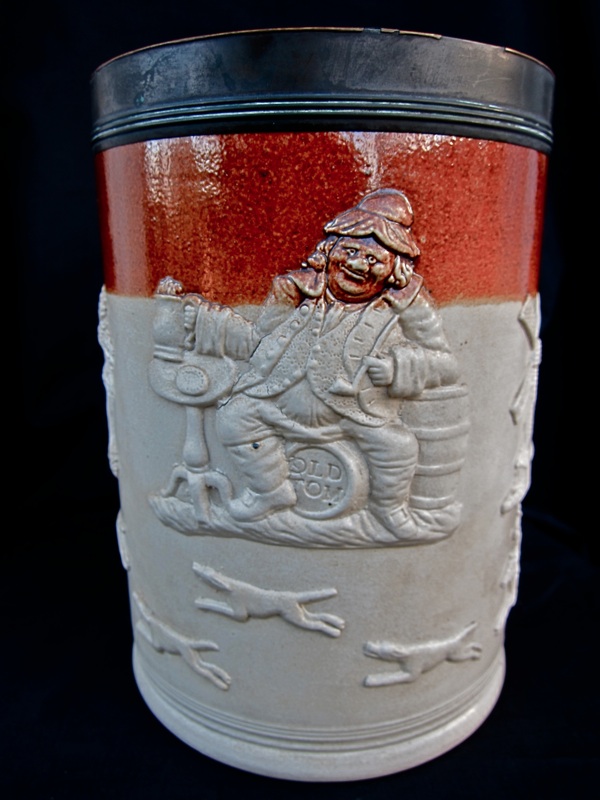
Old Tom figure upon a Fulham Pottery Tankard c. 1830
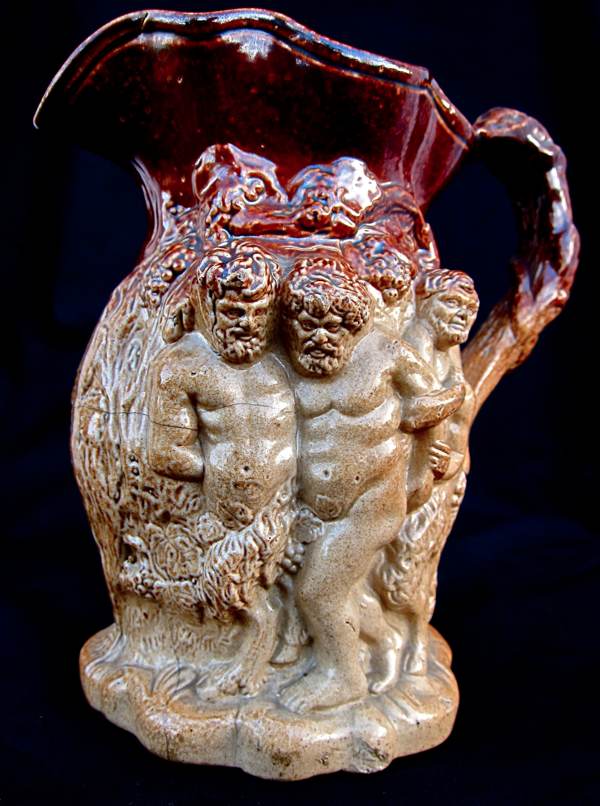
Silenus jug by Stephen Green of Lambeth Pottery c. 1840
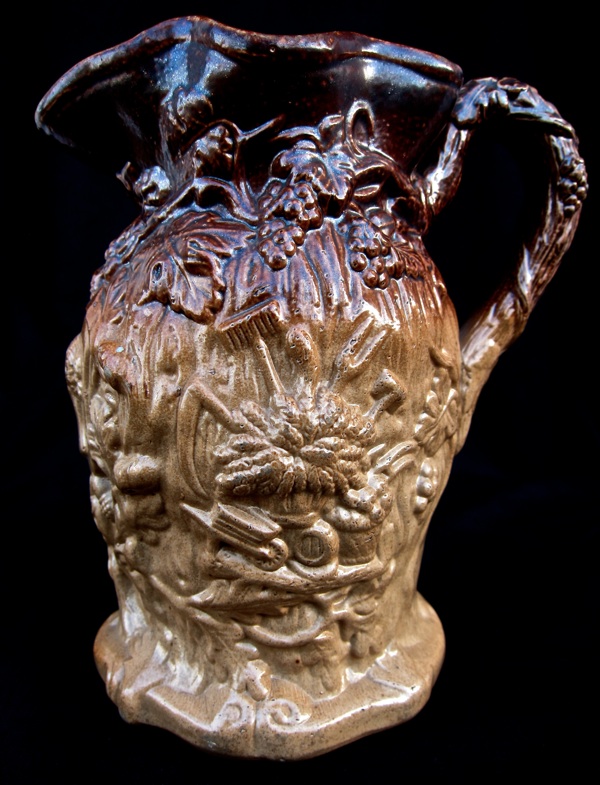
Victoria & Albert jug by Stephen Green of Lambeth Pottery 1840
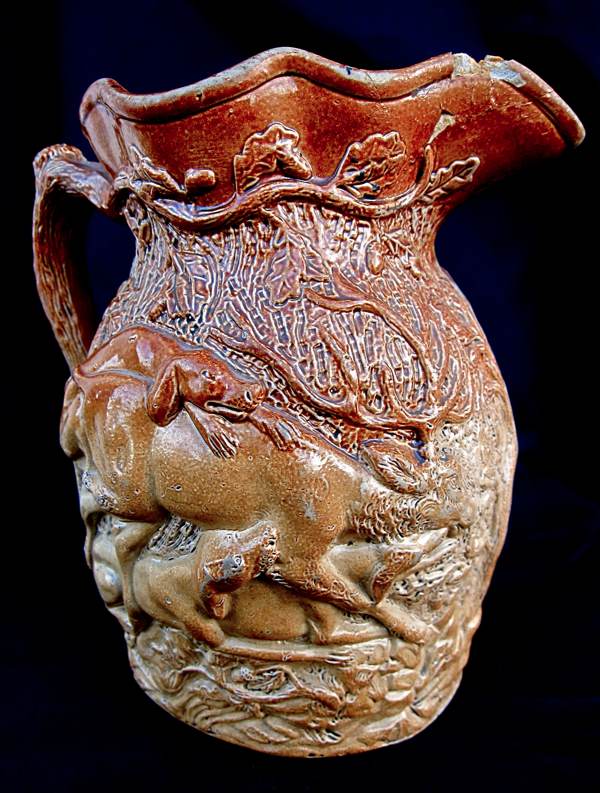
Stag hunt jug by Doulton & Watts c. 1840
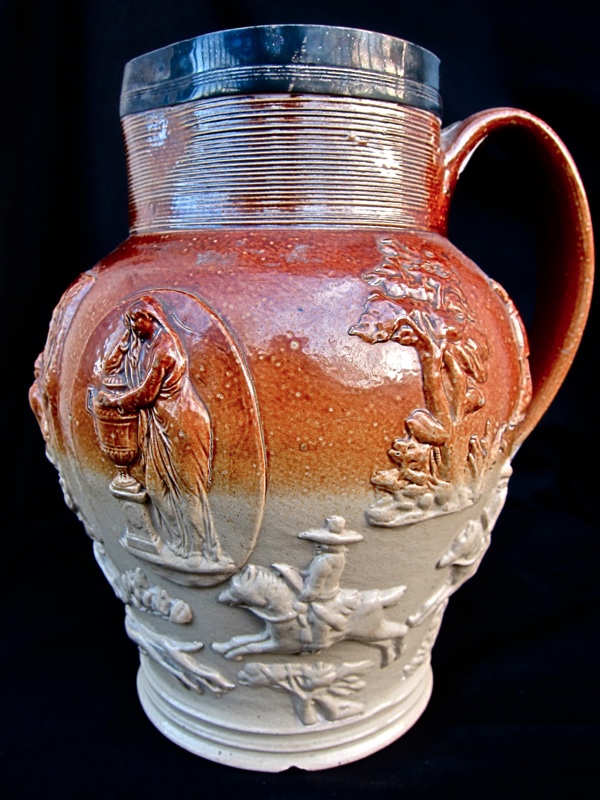
Mortlake Pottery jug, seventeen-nineties
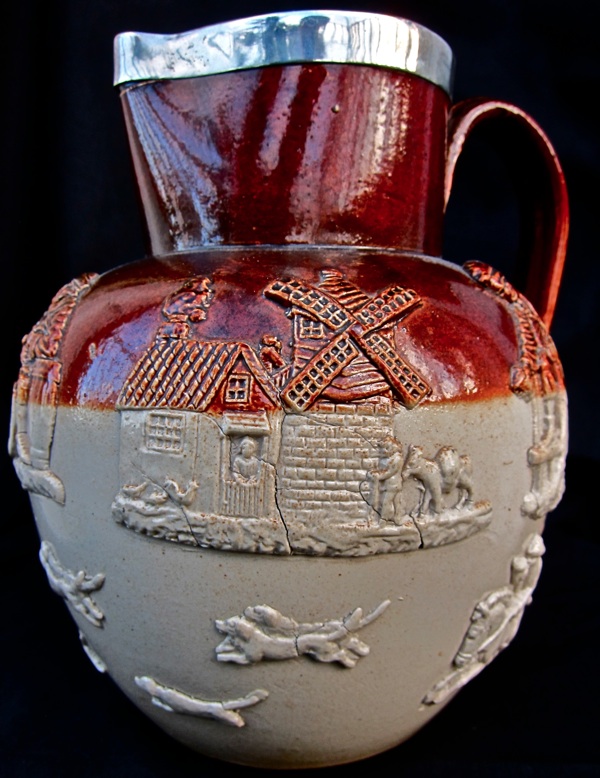
Doulton jug hallmarked 1882
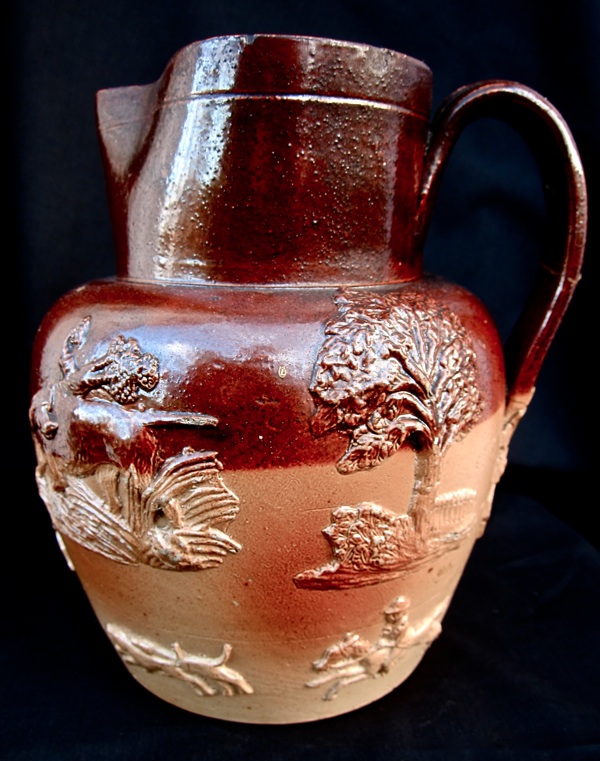
Jug by Thomas Smith of Lambeth Pottery 1840
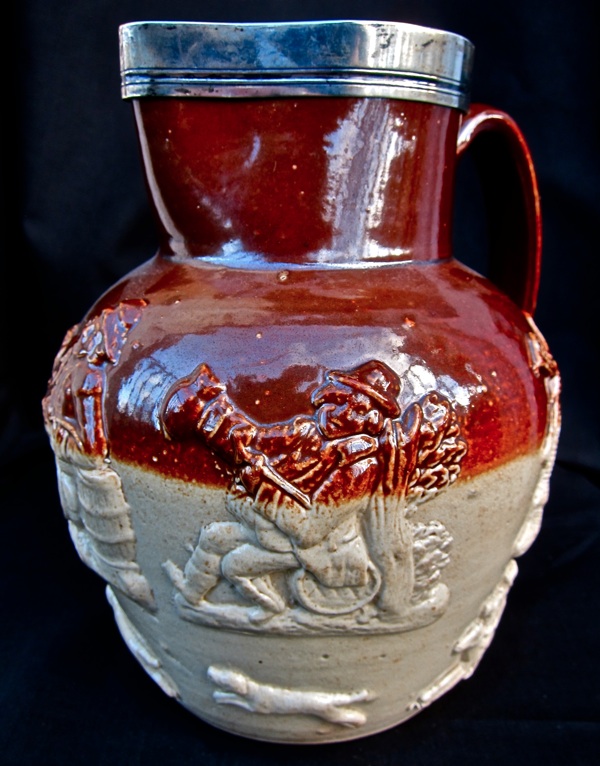
Fulham Pottery jug c. 1830
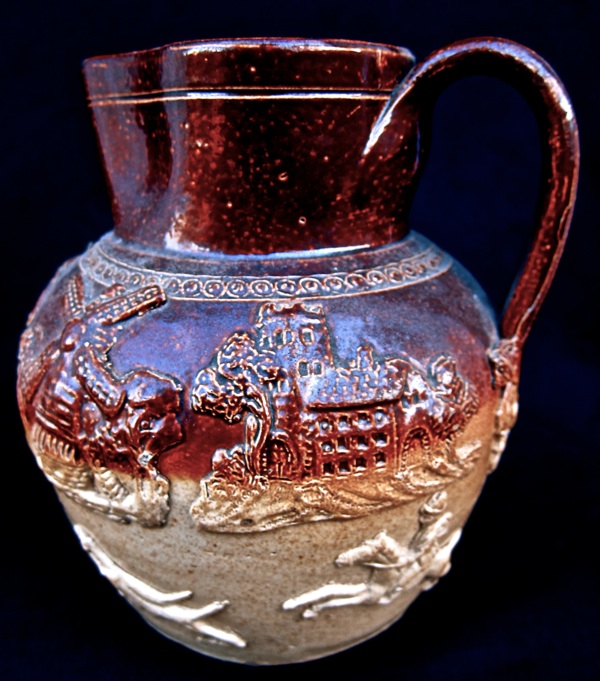
Stiff Pottery jug c. 1850
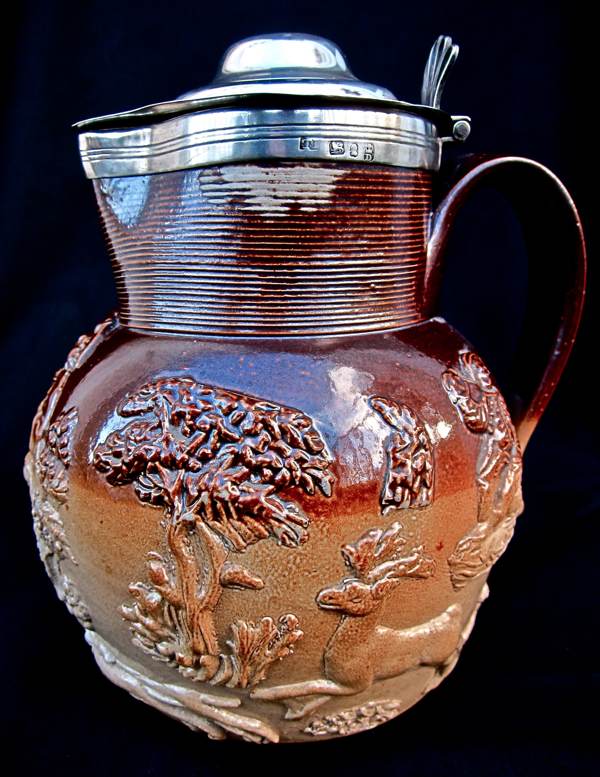
Mortlake Pottery jug 1812
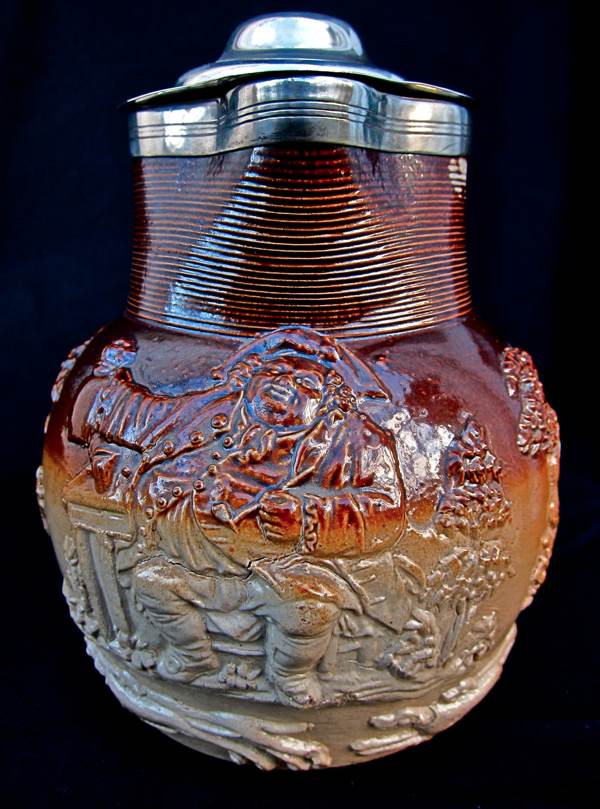
Figure of Toby Philpot on Mortlake jug
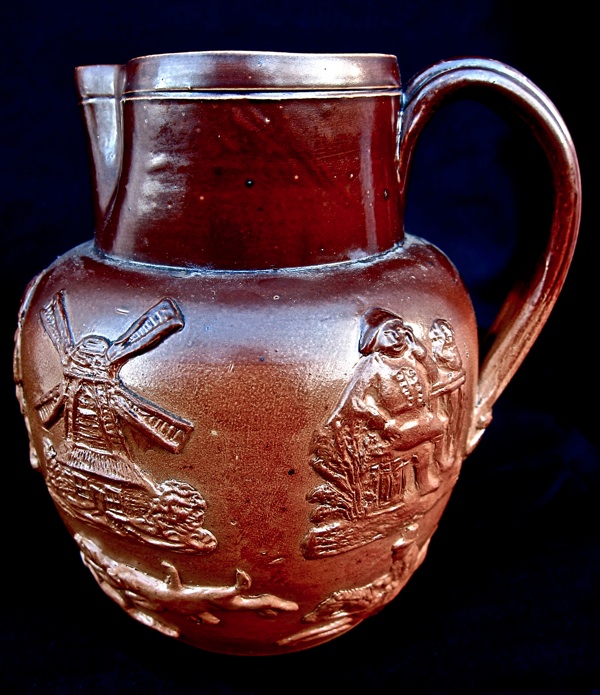
Deptford Pottery jug 1860

Stiff Pottery jug, with seller’s name in Limehouse 1860
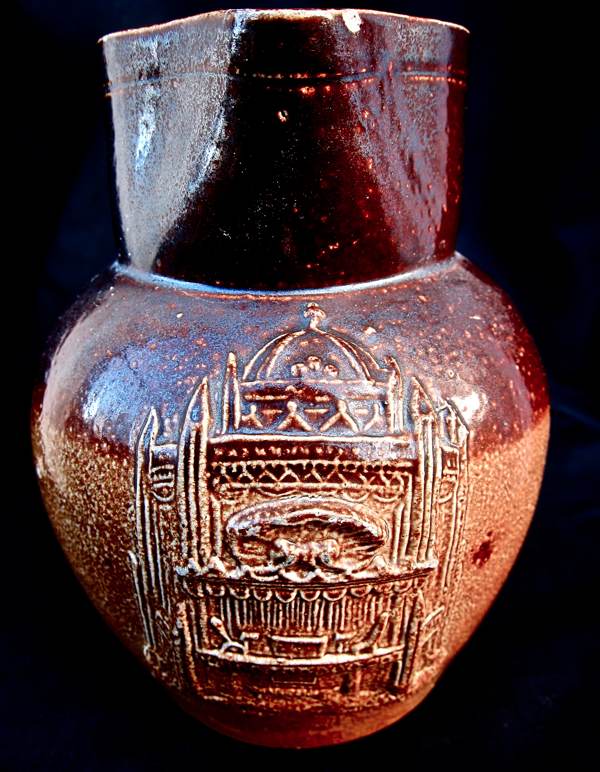
Vauxhall Pottery jug with image of the pavilion at Vauxhall Gardens and believed to have been used there in the eighteen-thirties
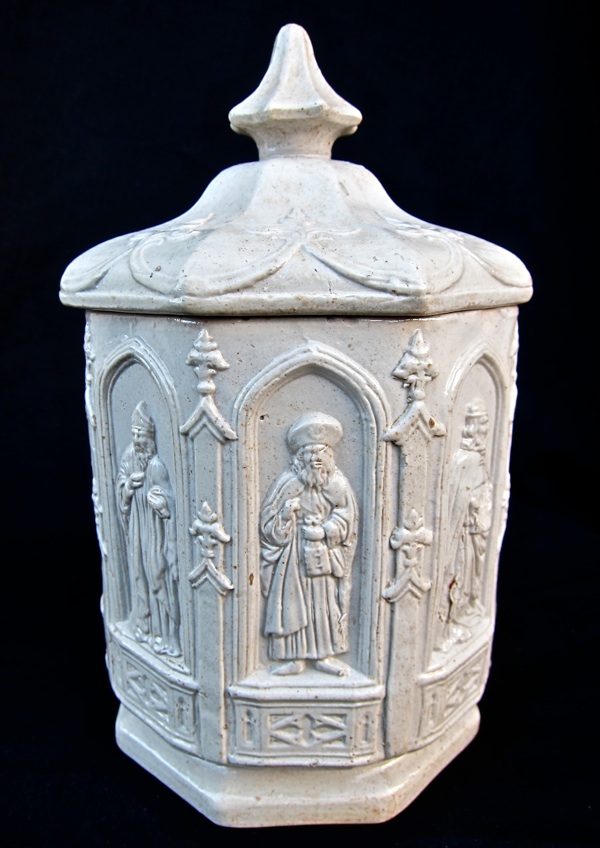
Tobacco jug by Doulton & Watts, eighteen-forties
You may also like to read my earlier article
More About Gadsdons

From time to time, the descendants of those whose ancestors were occupied in the small trades that once clustered here at the boundary of the City of London return to visit the old neighbourhood. These are families that have not forgotten how their forebears were displaced from their homes by the building of Liverpool St Station in the eighteen-seventies.
I am thinking in particular of the Coles of Brushfield St, the Inces of Whites Row, the Senecals of Spital Sq, the Stutters of Bishopsgate and – of course – the Gadsdons. In each case, my stories about these families have led to the discovery of more artefacts and old trade catalogues, and even long-lost relatives appearing from the ether.
Peter Gadsdon first came to visit a year ago to tell me about his great, great, great grandfather, Henry Gadsdson, who was apprenticed as a silk dyer in Spitalfields in 1790. Last week, Peter returned to show me the handsome catalogues for coach-building parts sold by Gadsdons which he had acquired as a result of the original story. And, as a result of further research, Peter was able to tell me the story of another Gadsdon, whose name is still commemorated in Crispin St upon the building between Donovan’s Bags and the former night shelter – thus adding another strand to the densely-woven web that comprises the epic tale of the Gadsdons.
Once we had perused the handsome coach-building catalogues, Peter became animated to speak of his Gadsdon ancestor who emigrated to America, changed her name to Gadsden and became a star in Hollywood during the era of silent films only to be displaced once the talkies came along.
You can read Peter’s story of his coach-building ancestors below, but this other glamorous anecdote led me to wonder if we may expect a new and unexpected installment in the ongoing saga of the Gadsons of Spitafields next year.
“One person you meet leads you to another and you learn more and more,” Peter Gadsdon assured me, “There’s so much to it than this, it’s not over yet!”
If you have any more information about the Gadsdons and their endeavours, please contact Peter Gadsdon pgadsdon@yahoo.co.uk A copy of his first book about The Gadsdons of Spitalfields is available to be consulted in the Bishopsgate Library.
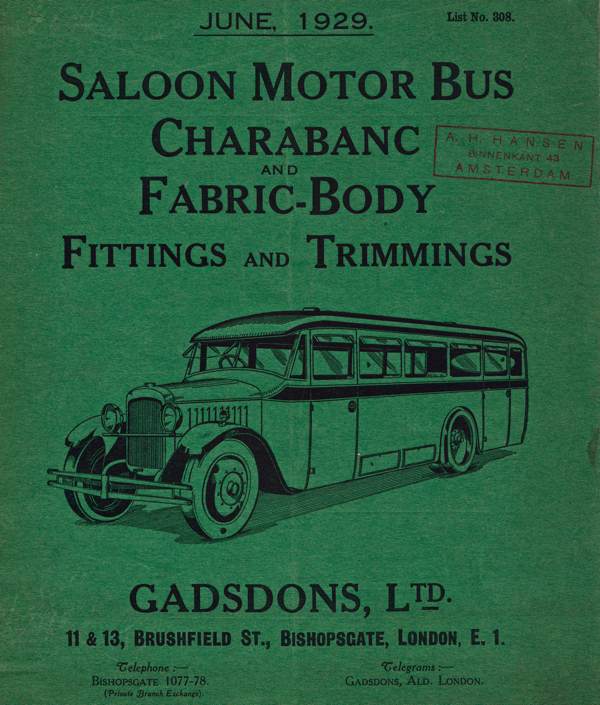


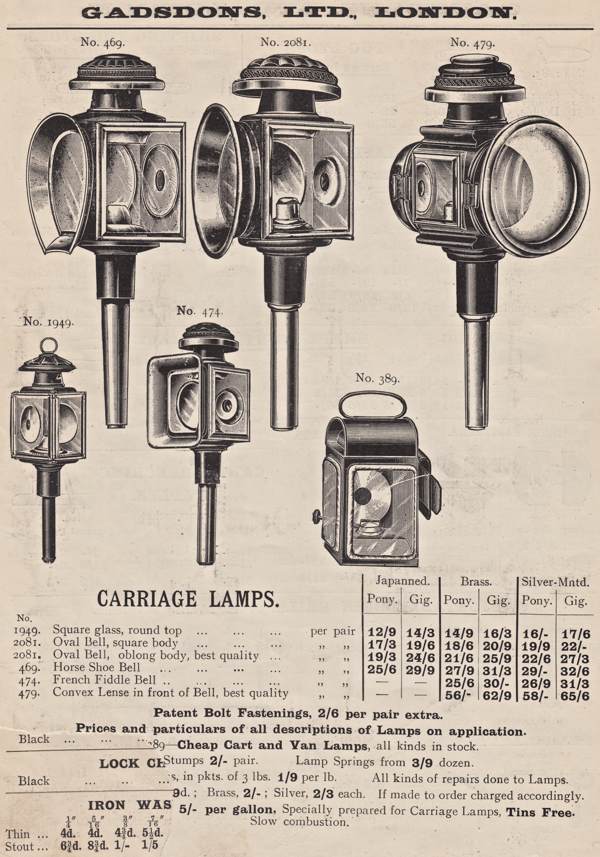


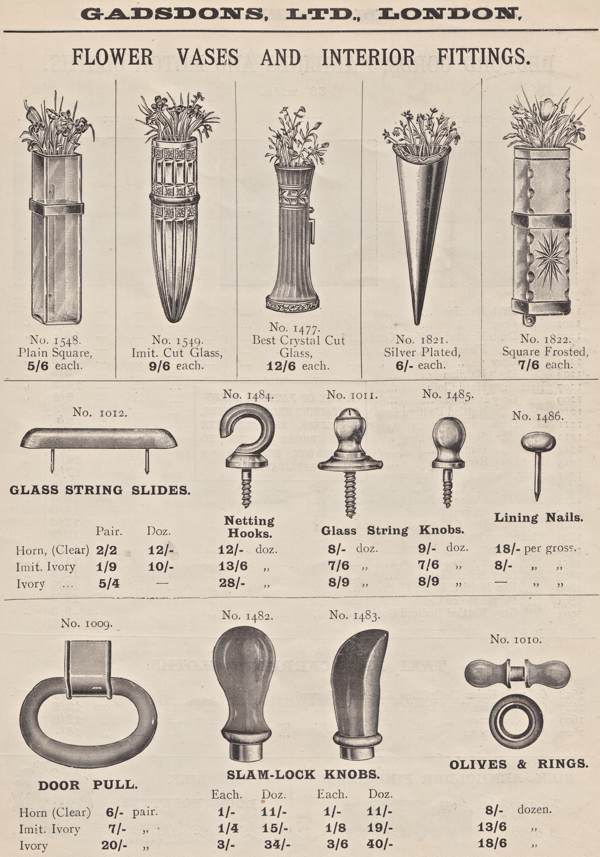
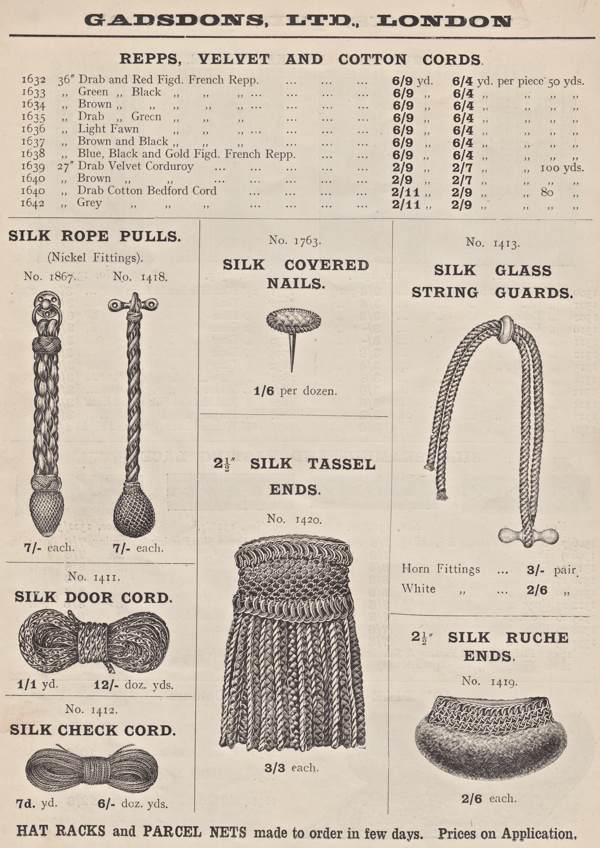
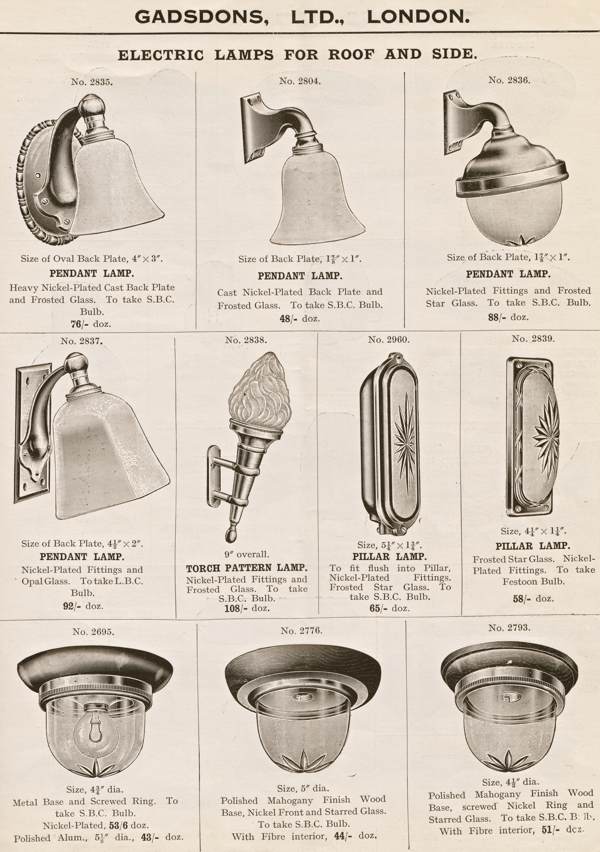


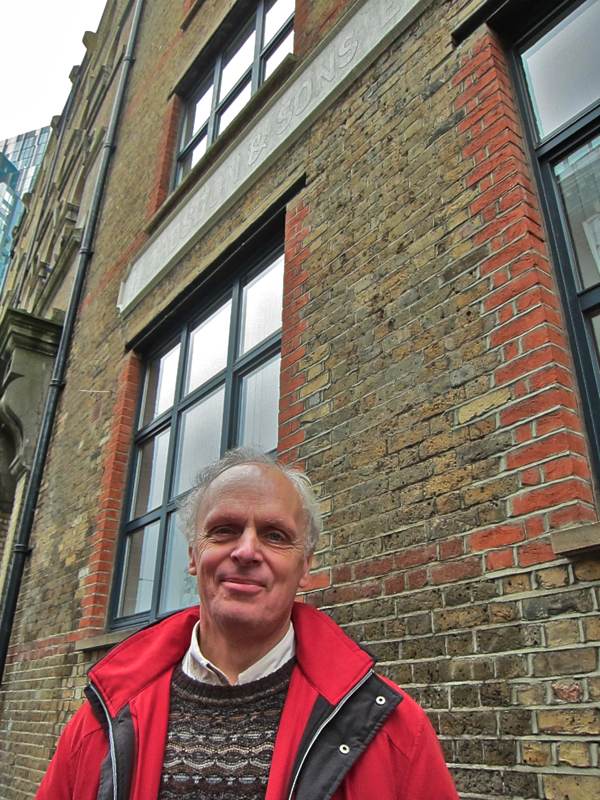
Peter Gadsdon in Crispin St – spot the lettering on the building above, spelling out ‘Gadsdon’
“Here I am standing outside a building in Crispin St and in the relief you can make out H.Gadsdon & Sons. I always knew these people must be connected with my branch of the Gadsdons but I was not sure how. I knew that my great, great, great grandfather Henry had a silk-dying business in Paternoster Row (later renamed Brushfield St) in the early eighteen-hundreds, but I could not ascertain how he was connected to this H. Gadsdon. Previously, I had researched my family along the paternal side, so now I decided to investigate it sideways too, so I could find out how they were connected.
Having served a seven year apprenticeship with John Wright, silk dyer of Bethnal Green, Henry’s business success in Spitalfields allowed him to retire across the River Thames to the village of Deptford and live the life of a gentleman.
He had a younger brother, Richard Gadsdon who had learnt a trade as a coachplater – an ironmonger who made the metal parts for horsedrawn carriages. Having finished his own apprenticeship, Richard started making carriage ironmongery in his brother’s premises, until 1813 when he started up independently in Gun St, Artillery Ground.
Later, as the business expanded, he moved to 22 Union St. This business lasted over one hundred and fifty years until the Spitalfield Market expanded in the nineteen twenties and took over the premises in Brushfield St. The last years of the business were in Christopher St, Finsbury Sq, from 1930 until the business shut down around 1936/7. Even then, they were still selling horse-drawn carriage goods such as wooden wheels alongside the new motor trade goods.
I discovered Richard had nine children and it is one of these, Henry – who was born in Gun St in 1814 – whose family owned the Crispin St building in the photo. Henry started an apprenticeship as a silk manufacturer, but his employer disappeared before he finished it. The next we hear is Henry started working at Thomas Brushfield’s house in Union St, engaged in the oil and colour business. Thomas Brushfield was the man after whom Brushfield St was named when Paternoster Row and Union St were combined later in the nineteenth century.
Henry married Thomas’s niece, Elizabeth Nadauld Brushfield and, after their marriage, they moved to Featherstone St, St Lukes, to start up their own oil and colour business. Unfortunately, they had a disastrous fire on the premises in 1840 and moved again, this time to Great Prescot St near the Tower of London, where once again a destructive fire broke out in 1854. This shows the volatile nature of the oil and colour business, which involved the bulk storage of oils necessary for the manufacture of paint.
At the beginning of the twentieth century, the business moved back to Spitalfields and they built new warehouses in Crispin St, including the one in the picture above. They traded in Crispin St until just before the Second World War, when they decide to construct bigger premises in Edmonton. They started trading there and it was a going concern but, two years after they had moved, a bomb razed the warehouse. Their fleet of lorries and their garage premises were spared and they needed to continue the business, so they moved back to the Crispin St buildings which were still vacant and the business returned to Spitalfields again.
Once the war was finished they rebuilt the Edmonton premises. They supplied the hardware trade for household goods and tools, the oil and colour side of the trade had now disappeared. The business continued until 1977. It had lasted one hundred and twenty years.”
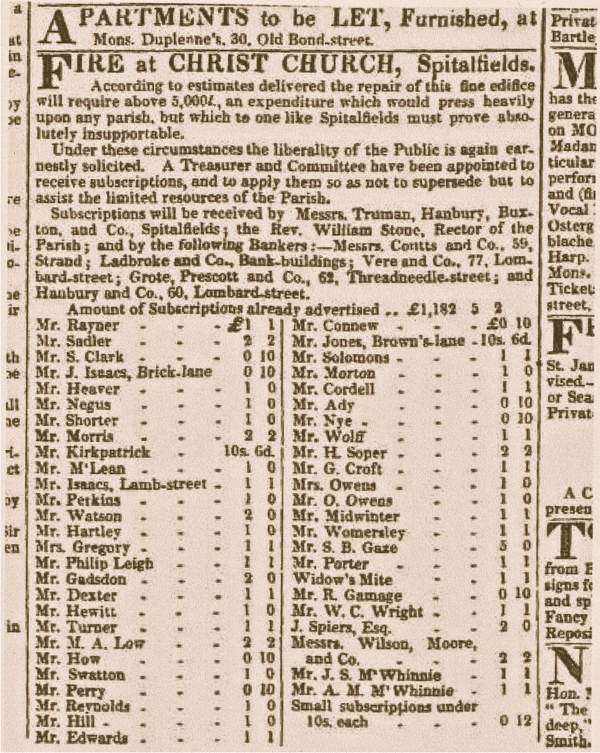
Mr Gadson contributed two pounds to the rebuilding of Christ Church after the fire in 1836
You may like to read these related stories
In Praise Of Older Women
Contributing Photographer Chris Kelly sent me this glorious collection of her pictures of older women, some from the East End and many from elsewhere – entitled In Praise Of Older Women after the book by the Hungarian writer Stephen Vizinczey.
“Iʼve taken many pictures of inspirational women over the years but these are among the ones that make me smile the most,” Chris told me, “I know nothing about the private lives of the people in these photographs, I only know that the characters were strong, determined and fun to be with.”
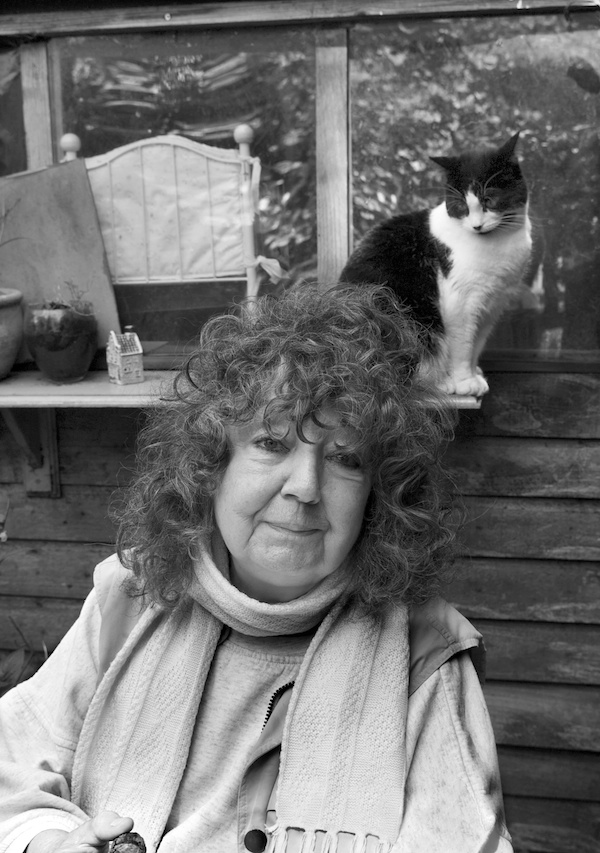
Peggy Metaxas & Rosie, Whitechapel, 2013

Members of All Saints Dance Club, Poplar, 2003
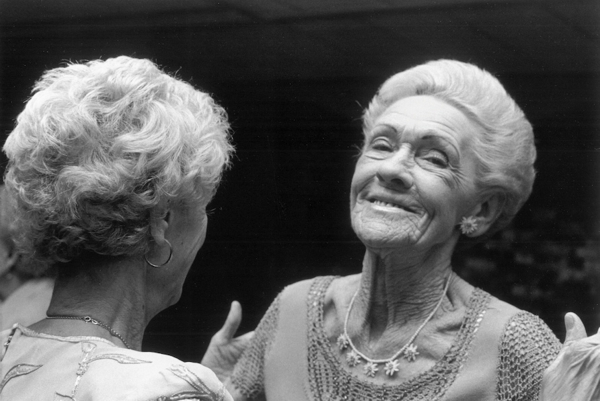
Members of All Saints Dance Club, Poplar, 2003

Older people from France on an exchange visit to Kent, 1993
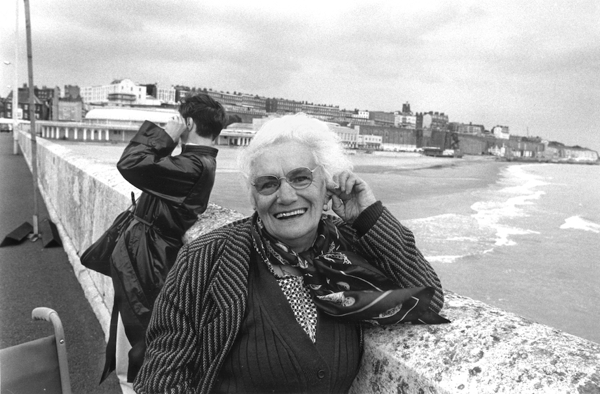
Older people from France on an exchange visit to Kent, 1993
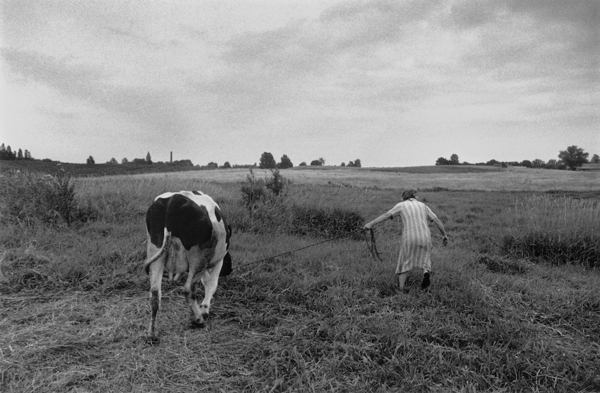
Kazia Cander, farmer, Northern Poland, 1984
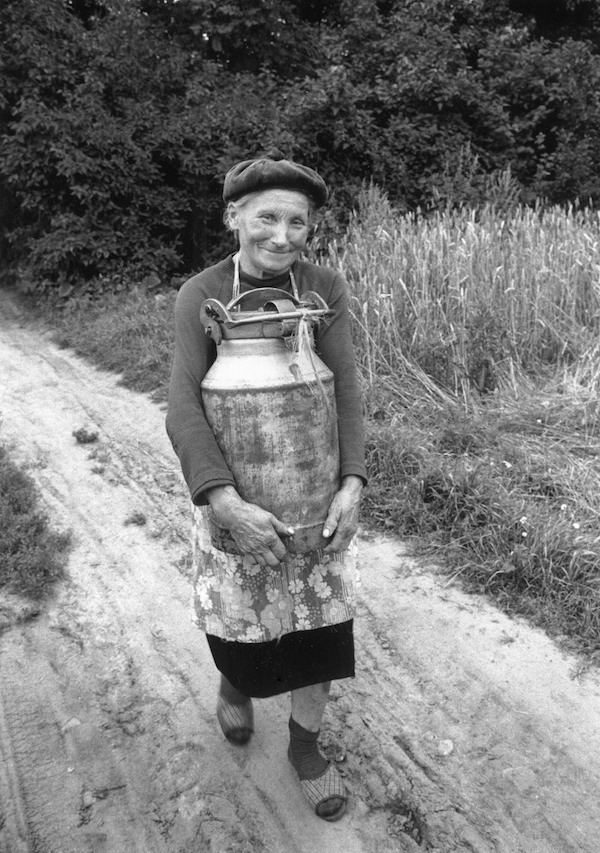
Kazia Cander, farmer, Northern Poland, 1984
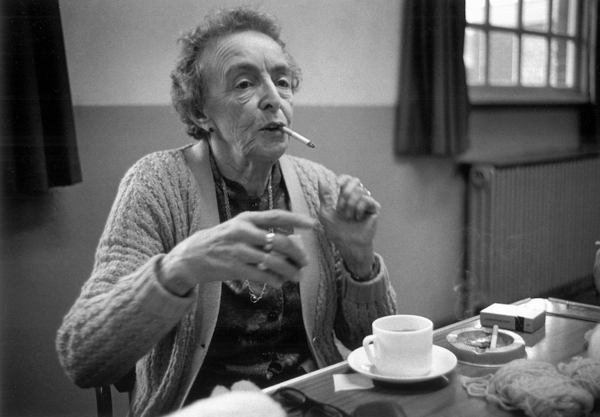
Community Centre, Southwick, East Sussex, 1985
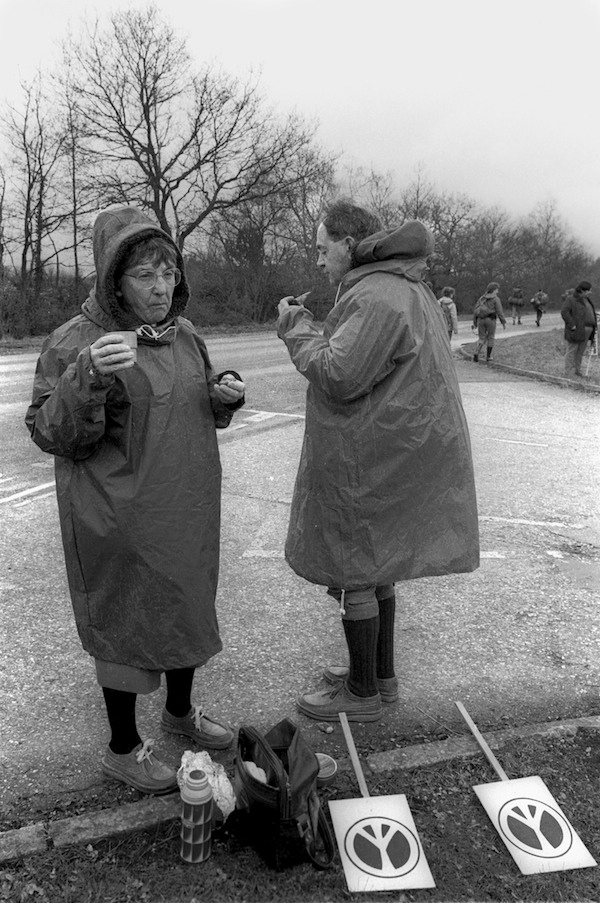
Members of Maidstone CND at Greenham Common, 1983
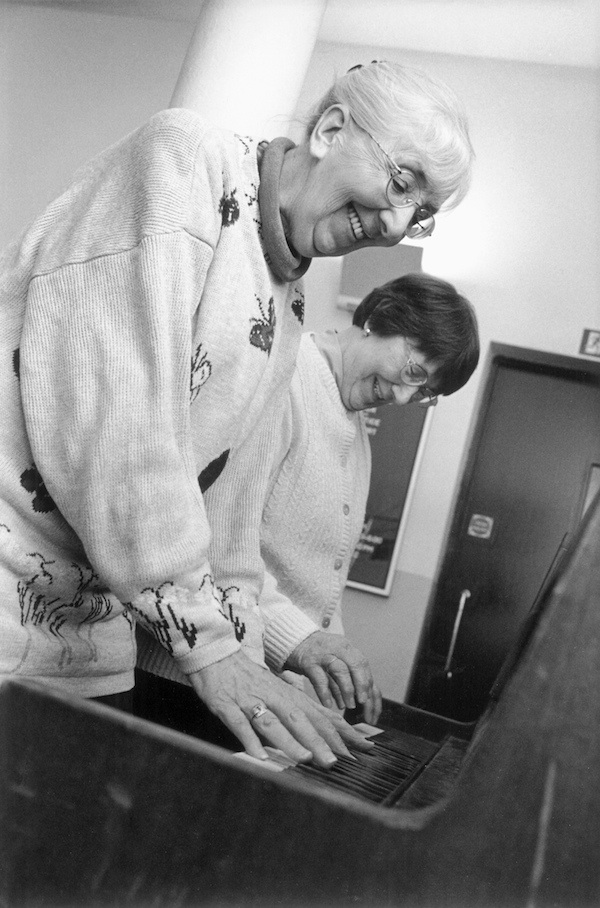
Irene Livermore & Mary Christmas, Wapping Pensionersʼ Group, St Peterʼs Centre, 2003
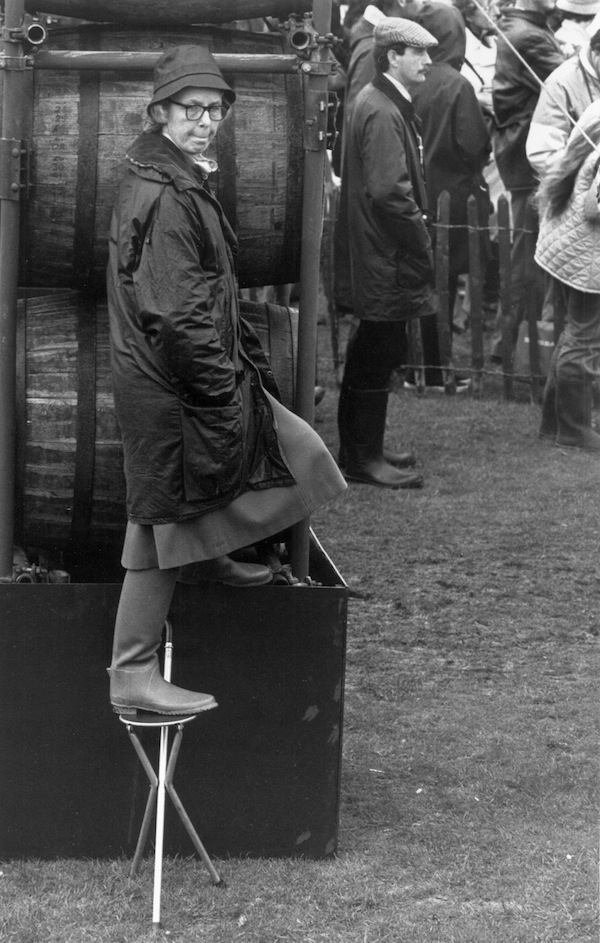
Spectator at National Carriage Driving Championships, Windsor, 1983
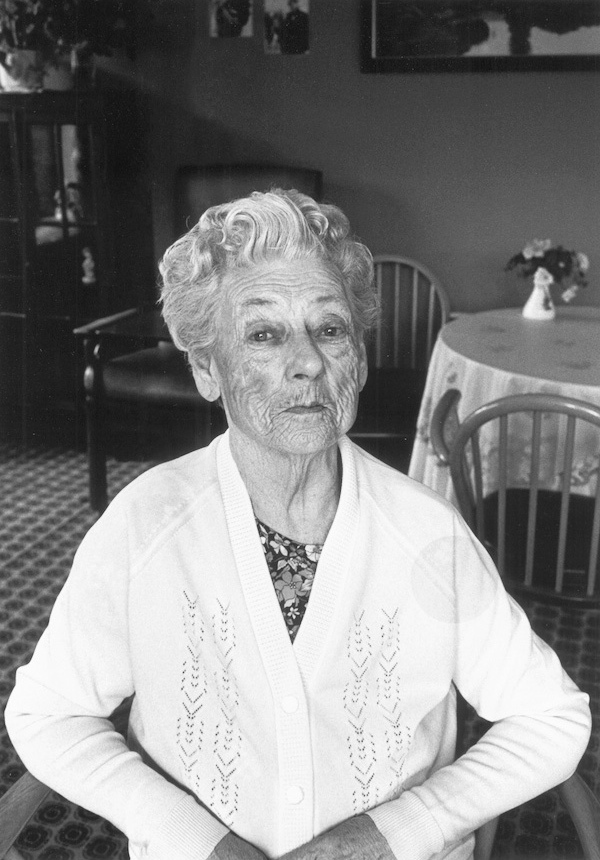
Queenie Baxter, Connors House, Canterbury, 1993
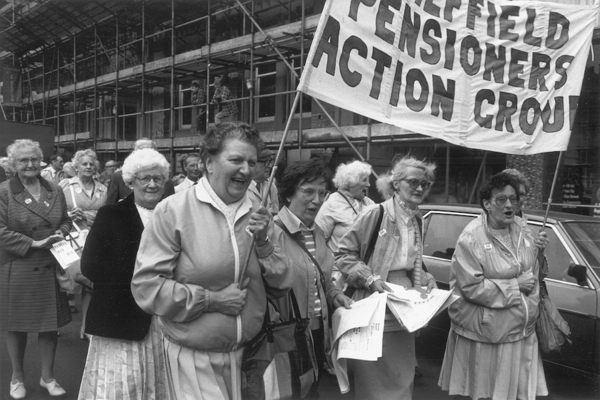
Sheffield Pensioners Action Group at a rally in Manchester, 1988
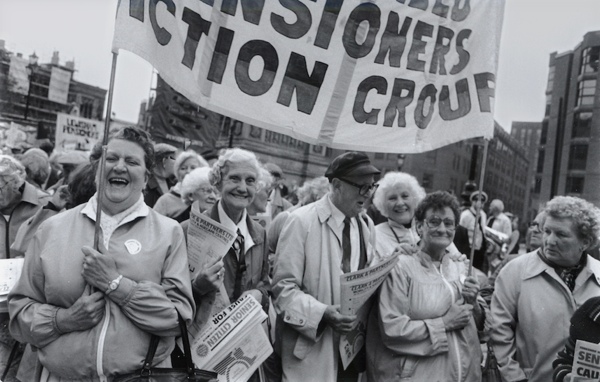
Sheffield Pensioners Action Group at a rally in Manchester, 1988

Sheffield Pensioners Action Group member sells copies of Senior Citizen
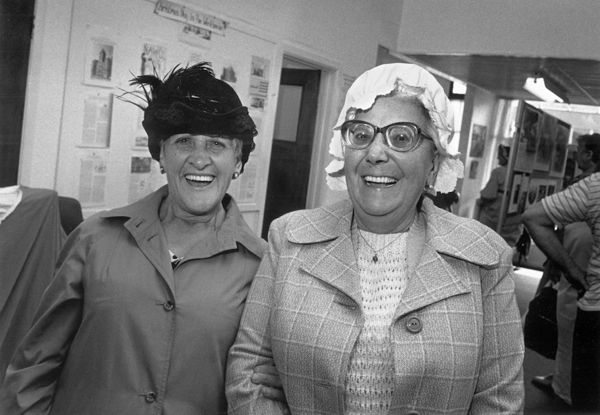
Sheffield Pensioners Action Group members dress up to commemorate eighty years of Old Age Pensions
 Spectators at Ascot Races, 1983
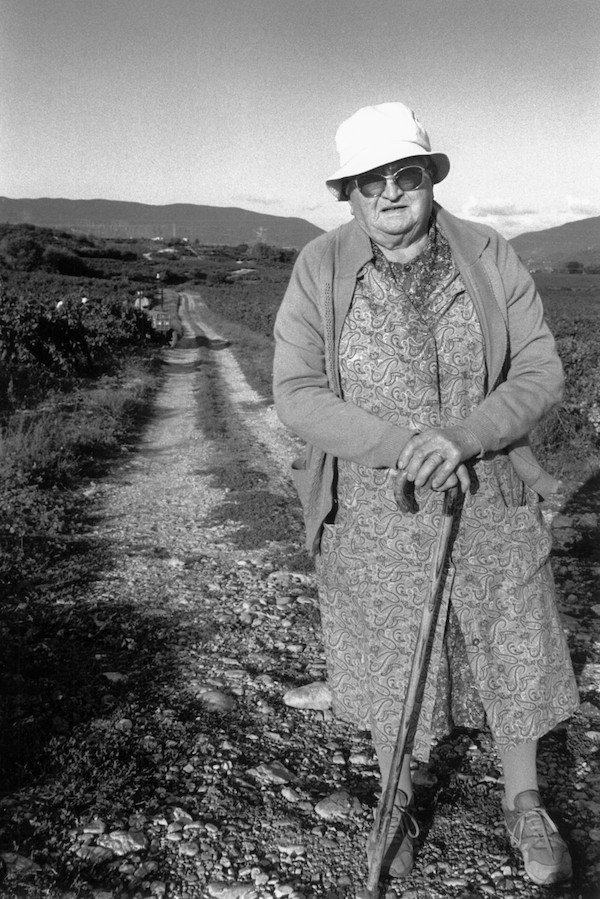
Fernande Bressy, wine producer, Rhône Valley, 1991
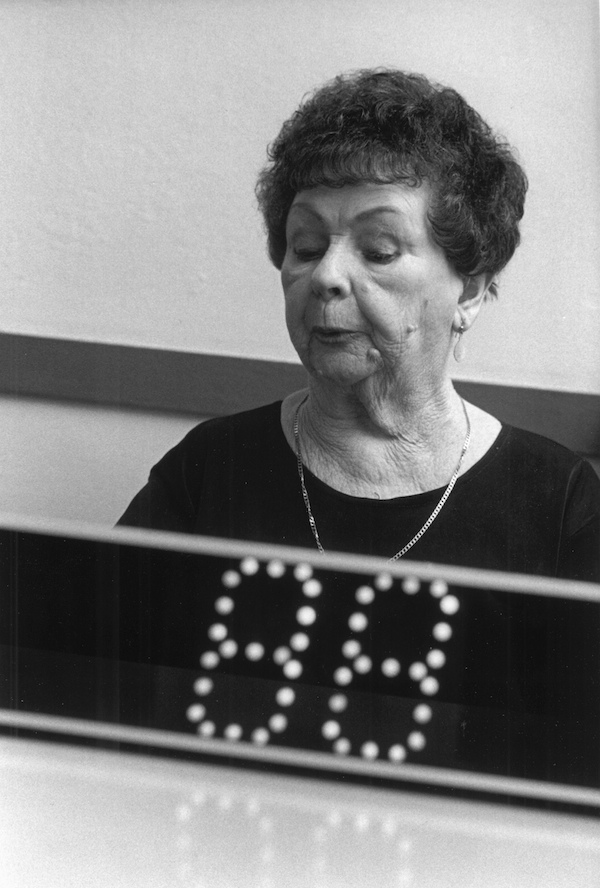
Irish Emma leading the bingo at St. Patrickʼs, Wapping
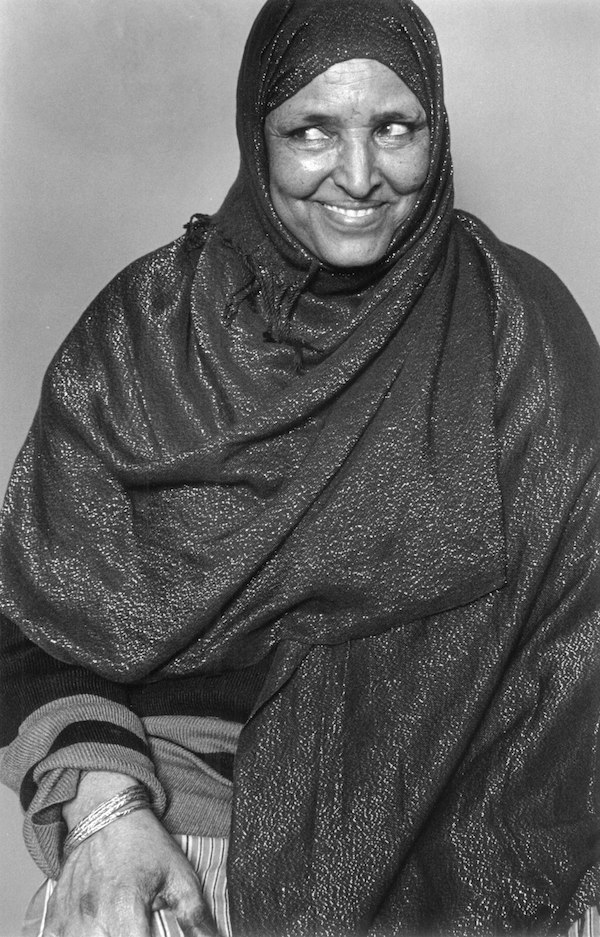
Methodist Centre, Bethnal Green, 2003
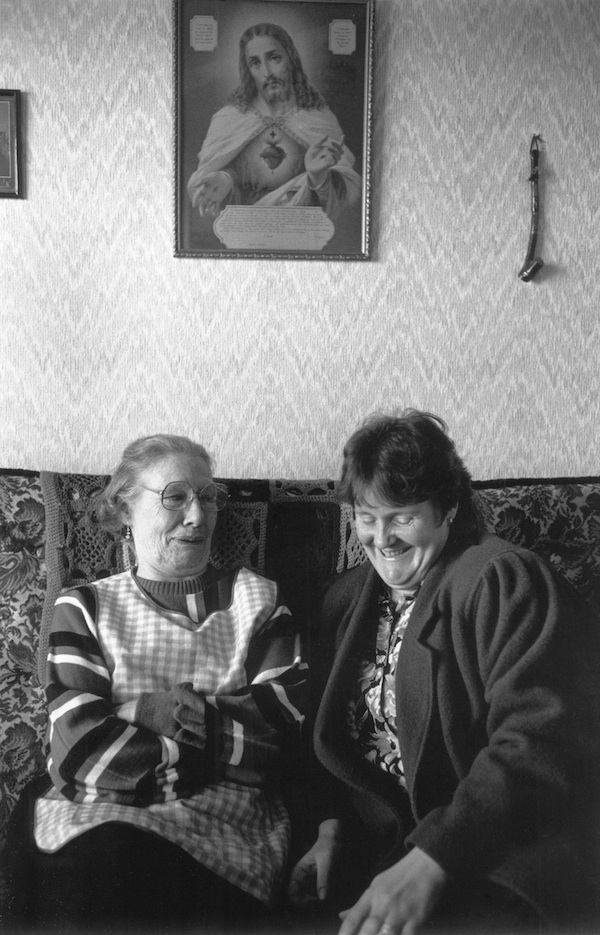
Bridie Murphy and Warden Anne Baine, Twinbrook Estate, Belfast, 1989
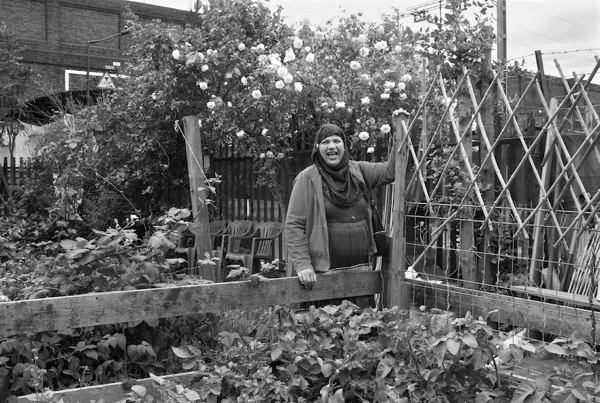
Anwara Begum, Cable St Community Gardens, 2012
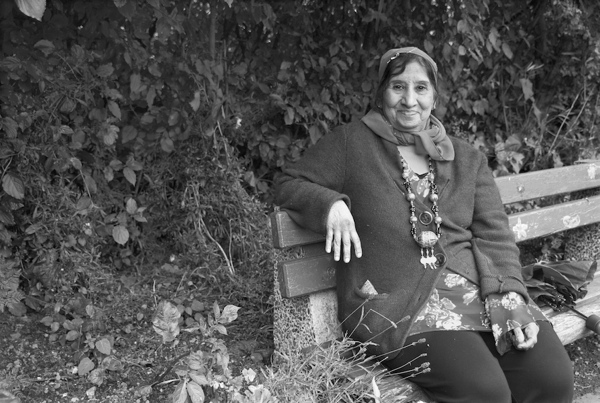
Balkis Karim, Cable St Community Gardens, 2012
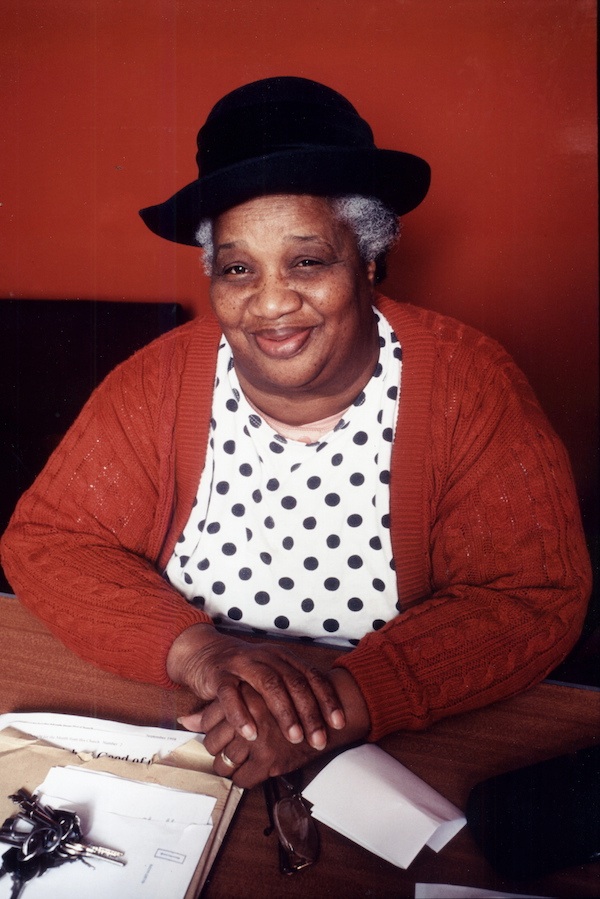
Administrator at North London Community Centre, 1998
Photographs copyright © Chris Kelly
You may like to take a look at these other photographs by Chris Kelly
Chris Kelly’s Columbia School Portraits 1996
Chris Kelly’s Cable St Gardeners












