On The Buses With Colin O’Brien

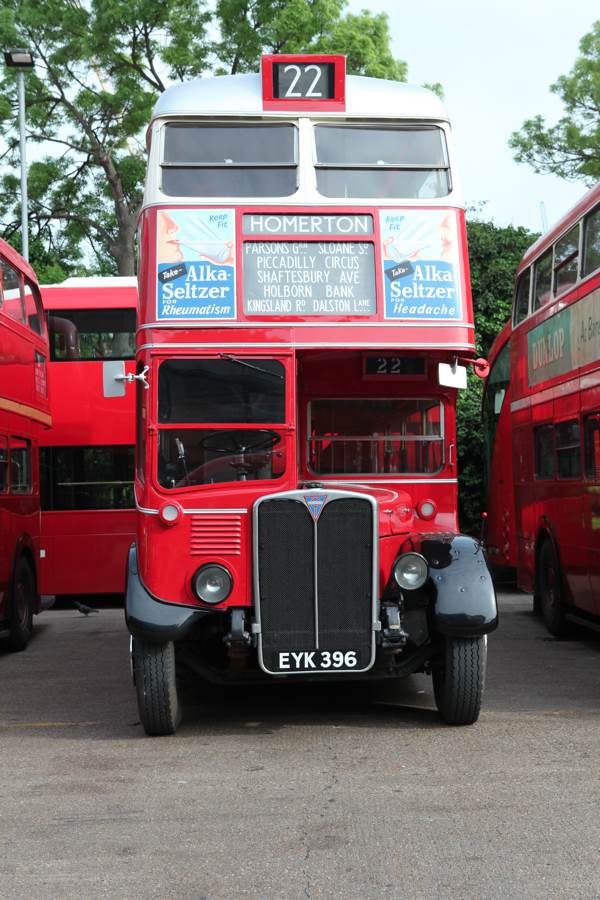
The restored prototype RT1 of 1939 in Piccadilly Circus
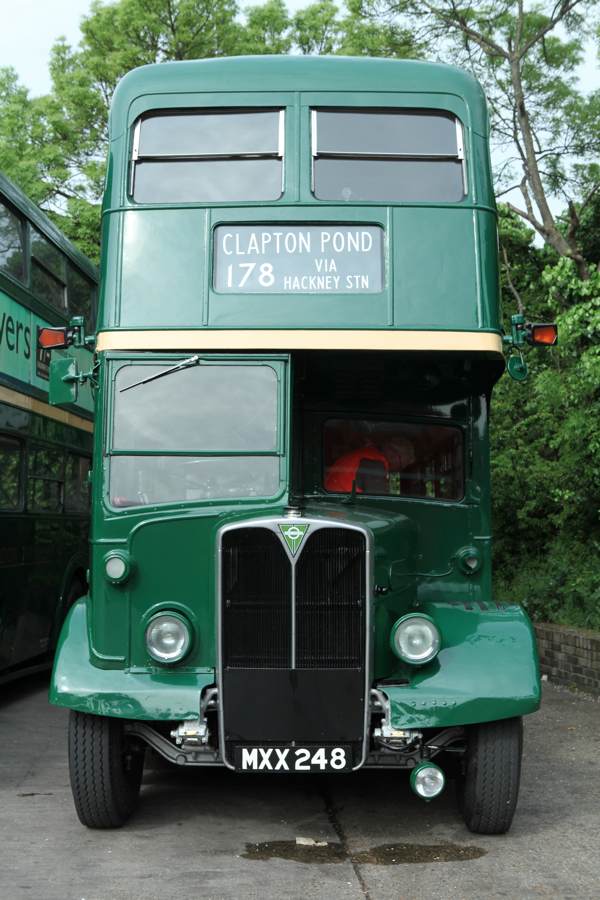
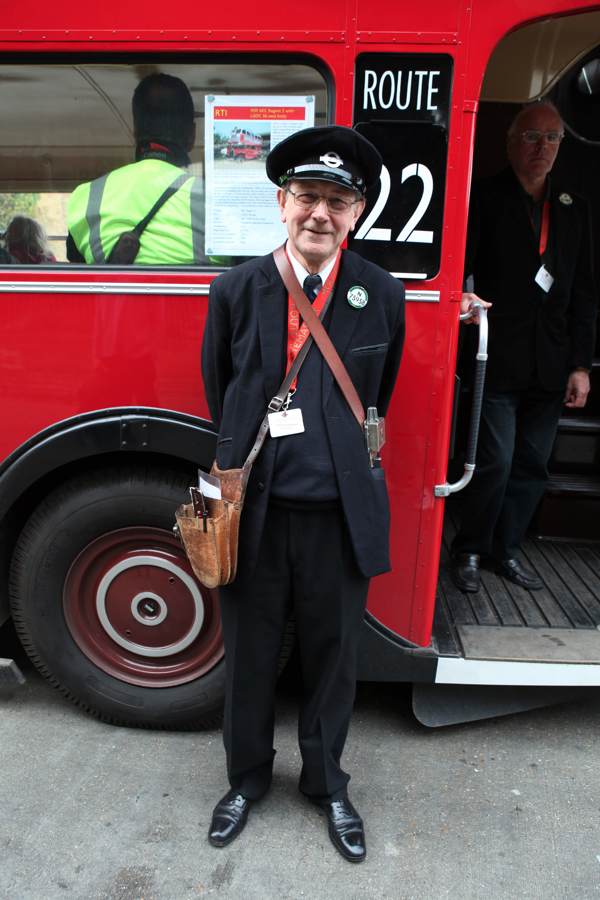
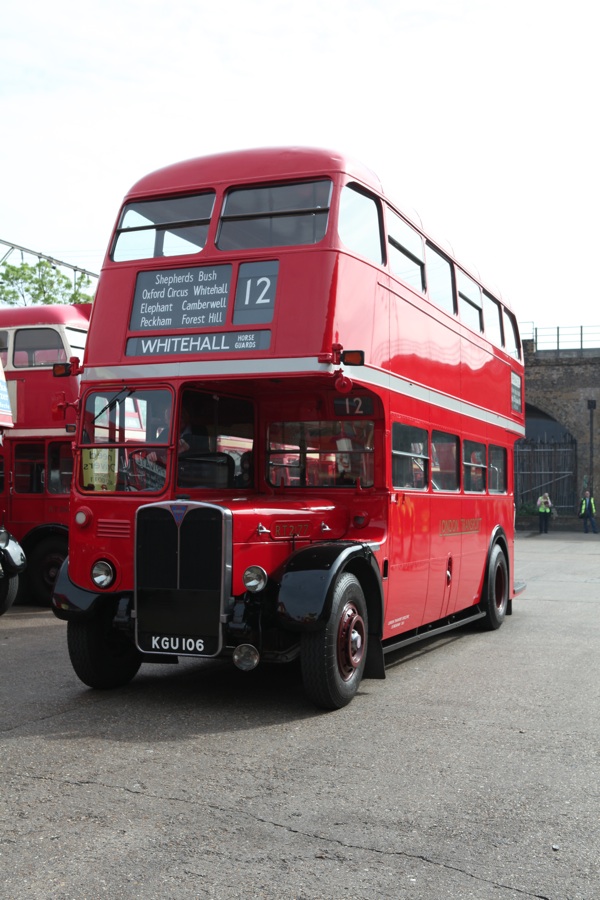
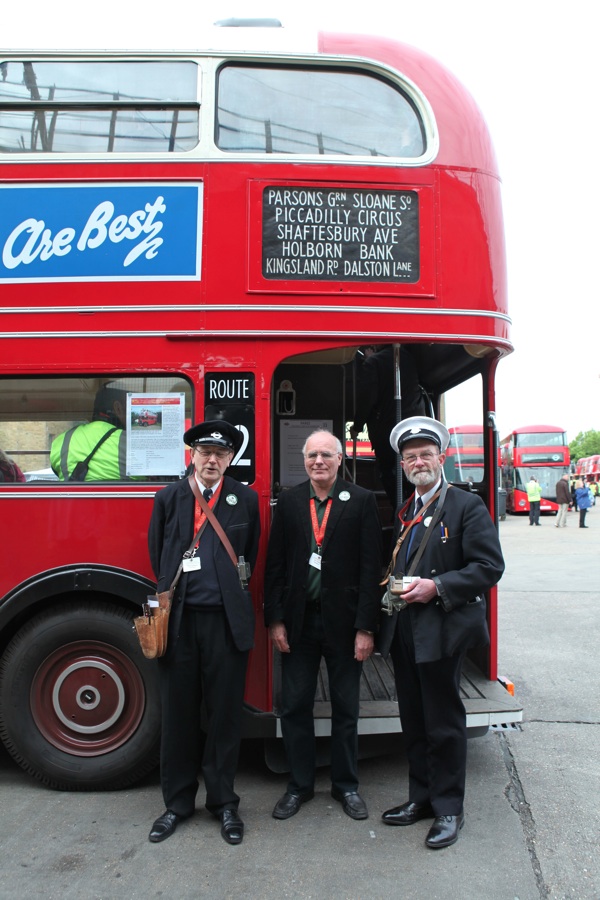
A magical time warp appeared to manifest itself in London yesterday, when Saturday shoppers were surprised by buses of past eras – many more than sixty years old – arriving unexpectedly, as if conjured from the ether, to whisk them away to the West End. In fact, it was a celebration of seventy-five years of the classic RT London bus organised by the London Bus Museum, in which fifty vintage vehicles returned to service for one day, offering free rides to all.
The buses gathered at the Ash Grove Depot next to London Fields before departure, so Contributing Photographer Colin O’Brien & I put on our anoraks and joined the happy throng of enthusiasts, mesmerised by the return of these beautiful historic buses, polished to perfection for this special day.
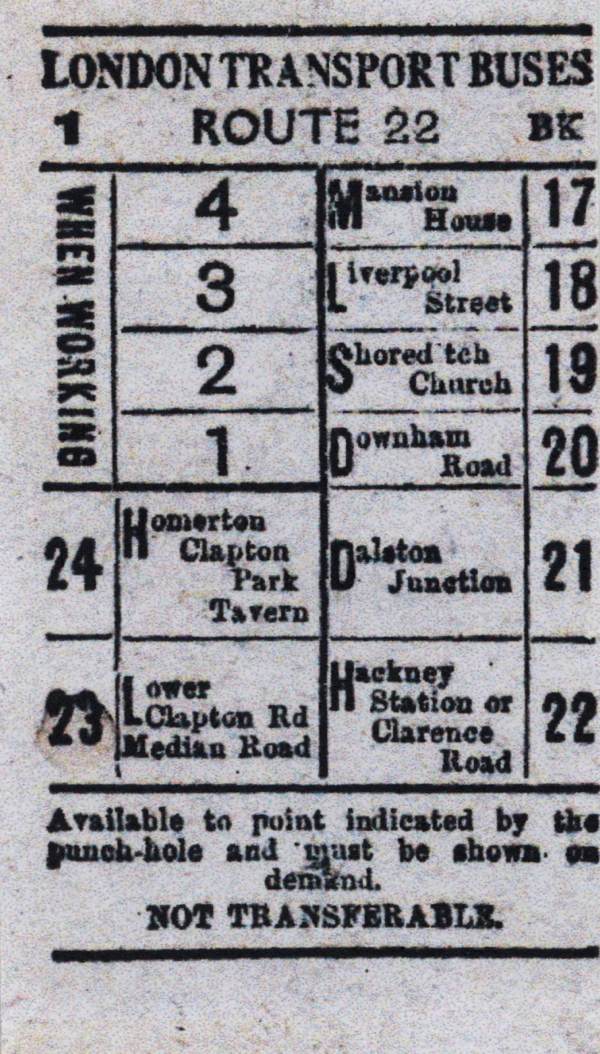
Unquestionably, the star attraction was the original prototype of the RT1 which first entered service on route 22 between Putney Common and Homerton on 9th August 1939, just weeks before the outbreak of World War II. The RT1 marked the culmination of a programme to design the ultimate London bus, featuring the latest in construction and engineering for passenger and crew comfort. Now fully restored to its former magnificence, it led the fleet from the depot out into the London streets yesterday.
Colin & I hopped aboard and made our way upstairs, and we discovered that we were upon a trip into memory. The checkerboard velvet upholstery, the wind-down windows, wooden floors, the cream paintwork, the “Push Once” bell and the “Do Not Spit” sign were all powerfully evocative of another time. But before we could contemplate further, the bus departed with that once-familar ding-ding of the bell and we enjoyed a smooth ride with just the occasionally rocky patch, whenever the bus lurched round corners, swinging around like one of those stage coaches of old.
Our great delight from the top deck was to observe the expressions of wonder and joy appear upon the faces of vaguely-bored Londoners at bus stops, astonished at the unexpected arrival of these glossy chariots from another age, skinnier and with rounder corners that our contemporary buses, and embellished with colourful advertisements from the past.
At Piccadilly Circus, we hopped off again and positioned ourselves strategically upon a traffic island so that Colin might photograph the old buses as they came through, standing out with decorative flourish like swans upon the river. We waited for hours, searching the distant traffic expectantly to capture the trophy shots you see below.
In spite of all the changes, these charismatic buses still looked entirely at home upon the streets. Held in great affection by Londoners, they are interwoven with the identity of the city itself and their descendants still ply the same routes every hour of the day and night – but we were overjoyed to see the return of the much-loved ancestors, reminding us of our collective past and reclaiming their old routes for a day.
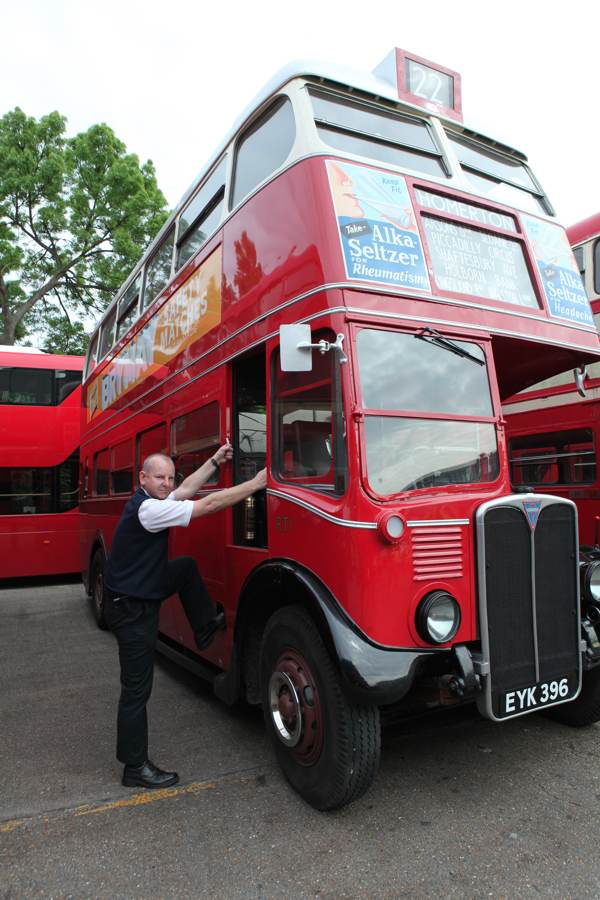
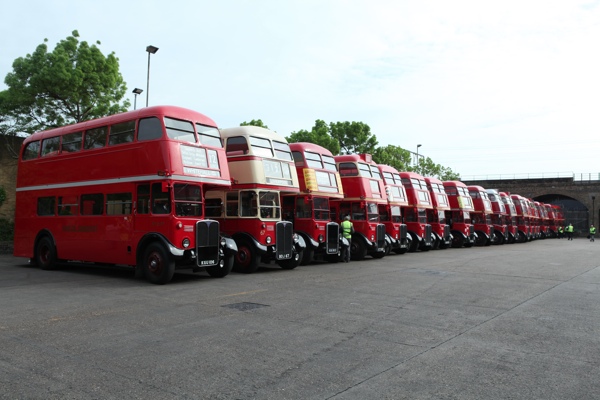
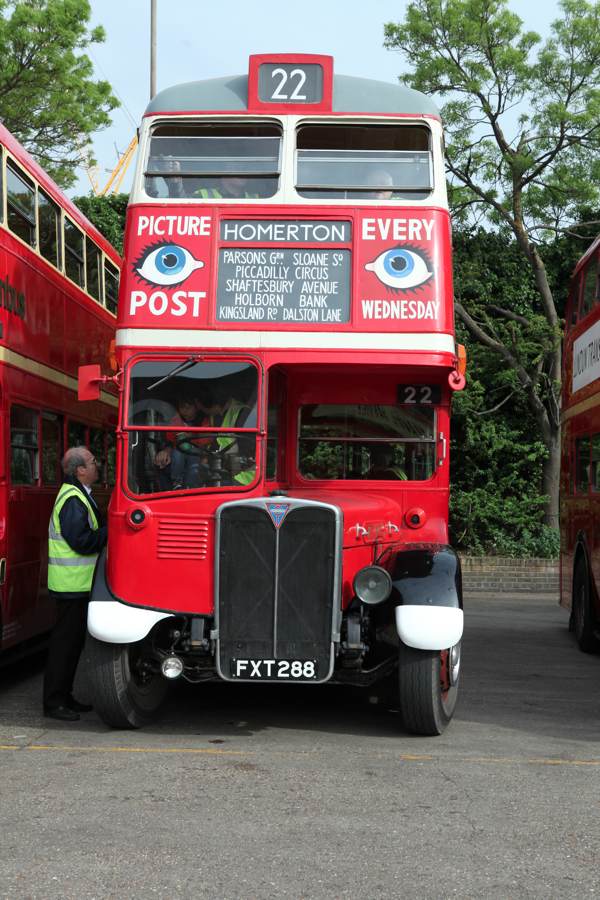
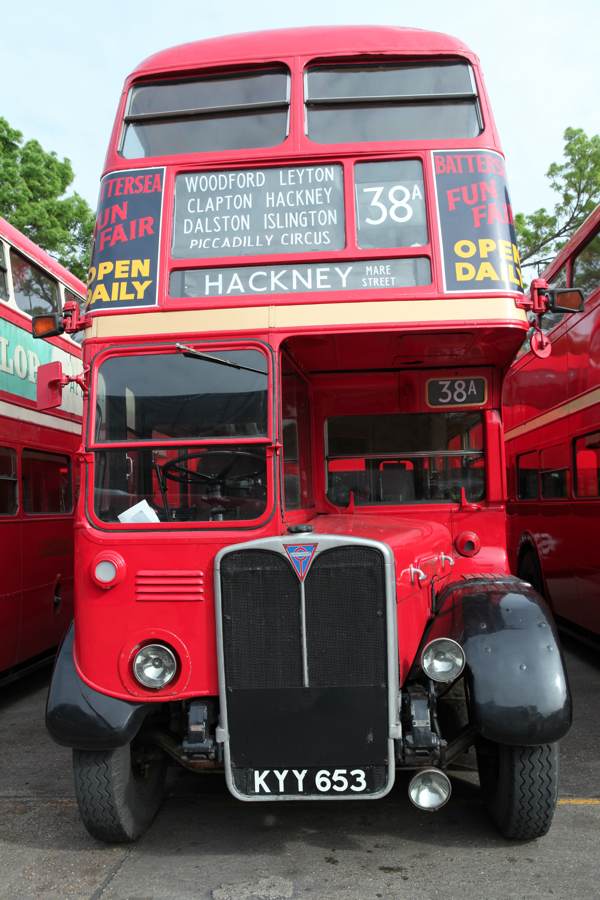
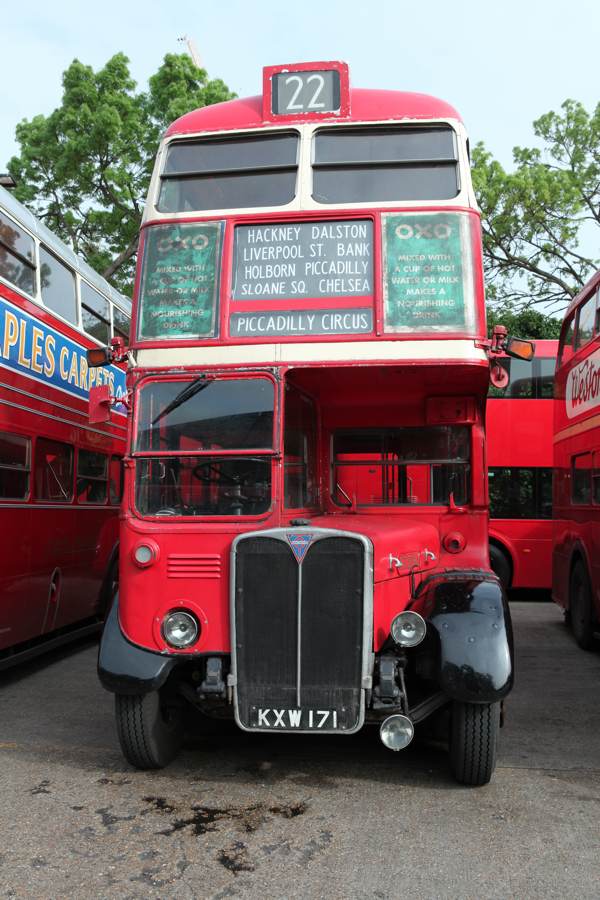
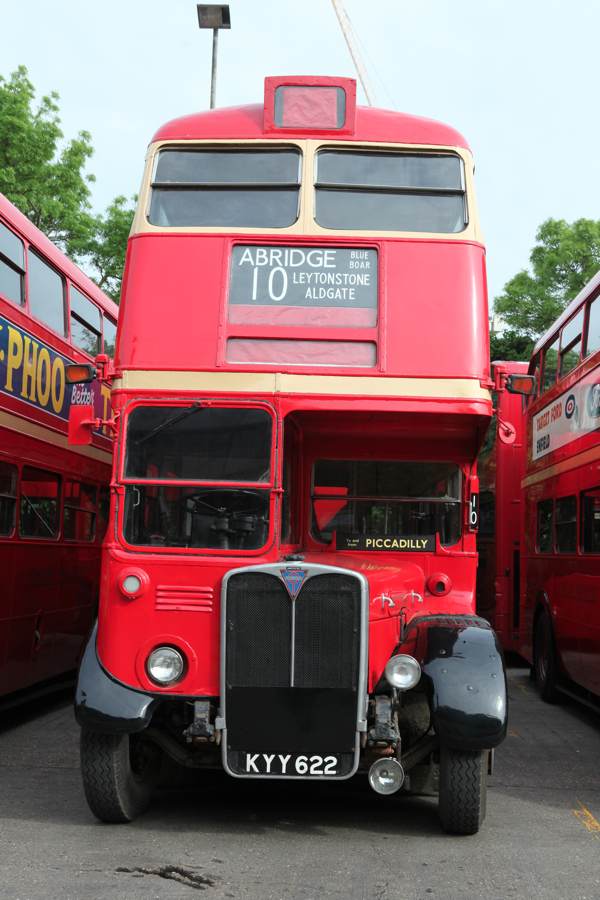
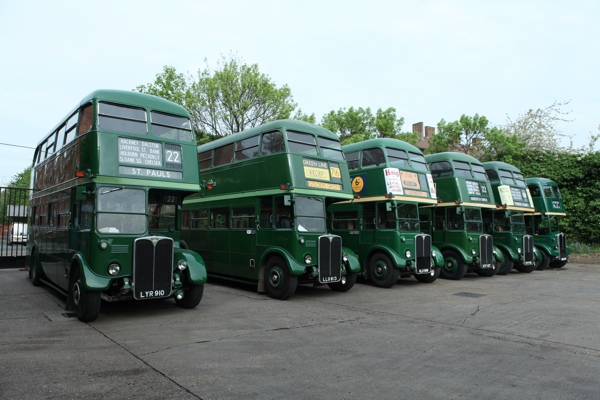
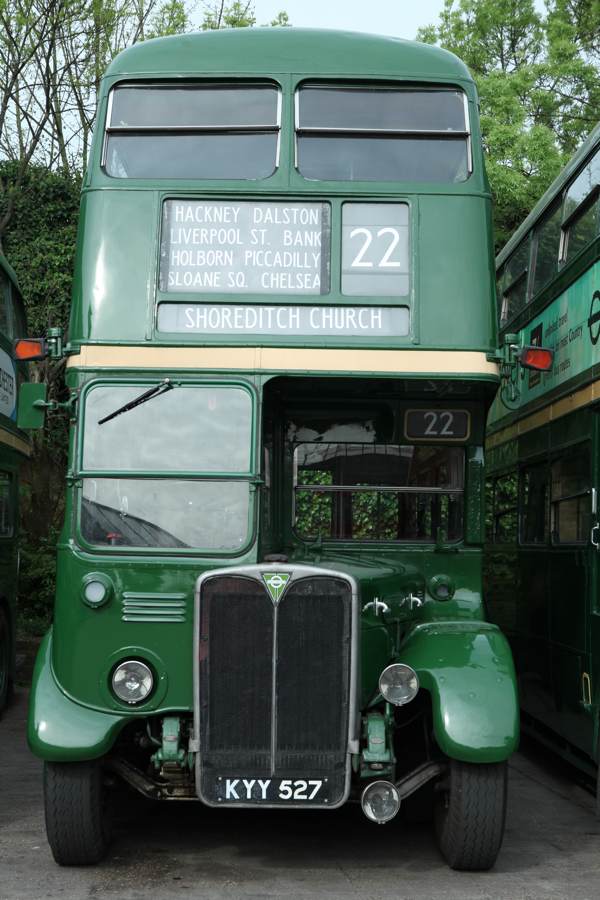

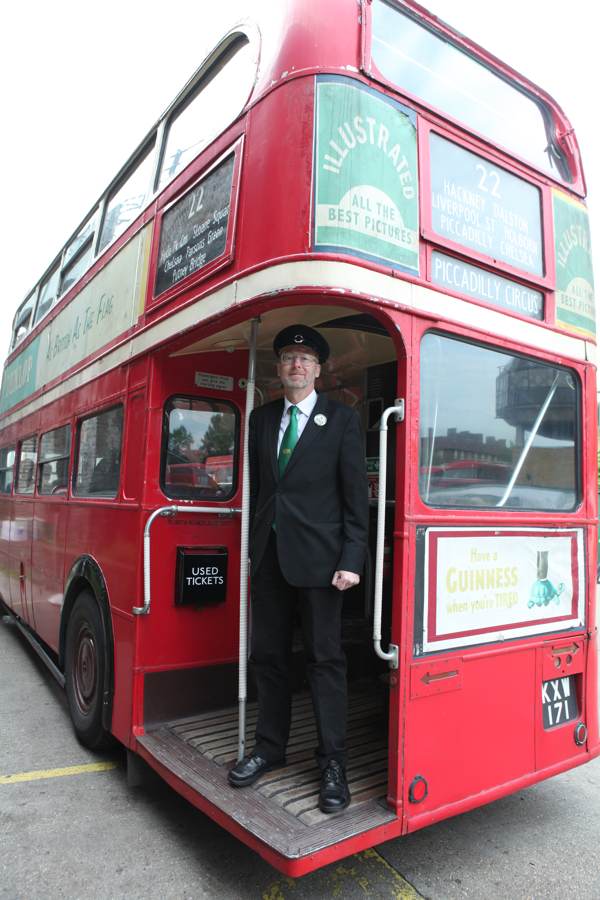
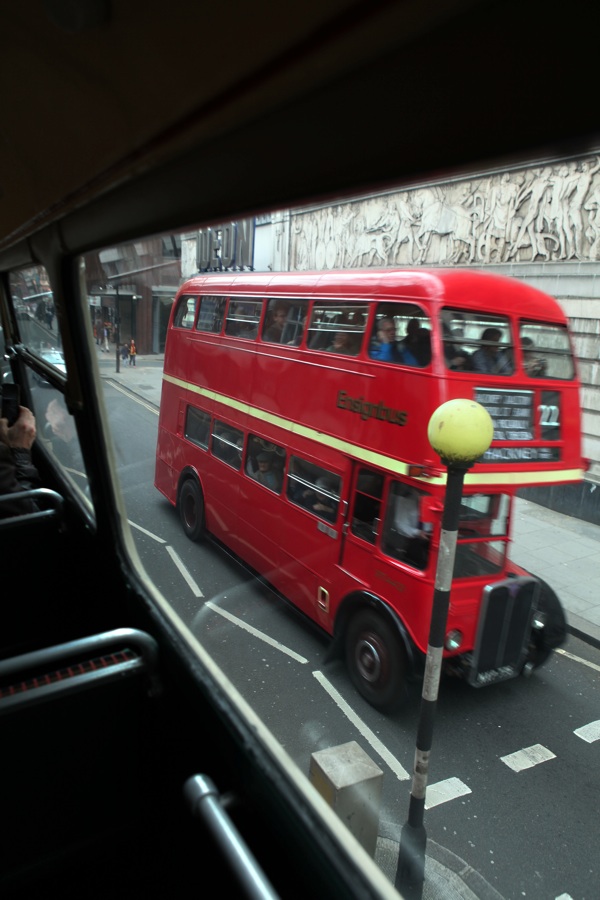
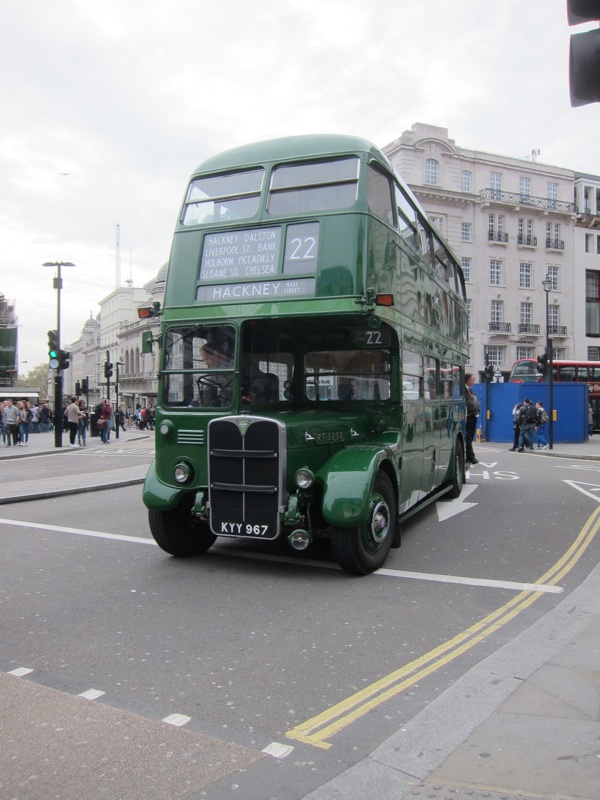
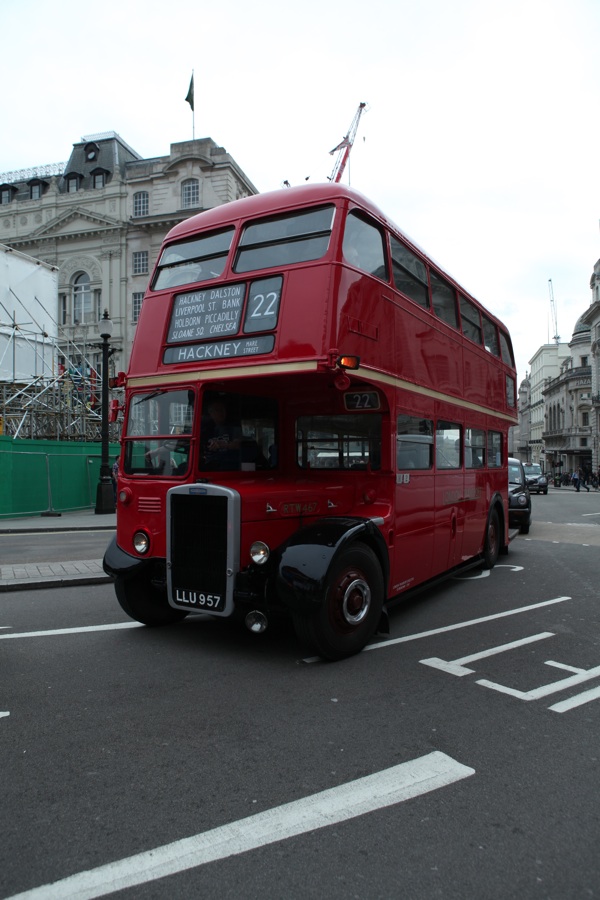
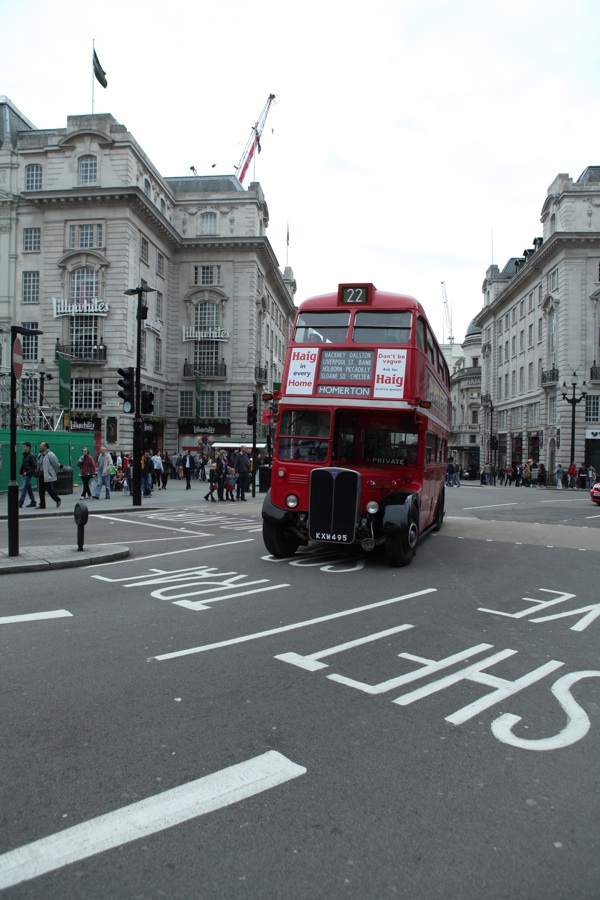
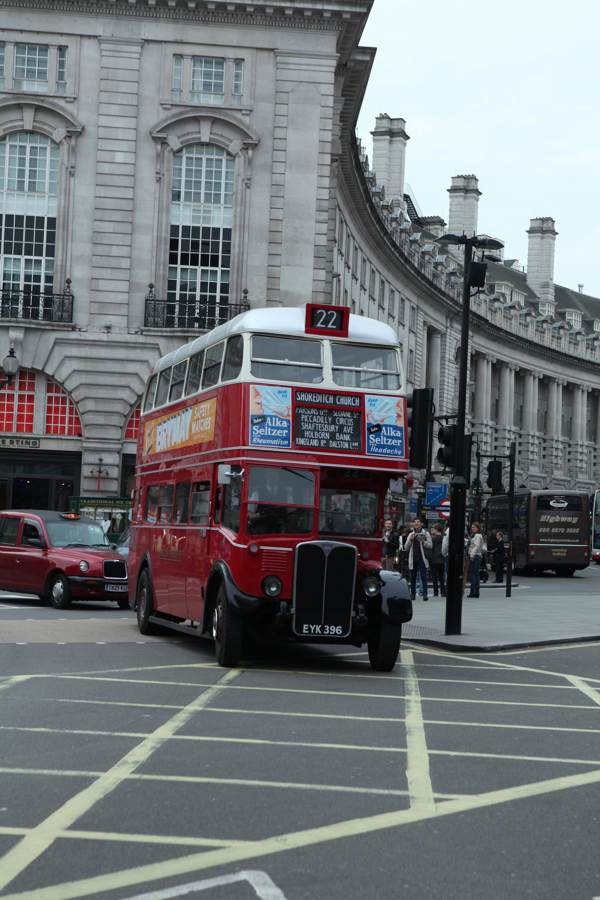
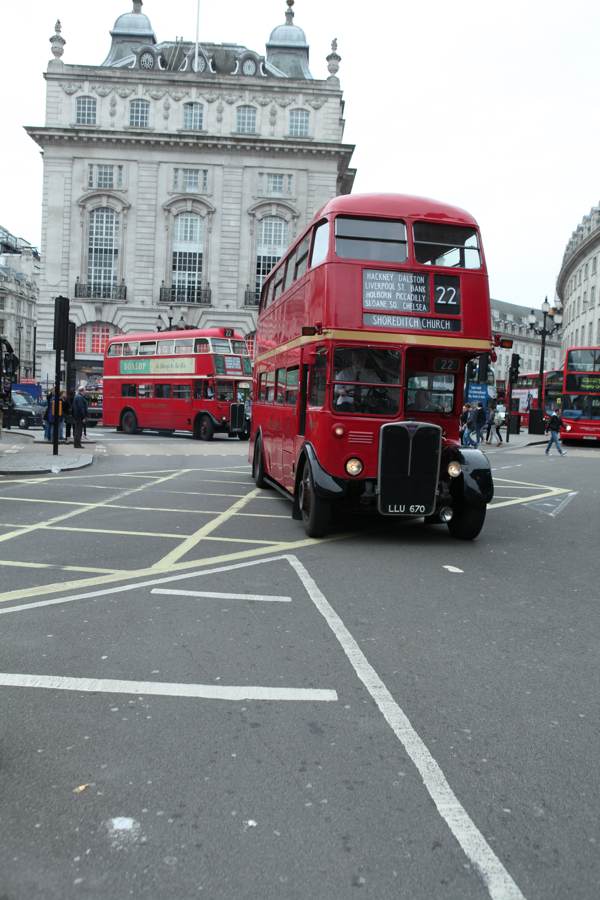
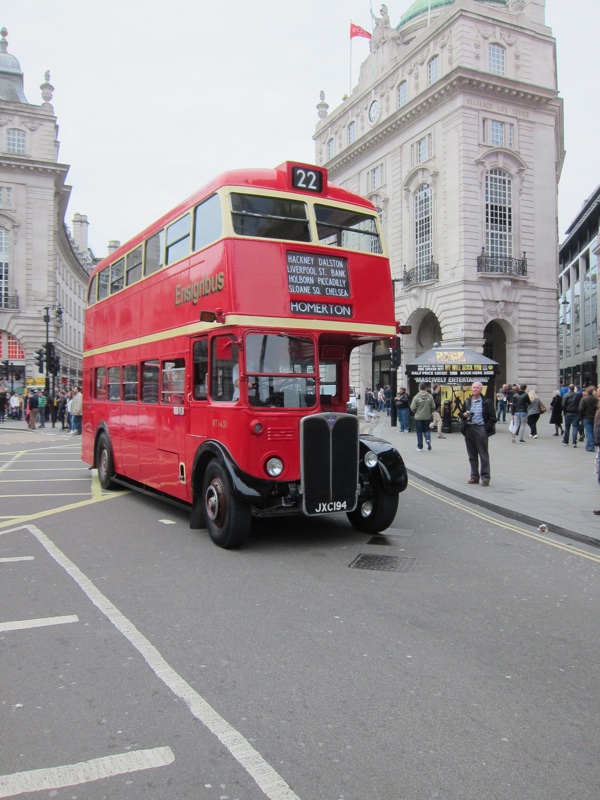
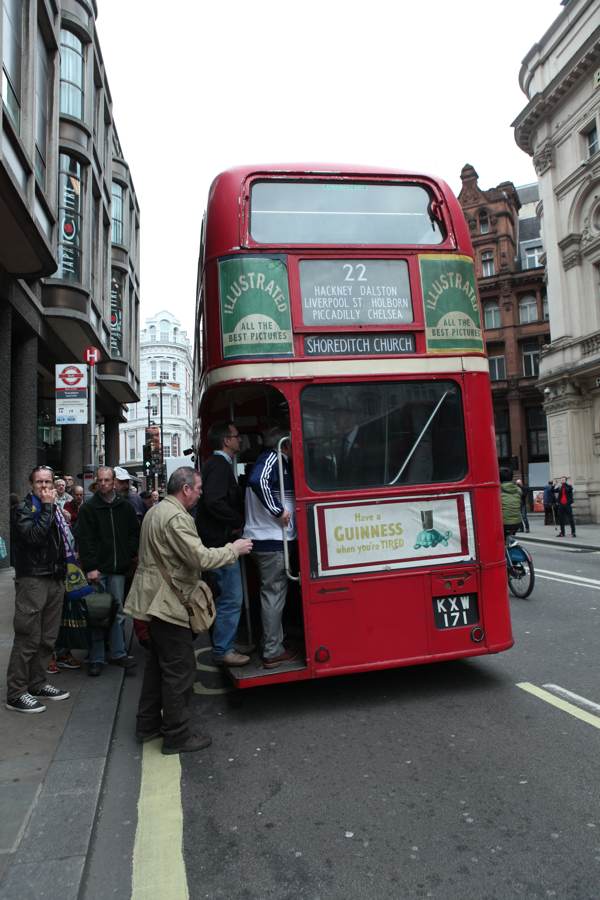
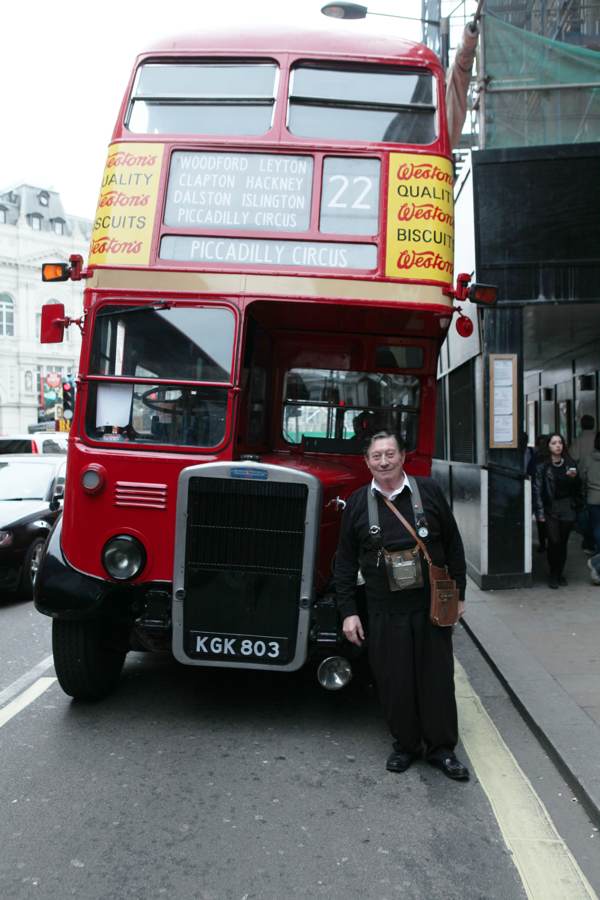
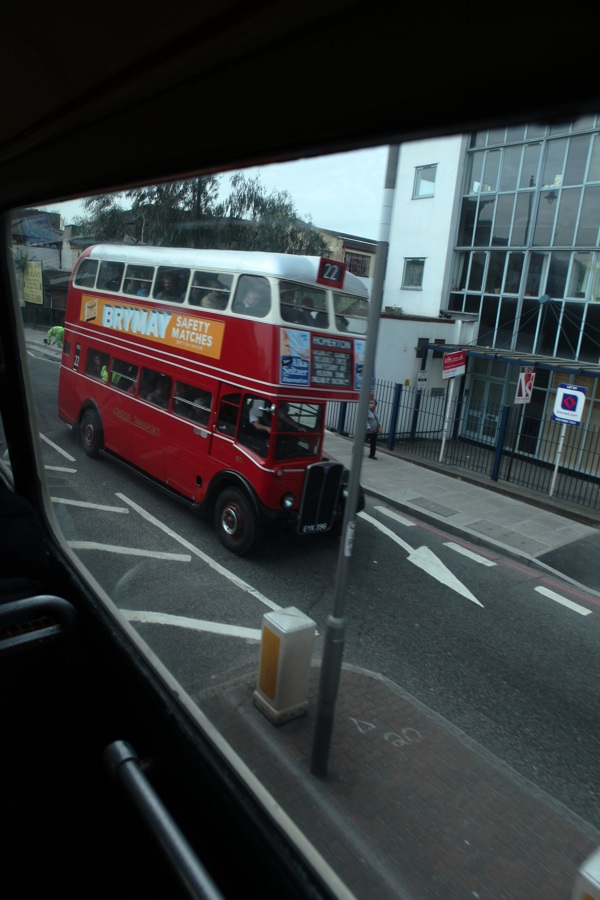
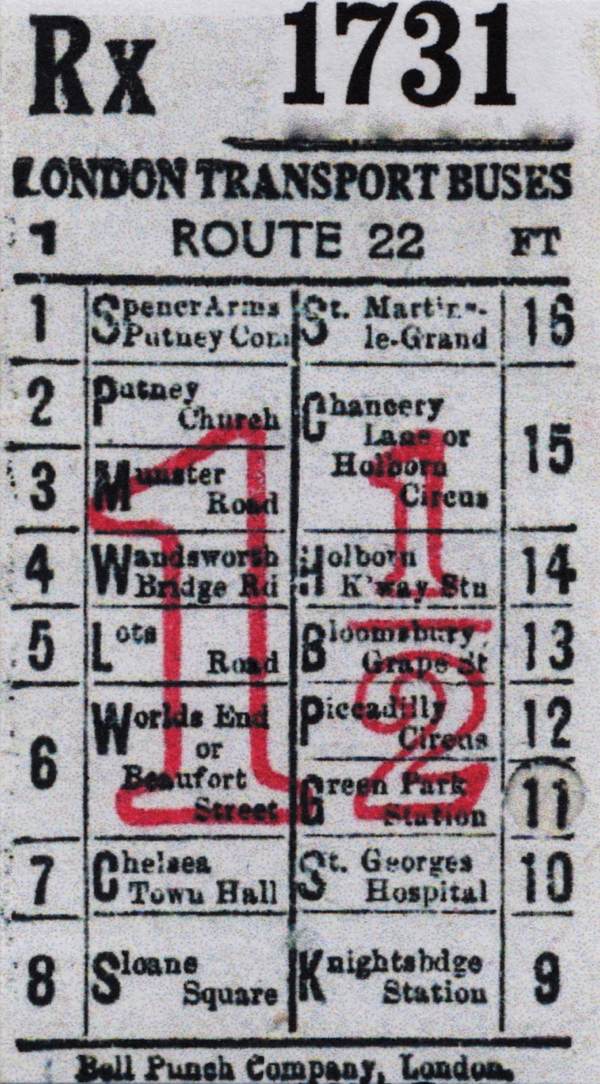
Photographs copyright © Colin O’Brien
You also like to read about
Blogs Spawned
One of the great joys of recent years has been teaching courses encouraging others to write blogs. Without exception, the participants always come up with wonderful ideas and here are just a handful of favourites that have been spawned as a result. The next course HOW TO WRITE A BLOG THAT PEOPLE WILL WANT TO READ will be held in Spitalfields on 10th & 11th May.

BUG WOMAN – ADVENTURES IN LONDON
Because a community is more than just people
Bug Woman is a slightly scruffy middle-aged woman who enjoys nothing more than finding a large spider in the bathroom. She plans to spend the next five years exploring the parks, woods and pavements within a half-mile radius of her North London home and reporting on the animals, plants and people that she finds there. She will also be paying close attention to the creatures that turn up in the garden and the house. She promises to post every week on a Saturday and more often if she can tear herself away from the marmalade making.
THE PERILS OF A MIDWINTER
When I got off the tube train at East Finchley Station this afternoon, I noticed a small, hunched shape on the platform. As I bent over for a closer look, I realised that it was a bumblebee, lying motionless on her back. As everybody else piled past on their way home, I wondered what to do. I couldn’t bear to think of people treading on her. What if she was still alive? So I picked her up and rested her in the palm of my hand. She looked substantial, but her weight barely registered. And then she moved, one of her legs groping into the air as if looking for something, anything to cling on to.
My bumblebee is a Queen, who has come out of hibernation too early because the weather has been so unseasonably mild. She has been unable to find any flowers to feed from, and has used up her last energy searching the desert of the station platforms for something to eat.
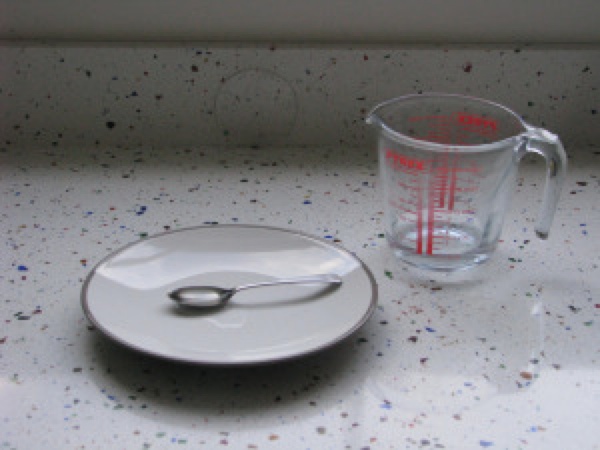
I cradle her in my hand all the way home. Once there, I put her onto a plate, and position her so that she can drink from a spoon filled with sugar-water, the closest substitute for nectar that I can make. I watch as her leg twitches, but gradually the movement becomes weaker. I fear that there is no hope for her.
The bee will not be the only creature to die – she has some ‘hangers-on’. I count four mites crawling through her fur, each the size and shape of a flaxseed. That’s a heavy burden for an insect to be flying around with. The mites live in bumblebee nests, and will attach themselves to the young queens, like this one. When an infested bumblebee lands on a flower, some of the mites will get off and wait for another bee to latch onto, as if changing buses. However, without the bee the mites won’t survive either.
Looking at the bumblebee closely, in a way that she would never allow if she was healthy, is both a privilege and a kind of impertinence. I notice, as I never did before, that her wings are like smoked glass, the ridged veins standing out and catching the light from my Anglepoise lamp. Her eyes are black, like twin coals in her alien face. She has little hooks on the end of each leg, rather than feet. There are bands of dirty yellow fur behind her wings but just behind her head there is the faintest shadow of gold, only discernible from a very particular angle.
As I watch, she is curling up, her antennae covering her face, her legs crumpled under her. I will leave her for a while, but I am sure that she is dead.
The other casualties, apart from the bee herself and her little team of parasites, are the eggs that she carries. She will have mated once last summer, when she first emerged from the nest as a fresh young queen. I imagine her flying to meet the male bees at the top of the lime trees where they leave their pheromones, a kind of sexual perfume, so that she can find them. Inside her will be the first of her fertilised eggs that, if things had been different, would have hatched into the first workers to support her nest. From this one female up to four hundred and fifty bumblebees would have been born, going on to pollinate countless thousands of plants. When any creature dies, however humble, however common, there is a ripple effect that spreads much wider than that little death.

A LONDON INHERITANCE
A Private History of a Public City
My father was born in London in 1928, lived in London throughout the Second World War and started taking photographs of the city from 1946 through to 1954. These show a city which had changed dramatically since the pre-war period and has changed, in many places beyond recognition, in the intervening years.
Through “A London Inheritance” I document my exploration of London using these photographs as a starting point. To try and identify the original locations, show how and why these have changed and how the buildings, streets and underlying topography of the city have developed. To guide me on this journey, I use my father’s original 1940 London Street Atlas, along with books, documents and notes collected over many years.
THE CHAIR REPAIR
Within my father’s photo collection, there are many photos of people across London. Whether as part of an overall location, or frequently the focal point of the photo.
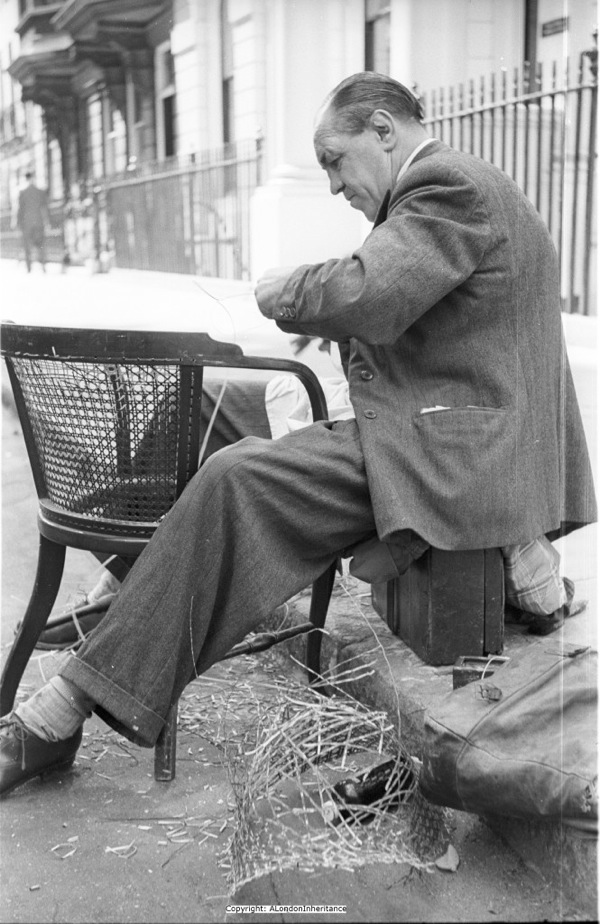
This week’s post is from the later category. I have no idea where this was taken or who he is. Checking the photos on the negative strip either side of these photos, it is safe to assume they were taken in Central London – however I can find no clues within the photos as to a possible location. I am impressed by the good condition of his well polished shoes.
The close-up nature of the photo shows that he did not have a problem with my father taking his photograph. He carries on with his work with an obvious high degree of concentration and, I am sure, pride in his work. This type of scene would once have been very common on the streets of London, but was soon to be replaced by a throwaway consumer culture where everyday objects are cheaper to replace than to repair.
It would be good to know if that chair is still in use, somewhere in London.
http://alondoninheritance.com/

HERNE HILL STREET PIANO
Random Encounters in a Railway Walkway
The Herne Hill Piano sits in the entrance tunnel to our local station. I saw it one day plonked there with its lid open confidently displaying its stream of black and white keys – an invitation for contact like no other. And that is what this blog is about – the contact that this piano generates.
I began to notice how a piano in a public place changes the way people behave. It seemed to naturally encourage interaction and to see that happening in a screen orientated urban environment was fascinating. In a city like London people enjoy living here because it is exciting and diverse but the the city can also be isolating.
What I found exciting about the piano was that it gave permission for face to face personal interaction and permission to experience this diversity. By the piano, people talk to ‘strangers.’
The area around it becomes like a front room without walls. It is a natural community maker in the gentlest, most-unassuming way. And I wanted to tell people about that and decided to make a film about it – so this blog is a companion to the film.
I promise to post a piano story every week and look forward to hearing yours.

ANTHONY
Anthony was the first person that got asked these two questions – How did you get into playing the piano ? and Why do you like playing the Herne Hill piano?
Anthony said, “I got into music when I heard it on video games – the backing tracks, I wasn’t financially stable, so I got myself a cheap keyboard and some books and learned to read sheet music and compose.”
He taught himself initially by ear to play the music he heard on video games – classical, soul, jazz. Then he taught himself to read music and is now at college learning to compose music for video games. He plays beautifully.
“That what I just played was one of my compositions. That’s what I do now, I decided to make a career out of i , I compose music for games. I’m studying it now, i’ts a passion.”
[youtube BS9gclfqfO8#t nolink]

THIS IS FIFTY
Turning fifty and looking for role models who can show me how to do it with style and grace
Over the last eighteen months, I have been on the move. My elder son has started at university in Scotland and my younger son is busy planning his gap year in the States. Having spent the last ten years on my own ‘gap year,’ I have recently remarried and moved into a working vicarage. In the process, I have acquired a whole new set of roles as well as a beautiful step-daughter whose love trials have taken me back to my own eighteen-year-old self.
In the midst of these shifting life plates, I have experienced my own deep murmurings. I have turned fifty.
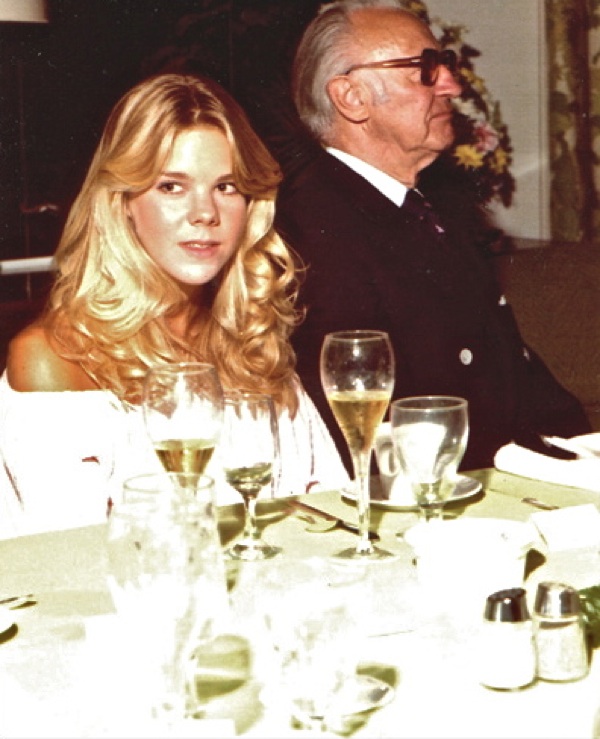
In the move, I came across a photograph of my teenage self in one of those boxes that I hadn’t opened in years. It was taken at my debutante party – my ‘coming out’ party – at the yacht club in Vero Beach on the east coast of Florida in the nineteen seventies. I am sitting beside my grandfather. While I glance self-consciously to my right, maybe a little anxiously, my grandfather stares straight ahead, on top of his game, like a mafia boss contemplating a hit. It touches me.
When I was turning from a girl into a young woman there were social conventions and peer group expectations. There were grown-ups to dodge my way around and also to help me negotiate my way through. There was the promise of adventure and there was lovely day-dreaming. There were parties.
But now, standing on another threshold, I face an unknown future with few signposts. And the places to which I have always gone for inspiration – the films and magazines and fantasy characters that played such a key role in the creation of my younger self – have simply disappeared. They have dried up. I feel bereft.
What does it mean to be newly married again at this age? What do I take with me and what do I need to let go? Who now are my role models and my muses?
I am still a little anxious, looking over my shoulder for clues. Only now the girl in front of the mirror at eighteen stands there at fifty. Maybe less wilful, she is still wondering what lies ahead.
I want to open up a new conversation with my younger self in order to reconnect with how I got to where I am today. To make sure that she comes along with me. I don’t want to loose the spirit of the girl inspired by adventures of Huckelyberry Finn, or the teenager with her Singer sewing machine who spent hours making creations more inspired by Cosmo Cover girls than Simplicity patterns – much to my parents’ horror.
In these get-ups I created at fifteen for my lanky hollyhocks body, just coming into flower, certainly nobody ever thought I would end up a vicar’s wife. Least of all me.
I’ve been playing all my life. But do I have to stop? Can I still play the romantic lead in my own life? Where do I look for inspiration and guidance?
TINSMITHS CUTTINGS
Interesting things we’ve stumbled on and want to share
WHAT DO HAIRDRESSERS DO ALL DAY?
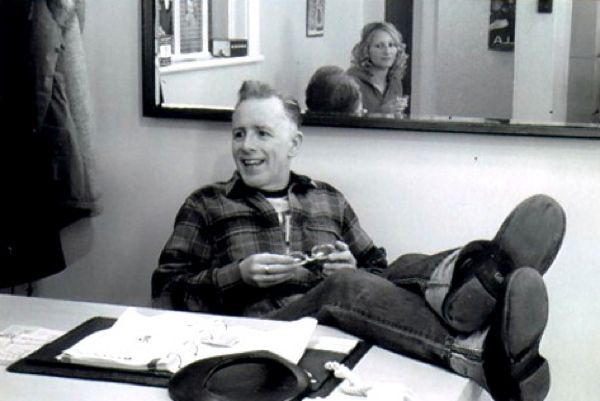
On being asked why he became a hairdresser, Mervyn Parnell is liable to give one of two answers. Either: “I was good at art, I could draw and I knew I was creative. I could have gone to art college but it was full of ‘hippies’ not people like me, so I thought that hairdressing would allow me to be creative and earn a living.” The other answer is “I was a 5’2” lad with buck teeth, so I figured that going into an industry which had loads of girls and not too many heterosexual men working in it, that I would be bound to pull.”
I’m not sure which answer is true. In any case, Mervyn started as a Saturday boy in a salon near his family home in Gloucester in his early teens, he was cutting hair at fifteen and had is own client list at sixteen. “No one ever taught me, there was one chap John Phelps who ran another salon and had been a world champion, we just used to talk about cutting hair – which sounds a bit sad – but he’s the only person that I learned anything from.”
A girlfriend and job brought Mervyn to Ledbury at the beginning of the eighties. “I remember getting off the bus with a Mohawk haircut wearing bondage trousers and I thought ‘What the heck am I doing here?’ Mervyn has continued to be one of Ledbury’s more stylish residents with a collection of more than sixty vintage Levi jeans, twenty-five Levi jackets from the forties & fifties, Pendleton shirts and 1948 -1956 suits it can be said that Mervyn is more into clothes than most “It just smacks of laziness, dressing badly.”
In 1986, Mervyn opened the Cutting Club, with a distinctly mid-century feel and an educational selection from Mervyn’s extensive collection of northern soul, fifties and sixties R&B and roots, and rockabilly music playing. The salon has been busy since the day it opened.
“My working day starts at 7.30 in the morning and ends at 7.30 in the evening, I have more than twenty clients a day and I can’t wait to get a pair of scissors in my hands.”
“So you like what you do?” “Absolutely – I like to create and change, I like cutting hair and I really like the people that I work with, in twenty-eight years I’ve never had a cross word with any of my stylists.”
There is no computer in the salon or in Mervyn’s life and no mobile phone either, this seems to be an aesthetic choice as much as anything. “I struggle with technology, I’m just not interested, I prefer things which are crafted with a hand and heart.” And fashion as a concept is difficult for him too. “I like style not fashion, I like a good hair cut where you can see it’s a whole exercise in shape, not to be dressed.”
Mervyn and I go back a long time. He first cut my hair when I was fourteen, it is a haircut which is etched in my memory because until that day my hair had been long, straggly – and mainly scratched back into a ponytail and found under a riding hat – but the sleek sharp bob that Mervyn gave me made me aware of a whole new world of possibilities!
THE SUMMER HOUSE YEARS
Once a week on a Tuesday, I’m going to tell you about my retirement experiences. Don’t be fooled by the somewhat bucolic title, there’s a lot of stuff going off even if most of it is in my head.
The bald facts of the matter are that I’m going to retire in just over a month. I have been thinking about what I want my world to be like – we control freaks think in those terms – what I want it to be. Problem is, I have not much in the way of an idea what I want ‘it’ to be. When you tell people you’re going to retire their immediate and, I suppose, predictable response is – what are you going to do?
I need to be creative, think laterally, work out what works. Important when, like me, you have no passion, no firm hobby to fall back on or extend. So this is my challenge and the challenge of this blog, to report my progress from said Summer House.

FIRST VALENTINE’S DAY AFTER RETIREMENT
Call me a romantic old fool – You’re a romantic old fool! – but I can’t let Valentine’s Day go by without some recognition and I wouldn’t have let it go by this far, had it not been for the fact that it was a day of mixed fortunes. Let’s start with the downside. It was the day, some time ago, not realising the significance of the date, we had chosen to have the pups ‘done’. On the most love-oriented day of the year our puppies love life was to be brought to an abrupt and permanent end. This was how the day began, dropping them off at the vets in full knowledge of the pain they were about to suffer through castration. Archie, mild-mannered Archie went straight for the vet, he knew you see. We were upset when we got outside. In fact some tears were shed – mine.
Then – pulling ourselves together – we thought, well we’ve got a day to ourselves. A very rare event. So we had better make the most of it and it is Valentine’s Day. So, being the romantic old fool that I am, I decided to take Mrs Summerhouse for a little luxury shopping and a celebratory meal. No expense spared, yes, of course, my love, you may have the bacon sandwich and a large mug of tea of your choice. Go ahead, spoil yourself, live a little. We were sitting in a cafe in Leeds Market, a place overflowing with romantic ambiance. I, myself, chose the bacon and egg sandwich, no point skimping on such a day as this. The puppies would have wanted us to have a good time, we reasoned.
For dessert, I walked to the next stall and bought three Twix bars for a pound. Yes, I know I spoil her and do you know she refused half a bar – a whole finger – said it was too soon after the bacon sandwich? But, “My love,” I reasoned, “That’s what happens with dessert. It comes more or less straight after the excellent first course and while you have some of your liquid refreshment – in this case a mug of tea – left.”
I love Leeds Market. We took full advantage – two sirloins and two fillet steaks for ten pounds – beat that. A new watchstrap for three pounds. Then outside where my lucky Valentine bought two pairs of gloves – one for each evening dress, although I’m not sure woolly mitts are de rigeur these days. Then there were the light bulbs, four of them. No matter the expense, this was life in the fast lane. I bought a Freddy King CD for a fiver. My romanticism knew no bounds, I even allowed a man to give Mrs Summerhouse a single red rose on my behalf of course.
Of course, there was a price to be paid for all this fun. Isn’t there always? After a romantic day out, we went back to pick up the pups. And a sorry sight they were, very subdued, although Archie managed to attack the vet before he left. Smart boy, that Archie!
He, the vet, had put those ridiculous lampshades on them – to stop them licking their wounds, he explained (and biting his hand off). We took them off as soon as we got home. The pups were delighted but it meant we had to watch them carefully to ensure that, now they could, they didn’t lick themselves and hence open up their wounds.
They did manage to share a little of our meal – the prawn vol-au-vent and the duck l’orange went down well. So well that it took their little minds off licking themselves for a while. But, after the meal, the practicality of our choice to remove the lampshades became clear. It meant we stayed up all night. We slept on the sofas and, as we tossed and turned, our minds ran fondly over the day. Who would have thought that, at our age, Valentine’s Day could be so full of romance.
http://thesummerhouseyears.com/

HOW TO WRITE A BLOG THAT PEOPLE WILL WANT TO READ, 5 Fournier St, Spitalfields, 10th & 11th May
Hilary Haydon, Brother at Charterhouse
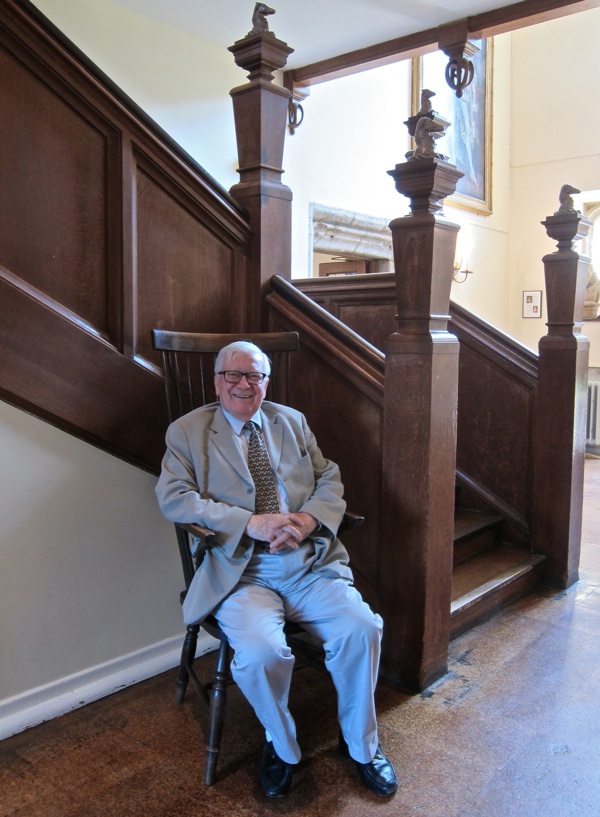
Unlike the hermit monks of the medieval priory that once stood upon this site, the current Brothers at the Charterhouse are a sociable bunch and thus I was able to pay a visit upon Hilary Haydon, the third-most senior Brother, who took me on a tour of the accommodation this week.
Seniority – in this instance – is based upon how long a Brother has been resident at the Charterhouse, not age. Yet Hilary has a rather more vivid way of expressing it. Gesturing to the pigeon holes for mail, he explained that as residents die the labels of those remaining get moved up. “You start here and then you move along, until you drop off the end,” he informed me with startling alacrity.
It made me realise that residence in the Charterhouse affects the Brothers’ sense of time – inhabiting these ancient stone walls induces a certain philosophical perspective upon mortality, setting the span of an individual’s life against the centuries of history that have passed here. It is both a consolation and an encouragement to recognise the beauty of the fleeting moment, as manifest in the immaculately-tended gardens alive with bluebells and tulips this week, and as illustrated upon the tomb of Thomas Sutton – the benefactor – by bubbles, symbolising the transitory nature of fame.
Upon a bright spring day, I crossed the wide lawn that sets the Charterhouse apart from the clamour of Smithfield, aware that my diagonal path, bisecting the velvet greensward, passed over the largest plague pit in the City of London in which sixty-thousand victims of the Black Death were interred. Arriving at the entrance, I cast my eyes up to the fifteenth century gatehouse of the former Carthusian Priory. Henry VIII met with greater resistance from the monks here than any other religious order and thus he had John Houghton, the prior, cut in four and his right arm nailed to the door.
Yet this grim history seemed an insubstantial dream, as I entered to discover Hilary Haydon waiting in the gatehouse to greet me and looking rather dapper in a linen jacket, ideally suiting the warmth of the April afternoon. He led me along stone passages and into hidden courtyards, through the cloisters and the Great Hall and the chapel, with its flamboyant monument of fairground showiness for Thomas Sutton.
My wonder at the quality, age and proportion of the architecture was compounded by my delight at the finely-conceived planting schemes of the gardens and it was not difficult to envisage this elaborate complex as a Renaissance palace, which it became for the Howard family through three generations until they sold it to Sutton in 1611. The wealthiest commoner in England, he endowed his fortune upon a school and almshouses here, entitled ‘King James’ Hospital in Charterhouse.’ Daniel Defoe described it as “the noblest gift that ever was given for charity, bu any one man, public or private, in this nation.”
Four centuries later, the school has moved out to Goldalming, leaving Smithfield in 1872, yet the almshouses still flourish – offering sheltered accommodation to forty Brothers. Formerly a barrister in the City, Hilary came here seventeen years ago when he became a widower. “I have never regretted it,” he assured me with an emphatic grin, “Meals appear, your room is cleaned and the community is supportive.” Hilary revealed to me that among the Brothers, there are solicitors, barristers and priests, as well as an actor currently understudying for ‘The Woman in Black,’ the stage manager of the original production of ‘Oliver!’ and – as we entered the refectory – he introduced a distinguished-looking gentleman as the ballet critic of The Sunday Times.
Each morning, the Brothers are woken by the chapel bell at ten to eight. “I use it as an alarm clock,” confessed Hilary in a whisper, “I attend chapel only for funerals and when I read the lesson.” Breakfast follows in the Great Hall at eight-twenty, succeeded by morning coffee at eleven, lunch at one and afternoon tea at three – and thus time is measured out in the benign conditions of the Charterhouse. “A very silent brother who sat next to me came into lunch one day and died beside me,” Hilary admitted, “As it happens, there was a doctor who was only at the other side of the table and he was across the table like lightning – it was a beautiful way to go.”
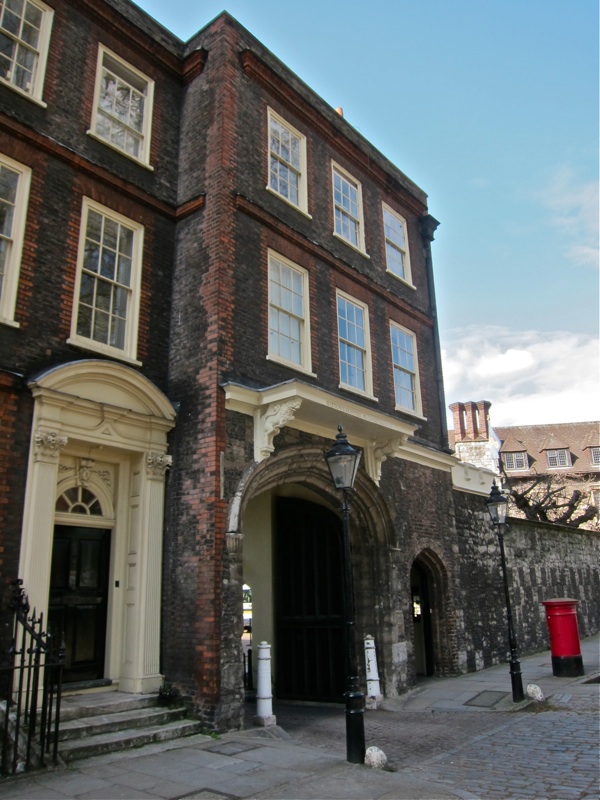
The fifteenth century gate to the monastery is encompassed by an eighteenth century structure
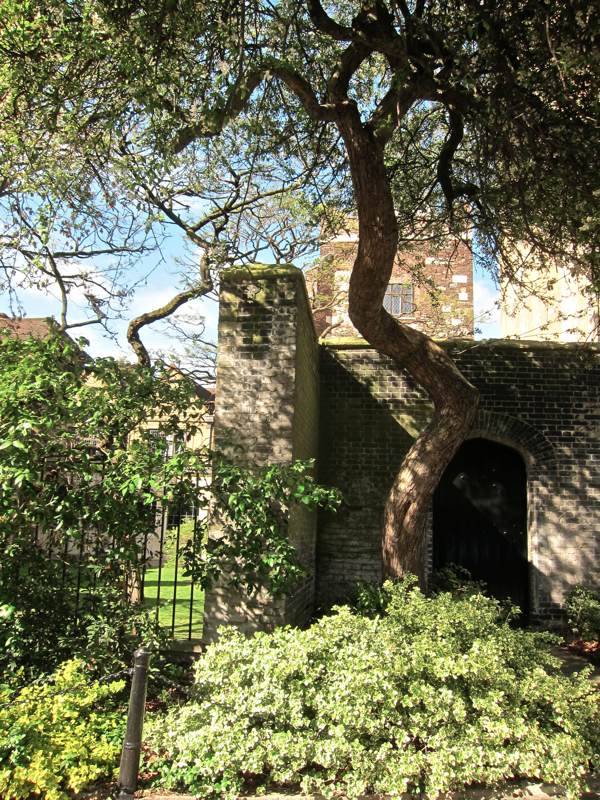
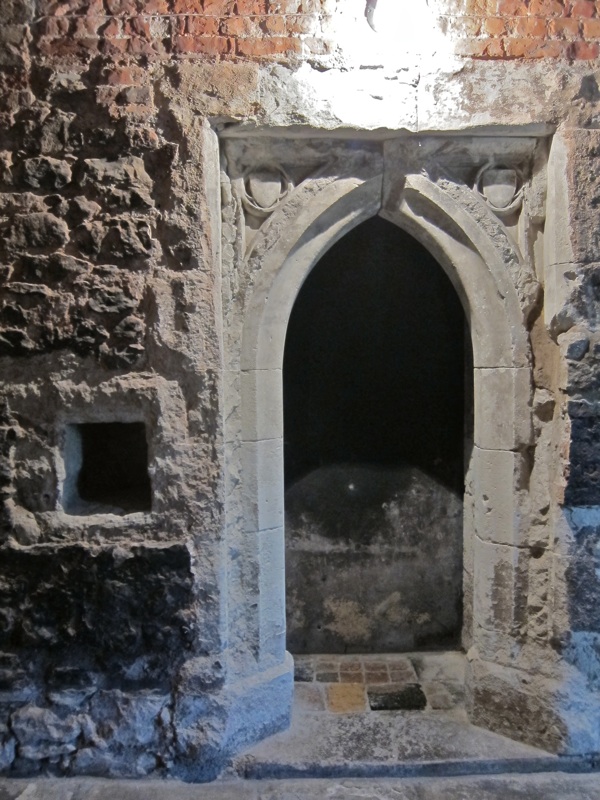
Doorway and cubby hole for passing food through at the entrance to the former priory, dissolved in the fifteen-forties and bricked up ever since.
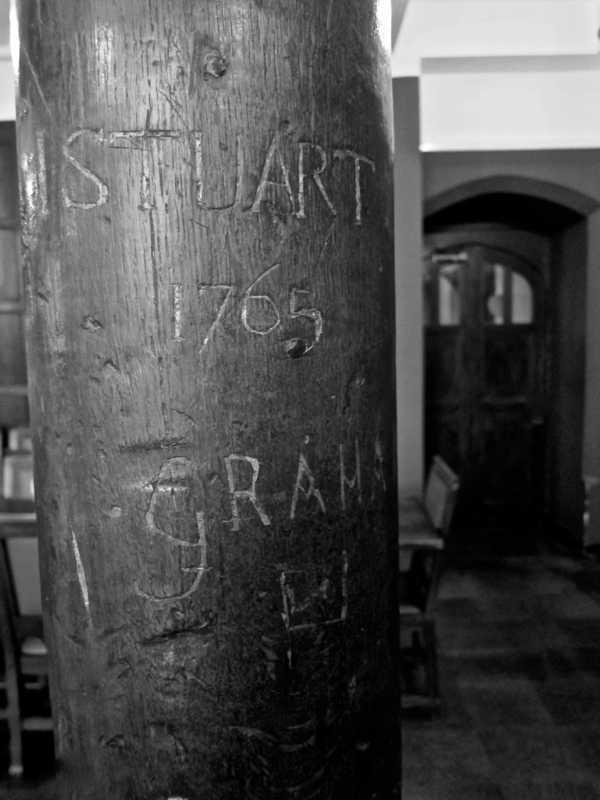
Graffiti from the days this was the refectory for Charterhouse School
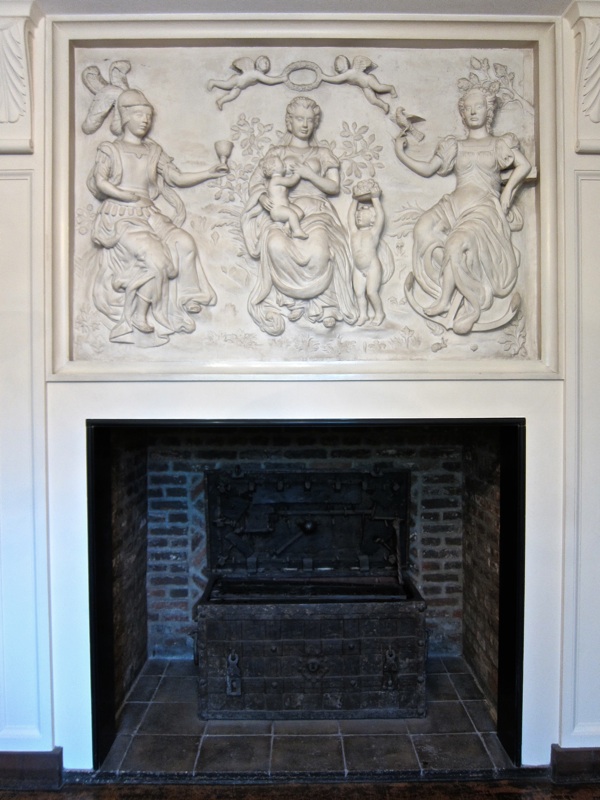
Chimney piece of the three graces and a chest that may have belonged to Thomas Sutton
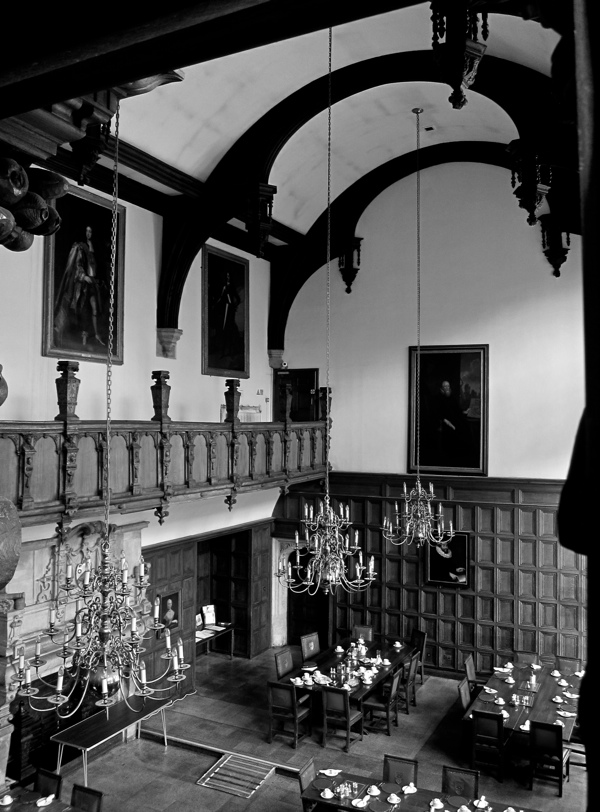
The Great Hall
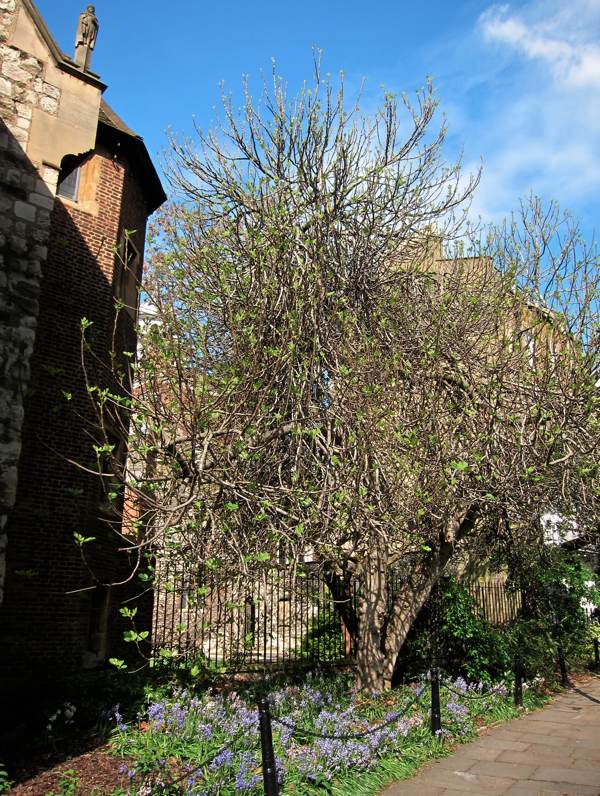
Bluebells and an ancient fig tree just coming into leaf at the entrance to the Charterhouse
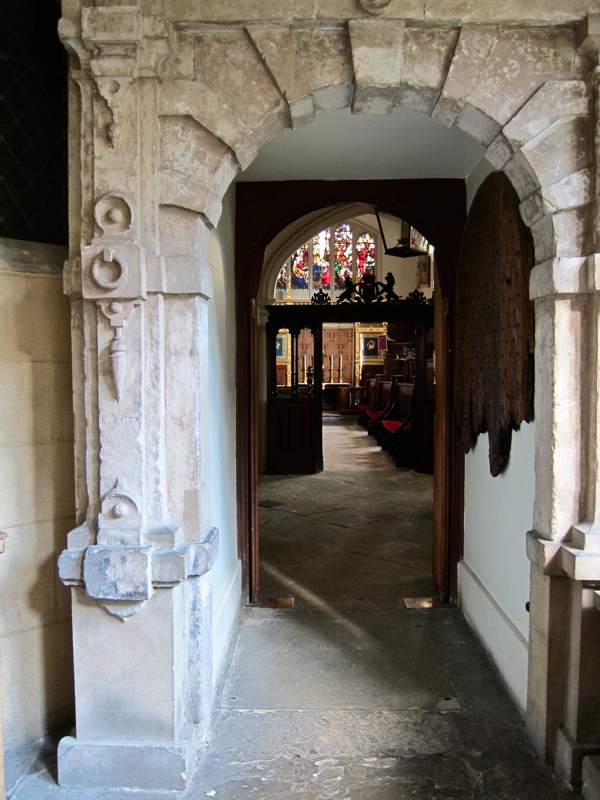
Looking through to the chapel, with the relic of a door damaged an incendiary bomb
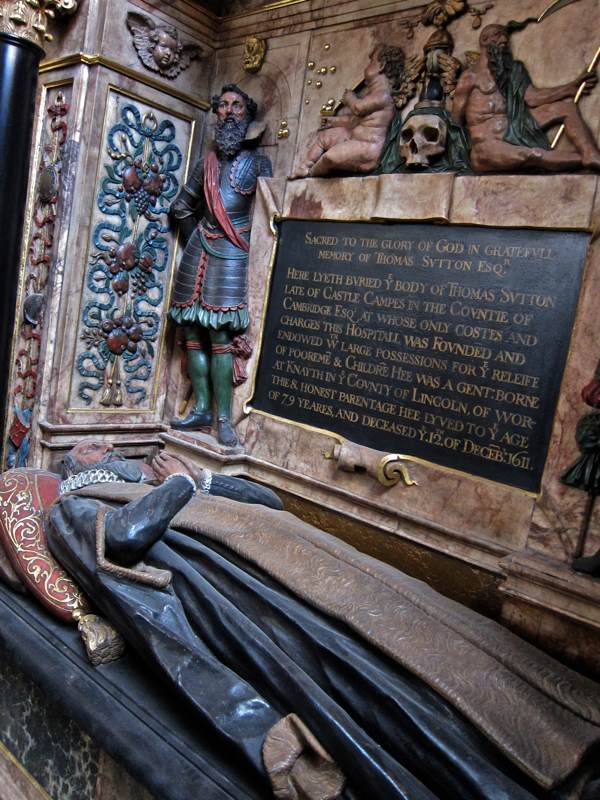
Thomas Sutton, the founder, has lain here for four centuries
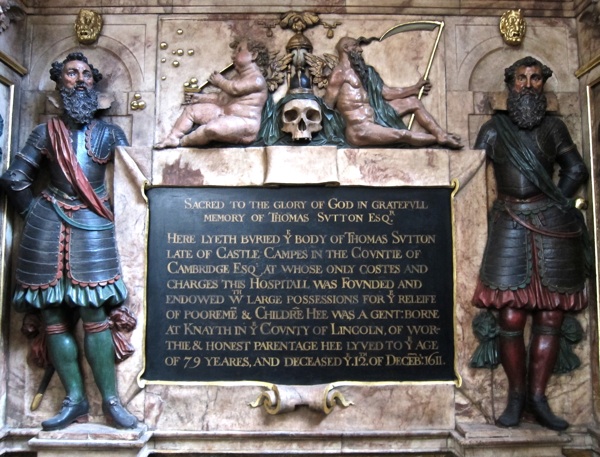
Bubbles symbolise the futility of wordly fame
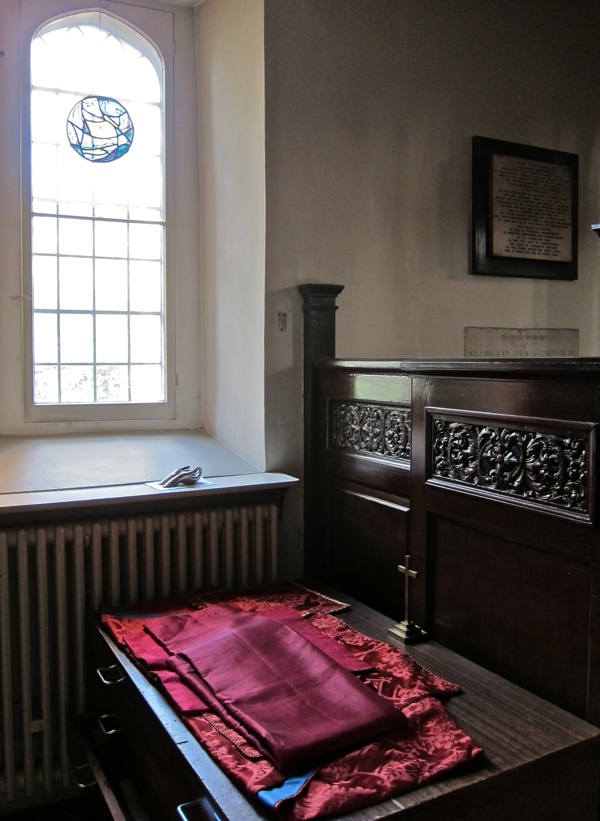
Vestments await the priest in the chapel
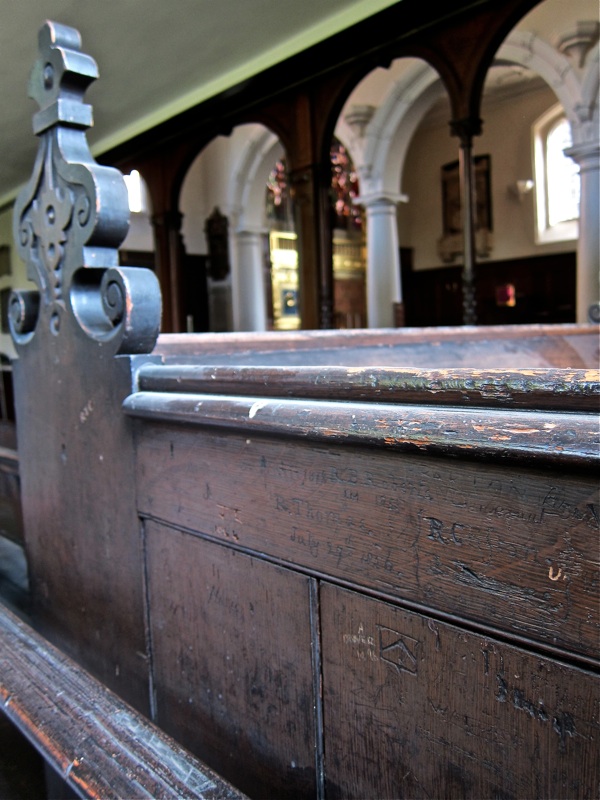
Graffiti carved by the bored schoolboys of the eighteen-fifties in the chapel
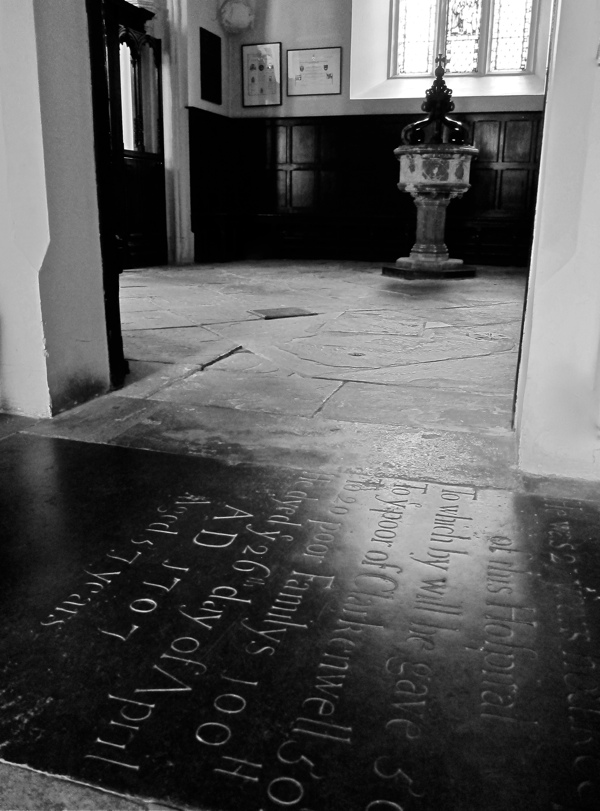
Note the spelling of “Clarkenwell” upon the memorial stone set into the floor
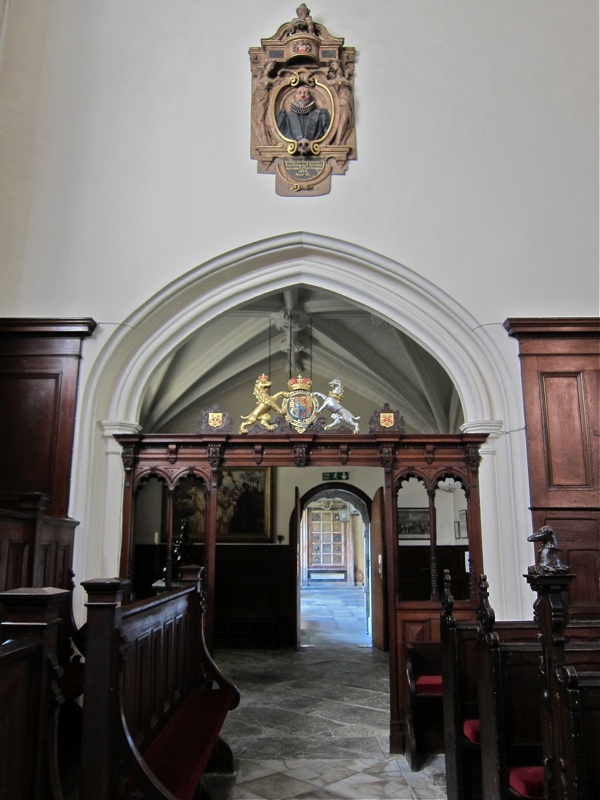
In the chapel
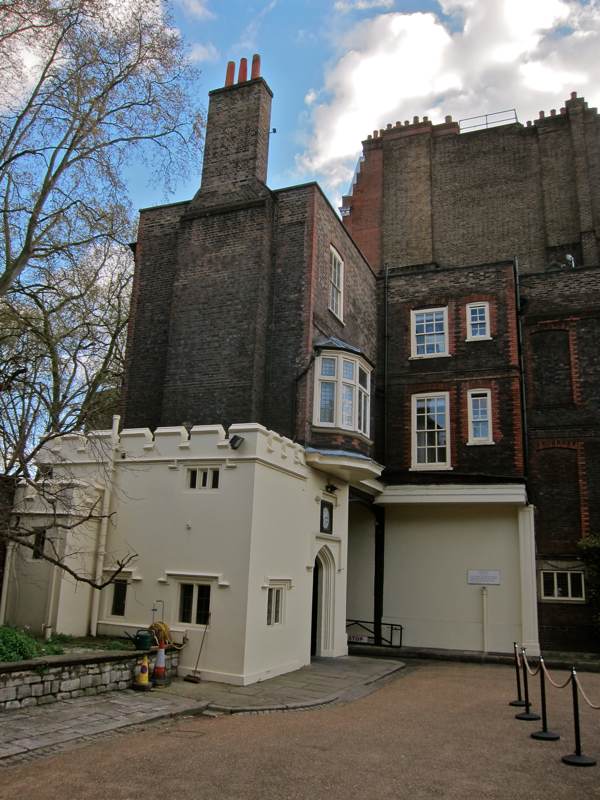
Eighteenth century dwelling built over the ancient gatehouse
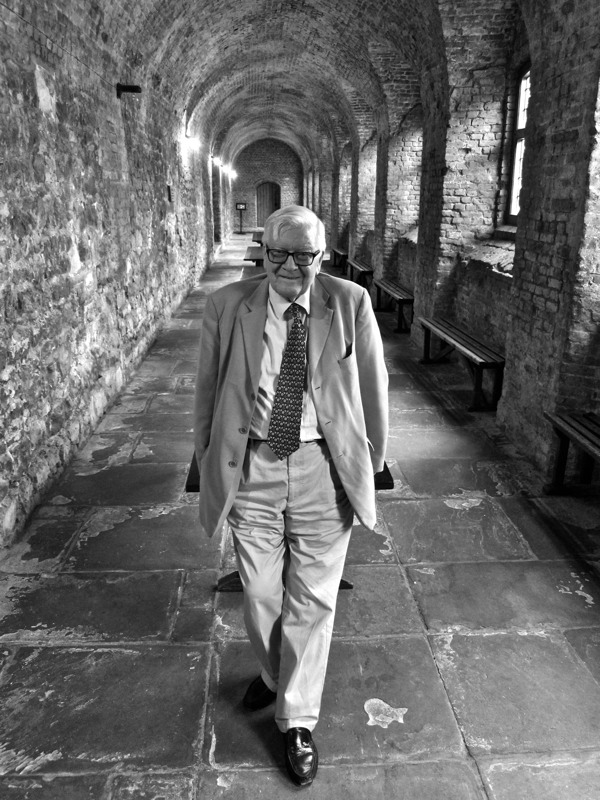
Hilary Haydon in the cloister at the Charterhouse – “It’s always cool in here”
Around The City
Following the Billingsgate pictures I published earlier this week, these City photographs are a second selection from a cache of transparencies of unknown origin, recently acquired by the Bishopsgate Institute. We believe they date from the nineteen sixties but the photographer is unidentified. Can anyone tell us more?
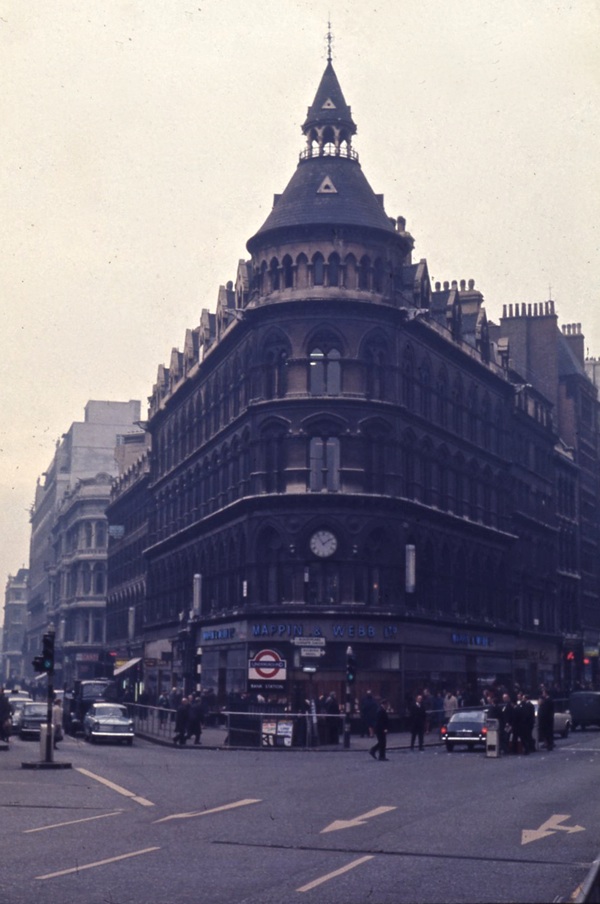
Mappin & Webb, Poultry
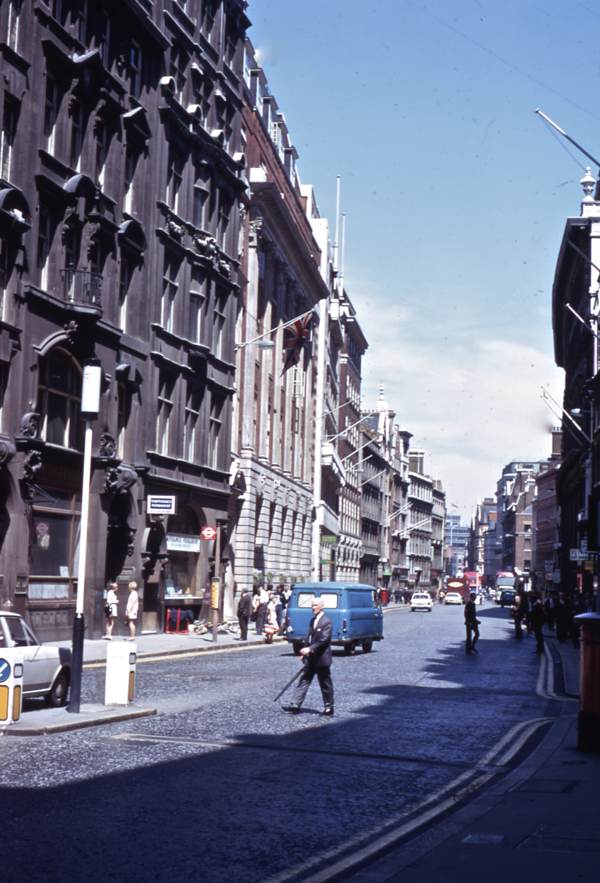
Bishopsgate
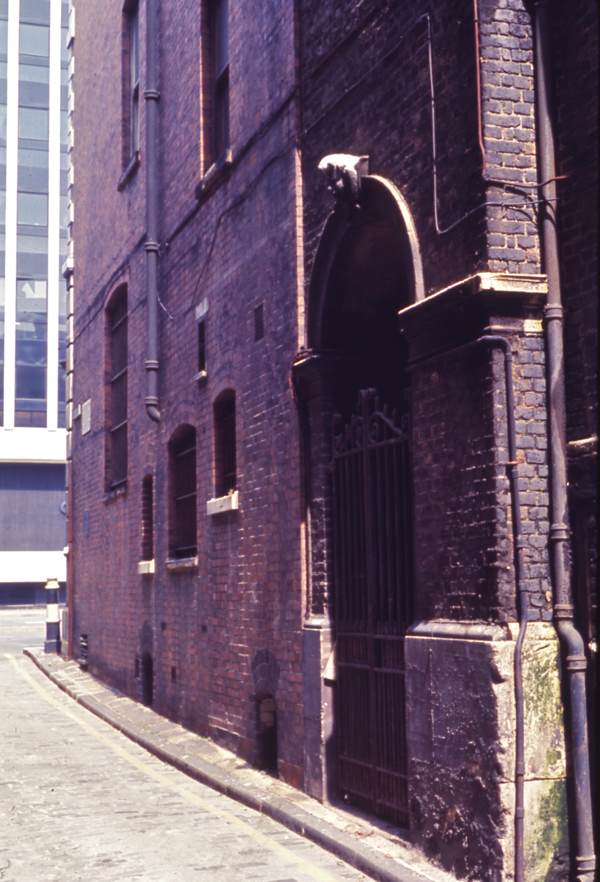
Church of Allhallows The Great, Allhallows Lane
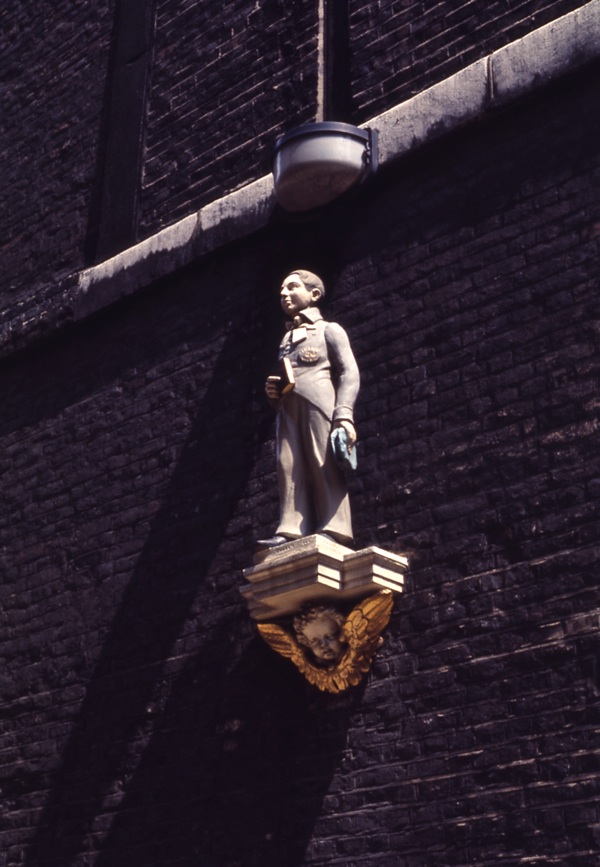
Figure of an Apprentice, Vinters Hall
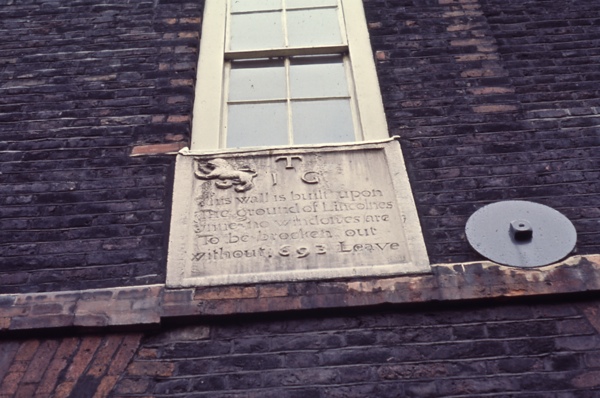
Lincolns Inn Fields, window sign, 1693
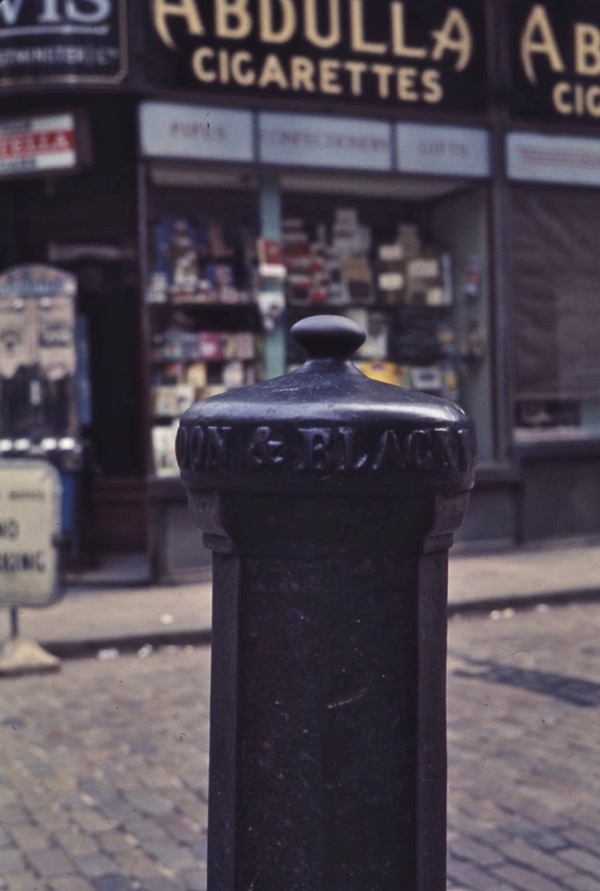
Bollard at entrance to Fenchurch StStation, ‘London & Blackwall Railway’
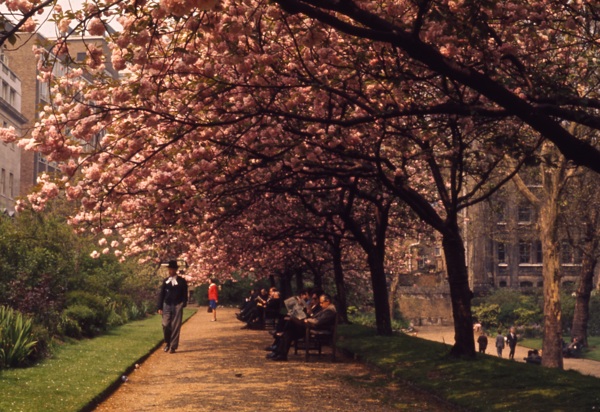
Lincolns Inn Fields
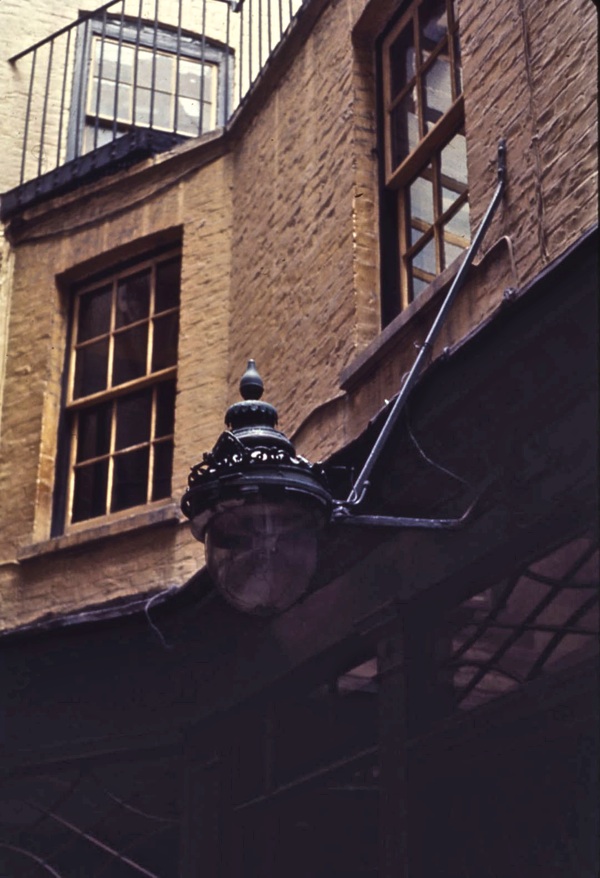
Gas lamp off Castle Court outside Simpsons Tavern, Ball Court
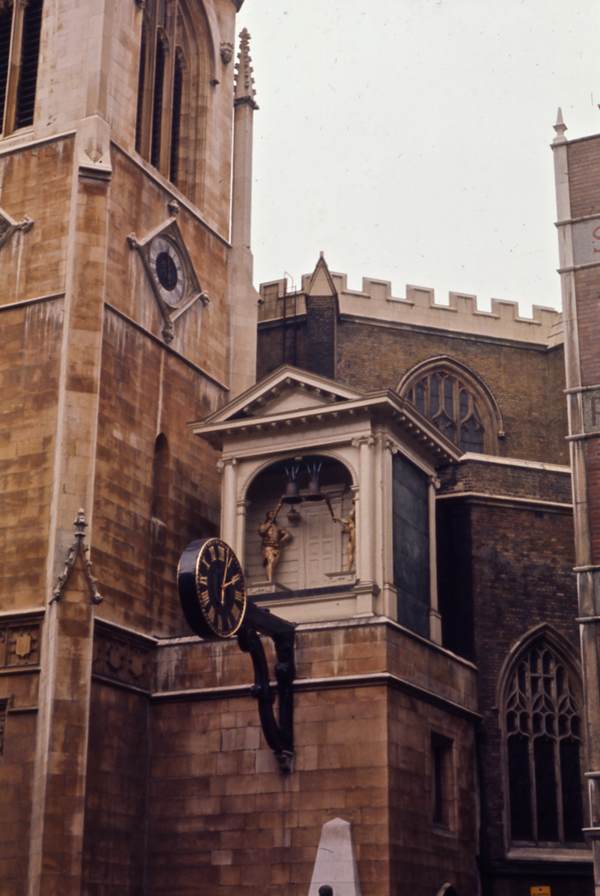
Clock, St Dunstans-in-the-West, Fleet St
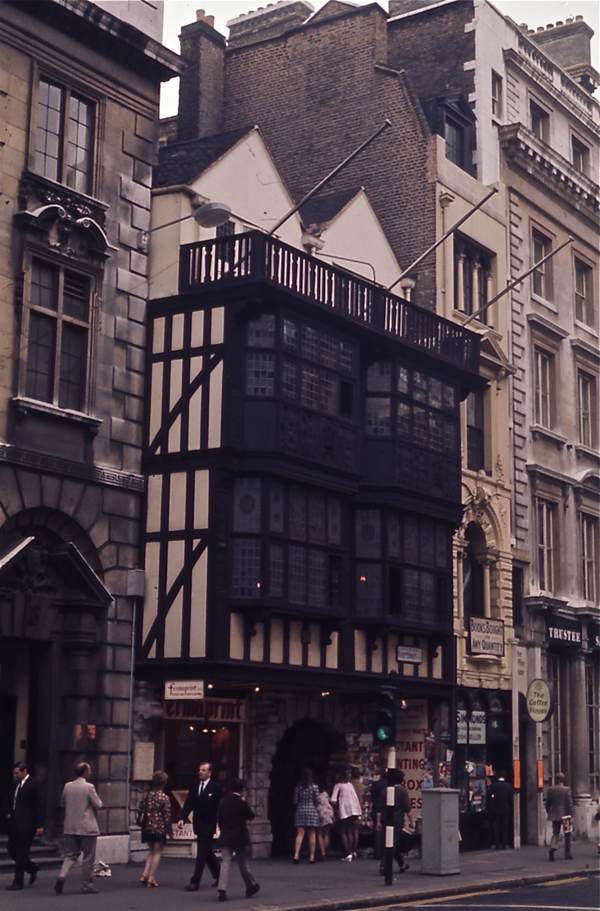
Prince Henry’s house, Fleet St
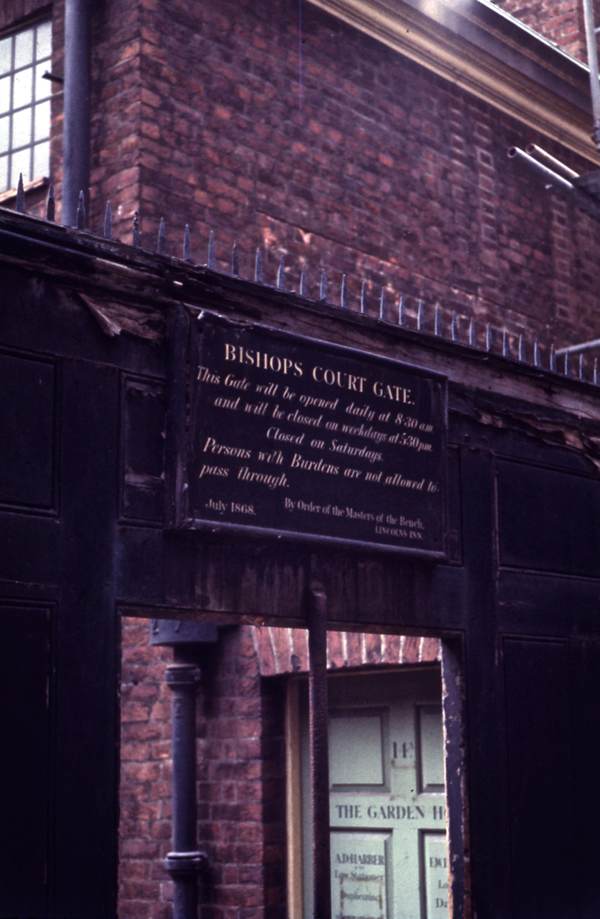
Lincolns Inn Fields, Bishops Court sign, July 1868
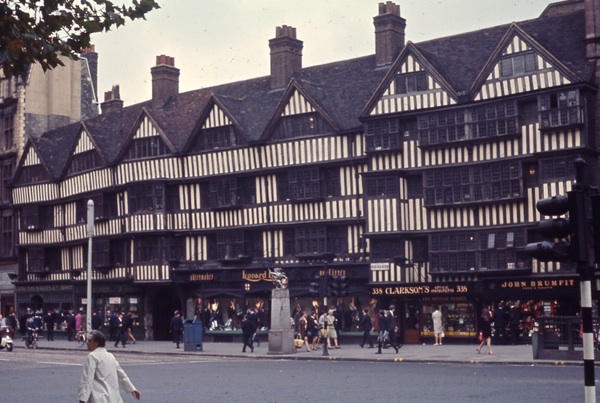
Staple Inn, Holborn
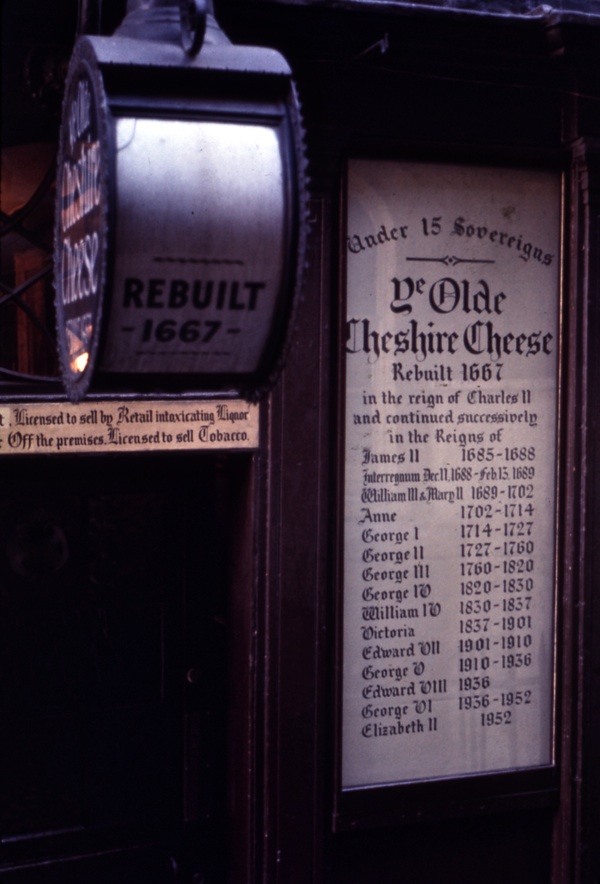
Old Cheshire Cheese, Fleet St
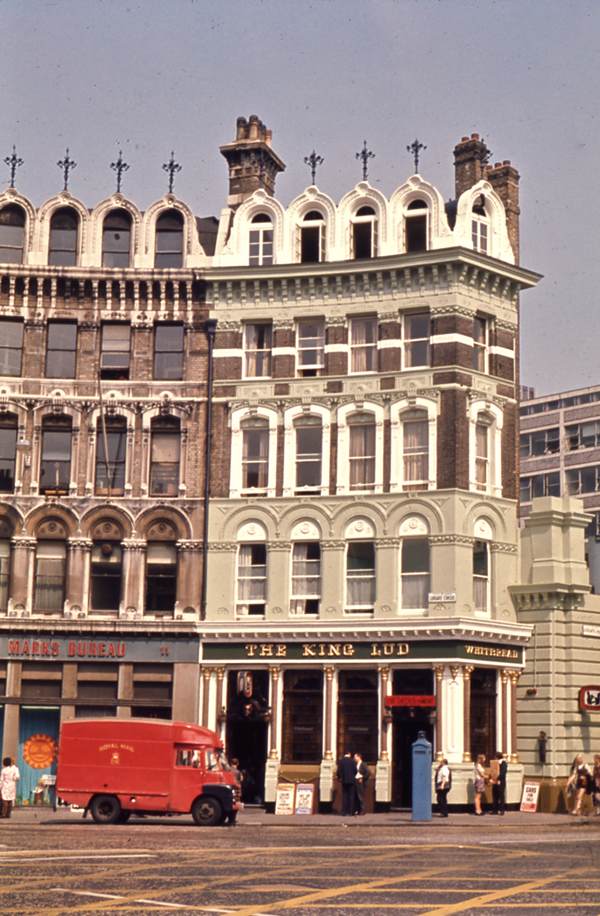
The King Lud, Ludgate Circus
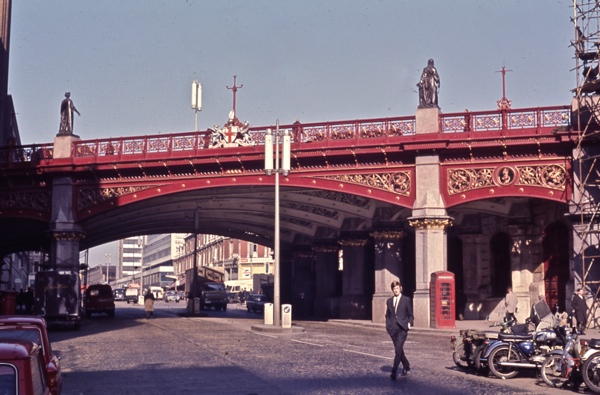
Holborn Viaduct
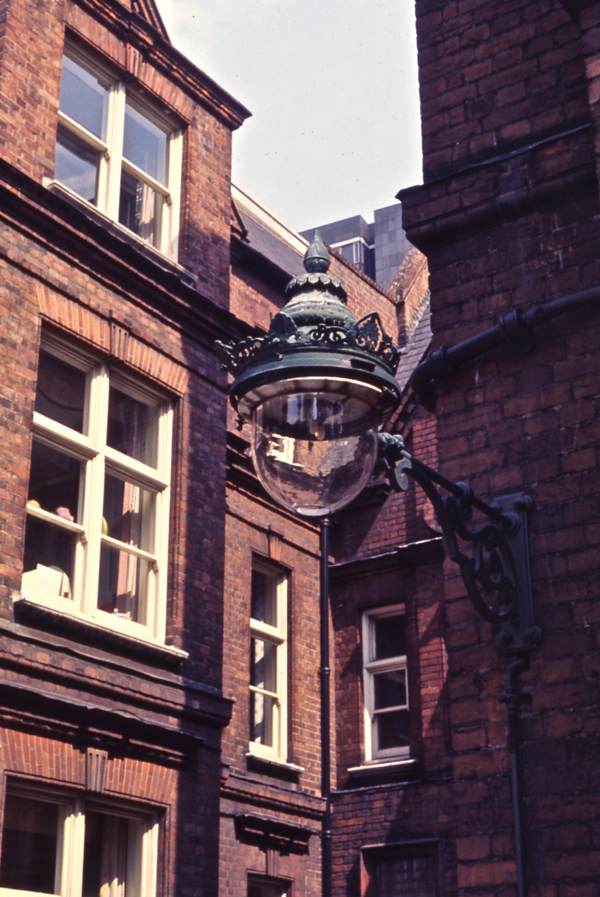
Gas lamp in Amen Court
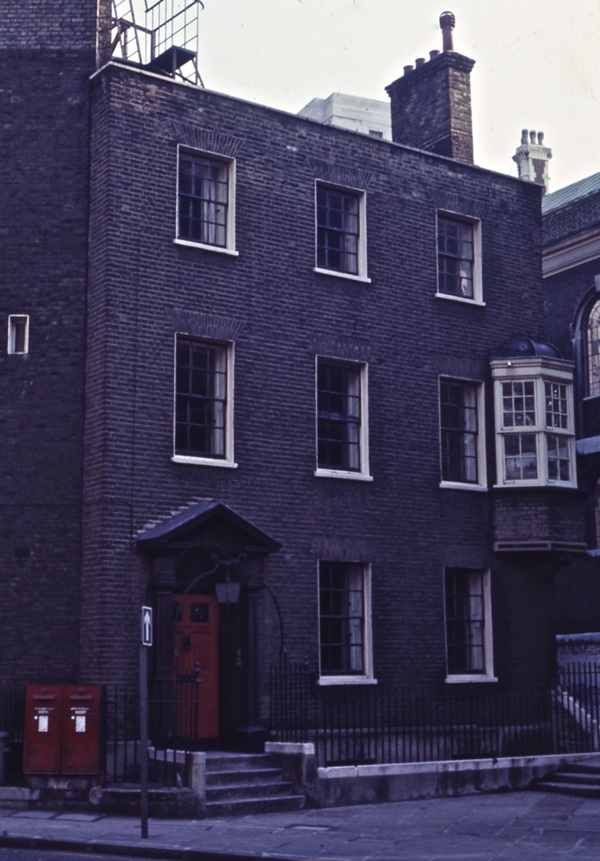
St Andrew’s House, St Andrew’s-by-the-Wardrobe Church, St Andrew’s Hill
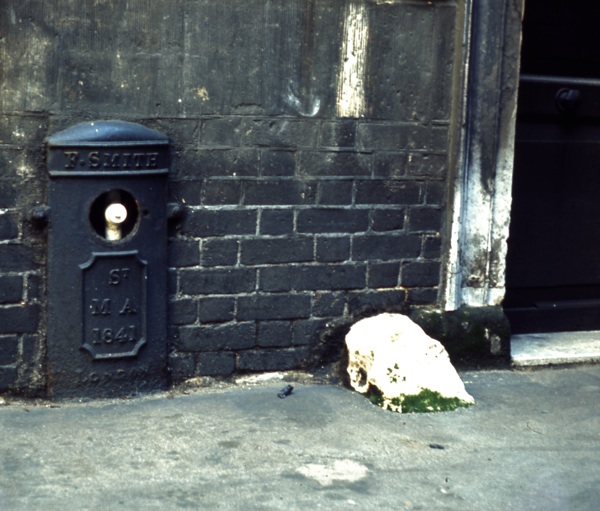
Hydrant in St Mary Athill churchyard, 1841
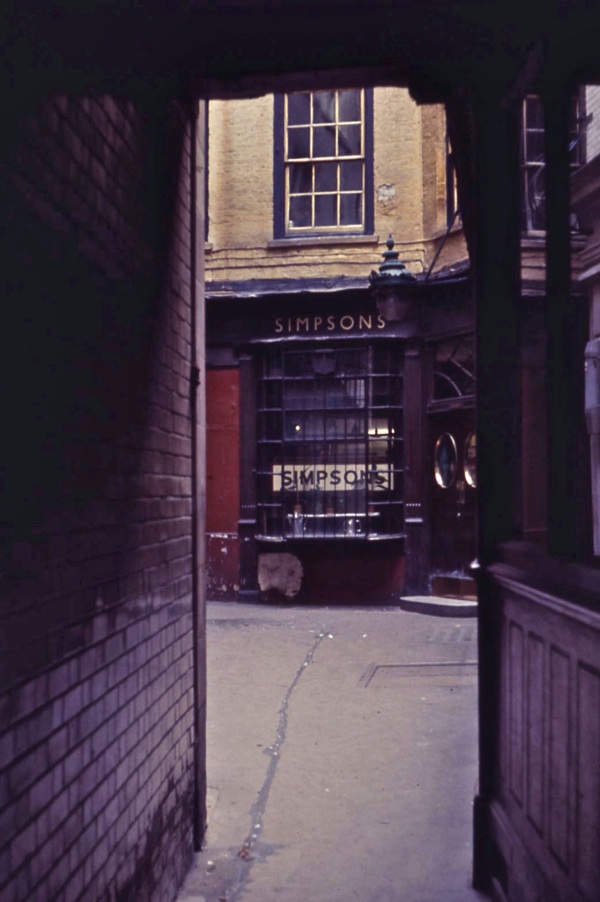
Simpsons Tavern, Ball Court
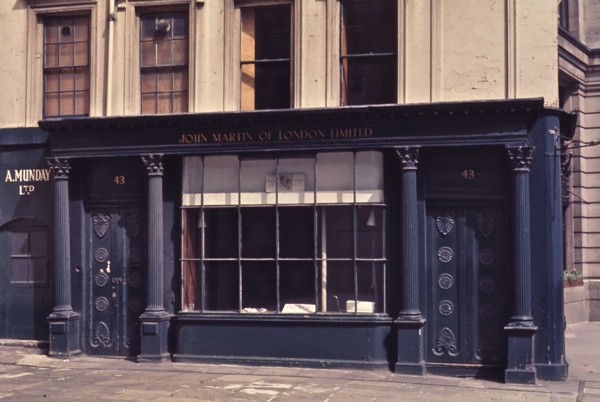
Old shop, Eastcheap
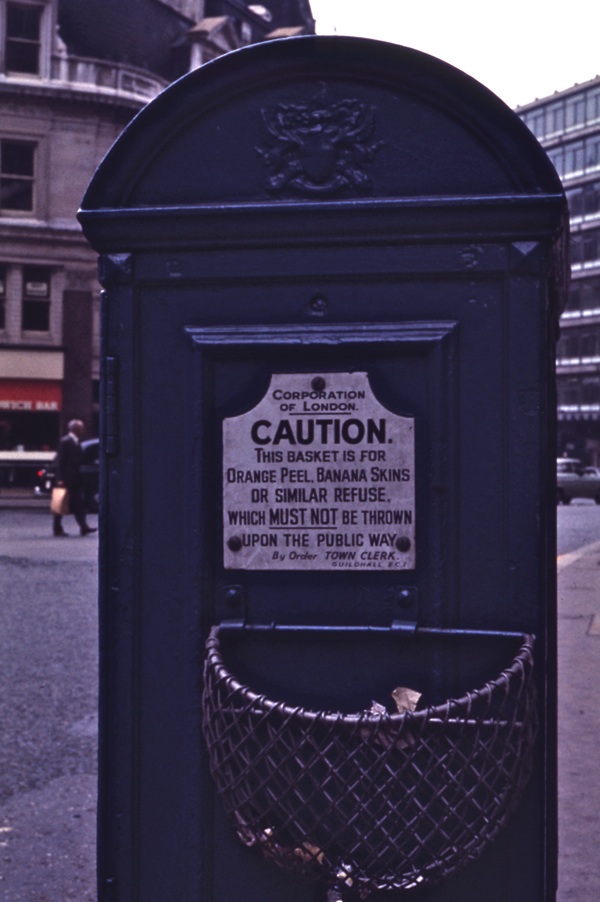
Bin in Gracechurch St for gravel and litter, c.1920
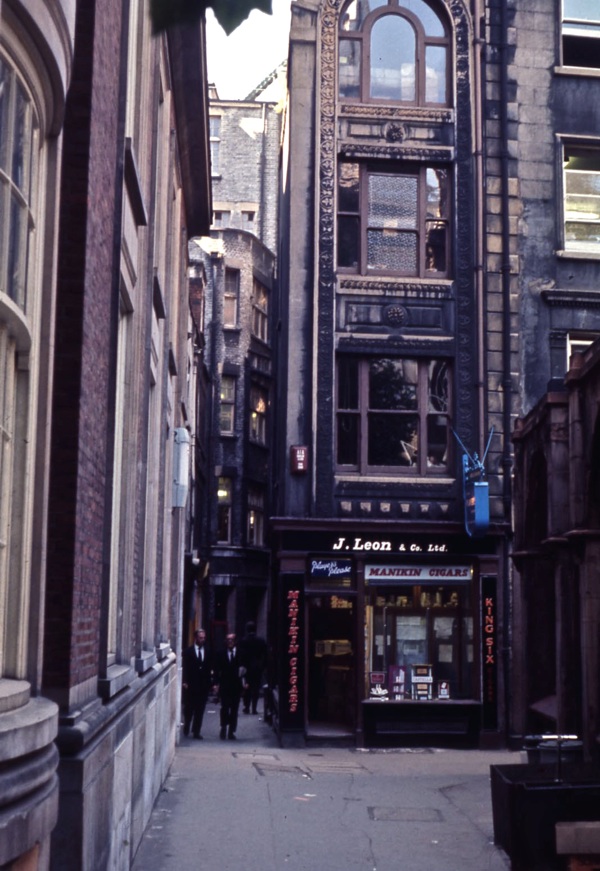
Tobacconist in Castle Court
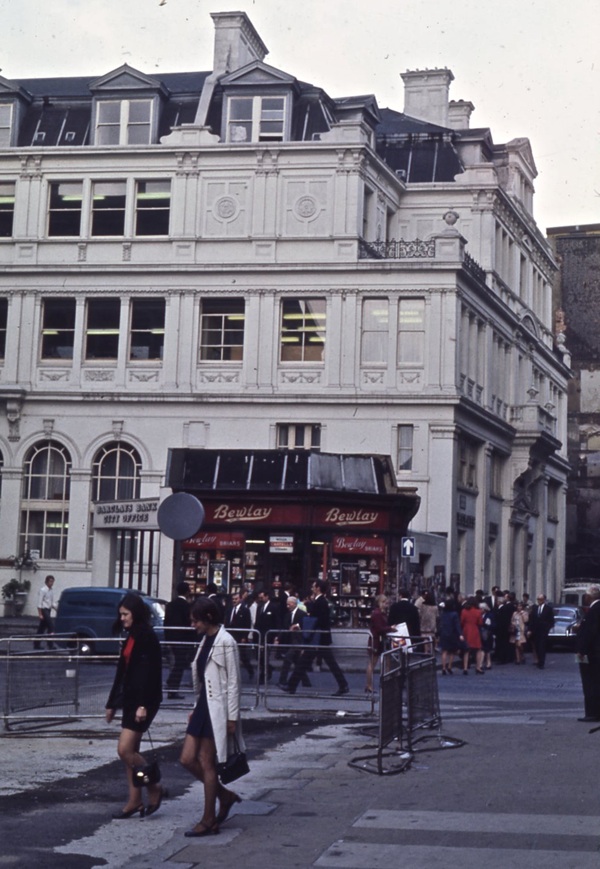
Barclays Bank, Gracechurch St
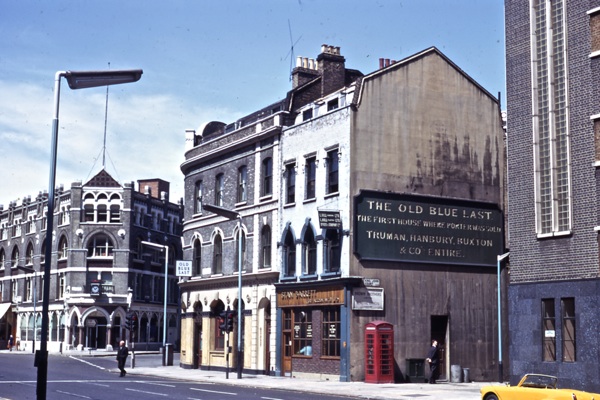
Old Blue Last, Great Eastern St
Images courtesy Bishopsgate Institute
You may like to take a look at more of these pictures
The Return Of Nicholas Culpeper
Thanks in no small part to votes cast by readers of Spitalfields Life in the Tower Hamlets People’s Plaques Scheme and to my great delight, I cast my eyes up yesterday in Commercial St to discover a metal plaque for Nicholas Culpeper had appeared upon the building at the corner of Puma Court, close to the site of Red Lion House where Culpeper lived, ran his clinic, tended his herb garden and wrote his English Herbal in the seventeenth century.
Culpeper translated medical books into English from Latin so that people could diagnose themselves and he came to Spitalfields to be outside the jurisdiction of the College of Physicians. Through example, he was one of the first to propose that healthcare should be given free as a basic human right, treating local people without charge each day at his surgery in Red Lion House.

Red Lion House, Nicholas Culpeper’s home in Spitafields. Becoming the Red Lion Tavern after his death, the building was demolished in the eighteen-forties as part of road widening when Commercial St was cut through to carry traffic from the docks.

The plaque that was installed yesterday
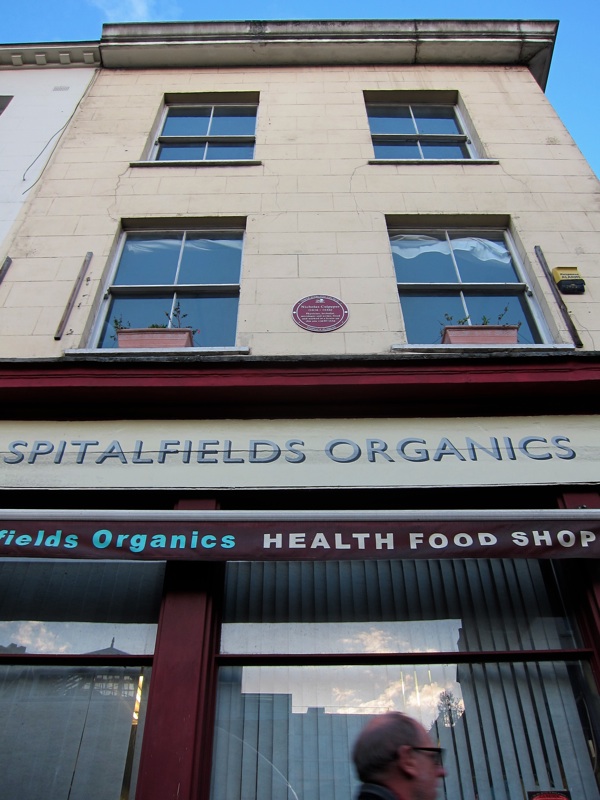
By a strange piece of synchronicity, Spitalfields Organics stands upon the site of Red Lion House
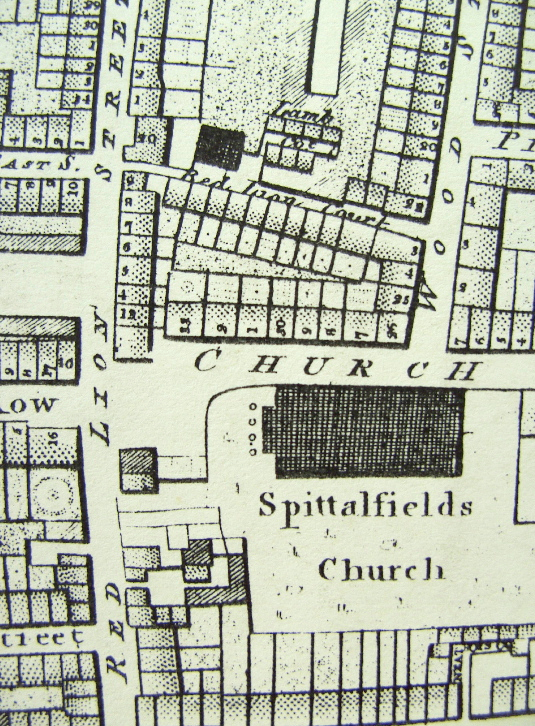
“Culpeper’s house, of which there are woodcuts extant, it is of wood, and is situated the corner of Red Lion Court and Red Lion Street, Spitalfields. It is now and has long been a public house, known by the sign of the Red Lion, but at the time it was inhabited by the sage herbalist, it was independent of other buildings. While in the occupation of Culpeper, who died in 1654, this house stood in Red Lion Field and was as a dispensary of medicines (perhaps the first) of very considerable celebrity.” The European Magazine and London Review, January 1812. Red Lion St and Red Lion Court as shown on John Horwood’s map (1794-99) before Commercial St was cut through.

Sebastian Harding’s model of Nicholas Culpeper’s house in Spitalfields.

APPRECIATION OF CULPEPER BY PATRICIA CLEVELAND-PECK, Gardener & Writer
No Spitalfields resident deserves recognition better than the seventeenth century Physician, Herbalist and Astrologer, Nicholas Culpeper.
He first came here because, as an unlicensed medical practitioner, St Mary Spital was beyond the City walls and thus not under the jurisdiction of both the College of Physicians and the Society of Apothecaries. Neither had any liking for the young upstart who treated poor patients cheaply or for free and rejected the expensive herbs sold by the apothecaries, preferring to search for his own growing locally. Culpeper lived in troubled times and his own life was fraught with difficulties, but at the moment he came to Spitalfields things were looking up for him.
Without completing his degree at Cambridge, he began a seven year apprenticeship to the Apothecary Simon White at Temple Bar but the business failed and his master ran off to Ireland with the money Culpeper paid him. Left homeless and penniless, he was fortunate to find a new master, Francis Drake of Threadneedle St who – instead of charging – asked Culpeper for Latin lessons in exchange for the apprenticeship. Yet Francis Drake died within two years, leaving Culpeper and his fellow-apprentice Samuel Leadbetter ‘turned over’ to the elderly Apothecary Stephen Higgins and, shortly afterwards, Culpeper dropped out.
At the age of twenty-four, he fell in love with the young heiress Alice Field. They married in 1640 and it was her fortune which allowed him to buy the house in Spitalfields and set up his practice yet, soon after, he fought a duel which required him to pay his opponent’s medical expenses and flee to France until the rumpus died down.
When Culpeper got back, an accusation of witchcraft was levelled against him – such accusations were not uncommon at the time the Civil War broke out. A patient by the name of Sarah Lyne consulted Culpeper and after a month, when she was no better and began wasting away, she reported him and he was imprisoned. The accusation gained weight because Culpeper practised astrological as well as herbal medicine and this, with its associations of magic, counted against him. He was lucky to get acquitted.
As early as 1641, Culpeper had seen local soldiers practising drill upon the Artillery Ground in Spitalfields and, when the Civil War broke out, he joined the Parliamentarians. They invited him to be a Field Surgeon and, on the way to the battlefield, he collected medicinal herbs but at the Battle of Newbury he was shot in the chest and badly wounded.
Upon his return to Spitalfields, Culpeper did not receive a hero’s welcome – only more grief. Samuel Leadbetter, his fellow apprentice, had taken over the shop of their former master in Threadneedle St and they made an agreement which permitted Culpeper to use the premises as an alternative surgery and for preparation of medicines. But in January 1643, the College of Apothecaries,‘ordered and warned’ Leadbetter to ‘put away Nicholas Culpeper’ – which he did, bringing their long friendship to an end.
After the war, there was no censorship and books could be published more freely. Recognising the opportunity, Culpeper, who had always wanted to bring medicine within the reach of the poor, set about translating the handbook of the College of Physicians from Latin into English – The Physical Directory or Translation of the London Dispensary. More books followed and the College launched an abusive broadside against him entitled, A farm in Spittlefields where all knick-kacks of Astrology are exposed to open sale. Undeterred, in 1653, Culpeper published his English Physician known today as Culpeper’s Herbal, which has never been out of print since.
Nicholas Culpeper was only thirty-nine when he died and was buried beneath the site of Liverpool St Station. He never fully recovered from his chest wound but – even so – he treated hundreds of patients in Spitalfields and educated them in maintaining their own health, which was something quite new at that time. Out of his seventy-nine books and translations, Culpeper’s Herbal was amongst the books taken by pilgrims to the New World.
So let us remember Nicholas Culpeper in Spitalfields.
Read more
Around Billingsgate Market
These intriguing photographs are selected from a cache of transparencies of unknown origin, recently acquired by the Bishopsgate Institute. We believe they date from the nineteen sixties but the photographer is unidentified. Can anyone tell us more?
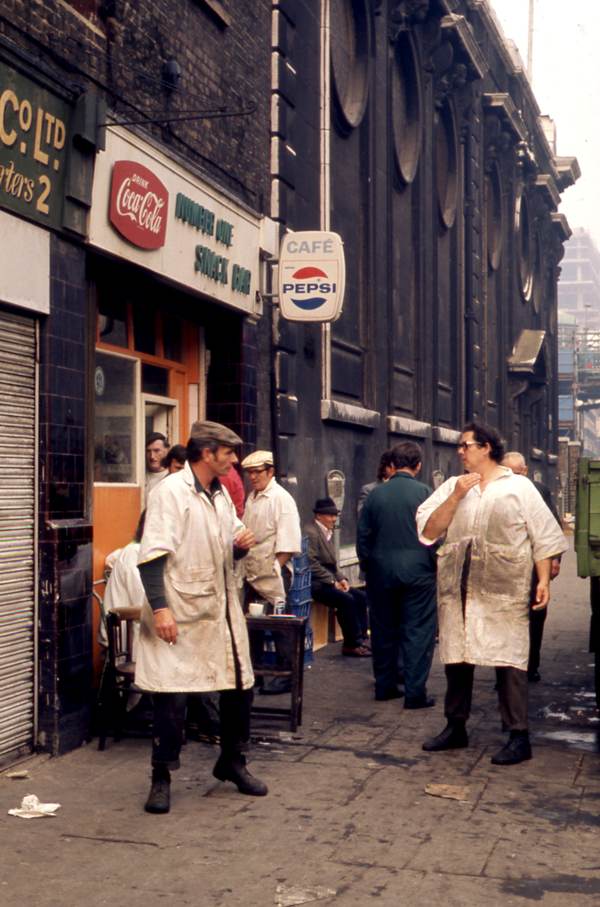
Fish Porters at Number One Snack Bar next to St Magnus the Martyr
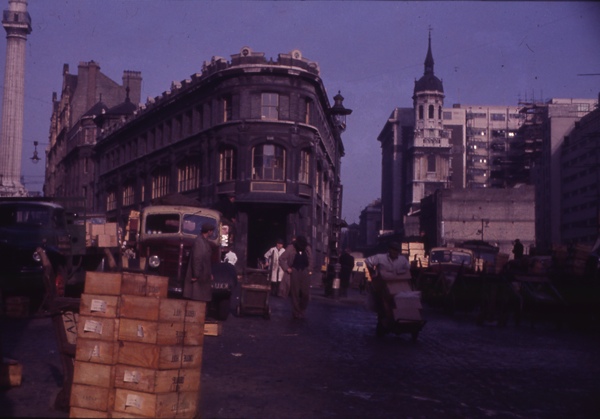
Looking west along Lower Thames St and Monument St
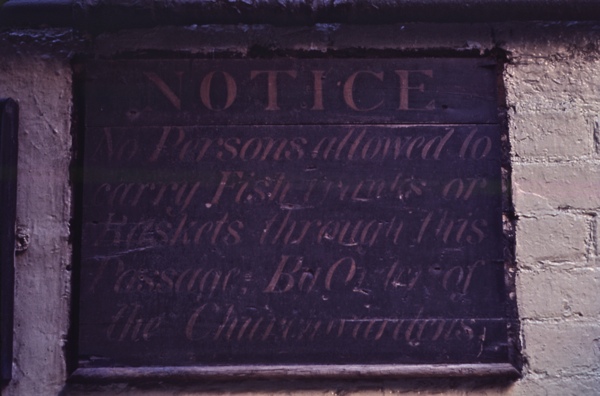
Sign outside St Mary-At-Hill
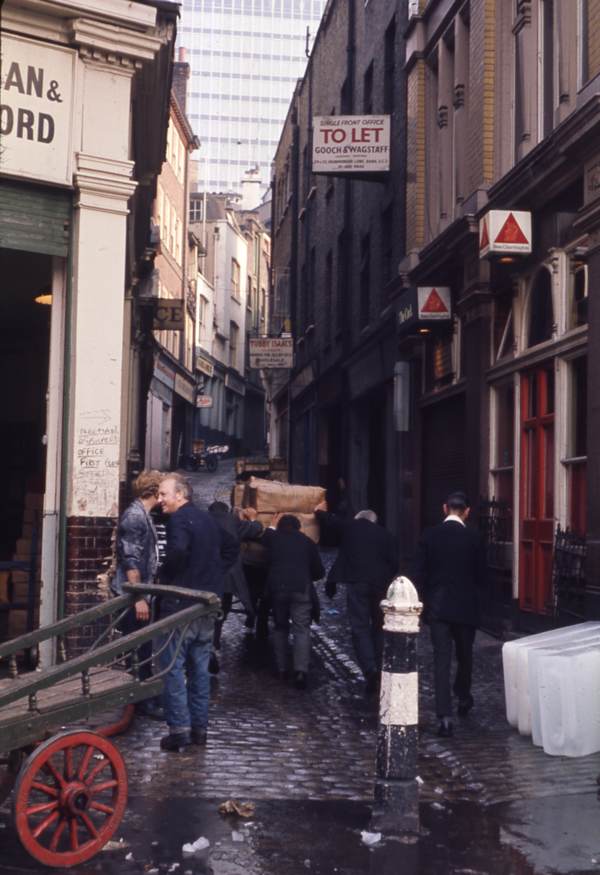
Pushing barrows of ice up Lovat Lane
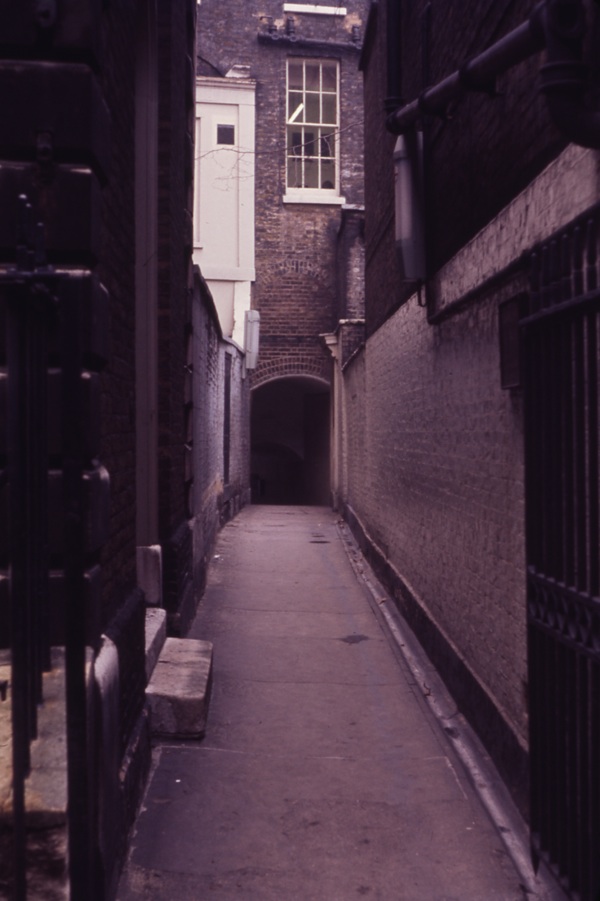
Passage next to St Mary-At-Hill
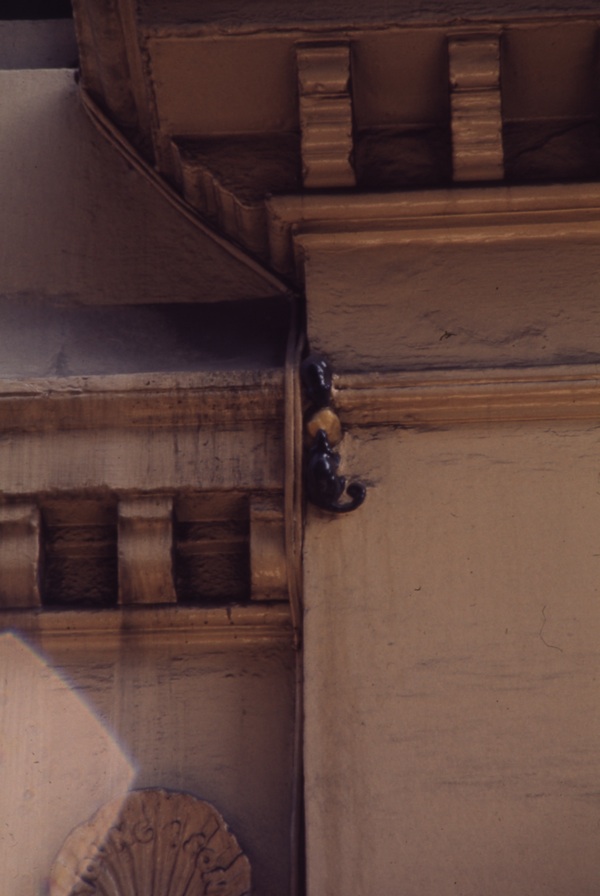
Carved mice on a building in Eastcheap
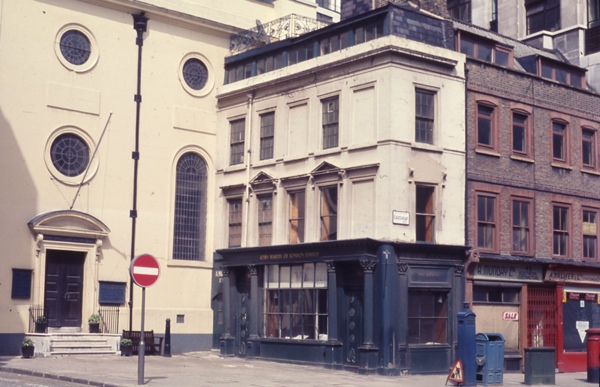
Old shop in Eastcheap
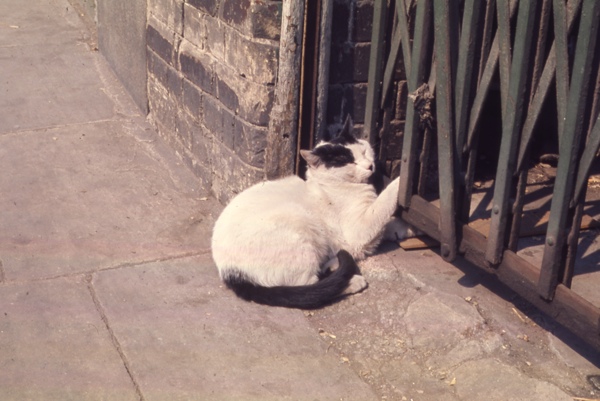
Billingsgate Market cat
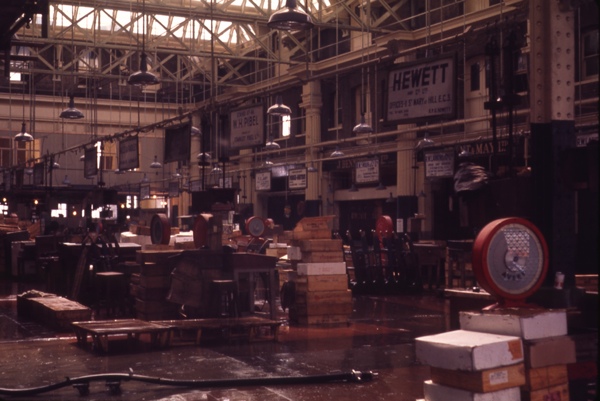
Inside the fish market designed by Horace Jones
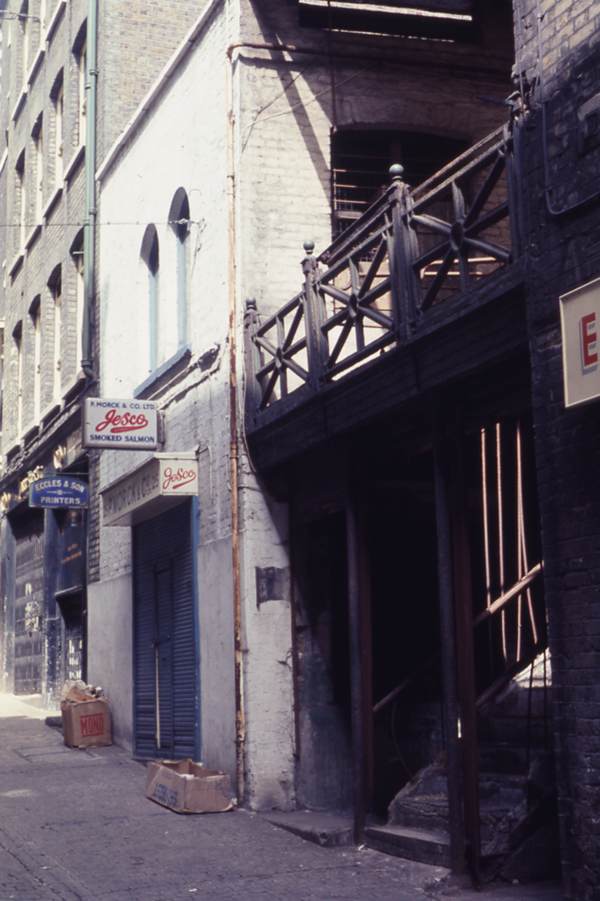
Old staircase near Billingsgate
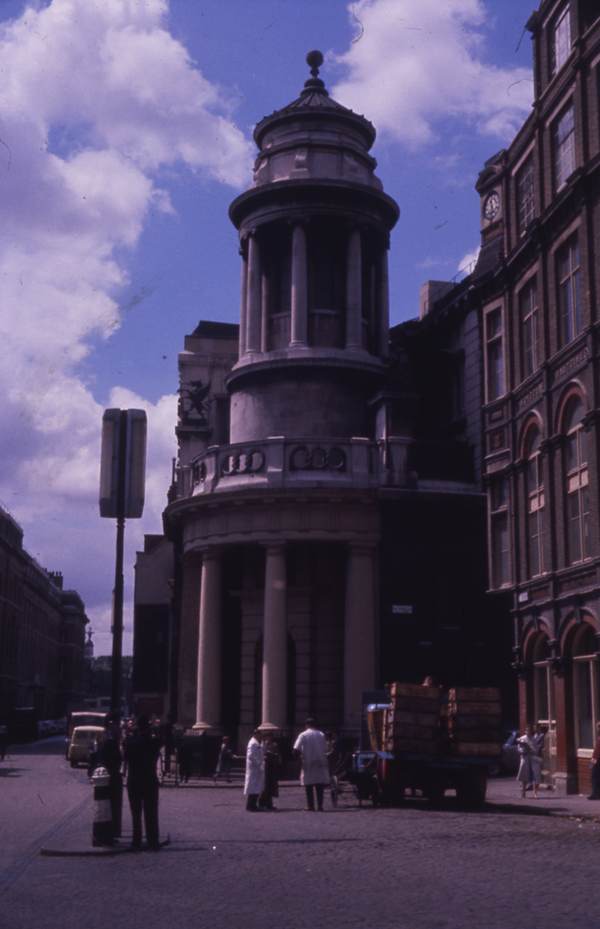
The Coal Exchange, built 1847 demolished 1962
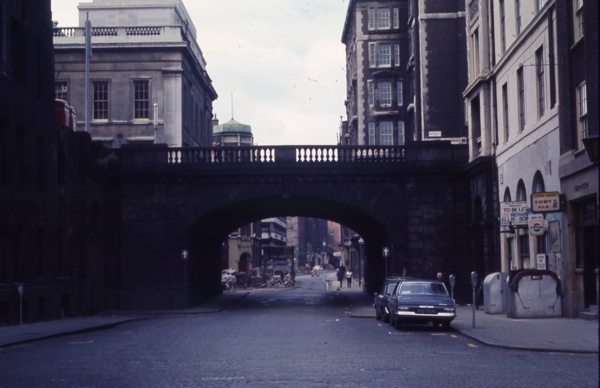
Part of London Bridge crossing Lower Thames St, now removed
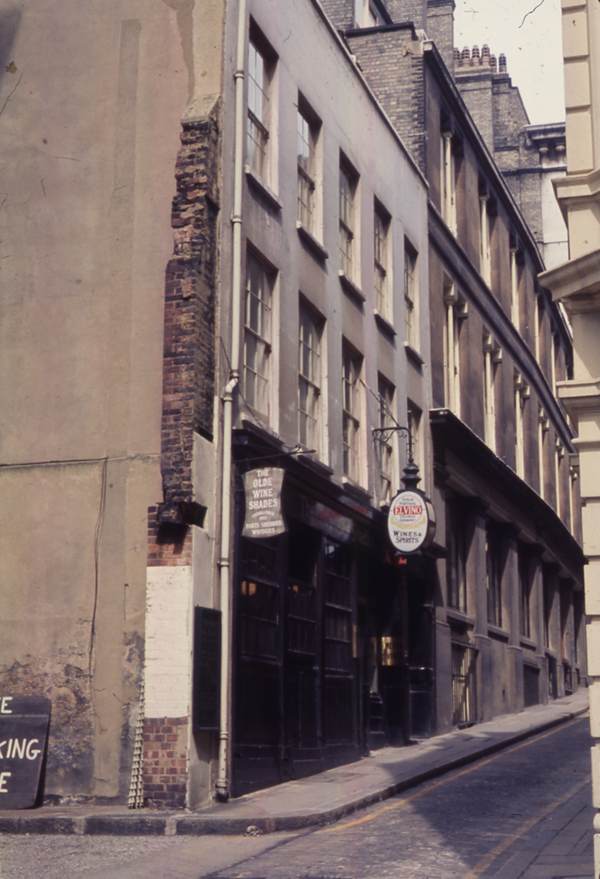
The Old Wine Shades, Martin Lane
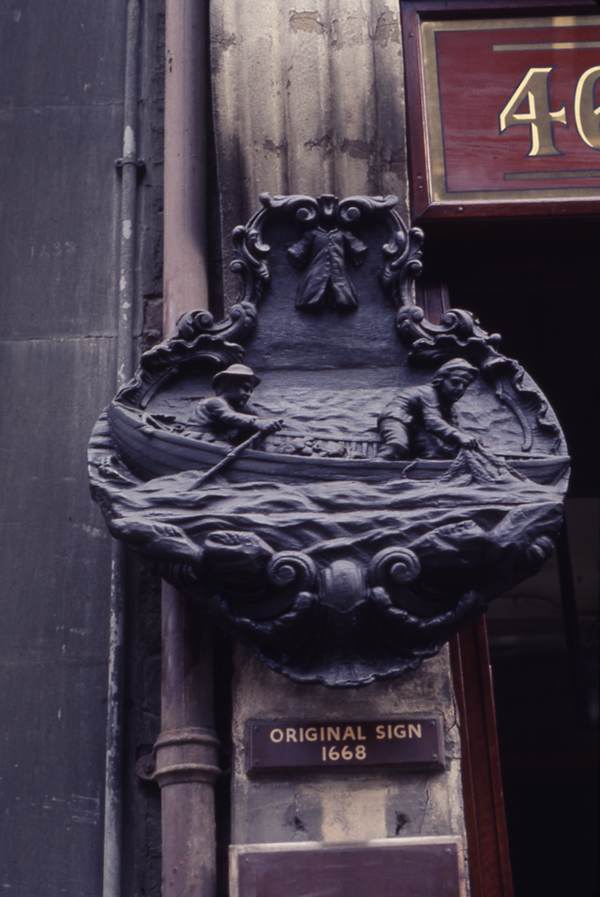
Sign of a Waterman, now in Museum of London
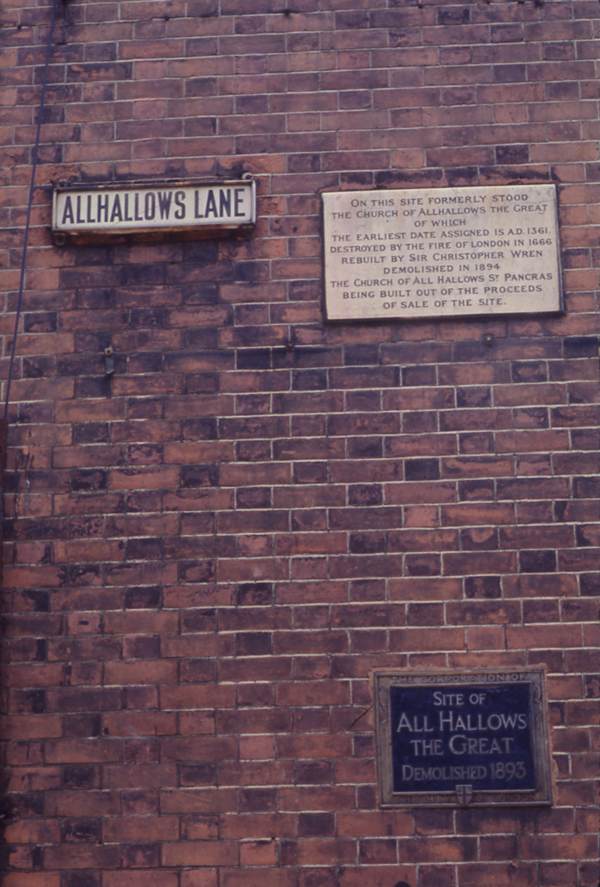
In All Hallows Lane
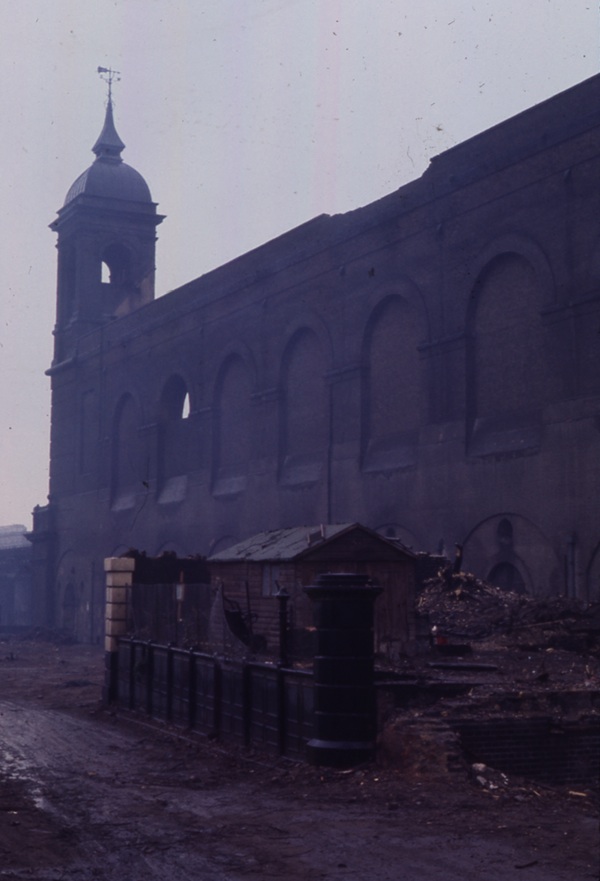
Derelict site next to Cannon St Station
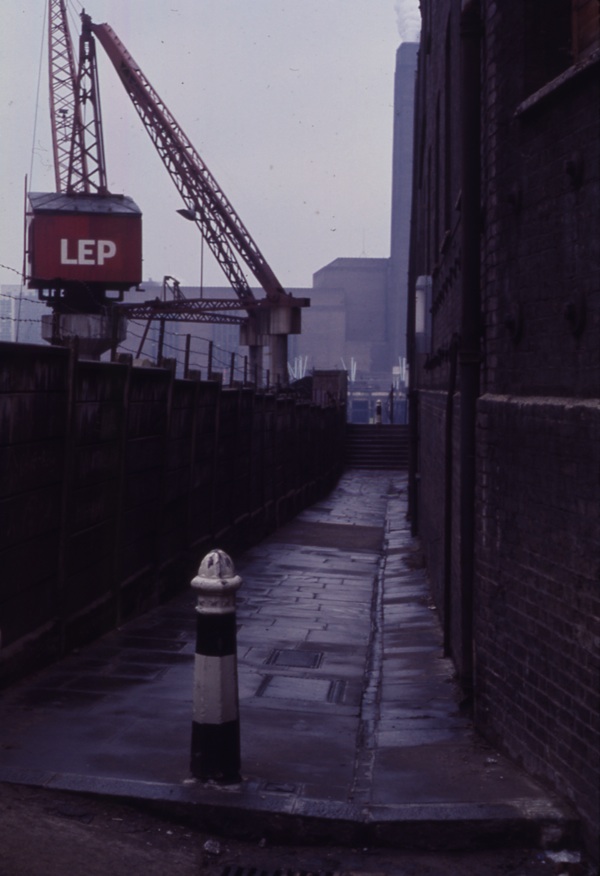
Looking towards Bankside Power Station by Sir Giles Gilbert Scott, now Tate Modern
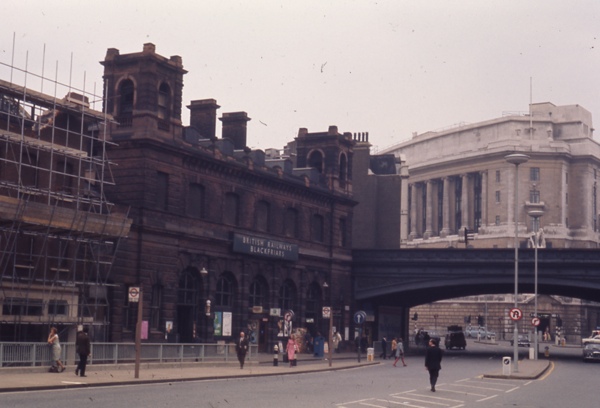
Old Blackfriars Station
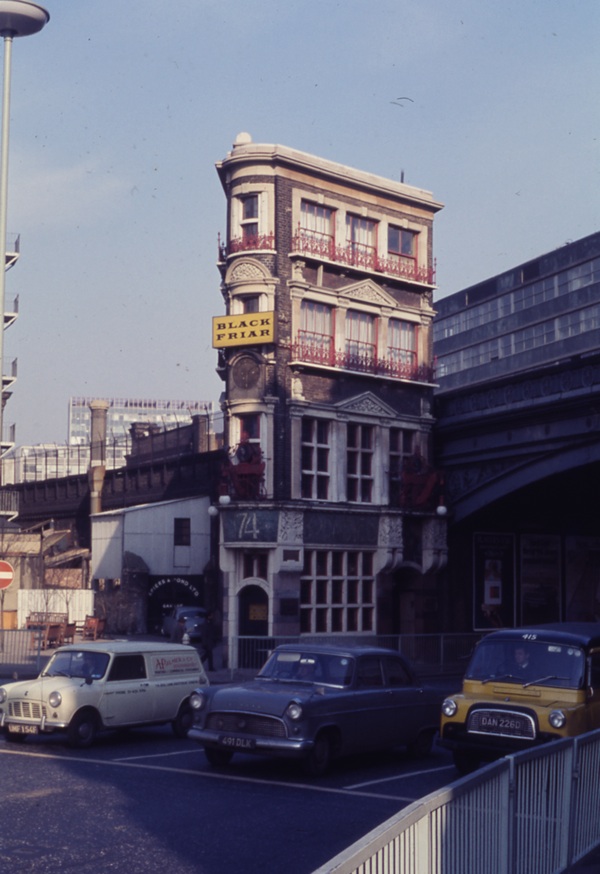
The Blackfriar pub
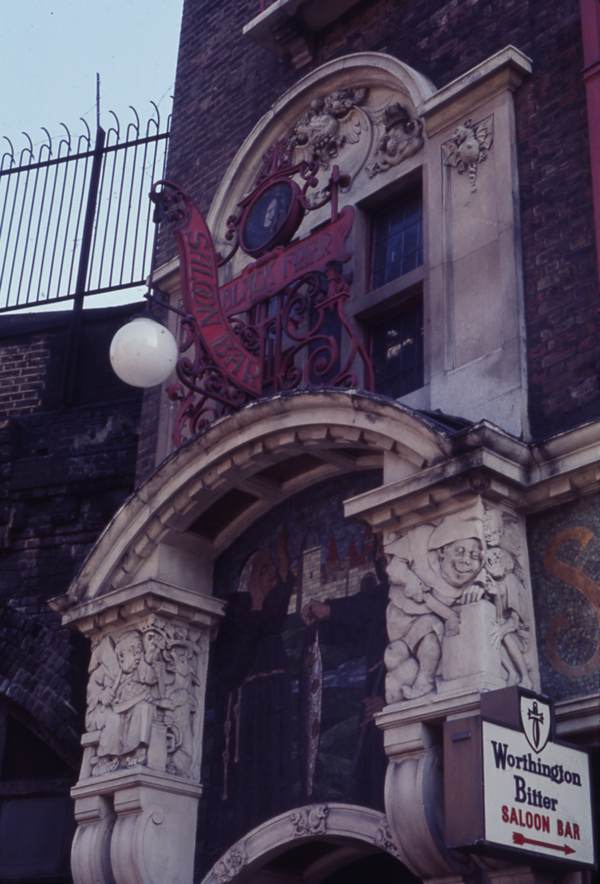
Sculptures upon the Blackfriar
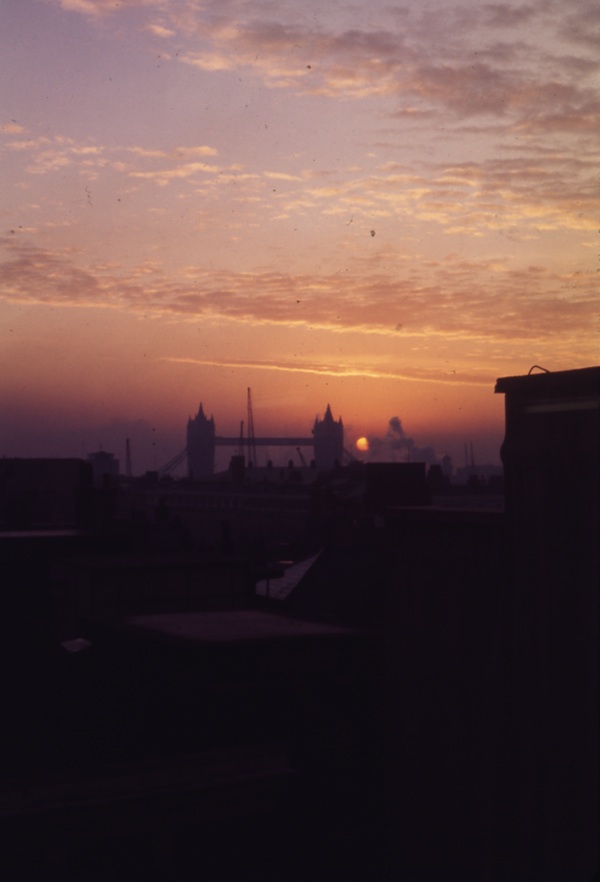
Sunrise over Tower Bridge
Images courtesy Bishopsgate Institute
You may also like to take a look at
Inns Of Long Forgotten London
Leafing through the fat volumes of Walter Thornbury’s London Old & New is the least energetic form of pub crawl I know and yet I found I was intoxicated merely by studying these tottering old inns, lurching at strange angles like inebriated old men sat by the wayside. Published in the eighteen-seventies, these publications looked back to London and its rural outskirts in the early nineteenth century, evoking a city encircled by coaching inns where pigs roamed loose in Edgware Rd and shepherds drove sheep to market down Highgate Hill.

White Hart Tavern, Bishopsgate
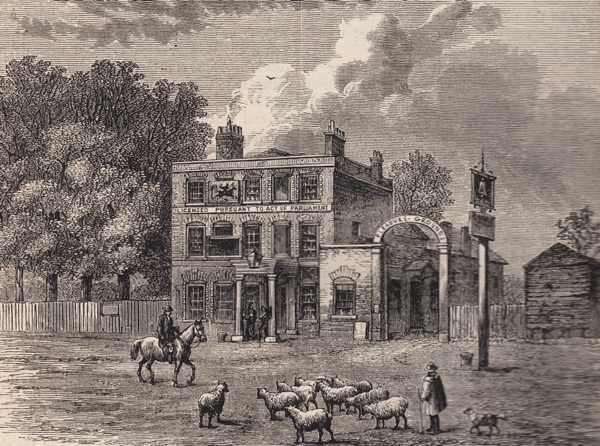
Bell Tavern, Edmonton

Jack Straw’s Castle, Hampstead

Spaniards’ Hotel, Highgate

Old Crown Inn, Highgate
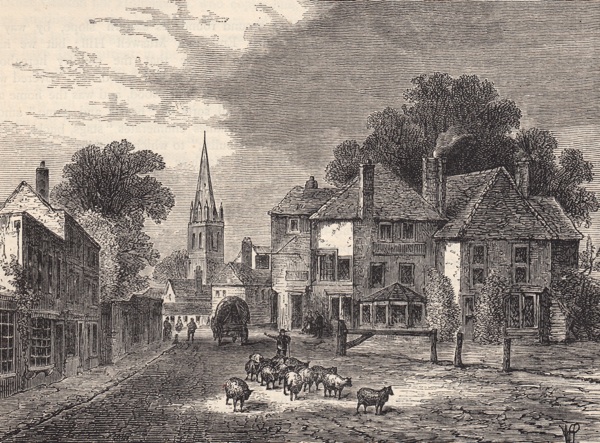
Gate House Tavern, Highgate

The Brill Tavern, Somers Town
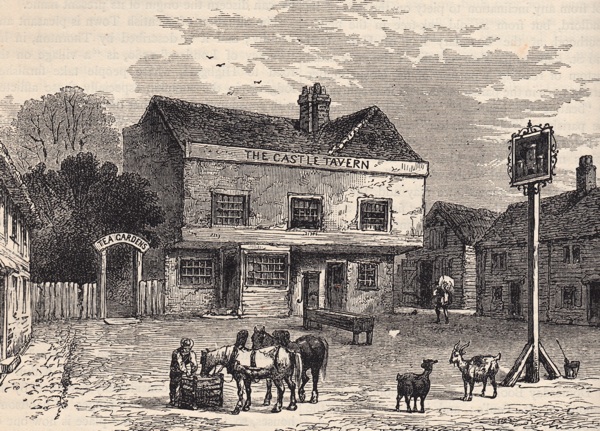
The Castle Tavern, Kentish Town

Old Mother Red Cap Tavern, Camden

Queen’s Head & Artichoke, Edgware Rd

Bell Inn, Kilburn

Halfway House, Kensington
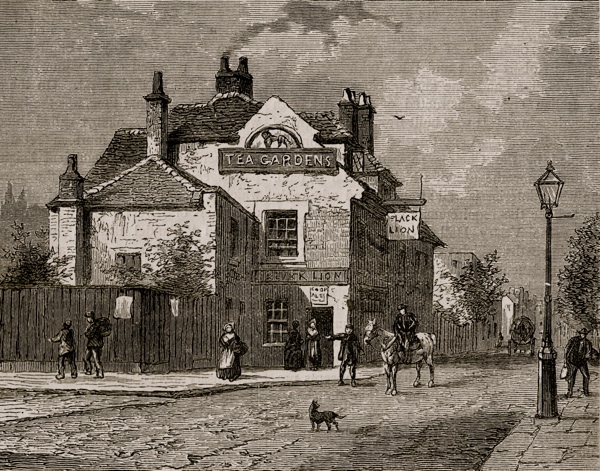
Black Lion Tavern, Chelsea

World’s End Tavern, Chelsea

Gun Tavern, Pimlico

Rose & Crown, Kensington
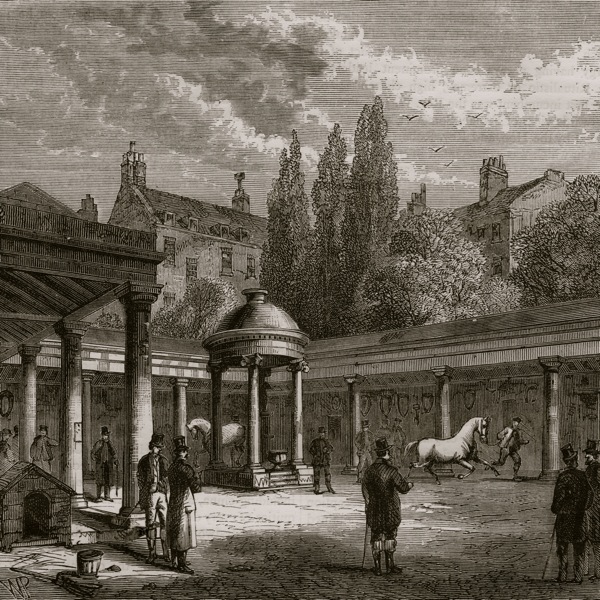
Tattersall’s, Knightsbridge

Three Cranes Tavern, Upper Thames St, City of London

The Old Queen’s Head, Islington

Old Red Lion, Upon the banks of the Fleet – prior to demolition

Saracen’s Head, Snow Hill – prior to demolition

Old Tabard Tavern, Southwark – prior to demolition

White Hart Tavern, Borough

Inns of the Borough
Images courtesy Bishopsgate Institute
You may like to take a look at other engravings from London Old & New
and more pubs