
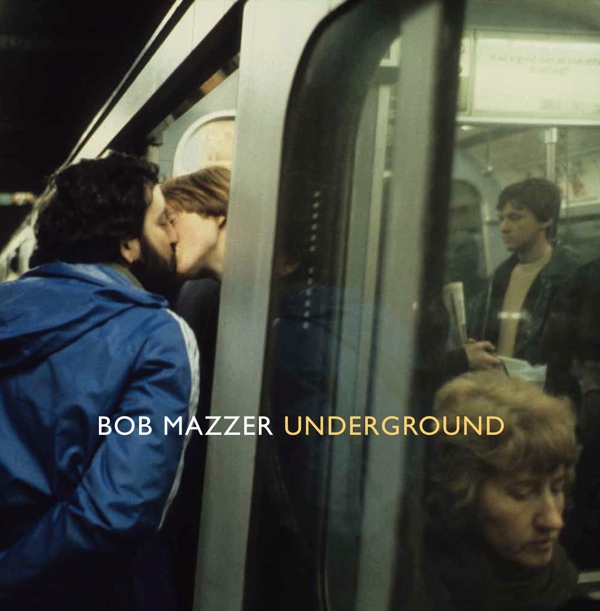
Out of the blue, one of the readers sent me some photographs last summer taken by their friend Bob Mazzer on the London Underground in the eighties. I was immediately captivated by Bob’s irresistibly joyous pictures but I had no idea of the sensation they would create, drawing so many hundreds of thousands of readers from around the world. Within weeks, they were being published in national newspapers and the emergence of this previously-unknown photographer with these breathtaking images became a widespread news story.
Prior to this, Bob had spent decades trying to gain recognition for his work and being rejected by publishers and galleries. Yet the publication of his photographs on Spitalfields Life drew universal acclaim immediately – both for their excellence as photography, and for the humour and poetry of Bob’s vision of humanity.
Encouraged by the success of Phil Maxwell’s Brick Lane published last week, I am asking you to help me produce a beautiful two hundred page hardback book of Bob’s Underground pictures and enable Bob’s debut London exhibition at Howard Griffin Gallery in Shoreditch. The plan is to publish the book and open the show on June 12th with a great party.
I am inviting any of my readers who are willing to invest the sum of no more and no less than one thousand pounds each to cover production costs. We will ask you to bring your cheque along to a celebratory dinner for Bob later this month and we will put your name in the book. In June, prior to publication, I will present you with a copy inscribed by Bob and, six months later, we will commence repayment of your investment – unless you choose to offer it as a donation towards the publication of further titles by Spitalfields Life Books.
Additionally, you can show your support by placing an order for the book now by clicking here and we will send you a copy upon publication.
Following Colin O’Brien’s Travellers’ Children in London Fields, The Gentle Author’s London Album and Phil Maxwell’s Brick Lane, Bob Mazzer’s Underground is the fourth title from Spitalfields Life Books – and Faber Factory Plus (part of Faber & Faber) will distribute it to bookshops nationwide.
If you are willing to be an investor and help me publish Bob Mazzer’s Underground, please drop me a line at Spitalfieldslife@gmail.com and I will be delighted to send you further details.


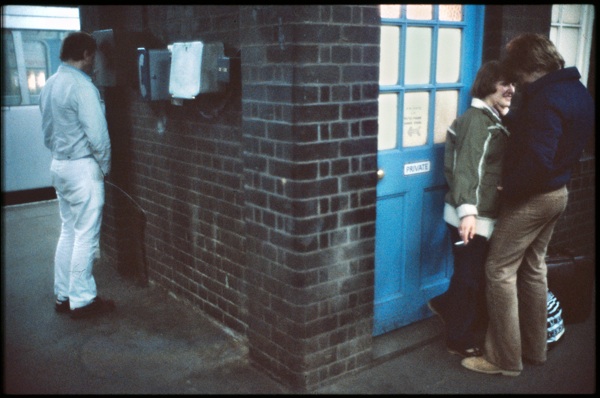

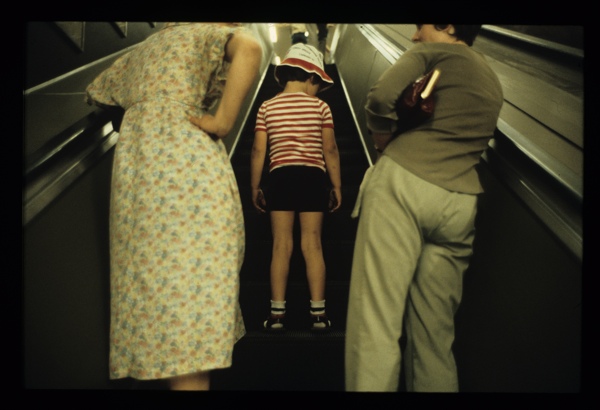
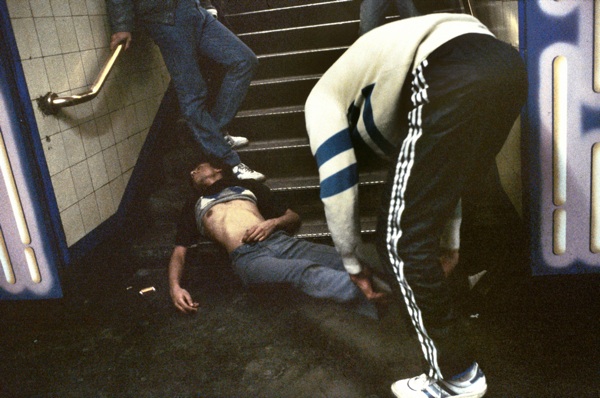
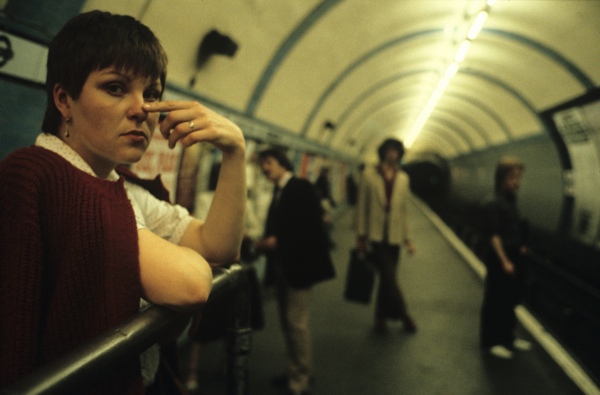
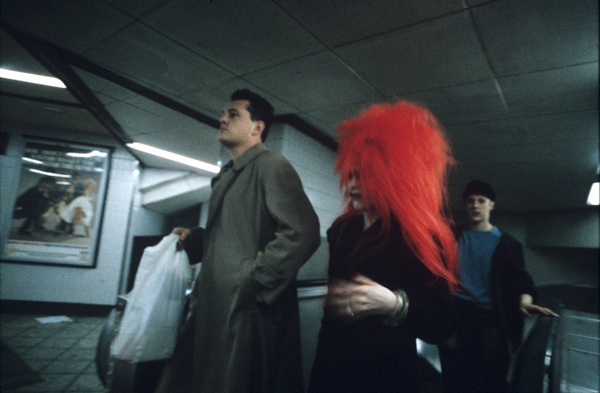
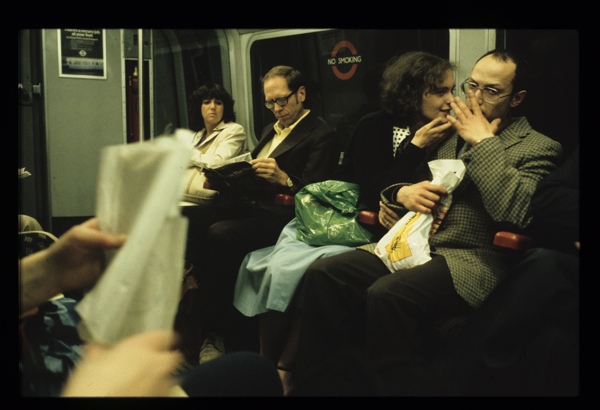
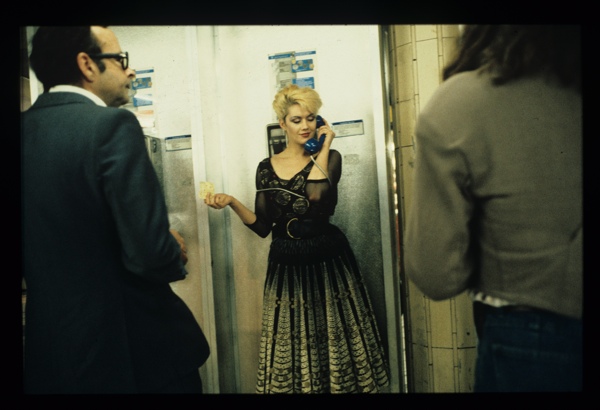

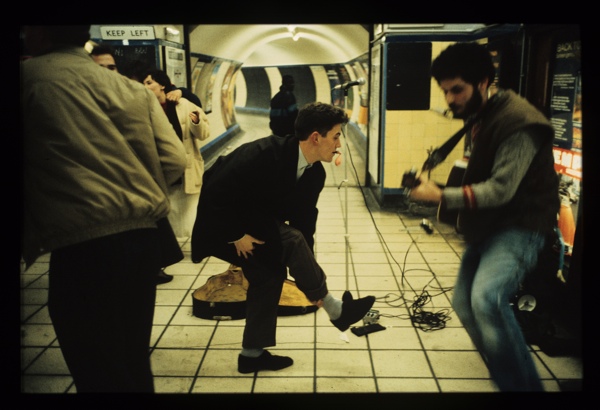
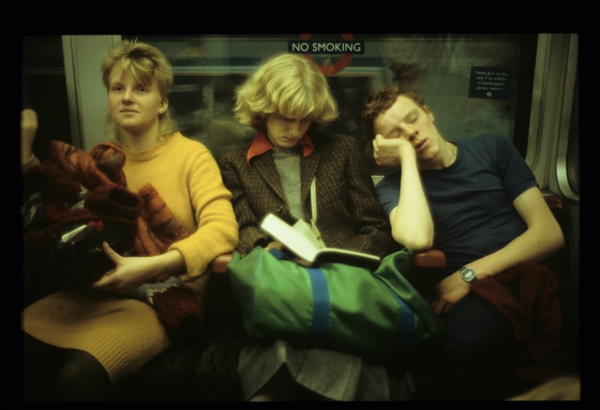


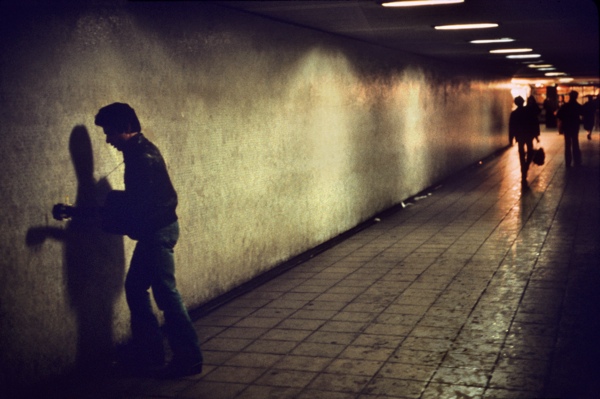

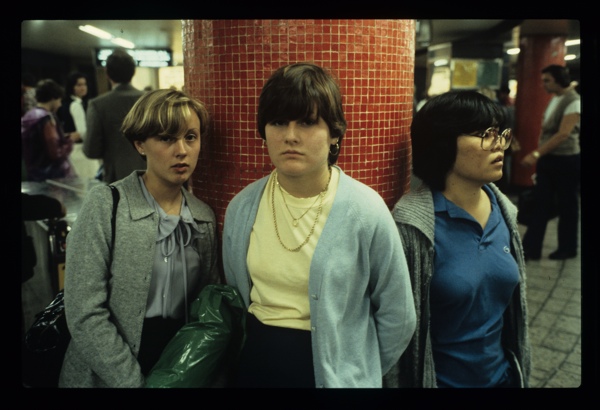
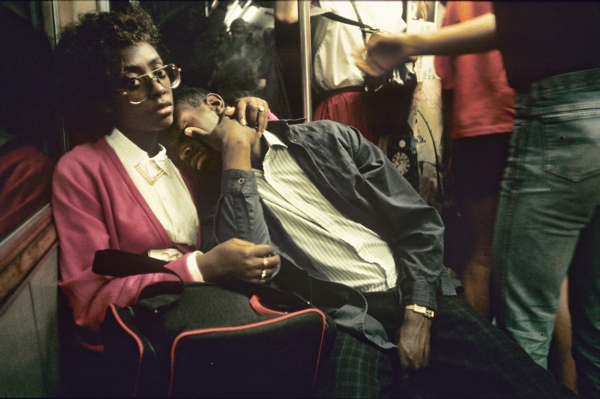
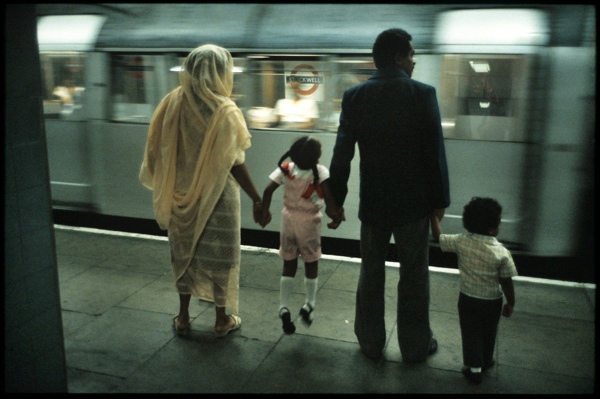
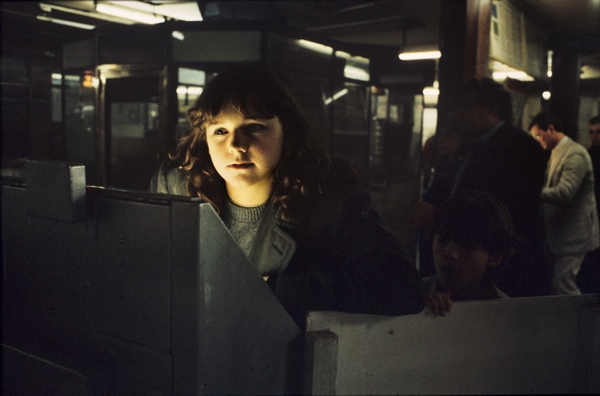

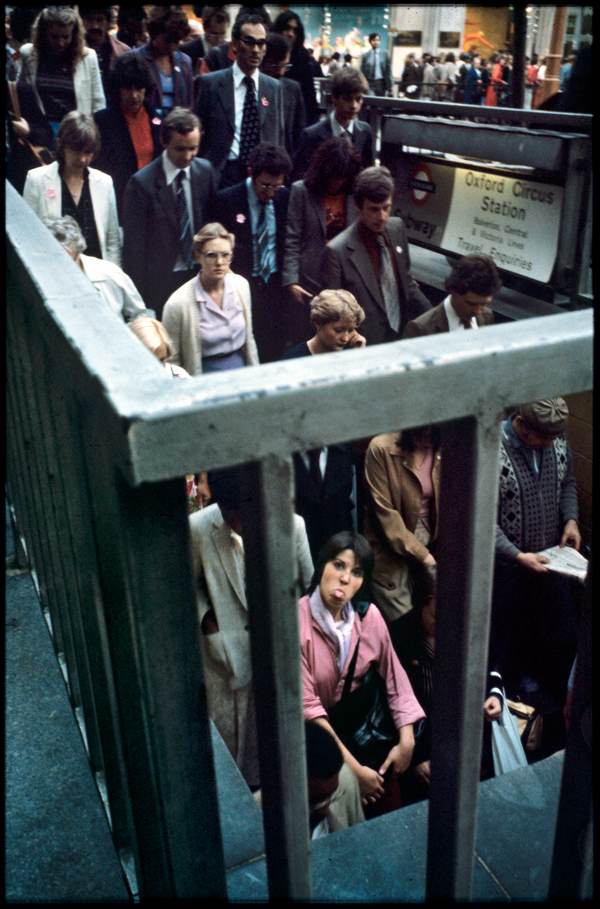
Photographs © copyright Bob Mazzer
Click here to pre-order Bob Mazzer’s UNDERGROUND
You may also like to take a look at
The Apotheosis Of Phil Maxwell
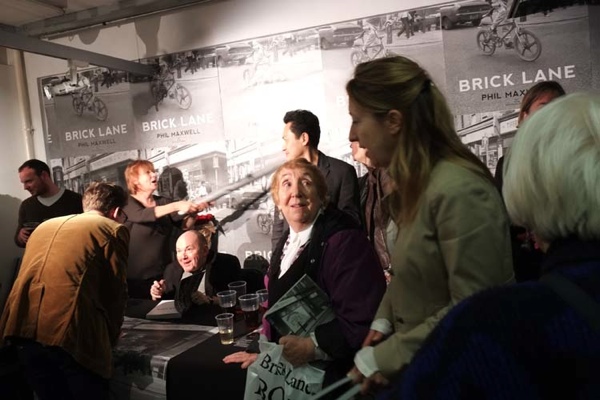
On Thursday night at six o’clock, crowds poured in to the Rich Mix Centre to celebrate the work of Phil Maxwell and his extraordinary thirty years of photographing the East End, upon publication day of his new book.
Beginning in 1981, Brick Lane records the passing away of one world and the arrival of another in the span of a generation. Looking at Phil’s early pictures, you feel are witnessing the last lingering glimmer of the nineteenth century – the last shreds of Dickens’ London – yet, by the end, it is unquestionably the present day and our own time. Repeatedly this week, I have found myself leafing back and forth through the three hundred pages of ‘Brick Lane’ to seek a perspective upon the changes we have seen. Each time, I discover new details and I know I shall keep returning to Phil’s book for years to come.
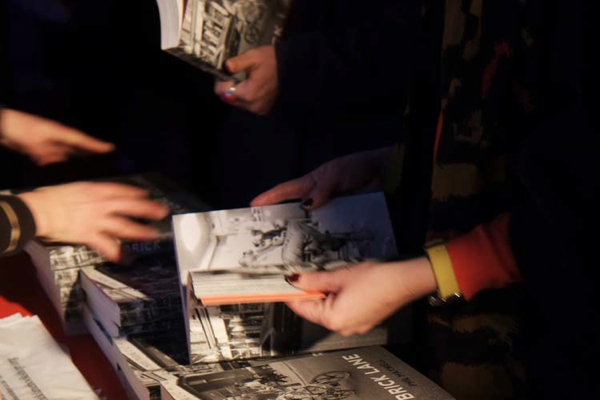
Many hundreds came to carry off copies and meet the man responsible for this epic record of turbulent social change upon one street. Some suggested that Phil’s book documents how Brick Lane has been ruined, while others commented that it shows the place is in better repair these days and people on the street look healthier and happier – that the poverty apparent in the earlier photographs has gone. But the fascination and success of Phil Maxwell’s vision is that it defies any simple interpretation and, as guests stood around leafing through pages and studying the book, a consensus arose that these photographs comprise the historic record of our times.
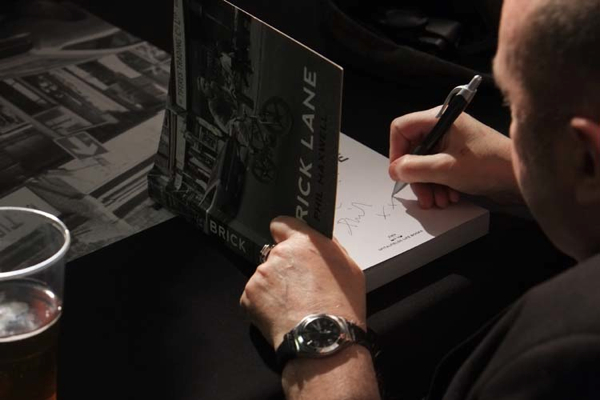
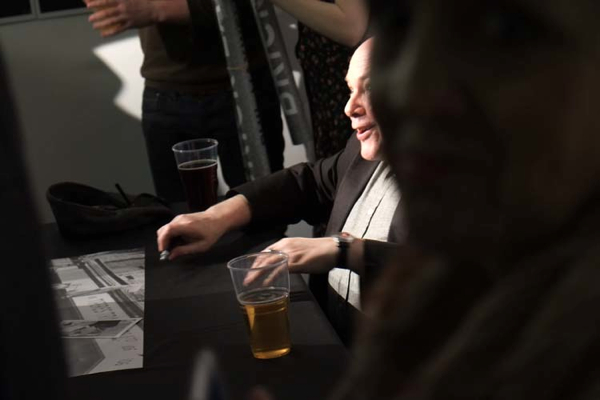
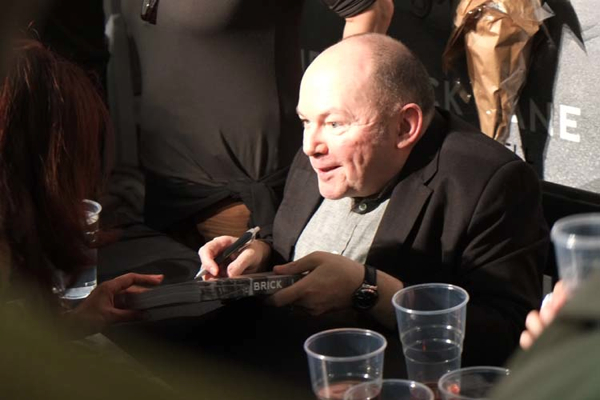
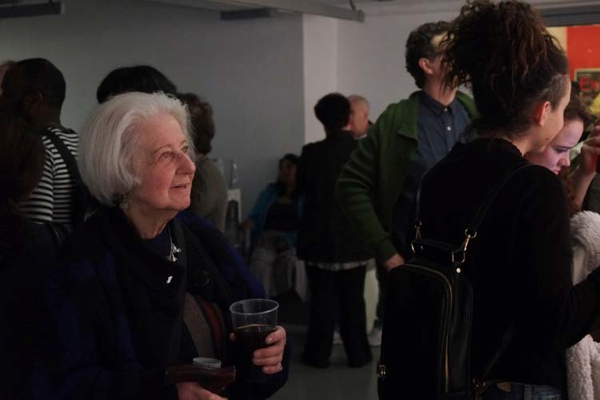
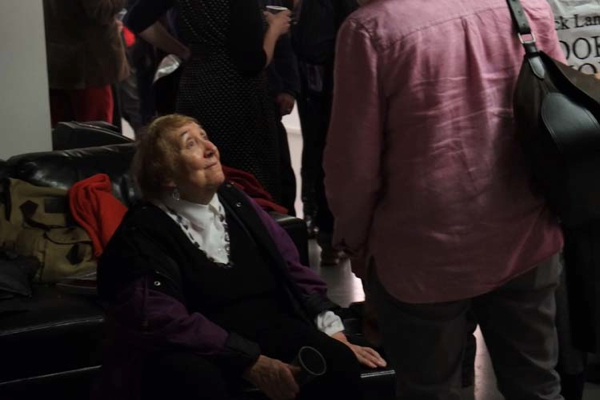
Thanks to the generosity of Truman’s Beer, everyone was welcomed with a glass of ale and the collective excitement of this lively gathering, with many of those featured in the photographs present, conjured a strong community atmosphere – as captured in these pictures by Contributing Photographer Simon Mooney.
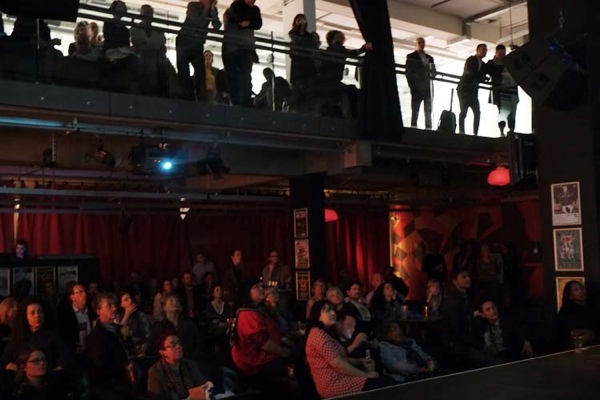
Phil Maxwell signed books for two hours without respite as the line of those awaiting his autograph grew no shorter, until eight o’clock when the crowd fell silent as Lola Perrin took to the stage for a performance at the piano accompanying film sequences of Phil’s photographs edited by Hazuan Hashim. Each one revealed alternative versions of the same shot, permitting us to see through Phil’s eyes as he sought the definitive image. We stood in rapture to see our familiar streets inhabited by the shades of the past and then watched as they faded like memories.
The culmination of the evening came at the end when Phil Maxwell appeared on stage for a short curtain call with his partner Hazuan Hashim and Lola Perrin the musician. A roar of thunderous applause and loud cheers filled the space from the floor to the balcony. It was a clamour of delight at a one man’s remarkable lifetime of achievement in photography. It was the apotheosis of Phil Maxwell.
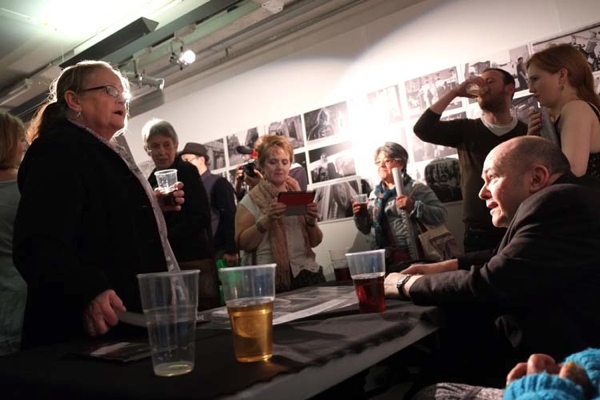
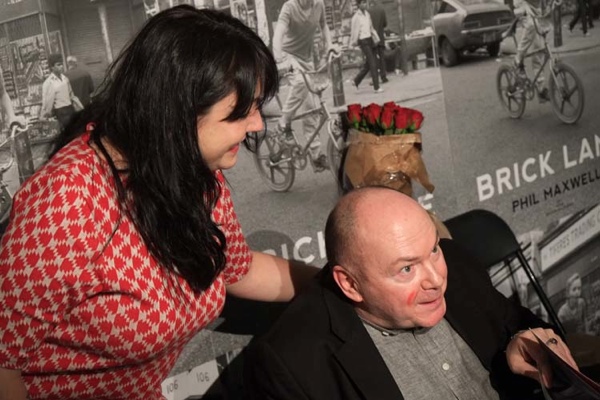
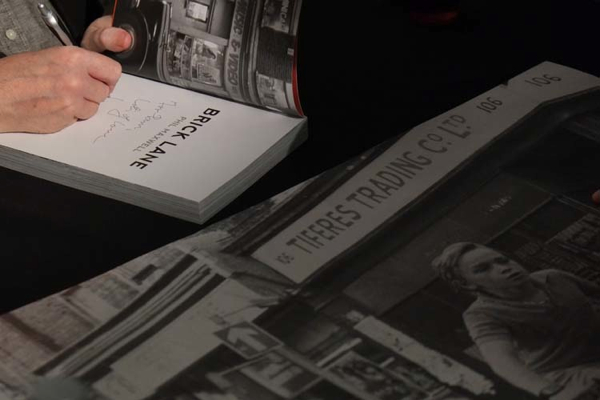
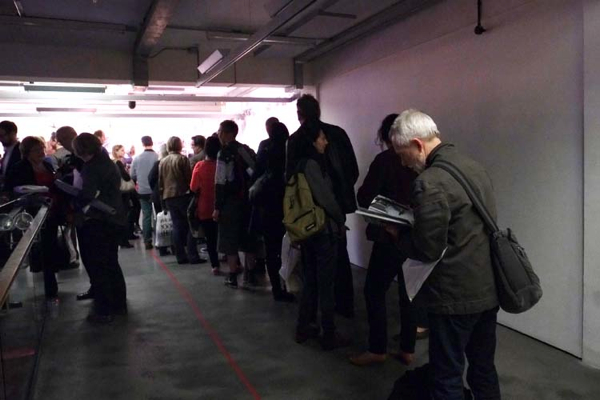
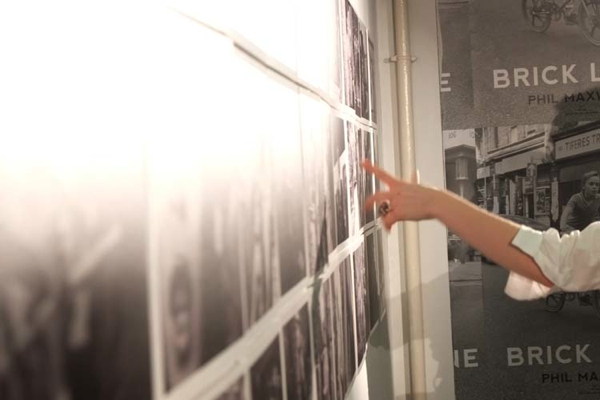
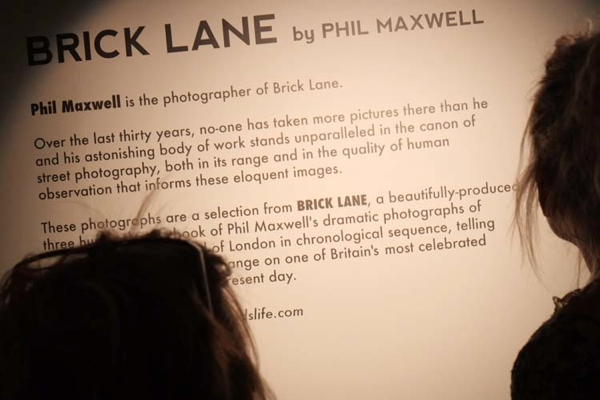
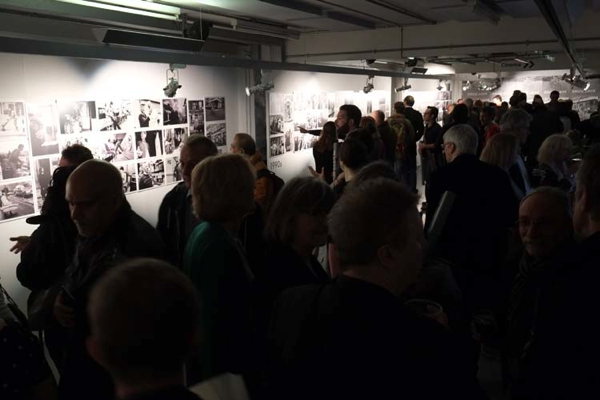
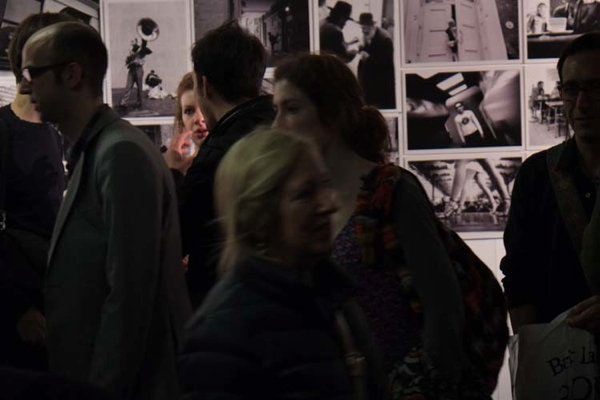
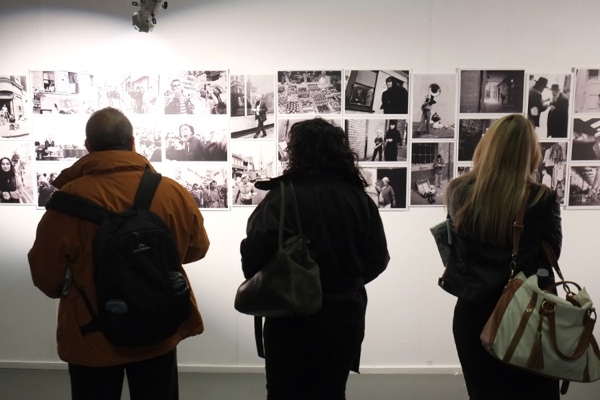
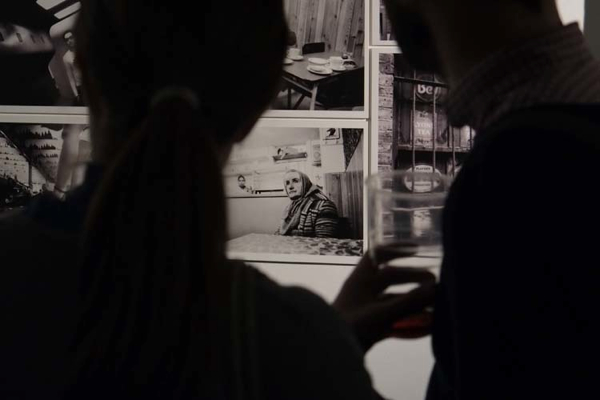
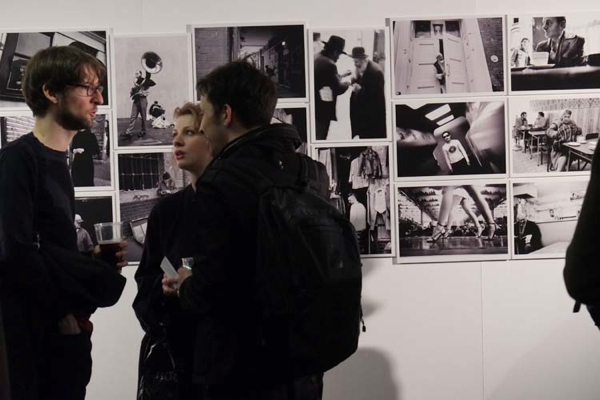
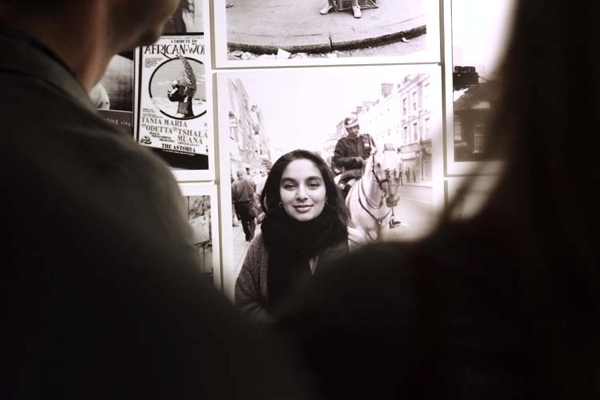
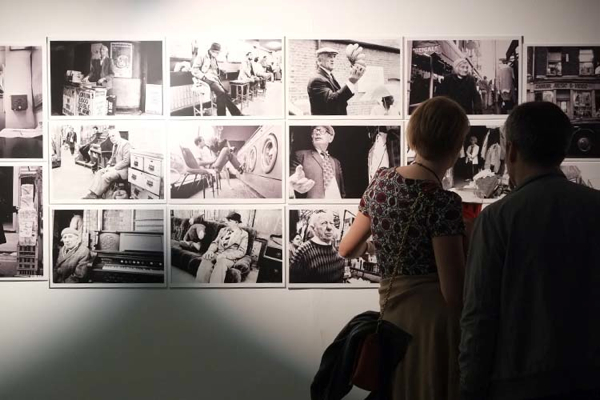
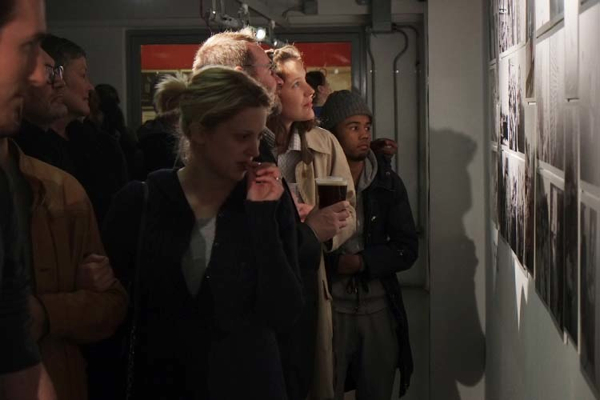
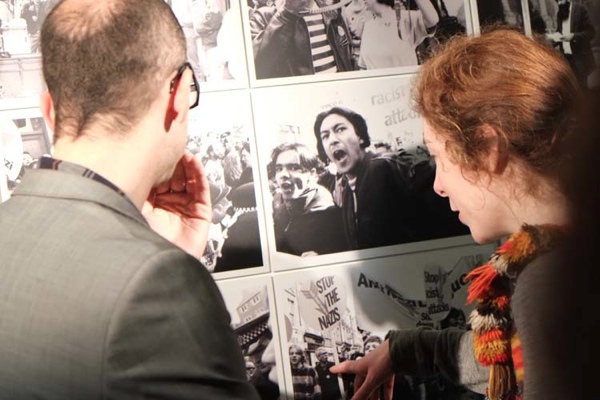
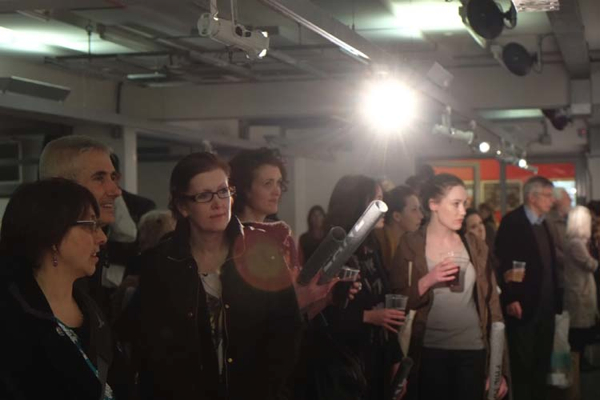
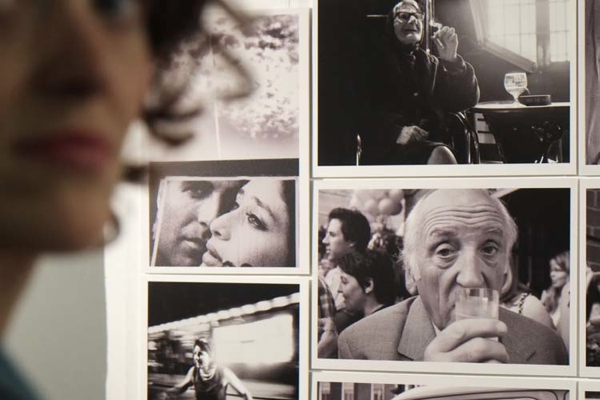
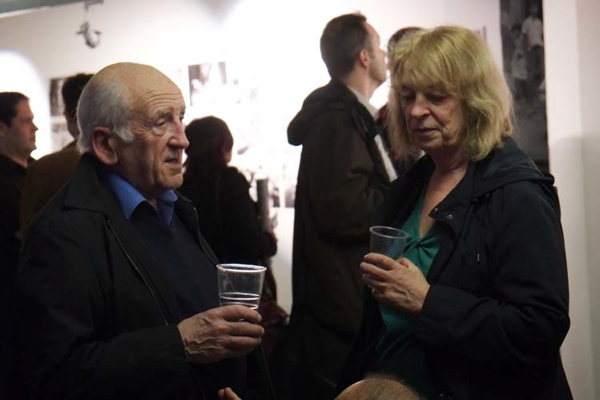
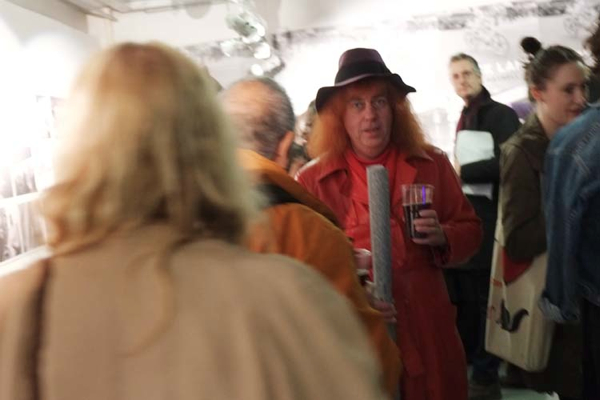
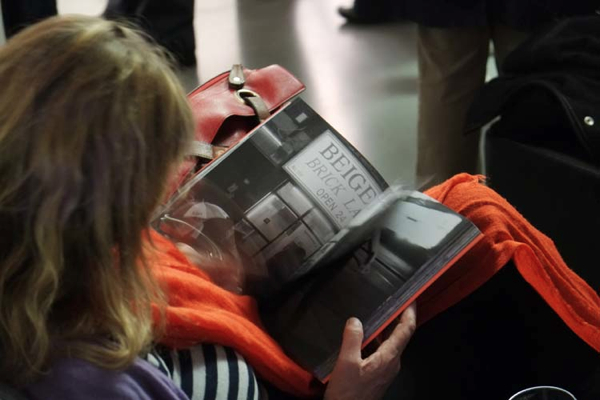
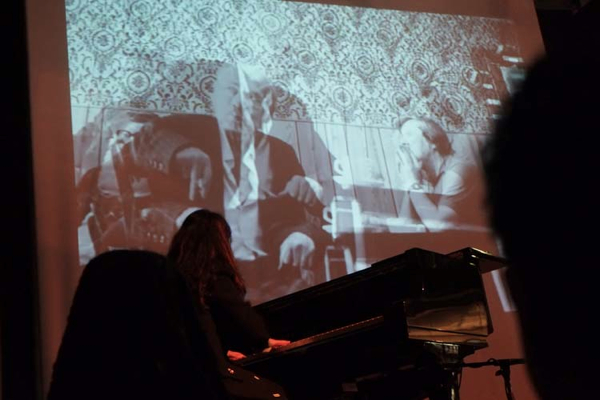
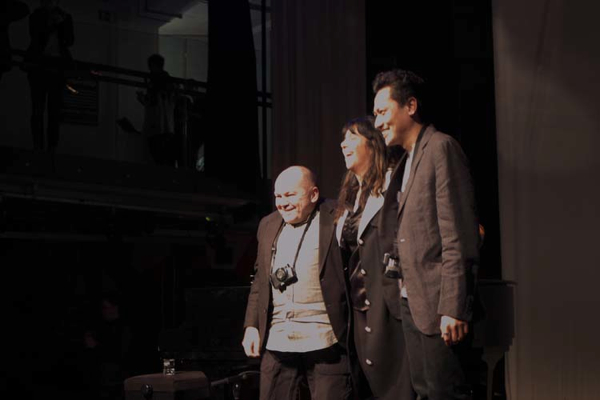
Phil Maxwell, Lola Perrin and Hazuan Hashim take a bow
Photographs copyright © Simon Mooney
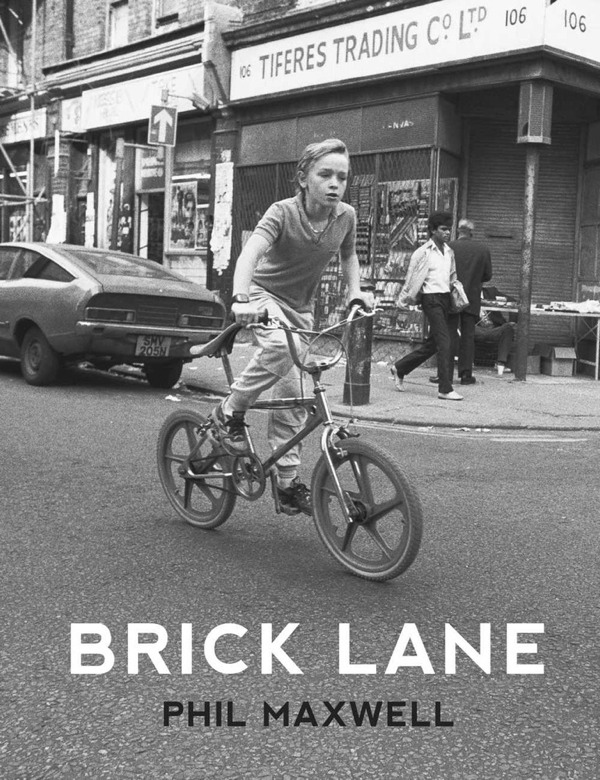
CLICK HERE TO GET YOUR COPY OF PHIL MAXWELL’S BRICK LANE FOR £10
Posters can be obtained free from Bishopsgate Library, Brick Lane Bookshop, Broadway Bookshop, Gardners’ Market Sundriesmen, The Golden Heart, Rough Trade, SCP, Labour & Wait, Leila’s Shop, Newham Bookshop & Townhouse. Each outlet has 50 posters to give away.
A New Quill For Old John Stow

Let me confess, I am a biro writer. I get through so many pens at such a rate that there really is no alternative. Yet in the case of my illustrious predecessor, John Stow, one the earliest historians of London, a quill is his preferred writing instrument and, every five years, a replacement is delivered upon a satin cushion to his monument in St Andrew Undershaft in the City of London.
This week it was time was for a new quill, so Photographer Colin O’Brien & I joined the excited crowds to witness the Lord Mayor of London put it into the hand of John Stow at a ceremony honouring the work of this celebrated antiquarian.
John Stow was a tailor born in 1525, who struggled to keep himself while writing, yet successfully undertook his epic Survey of London between 1560 and 1598, describing the streets, buildings, history, culture and people of his City. In Stow’s lifetime the population of the London quadrupled, going from 50,000 to 200,000, and he saw the churches ransacked of their medieval monuments and brasses with the names of the dead erased. As a parishioner of St Andrew Undershaft, he witnessed the great maypole taller than the tower – and from which the church takes its name – torn down and discarded as an idol.
In the Survey of London, John Stow recorded more than fifteen hundred names of Londoners who would otherwise have been condemned to oblivion, rescuing their identities in perpetuity while omitting the names of those did the damage, that they might be forgotten. Through his writing, Stow sought to preserve the memory of the world that he saw passing away and, in doing so, he created the most complete record we have of medieval and renaissance London.
John Stow’s monument was placed upon the wall in the corner of the church by his widow after his death in 1605, just six years after the publication of the great Survey by which we remember him and, thankfully, his memorial has avoided the fate of the medieval brasses and tombs which caused Stow such grief in his lifetime.
Thus, today and for eternity, John Stow sits snug in his marble cubicle in a quiet corner of St Andrew Undershaft, lost in thought, with a large book open in front of him on his desk and two other small volumes conveniently placed upon brackets on either side, for ease of reference. Old Stow writes in silence and no-one knows what he is working on. But now he has a new quill to keep him going for another few years and, after four centuries, we hope that he might complete another volume of his Survey one day – because the pace of change has not abated in London.

John Stow (1525-1605)

St Andrew Undershaft

Verger, Tom Wright, carries the quill


Lord Mayor of London, Fiona Woolf, with the Master of the Merchant Taylors’ Company, John Price, and Vicar of St Andrew Undershaft, William Taylor

St Andrew Undershaft takes its name from a great maypole that once stood here, taller than the tower
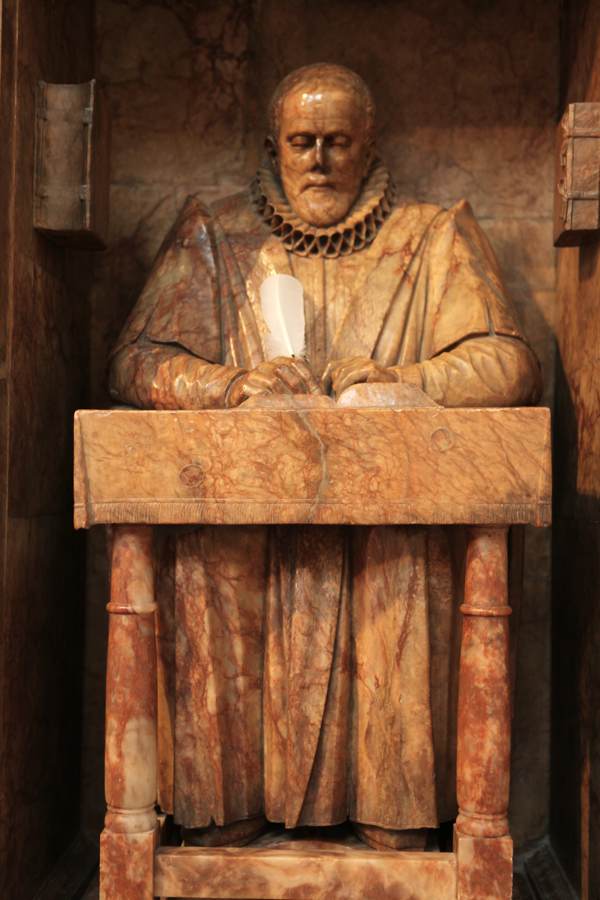
John Stow with his new quill
Photographs copyright © Colin O’Brien
On Phil Maxwell’s Publication Day
Join me tonight from 6pm for a glass of Truman’s Beer to celebrate the publication of Phil Maxwell’s BRICK LANE at Rich Mix, Bethnal Green Rd. There will be an exhibition of the photos and Phil will be signing books. At 8pm, the films of Hazuan Hashim & Phil Maxwell will be screened with live piano accompaniment by Lola Perrin.
[vimeo 88003159 nolink]
CLICK HERE TO GET YOUR COPY OF PHIL MAXWELL’S BRICK LANE FOR £10

Posters at Rough Trade East in the Truman Brewery
We shall be giving away posters to all comers at Rich Mix this evening. After tonight, posters can be obtained free from Bishopsgate Library, Brick Lane Bookshop, Broadway Bookshop, Gardners’ Market Sundriesmen, The Golden Heart, Rough Trade, SCP, Labour & Wait, Leila’s Shop, Newham Bookshop & Townhouse. Each outlet has 50 posters to give away..

BRICK LANE is published with the generous investment of the following readers of Spitalfields Life – Fiona Atkins, Jill Browne, Robson Cezar, Stephane Derone, Charlie de Wet, Sandra Esqulant, David Ethier, Diana Fawcett, Lynda Finn, Susie Ford & Jonathon Green, Libby Hall, Carolyn Hirst (on behalf of Rowland Hirst), Michael Keating, Martin Ling, Julia Meadows, Jack Murphy, Colin O’Brien, Jan O’Brien, Kate Phillips, Sian Phillips & Rodney Archer, Jonathan Pryce & Kate Fahy, Honor Rhodes, John Ricketts, Corvin Roman, Tim Sayer, Elizabeth Scott and Zoe Woodward.

Click here to order a copy of THE GENTLE AUTHOR’S LONDON ALBUM

Click here to order a copy of TRAVELLERS CHILDREN IN LONDON FIELDS
Faber Factory Plus part of Faber & Faber are distributing BRICK LANE and other titles published by Spitalfields Life Books nationwide, so if you are a retailer and would like to sell copies in your shop please contact bridgetlj@faber.co.uk who deals with trade orders.
Thierry Noir, Street Artist
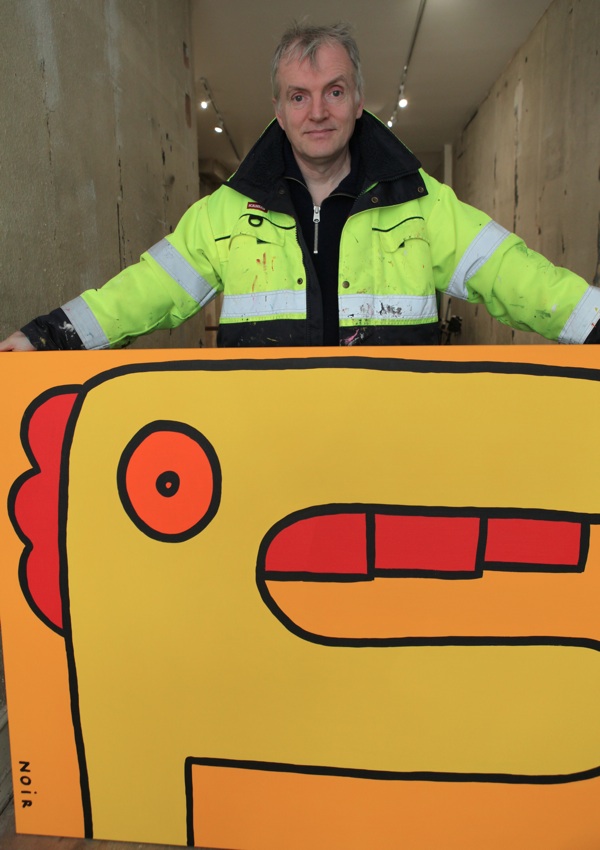
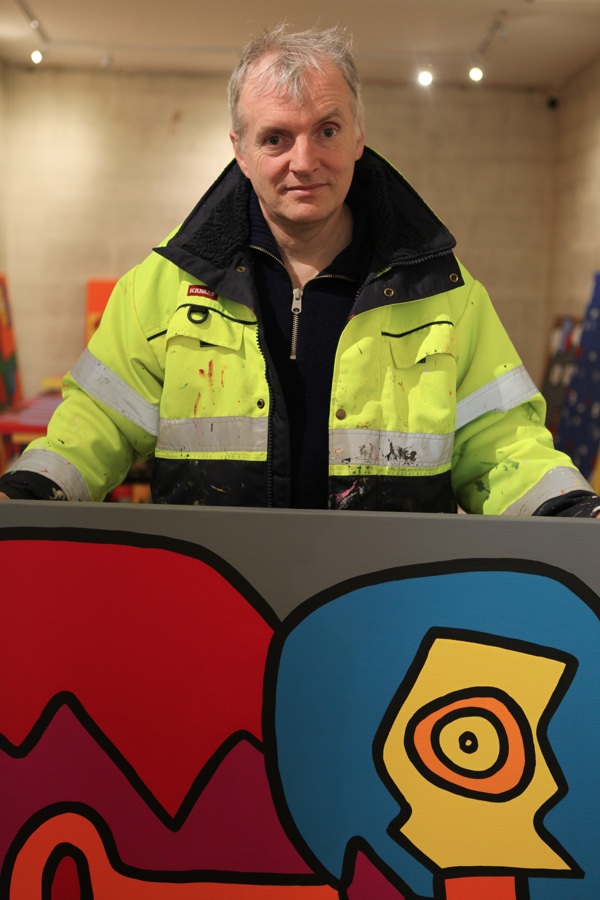
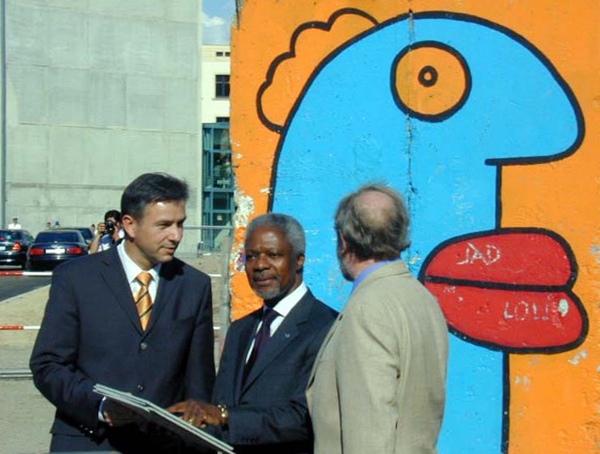
When I arrived to interview the celebrated street artist Thierry Noir, who won international fame and a place in history for his paintings on the Berlin Wall, I encountered an empty gallery apart from a man in construction worker’s clothing who answered the door. When I enquired if he knew where everyone was, he answered simply, “Hello, I am the artist.” Such is the unassuming nature of Monsieur Noir.
Within the gallery, several dozen canvasses were scattered, each painted in rich vibrant hues worthy of Matisse yet with sharp black lines defining the forms, which in some cases displayed an angular Cubist quality reminiscent of Braque at his most playful. These the were fruits of Noir’s labour over the past few weeks and the substance of his forthcoming exhibition that opens on April 4th at Howard Griffin Gallery in Shoreditch High St. Noir’s vivid palette contradicts his name which I wrongly assumed to be an adopted one. “I had a lot of trouble at school because of that,” he admitted to me with a blush.
Noir’s gentle manner is unexpected in an artist who famously used art with such bold liberationist intent, defying the might of the Soviet Union with his childlike images in fairground colours. Yet when he told me his story – as he continued his work placidly – I discovered it was a joyful emotional impulse which motivated him to create and that evidently sustains him to this day.
“I am from Lyon and, when I left college in 1984, I couldn’t find my way so I decided to go to West Berlin where Nina Hagen, Iggy Pop and David Bowie were. I had no idea where West Berlin was because it was the end of the world at that time. It took me twenty-one hours to get there by train and I arrived on 22nd January, 1982. Everybody I met was an artist, whereas in France I never met any artists, so when people asked me if I was an artist I said, ‘Yes.’ Then I had to prove I was an artist.
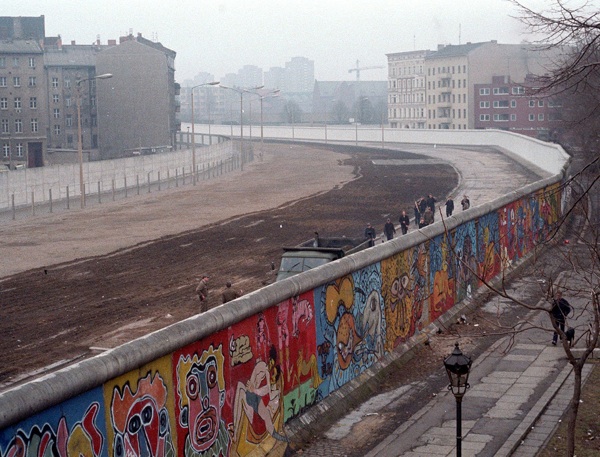
Two years later, I was living very close to the Wall – there were two walls with fifty metres between known as the ‘death strip’ and border guards patrolling on either side. I was living in a squat in a abandoned hospital at the end of a dead end street with no traffic. Nothing happened. It was a black and white world. I was going crazy, there was no colour or life, so I painted on the Wall. It was a physical reaction, it wasn’t political at the beginning. But it became political really quickly because everyone asked, ‘Who’s paying you?’ Was I a spy from France or the CIA?
It was taboo for the Berliners but, as a foreigner, it was not a taboo for me. I got a lot of questions and I had to develop a painting style so I could talk as I worked. Then I found could sell my paintings and make murals under commission, and I was able to make a living. Wim Wenders came along, he was researching his film ‘Wings of Desire,’ and we decided to work together and I painted a section of the Wall for him. After that, Berliners came to think in a different way about the Wall. It was another time, and the world was no longer black and white.”
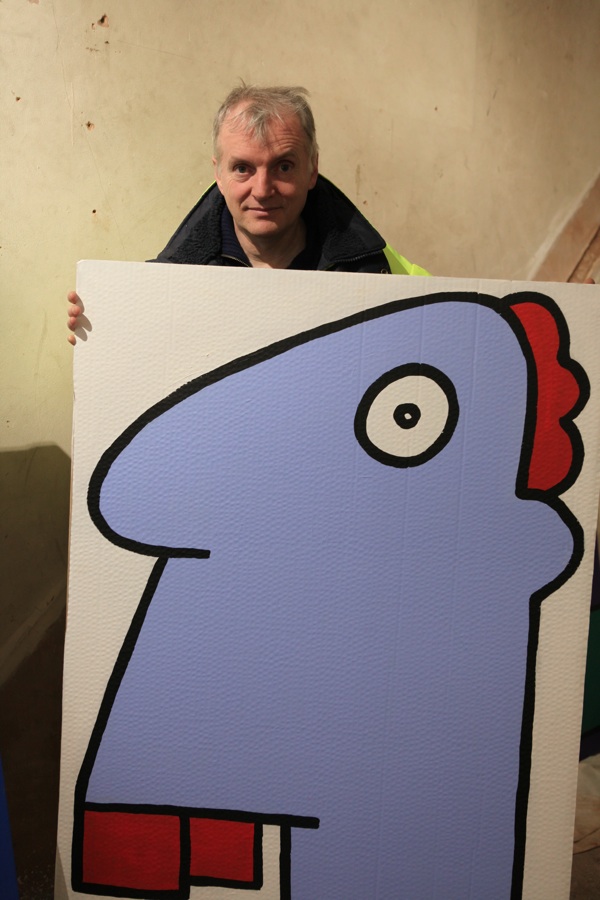
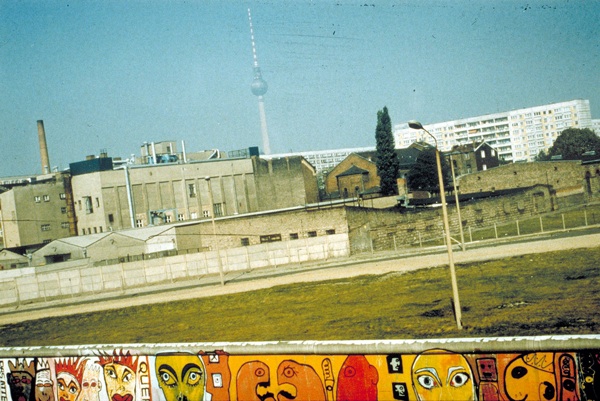
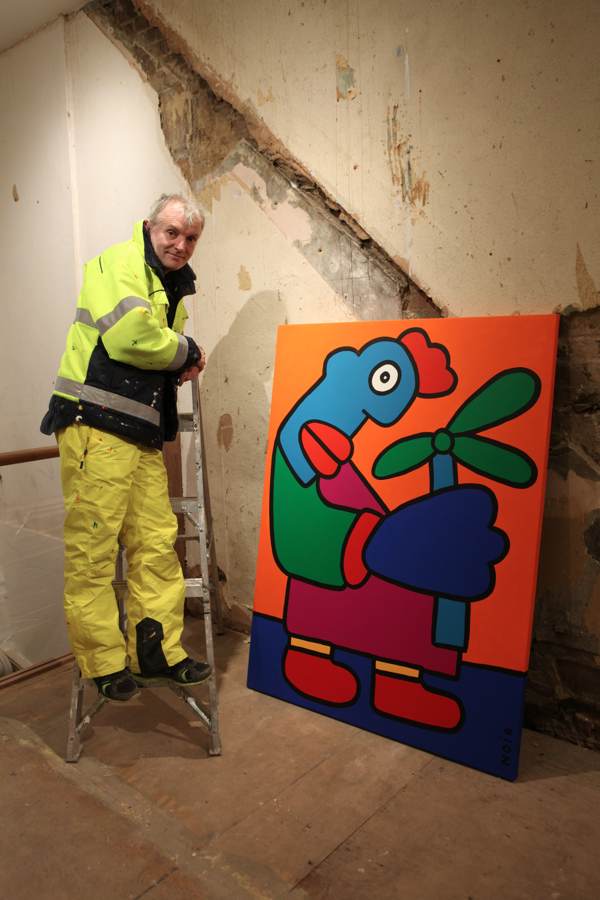
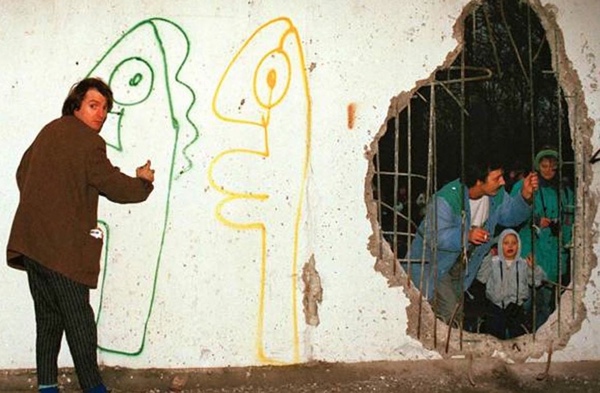
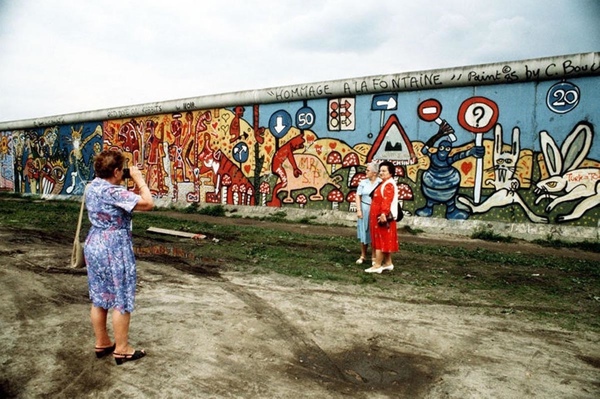
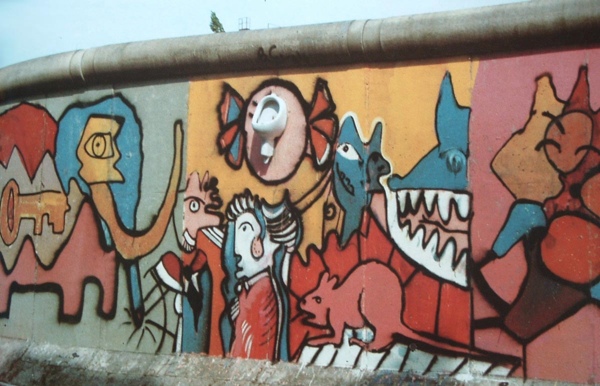
Thierry painting on the eastern side of the Berlin Wall in the eighties
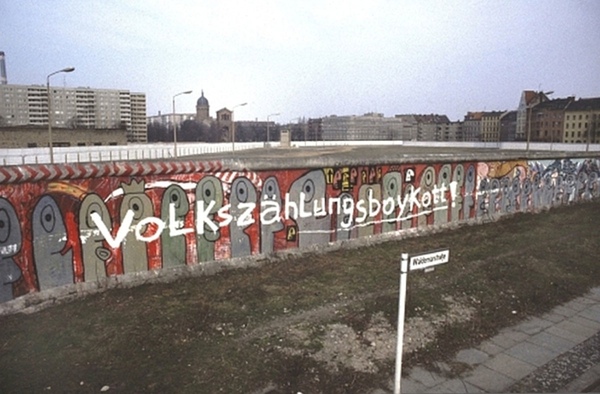
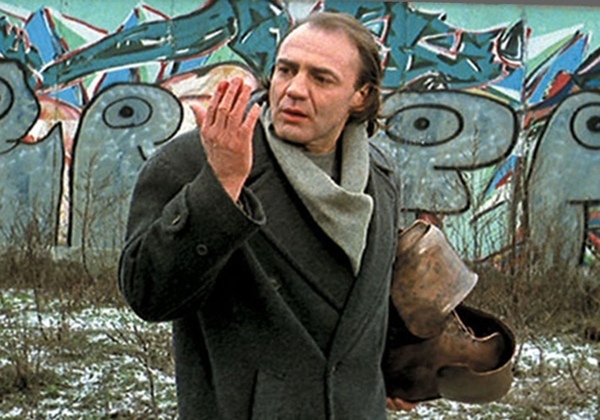
Thierry’s paintings featured in Wim Wenders’ ‘Wings of Desire’
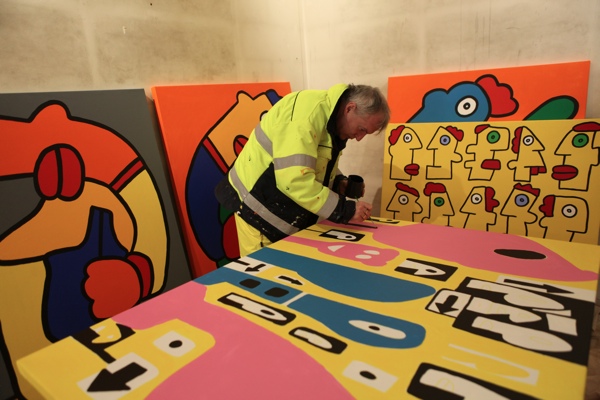
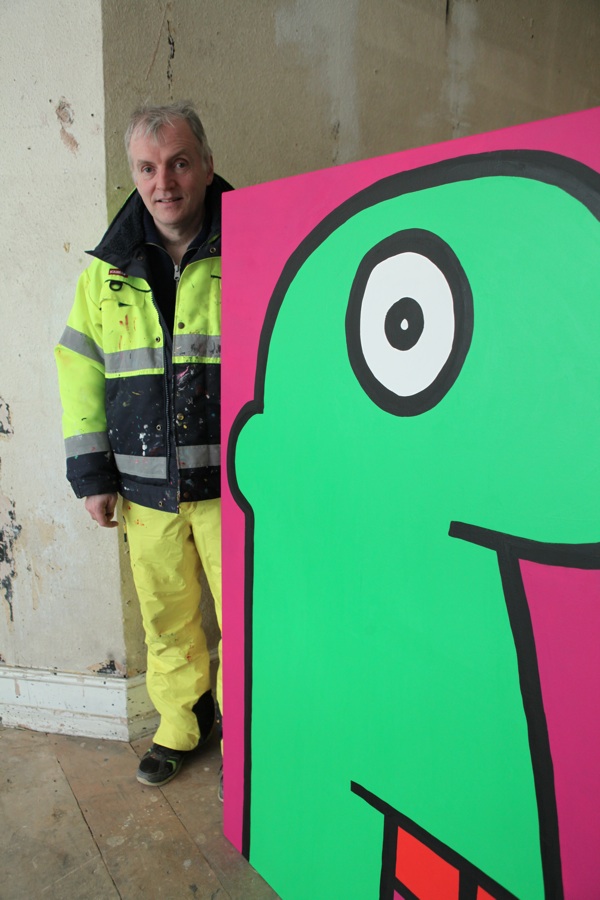
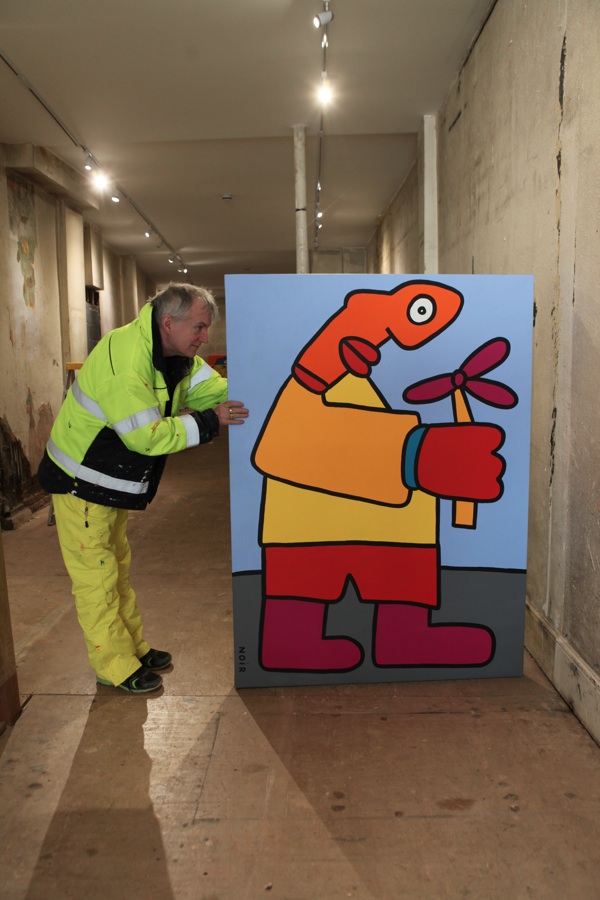
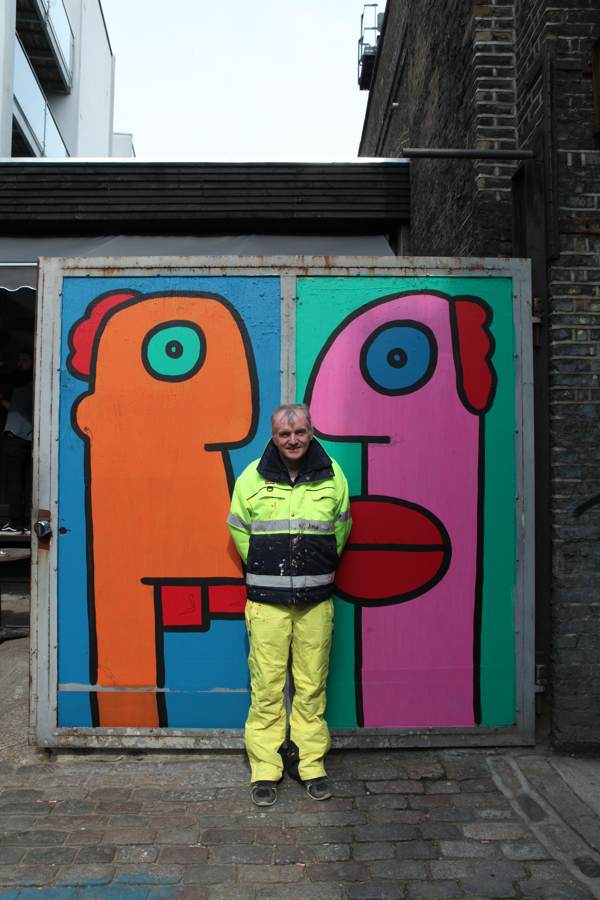
Thierry works on his exhibition
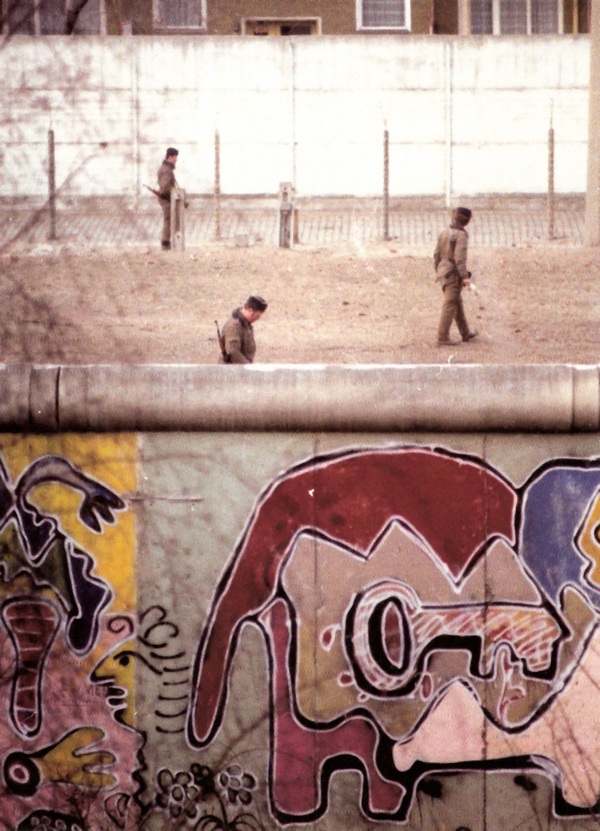
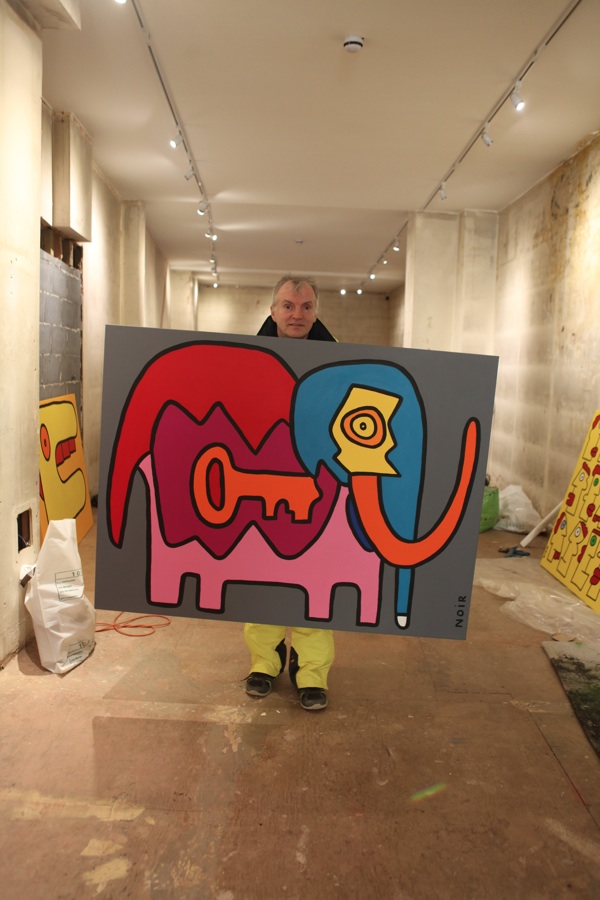
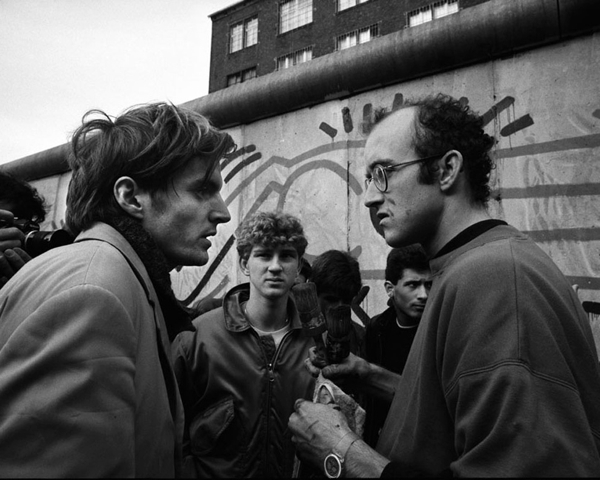
Thierry Noir & Keith Haring at the Berlin Wall
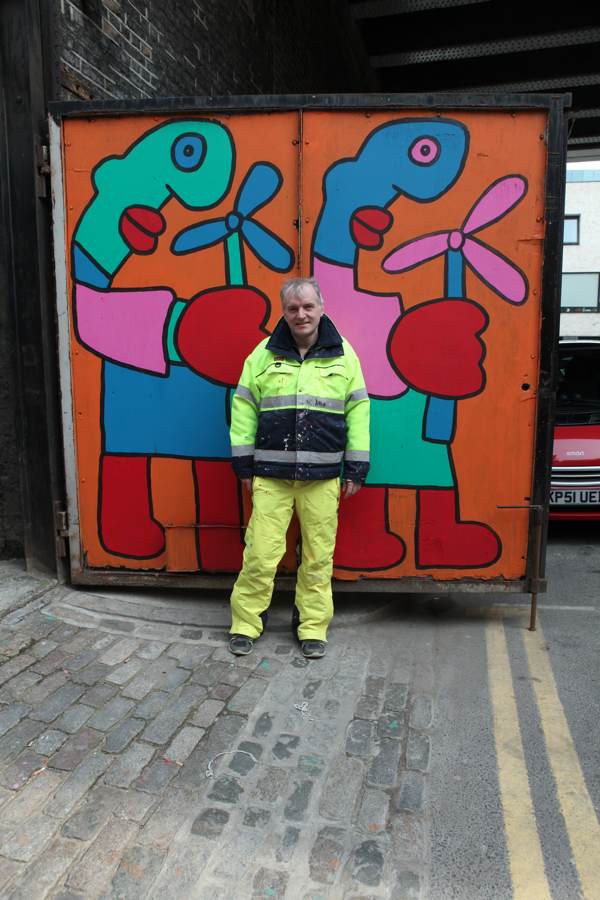
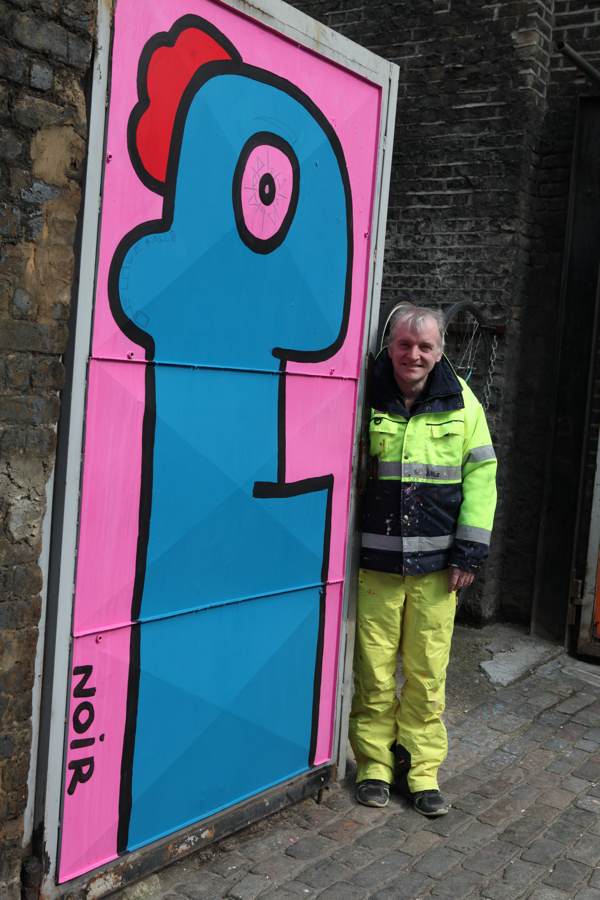
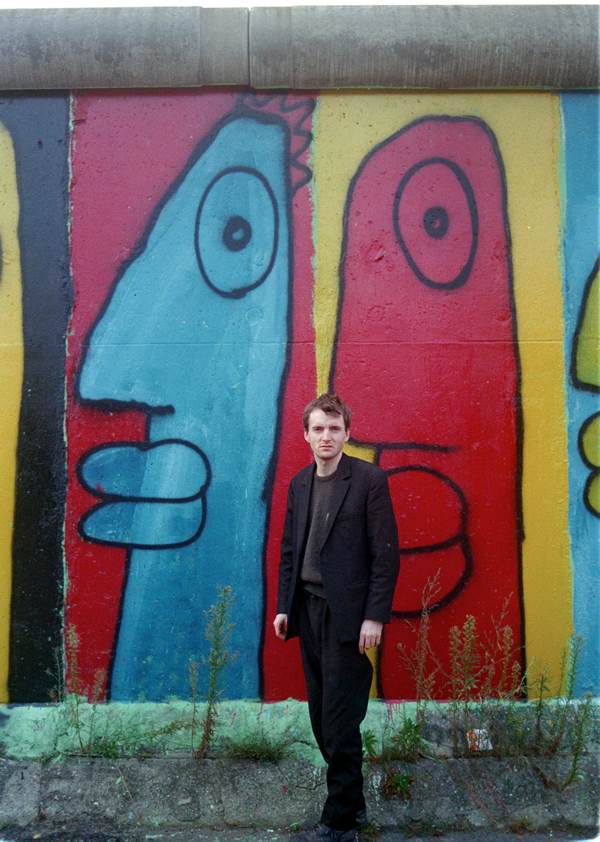
“This photo was taken in 1986 along Bethaniendamm in Berlin-Kreuzberg. It was taken by my first wife Gabi Noir. I was wearing a suit that day that I had found in a bag of old clothes on the street. At that time West Berliners often left furnishings and clothes on the streets. It was a recycling process. During this period, I would paint the Wall all day and then travel to the centre of West Berlin to sell canvases in restaurants. That is how I survived back then.”

Thierry Noir
New photographs copyright © Colin O’Brien
Thierry Noir’s retrospective is at Howard Griffin Gallery, Shoreditch High St, 4th April – 5th May
You might also like to read about
More Long Forgotten London
After my first excursion to explore the sights of long forgotten London in the volumes of Walter Thornbury’s London Old & New, I could not resist returning to this shadowy realm, conjured as if from a dream or nightmare. This was how Londoners of the late nineteenth century looked back upon the city that had gone within living memory, a London that was already vanishing into reminiscence and anecdote in their time – a lost city, only recalled today in dark and dingy engravings such as these.
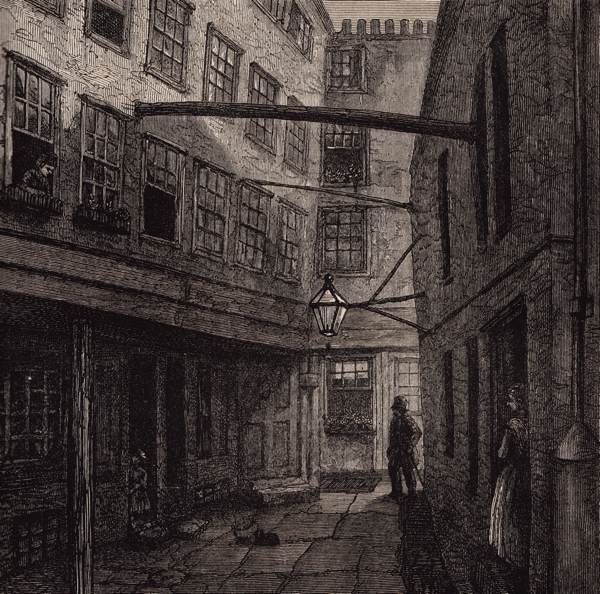
Golden Buildings, off the Strand

Boar’s Head Yard, Borough High St
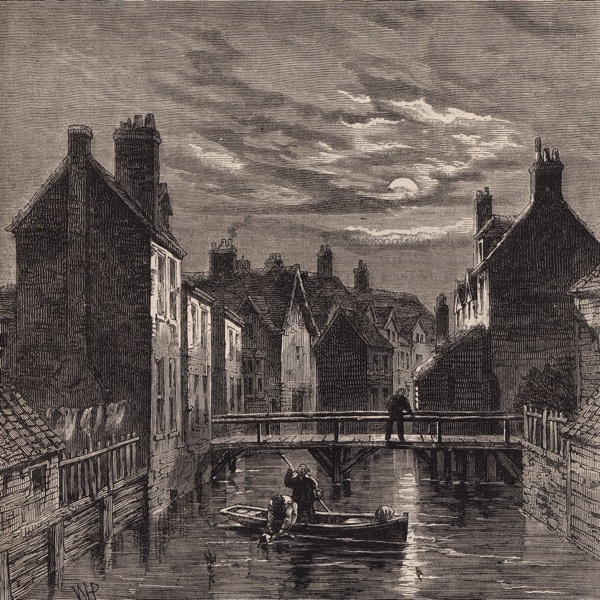
Jacob’s Island, Southwark
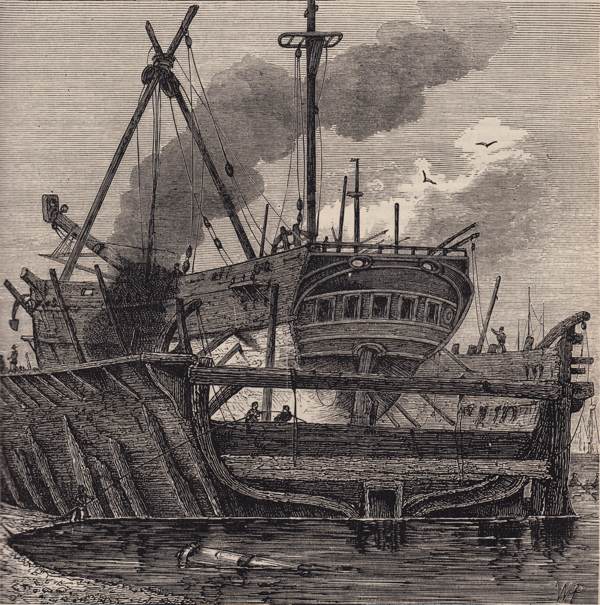
Floating Dock, Deptford
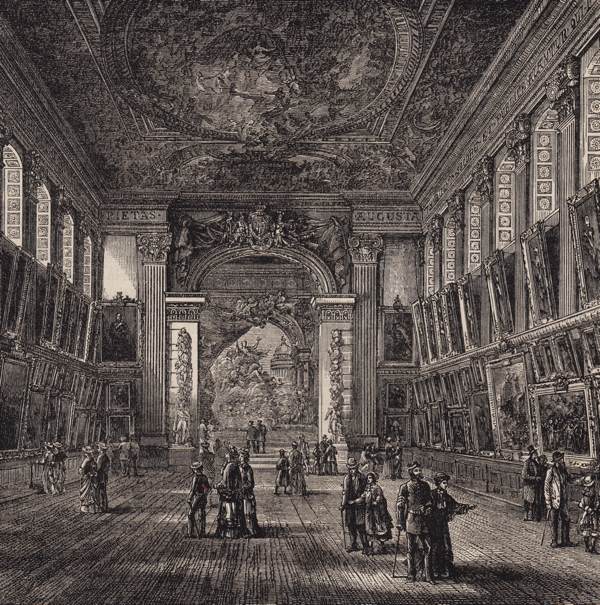
Painted Hall, Greenwich
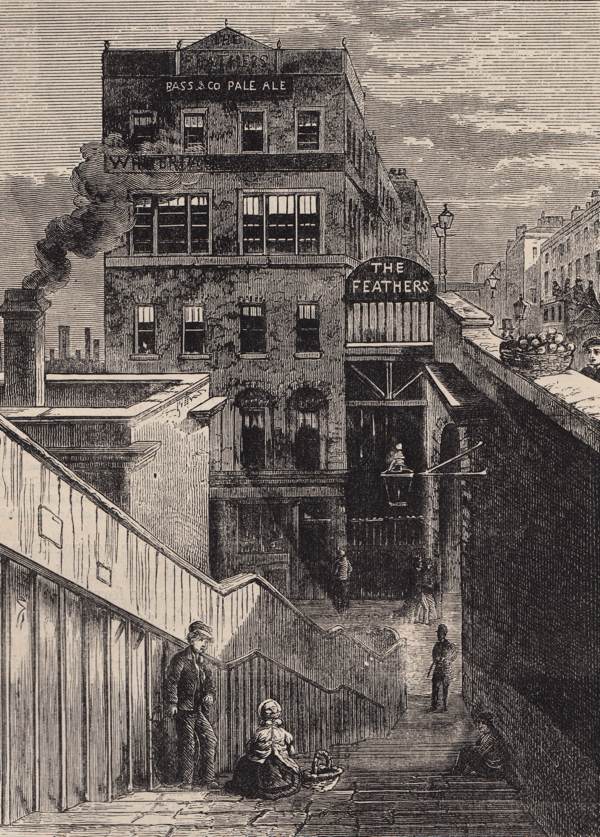
Waterloo Bridge Rd
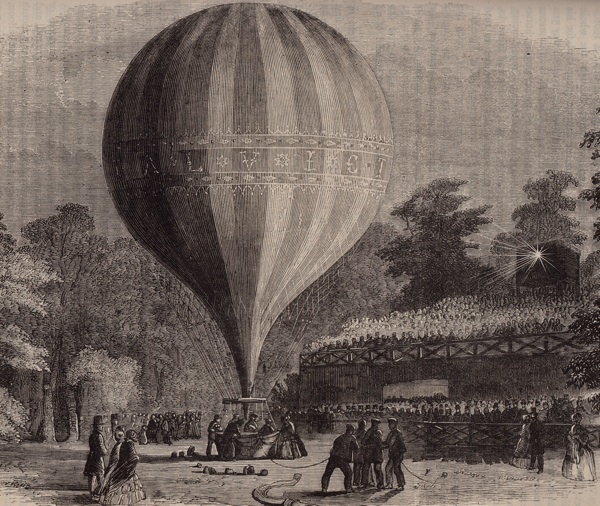
Balloon Ascent at Vauxhall Gardens, 1840
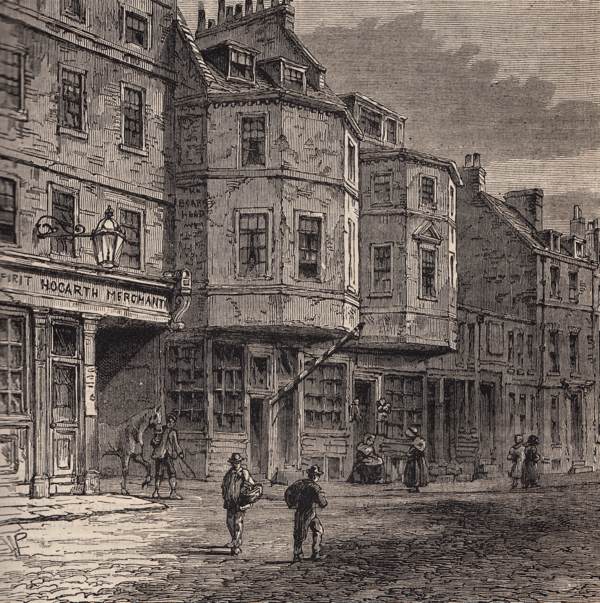
House in Westminster, believed to have been inhabited by Oliver Cromwell
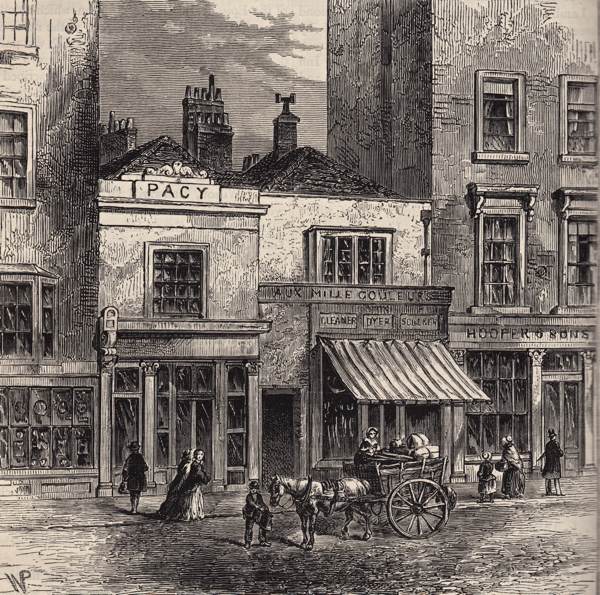
Old shops in Holborn
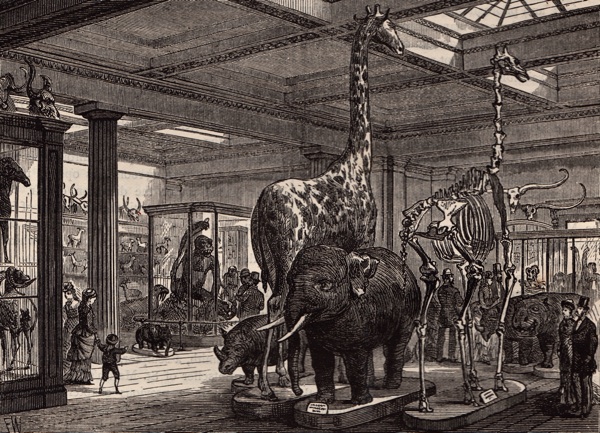
Mammalia at the British Museum
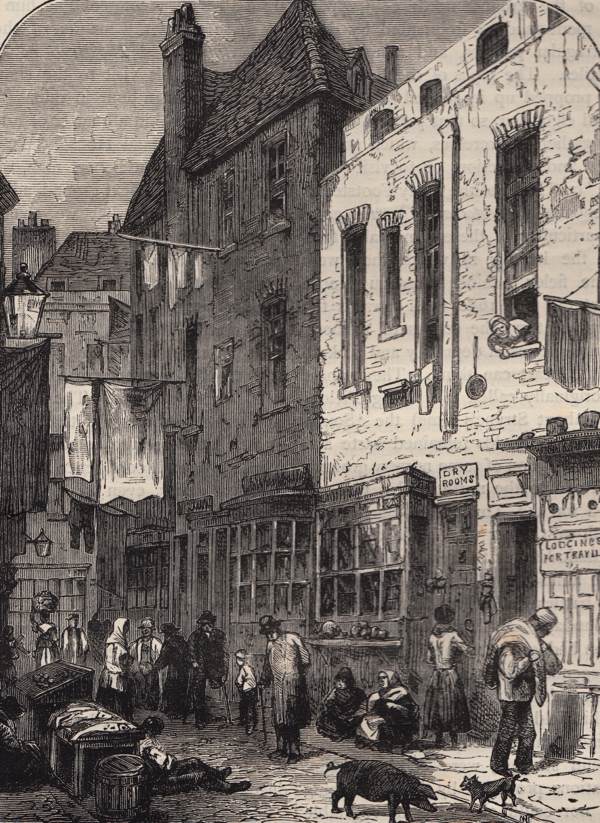
Rookery, St Giles 1850
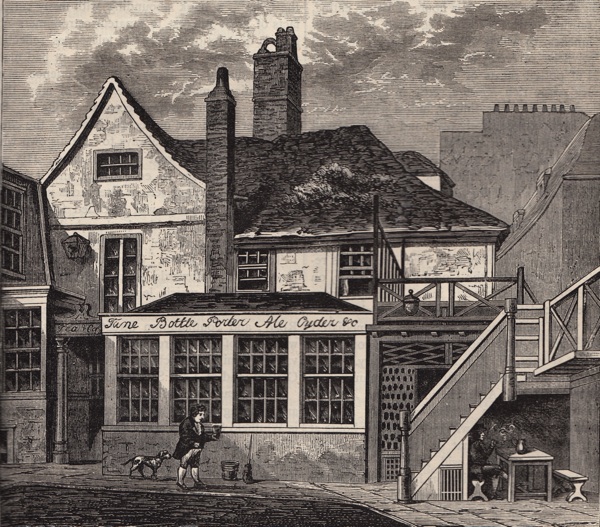
Manor House of Toten Hall, Tottenham Court Rd 1813
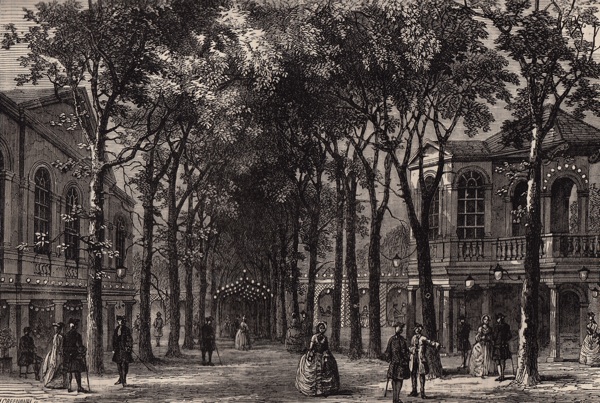
Marylebone Gardens, 1780
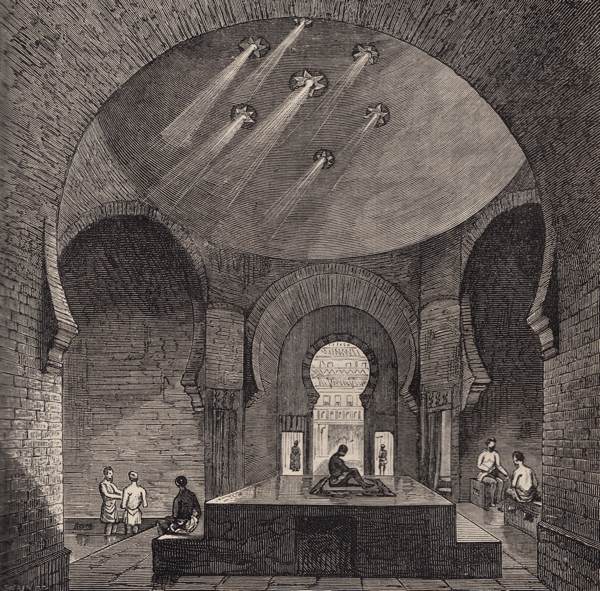
Turkish Baths, Jermyn St
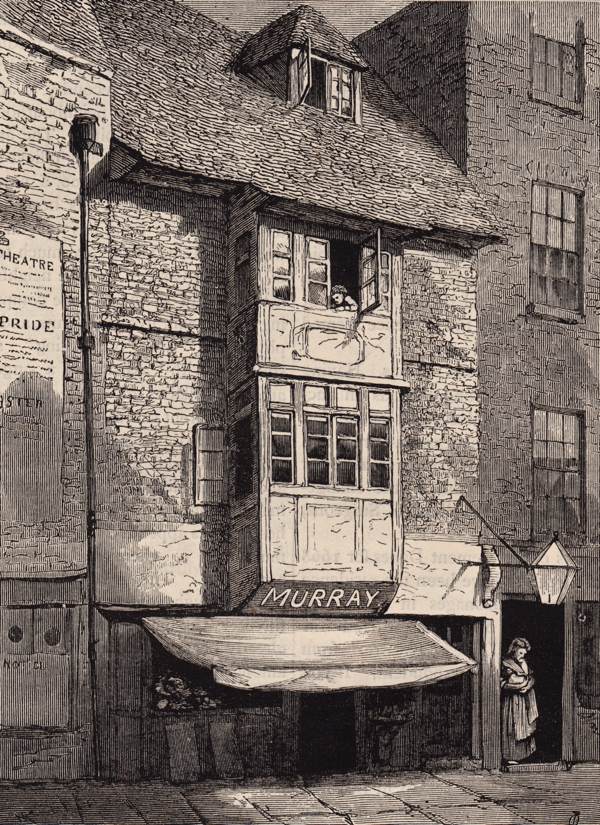
Old house in Wych St
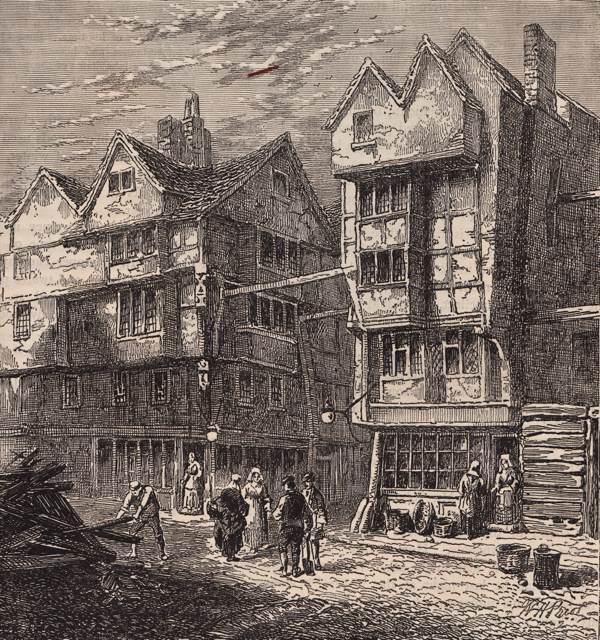
Butcher’s Row, Strand 1810
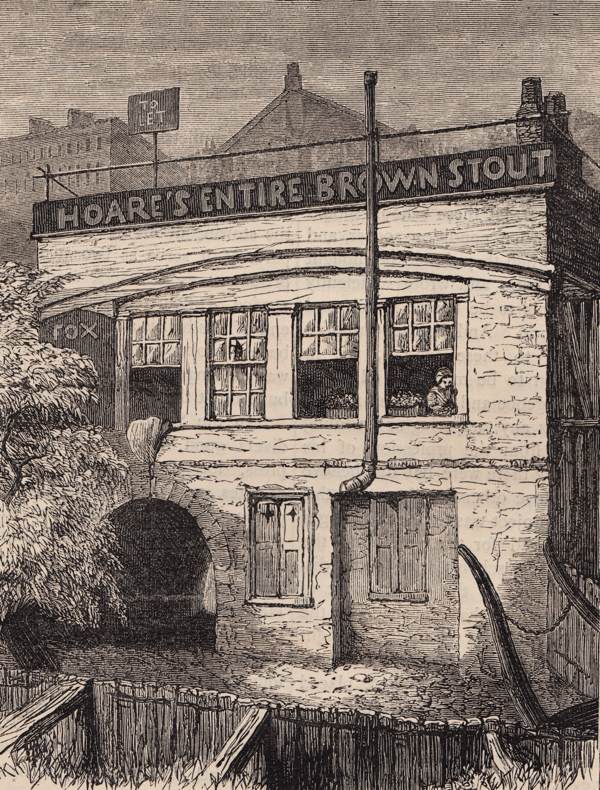
The Fox Under The Hill, Strand
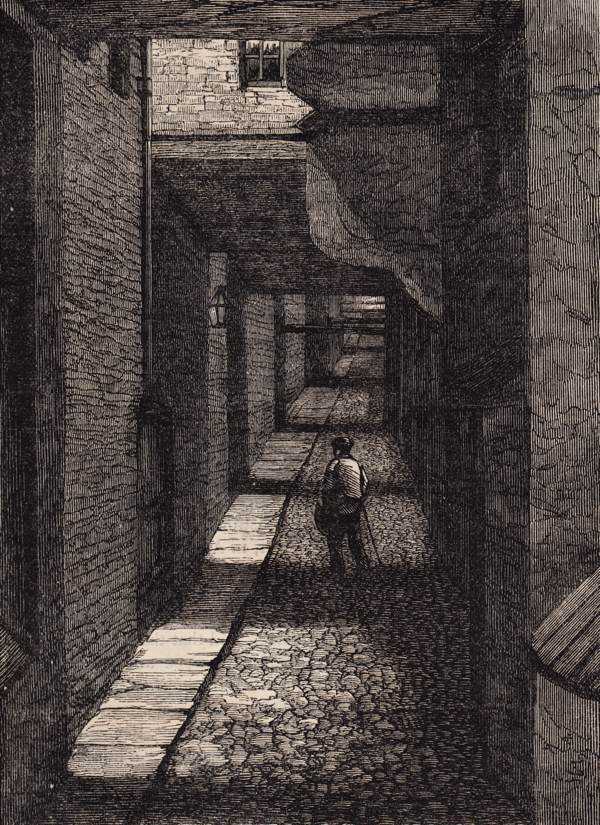
Ivy Bridge Lane, Strand
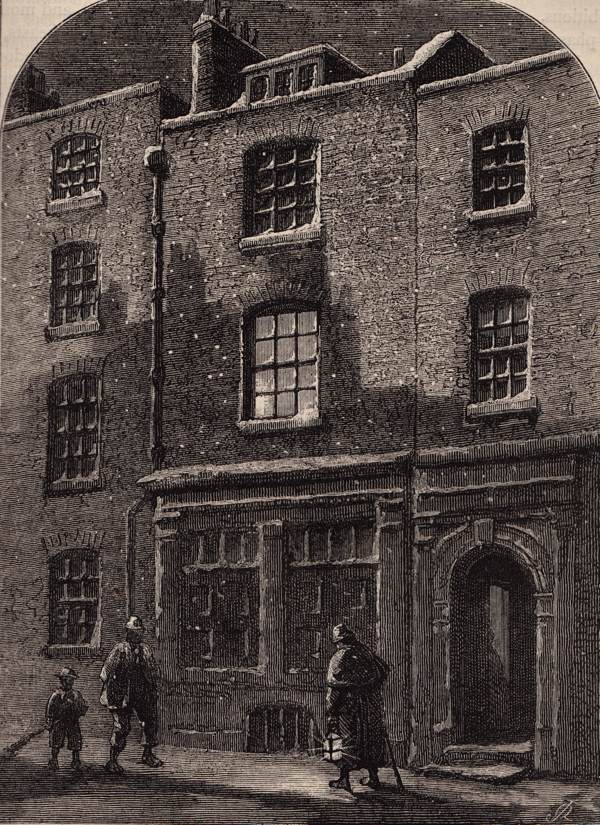
Turner’s House, Maiden Lane
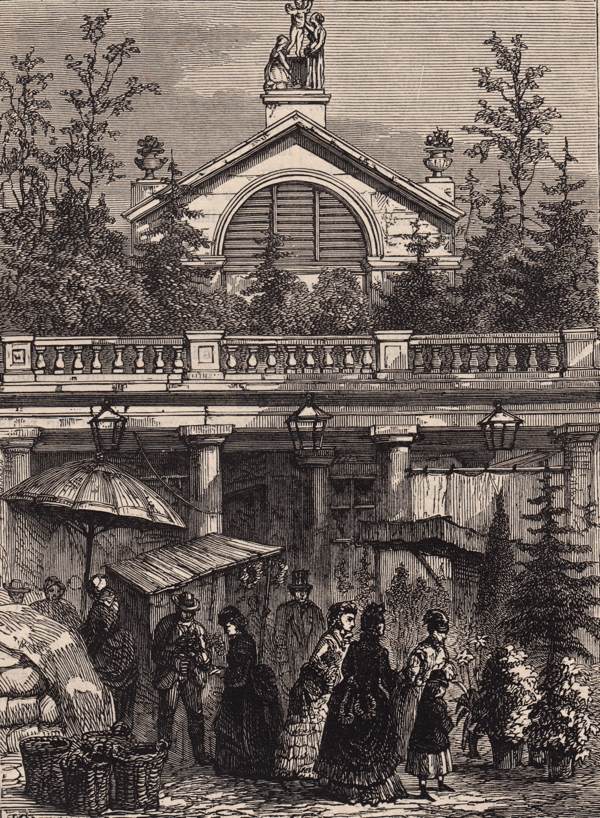
Covent Garden
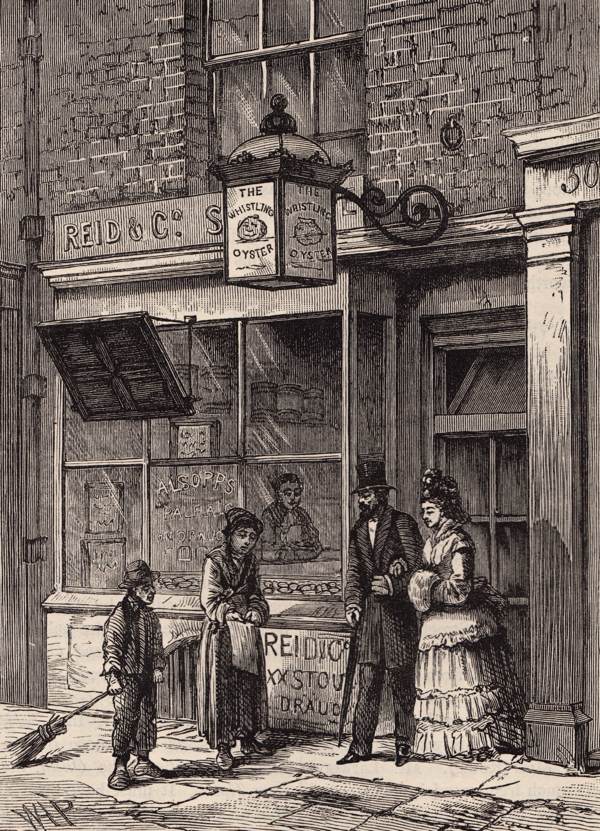
Whistling Oyster, Covent Garden
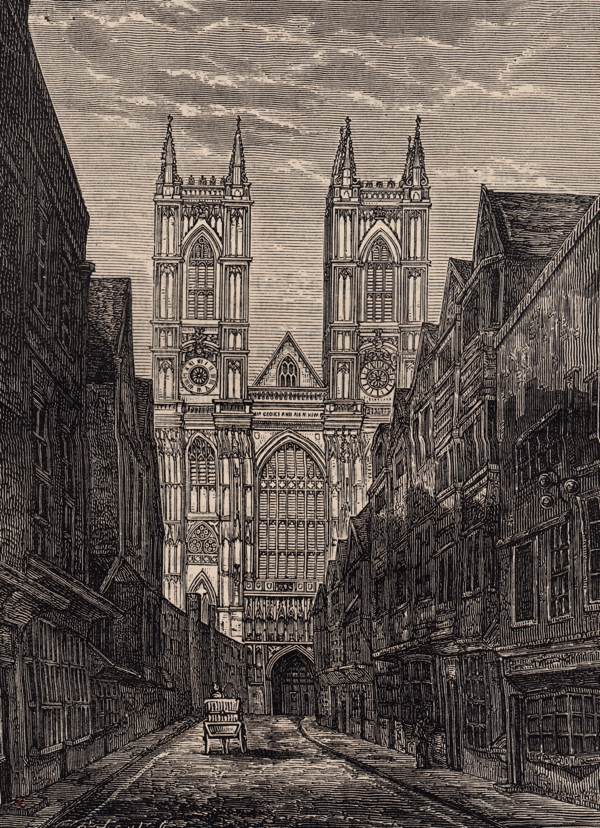
Tothill St, Westminster
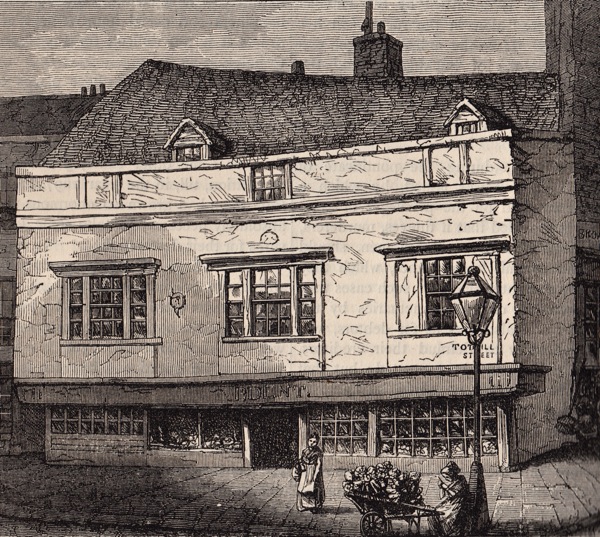
Old house on Tothill St
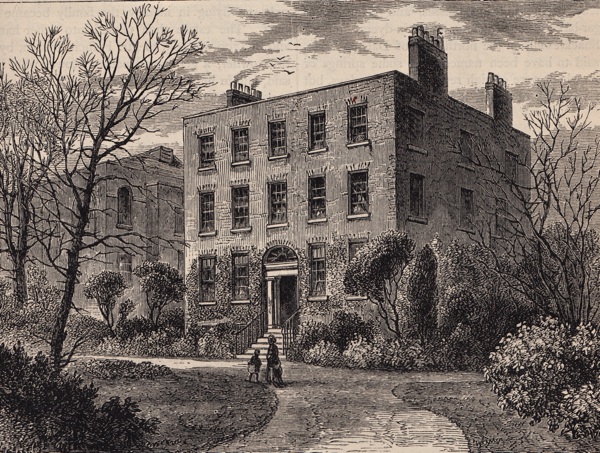
The Manor House at Dalston
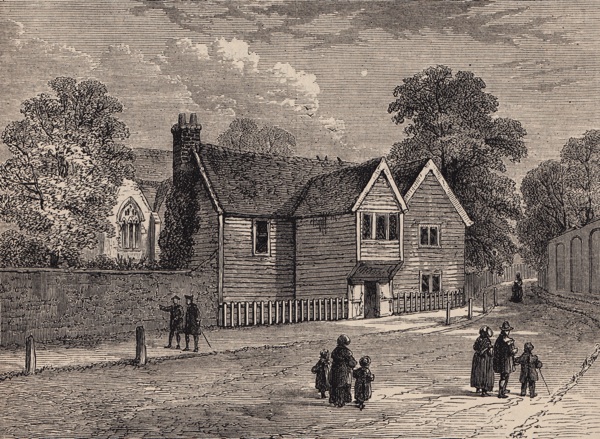
Old Rectory, Stoke Newington 1856
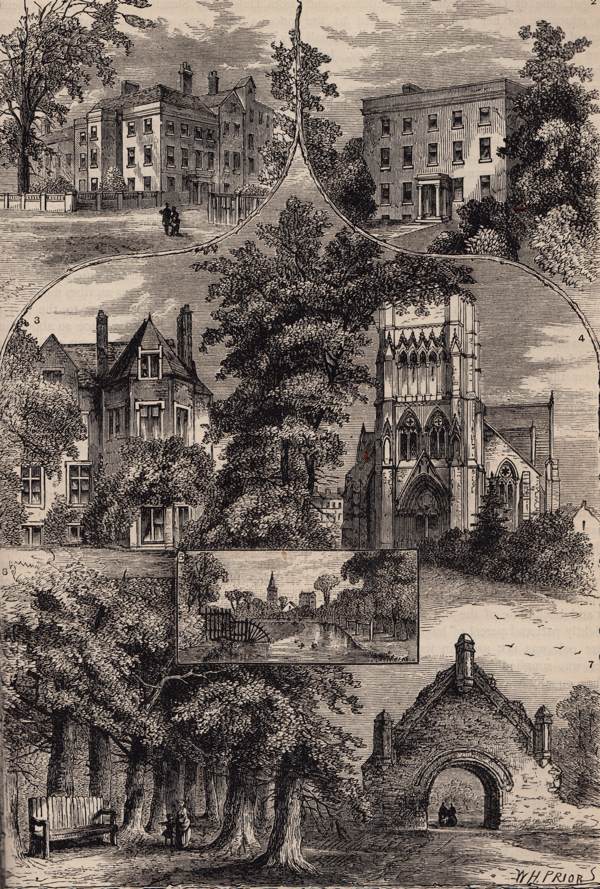
Sights of Stoke Newington – 1. Rogers House 1877 2. Fleetwood House, 1750 3. St Mary’s Rectory 4. St Mary’s New Church 5, New River at Stoke Newington 6. Queen Elizabeth’s Walk, 1800 7. Old gateway
Images courtesy Bishopsgate Institute
You may also like to take a look at
At The Blind Beggar

David Dobson, Landlord of the Blind Beggar
Henry VIII at the gaming machine – a rare image of this infamous monarch not recorded by Holbein yet a familiar sight in Whitechapel, where David Dobson landlord of The Blind Beggar delights to dress up in velvet robes and swan around like the ghost of the old king come back to haunt us.
The particular blind beggar in question is Henry de Montfort who lost his sight at the Battle of Evesham in 1265 and became the subject of a Tudor ballad recounting the myth of his salvation by a young woman of Bethnal Green – where he ended his years begging at the crossroads, cared for by his only daughter. Subsequently, the image of the beggar and his daughter became the seal of the Metropolitan Borough of Bethnal Green in 1900 and adorns the inn sign of The Blind Beggar in Whitechapel today.
Paradoxically, The Blind Beggar has become a site of pilgrimage for the devout, seeking the location of the founding of the Salvation Army by William Booth, who started his independent mission by preaching outside in 1865. Converted to housing now, the former Albion Brewery stands next door towering over the pub that served as its tap room, until it closed in 1979. In 1808, it was the enterprising landlord of The Blind Beggar who bought the small brewery next door and named it the Albion Brewery, which grew to be the third largest in Britain by 1880 and, at the beginning of the twentieth century, the first Brown Ale was brewed here by Thomas Wells Thorpe.
In 1904, ‘Bulldog’ Wallace, a member of The Blind Beggar Gang of pickpockets who frequented the pub, stabbed another man in the eye with an umbrella – initiating the notoriety that coloured the reputation of the pub in the twentieth century, which reached its nadir with the shooting of Georgie Cornell by Ronnie Kray in March 1966, as recounted to me by Billy Frost, the Kray Twins’ driver.
“We don’t glorify it, we want to be famous for other things,” admitted David Dobson when Photographer Colin O’Brien & I joined him for a jar last week. “For example, I’ve got the finest collection of Japanese Carp in the East End,” he assured me, as he led us into the garden and leaned over the vast tank full of fish, each as fat as my leg, so that his beloved charges might lift their heads from the water and permit him to stroke them affectionately under the chin.
“I enjoy the diversity of my clientele,” David confided, when I enquired about the rewards of his job, “Every day, I meet people from all over the world. We’ve had Jerry Springer here, and Brad Pitt’s popped in.”
Yet in spite of the glamour and the attention, David’s motive for acquiring the Blind Beggar is refreshingly simple. “I like drinking, so I bought the pub,” he confessed to me with an eager grin, raising a glass as he revealed a lifelong commitment to his pub, “It’s not a job for me, it’s way of life. I’m live here and I’m in every night – I’ll be leaving here in a box.”

The Blind Beggar, mid-nineteenth century – there has been a pub on this site since 1673

The current building was constructed in 1894

The Albion Brewery

The Watney Mann Brewery with The Blind Beggar attached

The Blind Beggar and the former Albion Brewery today
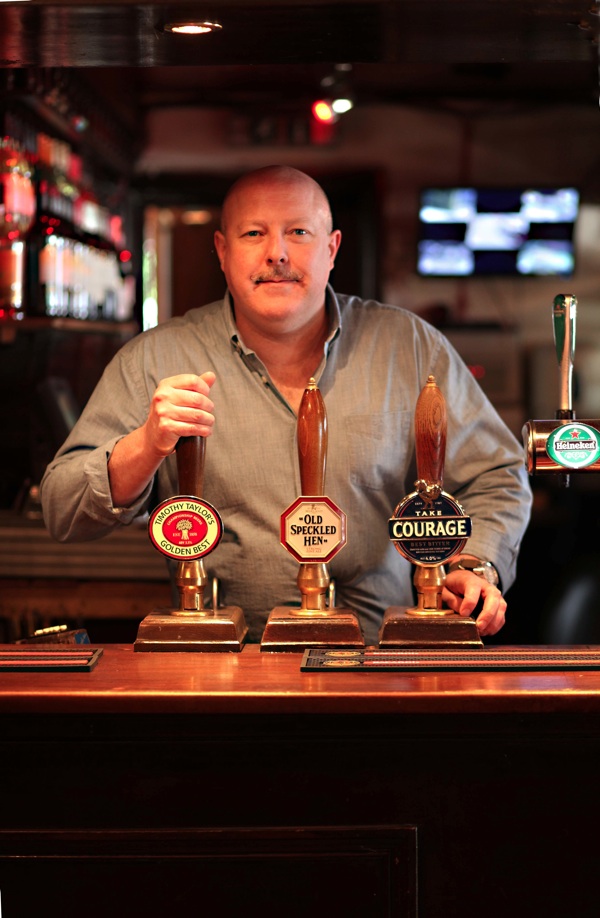
David Dobson, Publican & Proprietor

David and his Koi Carp

David pets his not-so-coy carp

“I wore it for a fancy dress party years ago, but now it’s just a habit.”

David and a local wag

David waits to welcome the Olympic Torch to Whitechapel in 2008

David Dobson – “I like drinking, so I bought the pub”
Photographs copyright © Colin O’Brien
The Blind Beggar, 337 Whitechapel Rd, London E1
You may also like to read about
Sandra Esqulant, The Golden Heart












