Lyndie Wright, Puppeteer
Book now for my tours through August, September & October
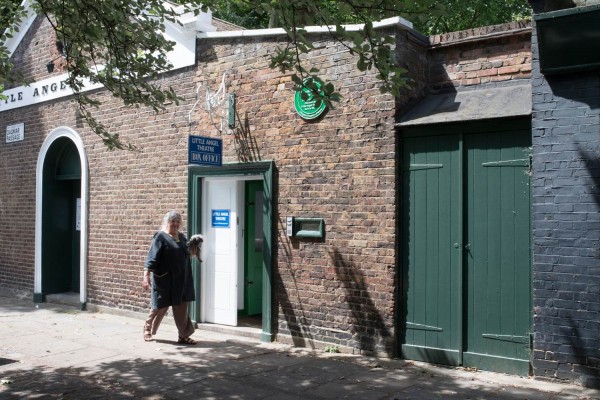
As a child, I was spellbound by the magic of puppets and it is an enchantment that has never lost its allure, so I was entranced to visit The Little Angel Theatre in Islington. All these years, I knew it was there – sequestered in a hidden square beyond the Green and best approached through a narrow alley overgrown with creepers like a secret cave.
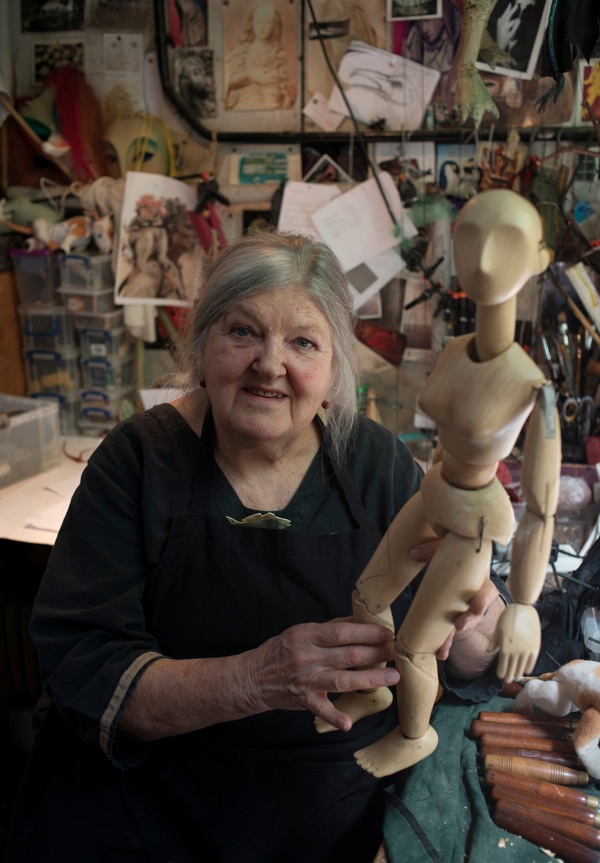
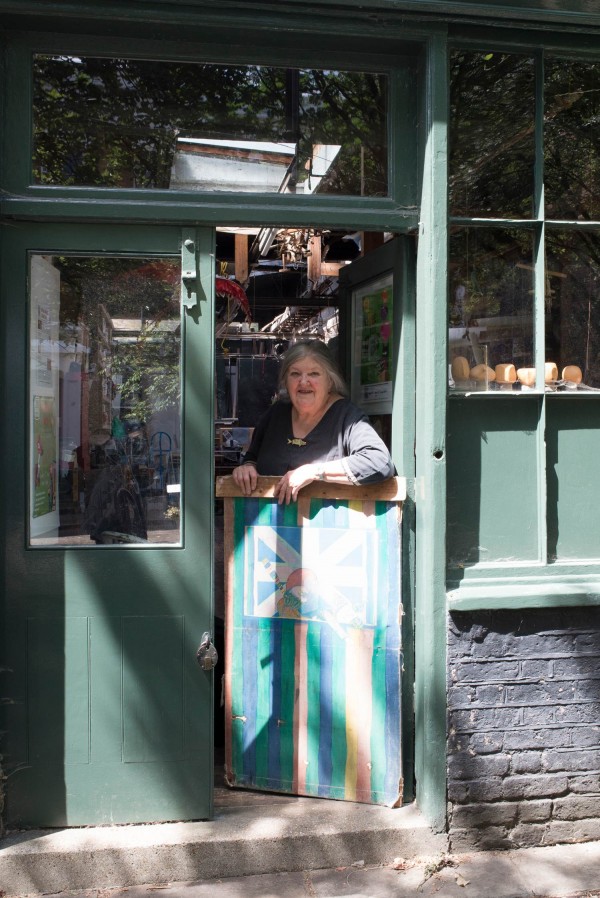
Contributing Photographer Sarah Ainslie & I were welcomed by Lyndie Wright who co-founded the theatre in 1961 with her husband John in the shell of an abandoned Temperance Chapel. “We bought the theatre for seven hundred and fifty pounds,” she admitted cheerfully, letting us in through the side door,“but we didn’t realise we had bought the workshop and cottage as well.”
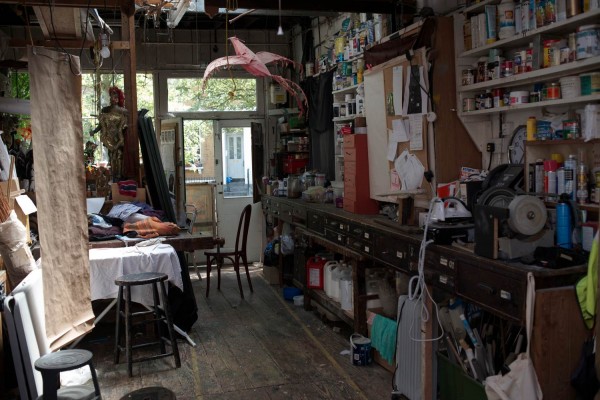
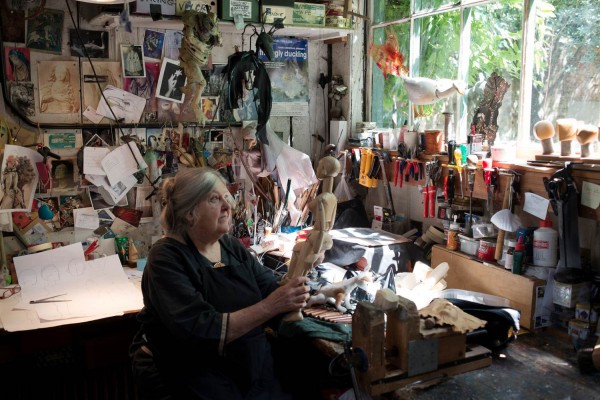
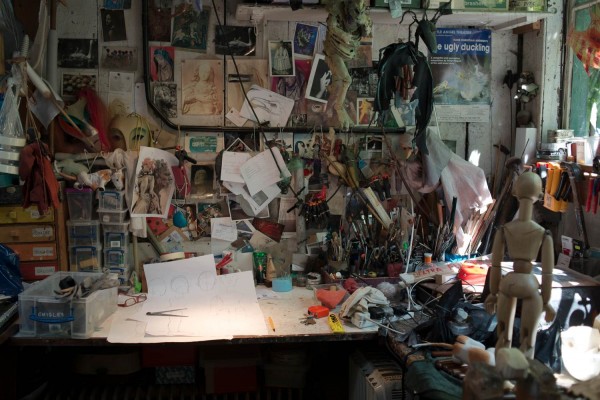
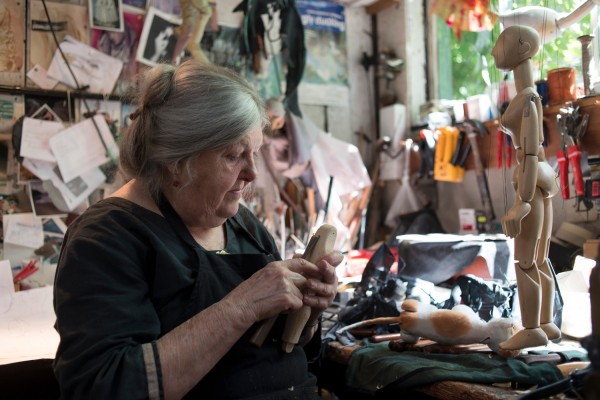
More than half a century later, Lyndie still lives in the tiny cottage and we discovered her carving a marionette in the beautiful old workshop. “People travel for hours to get to work, but I just have to walk across the yard,” she exclaimed over her shoulder, absorbed in concentration upon the mysterious process of conjuring a puppet into life. “Carving a marionette is like making a sculpture,” she explained as she worked upon the leg of an indeterminate figure, “each piece has to be a sculpture in its own right and then it all adds up to a bigger sculpture.” In spite of its lack of features, the figure already possessed a presence of its own and as Lyndie turned and fondled it, scrutinising every part like puzzled doctor with a silent patient, there was a curious interaction taking place, as if she were waiting for it to speak.
“I made puppets as a child,” she revealed by way of explanation, when she noticed me observing her fascination. Growing up and going to art school in South Africa, Lyndie applied for a job with John Wright who was already an established puppet master, only to be disappointed that nothing was available. “But then I got a telegram,” she added, “and it was off on an eight month tour including Zimbabwe.”
After the tour, Lyndie came to Britain continue her studies at Central School of Art and John was seeking a location to create a puppet theatre in London. “The chapel had no roof on it and we had to approach the Temperance Society to buy it,” Lyndie recalled, “We did everything ourselves at the beginning, even laying the floorboards and scraping the walls.” Constructed upon a corner of a disused graveyard, they discovered human remains while excavating the chapel to create raked seating as part of the transformation into a theatre with a fly tower and bridge for operating the marionettes. Today, the dignified old frontage stands proudly and the auditorium retains a sense of a sacred space, with attentive children in rows replacing the holy teetotallers of a former age.
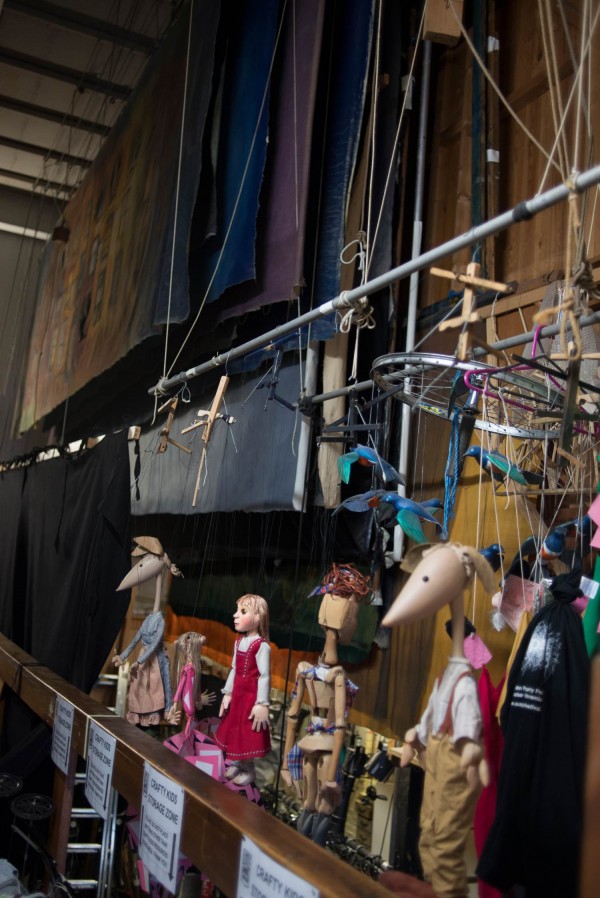
“I had intended to return to South Africa, but I had fallen in love with John so there was no going back,” Lyndie confided fondly, “in those days, we sold the tickets, worked the puppets, performed the shows, and then rushed round and made the coffee in the interval – there were just five of us.” At first it was called The Little Angel Marionette Theatre, emphasising the string puppets which were the focus of the repertoire but, as the medium has evolved and performers are now commonly visible to the audience, it became simply The Little Angel Theatre. Yet Lyndie retains a special affection for the marionettes, as the oldest, most-mysterious form of puppetry in which the operators are hidden and a certain magic prevails, lending itself naturally to the telling of stories from mythology and fairytales.
John Wright died in 1991 but the group of five that started with him in Islington in 1961 were collectively responsible for the growth and development in the art of puppetry that has flourished in this country in recent decades, centred upon The Little Angel Theatre. Generations of puppeteers started here and return constantly bringing new ideas, and generations of children who first discovered the wonder of the puppet theatre at The Little Angel come back to share it with their own children.
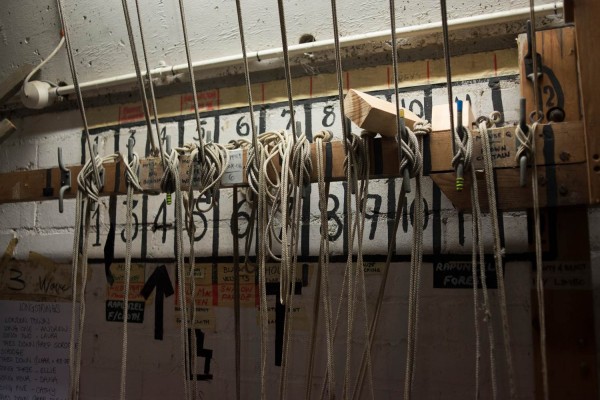
“The less you show the audience, the more they have to imagine and the more they get out of it,” Lyndie said to me, as we stood together upon the bridge where the puppeteers control the marionettes, high in the fly tower. The theatre was dark and the stage was empty and the flies were hung with scenery ready to descend and the puppets were waiting to spring into life. It was an exciting world of infinite imaginative possibility and I could understand how you might happily spend your life in thrall to it, as Lyndie has done.
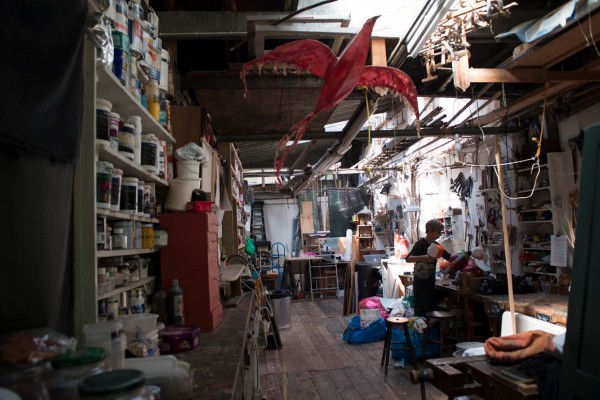
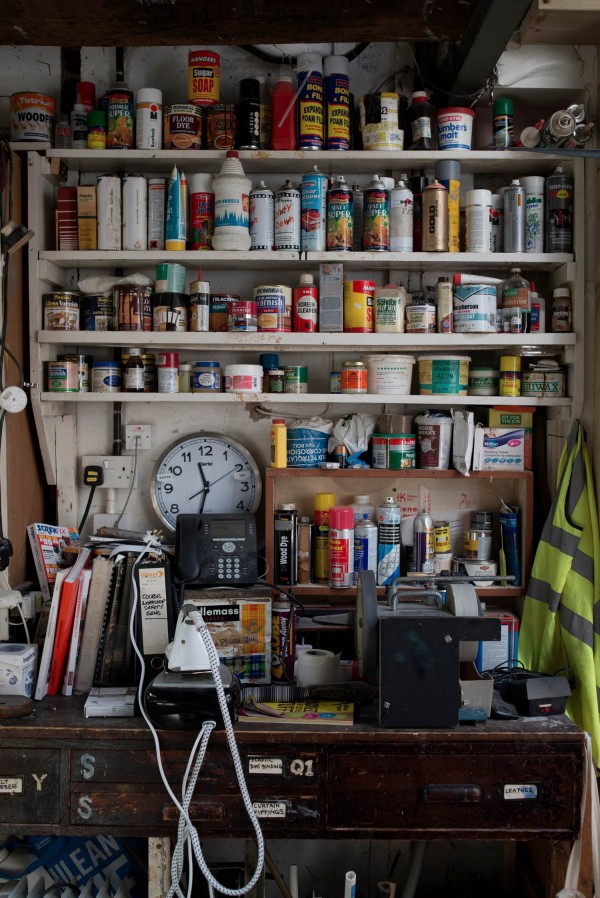
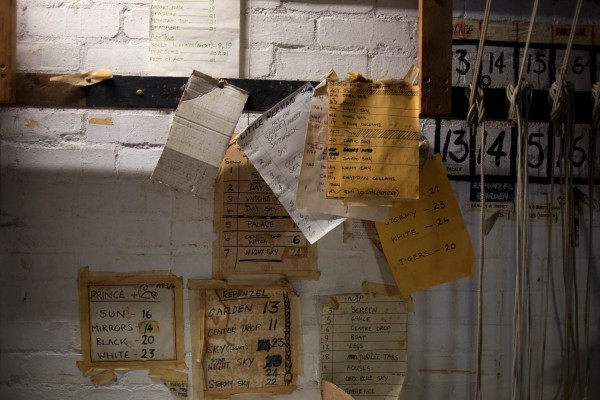
Old cue scripts, still up in the flies from productions long ago
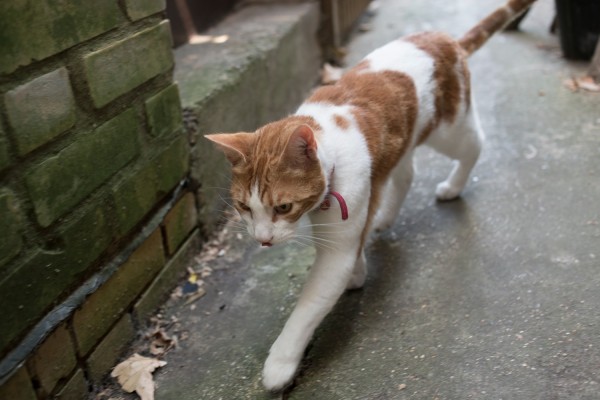
Larry, the theatrical cat
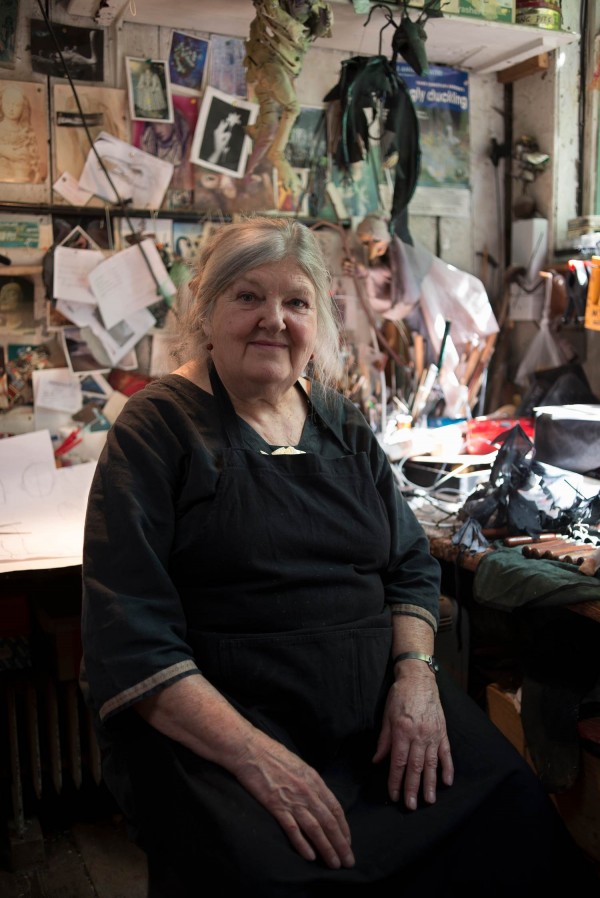
Lyndie Wright
Photographs copyright © Sarah Ainslie
Visit The Little Angel Theatre website for details of current productions
Doreen Fletcher’s Early Drawings
Book now for my tours through August, September & October
Doreen Fletcher is an astonishingly brilliant draughtswoman. Even though her drawings are often undertaken as preparation for paintings, they stand as art works in their own right.
Readers are already familiar with Doreen Fletcher‘s paintings of the East End that I published in a monograph and which were exhibited with such success at her retrospective the Nunnery Gallery a few years ago. Today it is my pleasure to introduce you to a selection of her early pencil drawings which originate from the Potteries where Doreen grew up. These pictures were done by Doreen in her teens and early twenties, and have never been see together before publicly.
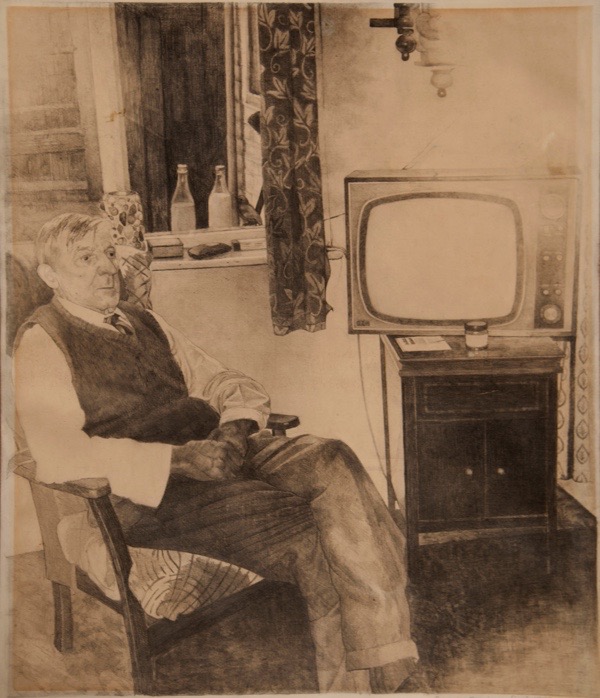
Grandad at Prospect Terrace, 1975
“My grandad was a hard man when young, it was said he could break a brick with his bare fist. A survivor of Ypres, he gravitated to Knutton Forge in Warrington after the war where he met my grandmother, the daughter of a local shop-keeper who was forever making and losing money. As my granddad was twelve years older, it was assumed that he would die first but he was left a widower at the age of eighty-four and lived on for another eight years, despite a life of heavy smoking and beer consumption. To the end, he remained unable even to make a sandwich for himself, although he was a dab hand at making wreaths, a cottage industry in which the whole family took part every Christmas.”
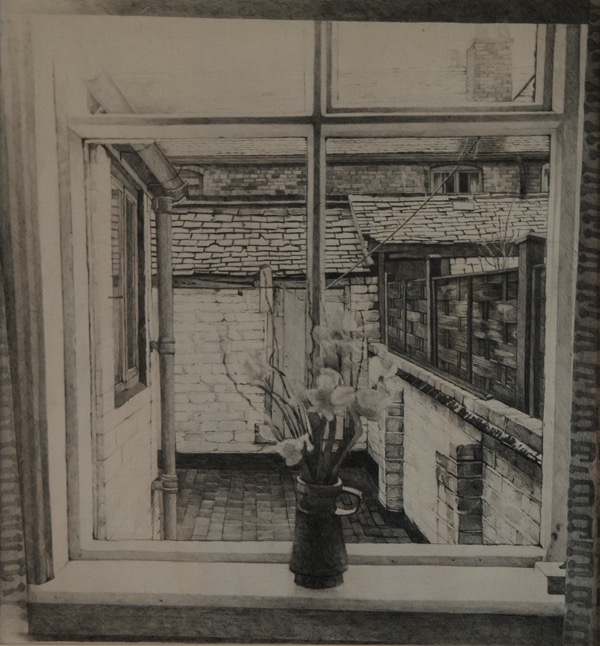
View from our living room window, 17 Bailey St, 1975
“This was the view I saw from our living room window every morning, from when I was a tiny child until I left home at the age of twenty. It was identical to thousands of other views from other houses. At the end of the yard there was a row of three shacks – a coal house, an outside loo and a tool storage area. There was very little colour in those streets, save for the odd dandelion and escaped budgerigar, although sparrows abounded and there were pigeon fanciers with coops.
The house where I grew up was in a dip amongst row upon row of terraced houses, built in the eighteen-sixties to house mill workers. They were huddled together, forming a tight knit community of families, with corner shops surviving by selling produce on tick and a couple of pubs. Most of the inhabitants had been born within a few miles of Newcastle-under-Lyme, the only exceptions being an Italian couple from Milan who came to work in the mill, and a few Polish and Yugoslav refugees who spoke almost no English and who had a special delicatessen on the other side of town. All were accepted.”
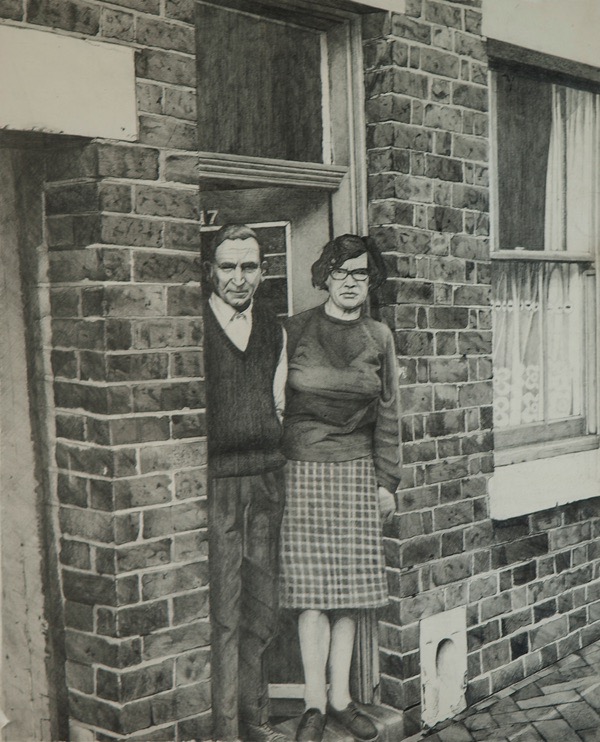
Mum & Dad on the Front Step, 1976
“Alice, my mother, worked in a munitions factory during the war and became a servant afterwards. It gave her ideas about not having the newspaper on the table and no tomato ketchup, and healthy eating. Colin, my dad, was a farm worker who wanted to be a vet but did not like school and suffering a year long illness when he was seven deprived him of the education he needed.
After I was born, they moved into the town from Stableford because he could earn more money there. When they started installing pylons in the late fifties, he worked on that. Later he worked putting in pipes for North Sea Gas too but, when he was fifty-seven, he had a brain haemorrhage at work, probably caused by a pneumatic drill, and never worked again.”
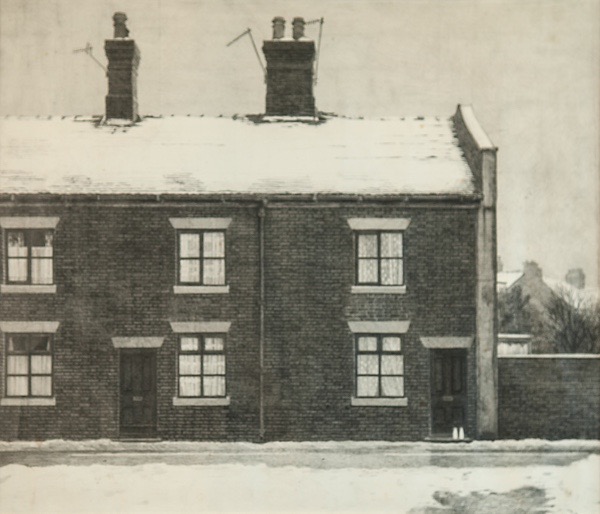
Houses Under Snow, 1980
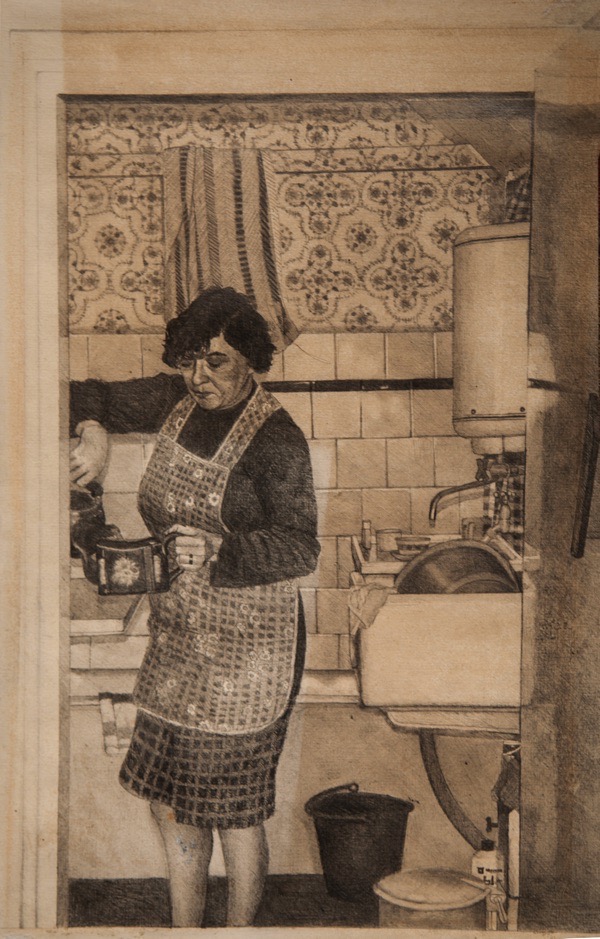
Mother in the kitchen, Bailey St, 1975
“The scullery was a tiny multi-purpose extension. The cooker was by the entrance on the left, in front of my mother, and, on the other side, was a washing machine with a mangle. My mum is pouring water from a kettle kept on a shelf of the kitchen cabinet. I can still remember the midnight blue and gold hues of the teapot. I bought it as a present, thinking it was very posh and sophisticated unlike the common brown tea-pots in daily use.”
Directly behind her you can see a bath, which was considered upwardly-mobile when it was installed in 1957. There were no taps, the hot water came from the geyser on her right, so by the time there was enough to bathe, the hot water was lukewarm.”
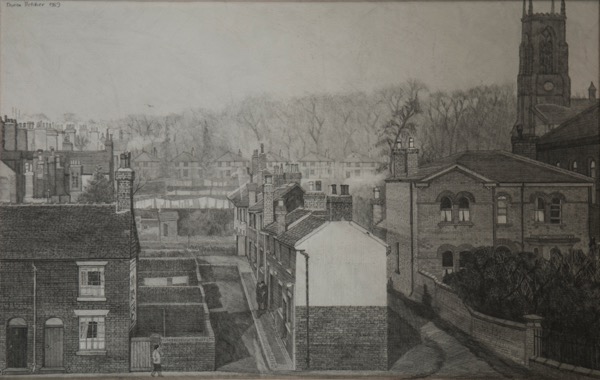
St Giles, 1989
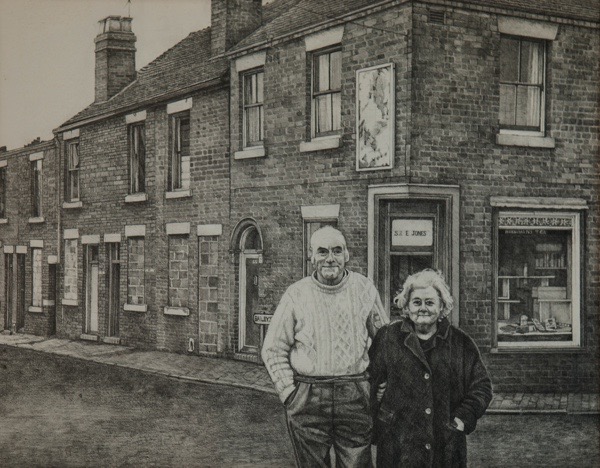
Corner Shop, Bailey St, 1975
“Almost every street had one or sometimes two corner shops, where provisions were bought on ‘tic’ with the bill paid, hopefully, on Friday. This was the morning after most workers got their wages. Mr & Mrs Jones ran the shop favoured by my mother and their daughter was an art student, so they were happy to pose for me.”
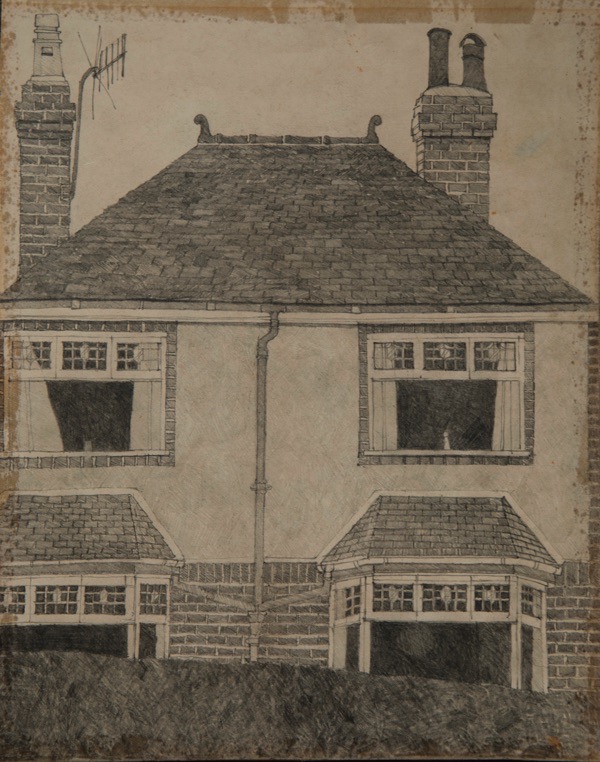
House in Whitfield Ave, 1977
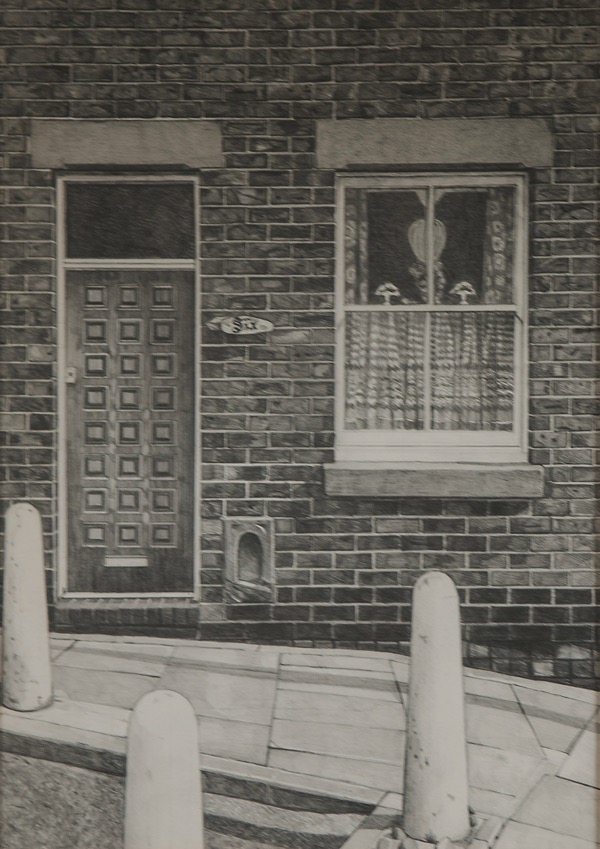
House in Fenton, 1987
“Visits to Newcastle took on a new poignancy once my former home was demolished and I began to document the facades of the terraces that remained, wandering the streets often with my dad in tow, carrying a scrappy sketchbook and a camera I bought second hand.”
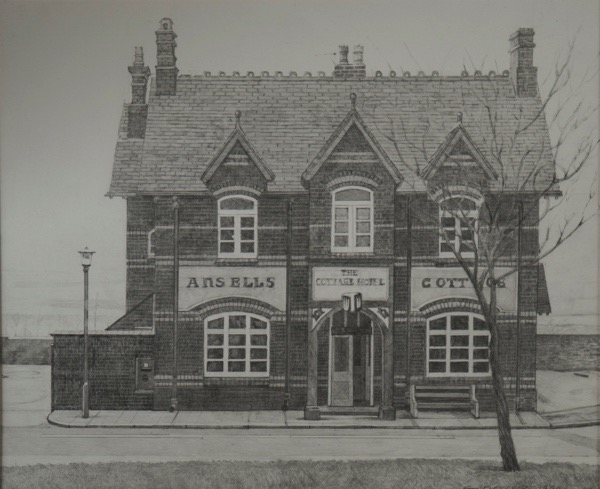
The Cottage Inn, Tunstall, 1998
“My grandparents ran ‘The Cottage Inn’ during the war and my dad my worked at nearby Shelton Bar Ironworks while courting my mum. After the war, the family moved to Prospect Terrace, Newcastle. Their dog, Paddy, moved with them but he used to take the bus every day at 11 am back to the pub in Tunstall. Everyone knew him, including all the bus conductors.”
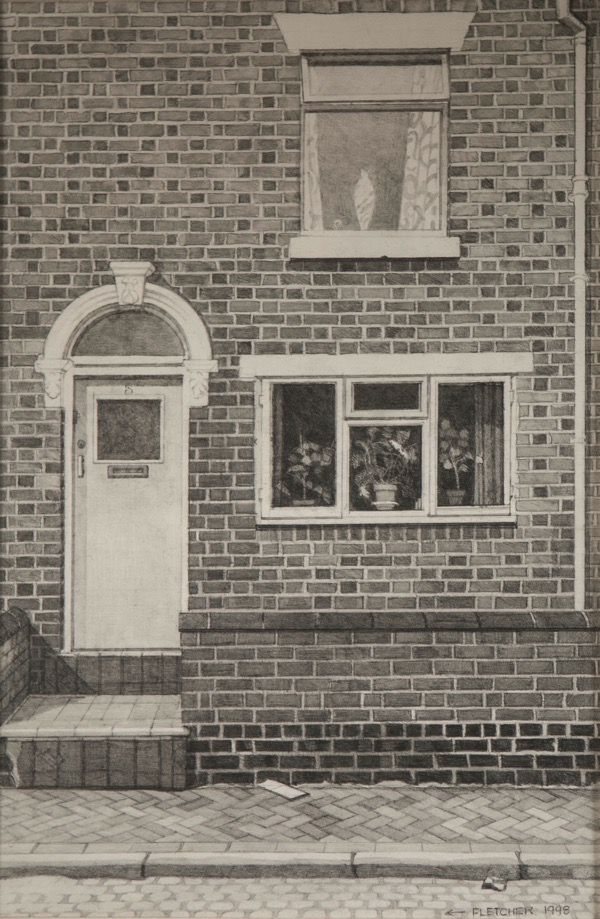
House in New Ashfields, 1998
“I sold the painting I did from this drawing. I was attracted by the neat geometry of the brickwork. This house was in the New Ashfields, built a few decades later than the Old Ashfields where I grew up. The houses were generally more spacious and upmarket than my streets.”
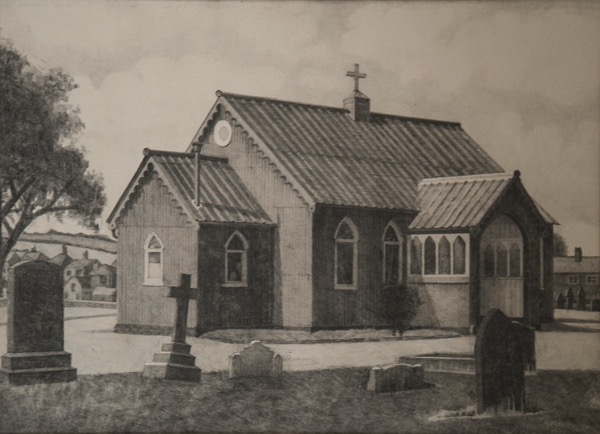
Chapel in Silverdale, 1983
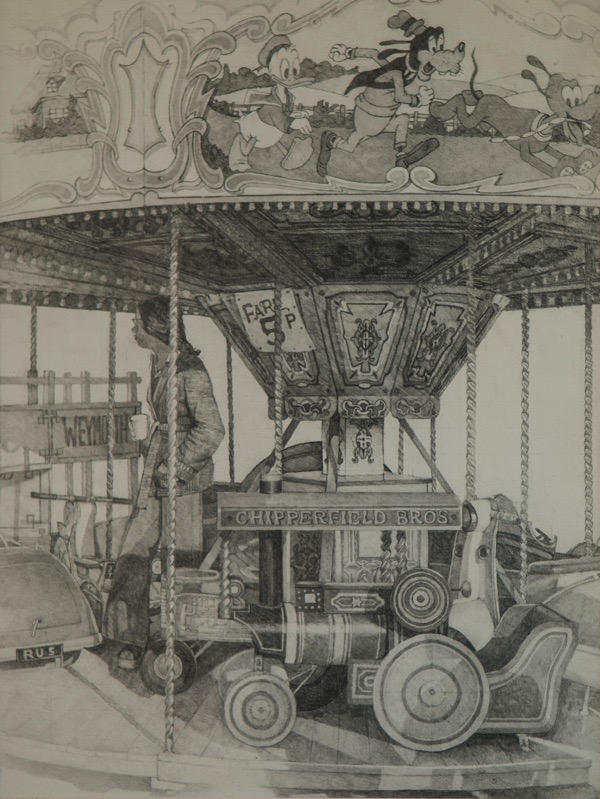
Fairground, 1977
“Every Summer, a fair came to Newcastle during the ‘Wakes’, two weeks in July when the potteries closed down and those who could afford it went away to stay in a boarding house or caravan in Rhyl, Blackpool or – for the more adventurous – Great Yarmouth. For those of us, who stayed behind there was the fun of the fair, with hotdogs and candyfloss.The summer I made this drawing, I visited Abergele in North Wales, where my boyfriend’s grandparents had retired. They lived in a bungalow in a suburban avenue close to the sea and, while I was there, we visited an amusement park in Rhyl. It was here I was persuaded, against my better judgement, onto a ride and I recall praying for the horizon to re-establish itself. It was the first and last time I ever took a fairground ride.”
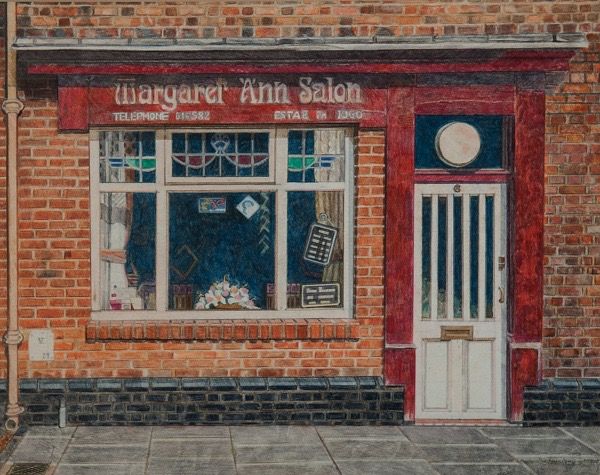
Margaret Ann Hair Salon, 1995
Drawings copyright © Doreen Fletcher
You may also like to take a look at
Terry Bloomfield, Fish Dealer & Photographer
Book now for my tours through August, September & October
Terry Bloomfield was born in 1934 and grew up in Columbia Rd as the third generation of a family that worked at Billingsgate, where he ran his own shellfish business. Between 1982, when the market moved to the Isle of Dogs, and 2011, when Terry retired, he recorded the life of Billingsgate in thousands of black and white photographs which reveal a candid insider’s viewpoint of this extraordinary nocturnal phenomenon.
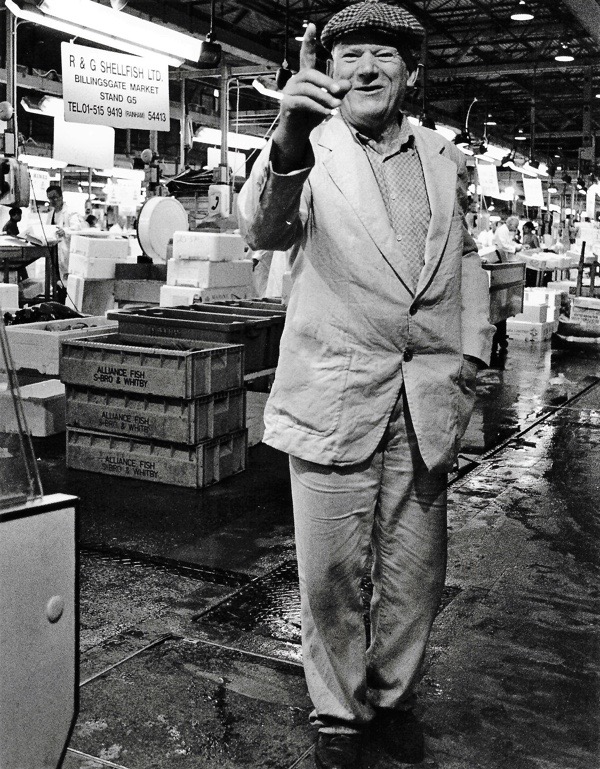
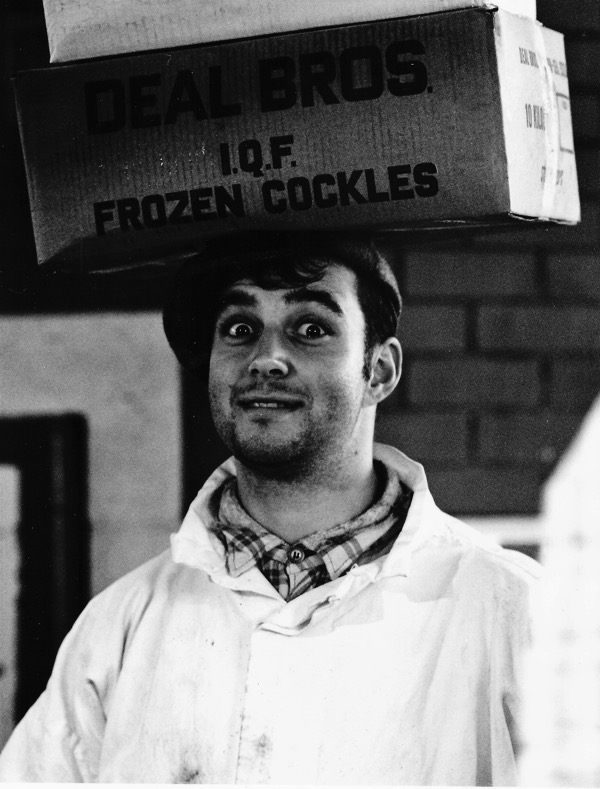
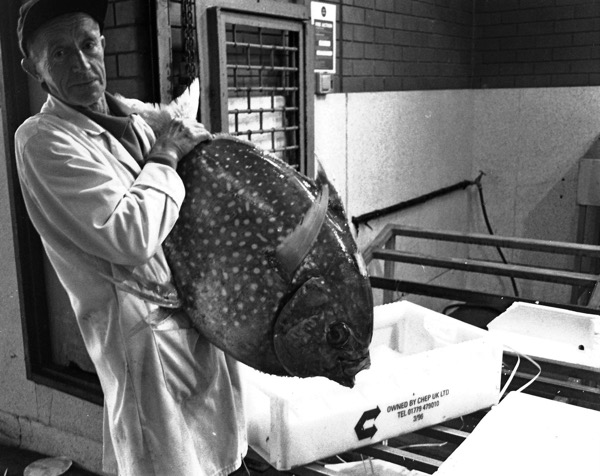
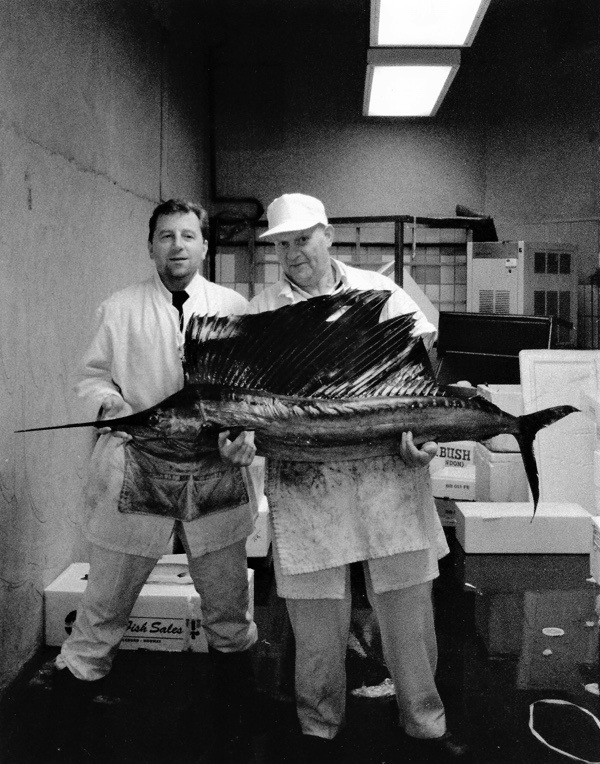
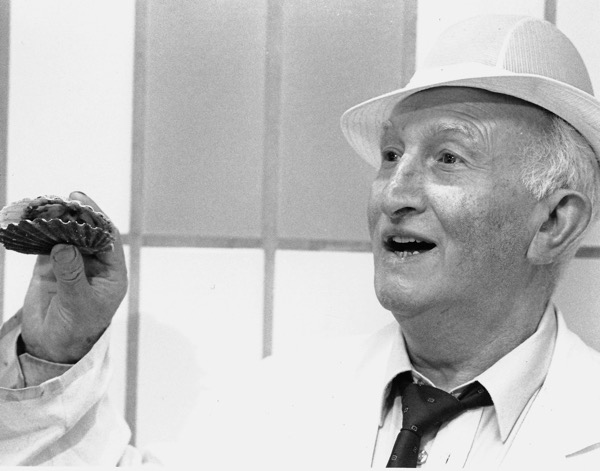
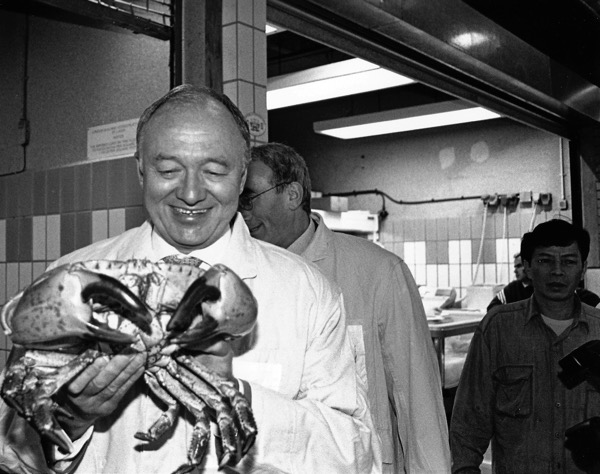
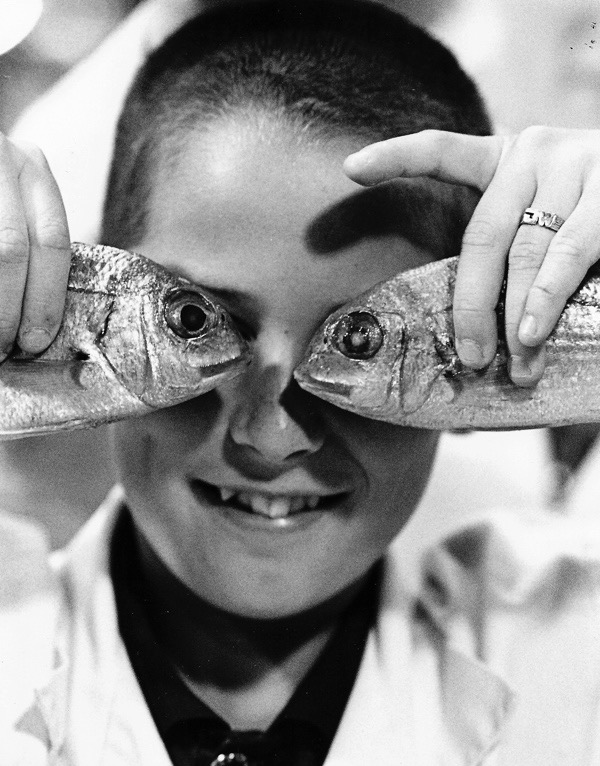
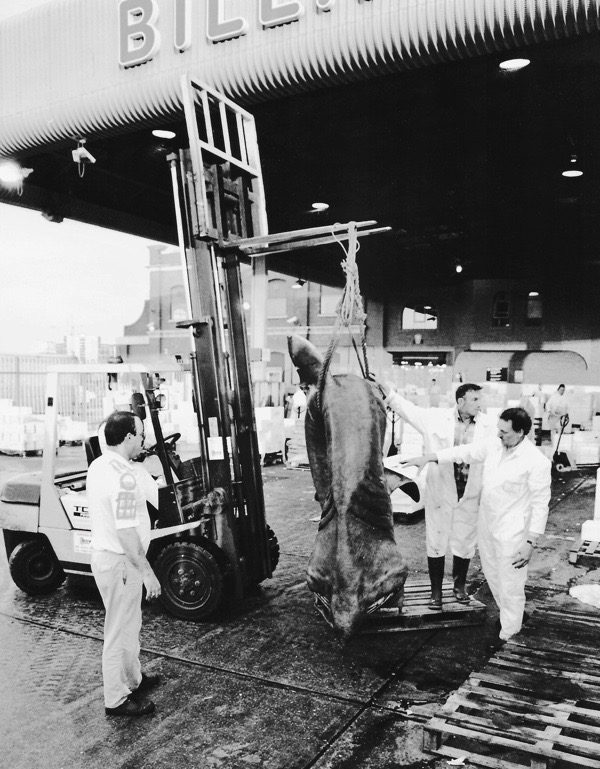
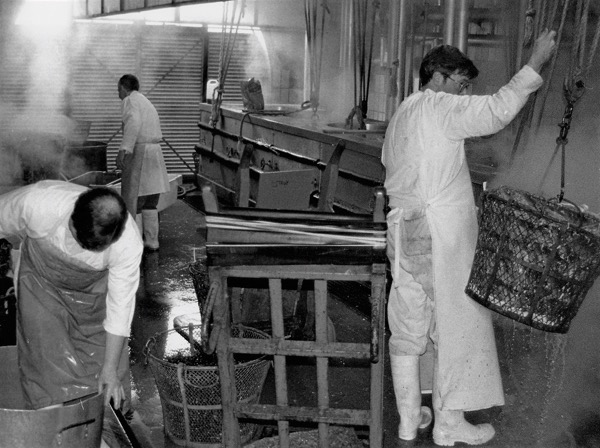
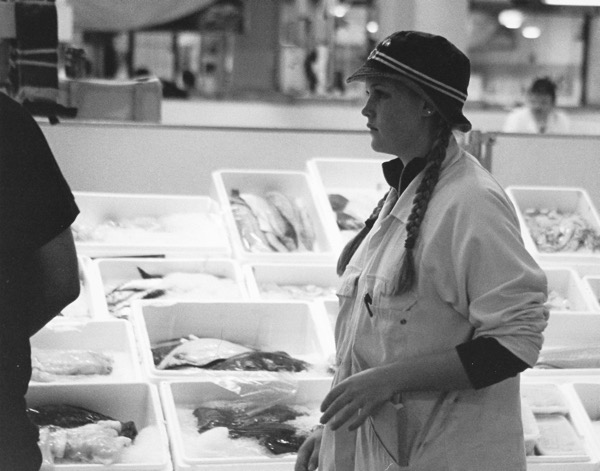
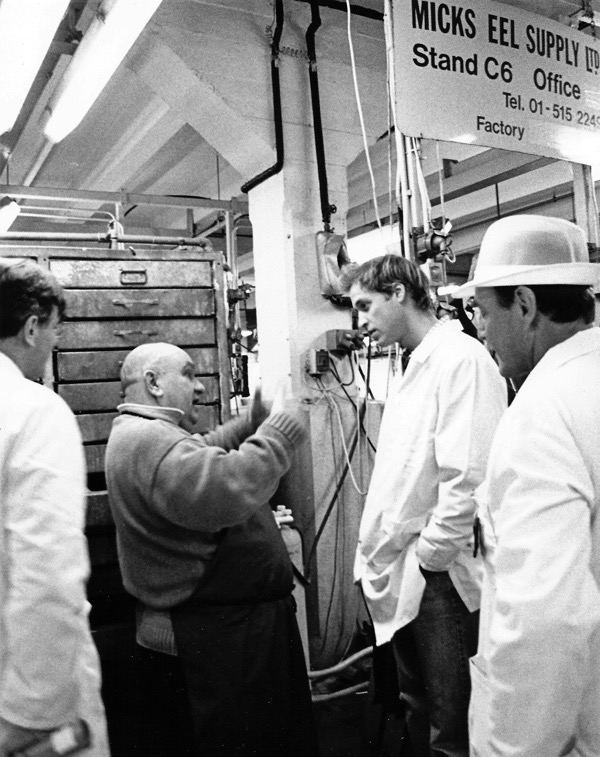
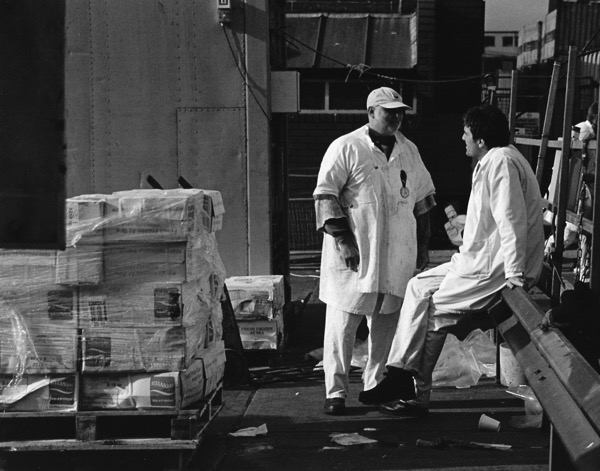
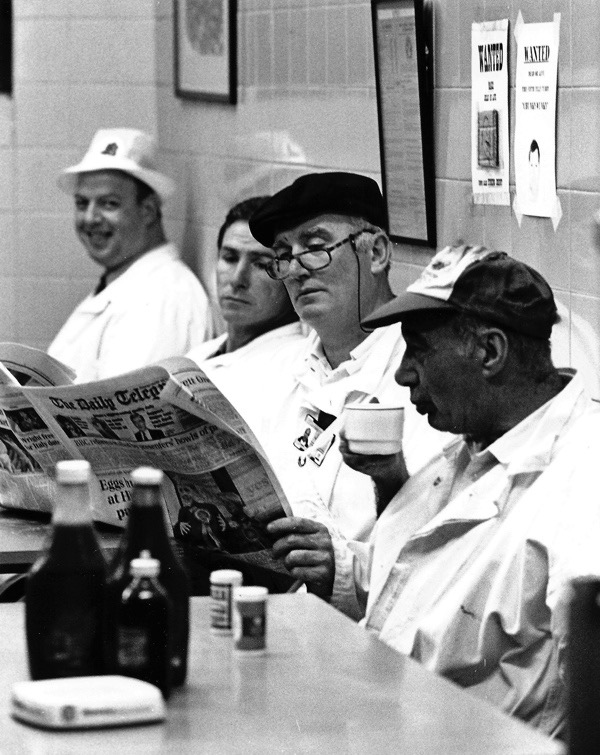
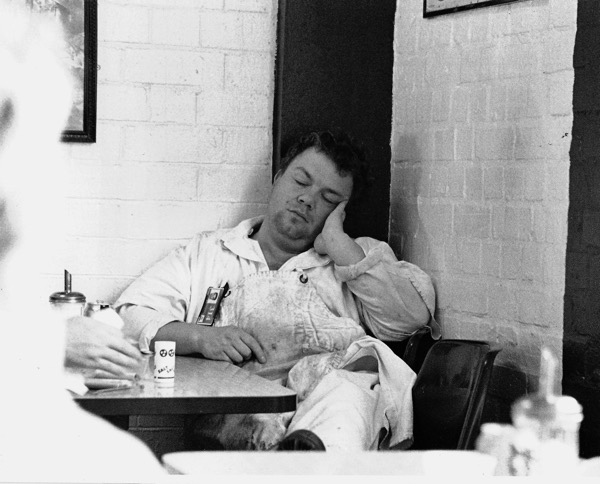
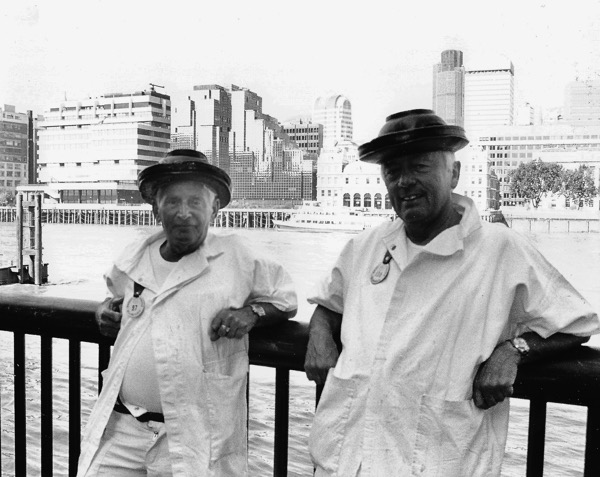
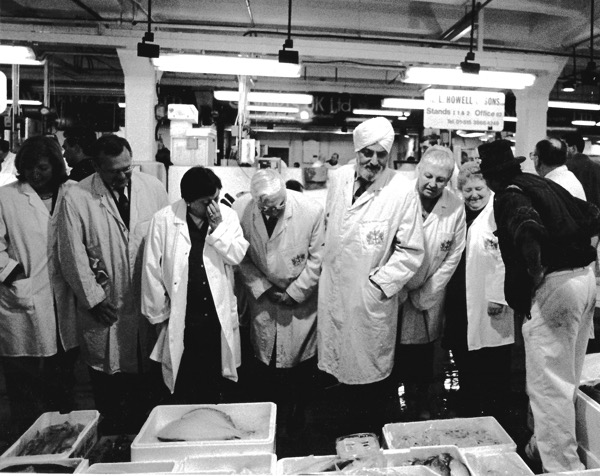

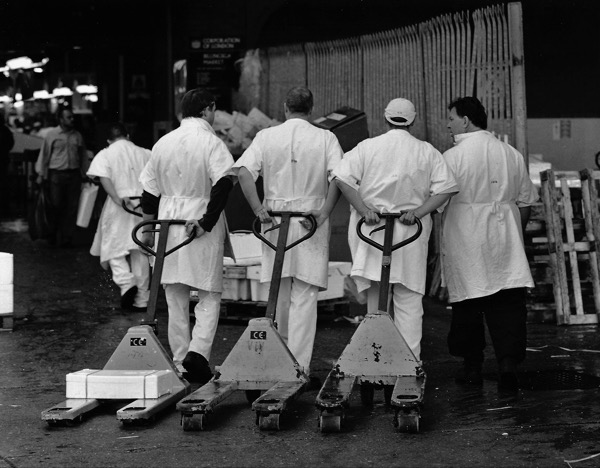
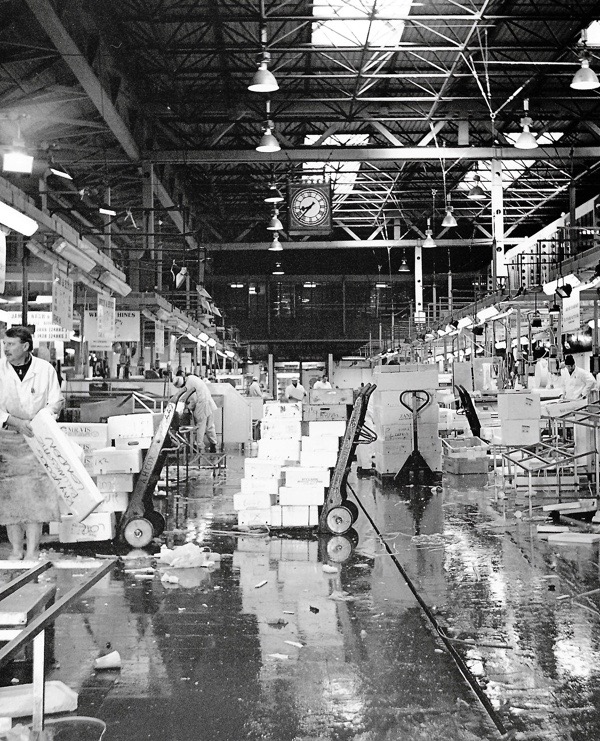
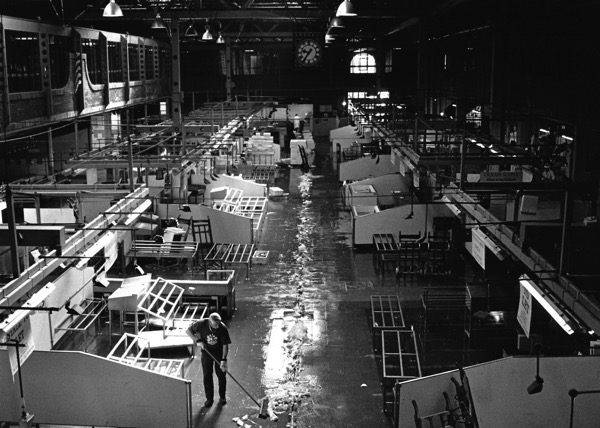
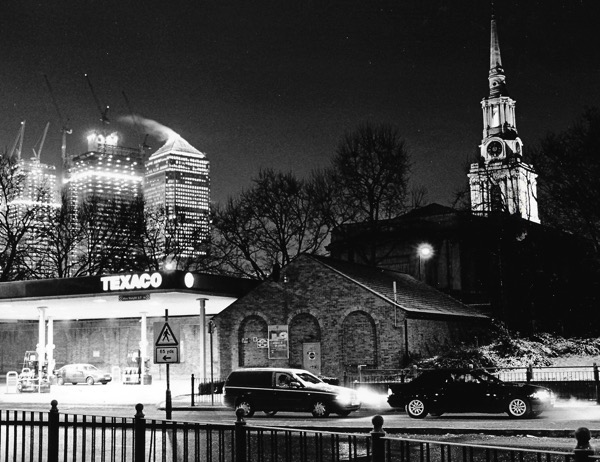
Photographs copyright © Terry Bloomfield
You may also like to read these other Billingsgate stories
Billy & Charley’s Leaden Men
Book now for my tours through August, September & October
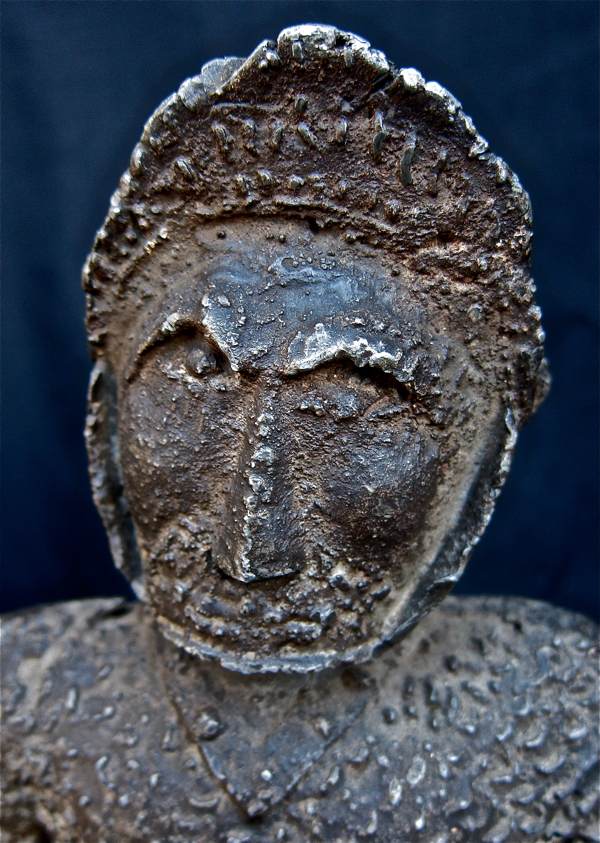
“Curious leaden figures discovered at Shadwell” read the shameless announcement published in the ‘Illustrated Times’ of February 26th 1859, placed there by George Eastwood, eager dealer in the works of Billy & Charley, two East End mudlarks turned forgers who succeeded in conning the London archaeological establishment for decades with their outlandish and witty creations.
These fine examples of Shadwell shams from the collection of Philip Mernick fascinate and delight me with their characterful demeanours, sometimes fearsome and occasionally daft – inspiring my speculative captions which you see below.
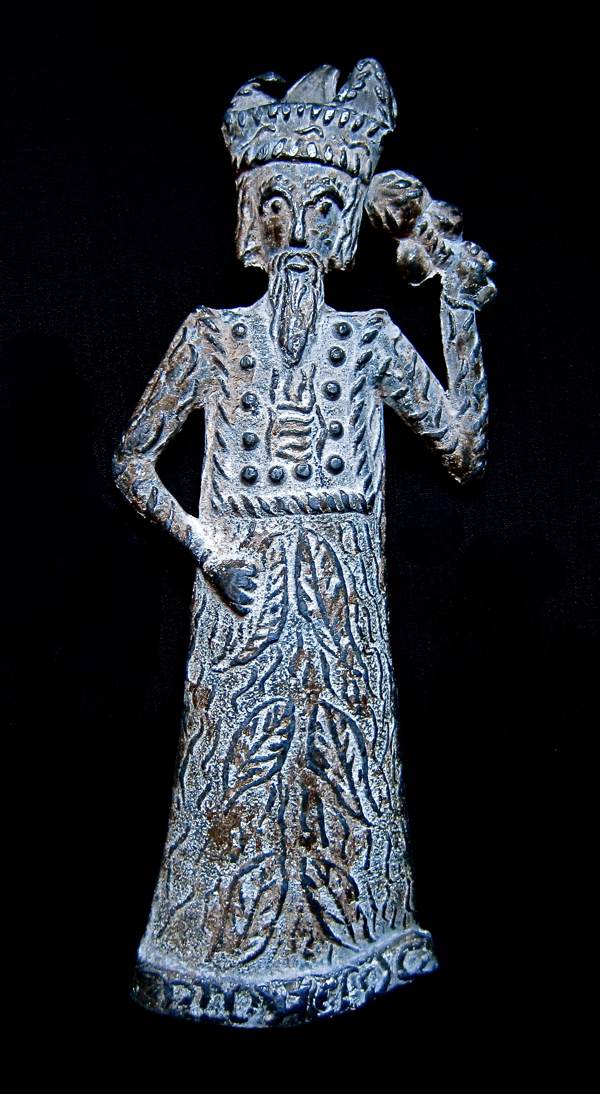
Witch doctor
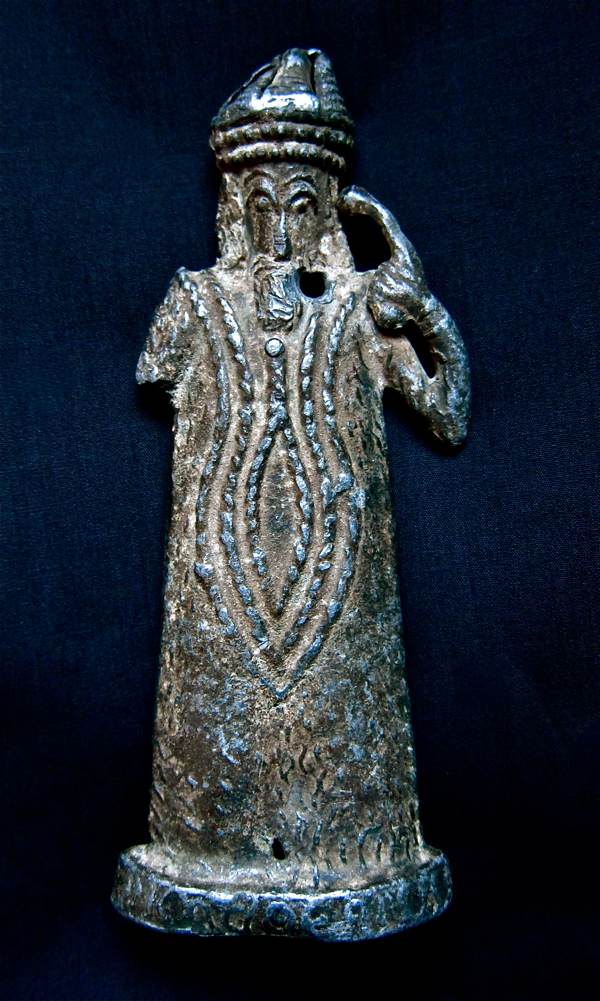
Telephonist
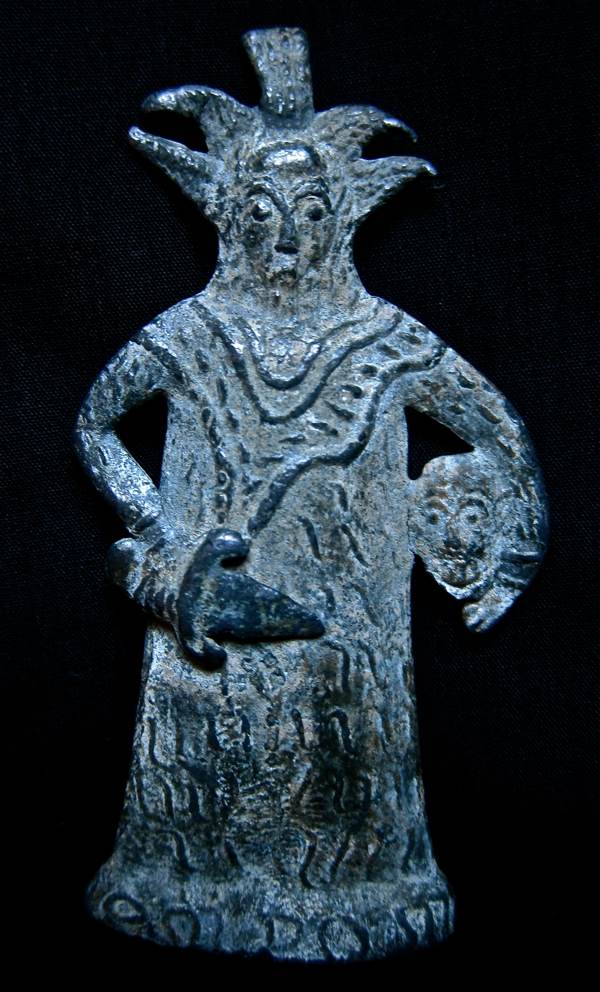
Blood-thirsty
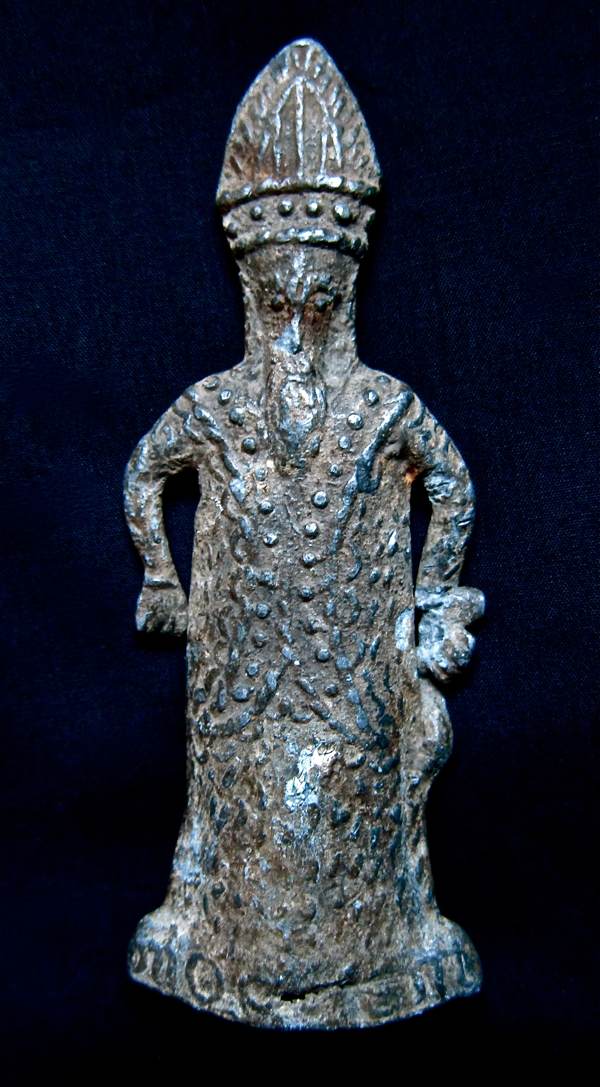
Indignant
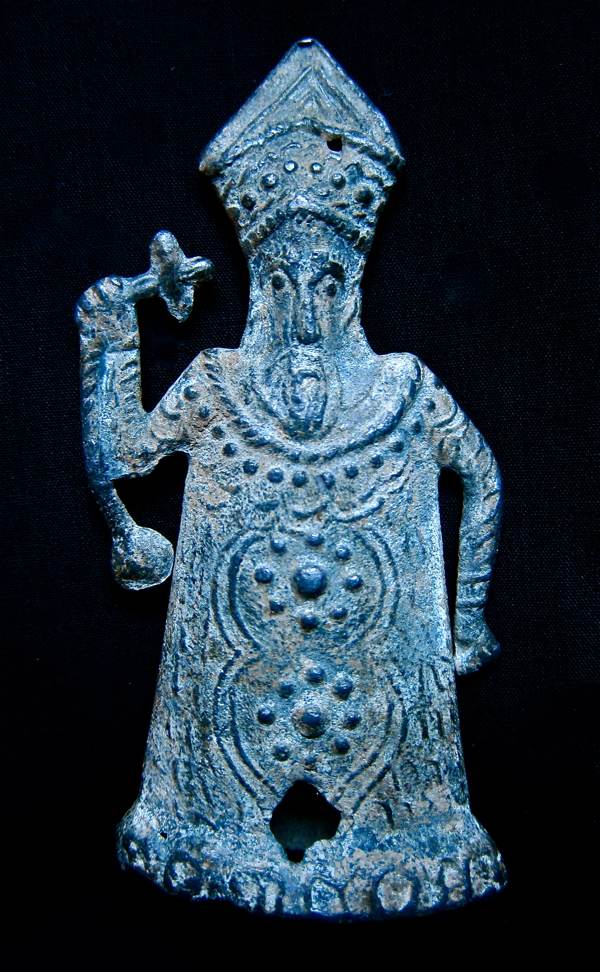
Hookah pipe
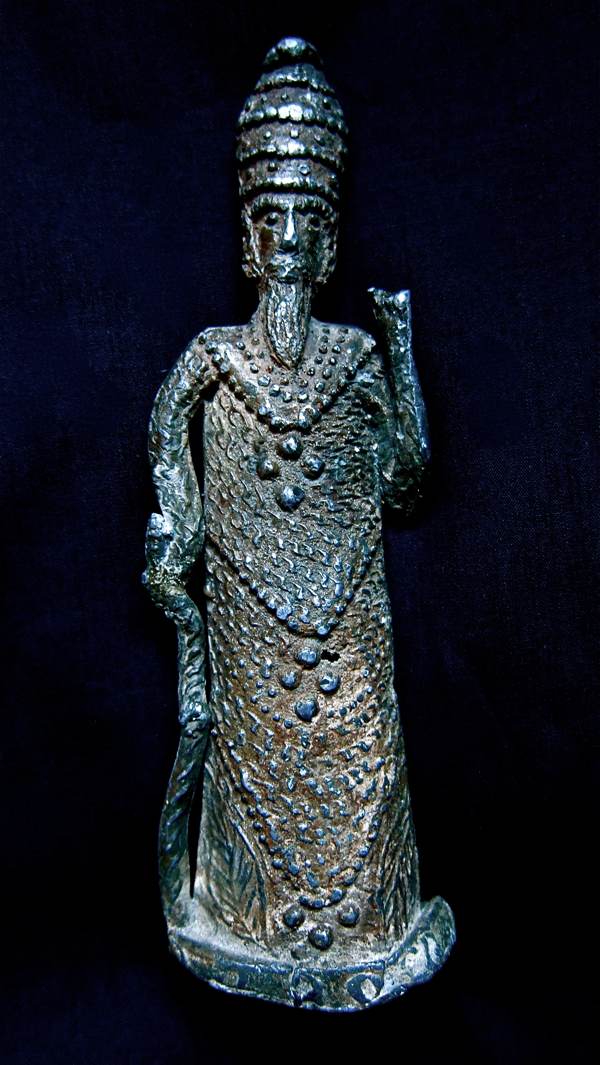
Popish
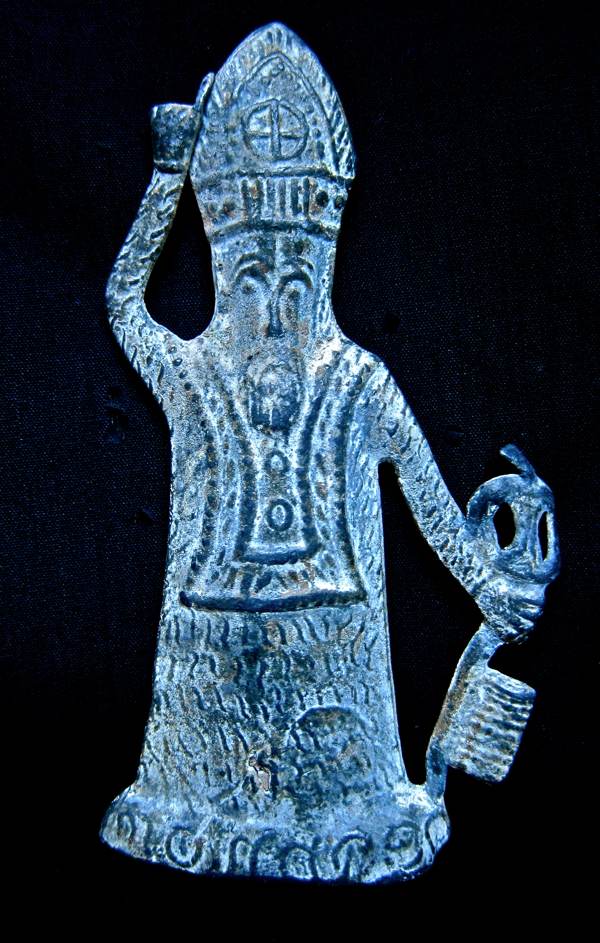
St Peter
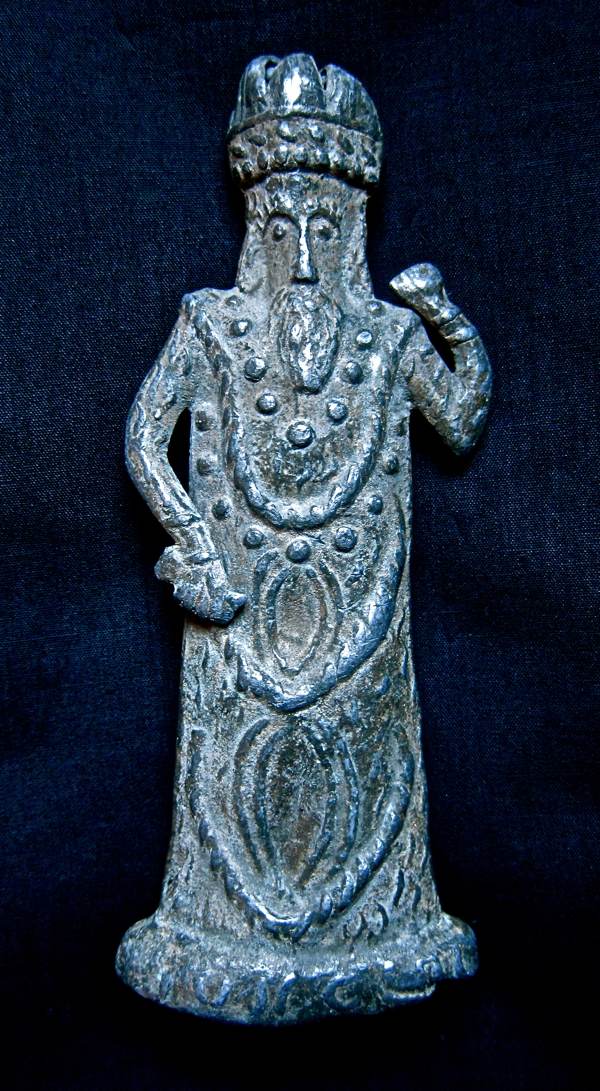
Bemused
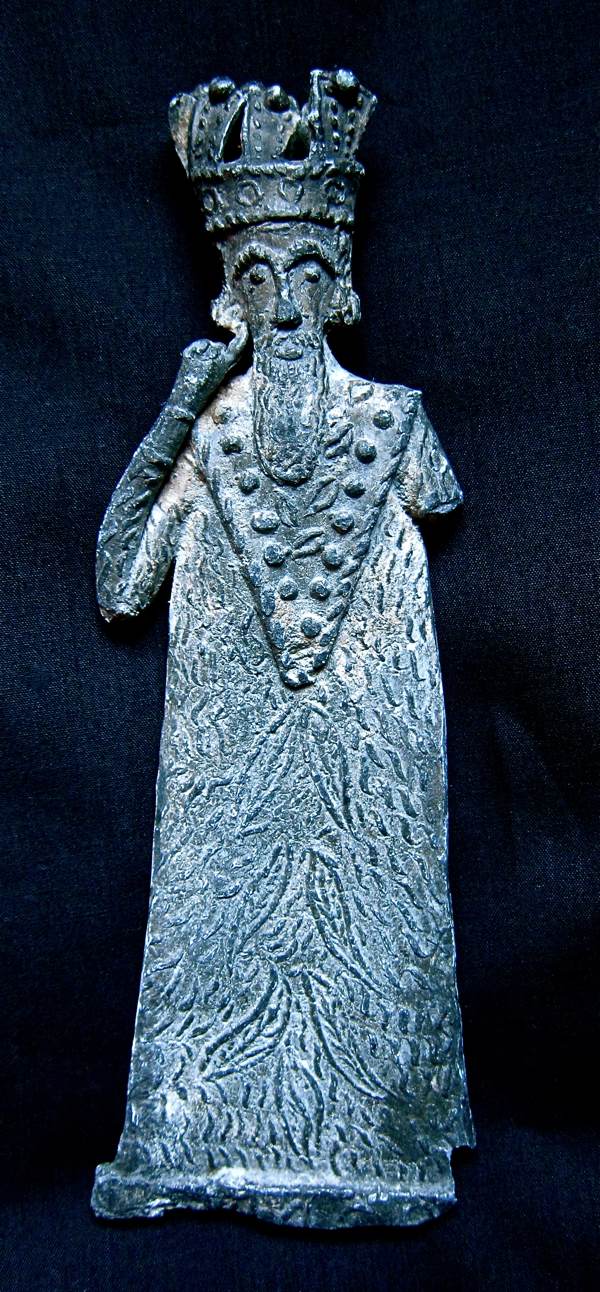
Listening
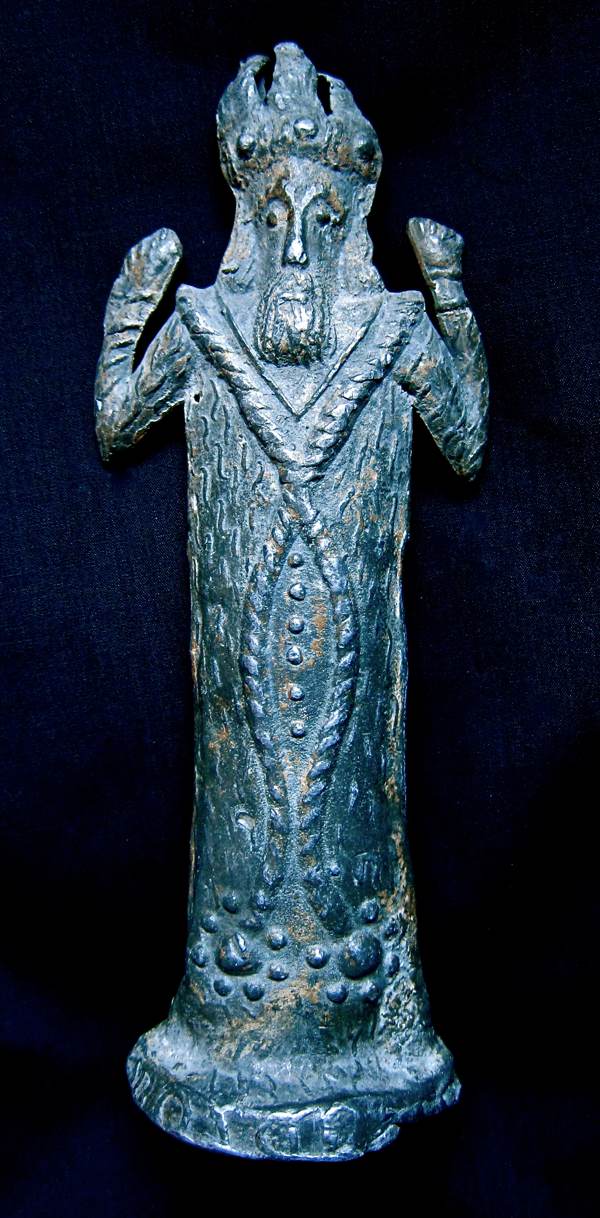
Aghast
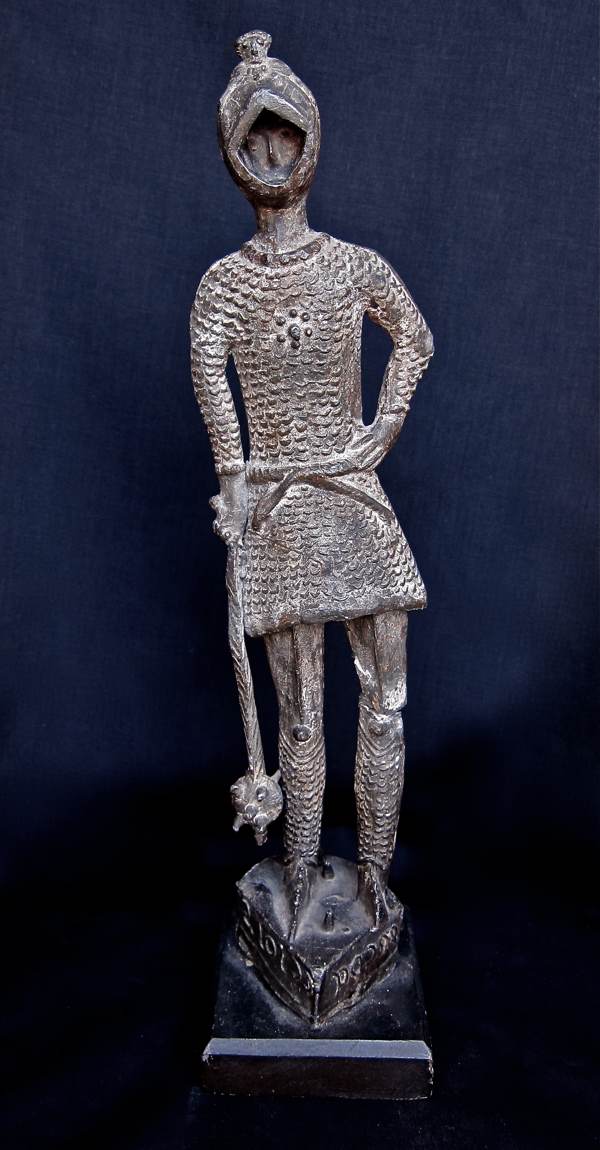
Weary Conqueror
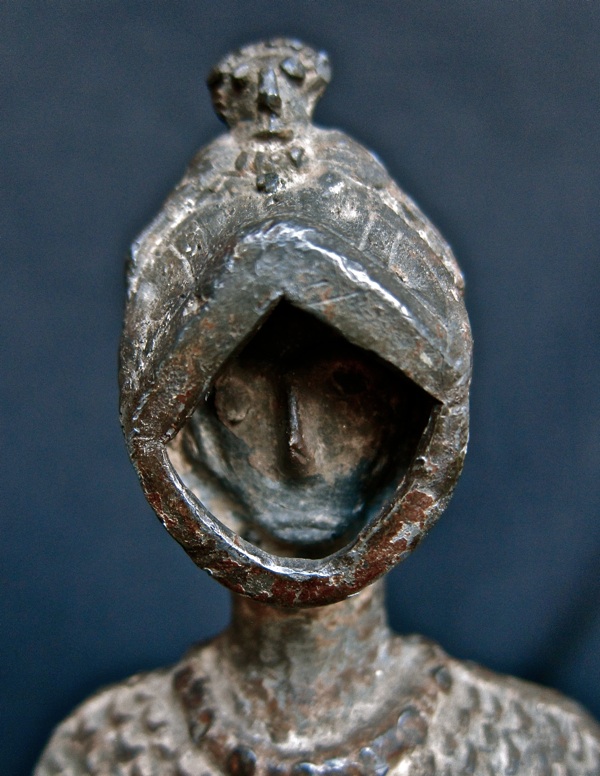
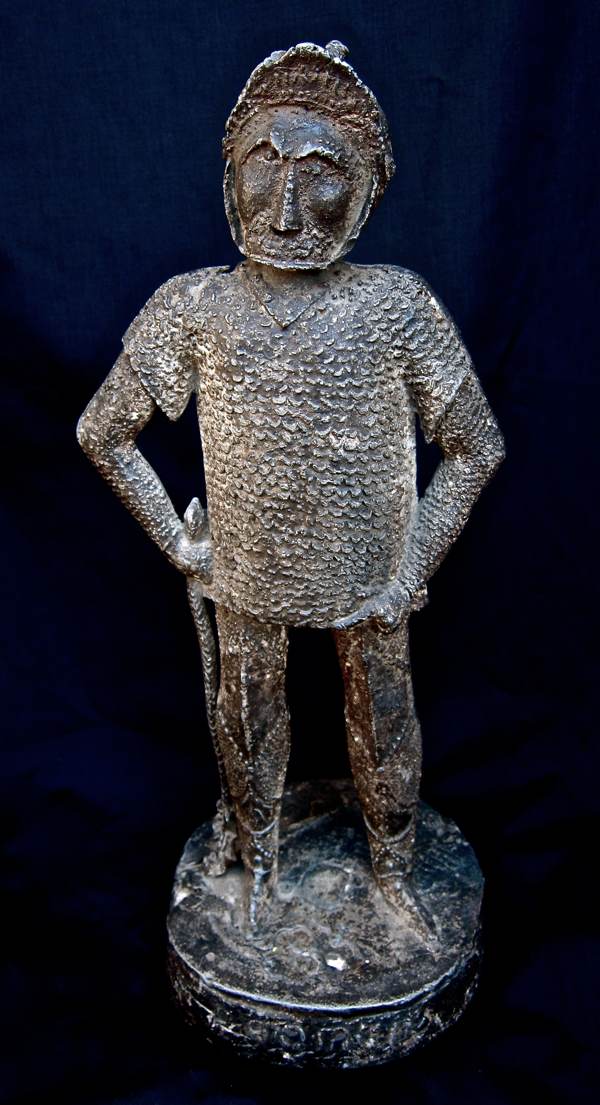
Surly Knight
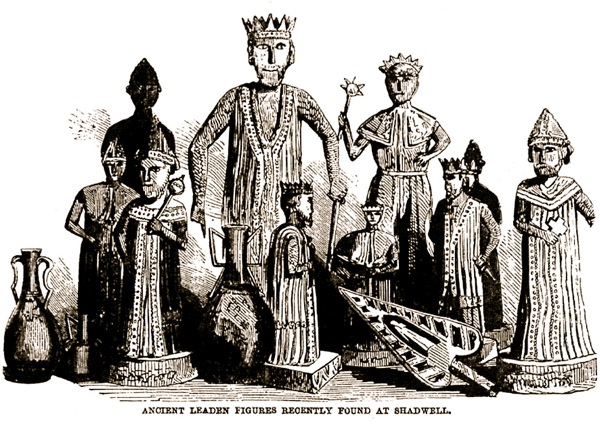
CURIOUS LEADEN FIGURES DISCOVERED AT SHADWELL
Announcement by George Eastwood, Billy & Charley’s dealer, published in the Illustrated Times, February 26th, 1859
“A very considerable addition has been made during the winter to the singular leaden signacula found at Shadwell, which were the subject of a trial at Guildford. They are now on view at Mr. George Eastwood’s, Haymarket, where they have been inspected by some of the most experienced antiquaries, who, while they one and all concur in asserting the perfect genuineness of these remarkable objects, do not fully agree in explaining the purpose for which they were made. Upon one point there is no dispute, and that is, that the figures date from Queen Mary’s time, and were probably used in religious processions. Some of the badges resemble the earlier pilgrims’ signs.
The centre figure shown in the illustration we give of these additions to archaeological science, is that of a king holding a sword in his left hand and with the other pointing downward. The head is surmounted by a crown, the hair is long and flowing, the beard square in form and the face altogether bears great resemblance to the effigies seen on some of our early Saxon coins. To the right of this figure is another, evidently a bishop, judging from the mitre which he wears – the dress is apparently extremely rich in ornamentation. Immediately in front of thisfigure stands a smaller one, also of an ecclesiastic, but having no inscription on its base like the others. Again, in front of this another mitred statue holding a scepter of globular form at the top and dressed in robes of costly material. To the left are two well-formed bottles with handles, the lesser one having winged figures around the body. The larger one has also figures upon it and a foliated pattern. To the left of the king, who forms the centre of our group, stands a female figure, in not very graceful attitude, bearing a scepter in one hand and having the other resting on her hip. The remainder are but repetitions, to a great extent, of those already described and require no further explanation.”
You may also like to take a look at
Hop Picking Portraits
Book now for my tours through August, September & October
Contributing Photographer Sarah Ainslie & I spoke to some former hop pickers who were kind enough to share their tales of past adventures down in Kent.
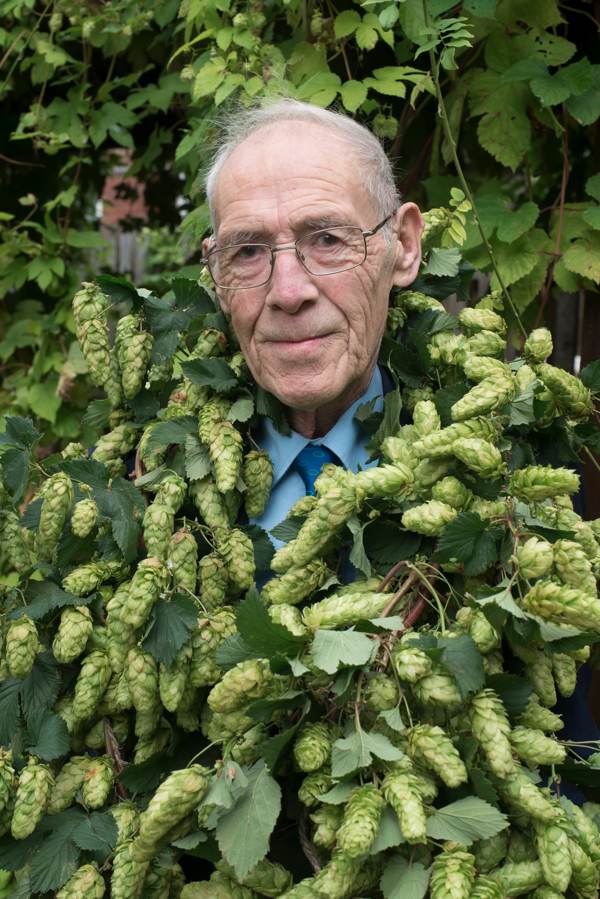
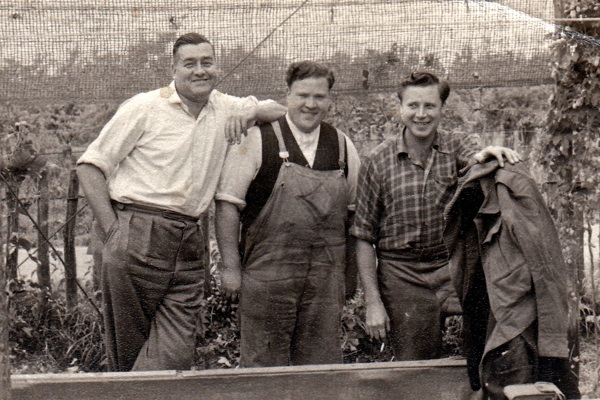
Connie Aedo – “I’m from Shovel Alley, Twine Court, at the Tower Bridge end of Cable St. I was very little when I first went hop picking. At weekends, when we worked half-days, my mum would let me go fishing. Even after I left school, I still went hop picking. Friends had cars and we drove down for the weekend, as you can see in the photo. Do you see the mirrors on the outside of the sheds? That’s because men can’t shave in the dark!”
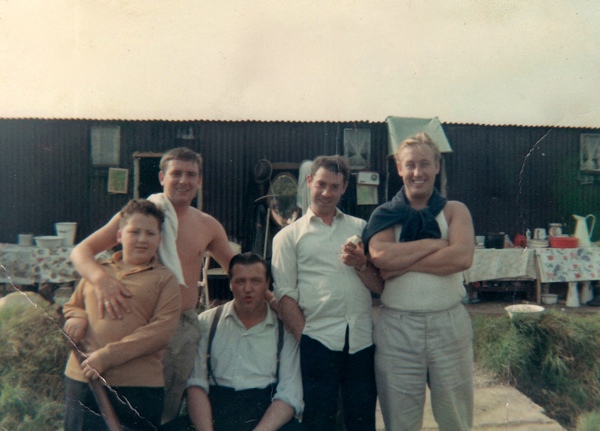
Derek Protheroe, Terry Line, Charlie Protheroe, Connie Aedo and Terry Gardiner outside the huts at Jack Thompsett’s Farm, Fowle Hall, near Paddock Wood, 1967
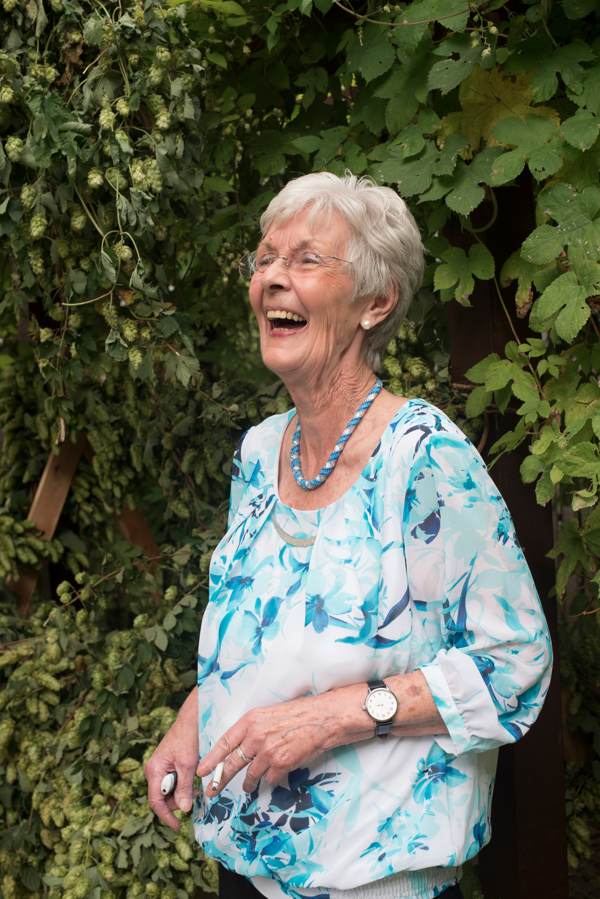
Maggie Gardiner – “My mum took us all down to Kent for fruit picking and hop picking. Once, parachutes came down in the hop gardens and we didn’t know if they were ours or not, but they were Germans. So my mum told me and the others to go back to the hut and put the stew on. On the way back, a German aeroplane flew over and machine gunned us and we hid in a ditch until the man in the pub came to get us out. My mum used to say, ‘If you can fill an umbrella with hops, I’ll get you a bike,’ but I’m still waiting for it. We had some good times though and some laughs.”
Alifie Rains (centre) and Johnny Raines (right) from Parnham St, Limehouse, in the hop gardens at Jack Thompsett’s Farm, Fowle Hall, Kent
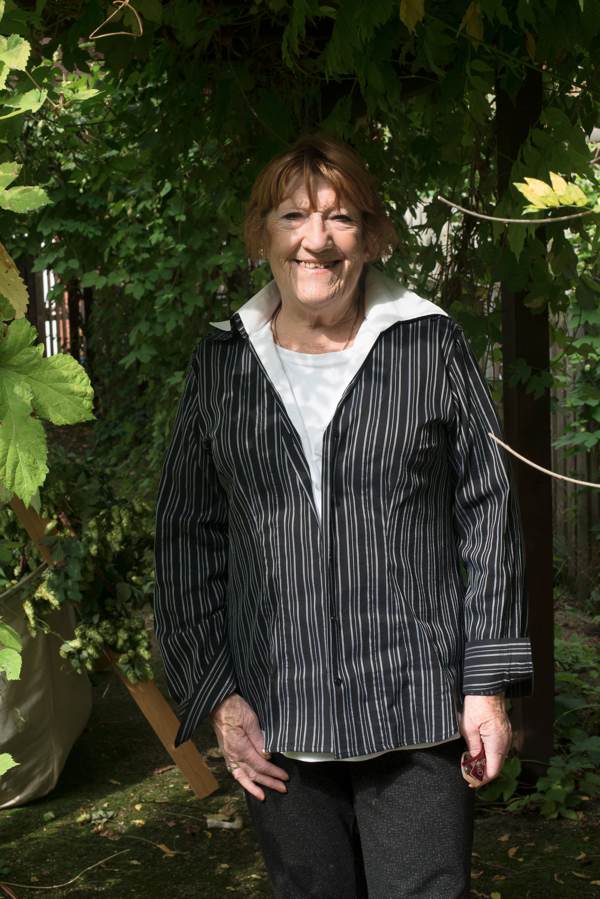
Vera Galley – “I was first taken hop picking as a baby. My mum, my nan and my brothers and sisters, we all went hop picking together. I never liked the smell of hops when I was working in the hop gardens because I had to put up with it, but now I love it because it brings back memories. ”
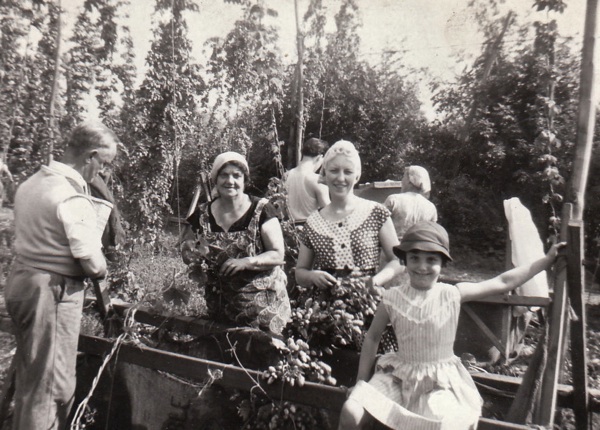
Mr & Mrs Gallagher with Kitty Adams and Jackie Gallgher froom Westport St, Stepney, in the hop gardens at Pembles Farm, Five Oak Green, Kent in 1950

Harry Mayhead – “I went hop picking when I was nine years old in 1935 and it was easy for kids. It was like going on holiday, getting a break from the city for a month. Where I lived in a block of flats and the only outlook was another block of flats, you never saw any green grass.”
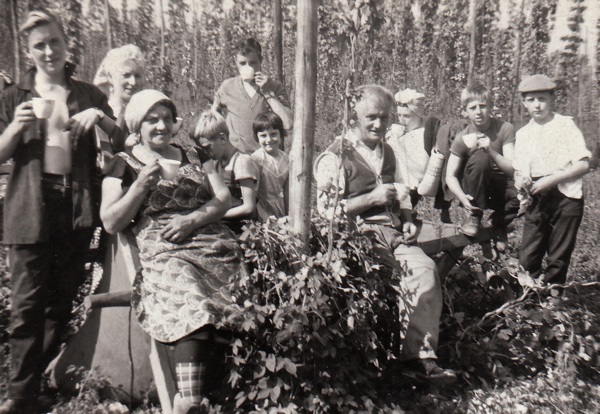
Mr & Mrs Gallagher with their grandchildren at Pembles Farm, 1958

Lilian Penfold – ” I first went hop picking as a baby. I was born in August and by September I was down there in the hop garden. M daughter Julie, she was born in July and I took her down her down in September too. We were hopping until ten years ago when then brought in the machines and they didn’t need us any more. My aunt had grey hair but it turned green from the hops!”
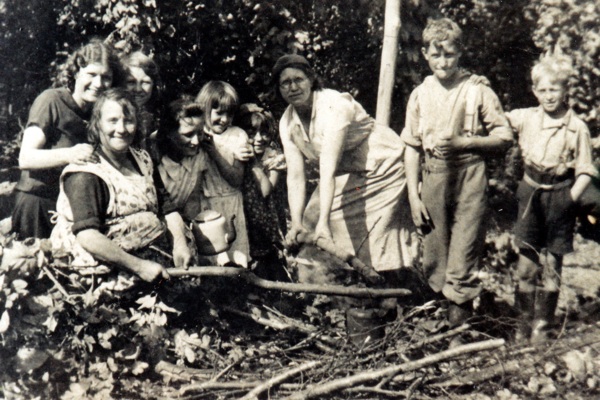
The Liddiard family from Stepney in Kent, 1930
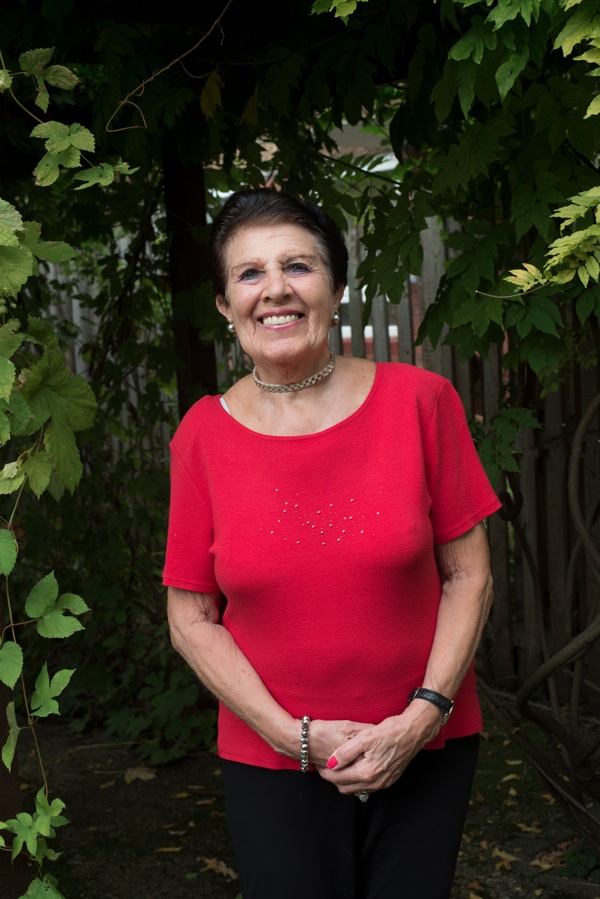
Dolly Frost – ” I was a babe in arms when they took me down to the hop gardens and I went picking for years and years until I was a teenager. I loved it while was I was growing up. My mother used to say, ‘Make sure you pick enough so you can have a coat and hat,’ and I got a red coat and matching red velour hat. As you can see, I like red.”
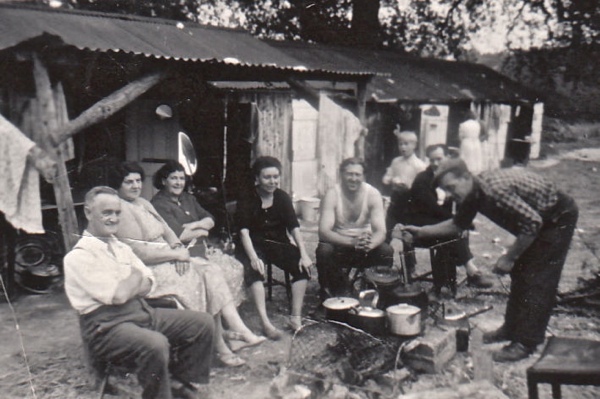
The Gallagher family from Stepney outside their huts at Pembles Farm, 1952
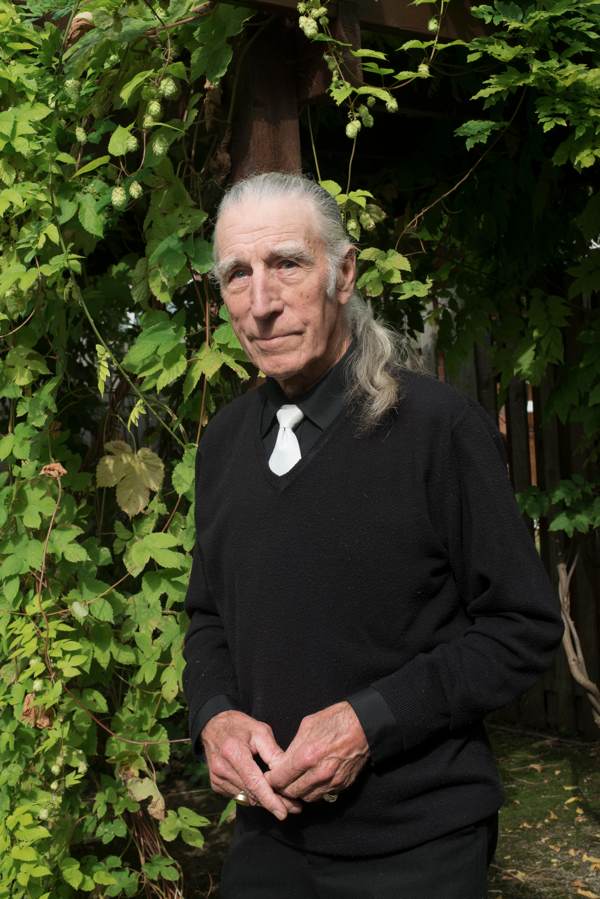
Charles Brownlow – “I started hop picking when I was seven. It was a working holiday to make some money. This was during the bombing, you woke up and the street had gone overnight, so to get to the country was an escape. You wouldn’t believe how many people crammed into those tiny huts. You took a jug of tea to work with you and at first it was hot but then it went cold but you carried on drinking it because you were hot. You could taste the hops in your sandwiches because it was all over your hands. There was a lot of camaraderie, people had nothing but it didn’t matter.”
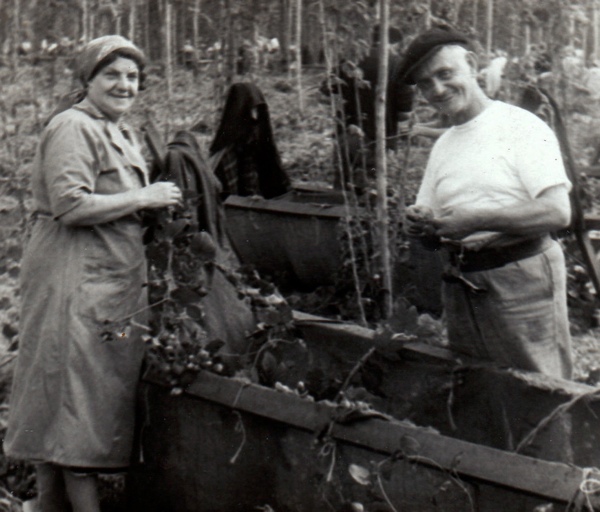
Mr & Mrs Gallagher from Stepney at Pembles Farm
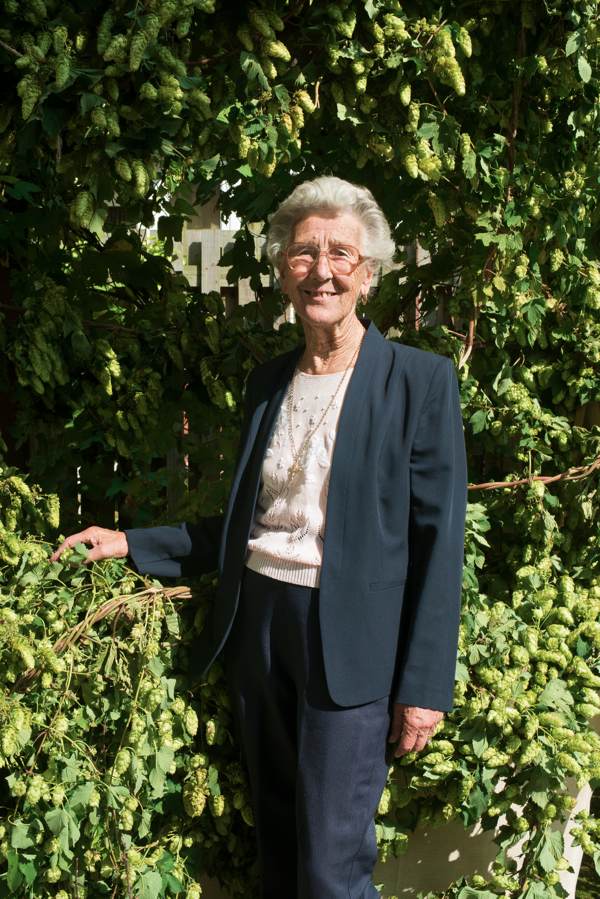
Margie Locke – “I’m eighty-eight and I went hop picking and fruit picking from the age of four months, and I only packed up last year because the farm I where went hop picking has been sold for development and they are building houses on it.”
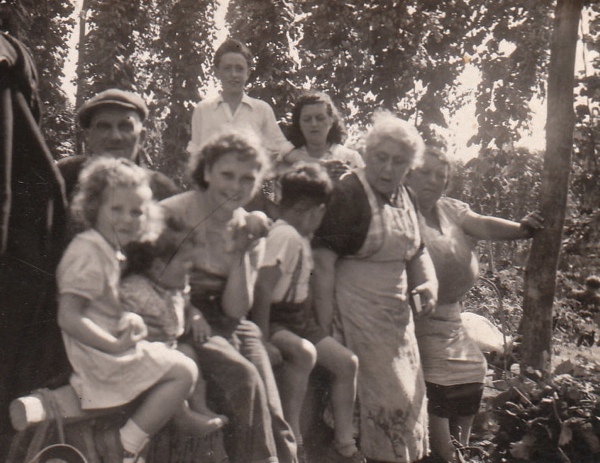
At Highwood’s Farm, Collier St, Kent
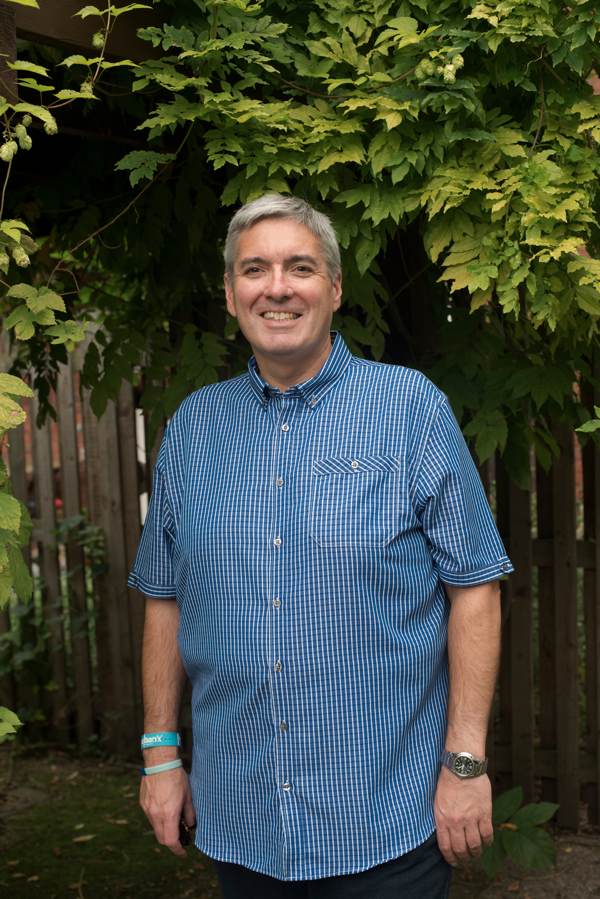
Michael Tyrell – “I was first taken hop picking in the sixties when I was five months old, and I carried on until 1981 when hops was replaced by rapeseed which was subsidised by the European Community. In the past, one family was put in a single hut, eleven feet by eleven feet, but we had three joined together – with a bedroom, a kitchen with a cooker run off a calor gas bottle and even a television run off a car battery. There was still no running water and we had to use oil lamps. My family went to Thompsett’s Farm about three miles from Paddock Wood from the First World War onwards. I have a place there now, about a mile from where my grandad went hop picking. The huts are still there and we scattered my uncle’s ashes there.”

Annie & Bill Thomas near Cranbrook, Kent
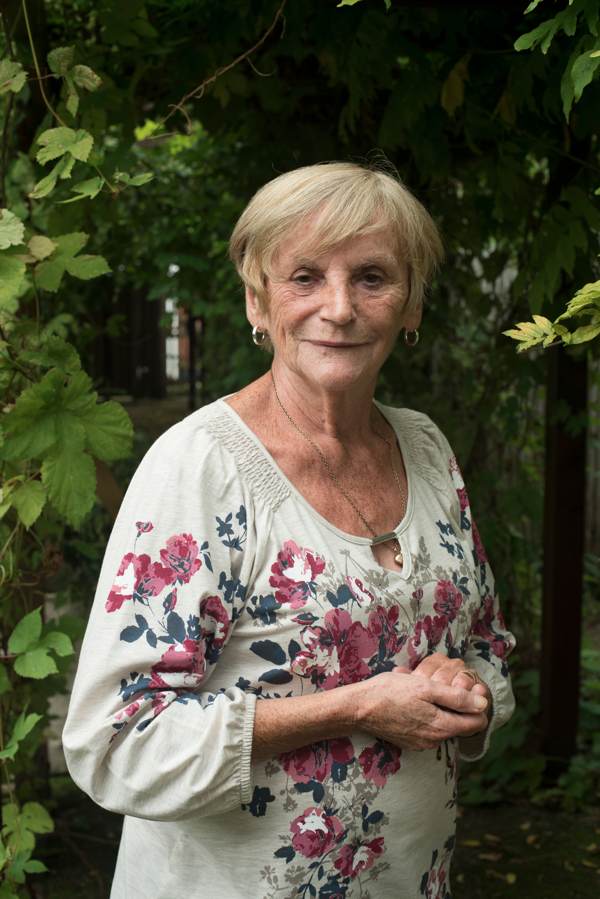
Lilian Peat (also known as ‘Splinter’) – “My mum and dad and seven brothers and three sisters, we all went hop picking from Bethnal Green every year. I loved it, it was freedom and fresh air but we had to work. My mum used to get the tail end of the bine and, if we didn’t pick enough, she whipped us with it. My brothers used to go rabbiting with ferrets. The ferrets stayed in the hut with us and they stank. And every day we had rabbit stew, and I’ve never been able to eat rabbit since. We were high as kites all the time because the hop is related to the cannabis plant, that’s why we remember the happy times.”
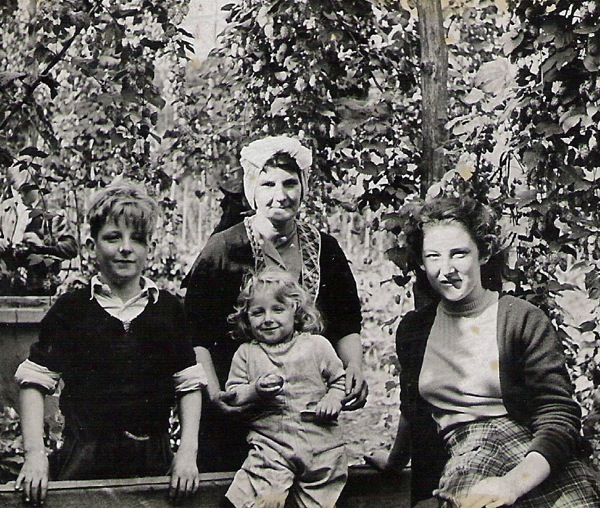
John Doree, Alice Thomas, Celia Doree and Mavis Doree, near Cranbrook, Kent
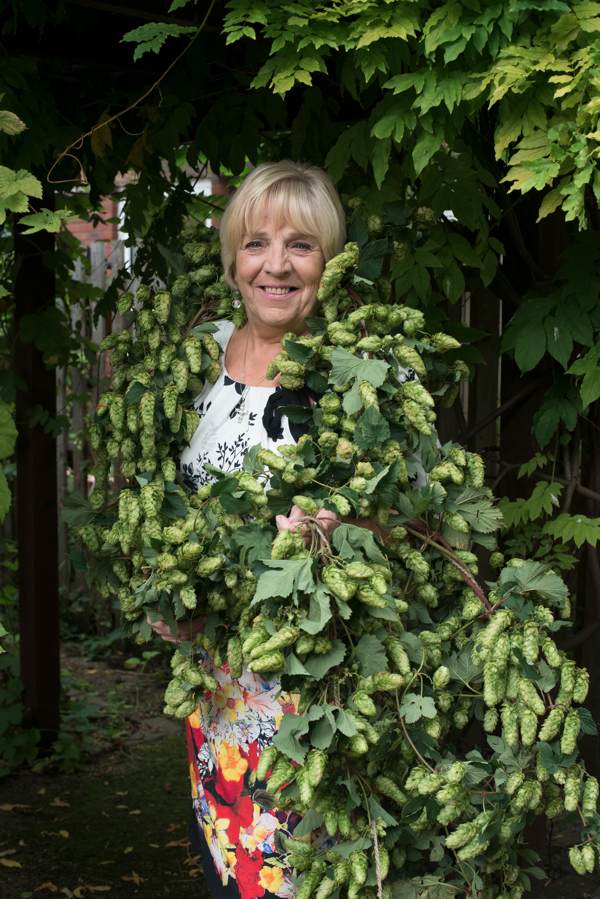
Mary Flanagan – “I’m the hop queen. I twine the bines. I first went hop picking in 1940. My dad sent us down to Plog’s Hall Farm on the Isle of Grain. We went in April or May and my mum did the twining. Then we did fruit picking, then hop picking, then the cherries and bramleys until October. We had a Mission Hall down there, run by Miss Whitby, a church lady who showed us films of Jesus projected onto a sheet but, if the planes flew overhead, we ran back to our mothers. We used to hide from the school inspector, who caught us eventually and put us in Capel School when I was eight or ten – that’s why I’m such a dunce!”
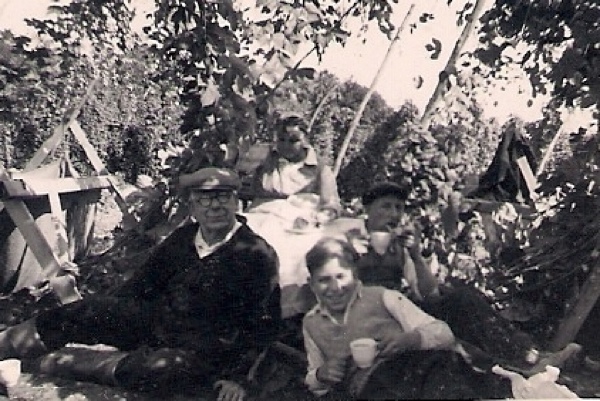
Annie & Bill Thomas with Roy & Alf Baker, near Cranbrook, Kent
Portraits copyright © Sarah Ainslie
Archive photographs courtesy of Tower Hamlets Community Housing
You may also like to take a look at
Hop Picking Photographs
Book now for my tours through August, September & October
This selection of hop picking photographs is from the archive of Tower Hamlets Community Housing. Traditionally, this was the time when East Enders headed down to the Hop Farms of Kent & Sussex, embracing the opportunity of a breath of country air and earning a few bob too.

Bill Brownlow, Margie Brownlow, Terry Brownlow & Kate Milchard, with Keith Brownlow & Kevin Locke in front, at Guinness’ Northland’s Farm at Bodiam, Sussex, in 1958. Guinness bought land at Bodiam in 1905 and eight hundred acres were devoted to hop growing at its peak.

Julie Mason, Ted Hart, Edward Hart & friends at Hoathleys Farm, Hook Green, near Lamberhurst, Kent

Lou Osbourn, Derek Protheroe & Kate Day at Goudhurst Farm

Margie Brownlow & Charlie Brownlow with Keith Brownlow, Kate Milchard & Terry Brownlow in front at Guinness’ Northland’s Farm at Bodiam, Sussex, in 1950

Mr & Mrs Gallagher with Kitty Adams & Jackie Gallagher from Westport St, Stepney, in the hop gardens at Pembles Farm, Five Oak Green, Kent in 1959

Jackie Harrop, Joan Day & George Rogers at Whitbread’s Farm, Beltring, Kent in 1949

Mag Day (on the left at the back) in the hop gardens with others at Highwood’s Farm, Collier St, in 1938

Pop Harrop at Whitbread’s Farm, Beltring, Kent in 1949

Sarah Watt, Mrs Hopkins, Steven Allen, Ann Allen, Tom, Albert Allen & Sally Watt in the hop gardens at Jack Thompsett’s Den Farm, Collier St, Kent in 1943

Harry Watt, Tom Shuffle, Mary Shuffle, Sally Watt, Julie Callagher, Ada Watt & Sarah Watt in the hop gardens at Jack Thompsett’s Den Farm, Collier St, Kent in the fifties

Harry Watt, Sally Watt, Sarah Watt holding Terry Ellames in the hop gardens at Jack Thompsett’s Den Farm, Collier St, Kent in 1957

Harry Ayres, a pole puller, in the hop gardens at Diamond Place Farm, Nettlestead, Kent

Emmie Rist, Theresa Webber, Kit Webber & Eileen Ayres in the hop gardens at Diamond Place Farm, Nettlestead, Kent

Kit Webber with her Aunt Mary, her Dad Sam Webber and her Mum, Emmie Ris,t in the hop gardens at Diamond Place Farm, Nettlestead, Kent

Harry Ayres with his wife Kit Webber in the hop gardens at Diamond Place Farm, Nettlestead, Kent.

Richard Pyburn, Mag Day, Patty Seach and Kitty Gray from Kirks Place, Limehouse, in the hop gardens at Highwoods Farm, Collier St, Kent

The Gorst and Webber families at Jack Thompsett’s Farm, Fowle Hall, Kent in the forties

Kitty Waters with sons Terry & John outside the huts at Pembles Farm, Five Oak Green, Kent in 1952

Mr & Mrs Gallagher from Westport St, Stepney, with their grandchildren in the hop gardens at Pembles Farm, Five Oak Green, Kent in 1958

Sybil Ogden, Doris Cossey, Danny Tyrrell & Sally Hawes near Yalding, Kent

John Doree, Alice Thomas, Celia Doree & Mavis Doree in the hop gardens near Cranbrook, Kent

Bill Thomas & his wife Annie, in the hop gardens near Cranbrook, Kent

The Castleman Family from Poplar hop picking in the twenties

Terry & Margie Brownlow at Guinness’ Northland’s Farm at Bodiam in Sussex in 1949

Alfie Raines, Johnny Raines, Charlie Cushway, Les Benjamin & Tommy Webber in the Hop Gardens at Jack Thompsett’s Farm at Fowl Hall near Paddock Wood in Kent
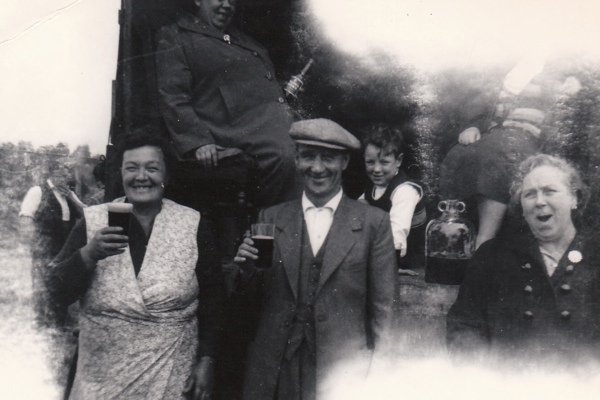
Lal Outram, Wag Outram & Mary Day on the common at Jack Thompsett’s Farm at Fowl Hall near Paddock Wood in Kent in 1955

Taken in September 1958 at Moat Farm, Five Oak Green, Kent. Sitting on the bin is Miss Whitby with Patrick Mahoney, young John Mahoney and Sheila Tarling (now Mahoney) – Sheila & Patrick were picking to save up for their engagement party in October

Maryann Lowry’s Nan, Maggie ,on the left with her Great-Grandmother, Maryann, in the check shirt in the hop gardens, c.1910

Having a rest in hop gardens at Whitbread’s Farm, Beltring, Kent in 1966. In the back row are Mary Brownlow, Sean Locke, Linda Locke, Kate Milchard, Chris Locke & Margie Brownlow with Kevin Locke and Terry Locke in front.

Margie Brownlow & her Mum Kate Milchard at Whitbreads Farm in Beltring, Kent in 1967. These huts were two stories high. The children playing outside are – Timmy Kaylor, Chrissy Locke, Terry Locke, Sean Locke, Linda Locke & Kevin Locke.

Chris Locke, Sally Brownlow, Linda Brownlow, Kate Milchard, Margie Brownlow, Terry Locke & Mary Brownlow at Whitbread’s Farm, Beltring, Kent in 1962

Johnno Mahoney, Superintendant of the Caretakers on the Bancroft Estate in Stepney, driving the “Mahoney Special” at Five Oak Green in 1947

The Clarkson family in the hop gardens in Staplehurst. Gladys Clarkson , Edith Clarkson, William Clarkson, Rose Clarkson & Henry Norris.

John Moore, Ross, Janet Ambler, Maureen Irish & Dennis Mortimer in 1950 at Luck’s Farm, East Peckham, Kent

Kate Fairclough, Mrs Callaghan, Mary Fairclough & Iris Fairclough at Moat Farm, Five Oak Green, Kent in 1972

A gang of Hoppers from Wapping outside the brick huts at Stilstead Farm, Tonbridge, Kent with Jim Tuck & John James in the back. In the middle row the first person on the left is unknown, but the others are Rose Tuck, holding Terry Tuck, Rose Tuck, Danny Tuck & Nell Jenkins. In the front are Alan Jenkins, Brian Tuck, Pat Tuck, Jean Tuck, Terry Taylor & Brian Taylor.

Nanny Barnes, Harriet Hefflin, “Minie” Mahoney & Patsy Mahoney at Ploggs Hall Farm

In the Hop Gardens at Jack Thompsett’s Farm at Fowl Hall, near Paddock Wood in Kent in the late forties. Alfie Raines, Edie Cooper, Margie Gorst & Lizzie Raines

The Day family from Kirks Place, Limehouse, at Highwoods Farm in Collier St, Kent in the fifties

Annie Smith, Bill Daniels, Pearl Brown & Nell Daniels waiting for the measurer in the Hop Garden at Hoathley’s Farm, Hook Green, Kent

On the common outside the huts at at Hoathley’s Farm, Hook Green, Kent – you can see the oasthouses in the distance. Rita Daniels, Colleen Brown, Maureen Brown, Marie Brown, Billy Daniels, Gerald Brown & Teddy Hart , with Sylvie Mason & Pearlie Brown standing.

The Outram family from Arbour Sq outside their huts at Hubbles Farm, Hunton, Kent. Unusually these were detached huts but, like all the others, they made of corrugated tin and all had one small window – simply basic rooms, roughly eleven feet square

Janis Randall being held by her mother Joyce Lee andalongside her is her father, Alfred Lee in a hop garden, near Faversham in September 1950

David & Vivian Lee sitting on a log on the common outside Nissen huts used to house hop pickers

Gerald Brown, Billy Daniels & Dennis Woodham in the hop gardens at Gatehouse Farm near Brenchley, Kent, in the fifties

Nelly Jones from St Paul’s Way with Eileen Mahoney, and in the background is Eileen’s mum, “Minie” Mahoney. Taken in the fifties in the Hop Gardens at Ploggs Hall Farm, between Paddock Wood and Five Oak Green.

At Jack Thompsett’s Farm at Fowl Hall, near Paddock Wood in Kent

Ploggs Hall Farm Ladies Football Team. Back Row – Fred Archer, Lil Callaghan, Harriet Jones, Unknown, Unknown, Nanny Barnes, Liz Weeks, Harriet Hefflin, Johnno Mahoney. Front Row – Doris Hurst Eileen Mahoney & Nellie Jones

John Moore, Ross, Janet Ambler, Maureen Irish & Dennis Mortimer in 1950 at Luck’s Farm, East Peckham, Kent

The Outram and Pyburn families outside a Kent pub in 1957, showing clockwise Kitty Tyrrell, Mary Pyburn, Charlie Protheroe, Rene Protheroe, Wag Outram, Derek Protheroe in the pram, Annie Lazel, Tom Pyburn, Bill Dignum & Nancy Wright.

Sally Watt’s Hop Picker’s account book from Jack Thompsett’s Den Farm, Collier St, Kent in the fifties

You may also like to take a look at
Roy Wild, Hop Picker
Book now for my tours through August, September & October
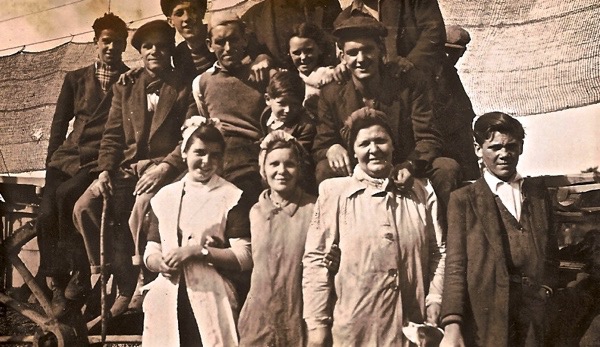
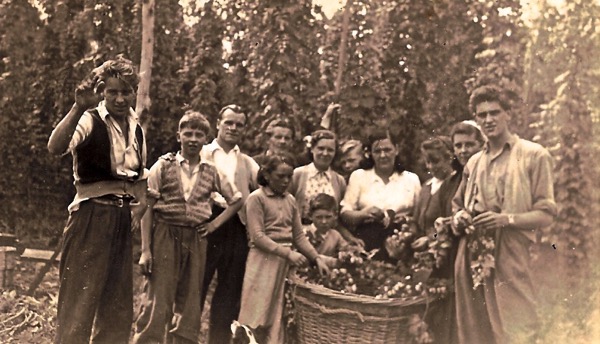
There is Roy on the far right with his left hand stuck in his pocket, to indicate the appropriate air of nonchalance befitting a street-wise man of the world of around twelve years old, on a hopping expedition with his family from Hoxton.
Roy went hop picking each year with this relations until he reached the age of eighteen and, at this season, he always recalls his days in Kent. Still in touch with many of those who were there with him in the hop fields in the fifties, Roy was more than happy to get out his photographs and settle down with a cup of tea with a drop of whisky in it, and tell me all about it.
“I first went hopping with my family in 1948 when I was ten or eleven. We went to Selling near Faversham in Kent. The fields were owned by Alan Bruce Neame of Shepherd Neame, and he would employ people to pick the hops which he sold to breweries. We all lined up on the last day and he would pay each of us in person.
Some Londoners went by train from London Bridge St, all waiting on the station and carrying all their stuff with them. We were very fortunate, dad’s brother Ernie, he had an asphalt company and had an open backed lorry, for which he made a frame for a rain canopy, and we all went down to hopping together – our family, Ernie’s family, also Renee’s sister Mary and her family. Ernie would drive down to Hoxton and pick us up at Northport St, with all our bits and pieces, our bags and suitcases with bed linen and that type of thing, and away we’d all go down to Faversham. We’d go at the weekend, so we could spend a day unpacking and be ready to start picking on Monday.
There was us hop pickers from London but Neame would also employ ‘home-dwellers,’ these were Kentish people. The accommodation they lived in was far superior to what we were subjected to. We were given no more than Nissen huts, square huts made of corrugated iron with a door and that was about all, no windows. It was very, very primitive. We washed in a bowl of water and the toilet was a hole dug in a field. My mother would take old palliasses down with us from Hoxton and they would be stuffed with straw or hay from the barn, and that would our mattresses. The beds were made of planks, very basic and supported upon four logs to prop them up off the floor. You’d put the palliasses on top of the planks and the blankets on top of that. The huts were always running alive with creepy-crawlies, so anyone that had a phobia of that wasn’t really suited to hop picking.
There was another room next to it which was half the size, this was our kitchen. My dad would take down an old primus stove for cooking. It was fuelled by paraffin and the more you pumped it up the fiercer the flame, the quicker the cooking. It was only a small thing that sat on a box. The alternative to that was cooking outside. The farmer would provide bundles of twigs known as ‘faggots,’ to fuel the fire and we would rig up a few bricks with a grill where we’d put the kettle and a frying pan. They’d literally get pot-black in the smoke.
We usually went from three weeks to a month hop picking, sometimes the whole of September, and you could stay on for fruit picking. When we first started, we picked into a big long troughs of sacking hanging down inside a wooden frame. They were replaced by six bushel baskets. The tally man would come round with a cart to collect the six bushel baskets and mark your card with how much you had picked, before carrying the hops away to the oasthouses for drying.
At the time, we were paid one shilling and sixpence a bushel. You’d pick into a bushel basket while you were sitting with it between your legs and when it was full, you’d walk over to the six bushel basket and tip it in. My dad was a fast picker, he’d say ‘Come on Roy, do it a bit quicker!’ All your fingers got stained black by the the hops, we called it ‘hoppy hands.’
If you had children with you, they would mess about. Their parents would be rebuking them and telling them to get picking because the more you picked, the more you earned. Some people could get hold of a bine, pull the leaves off and, in one sweep, take all the hops off into the basket. Other people, to bulk up their baskets would put all kinds of things in there. they would put the bines at the bottom of the six bushel basket and nobody would know, but if you got caught then you was in trouble. My dad showed me how to fill a six bushel basket up to the five bushel level and then put your arms down inside to lift up the hops to the top just before the tally man came round.
The adults were dedicated pickers because you had to buy food all the time and being there could cost more money than you made. There was a little store near us called ‘Clinges’ and further up, just past the graveyard, was another store which was more modern called ‘Blythes’, and next door to that was a pub called the ‘White Swan’ and that was the release for all the hop pickers. They all used to go there on Saturday and Sunday nights and there’d be sing-songs and dancing, before going back to work on Monday morning. It was the only enjoyment you had down there, except – if you didn’t go up to the pub – you’d get all the familes sitting round of a weekend and reminiscing and singing songs, round a big open fire made up of the faggots
We worked from nine o’clock until about four, Monday to Friday. The owner of the hop fields employed guys to work for him who were called ‘Pole Pullers,’ they had big long poles with a sharp knife on the end and when you pulled a bine, if it didn’t come down, you’d call out for a pole puller and with his big long pole he’d cut the top of it and the rest if it would fall down. When it was nearing four o’clock, they’d call out ‘Pull no more bines!’ which was what all the kids were waiting for because by this time they’d all had just about enough. A hop field can be one muddy place and if you’re in among all that with wellingtons on it can get pretty sticky. If it was ready to rain, the pole pullers would also go round and call ‘Pull no more bines.’ Nobody was expected to work outside in the rain. We dreaded the rain but we welcomed the pole pullers when they called out, because that was the day’s work done until the following morning.
We looked forward to going hop picking because it was the chance of an adventure in the country. It was just after the war and we’d had it rough in Hoxton. I was born in 1937 and I’d grown up through the war, and we still had ration books for a long time afterwards. I was a young man in the fabulous fifties and the swinging sixties. In the fifties, we had American music and Elvis Presley, and in the sixties the Beatles and British music. Hop picking was being mechanised, they had invented machines that could do it. So we grew away from it, and young men and young women had better things to do with their time.”
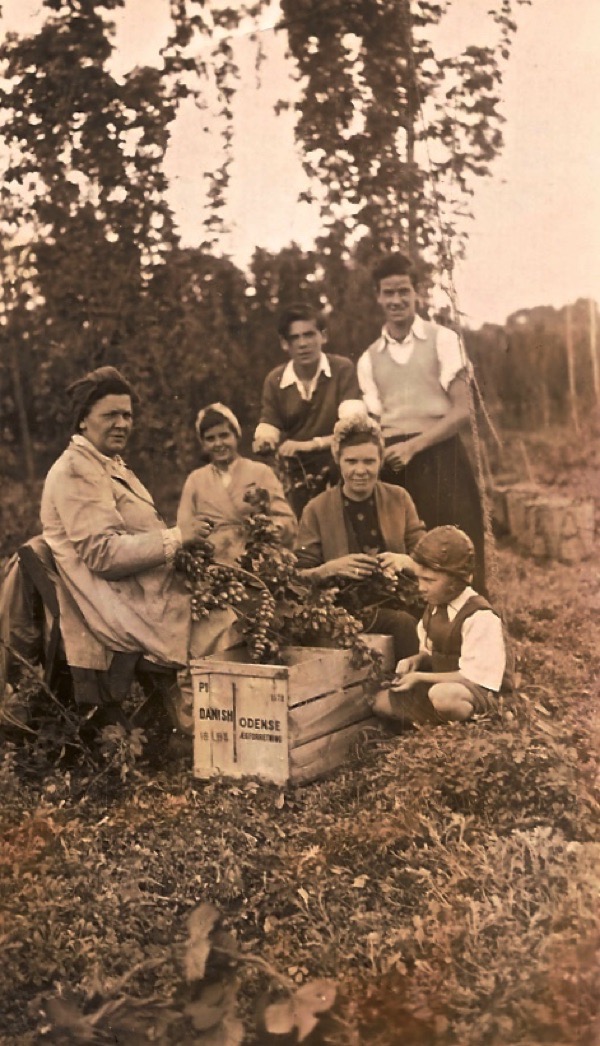
Roy stands in the centre of this family group
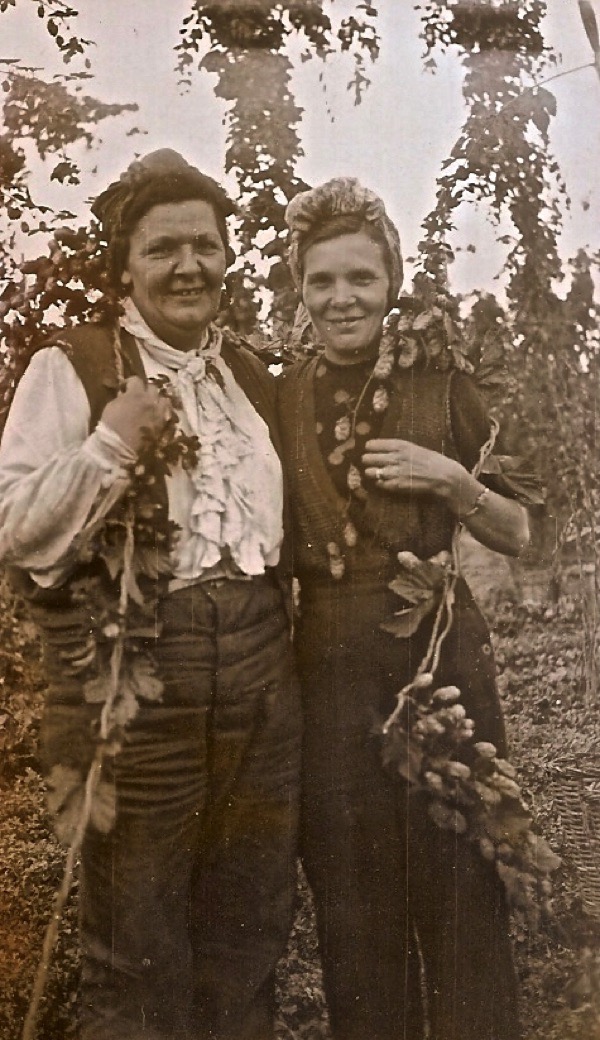
Renee Wild and Rosie Wild
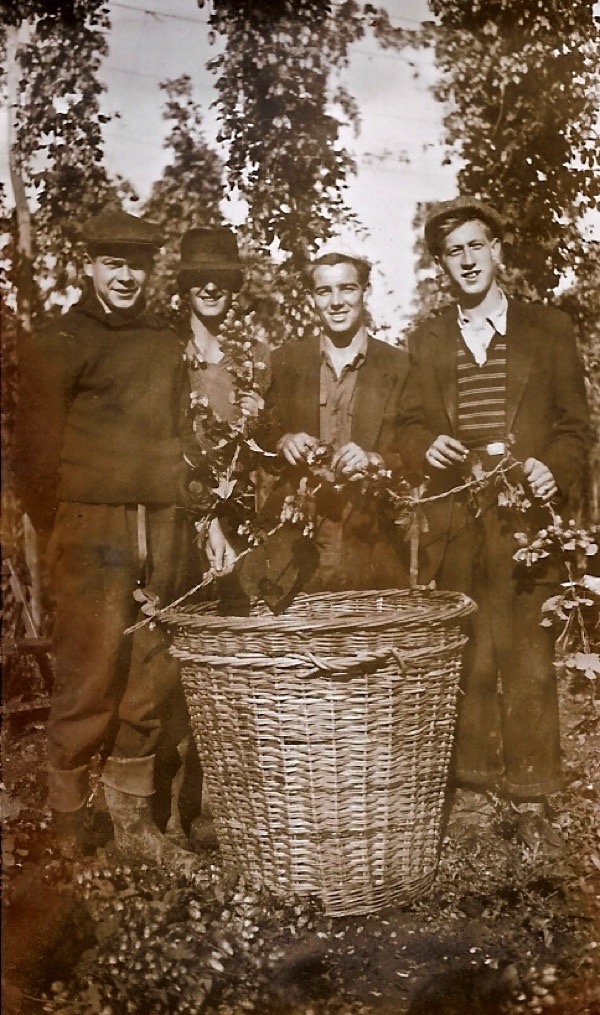
Picking into a six bushel basket
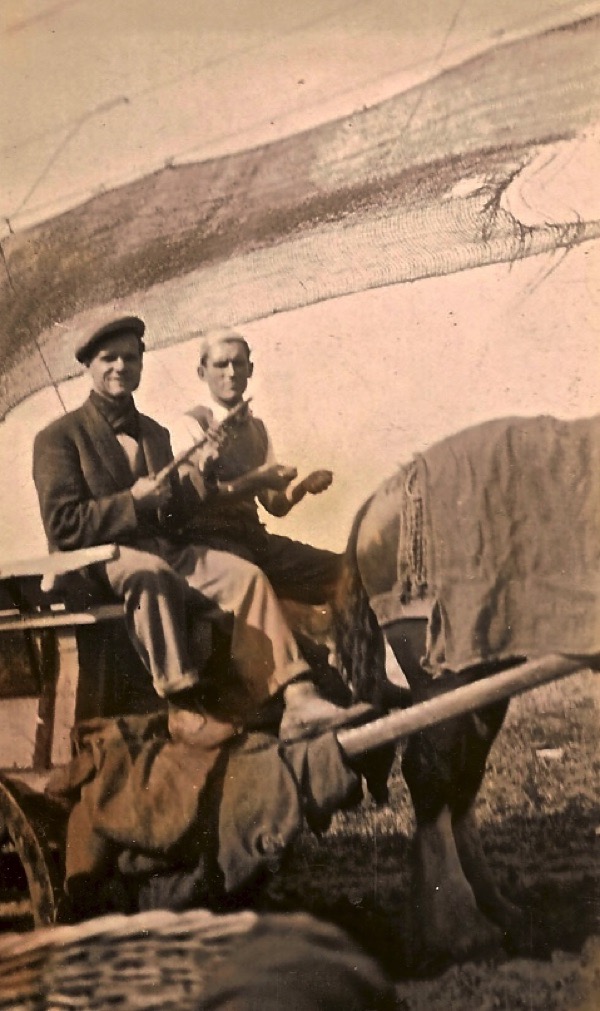
Roy’s father Andy Wild rides in the cart with his brother Ernie
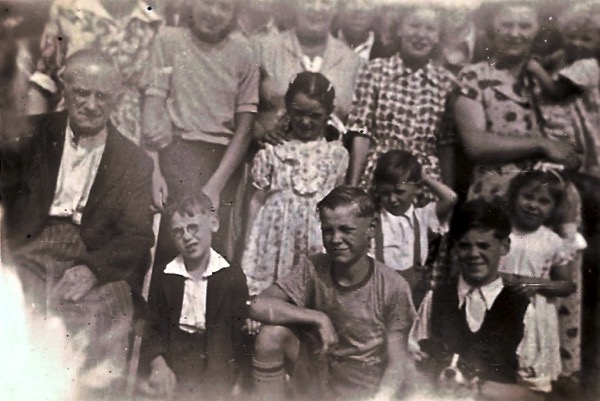
Roy’s grandfather Andrew Wild is on the far left of this photo
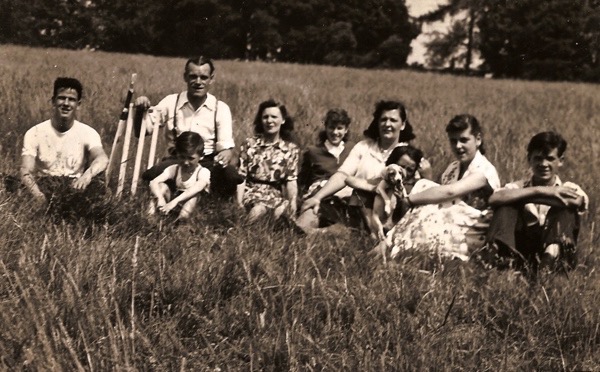
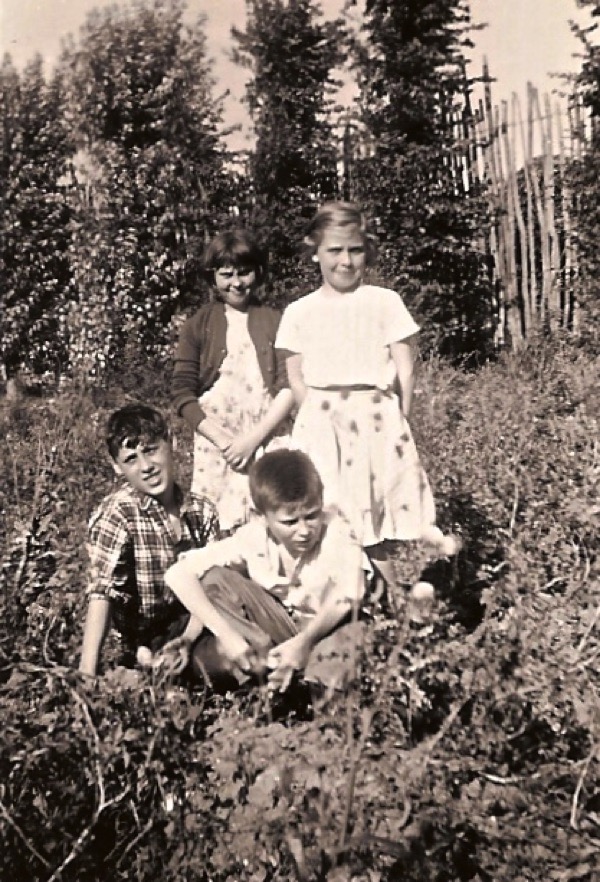
Roy is on the far right of this group
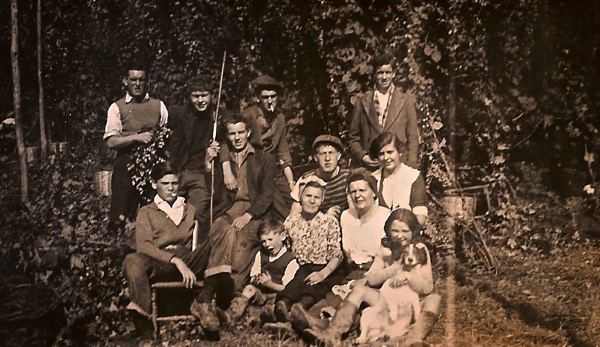
Roy sits in the left in the front of this picture
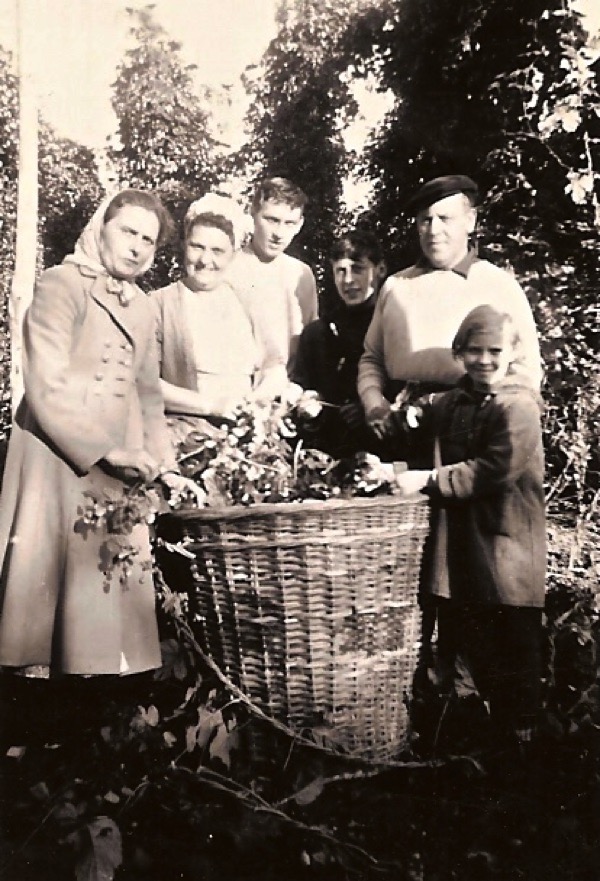
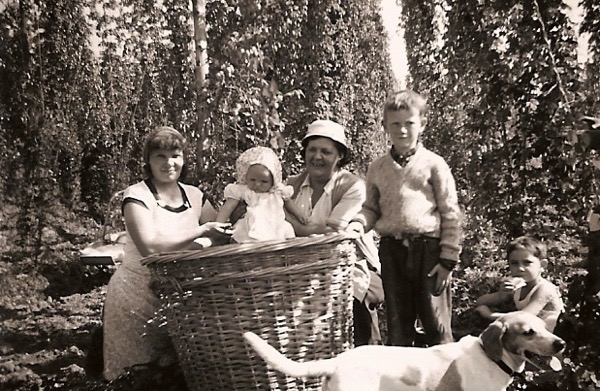
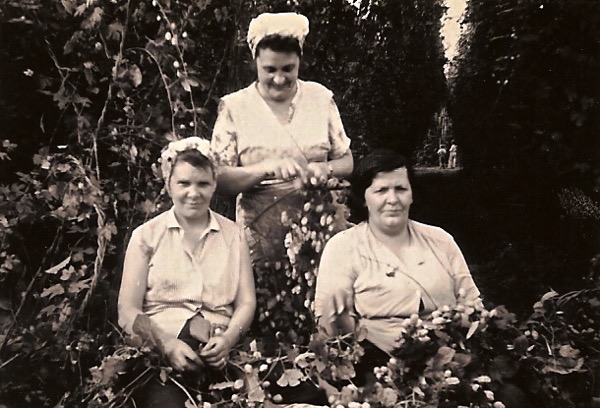
Rosie, Mary & Renee
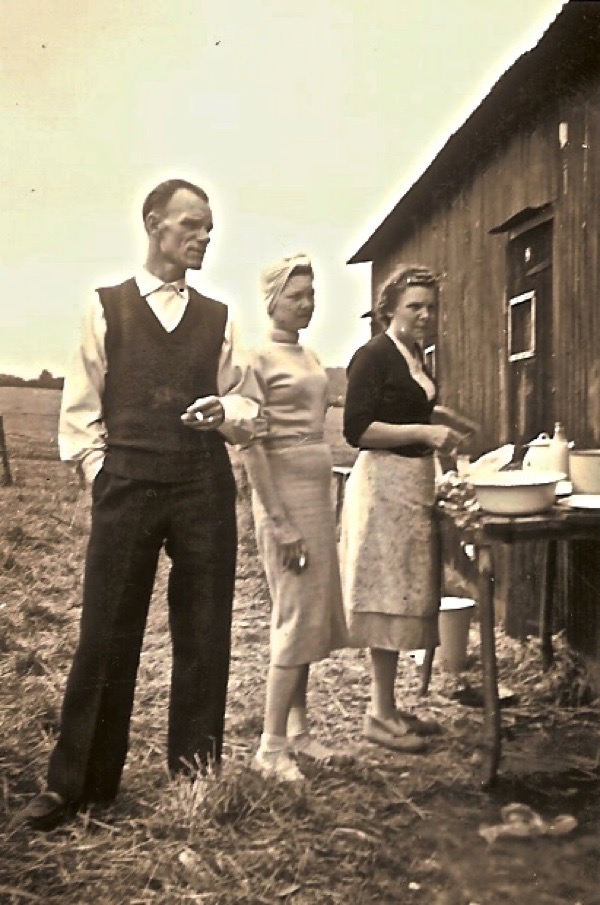
Roy’s father Andy Wild with Roy’s mother Rosie at the washing up and Pearl
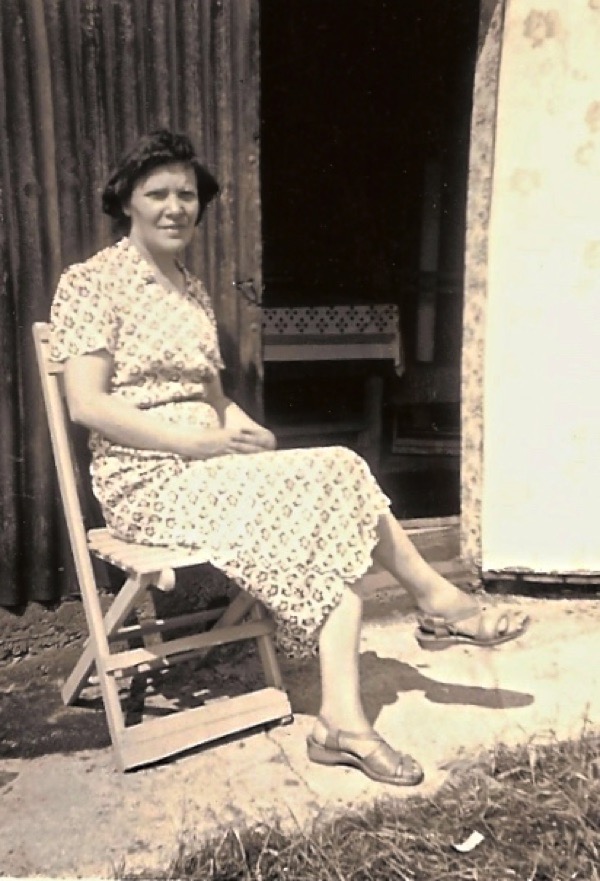
Roy’s mother, Rosie Wild
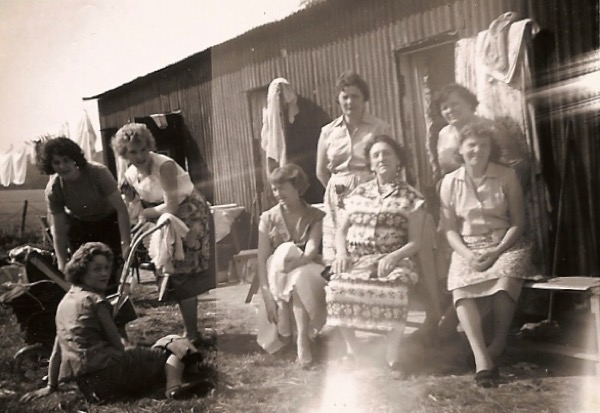
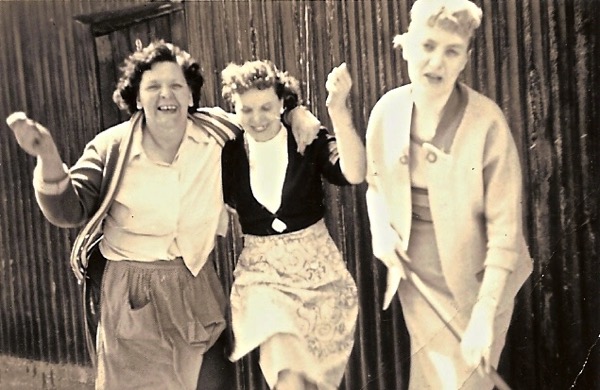
Renee, Mary & Pearl
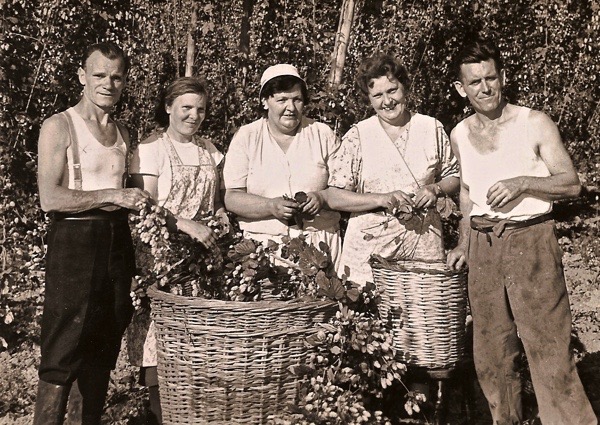
Roy’s father Andy stands on the left and his Uncle Ernie on the right
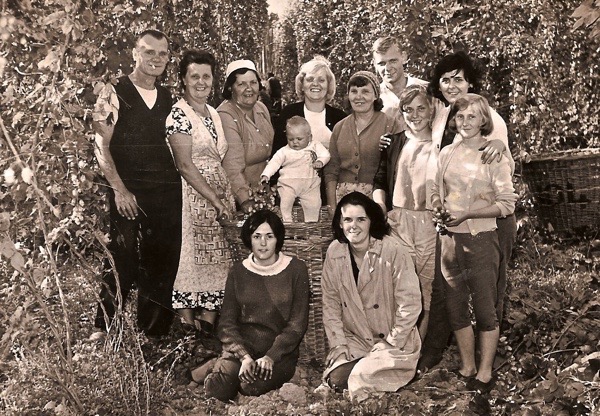
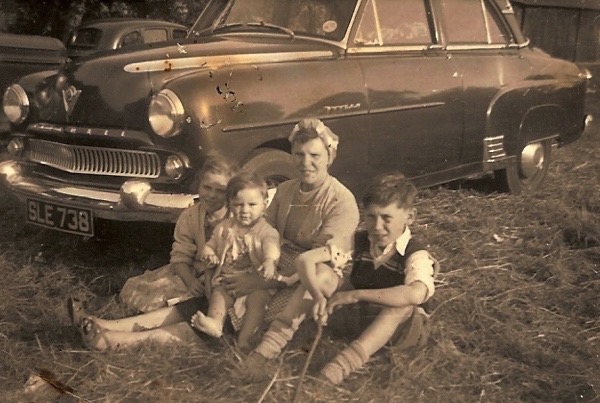
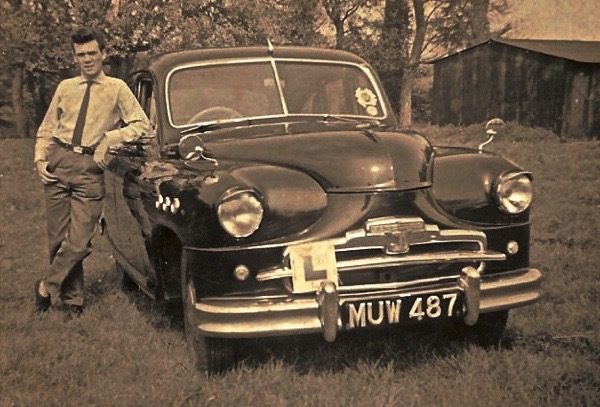
Roy
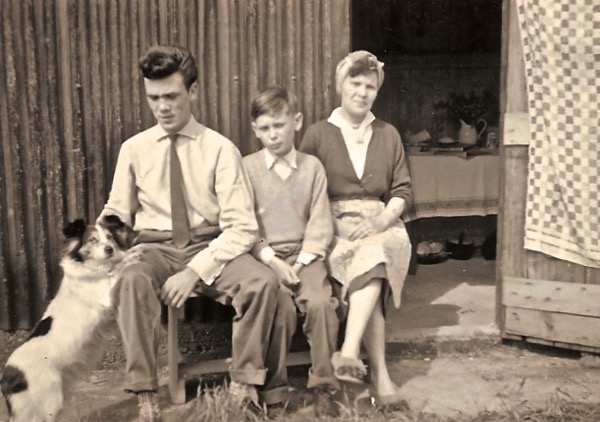
Roy (with Trixie) and Tony sit beside their mother Rosie
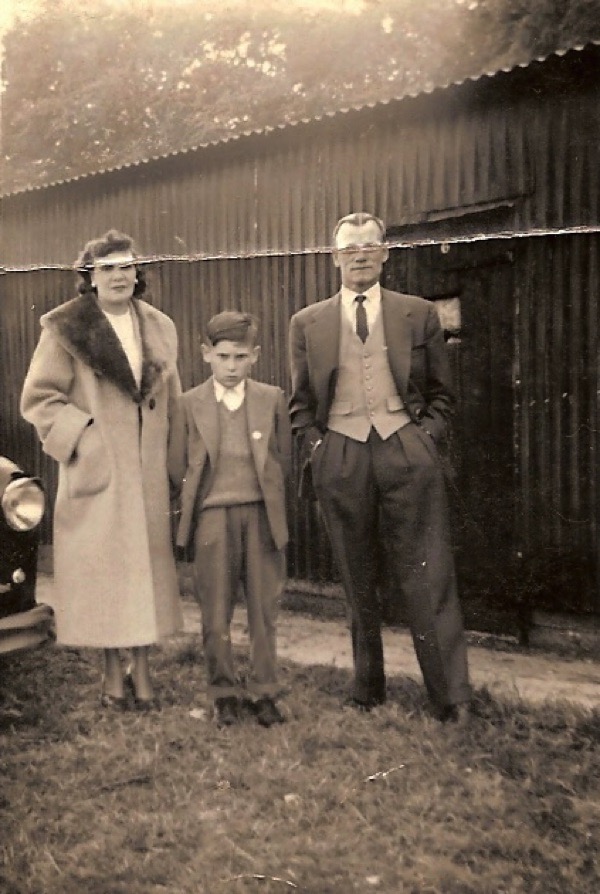
Roy’s mother and father with his younger brother Tony
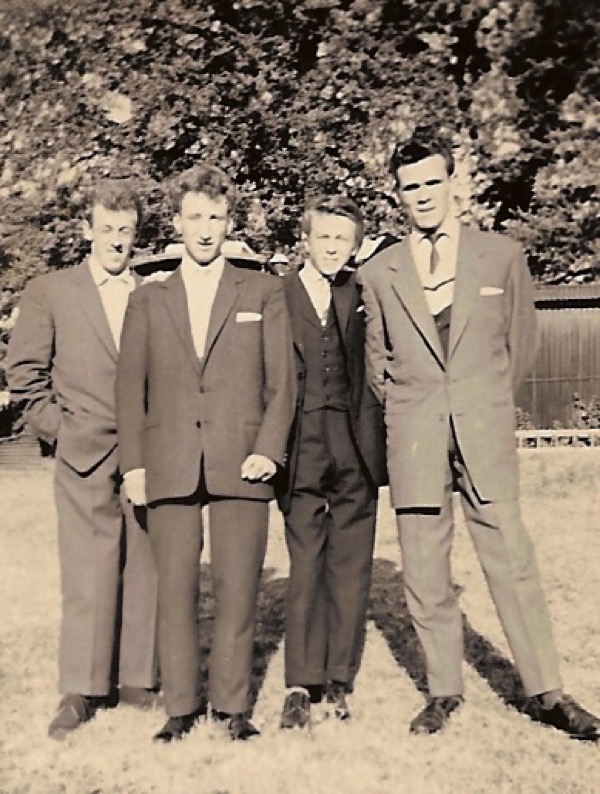
Roy stands on the right of this group of his pals
You may also like to read about