
One Last Drink At The Gun
(Celebrating the sixth anniversary of Spitalfields Life with a week of favourite posts from the last twelve months, before recommencing with new stories on 31st August)

In 1946, a demobbed soldier walked into The Gun in Brushfield St and ordered a pint. Admitting that he had no money, he asked if he could leave his medals as security and come back the next day to pay for his beer. But he never returned and all this time his medals were kept safely at The Gun, mounted in a frame on the wall, awaiting the day when he might walk through the door again.
Alas, the waiting is over and now it is too late for the soldier to return – because the pub closed forever in February and, if he were to come back, he would find The Gun shrouded in scaffolding, prior to demolition as part of the redevelopment of the London Fruit & Wool Exchange.
The military theme of this anecdote is especially pertinent, since it appears likely that The Gun originated as a tavern serving the soldiers of the Artillery Ground in the sixteenth century, and the story of the pub and the tale of the medals both ended this year.
Back in February, Contributing Photographer Colin O’Brien & I joined the regulars for a lively yet poignant celebration on the last night, drinking the bar dry in commemorating the passing of a beloved Spitalfields institution. No-one could deny The Gun went off with a bang.
“We are the last Jewish publicans in the East End,” Karen Pollack, who ran The Gun with her son Marc, informed me proudly, “yet I had never been in a pub until I married David, Marc’s father, in 1978.” Karen explained that David Pollack’s grandparents took over The Bell in 1938, when it was one of eight pubs on Petticoat Lane, and in 1978, David’s father George Pollack also acquired the lease of The Gun, which was run by David & Karen from 1981 onwards.
“David grew up above The Bell and he always wanted to keep his own pub,” Karen recalled fondly, “It was fantastic, everyone knew everyone. We opened at six in the morning and got all the porters from the market in here, and the directors of the Truman Brewery used to dine upstairs in the Bombardier Restaurant – there was no other place to eat in Spitalfields at that time.”
“People still come back and ask me for brandy and milk sometimes,” she confided, “that’s what people from the market drank.”
On the last night, the beautiful 1928 interior of The Gun with its original glass ceiling, oak panelling, Delft tiles, prints of the Cries of London and views of Spitalfields by Geoffrey Fletcher, was crowded with old friends enjoying the intimate community atmosphere for one last time, many sharing affectionate memories of publican, David Pollack, who died just a few years ago. “We’ve had some good times here,” Karen confessed to me in quiet understatement, casting her eyes around at the happy crowd.
“I was always known as David Pollack’s son, I came into the pub in 2008 and it was second nature to me,” Marc revealed later, which led me me to ask him what this fourth generation East End publican planned to do with the rest of his life. “I’m going to open another pub and call it The Gun,” he assured me without hesitation. And I have no doubt Marc took the medals with him because – you never know – that errant soldier might still come back for them one day.

Fourth generation East End publican Marc Pollack, pictured here with his staff, stands on the left


David Pollack, publican, Michael Aitken of Truman’s Brewery & George Pollack, publican in 1984

Karen Pollack shows customers the old photographs


Karen Pollack and bar staff


Emma, Marc and Karen Pollack

Medals awaiting the return of their owner


The Gun in 1950
Photographs copyright © Colin O’Brien
You may also like to take a look at
London’s Ancient Topography
(Celebrating the sixth anniversary of Spitalfields Life with a week of favourite posts from the last twelve months, before recommencing with new stories on 31st August)

Bethelem Hospital with London Wall in Foreground – Drawn June 1812
Two centuries ago, John Thomas Smith set out to record the last vestiges of ancient London that survived from before the Great Fire of 1666 but which were vanishing in his lifetime. You can click on any of these images to enlarge them and study the tender human detail that Smith recorded in these splendid etchings he made from his own drawings. My passion for John Thomas Smith’s work was first ignited by his portraits of raffish street sellers published as Vagabondiana and I was delighted to spot several of those familiar characters included here in these vivid streets scenes of London long ago.

Bethel Hospital seen from London Wall – Drawn August 1844

Old House in Sweedon’s Passage, Grub St – Drawn July 1791, Taken Down March 1805

Old House in Sweedon’s Passage, Grub St – Drawn July 1791, Taken Down March 1805

London Wall in Churchyard of St Giles’ Cripplegate – Drawn 1793, Taken Down 1803

Houses on the Corner of Chancery Lane & Fleet St – Drawn August 1789, Taken Down May 1799

Houses in Leadenhall St – Drawn July 1796

Duke St, West Smithfield – Drawn July 1807, Taken Down October 1809

Corner of Hosier Lane, West Smithfield – Drawn April 1795

Houses on the South Side of London Wall – Drawn March 1808

Houses on West Side of Little Moorfields – Drawn May 1810

Magnificent Mansion in Hart St, Crutched Friars – Drawn May 1792, Taken Down 1801

Walls of the Convent of St Clare, Minories – Drawn April 1797

Watch Tower Discovered Near Ludgate Hill – Drawn June 1792

An Arch of London Bridge in the Great Frost – Drawn February 5th 1814
Images courtesy Bishopsgate Institute
You may also like to take a look at
John Thomas Smith’s Vagabondiana
Portraits Of Holland Estate Residents
(Celebrating the sixth anniversary of Spitalfields Life with a week of favourite posts from the last twelve months, before recommencing with new stories on 31st August)
After social housing association East End Homes submitted a pre-planning application for demolition of Holland Estate next to Petticoat Lane, prior to consulting with the people who live there, a member of the staff of East End Homes told residents their homes were “unfit for human habitation. Although Tower Hamlets Council voted unanimously in solidarity with the residents’ wish for refurbishment not demolition, and their campaign has also won of the support of Member of Parliament Rushanara Ali and Mayor John Biggs, East East Homes show no sign of relenting with their plans.
Contributing Photographer Sarah Ainslie & I spent an afternoon visiting flats on the Holland Estate to take these portraits and assess the accommodation for ourselves. We were touched by the strong sense of community we encountered and the generous welcome we received. We found the gracious brick structures are built of better quality materials than most modern developments and are humanely conceived, offering hospitable living spaces which are cherished and well-maintained by the occupants.

Ali Sahed Goyas & Jahnara Choudhury have lived on the Holland Estate for twenty-five years

Alex Rhys-Taylor & Natasha Polyviou, residents for thirteen years, with their son Odysseus
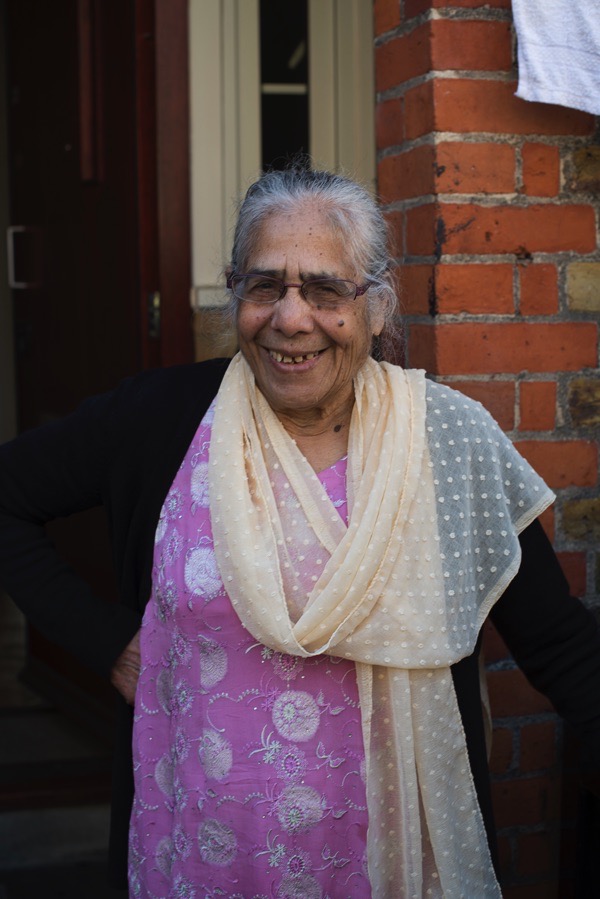
Pascha Singh has lived on the Holland Estate for more than thirty years

Mahjdiyat, Shammi, Manveen & Arshan Ahmed at home

Yolanda De Los Buies has lived on the Holland Estate for seventeen years

Saleha Khanam with her son Shamsur Rahman and his wife Rushna Begum and their children Yaseen and Hamza – Four generations of this family have lived on the Holland Estate

Azar Ali has lived on the Holland Estate for thirty-one years

Nessa Aifun cares for her husband Rustum at home

Saleh Ahmed & Rusnobun Bibi and their grandchildren Aakifah & Ismael

Kabir Ahmed & Nasrin Rob with their children Aakifah & Ismael

Murtata Choudhury has lived on the Holland Estate for fifty years

Shikiko Aoyama Sanderson & Jarrod Sanderson have lived on the Estate for six years

Samirun Chowdhury with Saima Chowdhury and Taher Uddin outside Samirun & Saima’s home

Enrico Bonadio has lived on the Holland Estate for three years
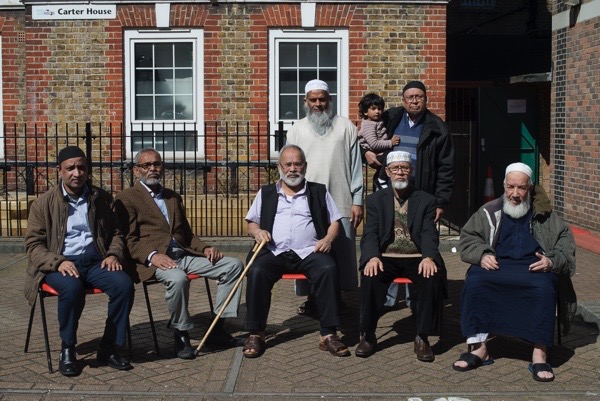
Rob Ali, Ali Sayed Goyas, Asab Miah, Murtata Choudhury, Saleh Ahmed with Aakifah Ahmed & Mohammed Ismael Ali
Photographs copyright @ Sarah Ainslie
You can follow the Residents Against Demolition campaign on
&
Twitter @bbcresidents
You might also like the read about
Mr Pussy, Water Creature
(Celebrating the sixth anniversary of Spitalfields Life with a week of favourite posts from the last twelve months, before recommencing with new stories on 31st August)

My old cat, Mr Pussy, loves water. While others detest getting their feet wet, he has never been discouraged by rain, even delighting to roll in wet grass. Consequently, when he languishes in hot weather, I commonly sponge him down with cold water – an ecstatic experience that leaves him swooning.
Although I am conscientious to leave him a daily dish of fresh water beside his bowl of dry biscuits, he prefers to drink rainwater or running water, seeking out puddles, ponds and dripping taps. Sometimes when I have been soaking in the bath, he has even appeared – leaping nimbly onto the rim – and craned his long neck down and extended his pink tongue to lap up my bath water, licking his lips afterwards out of curiosity at the tangy, soapy flavour. And when I choose to stand in the bath and take a shower, he likes to jump in as I jump out to lap up the last rivulets before they vanish down the drain.
One day, I took the shower-head and left it lying upon the floor of the bath, switching on the water briefly to wash away the soap in order to leave him clean water to drink. Thus a new era began. He perched upon the rim of the bath, his eyes widening in fascination at the surge of water bouncing off the sides of the tub in criss-crossing currents. This element introduced a whole new level of interest for him and now it has become a custom, that I switch on the shower for a couple of seconds, so that he may leap onto the bath and manoeuvre himself down to lick up the racing trails before they disappear.
It was something I did occasionally to indulge him, then daily, and now he demands it whenever he sees me in proximity – perhaps a dozen times yesterday and sometimes in the middle of the night too. The game begins with the spectacle of the surge of water coursing around the bath. He gets pretty excited watching the rush. And then, as soon as the water is switched off, he lets himself down head first, leaving his back legs on the rim and moving swiftly to slurp up the rivulets as they run. Each time it is a different challenge and the combination of the necessity of quick thinking, of nimble gymnastics and the opportunity of refreshment is compelling for him.
In the winter – you will recall – I found myself letting him in and out of the drawing room door, as he sought respite from the warmth and then re-admission again five minutes later. I am aware of his controlling nature and the pleasure he draws in extricating these favours from me, yet this new game has become a compulsion for him in its own right. When it gives him such euphoria, I cannot refuse his shrill requests, trilling liking a song bird and indicating the bathroom with a deliberate twist of his neck.
From the moment I turn my steps in that direction he is ahead of me, leaping up and composing his thoughts upon the brink with the intensity of a diver before a contest. Hyper-alert when I switch on the tap momentarily, he is rapt by the sensory overload of the multiple spiralling streams of water and intricate possibilities for intervention. Running all the decisions in his mind, he may even make a move before the water is switched off. Unafraid to soak his feet, he places two paws down into the swirling current and starts to lap it up fast. Observing his skill and engagement as a credulous yet critical spectator of his sport, I cannot deny he is getting better at negotiating the bathtub runnels. His technique is definitely improving with practice.
Within a minute, the water has drained to trickles and, before I may rediscover my own purpose, he seeks a repeat performance of his new game – and thus, with these foolish pastimes, we spend our days and nights in the empty house in Spitalfields.

You may also like to read
Mr Pussy Gives his First Interview
and take a look at
The Cats of Spitalfields (Part One)
Sixth Annual Report

Today – after more than two thousand posts published in these pages – we come to the end of the sixth year of Spitalfields Life. Perhaps the most unexpected moment of the last twelve months came one Sunday when I discovered myself sprinting down Folgate St exhorting people to spread out and hold hands. It was not random evangelism, but my hare-brained plan to invite people to join hands around Norton Folgate as a symbol of the widely-held desire to see the old buildings reused rather than demolished.
Two days later, Tower Hamlets Council rejected the application for redevelopment and now the Spitalfields Trust is devising an alternative scheme for Norton Folgate in collaboration with local businesses which, by seeking the minimum architectural intervention, can match the viability of the expensive and destructive British Land proposal.
The past year has also seen the publication of Spitalfields Nippers by Horace Warner and London Life by Colin O’Brien. Each of these books is a remarkable testimony of the culture of London by a distinguished photographer. Both have been critically acclaimed and proved to be very popular with the widest audience – yet neither of these would have seen the light of day, if not for the generous support of you – the readers of Spitalfields Life – who funded their publication.
It never ceases to astonish me to recognise what has come from the simple act of publishing a story every day. Six years ago, I never expected to produce books or get involved in campaigns to save old buildings in the East End, but I am hugely proud of our endeavours in both departments.
In spite of all this excitement, my essential task of undertaking interviews and writing stories remains at the core of my work. I love going out with the Contributing Photographers on assignments and we are never disappointed by the everyday wonders we encounter here in the East End.
Above all, I value the experience of meeting the people whose lives I have recorded in these pages. Listening to their stories is an ongoing education for me, offering inspiration and restoring a sense of proportion too.
On contemplation, I wonder if perhaps the act of retelling these stories for a wider audience is akin to running down the street and asking strangers to join hands? I consider myself privileged to do what I do because undertaking these interviews is such a source of joy to me – and it is this constantly-renewing sense of delight which keeps me going.
And thus, with all these thoughts in mind, I come to the end of this sixth year of Spitalfields Life.
I am your loyal servant
The Gentle Author
[youtube y4brWMpy790 nolink]


For the next week, while I am completing my book about THE CRIES OF LONDON, I shall be publishing favourite posts from the past year and then resuming with new stories on Monday 31st August
You may like to read my earlier Annual Reports
At A E Batchelor Ltd, Saddlers
After I featured Mia Sabel the Saddler in Walthamstow last spring, Anthony Batchelor got in touch and invited me to visit his family business of A E Batchelor Ltd, Saddlers, established in Epping in 1919

Contributing Photographer Patricia Niven & I took the train down to Epping to meet Anthony Batchelor and his dad John who work together as the third and fourth generation in their family saddlery business. Anthony picked us up from the station and drove us through the town, past the former shoe shop and saddlery established by his great-grandfather in an old weatherboarded house in 1919.
Since 2005, high street premises have no been longer required by A E Batchelor Ltd. Anthony drove us through the winding lanes until we turned into the yard behind an imposing Georgian farmhouse, where he and his father operate today from a comfortable and quiet workshop in a converted barn. Such is their reputation that, even without a website, Anthony and his father find they have as much work as they can handle simply by word of mouth.
While John stays in the workshop at his bench, Anthony sets out on the road driving seven hundred miles a day to visit customers across East Anglia, from the daughters of wealthy businessmen in Southend up to old hunting families in Norfolk. I was assured that, given their different preferences in music and choice of radio channels, such a division of responsibility suits father and son very well.
“In 1919, my great-grandfather Alfred Edward Batchelor returned from the West Indies where he had a sugar plantation,” Anthony explained to me,”he worked for Freeman Hardy Willis in Croydon and then he bought a shoe shop in Epping.” In the thirties, the family purchased the saddlery next door and ran both shops until 2005.“He always called himself the reluctant saddler,” admitted Anthony, referring to his grandfather Alfred Robert,“so he went and worked at Blisses.”
Bliss & Co of Sun St, behind Liverpool St Station, were the last of the many saddlers that once existed in the vicinity of Bishopsgate, originally serving the needs of travellers in the days before the coming of the railway. Thus Alfred Robert and then his son Alfred John both trained at Blisses, which – astonishingly – only closed in the eighties and today its handsome red brick building, custom-built as a saddlers, still stands in Sun St unfortunately awaiting imminent demolition.
“We still use my grandfather’s tools,” Anthony revealed, lifting and brandishing up a half-moon shaped knife which his father had just employed,“he ‘liberated’ this knife from an abandoned saddlery when he went into occupied France at the end of World War II.”
Neither father nor son have any regrets about abandoning the retail side of the business in Epping.“When we had the shop we were there all hours, it was a hard life,” confided John,“now I can take a day off whenever I please.” I watched John as he stitched a simple dog lead with painstaking care. “The work we do is rustic in style,” he informed me modestly, almost apologetically, confessing that his primary concern was to create items which serve their purpose at a reasonable price. Yet, to my eyes, John’s expert stitching and years of experience conspired to produce a distinctive object of subtle beauty in which the form fitted the function perfectly.

The shoe shop in Epping High St opened by Alfred Edward Bachelor in 1919 with the saddlers next door

Alfred John Batchelor


In the saddlery in Epping in the sixties

Alfred John Batchelor with his father Alfred Robert

John at his work bench

Sewing a dog lead with the traditional saddlers’ double stitch


Bob Cuthbert repairing harnesses at A E Batchelor in the sixties

The knife ‘liberated’ by Alfred Robert Batchelor in World War II and still in use


Anthony shows the card templates used to ensure saddles fit the horse’s back


A Sciver – a machine for splitting leather straps


Catalogue for Bliss of Sun St, beside Liverpool St Station


Photographs copyright © Patricia Niven
You may also like to read about
Summer at Bow Cemetery
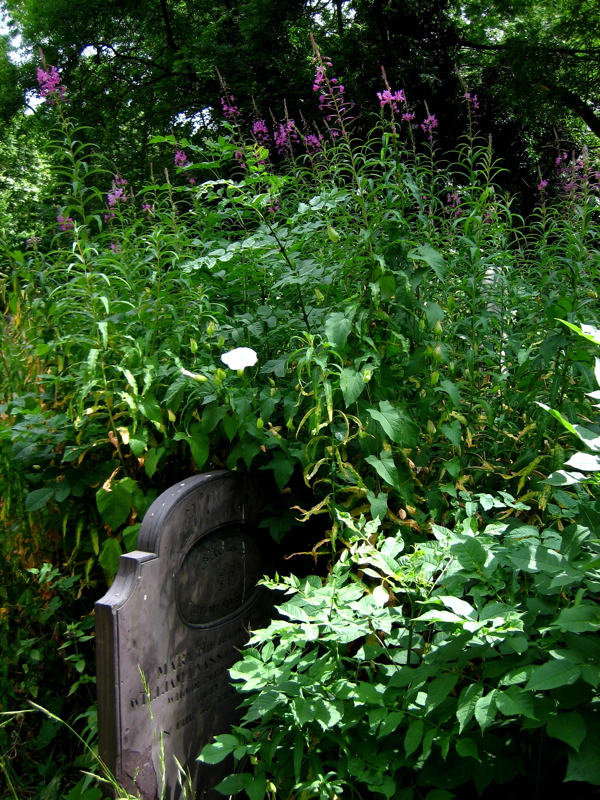
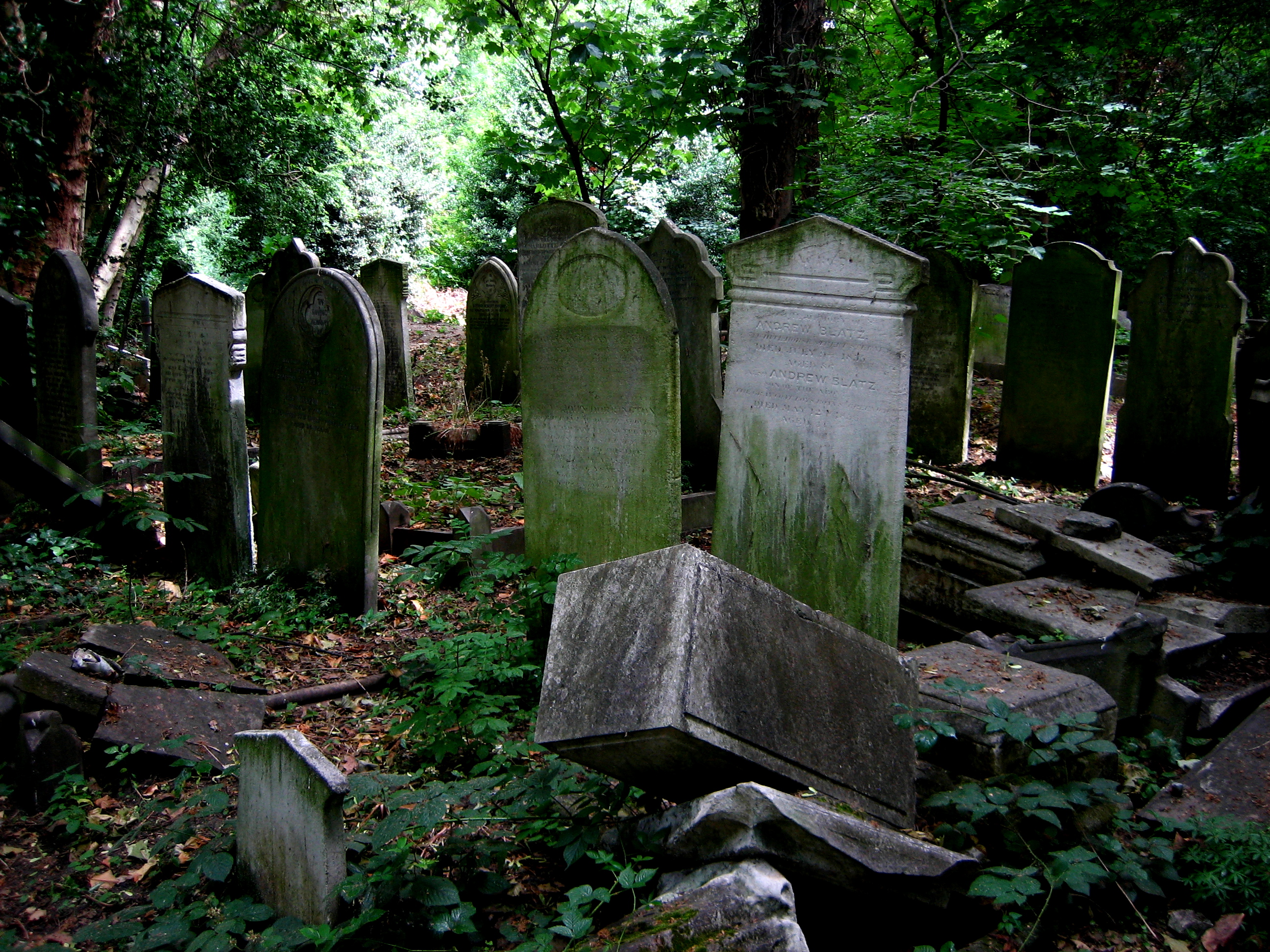
At least once each Summer, I direct my steps eastwards from Spitalfields along the Mile End Rd towards Bow Cemetery, one of the “Magnificent Seven” created by act of Parliament in 1832 as the growing population of London overcrowded the small parish churchyards. Extending to twenty-seven acres and planned on an industrial scale, “The City of London and Tower Hamlets Cemetery” as it was formally called, opened in 1841 and within the first half century alone around a quarter of a million were buried here.
Although it is the tombstones and monuments that present a striking display today, most of the occupants of this cemetery were residents of the East End whose families could not afford a funeral or a plot. They were buried in mass public graves containing as many as forty bodies of random souls interred together for eternity. By the end of the nineteenth century the site was already overgrown, though burials continued until it was closed in 1966.
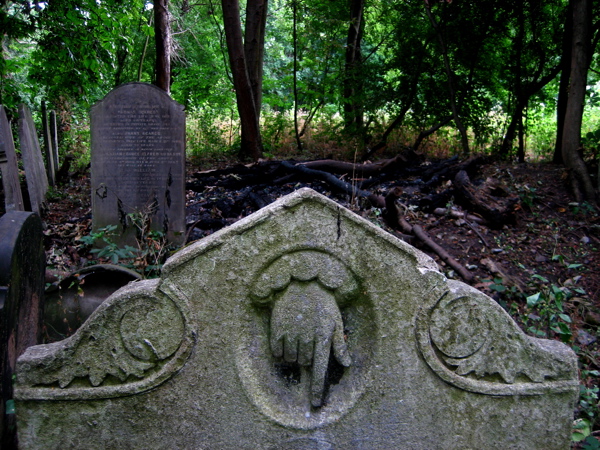
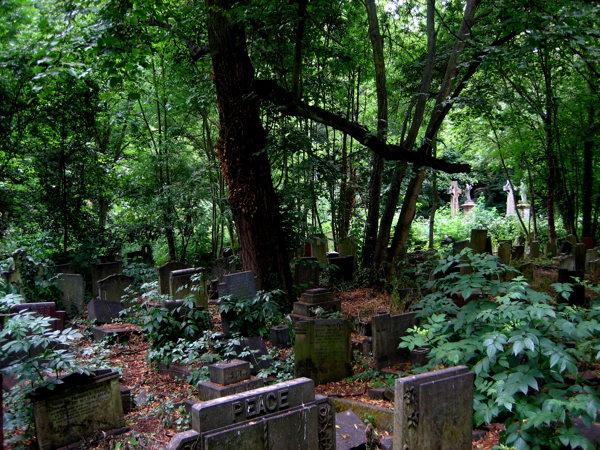
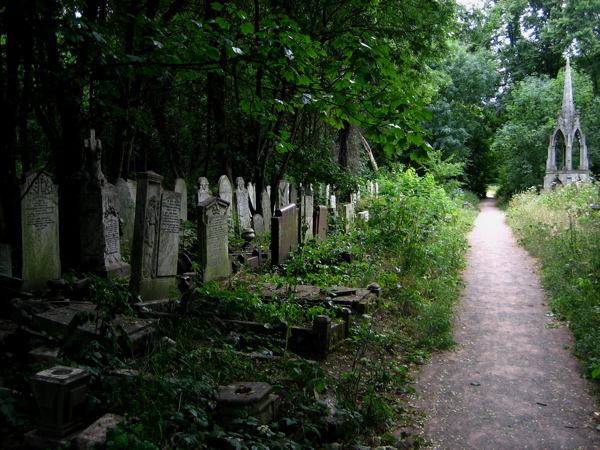
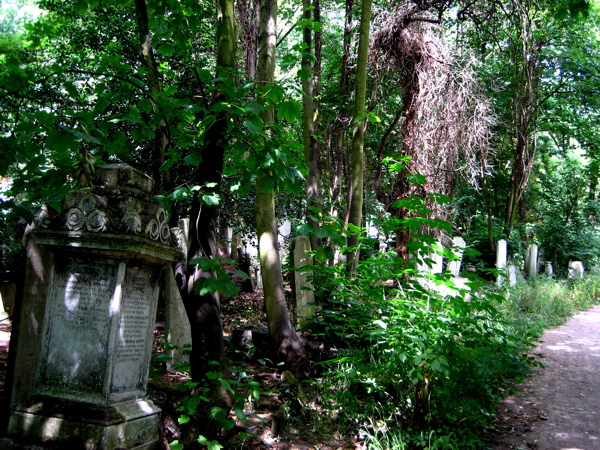
Where death once held dominion, nature has reclaimed the territory and a magnificent broadleaf forest has grown, bringing luxuriant growth that is alive with wildlife. Now the tombstones and monuments stand among leaf mould in deep woods, garlanded with ivy and surrounded by wildflowers. Tombstones and undergrowth make one of the most lyrical contrasts I can think of – there is a beautiful aesthetic manifest in the grim austerity of the stones ameliorated by vigorous plant life. But more than this, to see the symbols of death physically overwhelmed by extravagant new growth touches the human spirit. It is both humbling and uplifting at the same time. It is the triumph of life. Nature has returned and brought more than sixteen species of butterflies with her.
This is the emotive spectacle that leads me here, turning right at Mile End tube station and hurrying down Southern Grove, increasing my pace with rising expectation, until I walk through the cemetery gates and I am transported into the green world that awaits. At once, I turn right into Sanctuary Wood, stepping off the track to walk into a tall stand of ivy-clad sycamores, upon a carpet of leaves that is shaded by the forest canopy more than twenty metres overhead and illuminated by narrow shafts of sunlight descending. It is sublime. Come here to see the bluebells in Spring or the foxgloves in Summer. Come at any time of the year to find yourself in another landscape. Just like the forest in Richard Jefferies’ novel “After London,” the trees have regrown to remind us what this land was once like, long ago before our predecessors ever came here.
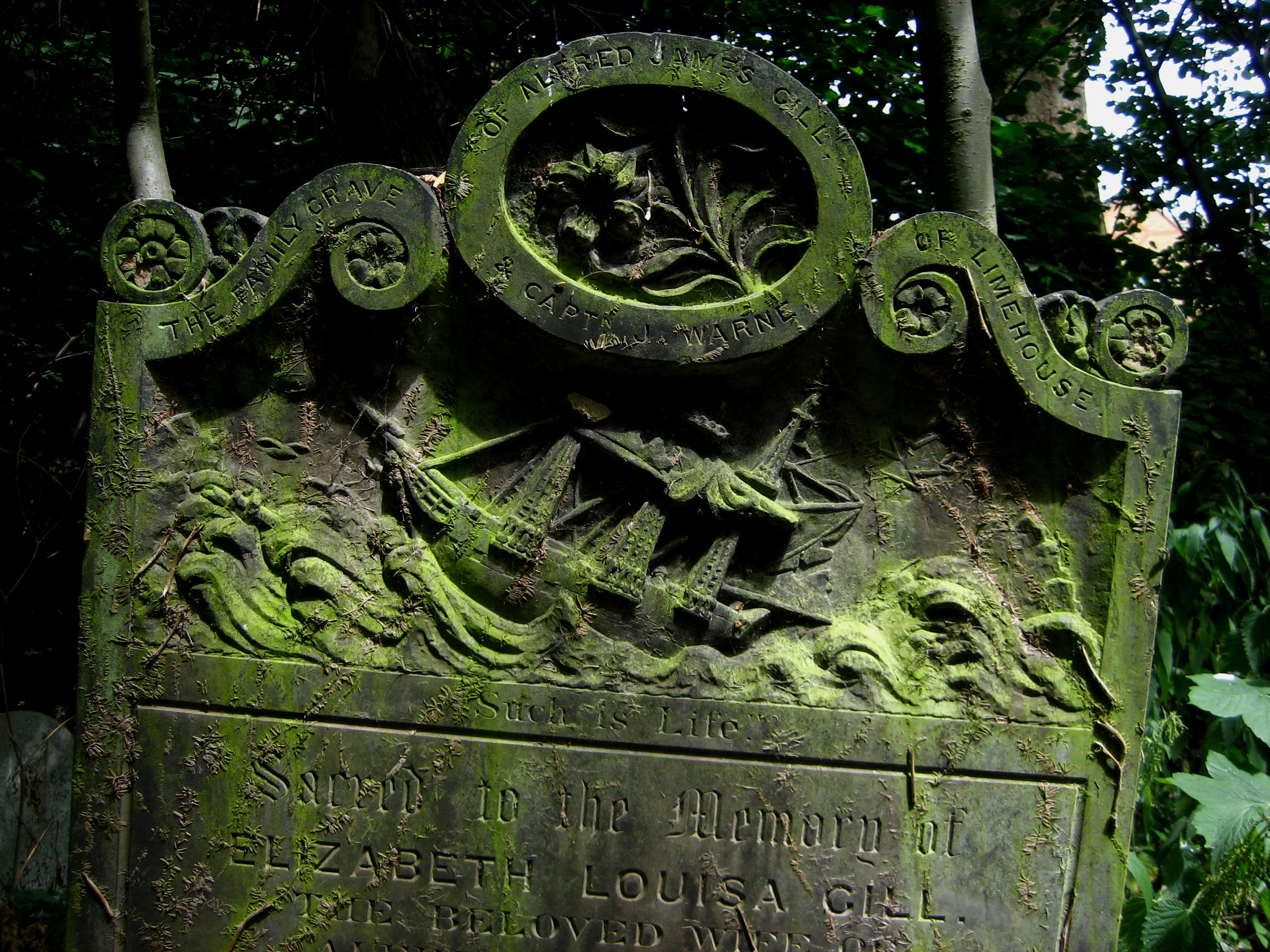
Over time, the tombstones have weathered and worn, and some have turned green, entirely harmonious with their overgrown environment, as if they sprouted and grew like toadstools. The natural stillness of the forest possesses greater resonance between cemetery walls and the deep green shadows of the woodland seem deeper too. There was almost no-one alive to be seen on the morning of my visit, apart from two police officers on horseback passing through, keeping the peace that is as deep as the grave.
Just as time mediates grief and grants us perspective, nature also encompasses the dead, enfolding them all, as it has done here in a green forest. These are the people who made East London, who laid the roads, built the houses and created the foundations of the city we inhabit. The countless thousands who were here before us, walking the streets we know, attending the same schools, even living in some of the same houses we live in today. The majority of those people are here now in Bow Cemetery. As you walk around, names catch your eye, Cornelius aged just two years, or Eliza or Louise or Emma, or Caleb who enjoyed a happy life, all over a hundred years ago. None ever dreamed a forest would grow over their head, where people would come to walk one day to discover their stones in a woodland glade. It is a vision of paradise above, fulfilled within the confines of the cemetery itself.
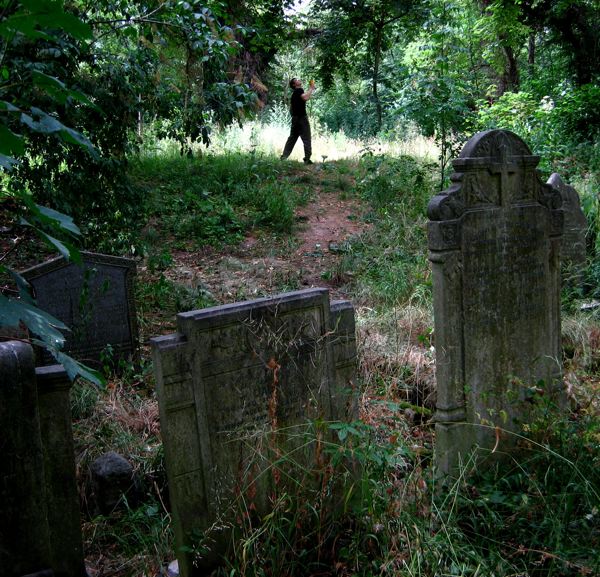
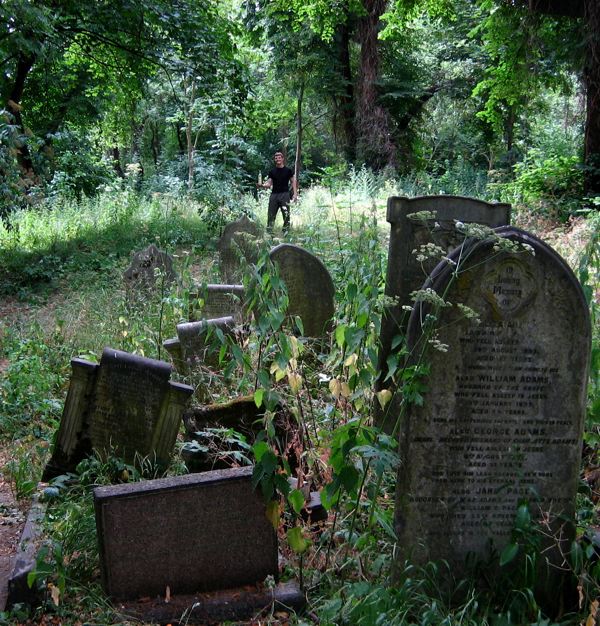
As I made my progress through the forest of tombstones, I heard a mysterious noise, a click-clack echoing through the trees. Then I came upon a clearing at the very heart of the cemetery and discovered the origin of the sound. It was a solitary juggler practicing his art among the graves, in a patch of sunlight. There is no purpose to juggling than that of delight, the attunement of human reflexes to create a joyful effect. It was a startling image to discover, and seeing it here in the deep woods – where so many fellow Londoners are buried – made my heart leap. Outside on the streets, a million people were going about their business while in the vast wooded cemetery there was just me, the numberless dead and the juggler.
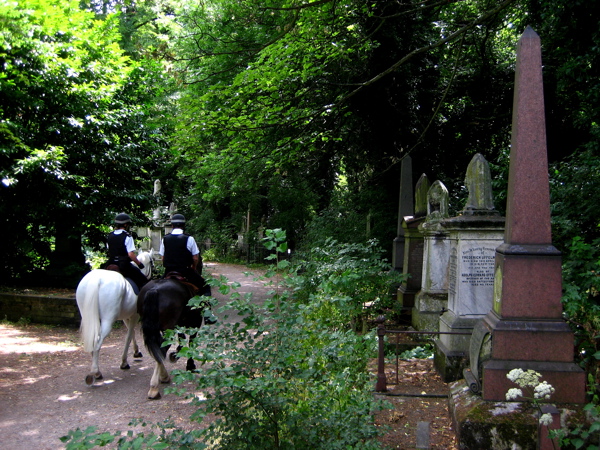


Find out more at Friends of Tower Hamlets Cemetery Park
You may also like to read about


