
The Fish Harvest Festival
Today we preview the annual Fish Harvest Festival which will be held tomorrow at St Mary-at-Hill
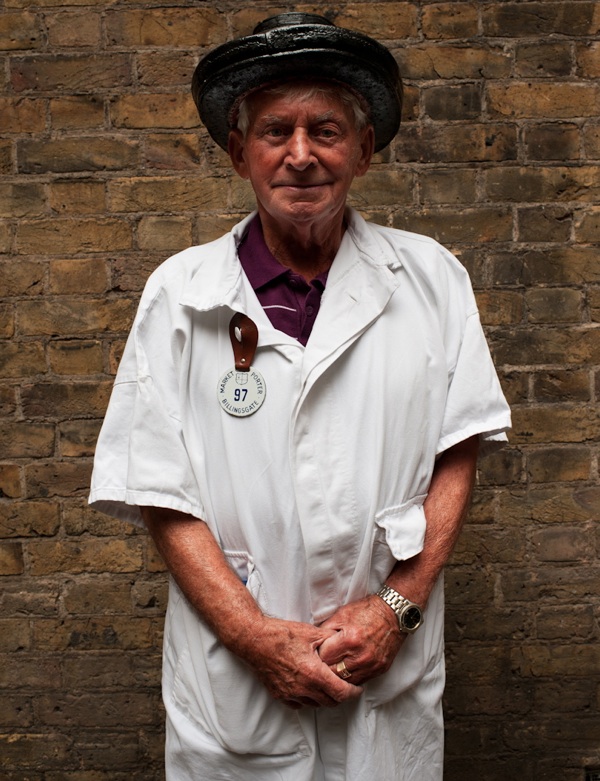
Frank David, Billingsgate Porter for sixty years
Thomas à Becket was the first rector of St Mary-at-Hill in the City of London, the ancient church upon a rise above the old Billingsgate Market, where each year at this season the Harvest Festival of the Sea is celebrated – to give thanks for the fish of the deep that we all delight to eat, and which have sustained a culture of porters and fishmongers here for centuries.
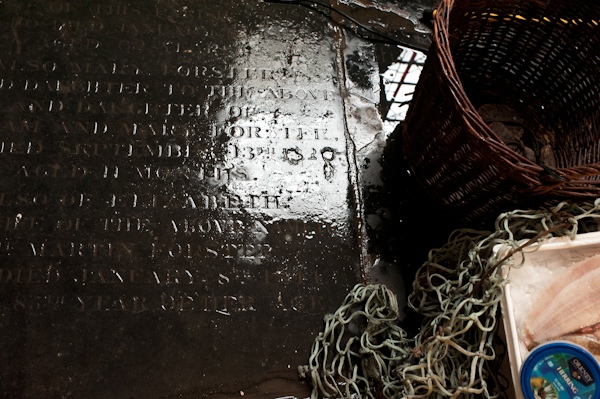
The market itself may have moved out to the Isle of Dogs in 1982, but that does not stop the senior porters and fishmongers making an annual pilgrimage back up the cobbled hill where, as young men, they once wheeled barrows of fish in the dawn. For one day a year, this glorious church designed by Sir Christopher Wren is recast as a fishmongers, with an artful display of gleaming fish and other exotic ocean creatures spilling out of the porch, causing the worn marble tombstones to glisten like slabs in a fish shop, and imparting an unmistakeably fishy aroma to the entire building. Yet it all serves to make the men from Billingsgate feel at home, in their chosen watery element – as Contributing Photographer Ashley Jordan Gordon and I discovered when we went along to join the congregation.
Frank David and Billy Hallet, two senior porters in white overalls, both took off their hats – or “bobbins” as they are called – to greet us. These unique pieces of headgear once enabled the porters to balance stacks of fish boxes upon their heads, while the brim protected them from any spillage. Frank – a veteran of eighty-nine years old – who was a porter for sixty years from the age of eighteen, showed me the bobbin he had worn throughout his career, originally worn by his grandfather Jim David in Billingsgate in the eighteen-nineties and then passed down by his father Tim David.
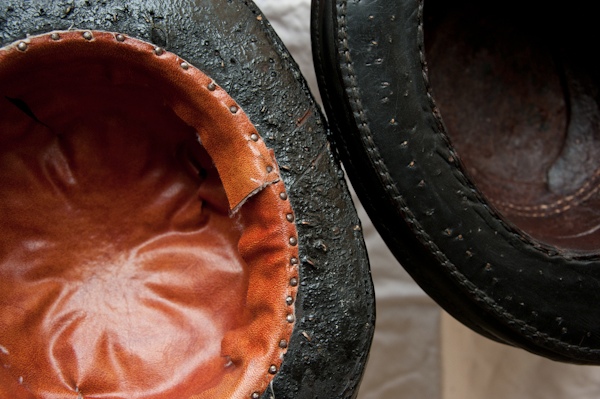
Of sturdy wooden construction, covered with canvas and bitumen, stitched and studded, these curious glossy black artefacts seemed almost to have a life of their own. “When you had twelve boxes of kippers on your head, you knew you’d got it on,” quipped Billy, displaying his “brand new” hat, made only in the nineteen thirties. A mere stripling of seventy-three, still fit and healthy, Billy started his career at Christmas 1959 in the old Billingsgate market carrying boxes on his bobbin and wheeling barrows of fish up the incline past St Mary-at-Hill to the trucks waiting in Eastcheap. Caustic that the City of London revoked the porters’ licences after more than one hundred and thirty years – “Our traditions are disappearing,” he confided to me in the churchyard, rolling his eyes and striking a suitably elegiac Autumnal note.
Proudly attending the spectacular display of fish in the porch, I met Eddie Hill, a fishmonger who started his career in 1948. He recalled the good times after the war when fish was cheap and you could walk across Lowestoft harbour stepping from one herring boat to the next. “My father said, ‘We’re fishing the ocean dry and one day it’ll be a luxury item,'” he told me, lowering his voice, “And he was right, now it has come to pass.” Charlie Caisey, a fishmonger who once ran the fish shop opposite Harrods, employing thirty-five staff, showed me his daybook from 1967 when he was trading in the old Billingsgate market. “No-one would believe it now!” he exclaimed, wondering at the low prices evidenced by his own handwriting, “We had four people then who made living out of just selling parsley and two who made a living out of just washing fishboxes.”
By now, the swelling tones of the organ installed by William Hill in 1848 were summoning us all to sit beneath Wren’s cupola and the Billingsgate men, in their overalls, modestly occupied the back row as the dignitaries of the City, in their dark suits and fur trimmed robes, processed to take their seats at the front. We all sang and prayed together as the church became a great lantern illuminated by shifting patterns of October sunshine, while the bones of the long-dead slumbered peacefully beneath our feet. The verses referring to “those who go down the sea in ships and occupy themselves upon the great waters,” and the lyrics of “For those in peril on the sea” reminded us of the plain reality upon which the trade is based, as we sat in the elegantly proportioned classical space and the smell of fish drifted among us upon the currents of air.
In spite of sombre regrets at the loss of stocks in the ocean and unease over the changes in the industry, all were unified in wonder at miracle of the harvest of our oceans and by their love of fish – manifest in the delight we shared to see such an extravagant variety displayed upon the slab in the church. And I shall be enjoying my own personal Harvest Festival of the Sea in Spitalfields for the next week, thanks to the large bag of fresh fish that Eddie Hill slipped into my hand as I left the church.
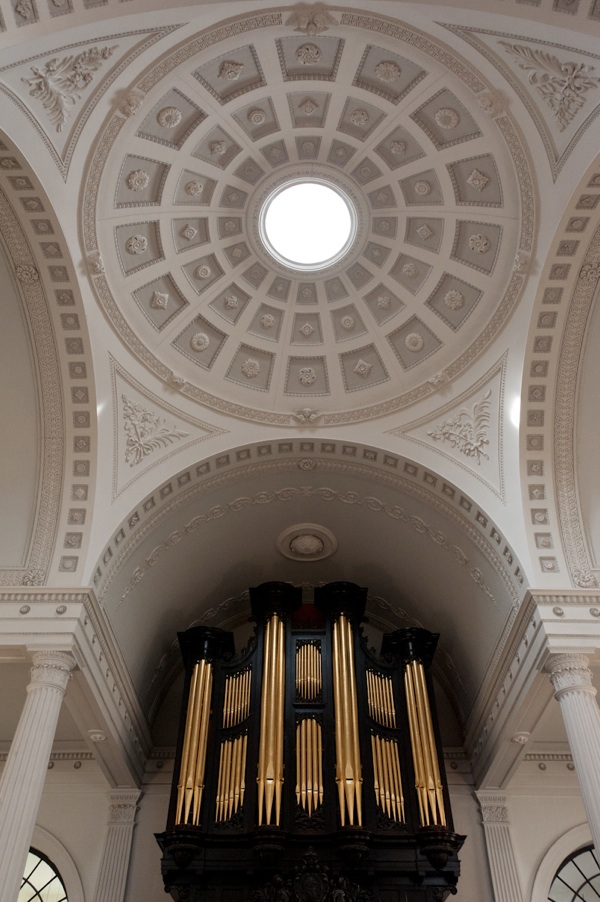
St Mary-at-Hill was rebuilt by Sir Christopher Wren in 1677
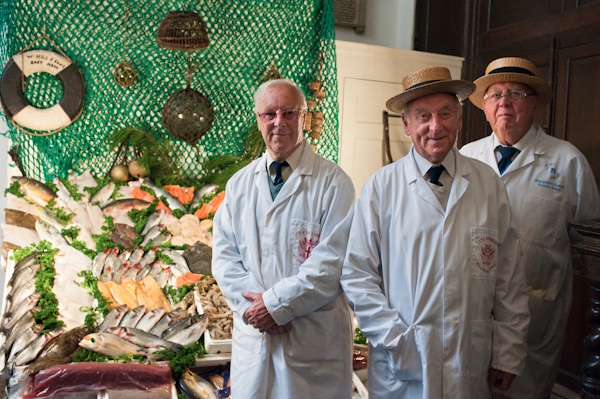
Senior fishmongers from Billingsgate worked from dawn to prepare the display of fish in the church

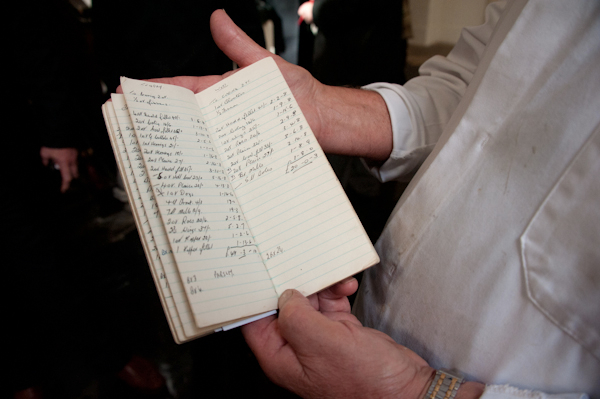
Fishmonger Charlie Caisey’s market book from 1967

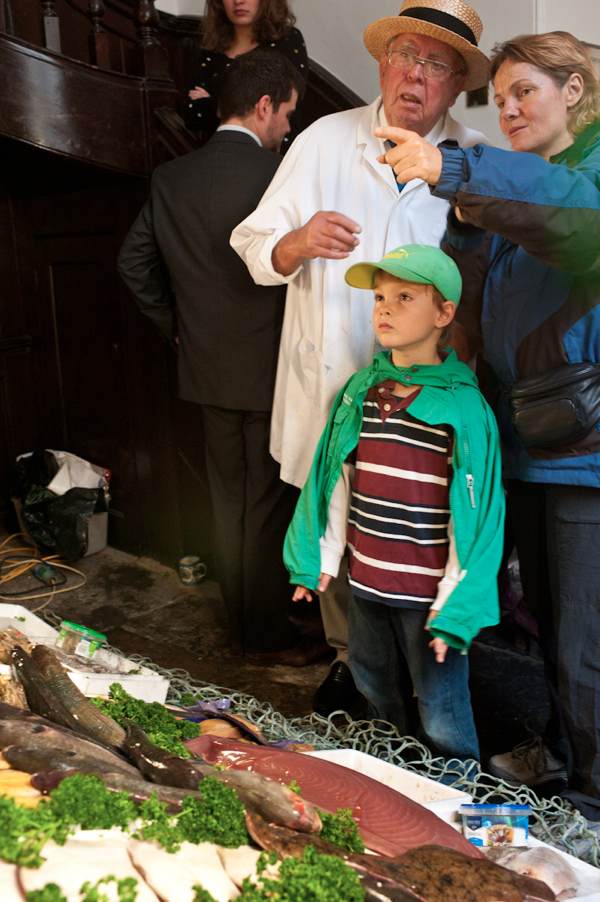
Charlie Caisey explains the varieties of fish to the curious
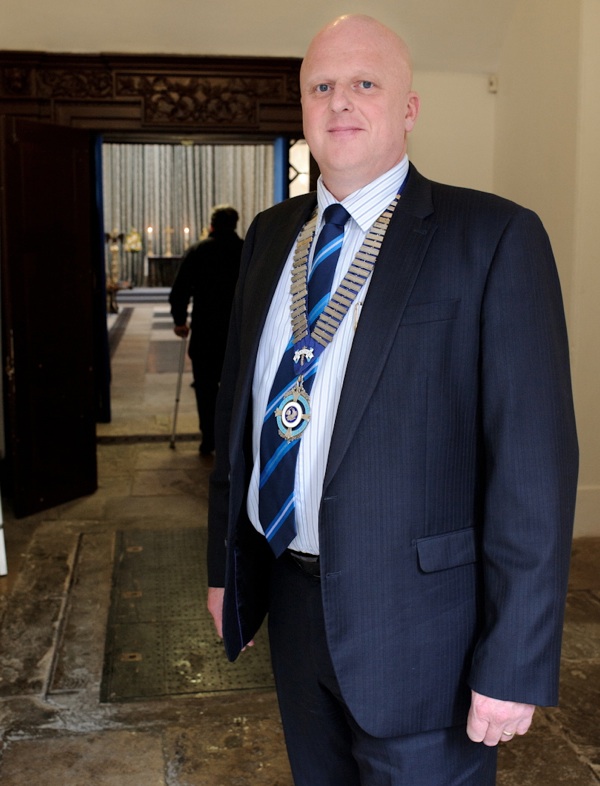
Gary Hooper, President of the National Federation of Fishmongers, welcomes guests to the church
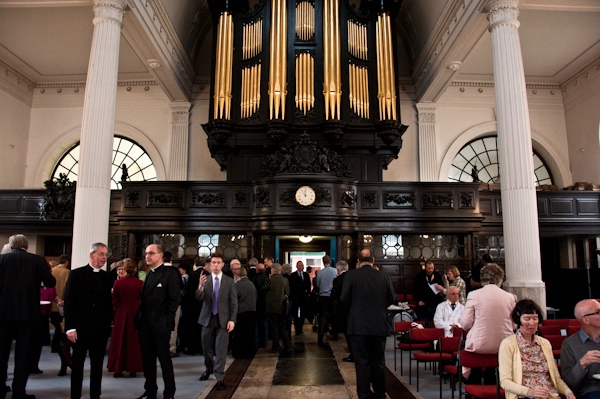
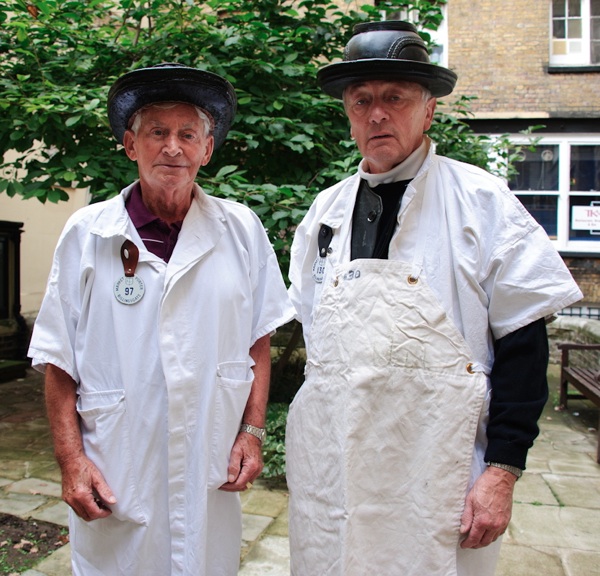
Frank David and Billy Hallet, Billingsgate Porters
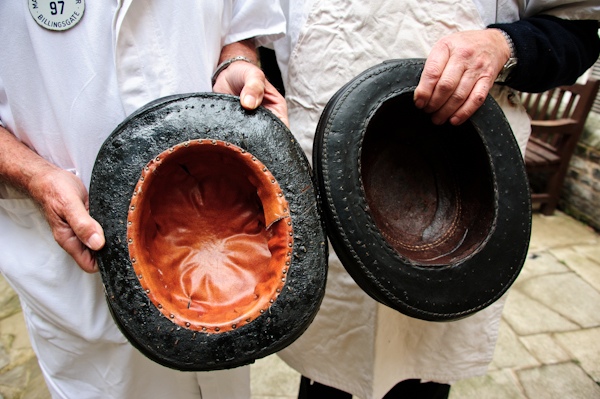
Frank’s “bobbin” is a hundred and twenty years old and Billy’s is “brand new” from the nineteen thirties
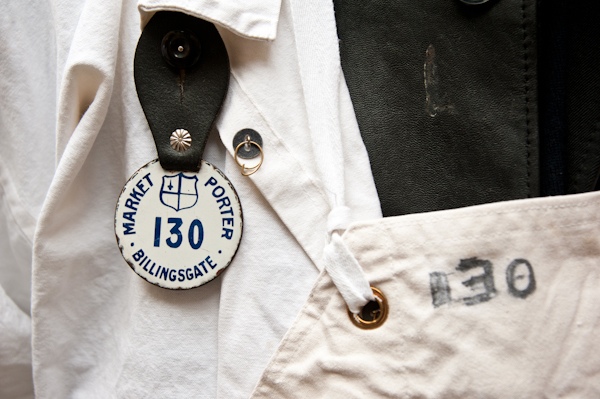
Billy Hallet’s porter’s badge, now revoked by the City of London
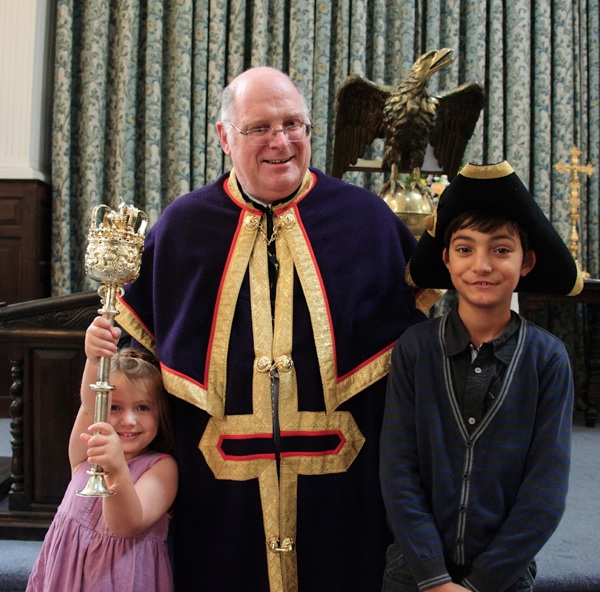
Jim Shrubb, Beadle of Billingsgate with friends
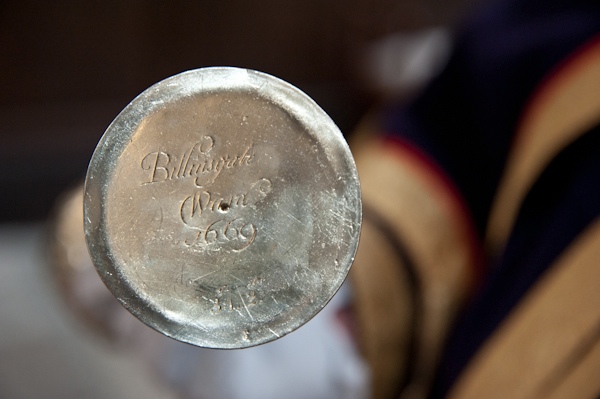
The mace of Billingsgate, made in 1669
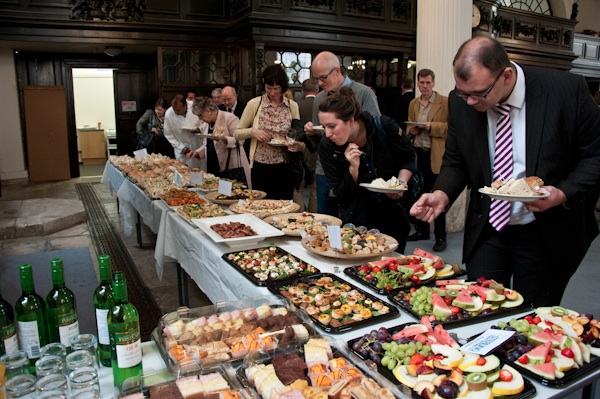
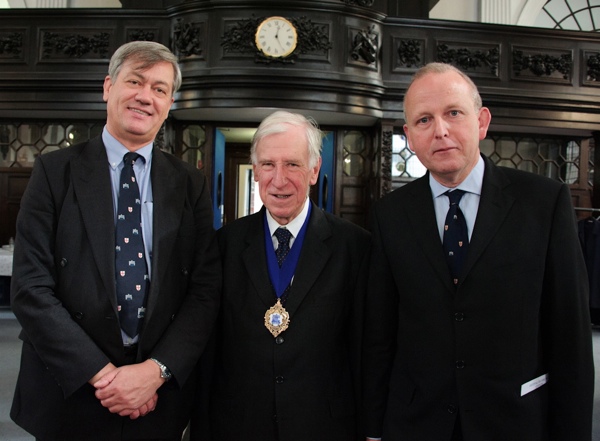
John White (President & Alderman), Michael Welbank (Master) and John Bowman (Secretary) of the Billingsgate Ward Club
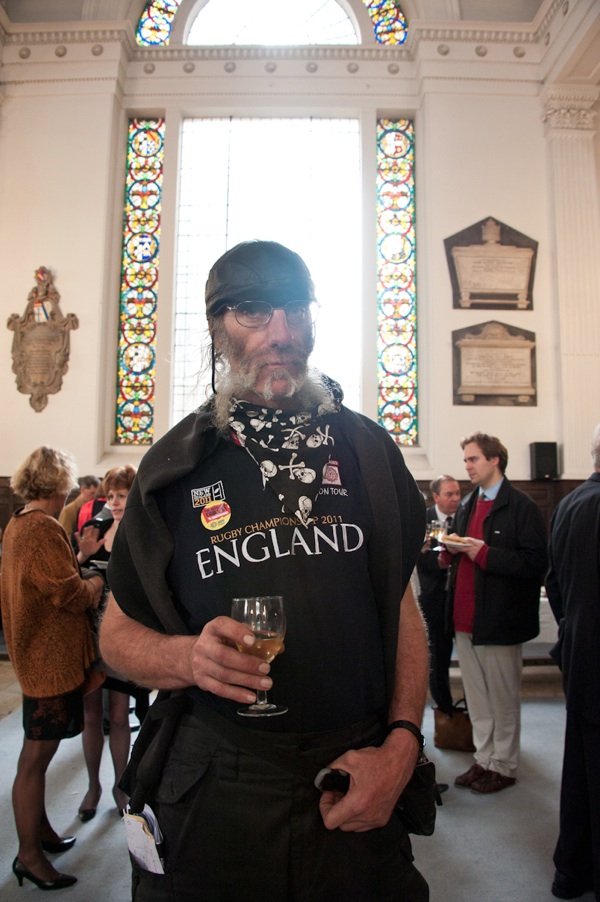
Crudgie, Sailor, Biker and Historian
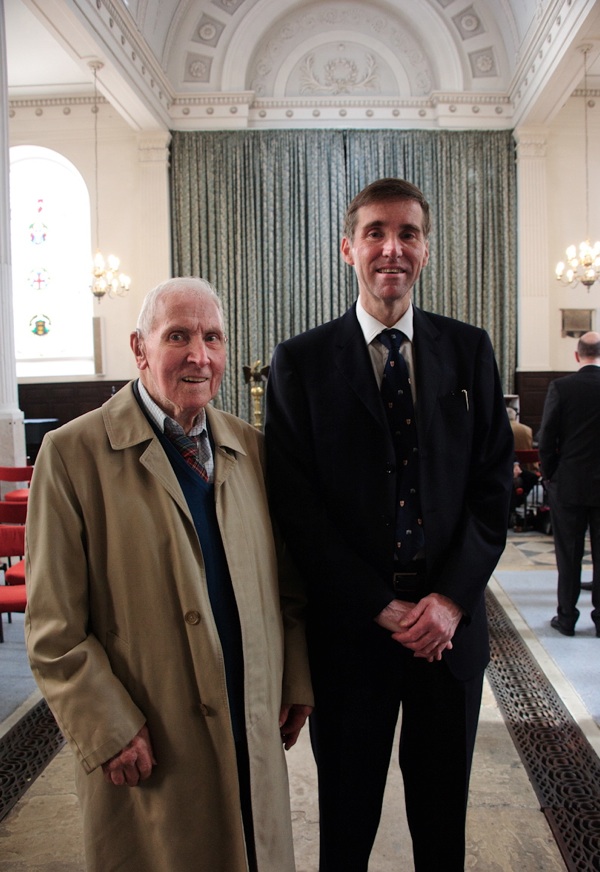
Dennis Ranstead, Sidesman Emeritus and Graham Mundy, Church Warden of St Mary-at-Hill
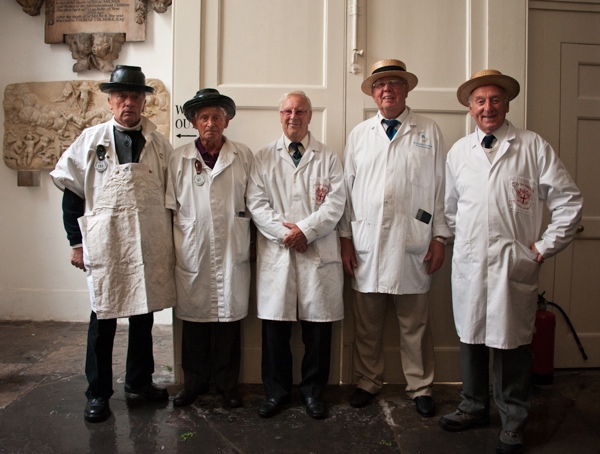
Senior Porters and Fishmongers of Billingsgate
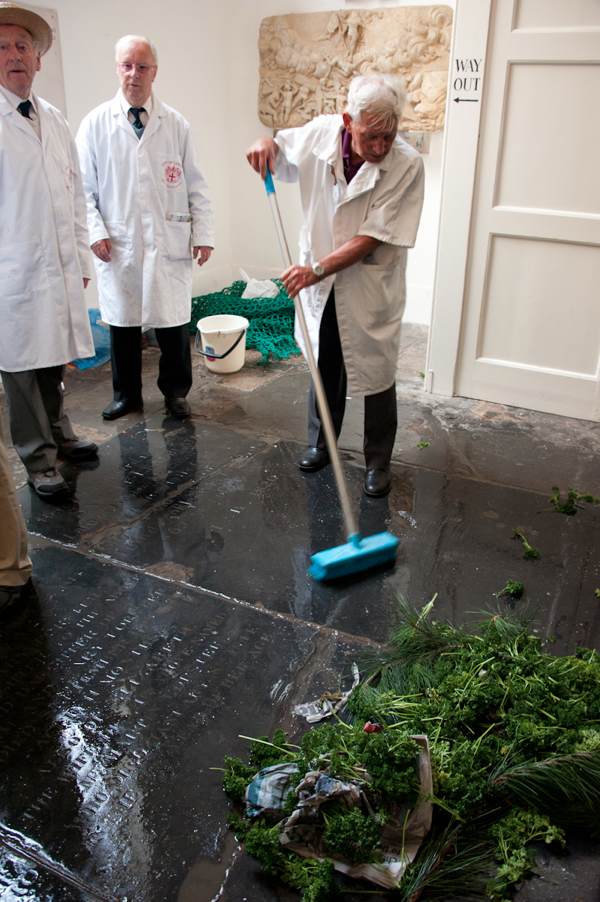
Frank sweeps up the parsley at the end of the service
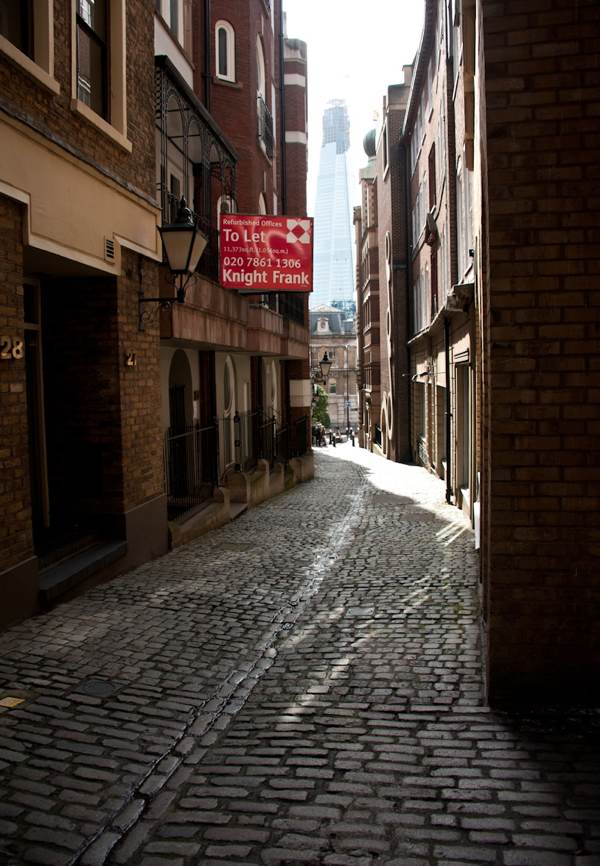
The cobbled hill leading down from the church to the old Billingsgate Market

Frank David with the “bobbin” first worn by his grandfather Jim David at Billingsgate in the 1890s
Photographs copyright © Ashley Jordan Gordon
You may also like to read about
The Last Porters of Billingsgate Market
Alice Pattullo’s Animal ABC
I am delighted to announce that Alice Pattullo‘s Animal ABC which was first seen in these pages last year will be published as a book by Pavilion next week, with a launch at House of Illustration in Kings Cross next Tuesday 11th October 6:30-8pm

A is for Armadillo who is short stout and round

B is for Beetle who stays close to the ground

C is for Crab who crawls on the sea bed
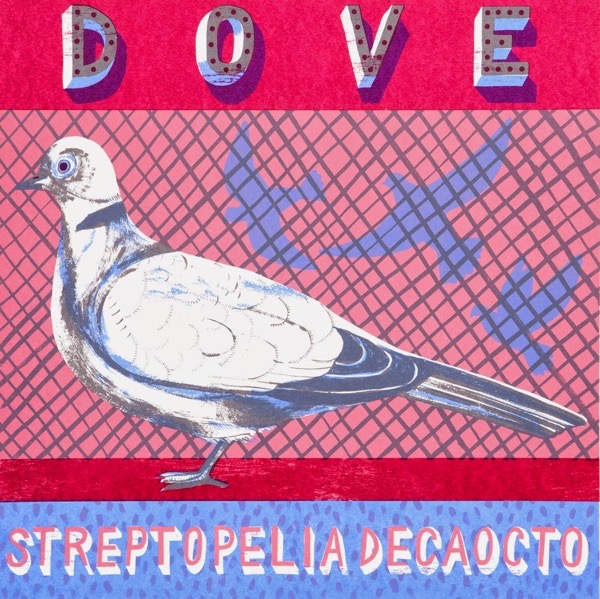
D is for Dove who likes to fly overhead

E is for Elephant who is anything but light

F is for fox who roams the city streets at night

G is for grizzly bear, a fierce looking fellow

H is for Hippo who is altogether more mellow

I is for Iguana a large scaly reptile

J is for jack rabbit who jumps mile after mile

K is for Kangaroo who takes hop, skip and bound

L is for leopard who moves fast across the ground

M is for Moth, a winged friend of the butterfly

N is for Nautilus who in his shell is quite shy

O is for okapi, our strange stripy friend

P is for polar bear who lives at world’s end

Q is for quail whose bright head feathers are fun

R is for Rhino who weights almost a tonne

S is for sloth who hangs and sleeps in a tree

T is for turtle who swims through the sea

U is for uakari whose face is small, wrinkly and red

V is for viper whose bite might leave you dead

W is for Whale, the biggest animal of them all

X is for Xantus who is remarkably small

Y is for Yak, like a cow with long hair

Z is for Zebra, so stripy you might stare

Copyright ©Alice Pattullo
You may also like to read about
Alex Pink In Woolwich
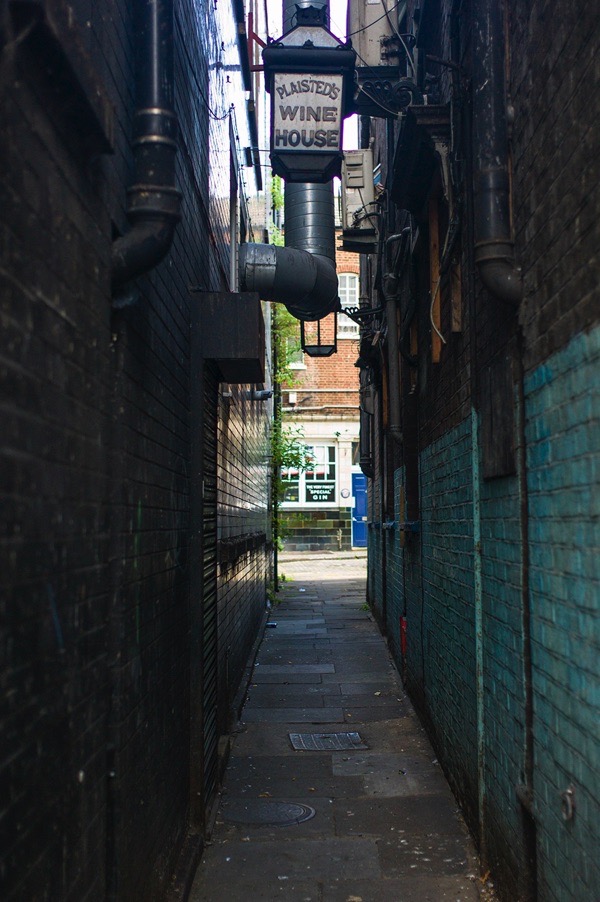
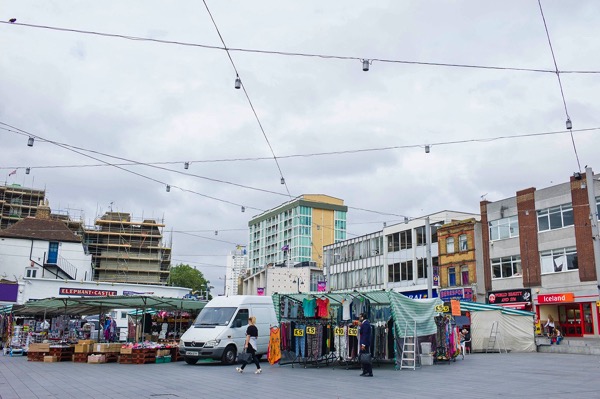
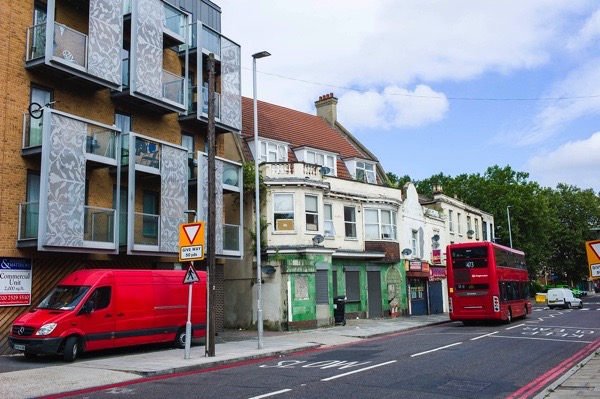
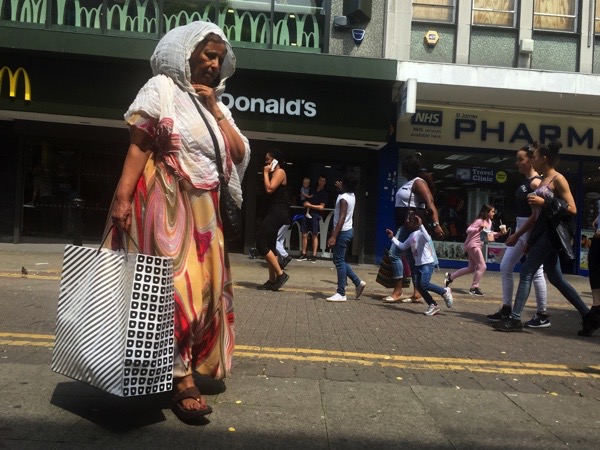
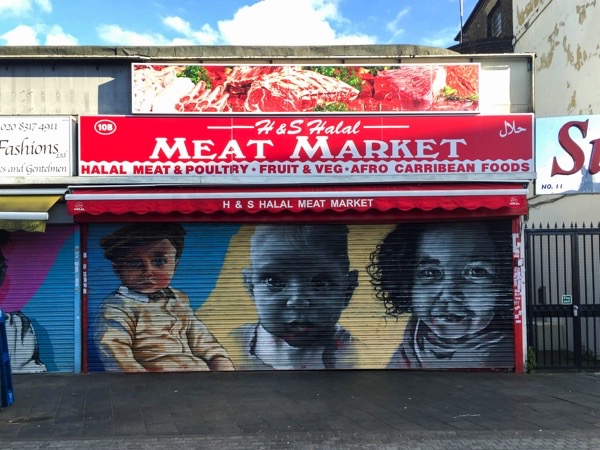
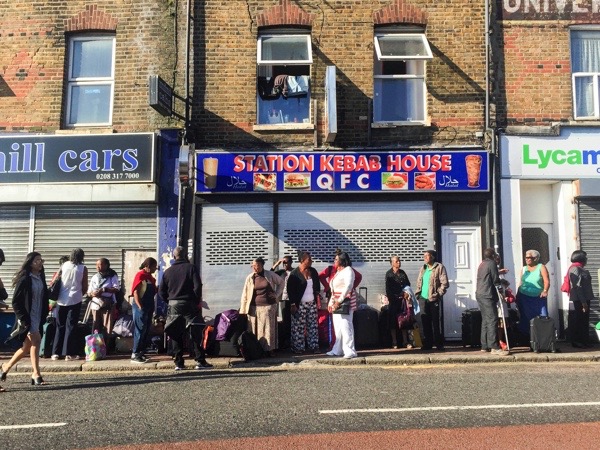
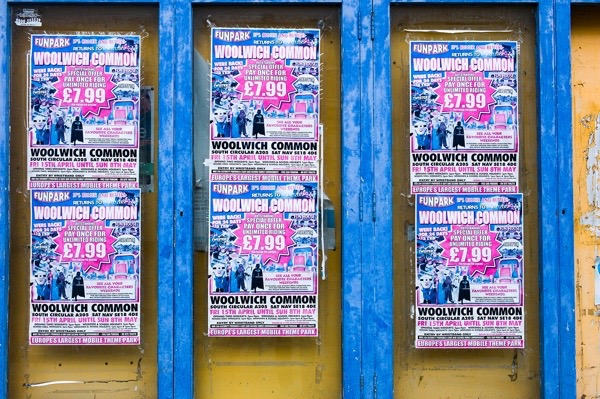
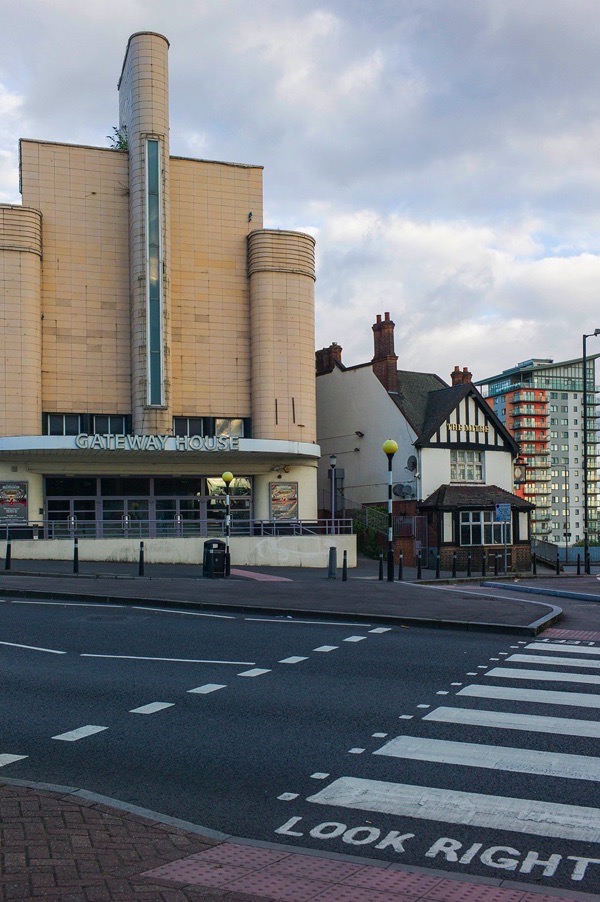
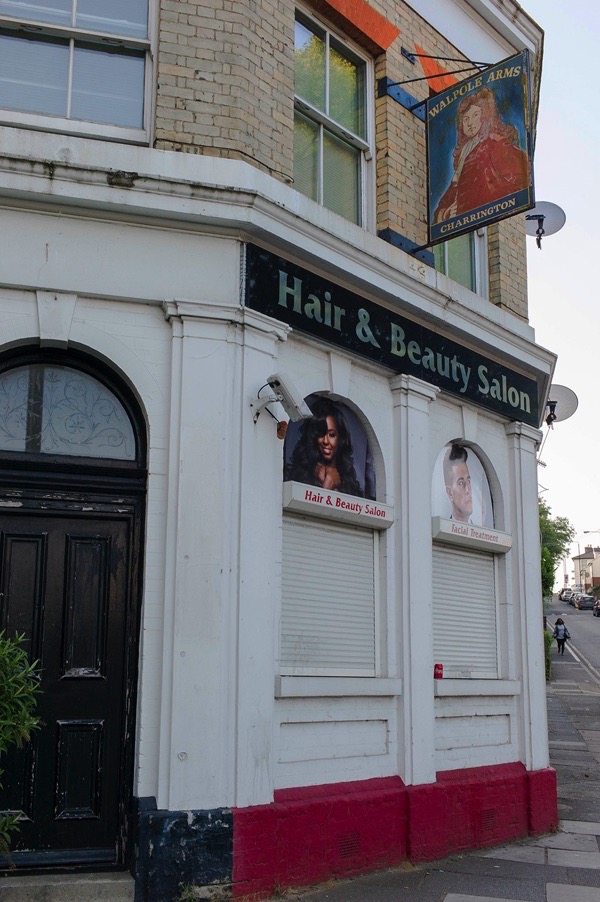
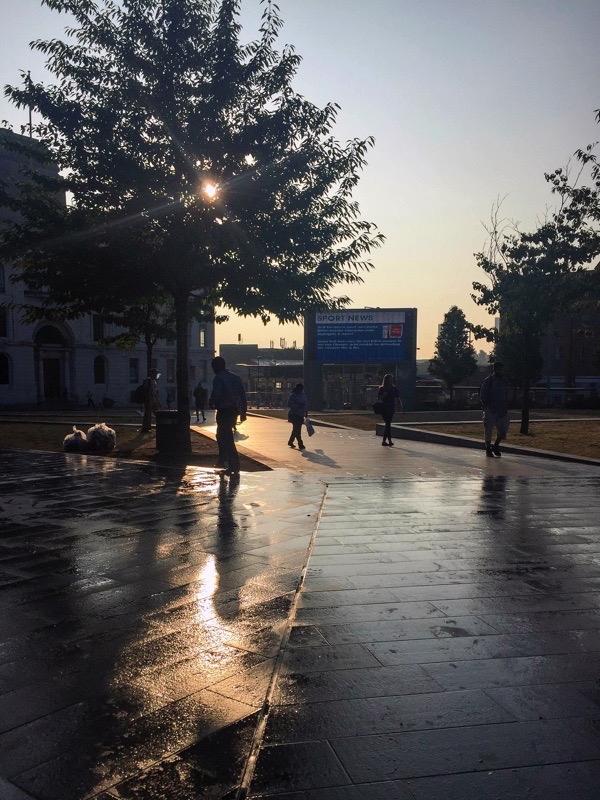
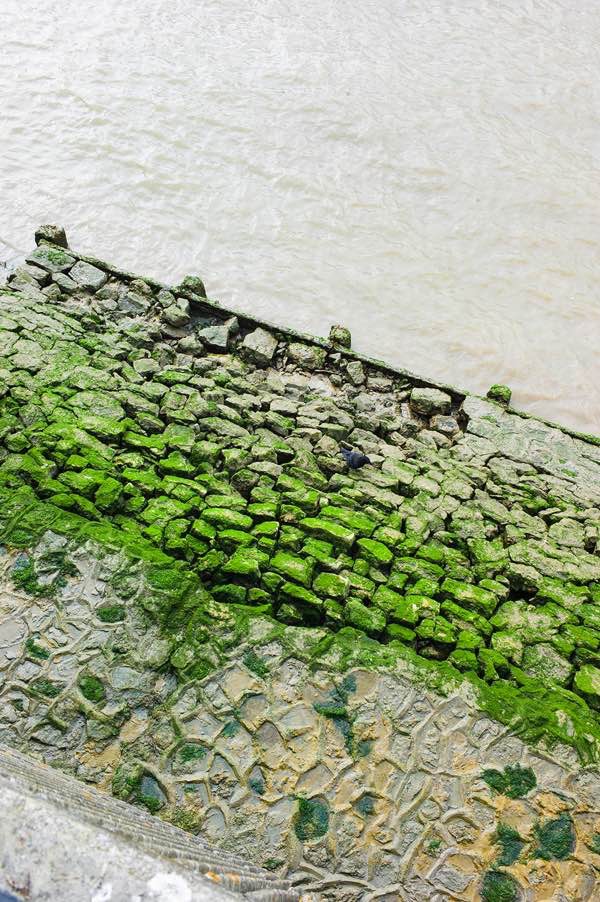
Contributing Photographer Alex Pink moved across the river to Woolwich earlier this year and sent me this photo essay of his new manor, which inspired me to spend an afternoon with him last week exploring the contradictions of this fascinating place, caught between the industrial past of the former dockyards and the rapidly rising developments which foreshadow the arrival of Crossrail in 2018

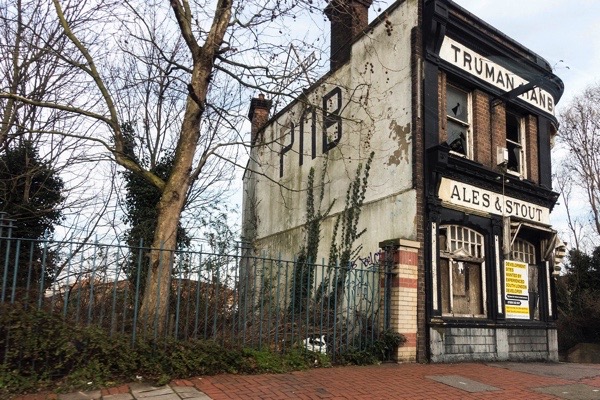

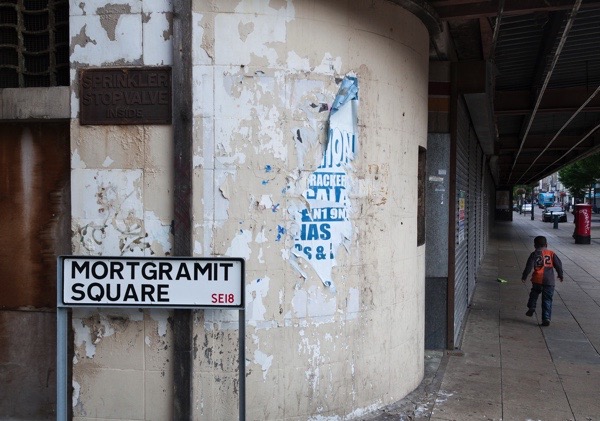

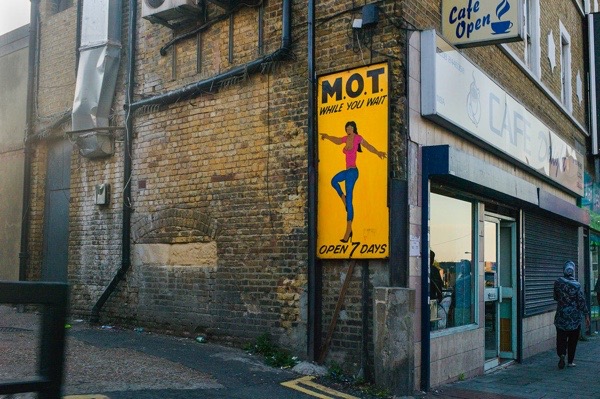
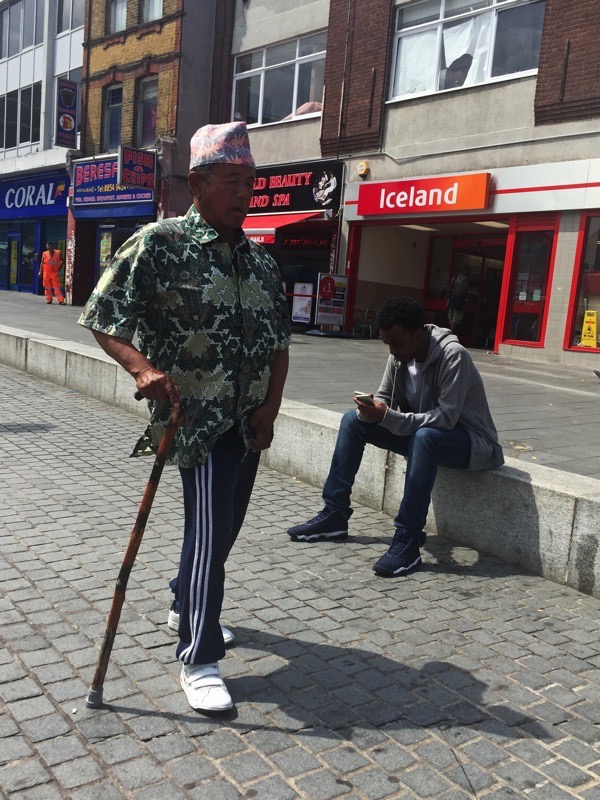
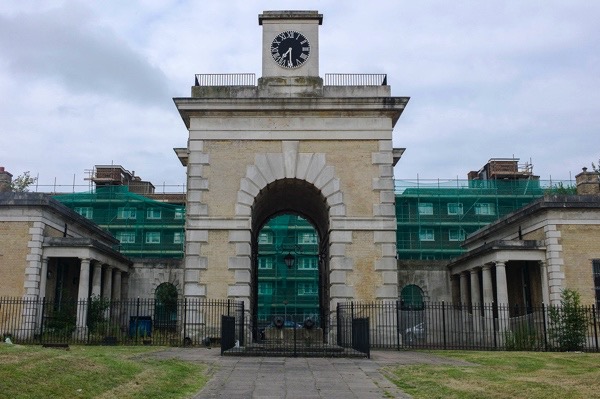

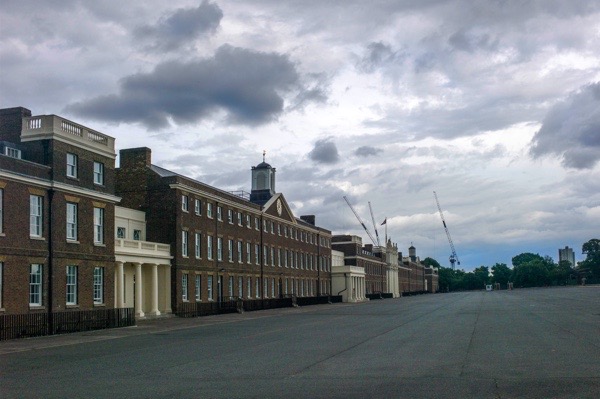








Photographs copyright © Alex Pink
You may also like to take a look at
Passing Trade
In recent years, Contributing Artist Eleanor Crow has been drawing and painting East End shopfronts and cafes, and an exhibition of one hundred of these watercolours entitled PASSING TRADE opens this Friday 7th October at Walthamstow Village Window Gallery, 47 Orford Rd, E17 9NJ. The gallery is a former ironmonger’s shopfront with all artwork visible through the window seven days a week.
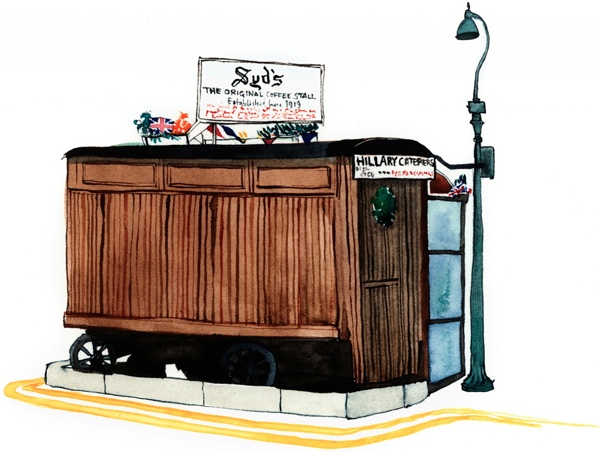
Syd’s Coffee Stall, Shoreditch High St
Eleanor Crow made this set of watercolour portraits of cafes as a tribute to those cherished institutions which incarnate the essence of civility in the East End. “It’s because they’re individual concerns, often owned by families across generations who get to know all their customers,” admitted Eleanor, revealing the source of her devotion to cafe culture ,“I like the frontages because each is designed uniquely for that café with wonderful sign-writing or lettering and eye-catching colours. Some of these cafés have been here for a very long time and everyone in the area is familiar with them, and is very fond of them. They make the streets into a better place and are landmarks upon the landscape of the East End.”
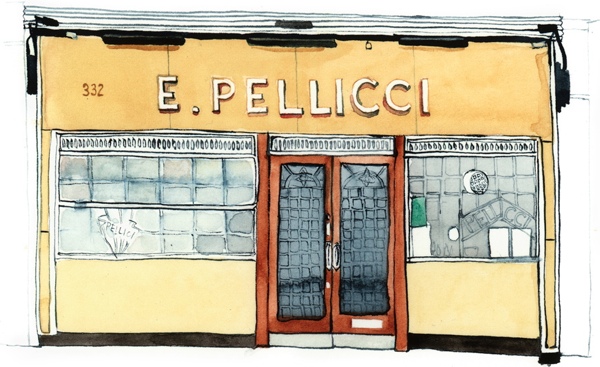
E. Pellicci, Bethnal Green Rd
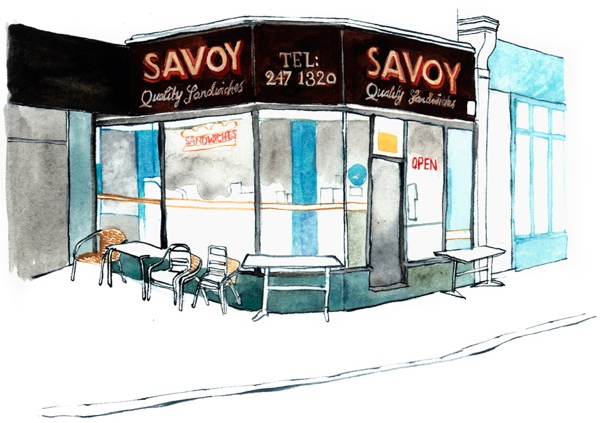
Savoy, Norton Folgate
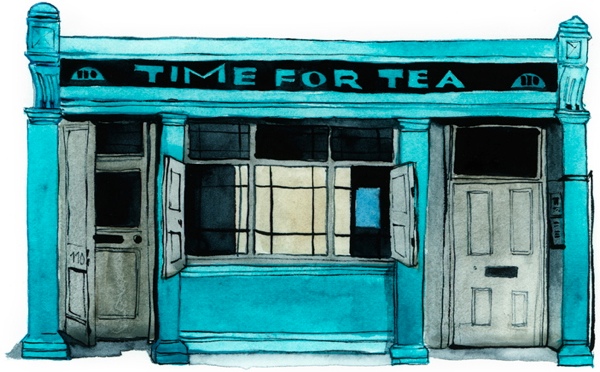
Time for Tea, Shoreditch High St (Gone but not forgotten)
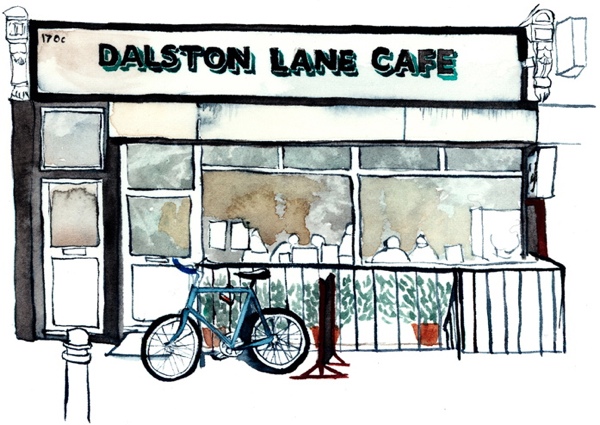
Dalston Lane Cafe
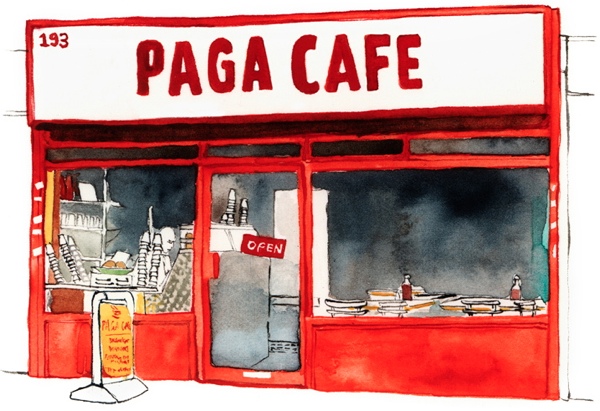
Paga Cafe, Lea Bridge Rd
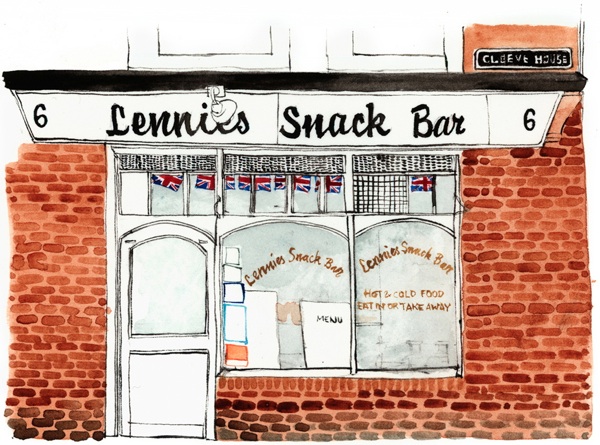
Lennies Snack Bar, Calvert Avenue (Gone but not forgotten)
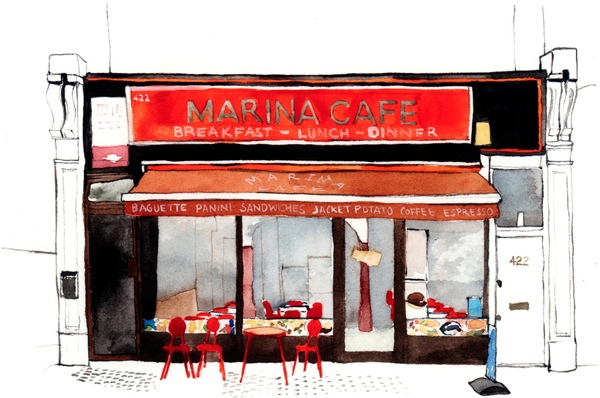
Marina Cafe, Mare St
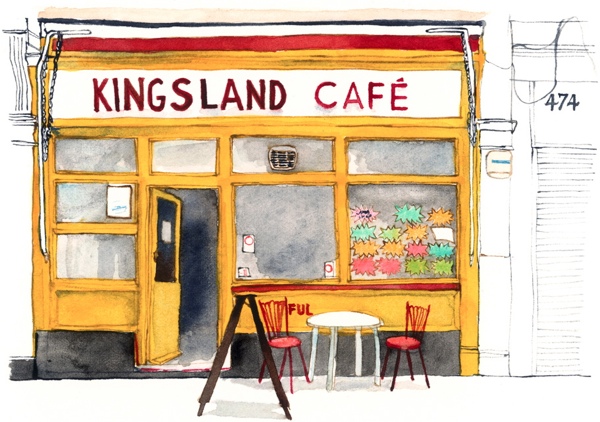
Kingsland Cafe, Kingsland Rd

Grab & Go, Blackhorse Lane
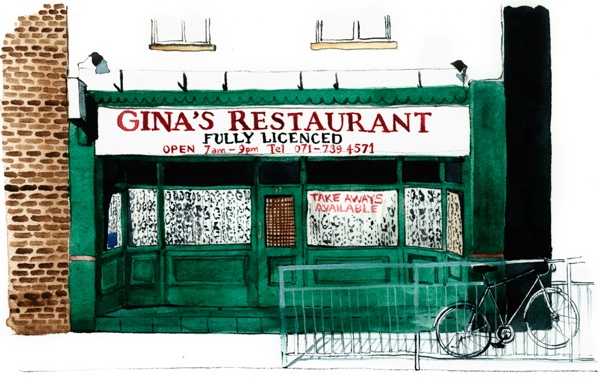
Gina’s Restaurant, Bethnal Green Rd

Copper Grill, Eldon St

Billy Bunter’s Snack Bar, Mile End Rd (Gone but not forgotten)
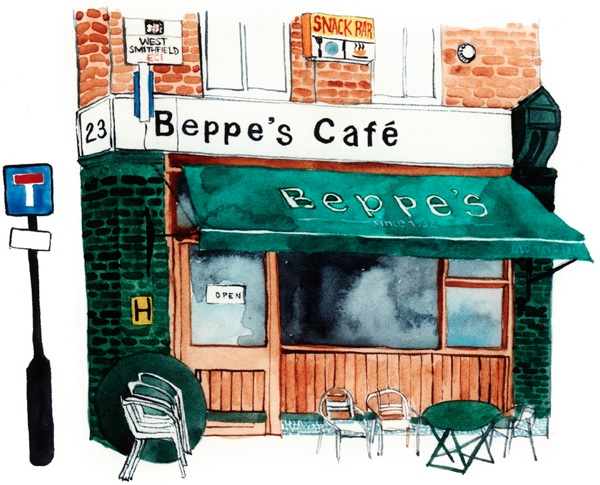
Beppe’s Cafe, West Smithfield
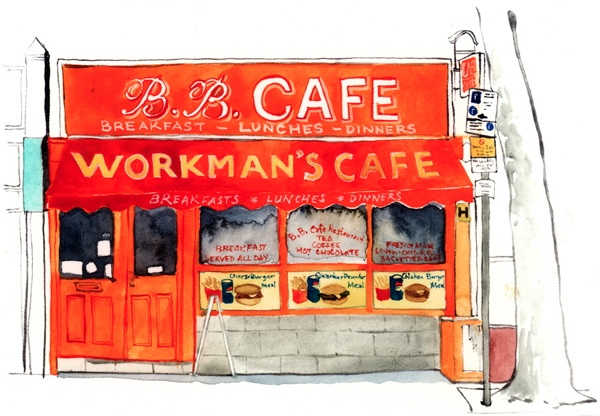
B.B. Cafe, Lea Bridge Rd

Savoy Cafe, Graham Rd

A.Gold, Brushfield St
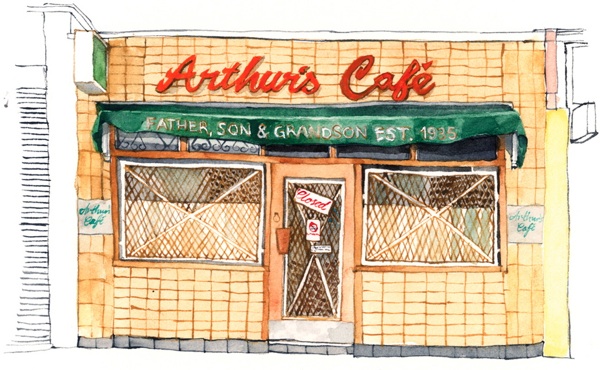
Arthur’s Cafe, Kingsland Rd
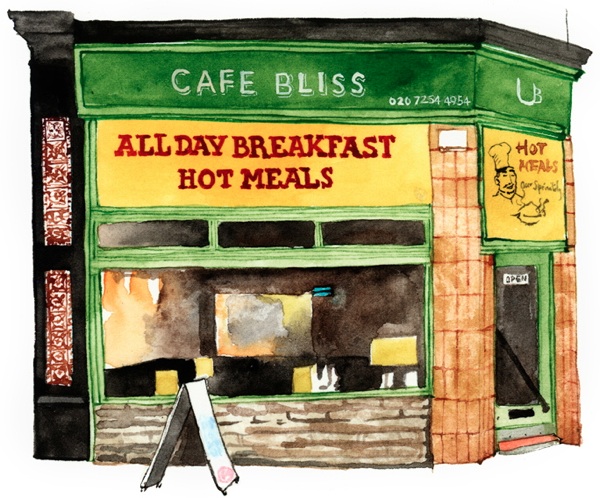
Cafe Bliss, Dalston Lane
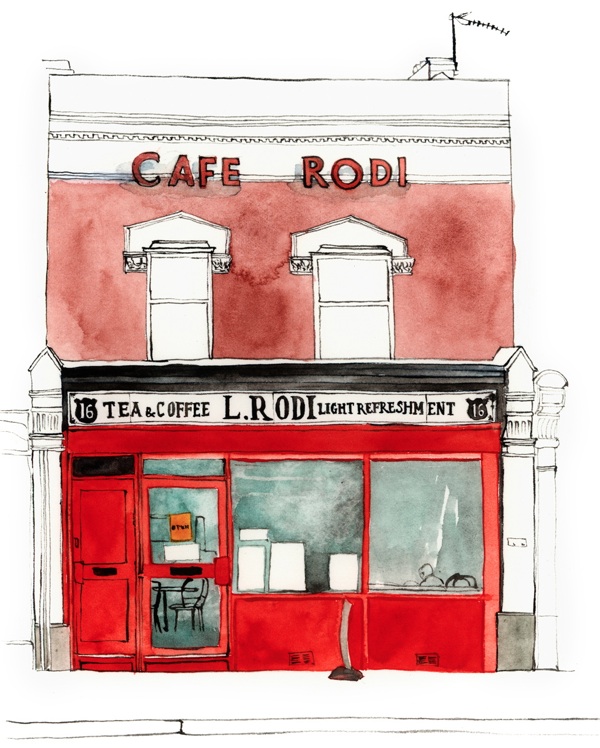
Cafe Rodi, Blackhorse Lane
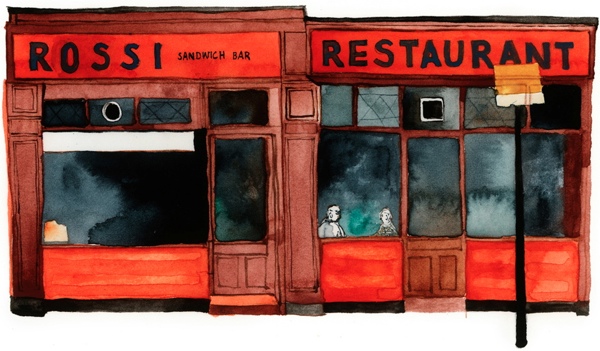 Rossi Restaurant, Hanbury St (Gone but not forgotten)
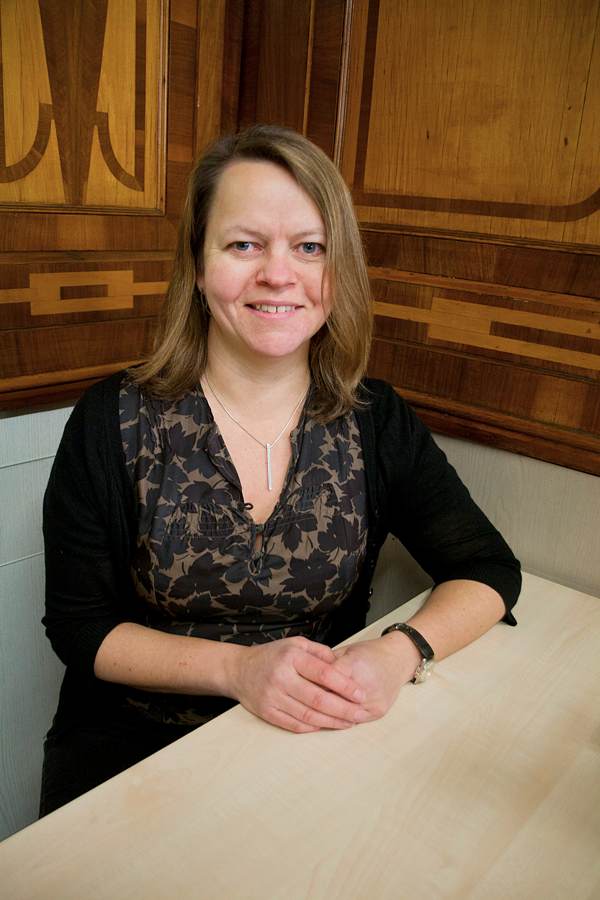
Eleanor Crow at E.Pellicci
Drawings copyright © Eleanor Crow
Portrait copyright © Estate of Colin O’Brien
You may also like to see Eleanor Crow’s other East End shopfronts
Eleanor Crow’s East End Ironmongers
Max Levitas & The Battle of Cable St
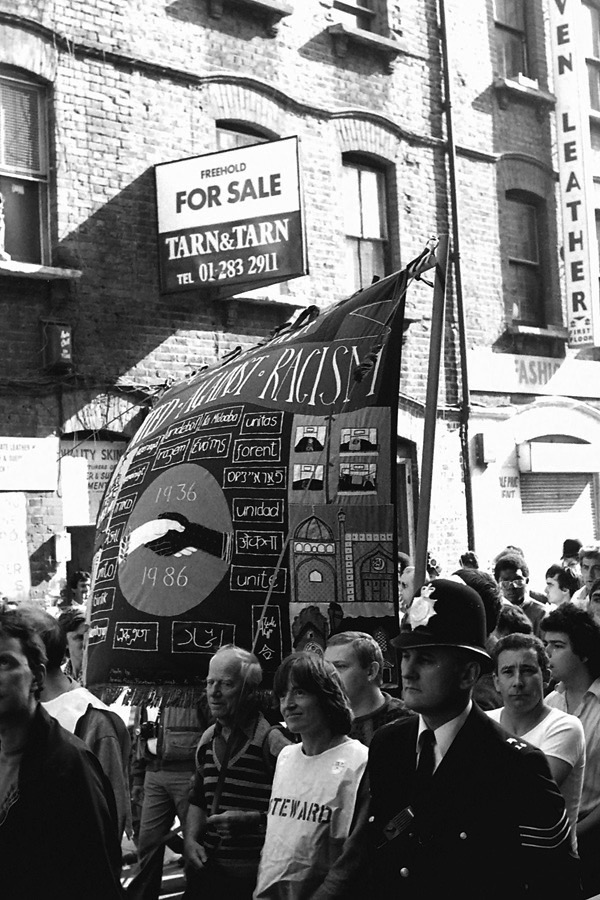
Today, we remember the eightieth anniversary of The Battle of Cable St with Max Levitas, accompanied by Phil Maxwell‘s pictures of the fiftieth anniversary in 1986

Max Levitas by Phil Maxwell
Max Levitas became an East End hero when he was arrested in 1934, at the age of nineteen years old, for writing anti-Fascist slogans on Nelson’s Column in Trafalgar Square. “There were two of us, we did it at midnight and we wrote ‘All out on September 9th to fight Fascism,’ ‘Down with Fascism’ and ‘Fight Fascism,’ on Nelson’s Column in whitewash,” he told me, his eyes shining with pleasure, still fired up with ebullience at one hundred and two years of age, “And afterwards we went to Lyons Corner House to have something to eat and wash our hands, but when we had finished our tea we decided to go back to see how good it looked, and we got arrested – the police saw the paint on our shoes.”
On September 9th 1934, Oswald Mosley, leader of the British Union of Fascists, was due to speak at a rally in Hyde Park but – as Max is happy to remind you today – he was drowned out by the people of London who converged to express their contempt. It was both fortuitous and timely that the Times reprinted Max’s slogans on September 7th, two days before the rally, in the account of his appearance at Bow St Magistrates Court, thereby spreading the message.
Yet this event was merely the precursor to the confrontation with the Fascists that took place in the East End, two years later on 4th October 1936, that became known as the Battle of Cable St, and in which Max is proud to have played a part – a story he tells today as an inspirational example of social solidarity in the face of prejudice and hatred. And, as we sat in a quiet corner of the Whitechapel Library last week, watching the rain fall upon the street market outside, it was a story that I was eager to hear in Max’s first hand account, especially now that he is one of last left of those who were there.
Politics have always been personal for Max Levitas, based upon family experience of some of the ugliest events of the twentieth century. His father Harry fled from Lithuania and his mother Leah from Latvia in 1913, both escaping the anti-semitic pogroms of Tsarist Russia. They met in Dublin and married but, on the other side of Europe, Harry’s sister Sara was burnt to death along with fellow-villagers in the synagogue of Akmeyan, and Leah’s sister Rachel was killed with her family by the Nazis in Riga.
“My father was a tailor and a trade unionist,” Max explained in the lively Dublin brogue that still colours his speech today, even after eighty years in the East End. “He formed an Irish/Jewish trade union and then employers blacklisted him, making sure he could never get a job,” Max continued with a philosophical grin, “The only option was to leave Dublin and we lived in Glasgow from 1927 until 1930, but my father had two sisters in London, so we came here to Durward St in Whitechapel in 1931 and stayed ever since.”
With this background, you can appreciate the passionate concern of Max – when he was nineteen and secretary of the Mile End Young Communist League – at a time when the British Government was supporting the Fascist General Franco in the Spanish Civil War. “Even after Hitler was appointed Chancellor in 1933, the British Government was developing arms with Germany,” Max informed me, widening his eyes in condemnation and bringing events into vivid reality that I had viewed only as history until he filled them with personal emotion.
“I was working as a tailor’s presser in a small workshop in Commercial St at the time. Mosley wanted to march through Whitechapel because it was where a large number of Jewish people lived and worked, and I knew the only way to stop him was to have unity of the people. I approached a number of unions, Jewish organisations and the Communist League to band together against the Fascists but although they agreed what I was doing was right, they wouldn’t support me.
But I give credit to the huge number of members of the Jewish and Irish communities and others who turned out that day, October the fourth, 1936. There were thousands that came together in Aldgate, and when we heard that Mosley’s intention was to march along Cable St from Tower Hill into Whitechapel, large numbers of people went to Cable St and barricades were set up. The police attempted to clear Cable St with horses, so that the march could go ahead, but the people of Cable St fought back and the police had to give in.
At three o’clock, we heard that police had decided that the march would not take place, because if it did a number of people would be killed. The Fascists were defeated by the ordinary people of Stepney, people who emptied buckets of water and chamber pots out of their houses, and marbles into the street. This was how they stopped Mosley marching through the East End of London. If he had been able to do so, more people would have joined him and he would have become stronger.”
Max Levitas spoke of being at the centre of a definitive moment in the history of the East End, eighty years ago, when three hundred thousand people came together to form a human chain – in the face of three thousand fascists with an escort of ten thousand police – to assert the nature of the territory as a place where Fascism and racism are unacceptable. It was a watershed in resistance to Fascism in Europe and the slogan that echoed around Stepney and Whitechapel that day was, “No paseran” – from the Spanish Civil War, “They shall not pass.”
After the war, Max became a highly respected Communist councillor in Stepney for fifteen years and, a natural orator, he remains eloquent about the nature of his politics.“It was never an issue to forge a Communist state like in the Soviet Union,” he informed me, just in case I got the wrong idea,“We wanted to ensure that the ordinary working people of England could lead decent lives – not to be unemployed, that people weren’t thrown out of their homes when they couldn’t pay their rent, that people weren’t homeless, as so many are today, living with their parents and crowded together in rooms.”
Max’s lifelong political drive is the manifestation of a tenacious spirit. When Max arrived in Whitechapel Library, I did not recognise him at first because he could pass for a man thirty years younger. And later, when I returned his photos to his flat nearby, I discovered Max lived up five flights of stairs and it became obvious that he walks everywhere in the neighbourhood, living independently even at his astounding age. “I used to smoke,” Max admitted to me shyly, when I complimented him on his energy.” I stopped at eighty-four, when my wife died – until then I used to smoke about twenty cigarettes a day, plus a pipe and cigars.” Max confessed, permitting himself a reckless grin of nostalgia.
“My mother and father both died at sixty-five,” Max revealed, turning contemplative,“I put that down to the way they suffered and poverty. My father worked around the clock to keep the family going. He died two years after my mother. At that time there was no National Health Service, and I phoned the doctor when she was sick, asking him to come, and he said, ‘You owe me some money. Unless you pay me, I won’t come.’ I said, ‘You come and see my mother.’ He said, ‘You will have to pay me extra for coming plus what you owe.’ But she died before he came and I had to get an ambulance.”
It was a story that revealed something more of the personal motivation for Max’s determination to fight for better conditions for the people of the East End – yet remarkably, in spite of the struggle of those around him and that he himself has known, Max is a happy man. “I’m always happy, because I can say that my life was worth living, ” he declared to me without qualification.
Max Levitas wants to live as long as possible to remind us of all the things he has seen. “I believe if racists marched through the East End today, people would stop them in the same way,” he assured me with the unique confidence granted only to those who have known one hundred and two years of life.


Max in 1945

Max campaigning in Stepney in the nineteen sixties


Max with his wife on a trip to Israel in the nineteen seventies
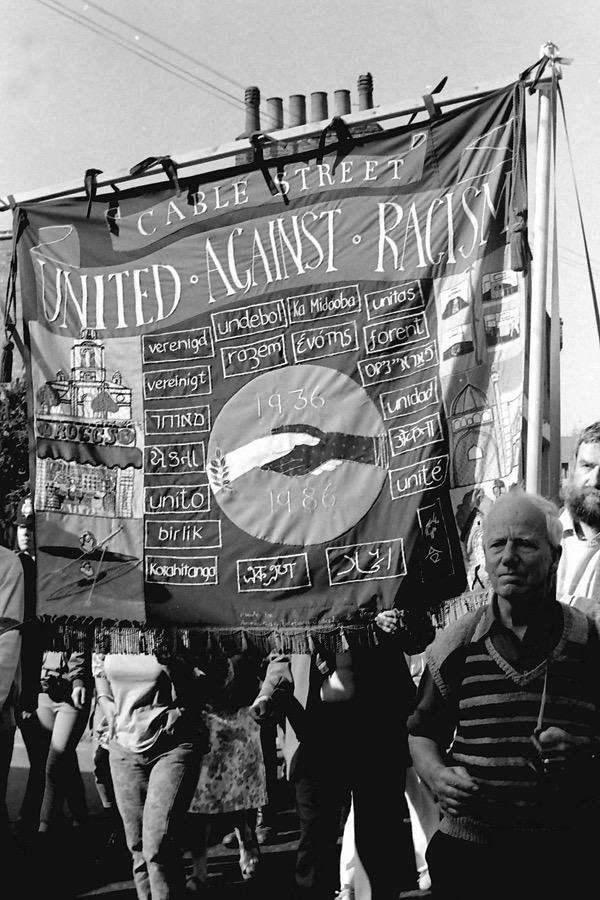
The march for the fiftieth anniversary of the Battle of Cable St in 1986
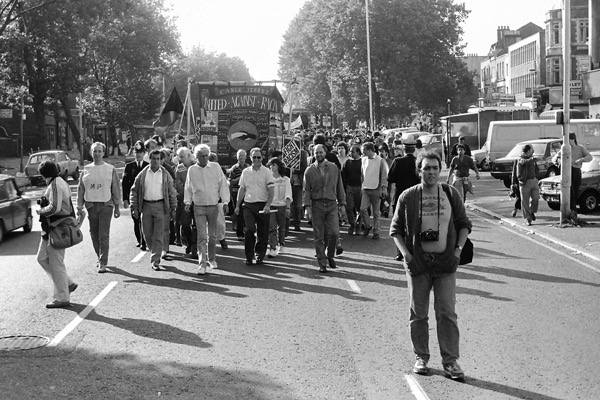
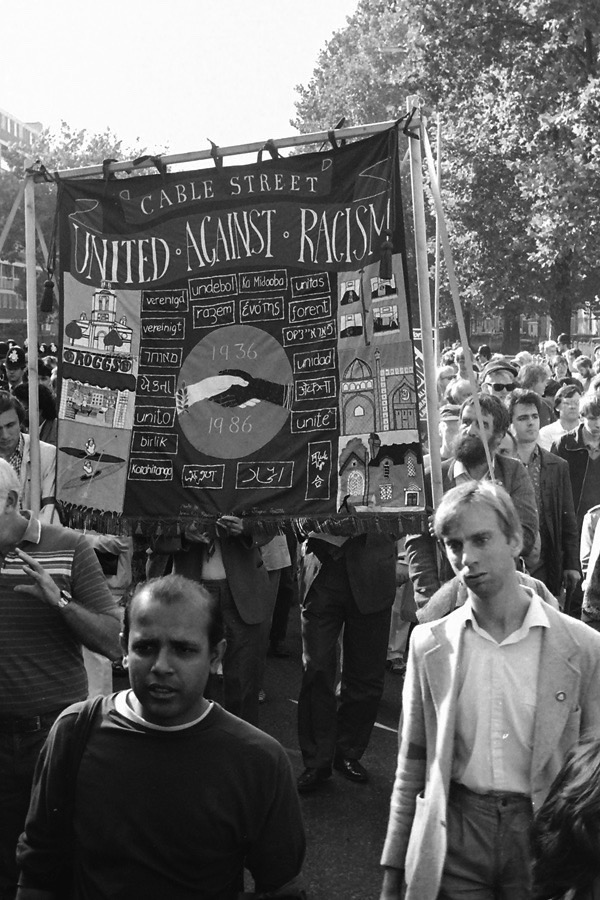
In Mile End Rd
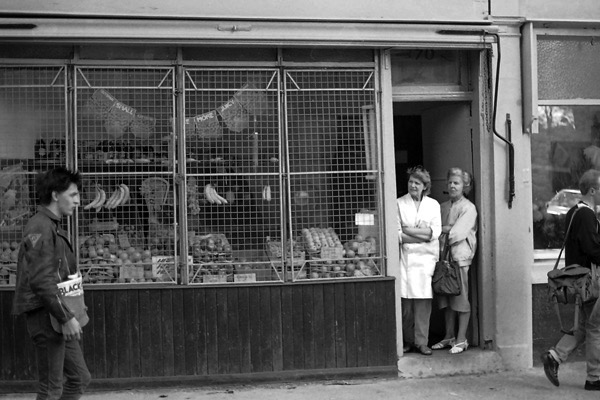
In Brick Lane
Photos of 50th anniversary copyright © Phil Maxwell
So Long, Frank Foster
Costume designer Jane Petrie – who first introduced me to Frank Foster – sent me a message recently to say that Frank had made me a shirt which was ready for collection, so I rang his doorbell in Pall Mall each time I visited the West End over the last few weeks but discovered no response. Then his nephew wrote yesterday to convey the sad news that Frank died on Friday aged ninety-three.
Known as ‘Shirtmaker to the Stars,’ Frank grew legendary for his abilities in tailoring and design. It was commonly said that, ‘A Frank Foster shirt is better than a facelift.’
I still carry the tiny pair of scissors Frank gave me as a keepsake of my visit to his workshop last year accompanied by the late Colin O’Brien.
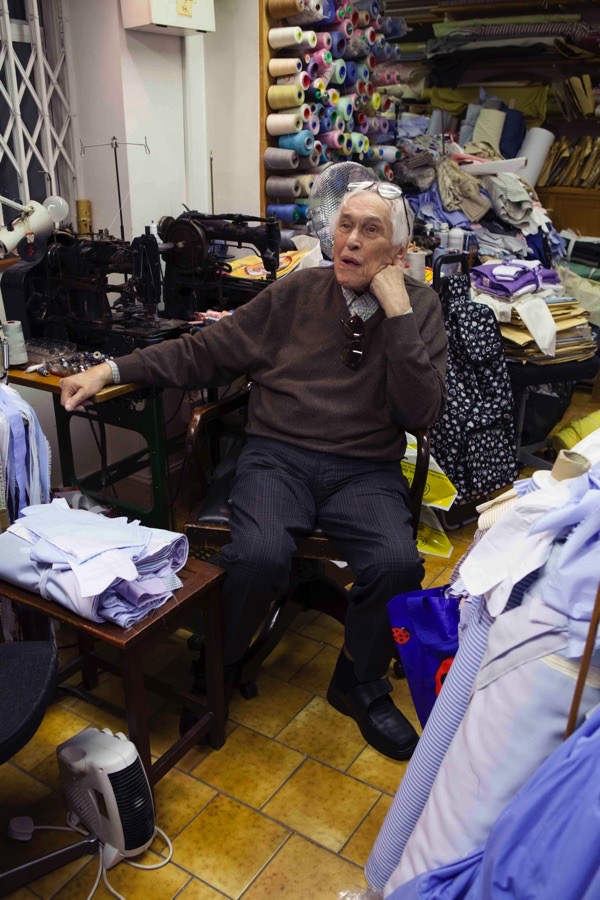
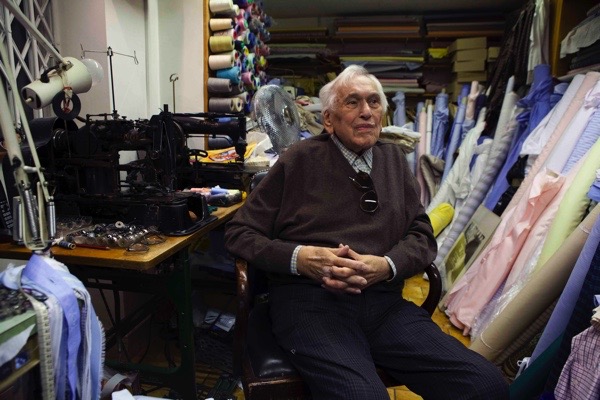
Frank Foster, a legend in shirting
There is an anonymous door in Pall Mall on the opposite side of the road from the line of grandiose clubs of St James. You could walk through this door, descend to the low-ceilinged basement and discover Frank Foster and his wife Mary, who had been working there since 1958 in two small rooms that barely added up to any space at all. Yet this modest workshop contained Frank’s entire world of experience as a cosmopolitan conjurer of cotton and silk, who made shirts for anyone-who-was-anyone in the latter half of the twentieth century and who was then in his ninety-second year.
Contributing Photographer Colin O’Brien & I found Frank parked behind a crowded desk of presidential scale in the front room, overlooked by a line of large brass scissors mounted upon the wall, gleaming like badges of office. This is where Frank clasped his nimble fingers and ruminated upon the changing world, cogitating his long life and the insights granted to him uniquely as shirt maker to the rich and famous.
‘When I look at my hand, the fourth finger is like mum’s and other fingers are like dad,’ Frank admitted to me in tender recollection, ‘The way the nails grow, I can see their hands even though they are dead.’
Born in Shadwell in 1923 into a family where his father struggled even to raise three shillings a week rent, as a boy Frank was the last person in the East End to catch typhoid in forty-seven years – which he ascribed to eating food scraped off the pavement in Watney St Market. ‘I know it’s true because they came to find me forty-seven years later to see if I was a carrier,’ he confessed to me, ‘Which I’m not.’
‘You have to remember, poor people never had shirts years ago and that’s also why tails were put on shirts because they never wore pants. I didn’t have shirts growing up until some discarded ones came from uncles. I had discarded trousers from uncles too, but when you had grown-ups’ trousers altered, the legs were very wide so you had to be careful not show your three piece when wearing them. We were very poor and I was always embarrassed about that, especially wearing altered shirts that looked ghastly.
I was a youngster when war broke and they evacuated me from Shadwell because the Docks were badly bombed – it was set alight. As a consequence, I went to live with an aunt in Brent, Hendon, which I thought was the country. That’s how I broke away from Shadwell. I was a natural artist. When I was at school, I used to draw and the other kids gathered round to watch. It’s in my soul. I had some success and exhibited portraits in five galleries when I was fourteen – including The Whitechapel Gallery, East End Academy and Coolings Gallery in Bond St. My paintings were sent to Moscow as an aid to Russia and never came back. But, being a young lad, I had to get a measly job with Bernstein, a printing company in Aldersgate. They produced rubbish – they weren’t fine lithographers. I was a printers’ boy, I earned the princely sum of seventeen shillings and sixpence a week, and I was there on one occasion when Aldersgate St was set alight.
At the same time, I was learning to be a cartographer with the Ministry of Agriculture & Fisheries, but it was very boring and I didn’t like it. I was only about seventeen at the time, so after three weeks I just left. Then, like an idiot, I volunteered for the RAF in the Euston Rd for a lovely job which was to be a rear gunner. The life expectancy was about three weeks. When I told my dad, I said, ‘I’m going to be called up so I volunteered.’ I shan’t tell you what he called me. He said, ‘ You f**king mug!’ He went to Euston Rd and told them my real age and they cancelled it all, but nevertheless I did have to go into the army. They called me up as a driver with the Royal Army Service Corps. I was rubbish at all that stuff!
I made my first shirt over sixty years ago, I was art school trained as a textile printer at Central, which was in Kingsway. At first, I made ties and I thought of looking up the Huguenot silk weavers in Spitalfields. So I went there and I found one Huguenot – I couldn’t pronounce his name – who wove some silk for me for ties. He introduced me to what is called ‘crying’ or ‘weeping’ silk. I said, ‘I don’t quite understand what that is,’ so he showed me silk that he had woven and when you squashed it together it made a beautiful noise of sobbing, the yarn was so fine. I bought that silk and made ties of it. A little while after, that stopped and you won’t hear anything of it because it is something specifically done by Huguenots.
I first had a new shirt of my own when I was eighteen. I got it because I had already started printing the scarves and I was earning a great deal of money. I went to Hilditch & Key in Jermyn St. They were a French company then, so my shirt was made in Paris. It was a silk shirt and I paid fifteen guineas which I could hardly afford. It was striped, nothing plain – fancy, trying to show off!
I’m not an expensive shirt maker although I am a good shirt maker. When I first went into business as a young lad, I was making silk squares for scarves that were printed by me by with rubber blocks. The silks I printed were picked up by people who loved the stuff including the royal family and, when I was discovered by them, it gave me a very good income for a while. You’ve heard of Princess Marina? This was 1947, just after the war. I supplied my scarves to Harrods and all the other stores and, while I was out selling, people were asking me if I could supply them with other things.
In those days, I had the Carmelite nuns working for me. They are a closed order but I was in contact with these people. You have to treat them fairly and not exploit them. If you are not honest they will find out. If they think you are making too much profit on their labour, that is also not allowed. Anyway, I conformed and we got on very well. Consequently, I was able to provide other things that the Carmelites could make for me and one of those things was ladies’ underwear, but they wouldn’t make ladies underwear that was black because they considered it not a nice thing, although men think it is a nice thing nuns don’t. Making other things, I discovered they were able to make shirts all by hand with hand-finished button holes. So that’s how I became a scarf maker, an underwear maker and a shirt maker. Not a very good title, is it?
My price when I started making shirts was four pounds, four shillings and that was tough, so I started doing shirt recutting and recollaring for laundries. My first place was 37 Bond St next to Sotheby’s – I make shirts now for the boss. In those days, I was sharing premises with a tailor and paid seven pounds a week, that was in 1956. But I didn’t get on with the tailor so I found a place of my own at 10 Clifford St.
An old boy I made shirts for, he financed me. He asked me, ‘Where do you live?’ and I said, ‘I live a long way out, I can’t afford a flat.’ So he said, ‘Can you afford £12 a week?’ I said, ‘Yes, I think so but I’d also like a workplace.’ So he said,’ Have you £5 a week?’ and he introduced me here in Pall Mall and I signed a lease for twenty-one years for five pounds a week – now it’s four hundred a week, it’s not easy.
I’ve made shirts for almost everybody you can think about. All the Shakespearian actors – John Gielgud, the Redgraves, Lawrence Olivier, everybody. You mention a name and I’ll tell you if I’ve made shirts for them – Marlon Brando and Orson Welles, when they were still slim, Robert Mitchum, Frank Sinatra, Sammy Davis Junior, Cary Grant, Ray Milland, I could go on and on. I’ve done the Bond films for over thirty years.
Orson Welles phoned me from the Ritz one day to ask if I would go round with samples because the designs could only be sanctioned by the Art Director of the film he was in. I said, ‘No, there are hundreds of samples here and I’m just round the corner,’ but he wouldn’t come. He was as far from me as I am from you, pretty much, so eventually we had a stand-off and the studio, they did all the running and fetching. He was making life awkward and that’s what some of these stars are like. They want to tell me about their fathers who are tailors and give me some competition. They want to be know-alls.
Tony Curtis, I didn’t like him at all. I went round to the Dorchester and he didn’t offer me a cup of coffee when I was spending hours with him. Then his kinky wife came out of the bathroom stark naked and said, ‘Oh I’m sorry, I didn’t know you were here.’ These people are not humble, they are used to being applauded, they are in the limelight – it’s all false. But Gregory Peck was a gentlemen and Robert Mitchum, although he was tough guy, was a gentlemen too. You have to go through a lot of people before you find the genuine ones.
I worked for Berman’s film costumiers for fifteen years and made shirts for Norman Wisdom at thirty-five shillings each and never made any money but was introduced to lots of film stars. So Norman Wisdom, being a mate of mine, we shared a flat. We both bought food and when I was buying Nescafe he was buying Camp Coffee. I said to Norman, ‘Why do you buy this crap?’ ‘You’ve got to remember Frank, I was a boy soldier,’ he replied. Norman was badly treated by his father who used to throw him up in the air as a child and drop him, and that’s how Norman learnt to fall. He always took me to a restaurant in Tottenham Court Rd called Olivelli’s. It was all theatricals. The ones that went there were down and out, yet they were lovely people. I never had money to eat there but Norman had plenty, he generated more money than the Bond films. He liked the ladies but he was married, that’s the reason he shared a flat with me.
My production of shirts is very small, I’m a top grade shirt maker. My shirts you can turn them inside out and the insides are better than the top side of many so-called famous shirt makers. Nowadays I am very limited how many I can make because I can’t get people to do it. People don’t want to come into trades where they they have to use their hands, they don’t want to make things by hand, they don’t want to cut things by hand. They want to do everything with modern machinery. We still use a button hole machine that is a hundred years old. It’s an antique but works beautifully.
The secret of making a good shirt is skill, patience and knowing about textiles. Every piece of cloth we sell is high quality. We charge £175 per shirt. If you want a silk shirt made out of fine quality Macclesfield silk, we charge you the same money as a cotton one. We’re not a greedy company – I’d like to be greedy but it’s not in my nature. Coming from a poor family, I know what money means.
I love making shirts, I can look at an individual and when I measure him, I can see all the problems and the build. So when you leave here, I’ll remember your build and how you stand and hold your head. That’s not me trying, it comes – I can’t tell you how. I remember fine details about people, their eye colour, and their hair, how it grows. It’s a strange thing, I suppose the eye becomes accustomed to noticing these things.
When someone comes in, first you measure the neck. You have to notice the space between the shoulder and the bottom of the ear. People with thin necks can take a deeper collar. People who are fat with a short neck need a collar that balances with the shirt. You then measure the front shoulder to see how wide that is and from there you go down to the half-chest, across the top of the chest. From there you go to the abdomen and then to the hips and then to the waist. We don’t use shirt tails, we cut shirts with square bottoms and side vents. Our shirt tails are very smart, especially when men like to disrobe in front of their females. Then you have to do the cuffs, and cuffs have to be measured according to wrists. Where watches are concerned, you have to make allowances for rich people who have bulky complicated watches. We then do what is called a ‘button gauntlet’ to enable rich men to have the choice – if need be – to have the choice of rolling their sleeves up. Workers don’t have button gauntlets because no-one gives them the choice or option to roll their sleeves.’
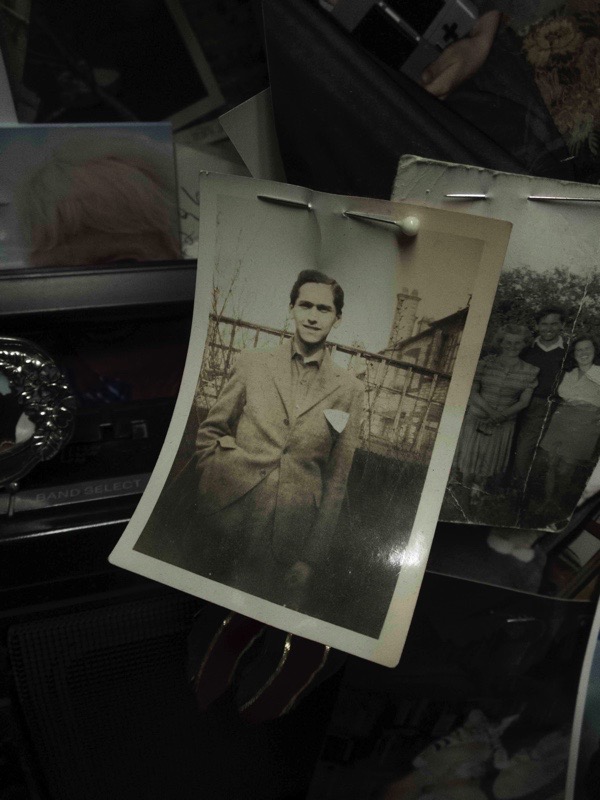
Frank as a young man
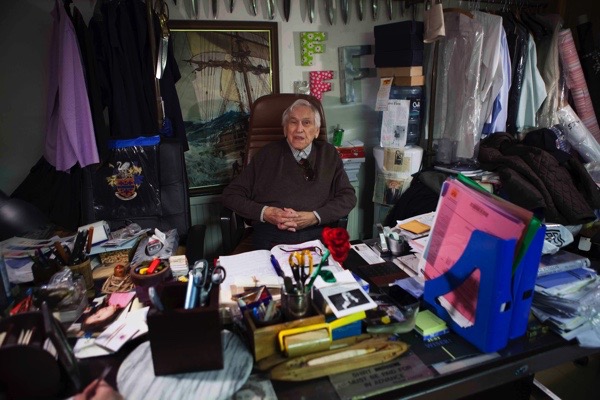
Frank at his desk – ‘I’d like to be greedy but it’s not in my nature’
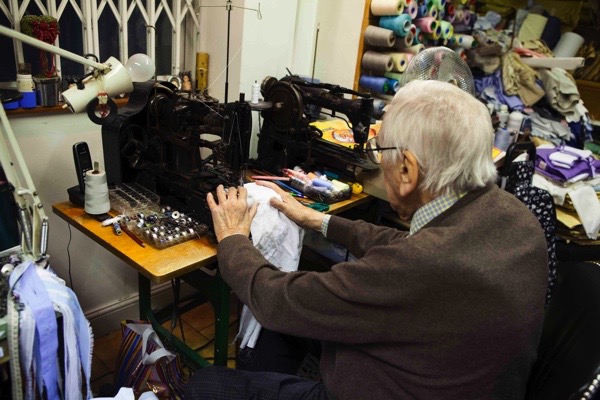
Frank demonstrates his hundred-year-old buttonhole machine he acquired sixty years ago
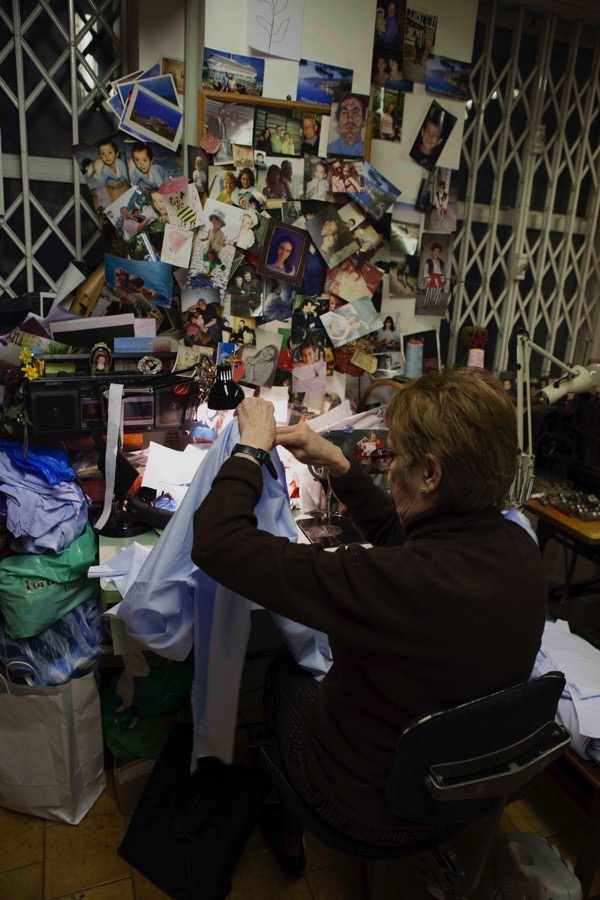
Mary Foster
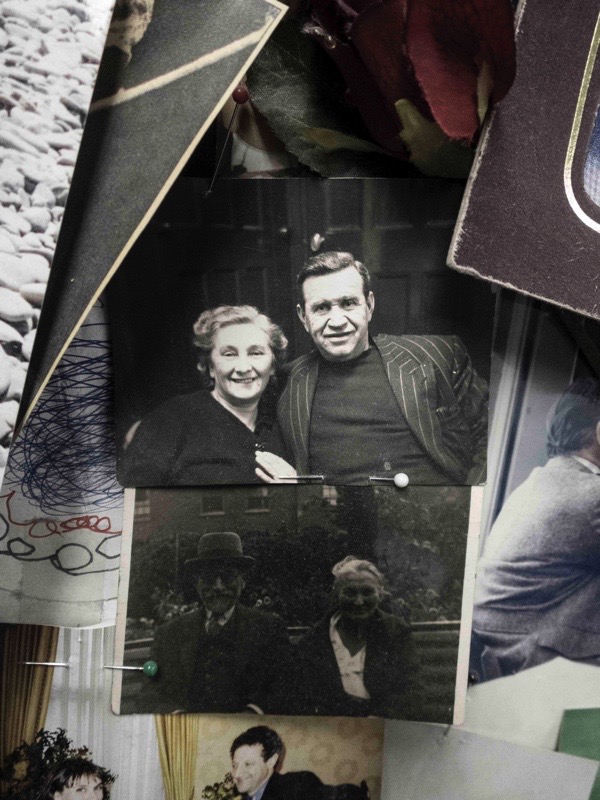
Frank’s parents and grandparents
‘That’s what some of these stars are like – they want to tell me about their fathers who are tailors and give me some competition…’
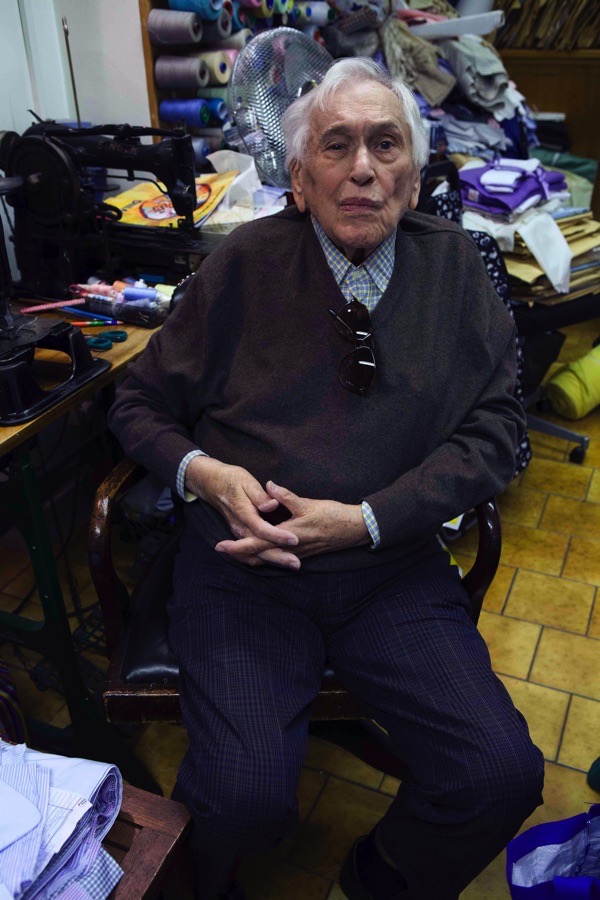
Frank Foster – ‘I love making shirts’
Photographs copyright © Estate of Colin O’Brien
The Boss Of Bethnal Green
Julian Woodford introduces THE BOSS OF BETHNAL GREEN, uncovering the breathtakingly appalling life of Joseph Merceron – the notorious Huguenot, gangster and corrupt East End magistrate – shortly to be published by Spitalfields Life Books. (Click here to order a signed copy for £20)
You are all invited to the launch party on Thursday 3rd November 7pm at the Hanbury Hall in Hanbury St where Merceron was baptised in 1764. Julian Woodford will give an illustrated lecture, Ruairidh Anderson of The Howling Sea will sing a song about Merceron that he has written for the occasion and Matyas Selmeczi will be cutting silhouette portraits. (Click here to book your free ticket)
By revealing the story of Joseph Merceron – the man who gave the East End the bad reputation which still lingers today and who created the templates of the mobster and of the political miscreant that we recognise in our own times – Julian Woodford’s shrewd biography makes an essential contribution to our understanding of the history of London.

Joseph Merceron by Joe McLaren
Follow @JosephMerceron on twitter
At 134 Brick Lane is the Cinnamon restaurant, the self-proclaimed ‘King of all Kings for curries on Brick Lane,’ but in 1764, this was a Huguenot pawnbroker’s shop and, on 29th January of that year, a baby boy was born there. His name was Joseph Merceron and he would grow up to be The Boss of Bethnal Green – the Godfather of Regency London.
My book has been a decade in its gestation. I first came across Joseph Merceron’s name late in 2005, when I happened upon a brief reference to him in Roy Porter’s London: A Social History. Porter described Merceron as an early corrupt political ‘Boss’ who had dominated the East End some one hundred and fifty years before it became the home of the Kray twins. By a strange coincidence, I had seen Merceron’s name just the day before, listed as a defendant in a series of legal cases at the National Archives. I was intrigued: Merceron is not a common name in England. Was this the same man? The internet confirmed that it was, and revealed that he had clearly been a larger-than-life character. His story seemed to anticipate the plot of the Marlon Brando movie On the Waterfront, where a corrupt gangster is taken on – and eventually toppled – by a brave and determined local priest.
Over the next few days, I found that Merceron was name-checked by virtually every book about the history of London’s darker side, from academic classics like Dorothy George’s London Life in the Eighteenth Century to true-crime exposés like Fergus Linnane’s London’s Underworld. The facts given were always suspiciously similar, and I soon learned that all these accounts had their origins in The Rule of the Boss, a chapter in Sidney and Beatrice Webb’s seminal 1906 work on English local government, The Parish and the County. The Webbs, a husband-and-wife team of early socialists, were embarking on a nine-volume treatise still regarded as a classic by historians. They intended that the centuries of inefficiency and corruption they painstakingly described would be swept away by the statistical analysis and central planning espoused by the early Labour movement.
The Webbs’ impeccable research had unearthed parts of Merceron’s story, seeing him as the perfect illustration of corruption within English parochial self-government. The Marxist academic Harold Laski wrote that ‘they have added new figures to our history, the school books of the next generation will make Merceron [and his like] illuminating examples of what a democracy must avoid.’ As it turned out, Professor Laski was wrong: the Second World War intervened, and the subsequent prominence given to 20th century history in school curricula meant that Merceron’s story has been largely forgotten.
The Rule of the Boss is an intriguing read, but the Webbs were not biographers, and had no interest in dissecting the personal life behind Merceron’s rule. Their account leaves fundamental questions unanswered. Who exactly was Joseph Merceron? Where did he come from? What drove him? How did he become so wealthy? How did he gain power while so young, and retain it for so long? Frustratingly, all subsequent accounts I could find regurgitated parts of the Webbs’ story but failed to provide the answers. Even a brief reference to Merceron in the Dictionary of National Biography could shed no further light. In his excellent book of tales about Brick Lane, An Acre of Barren Ground (2005), Jeremy Gavron had drawn some interesting conclusions about Merceron’s links to the brewer Sampson Hanbury, but when we met Jeremy explained that, apart from this, he too had struggled to make headway with Merceron’s wider story.
Convinced that Merceron’s story was worth telling, I delved deeper. Searching through the births, marriages and deaths columns of The Times, with the help of the electoral register I traced Merceron’s family tree forwards and learned there were just a handful of families with that name living in the United Kingdom. I wrote to the most promising candidates, and a couple of days later was rewarded with a call from an elderly lady who introduced herself as Susan Kendall, Merceron’s great-great-granddaughter. Mrs Kendall added that she would be delighted to invite me to her home in Wiltshire but, she added, ‘You had better come quick, because I’m ninety-three!’
I rushed off to the pretty village of Ramsbury to meet Mrs Kendall and over a cup of coffee explained my plans. But when I mentioned Beatrice Webb, Mrs Kendall almost exploded. ‘That beastly woman,’ she exclaimed, had published Merceron’s story just before her own birth. The Mercerons were a wealthy and respected county family in Edwardian times, and Susan and her sisters were presented at Court to Queen Mary as teenagers. The Webbs’ story had not been helpful, to say the least, and Mrs Kendall expressed satisfaction that finally I was going to disprove it. This was not promising.
When I nervously explained that, based on my research to date, if anything Merceron had been even more of a tyrant than the Webbs had described, I wondered if I was about to be asked to leave. But Mrs Kendall reflected. ‘If that is the true story,’ she said, ‘then of course you must tell it.’ From that moment on, she gave me every support and we corresponded regularly until her death a few years later. She generously lent me the few family papers she had, but said I would need to meet with her nephew Daniel to see the rest.
Daniel Merceron was serving overseas with the army. It was a frustrating several months before he returned and I was able to visit him, but it was worth the wait. Daniel left me with a cup of tea while he disappeared into his attic, returning with Merceron’s two-hundred-year-old tin chest: full of deeds, letters and other papers which shed new light on Merceron’s misdeeds, added colour to his personal life and provided crucial clues to the existence and location of other original records of the Court of Chancery at the National Archives – heavy parchment rolls, encrusted with dust and unopened for two centuries. They told a fascinating story – the depths of an obsession with money which led Merceron to lock away his half-sister in a lunatic asylum and steal the inheritances of his nephews, as well as that of a mentally ill orphaned girl, all before he was twenty-three years old.
But even this was outshone by the other surprise Daniel had in store for me. He disappeared again, returning brandishing an old flintlock pistol that he announced was the weapon with which the madman James Hadfield tried to assassinate King George III at the Drury Lane theatre in 1800. Daniel was unclear how the gun had fallen into Merceron’s hands, but within an hour on the internet we had found the transcript of Hadfield’s trial and discovered that the key prosecution witness, who had picked up the pistol after Hadfield fired it at the King, was none other than Merceron’s clerk.
Pulling this thread further, I uncovered Merceron’s links to a network of government spies, set up to monitor the activities of underground revolutionary societies during the Napoleonic wars. This was the story the Webbs had missed. By keeping Merceron and his associates in power, successive British governments, desperate to stamp out radical republicanism after the French Revolution, repeatedly turned a blind eye to his criminal operations. In doing so, they abetted a social catastrophe. Joseph Merceron’s story turns out to be more than a tale about a man and his money. It is also about the origins of London’s East End, a world of riots, lynching, public executions and extreme poverty where whole families could easily starve or freeze to death.
As Merceron became extraordinarily wealthy, Bethnal Green became the epitome of the East End Victorian slum. By 1838, when young Charles Dickens chose it as the home of the murderer Bill Sikes in Oliver Twist, Bethnal Green was beset by wretched poverty, the bankrupt home of cholera and typhus, its rotting workhouse crammed with more than a thousand starving paupers.
Joseph Merceron’s name is commemorated today in Merceron St, Bethnal Green, and in Merceron Houses which were erected as ‘model dwellings’ for the poor on the site of Merceron’s garden off Victoria Park Sq, in 1901 just before the Webbs reminded the world of his darker deeds.
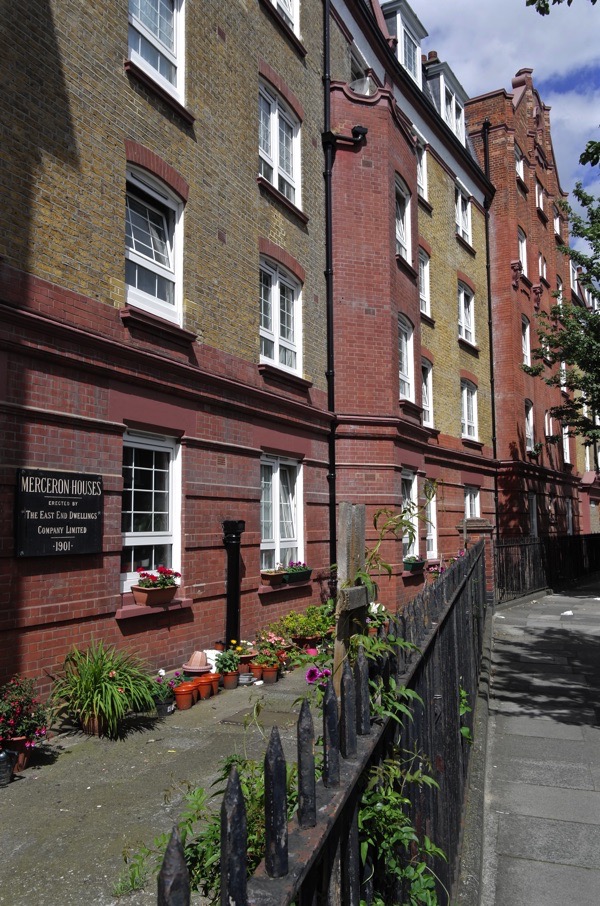
Merceron Houses in Bethnal Green built on the site of Joseph Merceron’s garden
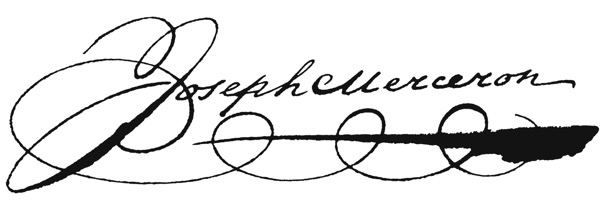
Joseph Merceron’s signature
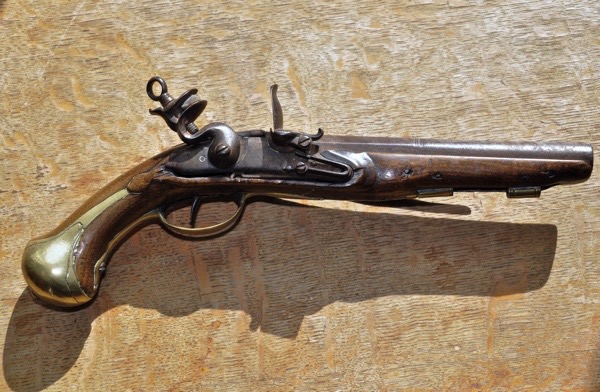
The pistol used in the assassination attempt upon George III at Drury Lane in 1800
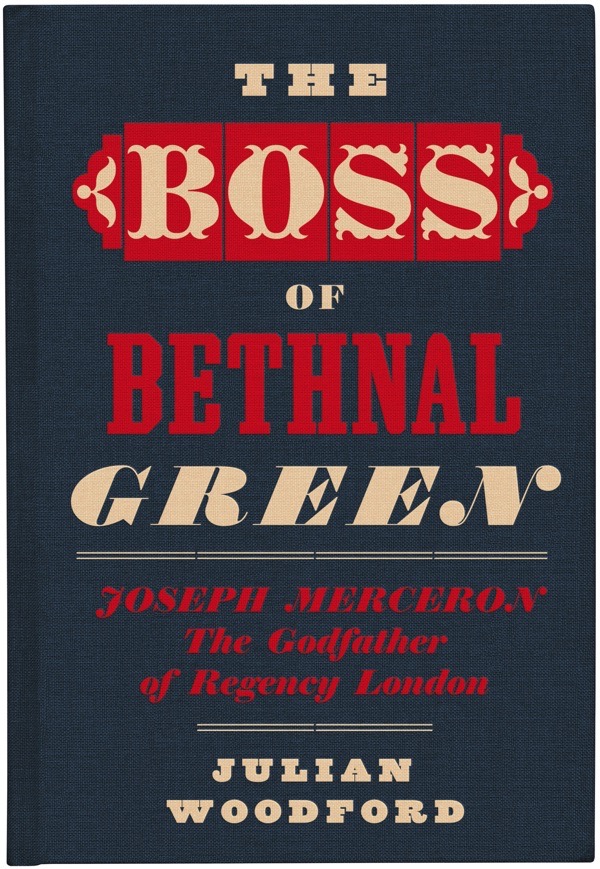
CLICK HERE TO ORDER A SIGNED COPY OF THE BOSS OF BETHNAL GREEN FOR £20

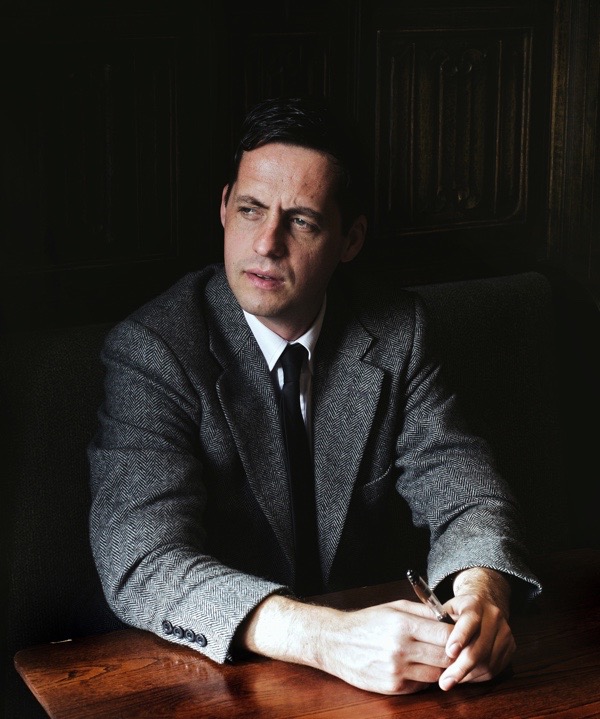
Julian Woodford researched the life of Joseph Merceron for ten years (Photo by George Woodford)
Ruairidh Anderson of The Howling Sea will sing his ballad of Joseph Merceron at the launch
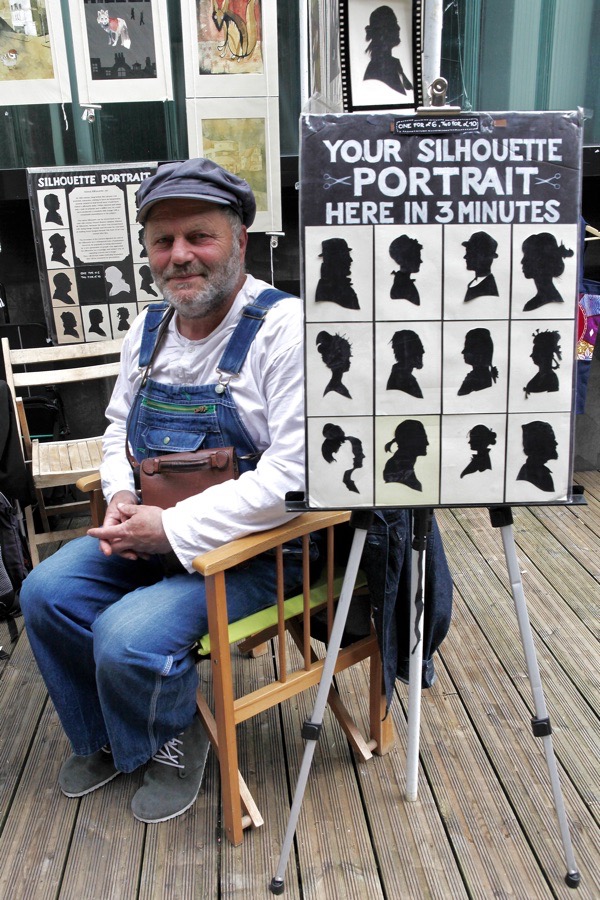
Matyas Selmecis will be cutting silhouette portraits at the launch (Photo by Colin O’Brien)
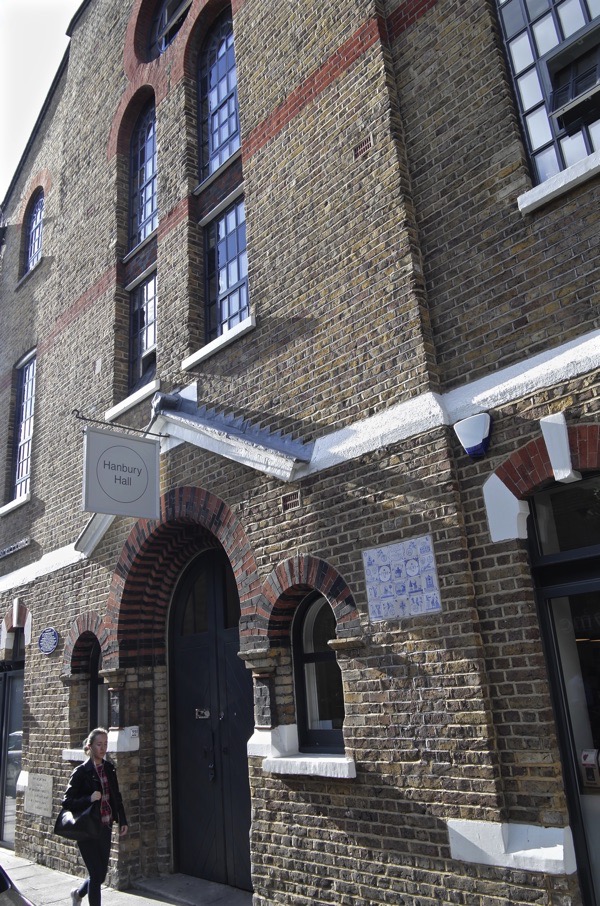
The launch will be held at the Hanbury Hall where Joseph Merceron was baptised in 1764












