
Jonathon Green’s Dictionary Of Slang
I am delighted to announce that Contributing Writer Jonathon Green‘s magnum opus GREEN’S DICTIONARY OF SLANG, 500 Years of the Vulgar Tongue is now online and thus his ever-growing, endlessly-fascinating database of filth is accessible to all

Jonathan Green in Smithfield
Jonathon Green knows more dirty words than anyone else in the English speaking world, including twelve hundred for penis and a thousand for vagina, and yet, much to my disappointment, I found he is capable of engaging in civilised conversation without recourse to any unpleasant, vulgar or colourful vocabulary.
If you sat next to him at dinner you would count yourself lucky to enjoy such amusing and well-educated company. You would not guess that he is the top lexicographer of slang, the foremost scholar of filth, author of the definitive Green’s Dictionary of Slang, first published by Chambers in three fat volumes in 2010 and now available online – as the product of more than twenty-five years tireless application to the frayed margins of the English language, earning him the title Mr Slang.
“It’s my life’s work,” he confessed to me with a reckless smile of delight, “it has occupied my very being from the tips of my toes to the top of my head. I am the latest in a long line of slang lexicographers that is quite tangible and continuous stretching back to Robert Copeland in 1538. One day I realised, ‘You are doing the right thing for you,’ because I enjoy teasing out etymologies. I am fascinated by the margins, and I’m sure it’s linked to being a Jew and being an only child. Marginal language is more interesting to me, I wouldn’t want to be a mainstream lexicographer. I think, every book that I have written, it has always been about, ‘What can we learn from this?'”
“The primary difference between my work and that of earlier lexicographers is that they had to go looking, whereas, in the modern world, I don’t know where to stop!” continued Jonathon, exhilarated at the potential of the universe to offer up material for his pleasure. “Slang is thematic and there are certain themes,” he added with a conscientious orderliness,” – crime, drink, drugs, parts of the body and what we do with them, being unpleasant to other people, being nice about yourself, racism and having a good time. There’s also bodily fluids, shitting, pissing, fucking and farting. And on top of that there’s words for stupid, fools, prostitutes and the whole world of commercial sex.”
Judging from the nature of his curosity you might assume that Jonathon inhabits a hovel in the gutter, but in fact he lives with his wife in an airy modern rooftop apartment in Clerkenwell, less than a mile East of Dr Johnson’s house where this whole dictionary business began. “I feel a true relationship with my predecessors.” he confided to me, “I can relate to Samuel Johnson, but the one I most identify with is John Camden Hotten author of ‘The Dictionary of Modern Slang, Cant & Vulgar Words’ 1859, because he wrote pornography and since I also used to write for top shelf titles, I always recognise a certain kinship with him.”
Before I could enquire further about the pornography, Jonathon launched into a history of slang, explaining how Robert Copeland once asked the porter outside St Bartholomew’s Hospital in Smithfield what the poor people were saying and received the reply, “They have their own language.” From this chance conversation over five centuries ago, just a quarter of a mile south from Jonathon’s flat, came the first book of cant, entitled “The Highway to the Spital House,” thereby initiating the field of scholarship Jonathon ploughs today. “Because slang is marginal only criminal stuff was written down at first since there was no other reason to record it,” he explained, before reeling off the names of those who have gone before him, from Eric Partridge to John S. Farmer to C.G. Leyland to John Camden Hotten to Francis Grose, reaching the early nineteenth century when the term slang appeared in our language. Then, enthusiastically pulling treasured copies off his shelves to show me,“Slang Dictionaries have always been independent,” he declared with a sparkle in his eye, “I am an independent, but there aren’t people like me any more – institutions and publishers make dictionaries now.”
After editing dictionaries of quotations in the early eighties, Jonathon wrote his first dictionary of contemporary slang in 1984 – just eleven and a half thousand entries, compared to more than twelve thousand in for the letter “S” alone in the current database. In 1993, he was asked to write a broader dictionary of slang that was published in 1998, which in turn led to the commission for the three volume edition published in 2010, comprising 110,000 entries, that, including the work of assistants, took an estimated fifty years of human labour to complete. Jonathon’s good humoured yet pale faced wife Susan Ford, who refers to herself succintly as “the slave,” visited the British Library five or six days a week for ten years to pursue research for the dictionary and, when Jonathon’s advance ran out only an unexpected legacy from an obscure uncle enabled them to continue, until the day the publishers hauled the mighty beast into print.
Unsurprisingly, Jonathon admitted to feeling depressed after his three volume GREEN’S DICTIONARY OF SLANG was first published, recognising that the changing world of publishing meant it was unlikely there would never be a second edition and, more than this, there is unlikely ever to be another printed dictionary of slang. With some poignancy, Jonathon understood that his work was probably the last dictionary of slang – the end of a sequence of books that began with Copeland in 1538. Yet this realisation permitted Jonathon to ameliorate his sadness by continuing to expand his personal files in preparation for the online version launched this week, which will be a continuously-updated online resource.
“There have been moments of drudgery,” revealed Jonathon, almost reluctantly, “but you when you publish the book you become a little tin god – an expert.” With laconic irony, he encapsulated the apotheosis of the lexicographer, transforming from drudge into deity and then, at this natural conclusion, returned to his desk while I continued my conversation with Susan. But I could not help noticing that Jonathon appeared to be having a few problems with his computer – judging from the string of expletives worthy of the pages of his dictionary that emanated from his direction – and I was glad, because what is the use of knowing all these filthy words if you cannot savour their rich poetry upon your own tongue?
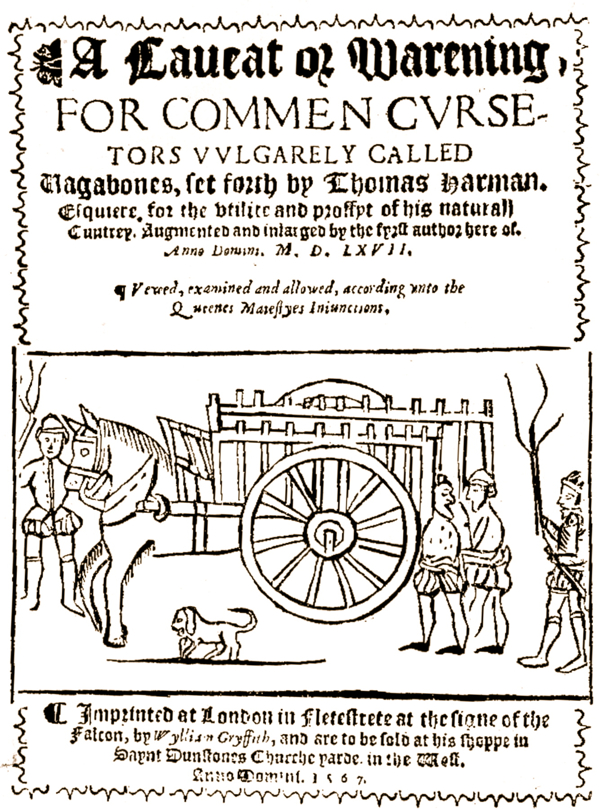 The Caveat for Common Cursetopurs by Thomas Harman, 1567
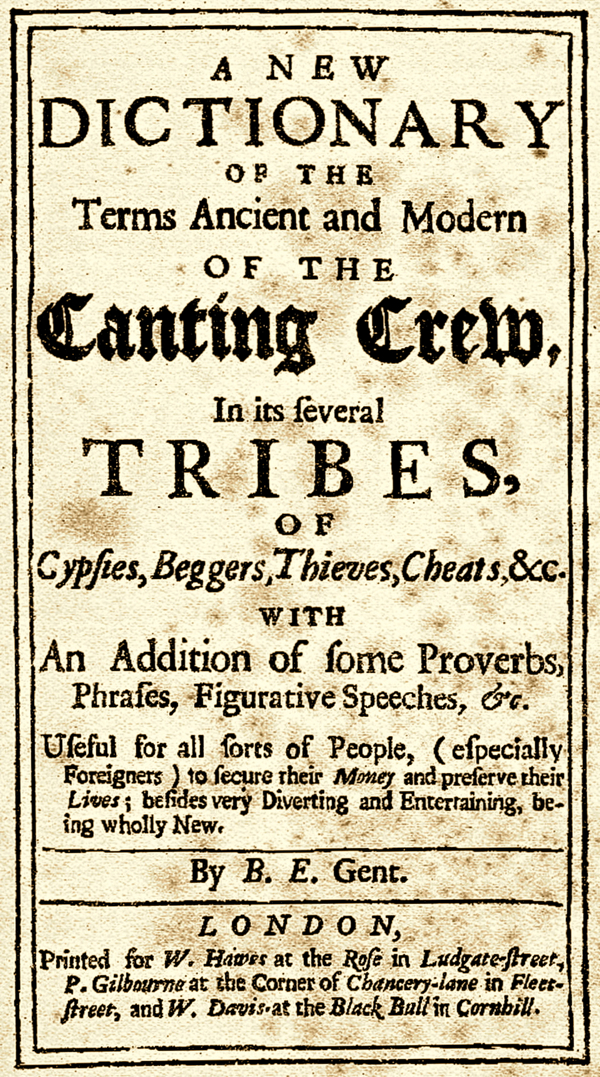
The New Dictionary of the Canting Crew by B.E. Gent, c.1698
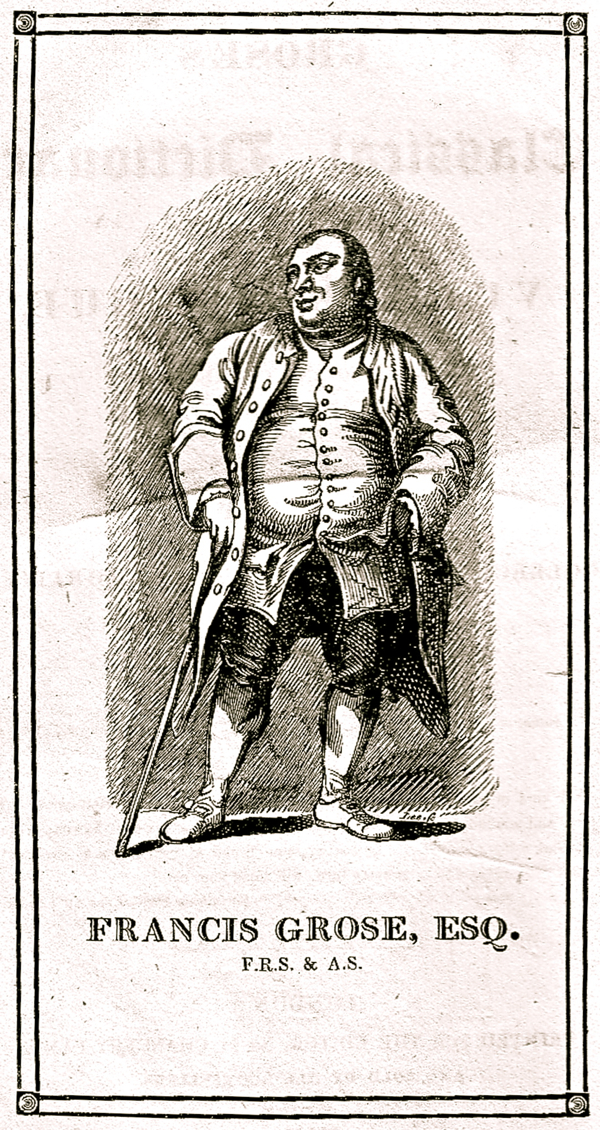
Francis Grose author of “The Classical Dictionary of the Vulgar Tongue,” 1785
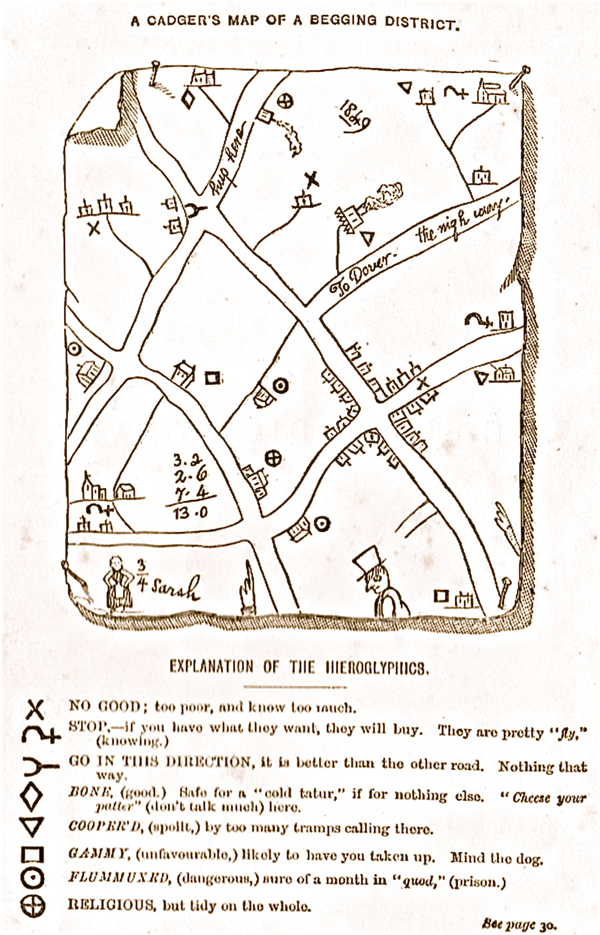
A Cadger’s map from The Vulgar Tongue by Ducange Anglicus, 1857

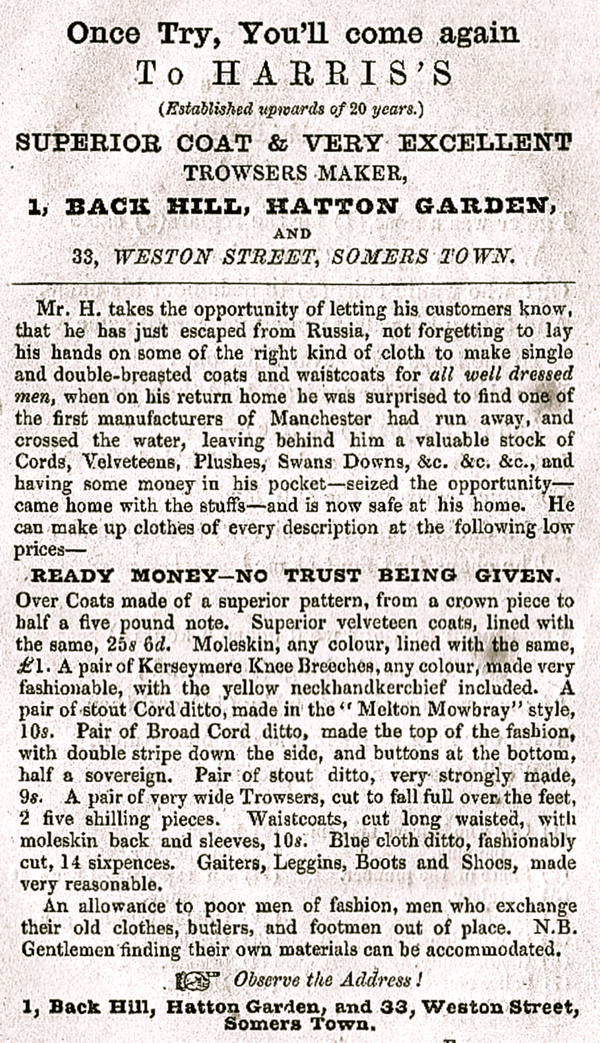
Advertisement in Cockney with text in standard English below from The Vulgar Tongue by Ducange Anglicus, 1857
Click here to explore GREEN’S DICTIONARY OF SLANG, 500 Years of the Vulgar Tongue
You may also like to read about
Nights In Old London

The nights are drawing in and I can feel the velvet darkness falling upon London. As dusk gathers in the ancient churches and the dusty old museums in the late afternoon, the distinction between past and present becomes almost permeable at this time of year. Then, once the daylight fades and the streetlights flicker into life, I feel the desire to go walking out into the dark in search of the nights of old London.
Examining hundreds of glass plates – many more than a century old – once used by the London & Middlesex Archaeological Society for magic lantern shows at the Bishopsgate Institute, I am in thrall to these images of night long ago in London. They set my imagination racing with nocturnal visions of the gloom and the glamour of our city in darkness, where mist hangs in the air eternally, casting an aura round each lamp, where the full moon is always breaking through the clouds and where the recent downpour glistens upon every pavement – where old London has become an apparition that coalesced out of the fog.
Somewhere out there, they are loading the mail onto trains, and the presses are rolling in Fleet St, and the lorries are setting out with the early editions, and the barrows are rolling into Spitalfields and Covent Garden, and the Billingsgate porters are running helter-skelter down St Mary at Hill with crates of fish on their heads, and the horns are blaring along the river as Tower Bridge opens in the moonlight to admit another cargo vessel into the crowded pool of London. Meanwhile, across the empty city, Londoners slumber and dream while footsteps of lonely policemen on the beat echo in the dark deserted streets.

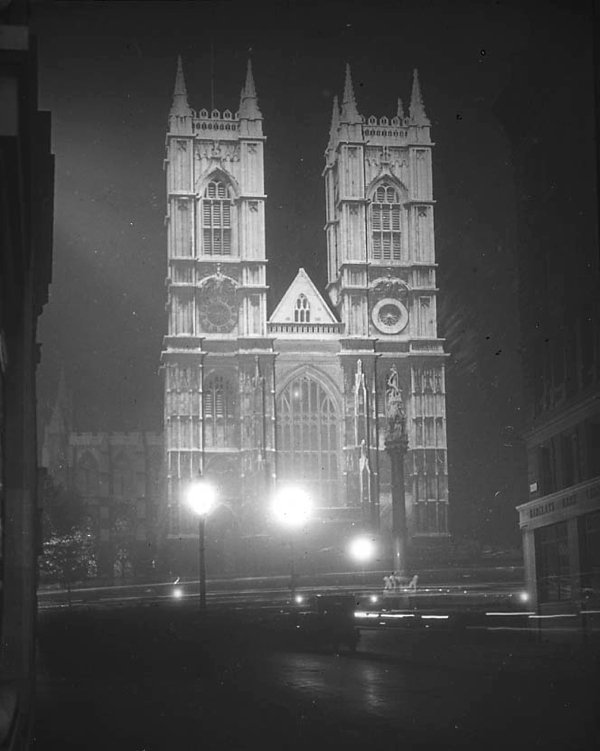


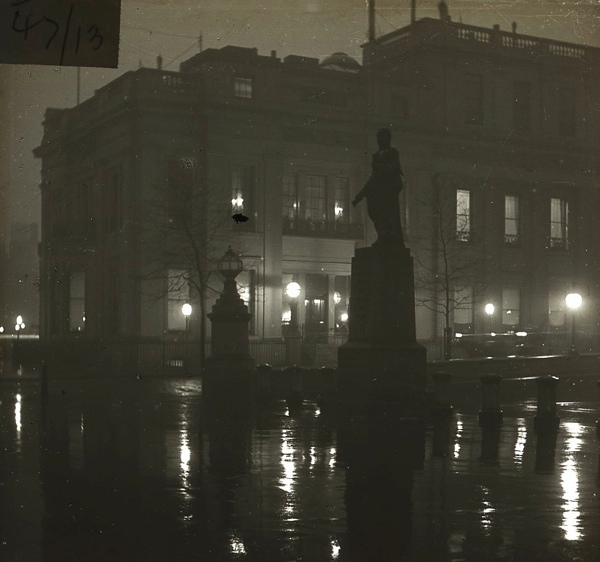


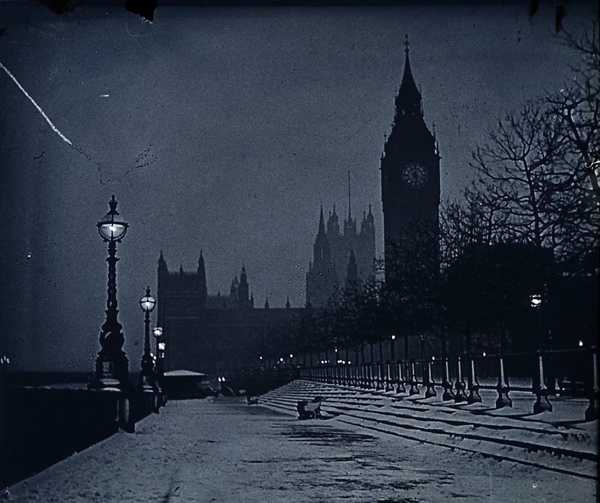


Glass slides courtesy Bishopsgate Institute
Read my other nocturnal stories
On Christmas Night in the City
On the Rounds With the Spitalfields Milkman
Other stories of Old London
A Celebration Of The Life Of Colin O’Brien
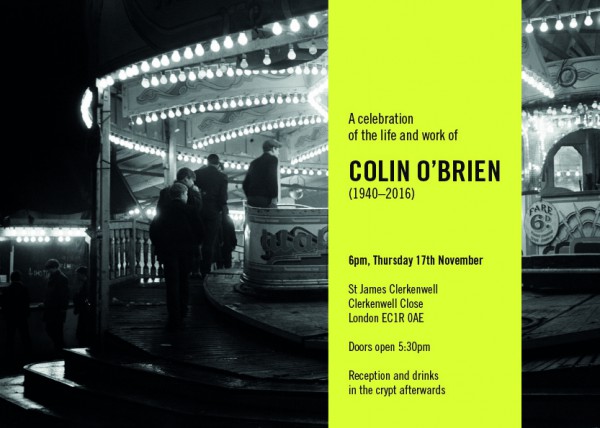
I hope as many readers as can do so will come along to St James Church, Clerkenwell, on Thursday 17th November. The bells will ring from 5:30pm and we will commence at 6:00pm. We will be showing photographs and there will be reminiscences, readings, music and films, and a big party in the crypt to celebrate our friend from Clerkenwell, COLIN O’BRIEN. Make it a date in your diary.
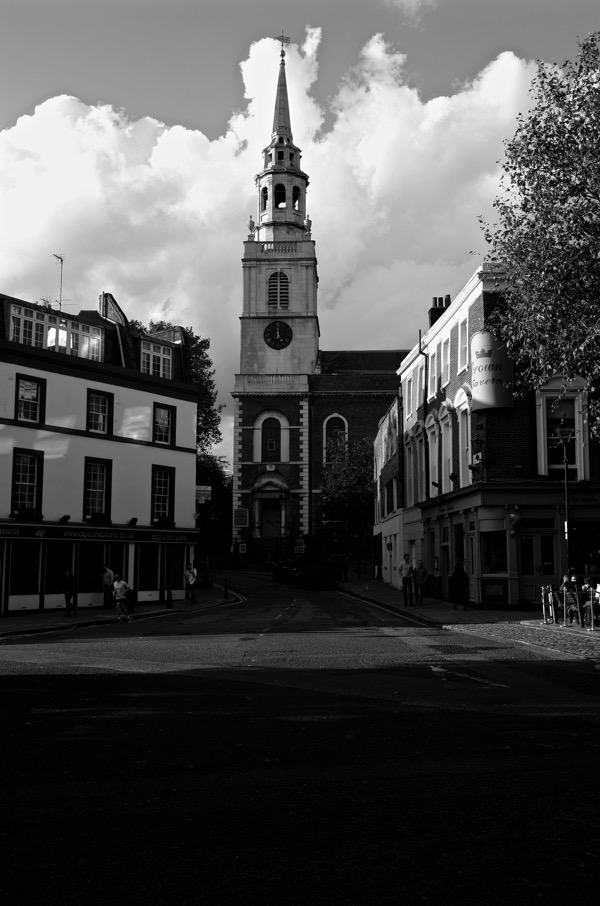
St James Church on Clerkenwell Green
You may also like to read about
Days Out With Colin O’Brien
In recent years, Contributing Photographer Colin O’Brien & I clocked up over fifty assignments working in partnership. His death in August has given me cause to look back over all the adventures that we had together and today I publish this small gallery of some of my favourite photographs that he took for Spitalfields Life in 2011, 2012 & 2013. Colin always said to me, ‘I’ll send you a few extra so you have a choice,’ and – invariably – more than two hundred photographs would arrive around midnight and I would spend the long hours of the night making my selection. It was an exciting process because there would be photographic gems like these to be discovered.

At the Italian Parade, Clerkenwell, June 2011
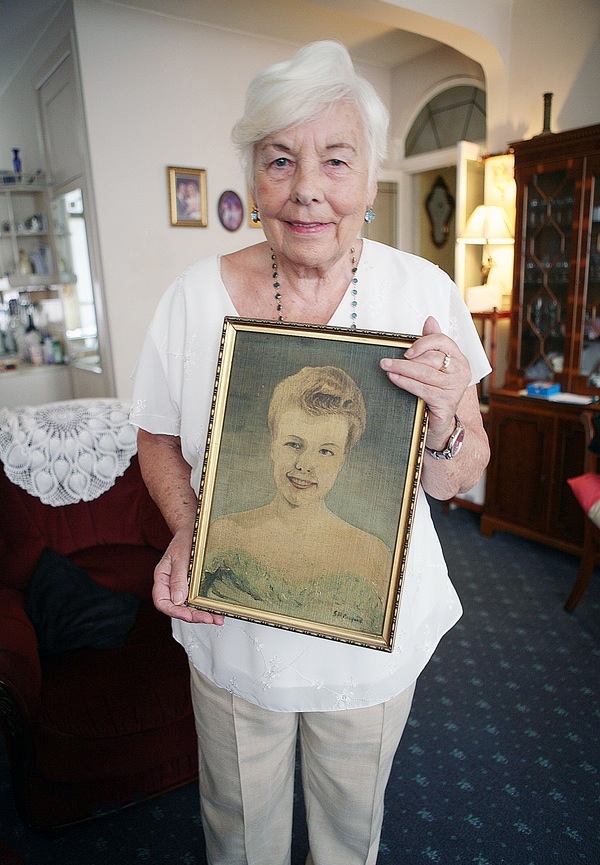
Olive Besagni, Film Editor, Clerkenwell, July 2011

Bruno Besagni, Artist in Plaster Casts, Clerkenwell, August 2011

The Fly Pitchers of Spitalfields, October, 2011

Jason Cornelius John, Street Musician, Spitalfields, October 2011
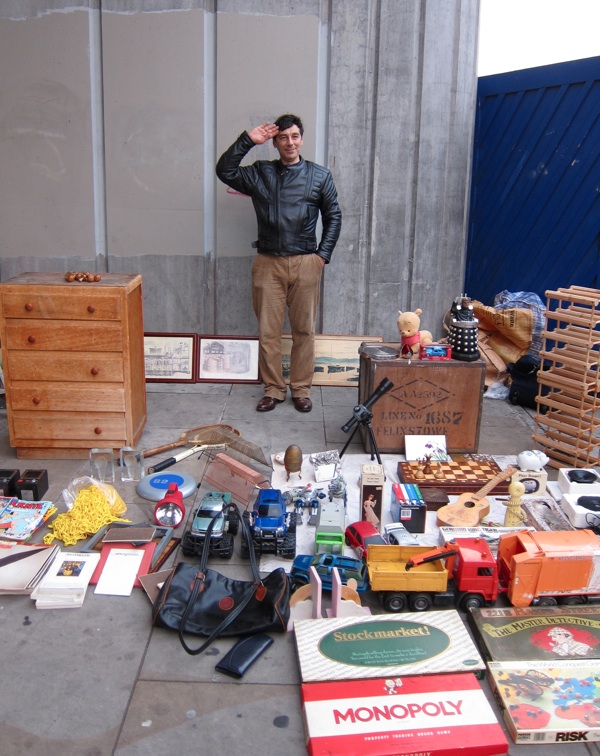
The Fly Pitchers of Spitalfields, October, 2011
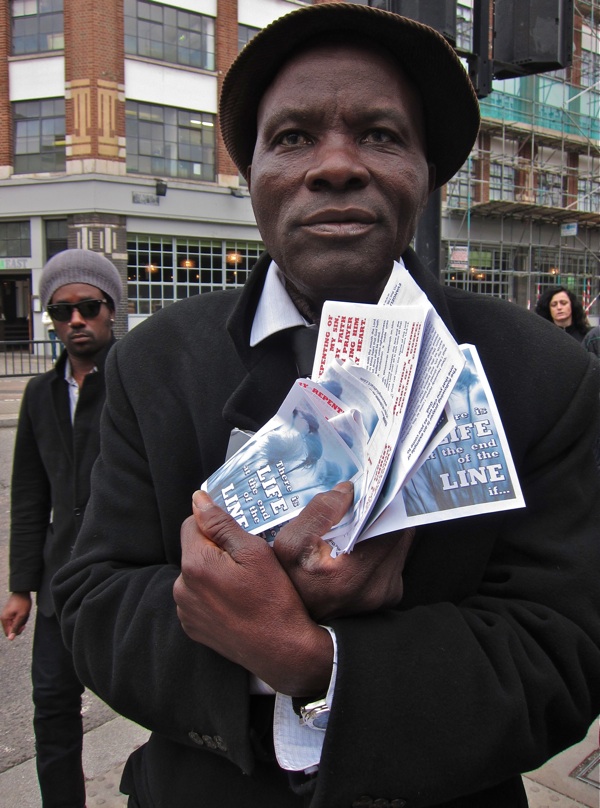
Mr Gil, Street Preacher, Spitalfields, November 2011
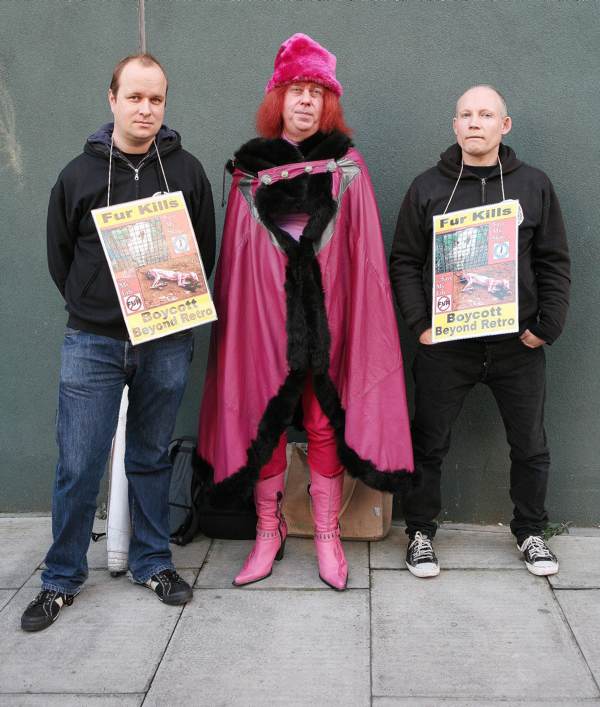
Viscountess Boudica of Bethnal Green, November 2011
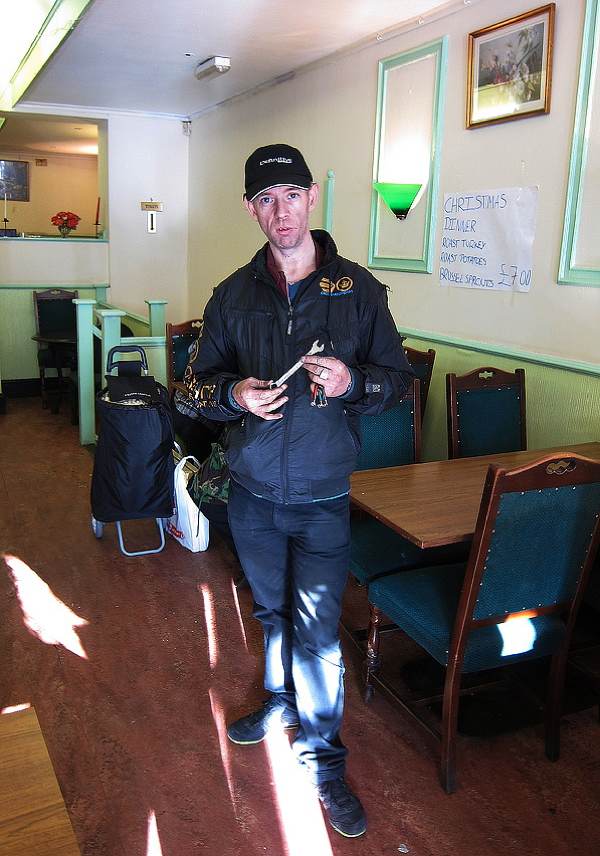
Gary Aspey, Wheel Truer, Spitalfields, December 2011

Henry Chapman, Jack of All Trades, Gina’s Restaurant, December 2011

Gina Christou of Gina’s Restaurant, Bethnal Green Rd, January 2012

Brian Welch, Gina’s Restaurant, Bethnal Green Rd, January 2012

Julia Sparks, Gina’s Restaurant, Bethnal Green Rd, January 2012

Stuart Faulkner with his sons Luke & Ben, E Pellicci, Bethnal Green December 2012

Quentin Croucher, E Pellicci, Bethnal Green, December 2012

Nevio Pellicci, E Pellicci, Bethnal Green, December 2012

Teresa Kenny, E Pellicci, Bethnal Green, December 2012

Smithfield, Christmas Eve 2012
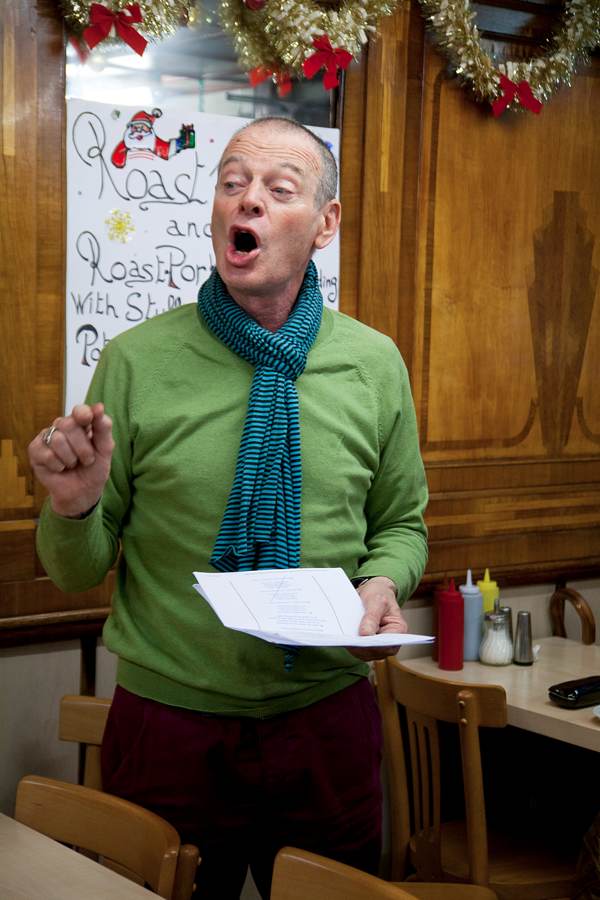
Rodney Archer, E Pellicci Christmas Party, Bethnal Green, 2012

Clerkenwell Fire Station, February, 2013

Clerkenwell Fire Station, February 2013

Lyndsay Hooper, Hula Hoop Festival, Mile End, May 2013

Andrew Holmes, Aldgate Press, Aldgate, June 2013
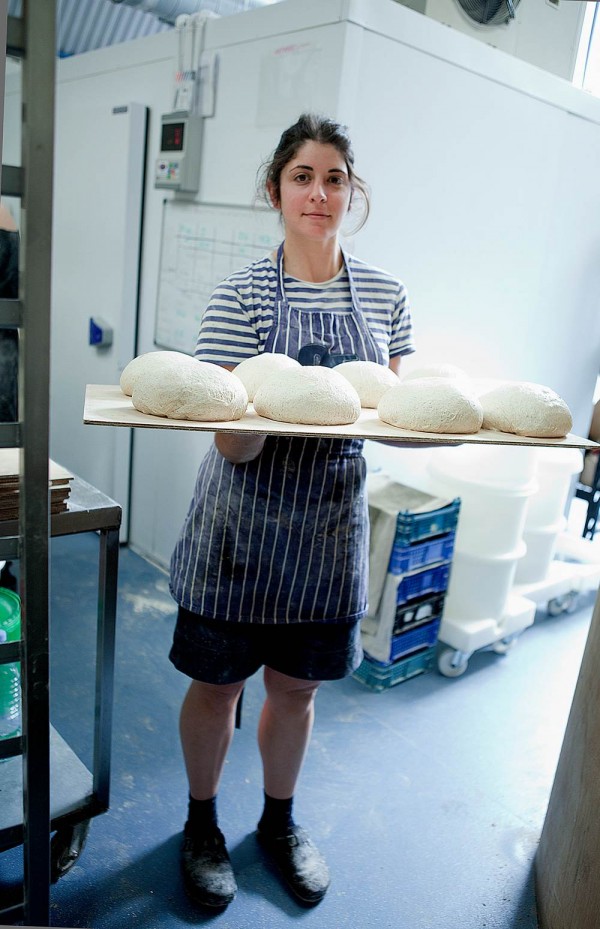
Lauren Gerstal, E5 Bakehouse, London Fields, July 2013
Photographs copyright © Estate of Colin O’Brien
I will be reminiscing about my collaborations with Colin O’Brien at Unit G Gallery, 12a Collent St, Hackney, E9 6SG, on Thursday 20th October at 6:30pm as part of the current retrospective of his photography taken outside London, THIS ENGLAND.
Clive Murphy’s Matchbox Labels

Clive Murphy, Phillumenist
Nothing about this youthful photo of the novelist, oral historian and writer of ribald rhymes, Clive Murphy – resplendent here in a well-pressed tweed suit and with his hair neatly brushed – would suggest that he was a Phillumenist. Even people who have known him since he came to live in Spitalfields in 1973 never had an inkling. In fact, evidence of his Phillumeny only came to light when Clive donated his literary archive to the Bishopsgate Institute and a non-descript blue album was uncovered among his papers, dating from the era of this picture and with the price ten shillings and sixpence still written in pencil in the front.
I was astonished when I saw the beautiful album and so I asked Clive to tell me the story behind it. “I was a Phillumenist,” he admitted to me in a whisper, “But I broke all the rules in taking the labels off the matchboxes and cutting the backs off matchbooks. A true Phillumenist would have a thousand fits to see my collection.” It was the first time Clive had examined his album of matchbox labels and matchbook covers since 1951 when, at the age of thirteen, he forsook Phillumeny – a diversion that had occupied him through boarding school in Dublin from 1944 onwards.
“A memory is coming back to me of a wooden box that I made in carpentry class which I used to keep them in, until I put them in this album,” said Clive, getting lost in thought, “I wonder where it is?” We surveyed page after page of brightly-coloured labels from all over the world pasted in neat rows and organised by their country of origin, inscribed by Clive with blue ink in a careful italic hand at the top of each leaf. “I have no memory of doing this.” he confided to me as he scanned his handiwork in wonder,“Why is the memory so selective?”
“I was ill-advised and I do feel sorry in retrospect that they are not as a professional collector would wish,” he concluded with a sigh, “But I do like them for all kinds of other reasons, I admire my method and my eye for a pattern, and I like the fact that I occupied myself – I’m glad I had a hobby.”
We enjoyed a quiet half hour, turning the pages and admiring the designs, chuckling over anachronisms and reflecting on how national identities have changed since these labels were produced. Mostly, we delighted at the intricacy of thought and ingenuity of the decoration once applied to something as inconsequential as matches.
“There was this boy called Spring-Rice whose mother lived in New York and every week she sent him a letter with a matchbox label in the envelope for me.” Clive recalled with pleasure, “We had breaks twice each morning at school, when the letters were given out, and how I used to long for him to get a letter, to see if there was another label for my collection.” The extraordinary global range of the labels in Clive’s album reflects the widely scattered locations of the parents of the pupils at his boarding school in Dublin, and the collection was a cunning ploy that permitted the schoolboy Clive to feel at the centre of the world.
“You don’t realise you’re doing something interesting, you’re just doing it because you like pasting labels in an album and having them sent to you from all over the world.” said Clive with characteristic self-deprecation, yet it was apparent to me that Phillumeny prefigured his wider appreciation of what is otherwise ill-considered in existence. It is a sensibility that found full expression in Clive’s exemplary work as an oral historian, recording the lives of ordinary people with scrupulous attention to detail, and editing and publishing them with such panache.







Clive Murphy, Phillumenist
Images courtesy of the Clive Murphy Archive at the Bishopsgate Institute
You may like to read my other stories about Clive Murphy
Clive Murphy’s oral histories are available from Labour and Wait
John Claridge At East London Liquor Co.

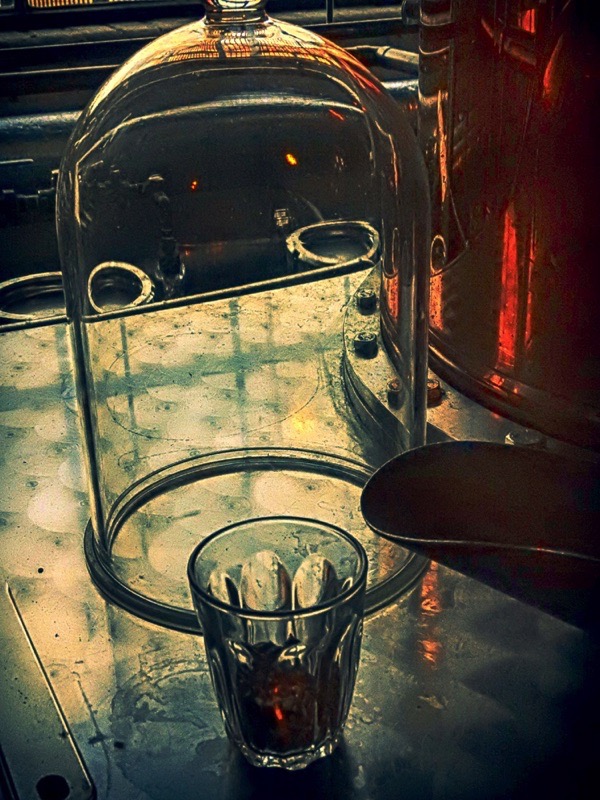
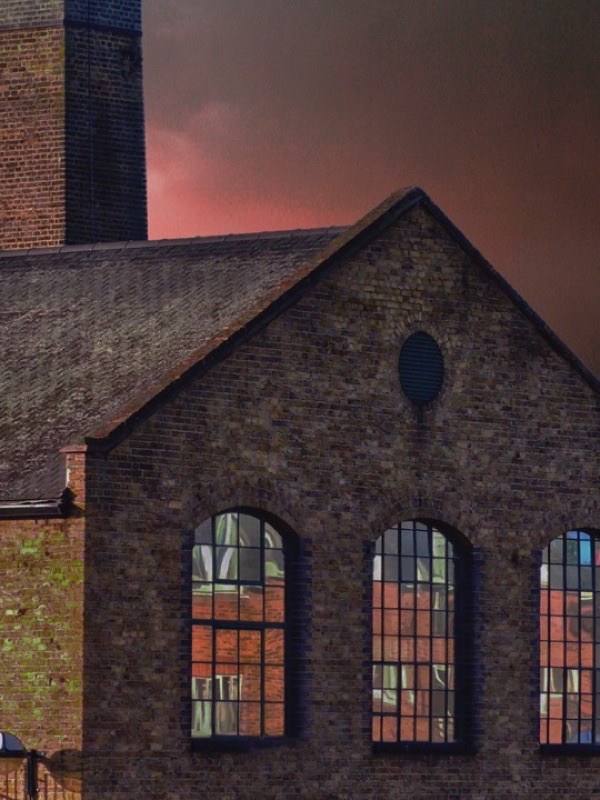
There is nothing like a glass or two of gin at nine-thirty in the morning to bring the mind into sharp focus, as Contributing Photographer John Claridge & I discovered last week when we paid a visit to the East London Liquor Company on the canal next to Victoria Park. It was the morning after the opening of John’s East End photography exhibition at The Society Club, but nevertheless we both arrived at the distillery, housed in a former glue factory, before nine – and thus the tasting that we were required to undertake as part of our assignment served the function of ‘the hair of the dog.’
At the stroke of nine, the distillery staff arrived and admitted us to their workplace. We were astonished by the spectacle of the tall copper stills extending to the roof at the rear of the building. These gleaming cylinders embellished with pipes and valves appeared to me like vast wind instruments awaiting giant jazz musicians to play upon them. It was a fancy dispelled by the unexpected pungent scent of grapefruit and lemon, as distiller Sam Garbutt set to peeling citrus fruit and suspending the peel in the warm still while the grain spirit was added. This vapour infusion is sufficient to impart an aroma of grapefruit to the London Dry Gin that is distilled here. I watched Sam as he hastily measured out the coriander, juniper berries, cardamon, angelica root and cubeb berries, concocting a heady mixture of botanicals.
Head distiller Tom Hills was taking a moment to consult his laptop in between supervising the beginning of the day’s distillation, which would extend over the next seven hours. “I’ve got a zillion things to do today,” I heard him say under his breath. No hyperbole for the man responsible for producing between five and six hundred bottles of gin and vodka every day at the first new distillery to open in the East End for over a century. Founded just two years ago and exporting around the world, the East London Liquor Company has already established a formidable reputation for the quality of its gin and vodka, with whisky to come next year too.
After the first flurry of activity, setting up the stills, the pace relented as the distilling process commenced and John had taken his photographs, so there was no option but to try each of the three varieties of gin and study their distinguishing characteristics.
I would not describe myself as a gin drinker, so I had no idea what to expect of the London Dry Gin but I was pleasantly surprised by its complex aromatic taste with citrus overtones, which quickly dispelled any memory of the familiar industrially-produced gin which is commonplace. This was something else altogether and, even at nine-thirty, I was fascinated that it was possible to distinguish each of the botanicals within the blend. By contrast, Batch No.1 was a drier taste with a hint of darjeeling tea which gave it ‘bite’ and complemented the citrus aroma. Batch No.2 proved to be the most complex of the three with all the botanical flavours in the foreground. I alternated sips from each of the different glasses in front of me to clarify these relative qualities in my perception and it was a satisfying achievement to have grasped the comparative nature of these spirits, thus filling an important gap in my education before ten o’clock in the morning.
Meanwhile, John Claridge was regaling the distillers with tales of his visits to the Jack Daniels Distillery in Lynchburg in the ‘dry’ state of Tennessee during the eighties, when he took intimate black and white portraits of the distillery workers, initiating a series of advertisements which run to this day undertaken by other photographers carrying on where John left off.
It did not take much persuasion to introduce the obligation – as a matter of courtesy – of trying the distillery produce to John. Composing his attention, he raised a glass of London Dry Gin slowly to his lips, took a sip and made an involuntary exclamation of delight. “This could turn me to drink,” he declared.


Tom Hills, Head Distiller
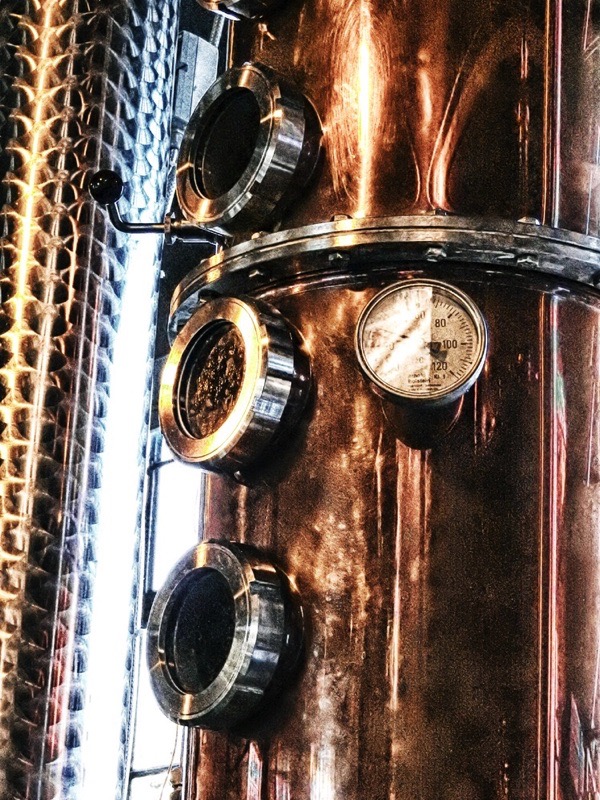

Sam Garbutt, Distiller


Chris Culligan, Distiller


Andy Mooney, Whisky Distiller


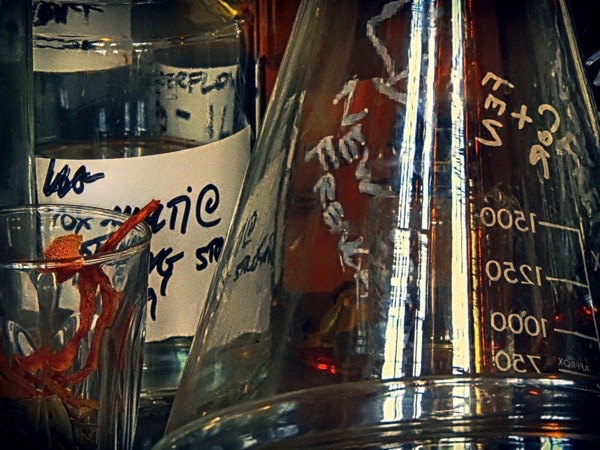



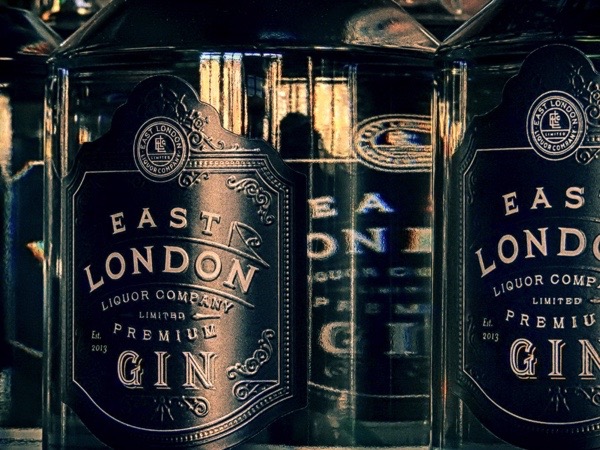


Photographs copyright © John Claridge
East London Liquor Company, Bow Wharf, 221 Grove Rd, E3 5SN
You may also like to read about
In Search Of The Boss Of Bethnal Green
Julian Woodford, author of THE BOSS OF BETHNAL GREEN sent me in search of Joseph Merceron, the Huguenot, gangster & corrupt magistrate, to take photographs of the locations of his story today as illustrations for the forthcoming biography published by Spitalfields Life Books in November – and I present a selection of these pictures here captioned with quotes from Julian’s text.
Julian Woodford will be giving a lecture about Joseph Merceron at WATERSTONES PICCADILLY, W1J 9HD on Tuesday 8th November at 7pm. (Tickets are free but email piccadilly@waterstones.com to reserve a place)
There are only a few tickets remaining now for the launch party on Thursday 3rd November at 7pm in the Hanbury Hall, Hanbury St (Click here to reserve a place)
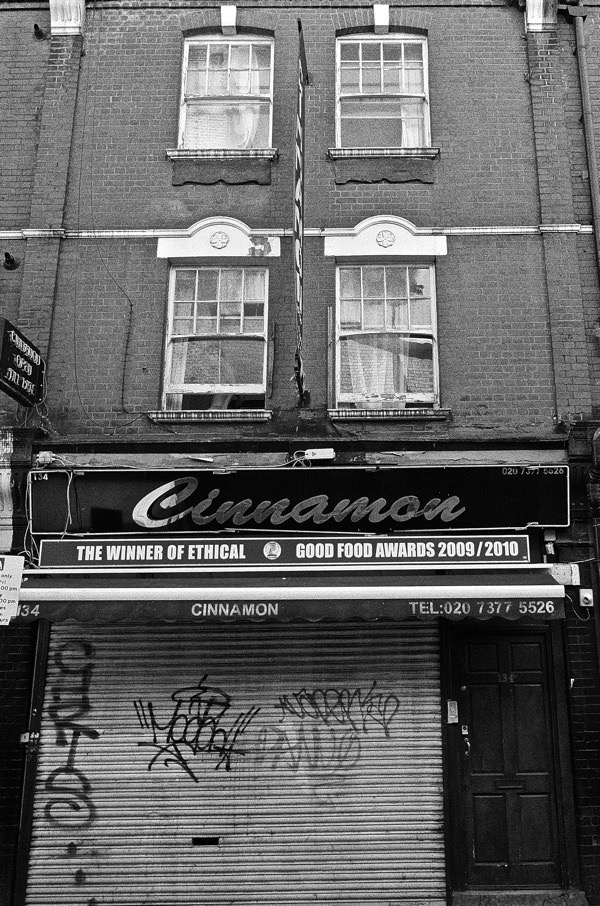
Birthplace of Joseph Merceron “On Sunday 29th January 1764, Joseph Merceron was born on Brick Lane, which formed the boundary between the parishes of Spitalfields and its eastward neighbour Bethnal Green. His parents were James Merceron, a Huguenot pawnbroker and former silk weaver, and his second wife Ann. The Mercerons had three other children: Annie, Joseph’s two-year-old sister, John, almost thirteen, and Catherine, eight, the latter two being the surviving offspring from James’s first marriage.”
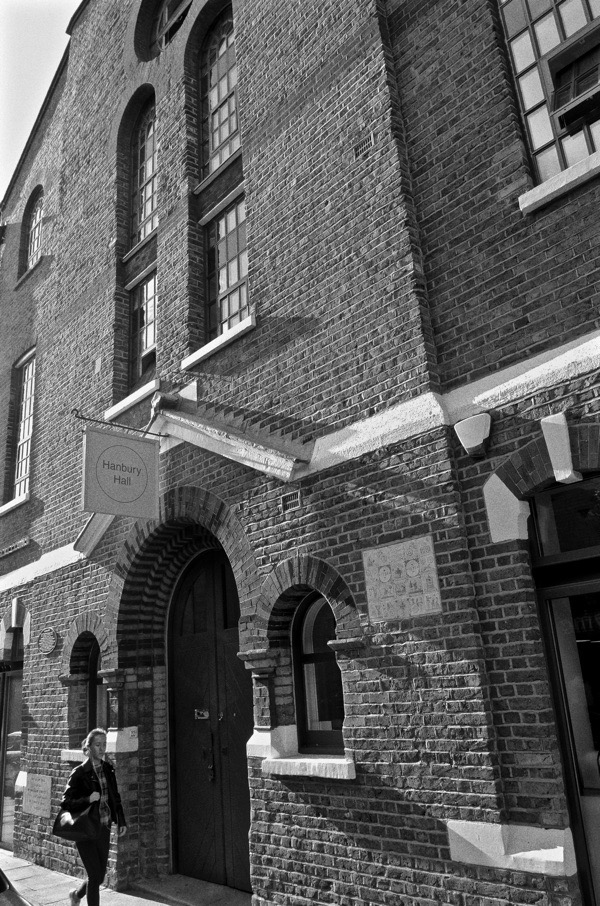
“Joseph was christened at the local Huguenot church known as La Patente, in Brown’s Lane (the building and lane are now known as Hanbury Hall and Hanbury Street) just a short walk from his parents’ house. The Mercerons, like other Huguenot families in the area, clung tightly to their nationality. Joseph’s details in the register of baptisms – the first recorded at La Patente for 1764 – were entered in French, which many families still insisted on speaking out of respect for their ancestors.”
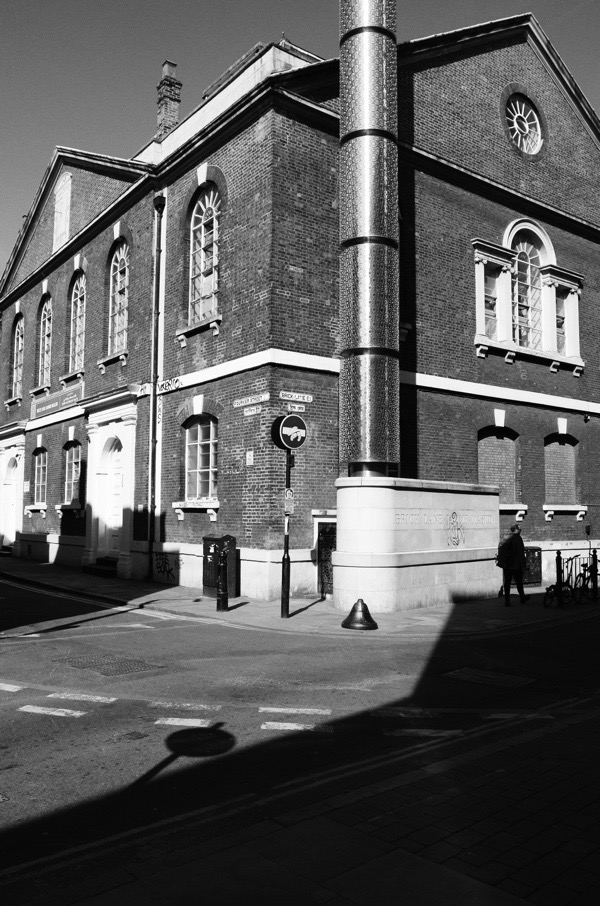
“On the corner of Fournier Street stands the Jamme Masjid, since 1976 one of London’s largest mosques. For much of the twentieth century it was a synagogue, and before that it spent a decade as a Methodist chapel. Originally, before a brief occupation by the London Society for Promoting Christianity amongst the Jews, it was a Huguenot church. High on a wall is the date of its completion, 1743, and a sundial with its motto: Umbra Sumus (‘we are shadows’).”
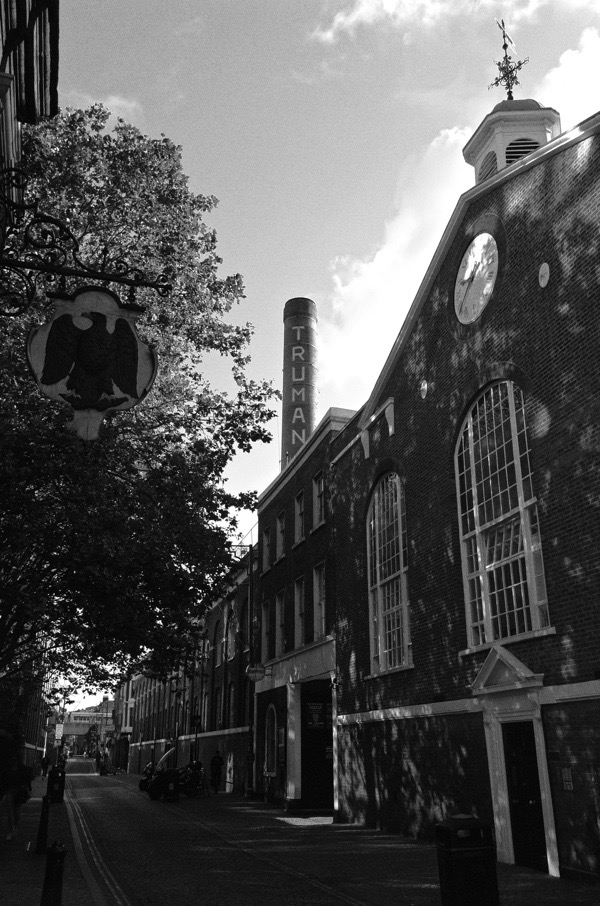
“The Merceron pawnshop at 77 Brick Lane was at the epicentre of this district, among a row of ramshackle buildings directly opposite Sir Benjamin Truman’s imposing and famous Black Eagle brewery. The Black Eagle was one of the largest breweries in the world. To those living opposite, the mingled odours of yeast, malt and spilt beer – not to mention the steaming output of the many dray horses – must have been overpowering, even by the pungent standards of the times. The noise, too, was tremendous, as the shouts of draymen punctuated the rumble of horse-drawn carriages and carts up and down the lane.”
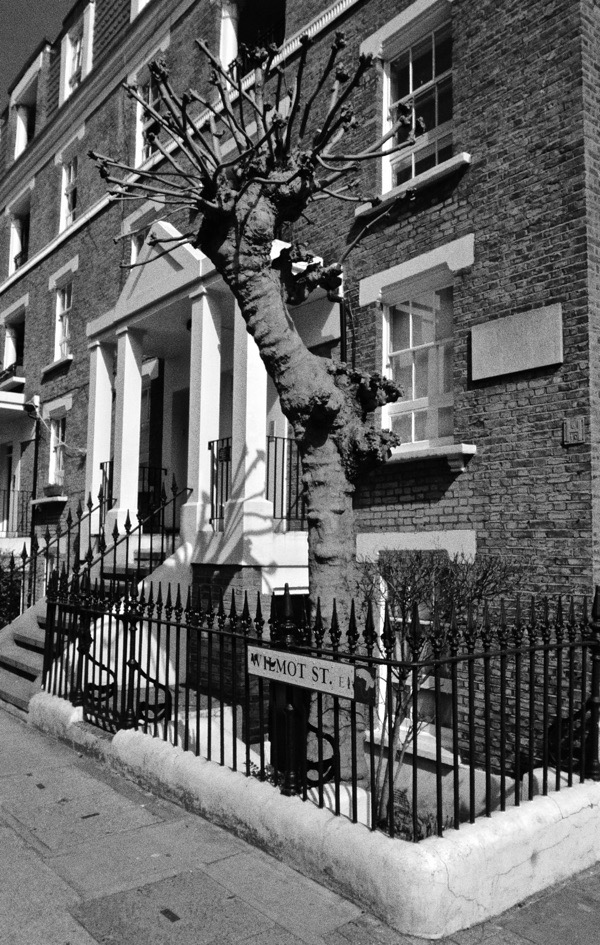
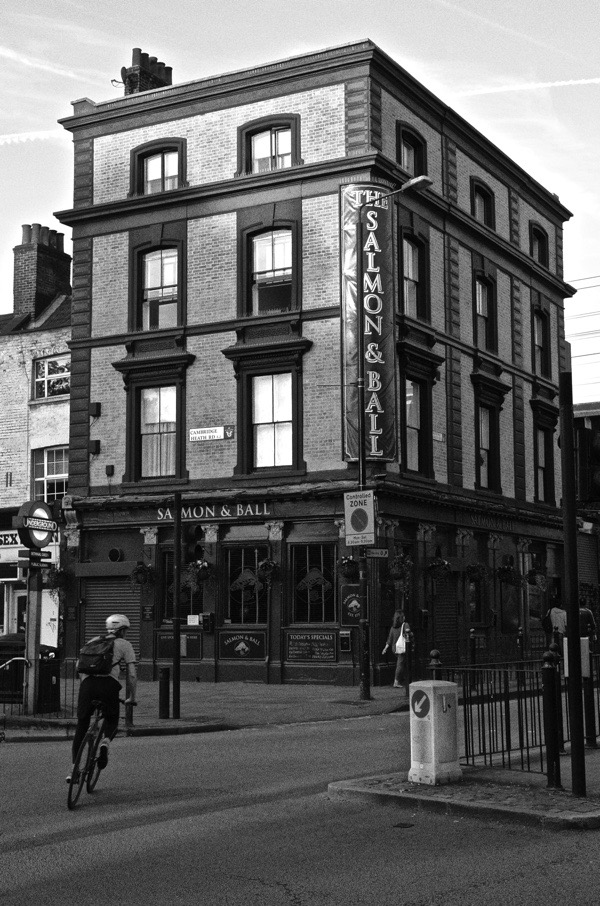
“The judge had ordered the execution to take place several miles away at Tyburn, the usual site of such events in London, but the master weavers – keen to dispose of Valline and Doyle in front of their own community to discourage further loom cutting – lobbied successfully to change the location to ‘the most convenient place near Bethnal Green church’. Several thousand people assembled outside The Salmon & Ball to see Valline and Doyle hang. Bricks and stones were thrown during the assembly of the gallows. They protested their innocence to the end, but to no effect. Doyle’s last words were enough to ignite an already explosive situation. As soon as the hanging was over, the crowd tore down the gallows and surged back to Spitalfields…”
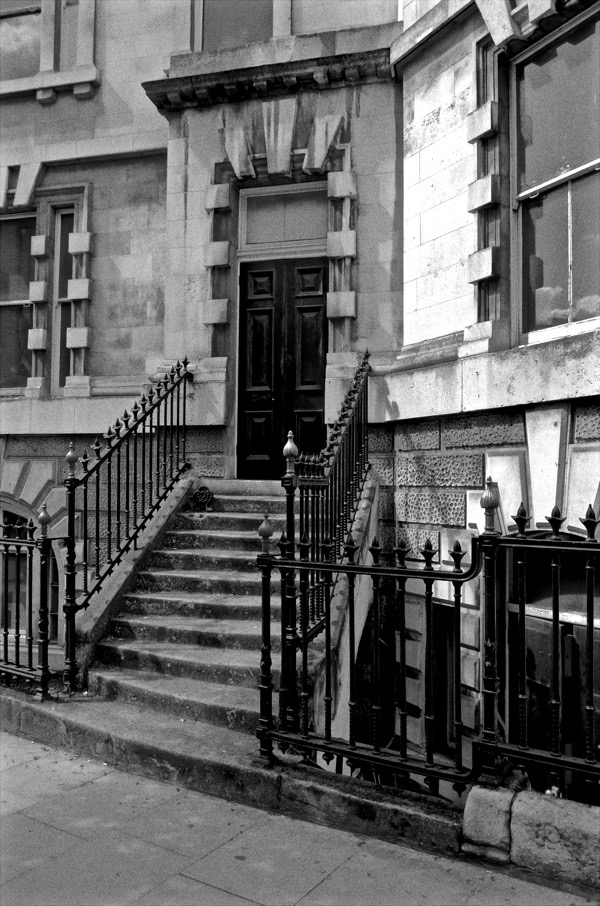
“On 26th October 1795, Joseph Merceron donned his magistrate’s wig and robes and climbed the steps of the imposing Sessions House on Clerkenwell Green for his first Middlesex Sessions meeting. This was a world away from Brick Lane. The Sessions House, built in the aftermath of the Gordon Riots, was awe-inspiring and was said to rival any courthouse in England.”
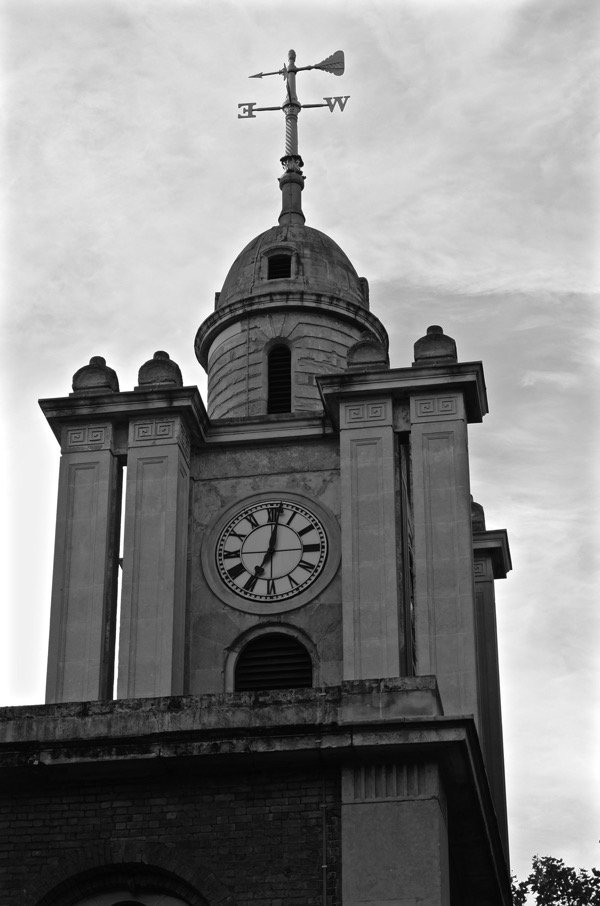
“St John on Bethnal Green was built by the eminent architect Sir John Soane but budgetary constraints led to his grand design for a steeple being aborted, replaced with a stunted tower of particularly phallic design that rapidly became a source of bawdy amusement throughout the neighbourhood. Merceron was outraged. Announcing that the design had ‘mortified and disappointed the expectations of almost every individual’, he ordered Brutton to write to complain. The task put Brutton in an acutely awkward position: how to explain the exact nature of the problem? The vestry clerk’s literary skills were tested to the limit as he described the tower’s ‘abrupt termination in point of altitude’ that made it ‘an object of low wit and vulgar abuse’.”
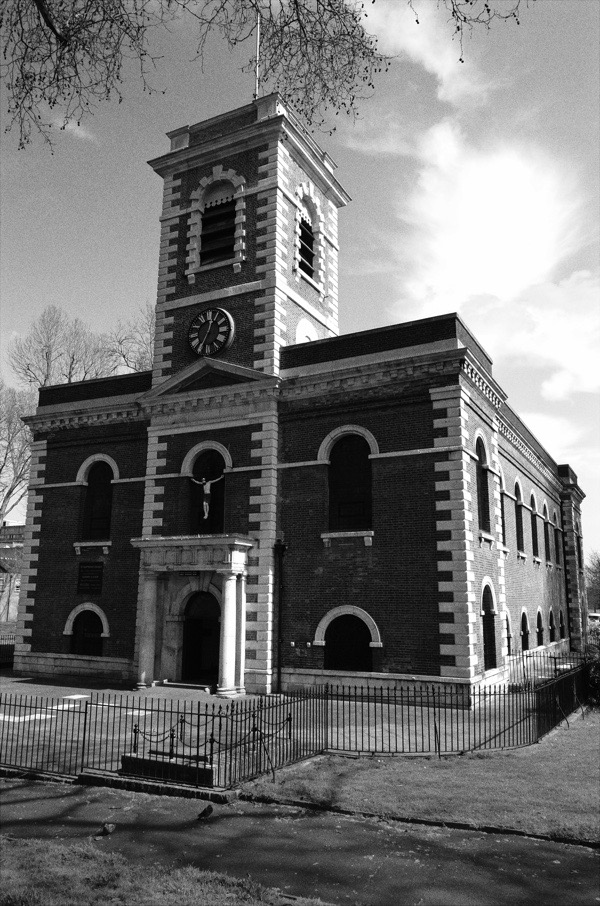
“All the great and good of London’s East End were there. Twenty thousand people, packed six deep in places along the Bethnal Green Road, had turned out to see the cortège on its way to St Matthew’s church. Just before one o’clock the procession arrived, at a sedate walking pace. The jet-black horses, with their sable plumes, were blinkered to prevent anything from distracting the stately progress of the hearse. Merceron was the original ‘Boss’ of Bethnal Green, the Godfather of Regency London, controlling its East End underworld long before celebrity mobsters such as the infamous Kray twins made it their territory. His funeral at the church of St Matthew, Bethnal Green – the very same church where the Krays’ funerals would be held more than 150 years later – reflected his importance: it was by far the biggest event to take place at the church since it was established in the 1740s.”
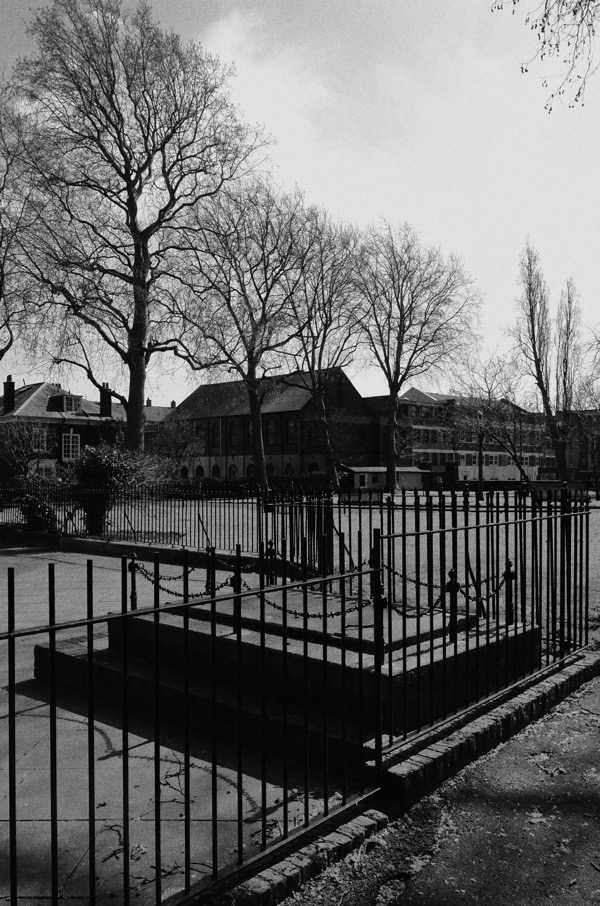
Tomb of Peter Renvoize “His closest ally and childhood friend, Peter Renvoize, was repeatedly elected as churchwarden for much of this period, from which position he helped Merceron pull off his most audacious financial coup yet. Bethnal Green’s share of the government relief grant was £12,200, equivalent to almost three times the annual poor’s rates raised by the parish. Having obtained the money, Merceron appointed himself chairman of a committee, with four of his closest associates, including Renvoize, to manage its distribution. What happened next is difficult to determine. But it is clear that, five months after the government had advanced the funds, there were several thousand pounds sitting in Merceron’s own account.”
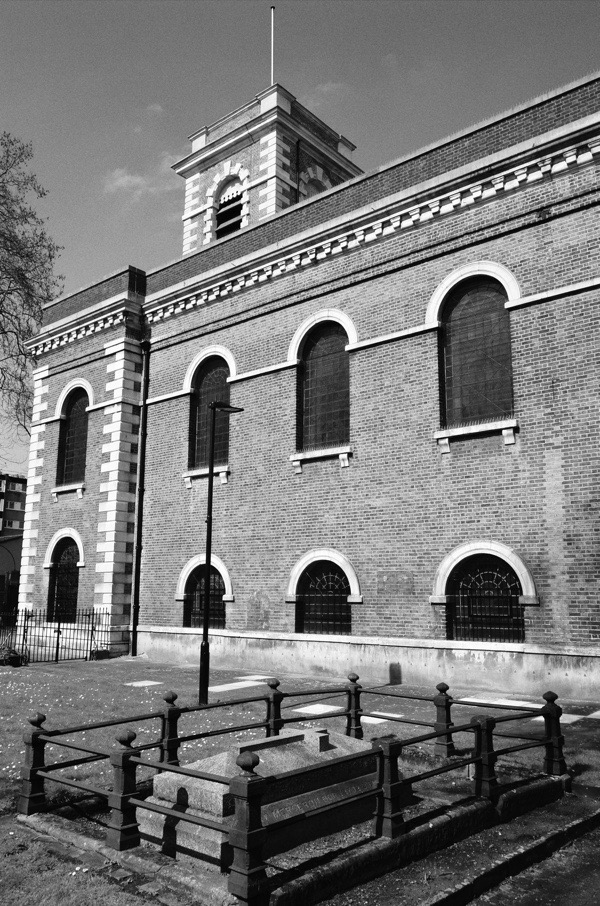
“As for Joseph Merceron, lying buried in the shadow of the vestry room he dominated for half a century, there is one last strange episode to recount. In the afternoon sunshine of Saturday 7th September, 1940, as millions of Londoners sat down to their tea, the ‘Blitz’ began. Bethnal Green suffered terribly, and in the carnage St Matthew’s church took a direct hit from an incendiary bomb. Next morning it was a roofless, burnt out shell, but two gravestones survived the bombing intact. The first, outside the main entrance to the church, is that of Merceron’s old friend Peter Renvoize. About twenty paces away, a large pink granite slab, surrounded by a low iron rail in the shelter of the south wall of the church, is the grave of Joseph Merceron and his family. He spent a lifetime cheating the law, somehow it is fitting that he should have cheated the Luftwaffe too.”
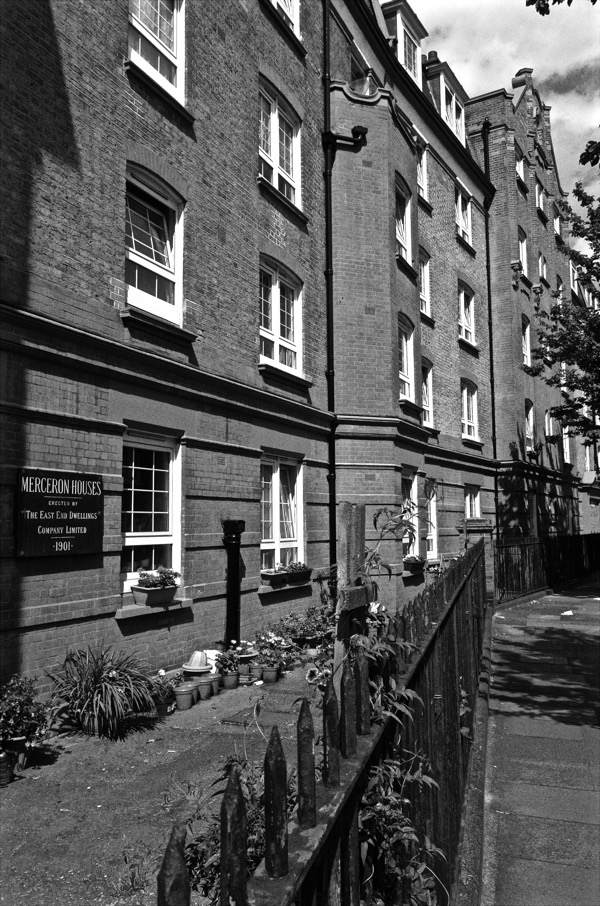
“Merceron Houses, erected in 1901 by the East End Dwellings Company on land formerly part of Joseph Merceron’s garden in Bethnal Green.”
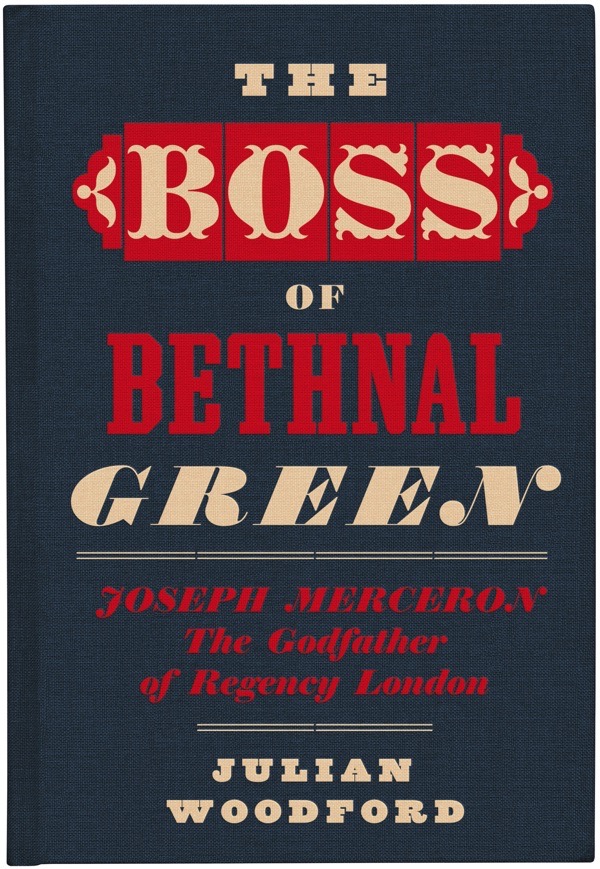
CLICK HERE TO ORDER A SIGNED COPY OF THE BOSS OF BETHNAL GREEN FOR £20

Follow @JosephMerceron on twitter
You may also like to read about












