Colin O’Brien Photography Workshop
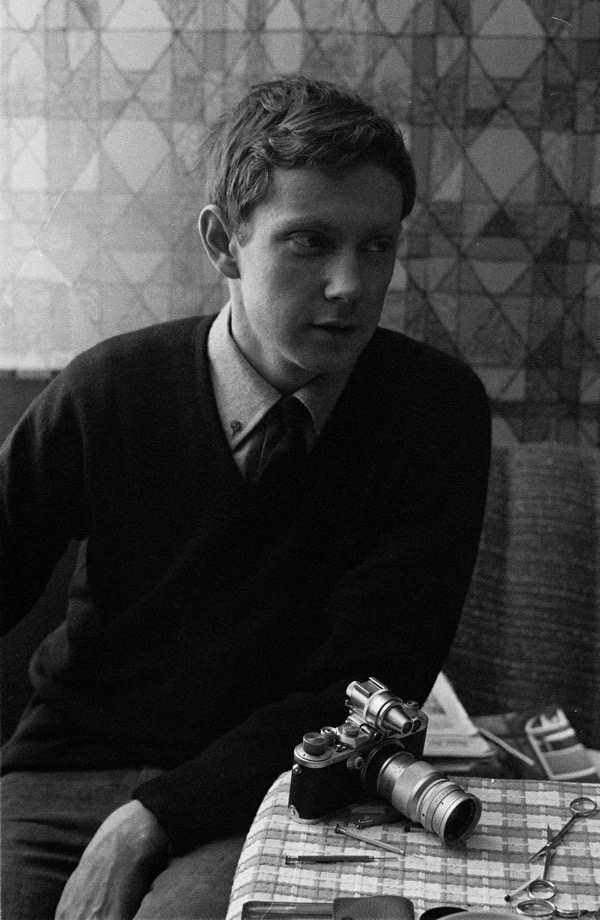
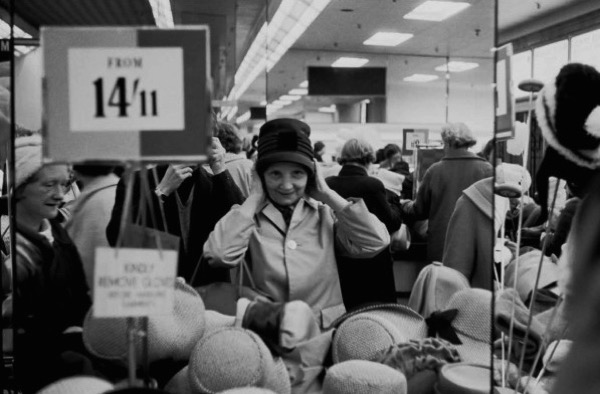
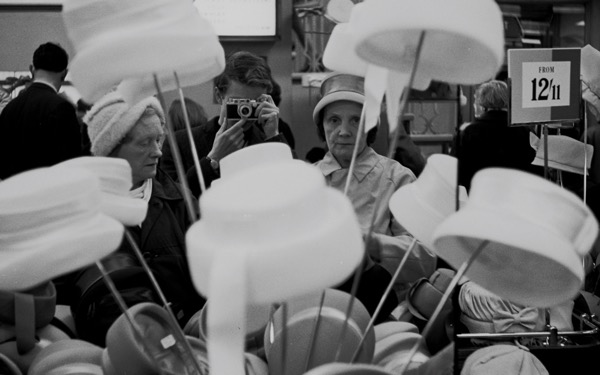
Colin O’Brien‘s life changed when – as an adolescent photographic prodigy – he received a Leica camera and now LEICA are staging a free one-day workshop for photographers as a tribute to Colin, our much-missed Contributing Photographer who died last summer. I will be introducing the day by talking about my work with Colin, participants will be able to learn about the workings of the latest Leica M and then sent forth with interactive maps of Clerkenwell to explore the streets where Colin took many of his most famous photographs. The workshop will be hosted by photographers Daniel Cuthbert & Clement Lauchard.
This event is now full, but if you are interested to be informed about future workshops please email welcome@leicastore-mayfair.co.uk
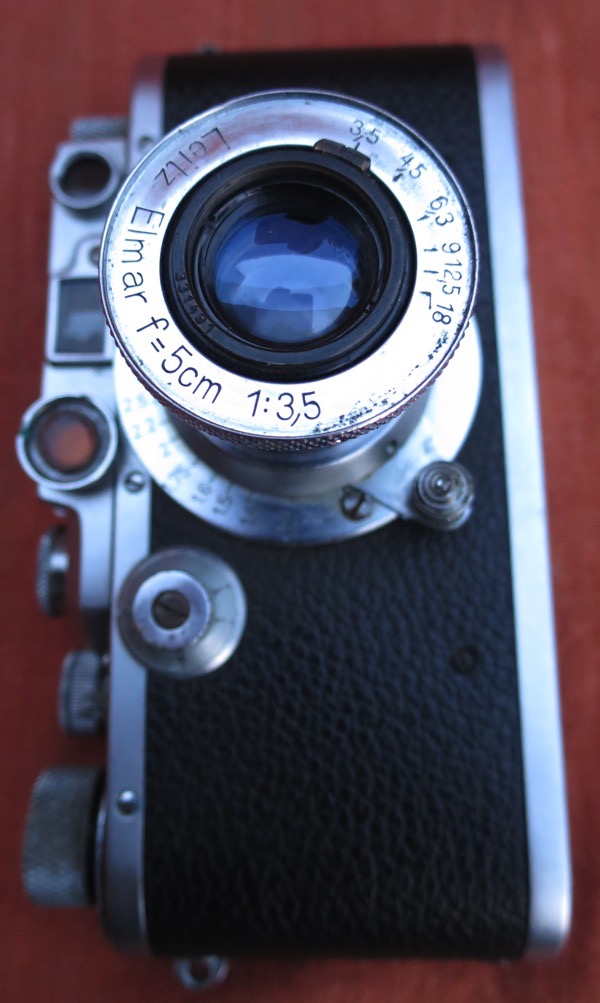
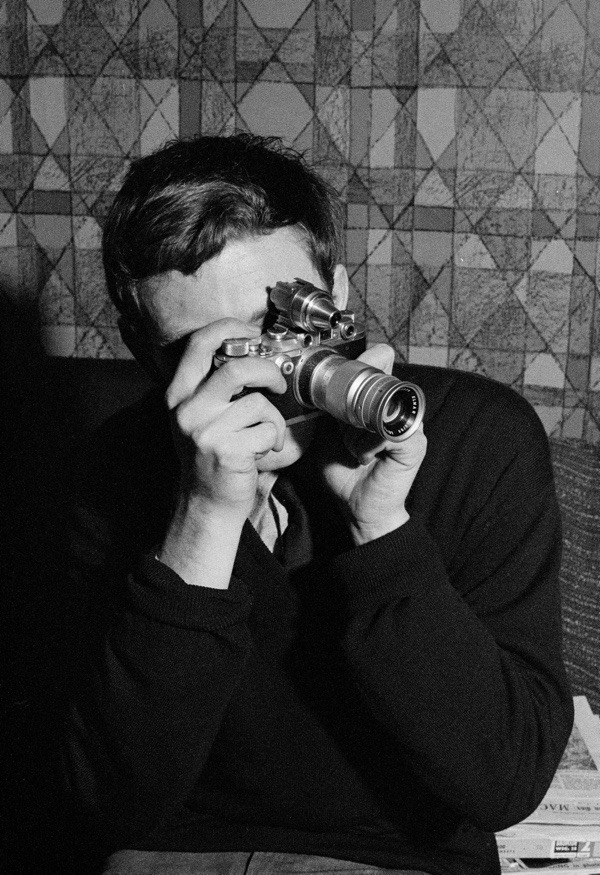
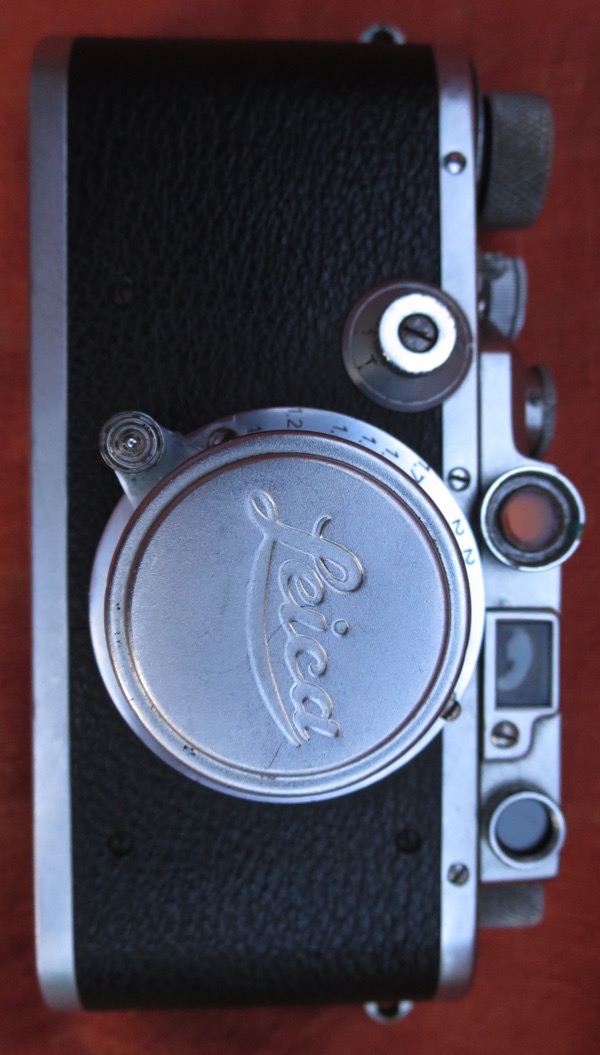
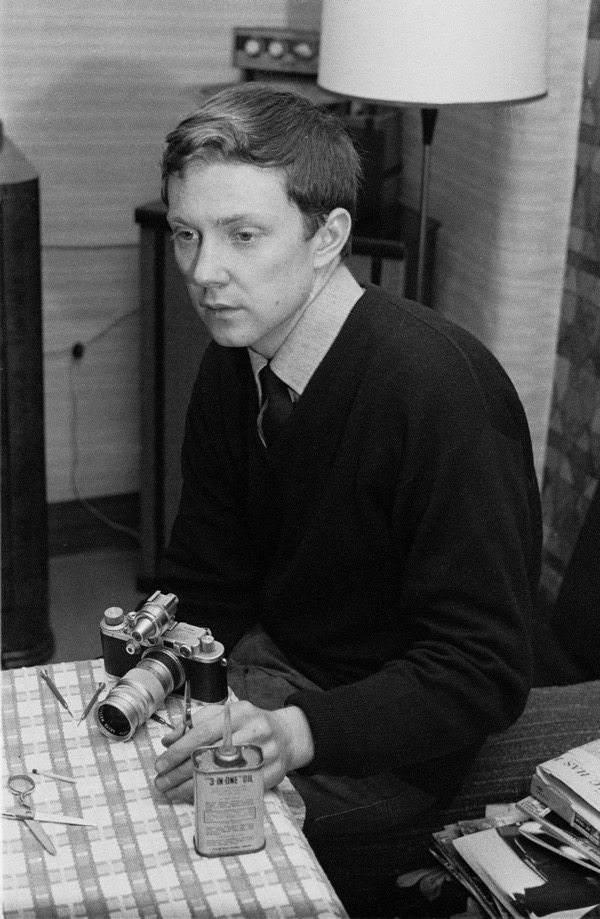
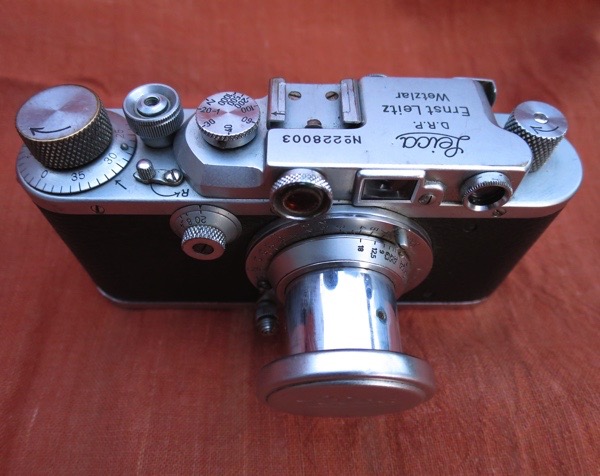
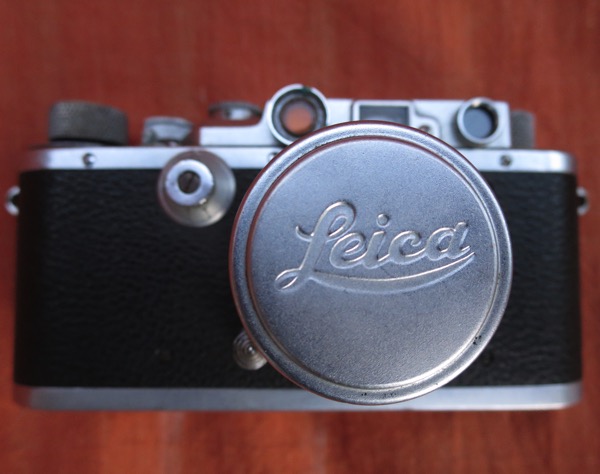
“I am not entirely sure how I came to be the owner of my prized Leica Model 111a with an Elmar f3.5 lens manufactured in 1936. Rumour has it that an Irish chauffeur who lived in Victoria Dwellings found it on the back seat of the Rolls Royce he drove and conveniently forgot to mention it to his employer. He must have seen me with my old box camera and offered the Leica to my parents for a nominal sum. These sorts of deals with expensive merchandise being sold ‘off the back of a lorry’ were not uncommon.” – Colin O’Brien on how he obtained the Leica camera with which he took many of his famous photographs.
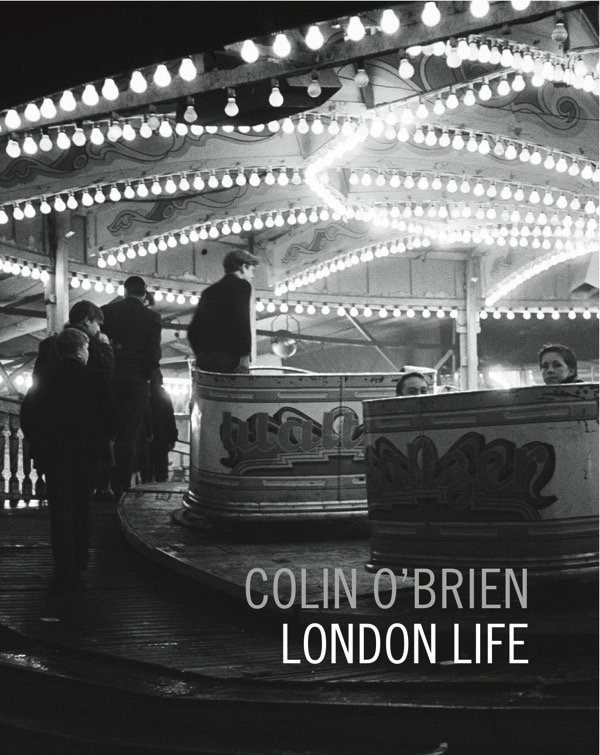
CLICK HERE TO ORDER A COPY OF COLIN O’BRIEN’S LONDON LIFE
You may also like to read about
Save The East End’s Architectural Heritage
At this crucial moment when so much history is being trashed, this is your opportunity to protect the buildings that you love in the East End. As part of the Local Plan produced by Tower Hamlets Council, submissions are currently being invited for buildings which are worthy of being Locally Listed because of their architectural, cultural, historical or social significance.
Anyone can nominate a building but the deadline for submissions is the end of January.
READ more about this scheme by clicking here.
PRINT application forms to submit buildings for Local Listing by clicking here.
CHECK if a building is already Locally Listed by clicking here for an interactive map.
I hope as many readers as possible will take advantage of this rare opportunity to protect our heritage. As examples of buildings that deserve formal protection, I show the small weavers’ houses below which Huguenots of Spitalfields are submitting for Local Listing.
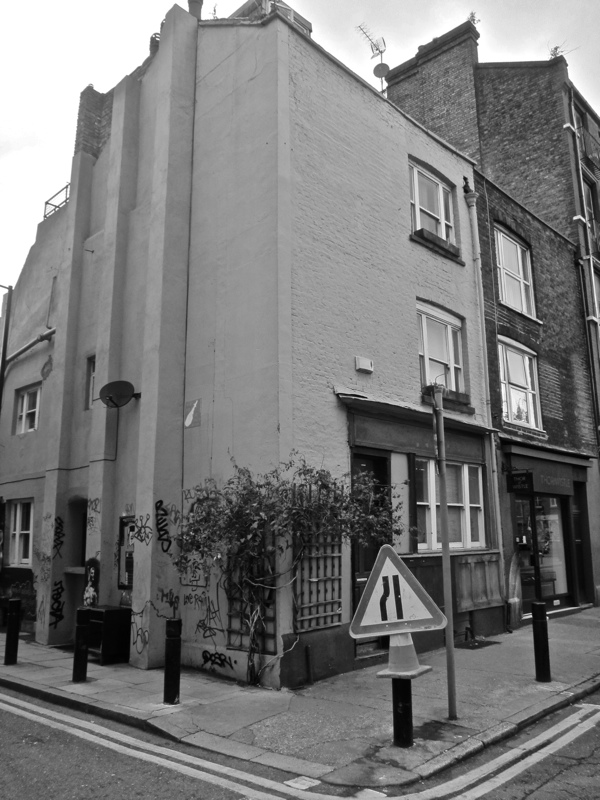
3 & 5 Club Row, two survivors of a terrace of six four-room houses built 1764-6
The terraces of silk merchants’ houses in Spitalfields declare their history readily, yet there are other more modest buildings of the same era which survive as the last vestiges of the workshops and dwellings where the weavers pursued their trade. You might easily walk past without even noticing these undemonstrative structures, standing disregarded like silent old men in the crowd. I am indebted to Peter Guillery and his book The Small House in Eighteenth Century London for highlighting these buildings where the silk weavers worked which are just as significant historically as the larger homes of those who profited from their labour.
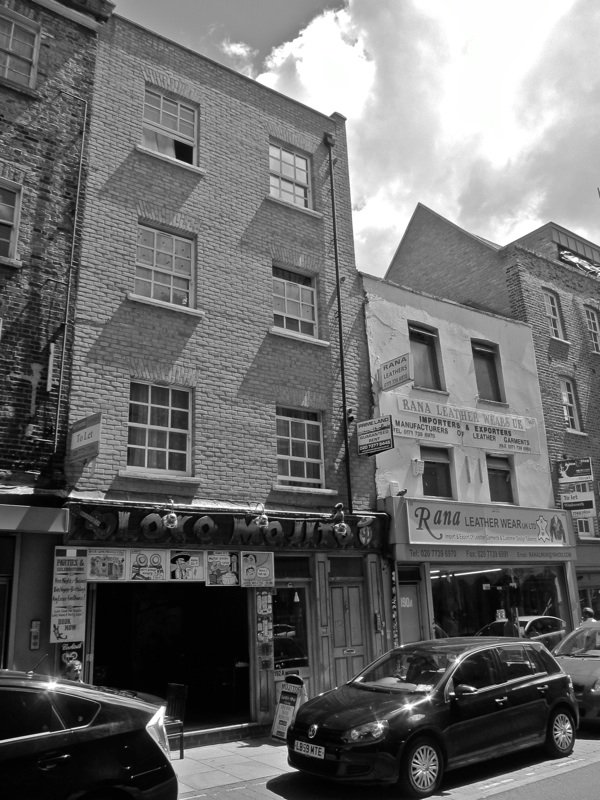
190 & 192 Brick Lane, weavers’ houses of 1778-9 built by James Laverdure (alias Green), Carpenter
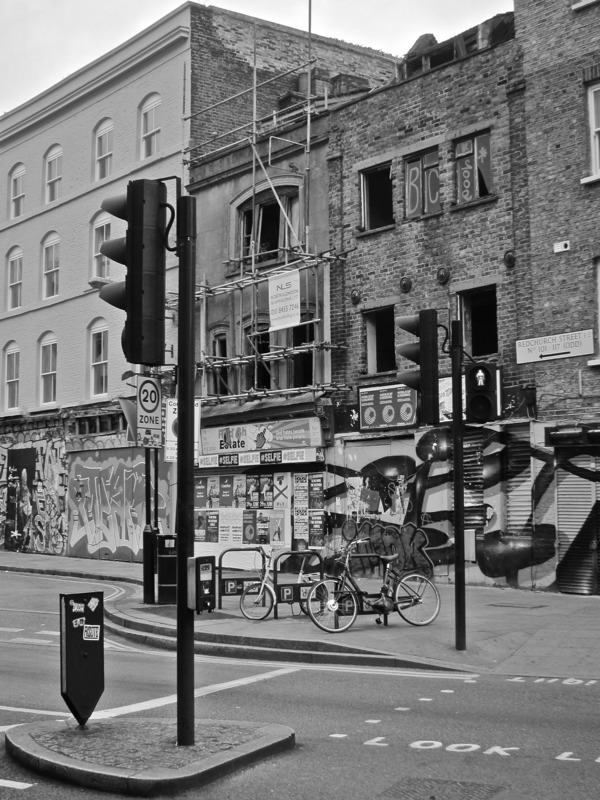
113 & 115 Bethnal Green Rd, two five room houses of c.1735 probably built by William Farmer, Carpenter
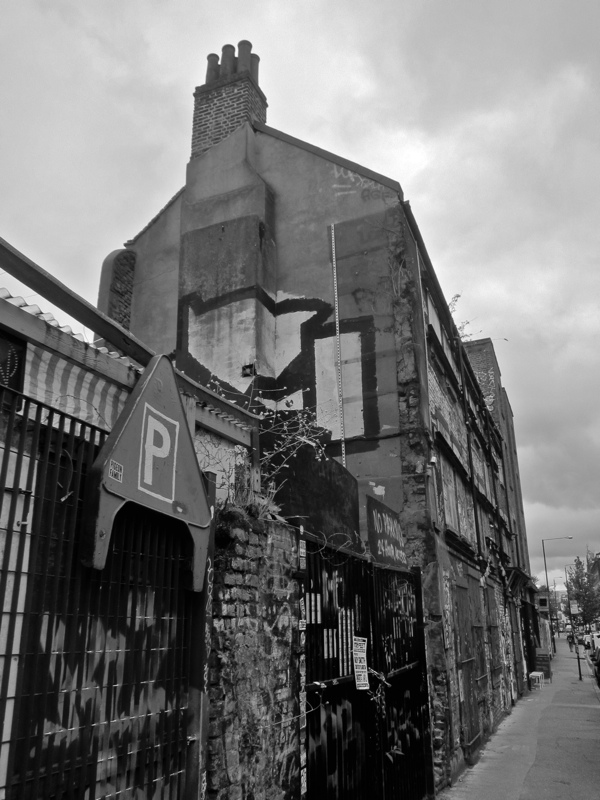
70-74 Sclater St, three houses built for weavers c.1719
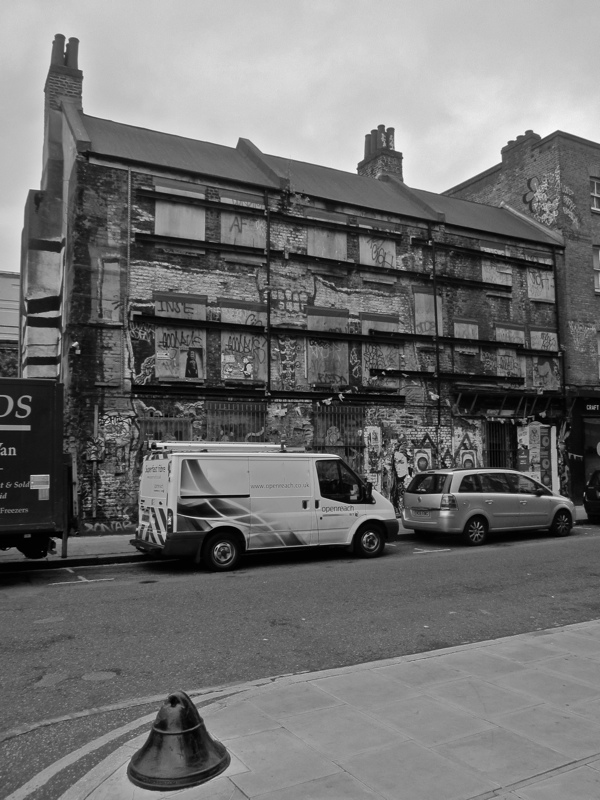
70-74 Sclater St, No 70 was refronted in 1777

97 & 99 Sclater St, built c 1720
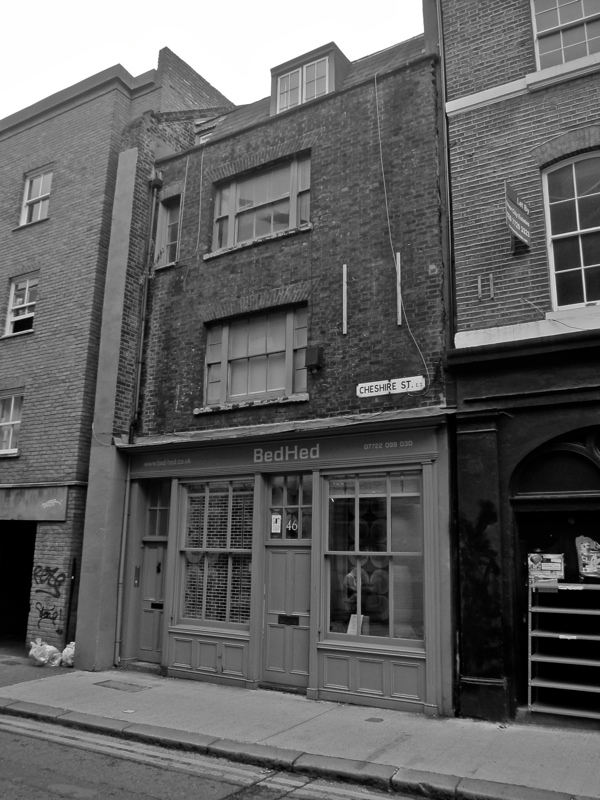
46 Cheshire St, built in the sixteen-seventies
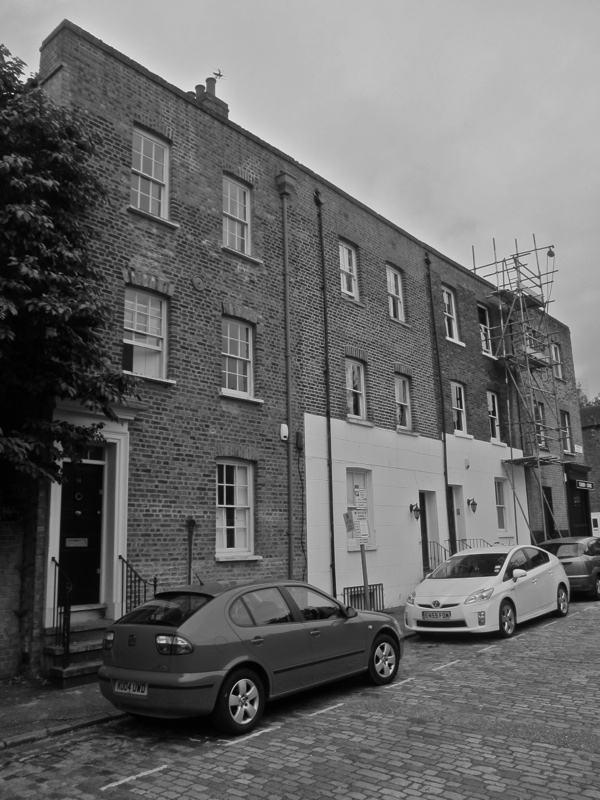
4a – 6a Padbury Court, probably built c. 1760

125 Brick Lane, shop and workshop tenement probably built in 1778 for Daniel Dellacort, a distiller
You might also like to read about
Barnett Freedman, Artist & Illustrator
David Buckman, author of the authoritative book about the East London Group From Bow to Biennale, profiles Barnett Freedman (1901–1958) who was born in Stepney. An equally talented yet less-well-known contemporary of Edward Bawden and Eric Ravilious, his work deserves to be enjoyed by a wider audience.
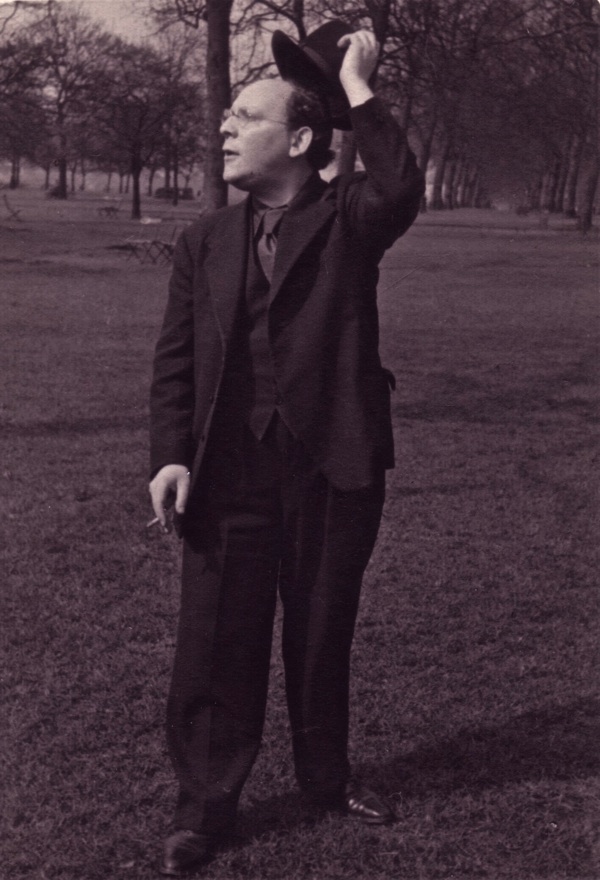
Barnett raises his hat in Kensington Gardens to celebrate designing the Jubilee stamp for George V
Odds were heavily stacked against Barnett Freedman becoming a professional artist. Born in 1901 to a poor Jewish couple, living at 79 Lower Chapman St, Stepney, who had emigrated to the East End of London from Russia, Barnett’s childhood was scarred by ill-health and he was confined to bed between the ages of nine and thirteen. Yet he educated himself, learning to read, write, play music, draw and paint, all within a hospital ward. His nephew, Norman, recalled that “He played the violin for the king,” but that “When he acquired a bicycle his mother cut off the tyres as she considered it too dangerous for her son to ride.”
By sixteen, Barnett was earning his living as a draughtsman to a monumental mason for a few shillings a week. He made the best of this unexciting work in the day, spending his evenings at St Martin’s School of Art for five years from 1917. Eventually, he moved to an architect’s office, working up his employer’s rough sketches and, during a surge of war memorial work, honing his skills as a lettering artist.
For three successive years, Barnett failed to win a London County Council Senior Scholarship in Art that would enable him to study full time at the Royal College of Art under the direction of William Rothenstein. Finally, Barnett presented a portfolio of work to Rothenstein in person. Impressed, he put Barnett’s case to the London County Council Chief Inspector himself and a stipend of £120 a year was made, enabling Barnett to begin his studies in 1922. Under the direction of Rothenstein, Barnett’s talent flourished, taught by such fine draughtsmen as Randolph Schwabe and stimulated by fellow students Edward Bawden, Raymond Coxon, Henry Moore, Vivian Pitchforth and John Tunnard. Eight years after his entry, Rothenstein took Barnett onto the staff.
Although he could be prickly and even alarming on occasion, Barnett was revered by his former students. My late friends Leonard Appelbee and his wife Frances Macdonald, both artists, never stopped talking of his kindness. Burly Leonard used to help lift Barnett’s heavy lithographic stones when they were too much for the artist to manage alone, and when once Leonard and Frances considered moving to Hampstead, Barnett retorted – “You don’t want to go there. It’s an ‘orrible place!” According to Professor Rogerson, “He was a volatile character who did not respect authority and was always at war with the civil servants … yet I know people who were taught by him who say he was a very careful and punctilious teacher who paid a lot of attention to his students – though he could fire off if he was angry. At heart, I think he pretended to be a harsh kind of person but he was very good to a lot of people.”
After leaving the Royal College in 1925, Barnett had his share of problems. He painted prolifically but sold little – with his work only gradually being bought by collectors, although the Victoria and Albert Museum and Contemporary Art Society eventually bought drawings. In 1929, ill-health prevented him from working for a year. In 1930, he married Claudia Guercio whom he had met at art school, born in Lancashire of Sicilian ancestry. She also became a fine illustrator. Their son Vincent recalls that the home they created “was a warm place, vibrant with sound and brilliant colours, excitement darting from the music at night, the pictures on the walls, and the constant talking.”
Barnett enjoyed a long association with Faber and Faber, and his colour lithography and black-and-white illustrations for Siegfried Sassoon’s ‘Memoirs of an Infantry Officer,’ published in 1931, are outstanding. Works by the Brontë sisters, Walter de la Mare, Charles Dickens, Edith Sitwell, William Shakespeare and Leo Tolstoy benefited from his inspired illustration. Barnett believed that “the art of book illustration is native to this country … for the British are a literary nation.” He argued that “however good a descriptive text might be, illustrations which go with the writings add reality and significance to our understanding of the scene, for all becomes more vivid to us, and we can, with ease, conjure up the exact environment – it all stands clearly before us.”
He was also an outstanding commercial designer, producing a huge output of work for clients including Ealing Films, the General Post Office, Curwen Press, Shell-Mex and British Petroleum, Josiah Wedgwood and London Transport. The series of forty lithographs by notable artists for Lyons’ teashops was supervised by Barnett, including his famous and beautiful auto-lithographs ‘People’ and ‘The Window Box.’ Barnett wrote and broadcast on lithography and other aspects of art, with surviving scripts showing him to have been a natural talent at the microphone. When artists were being chosen for the series ‘English Masters of Black-and-White’ just after the Second World War, the editor, Graham Reynolds included Barnett among an illustrious band alongside George Cruikshank, Sir John Tenniel and Rex Whistler.
Barnett joined that select group who served as Official War Artists. Along with Edward Ardizzone and Edward Bawden, he accompanied the expeditionary force in the spring of 1940, before the retreat at Dunkirk, yet Barnett did not shed his iconoclasm and outspokenness when he donned khaki. Asked if he would paint a portrait of the legendary General Gort, General Officer Commanding-in-Chief, Barnett’s response was, “I am not interested in uniform … Oh well, perhaps I might if he’s got a good head?” On his return, Barnett continued to produce vivid, powerful pictures for the War Office and the Admiralty, gaining a CBE in 1946. But despite hobnobbing with military luminaries, Barnett never became posh, retaining his East End manner of speaking. Vincent Freeman recalls how Barnett once hailed a taxi-cab, “‘to the Athenaeum Club’, to which the incredulous driver retorted – ‘What, YOU?'”
After hostilities, Barnett remained busy with many commissions until in 1958, when he died peacefully in his chair at his Cornwall Gardens studio, near Gloucester Rd, aged only fifty-seven. Vincent recalls his final memory of his father, “discussing a pleasant lunch he had enjoyed with the family’s oldest friend [the artist] Anne Spalding.” Barnett was widely obituarized and his work was given an Arts Council memorial exhibition and tour. Subsequently, exhibitions such as that at Manchester Polytechnic Library in 1990 and new books have periodically enhanced his reputation.
Barnett Freedman is among my top candidates for a blue plaque, as one of the most distinguished British artists to emerge from the East End. There was a 2006 campaign to get him one in at 25 Stanhope St, off the Euston Rd, where he lived early in his career, but English Heritage rejected him, along with four others as of “insufficient stature or historical significance” – an unjust decision exposed by the Camden New Journal. The artist and Camden resident David Gentleman was one among many who supported the plaque, writing “He was a very good and original artist whose work deserves to be remembered. He influenced me in the sense of his meticulous workmanship. He was a real master of it.”
Professor Ian Rogerson, author of ‘The Graphic Work of Barnett Freedman’, considers Barnett “the world’s best auto-lithographer … A lot of people who do not seem to have contributed as much to the arts have managed to get blue plaques. Freedman’s work is being increasingly collected – and he is being recognised more and more as a major contributor to British art.” Of Barnett’s remarkable output, his son Vincent says – “A huge optimism and compassion shows itself to me in all his work and life. Humanity was his central driving force.”

Freedman family portrait with Barnett standing far left.

Barnett painting on the roof top as a war artist

Barnett shows his wife Claudia a mural he painted as the official Royal Marines artist.

Recording the BBC ‘Sight & Sound’ programme ‘Artists v Poets’ in February 1939, Sir Kenneth Clark master of ceremonies with scorer. Artists from left: Duncan Grant, Brynhild Parker, Barnett Freedman, Nicolas Bentley, and poets – W. J. Turner, Stephen Spender, Winifred Holmes and George Barker.

Barnett enjoys a successful afternoon fishing at Thame, Buckinghamshire, in the thirties.

Designs for the ‘London Ballet.’ (courtesy Fleece Press)

The Window Box, lithograph.

Advertisement for London Transport from the nineteen thirties.


Advertisement for the General Post Office rom the nineteen-forties.


Advertisement for Shell at the time of the Festival of Britain, 1951.

Design for Ealing Studios.

Cover for ‘Memoirs of a an Infantry Officer,’ Faber and Faber.

Cover for Walter de la Mare’s 75th Birthday Tribute, Faber and Faber.

Barnett Freedman’s ‘Claudia’ typeface.

Design for Dartington Hall, Devon.

Lithographs for ‘Oliver Twist,’ published by the Heritage Press in New York, 1939.


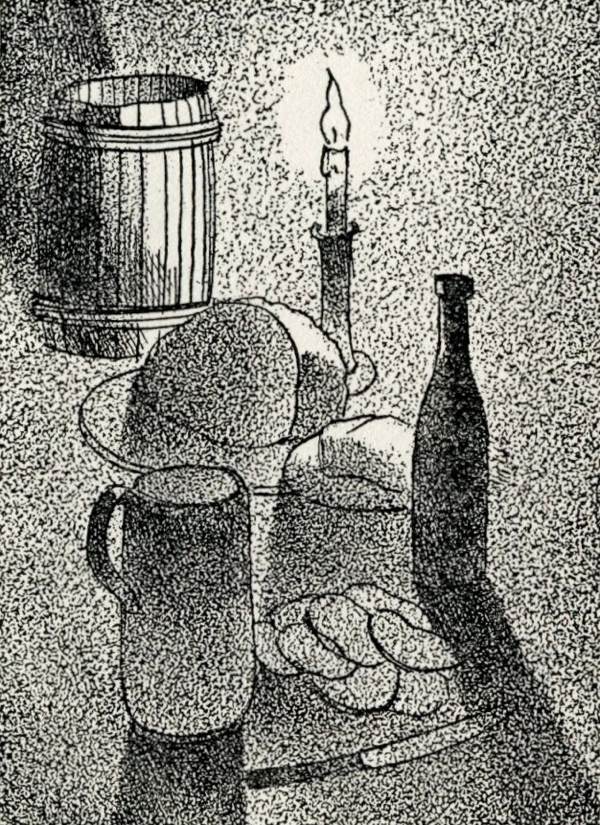


Barnett Freedman works courtesy Special Collections, Manchester Metropolitan University
You may also like to read David Buckman’s other features
At Joseph Harker’s Paint Studios
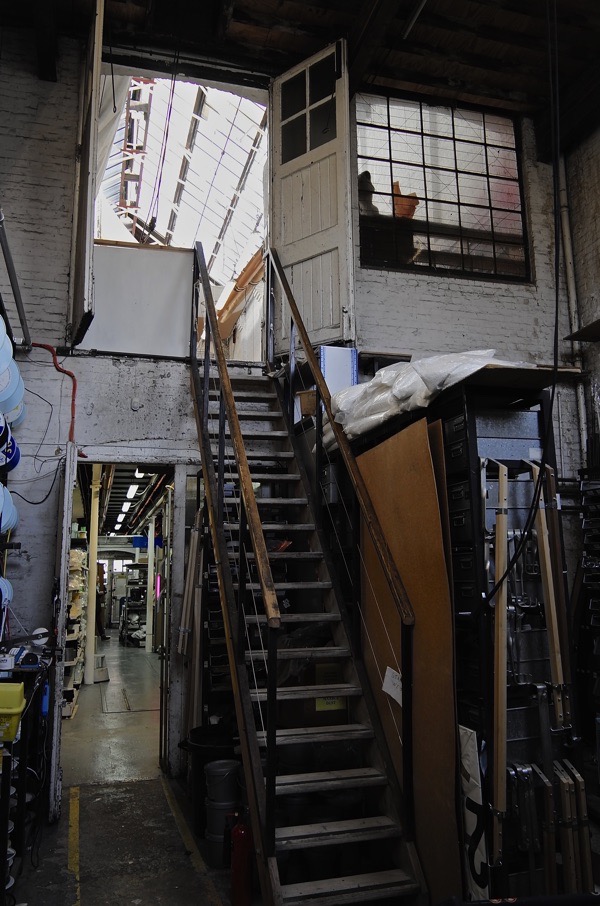
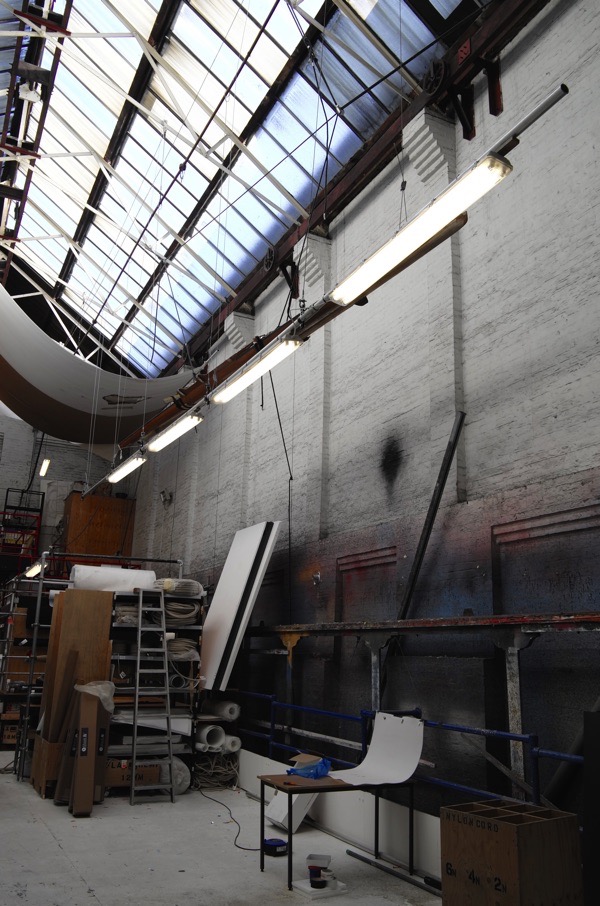
In 1905, Joseph Harker (1855–1927) the pre-eminent scenic artist of his age – celebrated for his work for Henry Irving’s company at the Lyceum – built paint studios in Walworth for his own use and to his own specification. Remarkably, these studios survive with all the essential fixtures in place just as Harker knew them. If the name ‘Joseph Harker’ sounds familiar, it is because Henry Irving’s manager Bram Stoker immortalised him by naming a character – Jonathan Harker – in his novel ‘Dracula’ in honour of his friend the scene painter
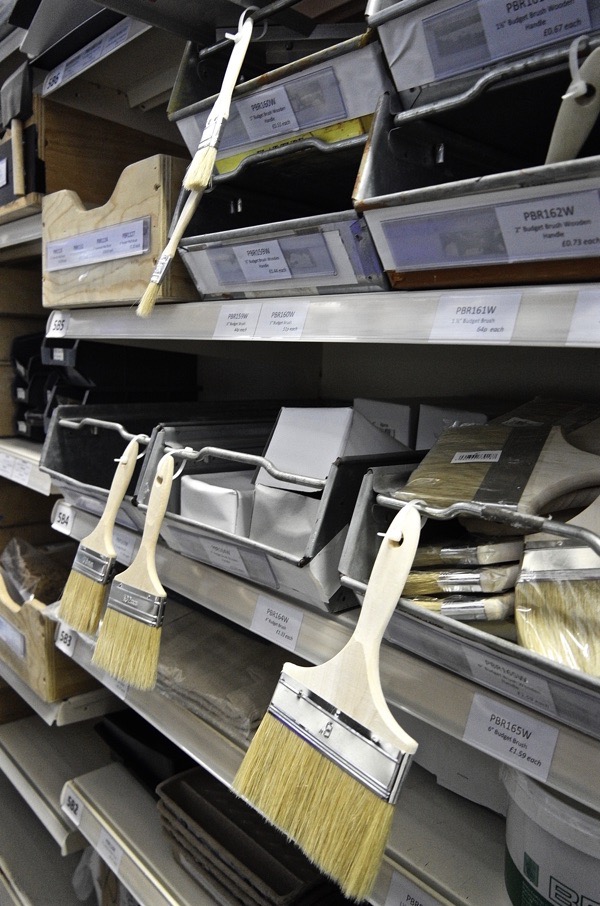
These days, the ground floor is occupied by the trade counter for Flints Theatrical Chandlers, stocking paints, brushes and all the paraphernalia required for the scenic arts, but Joseph Harker would only have to climb the old staircase with its close-set treads to the mezzanine above and roll his sleeves up to set to work upon the paint frames again.
Grade II listed, this is a building which does not declare itself from the outside. You have to enter and explore the distinctive nature of the single, tall narrow space with its the particular fixtures and fittings to understand its unique historical importance – which makes it all the more disappointing that last month Southwark Council granted permission for the studios to be carved up and redeveloped for luxury flats.
[youtube iqB2oE7JuQM nolink]
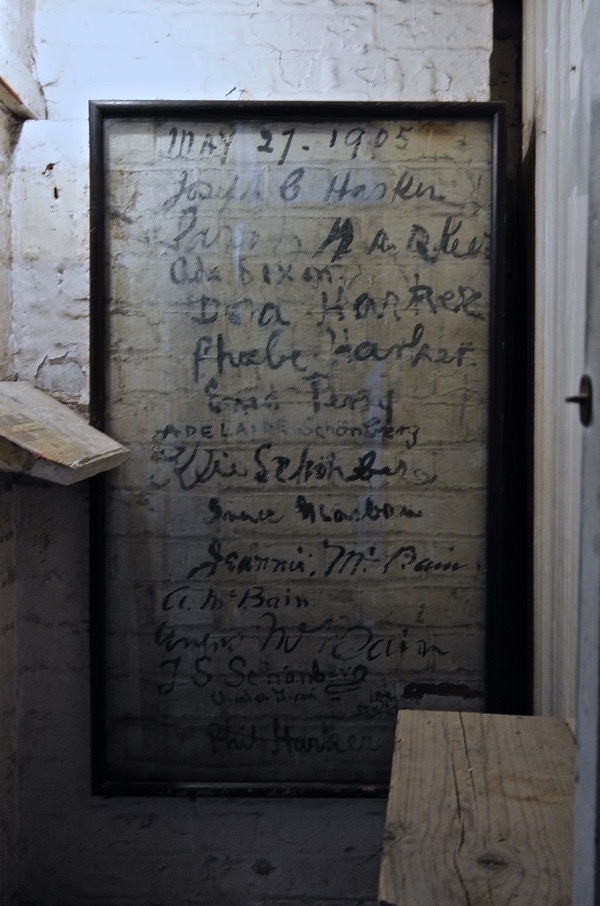
Joseph Harker’s signature with those of his family and colleagues
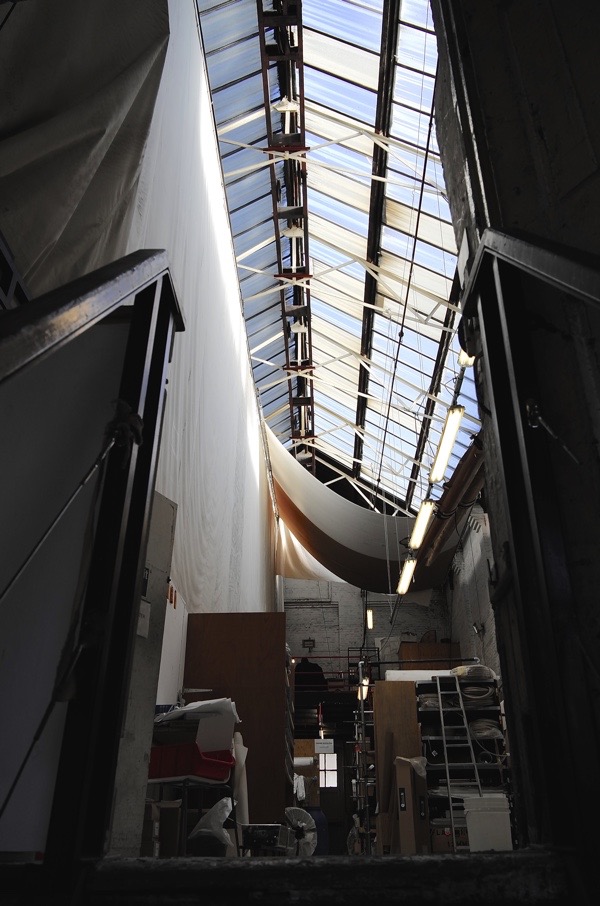
Scenic cloths were painted in natural light
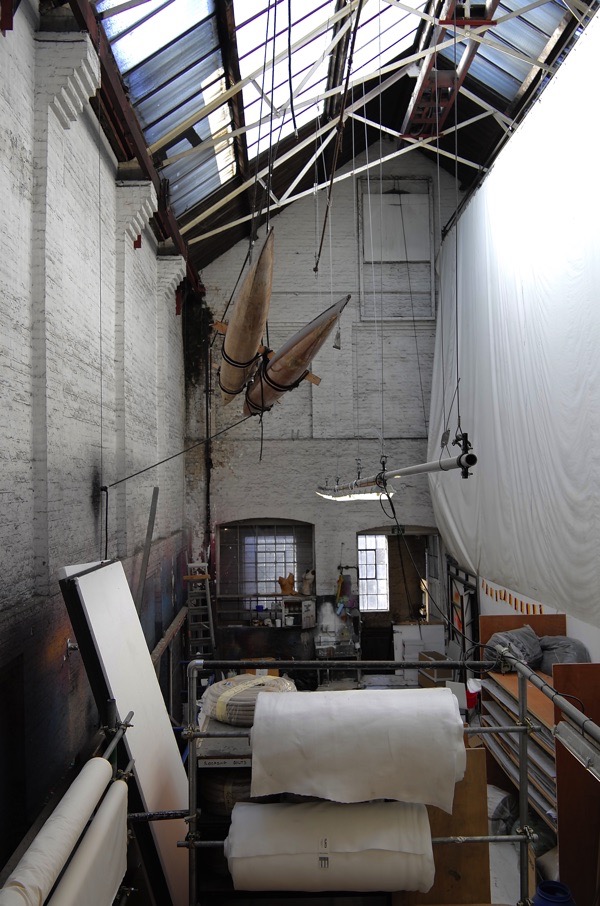
The air vent at the top right is opened or closed by a sliding shutter
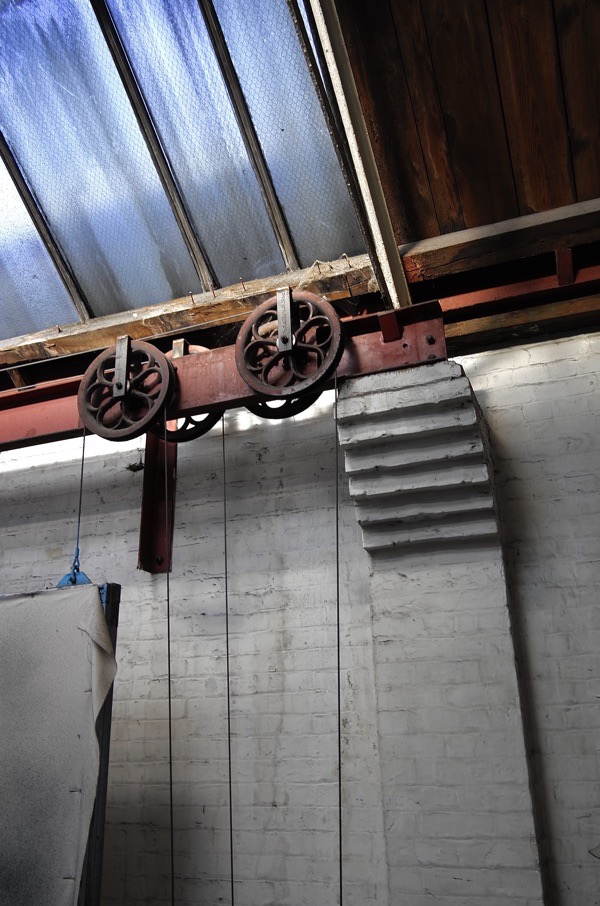
Frames were hung forward from the wall at the top to tilt them and prevent drips falling onto the cloth
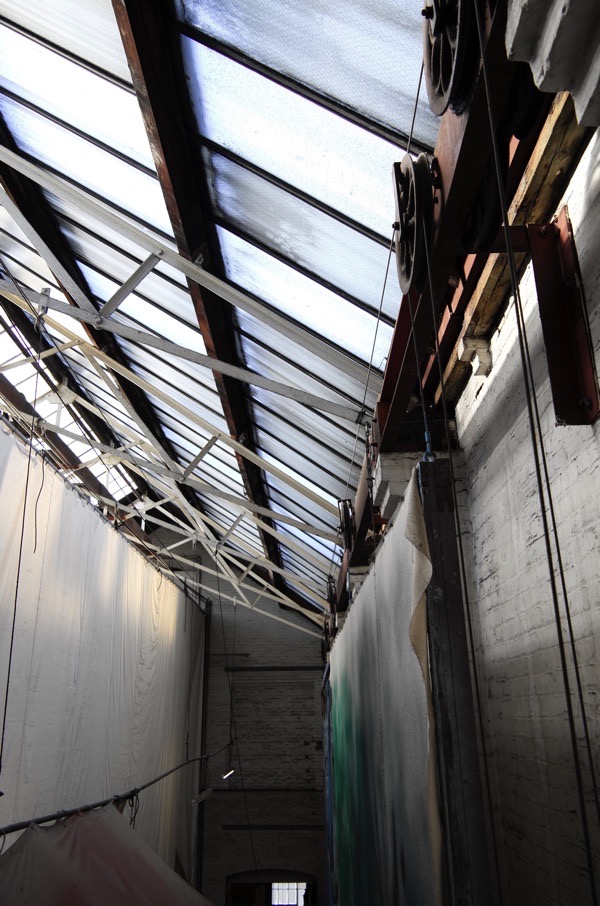
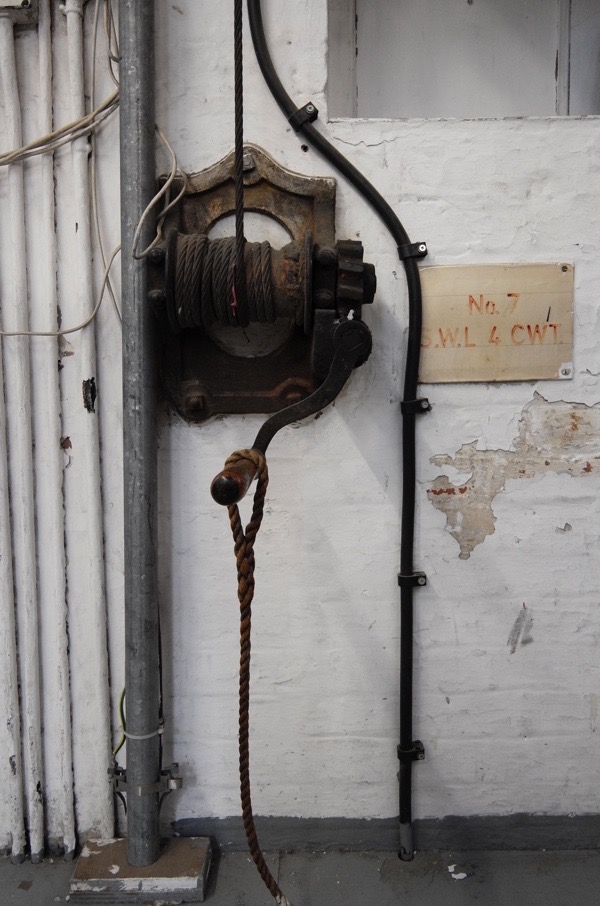
One of several winches for winding cloths up and down
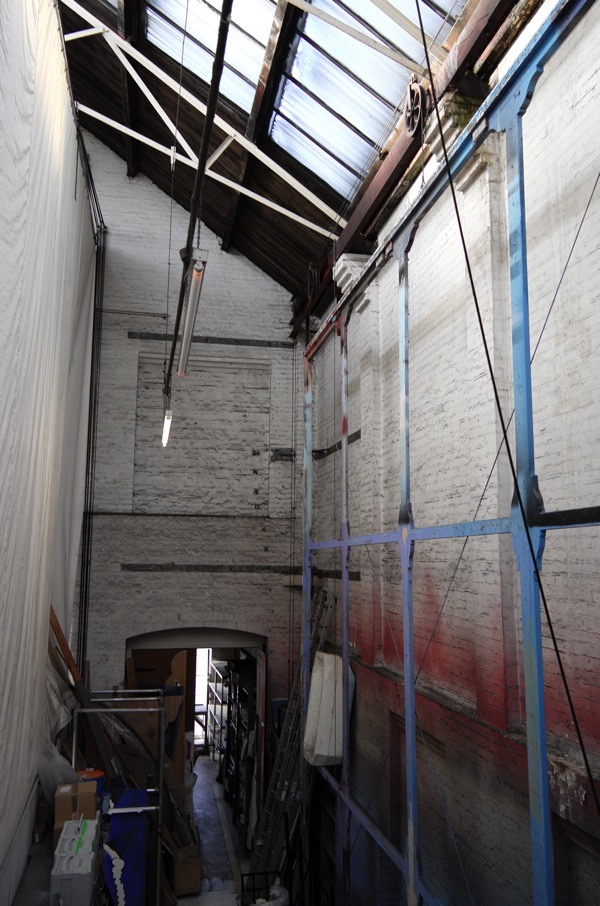
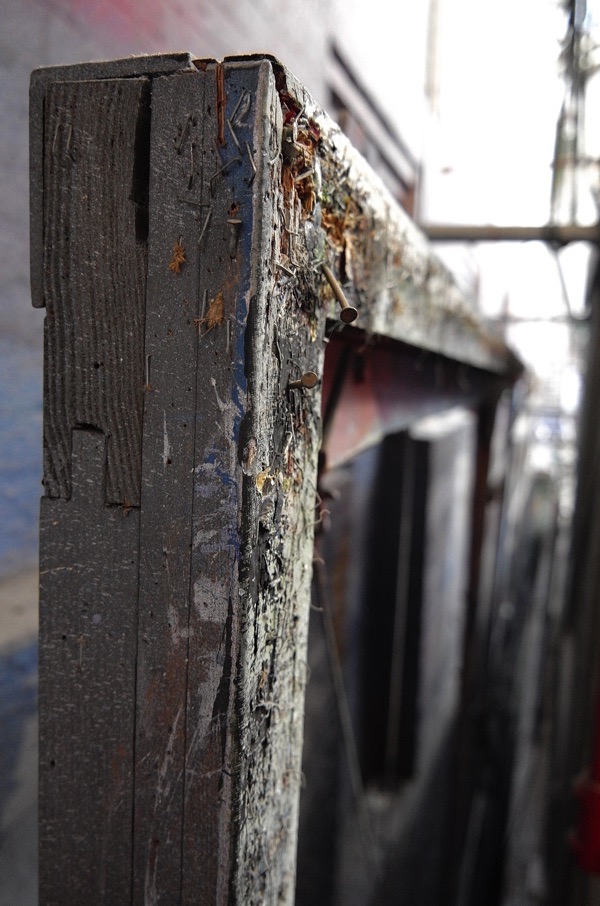
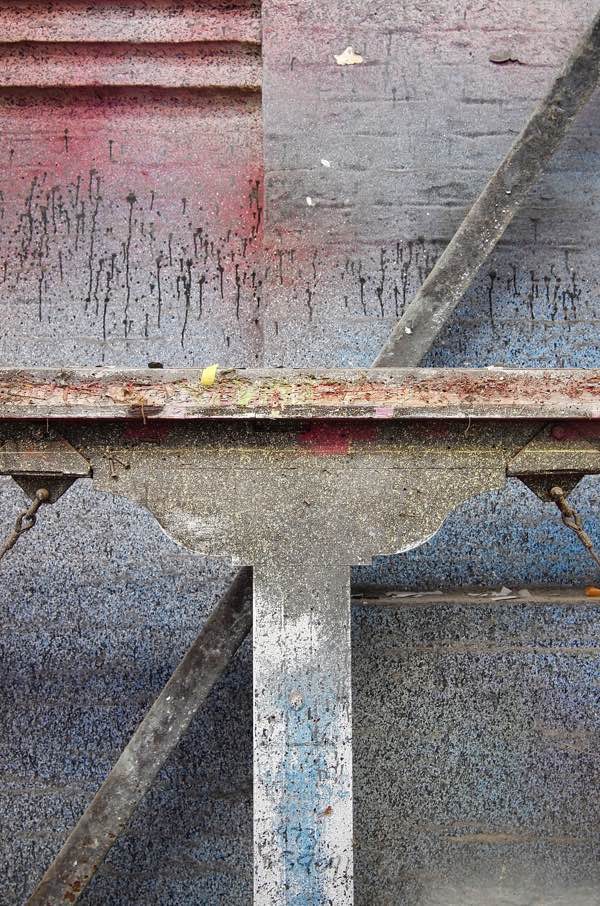
Wooden frame in which the canvas would be stretched for painting
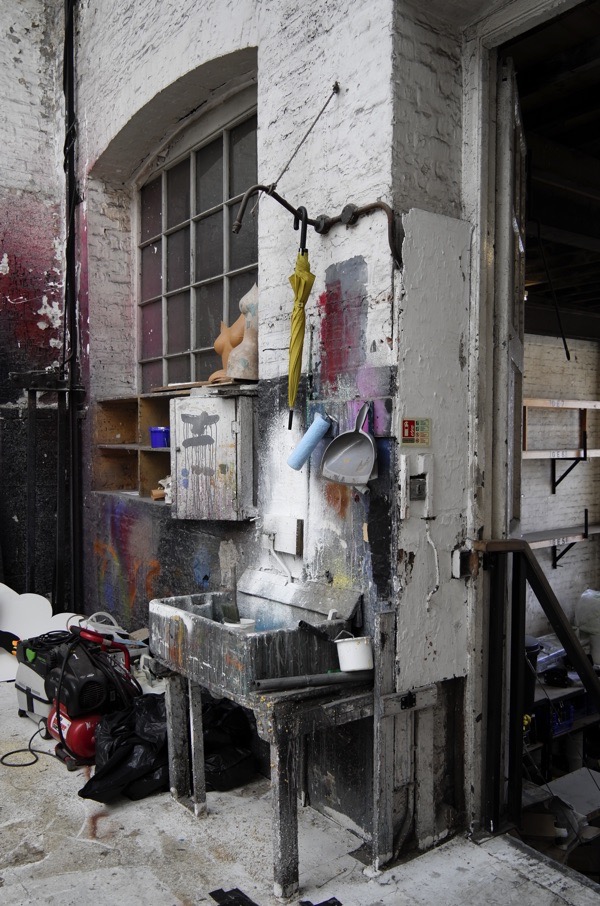
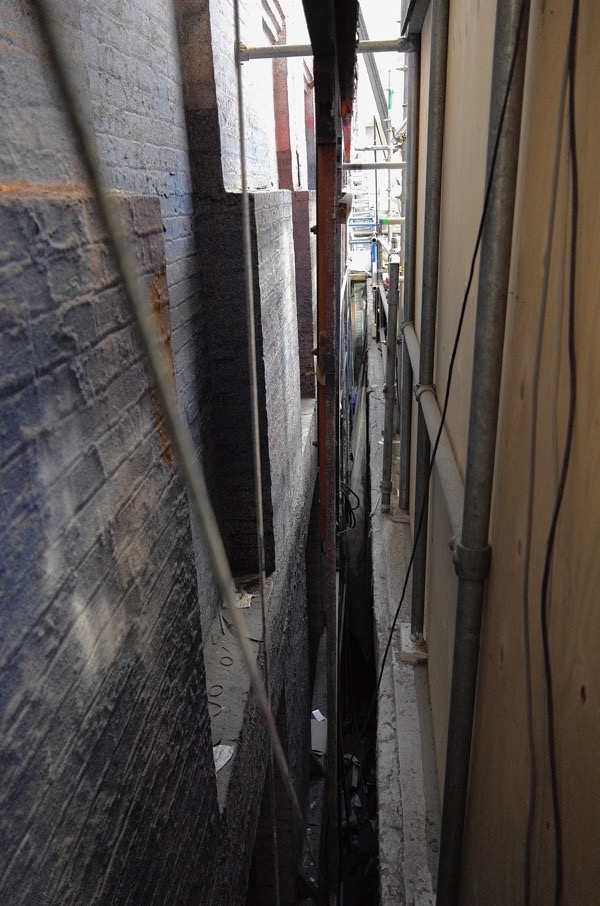
Looking down into the frame
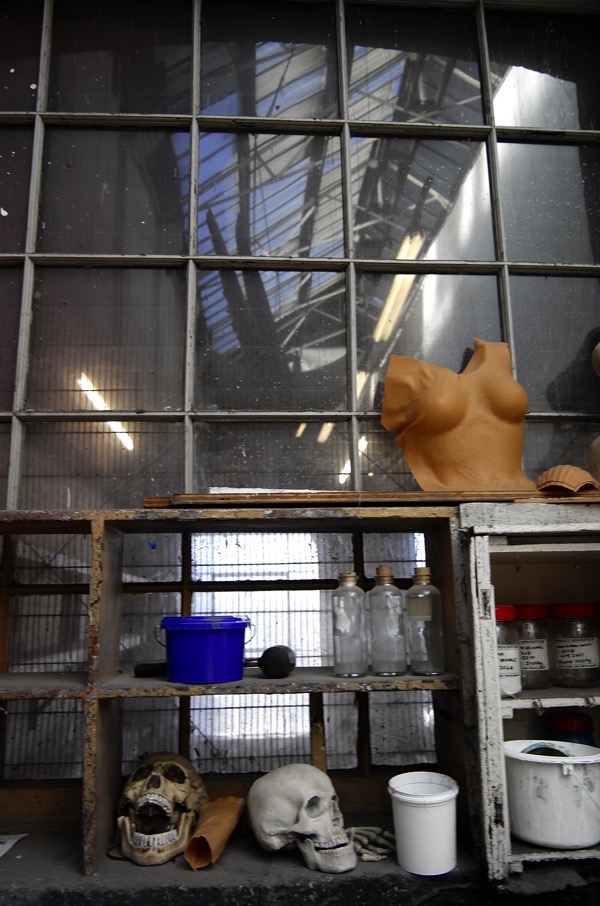
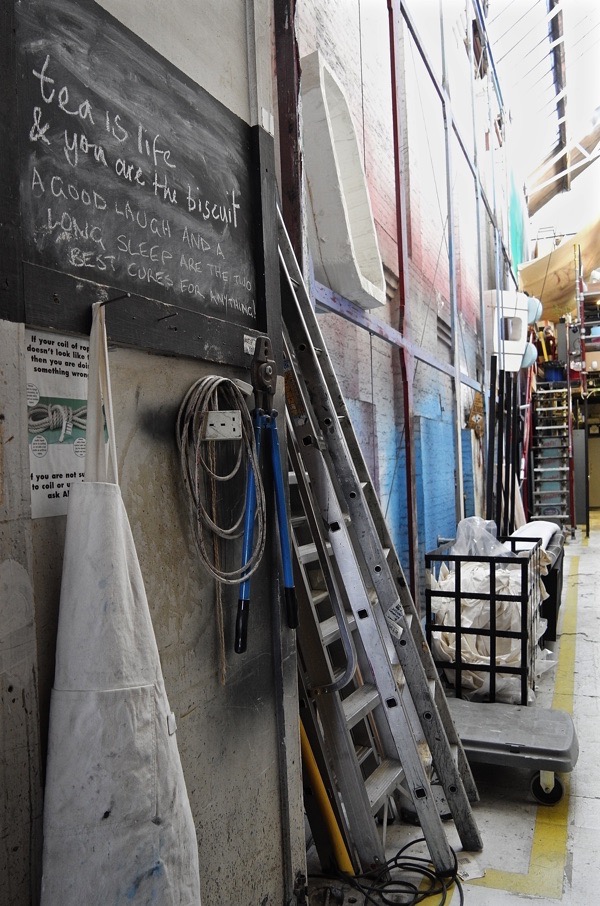
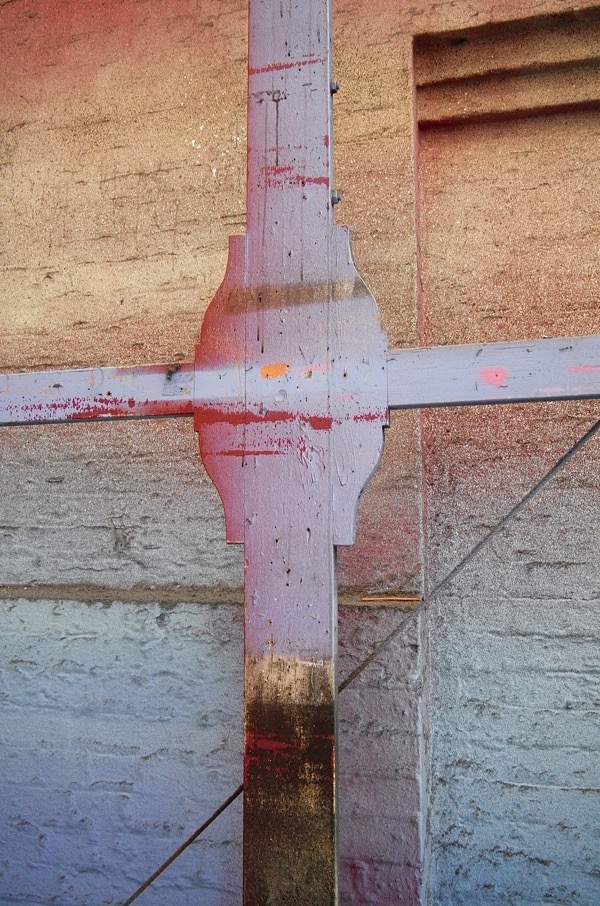

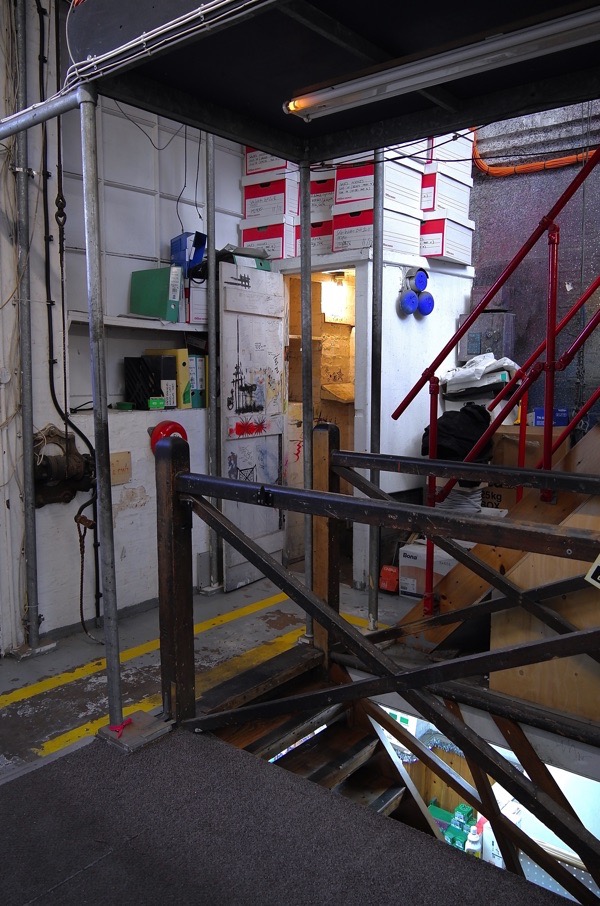
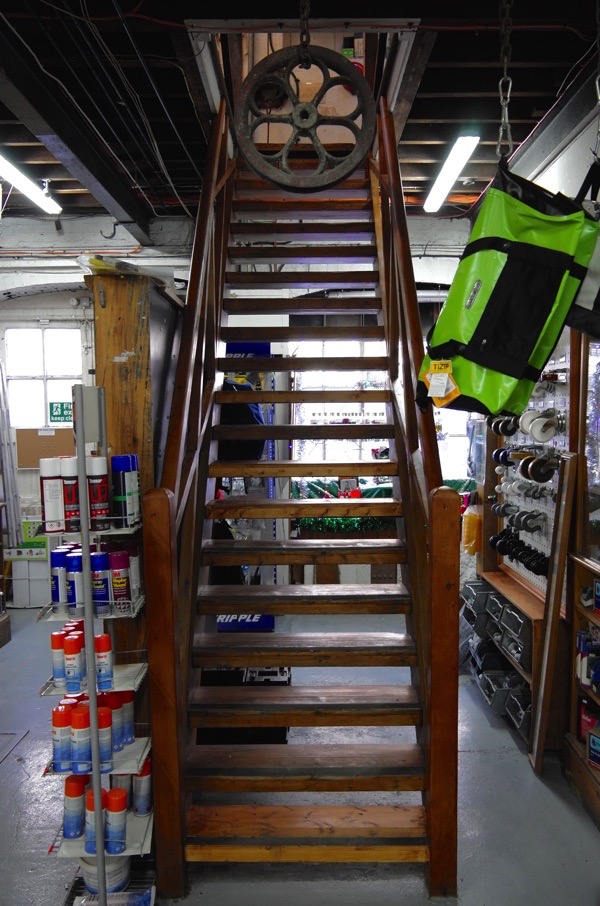
The original staircase leading up to the paint frames
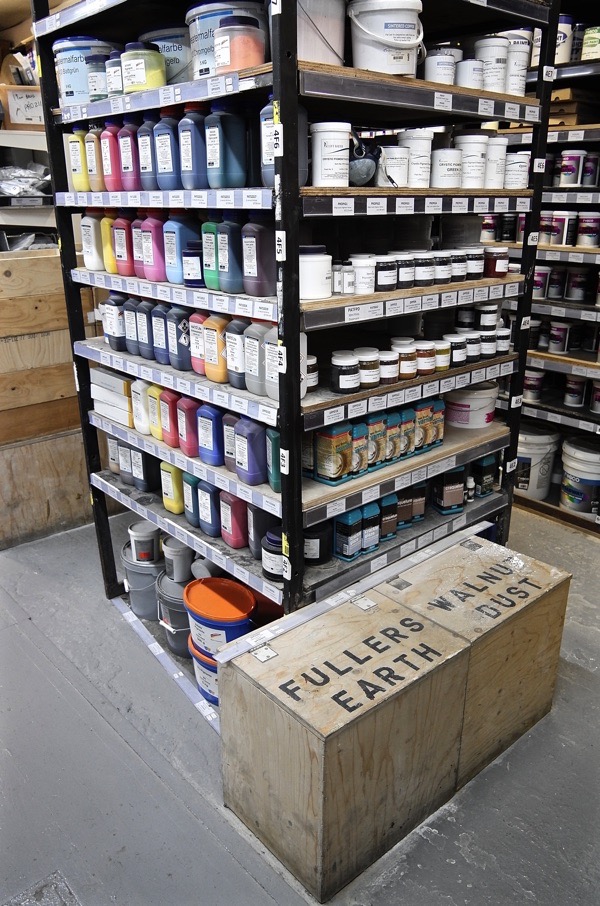
Fullers Earth & Walnut Dust
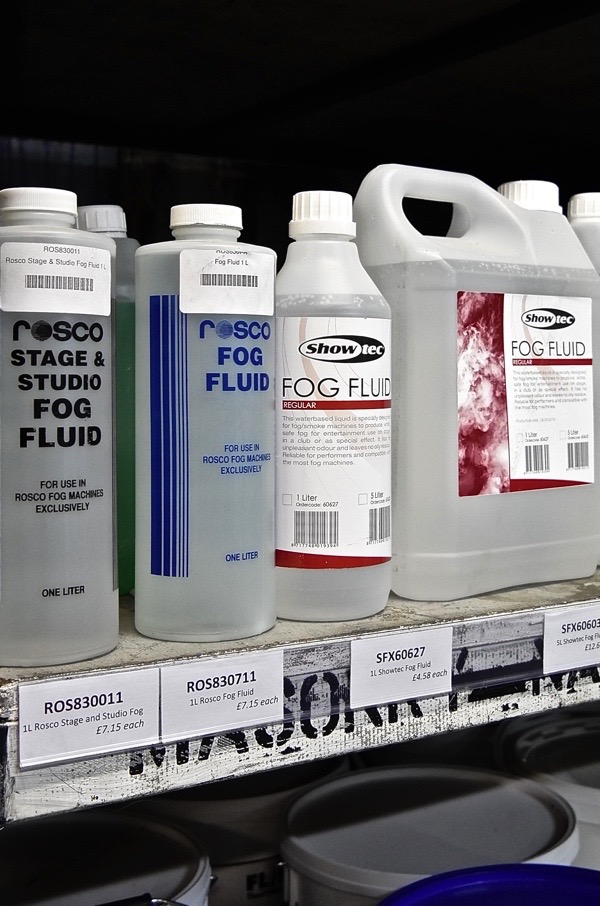
Fog Fluid
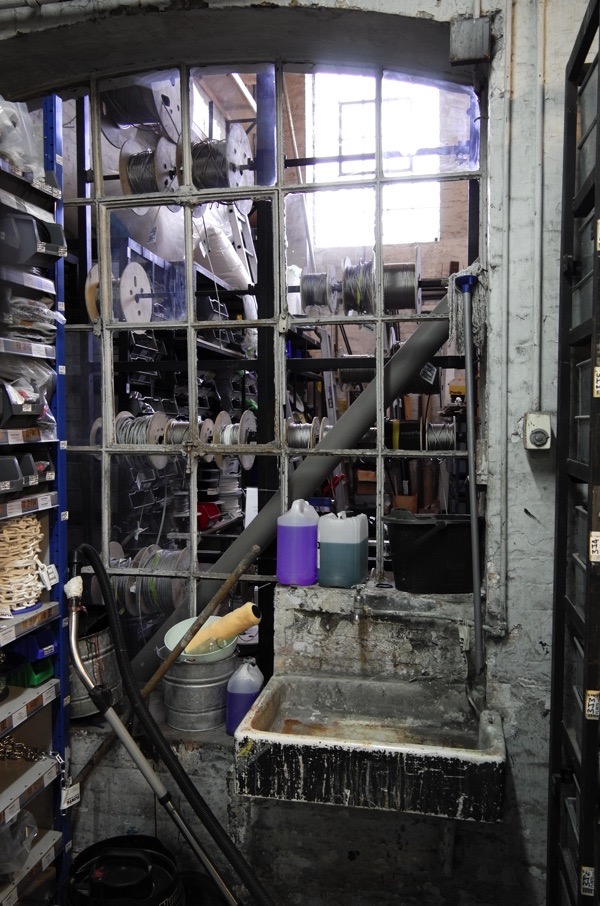
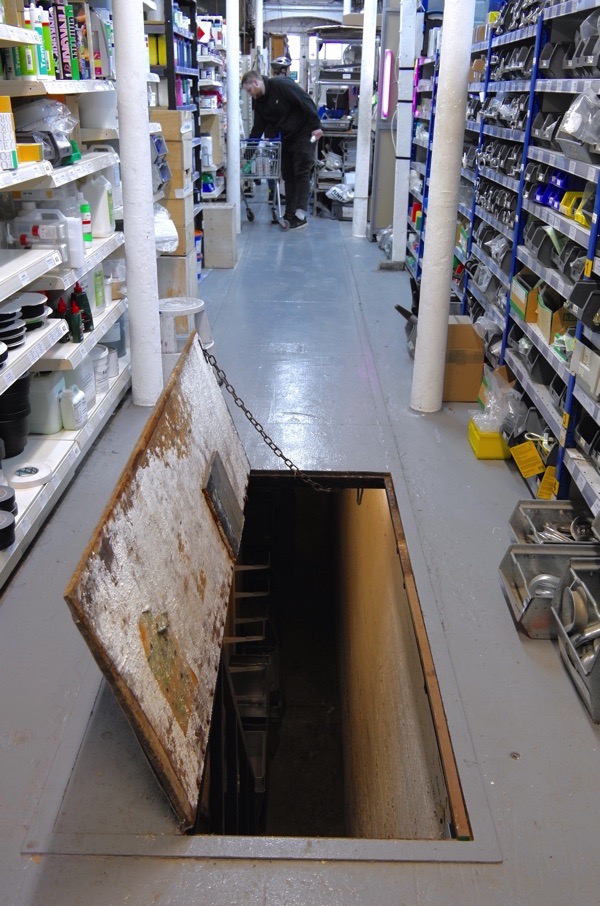
The trough for the central frame, enabling cloths to be winched up and down, remaining at arm’s length for the painters
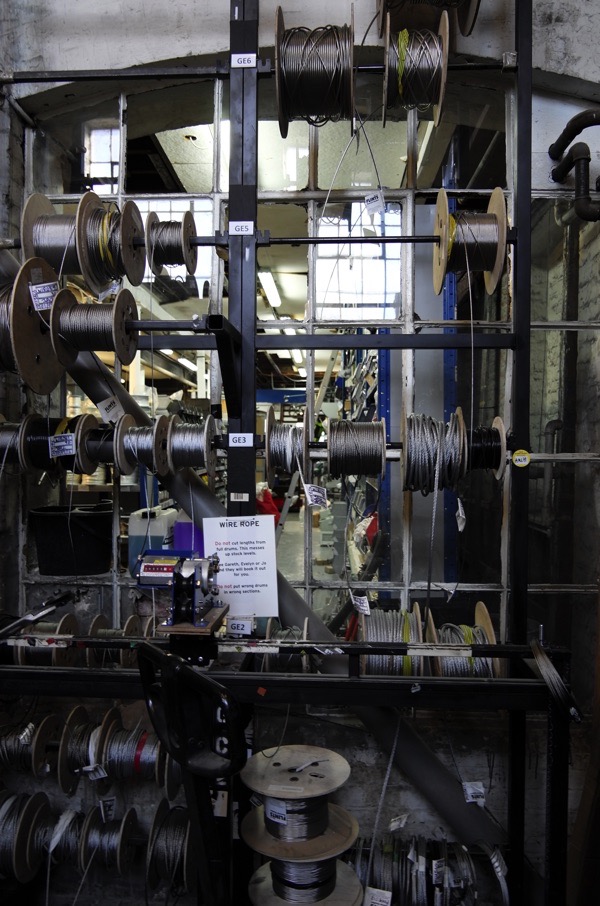
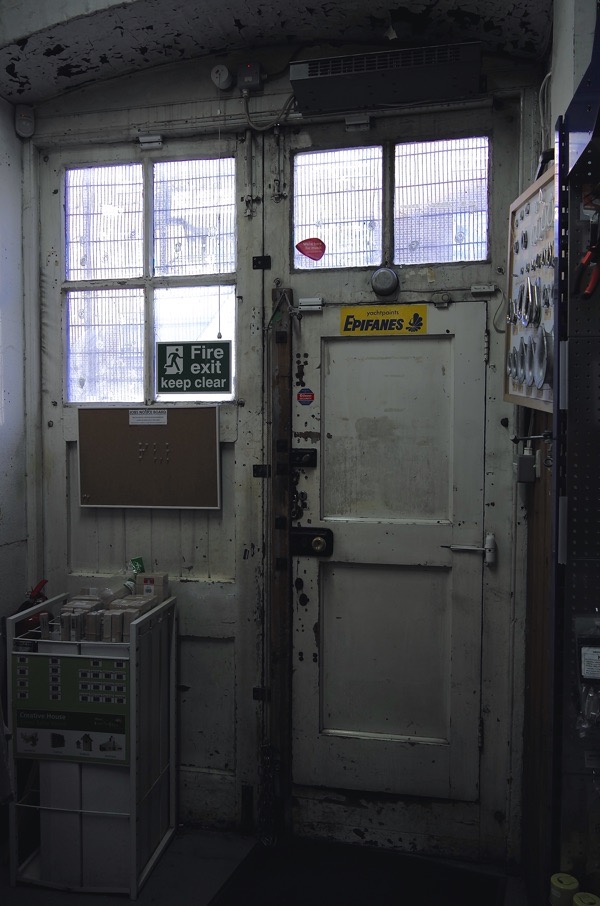
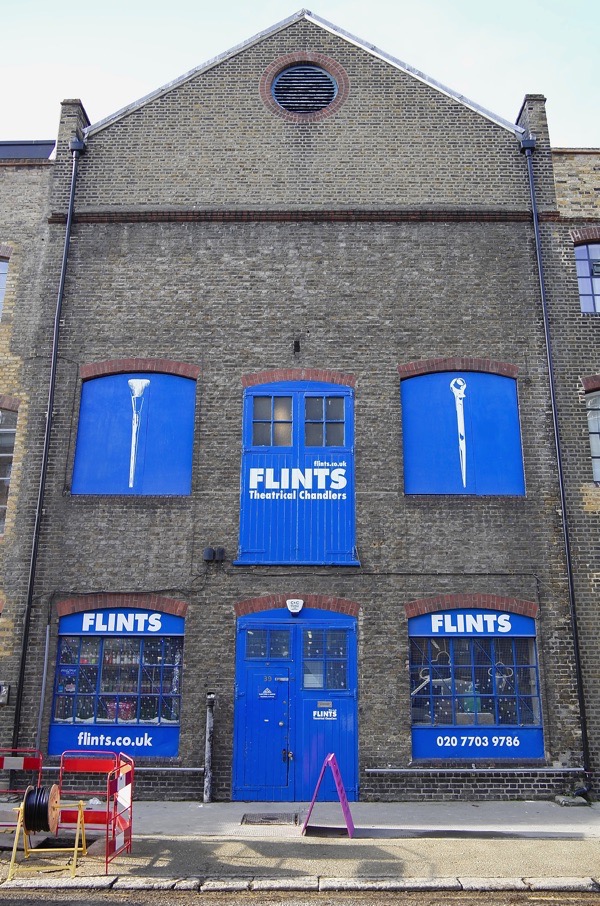
Flints Theatrical Chandlers, 39 Queens Row, Walworth, SE17 2PX
You may also like to read about
Anna Maria Garthwaite, Silk Designer
Zara Anishanslin, author of Portrait of a Woman in Silk, Hidden Histories of the British Atlantic World published by Yale University Press, profiles Anna Maria Garthwaite, the most celebrated textile designer of the eighteenth century.
Readers are invited join the Zara Anishanslin next Wednesday 25th January from 11:30am to 1:30pm for a reading and book signing at Dennis Severs’ House in Folgate St. If you wish to attend please mail professorzara.com@gmail.com by 23rd January.
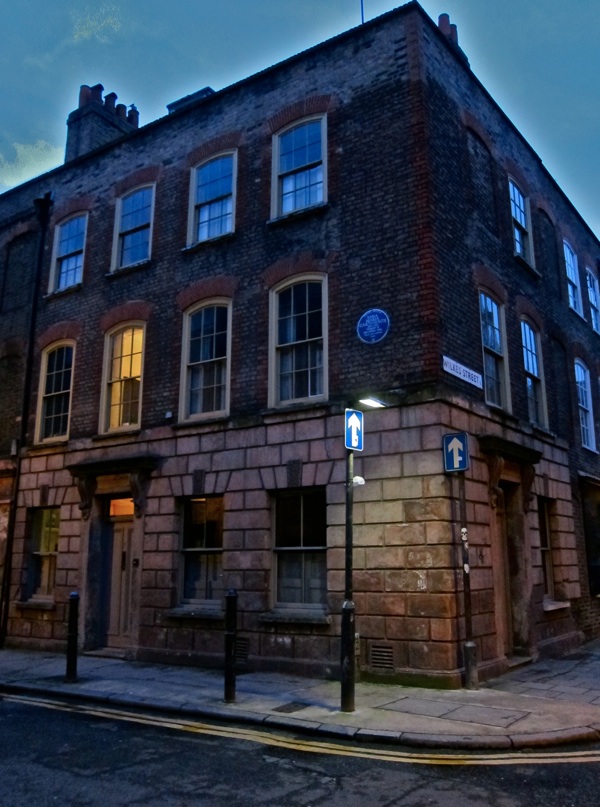
Anna Maria Garthwaite’s house
Two unmarried sisters, one a widow and one a spinster, moved from York to Spitalfields at the end of the seventeen-twenties. It seemed an unlikely time of life for them to relocate, as both were in their early forties. But they were hardly alone in their choice. When the sisters arrived in Spitalfields, it was experiencing a building and population boom. They lived in Princes St (now Princelet St) only a short walk from the Spitalfields Market, which had been a local fixture since the sixteen-eighties. But their terrace of newly constructed townhouses had been laid out only a decade before. The neighbourhood stood under the shadow of architect Nicholas Hawksmoor’s masterpiece, Christ Church Spitalfields, itself just completed in 1729. The two sisters were drawn to their new house on one of Spitalfields’s newer streets by the same thing that had brought many of their neighbours there too. They came for the industry that became synonymous with the area in the eighteenth century: silk weaving. For when the two sisters moved to London, it was in part so the younger of the two, Anna Maria Garthwaite (1688-1763), could launch her career as a silk designer.
Eighteenth-century silk designers like Garthwaite were skilled labourers. They drew designs that showed weavers what patterns of colour and decoration to follow to create lengths of silk on their looms. Many designers were weavers or had trained as master weavers. Silk designers almost always worked independently, on commission. The London silk industry made all sorts of textiles but was most renowned for its flowered silks. Named for their floral or botanical patterns, flowered silks were distinctively designed, produced to order, and usually limited to only four pieces woven from a single design.
Almost all Spitalfields flowered silk was meant for clothing rather than interior decoration or upholstery, used to make elegant dresses and petticoats for women and elaborate waistcoats for men. Fashion depended then – as it still does – on enticing consumers with novelty and variety. In the Spitalfields silk industry, it was designers like Garthwaite who had power to produce this desired variety. This was because from the seventeen-twenties to the late seventeen-fifties, when Garthwaite worked, novelty in eighteenth-century silk depended largely on the creation of new textile patterns, which changed more rapidly than the cut of clothing.
A highly prolific designer, Garthwaite drew hundreds of patterns, their flowered silk designs blossoming in watercolour and pencil curves across grids of ruled paper. Her silks, with designs ranging from naturalistic flowers to stylised Asian patterns, spread throughout the Atlantic World. From Scandinavia to South Carolina, men, women, and children walked, ate, danced, and posed for portraits wearing Garthwaite-designed silks, like the one painted by Robert Feke in 1746 of a wealthy Philadelphia merchant’s wife, Anne Shippen Willing, which inspired my book. Her silks survive in museums across Europe and America as mutely shimmering testaments to her long-ago popularity.
But Garthwaite’s success was improbable. Unlike many other known silk designers in eighteenth-century London, who tended to be of French Huguenot descent, she was English. Her distinctiveness lay fundamentally in the simple fact that she was a woman. Although other women certainly worked in London’s silk industry, few worked as silk designers. Garthwaite is the only woman whose designs survive. Most women who practiced skilled trades like weaving did so because their father or husband did too. Garthwaite, by contrast, did not ply her trade because a male relative had done so. Nor did she receive formal training or start her career as a young woman. Instead, Garthwaite, who never married, did not begin her professional design career until she was middle-aged. Moreover, her family background added to the improbability of her career choice. For Garthwaite was no weaver’s daughter. Instead, she was the daughter of a Cambridge-educated Anglican minister from Lincolnshire, with family connections to the Royal Society and the English nobility.
How did this spinster daughter of a Lincolnshire minister manage, in her forties, to launch a successful London design career? How did she gain the technical expertise required to design complicated patterns? Why did she never marry? Some of these questions have no known answers. And unless a stash of previously unearthed evidence comes to light, some of them never will. Despite Garthwaite’s prolific career and popularity, she remains an enigma. Records make it evident that she was not only literate but educated and financially solvent. There is no obvious reason her historical trail should be so faint. Yet she left little more documentation than an anonymous, illiterate, impoverished woman of her time might have. There is minimal archival material beyond her will: no letters, diary, business or advertising records. Anna Maria Garthwaite’s story serves as a reminder that sometimes even the educated and well-known are silenced in traditional historical sources.
Garthwaite did, however, leave a rich trove of objects and images. These speak for her. They include her house in Spitalfields, the silk woven to her designs, and more than eight hundred labeled watercolour designs. They can be read much like a diary, and they begin to give voice to this otherwise mute figure.
Garthwaite’s Spitalfields townhouse was more than a home. It was also where she designed her patterns and conducted her trade. Of all the houses on Princes St, her corner house was one of the best suited for conducting business. Its two-door layout gave it a distinct advantage. The front door opened into a formal stair hall. The other, on the street leading up to Christ Church, opened directly into a room separated from the rest of the house by an internal door. The family of women (Garthwaite, her widowed older sister, their young ward, Mary Bacon, and a few women servants) could come and go in private through the first door, leaving the corner ground floor room free for business activities. Business callers could enter the house without interacting with anyone besides Garthwaite or possibly a servant, while remaining similarly undisturbed by family noise and distraction.
Above this ground floor shop was the genteel space of the first-floor drawing room. This particular room had two discrete but overlapping functions. It was a space of both labour and sociability. Decorated with the highest level of architectural finish in the house, this room would have been where the Garthwaite sisters entertained guests. It was also, however, very likely Garthwaite’s atelier, or studio. It was here that she sketched, painted, and transferred onto gridded paper her watercolour and pencil designs. Its corner location and large second floor windows had the practical benefit of strong, clear light for drawing and painting.
Garthwaite’s studio drawing room was a room with a view. Out of this room’s windows, Garthwaite could see the mercers and master weavers who walked to her house to buy her textile designs. She also could see Christ Church Spitalfields, the church she and her sister attended and where they both would be buried. Perhaps this minister’s daughter found comfort in the familiar sight of an Anglican church and inspiration in its calm Palladian beauty. Certainly, architectural elements popped up in Garthwaite’s designs from time to time.
Garthwaite’s designs were produced in Spitalfields, but they owed their existence to global natural history networks and the demands of the North American colonial market, the English silk industry’s most important market outside of London. Her popular designs both mirrored the larger British cultural fascination with gardens and helped foster a craze for wearing botanical landscapes in silk around the British Empire. Her designs shaped a shared visual experience throughout the British empire. In the seventeen-fifties and sixties, for example, women in colonial New York, Ireland, and England, for example, all wore dresses made of the same Garthwaite pattern—each woven in different colours (red, yellow, and pink). These women never met, or even knew of one another. Yet their lives materially connected by touching and wearing Garthwaite silk.
Garthwaite, like the majority of the eighteenth-century Spitalfields silk designers whose work has been identified, had personal ties to London’s scientific community. But of these designers, Garthwaite was the sole woman. Garthwaite’s relationship with her brother-in-law apothecary Vincent Bacon—a fellow Spitalfields resident and a member of the Royal Society—was a particularly important one for fostering her ties to these networks. As a member of the Apothecaries’ Guild, which maintained it, Bacon had access to Chelsea Physic Garden—one of England’s great botanical gardens, filled with exotic flowers and plants from America and Africa. Women like Garthwaite frequented the Garden to view and sketch plants and flowers, a reminder that in eighteenth-century Britain, women did not serve as passive recipients of male knowledge about botanicals. Less obviously than Royal Society members or male apothecaries, but no less truly, Garthwaite and the women who wore her flowered silks were members of a global network in which the scientific and the fashionable coalesced.
Some of Garthwaite’s most remarkable designs featured aloes. Aloes were one of the most fascinating of botanical species to Georgian gardeners. Along with their medicinal properties and exotic African origins, aloes’ considerable variety in appearance fascinated eighteenth-century botanists. Garthwaite accurately captured their celebrated diversity by drawing different types of aloes in a number of patterns, using distinctive, spiky leaves to set them apart.
Garthwaite often combined more prosaic florals with these exotic plants, showing them growing intertwined and grafted together. Mingling the exotic with the local, Garthwaite grafted an aloe onto an English rose. Despite their botanical impossibility, she took care to draw the hybrid plants realistically, in a style that mimicked botanical drawings done from life studies. Her designer’s eye shows the same fascinated appreciation for plants embraced by Royal Society members. Woven into a brocaded tabby silk, her aloe-rose hybrid blossomed across a silk in which the multicoloured botanical plants and flowers floated on a cream background. Viewers of this silk saw something very similar to a botanical illustration on white paper. Garthwaite used North American plants that were the popular subjects of such illustrations, all of which could be found exported into London gardens, including magnolia, Turk’s cap lilies, and mountain laurel. Pennsylvania botanist John Bartram first sent live mountain – or what he called “common” – laurel plants across the Atlantic to London in 1735. By 1740, they had bloomed in England. Bartram also sent Turk’s cap lilies between 1738 and 1740. Only a few years later, both specimens also flowered in Garthwaite’s designs.
Like gardens in England and North America, flowered silk was a material embodiment of the global culture of the curious. Far from being simply a frivolous fashionable commodity, flowered silk could signify its wearer’s participation in a global network of Enlightenment intellect. We are accustomed to thinking of how men (and some women) exchanged natural history knowledge through plant and seed specimens, in published books, and in exchanges of letters between the curious on both sides of the Atlantic. But in traveling around the empire, fashionable commodities like silk also transported natural history knowledge. This was especially important for women, excluded or under-represented as they were in groups like the Royal Society.
A woman’s silk might advertise her erudite hobbies as well as her fashion sense. The same learned members of the Royal Society who enjoyed studying aloes surely would have enjoyed the puzzle of deciding exactly which aloe they were seeing on Garthwaite’s silk designs. A woman wearing a dress decorated with such aloes, at the same time, could use her silk to interject her own knowledge of such exotic botanicals into a conversation. In an eighteenth-century world that delighted in visual and verbal puns and allusions, they too might build transatlantic communities.
Like the British Empire itself, Garthwaite’s designs were a mélange of the far-flung and the everyday, a blend of the European, African, Asian, and American. Each of these exotic sites of imperial expansion was present in her designs through the plants and flowers she included. From her small corner of Spitalfields, Anna Maria Garthwaite designed topographical textiles that mapped the botanical landscape of Britain’s global empire.
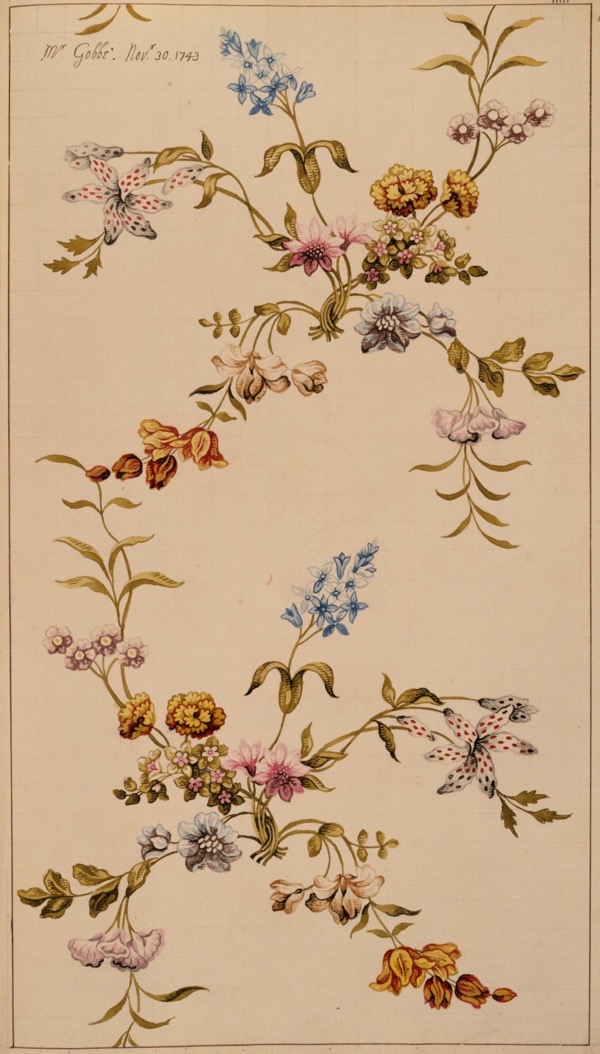
Silk design with spotted lilies by Anna Maria Garthwaite, watercolour on paper, 1743 (Courtesy Victoria & Albert Museum)
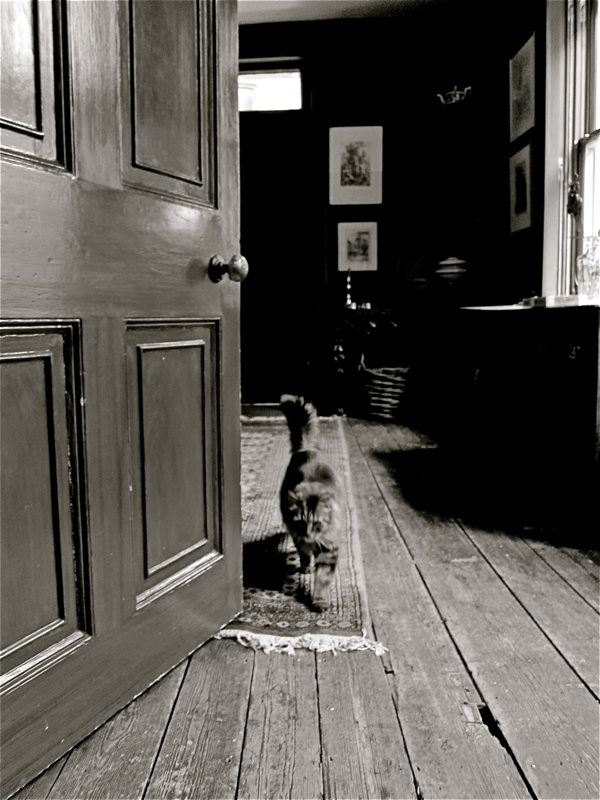
In Anna Maria Garthwaite’s receiving room on the ground floor where customers were entertained
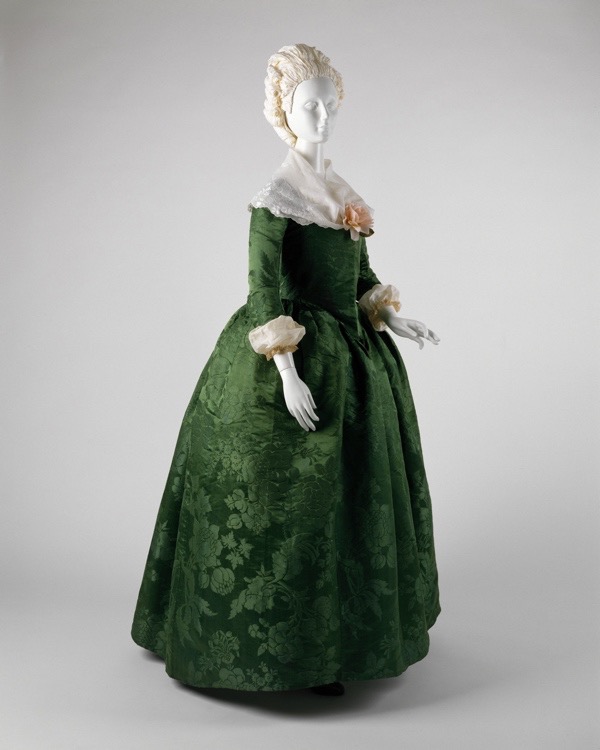
Dress made in America of silk designed by Anna Maria Garthwaite, c.1775 (Courtesy of the Metropolitan Museum of Art)
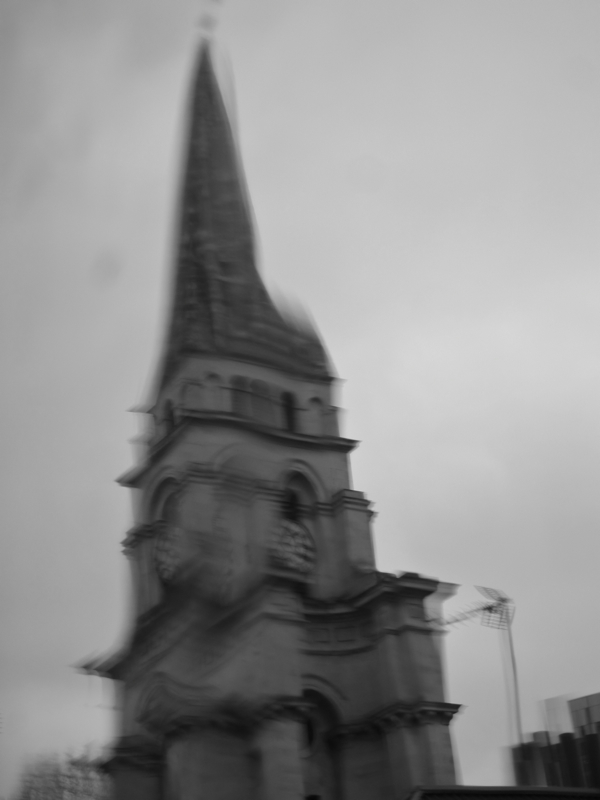
The spire of Christ Church seen through the glass in Anna Maria Garthwaite’s work room
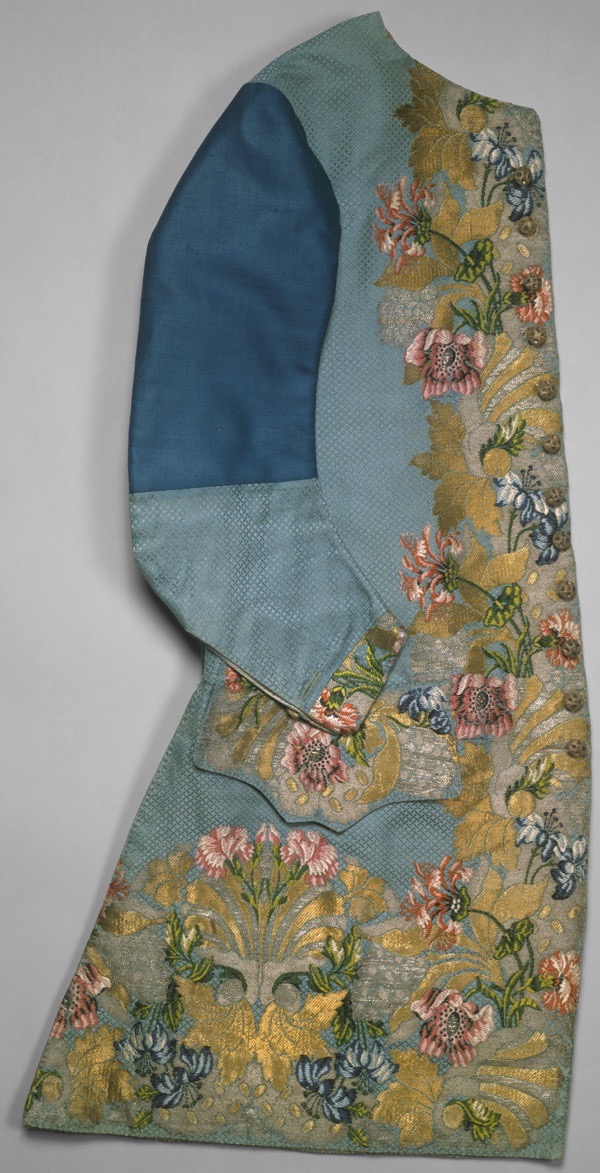
Waistcoat with silk designed by Anna Maria Garthwaite, woven by Peter Lekeux, 1747 (Courtesy of the Metropolitan Museum of Art)
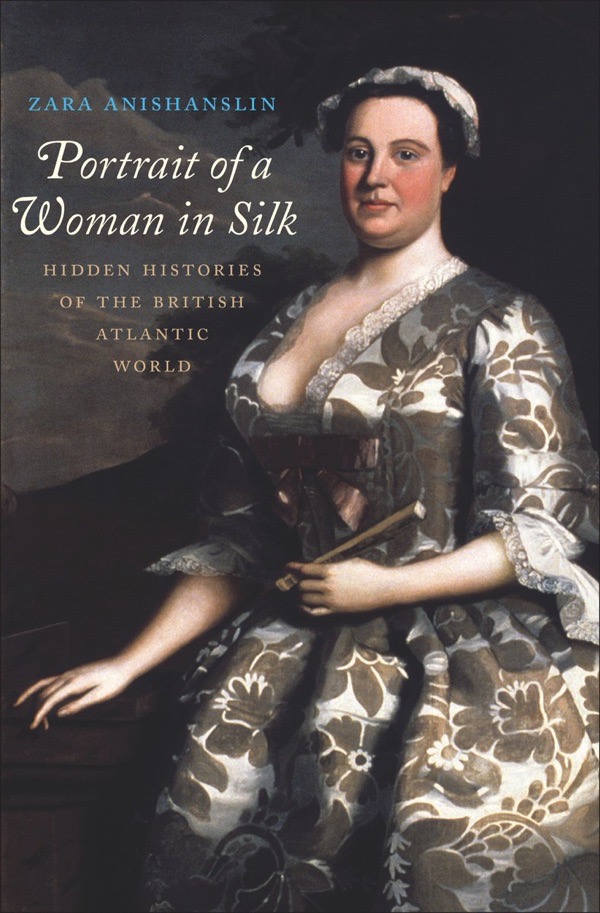
In Portrait of a Woman in a Silk Dress, Historian Zara Anishanslin examines the worlds of the four people who produced, wore, and portrayed a single dress: Simon Julins, Spitalfields Weaver, Anna Maria Garthwaite, Silk Designer, Anne Shippen Williams, Philadelphia Merchant’s Wife, and Robert Feke, New England Painter.
You may also like to take a look at
At Anna Maria Garthwaite’s House
Israel Bidermanas’ London

Lithuanian-born Israel Bidermanas (1911-1980) first achieved recognition under the identity of Izis for his portraits of members of the French resistance that he took while in hiding near Limoges at the time of the German invasion. Encouraged by Brassai, he pursued a career as a professional photographer in peacetime, fulfilling commissions for Paris Match and befriending Jacques Prévert and Marc Chagall. He and Prévert were inveterate urban wanderers and in 1952 they published ‘Charmes de Londres,’ delivering this vivid and poetic vision of the shabby old capital in the threadbare post-war years.

In the cemetery of St John, Wapping

Milk cart in Gordon Sq, Bloomsbury

At Club Row animal market, Spitalfields

The Nag’s Head, Kinnerton St, W1

In Pennyfields, Limehouse

Palace St, Westminster

Ties on sale in Ming St, Limehouse

Greengrocer, Kings Rd, Chelsea

Diver in the London Docks

Organ Grinder, Shaftesbury Ave, Piccadilly

Sphinx, Chiswick Park

Hampden Crescent, W2

Underhill Passage, Camden Town

Braithwaite Arches, Wheler St, Spitalfields
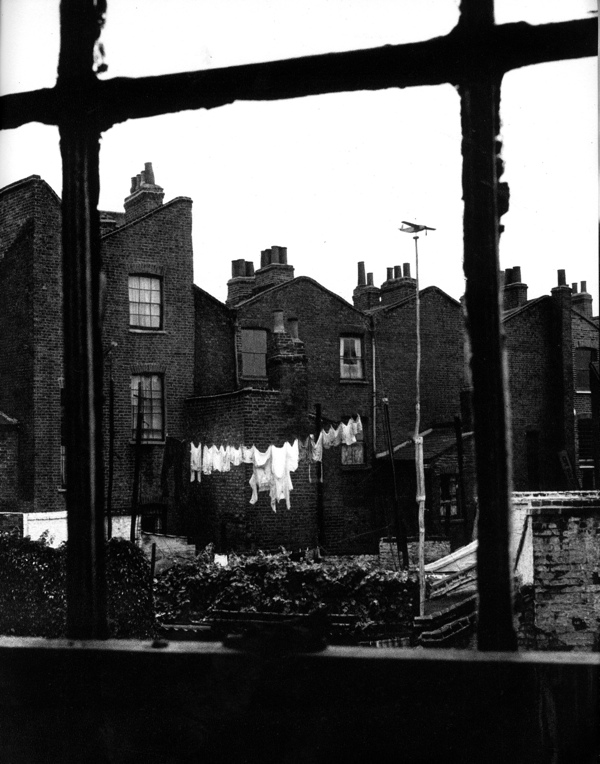
East India Dock Rd, Limehouse

Musical instrument seller, Petticoat Lane

Grosvenor Crescent Mews, Hyde Park Corner

Unloading in the London Docks

London Electricity Board Apprentices

On the waterfront at Greenwich

Tower Bridge
Photographs courtesy Bishopsgate Institute
You may also like to take a look at
Philip Cunningham’s East End Portraits
In the seventies, while living in Mile End Place and employed as a Youth Worker at Oxford House in Bethnal Green and then as a Probationary Teacher at Brooke House School in Clapton, Photographer Philip Cunningham took these tender portraits of his friends and colleagues. “I love the East End and often dream of it,” Philip admitted to me recently.
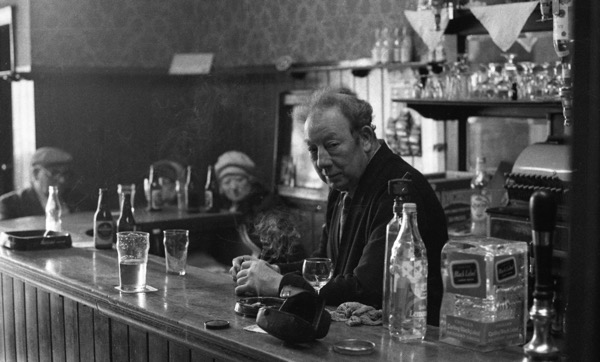
Publican at The Albion, Bethnal Green Rd. “We would often go there from Oxford House where I was a youth worker. Billy Quinn, ‘The Hungry Fighter’ used to drink in there. He would shuffle in, in his slippers and, if I offered him a drink, the answer was always the same. ‘No! No! I don’t want a drink off you, I saved my money!’ He had fought a lot of bouts in America and was a great character.”
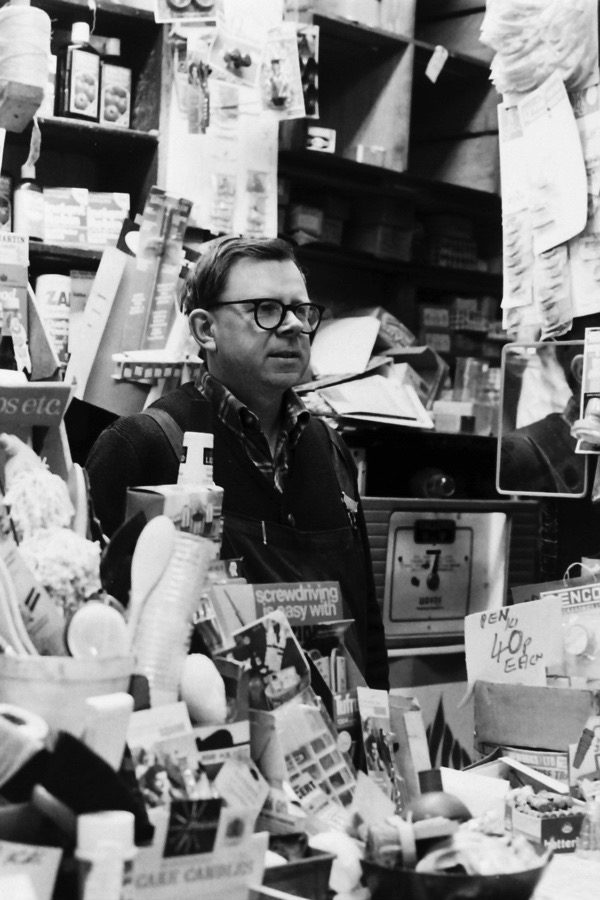
Proprietor of Barratts’ hardware – “An unbelievable shop in Stepney Way. It sold EVERYTHING, including paraffin – a shop you would not see nowadays.”
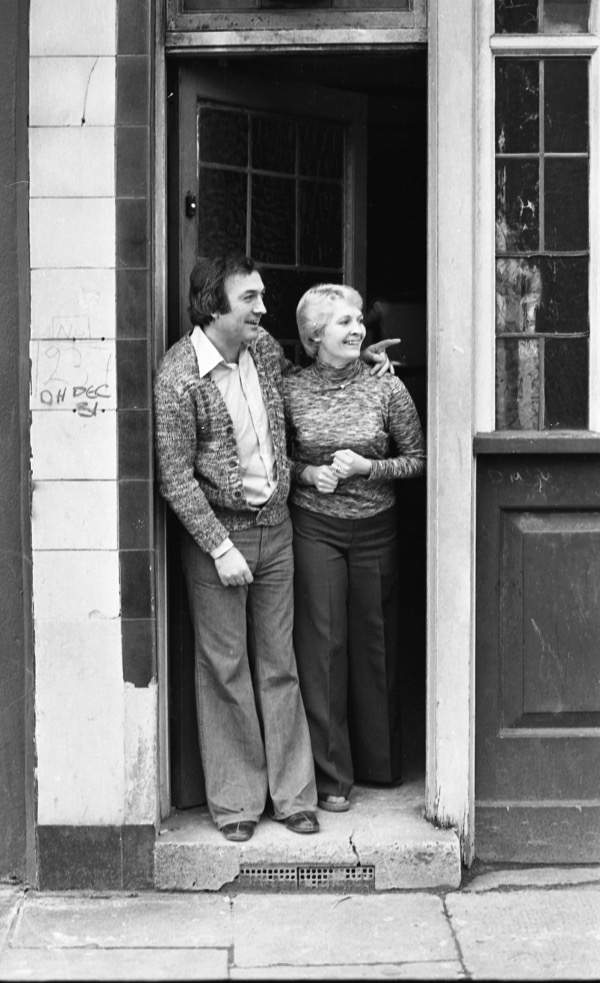
Terry & Brenda Green, publicans at The Three Crowns, Mile End
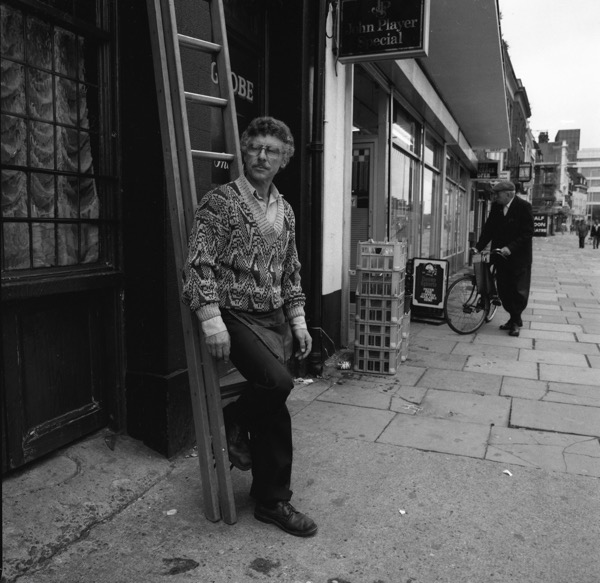
“My drinking pal, Grahame the window cleaner, knew all that was happening on the Mile End Rd.”
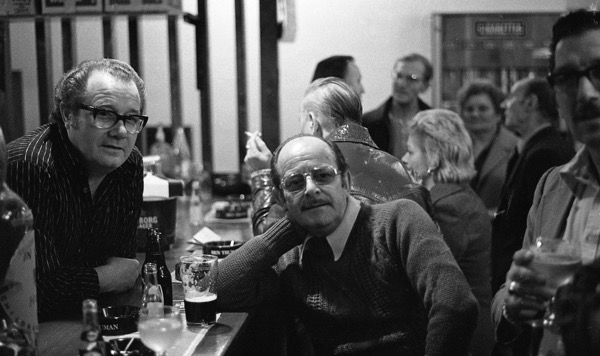
Oxford House bar
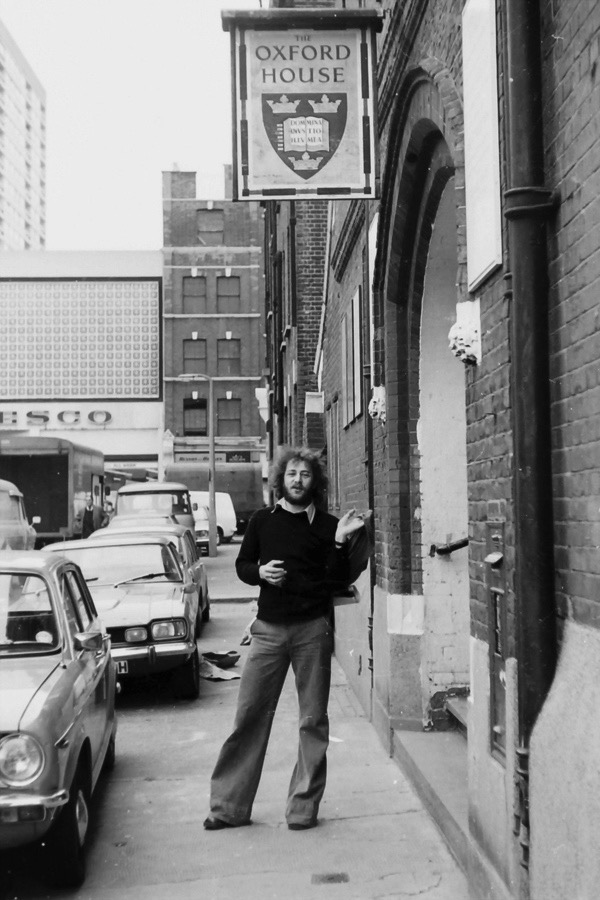
“Bob Drinkwater ran the youth club at Oxford House where I was a youth worker” c. 1974
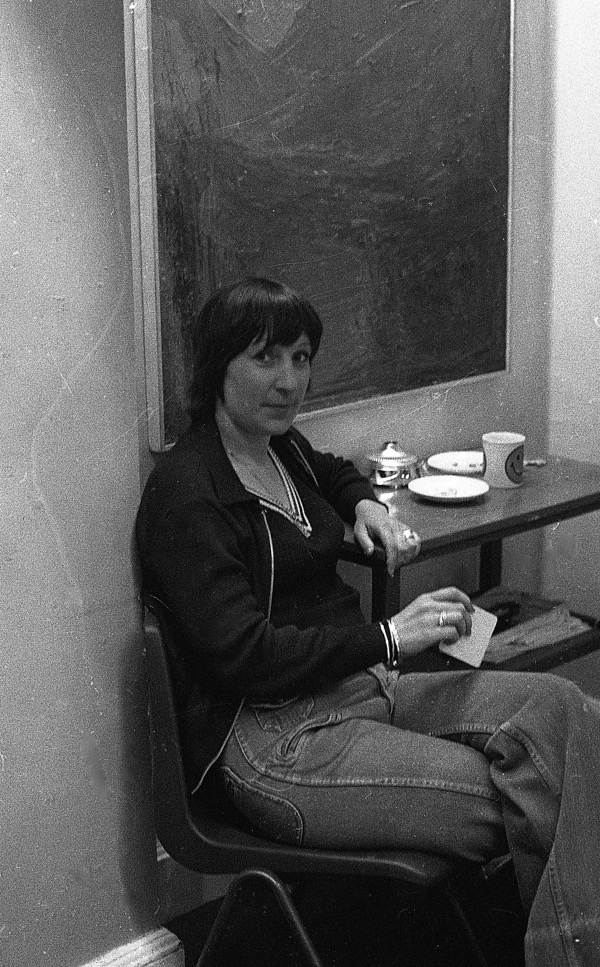
Pat Leeder worked as a volunteer at Oxford House
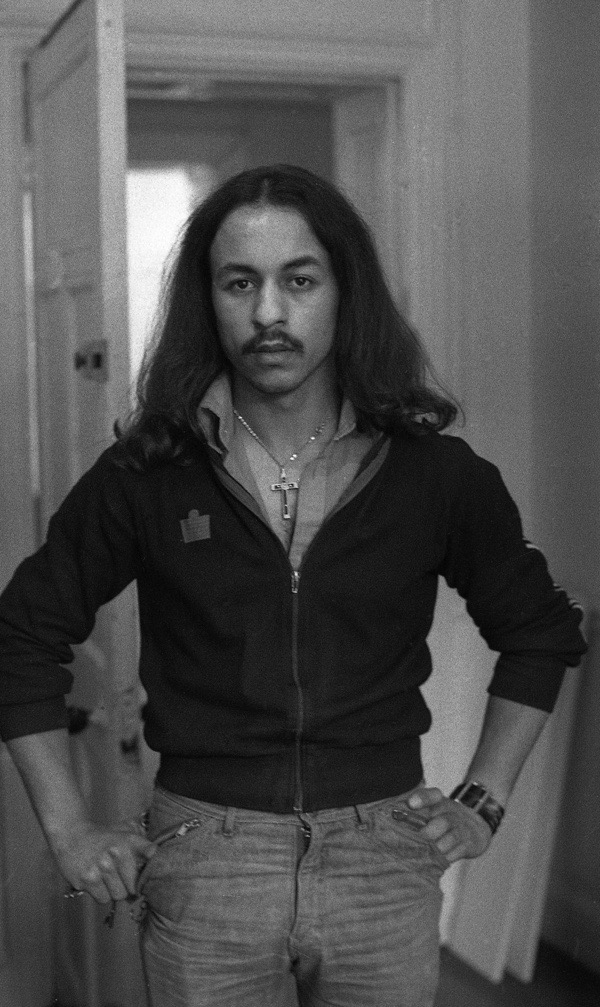
Caretaker at Oxford House
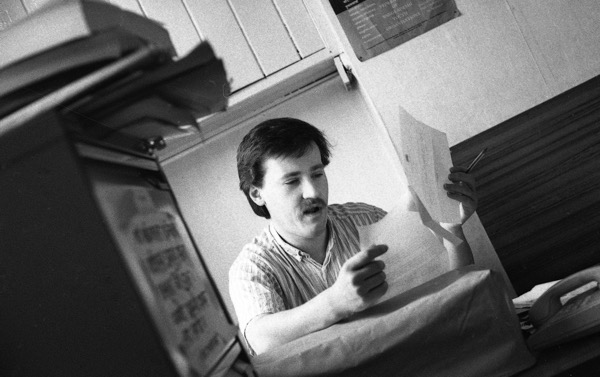
My friend Michael Chalkley worked for the Bangladeshi Youth League and Bangladeshi Welfare Association
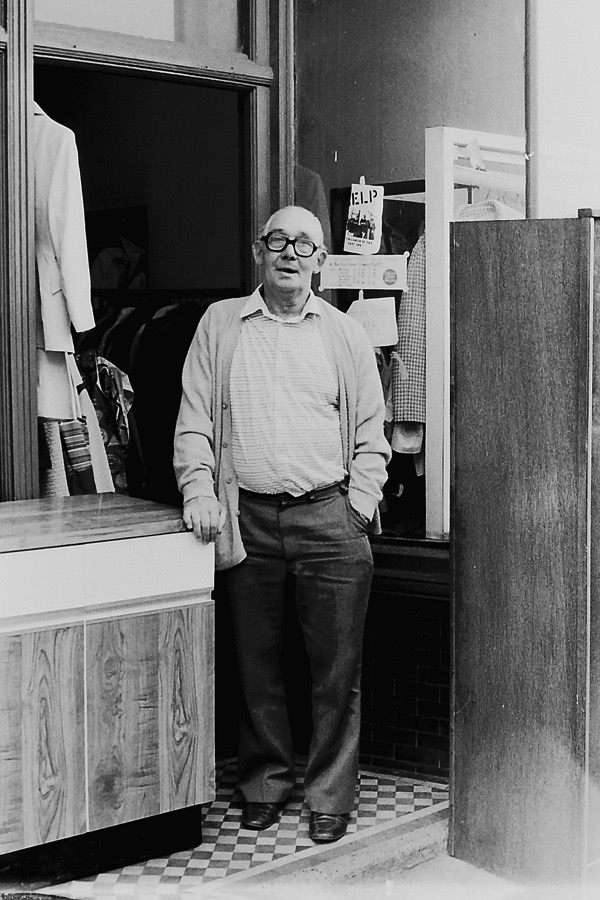
Frank Sewell worked at Kingsley Hall, Bow, and ran a second hand shop of which the proceeds went to the Hall, which was ruinous at that time
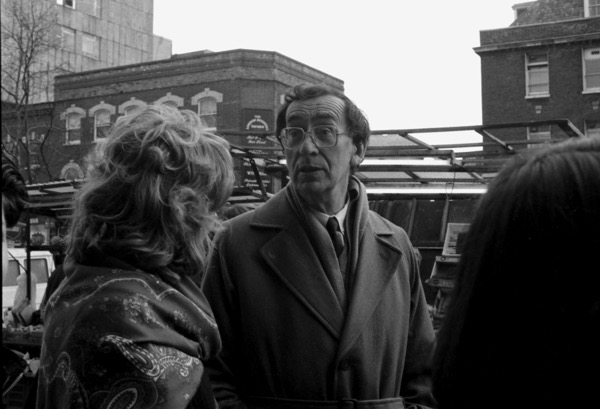
Historian Bill Fishman in Whitechapel Market
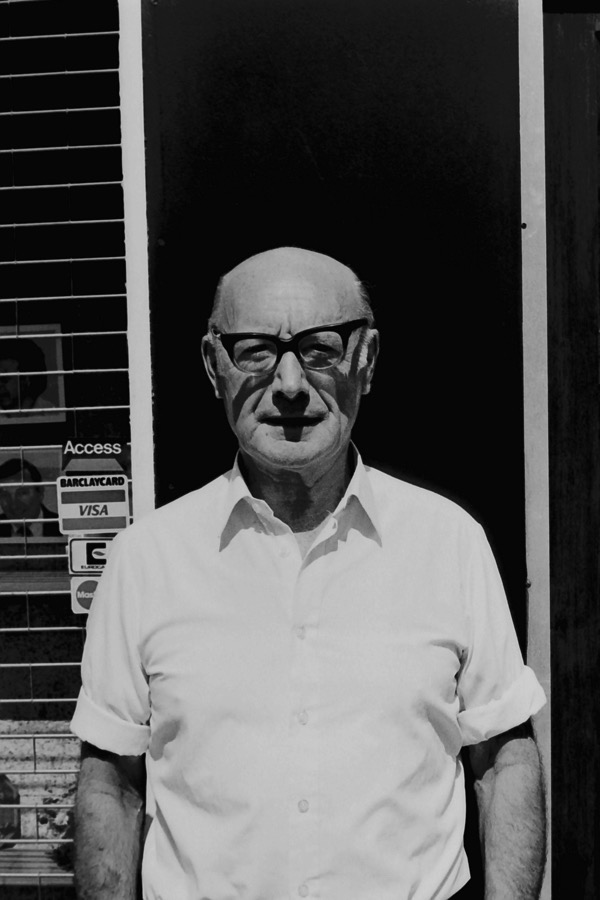
Mr Green
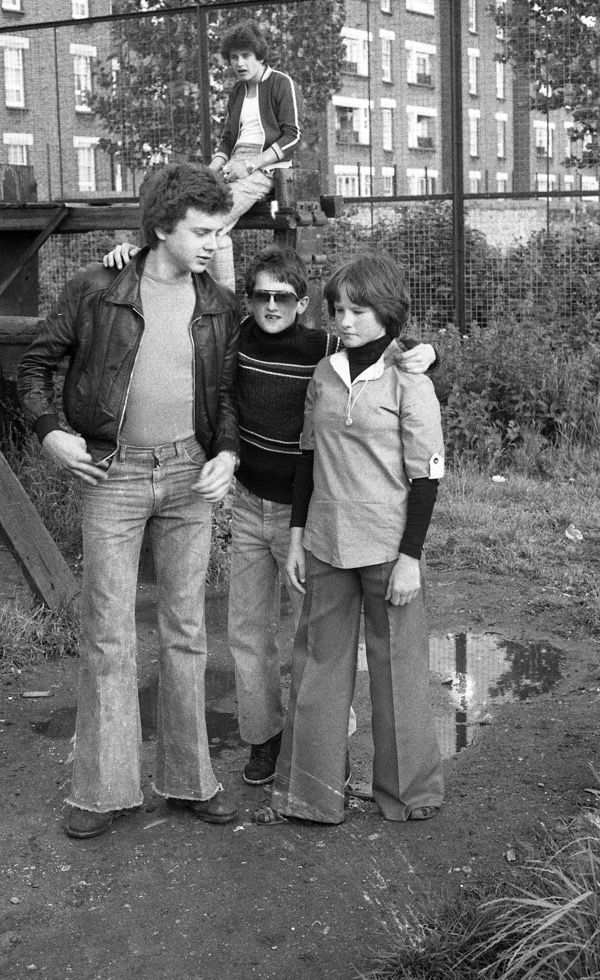
Kids from the youth club at Oxford House, Weavers’ Fields Adventure Playground, c. 1974
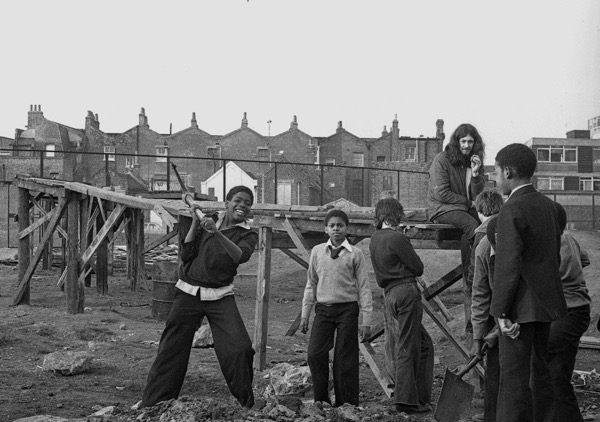
Kids from the youth club at Oxford House, Weavers’ Fields Adventure Playground, c. 1974
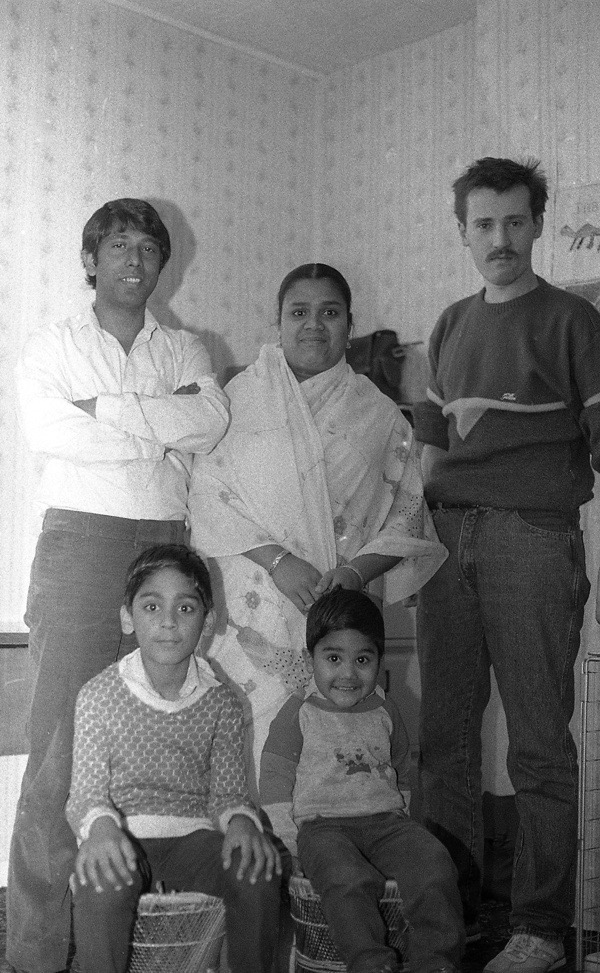
Salim, Noorjahan, Jabid and Sobir with Michael Chalkley, c. 1977
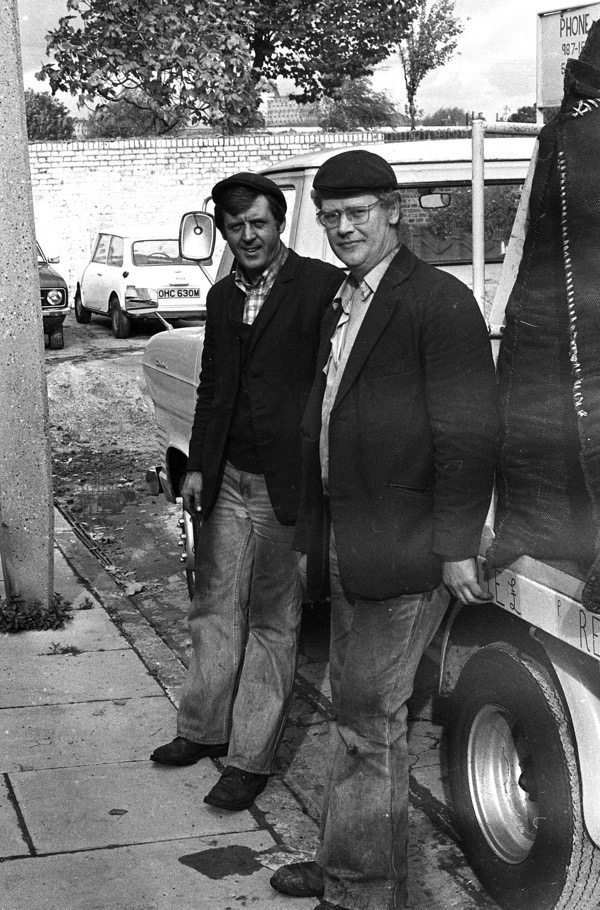
Coal Men, A G Martin & Sons, delivering to Mile End Place
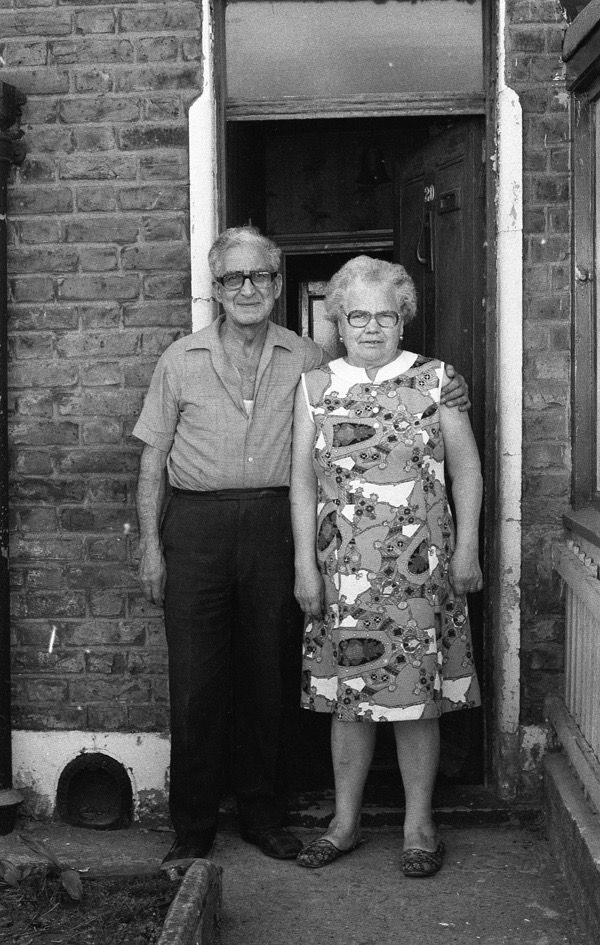
Mr & Mrs Jacobs, neighbours at Mile End Place
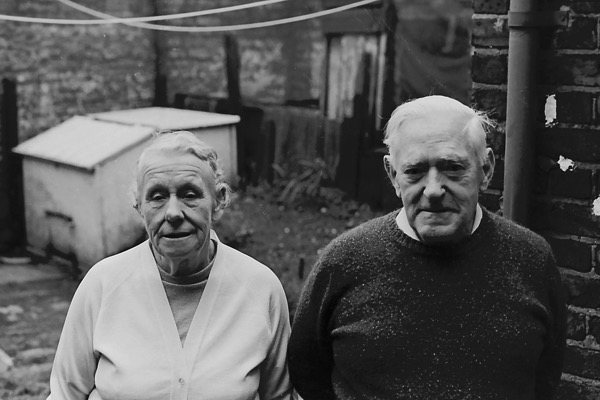
Mr & Mrs Mills, neighbours at Mile End Place
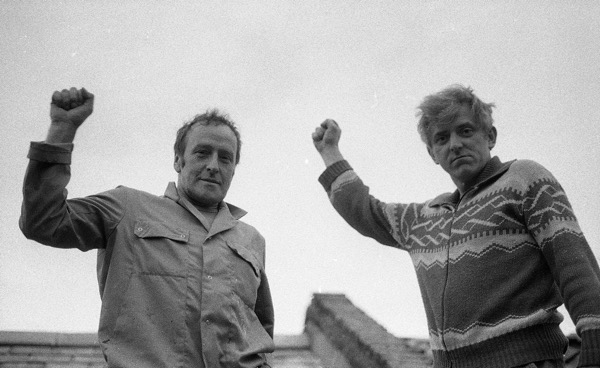
Commie Roofers, Mile End Place
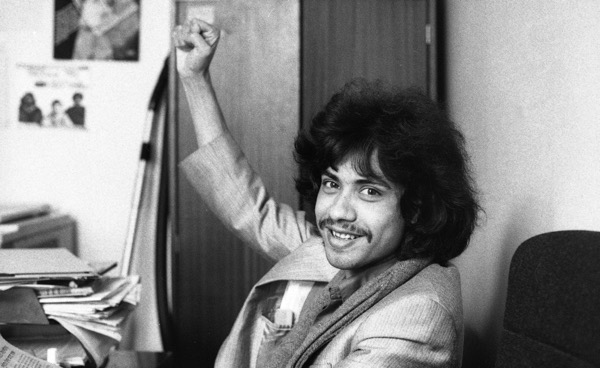
Friend and fighter against racism, Sunwah Ali at the Bangladeshi Youth League office, c. 1978
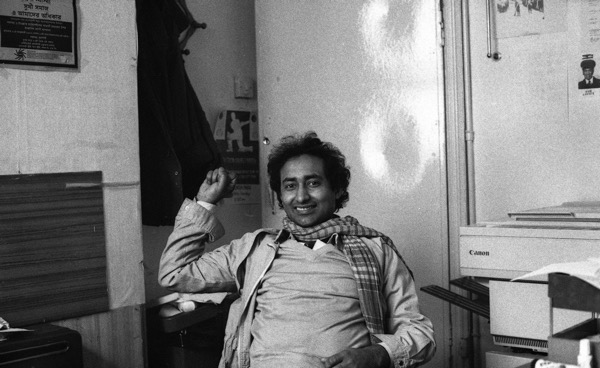
Norr Miah was a friend, colleague and trustee of the Bangladeshi Youth League
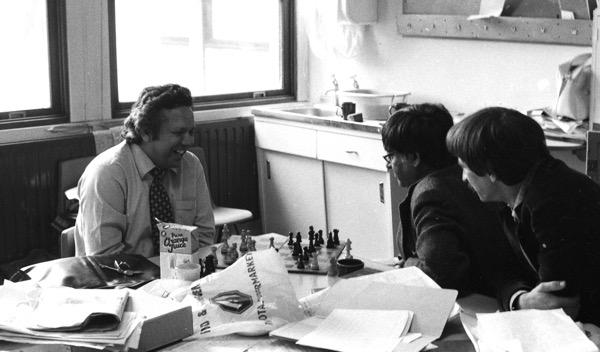
Chess players at Brooke House School, c. 1979
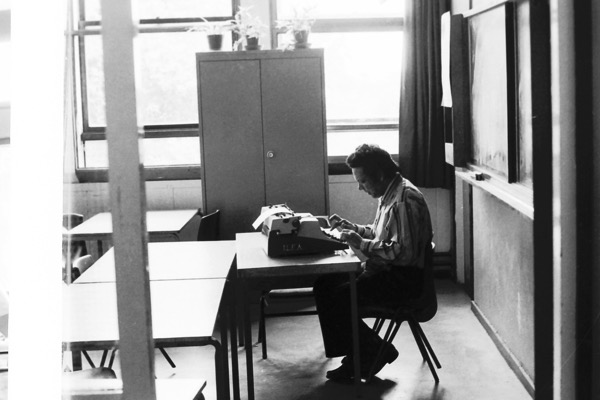
Teacher at Brooke House – “The best school I ever taught in with a really congenial staff” c. 1979
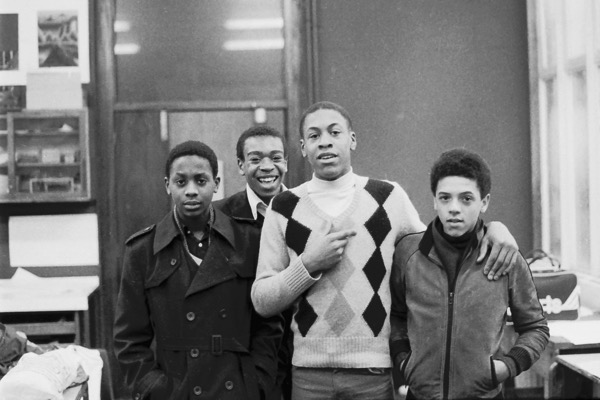
“Boys from Brooke House School where I was a probationary teacher, c.1979”
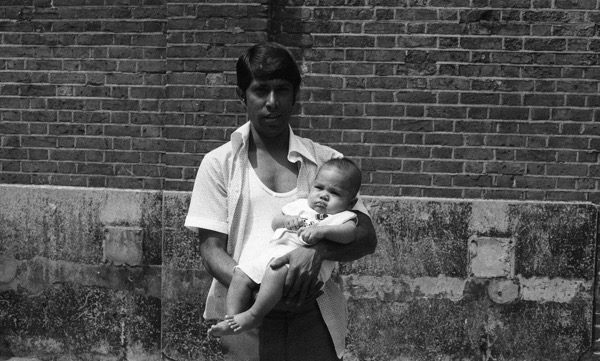
“My friend and colleague Salim Ullah with his baby” c.1977
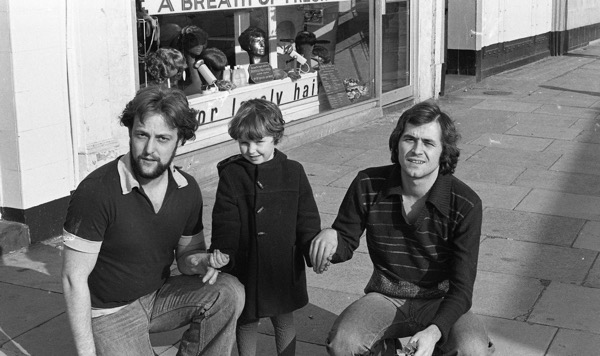
John Smeeth (AKA John the Beard), my daughter Andrea, and Michael Wiston (AKA Whizzy) c. 1977
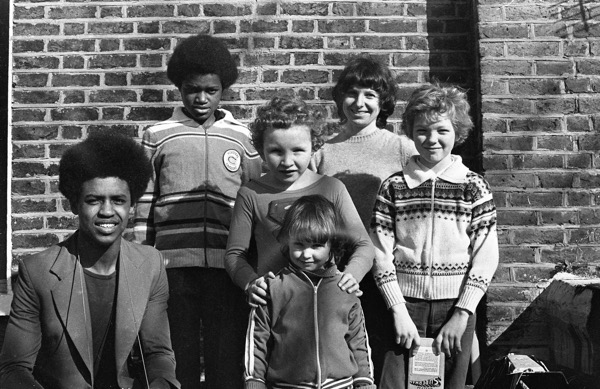
Eddie Marsan (dressed as Superman) and friends, Mile End Place
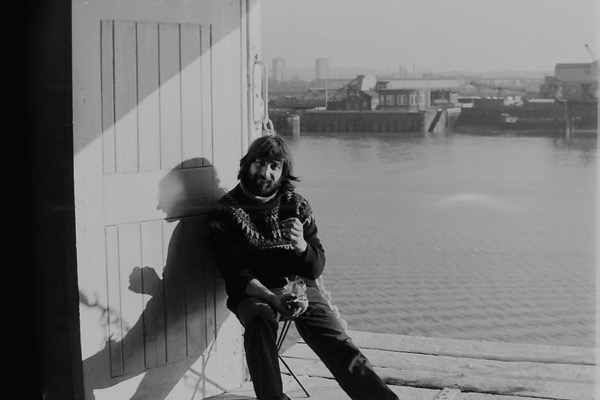
“Rembert Langham in our studio in New Crane Wharf, Wapping. He made monsters for Dr Who and went pot-holing”1975

Mother & son, Whitechapel. “She asked me why I was taking photos of derelict buildings, so I said I would like to take a picture of her and she agreed.”
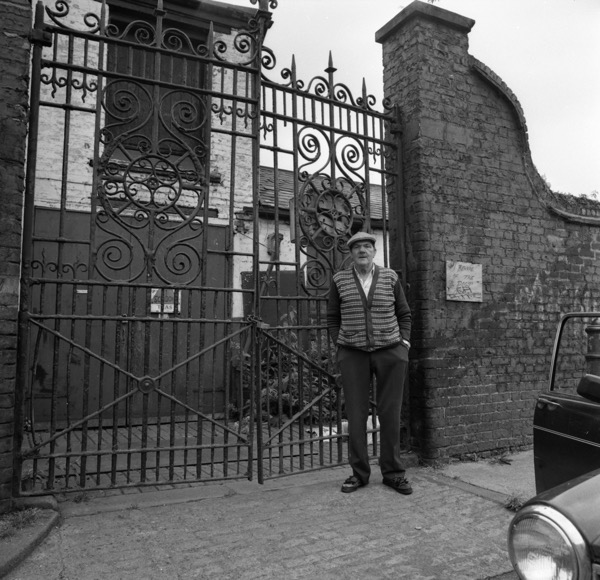
“John the Fruit used to drink in the Three Crowns and we were good friends. We were in the pub one night when some tough characters came in. It turned out they owned this property I had been photographing. I asked if I could do some photos inside, they said, ‘Yes, come on Thursday.’ I duly arrived, but the place was locked and no one was about. Then John the Fruit turned up so I took his picture, as you see above. Later that week in the Three Crowns, the rough guys walked in and, when they saw me, accused me of not turning up. I was grabbed by the shoulder to be taken outside (very nasty). However John, who was an ex-boxer and pretty fit for an old boy, pulled the bloke holding me aside and said ‘He was there, because I was there with him!’ They put me down and were most apologetic to John. He saved me from something bad, God Bless Him!!”
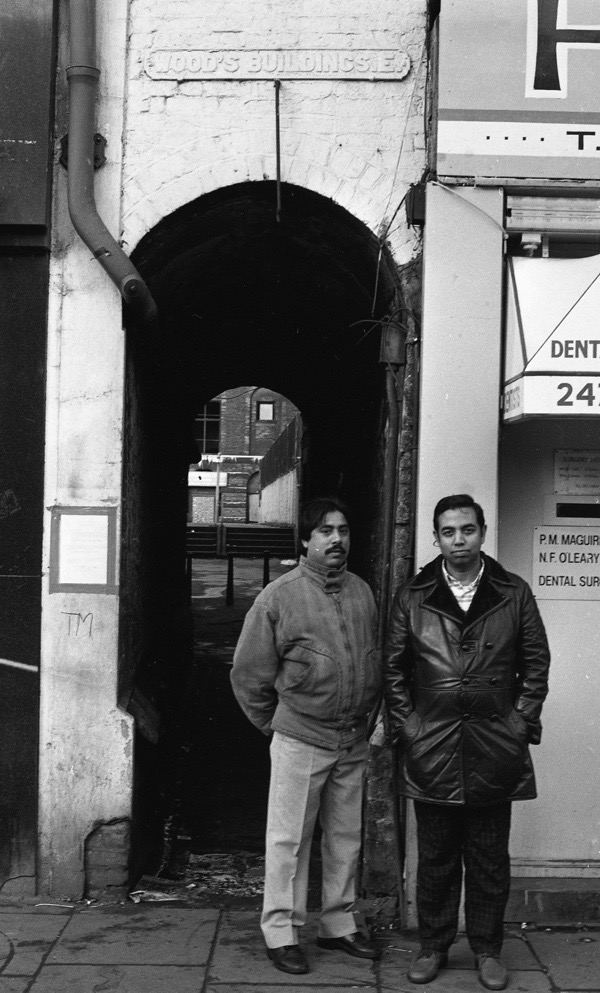
Abdul Bari & friend, Whitechapel. “Abdul Bari (Botly Boy) lived in the Bancroft Estate and was a parent at John Scurr School where I was a governor and where my daughter attended. The photo was taken on Christmas day.”
Photographs copyright © Philip Cunningham
You may also like to take a look at