
At Beckenham Place
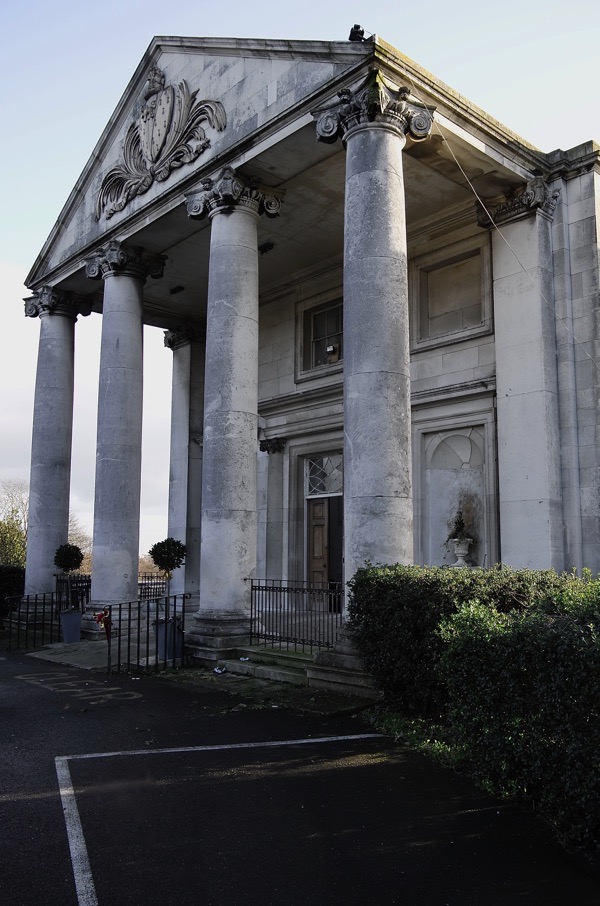
An empty villa on a bone-cold January day might not appear an immediately enticing prospect for a visit, yet Beckenham Place in Lewisham contains more than enough wonders to fire the imagination even if they are enshrouded with a melancholy winter gloom at present.
Constructed by John Cator (1728-1806) in the seventeen-seventies as his country house with the proceeds of his timber business, Beckenham Place ceased being a private home at the beginning of the twentieth century. After a sequence of institutional uses, including most recently as a golf club house, it is currently undergoing restoration as artists’ studios while plans are developed to discover how best to dedicate the building to public use.
John Cator took up residence in Robert & James Adam’s Adelphi in the Strand in 1776 and it seems likely the Adam brothers were responsible for the magnificent plasterwork at Beckenham Place, while architect Robert Taylor is the most probable candidate for design of the house. Conceived as a southerly counterpoint to Kenwood House in Hampstead, Cator landscaped the surrounding parkland, planting rare imported species of trees recommended by his acquaintance Carl Linnaeus, creating a lake and diverting the main road. He set out to contrive a country estate in the best possible taste, signalling his arrival in the world and elevating the status of his family. Yet John’s circle of friends included Henry Thrale, Fanny Burney and Samuel Johnson, who all recorded their candid impressions of the man.
“Cator has a rough, manly independence and understanding and does not spoil it by complaisance. He never speaks merely to please and seldom is mistaken in things which he has any right to know” – Samuel Johnson
“He prated so much, yet said so little, and pronounced his words so vulgarly that I found it impossible to keep my countenance” – Fanny Burney
“A purseproud Tradesman coarse in his expressions and vulgar in Manners and Pronunciation; though very intelligent, and full of both money and good sense” – Henry Thrale
When John Cantor’s nephew John Barwell Cantor inherited the estate in 1806, he also inherited his uncle’s social aspiration and brought a huge stone portico salvaged from Wricklemarsh, a nearby ruin, which he installed upon the north side of Beckenham Place without regard to proportion or design. The effect is as incongruous as those neo-Georgian porticos upon the suburban villas which were to surround Beckenham Park when it became a golf course in the twentieth century.
Today the golf course is also history and the bunkers and greens only remain prior to restoration of the landscape, yet the view from the villa over rolling parkland is as august as when it was first built. You could easily imagine yourself in a remote shire, even if you are only nine miles from Central London.
Occupied by ghosts and the presence of all those who have passed through, Beckenham Place speaks eloquently of the elegant conception of its architect complimented by extraordinary craftsmanship, overlaid with a century of use by an extended family, staff and tenants – and the school children, the sanatorium occupants, the soldiers, the golfers and the others who came after. Even in the depths of winter, it was heartening to see the old villa being prepared for new arrivals and a new life.
Artists & makers’ studios at Beckenham Place are available to rent at £175 a month – contact mansion@beckenhamplace.org or visit www.beckenhamplace.org
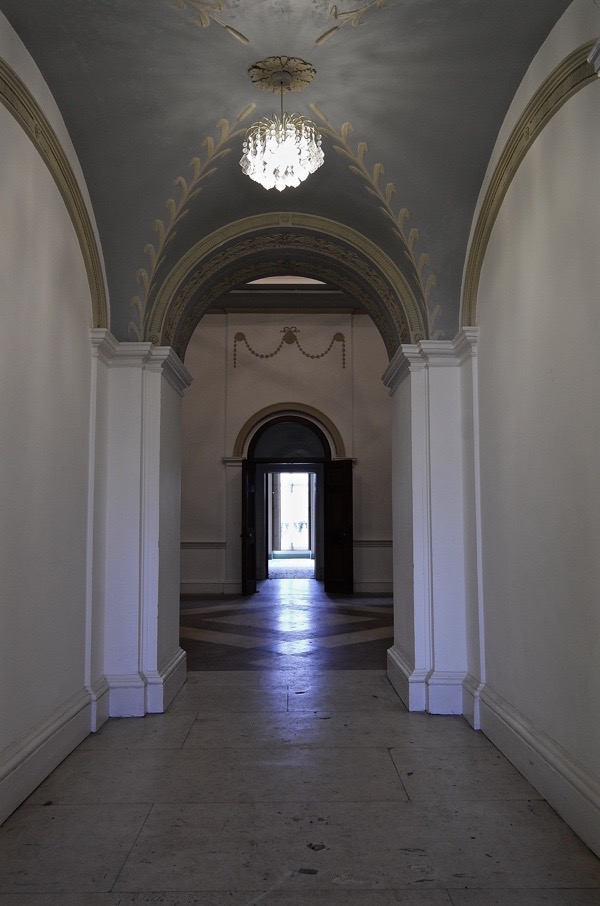
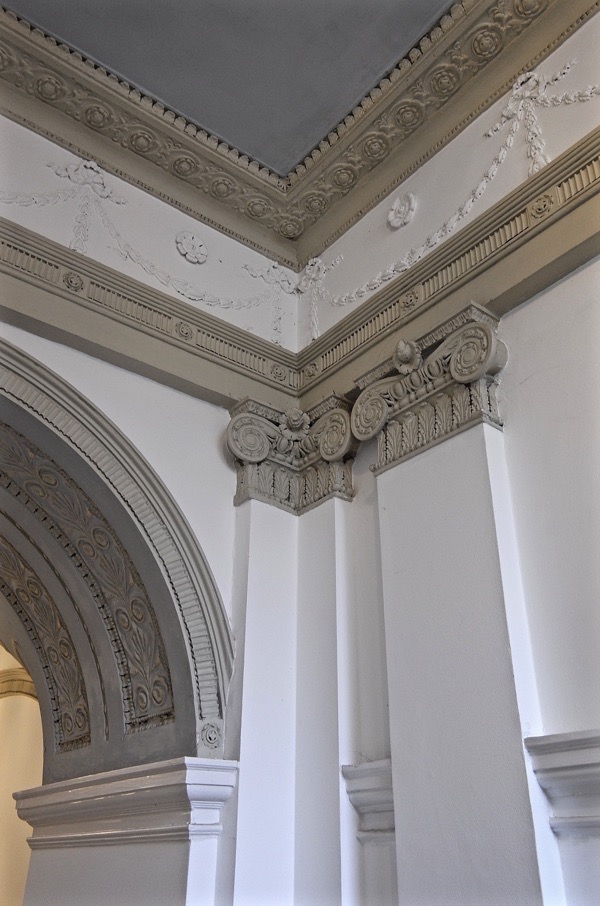
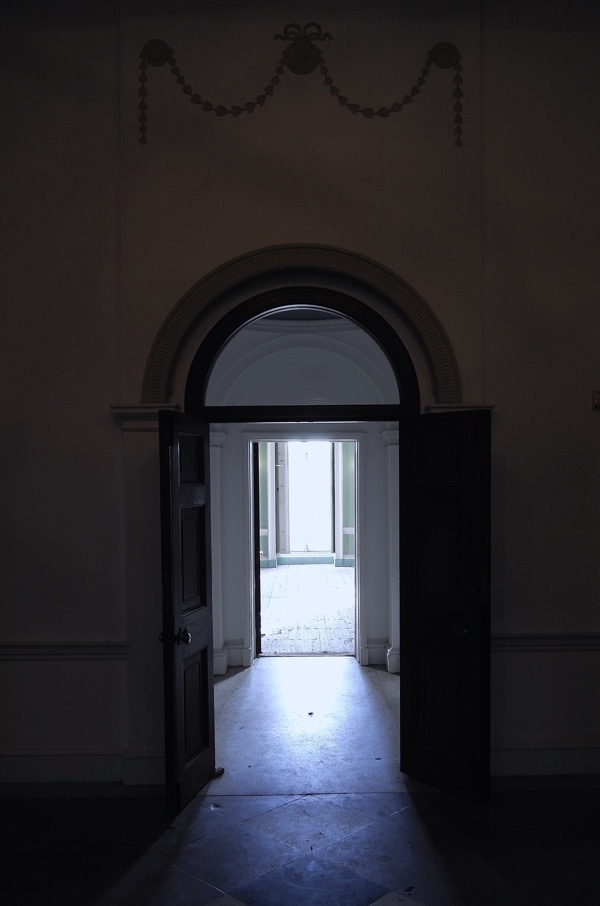
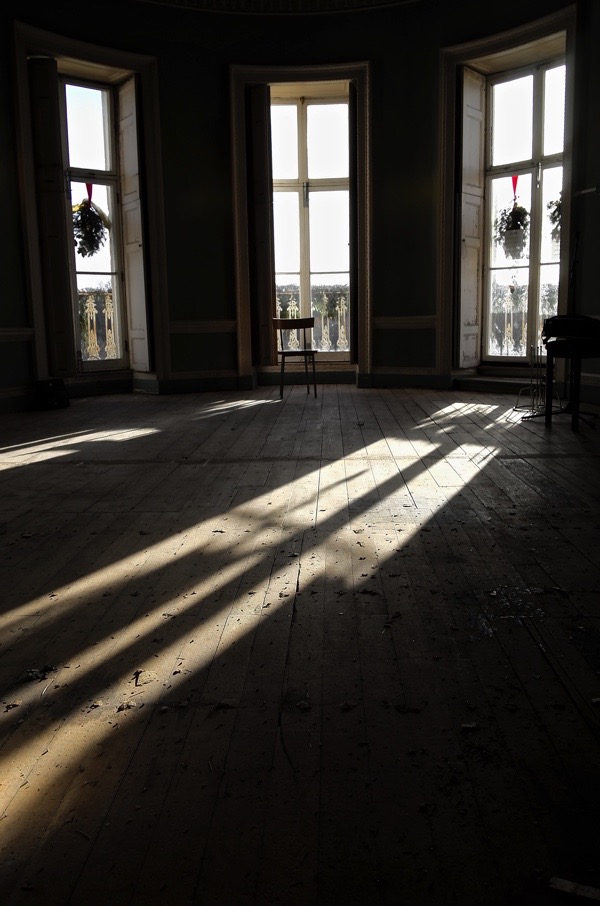
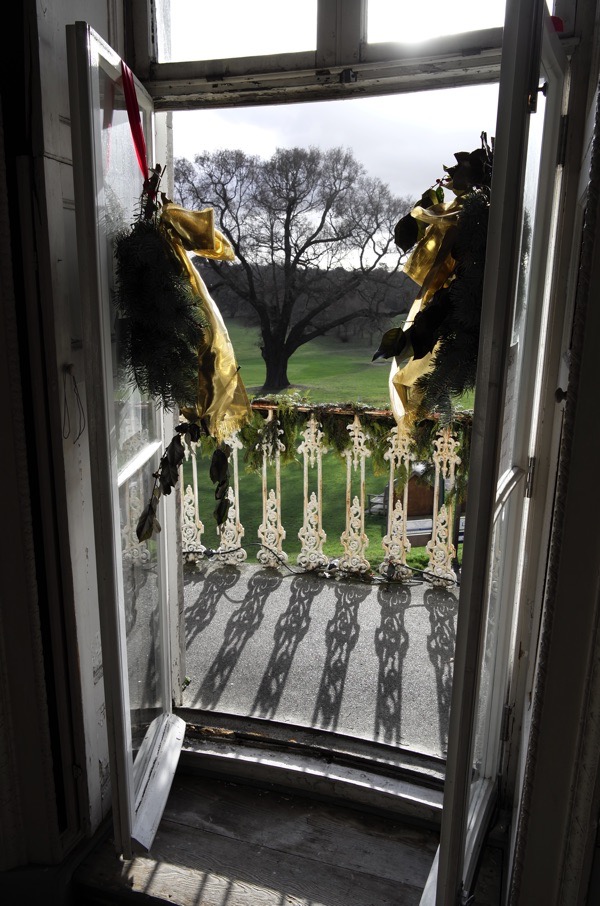
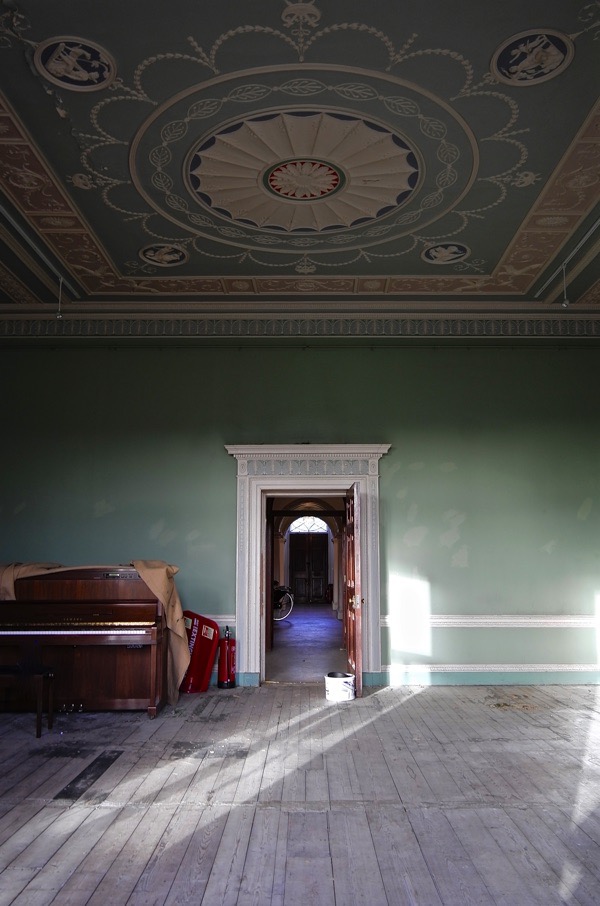
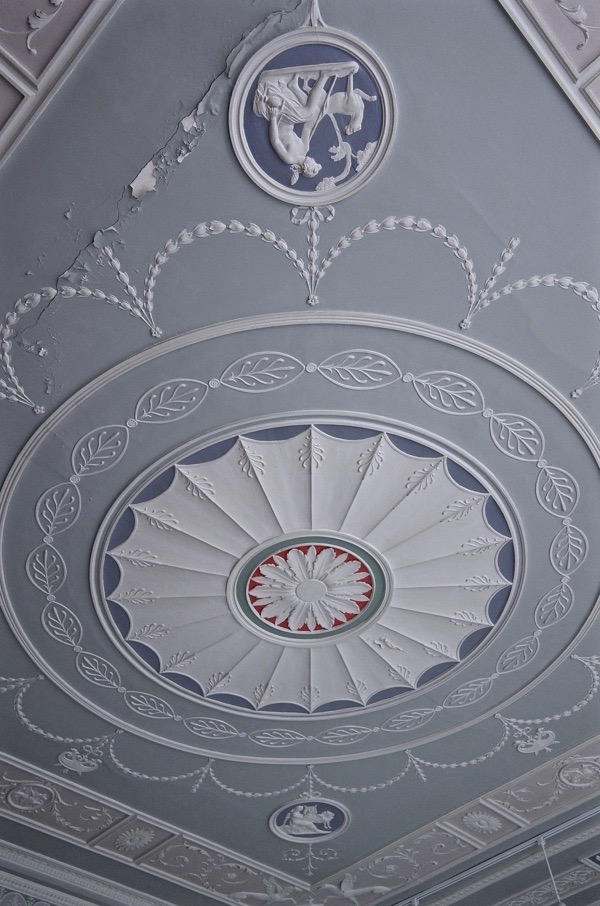
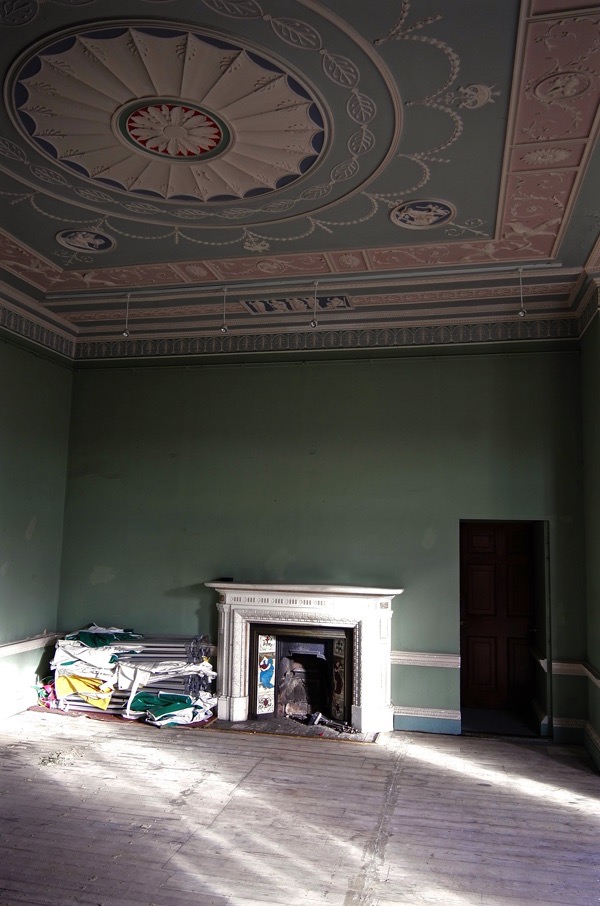
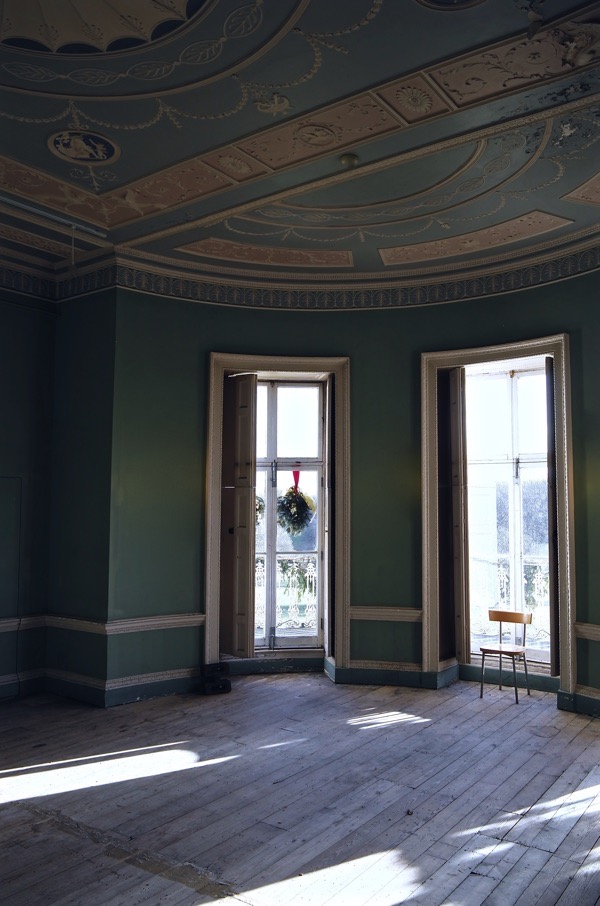
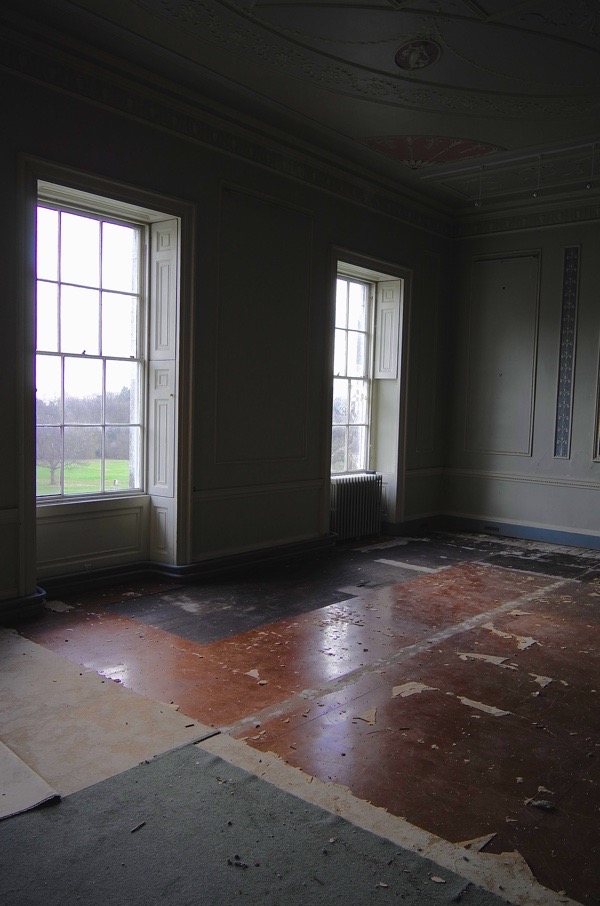
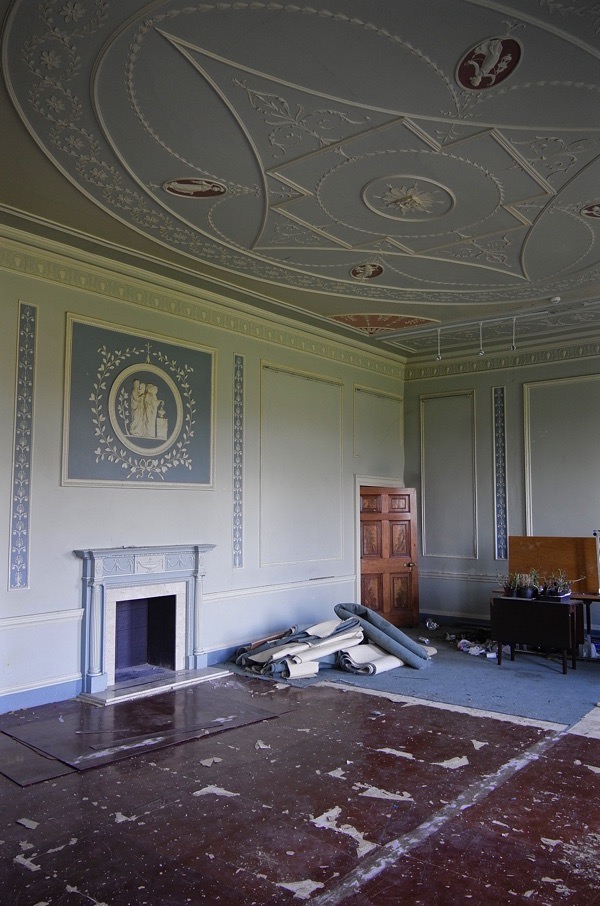
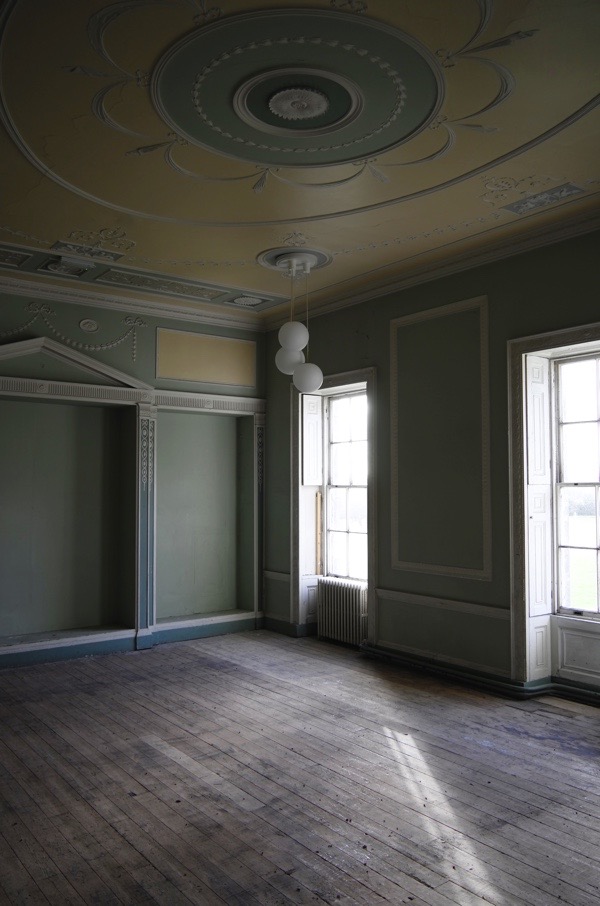
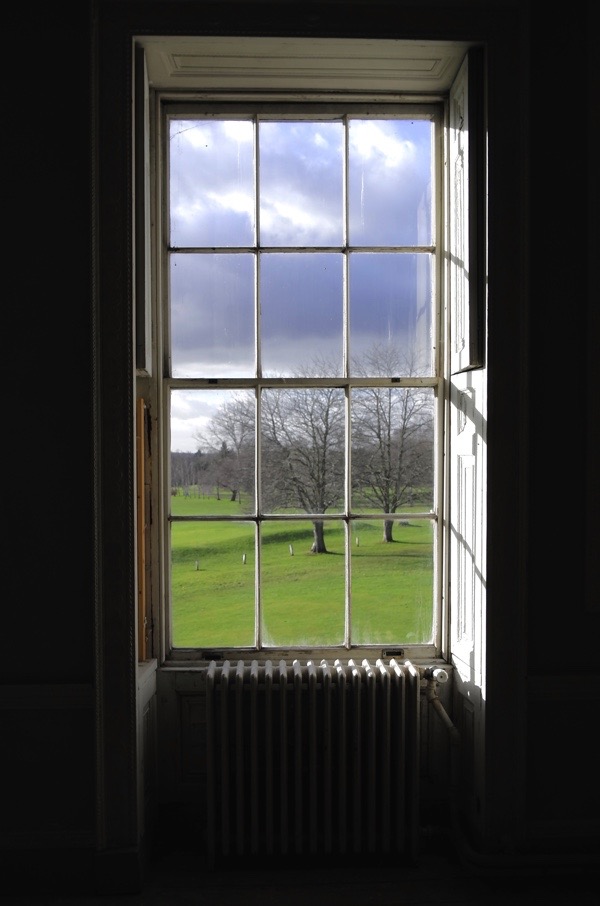
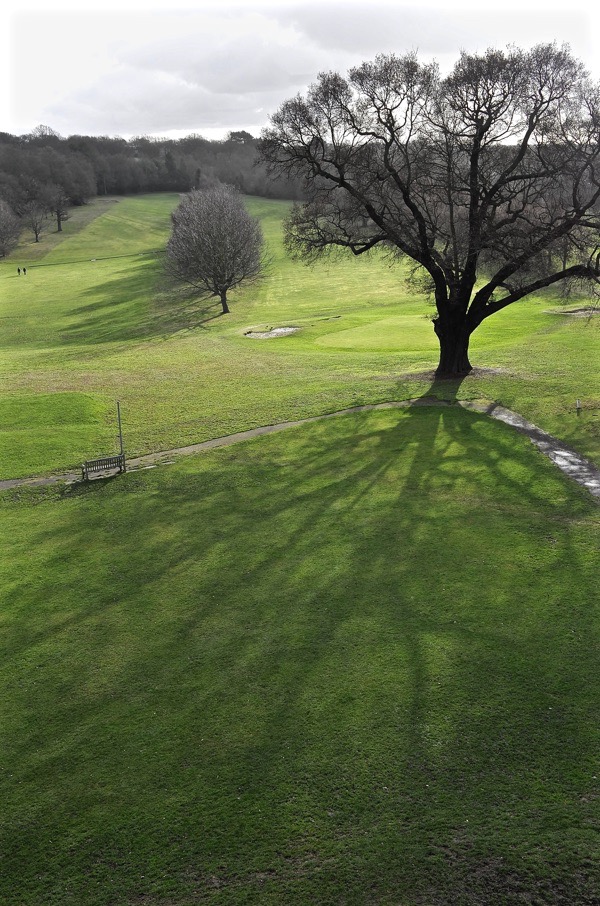
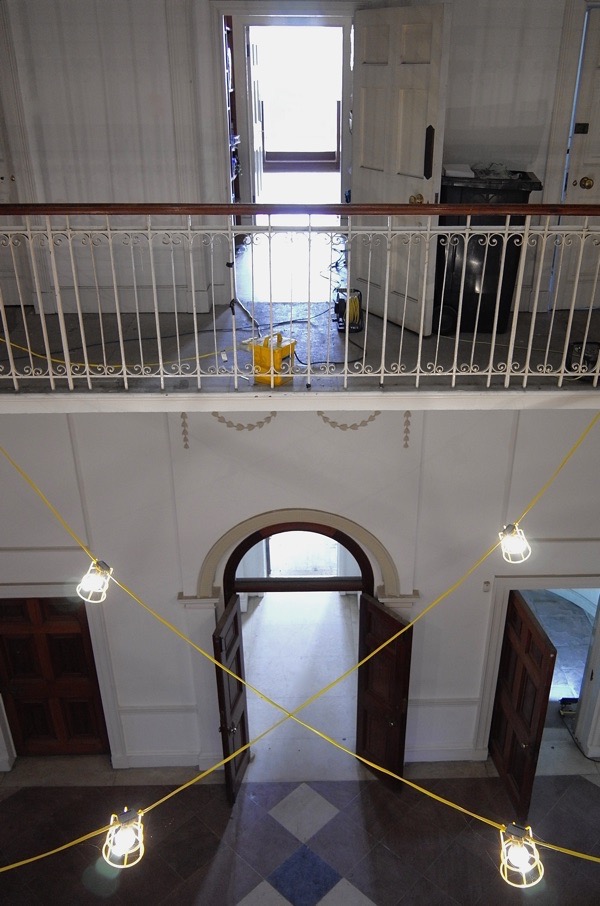
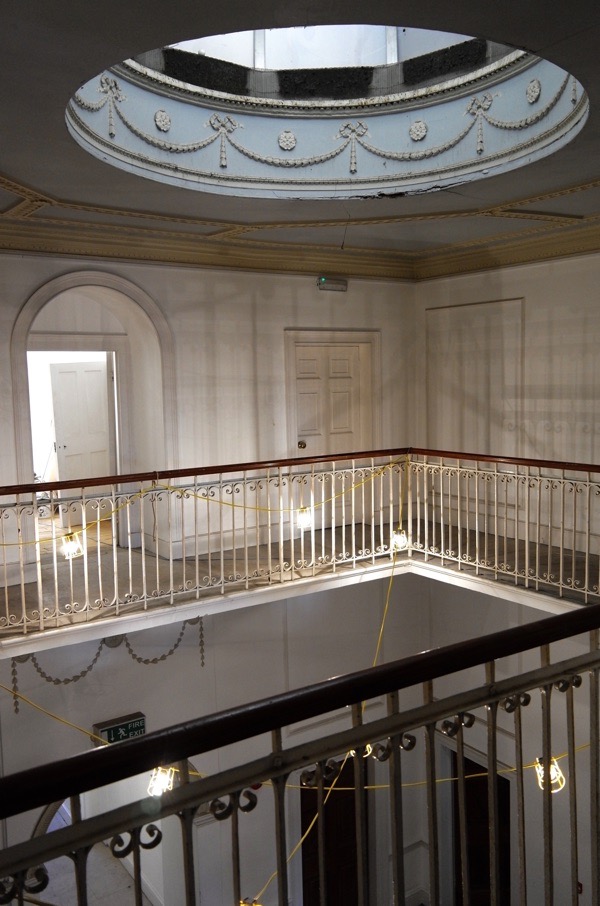
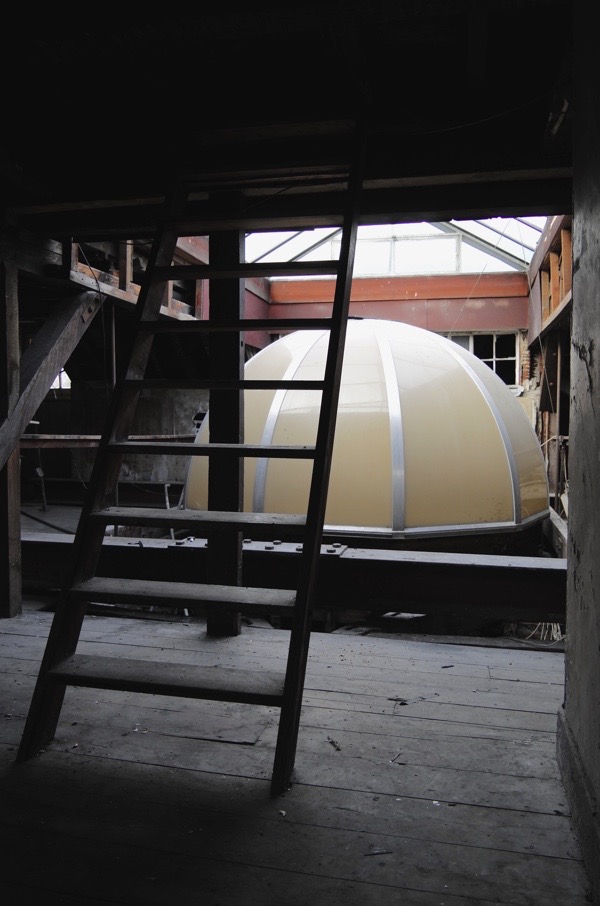
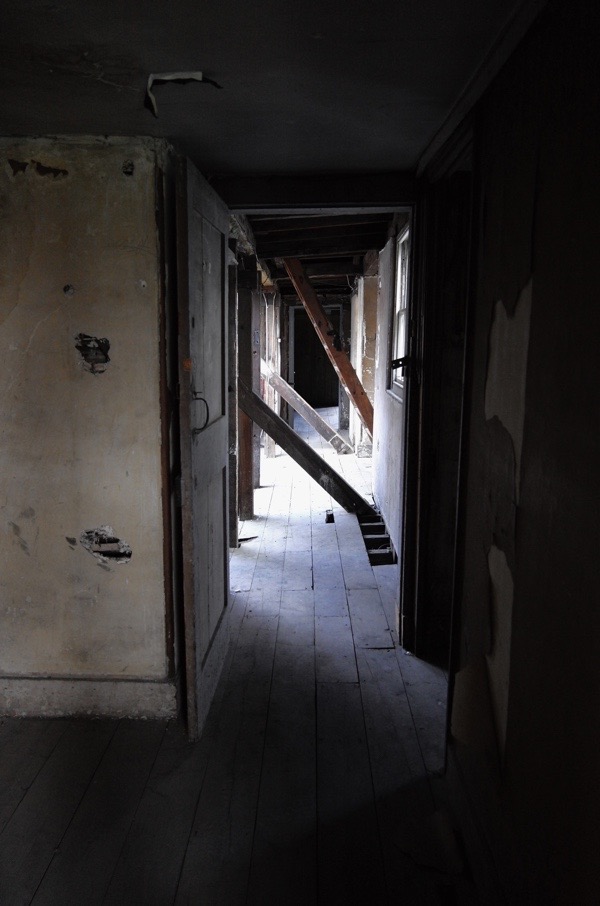
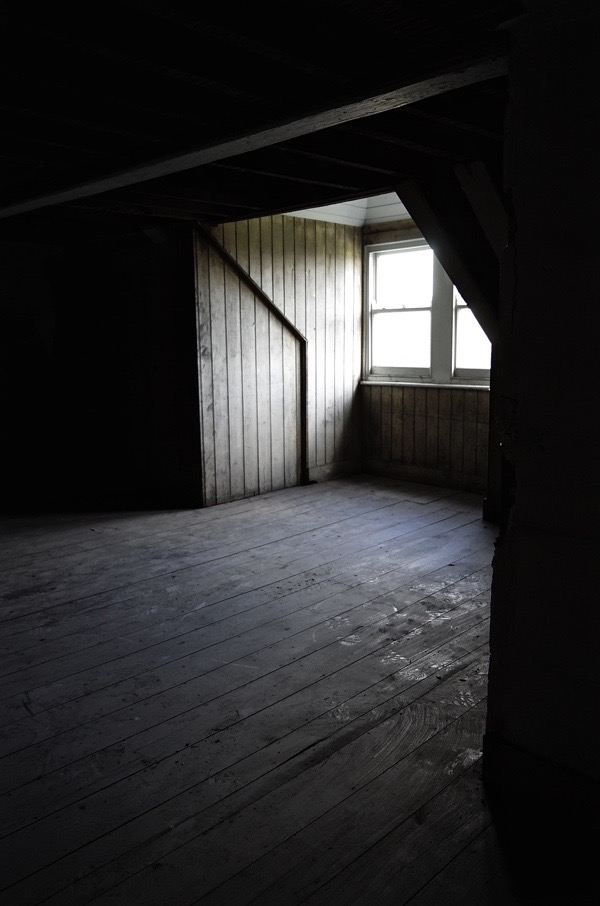
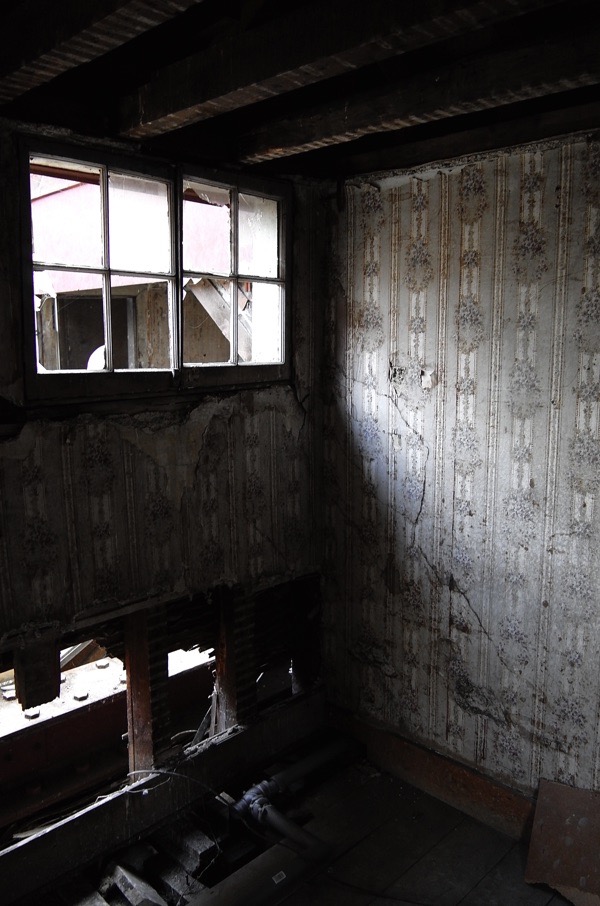
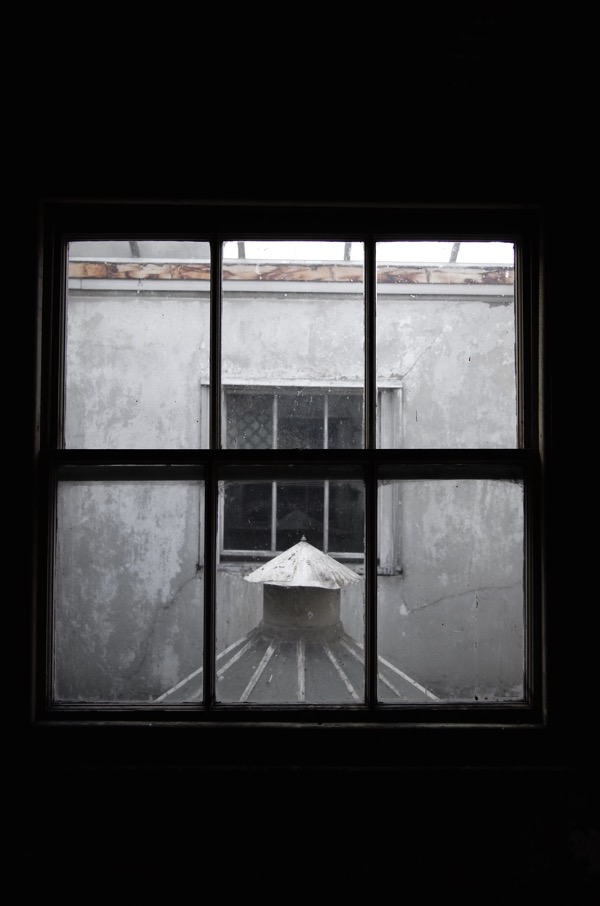
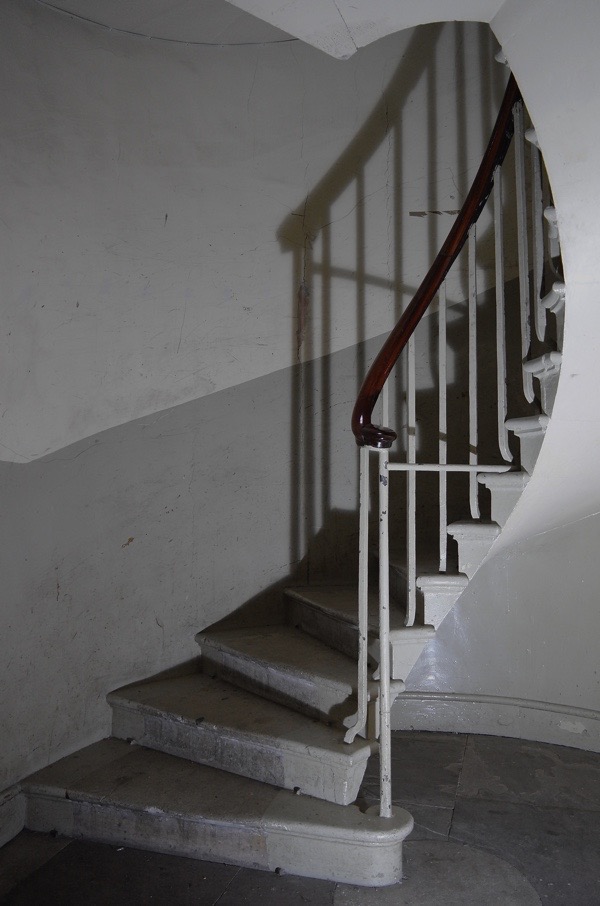

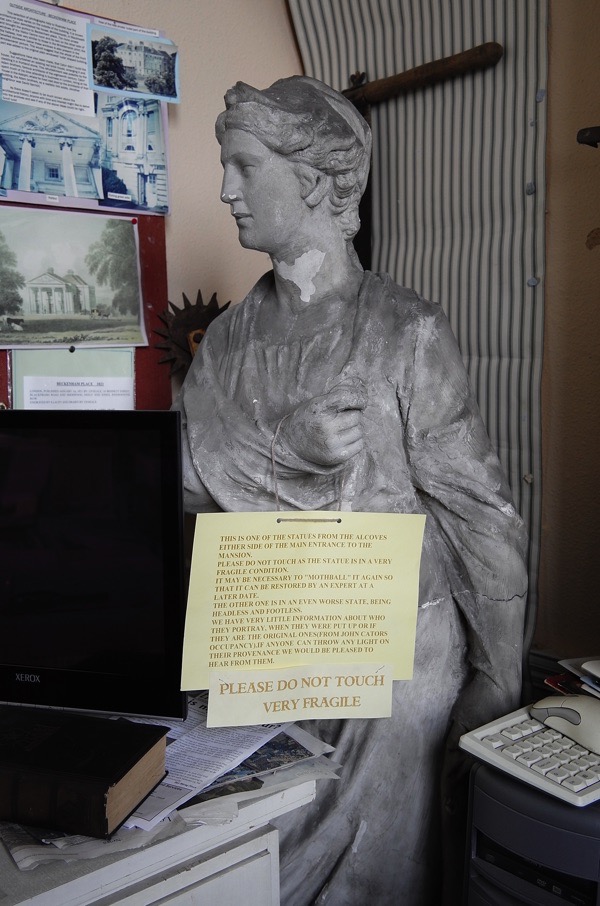
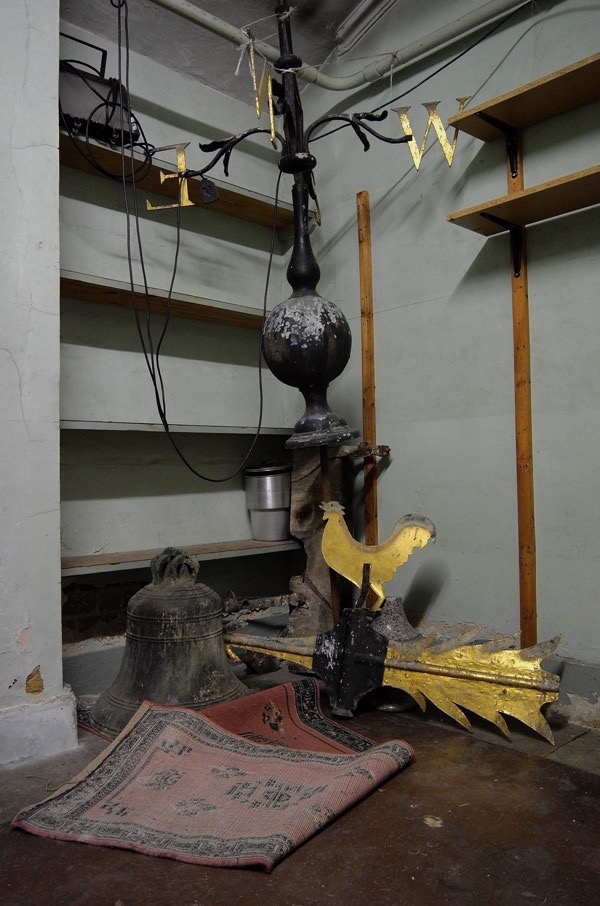
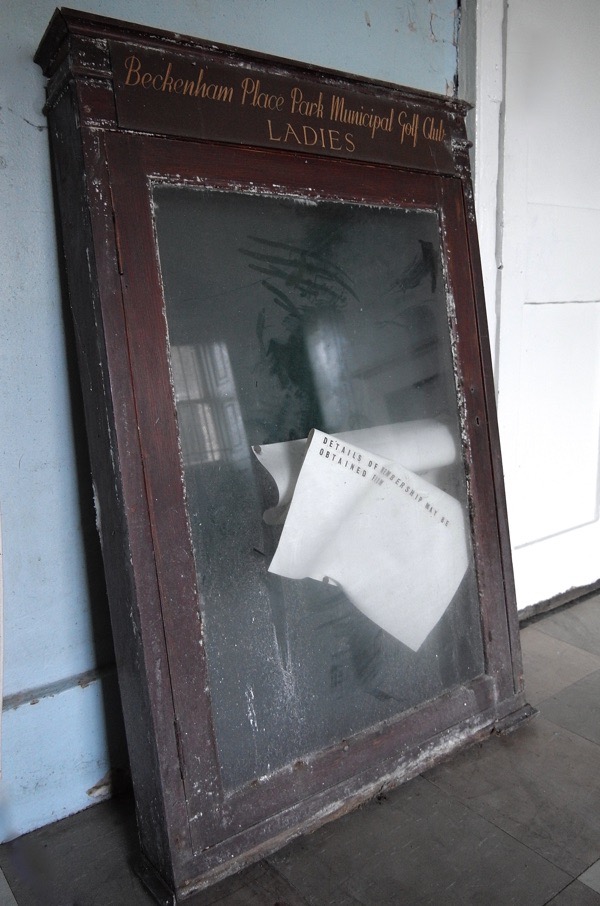
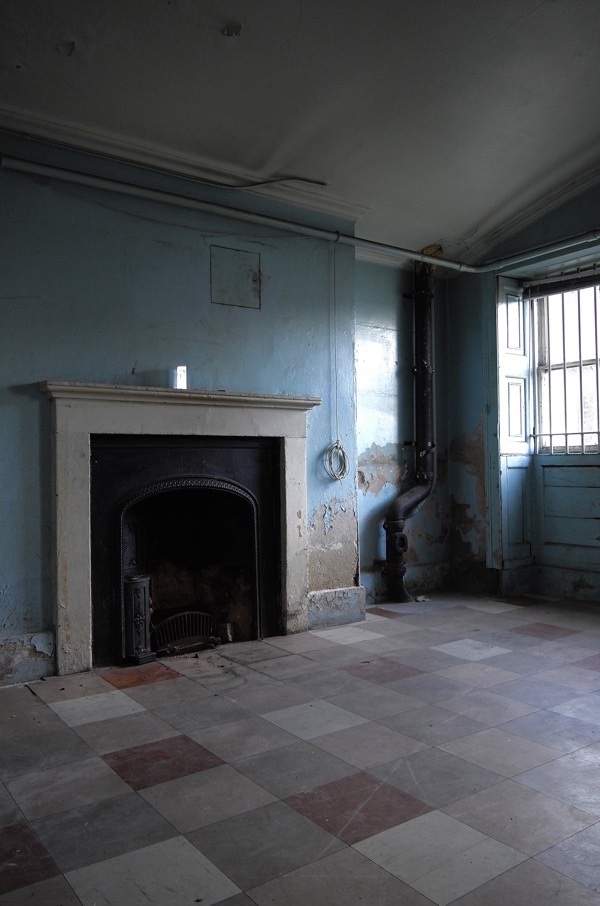
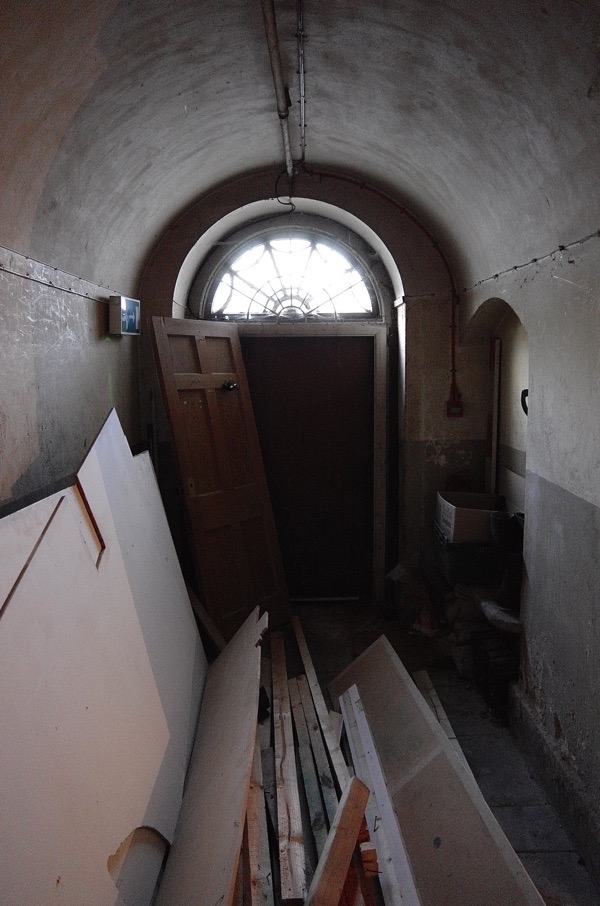
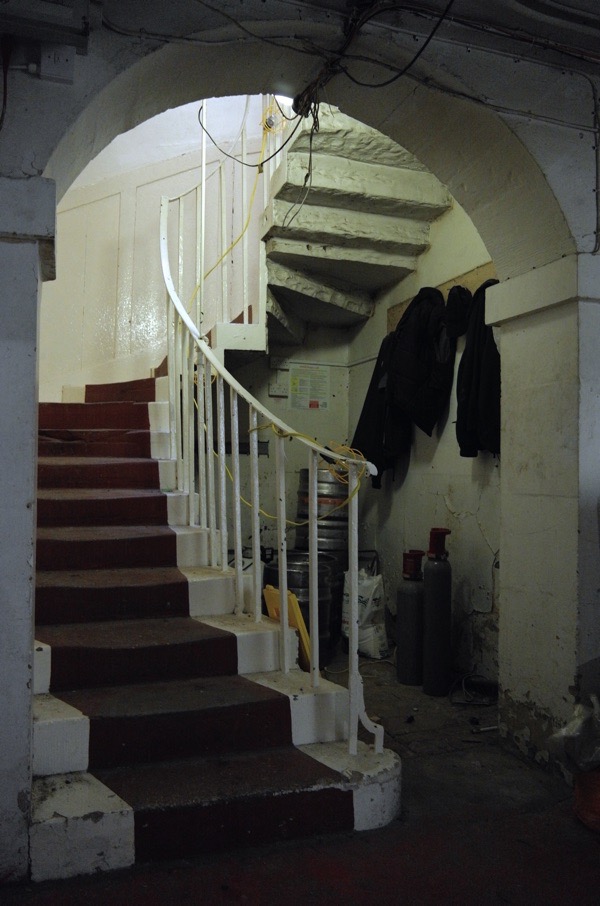
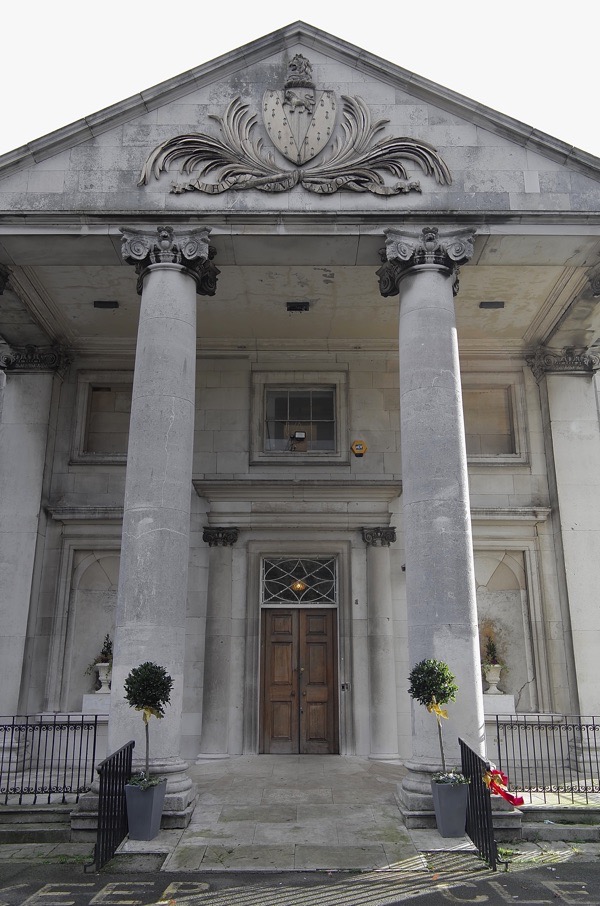
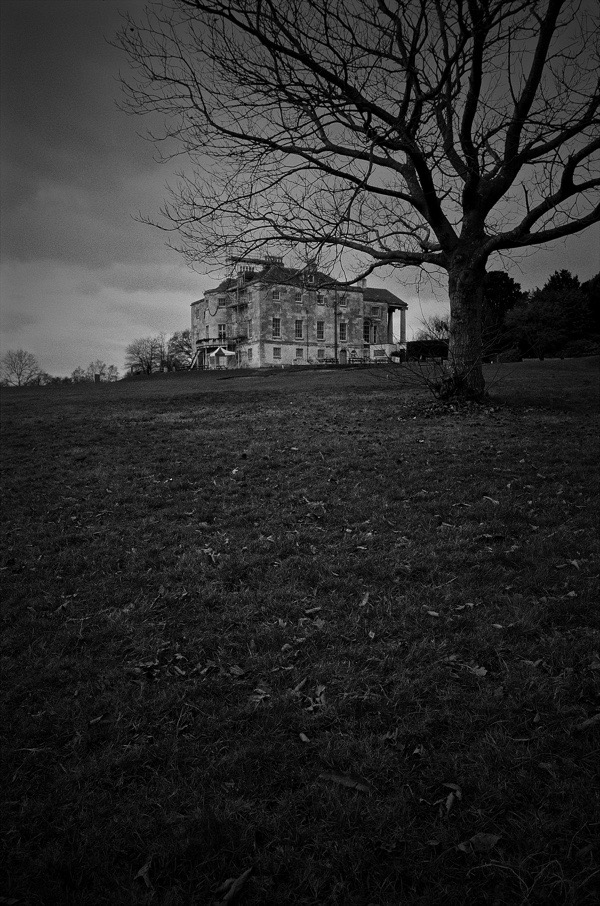
“At Beckenham Place, you could easily imagine yourself in a remote shire, even if you are only nine miles from Central London”
You may also like to take a look at
Frank Dobson’s Sculpture In Whitechapel
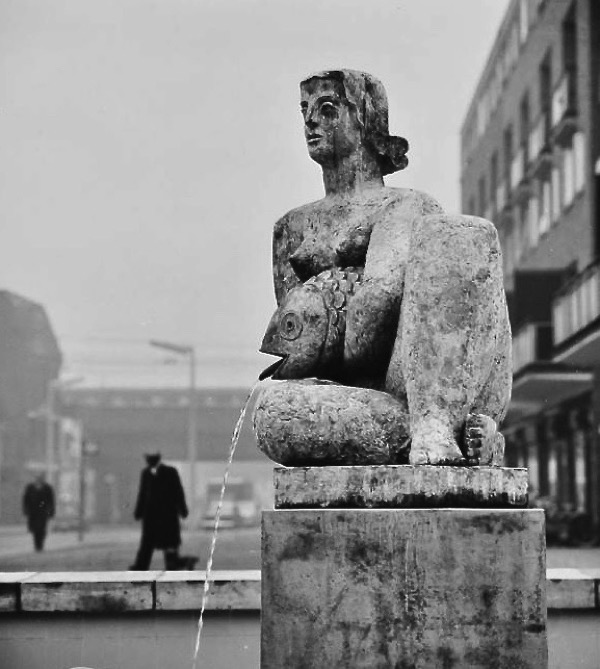
Woman & Fish by Frank Dobson in situ
Frank Dobson Sq in Whitechapel, where Cambridge Heath Rd meets Cephas St, was constructed in 1963 and named after the Clerkenwell-born sculptor whose ‘Woman & Fish’ formed the handsome centrepiece of the Cleveland Estate. Dobson’s sculpture of two figures entitled ‘London Pride’ situated outside the National Theatre serves a similar function on the South Bank.
Yet in 2002, Dobson’s sculpture was removed from its plinth in Whitechapel following a series of vandalisations which damaged it beyond repair, leaving a gaping hole in the streetscape to this day. In 2006, Tower Hamlets Council commissioned Antonio Lopez Reche to make a bronze replica, cast at a foundry in Limehouse, which was installed in Millwall Park on the Isle of Dogs in 2007.
The original installation of Frank Dobson’s sculpture at the Cleveland Estate celebrated the work of a major British sculptor in the year of his death and embodied a progressive belief in the importance of high quality public art as a means to improve the urban environment. Now residents of Whitechapel have raised a petition to return ‘Woman & Fish’ to the empty plinth in Frank Dobson Sq with improved lighting and security cameras to ensure its safety, restoring a cherished East End landmark to its rightful place.
Click here to sign the petition to restore Frank Dobson’s sculpture to Whitechapel
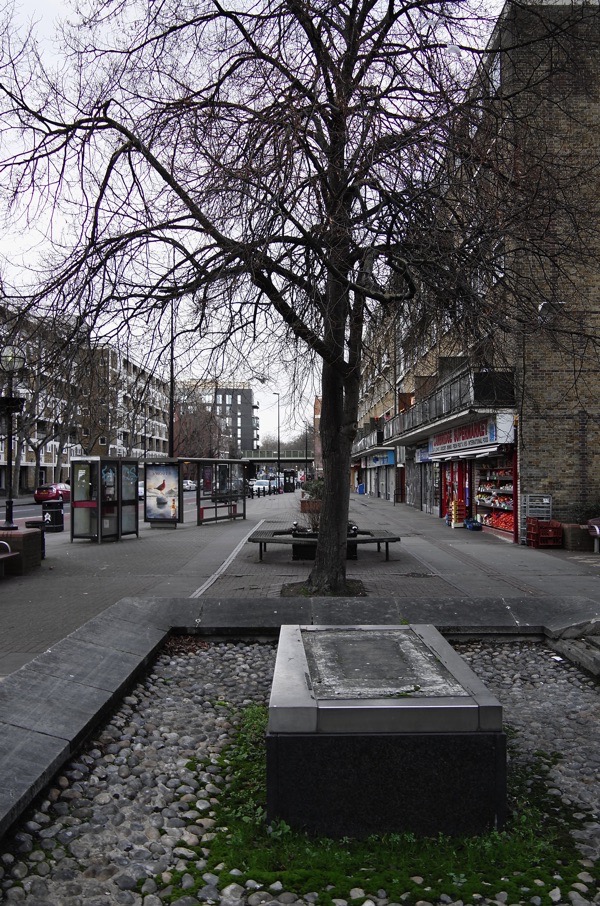
The plinth in Cambridge Heath Rd has been empty since 2002
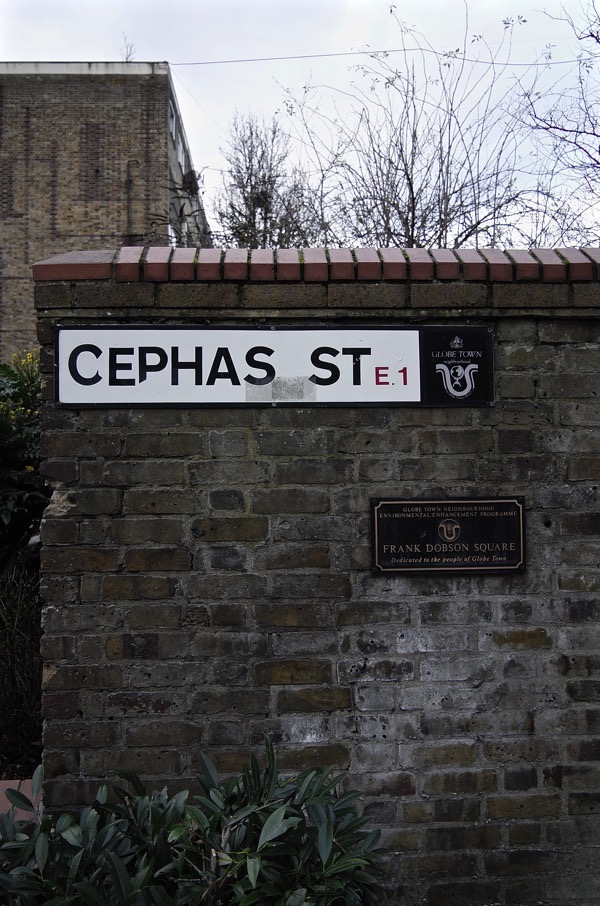
Fifteen years after the removal of his sculpture, it is still ‘Frank Dobson Sq’
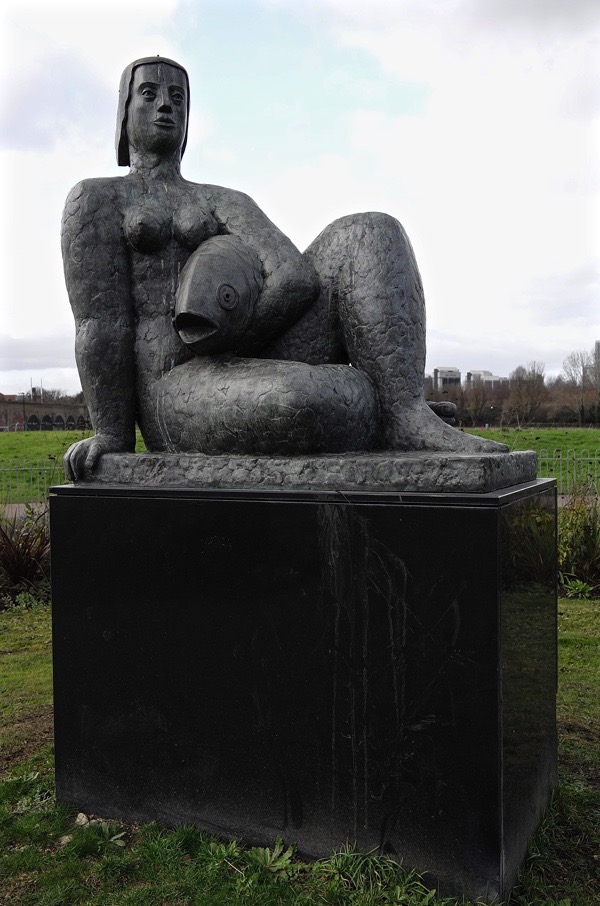
Bronze replica by Antonio Lopez Reche in Millwall Park on the Isle of Dogs
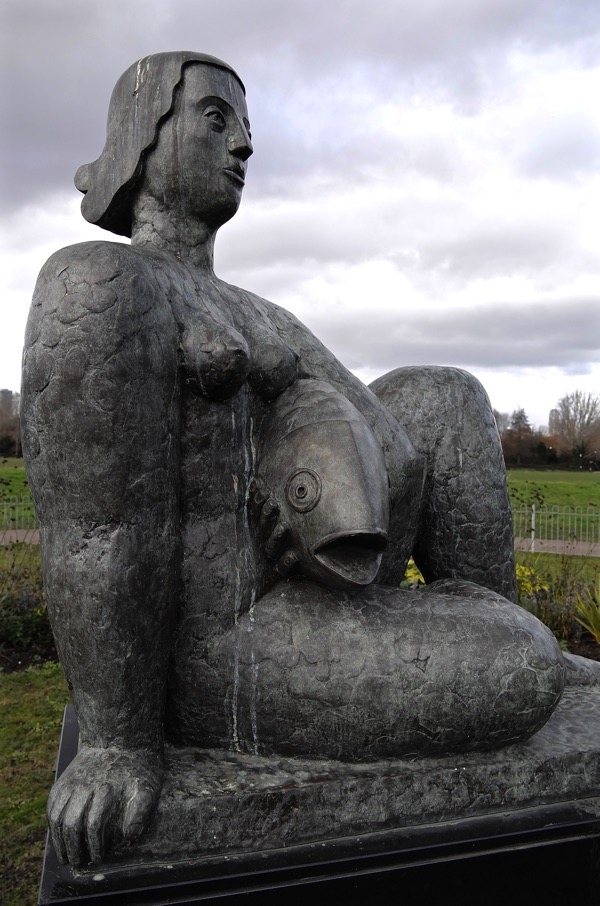
Woman & Fish
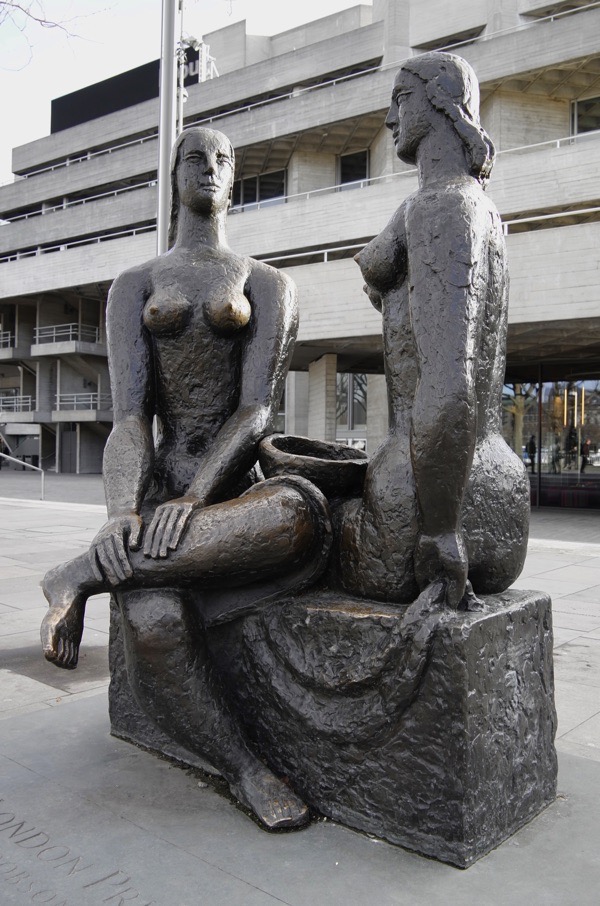
London Pride by Frank Dobson outside the National Theatre on the South Bank
You may also like to read about
Franta Belska’s Sculpture in Bethnal Green
So Long, Victor Lownes
My friend Barbara Haigh, ex-bunny girl and former landlady of The Grapes in Limehouse contacted me with the news that Victor Lownes, the man who brought Playboy to London in 1965, died yesterday morning in his sleep aged eighty-eight and so today I publish this account of my visit for tea with Victor & Marilyn Cole at their West End home
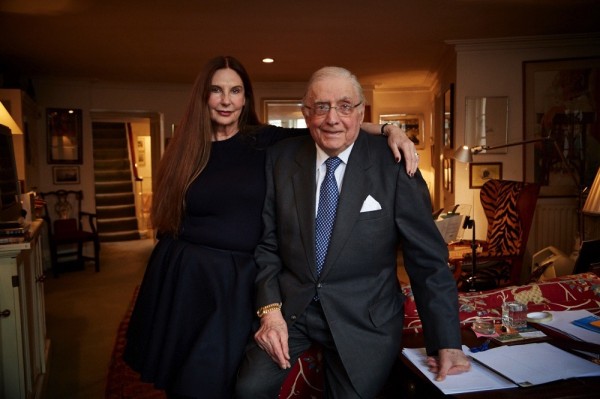
Victor Lownes & Marilyn Cole
The glamorous Barbara Haigh – ex-Bunny & ex-landlady of The Grapes in Limehouse – drove me up to the West End in her nippy two-seater sports car to have tea with Victor Lownes – who ran the British Playboy Club between 1965 & 1981 – and his wife Marilyn Cole – the first full-frontal centrefold Playmate – in their palatial white stucco mansion at Hyde Park Corner.
Sprightly and lithe at eighty-seven, Victor was a sovereign example to any moralist who might assume that the life of a committed playboy inevitably leads to dissipation and despair. After bedding thousands of women in his long career as a lothario, Victor met his match in Marilyn, the Playmate with more than the rest.
Barbara & I discovered Victor & Marilyn happily inhabiting the small basement rooms of their vast townhouse, cosy down there like two bunnies in a burrow. The unlikely conversation that ensued was shot through with ironies and contradictions – and, thanks to a fly on the wall, you can read it for yourself. Contributing Photographer Patricia Niven joined the party too and even followed Marilyn & me into the bedroom to admire Marilyn’s centrefold.
Victor: I’ve got rather tired of living upstairs.
Marilyn: Well it’s big upstairs.
Victor: Too many stairs and things.
The Gentle Author: I wanted to ask you, “Are you a playboy?”
Victor: Not really, I’m a happily married man.
The Gentle Author: But were you once?
Victor: Oh yes, I was. Ask them. “Was I a playboy?”
Barbara: Yes, dear. The opening gambit was, “Wanna fool around?”
The Gentle Author: I’m told that you invented ‘the bunny girl.’
Victor: The Playboy bunny was the trademark of the company from the start.
The Gentle Author: So that already existed?
Victor: Oh yes. In Playboy magazine, there was a tall figure dressed as a bunny.
Barbara: But it was a male bunny, wasn’t it?
Victor: Yeah, it was a male bunny.
Barbara: Smoking jacket…
Victor: Tuxedo and whatever … the idea grew out of that.
The Gentle Author: Was it your idea?
Victor: I don’t remember whose idea it was. It may have been mine or Hugh Hefner’s. We opened the first Playboy Club there and there was a line waiting to get in every night.
The Gentle Author: What I want to know is what drew you into that world?
Victor: A photographer friend of mine brought Hefner to a party at my bachelor apartment. And Hefner started telling me about his magazine, that he was just starting. At that time there was no Playboy Club, I was interested in clubs and what have you, so he asked me if I’d like to join in the venture. So I did.
The Gentle Author: What is it about the clubs that appealed to you?
Victor: First of all, in those days I drank a bit. I was about twenty-one years old and I had just come of age where I could legally buy a drink at a bar. I was curious about that. And I also saw it as a big money-making opportunity. Twenty five dollars got you a lifetime membership of the playboy club. We advertised in Playboy Magazine. Enormous success.
Marilyn: It was a lot to do with the music too, wasn’t Victor? You liked jazz very much.
Victor: We had jazz groups in there. And several floors with different cabarets and it was very successful. After Chicago, we went to New York, San Francisco followed, and Los Angeles and Dallas, Texas. We had clubs all over the country, about forty of them altogether.
The Gentle Author: And this was a source of joy to you…
Victor:V. The joy of making money. That’s a nice joy.
The Gentle Author: And?
Victor: And the joy of being able to date any of these girls.
[Barbara & Marilyn laughing]
Victor: We had a strict rule that the bunnies were not allowed to date the customers but…
Barbara: That was the first rule they said to us when we started at Playboy, “You’re not allowed to go out with customers. You’re not allowed to date any of the staff members. However Mr. Lownes is single.” [Laughing]
Victor: Actually when we came to opening the London club, we didn’t enforce this rule.
Barbara: Well, you lifted it. I think your exact words were “I will not stand in the way of true romance.”
Victor: Was that right?
Barbara: If we met someone through our work that we fell in love with, but what they didn’t want was us going out with a different customer every night.
Victor: We were especially not interested in being accused of running a prostitution ring or anything.
The Gentle Author: How did you meet Barbara?
Victor: She was a bunny.
The Gentle Author: What was your first impression of Barbara?
Victor: I thought she was a bit overweight.
Barbara: I am now! But I was skinny as a rake in those days. You’re horrible to me. He introduced me to Tony Curtis and he said, “This is Barbara, the oldest and fattest bunny.”
The Gentle Author: (Asks Victor) Do you remember that?
Victor: The oldest…?
Barbara: (adopts Victor’s accent) “This is Barbara, one of our oldest and fattest bunnies.”
Marilyn: Oh, I can’t believe he would’ve said that.
Barbara: He did! I swear to God.
Victor: I introduced her to Tony Curtis!
Marilyn: I can’t believe he did that.
Barbara:. He did! He thought it was very funny.
Victor: I’m guilty!
Marilyn: Apologise now.
Victor: I apologise.
The Gentle Author: What did Tony Curtis say?
Barbara: He just scowled at Victor, then he kissed my hand and said “I’m very pleased to meet you, Barbara.”
The Gentle Author: Well, that was decent of him.
Barbara: I mean he was gorgeous. He looked as if he’d just walked straight out of a movie set. He was so impossibly handsome in the flesh.
The Gentle Author: (Asks Victor) So how was it that Marilyn stole your heart then?
Barbara: This is why he doesn’t remember me because Marilyn & I started on the same day.
Marilyn: (To The Gentle Author) Come here and I’ll show you something. Inner sanctum!
[Marilyn leads The Gentle Author to the bedroom]
The Gentle Author: We’re going next door! I was asking how did Marilyn steal your heart?
Marilyn: There – that’s how. That’s my centerfold! Let me turn the light on.
[Lights go on to reveal framed copy of Marilyn’s Playboy centrefold picture on the bedroom wall]
The Gentle Author: Wow!
Marilyn: Victor was my mentor. In Playboy terms, he discovered me. He sent me to Chicago and I became the first Playboy full frontal.
The Gentle Author: Who’s idea was that?!
[Marilyn leads The Gentle Author back to Victor]
Victor: It was called the Pubic Wars. And Hefner had to decide whether to do it or not. He didn’t really want to. It was Guccione who started it – Guccione was coming up, up, up with Penthouse. So Hefner had to take a serious decision and they decided to do that.
The Gentle Author: (To Marilyn) Did they ask you or did you volunteer?
Marilyn: That’s another story.
The Gentle Author: (To Victor) I don’t believe it was only because of the centerfold that Marilyn stole your heart.
Victor: No, I don’t think it was either.
The Gentle Author: So what it is about Marilyn? After all these women, why Marilyn?
Victor: Well she was amazing, she was a standout in personality and looks.
Barbara: I was there when you first clapped eyes on her on the day we started. Obviously word had got round, someone said, “Get Victor up here quick” [laughs] His jaw dropped and he was just taken with her immediately.
Victor: I was.
Barbara: I think your exact words to me were, “She’s unusually beautiful.”
Victor: I said that?
Barbara: Yep.
Victor: Well there you are, you see. And she still is, in my mind.
The Gentle Author: Do you think the Playboy experience changed your view of humanity?
Victor: Perhaps it changed my view of what humanity can be – because the Playboy thing was very sympatico, wasn’t it?
Barbara: I think so.
Victor: I mean everybody got along with everybody. And they all made money at it – our Bunnies made at least thirty pounds a week when they started in 1966.
Barbara: Thirty-five actually.
Victor: I mean it doesn’t sound like anything today…
Barbara: I think I was earning more than my father. I was working as many hours as I could because I was saving up to get a deposit to buy a flat, and I think I did it within about six weeks. I was working sixty, seventy, eighty hours a week.
Victor: What are we talking about?
Barbara: You’re talking about Playboy’s ethos, I think you call it.
Victor: We had bunnies of every colour. We had Indian bunnies too, African and Indian bunnies.
Barbara: It was frowned upon in the States, wasn’t it?
Marilyn: Playboy was very important in Race Relations, they were the first to hire black comedians in white clubs.
Victor: That’s right. Hefner of course, Equal Rights, you know his history with… Equal Rights?
The Gentle Author: … Civil Rights.
Marilyn: Civil Rights, that was part of his philosophy, and Victor’s, and everyone who worked there. I mean – and black bunnies. So there was never any racial discrimination – the opposite actually.
Victor: It was a good policy and it worked well. It didn’t drive any customers away. And we opened up clubs in the South, New Orleans and in Memphis, Tennessee. It was unique in those places but we got them to accept it and we adopted the same policy everywhere.
The Gentle Author: So it was about equality of race within the clubs and about equality of gender too, that women worked on an equal level as men?
Victor: Equal? They were making more than the men! [Laughs]
The Gentle Author: Tell me about opening up in London. What were the challenges here?
Victor: I don’t remember that there were any challenges. We had co-operation of everybody the minute we set foot in the country. I remember I came with a huge box of Playboy cigarette lighters that were all primed and ready to go. And as I came through customs, I kept handing them out to the people who were inspecting me – I said, “I’ve got all these things and you’re entitled to one of them.” In those days everybody smoked, now nobody smokes. You don’t see any ashtrays around here, I don’t think anybody we know smokes.
The Gentle Author: Do you think you’ve been lucky?
Victor: With everyone in the world, chance plays a big part in what happens to you and there isn’t anything that can change that. I think most people just fall into situations.
The Gentle Author: There’s circumstances and there’s character. There’s being in the situation and there’s rising to it. It sounds like you took to it like a duck to water – or like a rabbit out of a hole.
Marilyn: But he’s got the brain for it. He’s scarily clever.
Victor: I’m pretty clever.
Barbara: Smartarse!
Victor: There’s a photo up there on the wall – it says “Merry Christmas Pooky” or something.
Marilyn: [indicates the picture] That’s Paul McCartney and Ringo Starr.
Victor: That’s when the Beatles were just starting out and they were at my house.
Barbara: (To The Gentle Author) Pooky’s his daughter.
Victor: I put them on the phone to her….
Marilyn: When Barbara and I joined the Playboy Club in 1971 it was already different to when it opened in 1966. We loved the stories of the opening night, when they had Margot Fonteyn, Rudolf Nureyev, Jean-Paul Belmondo and Ursula Andress at the club on Park Lane. And Mia Farrow, of course. Then Francis Bacon was a friend of Victor. He used to come and gamble at Playboy.
Victor: Yeah, I had a couple of his paintings but unfortunately I sold them when the price got too attractive. They were offering me a quarter of a million pounds each for them, so I sold them. They’d be worth ten million now.
Barbara: Isn’t it sick?
Victor: One was a big portrait of Lucien Freud.
Barbara: (to Marilyn) We came from such different walks of life and then all a sudden we were thrown into this world of glamour….
Marilyn: We weren’t thrown into it, we went to it.
Barbara: You thought, hang on a minute, I feel like a duck out of water – but then after a while you got used to it.
Marilyn: The fact that Victor was like he was – we knew we were in good hands. We could have gone to the Penthouse Club – and we would not have been in good hands with Guccione. He lost his licence very quickly.
The Gentle Author: What was the difference?
Marilyn: Playboy abided by the law in everything they did. Actually there’s a real conservatism about Victor and Hefner. Whereas Guccione – I’m not putting him down – he did something good for himself.
Victor: Who you talking about?
Marilyn: Bob Guccione. Penthouse. He was a different type of person. He had a gold medallion. I’d never have gone out with anyone with a gold medallion.
Victor: Medallion!
The Gentle Author: I’ve got a medallion.
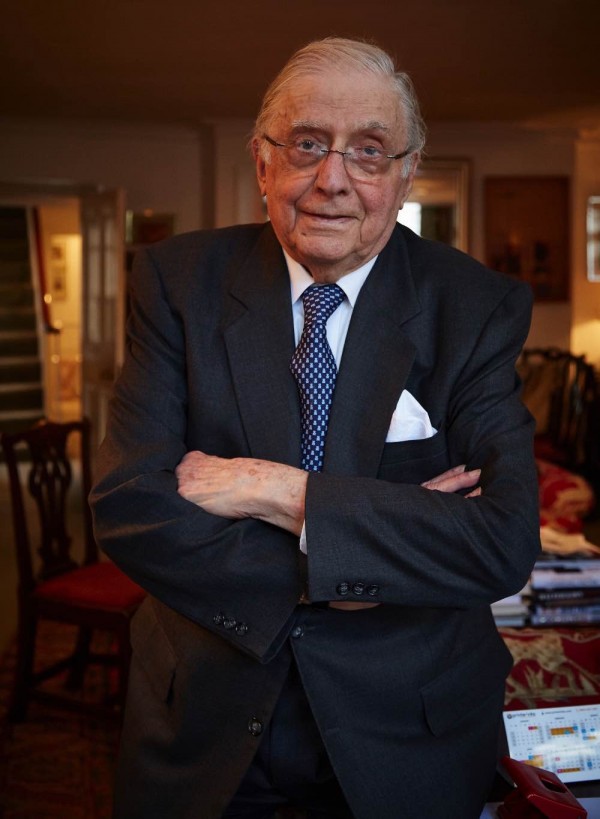
Victor Lownes

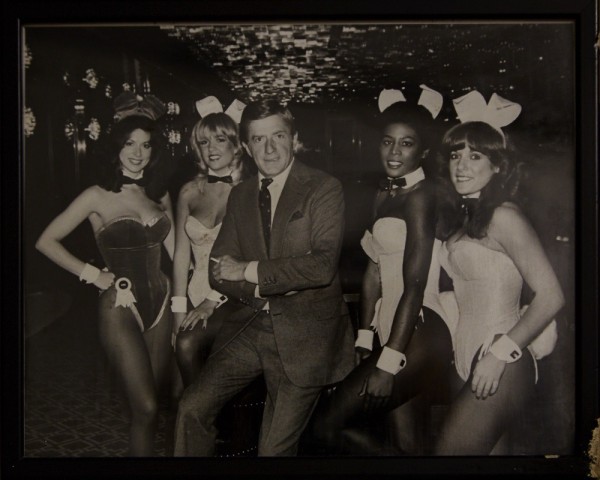
Victor in the sixties when he opened the London Playboy Club
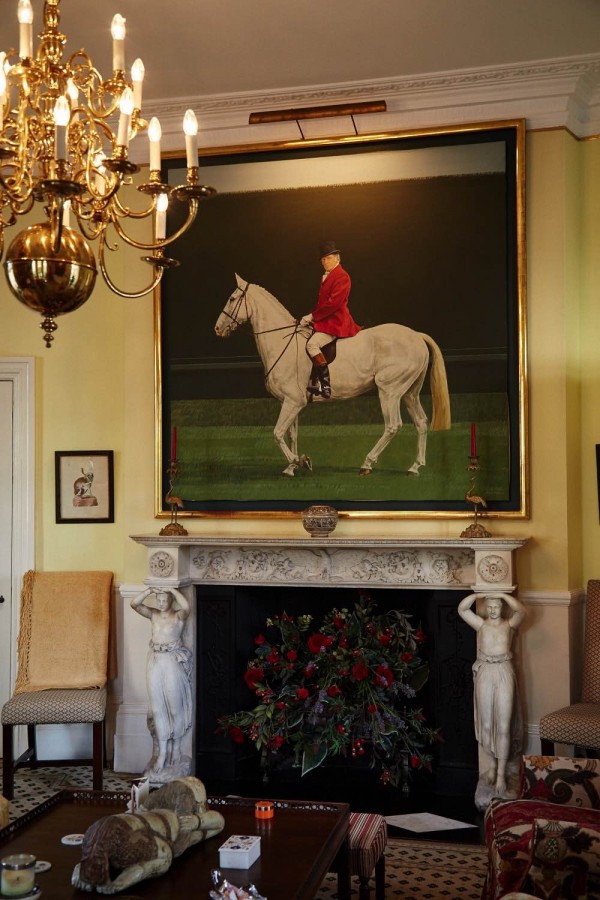
Victor’s portrait on horseback
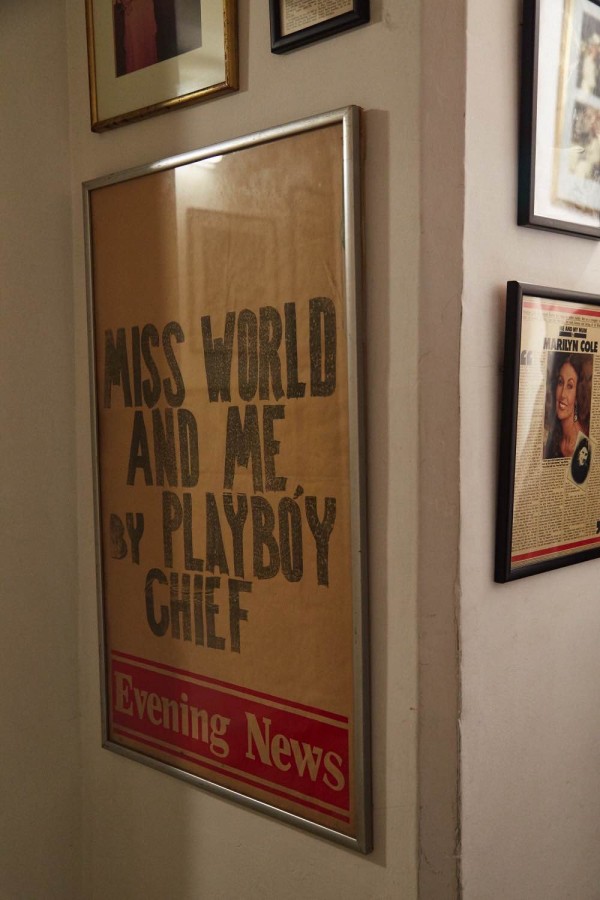
One of Victor’s many headlines
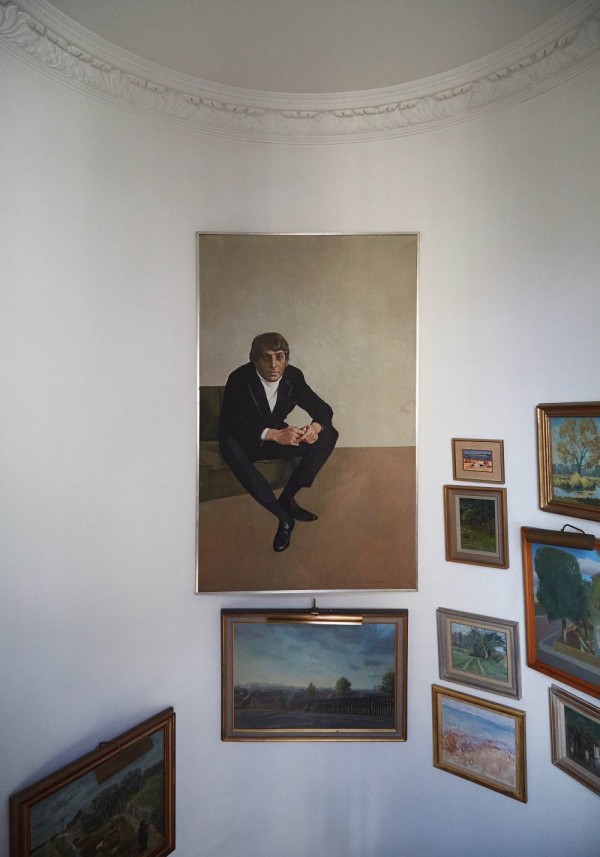
Victor’s portrait from the seventies

Marilyn and her centrefold
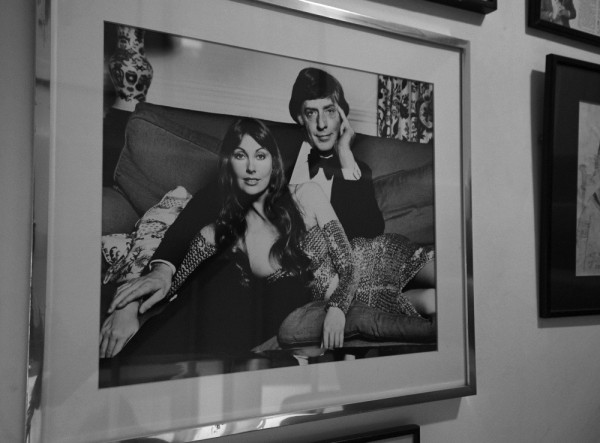
Victor & Marilyn in the seventies
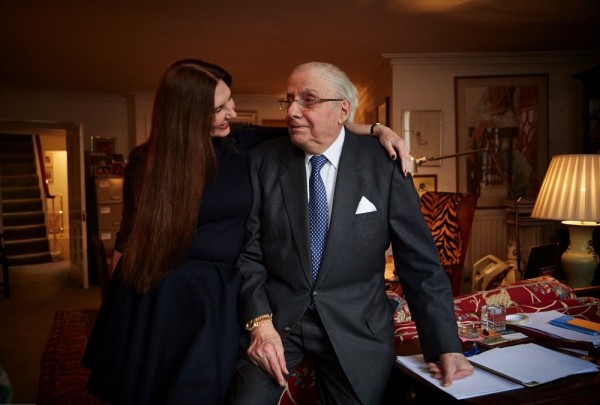
Victor Lownes & Marilyn Cole
Photographs copyright ©Patricia Niven
You may also like to read about
At the Playboy Bunnies’ Reunion
Ebbe Sadolin In London
Danish Illustrator Ebbe Sadolin (1900-82) visited London in the years following the War to capture the character of the capital, just recovering from the Blitz, in a series of lyrical drawings executed in elegant spidery lines. Remarkably, he included as many images of the East End as the West End and I publish a selection of favourites here from the forties.

George & Dragon, Shoreditch

St Katherine’s Way, Wapping
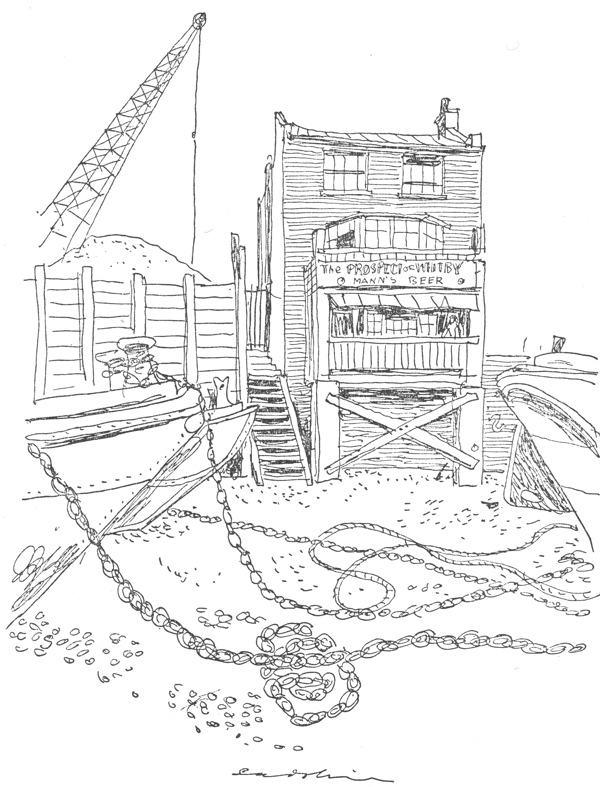
The Prospect of Whitby, Wapping

Stocks, Shoreditch

Petticoat Lane

Tower Green, Tower of London
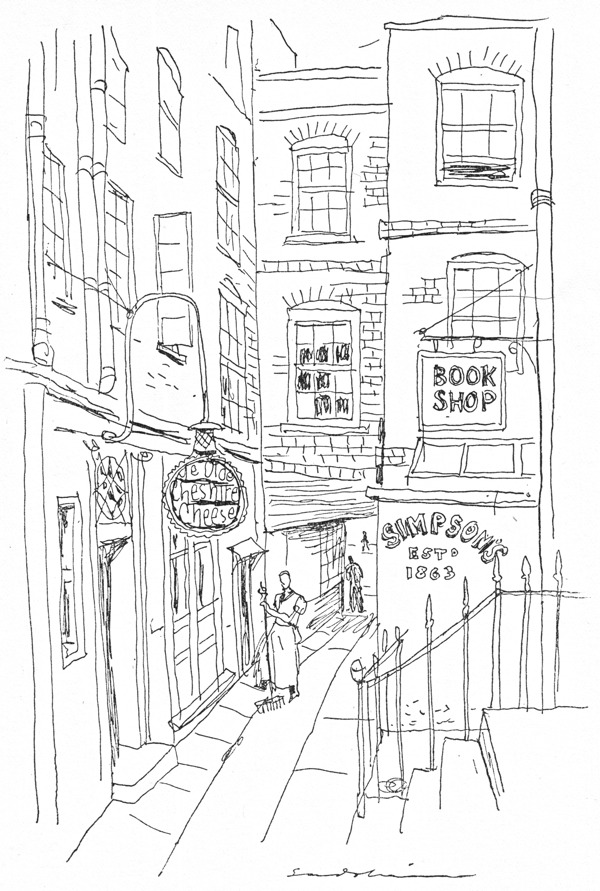
The Olde Cheshire Cheese, Fleet St

Rough Sleeper, Shoreditch

Islington Green

Nightingale Lane, Wapping
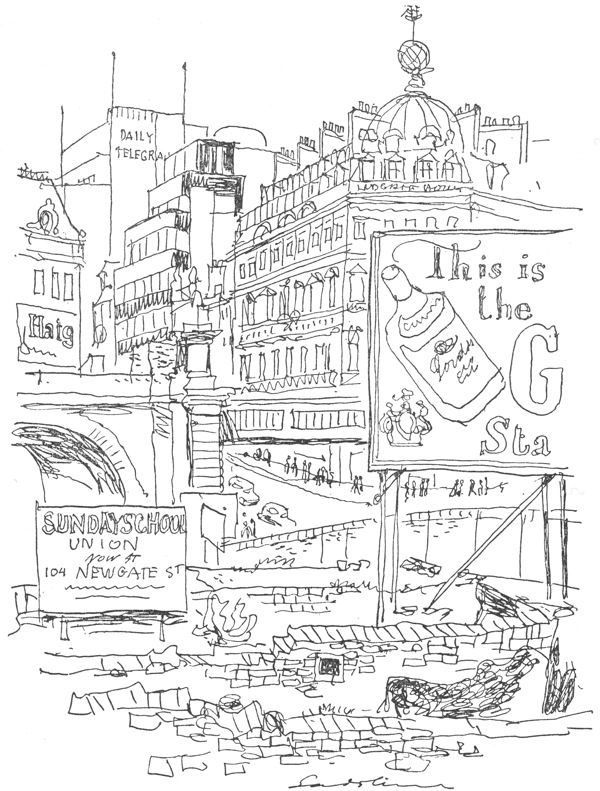
Fleet St

Wapping churchyard

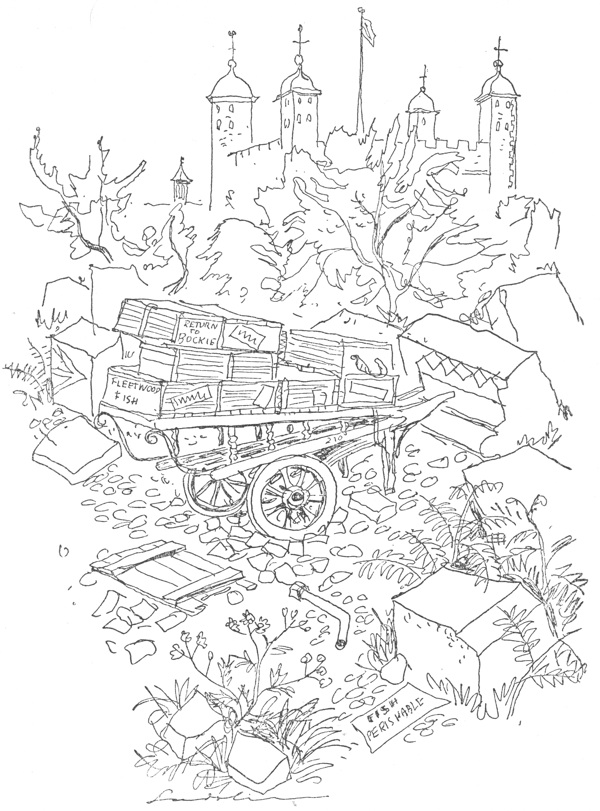
Tower of London
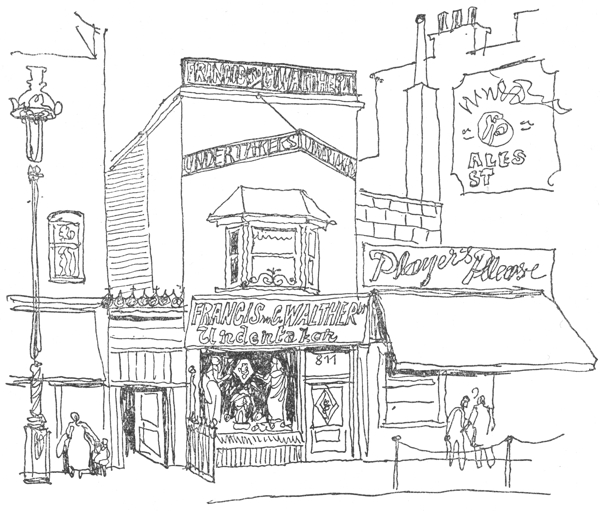
Commercial Rd, Stepney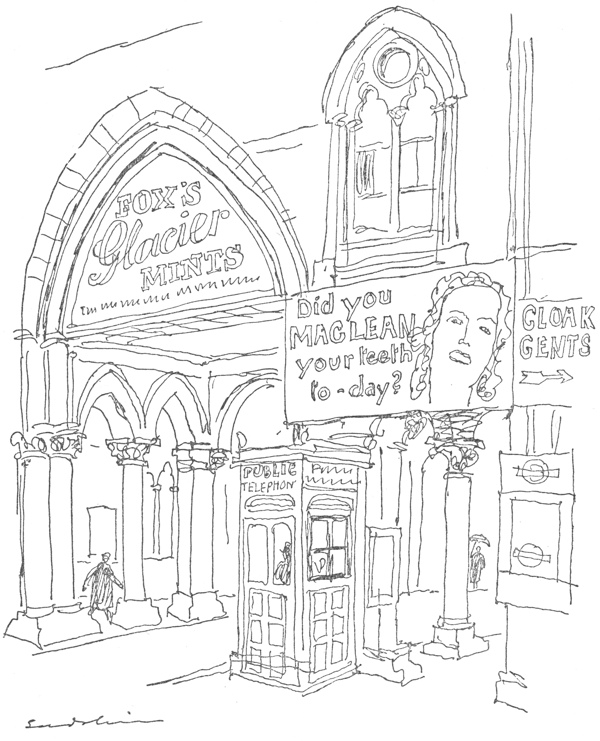
St Pancras Station

High St, Plaistow

Bride of Denmark, Queen Anne’s Gate

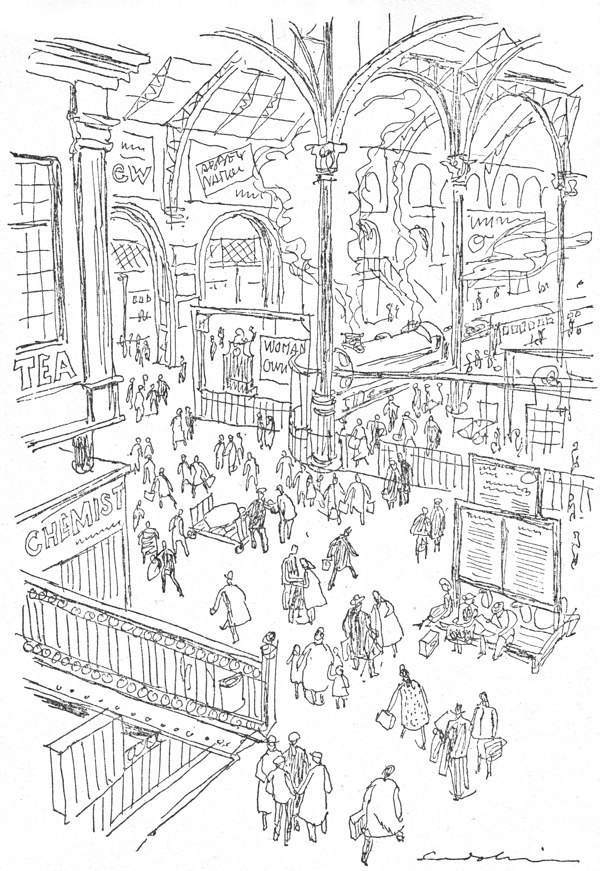
Liverpool St Station
You may also like to look at
Ted Vanner, Model Steamboat Pioneer
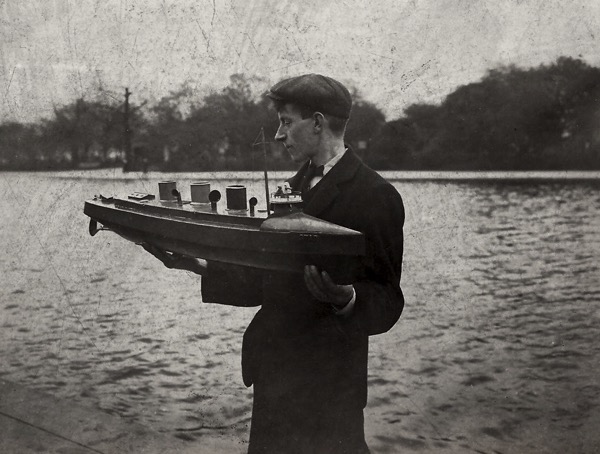
Ted with SS Star
This is the earliest photograph of Ted Vanner, taken when when he was twenty-six years old in 1909, cradling one of his cherished creations with barely-concealed pride. Born in 1883 in Deptford as the second of seven children, Ted began his working life as a blacksmith and apparently gained no formal training as an engineer yet became a legendary innovator in model boat design. An early member of Victoria Model Steamboat Club, founded in 1904, Ted remained prominent in the club for more than sixty years until his death in 1955 when his wife Daisy continued to race his boats in her nineties until her death in 1973.
In later life, Ted Vanner recalled that he, along with other Victoria Model Steamboat Club members, took part in the first ever Model Engineer Regatta at Wembley in 1908. They all met at the Club Boat House in Victoria Park at 5:30am where Mr Blaney was busy cooking eggs and bacon over an oil stove for breakfast, and set out for Wembley in a horsedrawn van carrying boats and owners, ‘stopping at a few hurdles on the way.’
Working with the most rudimentary tools, it was his skill working with sheet metal and tinplate that set Ted Vanner apart from other competitors. According to Boat Club President Norman Phelps, Ted started with a ‘buck’ made from orange boxes and plasterer’s laths, which he would ‘plate’ with sections of cocoa tins. In order to create a joint that could be soldered, each plate overlapped the previous one, starting from the stern and working forward. This was Ted’s method to create elegantly stream-lined hulls that enabled him to produce model boats which were faster than his rivals. The refined shapes were achieved by ‘stroking’ the tin over a flat iron before the plates were soldered together with a large iron, heated either in the living room fire or on a gas ring.
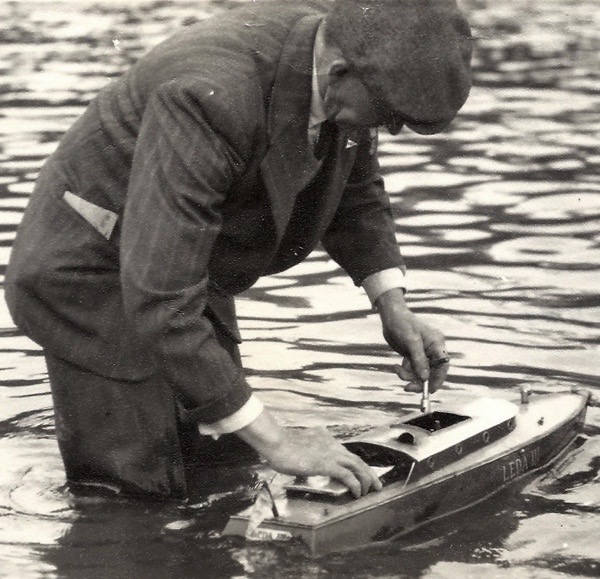
In spite of these primitive construction techniques, Ted became an ambitious innovator. The early boats he built were steam driven tugs, such as he would have seen in the London Docks, but he quickly graduated to speed boats with sophisticated multi-cylinder engines. Ted acquired a reputation, competing at regattas all around the country, carrying his boats on the train and representing Victoria Model Steamboat Club in Paris in 1927, winning first prize with Bon-Ami, second prize with Leda III and third prize with Ledaette.
Today, Victoria Model Steamboat Club is one of only a small handful of surviving model boat clubs but you may still see their vessels on the Victoria Park Boating Lake each Sunday in Summer. Many of the boats in the collection are now over a century old and, if you are lucky, you may even get to see one of Ted Vanner’s creations in action. Seven of his elegant craft remain in working order, carrying his reputation into the future. An inspirational creator, making so much out of so little with such astonishing ingenuity, Ted Vanner is an unsung hero and legend in the civilised world of model boat clubs.
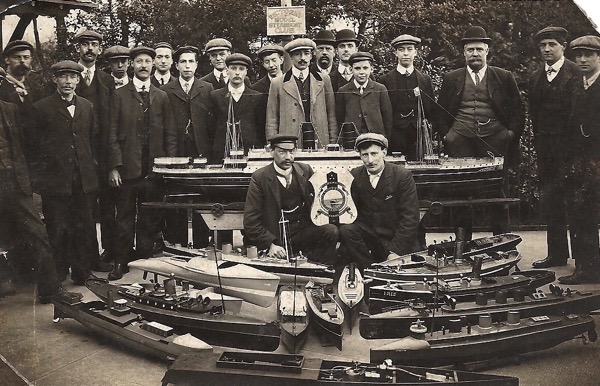
Victoria Model Steamboat Club, 1909
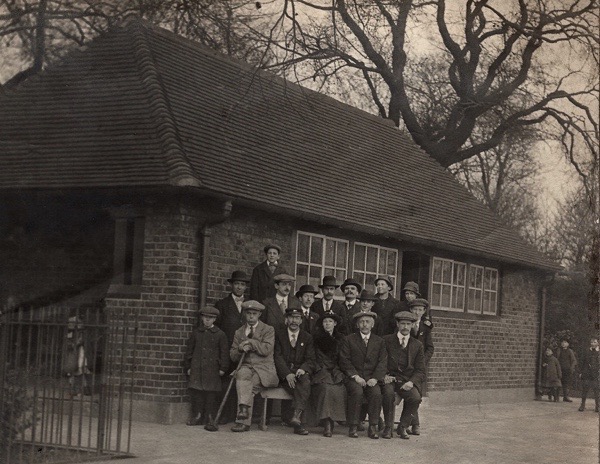
Outside the Club House in Victoria Park
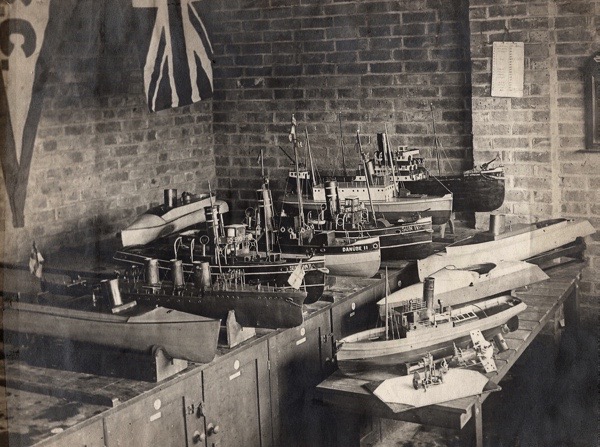
Boats inside the Club House
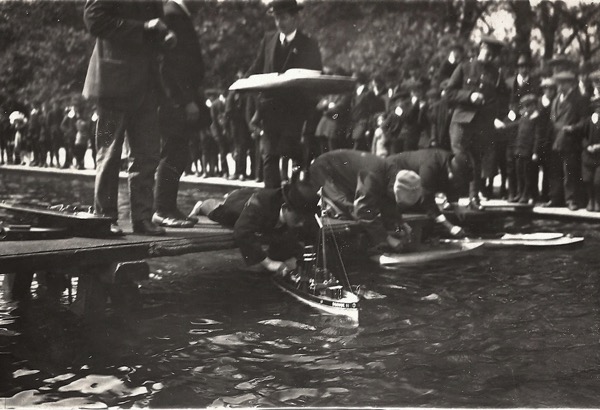
Ted releases Danube III
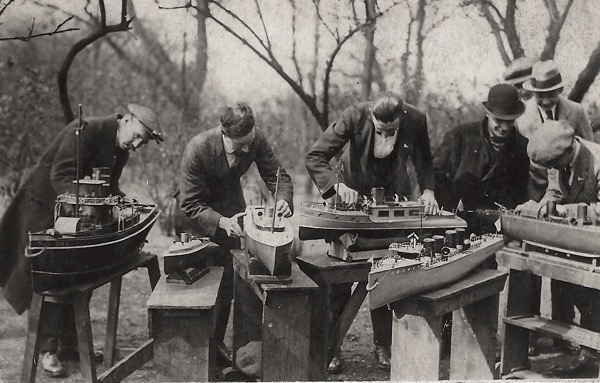
Ted is second from left
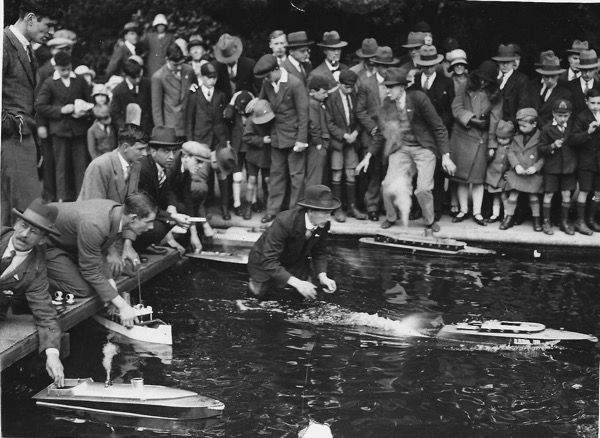
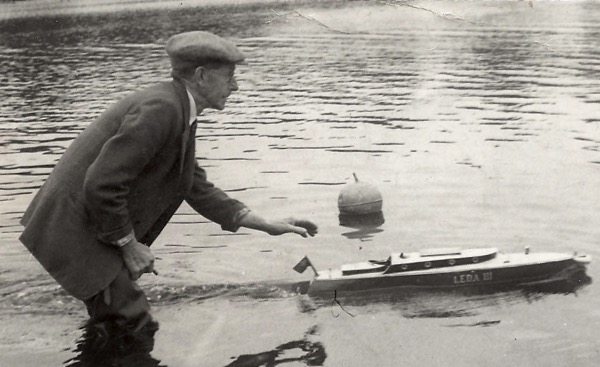
Ted releases Leda III
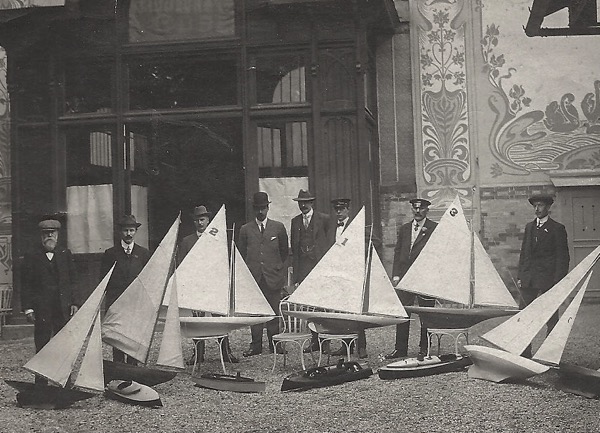
Ted stands on the right in this photo in Paris in 1927
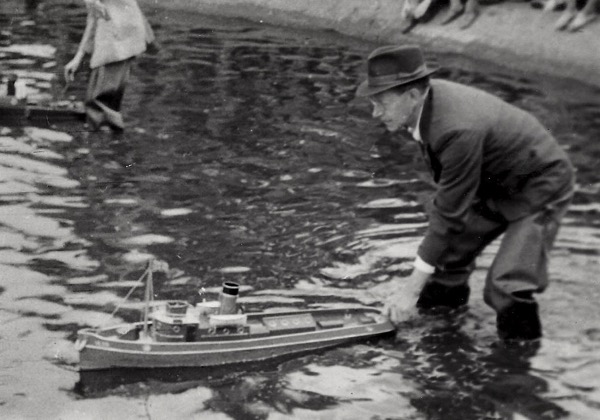
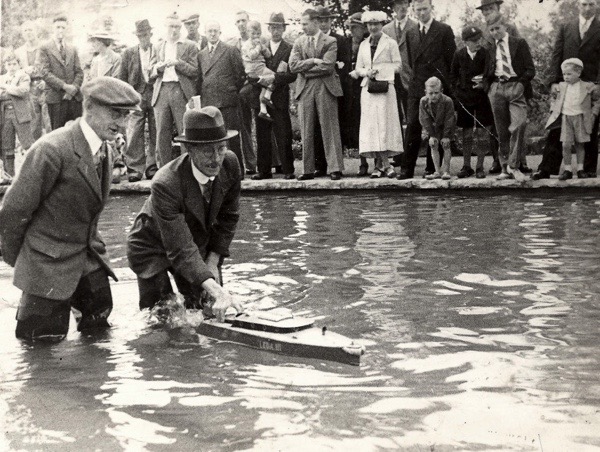
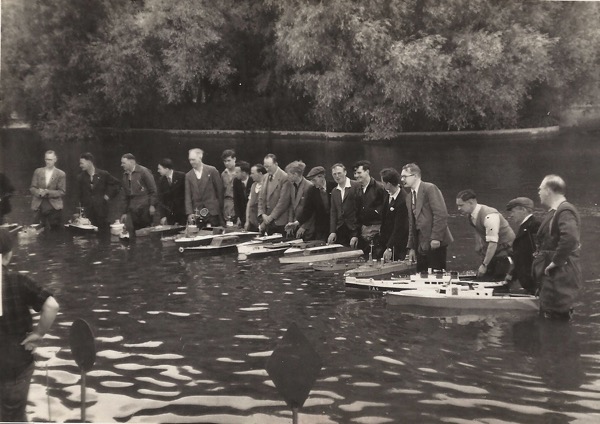
Ted is fourth from the right in this line up at St Albans
On the Round Pond Kensington, 1954
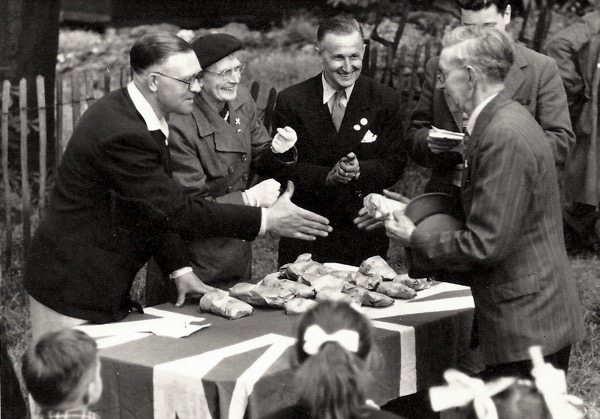
Ted wins a trophy for Victoria Park Steamboat Club at Forest Gate Regatta, May 10th 1954
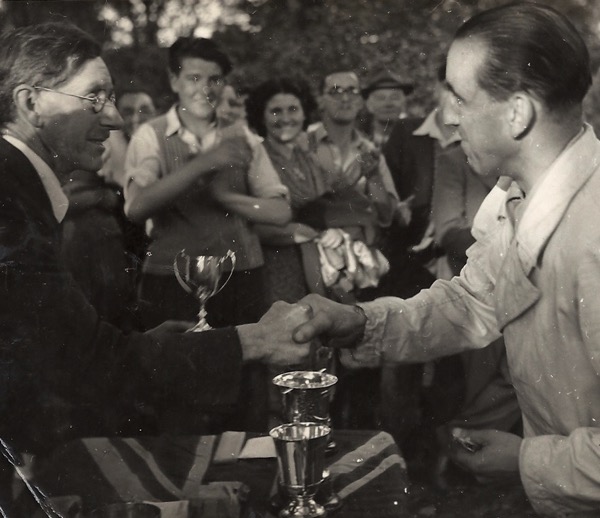
Presenting the prizes at the Victoria Park Model Steamboat Regatta, 1955
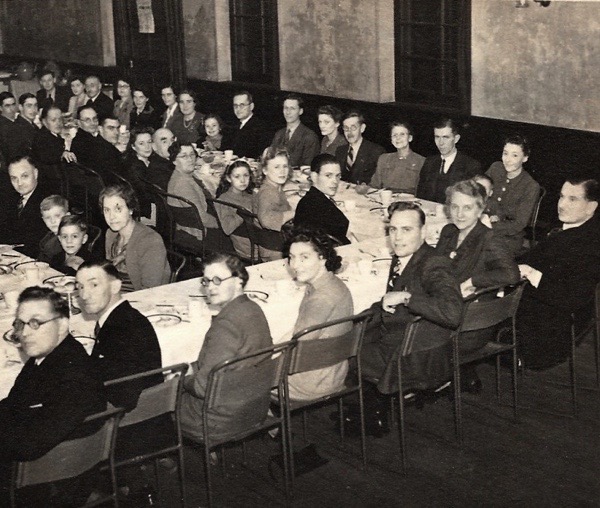
At this Model Boat club dinner, Ted & Daisy Vanner sit in the middle of the back row
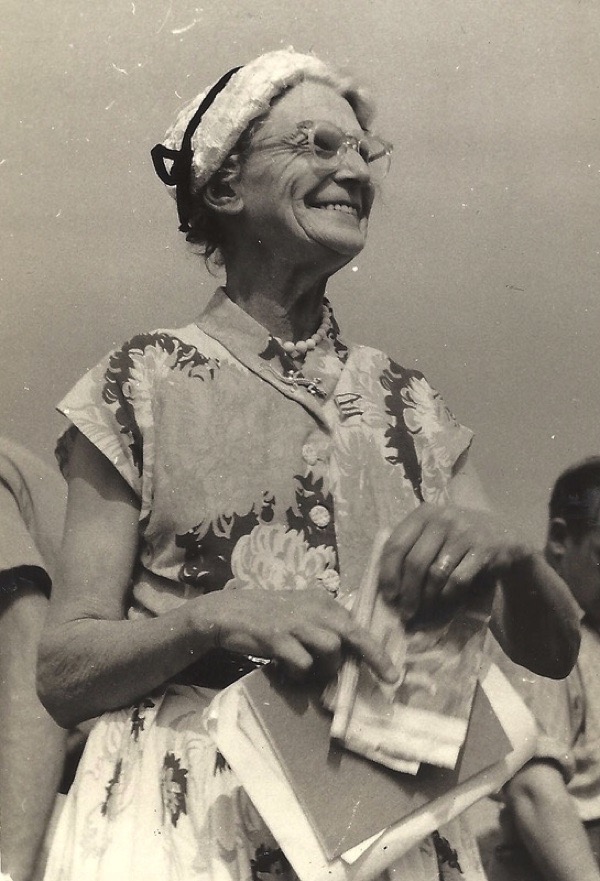
Daisy Vanner in the fifties
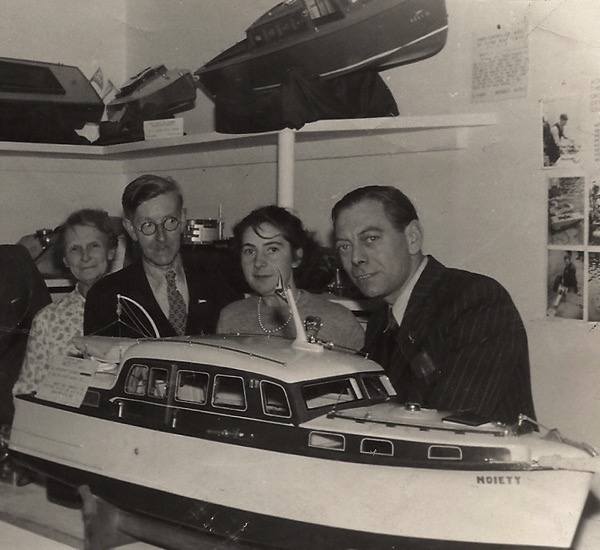
Daisy and Ted on the left
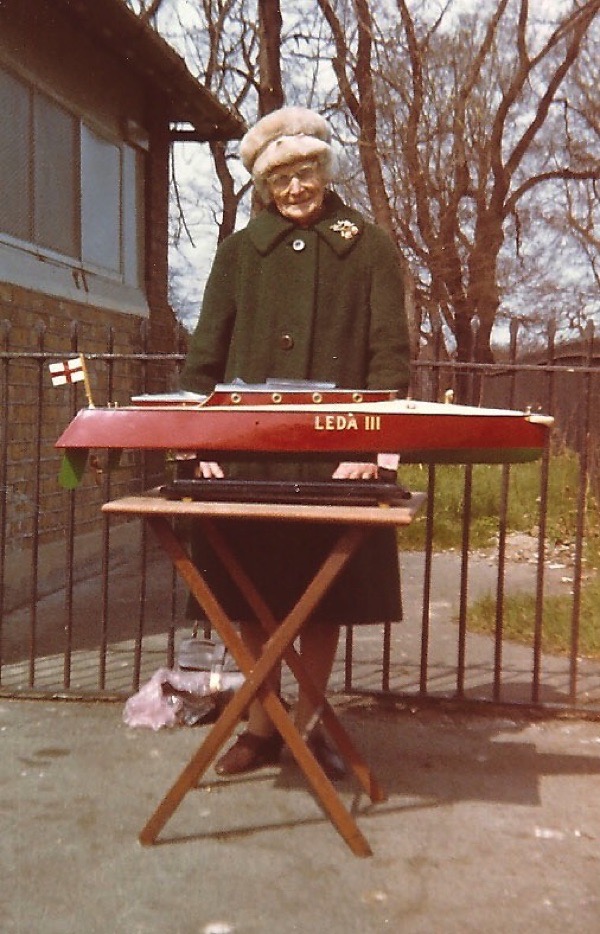
In her nineties, Daisy Vanner continued to compete in regattas with Ted’s boats after his death
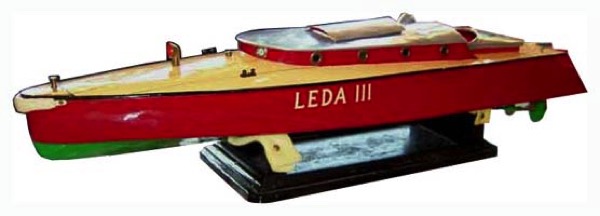
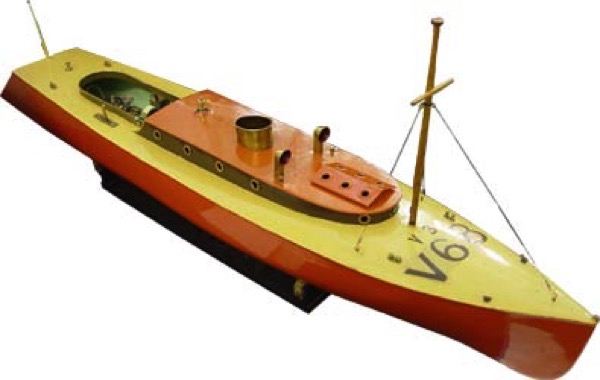
Leda III and All Alone, two of seven of Ted’s boats still in working order today
With thanks to Tim Westcott for supplying the photographs accompanying this feature
You may also like to read about
Norman Phelps, Boat Club President
Lucinda Douglas Menzies at Victoria Park Steam Model Boat Club
At The Blind Beggar In Whitechapel

David Dobson, Landlord of the Blind Beggar
Henry VIII at the gaming machine – a rare image of this infamous monarch not recorded by Holbein yet a familiar sight in Whitechapel, where David Dobson landlord of The Blind Beggar delights to dress up in velvet robes and swan around like the ghost of the old king come back to haunt us.
The particular blind beggar in question is Henry de Montfort who lost his sight at the Battle of Evesham in 1265 and became the subject of a Tudor ballad recounting the myth of his salvation by a young woman of Bethnal Green – where he ended his years begging at the crossroads, cared for by his only daughter. Subsequently, the image of the beggar and his daughter became the seal of the Metropolitan Borough of Bethnal Green in 1900 and adorns the inn sign of The Blind Beggar in Whitechapel today.
Paradoxically, The Blind Beggar has become a site of pilgrimage for the devout, seeking the location of the founding of the Salvation Army by William Booth, who started his independent mission by preaching outside in 1865. Converted to housing now, the former Albion Brewery stands next door towering over the pub that served as its tap room, until it closed in 1979. In 1808, it was the enterprising landlord of The Blind Beggar who bought the small brewery next door and named it the Albion Brewery, which grew to be the third largest in Britain by 1880 and, at the beginning of the twentieth century, the first Brown Ale was brewed here by Thomas Wells Thorpe.
In 1904, ‘Bulldog’ Wallace, a member of The Blind Beggar Gang of pickpockets who frequented the pub, stabbed another man in the eye with an umbrella – initiating the notoriety that coloured the reputation of the pub in the twentieth century, which reached its nadir with the shooting of Georgie Cornell by Ronnie Kray in March 1966, as recounted to me by Billy Frost, the Kray Twins’ driver.
“We don’t glorify it, we want to be famous for other things,” admitted David Dobson when I joined him for a jar. “For example, I’ve got the finest collection of Japanese Carp in the East End,” he volunteered, as he led me into the garden and leaned over the vast tank full of fish, each as fat as my leg, so that his beloved charges might lift their heads from the water and permit him to stroke them affectionately under the chin.
“I enjoy the diversity of my clientele,” David confided, when I enquired about the rewards of his job, “Every day, I meet people from all over the world. We’ve had Jerry Springer here, and Brad Pitt’s popped in.”
Yet in spite of the glamour and the attention, David’s motive for acquiring the Blind Beggar is refreshingly simple. “I like drinking, so I bought the pub,” he confessed to me with an eager grin, raising a glass as he revealed a lifelong commitment to his pub, “It’s not a job for me, it’s way of life. I’m live here and I’m in every night – I’ll be leaving here in a box.”

The Blind Beggar, mid-nineteenth century – there has been a pub on this site since 1673

The current building was constructed in 1894

The Albion Brewery

The Watney Mann Brewery with The Blind Beggar attached

The Blind Beggar and the former Albion Brewery today
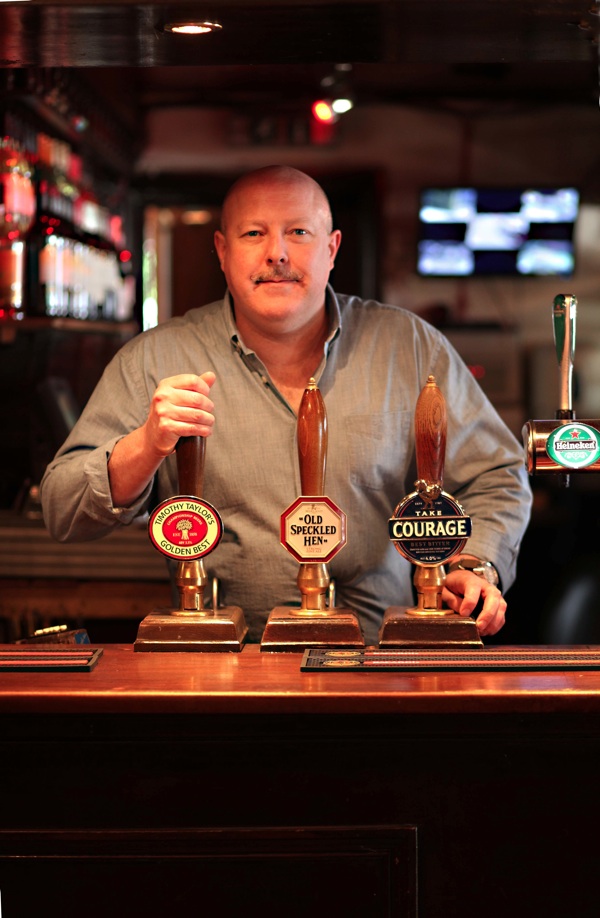
David Dobson, Publican & Proprietor

David and his Koi Carp

David pets his not-so-coy carp

“I wore it for a fancy dress party years ago, but now it’s just a habit.”

David and a local wag

David waits to welcome the Olympic Torch to Whitechapel in 2008

David Dobson – “I like drinking, so I bought the pub”
Colour photographs copyright © Estate of Colin O’Brien
The Blind Beggar, 337 Whitechapel Rd, London E1
You may also like to read about
The Disappearing Pubs of Marylebone
Sandra Esqulant, The Golden Heart
Phil Maxwell Returns To Sclater St Market
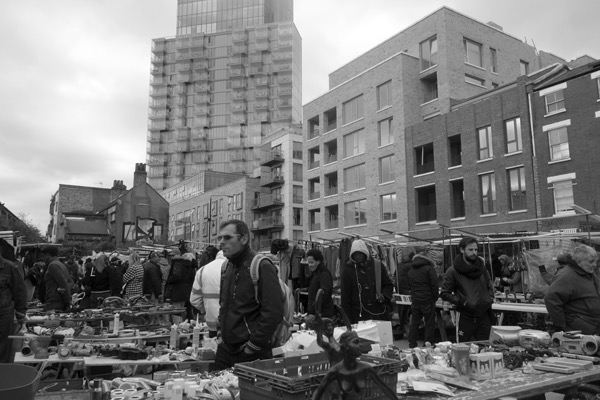
Markets are commonly assumed to be ephemeral, transitory phenomena compared to the buildings which surround them, yet very often the opposite is true. The Sclater St Market has persisted tenaciously through at least two centuries of architectural change. In spite of new blocks of flats in the generic modern London style looming overhead, Contributing Photographer Phil Maxwell found it as lively as ever with some of the same characters present from the eighties when he first began photographing markets in Spitalfields. ‘This market community is the last bastion of East Enders in the face of redevelopment,’ he informed me with pride and delight.
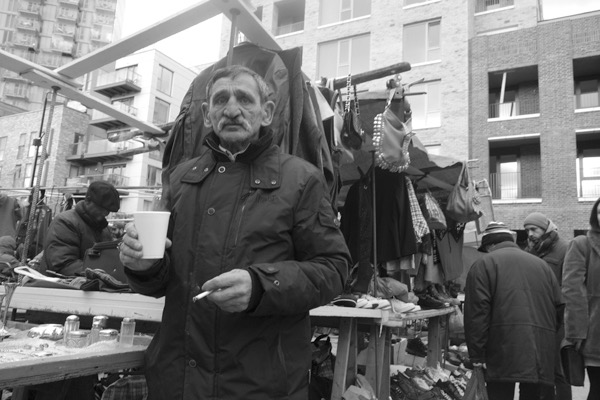

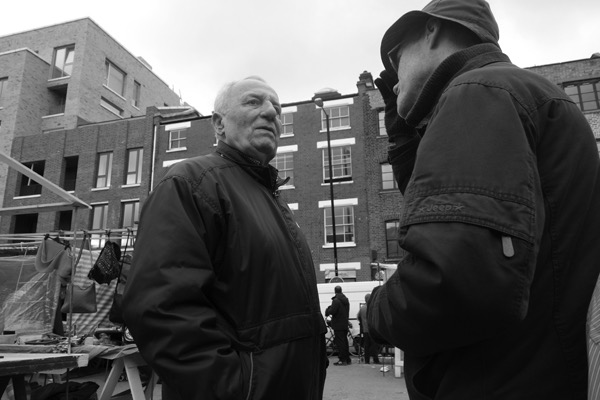
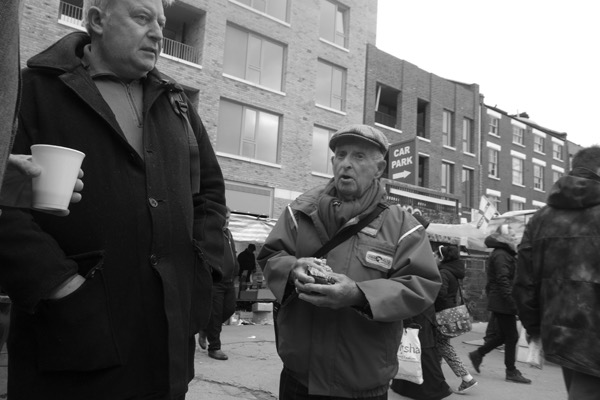
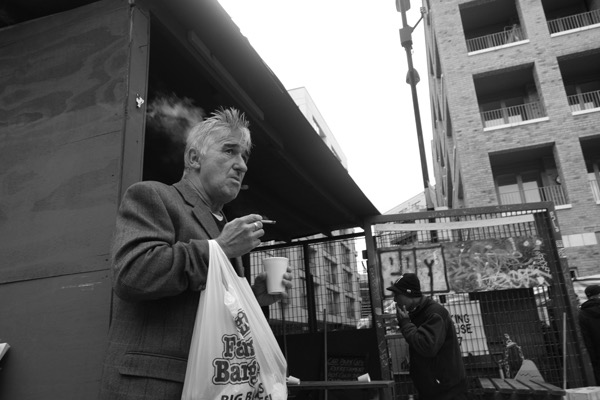
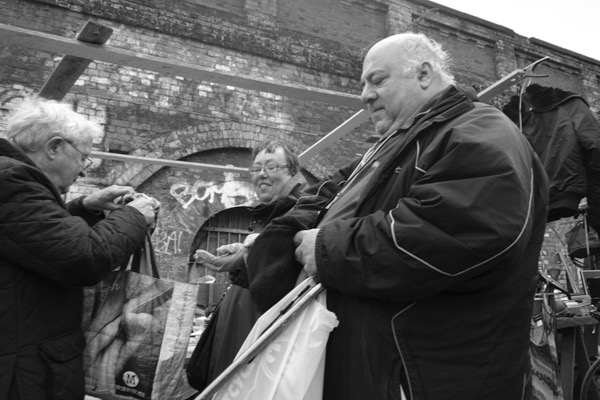
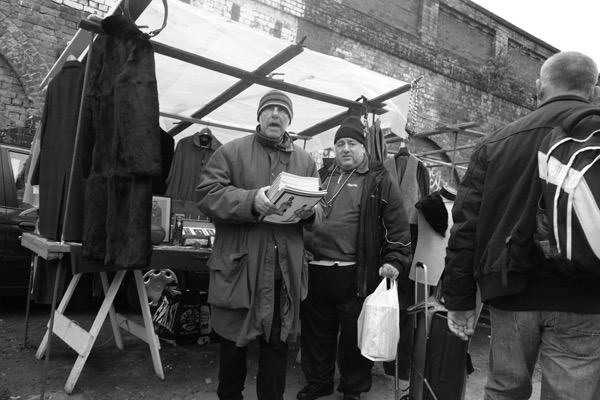
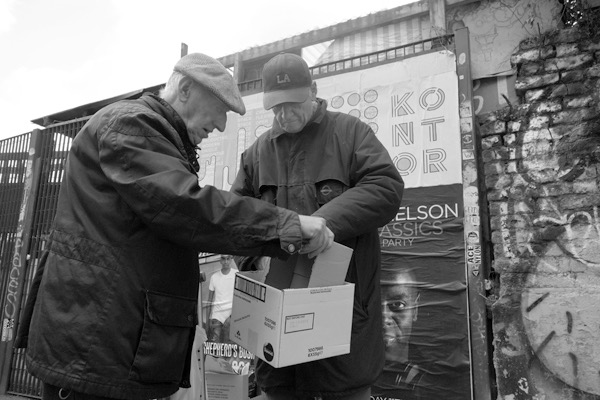
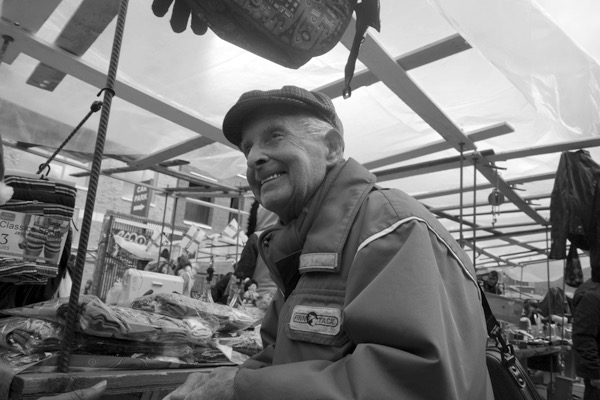
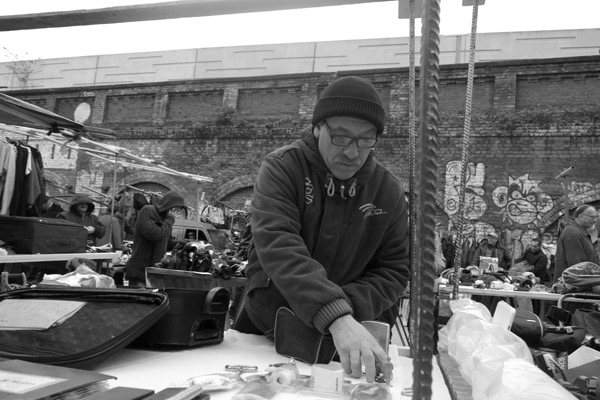
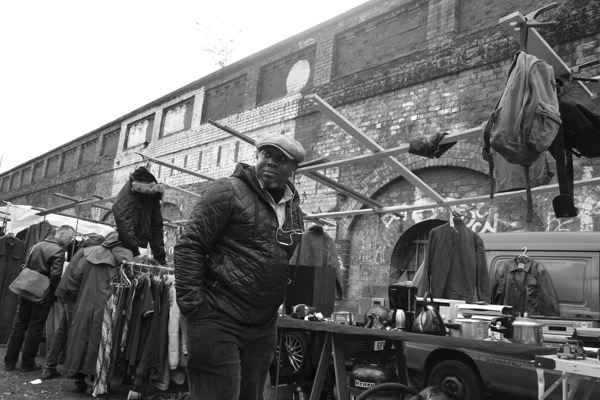
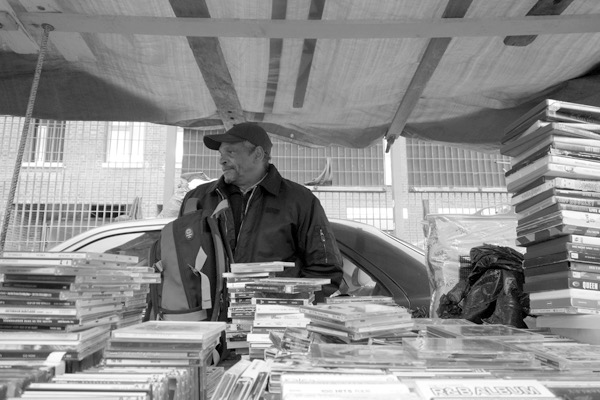
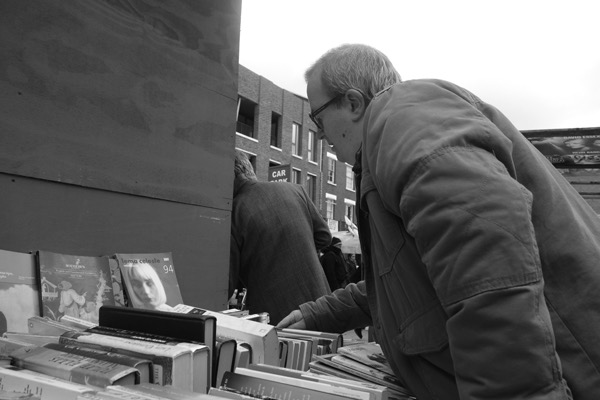
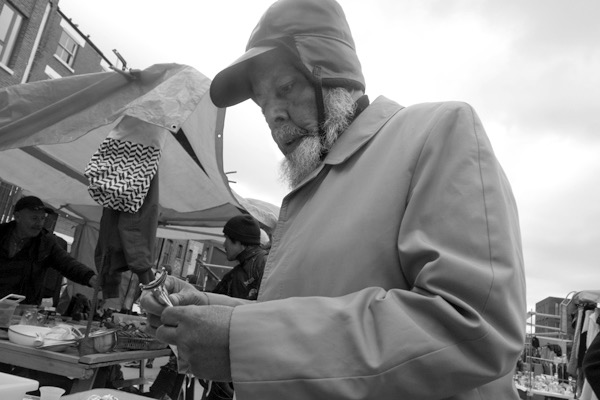
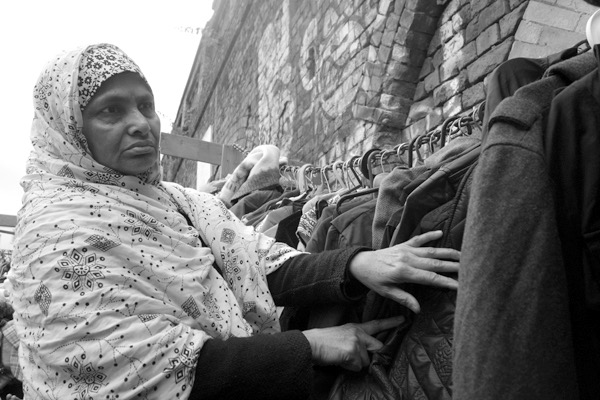
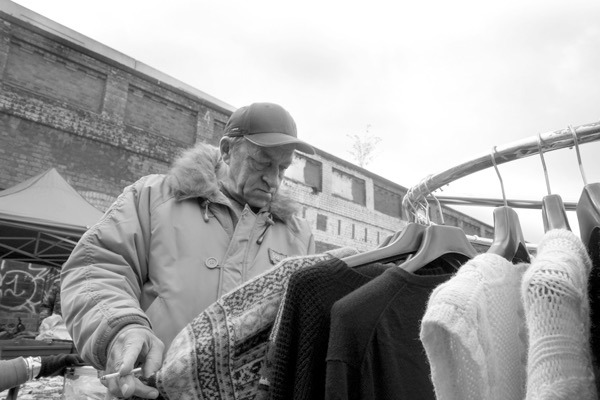
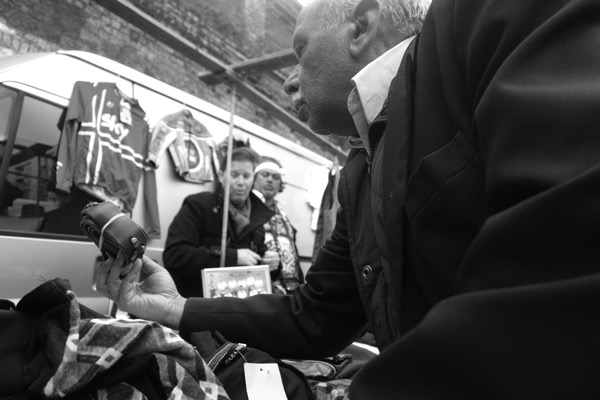
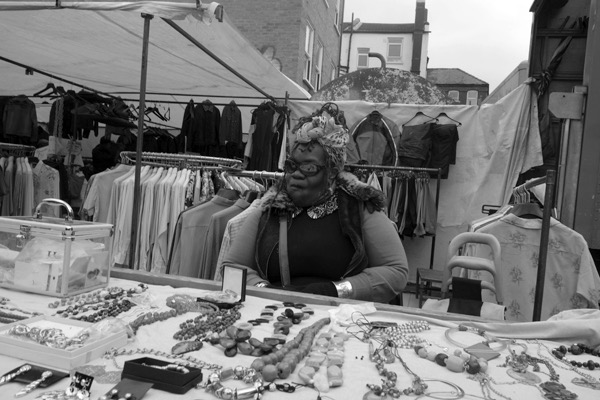
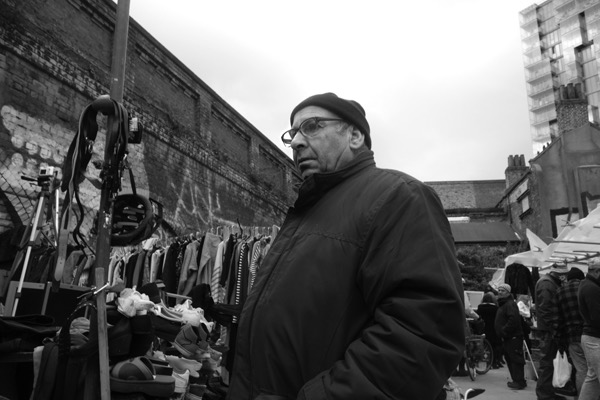
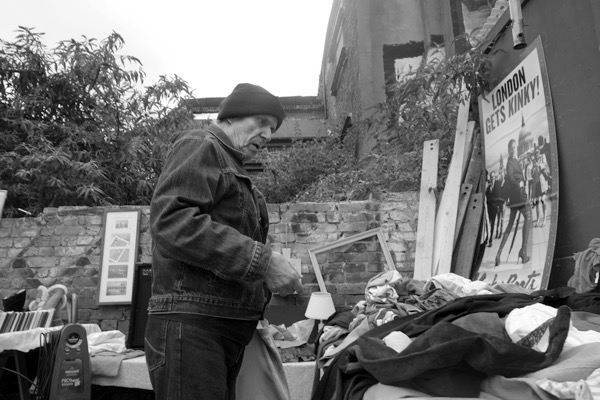
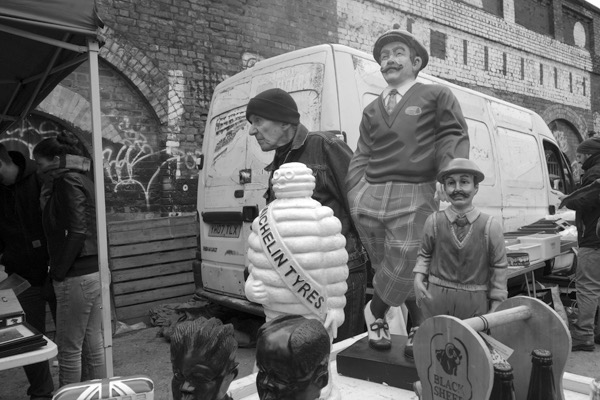
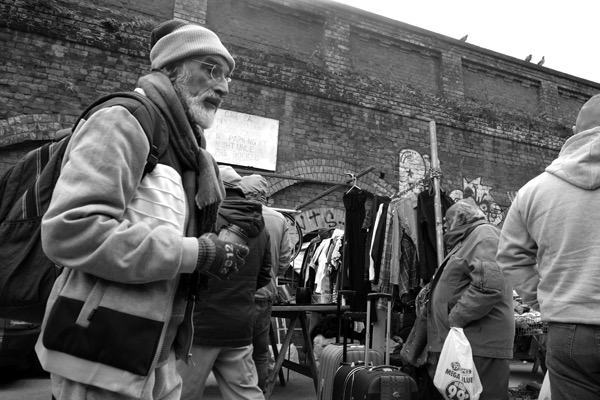
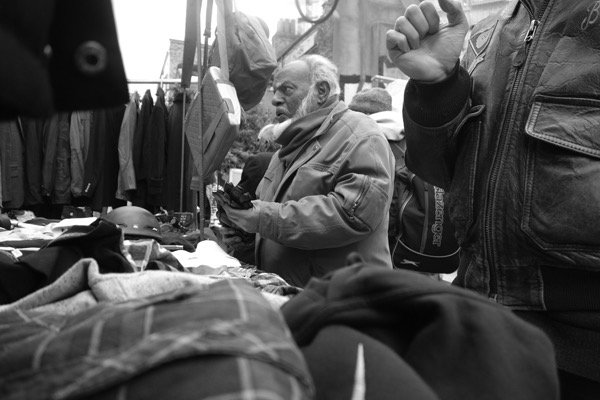
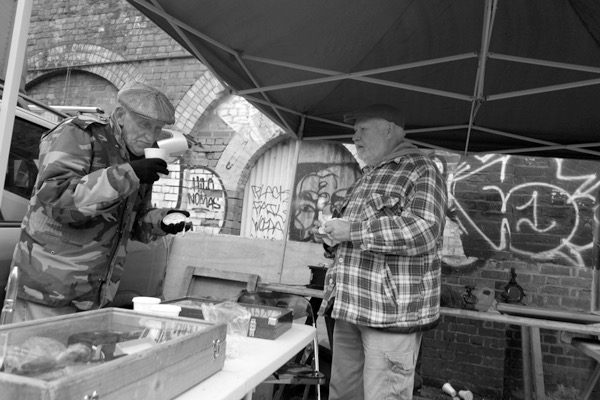
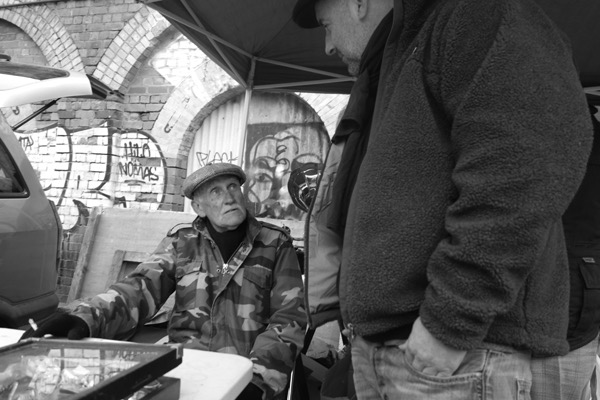
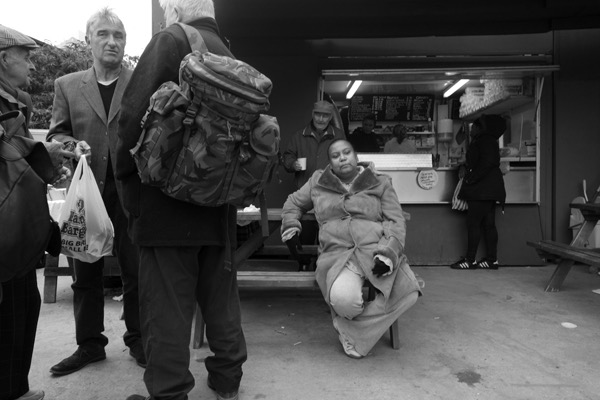
Photographs copyright © Phil Maxwell
You may also like to take a look at
Richard Lee of Sclater St Market
Robert Green of Sclater St Market
Phil Maxwell in Bethnal Green Rd
Phil Maxwell in Bethnal Green Rd
Phil Maxwell’s Kids On The Street
Phil Maxwell’s East End Cyclists
Phil Maxwell & Sandra Esqulant












