Save The Whitechapel Bell Foundry
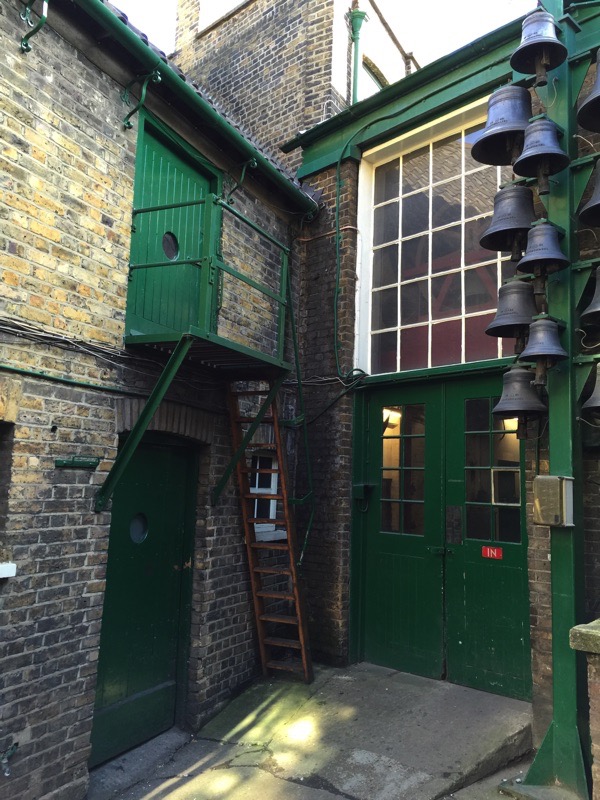
I am delighted to announce that a consortium of heritage groups have come together in a bid to save the Whitechapel Bell Foundry by exploring how the site may continue as a working foundry. We shall be publishing reports on this endeavour as it evolves.

Bell by Rob Ryan
The East End Preservation Society has launched a petition to Karen Bradley, Secretary of State for Culture, Media & Sport to SAVE THE WHITECHAPEL BELL FOUNDRY which is due to shut forever in May after five centuries in the East End.
CLICK HERE TO SIGN
This letter was published in The Times on March 11th
Dear Sir,
We the undersigned wish to register our very serious concerns about the imminent loss of the Whitechapel Bell Foundry in London. We are calling on Historic England to ensure the buildings are listed at Grade I, in recognition of their national and international significance.
Bells have been made continuously in Whitechapel since the 1570s. The business has been on its present site since the mid 1740s. It is one of just two remaining bell foundries in Britain, and the foundry is reportedly the oldest manufacturing company in the UK. This is the foundry that made Big Ben in 1858, the world famous US Liberty Bell and many many more. The foundry is set to close at the end of March, and its contents sold at auction.
We are very concerned that we will lose not only specialized jobs and skills, but that this type of business and trade is part of the historic essence of our towns and cities. How is Britain allowing this national treasure to slip through our fingers?
Yours etc
Henrietta Billings, Director, SAVE Britain’s Heritage
Peter Guillery, Senior Historian & Editor, Survey of London
Mike Heyworth, Director, Council for British Archaeology
David McKinstry, Secretary, The Georgian Group
Will Palin, The East End Preservation Society
Charles Saumarez Smith, Chief Executive, Royal Academy of Arts
Matthew Saunders, Secretary, Ancient Monuments Society
Matthew Slocombe, Director, Society for the Protection of Ancient Buildings
Tim Whittaker, The Spitalfields Trust
.
The Spitalfields Trust has submitted an application to Tower Hamlets Council to have Whitechapel Bell Foundry designated as an Asset of Community Value. It would be invaluable if readers can write in support of this application. You might like to say that, after five centuries, the Bell Foundry is an integral part of the historical identity of Whitechapel and that, as well as being a major tourist attraction, it is an important local employer that maintains skills which could easily be lost.
Please write to paul.greeno@towerhamlets.gov.uk
(Even if you write by email please be sure to include your postal address)
If you are sending your letter by post please address it to:
London Borough of Tower Hamlets
Legal services
6th Floor Mulberry Place
5 Clove Crescent
London E14 2BG
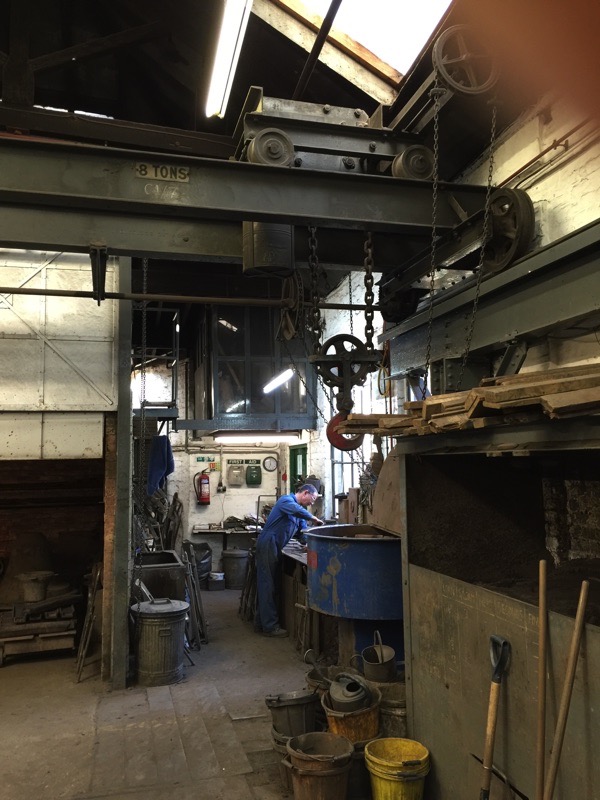
Photographs copyright © Shahed Saleem
You may also like to read about
John Claridge’s Soho Portraits
There is a strange atmosphere in Soho these days with the destruction of Walker’s Court, the imminent demolition of Foyles and the desecration of Denmark St – which makes it a tonic to enjoy these portraits by Contributing Photographer John Claridge selected from his ongoing series of over five hundred.
“I started taking portraits of people at The French House in the seventies when I took a picture of Gaston Berlemont. Then, while taking Spike Milligan’s portrait, we got to talking about Soho. At the time, I was living in Frith St, so Ronnie Scott’s and The French were both very familiar to us and, even then, both of us voiced our sadness at changes we saw – lovely delicatessens, independent restaurants and specialists shops closing down, all of which had been there for years.
In 2004, I decided to document the customers at The French in earnest. For me, it was the one place in Soho that still held its Bohemian character, where people truly chose to share time and conversation, and I became aware that many I had once chinked glasses with were no longer around.
These portraits of the regulars are a cross-section of those who sat for me, but there is no rhyme or reason to my selection.”
– John Claridge
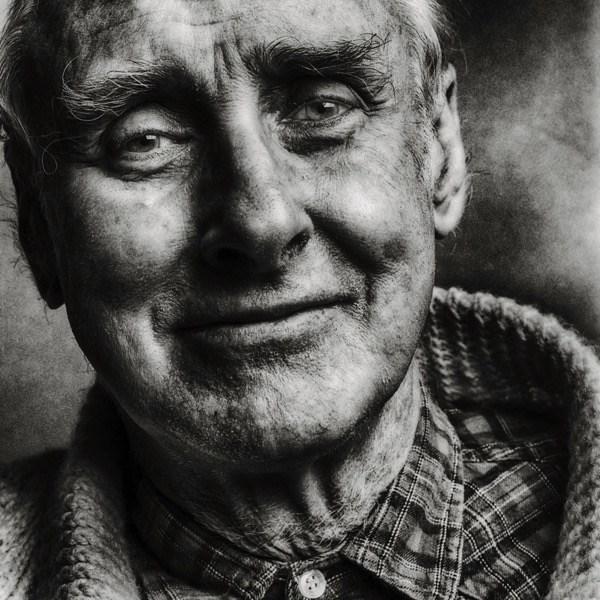
Spike Milligan, Comedian & Writer
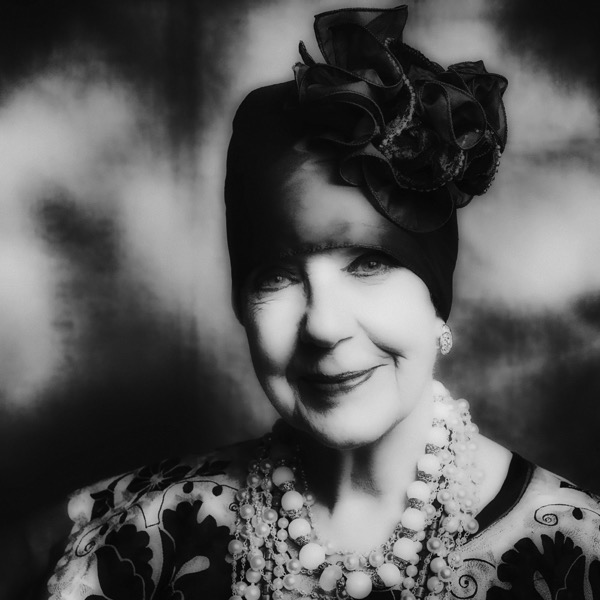
Molly Parkin, Painter & Novelist

Gaz Mayall, Musician

Lisa Stansfield, Simger & Songwriter

Eddie Gray, Jazz Violinist
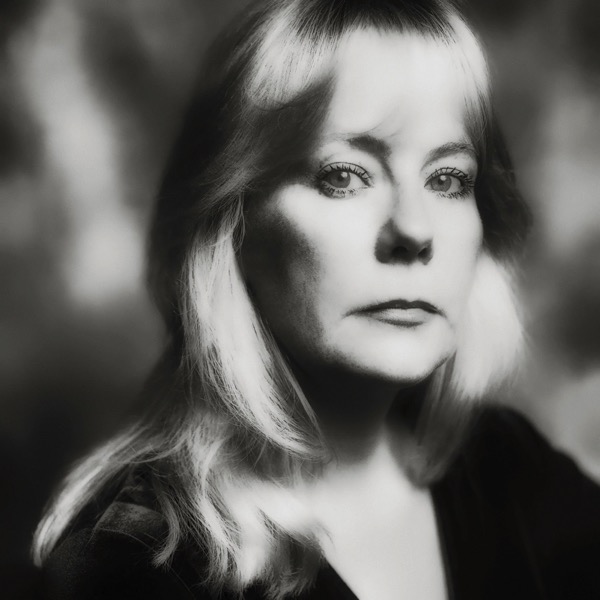
Lesley Lewis, Owner of The French House
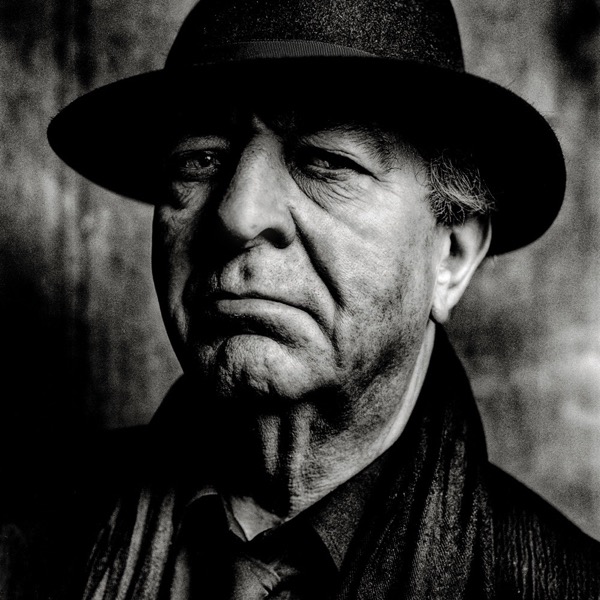
Kenny Clayton, Jazz Pianist
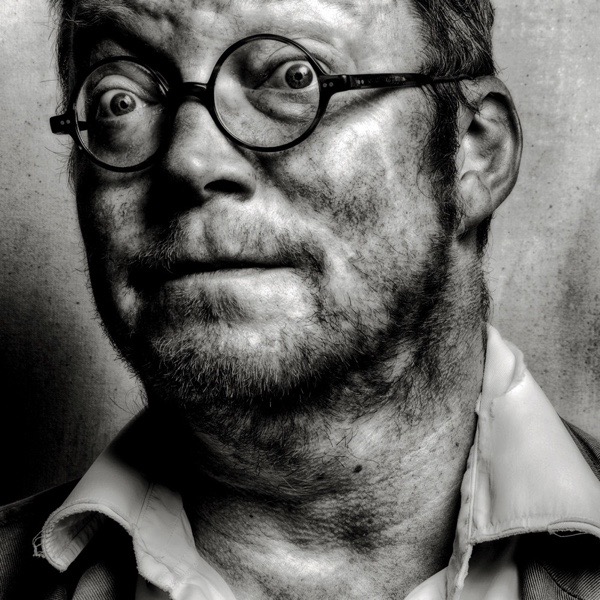
Fergus Henderson, Chef & Restauranteur

Georgina Sutcliffe, Actor
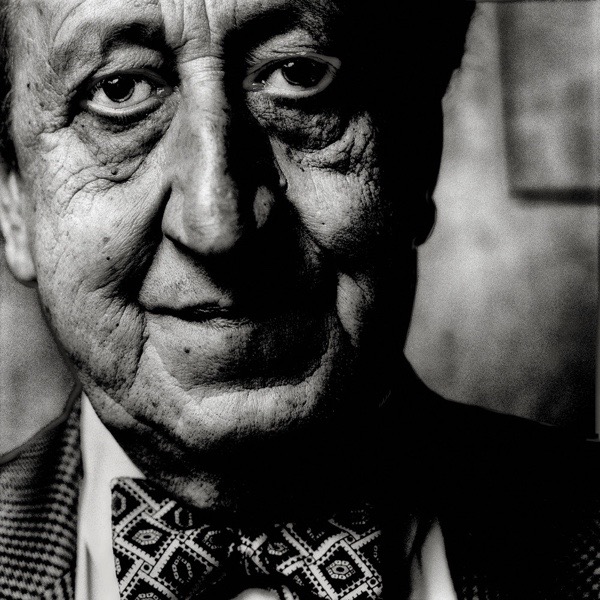
John Phillips, Journalist
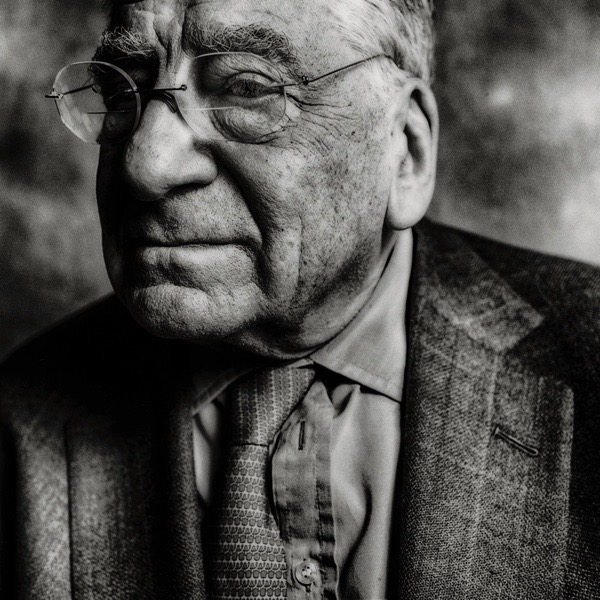
Norman Balon, Landlord of the Coach & Horses
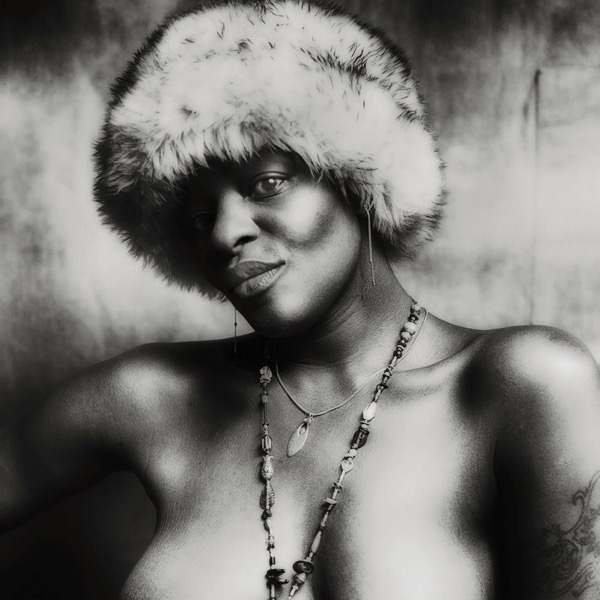
Millie Laws, Reflexologist
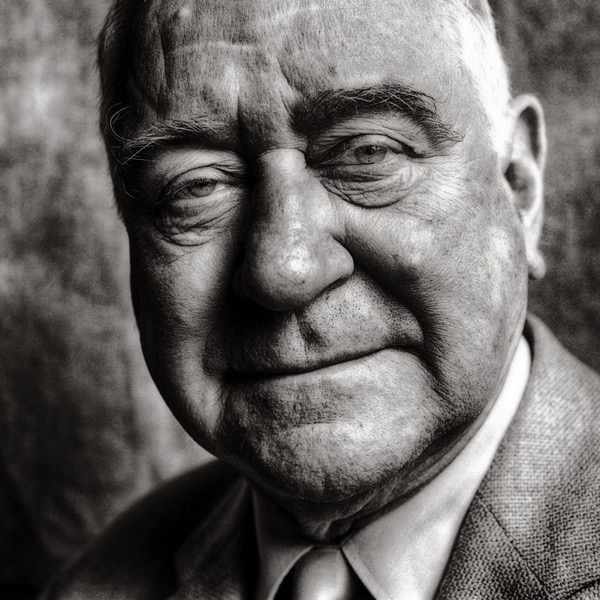
George Baker, Actor

Oliver Bernard, Poet
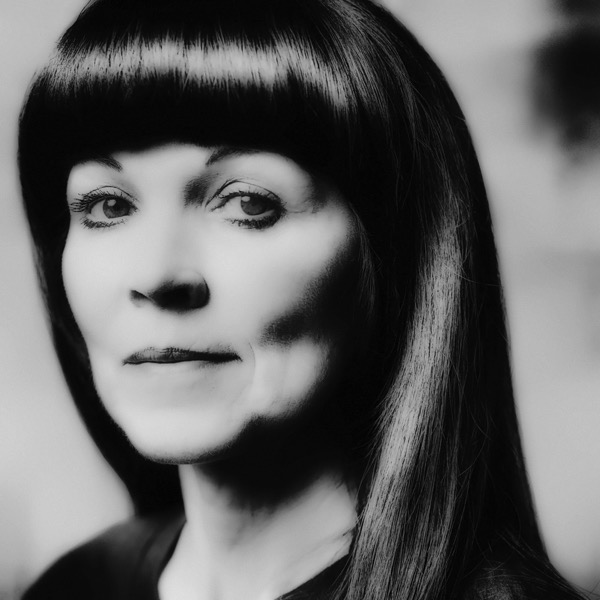
Clare Shenstone, Artist
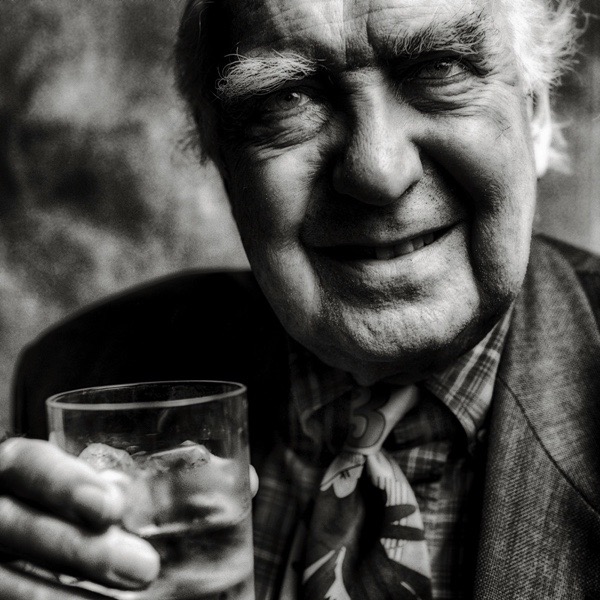
Peter Boizot, Founder of Pizza Express
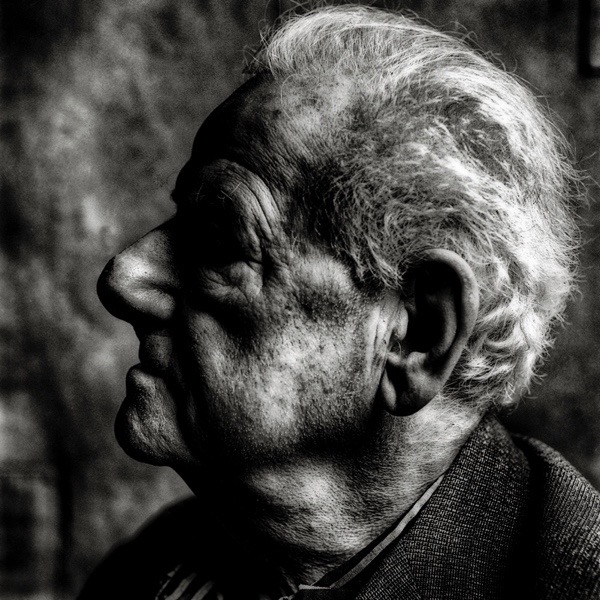
Peter Owen, Publisher

Vanessa Fenton, Dancer at the Royal Ballet & Choreographer
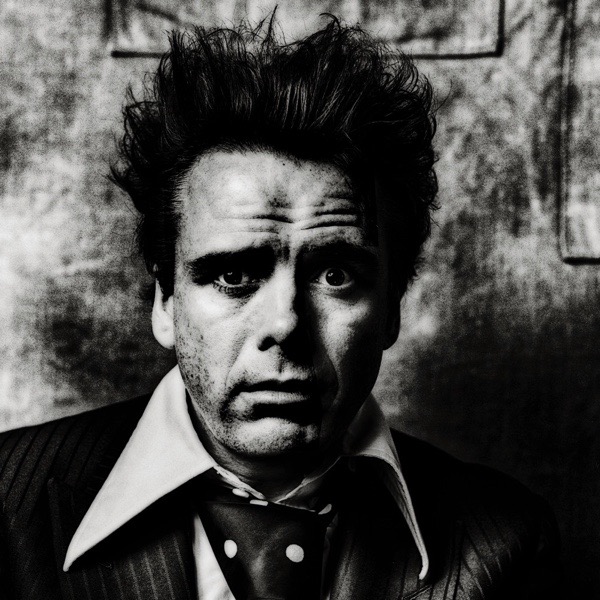
Sebastian Horsley, Artist
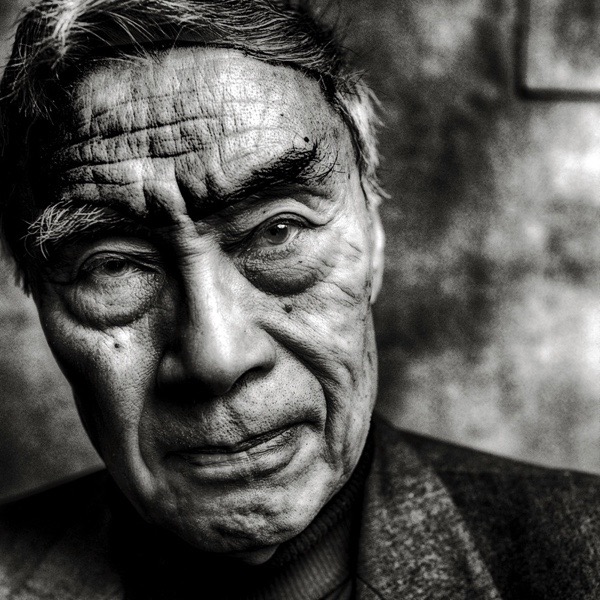
Burt Kwouk, Actor
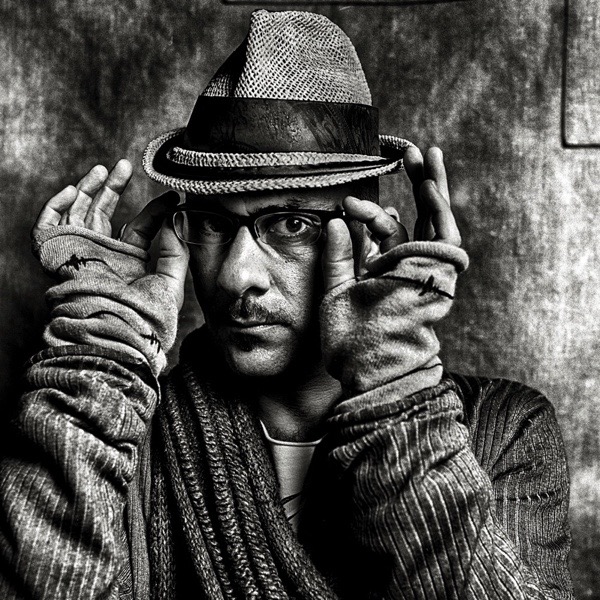
Kevin Petillo, Television Producer
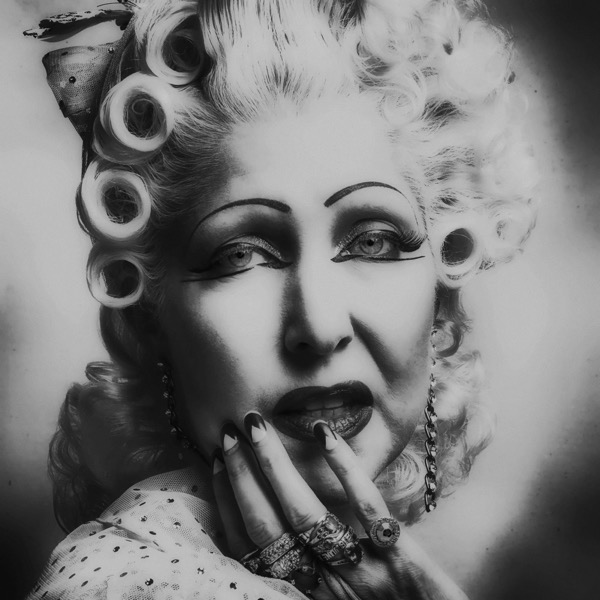
Pinkietessa, Costume maker
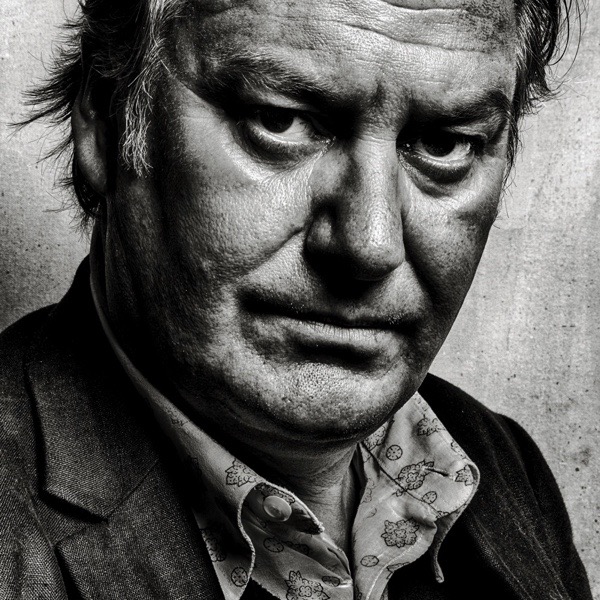
James Birch, Art Dealer
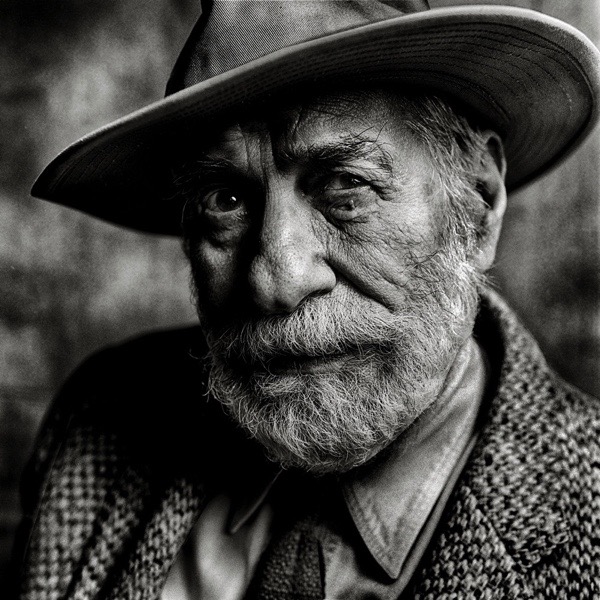
Jay Landesman, Nightclub Owner, Writer & Publisher

Anna Lujan Sanchez, Dancer with Ballet Rambert

Freddie Jones, Actor
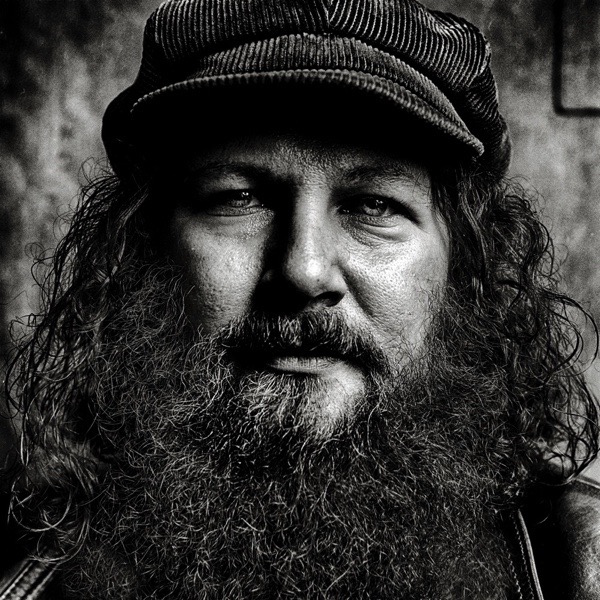
Paul Lawford, of The Rubbishmen of Soho

Alison Steadman, Actor
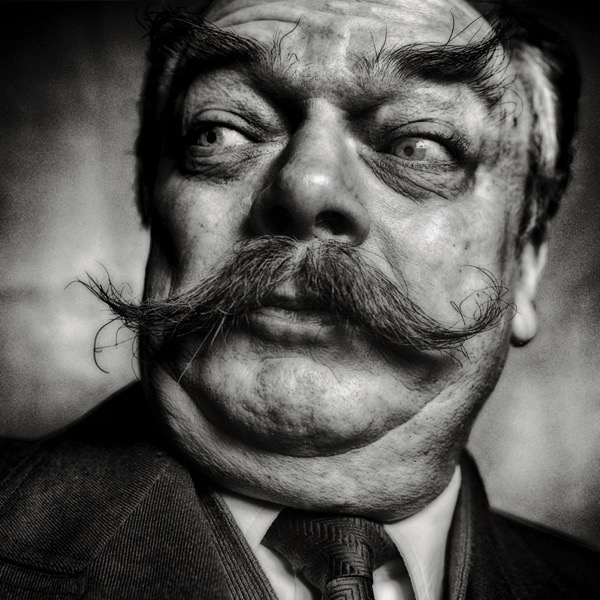
Gaston Berlemont, Former Publican at The French House
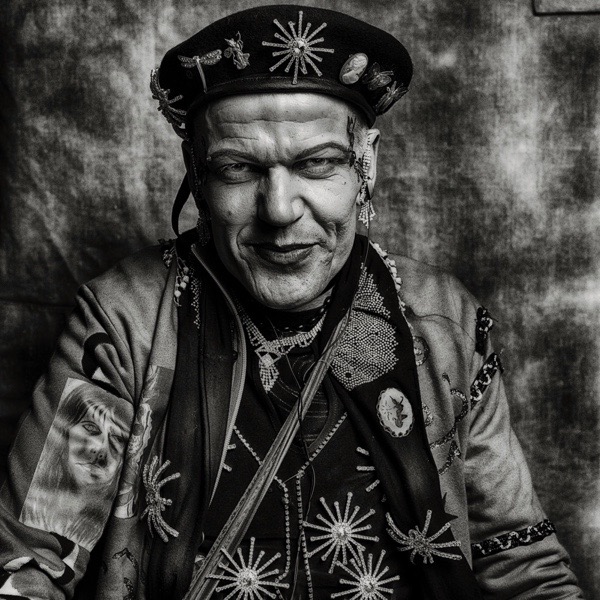
Paul Barlow, Cyclist
Photographs copyright © John Claridge
John Claridge’s exhibition PARIS IN THE SIXTIES & SEVENTIES will be at The French House, Dean St, Soho from Sunday 2nd April until Saturday 3rd June
You may also like to take a look at
John Claridge’s Boxers (Round One)
John Claridge’s Boxers (Round Two)
John Claridge’s Boxers (Round Three)
John Claridge’s Boxers (Round Four)
John Claridge’s Boxers (Round Five)
John Claridge’s Boxers (Round Six)
John Claridge’s Boxers (Round Seven)
John Claridge’s Boxers (Round Eight)
John Claridge’s Boxers (Round Nine)
John Claridge’s Boxers (Round Ten)
John Claridge’s Boxers (Round Eleven)
John Claridge’s Boxers (Round Twelve)
and
John Claridge’s Clowns (Act One)
John Claridge’s Clowns (Act Two)
John Claridge’s Clowns (The Final Act)
and
and these other pictures by John Claridge
Along the Thames with John Claridge
At the Salvation Army with John Claridge
A Few Diversions by John Claridge
Signs, Posters, Typography & Graphics
Views from a Dinghy by John Claridge
In Another World with John Claridge
A Few Pints with John Claridge
Some East End Portraits by John Claridge
Sunday Morning Stroll with John Claridge
Just Another Day With John Claridge
At the Salvation Army in the Eighties
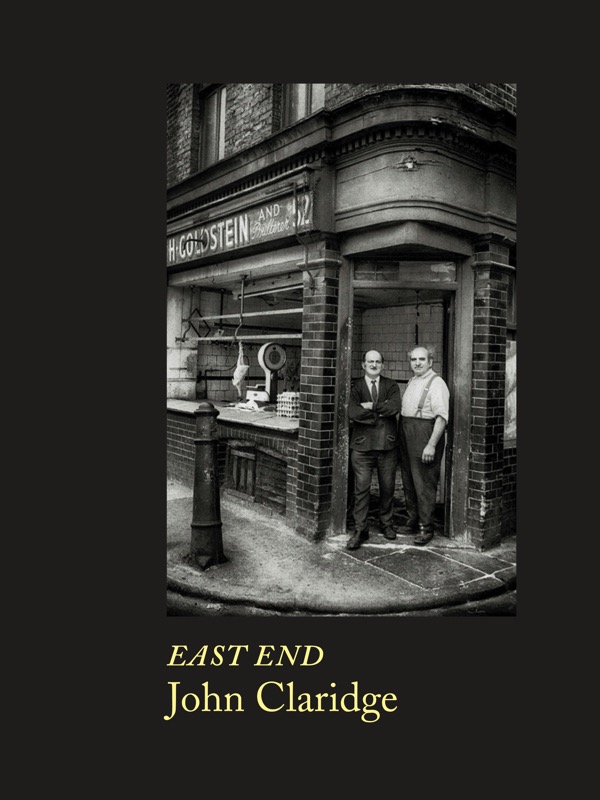
Leonard Fenton, Actor
Gillian Tindall, author of THE TUNNEL THROUGH TIME recently published by Chatto, tells the story of Leonard Fenton, an East End boy from Stepney Green better known as ‘Dr Legg’
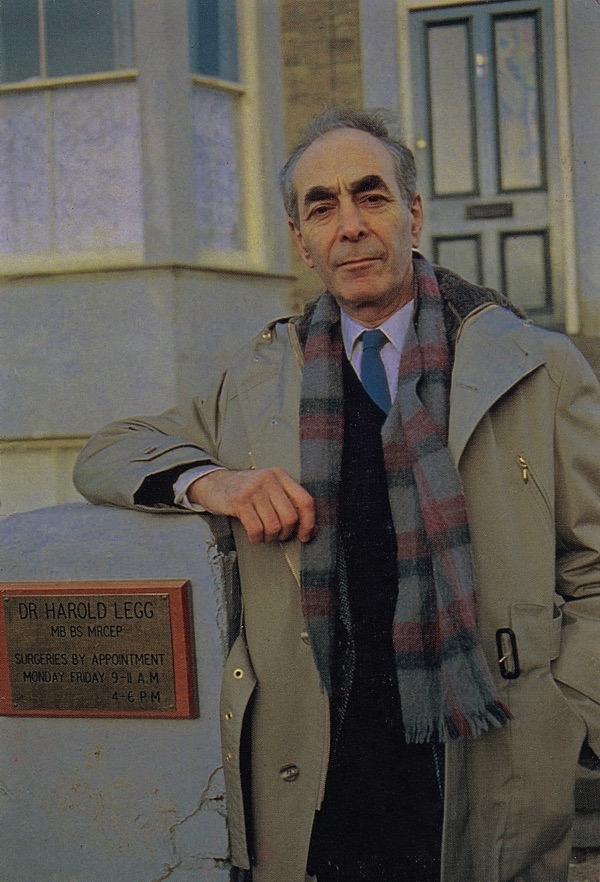
Leonard Fenton as Dr Legg in East Enders
When Dr Legg, the GP in East Enders, finally ‘retired’ in 1997, there was universal regret among viewers – even though they could see he was already older than any real-life GP would be. Afterwards, he continued to be referred to as an off-stage presence, like a benign Scarlet Pimpernel, and he made occasional informal reappearances – most notably for the stage-funeral of Mark Fowler in 2004, with whom he had once had ferocious doctorly words about heroin addiction and, in 2010, to counsel Dot Branning about a supposed Romanian foundling.
In real life, Dr Legg was the actor Leonard Fenton. Although his East Enders‘ role has been the one for which he has been widely celebrated (and even accosted in the street and the Underground by people so convinced of the reality of soaps that they ask for friendly medical advice) he has a life-time of other roles to his credit. One of those actors who never quite reach the very top of the theatrical tree but are nearly always in work and much esteemed by other professionals, Len has done seasons with the National Theatre and the Royal Shakespeare Company, worked with Orson Welles, with Jonathan Miller and Samuel Beckett – who personally chose him in 1979 to play opposite Billie Whitelaw in Happy Days at the Royal Court.
His last stage roles were the Duke in The Merchant of Venice at Stratford-on-Avon in 2008 and the demanding part of Vincentio in The Taming of the Shrew at the Aldwych Theatre in London in 2009. By then Len was eighty-three years old, but you would never have guessed it. He went on for several more years specialising in ‘old rabbis’ and has only now taken to retirement in the actors’ home at Denville Hall, because his diabetes needs more careful management than he can give it alone.
The kindly GP in East Enders was obviously Jewish and the early lives of the doctor and the actor paralleled each other. Dr Legg was supposed to have been born in the East End, a bright boy who got a scholarship to a Grammar School and then to medical school, but had preferred to remain close to his roots in the fictional East London district of `Walford’ rather than moving out to a polite suburb.
Similarly, Len Fenton was born (during the General Strike of 1926) in little house in Duckett St, Stepney Green, that his parents and elder sister shared with relatives. When he was eleven, he won a Junior County scholarship to Raines School for Boys in Arbour Sq. A surviving school report, under the name Leonard Feinstein, describes him as “A quiet intelligent pupil. Gives no trouble and works well.” The same report shows that he was particularly good at drawing, singing and languages, but as he showed an aptitude for maths too, plus ‘satisfactory’ work at Chemistry and Physics, the headmaster urged him towards engineering – a destiny that took Len some years and quite a bit of enterprise to escape.
The heart of the Jewish East End in the twenties and thirties was in Whitechapel and Spitalfields. Half a mile away, in Duckett St there was only one other Jewish household besides Len’s family, although Len recalls a big block of flats on Stepney Green itself that was “full of our lot. I would rather liked to have lived there.” Possibly it was the presence of this block that drew Mosleys’ Blackshirts down to Stepney Green for a series of threatening marches that were to culminate in the Battle of Cable Street. As a small boy, Len remembers his mother standing in the upstairs window of their house with a baby – one of Len’s younger sisters – in her arms, watching Mosley giving a speech at the corner about how all Jews had substantial bank balances. At this point, she yelled down at him “Sir Oswald, would you like to see my fucking bank balance?” Her husband worked in the garment trade and, like most people in their position, they lived hand to mouth. Various neighbours, who were inclined to side with Mosley in those uncertain times, hastily cried “No, no, Fanny, we don’t mean you!”
Len’s mother had arrived in London as a baby, circuitously, via New York, at the beginning of the twentieth century. She was working in a box factory when she met her husband. Both sets of grandparents were immigrants from Eastern Europe, mother’s from Riga and father’s from Lithuania, and all that generation spoke Yiddish as their household tongue. The family name was originally, Len thinks, something like Resnik, a Russian-Yiddish term to do with tailoring, but it just happened that the neighbour who helped Len’s grandfather to register in London when he arrived in the 1890s suggested ‘Feinstein’ as a suitable name and it was accepted. The change to Fenton happened during the Second World War, when Len’s elder sister Sylvie convinced their father that it would be a good idea. However, the cousins living on the ground floor of the same house, including little Arnold who was six months younger than Len and his constant playmate, did not change their name. Arnold Feinstein, another scholarship boy, grew up to be a distinguished academic scientist and the husband of Elaine Feinstein, the poet. There are many routes out of the ghetto, but the Fenton-Feinstein families have always remained close.
Grandparents and uncles were important too. Len’s mother’s mother, who had been widowed in New York with the baby, come to London and remarried, lived at Bow. Neighbours of theirs organised a synagogue in their front room where the family foregathered on Saturdays. It was from here that an uncle took Len, then aged ten or eleven, on a trip to Watford to hear Thomas Beecham conducting Bizet’s First Symphony in C – for Len, a revelatory experience about what music could be. But, sadly, this thoughtful relative later became known to Len and his sisters as ‘bad uncle’ because he tried to convince Len that he could neither draw and paint, nor sing well enough to envisage it as a career – both of which no-doubt-well-intentioned judgements were untrue.
Len was thirteen in 1939, at the point when the whole Jewish East End began to be swept away, first by war and then by the social changes that war brought. Raines School was evacuated to various places near the south coast: hardly the ideal location in view of the threat of invasion, but such a hasty re-location was common in those times. By the time Len returned to battered and blitzed Stepney towards the end of the war, he was a tall and handsome seventeen-year-old – and his feisty mother, with whom he had not lived since he was a child, was suffering with tuberculosis and possibly diabetes as well. There was no NHS yet but, even if there had been, not a great deal could have been done for her. She died in 1945 and it was the eldest sister Sylvie who took on the maternal role for their father, for Len, his younger brother Cyril (who also died young) and the two pretty and ambitious younger sisters, Corinne and Annie.
National Service loomed at eighteen for all young men of Len’s generation yet, instead of joining the Army as a squaddie, Len was sent, on his head-master’s recommendation and Government approval, to do a two-year degree in Engineering at Kings’ College. He did not relish it at all, but it meant that, when the Army finally claimed him at age twenty, he was given a commission in the Royal Engineers – a new world for him. “I really enjoyed myself,” he recalled, “As an officer I could just oversee things and sign off the paper, while the NCOs did all the work!”
Len’s Army experience led him to five years in a civil engineering job in Westminster. This was still unsatisfying for Len, even though the firm in question seems to have been extraordinarily tolerant of their amiable but undevoted employee. Len found that he could take long, dreamy lunch hours walking round the London parks. By then he was living in Clapton and discovered, while changing from tube to bus at Aldgate on his evening commute, that Toynbee Hall ran courses in art and music. He started spending his evenings there, as many other aspirant East Enders had done before him – and a new life began. A starring role singing in a Christmas performance led to the offer of a place at the Webber-Douglas theatrel school, and the boy from Stepney was re-born as an actor and never looked back.
“I was older than most people at drama school,” he explained, “That was useful and I soon learnt to age myself up – I loved making-up.” A Spotlight award in his final year set Len off on a career playing character roles – fulfilling even if he never achieved a minor ambition to take the part of Baron Hard-Up in pantomime. “Trouble is, people don’t associate Dr Legg with slapstick,” he confessed.
Did becoming a celebrity in such a long-running soap affect his chances of other roles? Len feels that it may have kept him out of the theatre, but one would hardly think so given the stage successes of his last years in the profession. Oddly, Dr Legg was almost the only role in Len’s career which was not a character part. “The character wasn’t written to any great depth,” says Len, “so inevitably what came over on TV was a lot of me. I sometimes used to slip in words of my own that weren’t in the script! I think they should have given me a proper wife, though, not just a dead one.” (Mrs Legg was supposed to have been a nurse, killed long ago by a land-mine).
In real life Len married, aged almost forty, to a professional cellist, Madeline Thorner, considerably younger than him. Three sons and a daughter arrived in quick time, in their house in Hampstead Garden Suburb that was a far cry from Duckett St. Although the marriage eventually foundered, Len and Madeline remain friends and it was she who managed to get him into Denville Hall.
Any regrets? “Well, if I’d know how well my voice would last,” he admitted, “I’d have been a singer.” Len does still sing beautifully, even in his ninth decade, and possesses an extraordinary ability to imitate dogs and cats well enough to fool the animals themselves. His ability to paint and aptitude for drawing that his headmaster and uncle dismissed long ago came to the fore during Len’s years as Dr Legg, and he continues to paint. The aura of cheerful interest in life, that stood him in such good stead as a small boy in Stepney, still surrounds Len today.
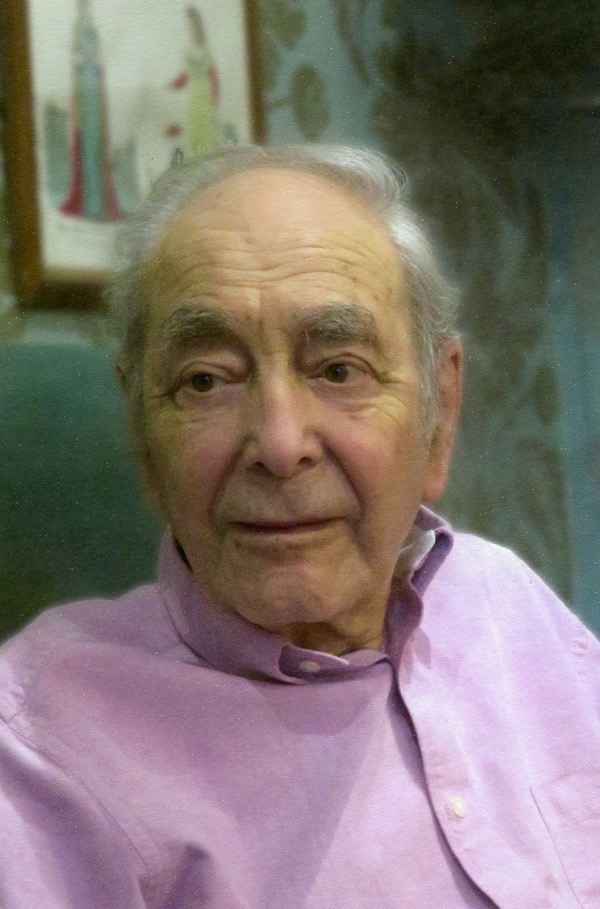
Leonard Fenton
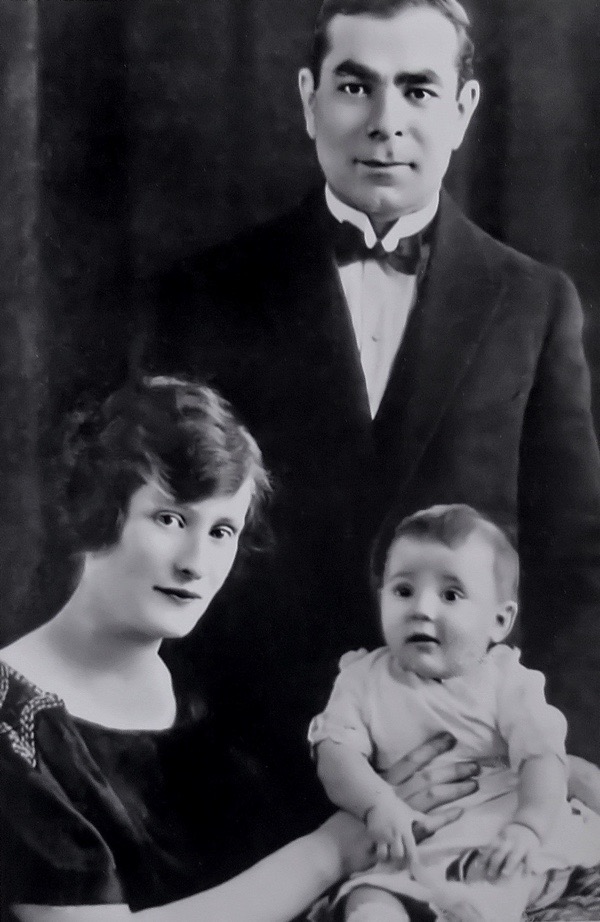
Leonard’s mother and father with his elder sister Sylvie as a baby
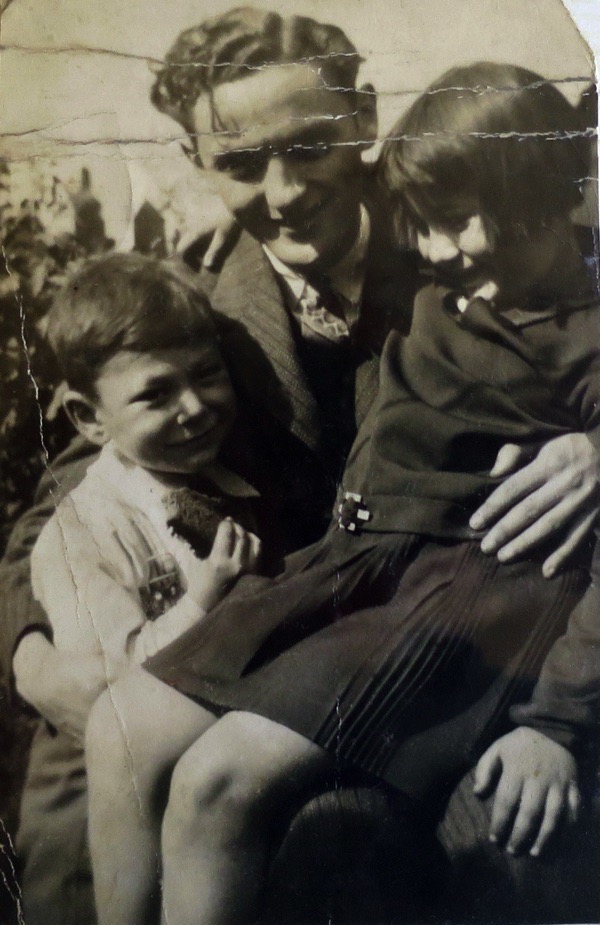
Leonard and his sister Sylvie with their Uncle
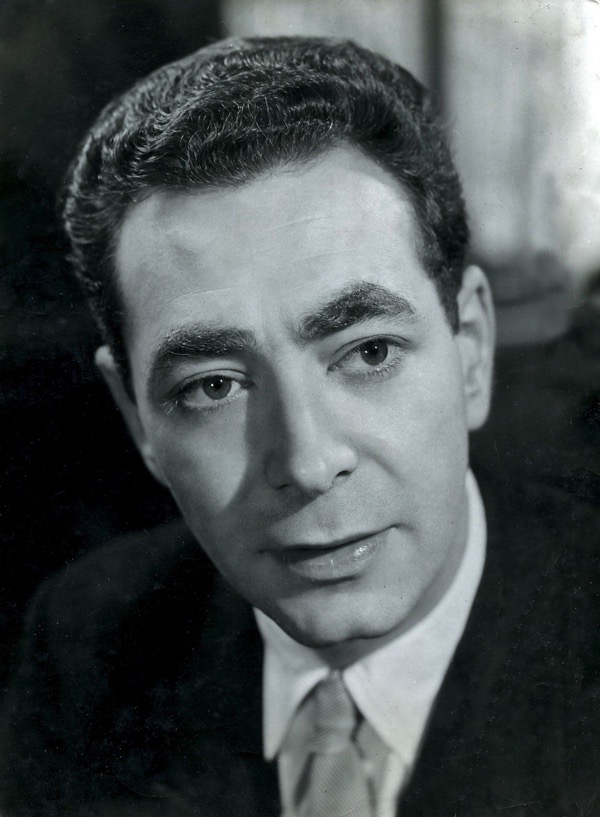
Leonard Fenton’s publicity shot as a young actor
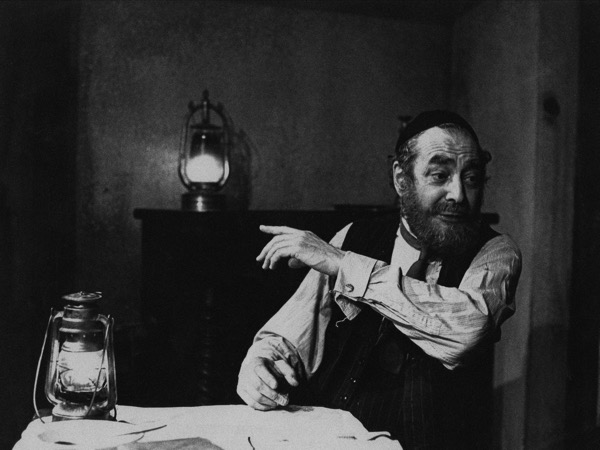
Leonard playing older than his years in the seventies

Leonard’s publicity shot in the eighties
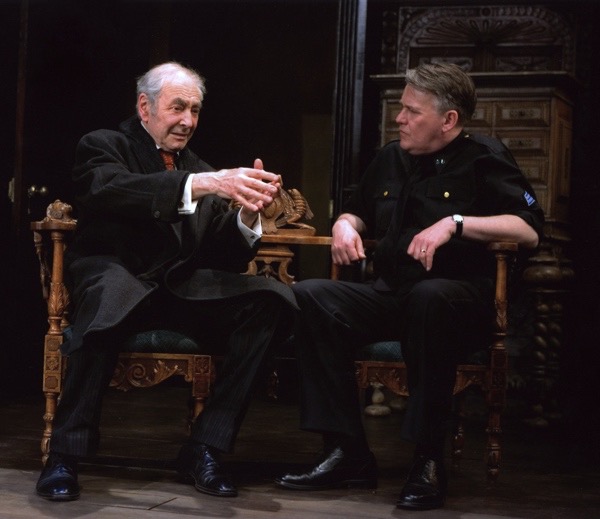
Leonard in the West End
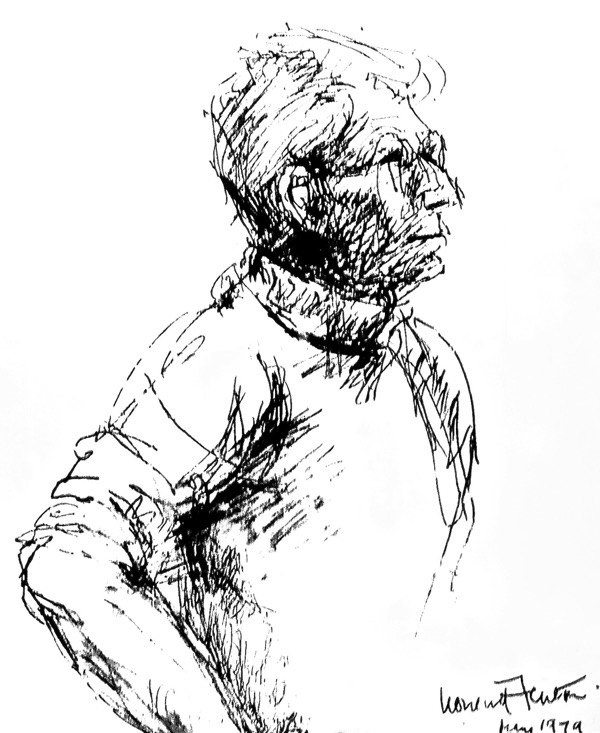
Leonard’s sketch of Samuel Beckett, done while rehearsing Happy Days at the Royal Court in 1979
You may also like to read about
Morris Goldstein, the Lost Whitechapel Boy
Charlie Chaplin in the East End
Paul Gardner At Downing St
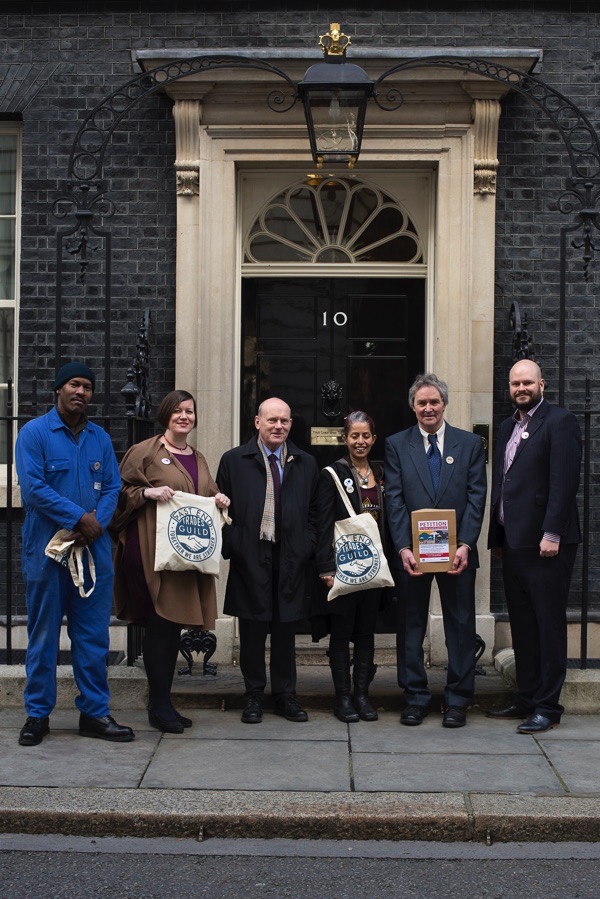
Yesterday Paul Gardner, founder of the East End Trades Guild and fourth generation proprietor of Spitalfields oldest family business Gardners Market Sundriesmen led a contingent to 10 Downing St consisting of fellow traders Sarah Haque of Urban Species and Len Maloney of JC Motors, supported by John Biggs Mayor of Tower Hamlets, Philip Glanville Mayor of Hackney, and Meg Hiller MP for Hackney South and Shoreditch.
The purpose was to deliver his petition of 10,562 signatures to Theresa May in advance of today’s budget, demanding a reduction in the excessive business rate increases proposed in London which threaten to wipe out independent shops and small businesses across the East End.
When Gardners Market Sundriesmen was selected as one of Britain’s Top 100 Small Businesses last year, Paul Gardner was invited to a reception at Downing St to meet Margot James, Minister for Small Businesses in December. On that day, Paul delivered a letter to Theresa May asking her to intervene on the issue of excessive increases in business rates for small businesses in London but he received no reply, so he organised a petition with the East End Trades Guild as a means to indicate the level of concern to the Prime Minister.
When I first interviewed Paul Gardner at his shop seven years ago, I do not think either of us ever imagined the outcome would be Paul becoming the spokesman for his fellow traders through founding the East End Trades Guild. Or that his natural integrity and moral authority might draw the support of the Mayors of both Tower Hamlets and Hackney, accompanying him to deliver his petition to Downing St on behalf of all the traders in the East End.
After he delivered the petition yesterday morning, it was business as usual for Paul Gardner as he went back to open his shop in Commercial St where I discovered him behind the counter. Unusually dapper in a suit and tie, and with his unruly locks newly trimmed, he was still flushed from his trip to Whitehall.
“It was exciting going to Downing St. You feel that you are doing something. Some people might say that it’s not really worthwhile, but it is always better to do something than nothing and I am quietly optimistic something will happen in the next day or two. We raised over ten-thousand-five-hundred signatures and I know we could easily have got more if we had time. We had a table in Columbia Rd Market last Sunday and I think if we had also gone to Brick Lane we would have got quite a lot more signatures.
When you arrive at Downing St, you have to show them your passport before you go through security, then you walk a hundred yards up the path and number ten is on your right hand side. You are allowed to take photos outside but, once you knock on the door, you have to hand over the petition. I knocked on the door but I didn’t give the man the petition right away, I had a conversation with him and I held onto it so that we got quite a few pictures of him taking the petition. He said it was going to go straight to Theresa May’s desk.
I am very pleased we did this. I am very proud to represent the East End Trades Guild and the more-than-ten-thousand people who signed the petition. Before the East End Trades Guild existed we all suffered in silence and didn’t know who to talk to, but the Guild has provided a sounding board for traders to speak with one another and it has given us a sense of community.
I’m hoping our petition makes a difference and people will realise that the East End of London – Hackney and Tower Hamlets in particular – will be dramatically hit if these business rates come into force. For me, it’s a 120% increase which is massive but there are others worse off. The majority are still unaware because they haven’t had their rates bill yet.
It is going to be pretty hard for a lot of businesses. I deal with people in Hackney and Tower Hamlets and I know what a tough time they are having to survive. Nobody can afford 100% increase in business rates.
If we don’t get adequate relief from the government, I can see closure of 20% of businesses – maybe more than that – in the next five years. In the first year, the increase is not too much but after that it builds up more and more. Combined with escalating rents round here, it will alter the landscape in Columbia Rd, Brick Lane, Broadway Market and Dalston.
It’s mad – business will no longer be tenable for a lot of people. It will kill the area in some respects because everywhere will become exactly the same as everywhere else, whereas round here there are quite a lot of independent shops which bring people to the East End.
The rateable value of my shop was £18,000 and now it’s going up to £40,000. If this happens, it will mean the end of the line for my business after nearly one hundred and fifty years, and four generations. At the moment I pay about £190 a week business rates but there’s no way I could carry on if I have to pay over £400 a week just on business rates before anything else, so there wouldn’t be any longevity in the shop.
I’m hopefully optimistic that something will be done to help us in the budget.”
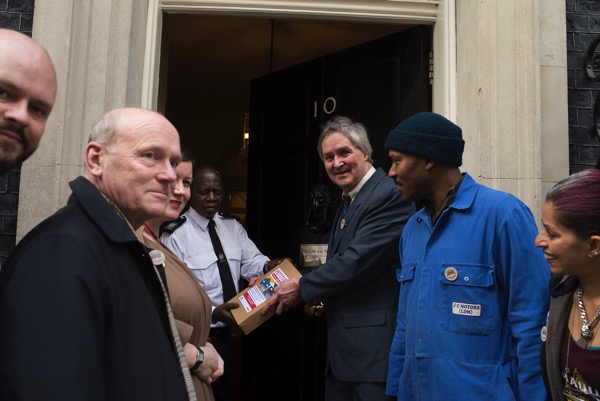
Paul Gardner delivers his petition to Theresa May
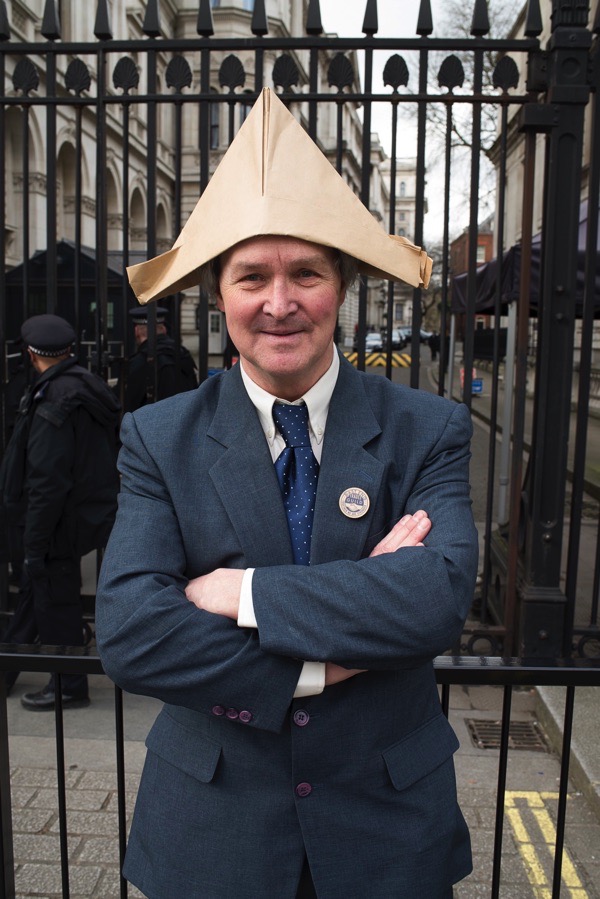
Paul Gardner, Paper bag seller and founder of the East End Trades Guild
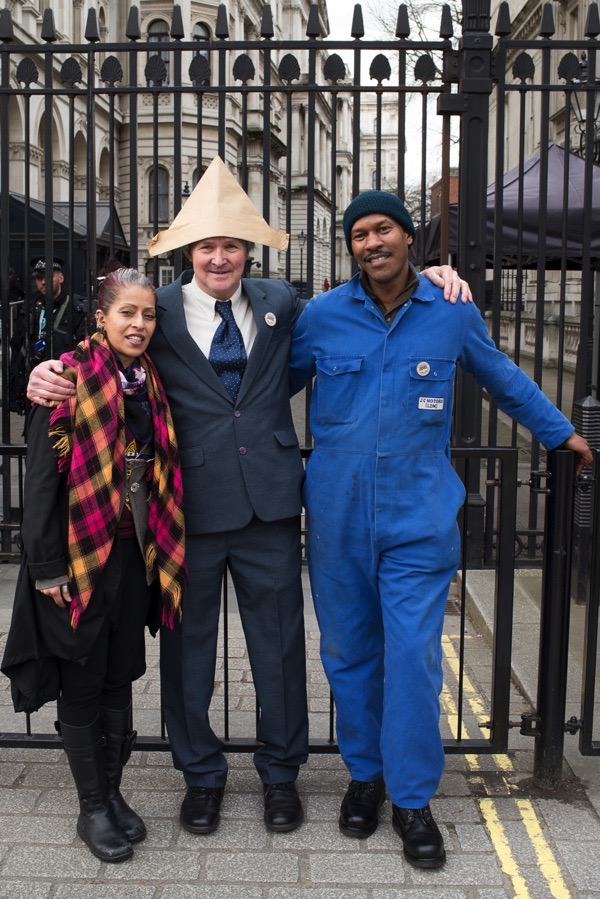
Paul Gardner with fellow traders Sarah Haque and Len Moloney
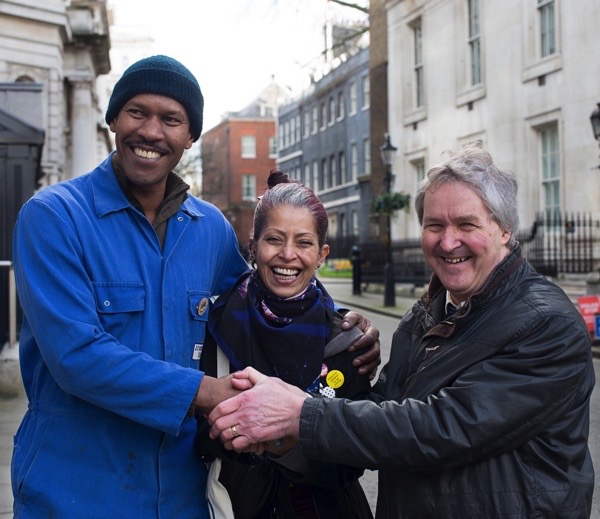
A jubilant moment after the delivery of the petition
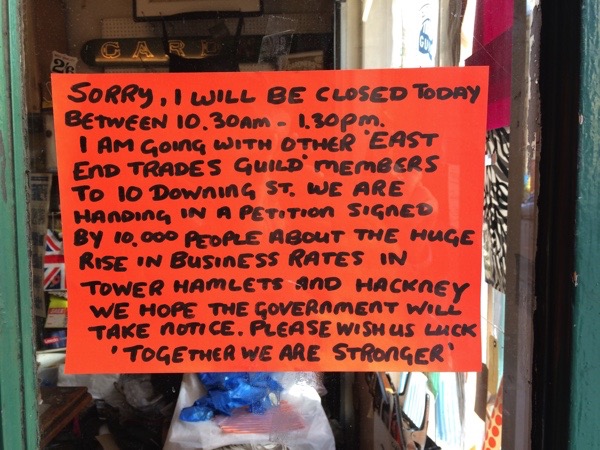
Notice in the window of Gardners Market Sundriesmen yesterday
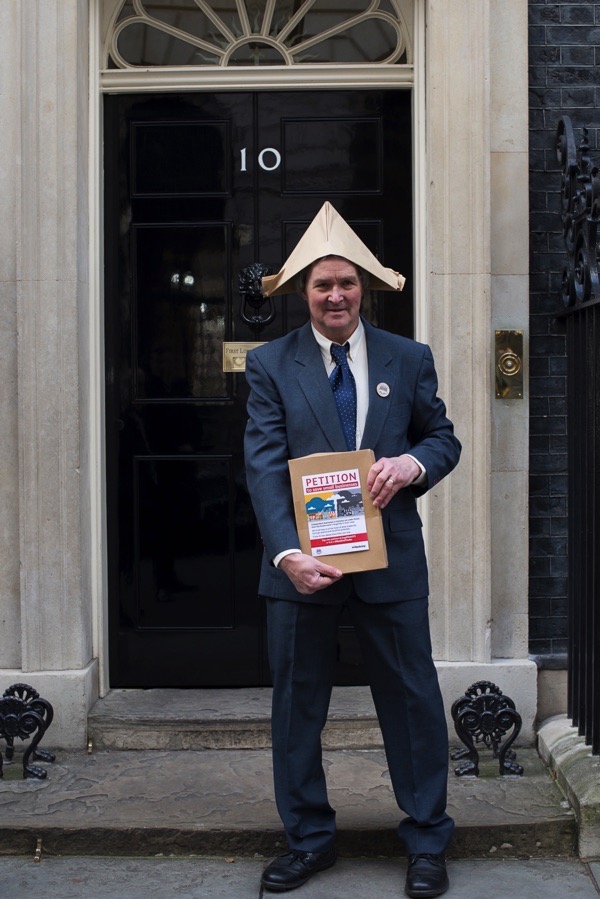
Paul Gardner, Paper Bag Baron delivers his petition to Downing St on behalf of East End traders

Photographs copyright © Sarah Ainslie
You may also like to read about
The Founding of The East End Trades Guild
A Petition to Save Our Shopkeepers
Paul Gardner Goes To Downing St
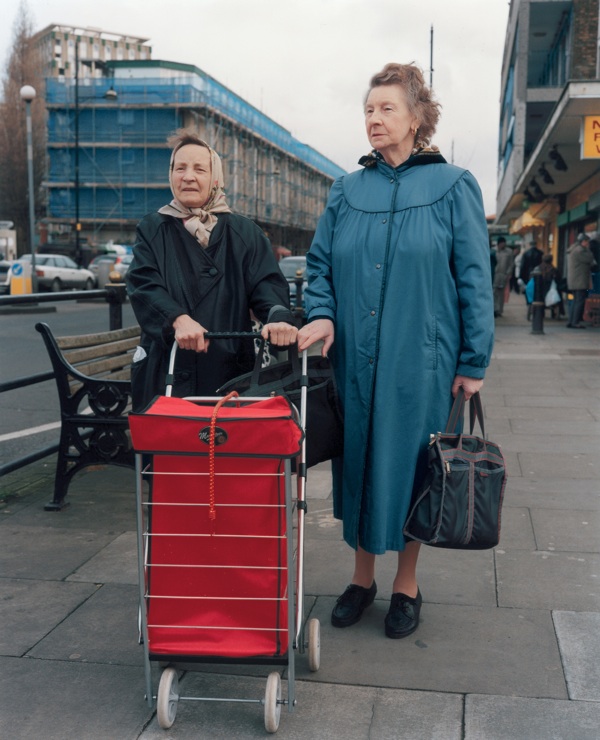
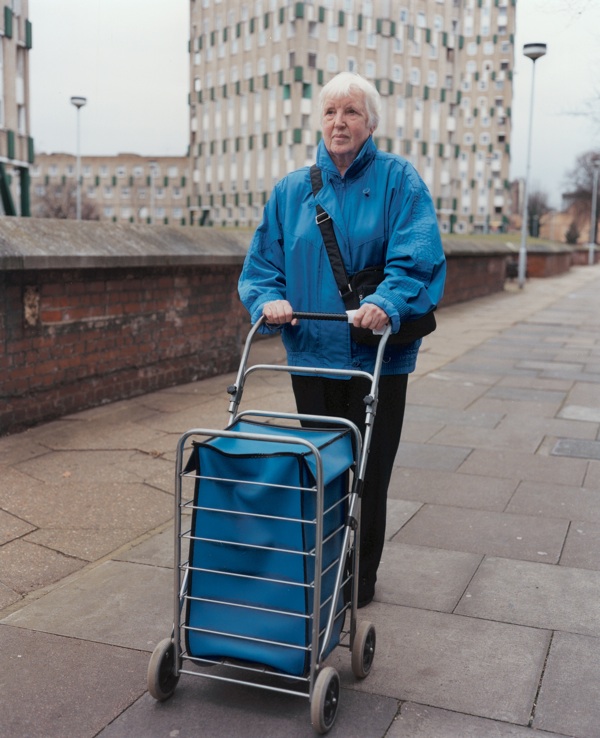
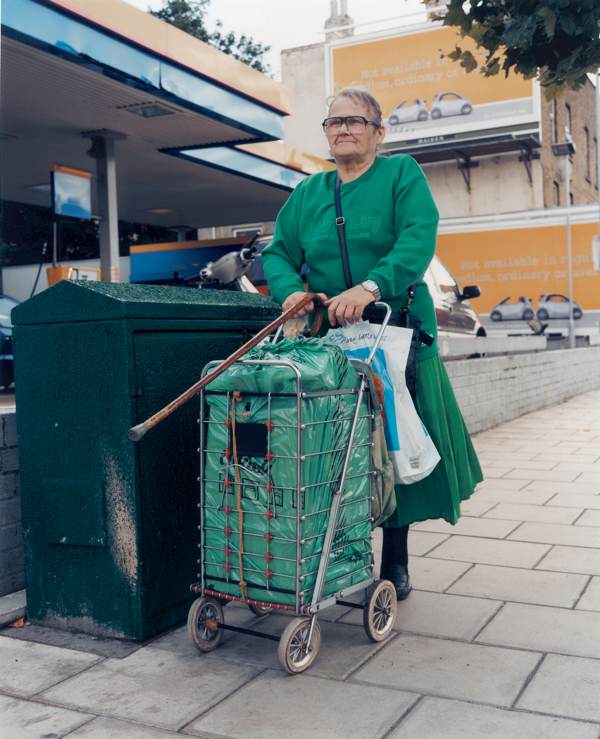
Stephen Gill’s Trolley Women
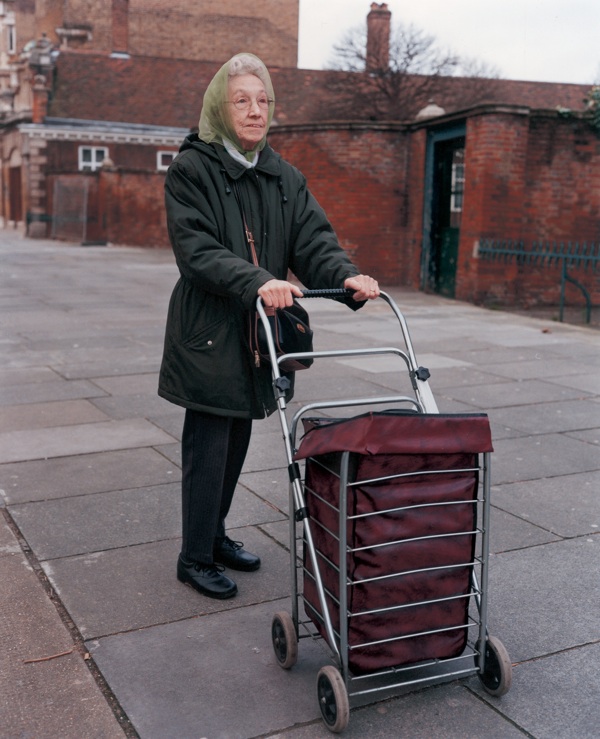
When photographer Stephen Gill slipped a disc carrying heavy photographic equipment ten years ago, he had no idea what the outcome would be. The physiotherapist advised him to buy a trolley for all his kit, and the world became different for Stephen – not only was his injured back able to recover but he found himself part of a select group of society, those who wheel trolleys around. And for someone with a creative imagination, like Stephen, this shift in perspective became the inspiration for a whole new vein of work, manifest in the fine East End Trolley Portraits you see here today.
Included now within the camaraderie of those who wheel trolleys – mostly women – Stephen learnt the significance of these humble devices as instruments of mobility, offering dominion of the pavement to their owners and permitting an independence which might otherwise be denied. More than this, Stephen found that the trolley as we know it was invented here in the East End, at Sholley Trolleys – a family business which started in the Roman Rd and is now based outside Clacton, they have been manufacturing trolleys for over thirty years.
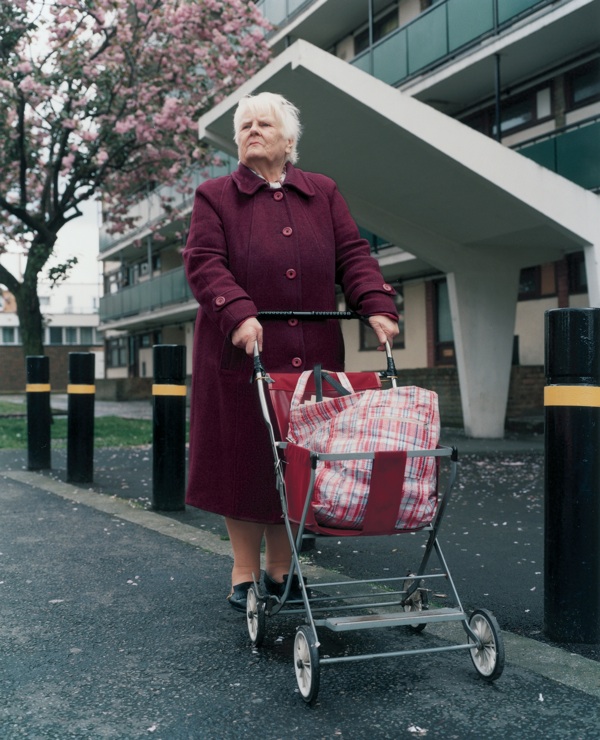
In particular, the rich palette of Stephen Gill’s dignified portraits appeals to me, veritable symphonies of deep red and blue. Commonly, people choose their preferred colour of trolley and then co-ordinate or contrast their outfits to striking effect. All these individuals seem especially at home in their environment and, in many cases – such as the trolley lady outside Trinity Green in Whitechapel, pictured above – the colours of their clothing and their trolleys harmonise so beautifully with their surroundings, it is as if they are themselves extensions of the urban landscape.
Observe the hauteur of these noble women, how they grasp the handles of their trolleys with such a firm grip, indicating the strength of their connection to the world. Like eighteenth century aristocrats painted by Gainsborough, these women claim their right to existence and take possession of the place they inhabit with unquestionable authority. Monumental in stature, sentinels wheeling their trolleys through our streets, they are the spiritual guardians of the territory.




Photographs copyright © Stephen Gill
A Walk With Philip Cunningham
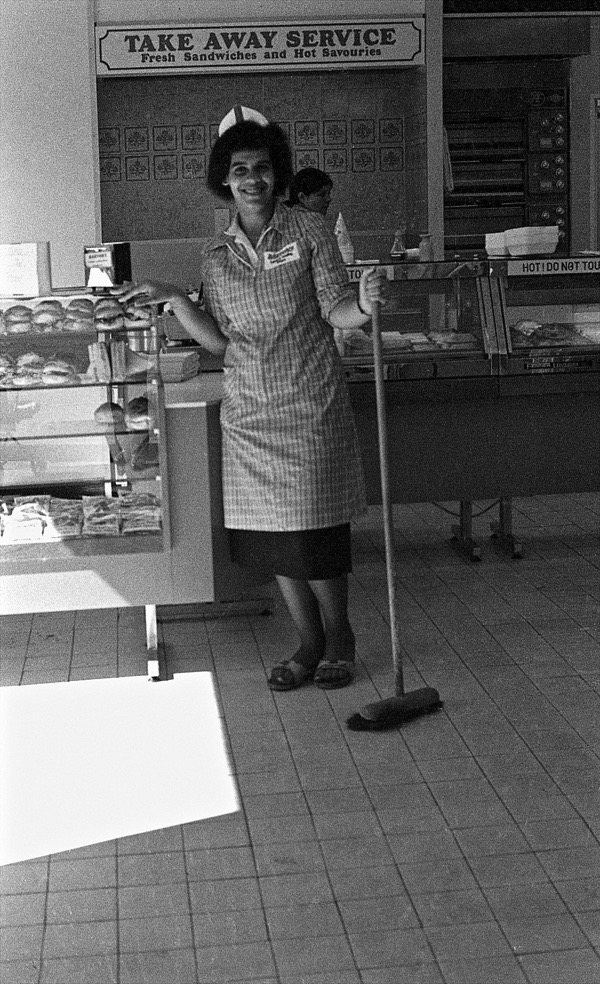
While living in his grandfather’s house in Mile End Place during the seventies and eighties, Philip Cunningham used to explore the streets of the East End taking photographs.
“What the Germans had not bombed in the war, the GLC and the council were trying to pull down. There were ruins everywhere and it gave the borough a strange character,” recalled Philip, “There were asbestos prefabs all over the place but they slowly disappeared – the last two I remember were in Globe Rd. The residents were moved into new tower blocks yet they turned out to be unsatisfactory too.”
Shall we join Philip on one of his walks? He says meet him outside the Rinkoff’s Bakery in Whitechapel a generation ago and we can take it from there.
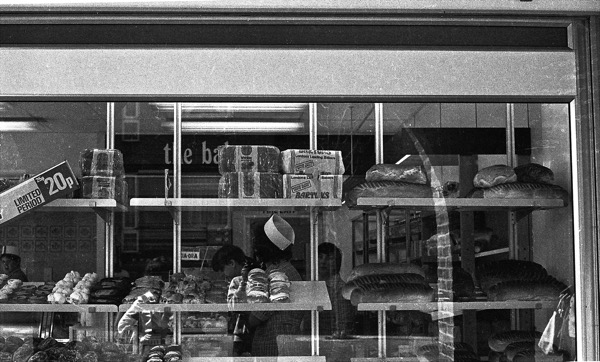
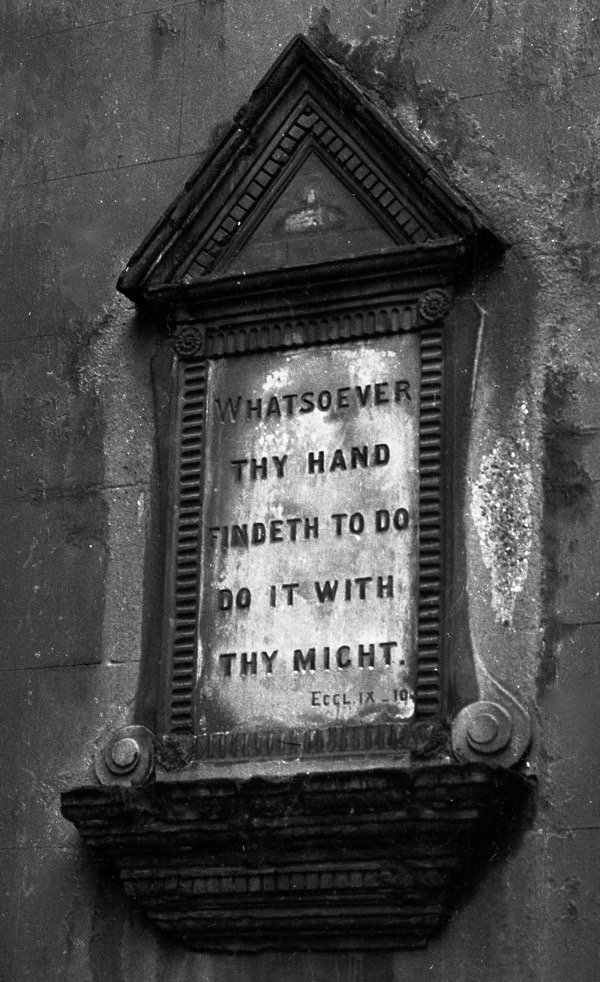
At Brady St Dwellings
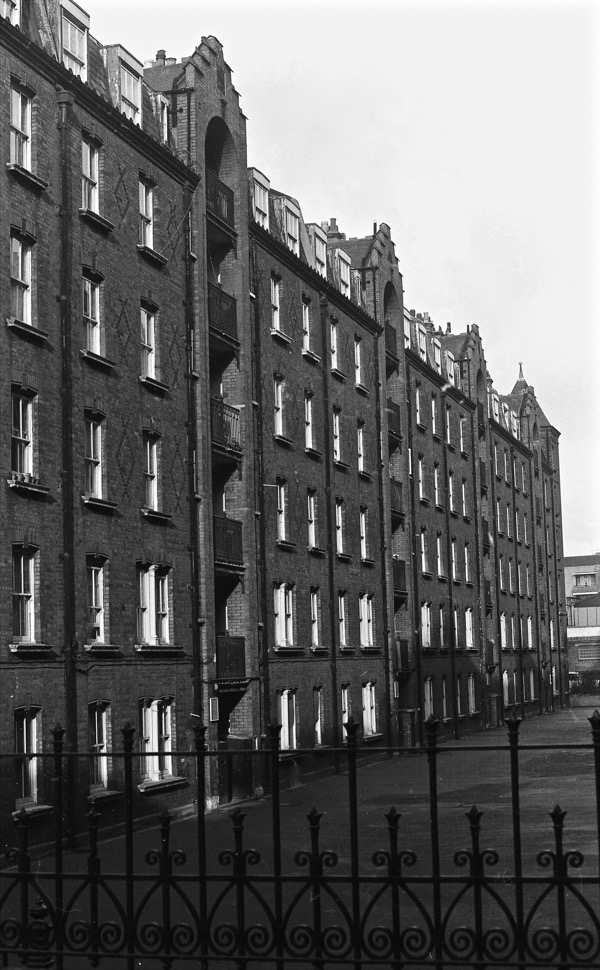
Brady St Dwellings
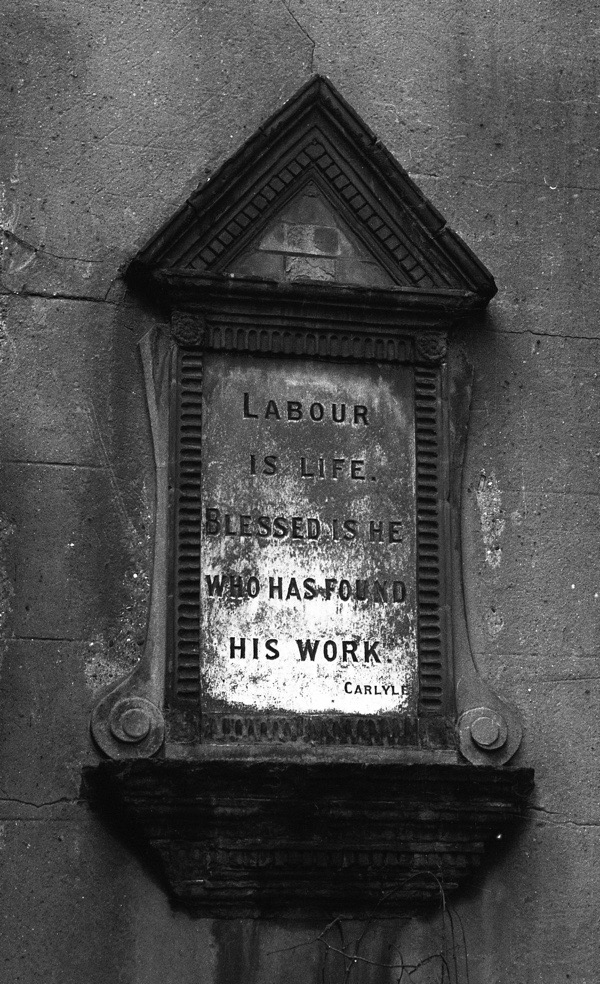
At Brady St Dwellings
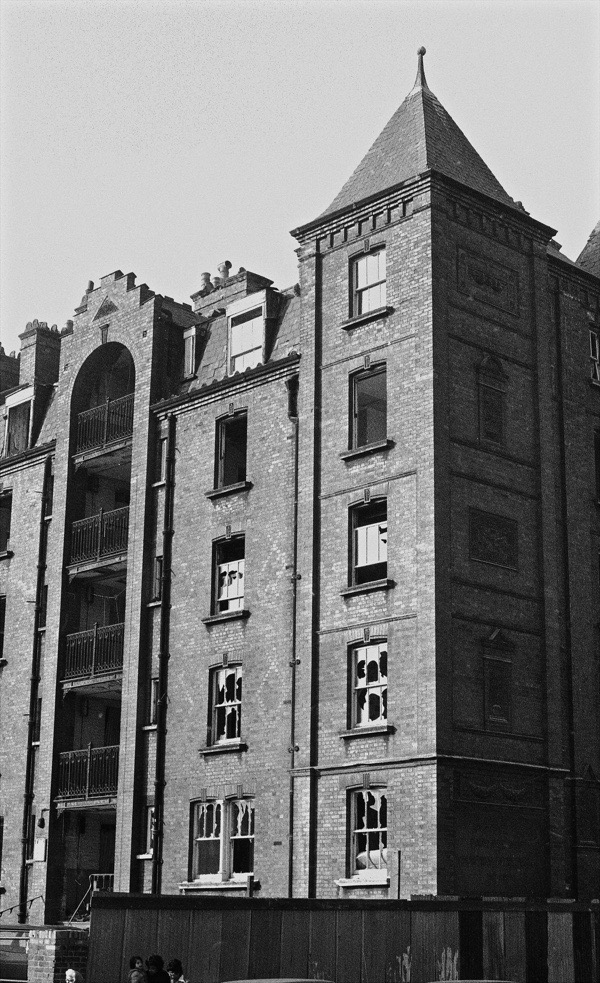
Brady St Dwellings
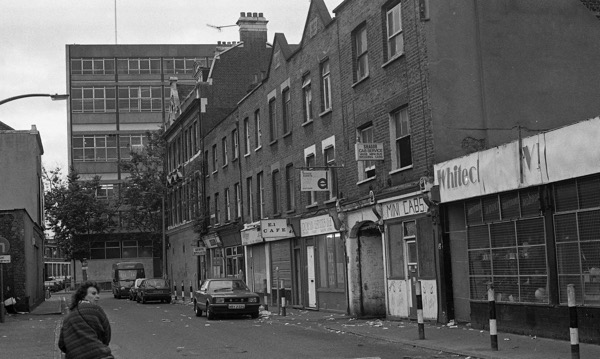
Brady St
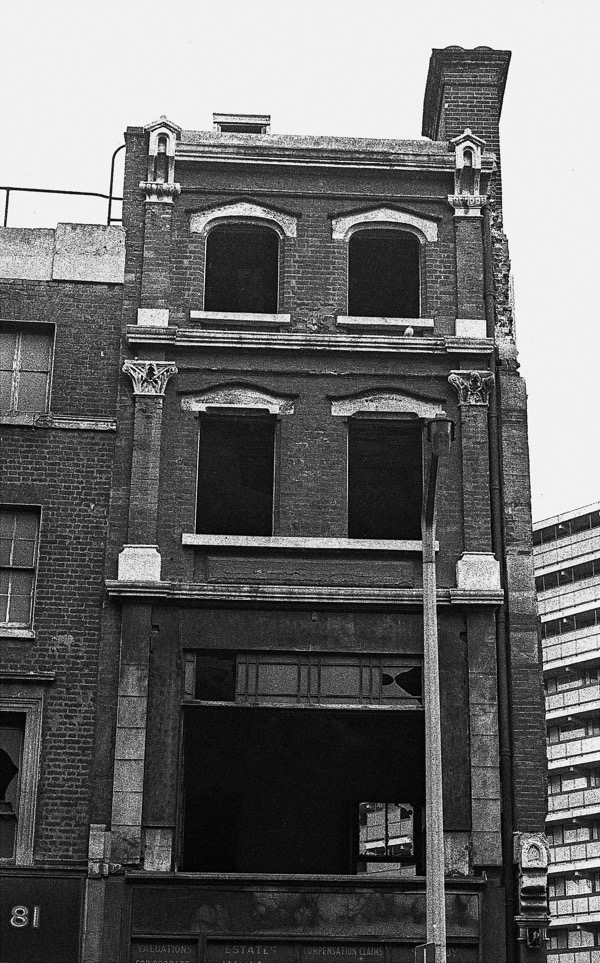
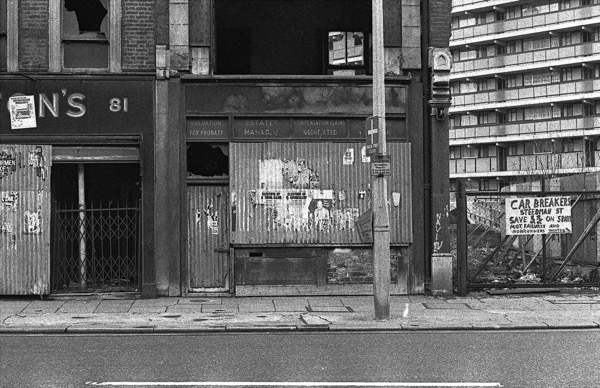
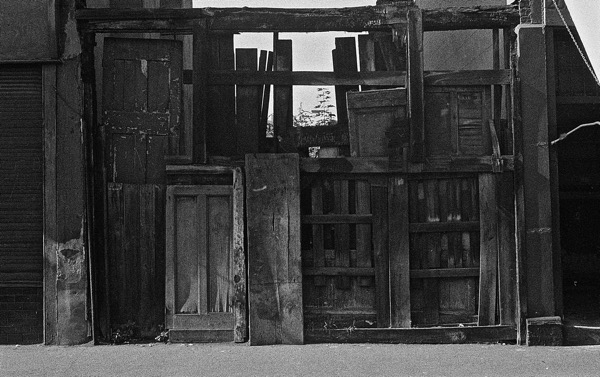
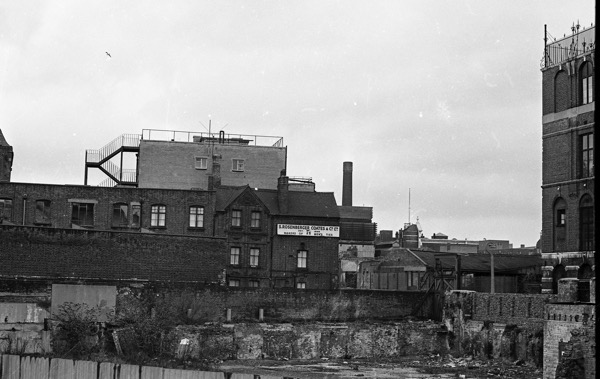
Durward St, Whitechapel

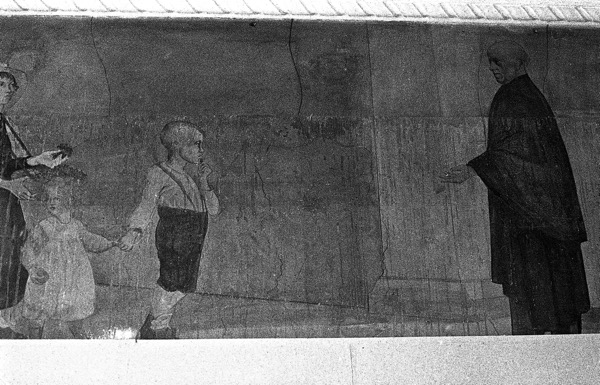
Mural of Canon Barnett at Whitechapel Art Gallery
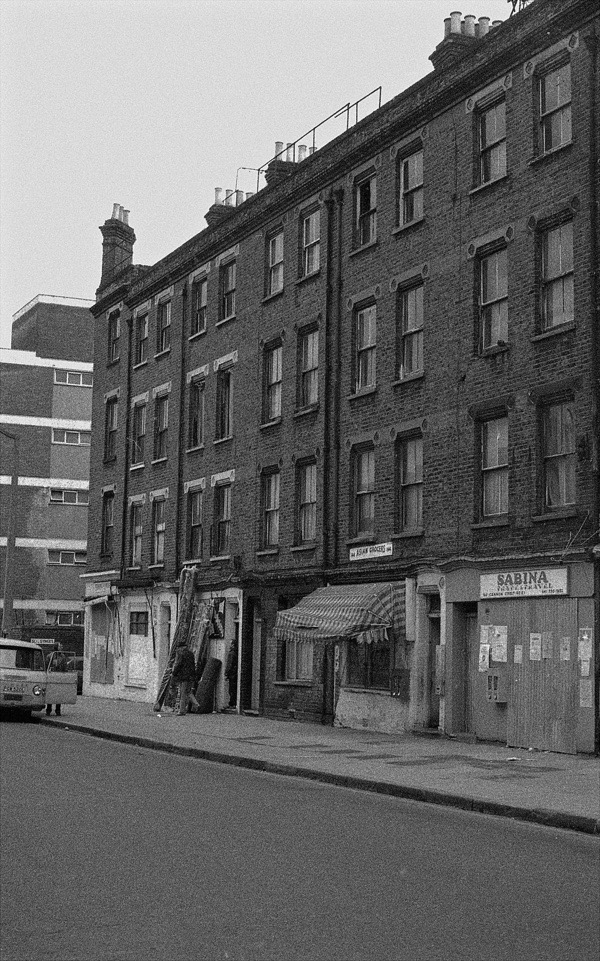
Brick Lane
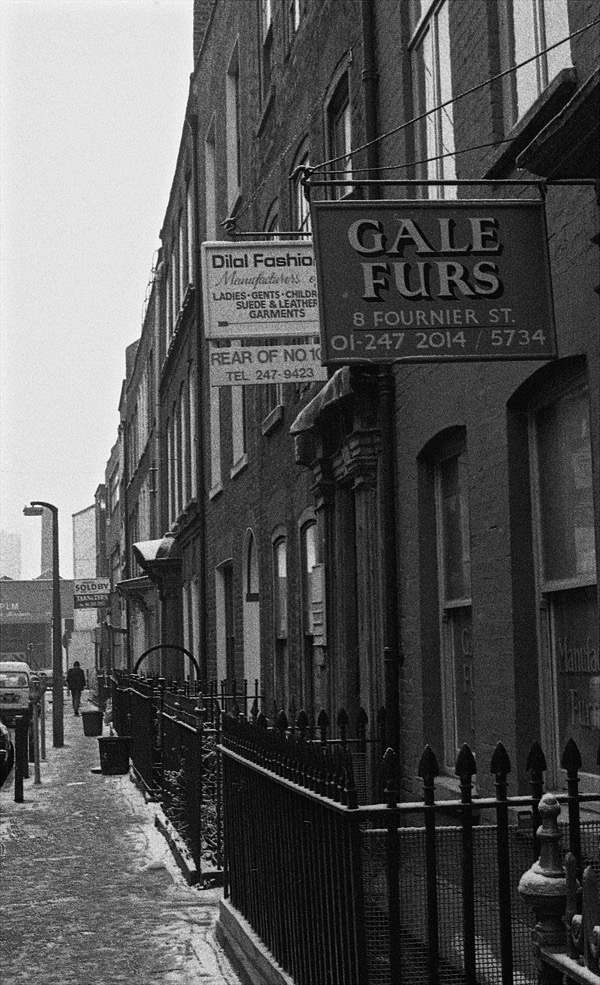
Fournier St
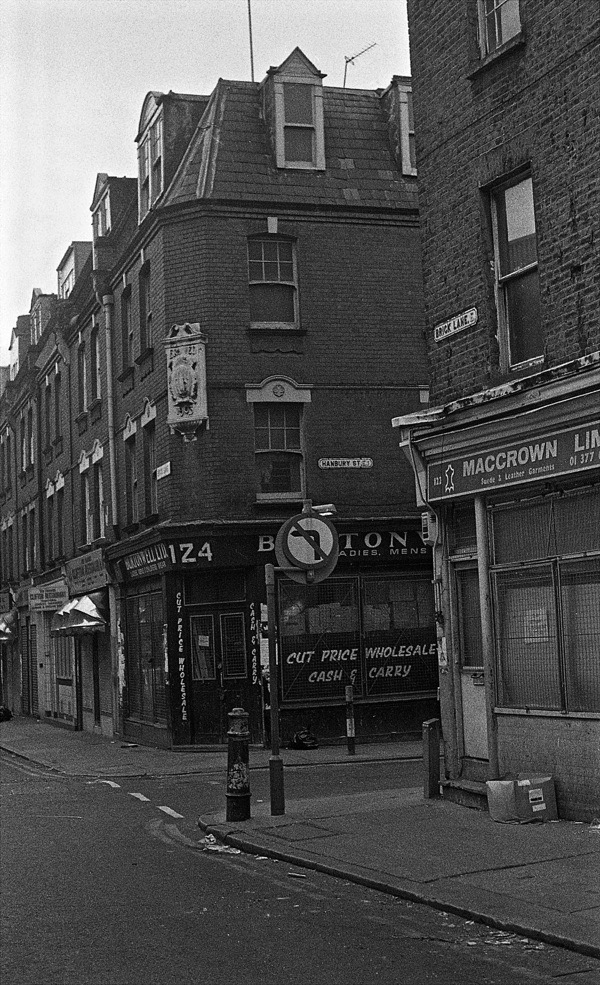
Brick Lane
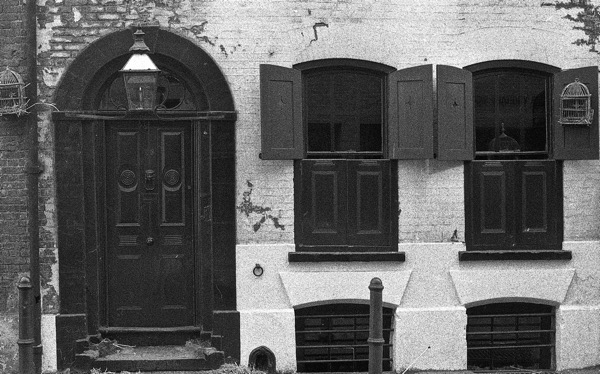
Folgate St
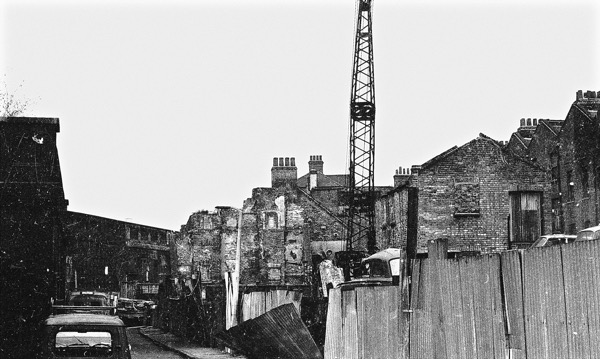
Grimsby St
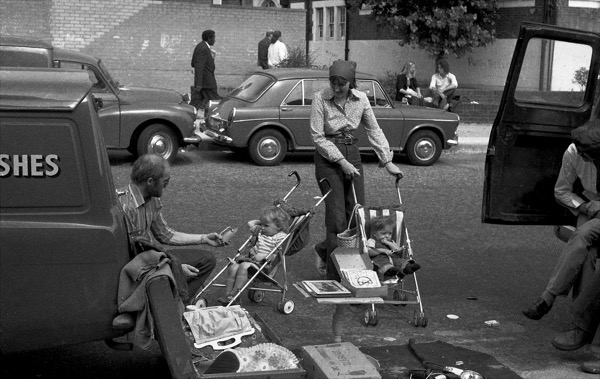
Cheshire St
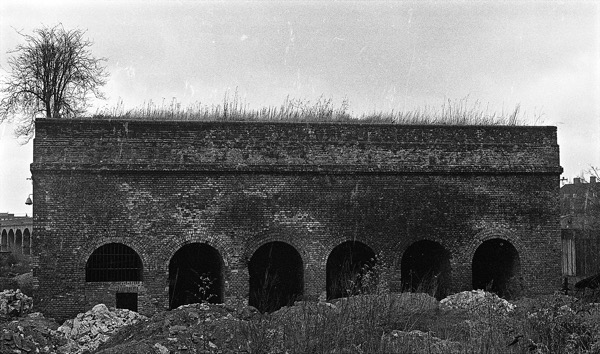
Spitalfields Coal Depot
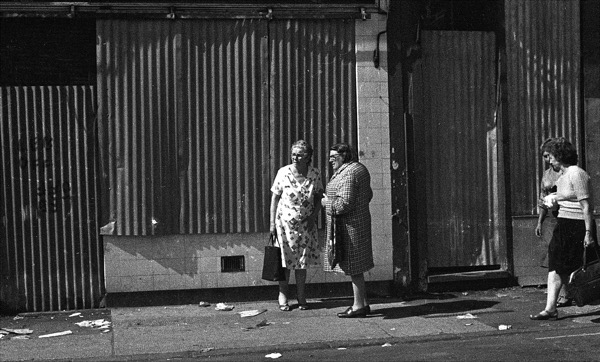
Bethnal Green
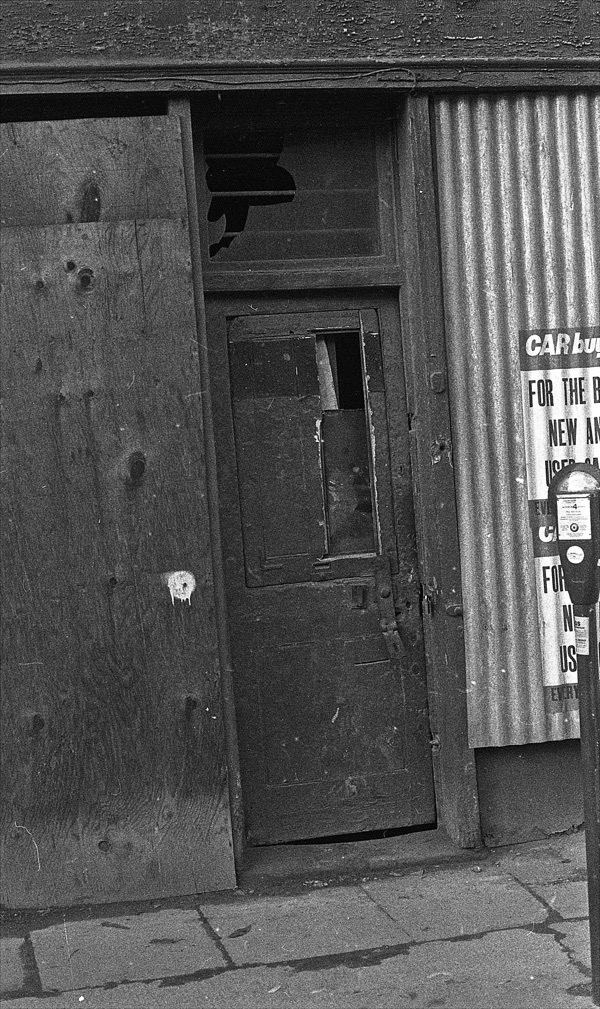
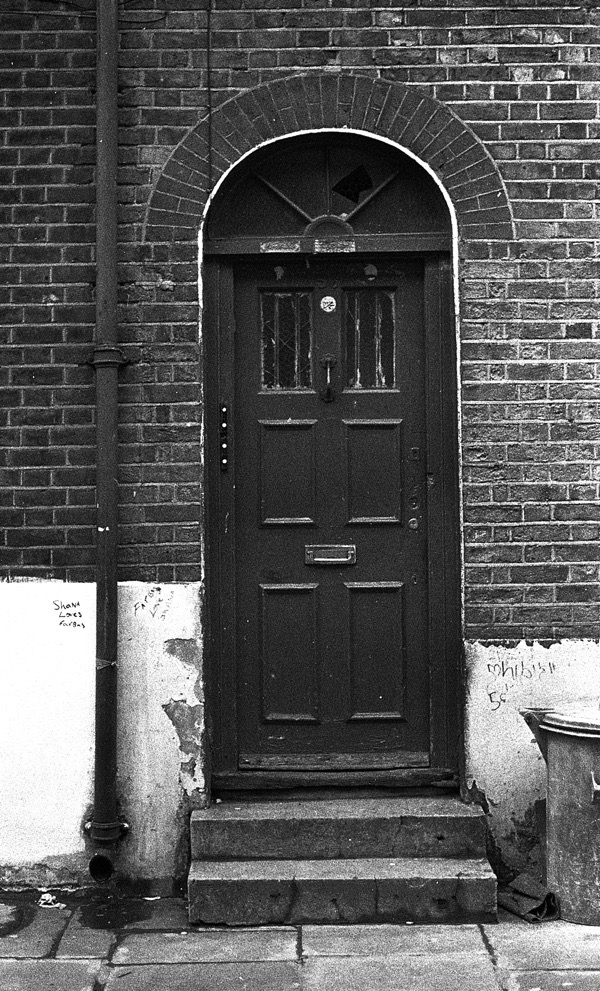

Artillery Passage
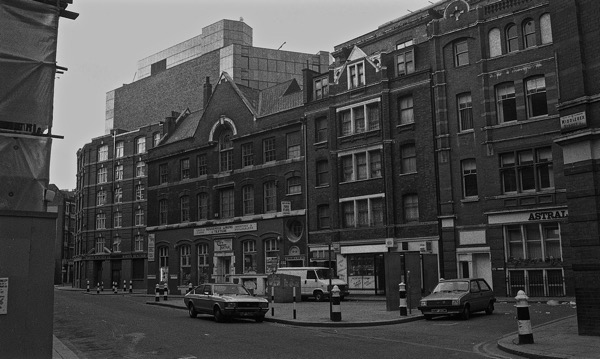
Middlesex St
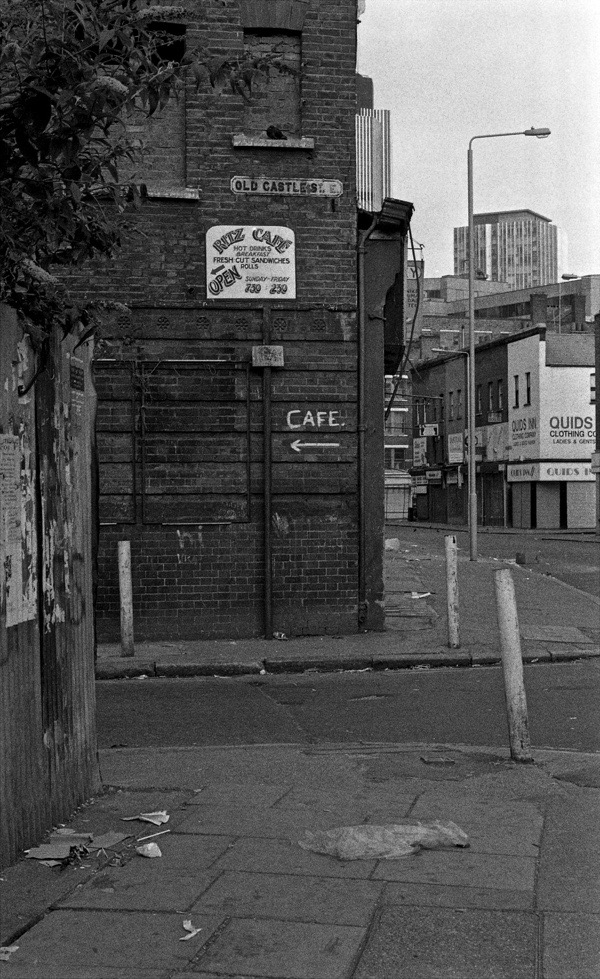
Old Castle St
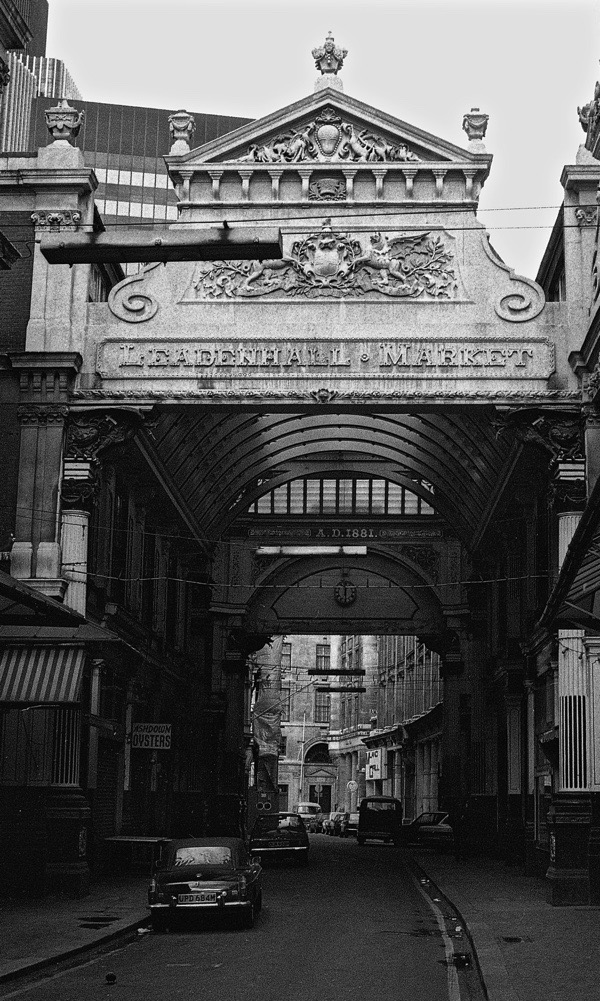
Leadenhall Market
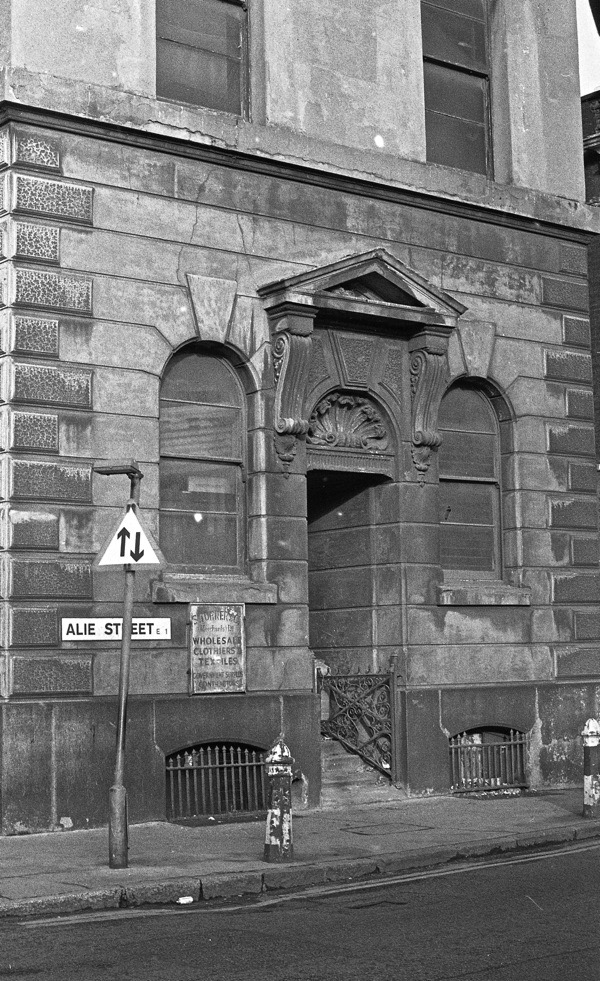
Alie St
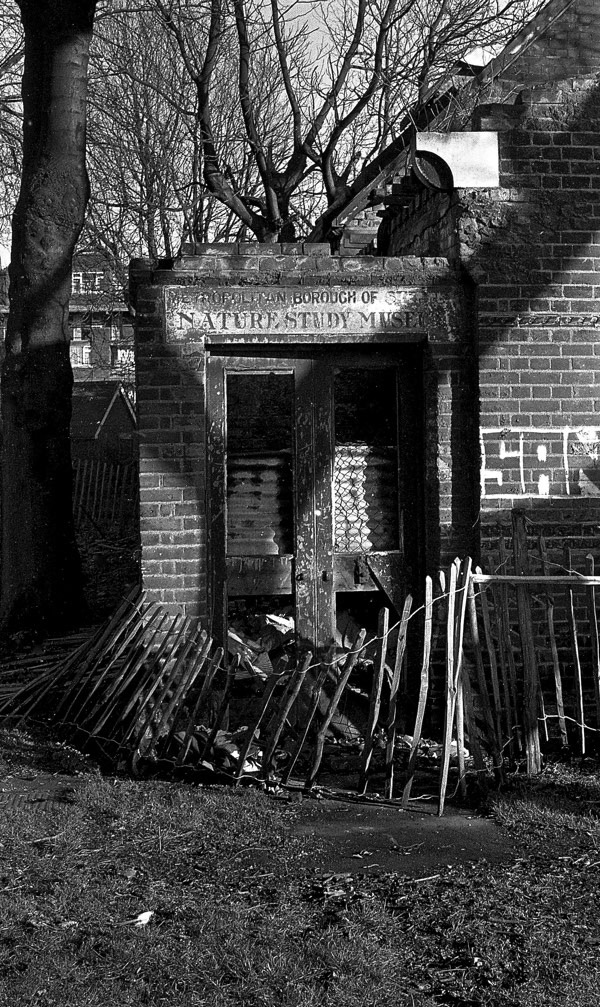
At St George in the East
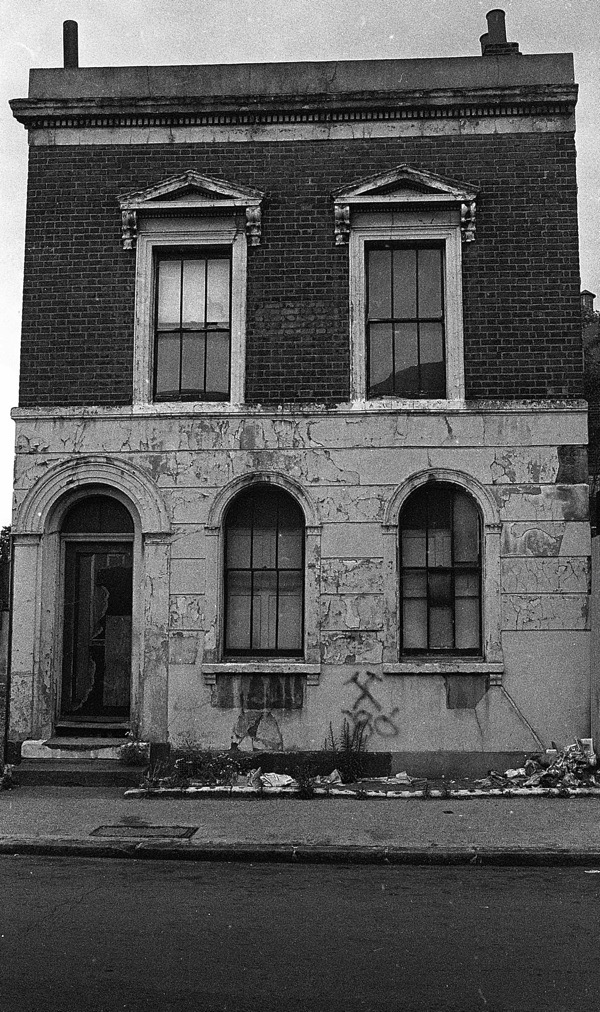
White Horse Lane
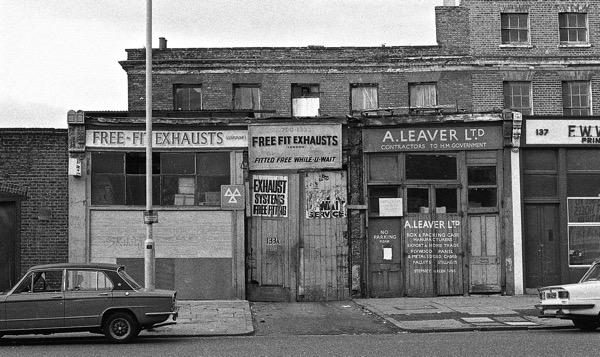
Mile End Rd
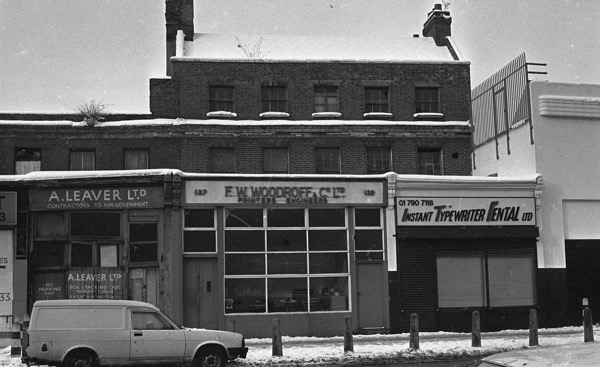
Mile End Rd
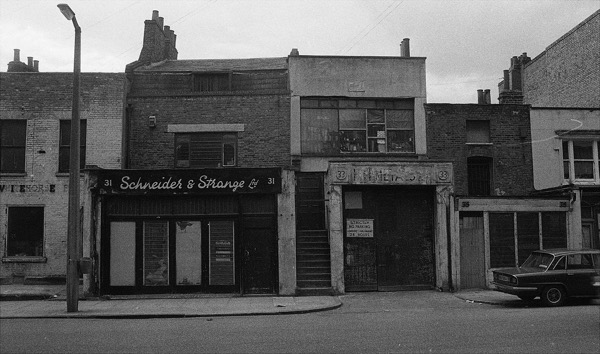
Mile End Rd
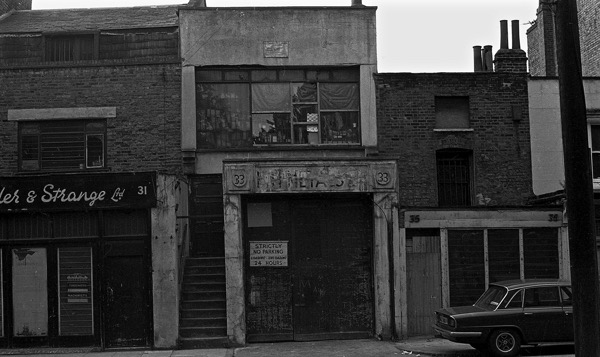
Mile End Rd
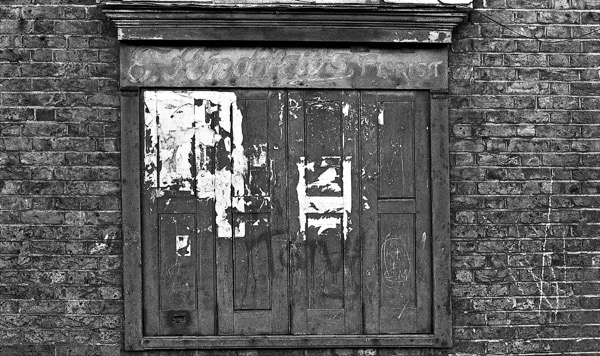
Alderney Rd
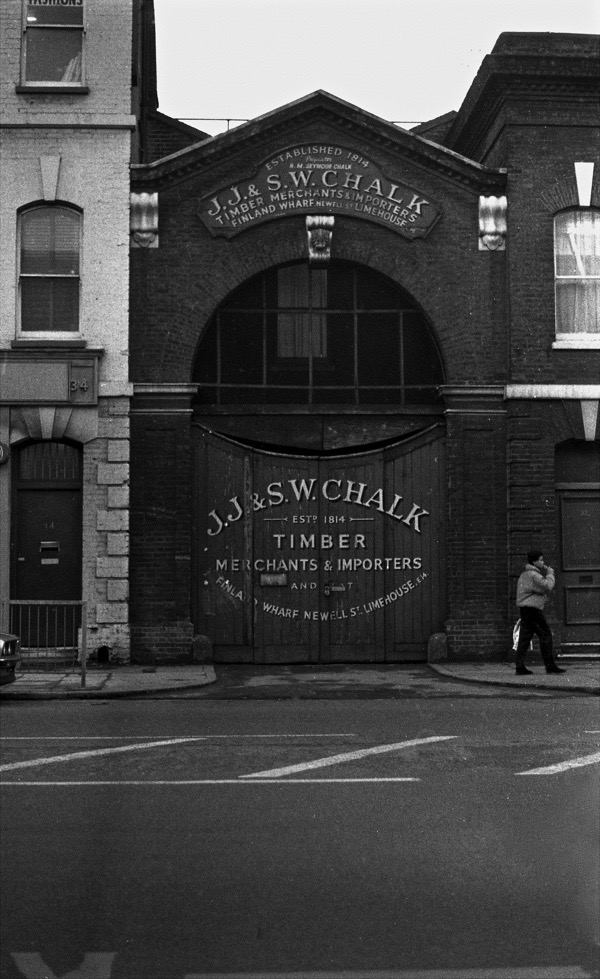
Limehouse
Photographs copyright © Philip Cunningham
You may also like to take a look at
Philip Cunningham’s East End Portraits
More of Philip Cunningham’s Portraits
Cockney Cats
I could barely contain my excitement when fellow felophile Stefan Dickers summoned me urgently to the Bishopsgate Institute last week to share his latest discovery unearthed in the archive, Cockney Cats by Warren Tute with photographs by Felix Fonteyn from 1953
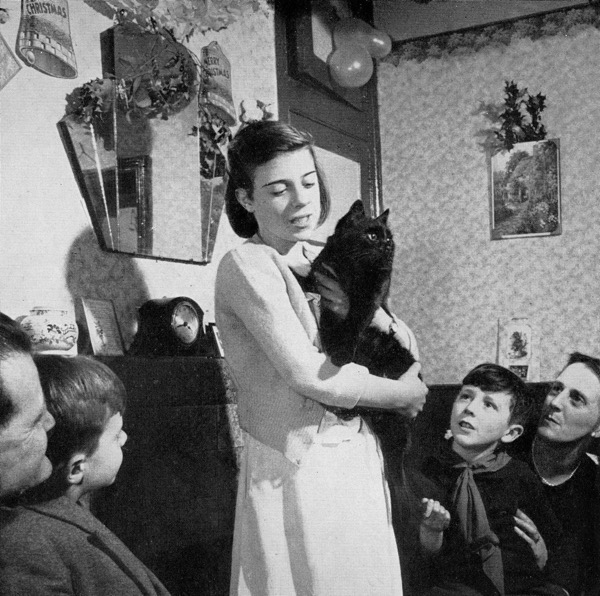
Micky is the centre of the Day family of Copley St in the parish of Stepney
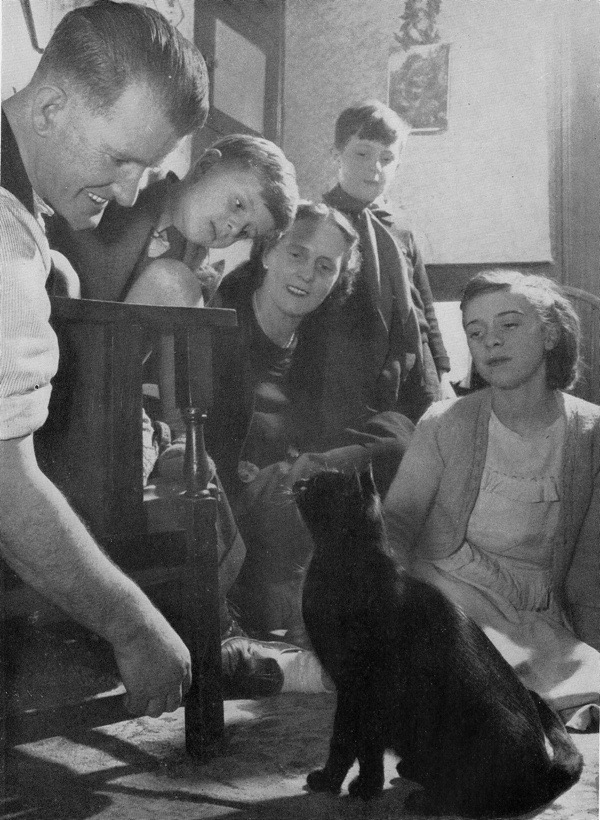
The whole family pamper him and have a wonderful time
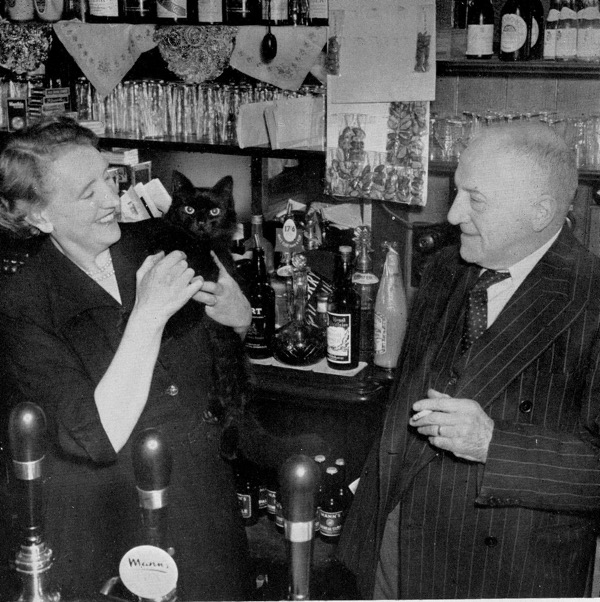
Bill on weekdays, William on Sundays, the cat at the Bricklayers Arms in Commercial Rd has a wonderful life since the Guv’nor Jim Meade was once a Dumb Animals’ Food Purveyor. At seventy-seven Jim looks back on a long and distinguished life in Stepney during his thirty-two years as Guv’nor.
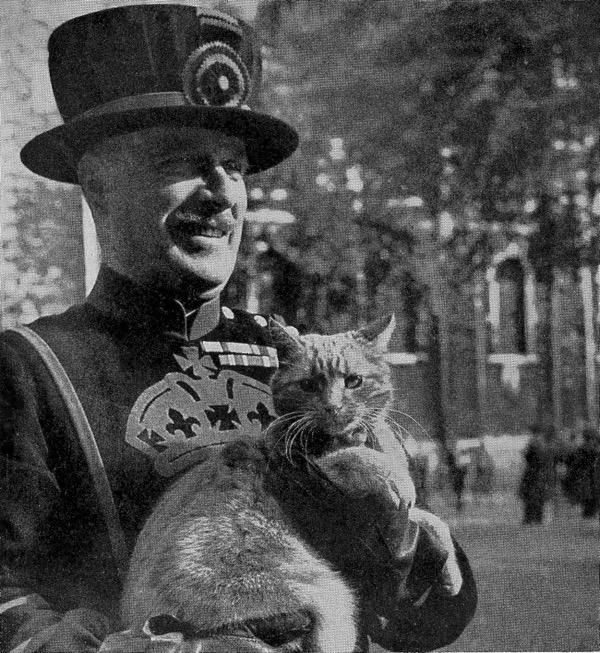
Yeoman Warder Clark & Pickles on Tower Green
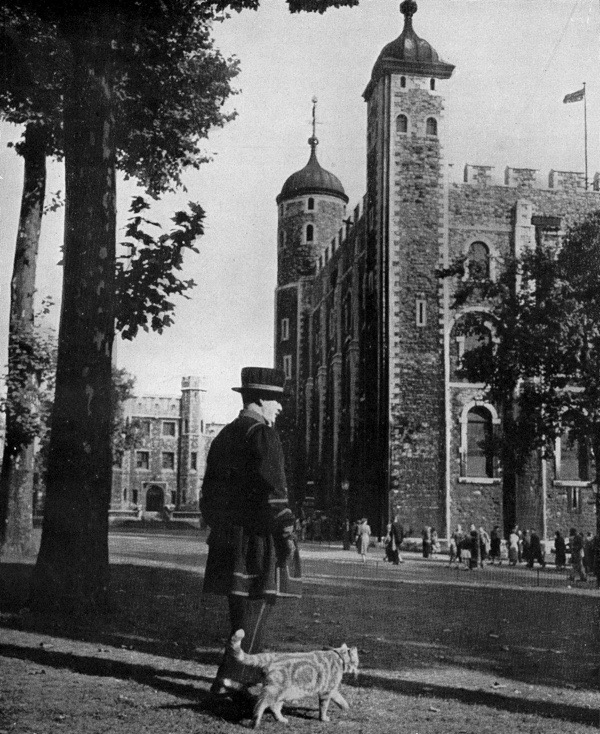
On duty at the Tower of London
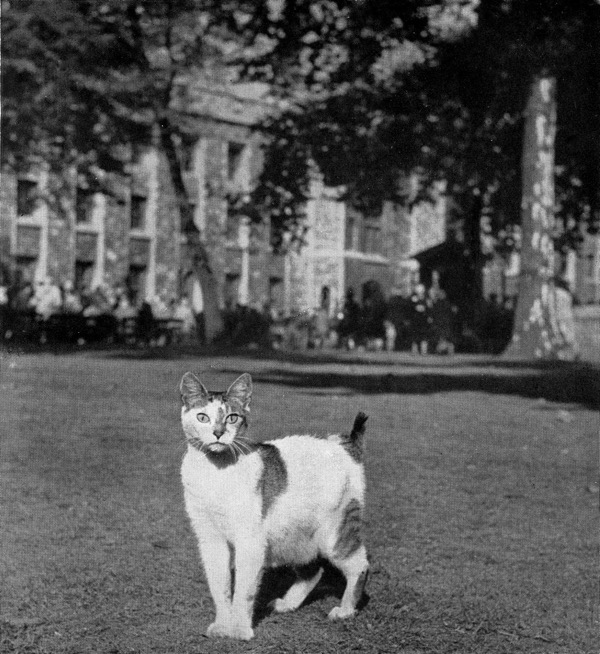
The tail-less cat of the guardroom who came out to watch Pickles being photographed
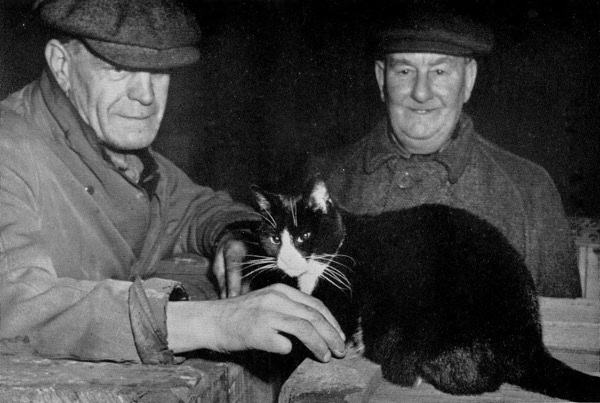
Min, Port of London Authority cat has many friends among the dockers and very good ratting at night
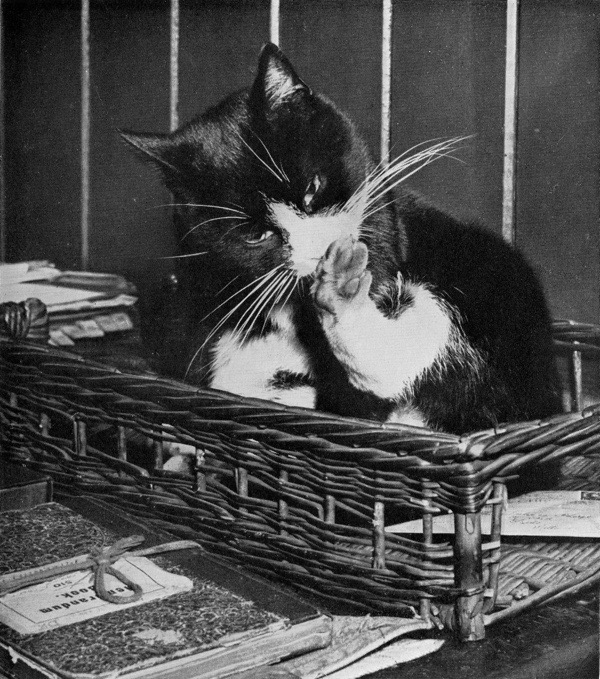
Min of the magnificent whiskers has made her home in the office of K Warehouse in the Milwall Docks
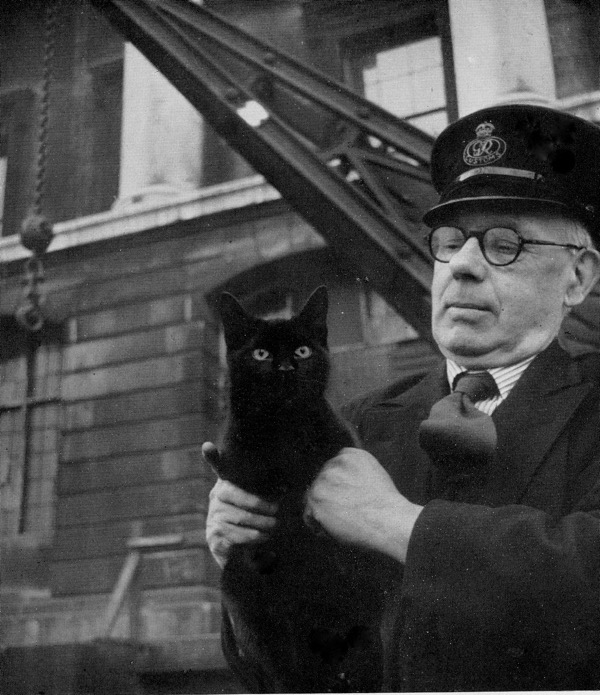
Customs & Excise cat guards the Queen’s Warehouse and is paid a Treasury Allowance of sixpence a day
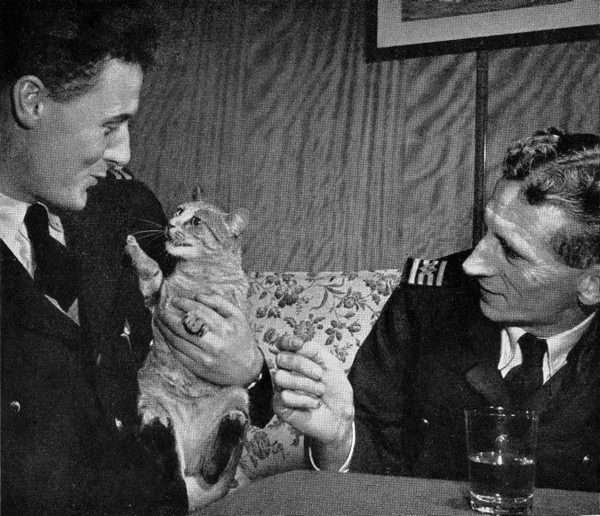
Mitzi has the run of her ship from the lifeboats to the Officers’ Mess
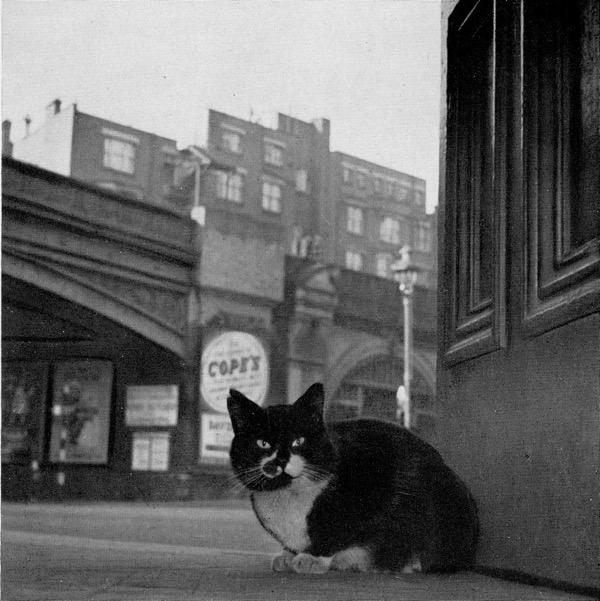
Old Bill the railway cat, his favourite position is the entrance to Blackfriars Station
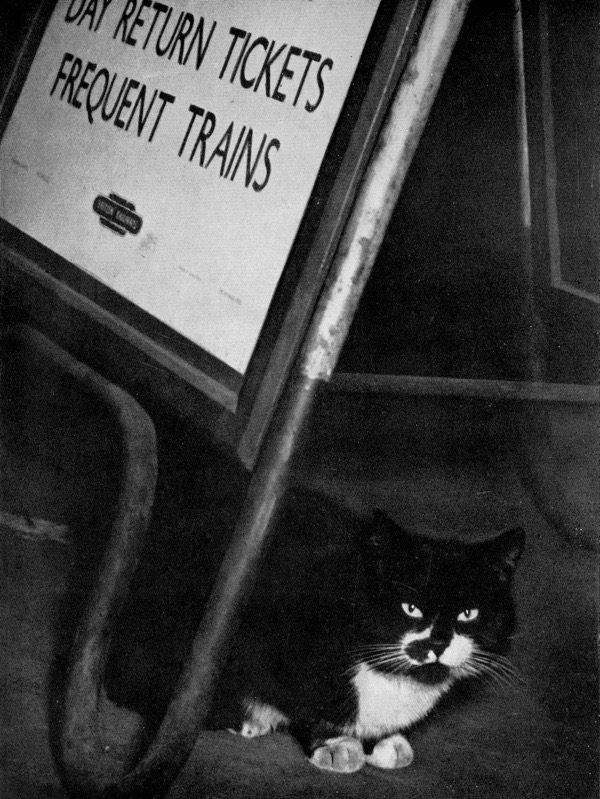
Old Bill takes cover when necessary in the rush hour
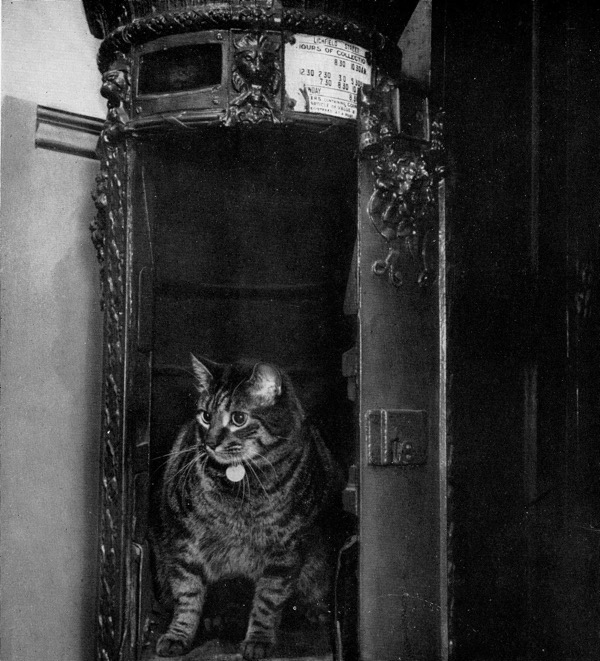
Tibs the Great (1950-64), the official Post Office cat at Headquarters, does not normally live in this 1856 pillarbox
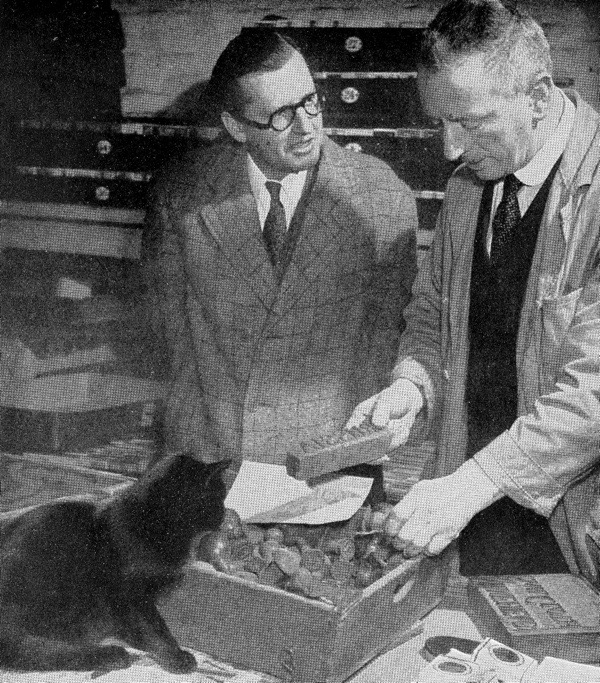
This cat’s curiosity unearthed a box of ancient stamps and seals, some dating back to Queen Anne
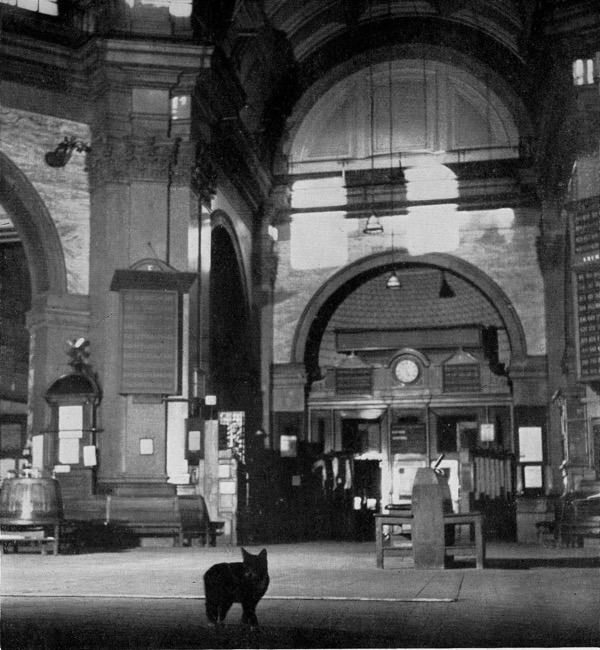
Minnie the Stock Exchange cat was a self-willed and determined kitten who adopted the dealing floor as her own preserve
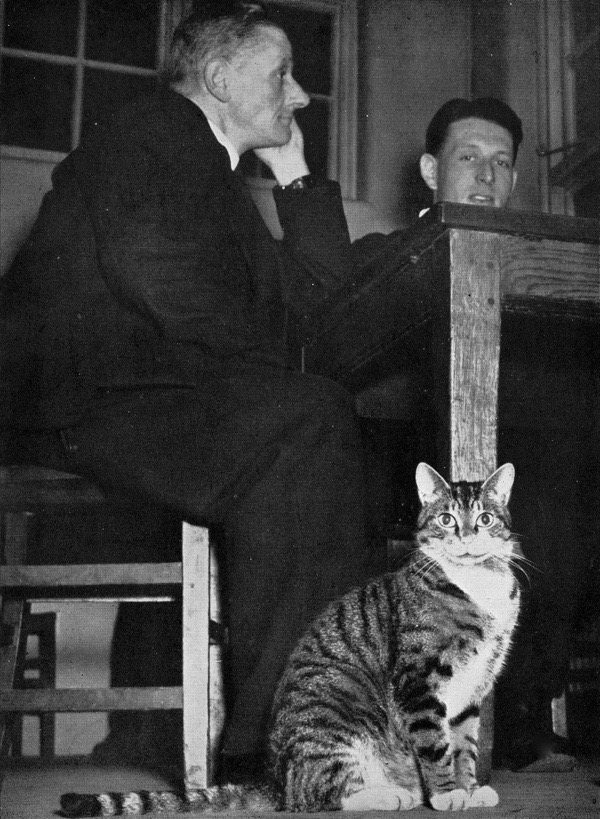
Minnie enjoys the banter in the tea room
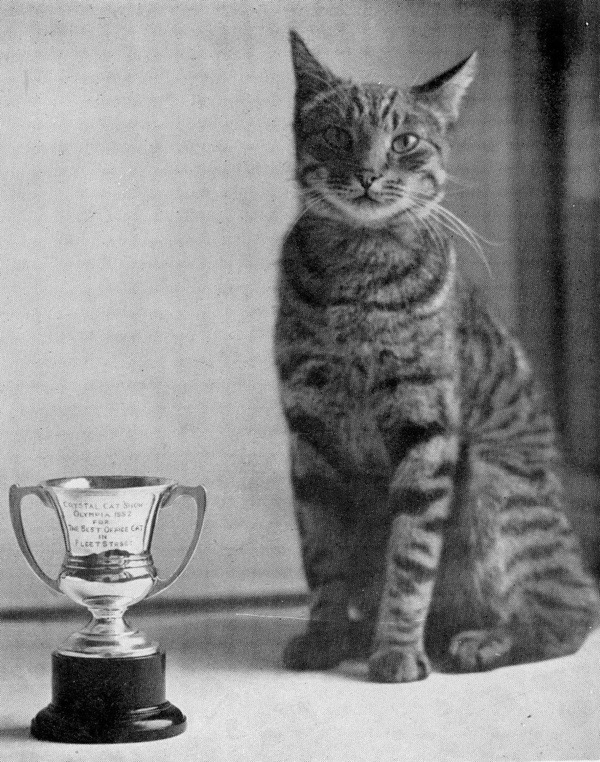
Tiger of The Times is the best office cat in Fleet St
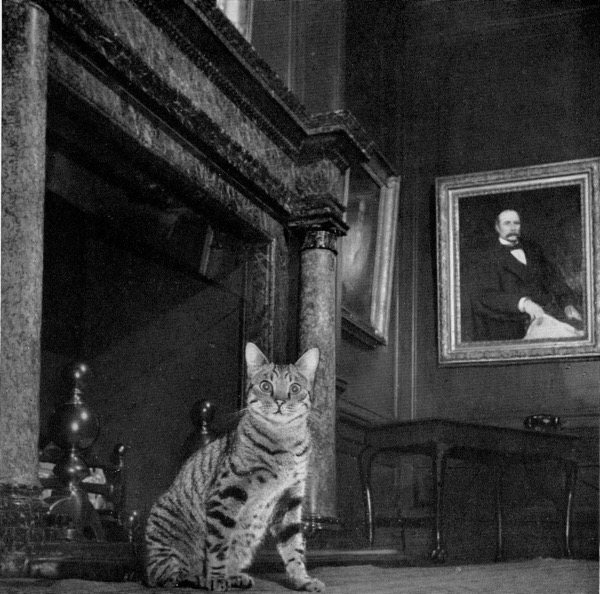
Tiger of The Times is equally at ease whether in the Board Room …
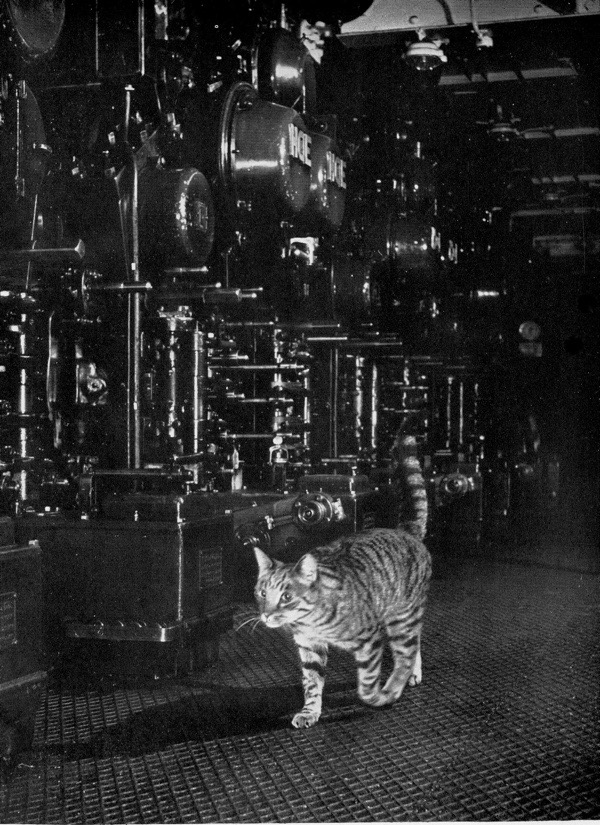
… or doing his rounds in the Print Room
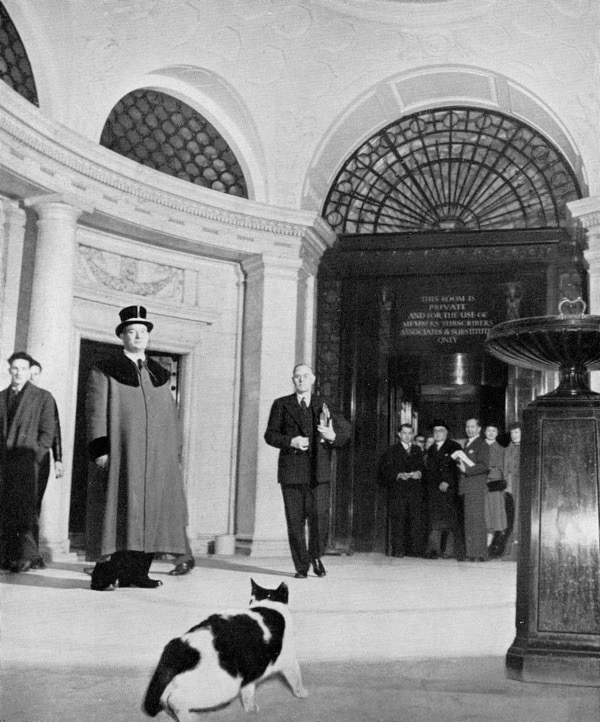
Sneaking back into Lloyds of London is difficult even for the resident cat
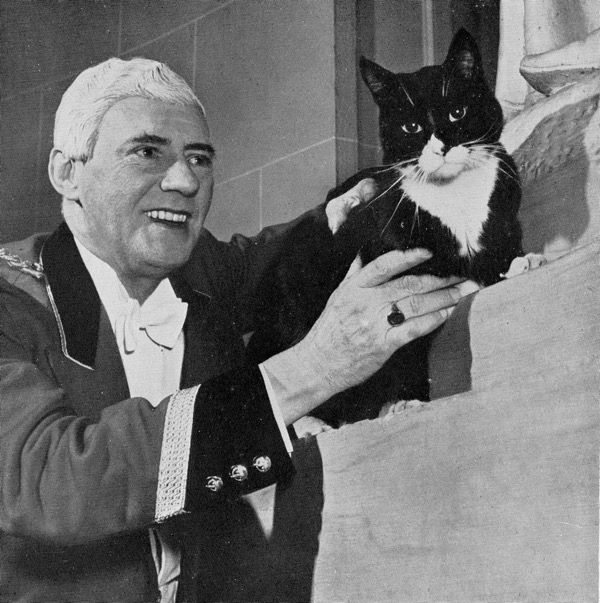
Cecil is the Front of House cat at the Theatre Royal Drury Lane
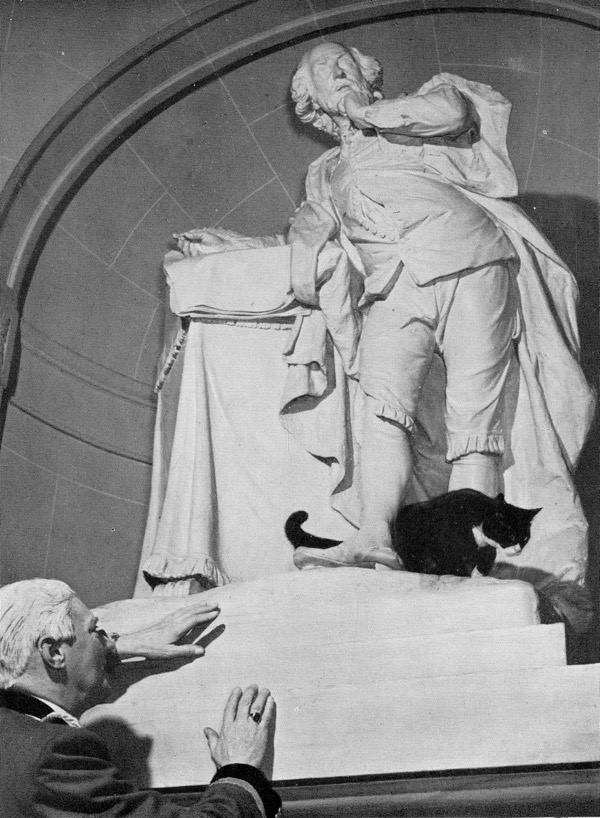
Cecil is very elusive in his many hiding places from which he has to be coaxed by the Royal Waiter before the performance can begin
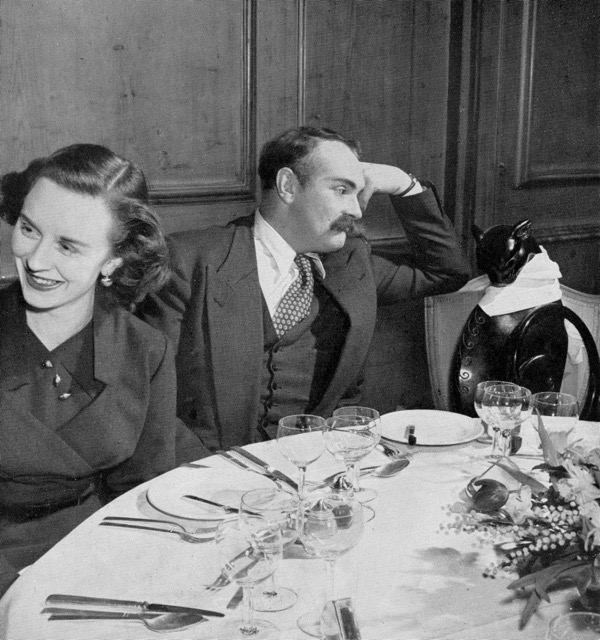
When thirteen people sit down to dine at the Savoy and the thirteenth guest is Jimmy Edwards, almost anything can happen. The famous black cat is invited to occupy the fourteenth place so that everyone can enjoy the sparkling conversation.

Bill at the Tower of London (1935-47)
Images courtesy Bishopsgate Institute
You may also like to take a look at
Schroedinger, Shoreditch Church Cat
Doorkins Magnificat, Southwark Cathedral Cat
The Cats of Spitalfields (Part One)
The Cats of Spitalfields (Part Two)
Blackie, the Last Spitalfields Market Cat
and read about