
Two Spitalfields Shopkeepers
Last week, I published Steven Harris‘ candid memoir of his childhood at Great Eastern Buildings off Brick Lane and today I present his poignant account of two local shopkeepers, one universally beloved and the other notorious by reputation, yet both well-known Spitalfields personalities at that time.
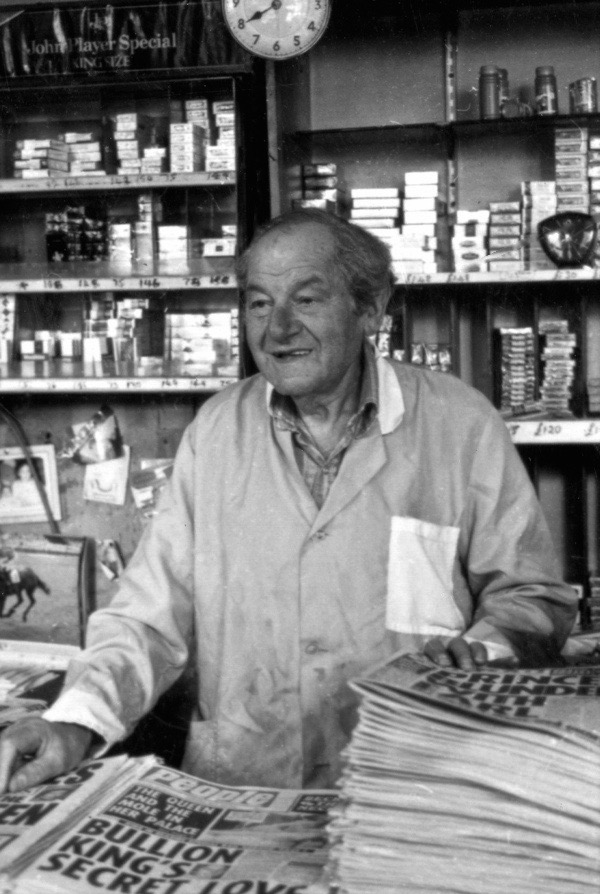
Everyone I ever spoke with recalled Great Eastern Buildings in affection and, without exception, everyone also knew and loved Harry Fishman, owner of the newsagent on the corner of Quaker Street and Brick Lane. Harry was a legend in his own lifetime who commanded a significant degree of respect and reverence, even though we local kids were forever pinching comics, sweets and even small coins from his shop.
In my childhood, Harry was already in his sixties, around 5’ 8”, a bit chubby and with a receding hairline. He existed as a kindly granddad figure who seemed to have an easy-going attitude and a constant smile on his face, always avuncular and jovial, in contrast to my own granddad, Knacker, who was a mean old goat. We children felt a sense of empathy with Harry despite our small scale pilfering. He was never angry or said anything bad about anyone. Accordingly, we always looked forward to visiting his store, run down as it was. My friend Sheila Bell remembers his generosity and how, in the fifties, she would go to Harry’s, hand over her halfpenny and get a whole cone of sweets. By the mid-sixties, inflation meant our halfpennies only bought four black jacks (chewy liquorice sweets) or fruit salads (multi-coloured chewy sweets) – nothing like a coneful.
Harry was married to Marion who was short and round, and not nearly as easy going as Harry. She was far more aware of our ‘tea leaf’ tendencies and more than willing to challenge us, as Sylvie Pattern confided to me, recounting how Marion gave her a dressing down for the activity of her sons, Stephen and Keith, nicking sweets. Fortunately, Marion was not a regular presence in the shop which permitted us to benefit from Harry’s largesse, turning a blind eye to our pilfering. Though how he managed to ignore one of the local kids, Snudge, once nicking seven large bottles of pop is beyond me.
Harry even rewarded us sometimes. ‘Harris, want to do a bit of work?’ he would occasionally call out to me and whichever other kid was nearby, offering the opportunity to earn maybe a shilling or a big bar of chocolate. Harry was not the greatest at house keeping and neither was Marion who, rumour had it, preferred to keep company with the local brewery workers. So cleaning up his place was a golden opportunity to pry. My Cousin Jackie once claimed to have stumbled upon a supply of pornographic mags, as sold in the shop, while someone else confessed to have eaten several bags of crisps discovered in an open box. Whatever the truth of these tales, it was our chance to poke into Harry’s private life and be guaranteed a reward too.
Harry lived on the two floors above the shop. The place was a mess and he left us with the simple instruction to ‘Get on with it,’ so we did just that. ‘What’s in here?’ was a constant exclamation, with the rejoinder ‘Dunno, better have a look.’ Much of what we found was a mystery to us – invoices, bills and bank statements – exciting things that never seemed to come our way. Whenever we thought he was due to arrive, we rushed about tidying and cleaning to create the impression of working and ensure a good pay out. On one occasion, I got one shilling and sixpence for my efforts but, on another day, only a medium-sized bar of chocolate which drew the verdict of ‘tight bastard’ when I had left the premises. Cousin Jackie once earned half a crown, though I strongly suspect she had actually done some work to earn it, unlike lazy little me.
Harry was generally well-liked in Great Eastern Buildings, allowed credit to the adults and even splitting up packets of cigarettes so people could buy them individually. Rather naughtily, he would also sell single cigarettes to children. Back then, this was simply ‘business’ and smoking was not considered the serious health risk that it is today. Hence, after one or two coughing fits up on the roof of the buildings, I was convinced it was not a good idea. Yet for my cousins Kevin and Leslie, this was the introduction to years of smoking in adulthood.
On most days, you could usually find a packet of five ‘Weights,’ which were the cigarette of choice, on the back shelf at Harry’s, reduced to just two or three fags. If money was tight, then cobbling together one from dog ends was not unknown. God knows the strength of toxins within, thus illustrating the truth of the expression ‘dying for a fag’!
Harry’s goodwill was widely appreciated and he was invited to the weddings of the Harris children when they grew up. I believe he passed away in the mid-eighties, shortly after his shop was compulsorily purchased by the local council for a pitifully low price. By everyone that lived in Great Eastern Buildings, Harry Fishman is warmly remembered to this day.
If Harry was the nice guy of the local retail trade, as far as we were concerned his alter-ego was Leon, a greengrocer who had a small corner shop one hundred yards in the opposite direction down Quaker St. Leon was a short and squat man, no more than 5’ 4” tall and almost equally wide, and we found him simply unpleasant. Unlike Harry, he evinced no humour, no sense of brotherhood or commonality, or even sympathy from the residents of Great Eastern Buildings
When I was reunited with my mother decades later, she recalled how Leon would often try to slip a hand around her waist. He was always trying it on with me until I slapped him, and then I stopped going there,’ she admitted to me. Perhaps wisely, Leon limited the number of kids entering his shop to two at a time. ‘Keep your hands to your sides,’ was his universal greeting barked upon our arrival. I cannot deny our sticky-fingered behaviour yet, equally, he was distinctly threatening to us. He head-butted my school friend Sui Wong, after being informed erroneously that Sui has scratched his car. Perhaps Leon’s hostility was the result of being frequently robbed? I know the Wheler House kids, Willy and Benny Norris, delighted in pilfering his store.
I heard that Sylvie Pattern once got credit or ‘tick’ off Leon but never paid him back, even though he came to her door to collect it. Yet, if Sylvie Pattern had managed to con Leon out of a little credit, he was not averse to such actions himself. Paul Ramsey recalled how his mother sent him to buy groceries and gave him a ten quid note, but Leon only gave him change for a five pounds. Despite Paul’s protests, Leon insisted only a fiver had been passed over yet Paul’s mother had shrewdly made a note of the serial number. When she arrived at Leon’s, there was no ten pound note in the till, although he admitted he had one in his wallet. Once she produced the serial number and matched it with the note in Leon’s wallet, the game was up. Leon grovelled in apology and, by compensation, he gave her a packet of twenty Weights. Leon retired sometime in the late seventies and no one knew what happened to him yet neither – I suspect – did anyone care. Poor Leon, he was never invited to any of our weddings.
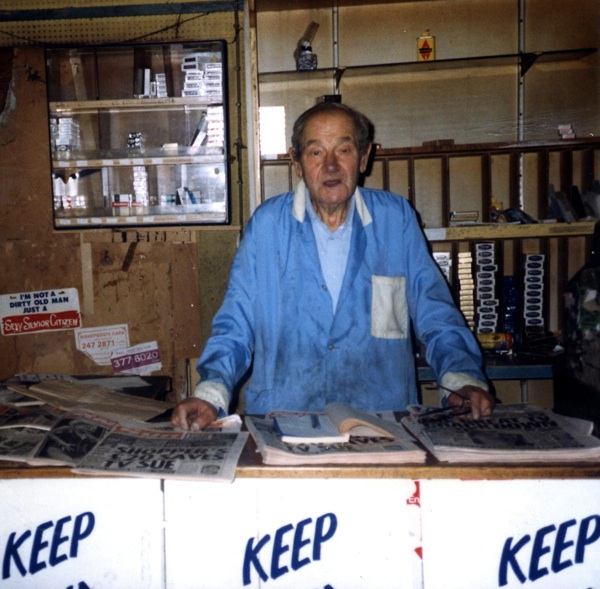
Harry Fishman photographed by Clive Murphy, 1987
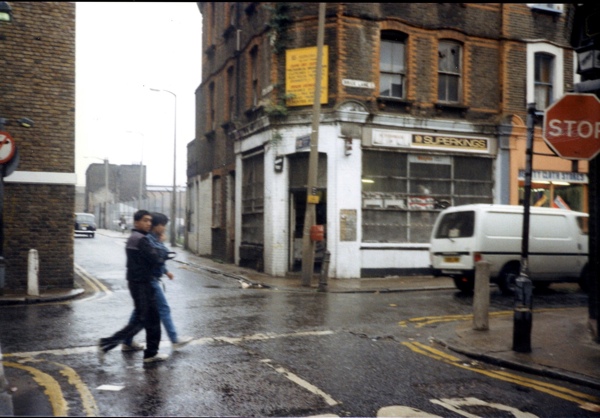
Harry Fishman’s shop on the corner of Brick Lane and Quaker St photographed by Clive Murphy, 1987
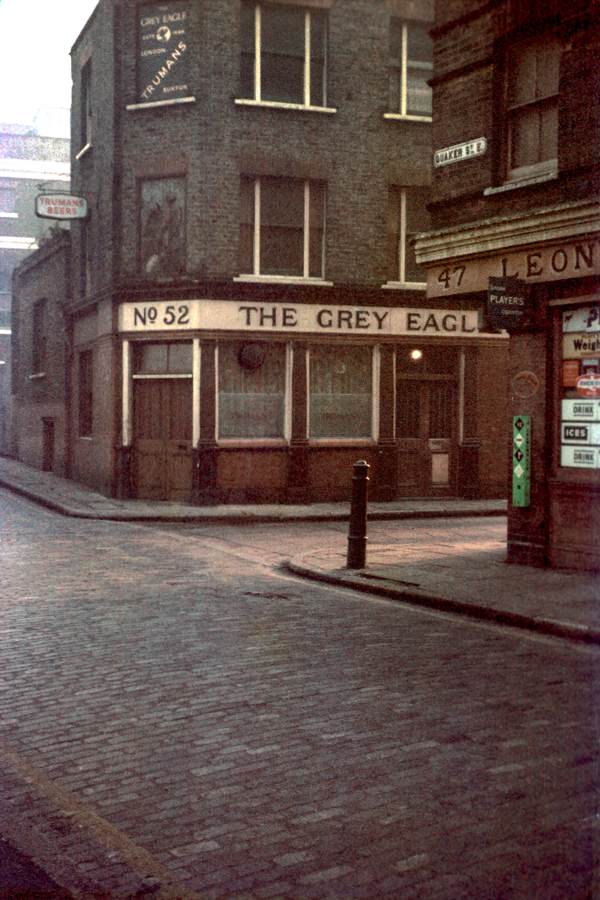
Leon’s shop photographed by Philip Marriage in 1967

Leon’s shop photographed by Alan Dein in the eighties
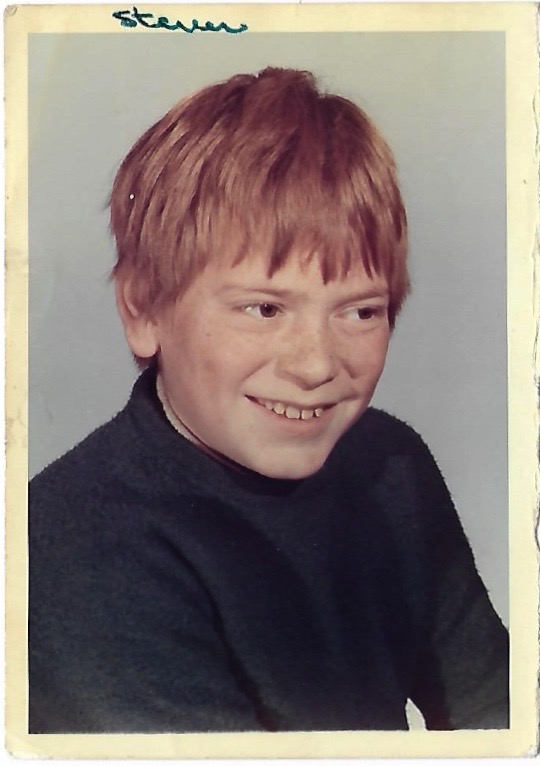
Steven Harris, aged twelve
If you remember Harry Fishman or Leon the Greengrocer, please add your memories in the comments
You may also like to read Steven Harris’ memoir
In Spitalfields, 1842
George Dodd came to Spitalfields to write this account for Charles Knight’s LONDON published in 1842. Dodds recalls the rural East End that still lingered in the collective memory and described the East End of weavers living in ramshackle timber and plaster dwellings which in his century would be ‘redeveloped’ out of existence by the rising tide of brick terraces, erasing the history that existed before.
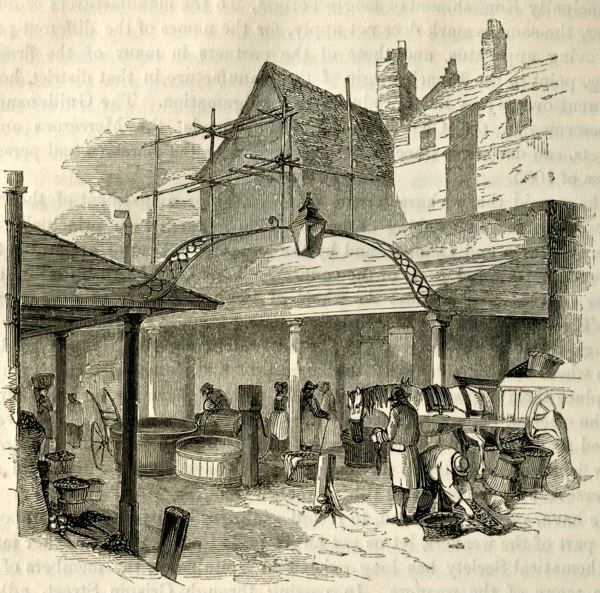
Spitalfields Market
It is not easy to express a general idea respecting Spitalfields as a district. There is a parish of that name but this parish contains a small portion only of the silk weavers and it is probable that most persons apply the term Spitalfields to the whole district where the weavers reside. In this enlarged acceptation, we will lay down something like a boundary in the following manner – begin at Shoreditch Church and proceed along the Hackney Rd till it is intersected by Regent’s Canal, follow the course of the canal to Mile End Rd and then proceed westward through Whitechapel to Aldgate, through Houndsditch to Bishopsgate, and thence northward to where the tour commenced.
This boundary encloses an irregularly-shaped district in which nearly the whole of the weavers reside and these weavers are universally known as “Spitalfields” weavers. Indeed, the entire district is frequently called Spitalfields although including large portions of Bethnal Green, Shoreditch, Whitechapel and Mile End New Town. By far the larger portion of this extensive district was open fields until comparatively modern times. Bethnal Green was really a green and Spitalfields was covered with grassy sward in the last century.
It may now not unreasonably be asked, what is “Spitalfields”? A street called Crispin St on the western side of Spitalfields Market is nearly coincident in position with the eastern wall of the Old Artillery Ground and this wall separated the Ground from the Fields which stretched out far eastward. Great indeed is the change which this portion of the district has undergone. Rows of houses, inhabited by weavers and other humble persons, and pent up far too close for the maintenance of health, now cover the green spot now known as Spitalfields.
In the evidence taken before a Committee in the House of Commons on the silk trade in 1831-2, it was stated that the population of the district in which the Spitalfields weavers resided could be no less at that time than one hundred thousand, of whom fifty thousand were entirely dependent on the silk manufacture and remaining moiety more or less dependent indirectly. The number of looms seems to vary between about fourteen to seventeen thousand and, of these, four to five thousand are unemployed in times of depression. It seems probable, as far as the means exist of determining it, that the weavers are principally English or of English origin. To the masters, however the same remark does not apply, for the names of the partners in the firms now existing, point to the French origin of manufacture in that district.
A characteristic employment or amusement of the Spitalfields weavers is the catching of birds. This is principally carried on in the months of March and October. They train “call-birds” in the most peculiar manner and there is an odd sort of emulation between them as to which of their birds will sing the longest, and the bird-catchers frequently lay considerable wagers on this, as that determines their superiority. They place them opposite each other by the width of a candle and the bird who sings the oftenest before the candle is burnt out wins the wager.
If we have, on the one hand, to record the unthrifty habits and odd propensities of the weavers, let us not forget to do them justice in other matters. In passing through Crispin St, adjoining the Spitalfields Market, we see on the western side of the way a humble building, bearing much the appearance of a weaver’s house and having the words “Mathematical Society” written up in front. Lowly and inelegant the building may be but there is a pleasure in seeing Science rear her head in a locality, even if it is humble one.
A ramble through Bethnal Green and Mile End New Town in which the weavers principally reside, presents us with many curious features illustrative of the peculiarities of the district. Proceeding through Crispin St to the Spitalfields Market, the visitor will find some of the usual arrangements of a vegetable market but potatoes, sold wholesale, form the staple commodity. He then proceeds eastwards to the Spitalfields Church, one of the “fifty new churches” built in the reign of Queen Anne and along Church St to Brick Lane. If he proceed northward up the latter, he will arrive, first, at the vast premises of Truman, Hanbury & Buxton’s brewery, and then at the Eastern Counties Railway which crosses the street at a considerable elevation. If he extends his steps eastwards, he will at once enter upon the districts inhabited by the weavers.
On passing through most of the streets, a visitor is conscious of a noiselessness, a dearth of bustle and activity. The clack of the looms is heard here and there, but not to a noisy degree. It is evident in a glance that many of the streets, all the houses were built expressly for weavers, and in walking through them we noticed the short and unhealthy appearance of the inhabitants. In one street, we met with a barber’s shop in which persons could have “a good wash for a farthing.” Here we espied a school at which children were taught “to read and work at tuppence a week.” There was a chandler’s shop at which shuttles, reeds and quills, and the smaller parts of weaving apparatus were exposed for sale in a window in company with split-peas, bundles of wood and red herrings. In one little shop, patchwork was sold at 10d, 12d and 16d a pound. At another place was a bill from the parish authorities, warning the inhabitants that they were liable to a penalty if their dwelling were kept dirty and unwholesome, and in another – we regretted this more than anything else – astrological predictions, interpretations of dreams and nativities, were to be purchased “from three pence upwards.”
In very many of the houses, the windows numbered more sheets of paper than panes of glass and no considerable number of houses were shut up altogether. We would willingly present a brighter picture, but ours is a copy from the life.
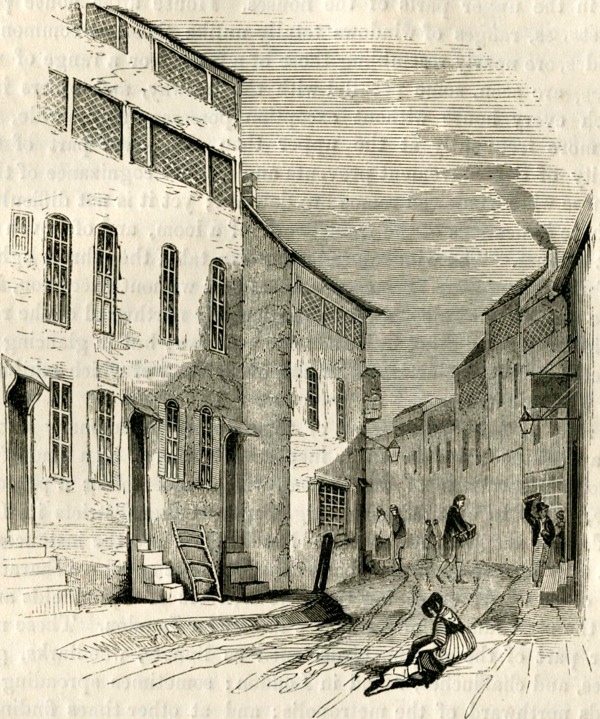
Pelham St (now Woodseer St), Spitalfields

Booth St (now Princelet St), Spitalfields
Images courtesy © Bishopsgate Insitute
Thomas Bewick’s Birds of Spitalfields
Coming across an early copy of Thomas Bewick’s ‘History of British Birds’ from 1832 in the Spitalfields Market inspired me to publish this ornithological survey with illustrations courtesy of the great engraver.
I have always known these pictures – especially the cuts of the robin and the blackbird – yet they never cease to startle me with their vivid life, each time I return to marvel at the genius of Bewick in capturing the essence of these familiar creatures so superlatively.
The book reminded me of all the birds that once inhabited these fields and now are gone, yet it is remarkable how many varieties have persisted in spite of urbanisation. I have seen all of these birds in Spitalfields, even the woodpecker that I once spied from my desk, coming eye to eye with it while looking into a tree from a first floor window to discern the source of an unexpected tapping outside.
 The Sparrow
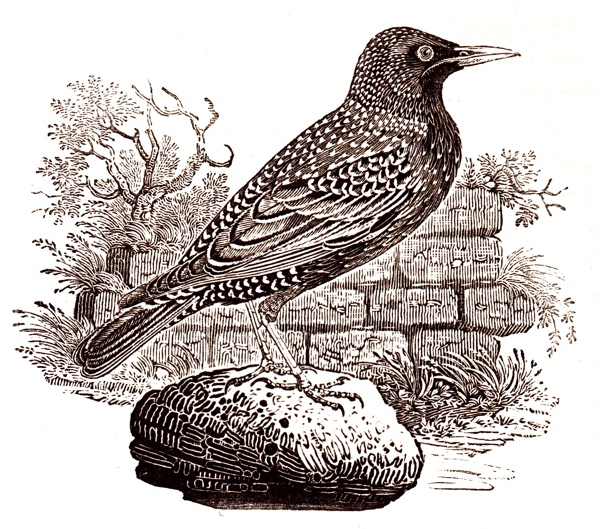
The Starling
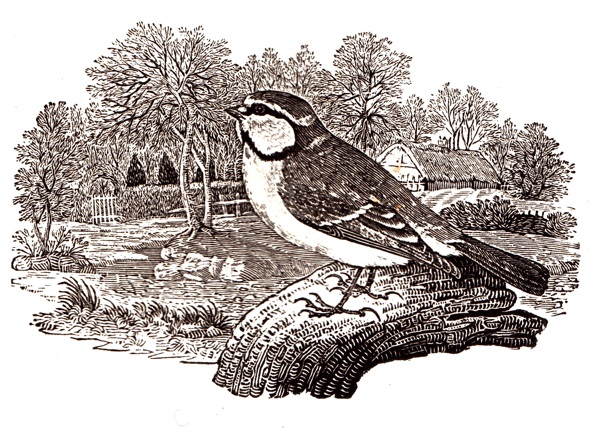 The Blue Tit
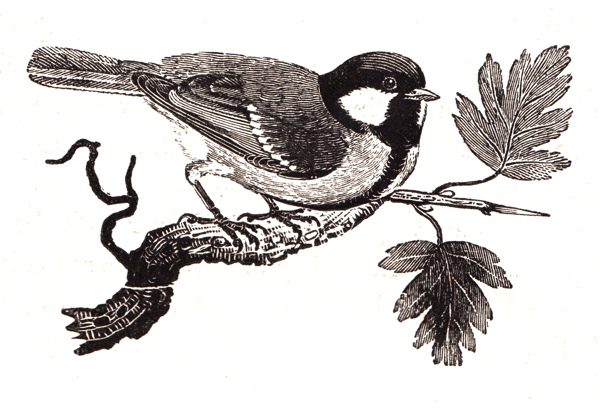 The Great Tit
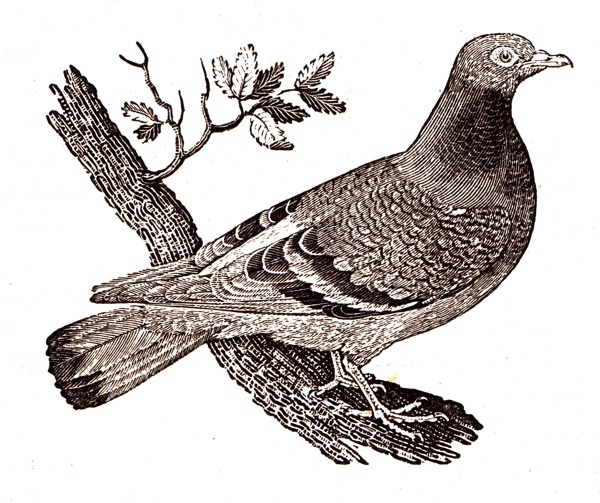 The Pigeon
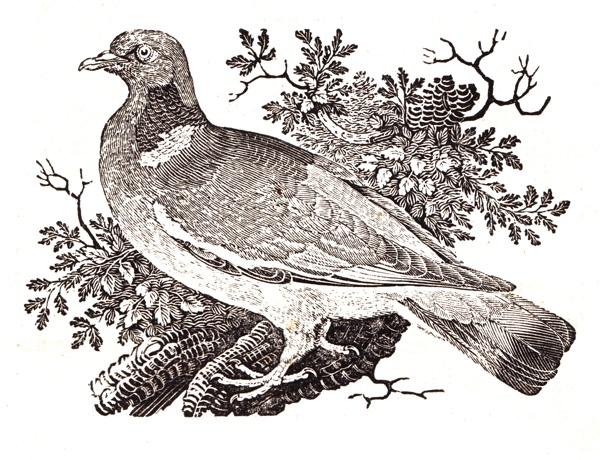 The Collared Dove
 The Blackbird

The Crow
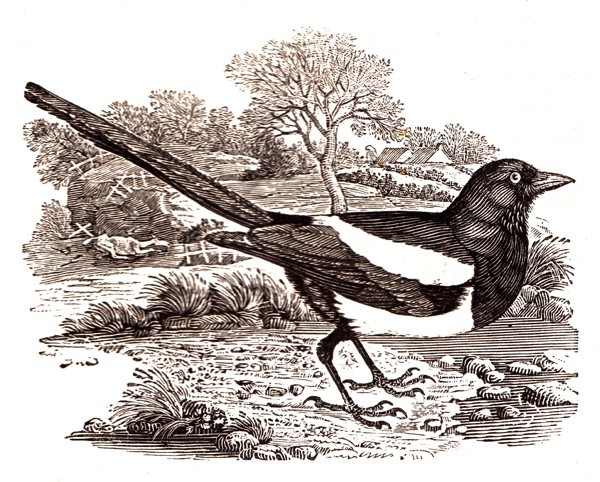 The Magpie
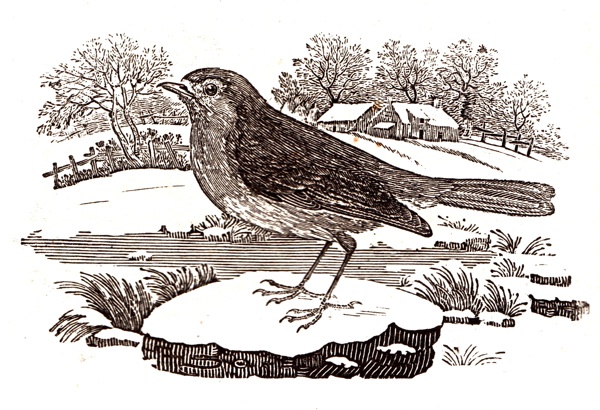 The Robin
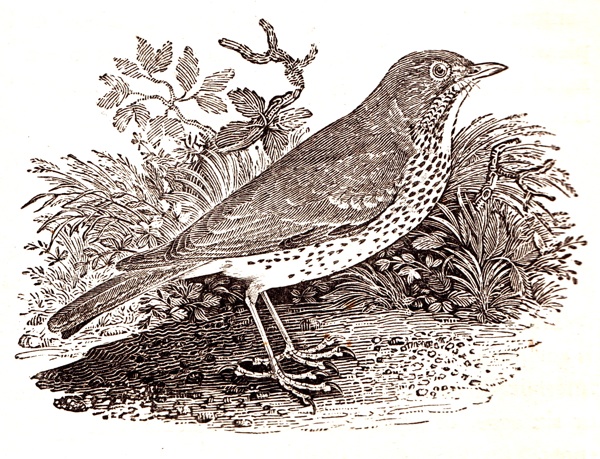 The Thrush
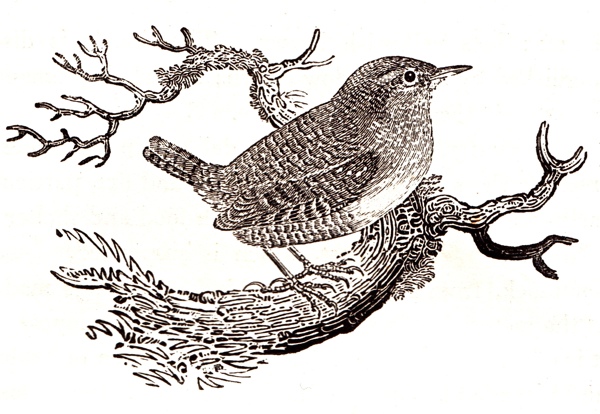 The Wren
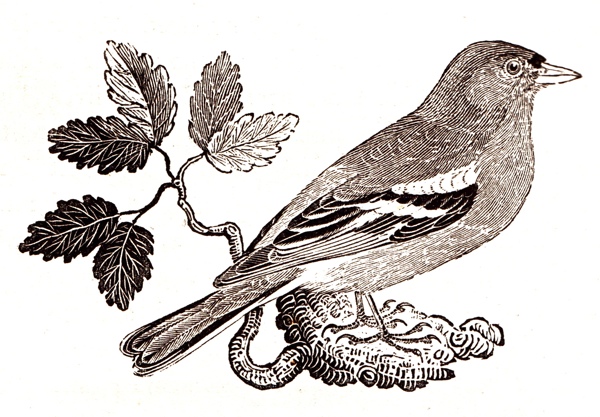 The Chaffinch
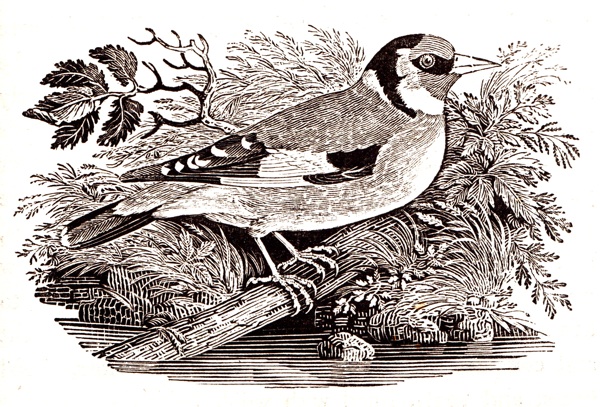 The Goldfinch
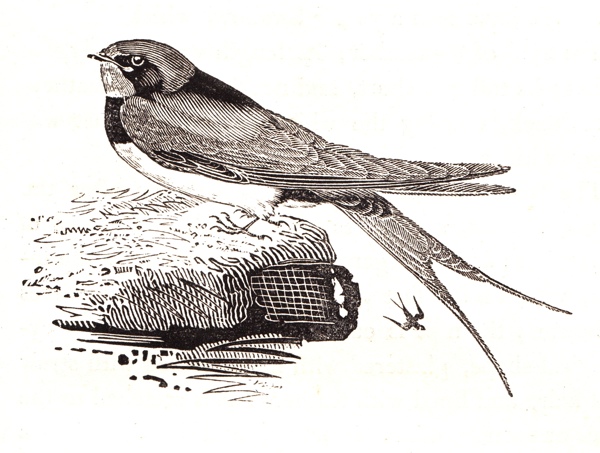
The House Swallow
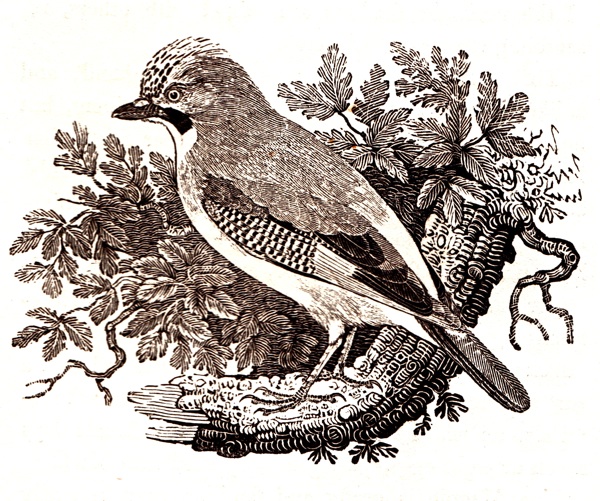
The Jay
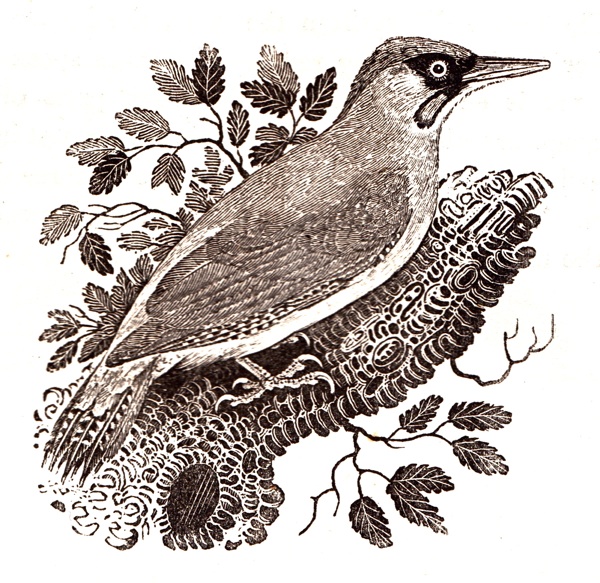
The Woodpecker
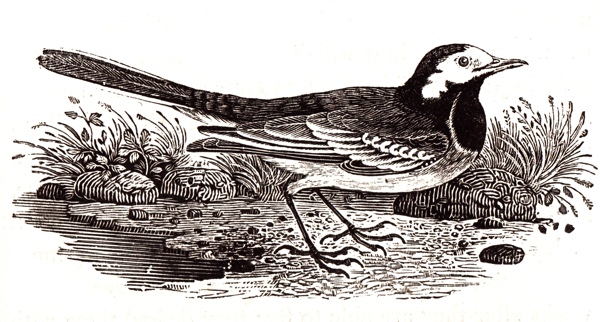
Pied Wagtail – spotted by Ash on the Holland Estate, Petticoat Lane
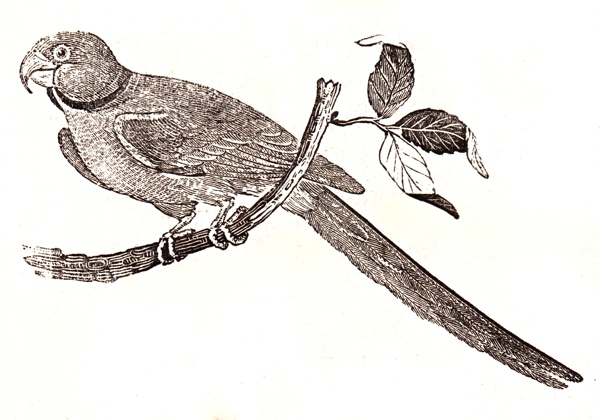 Rose-ringed Parrakeet – an occasional visitor to Allen Gardens
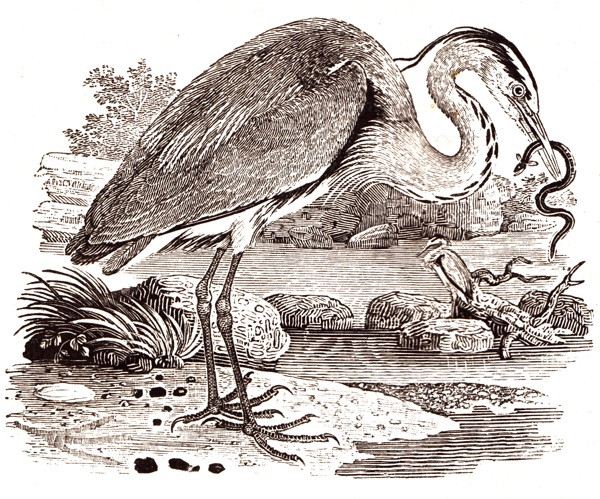 Heron – occasionally spotted flying overhead
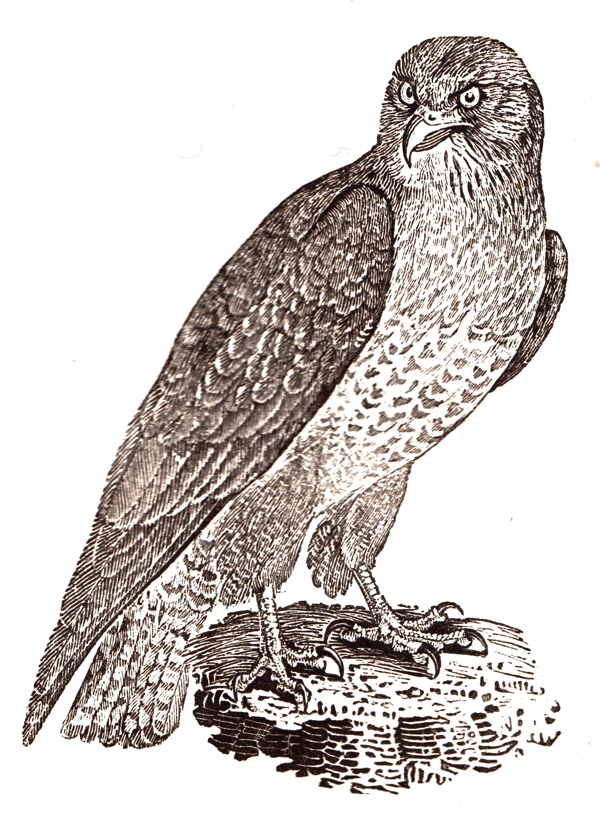 Buzzard – spotted over Holland Estate, Petticoat Lane
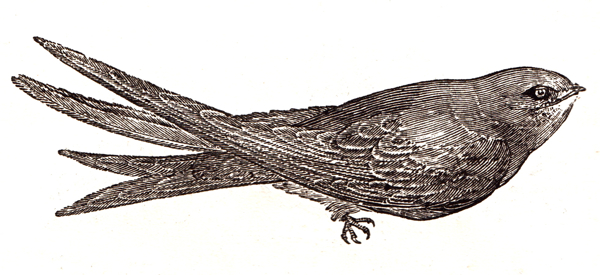
Swift – spotted by Ian Harper around Christ Church
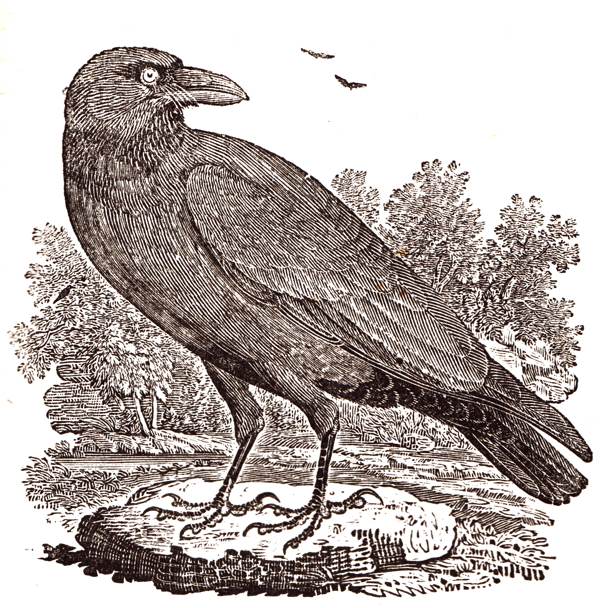
Raven – spotted by Ian Harper & Jim Howett around Christ Church

Kite – spotted by Ian Harper & Jim Howett around Christ Church
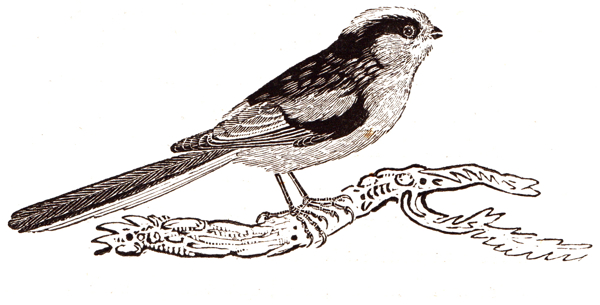
Long-tailed Tit – spotted in Wapping
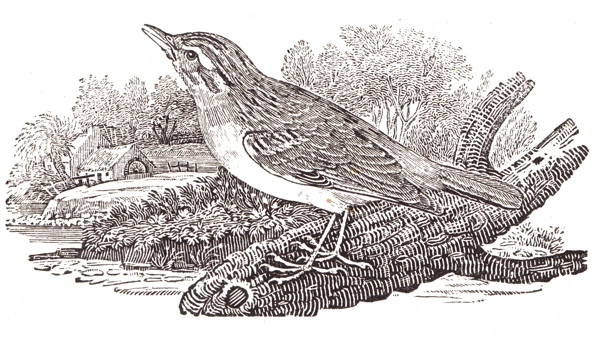
Willow Warbler – spotted by Tony Valsamidis in Whitechapel
If any readers can add to my list with sightings of other birds in Spitalfields, please drop me a line
You may also like to take a look at
Charles Saumarez Smith’s East London
Charles Saumarez Smith and his wife Romilly have lived in the East End for over forty years, and are custodians of a beautiful old house in the Mile End Rd. Today I present a selection of photographs with captions from his new book EAST LONDON, published by Thames & Hudson.
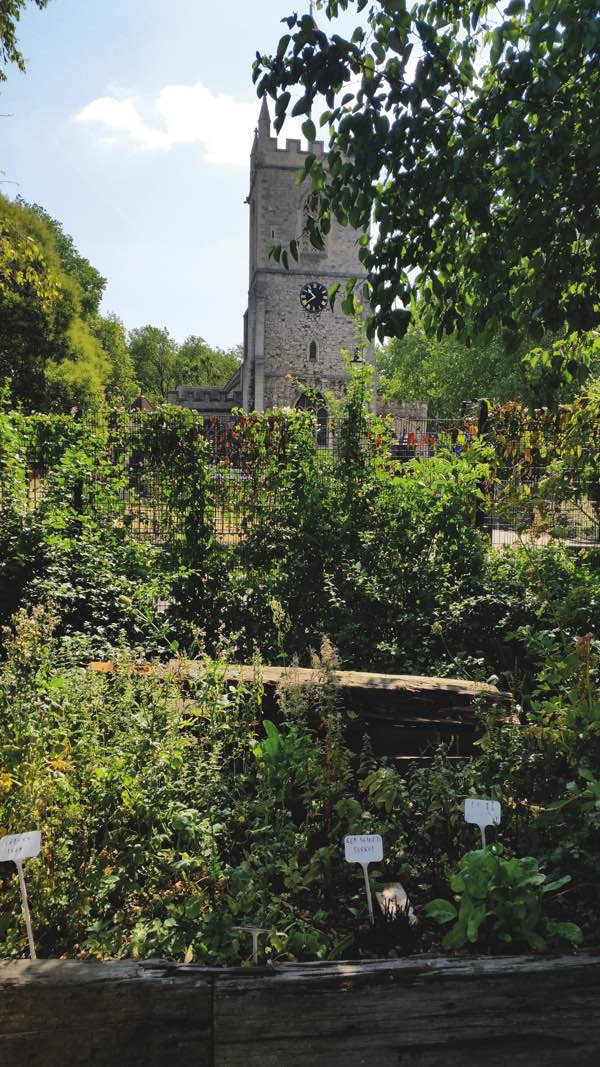
‘Stepney City Farm – an unexpected piece of hippy rusticity next door to where construction workers are currently tunnelling for Crossrail, with geese, donkeys and chickens wandering freely among the lettuces.’
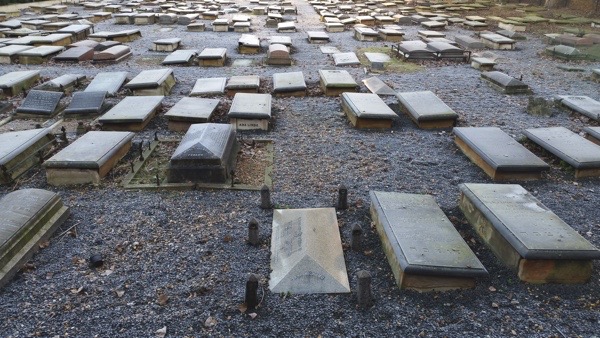
‘Novo Cemetery – As one walks through the grounds of Queen Mary University, past the engineering building and next to the arts and law faculties, one finds a large, well-preserved Jewish burial ground. It was opened in 1733, next door to Bancroft’s Hospital, and is shown clearly on Roque’s map in the following decade.’
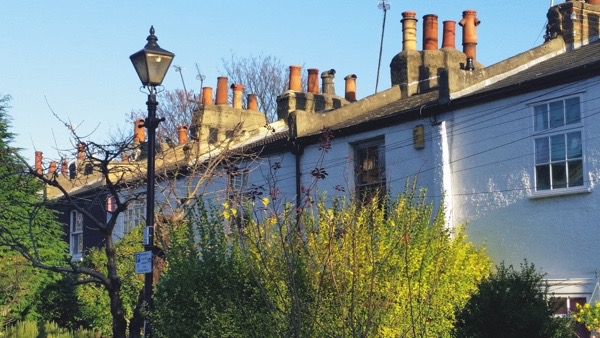
‘I called in on Mile End Place one Christmas morning– one of those snickets of artisan housing, backing on to the Jewish cemetery, with only trees beyond.’
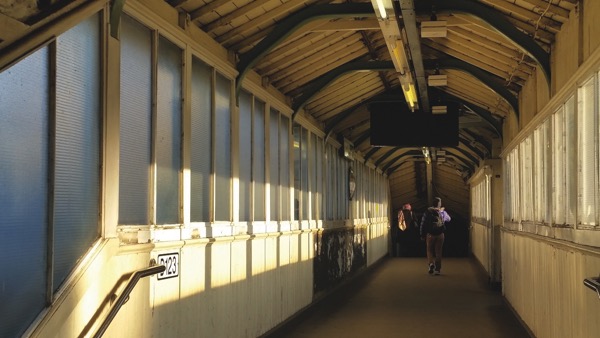
‘I’ve always liked Whitechapel Station, where the District Line emerges blinking into the daylight and curves round to head eastwards towards West Ham and Upminster, while below one could catch the old branch line of the Metropolitan down to New Cross, now revitalised by becoming part of the London Overground. The station opened in 1902 and one used to be able to get the Whitechapel & Bow Railway all the way to Southend. It once had four platforms, but is now reduced to two and is gradually losing its character as it is submerged by the changes required for Crossrail.’
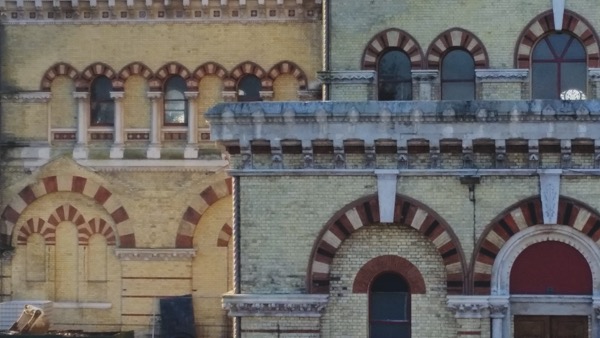
‘Abbey Mills Pumping Station stands proud in the valley of the River Lea on the site of a monastic water mill. It’s an amazing building, with so much decorative care and Byzantine and Gothic detail lavished on Sir Joseph Bazalgette’s powerhouse of engineering. Inside is full of hand dials and maps of London’s sewers and Piranesian vistas, down to the big pipes that transport London’s sewage out to Beckton, all of it constructed after the Great Stink of 1858.’
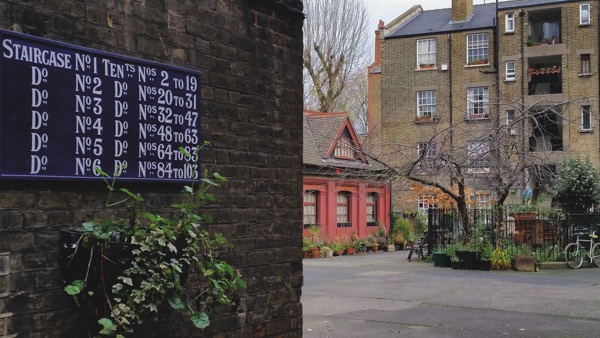
‘Walking down a road I’ve walked down a thousand times before, not far from our house, I found myself in a time warp of 1890s communitarian social idealism: a well-cared-for courtyard full of plants, a small house for the caretaker, bicycles and beehives. It is Cressy House, austere on the outside, designed by Davis & Emmanuel, architects of the West London Synagogue, for the East End Dwellings Company, with communal staircases leading off the internal courtyard.’
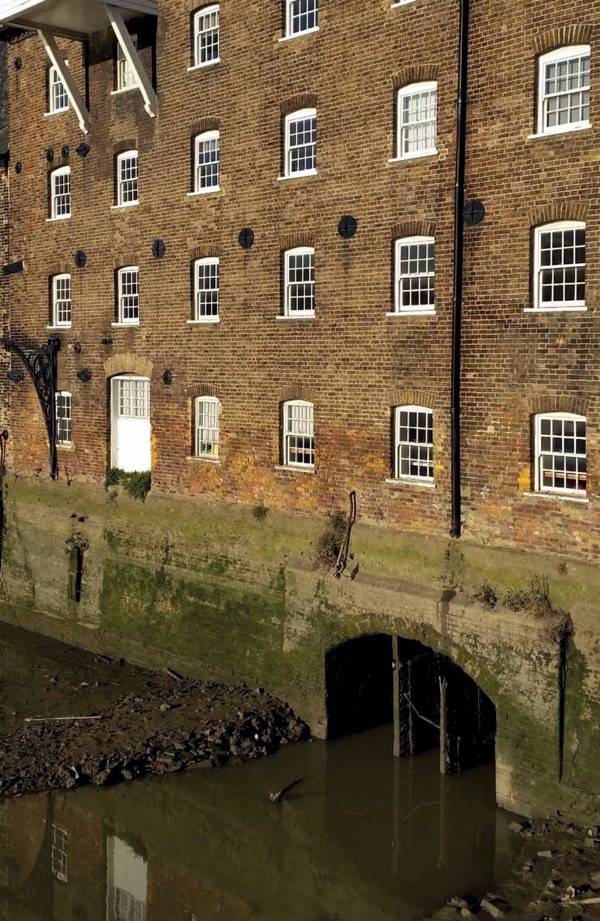
‘Three Mills is an unexpected piece of industrial archaeology, next to Tesco in Bromley-by-Bow. As mills, they were first established before the dissolution of the monasteries to supply grain to the bakeries of Stratford-atte-Bow. They were later acquired in 1727 by three Huguenots to distil gin.’
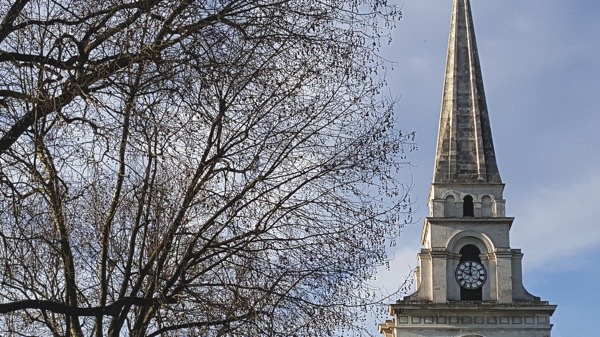
‘Owen Hopkins’s ‘From the Shadows: The Architecture and Afterlife of Nicholas Hawksmoor’ made me look afresh at Christ Church, Spitalfields, in the light of his very clear account of the way that Hawksmoor was influenced by the interest of his ecclesiastical contemporaries in the churches of the Primitive Christians. This may have given Hawksmoor some of his characteristics of bold, unornamented, structural clarity.’
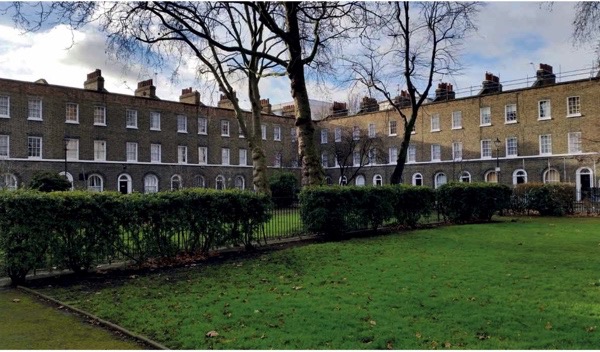
‘Just off Commercial Road, halfway to Limehouse, is Albert Gardens. A square of nearly perfect, neat, early Victorian houses, it was laid out in the 1840s with a garden in the middle by the Metropolitan Public Gardens Association. A sculpture of a ‘Shepherd Boy’ with sheaf and sickle, dated 1903 and bought in Paris, stands in the centre of the square.’
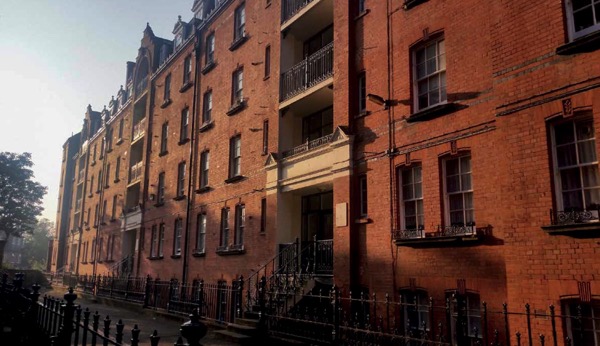
‘I was walking down Stepney Green past the dwellings at the south end beyond the Manor House, when I realised what fine ironwork and stucco detailing they have. They were built in 1895 by Solomon Joseph for the Four Per Cent Industrial Dwellings Company, founded in 1885 by Nathan Rothschild after an enquiry by the United Synagogue into ‘spiritual destitution’. Stepney Green court provided ‘the industrial classes with commodious and healthy Dwellings at a minimum rent’. Each of the flats had two rooms only and a shared washroom and kitchen, together with a communal club, reading room and baths. The original tenants were mostly Jewish artisans and there was a large synagogue next door, now converted into flats.’
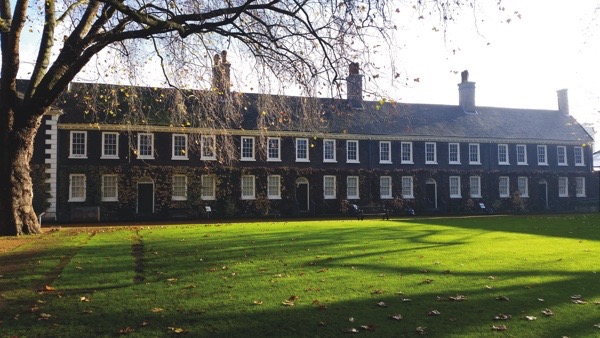
‘It is a pleasure walking past the Geffrye Museum and seeing how the crisp November sun lights up the space in front of the early eighteenth-century almshouses. They were built out of a bequest from Sir Robert Geffrye, a big wheel in the Ironmongers’ Company, appointed Sheriff in 1674 and elected Lord Mayor in 1684. He died in 1703, leaving the residue of his estate to be used to construct fourteen almshouses, with a chapel in the middle and a statue commemorating the founder.’
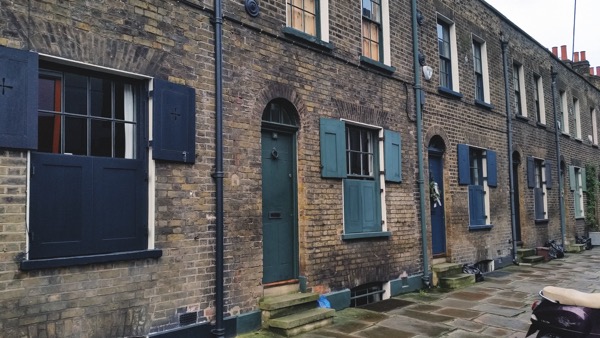
‘I admire the work that the Spitalfields Trust has done in regenerating the streets off New Road – Turner Street, Walden Street and Varden Street – where the small artisans’ houses have been spruced up’
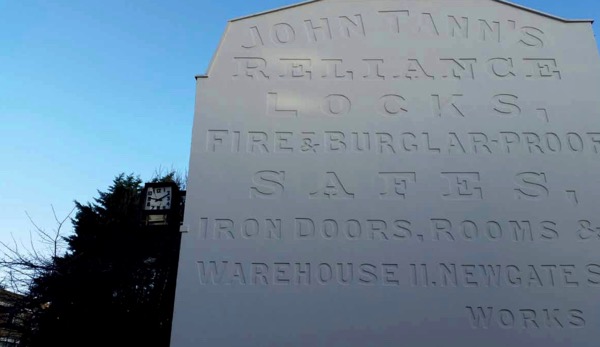
‘A magnificent piece of surviving industrial lettering incised into a side wall just off the Hackney Road.’
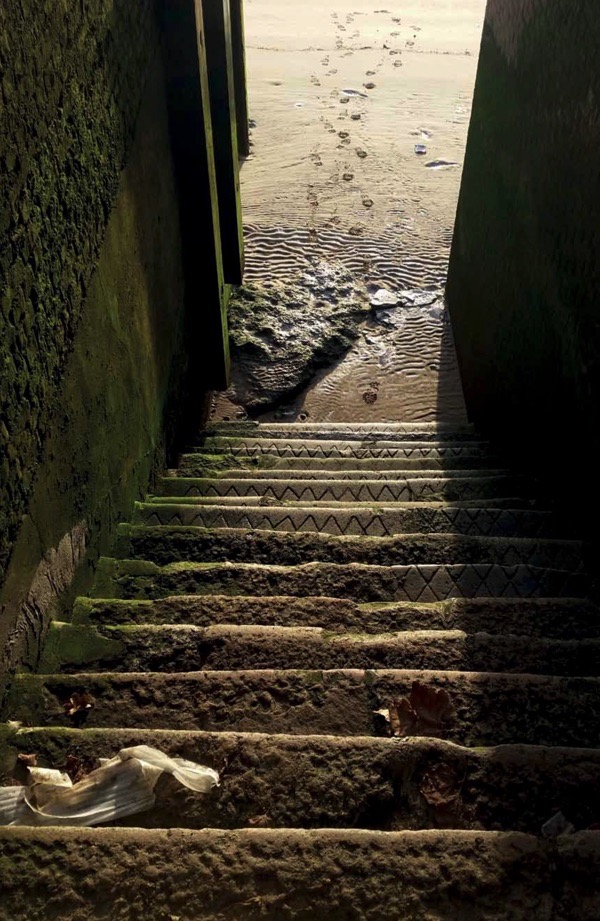
‘Wapping still retains a curious sense of isolation, with areas of greenery around the parish church of St John and Hussey’s, a good old-fashioned butcher, in Wapping Lane. One can get down to the Thames by way of two small alleyways off Wapping High Street. The first is alongside New Crane Wharf.’
Photographs copyright © Charles Saumarez Smith
EAST LONDON by Charles Saumarez Smith is published by Thames & Hudson
You may also like to read about
Phil Maxwell in Vallance Rd
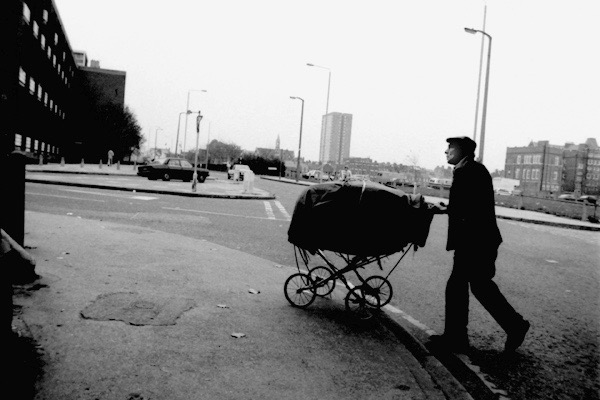
Vallance Rd, 1984
Contributing Photographer Phil Maxwell knows Vallance Rd better than most, since he lived in Pauline House at the Whitechapel end of this busy thoroughfare for thirty years, and walked up and down it daily. Yet among the ancient streets of the East End, Vallance Rd is a newcomer. As late as the mid-nineteenth century, maps show Baker’s Row leading north from Whitechapel Rd onto the open common land that still existed to the south of Bethnal Green at that time. By the end of that century, as the terraces spread across the open land, White St extended from Bethnal Green Rd by way of Notts St down to meet Baker’s Row, and thus the route known today linking Whitechapel and Bethnal Green was formalised, acquiring its current name in the early twentieth century. Once, the Whitechapel Workhouse was a formidable landmark in a street that has always been a means of getting from one place to another rather than a destination its own right, as Phil’s photographs testify.
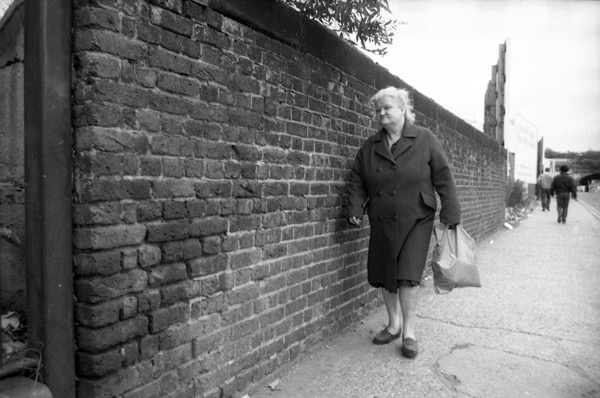
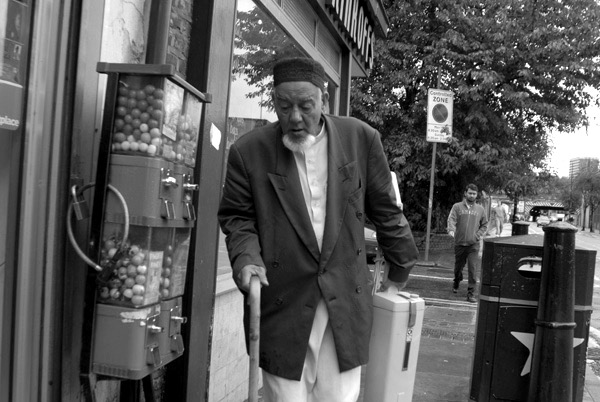
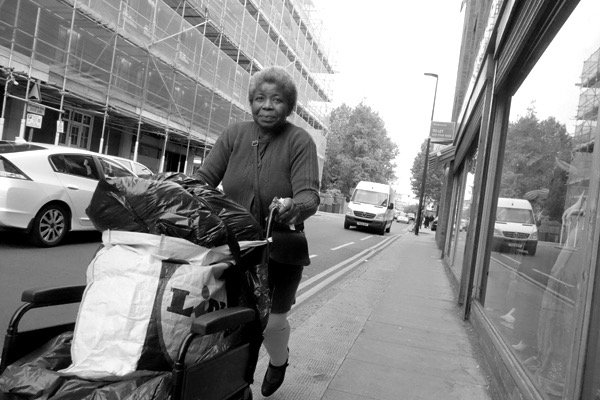
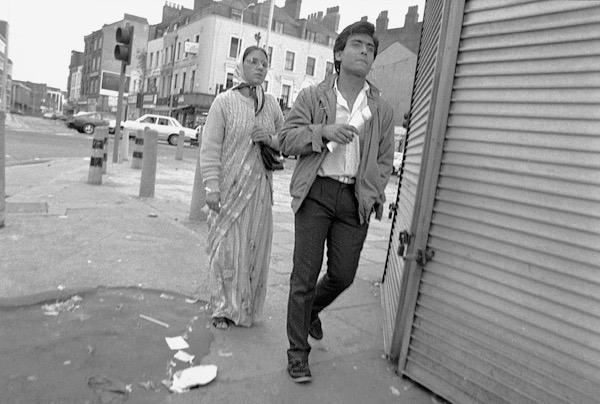
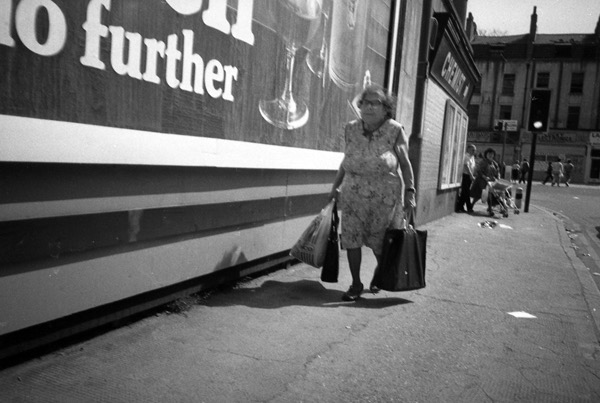
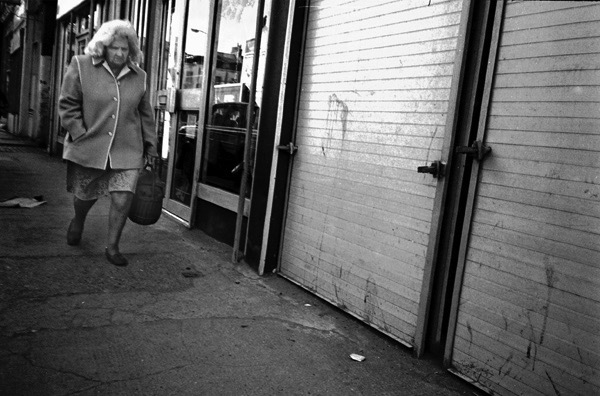
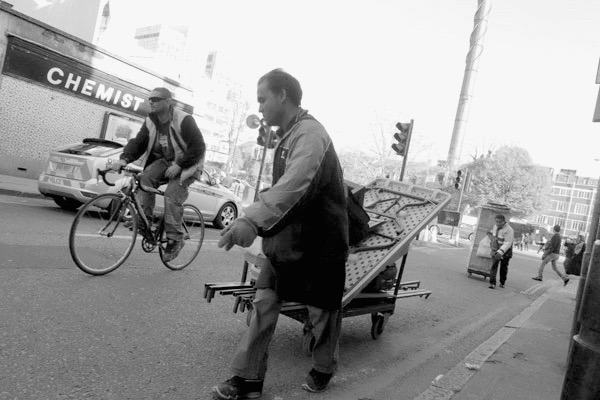
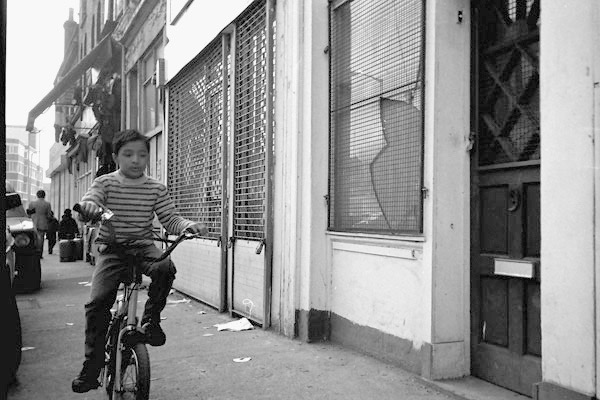
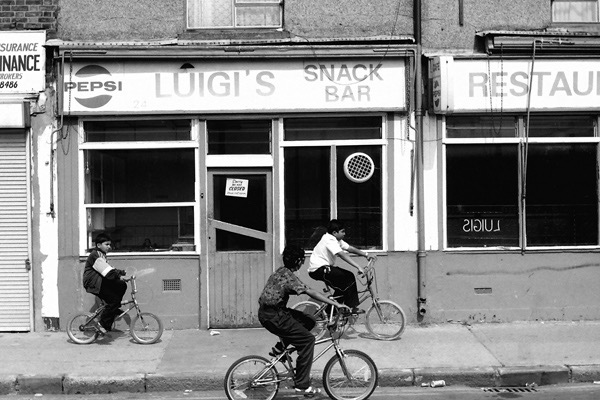
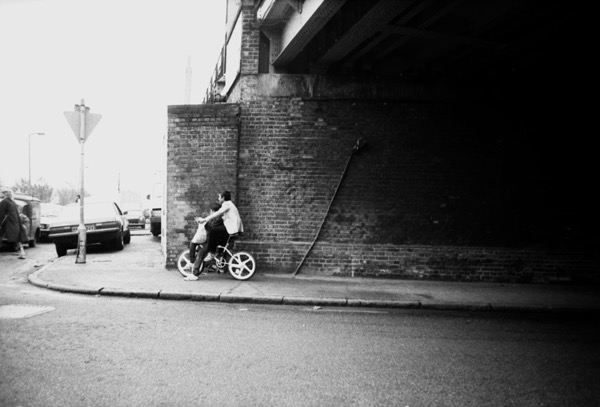
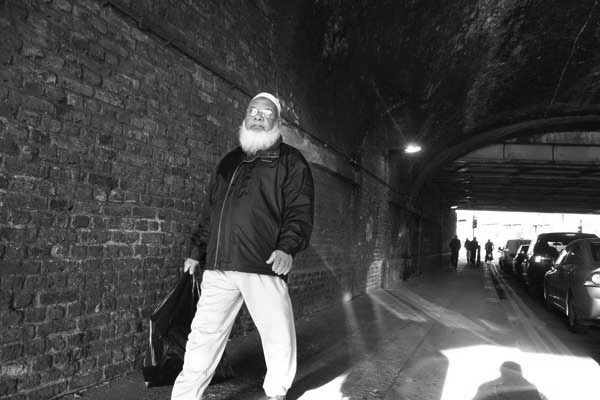
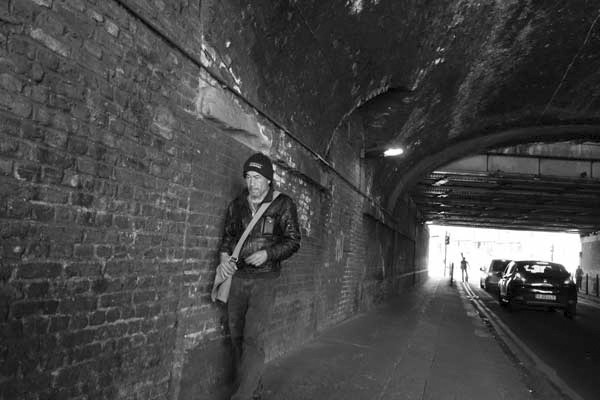
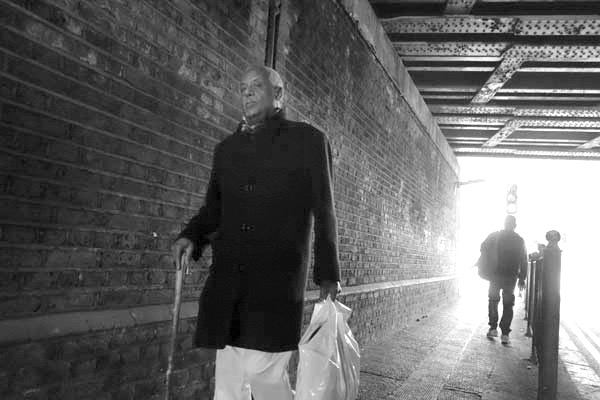
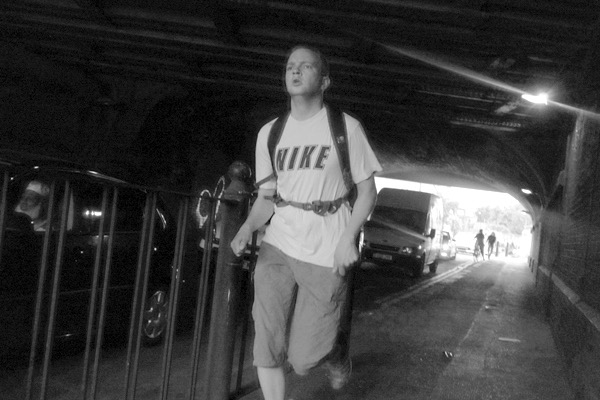
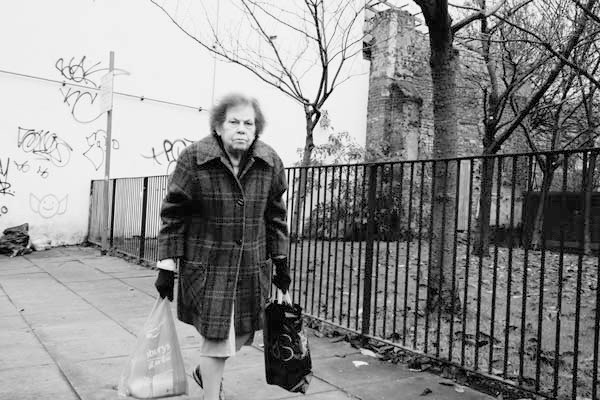
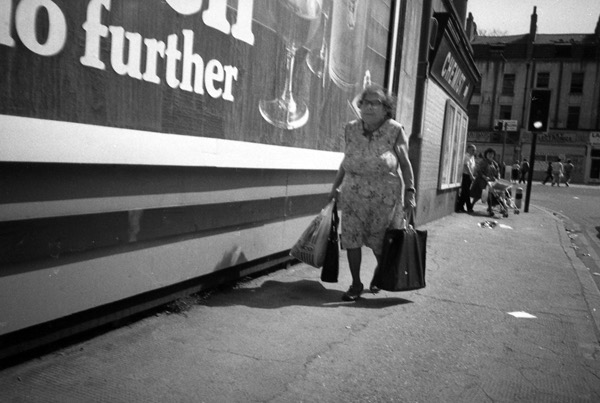


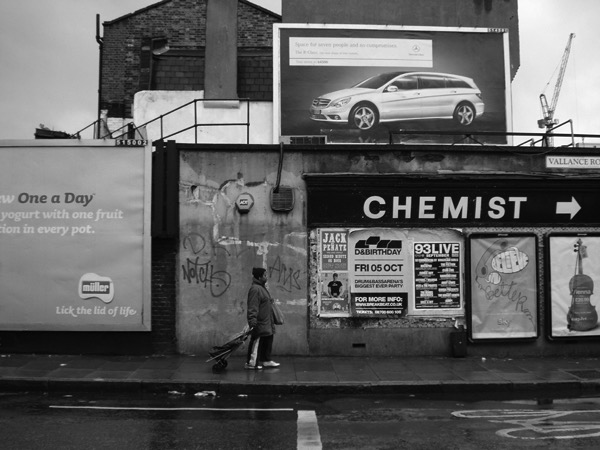
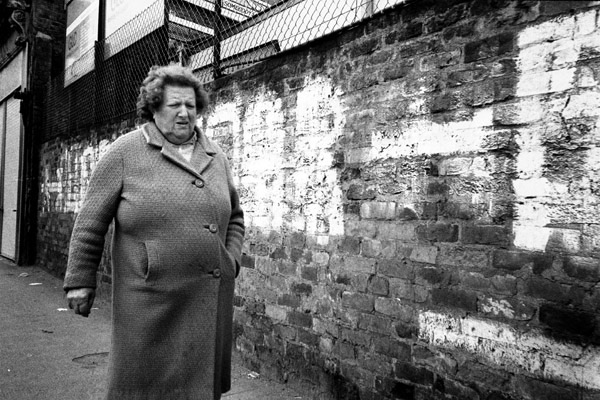
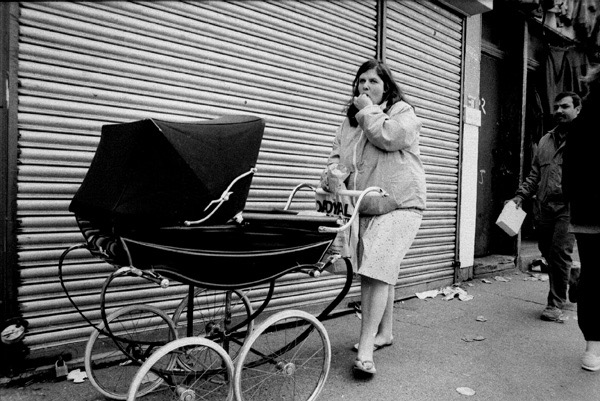
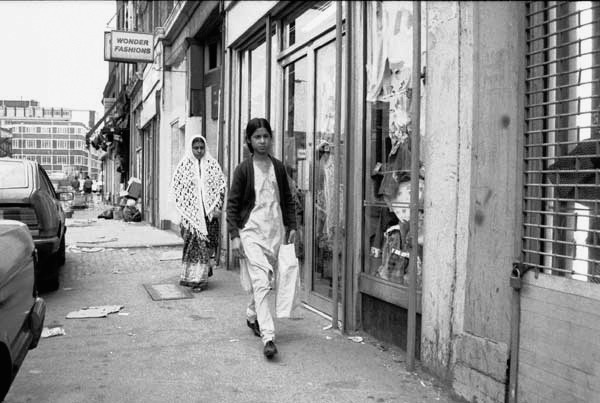
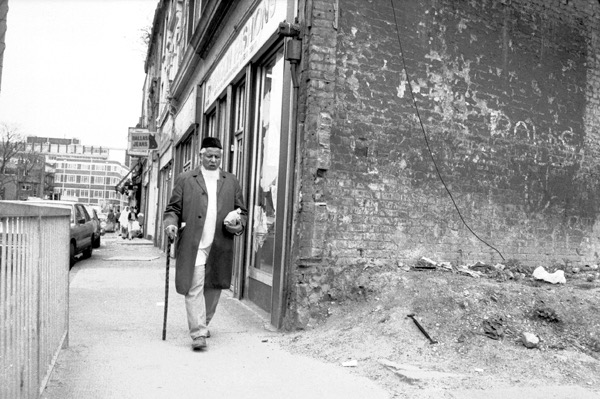
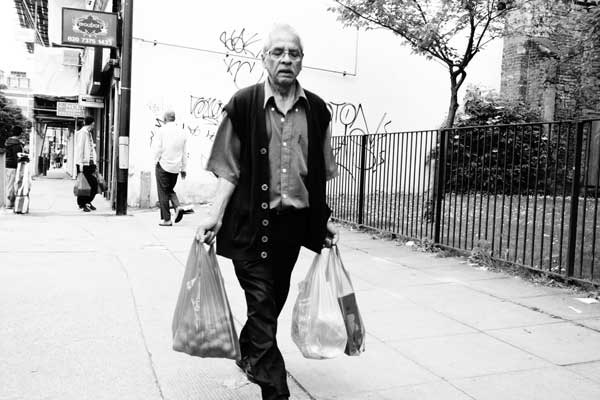

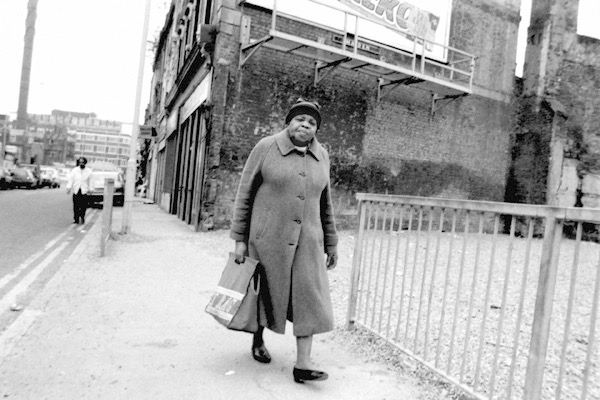
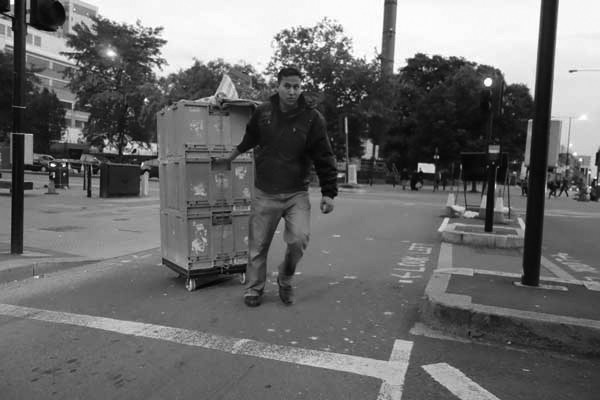
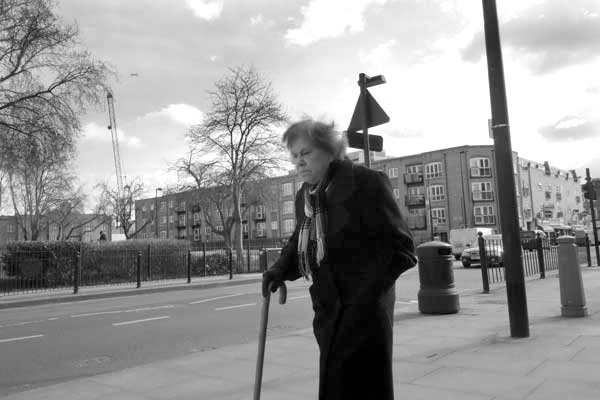
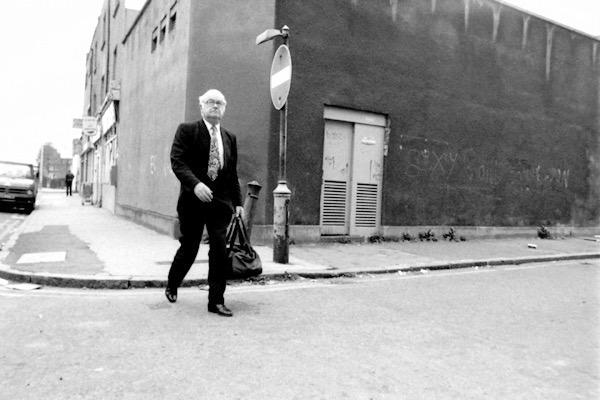
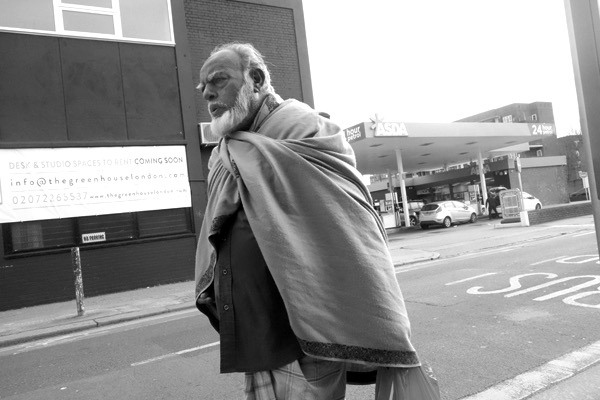
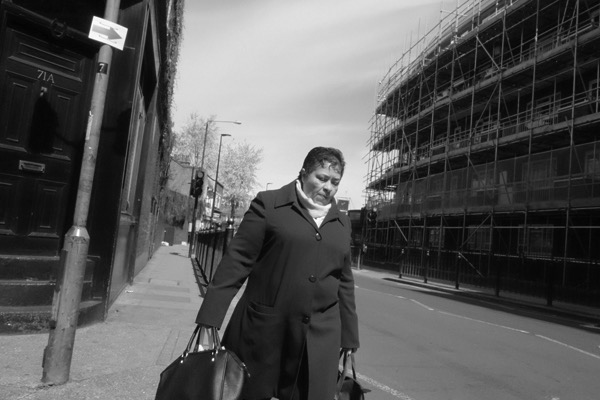
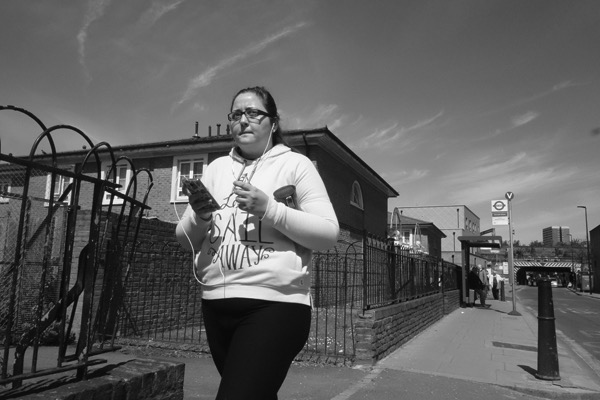
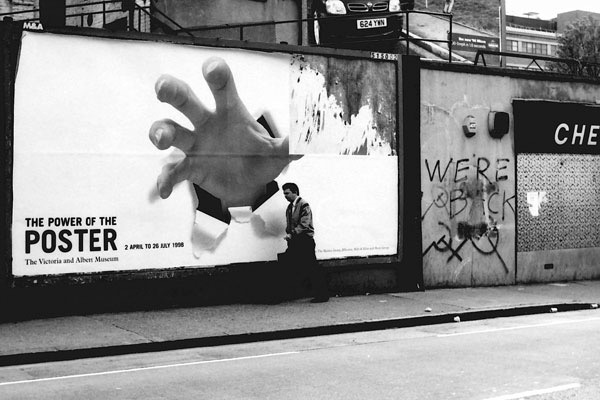
Photographs copyright © Phil Maxwell
You may also like to take a look at
Phil Maxwell in Bethnal Green Rd
William Kent’s Arch At Bow
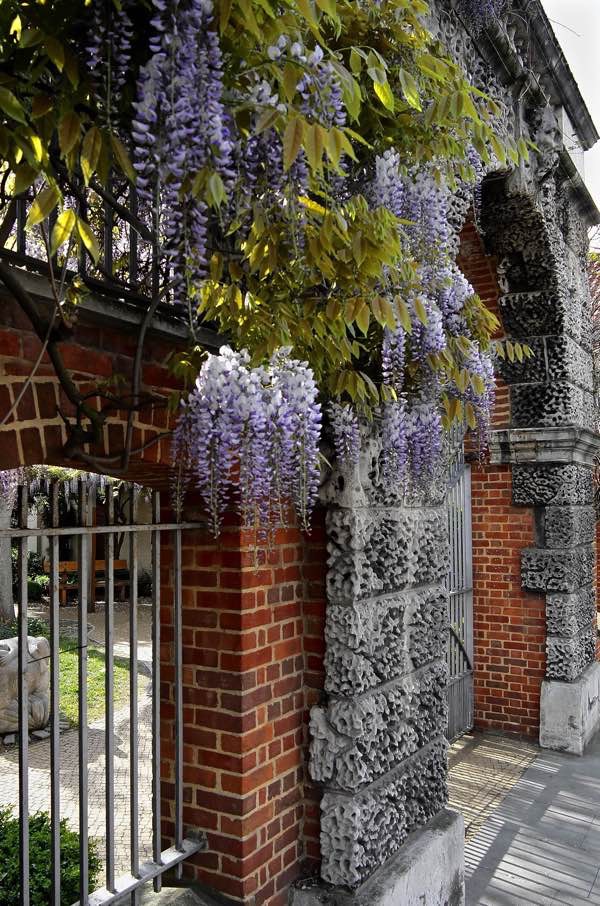
‘a curious vestige from a catalogue of destruction’
This fine eighteenth century rusticated arch designed by the celebrated architect and designer William Kent was originally part of Northumberland House, the London residence of the Percy family in the Strand which was demolished in 1874. Then the arch was installed in the garden of the Tudor House in St Leonard’s Street, Bow, by George Gammon Rutty before it was moved here to the Bromley by Bow Centre in 1997, where it makes a magnificent welcoming entrance today.
The Tudor House was purchased in a good condition of preservation from the trustees of George Gammon Rutty after his death in 1898 by the London County Council, who chose to demolish it and turn the gardens into a public park. At this point, there were two statues situated at the foot of each of the pillars of the arch but they went missing in the nineteen-forties. One of the last surviving relics of the old village of Bromley by Bow, the house derived its name from a member of the Tudor family who built it in the late sixteenth century adjoining the Old Palace and both were lovingly recorded by CR Ashbee in the first volume of the Survey of London in 1900.
The Survey was created by Ashbee, while he was living in Bow running the Guild of Handicrafts at Essex House (another sixteenth century house nearby that was demolished), in response to what he saw as the needless loss of the Old Palace and other important historic buildings in the capital.
Ever since I first discovered William Kent’s beautiful lonely arch – a curious vestige from a catalogue of destruction – I have been meaning to go back to Bow take a photograph of it when the wisteria was in bloom and, although for a couple of years circumstances conspired to prevent me, last weekend I was able to do so and here you see the result.
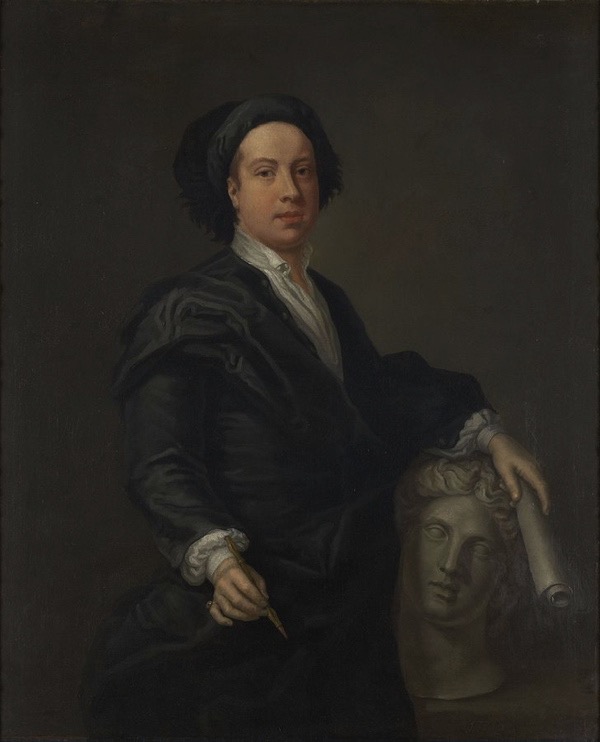
William Kent (1685 –1748) Architect, landscape and furniture designer
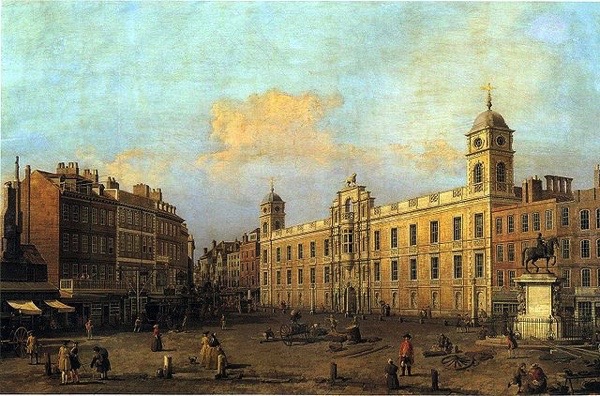
Northumberland House by Canaletto, 1752
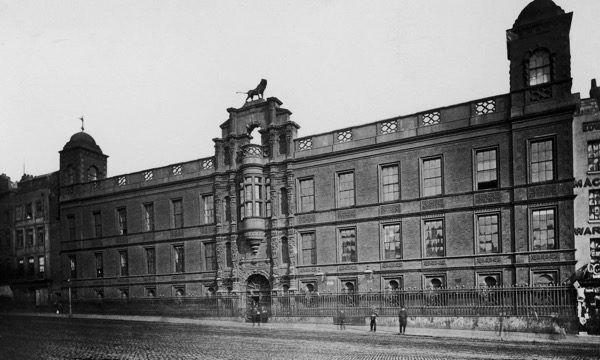
Northumberland House shortly before demolition, 1874
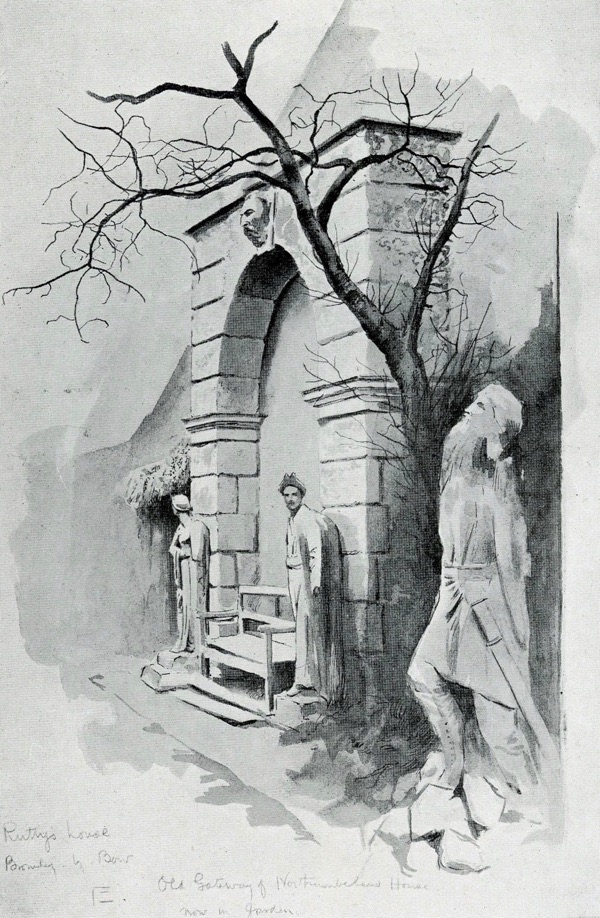
William Kent’s arch in the grounds of the Tudor House, Bow, in 1900 with its attendant statues, as illustrated in the first volume of the Survey of London by CR Ashbee (Image courtesy Survey of London/ Bishopsgate Institute)
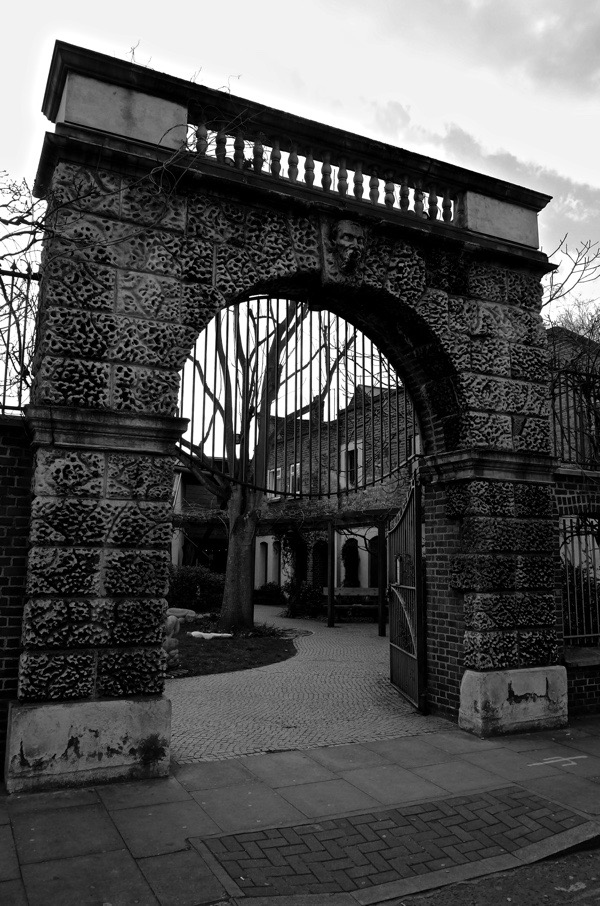
William Kent’s arch at St Leonard’s Street, Bromley by Bow
You may also like to read about
At Great Eastern Buildings
Steven Harris sent me this candid memoir of his childhood in Great Eastern Buildings off Brick Lane
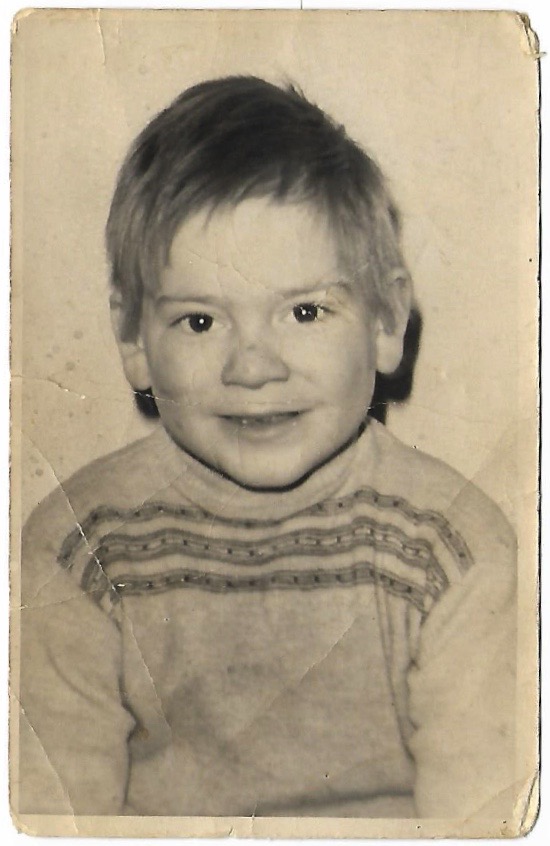 Steven Harris aged five, 1963
Great Eastern Buildings were a product of the Great Eastern Rail Company which ran services from East Anglia to Liverpool St Station and erecting the Buildings in the nineteenth century as cheap workers’ accommodation to support the development of the railway line. However, by the sixties, ‘great’ was the most unlikely epithet and no one had ever known them to be anything better than the lower end of the housing market.
The two tenements were subdivided into three sections with each section having a staircase running the height of the building. Each section had four flats on either side of the staircase, thereby providing a total of eight homes in each section. The first and third sections of the left hand block consisted of both one and two bedroom dwellings complete with inside toilet and bathroom, but those unfortunate enough to occupy the second section of the left hand block still had the pleasure of outside toilets and washrooms as per the original Victorian design.
The size of the dwellings – no flat had more than two bedrooms – often had little bearing on the number of people occupying them. Large families were not uncommon and I was one of four siblings. The usual rules applied, the parents had one room and the children had bunk beds in the other. Those on low incomes who could only afford low rents did not find themselves in a position to debate the complexities of the situation. It was how life was then and people did the best they could.
On the other hand, if you were fortunate enough to have an extra bedroom there was a chance to earn a few quid by renting it out. My grand parents did this. They occupied a two bedroom flat and, in the fifties, they rented their spare room to Davy. He was a short, stout man with a slightly crazy laugh, bald head and National Health Service spectacles – who always paid careful attention to his tie knot, his white starched shirt and his precision shaving on a Saturday night when he hoped to get lucky. I remember being strangely fascinated by Davy’s shaving and would frequently watch him as he exercised his careful linear strokes, followed by vigorous swirling of the razor in water to clean it. I believe Davy was a friend of my uncle Tom from their days of military service who simply needed a few weeks of lodging to sort himself out and find his own flat, yet by 1970 – when I moved out of the buildings – he was still there.
The construction of Great Eastern Buildings left much to be desired, both inside and our. The coal-grey brickwork, which had not been cleaned for decades, had not stood up well to weathering. Word had it that there was red brick incorporated in the Buildings but, apart from a line of red bricks traversing the length of the roof, it was hard to recall. Maybe this is reflective of a grey and dull existence?
Yet life in and around the buildings was punctuated by colour. ‘Barmy Park’ in Bethnal Green (named after the asylum that once stood there), Vallance Rd Park (known as Weavers’ Fields) and Victoria Park (the biggest and best known) were no more than a ten minute walk away, where we could see trees, ponds, birds and enjoy running around on the grass. In some ways these three parks marked the boundaries of our hinterland beyond which we rarely ventured. Within the immediate vicinity of the buildings there simply wasn’t anything of greenery that I recall.
There was the Truman Brewery just across the road which, in the fifties, still used horses to pull cartloads of beer. So it was that nature and beauty broke in to reveal itself to us, as my friend Sheila Butt remembers, “In the summer we used to go up on the roof and watch the Truman’s draymen go by on their carts, drawn by beautiful white horses, with large barrels of beer on the back and two men up front in white rubber aprons. And just to add to the sense of season, the waft of hops could often be detected on the light breezes passing through the buildings”
My Aunty Pat informed me that Great Eastern Buildings were owned in the fifties and the sixties by none other than the notorious racketeer and slum landlord Peter Rachman! His acolytes were always there when the rent was due but never when repairs were needed which, given the state of dilapidation, was very frequent. In fact, it was only in the early sixties when Rachman sold the buildings that any work was done, and indoor bathrooms and toilets were installed.
For many of the residents, avoiding paying the rent was a priority, hence weekly rent collection day – normally a Monday – was an interesting game of cat and mouse. The tendency to live it up at the weekend often left shortfalls and so the visit of the rent man was greeted with absence or no answer. It was not uncommon to be told ‘keep quiet and don’t make a sound,’ accompanied by threats of physical chastisement, should the rent man turn up when we were at home. On several occasions I was told by my ‘live-in stepmother’ Lotty not to make a sound when there was an unexpected knock on the door. In her case it could have been any amount of reasons, since she was implicated in many dubious activities, but the rent man was always unwelcome.
Rent was the biggest outgoing that anyone faced. In 1969, it stood at 25 shillings weekly for my Aunty Pat’s family with an income of £12 per week, but for those living on benefits it was a bigger imposition. I do not recall anyone ever discussing the concept of buying a home and, certainly, I never heard of the word ‘mortgage’ until my twenties. Nobody seemed to even dream about it, as if renting was the only way. And we performed this never-ending dance with the rent collector. I’m not sure what we hoped to achieve because the rent had to be paid whether we liked it or not, but I think that such avoidance won enough time to source other forms of income, thereby allowing the rent to be found.
Although Aunty Pat had sufficient control over her finances to pay the rent, many others – like my folks – did not. Yet even for the ‘good ones,’ it was always possible to discover a ‘cash flow difficulty’ by trusting payment of the rent to those it might be better not to. This was the fate of Aunty Pat when she trusted my stepmother, Lotty, to pay the rent on her behalf one week. Normally Pat would pay it herself, but her working hours had changed, so she could not be there to pay it. On this particular occasion, she was approached by the rent collector, asking ‘Pat, why haven’t you paid the rent?’ which drew the reply, ‘I have, Lotty paid it for me.’ At this point, Pat produced the rent book which had been signed by the rent man to indicate receipt of the rent, only to be informed ‘that’s not my signature.’ It was painfully obvious. When confronted, Lotty broke down, admitted the forgery and agreed to pay it off at two shillings a week. Fortunately, it never went any further, though Pat was more careful with whom she trusted her rent money afterwards.
Of my step-mother Lotty it must be said that she was an interesting character. I should know since I spent five years living with her. For better or worse, Lotty did help to raise myself and my sister, as well as her own son, Tony, and later my half-brother Edward. She was generally reasonable towards all of us, and kept us fed and clothed but she did periodically give me a good hiding. On one notable occasion, I managed to upset her mother and Lotty flew into the bedroom and laid into me. I never did know why but I do remember the pain, the stinging sensation, the confusion and sense of injustice. I suspect my sense of injustice was furthered by her not being my real mother – ‘Who the bloody hell did she think she was anyway?’
My father could deal out that sort of thing too. Somewhere around the age of eight or nine I managed to upset him, again how I did this I can’t recall – perhaps this lack of awareness is the hallmark of childhood? – but he charged into the front room, threw me onto the sofa and proceeded to punch me in the back. Though he could have hurt me much more than Lotty, I didn’t feel the same anger or need for retribution, perhaps because he was my natural father. Neither was I alone, physical chastisement being a way of life for children in the building, as was physical conflict for adults. Yet my father didn’t commonly behave like this towards me – being something of a laid back character, much more likely to crack a joke or puff an exotic cigarette than to be violent. I can only imagine that on this occasion, as with Lotty, I must have done or said something to really anger him.
Because of the physicality of life in the buildings, my father had to give an impression of being able to ‘handle’ himself and so his teddy-boy background proved helpful. Later, it became increasingly evident that my father preferring to interact with my cousins than me. I think this was due to the path that I took in life. After moving in with my uncle and aunt, and gaining entry to the local grammar school, I became increasingly academic and more middle class. Or at least was seen like that. It was a problem for my father who evinced disappointment during my teenage years, giving the impression of wanting a son who was more working class and manually inclined. There were always taunts about not being able to do anything practical – ‘Good at reading books but can’t fix a plug, can ya?’ Fixing a plug was a skill needed in the buildings, whereas reading Geoffrey Chaucer or William Blake was not going to improve the quality of life. In the tough environment of the buildings you would not find what might be described as a culture of praise. People did not compliment each other overtly. Today I understand the practice of sarcasm, which may have been a means for people to compliment each other without being seen to do so.
When I passed the 11+ for entry to the local grammar school in 1969, no one, as far – as I can recall – said ‘Well done’ or anything else for that matter. It was as if it hadn’t happened. I can now recall that sense of disappointment at not being recognised for achieving something no one else had done. It was the foreboding of a sense that grew stronger and stronger through my teenage years – of not belonging and of not being one of them.
I suppose my dad’s behaviour in giving me a walloping should not be surprising as he was a product of his environment. That existence, apart from rendering physical chastisement acceptable, looked on education in a contradictory way. Learning was to be admired yet also regarded with contempt since it didn’t produce any tangible reward. So it was that he liked having a ‘clever son’ – which conferred status on him – but couldn’t identify with me because I was never going to be productive in a way he understood. This reality was painful: with a mother who had abandoned me and a father who seemed disdainful to me, my internal emotional turmoil was immense.
My Dad didn’t always get things his own way. I recall an incident around 1965 when I had wandered out of the buildings and was heading down Quaker St towards Wheler House. About 50 yards along on the left hand side, facing Leon’s shop, was the Grey Eagle. Out of the pub hobbled my father, covered in blood, with torn clothing and clearly in distress. He sank to the ground against a wall. Later, it transpired he had broken his leg or had it broken for him. Then another man came out of the pub and started kicking him. Upon seeing me, my father called out ‘Alright Paddy, pack it in, my boy is watching.’ Paddy glanced in my direction, swore at my father, kicked him once more and then went back to the pub.
Lest I give a negative impression of my father, I have a wonderful memory that endures. One morning, around 3am, in the summer of 1969, my father came into the bedroom and woke me up. ‘Steven, Steven, you’ve got to come and see this,’ he said. I hadn’t a clue what he meant or what was happening, but I got up and followed him into the front room. He was staring at the TV, and he ushered me to sit down and do the same. In that slightly fed up and rather bored manner so beloved of children, I sat there and looked at our little black and white TV set.
There appeared to be little to see – just a piece of empty ground from what I could tell. After several minutes of looking at this nothingness, a small shiny cylindrical object hovered into view and appeared to settle on this piece of ground. A little time later, a man completely enclosed in a heavy suit emerged from the object. I didn’t appreciate that I was watching a piece of history – the first man on the moon – but from my fathers’ demeanour I knew it had to be of significance. Looking back on it, my dad clearly wanted me to be part of something special, something that was a landmark moment in human existence, and in this he succeeded.
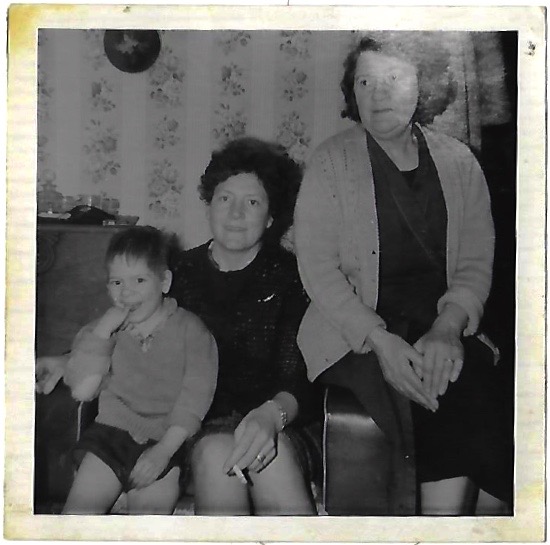
Steven with his Aunty Ena and his nan, c.1963
Steven aged twelve, 1970

Great Eastern Buildings photographed by Tony Hall in the sixties

Children at Great Eastern Buildings photographed by Homer Sykes in the seventies
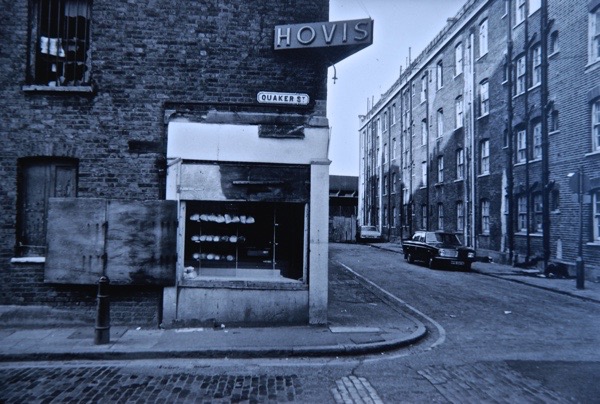
Great Eastern Buildings seen from Quaker St photographed by Dan Cruickshank in the seventies
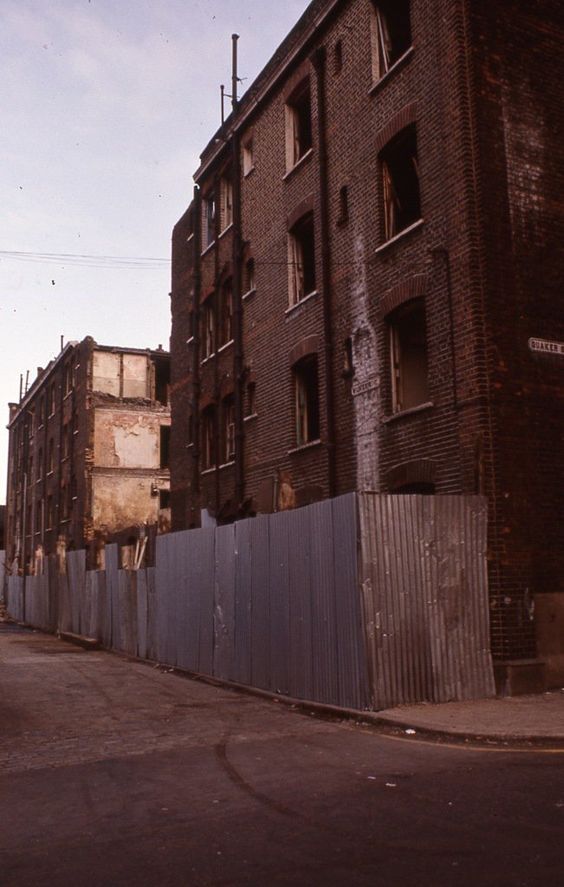
Demolition of Great Eastern Buildings, 1978
You may also like to read about












