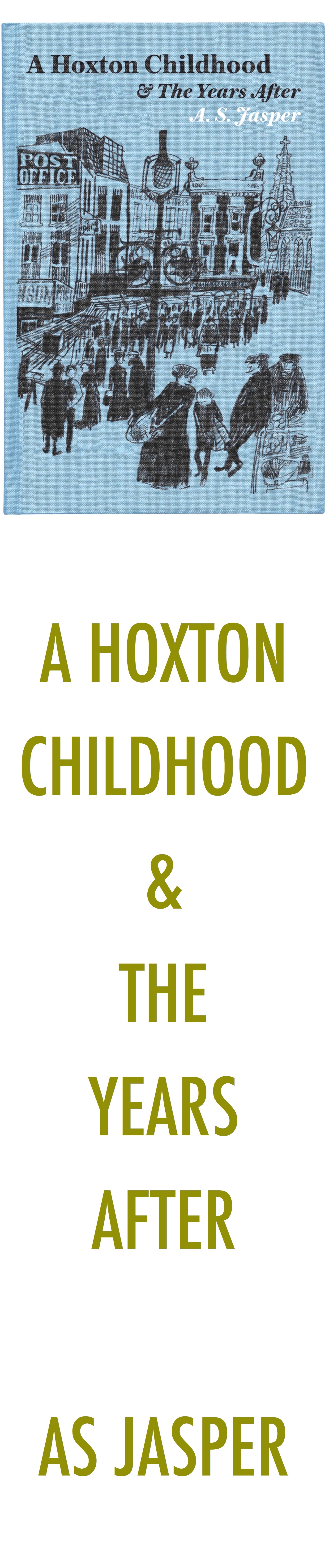
Chris Miles’ East End
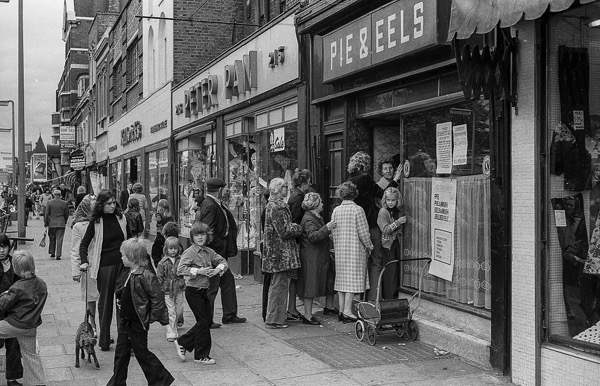
Chris Miles contacted me from Vancouver Island, where he describes himself as a Londoner in exile. ‘In the early seventies, I lived as a recently-graduated student in the East End, firstly on Grove Rd and then on Lauriston Rd above a supermarket,’ he explained and sent me his splendid photographs. Published for the first time today, mostly were taken around Bethnal Green, Roman Rd and Mile End, and Chris & I welcome identification of precise locations from eagle-eyed readers.
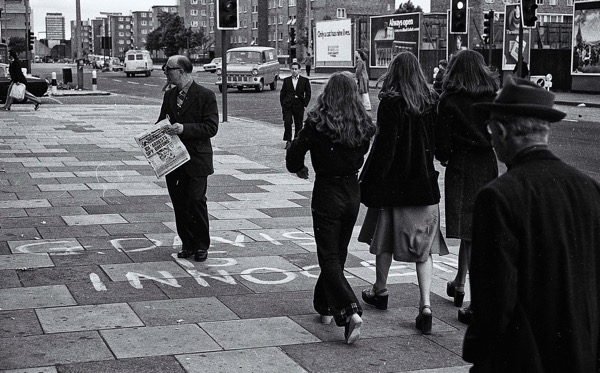
George Davis is Innocent, Mile End Rd
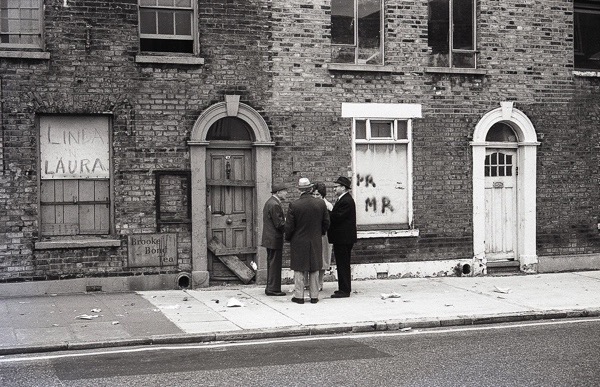
Linda ‘n Laura
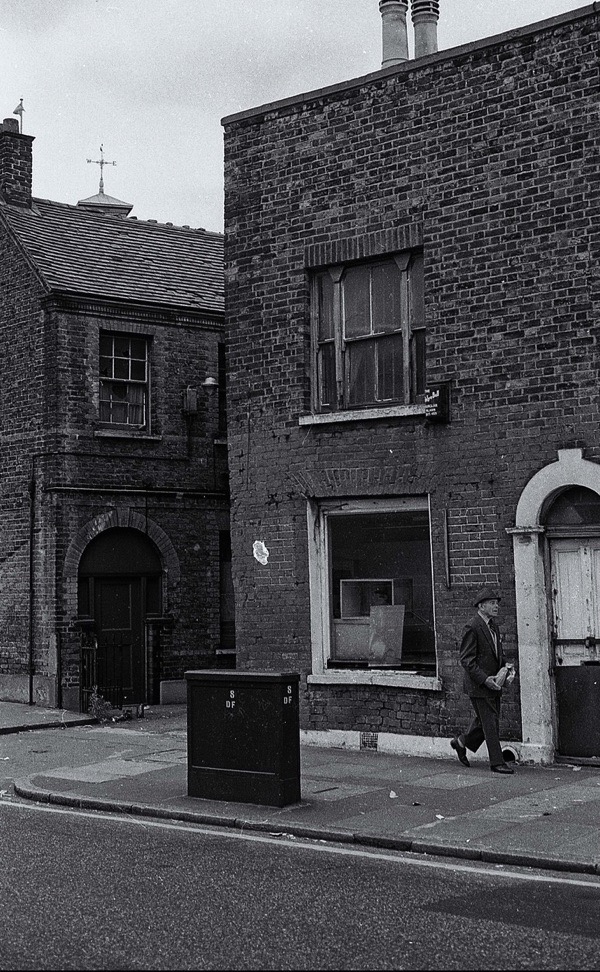
Getting a loaf, Stepney Green
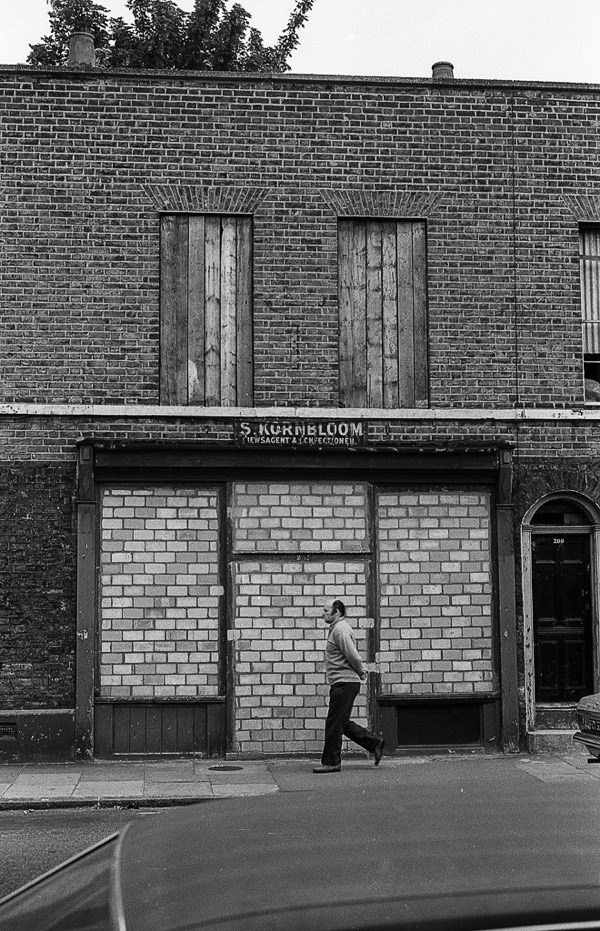
S Kornbloom, Newsagent & Confectioner, Jubilee St
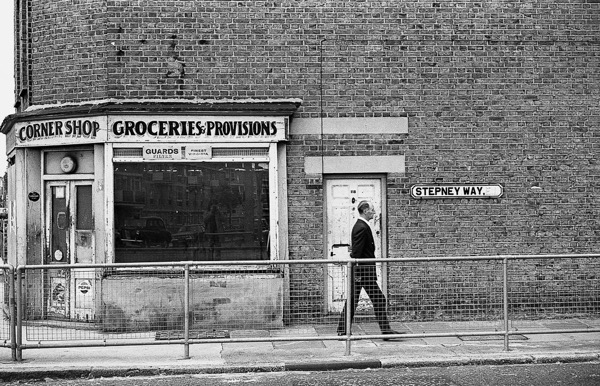
Corner Shop Groceries & Provisions, Stepney Way
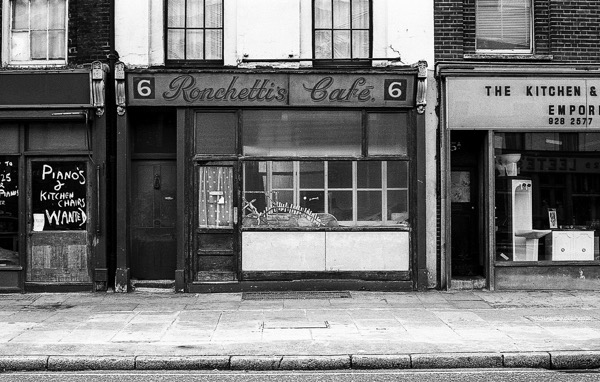
Ronchetti’s Cafe, Piano’s & Kitchen Chairs Wanted
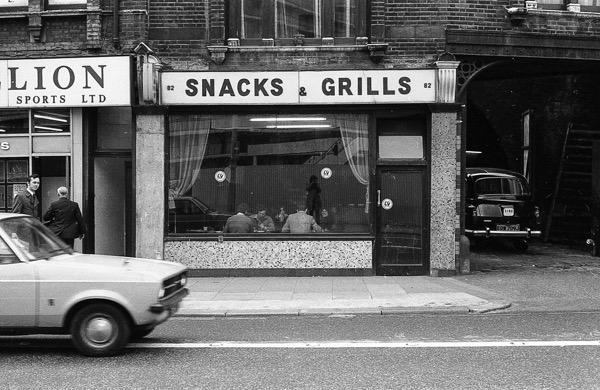
Snacks & Grills
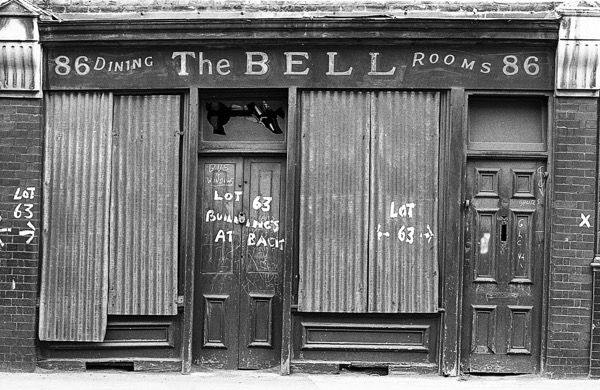
The Bell Dining Rooms, Lot 63 Buildings at back
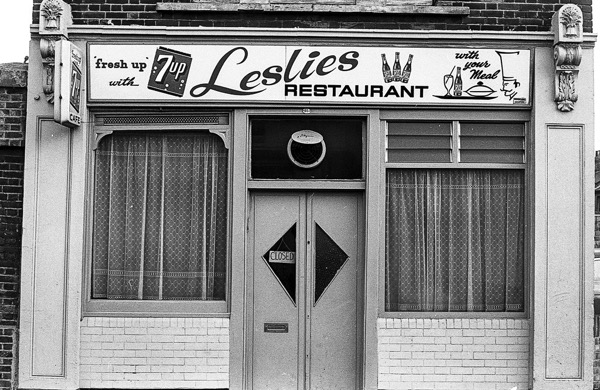
Leslies Restaurant, Fresh Up with your Meal
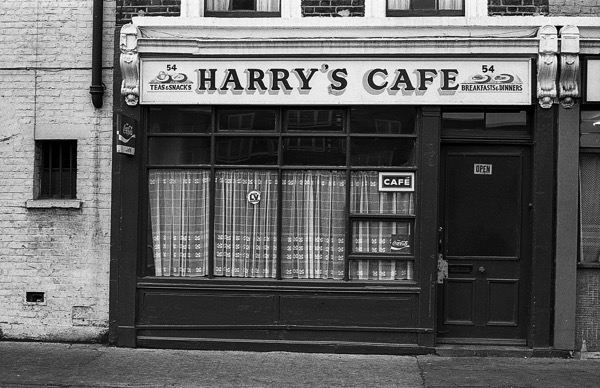
Harry’s Cafe, Teas & Snacks, Breakfasts & Dinners
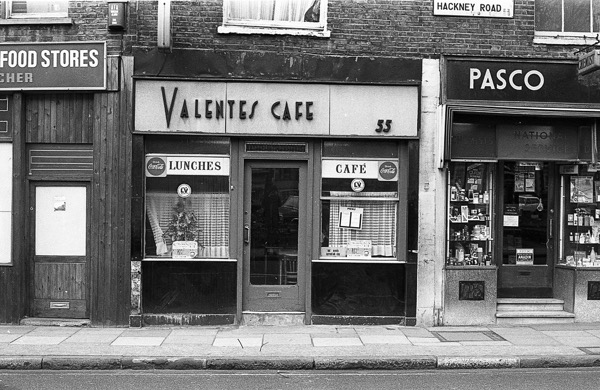
Valente’s Cafe, Hackney Rd
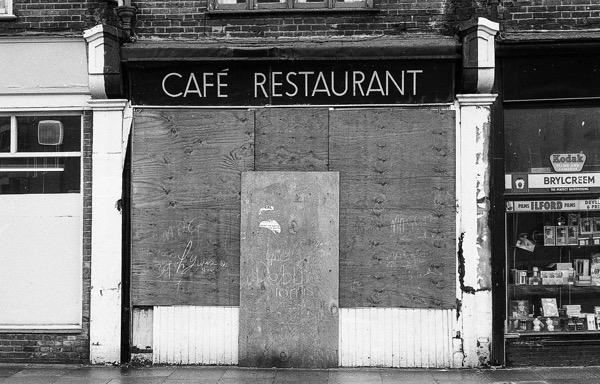
Cafe Restaurant
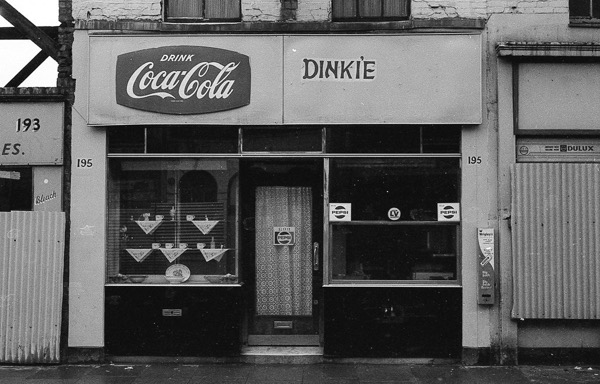
Dinkie
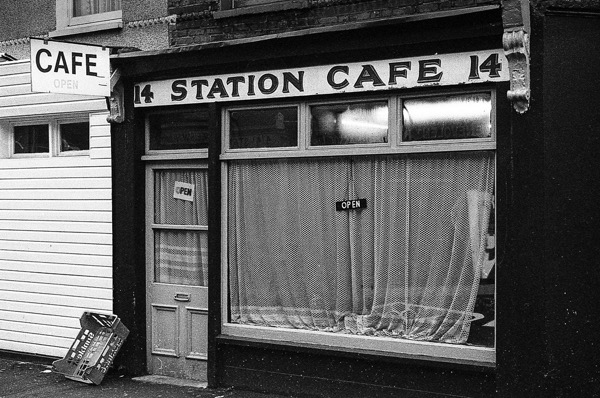
Station Cafe
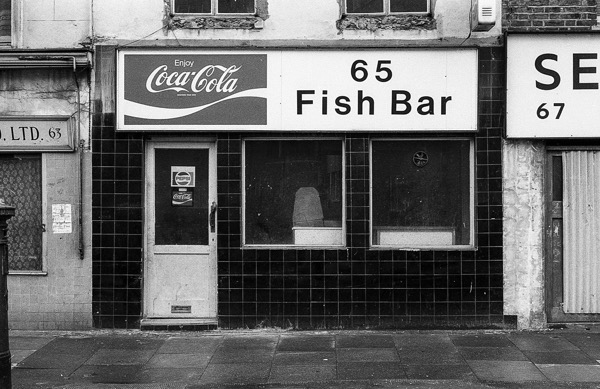
Fish Bar
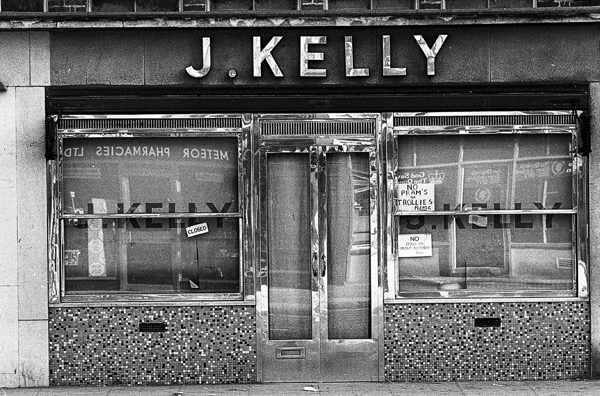
J Kelly, No Prams or Trollie’s, Please
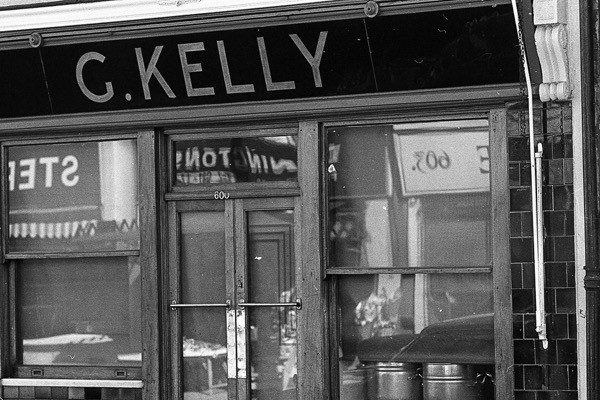
G Kelly

Charlie & Mick’s Cafe
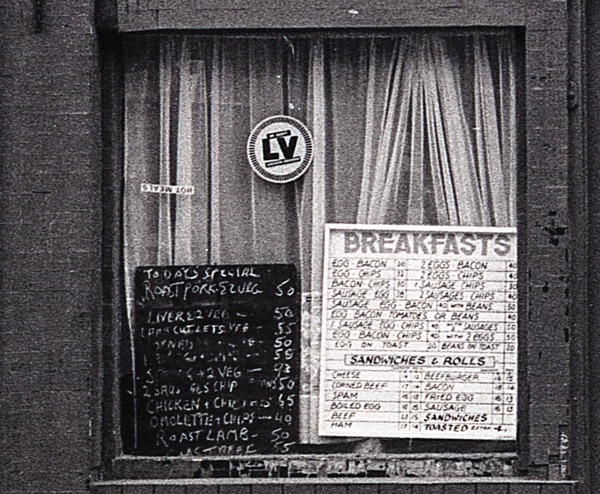
Menu at Charlie & Mick’s Cafe
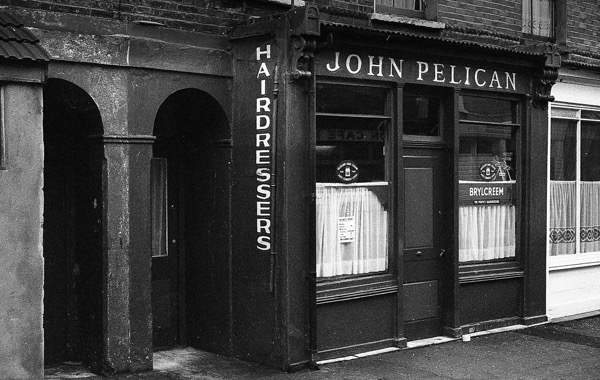
John Pelican
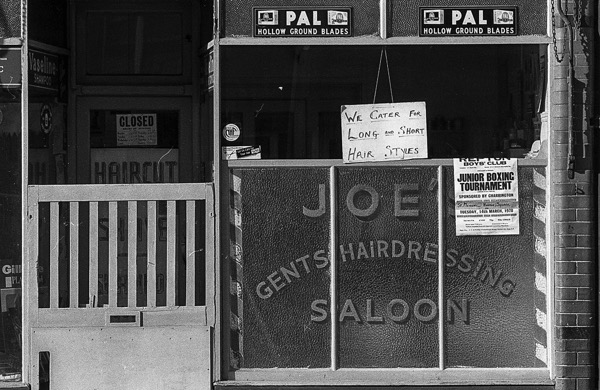
Joe’s Saloon – ‘We cater for long and short hair styles’
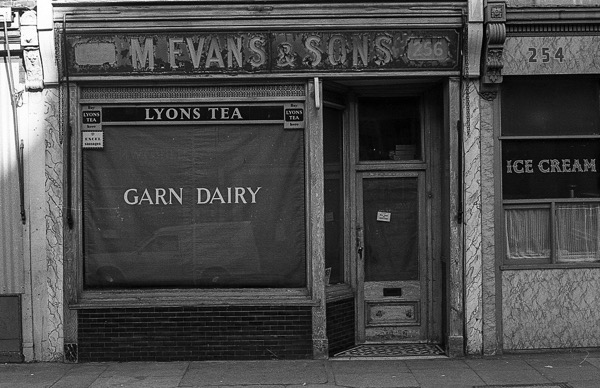
M Evans & Sons, Garn Dairy
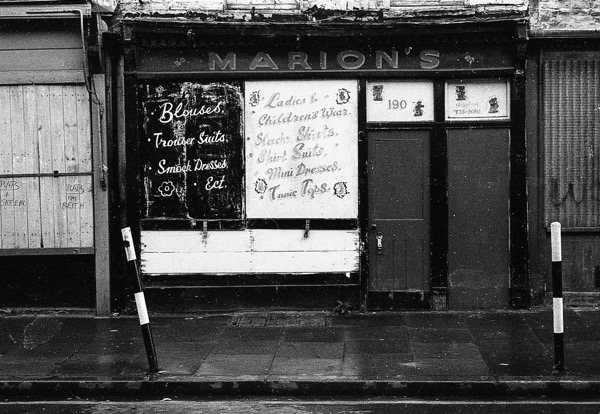
Marion’s, Blouses, Trouser Suits, Smock Dresses, Ect.
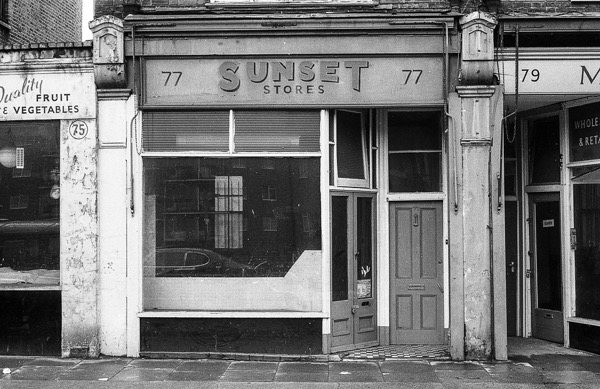
Sunset Stores
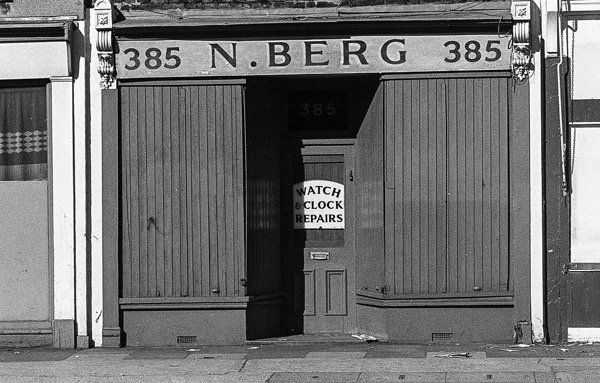
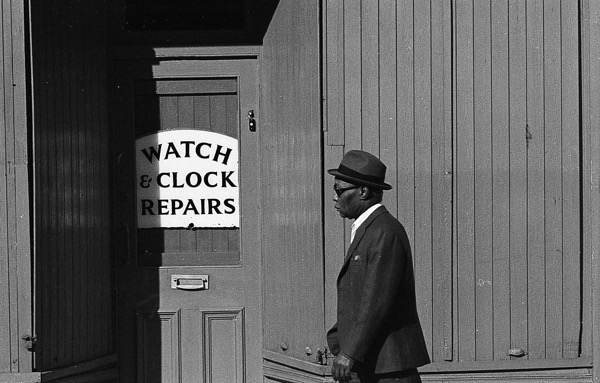
N Berg, Watch & Clock Repairs
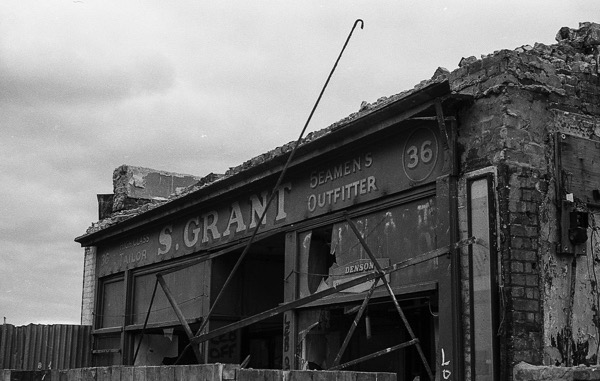
S Grant, High Class Tailor, Seamens Outfitter
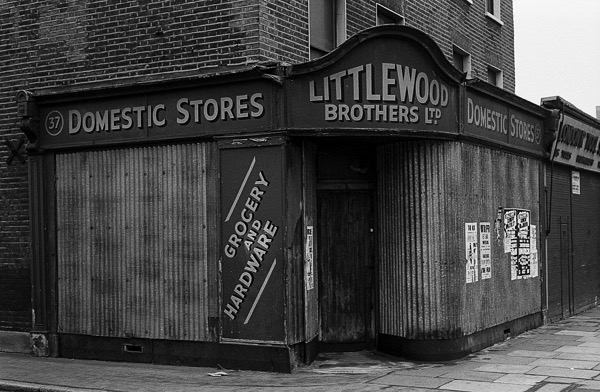
Littlewood Brothers Ltd, Domestic Stores, Grocery & Hardware
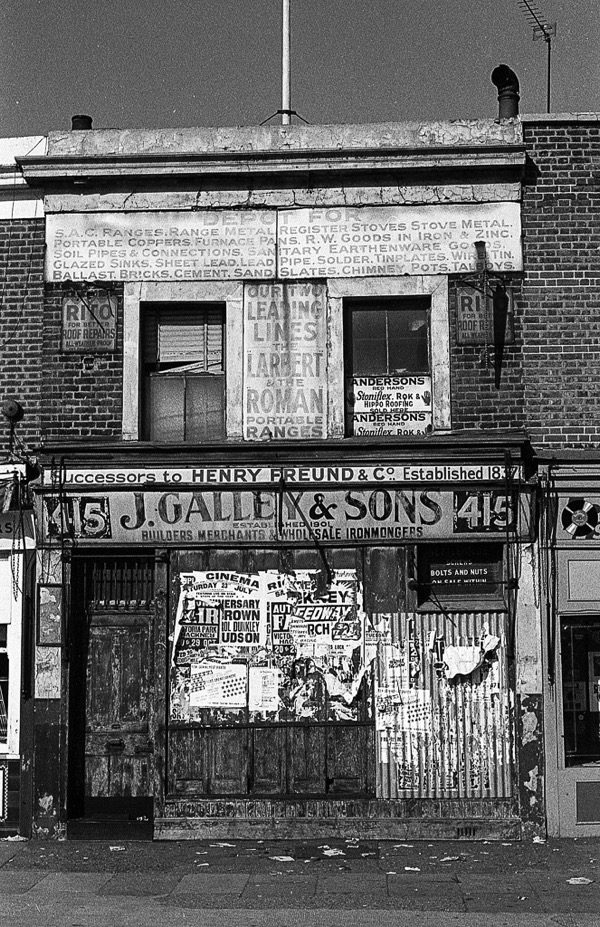
J Galley & Sons, Established 1901
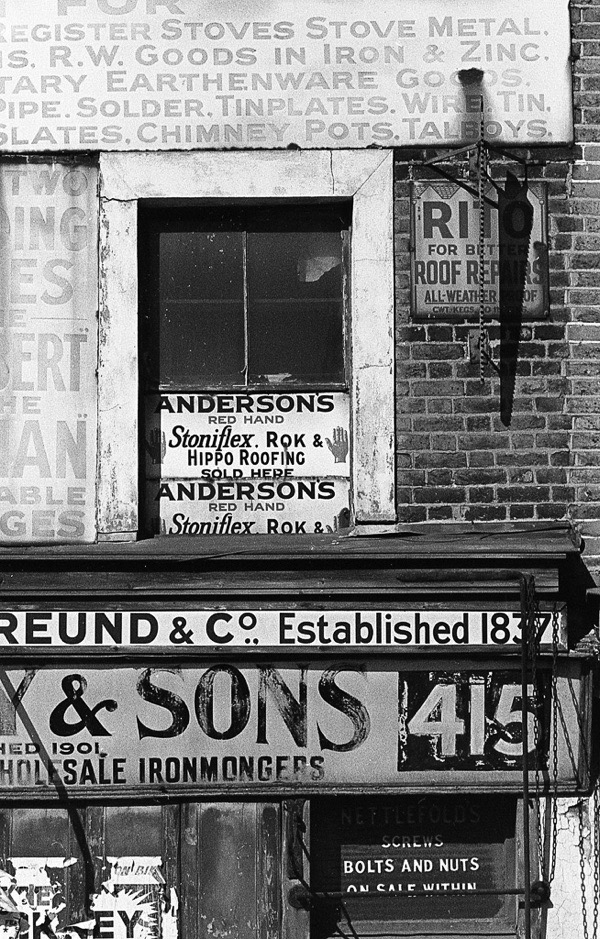
Henry Freund & Son, Established 1837
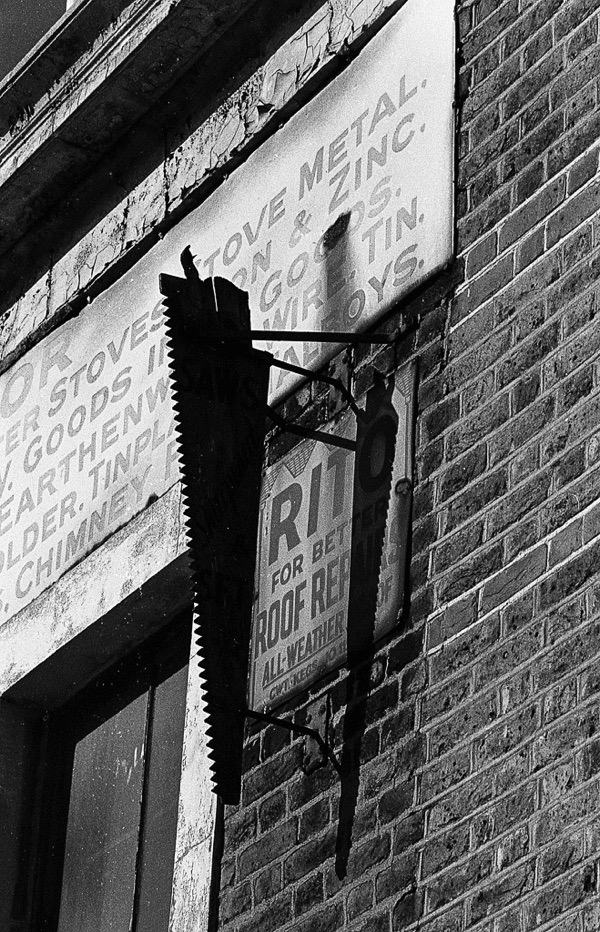
Rito for Better Roof Repairs
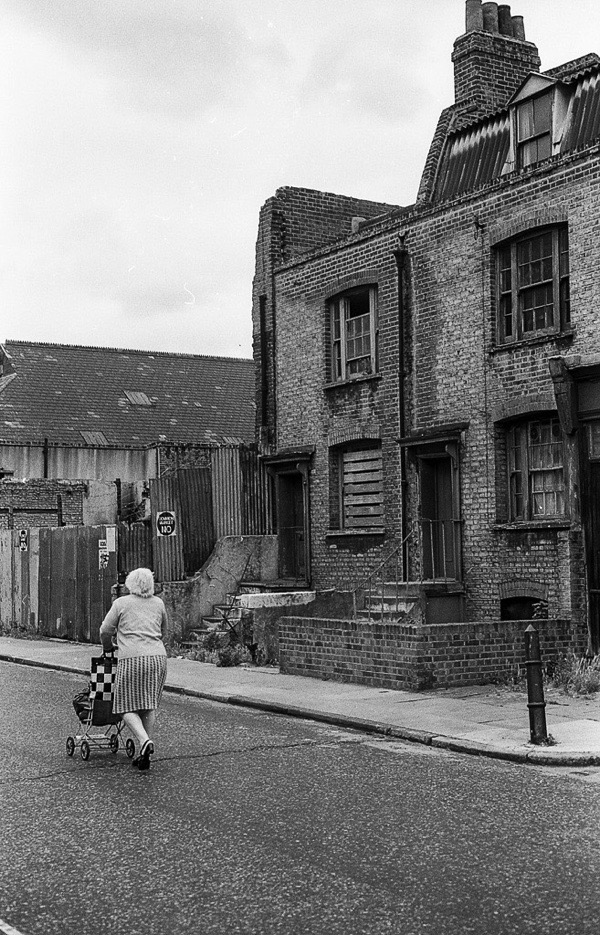
Common Market NO
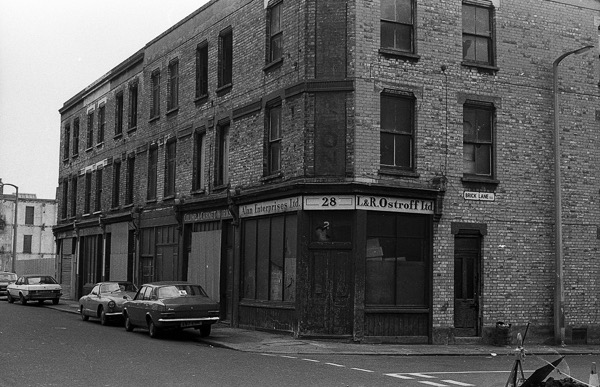
Alan Enterprises Ltd, L & R Ostroff Ltd, Brick Lane
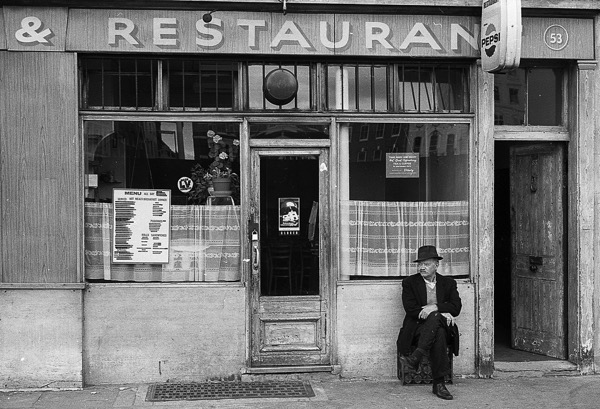
Photographs copyright © Chris Miles
You may also like to take a look at
A Walk In Long Forgotten London
If you got lost in the six volumes of Walter Thornbury’s London Old & New you might never find your way out again. Published in the eighteen-seventies, they recall a London which had already vanished, in atmospheric engravings enticing the viewer to visit the dirty, shabby, narrow labyrinthine streets leading to Thieving Lane, by way of Butcher’s Row and Bleeding Heart Yard.

Butcher’s Row, Fleet St, 1800

The Old Fish Shop by Temple Bar, 1846

Exeter Change Menagerie in the Strand, 1826
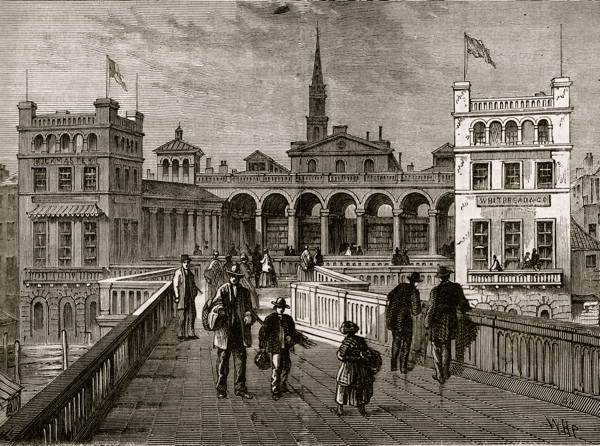
Hungerford Bridge with Hungerford Market, 1850

At the Panopticon in Leicester Sq, 1854

Holbein Gateway in Whitehall, 1739

Thieving Lane in Westminster, 1808

Old London Bridge, 1796
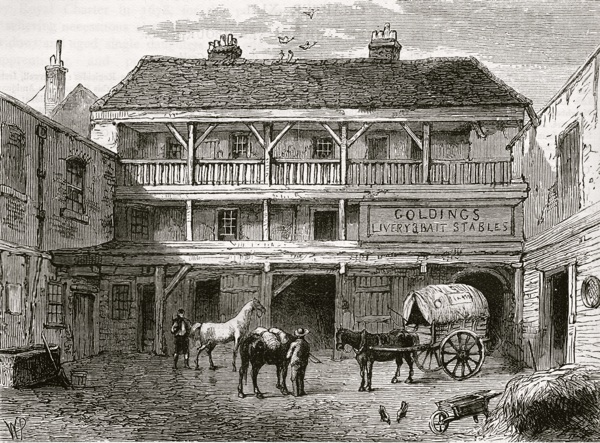
Black Bull Inn, Gray’s Inn Lane

Cold Harbour, Upper Thames St, City of London

Billingsgate, 1820
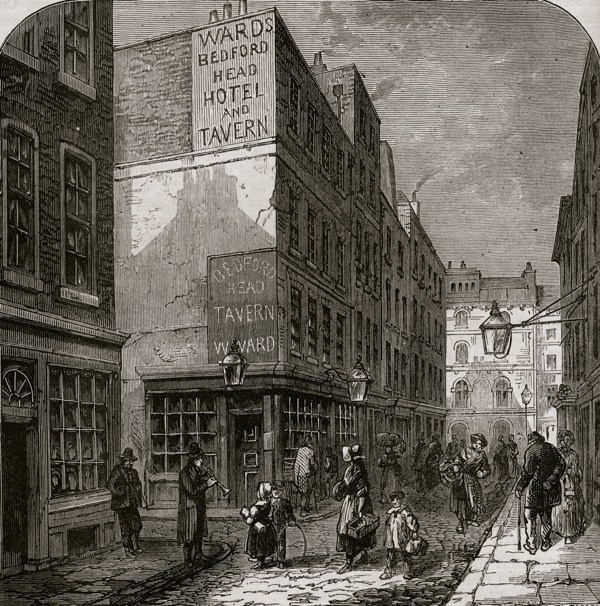
Bedford Head Tavern, Covent Garden

Coal Exchange, City of London, 1876

The Cock & Magpie, Drury Lane

Roman remains discovered at Bilingsgate

Hick’s Hall in Clerkenwell, 1730

Former church of St James Clerkenwell

Door of Newgate Prison

Fleet Market
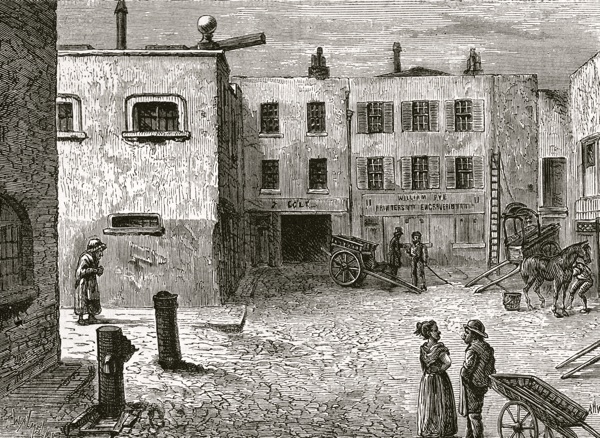
Bleeding Heart Yard in Hatton Garden

Prince Henry’s House in the Barbican

Fortune Theatre, Whitecross St, 1811

Coldbath House in Clerkenwell, 1811

Milford Lane, off the Strand, 1820
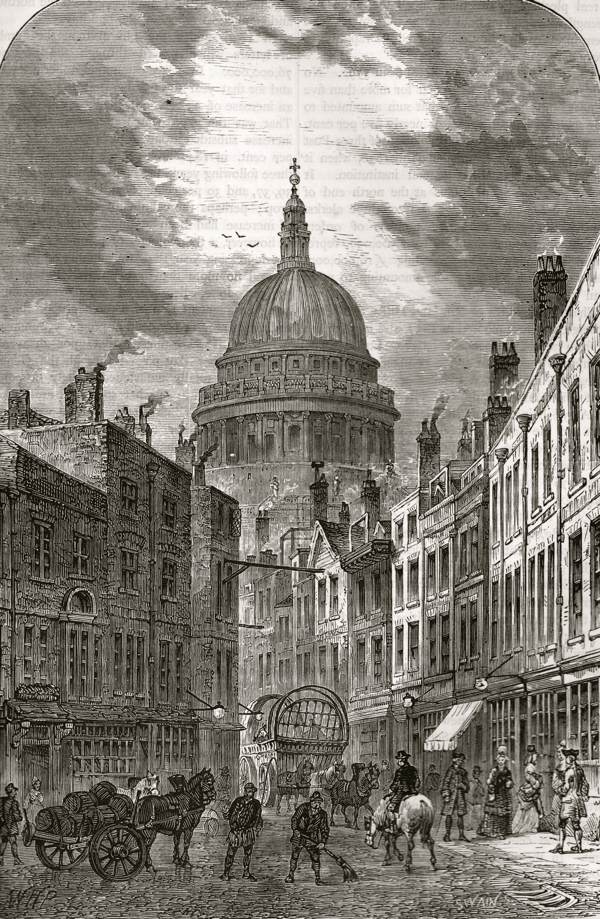
St Martin’s-Le-Grand, 1760

Old Bethlehem Hospital (Bedlam), Moorfields, in 1750
Images courtesy Bishopsgate Institute
You may also like to take a look at
The Gentle Author In Covent Garden
On Friday 19th May, I will be talking about the history of street trading in Covent Garden and showing old pictures of the CRIES OF LONDON at the London Transport Museum in the Piazza, as part of the launch evening for their SOUNDS OF THE CITY exhibition. Tickets available here
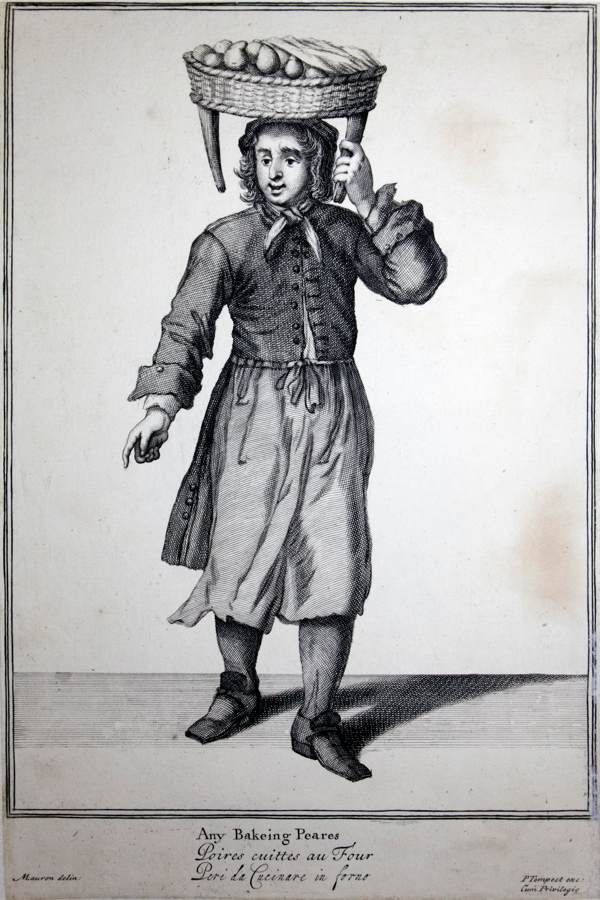
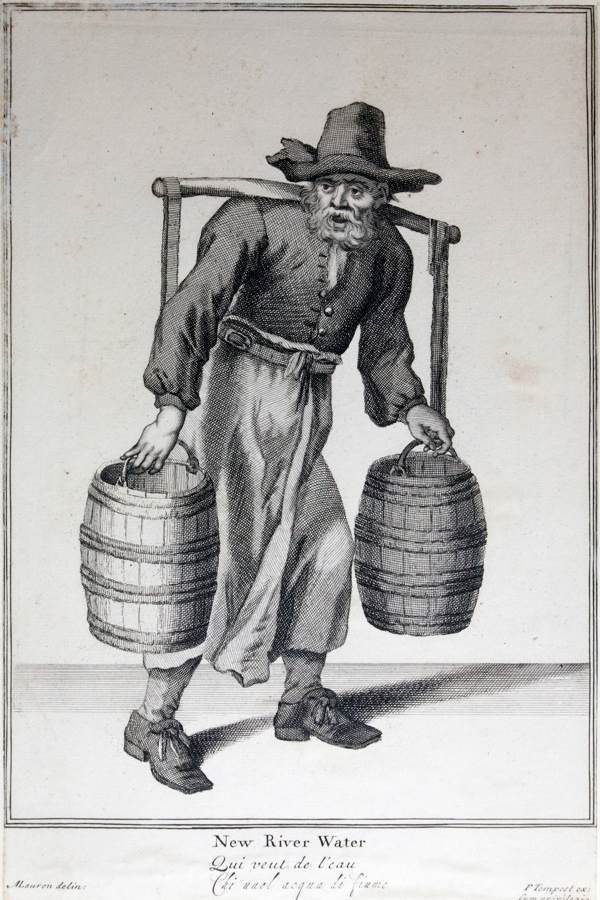
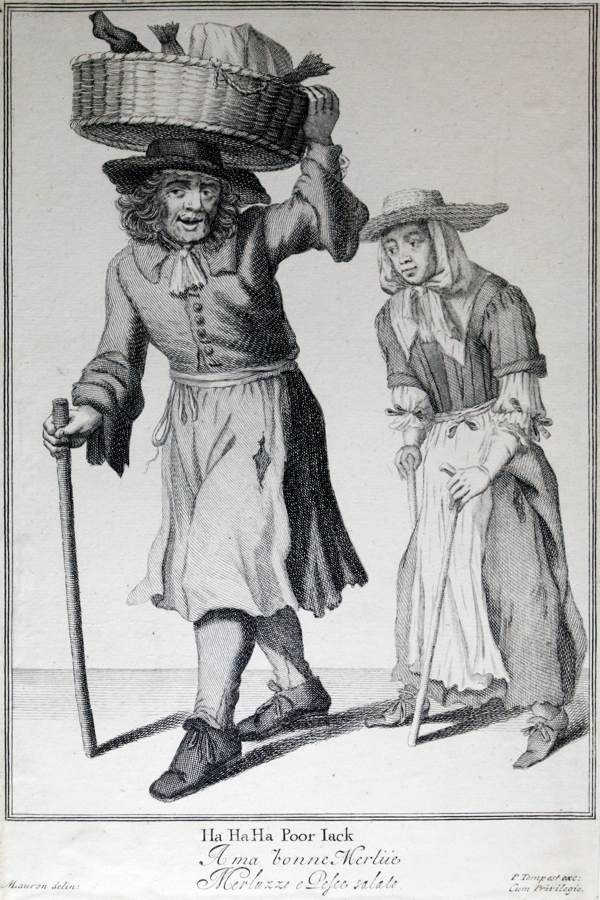
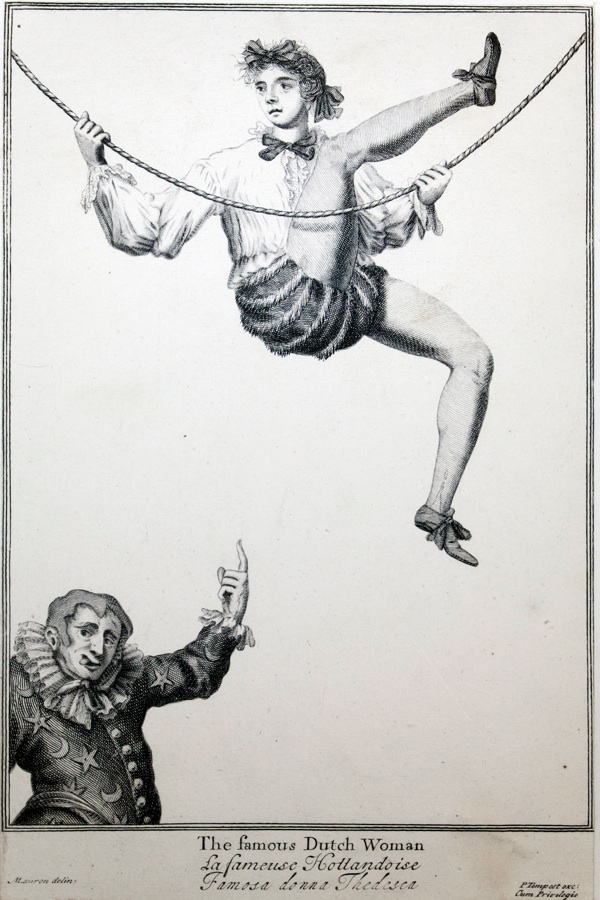
Today it is my pleasure to publish Marcellus Laroon’s vibrant engravings of the Cries of London that he drew while living in Covent Garden, reproduced here from an original edition of 1687 in the collection at the Bishopsgate Institute
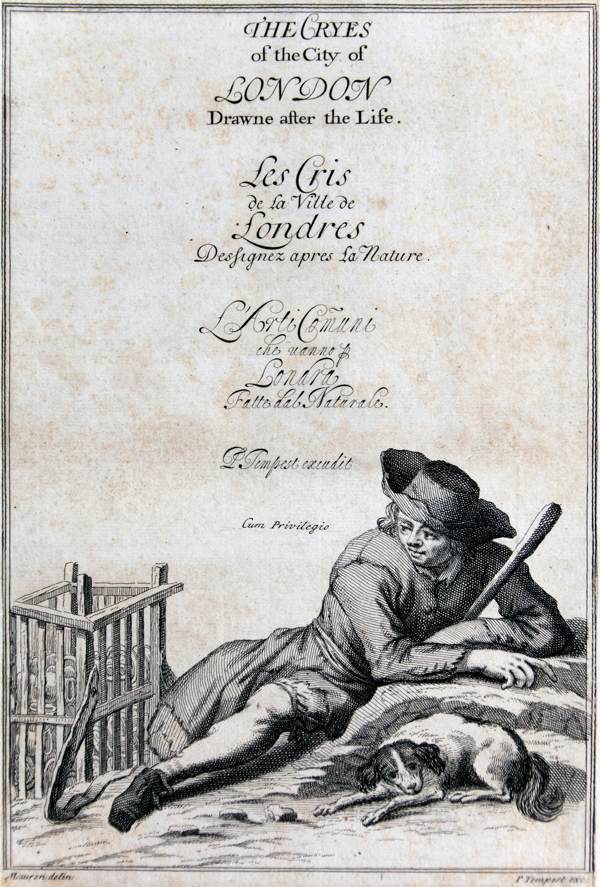
The death of Oliver Cromwell and the restoration of Charles II made the thoroughfares of London festive places once again, renewing the street life of the metropolis – and when the Great Fire of 1666 destroyed the shops and wiped out most of the markets, an unprecedented horde of hawkers flocked to the City from across the country to supply the needs of Londoners .
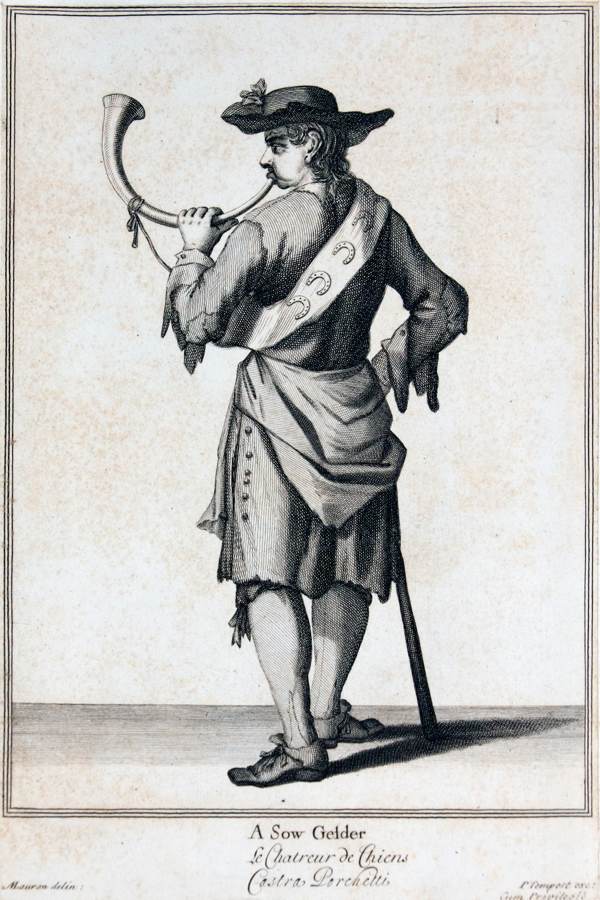
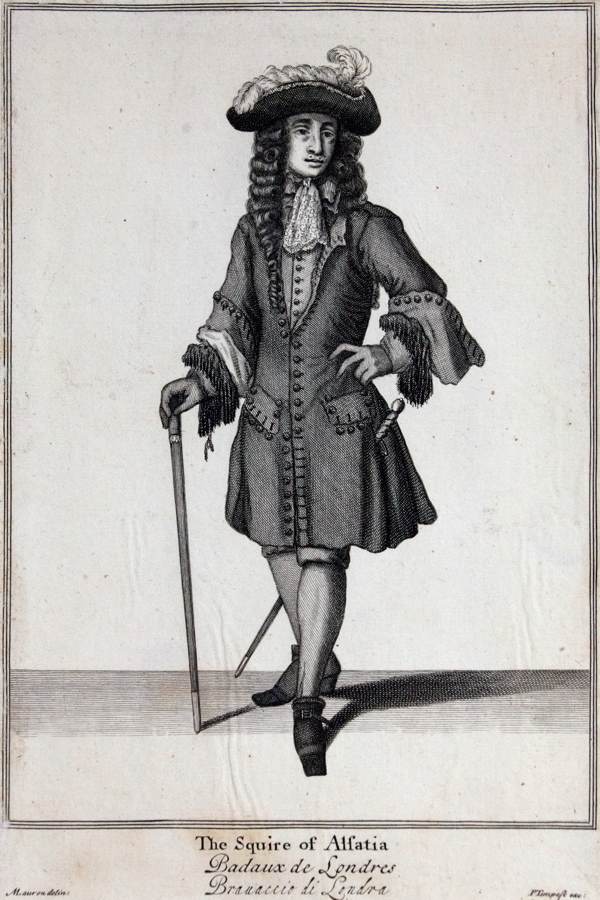
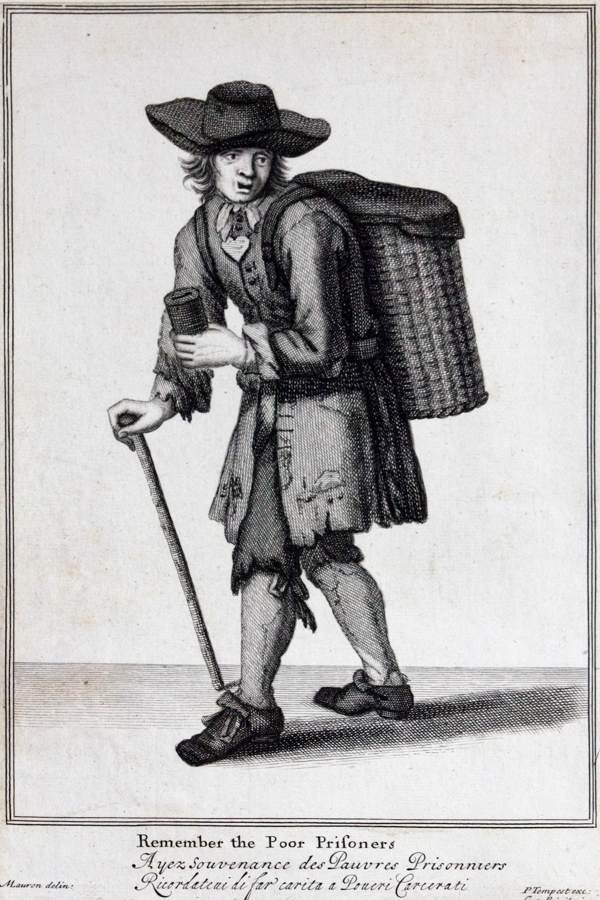
Samuel Pepys and Daniel Defoe both owned copies of Marcellus Laroon’s Cries of London. Among the very first Cries to be credited to an individual artist, Laroon’s “Cryes of the City of London Drawne after the Life” were on a larger scale than had been attempted before, which allowed for more sophisticated use of composition and greater detail in costume. For the first time, hawkers were portrayed as individuals not merely representative stereotypes, each with a distinctive personality revealed through their movement, their attitudes, their postures, their gestures, their clothing and the special things they sold. Marcellus Laroon’s Cries possessed more life than any that had gone before, reflecting the dynamic renaissance of the City at the end of the seventeenth century.
Previous Cries had been published with figures arranged in a grid upon a single page, but Laroon gave each subject their own page, thereby elevating the status of the prints as worthy of seperate frames. And such was their success among the bibliophiles of London, that Laroon’s original set of forty designs – reproduced here – commissioned by the entrepreneurial bookseller Pierce Tempest in 1687 was quickly expanded to seventy-four and continued to be reprinted from the same plates until 1821. Living in Covent Garden from 1675, Laroon sketched his likenesses from life, drawing those he had come to know through his twelve years of residence there, and Pepys annotated eighteen of his copies of the prints with the names of those personalities of seventeenth century London street life that he recognised.
Laroon was a Dutchman employed as a costume painter in the London portrait studio of Sir Godfrey Kneller – “an exact Drafts-man, but he was chiefly famous for Drapery, wherein he exceeded most of his contemporaries,” according to Bainbrigge Buckeridge, England’s first art historian. Yet Laroon’s Cries of London, demonstrate a lively variety of pose and vigorous spontaneity of composition that is in sharp contrast to the highly formalised portraits upon which he was employed.
There is an appealing egalitarianism to Laroon’s work in which each individual is permitted their own space and dignity. With an unsentimental balance of stylisation and realism, all the figures are presented with grace and poise, even if they are wretched. Laroon’s designs were ink drawings produced under commission to the bookseller and consequently he achieved little personal reward or success from the exploitation of his creations, earning his living by painting the drapery for those more famous than he and then dying of consumption in Richmond at the age of forty-nine. But through widening the range of subjects of the Cries to include all social classes and well as preachers, beggars and performers, Marcellus Laroon left us us an exuberant and sympathetic vision of the range and multiplicity of human life that comprised the populace of London in his day.



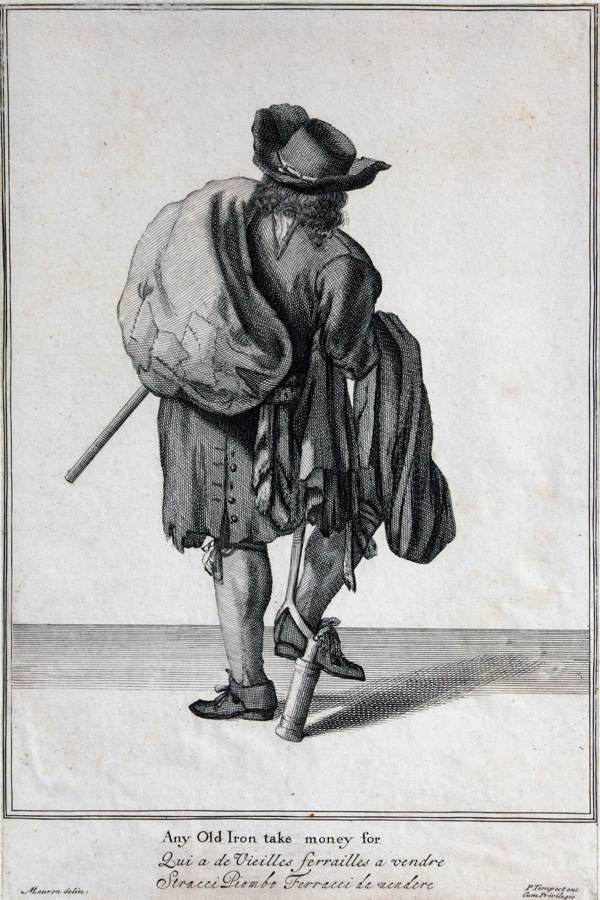
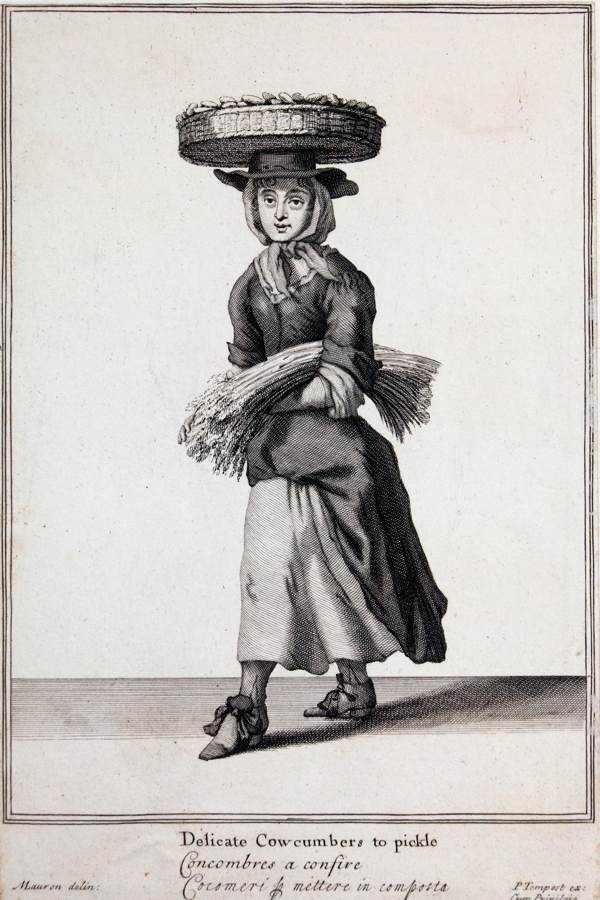
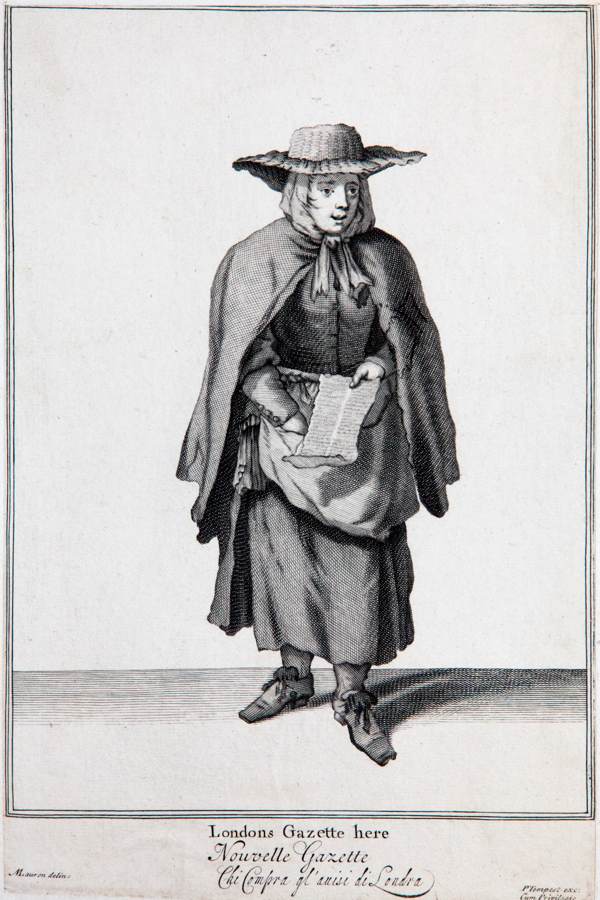
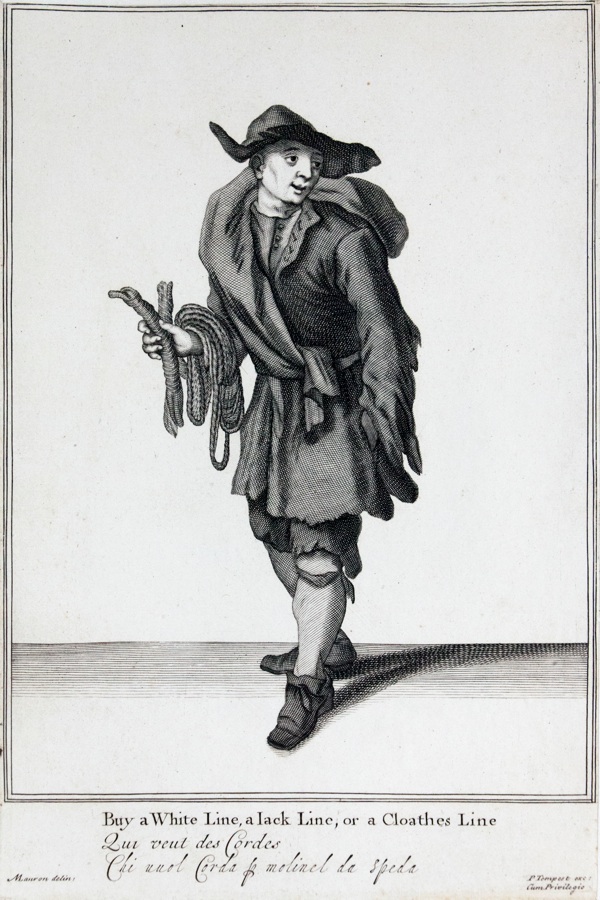
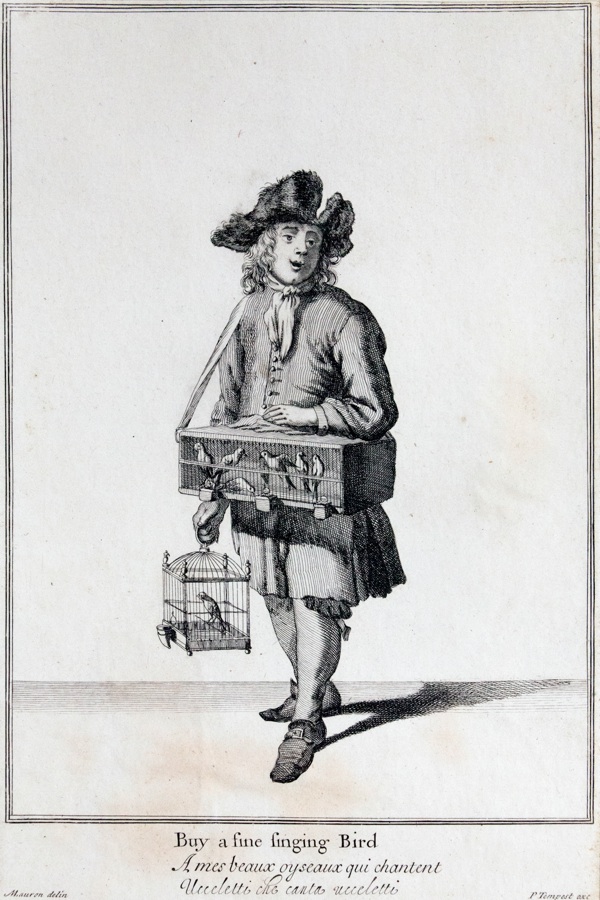

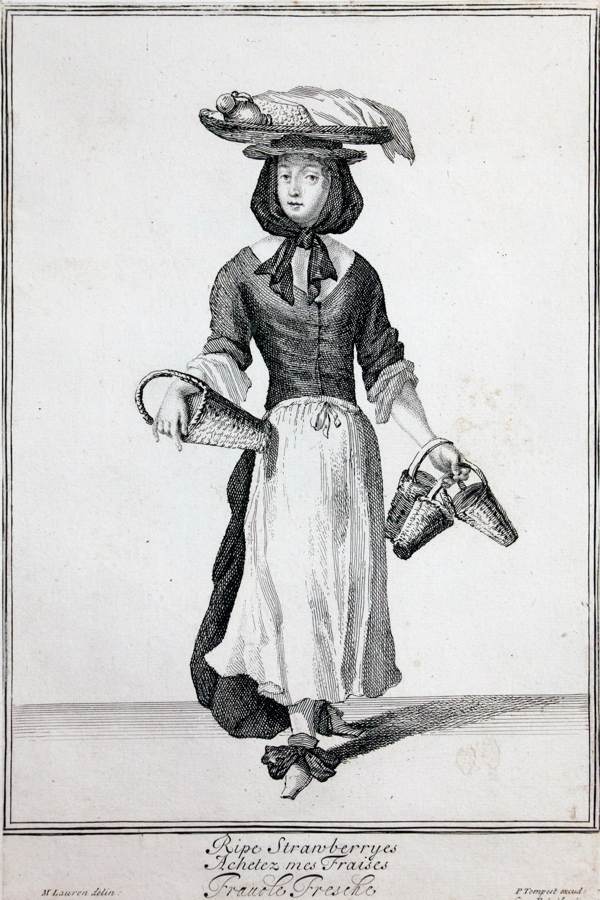

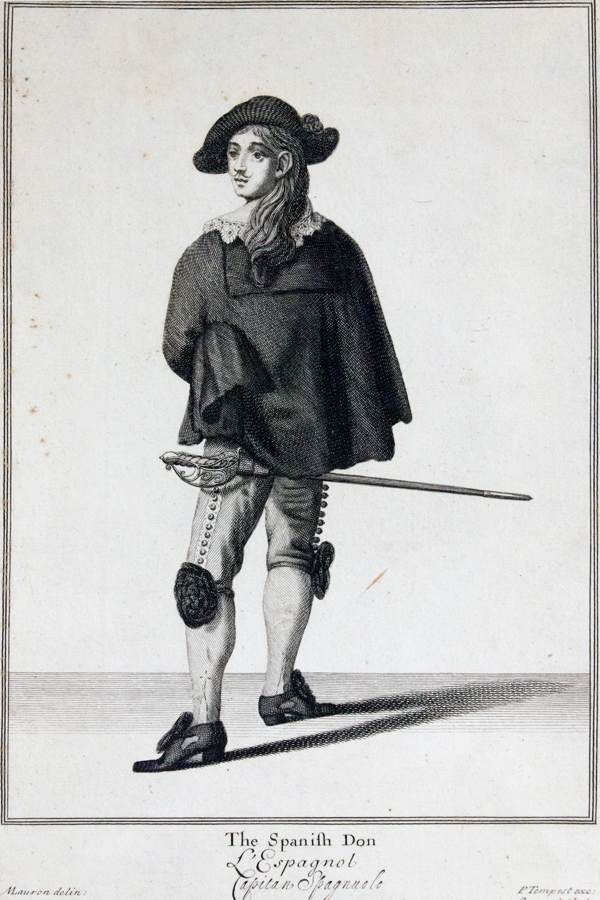
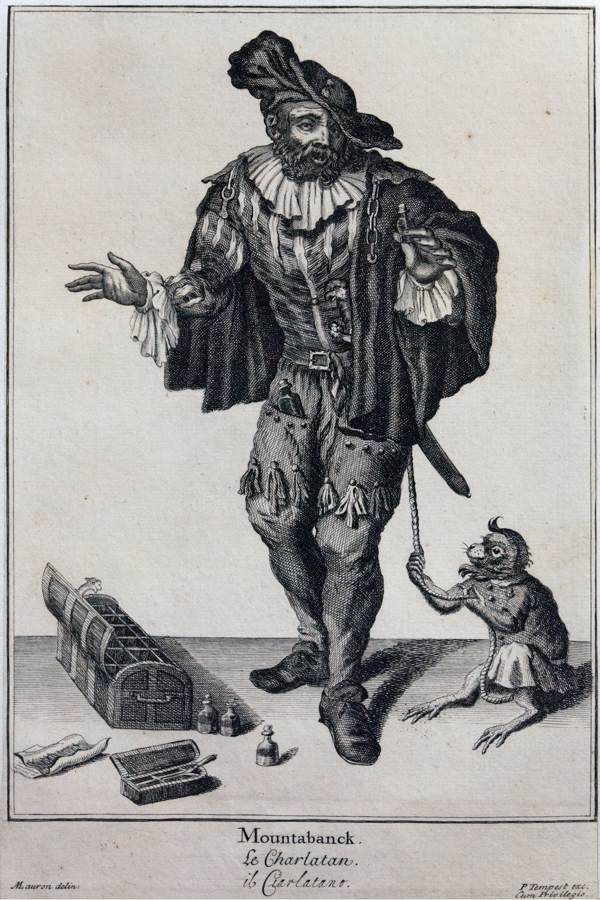
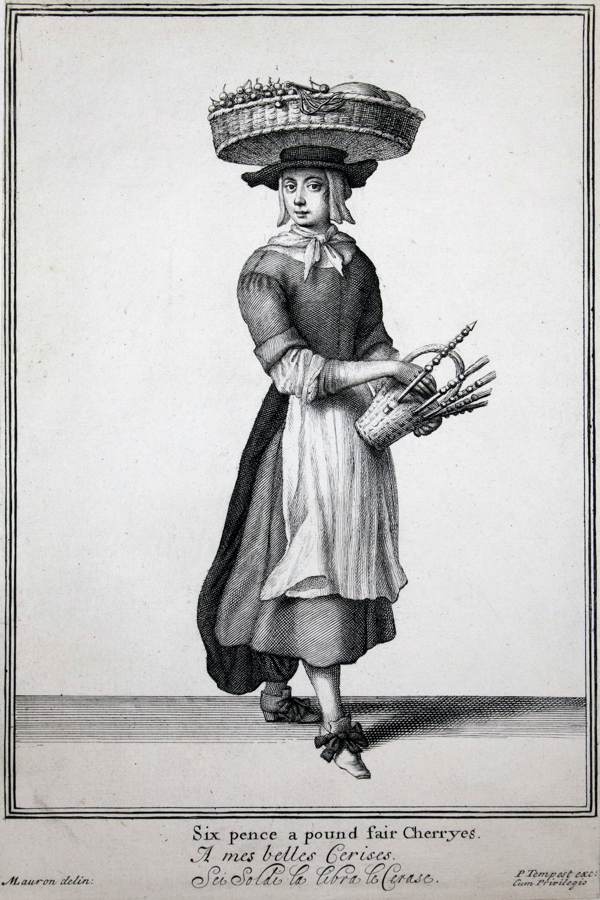
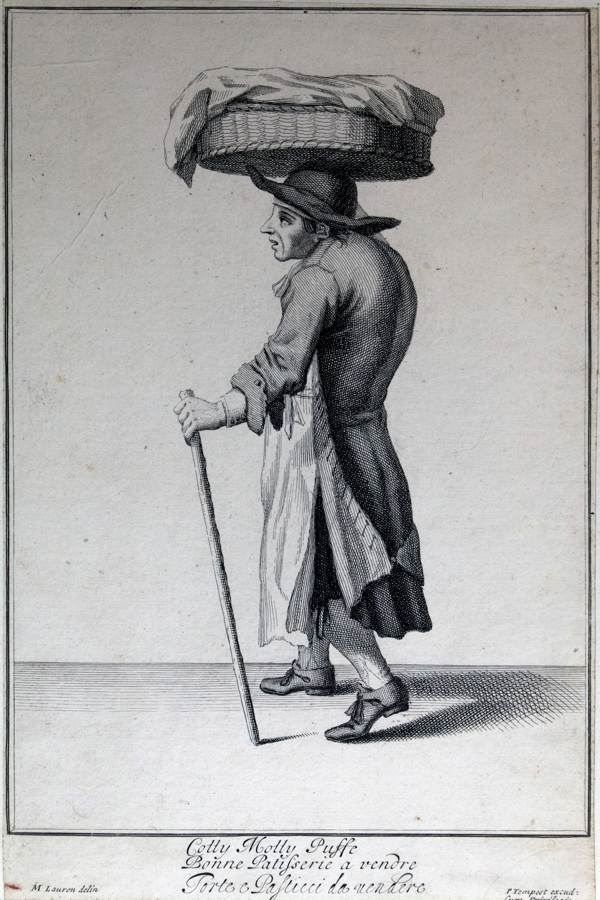
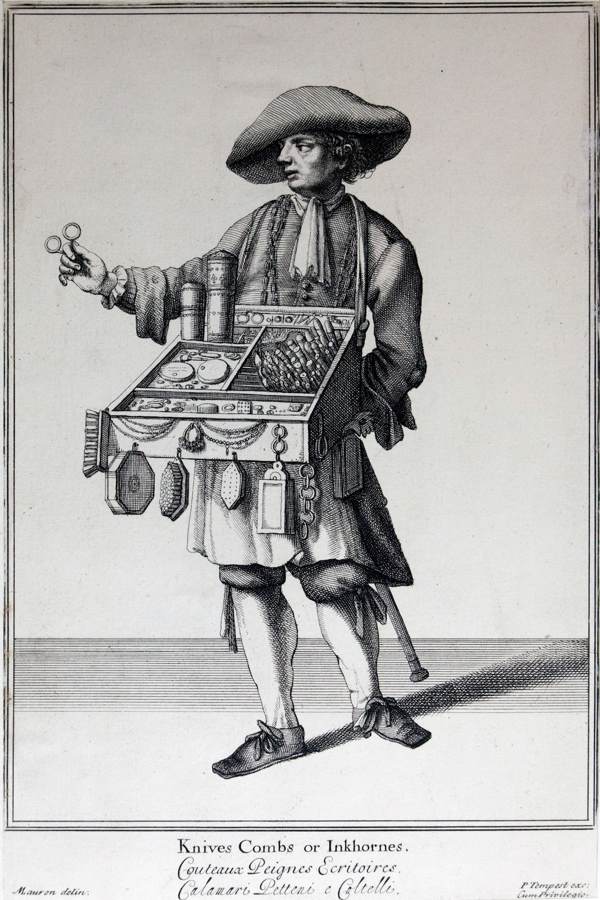
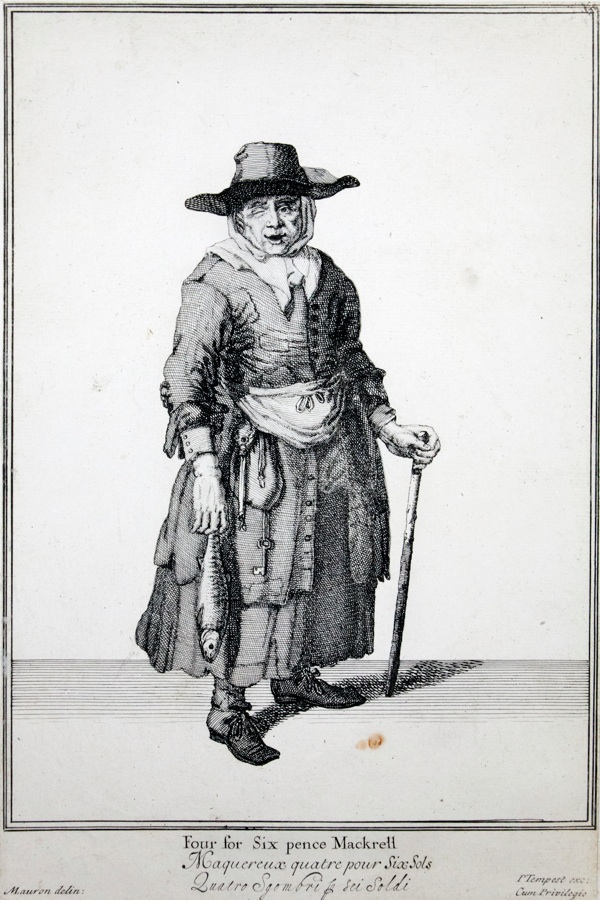

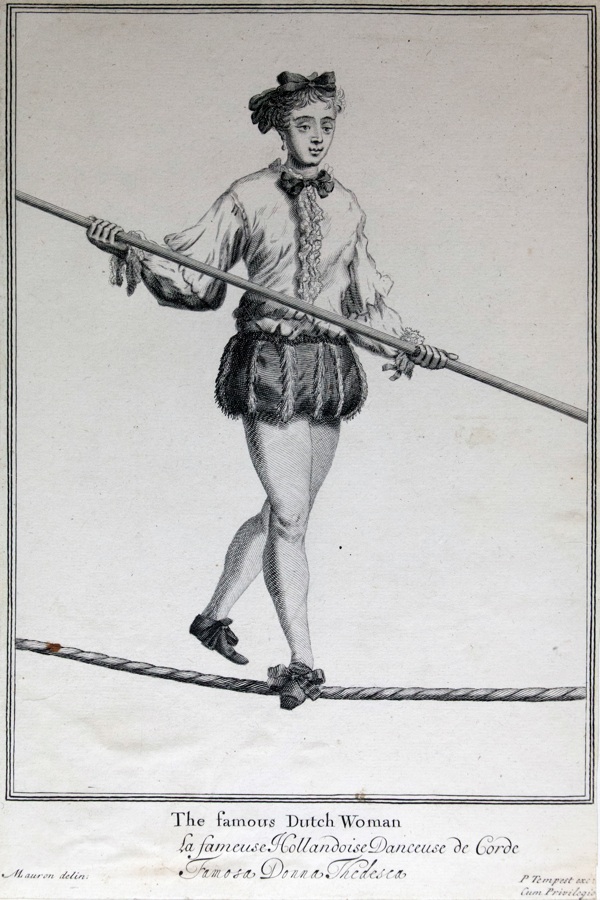


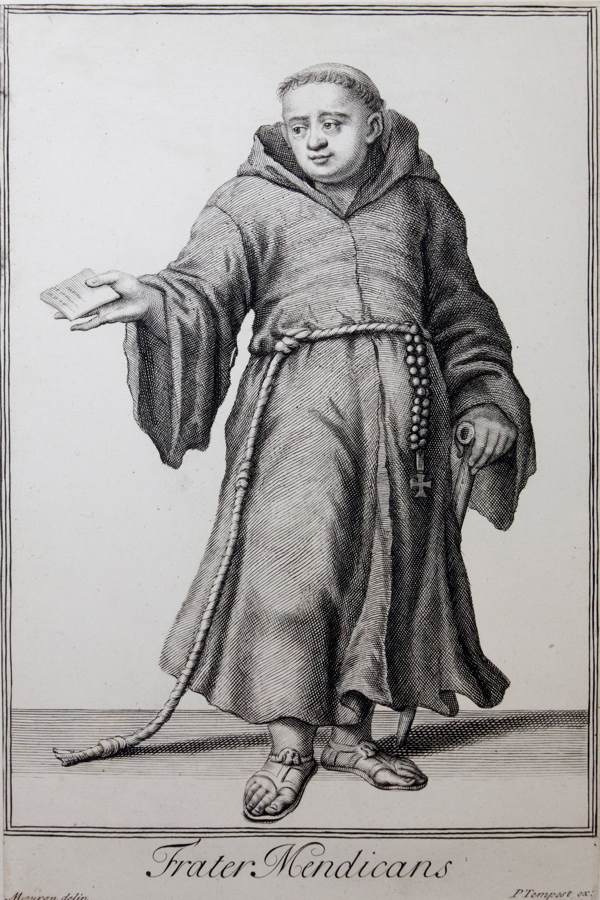
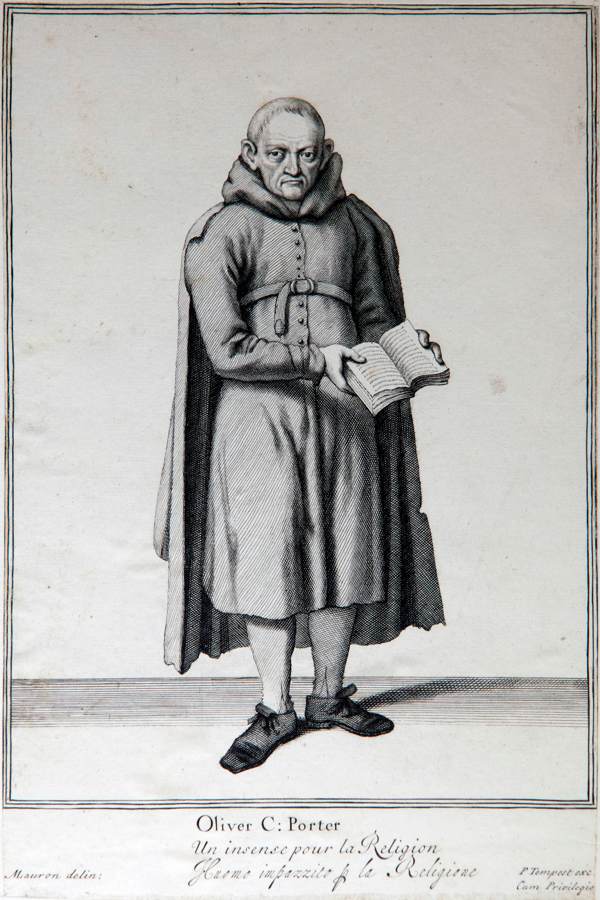
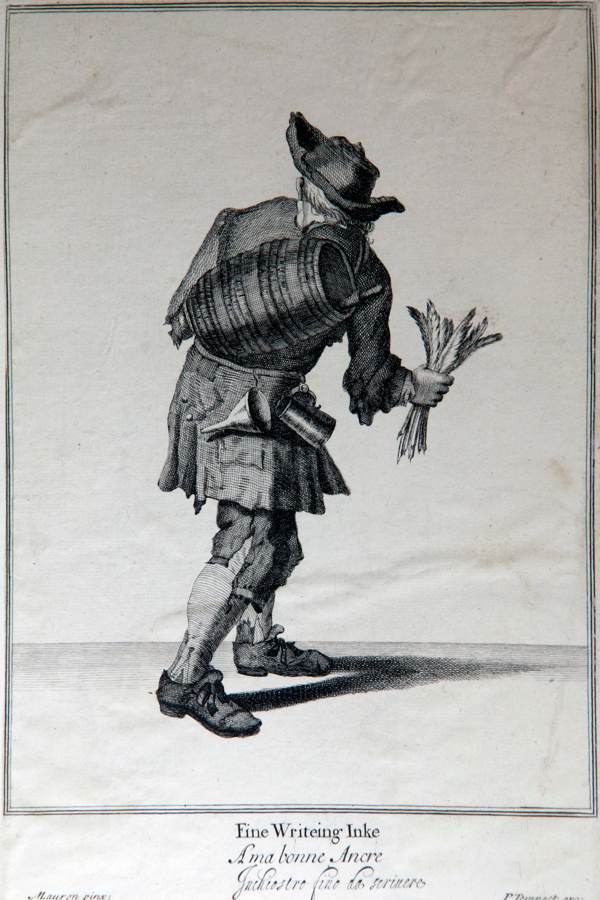
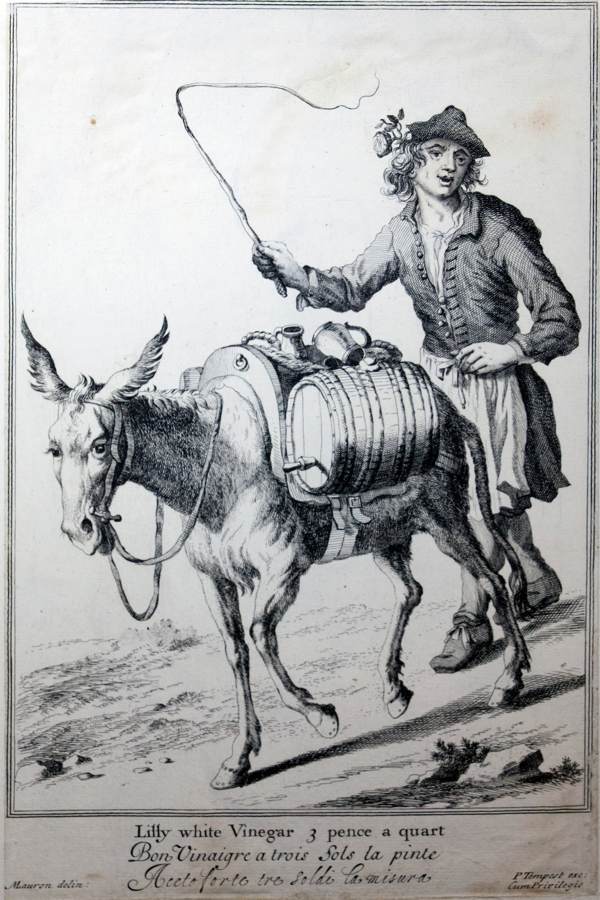
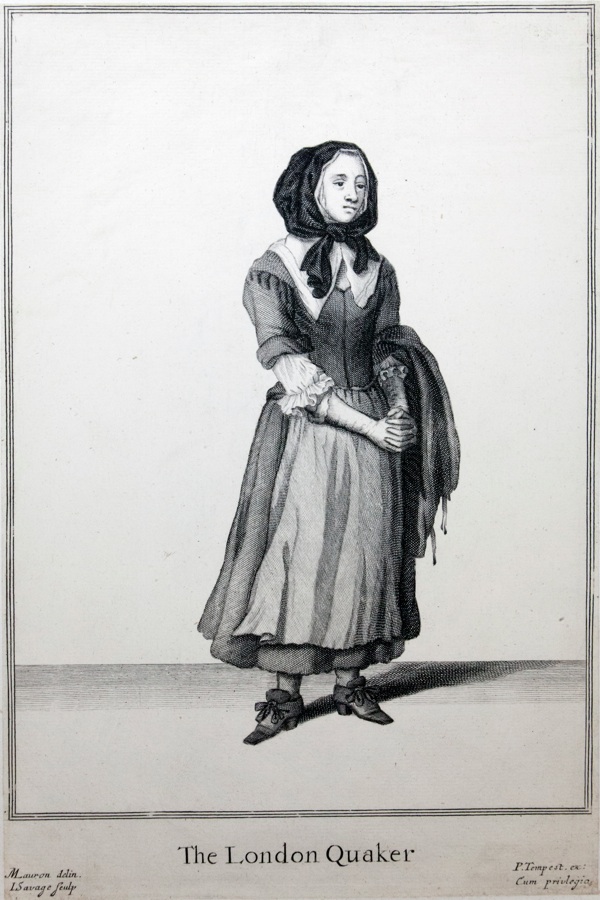
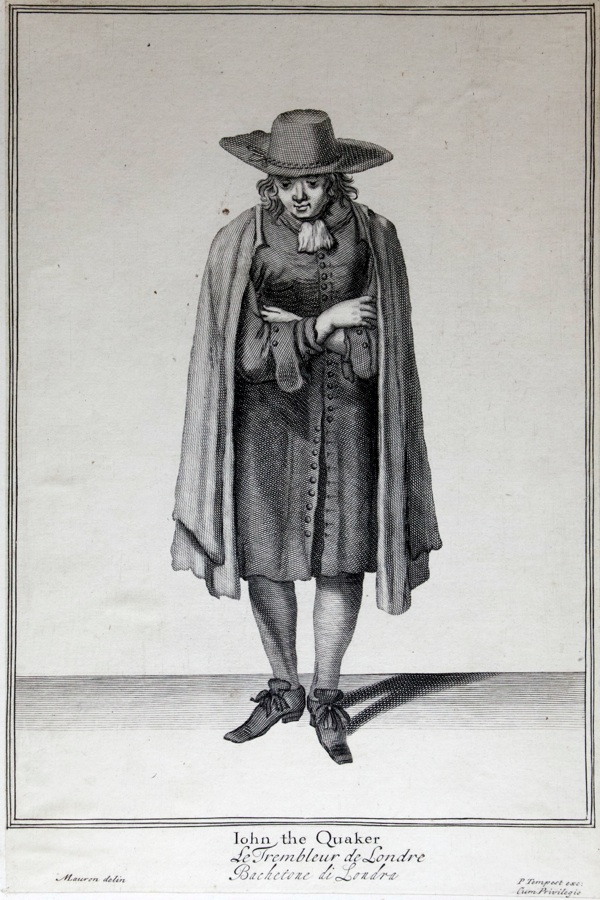

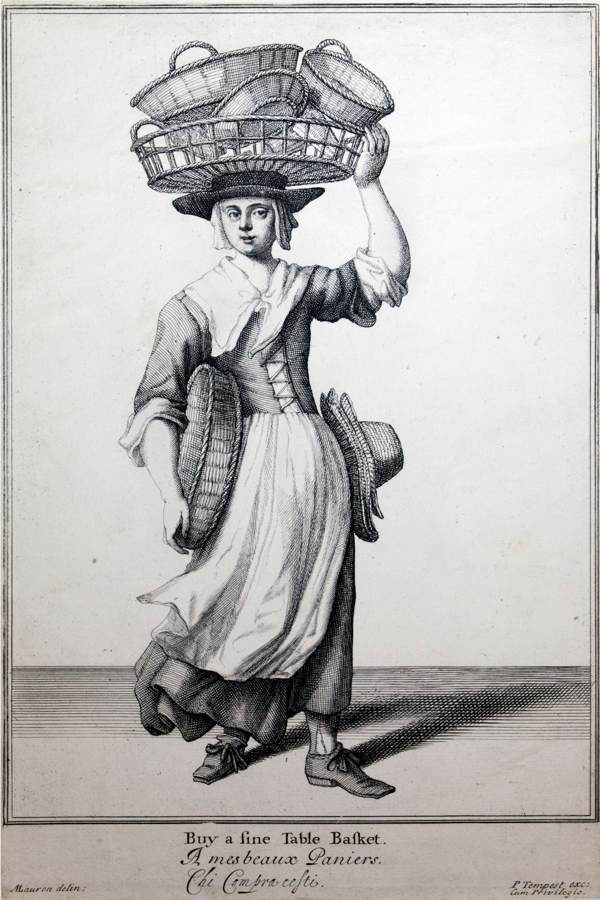
Images photographed by Alex Pink & reproduced courtesy Bishopsgate Institute
Peruse these other sets of the Cries of London I have collected
More John Player’s Cries of London
More Samuel Pepys’ Cries of London
Geoffrey Fletcher’s Pavement Pounders
William Craig Marshall’s Itinerant Traders
H.W.Petherick’s London Characters
John Thomson’s Street Life in London
Aunt Busy Bee’s New London Cries
William Nicholson’s London Types
Francis Wheatley’s Cries of London
John Thomas Smith’s Vagabondiana of 1817
John Thomas Smith’s Vagabondiana II
John Thomas Smith’s Vagabondiana III
Thomas Rowlandson’s Lower Orders
Homer Sykes’ Spitalfields

At the Queen’s Silver Jubilee in Brick Lane
From the moment he first came to London as a student until the present day, Homer Sykes has been coming regularly to Spitalfields and taking photographs. “It was very different from suburban West London where I lived, in just a few tube stops the contrast was extraordinary,” he recalled, contemplating the dislocated world of slum clearance and racial conflict he encountered in the East End during the nineteen seventies when these eloquent pictures were taken.
Yet, within this fractured social landscape, Homer made a heartening discovery that resulted in one of the photographs below. “The National Front were demonstrating as usual on a Sunday at the top of Brick Lane.” he told me, “I was wandering around and I crossed the Bethnal Green Rd, and I looked into this minicab office where I saw this Asian boy and this Caucasian girl sitting happily together, just fifty yards from the demonstration. And I thought, ‘That’s the way it should be.'”
“I walked in like I was waiting for a taxi and made myself inconspicuous in order to take the photograph. It seemed to sum up what should be happening – they were in love, and in a taxi office.”
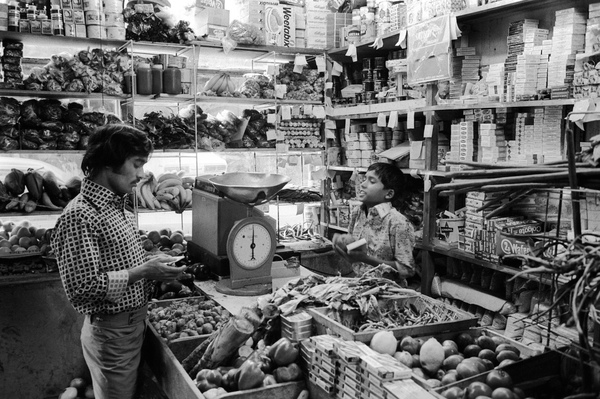


In Princelet St
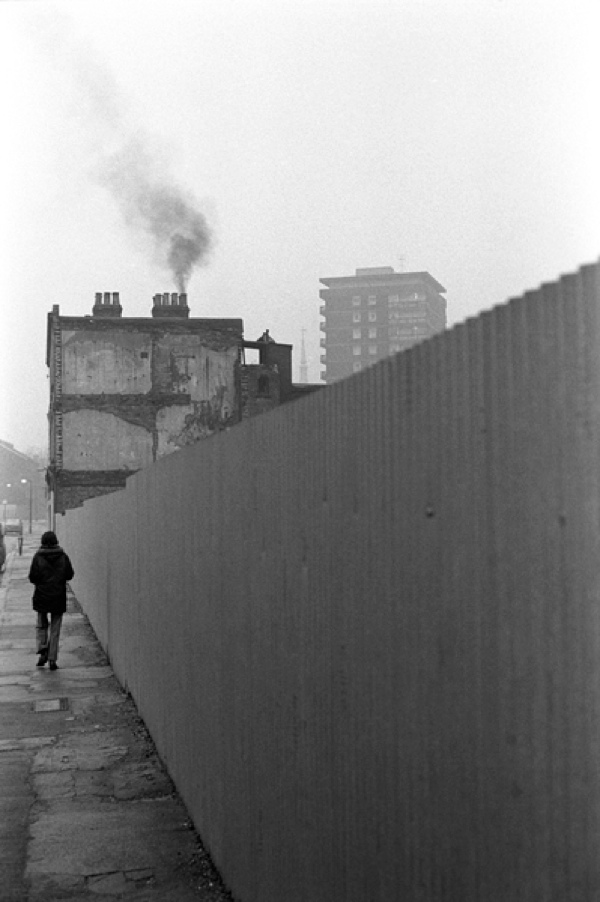
In Durward St

Great Eastern Buildings

In a minicab office, Bethnal Green Rd


Selling the National Front News on the corner of Bacon St
Photographs copyright © Homer Sykes
You may also like to take a look at
Homer Sykes, Photographer
Nevio Pellicci Goes To Market
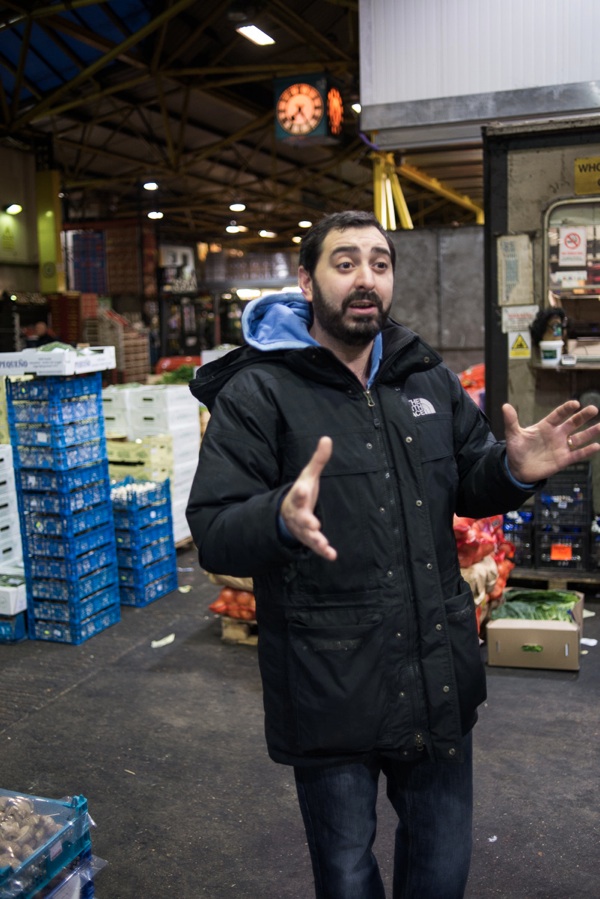
Nevio Pellicci goes in search of Maris Piper
“This is my dad’s old car,” explained Nevio Pellicci as he drove Contributing Photographer Sarah Ainslie & me through Bethnal Green before dawn, “I just use it now for these market trips” – and he patted the dashboard affectionately in remembrance of Nevio Pellicci senior. Each Monday, Wednesday and Friday, Nevio drives over to the New Spitalfields Market to buy fresh vegetables for his celebrated family-run cafe in the Bethnal Green Rd which has been in business since 1900.
“I’m up at five-fifteen and at the cafe by six,” Nevio explained lightly, revealing that he had been working even before we set out that morning,”When I was a boy, my mum used to wake me at four-fifteen and I’d just roll over, but my dad used to switch the lights on. He was of the old school, he was a grafter. You always had be doing something, that’s how he prepared you for life ahead.”
We sped through the empty East End streets towards Leyton, where the nocturnal wholesale market was just winding down after a night’s trading. Once we drove through the security gates, Nevio’s first port of call was Johnny Bates – known as the Legend – a tall man with a shock of white hair, whose role goes by the arcane name of Cartminder. In other words, Johnny keeps an eye on Nevio’s car and makes sure his market purchases are safe when they are delivered to the car by the Porters. “I bring him a piece of bread pudding sometimes,” Nevio confided to me, “Not too often mind you, I don’t want to spoil him.”
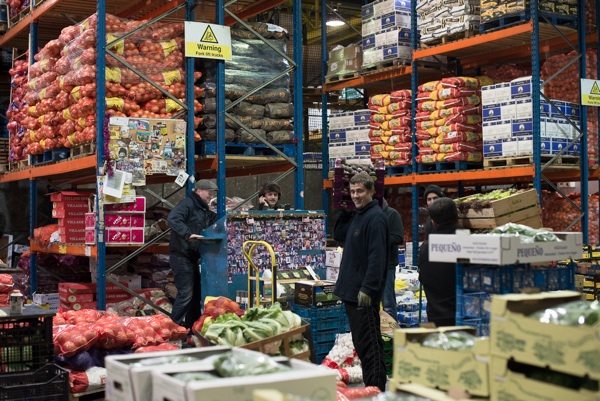
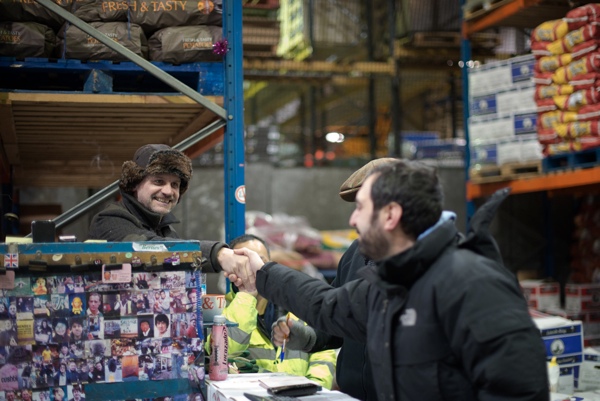
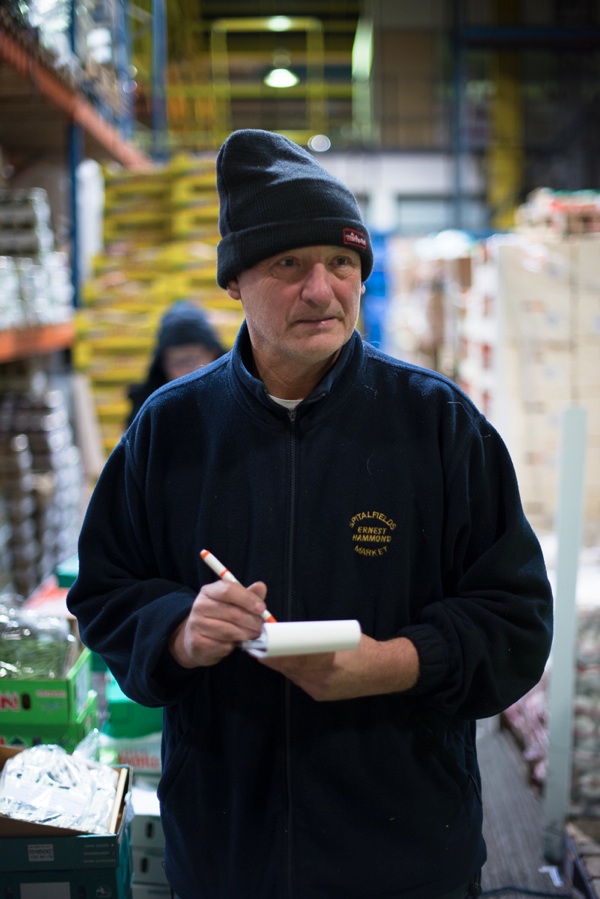
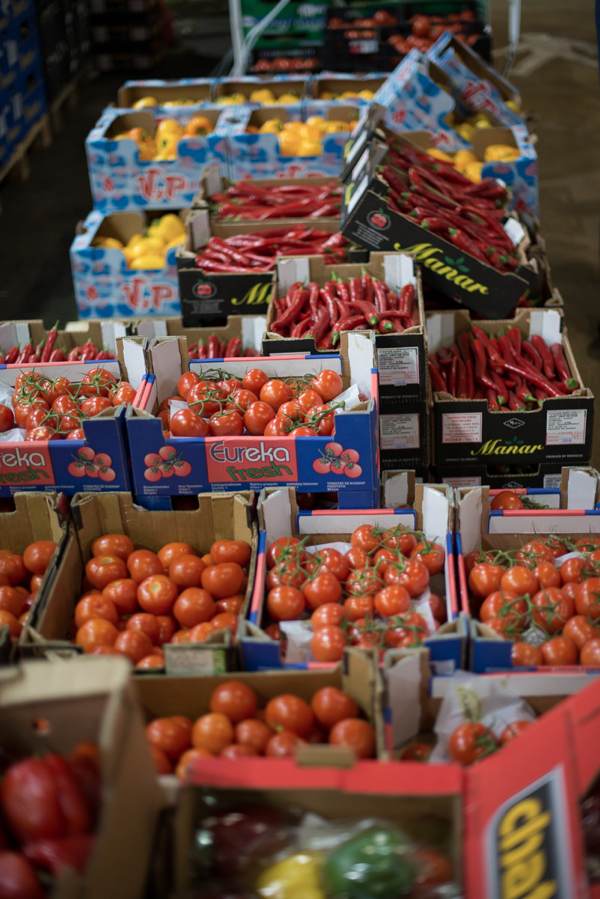
We entered the vast market hall that stretched away into the distance with a bewildering array of stands displaying enough vegetables to feed a city, stacked up in tall metal towers. Nevio knew what he was looking for and went straight for the spring greens at Ernest Hammond, where he is a familiar customer – enough to be welcomed liked a long-lost relative by the fellows behind the desk. The current Mr Hammond informed me he is sixth generation in this family business, the oldest in the market.
When I looked around, Nevio was off searching among the produce, since the greens were merely the overture to his essential quest – for potatoes to make the chips for which Pelliccis are famous throughout the capital.“Mum won’t use anything else but these!” he announced, holding up a sack of Maris Piper in triumph.
“We used to get our veg delivered,” Nevio confessed to me, rubbing his hands in glee as we strode through the cavernous hall together, “But I prefer to come here, you get to see what you are buying and you save a lot of money.” Next stop was Aberdeen Stanton, third generation traders in the market. “This is where I get 95% of my stuff,” Nevio assured me with a proprietorial smile, “If they haven’t got it, they’ll find it for me.”
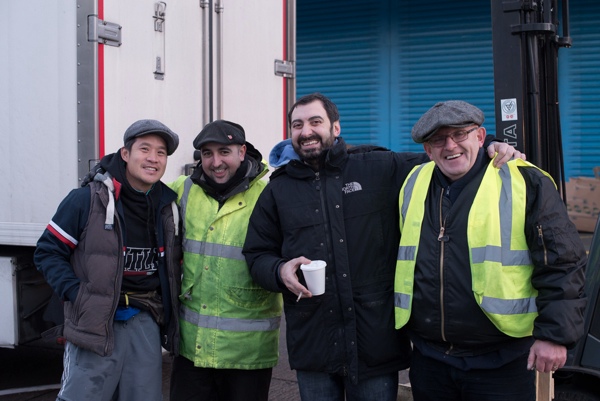
“I’m in and out in no time, I get everything and I’m back to the cafe,” admitted Nevio, once he had run through his list, yet since Sarah & I were there, he agreed to take a stroll around. Our last destination was Dino’s Cafe, that was formerly in Crispin St, Spitalfields, and moved here in 1991. “I used to come in here when I was bunking off school,” Nevio whispered to me. Taking a moment to shake hands with Ernesto Fiori, the proprietor, and greet Jim Olney, the paper bag seller from Donovans, we carried off cups of tea to drink on our way. As we were leaving, I met Keith Edwards, a Porter of forty-eight years standing – “I’ve Porters in my family in the London markets going back over a hundred years,” he told me.
Before I could pursue the conversation with Keith, we were outside in the sunrise as Porter, Terry Holt, arrived with Nevio’s order – delivered at the car where Johnny Bates was waiting. Terry boasted fifty-one years in the job. “I had three uncles down here as Porters in 1963,” he informed me proudly. Johnny Bates, thirty years a Cartminder, was not to be outdone –“My grandfather worked in Spitalfields Markt when he was eight years old and when the Market closed in the morning, he walked up through Quaker St, under the arches, whistling and then his mother came out the house with a piece of toast and his schoolbooks for him, and off he went to school.” After this disclosure, I knew why Johnny is known as ‘the Legend.’
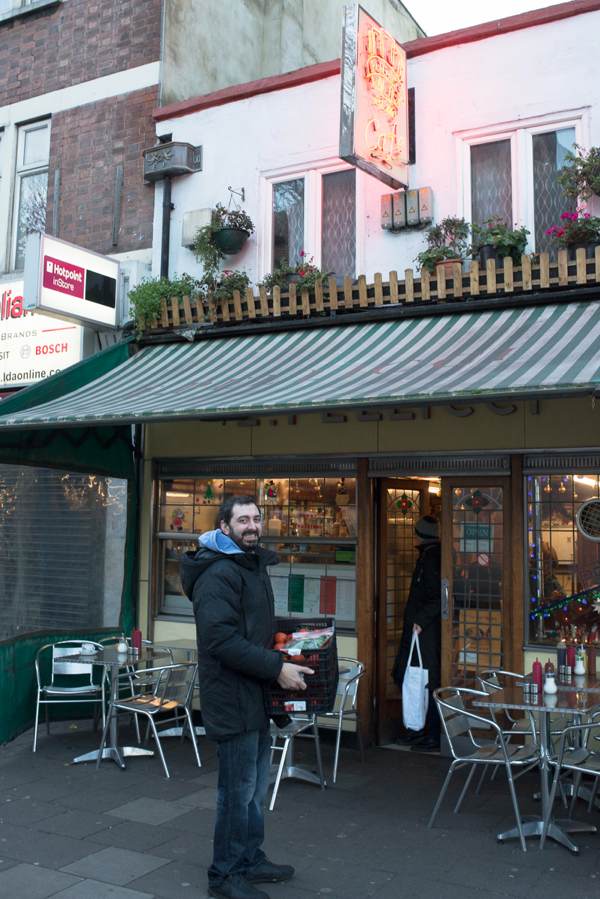
We were chilled to the bone and, lacking the inborn vitality of market traders, Sarah & I were happy to be back in the warm at Pelliccis in Bethnal Green eating a hot breakfast. It had been an adventure, but for Nevio it happens three nights a week, every week, as a prelude to a day’s work in the cafe. The lengths some people will go to for fresh vegetables are astonishing.

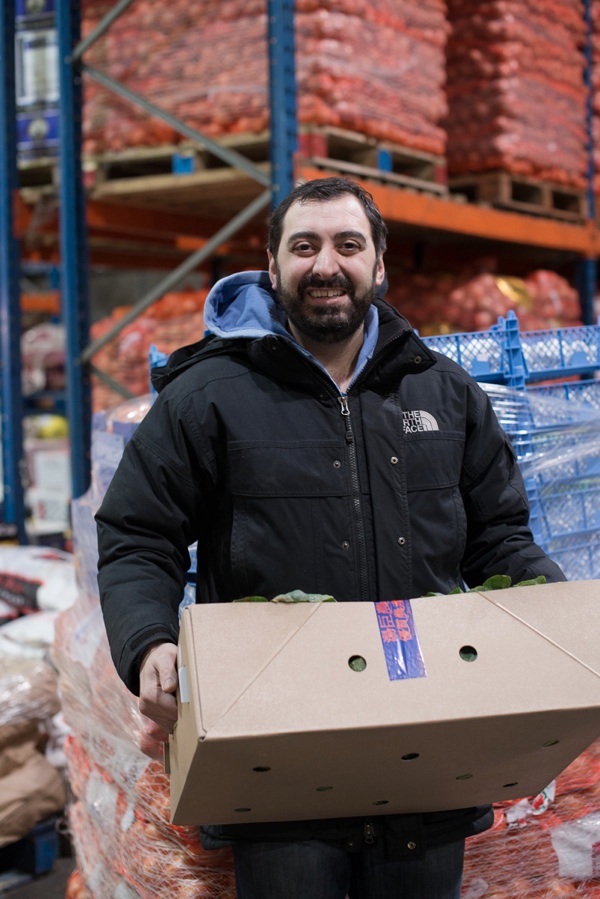
Spring greens from Ernest Hammond
Lawrence

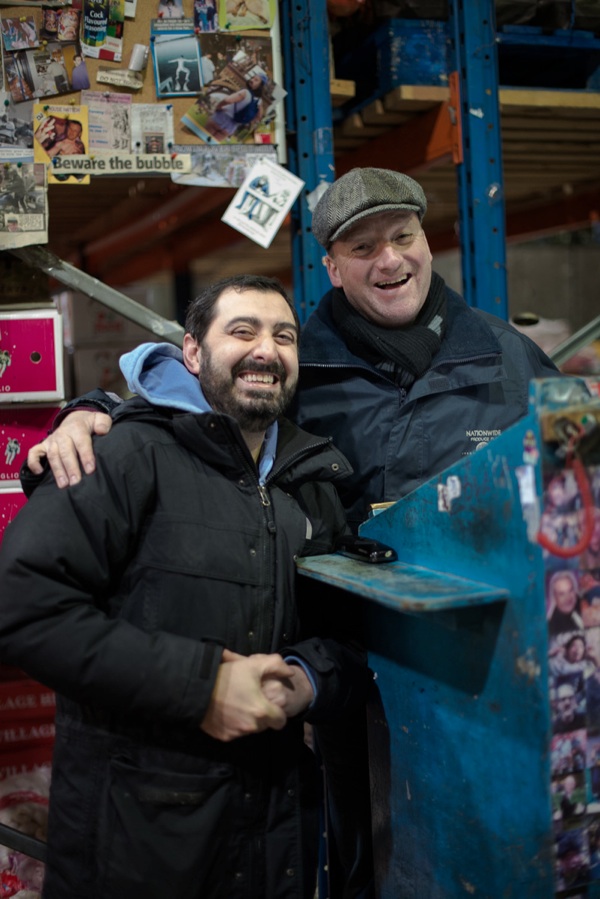


Ernest Hammond, six generations in the family business
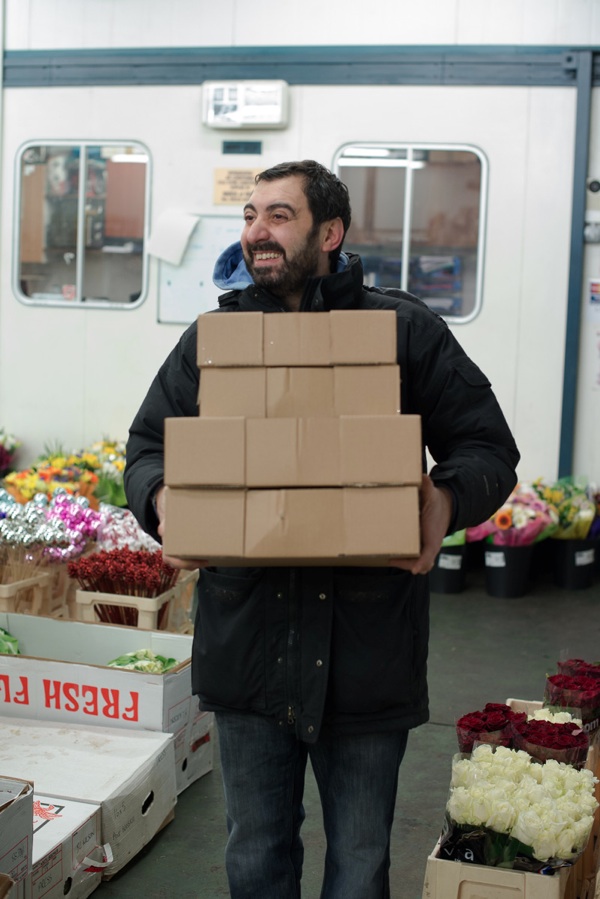
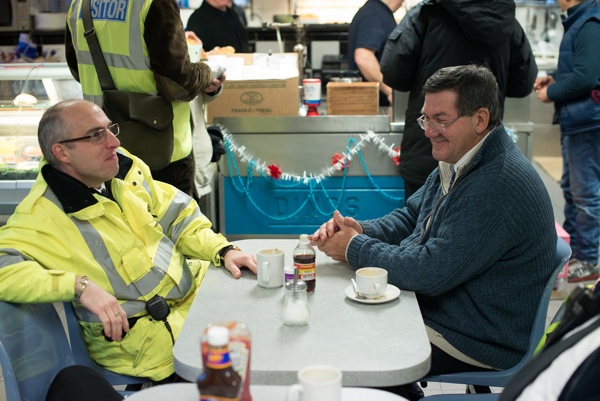
Jim Olney, right, celebrated paper bag salesman
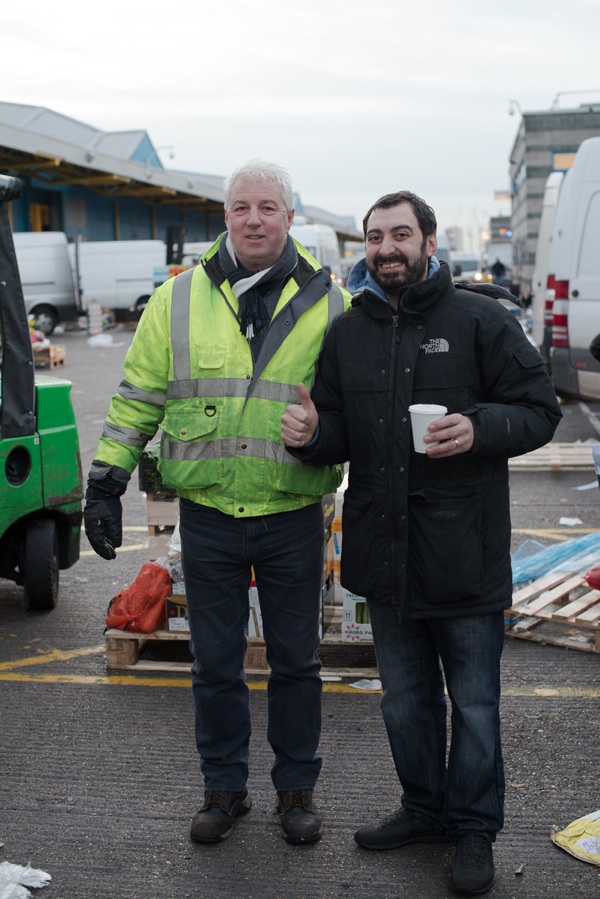
Nevio with Johnny Bates, legendary Cartminder

Nevio’s order for Pelliccis Cafe
Delivering the fresh veg at Pelliccis
Photographs copyright © Sarah Ainslie
E.Pellicci, 332 Bethnal Green Rd, E2 0AG
You may like to read my other Pellicci stories
Christmas Ravioli At E Pellicci
Maria Pellicci, The Meatball Queen of Bethnal Green
Colin O’Brien’s Pellicci Portraits ( Part One)
Colin O’Brien’s Pellicci Portraits (Part Two)
Philip Cunningham’s London Docks
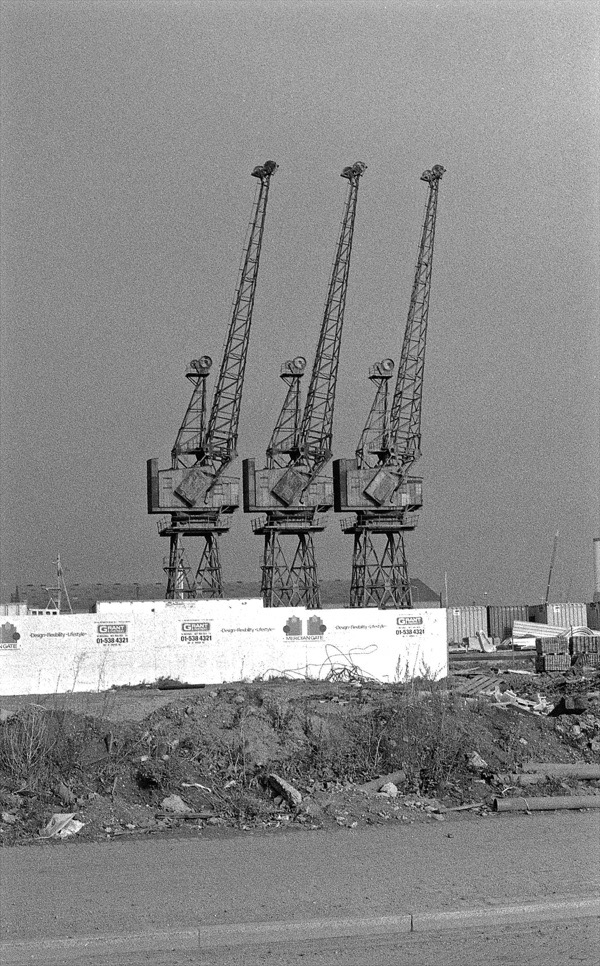
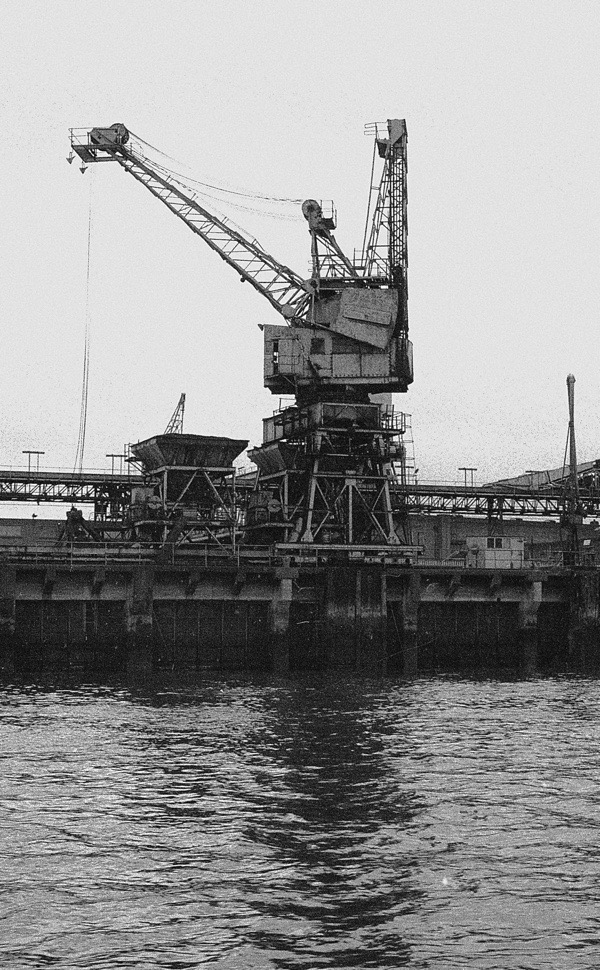
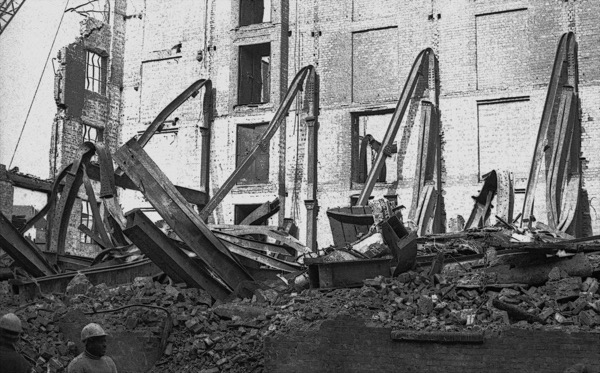
Once, the East End had the ‘docks land’ but when the docks closed and the developers moved in they rechristened it the ‘docklands’ – a transformation recorded by Photographer Philip Cunningham
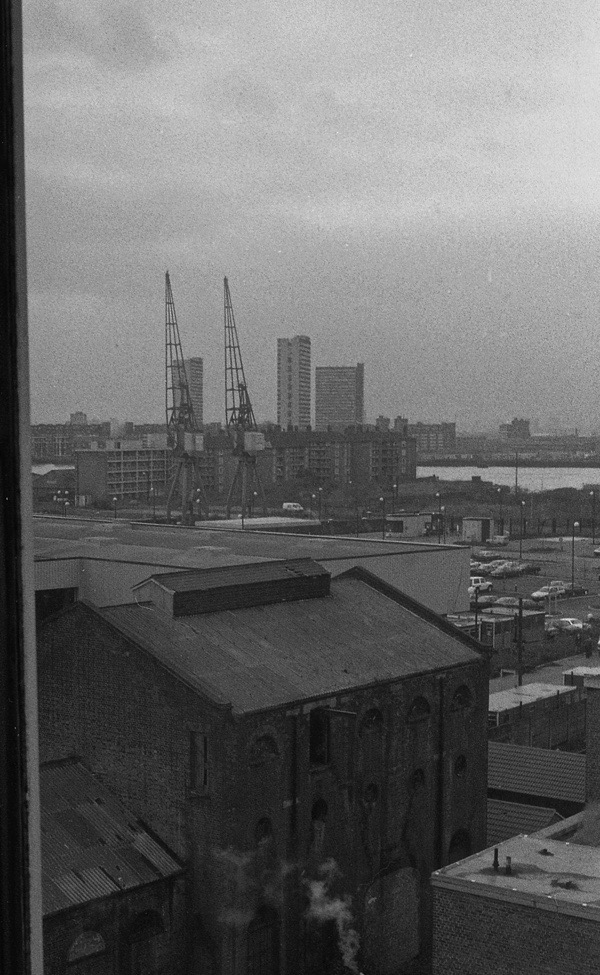
‘My paternal grandfather was a dock labourer all his life. He came from Dublin and was in the Irish gunners during the First World War. He suffered from shell shock afterwards yet managed to carry on working. I never met him as he died the year I was born. When the Docks were moved out of London, the speculators wanted to develop the old wharfs but, whenever they could not get planning consent, the wharfs would mysteriously catch on fire! Very convenient for them. What a grand rip-off it was!’ – Philip Cunningham
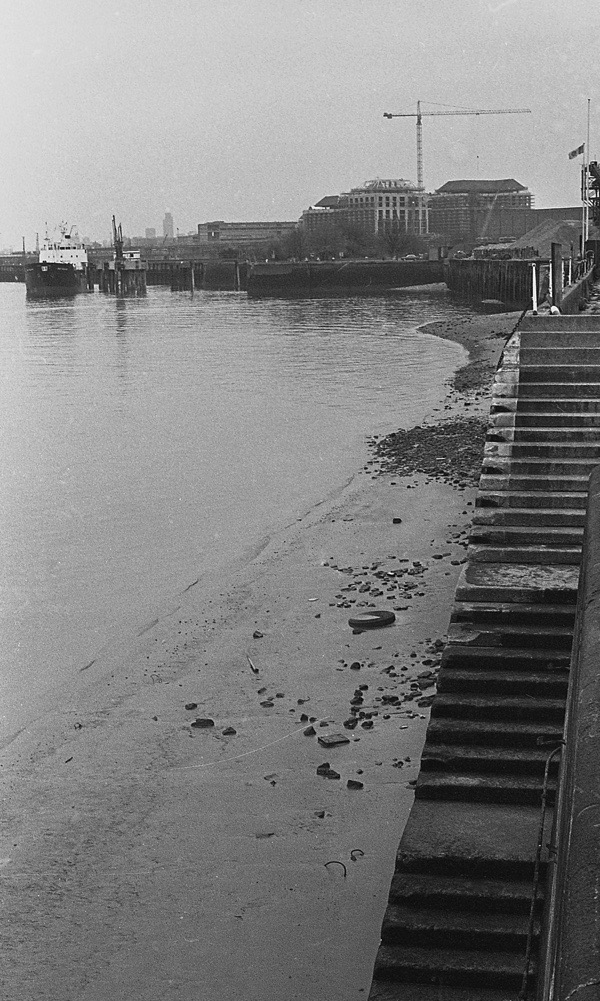
Construction of Tower Hamlets’ new Town Hall
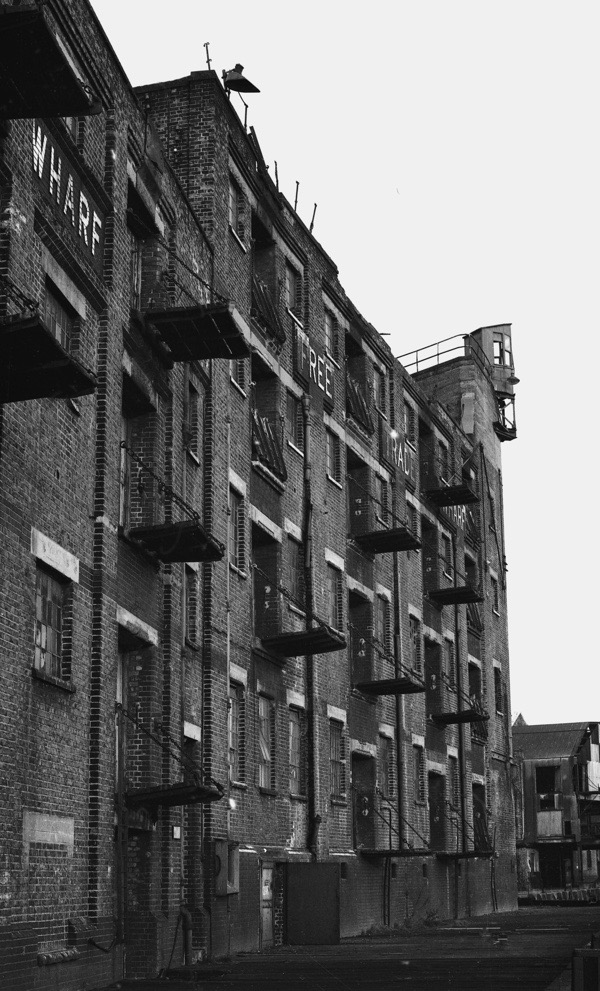
Free Trade Wharf, Wapping
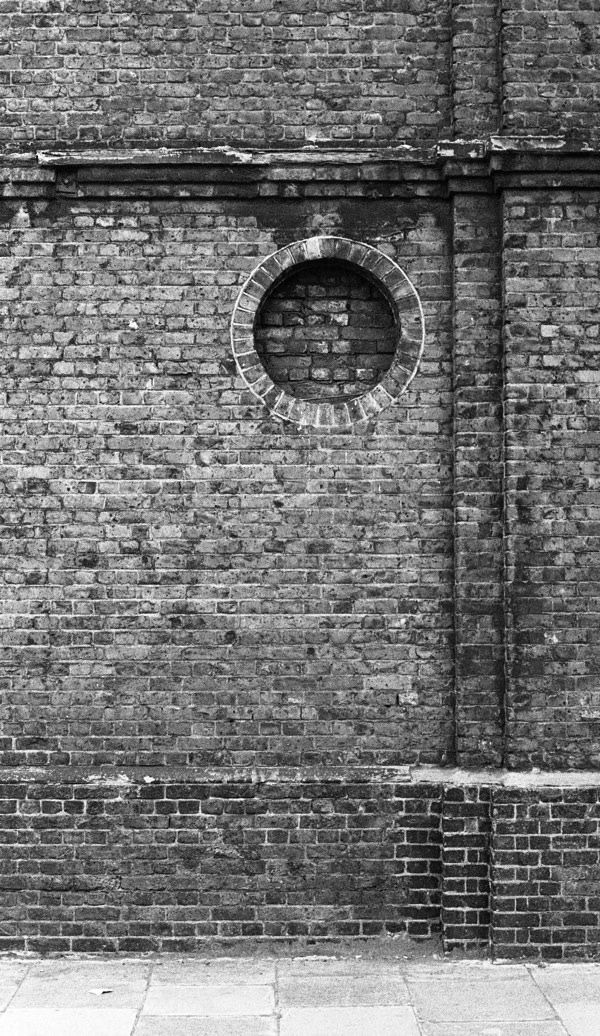
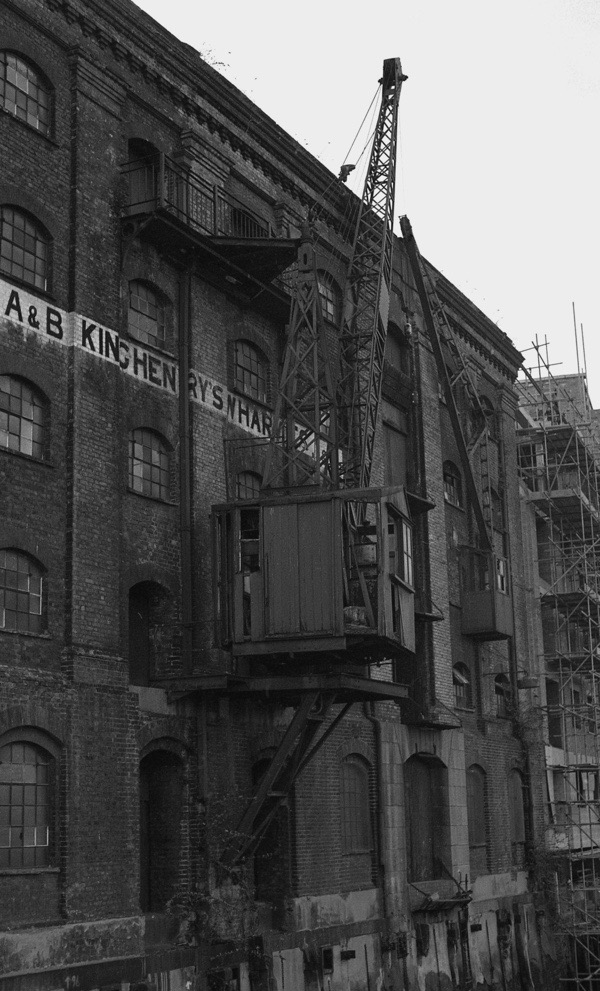
King Henry’s Wharf, Wapping
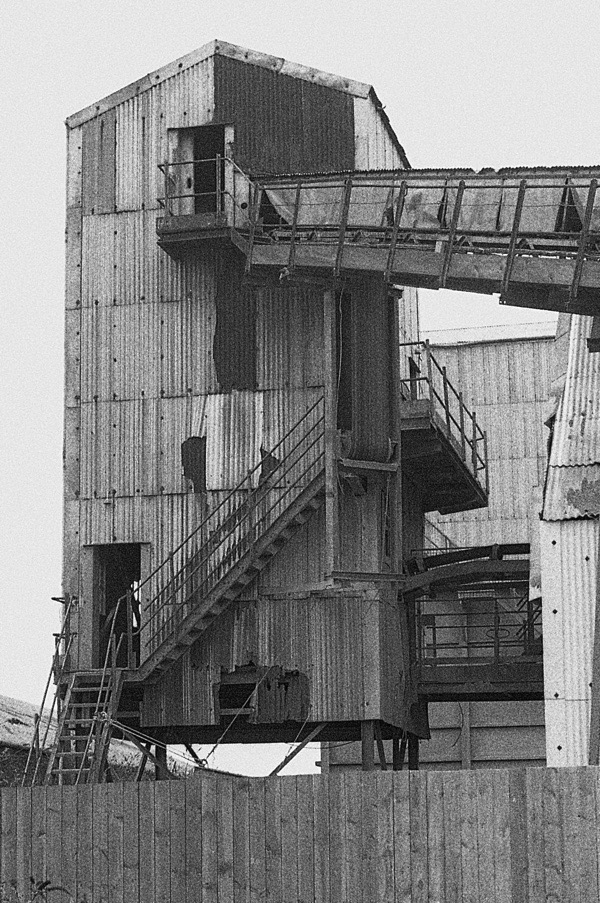
Greenwich
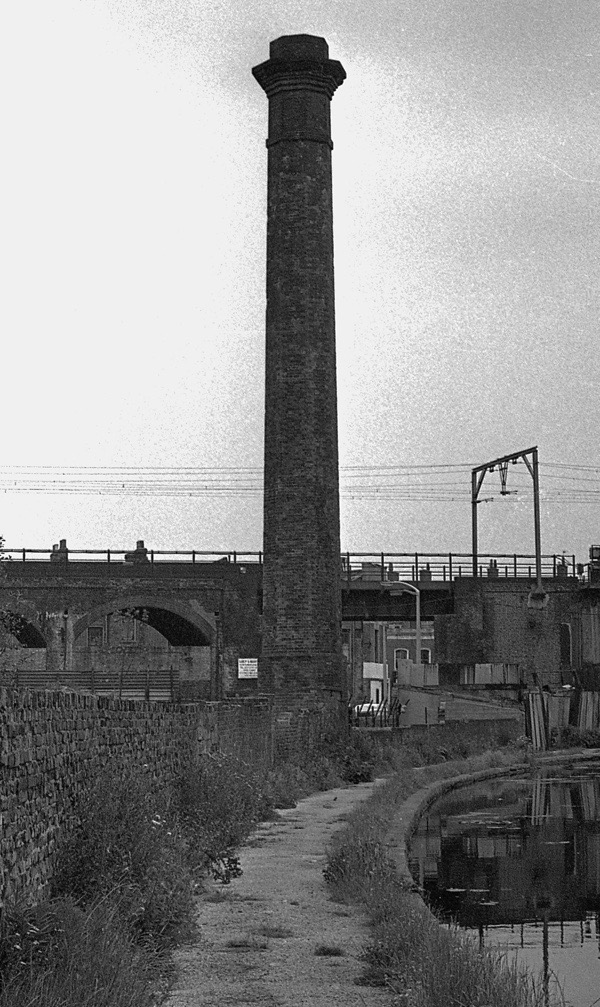
Regent’s Canal
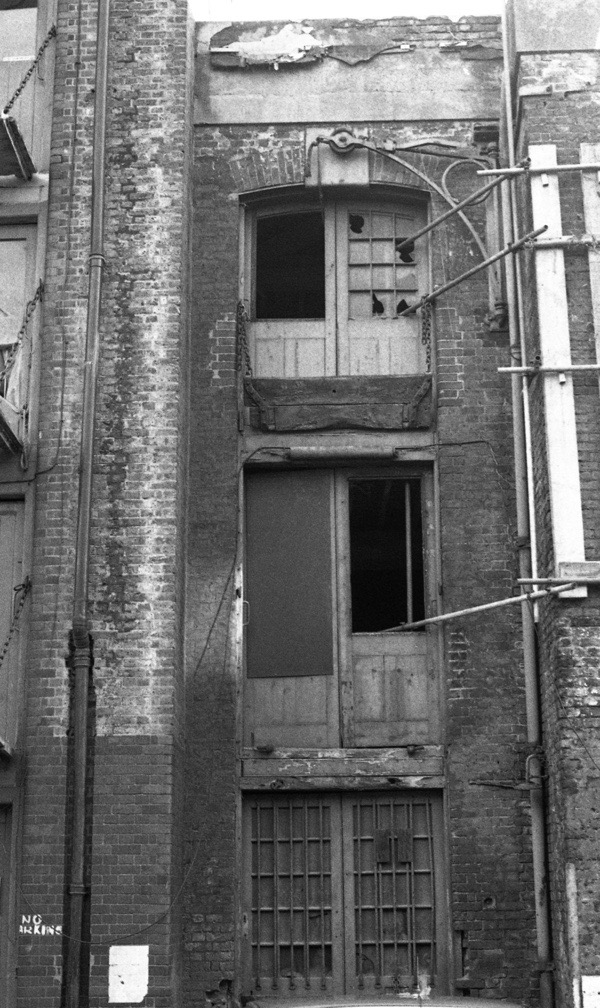
Lusk’s Wharf
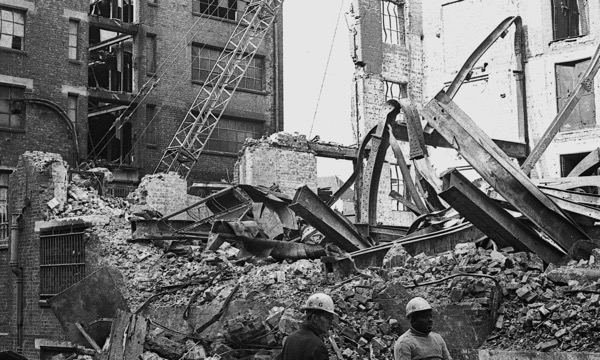
‘whenever they could not get planning consent, the wharfs would mysteriously catch on fire’
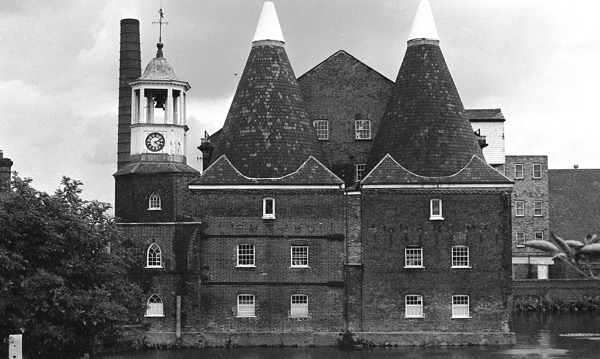
Three Mills Island, Bow
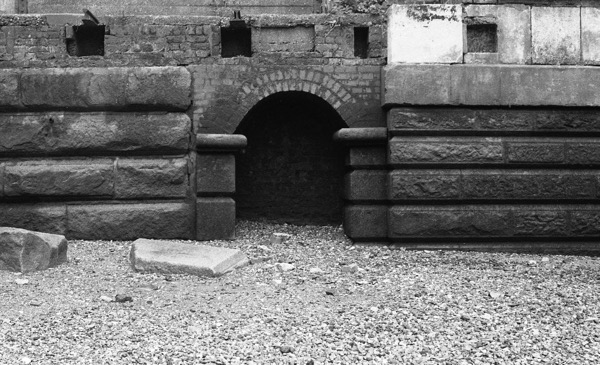
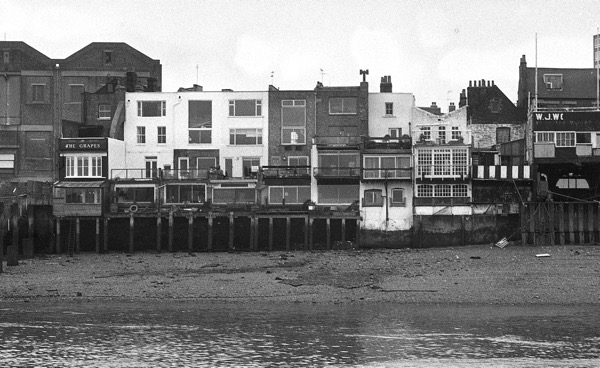
The Grapes, Limehouse
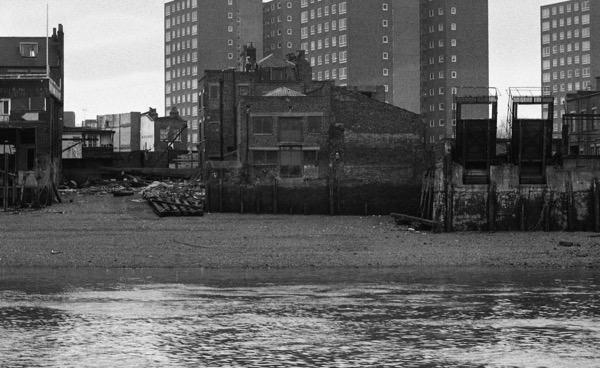
South of the river
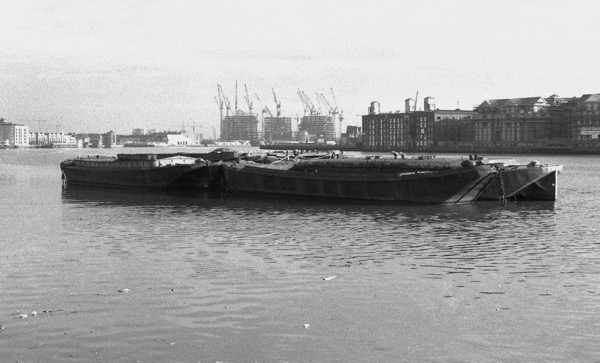
Building frenzy on the Isle of Dogs
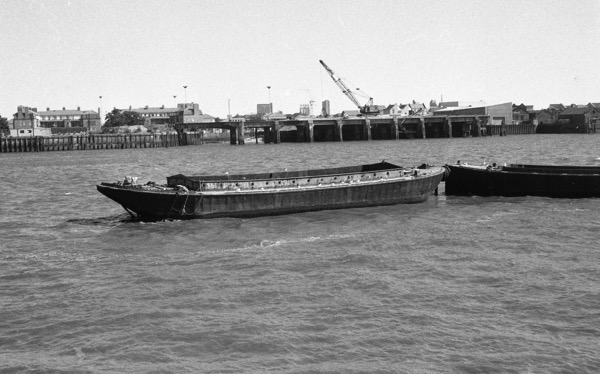
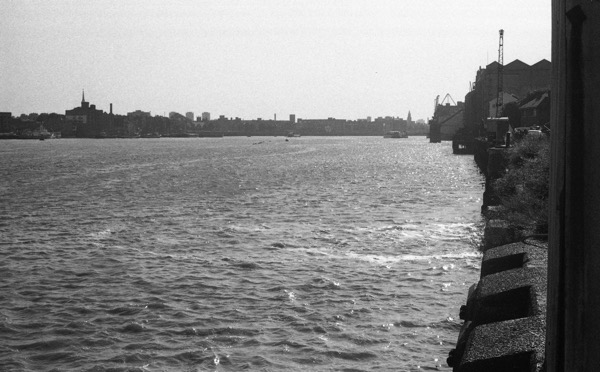
Isle of Dogs
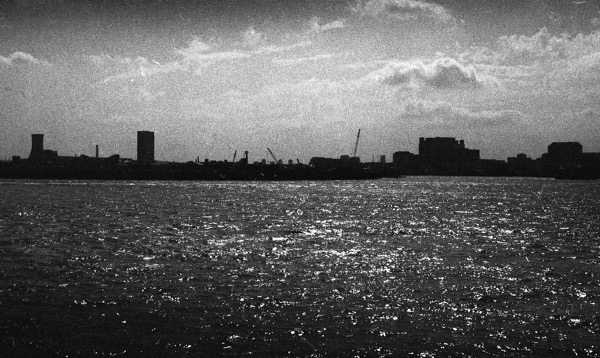
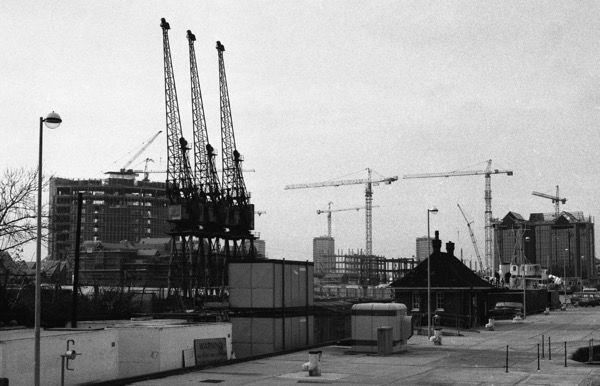
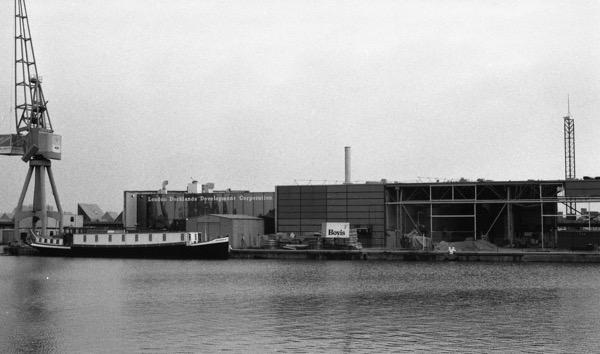
London Docklands Development Corporation
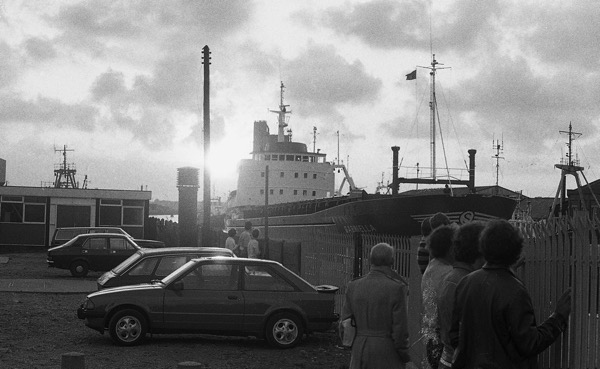
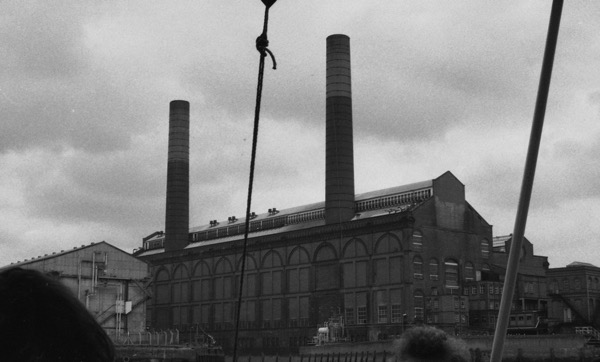
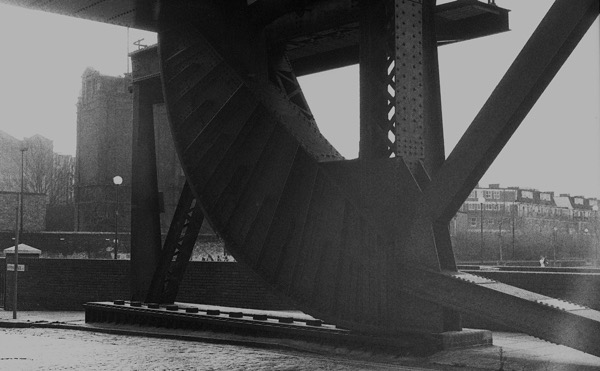
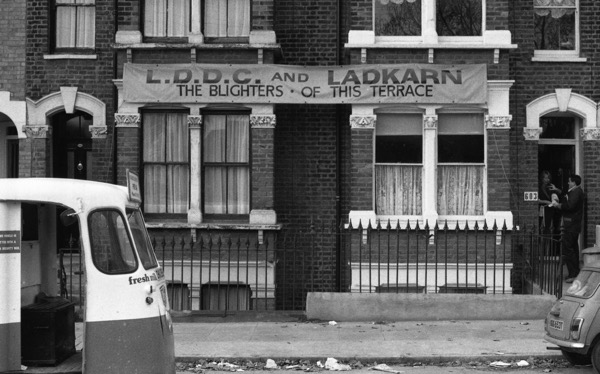
Protest against the London Docklands Development Corporation
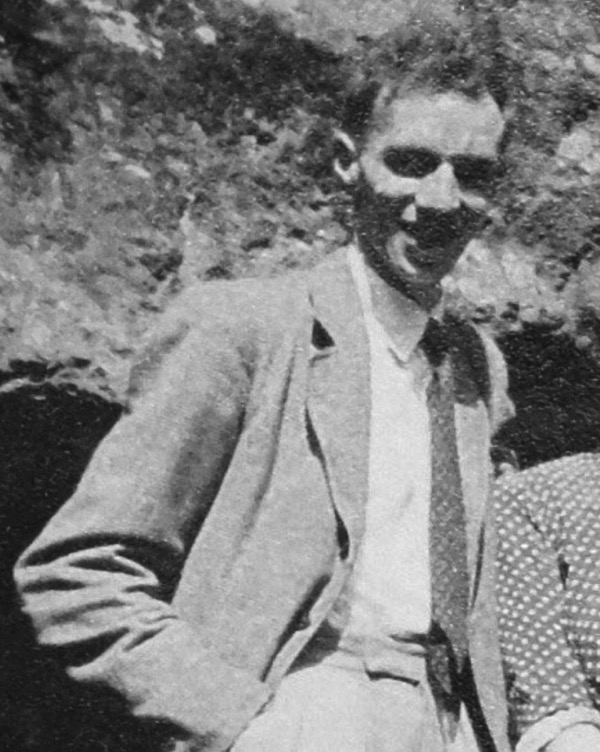
Philip’s grandfather, Arthur Cunningham, worked as dock labourer his whole life
Photographs copyright © Philip Cunningham
You may also like to take a look at
Philip Cunningham’s East End Portraits
More of Philip Cunningham’s Portraits
Yet More Philip Cunningham Portraits
Philip Cunningham at Mile End Place
Gary Arber At Home
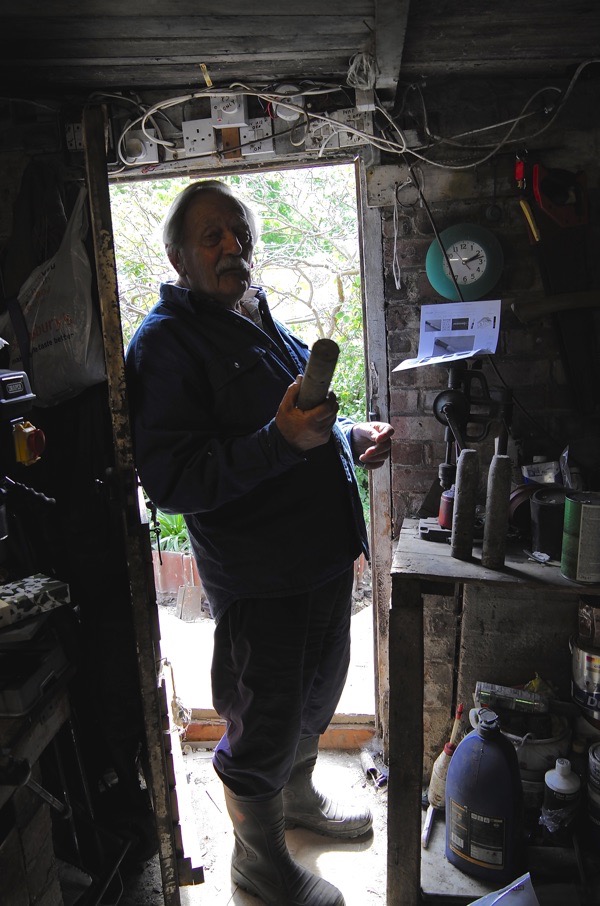
Gary Arber shows off his collection of WWII incendiary bombs
If anyone else showed me their collection of Second World War incendiary bombs, I should be entirely astonished but with Gary Arber it was completely normal behaviour. Over the years, I have come to expect no less of him. Ever since I first visited Gary’s old print shop in the Roman Rd, where he oversaw the family business established by his grandparents a century earlier, I have learnt to appreciate Gary as the custodian of wonders.
Three years ago, when Gary sold up the shop, his magnificent collection of printing presses were hauled off to a new life elsewhere and W.F. Arber & Co Ltd passed into legend in the Roman Rd. Now it has taken its place in history as the print works where Emily Arber printed Suffragette handbills for Mrs Pankhurst, but Bow is a lesser place without Gary Arber as a living connection to the old East End.
Unable to contain my curiosity any longer, I realised it was my responsibility to take the train down to Romford to visit Gary and see how he is getting along these days, on behalf of everyone else who misses him in our neck of the woods. Thus it was I came to be standing in Gary’s ramshackle shed last week, gasping in awe as he showed off his collection of incendiary bombs, all now rendered entirely harmless you will be relieved to learn.
Constructed of pieces of other buildings, extended over time and filled with a large collection of old tools, Gary’s shed is a fine specimen of its kind. Yet casting an eye into the shadows, I realised that it descended to another level below ground. Gary explained to me that this subterranean construction was an Anderson Shelter where he, as a child, and Florence, his mother, slept each night during the Second World War while the bombs dropped on Romford.
In 1929, Gary’s father brought Florence down from the East End on an excursion to show her the newly-laid foundations of the house he had bought in which they were to spend their married life and where, in 1931, Gary was born. Apart from a short spell as a pilot in the Royal Air Force, Gary has lived here his whole life and the house exists today as a time capsule more-or-less, with an oxblood and butter paint scheme, an original yellow and black bathroom and a substantial enamelled iron stove in the kitchen. I should be very surprised if there are any other of the original occupants of this long suburban street still resident except Gary.
In this cosy dwelling, Gary and his wife, Ruby, pass their days watching the birds coming to visit the array of feeding devices, hung just outside the picture window in the rear parlour. I was informed the avian population in this particular corner of Romford consume half a ton of bird food annually, and Gary is especially proud of his population of over sixty sparrows that he has nurtured in recent years by making holes in the eaves where they can nest.
A glimpse at the photograph of the immaculately-tended garden with its flawless lawn and formal borders which formerly existed behind the printshop in Roman Rd reveals that Gary’s relaxed horticultural style is in strong contrast to his grandparents. Yet, in his parents’ day, the garden in Romford was similarly prim, with a lawn permitting clock golf which was a popular pastime among the Unitarian Congregation of Bow. Even after they left the East End, Gary’s parents were able to maintain their lively social life enjoyed among members of the congregation, by luring them to Romford with this innocent sport.
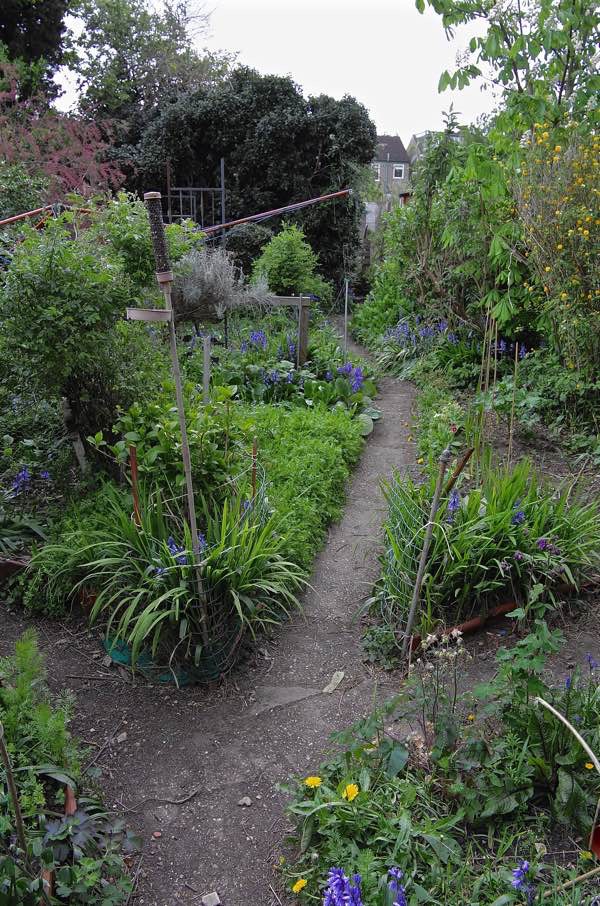
Gary is a free spirit in horticulture, scattering packets of wild flower seeds and declaring that there is no such thing as a weed in his garden. The outcome is an exuberant rush of dense growth at this time of year, with bluebells, forget-me-nots, dandelions and aquilega in plenty. It makes an ideal environment for the urban wildlife that Gary cherishes. An upturned boat serves as home to a pair of foxes and their litter of cubs, while a series of ponds provide dwellings for a variety of aquatic life.
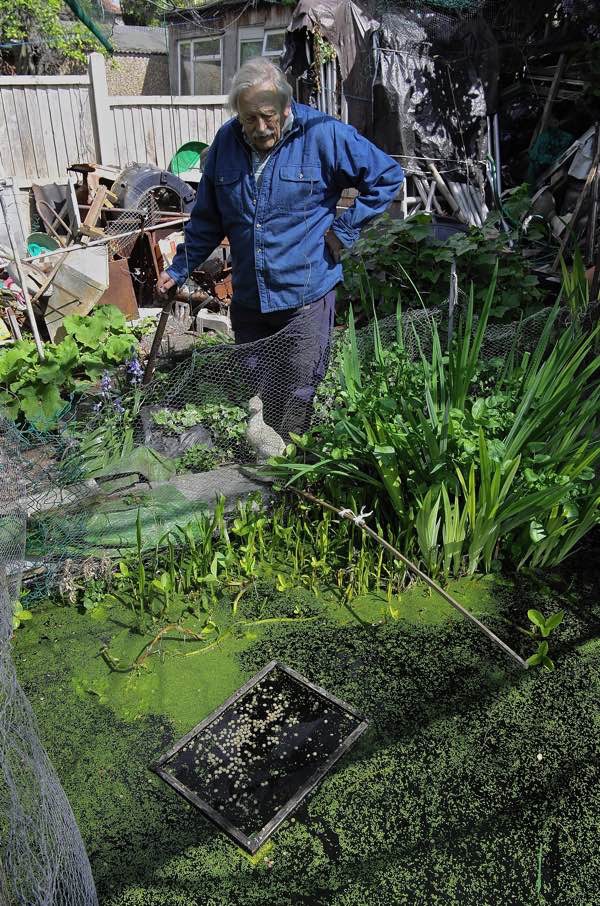
As we passed the shed which bisects his garden, Gary pulled back the branches revealing our path ahead and announced, ‘You are now entering the Reserve,’ as if were stepping into an uncharted jungle. Here we stood and peered into the newt pond, hoping to catch glimpse of a golden newt but had to make do with columns of bubbles arising enigmatically from the bed. Most impressive was the carp pool beyond, inhabited by two vast pale creatures of more than twenty years of age and over two feet in length, accompanied by the fattest goldfish I ever saw. Gary stood in silent pleasure, mesmerised as they cruised ceaselessly around in the shadowy depths like ghosts.
Several hours passed while Gary and I negotiated his garden of relatively modest size, and he recounted his stories. Then, once Gary had potted a teazle to accompany the yellow flag iris that he gave me years ago which now occupies a boggy corner of my garden in Spitalfields, we repaired to his house for tea. Since Ruby was taking her afternoon nap in the parlour, we tiptoed through the tidy house with our cups of tea and ascended a creaky metal ladder to Gary’s untidy attic, where he prefers to spend his time while indoors.
Sometime in Gary’s youth, he must have discovered this loft and, out of respect for Ruby’s house-proud nature, today he restricts his stash of clutter and curiosities to this secret den. For my delight, Gary produced his father’s Air Raid Warden helmet, optical novelties for Magic Lanterns, finely-engraved wooden printing blocks and more. It was humid in the attic and I must confess I discovered myself dozing off while Gary regaled me with stories. This is a shameful admission but I include it here as evidence we need harbour no anxiety that Gary is living in a bereft state since his departure from the East End. Obviously, the closure of his grandparents’ printshop in the Roman Rd was an enormous responsibility for Gary which took its toll, physically and emotionally. Yet today Gary Arber is in fine fettle at eighty-six, he has put it all behind him and he is at home in Romford.
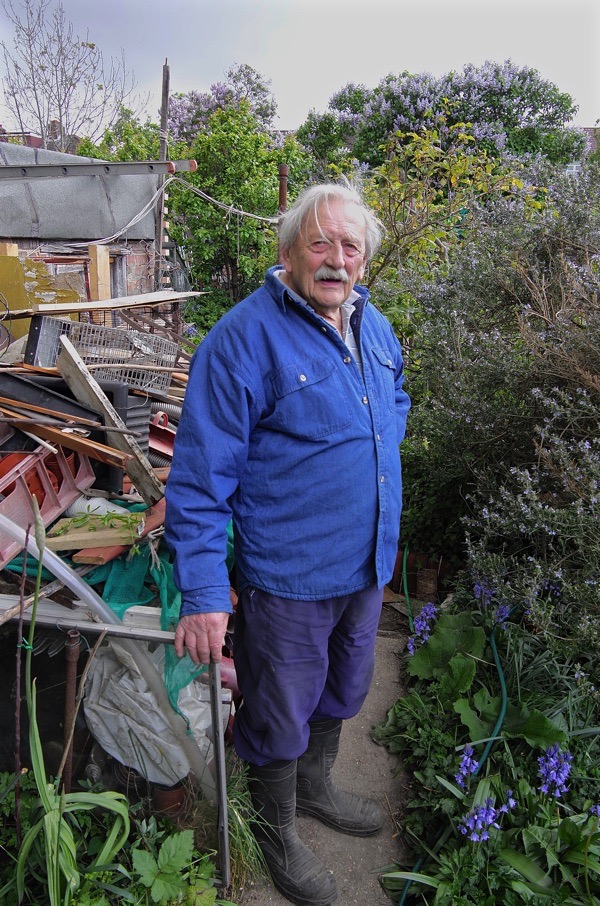
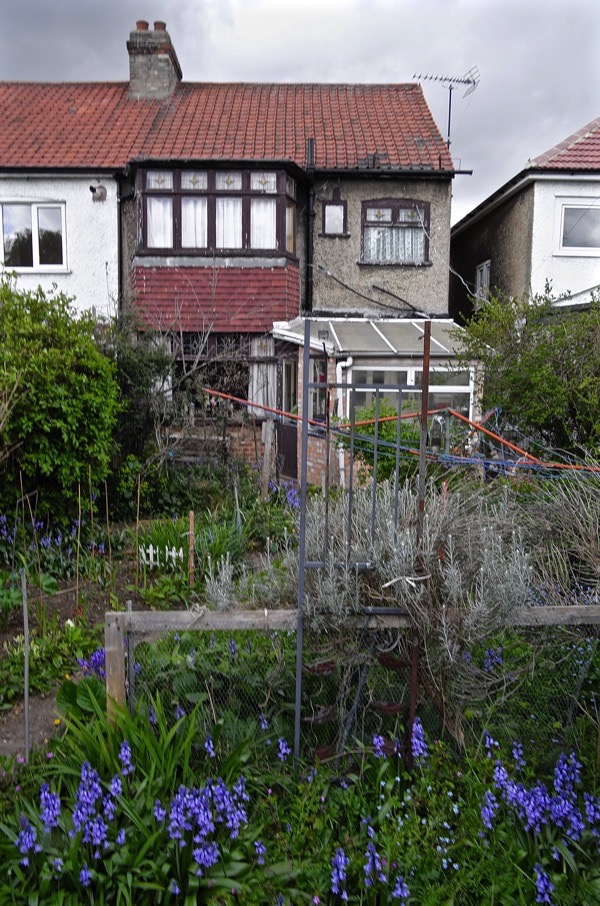
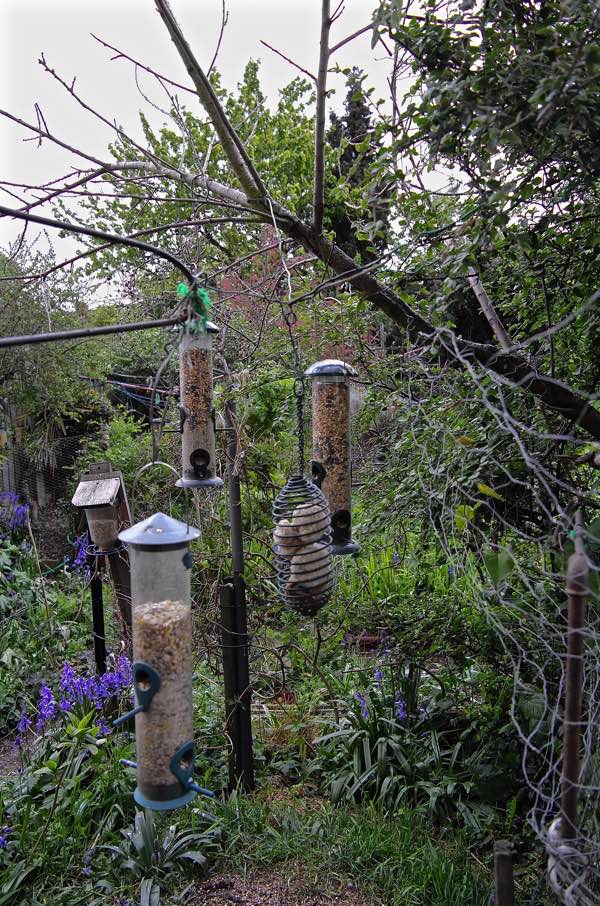
Gary feeds half a ton of birdseed to his garden visitors each year
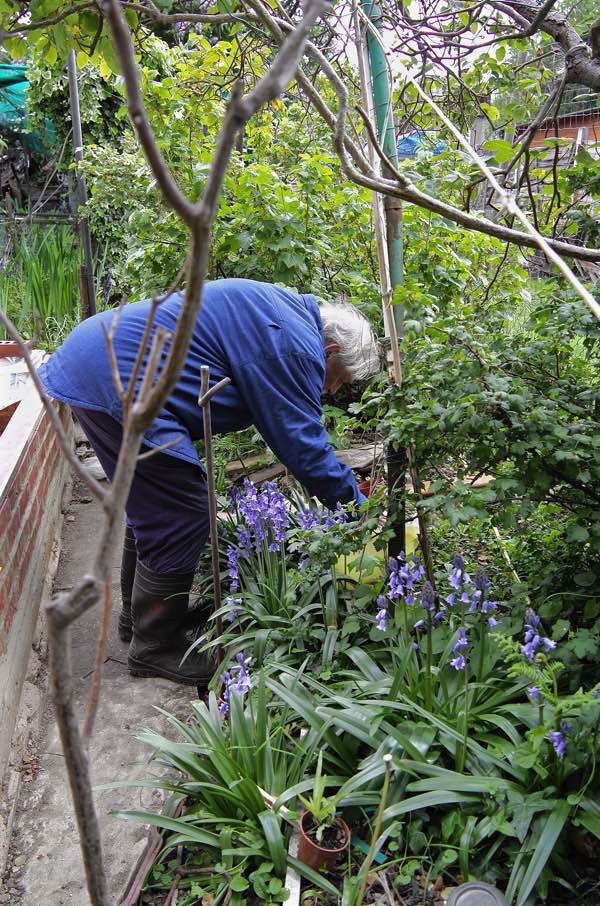
Gary pots a teazle seedling for my garden
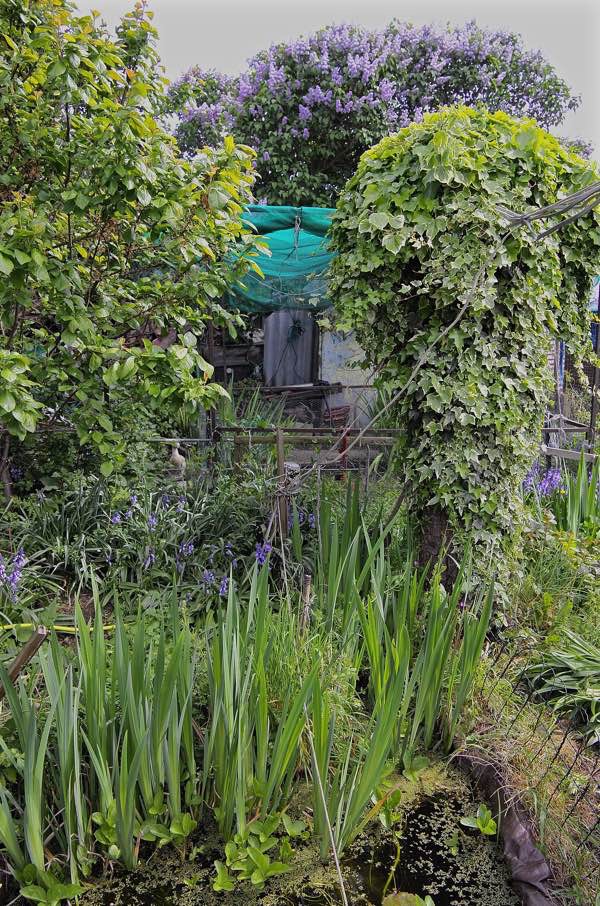
Gary’s newt pond in foreground
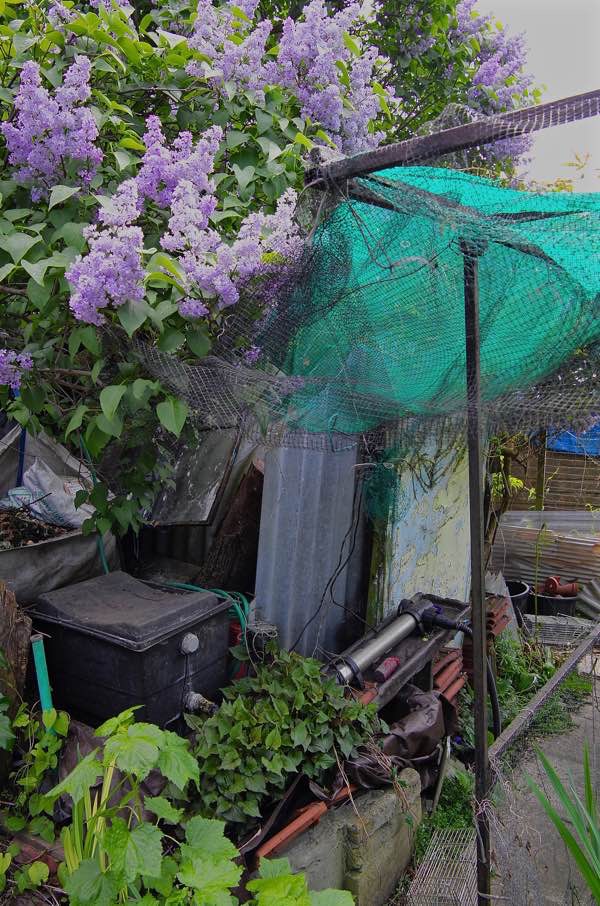
Anderson shelter in use as a store
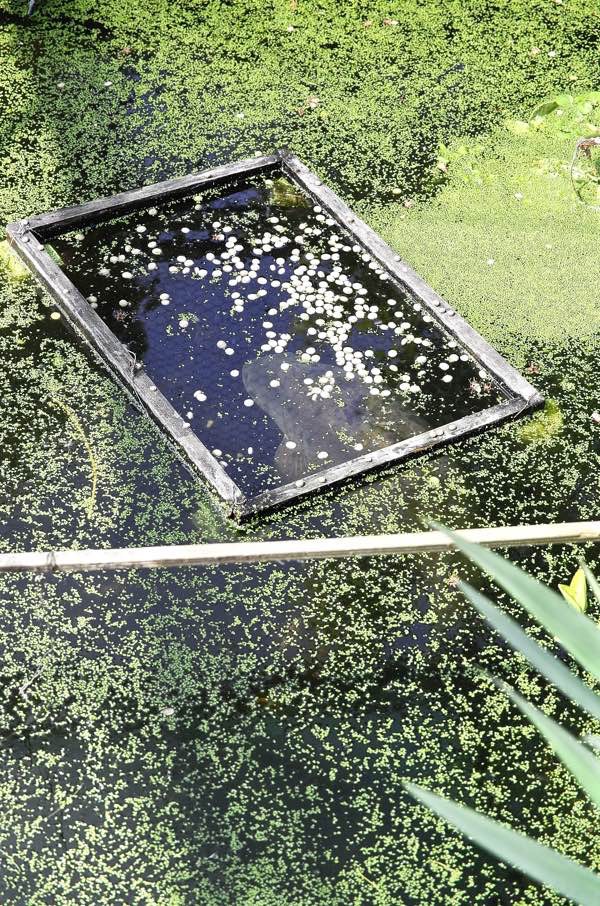
Old Carp over two feet long live in Gary’s pond
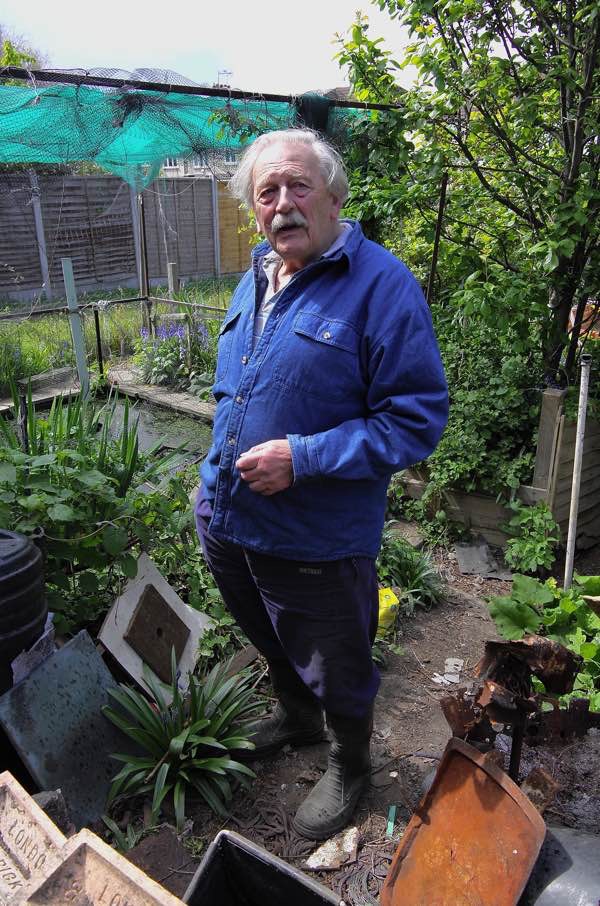
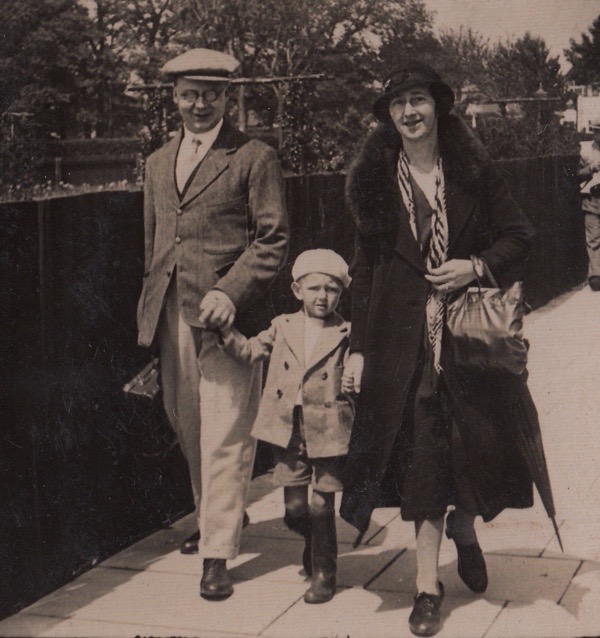
Gary on holiday with his parents, Walter and Florence Arber in the thirties
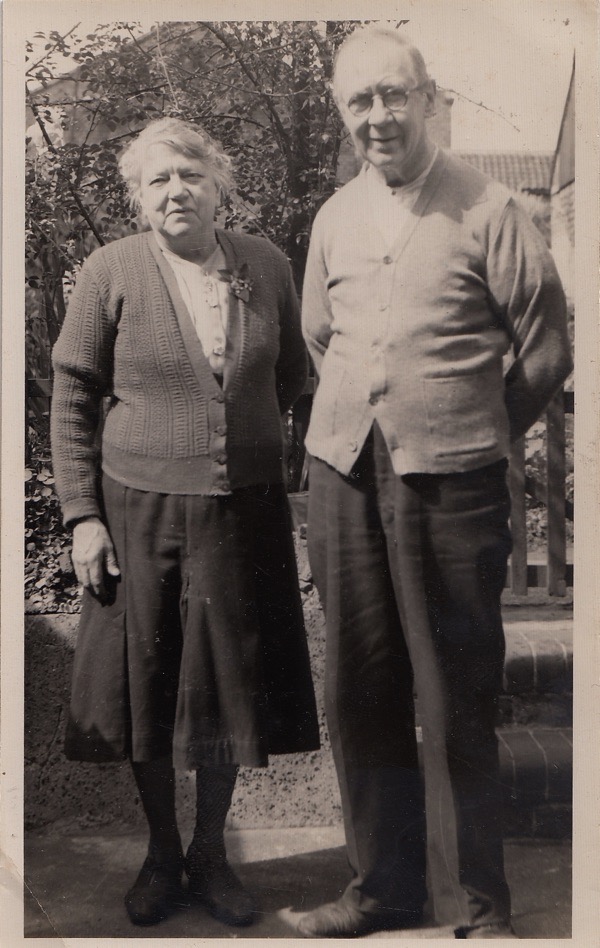
Gary’s grandparents, Emily & Walter Francis Arber, who opened the print shop in 1897
Read my other stories about Gary Arber
James Brown at W.F.Arber & Co Ltd