The Alphabet Of Lost Pubs H-L
You will be in need of refreshment once you have contemplated H-L in the third part of my series of The Alphabet of Lost Pubs, but let us not arrange to meet in the King’s Arms or the Lord Nelson unless we have agreed which one. This time-travelling pub crawl is presented in collaboration with Heritage Assets who work in partnership with The National Brewery Heritage Trust, publishing these historic photographs of the myriad pubs of the East End from Charrington’s archive for the first time.
The Hallsville Tavern, 57 Hallsville Rd, Canning Tow, E16 (Opened before 1862 and closed in 2012 to become a restaurant)
The Hare & Hounds, 278 Lea Bridge Rd, Leyton, E10 (Opened before 1862 and open today)
The Harrow, 84 High St, Stratford, E15 (Opened before 1823 and now demolished)
The Hat & Tun, 15 Hatton Wall, Hatton Garden, EC1 (Opened in the eighteenth century, renamed ‘Deux Beers’ in 2000 and open today)
The Hatchet, 28 Garlick Hill, St Michael Queenhithe, City of London, EC4 (Opened before 1773 and open today)
The Heathcote Arms, Grove Green Rd, Leytonstone, E11 (Opened before 1905 and open today)
The Hemsworth, 69 Hemsworth St, Canning Town, E16 (Opened before 1891 then badly damaged by enemy action on 19th July 1944 and demolished in October 1944)
The Hoop & Grapes, 67 Aldgate High St, EC3 (Opened 1593 and open today)
The Horse & Groom, 28 Curtain Rd, EC2 (Opened before 1803 and open today)
The Horse & Groom, 255 Mare St, Hackney, E8 (Opened before 1593, closed in 2013 and now a restaurant)
The Huntingdon Arms, 66 Burke St, Canning Town, E16 (Opened before 1881, closed in 1986, became a laundrette and now empty)
The Katherine Wheel, 50 1/2 St Peter’s Rd, Mile End, E1 (Opened before 1854, closed in 2000 and now flats)
The Kenton Arms, 38 Kenton Rd, Hackney, E9 (Opened in 1858 and still open)
The King Edward VII, 47 The Broadway, Stratford, E15 (Opened before 1765 as ‘The King of Prussia,’ but changed to current name in 1914 and open today)
The King Harold, 116 High Rd, Leyton, E15 (Opened 1887, changed name to ‘The Leyton Star’ in 2016 and open today)
The King’s Arms, 18 Kingsland High St, E8 (Opened before 1636 and demolished in 2009 for construction of East London Line)
The King’s Arms, 514 Commercial Rd, Stepney, E1 (Opened before 1851, renamed ‘Mariners’ in 2002 and now a coffee shop)
The King’s Arms, 27 Wormwood St, Bishopsgate Churchyard, E1 (Opened before 1762, rebuilt as part of a tower block in 1972 and open today)
The King’s Arms, Rawstorne St, Clerkenwell, EC1 (Opened before 1839 and now demolished)
The King’s Arms, 141 Houndsditch, EC3 (Opened before 1792, closed 1938 and now demolished)
The King’s Head, 128 Commercial Rd, E1 (Opened 1820, closed 2000 and now demolished)
The King’s Head & Lamb, 49 Upper Thames St, St Michael Queenhithe, EC4 (Opened before 1809, damaged by enemy action on the 16th April 1941 but reopened on the 3rd November 1941, then closed and demolished in the seventies)
The King’s Head, 11 Church St, West Ham, E15 (Opened before 1826 and recently became a guest house)
The Lamb & Flag, 69 Homerton High St, E9 (Opened before 1826, closed in 1944 and now demolished)
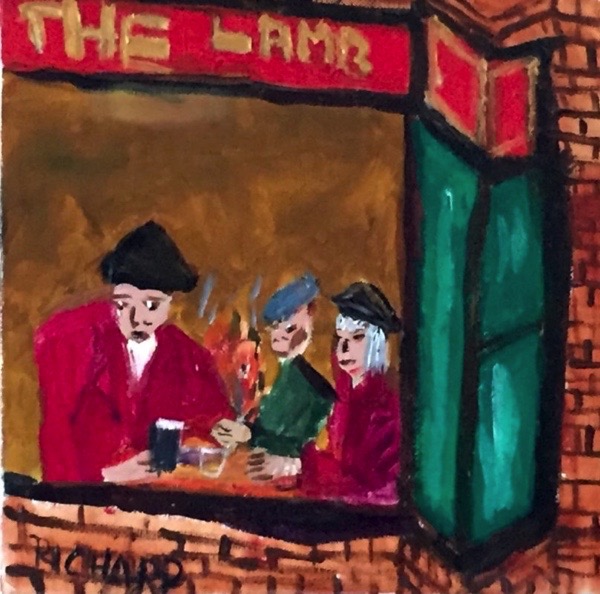
The Lamb, 36 Wilmot St, Bethnal Green, E2 (Opened before 1824, closed in 1993 and is now residential)
The Langton Arms, 22 Norman’s Buildings, St Lukes, EC1 (Opened before 1842, closed around 1989 and now in residential use)
The Libra Arms, 53 Stratford Rd, Plaistow, E13 (Opened before 1871, closed 2006 and is now a Costcutter)
The Lion, 72 Angel Lane, Stratford, E15 (Opened before 1871 and now demolished)
The Lion & Key, 475 High Rd, Leyton, E10 (Opened before 1300, closed 2009 and now a hotel)
The Little Driver, 125 Bow Rd, E3 (Opened before 1820 and open today)
The Liverpool Arms, Liverpool Terrace, 14 Barking Rd, Canning Town, E16 (Opened before 1870, rebuilt 1930-32, damaged by enemy action and closed on 20th September 1940, reopened on the 6th January 1941, damaged again by enemy action on 10th May 1941 and closed, reopened again on 13th June 1941, shut in 1966 and demolished)
The London Tavern, 92 Rendlesham Rd, Clapton, E5 (Opened before 1866 and open today)
The London Tavern, 393 Manchester Rd, Milwall, E14 (Opened 1860 and demolished in 1954)
The Lord Clyde, 10 Lee St, Haggerston, E8 (Opened before 1881 and destroyed by enemy action 7th April 1941)

The Lord Henniker, 119 The Grove, Stratford, E15 (Opened before 1862, closed in 2003 and converted to residential)
The Lord Nelson, 37 Cranbrook St, Bethnal Green, E2 (Opened before 1861 and now demolished)
The Lord Nelson, 230 Commercial Rd, E1 (Opened 1865, rebuilt 1892, closed 2005 and now a restaurant)
The Lord Nelson, 1 Manchester Rd, Millwall, E14 (Opened before 1855 and open today)
The Lord Rodney’s Head, 285 Whitechapel Rd, E1 (Opened before 1806, closed in 2004 and now a clothing shop)
Photographs courtesy Heritage Assets/The National Brewery Heritage Trust
You may also like to take a look at
Maurice Evans, Collector Of Fireworks
Maurice Evans has been collecting fireworks since childhood and now over eighty years old, he has the most comprehensive collection in the country – so you can imagine both my excitement and my trepidation upon stepping through the threshold of his house in Shoreham. My concern about potential explosion was relieved when Maurice confirmed that he has removed the gunpowder from his fireworks, only to be reawakened when his wife Kit helpfully revealed that Catherine Wheels and Bangers were excepted because you cannot extract the gunpowder without ruining them.
This statement prompted Maurice to remember with visible pleasure that he still had a collection of World War II shells in the cellar and, of course, the reinforced steel shed in the garden full of live fireworks. “Let’s just say, if there’s a big bang in the neighbourhood, the police always come here first to see if it’s me,” admitted Maurice with a playful smirk. “Which it often isn’t,” added Kit, backing Maurice up with a complicit demonstration of knowing innocence.
“It all started with my father who was in munitions in the First World War,” explained Maurice proudly, “He had a big trunk with little drawers, and in those drawers I found diagrams explaining how to work with explosives and it intrigued me. Then came World War II and the South Downs were used as a training ground and, as boys, we went where we shouldn’t and there were loads of shells lying around, so we used to let them off.”
Maurice’s radiant smile revealed to me the unassailable joy of his teenage years, running around the downs at Shoreham playing with bombs. “We used to set off detonators outside each other’s houses to announce we’d arrived!” he bragged, waving his left hand to reveal the missing index finger, blown off when the explosive in a slow fuse unexpectedly fired upon lighting. “That’s the worst thing that happened,” Maurice declared with a grimace of alacrity, “We were worldly wise with explosives!”
Even before his teens, the love of pyrotechnics had taken grip upon Maurice’s psyche. It was a passion born of denial. “I used to suffer from bronchitis and asthma as a child, so when November 5th came round, I had to stay indoors.” he confided with a frown, “Every shop had a club and you put your pennies and ha’pennies in to save for fireworks and that’s what I did, but then my father let them off and I had to watch through the window.”
After the war, Maurice teamed up with a pyrotechnician from London and they travelled the country giving displays which Maurice devised, achieving delights that transcended his childhood hunger for explosions. “In my mind, I could envisage the sequence of fireworks and colours, and that was what I used to enjoy. You’ve got all the colours to start with, smoke, smoke colours, ground explosions, aerial explosions – it’s endless the amount of different things you can do. The art of it is knowing how to choose.” explained Maurice, his face illuminated by the images flickering in his mind. Adding, “I used to be quite big in fireworks at one time.” with calculated understatement.
Yet all this personal history was the mere pre-amble before Maurice led me through his house, immaculately clean, lined with patterned carpets and papers and witty curios of every description. Then in the kitchen, overlooking the garden lined with old trees, he opened an unexpected cupboard door to reveal a narrow red staircase going down. We descended to enter the burrow where Maurice has his rifle range, his collections, model aeroplanes, bombs and fireworks – all sharing the properties of flight and explosiveness. Once they were within reach, Maurice could not restrain his delight in picking up the shells and mortars of his childhood, explaining their explosive qualities and functions.
But my eyes were drawn by all the fireworks that lined the walls and glass cases, and the deep blues, lemon yellows and scarlets of their wrappers and casings. Such evocative colours and intricate designs which in their distinctive style of type and motif, draw upon the excitement and anticipation of magic we all share as children, feelings that compose into a lifelong love of fireworks. Rockets, Roman Candles, Catherine Wheels, Bangers, and Sparklers – amounting to thousands in boxes and crates, Maurice’s extraordinary collection is the history of fireworks in this country.
“I wouldn’t say its made my life, but its certainly livened it up,” confided Maurice, seeing my wonder at his overwhelming display. Because no-one (except Maurice) keeps fireworks, there is something extraordinary in seeing so many old ones and it sets your imagination racing to envisage the potential spectacle that these small cardboard parcels propose.
Maurice outgrew the bronchitis and asthma to have a beautiful life filled with fireworks, to visit firework factories around Britain, in China, Australia, New Zealand and all over Europe, and to scour Britain for collections of old fireworks, accumulating his priceless collection. Now like an old dragon in a cave, surrounded by gold, Maurice guards his cellar hoard protectively and is concerned about the future. “It needs to be seen,” he said, contemplating it all and speaking his thoughts out loud, “I would like to put this whole collection into a museum. I don’t want any money. I want everyone to see what happened from pre-war times up until the present day in the progression of fireworks.”
“My father used to bring me the used ones to keep,” confessed Maurice quietly with an affectionate gleam in his eye, as he revealed the emotional origin of his collection, now that we were alone together in the cellar. With touching selflessness, having derived so much joy from collecting his fireworks, Maurice wants to share them with everybody else.
Maurice with his exploding fruit.
Maurice with his barrel of gunpowder
Maurice with his grenades.
Maurice with two favourite rockets.
Firework photographs copyright © Simon Costin
Read my story about Simon Costin, The Museum of British Folklore
At The Royalty Theatre, Wellclose Sq
It is my pleasure to introduce the last of four features written by Julian Woodford, celebrating the publication of his biography of East End gangster & corrupt magistrate, Joseph Merceron, The Boss of Bethnal Green. Email piccadilly@waterstones.com to book a free ticket for Julian Woodford’s lecture and signing at Waterstones Piccadilly next Tuesday 8th November.

John ‘Plausible Jack’ Palmer as Count Almaviva
In the eighteenth century, vested interests and heavy-handed licensing laws restricted the production of drama outside the Drury Lane, Covent Garden and Haymarket Theatres. These ‘Patent Theatres’ were aggressive in protecting their monopoly and penalties for transgression were severe. But, in 1785 a leading Drury Lane actor and consummate self-publicist, John ‘Plausible Jack’ Palmer, decided to put the law to the test by creating his own theatre, the Royalty. Controversially, he chose to site it in Wellclose Sq, Shadwell – serious drama was coming to the East End!
The logic behind Palmer’s choice of location was twofold. First, the East End held a huge and hitherto untapped potential audience. Yet, more importantly, Wellclose Sq lay within the Liberty of The Tower of London, meaning it was outside the jurisdiction of either the City of London or the County of Middlesex. This, argued Palmer, granted freedom from the restrictions of the Patent licensing laws, provided he obtained a licence from the magistrates of the Tower Hamlets and permission from the Constable of the Tower.
The Royalty Theatre was designed and built by John Wilmot, County Surveyor for Middlesex and – conveniently – brother of Davy Wilmot, senior Tower Hamlets magistrate. At its completion in 1787, the theatre, seating some 2,600 people, was reportedly as impressive as its West End rivals, possessing ‘an elegant lightness’ and ‘constructed of the very best materials,’ with galleries ‘infinitely superior to any belonging to the various theatres in the kingdom.’
Things quickly started to go wrong. Plausible Jack decided to push his luck by opening on 20th June 1787 with a production of As You Like It – a play restricted to the Patent Theatres by licensing guidelines. The owners and operators of the Patent Theatres, led by the politician-playwright Richard Brinsley Sheridan and backed by the Middlesex County magistrates, protested fiercely and intimidated several of Plausible Jack’s cast into withdrawing at the last minute by threatening never to employ them again.
Yet, because of the Royalty’s location, the Middlesex magistrates’ right to intervene was dubious. Nevertheless, their opposition was such that it was only when Plausible Jack threw the opening night as a benefit for the nearby London Hospital that he was able to go ahead. For the people of the East End, a new theatre on their doorstep was a cause for great celebration and they flooded to Wellclose Sq in their thousands. Plausible Jack himself took the lead role of Jaques and the next day’s papers reported that ‘we were never witness to such repeated and universal bursts of approbation.’
Despite his initial success, the threats to Plausible Jack and his fellow players were sufficient that he dared not provoke the authorities further. After the opening performance, the Royalty closed briefly before reopening with a repertoire limited to pantomime and other light pieces. Plausible Jack was ruined. After a spell in a debtors’ prison, his career never recovered and he died onstage in Liverpool in 1798. ‘Plausible Jack’ lived up to his nickname to the end, since the audience believed his collapse to be part of the act.
Davy Wilmot could have been forgiven for having divided loyalties when his fellow magistrates strove to close down the Royalty which had been designed and built by his own brother, and situated almost in his own back yard. At this time, he was also facing other difficulties too. One of his official roles was as Treasurer of the Parish of Bethnal Green, a lucrative position which Wilmot had milked for years through a series of corrupt schemes. Recently, a young upstart named Joseph Merceron, a twenty-three-year-old rent collector and son of a Brick Lane pawnbroker, had poked his nose into Wilmot’s accounts and was raising awkward questions about the destination of monies collected for the poor.
The young Merceron was developing an insatiable appetite for money and power. Seeking to establish a power base in the government of the East End, he was already sufficiently confident to try his hand against the ageing magistrate. If Wilmot was at the the opening night of the Royalty Theatre on 20th June 1787, in the audience for As You Like It, he might have caught a prescient glimpse of his own fate in Shakespeare’s lines. Before too many weeks would pass – thanks to the malevolent influence of Joseph Merceron – ‘the justice, in fair round belly with good capon lined’ would be on his way to retirement, ‘the lean and slipper’d pantaloon’ and, within just two more years, ‘sans eyes, sans teeth, sans everything.’

Arena of the Royalty Theatre, 1815

The foundation stone of the Royalty was laid on Boxing Day, 1785

Bollards on the pavement in Ensign St, Wellclose Sq, mark the site of the theatre – they are marked RBT for Royal Brunswick Theatre, the later name for the Royalty

A poem celebrating the achievement of John ‘Plausible Jack’ Palmer

The fate of the Royalty Theatre, later known as the Brunswick Theatre in 1828 (Courtesy East London Theatre Archive)

The site of the Royalty Theatre in Ensign St, Wellclose Sq, today
You may also like to read more about Wellclose Sq
In the Debtors’ Cell, Wellclose Sq
David Mason, Wilton’s Music Hall
or these other East End theatres
At Shakespeare’s First Theatre
At the City of London Theatre, Norton Folgate
At the Pavilion Theatre, Whitechapel
A Stick-Up At Six Mile Stone
It is my pleasure to introduce the third of four features this week written by Julian Woodford, celebrating the publication of his biography of East End gangster & corrupt magistrate, Joseph Merceron, The Boss of Bethnal Green.
Click here to reserve one of the last tickets left for The Boss of Bethnal Green launch tonight, Thursday 3rd November, at the Hanbury Hall or email piccadilly@waterstones.com to book a free ticket for Julian Woodford’s lecture at Waterstones Piccadilly next Tuesday 8th November.

Drawing by Thomas Rowlandson, c. 1794
The Great North Road out of London to York, Edinburgh and all points in between, began at Smithfield Market. Distances to the north were measured from Hicks’ Hall, the former courthouse of the Middlesex magistrates at the southern end of St John St, and marked by milestones along the road. Travellers passed the first stone at Islington Green, milestones two and three were found at Highbury Corner and Holloway, before they met Four Mile Stone at the foot of Highgate Hill and then, after a steep climb, Five Mile Stone was to be discovered on North Hill – one of the few stones surviving today.
It so happens that I live off the Great North Road, in East Finchley, just yards from the site of Six Mile Stone. In the eighteenth century, this area was known Finchley Common, the most dangerous place in London for highwaymen. This was where Jack Sheppard, Spitalfields’ notorious son and model for MacHeath in The Beggar’s Opera, was recaptured while disguised as a butcher after his amazing escape from Newgate in 1724. Just up the road, Oak Lane commemorates Turpin’s Oak, an ancient tree where Dick Turpin was said to linger. At Six Mile Stone itself was a gibbet where the bodies of executed highwaymen were hung in chains and left to rot for the birds to feed upon, as a discouragement to other miscreants from attracted to this malevolent trade:
Thy common, Finchley, next we measure,
Whose woodland views would give us pleasure,
But that they many a wretch exhibit,
Too near the high road, on a gibbet.
The records of the Old Bailey, Newgate Calendar and other journals of the period abound with tales of these bloodthirsty rascals and the fates they suffered when apprehended. In one example, shortly after 5pm on Thursday 11th March 1773, Henry Cothery was driving his wife and four-year-old daughter Ann in a small one-horse chaise across the common towards their home in the City of London. Cothery was master of The Green Man livery stables on Coleman St, near the Guildhall and the family had spent the day visiting his elderly father in Barnet. As they neared Six Mile Stone, they were clumsily overtaken by a man on horseback. Cothery was remarking that the man must be drunk when he turned, whipped out a pistol and yelled ‘Stop, your money!’
Cothery’s attempts to fob off the highwayman with a couple of coins backfired when the fellow grew more aggressive. Little Ann Cothery became tearful and the man softened, saying ‘Don’t be frightened, Ma’am,’ but persisted in his demand. The Cotherys had only a few pounds. Fearing for their lives, they handed over the money and the robber galloped away towards London, as Cothery yelled ‘A Highwayman, A Highwayman!’
Some passersby on horseback gave chase. As the pursuit careered down Highgate Hill and into Holloway, the posse grew larger and a mad chase ensued, with the highwayman flying through turnpike gates and occasionally turning to fire his pistol. Eventually, his horse tiring, he was cornered in a brickfield to the north of Shoreditch and forced to surrender. Identifying himself as Thomas Broadhead, he was dragged to the magistrates’ office in Worship St and confronted by Justice Davy Wilmot, the much-feared and satirised magistrate of Bethnal Green.
Wilmot was an illiterate builder and slum landlord who had risen to the dizzy heights of the magistracy through a corrupt trade in verdicts, pardons and bribes. Broadhead was charged with committing multiple highway robberies that afternoon and, when he was tried a few weeks later at the Old Bailey, Henry Cothery and his wife were witnesses. The evidence was conclusive and, despite six character witnesses in his favour, Thomas Broadhead was found guilty and sentenced to death. He was executed in Newgate and we may presume his body was carted back to East Finchley and exhibited upon the gibbet at Six Mile Stone.
In July 1787, Justice Davy Wilmot was usurped as the leader of Bethnal Green’s local government by the twenty-three-year-old Joseph Merceron, the son of a Brick Lane pawnbroker. Then, on 21st May 1791, at St Stephen’s church, Coleman St, Joseph Merceron was married to Henry Cothery’s daughter Ann.

Hicks’ Hall, St John Street, Clerkenwell, 1730

The surviving Five Mile Stone at North Hill, Highgate

Map of Finchley Common

The gibbet on Finchley Common c.1800, by Graham Pope

Jack Sheppard, born in Whites Row, Spitalfields

Dick Turpin, reputedly served an apprenticeship in Whitechapel

Joseph Merceron’s marriage certificate
You may also like to read about
A One Way Ticket To Sydney
It is my pleasure to introduce the second of four features this week written by Julian Woodford, celebrating the publication of his biography of East End gangster & corrupt magistrate, Joseph Merceron, The Boss of Bethnal Green.
Click here to reserve one of the last tickets left for The Boss of Bethnal Green launch tomorrow Thursday 3rd November at the Hanbury Hall or email piccadilly@waterstones.com to book a free ticket for Julian Woodford’s lecture at Waterstones Piccadilly next Tuesday 8th November.

This story began when I found an old trade card on eBay. Undated, it belonged to ‘John Garton, Hosier, 97 Cheapside, the Corner of Lawrence Lane.’ When the card arrived in the post, I was immediately attracted to its clean typography and the feel of the indented letters, revealing the force with which they were punched into the stiff card more than two hundred years ago. The description, too, was rather lovely, with its proclamation of ‘real Welch Flannels of a curiously fine Texture.’ What gobbets of London’s past would it reveal? Come with me and we shall meet Mr Garton in his shop – but we shall not stay long, for he will send us on a very long journey…
Cheapside is one of London’s most important ancient highways, occupying the important east-west route from the Bank of England to St Paul’s Cathedral and dominated by Wren’s glorious St Mary-le-Bow. Its name means ‘by the side of the market place,’ and even as recently as the Victorian era it was described as ‘the busiest thoroughfare in the world.’ For centuries it, was known for the clothing trade, with its silk mercers, drapers, haberdashers and hosiers. The Worshipful Company of Mercers still has its livery hall in Ironmonger Lane, just off Cheapside, today.
John Lydgate’s fifteenth century poem London Lykpenny describes a visit to Cheapside:
Then to the Chepe I began me drawne,
Where mutch people I saw for to stande,
One ofred me velvet, sylke, and lawne,
An other, he taketh me by the hande,
‘Here is Parys threde, the fynest in the lande’
I never was used to such thyngs indede,
And wantyng mony, I myght not spede.
The clothing trades persisted in Cheapside and, in 1731, Jonathan Swift was calling his friend John Gay, author of The Beggars Opera, ‘as arrant a cockney as any hosier in Cheapside.’ By 1794, out of approximately one hundred and twenty shops on the street, some sixty-five were engaged in drapery or related trades.
Among them was John Garton, whose shop lay on the north side of the street on the corner of Lawrence Lane, almost directly across the road from St Mary-le-Bow. We have a clear picture of the location and appearance of Garton’s shop, as it features in both William Horwood’s Map of London (1792-6) and in Tallis’s Street View of 1847.
Thanks to the Old Bailey Online, we can bring John Garton and his little shop to life. On 2nd August 1798, around four-thirty in the afternoon, Garton was upstairs in his storeroom. His shopman was minding the store, and his assistant, Robert White, was at work making stockings on a knitting frame when two teenage girls entered and engaged the shopman in conversation about the price of stockings and gloves. The elder girl, Sarah Lawrence, then asked to examine some flannel and drew the shopman into the light of the window to see it better. Looking up from his frame, White saw the other girl, Mary Smith, grab a handful of silk stockings from the counter and stuff them under her bonnet.
The dutiful Robert White leapt up from his frame and accosted Mary Smith, removing her hat and revealing the stolen goods. The local constable was called and both Lawrence and Smith were arrested. Realising the consequences for the girls, John Garton took pity on them, suggesting to the constable that they be let off with a caution, but the officer insisted on pressing charges and took the felons away.
It transpired that Lawrence was eighteen years old and Smith just sixteen. The girls were held in Newgate prison and tried at the Old Bailey six weeks later. Garton and White reported the facts as they had occurred. Despite producing character witnesses and Lawrence protesting she was an innocent dupe, both girls were found guilty and sentenced to transportation for seven years.
Transportation to America had ceased following the U.S Declaration of Independence in 1776. British prisons had subsequently become dangerously overcrowded and, as a result, the government began to transport prisoners to the new colonies in Australia from 1788. Over the next decade, as the colony in Sydney, New South Wales, developed, the imbalance of male to female convicts began to strain the sustainability of the settlement and the decision was made to send occasional all-female shipments.
While waiting for transportation, Lawrence and Smith were almost certainly kept in Newgate. According to William Eden Hooper’s 1935 History of Newgate and the Old Bailey, conditions for the female prisoners were dreadful:
The tried and untried, young girls and abandoned women, were herded together…their babies and children with them… Nearly all the women were heavily ironed…In the two wards and one yard, built to hold about sixty women, there were, in 1817, about three hundred women and children crowded – the former the very scum of the earth; filthy in their habits and disgusting in their persons.
Eventually after a year a shipment of female convicts to Sydney was arranged on the Speedy, a three-hundred-ton whaler. Sarah Lawrence, now nineteen years old, was one of fifty-three women selected for the journey. There is no further sign of Mary Smith in the records and I can only assume she had died in Newgate. The consignment of women for transportation were herded into carts and driven to Portsmouth, at the threat of a whipping if they did not comply.
According to Hooper:
Previous to embarkation for transport, these poor creatures, mad with their griefs and drink, used to riot and smash everything on which they could lay their hands, so that these were lashed behind their backs, and in that condition they were dragged or driven in open vehicles to the waterside amidst the jeers of the populace.
The Speedy embarked on 20th November 1799 in convoy with one hundred and fifty other ships. A journey to the other side of the world was dangerous enough, but with Britain at war with France, this was a perilous venture in the extreme. Luckily for our story, the Speedy had some other passengers, aboard for quite a different reason. As a result, we have some brilliant glimpses of the adventures experienced by Sarah Lawrence and her fellow convicts as they travelled to meet their punishment half a world away from London.
The incoming Governor of New South Wales, Philip Gidley King, was returning to Australia with his wife Anna after recuperating from illness in England. But within two days of setting sail, the sickly Governor went down with a cold and rheumatism. Anna King, made of sterner stuff and presumably bored stiff, spent the five-month voyage writing a diary, reminiscent of a Patrick O’Brian novel, that paints a fascinating picture of shipboard life in the company of twenty-two rough sailors, eight other passengers and fifty convict women – while her pathetic and gouty husband, intermittently bedridden, complained variously of pains in his head, stomach, knees, elbow, hip, hands and feet.
A fortnight out of Portsmouth, Mrs King awakes to discover the Speedy has lost its convoy in the night and is alone on the high sea. In that circumstance, every sail on the horizon is a potential enemy ship that might sink or capture them. But the redoubtable Anna King perseveres with her task, recording the minutiae of life despite storms which break her cabin windows, sever the mizzen mast and leave the convicts swilling in water ‘liked drowned rats.’ One storm carries away railings, water casks, a boat crane and, to the Governor’s dismay, ‘Mr King’s tin bath.’ On another occasion, Anna herself identifies a fire in the hold which fortunately is extinguished before it can destroy the entire ship.
Anna King is an interested observer of the convict women, noting the illnesses they suffer, notably ‘the Scotch fiddle’ (scabies) and heavy seasickness, and – for a time – she has to stand in for the temporarily insane ship’s doctor. On Christmas day, ‘the ladies’ are reported as being ‘all very happy’ and are allowed to dance on deck for a couple of hours. Predictably, this results in a convict being caught in flagrante with one of the cabin boys. The punishment for this is for both parties to be forcibly held under the water pump – after which the woman throws herself overboard in desperation but luckily is rescued before she can drown, and is returned to her senses by the application of an emetic consisting of three teaspoons of black pepper in a glass of red wine. ‘A most powerful medicine,’ as Mrs King records.
The diary highlights the perils of illness and disease aboard ship and the vagaries of food supplies. Mrs King makes much of the deaths of sheep, pigs and chickens. She suffers a peculiar adventure of her own, when one lunchtime she raises a glass of port to her lips just as a fat and clumsy goose falls straight through the skylight above and onto her head ‘with one foot in my glass – away went porter, glass and all.’
During the voyage, two of the convicts – a child and another passenger – die from illness or falling overboard in rough weather. One, a Mrs Butler, becomes insane for several days before dying off Trinidad and the other convict women claim to be tormented by her ghost for days afterwards.
After these adventures, the Speedy berthed in Sydney on 13th April 1800. What happened to the convict women after they arrived in Australia? Later shipments were taken to the infamous ‘Female Factory,’ a workhouse-cum-prison in Parramatta on the edge of the colony, but in these early years it seems most women became servants to the officers or other settlers. At this point, Sarah Lawrence disappears from history and I have been unable to learn whether she survived her sentence or if she returned to London at the end of it.
As I contemplate the enormity of Sarah’s seven year stretch at the world’s end, just for stealing four pairs of stockings, I can only contrast it with the levity of the sentence passed twenty years later on Joseph Merceron, the subject of my book The Boss of Bethnal Green.
Convicted for stealing £1,000 (no small amount in those days) from the poor of Bethnal Green, and for the corrupt licensing as a magistrate of public houses that he owned and ran as gin palaces and brothels, Merceron received just a two-year sentence which he spent in relative comfort in a London prison. Cases against him for a large number of other offences never reached court. It certainly did not pay to be poor in Georgian London.

St Mary-le-Bow, Cheapside

St Mary-le-Bow in the eighteenth century

Detail of Cheapside, from William Horwood’s map of London (1792-6)

97 Cheapside, from Tallis Street View (1847)

Anna Josepha King, Diarist, Stand-in Ship’s Doctor & Wife of Philip Gidley King, Governor of New South Wales

The convict settlement in Sydney

A pair of convicts in Australia
You may also like to read Julian’s piece introducing his book
Julian Woodford, Author & Digital Flâneur
It is my pleasure to introduce the first of four features this week written by Julian Woodford, celebrating the publication of his biography of East End gangster & corrupt magistrate, Joseph Merceron, The Boss of Bethnal Green. Today, Julian explains how this came about, describing himself with characteristic self-deprecation as a ‘digital flâneur.’
Publishing an author’s first book is a proud moment for any publisher but I am especially pleased to publish The Boss of Bethnal Green because it fills an important gap in the history and, consequently, in the perception of the East End. Too often, the poverty and inhuman housing conditions of the nineteenth century are seen as phenomena that arose naturally here, yet they were imposed by those in power seeking their own gain and Joseph Merceron was perhaps more responsible than any other individual for this human catastrophe.
The Boss of Bethnal Green is a timely cautionary tale, reminding us of the destructive power that one charismatic yet brutal and corrupt politician can wield. You need not look far within the recent politics of Tower Hamlets, or within contemporary national and international politics to find contenders that fit this description in our own age.
Click here to reserve one of the last tickets left for The Boss of Bethnal Green launch this Thursday 3rd November at the Hanbury Hall or email piccadilly@waterstones.com to book a free ticket for Julian Woodford’s lecture at Waterstones Piccadilly next Tuesday 8th November.

Julian Woodford by George Woodford
You may already have read my account of how The Boss of Bethnal Green came to be written but, in publication week, I wanted to introduce myself and explain how my biography of Joseph Merceron came to its serendipitous and symbiotic relationship with Spitalfields Life Books as publisher.
I suspect I was one of the very first readers of Spitalfields Life. By coincidence, the very same week The Gentle Author began to write on 26th August 2009, I returned to my City career after taking a break to write The Boss of Bethnal Green, spending four years immersed in the history of the East End. At that time, I was setting up @HistoryLondon as a means of spreading the word about my writing, so I was scouring the internet for material relating to Spitalfields and Bethnal Green. Imagine my delight when Spitalfields Life cropped up – partly because it covered some of the same topics I had written about, such as the silk-weaving Huguenots of the eighteenth century, but more generally because it gives a heart-warming insight into the community of Spitalfields today.
Quickly, I became hooked and subscribed to the daily email from The Gentle Author. As an early riser, I soon learned that the email arrives shortly after 6am, and acquired the habit of eager anticipation while the kettle boils and then reading it as I drink my early morning cuppa. It never occurred to me that seven years later I might be reading my own words!
When The Gentle Author wrote a post about the annual visit by the pupils of Parmiter’s School to honour the grave of Peter Renvoize at St Matthew’s Bethnal Green, I got in touch – beginning a closer relationship with Spitalfields Life that resulted in the offer to publish The Boss of Bethnal Green. This past year has been a whirlwind of activity as my manuscript was shepherded into shape by the distinguished editor Walter Donohue and then – by what miracles! – transformed by genius book designer David Pearson into the stunning cloth-bound volume that is published this week.
Of course, I have heard stories of how painful the publishing process can be for an author but I must candidly admit to having enjoyed every minute of it. I had also been warned that there was nothing quite like that moment when all the years of research and writing are converted into a physical thing of great beauty with a life all of its own. But I was still taken aback when The Gentle Author presented me theatrically with the first printed copy of my book in its trademark brown paper bag (courtesy of Gardners Market Sundriesmen) so that I might fondle and caress it like a new-born baby.
Despite having completed a full-length book, I must admit to feeling a certain trepidation when The Gentle Author asked me to write a few short pieces to publish in publication week. Such a hard act to follow! What should I write about? And not least, how on earth would I find the time? After due consideration, I have chosen three stories that exemplify how I love to explore London’s history and which I hope will communicate how easy it is now to use the internet to connect random paths across time through London in real and virtual life.
I am captivated by Baudelaire’s idea of the flâneur, wandering aimlessly through the streets, diverted hither and thither at whim or by a chance observation:
“The crowd is his element, as the air is that of birds and water of fishes. His passion and his profession are to become one flesh with the crowd. For the perfect flâneur, for the passionate spectator, it is an immense joy to set up house in the heart of the multitude, amid the ebb and flow of movement, in the midst of the fugitive and the infinite. To be away from home and yet to feel oneself everywhere at home; to see the world, to be at the centre of the world, and yet to remain hidden from the world…Thus the lover of universal life enters into the crowd as though it were an immense reservoir of electrical energy. Or we might liken him to a mirror as vast as the crowd itself; or to a kaleidoscope gifted with consciousness, responding to each one of its movements and reproducing the multiplicity of life and the flickering grace of all the elements of life.”
Charles Baudelaire, ‘The Painter of Modern Life,’ Le Figaro, 1863
Walter Benjamin developed Baudelaire’s notion further, describing the flâneur as ‘the essential figure of the modern urban spectator, an amateur detective and investigator of the city.’ Benjamin’s description works for me. London – ‘the Great Wen,’ as William Cobbett memorably named it – with its sheer size and two thousand years of history, is the flâneur‘s dream city.
In the past decade, the digitisation of dusty primary records and rare and ancient books, previously held only in specialist archives, means we can now all be ‘digital flâneurs,‘ able to explore the streets and decades of London’s past, following chance connections between people, places and things, without even having to rise from the kitchen table.
Follow Julian Woodford on twitter @historylondon and discover his blog at HistoryLondon, Transmitting gobbets of London’s past

Le Flâneur by Paul Gavarni, 1842

Charles Baudelaire by Étienne Carjat, c.1862
You may also like to read about
In Search of the Boss of Bethnal Green
The Return of Parmiter’s School

CLICK HERE TO ORDER A SIGNED COPY OF THE BOSS OF BETHNAL GREEN FOR £20

Henry Silk’s East End Still Lifes
Today I am delighted to preview the forthcoming exhibition of Henry Silk’s East End Still Lifes at Abbott & Holder in Museum St, WC1, opening Thursday 17th November. These lucid paintings recall Magritte and Braque, yet they also possess a modest tenderness that is unique to Henry Silk.

In 1930, basketmaker and artist Henry Silk sits alone in his sparsely furnished room in Rounton Rd in Bow surrounded by few personal possessions. He glances in the mirror and realises that he is no longer young. Yet the pair of medals from the Great War laid on the table remind him how lucky he is to be alive.
He wakes in the camp bed in the early morning and the empty green room is flooded with light as dawn rises over the rooftops of the East End and washing flaps on the line. Weaving baskets suits a contemplative nature and, when Henry returns from the kitchen with a cup of tea, he sits at the table with the pink cloth and studies the objects upon the surface in the morning sunlight.
The forms and colours of these familiar things fascinate him. His pipe, his purse and his pocket knife that he carried for years are as commonplace to him as his own hands. Each day, Henry paints a picture to catalogue his personal possessions, comprising the modest landscape of his existence. It is a whole life in a handful of paintings.


Henry Silk and his sister
Paintings reproduced courtesy Abbott & Holder
HENRY SILK at ABBOTT & HOLDER, 30 Museum St, WC1A 1LH, opens 17th November
You may also like to read about