In The Woods With Barn The Spoon
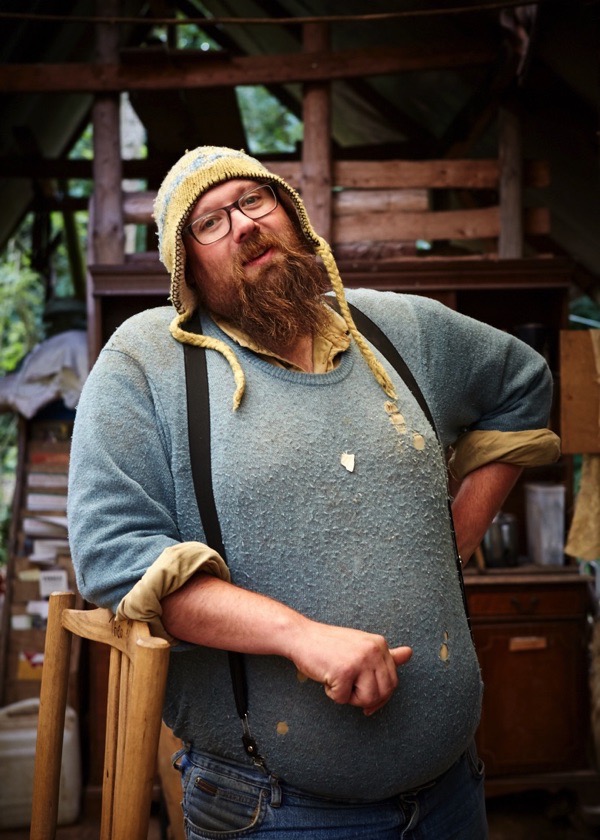
Contributing Photographer Patricia Niven travelled a long way from Stepney to spend a weekend in the deep woods with celebrated East End Spoon Carver Barn the Spoon and members of his Green Wood Guild, and she sent me these pictures as a record of her pastoral adventure. ‘It was a beautiful place, wild and free, half-exposed to the trees and skies with a fire pit constantly alight to boil the kettle and a wood burning stove cooking delicious apple crumbles,’ Patricia recalled fondly, ‘And a memorable experience to witness Barn in his element, selecting trees, cutting them down and transforming them into beautiful spoons.’
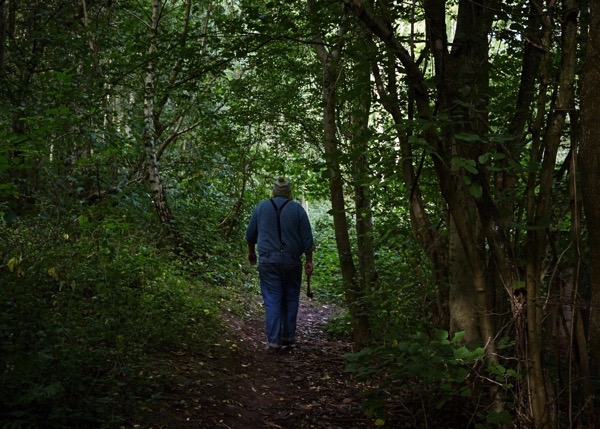
Barn the Spoon goes in search of a tree
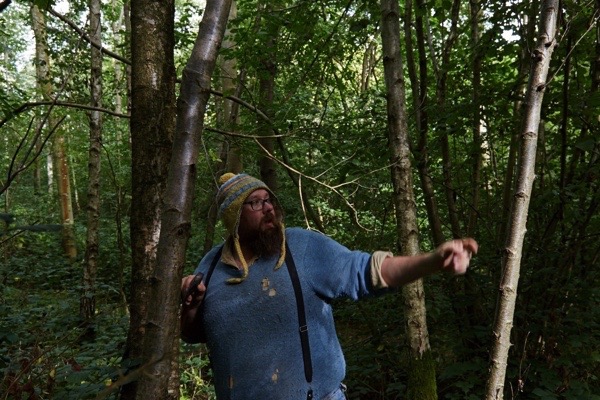
Barn spies a suitable tree
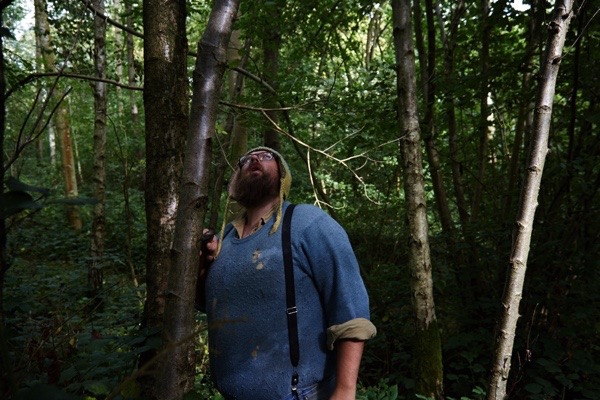
Barn selects a tree
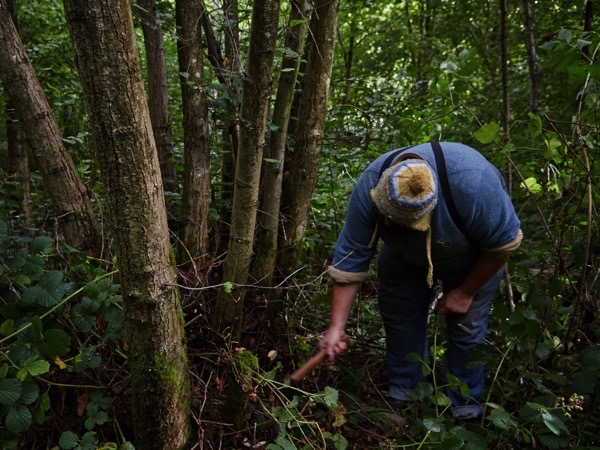
Barn clears the undergrowth with his axe
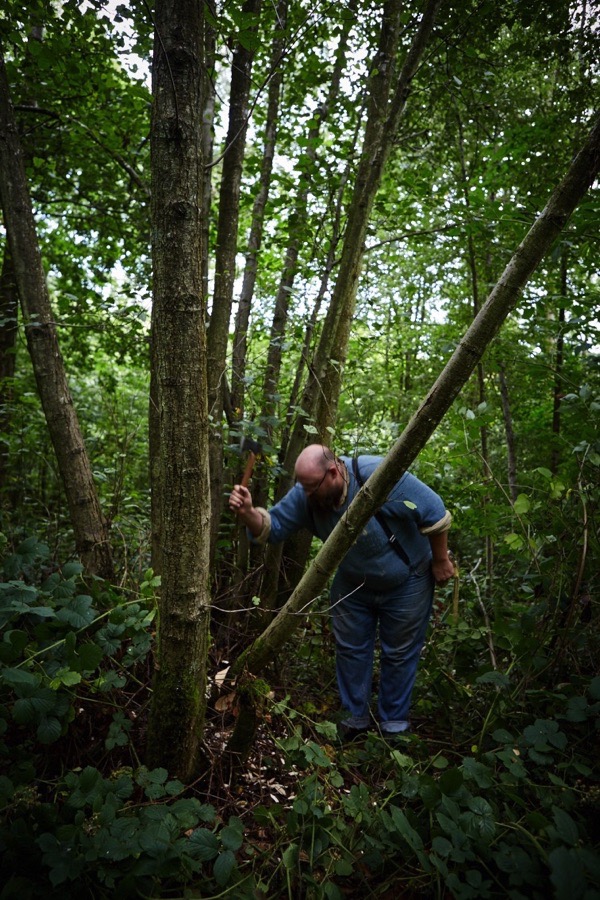
Barn fells the tree
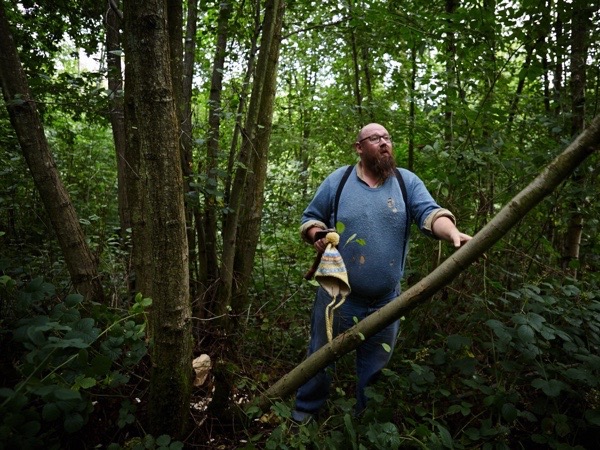
Barn examines his tree
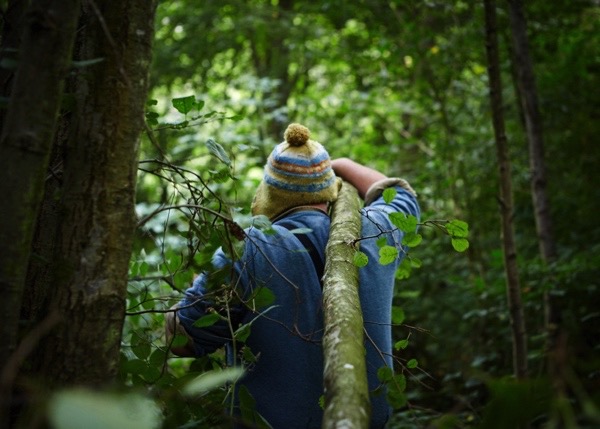
Barn carries the tree back to camp
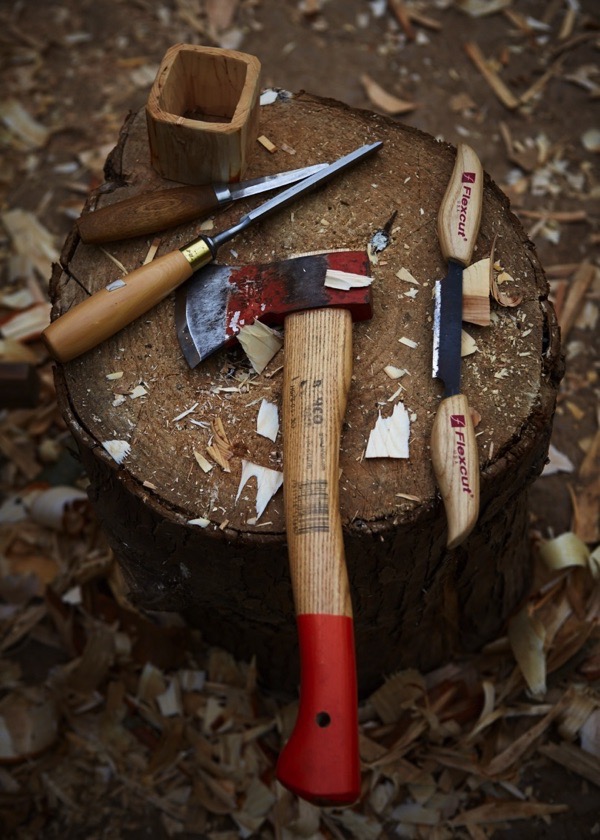
Barn’s tools
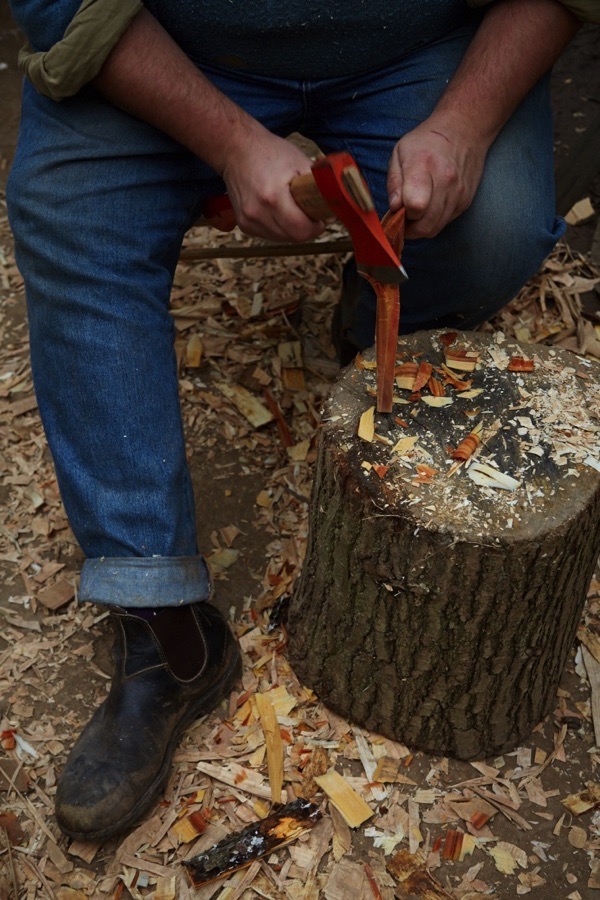
Barn carves a spoon with his axe
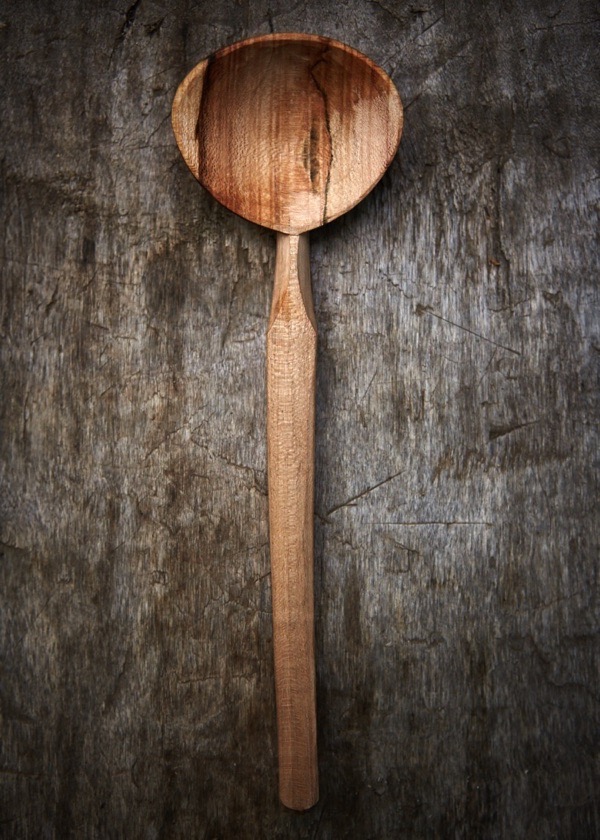
One of Barn’s spoons

Barn’s woodland spoon rack
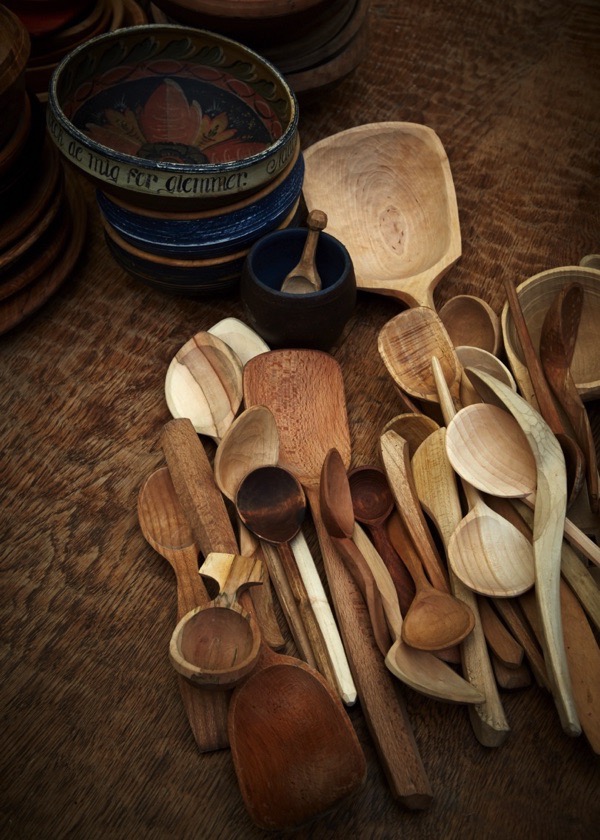
Diverse spoons by Barn
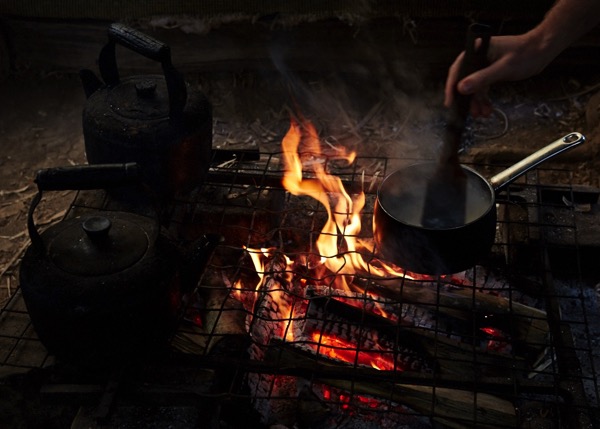
The fire pit
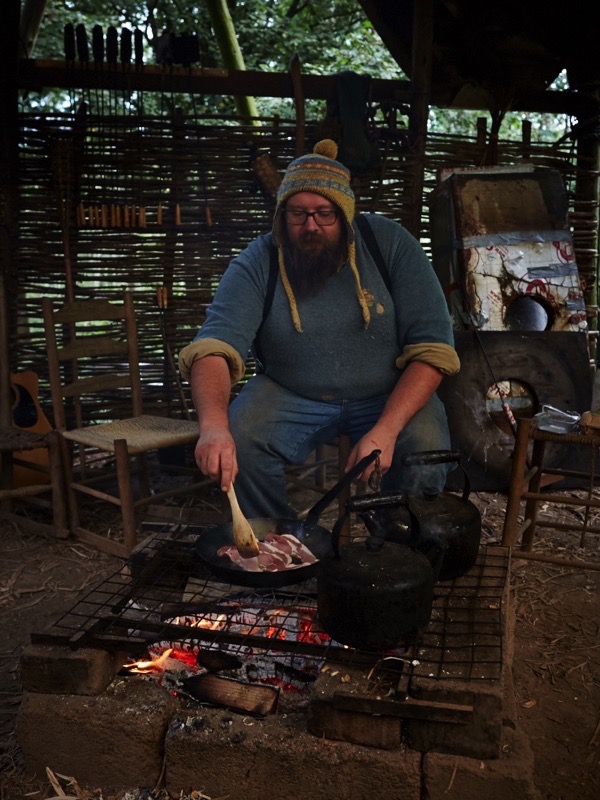
Barn fries the bacon
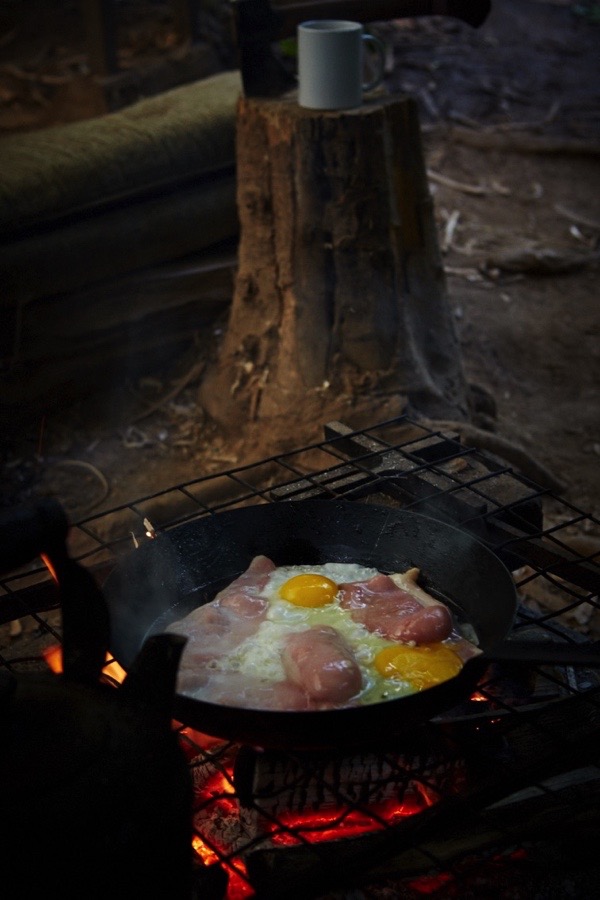
Barn’s woodland fare
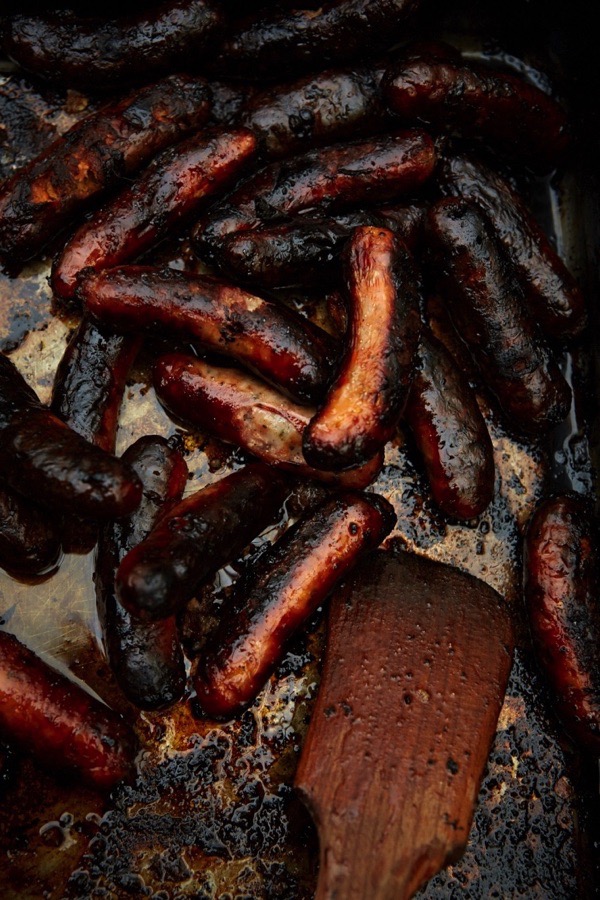
Sausages for all
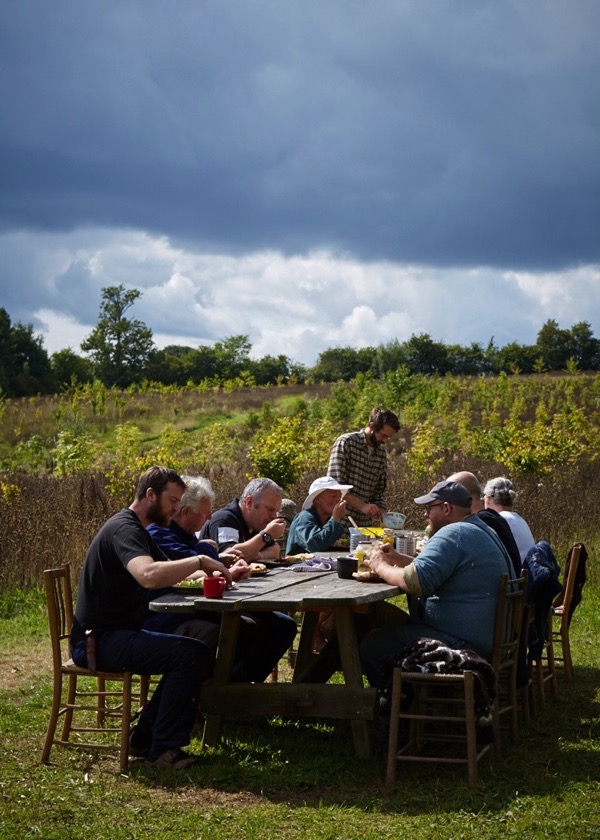
Members of the Green Wood Guild dine in the open air
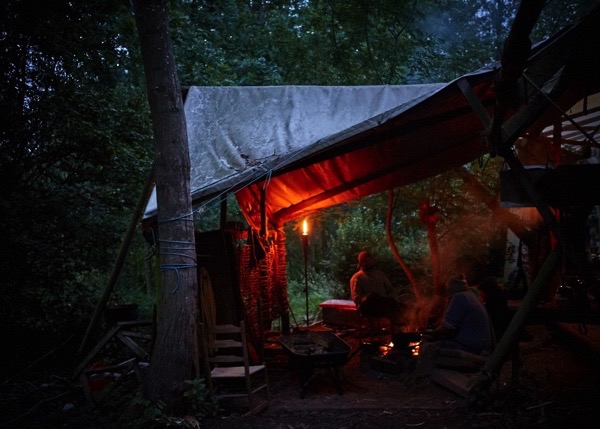
Dusk gathers
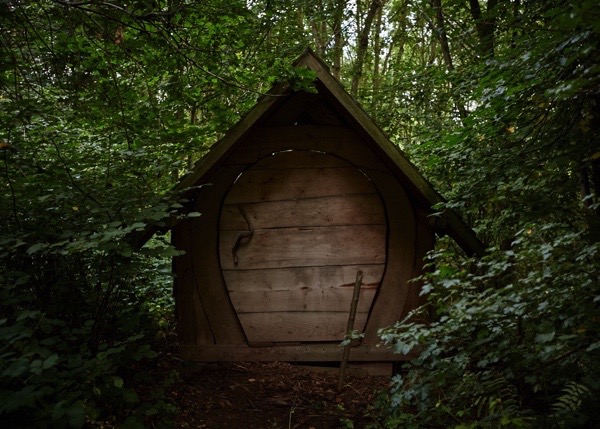
The cabin where Patricia Niven spent the night
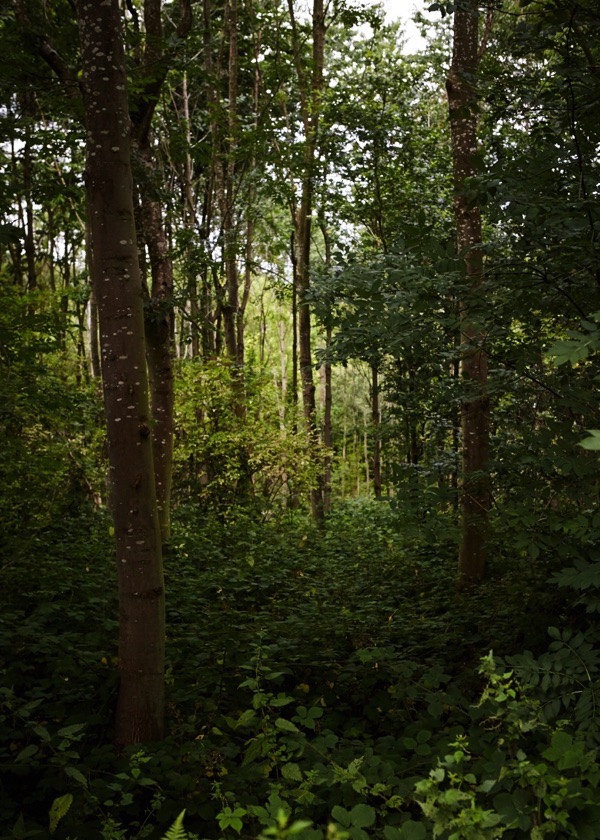
Enfolded by woods
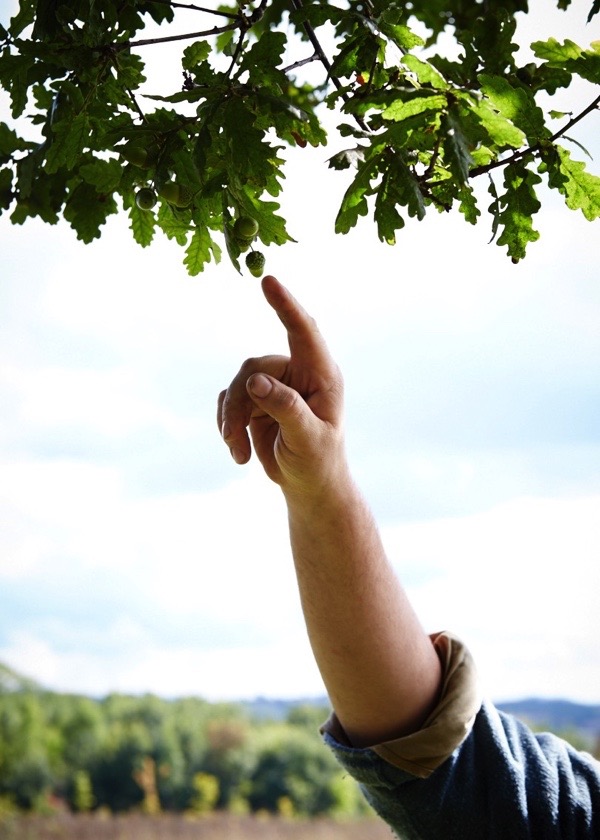
Photographs copyright © Patricia Niven
Barn the Spoon’s book SPON – A Guide to Spoon Carving & the New Wood Culture is published by Virgin Books on 24th May and his shop is at 260 Hackney Rd, E2 7SJ
You might also like to read
Barn the Spoon at Bow Cemetery
Barn the Spoon at Leila’s Shop
Barn the Spoon’s London Spoons
The Many Spoons of Barn the Spoon
At Barn the Spoon’s Green Wood Guild
Moyra Peralta’s Spitalfields

Men sleeping outside Itchy Park
“I felt Spitalfields was my home at one time, even though I was never resident there apart from staying at Providence Row for the occasional night.” admitted photographer Moyra Peralta when she showed me these pictures, taken while working in the shelter in Crispin St during the seventies and eighties.
“Every time I look at these, I see myself there,” she confided, contemplating her affectionate portraits of those she once knew who lived rough upon the streets of Spitalfields, “yet it doesn’t feel like me anymore, now that I am no longer in touch and I have no idea how many have died.” Despite its obvious social documentary quality, Moyra’s photography is deeply personal work.
Recalling the days when she and her partner, Rodger, studied under Jorge Lewinsky in the sixties, Moyra revealed the basis of her vision. “It opened up the mental apparatus to see photography not as an amateur hobby but as something fundamental to life. And it was doing the Soup Run that triggered off the urge to record. At first, I couldn’t believe what I saw, because in the day you didn’t see it. At night, you see a lot of things you wouldn’t otherwise see – hundreds of men sleeping at the back of a hotel in Central London, when there was no sign of them by day because they went to the day shelter.”
Forsaking her chosen path as a teacher, Moyra spent more than a decade working in shelters and on the street, befriending those with no other place to go and taking their pictures. “I started out as a volunteer on the night Soup Run, but once I got to know the men individually, I thought – that’s it, I don’t want to be anywhere else. I realised they didn’t lose their soul, and that spirit was what turned me from a volunteer into a full-time worker at Providence Row,” she confessed.
“Our children were exposed to the scene and spent every Christmas with us at the night shelter where we volunteered. We used to have people home for the weekend as long as they didn’t drink, but I think they found it quite a struggle to stay sober for two days. I could quite understand why people would drink, when it’s so cold you can’t sleep and you’re scared of being attacked by ‘normal’ people.”

Gerry B. in his cubicle at Providence Row – “Gerry sent me a letter containing only a few lavender seeds and a one pound note – the significance of which I shall never know, for Gerry died a few days later. He always had been so very kind and I never quite knew why. Like many before him, his remains were laid in a pauper’s grave.
I remember, above all, his intervention on my first evening at work, when men in the dormitory had planned a surprise to test the reaction of the greenhorn on the night shift. Forewarned is forearmed, and the equanimity with which I viewed a row of bare bottoms in beds along the dormitory wall stood me in good stead for future interaction.”

“The women’s entrance at the corner of Crispin St & Artillery Lane, where Sister Paul is seen handing out clean shirts to a small group of men.”

Dining Room at Providence Row.

“The two Marys, known as ‘Cotton Pickin’ and ‘Foxie,’ making sandwiches at Providence Row for the daily distribution in Crispin St.”

Providence Row Night Refuge, Crispin St.

Men waiting for sandwiches outside Providence Row Night Refuge, 1973. “Established in 1880, this refuge offered free shelter and food to those who needed it for over one hundred years.”

Market lorries in Crispin St.

White’s Row and Tenterground.

Charlie & Bob outside Christ Church. “Charlie was a well-known East End character and Bob was my co-worker at the night shelter.”

Charlie, Bob & J.W. “Charlie rendering ‘Danny Boy’ to his captive audience.”

Charlie & Bob.

Sleeping in a niche, Christ Church 1975. “The crypt was opened in 1965 as a rehabilitation hostel for meths and crude spirit drinkers.”

Mary M. in Spitalfields.

“In Brushfield St beside Spitalfields Market, Dougie is seen having his lunch at ‘Bonfire Corner.’ Traditionally there had been a fire on this corner since the fifties.”

Sylvia, Tenterground 1978. “This homeless woman slept rough but accepted meals from Providence Row in Crispin St.”

Brushfield St, 1976. “Discarded vegetables at the closing of each market day proved a godsend to people on low incomes.”

Painter, Providence Row.

The bonfire corner at Spitalfields Market, 1973. “There had been deaths here from market lorries reversing. Ted McV., however, died of malnutrition and exposure. “

Peggy

Old Mary, seventies.
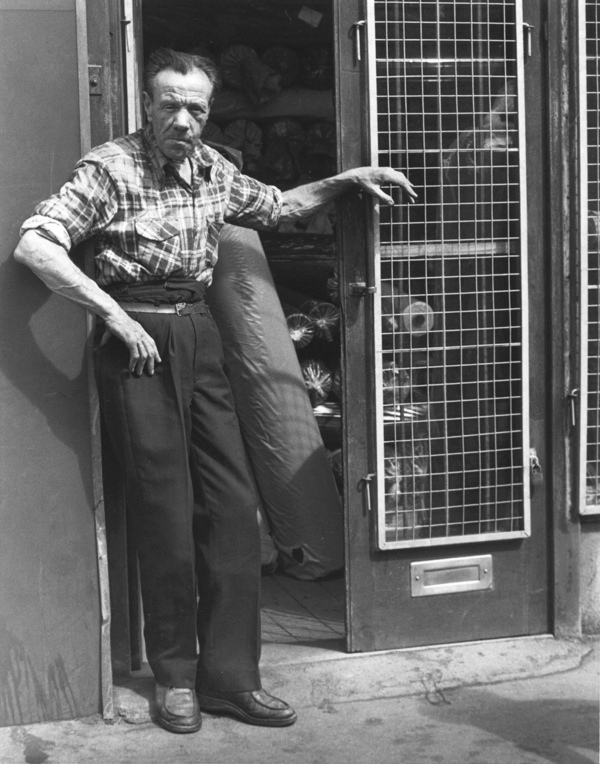
John Jamieson, Commercial St 1979.

John Jamieson smiling.

J.W. with harmonica

J.W. & Pauline in Whitechapel, eighties

Pauline in Whitechapel, eighties.
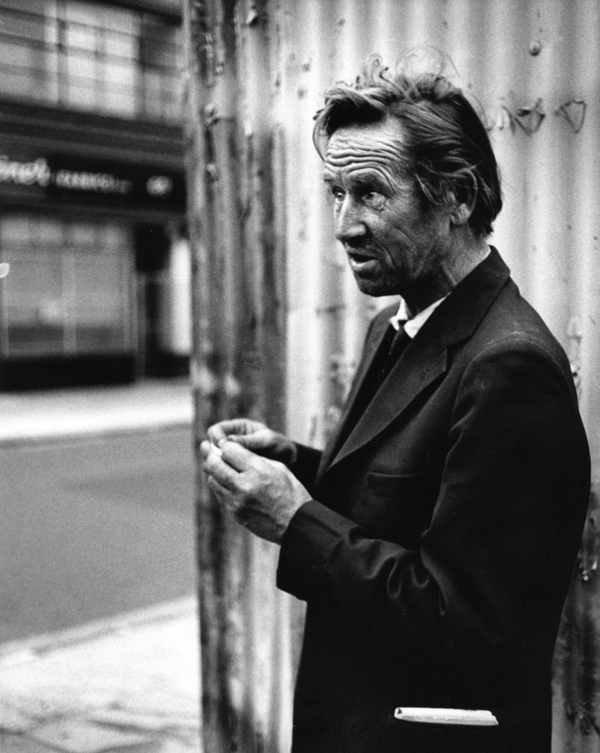
Willie G. in pensive mood, rolling a fag in Whitechapel, 1976.

Gunthorpe St, 1974

Michael, Cable St 1973
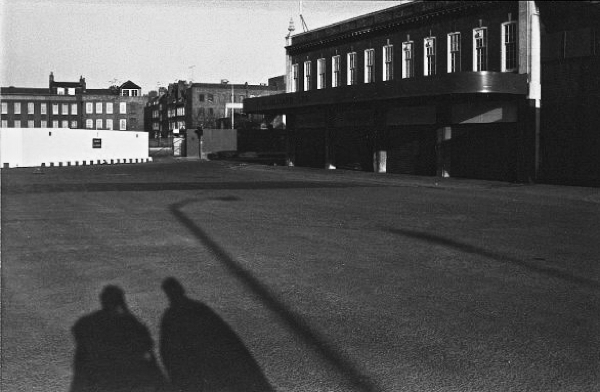
Moyra & her partner Rodger in Spitalfields, late seventies.
Photographs copyright © Moyra Peralta
Signed copies of ‘NEARLY INVISIBLE,’ including these photographs and more by Moyra Peralta plus writing by John Berger & Alan Bennett, are available directly from Moyra. Email moyra.peralta@zen.co.uk to get your copy.
You may also like to read about
The Doss Houses of Spitalfields
East End Toy Manufacturers of 1917
Seeking lost East End toy manufacturers by studying copies of GAMES & TOYS, a trade publication from 1917, recently in the V & A Museum of Childhood Archive in Bethnal Green, I was struck by the irony of the tragic contrasts in this magazine – where celebratory warlike advertisements selling toy guns and tanks to boys sit alongside features promoting ‘patriotic’ companies employing wounded soldiers in toy manufacture.
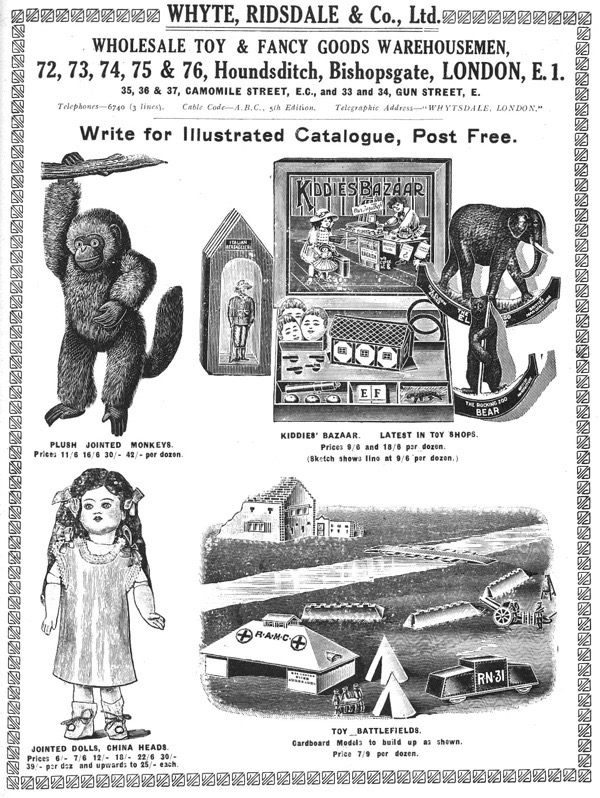
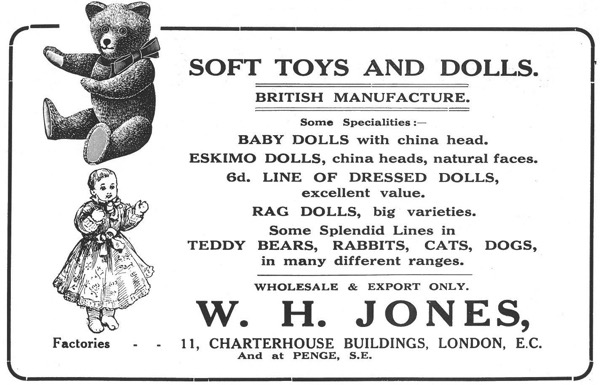
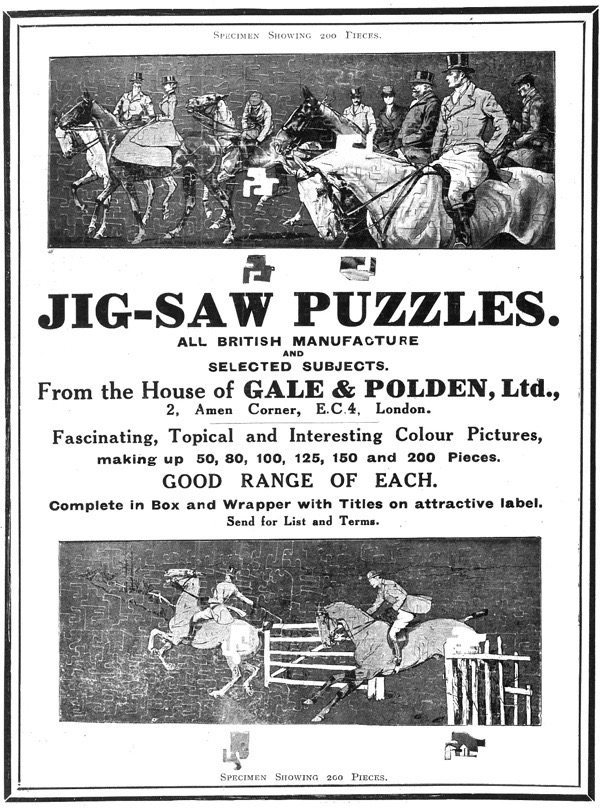
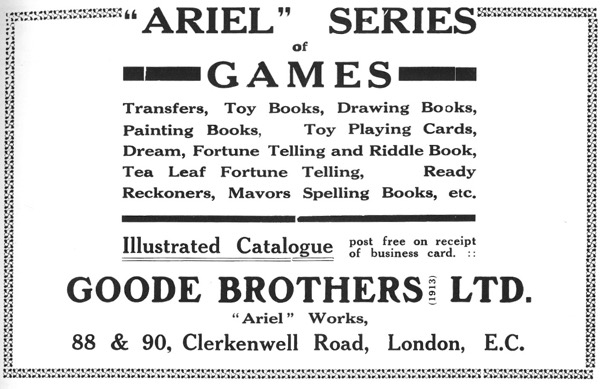
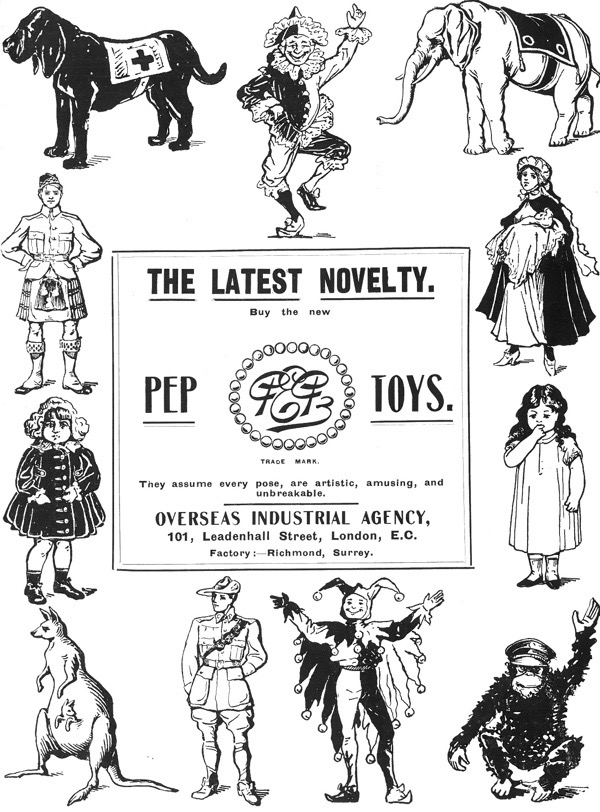
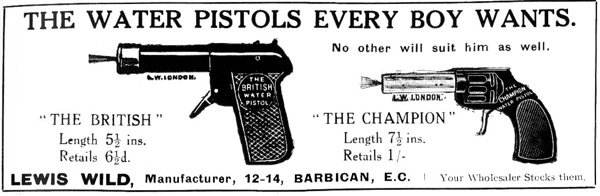
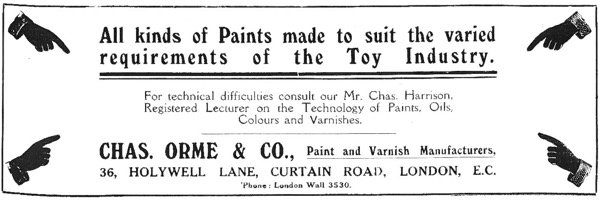
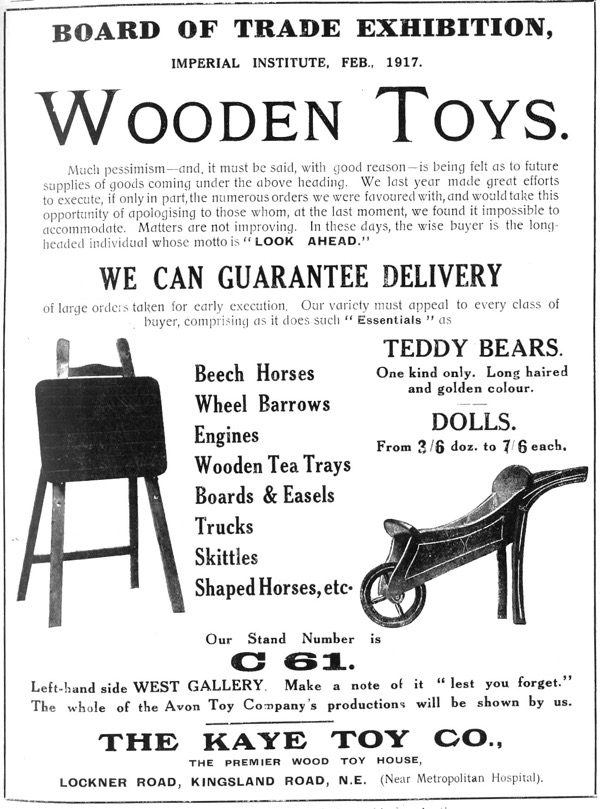
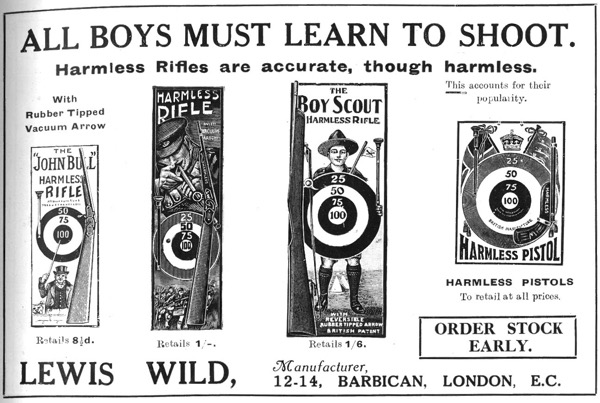
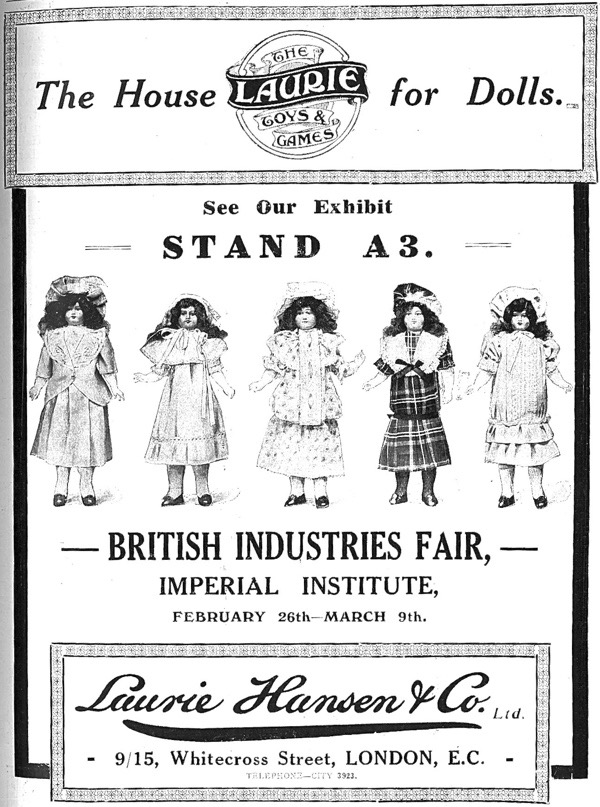
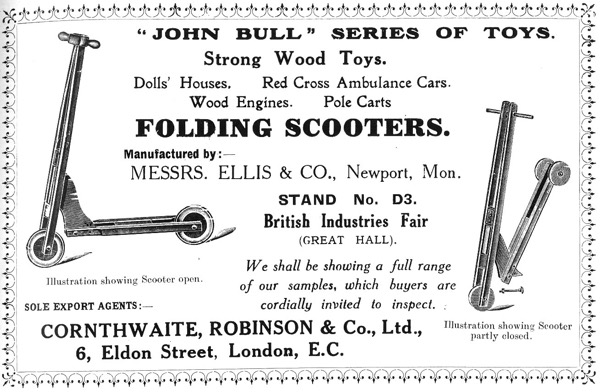
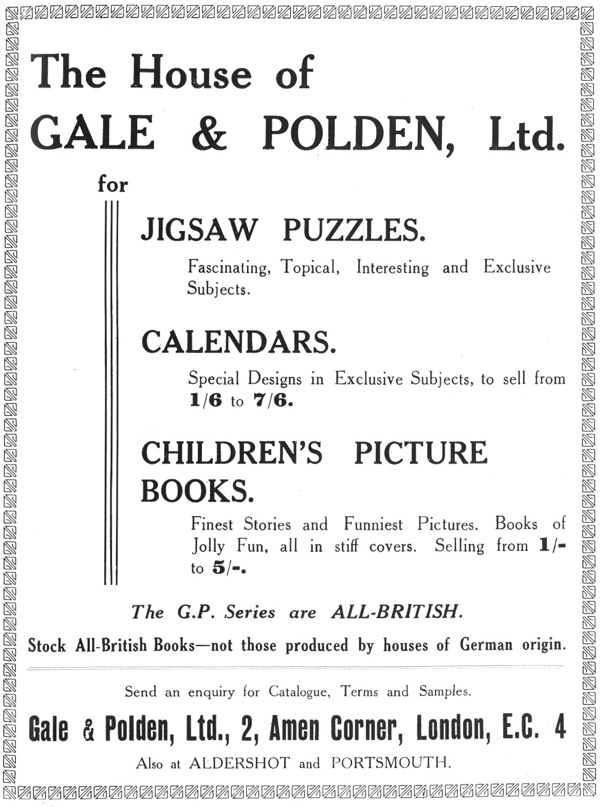
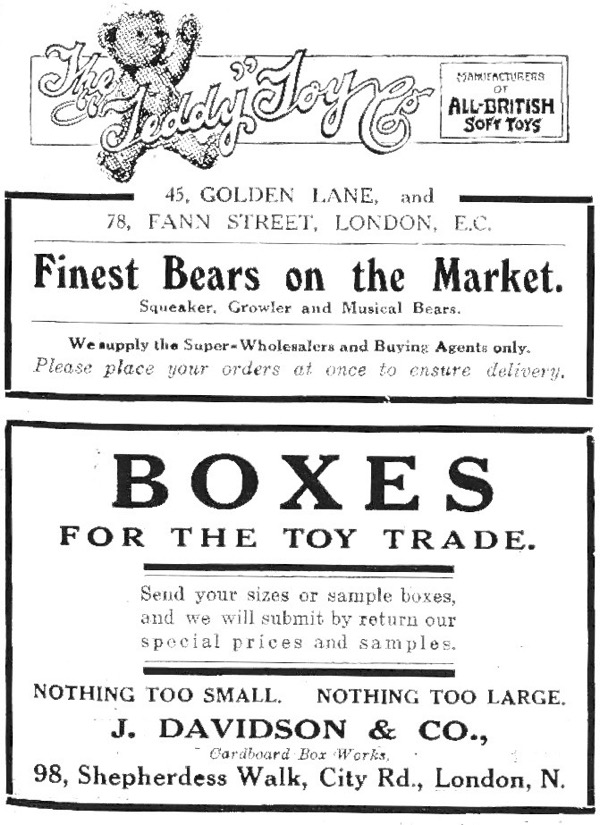
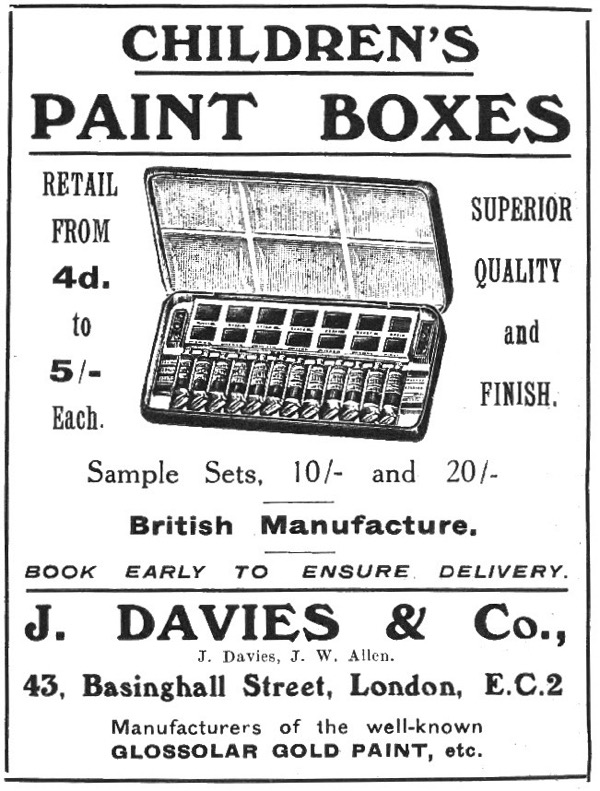
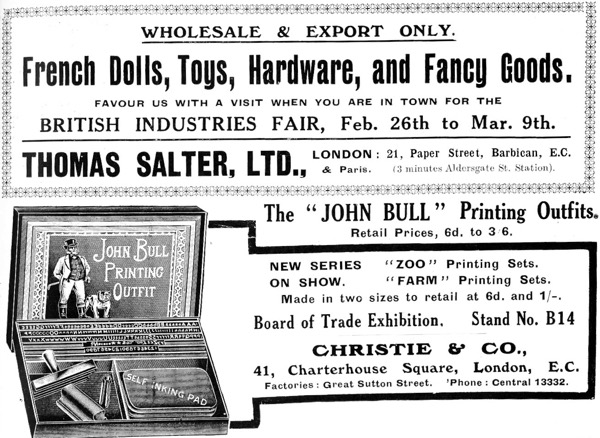
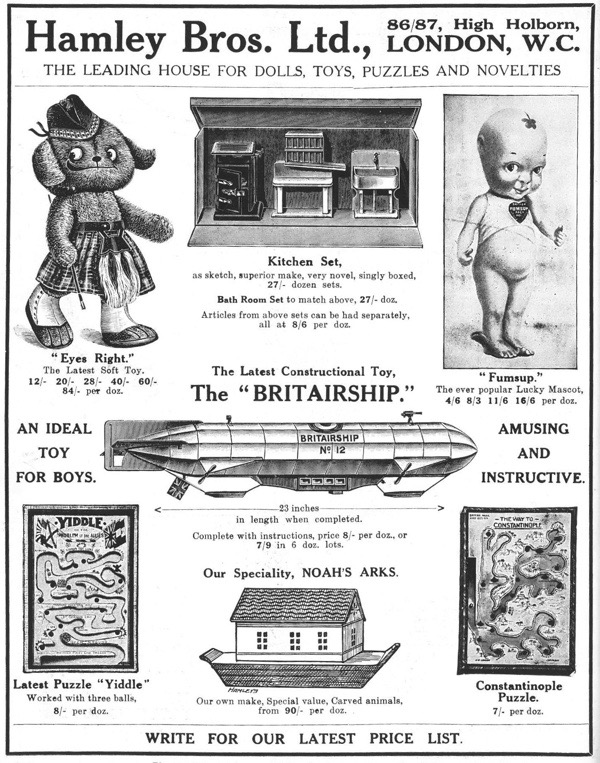
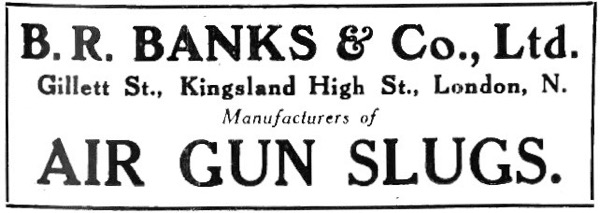
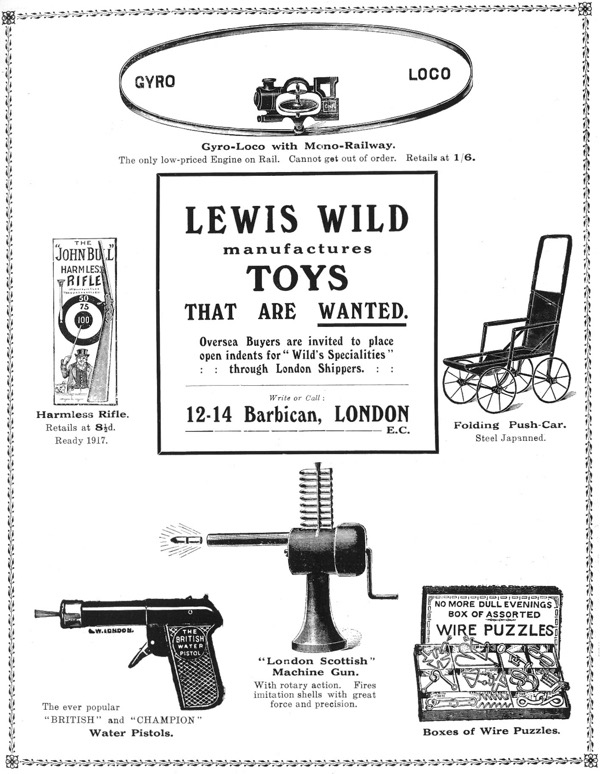
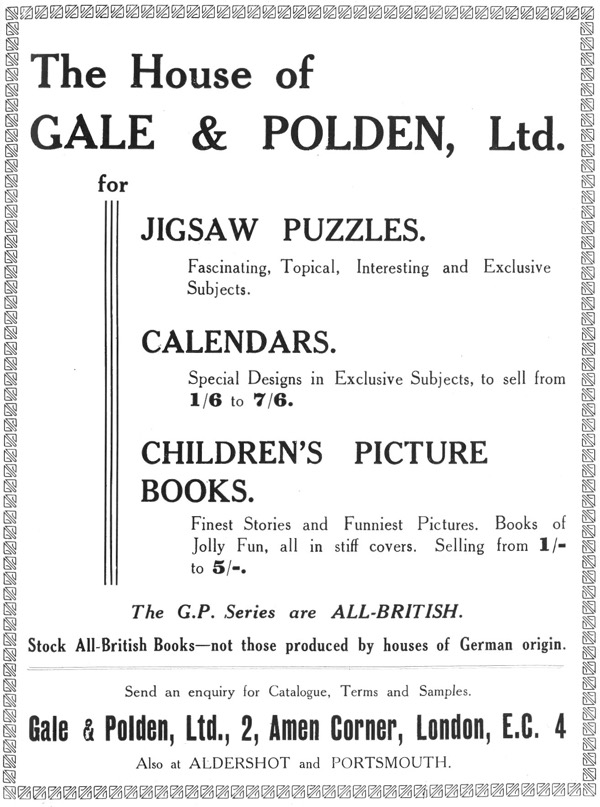
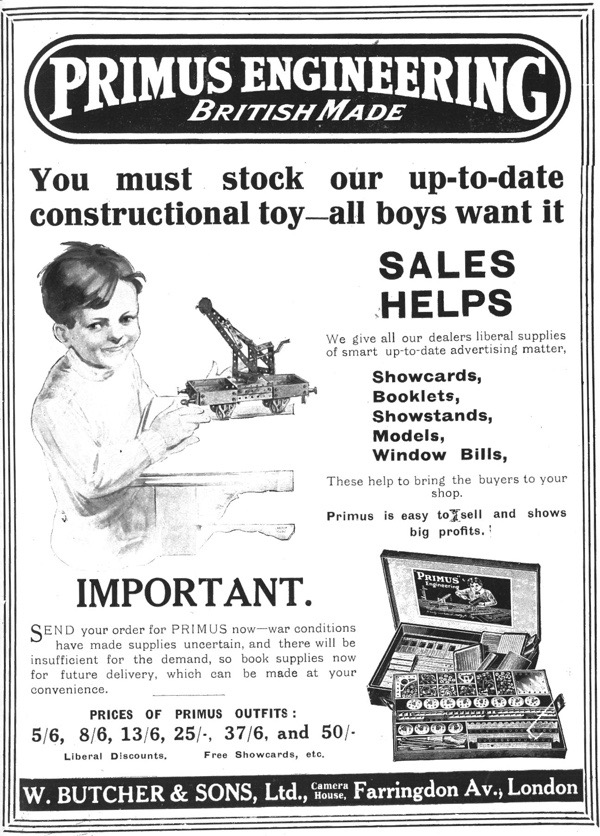
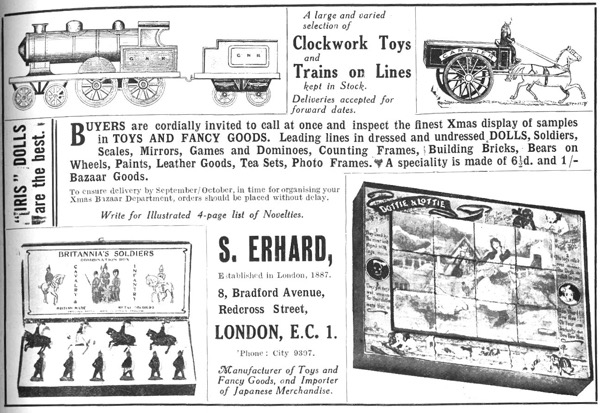
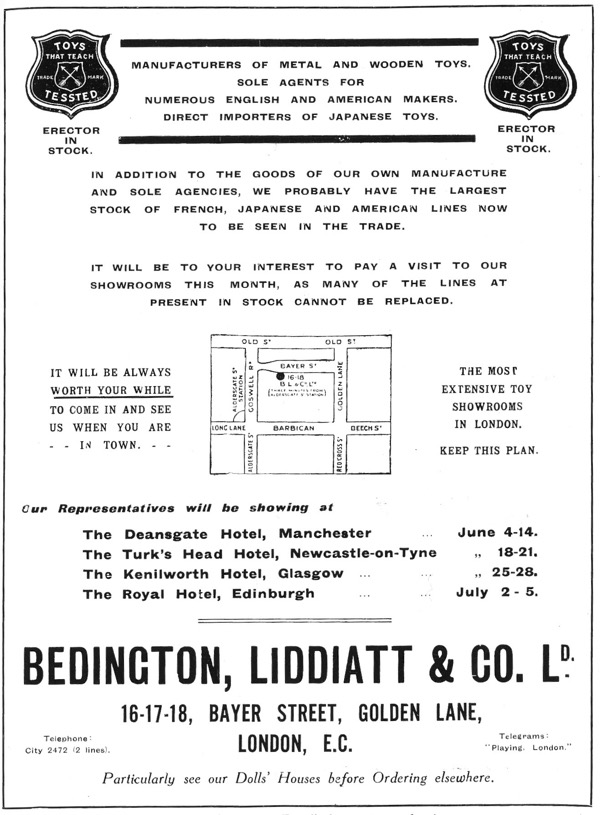
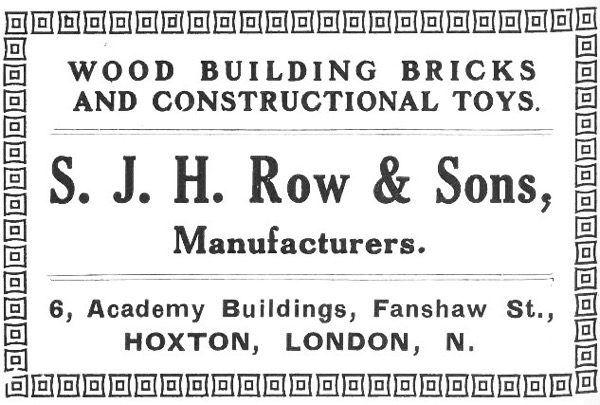
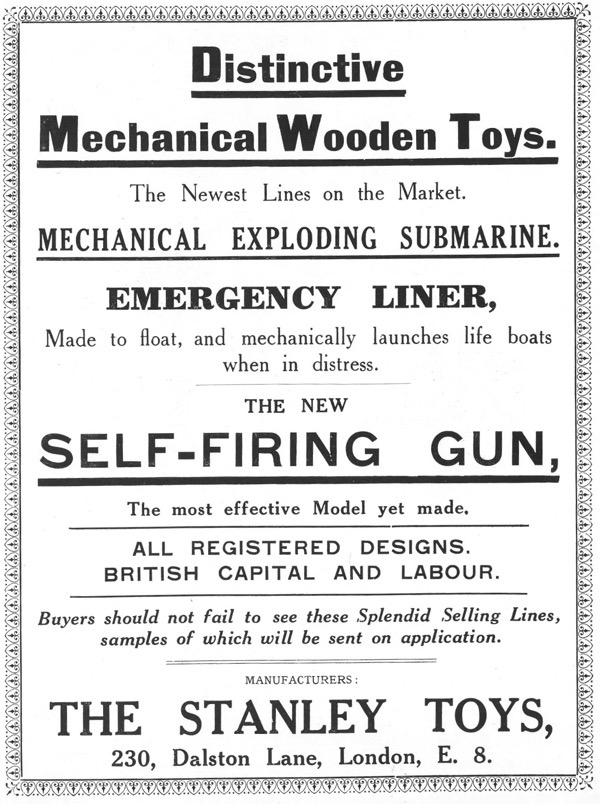
Images courtesy V & A Museum of Childhood Archives
You may also like to take a look at
East Enders In Uniform
In this selection from Philip Mernick‘s splendid collection of cartes de visite from nineteenth century East End photographers, I publish portraits in which clothing and uniforms declare the wearer’s identity. All but two are anonymous portraits and I have speculated regarding their occupations, but I welcome further information from any readers who may have specialist knowledge.

Superintendent of a Mission c. 1880
 Dock Foreman 1891-4


Merchant Navy Officer c. 1880

Policeman c. 1880

 Sailor c.1880

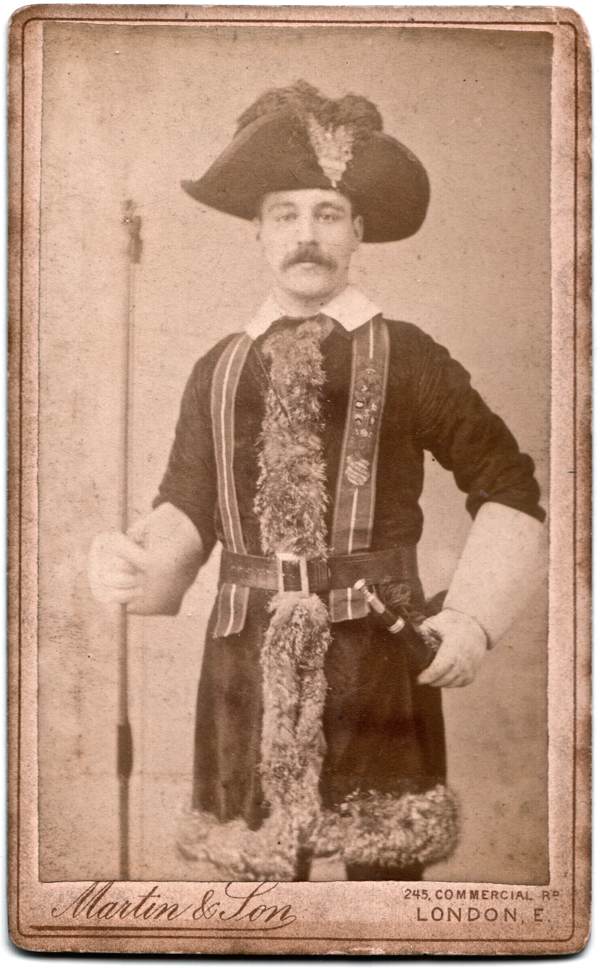
Beadle in Ceremonial Dress c. 1900


Private in the Infantry c.1890


Indian Gentleman 1863-5


Naval Recruit c. 1900

Sailor Merchant Navy c.1870
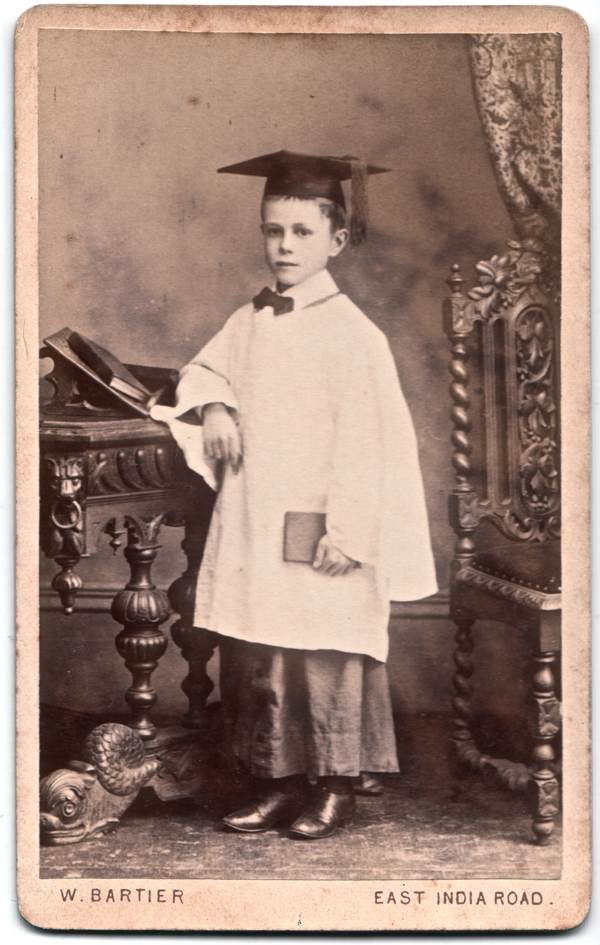
Chorister c. 1890
 Cricketer c. 1870


Merchant Navy Officer c. 1870


East European Gentleman c. 1910


Clergymen c. 1890

 Telegram Boy c.1890


Member of a Temperance Fraternity c. 1884
 Naval Recuit

Policeman c.1890

Merchant Navy c. 1870

 Royal Navy 1887/8
This sailor’s first medal was given by the Royal Maritime Society for saving a life, his second medal is the Khedive Star Egyptian Medal and the other is the British Egyptian Medal. The ribbon on his cap tells us he served on HMS Champion, the last class of steam-assisted sailing warships. In the early eighteen-eighties, HMS Champion was in the China Sea but it returned to the London Dock for a refit in 1887 when this photograph was taken, before going off to the Pacific.
Photographs reproduced courtesy of Philip Mernick
You may also like to take a look at
So Long, Bruno Besagni
I was saddened to learn of the death of Bruno Besagni last weekend, just a few months after the death of his wife Olive Besagni on 12th December and I publish my profile today as a tribute to him, with photographs by the late Colin O’Brien

This is Bruno Besagni, pictured in the nineteen fifties, with one of the finely painted casts that he made in his factory, Bruno’s, utilising the expertise that he first acquired in Clerkenwell at the age of fourteen.
Bruno showed me a similar lamp in his living room and, when I admired it, he gestured aloft with whimsical delight, directing my gaze overhead and there, overarching everything, was a flamboyant ceiling rose of acanthus leaves that he also made, using one frond he retrieved from broken plasterwork in an old hotel.
Moulding and painting statues became Bruno’s life, pursuing the traditional Italian technique which has its origins in religious art. In fact, alongside his career making lamps and figurines for sale, Bruno also made and repaired devotional statues for churches, including the painted effigy of Our Lady of Mount Carmel carried in the Italian Parade in Clerkenwell each year. There is a certain kind of magic, conjuring such animated figures out of base materials, painted in lifelike colours and highlighted with gold, and it is this magic that sustained Bruno throughout a long career.
“Being Italian, my mother said, “You’ve got to go and work in a cafe or a restaurant, at least you’ll eat.” I tried it for a while, but I never got on with it. I got a job as artistic sprayer at the factory in Great Sutton St belonging to Giovanni Pagliai who came from Lucca in Florence where they make all the traditional statues. I took to it at once, I was fairly artistic and all my life I’ve been involved in art. I worked there for a couple of years from fourteen to sixteen, that’s where I met my wife Olive.
When the war began they were all imprisoned. Most of the staff were Italian, and one day a squad car pulled up and arrested everybody. They were “undesirables,” they came under section 28(b) – you were imprisoned but you could have food sent in. As my father was born here, I was a British citizen, so everybody but me got interned. After that, I did all sorts of jobs, chasing money because we were so poor. I should have listened to my mother and gone into the restaurant business.
I was born in 1926 at 48 Kings Cross Rd next to the Police Station, and we moved to Victoria Dwellings on the corner of Clerkenwell Rd in the Italian Quarter, when I was very small. Down “the hill,” everybody ducked and dived, and I had that education, but all I ever wanted to do was to play football and run. We were babies really, sent out to work at fourteen when we left school, earning twelve shillings and sixpence a week, and giving ten bob to your mum. It was a poor wage yet I enjoyed it, there were nine of us in the family then and we were all happy.
I wish I’d gone into the army. I was called up at eighteen, but I couldn’t fight because I had an uncle in the Italian army. It was a very difficult situation for me and – even today – I’m not proud of this. I would have loved to have gone into the army, because I’m a man’s man and I knew I’d have loved it. I worked on a farm instead, at Chepstow with other Conscientious Objectors who were English, and I was disgusted with them, because if they were in Germany, Hitler would have executed them all. They weren’t my cup of tea, they were writers and poets and university types. Being an athlete and a footballer, I joined the Chepstow Football Club and I became their star player. The Chepstow people didn’t want anything to do with us at first, but once I joined the team we got on like a house on fire. I always say, “Have boots, will travel!”
I ran away from there after a couple of years, because I was worried about my mother and the bombs were still dropping on London. They caught up with me and said, “You’ve got to do something.” so I worked in a munitions factory in Ruislip. I was still trying to chase money.
I was signed by Fulham, but footballers got no wages in those days and I couldn’t stand around acting the star when I had no money. The war was coming to an end and somebody said, “I’m going into the statue business,” so we started a little company in Camden Town. We used to open the window for ventilation when we did spray painting, and once the neighbour came round covered in gold paint! For a few years it went fine, but we was becoming villains, we were getting raided for our stock by the police. The purchase tax on items was 125%, so we didn’t have chance – until we learnt that some articles had no tax, like fruit bowls. They weren’t being made yet they were on the invoice! It was our little ploy.
Everything was plaster, we made elephants, dogs and cats. After the war, people had money to spend but nothing to buy so they queued to buy these figurines – all this stuff was rubbish! Then I moved into making statues, I wanted to be more classy and artistic. I called myself a reproduction artist in the end, because I not only cast the statues, I painted them too. I set up on my own, at first on the Caledonian Rd and then in a factory in Stratford, and I made proper statues. I had staff, there were about four of us, and we made Beethoven and Shakespeare. I’ve still got the mould for Shakespeare in my wardrobe, I don’t know why. Cupid, Hermes and Michelangelo’s David were also popular.
I was the second eldest of a family of eleven children, which can be a problem because my mum and dad were still young, and they had only to look at one another and they conceived. When I was eighteen and old enough to know what went on, I said to my dad, “You’ve got to stop. You’ll kill her.” and the doctor told him too, “You’ve got to get condoms and use them.” When he died, I found four thousand condoms in his private cupboard. But I have a lovely family, although we’ve got bad eyesight and heart trouble – I’ve lost three out of eleven. I’m a lucky boy, I’ve still got all my faculties at eighty-six.”
Remarkably for one in such advanced years, Bruno still exuded the irrepressible vitality that characterised him in photographs spanning eighty years – and it was this brave magnanimous spirit, combined with a passion for football and running, that carried Bruno Besagni through the ups and down of life with such enviable panache.

Bruno’s mother’s identity card, giving the date of 1919 when she emigrated to Britain from Italy

Bruno’s father, Guiseppe Besagni, an asphalt layer

The boys of Back Hill, the centre of the Italian community in Clerkenwell

Bruno with his sister Lydia who was afflicted with rickets, induced by deficiency in vitamin D

Bruno in his school football team aged ten – he is second from right in the second row

Bruno was a keen cyclist in his teens – he is on the right

Bruno at an Italian Navy Summer Camp in 1937- he is on the left

Becoming a young man, Bruno stands outside Victoria Dwellings in Clerkenwell with two friends

Bruno, aged nineteen

Bruno stands at the centre of the group of Conscientious Objectors at Chepstow

The Evening Standard reports Bruno signing for Fulham

Bruno with one of the lamps he made at his factory in the fifties

A newspaper feature from the seventies, showing Bruno with some of his top-selling casts

Bruno with an eagle lamp base

Bruno’s cast factory at Stratford

Bruno with a herd of casts of horses

Bruno with one of his statues in his living room

Bruno Besagni

Bruno & Olive Besagni
Portraits copyright © Estate of Colin O’Brien
You may also like to read about
When Rupert Blanchard met Bruno Besagni
So Long, Olive Besagni
I was sorry to learn this week of the death of Olive Besagni on 12th December at the age of ninety, followed by the death of her husband Bruno last weekend at the age of ninety-one. The late photographer Colin O’Brien and I met Olive & Bruno at the Italian Parade in Clerkenwell and today I publish my profile of Olive followed by my profile of Bruno tomorrow, in tribute to this remarkable couple who enjoyed sixty-eight years of marriage.
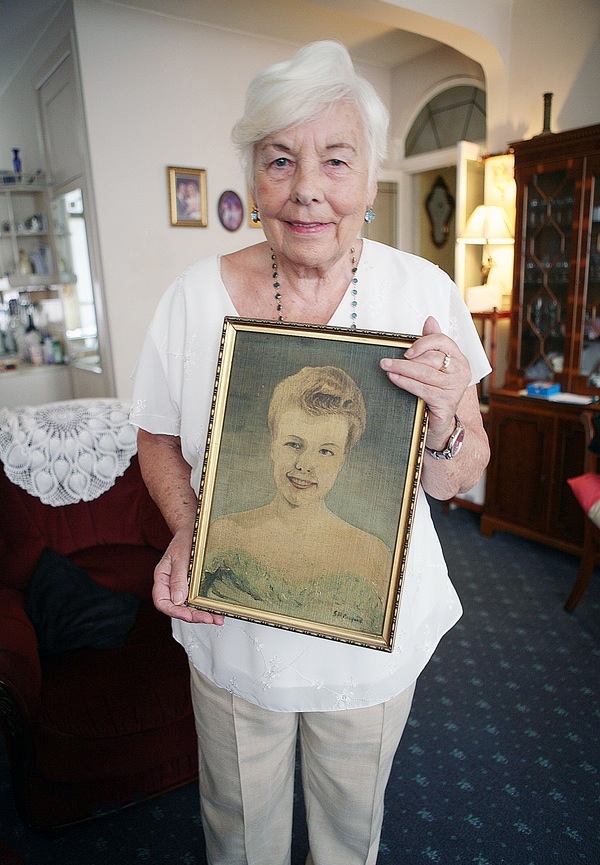
This photograph by Colin O’Brien shows Olive Besagni at eighty-five years old, displaying a portrait of herself at nineteen. I think I can detect a hint of swagger in her eye, but let us grant Olive this indulgence – because she embraced existence with such exuberance and good humour she earned the right to show a little chutzpah.
Olive was standing in her flat in Myddleton Sq in Finsbury where she lived since 1956, just half a mile north of Clerkwenwell where her grandfather Giovanni Ferrari arrived from Borgotaro in 1880 to teach English to the Italian immigrants. Giovanni was a clever young man who loved to teach,and since most of the Italians needed to learn English if they were to advance, he became a very popular figure – known as Maestro Ferrari.
Giovanni’s eldest son Guiseppe (known as Joe) married Netta Oxley, an Englishwoman, and they moved to Gospel Oak where Olive was born in 1925. Then, when Olive was eleven they moved to Hampstead and at fourteen, upon the outbreak of war, she was evacuated to Rutland where she delighted to write sketches for performances in the village hall. Consequently, Olive grew up knowing little of the crowded Italian slum centred around Back Hill in Clerkenwell, that was the focus of the Italian community in London in those days.
“When I finished school, my parents wanted me to go to work in an office but I preferred to spend my time at Parliament Hill Lido and so I went for a few interviews that I messed up purposely. Finally, my father got a letter from a friend who ran a factory making religious statues, saying “Do either of your sons want a job?” It was in Great Sutton St in Clerkenwell and I went to work there, painting the lace and the gold lines onto the statues. Since I grew up in the suburbs, this was the first time I saw Italians in the raw but, once they discovered I was Maestro Ferrari’s granddaughter, they were very kind to me. And amongst the younger men was a sixteen year old boy called Bruno Besagni who worked as an artistic sprayer.
But I got bored with it there, and I found a job as a trainee negative cutter at a small documentary company in Dean St called Realist Films. They made mostly black and white films for medical students with close-ups of operations. I was only eighteen and there was a film of triplets being born, in colour, that I found especially traumatising, even more so than people having their legs removed. Yet I became an assistant film editor eventually, and from there I went to the best job I ever had – at Pathé Films in Wardour St.
I worked for Alexander Wilson Gardner making short pieces of film that could be inserted into news reports. We made a sequence about Christian Dior’s “New Look.” They had a model to wear the short hem and I had to appear as the legs of the woman in a long skirt. While I was there we discovered all these old reels, from the nineteen twenties and earlier, in the basement. We had to sort them out and I remember finding the film of Churchill dodging the bullets at the Battle of Sidney St. It was quite something, all these old cans of film, and it was exciting because it was all new to me.
I loved it, I absolutely loved it, but when I married Bruno Besagni and had two children, I was at home for five years as a housewife and mum. Then Alexander Milner Gardner rang me up and said “Do you want a job?” So I said, “I’ll ask my mum,” and she came and stayed with my children each day, and I went back to work. But very shortly, Alexander Milner Gardner died and my mother decided to go to America to see her other daughters, and I had to leave again. I pottered about doing freelance work. Commercials started then and I edited Butlins’ first adverts. But I resented leaving Pathé and I never became an editor because you had to do six years as an assistant editor before you could qualify.
I did all sorts of bits and pieces until I got a job in the Media Resources department at Kingsway College in Sans Walk, Clerkenwell. I had to work this horrible dirty old printing machine, and the boss didn’t like me because he thought I wasn’t young and he wanted a glamorous girl – but I didn’t mind because I have a sense of humour. I said, “I write plays, I can be a bit of a nuisance sometimes.” And he said, “Never mind, do it here!” So I wrote my plays there and they printed them for me and life was a ball.
I love razzmatazz and I used to write stuff for my friends, old time music hall etc, to entertain the old people at my church. Then one of the youngsters said, “Can’t we do a proper play?” So I said, “I can write something about the Second World War – if I don’t know anything about anything, I know about that.” I wrote a play, “Blitz & Peaces” with a cast of thirty and I produced, directed and acted in it. It was easy for me, and it was so successful, it was full every night. After that, I was offered the theatre at the St Luke’s Conference Centre in Central St. And I wrote and directed shows, one each year, for twenty years – I had this lovely theatre, some very talented actors and we played to two hundred people a night.”
These plays, that Olive wrote and directed, dramatised aspects of the experiences of the Italian people in Clerkenwell and were in effect a collective history, performed by descendants of immigrants in front of an audience of their community. Yet in spite of the accomplishment and popular emotional import of these epic dramatic works that occupied Olive for twenty years, the culmination of her talents was yet to come.
In 2011, Olive Besagni published A Better Life, a collection of oral histories telling the story of Italian families in Clerkenwell going back through generations into the nineteenth century. In this authoritative book, Olive told the story of an entire society, allowing people to speak for themselves yet supplying pertinent historical material to give background to the testimonies. With her experience as an editor and her trained ear as a playwright, Olive was the ideal person to make a record of her people. The only shortcoming – if it may be called that – is that Olive modestly included very little of her own story, which is why I endeavoured to tell it here.
Colin O’Brien and I met Olive at the Italian Parade in Clerkenwell in 2011, which she had attended every year since it recommenced in 1946, except for 1948 – because Olive got married to Bruno on the day before the parade that year and she was away on her honeymoon. As a consequence, Olive & Bruno’s wedding anniversary was always the day before the parade and we met her on the day after her sixty-third anniversary. “I can’t believe it,” she confessed in wonder, “So many good things have happened to me.”

Olive looking like a Hollywood movie star in the nineteen forties
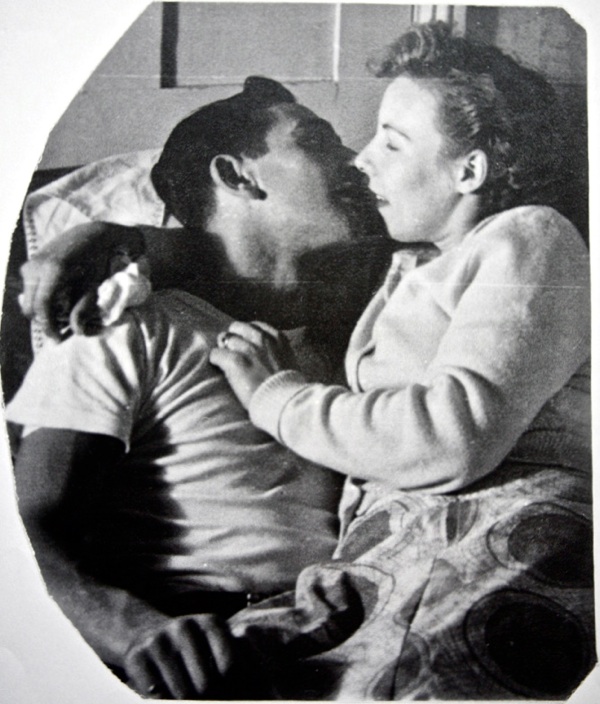
Olive & Bruno

Wedding at St Peter’s, the Italian church, in Clerkenwell, July 1948

Olive arrives at the church with her father Guiseppe Ferrari (known as Joe)

Olive & Bruno on their honeymoon, 1948


Olive & Bruno with their children Anita & Tony at Brambles Chine on the Isle of Wight

Olive & Bruno with their children, Anita, Tony & Nicolette

On New Year’s Eve

Bruno and Olive on their sixty-third wedding anniversary

Olive Besagni
Portraits copyright © Estate of Colin O’Brien
Copies of A Better Life by Olive Besagni are available from the publisher Camden History Society
You might also like to take a look at
Terry Scales, Artist

Terry Scales
Terry Scales has lived for more than fifty years in a quiet back street in a forgotten corner of Greenwich where the tourists do not stray. To find him, I wandered through narrow thoroughfares between modest old terraces that splayed off at different angles with eccentric geometry, just like lines upon a protractor, to reach the park at zero degrees Longitude.
In the front room, Terry’s wife, Cristiana Angelini, was painting and he ushered me past. “She has the best room, but I have the best light,” He whispered with a sly grin as he led me quickly into his crowded studio overlooking the garden. There, among a proliferation of handsome pictures of boats upon the Thames that are his forte, Terry showed me the first oil painting that he did at art school – an accomplished still life in the manner of Cezanne – and a fine pencil drawing of him in his teens by Susan Einzeg. A portrait that is recognisable seventy years later on account of Terry’s distinctively crooked aquiline nose and feverish youthful energy.
I know of no other painter so well placed to paint scenes of the Thames as Terry Scales since, alongside his natural facility with the brush, he is able to draw upon a lifetime’s experience, growing up in a family that made its living upon the river for generations and then working in the Docks himself. “Because of the strikes, people think that dockers were all muscle and brawn, but we had men who left solicitors’ offices to work in Docks. It has to do with the independent lifestyle, you were never working for just one company, you were working all over the shop.” Terry assured me, eager to dispel the notion of dockers as an unsophisticated workforce, “Among that vast body of men, there were many very talented people.”
“They discovered I was a professionally trained artist and asked me to draw portraits,” he revealed, showing me his work for the National Dock Labour Board magazine in the fifties, “but my senior colleagues were very suspicious and conservative. I grew a beard after two years in the Docks and they were all scandalised!”
Terry’s work is the outcome of an intimate relationship with his subject, both the working life of the river and its shifting climate. “Most of the subjects of my paintings have gone now,” he confessed, casting his eyes fondly around the gallery of maritime scenes that surrounded us, evoking the vanished world of the Docks with such vibrant presence. I was fascinated to learn how Terry had combined his employment as a docker with his artistic endeavour – so that each fed the other – and he obliged by telling me the whole story.
“I was born in 1932 in St Olave’s, Rotherhithe, and my family lived in that area for as long as anyone knew. My mother’s people came over from Ireland in the eighteen-fifties after the potato famine, and they were called O’Driscoll which they changed to Driscoll. On both sides, my family worked in the Docks, and my father was a ganger in the Albert Docks and a lighterman. A hundred years ago, they were very adventurous, with my grandfather travelling to Australia and America, taking ships here and there, and picking up work. On my father’s side, they were all dockers in Bermondsey working on the grain wharfs near Cherry Gardens Pier – the lightermen’s stopping point where they changed barges.
I was evacuated to Seaton in the West Country which opened my eyes to the splendour of landscape and I returned after the war with a broad Devon accent to live in one of the prefab villages in Bermondsey. After a good schooling in Devon, I was sent to school in Rotherhithe which was appalling – there was a complete lack of discipline and I learnt absolutely nothing. The Labour government brought in a scheme where pupils that were talented but not academic could go to a college and learn a craft. So, at the age of thirteen, I applied to Camberwell School of Art and was accepted. And when I arrived there it was like heaven, because we had the best painters in England teaching us and, being thirteen I took it very seriously indeed – there was Victor Pasmore, Keith Vaughan, John Minton, William Coldstream and members of the Euston Rd Group.
I think the teachers must have appreciated that I was such a serious student because, by the age of sixteen, I had sold paintings to all the staff and William Coldstream bought a canal scene of mine. So I was doing very well as a student artist. Keith Vaughan, John Minton and Susan Einzig, they were the Neo-Romantic group and they took me under their wing. But the members of the Euston Rd Group taught me to draw because they were keen on observation, so I owe my drawing ability to them. There was an ideological war going on between their subdued English Realism and the Neo-Romantics who were influenced by Picasso and Matisse.
I was the youngest in my year and, when we graduated in 1952, I had to do National Service so I applied to the RAF. A Jazz musician called Monty Sunshine told me I should be a telephonist because it was the cushiest job. So I applied to do signals in the Far East, but they sent me to work at East India Docks and I was able to live at home. By the time I was demobbed all my friends were teaching, but I didn’t fancy that, as I was only twenty-one, so I took a job at a publicity studio in Fleet St that did posters for Hollywood films and I became a background artist. Once, I painted a brooding sky with lightning as the background to the poster for ‘The Night My Number Came Up’ but after they had put a great big aeroplane on it, and the stars’ faces, and the title, you could hardly see any of my work! I was paid a very low wage, the painters who did the stars’ faces got the top money with the lettering artists below them, so I realised it would be a long time before I earned any money.
I was ambitious, so my father said to me, ‘This is peanuts – why don’t you come and work in the Docks? You could build up your bank balance.’ In 1955, I took a docker’s brief at number one sector, Surrey Docks, and over a five year period I worked every wharf from Tower Bridge to Woolwich. In the summer, once the Baltic Sea thawed, I worked on the timber ships. They came with huge cargoes and every strip had to be manhandled into barges. I worked quite hard, earned very good wages and had no accidents.
One day, I finished early after unloading a ship of Belgian chocolates, so I decided to go over to Camberwell and see my old teachers. I dropped in on the Foundation Course and they said, ‘Thank God you’ve turned up because one of the tutors has been taken ill! Can you take the class?’ And afterwards, they said, ‘Can you come back tomorrow?’ Prior to that, I had an exhibition at the South London Gallery and I continued painting while I was working at the Docks. I painted a whole exhibition once during an eight week strike.
I knew the Welfare Officer at the Surrey Docks and I said, ‘I’m going to leave to teach.’ He said, ‘Teaching is a very insecure profession, you shouldn’t give up the Docks.’ But the Docks closed ten years later and I stayed teaching at Camberwell in the Fine Art Department for the next thirty years, until I retired in 1990 to concentrate on my own work.
The appeal of painting the Thames for me is not just because of my personal background, but because the river has space. In London, you are aware of being closed in yet when you see the Thames it has a grandeur, and when the tall ships are there you feel the magnificence of it. You get changes of light and, although I’ve often been prevented from finishing paintings because of surprises, like breaks in the weather or the sudden appearance of smoke, it always adds something. You start to paint a ship on a Monday, it rains on a Tuesday and it’s a different ship there on the Thursday – but if you are a landscape artist seeking qualities of light, ambiguity has to be part of it.”

Terry in his studio, sitting with the first painting he ever did at art school. “A man who paints puts his heart on the wall and in that painting is the man’s life” – John Minton, 1951.

Bert and James, Barges, Prior’s Wharf, 1990

Hungerford Bridge

View from the Festival Hall

Pier at Bankside

Red Tug passing St Paul’s

Shipping off Piper’s Wharf, 1983

Greenwich Peninsula.

The ‘John Mackay,’ Trans-Atlantic Cable Layer, Enderby’s Wharf, 1979

Mike Canty’s Boat Yard, 1988


Terry with his shed that he constructed entirely out of driftwood from the Thames.
Paintings and drawings copyright © Terry Scales
SCENES FROM POST-WAR LONDON 1946 – 1960, the early paintings of Terry Scales, runs until 10th June 2017 at West Greenwich Library, 146 Greenwich High Rd, Greenwich, London, SE10 8NN. Terry will be talking about his work on 9th June 3-4pm