Janet Brooke’s East End Shopfronts
In the eighties, Janet Brooke undertook series of prints of some favourite East End shops and a selection are currently on display at the Museum of London until 7th July
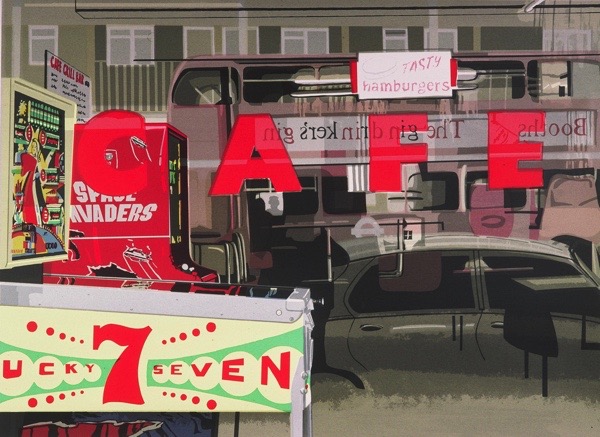
Cafe, Roman Rd
“I moved to Bow in the mid-seventies after a stint of squatting in Whitechapel and Leytonstone. I was teaching printmaking at East Ham Technical College, which became Newham Community College and then Newham College of Education before closing the Art Department in 2006. Yet, thankfully, I did manage to buy their beautiful Imperial Press made in Curtain Rd in 1832 that I used to print my linocuts. While I was teaching, I also made my own prints and in 1980, armed with a new camera, I started taking photographs and decided to use the results as inspiration for my work. So I started with a set of screenprints of the shops in Ropery St, where I lived and which I used every day.’ – Janet Brooke
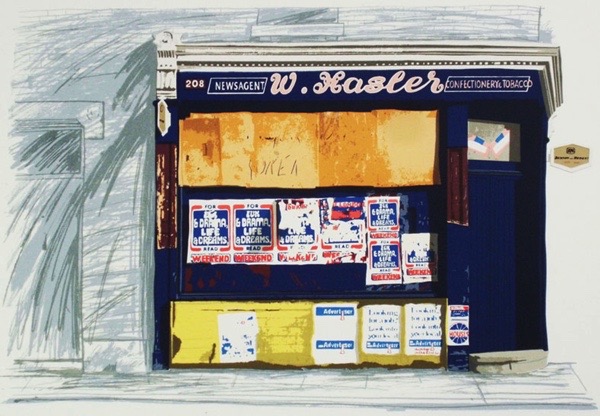
MR HASLER’S SHOP (Screenprint) on the corner of Eric St and Bow Common Lane had seen better days. It was not always clear whether it was open or not, because it very dark inside with the windows boarded up. I do not remember it selling much more than newspapers and a few cigarettes, but I do remember having our Sunday paper delivered by Mr Hassler himself or, more often, by Mrs Hasler. Hasler’s is no longer a shop.
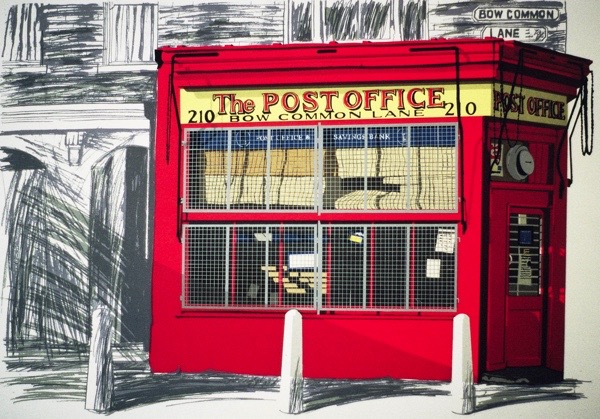
THE POST OFFICE (Screenprint) was on the opposite corner of Eric St and Bow Common Lane. It is no longer a shop.
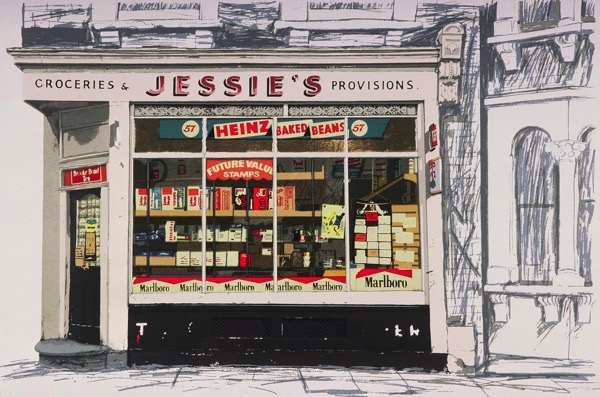
JESSIE’S PROVISIONS (Screenprint), our local grocery store, was further down Eric St on the corner of Hamlets Way, where you could buy everything you needed including fresh bread, delivered twice a day, warm from the bakery. Jessie’s is still a grocery shop.
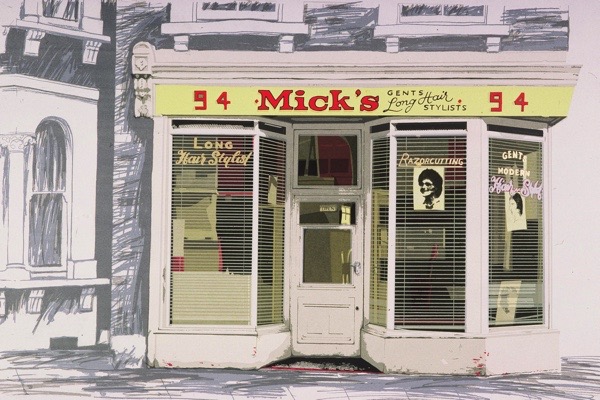
MICK’S GENT’S LONG HAIR STYLIST (Screenprint) was on the next block along Hamlets Way, on the corner of Mossford St. Mick was Maltese I think and claimed to be a ‘Gents Long Hair Stylist,’ although I think he was more of a traditional barber. I remember taking my son there as a small boy, he sat on a plank balanced across the arms of the barber’s chair and always chose one of the Italian styles pictured on the wall, maybe a Tony Curtis. He looked stylish afterwards but his hair soon reverted to its more usual Dennis the Menace look. Mick’s is still a barber’s shop.
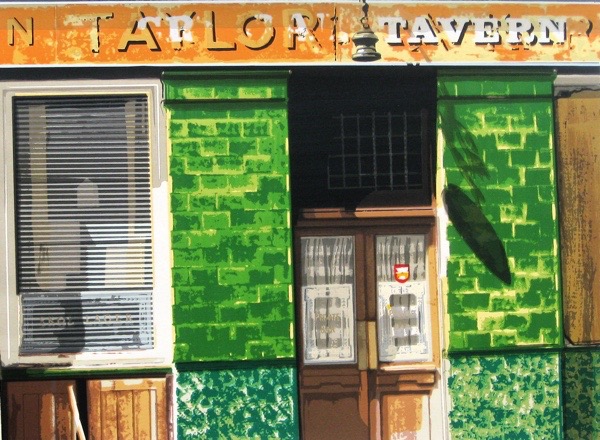
THE CRYSTAL TAVERN (Screenprint) was on the other side of Hamlets Way on the corner of Burdett Rd. The sign was worn away, so it was more often referred to as ‘the dive’ or sometimes’ The Arbus Arms.’ The interior was all faded plush, gilt and mirrors with a barmaid to match.
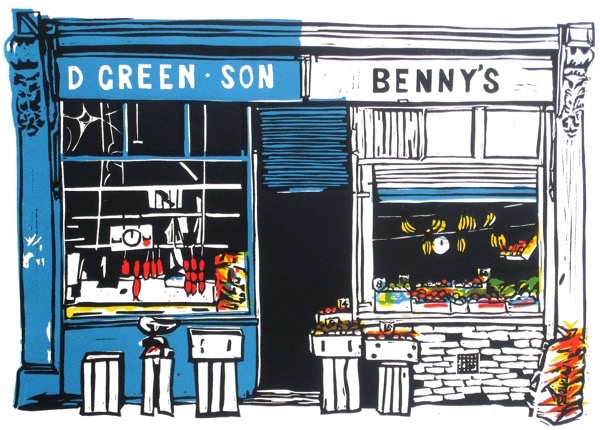
BENNY’S (Linocut) was on Hamlets Way opposite The Crystal Tavern. It was more a hole in the wall than a shop but I bought all my fruit and vegetables there, served at first by Benny himself, sometimes his wife, then his two sons and finally their grandsons. During Apartheid, I asked where their apples came from, not wanting to buy anything from South Africa, and was always assured that they came from somewhere else but I was never convinced. The family did pretty well from the shop yet, although they had smart cars parked up the street, they never spent any money on improvements or heating in the winter. Benny’s shop is now a takeaway pizza outlet.
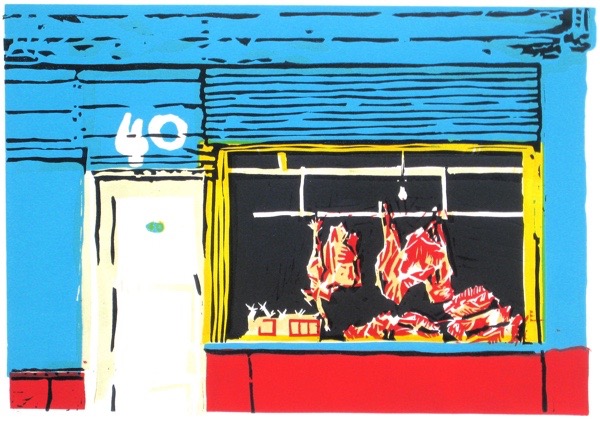
40 HESSEL ST (Linocut) Next I turned to Whitechapel, especially Hessel St which had lots of colourful shops that were very suitable for linocuts. They were nearly all Bangladeshi businesses with a just few remnants of the Jewish ones left but, within a couple of years they had all been homogenised by modern shop fronts, no more individually hand-painted, and sometimes misspelt signs.
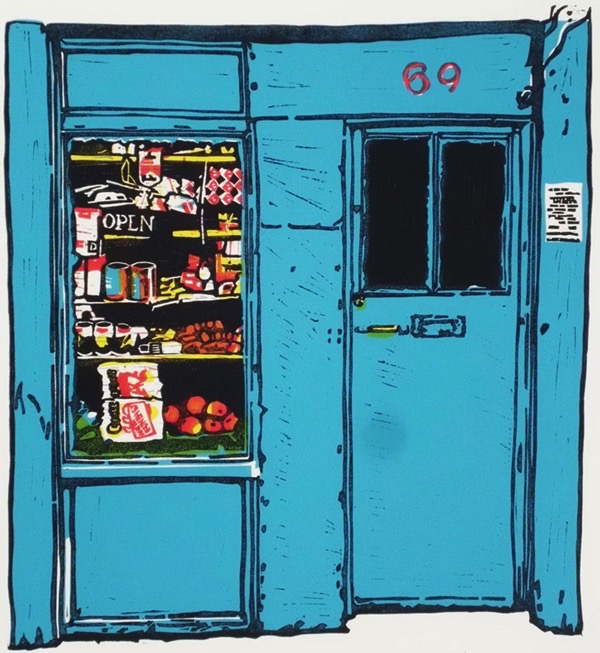
69 HESSEL ST (Linocut)
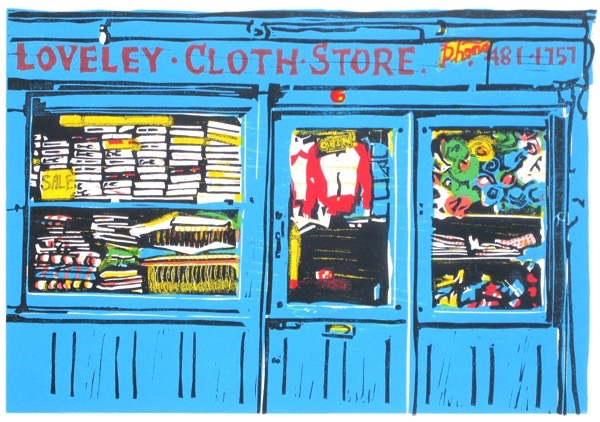
LOVELEY CLOTH STORE (Linocut)
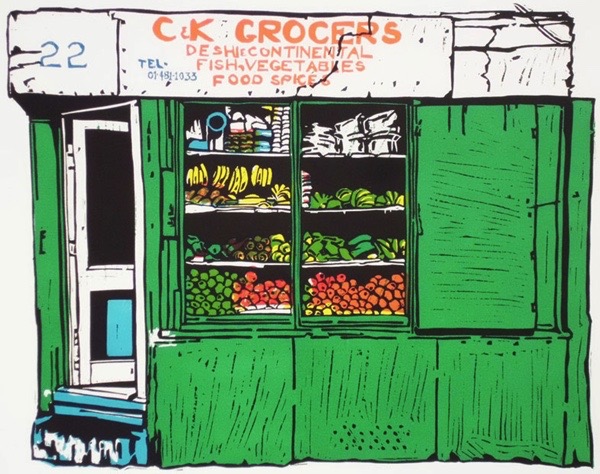
C & K GROCERS (Linocut)
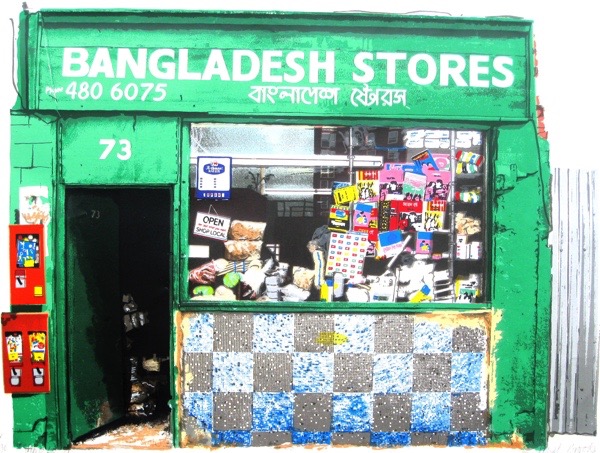
BANGLADESHI STORES (Screenprint) where you could buy almost everything, including a ticket to Dhaka
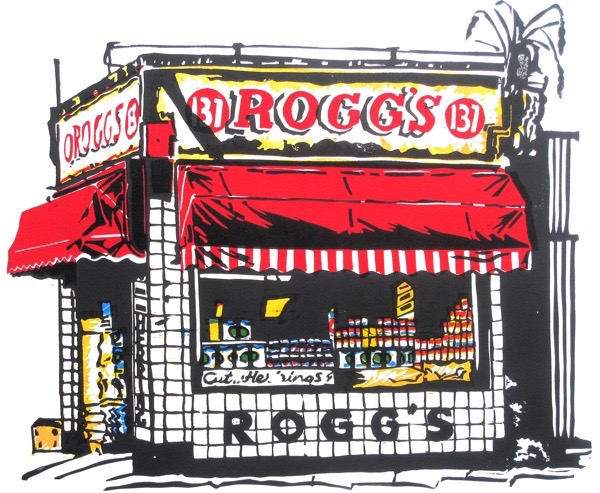
ROGG’S (Linocut), round the corner in Cannon Street Row, was one of the last Jewish deli’s in the East End, where customers came from miles around to get their beigels and pickles. The site of Rogg’s is now a parking lot.
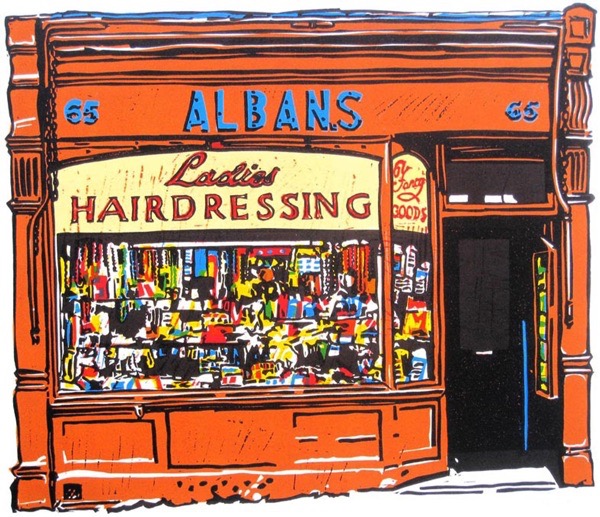
ALBAN’S LADIES HAIRDRESSING (Linocut), 65 Roman Rd, specialised in ladies hairdressing supplies and never stinted on the window display. It later became an art gallery and is now a coffee shop.
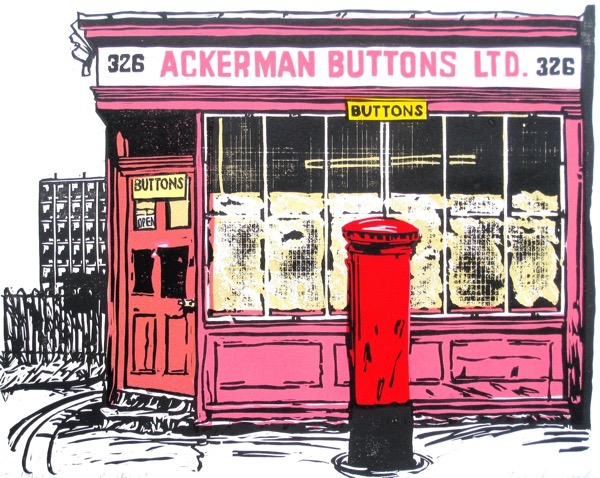
ACKERMAN’S BUTTONS LTD (Linocut), 326 Hackney Rd, was a pretty basic shop with no window display and inside just stacks of cardboard boxes of buttons and a one bar electric fire. Mr Ackerman did not waste money although I think he owned a button factory in Hackney somewhere.
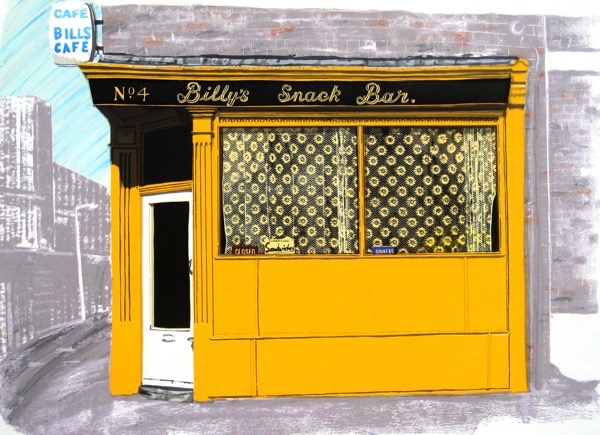
BILLY’S SNACK BAR (Screenprint) was on the corner of Pritchards Rd and Emma St. It stayed the same for years and, of all the shops I have made prints of, is still there with the same name but different signage.
Images copyright © Janet Brooke
You may also like to take a look at
A Bethnal Green Childhood
Linda Wilkinson, who grew up near Columbia Rd Market, recalls her family’s Sunday rituals in this extract from her forthcoming memoir of departure and return to the East End, COLUMBIA ROAD: OF BLOOD & BELONGING published by September Books on 1st June
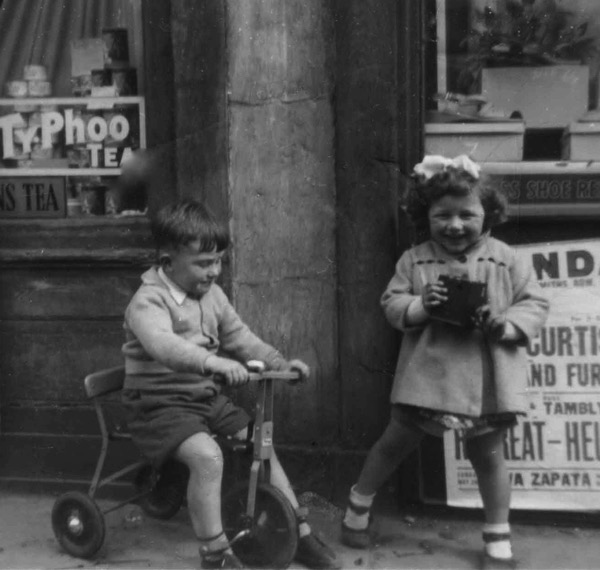
Linda and Geoffrey outside Garcias and Daltrey in Columbia Rd in 1953
Sunday has its own rhythm and rites. After the changing of the beds mum will check that the roast is ready for the oven that the vegetables are prepared and she will, for the first time that week, sit and read a newspaper. If the weather is fine in mid-morning Nan will visit for a cup of tea, but irrespective at noon Dad will go to the pub and come home for his meal and an afternoon sleep.
Over and above all of this, the Sunday flower market takes place as it has done since the 1860s. I adore the fact that I can perch on the doorstep and watch the ebb and flow of people. Women wear the ubiquitous turbans over their hair as they purchase flowers, or bulbs. Not many men are out apart from the market traders who flirt mercilessly with the clientele, who give as good back. The hue and cry of the costers in the market is the same as many another. ‘So many for two and six,’ the numbers a moveable feast according to the season. ‘The best bargain you’ll ever have.’ Goods are sold from the pavement, having come on handcarts or in small vans. It feels warm and safe and happy, and I hug my knees and relish the entertainment.
My grandmother is upon me before I realise it. Wearing her best dress she prods me with her walking stick. Her soft white hair is piled ornately under a pearl-encrusted hairnet and outrageous earrings dance and dangle with her every movement. She is in her late seventies and she scares most people. ‘Get up dreamer, let me by.’ She pats me none too softly on the head and wanders down the passageway.
In the kitchen, I occupy my favourite spot on the floor where I can appreciate the enormity of both Nan and her personality. I love these visits.
I see her on Saturdays when we go to her flat near the Broadway Market to do her shopping, but having her here in my home feels special. I watch as she pours tea into her saucer, dunks toast into the cup and then sucks it. She has teeth, false teeth, but they sit in a handkerchief in her coat pocket. The slurping sound as she sucks the tea from the saucer is unrestrained.
‘Mum!’
‘I can’t wear the teeth all the time Bella, they rub.’
Dad, who is ever present at these visits, rattles his newspaper but remains invisible behind it.
‘Get some new ones.’
Nan seems fond of her black rubber dentures, but perhaps it’s just that she hasn’t got the hang of a new pair being free on the State.
‘Lin’s going to nursery soon,’ Mum informs her.
‘She’ll have to speak then.’
‘I can speak.’
‘Can you now?’
‘And she can read.’
‘Don’t be daft, she’s only a child.’
‘Mum taught me.’
She is unimpressed until mother snatches the newspaper from Dad and I stutter through a few sentences.
‘She’s a strange one, all that staring at you in silence, now this.’
‘She’s just a bit different.’
They drift on to conversations not connected with me and I slip back into watching them. Tony, my brother, comes in; he and Nan have a great affection for one other. He is full of the bustle of a teenager on his way to manhood and I have to sit on a chair to avoid his stomping feet. Even Dad lowers his paper and joins in until twelve o’clock chimes. Nan leaves, Dad changes to go to the pub and Mum returns to the kitchen.
Later, once Dad has returned and eaten his roast, he falls asleep on the smooth white territory of the bed where I join him. Mother sits and snoozes in the kitchen, legs propped on another chair, but Dad and I lie down. He has a smell on these afternoons, a smell that I can never forget. In contrast to the sheets it is a feast of the earth. Sweat, beer and tobacco. In his armpits the black matt of hairs curl, unlike the dark straightness on his head. There is no grey there, well perhaps a hint. Sunlight is deflected by the window of the house next door. It bounces weakly into the bedroom. The walnut veneer of the bedhead is warmed to a deep glow. I trace the black lines with a small finger. Soon he will have to wake. Soon the beer will clear from his head. It will be six o’clock and we will eat winkles, shrimps and white buttered bread. Later he will stand in the street, this summer street, and smoke in the darkness. I will sit on the window ledge next to him and listen to the soft banter that the neighbours exchange. There is no traffic and the other children race up and down. He knows that I prefer to sit close to him; there are never any admonishments to go and play.
I kneel on the bed and look down at him. The vest and pants he wears are thick. Like the sheets they have survived the rite of passage through the inferno of cleaning. Above the bed, behind the walnut, is a mantelpiece. On this stands a glass of water. I hear sounds of stirring and a kettle being filled. Gently I dip a comb into the glass. The drips fall like small crystals as I drag the teeth slowly through his hair. His eyes like mine are brown. Smiling he stays my hand.
‘All right, kid?’ I nod, and he envelopes me in a glorious hug of love and understanding.
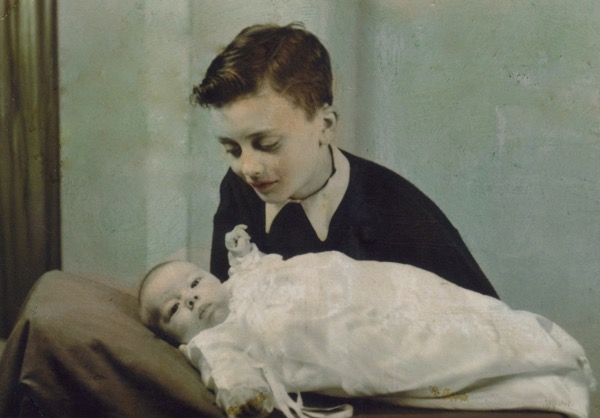
Linda and her brother Tony, 1952
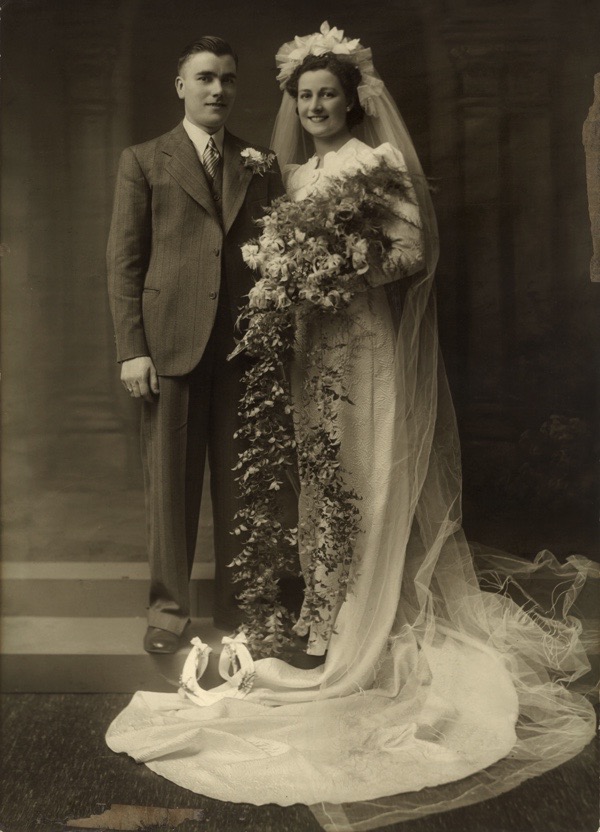
Harry & Bella Wilkinson on their wedding day, 1939
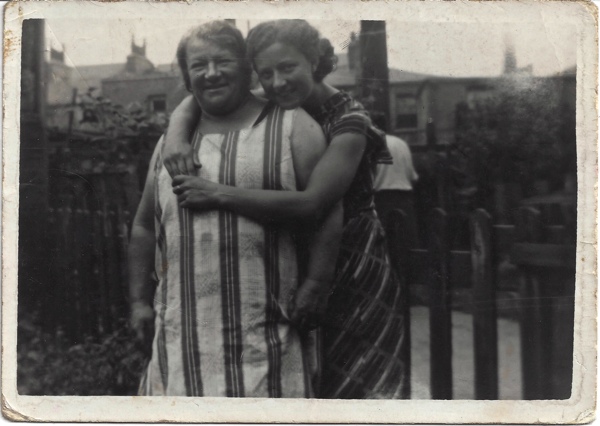
Linda’s mother and grandmother, 1932
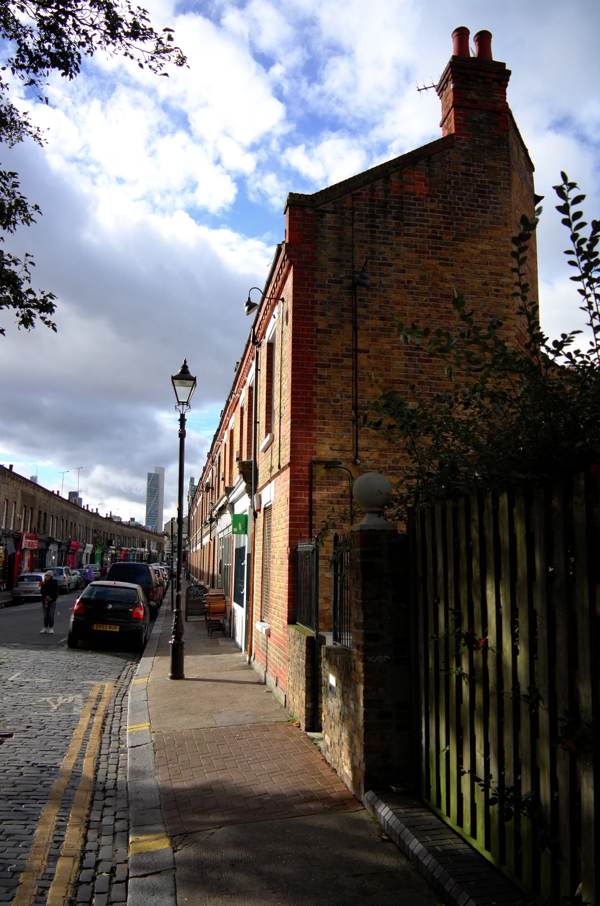
Columbia Rd
You may like to read these other stories about Columbia Rd by Linda Wilkinson
Remembering Joseph Grimaldi In Finsbury

Zaz the clown spins a disc for Joseph Grimaldi
Next week will see the one hundred and eightieth anniversary of the death of the world’s most famous clown, Joseph Grimaldi, on May 31st and a small group of devotees with painted faces will gather – as they do each year on the anniversary – at the former graveyard of St James’ Pentonville Rd to celebrate his memory, in the place where the bones of the great man lie interred.
The church was deconsecrated long ago and the churchyard cleared, reconstituted now as Joseph Grimaldi Park with his tombstone given pride of place in a location twenty feet from where he is actually buried. Nearby, the traffic roars up and down the Pentonville Rd with a ferocity unknown in Grimaldi’s day, yet the remains of thirteen hundred souls still lie here peacefully and, even though Grimaldi was decapitated before burial at his own request out of a morbid fear of being buried alive, his spirit becomes manifest each year when the clowns arrive to pay tribute.
On the occluded summer’s day I visited, the sun broke through as the ‘Joeys’ came stumbling in one by one, wearing their big boots, enacting their crazy poetry of gurning, and bringing delight with old gags and dumb tricks. Resplendent in a garish suit of Buchanan tartan, Mattie, the curator of the clown museum and local resident who has lived forty years years in Clerkenwell, gave a plain speech of remembrance before laying flowers for Grimaldi. At a distance, Puzzle the silent clown, wiped tears from his eyes as he stood under an umbrella in the sunlight while water pumped up through the handle cascaded down over the shade, making a suitable gesture to honour the man who developed the notion of the modern clown that is universally recognised today.
“It’s been low-key for donkeys’ years and we thought it would be nice to pay a bit more attention to it,” explained Bluebottle, rubbing his hands in delighted satisfaction at the turnout. A clown of twenty years experience, he was speaking to me as official secretary of Clowns International, the world’s largest clown organisation. By contrast, Fiasco the clown has only been doing it for six months, eagerly confiding that her sole ambition is “to bring people happiness and to entertain handicapped children.” Meanwhile, Zaz the clown who has been clowning since he was eleven and is now thirty-three, revealed that he had performed for Madonna’s children and been flown to India just to entertain at a party. And Jolly Jack confessed that he began clowning at the Queen’s Silver Jubilee in 1977 and never looked back. They were a quorum of fools, and we delighted at their high jinks and idiocy.
At the entrance to Joseph Grimaldi Park, two metal coffin lids set into the ground invite you to dance upon them, triggering the sound of bells. They propose the triumph of clowning over death and offer a metaphor for the human condition – that we are all but dancing upon our graves. Clowning and mortality are inextricable in this way. We need clowns to humble us by reminding us of our essential foolishness, to encourage us to seek joy where it flies, and to confront us with our flawed humanity, lest we should make the mistake of taking ourselves too seriously.

Fans young and old gather to celebrate Joey the clown.

Mattie the clown.

Fiasco the clown with ‘Daddy.’

Bluebottle the clown.

Jolly Jack the clown.
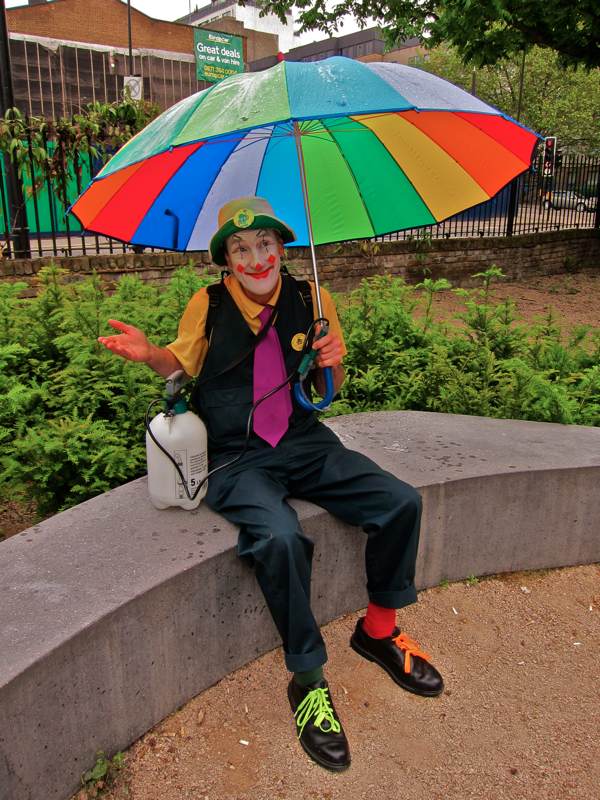
Puzzle the clown.

Professor Geoffrey Felix’s Punch & Judy Show – Mr Punch is 355 years old this year.

Musical coffins commemorating Joseph Grimaldi and Charles Dibdin invite you to dance upon them.
[youtube uP-gMPl0XG0 nolink]

A sombre moment of remembrance at Grimaldi’s grave.

Joseph Grimaldi (18th December 1778 – 31st May 1837)
You may also like to read about
Highdays & Holidays In Old London
With another Bank Holiday imminent, it is time for us to consider highdays & holidays in old London

Boys lining up at The Oval, c.1930
School is out. Work is out. All of London is on the lam. Everyone is on the streets. Everyone is in the parks. What is going on? Is it a jamboree? Is it a wingding? Is it a shindig? Is it a bevy? Is it a bash?
These are the high days and holidays of old London, as recorded on glass slides by the London & Middlesex Archaeological Society and once used for magic lantern shows at the Bishopsgate Institute.
No doubt these lectures had an educational purpose, elucidating the remote origins of London’s quaint old ceremonies. No doubt they had a patriotic purpose to encourage wonder and sentiment at the marvel of royal pageantry. Yet the simple truth is that Londoners – in common with the rest of humanity – are always eager for novelty, entertainment and spectacle, always seeking any excuse to have fun. And London is a city ripe with all kinds of opportunities for amusement, as illustrated by these magnificent photographs of its citizens at play.
Are you ready? Are you togged up? Did you brush your hair? Did you polish your shoes? There is no time to lose. We need the make the most of our high days and holidays. And we need to get there before the parade passes by.

At Hampstead Heath, c.1910.

Walls Ice Cream vendor, c.1920.

At Hampstead Heath, c.1910.

At Hampstead Heath, c.1910.

Balloon ascent at Crystal Palace, Sydenham, c.1930.

At the Round Pond in Kensington Gardens, 1896.

Christ’s Hospital Procession across bridge on St Matthews Day, 1936.

A cycle excursion to The Spotted Dog in West Ham, 1930.

Pancake Greaze at Westminster School on Shrove Tuesday, c.1910.

Variety at the Shepherds Bush Empire, c.1920.

Dignitaries visit the Chelsea Royal Hospital, c.1920.

Games at the Foundling Hospital, Bloomsbury, c.1920.

Riders in Rotten Row, Hyde Park, c.1910.

Physiotherapy at a Sanatorium, 1916.

Vintners’ Company, Master’s Installation procession, City of London, c.1920.
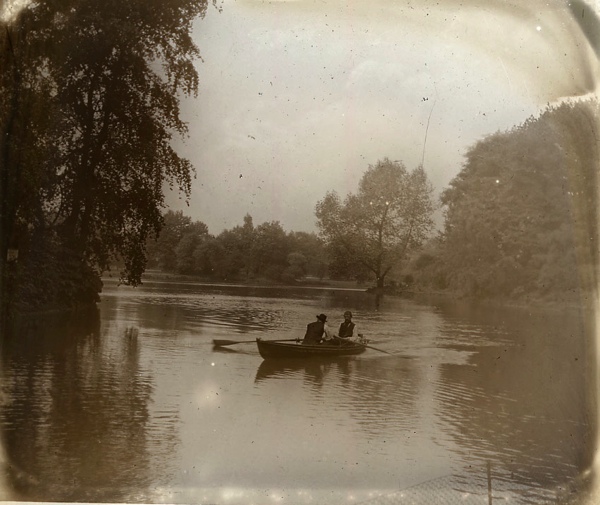
Boating on the lake in Battersea Park, c.1920.

The King’s Coach, c.1911.

Queen Victoria’s Diamond Jubilee procession, 1897.

Lord Mayor’s Procession passing St Paul’s, 1933.

Policemen gives directions to ladies at the coronation of Edward VII, 1902.
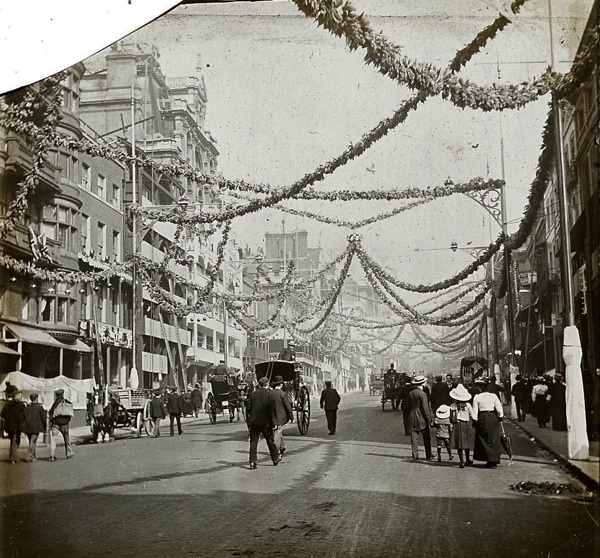
After the procession for the coronation of George V, c.1911.
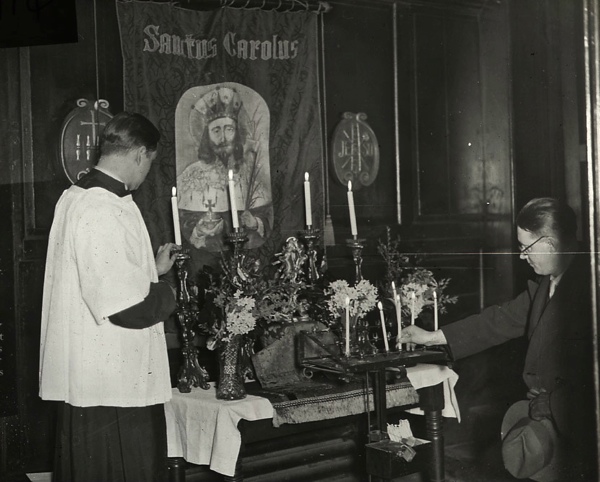
Observance of the feast of Charles I at Church of St. Andrew-by-the-Wardrobe, 1932.

Chief Yeoman Warder oversees the Beating of the Bounds at the Tower of London, 1920.

Schoolchildren Beating the Bounds at the Tower of London, 1920.

A cycle excursion to Chingford Old Church, c.1910.

Litterbugs at Hampstead Heath, c.1930.

The Foundling Hospital Anti-Litter Band, c.1930.

Distribution of sixpences to widows at St Bartholomew the Great on Good Friday, c.1920.

Visiting the Cast Court to see Trajan’s Column at the Victoria & Albert Museum, c.1920.

A trip from Chelsea Pier, c.1910.

Doggett’s Coat & Badge Race, c.1920.
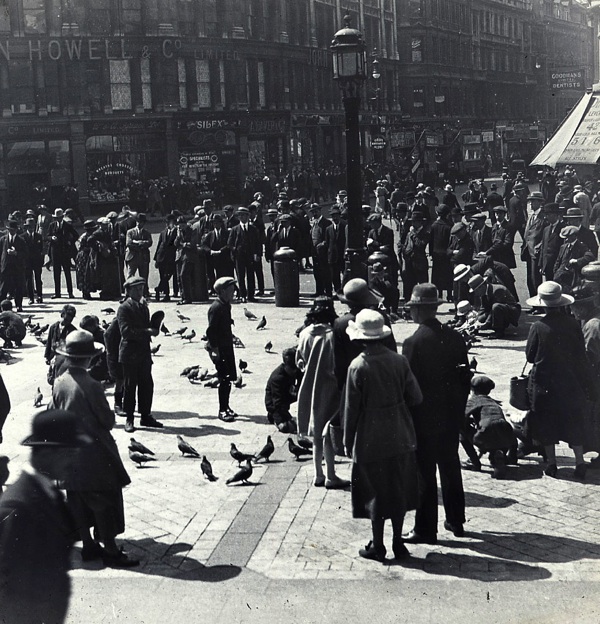
Feeding pigeons outside St Paul’s, c.1910.

Building the Great Wheel, Earls Court, c.1910.
Glass slides copyright © Bishopsgate Institute
You may also like to take a look at
Desire Paths Of The East End
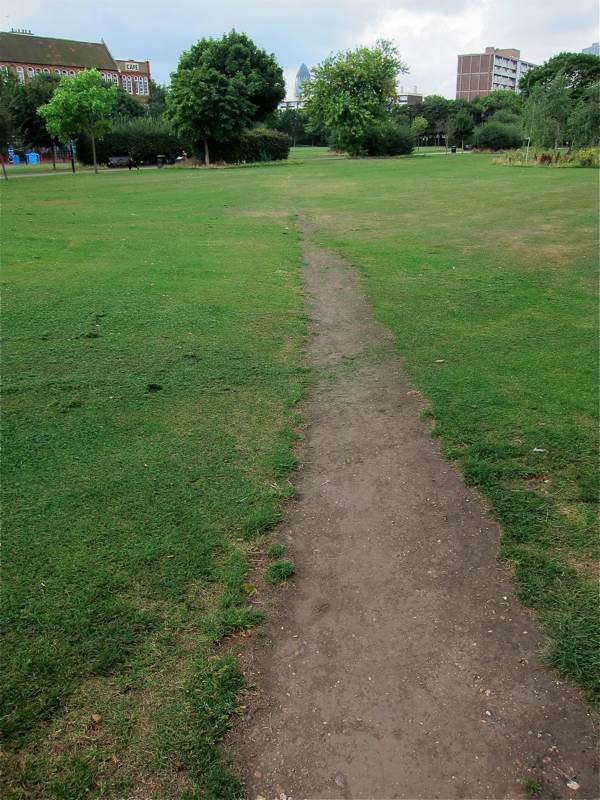
In Weavers’ Fields
Who can resist the appeal of the path worn solely by footsteps? I was never convinced by John Bunyan’s pilgrim who believed salvation lay in sticking exclusively to the straight path – detours and byways always held greater attraction for me. My experience of life has been that there is more to be discovered by stepping from the tarmac and meandering off down the dusty track, and so I delight in the possibility of liberation offered by these paths which appear year after year, in complete disregard to those official routes laid out by the parks department.
It is commonly believed that the French philosopher Gaston Bachelard invented the notion of “desire paths” (lignes de désir) to describe these pathways eroded by footfall in his book “The Poetics of Space,” in 1958, although, just like the mysterious provenance of these paths themselves, this origin is questioned by others. What is certain is that the green spaces of the East End are scored with them. Sometimes, it is because people would rather cut a corner than walk around a right angle, at other times it is because walkers lack patience with elegantly contrived curved paths when they would prefer to walk in a straight line and occasionally it is because there is simply no other path leading where they want to go.
Resisting any suggestion that these paths are by their nature subversive to authority or indicative of moral decline, I prefer to appreciate them as evidence of human accommodation, coming into existence where the given paths fail and the multitude of walkers reveal the footpath which best takes them where they need to go. Yet landscape architects and the parks department refuse to be cowed by the collective authority of those who vote with their feet and, from time to time, little fences appear in a vain attempt to redirect pedestrians back on the straight and narrow.
I find a beauty in these desire paths which are expressions of collective will and serve as indicators of the memory of repeated human actions inscribed upon the landscape. They recur like an annual ritual, reiterated over and over like a popular rhyme, and asserting ownership of the space by those who walk across it every day. It would be an indication of the loss of independent thought if desire paths were no longer created and everyone chose to conform to the allotted pathways instead.
You only have to look at a map of the East End to see that former desire paths have been incorporated into the modern road network. The curved line of Broadway Market joins up with Columbia Rd cutting a swathe through the grid of streets, along an ancient drover’s track herding the cattle from London Fields down towards Smithfield Market, and the aptly named Fieldgate St indicates the beginning of what was once a footpath over the fields down to St Dunstan’s when it was the parish church for the whole of Tower Hamlets.
Each desire path tells a story, whether of those who cut a corner hurrying for the tube through Museum Gardens or of those who walk parallel to the tarmac for fear of being hit by cyclists in London Fields or of the strange compromise enacted in Whitechapel Waste where an attempt has been made to incorporate desire paths into the landscape design. I am told that in Denmark landscape architects and planners go out after newly-fallen snow to trace the routes of pedestrians as an indicator of where the paths should be. Yet I do not believe that desire paths are a problem which can be solved because desire paths are not a problem, they are a heartening reminder of the irreducible nature of the human spirit that can never be contained and will always be wandering.
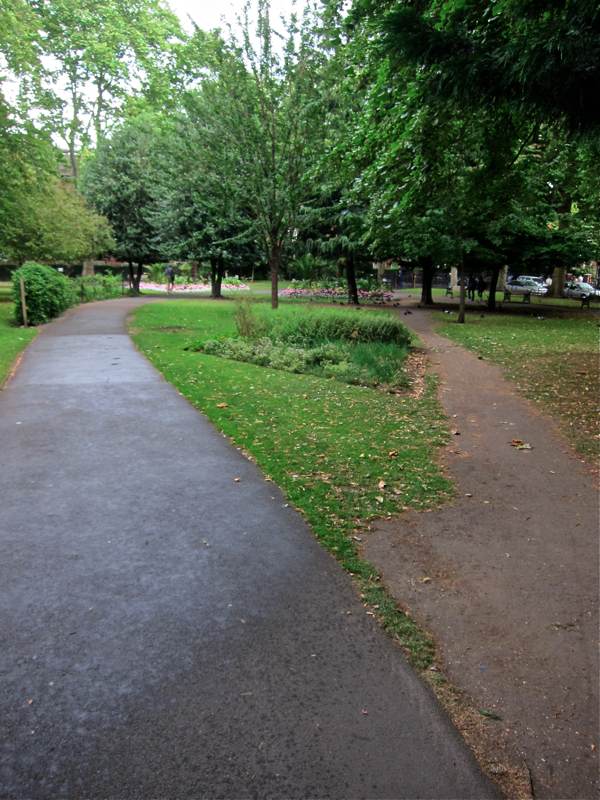
The parting of the ways in Museum Gardens
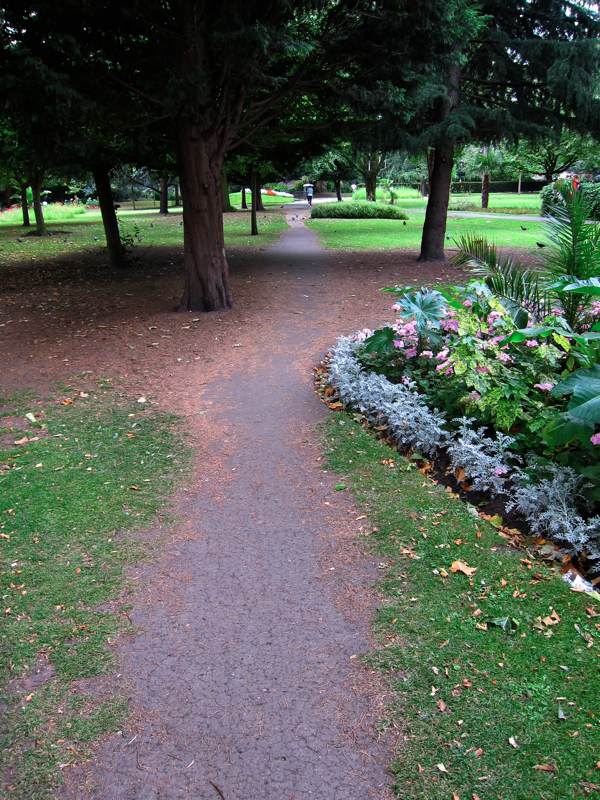
The allure of the path through the trees
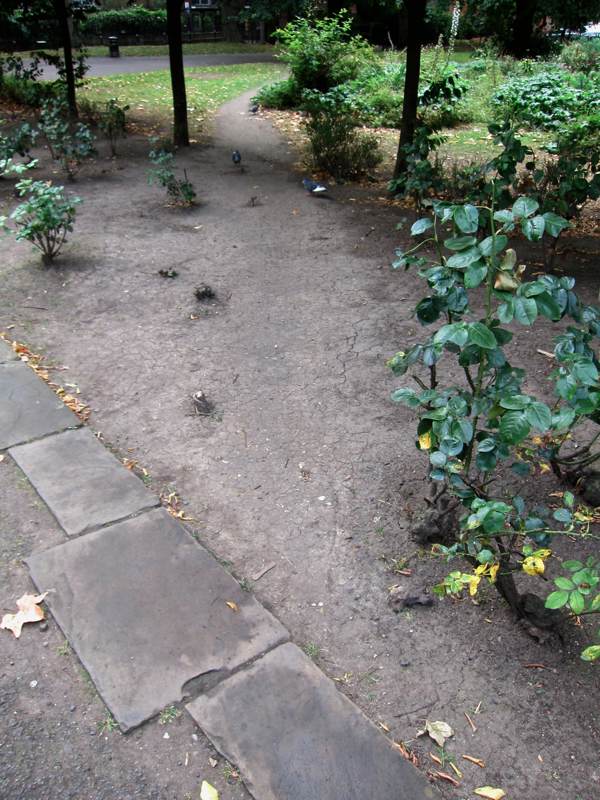
In Bethnal Green, hungry for literature, residents cut across the rose bed to get to the library
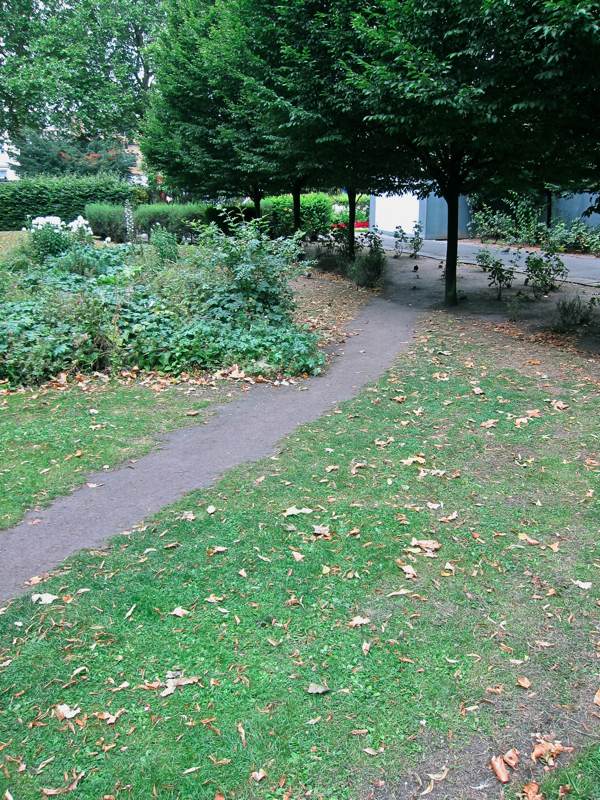
A cheeky little short cut
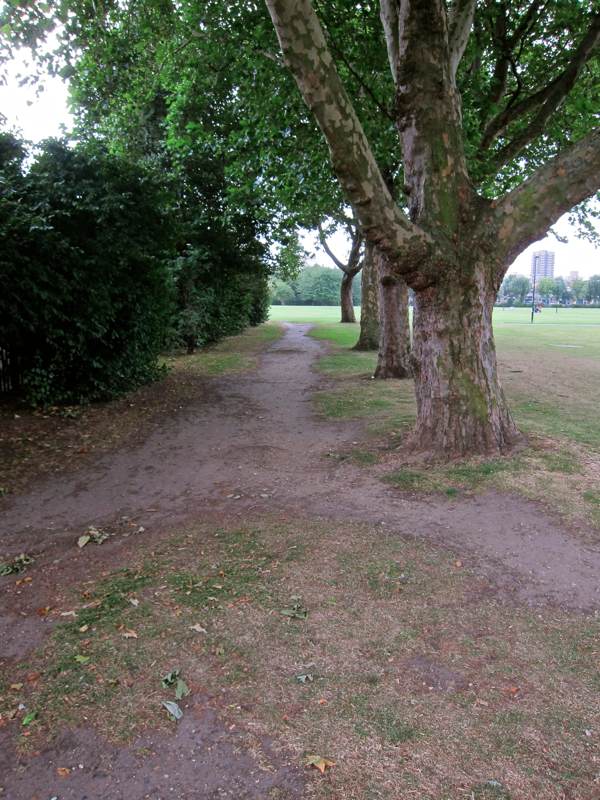
An inviting avenue of plane trees in Weavers’ Fields
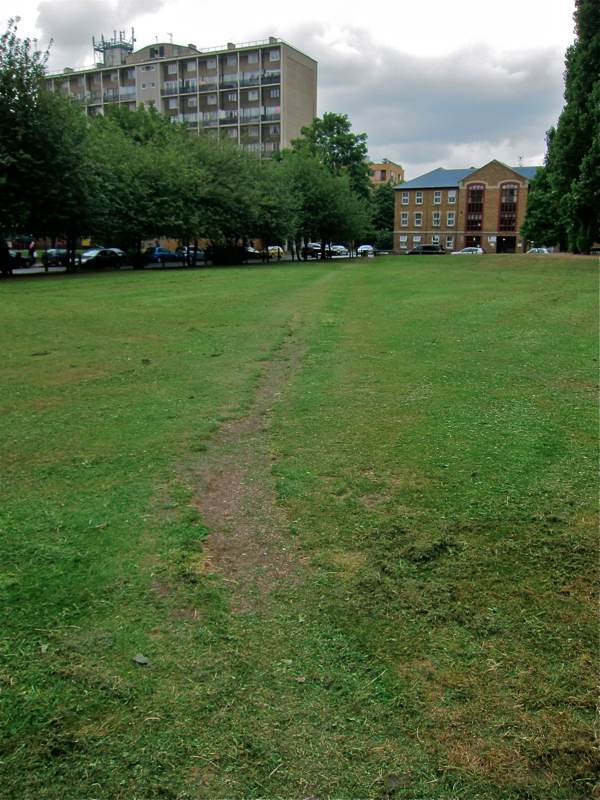
A detour in Florida St
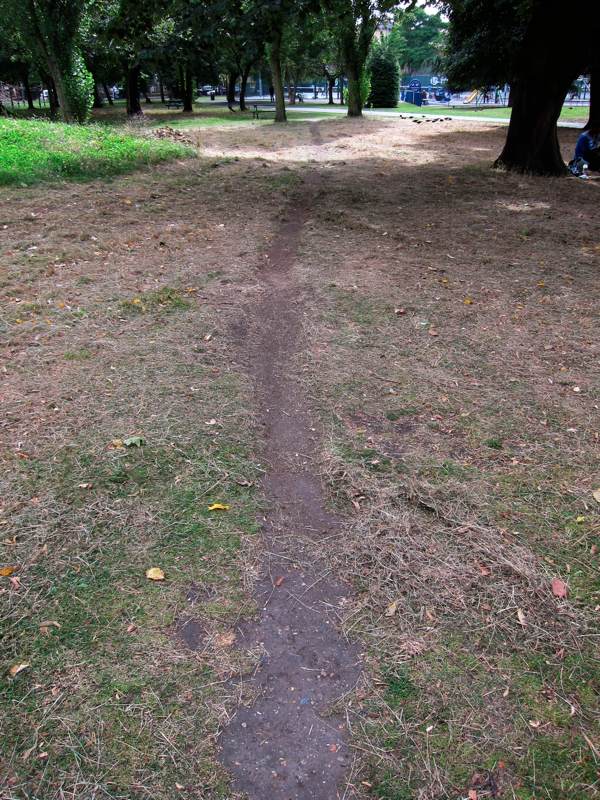
A byway in Bethnal Green
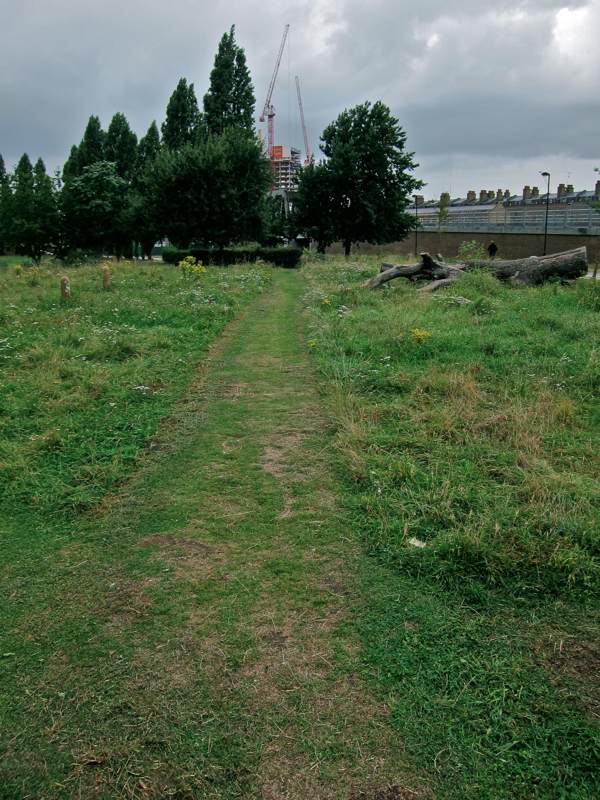
Legitimised by mowing in Allen Gardens, Spitalfields
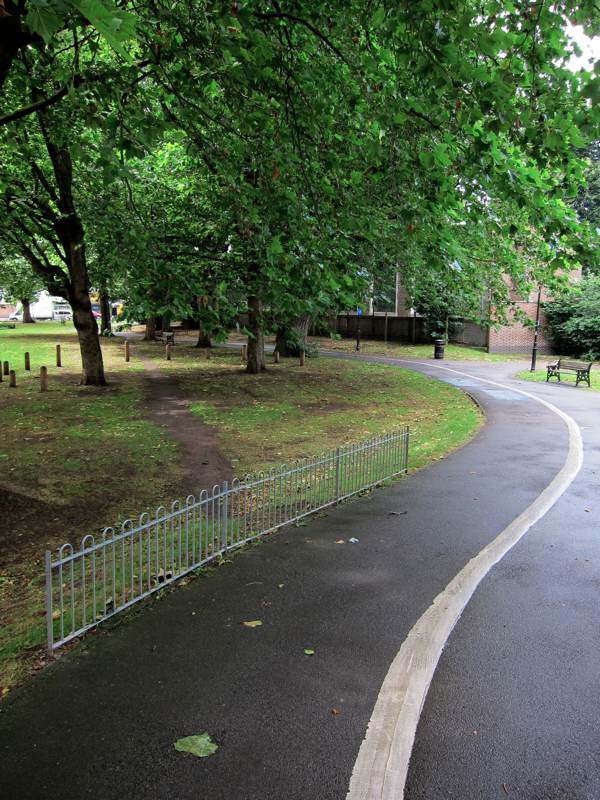
A pointless intervention in Shadwell
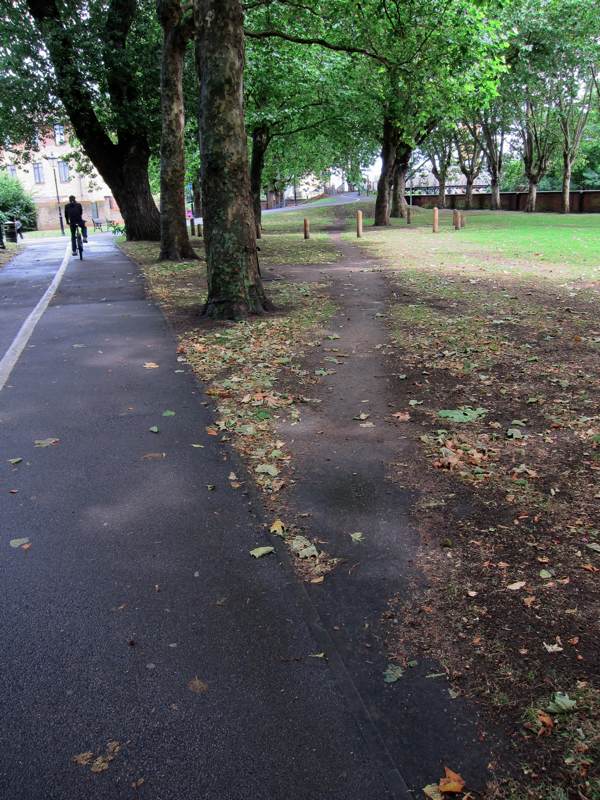
Which path would you choose?
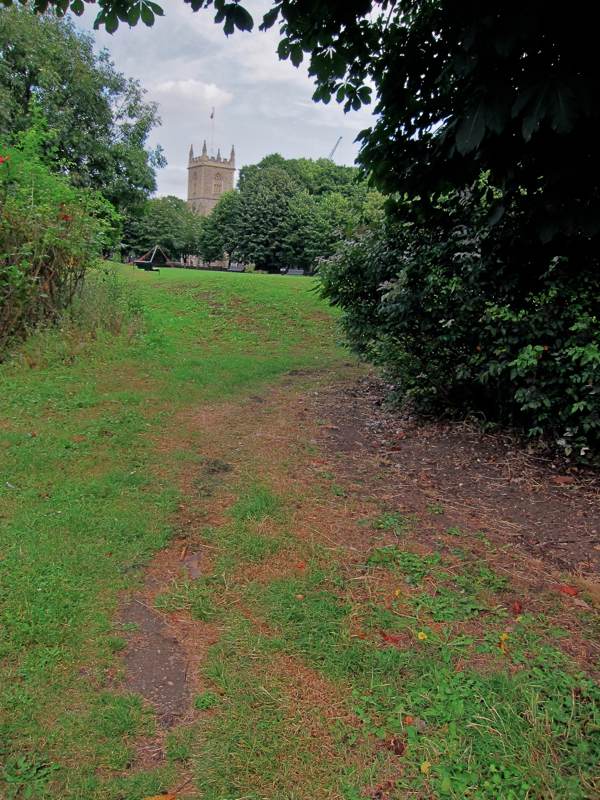
Over the hills and faraway in Stepney
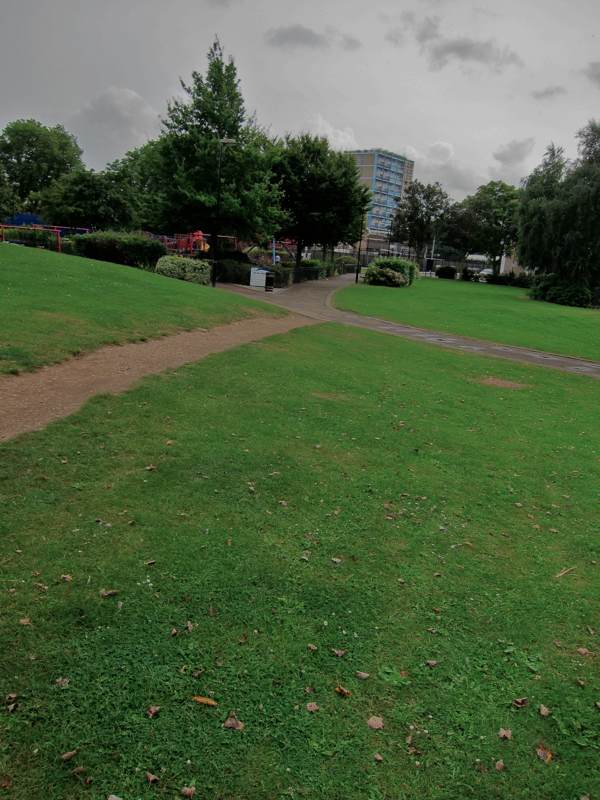
The triumph of common sense in Stepney Green
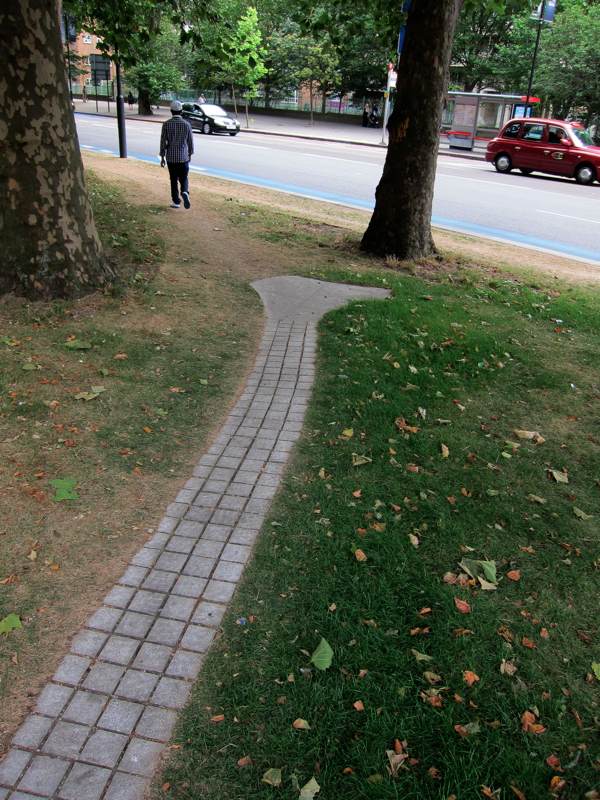
Half-hearted appropriation by landscape architects on Whitechapel Waste
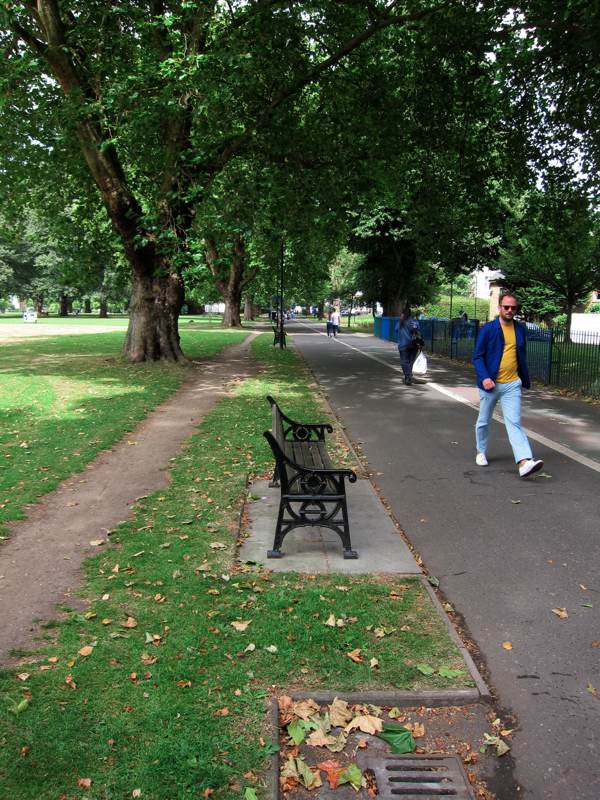
A joggers path in London Fields
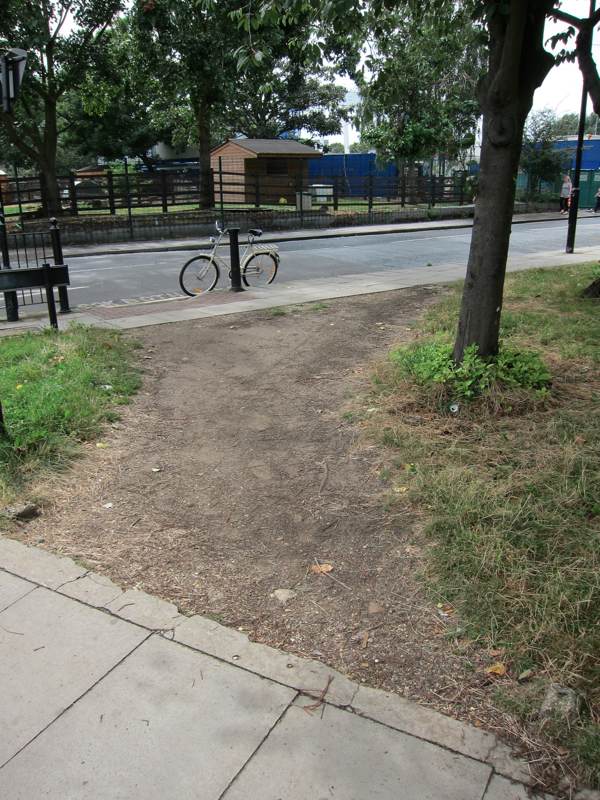
A dog-eared corner in Stepney
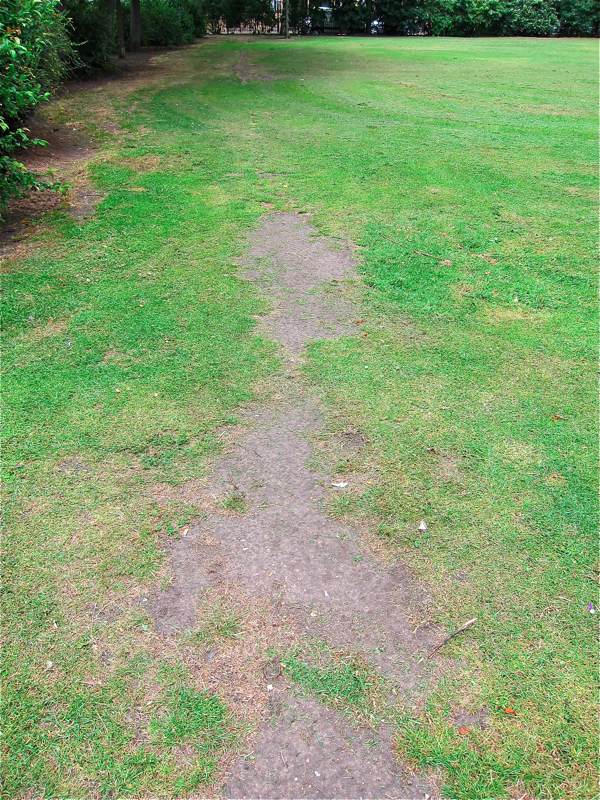
The beginning of something in Bethnal Green
Nicholas Culpeper’s Spitalfields
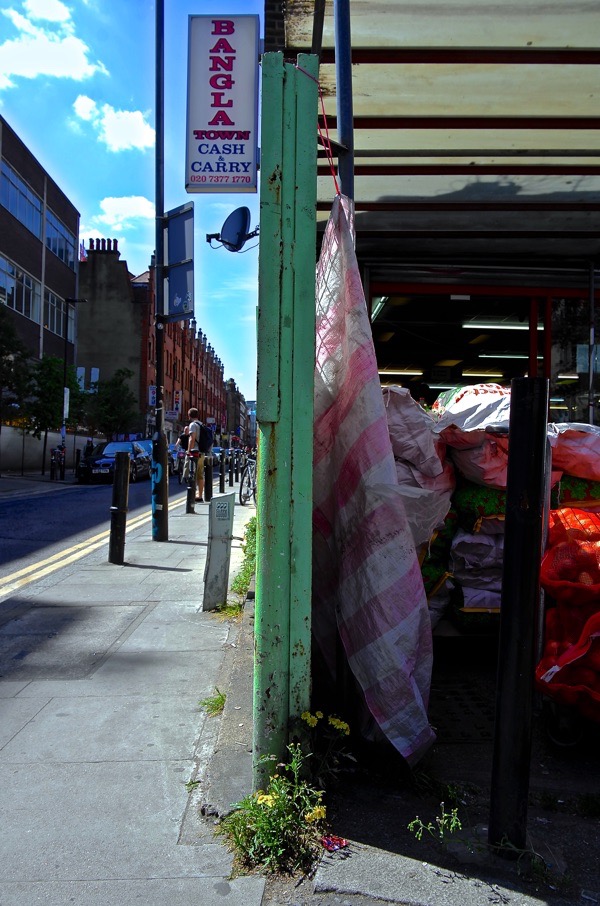
Ragwort in Hanbury St
(The concoction of the herb is good to wash the mouth, and also against the quinsy and the king’s evil)
Encouraged to view the plaque upon the hairdresser at the corner of Puma Court and Commercial St, commemorating where Nicholas Culpeper lived and wrote The English Herbal, the celebrated seventeenth century Herbalist returned to his old neighbourhood for a look around and I was designated to be his guide.
Naturally, he was a little disoriented by the changes that time has wrought to Red Lion Fields where he once cultivated herbs and gathered wild plants for his remedies. Disinterested in new developments, instead he implored me to show him what wild plants were left and thus we set out together upon a strange quest, seeking weeds that have survived the urbanisation. You might say we were searching for the fields in Spitalfields since these were plants that were here before everything else.
Let me admit, I did feel a responsibility not to disappoint the old man, as we searched the barren streets around his former garden. But I discovered he was more astonished that anything at all had survived and thus I photographed the hardy specimens we found as a record, published below with Culpeper’s own annotations.
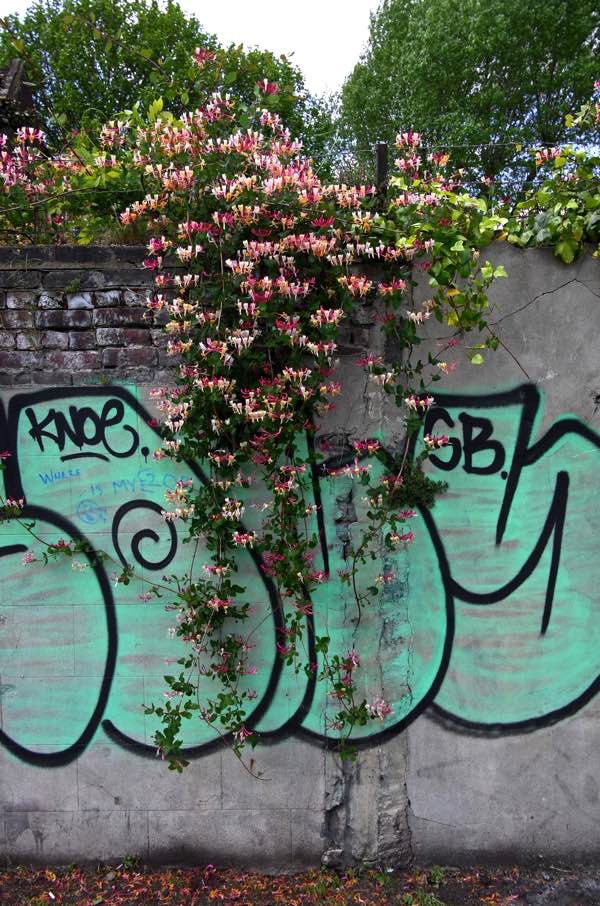
Honeysuckle in Buxton St (I know of no better cure for asthma than this, besides it takes away the evil of the spleen, provokes urine, procures speedy delivery of women in travail, helps cramps, convulsions and palsies and whatsoever griefs come of cold or stopping.)
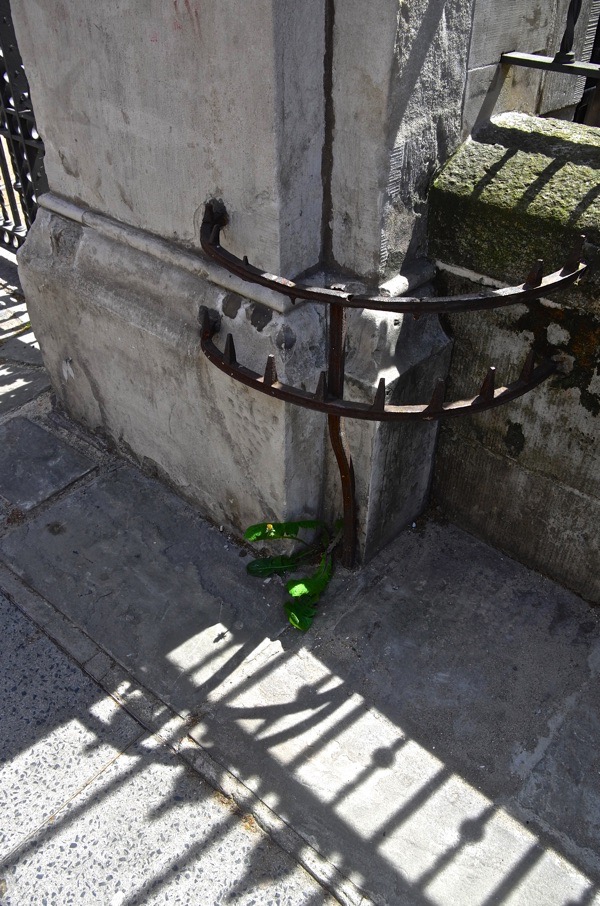
Dandelion in Fournier St (Vulgarly called Piss-a-beds, very effective for obstructions of the liver, gall and spleen, powerful cleans imposthumes. Effectual to drink in pestilential fevers and to wash the sores. The juice is good to be applied to freckles, pimples and spots.)
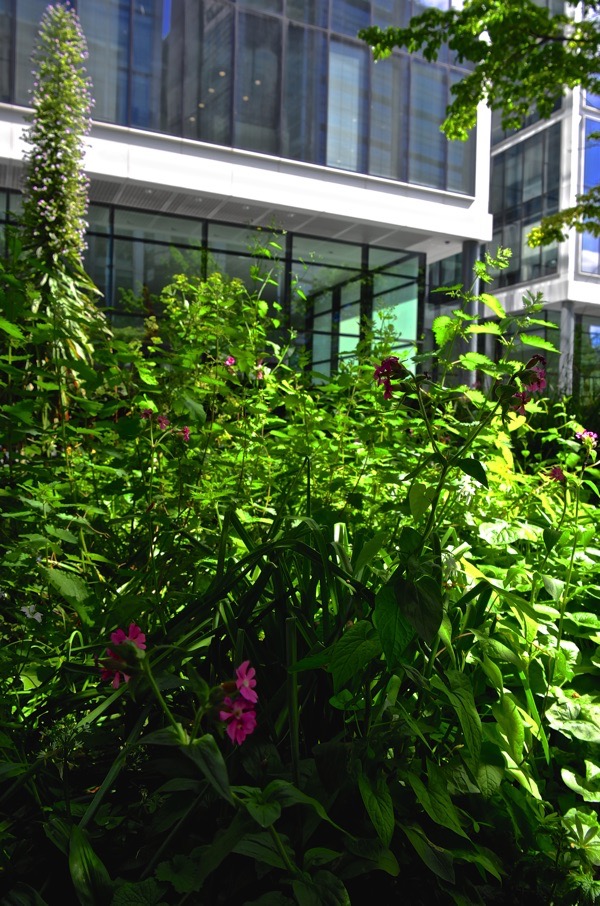
Campion in Bishop’s Sq (Purges the body of choleric humours and helps those that are stung by Scorpions and other venomous beasts and may be as effectual for the plague.)
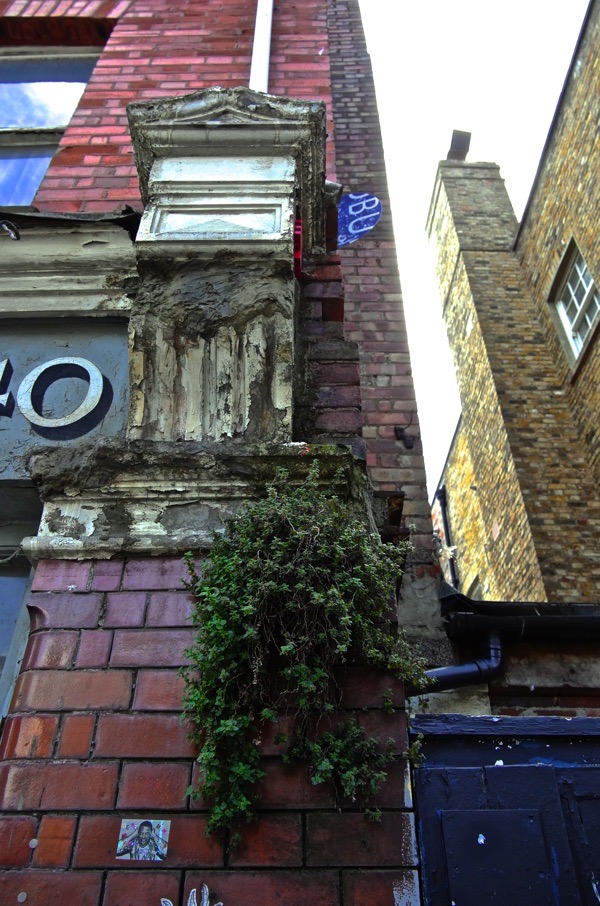
Pellitory of the Wall in Hanbury St (For an old or dry cough, the shortness of breath, and wheezing in the throat. Wonderfully helps stoppings of the urine.)
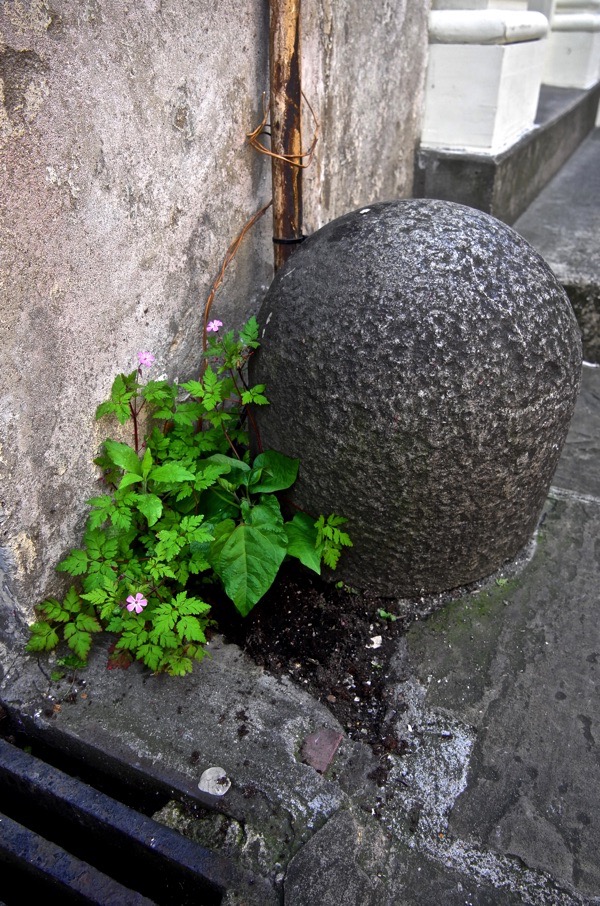
Herb Robert in Folgate St (Commended not only against the stone, but to stay blood, where or howsoever flowing, and it speedily heals all green wounds and is effectual in old ulcers in the privy parts.)
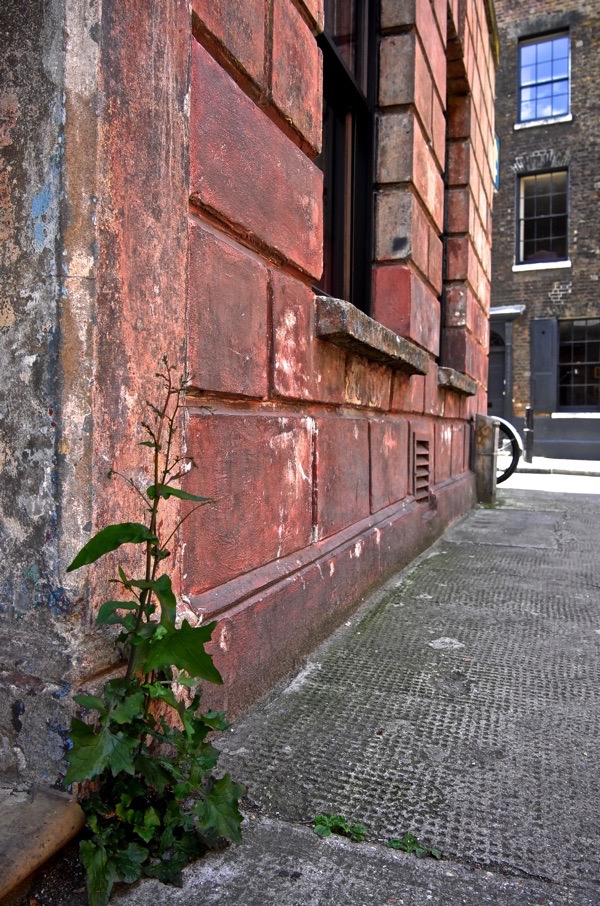
Sow Thistle in Princelet St (Stops fluxes, bleeding, takes away cold swellings and eases the pains of the teeth)
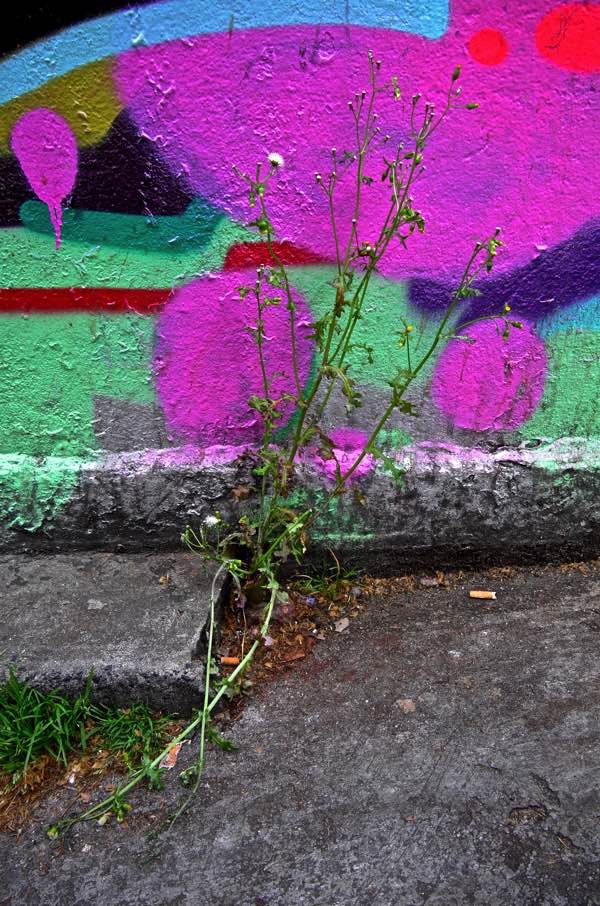
Groundsel off Brick Lane (Represses the heat caused by motions of the internal parts in purges and vomits, expels gravel in the veins or kidneys, helps also against the sciatica, griping of the belly, the colic, defects of the liver and provokes women’s courses.)
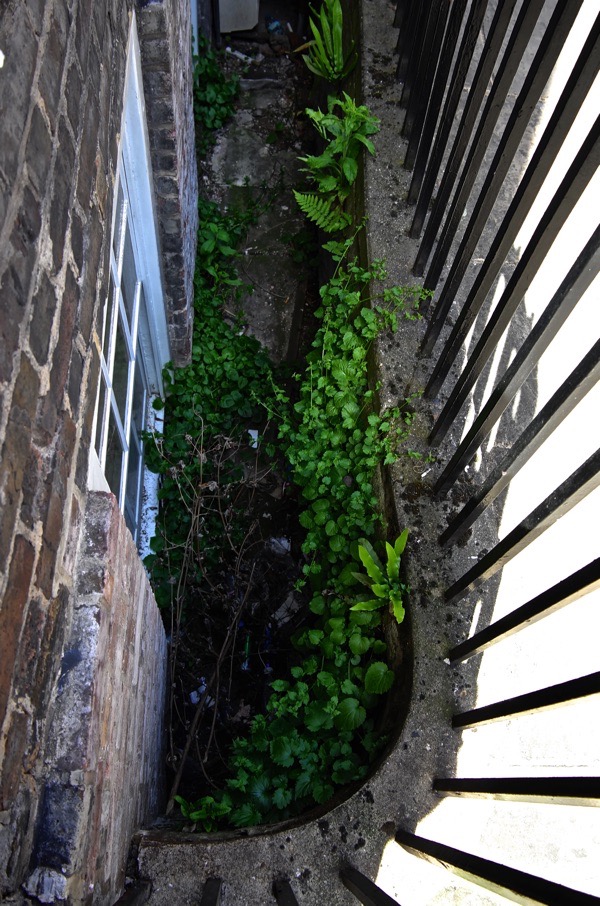
Ferns and Campanula and in Elder St (Ferns eaten purge the body of choleric and waterish humours that trouble the stomach. The smoke thereof drives away serpents, gnats and other noisome creatures which in fenny countries do trouble and molest people lying their beds.)
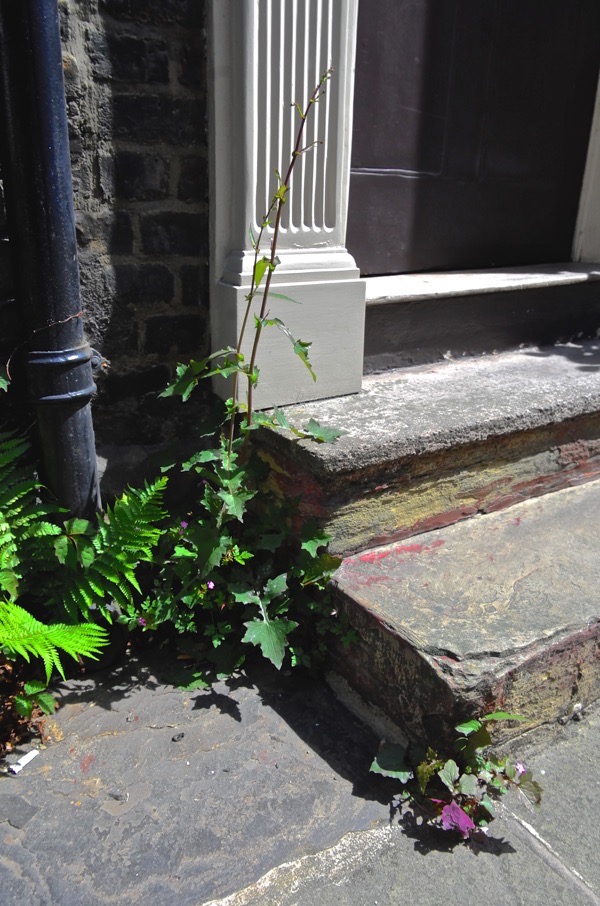
Sow Thistle and Herb Robert in Elder St
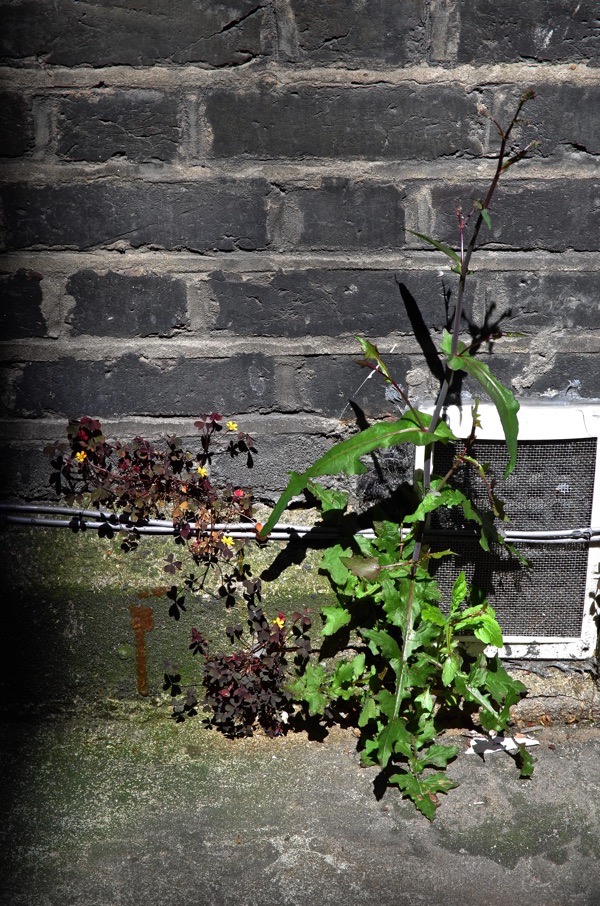
Yellow Wood Sorrel and Sow Thistle in Puma Court (The roots of Sorrel are held to be profitable against the jaundice.)
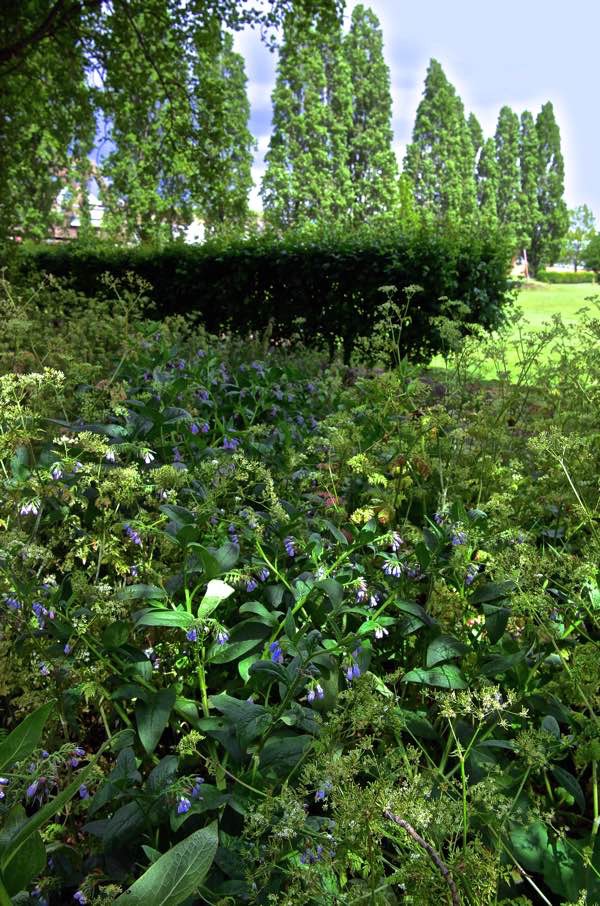
Comfrey in Code St (Helps those that spit blood or make a bloody urine, being outwardly applied is specially good for ruptures and broken bones, and to be applied to women’s breasts that grow sore by the abundance of milk coming into them.)
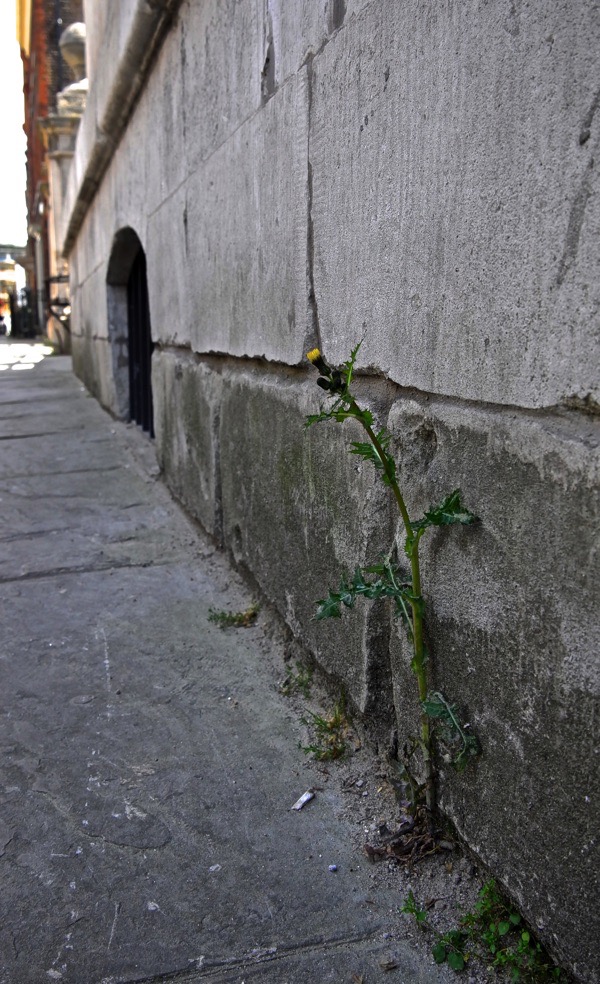
Sow Thistle in Fournier St
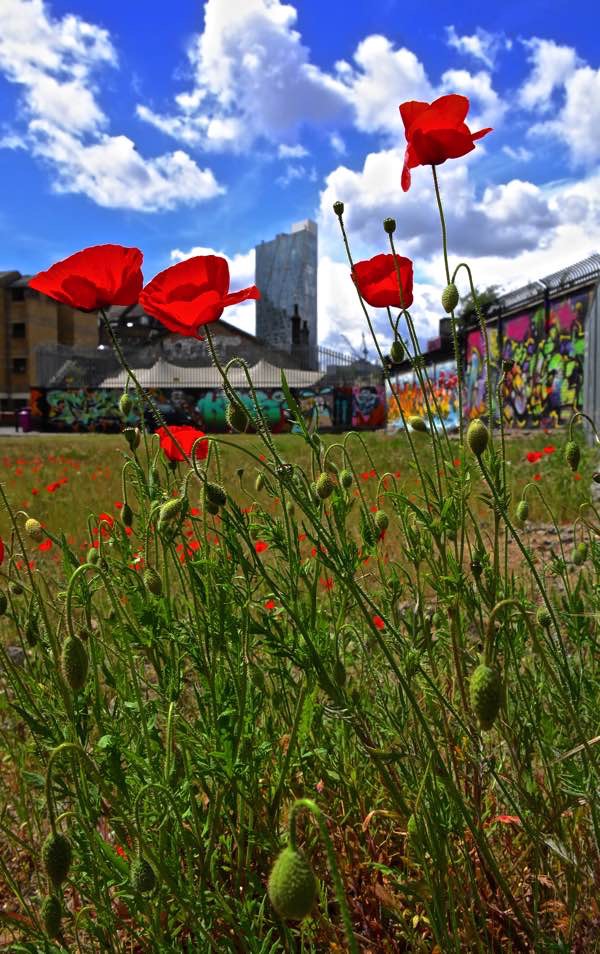
Field Poppy in Allen Gardens (A syrup is given with very good effect to those that have the pleurisy and is effectual in hot agues, frenzies and other inflammations either inward or outward.)
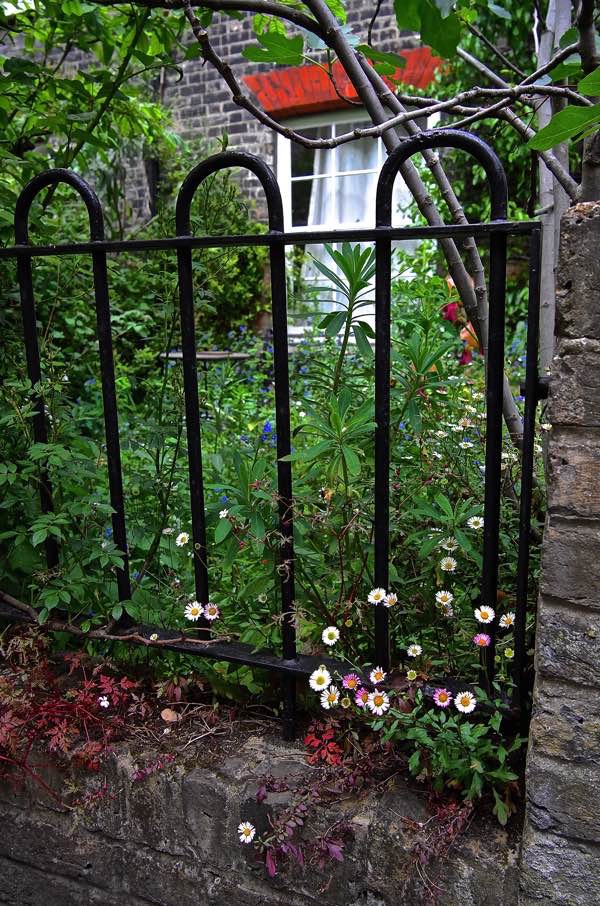
Fleabane at Victoria Cottages (Very good to heal the nipples and sore breasts of women.)
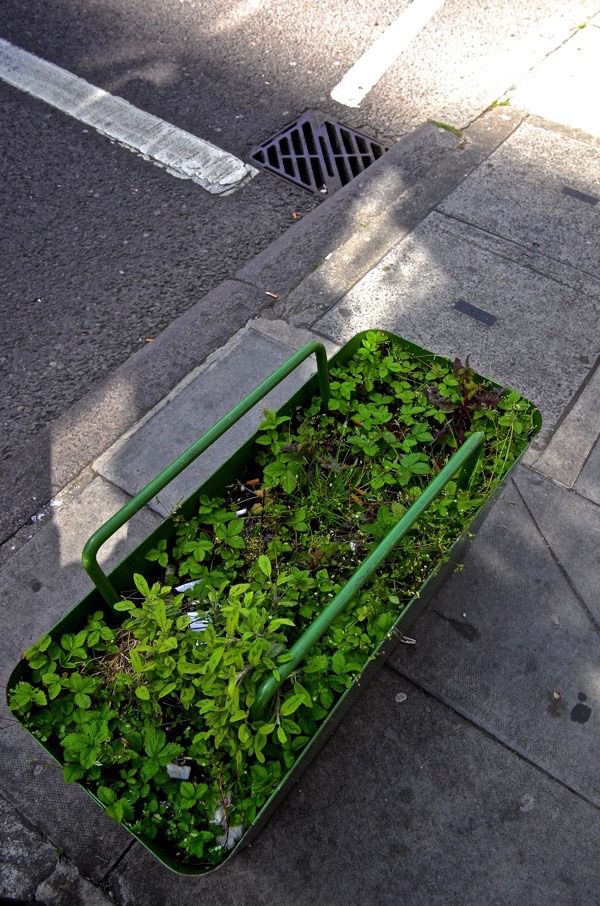
Sage and Wild Strawberries in Commercial St (The juice of Sage drank hath been of good use at time of plagues and it is commended against the stitch and pains coming of wind. Strawberries are excellent to cool the liver, the blood and the spleen, or an hot choleric stomach, to refresh and comfort the fainting spirits and quench thirst.)
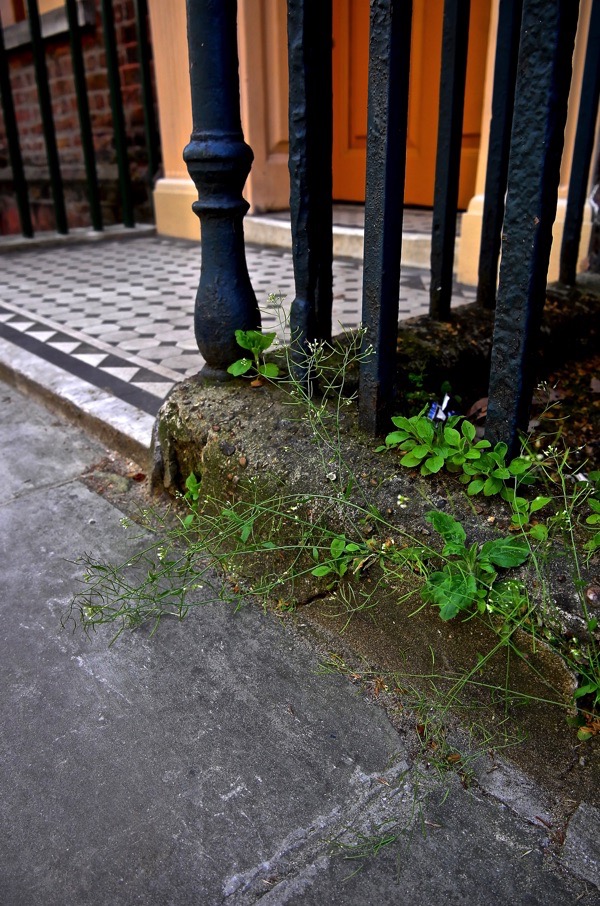
Hairy Bittercress in Fournier St (Powerful against the scurvy and to cleanse the blood and humours, very good for those that are dull or drowsy.)
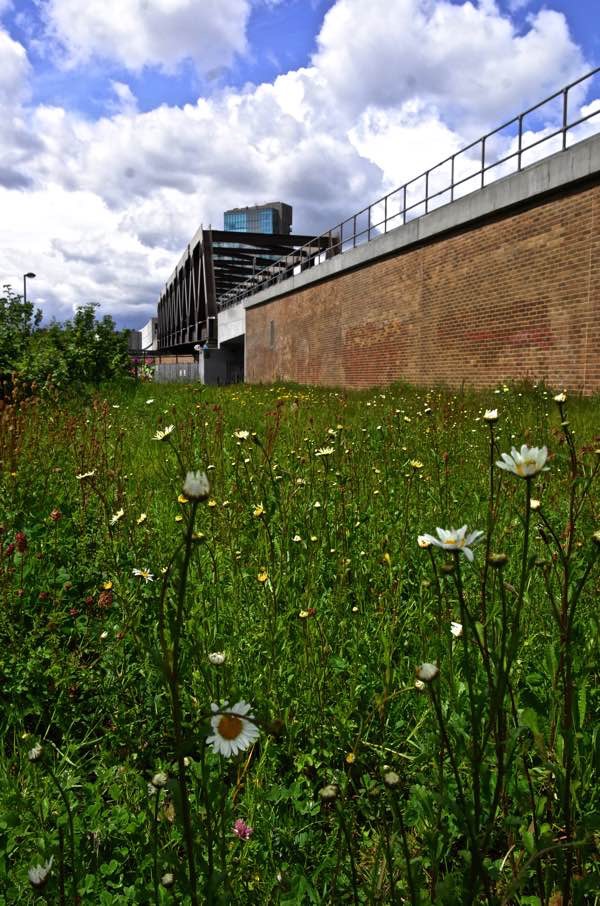
Oxe Eye Daisies in Allen Gardens (The leaves bruised and applied reduce swellings, and a decoction thereof, with wall-wort and agrimony, and places fomented or bathed therewith warm, giveth great ease in palsy, sciatica or gout. An ointment made thereof heals all wounds that have inflammation about them.)
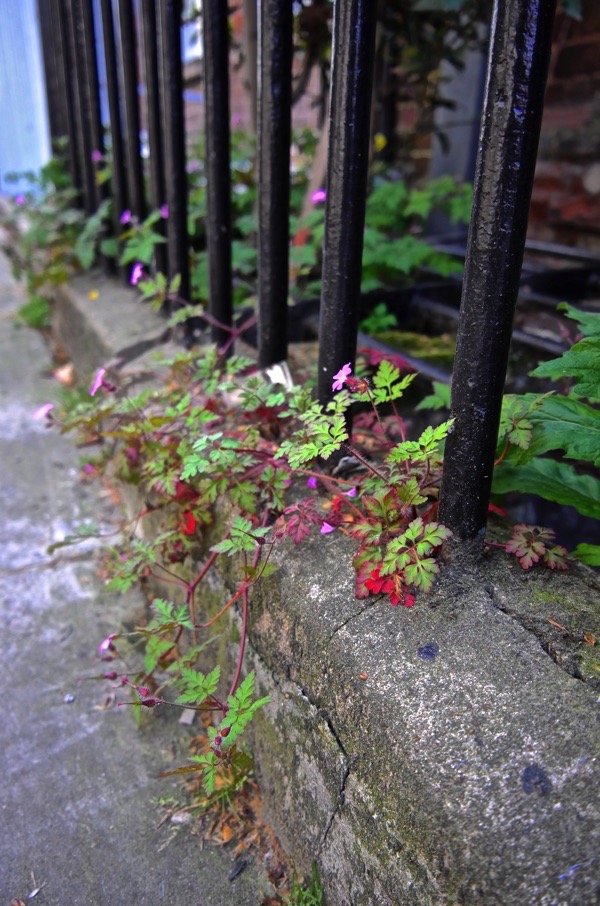
Herb Robert in Fournier St
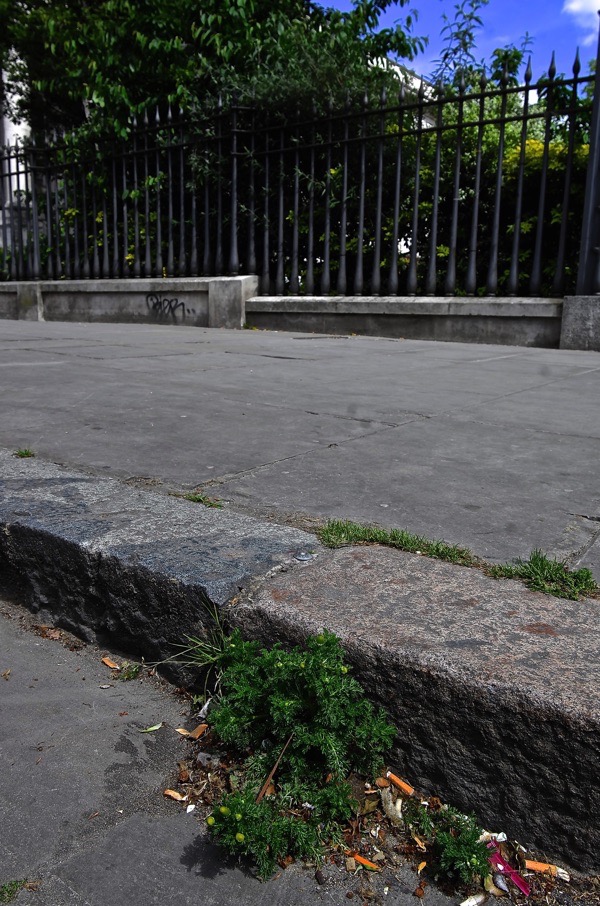
Camomile in Commercial St (Profitable for all sorts of agues, melancholy and inflammation of the bowels, takes away weariness, eases pains, comforts the sinews, and mollifies all swellings.)
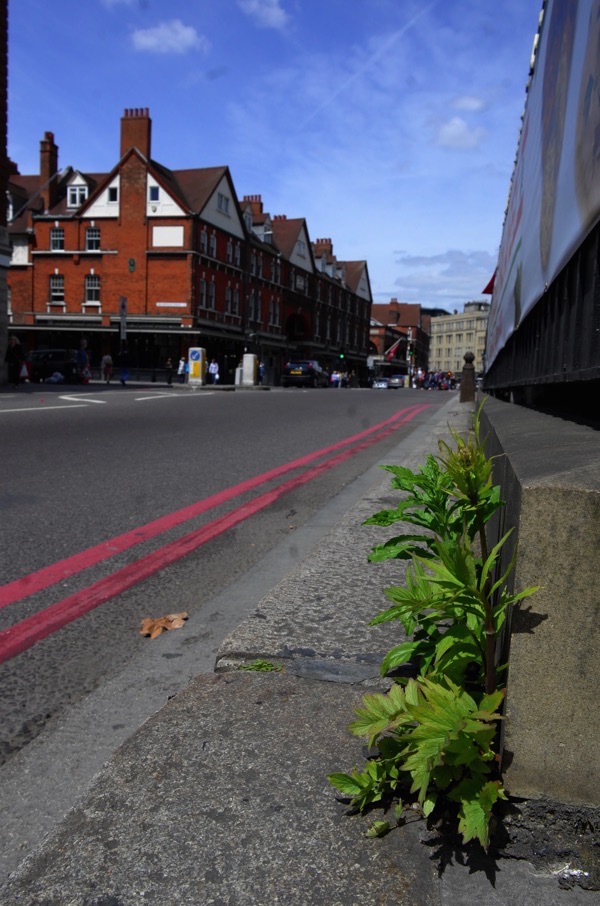
Unidentified herb in Commercial St
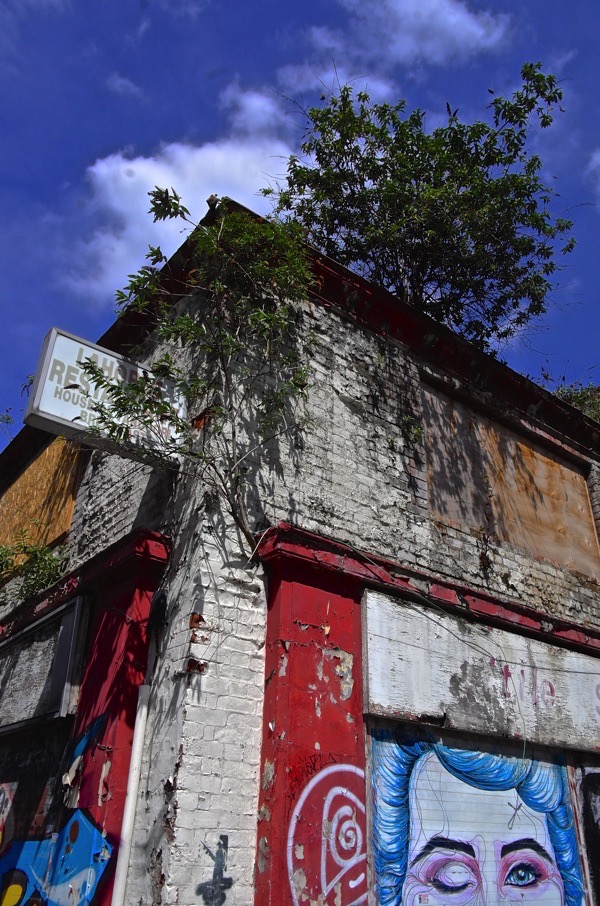
Buddleia in Toynbee St (Aids in the treatment of gonorrhea, hepatitis and hernia by reducing the fragility of skin and small intestine’s blood vessel.)
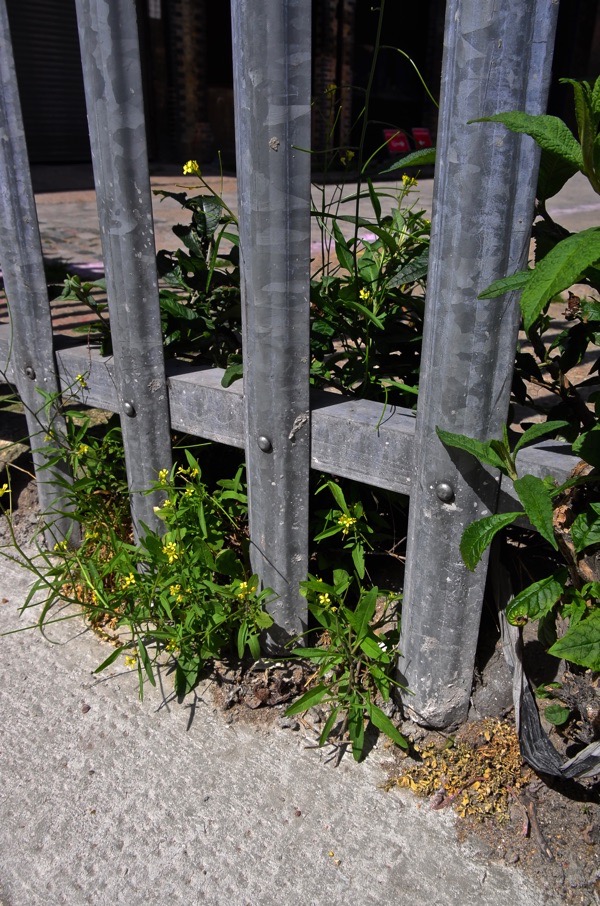
Hedge Mustard in Fleur de Lys St (Good for all diseases of the chest and lungs, hoarseness of voice, and for all other coughs, wheezing and shortness of breath.)
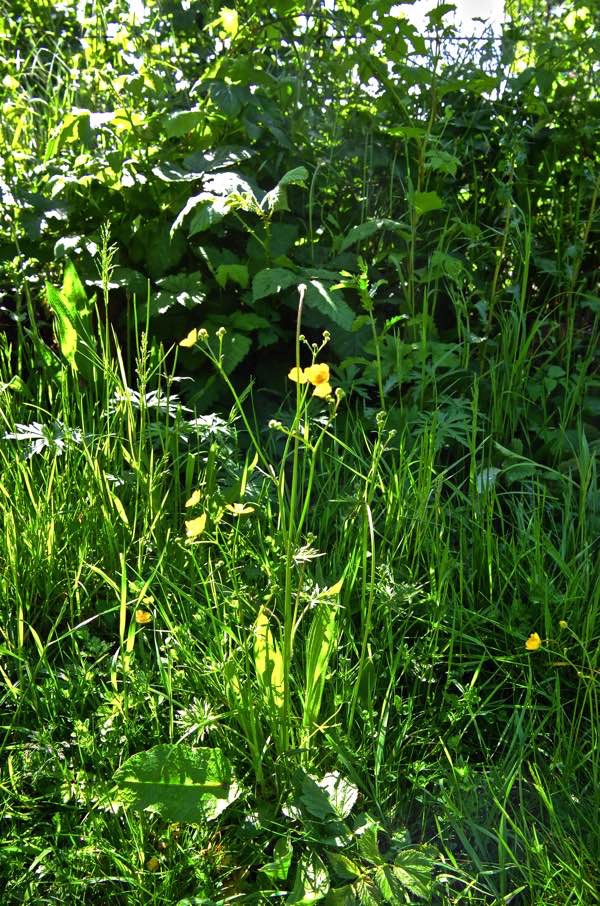
Buttercup at Spitalfields City Farm (A tincture with spirit of wine will cure shingles very expeditiously, both the outbreak of small watery pimples clustered together at the side, and the accompanying sharp pains between the ribs. Also this tincture will promptly relieve neuralgic side ache, and pleurisy which is of a passive sort.)
You may like to read about
At The Painted Hall In Greenwich
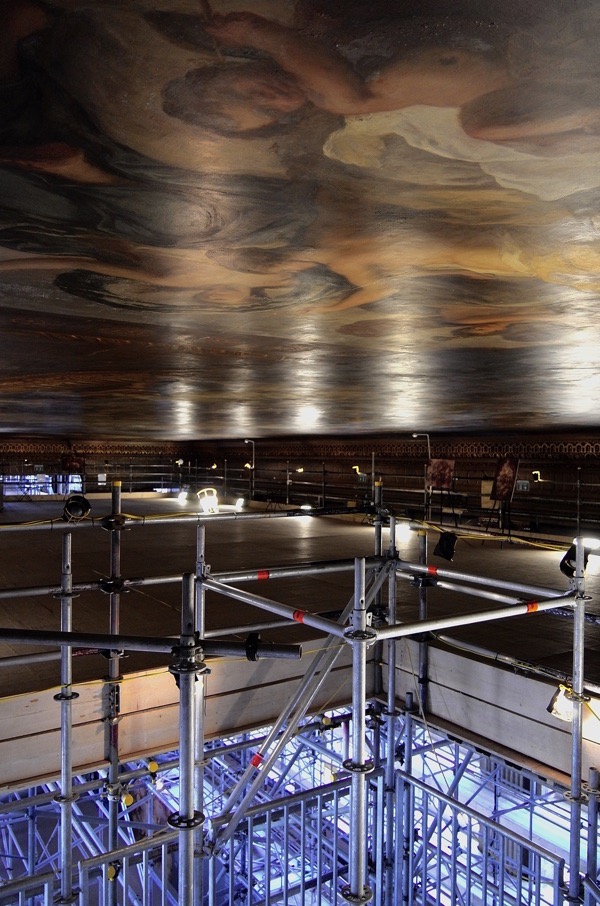
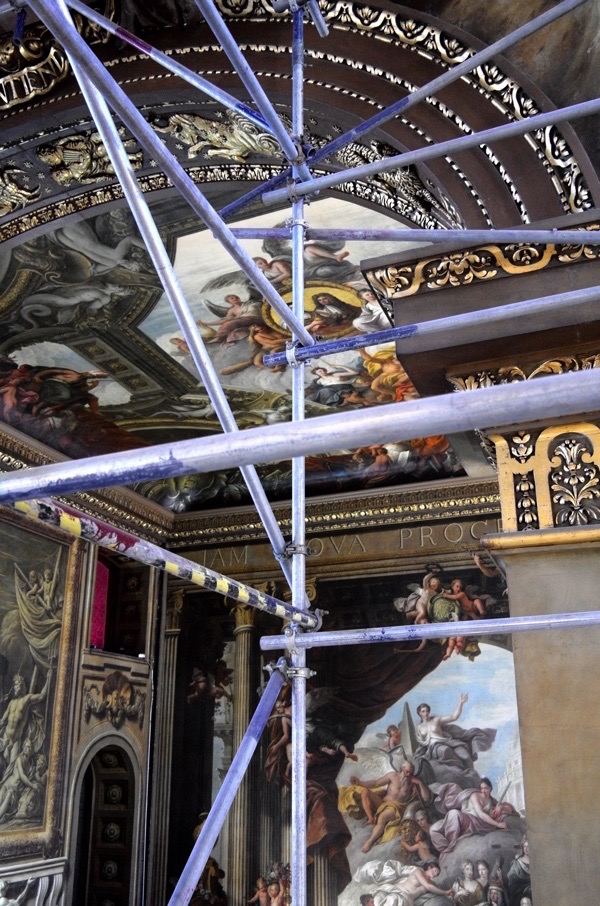
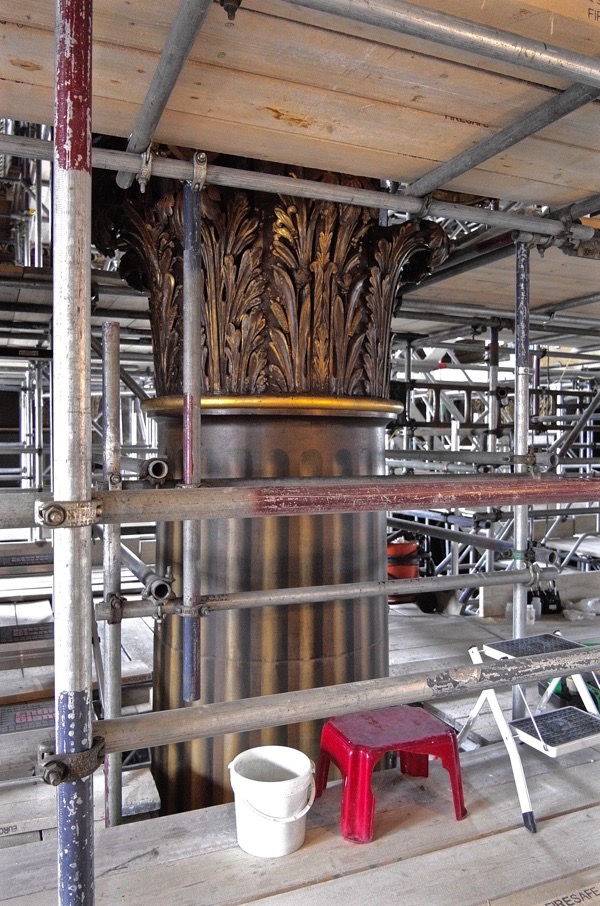
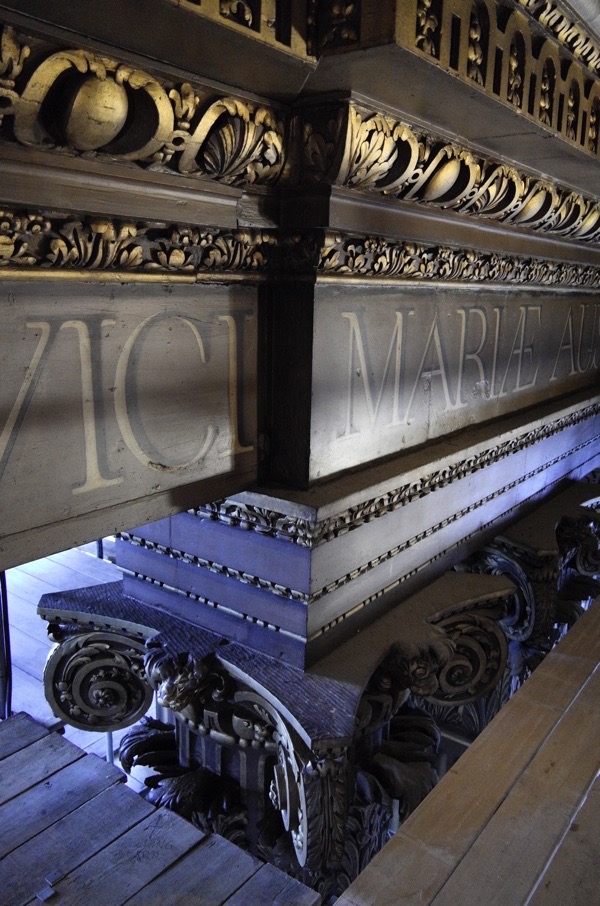
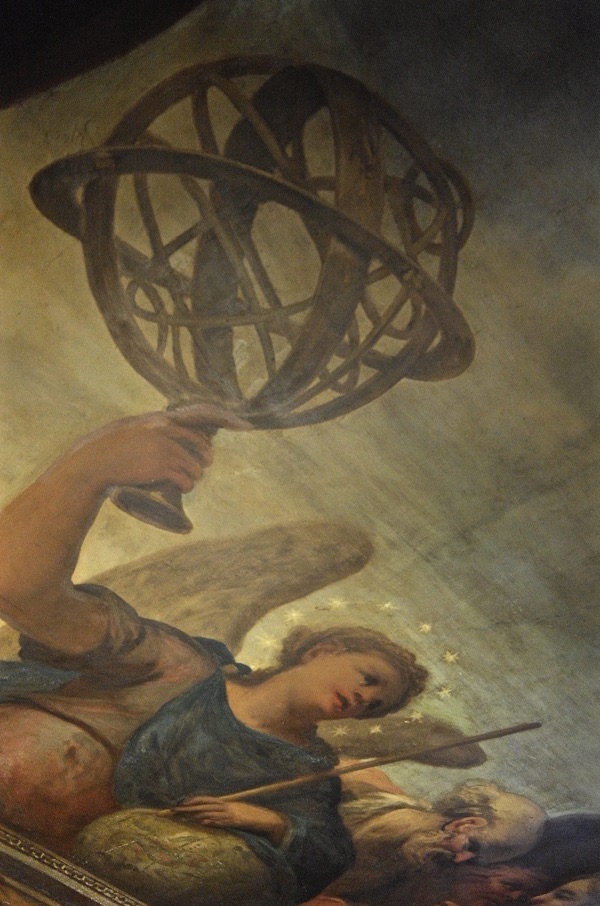
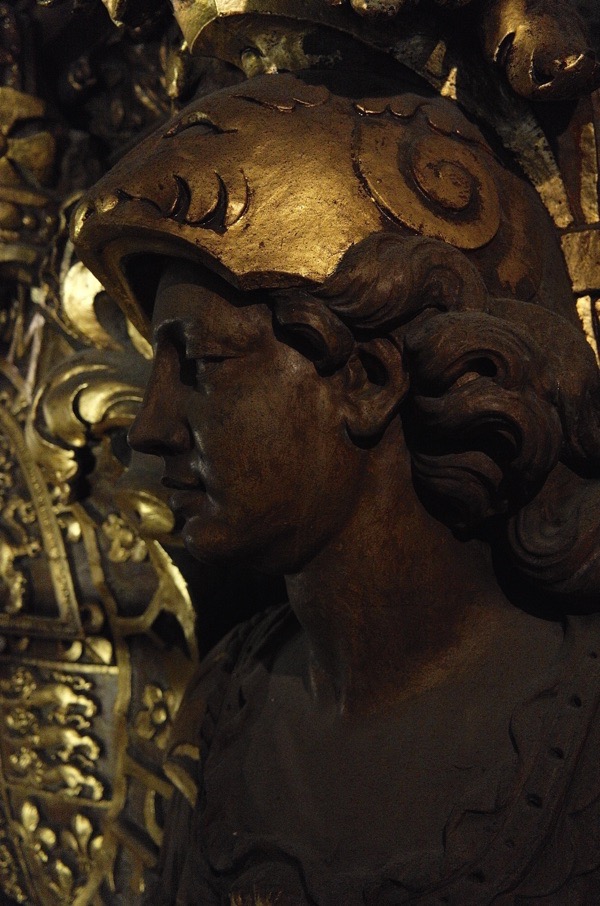
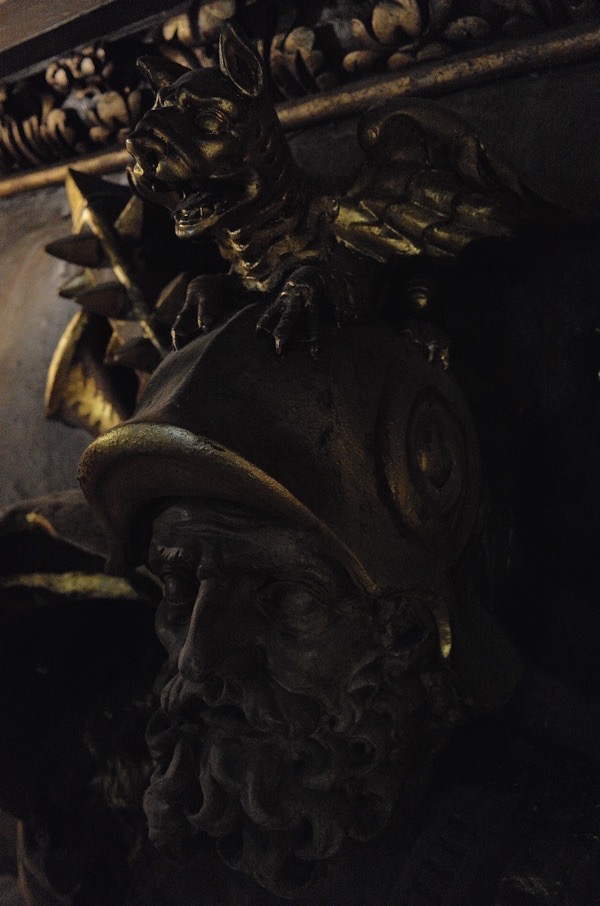
Currently, there is a once in a lifetime chance to climb up and view James Thornhill’s astonishing painted ceiling at the Old Royal Naval College in Greenwich at close quarters. When you walk into Christopher Wren’s magnificent dining hall, you are confronted with an intricate silver structure of scaffolding filling the space and you ascend the staircase to enter another world. You discover yourself then suspended in the half-light of an arena tinged with a golden hue by the vast painting glowing overhead.
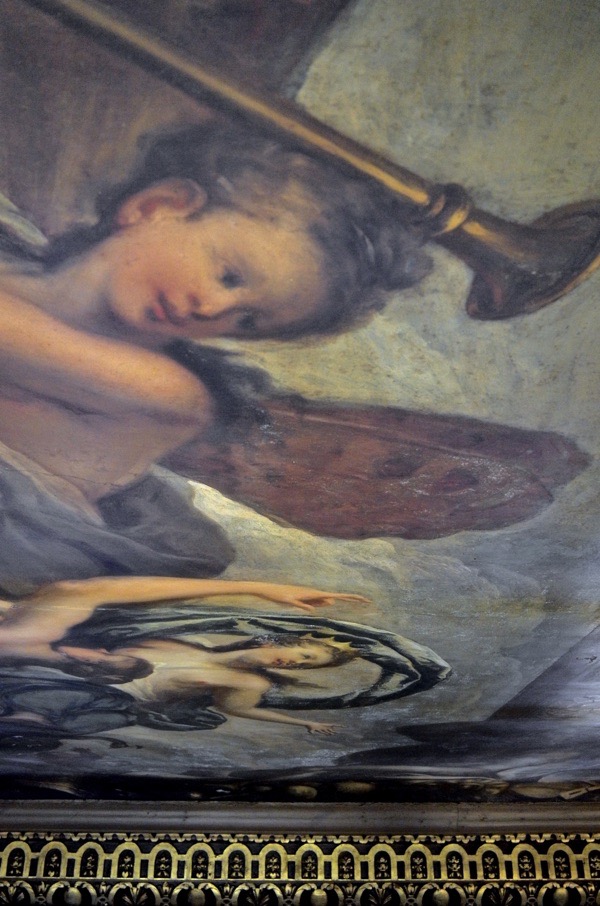
You crane your neck to make sense of the brushstrokes and, from the gloom, faces emerge peering back at you. Out of the depth of the shadows, figures become manifest where there was only miasma upon first glance. You are in the world of the gods and immortals. It is the greatest mixed metaphor in London – here are figures representing rivers and some representing seasons, while others incarnate abstract notions like ‘peace’ and ‘fame.’ And there are portraits of kings and queens, and the astronomer royal, and the first inhabitant of the naval hospital, a bearded gentleman who warms his hands by the fire in the embodiment of ‘winter.’
As you walk around with your eyes cast upwards, new images appear as others vanish generating an unavoidably surrealist experience. It is something like the disorientation of a dream or stumbling through a crowd drunk. There is no reference point to appreciate the relative scale of the figures hurtling towards you from heights above and the unexpected physicality of these larger than life bodies is startling when you find yourself confronted with a huge heaving cleavage or a monstrous pair of buttocks.
Fortunately, there are helpful guides on hand to show you photographs of the entire painting, thus permitting you to fit it all together in your mind and appease the prevailing confusion. They explain that once James Thornhill completed the murals in the dining hall, it was deemed too grand for the retired seaman who were the residents of the hospital and they were shunted off to eat their dinners in the undercroft instead. An alternative theory might be that this phantasmagoric vision with so much gratuitous nudity and chaotic action could hardly be conducive to the digestive process of the superannuated sailors who – at very least – would be in danger of contracting a stiff neck from gazing at the epic panoply overhead rather than contemplating their modest vittles in front of them.
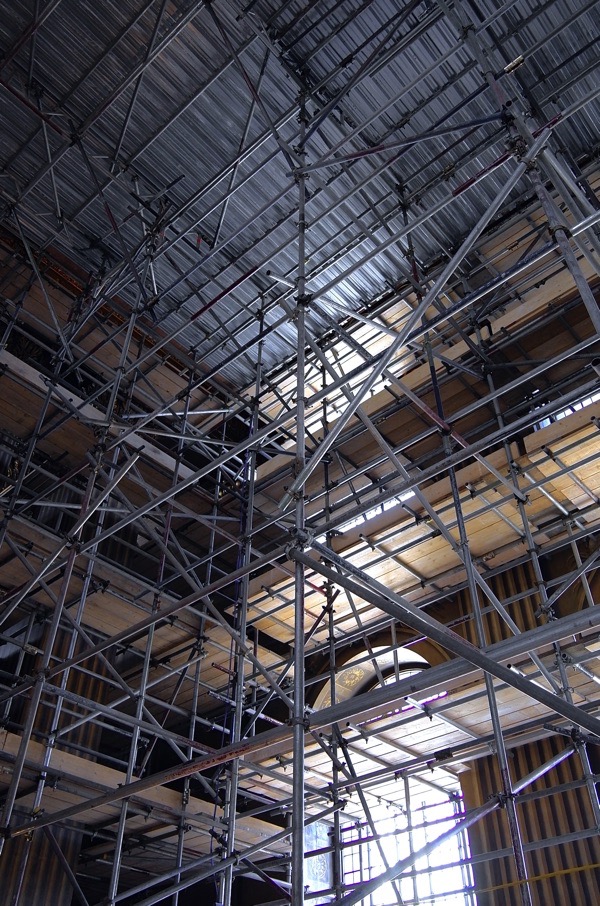
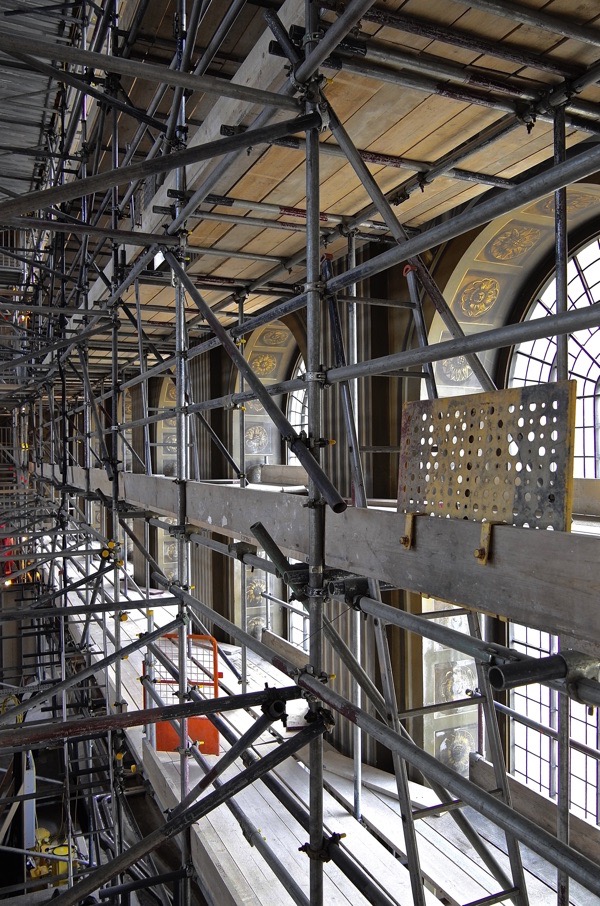
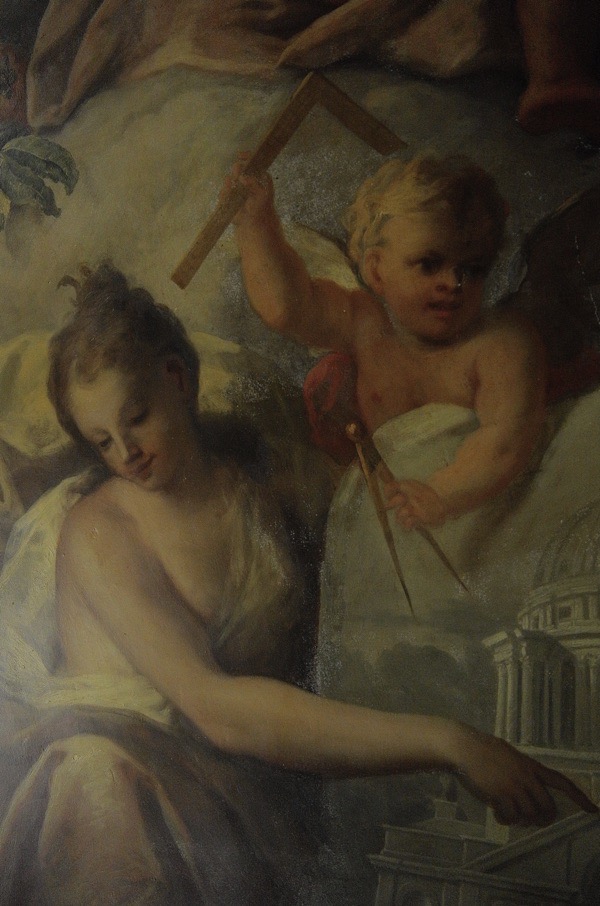
Christopher Wren designed both the Royal Naval Hospital and St Paul’s Cathedral
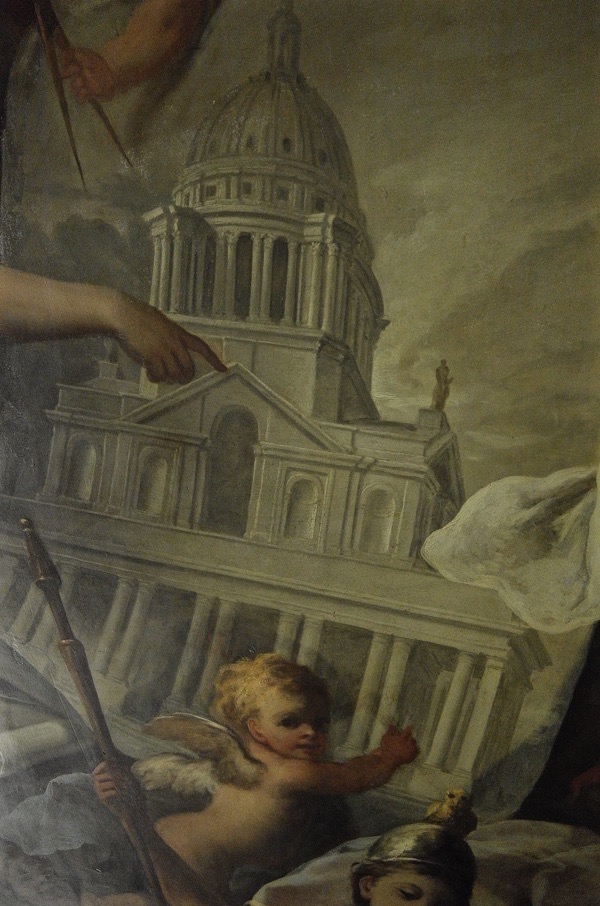
James Thornhill’s next commission was to paint the interior of the dome at St Paul’s
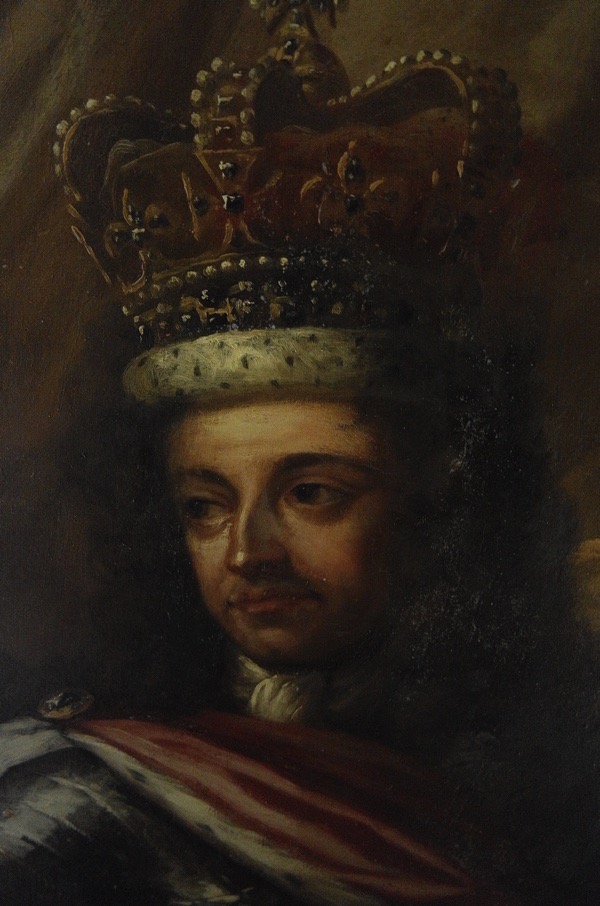
King William
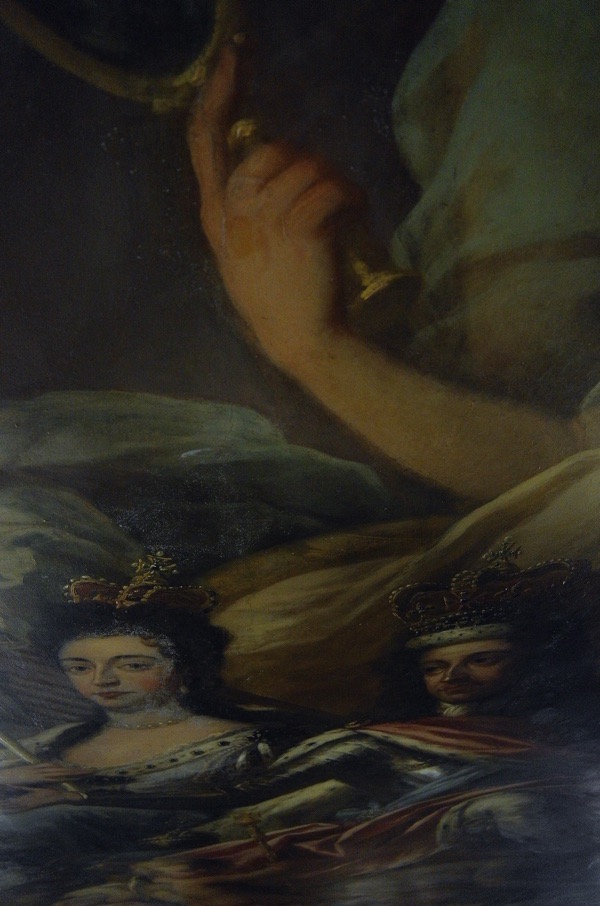
William & Mary
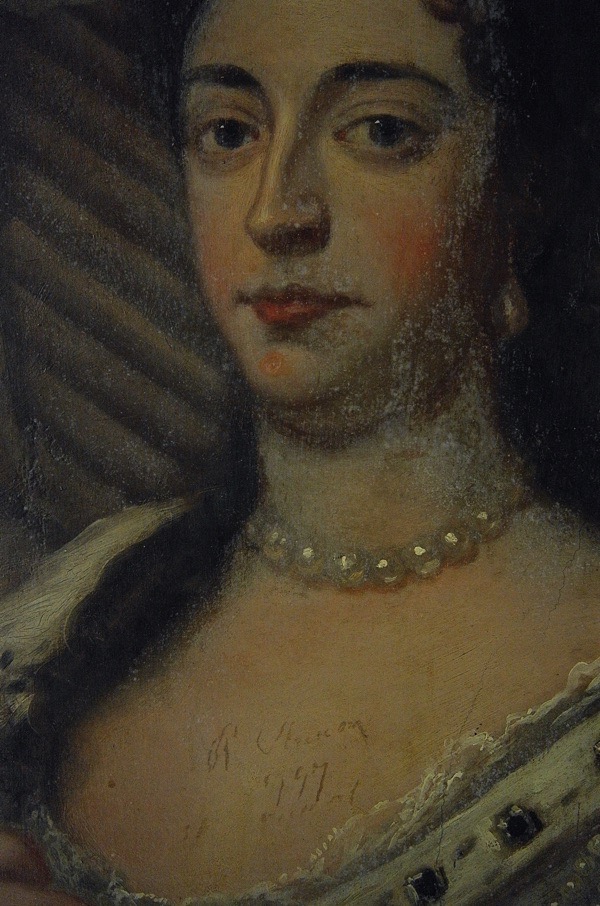
In 1797, a mischievous painter engraved his name on Queen Mary’s chest

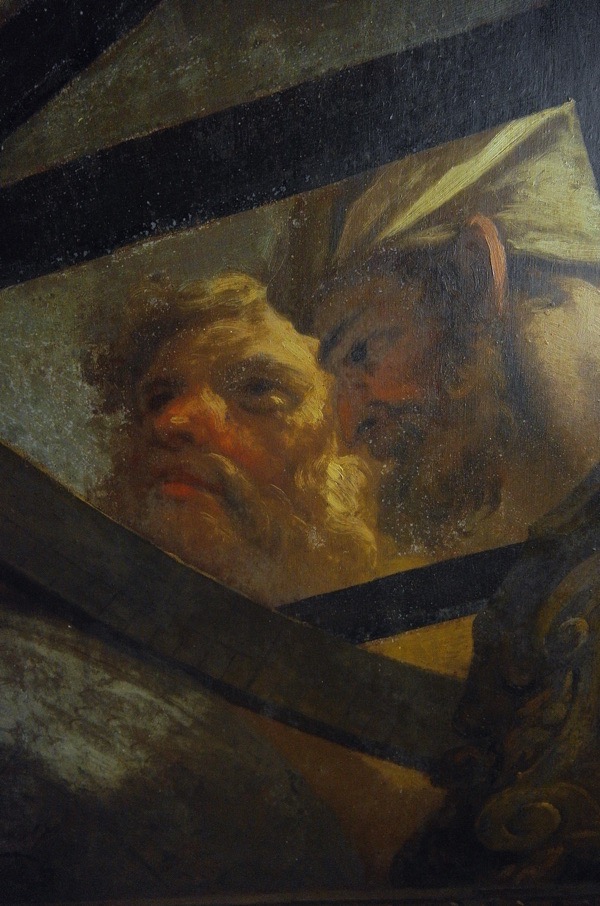
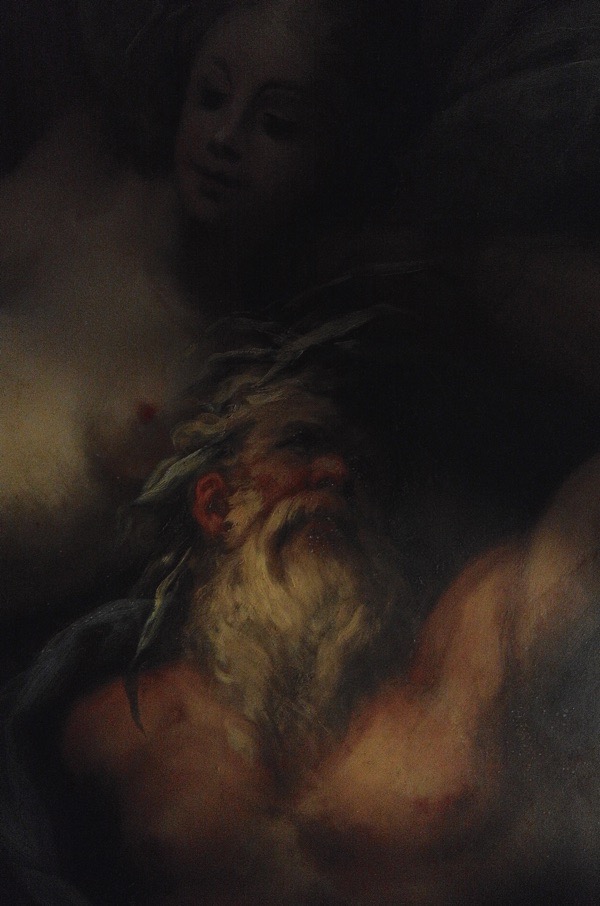
Old Father Thames
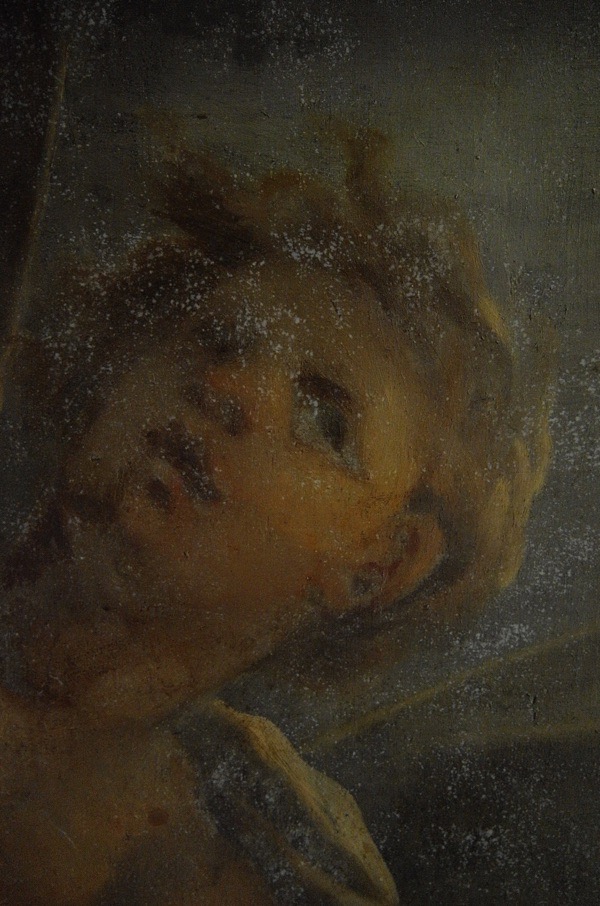
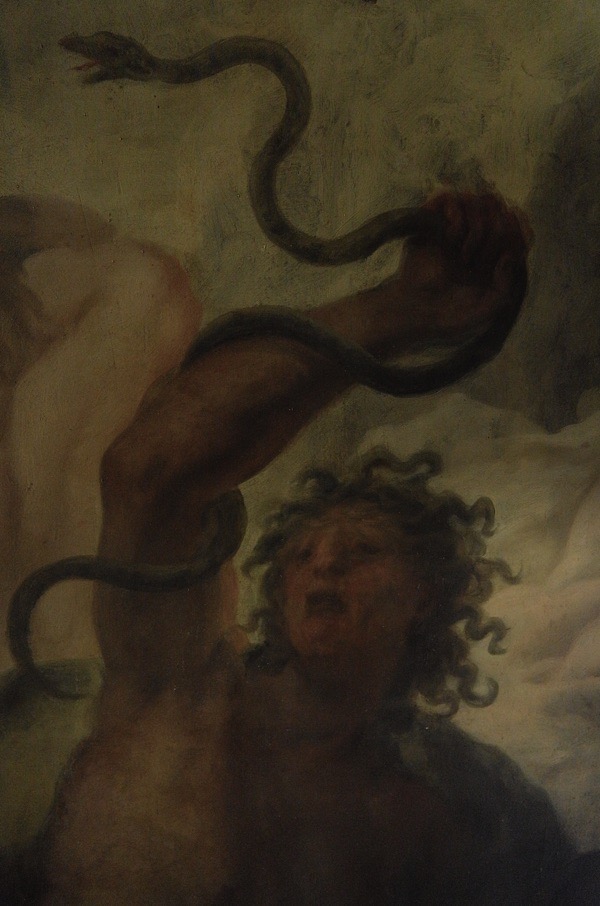

Portrait of the first inhabitant of the Royal Naval Hospital in the guise of ‘winter”
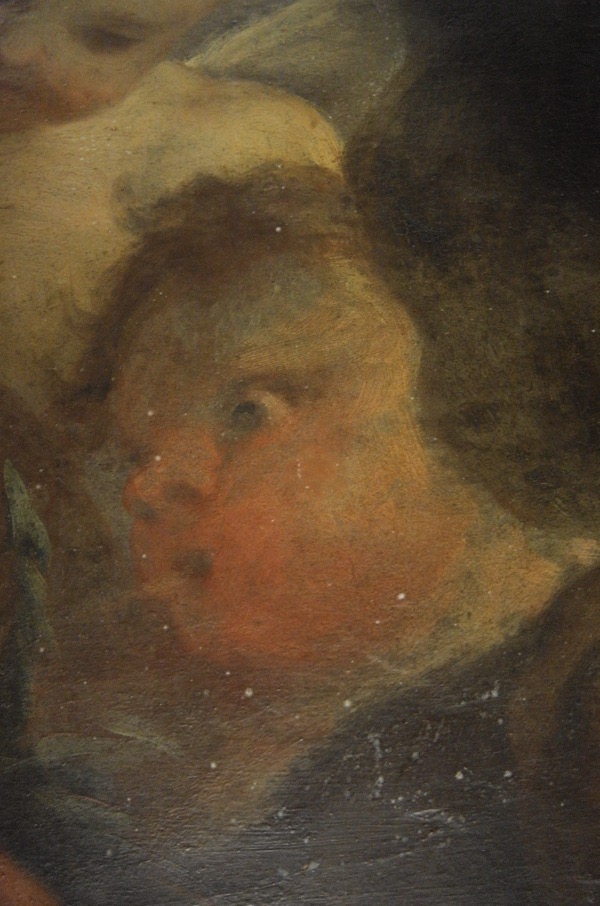
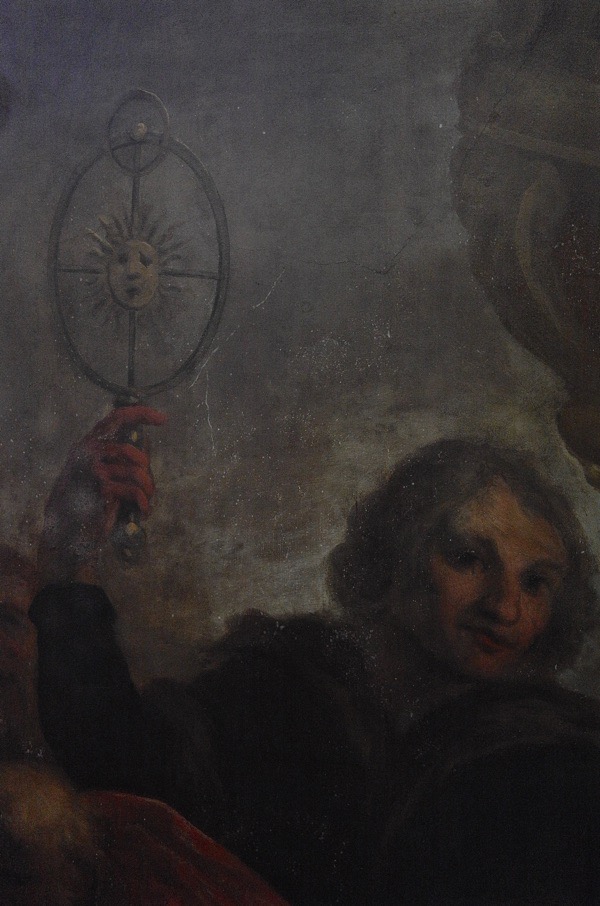
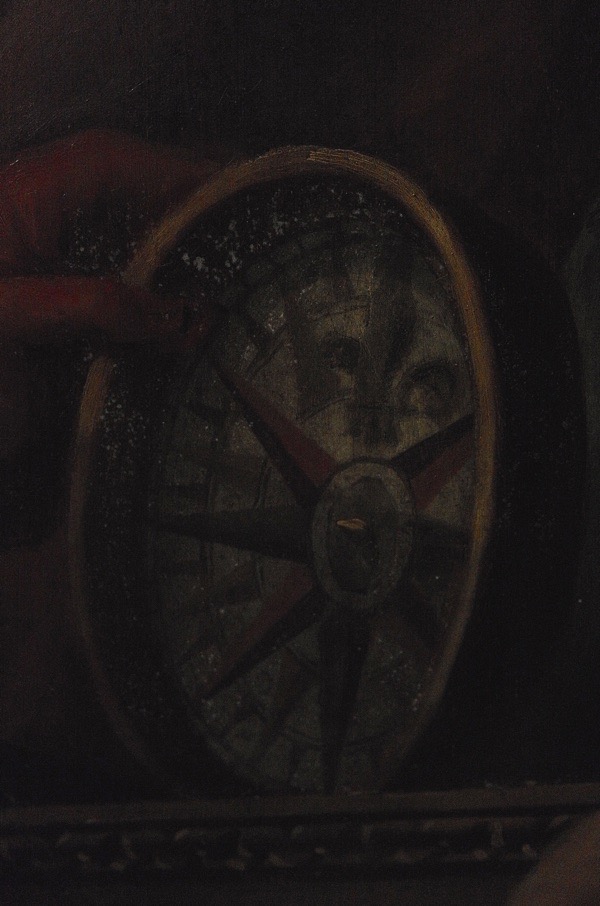
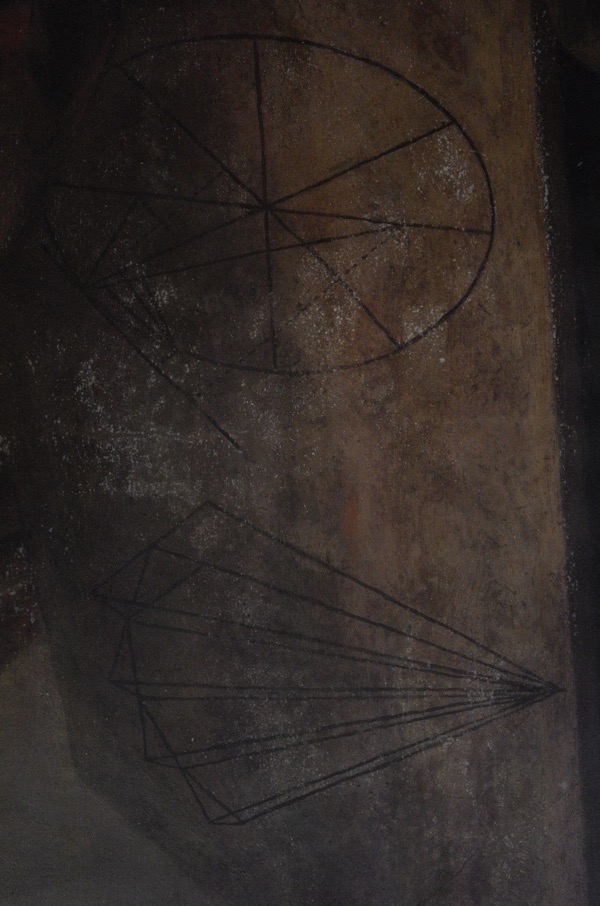
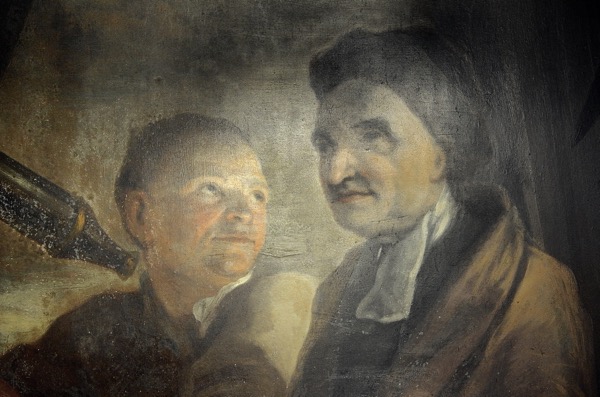
John Flamsteed, the Astronomer Royal, and his telescope
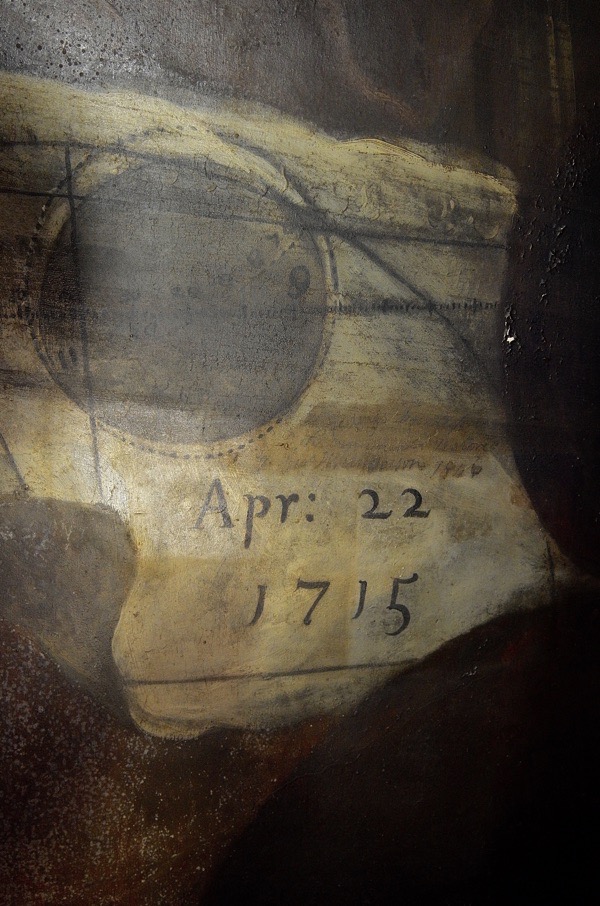
Flamsteed’s prediction of an eclipse in April 22nd 1715 was painted here over a year before the event
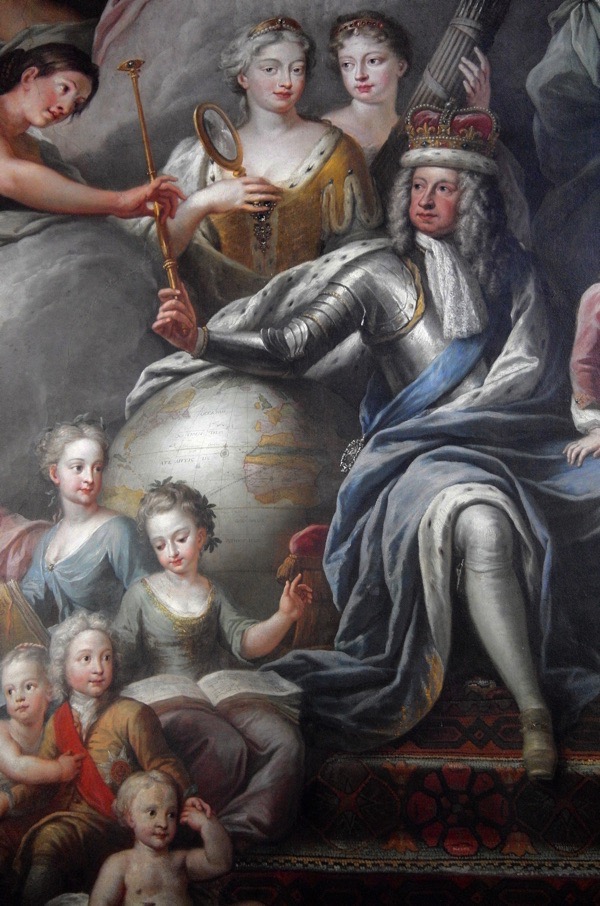
George I and descendants in the House of Hanover
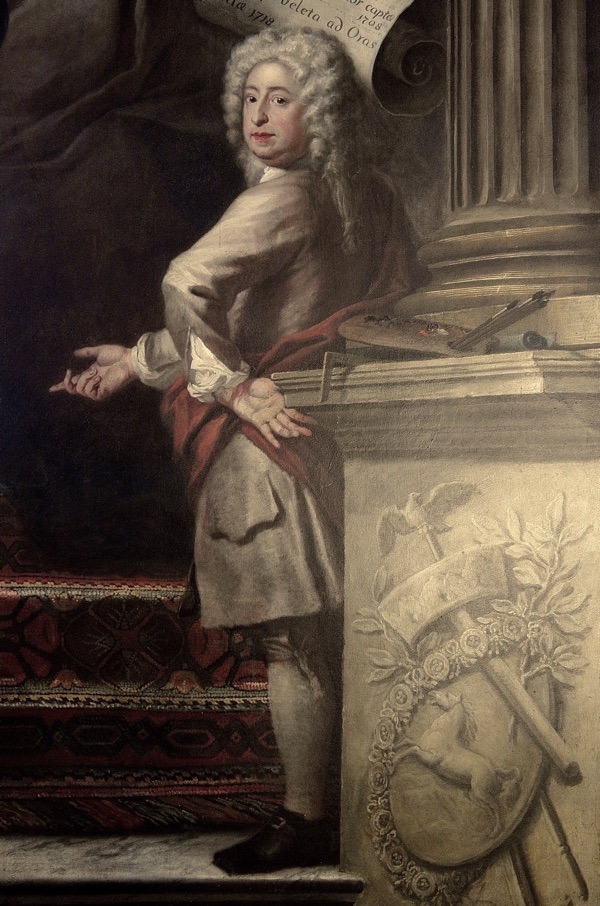
James Thornhill’s self portrait
You may also like to read about