Ken Long, Greengrocer
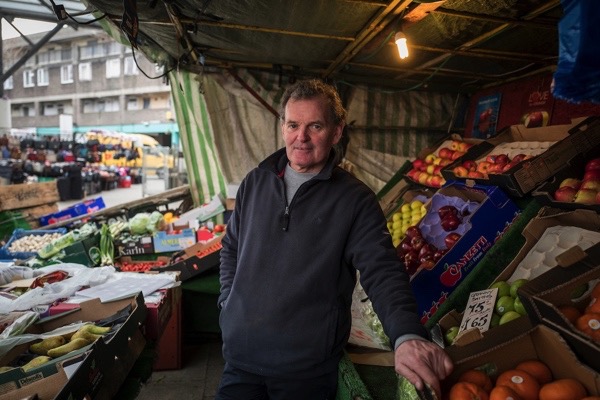
“I can’t pack it in because of all the people who came before me”
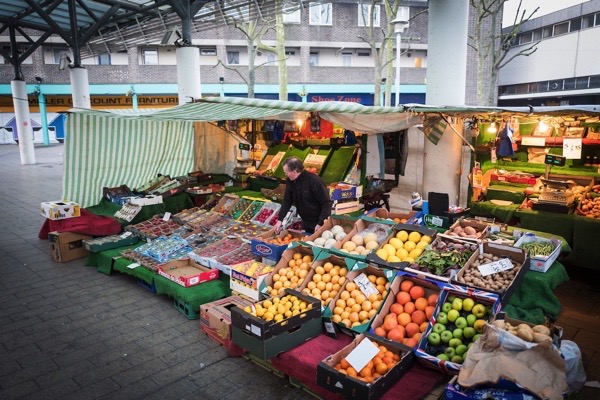
Photographer Andrew Baker introduced me to his pal Kenny Long at Chrisp St Market in Poplar. Ken is an heroic greengrocer who sets up his stall earlier than anyone else each day and whose family have been trading in this location through four generations, since before the current market was even built.
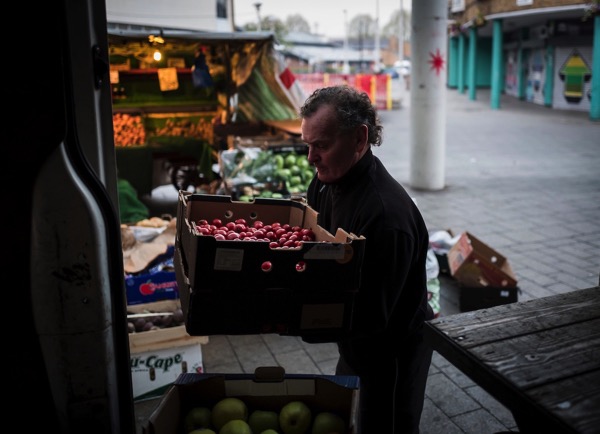
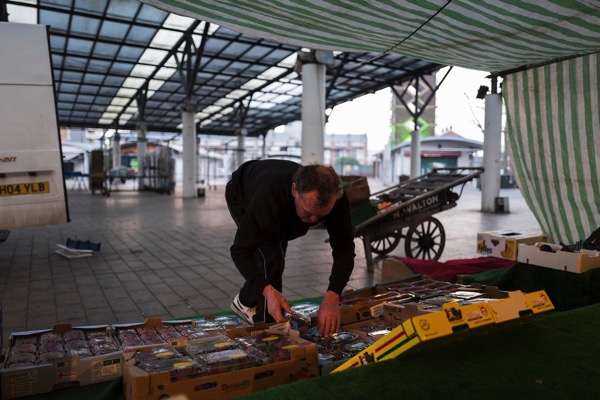
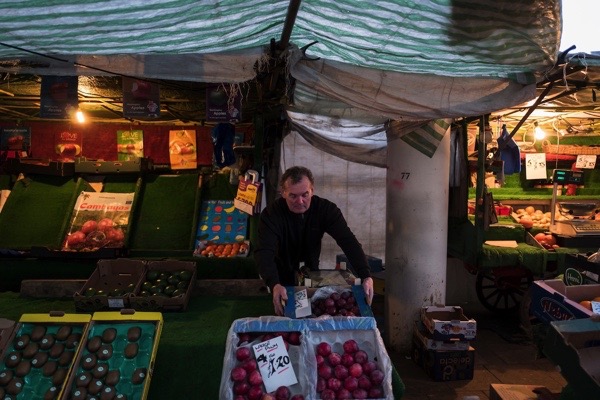
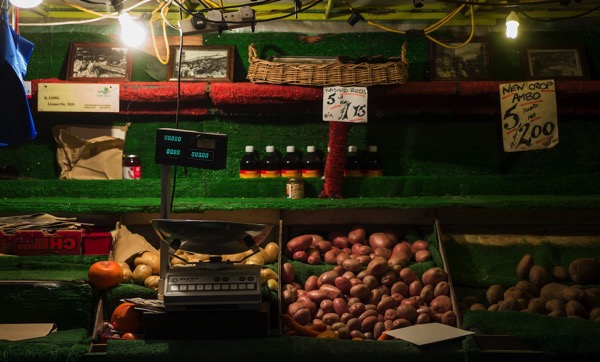
Ken sets up in the dawn, after he has been to the wholesale market to buy fresh produce, wheeling out the old wooden barrows and arranging his stall in the traditional manner with the vegetables to the right and the fruit to left, just as he has done for the past thirty years. Black and white photographs of those who precede him are set upon the stall each day as a constant reminder of this long-standing family endeavour, which Ken maintains through his daily ritual out of loving devotion to those who are dead and gone.
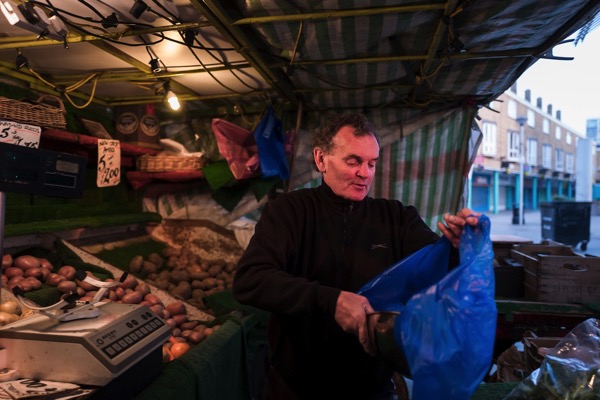
While we chatted, Ken popped across the square to place a few bets on the horses, as he does every day, and our conversation was interrupted by long-standing customers coming to buy. Although Ken still makes a good living and his work keeps him fit and wiry at sixty-one years old, I learnt from him that being a greengrocer is a way of life and a way of understanding the world, as much as it is a business – as much culture as it is commerce.
In Chrisp St Market, Ken Long is the overseer of time passing and the custodian of history.
“It all stems back to before the Second World War when my great-grandmother, Ellen Walton – old granny Walton they used to call her – she had a greengrocer’s shop in Violet Rd in the thirties. My great-grandfather was a merchant seaman and in those days you could bring anything home, and he brought my mum a monkey and they used to have the monkey swinging about in the shop.
When the shop got bombed during the War, they moved onto a stall in Chrisp St Market. Old granny Walton passed the business on to my grandmother, Nell Walton – her name is on my barrow – and from her it went to her son, Freddie Walton and his sister, my mum Joanie Long, worked on the stall fifty years.
In 1951, they moved into the Lansbury Market ( as it was then) on the newly-built Lansbury Estate and we’ve been here ever since. When Uncle Freddie passed away two weeks after his sixty-fifth birthday, my mum took over. By then, I was already working on the fruit stall. My dad, William Long, was a docker and he died when I was eight in 1965. He got killed in the docks. As a child I was up here all the time, I used to come up to my nan on a Saturday and I used to run around the market. I would stay with my nan on a Saturday night and my dad would come and pick me up on a Sunday morning and take me home.
Eventually, I took the stall over from my mum and the licence changed from my uncle into my name but – as far as I was concerned – as long as my mother worked here, she was in charge because I had to do what I was told. At first, I got involved with the vegetable end of the stall, which my aunt used to run with my uncle until she had to have her leg off and couldn’t do it no more. My uncle was going to rent it out but I overheard my mum talking about it and I said, ‘Don’t rent it out to no stranger, keep it in the family. I’ll try it for a couple of years and see how I go’ – and the rest is history. I was thirty-one when I started and this year it will be thirty years that I have been here.
When I started, my uncle let me have the vegetable end of the stall and work it for myself, and I gave him the rent to pay to the council. After about two years, he dropped down dead indoors so we shut the stall up for a week and I had to decide what I was going to do, and I decided to take it on. I had been up to the Spitalfields Market with uncle and seen what he bought and what he didn’t buy. There were four of us working here then – me, my mum, my daughter and a girl. You needed at least three then, but now trade is not what it used to be, so I get by on my own.
For a while now, my stall has been the longest-established here in the market. We’ve been here everyday, every week for as long as this market has existed. Traditionally, people bought their bread, their meat, and their fruit and veg for the weekend on a Friday. Everybody used to cook a roast dinner on a Sunday but there’s not a lot of people that do that anymore. We had customers queueing up from half past six – seven o’clock in the morning and we’d have a queue at either end of the stall. They’d buy their vegetables at one end and pay for them, and then go up to the other end and queue up to buy their fruit. My mum would be serving here, I’d have a girl serving there and I’d be serving in the middle. It was like that all the time, from seven in the morning until four in the afternoon. People who knew me would say, ‘Ken, you know what I have.’ Ten pounds of potatoes, a cabbage, a cauliflower, carrots, onions and parsnips – the whole lot for their roast dinner. Now you get customers who come on a Saturday and ask for two pounds of potatoes, a carrot and a parsnip just to get them by.
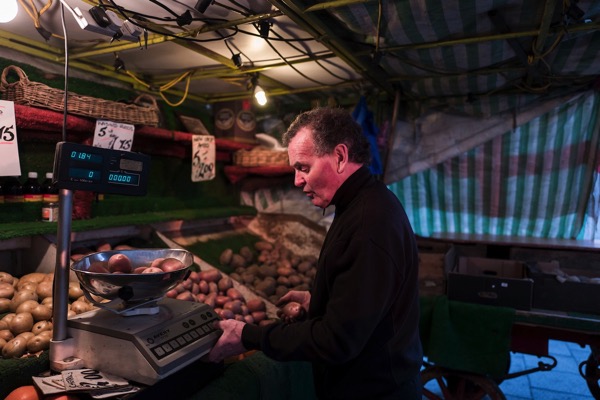
Working like I do is a dying trade, serving customers individually and weighing out fruit and veg. On the other stalls in this market and you’ll see ‘pound a bowl’ and ‘pound a bag’ – everything is pre-packed. I am a traditional greengrocer and, although I can get everything all year round now, I know when the seasons are and I know when to buy, and there’s times when I won’t buy certain things because it ain’t proper.
I known greengrocers who have worked in Roman Rd, Watney Market, Bethnal Green and Rathbone Market, packing up and nobody ever replaces them, whereas once upon a time it was family and people came in to the business, taking over from their mum or dad. That’s not happening now.
You don’t have to serve an apprenticeship, you just have to go the wholesale market with whoever you are going to take over from and you have to have some experience to know what you are selling. There’s ten different oranges I can buy, but I know to buy seedless Spanish navels because they are best oranges. Elsewhere in this market, you can buy cheaper oranges and people think it’s better value, but only because they do not understand what they are buying. The soft fruit I sell will ripen nicely, whereas much of the fruit you buy in a supermarket will not ripen until it rots because they select varieties to have a long shelf life.
You don’t always buy with your eyes. Most of my regular customers know me and they say, ‘They look lovely, what are they like?’ and I’ll say, ‘Don’t have them, have these.’ I’ve been doing this long enough to know which people will trust me. I look after my loyal customers.
I enjoy it. I’ve earned a good living. It’s been good to me and it’s been good to all the family over the years. Fifteen years ago, I said ‘When I’m fifty-five, I want to be out.’ That would have been after twenty-five years in the market. But I got to fifty-five and it was still a good living, but by then all my family who worked the stall were dead and gone, and I couldn’t walk away from it. I wouldn’t walk away from a floating ship and it still is a living to me, but the main reason I am doing it now is because my conscience tells me I cannot walk away from it. I can’t pack it in because of all the people who came before me. If they saw me walk away for no reason at all, I can see my mum giving me dirty looks, I can see Freddie turning in his grave and I can see my nan. So I am thinking, ‘No, I’ve got to stick it out.’
In the last couple of years, they have been refurbishing the market and everything is coming down for redevelopment, so when that starts I am going. I’ve got two sheds round the corner which I put these stalls in every night, they’re coming down first before the work starts, so that will put me out of a job. There’s nothing I can do about it. I’m being pushed out but it suits me, I’m sixty this year. I’m trying to find reasons to go. They’ve offered me alternative accommodation but it won’t be in the vicinity. It only takes me fifteen minutes to pull all these stalls round every morning at present.
We’ve had these old barrows hired off Hiller Brothers since 1951 when we came into the market. I pay thirty-seven pounds sixty per month, it never goes up and they maintain them for me at no extra charge.
I’m doing my own thing here. Since my mum’s been gone, and my daughter’s been gone and the girl’s been gone, I can do what I like! As much as I was running the stall, doing the buying and sorting the money out, when they was here I was still ‘the boy.’ It was still – ‘Ken, make us a cup of tea!’ -‘Ken do this!’- ‘Ken do that!’ – ‘Ken, go round the shed and get some orders’ There was three women telling me what to do. It was lovely and I did it because I thought I was supposed to, so I didn’t mind.
I’m still serving people I have served for thirty years but I have new customers come along too. I like the variety. I like being outside. I prefer the winter to the summer, because I don’t want to be here in the summer I want to be somewhere else nice. The hot weather doesn’t help all this stuff, you have to careful what you buy and how much you buy – it makes the job a little but harder. In the winter, you can buy a little bit more because it will keep an extra day or two, and in the winter you sell an even amount of fruit and veg, whereas in the summer you don’t sell a lot of veg because people don’t eat so many hot dinners.
I enjoy the job but – if I am honest – nowadays if I had a shop, I’d be shut at one o’clock because that’s when I start packing up, by two o’clock I am closing down and by three o’clock I am gone. I like getting away in the afternoon. I like getting up in the morning. I like going to the New Spitalfields Market. I like the buzz up the market, buying and running around. Things change all the time with the seasons, so you are always looking around for something different.”
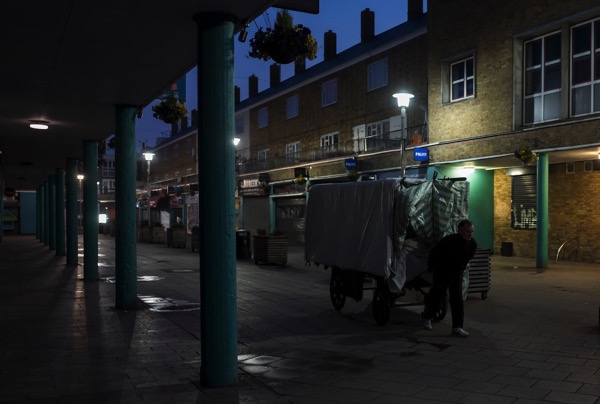
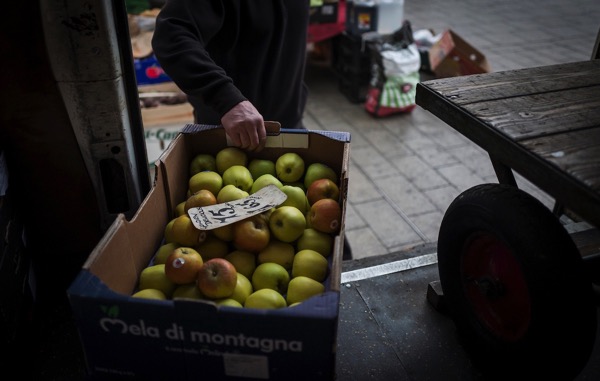
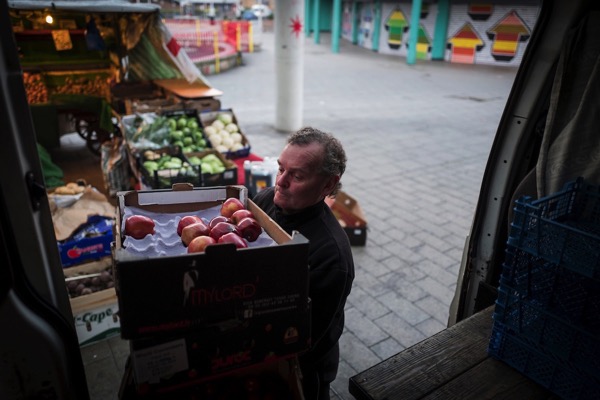
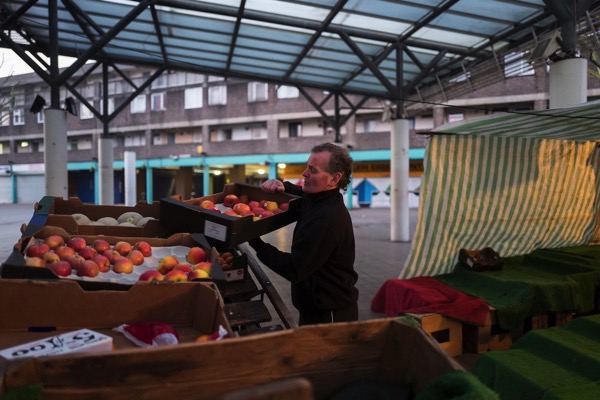
Ken arrives before anyone else to pull his old wooden barrows into the market
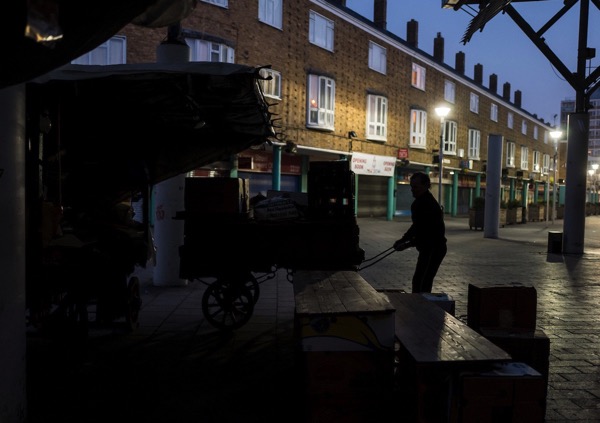
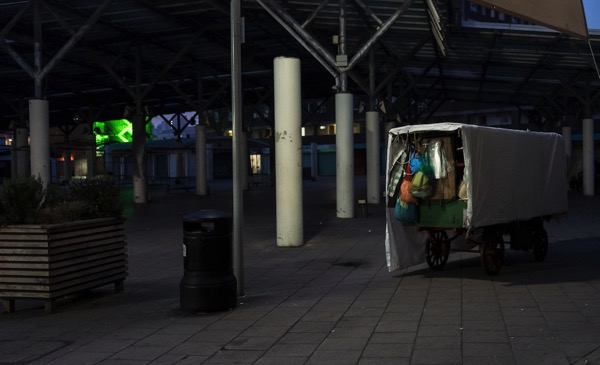
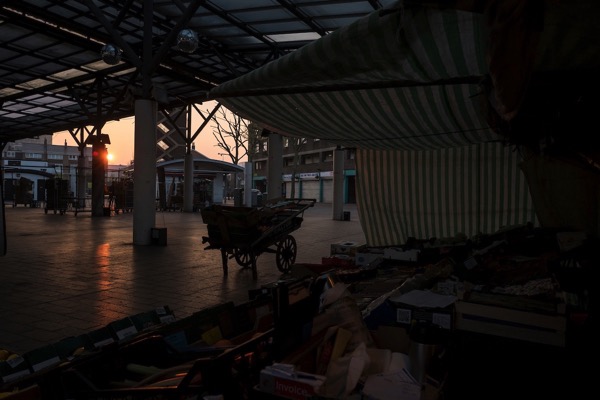
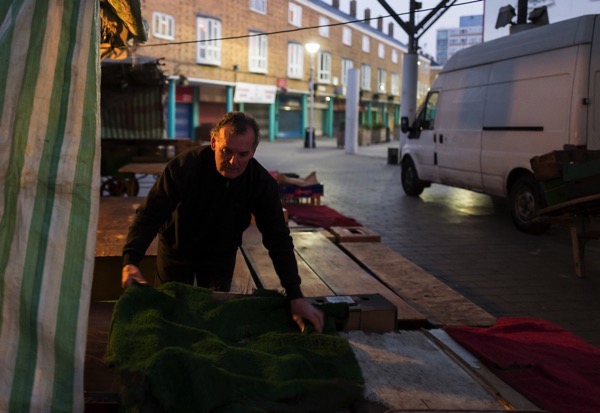
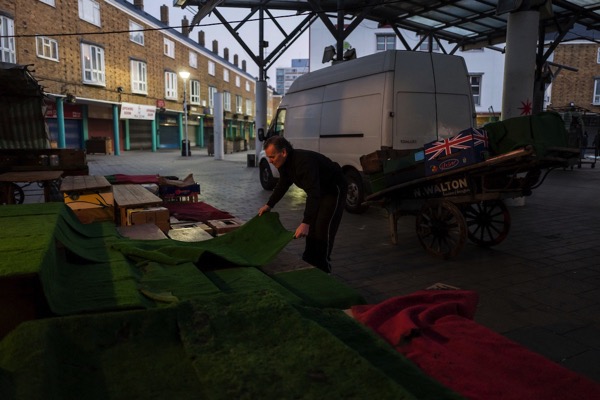
Ken sets up his stall in the dawn while the market is empty
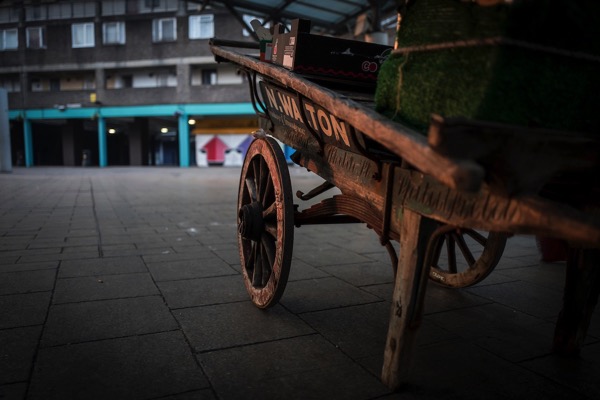
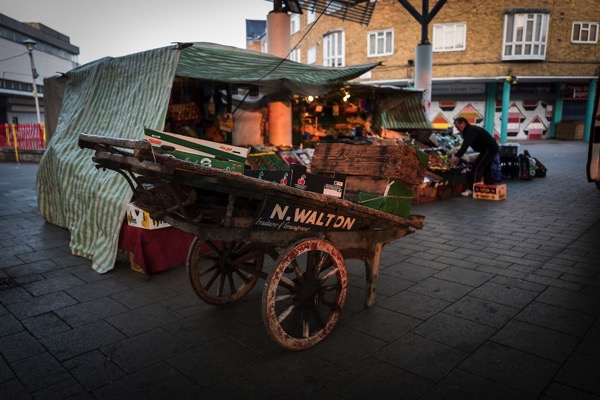
Ken’s grandmother Nell Walton is remembered on the side of a barrow made in Wheler St, Spitalfields

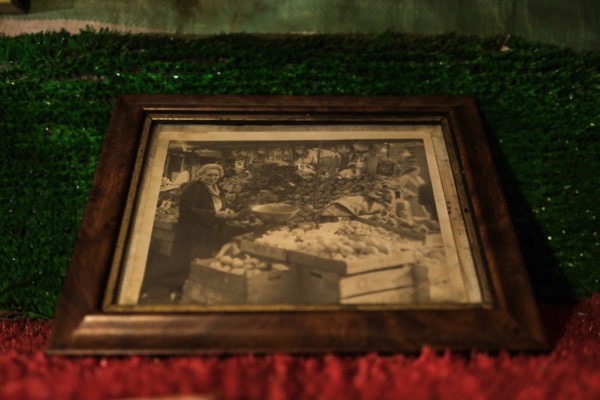
Ken’s mother, Joanie Long
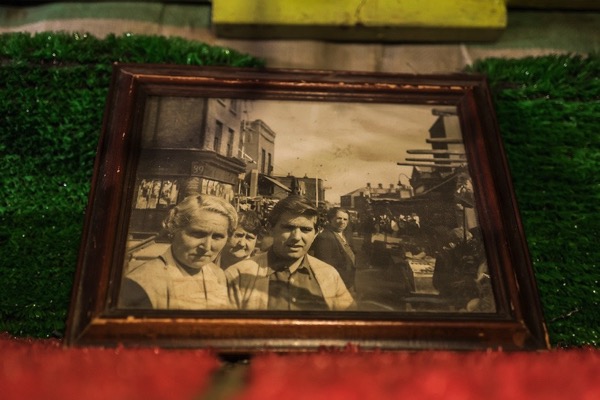
Nell Walton & Uncle Freddie
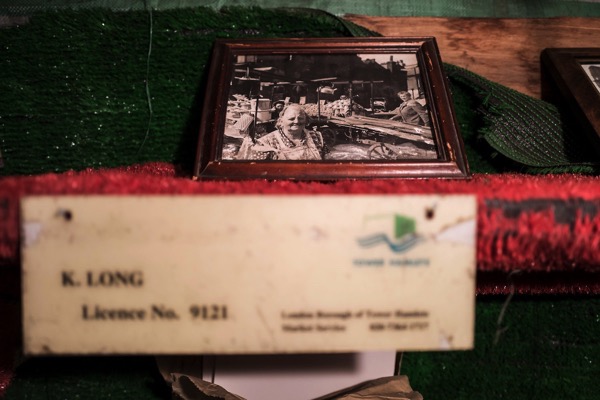
Ellen Walton, known as ‘Old Granny Walton’
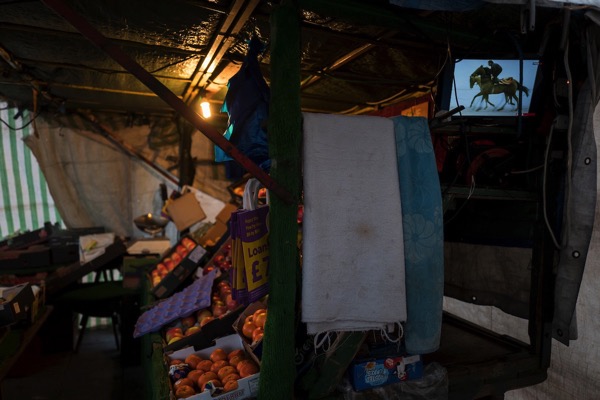
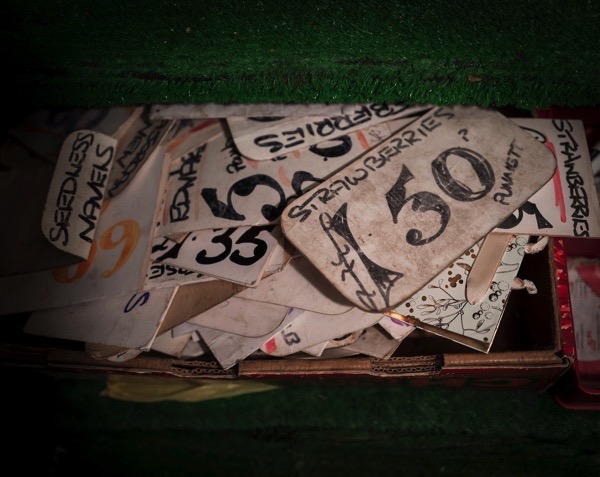
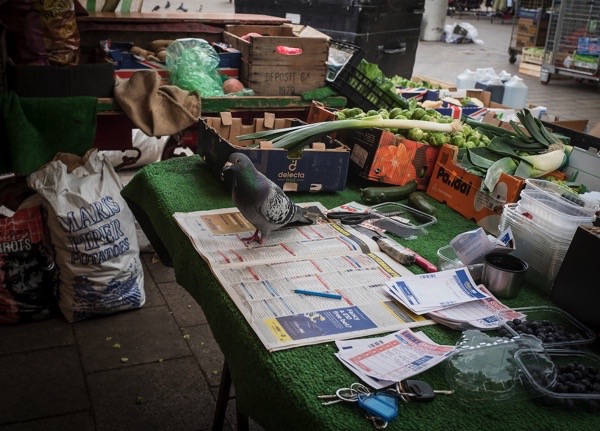
Each day Ken enjoys a flutter on the horses
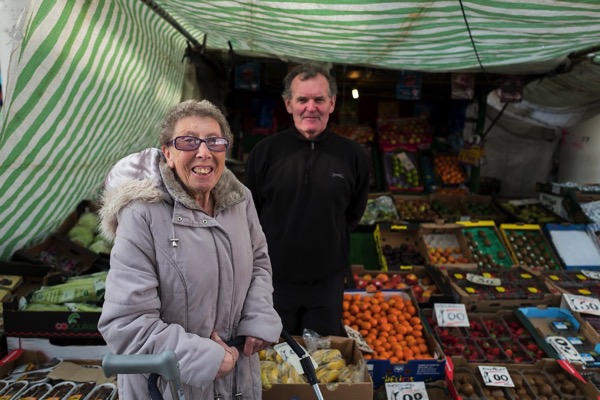
Ken welcomes a long-standing customer

Photographs copyright © Andrew Baker
You may also like to read about
Andrew Baker at Hiller Brothers
Richard Lee, Bicycle Parts Seller
A.S. Jasper’s Years After
Today, I present this short extract from A.S. Jasper’s The Years After, about his experiences in the Auxiliary Fire Service in London during the Second World War, revealing the author’s personal sense of justice that he acquired through the struggles of his early years in Hoxton.
Next week, Spitalfields Life Books is publishing a handsome new hardback edition of AS Jasper’s A Hoxton Childhood accompanied in the same volume by the very first publication of the sequel The Years After, which was discovered in the author’s papers after his death. The sequel traces how AS Jasper employed the moral lessons of his childhood through his adult years, and together both works comprise an eloquent and compelling testimony of a life.
Join me at the launch party for A.S. Jasper’s A Hoxton Childhood & The Years After next Tuesday 25th April 7pm at the Labour and Wait Workroom, 29-32 The Oval, Off Hackney Rd, Bethnal Green, E2 9DT. There will be live music, readings and refreshments. Tickets are £5, including £5 discount off the cover price. Click here to book
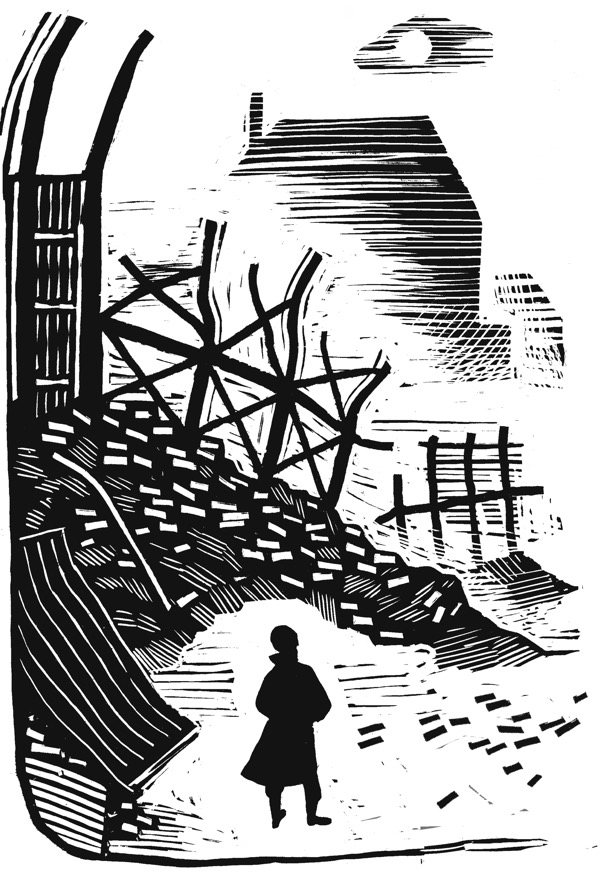
Illustration by Joe McLaren
We were sleeping in a large hall on concrete floors: no beds. So I approached the officer in charge of the Auxiliary Fire Service and asked him how on earth he thought we could do twelve and eighteen-hour shifts under these conditions. He replied that he had tried to get beds but none were available. I asked if it was possible to get a requisition for some timber, nails and some close-mesh wire. I told him that if he could get these items I could make beds. He was delighted with the idea and left to make a telephone call. He came running back and told me it had been accepted, and would I give him a list of my requirements. I gave him my list and, true to his word, the materials arrived the next day. I went home to pick up my tools and started to make eighteen beds upon my return.
To make the distribution fair, we placed numbers in a hat and drew one for each member of the crew. I was using 2in x 2in timber, and it took me about two hours to make each bed. For mattresses, I used the close-mesh chicken wire and staples. Within a week, we each had a bed, a table and forms to sit on to have our meals. The chaps were all grateful for my efforts.
Meanwhile, I received a letter from Lilian. She had been sent to Ipswich. The boys were missing me terribly and my little son was crying all the time for his dad. I felt awful being parted from them.
I was on way out with the night crew the following Monday afternoon, when who should be walking towards me but Lilian and our three boys. My little son rushed up to me, put his arms around my neck and nearly strangled me. I asked Lilian why she had come home. She explained that she was living in the house of a minister whose wife had been evacuated and there was just no sense staying in a place which wasn’t a safe area. I fully agreed with her decision. Separation was not for us anyhow. We made arrangements to move into our new house the following morning. We soon settled in, with the boys happy that we were all together again. One would have thought we had been separated for a couple of years instead of a couple of weeks.
This was a phoney period of the war and nothing was happening in the firefighting department and I had several clashes with the council about the treatment they doled out to the Auxiliary Fire Service. On one occasion, we had been on duty from 2pm on Sunday until 9am on Monday morning when we were served breakfast which was sent to us from an outside kitchen run by the council. Complaints had been pouring in from the various substations about the quality of the food and the way it was served up. It was always cold by the time we received it.
This particular morning, the breakfast arrived in the canisters. They were stone cold. Upon opening them we found sausages, beans and cold fat. It looked horrible. Someone started to dish it out on plates, but none of us could eat it.
‘What the bleeding hell do they take us for?’ said one. ‘After an eighteen-hour shift, we are expected to eat this effing mess? Not so bleeding likely.’ I looked at my plate and found two rubber rings in with the ‘food.’ Someone else discovered a piece of string. We decided we would take our breakfast to the chief of the Air Raid Precautions. We put a plate over the food, wrapped it in a piece of cloth and went to the head office. The deputation consisted of Bob, two others and myself. We all marched down the corridor and were stopped by an individual in uniform asking what we wanted. I said I wanted to see the chief. We were told that he would not be able to see us. I told the man in uniform that we were prepared to wait all day if necessary. We then sat down outside his office. Within fifteen minutes we were told that the chief would see us.
‘Good morning gentlemen,’ he said, ‘what can I do for you?’
I pushed the plate under his nose and said ‘eat that.’ When he saw the beans, sausages and fat complete with strings and rubber rings, he said, ‘Good God, what a horrible mess.’ We gave him a full explanation as to why we were there, telling him that this was the type of thing we were expected to eat after an eighteen-hour shift. He understood our point, thanked us for bringing it to his attention and promised us that things would improve in the very near future. I am pleased to say that he kept his word. Next morning we were sent eggs and then haddock the morning after. There was a vast improvement from then on, which only goes to show that if one has the courage, injustice can nearly always be set to rights.
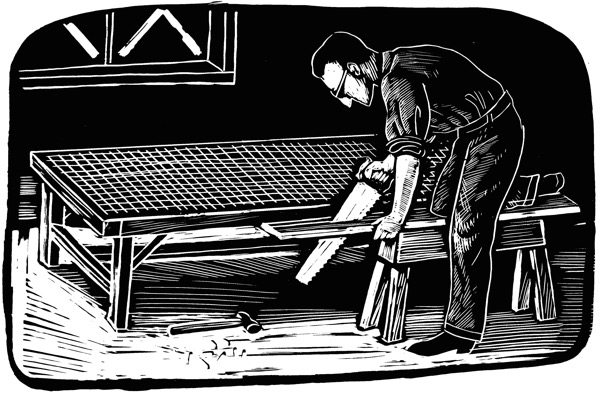
Illustrations copyright © Joe McLaren
You may also like the read about
AS Jasper, Author & Cabinet-Maker
A Hoxton Childhood & The Years After
James Boswell, Artist & Illustrator
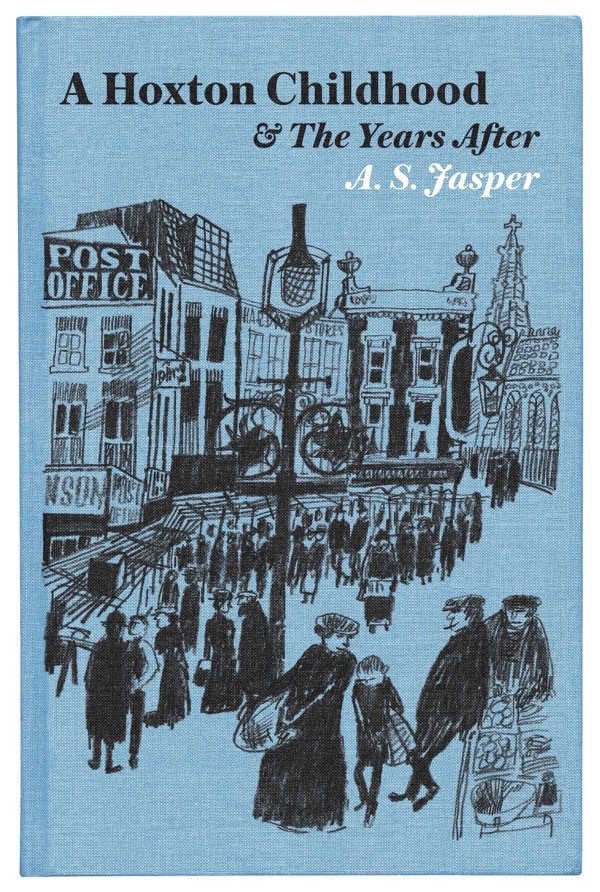
Click here to pre-order a copy for £20


The Gentle Author is delighted to collaborate with Labour and Wait to present a SPITALFIELDS LIFE BOOKSHOP for ten days at the WORKROOM, 29-32 The Oval, Off Hackney Rd, Bethnal Green, E2 9DT, in the shadow of the magnificent gasometers. This will be a rare chance to take a look at all Spitalfields Life Books titles in one place and have a peek behind the scenes at Labour and Wait too.
(Wednesday 26th April – Saturday, May 6th, 11am-6pm. Closed Sunday 30th April)
Phil Cunningham’s East End Streets
Shall we join Photographer Philip Cunningham for a stroll around the East End streets in 1985?
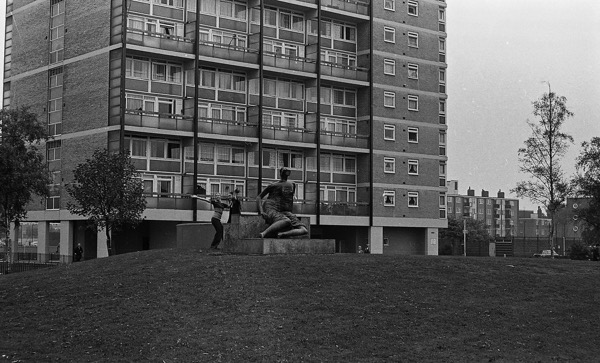
Henry Moore’s ‘Draped Seated Woman’ on the Stifford Estate
“I began photography by taking pictures of the East End, which was my local area. Then in 1979, when I was at art school, my tutor, Roger Jeffs came down to the East End and we walked around together. Even then, things were changing fairly fast and he urged me to document it, so I got into the habit of taking photos of the place and its people. In 1995, I moved to Suffolk and my documentation of the East End ceased. All the negatives and prints were put away in boxes and forgotten about, until one day I was contacted by the Gentle Author who came to have a look at my pictures.” – Philip Cunningham
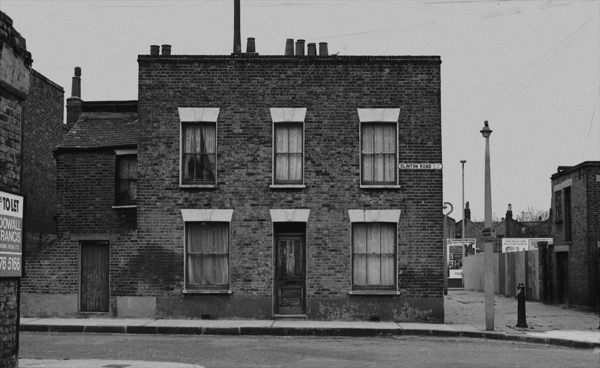
Clinton Rd
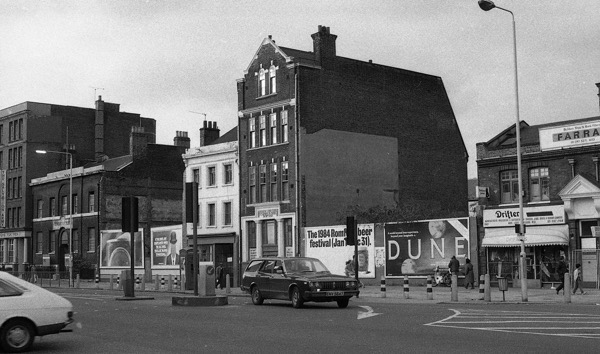
Whitechapel Rd, site of the Pavilion Theatre
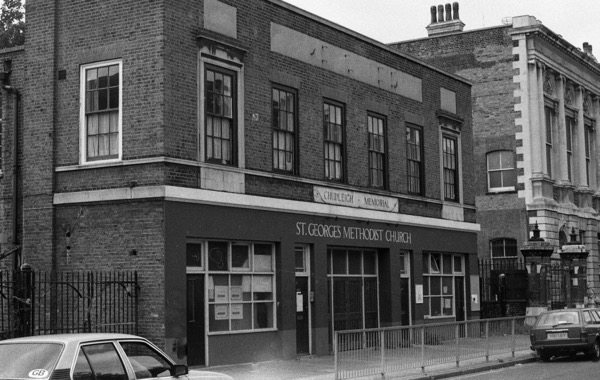
Cable St
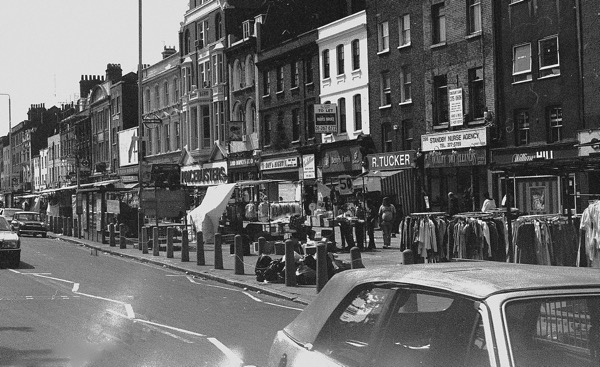
Whitechapel Market
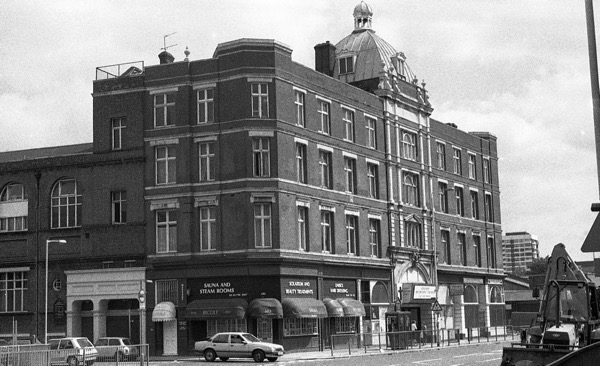
Commercial Rd
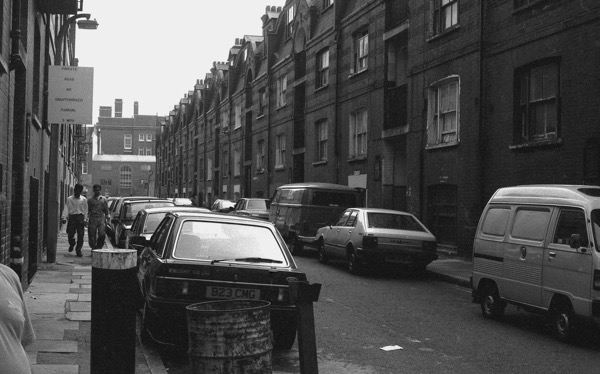
Myrdle St
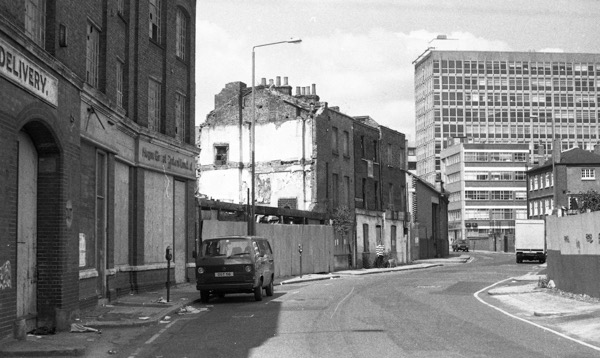
Backchurch Lane
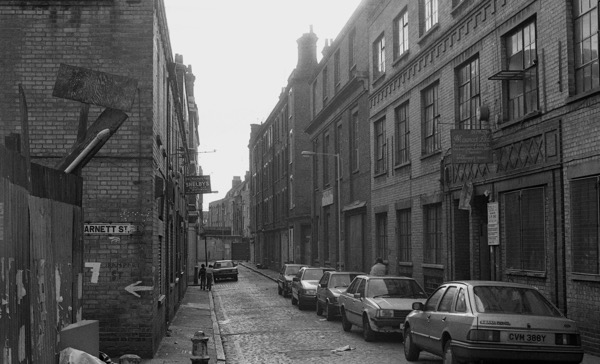
Rampart St
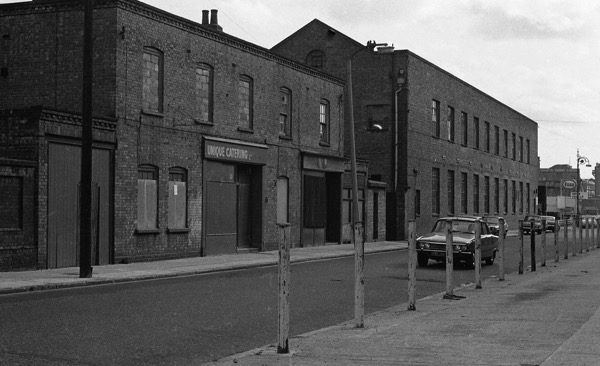
Morris Rd
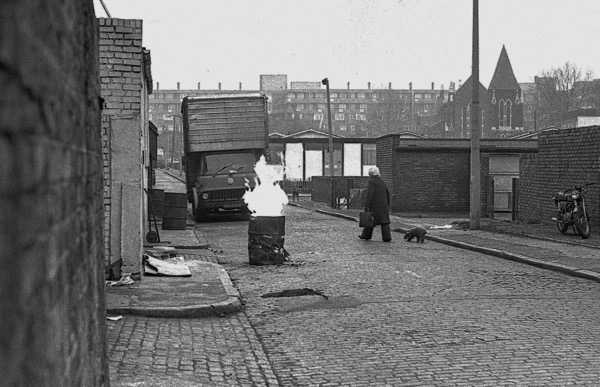
Cudworth St
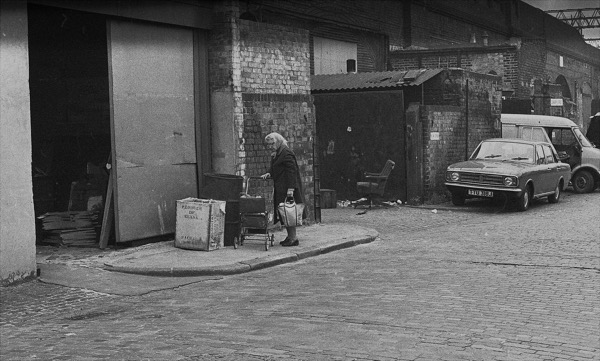
Cudworth St
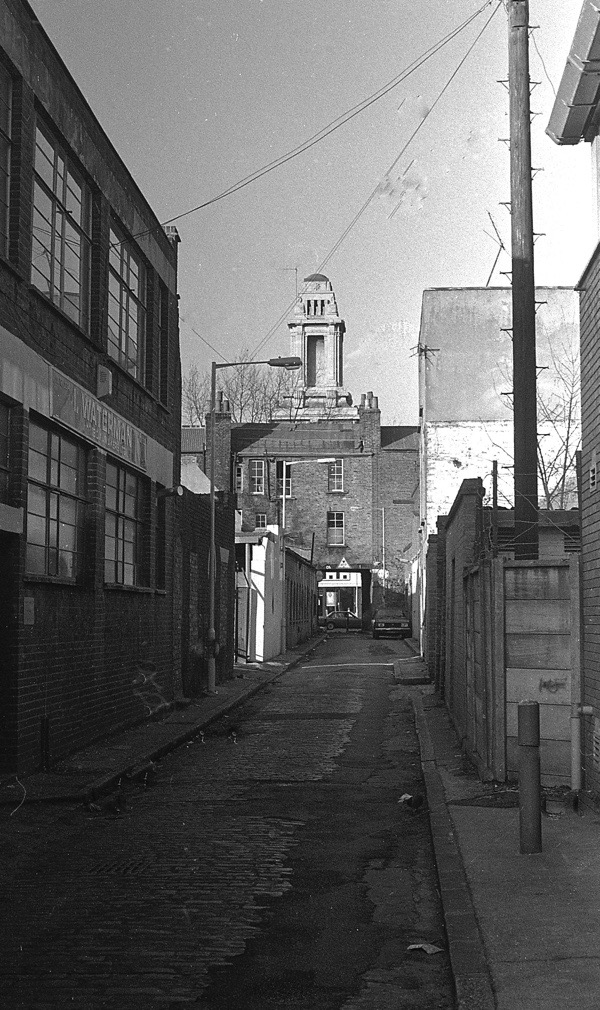
Wickhams, Mile End Rd, viewed from Assembly Passage
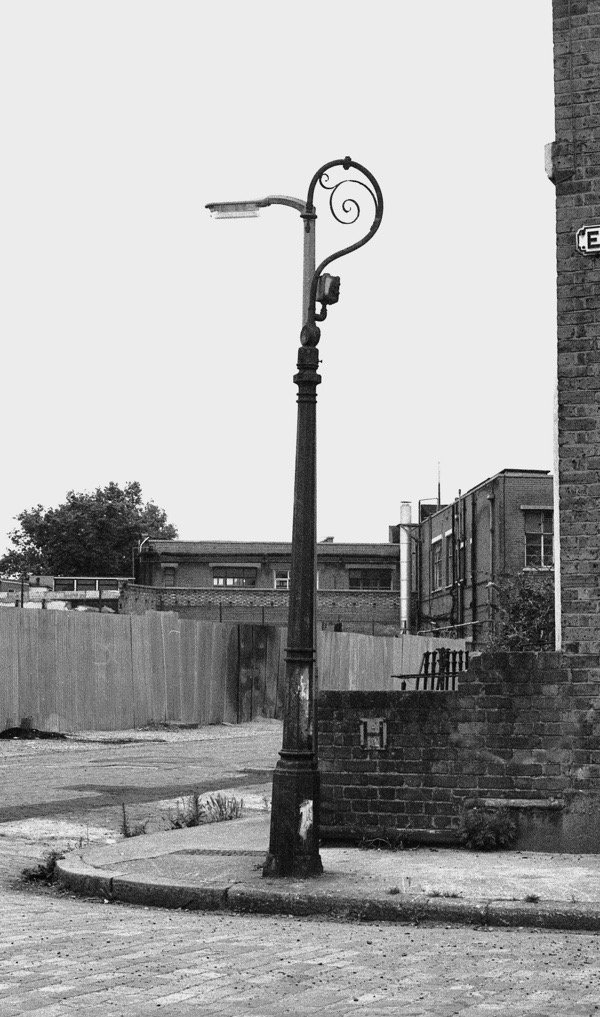
Edwin St
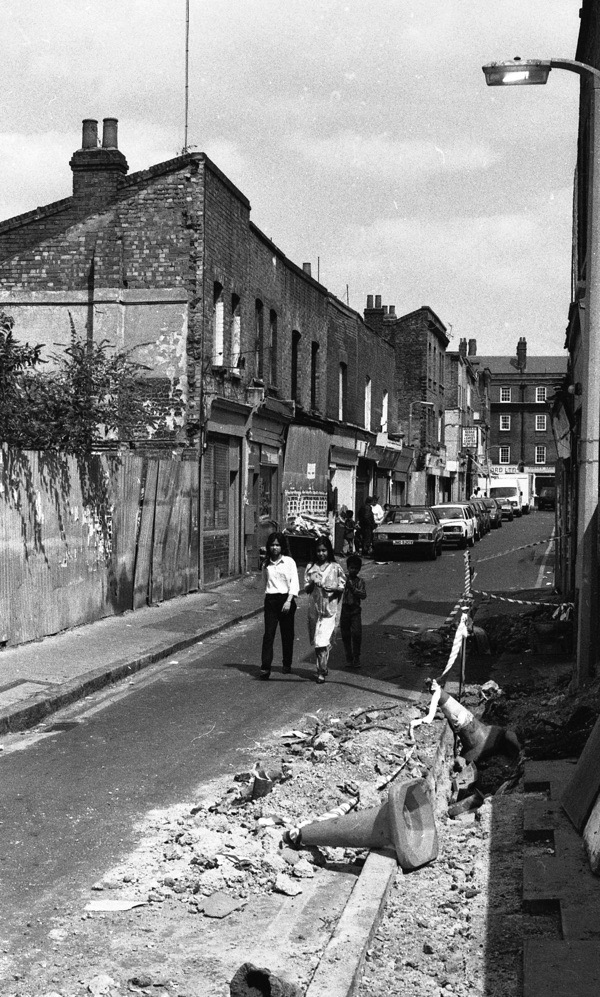
Hessel St
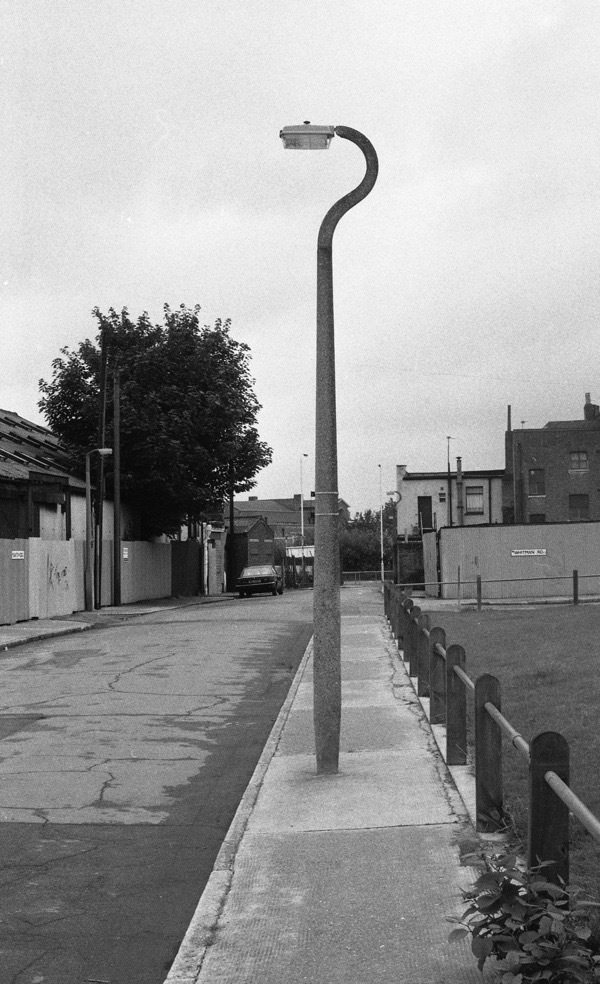
Whitman Rd
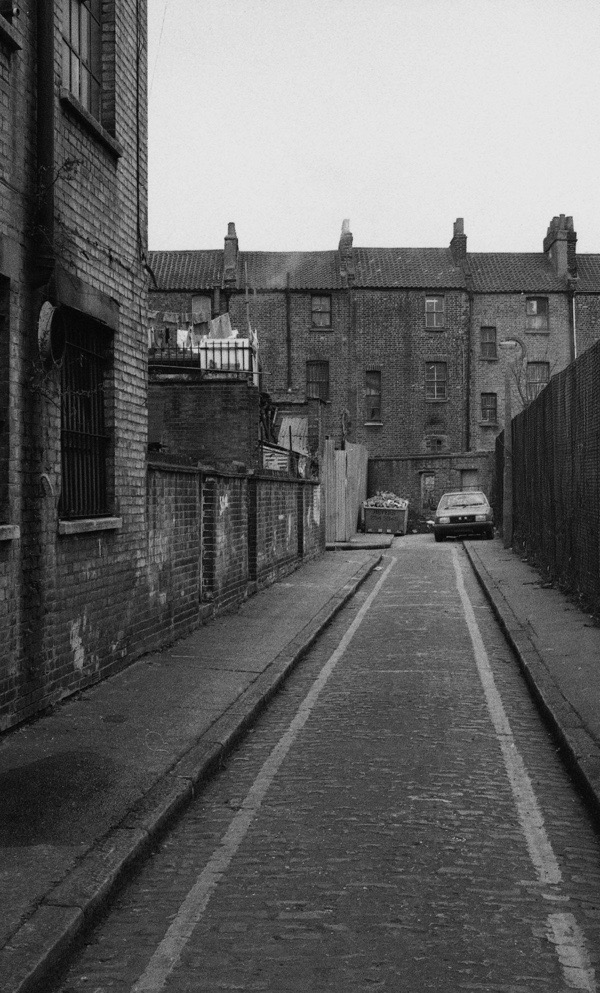
Off Winthrop St, Whitechapel
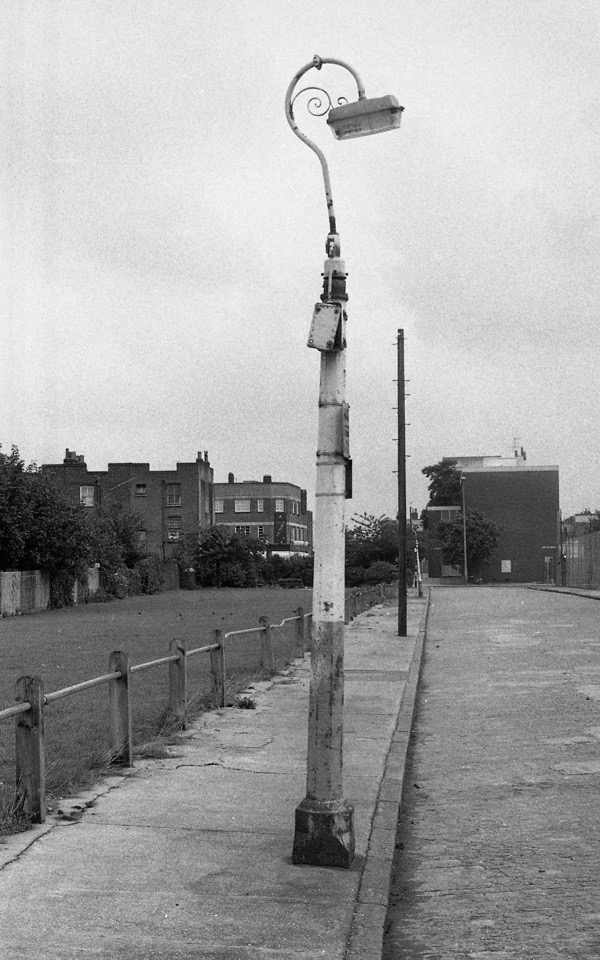
Mile End Park
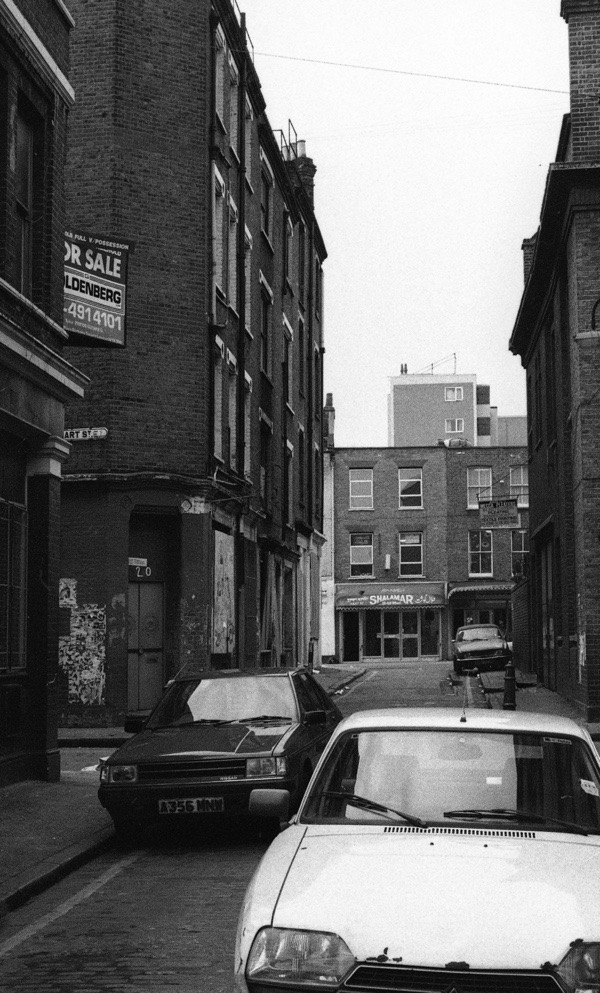
Hart St
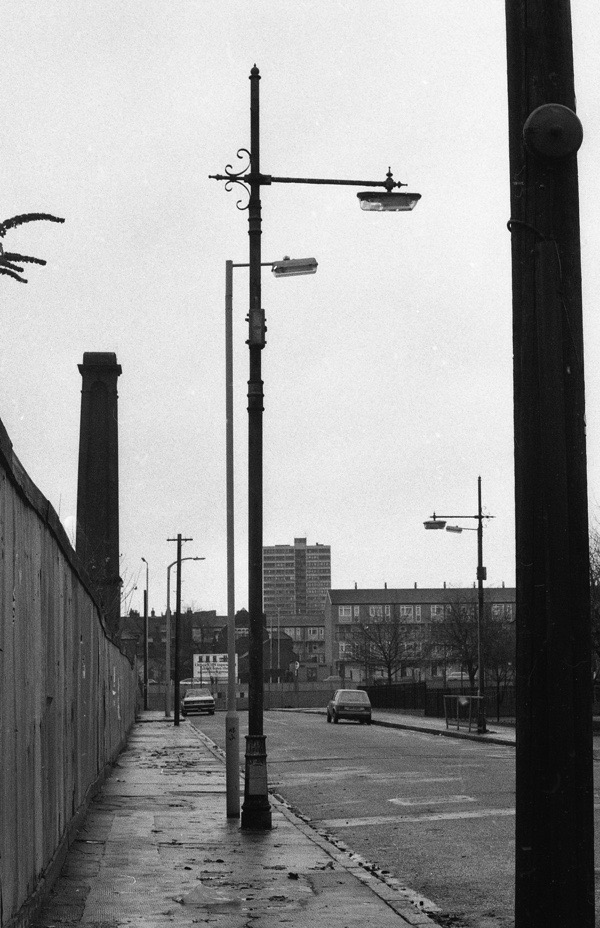
In Stepney
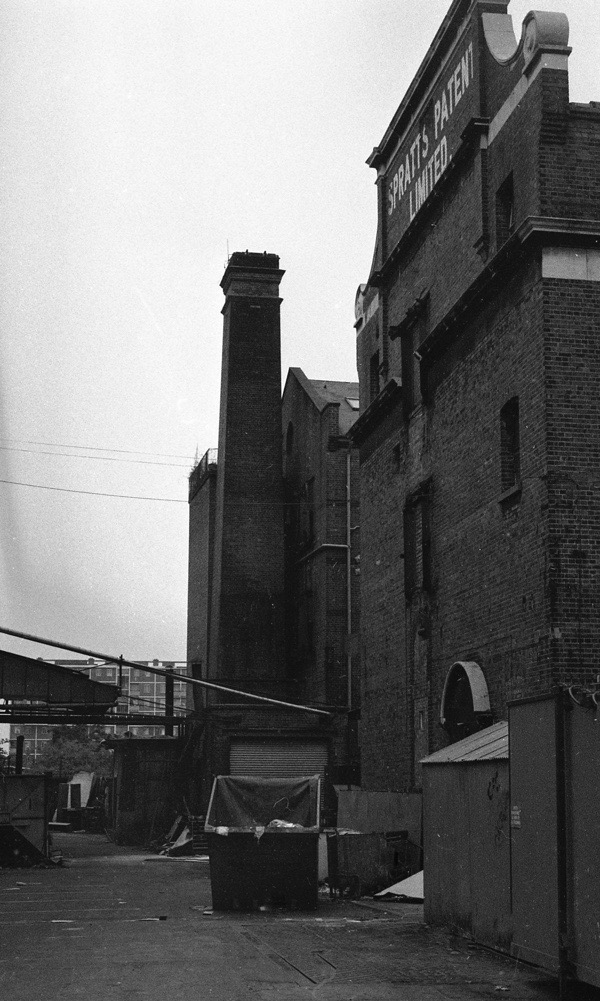
Morris Rd
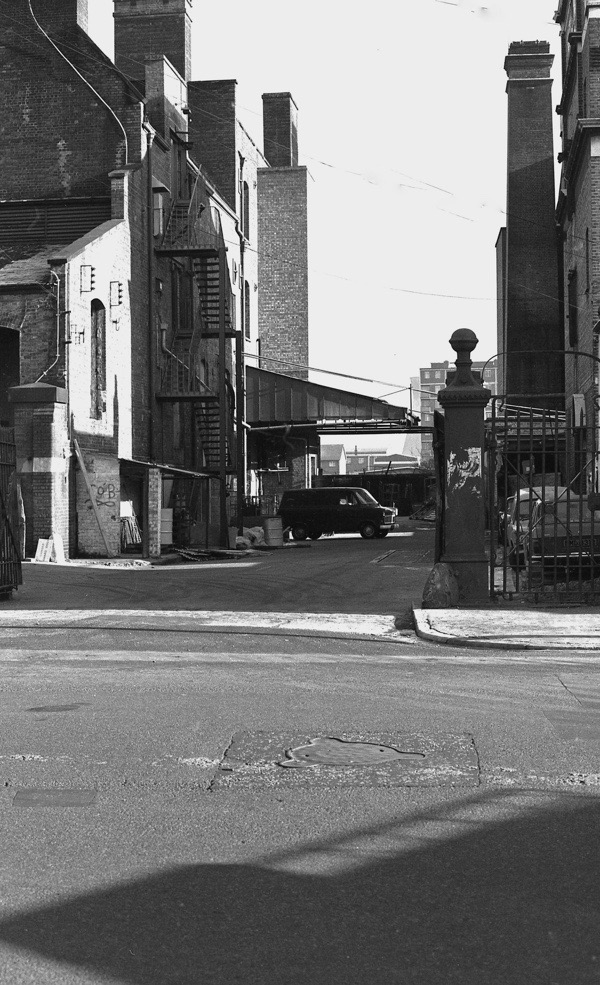
Morris Rd
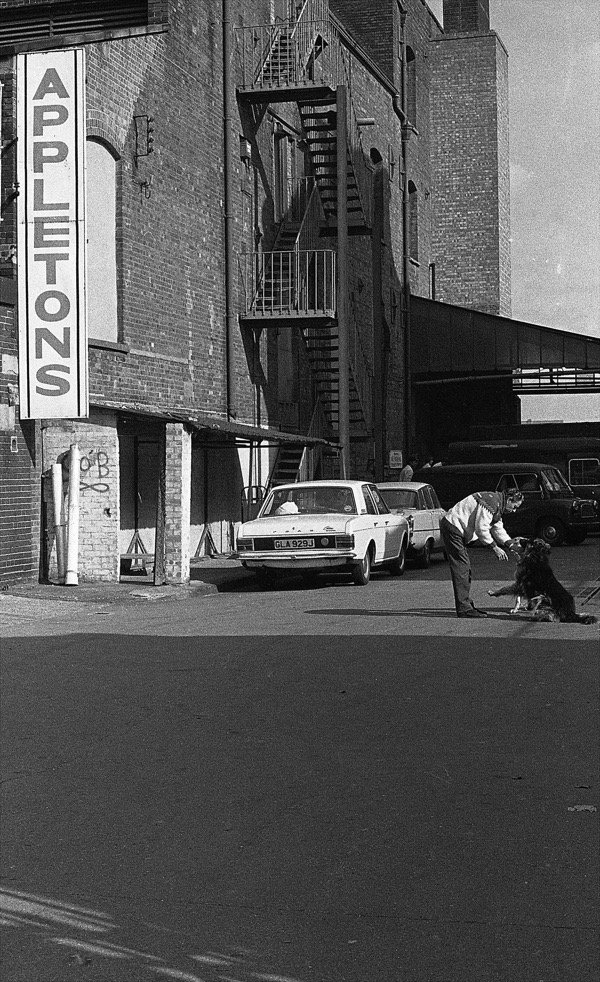
Morris Rd
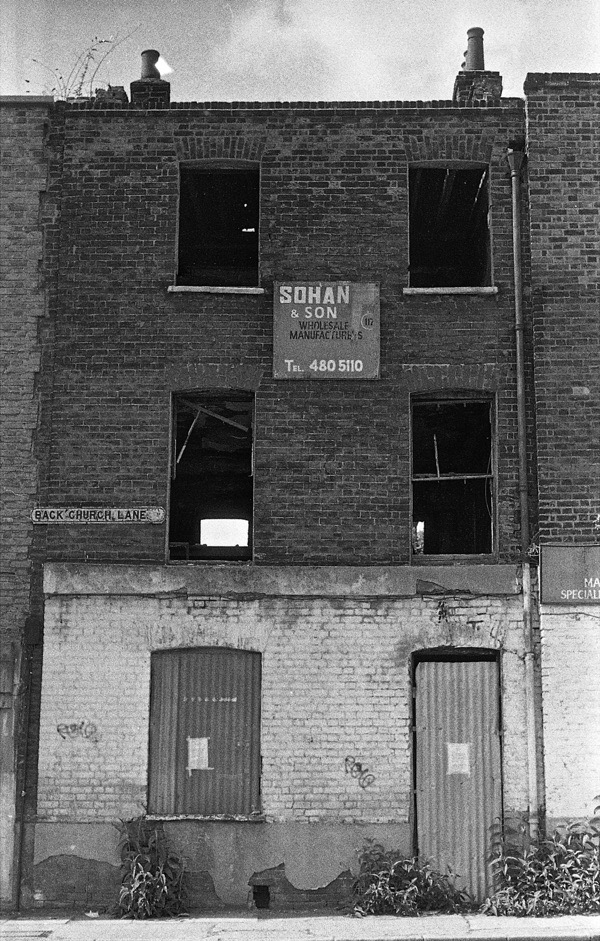
Backchurch Lane
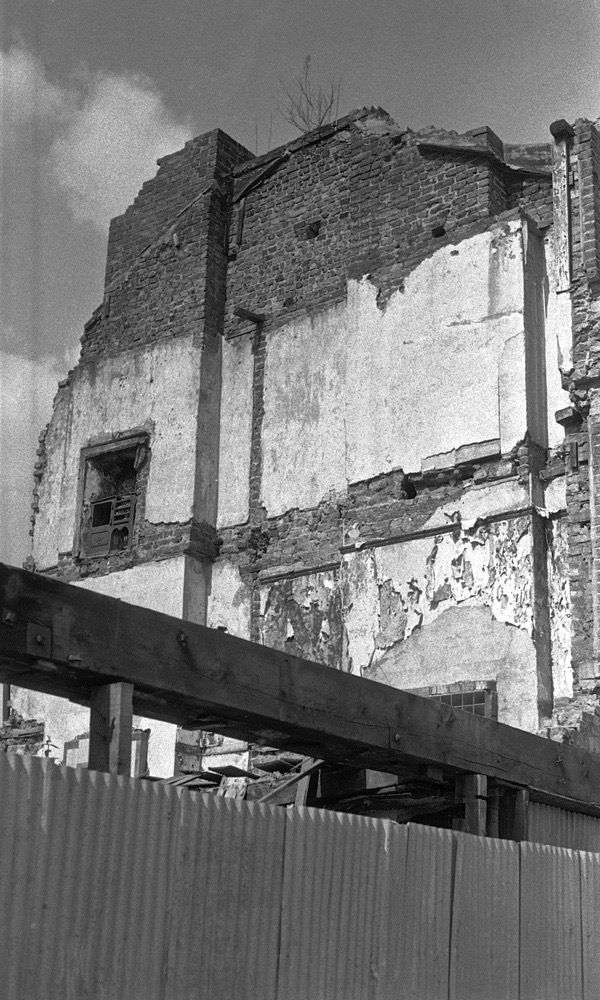
Backchurch Lane
Photographs copyright © Philip Cunningham
You may also like to take a look at
Philip Cunningham’s East End Portraits
More of Philip Cunningham’s Portraits
Yet More Philip Cunningham Portraits
Delivering The Bell Foundry Petition

Yesterday, Dan Cruickshank and representatives of leading heritage groups delivered a petition of more than ten thousand signatures to Karen Bradley, Secretary of State for Culture and Sport, accompanied by the following letter.
Dear Secretary of State,
We, the undersigned national and local organisations, wish to express our deep concern about the imminent loss of the Whitechapel Bell Foundry and have also strongly registered our views with Historic England.
Our campaign has been supported by many high-profile individuals in the arts and cultural world including architect, writer and TV presenter George Clarke, author Charles Saumarez Smith, historian Dan Cruickshank, architect Sir Nicholas Grimshaw, sculptor Sir Antony Gormley and many more. The petition attached has been signed and supported by over 10,000 individuals in just three weeks.
We also wish to highlight the exceptional historical and cultural significance of the site that has been at the heart of British bell casting for centuries. The business, principally the making of church bells, has operated continuously in Whitechapel since at least the 1570s. It has been on its present site with the existing house and office buildings since the mid 1740s. In our view this uniquely important historic asset should be properly protected and celebrated through listing at Grade I.
A straightforward redevelopment of this site is not the only option. The UK Heritage Building Preservation Trust which owns and manages Middleport Pottery in Stoke, has made an open request to the owners of the buildings and business to defer the current sale. This would enable an alternative model to be assembled which would save the foundry for the nation where it has been in continuous operation for over 250 years.
We, along with thousands of other people, ask you to understand our concerns and respond accordingly.
Yours faithfully,
Tom Antoniw, The East End Preservation Society
Henrietta Billings, Director, SAVE Britain’s Heritage
Peter Guillery, Senior Historian and Editor, Survey of London
Mike Heyworth, Director, Council for British Archaeology
David McKinstry, Director, The Georgian Group
Matthew Saunders, Secretary, Ancient Monuments Society
Matthew Slocombe, Director, The Society for the Protection of Ancient Buildings
Tim Whittaker, The Spitalfields Trust


Photographs copyright © Sarah Ainslie
You may also like to read about
Royal Jubilee Bells At Garlickhythe
The Most Famous Bells in the World
A Visit To Great Tom At St Paul’s
A Petition to Save the Bell Foundry
Learn How To Write Your Own Blog
With another of my Spitalfields Life Blog Writing Courses coming up on May 13th & 14th, it is my pleasure to publish recent despatches below from two favourite blogs spawned by the course – A London Inheritance & Bug Woman London. Click here for more information about the Course

COMMENTS BY STUDENTS FROM PAST COURSES TUTORED BY THE GENTLE AUTHOR
“I highly recommend this creative, challenging and most inspiring course. The Gentle Author gave me the confidence to find my voice and just go for it!”
“Do join The Gentle Author on this Blogging Course in Spitalfields. It’s as much about learning/ appreciating Storytelling as Blogging. About developing how to write or talk to your readers in your own unique way. It’s also an opportunity to “test” your ideas in an encouraging and inspirational environment. Go and enjoy – I’d happily do it all again!”
“The Gentle Author’s writing course strikes the right balance between addressing the creative act of blogging and the practical tips needed to turn a concept into reality. During the course the participants are encouraged to share and develop their ideas in a safe yet stimulating environment. A great course for those who need that final (gentle) push!”
“I haven’t enjoyed a weekend so much for a long time. The disparate participants with different experiences and aspirations rapidly became a coherent group under The Gentle Author’s direction in a gorgeous house in Spitalfields. There was lots of encouragement, constructive criticism, laughter and very good lunches. With not a computer in sight, I found it really enjoyable to draft pieces of written work using pen and paper. Having gone with a very vague idea about what I might do I came away with a clear plan which I think will be achievable and worthwhile.”
“The Gentle Author is a master blogger and, happily for us, prepared to pass on skills. This “How to write a blog” course goes well beyond offering information about how to start blogging – it helps you to see the world in a different light, and inspires you to blog about it. You won’t find a better way to spend your time or money if you’re considering starting a blog.”
“I gladly traveled from the States to Spitalfields for the How to Write a Blog Course. The unique setting and quality of the Gentle Author’s own writing persuaded me and I was not disappointed. The weekend provided ample inspiration, like-minded fellowship, and practical steps to immediately launch a blog that one could be proud of. I’m so thankful to have attended.”
“I took part in The Gentle Author’s blogging course for a variety of reasons: I’ve followed Spitalfields Life for a long time now, and find it one of the most engaging blogs that I know; I also wanted to develop my own personal blog in a way that people will actually read, and that genuinely represents my own voice. The course was wonderful. Challenging, certainly, but I came away with new confidence that I can write in an engaging way, and to a self-imposed schedule. The setting in Fournier St was both lovely and sympathetic to the purpose of the course. A further unexpected pleasure was the variety of other bloggers who attended: each one had a very personal take on where they wanted their blogs to go, and brought with them an amazing range and depth of personal experience. “
“I found this bloggers course was a true revelation as it helped me find my own voice and gave me the courage to express my thoughts without restriction. As a result I launched my professional blog and improved my photography blog. I would highly recommend it.”
“An excellent and enjoyable weekend: informative, encouraging and challenging. The Gentle Author was generous throughout in sharing knowledge, ideas and experience and sensitively ensured we each felt equipped to start out. Thanks again for the weekend. I keep quoting you to myself.”
“My immediate impression was that I wasn’t going to feel intimidated – always a good sign on these occasions. The Gentle Author worked hard to help us to find our true voice, and the contributions from other students were useful too. Importantly, it didn’t feel like a ‘workshop’ and I left looking forward to writing my blog.”
“The Spitafields writing course was a wonderful experience all round. A truly creative teacher as informed and interesting as the blogs would suggest. An added bonus was the eclectic mix of eager students from all walks of life willing to share their passion and life stories. Bloomin’ marvellous grub too boot.”
BUG WOMAN, ADVENTURES IN LONDON, Because a Community is More Than Just People
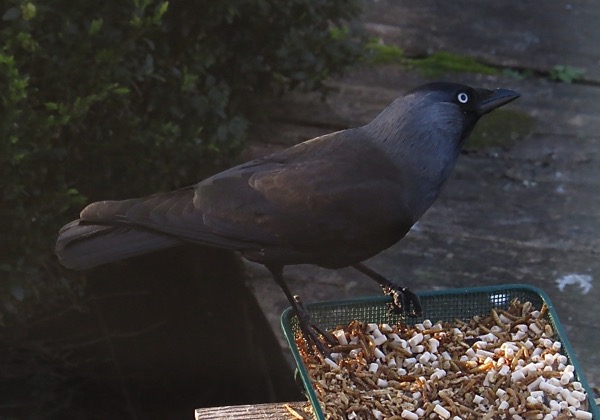
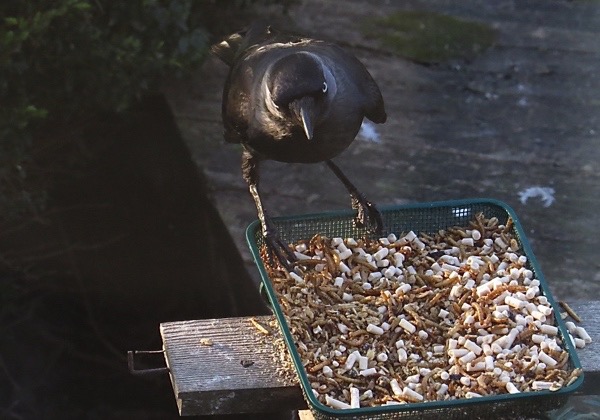
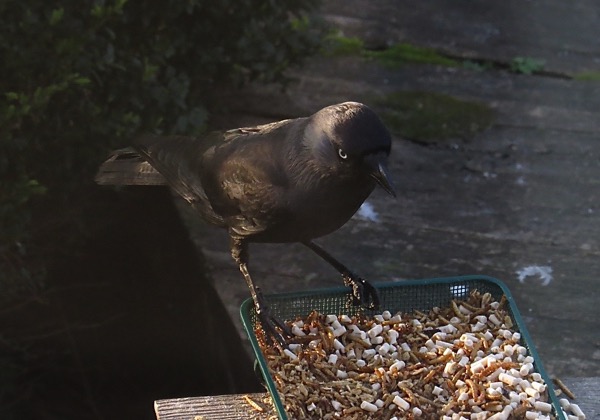
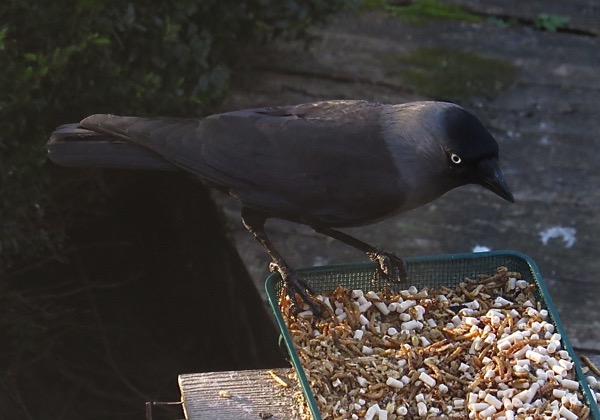
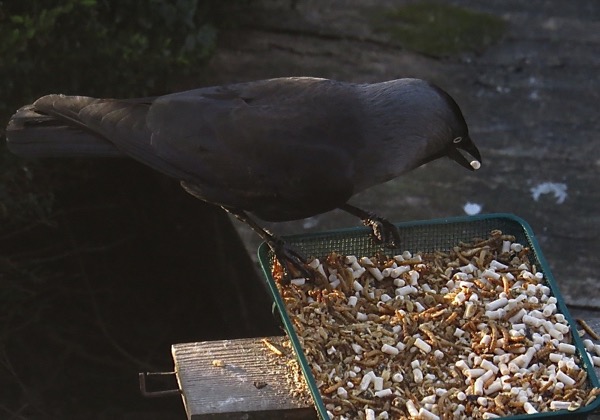
DEAR READERS, Just when I think that I have spotted every species of bird who is likely to visit the bird table, someone new drops by. And so it was on a sunny evening this week, when I glanced out of my upstairs window to see a Jackdaw pecking up the suet pellets. This is the first time I have ever seen a Jackdaw in the garden: they are rare birds in London, though when I visit my parents in Dorset they are everywhere, chuckling away and playing above the roofs.
I have always been fond of Jackdaws: they are intelligent and adaptable birds, the smallest of the crows, and they would have been a familiar sight in central London at the end of the nineteenth century. They have often been described as ‘ecclesiastical birds’ because of their habit of nesting in church towers. Until 1889, they bred at St Paul’s Cathedral and they were also nesting in St Michael’s Church near the Bank of England.
Alas, these days, they avoid most of London. There have been various theories as to why, but the unavailability of both habitat and food is probably to blame. Once, Jackdaws would have eaten grain that was meant for the horses which were once prevalent in the city and lined their nests with hair and wool from animals driven down to Smithfield.
I find the Jackdaw a most handsome bird. I love the frosty cape around his neck and the bouncy way that he jogs around. While Crows always remind me of Prince Charles as they walk around with their metaphorical hands clasped behind their backs, Jackdaws have more of Tigger about them.
Most of all, I love their ice-blue eyes. The naturalist W.H.Hudson described them as ‘small malicious serpent-like grey eyes’ but I can only think that he looked with a jaundiced view. To me, the eyes of a Jackdaw show sharp intelligence and clarity of intention.
This one had just noticed me standing at the window with my camera and was trying to decide if I was a threat or not. Evidently the suet pellets won over immediate flight, since this was a hungry bird and most of the contents of the bird table ended up on the patio where the Starlings and squirrel made short work of them.
Jackdaws are very chatty birds and will imitate human speech if they are in the mood or sufficiently well rewarded. ‘Swans will sing when Jackdaws are silent’ is an ancient adage, meaning that well-informed people will have their say once the foolish folk cease gabbling. A Jackdaw on the roof can mean either a new arrival or a death, depending on where you are in the country. In short, superstition follows this bird.
Although Jackdaws live in flocks, they pair for life within the group and a couple will stay together even after multiple cases of breeding failure. Single Jackdaws are at the absolute bottom of the pecking order so, if one finds a new mate, his or her status derives from that of the partner. As I watched the Jackdaw in my garden, I was feeling a little sorry that they were on their own until a second Jackdaw emerged from under the bird table and they flew off together. Call me a tired old romantic but it warmed my heart.
There is something special about witnessing a new visitor to the garden, especially when I have been feeding the birds for years and think I have seen everything. Hah! Nature has a way of puncturing my complacency. Sometimes, I think that I have not even begun to notice the secret life of my garden, let alone understand it. There is enough in this little spot of earth to keep me busy for the rest of my life.
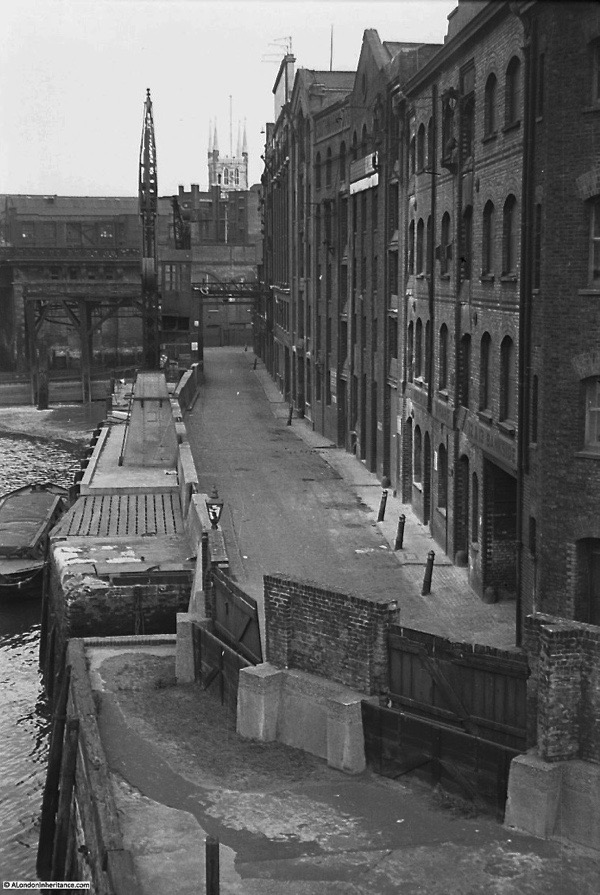
Bankside 1953
A LONDON INHERITANCE, A Private History of a Public City
This week I walked from Southwark Cathedral to Southwark Bridge to look back along Bankside towards the Cathedral and survey the view my father photographed in 1953.
This short stretch of Bankside is completely different now. I could not take a photo in the same position as my father, as I would be looking from the bridge straight into the Financial Times building. The river wall has been pushed further out into the river and new buildings now cover the original Bankside roadway. In my father’s picture, it is possible to look straight along Bankside and see the tower of Southwark Cathedral from the bridge. Today, this is not possible as new buildings obscure the view and Southwark Cathedral is harder to see due to the taller buildings directly behind.
As I could not take a photo from the same position as my father, I took a picture standing further onto Southwark Bridge, showing this part of Bankside as it is now. A straight length of river wall and walkway now lines the bank between Southwark Bridge and the railway bridge across to Cannon St station. The warehouses have been replaced by two office buildings and the cranes along the river have long since disappeared.
The 1895 Ordnance Survey map shows this stretch of Bankside which had not changed much in the sixty years before my father’s photograph. It reveals Bankside lined with warehouses, wharves and cranes along the river’s edge.
There are a couple of features that interest me in my father’s photo. There is a solitary lamp mounted on the river wall and to the right is a large entrance on the ground floor of a building. What was this single lamp doing in this position, I wonder?
On the 1895 map, the large entrance on the right is the entrance to Horseshoe Alley. Opposite Horseshoe Alley at the water’s edge is an opening in the river wall down to the river, which can also be seen in my father’s photograph to the left of the lamp. Then I checked John Rocque’s map from 1746 – Horseshoe Alley is there but also, leading down to the river, is Horseshoe Alley Stairs. Perhaps this lamp was there to guide those walking up and down what would have been rather slippery steps leading down to the Thames?
The South London Press of 4th March 1882 reports on an inquiry by St Saviour’s Board of Works into flooding along Bankside. “All the dam-boards were at once put up so as to prevent the overflow of the water, but the Clerk of Works found that at one important point, Horseshoe-Alley, the barricade had been removed. The water could not therefore be prevented from coming in there and it came up with such rapidity – more rapid, in fact, than on any previous occasion of which he had experience – that it washed away all the clay at Bank End.”
Whilst some of the dams did hold, much of the Bankside and Lambeth flooded. There was a heavy rush of water through Blackfriars Bridge Wharf with two feet of water flooding the surrounding streets. Men, women and children were reported to be “seen rushing about in all directions to find means of keeping out of the muddy water.”
This flooding happened on Sunday 19th February 1882. By 2:30 pm the Trinity high-water mark at London Bridge had been reached but the tide continued to rise for another thirty minutes, so that by 3pm it was now two feet higher than the Trinity mark. On the river wall underneath Southwark Bridge, I found the Trinity high-water mark – still legible more than a century later.
Click here to compare the map of this section of Bankside in 1895 with how it is today
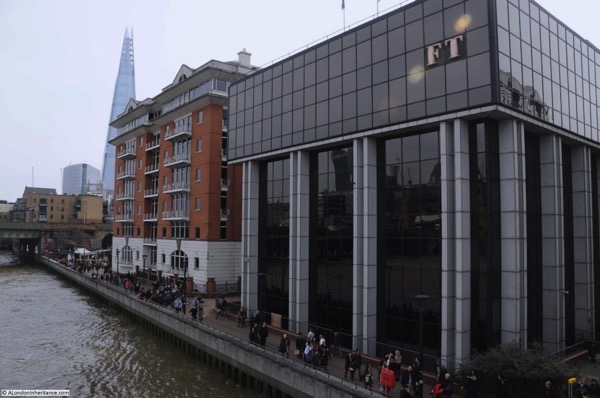
Bankside from Southwark Bridge, looking east
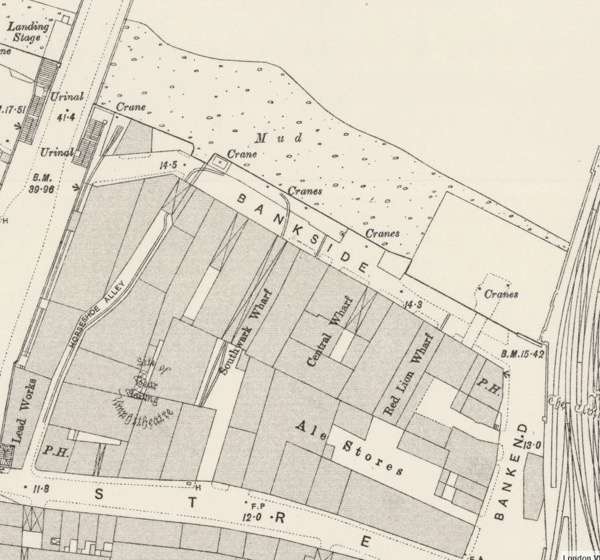
Ordinance Survey map of 1895, showing Bankside and Horseshoe Alley
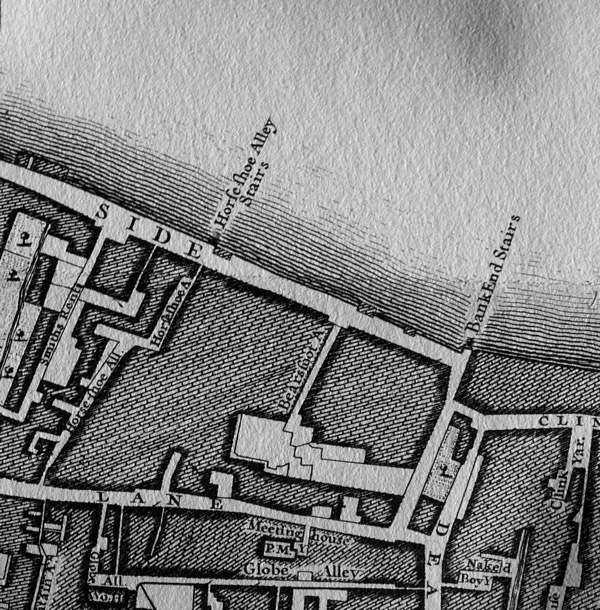
John Roque’s map, showing Bankside and Horseshoe Alley
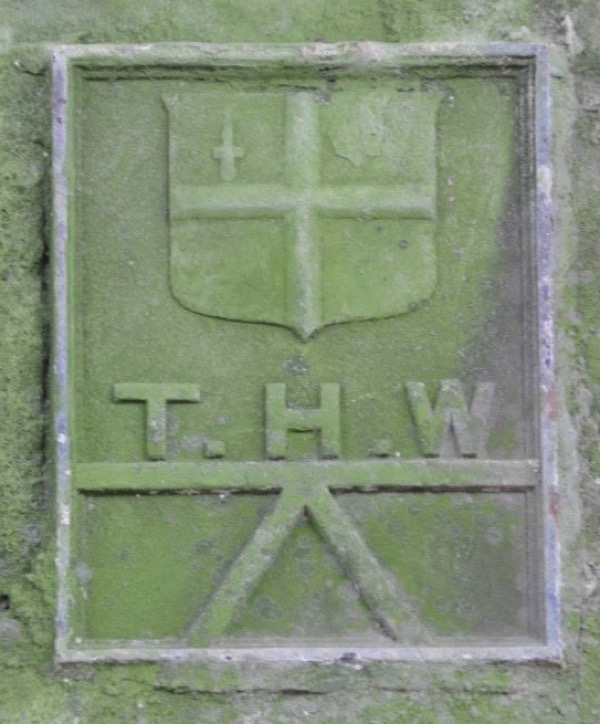
Trinity High Water mark under Southwark Bridge

HOW TO WRITE A BLOG THAT PEOPLE WILL WANT TO READ – 13th & 14th MAY
Spend a weekend in an eighteenth century weaver’s house in Spitalfields and learn how to write a blog with The Gentle Author.
This course will examine the essential questions which need to be addressed if you wish to write a blog that people will want to read.
“Like those writers in fourteenth century Florence who discovered the sonnet but did not quite know what to do with it, we are presented with the new literary medium of the blog – which has quickly become omnipresent, with many millions writing online. For my own part, I respect this nascent literary form by seeking to explore its own unique qualities and potential.” – The Gentle Author
COURSE STRUCTURE
1. How to find a voice – When you write, who are you writing to and what is your relationship with the reader?
2. How to find a subject – Why is it necessary to write and what do you have to tell?
3. How to find the form – What is the ideal manifestation of your material and how can a good structure give you momentum?
4. The relationship of pictures and words – Which comes first, the pictures or the words? Creating a dynamic relationship between your text and images.
5. How to write a pen portrait – Drawing on The Gentle Author’s experience, different strategies in transforming a conversation into an effective written evocation of a personality.
6. What a blog can do – A consideration of how telling stories on the internet can affect the temporal world.
SALIENT DETAILS
The course will be held at 5 Fournier St, Spitalfields on 13th & 14th May from 10am -5pm on Saturday and 11am-5pm on Sunday. Lunch will be catered by Leila’s Cafe of Arnold Circus and tea, coffee & cakes by the Townhouse are included within the course fee of £300.
Accommodation at 5 Fournier St is available upon enquiry to Fiona Atkins fiona@townhousewindow.com
Email spitalfieldslife@gmail.com to book a place on the course.
Edward Burd, Horologist
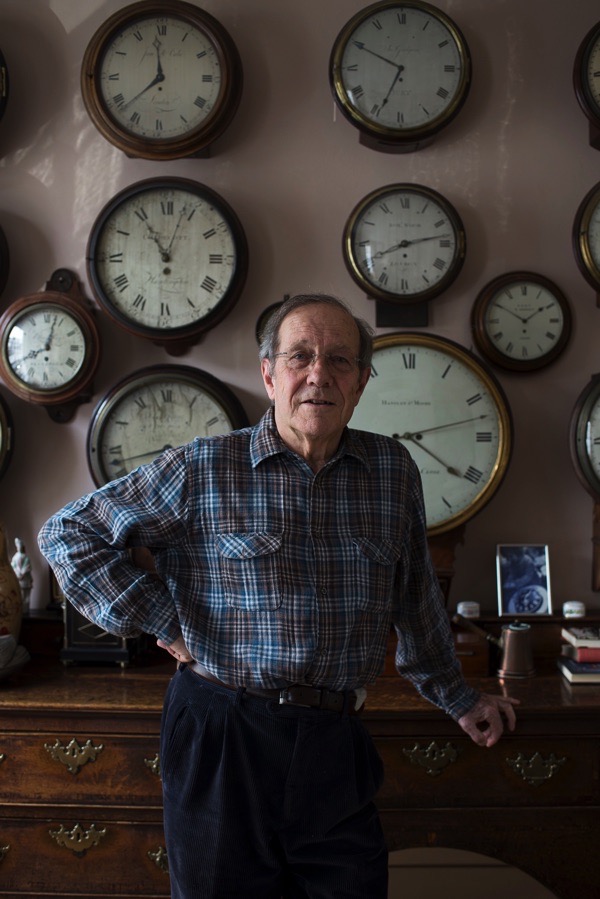
Edward Burd
Contributing Photographer Sarah Ainslie & I made the trip to Camden Town to visit Edward Burd, Horologist, in a tottering house which must surely have more clocks than any other in London. It made me realise how much I miss the reassuring sound of ticking, interspersed by regular chimes, which was once the universally familiar background of life yet is now slowly vanishing from the world.
“My father Lawrence Burd was a schoolmaster, and a man of obsessions that he would pursue to the highest possible level – photography, alpine gardening and horology. He did all the British Institute of Horology exams and became a Fellow of the Institute, then after about four years he dropped it completely. Just about that time, I was an irritating fourteen year old looking over his shoulder at what he was doing, asking ‘What’s that for?’ and ‘Why are you doing that?’ Instead of telling me to bugger off which any sensible person would do, being a patient schoolmaster, he explained to me what was going on and I was fascinated by it.
So from that age I have always been interested and I kept it up a bit but I became an architect and, while I was struggling to set up my own practice, I could not really do much about it. Yet I kept my hand in, I went to auctions and bought the odd clock. Then, when I retired about twenty years ago, while I still had a bit of energy left I thought I should pursue this thing seriously.
My speciality is English wall clocks which I always find interesting partly because they were never designed to go in drawing rooms, they were always the ‘workhorse’ clock which is why you see them in railway stations and schoolrooms. What I like about them is their mechanisms are very simple and extremely efficient and they are very good timekeepers. There’s no pretensions whatsoever in the design of the case. If they had been going in a drawing room, they would have looked very different. That always appealed to me, that they are unpretentious. Also, they were about the only thing I could afford when I first started. Added to which, if you studied them for a fairly short period of time, you probably knew more about them than most dealers.
Certainly, every town would have an antique shop in those days. They’d say, ‘That’s an old schoolroom clock, five pounds!’ I can remember going into one funny little shop somewhere out in the country and there were three round clocks on the floor, two were made in about 1920 and were pretty horrible and one was eighteenth century with a big wooden dial. I said, ‘How much are the clocks?’ ‘The clocks?’ he said, looking up from doing his racing tips, ‘The clocks are five pounds each,’ which was cheap even then. I couldn’t believe it. I said, ‘Even the big one?’ rather naively. ‘Yes it is a bit big,’ he replied, ‘You can have that for three and a half.’
My father taught me a lot, because he had to learn quite a lot of practical knowledge and make all sorts of things to become a member of the Institute of Horologists. I cannot do all that but, if the clock is not too complicated, I can do a basic overhaul of a wall clock.
Ten or fifteen years ago, it became a business. I would go to a sale to buy a nice clock for myself for my collection and I saw other good clocks being sold very cheaply, so I thought, ‘I could buy that and sell it’ – and it went on from there. I have quite a lot. My collection is about fifty but, altogether, I must have about a hundred and fifty to two hundred clocks.
After about 1840, nearly all clocks were made in factories in Birmingham or London, predominantly in London – Clerkenwell was the place for clocks. When I first became interested in the sixties, all the trades were still in Clerkenwell, supplying and fitting glass, engravers, gilders, dial-painters and materials shops. You could walk around and see them all in fifteen minutes.
My collection is English wall clocks dating from 1750 through to about 1900. The design of the cases changed quite a bit in that era but the movements remained exactly the same. There were not many wall clocks before 1750 because there were not many offices, they were made for solicitors’ offices around 1720 but there were few shops to speak of, it was all markets. An early English wall clock would be about 1780 and they were below stairs in big houses. It was only at the beginning of the nineteenth century that wall clocks became current and they did not become widespread until the 1840s.
A clock is a mechanical object which is comprehensible, these days you have no idea how any device works and, if it doesn’t work, you might as well sling it. Clocks are so incredibly easy to understand. You’ve got a spring, a chain, a series of wheels, the escapement and the pendulum. You wind it up to give it the power and isn’t that clever? So simple and so repairable. It works and it tells the time.
What gives it accuracy is not the escapement but the pendulum. The rate of oscillation depends upon the length of the pendulum. Most pendulums have a rod made of brass which is much easier to work than steel, but brass shrinks and expands much more than steel. So timekeeping with a brass pendulum is less accurate – within a couple of minutes a week – whereas a steel rod will keep time within about half a minute a week. At the end of the winter when night-time temperatures get low, you have to regulate them because the pendulum will shrink in the cold, become shorter, and the clock will go faster. A hot spell will make the metal expand and clock will slow down.
My early clocks were made by craftsmen without power tools or electric light, just working by flickering candles. It is extraordinary that they managed to produce clocks of such enormous quality and so accurate. I can sit and watch them for hours.
The sound is very important too. If you have had a hard day and it is raining and it has all been bit much, and you come in and there is this ticking, and you have a cup of tea and put your feet for a few minutes, then you are all right – it is looking after you, it has its own spirit.”
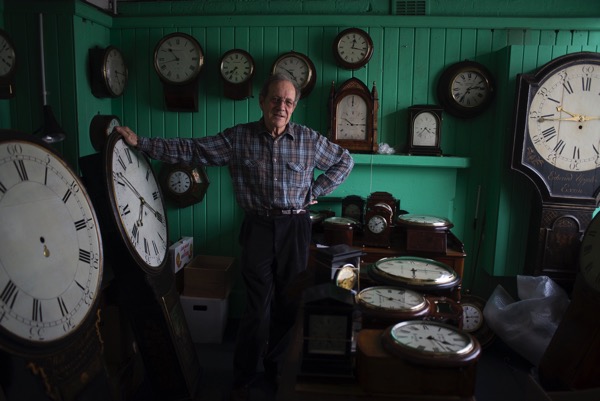
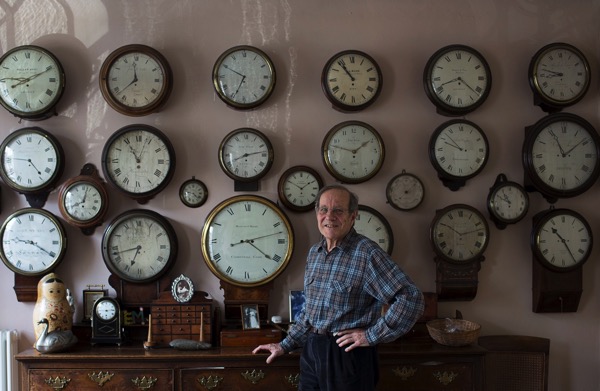
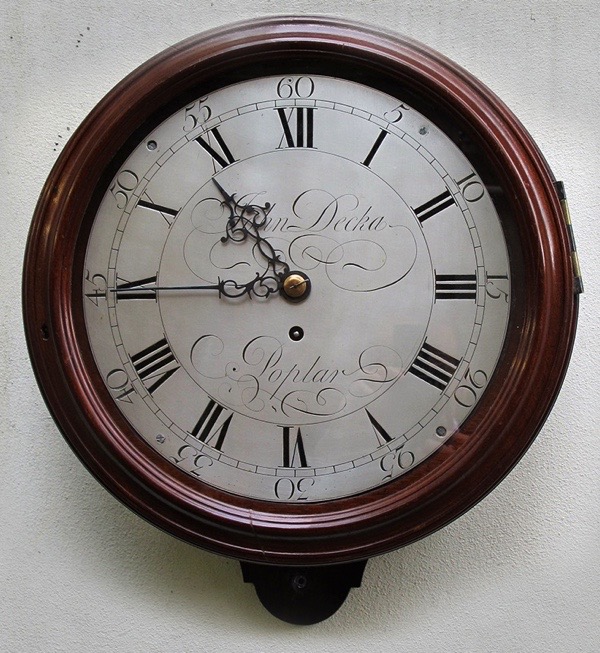
John Decka, Poplar c. 1785 (John Decka was apprenticed to William Addis, and is recorded working 1757-1806)
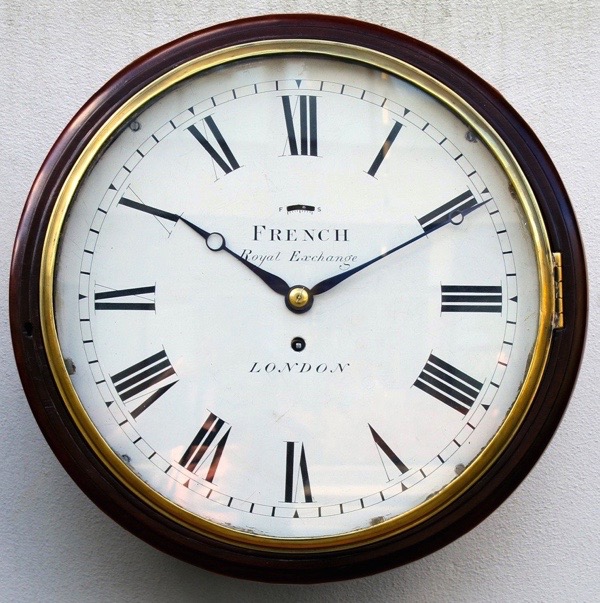
French, Royal Exchange c. 1860 (This clock was almost certainly built into the bulkhead of boat)
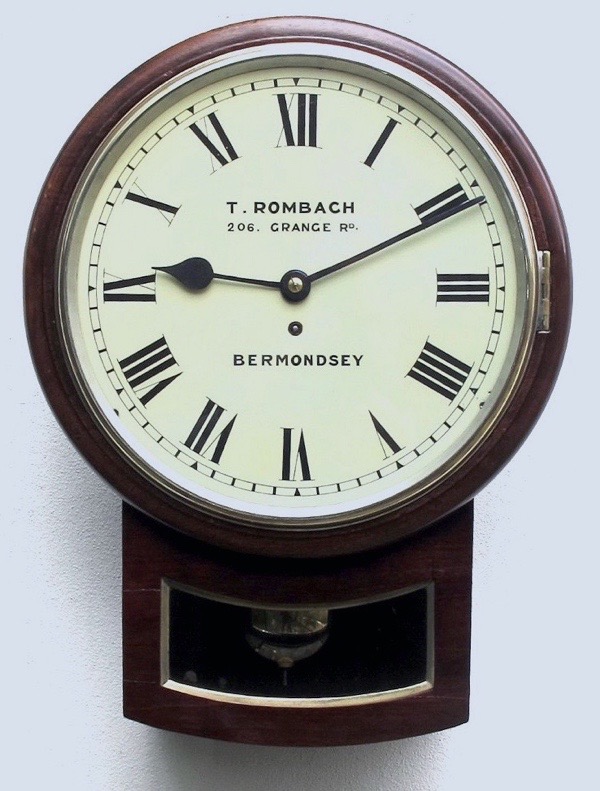
T.Rombach, 206 Grange Rd, Bermondsey c. 1900
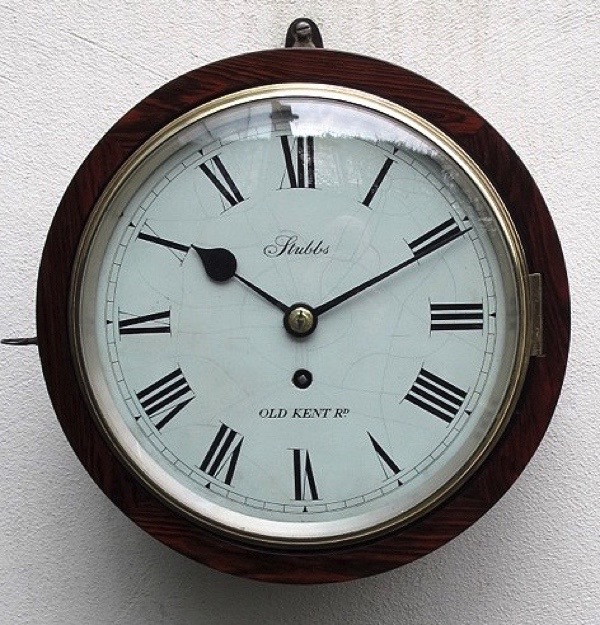
Stubbs, Old Kent Rd c. 1870
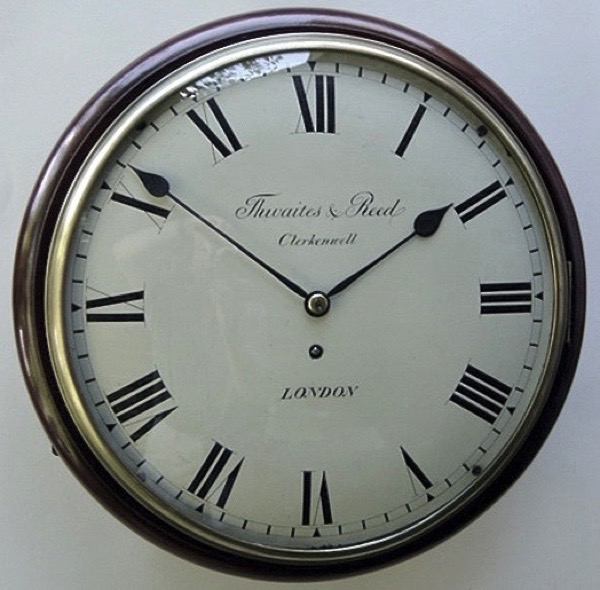
Thwaites & Reed, Clerkenwell c. 1850
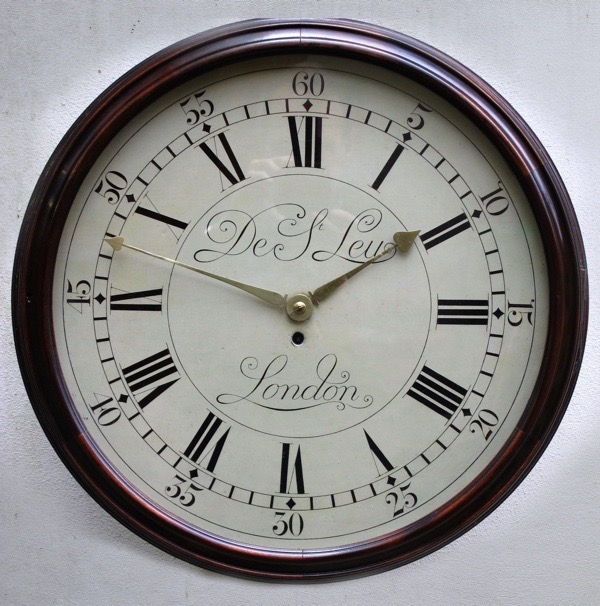
De St Leu, London c. 1785
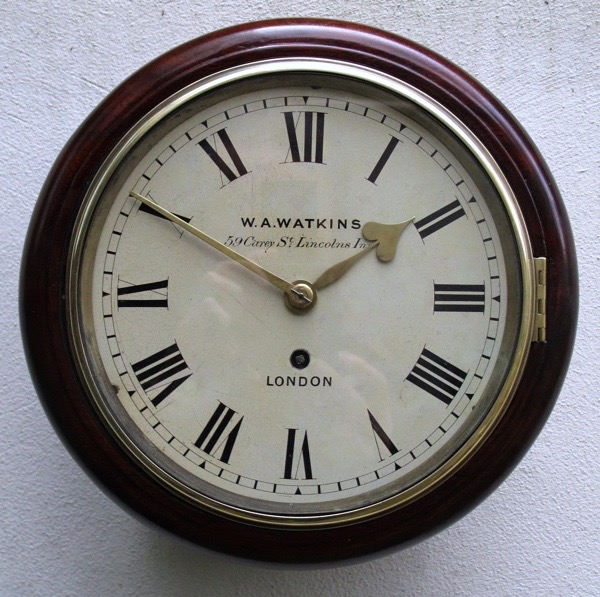
W.A. Watkins, Carey St, Lincoln’s Inn c. 1870
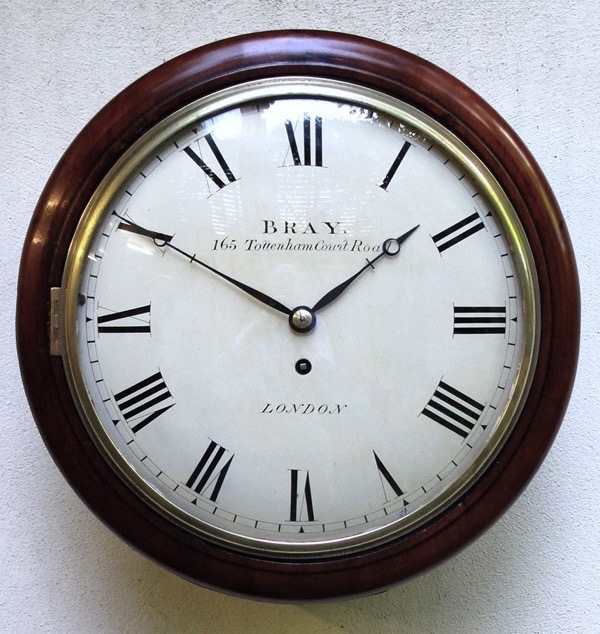
Bray, 165 Tottenham Court Rd c. 1850
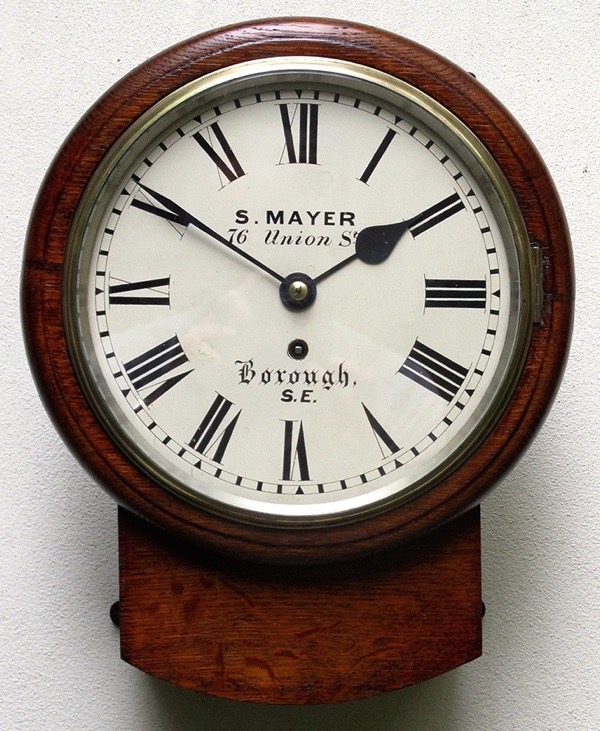
S. Mayer, 76 Union St, Borough c. 1890
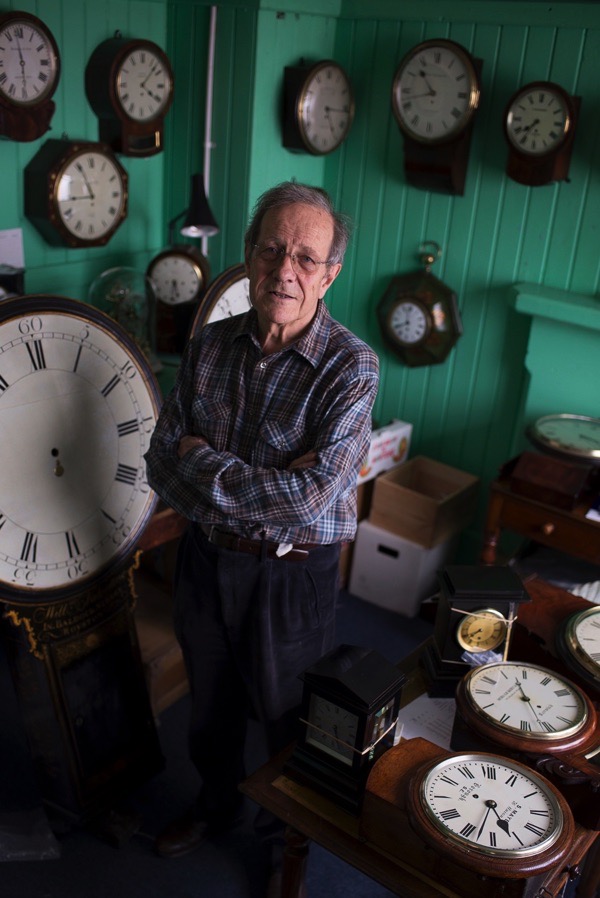
Edward Burd, Horologist
Portraits copyright © Sarah Ainslie
Click here for www.edwardburdclocks.com
You may also like to read about
A. S. Jasper’s Hoxton Childhood
Today I present these extracts to give you a flavour of AS Jasper’s memoir of growing up in the East End at the beginning of the twentieth century, A Hoxton Childhood, which was acclaimed as a classic when it was described by the Observer as ‘Zola without the trimmings.’
Next week, Spitalfields Life Books is publishing a handsome new edition of A Hoxton Childhood accompanied by the first publication of AS Jasper’s sequel The Years After in a single volume.
Join me at the launch party for A.S. Jasper’s A Hoxton Childhood & The Years After on Tuesday 25th April 7pm at the Labour and Wait Workroom, 29-32 The Oval, Off Hackney Rd, Bethnal Green, E2 9DT. There will be live music, readings and refreshments. Tickets are £5, including £5 discount off the cover price. Click here to book
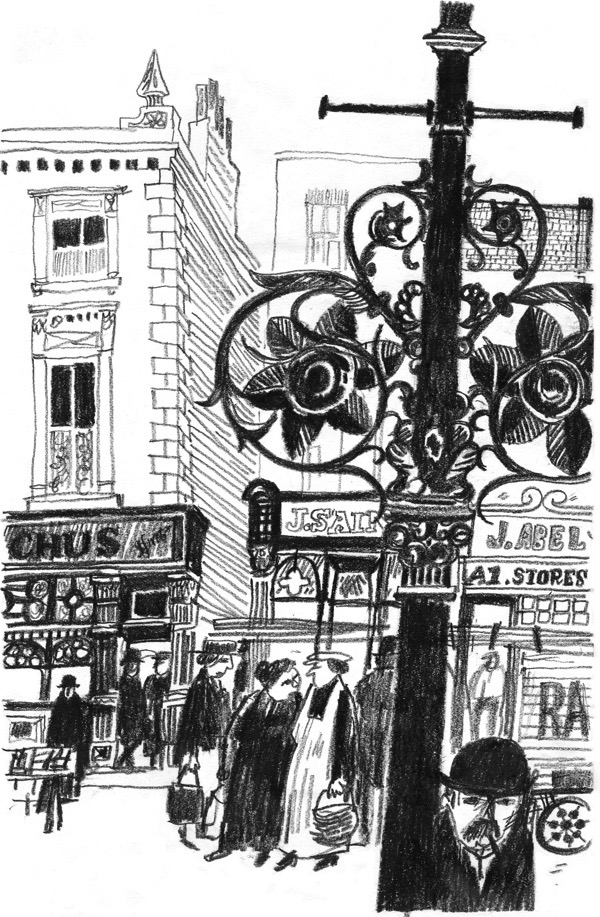
My father had a distinct Roman nose, a full moustache, slightly bandy legs and drooping shoulders. His main object in life was to be continually drunk and he had every opportunity to keep that way. His job was delivering overmantels and small furniture to various places in East London. He used to go out at five in the morning. First call was the local pub for rum and milk, this he could keep up all day. He always had money. Of every three articles he delivered, one was nicked, and the proceeds shared among the men who loaded him up. But at home he was tight with his money. I don’t ever remember my mother having a week’s wages off him – six or seven shillings was the most she ever received.
The reason he never gave her regular wages was he knew my mother could always earn a few shillings with her machine. To me, my mother was the most wonderful woman on earth. I find it hard to describe the love that she gave us. She had come to this country at the age of eighteen. Her family were musicians and had played at the royal Dutch Court. I never discovered why they emigrated – probably thought they could do better here.
When I was old enough to understand, I asked her what made her marry a man like my father. She told me that he had taken her out many times, but she always had to be home early for my grandmother was very strict. Eventually one night he brought her home past midnight and Grandmother refused to open the door. Consequently, he took her to his own place, made her pregnant and they had to get married. He deceived her from the start, she never got over the fact that he gave her a brass wedding ring.
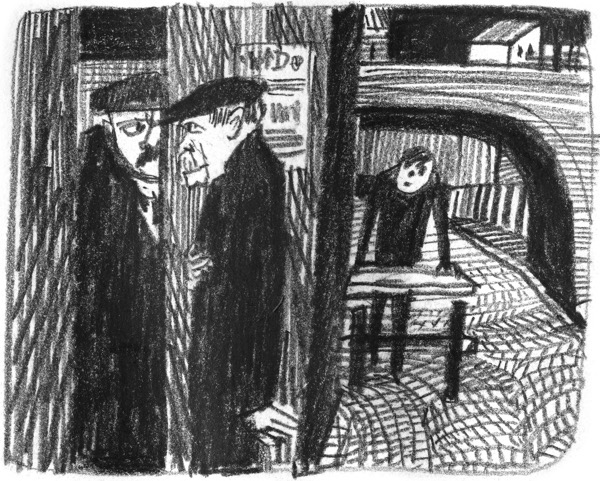
In 1915, several commodities were in short supply. Among them were screws and glue. If any could be obtained, a good price could be had from the small cabinet-makers in the district.
Evidently, during their drinking bouts, the old man told Gerry what a wonderful market there was for screws and glue and how he wished he could get hold of some. Gerry was working in Bethnal Green Road, making munition boxes. Plenty of screws and glue were used in their construction. Gerry reckoned he could get plenty but some arrangement would have to be made to collect them. He could get them out during his afternoon tea break, but not dinner-time or night-time. I was approached and asked to go each day to meet Gerry during his afternoon tea break.
Mum went mad when she knew what they were up to, but between the two of them they managed to convince her there was no risk. I had to take a shopping bag to school with me and then proceed to Bethnal Green Road at four o’clock. I can’t remember the name of the pub where I had to meet Gerry. At the side of the pub there was a gents’ toilet that was always open.
When Gerry came along I would dive in and he would follow. He would quickly undo his apron and take out packets of screws and packets of dried glue from inside his trousers. He also had his pockets stuffed. They were quickly dropped in the bag and I would walk home. This I had to do every day of the week and Saturday mornings also. The old man would take them on his round and flog them to various small cabinet-makers. On Saturday afternoons they would share out the proceeds. I don’t remember ever getting anything out of this, but I suppose I must have done. Mum wouldn’t have let me do it for nothing. It’s a marvel I didn’t grow up a criminal the things I had to do for them.
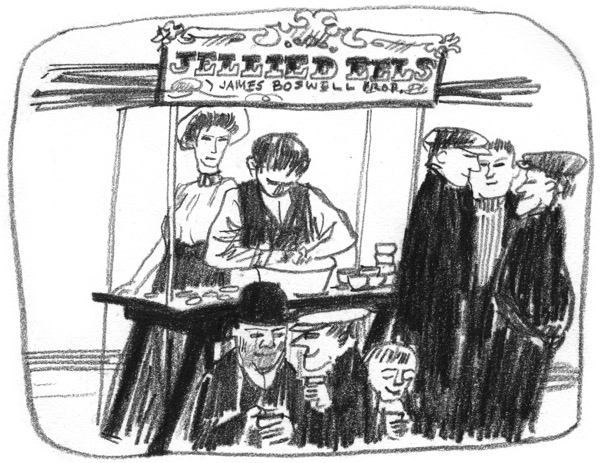
Mum decided to start selling clothes again. One Friday she said to me, ‘Stan, I want you to go down Hoxton in the morning and see if you can find a site where we can pitch a stall.’ The market was usually chock-a-block with stalls but this didn’t deter her from sending me to have a look round. I started from the ‘narrow way’ of Hoxton and walked along towards Old Street, but couldn’t see many vacant places. Coming back, I saw somewhere that took my eye. In the centre of the road between Nuttall Street and Wilmer Gardens were two public lavatories, flanked all round by a wide pavement. There were two or three stalls there but plenty of room for more. Home I went and told Mum. This pleased her and she thought she could do all right there, but I had lost my cart.
Some time ago, I had to go to Whiston Street Gasworks for three penn’orth of coke. To get the coke I went in the gate, paid my threepence in the office and got a ticket. I then went to where the men were filling the sacks, got loaded and went back to where I had left my cart. When I got there someone had pinched it. I should have known better. The lads round there could take your laces out of your boots and you wouldn’t know they were gone. I had to carry the coke home and swore I would somehow get my cart back. Mum worked hard all that week and bought and mended any old clothes she could find and got them ready for the stall on the coming Saturday.
Opposite the house where we lived was a coal shop and they had a couple of barrows which they let out on hire. I booked one for Saturday, when at eight sharp I got it loaded up with two sacks of clothes, old boots and anything Mum thought she could sell. I pushed the barrow and Mum walked alongside of me. I was just hoping the pitch was vacant. It was and I was overjoyed.
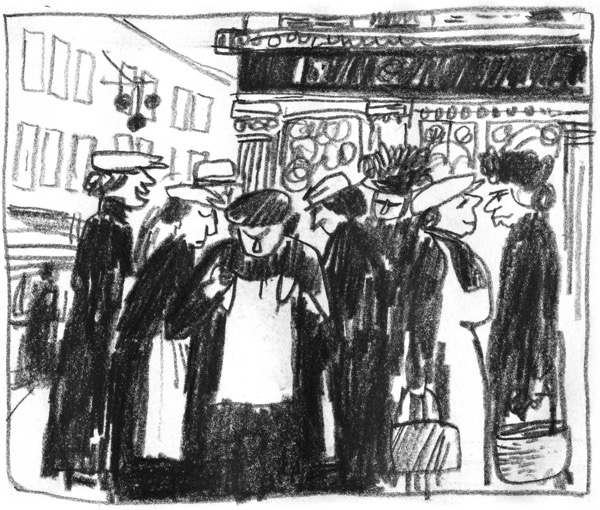
I propped up the barrow with the front legs I had brought along with me so that Mum could sit on it. We had some boards and these we laid out on the barrow. Mum unpacked the clothes and we were away. By nine-thirty people were beginning to flock into the market and we soon had some customers. The frocks and pinafores went like wildfire. ‘Fifteen pence the frocks,’ Mum would say, and ‘ninepence the pinafores.’
About midday we were half sold out. I asked Mum if she would like some tea. ‘Ere y’are, son,’ she said, and took the money out of the takings. I got a jug of tea and some sandwiches and we ate them ravenously. We’d had no breakfast owing to our having to start out early. Three o’clock came and we had sold out. Mum told me to stay with the barrow while she went shopping, and came back loaded. She treated me to the pictures and gave me money to buy sweets. I had never known such times.
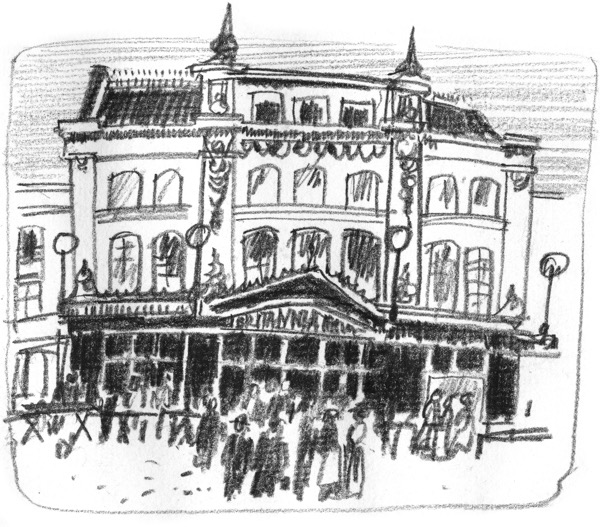
POSTSCRIPT BY A.S. JASPER
I find that few realise how bad conditions were such a comparatively short time ago. (‘Your story reads more like something out of Dickens,’ is a typical comment.) It was easy, it seems, for the better-off to be unaware of the appalling poverty and near starvation that existed. But those of us (and there are plenty) who remember lining-up in the snow at the local Mission for a jug of soup or second-hand boots, begging for relief at the Poor Law Institution, being told to take our caps off and address officials as ‘sir’, realise it all too well. Yet amid those terrible times, we found time to laugh. We did not expect many pleasures out of life, but those we could get we took to the full. Perhaps it was this that enabled us to survive and perhaps this is why some of my older readers said they looked back with nostalgia and even affection to some aspects of those old days.
To my younger readers, may I say, ‘Be thankful that you were born now and not then. Go forward, but try to be tolerant of your parents on the way.’
Illustrations copyright © Estate of James Boswell
You may also like the read about
AS Jasper, Author & Cabinet-Maker
A Hoxton Childhood & The Years After
James Boswell, Artist & Illustrator
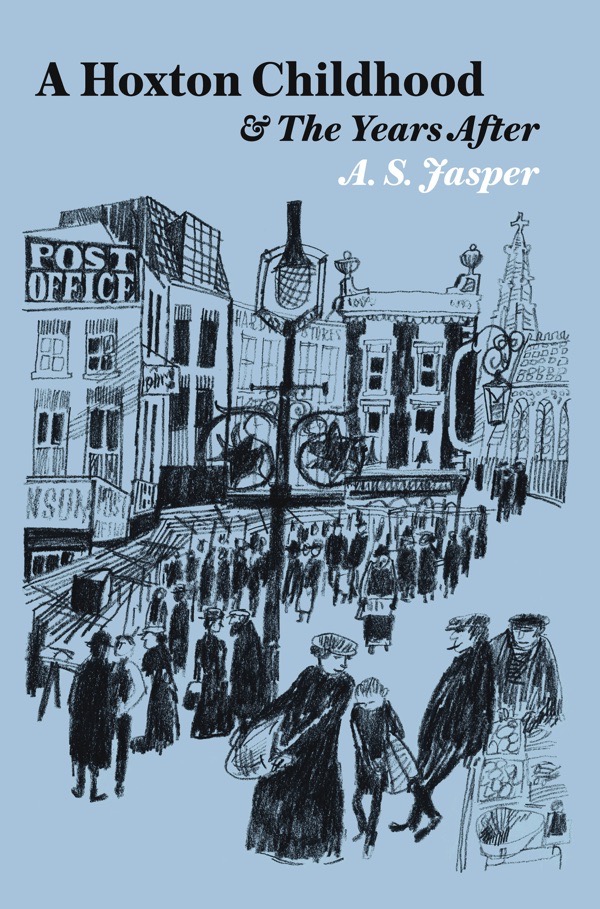
Click here to pre-order a copy for £20
The Gentle Author is delighted to collaborate with Labour and Wait to present a SPITALFIELDS LIFE BOOKSHOP for ten days at the WORKROOM, 29-32 The Oval, Off Hackney Rd, Bethnal Green, E2 9DT, in the shadow of the magnificent gasometers. This will be a rare chance to take a look at all Spitalfields Life Books titles in one place and have a peek behind the scenes at Labour and Wait too.
(Wednesday 26th April – Saturday, May 6th, 11am-6pm. Closed Sunday 30th April)