Lesley Lewis, The French House
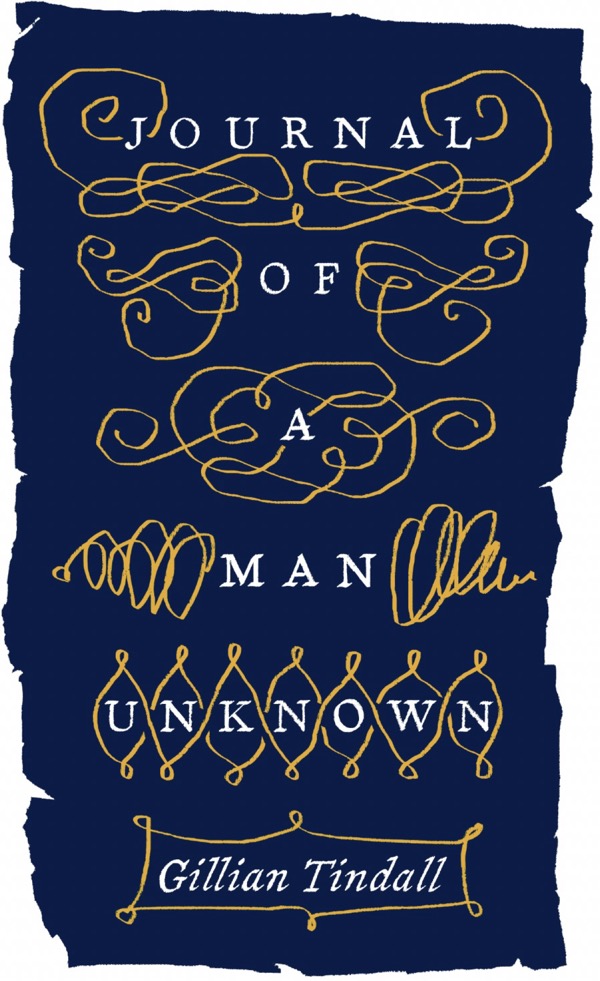
CLICK HERE TO PRE-ORDER ‘JOURNAL OF A MAN UNKNOWN’
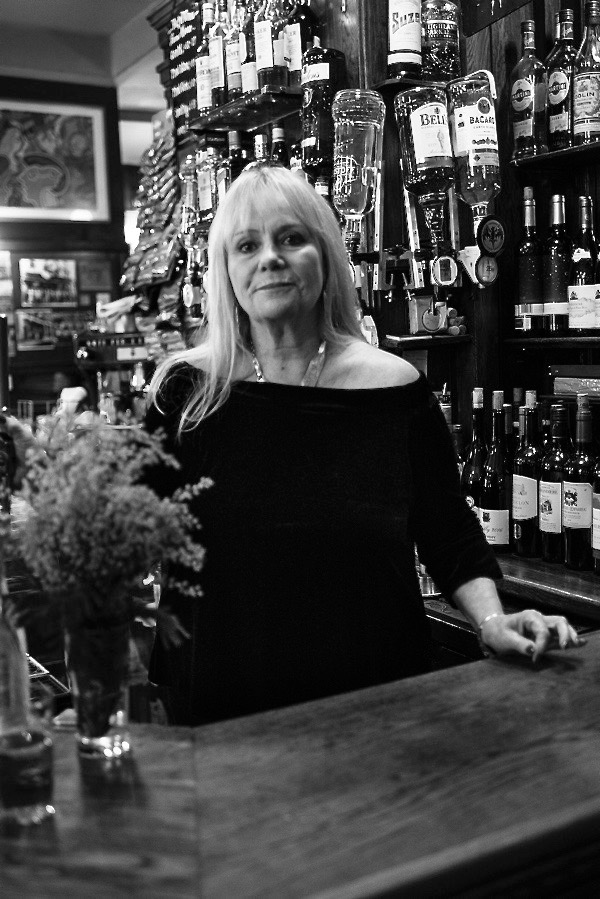
‘It is a sort of family, a very strange family’
When you walk into the French House in Dean St, you enter a magical realm of possibility where you discover you are welcome and where you might meet almost anyone. It is the last place I can think of where the spirit of old Soho lingers and where you feel you are at the heart of London. It is a public place and yet people behave as if they were in private, a place where – just by walking in the door – you become accepted into a community.
Since 1891 when it opened, there have only been three publicans at the French House. In 1989, Lesley Lewis took over when Gaston Berlemont passed into legend. Today, Lesley presides with a regal hauteur worthy of Catherine Deneuve, a shrewd humour worthy of Marie Lloyd and a generosity of spirit worthy of Mistress Quickly.
On the road to the French house, Lesley performed with a python in cabaret before graduating to managing a strip club in Old Compton St in 1979, where admission cost 50p and senior customers brought sandwiches to stay all day. As it turned out, these formative experiences proved the ideal qualifications when destiny called.
Lesley tells how Gaston Berlemont’s family took over the pub from the first landlord, a German by the name of Schimdt, whose wife returned – after he had left the country at the outbreak of WWI – to sign over the lease on September 12th, 1914. Gaston spent his whole life at the French House and, on his return from WWII, his father said,”Enough of that. You’re behind the bar, I’m off.”
It was a brawl in the twenties between French sailors smashing pint glasses over each other’s heads that led to the house policy of only serving half pints of beer, which continues to this day with the annual exception of April 1st.
During the last war, the pub – known as the York Minister – became a centre for French ex-patriates in London, serving wine which was a rare commodity then. Gaston’s daughter Giselle recalls Errol Flynn and Orson Welles tasting wine in the cellar at this time, and in June 1940 General De Gaulle wrote his famous speech in the bar -“La France a perdu une bataille. Mais la France n’a pas perdu la guerre!” After the war, the nickname of ‘The French House’ stuck and, in 1984, the name was officially changed.
With such illustrious predecessors, it was a great delight and privilege to sit down with Lesley in a quiet corner of the bar and hear her story in her own words over a glass of Ricard.
“I was General Manager at Peppermint Park, a restaurant and cocktail bar in Upper St Martin’s Lane, and when they sold the company I was offered redundancy or a pub. So I took the pub. It was the George & Dragon in Clerkenwell, a marvellous old pub. I had never poured a pint in my life, but some of my staff came with me because we were all made redundant, and that was the start of loving the pub business.
It took me a while to get into the swing of things and I learnt a good few lessons. We had no idea what we were doing but the customers helped us. After the first week, we were called together by some of the regulars and they said, ‘Lesley, this is fine. We don’t mind you looking after our pub for us.’ That is the truth of pubs, it is not my pub it is the customers’ pub – because without them, we are absolutely nothing.
Slowly, we learnt to pull pints and amuse the customers. We were next door to the school of journalism so we had a lot of students, but most of our customers were the old time, edge-of-the-East-End, Clerkenwell people. They were characters – all been pretty much wiped out, it is something quite different now.
I lived above the George & Dragon and I live upstairs here, it is a very difficult job to do without living on the premises because you are pretty much on for seven days a week. After about five years in Clerkenwell, they offered me a ‘wine bar,’ and this was the wine bar! I knew the French House already and I had always loved it, and I have been here thirty years.
It was always full of wonderful characters – it still is, but they are different kinds of characters today – writers, painters and bohemians. Gaston was the landlord then and it was condemned when he retired in 1989, which I did not discover until I went to get the licence and I was given three months to sort it out. The place had been left to rack and ruin, which I think is probably why Gaston wanted to retire. He was facing a huge bill, instead I got the huge bill but it was worth it.
We had to rebuild it in a way that people would not notice, so we were building through the night. It was the most loved place in the world and I had this feeling I was going to destroy it but the red linoleum on the bar top had to go. It is British oak to go with the rest of the interior and it cost a fortune. Then I had to bash it up a bit so it looked in tune with the whole pub. The windows had not opened since the sixties but we fixed that. There was this awful seating along the window and you burnt your ankles on the heating which was underneath, so we got rid of that and bar stools came in. This pub has evolved.
I have stayed thirty years at the French House because I love it, this is what I do. It is a sort of family, a very strange family. Most of my staff have been with me a very long time and we are very close. Eighty per cent of my customers are regulars and we are all close to each other. We help each other through everything. To be honest, I do not know what I would do without it.
A big city can be a lonely horrible place sometimes and if there is a place where you can go for a bit of comfort and conversation. It is not just about drinking, it is about going to have a chat with somebody, and feel safe in an environment that is yours – where you are not threatened in any way, as you are in a lot of clubs. It is for all ages. Our eldest customer is Norman who is ninety-two but he does not come in very often and our youngest is a year and two months, Georgie’s little boy who has been coming in here since he was conceived.
For me, it all about the people who have been in here over the years – like Francis Bacon, Dylan Thomas, Dan Farson and Lucian Freud. I think at some point just about everybody who is anybody has put a foot over the threshold. They are all still here in a funny kind of way. Their essence is here.
I think it is really important that we keep our pubs. You notice how – particularly in Soho – they are disappearing all the time. It is even more important in the country villages where, if the pub goes, there is nothing. People need to have somewhere to go. It is a very British thing, a pub.”
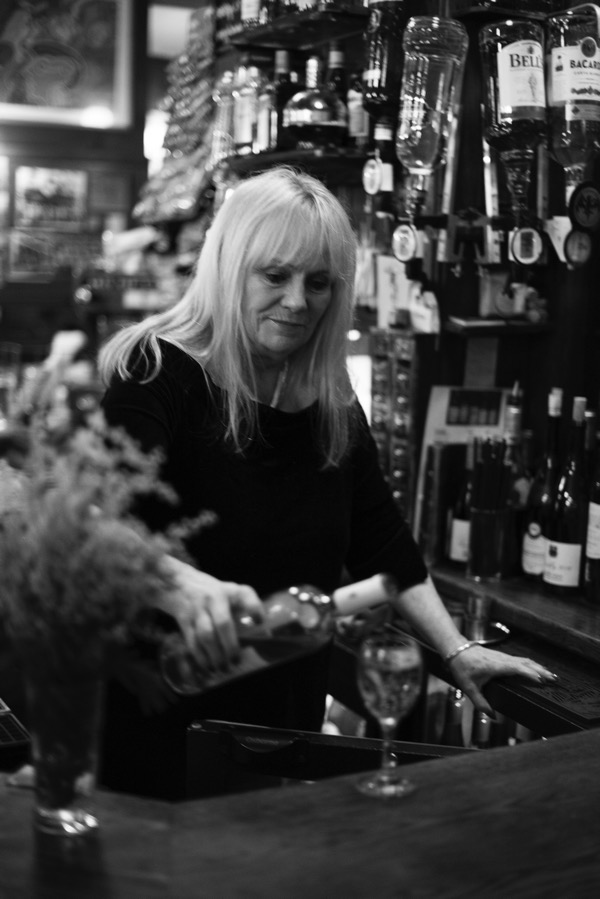
Portraits copyright © Sarah Ainslie
The French House, 49 Dean Street, Soho, London, W1D 5BG
You may also like to read about
Journal Of a Man Unknown By Gillian Tindall
It is with a heart full of emotion that I write to you today. I have two announcements. The first piece of news I have to impart is that my good friend the historian Gillian Tindall died on Wednesday aged eighty-seven. The second disclosure is that Gillian came to see me in February and asked me to publish her final work, Journal of a Man Unknown, which comes out on 6th November.
When Gillian and I met for a drink in the Great Eastern Hotel at Liverpool St Station on that cold night early in the year, she revealed she was terminally ill and that she had written a novel which she would like me to publish. Gillian was a talented writer, celebrated both for the quality of her writing and scrupulousness of her research. She had a distinguished record of more than sixty years publishing books and was a contributing writer to Spitalfields Life. So, of course, I said yes.
I was fascinated that, culminating her career as a historian, Gillian had chosen to write a piece of fiction as her final statement. In an astonishing feat of literary imagination, she projects herself back onto one of her forebears to conjure a compelling vision of seventeenth century England.
Journal of a Man Unknown is an eloquent first person narrative. The protagonist is a Huguenot iron worker, an occupation that leads him from the Sussex Weald to the Whitechapel Bell Foundry, and beyond to the North Country. While in London, he lives above a coffee house in Brick Lane and the book conjures a vivid evocation of Spitalfields at the time of the Huguenots.
Gillian’s novel serves as a personal manifesto expressing her belief in the true nature of history as composed of the lives of working people, those who pass through life not leaving a trace, except in the hearts of those into whose lives they have been cast. It is a sentiment with which I am fully in sympathy and makes Journal of a Man Unknown a poignant and heartfelt final statement.
All summer, as Gillian’s health declined, I worked with designer David Pearson to prepare a beautiful edition of her novel in the hope and expectation that she would be here to see it published. But it was not to be. My last contact with Gillian was when she approved David’s splendid cover design above and selected this blue and yellow version from the different options that David proposed.
It was a shock to learn of Gillian’s death this week just as her book was at the printers, but on reflection I think there is also a certain poetry in the notion of an author passing from this world knowing that her final work is to be published within weeks. In this sense, we never truly lose writers because they stay with us through their books.
We will be announcing a book launch presently, but in the meantime you can preorder a copy of Journal of a Man Unknown which we will send out at the end of this month.
CLICK HERE TO PRE-ORDER ‘JOURNAL OF A MAN UNKNOWN’
CLICK HERE TO PRE-ORDER ‘JOURNAL OF A MAN UNKNOWN’

On Publication Day For Tessa Hunkin’s Hackney Mosaic Project
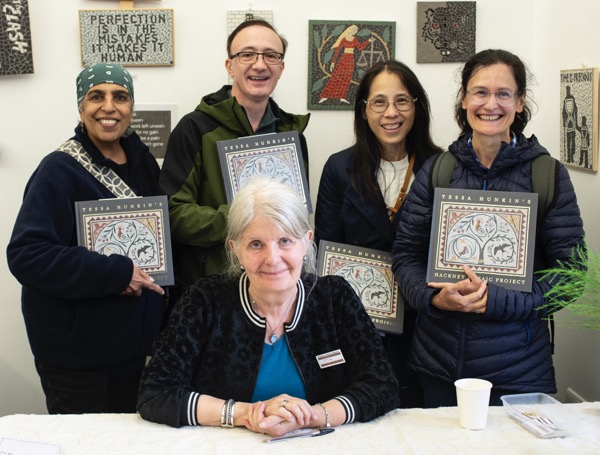
Tessa Hunkin with fans at the book launch
At last, after five years of work, Tessa Hunkin’s Hackney Mosaic Project is published today, thanks to the generosity of you, the readers of Spitalfields Life.
Last Saturday, hundreds converged on the pavilion in the middle of the park where the mosaic workshop has its home. It was a golden autumn day to view the magnificent playground shelter mosaic and the wall of portraits of the hounds of Hackney Downs.
I was delighted to welcome many of you in person while Tessa spent the afternoon besieged behind the author’s table signing books and we served homemade cakes and cordial by Company Drinks to our honoured guests.
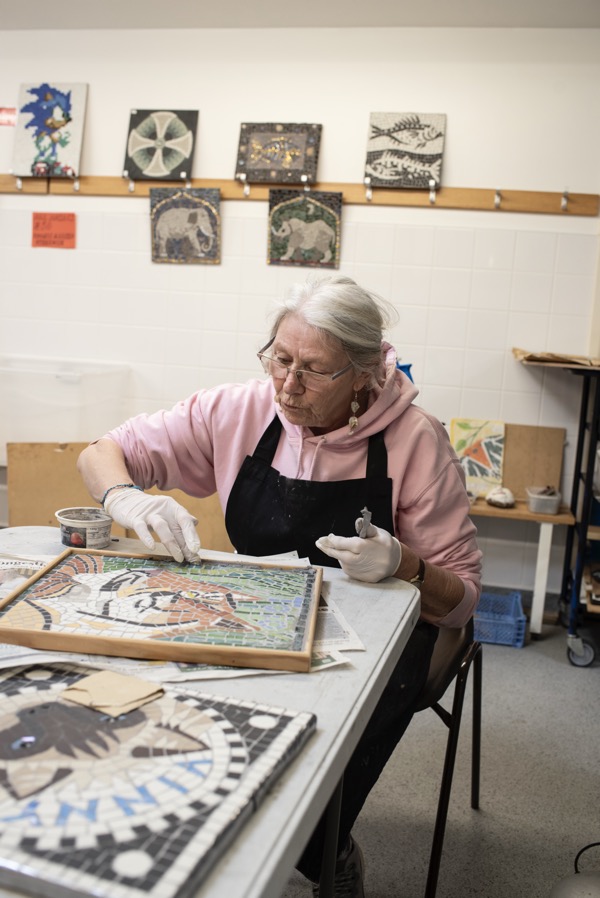
At the rear of the pavilion were two exhibitions, of the sample panels for each of the project’s major works and of personal mosaics created by members of the project which were for sale. In the midst of all this, the volunteers sat at work piecing the next masterpieces together, while our guests crowded to watch this compelling demonstration of the mosaic artists’ skills.
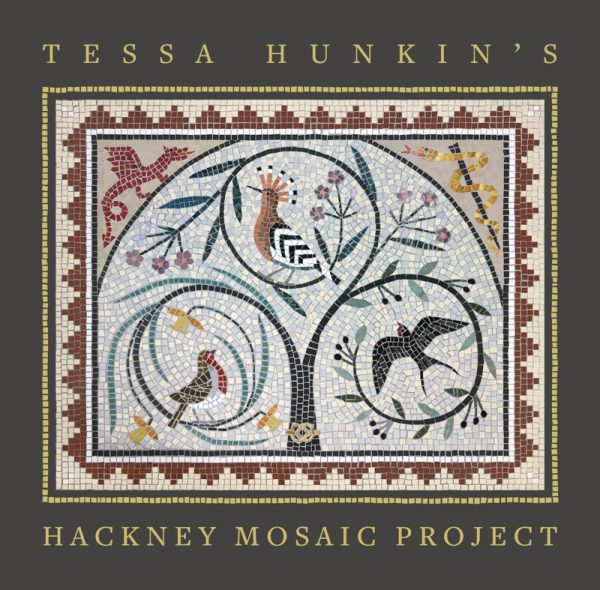
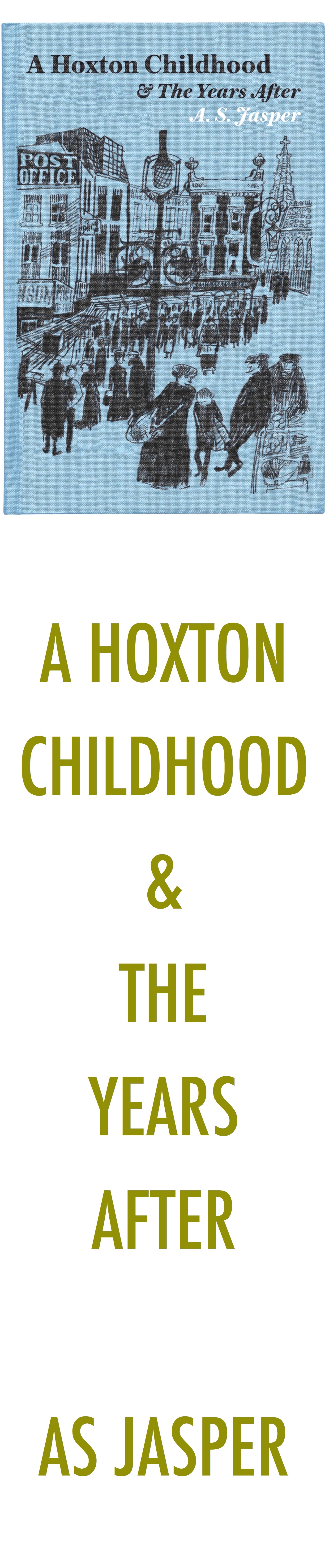
Click here to order and get a free copy of ‘A Hoxton Childhood’
Thank you to the following readers of Spitalfields Life who made publication possible.
Carla Adamek, Rose Ades, Ben Adler, Andrew John Ainslie, Sarah Ainslie, Teresa Ainslie, Liz Aitken, Janet Ajao, Sophie Alderson, Hannah Alejandro, Karen Alexander, Kate Amis, Chris Anderson, Deborah Andrews, Paul Leonard Anness, Susan Arnott, Elizabeth Aumeer, Chrystabel Austin, Michael Babcock, Joan Bailey, Gaynor Baldwin, Madeleine Ball, Graham Barker, Rosie Barker, CM Barlow, Gillian Baron, Nikki Barton, Roxy Beaujolais, Stephen Beckett-Doyle, B Beech, Karen Beesley, Julie Begum, Molly Behagg, Jane Berry, Robin Blench, Hilary Blackstock, Jude Bloomfield, bookartbookshop, Jenni Bowley, Richard Bowley, Lindsay Bown, Iain Boyd, Patricia Boyko, Bridget Bradshaw, Keith Brennan, Jan Brewerton, Margaret Brickell, Richenda Bridge, Christopher Brown, Michael Jake Brown, Henry Browne, James Buchan, Claire Burkhalter, Steven Caldwell, Peter J. Cameron, Catherine Campbell, Ruth Campbell, Sarah Campbell, Jenny Lee Carlin, Fiona Carpenter, Helen Carpenter, Jane Carroll, Patricia Carroll, Lynne Casey, Julia Chalkley, Margaret Chamberlain, Lorna Chambers, Sheree Charalampous, Naman Chaudhary, Linda Chauncey, Janet Cheffings, Rebecca Chester, Yvonne Cheyney, Colin Childerley, Christine Chinnery, John Clark, Stephen Clarke, Neville Clipsham, Shirley Collier, Wendy Cook, Julie Cooke, JA Cooper, Amie Corry, Maya Corry, Simon Costin, Valerie Cottle, Paul Couchman, Graham Crane, Eleanor Crow, John Curno, Hilary Cuthbertson, Mary Dalton, Rosie Dastgir, Claire Davenport, Andrea Davidson, Andrew Dawson, Lydia Deane, Melissa Delano, Victoria Diggle, Caytherine Howard-Dobson, Maura Dooley, Denny Dormer, Lesley Doyal, Anthony Edwards, Claire Edwards, Josephine Eglin, Robin Ellams, Marion Elliot, Janet Ellis, Richard Ellis, Tom Empson, Debrah Esdale, Sian Evans, Diana Fawcett, Andrea Feldman, Alison Felstead, Gillian Figures, Susan Fine, Deborah Finkler, Lynda Finn, Doreen Fletcher, Linda Florio, Simon Foley, Sue Grayson Ford, Lisa Forkas, David Fox, Maggie Fox, Nancy Franklin, Susie Freedman, Vivian French, Sue Froggitt, John Furlong, Chris Gad, Perrine Gasqui, Eveta Gilkes, John Gillman, Gillygrannyruth, Charles Gledhill, Dorothy Twining Globus, Susanna Delia Gluck, Deby Goldsmith, Raymond Golland, David Goold, Michael Gornall, Alexander Graham, Linda Granfield, Sophie Green, Judy Greenway, Katherine Grier, Oona Grimes, Teresa Grimes, Anne Groves, Mary Grunfeld, Polly Grylls, Jenny Guest, Melanie Hamill, Mark Hamsher, Catherine Harris, Julia Harrison, Gordon Harrison, Patricia Harrison, Peter Harrison, Kathryn Hatsell, Patricia Haupt, Claire Hayward, David Heath, Lesley Hemming, Susan Henry, Susanna Heron, Lubaina Himid, Carolyn Hirst, Angela Hobsbaum, Clive Hocker, Suzanne Hodgart, Tony Hollington, Jaye Hopkins, Stephanie Horsford, Araminta Huitson, Richard Humm, Timothy Hunkin, Peter Hunt, Jessica Hunter, Tom Hunter, Brian Hurwitz, Joan Isaac, Ulf Jacobson, Jane James, Simon Jamieson, Daniel Jenkins, Pauline Jobson, Annie Johns, Patricia Johnson, Philip Johnson, Barbara R Jones, Andrew Jones, Vivienne Jones, Maria Jordan, Tracy Josephs, Ron Joyce, Matthew Kay, Hilda Kean, Michael Keating, Patricia Kelly, Ron Kelterborn, Marianna Kennedy, Sheila Kennedy, Sara Kermond, Colette Khan, Mark King, Hylary Kingham, Jennifer Kingman, Nicola Kingston, Anu Kumar, Deidre Lacey, Katie Lambe, Judith Lancet, L Langmead, Pauline Langmead, Carol Larkin, Oliver Lazarus, Sarah Le May, Marie Lenclos, Colin Lennon, David Lester, Sarah Lewington, Howard Lewis, Patricia Lewis, Martin Ling, Julia Little, Susan Long, Pauline Lord, Patrick Lowe, Sarah Ludford, Lynn MacKay, Gareth Maeer, Tim Mainstone, Stephen Makepeace, Anne Mannion, Julie Mapstone, Fiona Marlow, Elizabeth Marshall, Anabel Marsh, Hellen Martin, Stephanie Mascis, Rachel Matthews, Ava Mayer, Phil Mayer, Francis Mayhew, Jo Mazelis, Jock McFadyen & Susie Honeyman, Melanie McGrath, Fiona McQuarrie, Jill Mead, Julia Meadows, Helen Menezes, Susan Mepham, Deborah Merrett, Russell A Metz, Carolyn Meunier, Jennifer Michael, Dusan Mihajlovic, Helen Miles, Susan Miles, Rosalind Mills, Dianne Mitchell, Janet Mohler, Iain Monaghan, Andrew Monk, Annie Moreton, Matilda Moreton, Isabel Morris, Zoë Mulcare, Angus Murray, Caroline Murray, Terry Musk, Janet Mutch, Margaret Nairne, Jennifer Newbold, Ros Niblett, Geoff Nichols, Bernadette Nolan, Mary Norden, Gillian Norgan, Anthony Norman, Francis Oakley, David O’Brien Jr, Gilbert O’Brien, Jan O’Brien, Marilyn O’Brien, Sharon O’Connor, Diane Olson-Baskin, Anne Orsi, Effie Paleologou, Clarissa Palmer, Vivienne Palmer, Enrico Panizzo, Nick Parfitt, Hannah Parham, Peter Parker, Matt Parkes, Dhru Patel, Alice Pattullo, Joyce Ellen Pavelko, Caroline Payne, ME Percival, Pamela Percy, Lynne Perrella, Fiona Pettitt, Andrea Petochi, JM Pettiward, Prerana Phadnis, Elizabeth Phillips, Dame Siân Phillips, Caroline Pick, Stoodley Pike, Alison Pilkington, Kate Pocock, Kay Porter, Mary Porter, Molly Porter, Jeffrey Ian Press, Elizabeth Prochaska, Sir Jonathan Pryce, Mary Purcell, Amelia Rapp, Alice Rawsthorn, Gill Reidy, Edward Rekkers, Del Rey, Ruth Richardson, John Ricketts, Helen Rimell, Deb Rindl, Vivienne Ritchie, Gaby Robertshaw, Gerard Robinson, Paul Rogers, Maria Rogers, Corvin Roman, Steve Ruggi & Gilda Williams, Madeleine Ruggi, Penny Russell, Timothy Sayer, Julia Scaping, Huibert Schijf, Karen Bliersbach-Schmalowsky, Natalie Schofield, Margarita Schwartzel, Elizabeth Scott, Kate Scott, Mary Scott, Janet Sharples, Suzanne Shelton, Silvervanwoman, Penelope Simpson, Ellen R Sippel, Mick Skipworth, Nigel Slater, Tony Sleep, Angela Smith, Hilary J Smith, Mary Smith, Roderick Smith, Rachel Darnley-Smith, Sir Charles Saumarez Smith, Valerie Solly, A Sparks, Alexandra Spray, Barnaby Spurrier, Amanda Stanbrook, Gail Stevens, Lawrence P Stevenson, Lexi Stones, Harriet Storey, Lowri Story, Paul Strickland, Andy Stroman, Graham Styles, Jill Sullivan, Christine Swan, Steve Szilagyi, Amanda Talsma-Williams, Catherine Thomas, Rupert Thomas, Penelope Thompson, Sophie Thompson, Victoria Thorne, Molly Thoron-Duran, G Timlin, Toby Titter, Dominic Townsend, Jane Trethewey, David Trotter, Penny Tunbridge, Olivia Horsfall Turner, Cathy Unwin, Hugh Valentine, Henrietta Varley, Sarah Vaughan, Christina Vogt, Rowan Vyvan, E Walker, Simon Walker, Elizabeth Wallett, Joyce Wallis, Karen Walton, Holly Warburton, Ilse Warnecke, Arabella Warner, Jonty Wareing, William J Warren, CCC Waspie, Paul James Watanabe-Lamy, Madeleine Weaver, Nicky Webb, Lianne Weidmann, Patricia Wenz, Karen Wesley, Michael Westley, Paula Wharram, Nagele Whiteacre, Ursula Whitbread, James White, Carol Whitman, Robin Whitney, Sharon Willard, Margaret Willes, Hilary Willgoss, Lee Williams, Lunita Williams, Jane Wilson, Jill Wilson, Penny Wilson, Mary Winch, Sarah Winman, Jenny Wiseman, Sara Withers, Juliet Wood, Julian Woodford, Charles Wynne-Evans, James Yates, Patricia Zeitlin, Michael Zilkha and many others who choose to be anonymous.
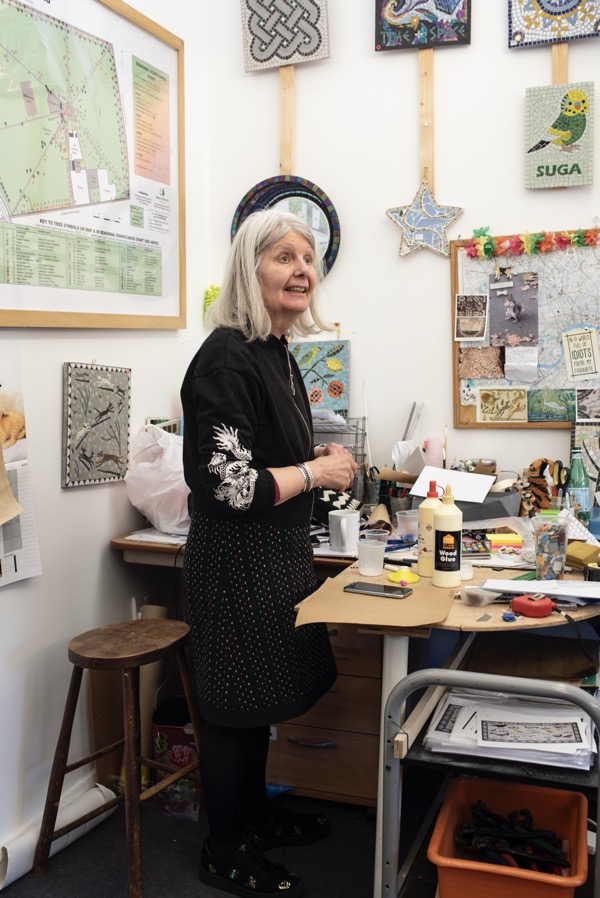
Contributing Photographer Sarah Ainslie & I went along to meet Tessa Hunkin at Hackney Mosaic Project‘s workshop in the pavilion on Hackney Downs. Sarah photographed the mosaic makers at work while Tessa explained to me how it all came about.
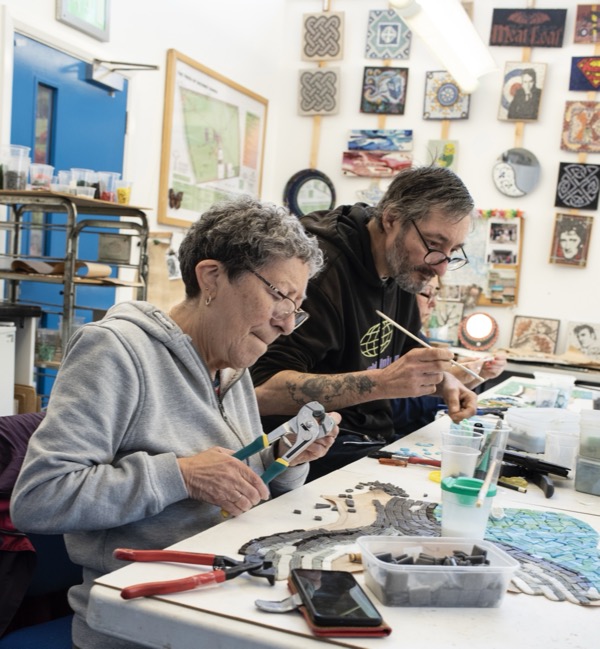
Janice Desler and Jamie Johnson at work
The Gentle Author How did you start making mosaics?
Tessa Hunkin I was working as an architect but I was frustrated because I was always telling people to do things that I did not know how to do myself. I wanted to learn how to do something well so that I could design things that were elegant in terms of how they were made. I also wanted to work with colour because architecture is rather a colourless endeavour.
Coincidentally, a friend, Emma Biggs, had seen a programme about the Italian community in London. She had been inspired by film of the old Italian mosaicists at work and began making mosaics in her spare room. So I went and joined her and we worked together for fifteen years. We set up a company called Mosaic Workshop and acquired a workshop on the Holloway Road.
The Gentle Author What kind of work were you making?
Tessa Hunkin It was fairly hideous because we did not know what we were doing. We did doorsteps for shops and so many toilets and bathrooms, miles of Roman borders, rope borders and rolling waves that made us cry with boredom. But we were developing our skills and we began to get more interesting jobs and bigger canvases to play with.
The Gentle Author How did you start creating your own designs?
Tessa Hunkin I had begun developing my own designs alongside commissions from designers. Quite a lot were for rich people who were opinionated or had interior designers, so there were a lot of ‘cooks’ and often designs got compromised.
My colleague Emma pointed out that in public or community art you get to do the design and that might be more liberating creatively. Unfortunately, we only started thinking like this after 2008 when much of the community funding had dried up thanks to the government’s policy of austerity.
There was a reprieve for the London Olympics when there was a bit more money around. So that was our opportunity to try this path. Partly it was the desire to have more design freedom but also I wanted to work with people who might enjoy making mosaics, and who might benefit from and appreciate the creative process in the way that I did.
I was attracted by the idea that you might be able to find volunteers who were not in it for money, but who who loved the medium and enjoyed the process in the way I did. Going into community art was a way of combining all these aspirations.
The Gentle Author Where did it begin?
Tessa Hunkin I had an idea. I found this book of Tunisian mosaics and it was a light bulb moment, looking at these mosaics which depicted everyday life in Roman North Africa.
The book explained how archaeologists had learnt so much about the way the Romans lived and the tools they used. The mosaics were full of life and variety, yet they hung together in a very beautiful and satisfying way.
I thought, ‘Yes, this would work really well as a group project – everybody could contribute a little bit – and also for the Olympics, it could record how we lived in 2012.’
When all the digital data and Google have fizzled out, the mosaic will still be there to show people using mobile phones and iPods. In fact, the mobile phones in the mosaic are already out of date – they have little aerials on them – so it is already fulfilling its purpose.
The Gentle Author Where did you do this?
Tessa Hunkin Hackney were looking for a project for people in recovery from addiction and they were attracted this idea because it was uncontroversial. I spent a lot of time walking around Hackney, which has more parks than any other London borough. I visited them all, photographing suitable walls, but the council did not want mosaics on any of those. Instead, they found a hidden little corner in Shepherdess Walk, off the City Road, and that was the first.
The Gentle Author How did you find it when you began to work with non-professionals? Did you have any experience as a teacher or therapist?
Tessa Hunkin I had done some work at a mental health project. I became involved because Mosaic Workshop, as well as making mosaics, ran a shop selling mosaic materials.
People from the Westminster mental health project came along as customers and that was how I met Susie Balazs who was a wonderful teacher. She was very friendly and her group were always so excited coming to her mosaic workshop and have a go. They possessed a kind of enthusiasm that I saw was invaluable and I wanted to harness that too.
So I only had a little bit of experience and I was nervous about the addiction angle because it was not something I had come across before. In fact, there is a lot of overlap between mental health problems and addiction which can often originate from self-medication. It was a steep learning curve for me, working out how to explain things clearly to beginners and finding tasks that would be pleasurable rather than painful.
One of the elements that came in useful were the Roman borders. These were the very things that had driven us mad when we were doing miles of them for commercial projects but I discovered they work well as learning exercises for beginners. Based closely on the Roman models, they comprise single units endlessly repeated, flowing easily from one to the next.
I had found a way of getting people started and I could see it was working. People liked the amount of concentration that it required even to follow quite a simple pattern but it engaged them sufficiently that they stopped thinking about all the other things that might be preoccupying them. At the end of the session they did not want to leave. That was incredibly satisfying.
To begin with, I divided up the sessions – one for the local community and another for the recovering addicts. But my mental health clients from Westminster also wanted to come and join. For a while, they all had separate sessions.
But they were all so keen, they wanted to come as often as they could. So I gave up the divisions and let everybody could come to everything. Eventually, we had children running around, recovering addicts, some not-so-recovered people with quite serious mental health problems and people who lived close by, all sitting together making mosaics. It seemed to work out. They finished the mosaics much more quickly than I was anticipating and we have never stopped since.
The Gentle Author I know it has been a great source of inspiration to you, working in this way, and I wanted to know what these people brought to the work. How have you created structures that allow individual input?
Tessa Hunkin That was another thing I learned from the Romans, through comparing Roman mosaics with nineteenth century mosaics. Those recent mosaics are quite formulaic. They have high quality craftsmanship but they are slightly dead, whereas the Roman ones have much more life to them. They are more irregular, partly because they were using natural materials – stone and things which cut irregularly – but also, because they had a variety of abilities at work. The character of the makers is preserved in mosaic.
The Gentle Author What do you think the people involved take away from it? How is it therapeutic for them?
Tessa Hunkin It gives people a holiday from their head. It is a simple task that requires concentration and produces something at the end, so it is never time wasted because you can see where your time has gone.
I believe this is fundamental. Once, there were lots of jobs that involved working with your hands but most of those no longer exist in our post-industrial world and for some I think this is an unacknowledged loss.
If you have never try working with your hands you do not know the pleasure and the benefit it can be. It is often dismissed as women’s work – embroidery and knitting and crochet and all those fantastic things – but they are as fundamental as sport.
The Gentle Author Has your approach to design changed through all this?
Tessa Hunkin The gift is that when a commission comes along, now I have all these lovely people who help me create it. Every time I start a design, I think about how to make it as simple and elegant as possible so it is pleasurable to make. I want it to be both beautiful to look at, so the wider community benefits from it too, and I love
creating mosaics for public spaces because I want as many people to see them as possible. If people have enjoyed making them I think that comes out in the work. If they are beautiful to look at as well as pleasurable to make, then that is a win-win.
The Gentle Author I have seen community mosaic projects that are of social value but sometimes the aesthetic is quite random. Yet your work also has this superlative aesthetic quality which makes it outstanding. How you have you reconciled this, raising the bar with all the participants?
Tessa Hunkin They help me willingly and amazingly, but they also get the opportunity to do their own things. That element was not there at the beginning of the project. I have realised that it was a bit much expecting them only to do my bidding, so they alternate between working on commissions where they obey my rules and doing their own projects. I hope they learn from the way I configured mosaics and can translate that knowledge back to their own work.
When you have experience of a technique, you can work out how to achieve strong effects in a way that appears effortless and simple. The Romans understood this and we follow their system, it is a tradition as much as it is my bidding.
The Gentle Author Are you speaking for that tradition?
Tessa Hunkin I am speaking for the tradition and I am also channelling the tradition. Hackney Mosaic Project is a group, a social group, which is particularly important for people in recovery from addiction who often lose their friends. They can become very isolated so this is a way of bringing people together and giving them a social world. The best mosaic of all is the combination of these widely different people who come together and, for a time, form a cohesive and mutually-supportive group. For some, they have replaced one addiction with an addiction to mosaic.
The Gentle Author I am always been touched by the degree of emotional ownership the makers have of the work and their sense of pride.
Tessa Hunkin In our public work, we try to produce something that people genuinely admire. We have now won a real audience and acquired a reputation, and we are very proud of the work we have done, which helps everyone’s self-esteem.

Rosalind Reeder
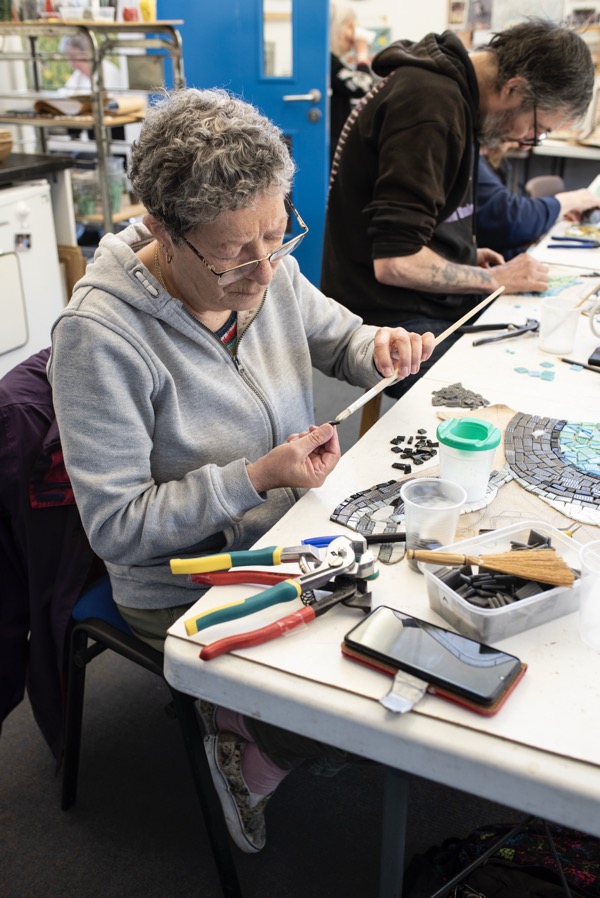
Janice Desler
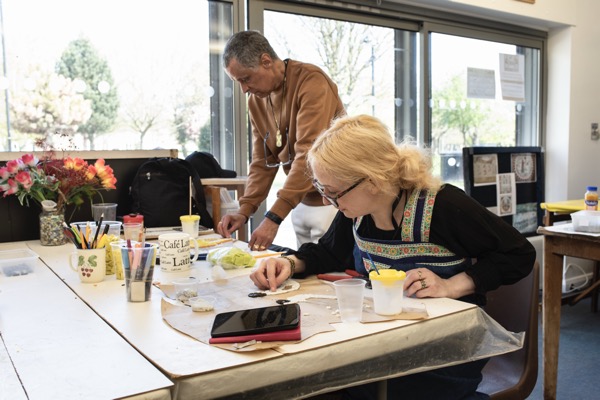
Ken Edwards and Katy Dixon
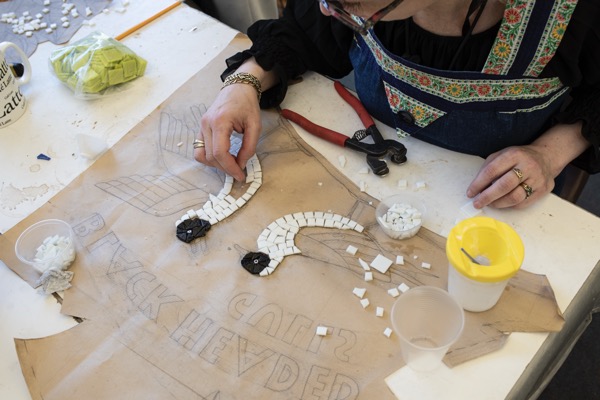
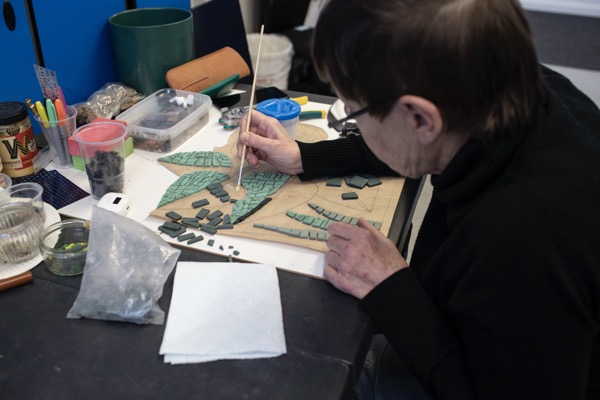
Gabi Liers
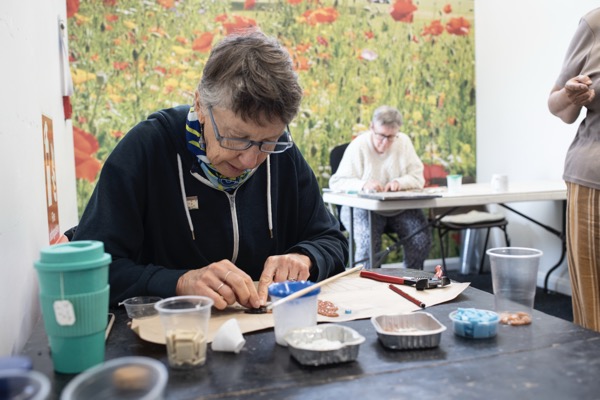
Deb Rindl
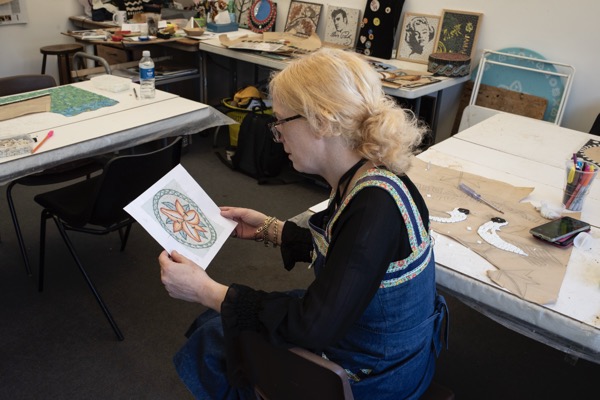
Katy Dixon
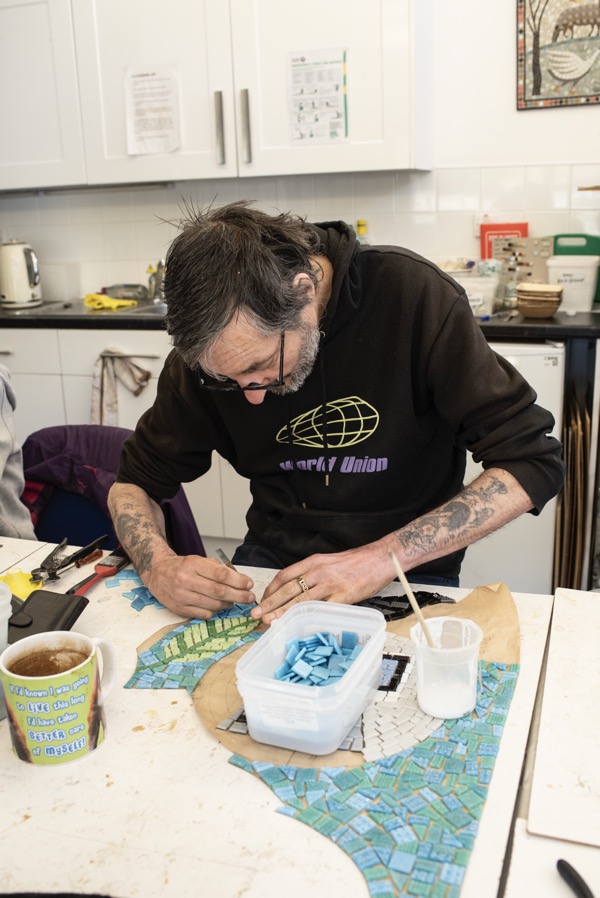
Jamie Johnson
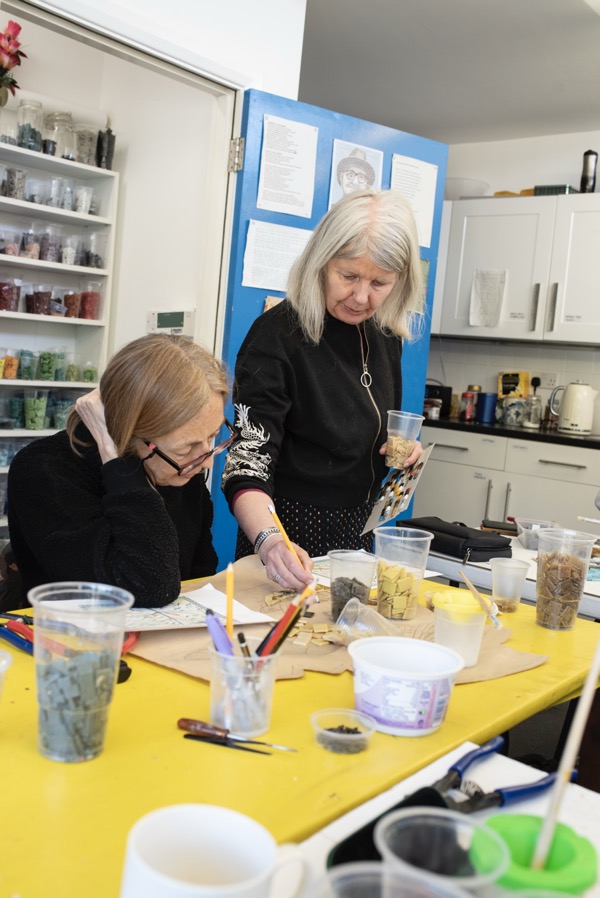
Rosalind Reeder and Tessa Hunkin
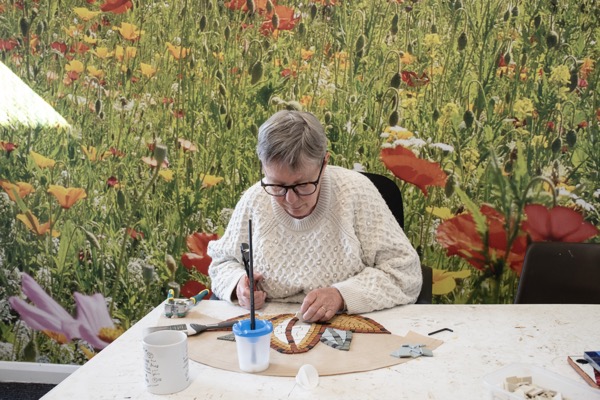
Mary Helena
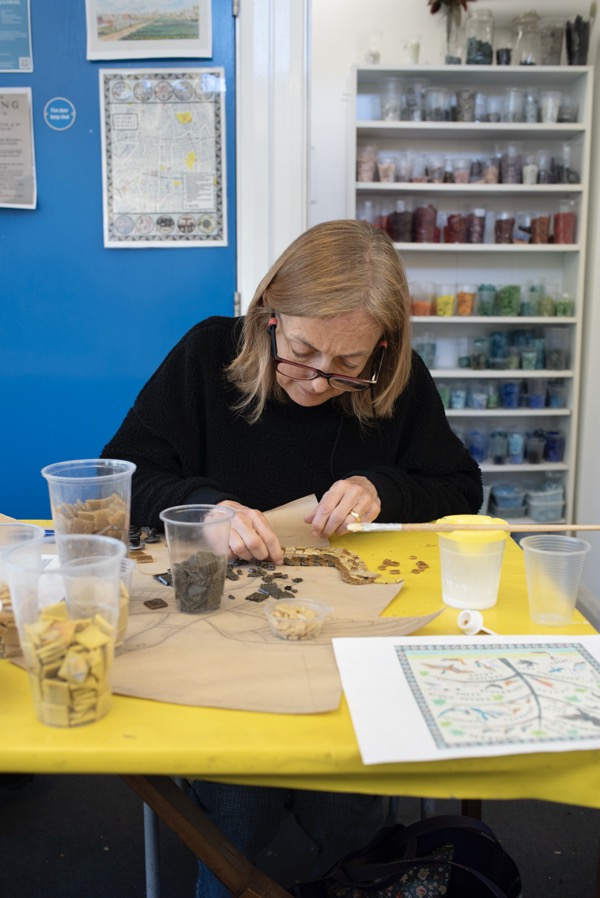
Rosalind Reeder
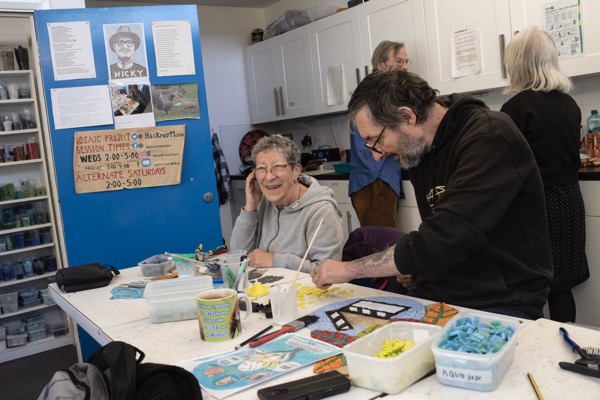
Janice Desler and Jamie Johnson
Linda Hood
Tessa Hunkin
Photographs copyright © Sarah Ainslie
You may also like to take a look at
Joy Harris, Dressmaker

Joy with her engagement ring, at seventeen.
More than sixty years after she was apprenticed as a dressmaker in Spitalfields, Joy Harris returned to visit the streets where she began her career and found them much changed. The sweatshops and factories have new uses today and the textile industry itself has gone but, as we walked around in search of her long-lost haunts, Joy told me her story – and it all came back to life.
“Dressmaking was all I was interested in, and I wanted to be a court dressmaker. My mother made her own clothes and she made mine too. She was from Stepney and she had done an apprenticeship as a dressmaker in the East End. I think I was born with it and I can’t ever remember not being able to sew, even at twelve or thirteen I made clothes for other people.
In 1961, at fifteen years old, I was offered an apprenticeship at Christian Dior in Paris but my mum and dad couldn’t afford to send me there. So Eastex in Brick Lane was the next best option – very disappointing that was! I left school in July and went straight to Eastex where I earned a pittance, it only covered my fare. Eastex were a middle range clothing company and I worked on the third floor at the corner of Brick Lane and Wentworth St. I started off making shoulder pads by the hundred and then you did darts and gradually we were taught to make a whole garment. Zips were measured and everything had to be in the right place. We used to sing, “Daisy, Daisy, Give me your answer do!” all day at work. It was boring. We spent all day making darts and then we’d take it up to show what we’d done, and we’d be sent back to do it all over again.
My friend Sandra already worked in Fashion St and we travelled up together to Aldgate East on the train from Barking each day. In Wentworth St, there was an underground butcher where there’d always be these men up against the grilles whistling at us, in our miniskirts at fifteen. They’d get locked up now. My mother let me keep my money for the first three weeks, and the first week I bought her a watch and, on the second week, I bought these black patent leather Italian slingbacks in Commercial St. I love shoes and I can remember everybody looking at my slingbacks. Of a Friday, we’d go down Petticoat Lane where there was a table that sold forty-fives and I bought my first Beatles record there and everybody asked me, “Who’s the Beatles?” I was a teenager and everybody I knew bought records, I had loads because they were really cheap.
I’ve known Larry since I was fourteen. We met at the youth club where I was friends with this guy called John. I’d seen Larry and I thought he looked nice and he had a scooter. John and Larry went on an Outward Bound trip for a month, and I was quite taken aback when John turned up with Larry. We got engaged after I finished my apprenticeship at seventeen, and John became the best man at our wedding.
And then I went to work in Fashion St which was a very stupid thing to do. But it was where my friend Sandra worked and they were paid three times as much at Lestelle Modes as I got at Eastex. It was a sweatshop they used to make very cheap clothes for C&A and market stalls. It ended my ambition to become a court dressmaker but all I wanted to do was get married and have children. Yet I didn’t make any money at first because I’d been trained to make clothes properly whilst at this place they were running them up quickly. The other girls made fifty dresses a day yet I only made ten because I was trying to make them as I was taught at Eastex. It took me ages to get the hang of throwing them together! It was a big problem and I used to go home crying with frustration, because I’d given up my apprenticeship to do this and I thought I’d be making more. But after a few weeks, I managed to do it.
It was a horrible place, a filthy dirty shed in a back yard with eight or ten machinists, and a tea table at the end of the line. The whole workshop was thick with fluff and people used to smoke there. We didn’t have overalls we just wore our old clothes. Yet it was a fun time in my life. They were wonderful people that owned it, Les and his sister Estelle – and Estelle and her husband Jack managed it. It was a relaxed place. We had a record player and took in our own records and played them while we worked. We played “Hit the Road Jack!” on Fridays when Jack left early and ran out the door afterwards, once he’d gone. We curled our hair with cotton reels, permed it in our lunch break and washed it out in the afternoon tea break, ready for the evening. We spent most of our money down the Lane. The motto there was, “If it don’t fit, cut it off!” – if you had spare fabric left over anywhere on the dress.
I stayed there two years, and then me and my friend left and went to a place in Chadwell Heath, until I had my first baby at twenty-one. Then I machined at home for a company from Hackney. It was bloody hard work, but he was a very good baby. Returning to work, I went to a really posh place and my dressmaking training was essential there. It was evening wear and it was all beaded, made of satin and chiffon, and my skills came back because it all had to be done properly.”
In spite of her sojourn in a sweatshop in Fashion St, Joy discovered the fulfilment of her talent as a dressmaker. “I’ve done it all my life!” she informed me proudly, “I made four thousand costumes for a dance contest once, and me and my friend we work self-employed making bridal gowns and bridesmaid’s dresses. Last year, I made twelve Disney costumes for my daughter’s twenty-first birthday party and it took me six months.”
Walking up Fashion St together past the newly renovated Eastern Bazaar that Joy remembers as crowded sweatshops and scruffy fabric warehouses, we met young women outside a fashion school. Joy’s contemporary counterparts, they explained they were at training to be stylists and while Joy was delighted to see that life goes on here, they were even more excited to meet Joy and learn of the clothing manufacturing that was once in Fashion St more than half a century ago, before they born.
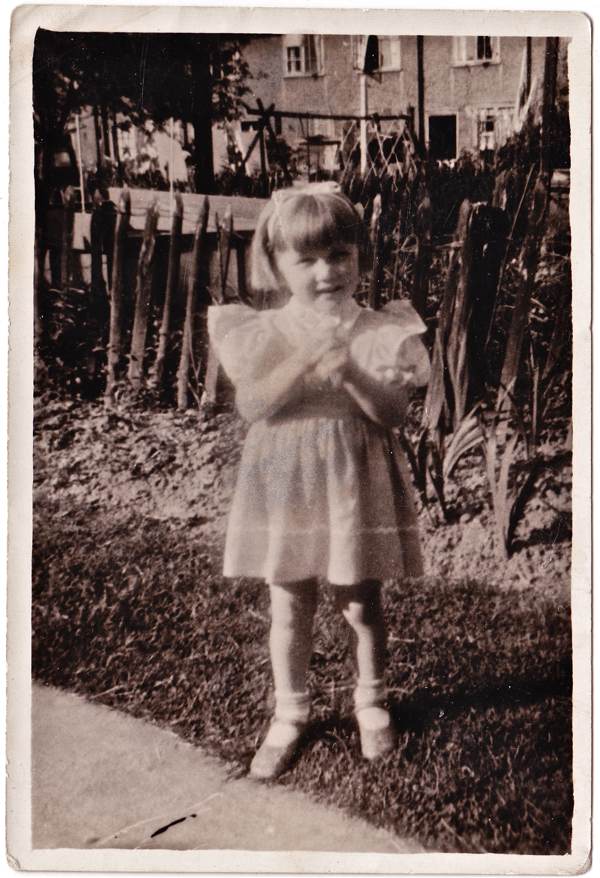
Joy aged four in a dress made by her mother, taken in Dagenham where Joy was born – “My parents moved from Stepney in 1939, both were from the East End.”
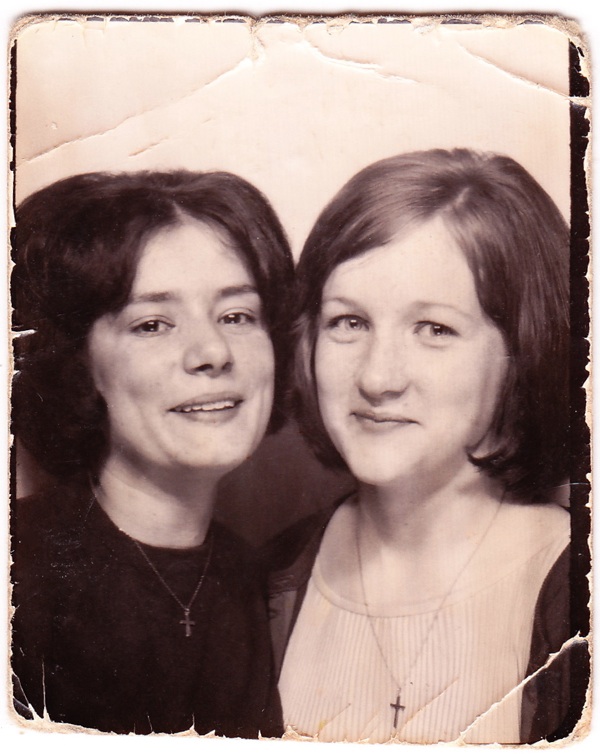
Joy (right) and her best friend Sandra (left), 1961. – “We were always together. We used to see each other every Wednesday night, even after we were married.”
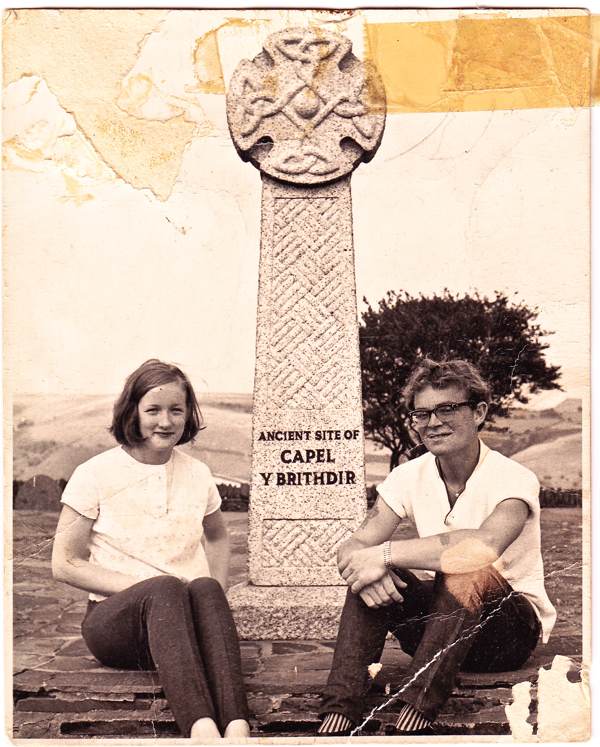
Joy and Larry up a mountain near Gelligaer, Glamorganshire, in 1963, when Joy was seventeen.
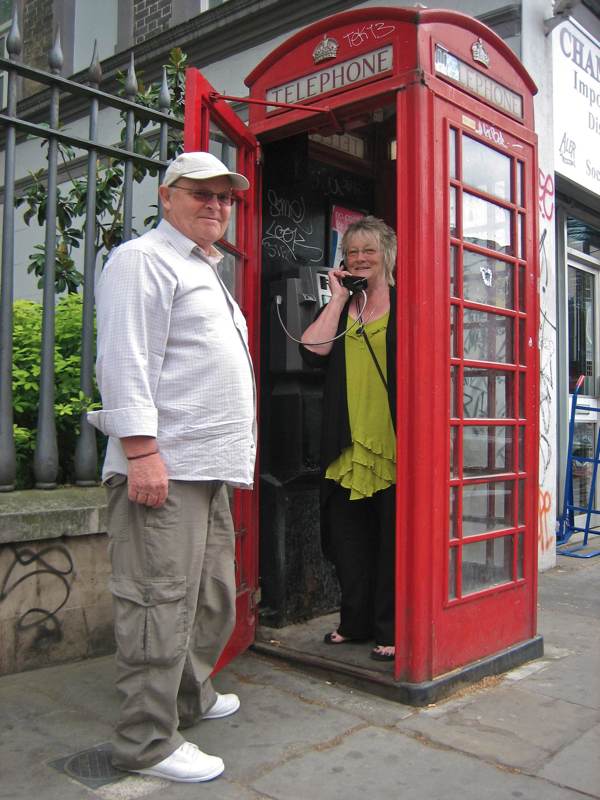
Joy and her husband Larry re-enact the phone call made from this box outside Christ Church Spitalfields in 1963 when Joy rang her sister to learn of the birth of her nephew.
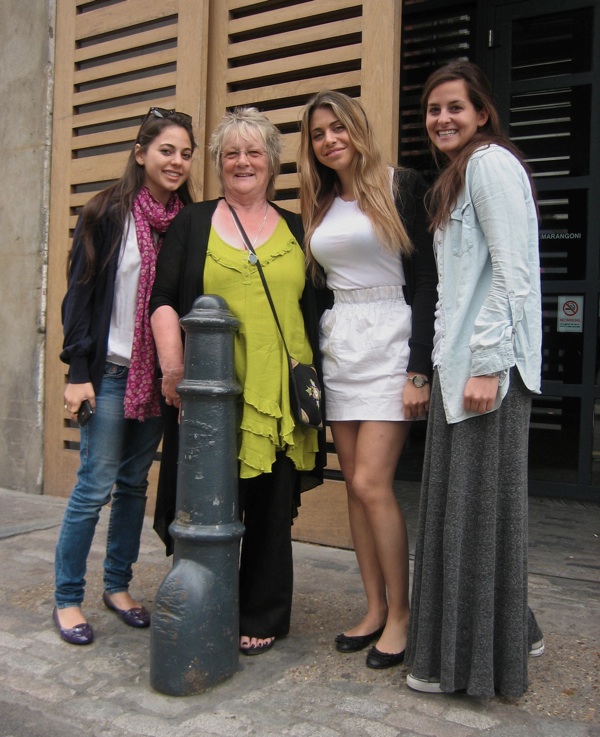
Joy meets Carina Arab, Gulia Felicani and Julie Adler, students at fashion school in Fashion St, on her first return visit since she worked there in a sweatshop in 1963.

Joy at the corner of Brick Lane and Wentworth St where she did her apprenticeship as a dressmaker in 1961, working for Eastex on the third floor. The building is now offices of the Sky network.

Joy Harris, Dressmaker
You may also like to read about
At St Bartholomew The Great
Billy Reading introduces St Bartholomew the Great in Smithfield, one of my favourite City Churches, in this excerpt from his new book Faith Buildings in the City of London published by Historic England and Liverpool University Press.
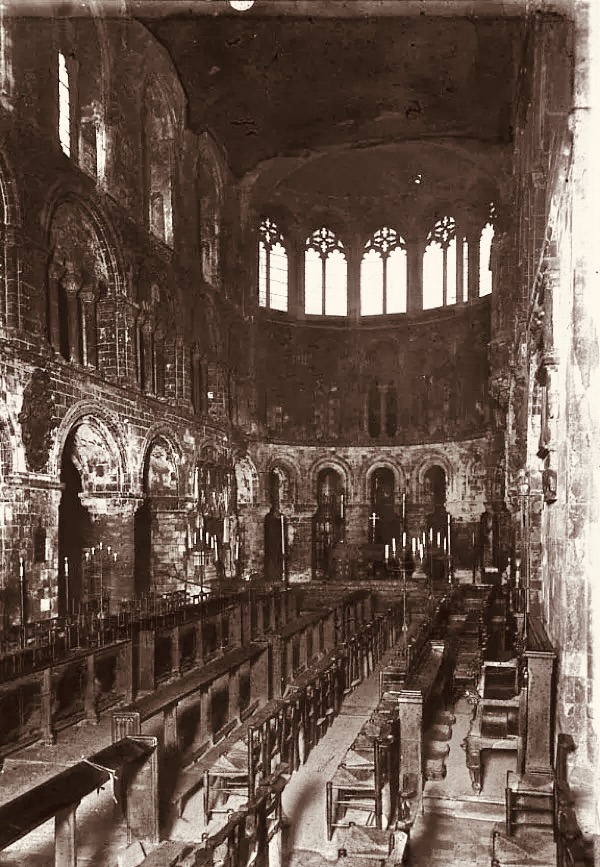
The Norman arcade
You do not soak up the atmosphere at St Bartholomew the Great. Rather, it threatens to soak you up. The gloom is so pervasive it seems it might just blot you out altogether. It is palpably exciting, a feeling you only get with a nine-hundred-year pedigree.
The building began in 1123 with Rahere, a jester-monk in the court of Henry I. He had a Damascene fever-dream while travelling from Rome, and in gratitude for surviving he obeyed the vision, came to Smithfield (‘foul and like a marsh’) and founded a priory. From this origin we can trace a parish, two churches and the venerable hospital next door.
The present built form started to find shape after the Dissolution of the Monasteries. In 1539, King Henry VIII sold off the priory to Sir Richard Rich and refounded the hospital, a moment recorded by the only public statue to him in London, on the hospital gate.
Rich redeveloped the priory site, selling off slivers of land for building. He pulled down the redundant church’s enormous nave to build around its perimeter while opening up the central space as a churchyard. The retained chancel became the parish church. The line of today’s West Smithfield marks where once the west end of the nave reached. The archway under the little Elizabethan house that leads to the sequestered graveyard beyond is in fact thirteenth-century fabric of the former doorway into the south aisle.
Step through and you are standing in what once was the soaring nave, with the cloister to your right and the chancel away ahead – now screened off by a flint west wall and little brick tower from 1628. Sweet, but not indicative of what lies beyond.
You tumble into something incredible: the choir and ambulatory Rahere built, supplanted by the transepts, crossing and one bay of the nave added between 1230 and 1240. You would not immediately notice that the mighty nave, once ten bays long, is missing, since the surviving space is so atmospheric. Where the nave once began at the west end now a vast organ and organ screen loom away into the shadows of the central tower arches. Stretching east from the crossing are five bays of massive Norman columns with their scalloped and cushioned capitals and billet mouldings, an arcaded triforium above and a perpendicular clerestory over that, which admits crystalline light, alleviating the darkness of antiquity. The arcade sweeps towards the apsidal east, with a groin-vaulted ambulatory running behind and beyond. Although subsequent architectural styles are present, it is the solid, undeniable, dignified and venerable Norman work setting the mood. Once three medieval chapels radiated out beyond the apse, replaced in the fourteenth century with the current Lady Chapel. The apsidal arcade was demolished at this time and made straight, its restoration came much later.
The spaces around the retained parish church were haphazardly consumed by the life of the City: an inn stabling horses in the cloister, a hop store in the sacristy, a forge set up in the north transept, a school, cramped itself, limpet like, along the exterior to Cloth Fair. (The structures are still there, you can see them on the outside.) A lay physician from the hospital rented a chamber and latrine in the south triforium arcade, the Lady Chapel was sold off and became a lace fringe factory. By the eighteenth century, the area was increasingly impoverished, and it wasn’t until the later nineteenth century that antiquarian interest in the battered old bones of the place began to slowly turn around the fortunes of St Bartholomew’s.
Sir Aston Webb, famous architect, had long-standing family ties to the parish and seems to have had a love for it, too. He worked extensively here to celebrate and reunite the surviving parts, to stitch them back together. The transepts were recovered and remade, albeit foreshortened. The Lady Chapel of 1335 was reunited. The missing central section of the apse arcade was reinstated, following its original curve. While so many Victorian restorations were disastrous, this one can only be credited. Webb’s patience and persistence, his approach to preservation and repair stimulated by understanding and sympathy, has allowed the full drama of the interior to soar and sing. Because of this, today’s church, grand amputated suffering that it is, ranks among the most important Norman survivors in the south of England.
The scars of these histories and processes remain readily legible, not just in the stones, but also in the deliciously inky shadows.
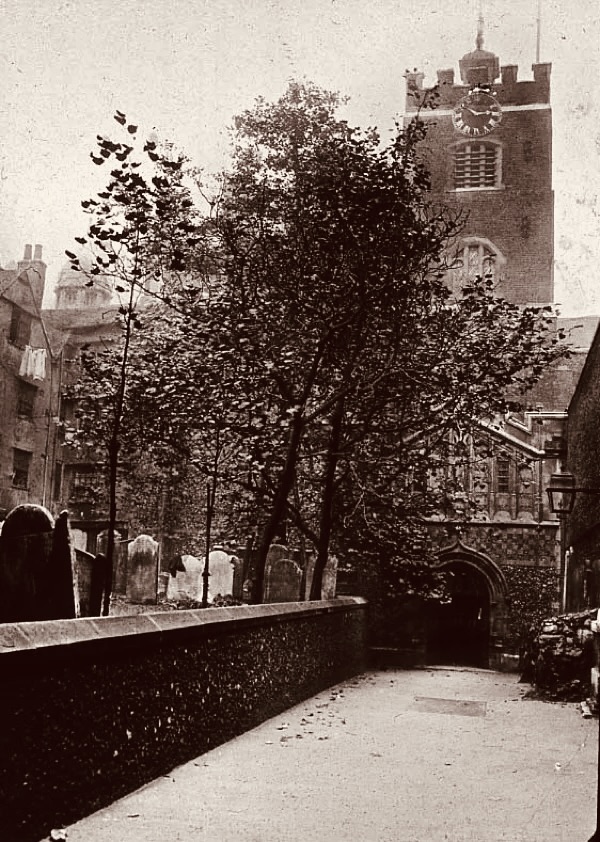
The entrance (Photograph by London & Middlesex Archaeological Society)
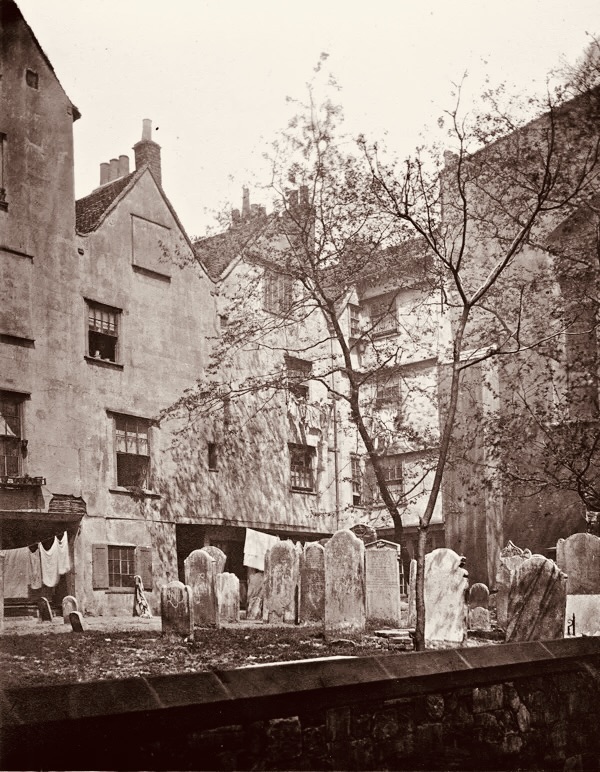
The churchyard (Photograph by London & Middlesex Archaeological Society)
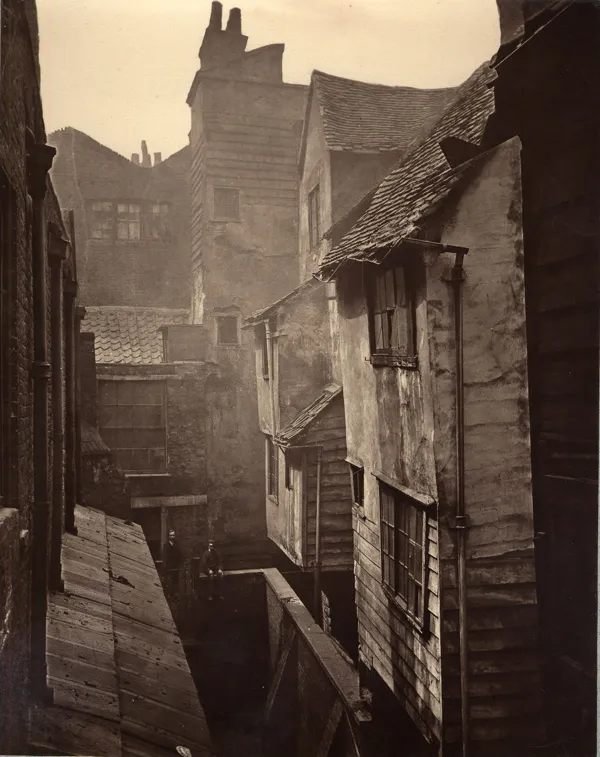
In Bartholomew Close (Photograph by Society for Photographing the Relics of Old London)
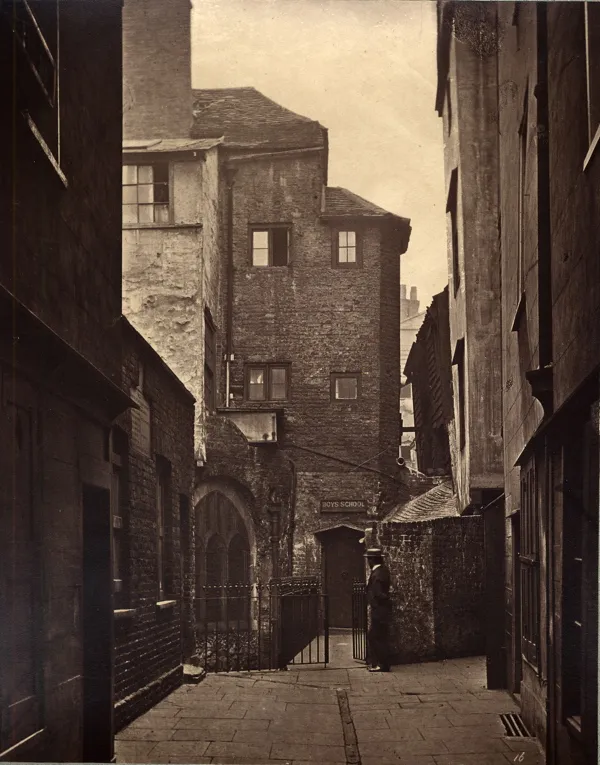
At the rear of St Bartholomew’s (Photograph by Society for Photographing the Relics of Old London)
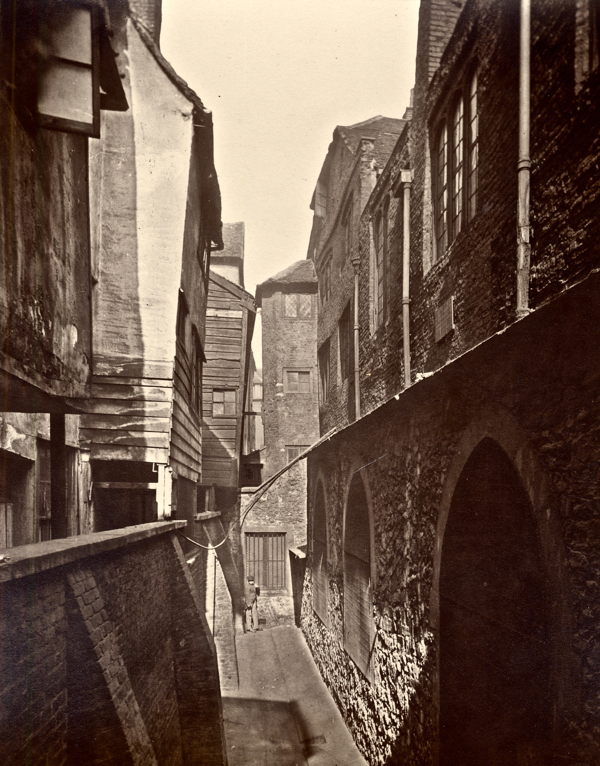
In Bartholomew Close (Photograph by Society for Photographing the Relics of Old London)
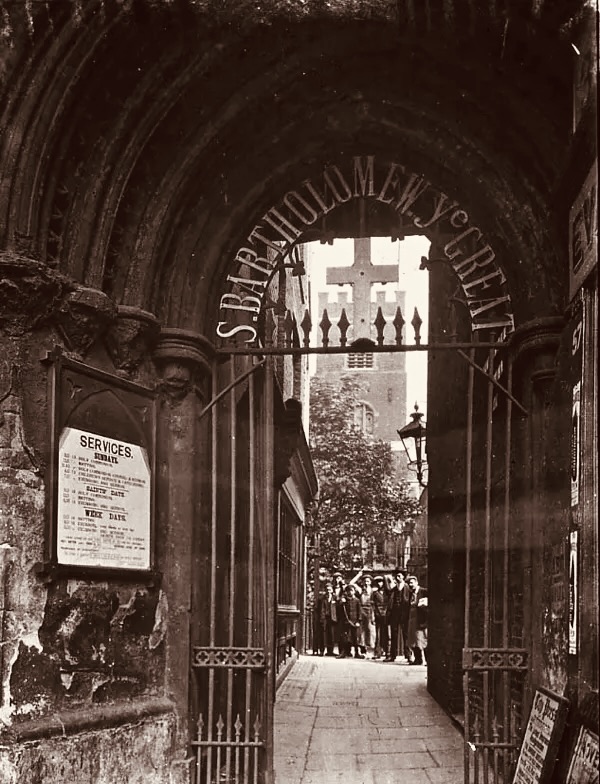
Looking through from Smithfield (Photograph by London & Middlesex Archaeological Society)
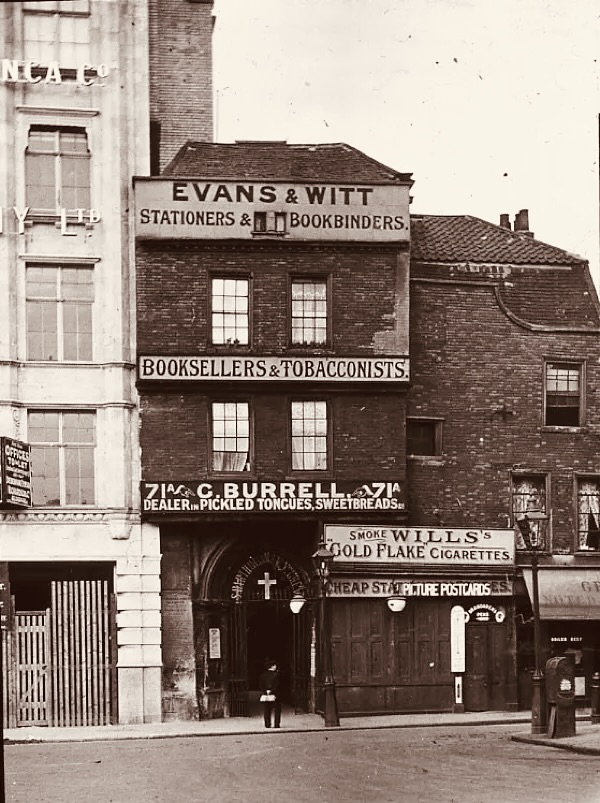
The gatehouse in Smithfield (Photograph by London & Middlesex Archaeological Society)
Photographs from SPROL and LAMAS reproduced courtesy of Bishopsgate Institute
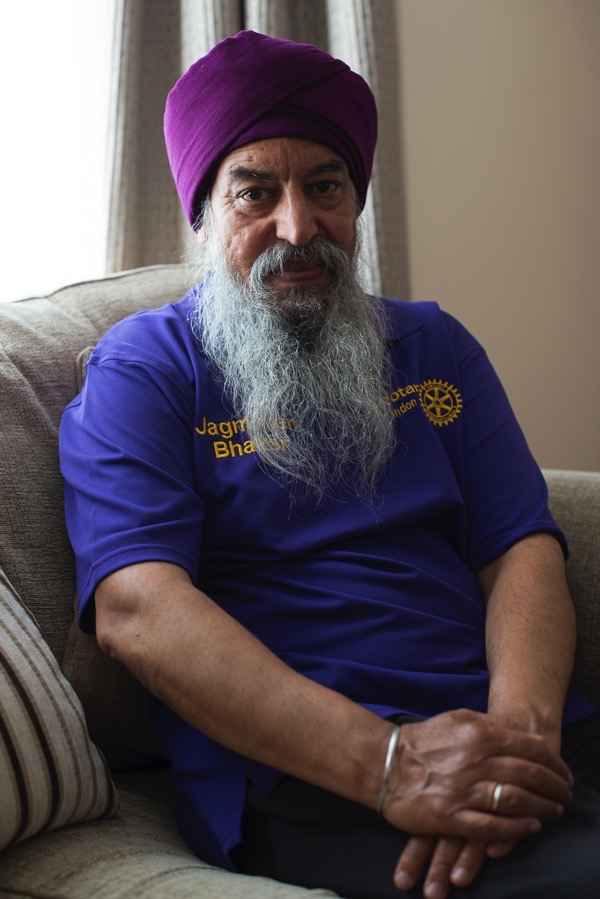
Jagmohan Bhakar, Rotarian
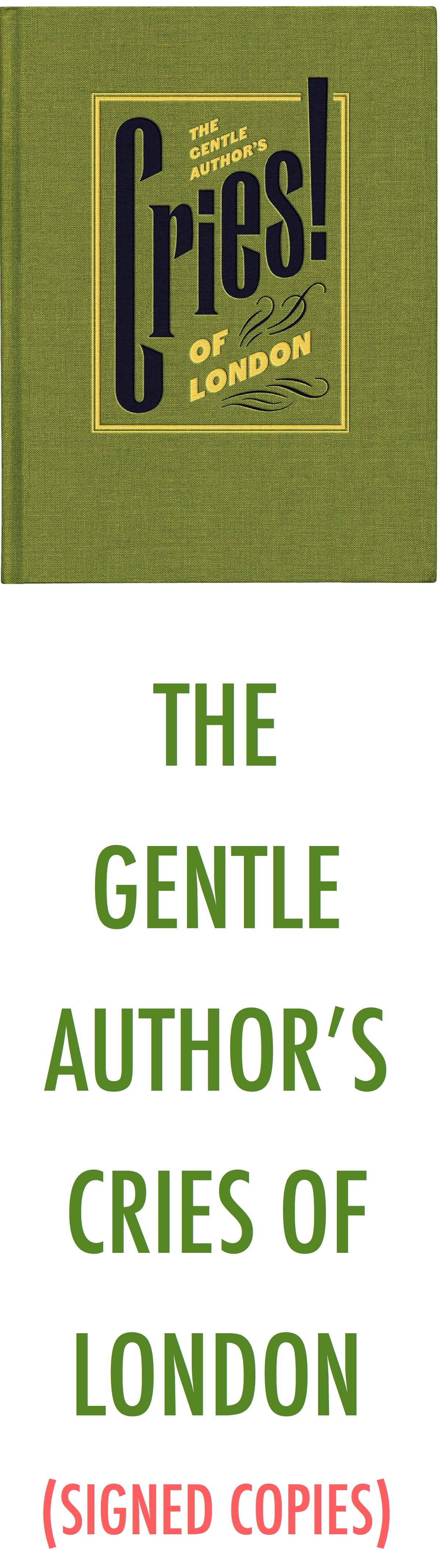
Click here to order a signed copy and get ‘A Hoxton Childhood’ for free
‘Sharing of food is very important in our culture’
When Contributing Photographer Sarah Ainslie & I visited Bow Food Bank last year, we were delighted to make the acquaintance of Jagmohan Bhakar who organises the supply of fresh fruit and vegetables donated each week by the Gurdwara in Campbell Rd. Jagmohan gets up before dawn each Monday to go the New Spitalfields Market in Leyton so that the food bank can offer the freshest produce.
Just a couple of weeks later, we encountered Jagmohan again. This time he was planting trees in Mile End Park on behalf of Tower Hamlets Rotary Club of which he is a keen member. So I asked Jagmohan if we might interview him and he kindly invited us both around for masala tea and prashad at his house in Bow.
When Jagmohan was late because he had been distributing complimentary bottles of water to runners in the City of London marathon, we realised that a certain pattern of behaviour was emerging. In becoming a Rotarian, Jagmohan has found the ideal vehicle to permit him the expression of his sense of generosity and service to others which is central to his Sikhism.
“I was born in Ambala in India and came here in 1967, when my father Dehal Singh Bhakar called my mother and me, my brother and two sisters to join him here. Since then I have lived in London. It was exciting to move to another world and be reunited with your family. My dad came in 1948 and it was quite some time since we had seen him. I was twelve years old and pleased to be with my family, I struggled to learn English. It was a new life of new experiences.
When my father came, he and some others worked as pedlars around Euston. They purchased textile goods near Liverpool St Station where there were Asian suppliers and sold them in different areas to make a living. At first he lived around Aldgate and Brick Lane, but by the time we arrived he was were living in 10 Piggott St in Limehouse. It was a big family home and a centre for many of our relatives, when they came to London it was their first stop. We all used to get together, and everybody loved seeing each other and going to each others’ houses.
School was difficult at that time in the sixties. I had a little bit of a language problem and also a difficulty in making any friends who were other peoples. It was a new experience. It was challenging, especially in the seventies after Enoch Powell made his speech. He was a bloody one. It was a sad time. People were very concerned. We were thinking of going back home. Some people left and came back later. Times were tough. At that time, many people from our community lived in Tower Hamlets in East London but because of the issues they started moving further out to Forest Gate and Manor Park. That was the reason they moved from Tower Hamlets to Newham.
I went to Langdon Park School in Poplar, there were only a few other pupils who were Sikhs. It was not bad. I am quiet by nature so I do not have many friends anyway. I had good days and bad days. We had no alternative because we had decided to make this our homeland, so we could not have second thoughts. Sometimes I had problems, walking down the road, there might be some abuse. I was beaten up a few times.
Over the years, things have changed. When I was seventeen years old, I left school and went to college. I studied Engineering but after that I could not find a job. Perhaps the course I had taken was too theoretical? I wanted a job in industry but they asked if I had any practical experience, which I did not. Times were hard. There were not many apprenticeships. I did some odd jobs.
My father was doing a little bit of business to keep himself, so I joined him after that, working in property lettings. Even the lettings were not that good at that time but we survived. I used to do the running around while he took the more relaxed role. It was not big business, just looking after the family really. But slowly things improved and it made life a little more comfortable. Today, me and my brother manage lettings for a few properties that my father left. We are doing much the same thing he did.
We are a very big family because my father had seven brothers and one sister. He was the youngest of his brothers. Obviously, they could not all stay in that house in Limehouse where my father lived with two of my uncles. Members of the family only stayed there until they could organise something for themselves. A year after we arrived in London, my father moved us here to Lyal Rd off Roman Rd where I still live today. I remember my brother buying toys from Gary Arber’s shop.
For the past seven years, I have been a member of the Rotary Club. I saw an advert in the Sunday Times and I have been with them from that time onwards. Sharing of food is very important in our culture. You always offer food when you greet anyone and we offer food to everyone at our gurdwaras. This custom of ‘lungar’ started with our first guru in the mid-fifteenth century. The idea was to eradicate the caste system, so everyone could sit and eat together on the same platform without hierarchy. Most people were desperate to be fed. It was sharing food and praying together under one roof so everybody felt in common with each other. ‘Love they neighbour and think of others as you are’ – anyone that follows these principles is a Sikh.”
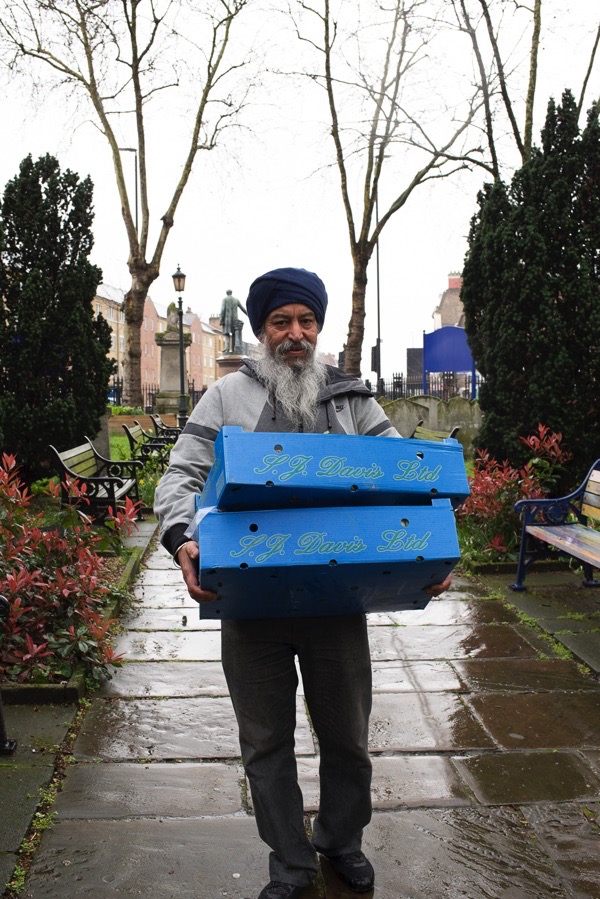
Jagmohan delivers fresh vegetables weekly to Bow Food Bank on behalf of the Gurdwara in Campbell Rd

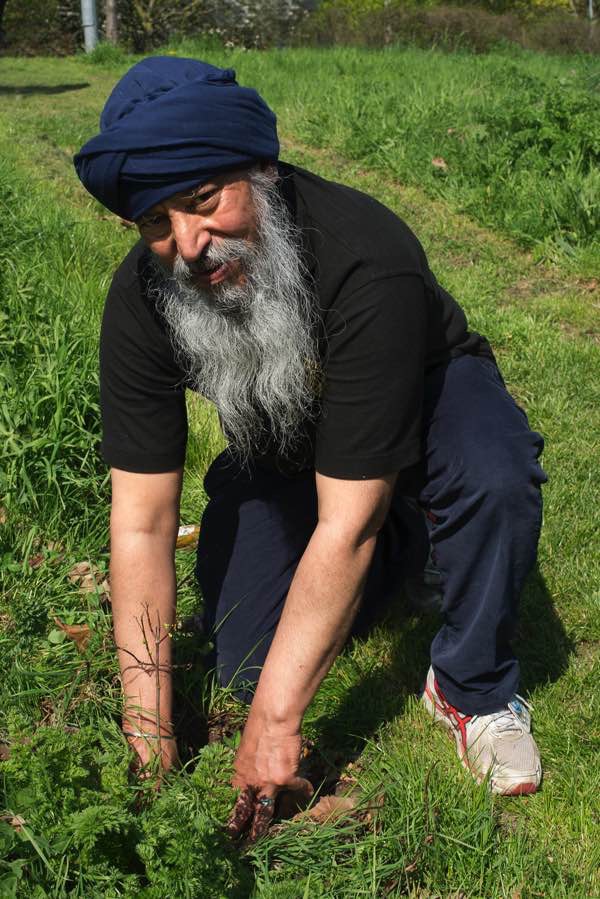
Jagmohan planting trees in Mile End Park on behalf of the Tower Hamlets Rotary Club
Photographs copyright © Sarah Ainslie
You may also like to read about
A Lost Corner Of Whitechapel
Click here to order a signed copy and get ‘A Hoxton Childhood’ for free
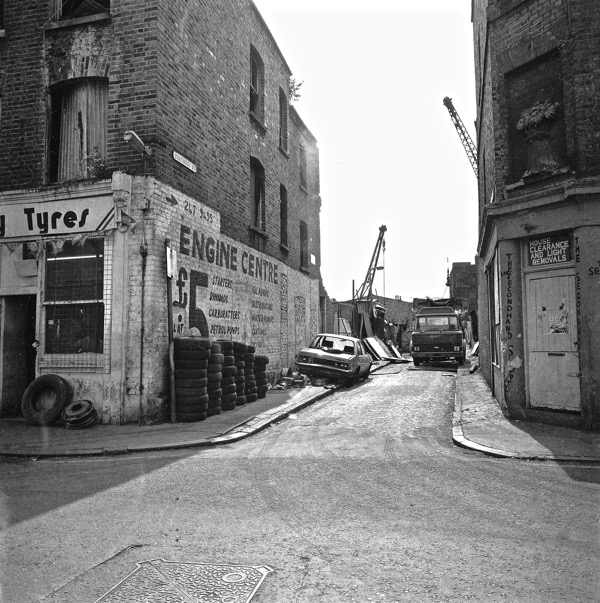
At the rear of Whitechapel Station is a sports centre and an empty square, but photographer Philip Cunningham recorded the vanished streets and yards that former occupied this lost corner
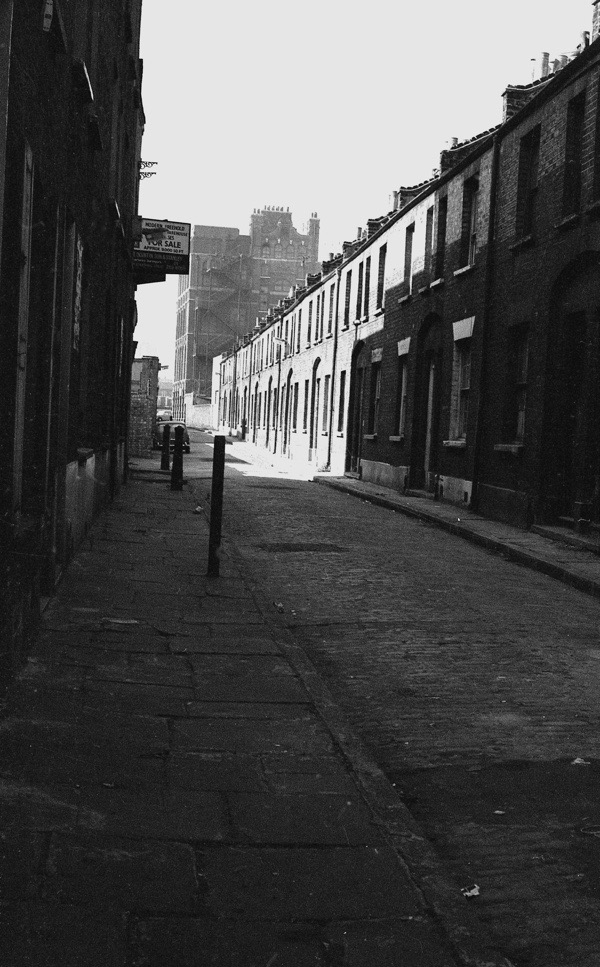
Winthrop St
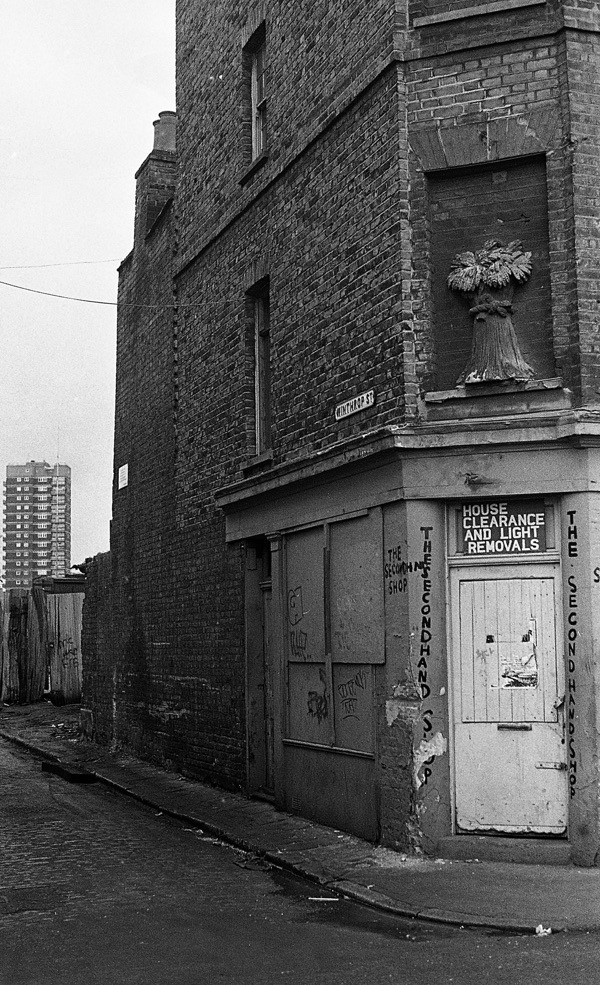
“I first started taking photographs of Winthrop St and Woods Buildings in Whitechapel in the mid-seventies. I remember the first time I went to Winthrop St on a cold frosty morning with a bright blue sky. A woman came out of one of the houses and asked what I was doing. ‘Photographing the streets,’ I said. ‘You’d better hurry up they’re coming down!’ she replied. She was right, within a few months they were gone.
‘Comprehensive Development’ was the only philosophy pursued by the London County Council and Greater London Council for rebuilding London after the war. Their planners complained that too much pre-war building was left, making comprehensive planning really difficult. Yet it would not have taken much imagination to have incorporated streets like these within any new development, creating a richer and more diverse urban landscape.
Even Mile End Place, where I lived in my grandfather’s house, was designated for demolition in 1968 to become a car park for Queen Mary College. Fortunately, the council did not have enough money to build flats for us to be decanted into so our street was saved.”
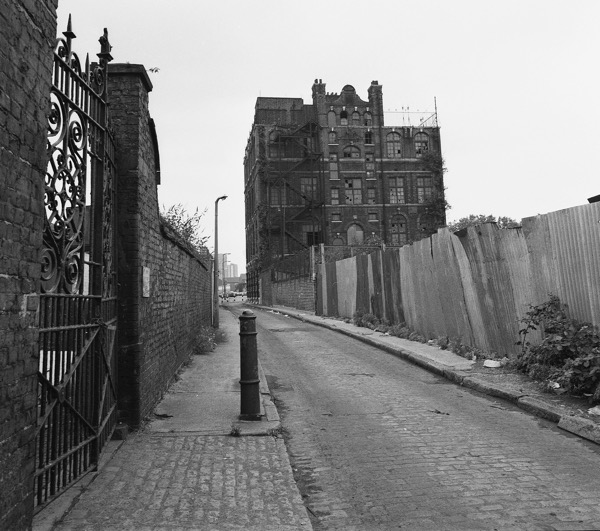
Winthrop St
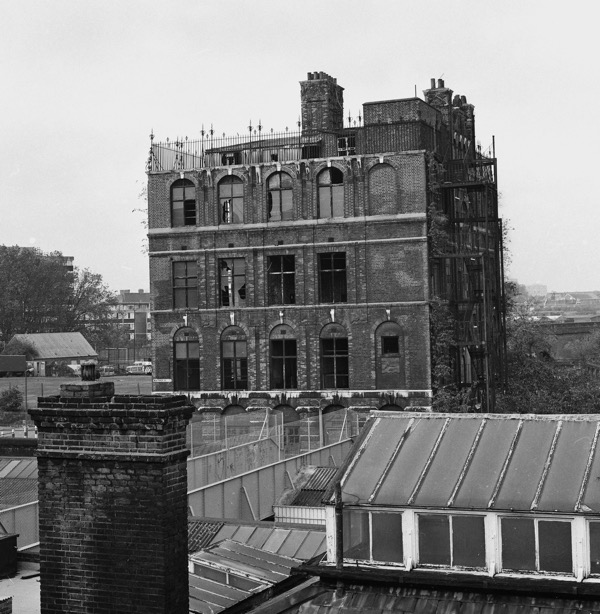
Durward St School was built in 1876 and eventually restored by the Spitalfields Trust in 1990
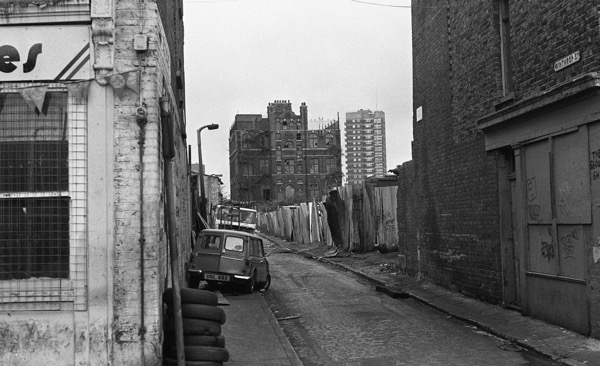
Winthrop St
Winthrop St
Winthrop St
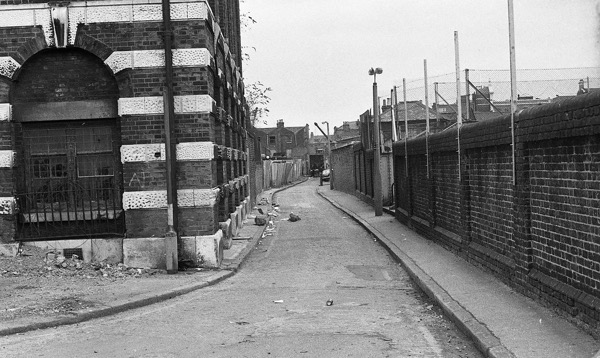
Winthrop St
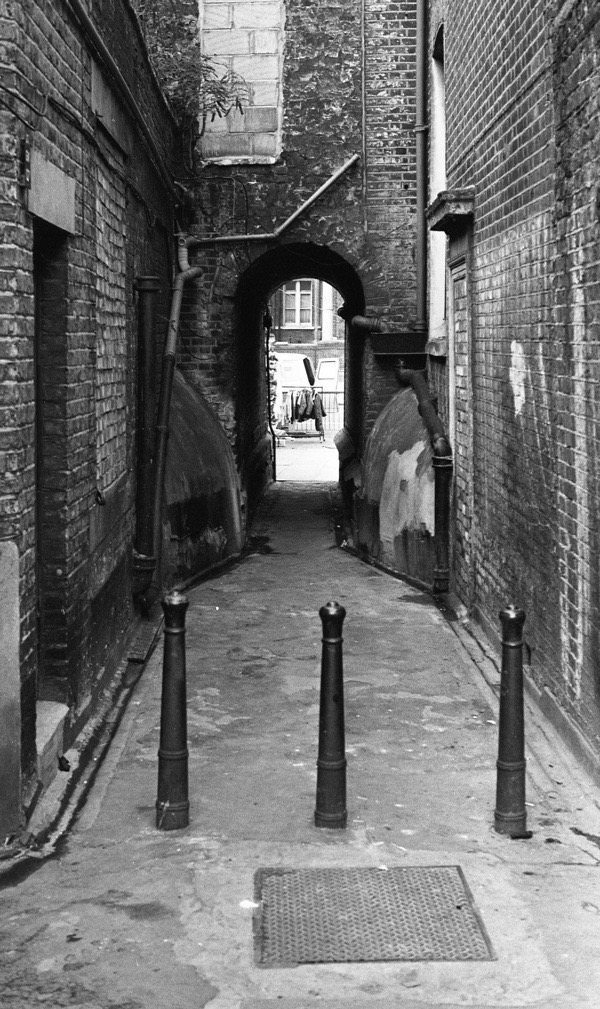
Woods Buildings looking towards Whitechapel Market
“Woods Buildings was a subject I photographed over and over, it always held that feeling for me of Dickens’ London. To the left, as you approached the arch under the buildings, was a urinal and when I climbed the wall to take a look, it appeared to be for public use but had been bricked up. It must have been quite intimidating to pass through that passage at night.”
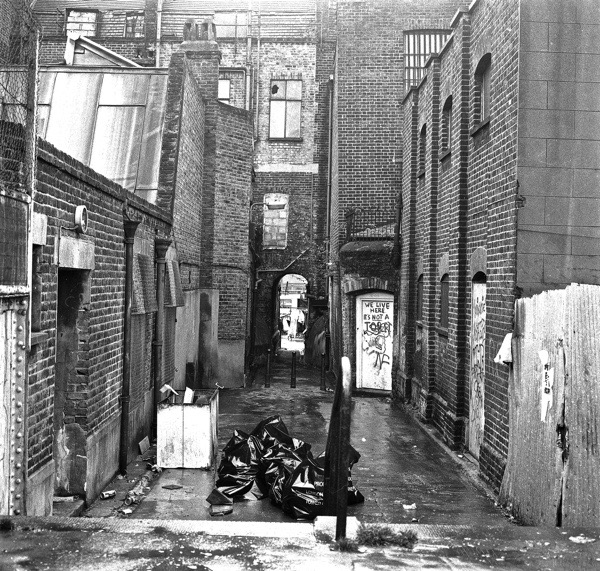
‘We live here, it’s not a toilet’
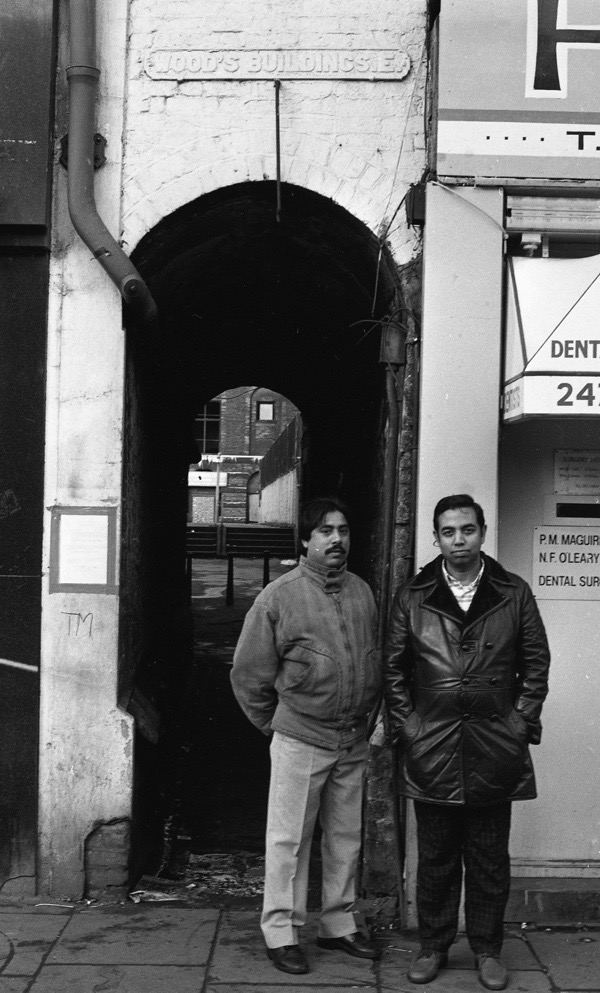
Entrance to Woods Buildings in Whitechapel Market
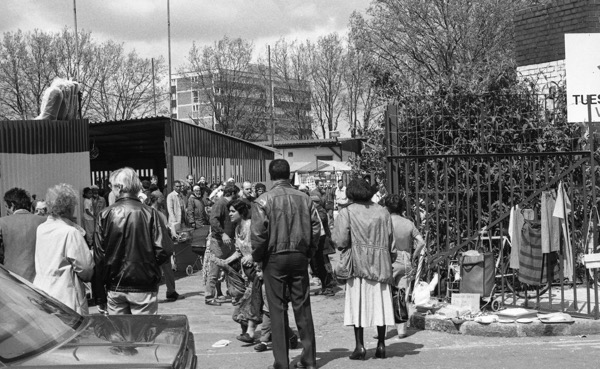
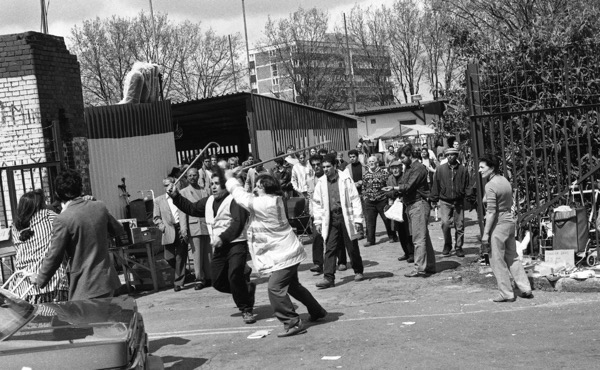
“By 1984, the land opposite Woods Buildings on the north side comprised a combination of wasteland and sheds where a boot fair would be held every Sunday. It was licensed by the Council and very popular. One Sunday, I observed a group of Romanians selling secondhand clothes just outside the compound which did not go down well with the gatekeepers as they had not paid a fee. There followed a quite violent fracas, although fortunately no one was seriously hurt and only a little blood spilt. I felt sorry for the children, it must have been frightening for them. Those were desperate days!”

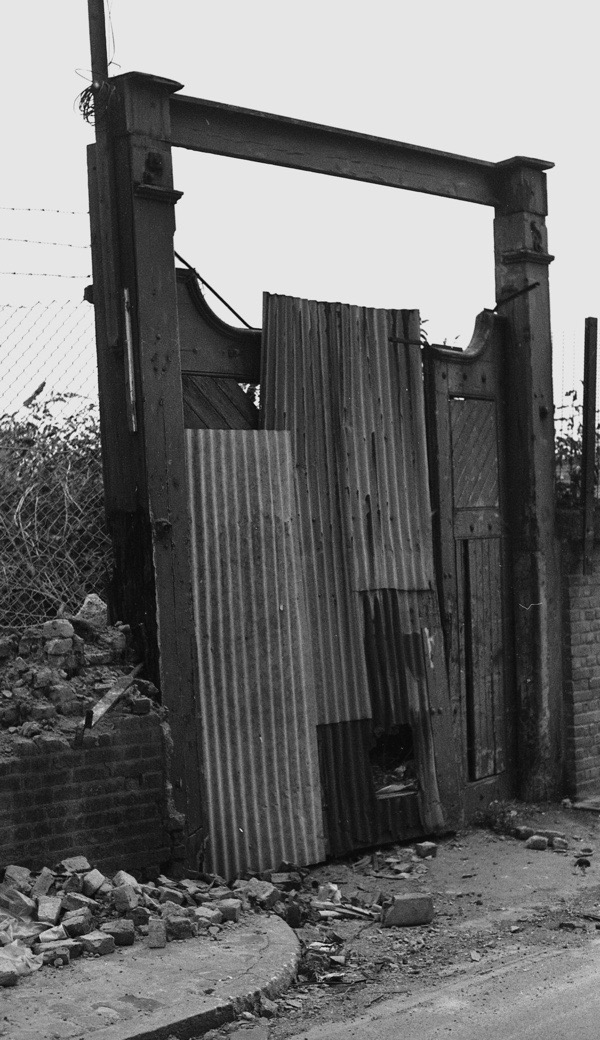
Durward St
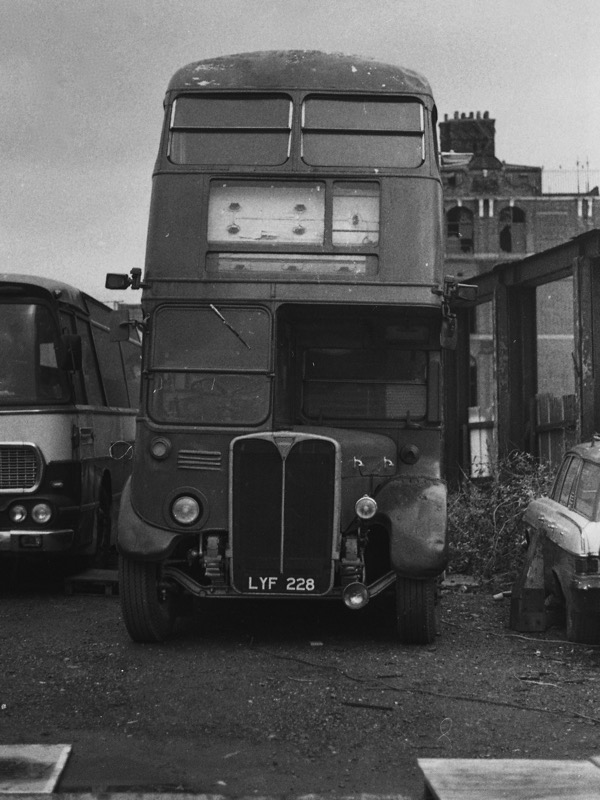
Photographs copyright © Philip Cunningham
You may also like to take a look at
Philip Cunningham’s East End Portraits