At The Caslon Foundry In Chiswell St
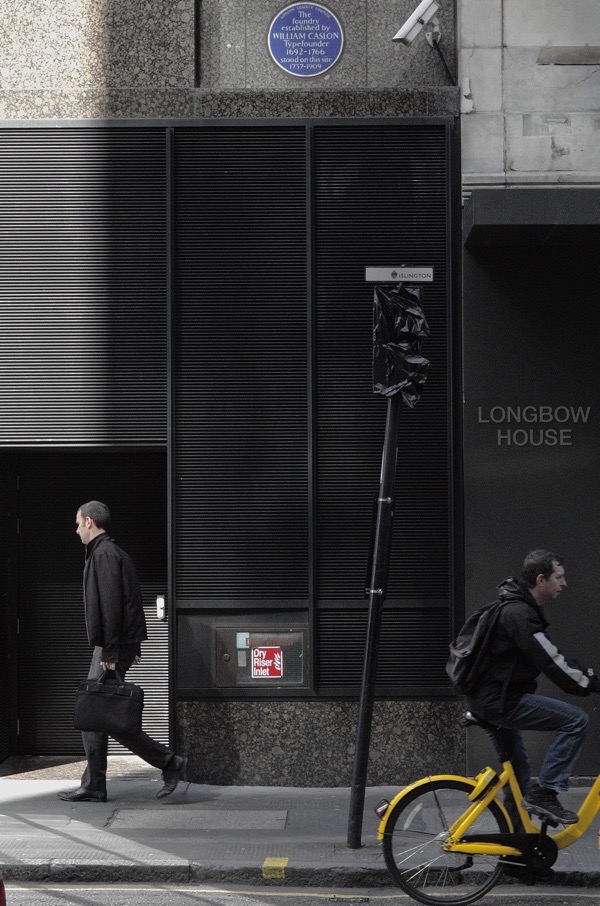
22/23 Chiswell St
Chiswell St is a canyon lined with glass and steel buildings leading from Moorgate to the Barbican today, yet once this was the centre of printing in the City of London. The foundry established by William Caslon in 1737, Britain’s most celebrated type designer, stood here until 1937. For more than two centuries, Caslon was the default typeface for printing in the English language and when the Americans wanted to make their Declaration of Independence and publish their Constitution, they imported type from the Caslon Foundry in Chiswell St to do it.
These historic photographs from St Bride Printing Library, taken in 1902 upon the occasion of the opening of the new Caslon factory in Hackney Wick, record both the final decades of the unchanged work of traditional type-founding, as well as the mechanisation of the process that would eventually lead to the industry being swept away by the end of the century.

22/23 Chiswell St with Caslon’s delivery van outside the foundry

The Directors’ Room with portraits of William Caslon and Elizabeth Caslon

Sydney Caslon Smith in his office

Clerks’ office, 15th November 1902. A woman sits at her typewriter in the centre of the office.

Type store with fonts being made up in packets by women and boys working by candlelight

Another view of the type store with women making up packets of fonts

Another view of the type store

Another part of the type store
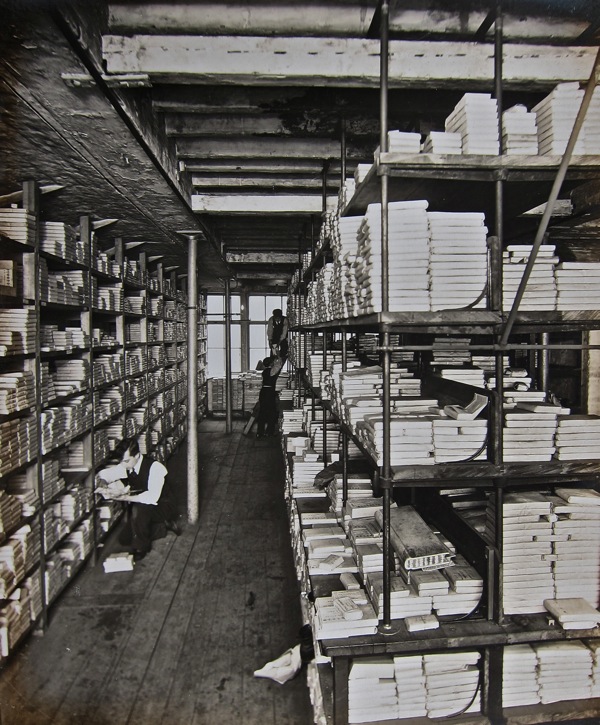
In the type store
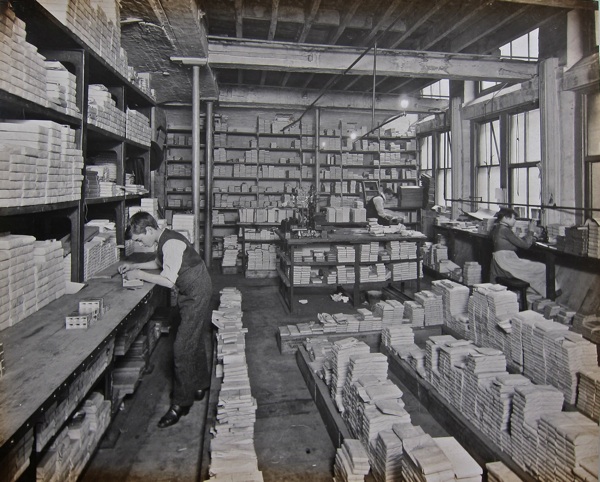
A boy makes up a packet of fonts in the type store

Room of printers’ supplies including type cases, forme trolleys and electro cabinets
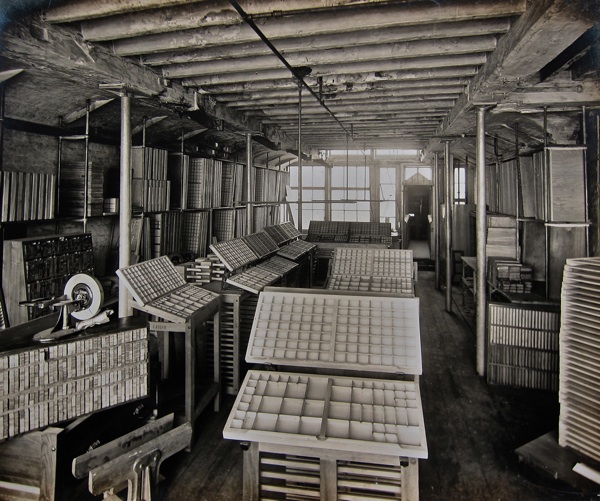
Another view of the printers’ supplies store

Printing office on an upper floor with pages of type specimens being set and printed on Albion and Imperial handpresses.

Packing department with crates labelled GER, GWR, LNWR, CALCUTTA, BOMBAY, and SYDNEY

New Caslon Letter Foundry at Rothbury Rd, Hackney Wick, 1902

Harold Arthur Caslon Smith at his rolltop desk in Hackney Wick with type specimens from 1780 on the wall, Friday 7th November, 1902

Machine shop with plane, lathes and overhead belting

Gas engines and man with oil can

Lathes in the Machine Shop

Hand forging in the Machine Shop

Another view of lathes in the Machine Shop

Type store with fonts being made up into packets
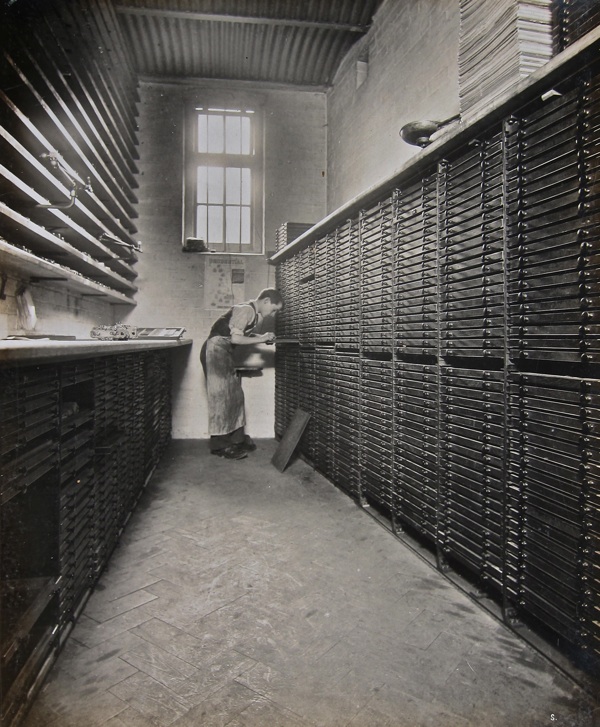
Type matrix and mould store
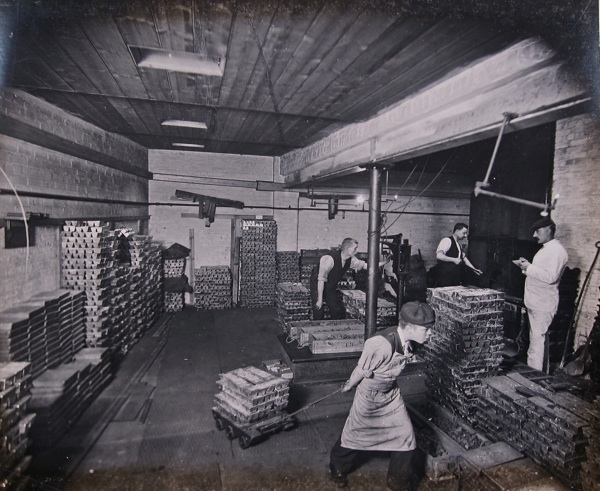
Metal store with boy hauling pigs upon a trolley

Casting Shop, with women breaking off excess metal and rubbing the type at the window

Another view of the Casting Shop.
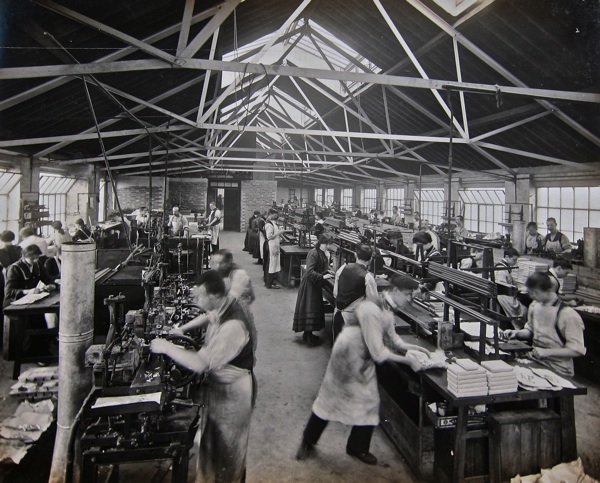
Another view of the Casting Shop

Founting Shop, with women breaking up the type and a man dressing the type

Casting metal furniture

Boys at work in the Brass Rule Shop

Boys making packets of fonts in the Despatch Shop, with delivery van waiting outside the door

Machine shop on the top floor with a fly-press in the bottom left

Woodwork Shop

Brass Rule Shop, hand-planing the rules

Caretaker’s cottage with caretaker’s wife and the factory cat
Photographs courtesy St Bride Printing Library
You may also like to read about
William Caslon, Letter Founder
A Chance To Visit The Old London Hospital
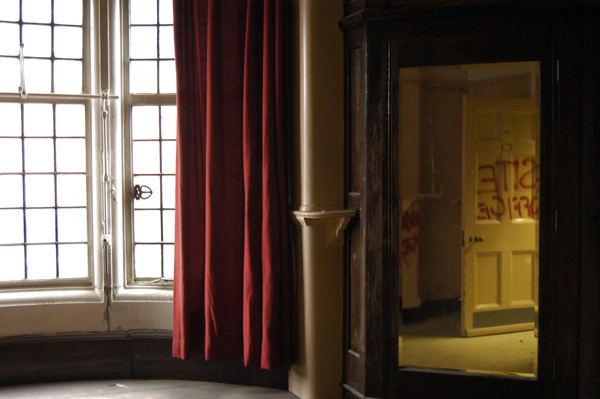
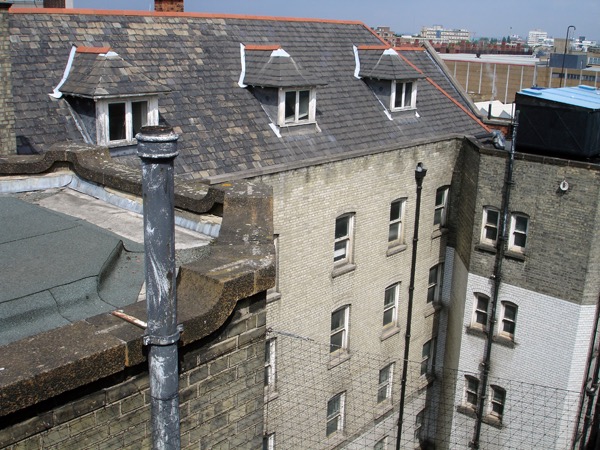
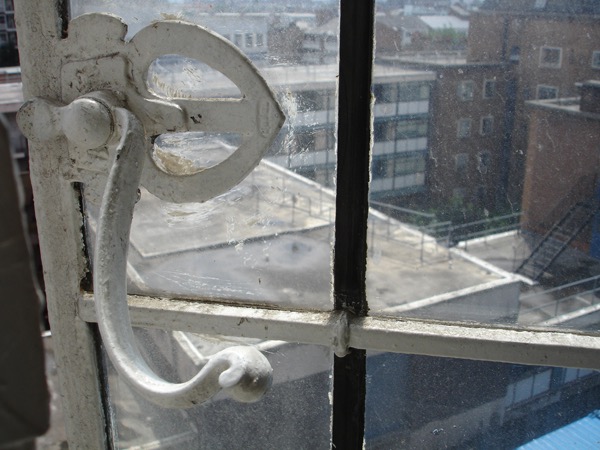
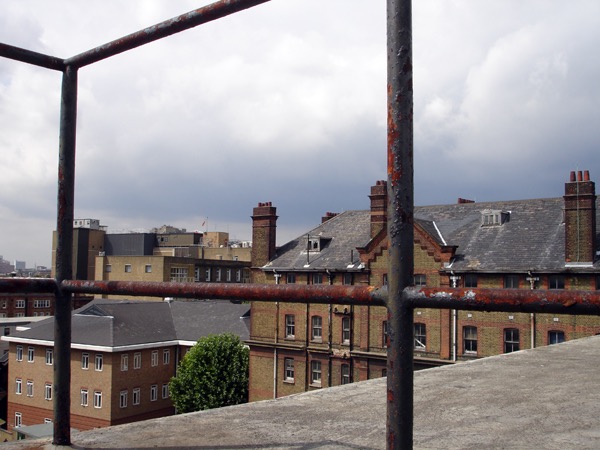
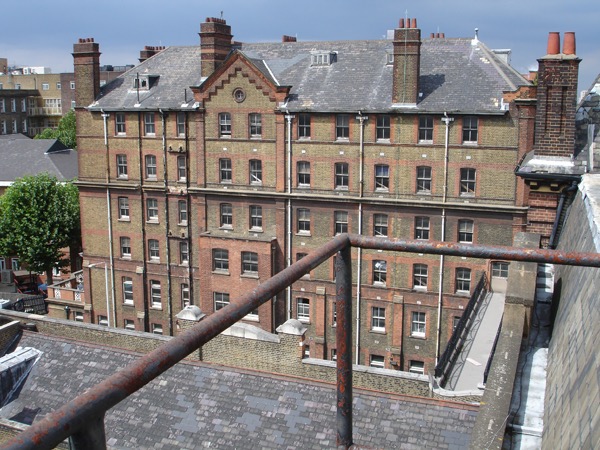
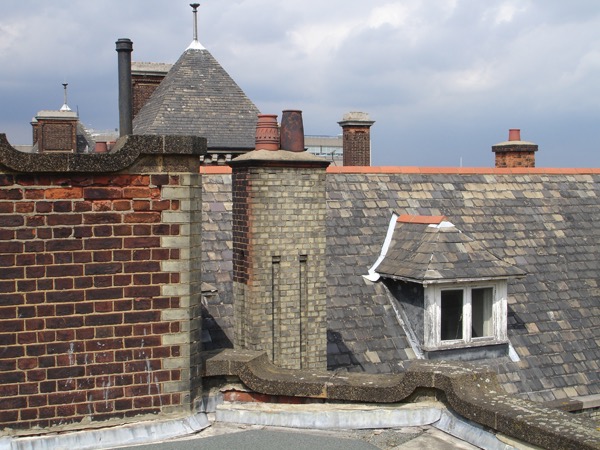
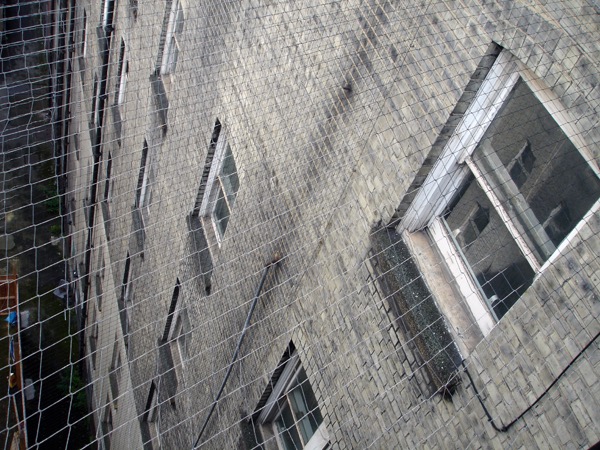
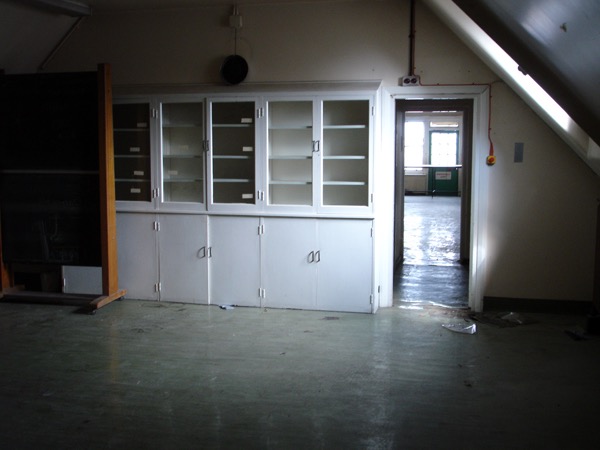
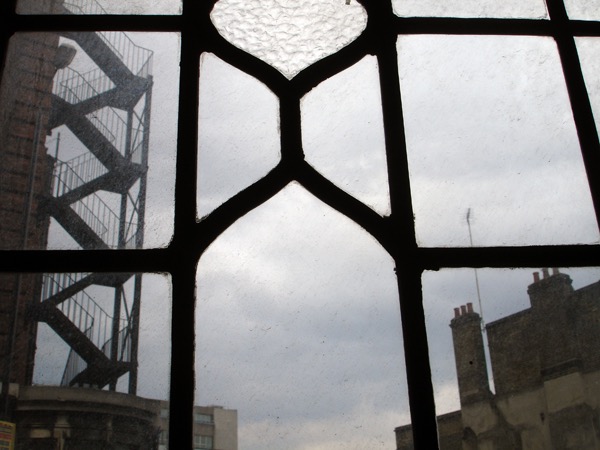
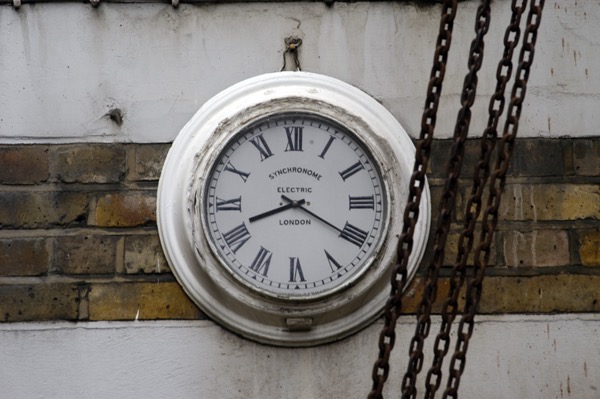
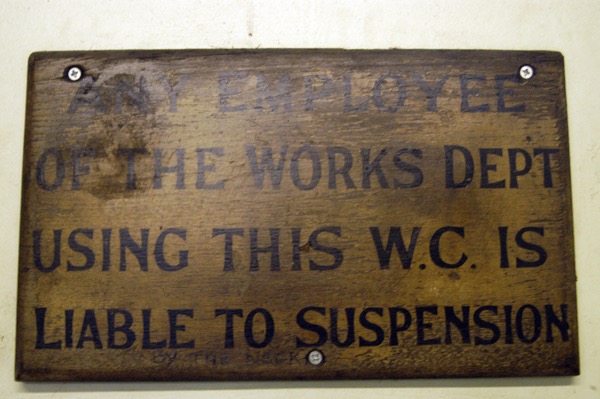
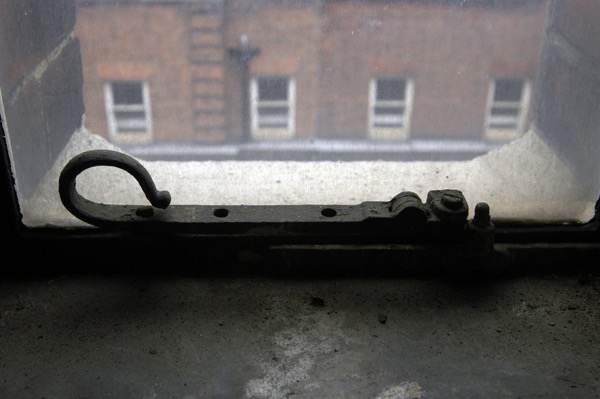
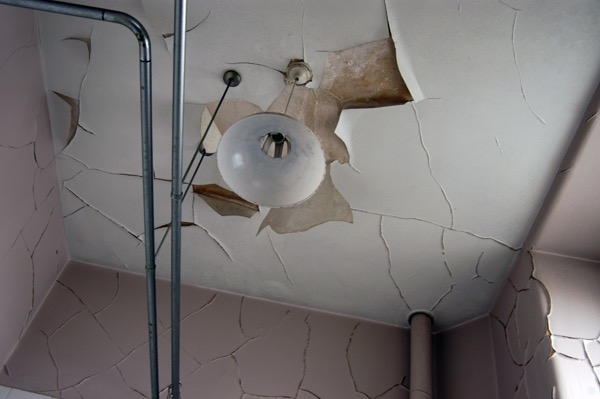
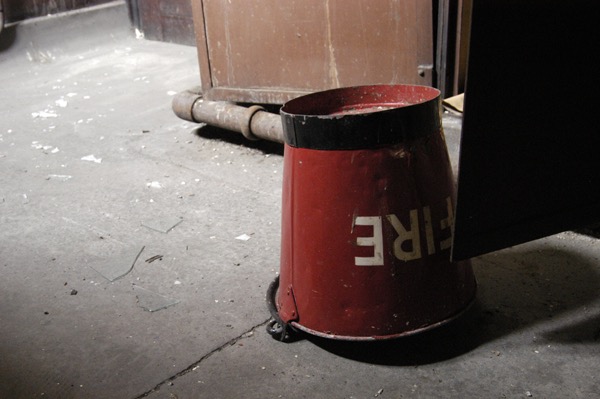
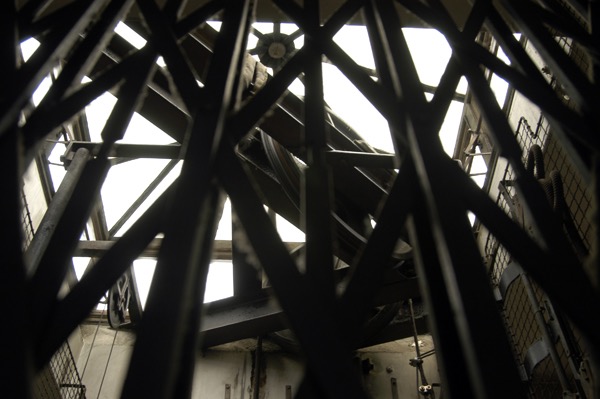
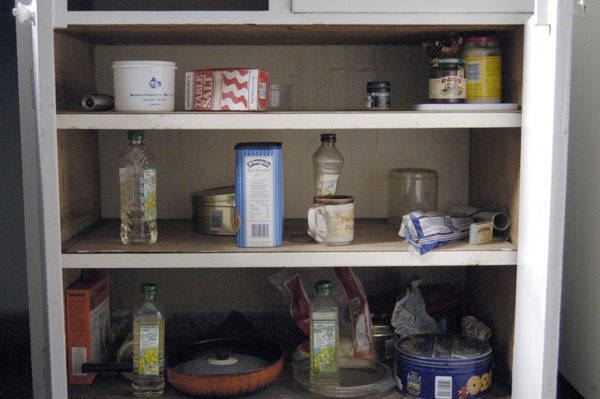
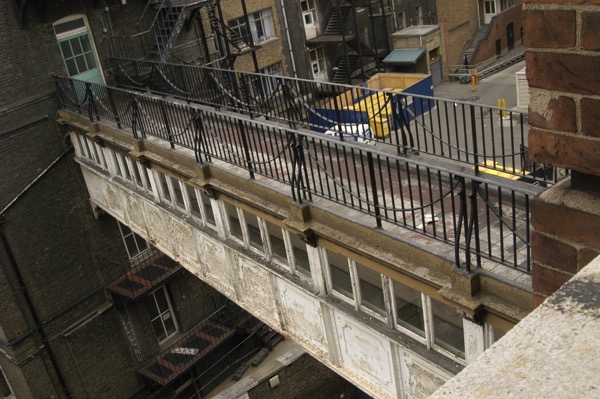
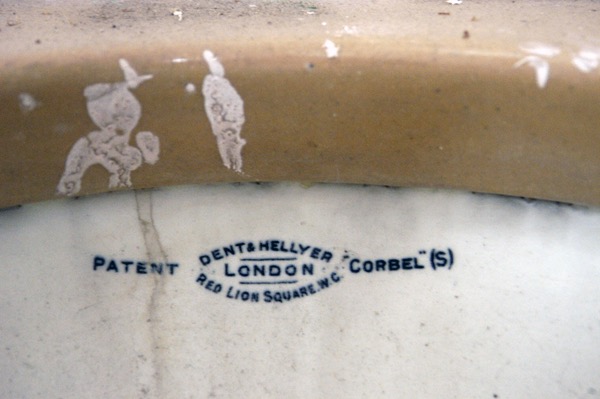
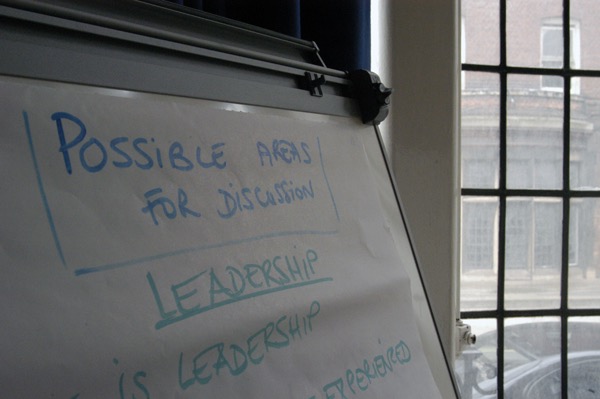
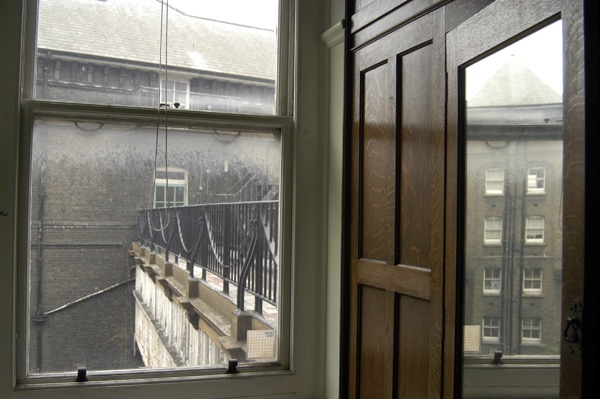
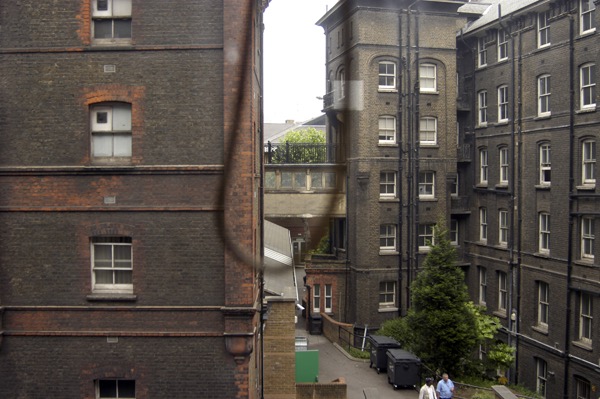
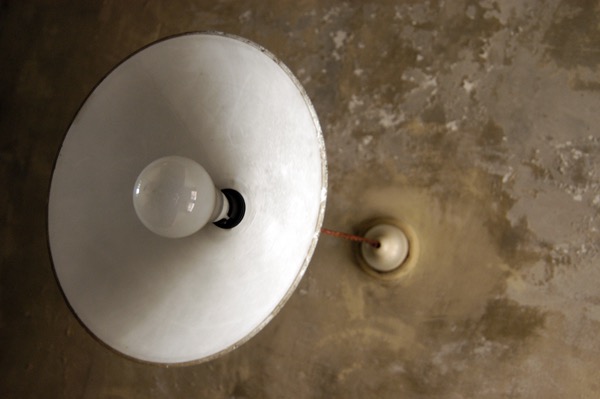
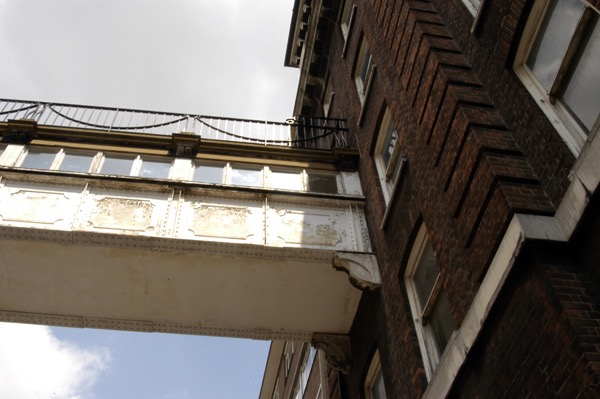
Inhabited only by the lonely ghost of Joseph Merrick, the former Royal London Hospital building in Whitechapel sits in limbo awaiting its new purpose as Town Hall for the Borough of Tower Hamlets.
Yet before the redevelopment begins there is a chance to take a guided tour of the hospital estate on Saturday 28th April, courtesy of the Survey of London whose volume on the buildings of Whitechapel will be published next year. Click here to book.
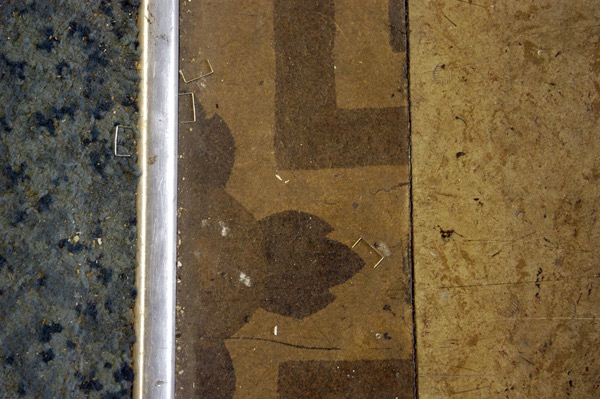
Contributing Photographer Phil Maxwell was granted privileged access to record the empty hospital. His new film Pensioners United, created in collaboration with Hazuan Hashim, has its premiere at the East End Film Festival on Friday 27th April. Click here to book.
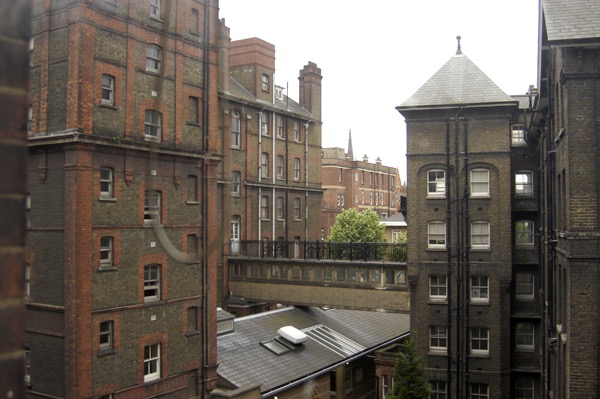
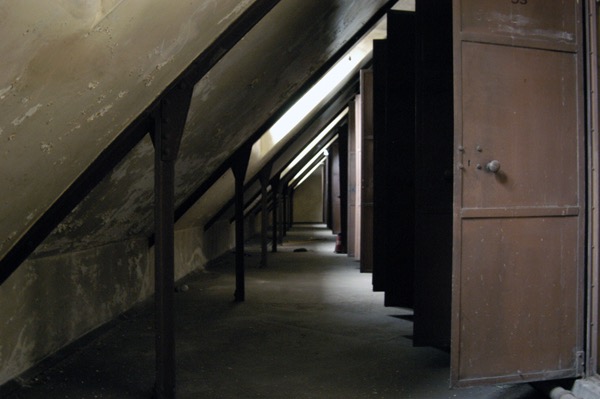
Photographs copyright © Phil Maxwell
You may also like to take a look at
At The House Mill
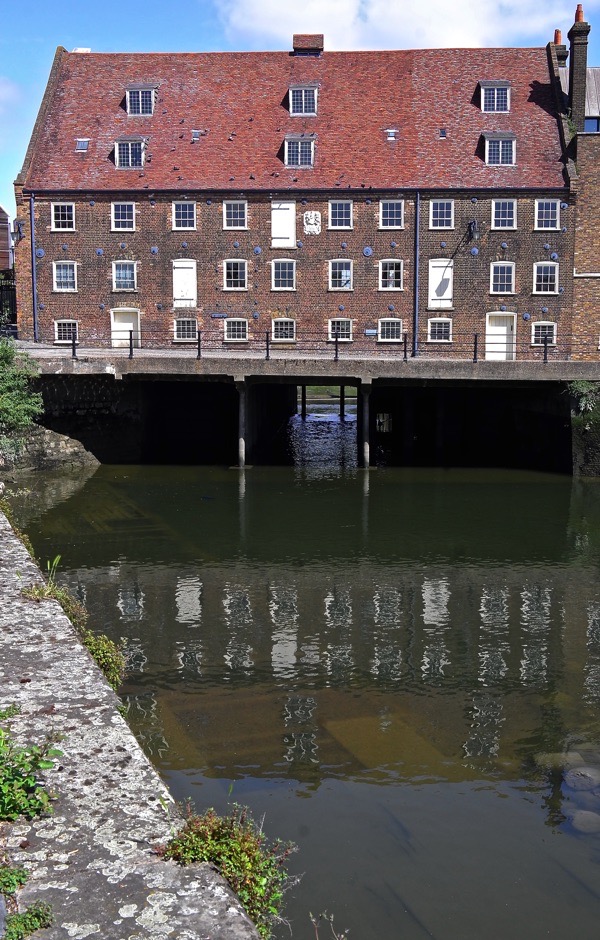
The House Mill of 1776 at Bromley by Bow is the largest tidal mill in the world and the only remaining mill at Three Mill Island on the River Lea, an artificial island created in ancient times – like Venice – by driving thousands of wooden stakes into the mud, for the purpose of harnessing the powerful tidal surge of the Thames. Daniel Bisson, a Huguenot, built the House Mill for grinding grain to bake bread and the manufacture of gin to supply London, and it functioned here until the end of World War II, before falling into disrepair.
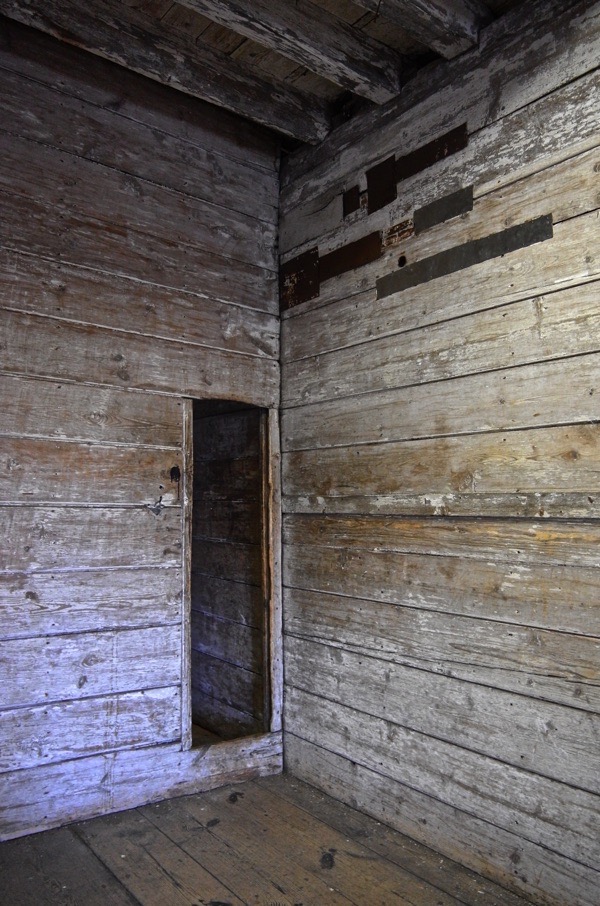
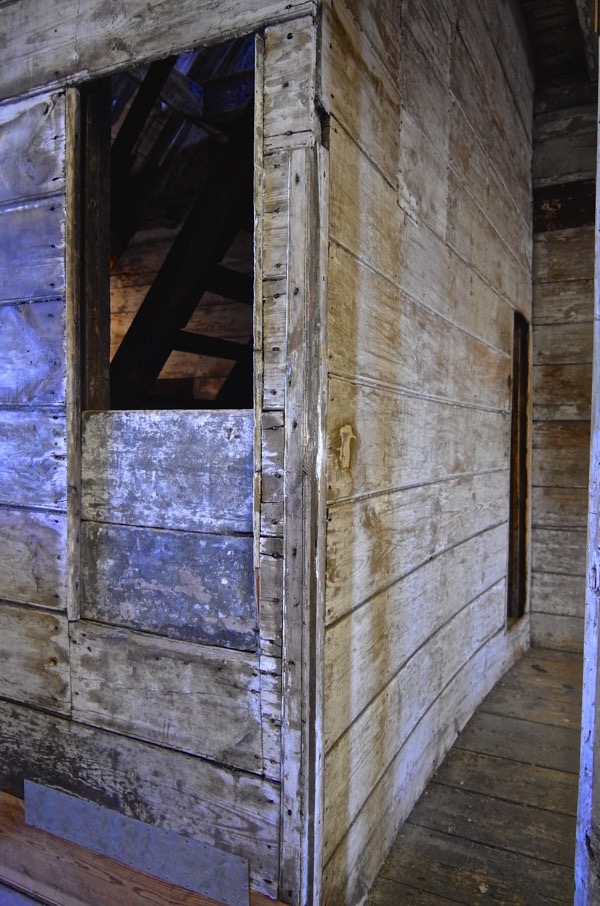
Twenty-five years ago, William Hill saw the derelict mill from the train and came to explore. He became one of a group of committed volunteers who have been responsible for overseeing the magnificent restoration programme of recent years, and it was he who showed me round. We spent a couple of hours, climbing up and down ladders, and exploring every corner of the huge old mill, including those parts not open to visitors – enabling me to create this photographic record.
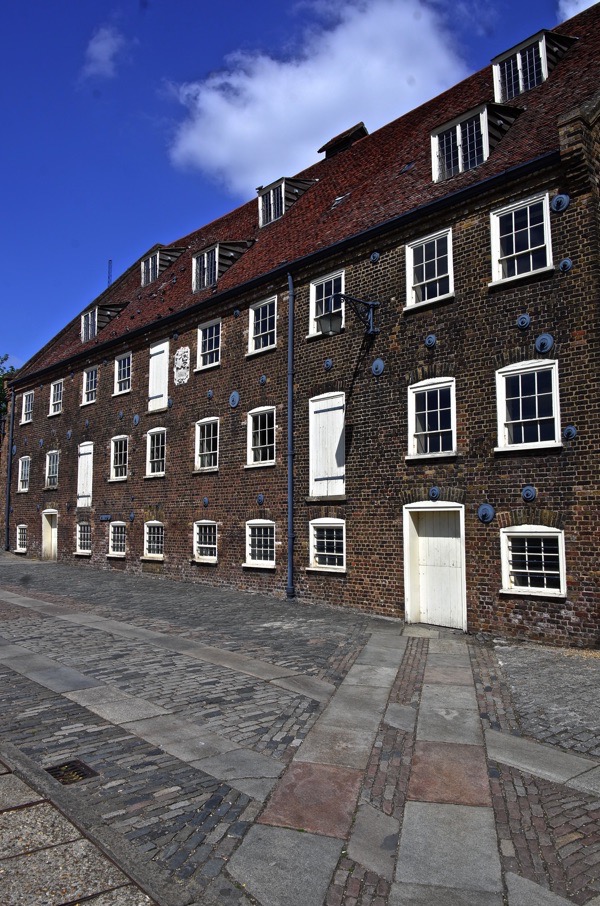
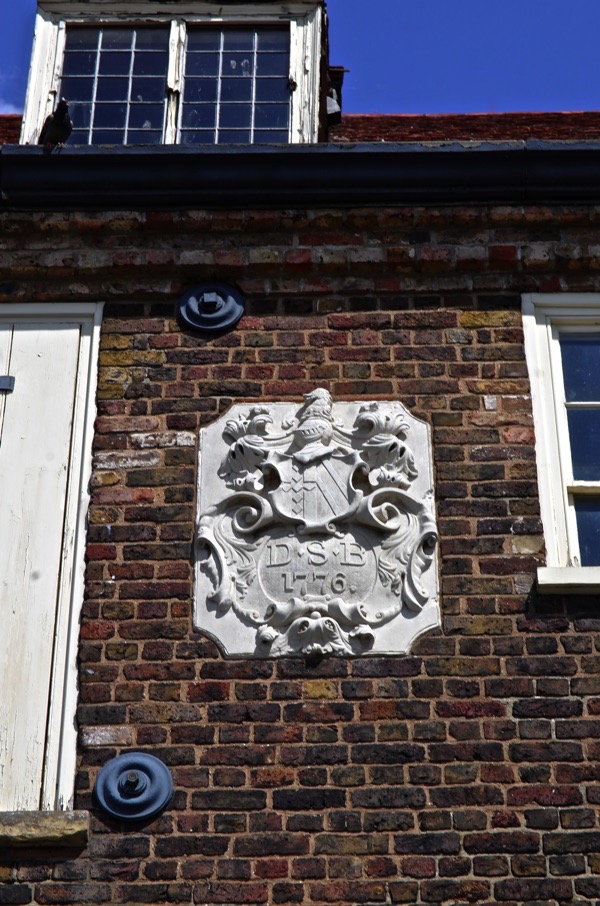
Initials of Daniel Bisson, builder of the mill, and his wife Sarah
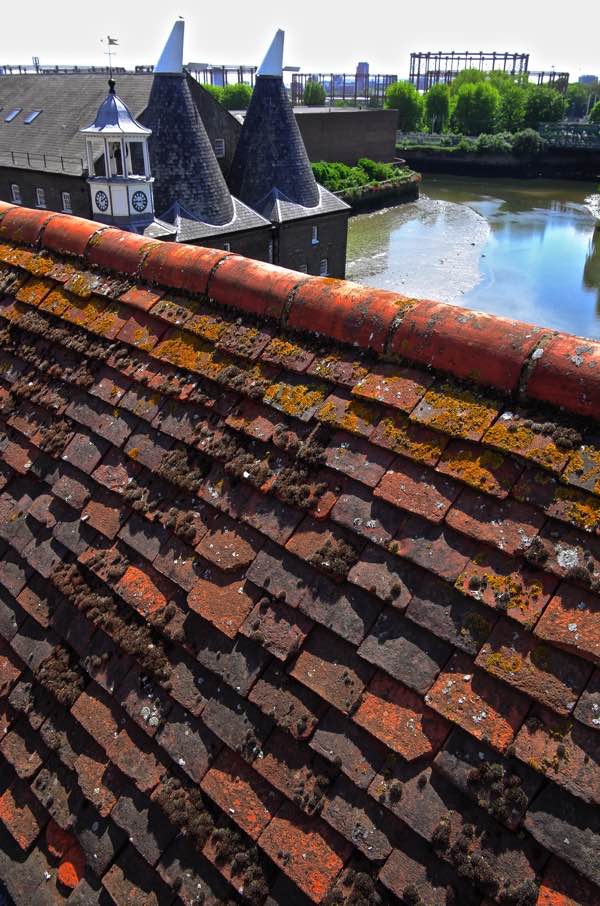
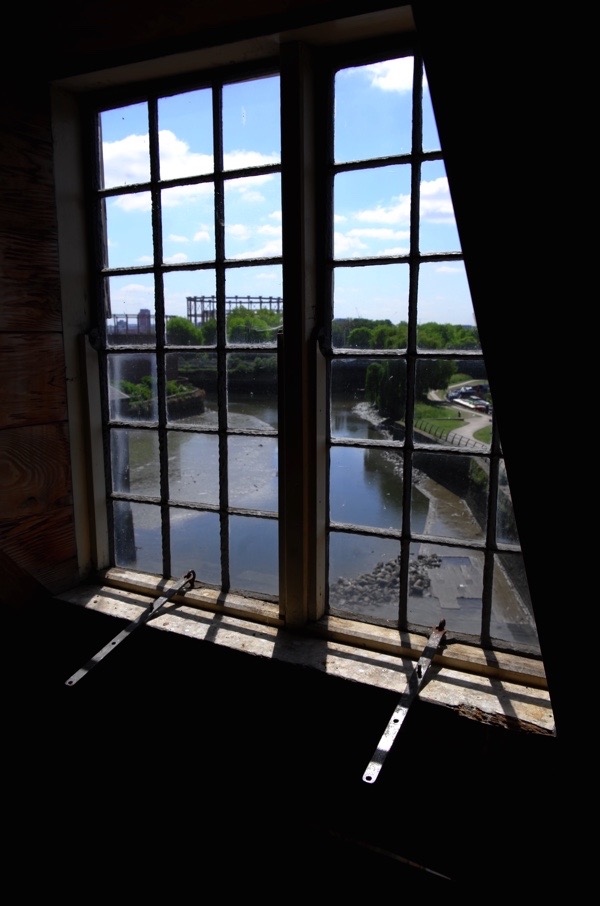
View down the River Lea
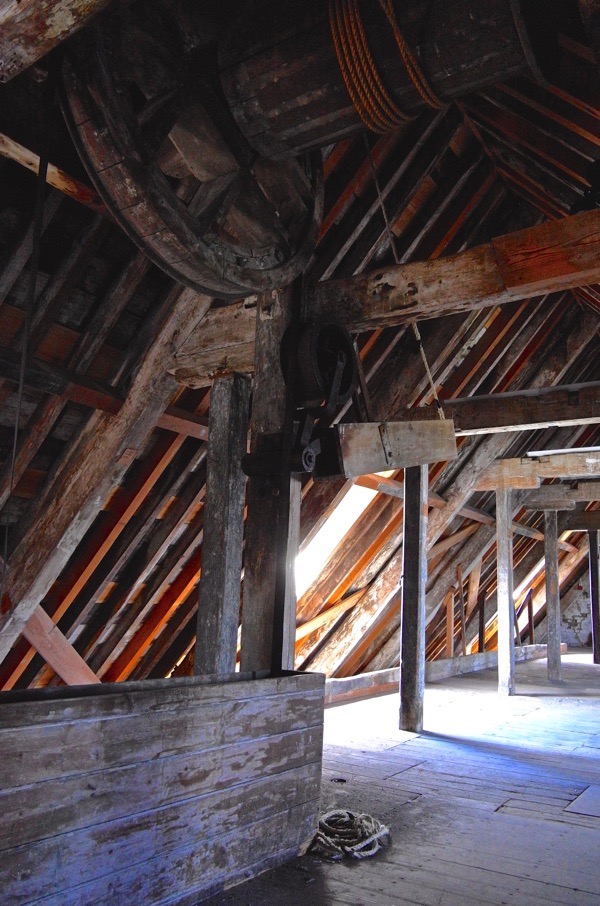
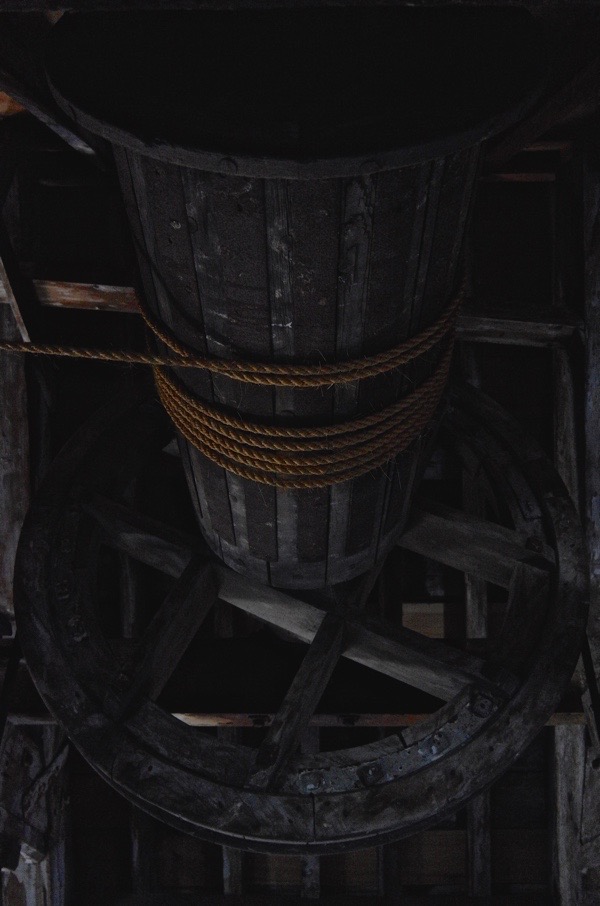
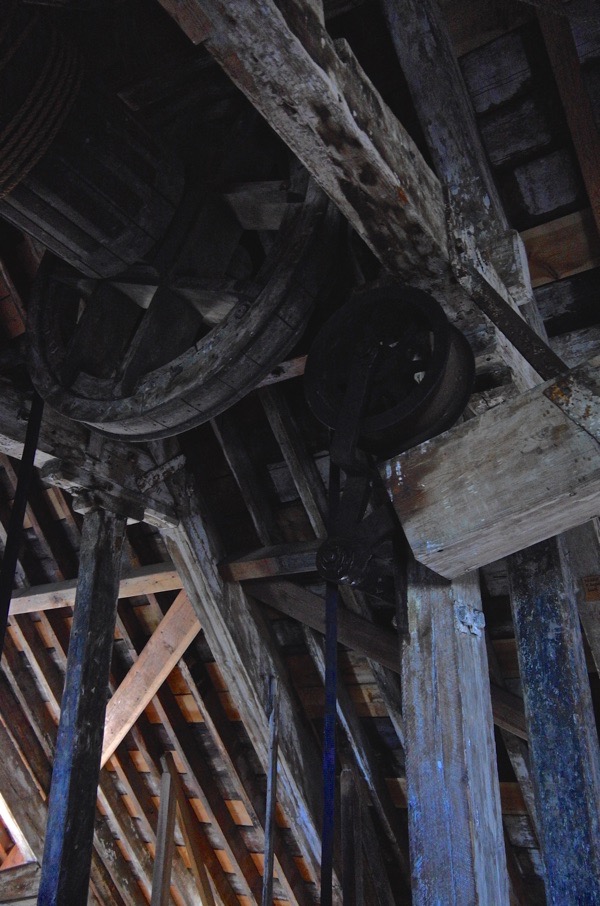
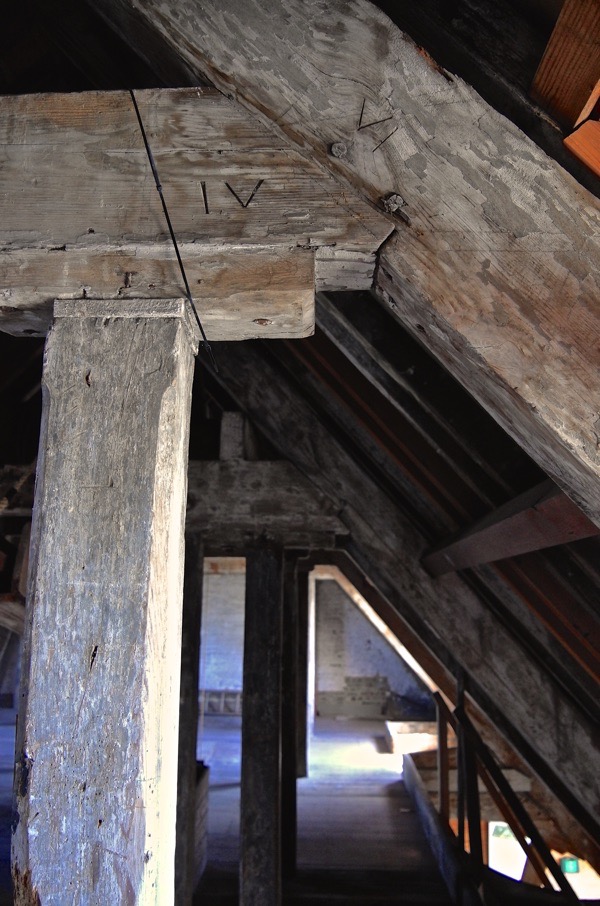
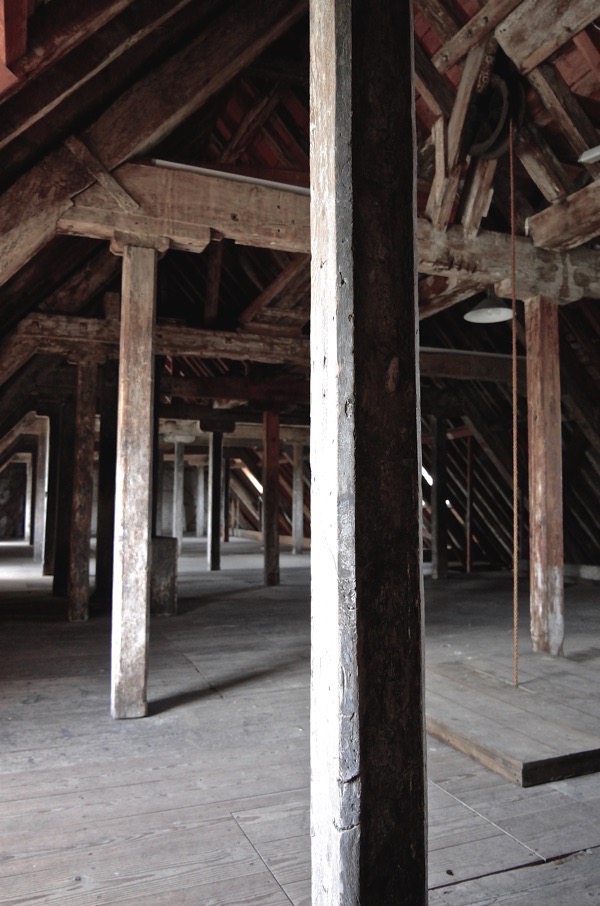
Some of the beams at House Mill are one hundred foot long and may be recycled ships’ timbers
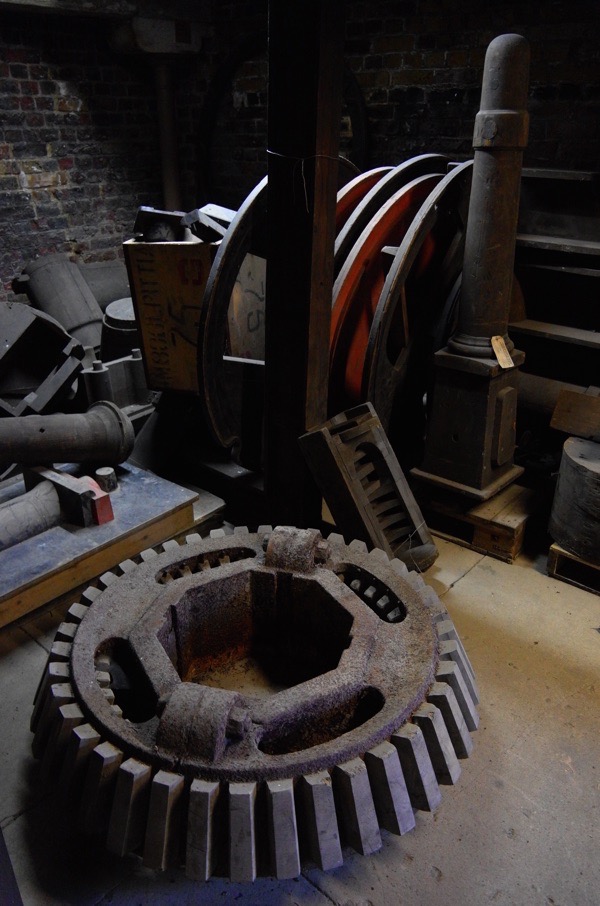
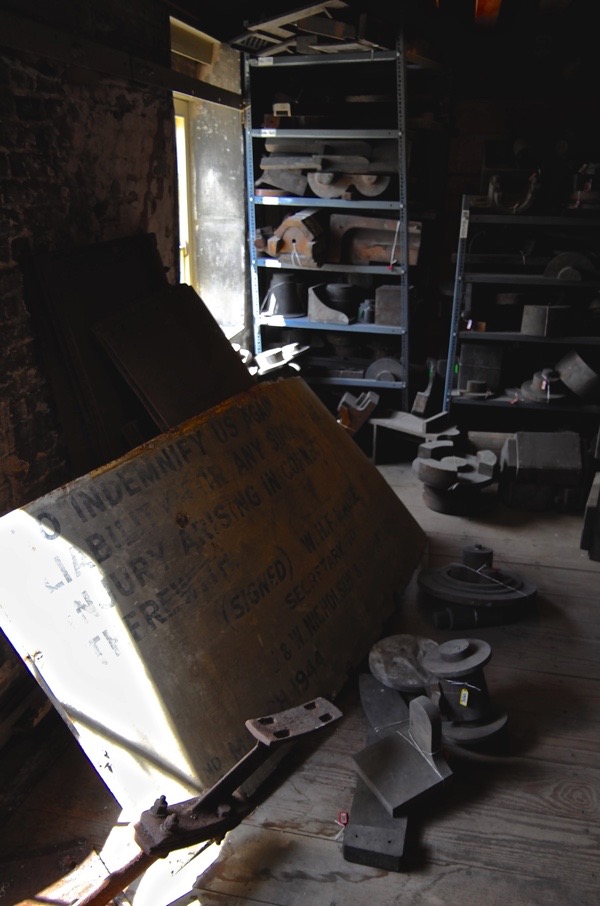
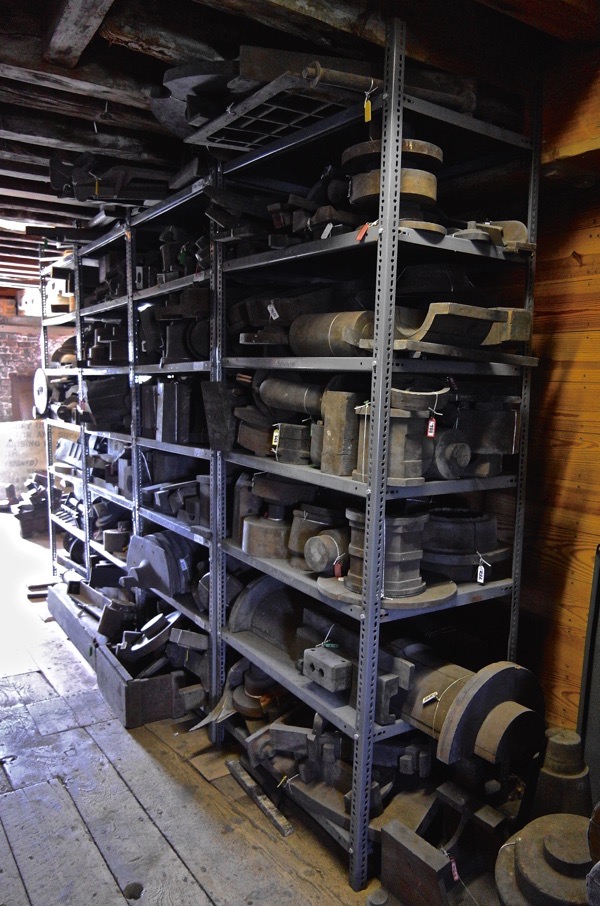
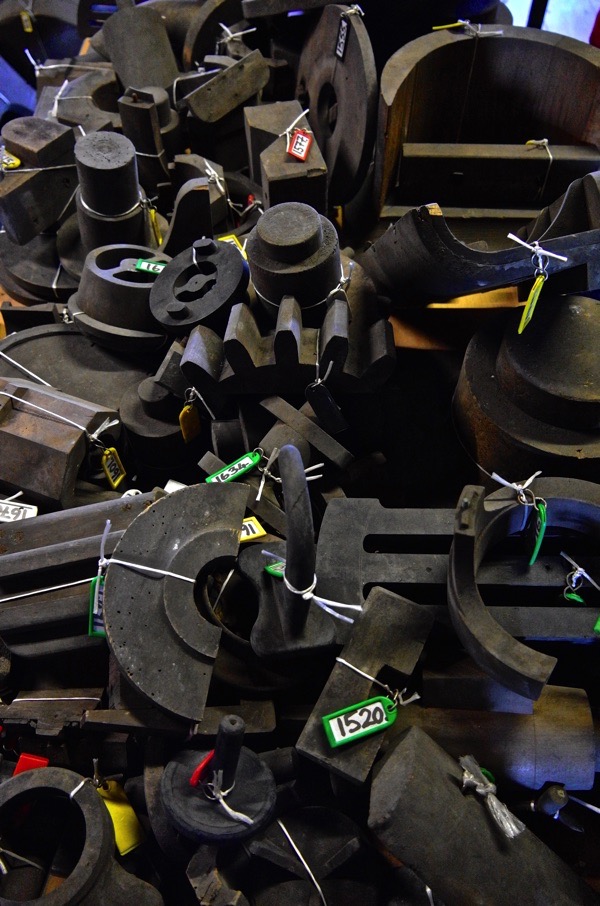
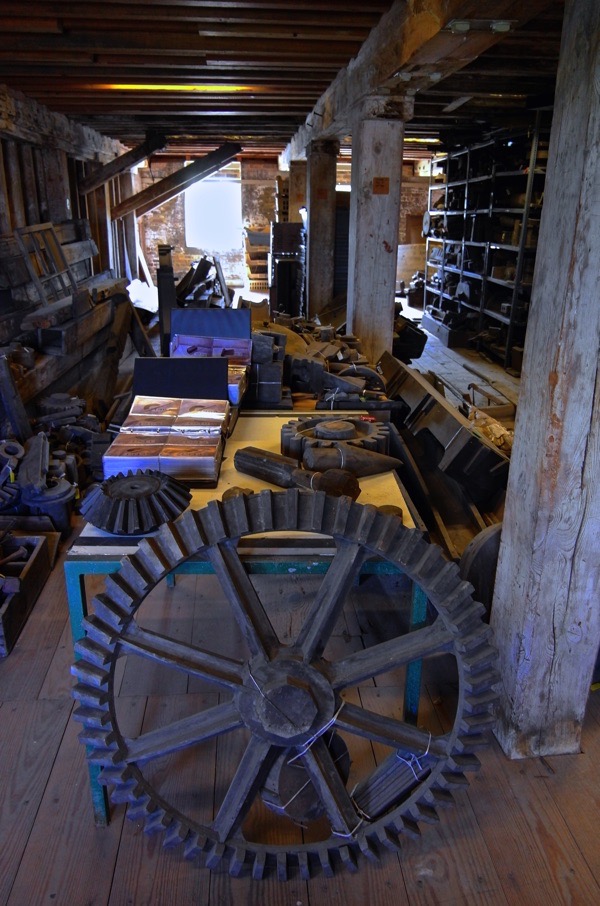
Nineteenth century wooden patterns for casting the machinery of the mill
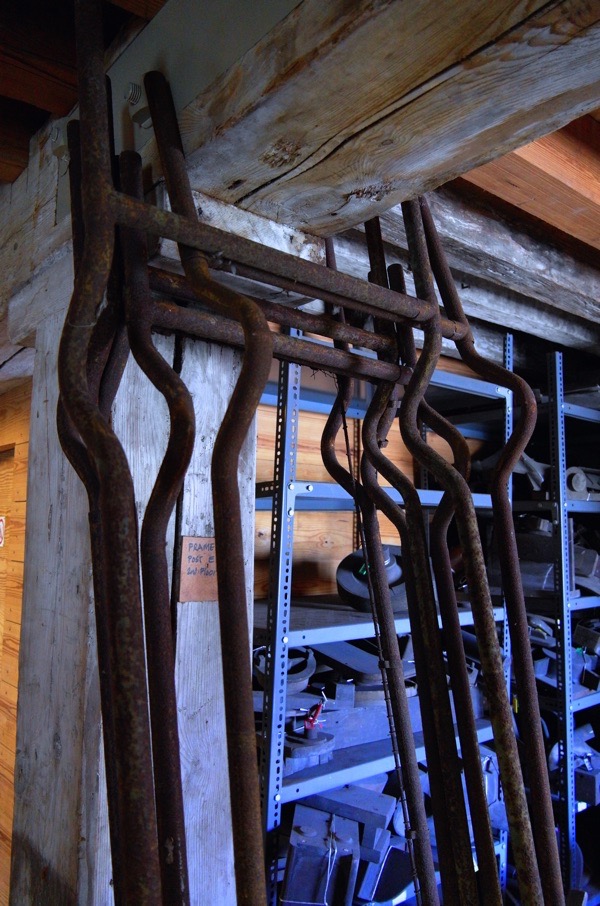
Stretcher frames from World War I
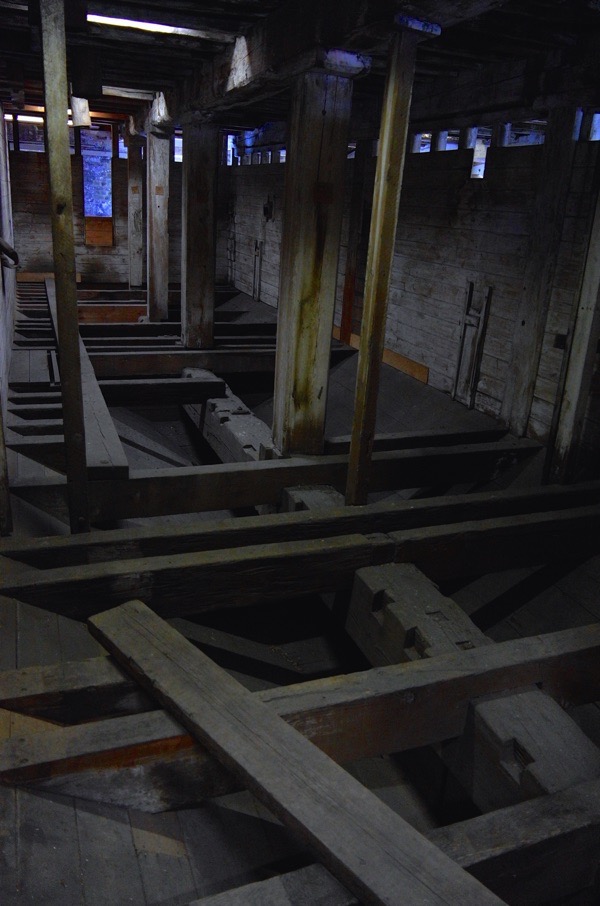
Hopper where the grain was channelled down to the mill stones
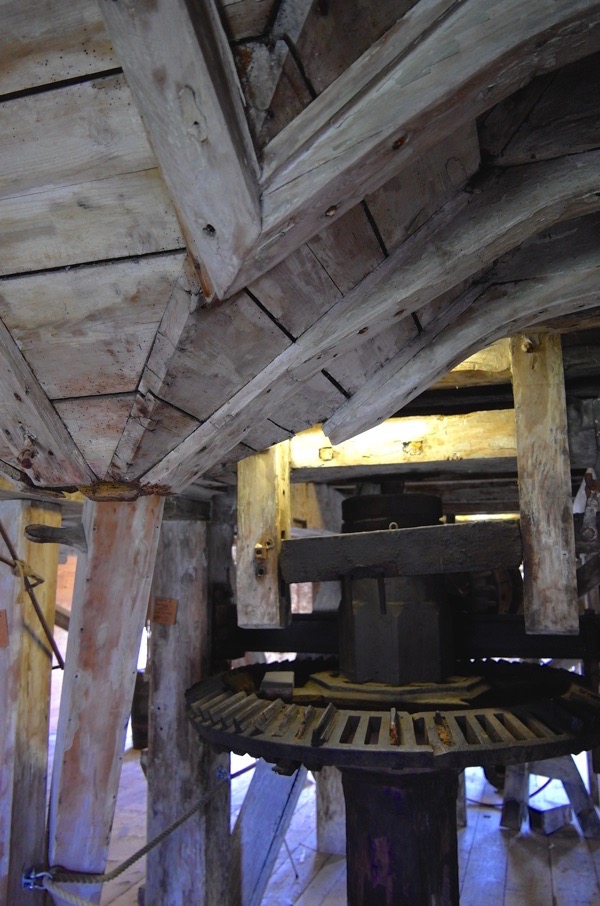
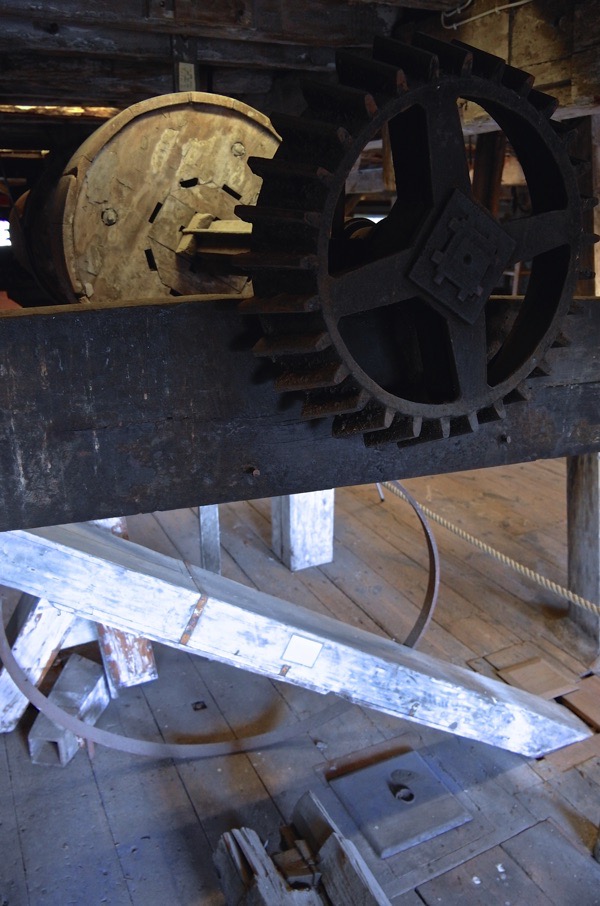
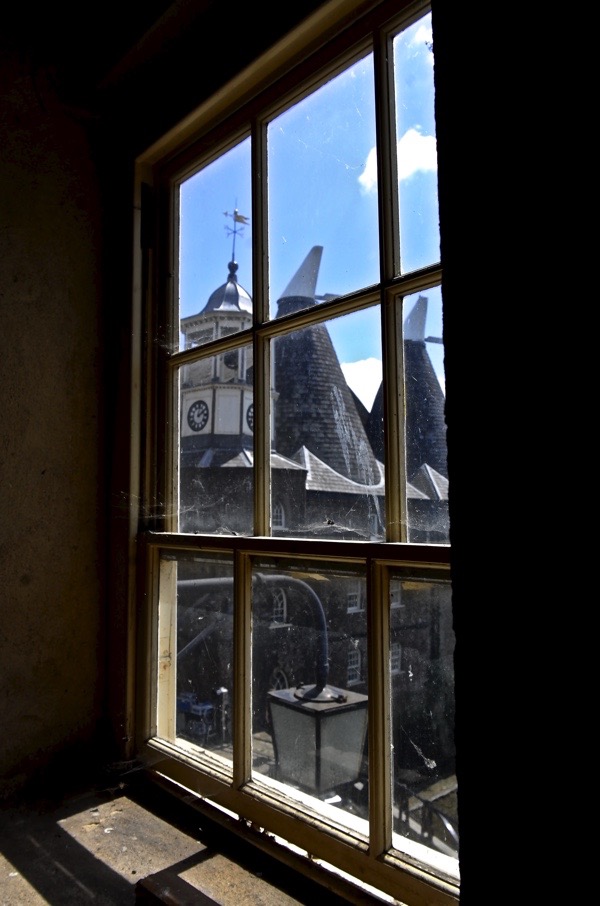
The oasthouses and the clock mill
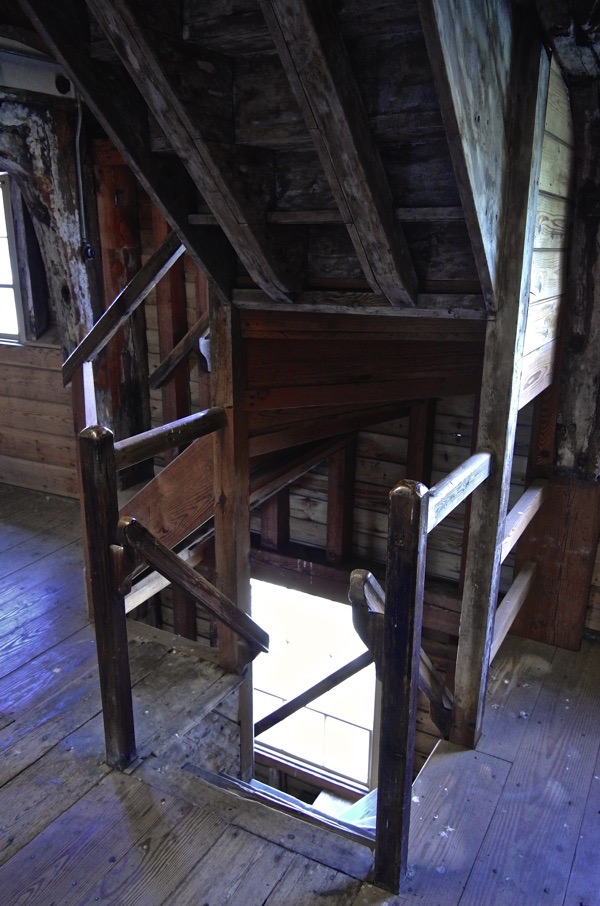
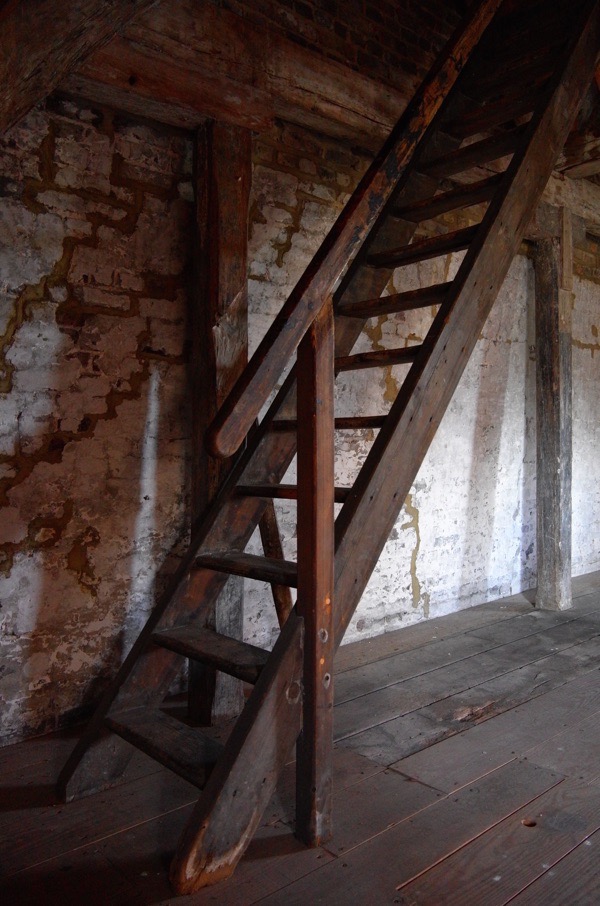
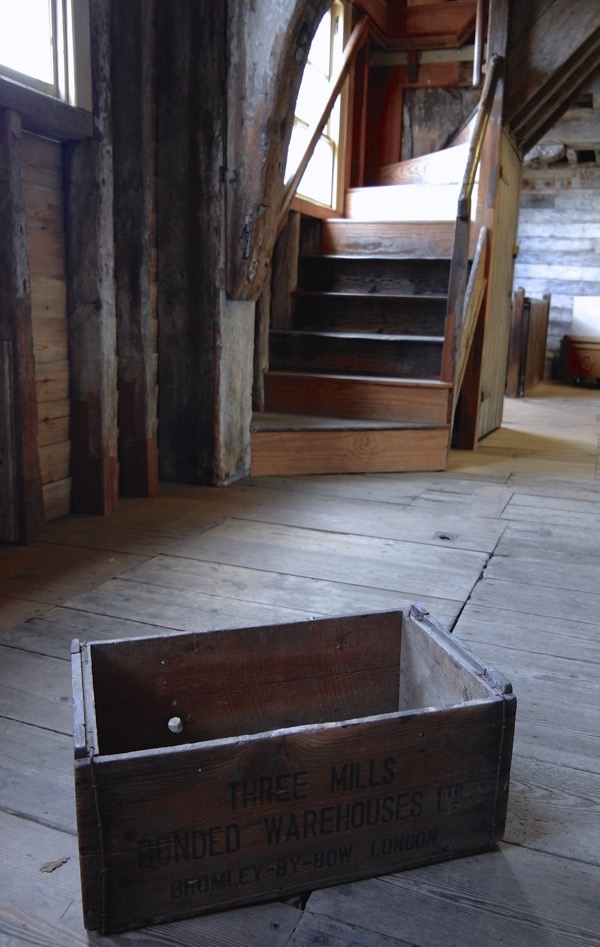
The Miller’s staircase
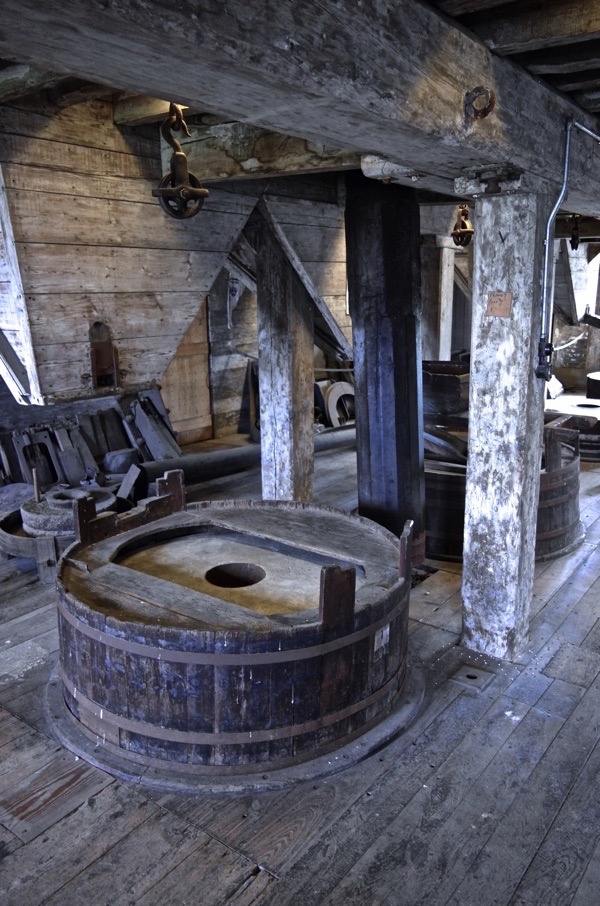
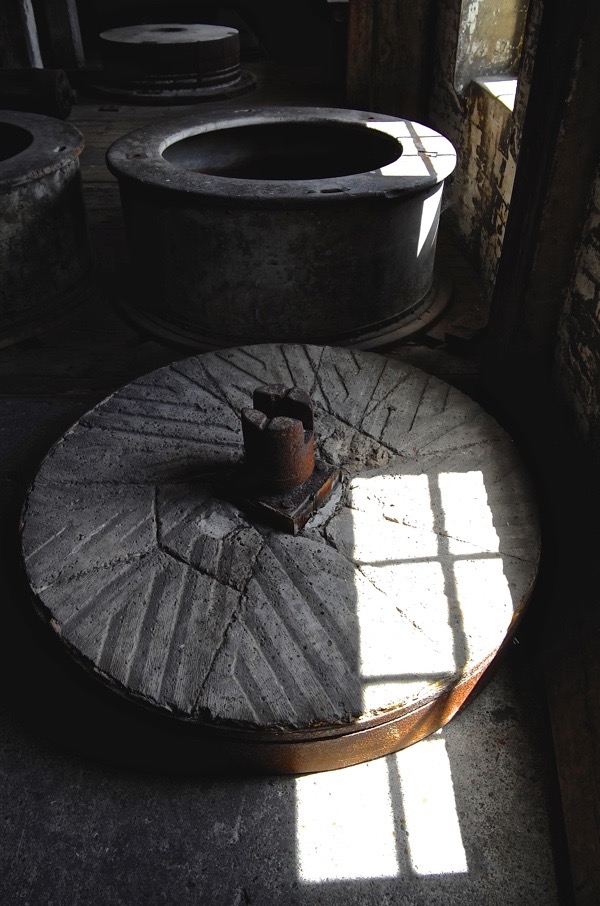
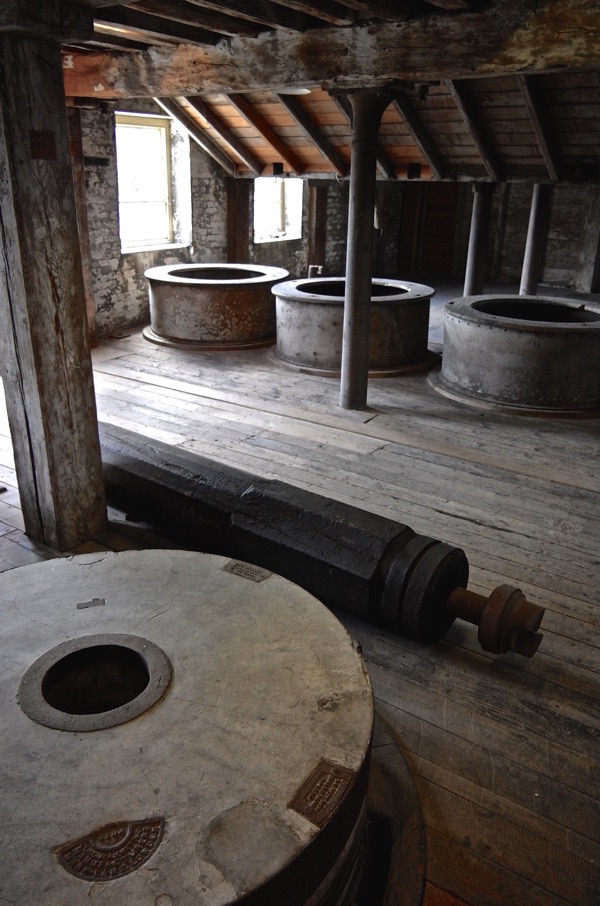
Millstones
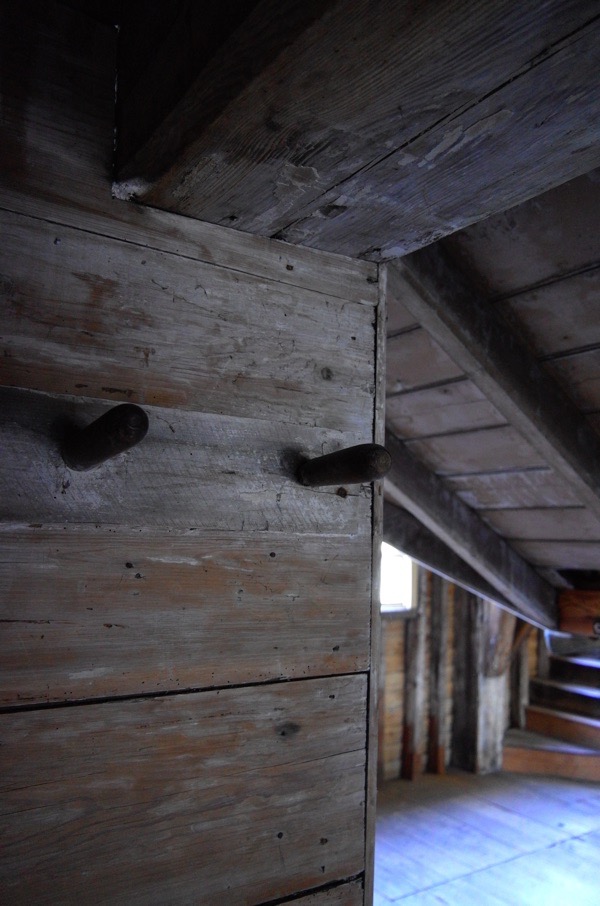
Pegs where the millers hung their coats
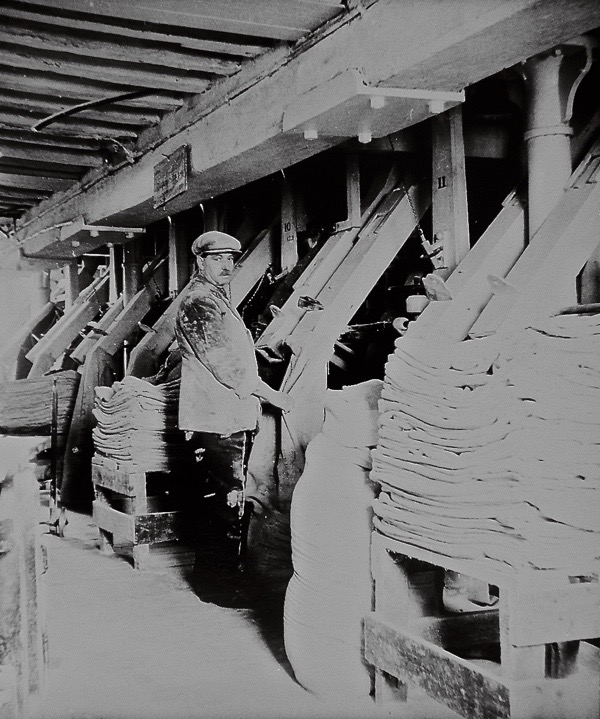
Mill worker in the nineteen thirties
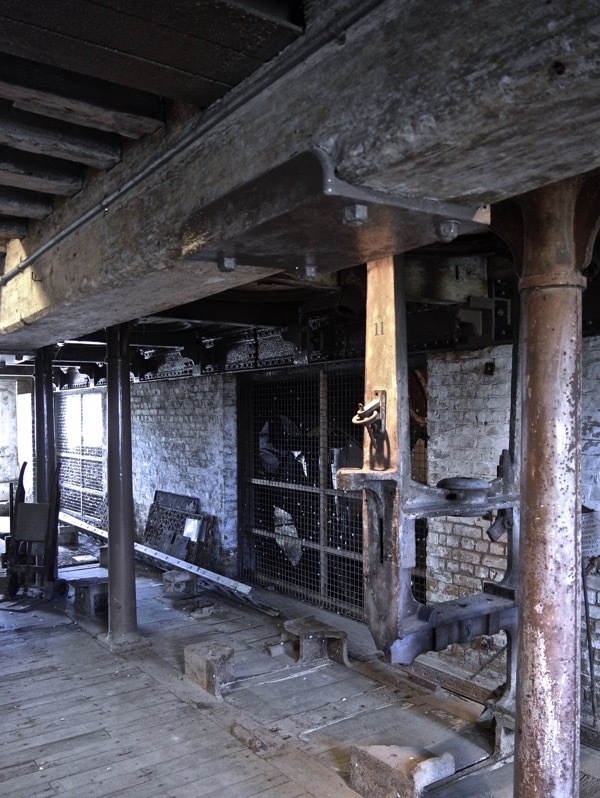
The same spot today
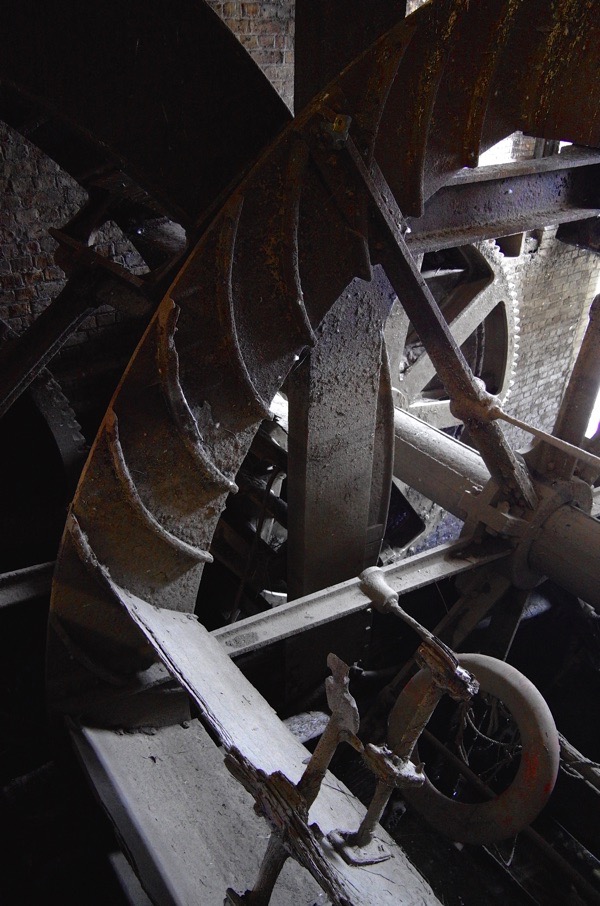
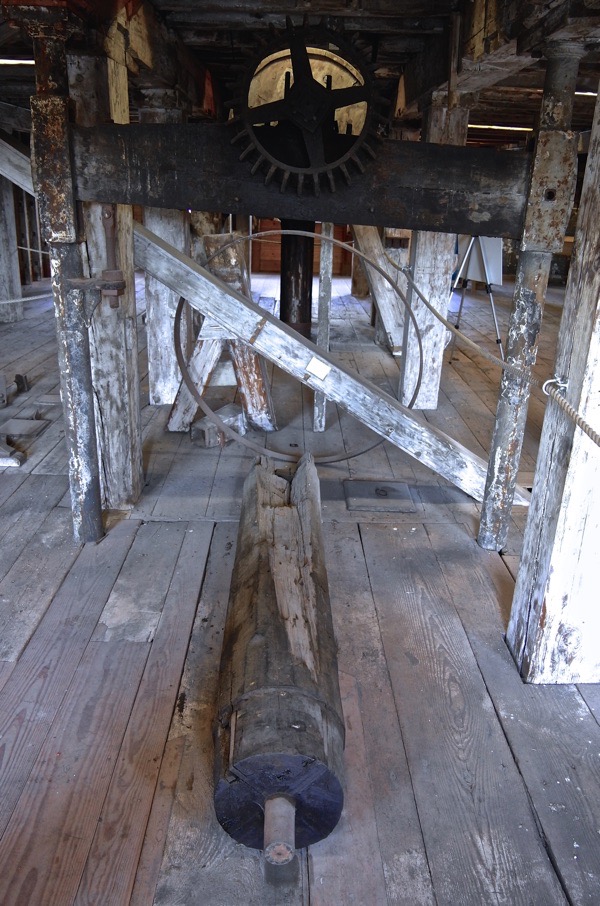
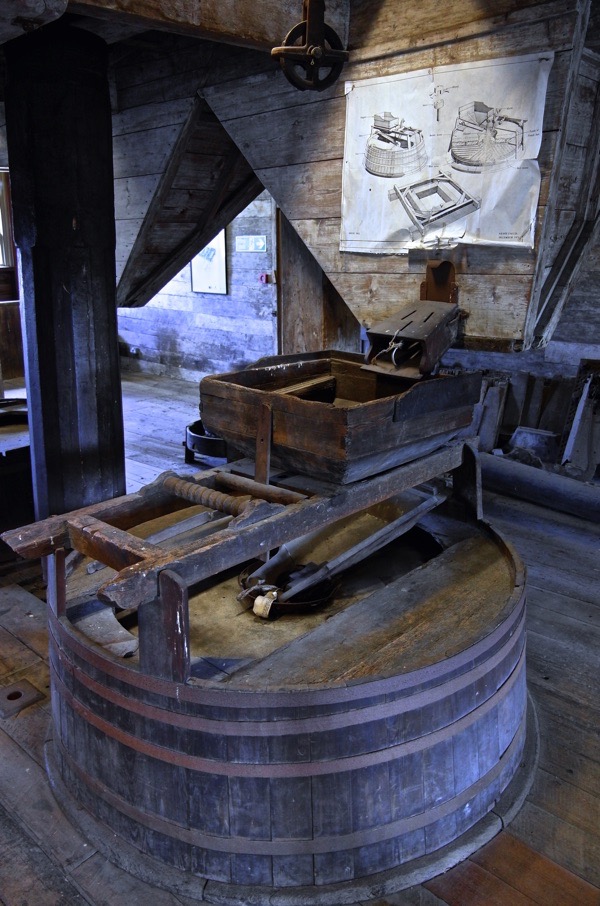
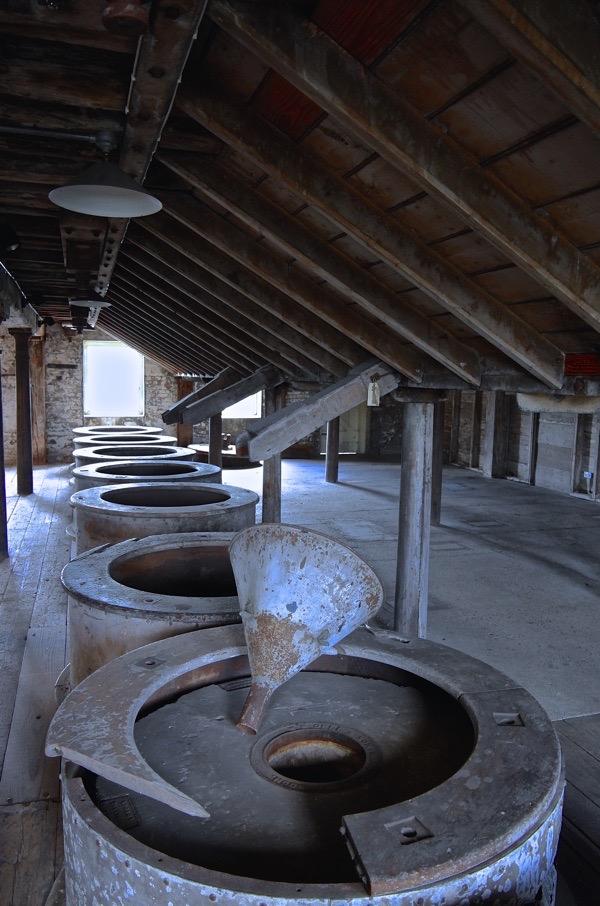
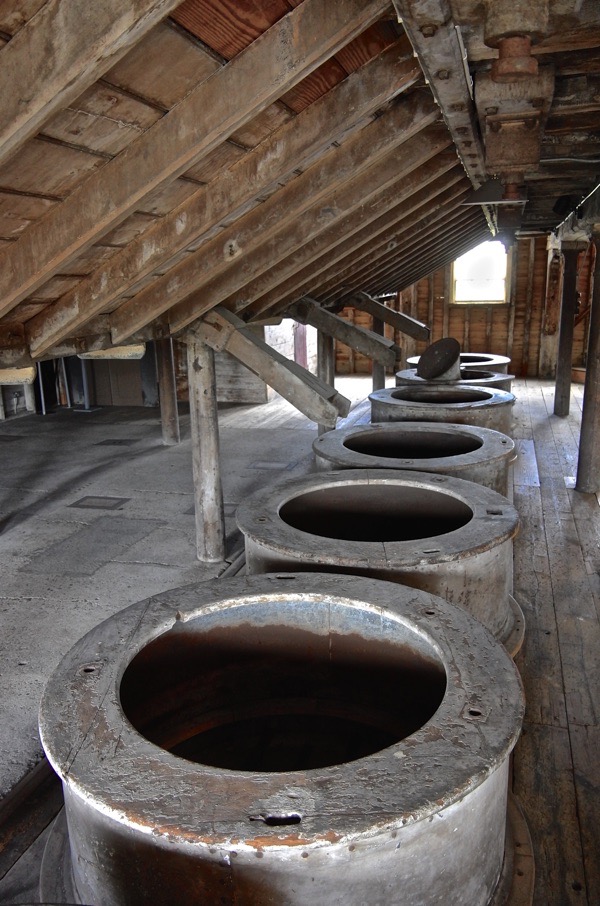
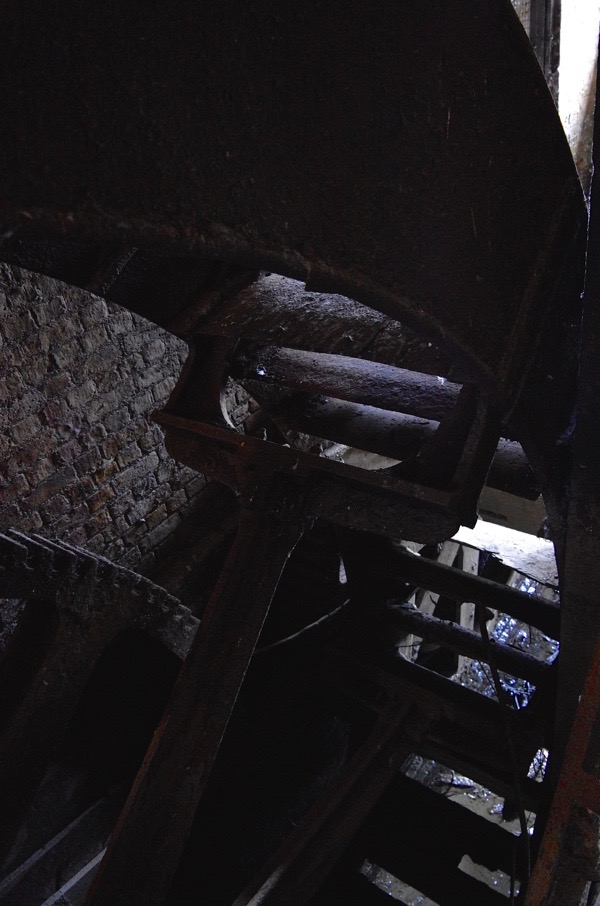
Iron frames for the nineteenth century mill wheels
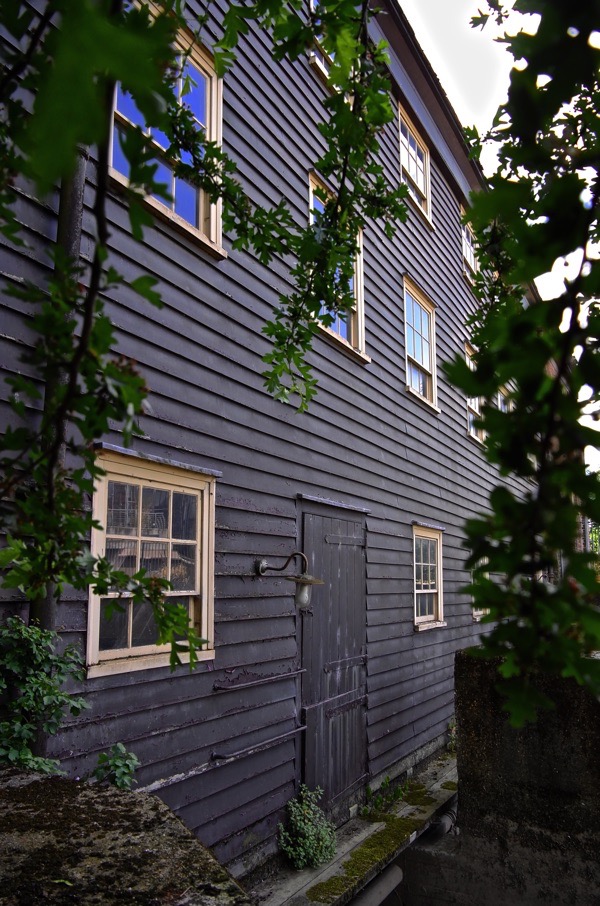
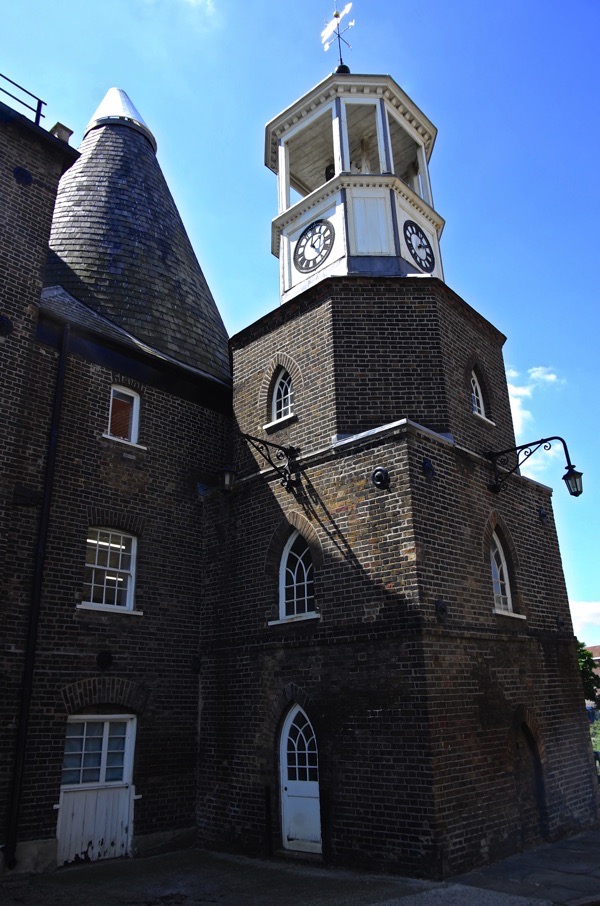
The Clockmill
Visit The House Mill, Three Mill Lane, Bromley by Bow, London E3 3DU
Volunteers are always required to act as stewards, guides and to run the cafe at the House Mill. If you would like to help, please contact info@housemill.org.uk
Harold Stabler’s Tiles At Bethnal Green
The author of A LONDON INHERITANCE (A private history of a public city) is one of the many luminaries among the alumnii of my blog-writing course and I am delighted to present his most recent post about the tiles at Bethnal Green Tube Station.
A few places are available for my next course HOW TO WRITE A BLOG THAT PEOPLE WILL WANT TO READ on 19th & 20th May. Join me for a weekend in an eighteenth century weaver’s house in Fournier St, enjoy delicious lunches from Leila’s Cafe, eat cakes baked from historic recipes at Townhouse, discover the secrets of Spitalfields Life & learn how to write your own blog!
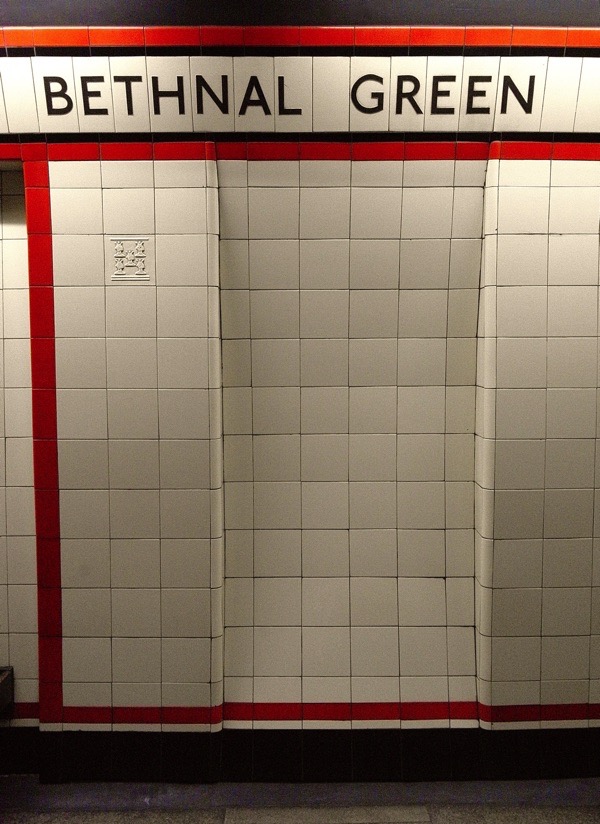
I have no idea how many times I have walked along the Central Line platforms at Bethnal Green. Yet in all these years, I cannot say that the tiles on the walls have drawn a second glance from me or that I have appreciated the purpose behind their design – until now.
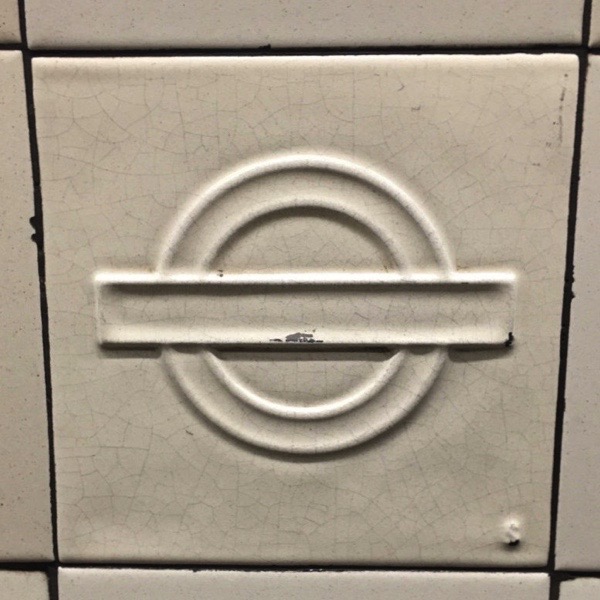
A couple of weeks ago, I spent some time walking up and down the platforms, studying the designs of the illustrated tiles interspersed among the plain ones and photographing them. Subsequently, I have tried to discover the inspirations for these designs which represent London landmarks and heraldic symbols for the counties served by London Transport. Many contain the initial ‘S’ for Harold Stabler who was the designer. Originally, Stabler was asked by Frank Pick, Managing Director of London Underground and first Chief Executive of London Transport, to design a rabbit mascot for the country buses run by London General in 1922.
Born in 1872, Stabler was a skilled designer working in a number of materials including precious metals, and one of his most famous commissions was the Ascot Gold Cup. In 1936, he was appointed by the Royal Society of Arts as the first Designer for Industry, consulting on design for industries and public bodies. He was involved in the creation of Poole Pottery who manufactured the tiles for the Underground. Although his eighteen tile designs were executed in the thirties, Bethnal Green station did not open until 1946 since work on the Central Line extension was delayed by the war.
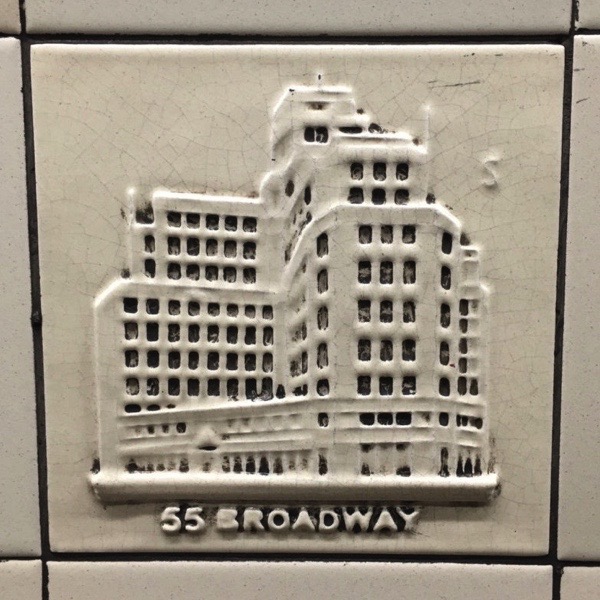
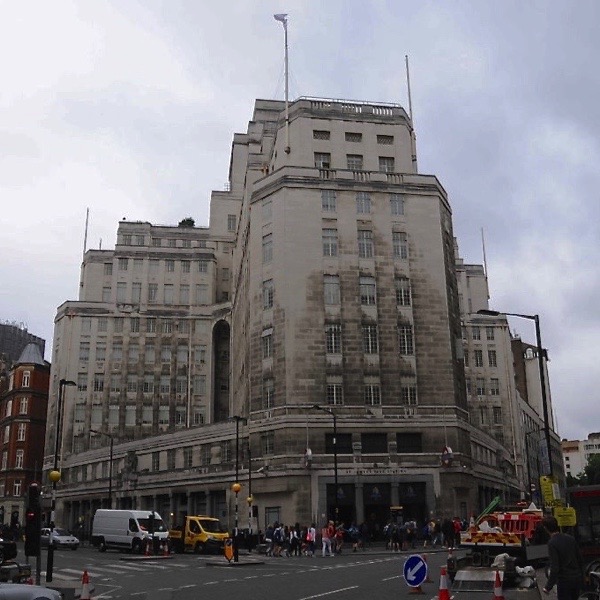
The first tile represents of London Underground’s headquarters at 55 Broadway and my photograph below shows how accurate the representation is.
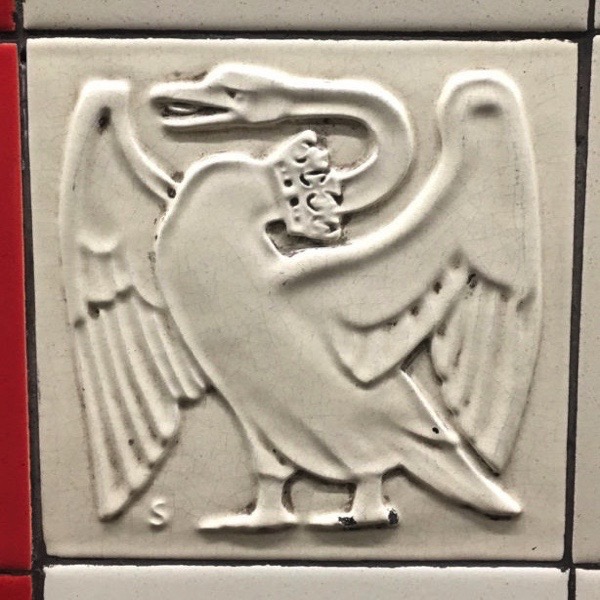
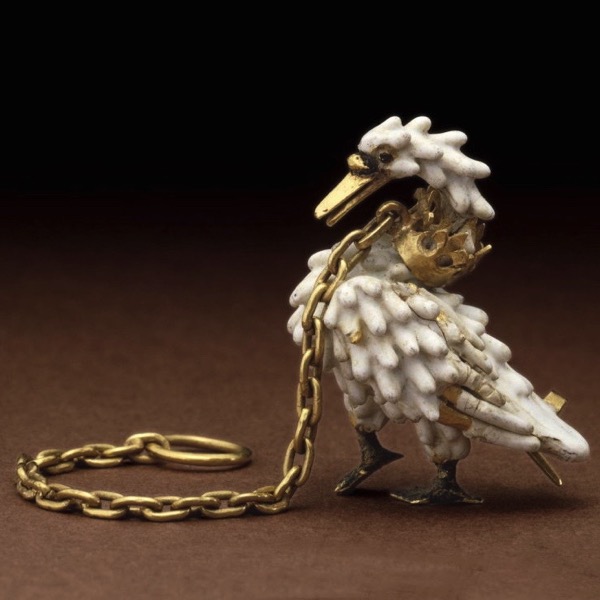
The swan been used as a heraldic badge since medieval times and it was adopted by the 2nd Duke of Buckingham and then by the County of Buckinghamshire, also being incorporated in the coat of arms of the Metropolitan Railway. The Dunstable Swan Jewel in the British Museum is an example of this symbol in the form of a brooch, made around 14oo and found on the site of a Dominican Priory in Dunstable in 1965. (photograph ©Trustees of the British Museum)
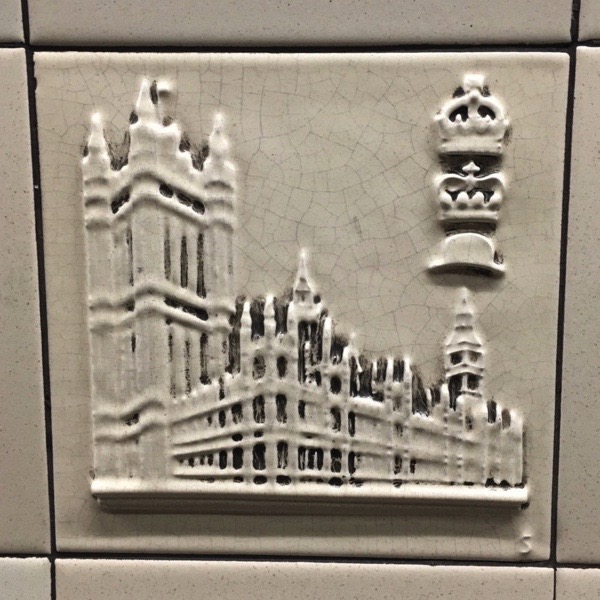
In this representation of the Palace of Westminster, there are two crowns and a bowler hat representing the Monarch, the Lords and the Commons.
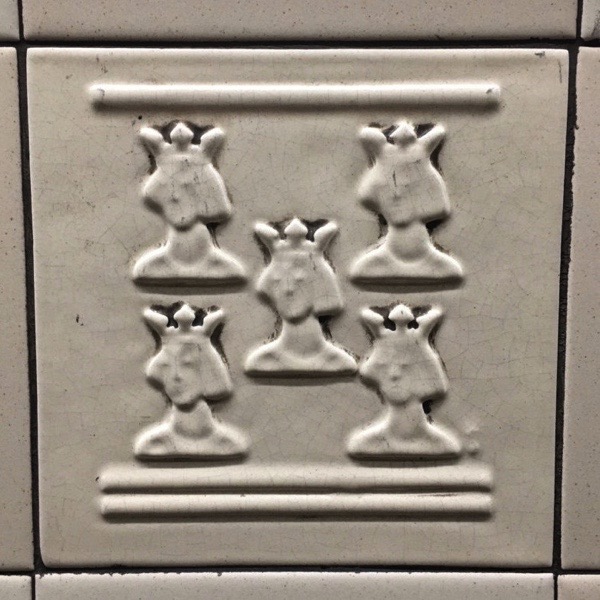
The following tile shows five maidens which represent the County of Berkshire.
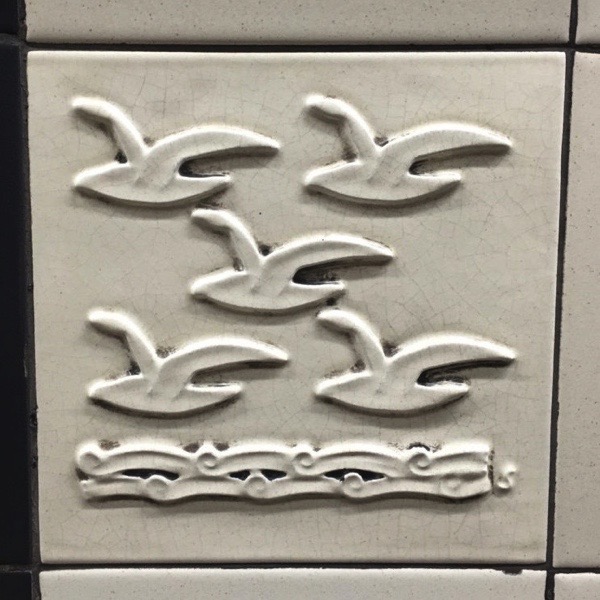
Another tile has five birds flying over water, representing the River Thames.
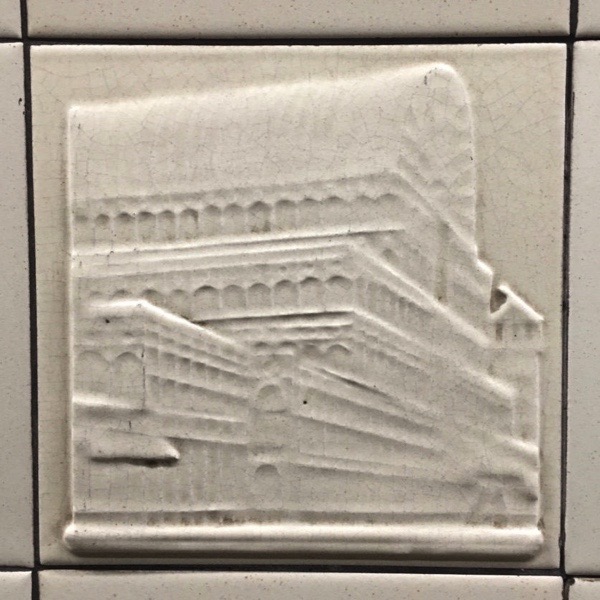
This design is of the Crystal Palace, however this tile does not have the ‘S’ to be found on all the other tiles, so it may not be one of Stabler’s originals.
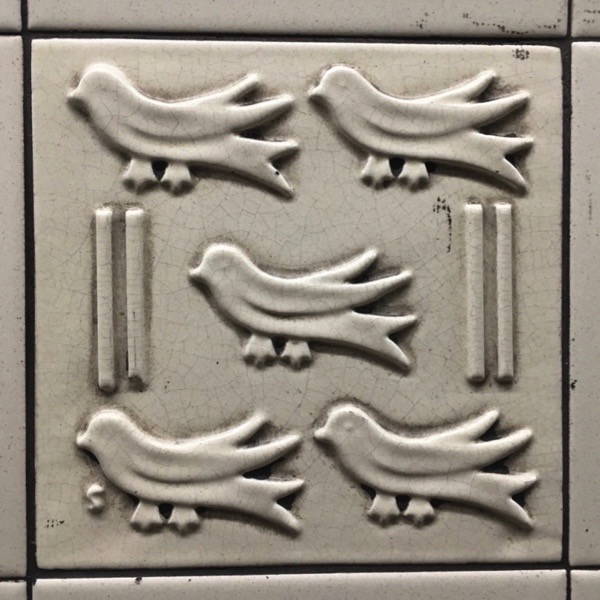
The number five appears a common theme for the tiles. In this design, there are five birds with two pairs of parallel lines between them. This tile is one of several held by the Victoria & Albert Museum and their record identifies this design as “five martletts – the arms of the City of Westminster.”
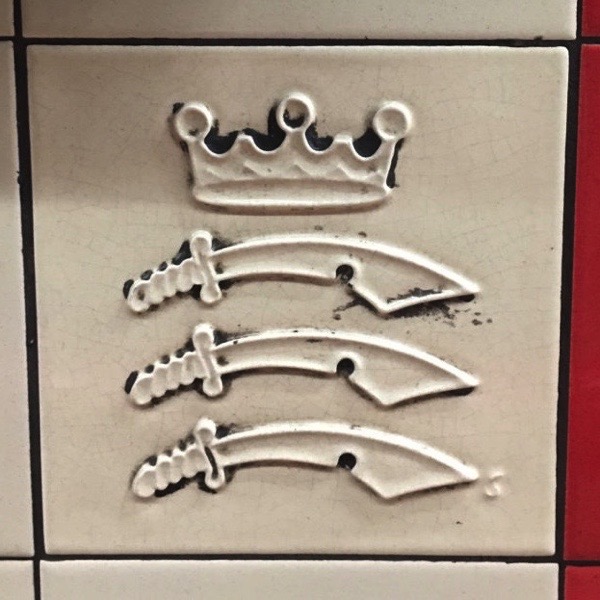
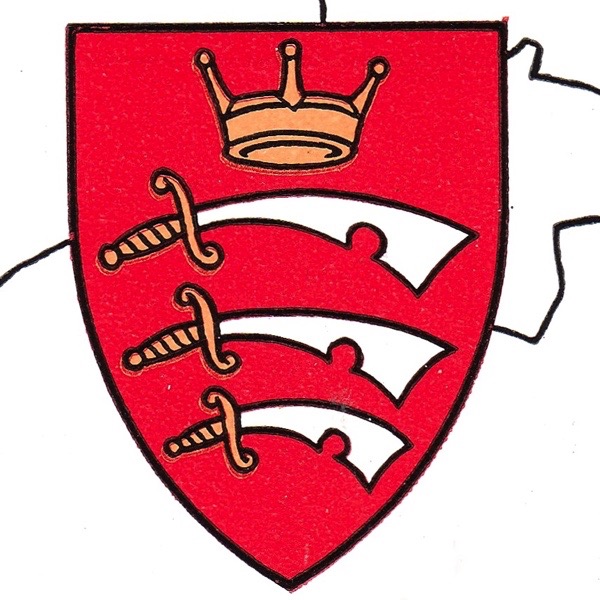
This tile illustrates the coat of arms for the County of Middlesex as shown below.
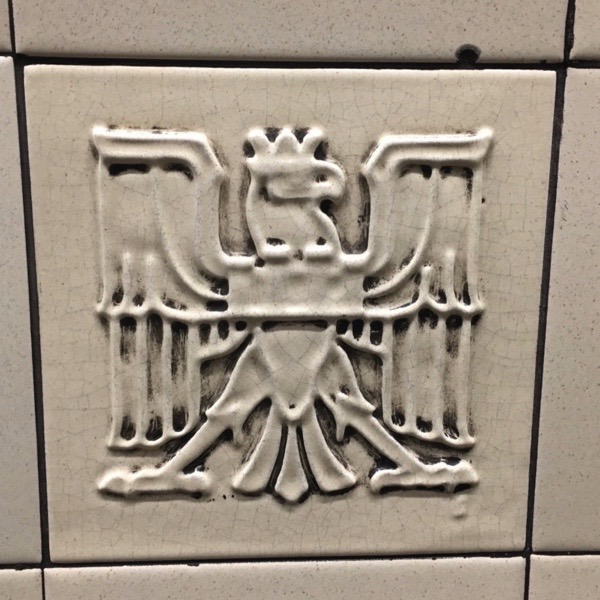
The following design is a bird of prey representing the County of Bedfordshire.
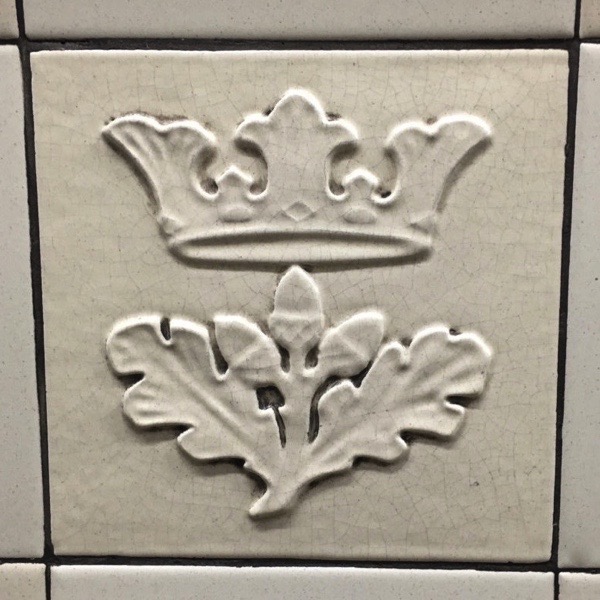
This tile shows a crown above oak leaves with acorns from the coat of arms for the County of Surrey.
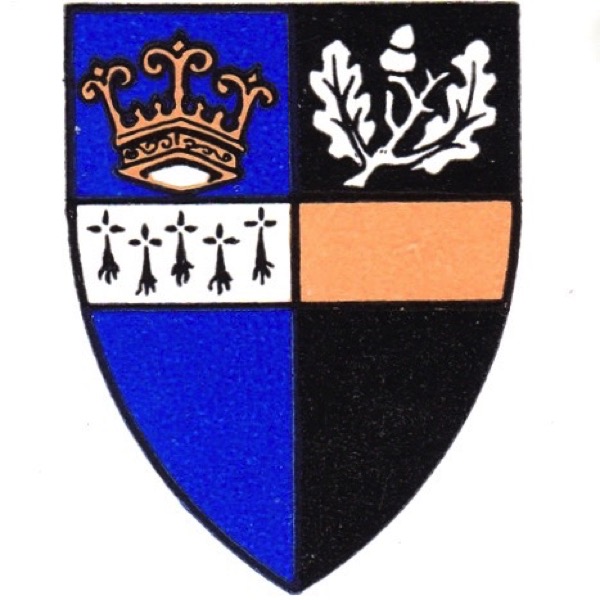
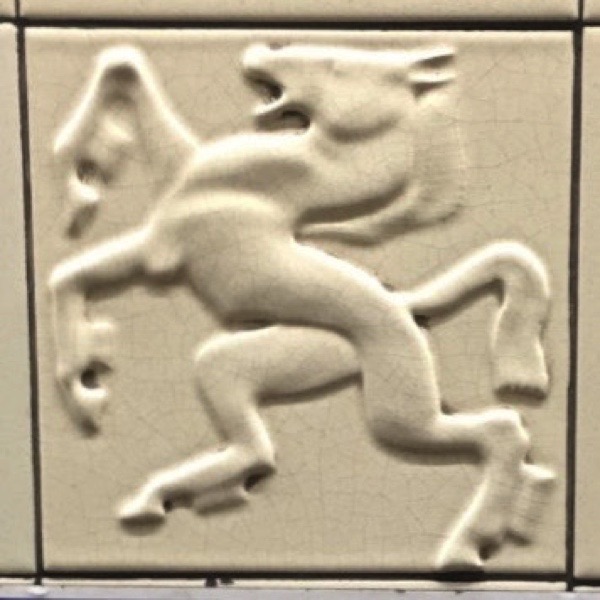
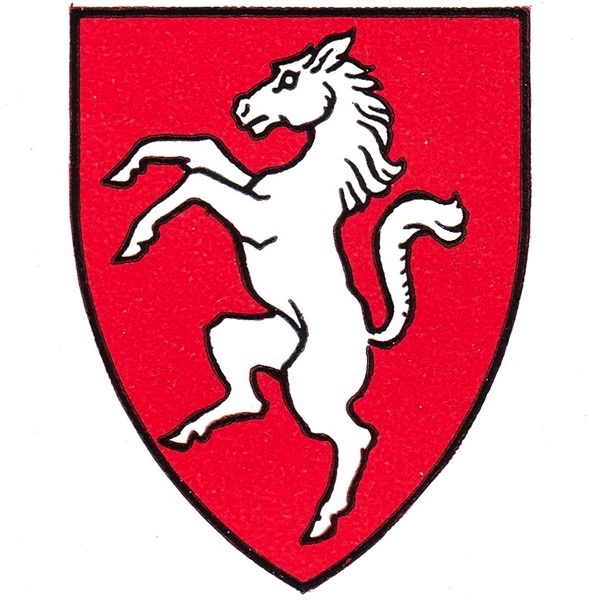
This tile has the design of a rearing horse from the coat of arms for the County of Kent.
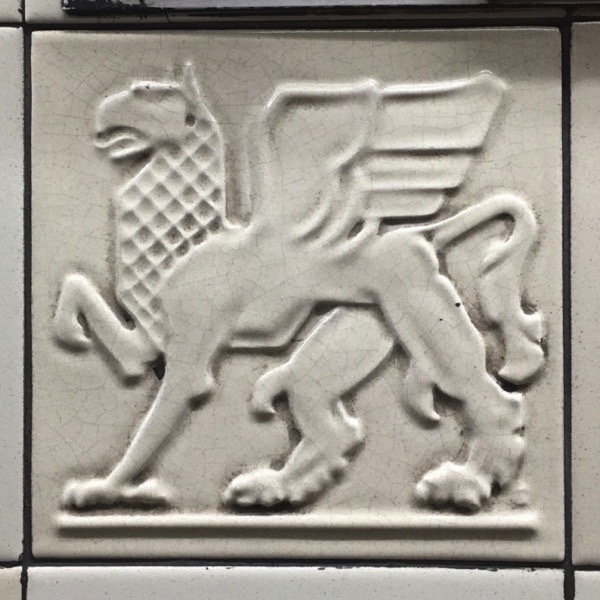
This winged griffin was the original symbol of London Transport.
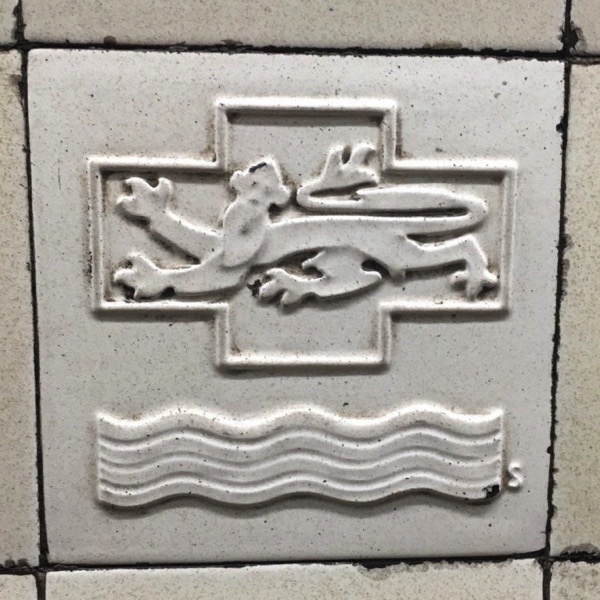
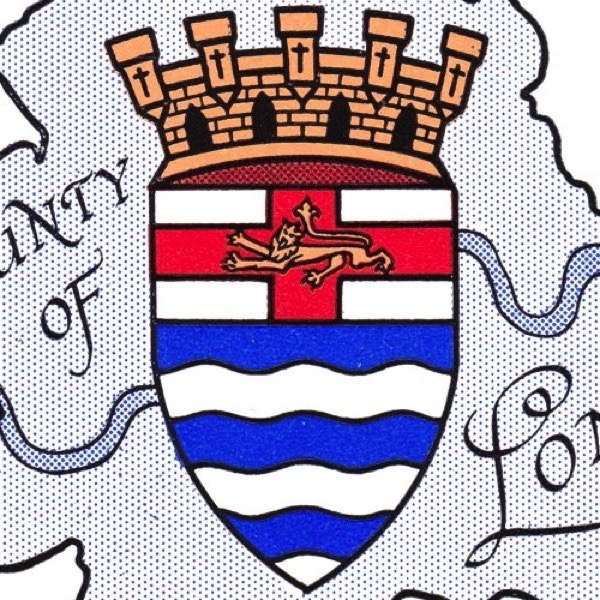
This tile above is a representation of the coat of arms of the County of London.
I hope I found all the different designs at Bethnal Green, I spent some time walking up and down, photographing the tiles. There are multiple copies of each of these designs on both platforms.
In 2006, many of the plain tiles along the platform were replaced with replicas. There are still some original panels of tiles and I understand that the decorated tiles are original. Yet the Crystal Palace tile may be a reproduction as it does not include Stabler’s trade mark letter ‘S’ and has different finish to the rest.
Stabler’s decorated tiles were also installed at St. Paul’s, Aldgate East, St. John’s Wood and Swiss Cottage Underground stations. I believe they are still to be seen at Aldgate, but I am not sure of the other stations – something to check when I next visit.
Harold Stabler died in London in 1945 but his designs live on at Bethnal Green.
Photographs copyright © A London Inheritance
HOW TO WRITE A BLOG THAT PEOPLE WILL WANT TO READ – 19th & 20th MAY
Spend a weekend in an eighteenth century weaver’s house in Spitalfields and learn how to write a blog with The Gentle Author.
This course will examine the essential questions which need to be addressed if you wish to write a blog that people will want to read.
“Like those writers in fourteenth century Florence who discovered the sonnet but did not quite know what to do with it, we are presented with the new literary medium of the blog – which has quickly become omnipresent, with many millions writing online. For my own part, I respect this nascent literary form by seeking to explore its own unique qualities and potential.” – The Gentle Author
COURSE STRUCTURE
1. How to find a voice – When you write, who are you writing to and what is your relationship with the reader?
2. How to find a subject – Why is it necessary to write and what do you have to tell?
3. How to find the form – What is the ideal manifestation of your material and how can a good structure give you momentum?
4. The relationship of pictures and words – Which comes first, the pictures or the words? Creating a dynamic relationship between your text and images.
5. How to write a pen portrait – Drawing on The Gentle Author’s experience, different strategies in transforming a conversation into an effective written evocation of a personality.
6. What a blog can do – A consideration of how telling stories on the internet can affect the temporal world.
SALIENT DETAILS
The next course will be held at 5 Fournier St, Spitalfields on 19th & 20th May. Each course runs from 10am-5pm on Saturday and 11am-5pm on Sunday.
Lunch will be catered by Leila’s Cafe of Arnold Circus and tea, coffee & cakes by the Townhouse are included within the course fee of £300.
Accomodation at 5 Fournier St is available upon enquiry to Fiona Atkins fiona@townhousewindow.com
Email spitalfieldslife@gmail.com to book a place on the course.
The Hackney Treasure Map
Each Saturday, we shall be featuring one of Adam Dant’s MAPS OF LONDON & BEYOND from the forthcoming book of his extraordinary cartography to be published by Spitalfields Life Books & Batsford on June 7th.
Please support this ambitious venture by pre-ordering a copy, which will be signed by Adam Dant with an individual drawing on the flyleaf and sent to you on publication. CLICK TO ORDER A SIGNED COPY OF MAPS OF LONDON & BEYOND BY ADAM DANT
The Hackney Treasure Map was inspired by the discovery of the Hackney Hoard by Terry Castle and informed by the knowledge of Stephen Selby, the Hackney Antiquarian. Describing the pre-industrial riches of the borough, it is conveniently marked with suitable spots to dig. (Click to enlarge and study it further)
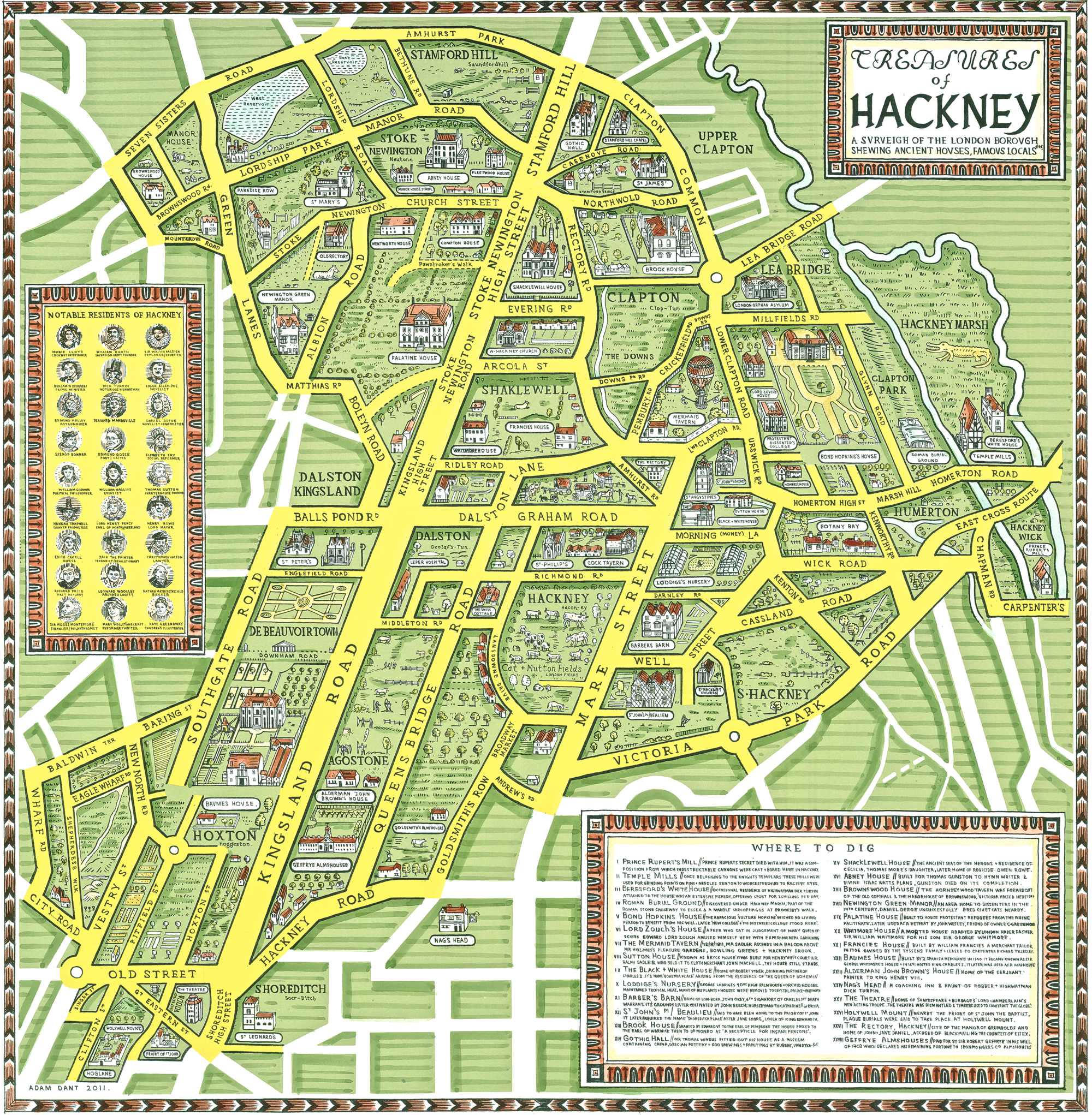
Prince Rupert’s Mill. Prince Rupert’s secret died with him – it was a composition from which indestructible cannons were cast and bored here in Hackney.
Temple Mills. Once belonging to the Knights Templars, these mills were used for grinding points on pins and needles, sent on to Worcestershire to receive eyes.
Beresford’s White House. Occasional residence of highwayman Dick Turpin, attached to the house was an extensive fishery, offering sport for one shilling.
Roman Burial Ground. Discovered under Hackney Marsh, part of the Roman stone causeway to Essex, and a marble sarcophagus at Brooksby’s Walk.
Lord Zouch’s House. A peer who sat in judgement on Mary Queen of Scots, Edward Lord Zouch amused himself with experimental gardening.
The Mermaid Tavern. 12/8/1811, Mr Sadler ascends in a balloon above Mr Holmes’ pleasure gardens, bowling greens and Hackney brook.
Sutton House. Known as “Bryck House,” it was built for Henry VIII’s courtier Ralph Sadleir who sold it to cloth merchant John Machell. The house still stands.
The Black & White House. Home of Robert Vyner, drinking partner of Charles II, its name “Bohemia Place” arising from the residence of the Queen of Bohemia.
Loddige’s Nursery. George Loddige’s forty foot palm house and orchid houses maintained tropical heat. Many of his plants and houses were removed to Crystal Palace.
Barber’s Barn. Home of the low-born John Okey, sixth signatory of Charles I’s death warrant, its grounds later cultivated by John Busch, nurseryman to Catherine II of Russia.
St John’s Place/Beaulieu. Said to have been home the priory of of St John, it later acquired the name “Shoreditch Place” after Jane Shore, lover of King Edward IV.
Brook House. Granted by Edward VI to the Earl of Pembroke, the house passed to the Earl of Warwick then to Dr Monro as a ‘recepiticle for insane persons.’
Gothic Hall. Mr Thomas Windus fitted out his house as a museum containing china, grecian pottery and six hundred drawings and paintings by Rubens, Van Dyke etc.
Shacklewell House. The ancient seat of the Herons, and residence of Cecilia, Thomas More’s daughter, later home of regicide Owen Rowe.
Abney House. Built for Thomas Gunstone to hymn writer & divine Isaac Watts’ plans. Gunstone died on its completion.
Brownswood House. The Hornsey Wood Tavern was formed out of the old Copthall and the Manor House of Brownswood. Victoria halted here in 1848.
Newington Green Manor. An area home to dissenters in the seventeenth century, Daniel Defoe unsuccessfully bred civet cats nearby.
Palatine House. Built to house protestant refugees from the Rhine Palatinate, later used as a retreat by John Wesley, friend of owner C. Greenwood.
Whitmore House. A moated house adapted by London haberdasher Sir William Whitmore for his son Sir George Whitmore.
Francies House. Built by William Francies, a merchant tailor, in 1706, owned by the Tyssens family and leased to carpenter Richard Tillesley.
Baumes House. Built by two Spanish merchants in 1540, it became known as Sir George Whitmore’s house and in 1691 hosted King Charles I. It later was used as a madhouse.
Alderman John Brown’s House. Home of the serjeant, painter to Henry VIII.
Nag’s Head. A coaching inn and haunt of robber & highwayman Dick Turpin.
The Theatre. Home of Shakespeare & Burbage’s Lord Chamberlain’s New Acting Troupe. The timber was dismantled and used to construct the Globe.
Holywell Mount. Nearby the priory of St John the Baptist, plague burials were said to take place at Holywell Mount.
The Rectory, Hackney. Site of the Manor of Grumbolds and home of John & Jane Daniel, accused of blackmailing the Countess of Essex.
Geffrye Almshouses. Paid for by Sir Robert Geffrye in his will of 1703 which declared his remaining fortune to the Ironmongers’ Company for provision of almshouses.
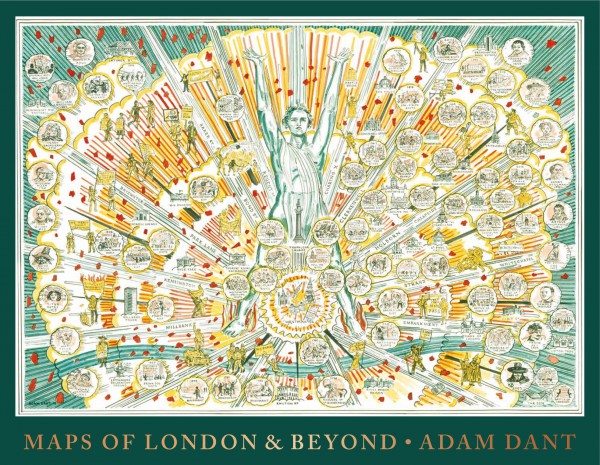
CLICK TO ORDER A SIGNED COPY OF MAPS OF LONDON & BEYOND BY ADAM DANT
Adam Dant’s MAPS OF LONDON & BEYOND is a mighty monograph collecting together all your favourite works by Spitalfields Life‘s cartographer extraordinaire in a beautiful big hardback book.
Including a map of London riots, the locations of early coffee houses and a colourful depiction of slang through the centuries, Adam Dant’s vision of city life and our prevailing obsessions with money, power and the pursuit of pleasure may genuinely be described as ‘Hogarthian.’
Unparalleled in his draughtsmanship and inventiveness, Adam Dant explores the byways of English cultural history in his ingenious drawings, annotated with erudite commentary and offering hours of fascination for the curious.
The book includes an extensive interview with Adam Dant by The Gentle Author.
Charles W. Cushman’s London
American Photographer Charles Weaver Cushman (1896-1972) visited London only a couple of times and yet, alongside shots of landmarks such as Big Ben & Trafalgar Sq, he recorded these rare and unexpected images of markets and street vendors in Kodachrome. He bequeathed over 14,000 of his images to Indiana University, where the entire range of his work may be explored in the Charles W. Cushman Photograph Collection.
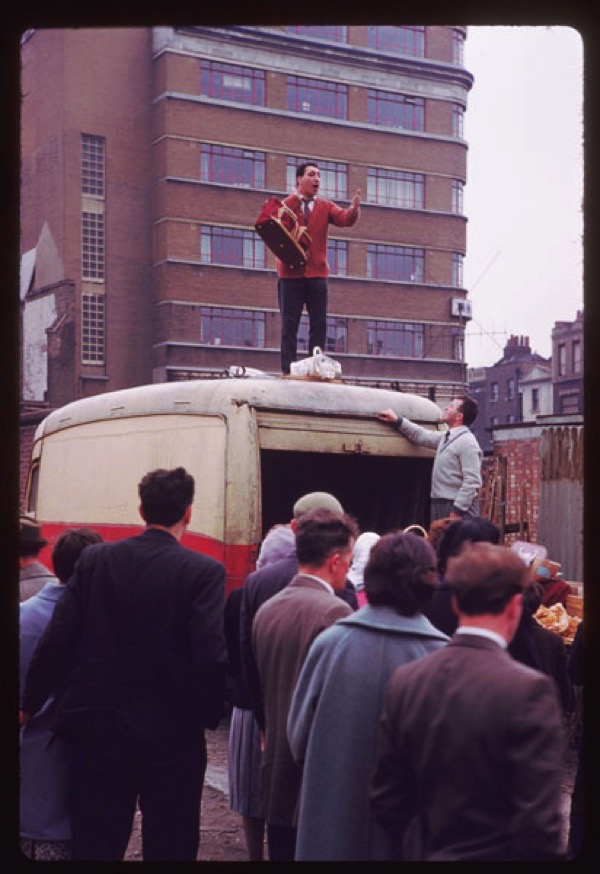
Aldgate huckster, April 30th 1961
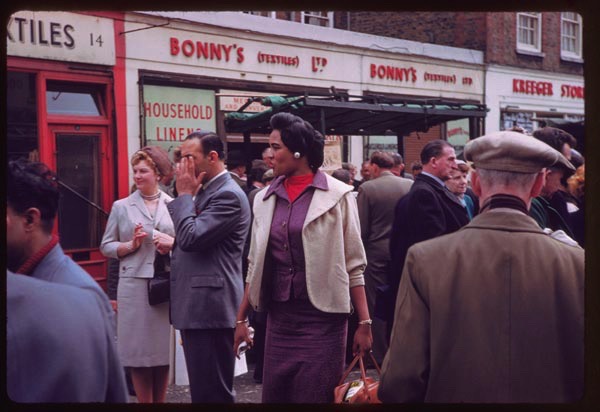
Bell Lane, April 30th 1961
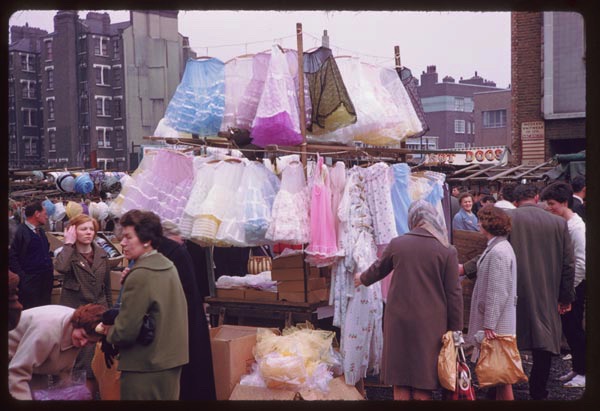
Petticoat Lane, April 30th 1961
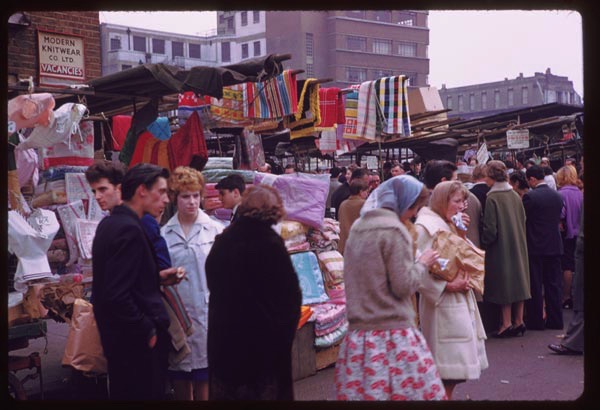
Petticoat Lane, April 30th 1961
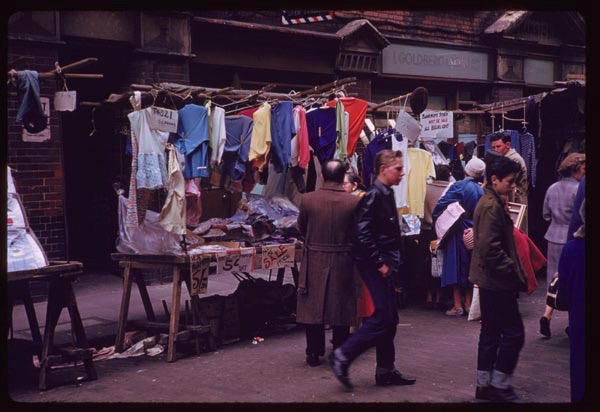
Petticoat Lane, April 30th 1961
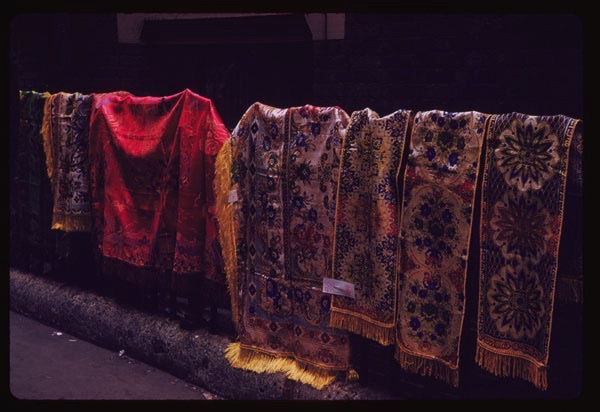
New Goulston St, April 30th 1961
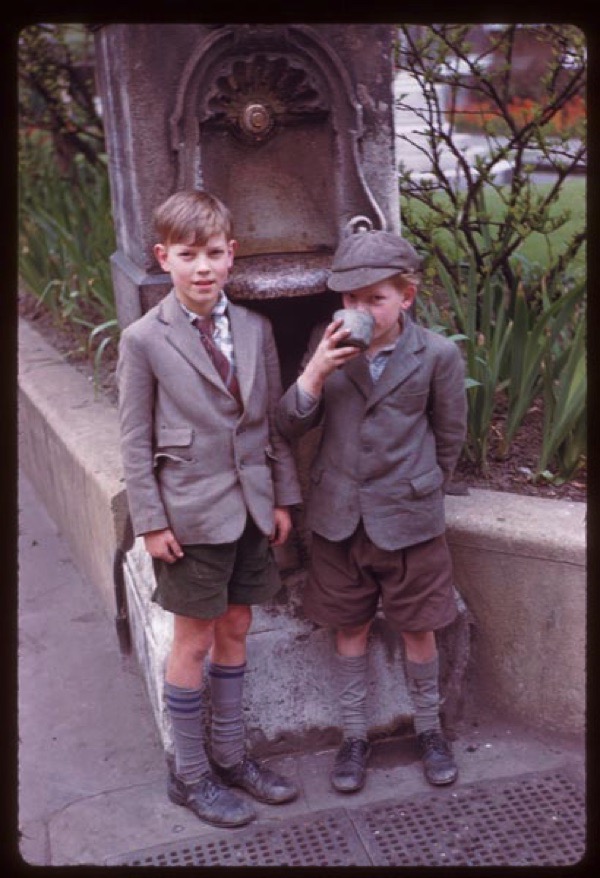
At St Botolph’s Bishopsgate, April 30th 1961
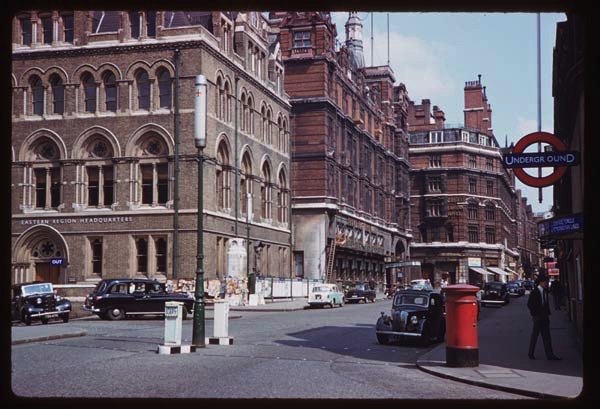
Liverpool St Station, June 26th 1960
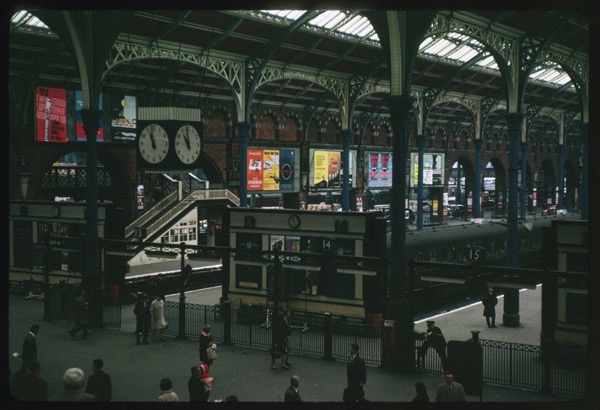
Liverpool St Station, Sunday May 30th 1965
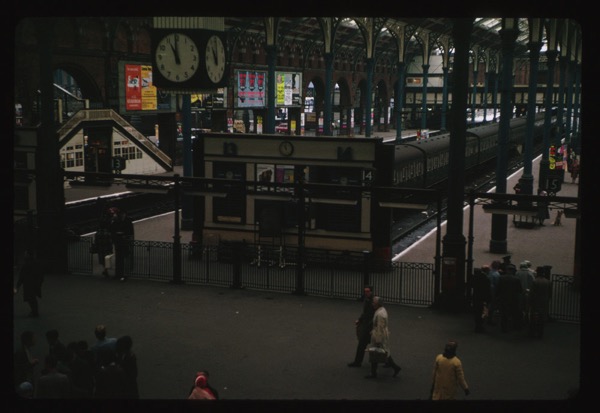
Liverpool St Station, Sunday May 30th 1965
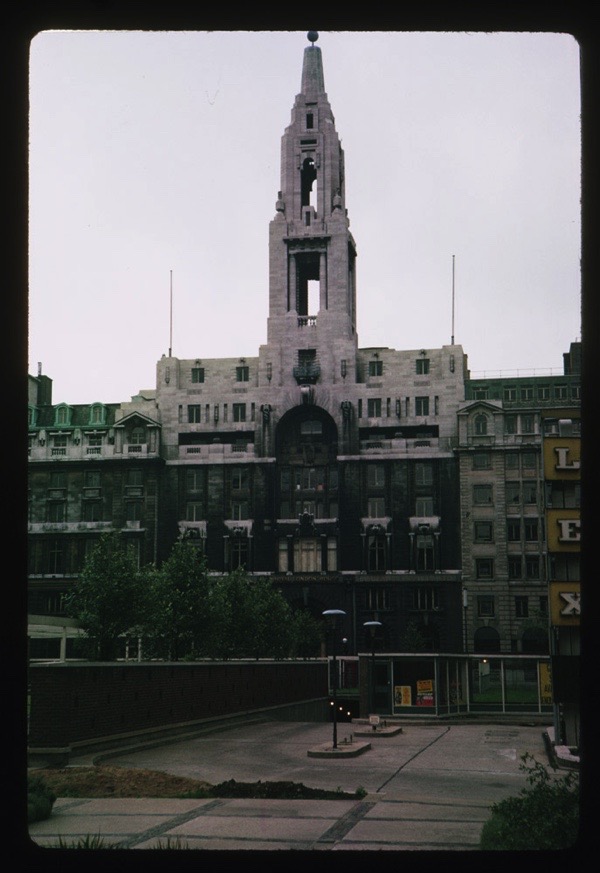
Finsbury Sq, May 30th 1965
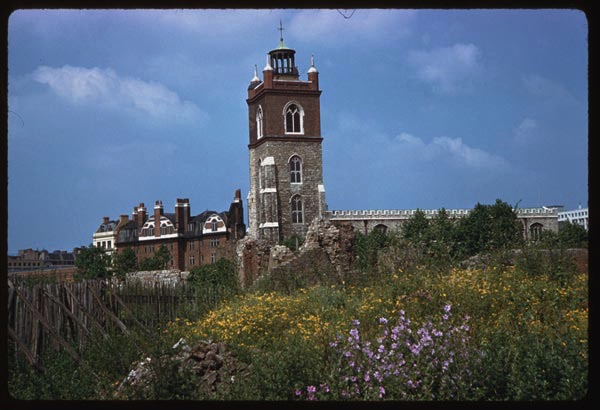
St Giles Cripplegate, June 26th 1960
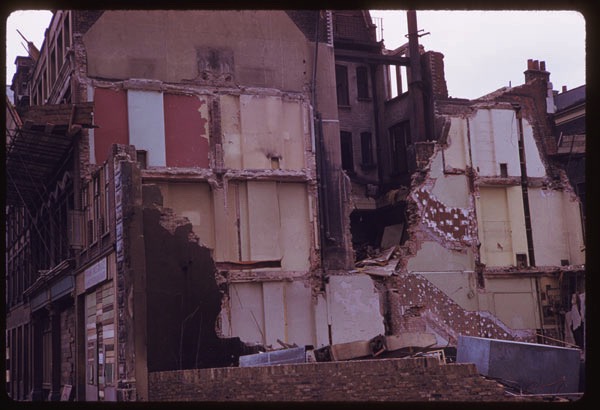
Moorgate, April 30th 1961
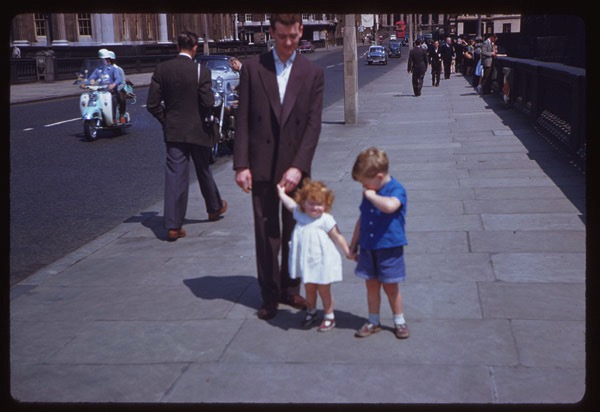
Sunday morning on London Bridge, June 26th 1960
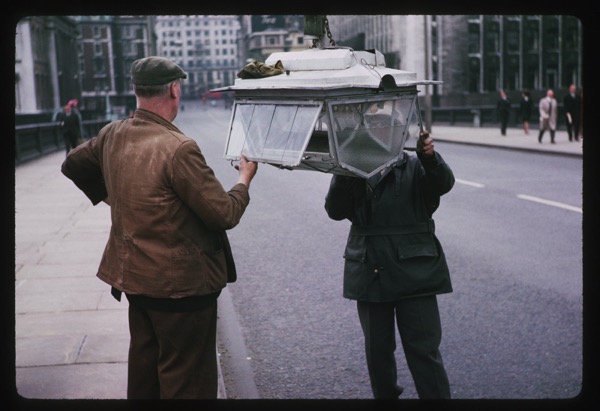
Gas lamp cleaners London Bridge, May 29th 1965
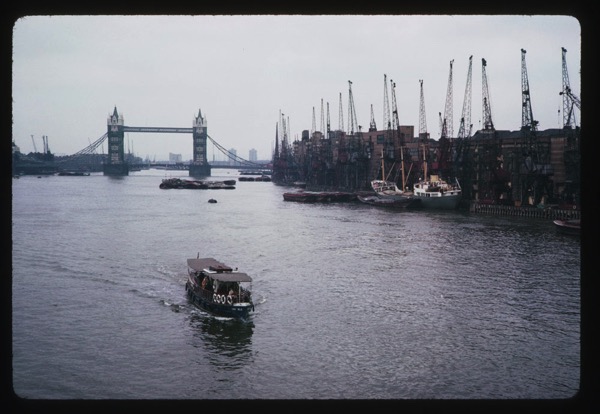
Looking east from London Bridge, May 29th 1965
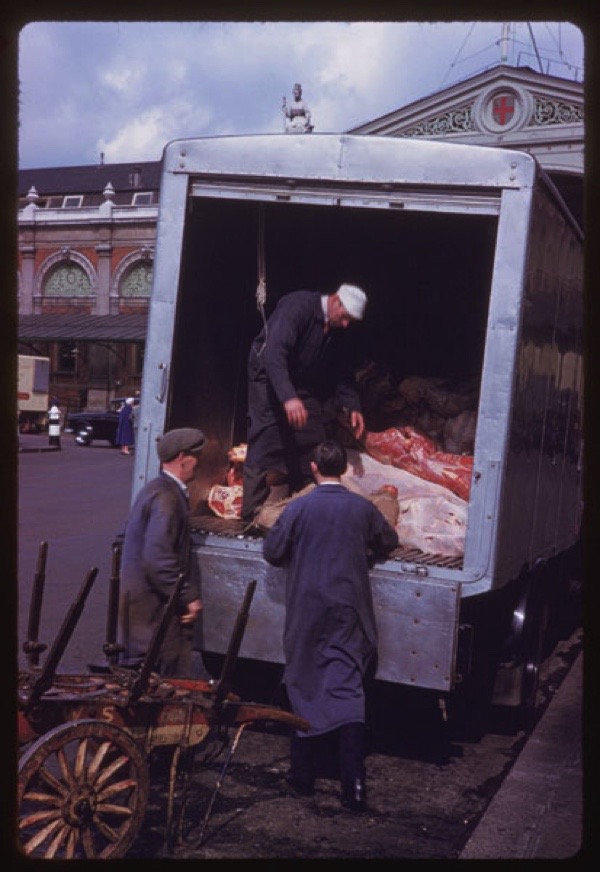
Smithfield Market, May 2nd 1961
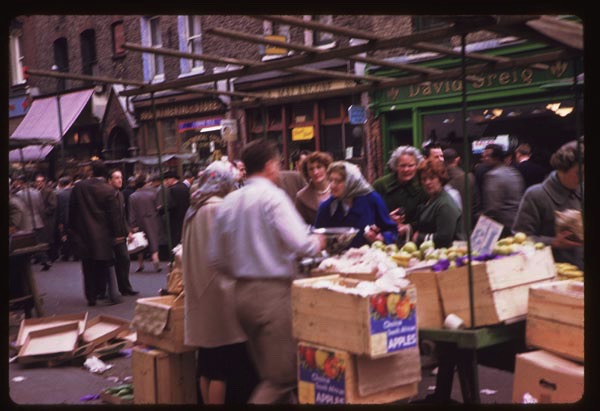
Leather Lane, April 28th 1961
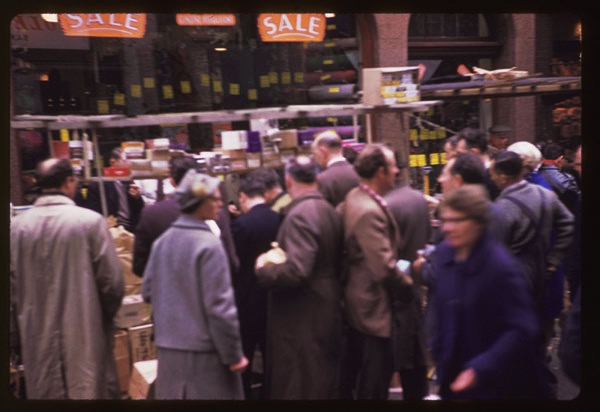
Leather Lane, April 28th 1961

Leather Lane, April 28th 1961
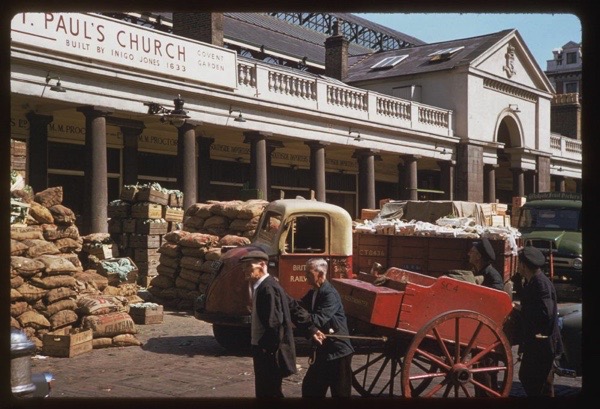
Covent Garden, June 26th 1961
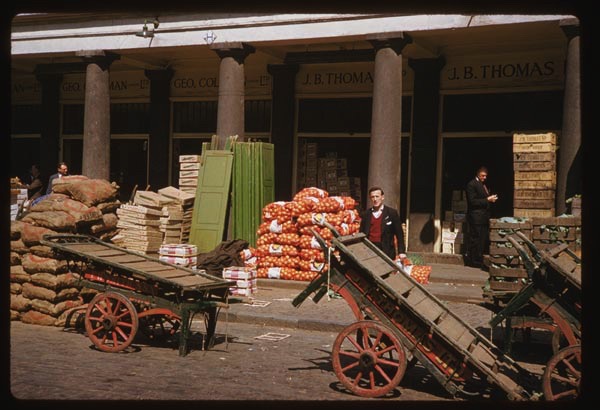
Covent Garden, June 26th 1961
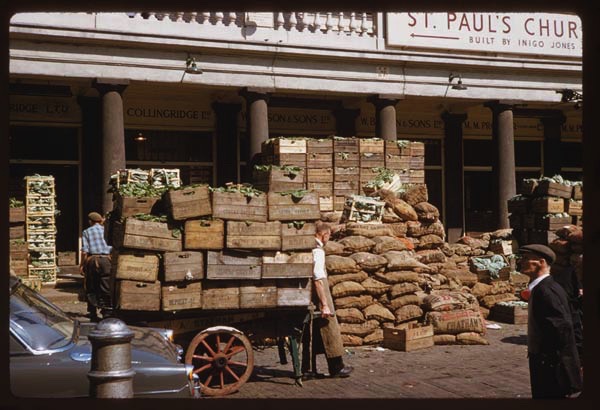
Covent Garden, June 26th 1961
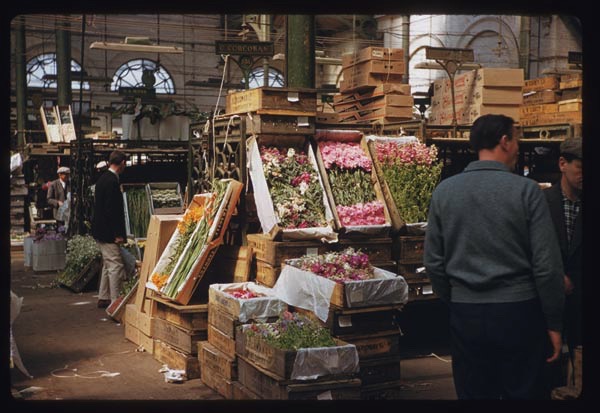
Covent Garden, June 26th 1961
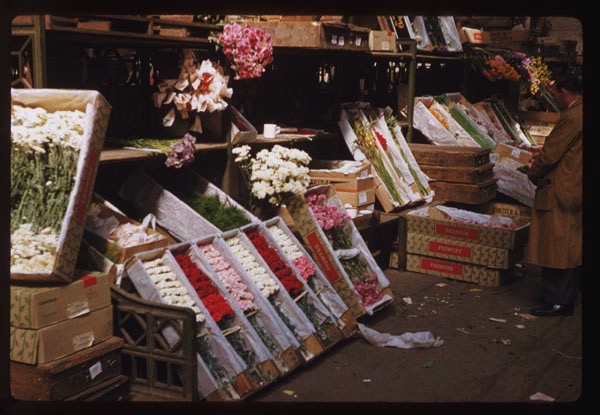
Covent Garden, June 26th 1961
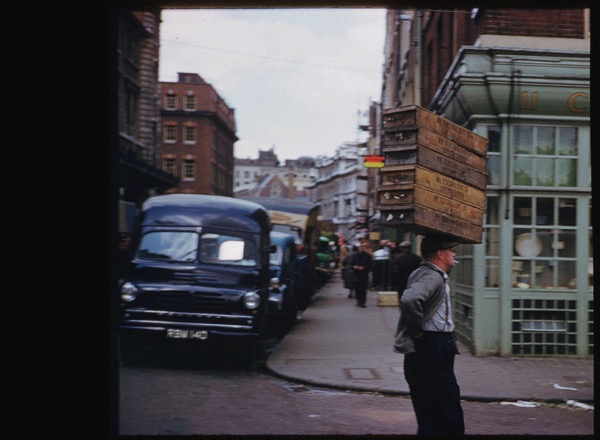
Covent Garden, June 26th 1961

Buskers, Leicester Sq, May 14th 1961
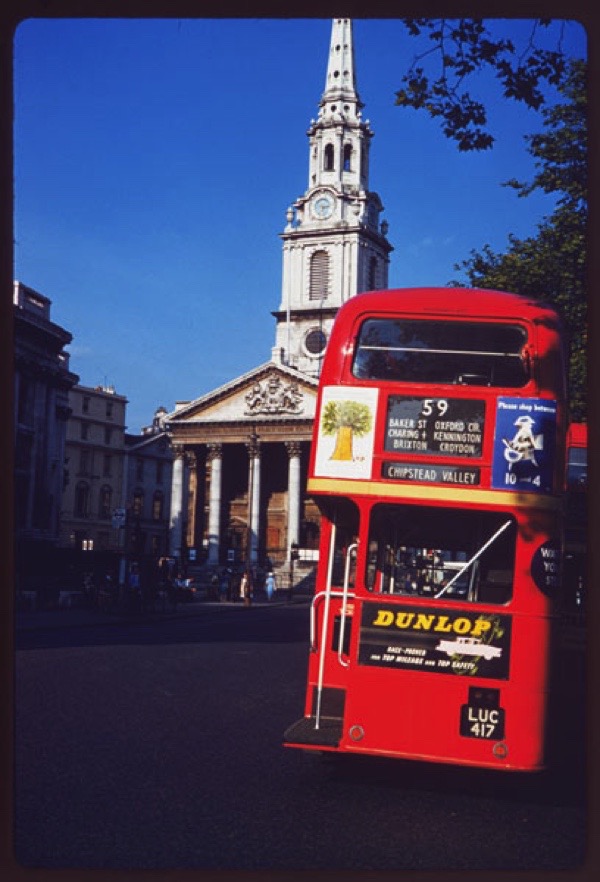
St. Martin in the Fields, Trafalgar Sq, June 19th 1960
Photographs copyright © The Trustees of Indiana University
You may also like to take a look at
In William Blake’s Lambeth
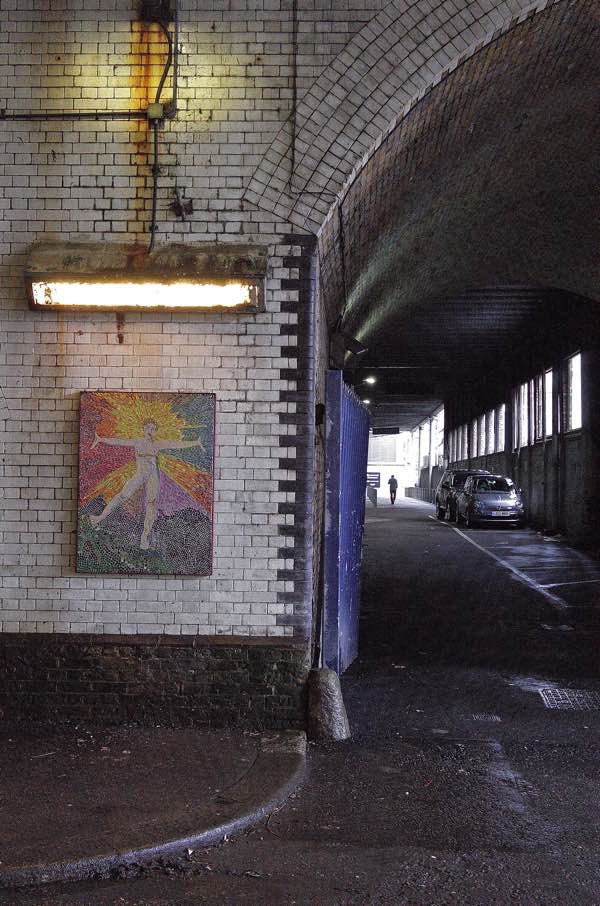
Glad Day in Lambeth
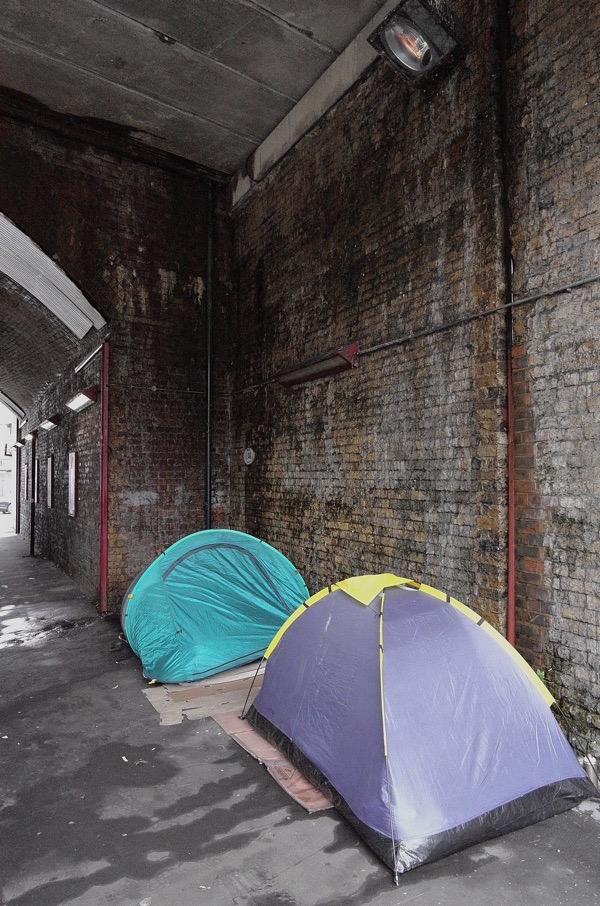
If you wish to visit William Blake’s Lambeth, just turn left outside Waterloo Station, walk through the market in Lower Marsh, cross Westminster Bridge Rd and follow Carlisle Lane under the railway arches. Here beneath the main line into London was once the house and garden, where William & Catherine Blake were pleased to sit naked in their apple tree.
Yet in recent years, William Blake has returned to Lambeth. Within the railway arches leading off Carlisle Lane, a large gallery of mosaics based upon his designs has been installed, evoking his fiery visions in the place where he conjured them. Ten years work by hundreds of local people have resulted in dozens of finely-wrought mosaics bringing Blake’s images into the public realm, among the warehouses and factories where they may be discovered by the passerby, just as he might have wished. Trains rumble overhead with a thunderous clamour that shakes the ancient brickwork and cars roar through these dripping arches, creating a dramatic and atmospheric environment in which to contemplate his extraordinary imagination.
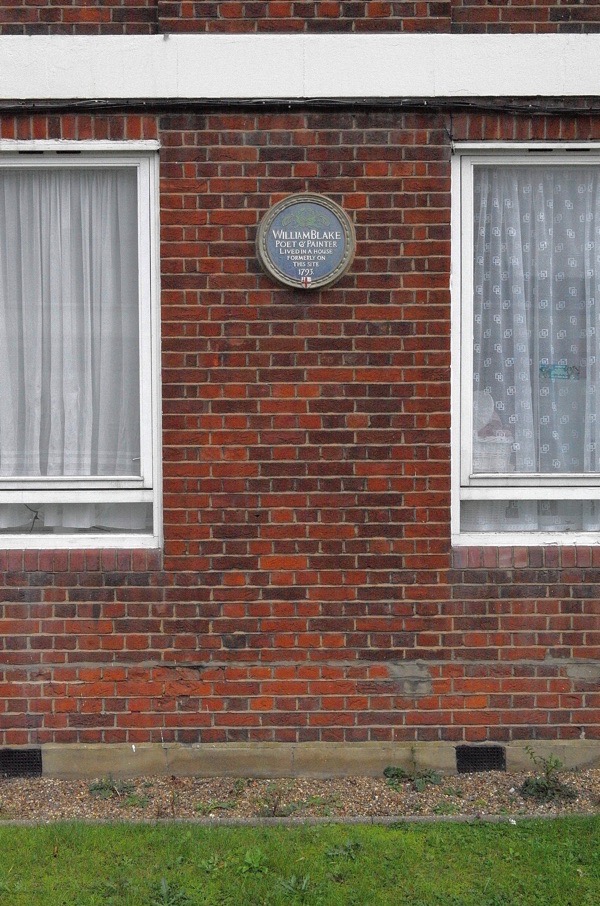
On the south side of the arches is Hercules Rd, site of the William Blake Estate today, where he lived between 1790 and 1800 at 13 Hercules Buildings, a three-storey terrace house demolished in 1917. Blake passed ten productive and formative years on the south bank, that he recalled as ‘Lambeth’s vale where Jerusalem’s foundations began.’ By contrast with Westminster where he grew up, Lambeth was almost rural two hundred years ago and he enjoyed a garden with a fig tree that overlooked the grounds of the bishop’s palace. This natural element persists in the attractively secluded Archbishop’s Park on the north side of the arches, where I found celandines and fritillaria in flower this week in the former palace grounds.
To enter these sonorous old arches that span the urban and pastoral is to discover the resonant echo chamber of one of the greatest English poetic imaginations. When I visited this week I found myself alone at the heart of Lambeth yet in the presence of William Blake, and it is an experience I recommend to my readers.
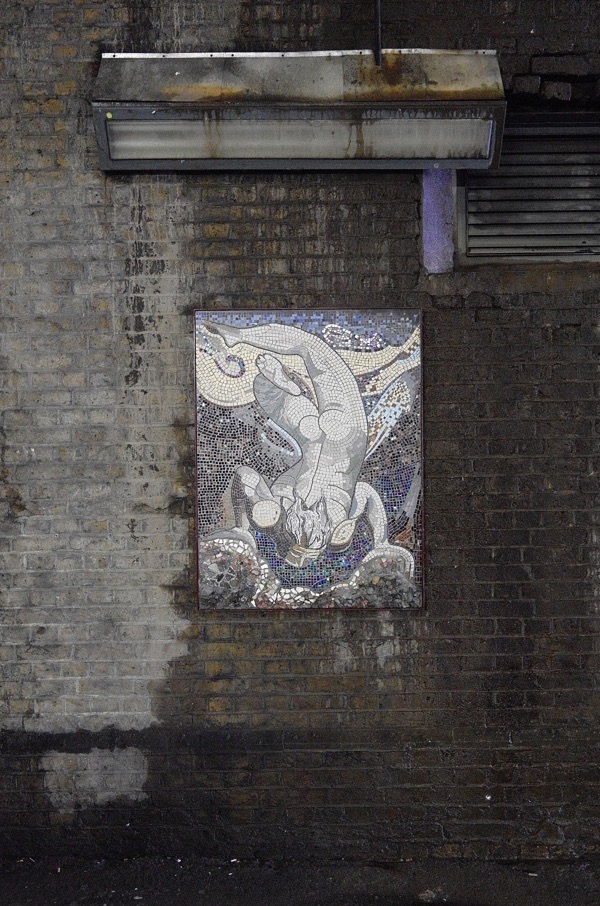
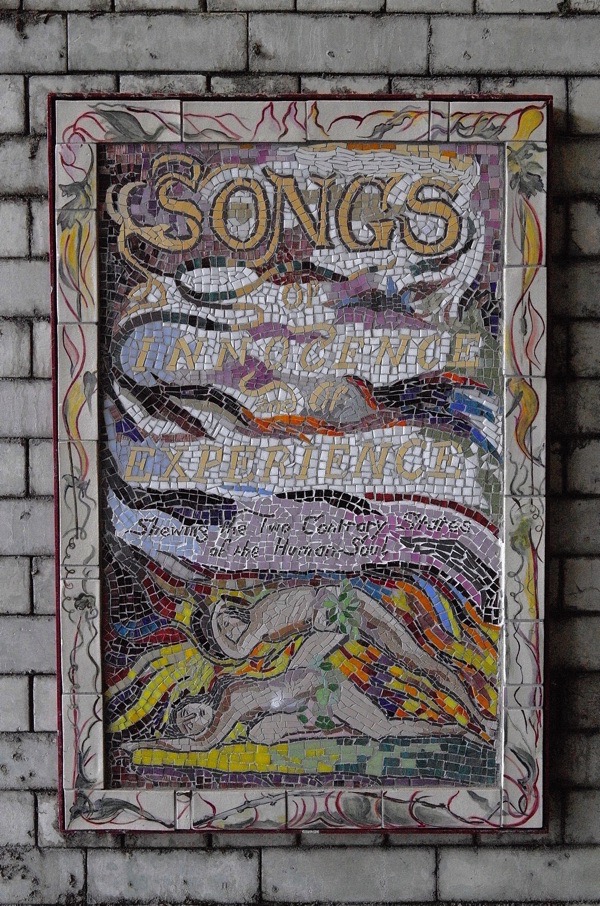
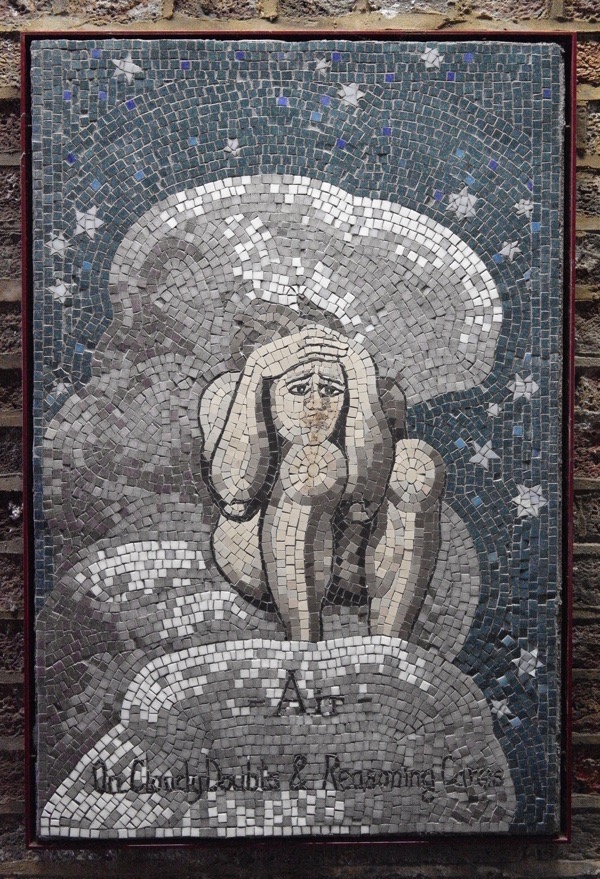
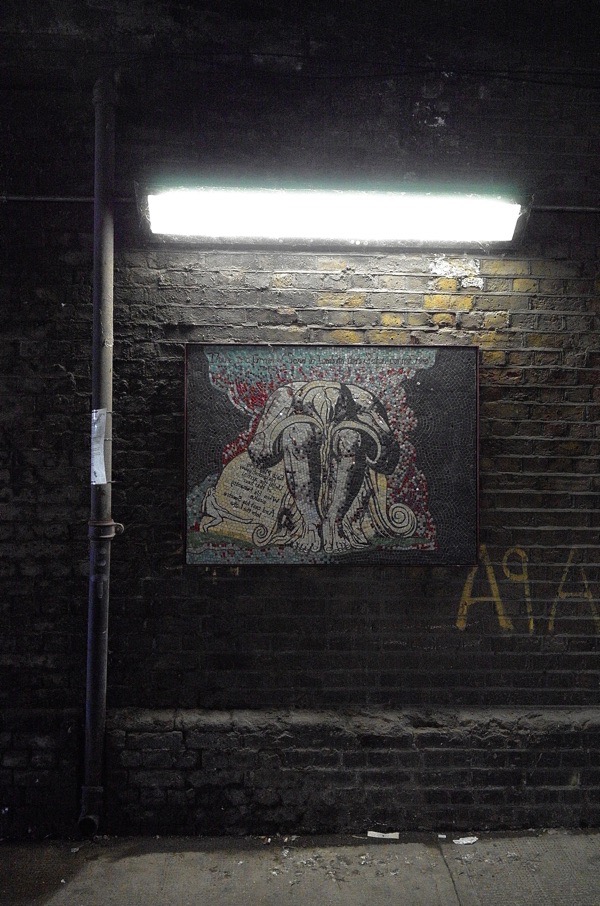
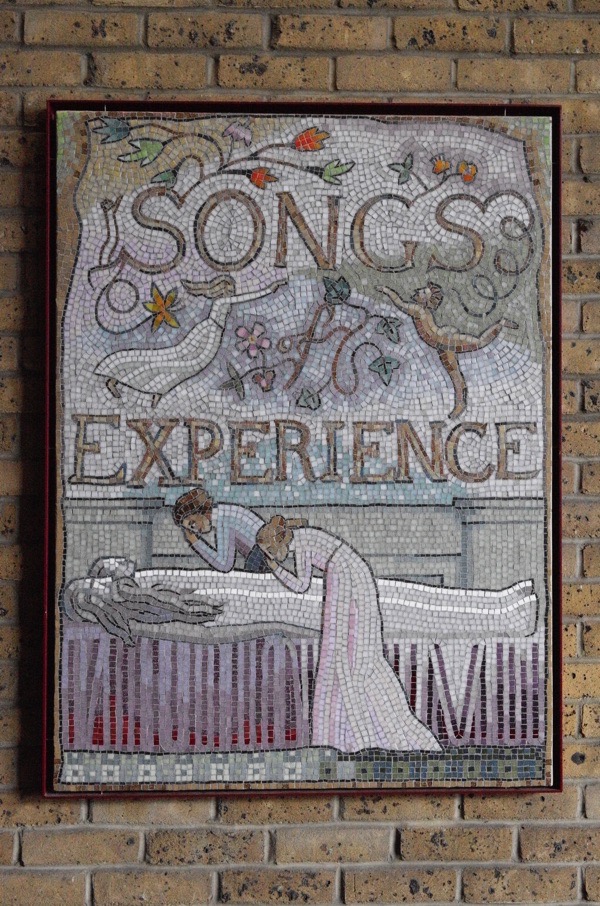
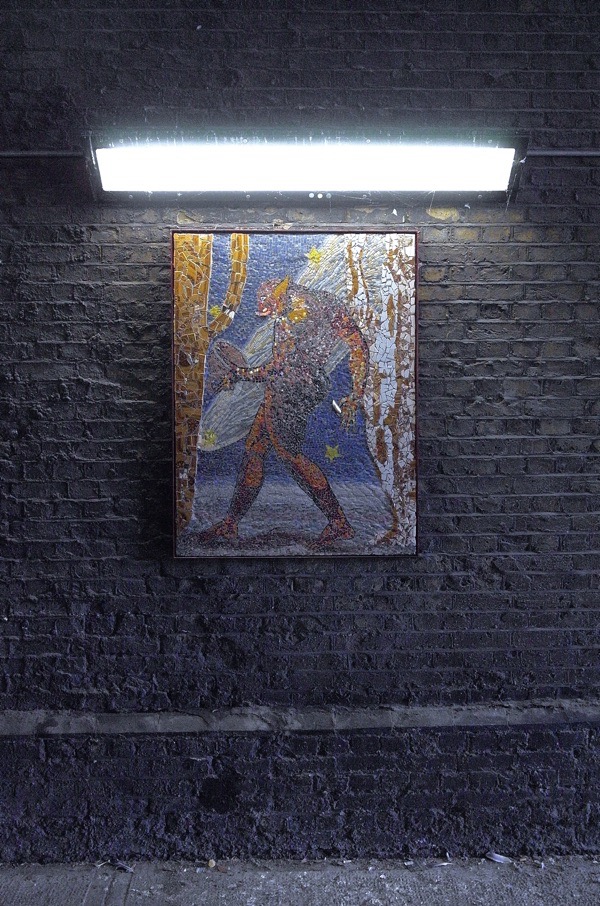
‘There is a grain of sand in Lambeth that Satan cannot find”
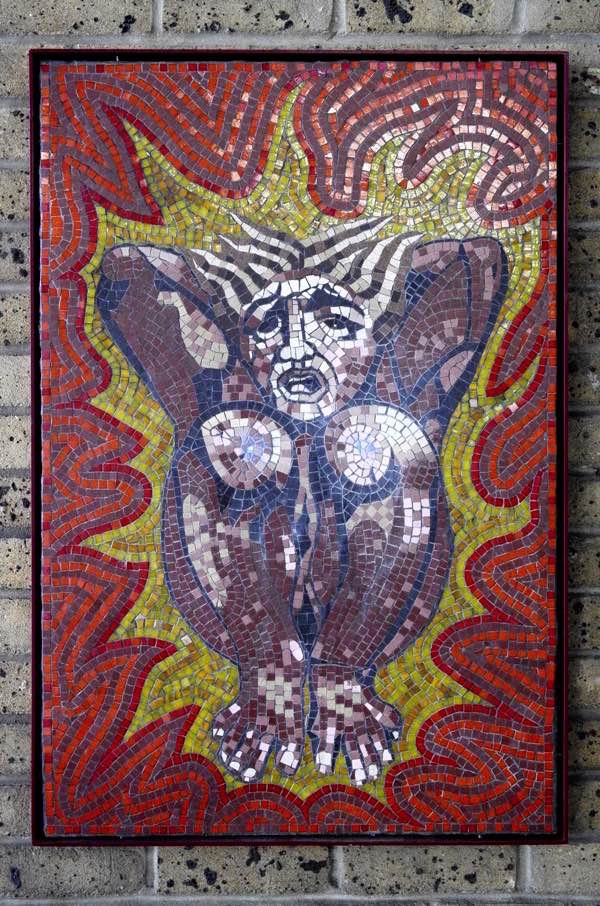
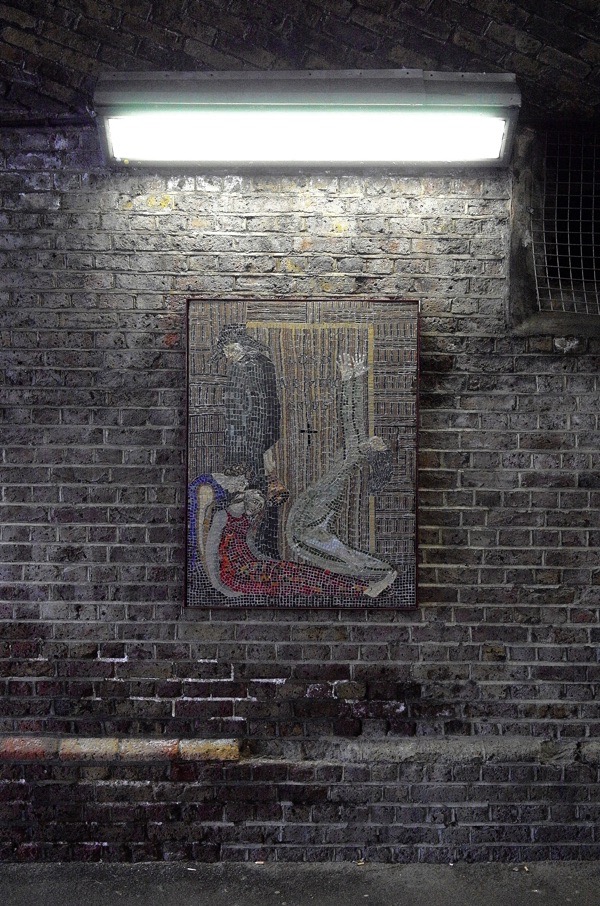
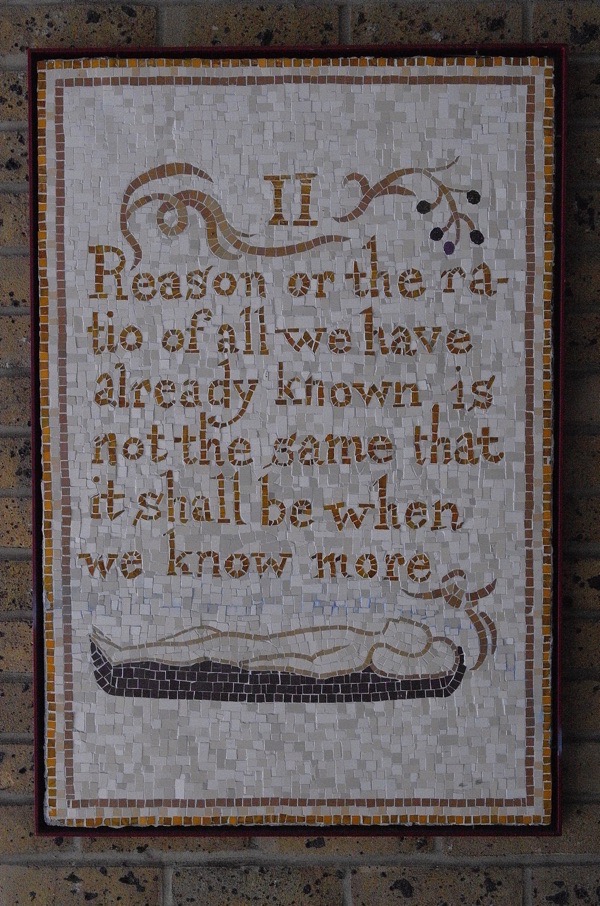
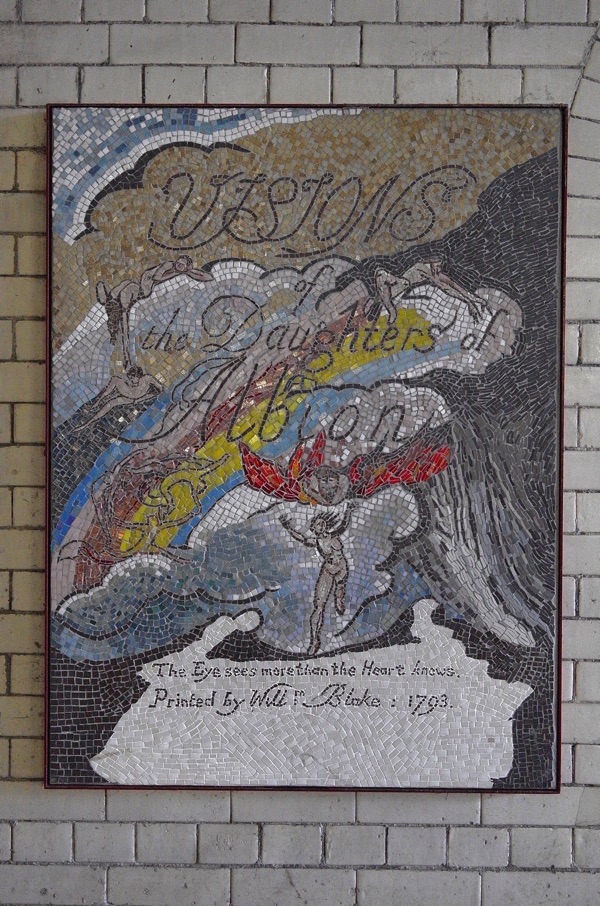
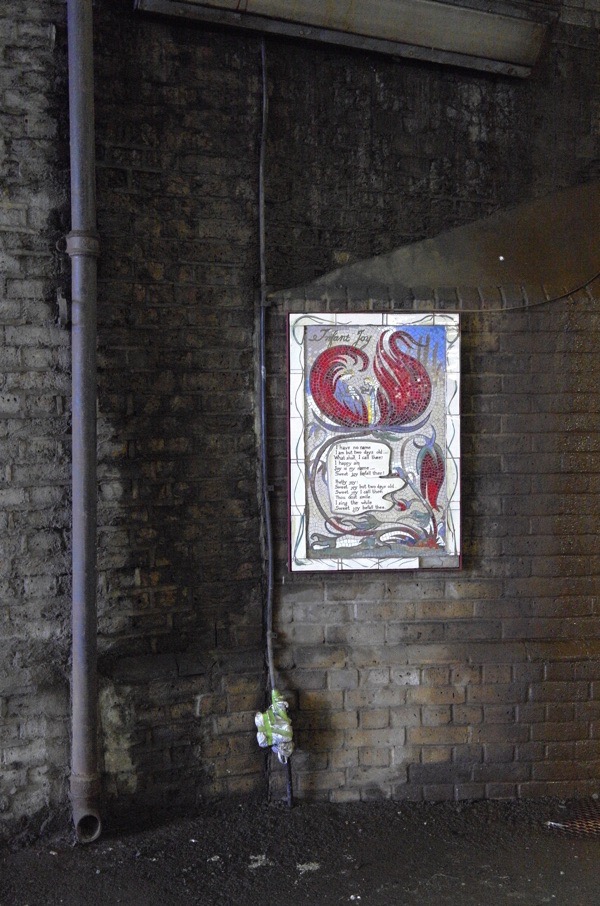
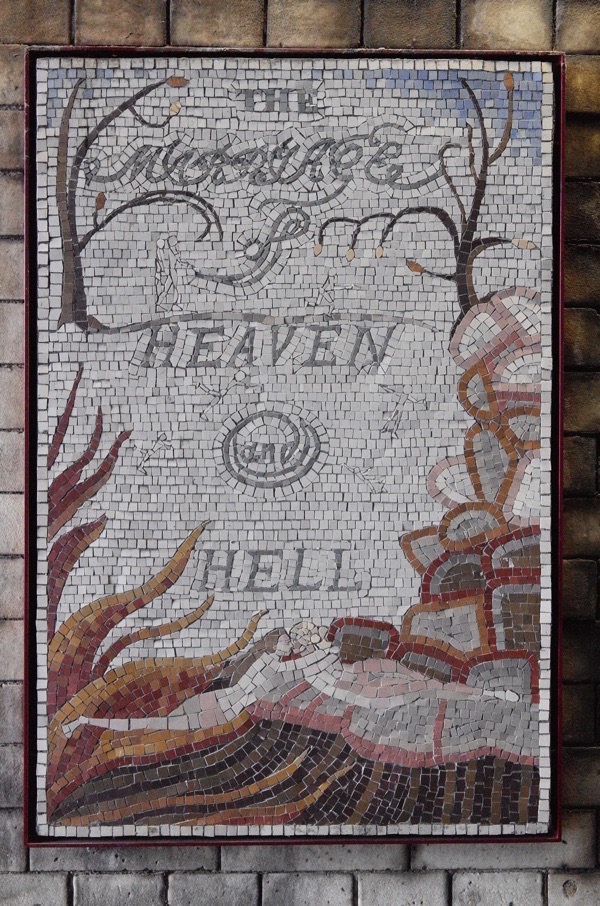
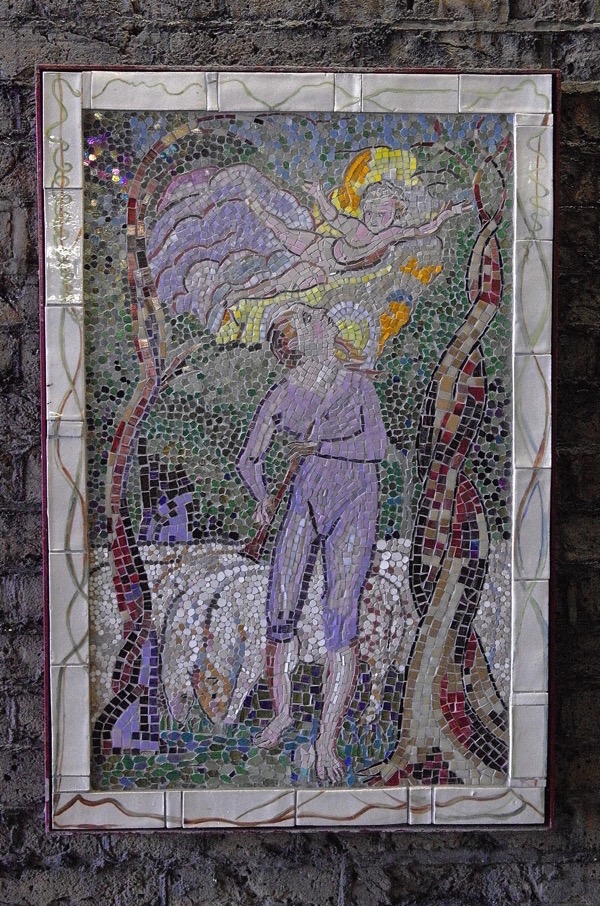
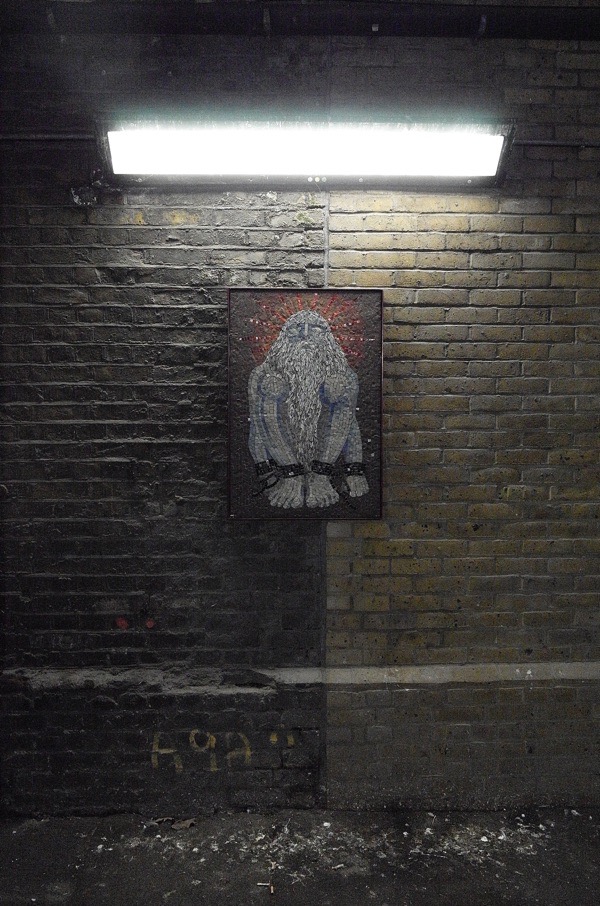
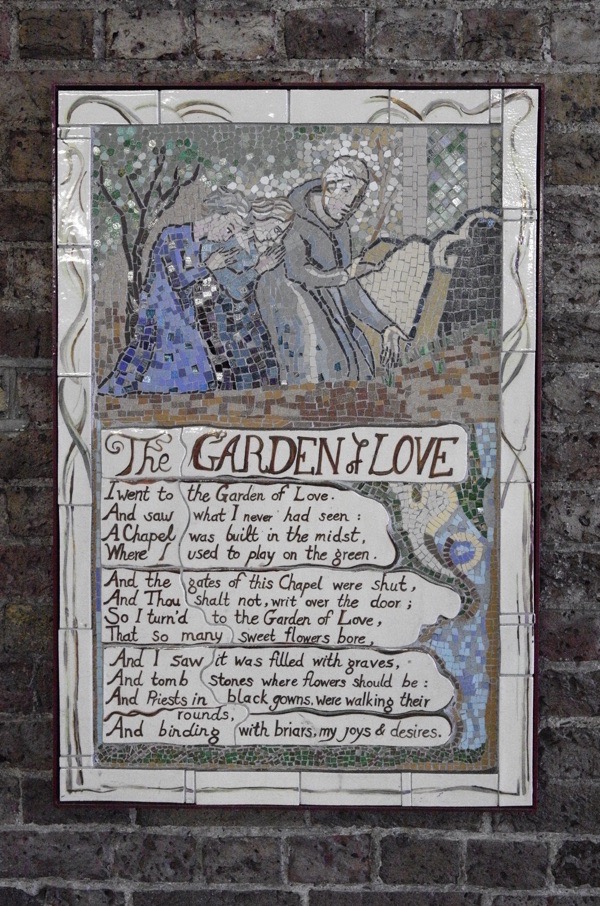
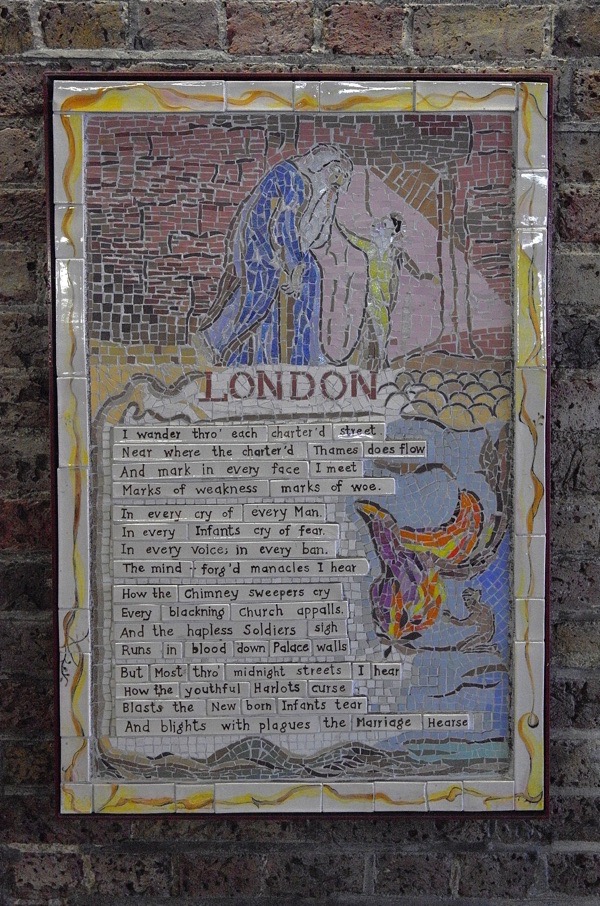
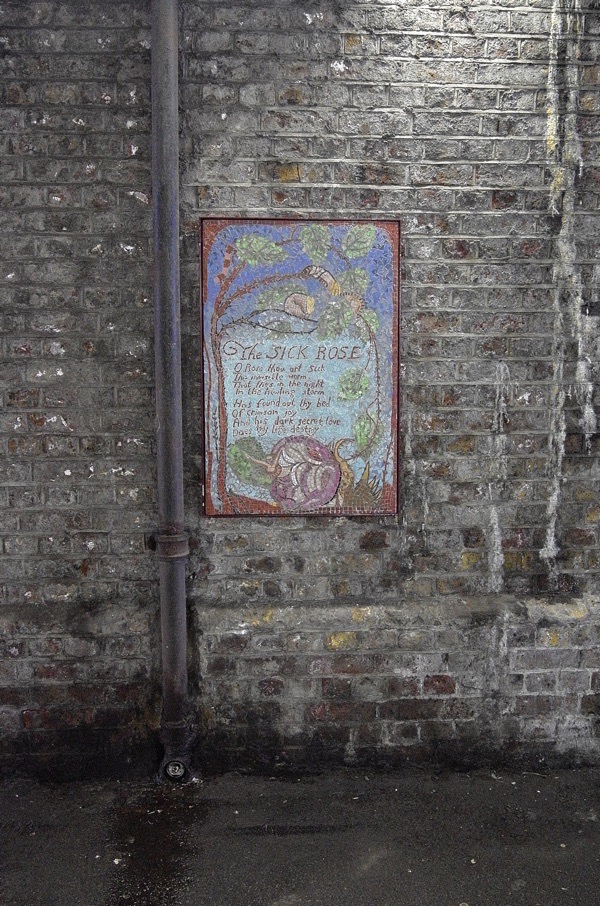
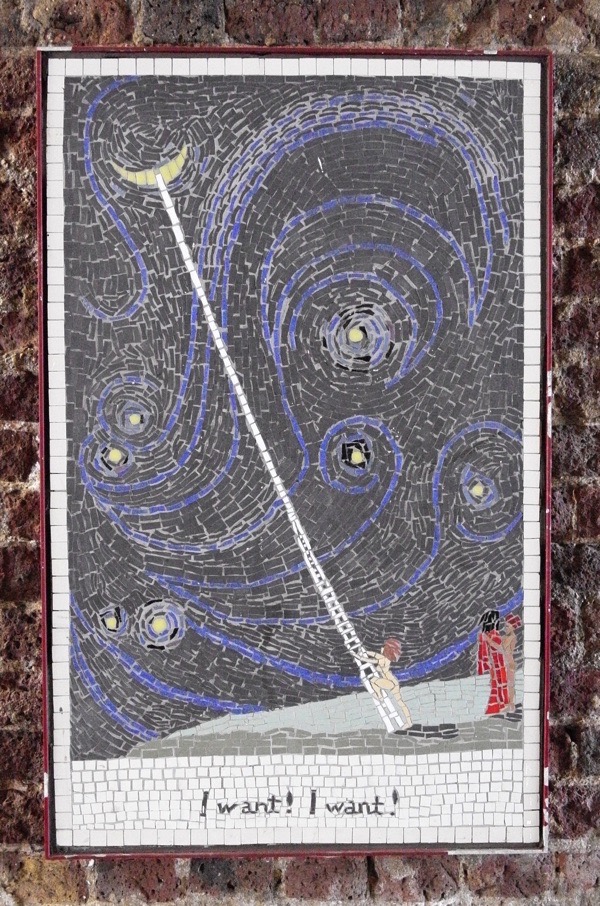
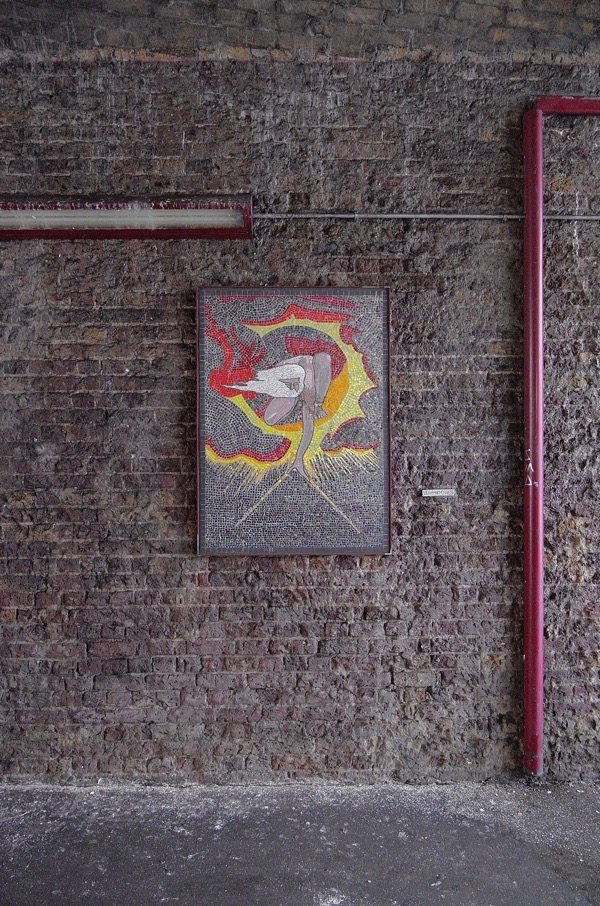
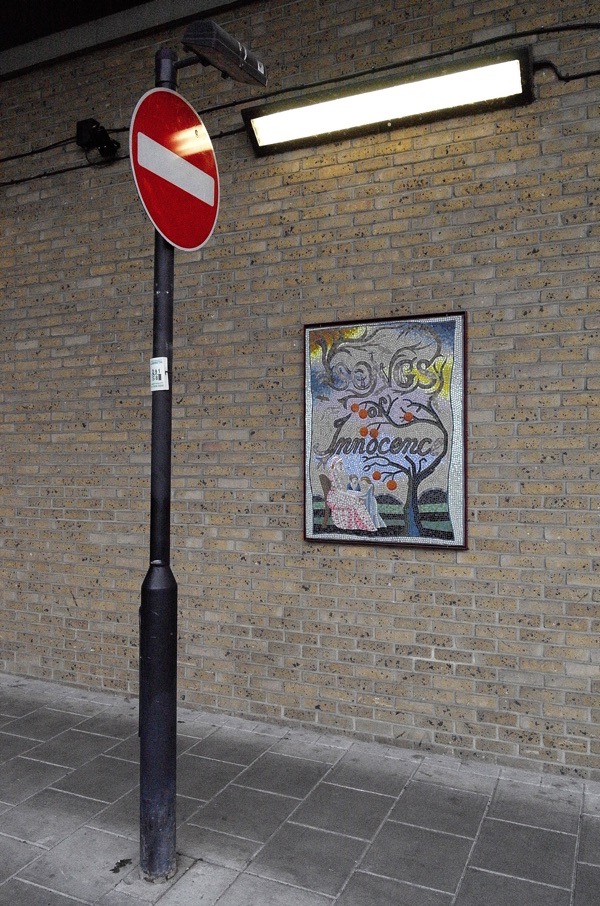
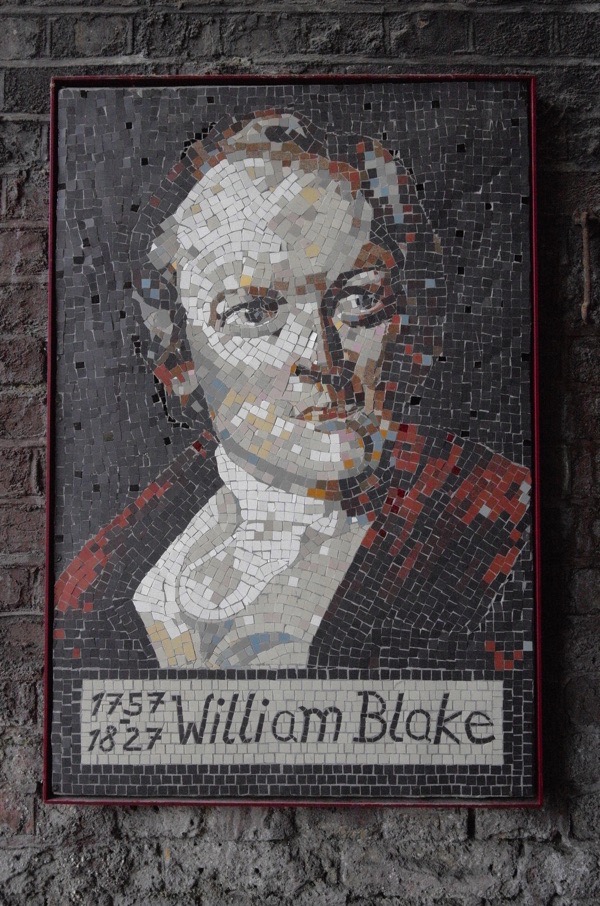
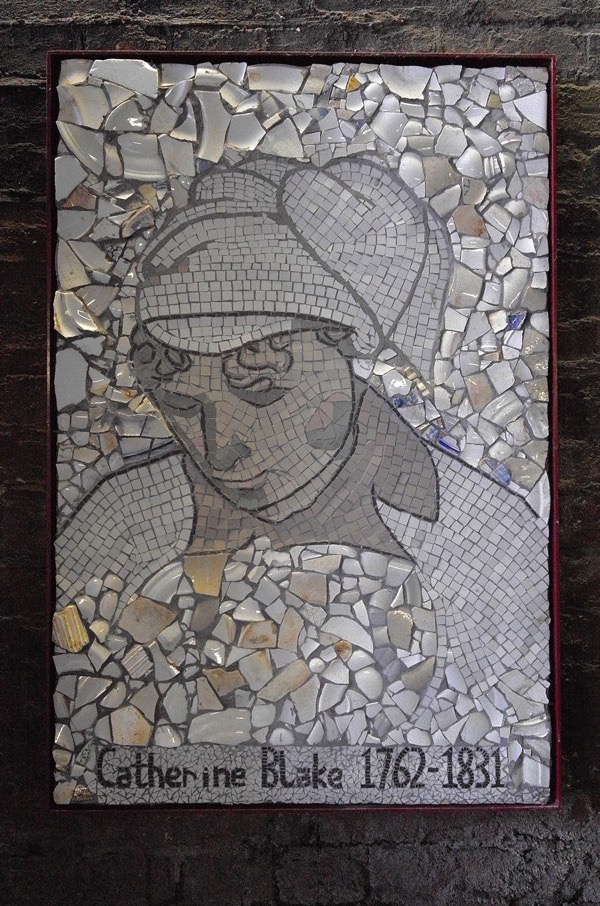
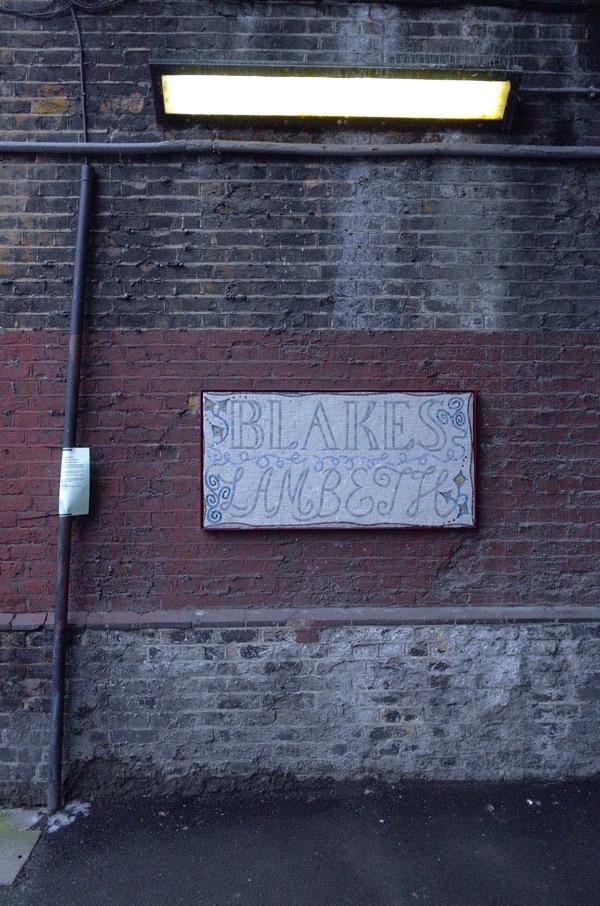
These mosaics were created by South Bank Mosaics which is now The London School of Mosaic
You may also like to take a look