
At KTS The Corner DIY
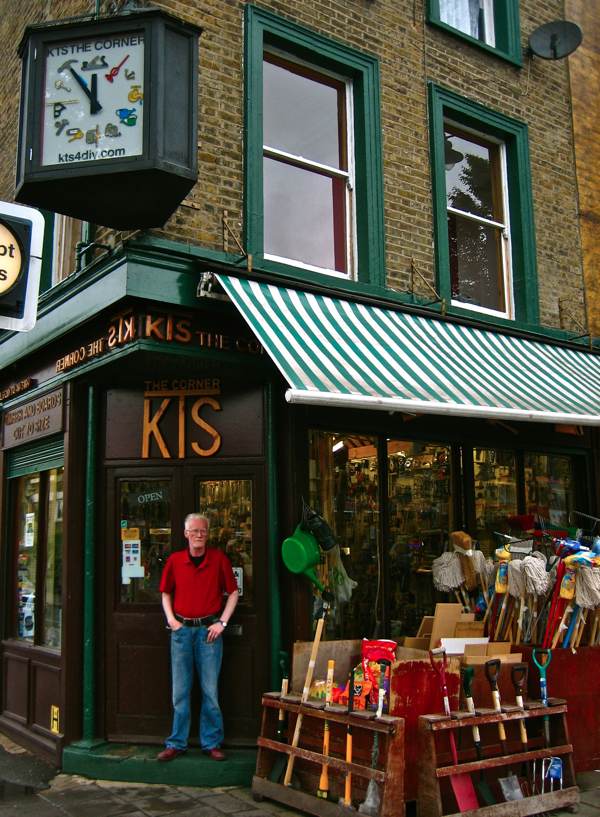
Everyone in East London knows KTS The Corner, Tony O’Kane’s timber and DIY shop. With Tony’s ingenious wooden designs upon the fascia and the three-sided clock he designed over the door, this singular family business never fails catch the eye of anyone passing the corner of the Kingsland Rd and Englefield Rd in Dalston. In fact, KTS The Corner is such an established landmark that it is “a point of knowledge” for taxi drivers.
Yet, in spite of its fame, there is an enigma about KTS which can now be revealed for the first time. “People think it stands for Kingsland Timber Service,” said Tony with a glint in his eye, “Even my accountant thinks it does, but it doesn’t – it stands for three of my children, Katie, Toni and Sean.” And then he crossed his arms and tapped his foot upon the ground, chuckling to himself at this ingenious ruse. It was entirely characteristic of Tony’s irrepressible creative spirit which finds its expression in every aspect of this modest family concern, now among the last of the independent one-stop shops for small builders and people doing up their homes.
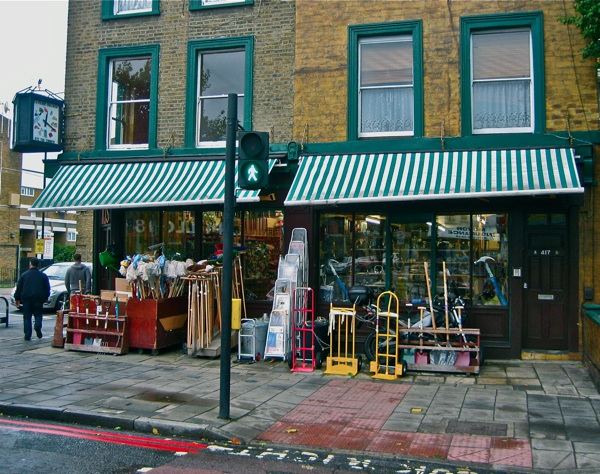
On the Kingsland Rd, Tony’s magnificent pavement display of brushes, mops and shovels, arrayed like soldiers on parade, guard the wonders that lie within. To enter, you walk underneath Tony’s unique three-sided clock – constructed to be seen from East, South and North – with his own illustrations of building materials replacing the numerals. Inside, there are two counters, one on either side, where Tony’s sons and daughters lean over to greet you, offering key cutting on your left and a phantasmagoric array of fixtures to your right. Step further, and the temporal theme becomes apparent, as I discovered when Tony took me on the tour. Each department has a different home made clock with items of stock replacing the numerals, whether nails and screws, electrical fittings, locks and keys, copper piping joints, or even paints upon a palette-shaped clock face. Whenever I expressed my approval, Tony grimaced shyly and gave a shrug, indicating that he was just amusing himself.
Rashly, Tony left his sons in charge while we retired to his cubicle office stacked with invoices and receipts where, over a cup of tea, he explained how he came to be there.
“I’m from from Hoxton, I went to St Monica’s School in Hoxton Sq. To get me to concentrate on anything they had to tie me down, but, if anything physical needed doing, like moving tables and chairs, I’d be there doing it. My dad did his own decorating and my mother wanted everything completely changed every year or eighteen months, so he taught me how to hang wallpaper and to do lots of little jobs. After Cardinal Pole’s Secondary School, I did an apprenticeship in carpentry and got a City & Guilds distinction. Starting at fifteen, I did four years apprenticeship at Yeomans & Partners. Back then, when you came out of your apprenticeship, they made you redundant. You got the notice in your pay packet on the Thursday but on Saturday you’d get a letter advertising that they needed carpenters at the same company. They wanted you to work for them but without benefits and you had to pay a weekly holiday stamp.
I went self-employed from that moment. At the age of nineteen, I started my own company. I covered all the trades because I learnt that the first person to arrive on a building site is a carpenter and the last person to leave the site upon completion is a carpenter. Nine out of ten foremen are ex-carpenters and joiners, since the carpenter gets involved with every single other trade. So, over the years, I picked up plumbing, heating, electrics. When I started my company, I wouldn’t employ anyone if I couldn’t do their job – so I knew how much to pay ’em and whether they was doing it right or wrong.
This was in 1973, and Hackney Council offered me a grant to do up a building in Broadway Market. I just wanted an office, a workshop and a warehouse but they said you have to open a shop. So, as I was a building company, I opened a builders’ merchants and then, twenty years ago, I bought this place. When I bought it, it was just the corner, there was no shopfront. I designed the shopfront and found the old doors. I used to come here with my dad when we were doing the decorating for my mum, because they made pelmets to order here but, as a child, I never thought I’d own this place.”
Tony is proud to assure you that he stocks more lines than those ubiquitous warehouse chains selling DIY materials, and he took me down into the vast cellar where entire aisles of neatly filed varieties of hammers and hundreds of near-identical light fixtures illustrated the innumerable byways of unlikely creativity. At the rear of the shop, through a narrow door, I discovered the carpentry workshop where resident carpenter Mike presides upon some handsome old mechanical saws in a lean-to shed stacked with timber. He will cut wood to any shape or dimension you require upon the old workbench here.
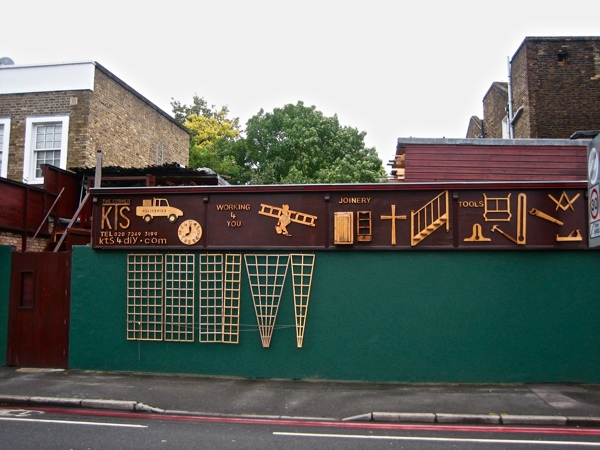
Tony’s witty designs upon the Englewood Rd side of the building are the most visible display of his creative abilities, in pictograms conveying Plumbing & Electrical, Joinery, Keys Cut, Gardening and Timber Cut-to-Size. When Tony took these down to overhaul them once, it caused a stir in the national press. Thousands required reassurance that Tony’s designs would be reinstated exactly as before. It was an unexpected recognition of Tony’s talent and a powerful reminder of the secret romance we all harbour for traditional hardware shops.
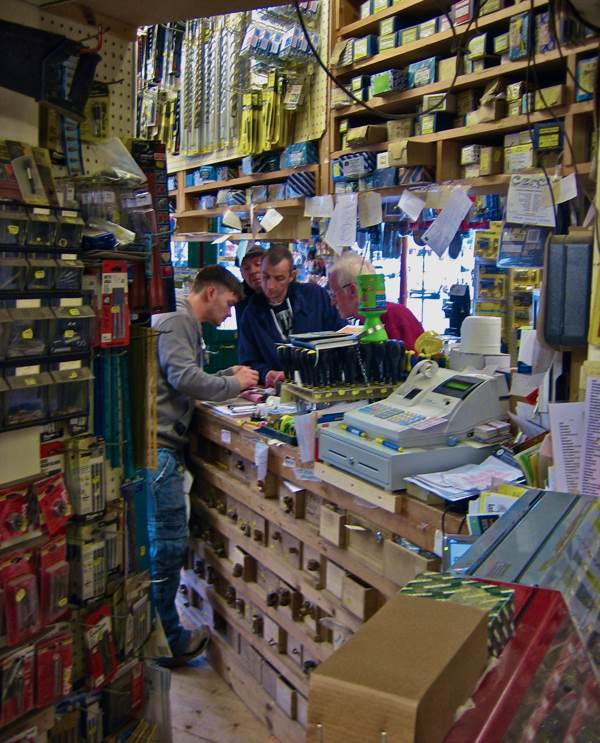
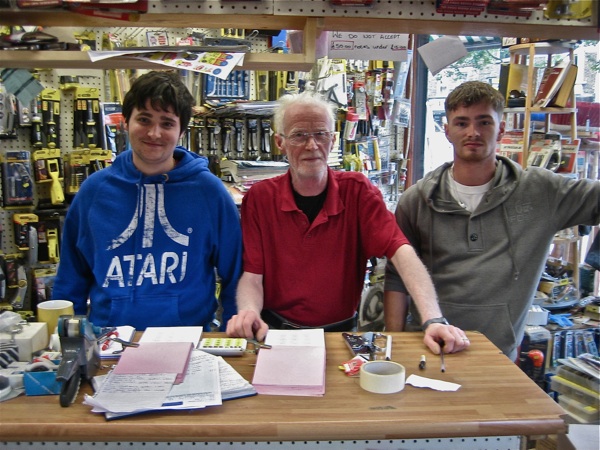
Tony with his sons Jack and Sean.
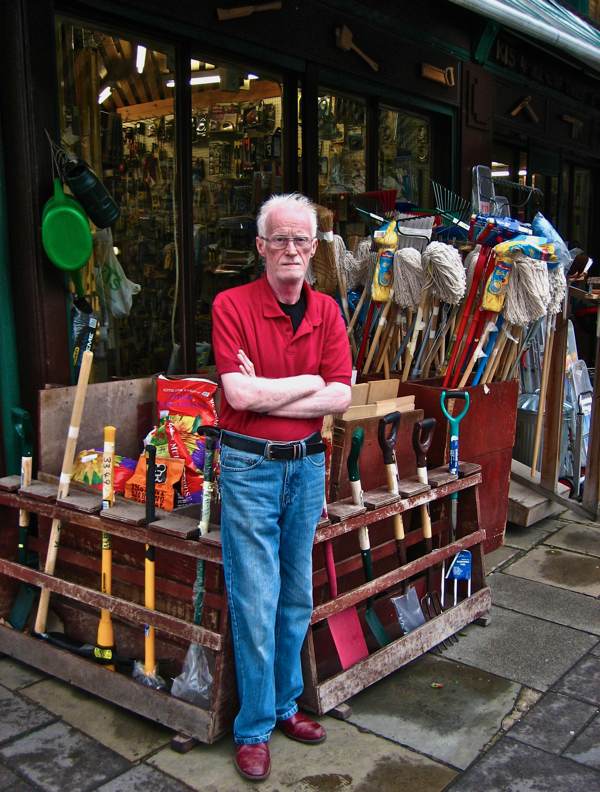
A magnificent pavement display of brushes, mops and shovels.
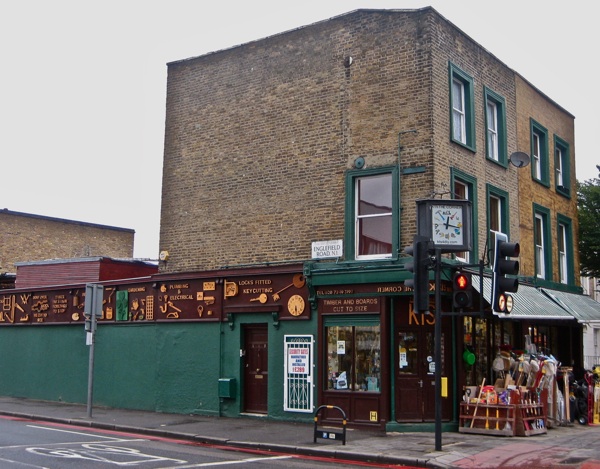
The temporary removal of Tony’s wooden pictograms triggered a public outcry in the national press.
In the Kingsland Rd, you may also like to read about
Happy Birthday Newham Bookshop!

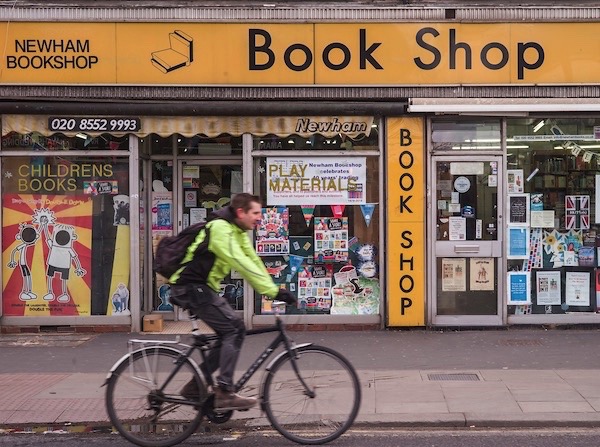
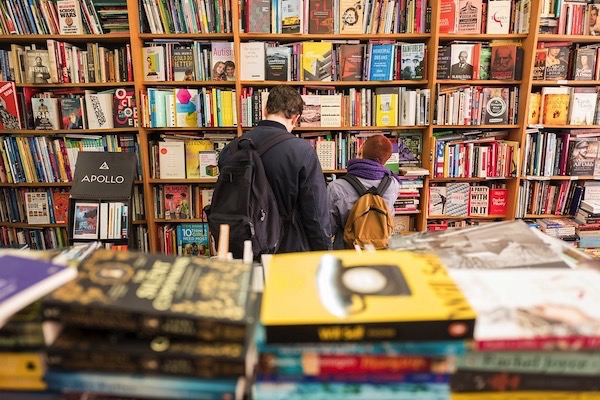
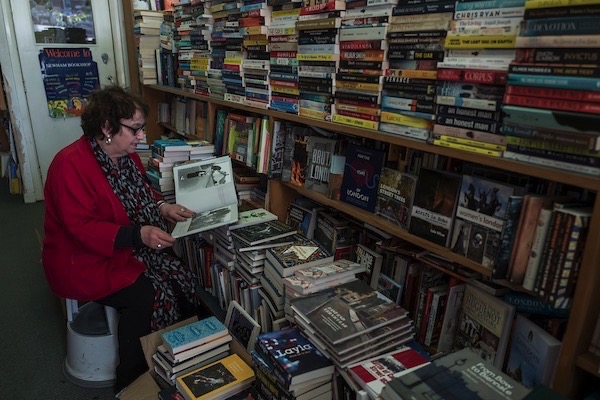
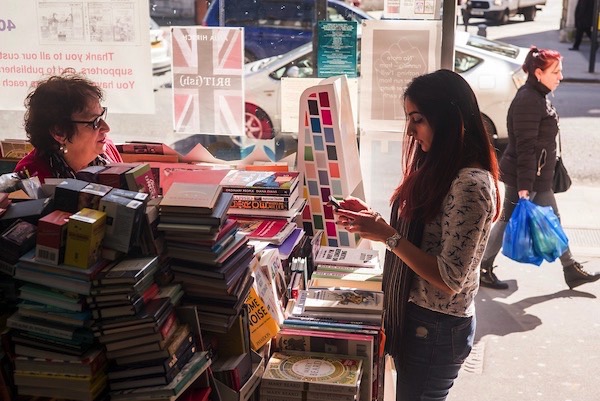
The loss to dramatic art when Vivian Archer quit her career as an actress in the theatre was an unquestionable gain for the literary world, which has benefitted immeasurably from her indefatigable ability as a bookseller ever since. As a writer and publisher, I appreciate her canny knack at selling stacks of books and her shrewd devotion to her customers immensely. Thus it was that Photographer Andrew Baker & I were more than delighted to pay a visit to Newham Bookshop to join in their fortieth birthday celebrations recently.
East End bookselling is an almost exclusively female preserve, with Denise Jones of Brick Lane Books, Jane Howe of Broadway Bookshop and Vivian Archer as the three stars in this particular heaven. Each of these bookshops has its distinctive personality that reflects both the character of the bookseller and the location of the shop. The crowded shelves of Newham Bookshop create an atmosphere of generous plenitude which makes it especially welcoming and also particularly difficult to leave, since the glorious disarray offers an almost irresistible invitation to extended browsing and the tantalising possibility of unexpected discovery.
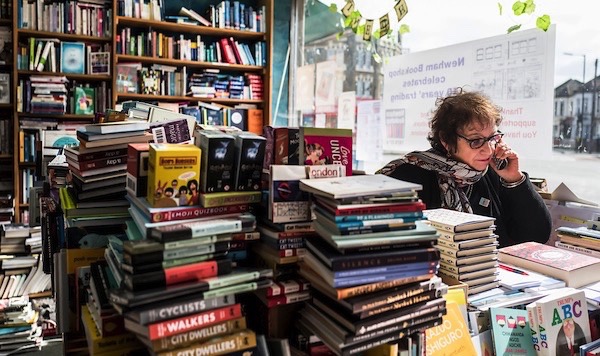
Vivian Archer sits behind the counter beside the front window of her shop enthroned as a queen among booksellers, ably supported by highly capable and equally enthusiastic attendants. Yet she revealed to me that her attention occasionally strays in the mid-afternoon. “Sometimes, I spot Terence Stamp on a sentimental journey,” she confessed affectionately in a stage whisper, harking back to her acting days wistfully, “He comes to wander around his old neighbourhood and visit the site of his father’s shop.”
Drawing her away from her devoted customers, I persuaded Vivian to join me in the quiet of the London section where we sat surrounded by copies of Spitalfields Life Books and she confided the story of her life as a bookseller.
“I used to be an actress but I decided I should get out while the going was good, while I was still working, and a friend had a bookshop in Hackney. She asked if I would come and help. So I did, and I absolutely loved it! I realised immediately that I could only work in a community bookshop, I could never work for a chain because I love interacting with people and I love reading. That’s how I started and I have never looked back.
There is a connection between the theatre and a bookshop, I think – because it is about people connecting with people, but also the transition from the written to the spoken word. I love theatre and poetry and we have a big Theatre and Poetry section. Theatre helped me enormously by teaching me how to communicate and talk to people.
I worked at several other bookshops before I came to Newham Books thirty-one years ago. I worked at one in Green St round the corner, another in Norwich and another in Glasgow for several years. They were called the ‘Paperback Centres’ and were supported by Vanessa & Corin Redgrave as part of their political activities at the time. When the implosion of that movement came, somebody told me there was a job going here and I applied for that.
This bookshop was originally founded by a group of parents and today it is a non-profit-making organisation owned by an educational charity. It was founded as a community bookshop where everyone could feel comfortable walking into it and that for me is very important because we have customers with many different needs. Obviously, it has changed a lot as the area has changed over the last thirty years and we can always tell who has moved into Newham recently by the dictionaries we sell. When I first started, it was Bengali and Hindu, but they are into the second and third generation now and it is all Eastern European languages, plus Portuguese and French.
At the start, I listened for a year or two to what people wanted and then I changed the nature of what we stock. There are certain areas that are really important to me, derived from listening to customers: Local History, Politics and Poetry. The major change over the last thirty one years has been the growing competition from supermarkets and online booksellers. They have monopolised the sales of bestsellers by discounting, whereas when I first started there was the Net Book Agreement which set the prices at which books could be sold. We all sold at the same price and you just had to be a good bookshop and customers would come to you. It’s really sad that we lost that because Germany and France still have it and their booksellers are not struggling in the way they are in this country.
So we have had to look at things differently. You have to be proactive. We go into schools and do book stalls and we take authors into schools too. This is still a poor area and there are many children who have never owned a book. As part of World Book Day, they get a voucher from the school to choose a book for free and, for a lot of children, that is their first book. At the end of each term, head teachers bring children who have done well here and they are allowed to choose a book. Then they come back to the shop with their parents.
Over the years, we have organised a lot of readings and we find they are very important in championing new authors and widening the range of people who might come to a literary event, so I am very proud of that. We have very many long-term customers who are very loyal, particularly for Local History which is just huge for us.
Monica, one of our customers, bought her books here while was training to be a nurse and when she got her degree she brought us a graduation photo. We advised her as best we could and she felt we had been instrumental in her getting her degree, so we display her photo in the shop. She works at the Royal London Hospital in Whitechapel now and she’s very senior. We have a lot of customers who remember us in that way.
When the West Ham ground was across the road, it was rammed here on a Saturday afternoon with football fans before and after the match. You couldn’t move in the shop for about two hours and we always did big signing sessions with footballers like Geoff Hurst and Trevor Brooking. Five hundred people came for Clive Best last year.
I love this job. It was my seventieth birthday last week and I could have retired ages ago, but I love talking to people and hearing their stories. It’s the buzz of it and the events – we do so many now. We are known for it. We may be a little shop in East London but we do events all over London! We are really proud of that.“
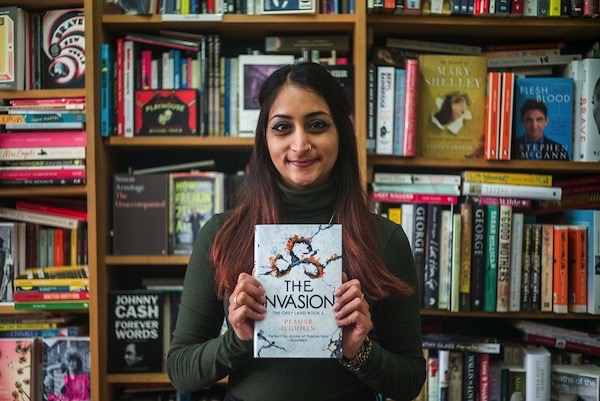
CJ’s favourite book is The Invasion by Peadar O’Guilin
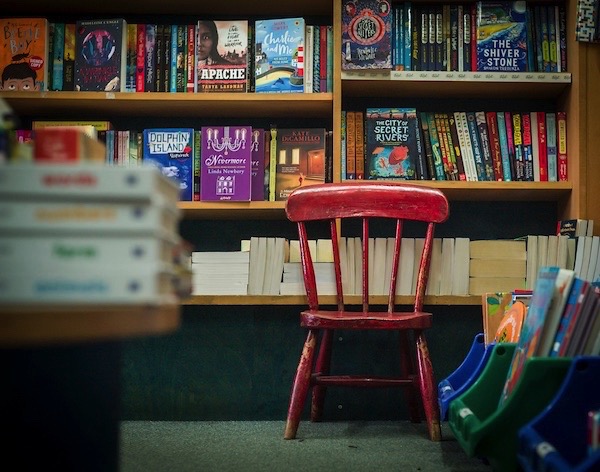
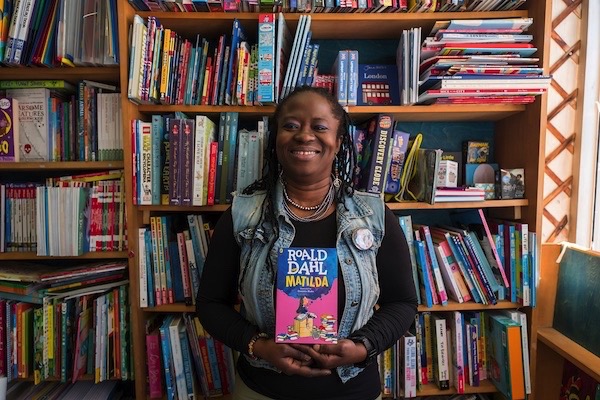
Karima’s favourite book is Matilda by Roald Dahl

Rianne’s favourite book is The Knife of Never Letting Go by Patrick Ness

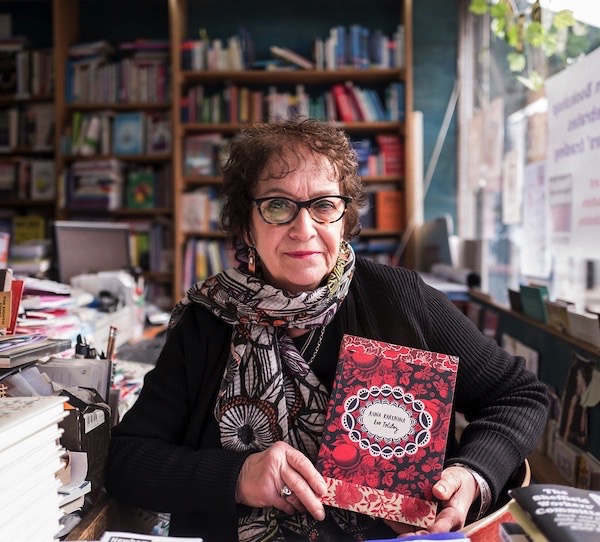
Vivian’s favourite book is Anna Karenina by Leo Tolstoy
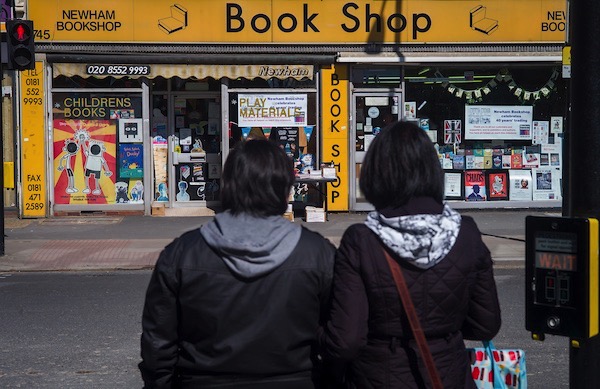
Photographs copyright © Andrew Baker
You may also like to read about
Happy Birthday, Broadway Bookshop
Kalina Dimitrova, Brick Lane Books
The Antiquarian Bookshops of Old London
The London Alphabet
Although this Alphabet of London in the archive at the Bishopsgate Institute dates from more than one hundred and fifty years ago, it is remarkable how many of the landmarks illustrated are still with us. The original facade of newly-opened ‘Northern Station’ which is now newly-uncovered after recent renovations – at the terminus we know as ‘King’s Cross’ – reveals that this alphabet was produced in the eighteen fifties. The Houses of Parliament which were begun in 1840 and took thirty years to complete were still under construction then and, consequently, Big Ben is represented by an undersized artist’s impression of how it was expected to look. Naturally, I was especially intrigued by – “O’s the market for Oranges, eastward a long way. If you first ask for Houndsditch you won’t take the wrong way.” I wonder which East East market this could refer to?


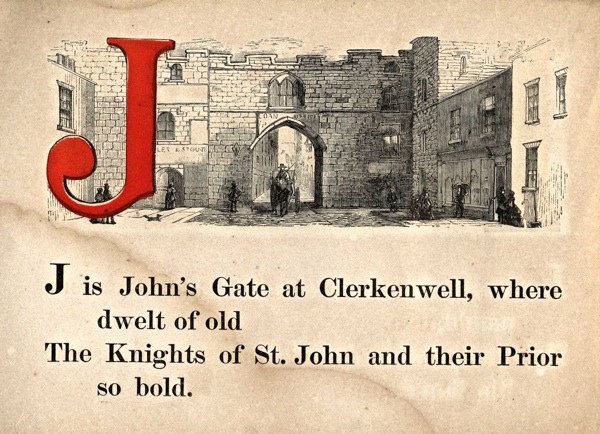


Pictures courtesy Bishopsgate Institute
Ninety-Nine Years At Syd’s Coffee Stall
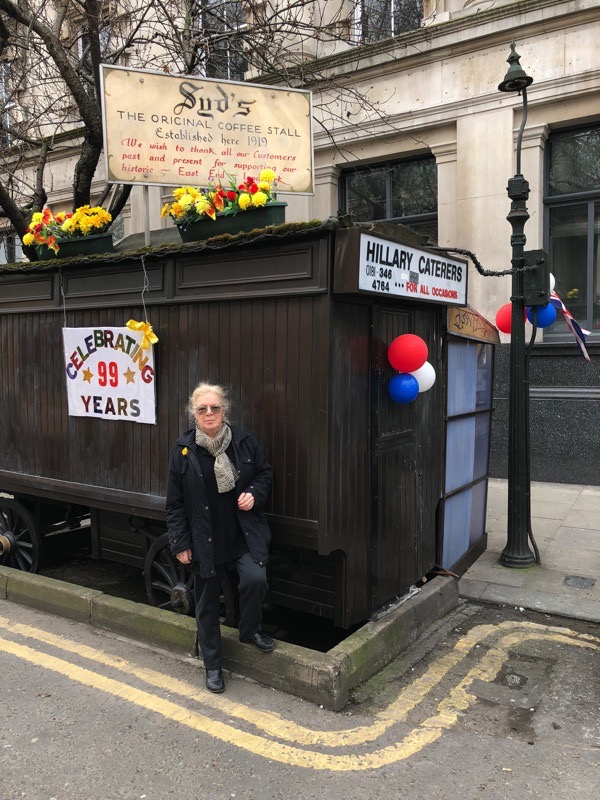
This is Jane Tothill pictured outside her grandfather’s coffee stall which opened in the spring of 1919
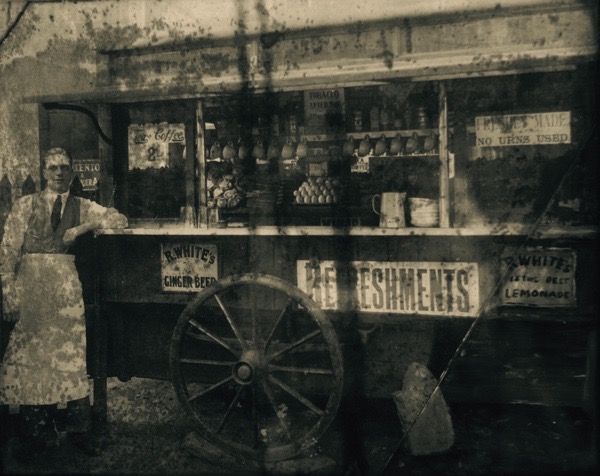
This is Sydney Edward Tothill pictured in 1920, proprietor of the Coffee Stall that still operates, open for business five days a week at the corner of Calvert Avenue and Shoreditch High St, where this photo survives, screwed to the counter of the East End landmark that carries his name. “Ev’rybody knows Syd’s. Git a bus dahn Shoreditch Church and you can’t miss it. Sticks aht like a sixpence in a sweep’s ear,” reported the Evening Telegraph in 1959.
This is a story that began in the trenches of World War I when Syd was gassed. On his return to civilian life in 1919, Syd used his invalidity pension to pay £117 for the construction of a top quality mahogany tea stall with fine etched glass and gleaming brass fittings. And the rest is history, because it was of such sturdy manufacture that it remains in service ninety-nine years later.
Jane Tothill, Syd’s granddaughter who upholds the proud family tradition today, told me that Syd’s Coffee Stall was the first to have mains electricity, when in 1922 it was hooked up to the adjoining lamppost. Even though the lamppost in question has been supplanted by a modern replacement, it still stands beside the stall to provide the power supply. Similarly, as the century progressed, mains water replaced the old churn that once stood at the rear of the stall and mains gas replaced the brazier of coals. In the nineteen sixties, when Calvert Avenue was resurfaced, Syd’s stall could not be moved on account of his mains connections and so kerbstones were placed around it instead. As a consequence, if you look underneath the stall today, the cobbles are still there.
Throughout the nineteenth century, there was a widespread culture of Coffee Stalls in London, but, in spite of the name – which was considered a classy description for a barrow serving refreshments – they mostly sold tea and cocoa, and in Syd’s case “Bovex”, the “poor man’s Bovril.” The most popular snack was Saveloy, a sausage supplied by Wilsons’ the German butchers in Hoxton, as promoted by the widespread exhortation to “A Sav and a Slice at Syd’s.” Even Prince Edward stopped by for a cup of tea from Syd’s while on his frequent nocturnal escapades in the East End.
With his wife May, Syd ran an empire of seven coffee stalls and two cafes in Rivington St and Worship St. The apogee of this early period of the history of Syd’s Coffee Stall arrived when it featured in a silent film Ebb Tide, shot in 1931, starring the glamorous Chili Bouchier and praised for its realistic portrayal of life in East London. The stall was transported to Elstree for the filming, the only time it has ever moved from its site. While Chili acted up a storm in the foreground, as a fallen woman in tormented emotion upon the floor, you can just see Syd discharging his cameo as the proprietor of an East End Coffee Stall with impressive authenticity, in the background of the still photograph below.
In spite of Syd’s success, Jane revealed that her grandfather was “a bit of a drinker and gambler” who gambled away both his cafes and all his stalls, except the one at the corner of Calvert Avenue. When Syd junior, Jane’s father was born, finances were rocky, and he recalled moving from a big house in Palmer’s Green to a room over a laundry, the very next week. May carried Syd junior while she was serving at the stall and it was pre-ordained that he would continue the family business, which he joined in 1935.
In World War II, Syd’s Coffee Stall served the ambulance and fire services during the London blitz. Syd and May never closed, they simply ran to take shelter in the vaults of Barclays Bank next door whenever the air raid sounded. When a flying bomb detonated in Calvert Avenue, Syd’s stall might have been destroyed, if a couple of buses had not been parked beside it, fortuitously sheltering the stall from the explosion. In the blast, poor May was injured by shrapnel and Syd suffered a mental breakdown, leaving their young daughter Peggy struggling to keep the stall open.
The resultant crisis at Syd’s Coffee Stall was of such magnitude that the Mayor of Shoreditch and other leading dignitaries appealed to the War Office to have Syd junior brought home from a secret mission he was undertaking for the RAF in the Middle East, in order to run the stall for the ARP wardens. It was a remarkable moment that revealed the essential nature of the service provided by Syd’s Coffee Stall to the war effort on the home front in East London, and I can only admire the Mayor’s clear-sighted sense of priority in using his authority to demand the return of Syd from a secret mission because he was required to serve tea in Shoreditch. As he wrote to May in January 1945, “I do sincerely hope that you are recovering from your injuries and that your son will remain with you for a long time.”
Syd junior was determined to show he was more responsible than his father and, after the war, he bravely expanded the business into catering weddings and events along with this wife Iris, adopting the name “Hillary Caterers” as a patriotic tribute to Sir Edmund Hillary who scaled Everest at the time of the coronation of Elizabeth II. No doubt you will agree that as a caterer for a weddings, “Hillary Caterers” sounds preferable to “Syd’s Coffee Stall.” In fact, Syd junior’s ambition led him to become the youngest ever president of the Hotel & Caterer’s Federation and the only caterer ever to cater on the steps of St Paul’s Cathedral, topping it off by becoming a Freeman of the City of London.
Jane Tothill began working at the stall in 1987 with her brothers Stephen and Edward, and the redoubtable Clarrie who came for a week “to see if she liked it” and stayed thirty -two years. Jane manages the stall today with the loyal assistance of Francis, who has been serving behind the counter these last twenty years. Nowadays the challenges are parking restrictions that make it problematic for customers to stop, hit and run drivers who frequently cause damage which requires costly repair to the mahogany structure and graffiti artists whose tags have to be constantly erased from the venerable stall. Yet after ninety-nine years and three generations of Tothills, during which Syd’s Coffee Stall has survived against the odds to serve the working people of Shoreditch without interruption, it has become a symbol of the enduring human spirit of the populace here.
Syd’s Coffee Stall is a piece of our social history that does not draw attention to itself, yet deserves to be celebrated. Syd senior might not have survived the trenches in 1919, or he might have gambled away this stall as he did the others, or the bomb might have fallen differently in 1944. Any number of permutations of fate could have led to Syd’s Coffee Stall not being here today. Yet by a miracle of fortune, and thanks to the hard work of the Tothill family we can enjoy London’s oldest Coffee Stall here in our neighbourhood. We must cherish it now, because the story of Syd’s Coffee Stall teaches us that there is a point at which serving a humble cup of tea transcends catering and approaches heroism.

May Tothill, Syd’s wife, behind the counter in the nineteen thirties

Jane Tothill, Syd and May’s granddaughter, behind the counter (photograph by Sarah Ainslie)

Syd junior and his mother May, behind the counter in the nineteen fifties

A still from the silent film “Ebb Tide” starring Chili Bouchier with Syd in a cameo as himself

In 1937 with electricity hooked up to the lamppost

You may also like to read about
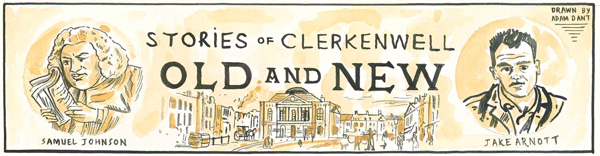
Stories Of Clerkenwell Old & New
Each Saturday, we shall be featuring one of Adam Dant’s MAPS OF LONDON & BEYOND from the forthcoming book of his extraordinary cartography to published by Spitalfields Life Books & Batsford on June 7th.
Please support this ambitious venture by pre-ordering a copy, which will be signed by Adam Dant with an individual drawing on the flyleaf and sent to you on publication. CLICK TO ORDER A SIGNED COPY OF MAPS OF LONDON & BEYOND BY ADAM DANT
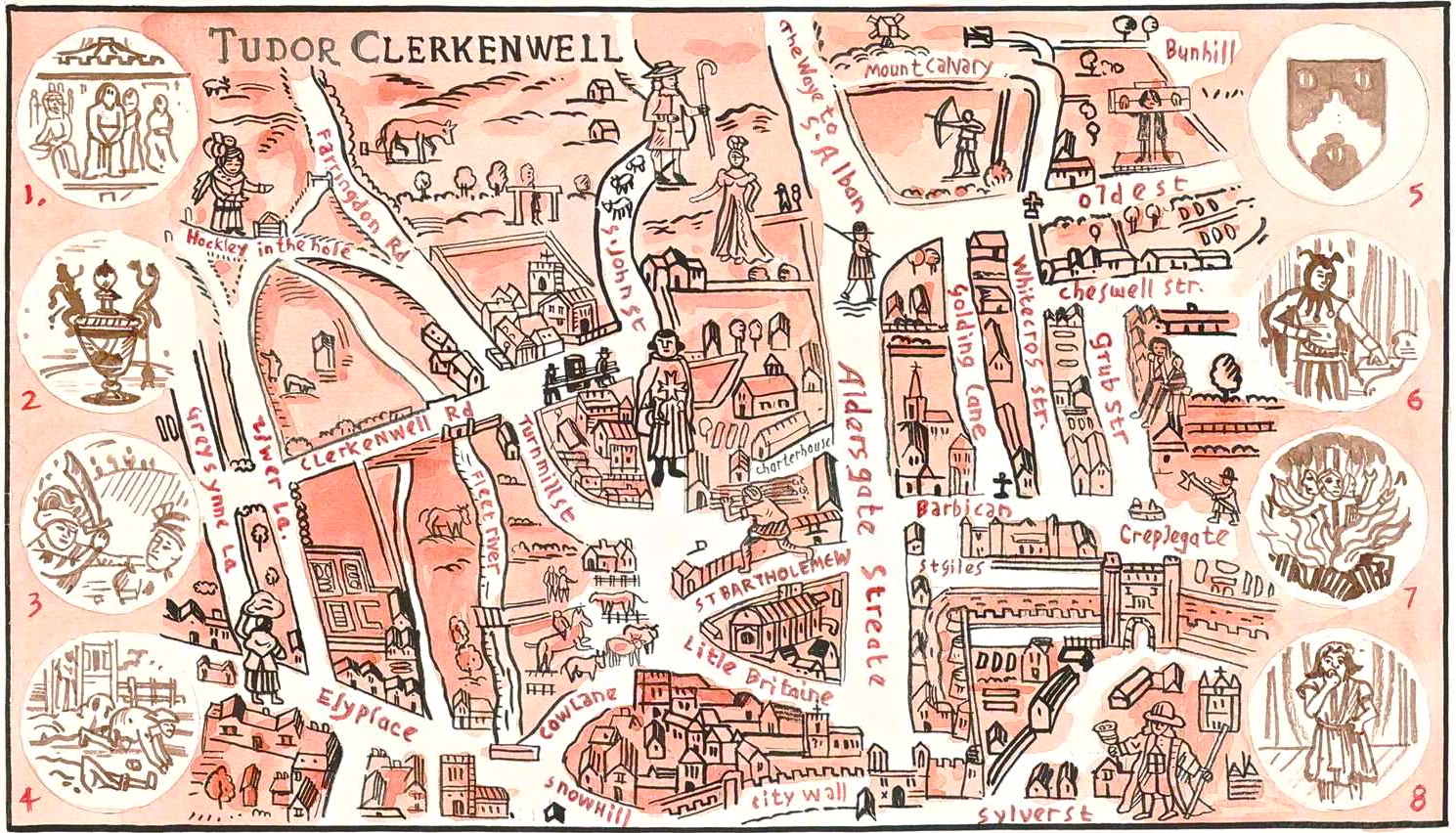
1. 1390. The annual Clerkenwell Mystery Play “Matter from the Creation of the World” is performed by parish clercs whose well can be be seen at 14 Farringdon Lane.
2. 1246. The Knights Templars of St John’s Priory return from the Crusades to present Henry III with a crystalline vase containing “blood of the saviour.”
3. 1290. Wat Tyler, leader of the Peasants’ Revolt is killed in Smithfield by Mayor William Walworth whose sword can be found at the Fishmongers’ Hall and on the City of London flag.
4. 1381. In the reign of Edward I, the water from the Fleet river is already so impure and containing such noxious exhalations and miasma that it kills many hooded brethren.
5. 1527. Sir Thomas Docwra, the last grand prior of the English Knights’ Hospitallers and architect of St John’s Gate is buried in the prior church.
6. 1123. Rayer, Henry I’s jester founded St Bartholomew’s Hospital.
7. Through the ages, great crowds have arrived at Smithfield for the St Bartholomew Fair, tournaments and for public burnings, such as Queen Mary’s two hundred and twenty-seven victims.
8. 1613. Some of the earliest female performers appear on stage at the Red Bull Theatre, Woodbridge St.
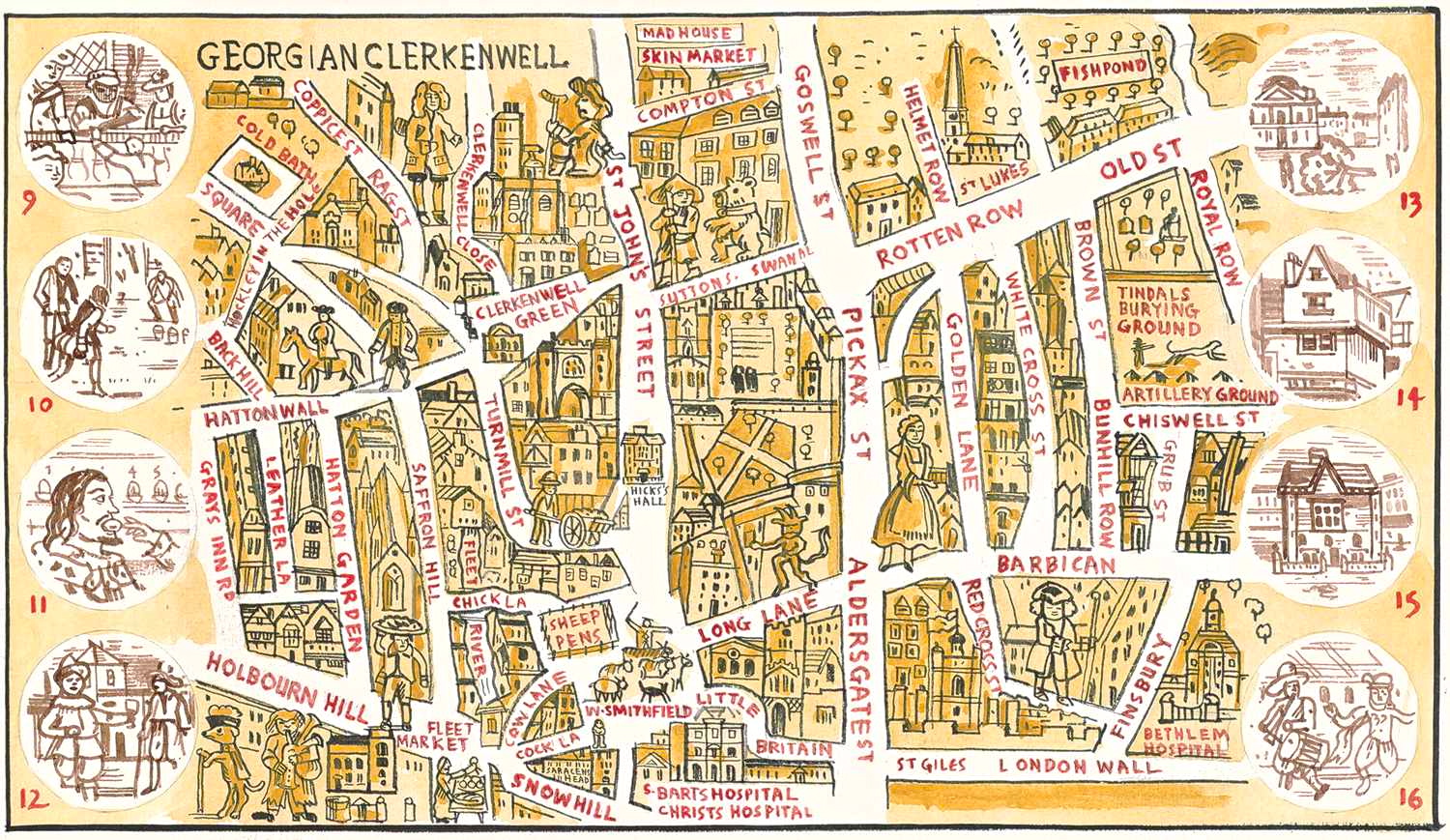
9. Nearby Bagnigge Wells House, home of Nell Gwyne, a black woman called Woolaston sells spring water from a fountain known as “Black Mary’s Hole.”
10. 1617. Seventeen bowling alleys at Bowling Green Lane are licenced by James I.
11. Charles I stops to enjoy a Dorset delicacy, “the pickled egg,” at Crawford’s Passage or “Pickled Egg Walk.”
12. Jack Adams, “The Clerkenwell Green Simpleton,” is regularly mentioned in pamphlets during Charles II’s reign.
13. 1747. The last tree on the North side of Clerkenwell Green is blown down during a storm.
14. The level of Cloth Fair remains much higher, even today, due to the accumulation of rubbish, dust and ashes.
15. 1610. Hick’s Hall, in the middle of St John’s St, was the last purpose-built sessions house, the point from where all distances from London were calculated and where criminals were dissected.
16. 1600-12. Shakespeare’s revels are rehearsed in the Great Hall at St John’s.
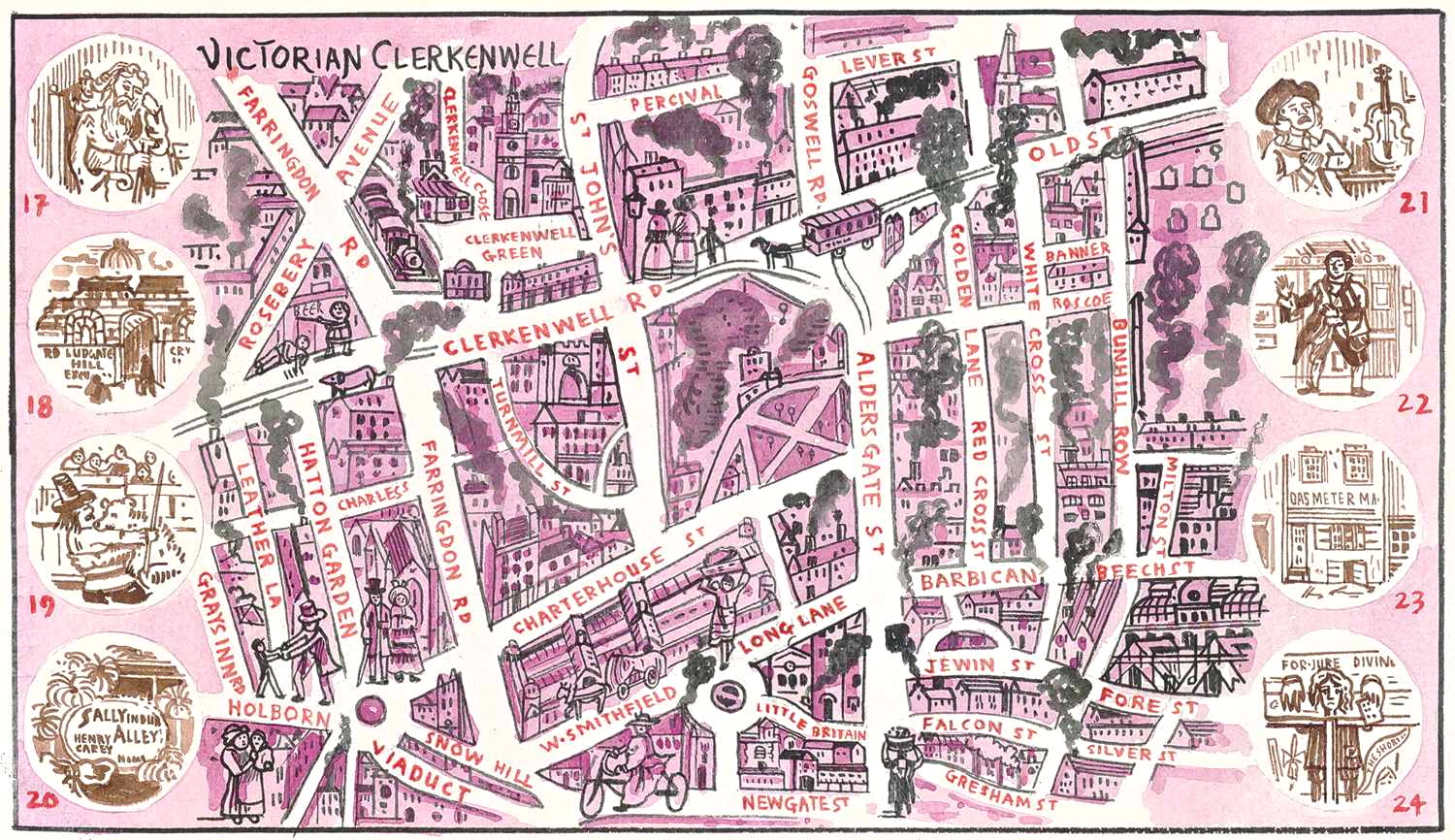
17. 1636. Henry Welby, the Hermit of Grub St, unseen by any human for forty years dies having bought, read, and mostly rejected all new books published.
18. 1641. Fleet Prison is reserved for debtors. 1726. Hogarth immortalises, in his engraving, the ghastly disclosures of witnesses, “fettering, spunging, damp and stench.”
19. 1709. Christopher Preston, bear gardens proprietor, is attacked and almost devoured by one of his own bears.
20. 1743. Henry Carey, for some time considered author of “God Save the King,” pens “Sally in our Alley” in Great Warner St.
21. Thomas Britton, “the musical smallcoal man,” whose musical club hosts Handel concerts is scared to death by a ventriloquist’s trick premonition.
22. 1737-41. Dr Johnson toils for Edward Cave’s “Gentleman’s Magazine” in St John’s Gate, where Garrick makes his London theatrical debut in Fielding’s “Mock Doctor.”
23. 1740. “Scratching Fanny,” the celebrated “Cock Lane Ghost” promises to manifest itself to Dr Johnson and friends at St John’s church.
24. Popular pamphleteer, Daniel Defoe is pelted with flowers rather than the usual household waste when put in the pillory for publishing ” The Shortest Way with the Dissenters.”
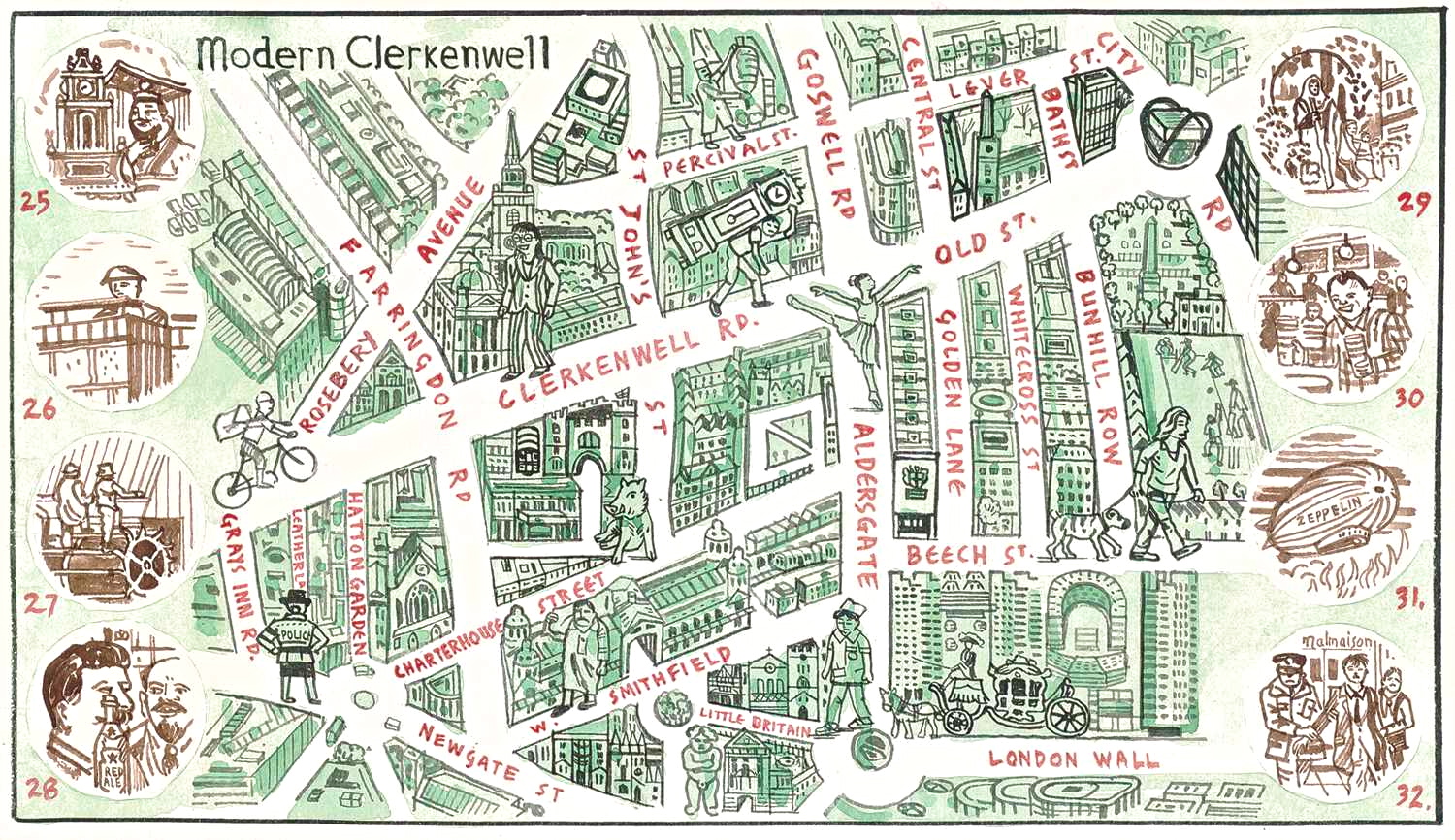
25. 1812. Once occupied by Colonel Magniac, maker of automaton-clocks for the Emperor of China, the birthplace of John Wilkes is pulled down.
26. 1908. The vast roof of the GPO sorting office is used as a rifle club shooting range.
27. 1820. Thistlewood and the Cato St conspirators are kept at Coldbath Fields Prison, home of the first treadmill.
28. 1903. Lenin meets a young Stalin at the Crown & Anchor pub (The Crown.)
29. Clerkenwell’s Italian community erect a life size “presepe” nativity scene every Christmas at St Peter’s Italian church.
30. TV presenter Graham Norton collects the empties at pioneering “gastro-pub” The Eagle.
31. 1917-19. Zeppelin raids destroy buildings in Passing Alley and St John’s Lane.
32. 2006. Rock star Pete Doherty is banned from The Malmaison after trashing a room at a cost of four thousand pounds to the Charterhouse Sq Hotel.
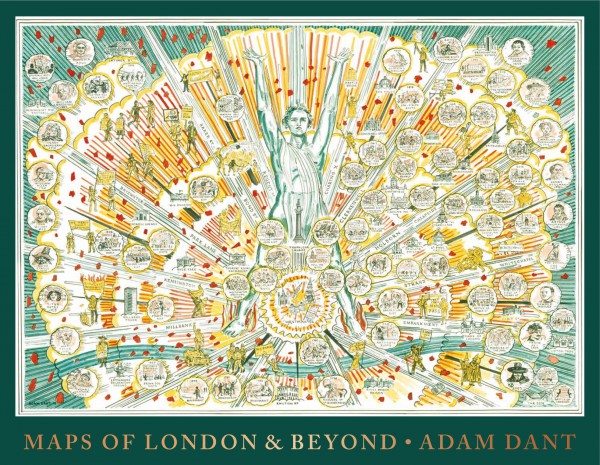
CLICK TO ORDER A SIGNED COPY OF MAPS OF LONDON & BEYOND BY ADAM DANT
Adam Dant’s MAPS OF LONDON & BEYOND is a mighty monograph collecting together all your favourite works by Spitalfields Life‘s cartographer extraordinaire in a beautiful big hardback book.
Including a map of London riots, the locations of early coffee houses and a colourful depiction of slang through the centuries, Adam Dant’s vision of city life and our prevailing obsessions with money, power and the pursuit of pleasure may genuinely be described as ‘Hogarthian.’
Unparalleled in his draughtsmanship and inventiveness, Adam Dant explores the byways of English cultural history in his ingenious drawings, annotated with erudite commentary and offering hours of fascination for the curious.
The book includes an extensive interview with Adam Dant by The Gentle Author.
The Weathervanes Of London
There is no more magical sight to glimpse in a London street on a bright spring morning than that of a gilded weathervane, glinting in sunlight high above the rooftops. At once – in spite of all the changes that time has wrought – you know you are sharing in a visual delight enjoyed by three centuries of Londoners before you and it makes your heart leap.
Consequently, I am grateful to Angelo Hornak who photographed this gallery of magnificent golden weathervanes for his book AFTER THE FIRE, London Churches in the Age of Wren, Hawksmoor & Gibbs published by Pimpernel Press.
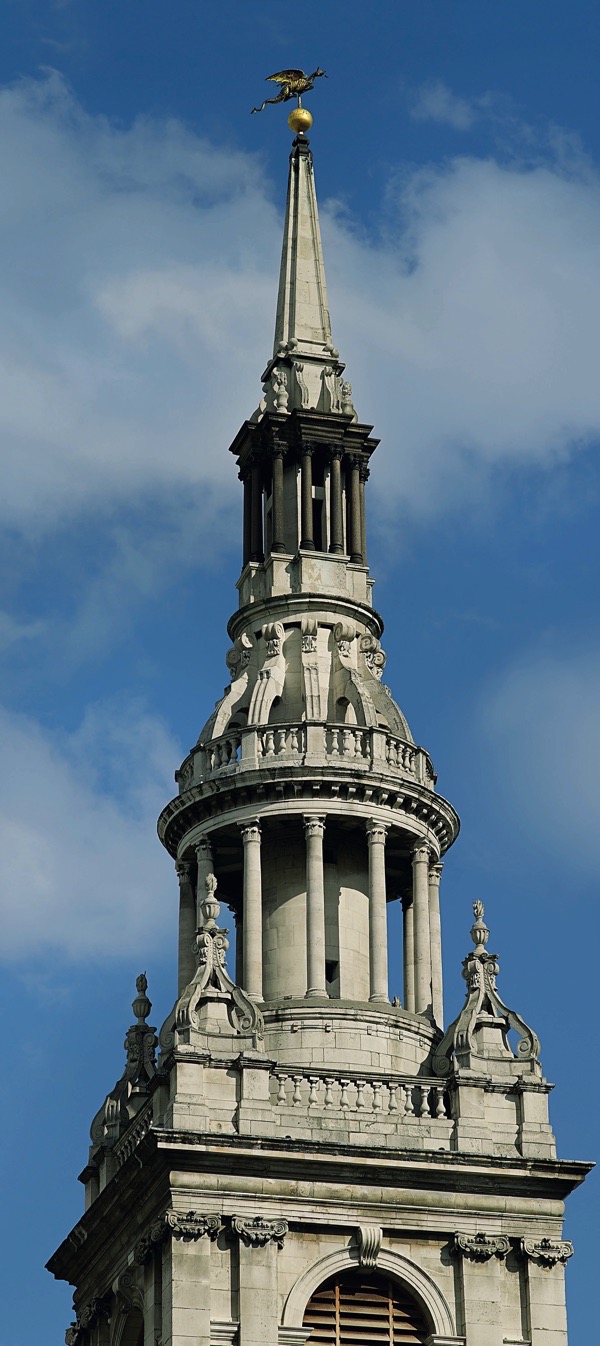
Spire of St Mary-Le-Bow, Cheapside, by Christopher Wren
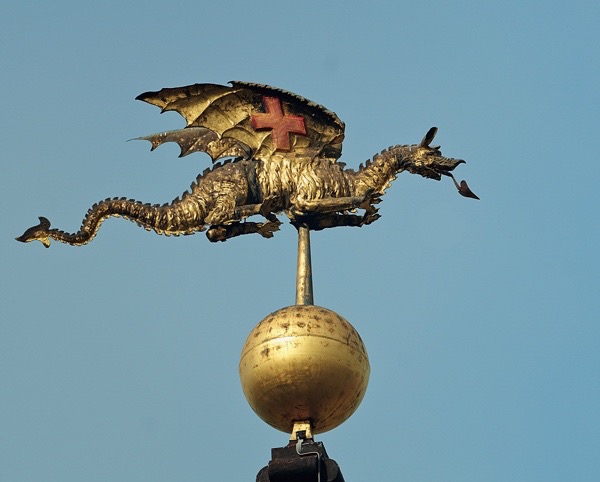
Dragon upon St Mary-Le-Bow, representing the City of London

Arrow & pennant on St Augustine, Watling St
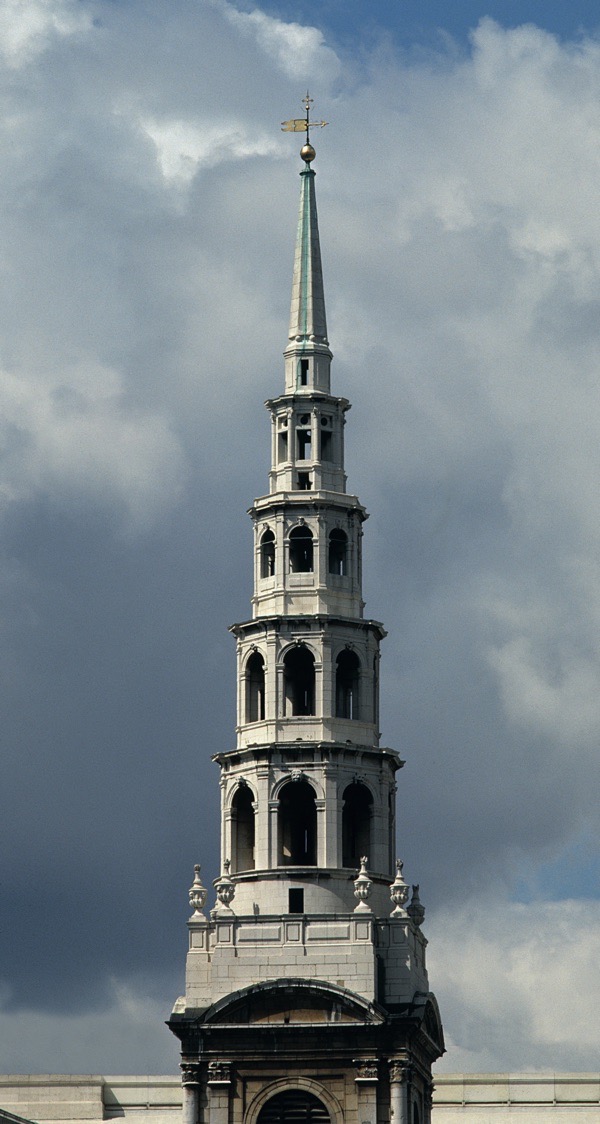
Spire of St Bride’s Fleet St by Christopher Wren
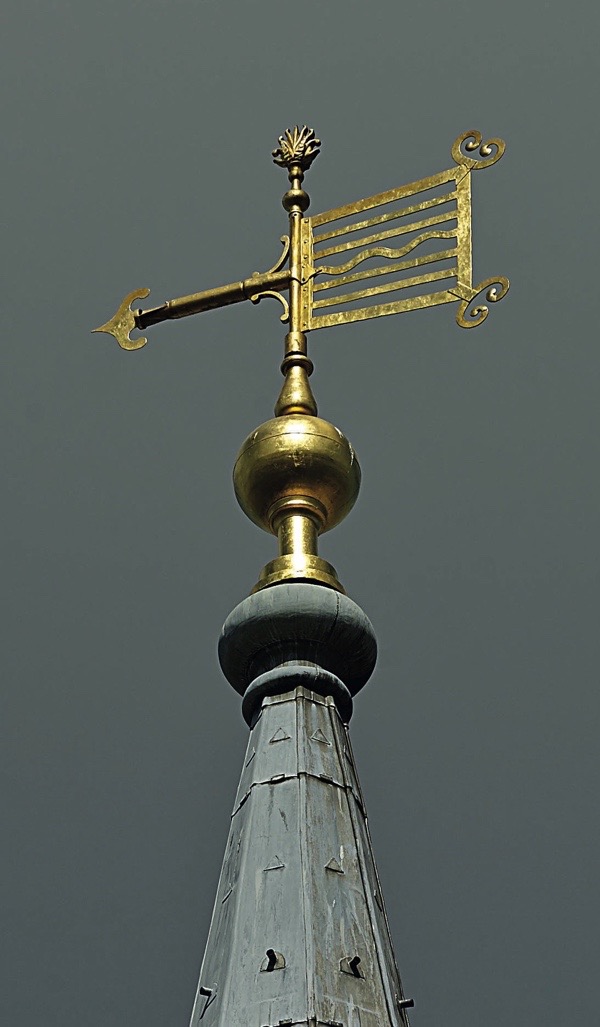
Gridiron on St Lawrence Jewry, symbol of the martyrdom of St Lawrence
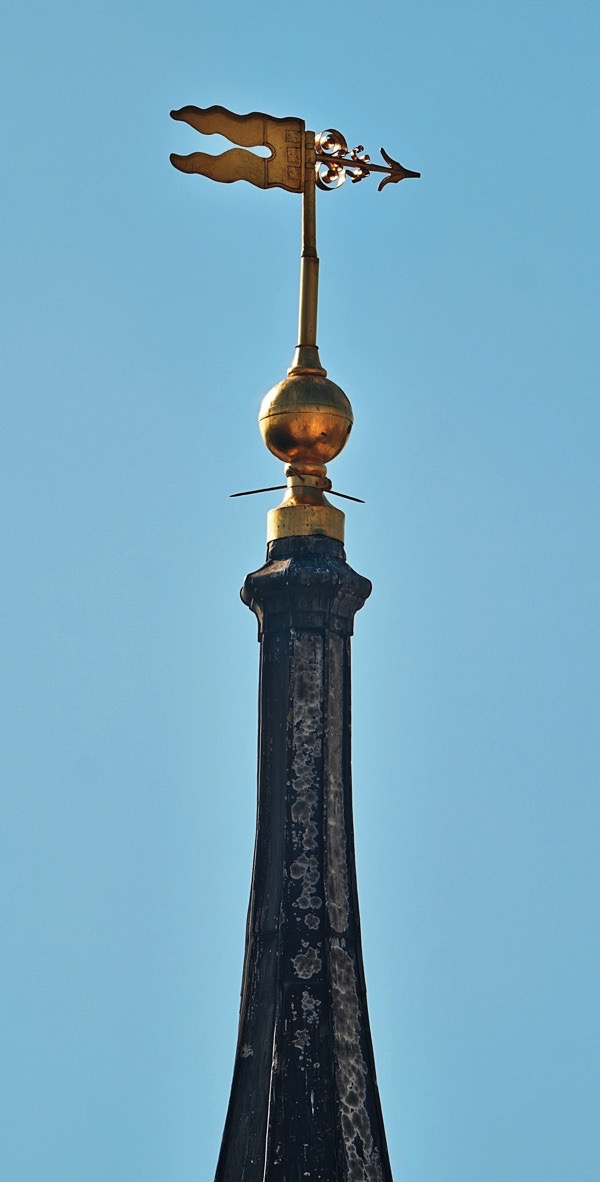
Weathervane on St Magnus the Martyr by Christopher Wren
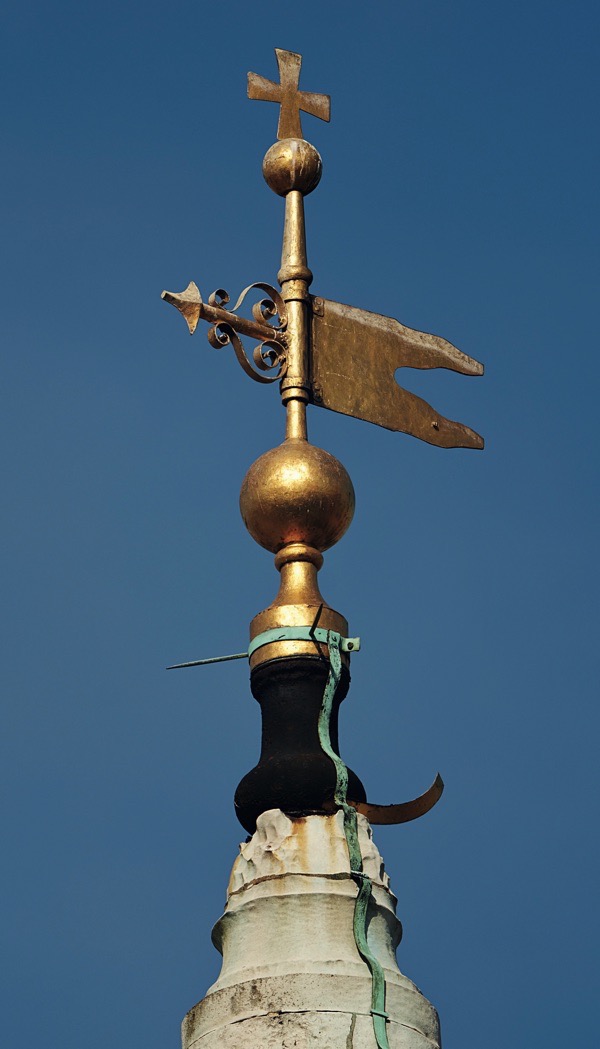
Weathervane on St Michael Paternoster Royal, College St

Galleon on St Nicholas Cole Abbey, moved from St Michael Queenhithe after demolition
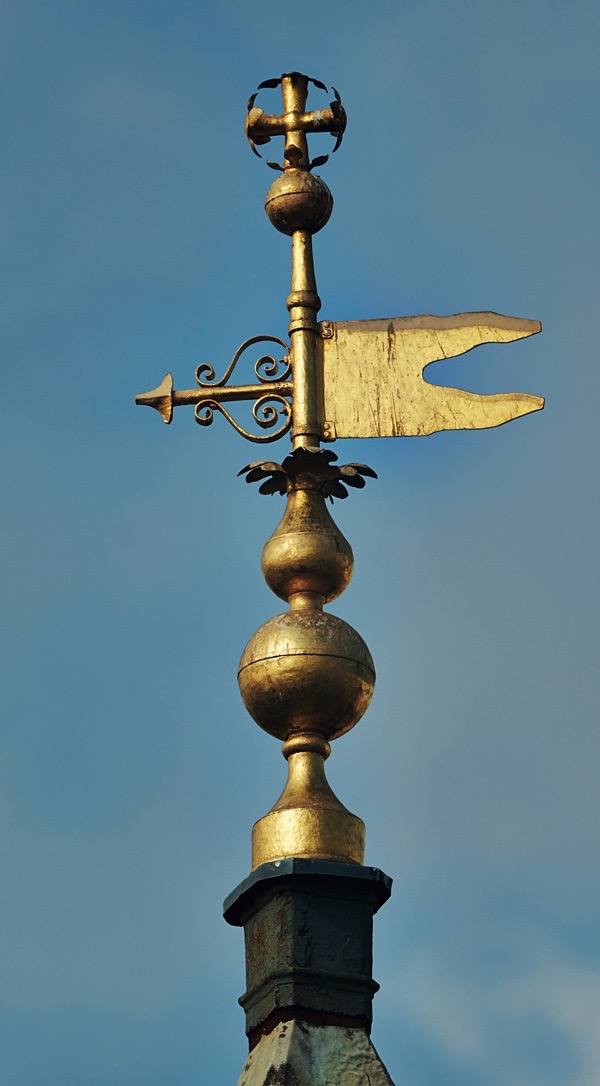
Weathervane on St James Garlickhythe
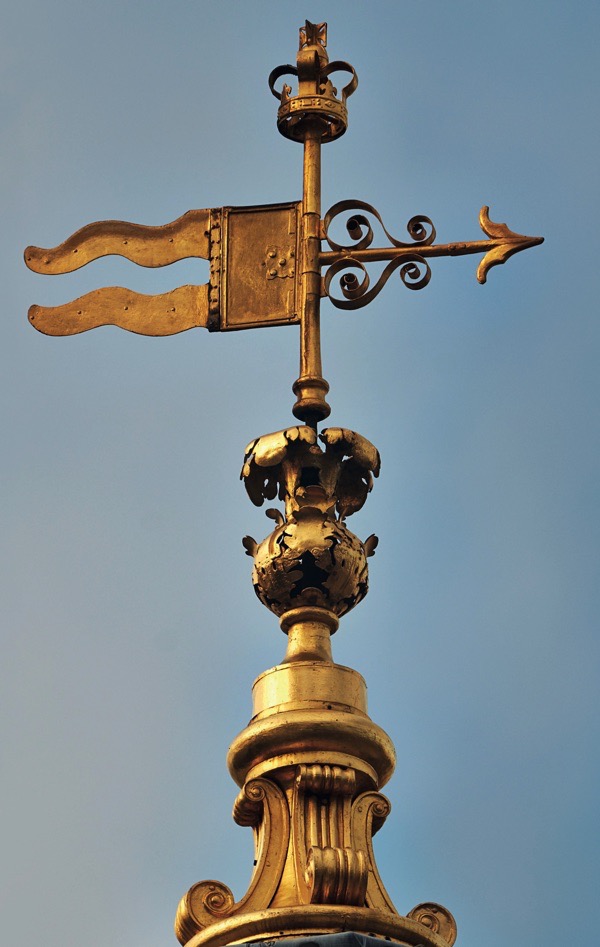
Crown on St Edmund King & Martyr, Lombard St
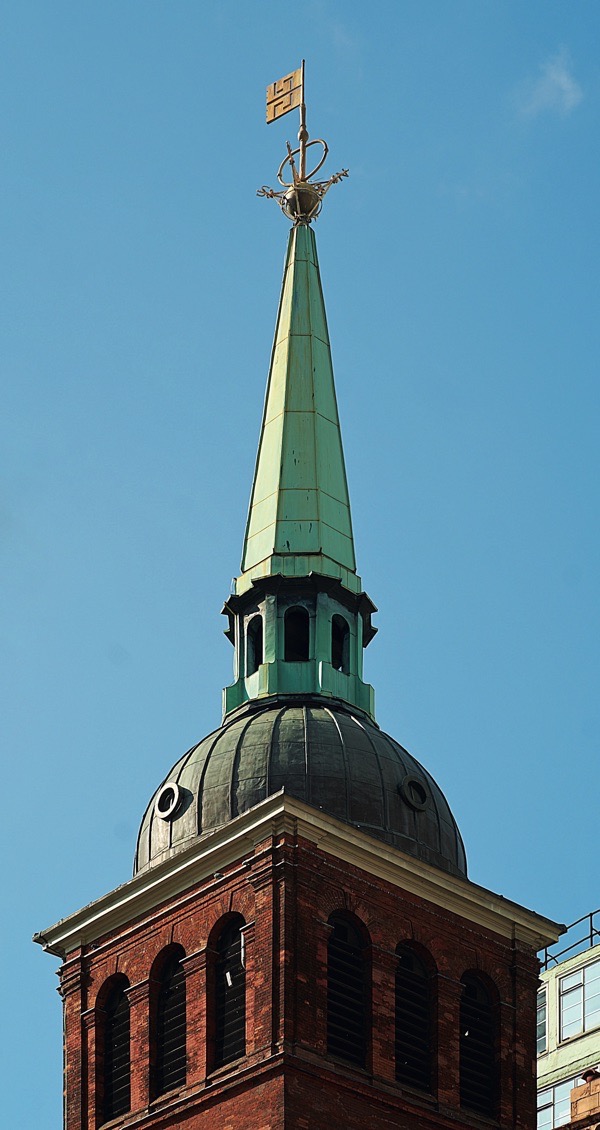
Key on the Tower of St Peter Cornhill
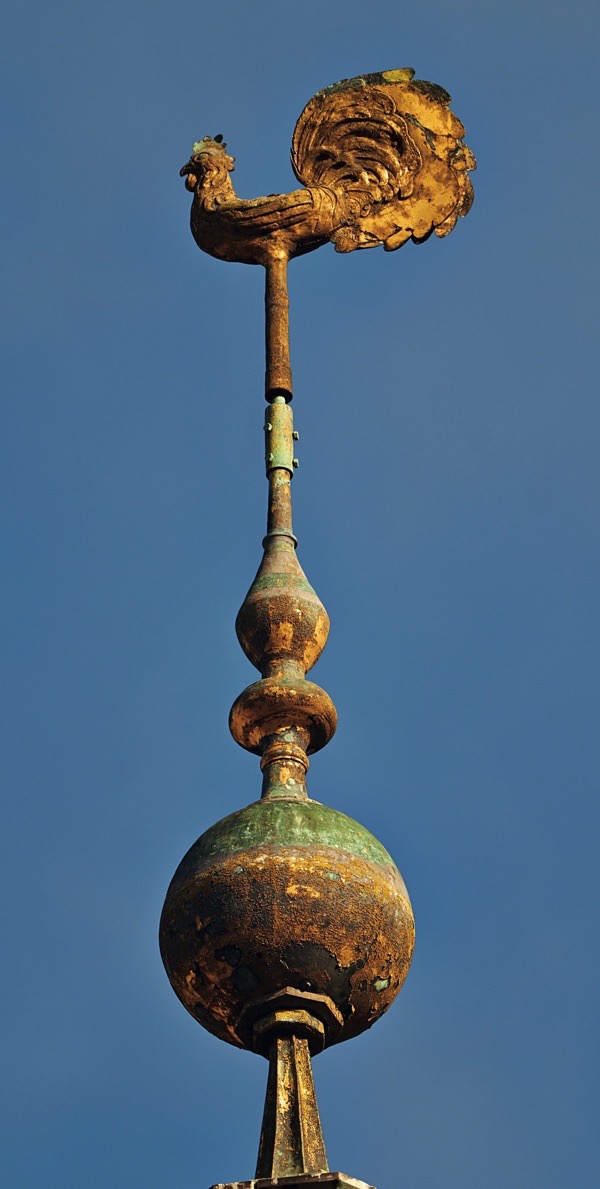
Cockerell on St Dunstan-in-the-East by Christopher Wren

Comet on St Mary-Le-Strand
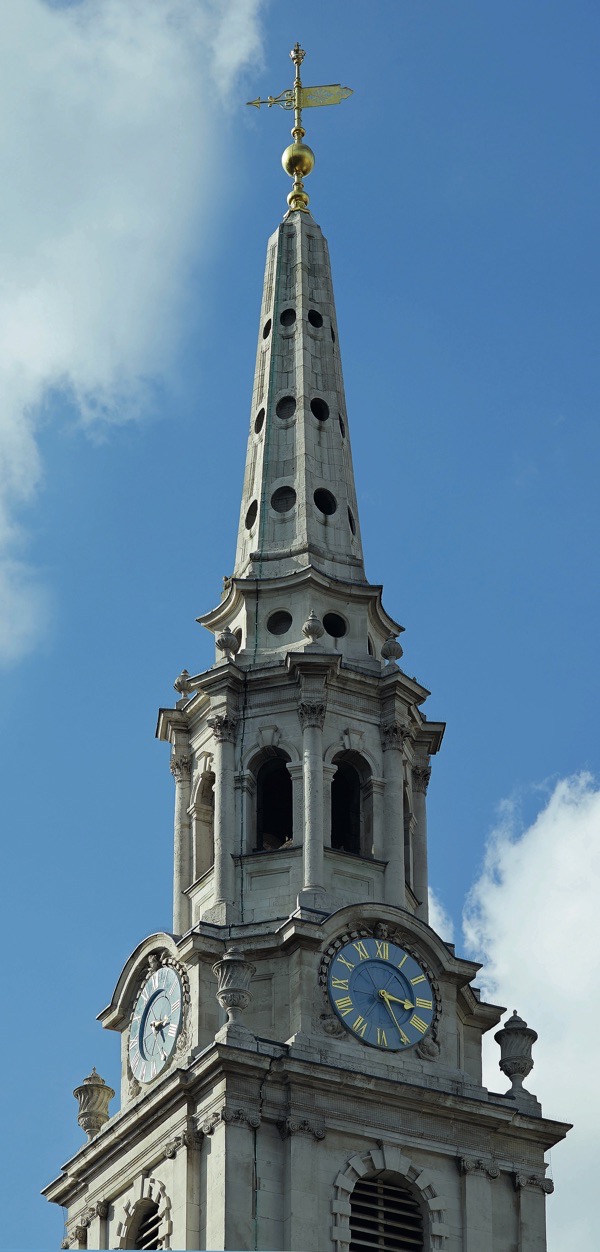
Spire of St Martin in the Fields by James Gibbs
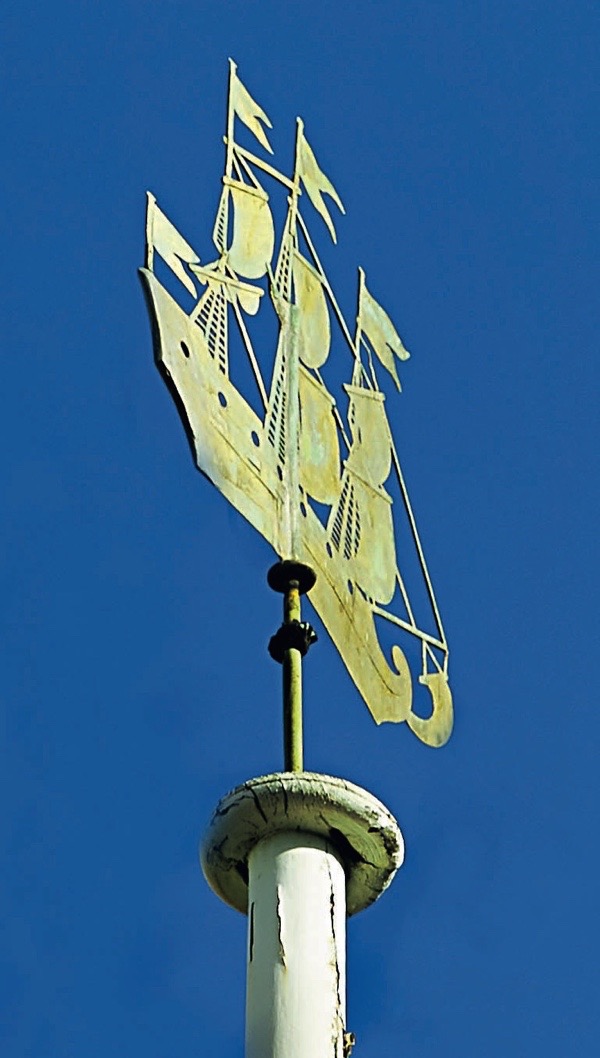
Square-rigged ship on St Olave Old Jewry
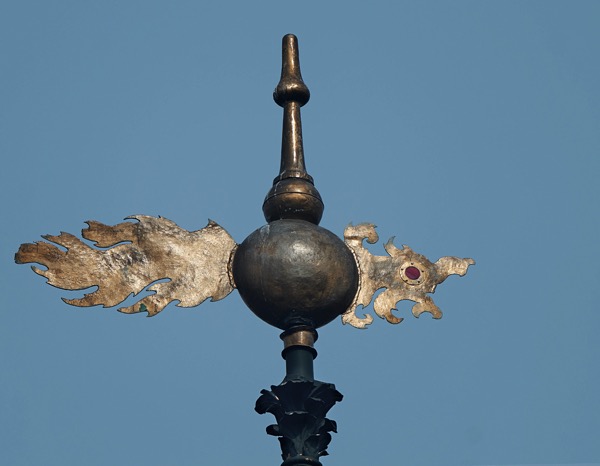
Flaming red-eyed dragon on St Luke, Old St, described as a flea in popular lore
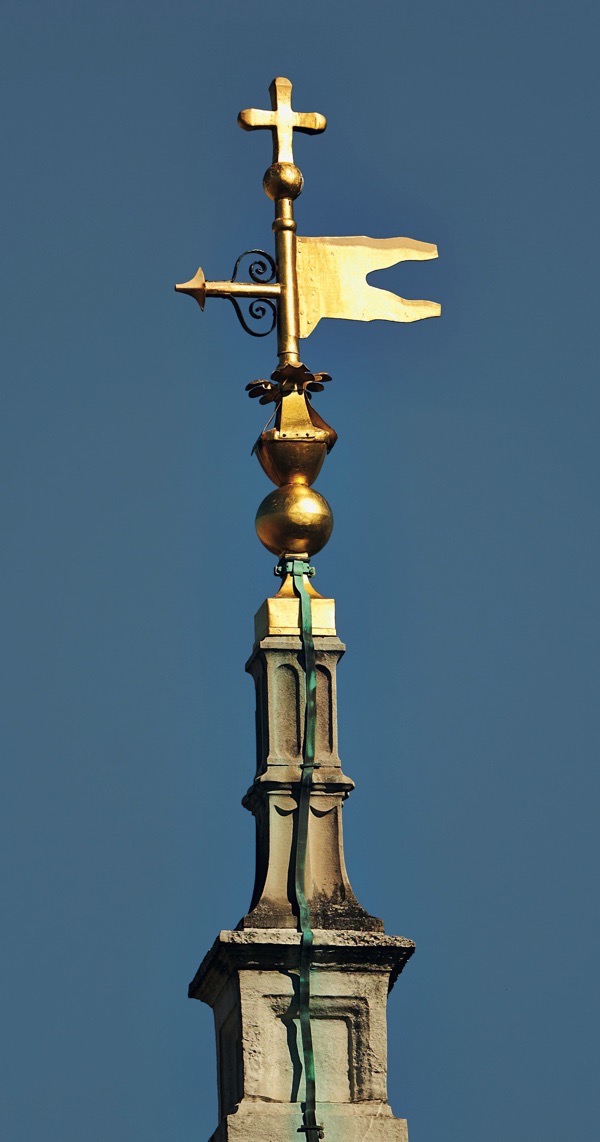
Weathervane on St Stephen Walbrook by Nicholas Hawksmoor
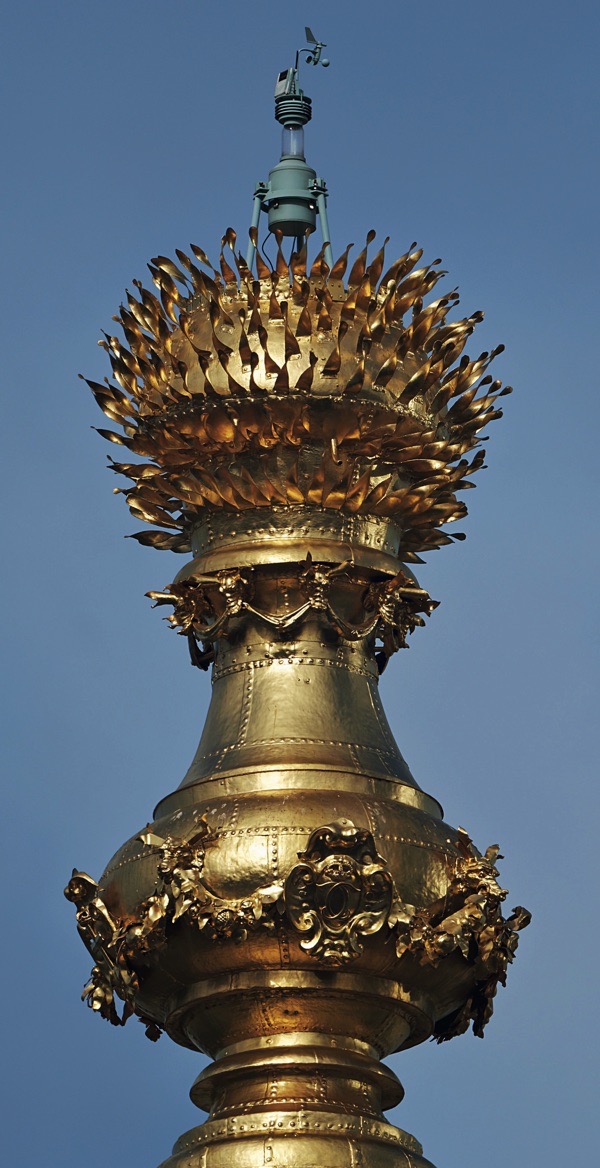
‘Flame’ on the top of the Monument by Christopher Wren
Photographs copyright © Angelo Hornak
You may also like to take a look at
Ron McCormick’s Whitechapel
Ron McCormick photographed Whitechapel & Spitalfields in the early seventies and these pictures were exhibited at the Whitechapel Gallery in 1973. They are included in the new book Whitechapel Boy by Chris Searle, commemorating the centenary of the death of Isaac Rosenberg which is launched with an illustrated lecture at 6.30pm today, Thursday 5th April at Tower Hamlets Local History Library & Archives. All are welcome.
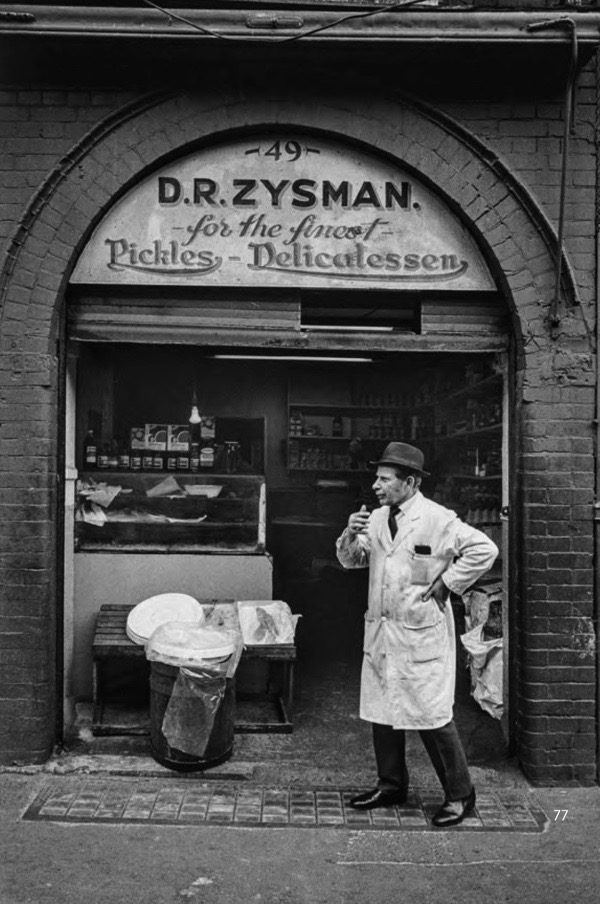
Hessel St
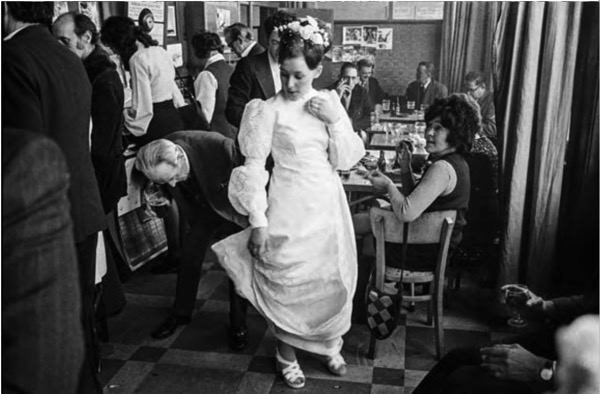
Royal Oak, Whitechapel Rd
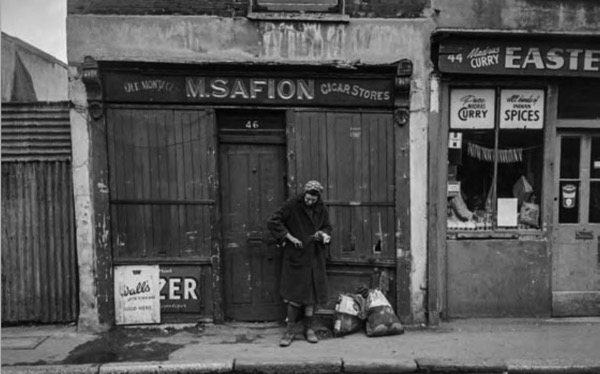
Old Montague St
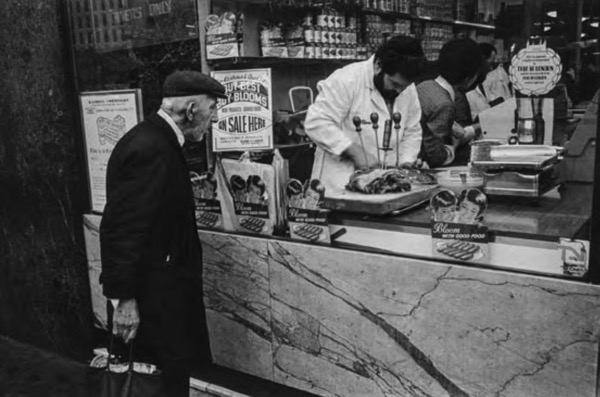
Blooms, Whitechapel High St
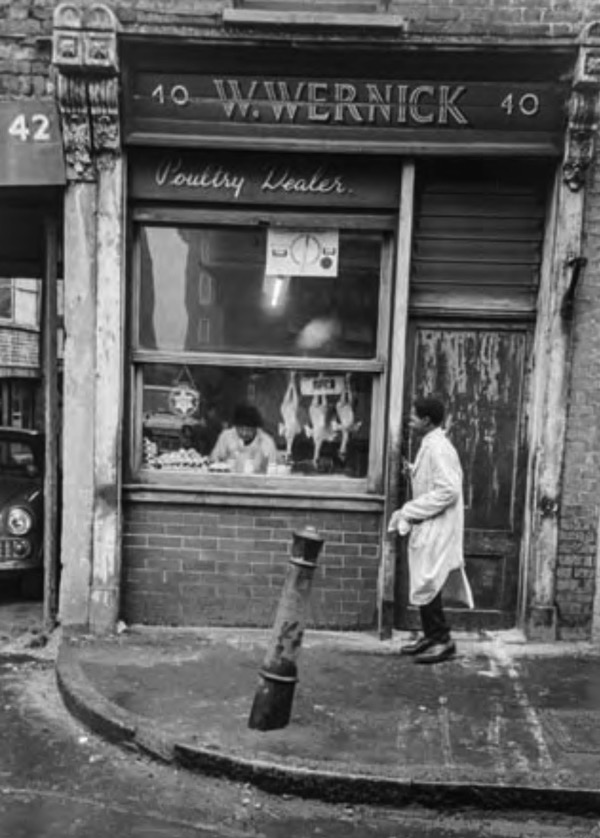
Old Montague St
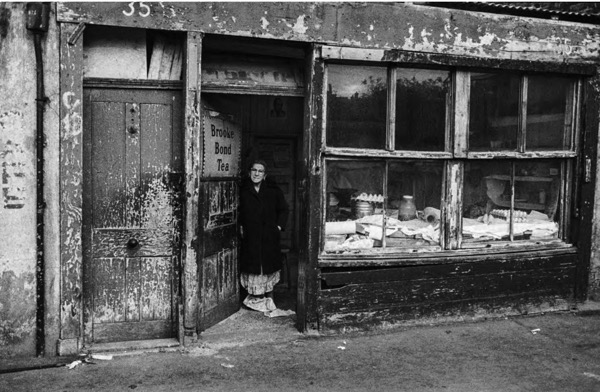
Old Montague St

Princelet St
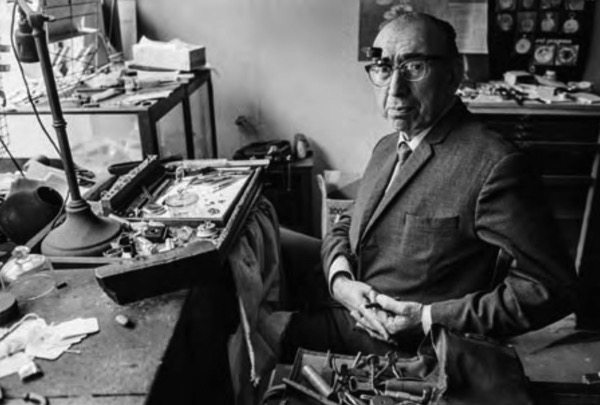
Black Lion Yard

Fournier St
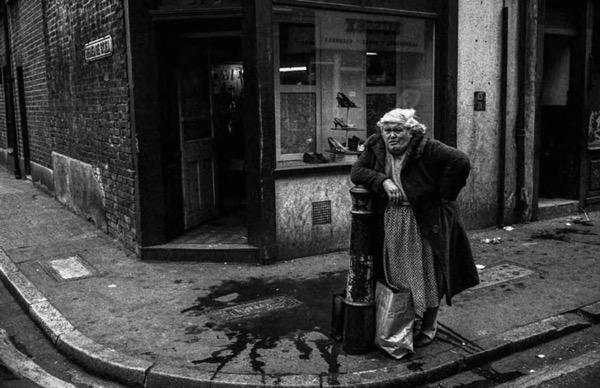
Brick Lane
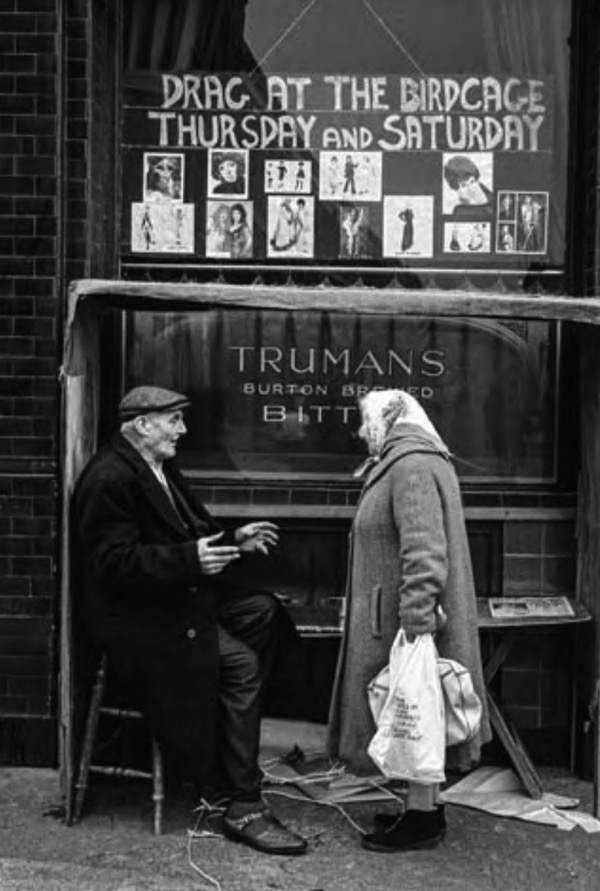
Club Row
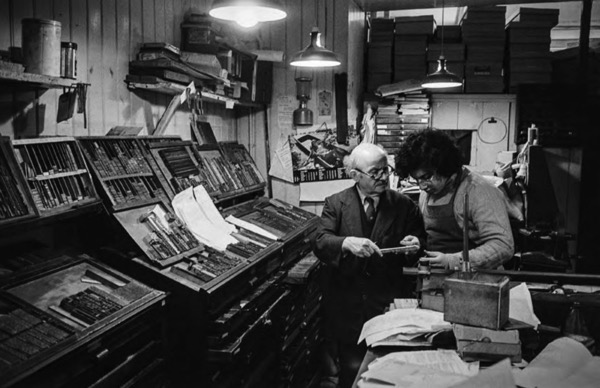
Brick Lane
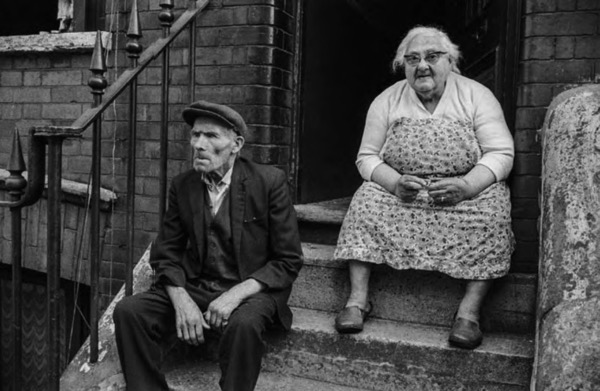
Settle St, Whitechapel
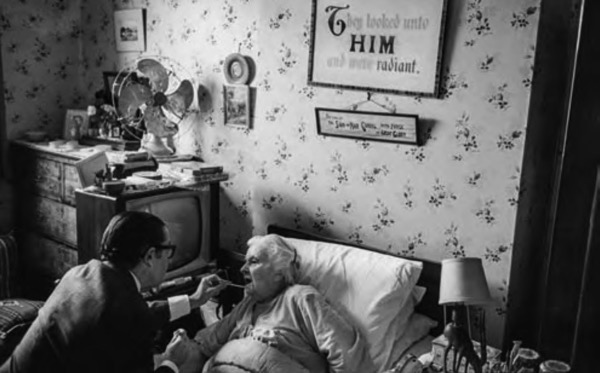
Great Eastern Buildings, Quaker St
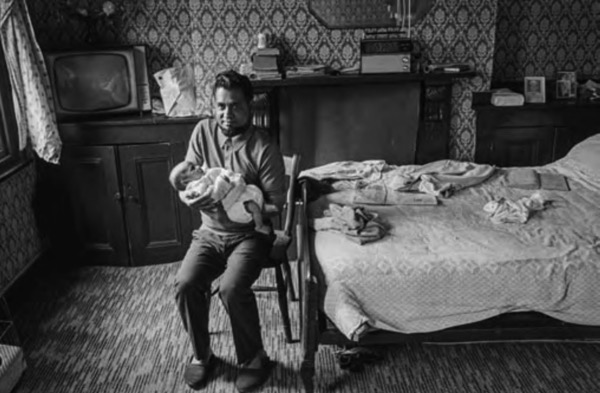
Woodseer St
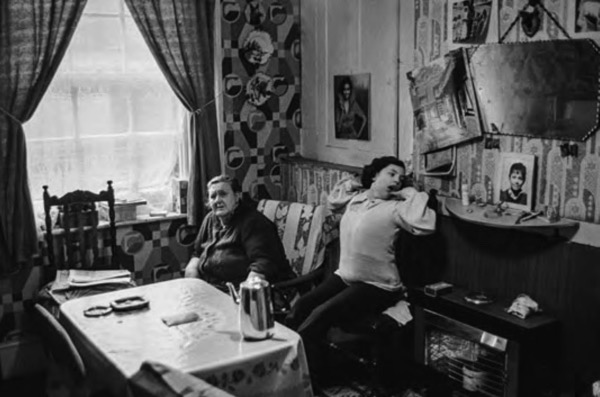
Great Eastern Buildings, Quaker St
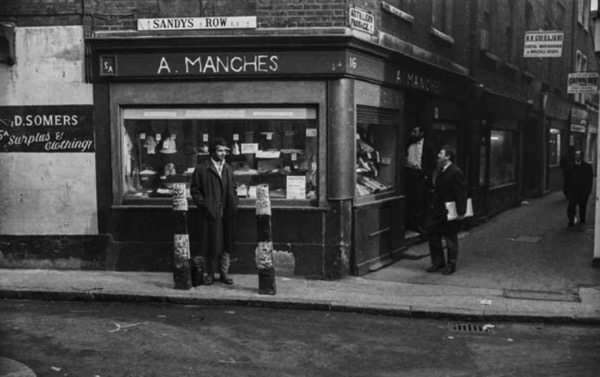
Sandys Row
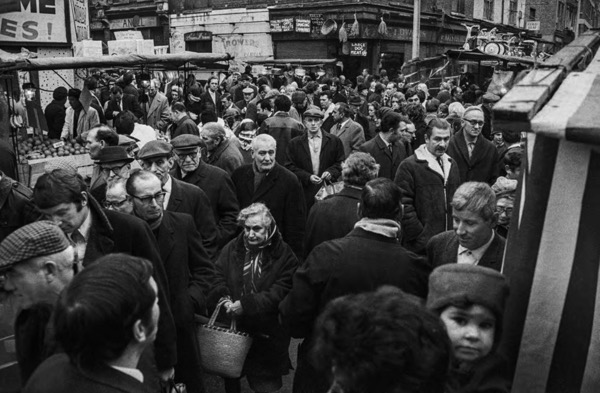
Brick Lane Market
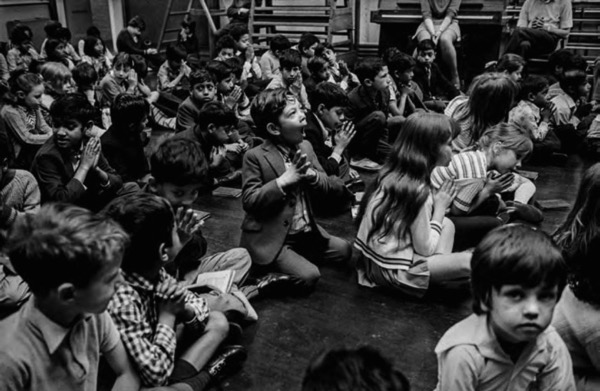
Christ Church School
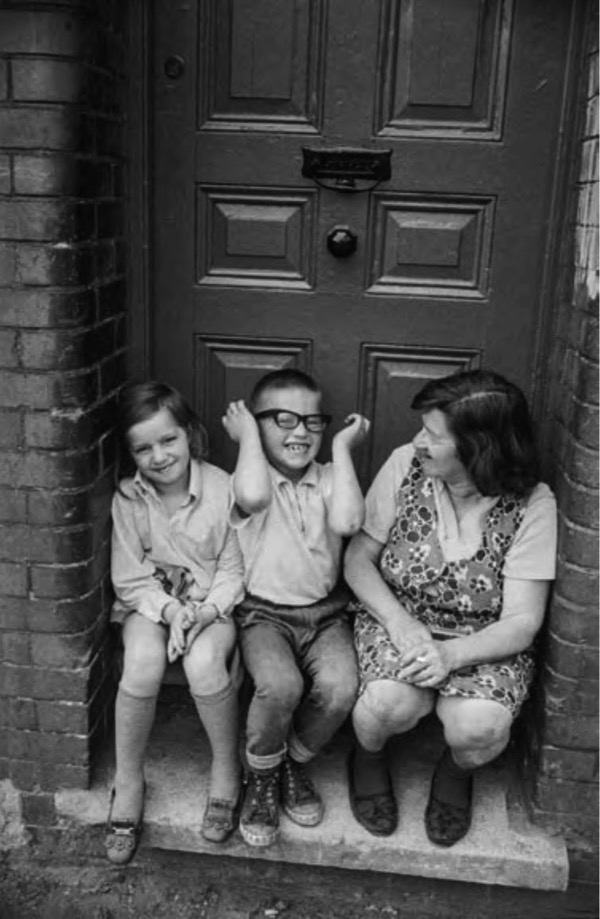
Settle St, Whitechapel
Photographs copyright © Ron McCormick
You may also like to take a look at
Philip Marriage’s Spitalfields












