
The Nine Herbs Charm
In celebration of the opening of the Wild City exhibition at Townhouse this week, we publish the text of the Anglo-Saxon Nine Herbs Charm to cure infection, of which many ingredients are to found at the last bombsite in the City of London in Aldgate. The charm is recorded in the tenth century Lacnunga (remedies) manuscript in British Museum and is published here accompanied by the translation by Þórbeorht Línléah and illustrated with plates from old herbals.
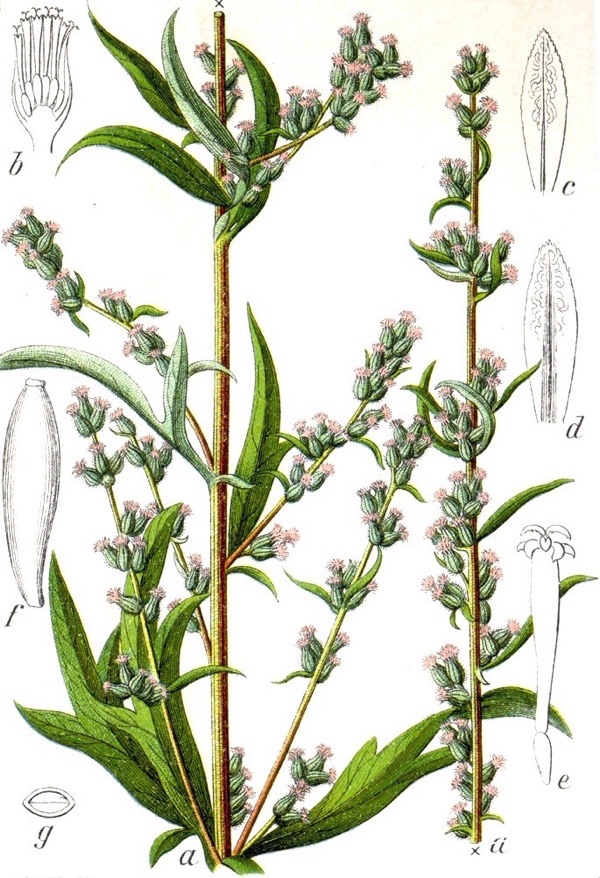
Artemisia Vulgaris (Mugwort)
Gemyne ðú, mucgwyrt, hwæt þú ámeldodest,
hwæt þú renadest æt Regenmelde.
Una þú hattest, yldost wyrta.
ðú miht wið III and wið XXX,
þú miht wiþ áttre and wið onflyge,
þú miht wiþ þám láþan ðe geond lond færð.
Remember thou, Mugwort, what thou declared
What thou advised at the proclamation of the gods (Regen, “council of the gods,” and meld, “proclamation”)
“Una” (First) thou were named, the eldest of worts (herbs)
Thou hast might against three and against thirty,
thou hast might against venom and against that which flies.
thou hast might against the loathsome that yond the land fareth.
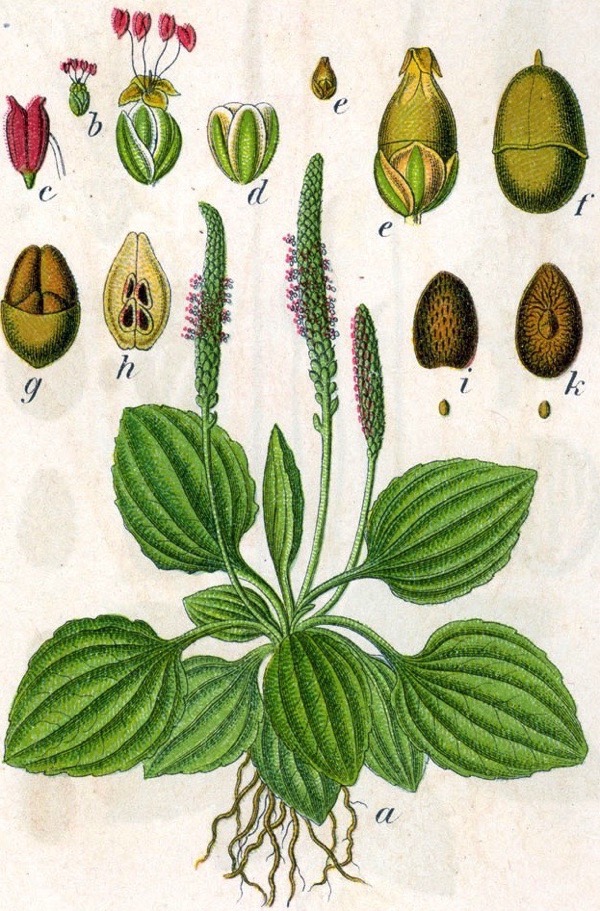
Plantago Major (Plantain)
Ond þú, Wegbráde, wyrta módor,
éastan openo, innan mihtigu;
ofer ðé crætu curran, ofer ðe cwene reodan,
ofer ðé brýde bryodedon, ofer þé fearras fnærdon.
Eallum þú þon wiðstóde and wiðstunedest;
swa ðú wiðstonde áttre and onflyge
and þæm laðan þe geond lond fereð.
And thou, Waybread (Plantain), mother of worts
open to the east, mighty within;
over thee carts creaked, over thee queens (women) rode,
over thee brides cried out, over thee bulls snorted.
All of them thou withstood and dashed against;
so may thou withstand venom and that which flies
and the loathsome that yond the land fareth.
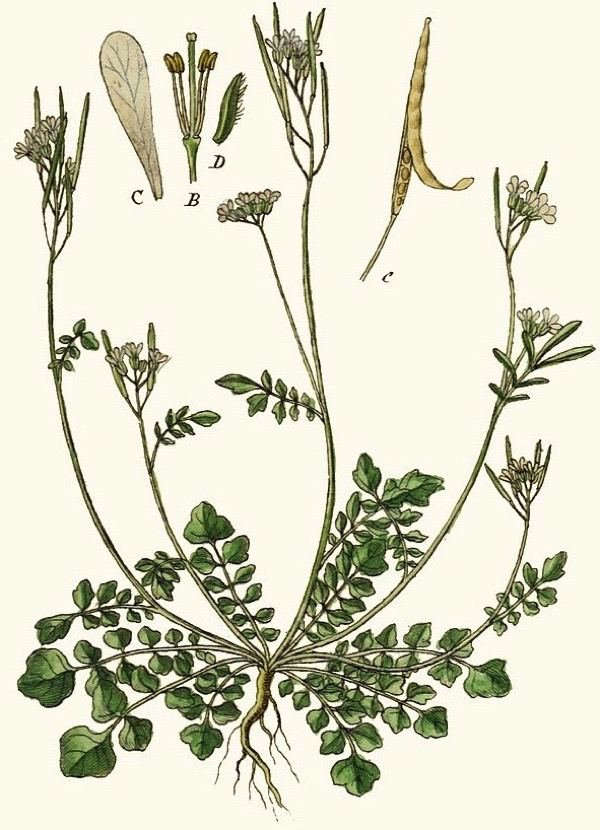
Cardamina Hirsuta (Hairy Bittercress)
Stune hætte þéos wyrt, héo on stane gewéox;
stond héo wið áttre, stunað héo wærce.
Stíðe héo hatte, wiðstunað héo attre,
wreceð héo wráðan, weorpeð út áttor.
Stune (Watercress) is named this wort, she on stone waxes;
stands she against venom, stuneth (dasheth) she against pain.
“Stiff” she is named, withstandeth she venom,
wreaked (driveth out) she the wrathful, warpeth (casteth) out venom.
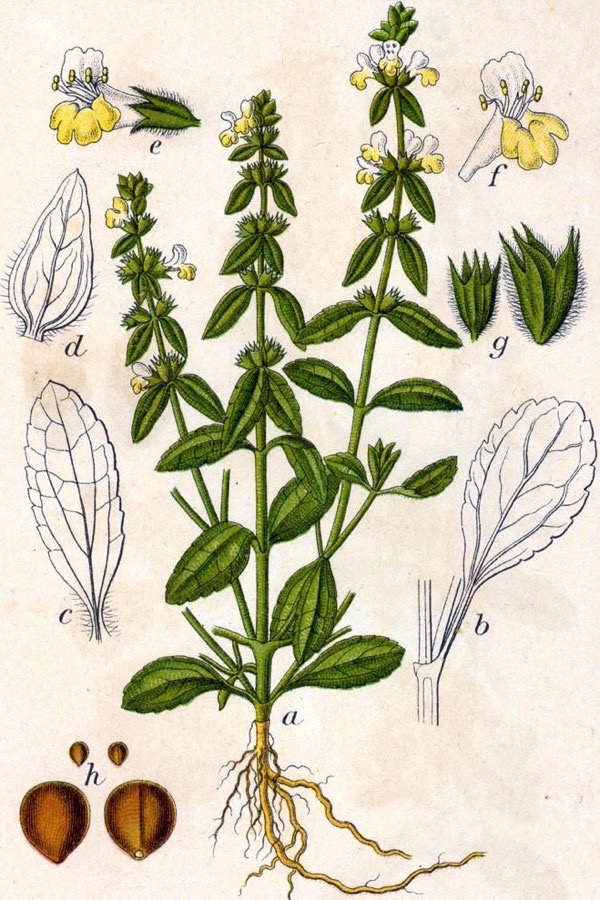
Stachys Annua (Betony)
þis is séo wyrt séo wiþ wyrm gefeaht,
þéos mæg wið áttre, héo mæg wið onflyge,
héo mæg wið ðam laþan ðe geond lond fereþ.
Fléoh þú nú, Áttorláðe, séo læsse ðá máran,
séo máre þá læssan, oððæt him beigra bót sy.
This is the wort that with wyrm (serpent) fought,
she that prevails against venom, she that prevails against that which flies,
she prevails against the loathsome that yond the land fareth.
Put thou now to flight, Adder-loather (Betony, the lesser [and] the more
the more [and] the lesser, until he, of both, is cured.
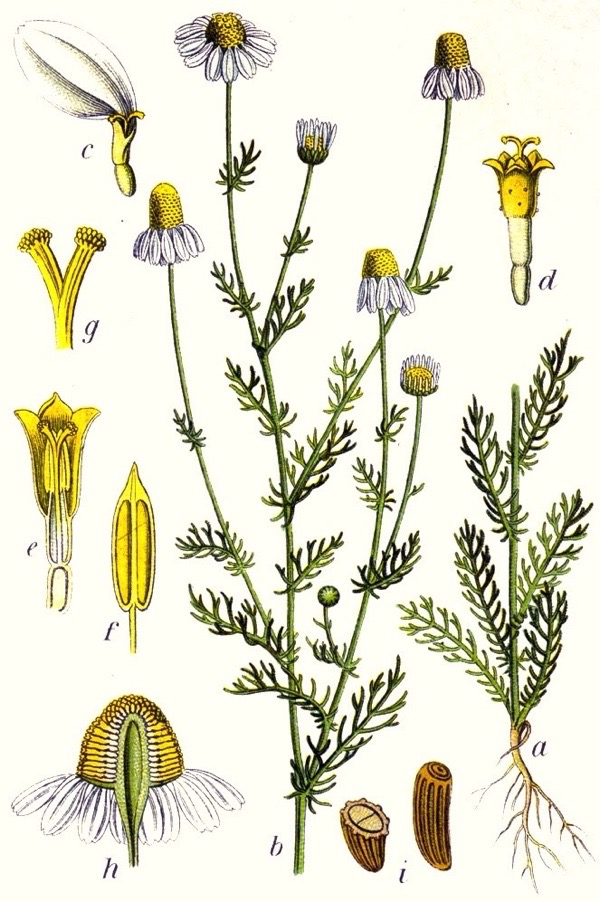
Matricaria Discoidea (Chamomile)
Gemyne þú, mægðe, hwæt þú ameldodest,
hwæt ðú geændadest æt Alorforda;
þæt næfre for gefloge feorh ne gesealde
syþðan him mon mægðan tó mete gegyrede.
Remember thou, Mayweed (Chamomile), what thou declared,
What thou earned at Alder-fjord;
that never for that which flies life would be sold (given, lost)
since for him mayweed, as meat (food), was readied.
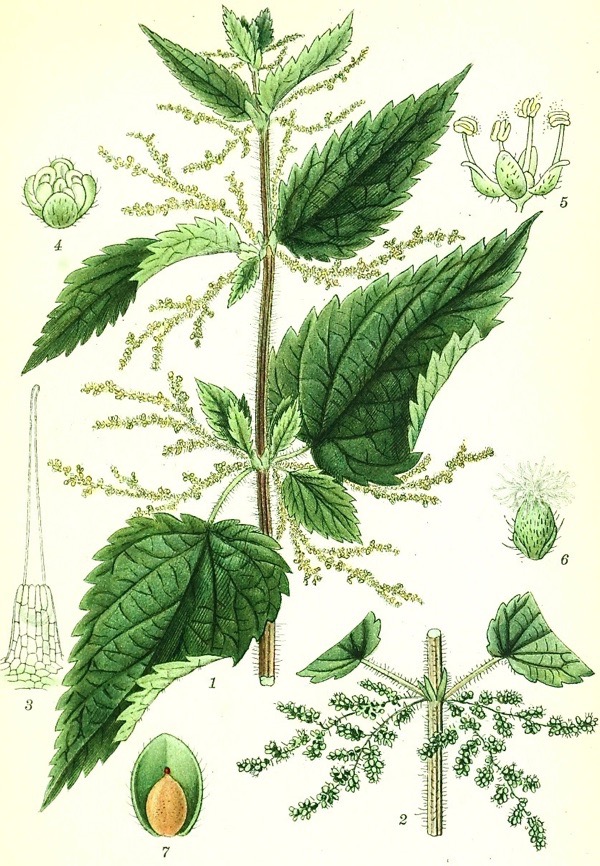
Urtica Dioica (Nettle)
þis is séo wyrt ðé Wergulu hatte;
ðás onsænde seolh ofer sæs hrygc
ondan áttres óþres tó bóte.
This is the wort that is named Weregulu (Nettle);
this sent a seal over the sea’s ridge
the undoing of venom, to others a cure.
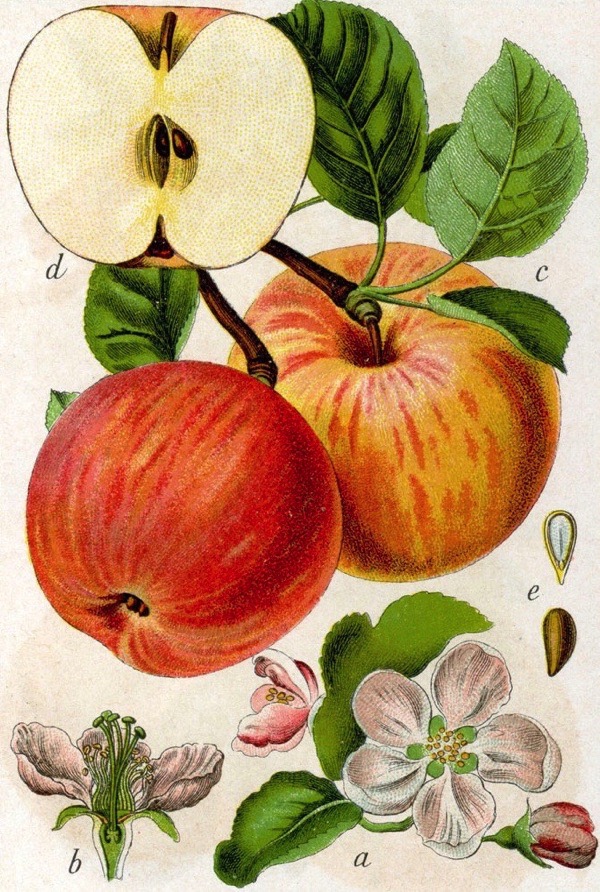
Malus Domestica (Apple)
Þas VIIII magon wið nygon attrum.
Wyrm cóm snícan tóslát hé man
ðá genóm Wóden VIIII wuldortánas,
slóh ðá þá næddran, þæt héo on VIIII tófléah.
Þær geændade Æppel and áttor,
þæt héo næfre ne wolde on hús búgan.
These nine have main (power) against nine venoms.
Wyrm came sneaking. It slit a man
Then took up Wóden nine glory-tines (tines of Wuldor),
slew with them the adder that she into nine flew.
There earned Apple and venom
that she never would bend-way (slither) into house.

Anthriscus Sylvestris (Chervril)
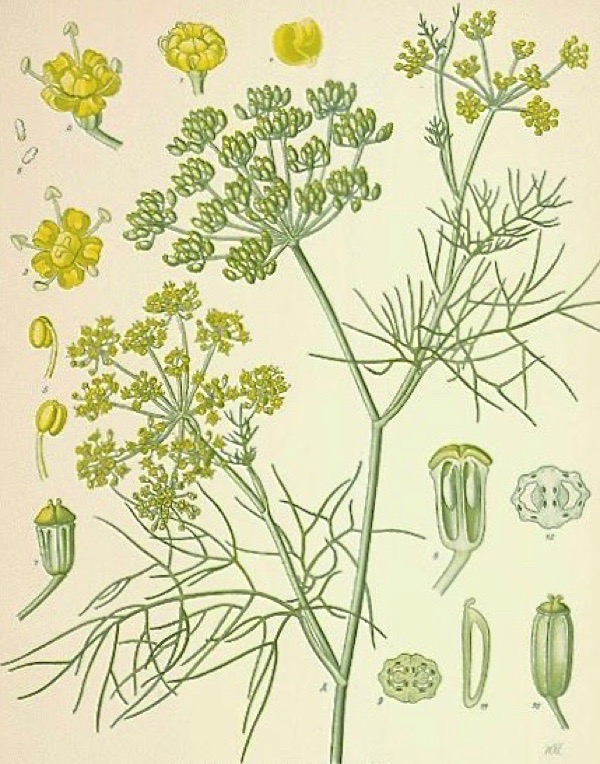
Foeniculum Vulgare (Fennel)
Fille and Finule, felamihtigu twá,
þá wyrte gesceop witig drihten,
hálig on heofonum, þá hé hóngode;
sette and sænde on VII worulde
earmum and éadigum eallum tó bóte.
Stond héo wið wærce, stunað héo wið éáttre,
séo mæg wið III and wið XXX,
wið feondes hond and wið færbregde,
wið malscrunge mánra wihta.
Chervil and Fennel, most mighty two,
those worts were shaped by the witty Drighten,
holy in the heavens, where he hung;
set and sent [them] into seven worlds
for the wretched and the wealthy for all a cure.
Stands she against pain, stuneth (dasheth) she against venom,
that prevails against three and against thirty,
against the fiend’s hand and against far-braiding (shape-shifting?),
against maskering (bewitching) by evil wights.
Nú magon þás VIIII wyrta wið nygon wuldorgeflogenum,
wið VIIII áttrum and wið nygon onflygnum,
wið ðý réadan áttre, wið ðý runlan áttre,
wið ðý hwítan áttre, wið ðý hæwenan áttre,
wið ðý geolwan áttre, wið ðý grénan áttre,
wið ðý wonnan áttre, wið ðý wedenan áttre,
wið ðý brúnan áttre, wið ðý basewan áttre,
wið wyrmgeblæd, wið wætergeblæd,
wið þorngeblæd, wið þystelgeblæd,
wið ýsgeblæd, wið áttorgeblæd,
gif ænig áttor cume éastan fléogan
oððe ænig norðan [ænig súþan] cume
oððe ænig westan ofer werðéode.
Now prevail these nine worts (herbs) against the nine wonder-flying-ones,
against nine venoms, and against nine which fly,
against the red venom, against the foul smelling venom,
against the white venom, against the blue-gray venom,
against the yellow venom, against the green venom,
against the wan (dark) venom, against the woad (blue) venom,
against the brown venom, against the crimson venom,
against the wyrm-blister, against the water-blister,
against the thorn-blister, against the thistle-blister,
against the ice-blister (frostbite), against the venom blister,
if any venom comes flying from the east,
or any other from the north, any [from the south] come
or any other from the west over the tribes of men.
Ic ána wat éa rinnende
þær þá nygon nædran néan behealdað;
motan ealle wéoda nú wyrtum áspringan,
sæs tóslúpan, eal sealt wæter,
ðonne ic þis áttor of ðé geblawe.
I alone wot (know) of a river running
There the nine adders near it beholdeth; (keep watch)
May all weeds now from worts spring,
Seas to slip away, all salt water,
When I, this venom from thee blow.
Mugcwyrt, wegbráde þé éastan open sy, lombescyrse, áttorláðe, mageðan, netelan, wudusúræppel, fille and finul, ealde sápan: gewyrc ðá wyrta to duste, mængc wiþ þá sápan and wiþ þæs æpples gor. Wyrc slypan of wætere and of axsan, genim finol, wyl on þære slyppan and beþe mid æggemongc, þonne hé þá sealfe on dó, ge ær ge æfter. Sing þæt galdor on ælcre þára wyrta, III ær hé hý wyrce and on þone æppel ealswá; ond singe þon men in þone muð and in þá earan bútá and on ðá wunde þæt ilce gealdor, ær hé þá sealfe on dó.
Mugwort, Waybread (plantain) that is open to the east, lambcress (stune), adder-loather (betony), mayweed, nettle (weregulu), apple, chervil and fennel, and old soap: work the worts to dust, mix with the soap and with the apple’s gore. Work up a slop of water and of ashes, take the fennel, well it up (boil it) in the slop and bathe it with an egg-mixture, when he dons the salve, either ere or after. Sing that galdor (incantation) o’er each of those worts thrice ere you work them and on the apple also; and sing it into the man’s mouth and in both ears and on the wound likewise galdor, ere he dons the salve.
Wild City is at Townhouse, 7 Fournier St, E1 6QE, from Thursday 17th May until Sunday 17th June
You may also like to read about
The Last Derelict House In Spitalfields

This is the view of Nicholas Hawksmoor’s spire of Christ Church seen from the weaver’s loft at the top of two Wilkes St – the last derelict house in Spitalfields – which is current up for sale.
Once upon a time people used to wander in these streets surrounding the shabby old church, savouring the romance of these ancient Huguenot houses that had seen better days and were then used as workplaces or left empty. Those days are long gone – since Spitalfields got toshed up, the church was scrubbed behind the ears, the sweatshops moved out, skips appeared as renovations began and the value of these dwellings went through the roof.
Most recently two Wilkes St served as a warehouse for Star Wholesale cash & carry. Previously, it had been a workplace with boards nailed over panelling, false ceilings added and layers of flooring concealing the original floorboards. Behind all these accretions, the old structure remained intact and when the additions were removed, along with some of the fabric – in a former abortive restoration attempt – no-one bothered to dispose of any of the timber from the house. The piles that lie around comprise the missing pieces of an enormous three dimensional jigsaw just waiting to be put back together. Elsewhere in Spitalfields, old properties have been turned upside down and stripped out, removing all evidence of the previous occupants, yet as a consequence of benign neglect, two Wilkes St exists today as an eighteenth-century time capsule.
Stepping through the door, I was amazed by the multilayered textures that are the result of human activity throughout the long history of the building, especially the flaking paint that reveals every single coat taking you back three centuries. The house has a presence that halts you in your step and you lower your voice without knowing why. You stand and gaze. The reflected light from the street falls upon dusty old floorboards visibly worn beside the windows where people have stood in the same spot to look down upon Wilkes St since the seventeen-twenties – when the house was built by William Taylor, who was responsible for the house next door and several others in the vicinity.
Ten years ago, the central staircase of the house was rebuilt with the original treads on wooden bearers that support each step in the traditional method, starting at the bottom and working all the way up – just as a joiner would have done in the eighteenth-century when all carpenters did their work on site.
Descended into the dark musty cellar by torchlight, I could see my own breath in the air as I entered a kitchen where the beam of light fell upon eighteenth-century matchboarding and a flag floor. The torchlight caught portions of an old dresser and a stone sink, beneath layers of dust, grit and filth – abandoned since the nineteenth century.
On the first floor, an intermediary space off the stairwell links rooms on either side, divided from them by partitions – this is a rare example of a powder room. Any of Henry Fielding’s characters would recognise this space.
Of all the old houses in Spitalfields I know, this is the one that has most retained its soul. The house holds its own silence and the din of the contemporary world is drowned out by it. Two Wilkes St possesses the authentic atmosphere of old London that Fielding and Dickens knew, yet which can all too easily be destroyed forever. It is waiting for someone with the knowledge, money and patience to repair it and bring it back to life without erasing its history.
Click here if you are interested to buy two Wilkes St


Eighteenth century staircase spindles

The view along the back gardens of Fournier St
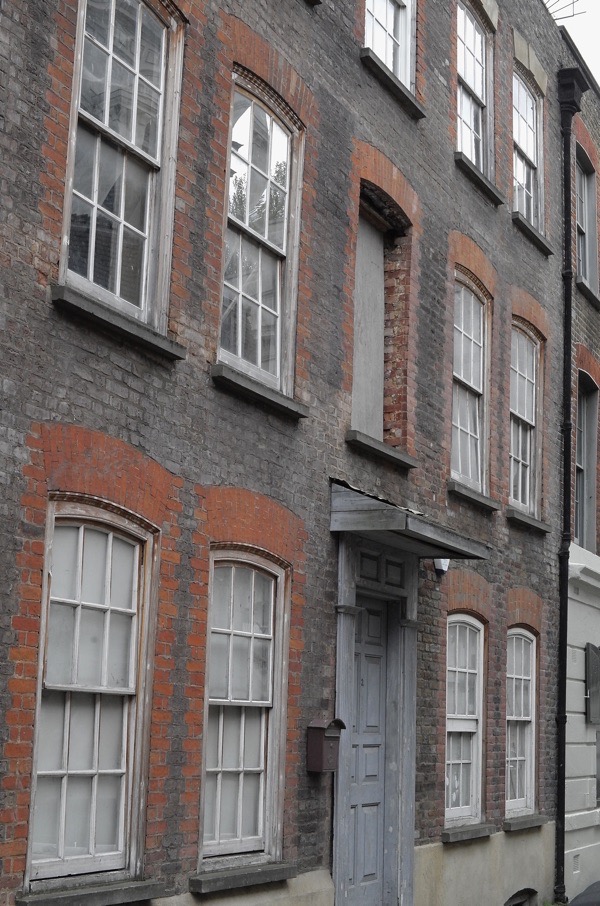
2 Wilkes St
You may also like to read about
All Change at 15 & 17 Fournier St
At Bow Food Bank
After our initial visit to take portraits, Contributing Photographer Sarah Ainslie & I were so inspired by the community of volunteers who run Bow Food Bank that we decided to go back and learn more about their activities.
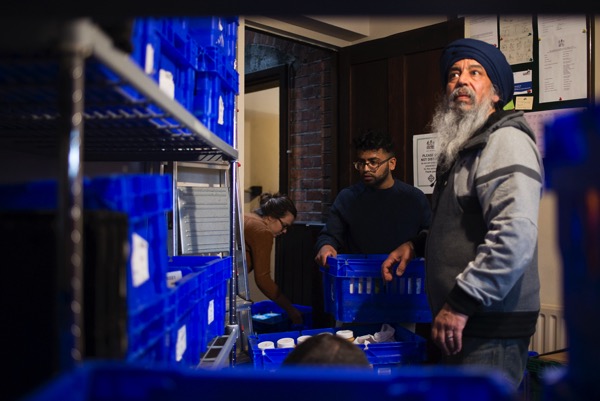
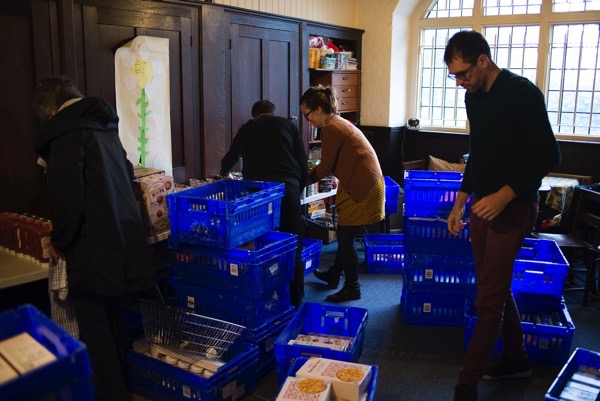
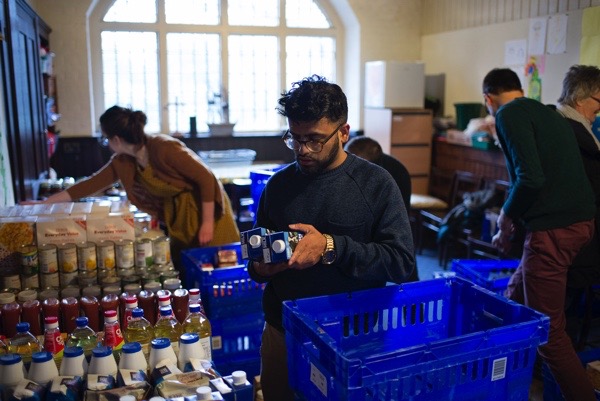
Taking place at Bow Church each Monday morning, this is an independent food bank which means vouchers from the Department of Work & Pensions are not required, anyone who is in need of food can come and ask for help. Assistance to those in crisis is offered in the form of ten items of grocery every other week for up to fifteen visits.
If you would like to donate or volunteer, visit Bow Food Bank
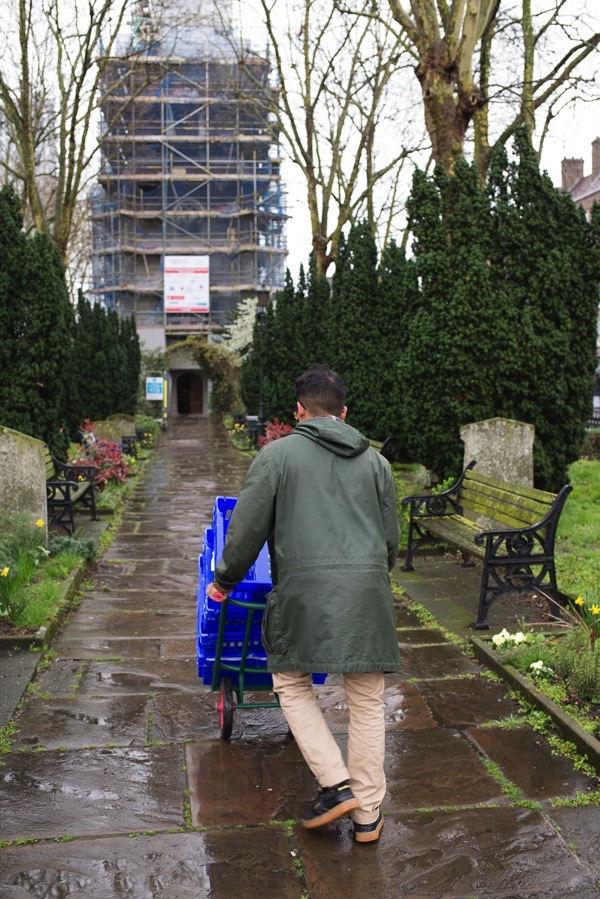
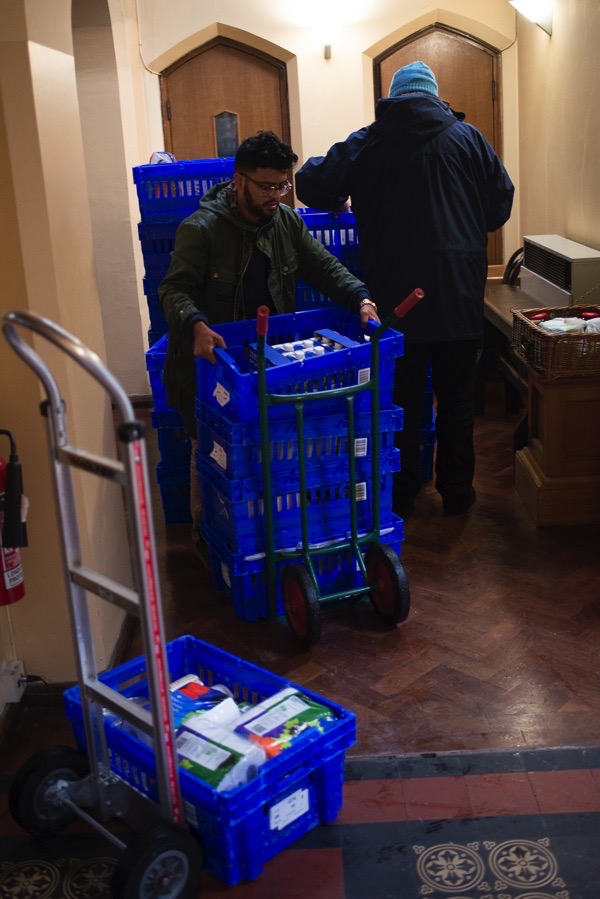
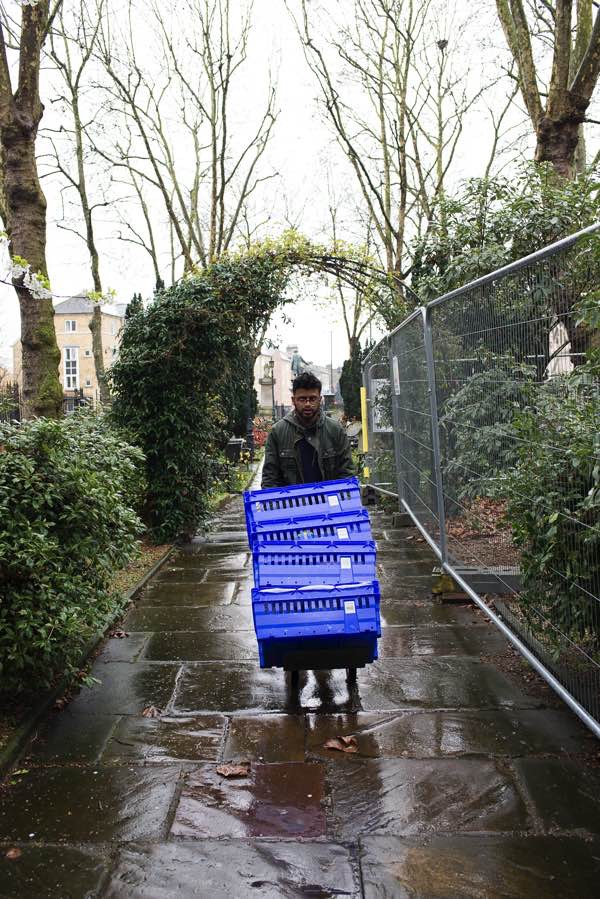
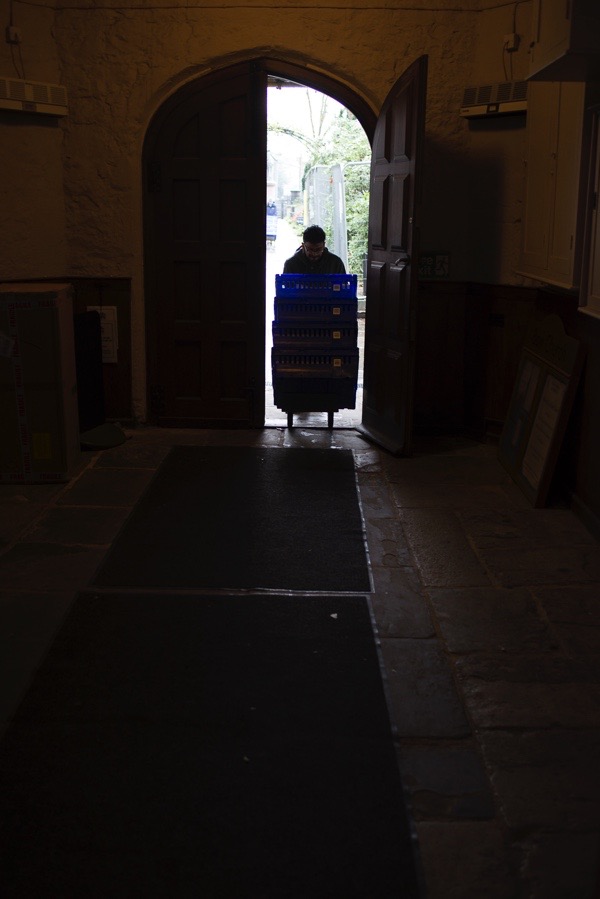
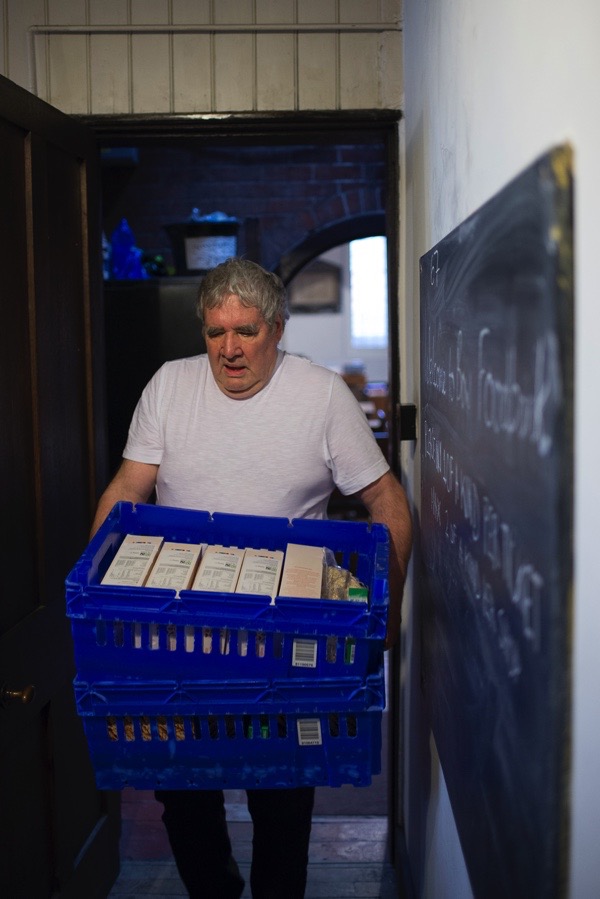
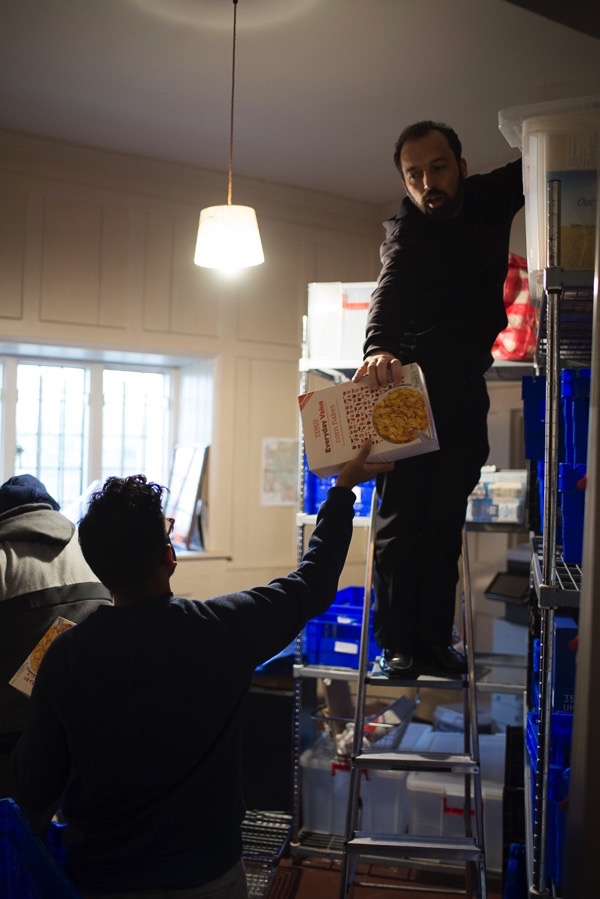
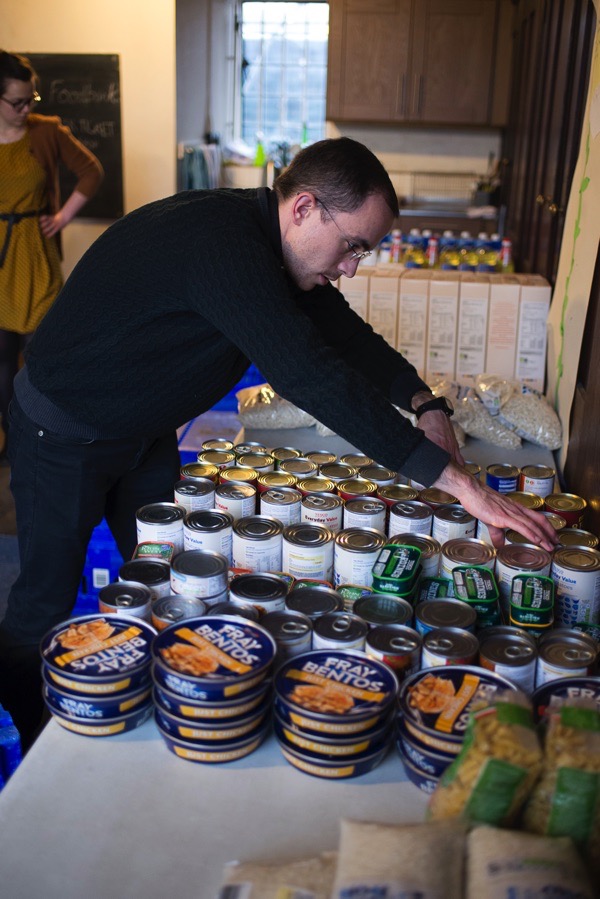
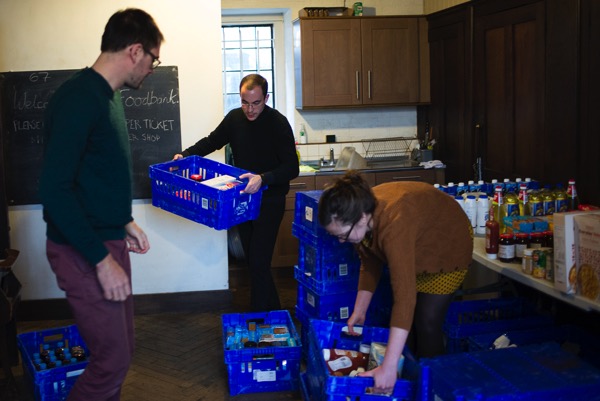
Every Sunday after evening service and mass are concluded in Bow, a chain of volunteers wheel trolleys of food across the road from the Catholic church of Our Lady & St Catherine of Siena to the nearby Anglican church of St Mary & Holy Trinity which sits upon an island in the middle of the road. The unusual situation of this ancient building means that direct deliveries are not possible and thus a unique Sunday ritual has arisen, transporting the food bank supplies from the church where they are delivered to the church where they are distributed. Once the food arrives, the volunteers organise it upon tables in the vestry while the choir practises in the nave and very soon preparations are complete for the food bank which takes place each Monday morning.
Francisco Rebello
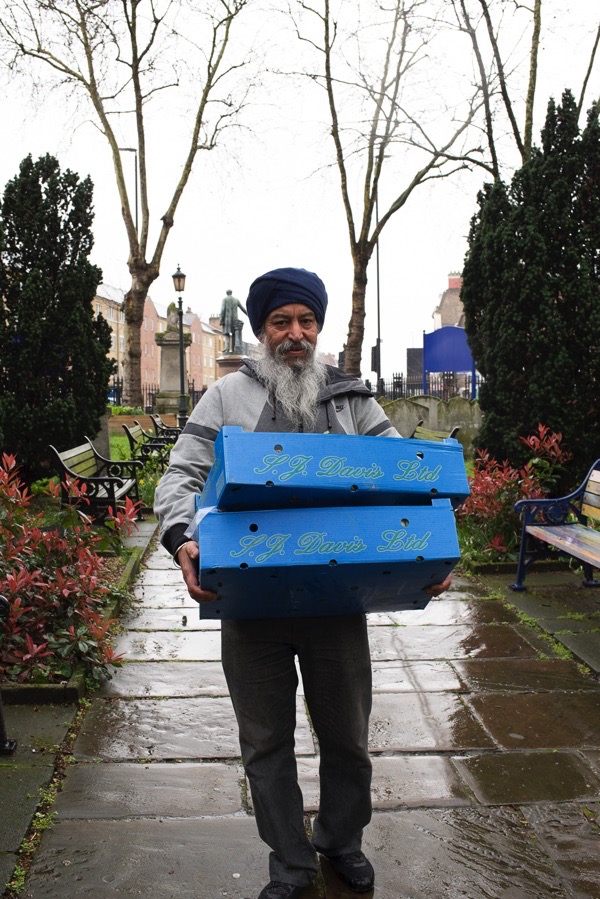
Jagmohan Bhakar brings fresh vegetables on behalf of the Gudwara in Campbell Rd
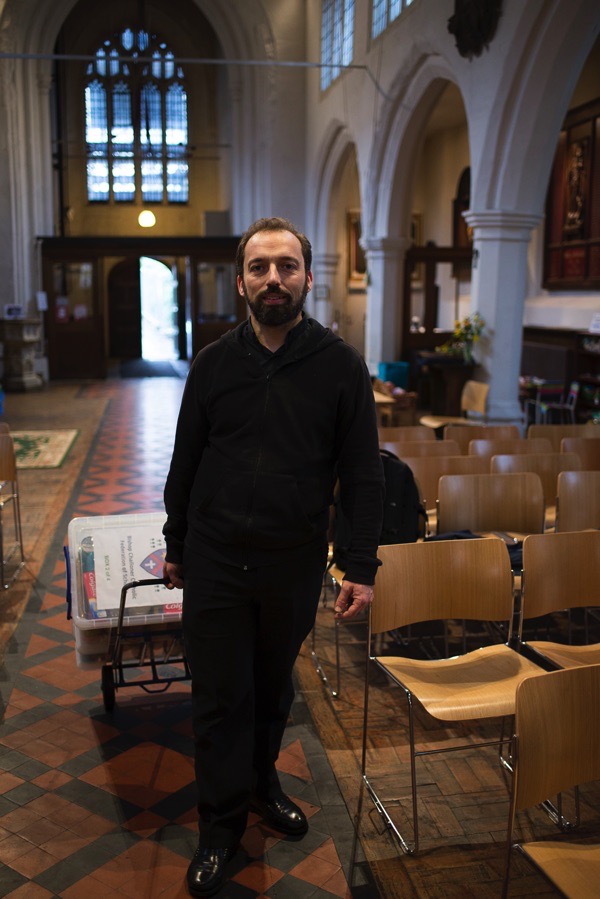
Father Javier Ruiz- Ortiz
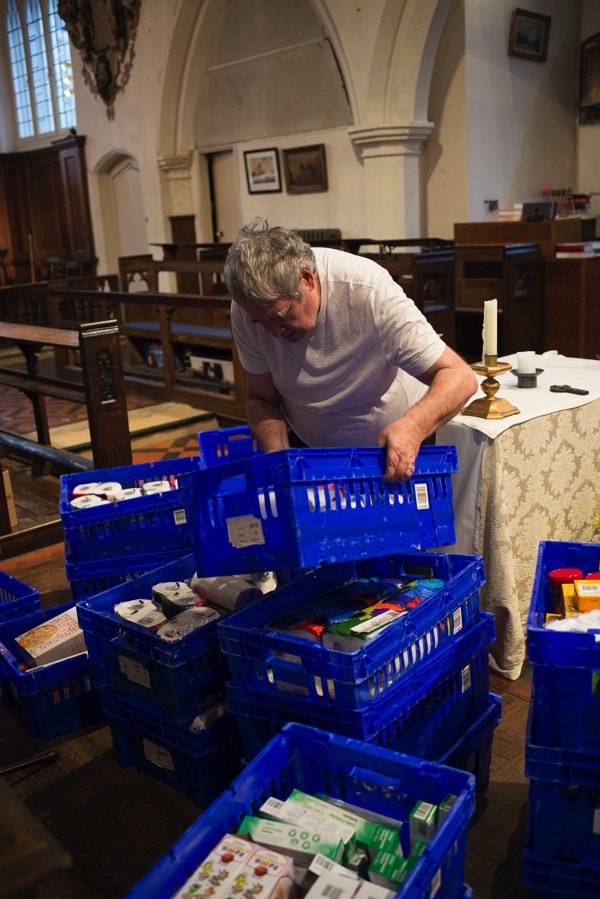
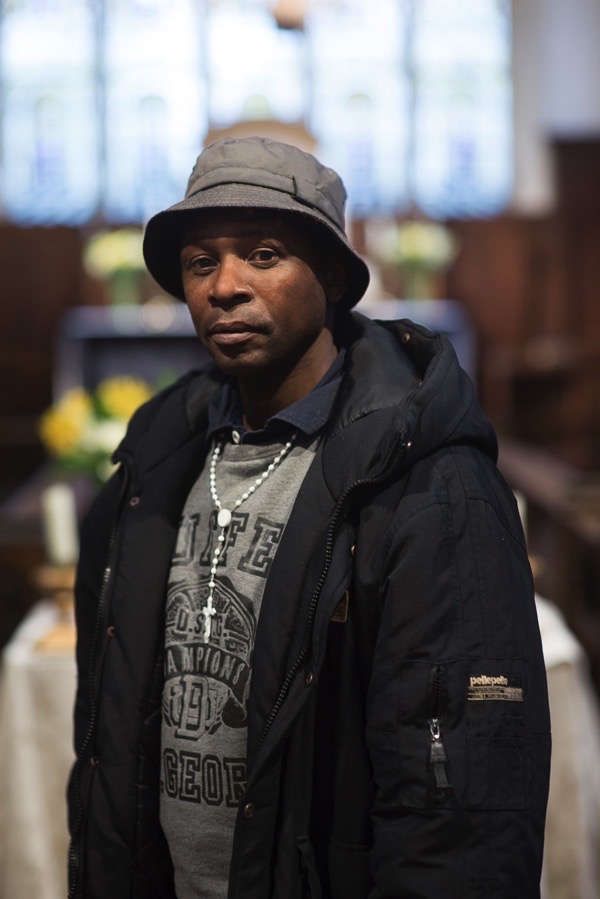
Peter Danielle
Alick Phillips, Volunteer – “Originally, I was a client here because I was in need of food when I was going through a tough time. This is different from other food banks because they don’t just give you food and rush you out, you can sit and have a sandwich and a coffee and get legal advice about benefits and housing. When I came here I found the volunteers took an interest in my situation. I was having money problems because my benefit was suspended and I had some personal problems too. I found I could talk to the volunteers and they helped me in my recovery and getting back on my feet. So I felt I wanted to put something back, that’s why I volunteered to help after my visits were up. I am forty-eight years old – I have two grandchildren – and I was born in Forest Gate and have lived in the East End around Stratford and Canning Town all my life. I have been volunteering weekly for over a year and I really enjoy it, I feel privileged to be around these people. It changed my life, coming here, and now I have got back to where I wanted to be.”
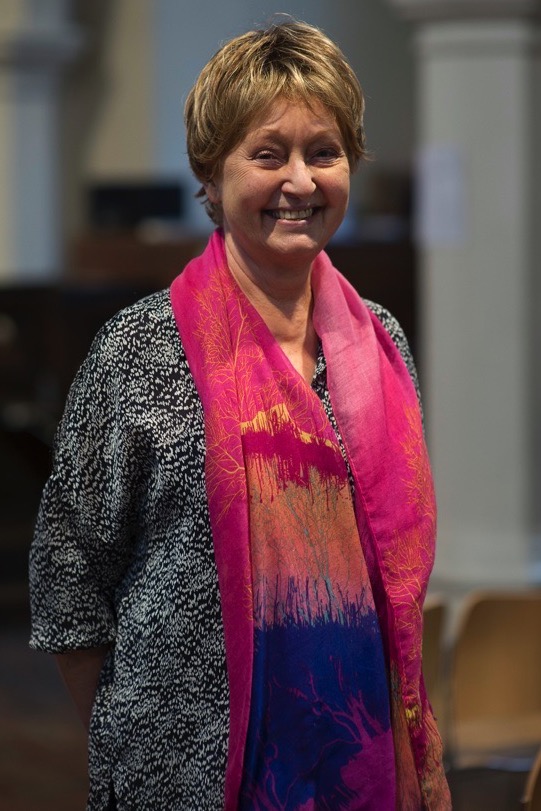
Chrystabel Austin, Volunteer “I got involved in the Food Bank because I had a very bad year when my mother died and then my husband died. I came to Bow Church at the end of that year and started volunteering at the Food Bank. I am glad it’s on a Monday because it is a very good way to start the week. I think food banks are important and sadly are here to stay. They are mopping up what the government is causing to happen. With Universal Credit being rolled out we are seeing more and more people every week. We try to make them feel human again. I am usually at the door, greeting people. For many people it is hard to come here. We have people in tears because they are ashamed. A lot of people now are living only a couple of months from financial meltdown. With the amount of debt people carry, you only need to lose your job or be ill and it spirals out of control, and people can lose their partner, their family and their home. In particular, single men find themselves at the bottom of the priority list. There was an educated young man who came in and, when I asked him if he had been here before, he said, ‘No, I almost came a couple of weeks ago but I didn’t have the courage to walk in. – I’m so ashamed that I am in this situation.’ He had got into a muddle at work, got into debt and lost his flat. He was in this morning and he’s climbing back out of it already. I know he will be alright because he speaks four languages. Now he wants to come back as a volunteer, which will be very useful for us with the languages.”
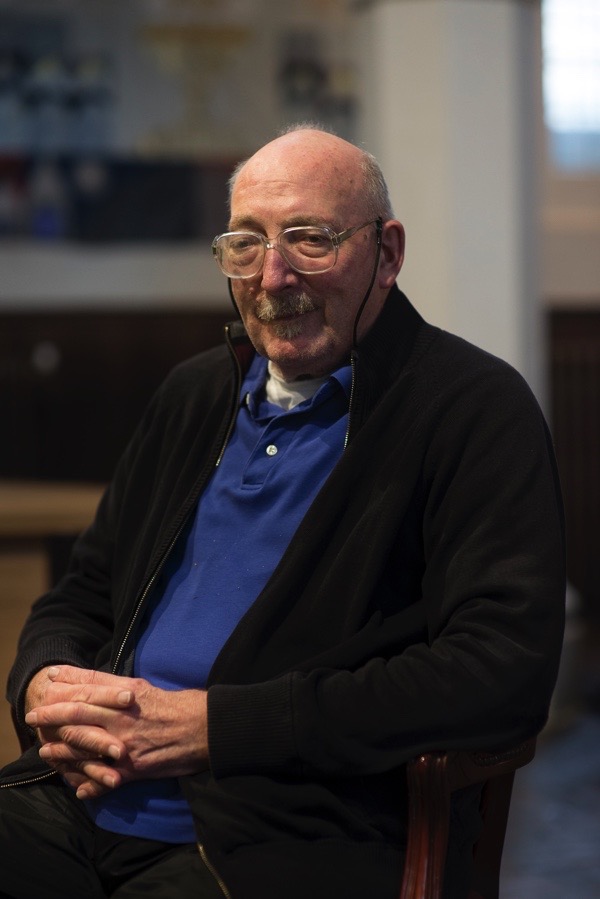
Peter Marshall, Volunteer – “I am a member of this church so when the Food Bank started eighteen months ago, my wife Elizabeth suggested I come down here and help on a Monday. Each client is given ten tickets and they can pick ten items from the store which they put in a basket and then I check them off the list so we have record for reordering. At the end of the morning, I add it all up and do a weekly stock check. I get a sense of being useful by doing this. I have nothing else to do and I don’t want to sit with my feet up, I prefer to be involved in something worthwhile. Where else would these people go?”
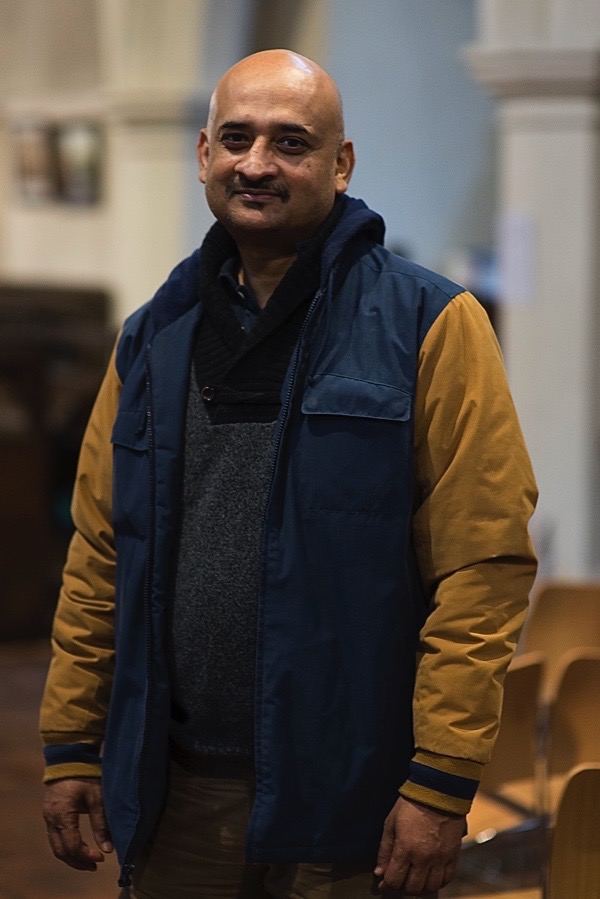
Shamin Khan, Volunteer – “I work the night shift at McDonald’s in Bow until seven or eight and then come here to do my volunteer work each Monday. When I came from Milan in 2017, I was in big trouble, I had no work and I was struggling. I came to Bow Church for help and they inspired me. They said, ‘If you have nothing to do, you can come here and help us.’ So I have come every week since to volunteer. They helped me, so I want to help other people. We are just human beings and we have to share with each other. Poor people deserve to live on our beautiful earth too. They need some help and some food. It is only a short journey of a few months and then things may get better for them – like they did for me – and they can come and help others. This is my philosophy.”
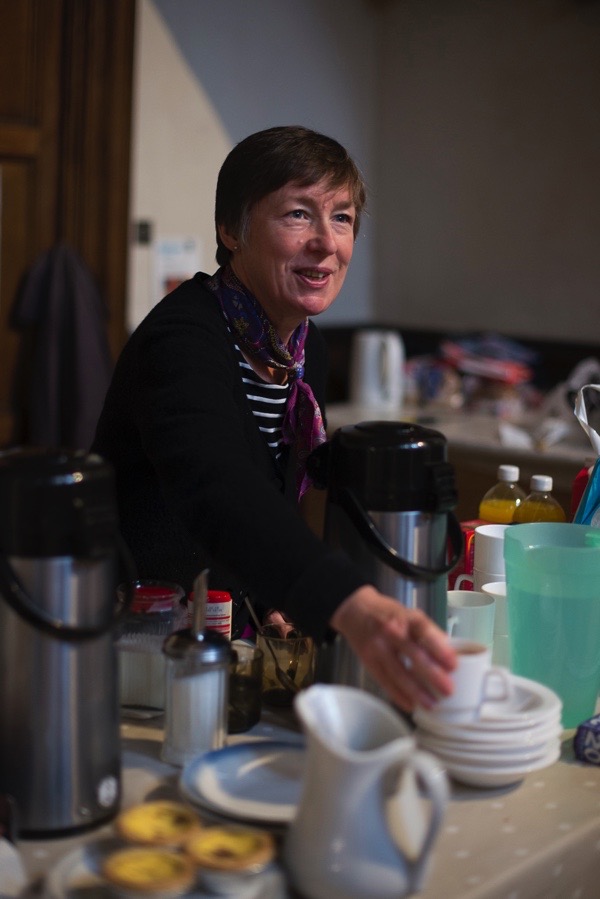
Amanda Claremont, Former Church Warden – “I was very skeptical about the Food Bank when it started because once you open a food bank you cannot close it – the need is always there. Food banks are manifestation of many things about late Capitalism that shouldn’t happen. Nonetheless, I found myself here when they were asking for volunteers to help. I have always served tea, coffee and cakes, so I said, ‘I will do hospitality,’ and I have done that every week since the start of the Food Bank. I walked the Camino de Santiago and that was what I learnt on my pilgrimage, ‘You should always offer hospitality to strangers.’ A food bank is one tiny way of putting right what is a cruel injustice, it is the least we can do.”
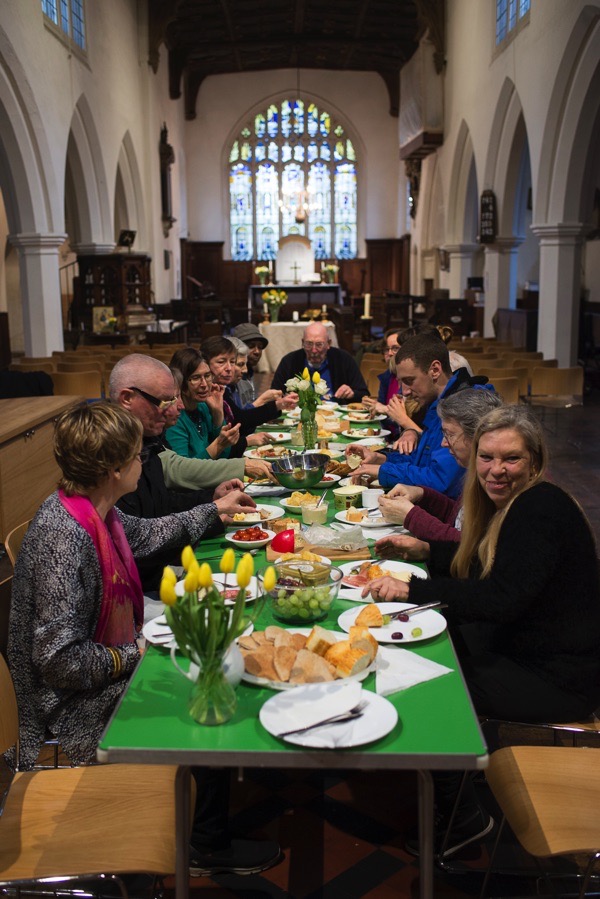
Once a month, volunteers sit down for a modest snack lunch to discuss their work and share experiences
Photographs copyright © Sarah Ainslie
You may also like to take a look at
The Map Of Thames Shipwrecks
Each Saturday, we shall be featuring one of Adam Dant’s MAPS OF LONDON & BEYOND from the forthcoming book of his extraordinary cartography to be published by Spitalfields Life Books & Batsford on June 7th.
Please support this ambitious venture by pre-ordering a copy, which will be signed by Adam Dant with an individual drawing on the flyleaf and sent to you on publication. CLICK TO ORDER A SIGNED COPY OF MAPS OF LONDON & BEYOND BY ADAM DANT
Tickets are already on sale for Adam Dant’s illustrated lecture showing his maps at the Wanstead Tap on Thursday June 21st. Click here to book tickets
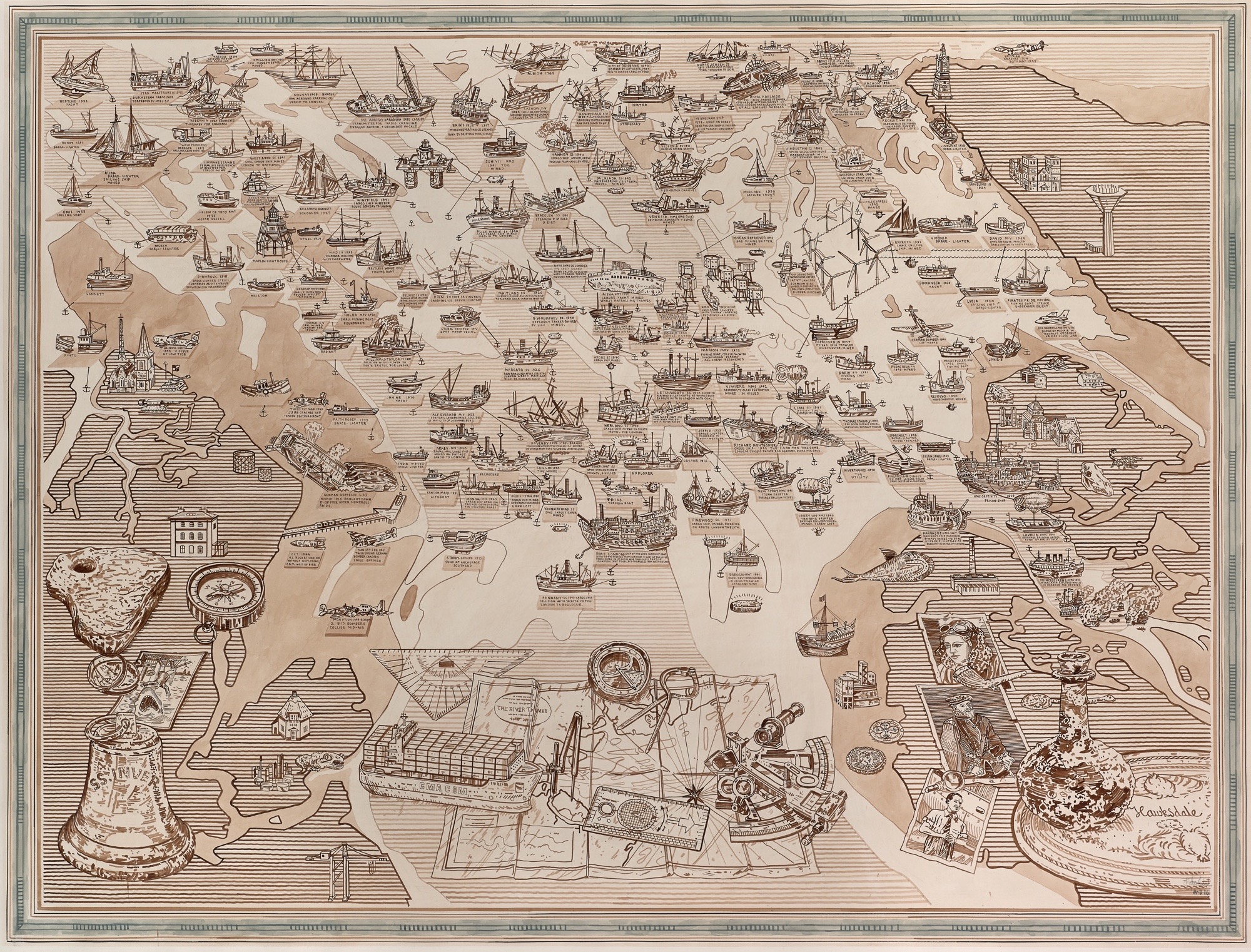
CLICK THIS MAP to enlarge it and explore Adam Dant’s Map of Shipwrecks in the Thames Estuary, which he calls THE MUSEUM OF THE DEEP.

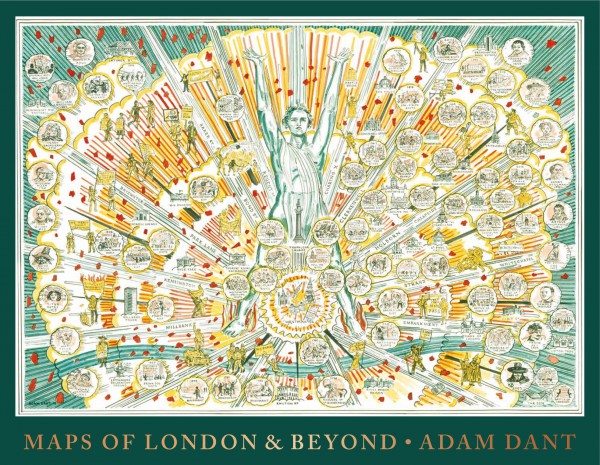
CLICK TO ORDER A SIGNED COPY OF MAPS OF LONDON & BEYOND BY ADAM DANT
Adam Dant’s MAPS OF LONDON & BEYOND is a mighty monograph collecting together all your favourite works by Spitalfields Life‘s cartographer extraordinaire in a beautiful big hardback book.
Including a map of London riots, the locations of early coffee houses and a colourful depiction of slang through the centuries, Adam Dant’s vision of city life and our prevailing obsessions with money, power and the pursuit of pleasure may genuinely be described as ‘Hogarthian.’
Unparalleled in his draughtsmanship and inventiveness, Adam Dant explores the byways of English cultural history in his ingenious drawings, annotated with erudite commentary and offering hours of fascination for the curious.
The book includes an extensive interview with Adam Dant by The Gentle Author.
Adam Dant’s limited edition prints are available to purchase through TAG Fine Arts
A Lost Botanic World In Aldgate
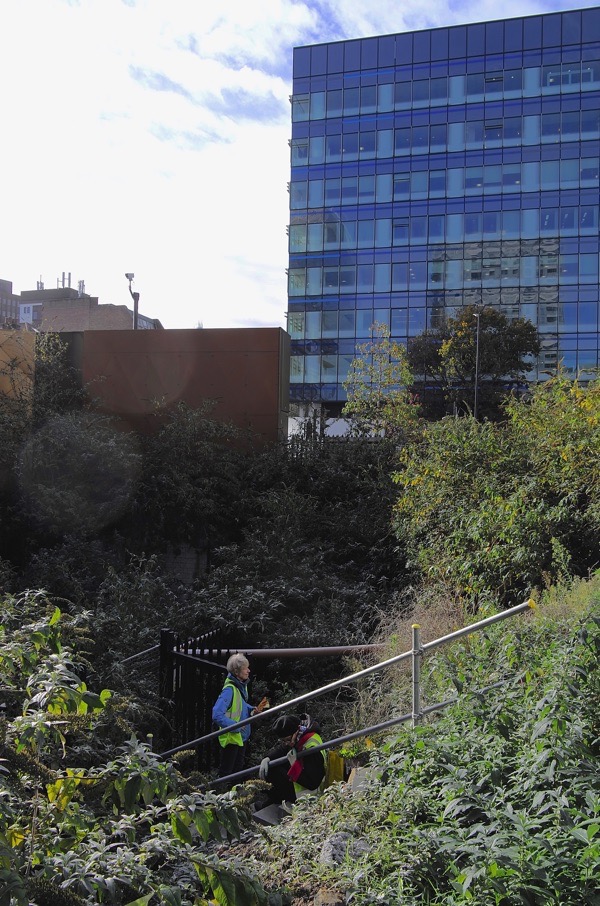
Last year, I joined a group of intrepid plant hunters descending into the depths of the last remaining bomb site in the City of London. We climbed all the way down into the hole until we reached the level of the platforms of what was formerly part of Aldgate East Station, until a V2 bomb dropped nearby in the Second World War.
Consequently, the plant life that flourished in this rare haven of nature remained untouched in all these years because the proximity of the tube line precluded any redevelopment until now, and so the project was to record this lost world of botanic richness at the eleventh hour. The plant species collected included many that were once commonplace throughout the City and the East End yet which no longer thrive here.
Artist Liz Davis has mounted the specimens which are to be exhibited in Spitalfields next week and then added to the collection in the Herbarium at the Natural History Museum which preserves the work of plant collectors, including former local resident Nicholas Culpeper.
Wild City is at Townhouse, 7 Fournier St, E1 6QE, from Thursday 17th May until Sunday 17th June
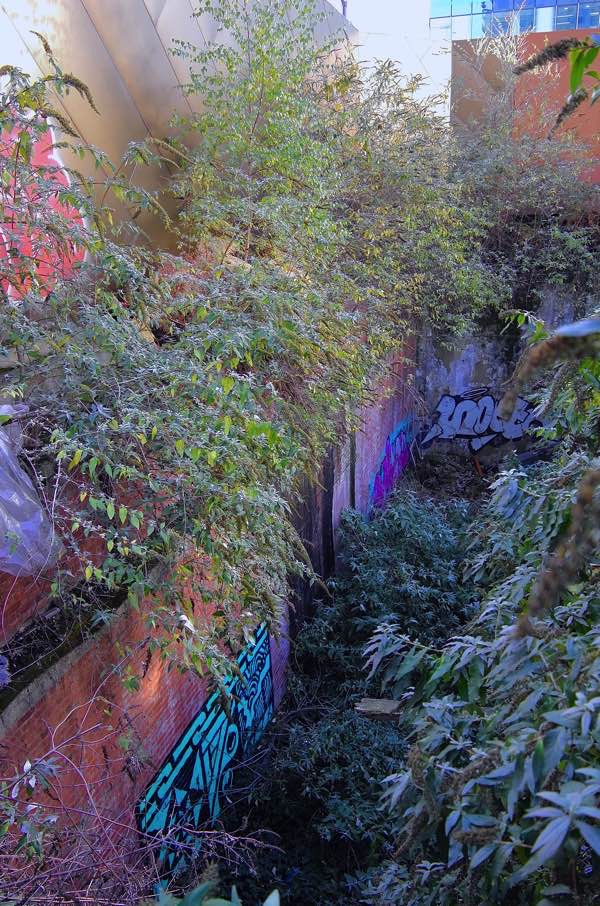
The hole descends to the former platform of Aldgate East
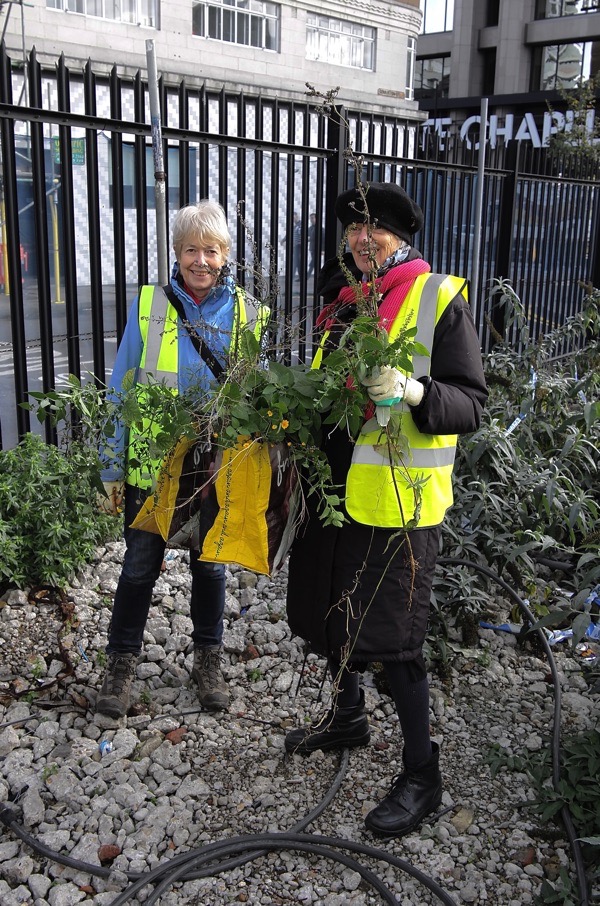
Sarah Hudson (Chair of Friends of City Gardens) & Liz Davis (Artist & Plant Hunter)
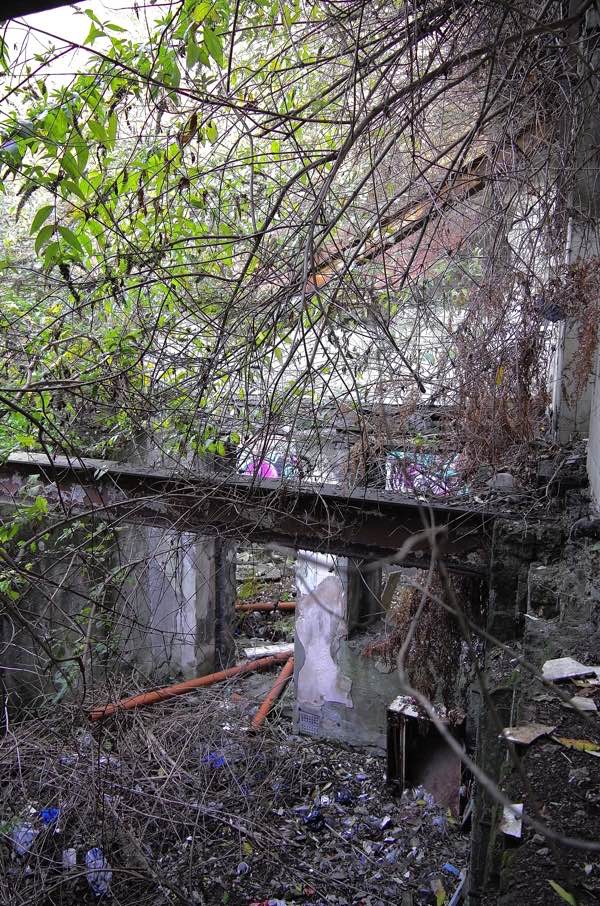
At platform level
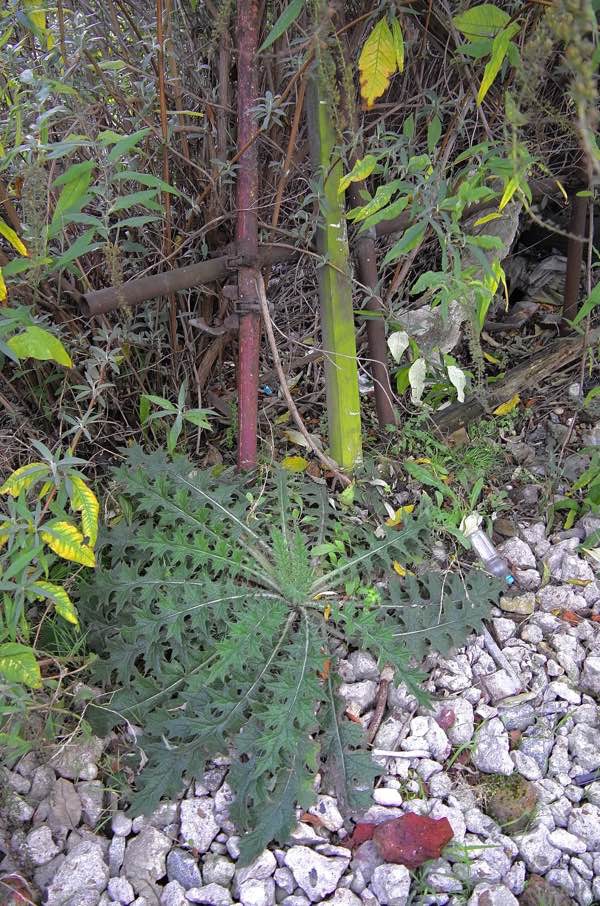
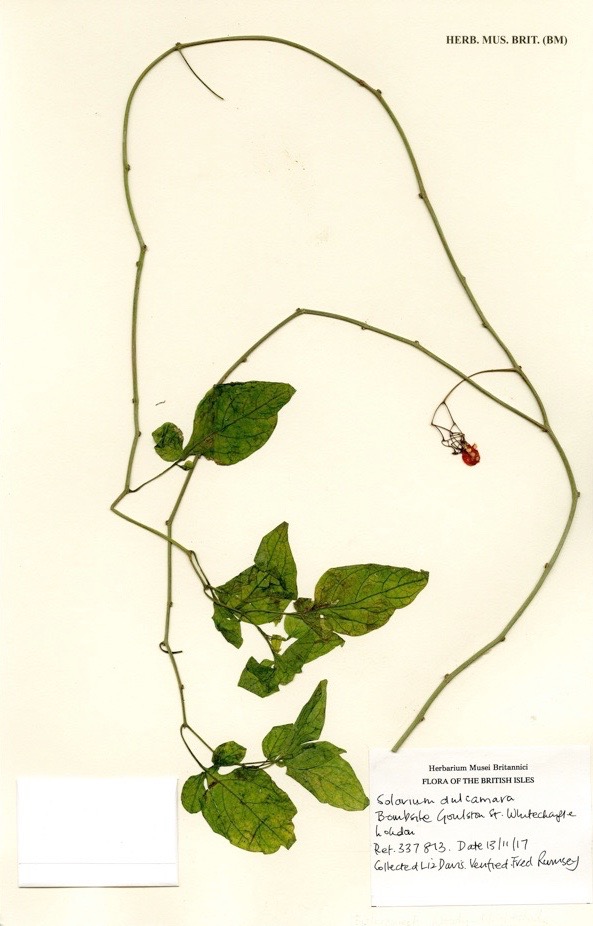
Solanum Dulcamara (Bittersweet)
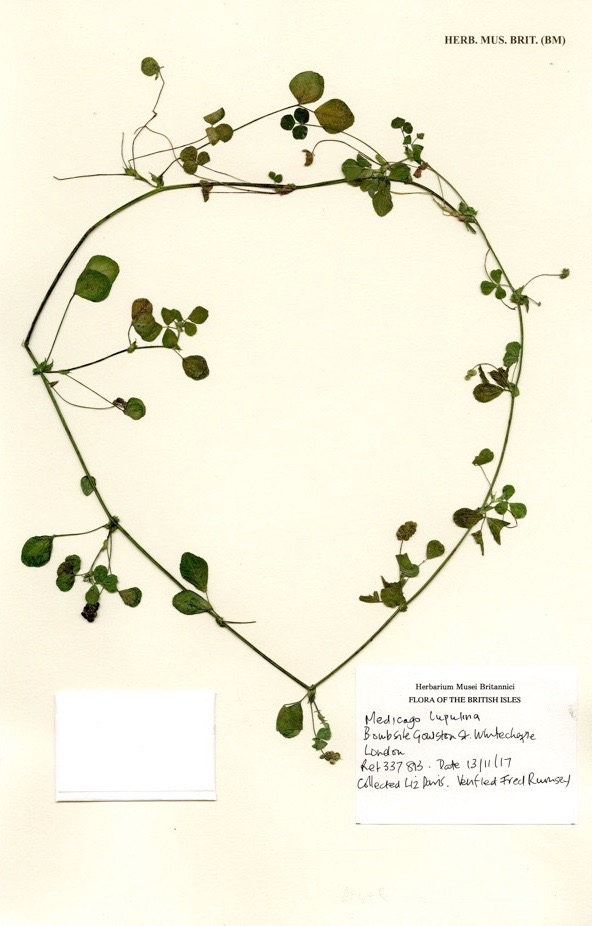
Medicago Lupulina (Black Medick)
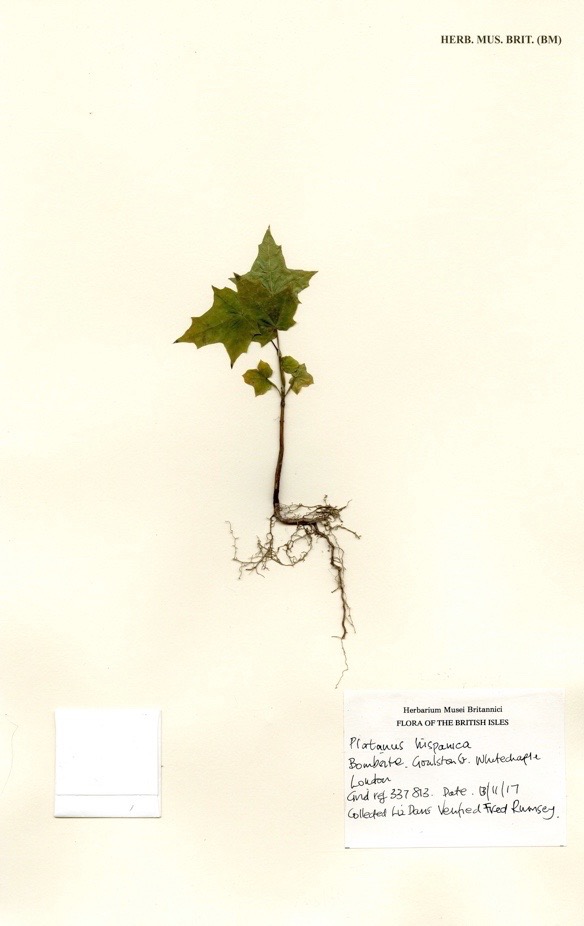
Platanus Hispanica (London Plane)
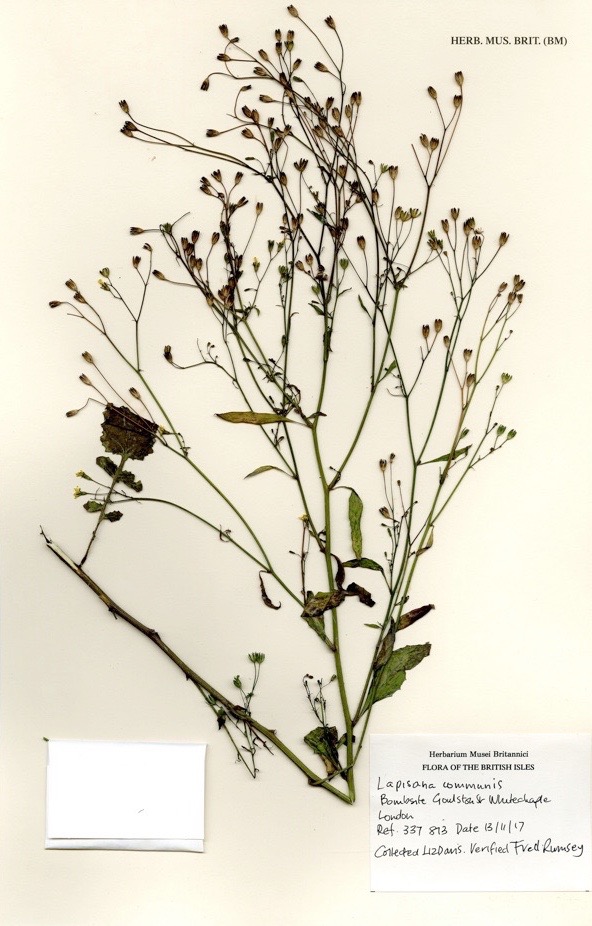
Lapsana Communis (Common Nipplewort)
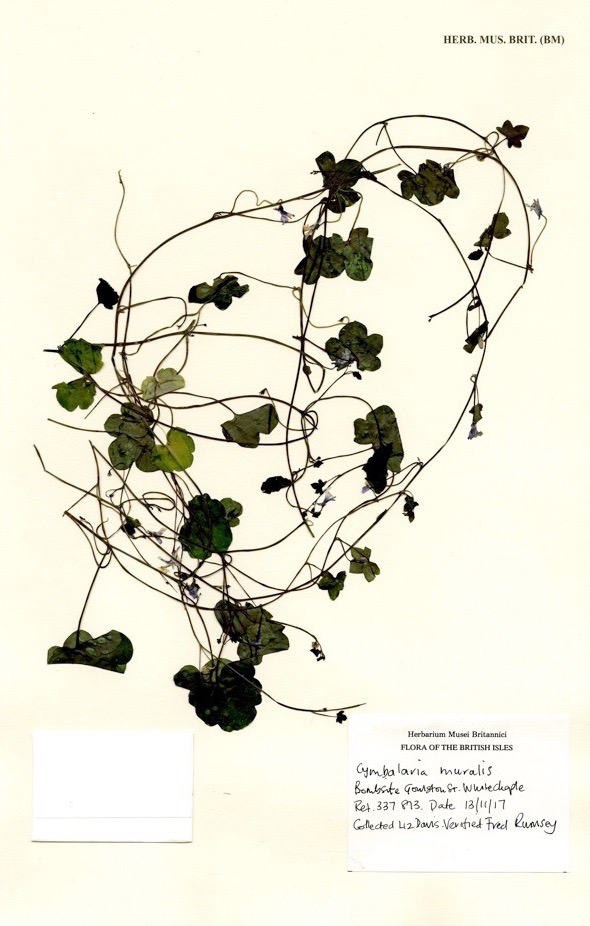
Cymbalaria Muralis (Ivy-leaved Toadflax)
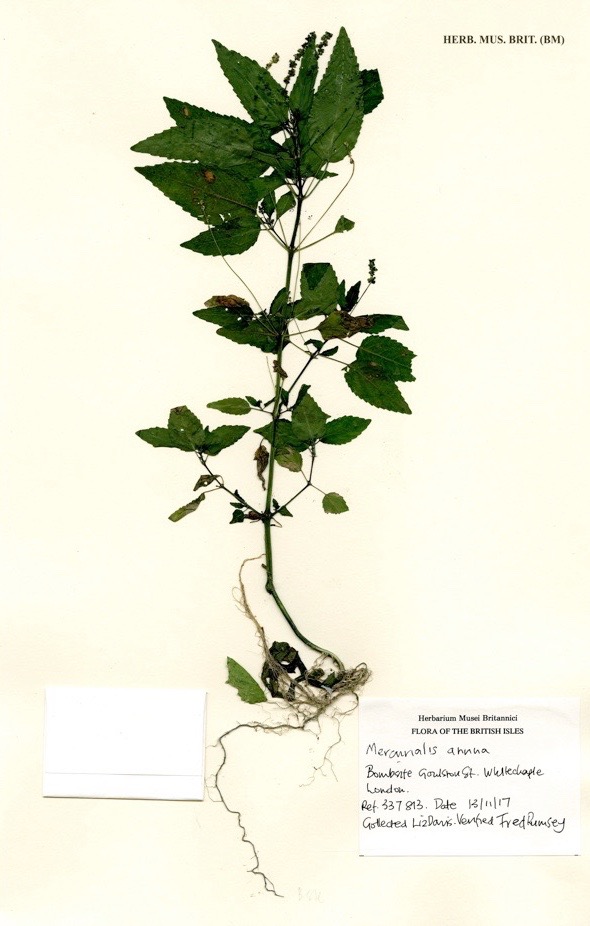
Merculiaris Annua (Annual Mercury)
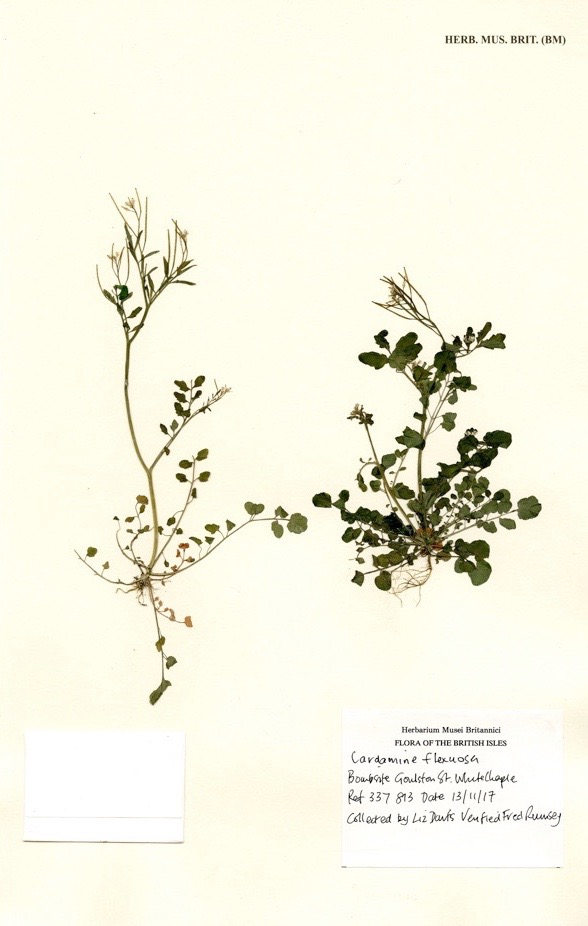
Cardamine Flexuosa (Wavy Bittercress)
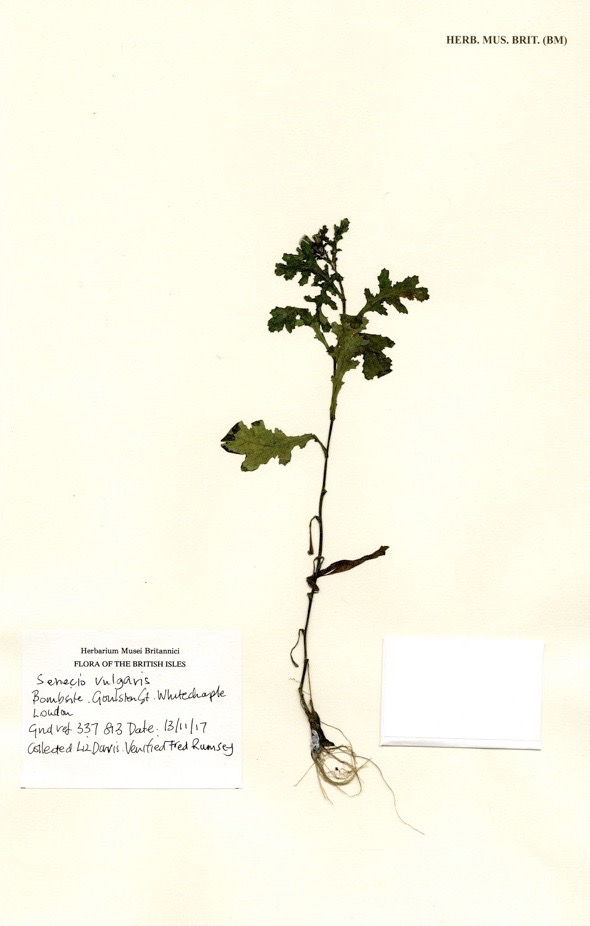
Senacio Vulgaris (Groundsel)
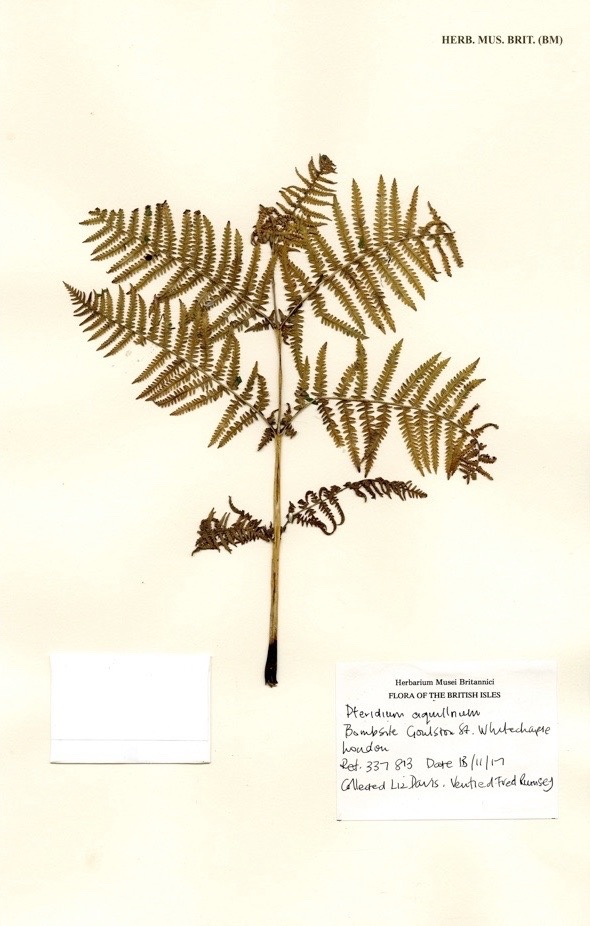
Pteridium Aquillinum (Bracken)

Picris Hieraciodes (Hawkweed Oxtongue)
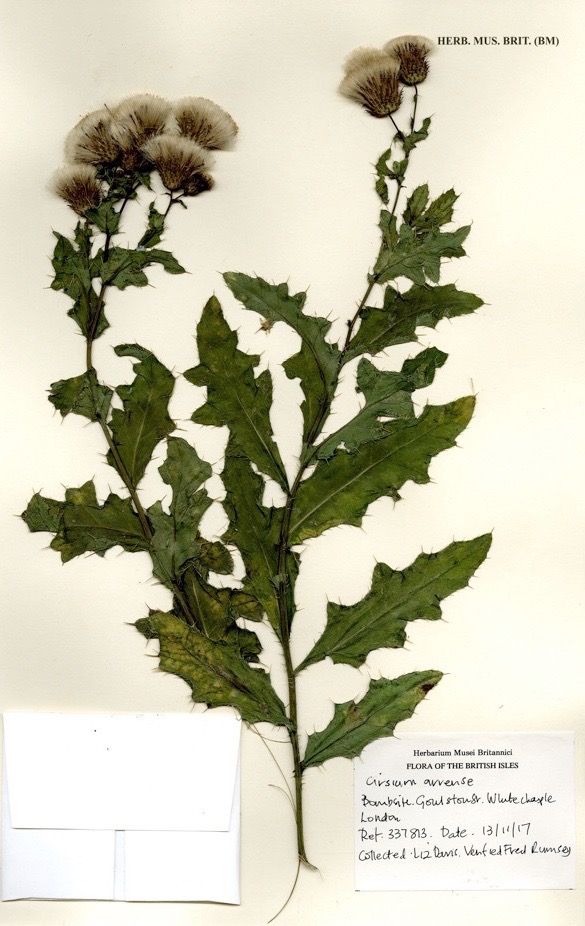
Cirsium Arvense (Thistle)
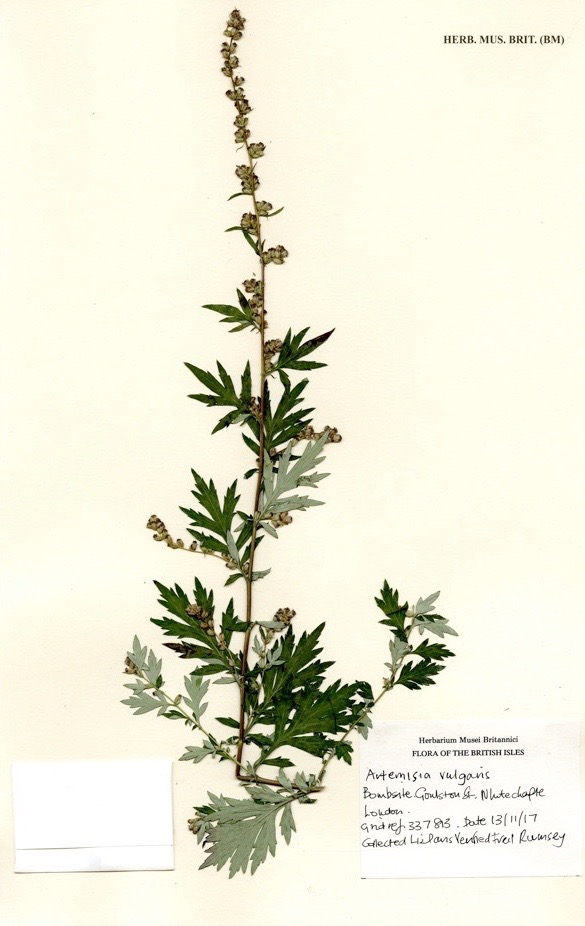
Artemisia Vulgaris (Mugwort)
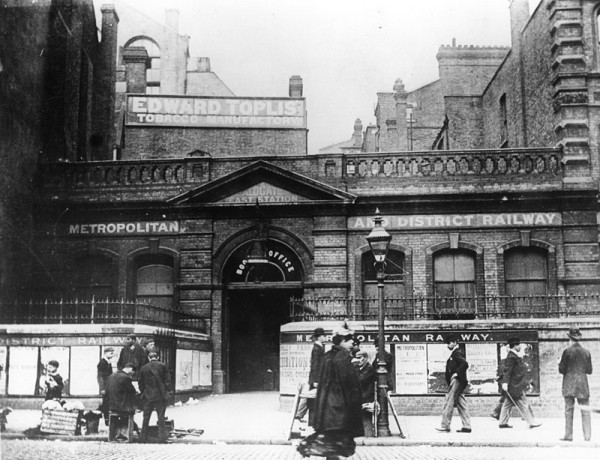
Whitechapel High St entrance to Aldgate East Station destroyed by a V2 bomb
You may also like to take a look at
In Search Of Nicholas Culpeper’s Spitalfields
Paul Gardner’s Collection
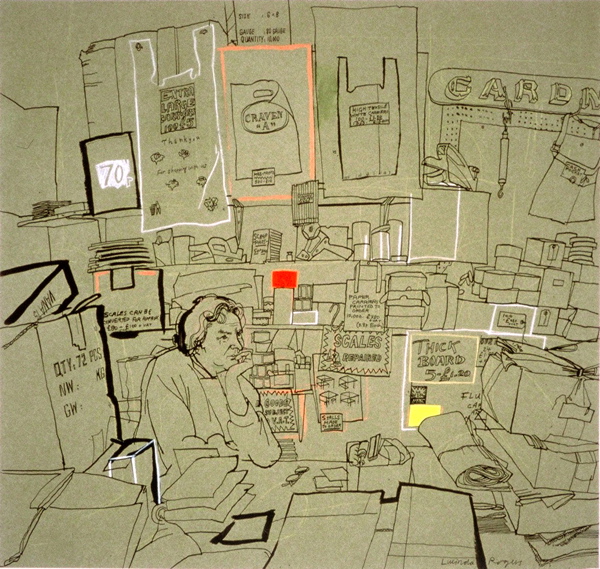
You will recall that I have written about Paul Gardner, the fourth generation paper bag seller, quite a few times in these pages. Gardners’ Market Sundriesmen is the longest established family business in Spitalfields, trading in the same building for one hundred and forty years, and acquiring a unique assembly of heirlooms.
So I visited Paul’s shop at 149 Commercial St to photograph this collection of artefacts which have accumulated there since his great-grandfather James Gardner first opened in 1870, trading as scalemakers. We took down some things from the walls and photographed them on the floor, we arranged other items on the worn counter-top and I stood upon Paul’s chair to take my pictures. Both Paul and his customers were extremely gracious, continuing their transactions and buying their bags as usual, politely disregarding the mayhem.
Paul told me that if he were a paper bag, he would be a brown paper bag because they are his bestsellers – multi-purpose bags, and the ones he has made most money out of over the years. So it is entirely appropriate that when Spitalfields Life Contributing Artist Lucinda Rogers drew her portrait of Paul in his shop a few years back, she drew it on brown paper. Now it hangs in pride of place high up on the wall behind the counter.
Coming upon the artefacts pictured below in a museum would be intriguing but not surprising. In a museum they would be removed from life and arranged. But the only arrangement you see below was created for these photos. Discovering these items still remaining in the working place where they belong is enthralling in a different way. In Paul’s shop they retain their full functional quality as objects that were once in use here (the coin tray and Oxo tin are still in use), acquiring dditional meaning as mementos of the three antecedents who pursued the same trade in this place where Paul works today. Quite simply, these are the things that James, Bertie and Roy left behind, and their presence lingers in these everyday possessions as evidence of their working lives and evocations of the world they knew. Today, Paul is his predecessors’ representative and the custodian of their stuff. Yet I do not think Paul thinks twice about his wooden coin tray that is worn by four generations of use, unless someone points it out to him.
Paul has a fine collection of greengrocer’s labels specifying varieties of apples and pears – Comice, Ripe Williams, Dunn’s Seedlings, Choice Worcesters and Ellison’s Orange, names as lyrical as a Betjeman verse. Equally, there is a powerful magic to the simple phrase ‘morning gathered’ evoking images of dawn in the orchards, though I do wonder what kind of customer could be enticed by the pale allure of ‘Worthing grown.’
Most fascinating to me is the Day Book begun by James Gardner on 1st January 1892 with bold calligraphic flourishes. James used this sturdy book with fine marbled endpapers to record all the different East End greengrocers where he serviced the scales on a regular basis. James’ elegant italic hand can readily be deciphered to read many familiar addresses in Spitalfields. It is remarkable that he could maintain such poised handwriting when you consider how many customers James visited in a single day, though as business increased through the life of this ledger, his handwriting becomes hastier and more excited.
There was so much more – including the family bible ‘Won by the Bugler James Gardner of the 1st Tower Hamlets rifle Brigade for shooting. Presented by Lady Jane Taylor, December 21st 1882,’ with the entire family tree over five generations (revealing James’ year of birth as 1847 and his origin as Thaxted in Essex), the catalogues of scales, the insurance certificates, various family military cards from the different wars, and the modern receipt books with their blue carbon pages that end in 1968 on the day Paul’s father Roy Gardner died – all the pamphlets and pieces of paper that add up to four generations of trading for Gardners.
I do not want to see Paul Gardner’s collection in a museum, I want to see it stay where it belongs in his shop, scattered among all the different stacks of coloured paper bags, and hidden among the tapes and tags, to be discovered on shelves and racks, behind the modest green facade of the most celebrated business in Commercial St.


Roy Gardner stands outside Gardners’ Market Sundriesmen in the nineteen forties – note the sales tickets on display inside the shop.
Gardners’ Market Sundriesmen, 149 Commercial St, London E1 6BJ (6:30am – 2:30pm, Monday to Friday)
You may like to read these other stories about Gardners Market Sundriesmen
Paul Gardner, Paper Bag Seller
At Gardners’ Market Sundriesmen
Joan Rose at Gardners’ Market Sundriesmen
At The Clerkenwell Sessions House
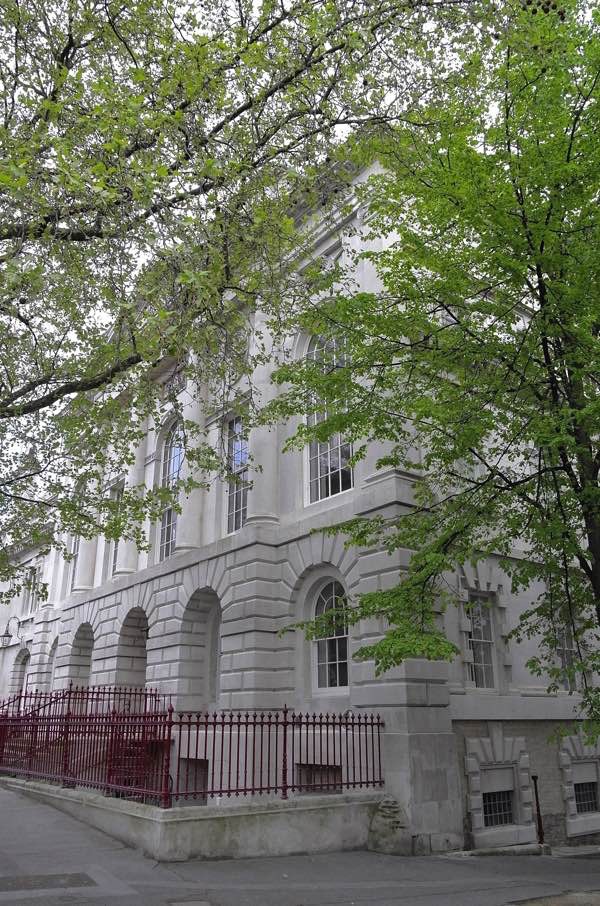
Anyone who knows Clerkenwell knows the old sessions house which dominates the western side of the green, yet few have ever been inside. Built around 1780, it is mostly remembered as the location of Charles Dickens’ early employment as a cub reporter, reporting on court cases. Subsequently, he wove the location into his novels and this where Oliver Twist was tried after being caught stealing a pocket watch on Clerkenwell Green.
Joseph Merceron, the corrupt magistrate and gangster, known as the Boss of Bethnal Green once held court here, sentencing those who displeased him to Cold Bath Sq prison, a mile to the north.
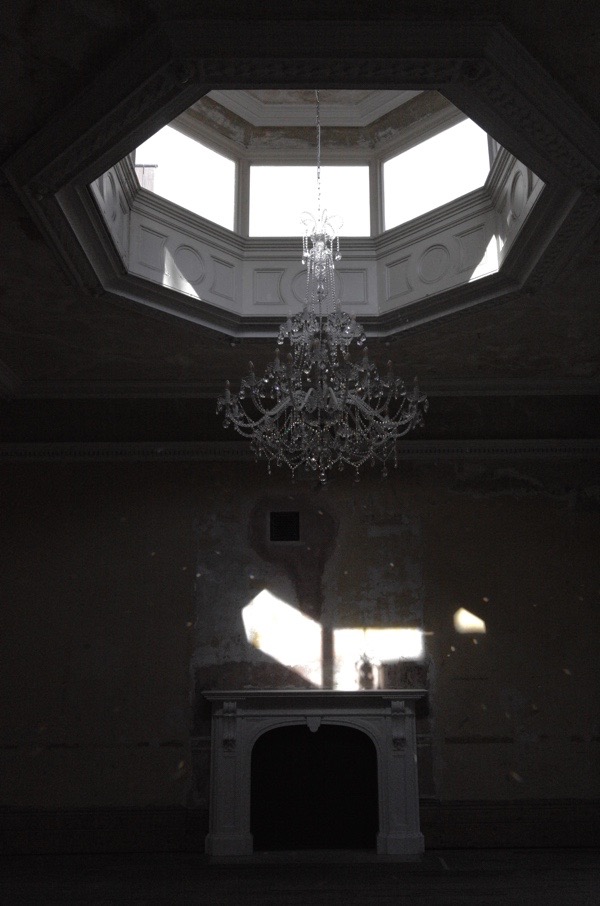
Yet the sessions house was closed for judicial use nearly a century ago and has been the headquarters of a scalemaker and a masonic hall, permitting only few visitors and thus – all this time – it has stood in Clerkenwell as an enigma that could not be explored. For at least thirty years, I have walked past and wondered about what might lie inside before I entered through the front door last week to encounter its spectacular interior, with a dome modelled after the Pantheon, reborn in its full glory following a comprehensive four-year renovation.
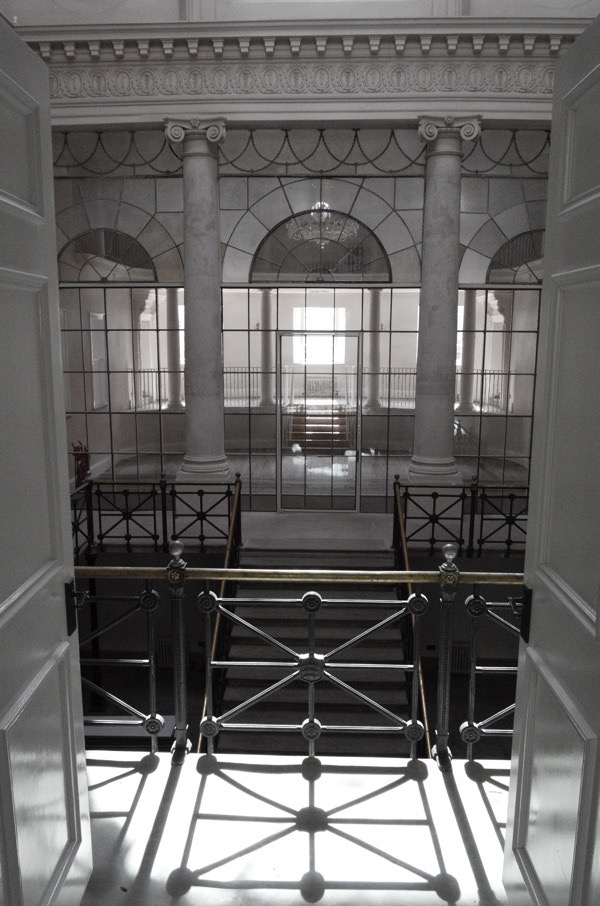
At the centre of the sessions house is a magnificent hall containing a staircase ascending to the first floor with a vast opalescent glass screen and a gallery that enfolds the space, beneath the dome towering overhead. The building is oriented upon an east-west axis and you discover yourself inside a huge light box, with rays of sunlight refracting, bouncing and playing upon all the surfaces. Removal of twentieth and late nineteenth century architectural interventions have reinstated the austere classicism of this interior with thrilling results.
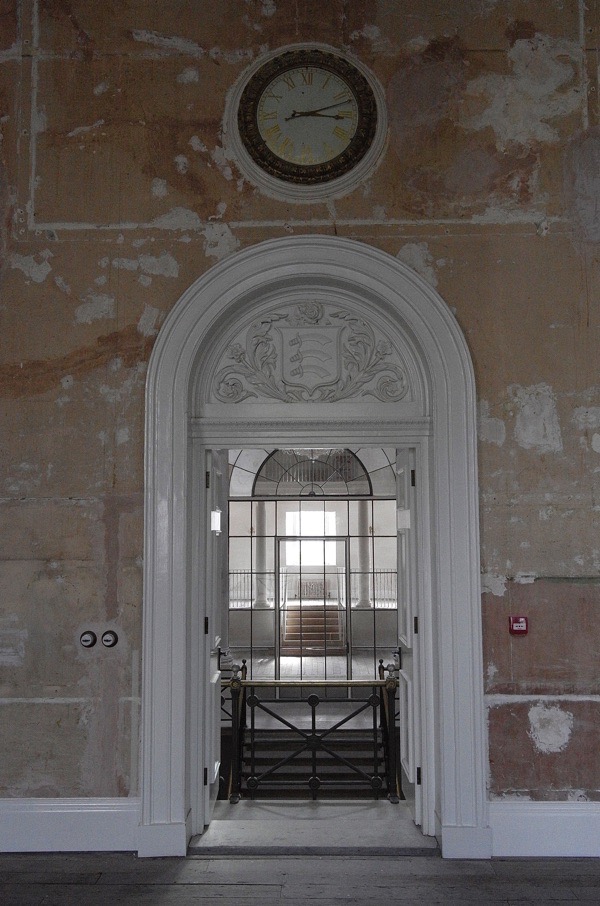
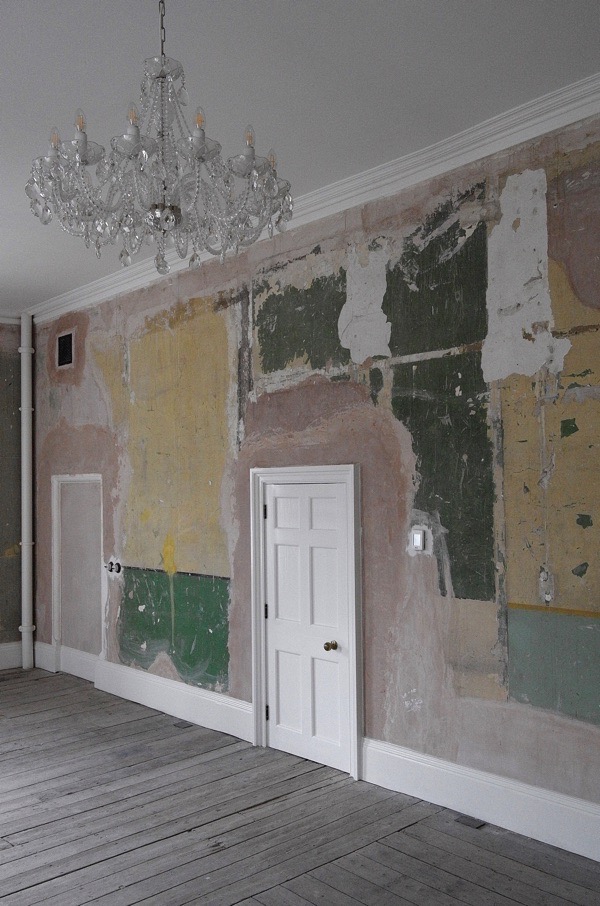
From here, I set out to explore the side rooms by means of the myriad hidden staircases that lead to the upper and lower floors. Whereas the central hall has been repainted in its original stone and old-white tones, the secondary spaces retain the attractive patina of ages prior to any redecoration that future tenants may enact. Despite the logic of the central hall, these staircases create the feeling of a warren, linking unexpected spaces – so that you may equally discover yourself in the magistrates dining room or the holding cells. While the atmosphere of institutionalised violence enacted in the name of the judiciary by Joseph Merceron and others has been dispelled from the public spaces, it is inescapable in the basement where the arrangement of cells is apparent and the nature of confinement is palpable. It will be a sobering thought for the customers of the bars and wine vaults that are planned for these spaces.
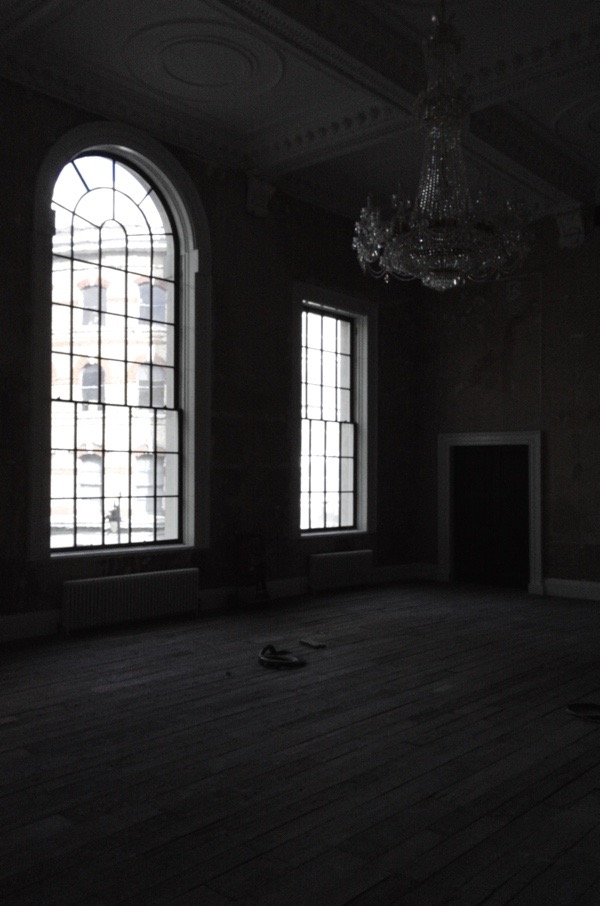
Quite soon, the Clerkenwell Sessions House will be filled with people again and restored to life as a place for meetings and transactions both business and social. Yet at this moment, as the restoration draws to completion and the grand rooms sit empty, it enjoys a short-lived adjournment inhabited only by the ghosts of former days.
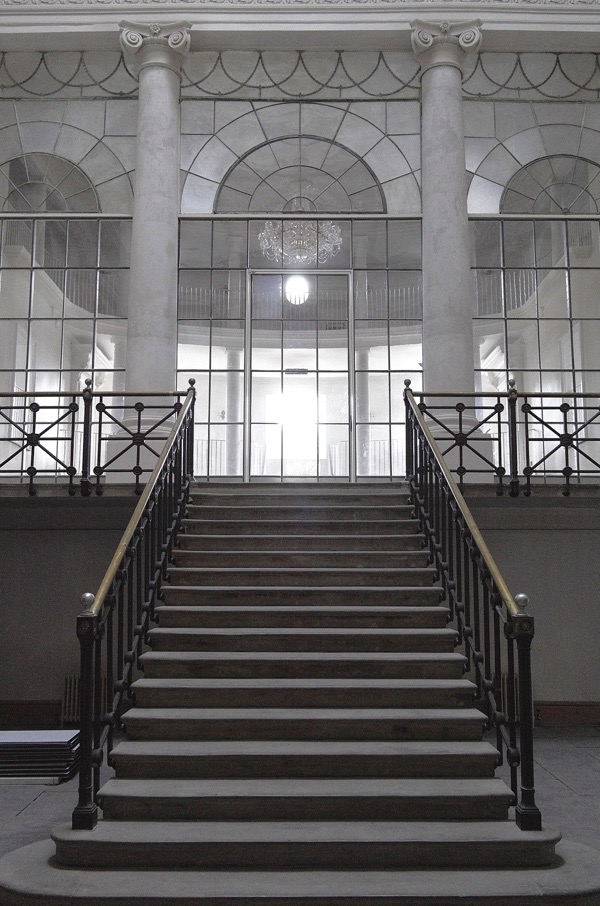
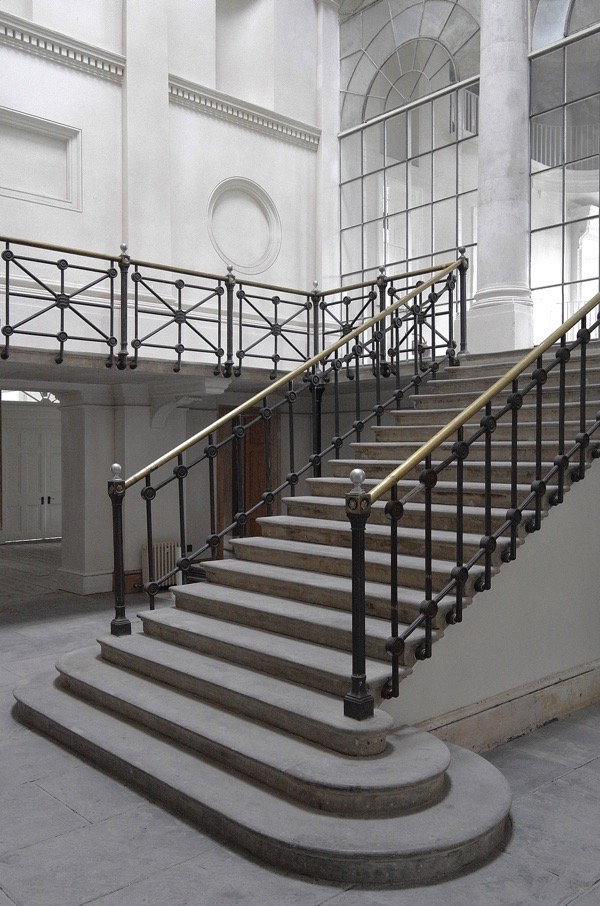
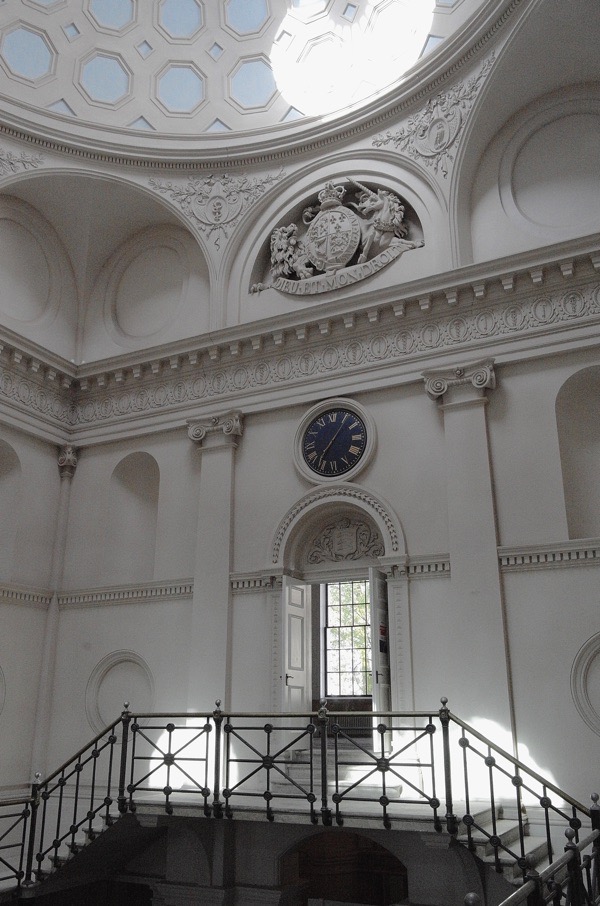
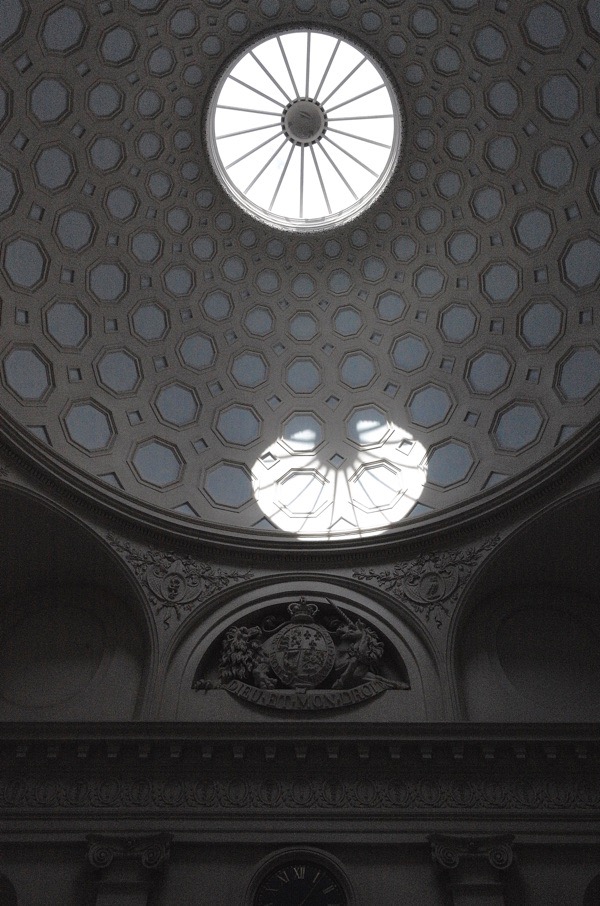
The dome modelled after the Pantheon
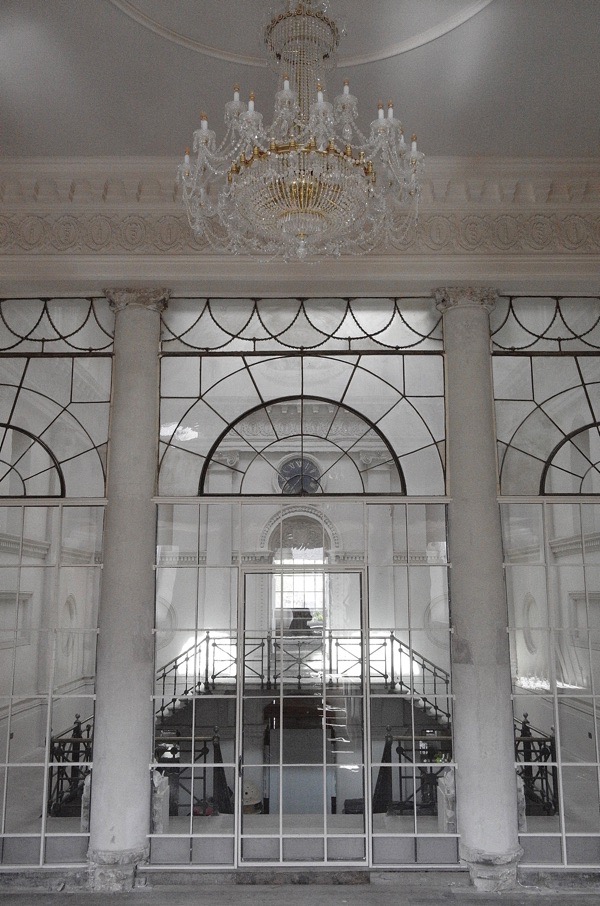
The opalescent screen
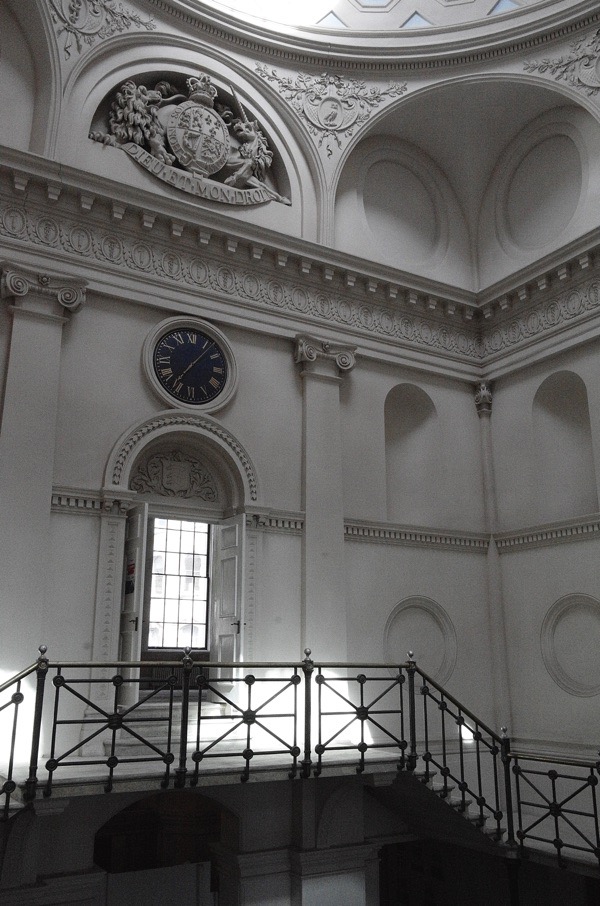
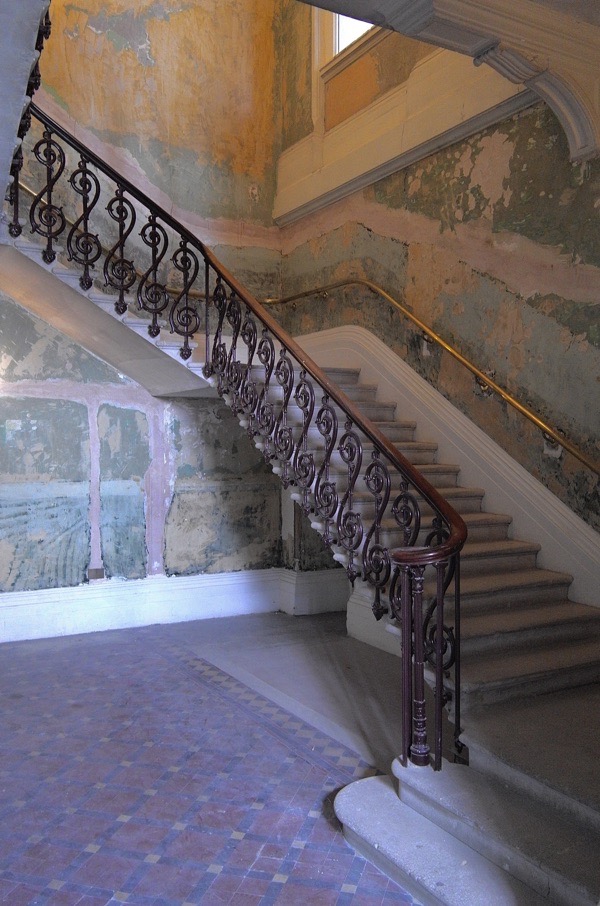
Staircase for magistrates
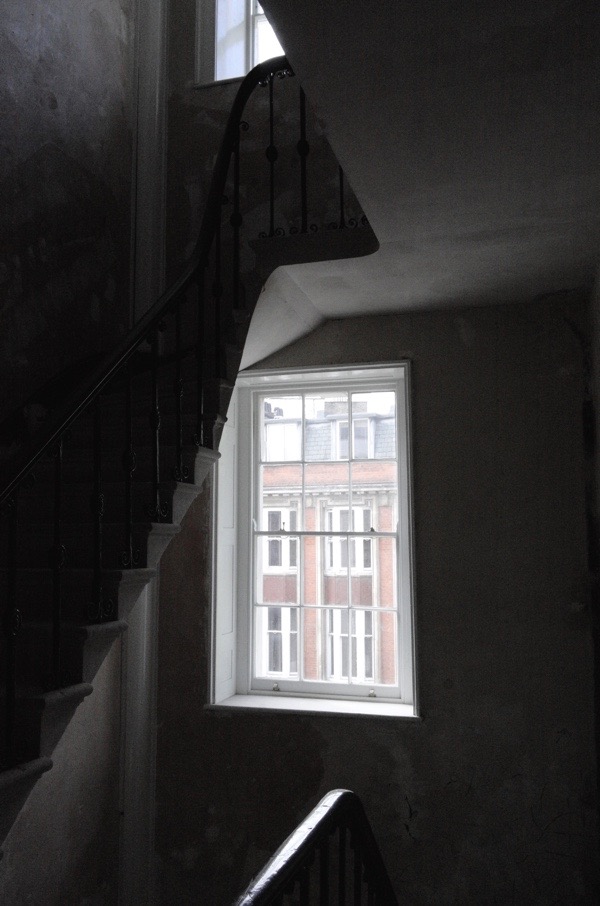
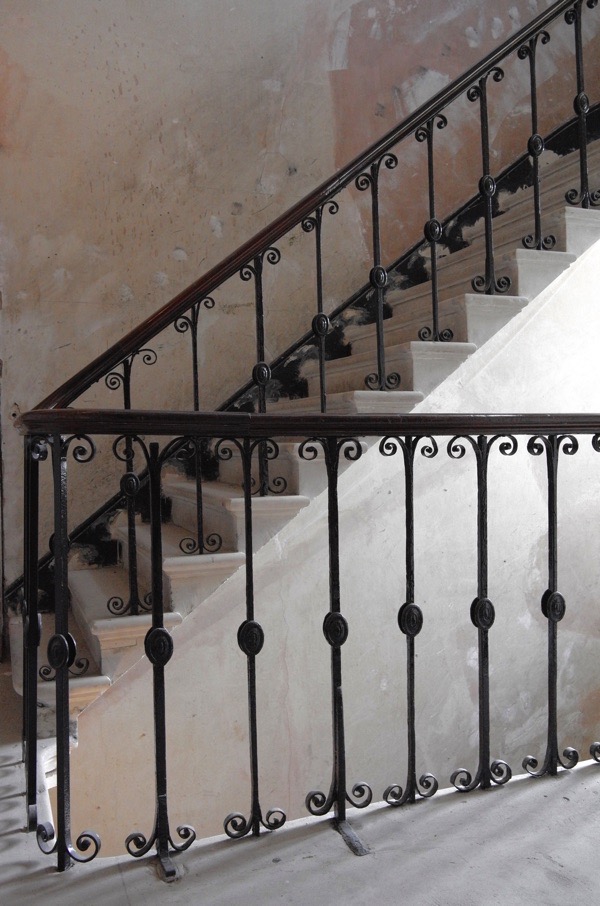
Staircase for service
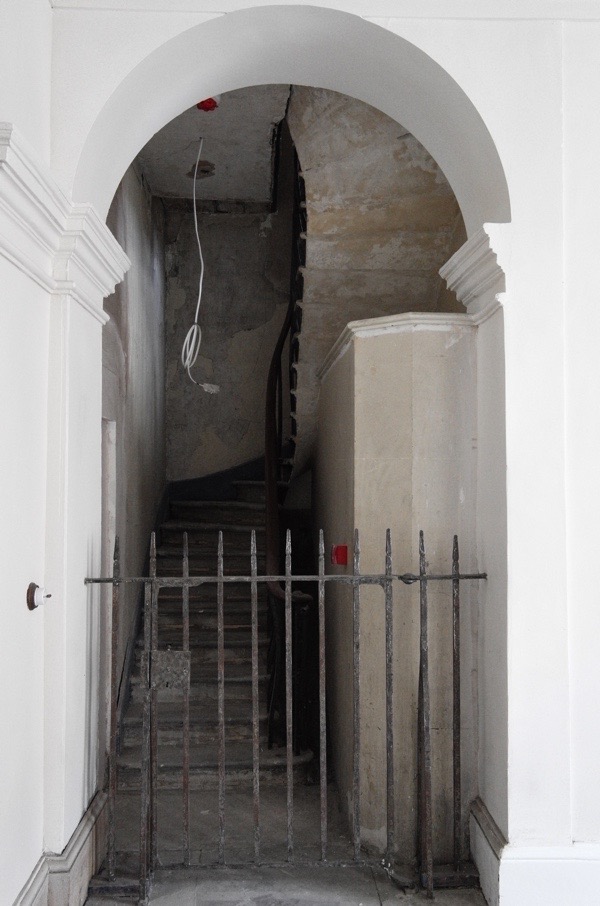
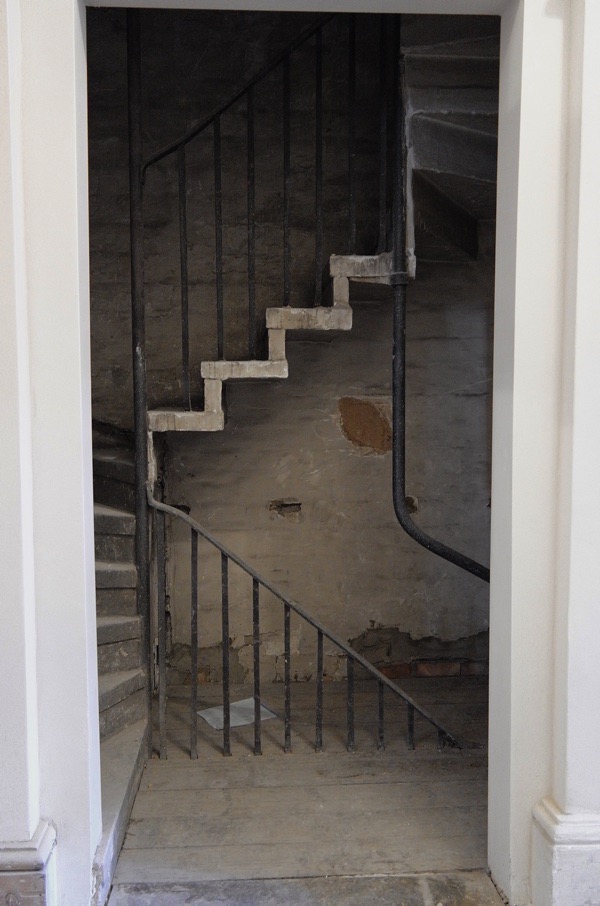
Staircase for prisoners ascending to the dock
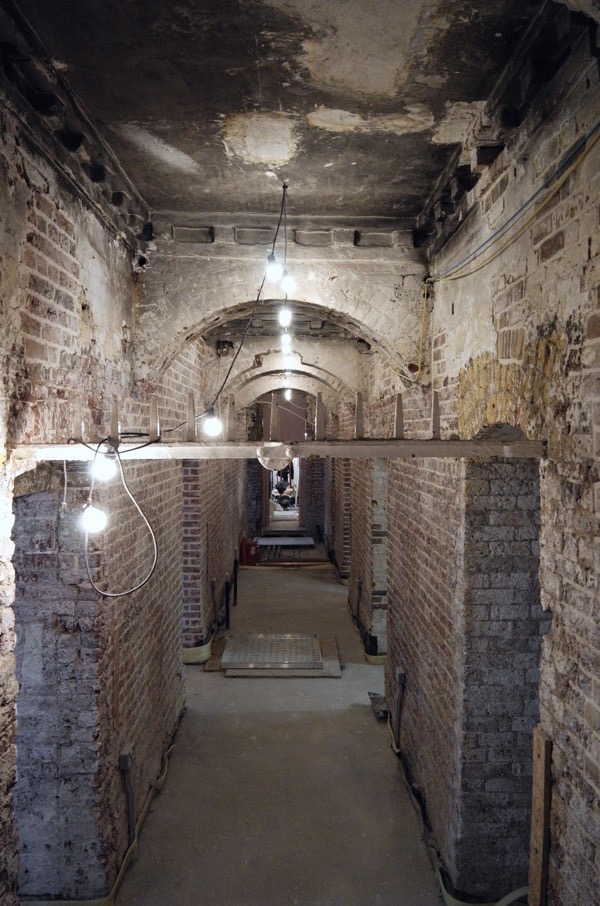
Passageway between the former cells in the basement
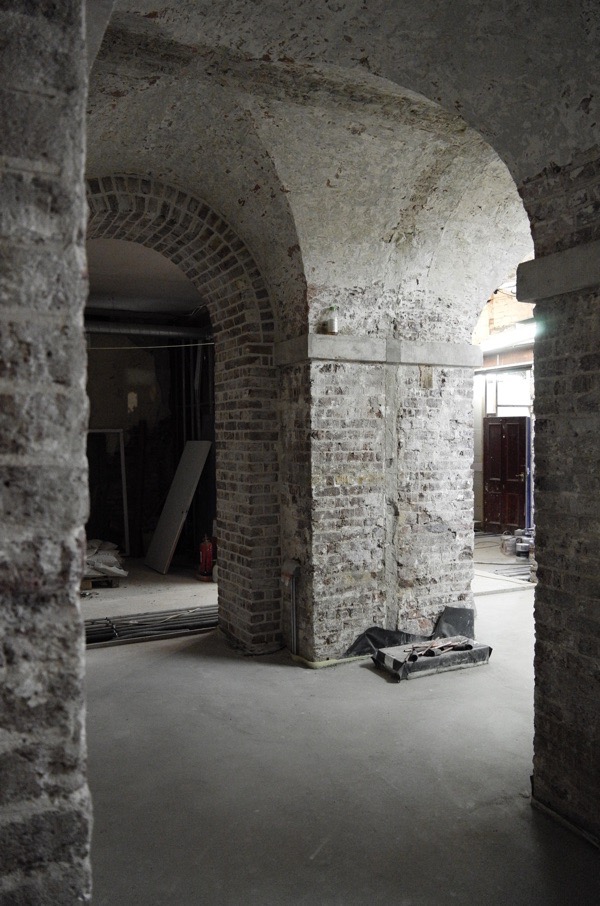
The basement
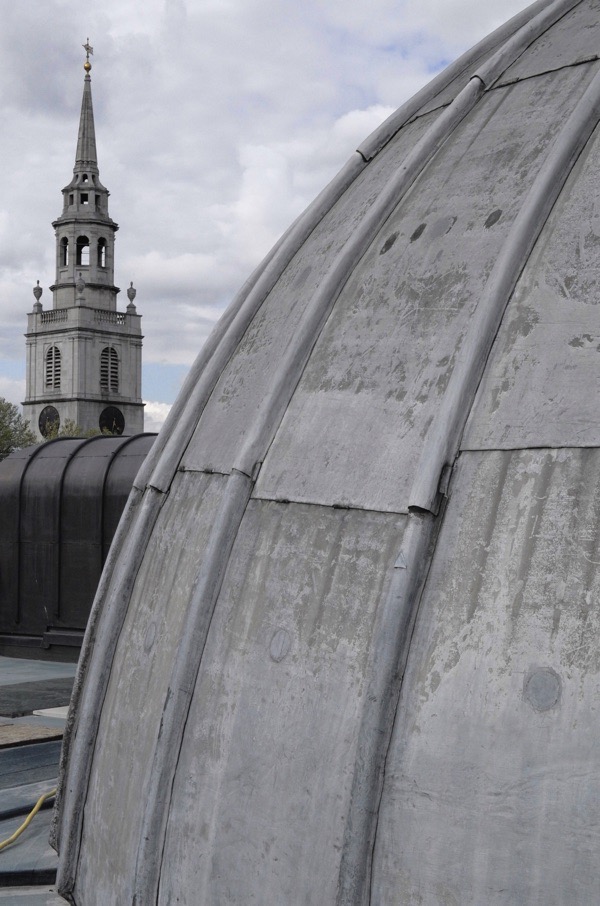
Spire of St James Clerkenwell and the dome of the Session House
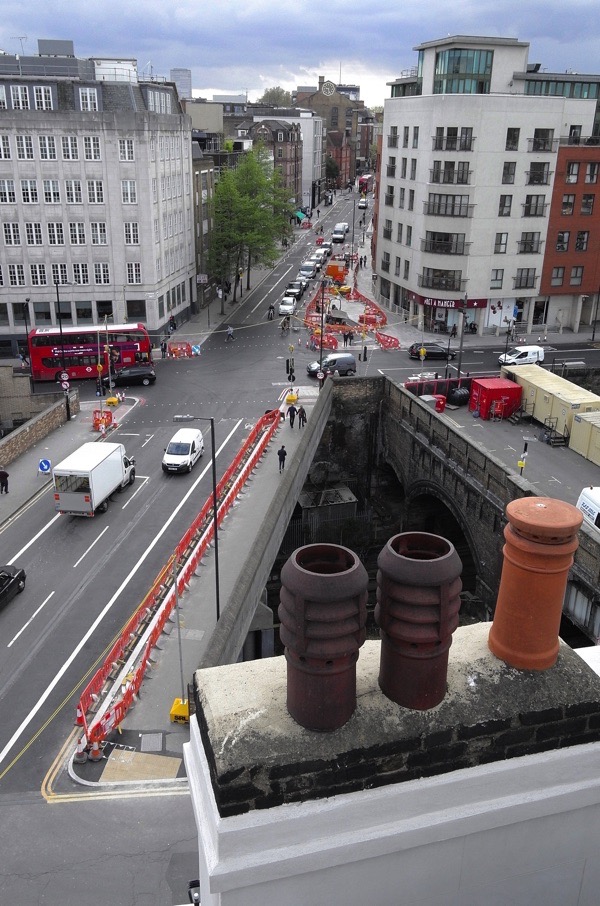
Looking west along Clerkenwell Rd
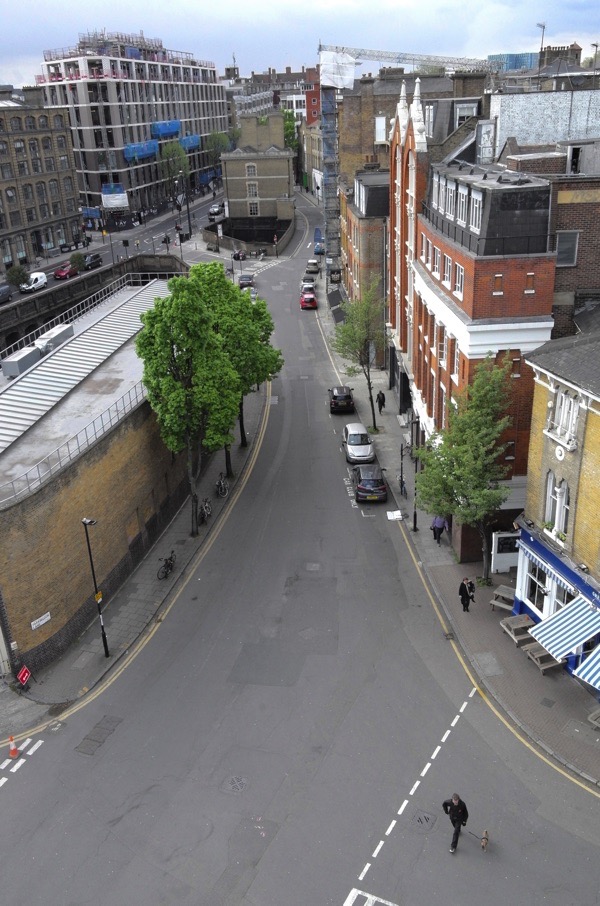
Looking north up Farringdon Lane
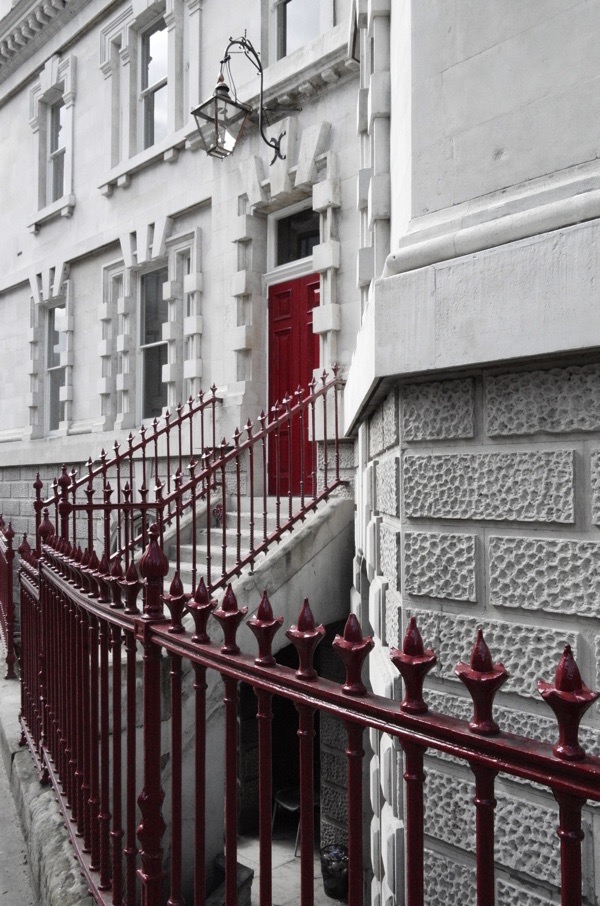
The door onto Clerkenwell Rd
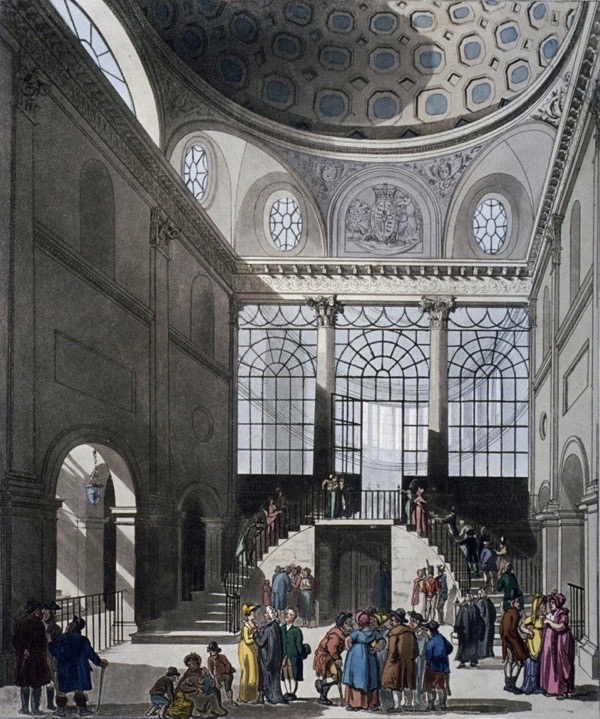
The sessions house drawn by Augustus Pugin and Thomas Rowlandson, 1806
Visit THE OLD SESSIONS HOUSE on Clerkenwell Green
You may also like to take a look at












