List Of Local Shops Open For Business
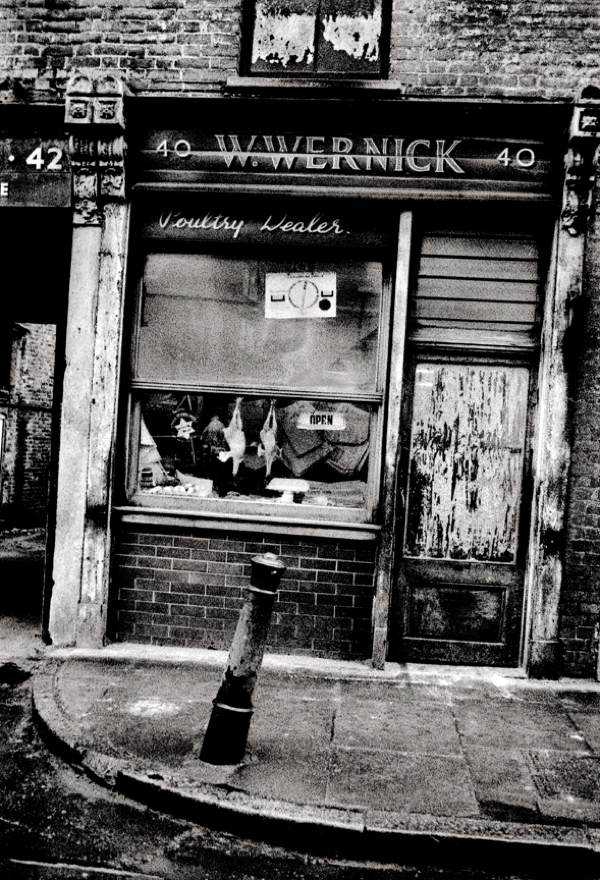
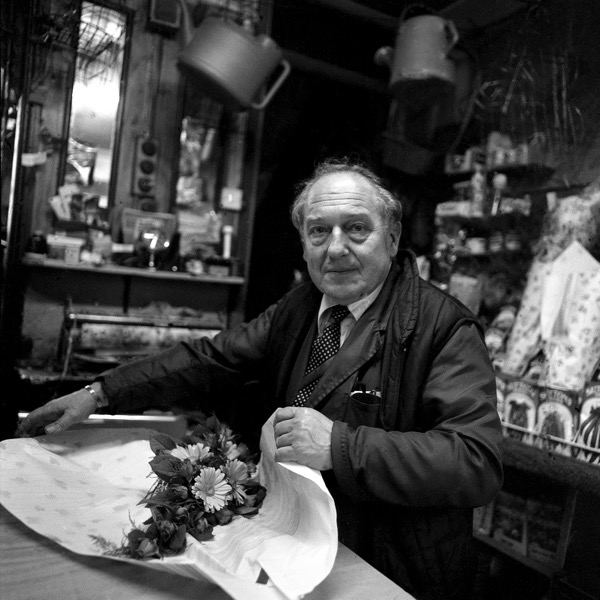
W.Wernick, Old Montague St, 1962 by John Claridge
Every Wednesday, I shall be publishing the up to date list of stalwarts that remain open locally. Readers are especially encouraged to support small independent businesses who offer an invaluable service to the community. This list confirms that it is possible to source all essential supplies locally without recourse to supermarkets.
Be advised many shops are operating revised opening hours at present, so I recommend you call in advance to avoid risking a wasted journey. Please send any additions or amendments for next week’s list to spitalfieldslife@gmail.com
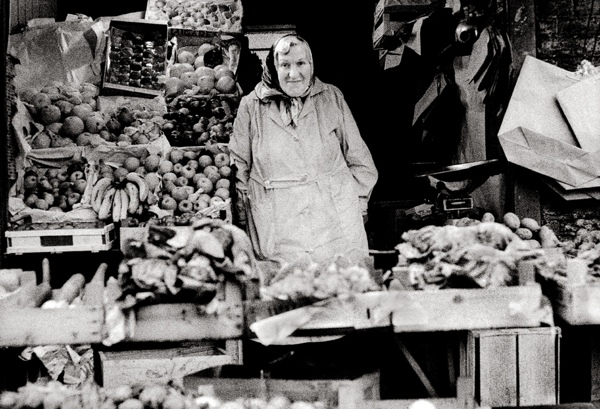
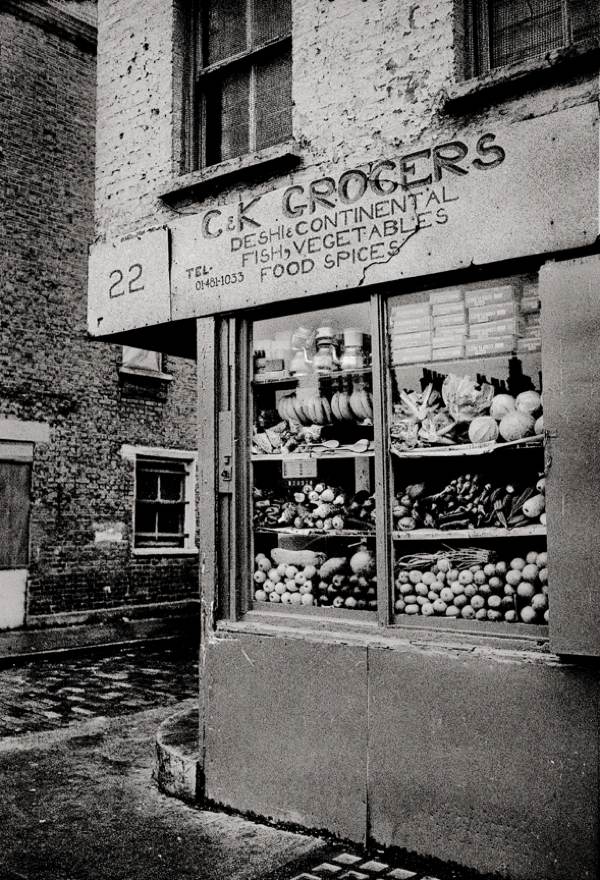
Greengrocer, Bethnal Green 1961 by John Claridge
GROCERS & FOOD SHOPS
The Albion, 2/4 Boundary St
Ali’s Mini Superstore, 50d Greatorex St
AM2PM, 210 Brick Lane
As Nature Intended, 132 Commercial St
Banglatown Cash & Carry, 67 Hanbury St
Brick Lane Minimarket, 100 Brick Lane
The Butchery Ltd, 6a Lamb St (Open Thursdays only)
City Supermarket, 10 Quaker St
Costprice Minimarket, 41 Brick Lane
Faizah Minimarket, 2 Old Montague St
JB Foodstore, 97 Brick Lane
Leila’s Shop, 17 Calvert Avenue (Call 0207 729 9789 between 10am-noon on Tuesday-Saturdays to place your order and collect on the same day from 2pm-4pm)
Nisa Local, 92 Whitechapel High St
Nude Expresso, The Roastery, 25 Hanbury St (For sale of coffee beans only)
Pavilion Bakery, 130 Columbia Rd
Sylhet Sweet Shop, 109 Hanbury St
Taj Stores, 112 Brick Lane
Zaman Brothers, Fish & Meat Bazaar, 19 Brick Lane
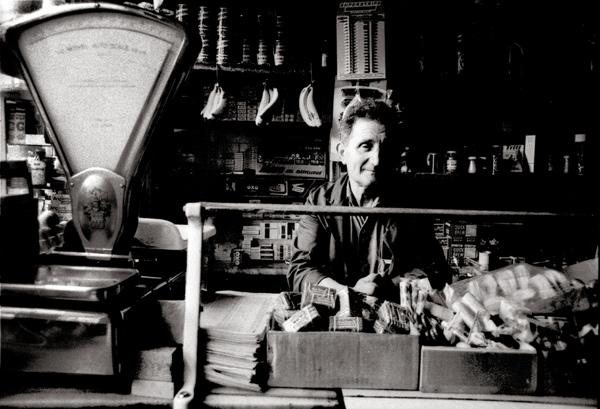
Shop in Spitalfields, 1964 by John Claridge
TAKE AWAY FOOD SHOPS
Absurd Bird Fried Chicken, 54 Commercial St
Al Badam Fried Chicken, 37 Brick Lane
Band of Burgers, 22 Osborn St
Beef & Birds, Brick Lane
Beigel Bake, 159 Brick Lane
Beigel Shop, 155 Brick Lane
Bengal Village, 75 Brick Lane
Big Moe’s Diner, 95 Whitechapel High St
Burro E Salvia Pastificio, 52 Redchurch St
China Feng, 43 Commercial St
Eastern Eye Balti House, 63a Brick Lane
Enso Thai & Japanese, 94 Brick Lane
Holy Shot Coffee, 155 Bethnal Green Rd
La Cucina, 96 Brick Lane
Leon, 3 Crispin Place, Spitalfields Market
E. Pellicci, 332 Bethnal Green Rd
Pepe’s Peri Peri, 82 Brick Lane
Peter’s Cafe, 73 Aldgate High St
Picky Wops Vegan Pizza, 53 Brick Lane
Quaker St Cafe, 10 Quaker St
Rosa’s Thai Cafe, 12 Hanbury St
Shawarma Lebanese, 84 Brick Lane
Stingray Globe Cafe, 109 Columbia Road
Sushi Show, 136 Bethnal Green Rd
Vegan Yes, Italian & Thai Fusion, 64 Brick Lane
Yuriko Sushi & Bento, 48 Brick Lane
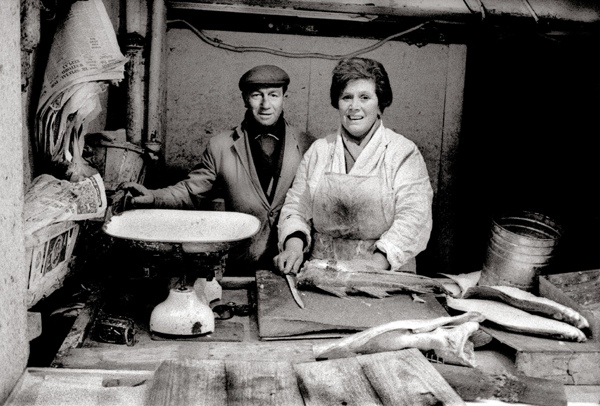
Fishmonger, Spitalfields, 1965 by John Claridge
OTHER SHOPS & SERVICES
Boots the Chemist, 200 Bishopsgate
Brick Lane Bookshop, 166 Brick Lane (Books ordered by phone or online are delivered free locally)
Brick Lane Bikes, 118 Bethnal Green Rd
Brick Lane Off Licence, 114/116 Brick Lane
Day Lewis Pharmacy, 14 Old Montague St
GH Cityprint, 58-60 Middlesex St
Leyland Hardware, 2-4 Great Eastern St
Post Office, 160a Brick Lane
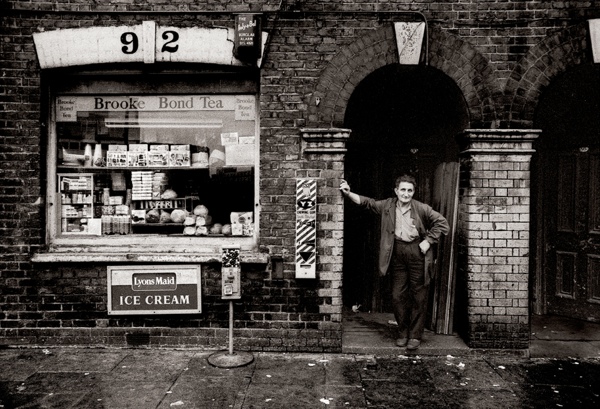
Sammy Fisher in the doorway of his grocer’s shop in Old Montague St, 1961 by John Claridge
ELSEWHERE
City Clean Dry Cleaners, 4a Cherry Tree Walk, Whitecross St
Hackney Essentials, 235 Victoria Park Rd
Quality Dry Cleaners, 16a White Church Lane
Region Choice Chemist, 68 Cambridge Heath Rd
Thompsons DIY, 442-444 Roman Rd
In Self-Isolation With My Mother
Anthropologist & Writer Delwar Hussain sent me this follow-up to his recent piece, describing his experiences of self-isolating alone with his mother in the family home in Spitalfields
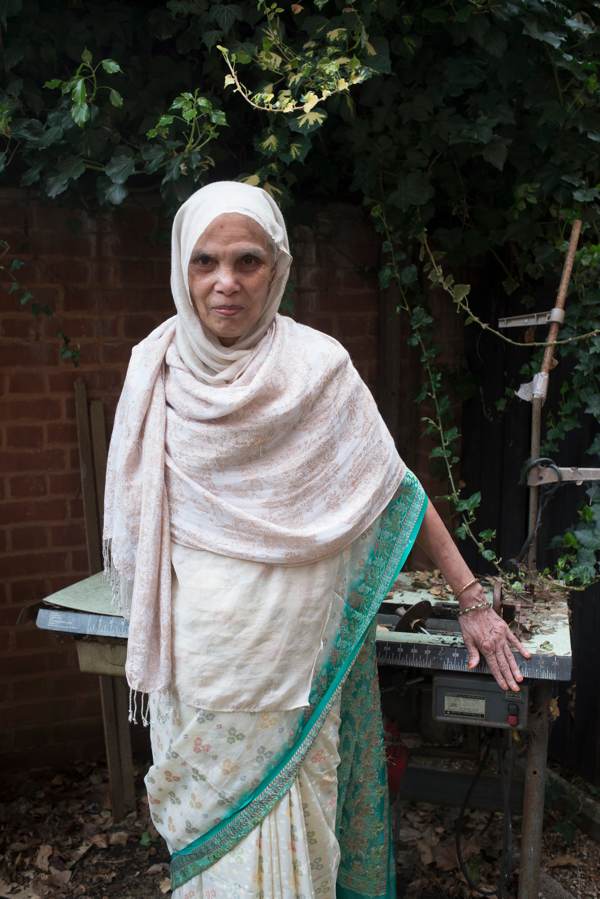
Portrait by Sarah Ainslie
My mother and I may have the virus. It began with a cough followed by flu symptoms. I had night sweats, she had headaches and we each had swollen glands, and a general weakness and soreness. We both lost our sense of taste and smell.
Every morning, we wake late and gargle with hot salt water to clear bacteria from our throats. Through the day, we sip a tea of turmeric, cinnamon bark, cloves, Nigella seeds, garlic, ginger and lemon.
‘It is now up to Allah,’ my mother says, rubbing dollops of Vicks onto her forehead and chest. She has been having nightmares but tries to rest. I struggle with the books I set myself to read over Easter because it is impossible to immerse myself in other worlds and times when this one is so pressing, so big.
I find myself ambling around the house and my tread is heavy, often painful. I have lived here for thirty years and although I have tried other places, in other cities in other parts of the world, I am unable to sever my attachment to this one. Every inch, every doorknob, hinge, every gap, crack and blemish is a prompt, recalling constellations of memories that span epochs of our family life. These stories criss-cross, beginning here and ending over there, their contours no longer precise or clear. Details, chronologies, who actually said what and why, cease to matter as much as that they happened here. The house embodies our collective histories, hopes, resources, ideals and fears – all the pain, despair and dreams of my family and those who have lived here.
My attic bedroom looks out to the City of London with a view of Christ Church and the weavers attics of neighbouring houses. It is freezing in winter, boiling in summer. I have had my room for over a decade but I inherited it from my cousin whom my mother raised with us. He had it for years before he got married and moved out, then it became our sitting room until I was able to claim it. My mother and I watched Princess Diana’s funeral up here, both of us numbed into silence.
Across the landing is my sister’s workroom, full of colours, paints and brushes. Her room faces east, looking towards the minaret of the Brick Lane Jama Masjid and, beyond that, the helipad of the Royal London Hospital where today coronavirus patients are being ferried. Before my sister took over this room, my mother kept her sewing machine there and stitched lining for leather jackets late into the night. It was full of scraps, boxes of bobbins, spools of thread in a myriad of colours, tape measures and massive scissors. The floor below is where my mother has her bedroom. Other than rearranging the direction her bed faces in the nineties, an event in itself, I do not recall her moving bedrooms as the rest of us did. She recently asked me to paint the walls of her room and I had been planning to do it over Easter, but this will need to be postponed for the moment.
Styga, our old cat, warily accompanies me as I lumber around the house. She is disorientated, not just because of her grand age, but because the pandemic is confusing her. She does not understand why there are no people on the streets, taking photographs of her, or why she is not being stroked by those on the Ripper tours that stop outside. Her sister, Chompa, was the fiercest cat to have lived with us. The two could not stand the sight of each another, dividing the house between them. Styga had the top half and Chompa the bottom half. Like border guards, they scowled and snarled when one encroached the other’s territory until, a few years ago, Chompa disappeared. Then Styga changed, became nervous, unsettled, anxious and was in constant search for her sister.
Styga accompanies me, joining my mother in the sitting room where I can hear her coughing and praying to herself. This room is where we encounter the world and the world encounters us. It is the site of victories and where schemes, plans and ambitions are laid out. This is where our family gather when it appears everything may have been lost. The place where difficult conversations are had and rites of passage held. My cousin was made to confess to his gambling addiction here. My brothers brought their brides and introduced them to the rest of the household here. My sisters departed from this room when they married. It is where grandchildren and great-grandchildren come to play when we are not in self-isolation, where kittens are raised, and Eid parties and Christmas lunches held.
As I walk down the stairs, I am reminded of the last time my father was in the house. I was descending as I am now, aged eighteen, and he was sprawled out on the floor below, writhing and grimacing in pain. I tried to pick him up and he was frail and light. Doctors could not diagnose what was wrong. He died a month after this.
In the kitchen, I make more of the tea that we think is doing us good. Outside, the streets are thick with silence, yet from everywhere, I hear a confetti of sounds, of laughter, of tears, the voices of people who have rung the doorbell, the voices of our younger selves. They come for friendship, for refuge, for solace, for time, and to play a game of cricket. People shout, whisper and cry. There are disorderly queues formed by lovers. There is the song of blackbirds and of the ducks we once kept. The latest Bollywood songs, the azaan from the mosque, the church bells from next door. I can hear preparations to go on anti-war demonstrations, the fruit and vegetable merchants from the Spitalfields Market, drunk office workers vomiting curry and beigels. The man who sold rice from a supermarket trolley is calling, and Sheila and Paddy from number eight are telling me to turn the radio down. Fireworks are exploding on Guy Fawkes night, bailiffs are knocking, camera-shutters are falling, countless winos are sleeping, peeing and raging at our door.
One day we will have to give up our house and we will be left with our past. Our past became our stories. Like our forebears, the Huguenot and Jewish families who lived here before us, the house made us who we are and we, too, have made it what it is.
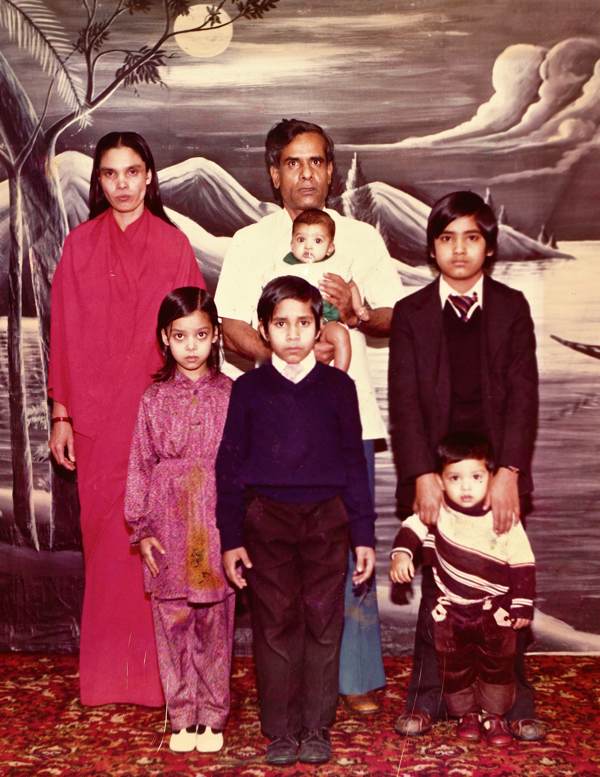
Family portrait, 1980. From left to right – Arful Nessa (mother), Haji Abdul Jalil (father), Hafsa Begum (sister), Rahana Begum (sister), Faruk Miah (cousin), Shiraz Miah (cousin) and Delwar Hussain.
You may also like to read
The Consolation Of Schrodinger

I believe most will agree that life is far from easy and that dark moments are an inescapable part of human existence. When I feel sad, when I feel confused, when I feel conflicted, when it all gets too much and my head is crowded with thoughts yet I do not even know what to do next, I lie down on my bed to calm myself.
On such an occasion recently, I was lying in a reverie and my consciousness was merging with the patterns of the changing light on the ceiling, when I heard small footsteps enter the room followed by a soft clump as Schrodinger landed upon the coverlet in a leap.
I lifted my head for a moment and cast my eyes towards him and he looked at me askance, our eyes meeting briefly in the half-light of the shaded room before I lay my head back and he settled himself down at a distance to rest.
I resumed my contemplation, trying to navigate the shifting currents of troubling thoughts as they coursed through my head but drifting inescapably into emotional confusion. Suddenly my mind was stilled and halted by the interruption of the smallest sensation, as insignificant yet as arresting as a single star in a night sky.
Turning my head towards Schrodinger, I saw that he had stretched out a front leg to its greatest extent and the very tip of his white paw was touching my calf, just enough to register. Our eyes met in a moment of mutual recognition that granted me the consolation I had been seeking. I was amazed. It truly was as if he knew, yet I cannot unravel precisely what he knew. I only know that I was released from the troubles and sorrow that were oppressing me.
When he was the church cat, Schrodinger lived a public life and developed a robust personality that enabled him to survive and flourish in his role as mascot in Shoreditch. After two years living a private domestic life in Spitalfields, he has adapted to a quieter more intimate sequestered existence, becoming more playful and openly affectionate.
At bedtime now, he leaps onto the coverlet, rolling around like a kitten before retreating – once he has wished me goodnight in his own way – to the sofa outside the bedroom door where he spends the night. Thus each day with Schrodinger ends in an expression of mutual delight.

You may also like to read about
Schrodinger’s First Year in Spitalfields
Schrodinger’s First Winter in Spitalfields
Schrodinger, Shoreditch Church Cat

In The Rotunda At The Museum Of London

Have you ever wondered what is in the dark space beneath the rotunda?
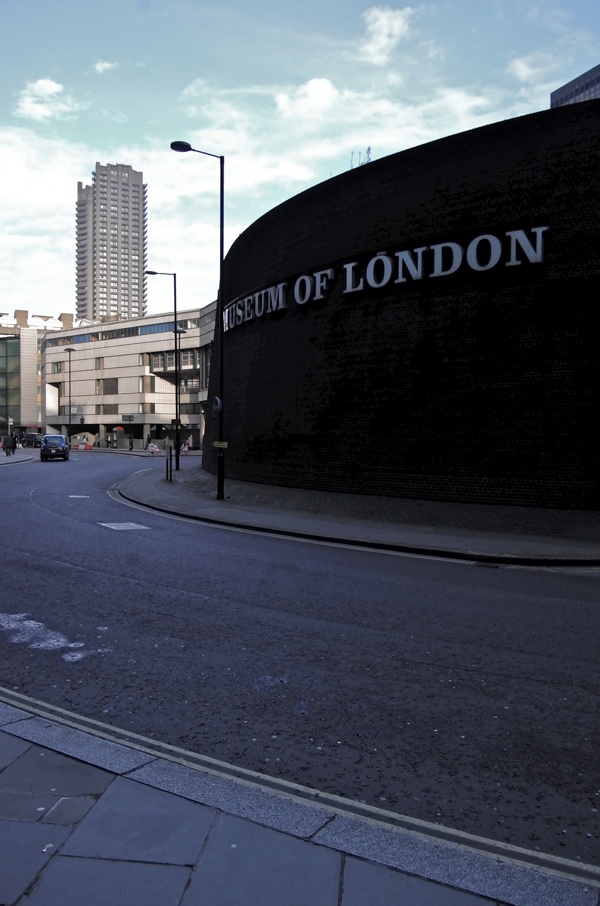
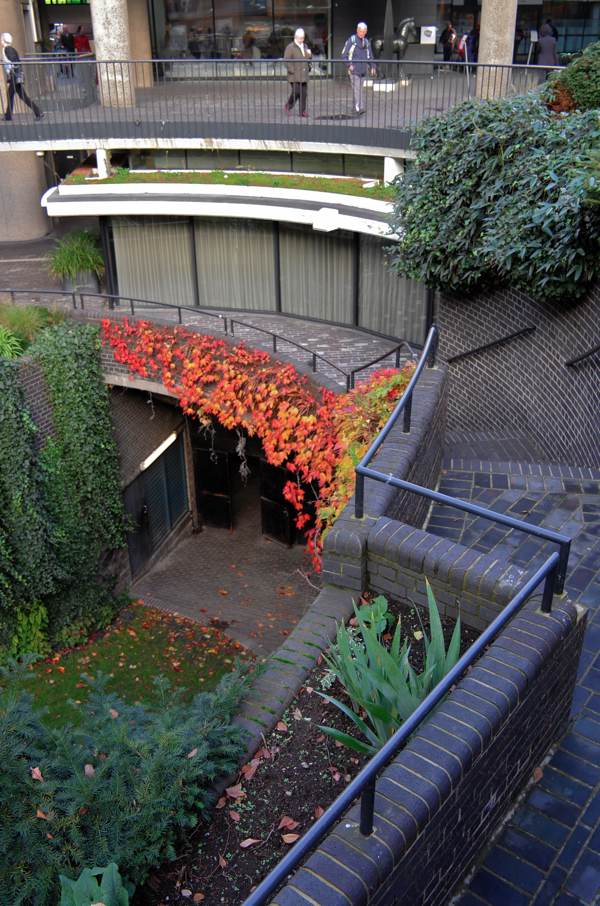
I remember the first time I visited the Barbican, it was to see the newly-opened Museum of London and, as I walked up from St Paul’s Cathedral, I was astonished by the towering brick rotunda that confronted me. Only by passing across a bridge over the road could you enter this secret enclave, and within I found a hidden garden spiralling down to a large closed door, just as implacable as the blank walls upon the exterior.
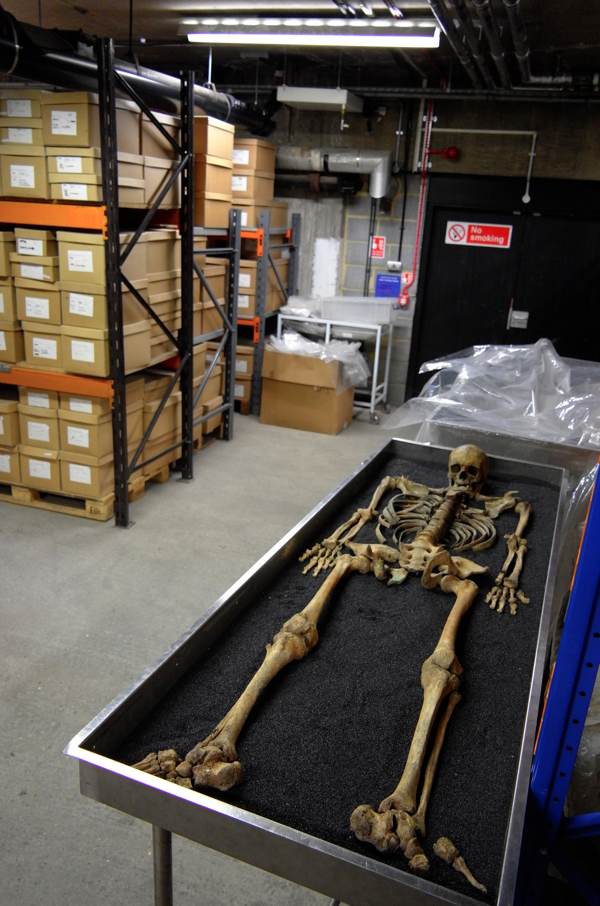
Only recently I discovered the use of this vast construction is as a mausoleum to store the fourteen thousand human remains in the Museum’s collection, sequestered there in their dark castle in the midst of the roundabout. Thus it was the fulfilment of more than thirty years of curiosity when I walked over to London Wall and paid a visit to the interior of the rotunda.
My hosts were Rebecca Redfern & Jelena Beklavac, two Bioarchaeologists who are Curators of Human Osteology at the Museum and my particular interest was the more than ten thousand ex-residents of Spitalfields who now rest in the rotunda. “We look after them,” Rebecca reassured me. “We make sure that anyone who wants to see them is a bona fide researcher,” Jelena, explained as we sipped tea and nibbled chocolate biscuits in the subterranean office of the Department of Human Osteology, prior to visiting the rotunda.
Spitalfields was the largest cemetery ever excavated in an urban centre, I learnt, and is thus of enormous scholarly and human significance. All the skeletons were recorded spatially and chronologically when they were removed over three and a half years, at the time of the redevelopment of the Spitalfields Market, to create a database of unrivalled scale – permitting the study of human remains from the eleventh century, when the Priory of St Mary Spital was founded, until the Reformation, when the Priory was closed. As well as residents of the Priory, mass burials were found from times of crisis, such as the Famine, when parish churchyards could not cope.
“It’s incredible, they tell us so much about Medieval London – everyday life, the arrival of new diseases, pollution, diet and immigration,” Rebecca revealed, as if she were conveying direct testimony. “It’s a snapshot of people through time,” she added fondly.
I was struck by the use of the word ‘people’ by Rebecca and the phrase ‘such lovely people’ by Jelena, in describing their charges, yet it became apparent that this work brings an intimate appreciation of the lives of the long-dead. “We see the things they suffered and what’s remarkable is that they survived,” Jelena admitted, “People were super-tough and a lot more tolerant to pain.” Rebecca told me of a child afflicted with congenital syphilis who had survived until the age of eleven, evidencing the quality of care provided by the infirmary of St Mary Spital. Equally, there were those with severe, life-threatening head wounds who had recovered, and others with compound fractures and permanent injuries who carried on their lives in spite of their condition. “There must have been quite a lot of interesting looking people walking around in those days,” Jelena suggested, tactfully.
“If you didn’t do what you needed to do, to get food, heat and shelter, you would die,” Rebecca added, “We’ve lost that resilience. Children in Medieval London were riddled with tuberculosis except most recovered.” The outcome of the catastrophies that came upon the City was the genetic transformation of Londoners and, even today, those who are descended from Black Death survivors possess a greater resistance to AIDS and certain cancers. Medieval Londoners were more resistant to infection than their present day counterparts. “People lived in vile conditions but they became hardy and, if you survived to the age of five, you were pretty robust,”Jelena informed me, “Whereas the contemporary culture of cleanliness has disconnected us from our environment.”
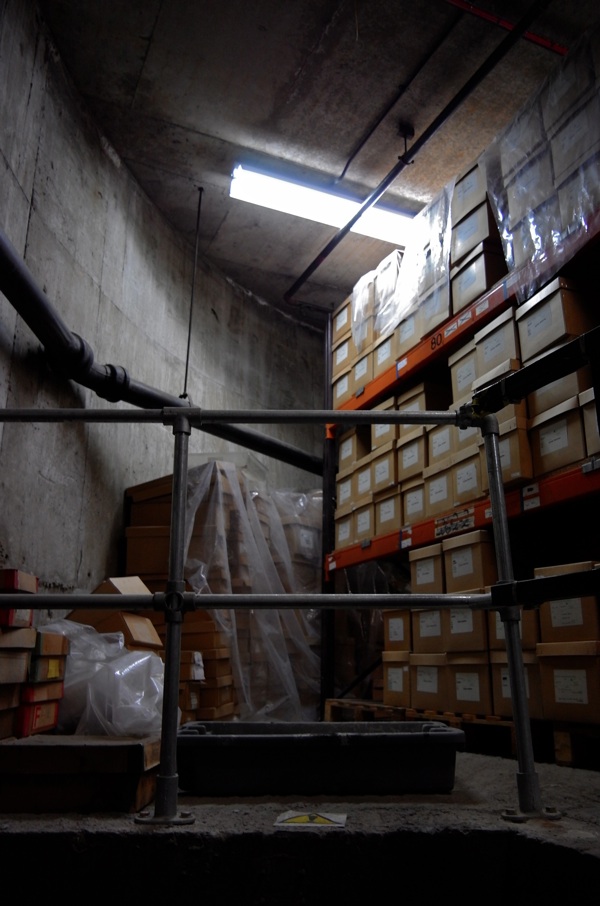
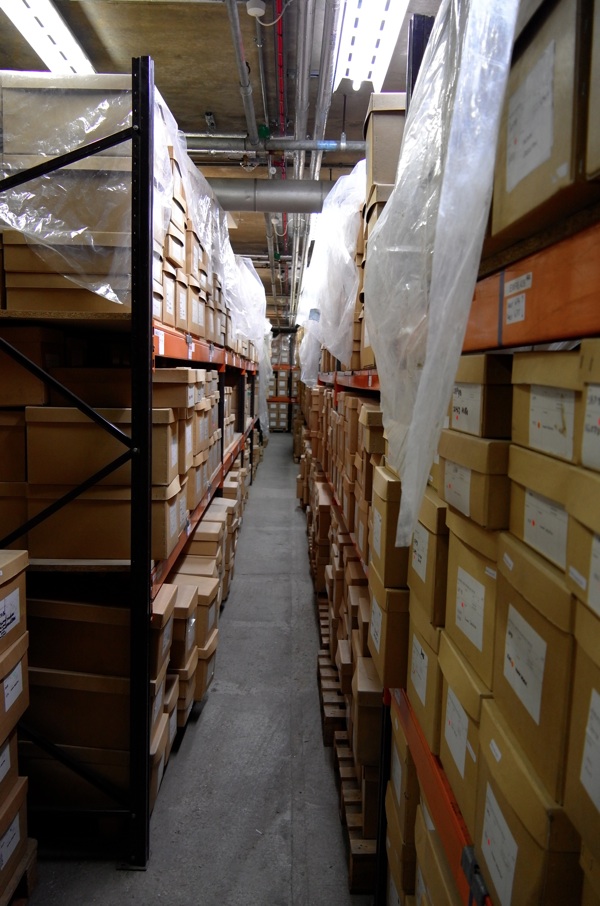
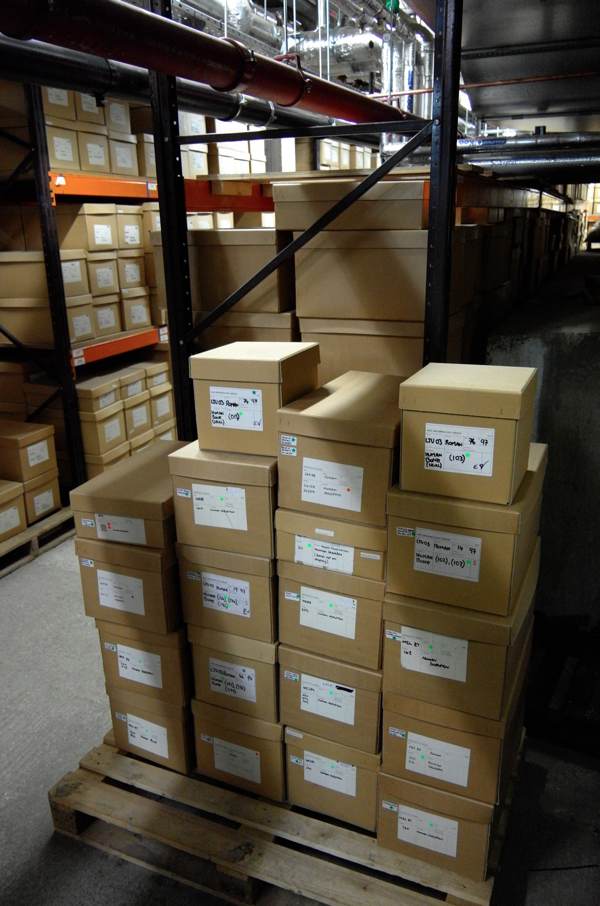
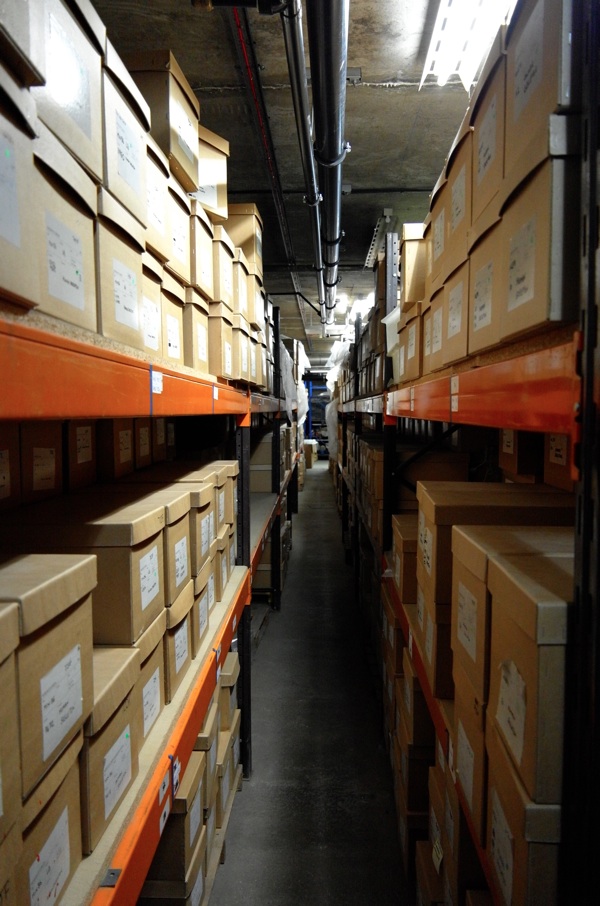
Once I had grasped a notion of what is to be learnt from the people in the rotunda, it was time to pay them a visit. So Rebecca, Jelena and I left our teacups behind to trace a path through the Piranesian labyrinth of concrete tunnels beneath the Museum to reach the mausoleum. As the fluorescent tubes flickered into life, all was still within the rotunda and an expanse of steel shelving was revealed, extending into the distance and stacked neatly with cardboard boxes, each containing the mortal remains of a Londoner. “They’re Spitalfields,” indicated my hosts, gesturing in one direction, before turning and pointing out other aisles of shelves, “That’s the Black Death and they’re Romans.” Outside the traffic rumbled and as we passed fire-doors which gave onto the street, I could hear the rush of trucks close by. The identical cardboard boxes were a literal reminder that we are all equal in death.
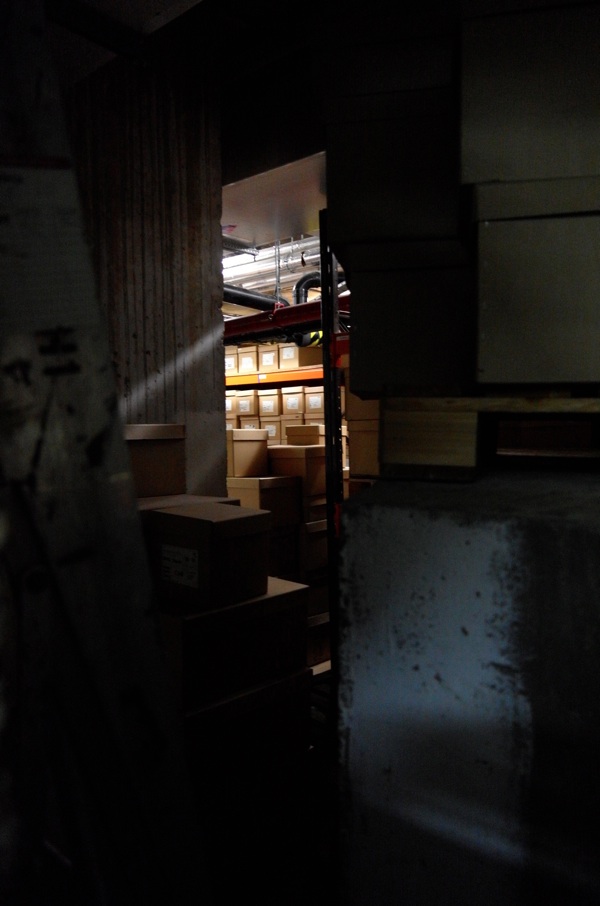
Extraordinarily, the rotunda was not built to house the dead but simply as a structure to fill the roundabout, yet I am reliably informed the stable low temperature which prevails is ideal for the storage of bones. Inside, it was a curiously unfinished edifice – with raw concrete and a platform from a crane used in the construction still visible and, elsewhere, the builders had left their graffiti. This was a mysterious incidental space for which no plans survive, but that has found its ideal purpose. Entirely lacking in the gothic chills of a cemetery, the rotunda was peaceful and I had no sense of the silent hordes surrounding us, although I am told contract workers sometimes get nervous when they learn what is stored there.
It is the exterior world which which becomes the enigma when you are inside the rotunda, a world of distant traffic noise, of curiously transmuted snatches of conversation upon the Barbican broadwalk above and of the sound of kitchen equipment in the restaurant overhead. But you may be assured that I sensed no discontent among the thousands of supplanted former-residents of Spitalfields, resting there in peace yet with life whirling all around them.





You might also like to read about
Blackie, The Last Spitalfields Market Cat
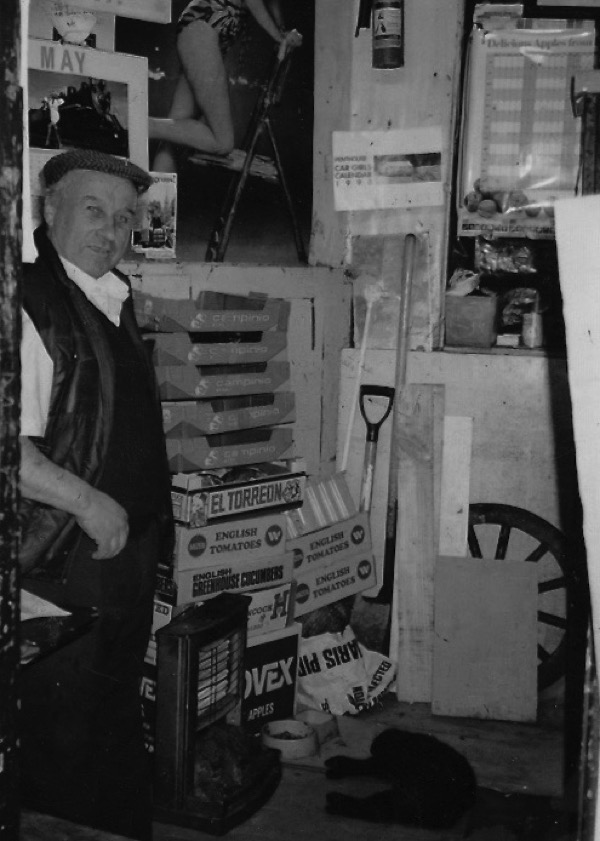
Here you see Blackie, the last Spitalfields market cat, taking a nap in the premises of Williams Watercress at 11 Gun St. Presiding over Blackie – as she sleeps peacefully among the watercress boxes before the electric fire with her dishes of food and water to hand – is Jim, the nightman who oversaw the premises from six each evening until two next morning, on behalf of Len Williams the proprietor.
This black and white photograph by Robert Davis, with a nineteenth century barrow wheel in the background and a nineteen-fifties heater in the foreground, could have been taken almost any time in the second half of the twentieth century. Only the date on the “Car Girls’ Calendar” betrays it as 1990, the penultimate year of the Spitalfields Fruit & Vegetable Market, before it moved East to Stratford.
In spite of Jim the nightman’s fond expression, Blackie was no pet, she was a working animal who earned her keep killing rats. Underneath the market were vaults to store fresh produce, which had to be sold within three days – formalised as first, second and third day prices – with each day’s price struck at two in the morning. But the traders often forgot about the fruit and vegetables down in the basement and it hung around more than three days, and with the spillage on the road which local residents and the homeless came to scavenge, it caused the entire market to become a magnet for vermin, running through the streets and into the labyrinth beneath the buildings.
It must have been paradise for a cat that loved to hunt, like Blackie. With her jet black fur, so black she was like a dark hole in the world running round on legs, vanishing into the shadow and appearing from nowhere to pounce upon a rat and take its life with her needle-sharp claws, Blackie was a lethally efficient killer. Not a submissive creature that could be easily stroked and petted as domestic cats are, Blackie was a proud beast that walked on her own, learnt the secret of survival on the streets and won independent status, affection and respect through her achievements in vermin control.
“They were all very pleased with Blackie for her great skill in catching rats, she was the last great market cat,” confirmed Jim Howett, a furniture maker who first met Blackie when he moved into a workshop above the watercress seller in 1988. “The other traders would queue up for kittens from Blackie sister’s litters because they were so good at rat-catching. Blackie brought half-dead rats back to teach them how to do it. Such was Blackie’s expertise, it was said she could spot a poisoned rat at a hundred feet. The porters used to marvel that when they said, ‘Blackie, there’s a rat,’ Blackie would focus and if the rat showed any weakness, would wobble, or walk uncertainly, she would turn her back, and return to the fire – because the rat was ill, and most likely poisoned. And after all, Blackie was the last cat standing,” continued Jim, recounting tales of this noble creature that has become a legend in Spitalfields today.
“The story was often told of a kitten trained by Blackie, taken by a restaurant and hotel in the country. One day it brought a half-dead rat into the middle of a Rotary Club Function, seeking approval as it had learnt in Spitalfields, and the guests ran screaming.”
The day the Fruit & Vegetable Market left in 1991, Blackie adjusted, no longer crossing the road to the empty market building instead she concentrated on maintaining the block of buildings on Brushfield St as her territory by patrolling the rooftops. By now she was an old cat and eventually could only control the three corner buildings, and one day Charles Gledhill a book binder who lived with his wife Marianna Kennedy at 42 Brushfield St, noticed a shadow fly past his window. It was Blackie that he saw, she had fallen from the gutter and broken a leg on the pavement below. “We all liked Blackie, and we took care of her after the market left,” explained Jim, with a regretful smile. “So we took her to the vet who was amazed, he said, ‘What are you doing with this old feral cat?’, because Blackie had a fierce temper, she was always hissing and growling.”
“But Blackie recovered, and on good days she would cross the road and sun herself on palettes, although on other days she did not move from the fire. She became very thin and we put her in the window of A.Gold to enjoy the sun. One day Blackie was stolen from there. We heard a woman had been seen carrying her towards Liverpool St in a box but we couldn’t find her, so we put up signs explaining that Blackie was so thin because she was a very old cat.”
“Two weeks later, Blackie was returned in a fierce mood by the lady who taken her, she apologised and ran away. Blackie had a sojourn in Milton Keynes! We guessed the woman was horrified with this feral creature that growled and scratched and hissed and arched its back.”
“After that, Blackie got stiffer and stiffer, and one day she stood in the centre of the floor and we knew she wasn’t going to move again. She died of a stroke that night. The market porters told me Blackie was twenty when she died, as old as any cat could be.”
Everyone knows the tale of Dick Whittington, the first Lord Mayor of London whose cat was instrumental to his success. This story reminds us that for centuries a feline presence was essential to all homes and premises in London. It was a serious business to keep the rats and mice at bay, killing vermin that ate supplies and brought plague.
Over its three centuries of operation, there were innumerable generations of cats bred for their ratting abilities at the Spitalfields Market, but it all ended with Blackie. Like Tess of the D’Urbevilles or The Last of the Mohicans, the tale of Blackie, the Last Great Spitalfields Market Cat contains the story of all that came before. Cats were the first animals to be domesticated, long before dogs, and so our connection with felines is the oldest human relationship with an animal, based up the exchange of food and shelter in return for vermin control.
Even though Blackie – who came to incarnate the spirit of the ancient market itself – died in 1995, four years after the traders left, her progeny live on as domestic pets in the East End and there are plenty of similar black short-haired cats with golden eyes around Spitalfields today. I spotted one that lives in the aptly named Puma Court recently, and, of course, there is Madge who resides in Folgate St at Dennis Severs’ House, and my old cat Mr Pussy whose origins lay in Mile End but who showed extraordinary prowess as a hunter in Devon – catching rabbits and even moorhens – which suggested he was a worthy descendant of Blackie.
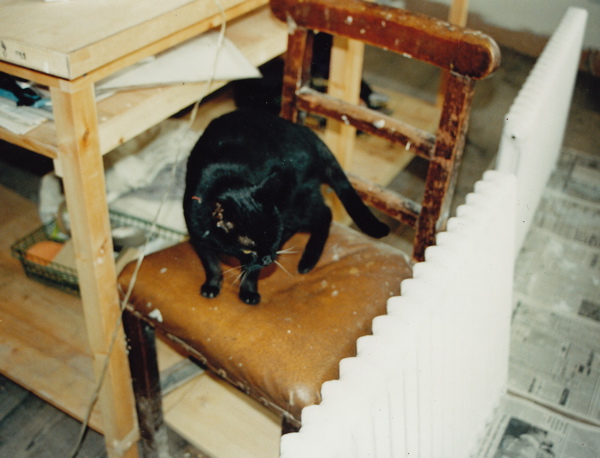
Blackie at 42 Brushfield St
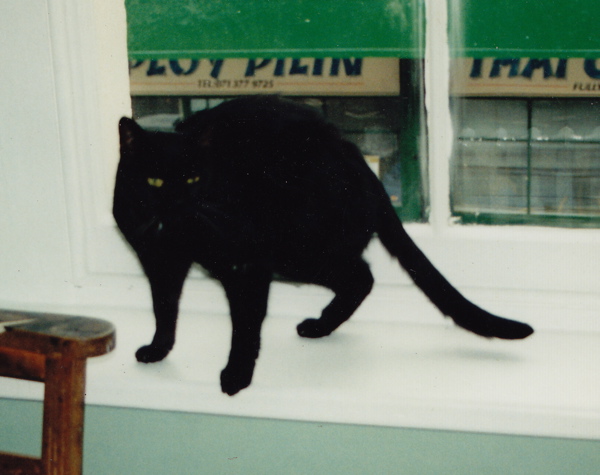
Blackie in her final years, 1991/2
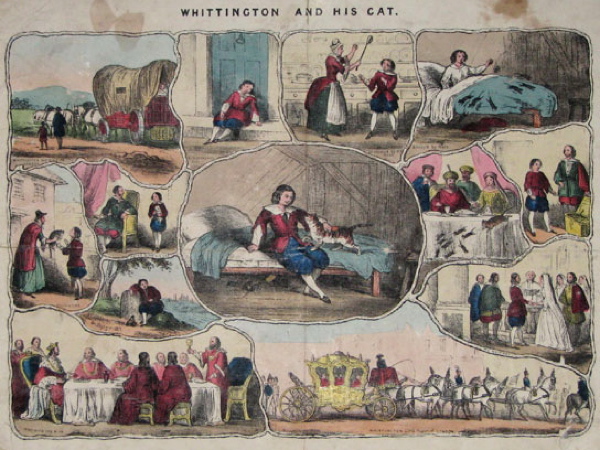
Nineteenth century print of Dick Whittington & his cat
You may also like to read about
So Long, Stuart Goodman
Photographer Stuart Goodman died on Wednesday aged seventy-three of the coronavirus. In these pages he is celebrated for his documentation of Broadway Market in the eighties and, two weeks ago, he published a book of these photographs which is now his elegy.
John Sims
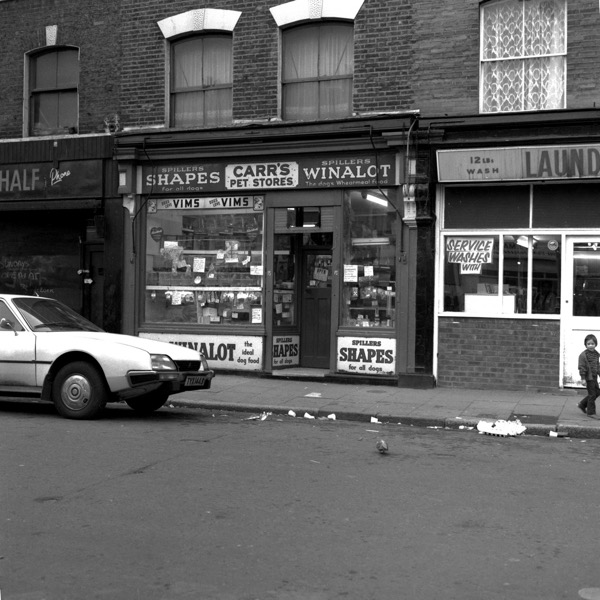
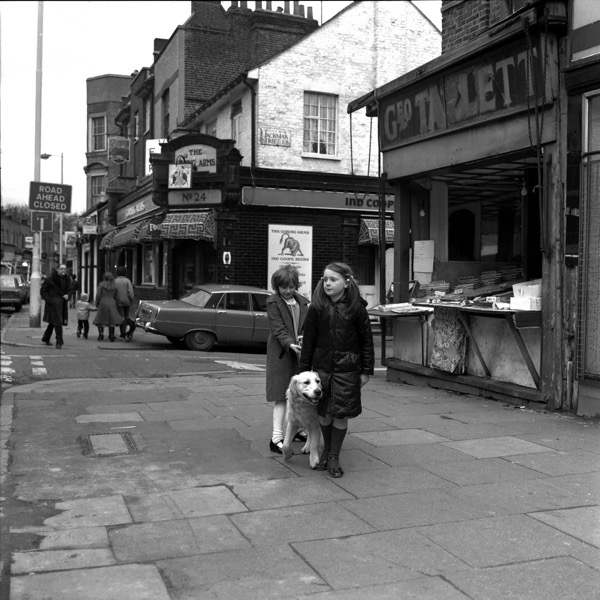
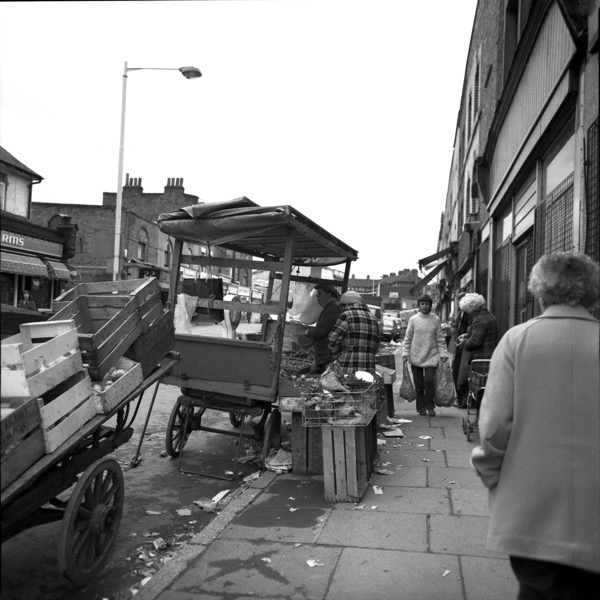
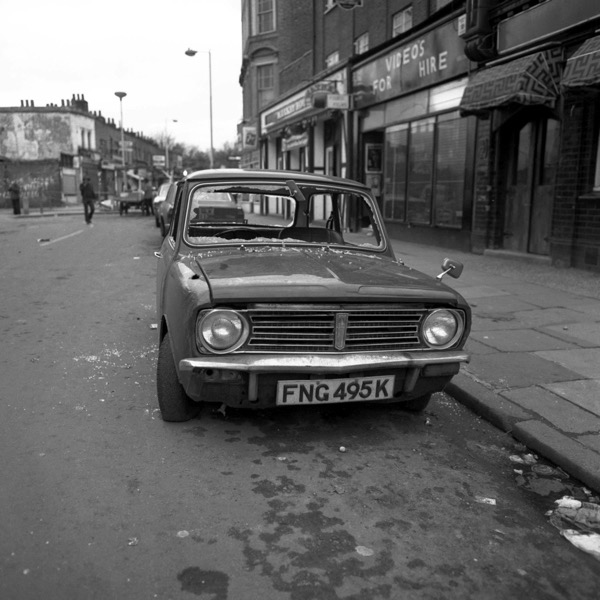
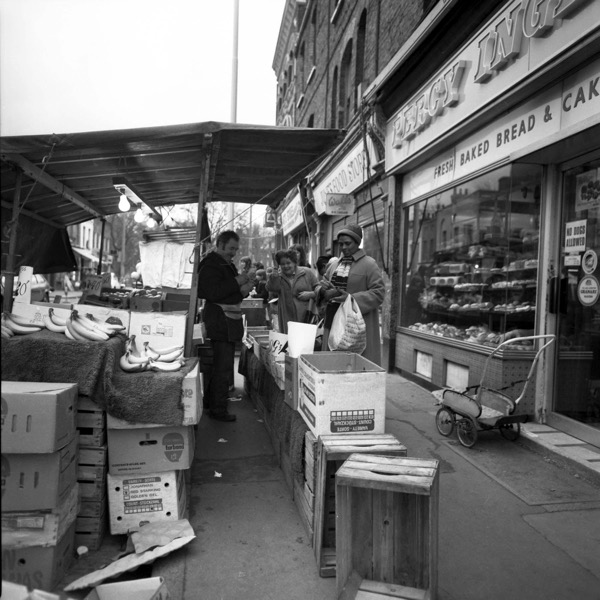
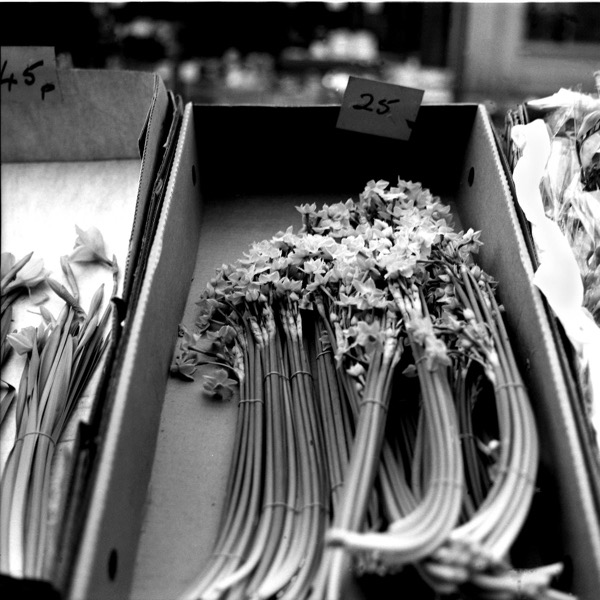
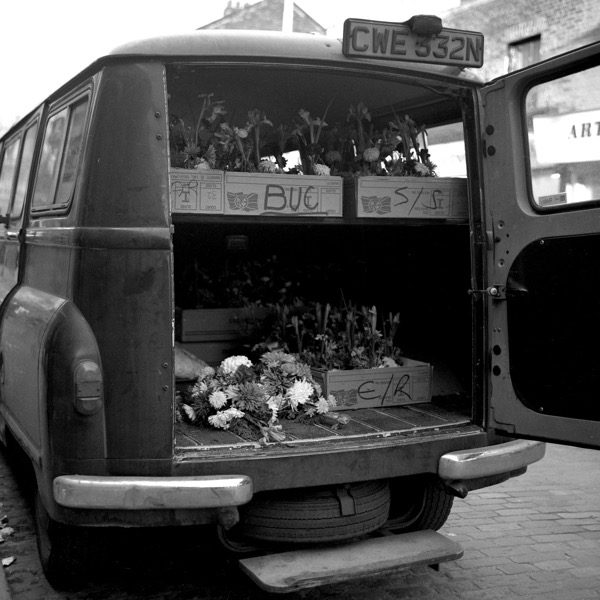
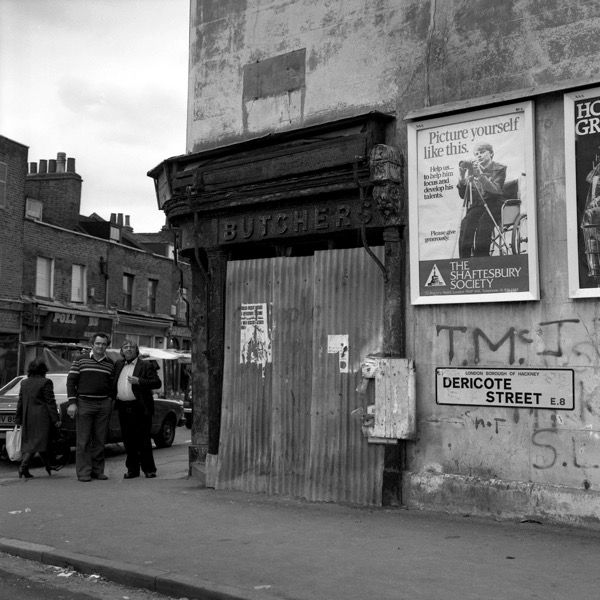
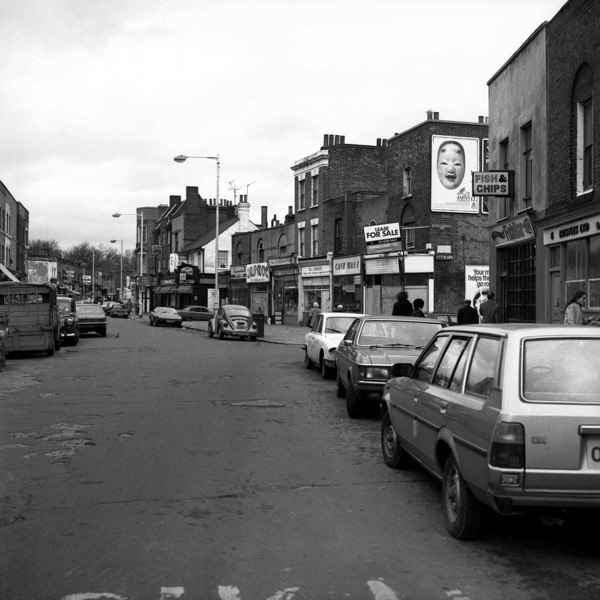
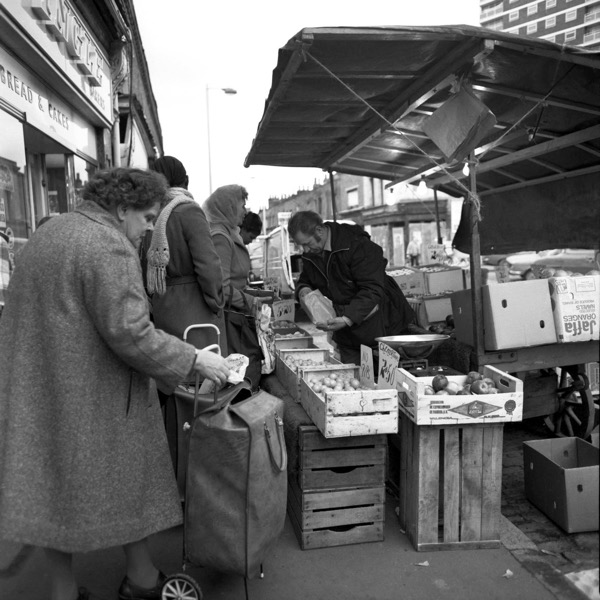
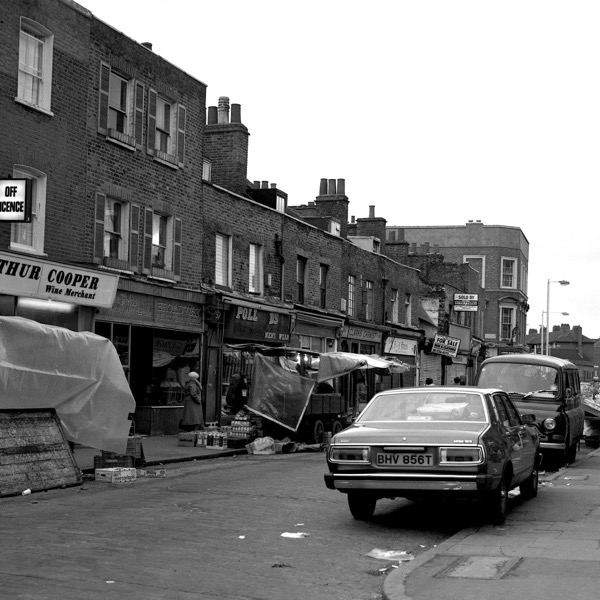
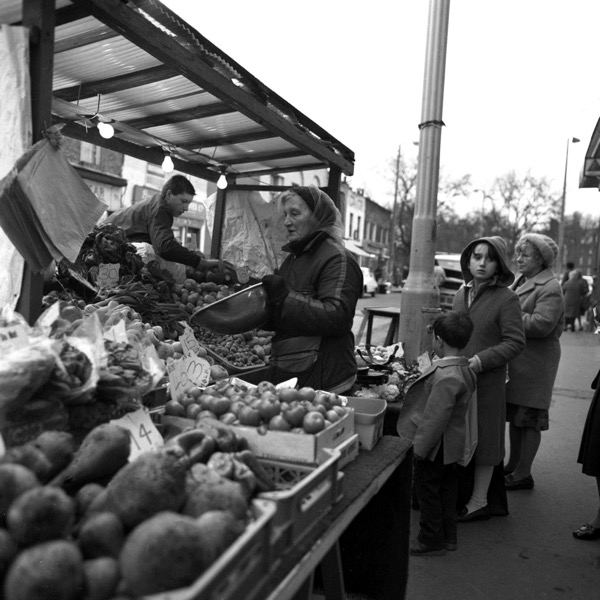
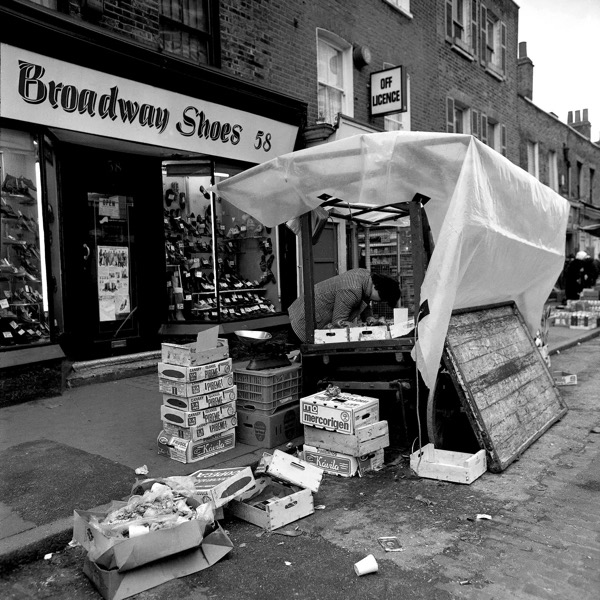
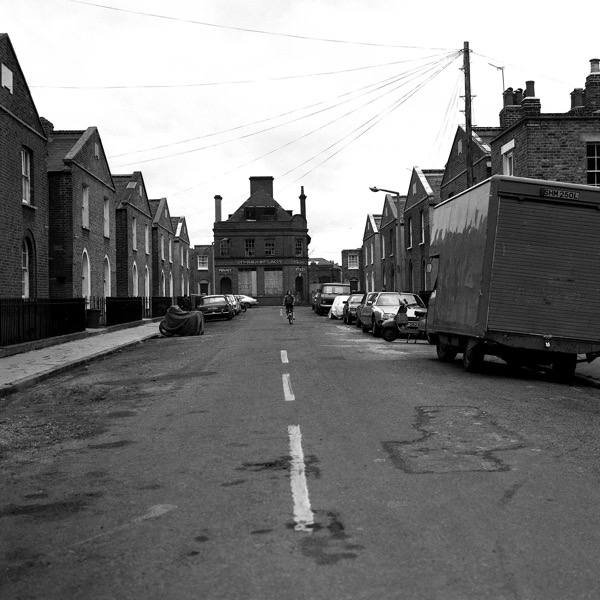
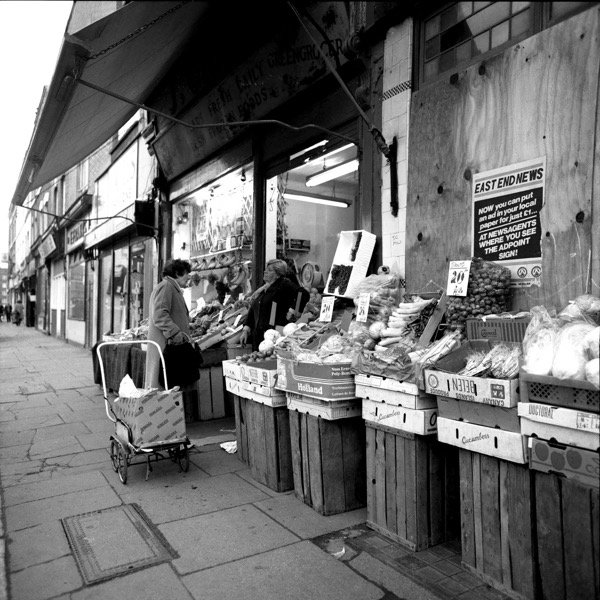
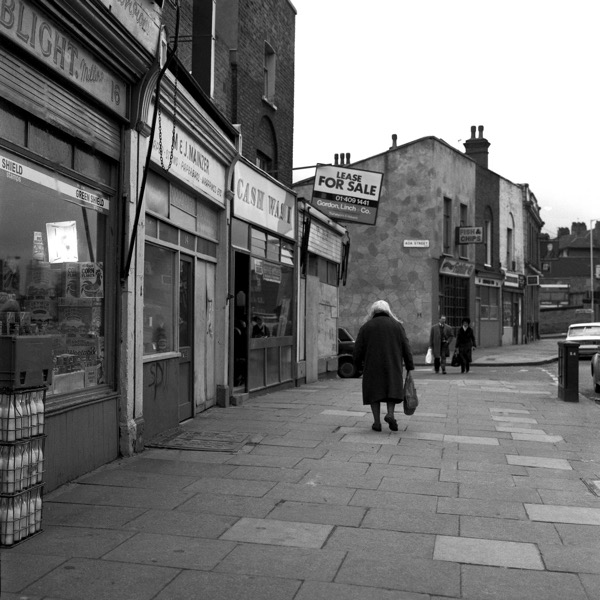
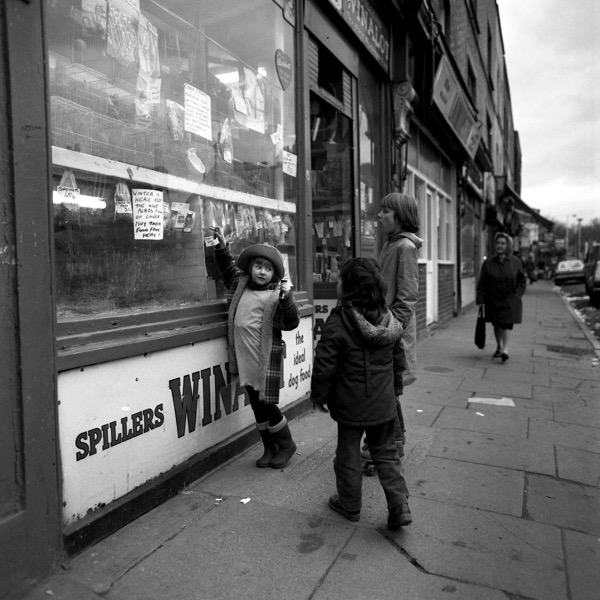
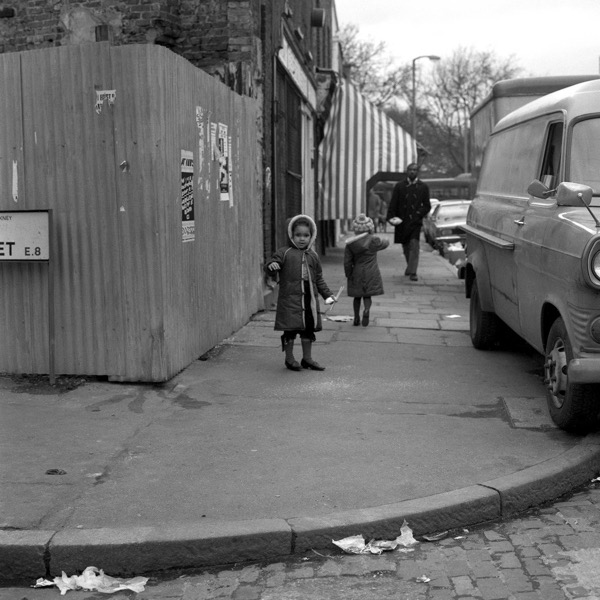
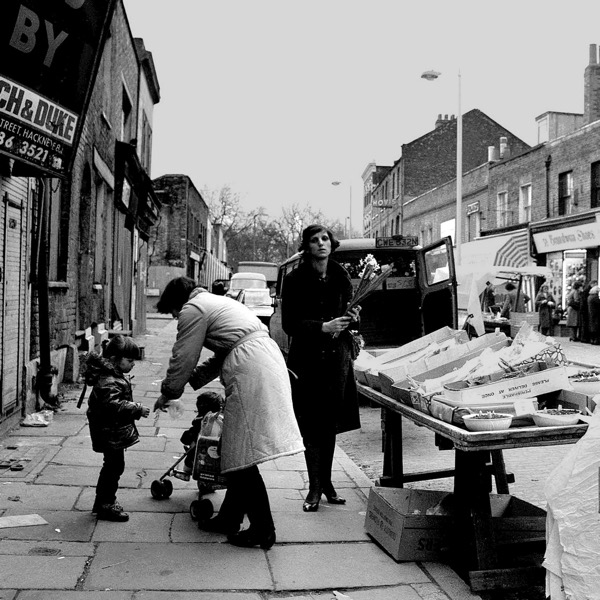
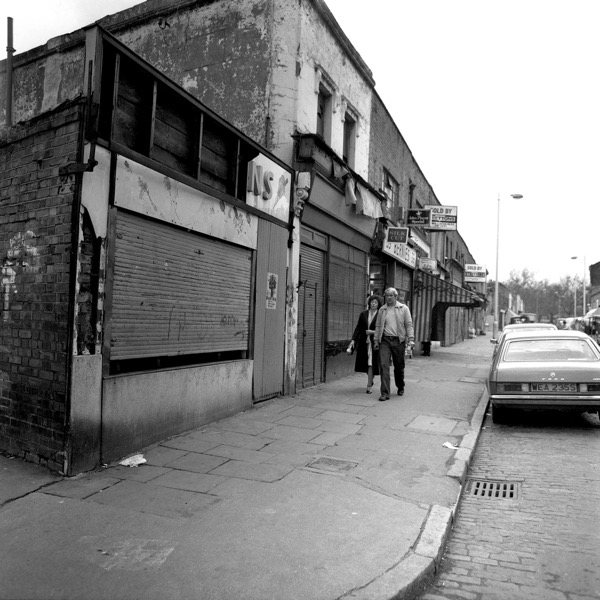
Take a walk through Broadway Market in March 1982 with Stuart Goodman, when it was quite a different place to the fashionable destination it has become in recent years.
A former Fleet St Photographer & Picture Editor, Stuart sent me these pictures. “They were first shown in 1983 at an exhibition at the Royal Festival Hall, organised by the Greater London Council,” he explained, “which was ironic really because the GLC had a massive 1000-property compulsory purchase scheme to construct a nightmare version of the Westway through East London, that included the market.”
“I first found Broadway Market by mistake in 1976 and fell in love with the place, the cobbles, the people and the Cat & Mutton pub. By 1977, I was a partner in Hot Shots, a short-lived screen printing extravaganza, and I lived in an exceptionally squalid flat above and below the shop at number 52. I met both my wives there too, though – thankfully – not at the same time.
Although I lived in Broadway Market for a few years, I only photographed it once, wandering around for a couple of hours. Now I live in Norwich but I still have connections with the place, my sister-in-law was the ladybird book lady, running a stall opposite where I once lived, and my brother sells vinyl in the upmarket bit up the road.
I miss the place, not the squalor, the outside loo, the cold – but the people, the community and, somehow, the optimism. In those days, there was not a gastro pub in sight and no-one had ever heard of a buffalo burger. ”
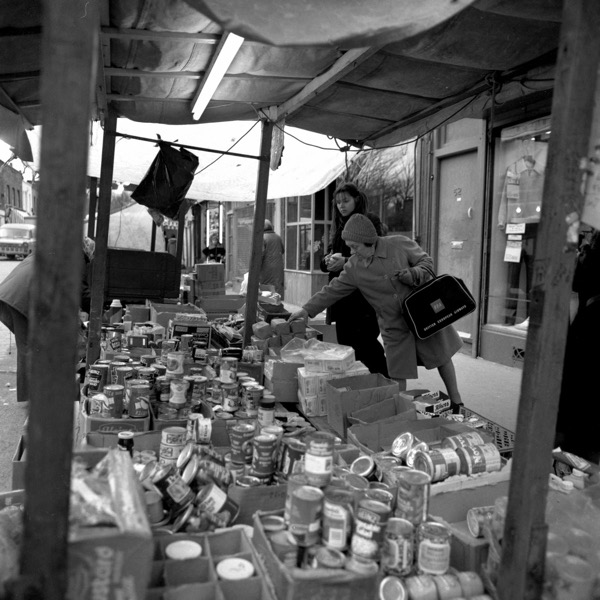
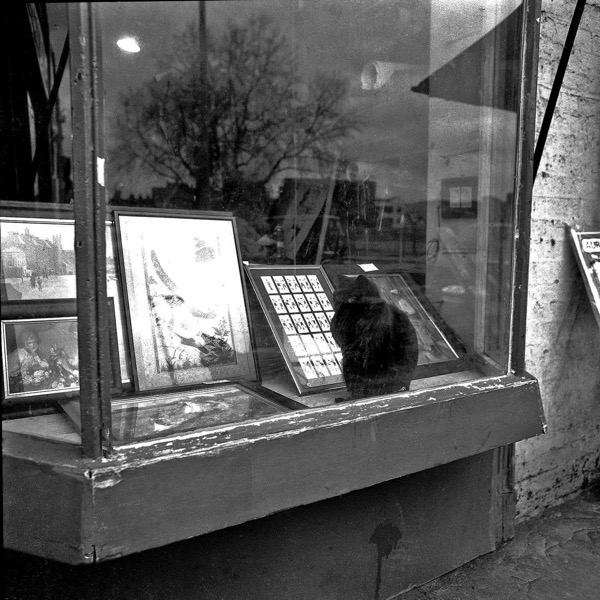
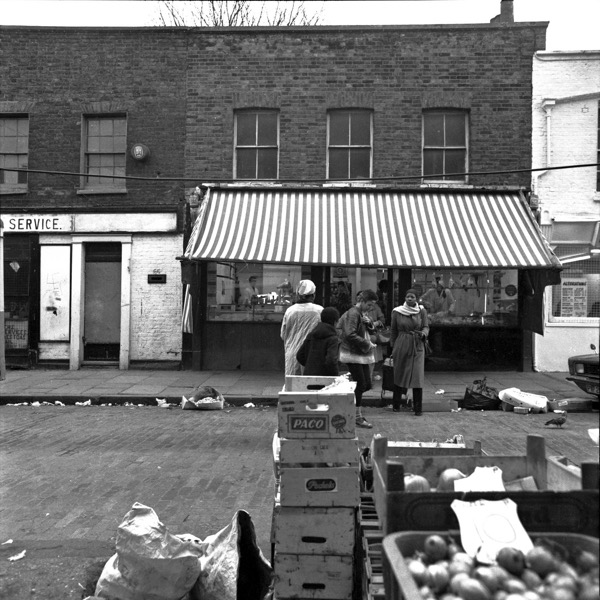
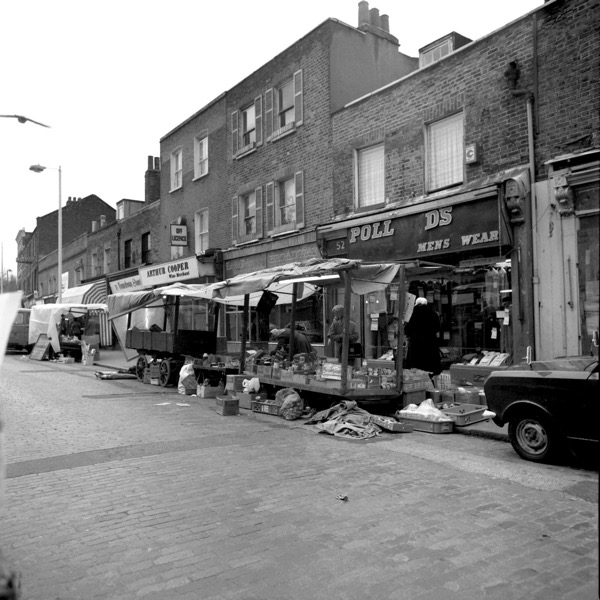

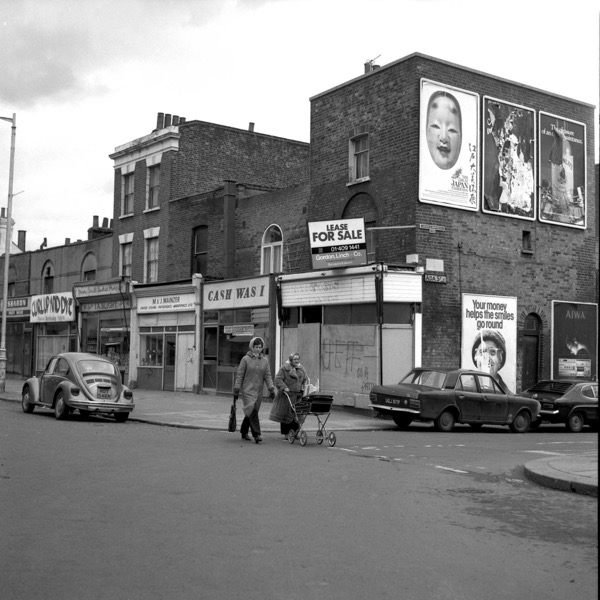
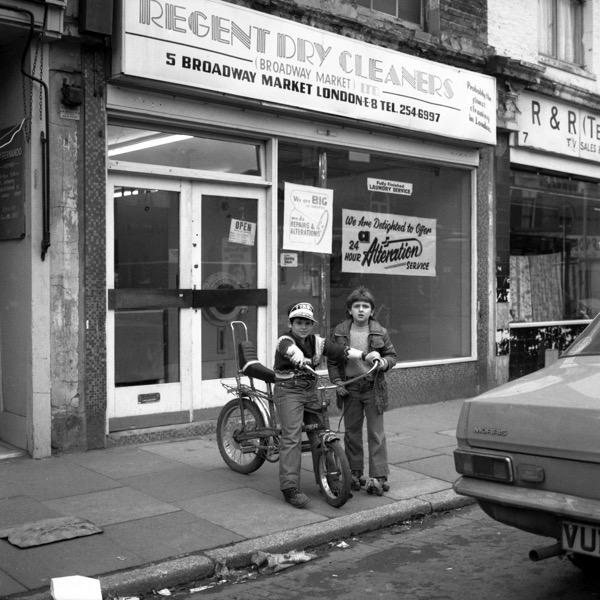
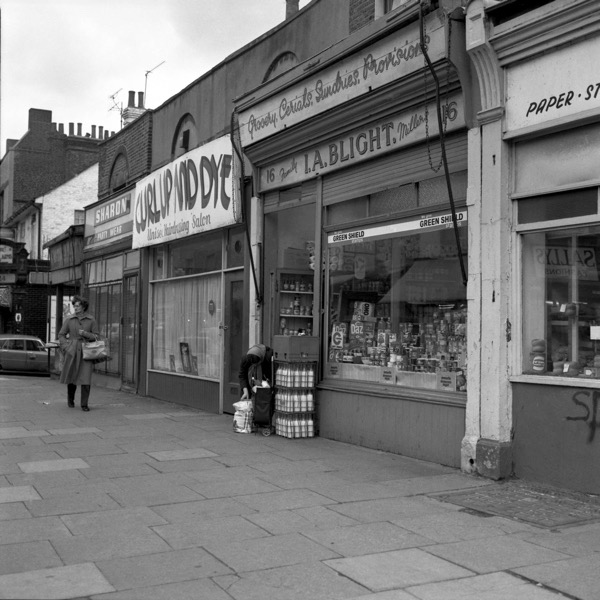

Photographs copyright © Estate of Stuart Goodman
Stuart Goodman unpacks copies of his new book from the printer and shows his wife
The Nine Herbs Charm To Cure Infection
We publish the text of the Anglo-Saxon Nine Herbs Charm to cure infection, of which many ingredients – we are reliably informed – are to found locally at the last bombsite in Aldgate. The charm is recorded in the tenth century Lacnunga (remedies) manuscript in British Museum and is published here accompanied by the translation by Þórbeorht Línléah and illustrated with plates from old herbals.
“may thou withstand the loathsome that yond the land fareth”
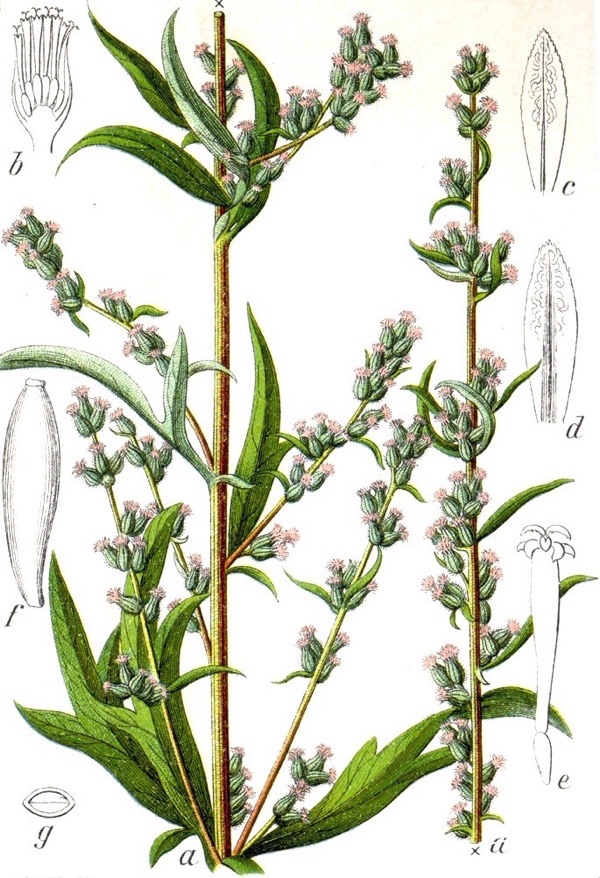
Artemisia Vulgaris (Mugwort)
Gemyne ðú, mucgwyrt, hwæt þú ámeldodest,
hwæt þú renadest æt Regenmelde.
Una þú hattest, yldost wyrta.
ðú miht wið III and wið XXX,
þú miht wiþ áttre and wið onflyge,
þú miht wiþ þám láþan ðe geond lond færð.
Remember thou, Mugwort, what thou declared
What thou advised at the proclamation of the gods (Regen, “council of the gods,” and meld, “proclamation”)
“Una” (First) thou were named, the eldest of worts (herbs)
Thou hast might against three and against thirty,
thou hast might against venom and against that which flies.
thou hast might against the loathsome that yond the land fareth.
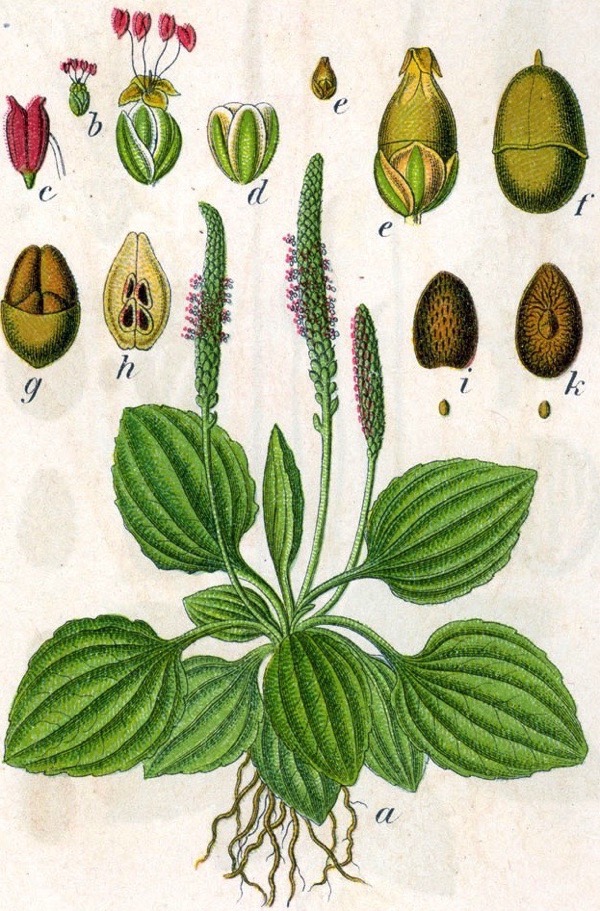
Plantago Major (Plantain)
Ond þú, Wegbráde, wyrta módor,
éastan openo, innan mihtigu;
ofer ðé crætu curran, ofer ðe cwene reodan,
ofer ðé brýde bryodedon, ofer þé fearras fnærdon.
Eallum þú þon wiðstóde and wiðstunedest;
swa ðú wiðstonde áttre and onflyge
and þæm laðan þe geond lond fereð.
And thou, Waybread (Plantain), mother of worts
open to the east, mighty within;
over thee carts creaked, over thee queens (women) rode,
over thee brides cried out, over thee bulls snorted.
All of them thou withstood and dashed against;
so may thou withstand venom and that which flies
and the loathsome that yond the land fareth.
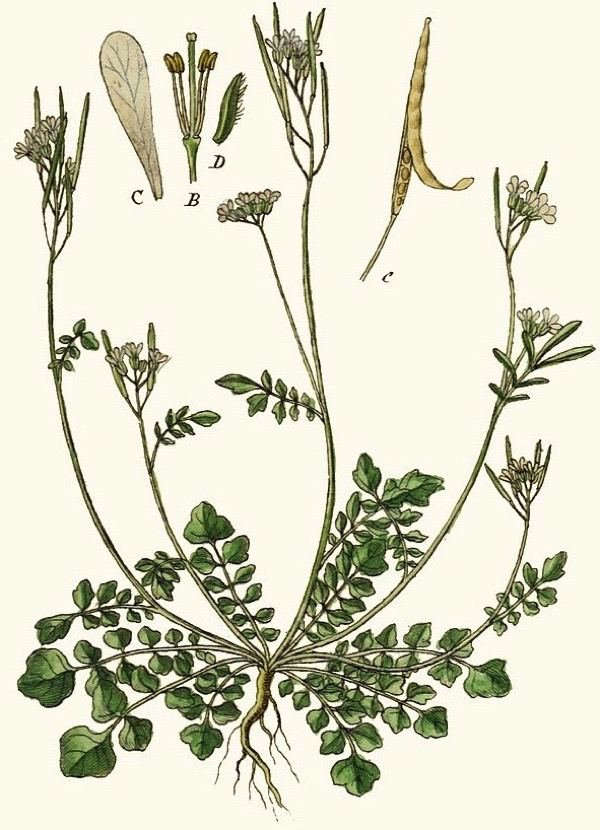
Cardamina Hirsuta (Hairy Bittercress)
Stune hætte þéos wyrt, héo on stane gewéox;
stond héo wið áttre, stunað héo wærce.
Stíðe héo hatte, wiðstunað héo attre,
wreceð héo wráðan, weorpeð út áttor.
Stune (Watercress) is named this wort, she on stone waxes;
stands she against venom, stuneth (dasheth) she against pain.
“Stiff” she is named, withstandeth she venom,
wreaked (driveth out) she the wrathful, warpeth (casteth) out venom.
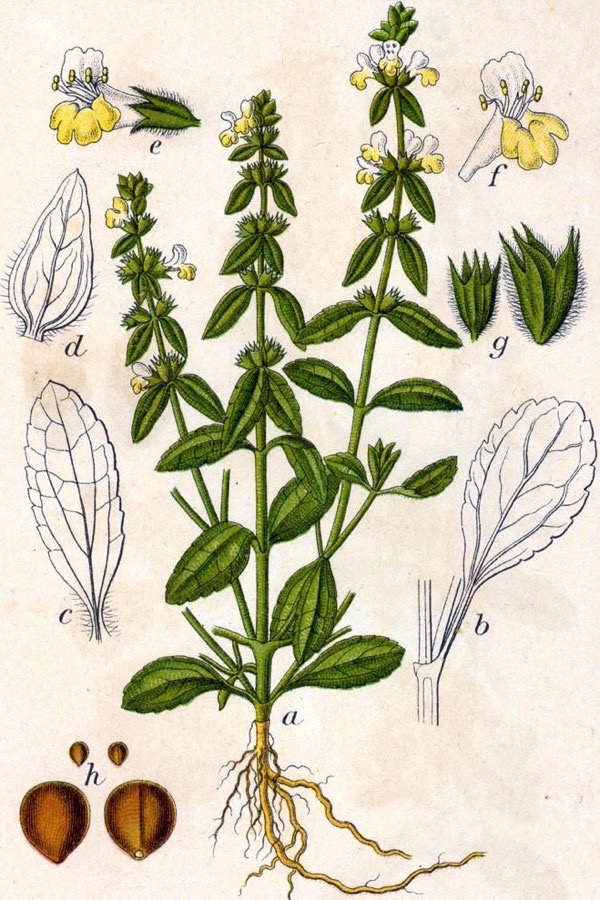
Stachys Annua (Betony)
þis is séo wyrt séo wiþ wyrm gefeaht,
þéos mæg wið áttre, héo mæg wið onflyge,
héo mæg wið ðam laþan ðe geond lond fereþ.
Fléoh þú nú, Áttorláðe, séo læsse ðá máran,
séo máre þá læssan, oððæt him beigra bót sy.
This is the wort that with wyrm (serpent) fought,
she that prevails against venom, she that prevails against that which flies,
she prevails against the loathsome that yond the land fareth.
Put thou now to flight, Adder-loather (Betony, the lesser [and] the more
the more [and] the lesser, until he, of both, is cured.
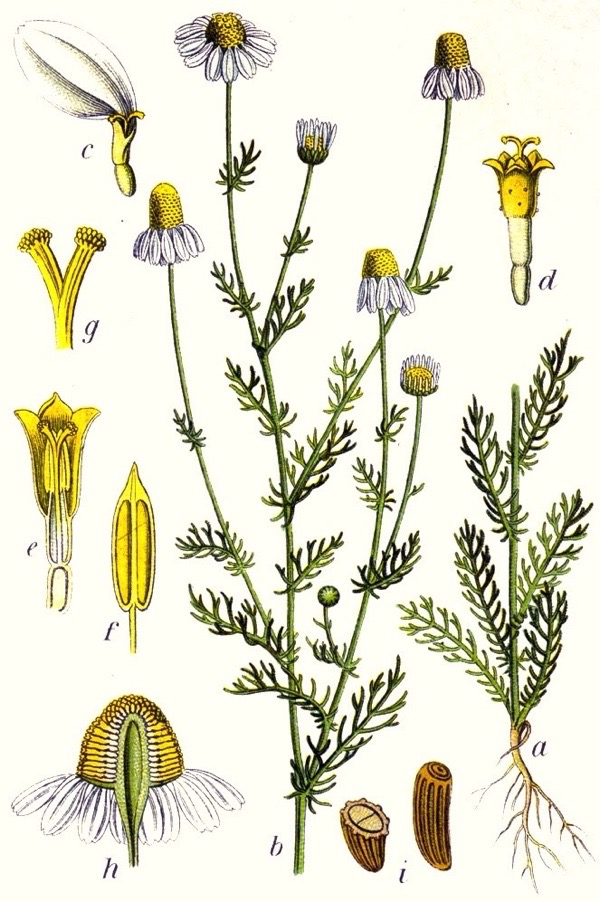
Matricaria Discoidea (Chamomile)
Gemyne þú, mægðe, hwæt þú ameldodest,
hwæt ðú geændadest æt Alorforda;
þæt næfre for gefloge feorh ne gesealde
syþðan him mon mægðan tó mete gegyrede.
Remember thou, Mayweed (Chamomile), what thou declared,
What thou earned at Alder-fjord;
that never for that which flies life would be sold (given, lost)
since for him mayweed, as meat (food), was readied.
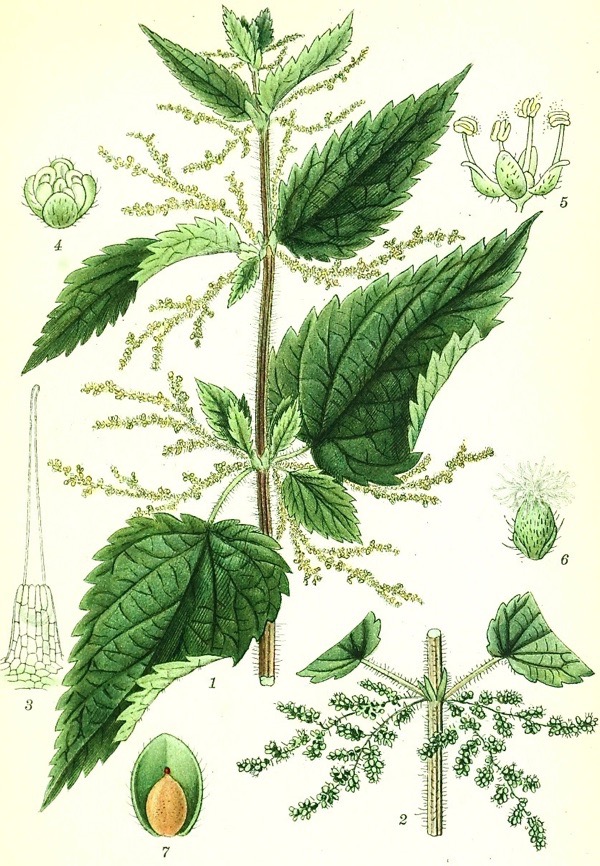
Urtica Dioica (Nettle)
þis is séo wyrt ðé Wergulu hatte;
ðás onsænde seolh ofer sæs hrygc
ondan áttres óþres tó bóte.
This is the wort that is named Weregulu (Nettle);
this sent a seal over the sea’s ridge
the undoing of venom, to others a cure.
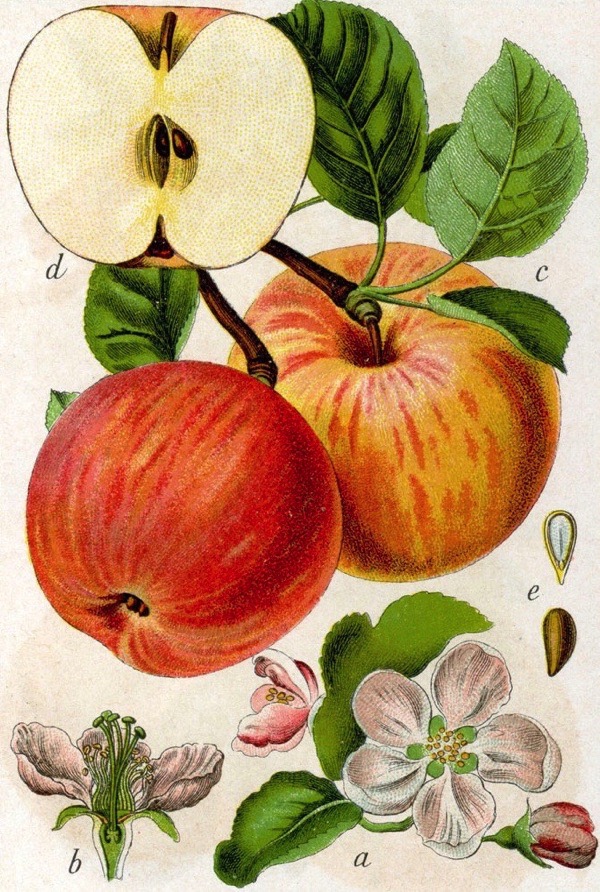
Malus Domestica (Apple)
Þas VIIII magon wið nygon attrum.
Wyrm cóm snícan tóslát hé man
ðá genóm Wóden VIIII wuldortánas,
slóh ðá þá næddran, þæt héo on VIIII tófléah.
Þær geændade Æppel and áttor,
þæt héo næfre ne wolde on hús búgan.
These nine have main (power) against nine venoms.
Wyrm came sneaking. It slit a man
Then took up Wóden nine glory-tines (tines of Wuldor),
slew with them the adder that she into nine flew.
There earned Apple and venom
that she never would bend-way (slither) into house.

Anthriscus Sylvestris (Chervril)
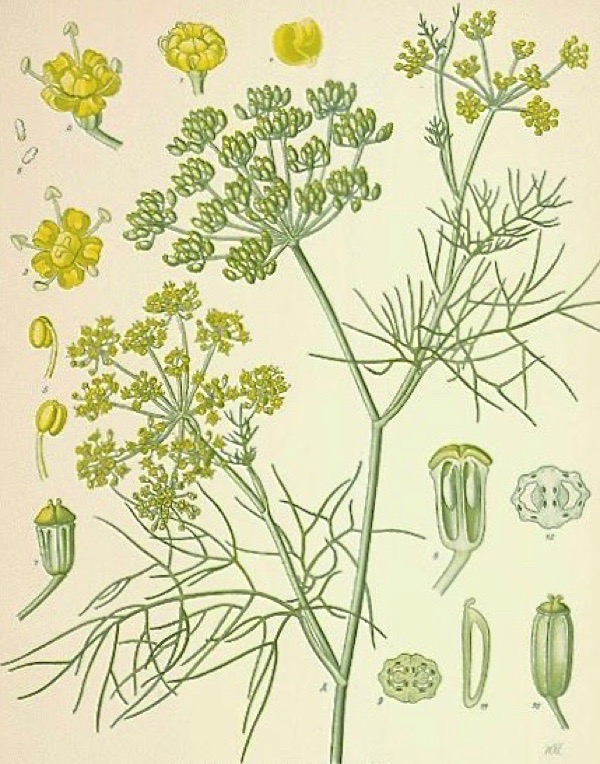
Foeniculum Vulgare (Fennel)
Fille and Finule, felamihtigu twá,
þá wyrte gesceop witig drihten,
hálig on heofonum, þá hé hóngode;
sette and sænde on VII worulde
earmum and éadigum eallum tó bóte.
Stond héo wið wærce, stunað héo wið éáttre,
séo mæg wið III and wið XXX,
wið feondes hond and wið færbregde,
wið malscrunge mánra wihta.
Chervil and Fennel, most mighty two,
those worts were shaped by the witty Drighten,
holy in the heavens, where he hung;
set and sent [them] into seven worlds
for the wretched and the wealthy for all a cure.
Stands she against pain, stuneth (dasheth) she against venom,
that prevails against three and against thirty,
against the fiend’s hand and against far-braiding (shape-shifting?),
against maskering (bewitching) by evil wights.
Nú magon þás VIIII wyrta wið nygon wuldorgeflogenum,
wið VIIII áttrum and wið nygon onflygnum,
wið ðý réadan áttre, wið ðý runlan áttre,
wið ðý hwítan áttre, wið ðý hæwenan áttre,
wið ðý geolwan áttre, wið ðý grénan áttre,
wið ðý wonnan áttre, wið ðý wedenan áttre,
wið ðý brúnan áttre, wið ðý basewan áttre,
wið wyrmgeblæd, wið wætergeblæd,
wið þorngeblæd, wið þystelgeblæd,
wið ýsgeblæd, wið áttorgeblæd,
gif ænig áttor cume éastan fléogan
oððe ænig norðan [ænig súþan] cume
oððe ænig westan ofer werðéode.
Now prevail these nine worts (herbs) against the nine wonder-flying-ones,
against nine venoms, and against nine which fly,
against the red venom, against the foul smelling venom,
against the white venom, against the blue-gray venom,
against the yellow venom, against the green venom,
against the wan (dark) venom, against the woad (blue) venom,
against the brown venom, against the crimson venom,
against the wyrm-blister, against the water-blister,
against the thorn-blister, against the thistle-blister,
against the ice-blister (frostbite), against the venom blister,
if any venom comes flying from the east,
or any other from the north, any [from the south] come
or any other from the west over the tribes of men.
Ic ána wat éa rinnende
þær þá nygon nædran néan behealdað;
motan ealle wéoda nú wyrtum áspringan,
sæs tóslúpan, eal sealt wæter,
ðonne ic þis áttor of ðé geblawe.
I alone wot (know) of a river running
There the nine adders near it beholdeth; (keep watch)
May all weeds now from worts spring,
Seas to slip away, all salt water,
When I, this venom from thee blow.
Mugcwyrt, wegbráde þé éastan open sy, lombescyrse, áttorláðe, mageðan, netelan, wudusúræppel, fille and finul, ealde sápan: gewyrc ðá wyrta to duste, mængc wiþ þá sápan and wiþ þæs æpples gor. Wyrc slypan of wætere and of axsan, genim finol, wyl on þære slyppan and beþe mid æggemongc, þonne hé þá sealfe on dó, ge ær ge æfter. Sing þæt galdor on ælcre þára wyrta, III ær hé hý wyrce and on þone æppel ealswá; ond singe þon men in þone muð and in þá earan bútá and on ðá wunde þæt ilce gealdor, ær hé þá sealfe on dó.
Mugwort, Waybread (plantain) that is open to the east, lambcress (stune), adder-loather (betony), mayweed, nettle (weregulu), apple, chervil and fennel, and old soap: work the worts to dust, mix with the soap and with the apple’s gore. Work up a slop of water and of ashes, take the fennel, well it up (boil it) in the slop and bathe it with an egg-mixture, when he dons the salve, either ere or after. Sing that galdor (incantation) o’er each of those worts thrice ere you work them and on the apple also; and sing it into the man’s mouth and in both ears and on the wound likewise galdor, ere he dons the salve.
You may also like to read about