Phil Maxwell At Chrisp St Market
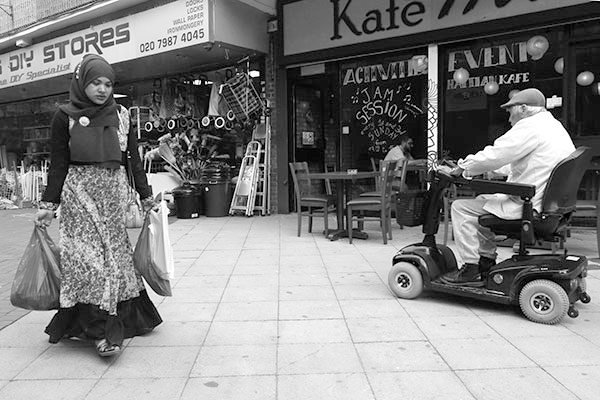
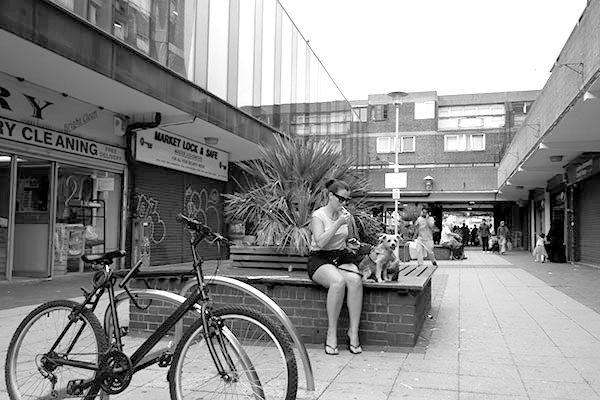
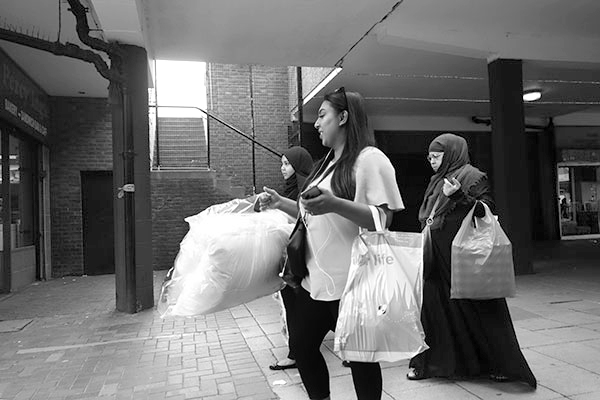
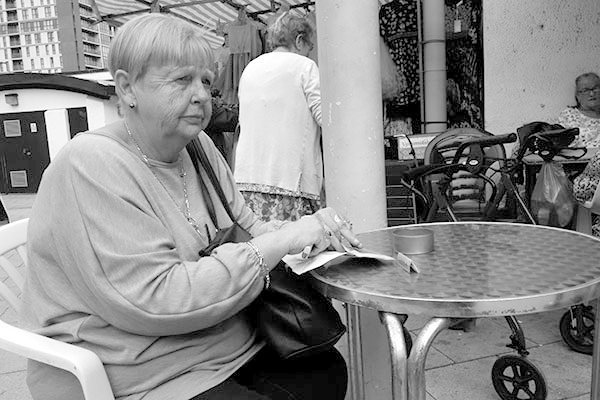
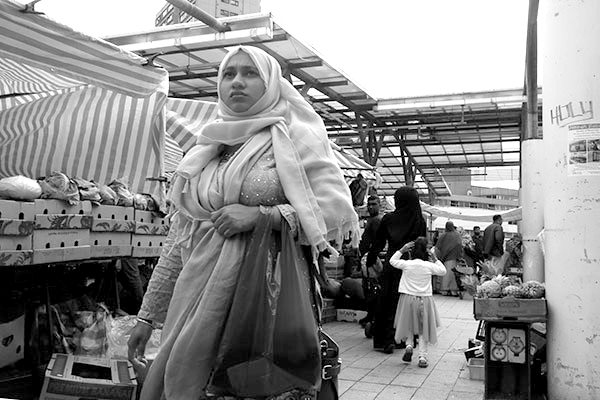
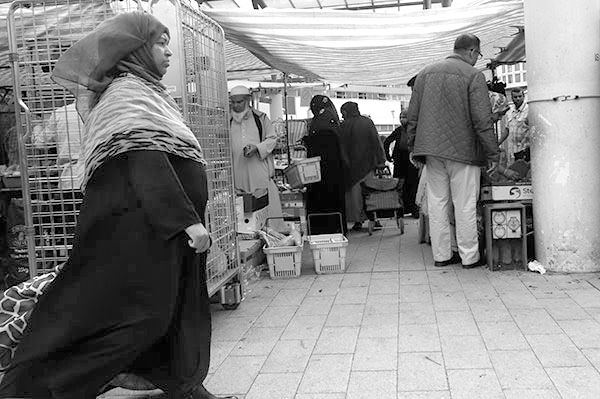
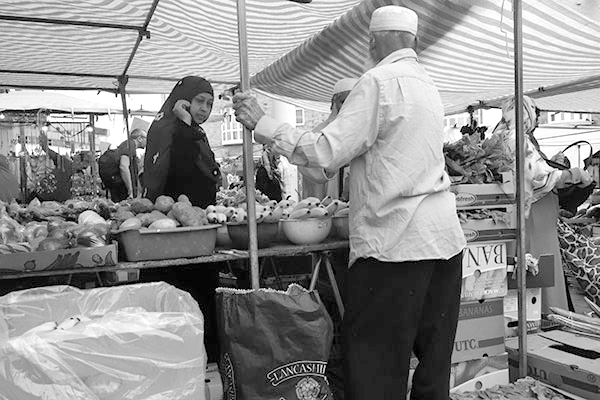
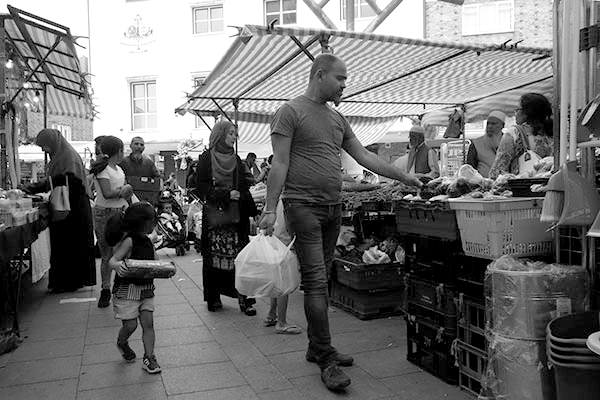
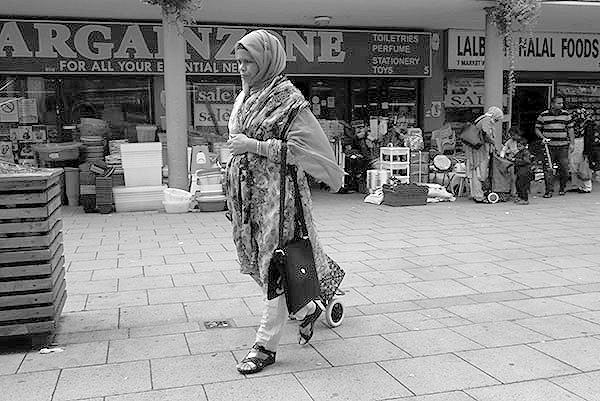
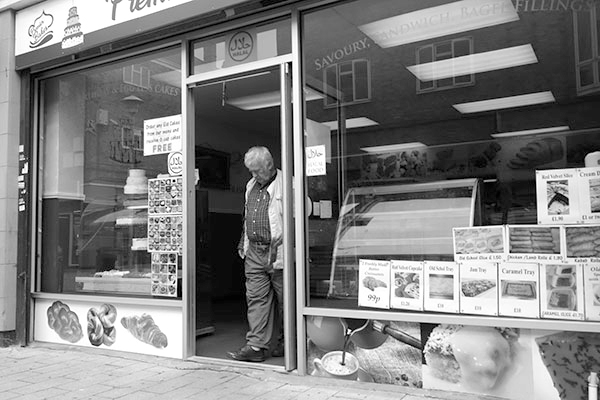
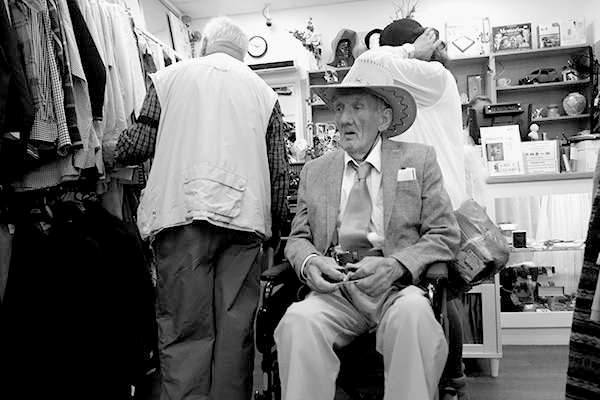
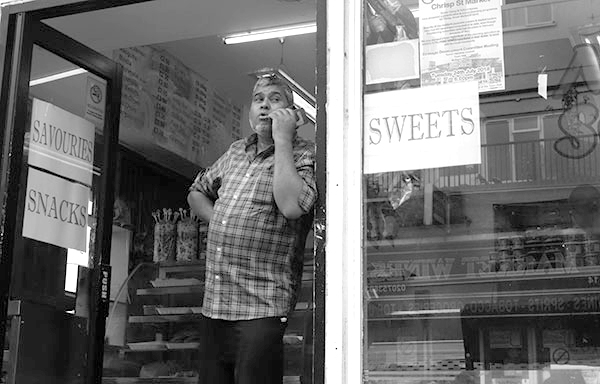
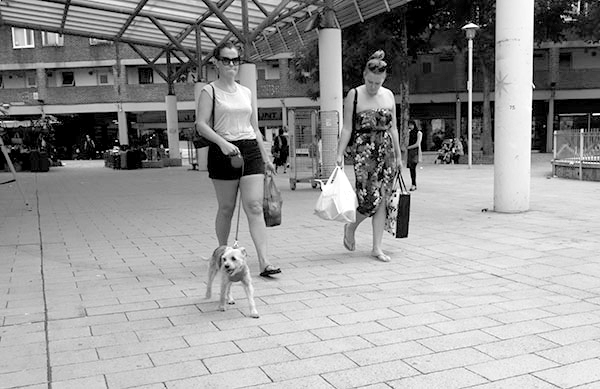
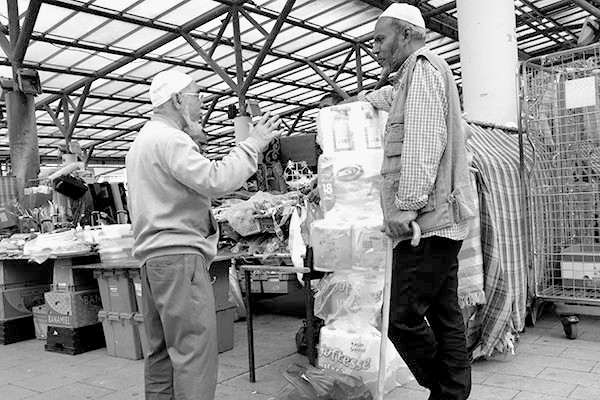
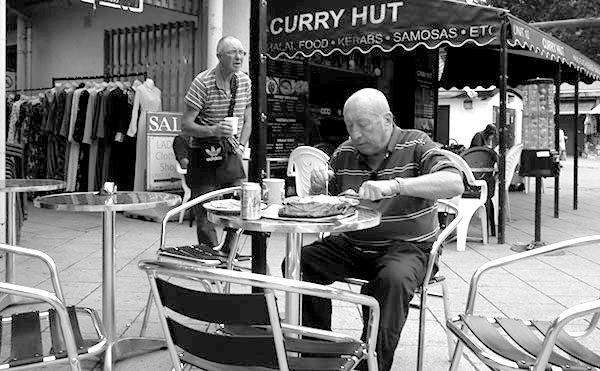
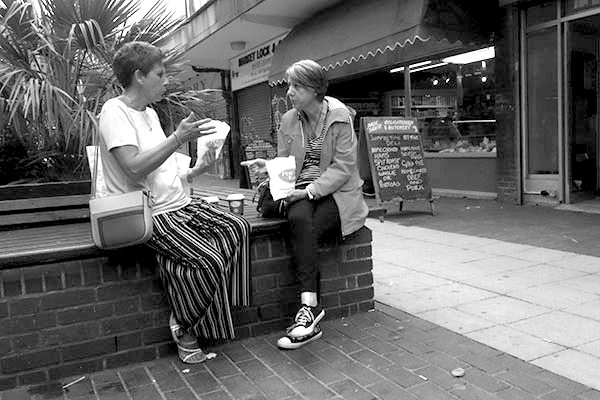
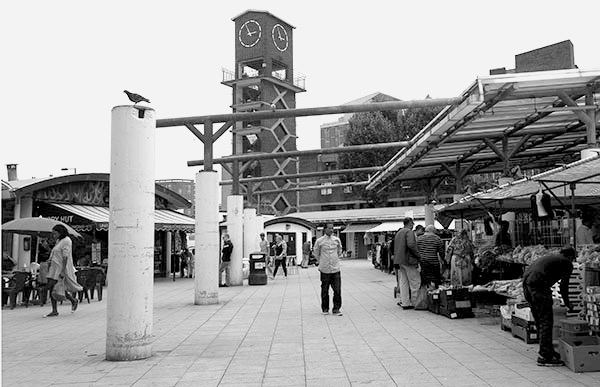
Now the East End markets are opening up again, Phil Maxwell introduces his photographs of the people of Chrisp St Market
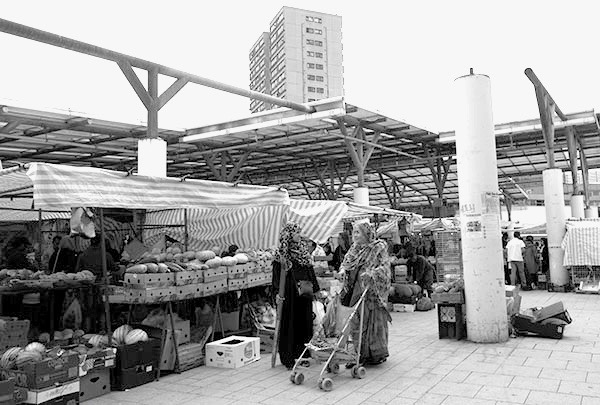
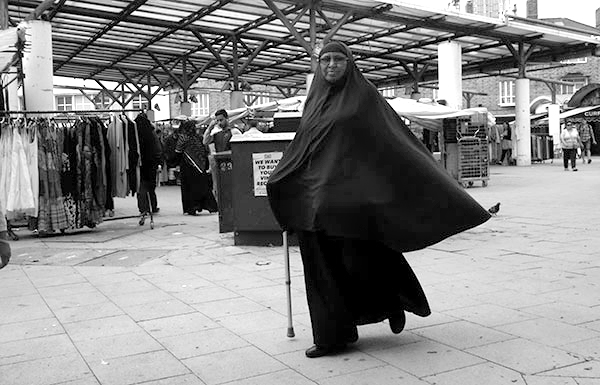
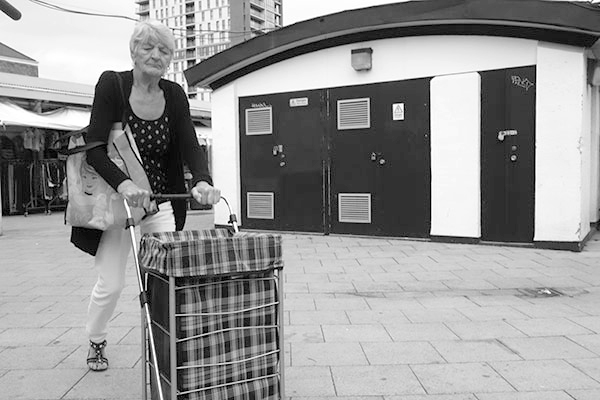
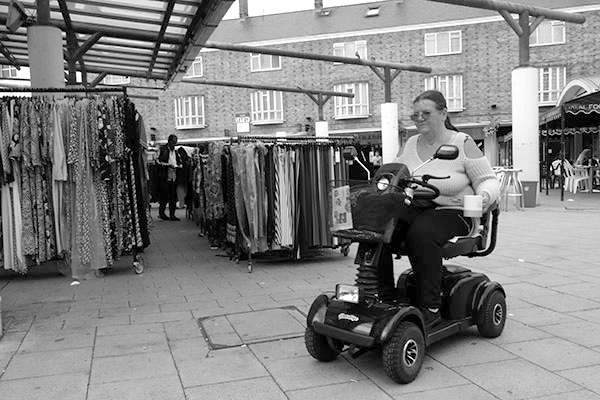
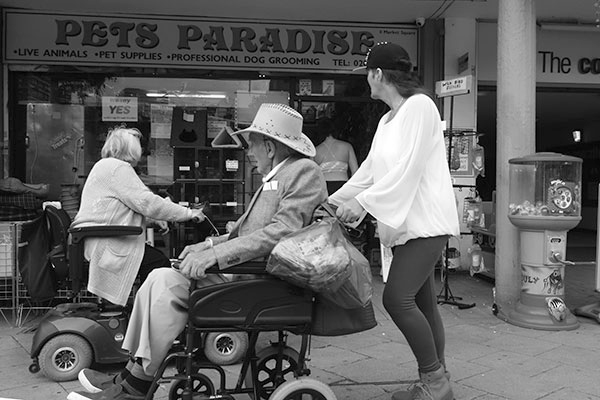
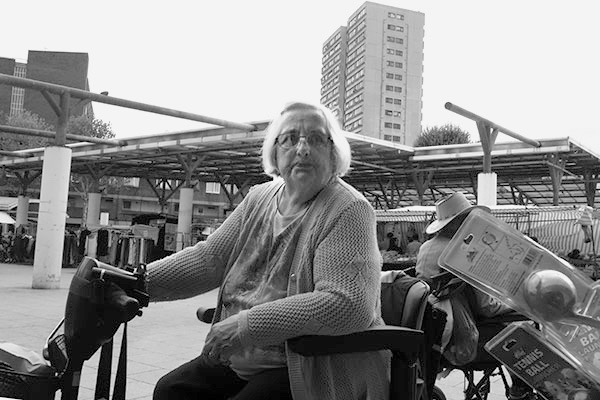
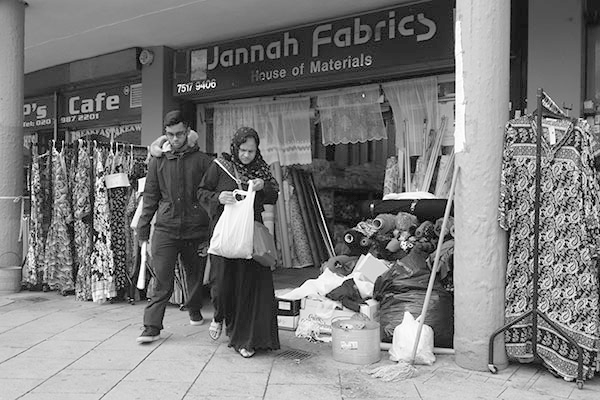
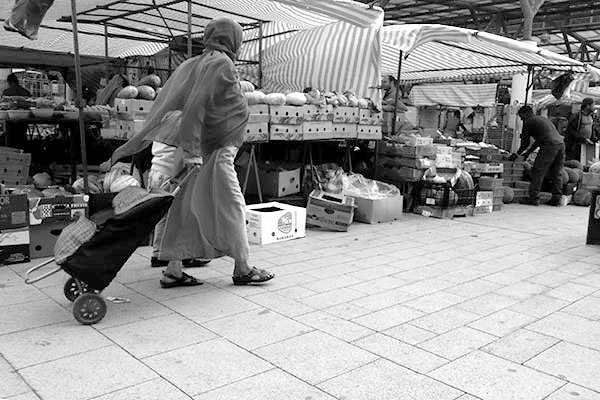
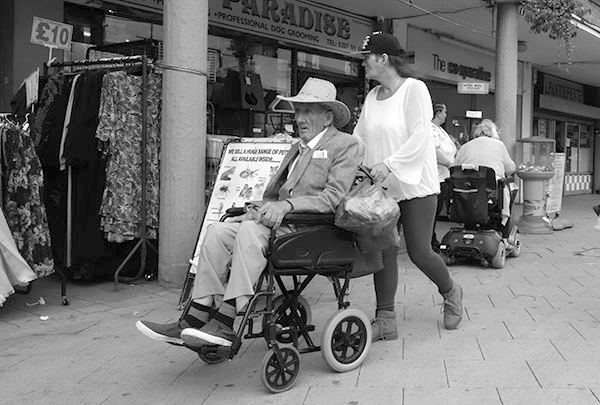
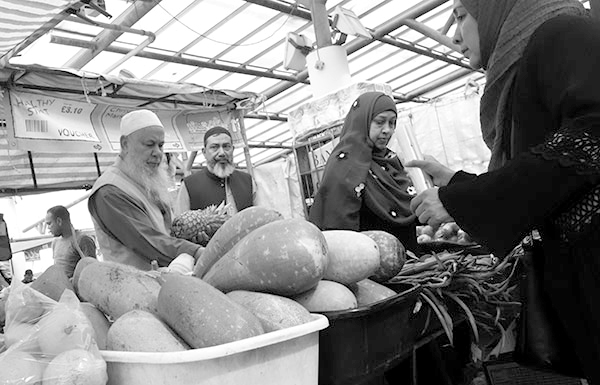
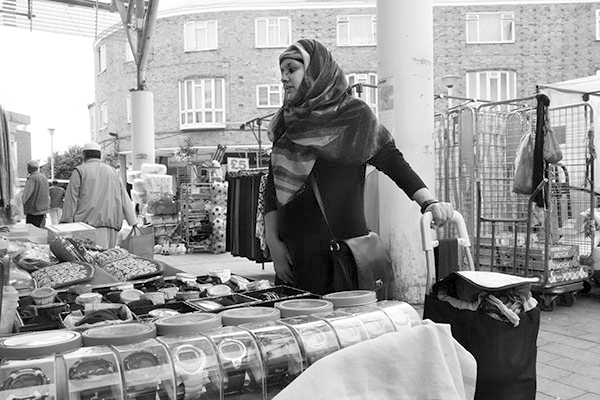
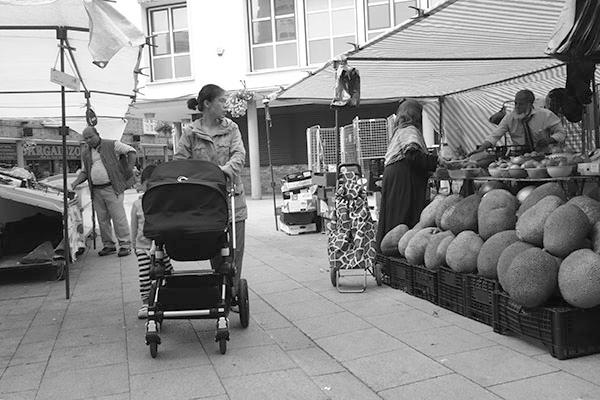
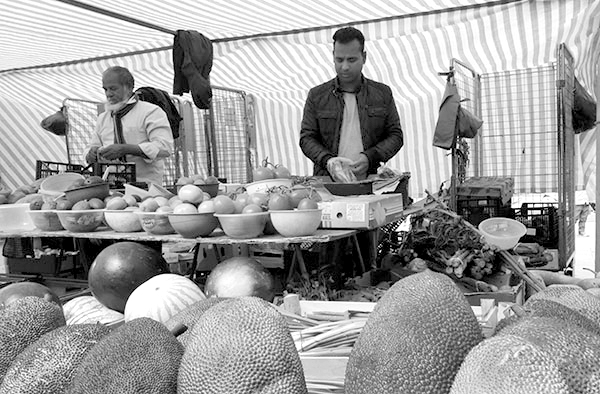
“Every East End market has its own personality and Chrisp St is no exception. As a photographer, I have always been fascinated by markets the world over, they are a magnet for local people as an antidote to impersonal shopping malls.
When I heard last year that the Tower Hamlets had approved regeneration plans for Chrisp Street Market, I knew I had to photograph the market again before it was wrecked by developers.
They claim they want to “to create a thriving town centre – keeping the best of what’s here while providing an improved retail offering, more homes, including more social and affordable, more services and amenities and a greater focus on our heritage.”
Developers always promise more. They always talk about ‘affordable homes’ but the reality is that the people in my photographs will not be able to afford them. The new homes will only be ‘affordable’ to people on high incomes and this is how gentrification drives working class people out of Tower Hamlets.
For me, the living heritage of Chrisp St is as a place where local people can gather, converse, eat pie & mash (and more), purchase fresh food at a reasonable price and meet their neighbours.
When developers claim they are bringing ‘High St names’ they mean displacing independent traders and when they talk about a “new community hub,” you know the soul of a place is about to be ripped out.
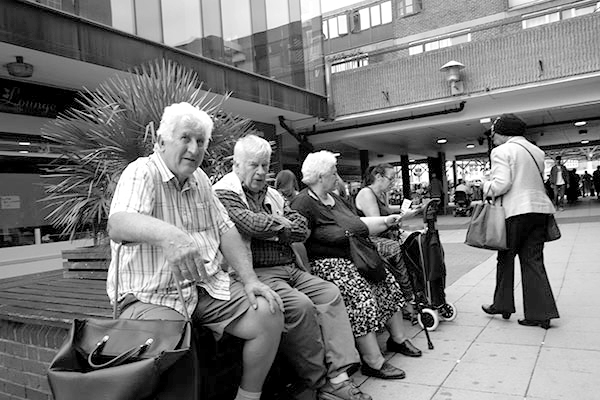
These photographs, published here today for the first time, celebrate the people of Chrisp Street Market as it was in early 2019.”
Phil Maxwell
You may also like to take a look at these other stories about Chrisp St Market
Alice Pattullo’s Alphabet
Alice Pattullo created this portfolio of screen prints of animals for each letter of the alphabet
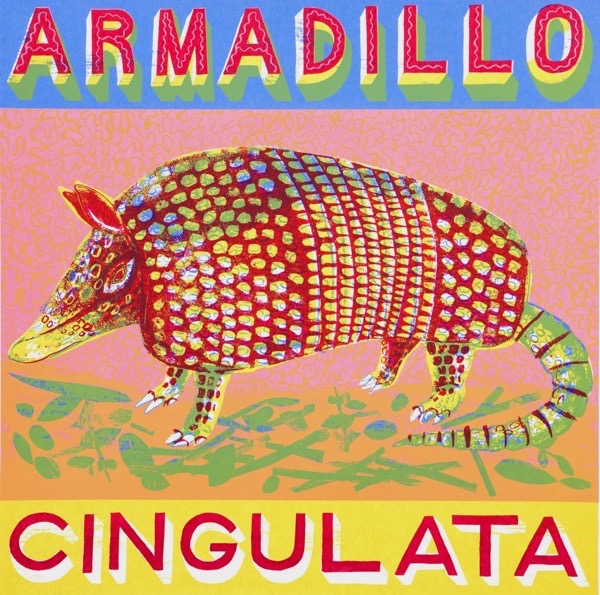
A is for Armadillo who is short stout and round
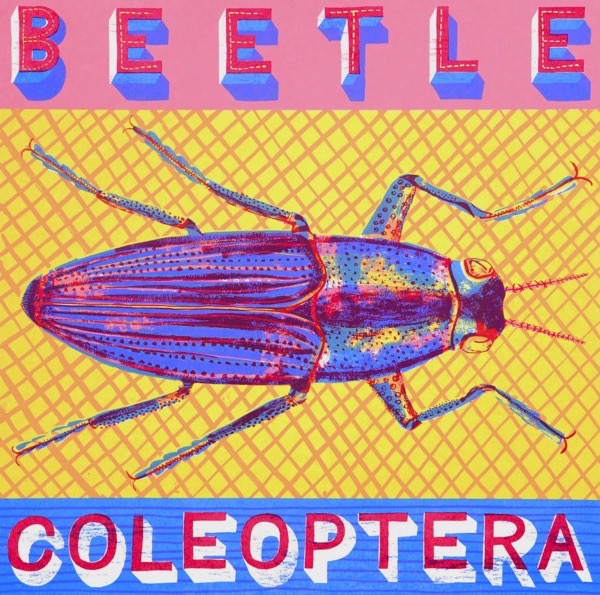
B is for Beetle who stays close to the ground

C is for Crab who crawls on the sea bed
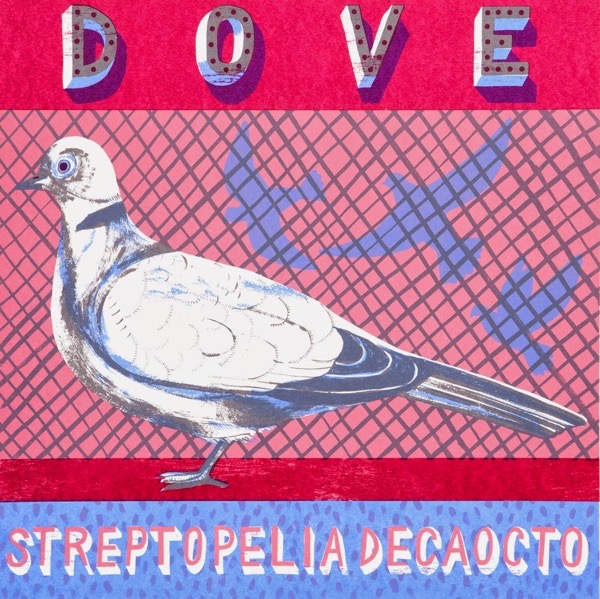
D is for Dove who likes to fly overhead

E is for Elephant who is anything but light

F is for fox who roams the city streets at night

G is for grizzly bear, a fierce looking fellow
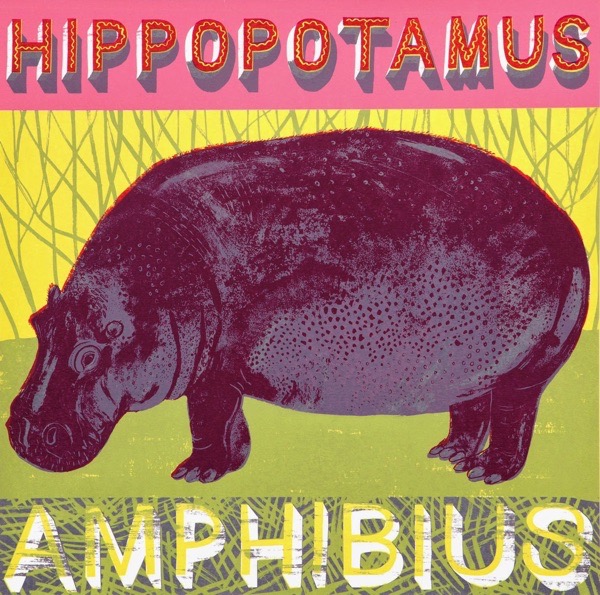
H is for Hippo who is altogether more mellow
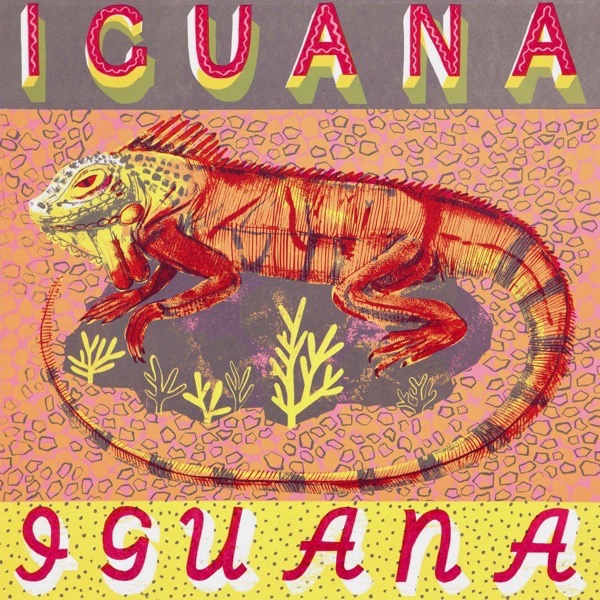
I is for Iguana a large scaly reptile
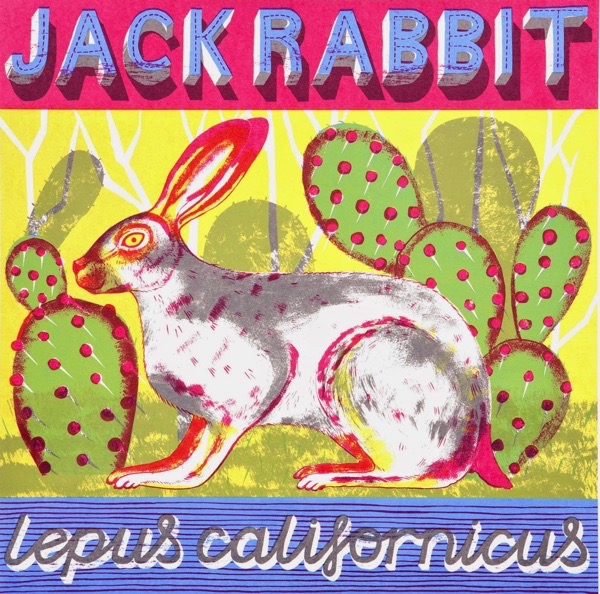
J is for jack rabbit who jumps mile after mile
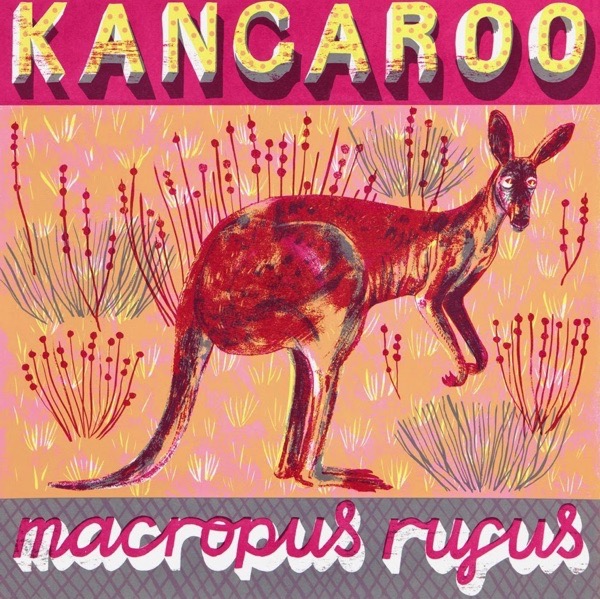
K is for Kangaroo who takes hop, skip and bound

L is for leopard who moves fast across the ground
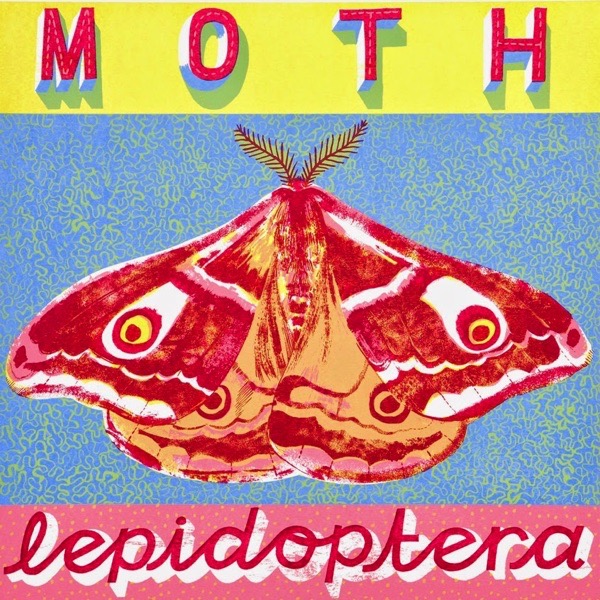
M is for Moth, a winged friend of the butterfly
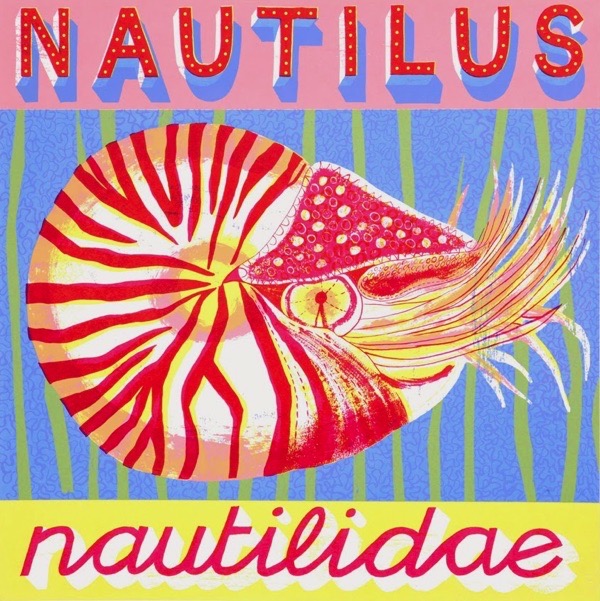
N is for Nautilus who in his shell is quite shy
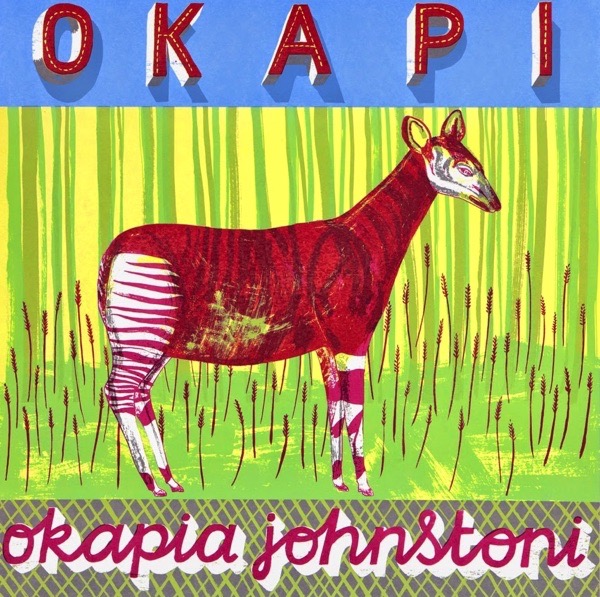
O is for okapi, our strange stripy friend

P is for polar bear who lives at world’s end
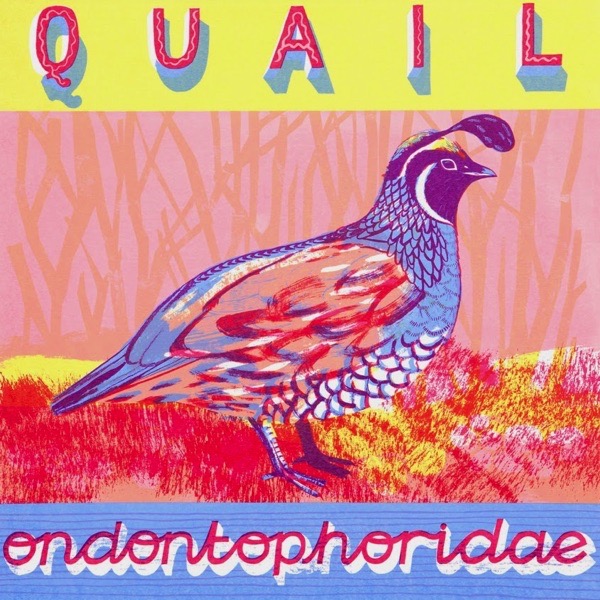
Q is for quail whose bright head feathers are fun
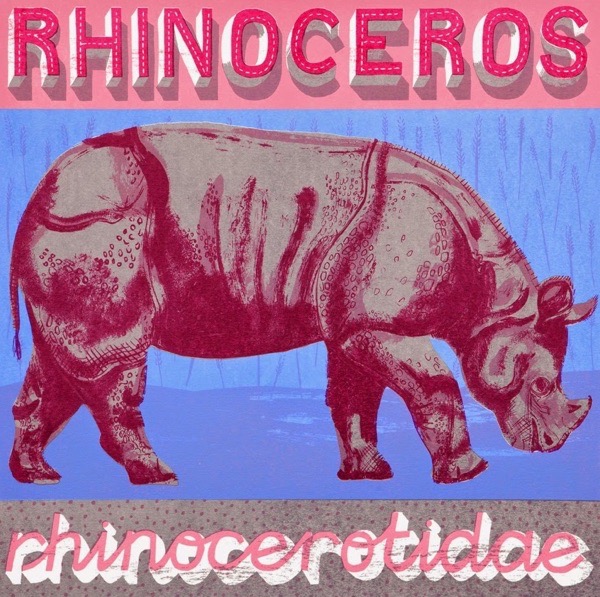
R is for Rhino who weights almost a tonne
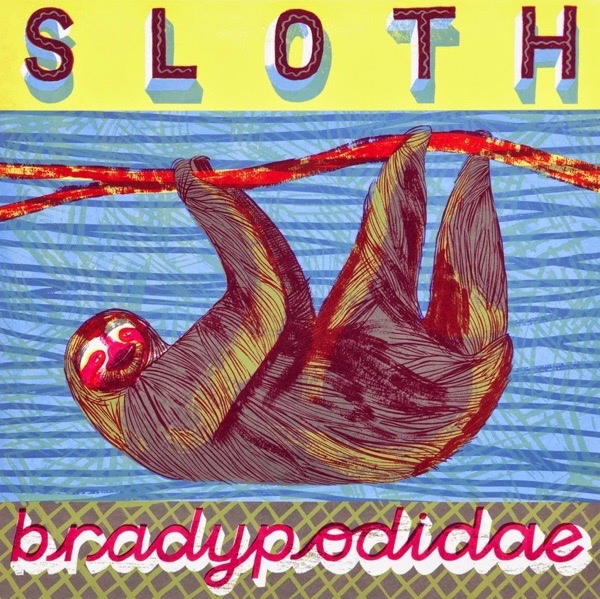
S is for sloth who hangs and sleeps in a tree

T is for turtle who swims through the sea
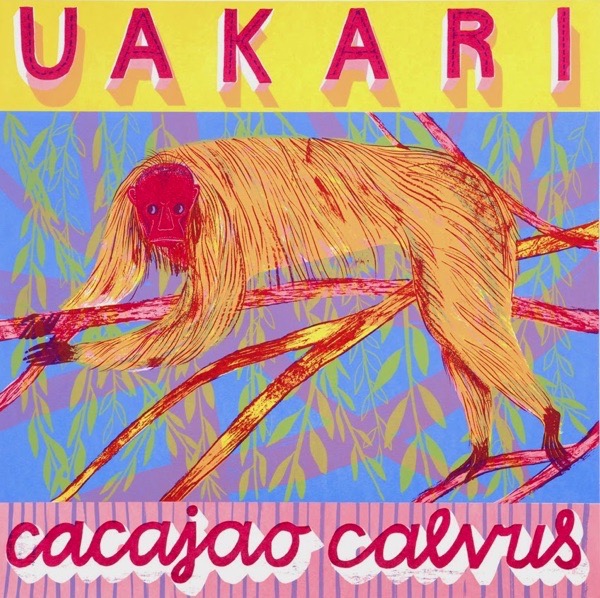
U is for uakari whose face is small, wrinkly and red
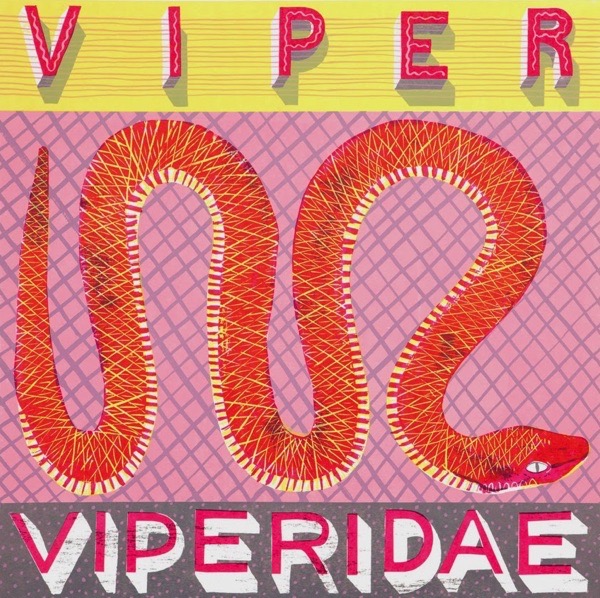
V is for viper whose bite might leave you dead
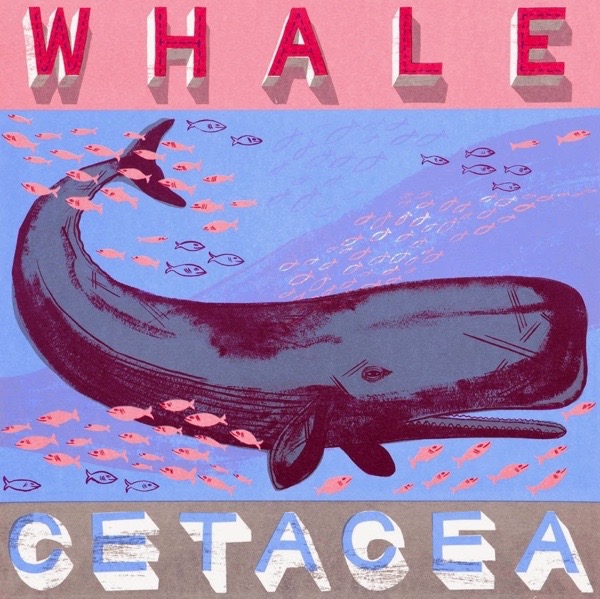
W is for Whale, the biggest animal of them all
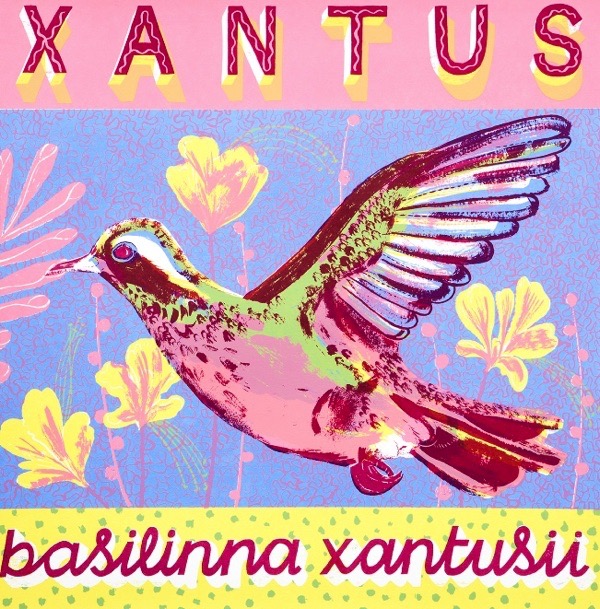
X is for Xantus who is remarkably small

Y is for Yak, like a cow with long hair
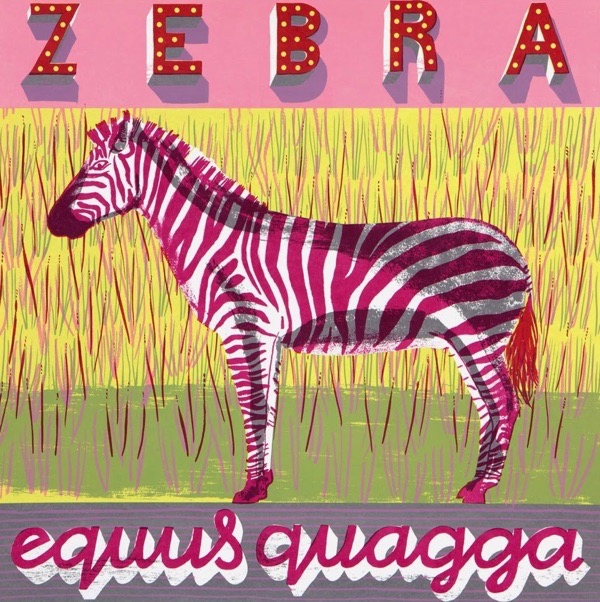
Z is for Zebra, so stripy you might stare
Copyright © Alice Pattullo
Alice Pattullo’s Alphabet is published as a book by Pavilion
Alice’s screen prints are available from her online shop
You may also like to read about
The Little Visitors
Sian Rees introduces an unexpected discovery in the work of Maria Hack (1777 – 1844), published by Darton, Harvey & Darton of Gracechurch St in the City of London
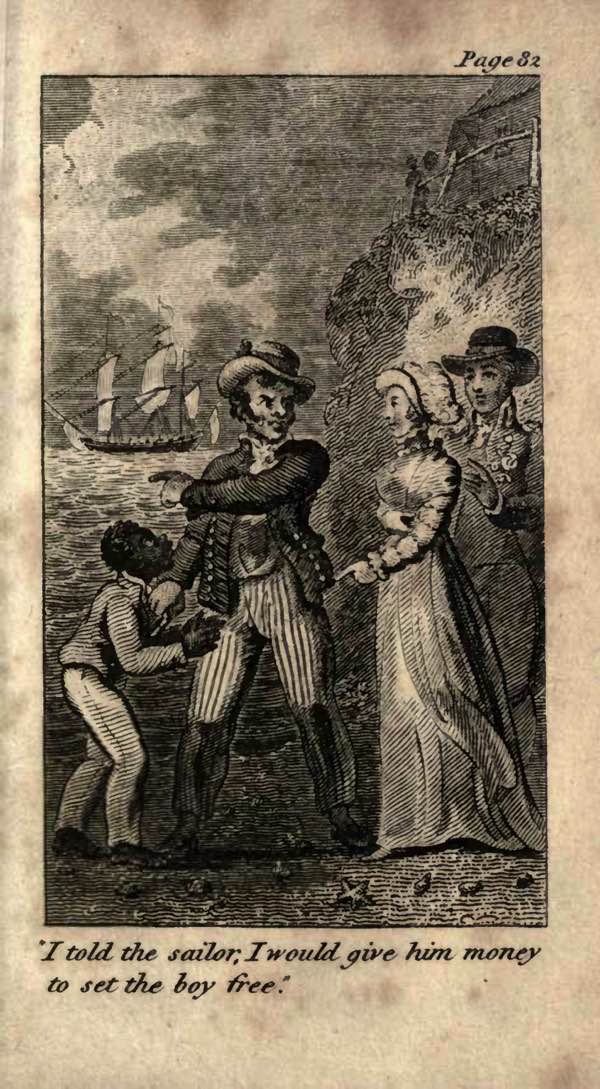
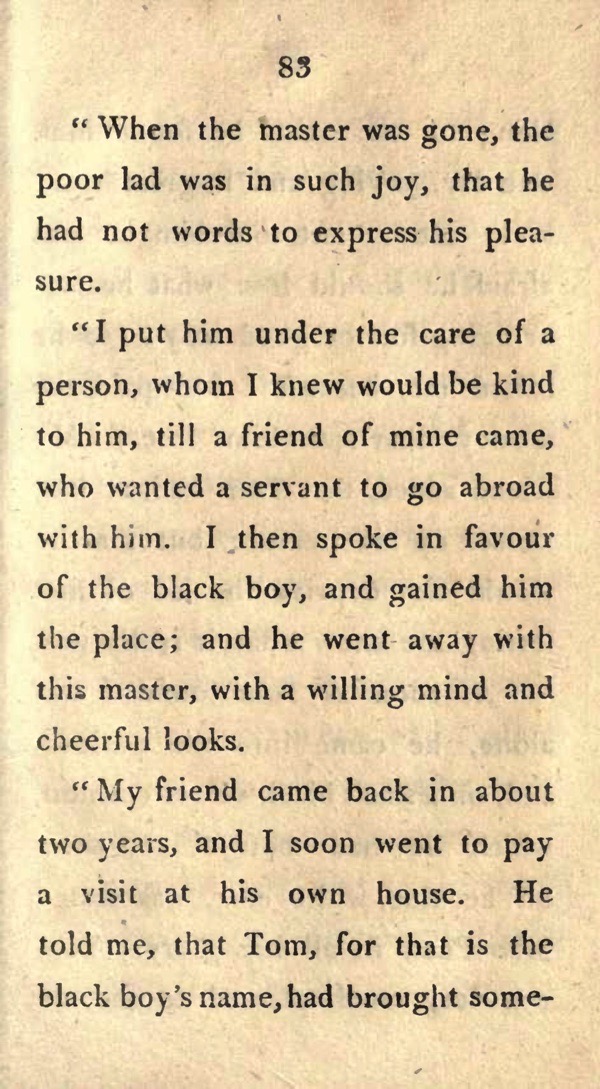
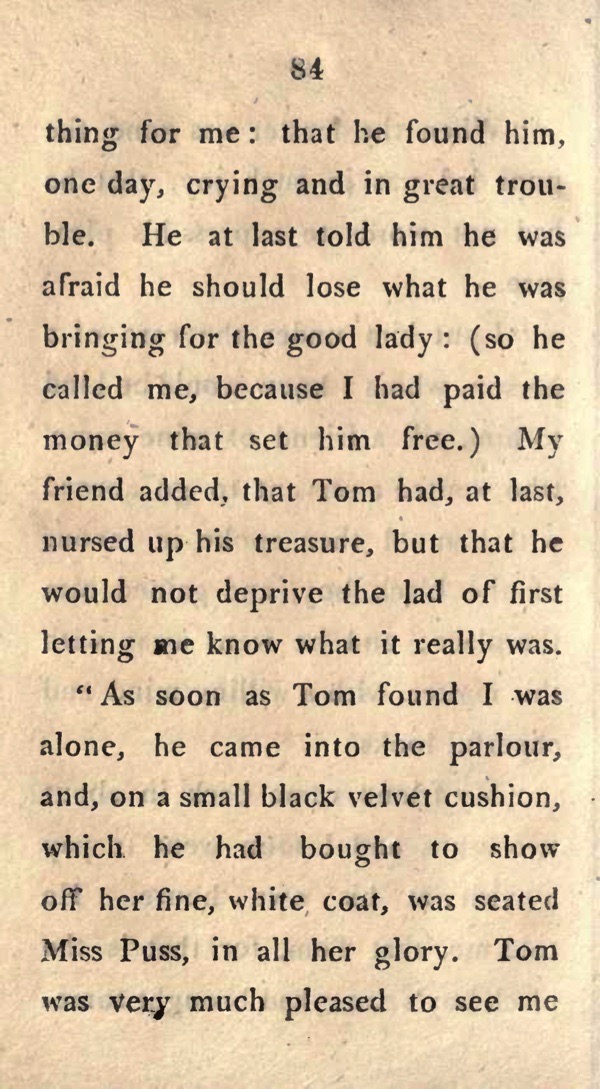
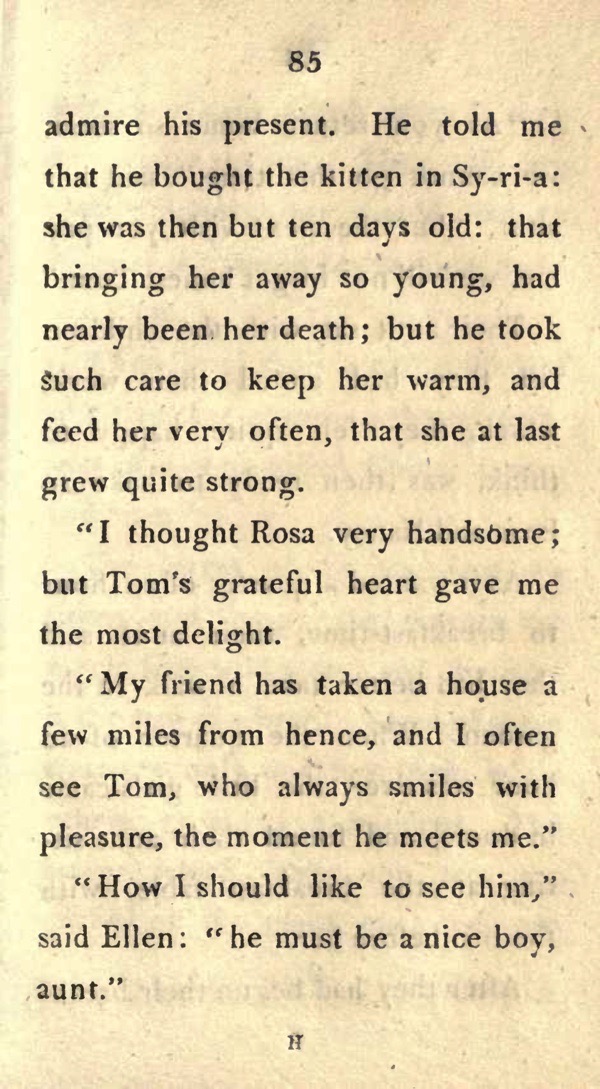
In Maria Hack’s The Little Visitors, published in London in 1815, one of the characters is a young slave. Although you might not expect children’s books of the Georgian era to explore the experience of slavery, some authors did embrace the challenge of discussing it with a young readership.
Even after the slave trade was outlawed by the 1807 Slave Trade Act, it was not until the Slavery Abolition Act of 1833 that it became illegal to own or purchase slaves. Maria Hack’s father, John Barton, had been involved in the Society of Friends to Influence the Abolition of Slavery.
In her book, Tom is a twelve-year-old boy who has been bought by sailors in the West Indies and brought to England, before being rescued from poor treatment and delivered to safety. Unsurprisingly perhaps, the wider industry of slavery is not portrayed in detail but Tom’s presence in the story as a credible and charismatic character reveals the violence of his origins through personal experience.
Maria Hack wrote educational books to provide children with assistance in reading, offering information about the world and moral guidance. This ‘conduct of life’ genre was popular among women writers and pioneered by Mary Wollstonecraft in the late eighteenth century. The protagonists are children of the same age as the readers in familiar situations they could recognise and relate to.
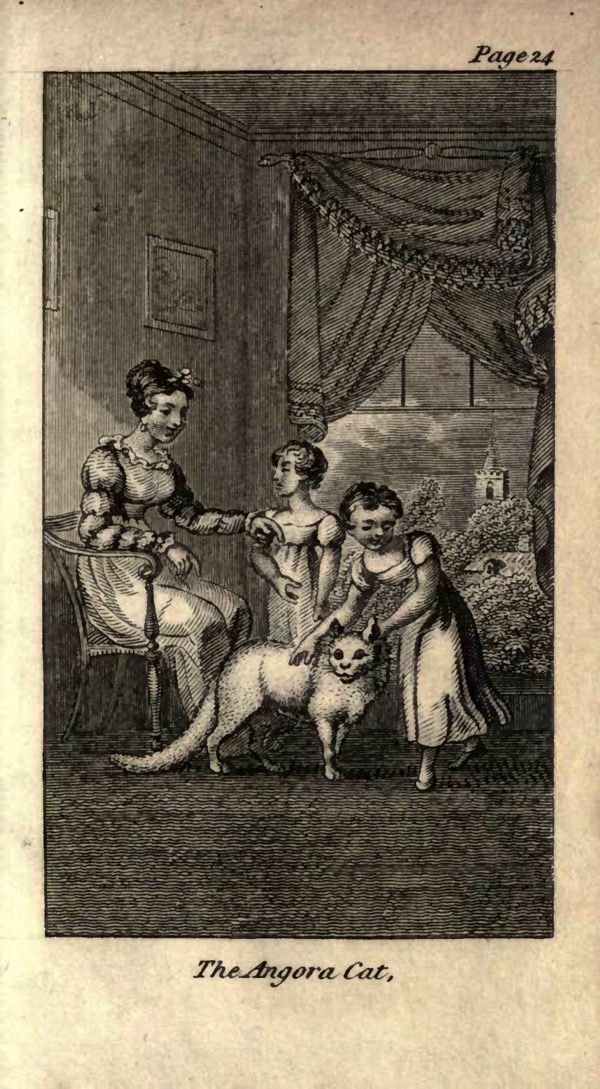
The Little Visitors is the story of two sisters, Ellen & Rachel, who visit their learned aunt’s house in the countryside. Through a series of dialogues with their erudite aunt, the girls learn about horticulture, the origin of household goods such as tea and coffee and how the poor sustain themselves through working in farming and domestic service. By the standard of modern children’s books, the story is lacking in excitement. But Maria Hack enlivens her tale by introducing an element of mystery in the form of the aunt’s unusual angora cat, Rosa.
Although the girls are curious to know who gave the cat to their aunt, there is never enough time at the end of each day of educational improvement for her to tell them. So the intrigue builds until one morning their aunt is ready to explain that she once rescued Tom, a child slave, who gave her the cat as a thank you present.
The aunt and Tom met by chance in a seaside town, when she heard a child crying out in distress and saw a black boy trying to escape from a sailor. The aunt confronted the sailor and persuaded him to accept money for the boy, then she placed Tom with someone she trusted to treat him with kindness. The protagonists, Ellen & Rachel, never actually meet Tom but his sympathetic representation as a character of the same age as the girls ensures that they and the readers identify with him and his situation.
Growing up in the sixties and sixties, I do not recall much diversity in the children’s books of that era. So while Maria Hack’s story reveals the limitations of her time, we should recognise her initiative in making a black character visible and refusing to erase slavery from her portrayal of everyday life.
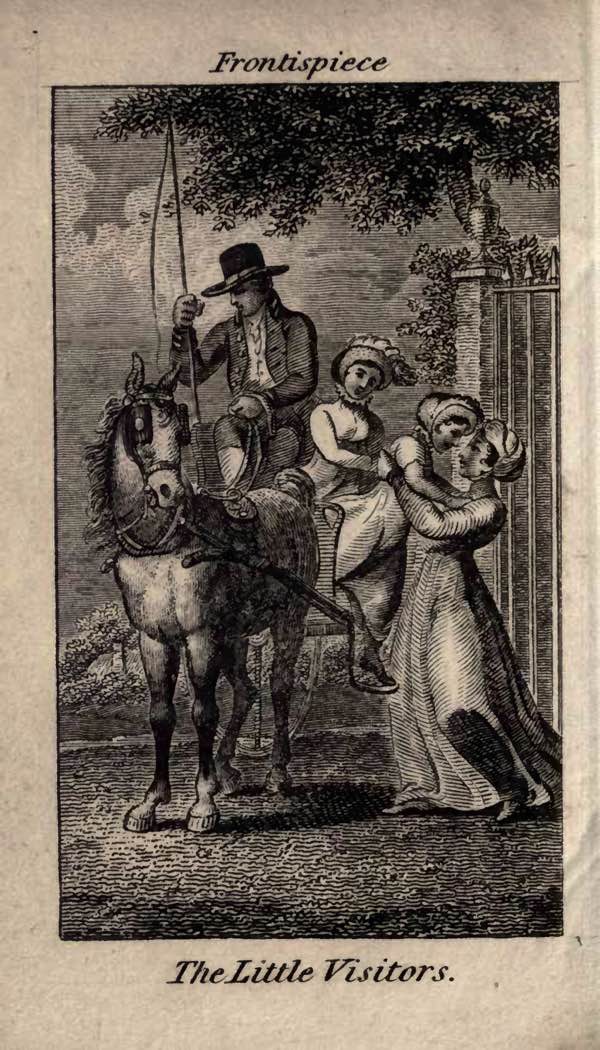
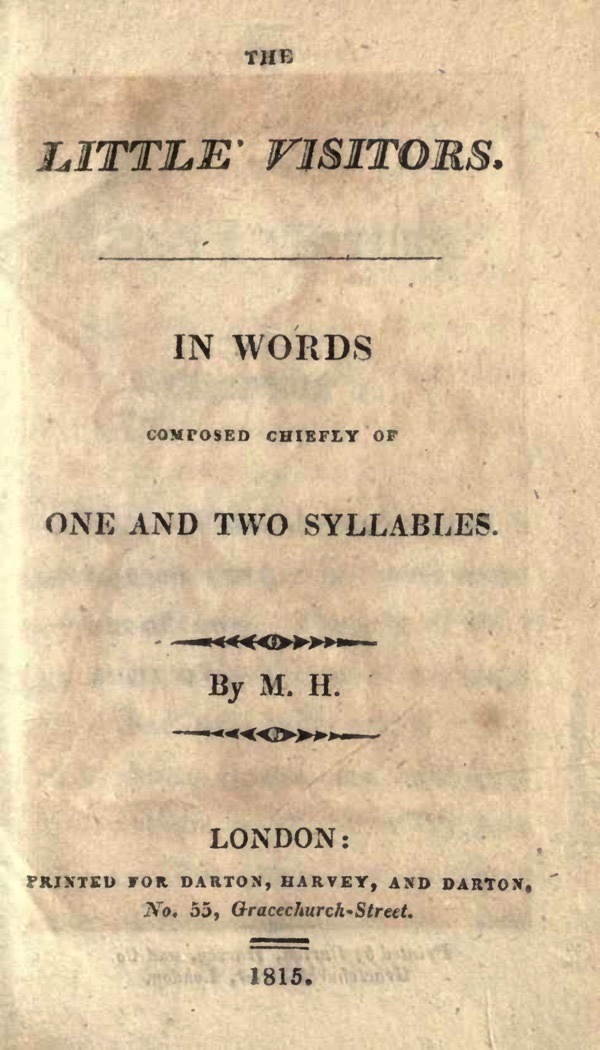
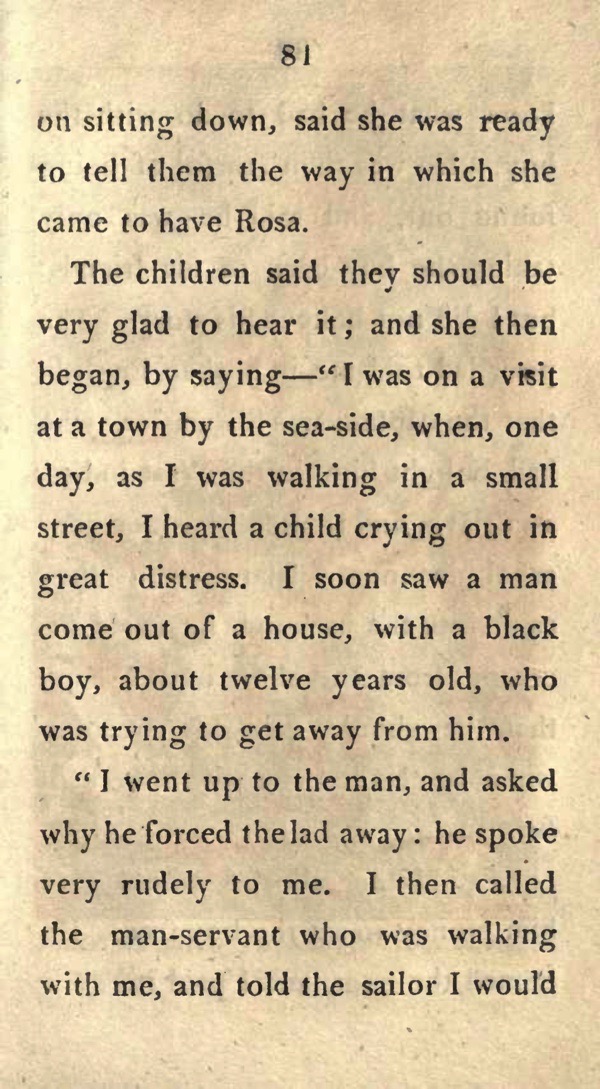
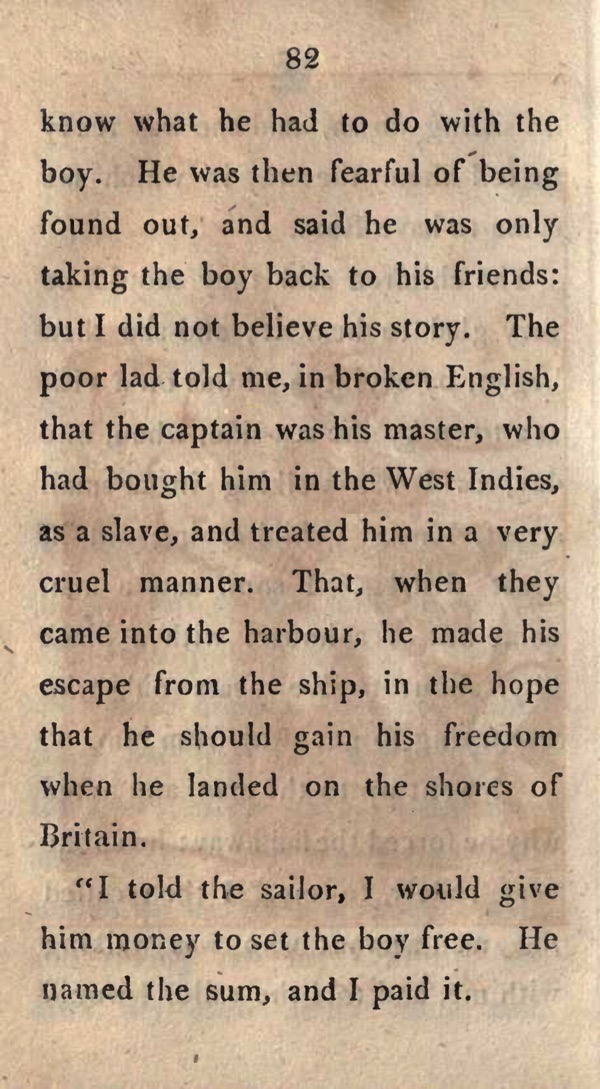
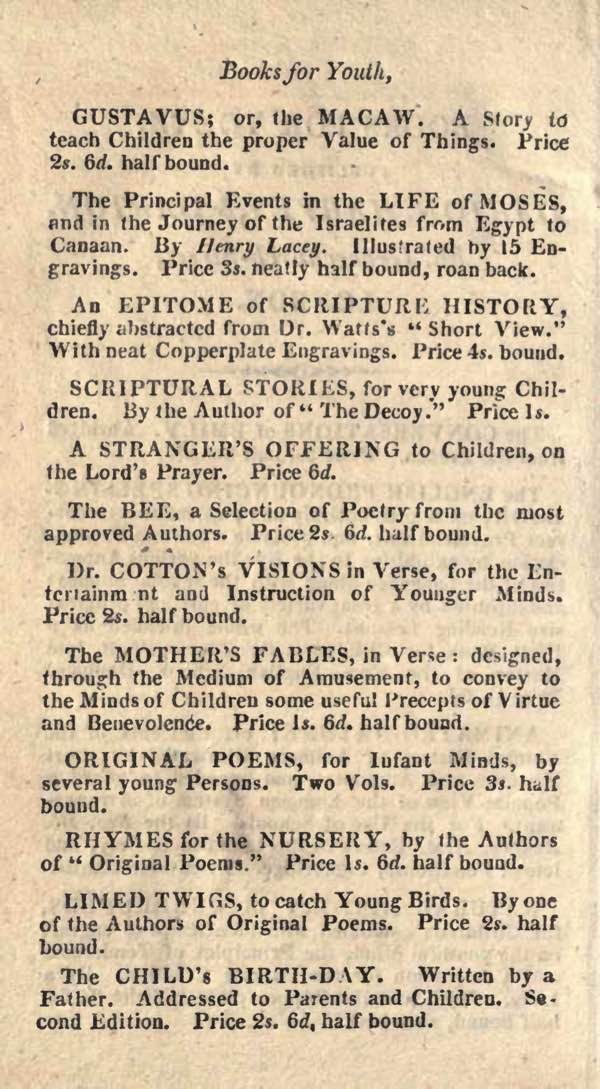
Images courtesy University of California
Sian Rees is the author of PLANTING DIARIES, Gardens, Planting Styles & Their Origins
You may also like to take a look at
Adam Dant’s London Rebus

Click on the rebus to enlarge
Contributing Artist ADAM DANT created this ingenious puzzle to amuse you while staying at home this weekend. Here are the answers:
Marylebone, Harley Street, Telecom Tower, UCL, Oxford Street, Broadcasting House, Bloomsbury, Hyde Park Serpentine, Marble Arch, Mayfair, Fortnum & Mason, Soho, Ritz, Claridges, Belgravia, Victoria, Buckingham Palace, Lambeth Palace, The Mall, Jermyn Street, Houses of Parliament, Covent Garden, St Giles, Waterloo, The Cut, Somerset House, Holborn, Aldwych, Fleet Street, Blackfriars, Tate Modern, Borough, Cannon Street, St Paul’s, Tower Hill, London Assembly, Bermondsey, Royal Mint, Fenchurch Street, Aldgate, Bank of England, Guildhall, St Bart’s, Barbican, Bunhill, Liverpool Street, Shoreditch, Hoxton, Spitalfields, Hackney, Moorfields, Finsbury, Hatton Garden, St Pancras, British Museum, Clerkenwell.
We received more than thirty correct entries. The twenty readers below were the first to submit their answers and Maps of Spitalfields Life are in the mail to them.
Ele Aaser
Lucinda Acland
Ayla Bedric
Rebekah Bristow
Clare Britton
Andrew Collingridge
Sue Davis
Sarah Dawson
Lucy Fawcett
Richard Fearn
Anne Flavell
Sean Galvin
Peter Halston
Julia Harrison
David Hunter
Martin Peterson
David Rees
Lynn Roffee
Kerry Sewell
John White
You may also like to take a look at

CLICK TO ORDER A COPY OF MAPS OF LONDON & BEYOND BY ADAM DANT
Adam Dant’s MAPS OF LONDON & BEYOND is a mighty monograph collecting together all your favourite works by Spitalfields Life‘s Contributing Cartographer in a beautiful big hardback book.
Including a map of London riots, the locations of early coffee houses and a colourful depiction of slang through the centuries, Adam Dant’s vision of city life and our prevailing obsessions with money, power and the pursuit of pleasure may genuinely be described as ‘Hogarthian.’
Unparalleled in his draughtsmanship and inventiveness, Adam Dant explores the byways of London’s cultural history in his ingenious drawings, annotated with erudite commentary and offering hours of fascination for the curious.
The book includes an extensive interview with Adam Dant by The Gentle Author.
Adam Dant’s limited edition prints including THE LONDON REBUS are available to purchase through TAG Fine Arts
Paul Trevor In Brick Lane, 1978
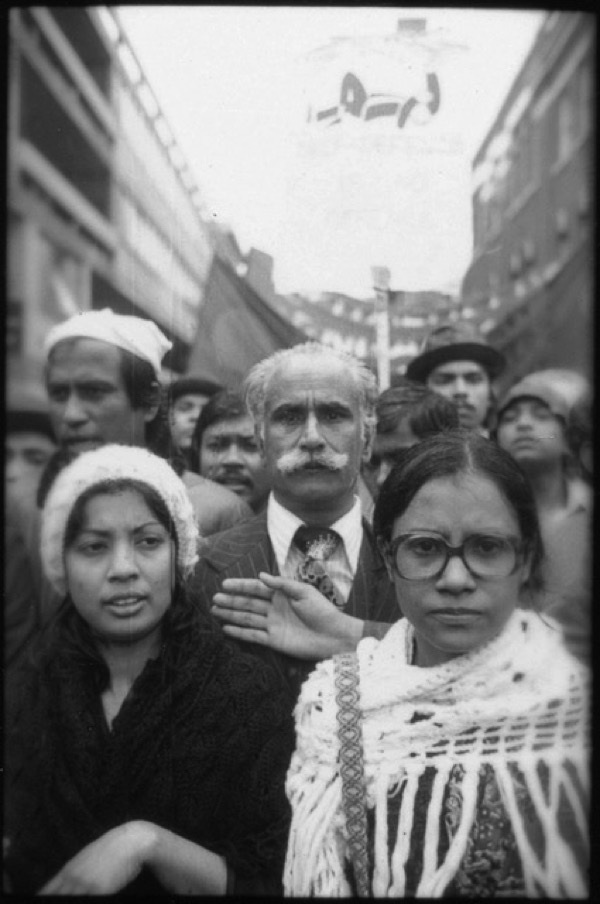
Photographer Paul Trevor captured the drama of Brick Lane during the summer of 1978 when protests erupted after the racist murder of Altab Ali, a twenty-five-year-old leather garment worker, on May 4th.
Now a project is underway to trace the people in these photographs and record personal accounts of this transformative moment in racial politics in the East End when people organised to fight back against racism. The aim is to gather an archive of oral histories leading to an exhibition at Four Corners Gallery in Bethnal Green next year.
If you are in these photographs or you can identify anyone, or you would like to contribute your personal experiences of these events, please email bricklane1978@gmail.com
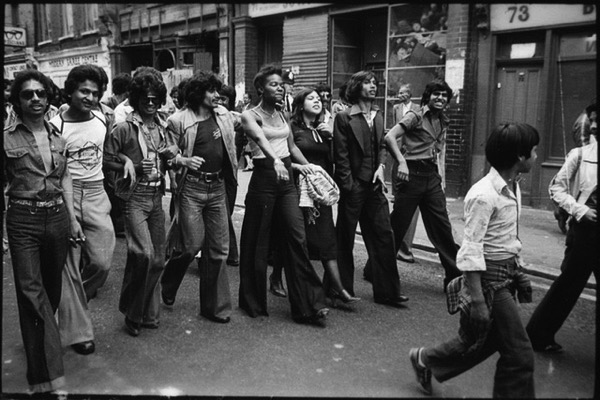
Marching down Brick Lane
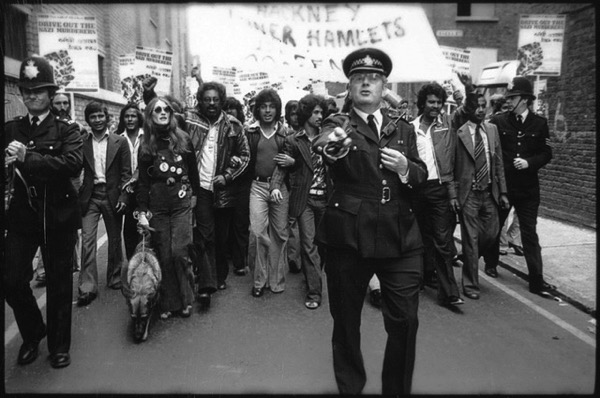
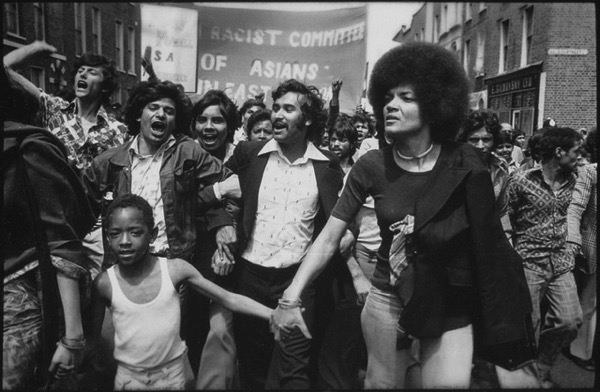
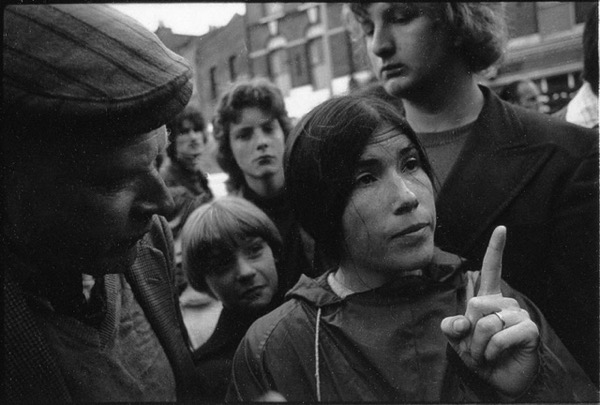
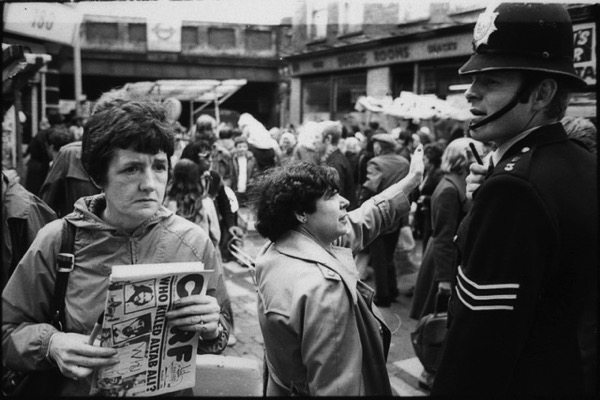
This woman carries a Campaign Against Racism & Fascism paper with the story of Altab Ali’s murder
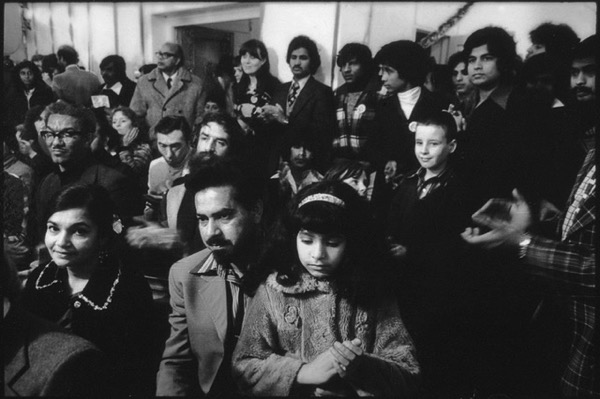
Community Gathering
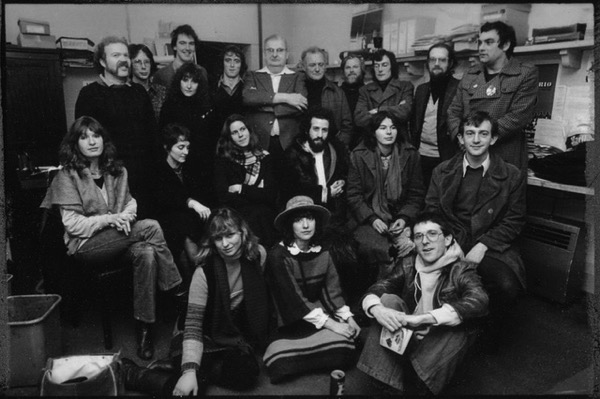
Writers’ Group
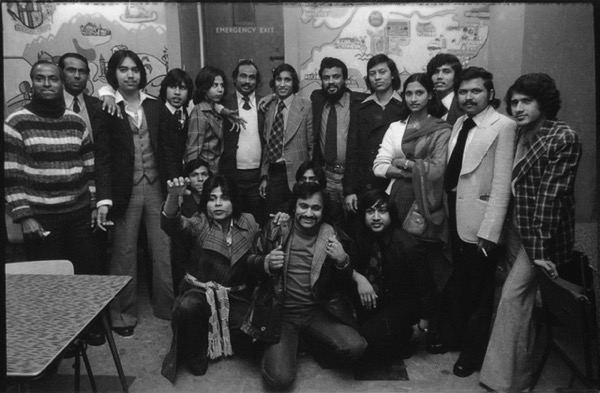
Members of the Bangladesh Youth Front
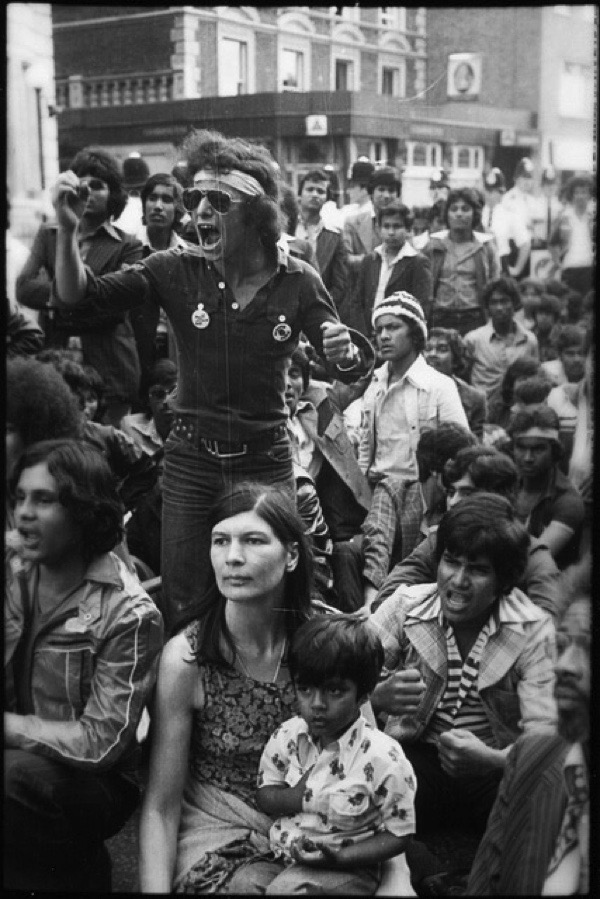
Anti-racist protest in Bethnal Green
Photographs copyright © Paul Trevor
At The Truman Brewery, 1931
Tomorrow is the formal closing date for submitting your comments on the Truman Brewery redevelopment plans for a shopping mall and corporate offices. Click here for more information
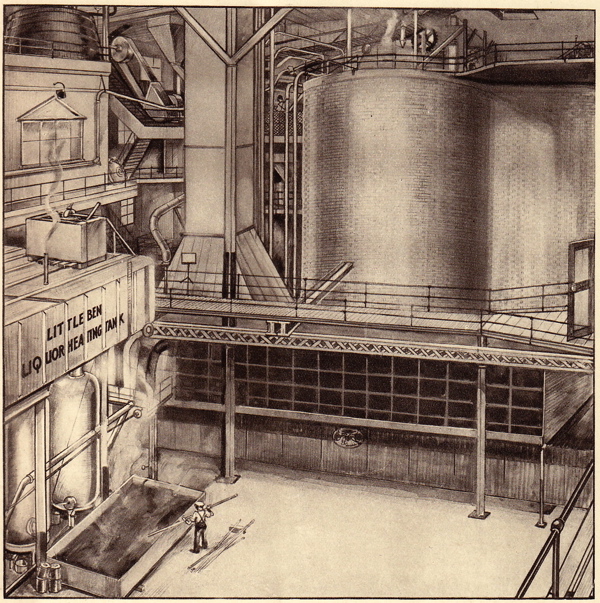
There is a curious drama in the presence of the two brewers in overalls in this picture of the Truman Brewery in Brick Lane, looking like ants by comparison with the tall coppers towering above, each with the capacity for boiling four hundred barrels of liquid. Can you even find the second brewer, high on a gantry up above his colleague busy stirring with a long pole?
This is an illustration of the crucial stage in the brewing process when the hops are added to the boiling “wort,” as the malt infused liquor is called before it becomes beer. Yet in spite of the awe-inspiring modernity of this vision, you can still see the smallest of the coppers in the top left corner within the shell of the seventeenth century brewhouse, itself enclosed by the vast brewery that grew up around it.
The contrast between the heroic scale of the brewing operation and the figures of cloth-capped workmen looks absurd today. The industrialisation of the process which this sequence of pictures celebrate is unremarkable to us, it is the presence of the wooden barrels and use of horsepower that we find exotic. This is a quaint English modernity which has more in common with W. Heath Robinson than Fritz Lang. The agricultural illustrations of the cultivation of barley show a haywain reminiscent of John Constable’s work and stooks of corn upon the hillside as you would see in a landscape by Samuel Palmer.
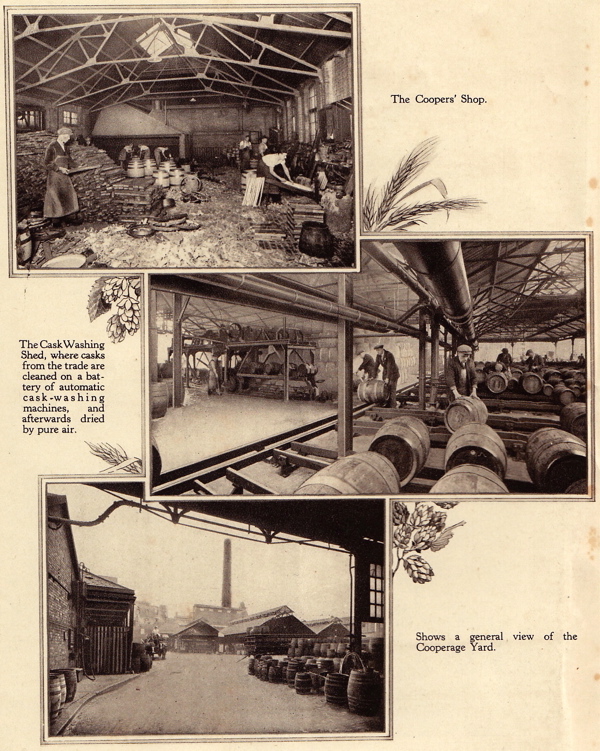
These intriguing pictures were created as a supplement to The Black Eagle Magazine, published by Truman Hanbury & Buxton in 1931, and grant a rare glimpse into the working life of the brewery that flourished here for over three hundred years.
Yet, although these pictures were designed to elucidate the brewing process, in fact they merely serve to romance the alchemical mystery even further. The text of the accompanying brochure contains some elegant obfuscation too.
“Living things have ever an individuality of their own which defies mere rule of thumb government. Brewing is not merely an elaborate process of manufacture, but it includes in it the application of man’s brain power as scientist and technician, to guide the processes of nature, and to help understand something of life’s basic but baffling problems: food, health and clean surroundings.”
These artists’ impressions seem to imply that the brewery contained another reality, stranger the outer world and containing magical possibilities. A notion enforced by references to the use of a Jacob’s Ladder, Archimidean Screw and Dust Destroying Plant, while the language of “sparging” the “wort” evokes a universe as bizarre as anything Tolkien imagined.
Yet it was all real, a discrete society with its own arcane language and culture that evolved during three centuries in Brick Lane until it modernised itself out of existence. What touches me in these curious pictures are the small human figures – often hidden or partially concealed in the background – and the few artefacts on their scale, the sinks, buckets, barrels and jugs, which appear miniature beside the industrial scale brewing equipment.
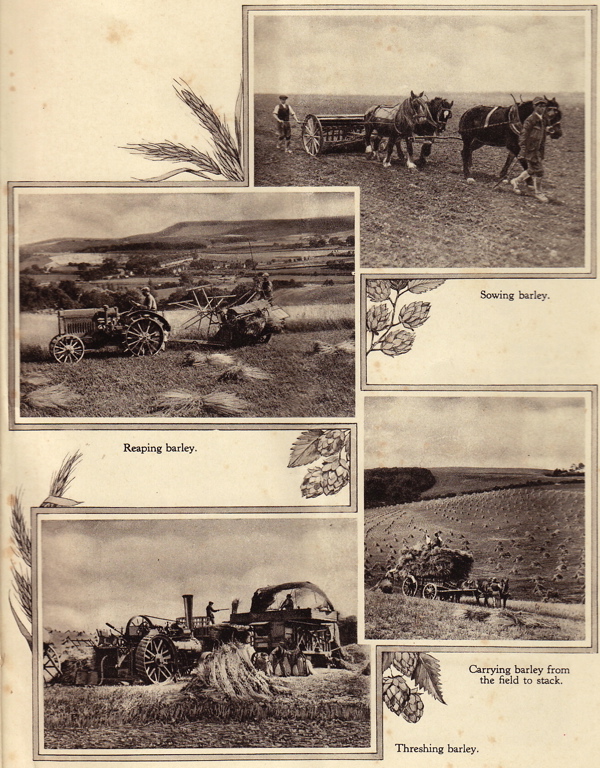
A mixture of machinery and horsepower was used in the production of barley in 1931
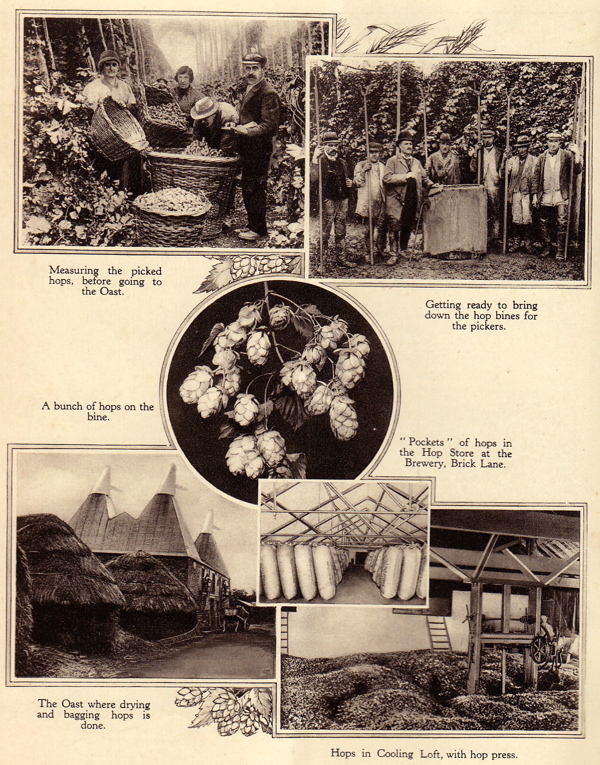
East Enders travelled down to Kent each year to work as hop pickers
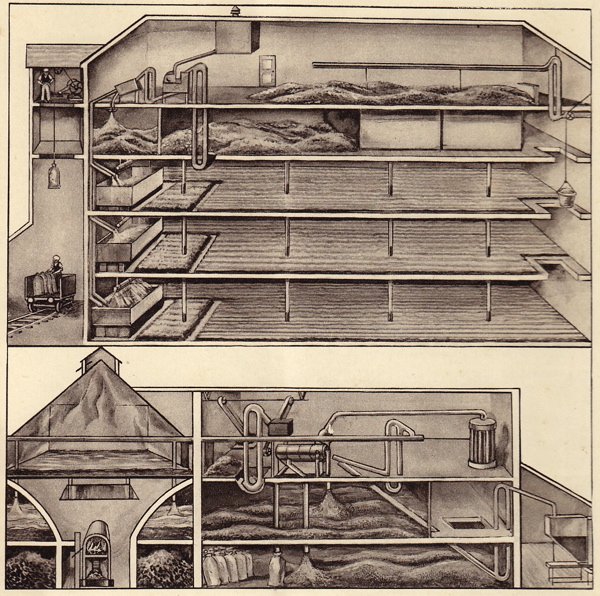
Barley arrived at the maltings, where it was hauled up to the top storey, spread out onto the floor and covered with water, turned daily for ten to twelve days, and thinned out when it began to germinate. Then the barley was transferred to the malt kiln and heated until it reached two hundred degrees farenheit. The malt, as it now was, came from the kiln and was cooled before being stored.
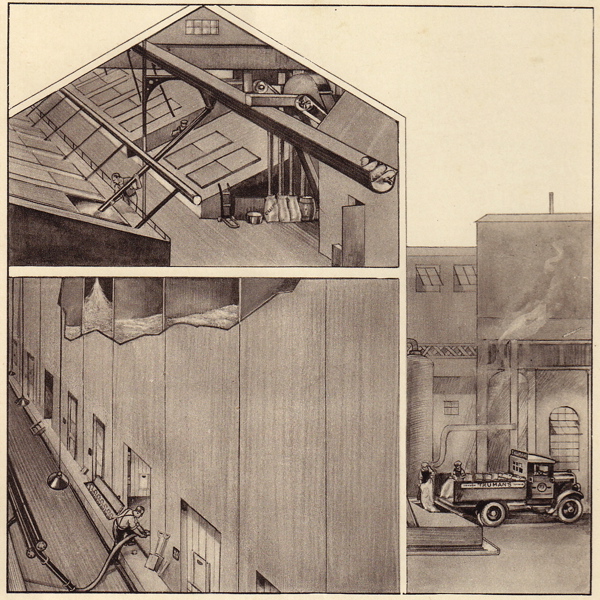
On the right you can see the malt is being delivered at the brewery in Brick Lane, then elevated to the Malt Loft by means of a Jacob’s Ladder, which you can see top left, and distributed by means of a screw to malt bins with a capacity of 12,000 quarters. At the bottom, you can see the malt being transferred from the bins for the day’s brewing by means of an Archimedean Screw. The movement of the malt caused dust to rise and thus a connection with a large dust destroying plant was required.
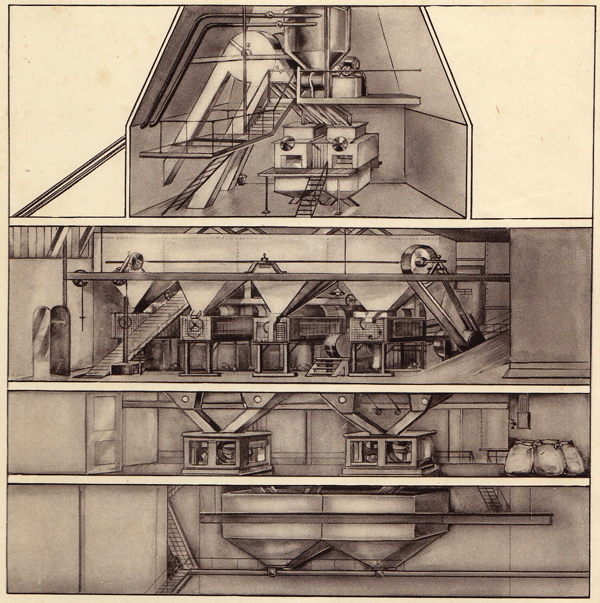
The malt was received from the malt bins in the malt tower and weighing room at the top of this picture, before being passed through the malt screens on the floor below to remove any foreign matter. Then the malt was weighed again before going into the hoppers beneath, from whence it was again lifted by suction to the tower in the new brewery.
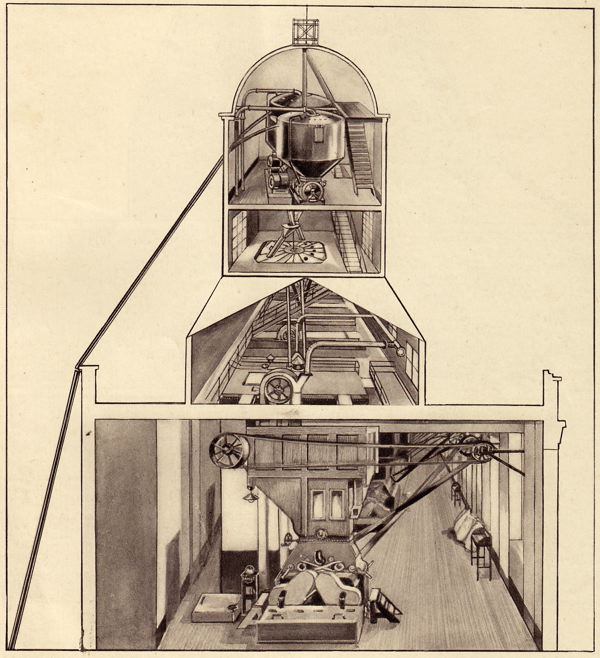
This is the malt tower, from where the malt was distributed down through various blending hoppers and then ground in the malt mills below.
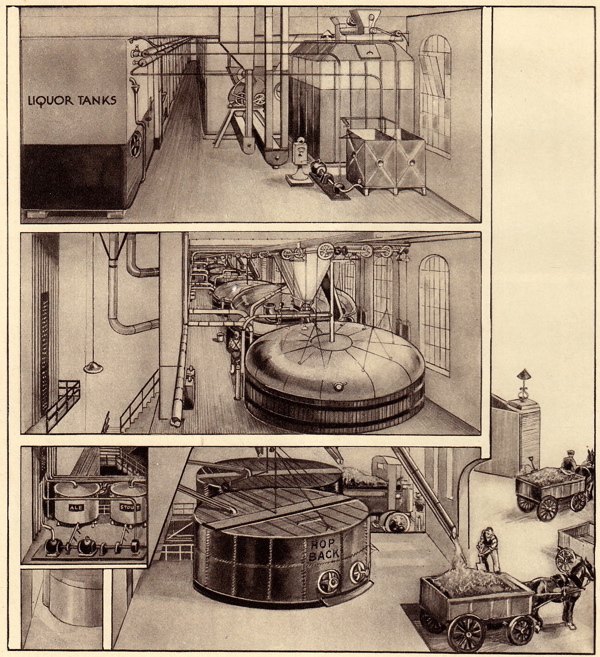
In the top picture, the malt passes to the grist cases ready for the mash tun. In the next picture you see the mash tun stage. On entering the mash tun, the malt was mixed with liquor, allowed to stand and then “sparged” at a rate of one hundred and twenty barrels per hour to create a substance resembling porridge. The resulting liquid, referred to as “wort” was run off into the receivers you can see bottom left, labelled ale and stout, while on the right you can see the used malt being removed by farmers. The wort was then boiled in the coppers, that you see in the picture at the very top, where the hops was added.
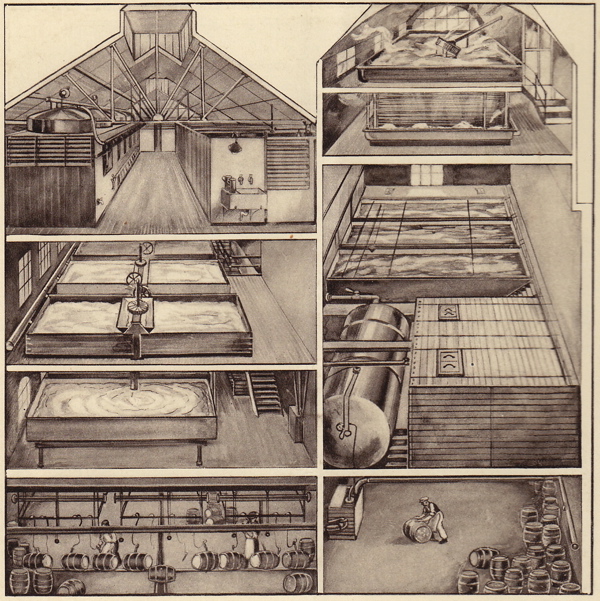
In these pictures you see how the wort was pumped from the coppers through the refrigerator room at the top and then into the fermenting squares on the floors below where the yeast was added and fermentation took place. Finally, the yeast was collected in the vessel in the top right and the beer was run to the racking square and put into casks.
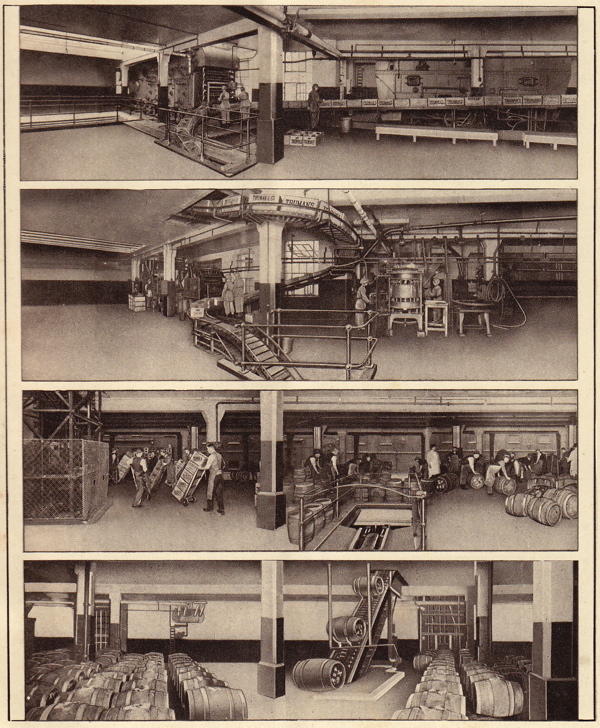
Above, in descending order, you see the bottle washing floor, the bottle filling floor, the loading-out stage and then the barrels in the cellars ready for loading.
You may also like to read about
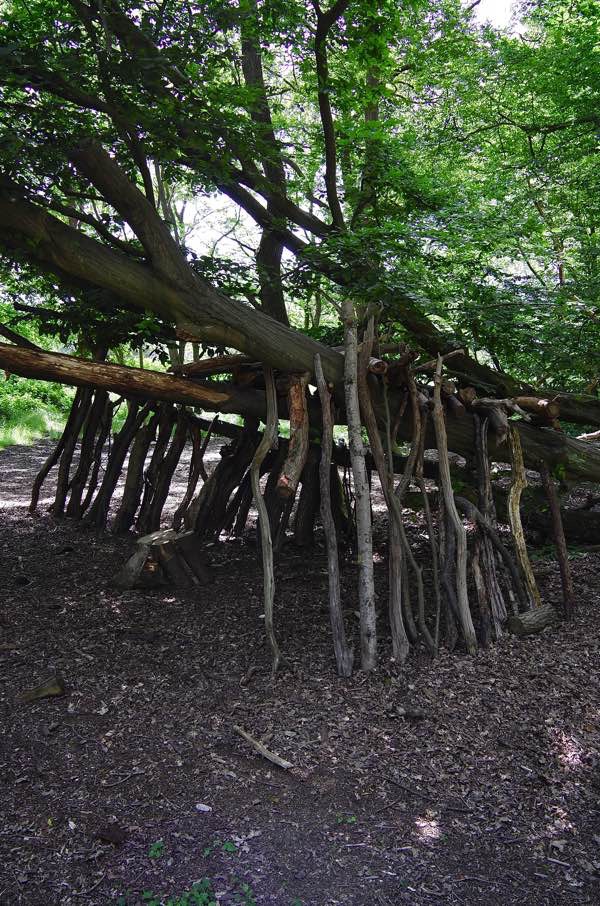
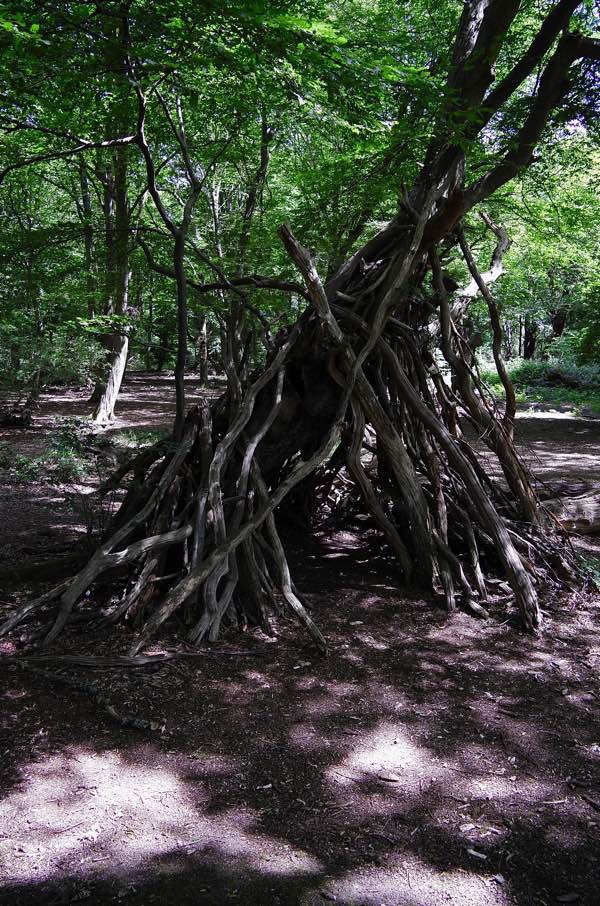
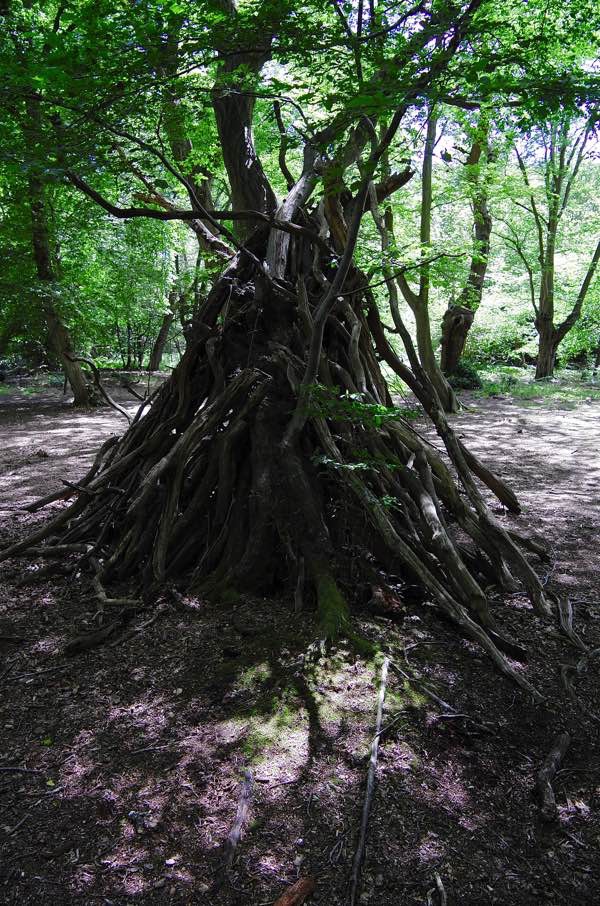
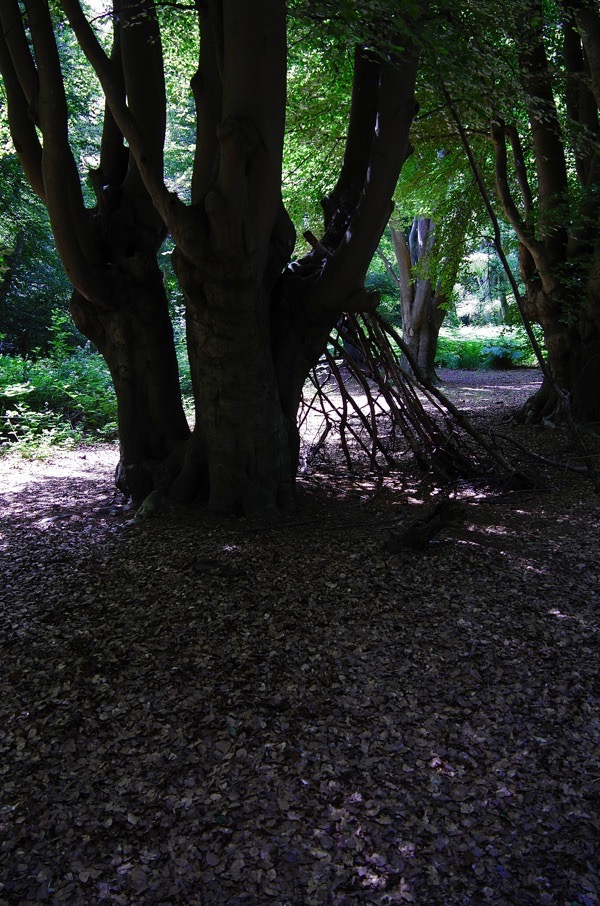
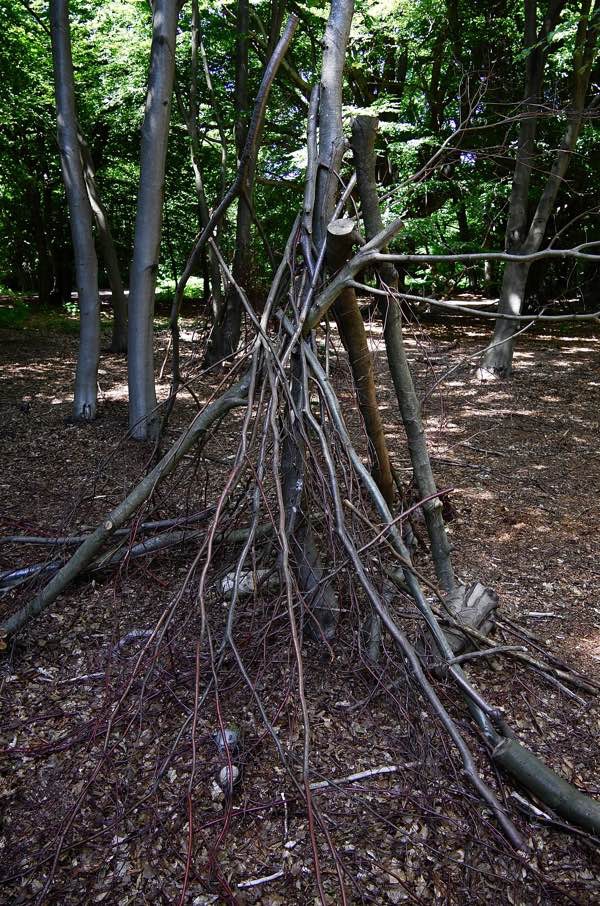
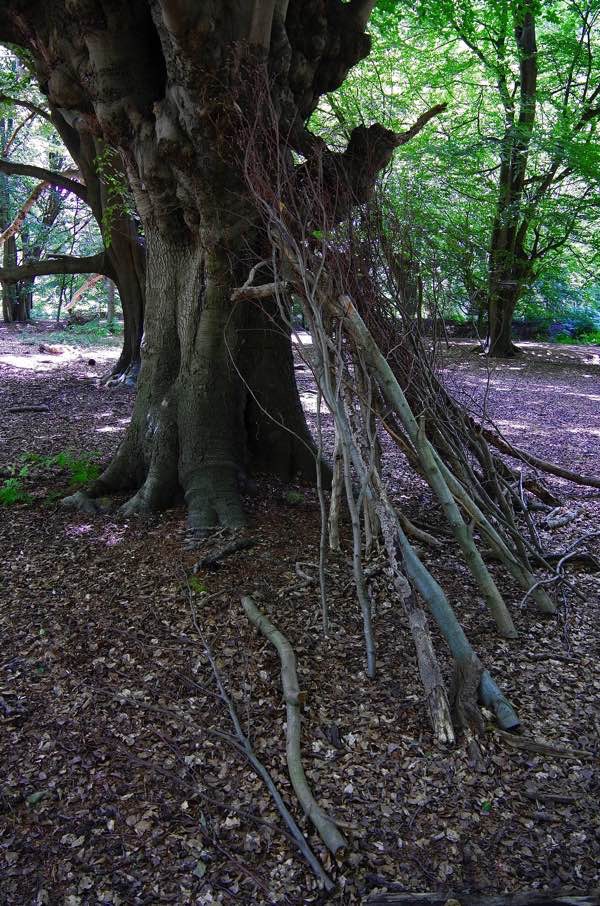
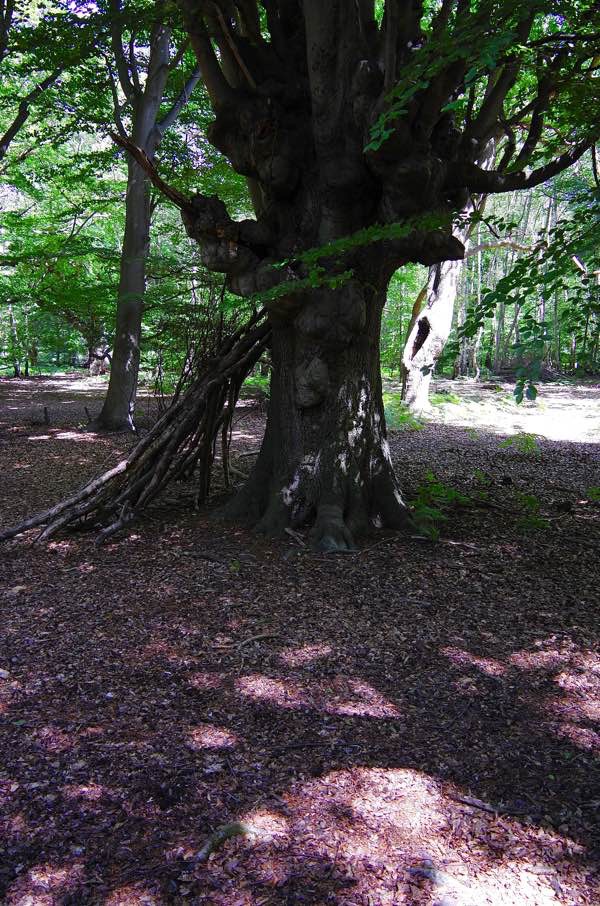
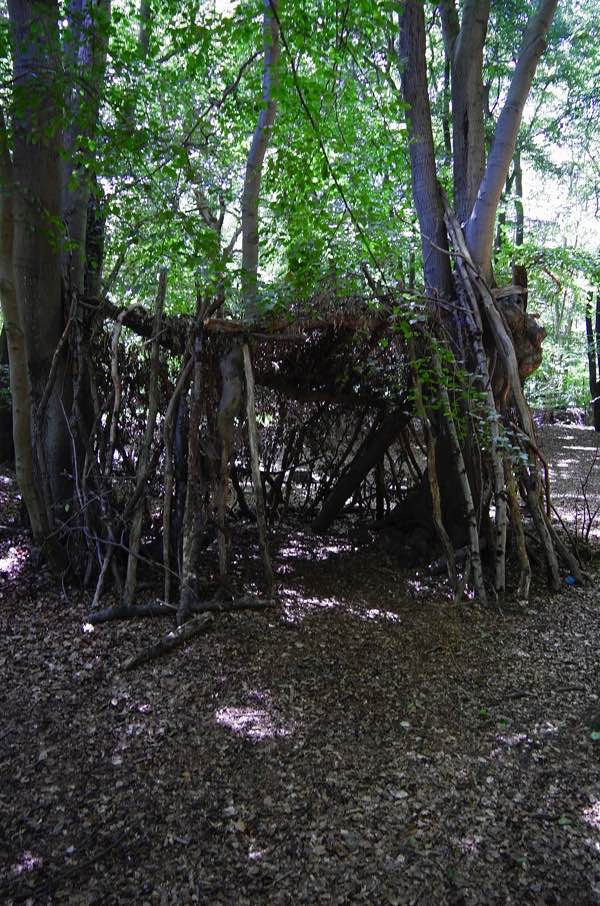
The Mysterious Tree Huts Of Epping Forest
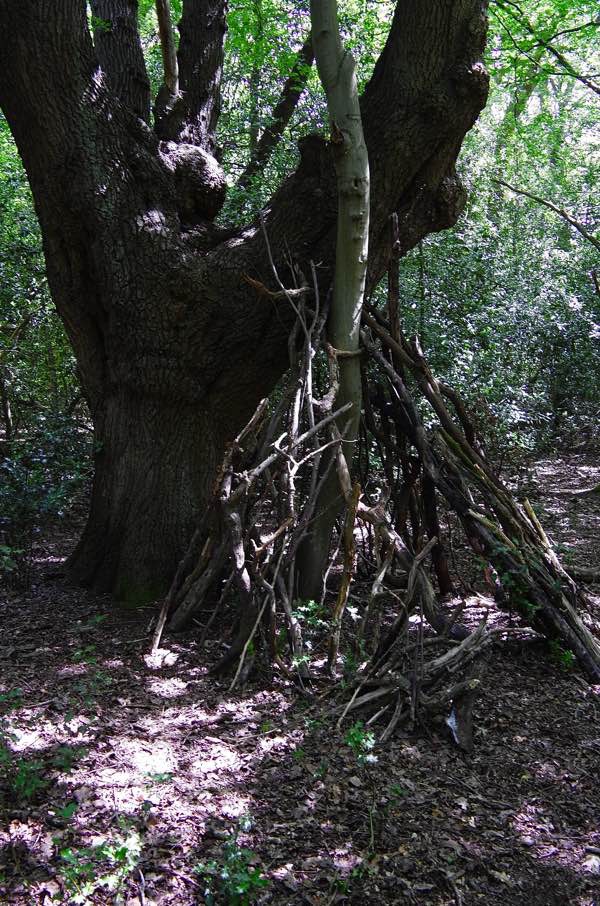
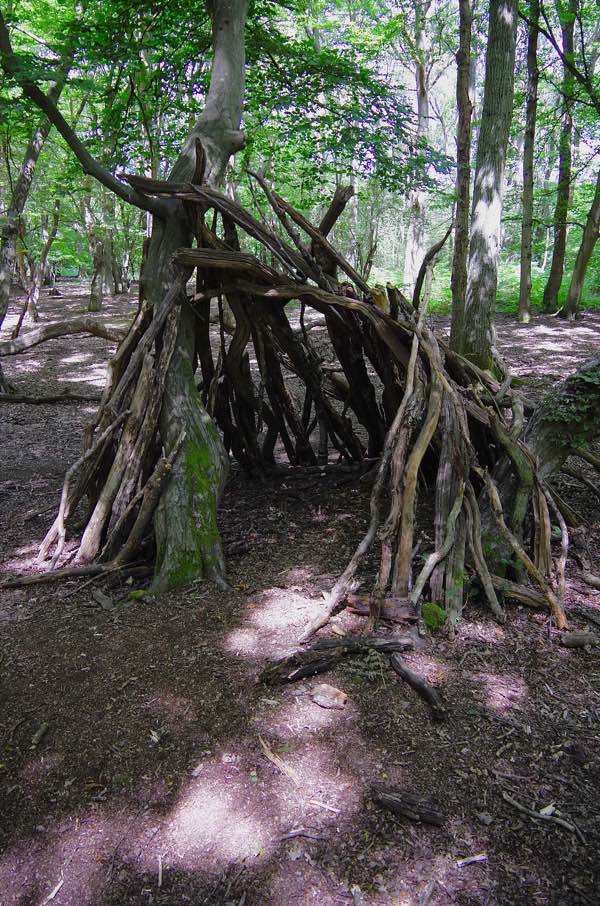
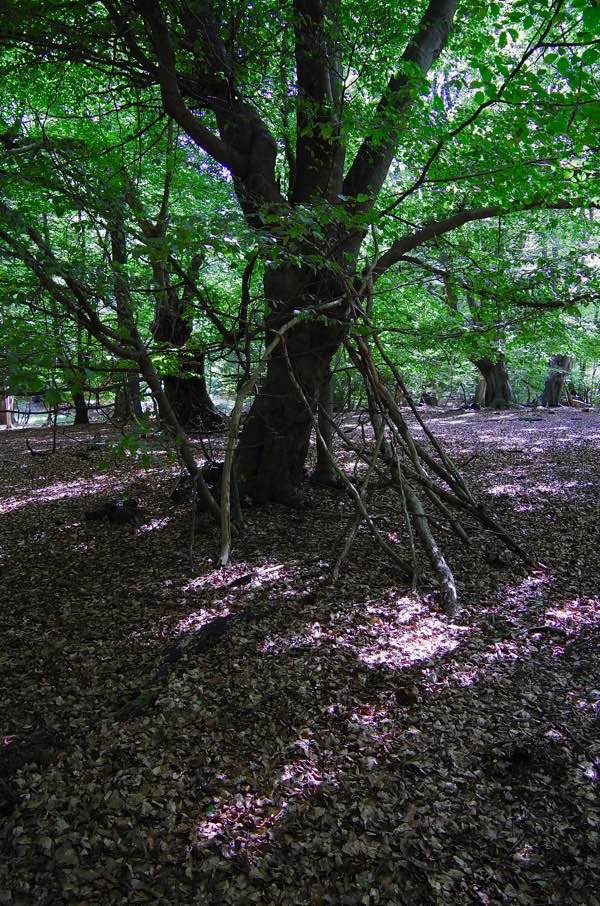
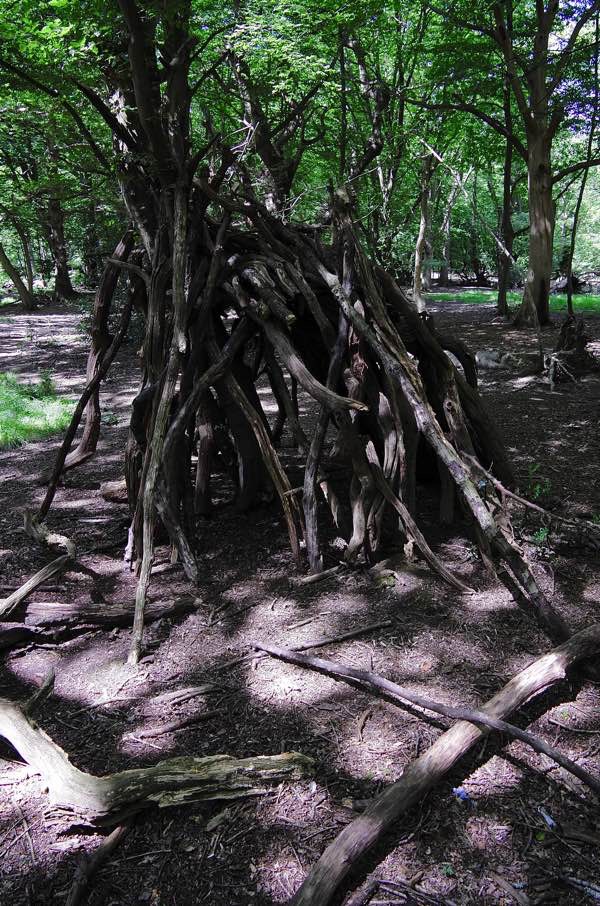
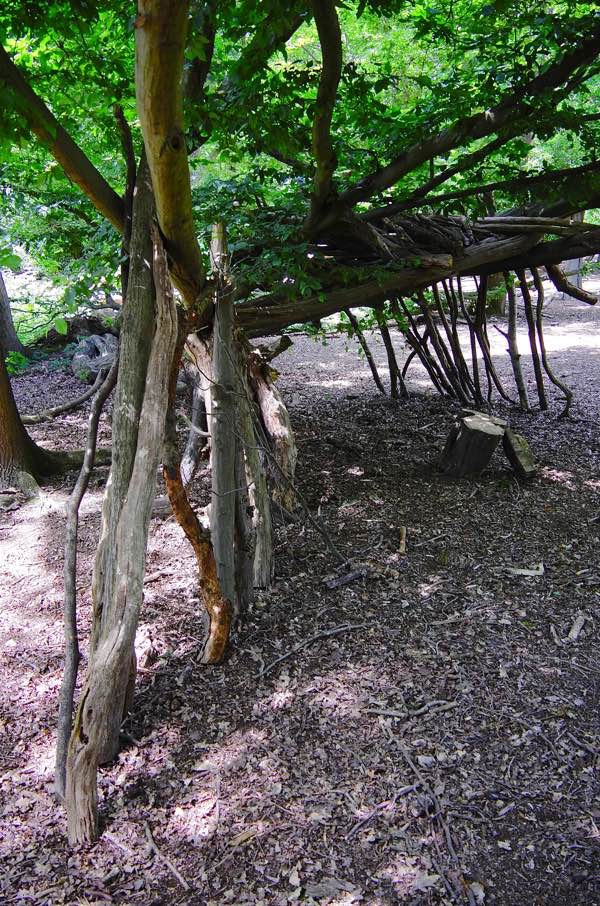
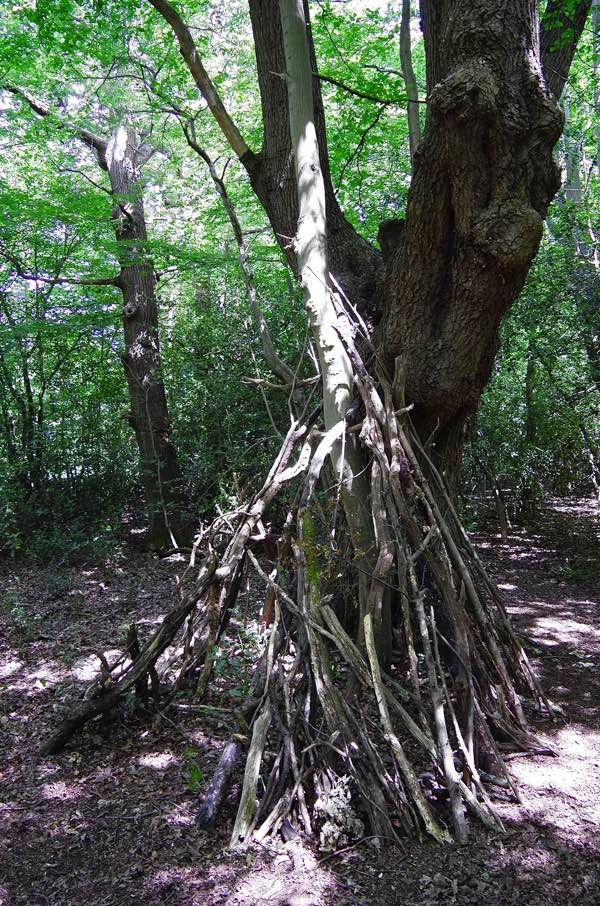
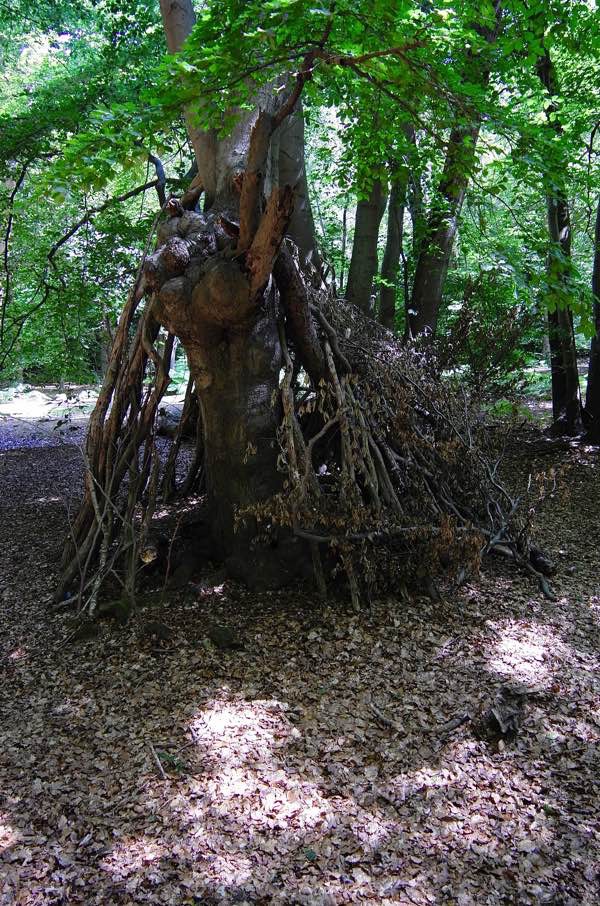
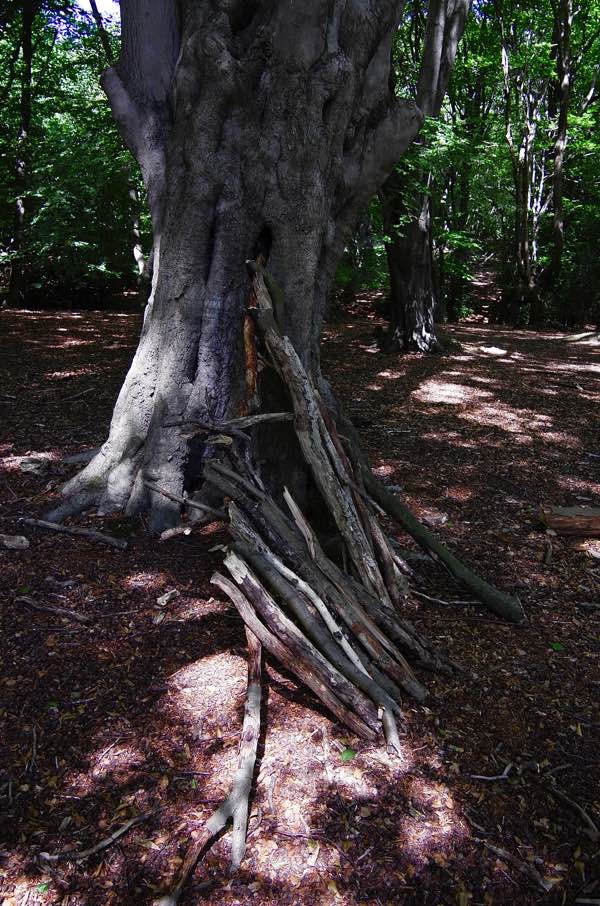
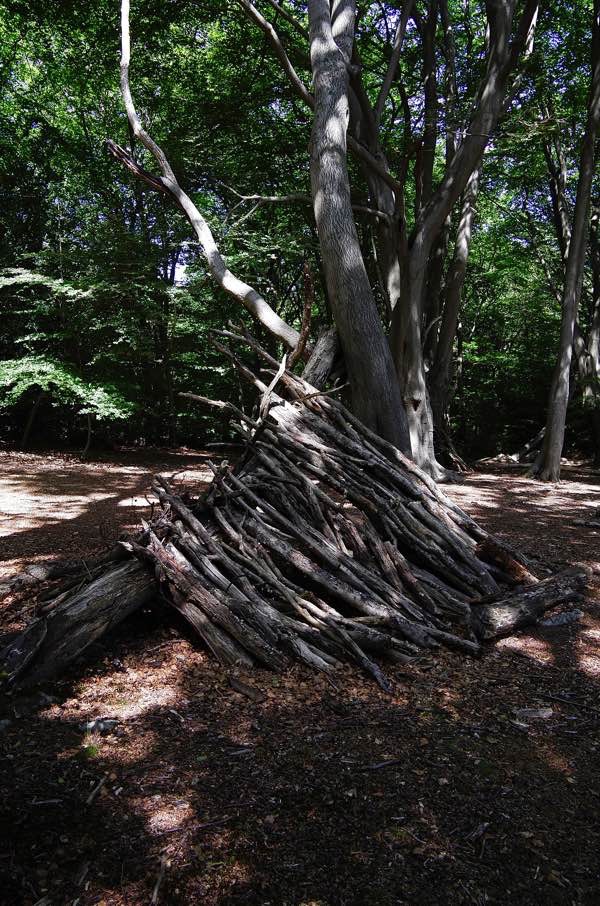
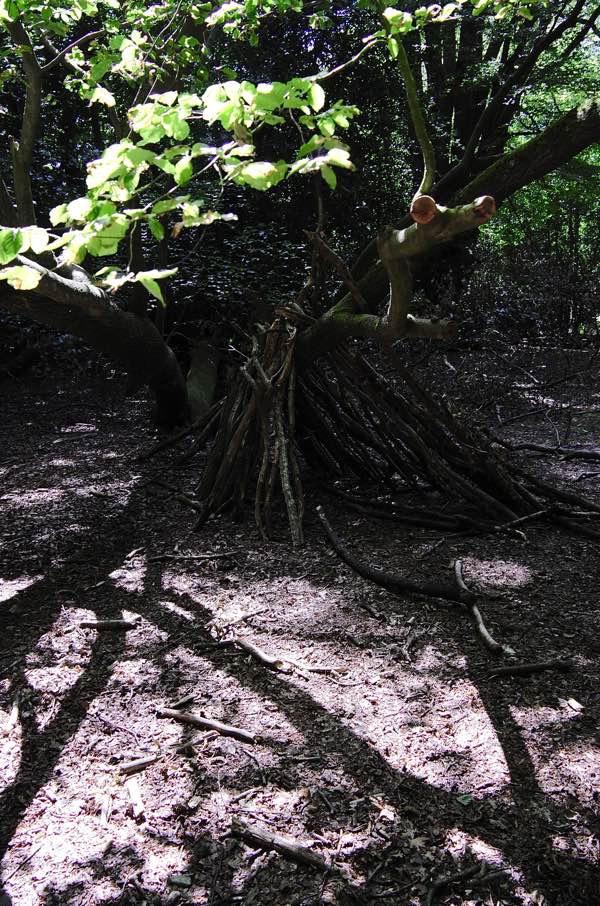
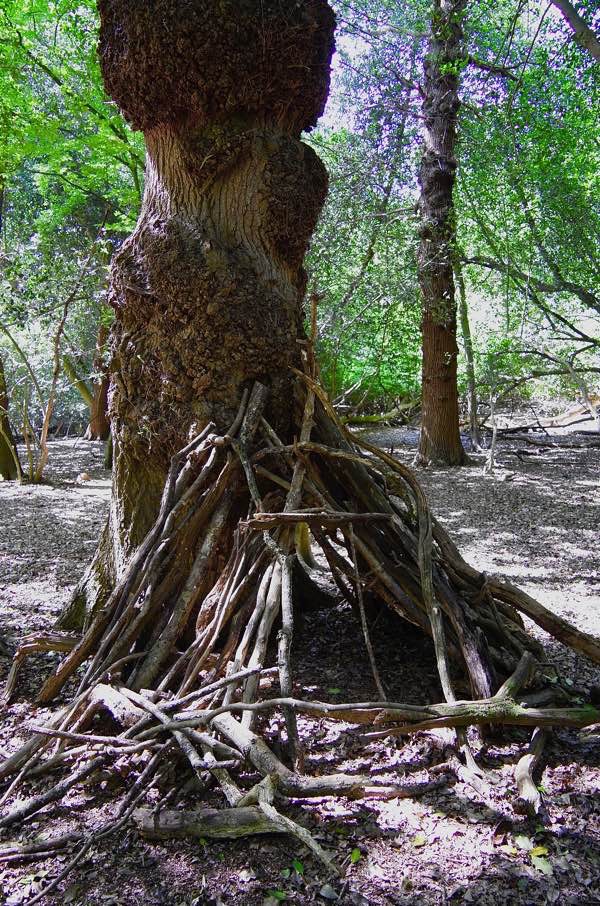
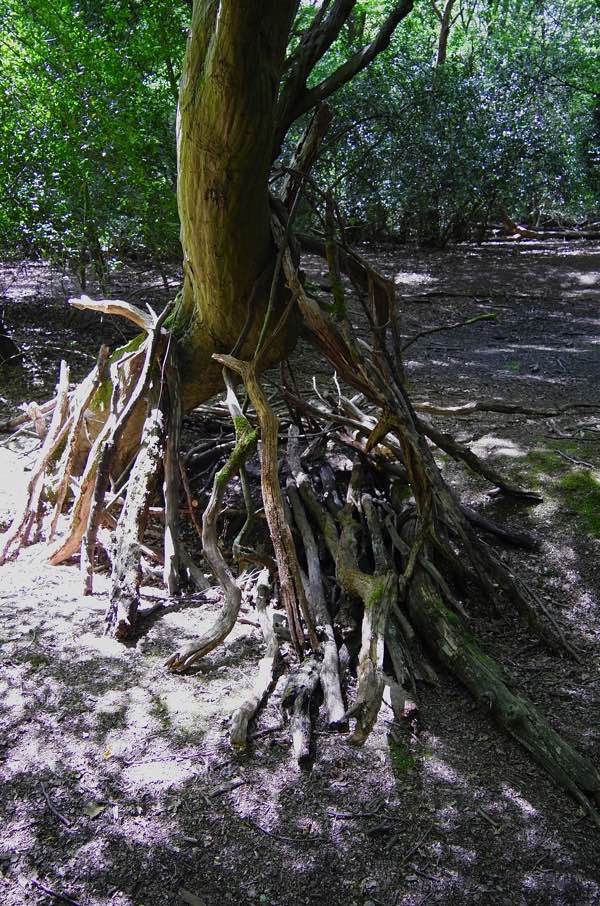
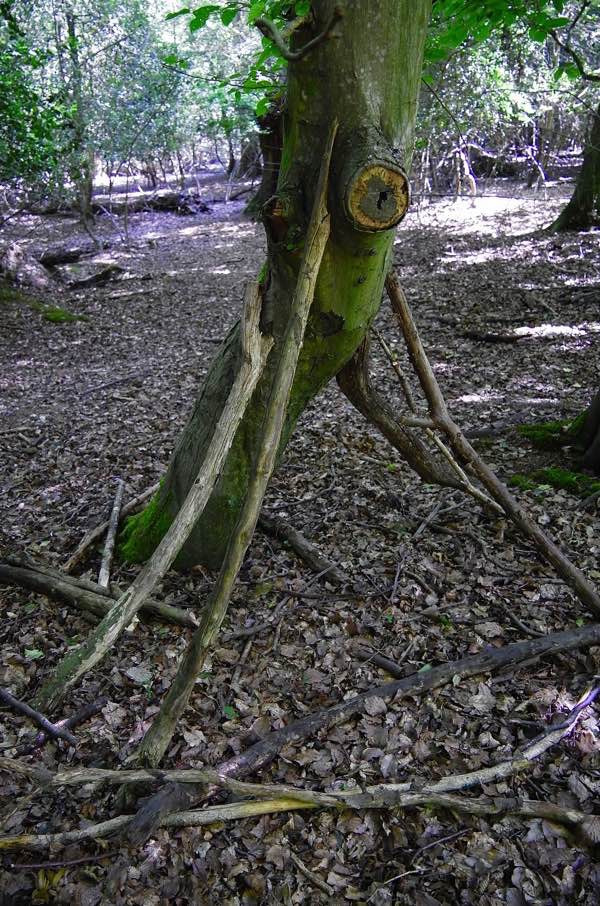
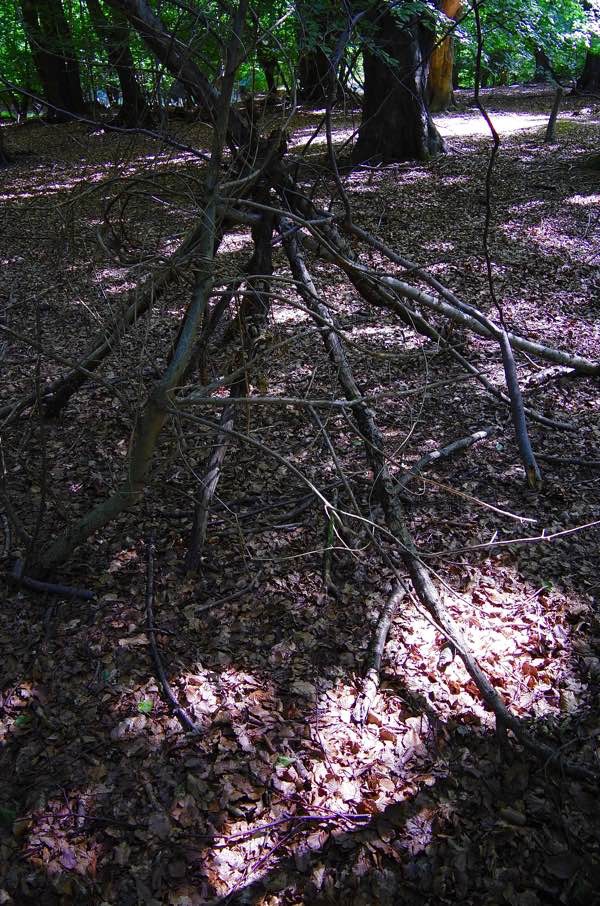
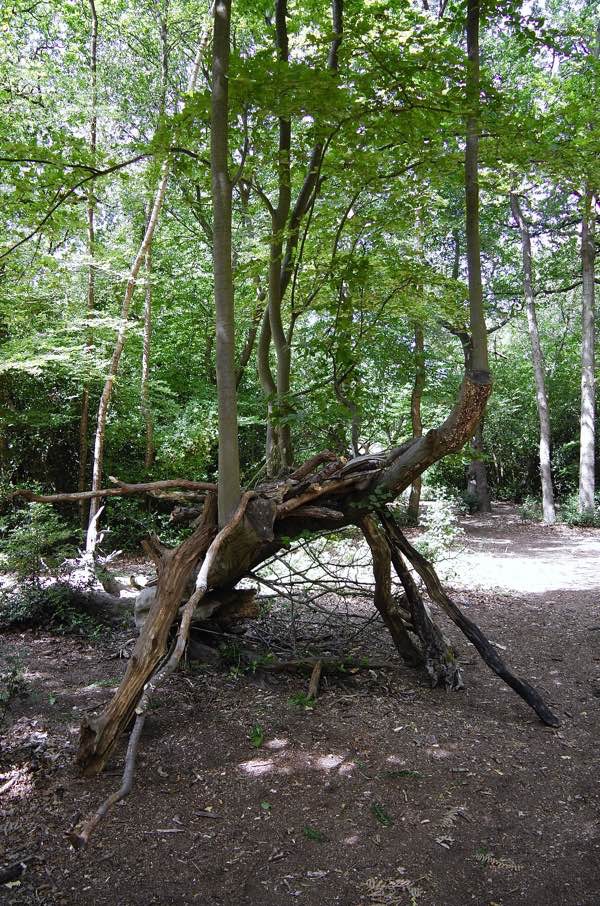
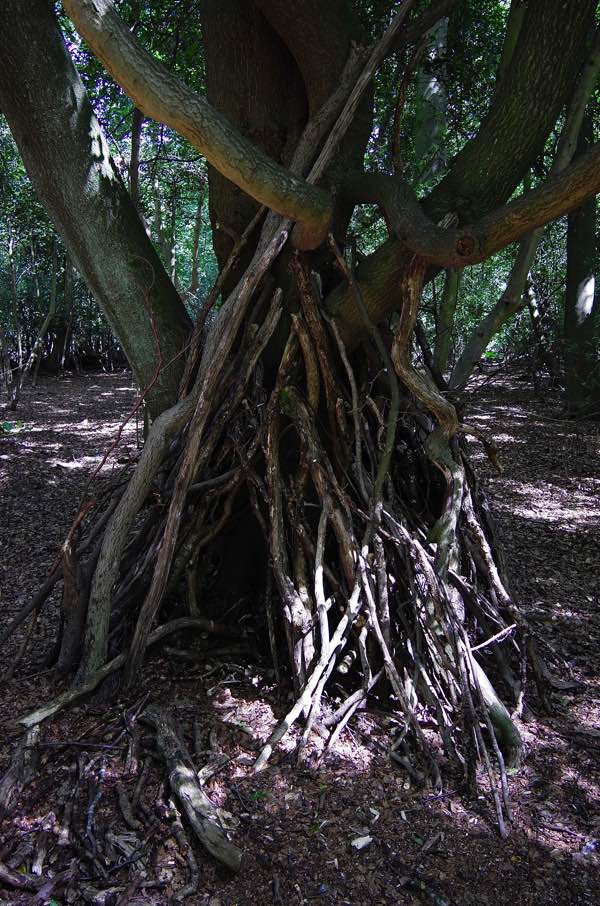
Who can resist the lure of the forest at Midsummer? Since Epping Forest is a mere cycle ride from Spitalfields, I paid a visit this week to seek refuge among the leafy shades. In the depths of the forest, I came upon these makeshift tree huts which fascinated me with the variety and ingenuity of their design.
Who can be responsible? Is it children making dens or land artists exploring sculptural notions? Clearly never weatherproof, they are not human habitations. I wondered if the sprites and hobgoblins had been at work constructing arbors for the spirits of the forest. But then I remembered I had seen something similar once before, Eeyore’s hut at the edge of the Hundred Acre Wood.
Some are elaborate constructions that are worthy of architecture and others merely collections of twigs which tease the eye, questioning whether they are random or deliberate. They conjure an air of ritualistic mystery and, the more I encountered, the more intrigued I became. So much effort and skill expended suggest deliberate purpose or intent, yet they remain an enigma.
You may also like to take a look at