The Barbers Of Spitalfields

Spitalfields is full of barbers, though you might not realise it at first because there are only a couple on Brick Lane – where, coincidentally, Sweeney Todd was born at number 85 in 1756. A foray into the sidestreets reveals more, and a stroll over towards Bethnal Green or down to Whitechapel will discover others nestling in alleys and appropriating unexpected spaces.
Thankfully, most barbers remain resolute as small personal enterprises that speak of the diverse personalities of their owners and the culture of their clientele. I am fascinated by these rare places where men are constantly going to be shaved and trimmed and where, almost uniquely, it is acceptable for men to allow themselves to be vulnerable in a public place, as they submit themselves to the barbers for intimate grooming rituals. Above all, these are masculine spaces, designed for the comfort of men, run by men for men and where women rarely venture. They are utilitarian in appearance by contrast with the decoration of women’s salons, yet I surmise that men are the more frequent visitors to their barbers.
It seems paradoxical that barbers have such large windows – although obviously good light is required for shaving with a cut-throat razor – when the activity inside is of such a private nature, possibly accounting for the predominance of barbers in side streets.
On the day I set out with photographer Sarah Ainslie to visit some barbers, we could not see into many because the windows were steamed up, creating a visible manifestation on the exterior of the emotional intensity within. Yet I had reason to question my own enthusiasm as we set out on an especially grey afternoon. However, on each occasion as we stepped from the street into the warm humidity of the salon, we were met graciously by the barbers and their clients, who even consented to permit a woman to photograph them in their moment of exposure, as long as a certain distance was maintained.
As I observed the men facing up to Sarah’s lens, I realised that there was an element of display involved, an element of masculine pride, even an element of vanity. Now I knew why barbers have huge windows, the expanse of glass creates a theatre where customers become protagonists in a drama enacted for the audience on the street. My assumption was confirmed when we arrived at a salon where the window was entirely free of condensation and the barber was shaving a handsome young man in the seat next to the window onto a busy street, as if to advertise the prowess of his masculine clientele, implying that any passerby could join this rank of heroes simply by coming in for a trim.
Starting in Brick Lane, Sarah and I wove our way through the sidestreets on our bizarre pilgrimage, drifting down through Whitechapel and further South as far as Commercial Rd in the damp. We visited big salons and tiny salons, full salons and empty salons, sleek new salons and crumby old parlours. And every one secured a different place in my heart because each possessed a different poetry – a poetry that celebrates human life and hopes – equally containing the mundane need to be tidy alongside the aspiration to be be your best. The humble barbers shop is an oasis of peace and reflection, where cares are shorn away to allow a fresh start. This is where men go to get renewed.
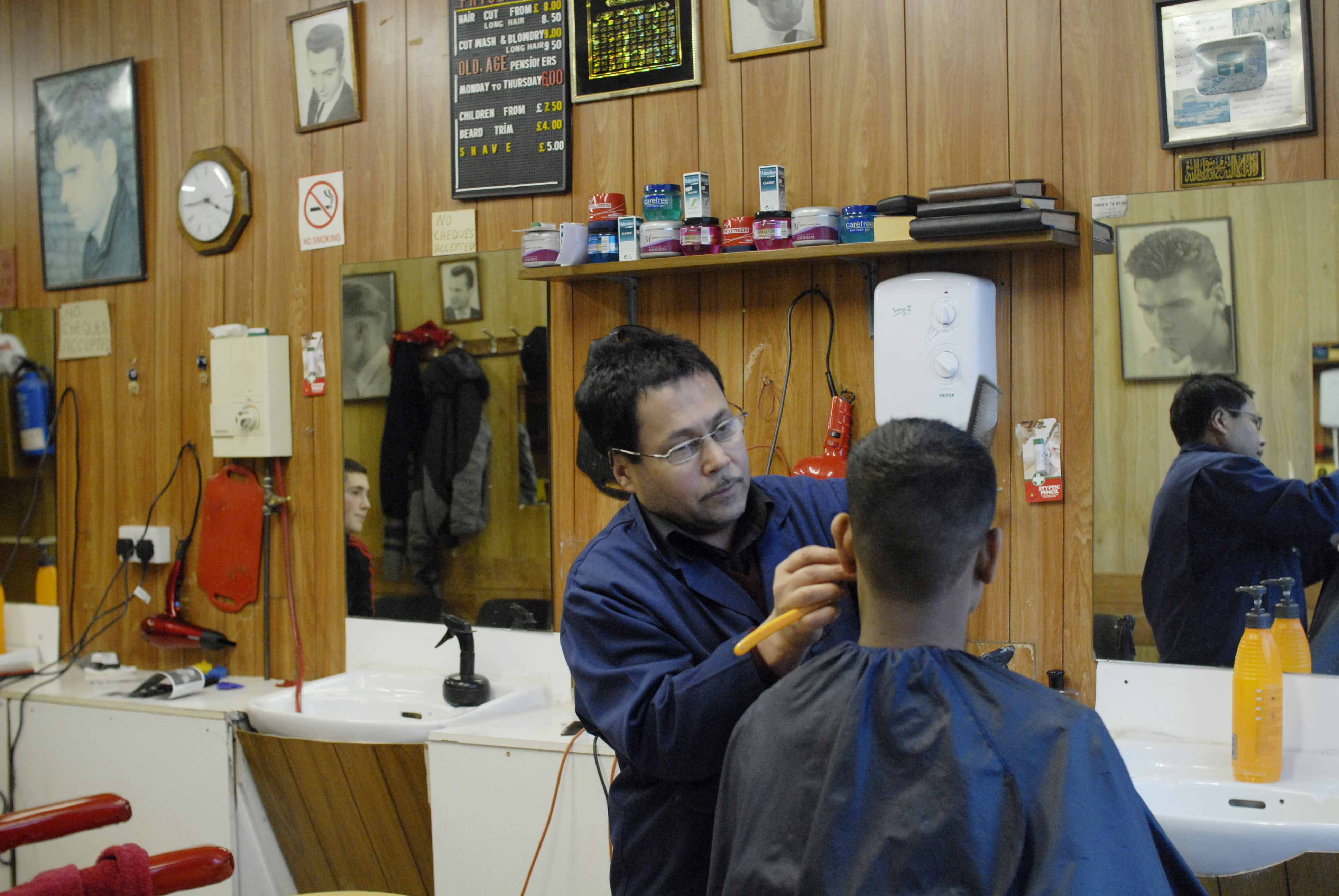
We were told to go in search of Charlie, a legendary barber in Stepney, and eventually we found him exactly where we were told he would be, except his name was actually Michael, but we were still delighted to encounter this genial Turkish barber, who without a doubt was the afternoon’s star turn. To the uninitiated, Michael Gent’s Hair Stylists at 345 Commercial Rd is the most unremarkable barber’s shop you could imagine, but this modest salon has been in operation for over a century. Michael, a sprightly garrulous mustachioed gentleman in a neat blue overall jacket, who has been cutting hair here for thirty-two years, told me he took over from Maurice Pem, a Jewish barber, who was here for thirty-six years and whose unknown predecessor cut hair for at least forty years before that.
“All the time, I miss Istanbul,” revealed Michael striking a pensive note, mid-haircut, gazing out at the low cloud in Stepney, as if he could see the towers of the Blue Mosque emerging from the haze, “The city is like a dream.” A moment of nostalgia that led us into a discussion of the work of Orhan Pamuk, before Michael declared himself an Anglophile, “I love this country, the democracy – the country of equality and opportunities.” he said. Then, without a break in our conversation, he completed the haircut, unsheathing a ferocious cut-throat razor and tidying up the edges automatically before instructing his amiable teenage son to lather up the young man swathed in a red towel, prior to a shave.
I could but admire the faith of this fellow in the chair, who never even blinked when Michael casually suggested his son might like to have go with the razor to practise his shaving technique. I did not like to ask if it was appropriate to practise on the customers with a cut-throat razor. If the young man had flinched, he might have lost his nose, and I could barely draw breath as Michael berated his son’s clumsy attempts at scraping the stubble, causing the unfortunate apprentice to redden with frustration.
Michael is too much of a professional to expose his customers to any risk and although the young man kept his cool, I believe it was a great relief to all concerned when Michael took over from his son, flashing a professional smile and gripping the young man’s face firmly in one hand while using the other to skim the razor over his jaw with bold strokes – demonstrating, as if to an invisible lecture theatre, exactly how it should be done.
With a skill his son will master one day, Michael achieved results almost instantly, pinching the customer’s face and caressing his tender skin proudly. “Look at that, as smooth as a baby’s bottom!” he announced in unselfconscious triumph to the entire salon with a smirk, patting the young man’s cheek in proprietorial affection.
Sarah Ainslie’s photographs were taken before the lockdown




Photographs copyright © Sarah Ainslie
You may also like to read about
The Pubs Of Old London

The Vine Tavern, Mile End
I cannot deny I enjoy a drink, especially if there is an old pub with its door wide open to the street inviting custom, like this one in Mile End. In such circumstances, it would be affront to civility if one were not to walk in and order a round. Naturally, my undying loyalty is to The Golden Heart in Commercial St, as the hub of our existence here in Spitalfields and the centre of the known universe. But I have been known to wander over to The Carpenters’ Arms in Cheshire St, The George Tavern in Commercial Rd and The Marksman in Hackney Rd when the fancy takes me.
So you can imagine my excitement – especially now the pubs have re-opened – to discover all these thirst-inspiring images of the pubs of old London among the thousands of glass slides left over from the days of the magic lantern shows given by the London & Middlesex Archaeological Society at the Bishopsgate Institute a century ago. It did set me puzzling over the precise nature of these magic lantern lectures. How is it that among the worthy images of historic landmarks, of celebrated ruins, of interesting holes in the ground, of significant trenches and important church monuments in the City of London, there are so many pictures of public houses? I can only wonder how it came about that the members of the London & Middlesex Archaeological Society photographed such a lot of pubs, and why they should choose to include these images in their edifying public discourse.
Speaking for myself, I could not resist lingering over these loving portraits of the pubs of old London and I found myself intoxicated without even lifting a glass. Join me in the cosy barroom of The Vine Tavern that once stood in the middle of the Mile End Rd. You will recognise me because I shall be the one sitting in front of the empty bottle. Bring your children, bring your dog and enjoy a smoke with your drink, all are permitted in the pubs of old London – but no-one gets to go home until we have visited every one.

The Saracen’s Head, Aldgate

The Grapes, Limehouse

George & Vulture, City of London

The Green Dragon, Highgate

The Grenadier, Old Barrack Yard

The London Apprentice, Isleworth

Mitre Tavern, Hatton Garden
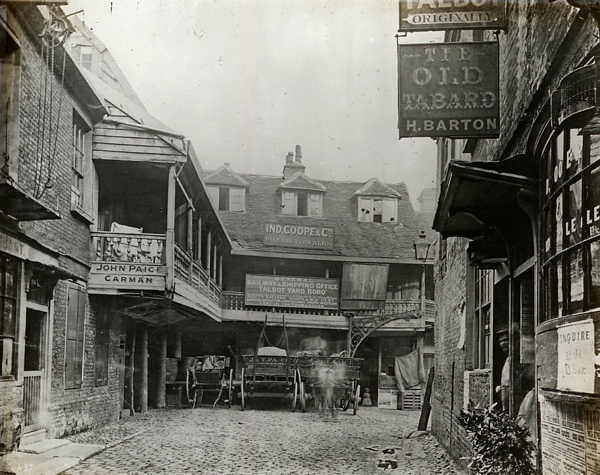
The Old Tabard, Borough High St

The Three Compasses, Hornsey

The White Hart, Lewisham

The famous buns hanging over the bar at The Widow’s Son, Bow

The World’s End, Chelsea, with the Salvation Army next door.

The Angel Inn, Highgate

The Archway Tavern, Highgate

The Bull, Highgate

The Castle, Battersea

The Old Cheshire Cheese, Fleet St

The Old Dick Whittington, Cloth Fair, Smithfield

Fox & Crowns, Highgate

The Fox, Shooter’s Hill


The Albion, Barnesbury

The Anchor, Bankside

The George, Borough High St
Images courtesy Bishopsgate Institute
You may also like to read about
Sandra Esqulant, The Golden Heart
The Return Of The Gallant
The Gallant is returning to London on 11th July when cargo can be collected from the ship at St Katherine Docks. Click here to place a last minute order
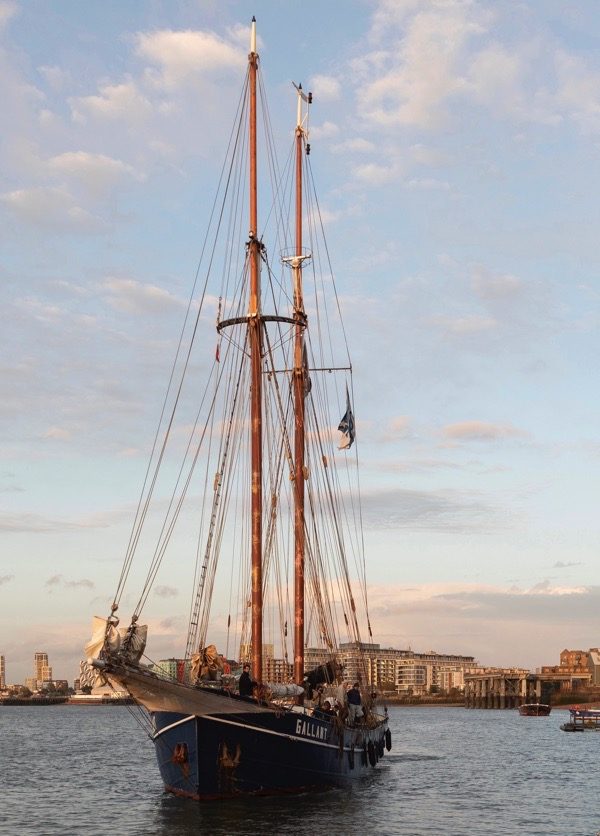
The Gallant arrives in Greenwich
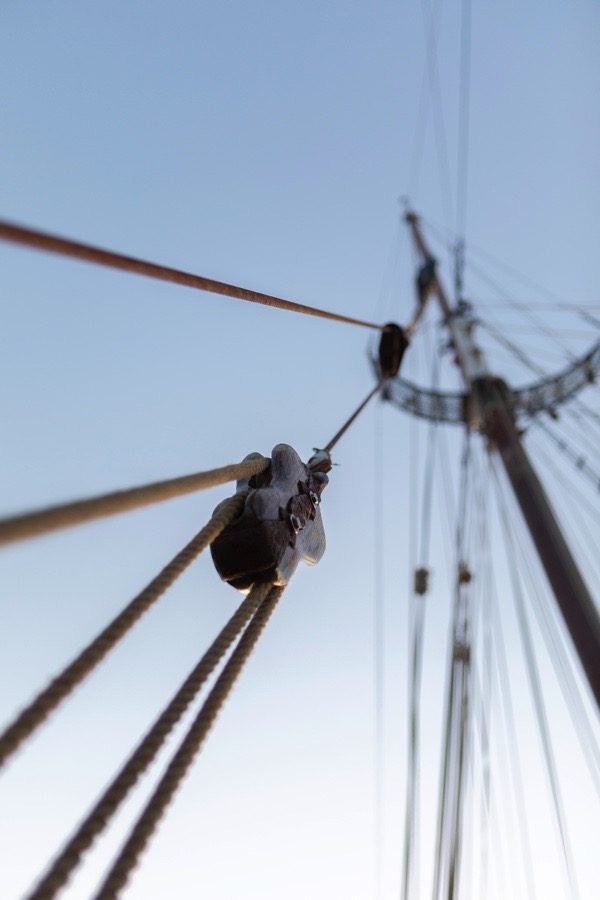
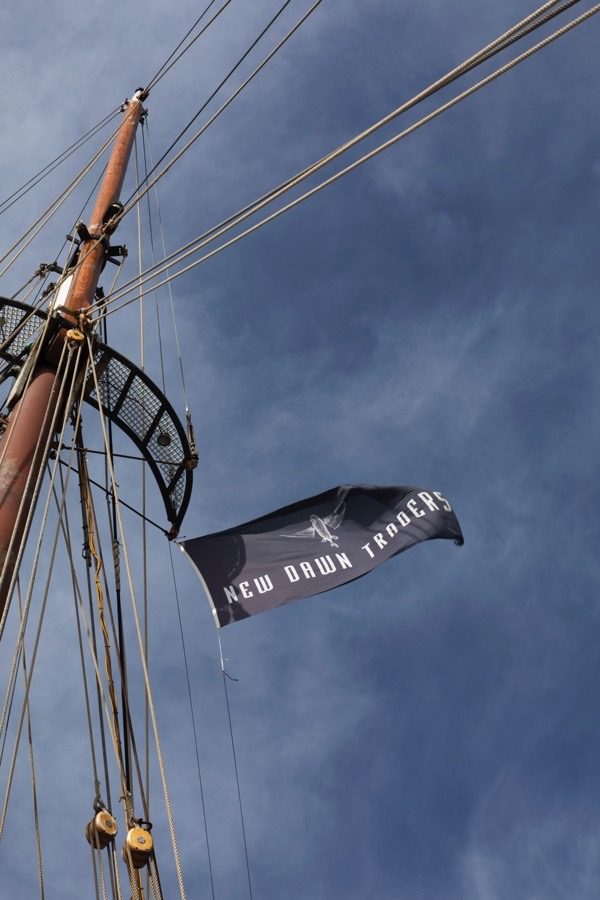
Photographer Rachel Ferriman & I were at the shore to welcome the first sailing ship in more than a generation arriving at the London Docks with a cargo of provisions from overseas. We hope this will become a regular sight on the Thames with the Gallant bringing produce from Portugal and the Caribbean. Although it is a small beginning, we were inspired by this visionary endeavour which sets out to connect farmers directly with customers and make the delivery by sail power.
On board, we met Alex Geldenhuys who explained how she started this unique project.
“We are very excited because this is our first visit to London and we believe this cargo has not been delivered here by sail for forty years or more. We have olive oil, olives, almonds, honey, port wine from Portugal and chocolate and coffee from the Caribbean.
I set up New Dawn Traders in 2013. At first, we were working with ships crossing the Atlantic once a year bringing chocolate, coffee and rum but then I started the European voyages three years ago. We do two or three voyages a year which means we are learning more quickly.
With the captains, we decide when and where we will go and what we will pick up. We started in Portugal and most of our suppliers are based in the north of the country, small family farms producing olive oil. They give the best care for the land and contribute most to the local community. These farmers do mixed agriculture and so they also produce honey, almonds and chestnuts.
We look forward to working with Thames barges, meeting the Gallant in the estuary after the long distance voyage and delivering the cargo to London, just as they were designed to do. We will be back in the spring and customers can order online and then come down to the dock to collect their produce.”
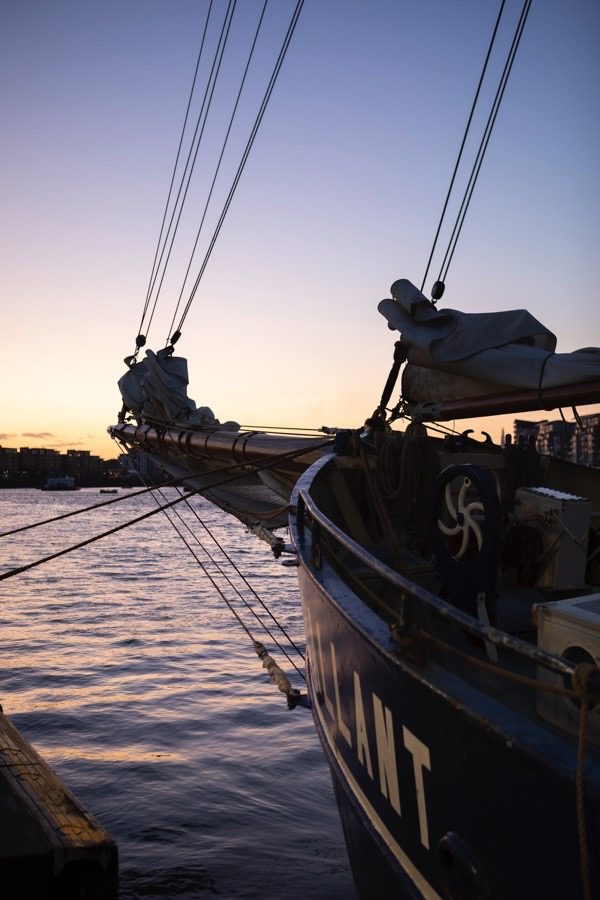
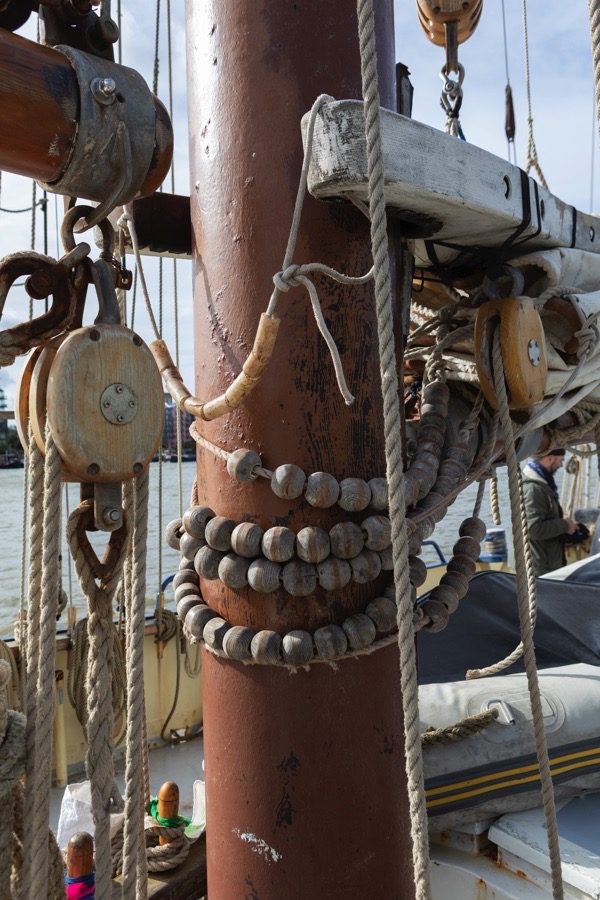
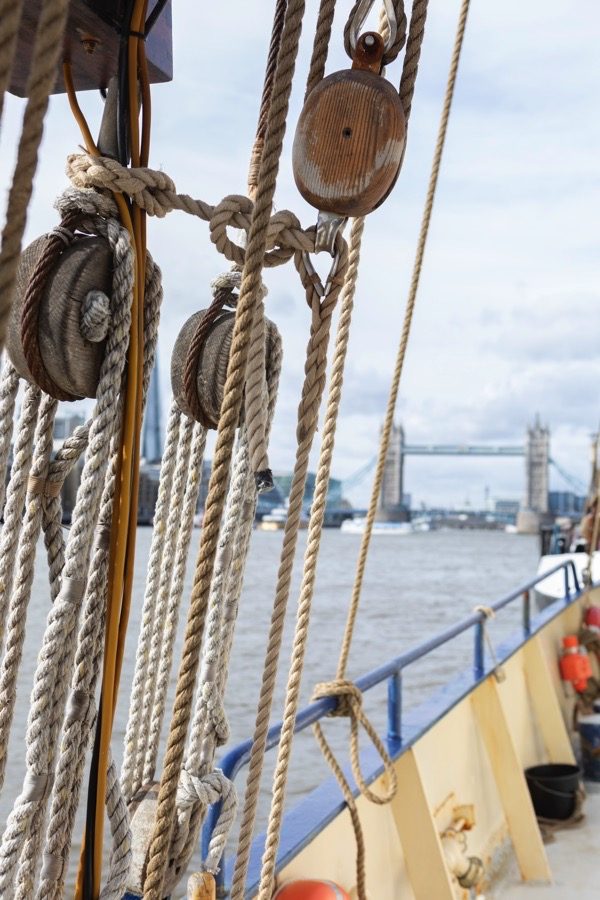
The Gallant is a handsome schooner and we were delighted to explore this fine vessel moored in the shadow of Tower Bridge while the tanned and scrawny crew were unloading crates of olive oil, coffee and rum, loading them onto bicycle panniers for transport to the warehouse in Euston.
Down in the cabin, we met captains Guillaume Roche & Jean Francois Lebleu, studying charts of the estuary in preparation for their journey to Great Yarmouth, the next port of call. Guillaume began by telling me the story of the Gallant and revealing his ambition and motives for the undertaking.
“I am co-owner of the ship with Jean Francois, we take it in turns to be captain. The Gallant was built as a fishing boat in Holland in 1916, but, when we bought her two years ago to use her as a cargo vessel, she had been converted to carry passengers so we had to build a hatch for loading and enlarge the hold.
We are both professional seamen who have worked on big ships in the merchant navy and we want to do something about Climate Change, but the only thing we know is how to sail a ship. As well as delivering cargo by sail, we want to spread the word to encourage others so this can be the beginning of something bigger.”
Jean Francois outlined the pattern of their working year, making me wish that I could stow away on the Gallant.
“This summer we did two voyages to northern Europe from Portugal, two ports in France, a lot of ports in England – Bristol, Penzance, Newhaven, Ramsgate, London and Great Yarmouth. Next we go to Holland to deliver cargo there.
Over the winter, we will do maintenance before we sail across the Atlantic to the Caribbean and Central America to load rum, chocolate, coffee, mezcal and spices, and stop off in the Azores on the return voyage to pick up honey and tea. And we will bring this cargo back to London next year.”
I will report further on this remarkable project but in the meantime you can sign up to the mailing list at New Dawn Traders and be informed when you can next order goods to collect in London. You can also follow the voyages of the Gallant online by GPS at the Blue Schooner Company.
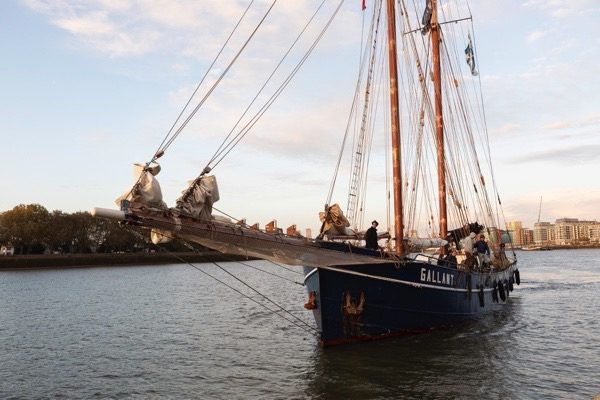
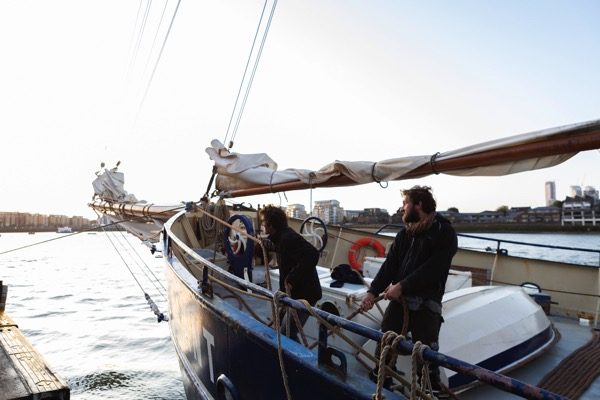
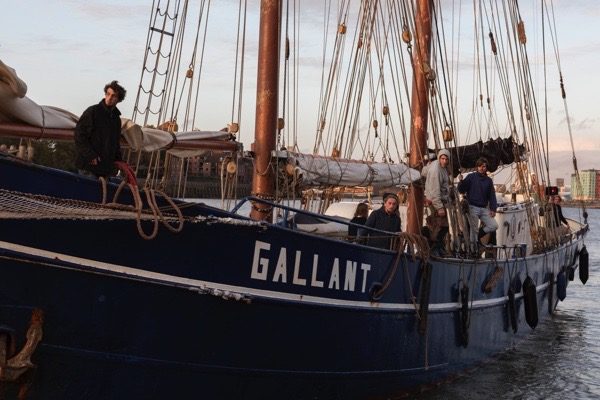
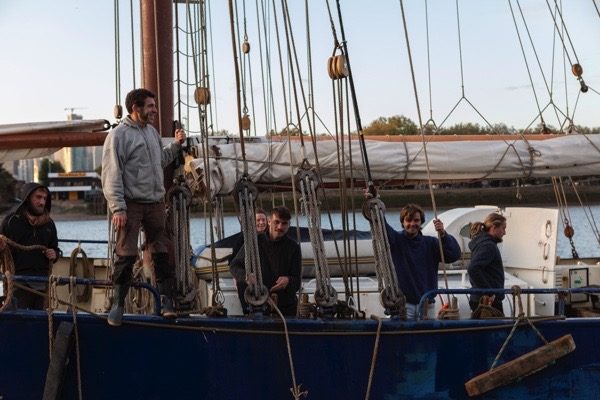
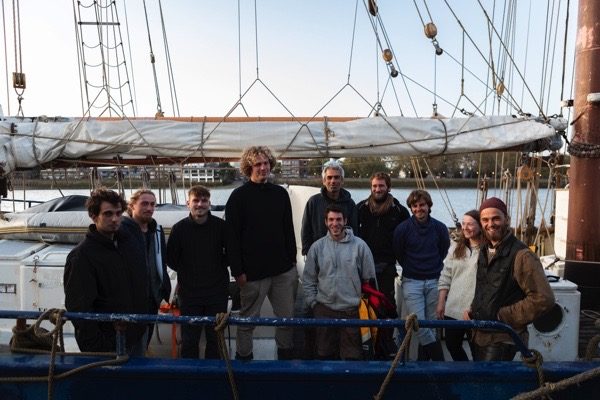
The crew of the Gallant
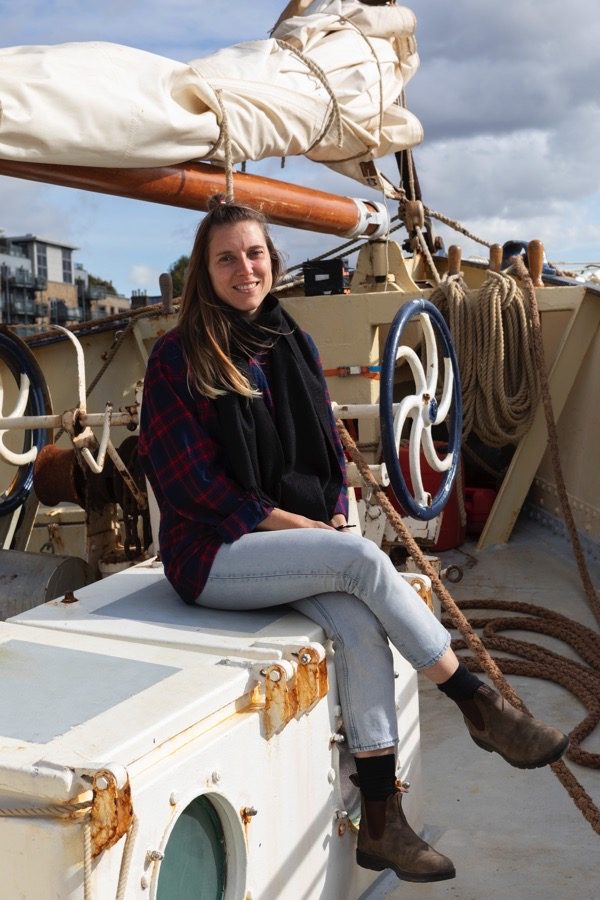
Alex Geldenhuys, founder of New Dawn Traders
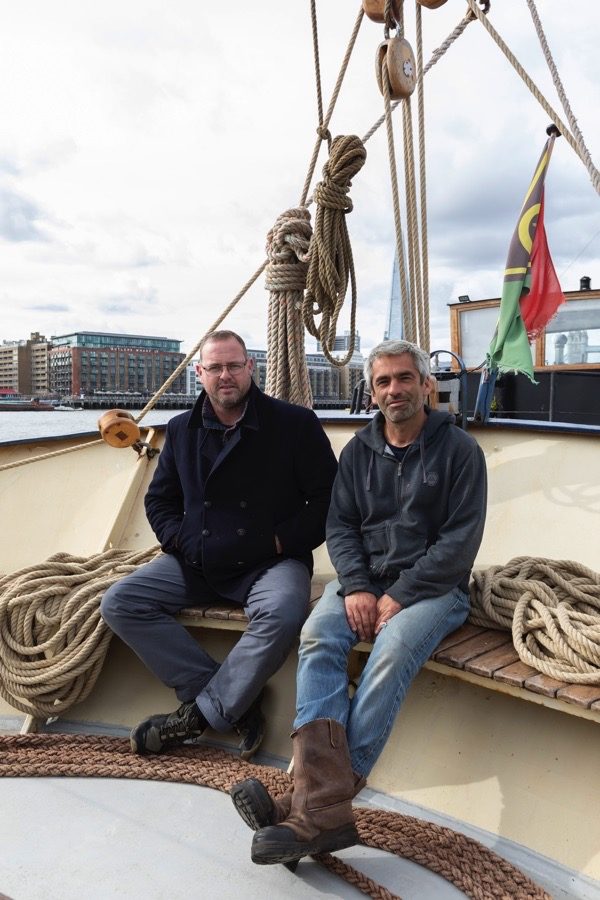
Guillaume Roche & Jean Francois Lebleu, Captains of the Gallant
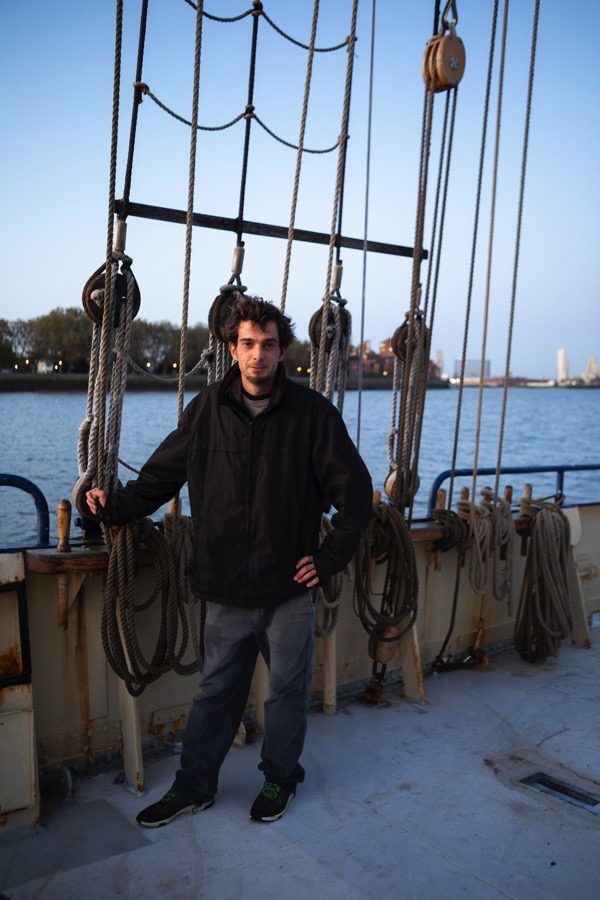
Celestin, First Mate of Gallant
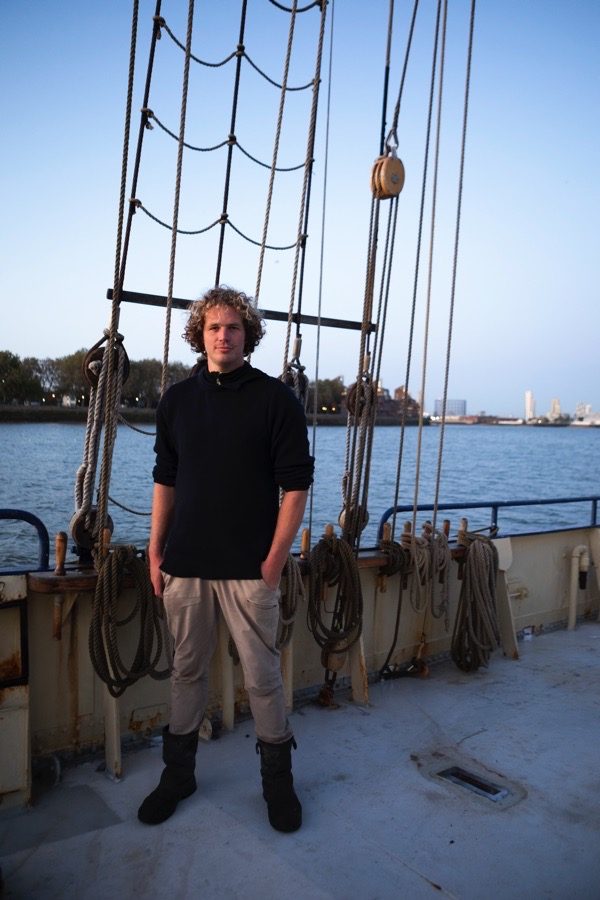
Davide, Deck Hand
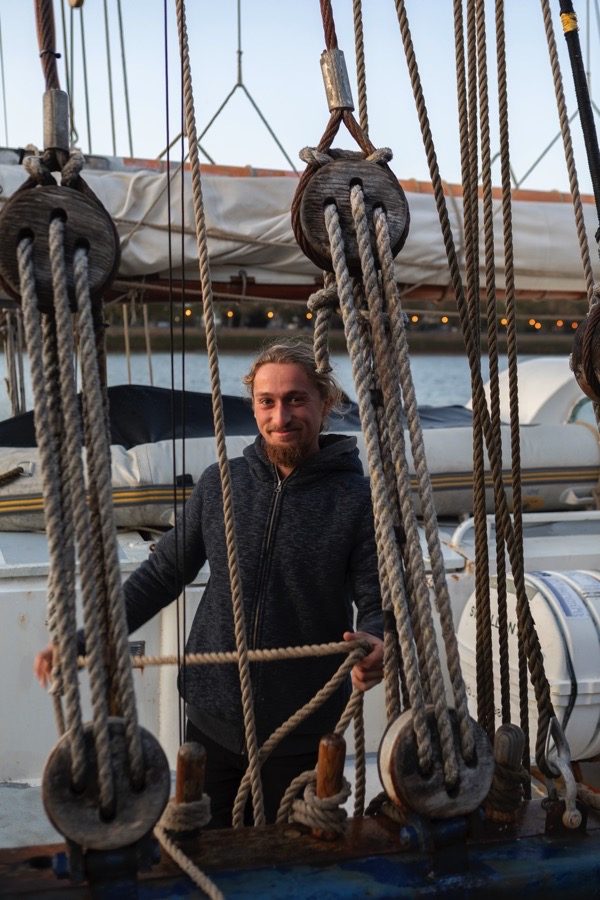
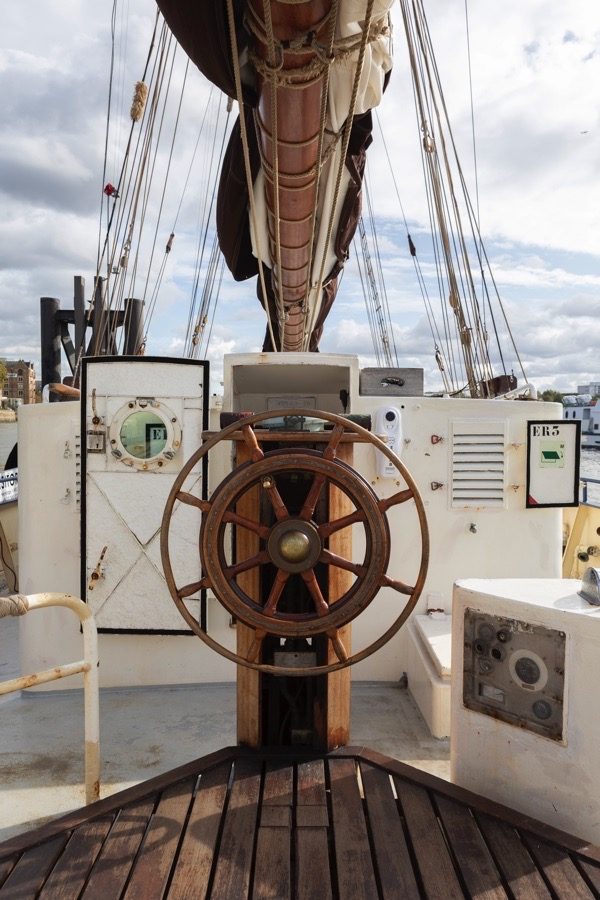
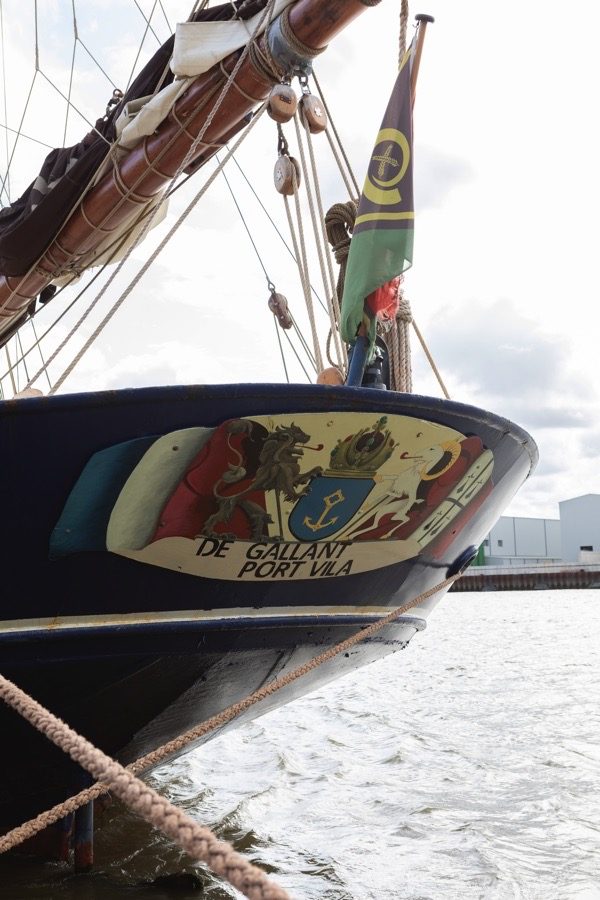
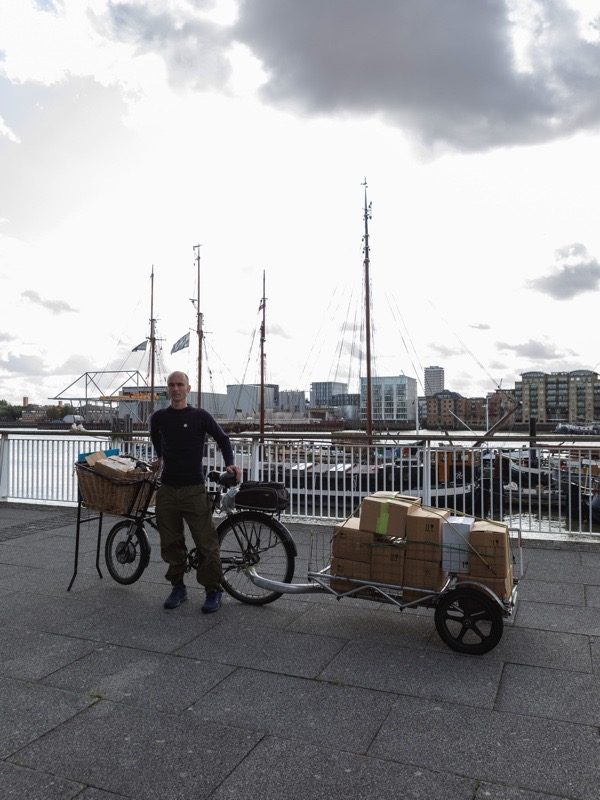
The cargo is delivered to the warehouse by pedal power
Photographs copyright @ Rachel Ferriman
You may also like to read about
Tim Hunkin’s Social Distancing Machine
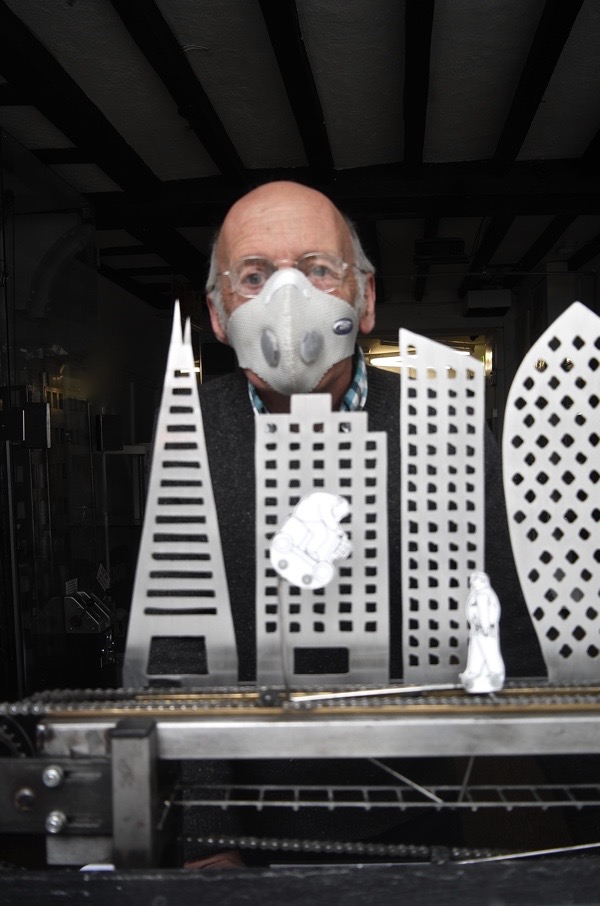
You all are familiar with this game – ducking and diving along a narrow pavement, struggling to maintain two metres social distance from oncoming pedestrians while also avoiding stepping into the gutter and getting run over by passing traffic.
Genius inventor Tim Hunkin has invented a Social Distancing Machine to celebrate the reopening of his amusement arcade Novelty Automation in Holborn under socially distanced conditions next Saturday 11th July.
Tim explained his thoughts to me, “My first idea was much more ambitious, it was going to be a Covid clock. But then I realised it would take months to make and the situation would have changed completely by then. So this is just one element of that grand clock design and even this was fiddly to overcome the teething problems.
Although it looks quite simple, it took me over a month to get it all working and I am still a bit nervous whether it will stay working. It was a bit of a struggle installing it, I need it to run for twelve hours constantly so I had to sleep in the arcade with this machine rattling around all night.
Fortunately the test worked and I drove up to my daughter in Walthamstow next morning. But nobody was doing any social distancing whatsoever in the streets of Camden and Holloway, so to bring it more up to date I changed the name of my machine to ‘A Memorial to Social Distancing.'”
Novelty Automation, 1 Princeton St, Holborn, WC1R 4AX
You may like to read my other stories about Tim Hunkin
Tim Hunkin, Cartoonist & Engineer
New Home For The Museum Of London
In celebration of the granting of planning permission for the Museum of London to covert Smithfield General Market as its new home, here is my account of a visit to explore this cavernous site.
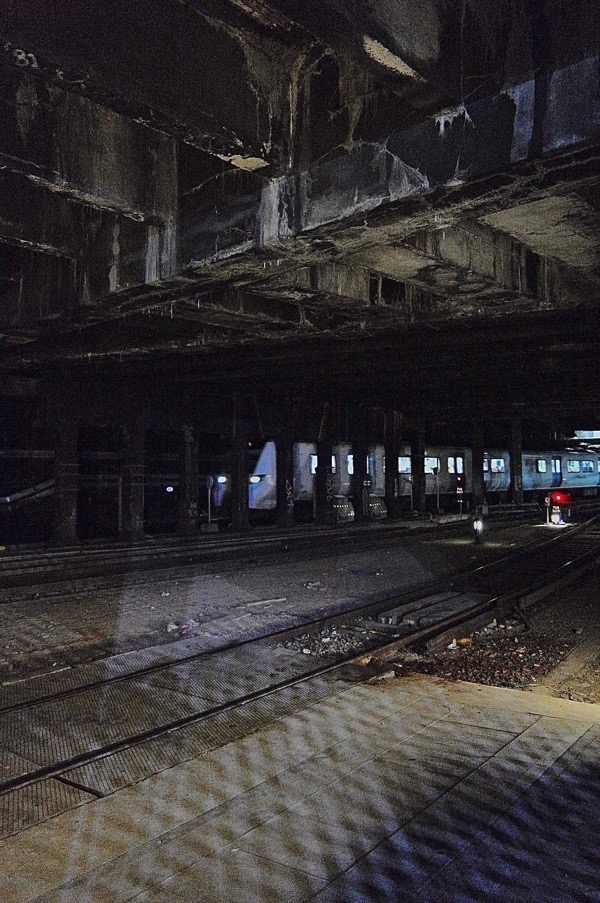
A train runs beneath Smithfield Market
As one of those who fought to save Smithfield General Market from demolition six years ago, I was delighted have the opportunity of exploring the infinite dark recesses of this vast structure which extends deep underground. This was the first time I have been inside Horace Jones’ market building of 1868 and it was a heart-stopping experience to enter his soaring iron cathedral and walk beneath the vast dome at last.
If events had turned out differently in 2014, this magnificence would all have been destroyed with only the facade remaining upon the front of a steel office block. So it was gratifying to visit as a guest of the Museum of London who are taking it over as their new home, adopting a policy of ‘light touch’ in their treatment of the old building.
In announcing the outcome of the Public Enquiry into the Smithfield Market proposals, the Secretary of State criticised the City of London for deliberately allowing Horace Jones’ beautiful market to fall into decay and disrepair. Readers will be pleased to learn the City of London is now paying for extensive and expensive repairs which are underway.
When I arrived, the traders’ pavilions that had accumulated to fill the market floor were being dismantled to reveal the open space for the first time since the nineteenth century – this majestic hall will be where all visitors enter the new museum. The only major architectural decision taken here regards the location of the staircase leading down to the subterranean galleries below. After some discussion of a central spiral staircase under the dome, permanently restricting the possibility of displays, a decision has been taken to cut a straight staircase along the north side of the building leaving the ground floor clear for exhibitions.
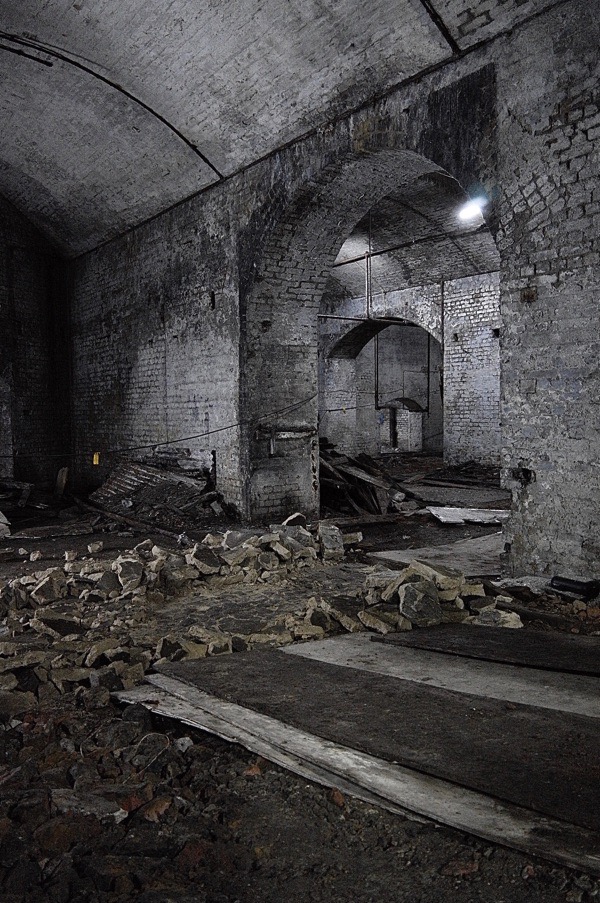
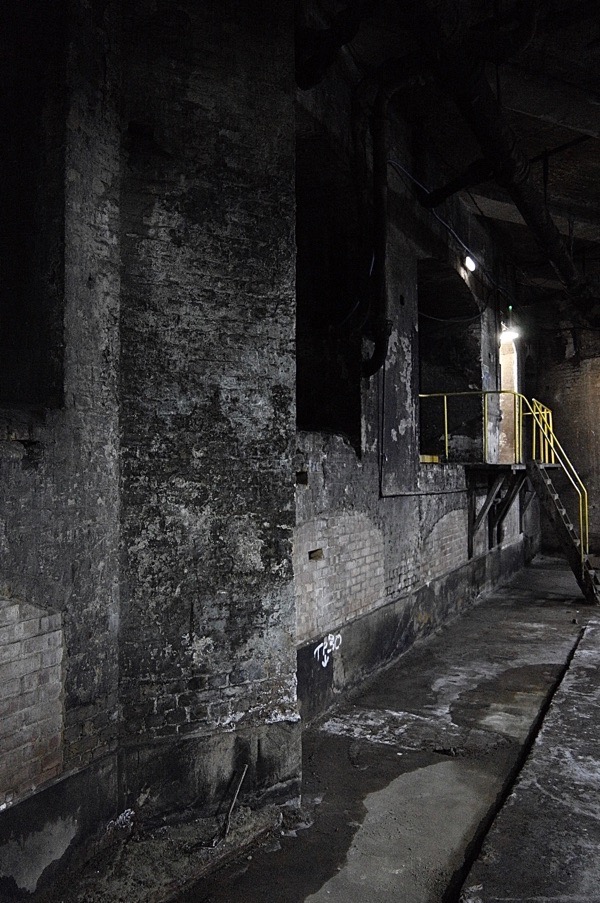
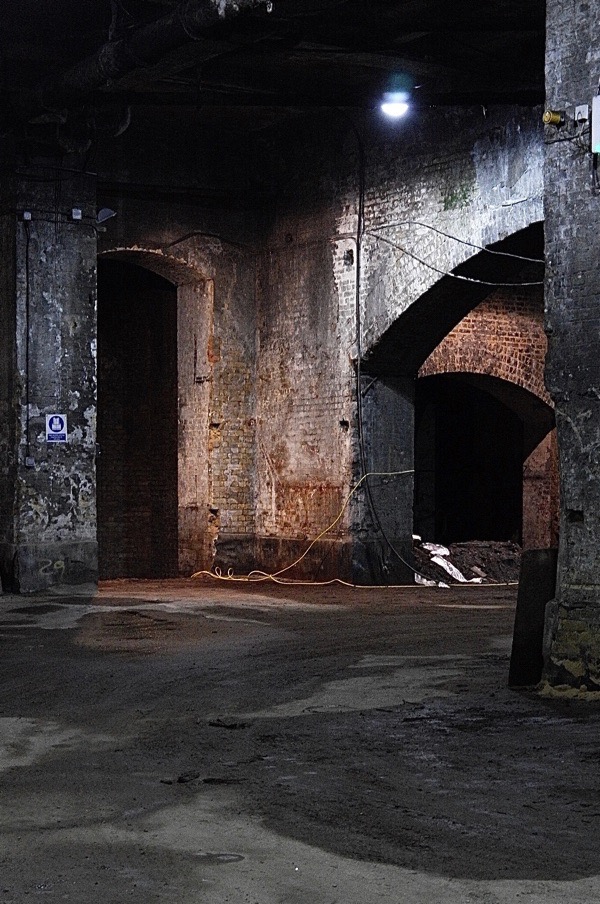
The great drama lies beneath. Here is an enormous black underground cavern, wider than the market above, with a vaulted roof of brick, grimy from steam trains. This was constructed as a railway station where trains from the London docks once brought meat which arrived from across the world. Deliveries were unloaded onto carts that drove up the ramp to the market above.
As you pause to contemplate the wonder of it, a diabolic rumble fills the darkness. It is a train coming! You stand in the darkness as a Thameslink train full of commuters rattles past, coming from Blackfriars on its way to Farringdon. The passengers sit preoccupied in their lit carriages, unaware of the watcher observing them from the darkness. One day, these commuters will peer out from their windows and discover they can see directly into the galleries of the Museum of London and, one day, visitors to the museum will be able to observe trains passing from a window in the gallery.
Beyond this empty hangar, lies another deep space with brick arches soaring overhead and dripping vaults receding into the velvet blackness of history. The moisture that permeates the structure evidences the presence of the River Fleet flowing below. You stand beneath London, between the underground trains and the subterranean river. You are at the heart of the city. It is dark. It is a space of infinite mutability. It is a place with soul, where the past lingers. It is a natural home for a museum of London.
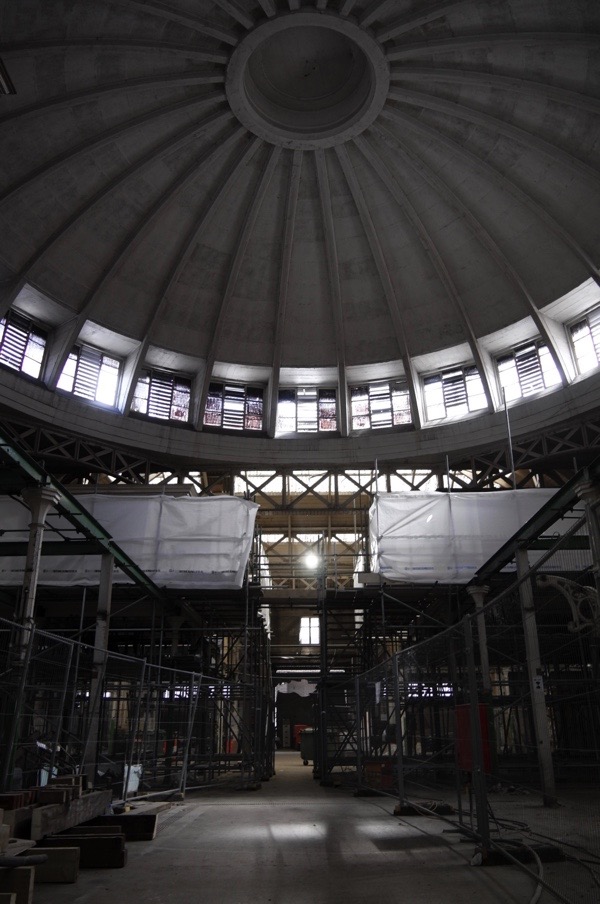
This concrete dome was constructed post-war to replace the original destroyed in the Blitz
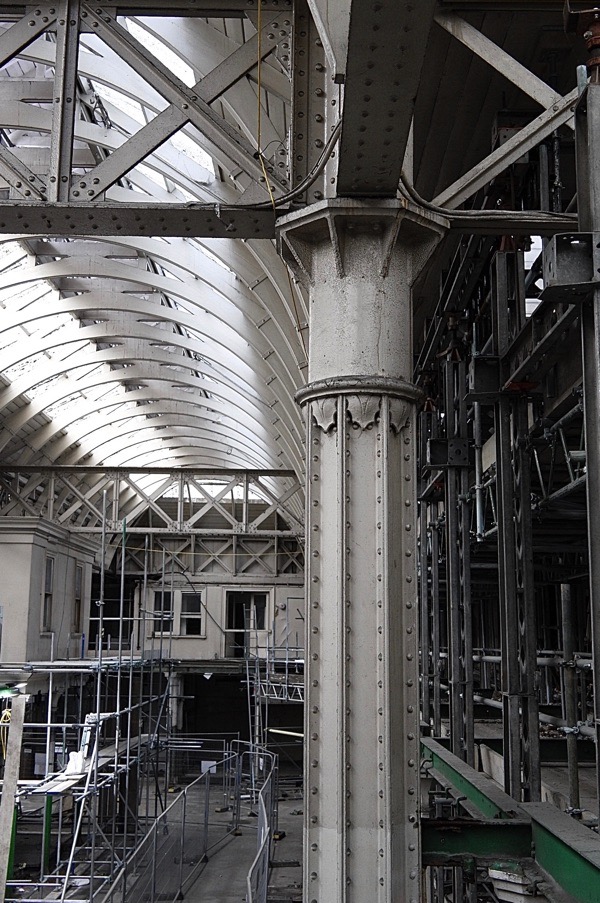
The rare ‘phoenix columns’ that support the roof are hollow, used in preference to cast iron, to minimise the weight of the structure which sits over a tube line
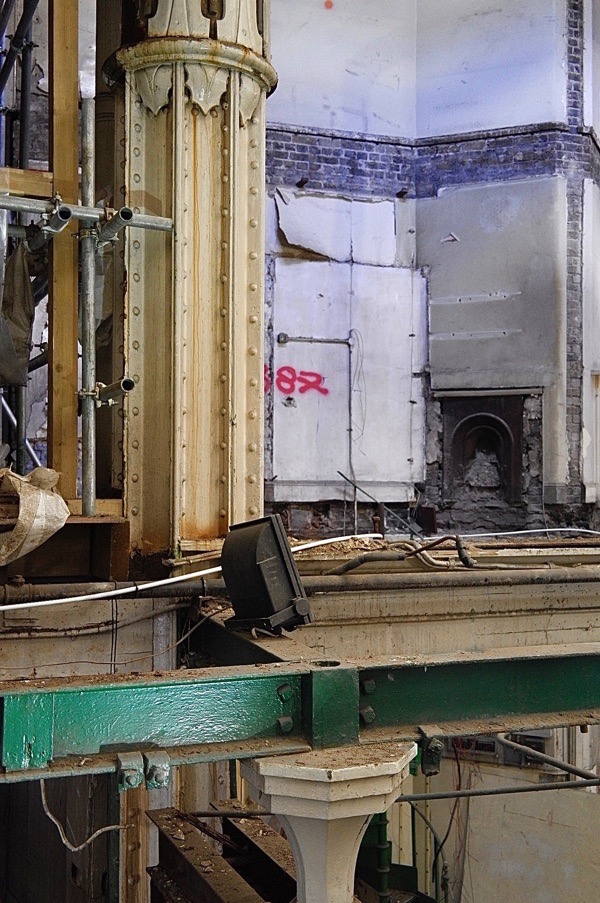
First floor pavilions added to the building as traders offices are currently being removed
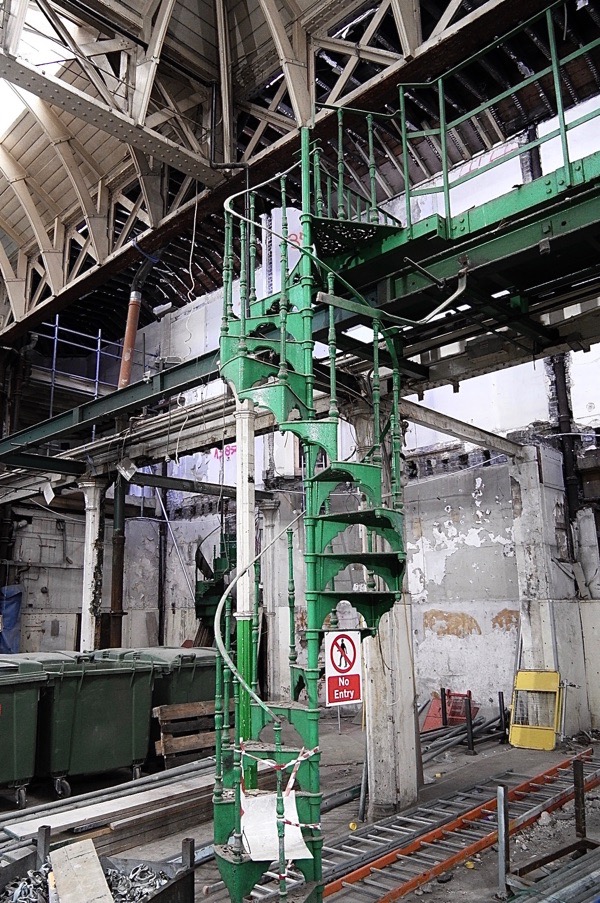
A spiral staircase leads to an office that no longer exists
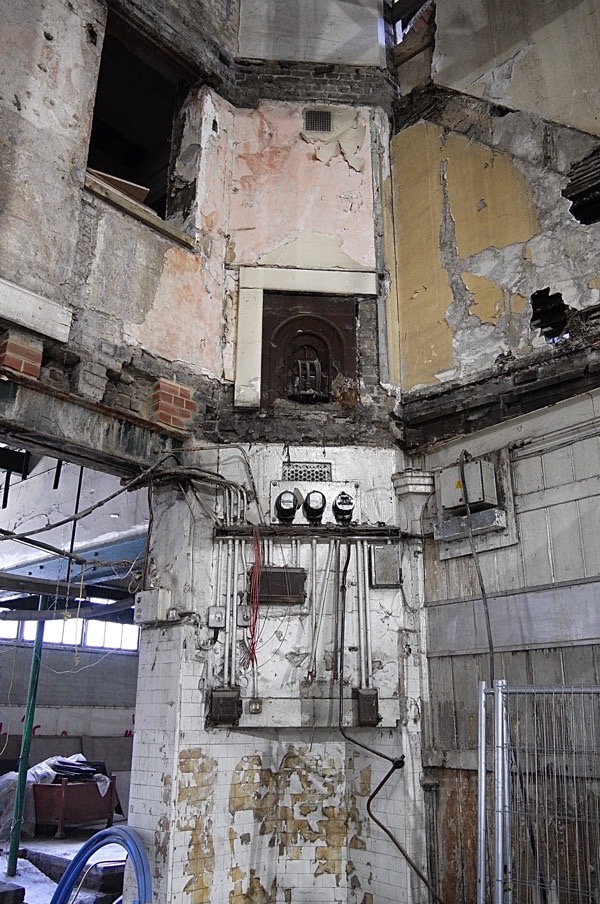
Hanging fireplaces attest to former first floor offices
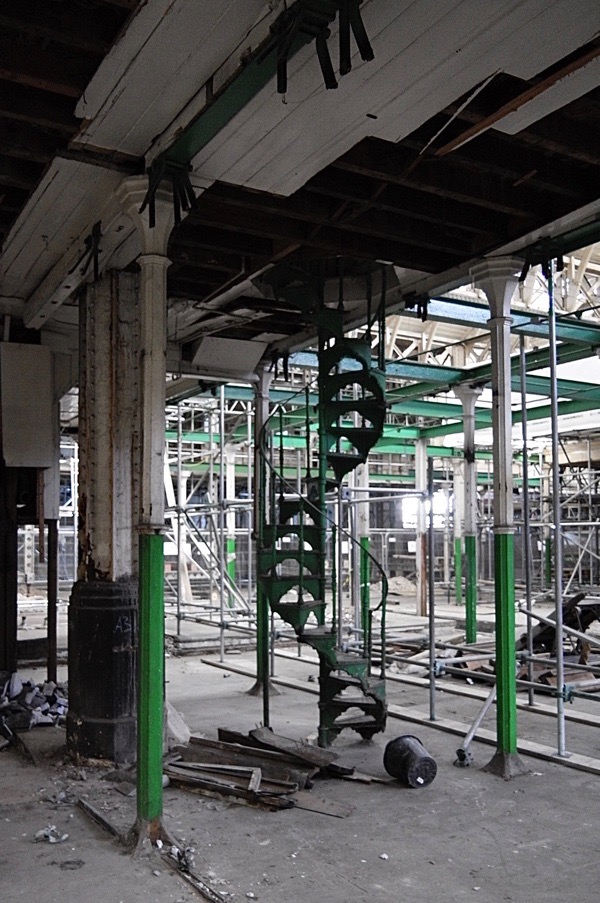
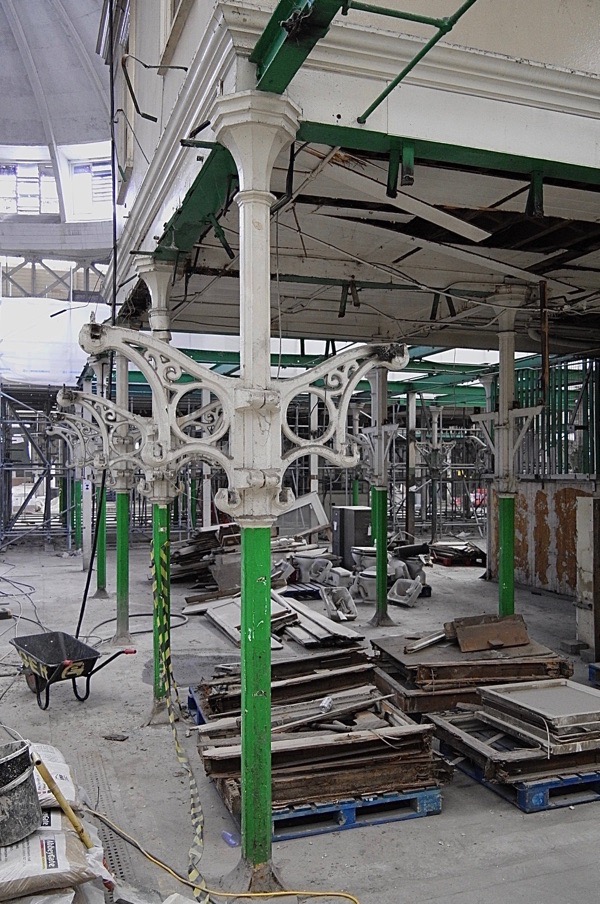
Cast iron racks once supported rails for displaying meat
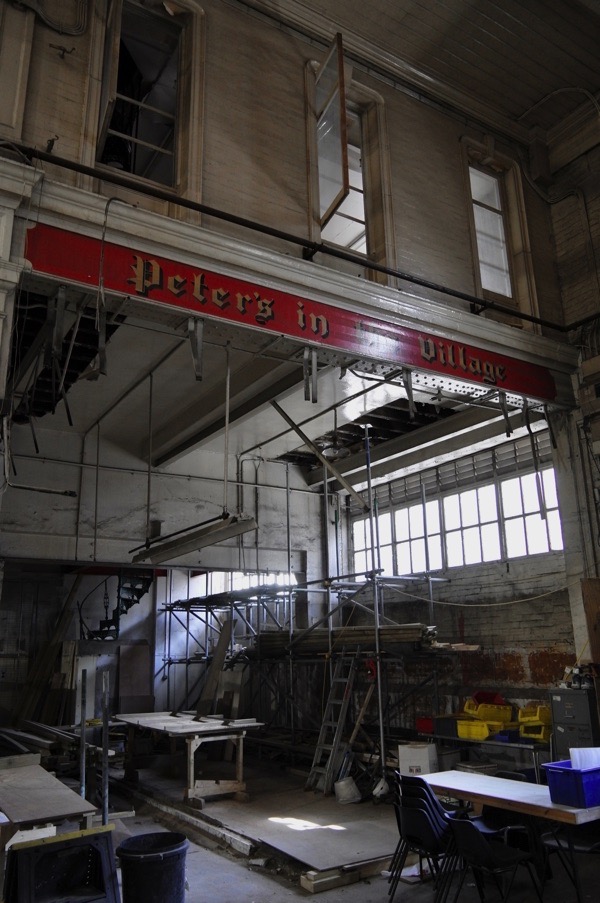
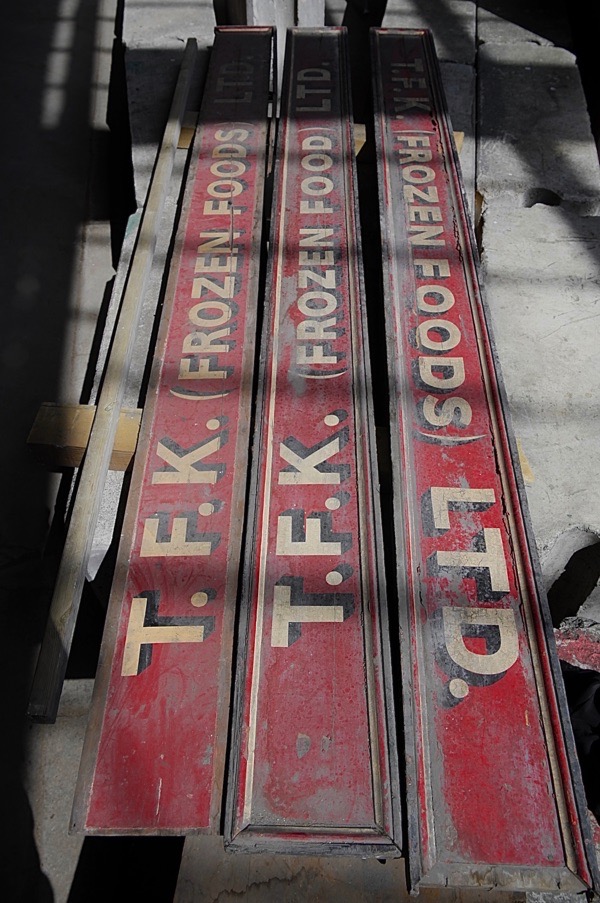
The agglomeration of traders pavilions on the ground floor was known as ‘the village’

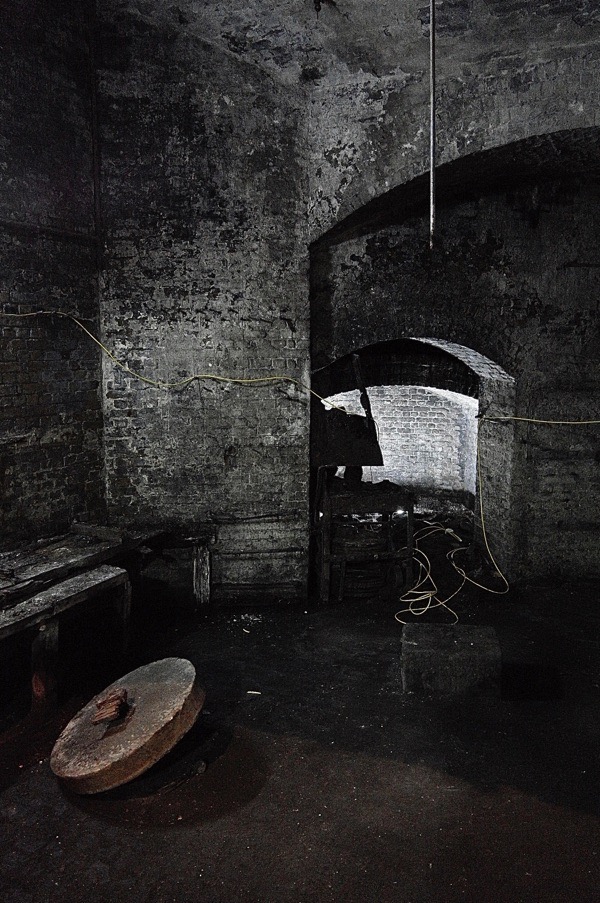
Abandoned grinding wheel for sharpening knives
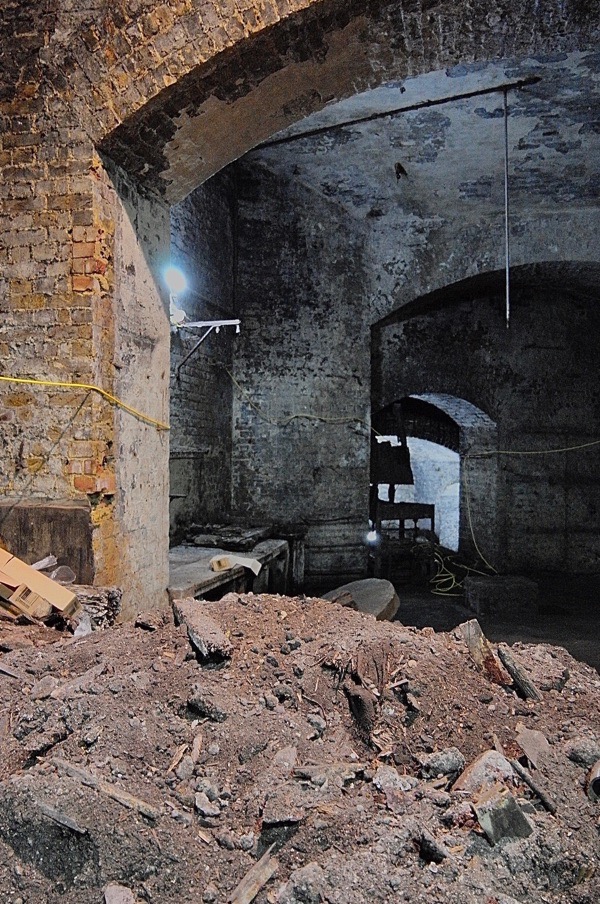
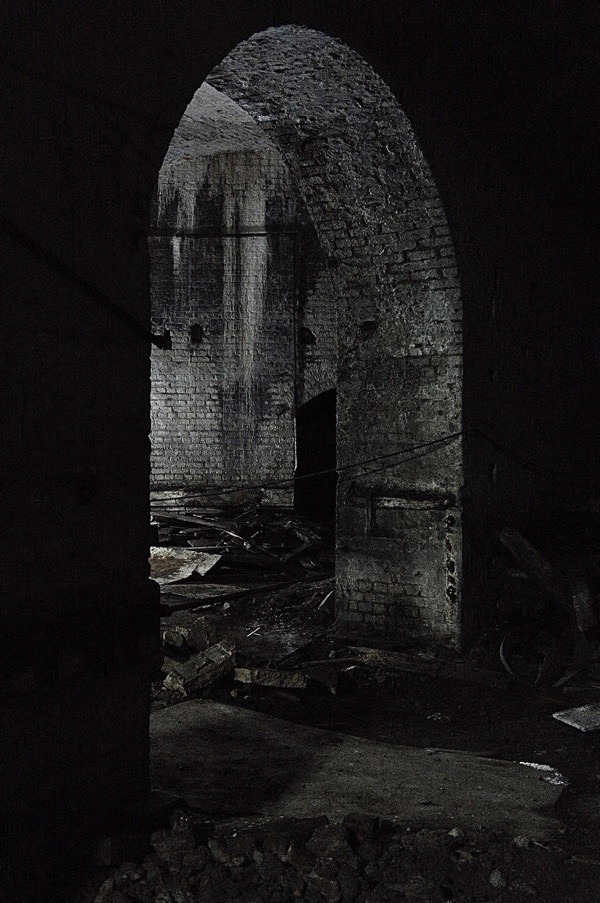
Ancient dripping brickwork indicates the vicinity of the River Fleet flowing beneath
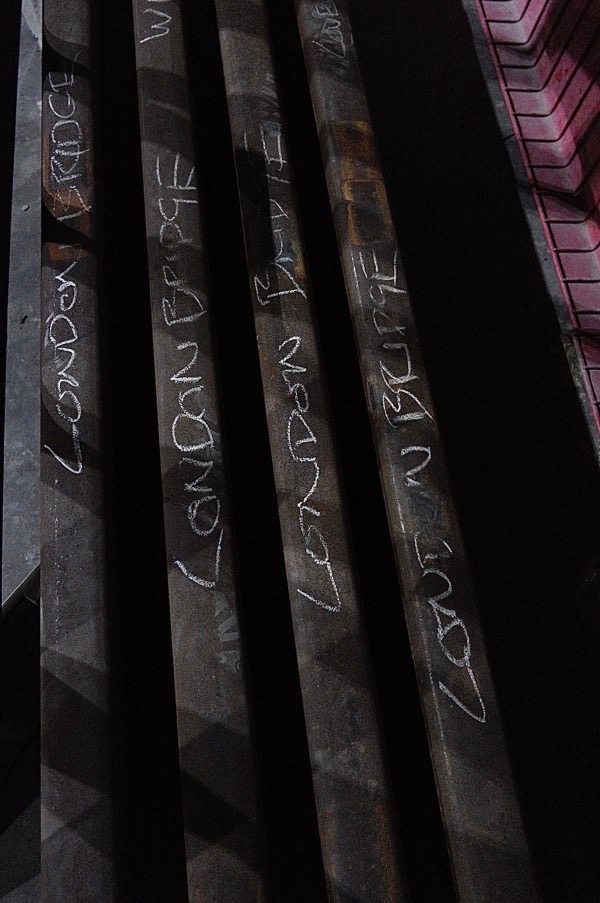
Thameslink rails stored under the market
You may also like to read about
Syd Shelton’s East End
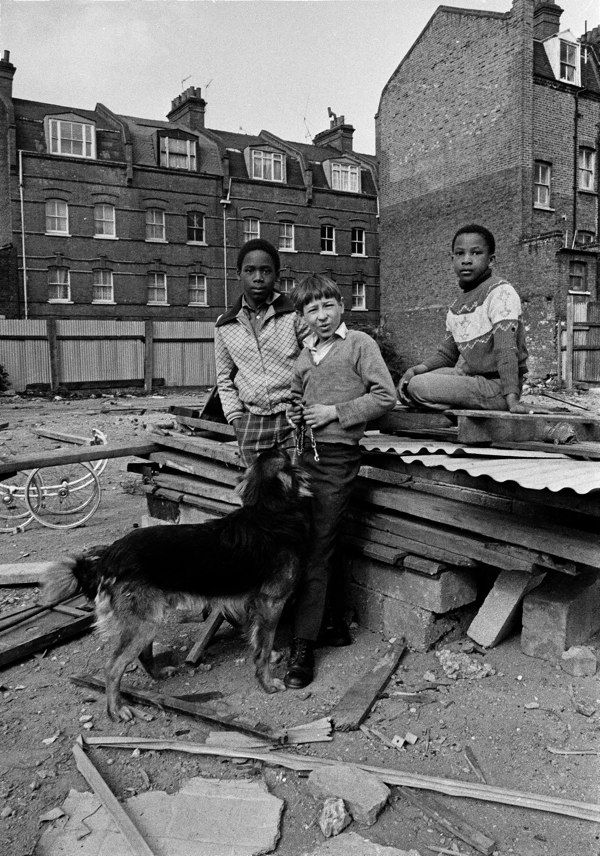
Brick Lane 1978
Photographer Syd Shelton‘s enduring fascination with the East End was sparked by a childhood visit from Yorkshire with an uncle and aunt more than fifty years ago. “My cousin was was working in a mission somewhere off Bethnal Green Rd,” Syd recalled, “It was a scary part of London then and I remember my uncle looked out of the window every few minutes to check the wheels were still on his car!”
“The day I left college in 1968, I came down to London and I have worked here ever since, photographing continuously in Hackney and Tower Hamlets,” Syd admitted to me.
In the seventies, Syd became one of the founders of Rock Against Racism, using music as a force for social cohesion, and his photographs of this era include many affectionate images of racial harmony alongside a record of the culture of racism . “It was an exciting time when, after the death of Altab Ali, the Asian community stood up to be counted and the people of the East End became militant against the National Front,” he explained, “In 1981, I got a studio in the Kingsland Rd and I only gave it up recently because the rents became too expensive.”
Syd’s portraits of East Enders span four decades yet he did not set out consciously to document social change. “I never started this as a project, it’s only when I looked back that I realised I had taken swathes of pictures of people in the East End,” he explained, “So now I come back and spend a day on the streets each week to continue.”
“I say I am not a documentary photographer, because I like to talk to people before I take my picture to see what I can coax out of them,” he qualified,“Taking photos is what makes my heart beat.”
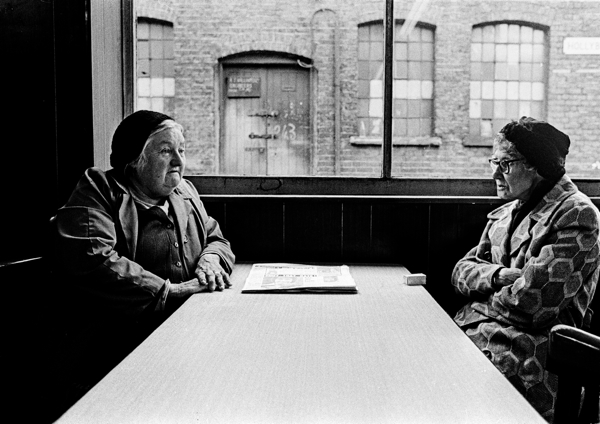
Bethnal Green 1980
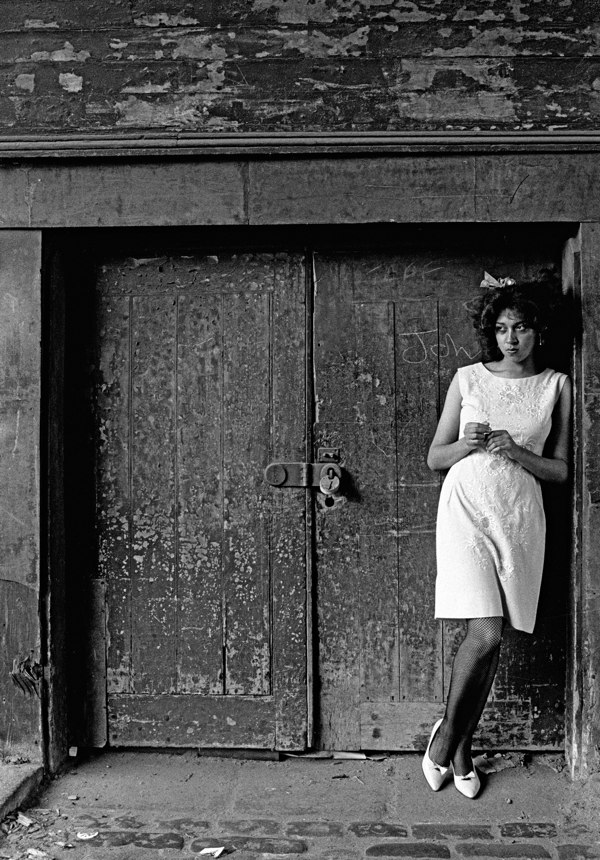
Linda, Kingsland Rd 1981
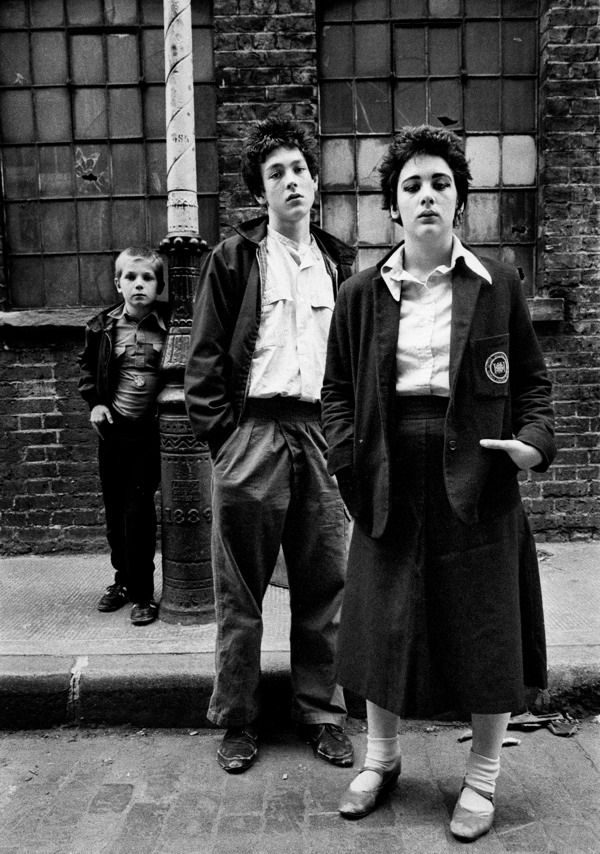
Bethnal Green 1980
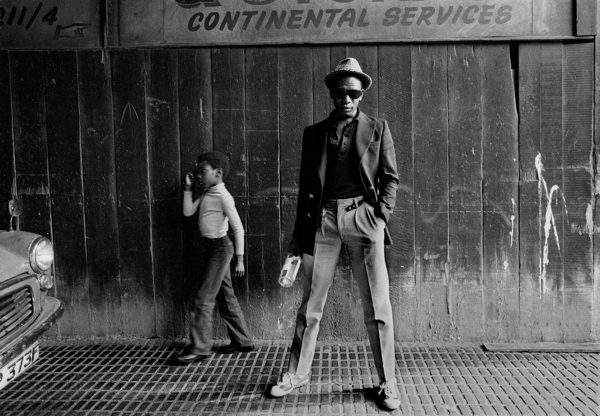
Bagger, Cambridge Heath Rd 1979
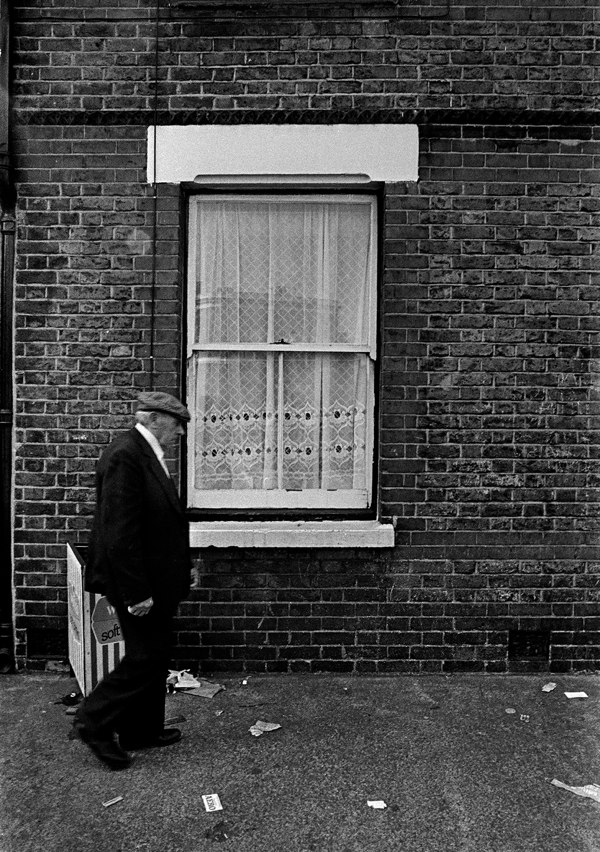
Columbia Rd 1978
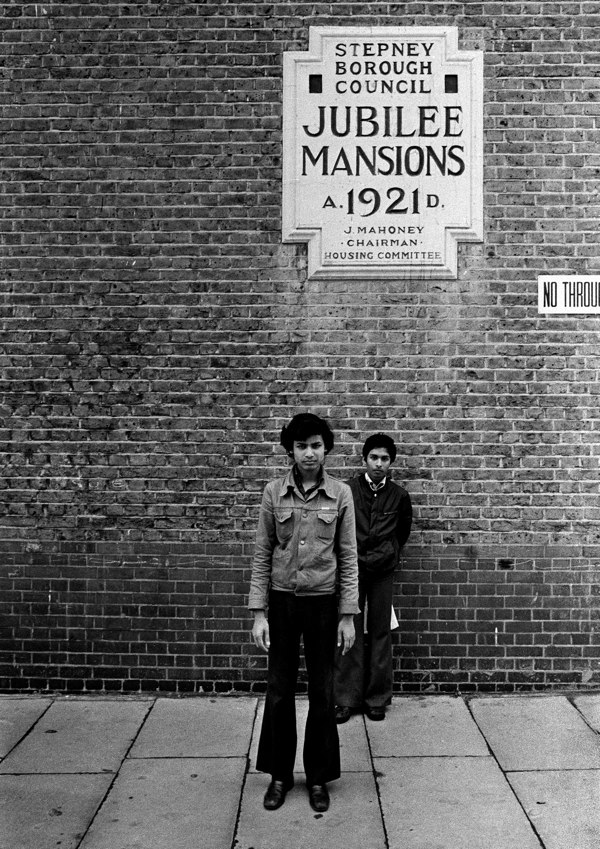
Jubilee St, 1979

Petticoat Lane 1981
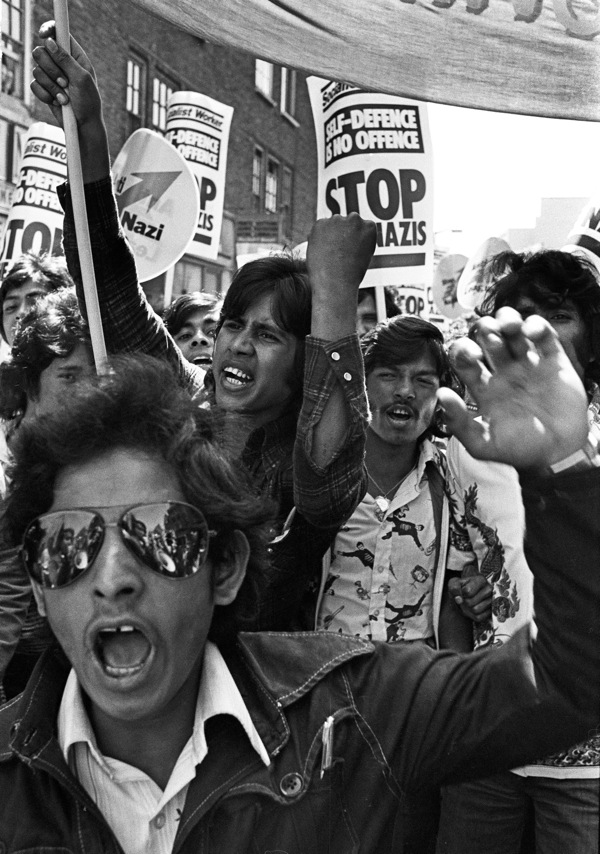
Brick Lane 1978
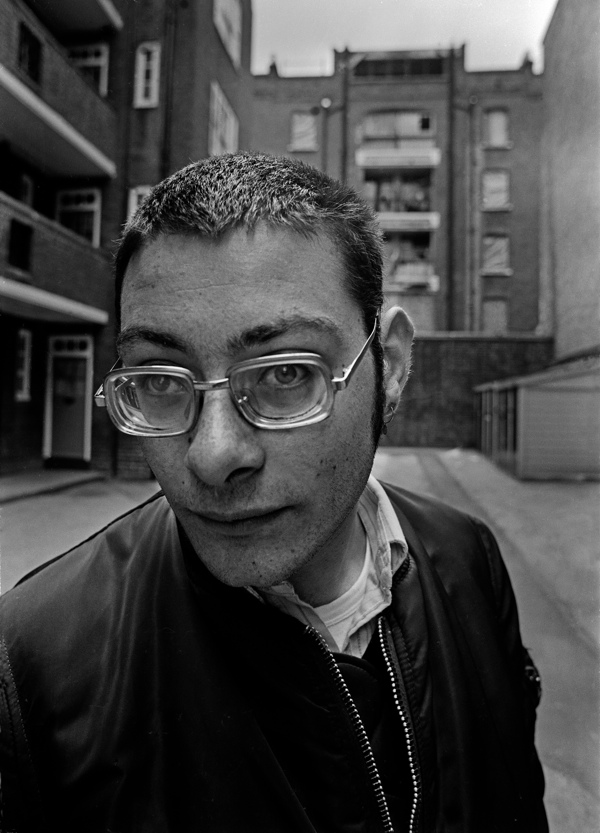
Aldgate East 1979
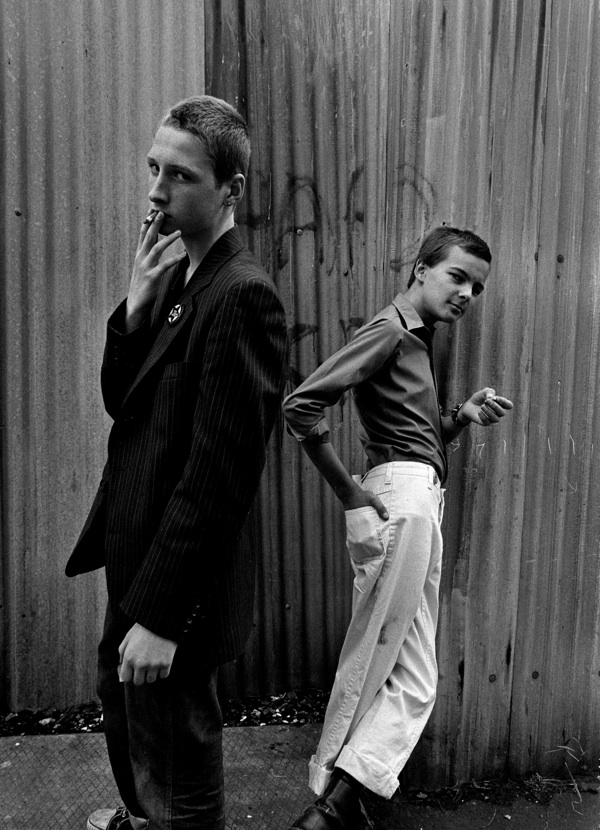
Hoxton 1979
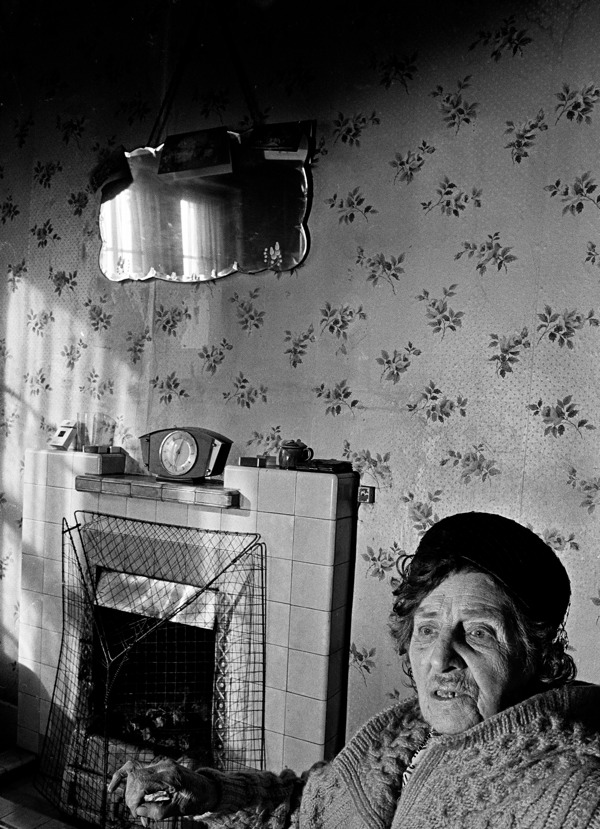
Tower Hamlets 1981
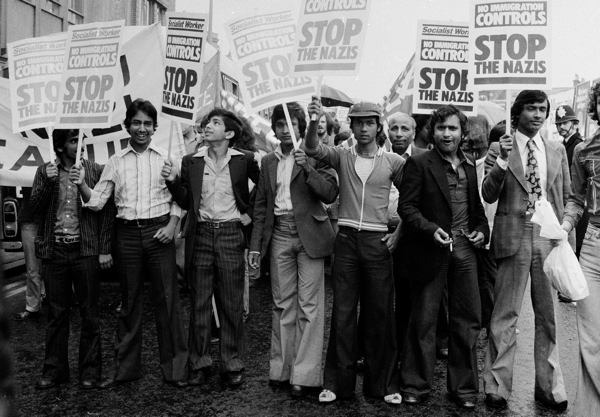
Brick Lane 1976
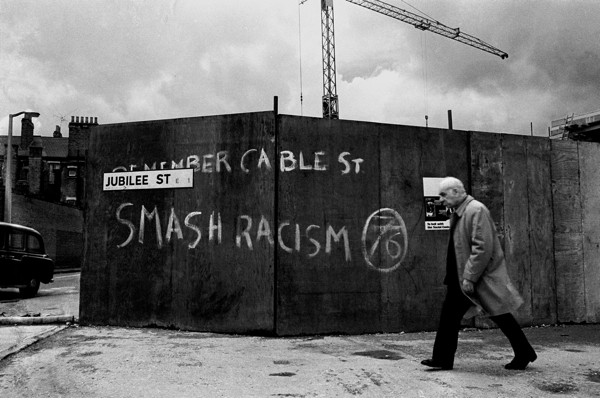
Jubilee St 1977
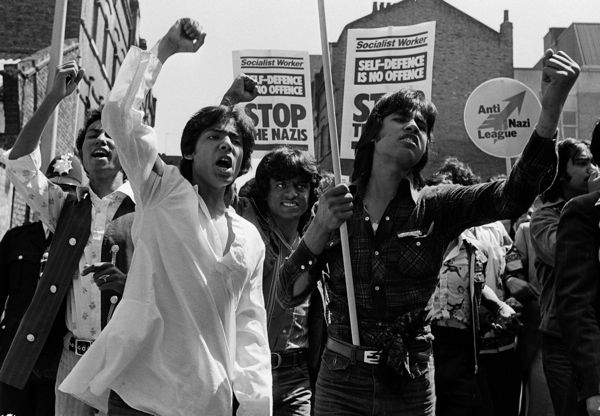
Brick Lane 1978
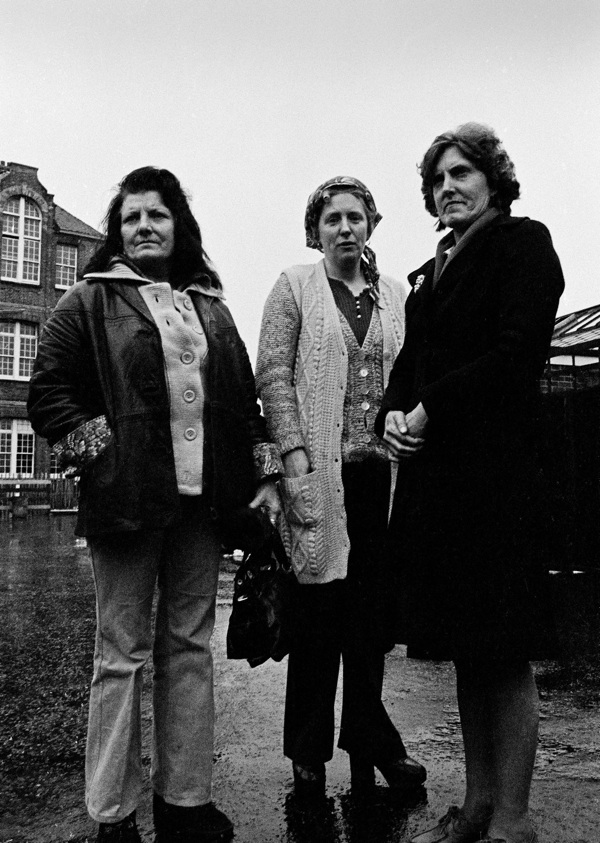
School Cleaners’ Strike 1978
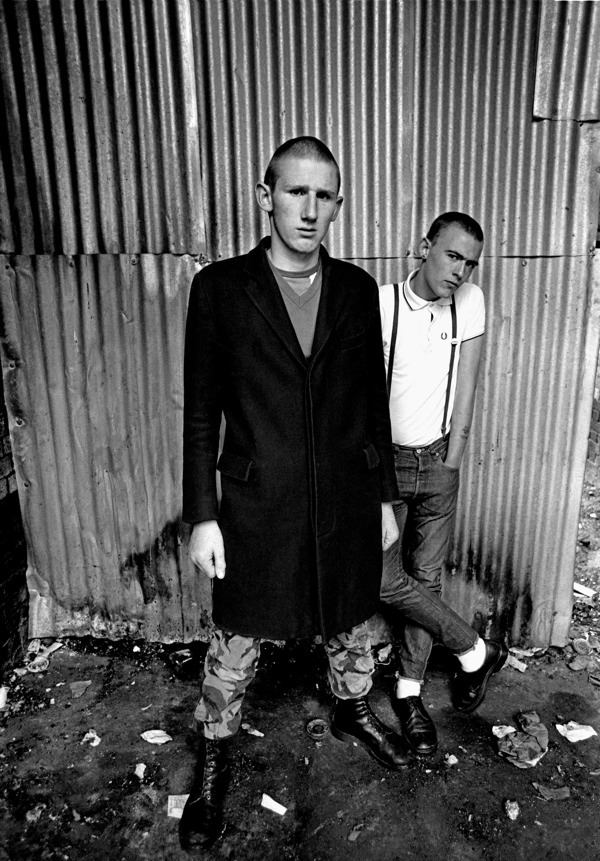
Petticoat Lane 1978
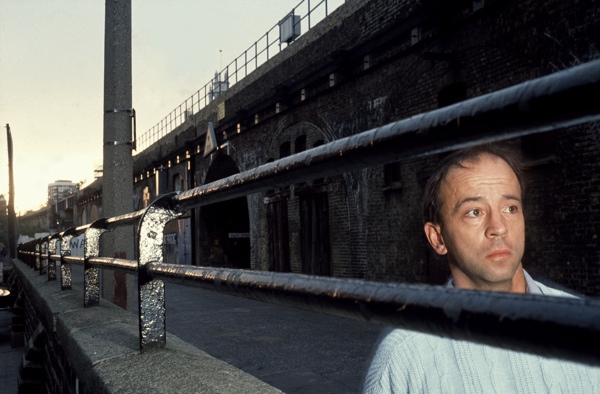
David Widgery, Limehouse 1981
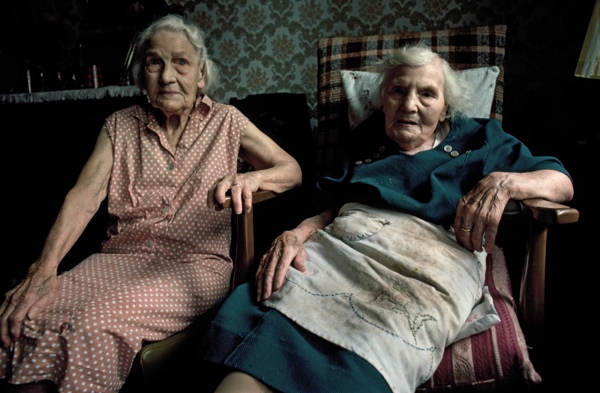
Sisters, Bow 1984
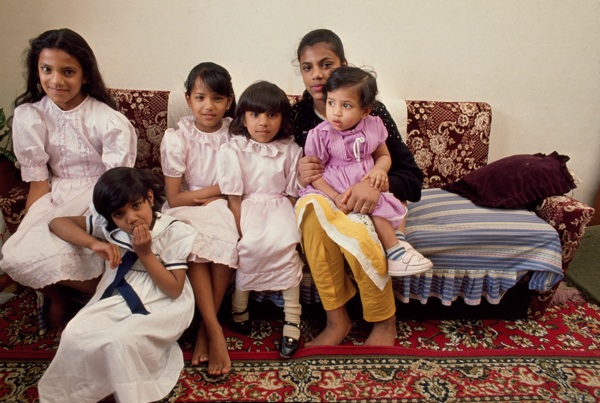
Sisters, Tower Hamlets 1988
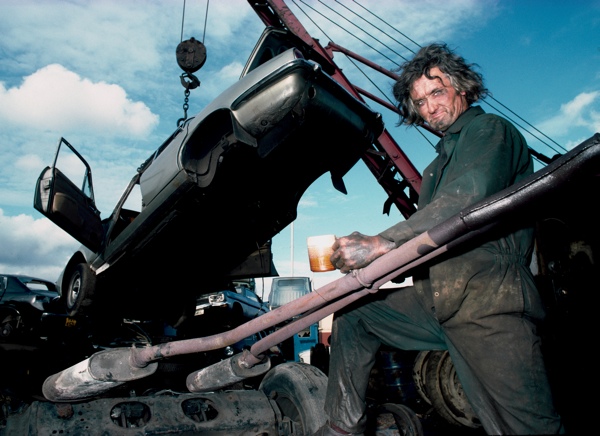
Bow Scrapyard 1984
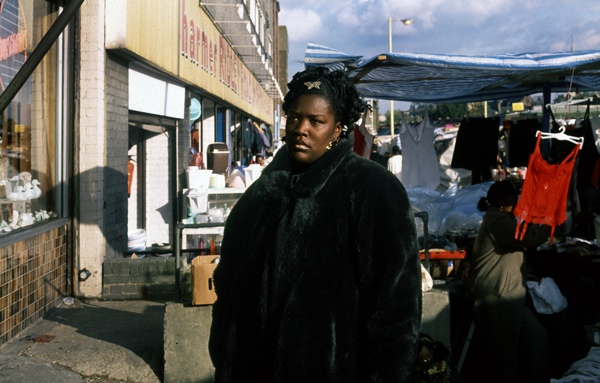
Ridley Rd Market 1992
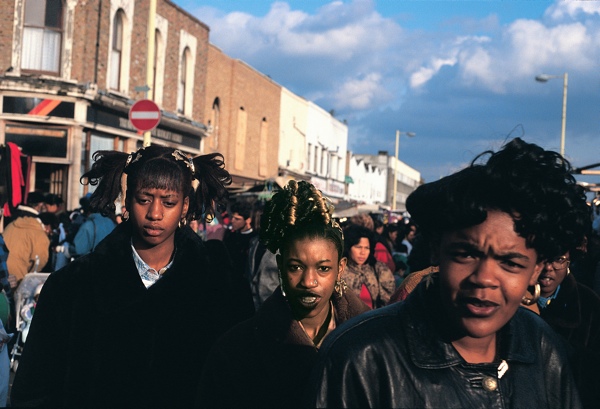
Ridley Rd Market 1992
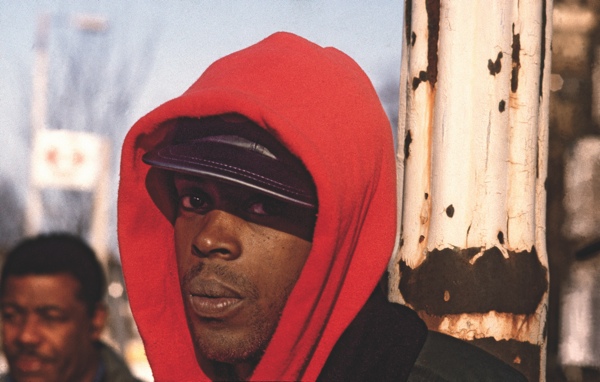
Ridley Rd Market 1995
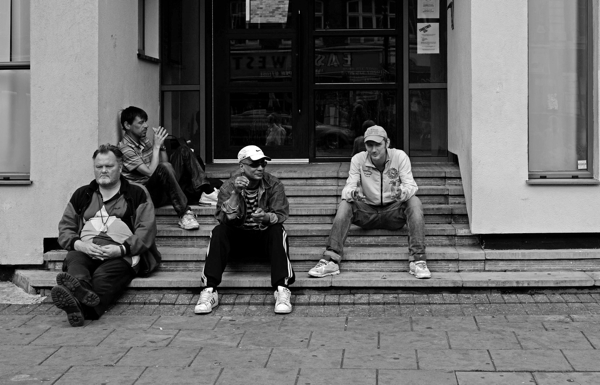
Whitechapel 2013
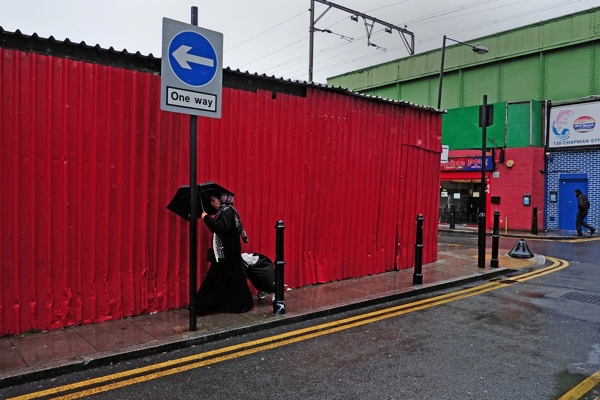
Shadwell 2013

Brick Lane 2013
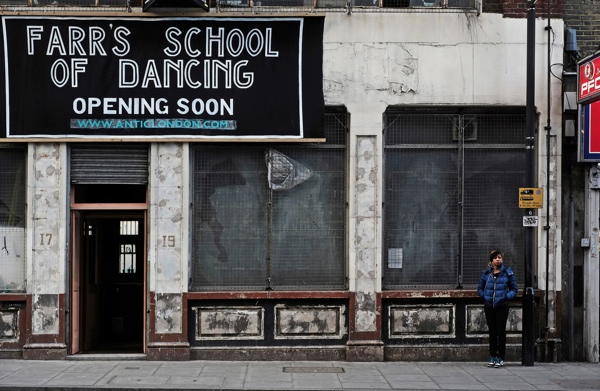
Dalston Lane 2013
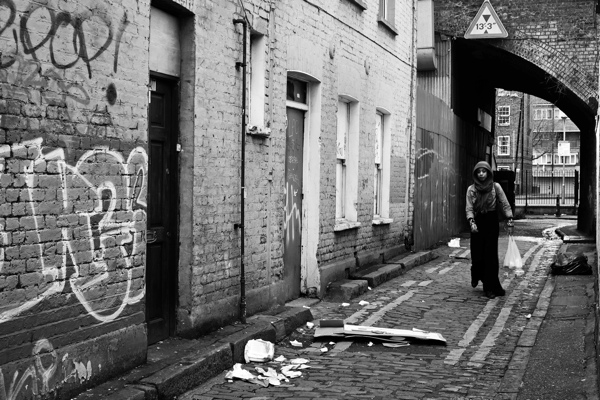
Bethnal Green 2013
Photographs copyright © Syd Shelton
You may also like to take a look at
Tessa Hunkin’s New Mosaic In Haggerston
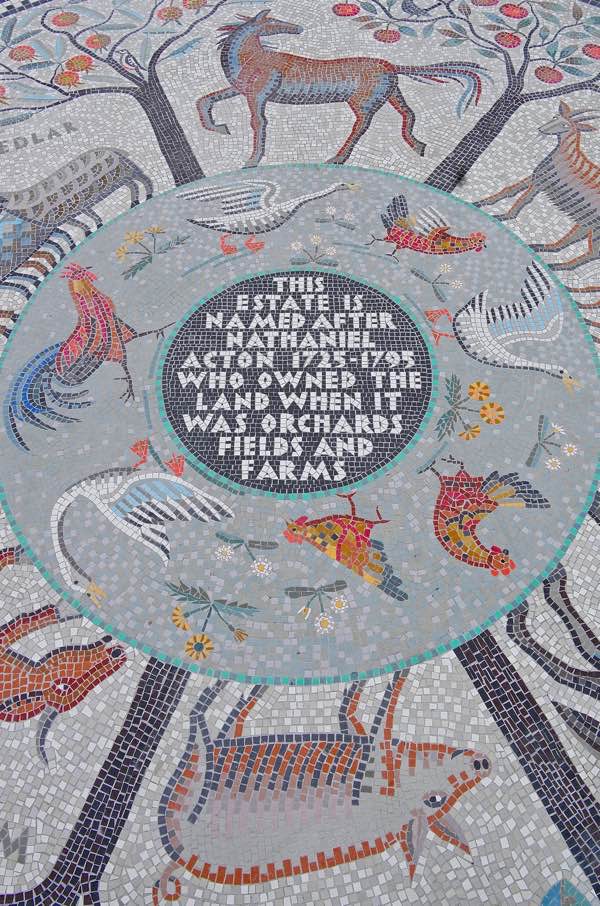
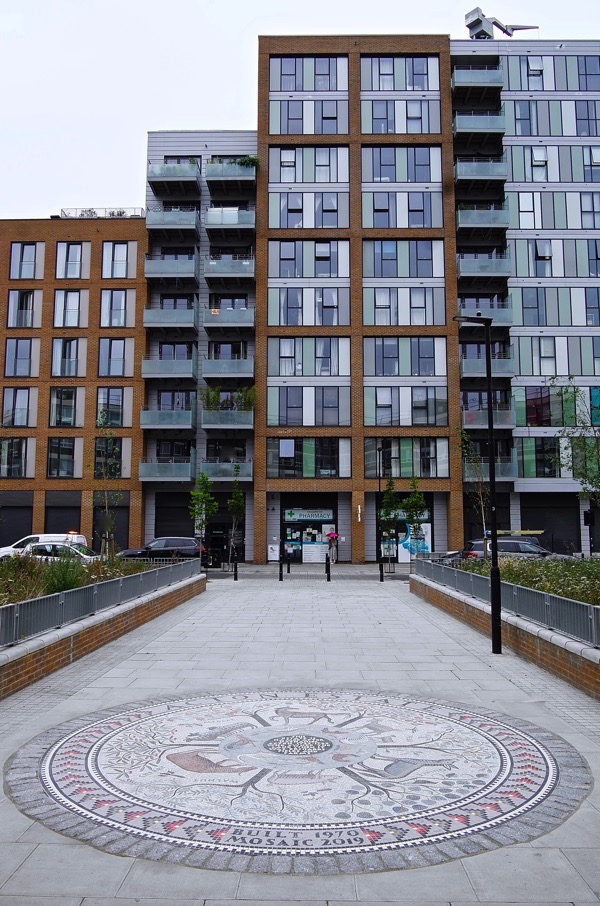
If you are seeking a destination for your daily walk you can do no better than directing your footsteps towards Haggerston where Tessa Hunkin & Hackney Mosaic Project‘s largest ever mosaic has just been completed on the Acton Estate.
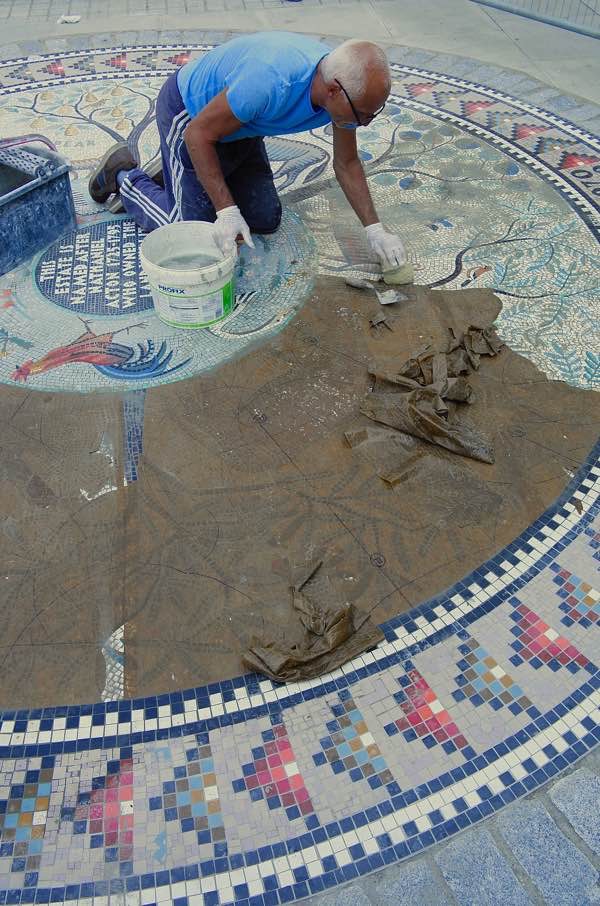
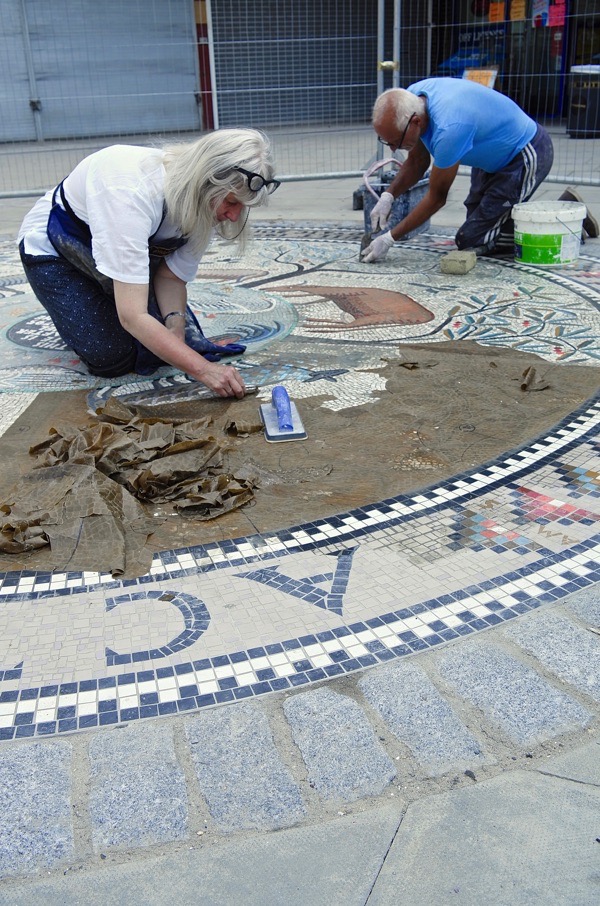
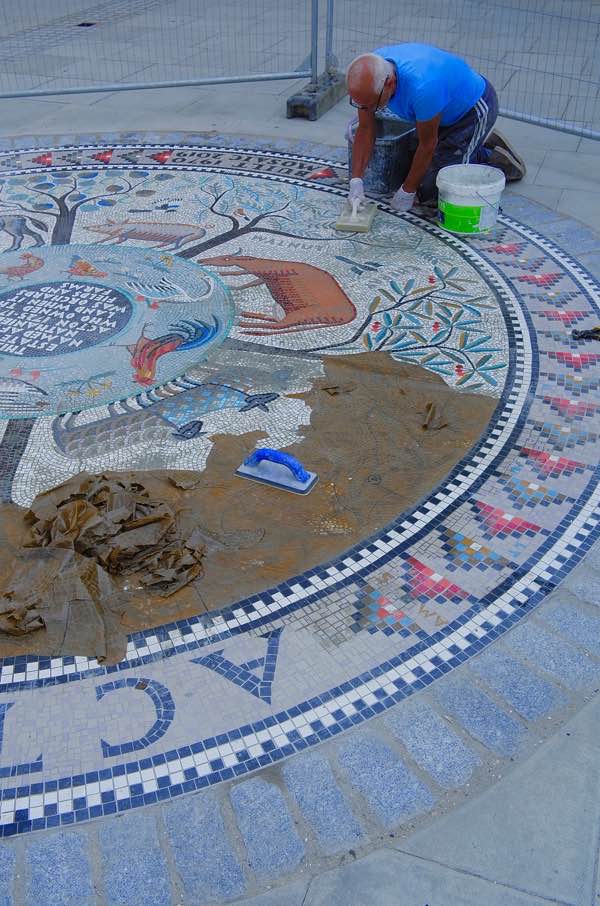
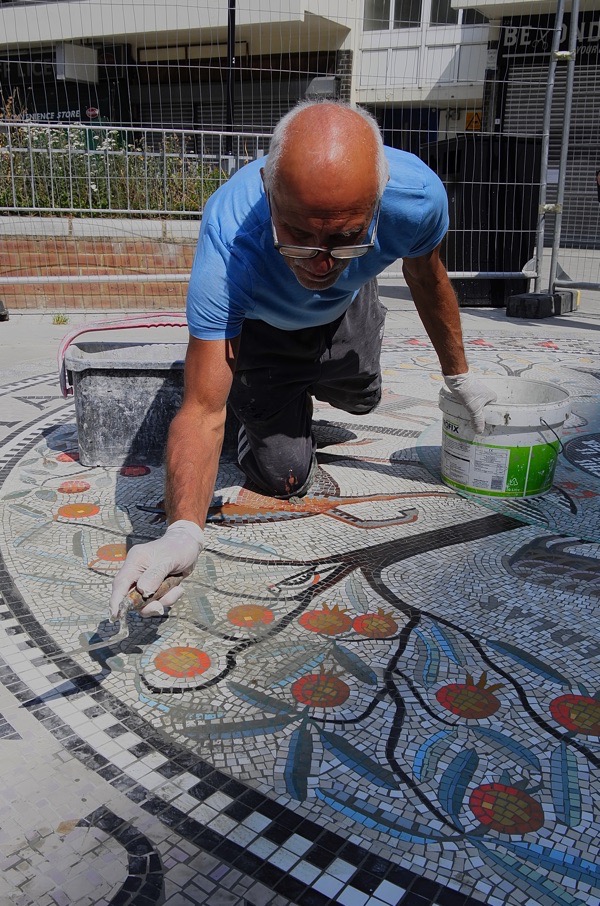
Eight months of work by Tessa and her team reached its spectacular culmination last week as mosaic specialist Walter Bernadin laboured from early morning to install their latest masterpiece before the sun reached its full heat. Funded by the developers who have redeveloped part of the post-war estate, the mosaic forms the centrepiece to the shopping parade at the heart of the neighbourhood which takes its name from Nathaniel Acton who owned the land in the eighteenth century.
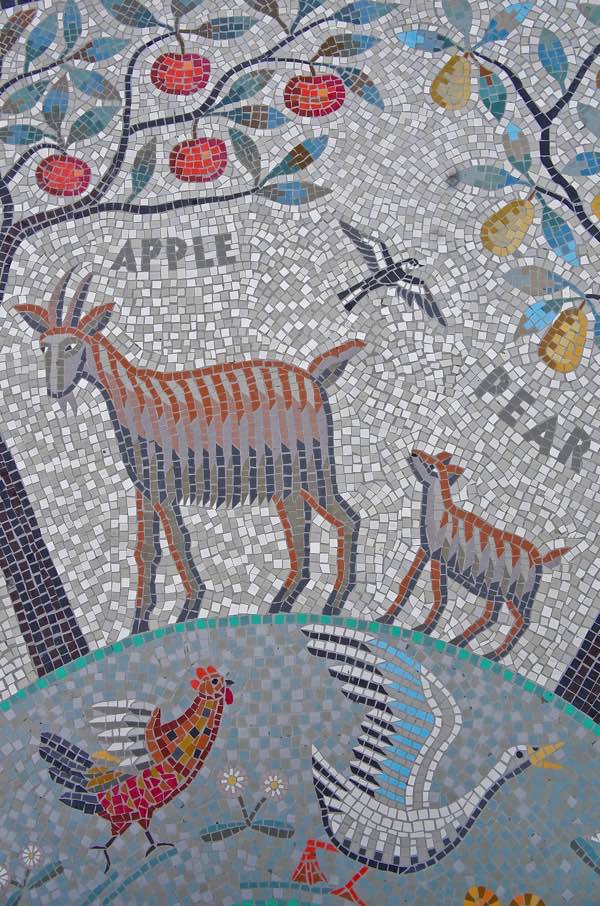
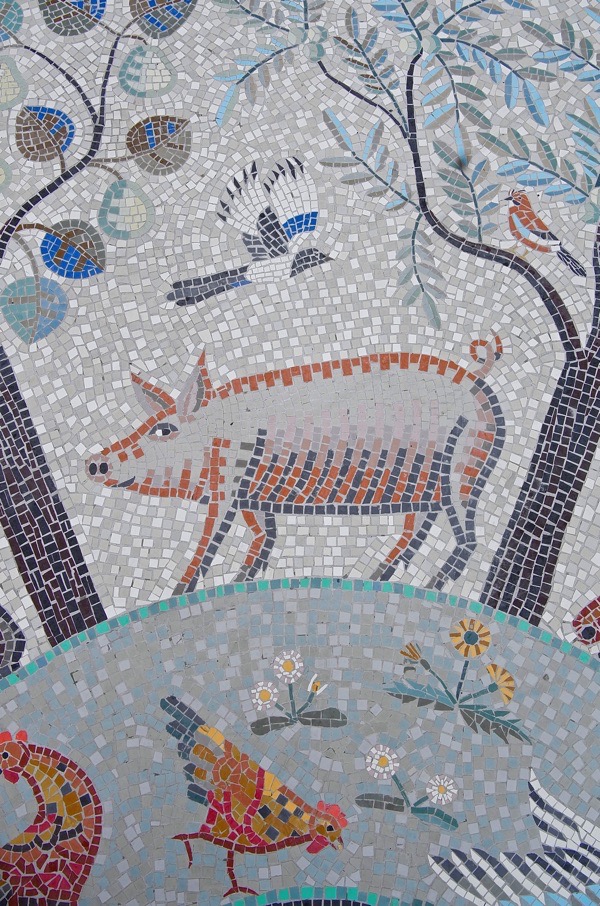
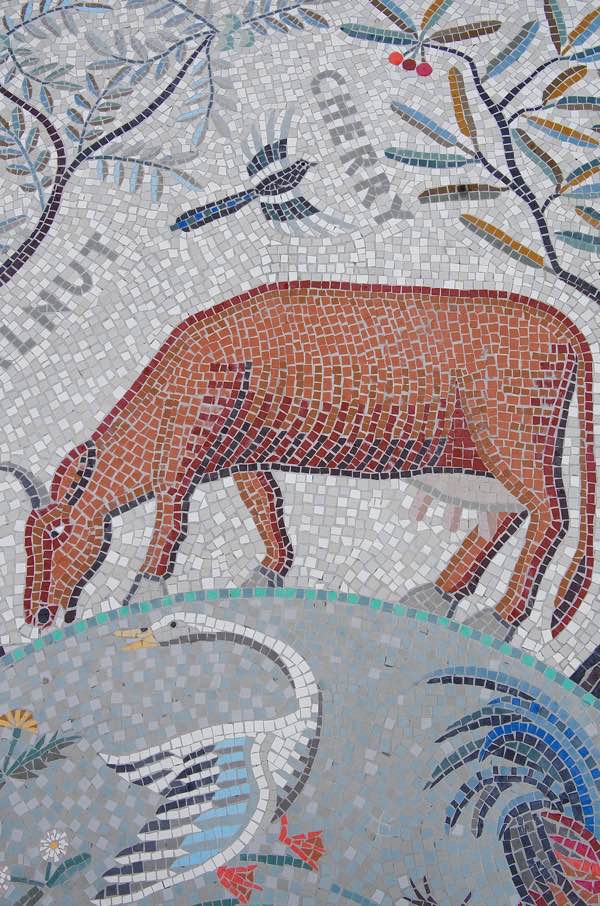
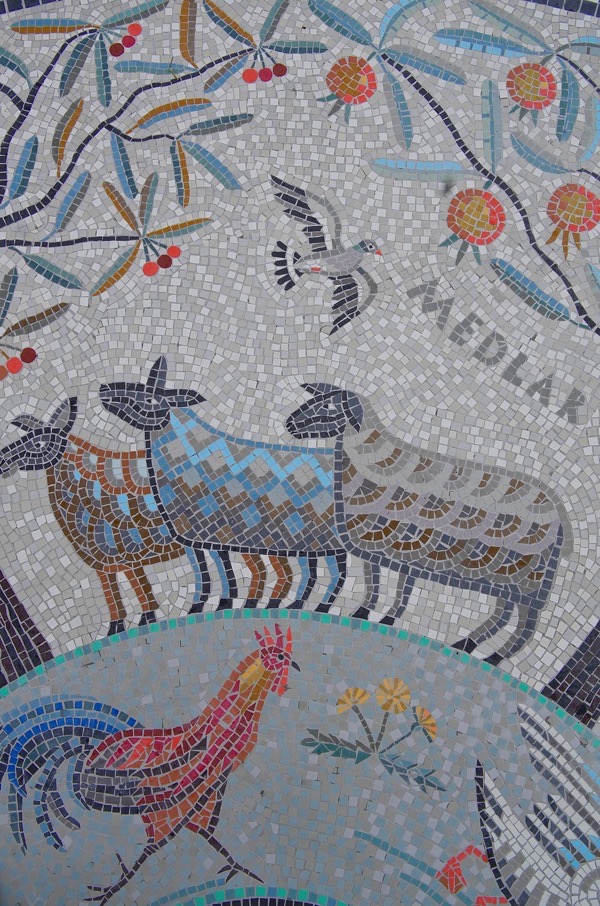
Drawing inspiration from Haggerston’s rural past, Tessa’s design evokes the natural world, illustrating the farm animals and fruit trees that once were here. A closer study reveals hidden initials of local people who were each responsible for different aspects of the work – the animals, plants and birds.
Quickly, a small crowd of residents gathered to admire the new mosaic, appreciative of its lyrical finesse and elegant detail which alleviate the surrounding acres of paving, concrete and brick. In such grim and lonely times in the city, everyone was heartened and uplifted to witness this flourishing of creativity and community spirit, enhancing the urban environment for years to come. It is a symbol of renewal.
The mosaic can be found outside 224 Haggerston Rd, E8 4HT
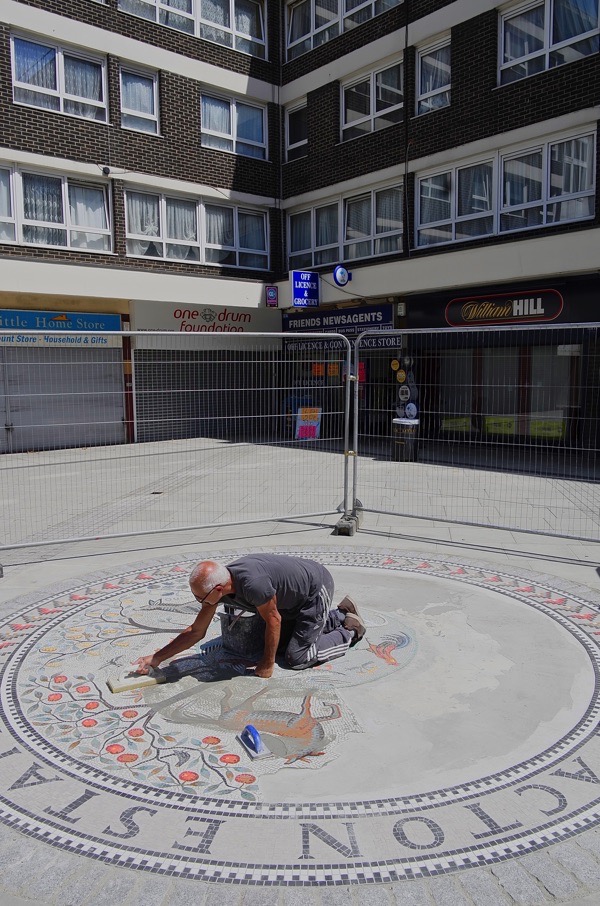
Mosaic expert Walter Bernadin at work on the installation
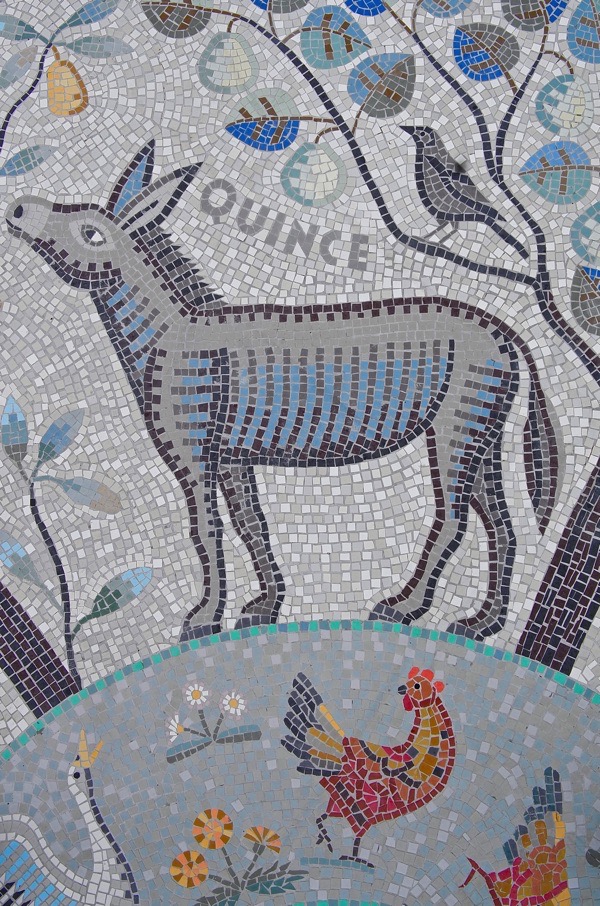
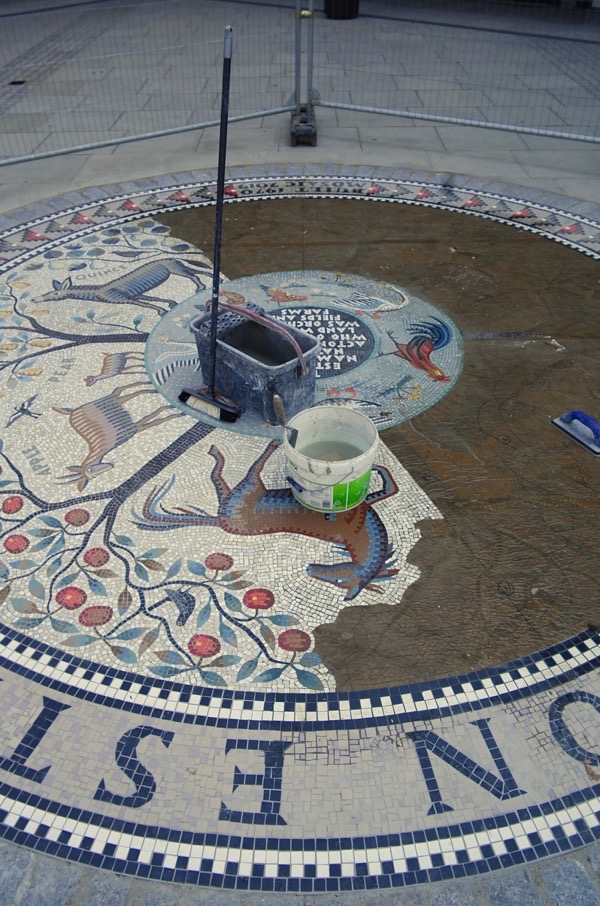
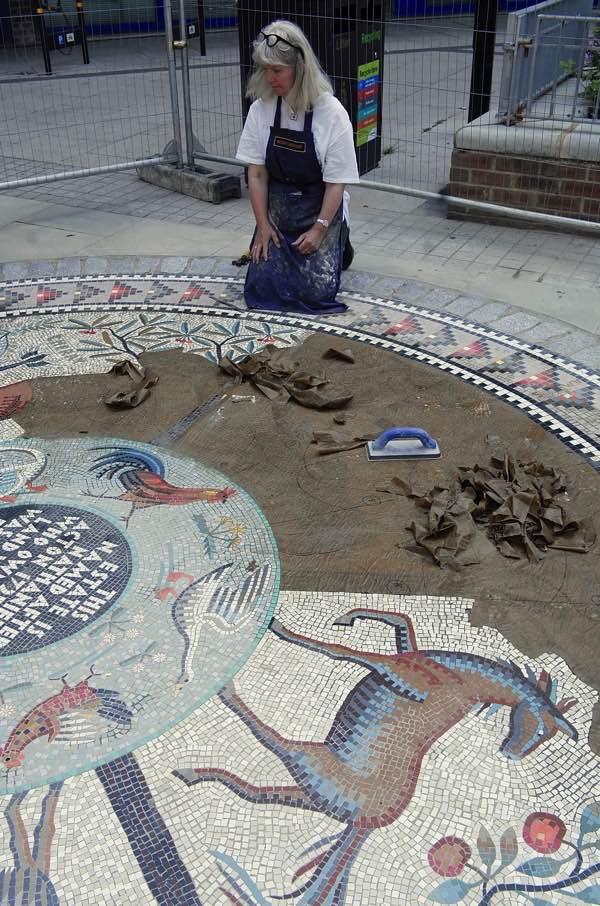
Tessa Hunkin surveys her work in progress
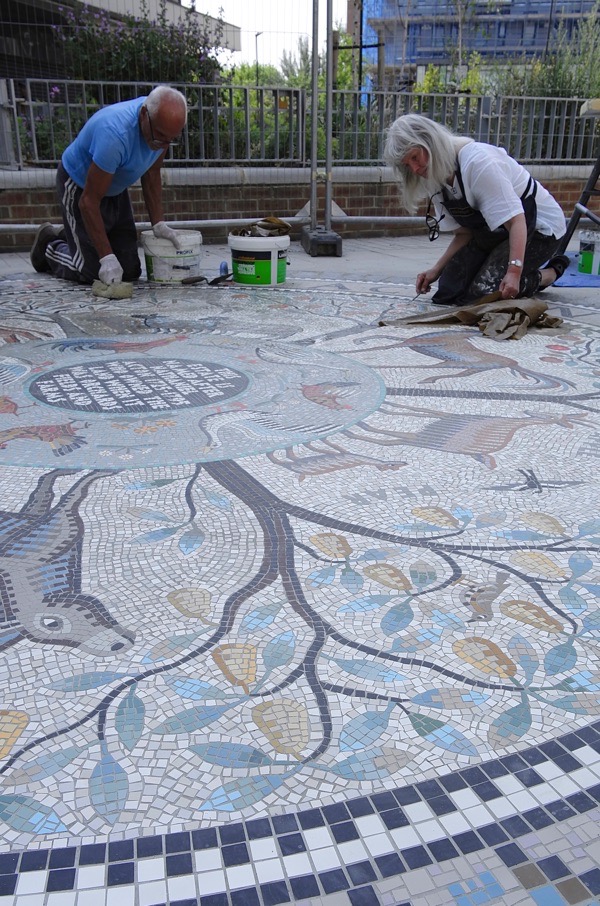
Walter checks for missing pieces
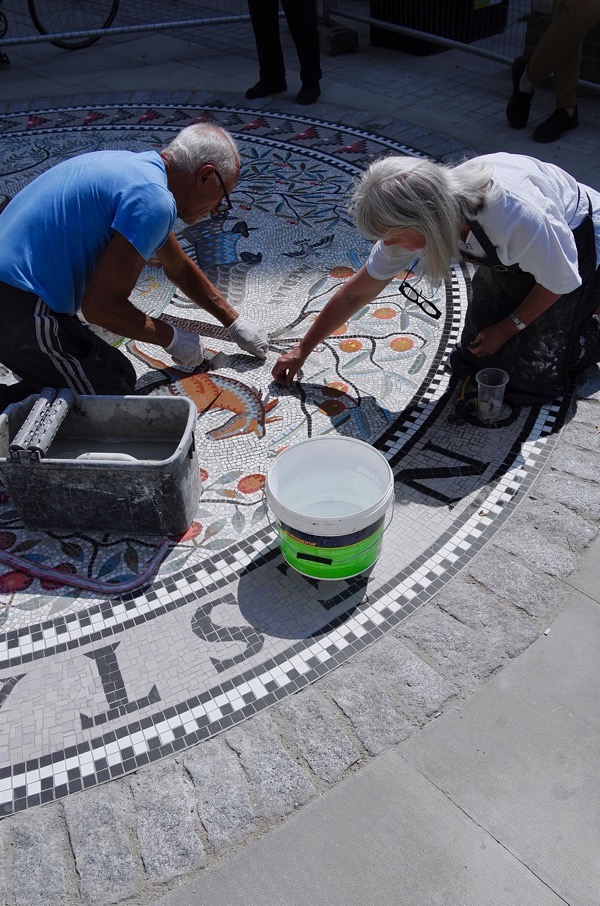
Tessa places the final mosaic tile
THE HACKNEY MOSAIC PROJECT is seeking commissions, so if you would like a mosaic please get in touch hackneymosaic@gmail.com
You may also like to read about
The Mosaic Makers of Hackney Downs
The Award-Winning Mosaic Makers of Hackney
Hackney Mosaic Project at London Zoo
The Haggerston Mosaic was created with the participation of Ken Edwards, James Johnson, Nicky Turner, John Friedman, David Lilley, Janice Dressler, Bernard Allen, Mary Helena, Linda Green, Elspeth Worsley, Mark Muggeridge, Shaz, Tessa Nowell, Sheri Lalor, Gabi Liers, Jackie Ormond, Dani Evans, Frances Whitehouse, Rose Woolmer & Jeremy Maddison.
Special thanks to Denise Bingham of the Residents & Tenants Association who fought to have the mosaic on the Acton Estate.