A Conversation With Milly Rich
My meeting with Milly Rich proved to be one of my most enlightening conversations with a centenarian

“You know, being a hundred is a lot of years to account for…”
Portrait of Milly Rich (1917-2017) by Patricia Niven
The Gentle Author – Are you from the East End?
Milly Rich – I am from the last place I have lived! But I was born at 19 Commercial Rd on October 23rd 1917, which of course was during the First World War and my mother, Leah, told me that the air raid warnings were sounding at the time. People were terrified of air raids but my she had a basement under her shop in Commercial Rd where she took shelter.
My mother made corsets and she taught me to make them too. Corsets were a vital part of a lady’s outfit in those days because – of course – smart clothes needed a good foundation and a good foundation was a nice heavily-boned corset with a strong steel bust in the front. Everybody had remarkably good posture, not slumped – like you see today – over a hand-held computer.
The Gentle Author – Your mother was proprietor of the shop?
Milly Rich – I have a picture of her standing outside the shop with her two assistants when she was not yet twenty. She was very creative, very artistic – and she got her first job in an embroidery factory in Hanbury St. Then she opened a shop at 87 Brick Lane and – many years later – it transpired that the young man I married was the son of the owner of the embroidery factory where my mother had once been a designer. So the world is full of concentric circles!
The Gentle Author – Tell me about your father.
Milly Rich – My father, Morris Levrant, was an ‘émigré of the Empire of Russia’ and I know that because he went to America first and patented an airtight valve for bicycle tyres when he was thirty. He was very clever. My mother said he spoke nine languages and he was an inventor. He was born in Siedlce in Poland where my daughter has traced our family back to 1733.
He left a wife and three children in New York when he came to London and my mother’s father was not very happy about that. Apparently, my grandfather put him through hoops to prove that he was properly divorced. I do not know how he got the divorce but he obviously did because otherwise they would not have allowed the marriage. My parents were married in Princelet St Synagogue and I was born in 1917, so I suppose they were married in 1916.
The Gentle Author – Do you have brothers and sisters?
Milly Rich – I had one brother, Mossy. He is dead now, he died at seventy-five years old. I suppose it speaks volumes for the kind of life we led that he had rickets, which is caused by malnutrition. He was very good with his hands and became a jeweller and worked in Black Lion Yard and Hatton Garden.
When the Jews were promised a homeland in the Balfour Declaration, my father decided he would settle in what was then Palestine. Of course, he was an inventor, and he was agog to go and be an inventor there – he was a clever chap. So in 1921 we set sail.
The Gentle Author – You shut the shop in Commercial Rd?
Milly Rich – Yes, we got rid of it and went off to Palestine but a war broke out there and, in the first month, my father was killed and he was buried there. He was only forty when he died and left three children in New York. We found them not very long ago. The two sisters were still alive, they were ten and eleven years older than me. We went and stayed with them, and they were lovely. They turned out to be artists and designers too
When my father died, my mother was expecting my brother, so she could not come back from Palestine at once but she did not speak the language and, of course, my father had all the money – she was stuck in Jaffa. Fortunately my uncle – my mother’s sister’s husband – came to the rescue and got us back to England. By that time, I was three, I remember. And we were stuck in Boulogne because I had a watery eye – they thought it was catching – an eye disease, maybe trachoma but it was just a trapped eyelash.
On our return, we stayed with my uncle in Whitechapel. He had a jewellery shop opposite the Whitechapel Gallery, it was museum as well in those days. I remember they had a septic mouse in a case on the stairs and an illuminated panorama of Medieval London on the landing. It was lovely, I used to stand and stare at it for hours.
We stayed there until my uncle found the shop at 192 Bethnal Green Rd. It was flanked on one side by the Liberal Party headquarters, Sir Percy Harris was the MP, and on the other side by a newsagent. They were not Jewish, but everybody was on excellent terms and there was no anti-Semitism where we were.
We lived above the shop and we had tenants as well, who had to come through the shop. Originally, it been a house and garden but it had been transformed into one great long space. My mother had a curtain put up to screen people walking through because they had to cross our parlour, which my mother also used as a fitting room for the corsets.
Women used to come in and treat her as an agony aunt. Like a hairdresser or a dressmaker, she was a recipient of confidences. All the locals would tell my mother their troubles which invariably were to do with their husbands. They used to speak Yiddish so that I should not hear but, knowing they were speaking so I could not understand, I soon picked up Yiddish. I never let on that I could and, of course, I would tell the stories to my friends at school which was a source of much merriment.
There was a window in the parlour so my mother could see if anyone came into the shop. My brother used to climb up to look through it at the women trying on the corsets and, of course, a good time was had by all!
The Gentle Author – What took you out of Bethnal Green?
Milly Rich – I won a scholarship to Central Foundation School in Spital Sq. It was a fee-paying school at the time and there used to be quite a division between the scholarship girls and the fee-paying pupils. I was a great reader and I have always loved words and I had a good vocabulary. The other children did not like it. “Oh you’ve swallowed a dictionary,” that was a great insult. I did not care, did I? From there, I won another scholarship but I could not make up my mind whether to go to the London School of Economics, because I wanted to be a journalist, or St Martin’s School of Art.
In the event, I decided I would not train to be a journalist because I was not going to learn shorthand – I was not going to take down anybody else’s words. So I took the place at St Martin’s instead and hated it. We used to sign in and go off to the local Lyons teashop and sit there for hours, making patterns on the tablecloth with the salt cellar. Eventually, my mother could not afford for me to stay there any longer because I only got ten shillings a week and I did not like it anyway – I do not like any form of regimentation.
I got a job inscribing certificates because I was quite good at lettering and I did that for a couple of months. It was trees in Israel. They kept planting forests and I used to write ‘five trees planted in the name of so-and-so on the occasion of his this-and-that.’
I did not do it for long, I got a job in a drawing office instead. I told them I could do it, even though I had never held a drawing pen in my life. They said, “Well, here’s one – take it home and bring it back tomorrow, completed.” I went into an art shop and asked, “How do you do this?” They showed me a drawing pen and how you filled it and how you used it, so I went home and I did the drawing and I took it back the next day and I got the job. The drawing office was quite fun actually, I enjoyed it there. It was right at the top of Crown House, which is still there on the corner of Drury Lane and Aldwych. We used to feed the pigeons and there was a Sainsbury’s around the corner which delivered lunch in a box. You got a sandwich and some orange juice and a piece of cake for sixpence.
You know – being nearly a hundred is a lot of years to account for.
The Gentle Author – Tell me about Moss, your husband.
Milly Rich – We met at a play-reading group. He was a writer, and I always liked plays and acting and so on. We met there and he would walk me home.
The Gentle Author – Where did he come from?
Milly Rich – His father had the embroidery factory in Hanbury St, where my mother had once worked doing the patterns although we did not realise that at the time. It was only when our parents were introduced that they realised that they all knew each other already. Small world. People were so ready to help each other, I do not know if people are still like that in the East End, but they were once. I remember the blackshirts marching down Bethnal Green Rd and shouting “The Jews, the Jews, we’ve got to get rid of the Jews!” Whenever they passed our shop, my brother used to be outside yelling.
The Gentle Author – Did you feel threatened?
Milly Rich – I do not think I was aware of it, but I became aware because Moss used to take me to the political meetings and the Unity Theatre. When there was the Battle of Cable St, we went there. I remember leaning on the lamppost outside Gardiner’s Corner and we were all yelling, “They shall not pass, they shall not pass.”
The Gentle Author – That was eighty years ago.
Milly Rich – Then war was declared and we all thought the first air raid would obliterate London. Everybody was terrified and I had known Moss four years, so he said “We’d better get married right away, while we can,” and he got a special licence. I did not want any fuss and I told my mother, “I’m not having any ‘do’” because getting married, especially in Jewish families, was a great occasion you know. I said, “I’m not having any family there.” It was the custom then – I do not know what people do now– for the woman to take the man’s name but I did not like that, so I said, “If I have got to take your name, you have got to take my name.” His name was Rich and my name was Levrant so we became Levrant Rich, which sounds quite good.
The Gentle Author– Was that unusual in those days?
Milly Rich – Goodness knows! Moss was very easy about it, he said he did not care. My mother said she would kill herself if we did not get married in the synagogue, but I said “I’m not having anyone there , I don’t want a fuss,” so she agreed she would not tell anyone. But when Moss and I arrived at the synagogue, standing outside wreathed in smiles was my fat Aunty Milly and her husband. I said, “I’m not going to do it!” and we turned tail and ran away, so we did not get married that day.
We came back the next day and got married when nobody was there. We got no photographs, nothing. It was just the two of us, and Moss had to go back to work because he was in the timber importing business, doing the advertising, and everybody thought the work was absolutely vital. So he went back to work and I went shopping in Petticoat Lane for a couple of cups and saucers and a saucepan.
Moss had found us an attic room at 4 Mecklenburgh Sq and we went back there. It was one pound a week which was a lot of money for rent. There was an oven on the landing which four other tenants used and we each took a turn to put a shilling in the meter. Sometimes, I would come back early and find the landlady on her knees fiddling the meter!
When the air raid siren went, we dashed down to the shelter which was just opposite. One night we got a direct hit. The thing shuddered but it did not go off and we were marshalled out by wardens. I remember walking up Gray’s Inn Rd with fires blazing on either side right up to Euston Station. There were aeroplanes droning overhead and the church opposite the station was on fire. We were ushered into the station and we spent the rest of the night there, before returning to Mecklenburgh Sq.
Although our rent was one pound a week, Moss earned four pounds and I earned two pounds and a bit, so we only had just over six pounds as our total income. After our pound rent was paid and Moss had ten cigarettes delivered each day, I used to be able to send stuff to the laundry. They would come and collect and deliver it, all freshly ironed, and a sheet was tuppence to launder. Can you imagine? Shirts and everything. I never did any washing myself. As well as Mrs Pointy the landlady, there was a caretaker who kept our two rooms clean for two shillings a week, which was very nice. Mrs Pointy used to feed her cat cods’ heads and the smell – I can still smell it – was absolutely indescribable.
The Gentle Author – Nowadays in London, many people spend half their wages on rent.
Milly Rich – I was just thinking about the nature of progress. When I was young, it was usual for a woman to stay at home and the man would bring home the money – his wage could support the wife and the family. Now two wages are not enough, do you call that progress?
Transcript by Rachel Blaylock

Milly, aged one and a half in 1919

Milly, aged five in 1922
 Milly, aged eighteen in 1935

Milly, aged twenty in 1939

Moss in 1939

Milly & Moss’ Marriage Certificate, 1939

Milly’s London Transport card, 1939

Milly & Moss in the forties

Milly & Moss in the eighties – Milly & Moss were married for seventy-two years
You may also like to read about
Maurice Sills, St Paul’s Cathedral Treasure
Jack Corbett, London Oldest Fireman
Aaron Biber, London’s Oldest Barber
At Hiller Bros
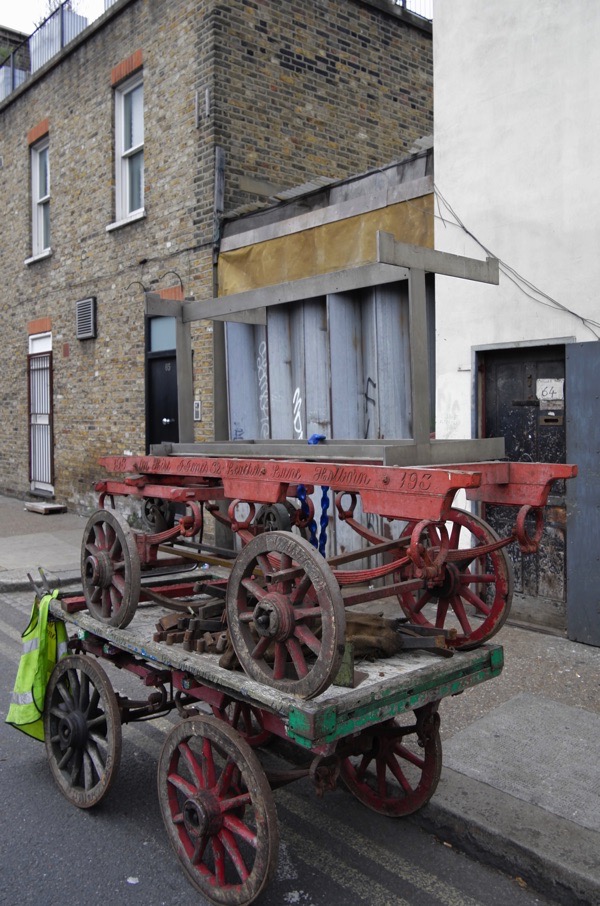
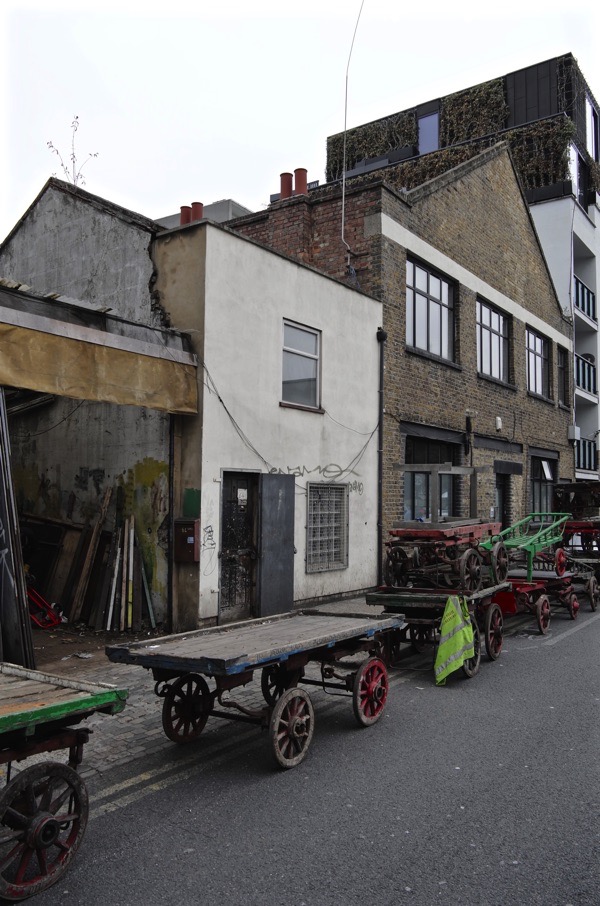
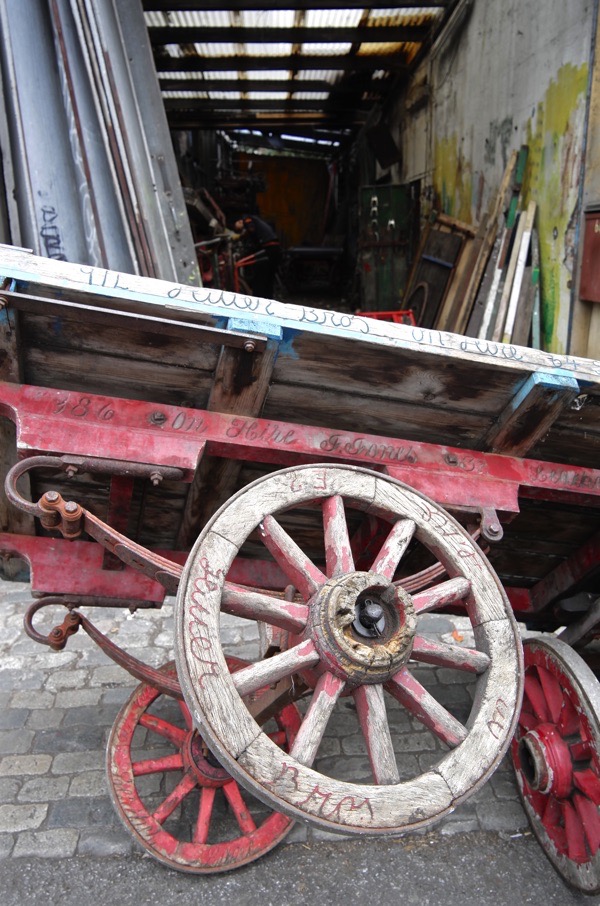
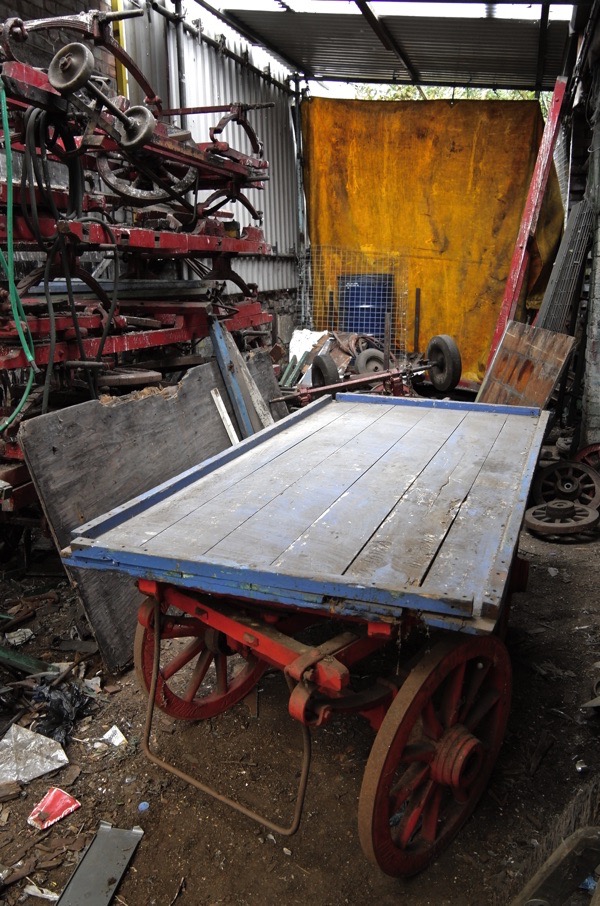
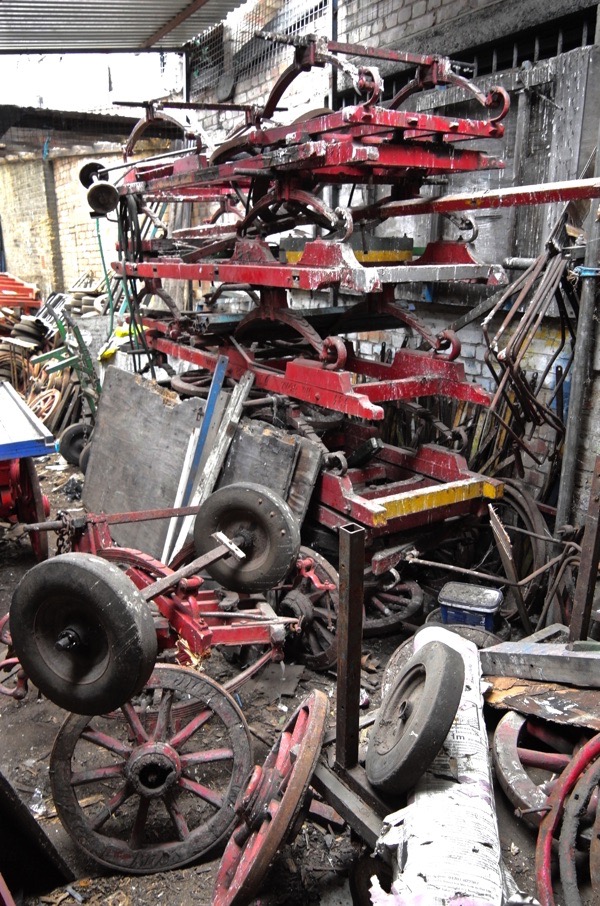
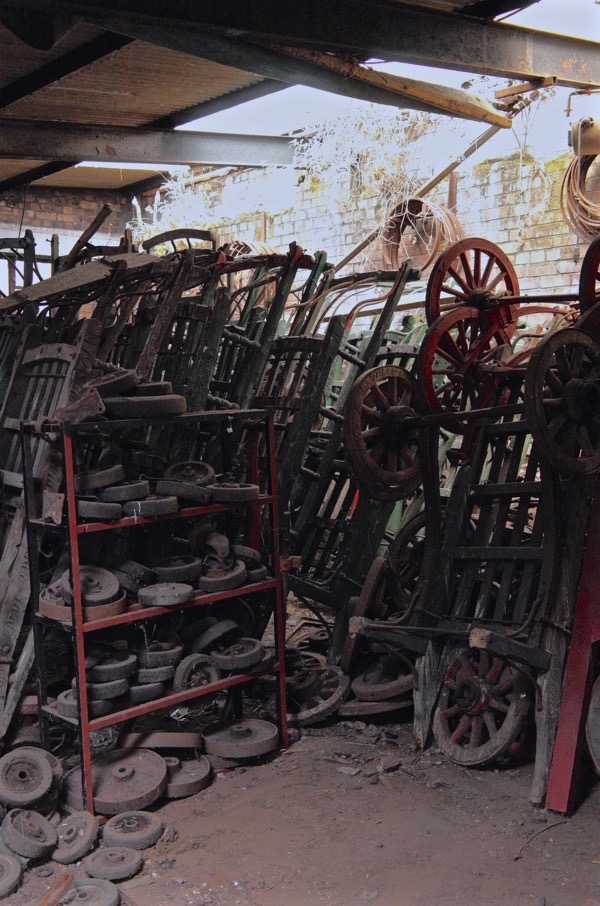
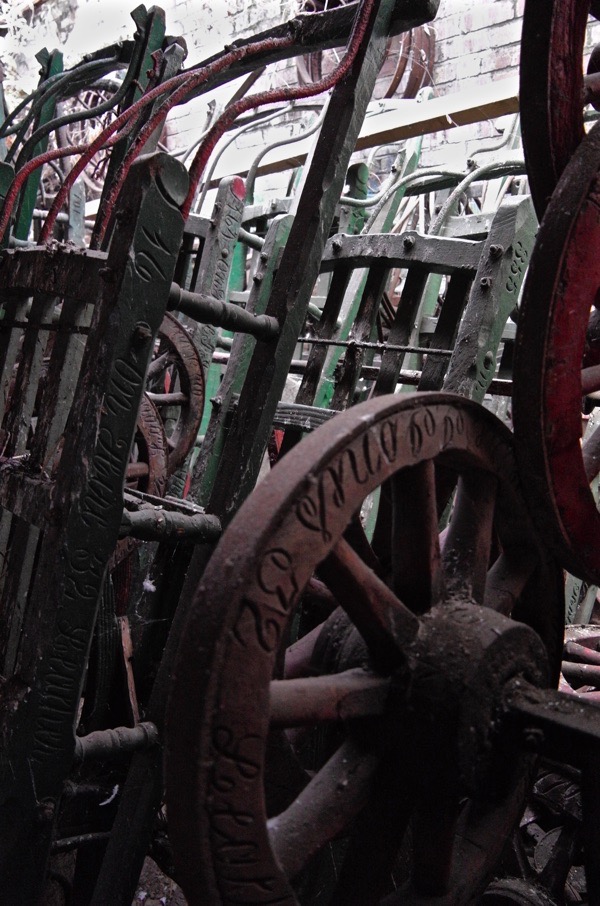
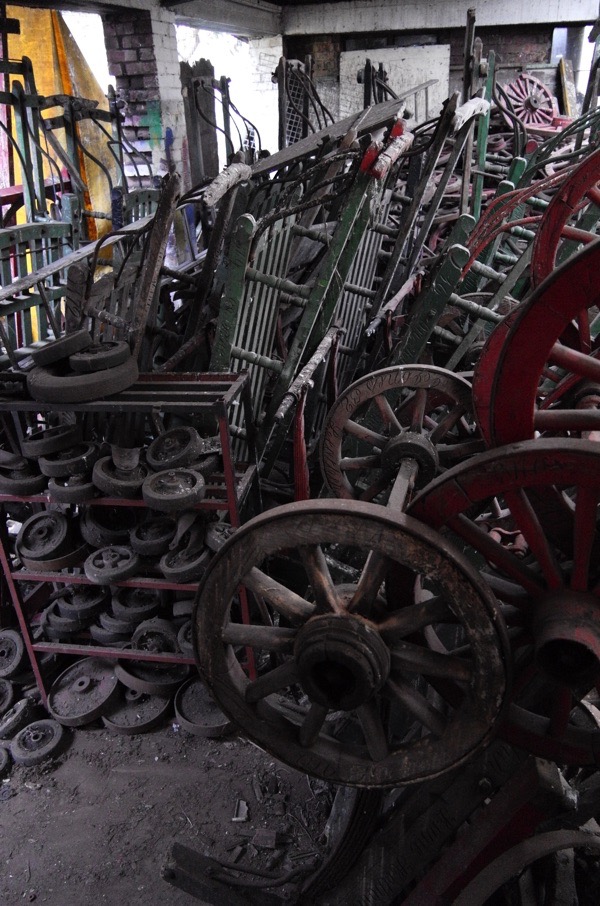
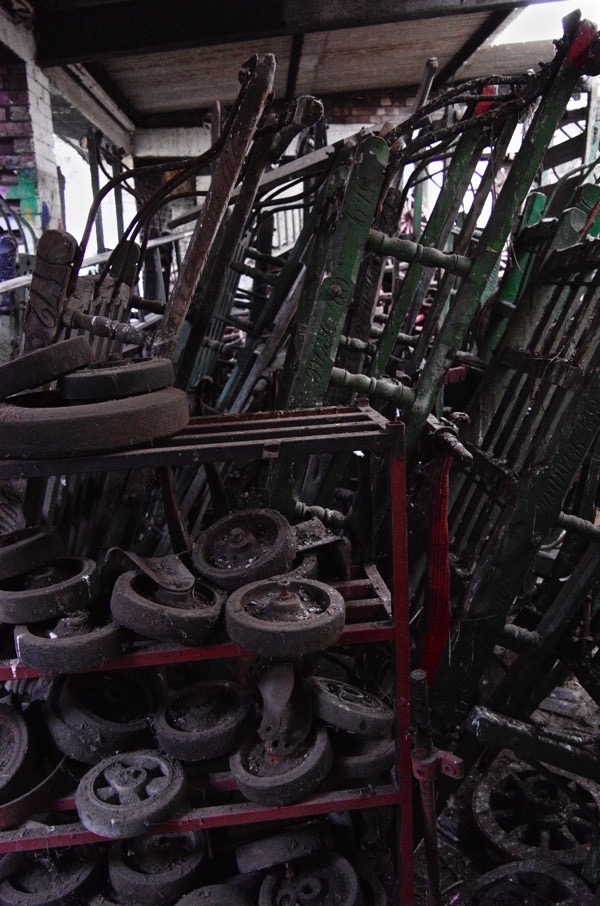
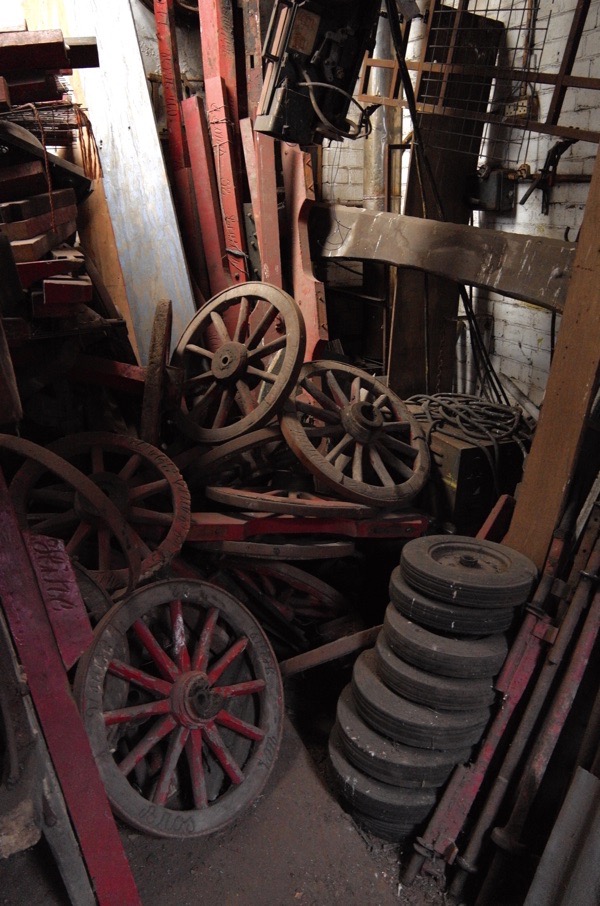
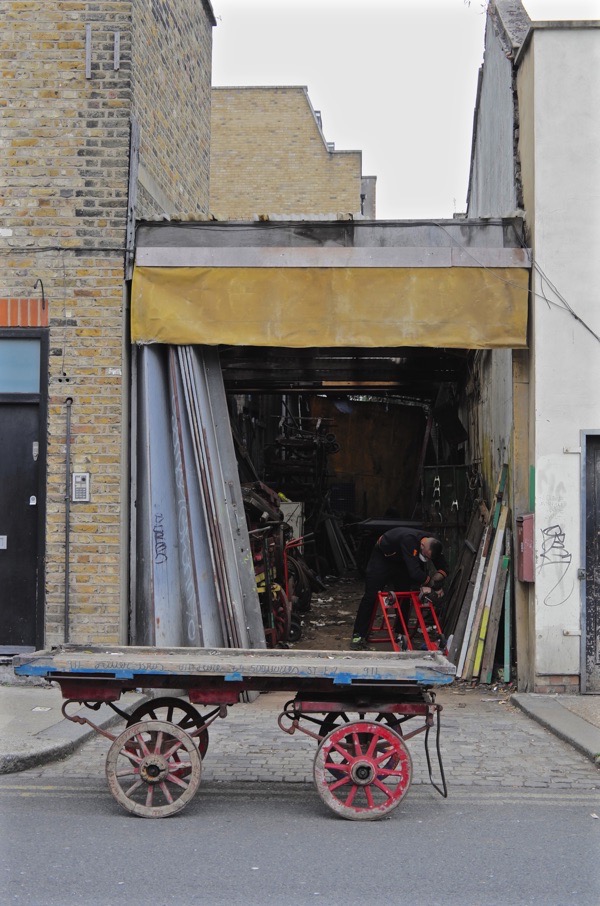
Ten years have passed since I made my one and only visit to Hiller Bros, the last barrow-makers in the East End, prior to demolition. Now a new building stands there and no trace remains of the workshop that I documented in these photographs.
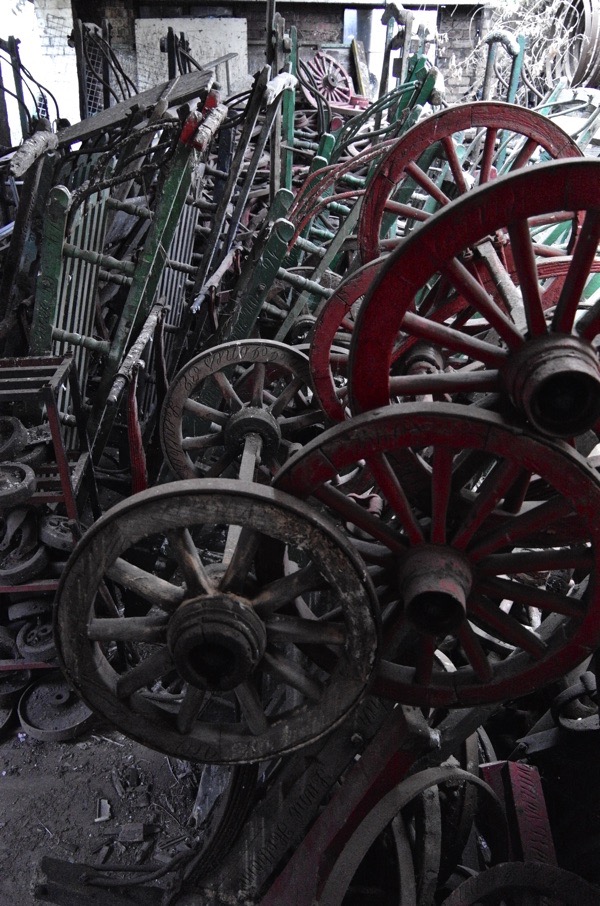
For years, I longed to visit Hiller Brothers, the last barrow workshop in the East End, at 64 Squirries St, Bethnal Green, but – until yesterday – I had to content myself with peering through a tiny glass panel in the metal shutter each time I passed to wonder at the piles of old wooden barrows within.
The last of the Hiller Brothers, Bob, left here in 1991 when the workshop was let to tenants who carried on the work of repairing and maintaining barrows. Then, earlier this year, Bob Hiller died and now the building has been sold for demolition and redevelopment. Within a matter of weeks the workshop must be cleared out, which means that I was able to pay a visit at last to view the barrows for sale.
Hiller Brothers began manufacturing and hiring barrows in the eighteen-sixties at 67 James St on the other side of Bethnal Green, moving to these premises in 1942 which they bought from Oswald Mosley and the British Union of Fascists who opened it as their East End office in 1933.
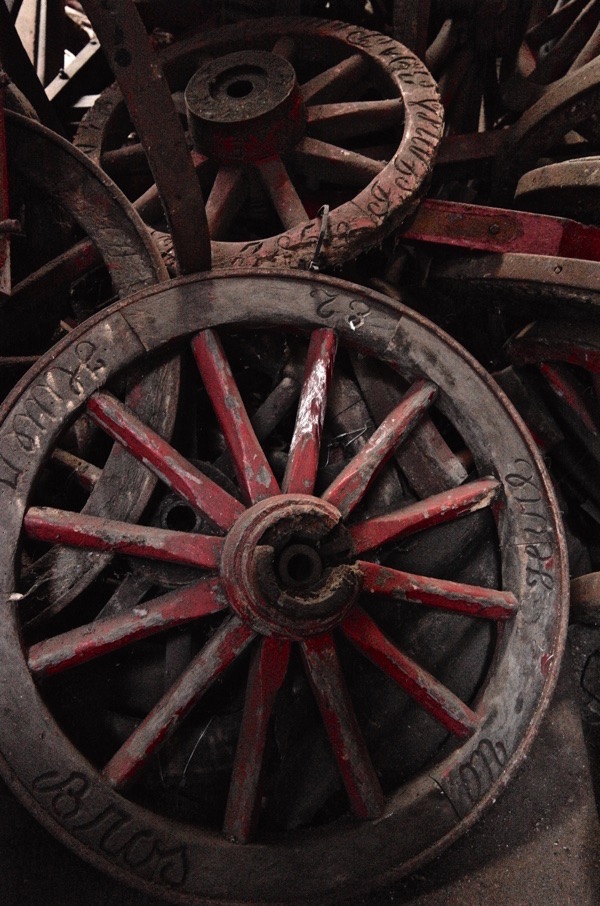
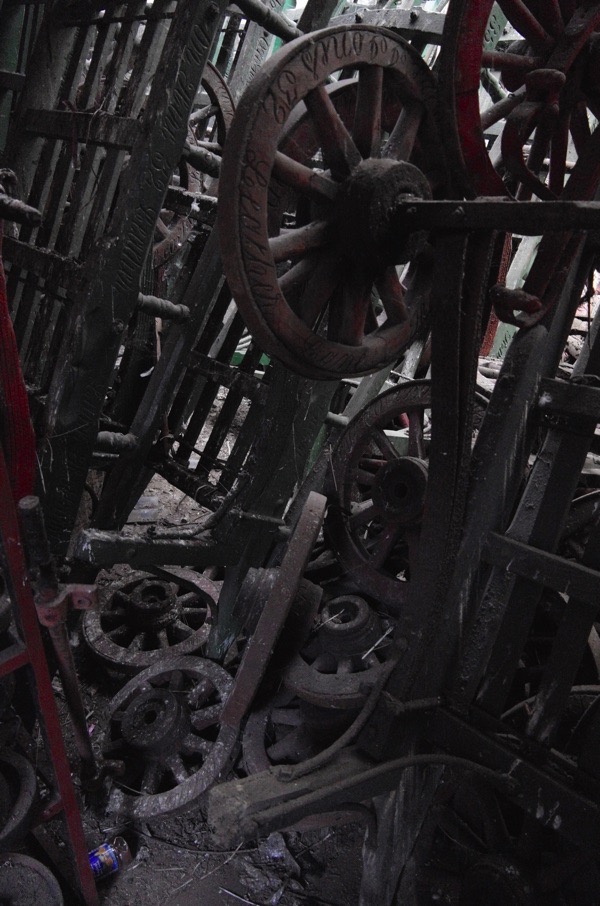
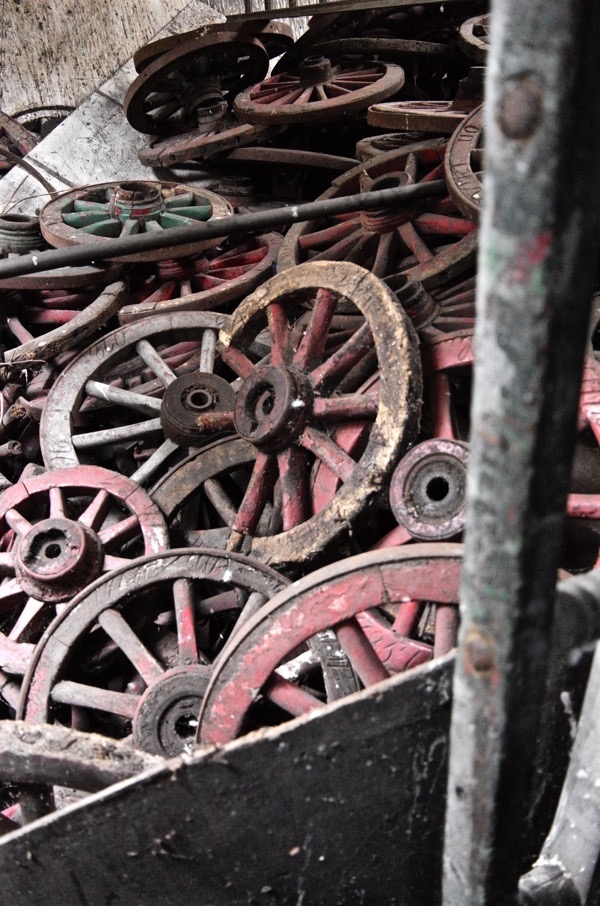
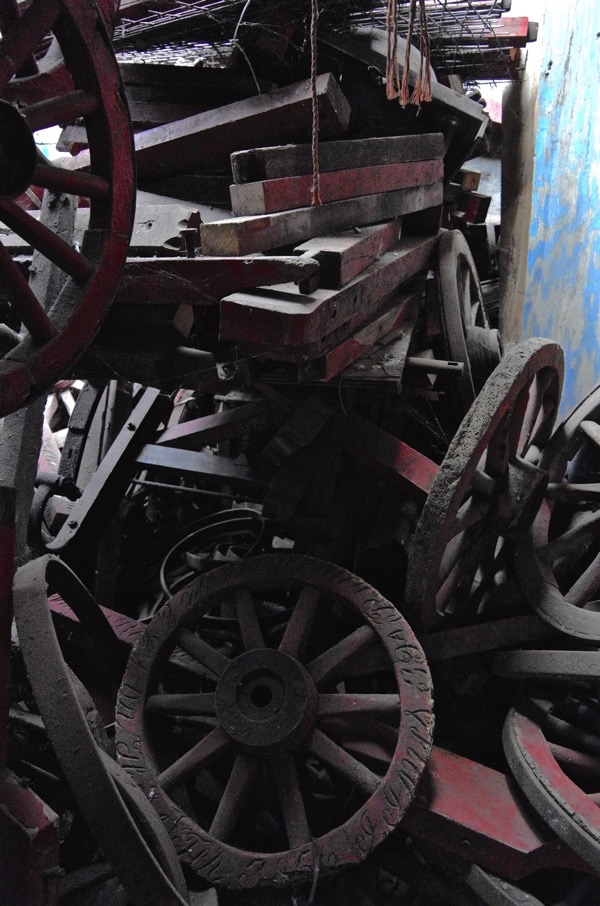
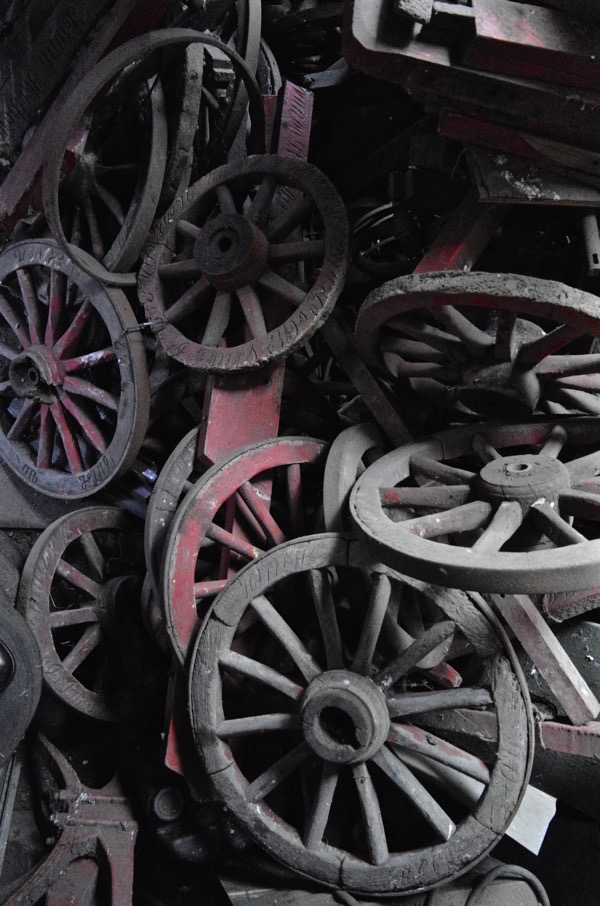
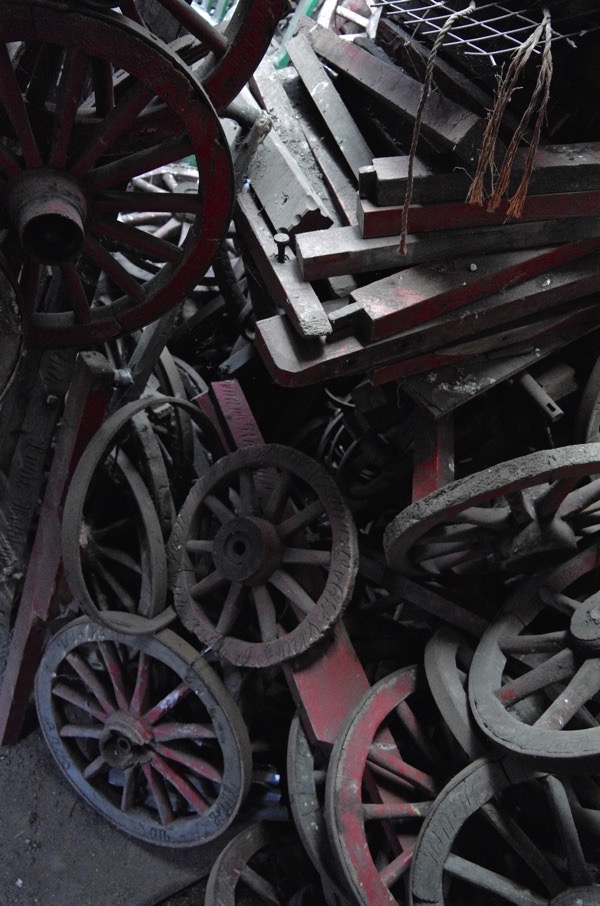
The history of Hiller Brothers is all there to be read in the addresses carved onto the side of the barrows in elegant italic letters. From outside on the street, all that is visible is a non-descript rendered house with a battered door and two squat windows, and a tall metal shutter screening off the adjoining yard. Once you go inside and step down into the workshop, you realise it is a nineteenth century building. From the workshop, a side door leads into the cobbled yard which was once a cowshed, now piled high with dozens of costermongers’ barrows and beyond lies a pile of hundreds of steel-rimmed handmade wooden wheels, each with lettering incised into them.
It is an overwhelming vision, the graveyard of lost barrows in last days of the last barrow-maker in the East End.
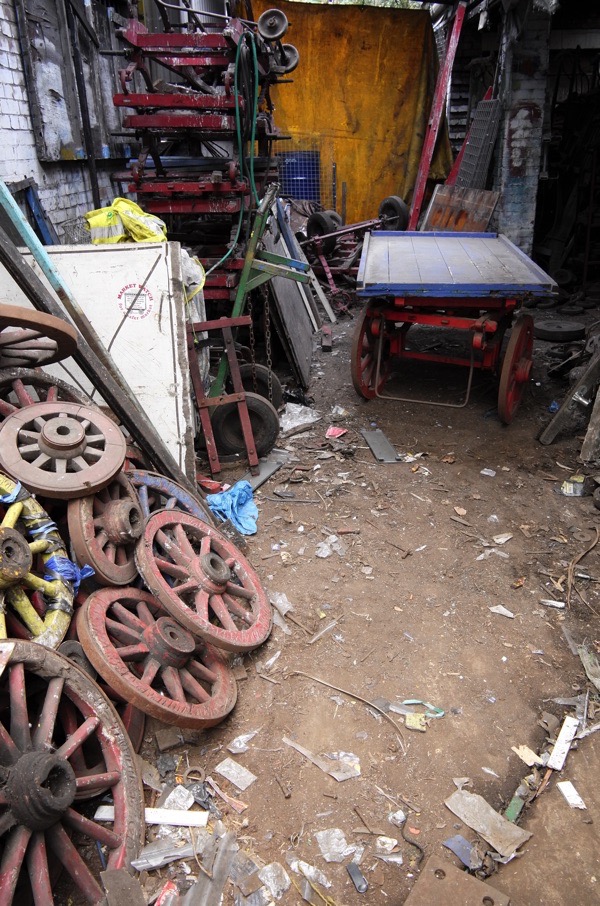
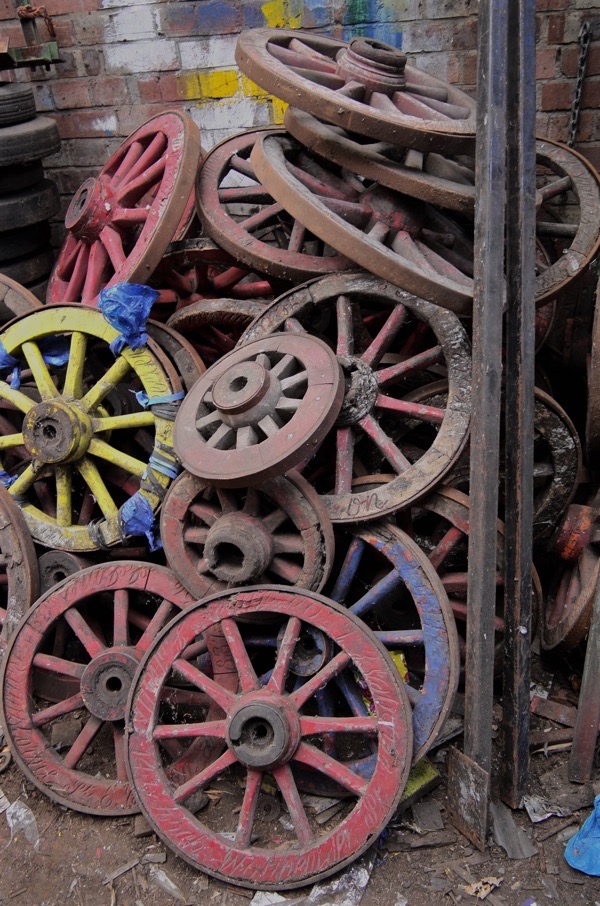
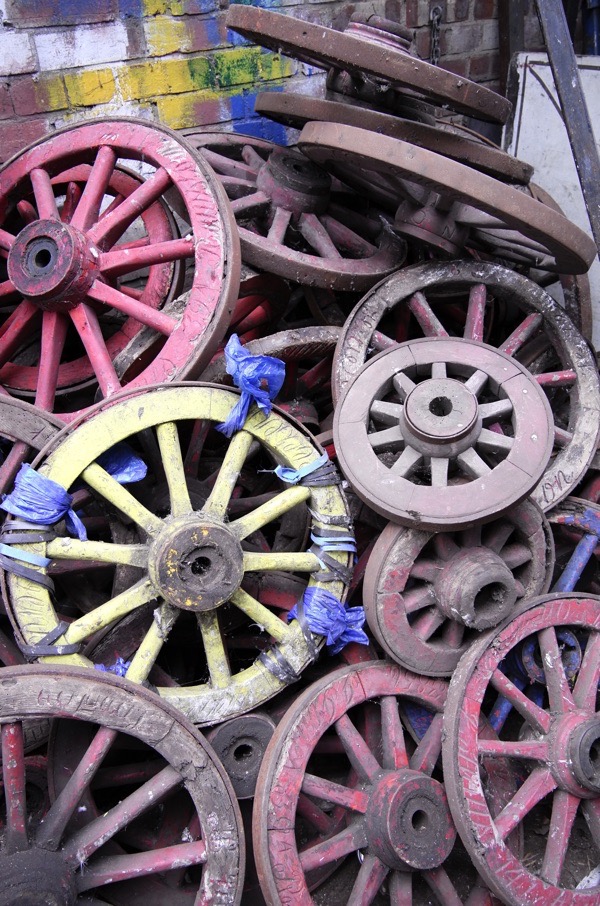
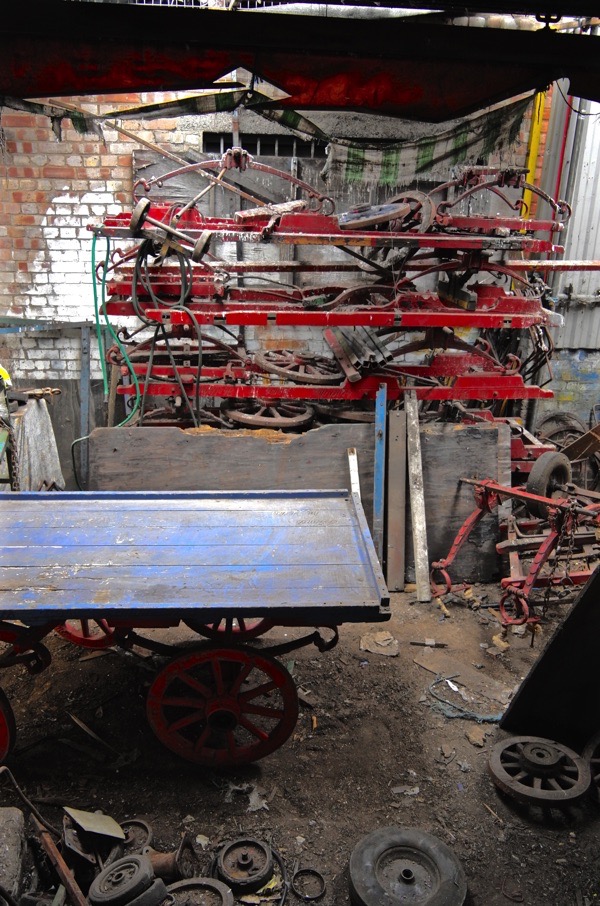
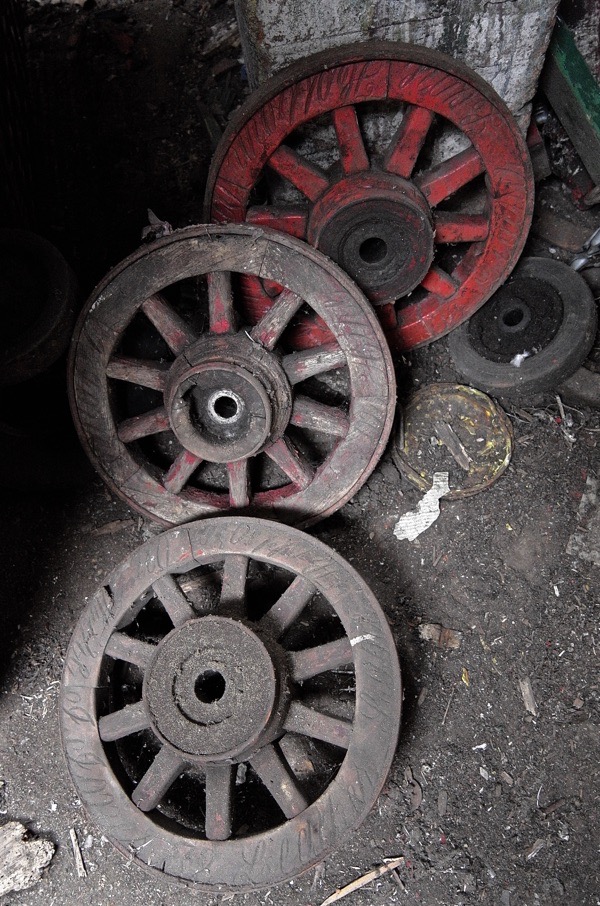
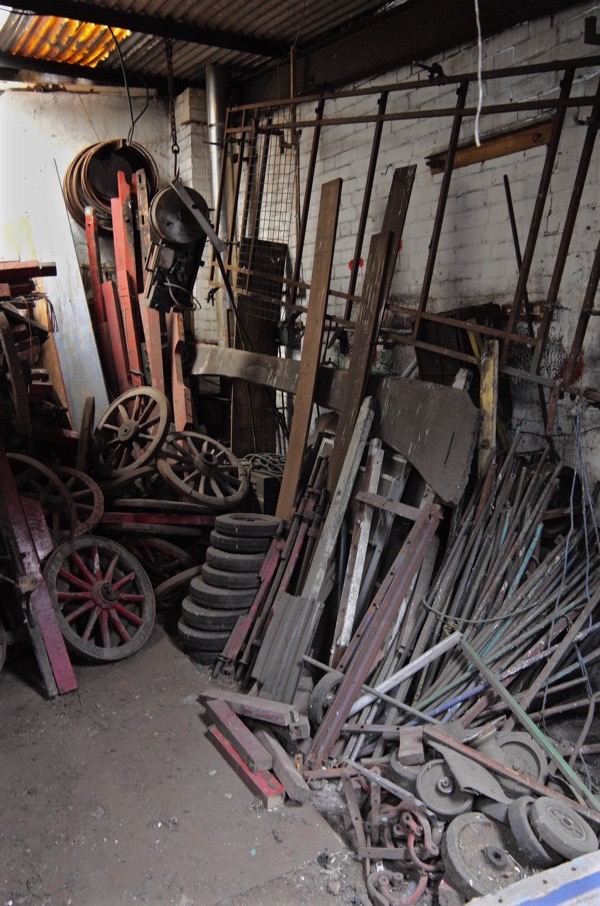
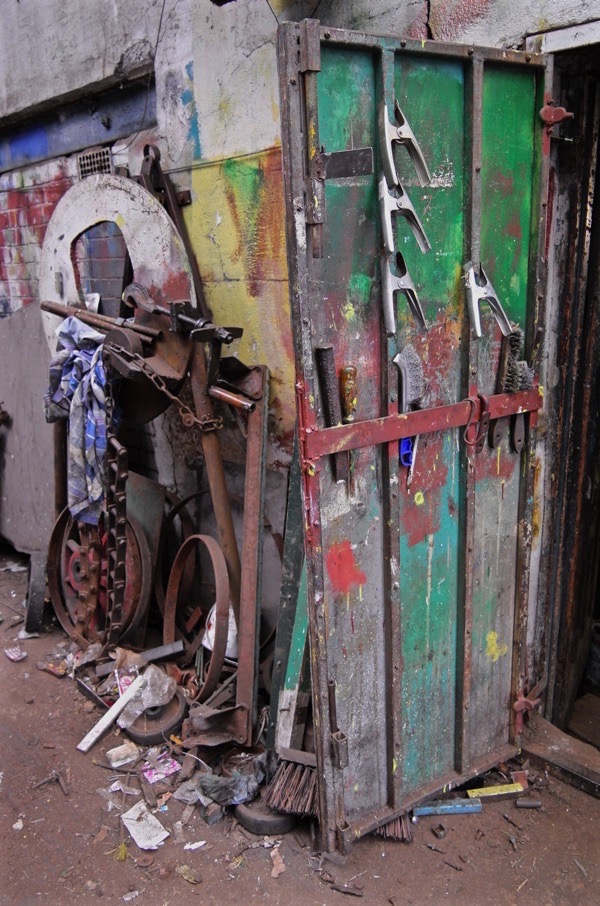
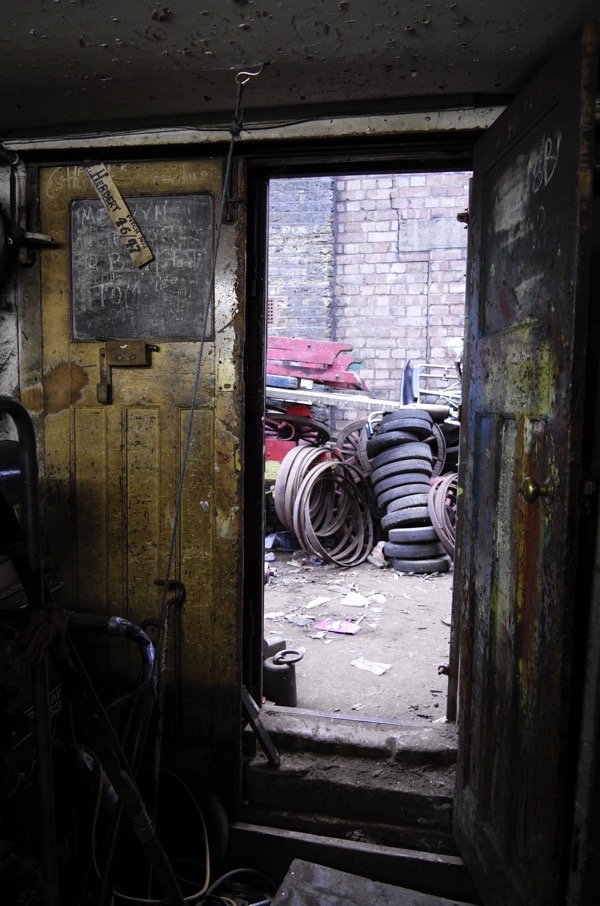
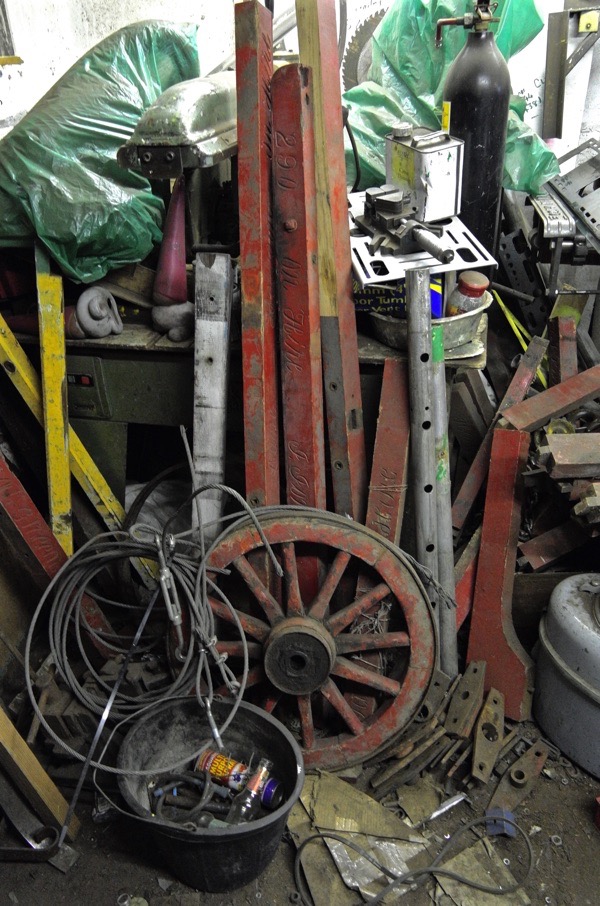
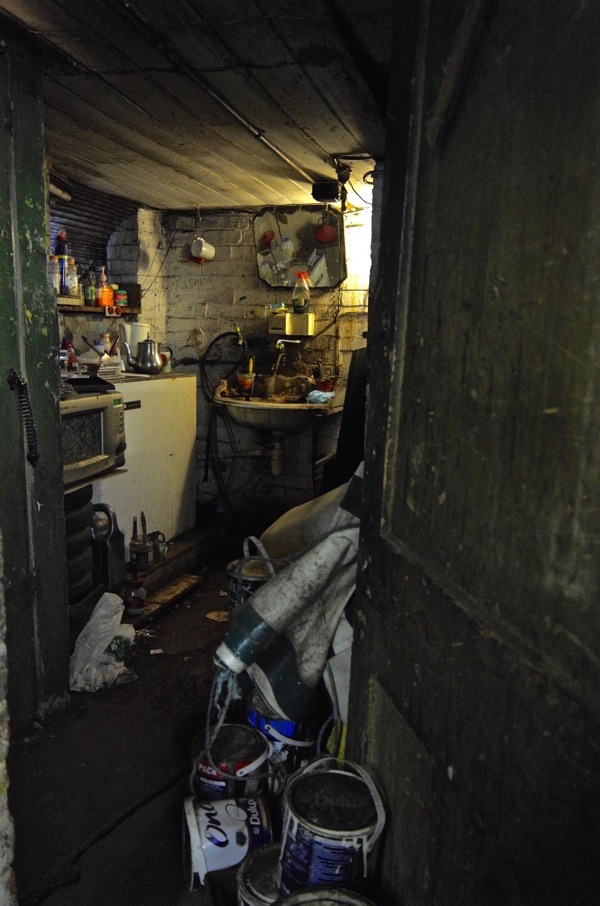
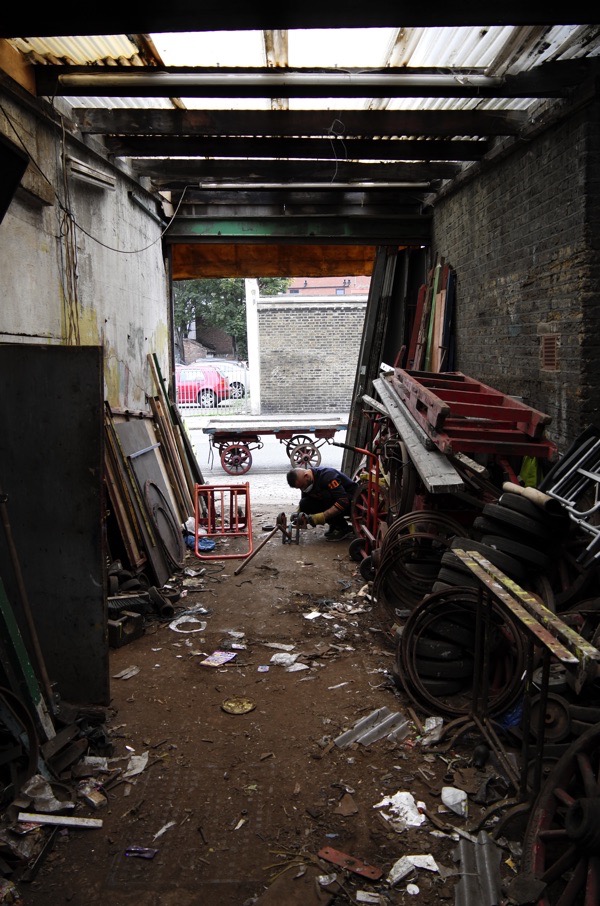
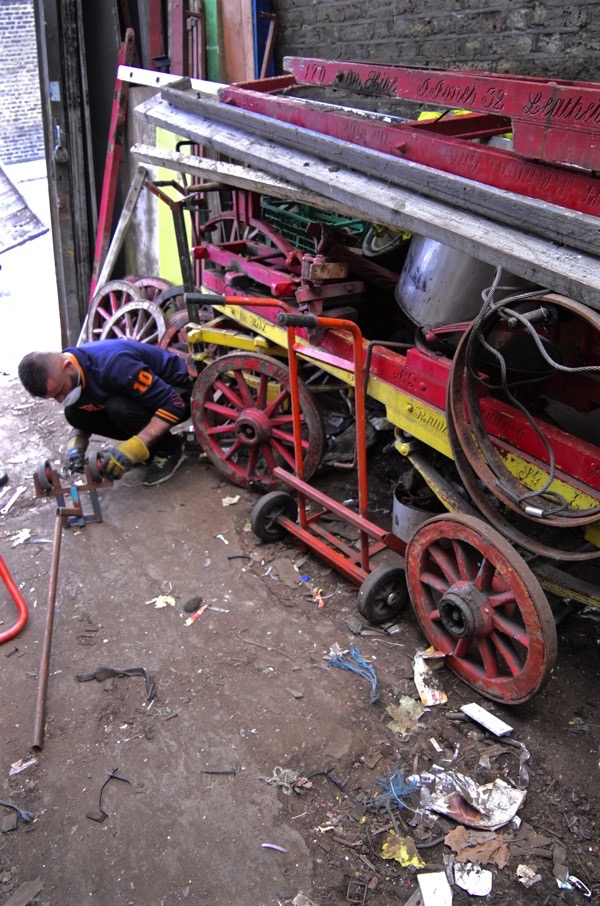
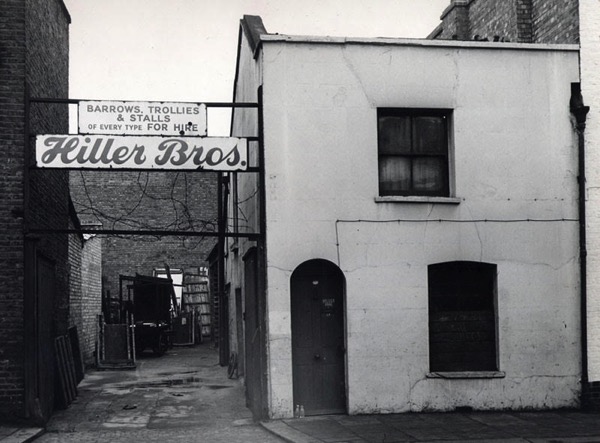
Hiller Brothers as it once was
The Forgotten Corners Of Old London

Who knows what you might find lurking in the forgotten corners of old London? Like this lonely old waxwork of Charles II who once adorned a side aisle of Westminster Abbey, peering out through a haze of graffiti engraved upon his pane by mischievous tourists with diamond rings.
As one with a pathological devotion to walking through London’s sidestreets and byways, seeking to avoid the main roads wherever possible, these glass slides of the forgotten corners of London – used long ago by the London & Middlesex Archaeological Society for magic lantern shows at the Bishopsgate Institute – hold a special appeal for me. I have elaborate routes across the city which permit me to walk from one side to the other exclusively by way of the back streets and I discover all manner of delights neglected by those who solely inhabit the broad thoroughfares.
And so it is with many of these extraordinary pictures that show us the things which usually nobody bothers to photograph. There are a lot of glass slides of the exterior of Buckingham Palace in the collection but, personally, I am much more interested in the roof space above Richard III’s palace of Crosby Hall that once stood in Bishopsgate, and in the unlikely paraphernalia which accumulated in the crypt of the Carmelite Monastery or the Cow Shed at the Tower of London, a hundred years ago. These pictures satisfy my perverse curiosity to visit the spaces closed off to visitors at historic buildings, in preference to seeing the public rooms.
Within these forgotten corners, there are always further mysteries to be explored. I wonder who pitched a teepee in the undergrowth next to the moat at Fulham Palace in 192o. I wonder if that is a cannon or a chimney pot abandoned in the crypt at the Carmelite monastery. I wonder why that man had a bucket, a piece of string and a plank inside the dome of St Paul’s Cathedral. I wonder what those fat books were next to the stove in the Worshipful Company of Apothecaries’ shop. I wonder who was pulling that girl out of the photograph in Woolwich Gardens. I wonder who put that dish in the roof of Crosby Hall. I wonder why Charles II had no legs. The pictures set me wondering.
It is what we cannot know that endows these photographs with such poignancy. Like errant pieces from lost jigsaws, they inspire us to imagine the full picture that we shall never be party to.

Tiltyard Gate, Eltham Palace, c. 1930
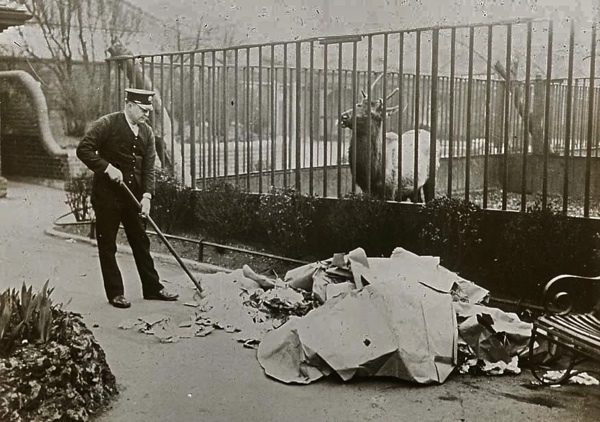
Refuse collecting at London Zoo, c. 1910

Passage in Highgate, c. 1910

Westminster Dust Carts, c. 1910
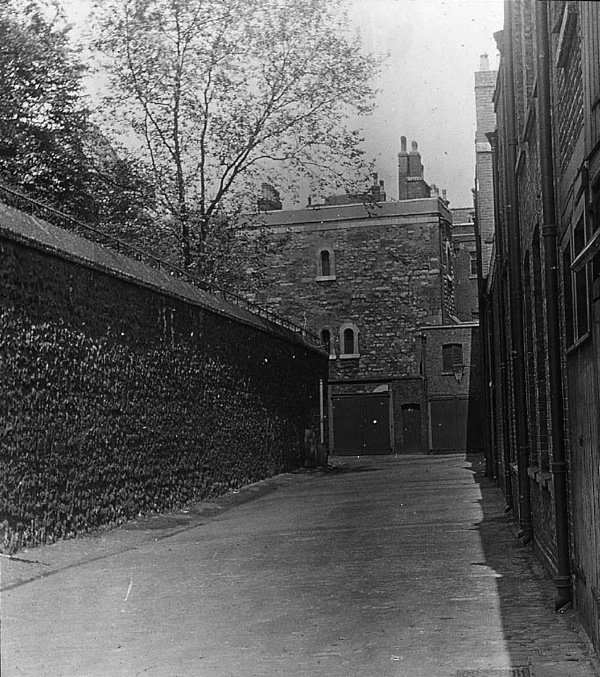
The Jewel Tower, Westminster, 1921
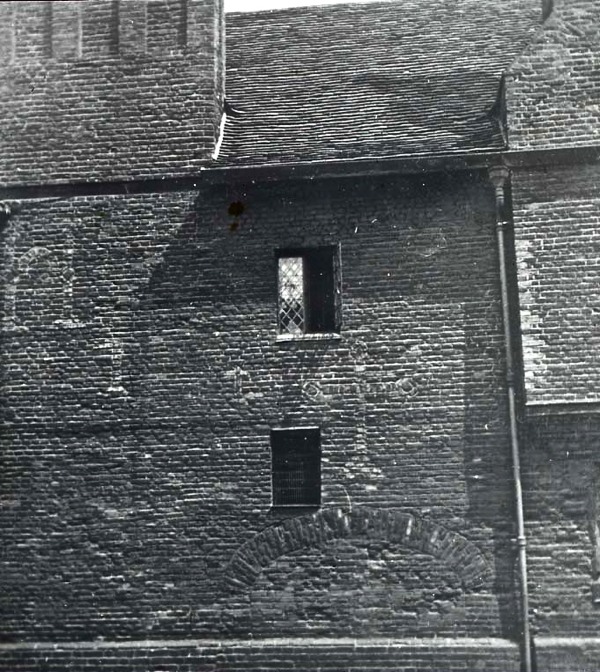
Fifteenth century brickwork at Charterhouse Wash House, c1910
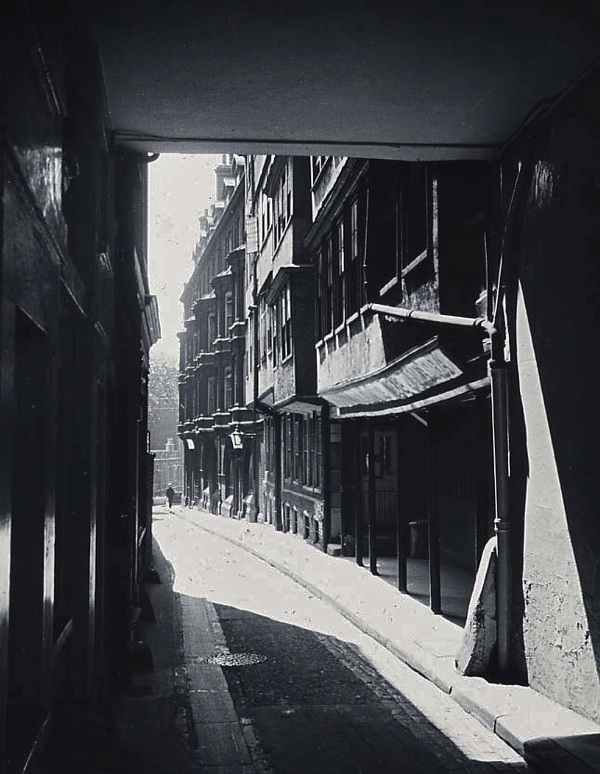
Middle Temple Lane, c. 1910
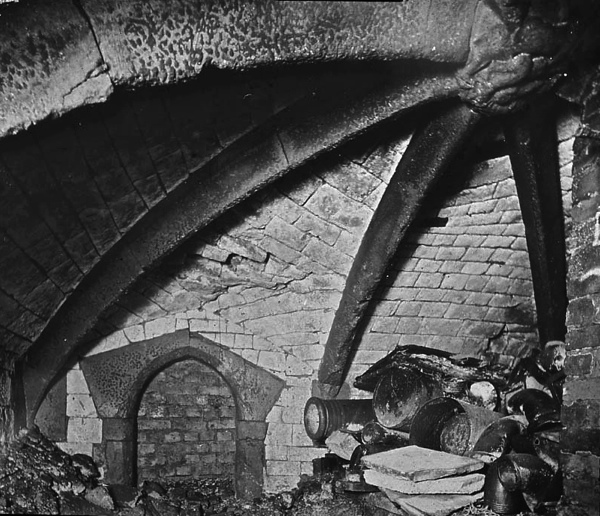
Carmelite monastery crypt, c. 1910
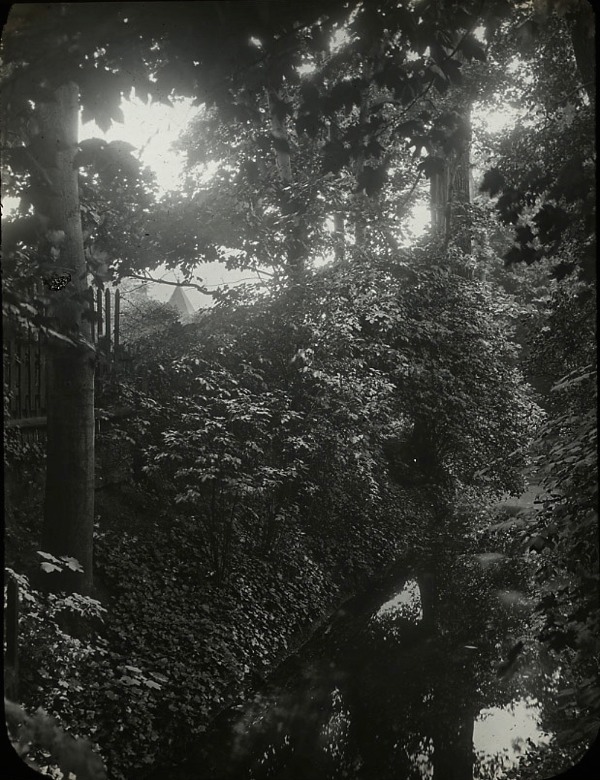
The Moat at Fulham Palace, c. 1920

Clifford’s Inn, c. 1910
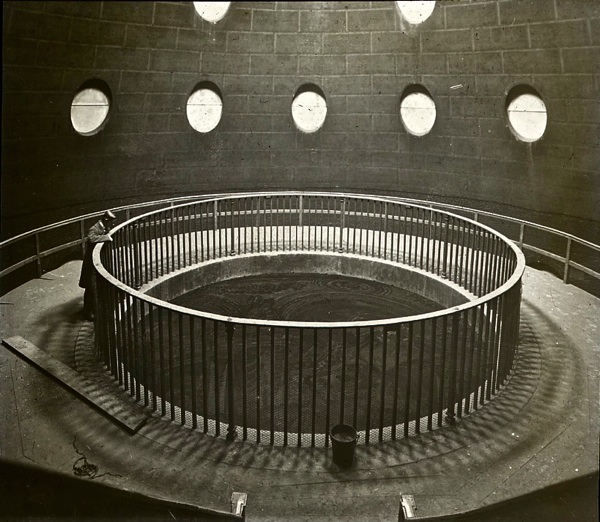
Top of inner dome at St Paul’s Cathedral, c. 1920
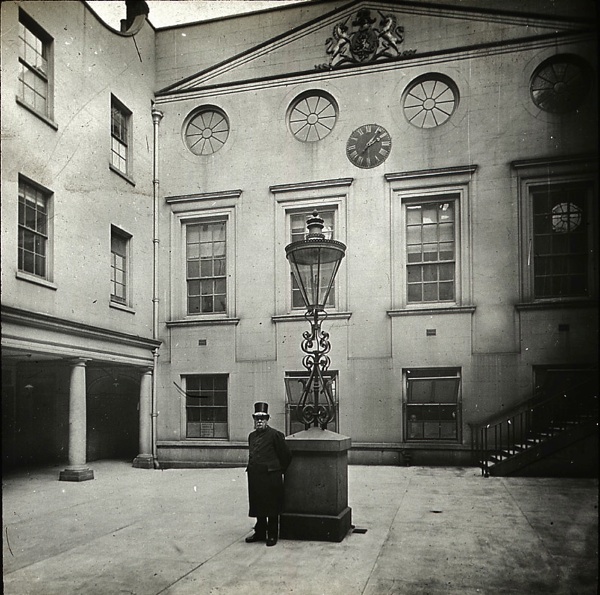
Apothecaries’ Hall Quadrangle, c. 1920

Worshipful Company of Apothecaries’ Shop, c.1920
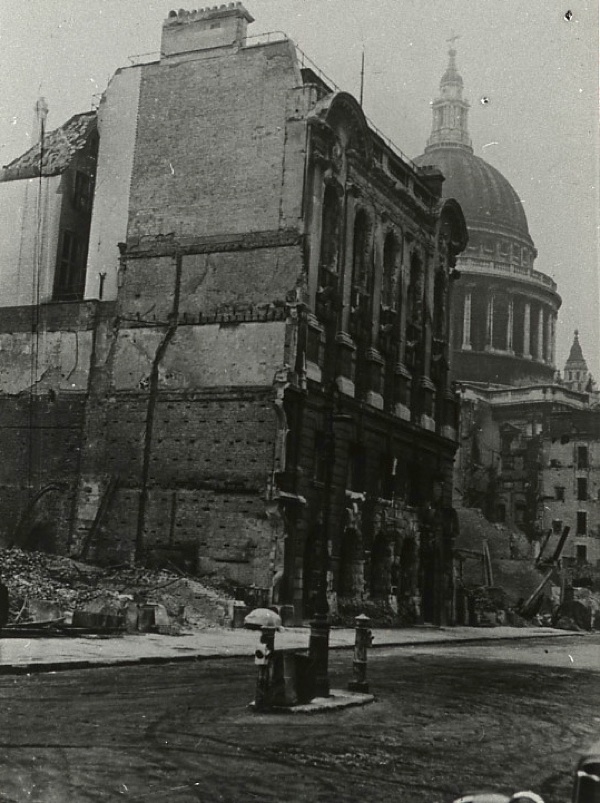
Unidentified destroyed building near St Paul’s, c. 1940
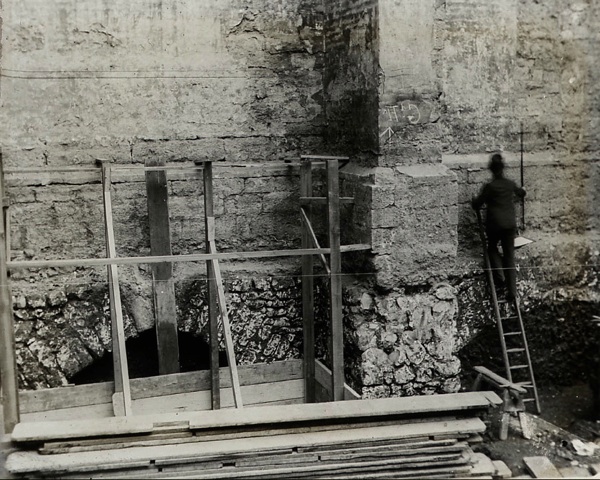
Merchant Taylors’ Hall, c. 1920
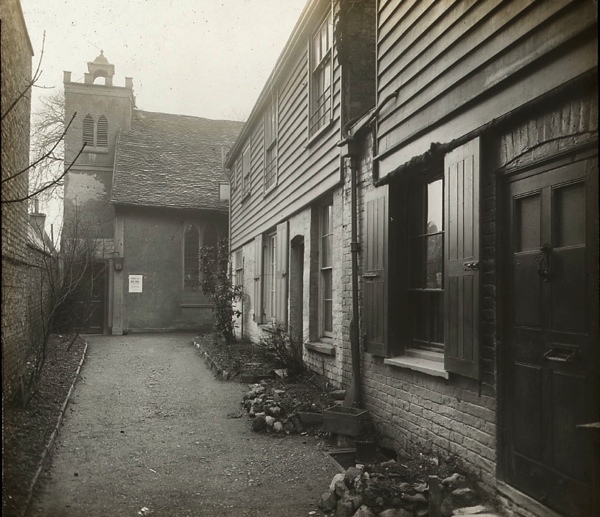
Crouch End Old Baptist Chapel, c. 1900
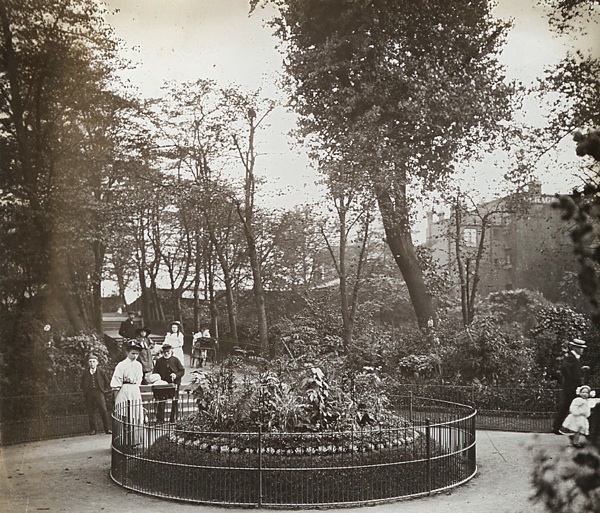
Woolwich Gardens, c. 1910

The roof of Crosby Hall, Richard III’s palace in Bishopsgate , c. 1910
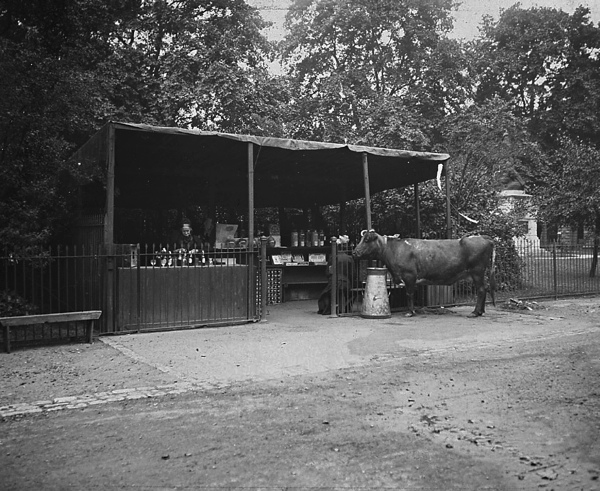
Refreshment stall in St James’ Park, c. 1910
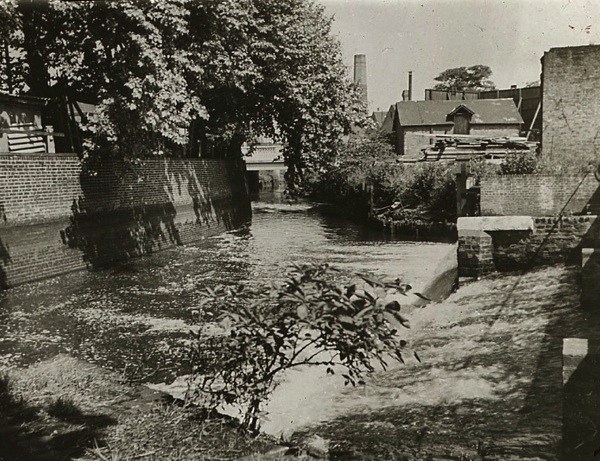
River Wandle at Wandsworth, c. 1920

Corridor at Battersea Rise House, c. 1900

Tram emerging from the Kingsway Tunnel, c. 1920
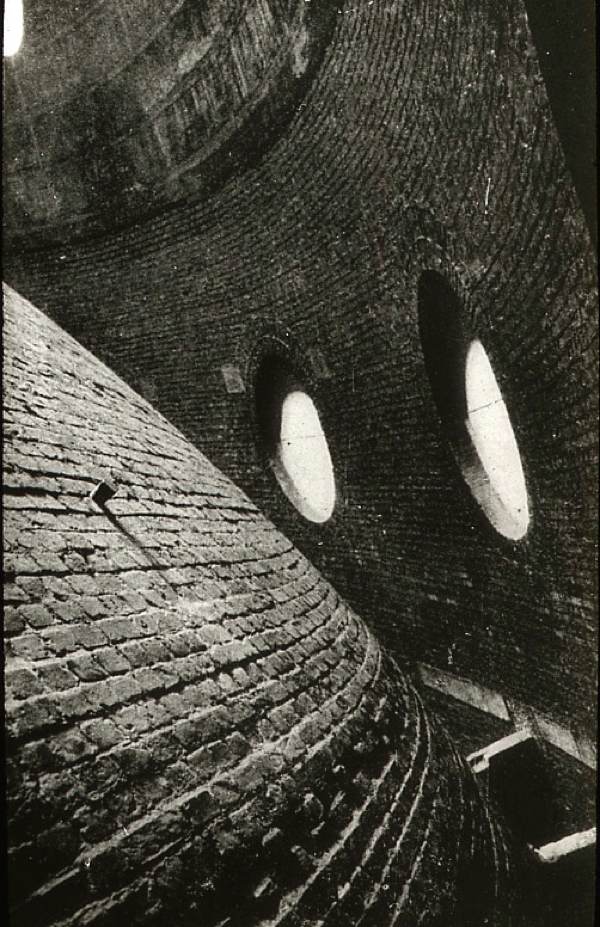
Between the interior and exterior domes at St Paul’s Cathedral, c. 1920
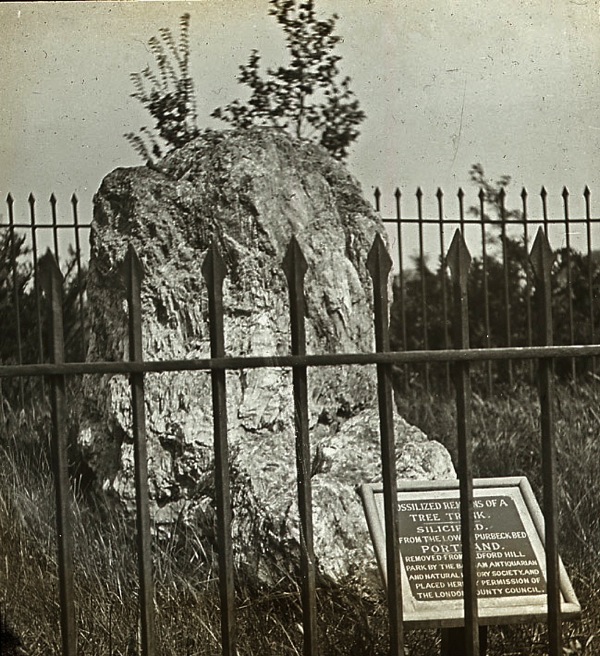
Fossilised tree trunk on Tooting Common, c. 1920
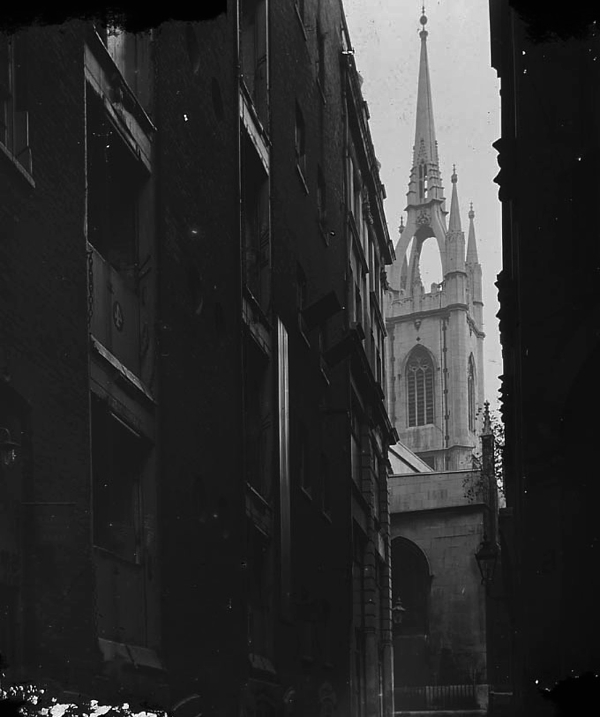
St Dunstan-in-the-East, 1911
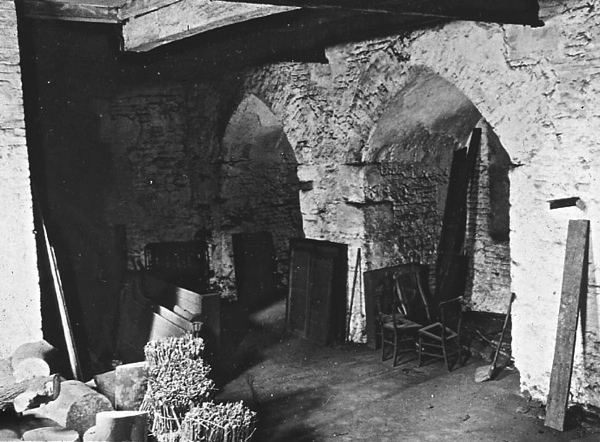
Cow shed at the Queen’s House, Tower of London, c. 1910
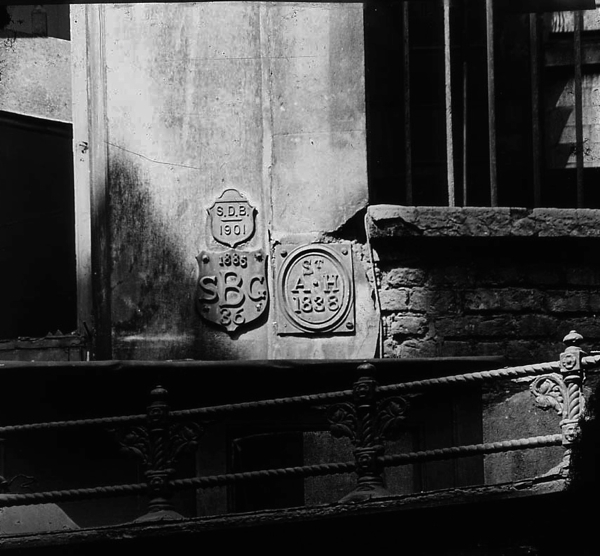
Boundary marks for St Benet Gracechurch, St Andrew Hubbard and St Dionis Backchurch in Talbot Court, c. 1910
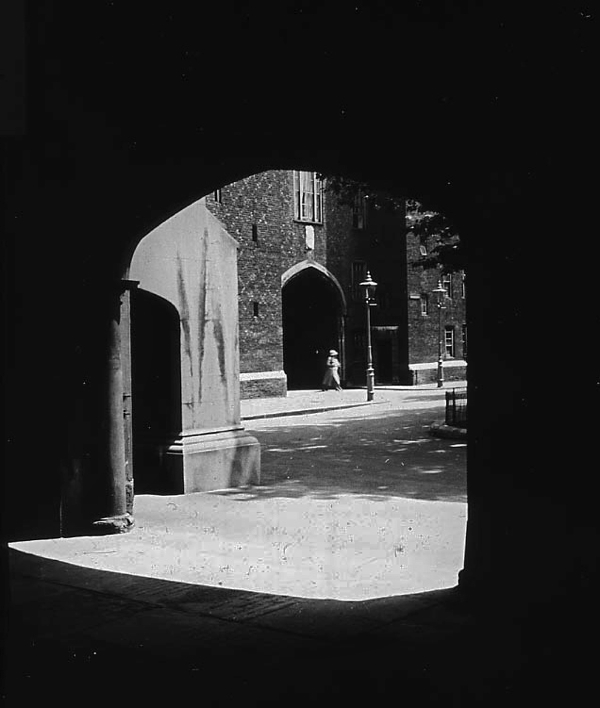
Lincoln’s Inn gateway seen from Old Hall, c. 1910

St Bride’s Fleet St, c. 1920
Glass slides courtesy Bishopsgate Institute
You may also like to take a look at
Chaplin In The East End
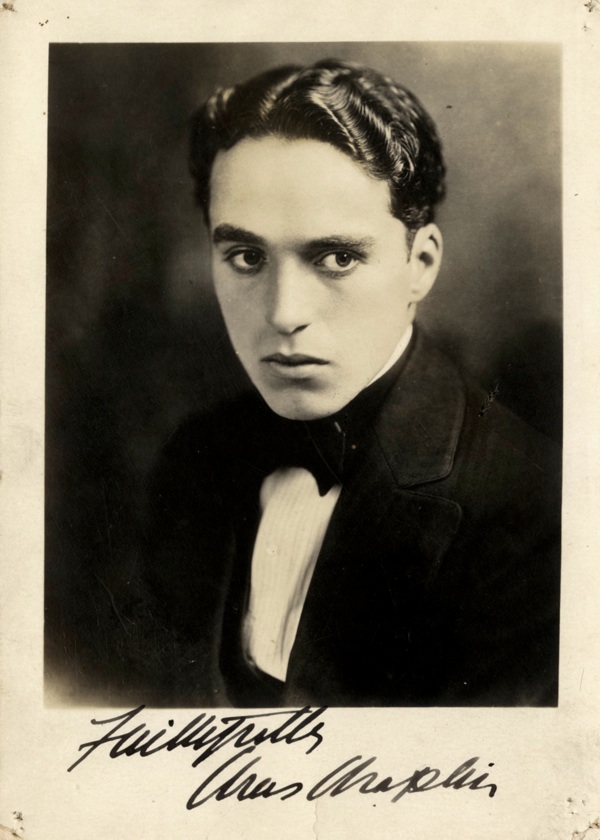
Somehow, it came as no surprise to discover that he had been here – because I always thought of Charlie Chaplin as the one who carried a certain culture of the penniless, the ragged and the downtrodden from Europe across the Atlantic, translating it with such superlative success into an infinite capacity for hope, humour and resourcefulness in America. For centuries, Spitalfields has offered a refuge to the homeless and the dispossessed, so it makes sense that the most famous tramp of all time should have known this place.
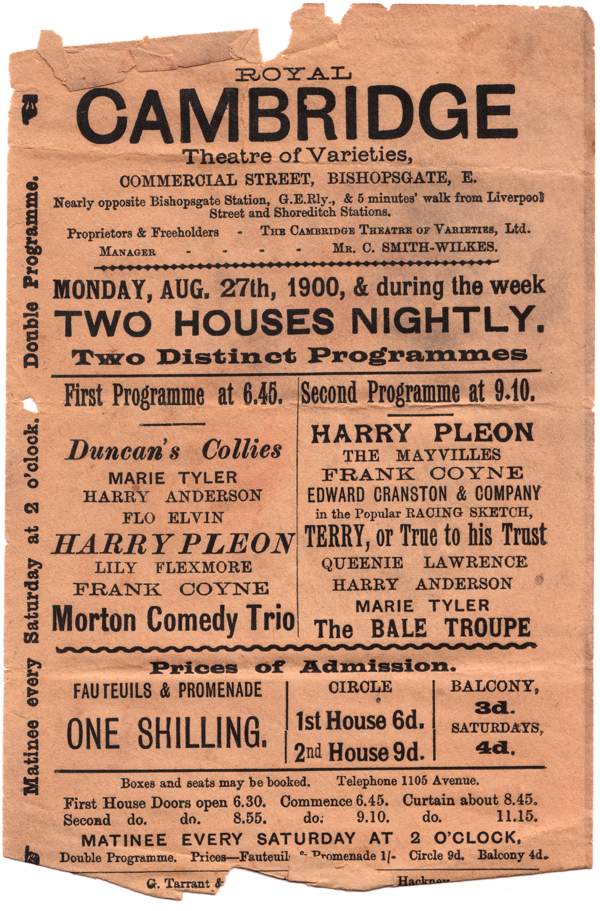
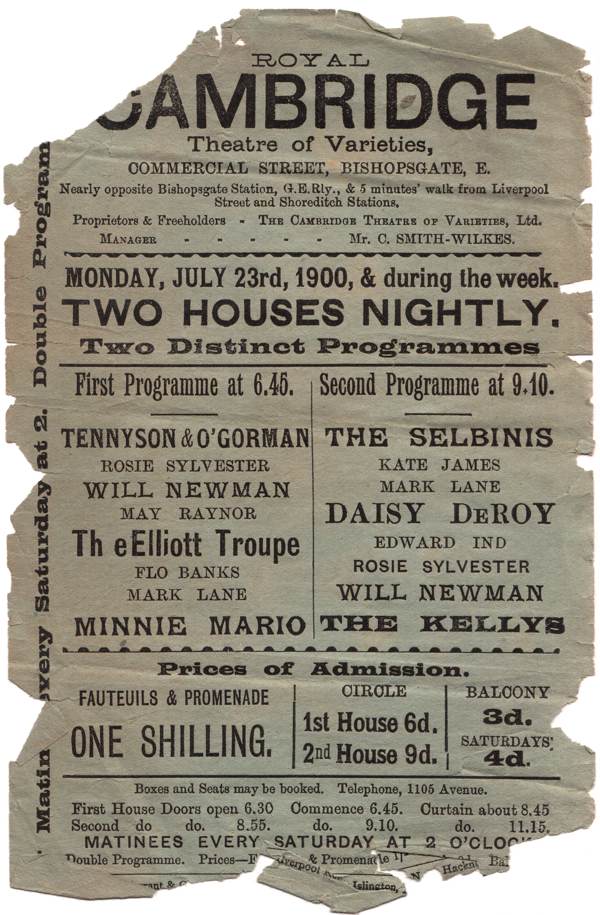
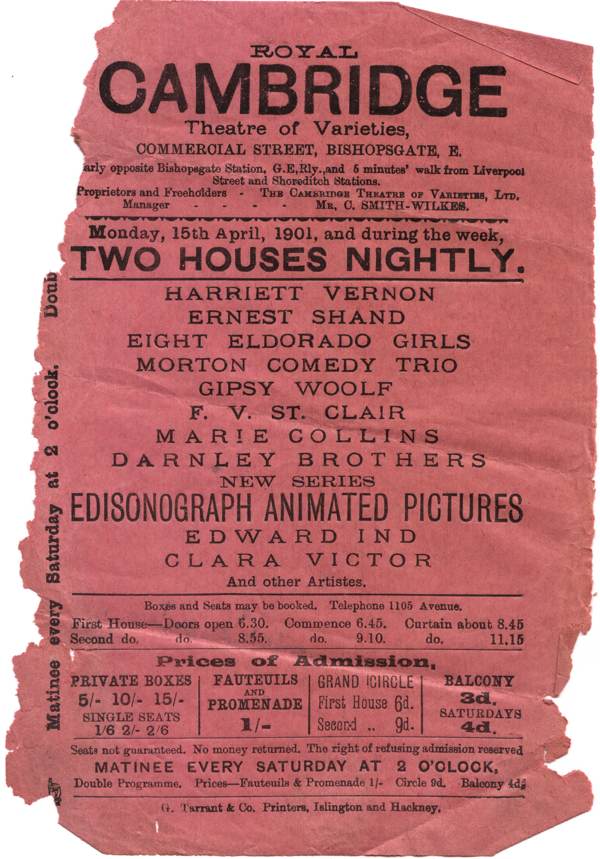
Last year, Vivian Betts who grew up in The Primrose in Bishopsgate gave me handful of playbills that had been in the pub as long as she remembered and which she took with her when they left in 1974 before the building was demolished. These bills were for the Royal Cambridge Theatre of Varieties in Commercial St. Opening in 1864, this vast two thousand seater theatre with a bar capacity of another thousand must have once presented a dramatic counterpoint to the church on the other side of the Spitalfields Market. Yet in the nineteenth century, it was one among many theatres in the immediate vicinity, in the days when the East End could match the West End for theatre and night life.
The ten-year-old Chaplin performed here as one of The Eight Lancashire Lads, a juvenile clog dance troupe, on Tuesday 24th October 1899 as part of the First Anniversary Benefit Performance, celebrating the reopening of the theatre a year earlier, after a fire that had destroyed it in 1896.
Before he died, Chaplin’s alcoholic father signed up his son at the age of eight, in November 1898, with his friend William Jackson who managed The Eight Lancashire Lads, in return for the boy’s board and lodgings and a payment of half a crown a week to Chaplin’s mother Hannah. The engagement took Chaplin away from his pitiful London childhood and from his mother who had struggled to support him and his elder brother Sydney on her own, existing at the edge of mental illness while moving the family in and out of a succession of rented rooms until her younger son ended up in the workhouse at seven.
“After practising for eight weeks, I was eligible to dance with the troupe. But now that I was past eight years old, I had lost my assurance and confronting the audience for the first time gave me stage fright. I could hardly move my legs. It was weeks before I could do a solo dance as the rest of them did.” Chaplin wrote of joining The Eight Lancashire Lads with whom he made his debut in Babes in the Wood, on Boxing Day 1898 at the Theatre Royal, Manchester.“My memory of this period goes in and out of focus,” he admitted later, “The outstanding impression was of a quagmire of miserable circumstances.”
Yet Chaplin’s experience touring Britain when Music Hall was at its peak of popularity proved both a great adventure and an unparalleled schooling in the method, technique and discipline that every performer requires to hold an audience. “Audiences like The Eight Lancashire Lads because, as Mr Jackson said, we were so unlike theatrical children. It was his boast that we never wore grease paint and our rosy cheeks were natural. If some of us looked a little pale before going on, he would tell us to pinch our cheeks,” Chaplin recalled,“But in London, after working two or three Music Halls a night, we would occasionally forget and look a little weary and bored as we stood on the stage, until we caught sight of Mr Jackson in the wings, grinning emphatically and pointing to his face, which had an electrifying effect of making us break into sparkling grins.”
The handbills that Vivian Betts gave me for the Royal Cambridge Theatre of Varieties date from 1900 and, significantly, one contains the announcement of Edisonograph Animated Pictures as part of the programme, advertising the new medium in which Chaplin was to become pre-eminent and that would eventually eclipse Music Hall itself.
As soon as he had mastered the dance act, Chaplin was impatient to move on to solo comedy. “I was not particularly enamoured with being just a clog dancer in a troupe of eight lads. Like the rest of them I was ambitious to do a single act, not only because it meant more money but because I instinctively felt it would be more gratifying than just dancing,” he wrote later of his precocious ten-year-old self, “I would like to have been a boy comedian – but that would have required nerve, to stand on the stage alone.”
It was in Whitechapel in the autumn of 1907 that the seventeen-year-old Chaplin made his solo comedy debut, at a Music Hall in the Cambridge Heath Rd. “I had obtained a trial week without pay at the Foresters’ Music Hall situated off the Mile End Rd in the centre of the Jewish quarter. My hopes and dreams depended on that trial week,” he declared. Yet the young Chaplin made a spectacular misjudgement. “At the time, Jewish comedians were all the rage in London, so I thought I would hide my youth under whiskers. I invested in musical arrangements for songs and funny dialogue taken from an American joke book, Madison’s Budget.” Chaplin was foolishly unaware that a Jewish satire might not play in the East End in front of a Jewish audience. “Although I was innocent of it, my comedy was most anti-Semitic and my jokes were not only old ones but very poor, like my Jewish accident.”
The disastrous consequences of Chaplin’s error in Whitechapel were to haunt him for the rest of his career. “After the first couple of jokes, the audience started throwing coins and orange peel and stamping their feet and booing. At first, I was not conscious of what was going on. Then the horror of it filtered into my mind. When I came off stage, I went straight to my dressing room, took off my make-up, left the theatre and never returned. I did my best to erase the night’s horror from my mind, but it left an indelible mark on my confidence.” he concluded in hindsight, conceding, “The ghastly experience taught me to see myself in a truer light.”
In 1908, Chaplin signed with Fred Karno’s comedy company in which he quickly became a rising star and, touring to America in 1913, he was talent spotted by the Keystone Film Studios and offered a contract at twenty-four years old for $150 a week. “What had happened? It seemed the world had suddenly changed, had taken me into its fond embrace and adopted me.” he wrote in astonishment and relief at his change of fortune in a life that had previously comprised only struggle.
Now I shall always think of the ten-year-old Chaplin when I walk down Commercial St, on his way to the Cambridge Theatre of Varieties, pinching his sallow cheeks to make a show of good cheer and with his whole life in motion pictures awaiting him.
At the northern end of Commercial St is the site of The Theatre, the first purpose-built theatre, where William Shakespeare performed and his early plays were staged. At the southern end of Commercial St is the site of the Goodman’s Fields Theatre, where David Garrick made his debut in Richard III and initiated the Shakespeare revival. And in middle was the Royal Cambridge Theatre of Varieties, where Charlie Chaplin played. Most that pass down it may be unaware, yet the line of Commercial St traces a major trajectory through our culture.

Charlie Chaplin performed with The Eight Yorkshire Lads at the Royal Cambridge Theatre of Varieties in Commercial St on Tuesday 24th October 1899.

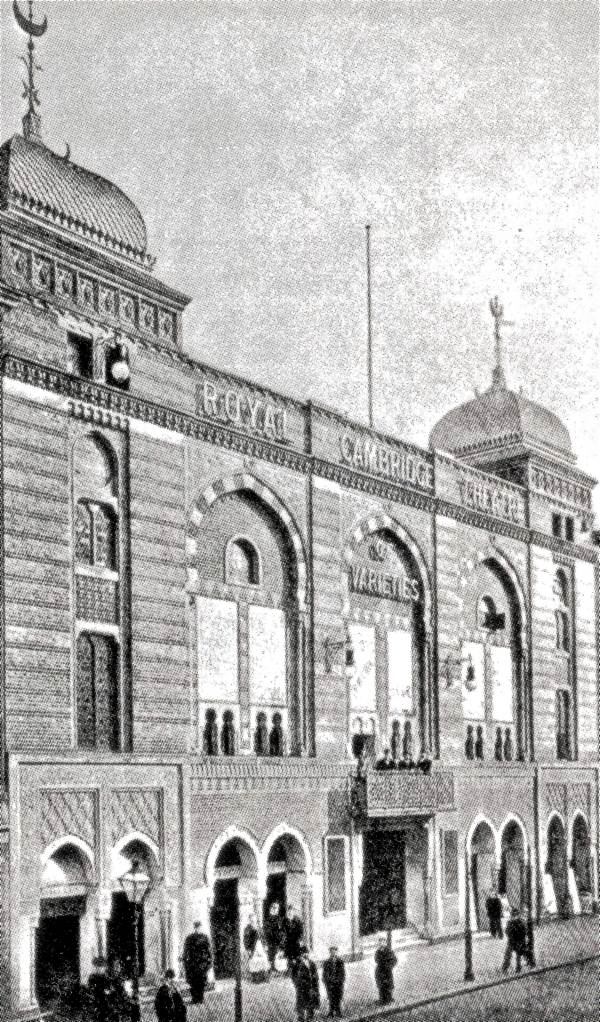
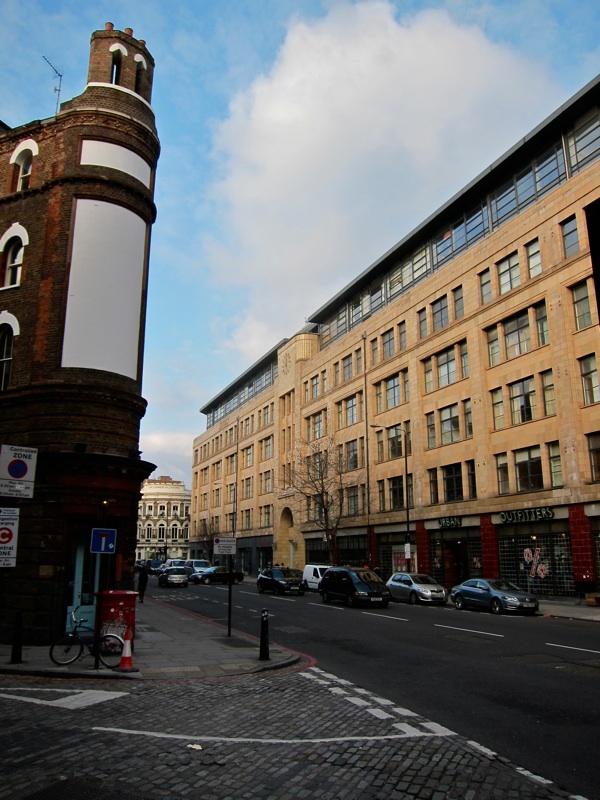
The extension of the Godfrey & Phillips cigarette factory replaced the demolished Royal Cambridge Theatre of Varieties in 1936.
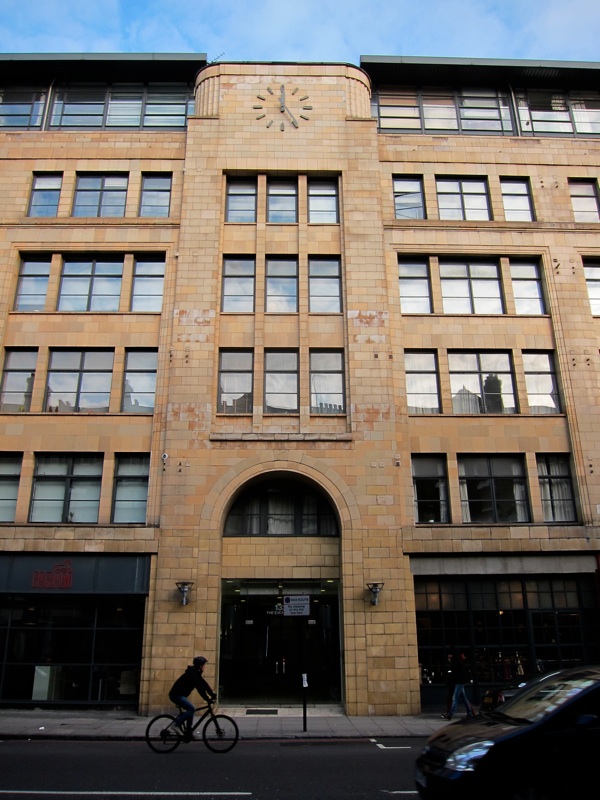
The entrance of the Godfrey & Phillips building echoes the entrance of the Royal Cambridge Theatre of Varieties.
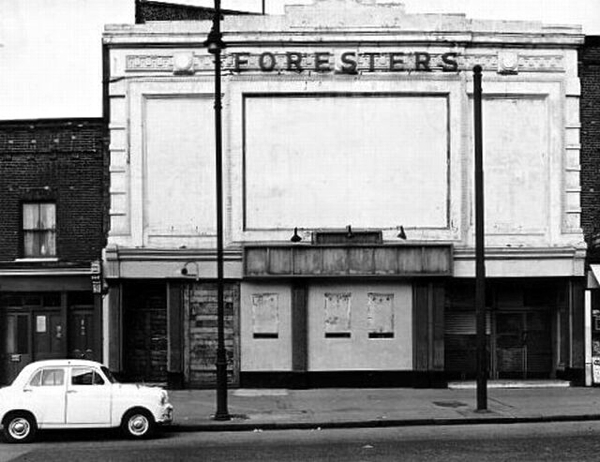
Foresters Music Hall, 95 Cambridge Heath Rd – where Charlie Chaplin gave his disastrous first solo comedy performance in 1907 – demolished in 1965.
My grateful thanks to David Robinson, Chaplin’s biographer, for his assistance with this article.
You may also like to read about
‘No Enemy But Winter And Rough Weather’

‘No enemy but winter and rough weather…’ As You Like It
Every year at this low ebb of the season, I go to Columbia Rd Market to buy potted bulbs and winter-flowering plants which I replant into my collection of old pots from the market and arrange upon the oak dresser, to observe their growth at close quarters and thereby gain solace and inspiration until my garden shows convincing signs of new life.
Each morning, I drag myself from bed – coughing and wheezing from winter chills – and stumble to the dresser in my pyjamas like one in a holy order paying due reverence to an altar. When the grey gloom of morning feels unremitting, the musky scent of hyacinth or the delicate fragrance of the cyclamen is a tonic to my system, tangible evidence that the season of green leaves and abundant flowers will return. When plant life is scarce, my flowers in pots that I bought for just a few pounds each at Columbia Rd acquire a magical allure for me, an enchanted quality confirmed by the speed of their growth in the warmth of the house, and I delight to have this collection of diverse varieties in dishes to wonder at, as if each one were a unique specimen from an exotic land.
And once they have flowered, I place these plants in a cold corner of the house until I can replant them in the garden. As a consequence, my clumps of Hellebores and Snowdrops are expanding every year and thus I get to enjoy my plants at least twice over – at first on the dresser and in subsequent years growing in my garden.
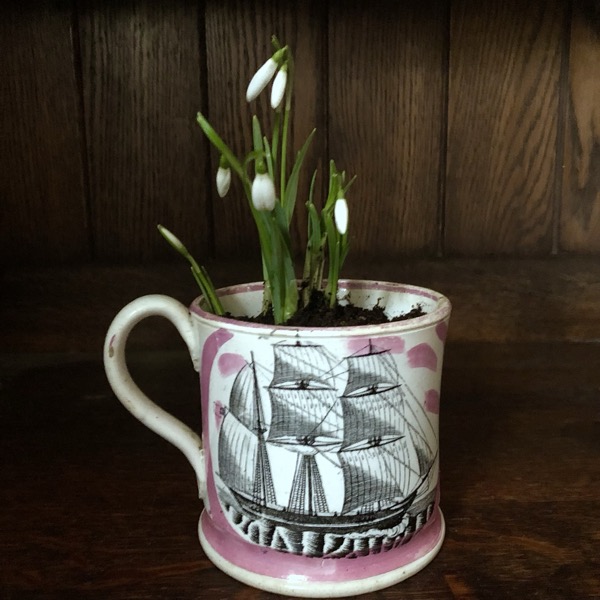


Staffordshire figure of Orlando from As You Like It
At God’s Convenience
“Slovenliness is no part of Religion. Cleanliness is indeed close to Godliness” – John Wesley, 1791
Oftentimes, walking between Spitalfields and Covent Garden, I pass through Bunhill Fields where – in passing – I can pay my respects to William Blake, Daniel Defoe and John Bunyan who are buried there, and sometimes I also stop off at John Wesley’s Chapel’s in the City Rd to pay a visit to the underground shrine of Thomas Crapper – the champion of the flushing toilet and inventor of the ballcock.
It seems wholly appropriate that here, at the mother church of the Methodist movement, is preserved one of London’s finest historic toilets, still in a perfect working order today. Although installed in 1899, over a century after John Wesley’s death, I like to think that if he returned today Wesley would be proud to see such immaculate facilities provided to worshippers at his chapel – thereby catering to their mortal as well as their spiritual needs. The irony is that even those, such as myself, who come here primarily to fulfil a physical function cannot fail to be touched by the stillness of this peaceful refuge from the clamour of the City Rd.
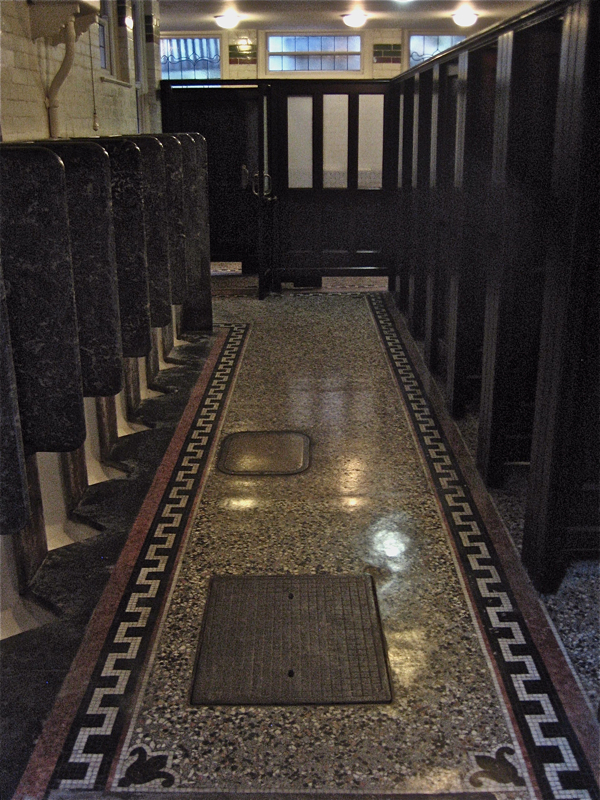
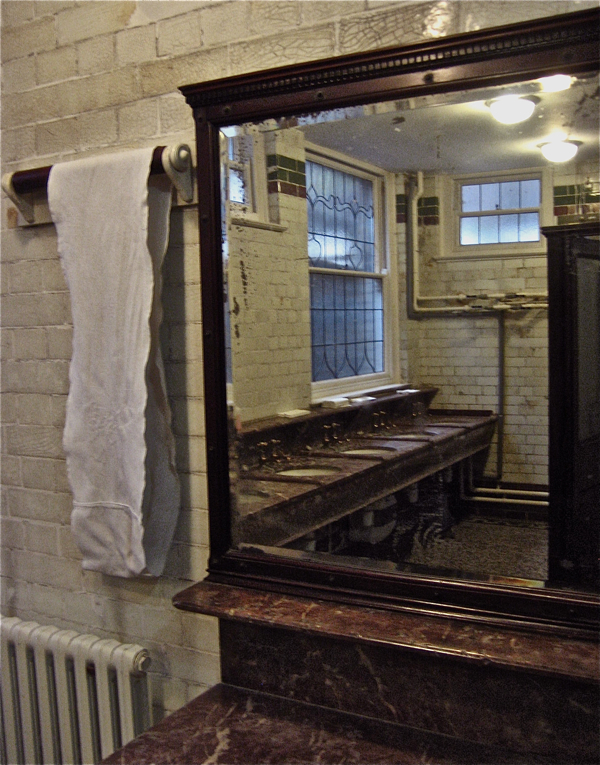
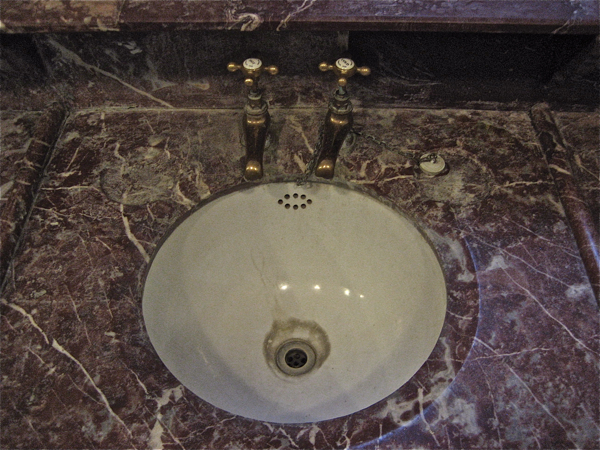
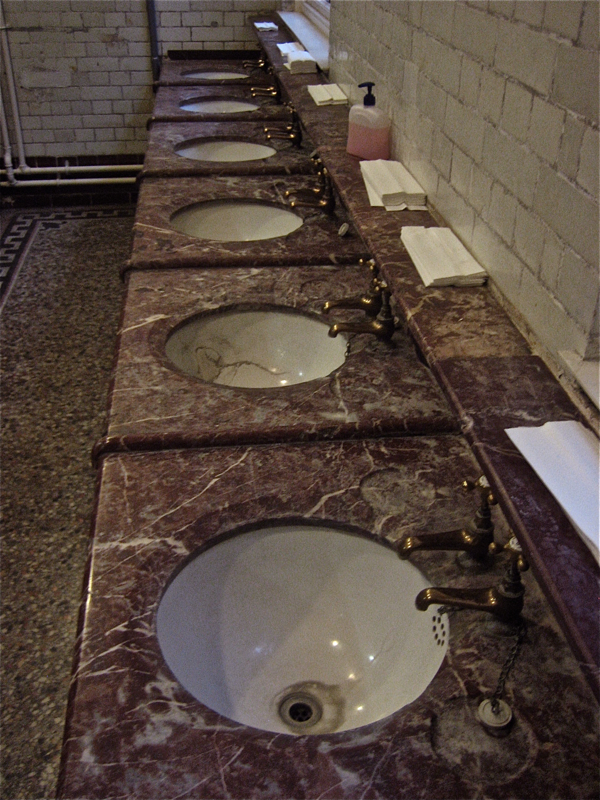
There is a sepulchral light that glimmers as you descend beneath the chapel to enter the gleaming sanctum where, on the right hand side of the aisle, eight cedar cubicles present themselves, facing eight urinals to the left, with eight marble washbasins behind a screen at the far end. A harmonious arrangement that reminds us of the Christian symbolism of the number eight as the number of redemption – represented by baptism – which is why baptismal fonts are octagonal. Appropriately, eight was also the number of humans rescued from the deluge upon Noah’s Ark.
Never have I seen a more beautifully kept toilet than this, every wooden surface has been waxed, the marble and mosaics shine, and each cubicle has a generous supply of rolls of soft white paper. It is both a flawless illustration of the rigours of the Methodist temperament and an image of what a toilet might be like in heaven. The devout atmosphere of George Dance’s chapel built for John Wesley in 1778, and improved in 1891 for the centenary of Wesley’s death – when the original pillars made of ships’ masts were replaced with marble from each country in the world where Methodists preached the gospel – pervades, encouraging solemn thoughts, even down here in the toilet. And the extravagant display of exotic marble, some of it bearing an uncanny resemblance to dog meat, complements the marble pillars in the chapel above.
Sitting in a cubicle, you may contemplate your mortality and, when the moment comes, a text on the ceramic pull invites you to “Pull & Let Go.” It is a parable in itself – you put your trust in the Lord and your sins are flushed away in a tumultuous rush of water that recalls Moses parting the Red Sea. Then you may wash your hands in the marble basin and ascend to the chapel to join the congregation of the worthy.
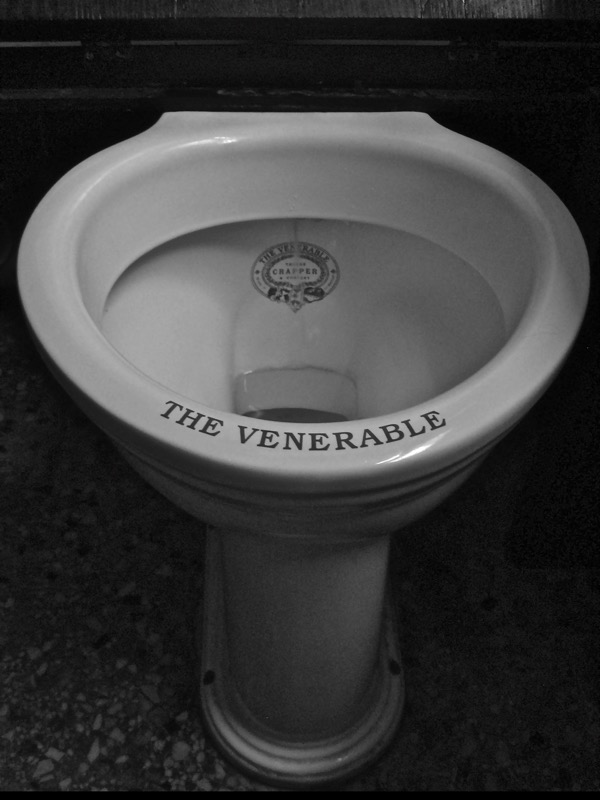
Yet before you leave and enter Methodist paradise, a moment of silent remembrance for the genius of Thomas Crapper is appropriate. Contrary to schoolboy myth, he did not give his name to the colloquial term for bowel movements, which, as any etymologist will tell you, is at least of Anglo-Saxon origin. Should you lift the toilet seat, you will discover “The Venerable” is revealed upon the rim, as the particular model of the chinaware, and it is an epithet that we may also apply to Thomas Crapper. Although born to humble origins in 1836 as the son of a sailor, Crapper rose to greatness as the evangelist of the flushing toilet, earning the first royal warrant for sanitary-ware from Prince Edward in the eighteen eighties and creating a business empire that lasted until 1963.
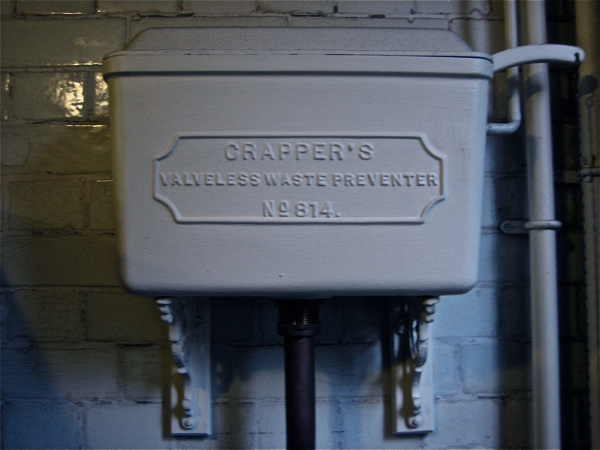
Should your attention be entirely absorbed by this matchless parade of eight Crapper’s Valveless Waste Preventers, do not neglect to admire the sparkling procession of urinals opposite by George Jennings (1810-1882) – celebrated as the inventor of the public toilet. 827,280 visitors paid a penny for the novelty of using his Monkey Closets in the retiring rooms at the Great Exhibition of 1851, giving rise to the popular euphemism, “spend a penny,” still in use today in overly polite circles.
Once composure and physical comfort are restored, you may wish to visit the chapel to say a prayer of thanks or, as I like to do, visit John Wesley’s house seeking inspiration in the life of the great preacher. Wesley preached a doctrine of love to those who might not enter a church, and campaigned for prison reform and the abolition of slavery, giving more than forty thousand sermons in his lifetime, often several a day and many in the open air – travelling between them on horseback. In his modest house, where he once ate at the same table as his servants, you can see the tiny travelling lamp that he carried with him to avoid falling off his horse (as he did frequently), his nightcap, his shoes, his spectacles, his robe believed to have been made out of a pair of old curtains, the teapot that Josiah Wedgwood designed for him, and the exercising chair that replicated the motion of horse-riding, enabling Wesley to keep his thigh muscles taut when not on the road.
A visit to the memorial garden at the rear of the chapel to examine Wesley’s tomb will reveal that familiar term from the toilet bowl “The Venerable” graven in stone in 1791 to describe John Wesley himself, which prompts the question whether this was where Thomas Crapper got the idea for the name of his contraption, honouring John Wesley in sanitary-ware.
Let us thank the Almighty if we are ever caught short on the City Rd because, due to the good works of the venerable Thomas Crapper and the venerable John Wesley, relief and consolation for both body and soul are readily to hand at the Lord’s Convenience.

Nineteenth century fixtures by Thomas Crapper, still in perfect working order
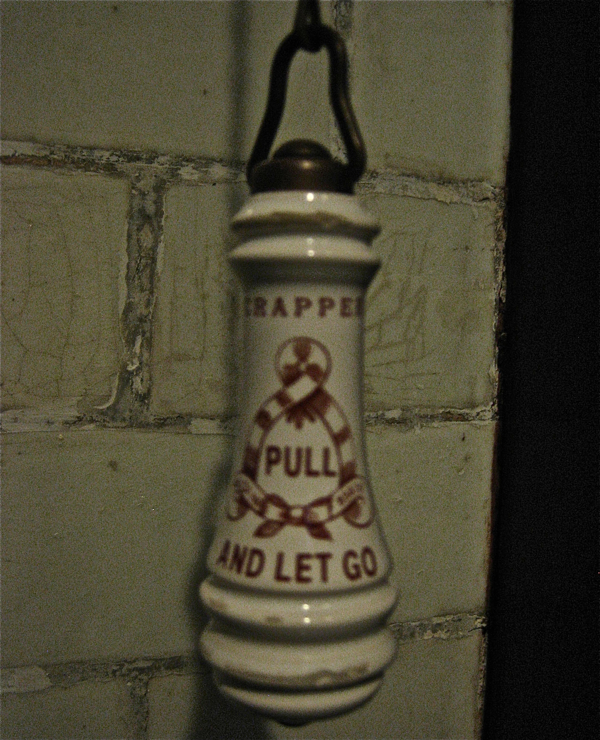
Put your Trust in the Lord
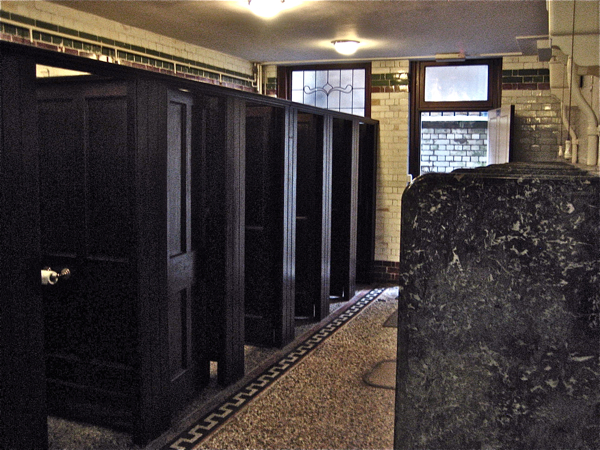
Cubicles for private Worship
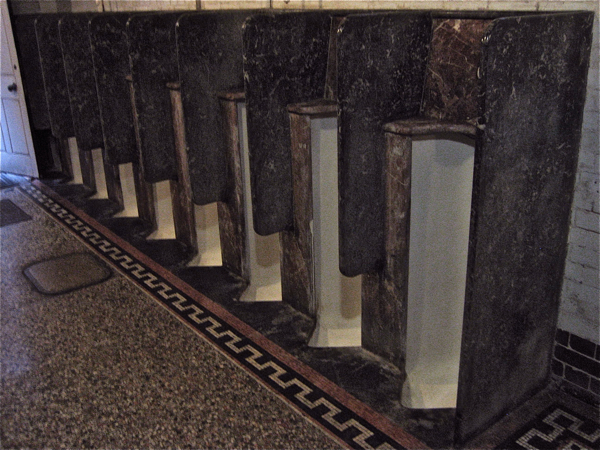
Stalls for individual Prayer
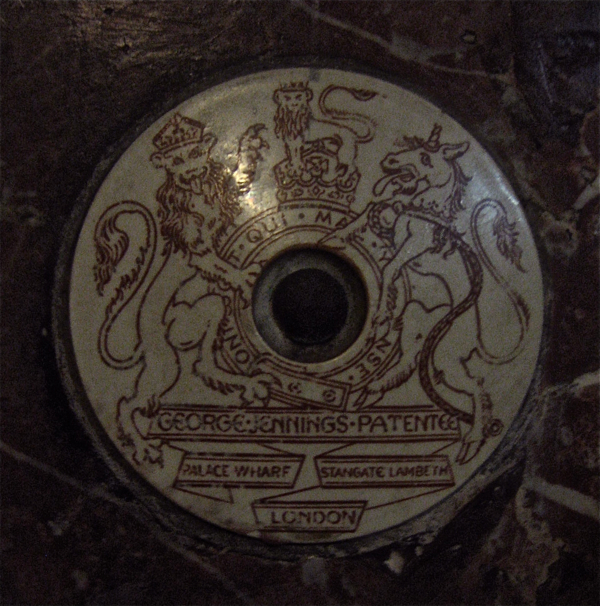
In Memoriam George Jennings, inventor of the public toilet
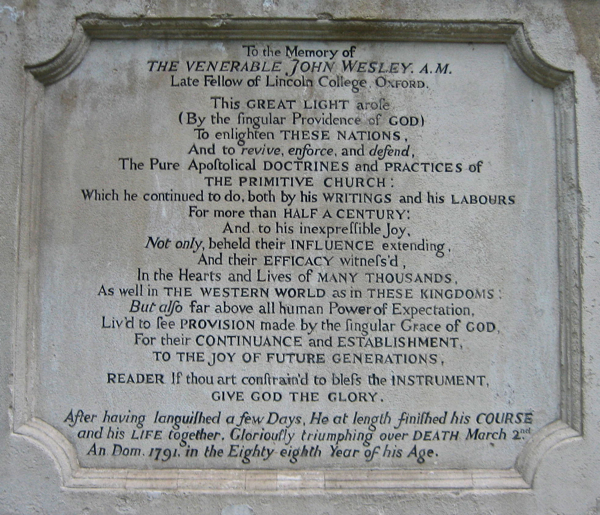
Upon John Wesley’s Tomb

John Wesley’s Chapel

John Wesley’s exercise chair to simulate the motion of horseriding
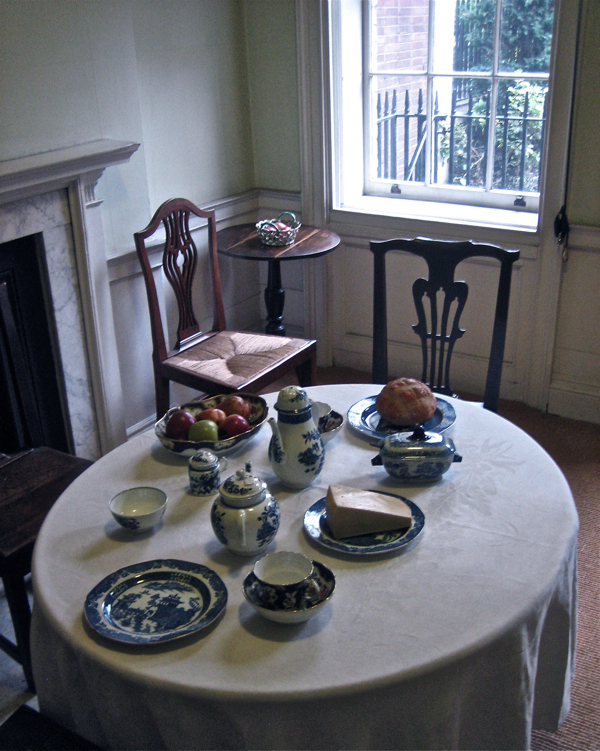
John Wesley excused himself unexpectedly from the table …
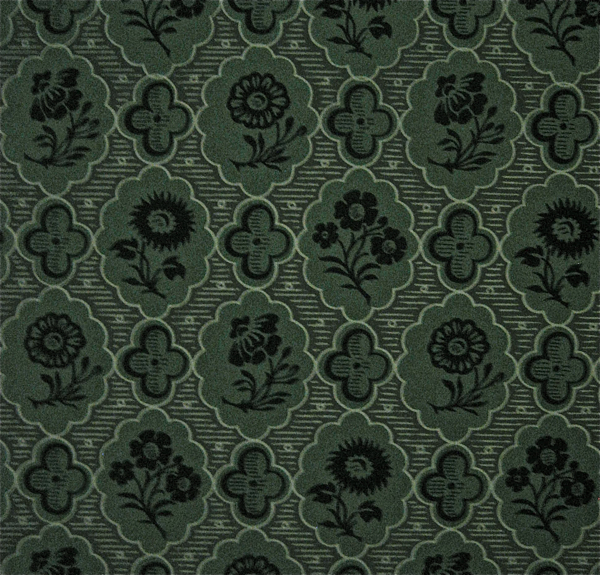
New wallpaper in John Wesley’s parlour from an eighteenth century design at Marble Hill House
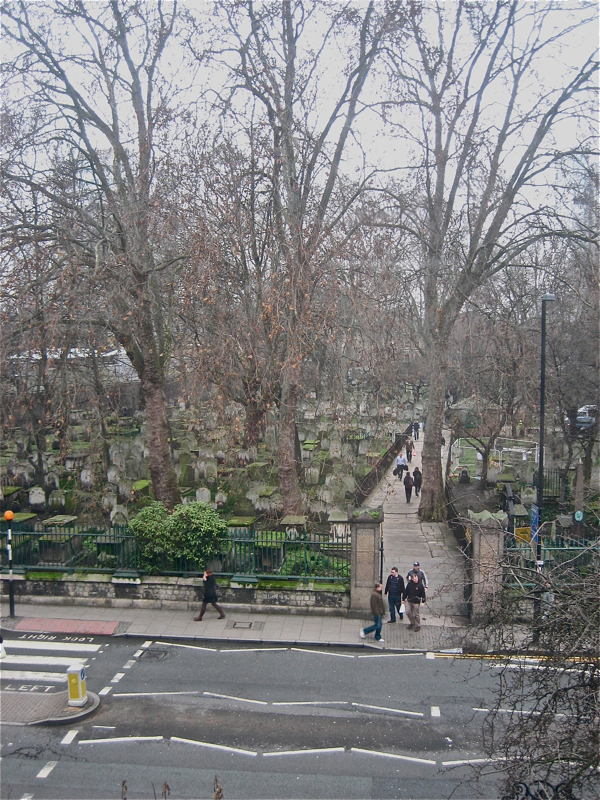
The view from John Wesley’s window across to Bunhill Fields where, when there were no leaves upon the trees, he could see the white tombstone marking his mother’s grave.
Learn about John Wesley’s chapel at www.wesleyschapel.org.uk
Old Chestnut Trees In Greenwich Park

Only a couple of places left now for my course on 7th & 8th February. Click here for more information.
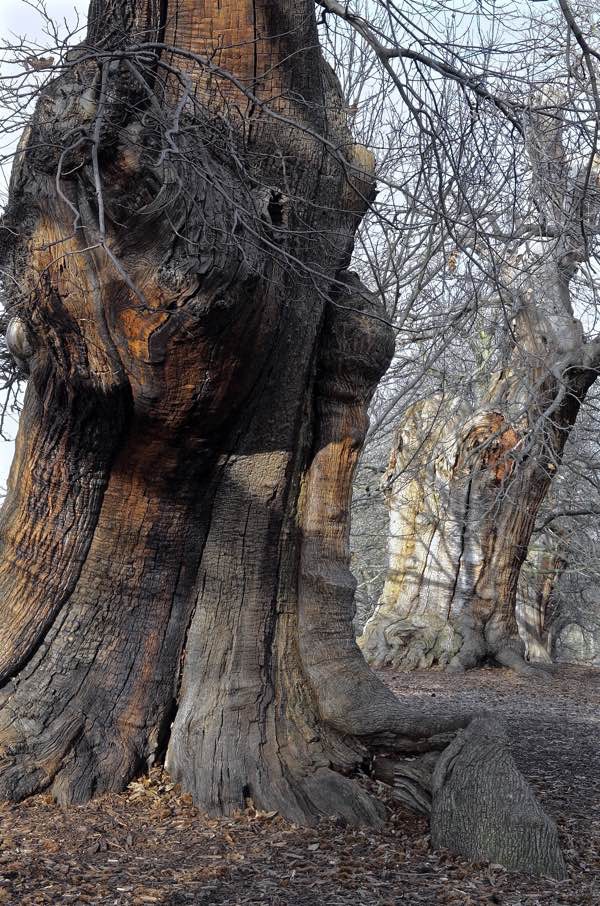
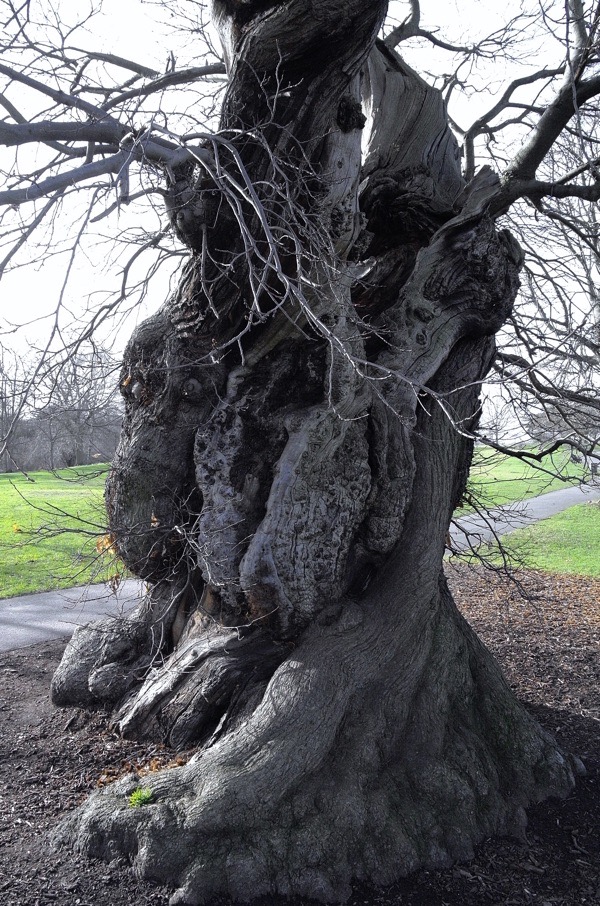
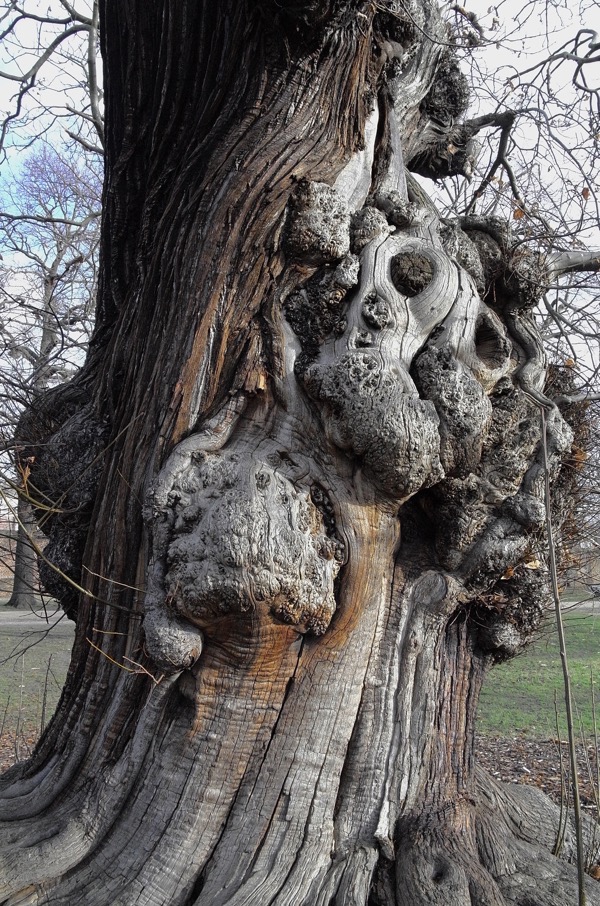
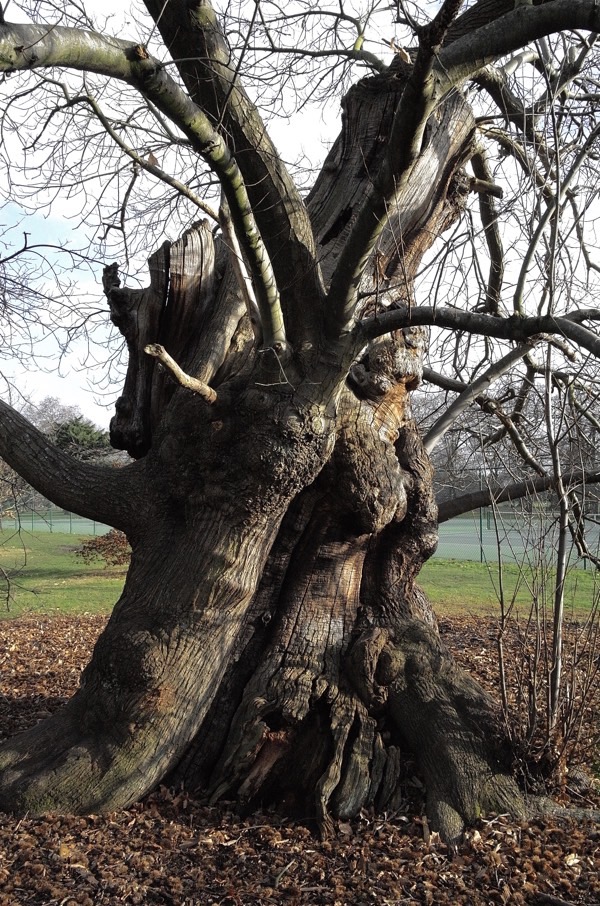
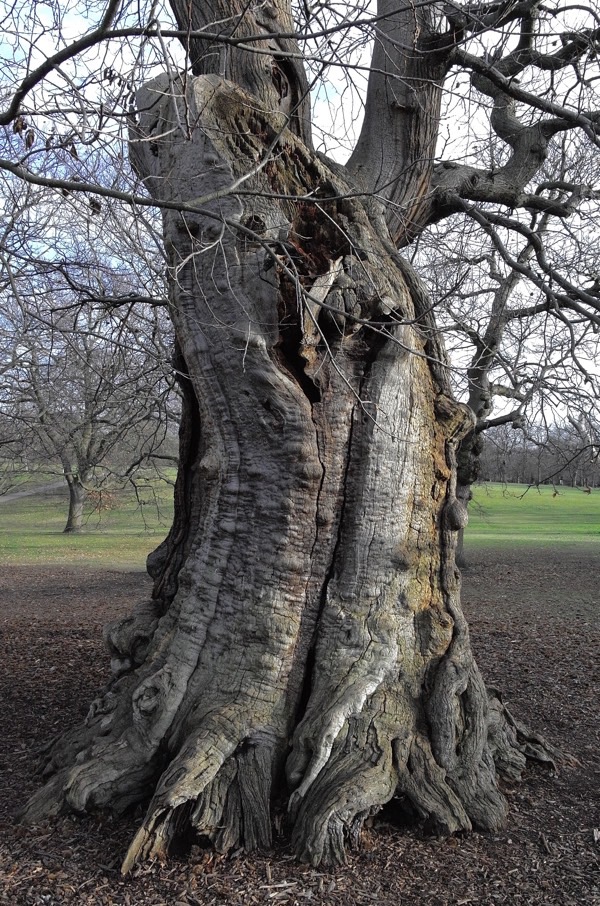
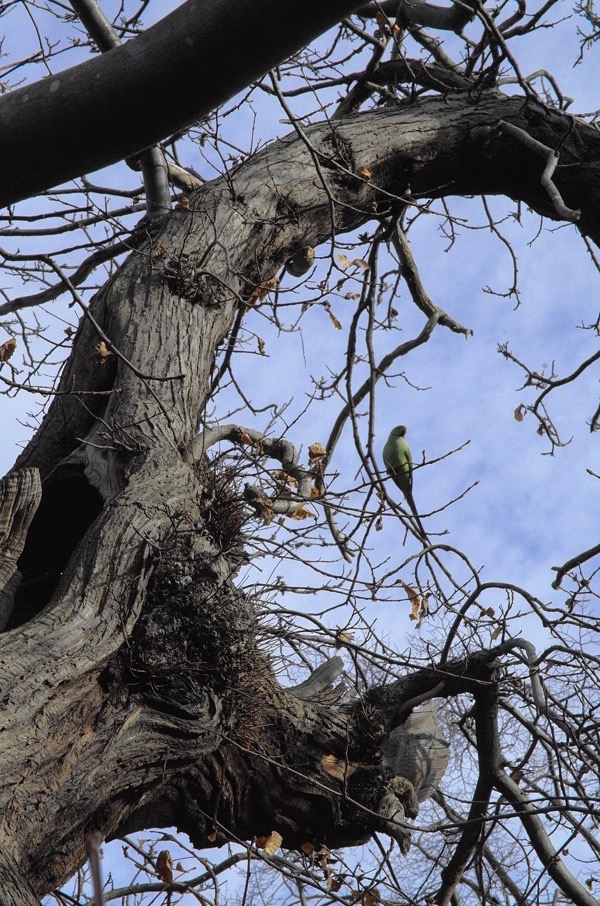
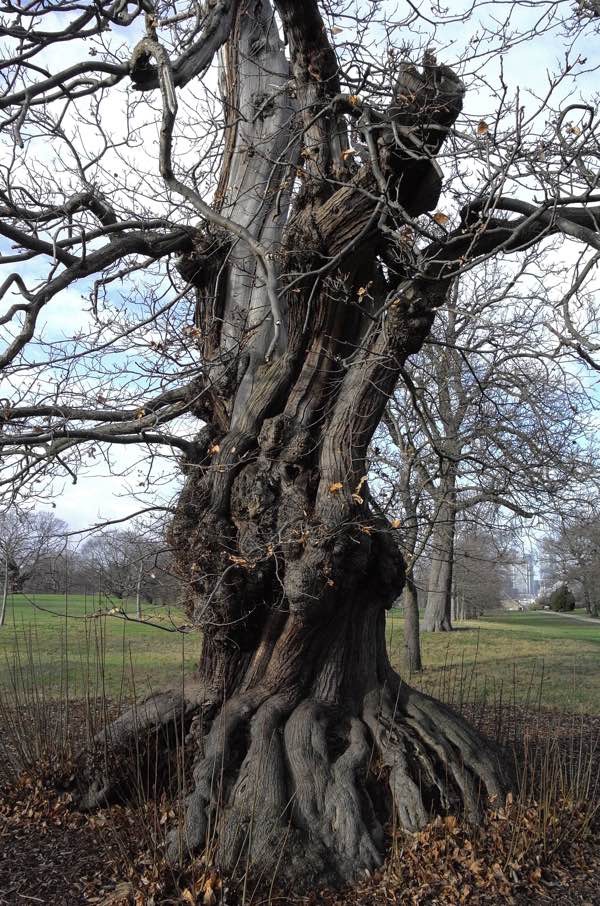
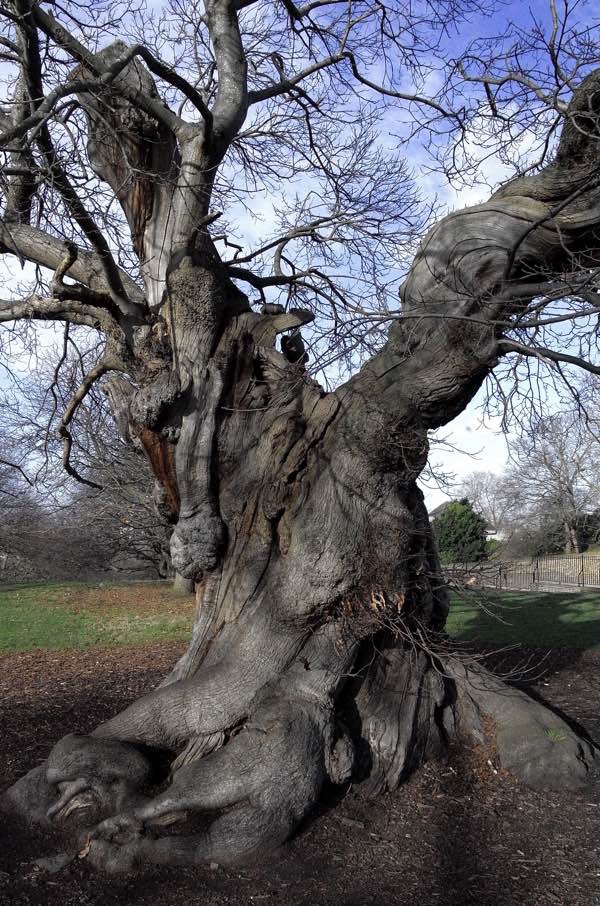
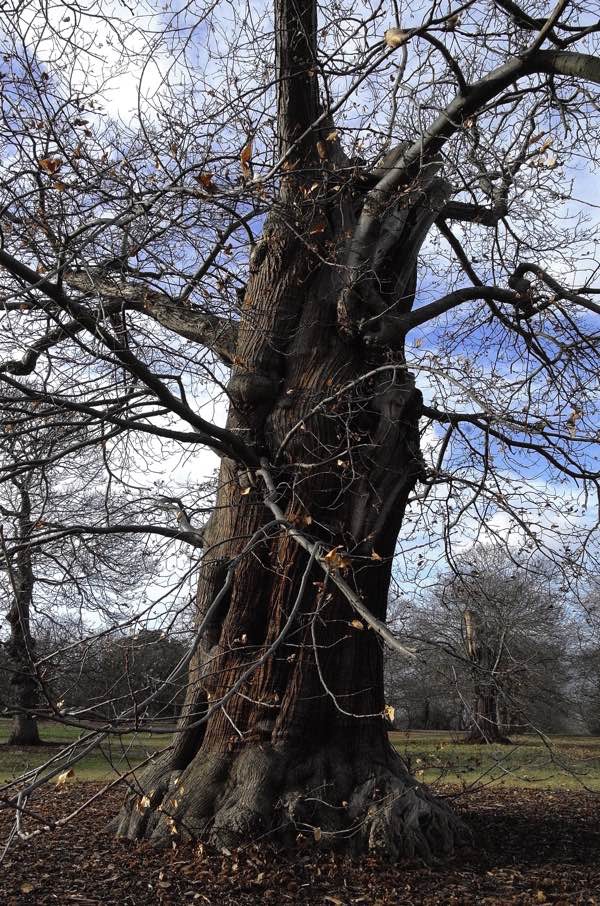
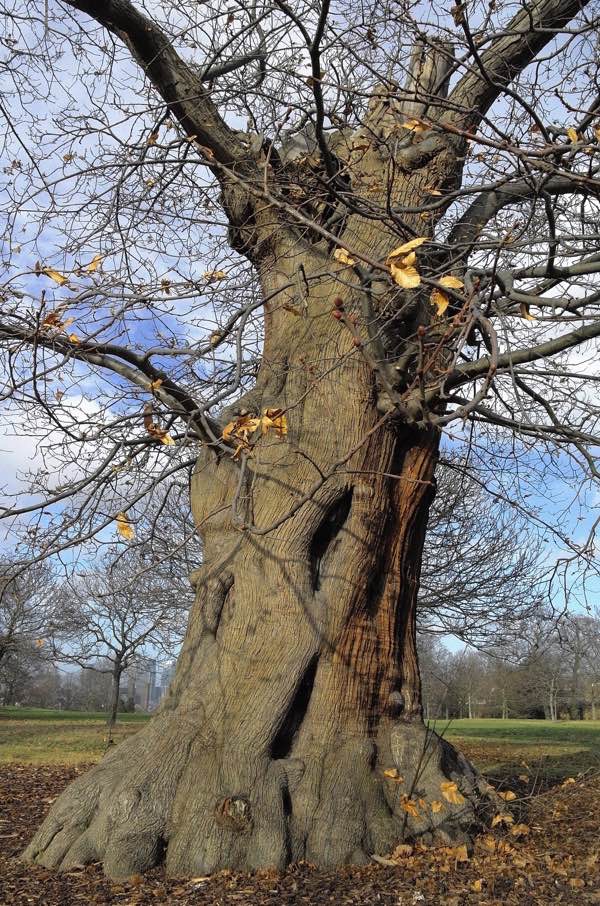
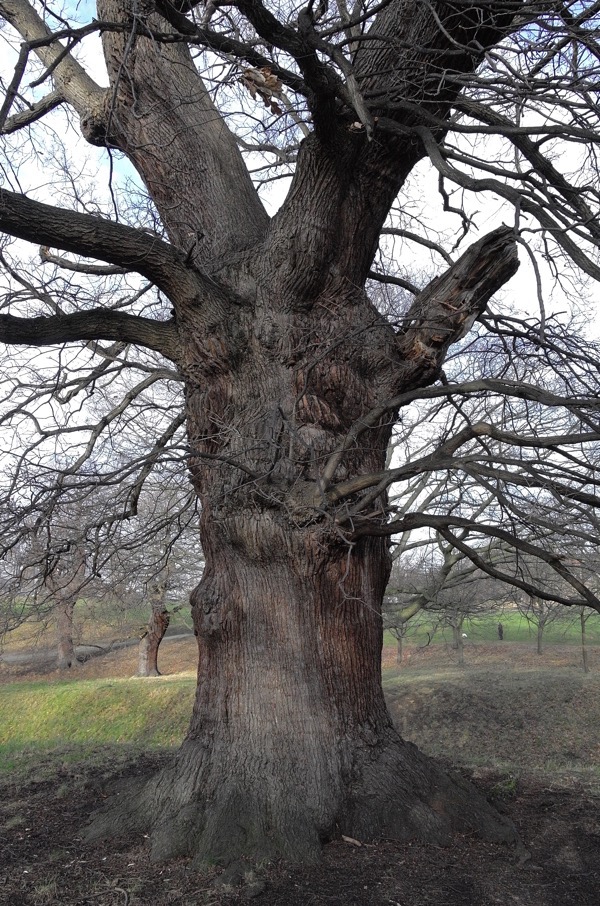
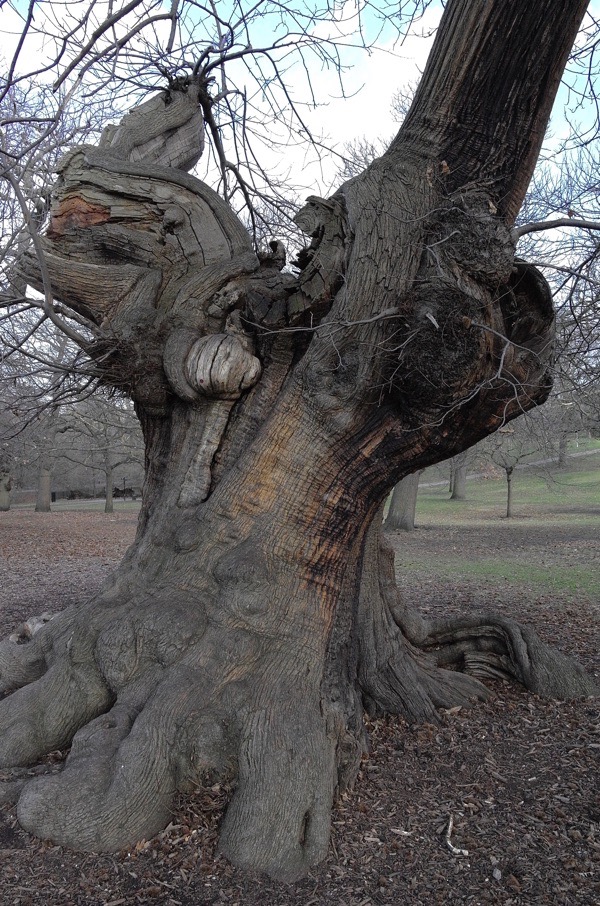
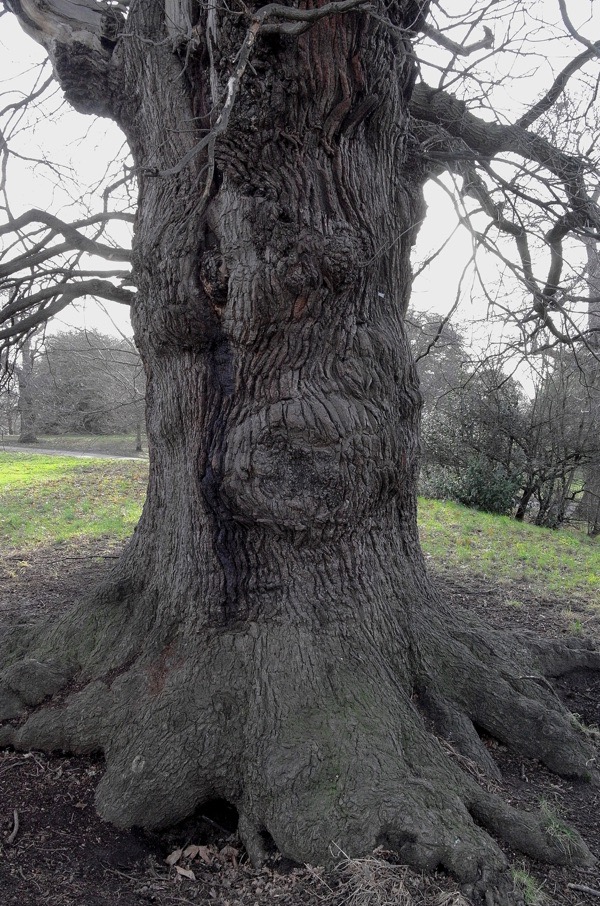
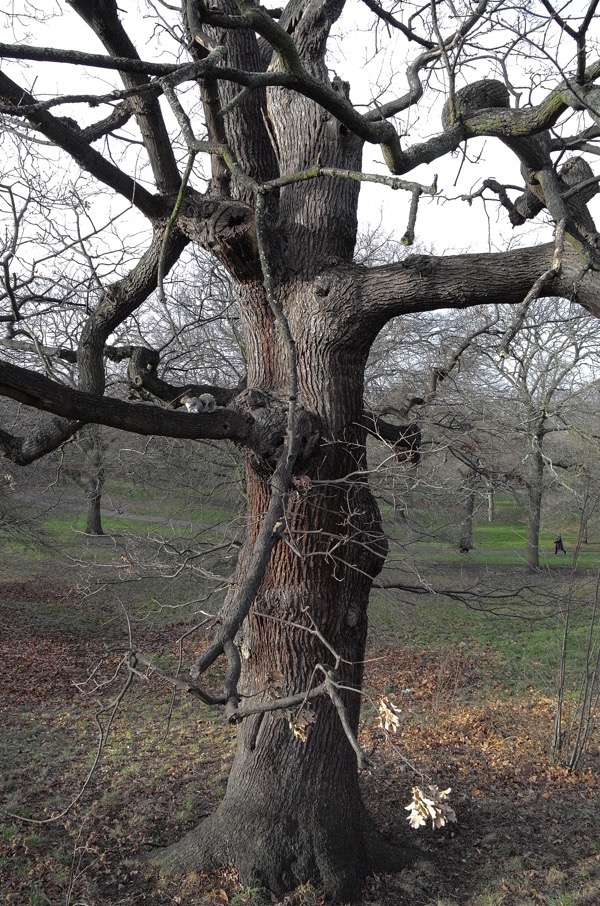
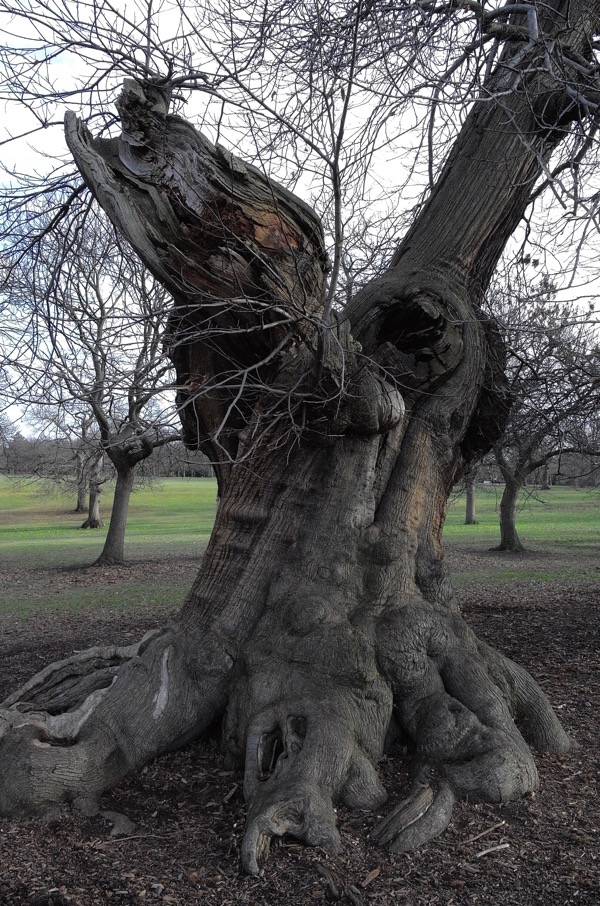
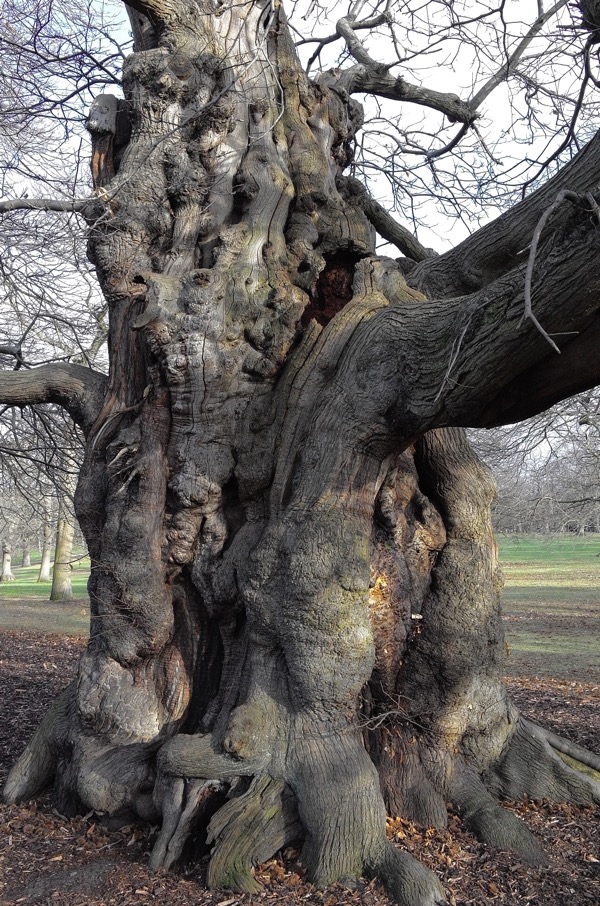
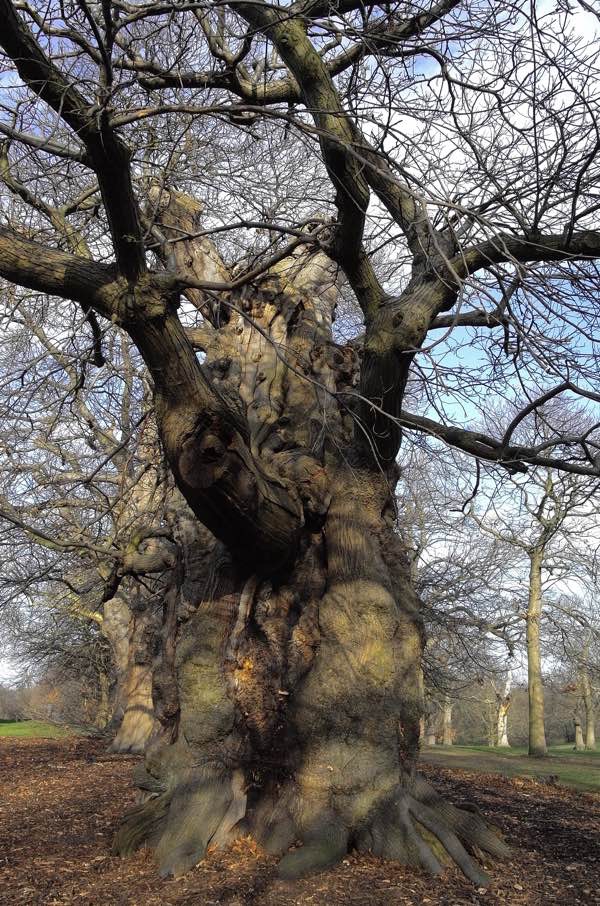
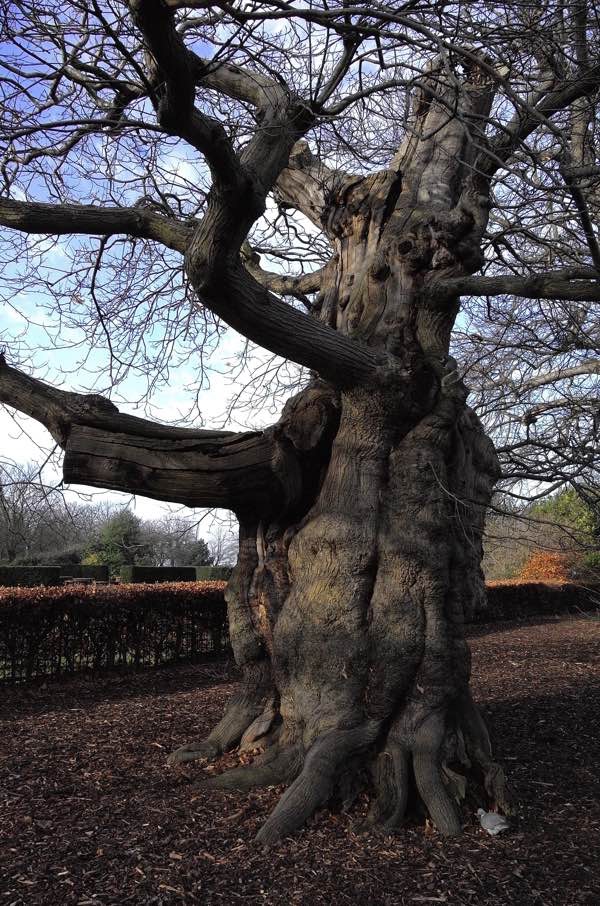
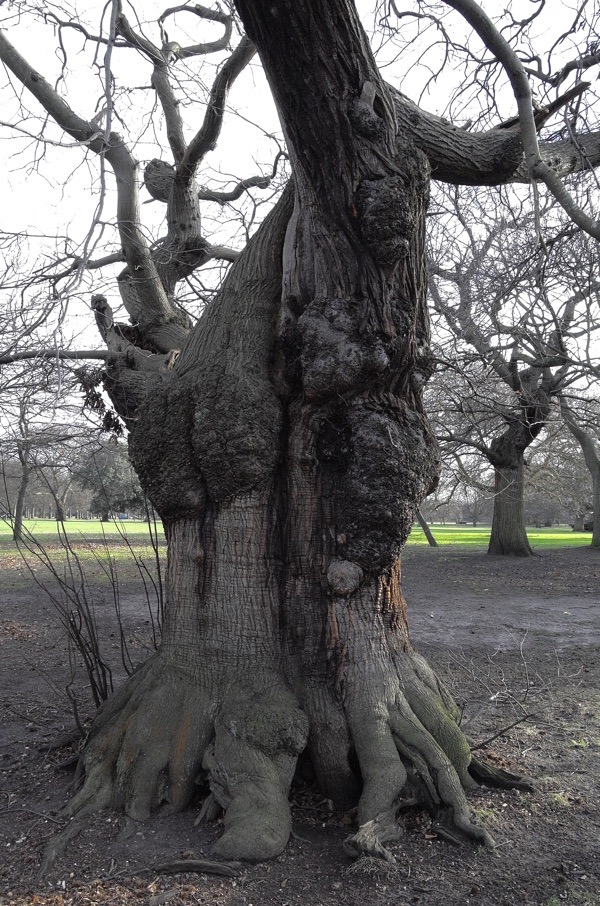
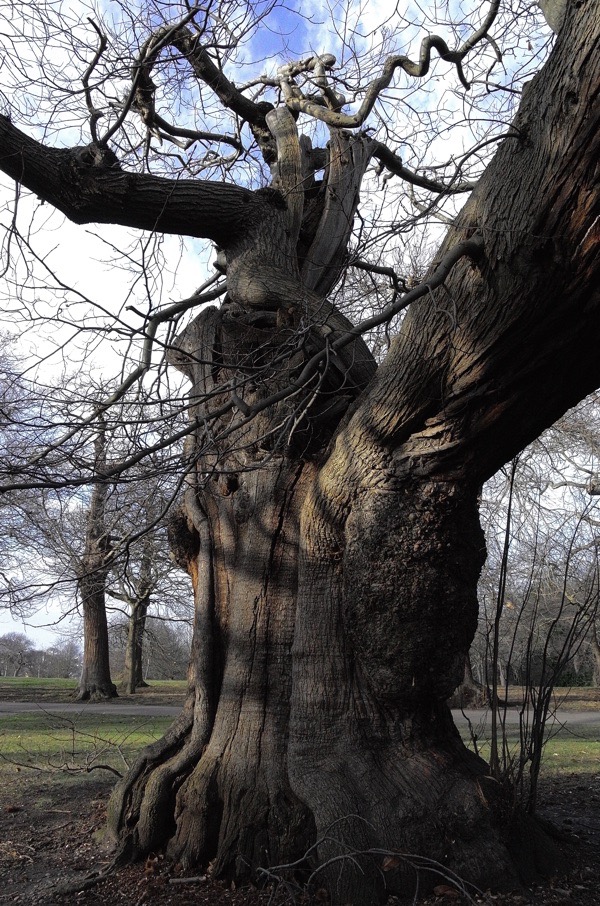
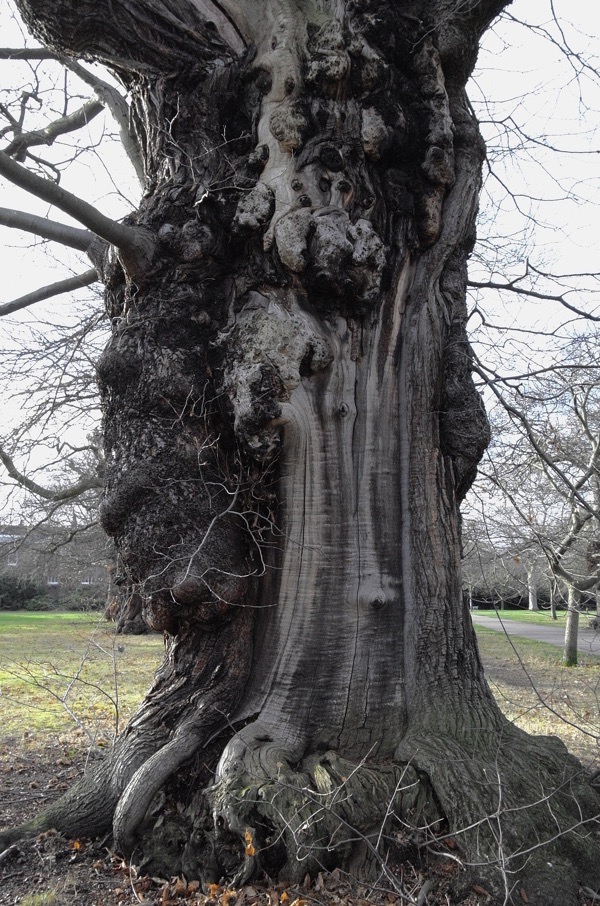
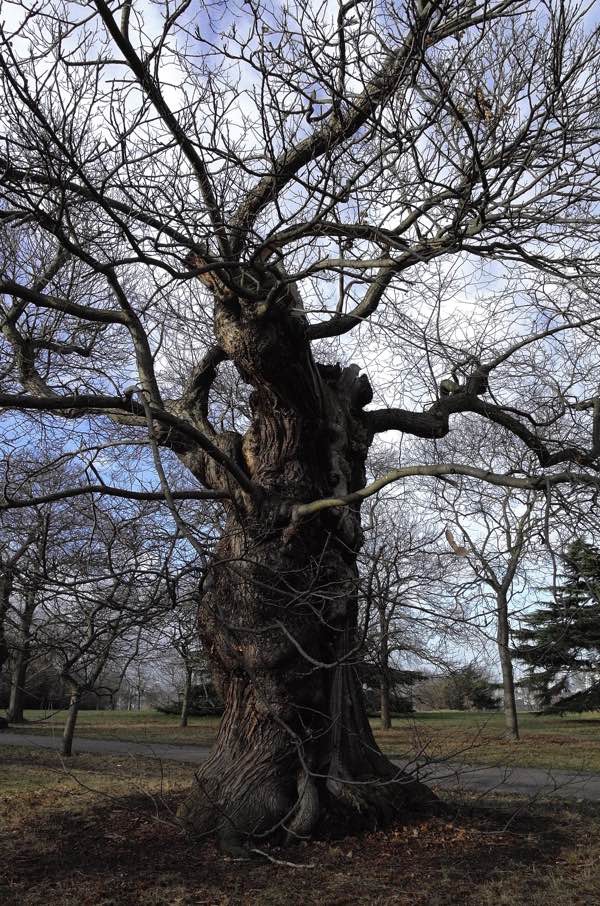
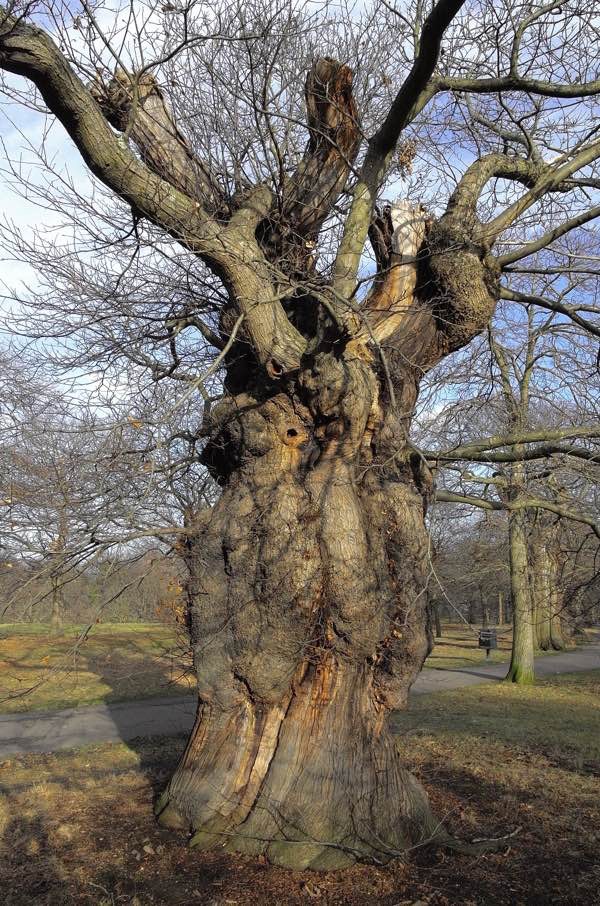
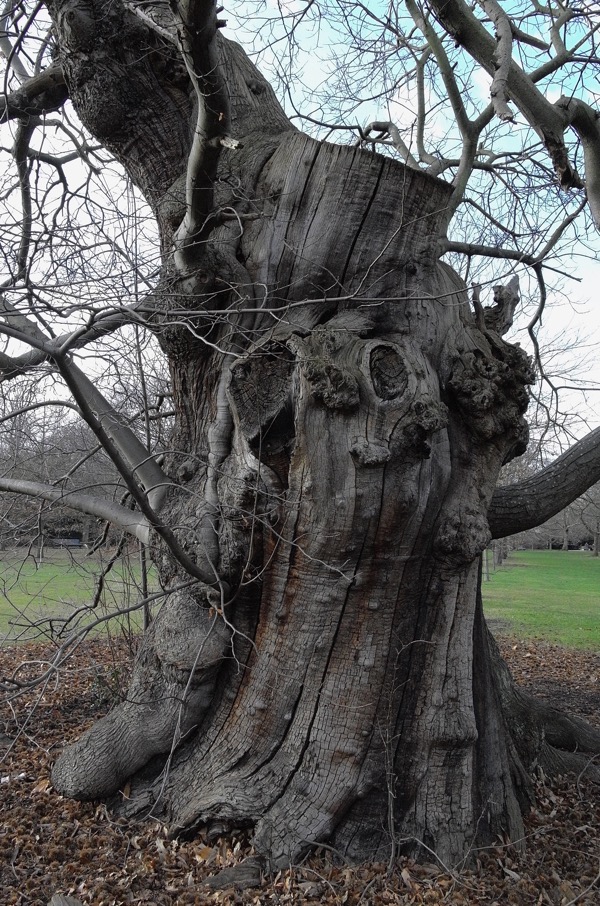
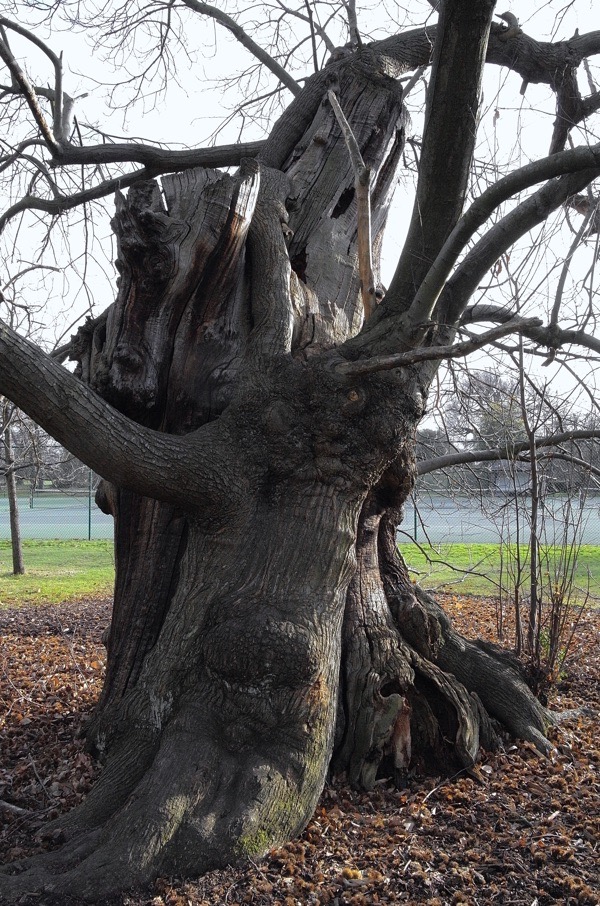
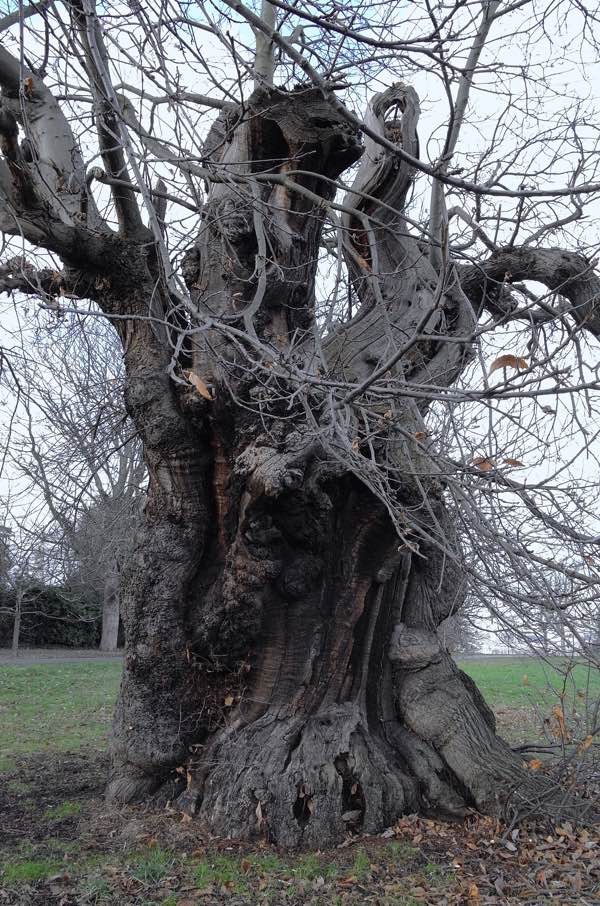
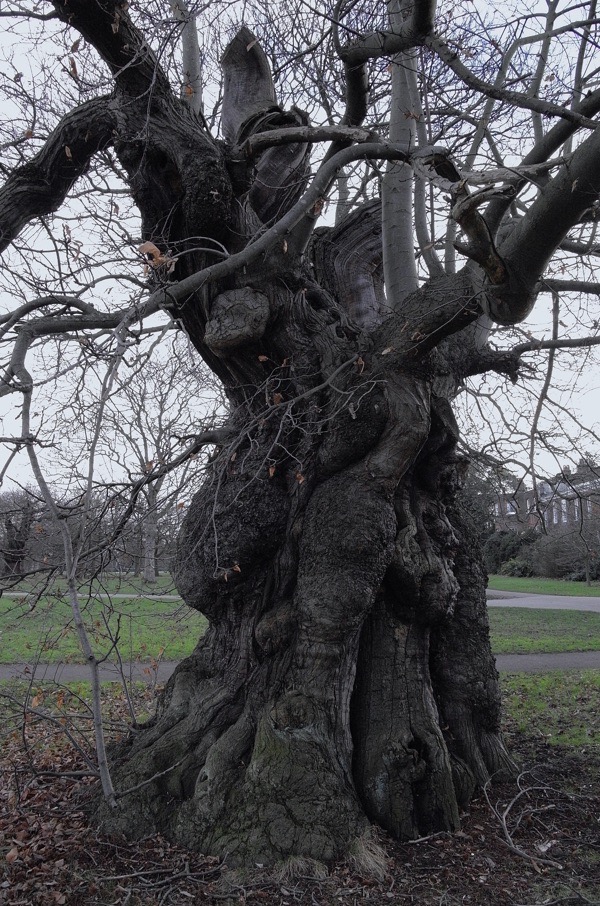
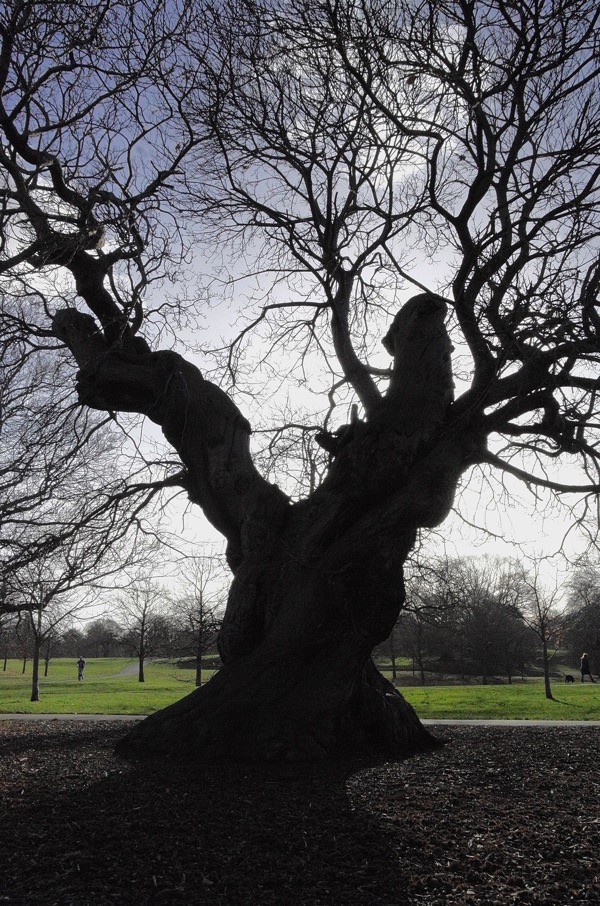
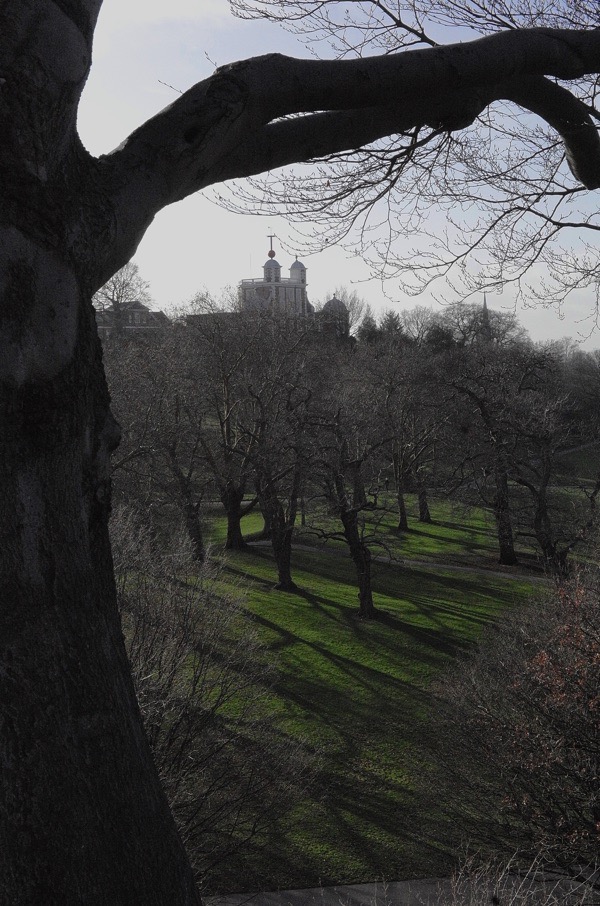
One summer’s day, I went for a walk in Greenwich Park and was uplifted to encounter the awe-inspiring host of ancient trees there. I promised myself I would return in the depths of winter to photograph these magnificent specimens on a clear day when they were bare of leaves. So that was what I did, braving the bitter wind and the plunging temperatures for an afternoon with my camera.
In the early 1660’s, Charles II commissioned Le Notre, gardener to Louis XIV, to design the layout of the landscape and the impressive avenues of sweet chestnuts remain, many now approaching four hundred years old. These ancient trees confront you, rising up in the winter sunlight to cast long shadows over the grass and dominating the lonely park with their powerful gnarly presences worthy of paintings by Arthur Rackham.
I have always been in thrall to the fairy tale allure cast by old trees. As a small child, I drew trees continuously once I discovered how easy they were to conjure into life upon paper, following the sinuous lines where I pleased. This delight persists and, even now, I cannot look at these venerable sweet chestnuts in Greenwich without seeing them in motion, as if my photographs captured frozen moments in their swirling dance.
Throughout my childhood, I delighted to climb trees, taking advantage of the facility of my lanky limbs and proximity of large specimens where I could ascend among the leafy boughs and spend an afternoon reading in seclusion, released from the the quotidian world into an arena of magic and possibility. Since the life span of great trees surpasses that of humans, they remind us of the time that passed before we were born and reassure us that the world will continue to exist when we are gone.
Secreted in a dell in the heart of the park, lies the Queen Elizabeth Oak, planted in the twelfth century. Legend has it, Henry VIII danced with Anne Boleyn beneath its branches and later their daughter, Elizabeth I, picnicked in its shade when this was a hunting ground for the royal palace at Greenwich. After flourishing for eight hundred years, the old oak died in the nineteenth century and then fell over a century later, in 1991, but still survives within a protective enclosure of iron railing for visitors to wonder at.
If any readers seek an excuse to venture out for a bracing walk in the frost, I recommend a pilgrimage to pay homage to the old trees in Greenwich Park. They are witnesses to centuries of history and offer a necessary corrective to restore a sense of proportion and hope in these strange times.
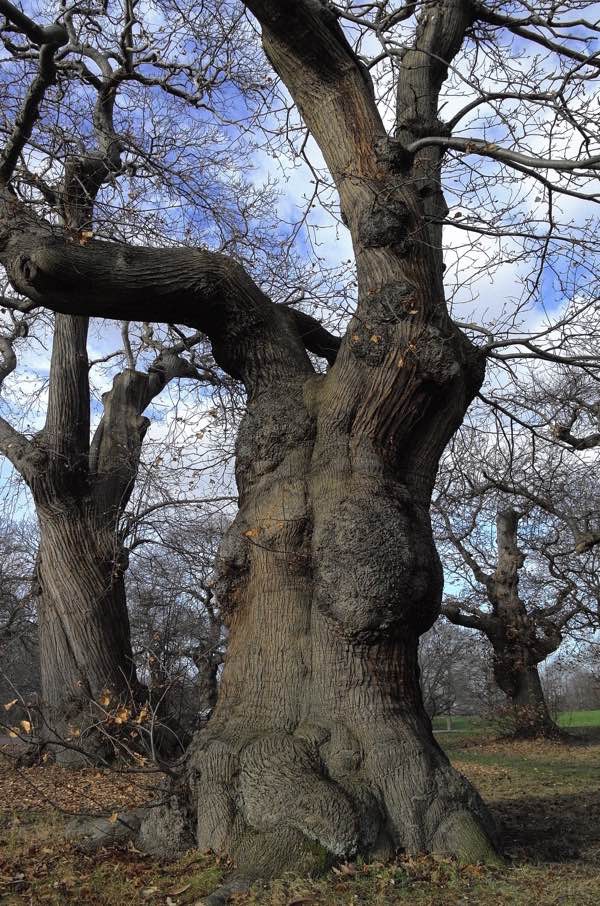


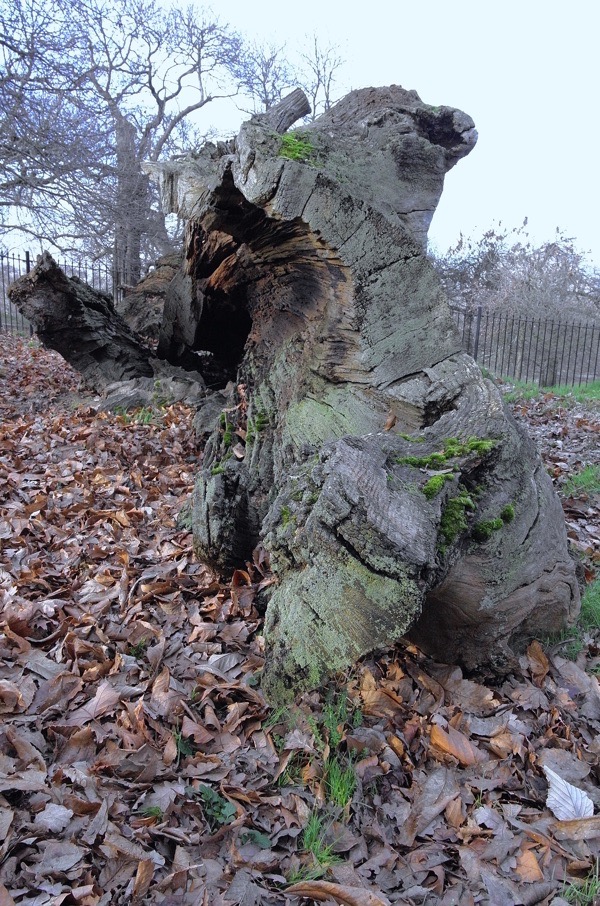
Queen Elizabeth’s Oak dating from the twelfth century
You may also like to read about