
Steve Dobkin, Bacon St Salvage

“People see a big guy, six foot tall with a bit of a growl on his face – but they don’t realise that when you get to know me, I really am a pleasant person.” confessed scrap dealer Steve Dobkin yesterday, as we sought refuge together in the warmth of the makeshift cubicle that serves as his office, squeezed between the piles of second-hand kitchen equipment which are the source of his livelihood. Yet such an apology was entirely unnecessary because Steve has a reputation as the gentle giant on Bacon St.
Operating from an eighty foot shed at the western extremity of the street, Steve always has an intriguing array of steel furniture standing on the pavement and if you enter his premises you find yourself surrounded by towers of it, receding into the gloom and piled up to the ceiling. Outside, on the wall facing the car park, is a magnificent ever-changing gallery of street art of which Steve is the patron. “I don’t understand it, but when they ask, I say ‘Do what you want.'” he admitted to me with a shy smile.
Last winter, the cold became too much for Steve, standing around in the tin shed all day in all weathers, so he build a wooden shack to keep himself warm. “I always thought, ‘Don’t have an office, you can put catering equipment there,’ but you’ve got to take care of yourself because none of us is getting any younger.” Steve confided, as the dusk gathered and the temperatures fell outside.
“My dad Sam Dobkin used to sell furniture down here in Brick Lane in the seventies, you could sell any furniture then as long as it was cheap. He was a scrap dealer always looking for an outlet. The first time I came down here was when I was around six years old, in 1972. I worked for him at weekends and holidays. I began selling off the back of a truck but I knew that – rather than selling it all for scrap – you could get more money if you had somewhere to keep it and resell it.
Nowadays, our stuff is all cleaned up and guaranteed, but in those days what you saw was what you got – just stuff straight out of a skip. It’s a form of progress, I work with electricians, gas fitters and water fitters to get everything repaired. People buy this way because it’s cheaper and they can see it working here. People like that extra bit of service. I try to give the customer what they want, if we can modify it by cutting equipment down to size, we will. You can spend fifty grand fitting out a kitchen or you can do it here for five.
I love my job. I love being here. I like getting up in the morning and coming here. When someone pulls up outside and you jump into the truck to take a look and make deal, that’s a buzz. I’m always thinking – Who’s calling up? – What am I going to be getting? – What am I going to be selling it for? Sometimes, they ring you up to sell a lot of flooring but when you get there you’re buying a lot of catering equipment – that’s a real buzz. That’s the kind of excitement you get.
You’ve got communities that come in here, they’ve got different ways to speak and you have to learn it. English people, they don’t bid for it, but Chinese and Turkish people they like to make a bid, whereas Indians will grind you into the ground if you let them. It’s different cultures, you stand your ground and be patient. No one community spends more money than another. And I’ve got to be friends with Indian people, they bring me curries. I never had so many curries since I came here. I never even had curry before I came here! You work with the people that turn up, you can’t start shouting and screaming or you’ll never make any money. I always try to find the best in everyone.
I had my first premises in 1990 in Grimsby St in one of the railway arches, next a place on Cheshire St and then one on the far side of Bacon St before I came here in 1999. I don’t know where the time has gone, but it’s been very good.
As soon as I get the right amount of money, I’ll be off – except I don’t know what the right amount of money is! You want to sell up and you think about what you’d do with the money, but then you think of all the things you’d miss. I’d miss getting up the morning and coming down here. I’m not interested in being rich, just happy with my little shop trickling along nice and easy. I have no website, no advertising and when I leave work, I switch my phone off. I don’t even like it when I get too many customers here. One day I’ll be the manager, the next day I’ll be out cleaning the cooker. I’ve got two people that work with me but I’m no better than anyone. My son Perry and daughter Louise work here with me too, but I wouldn’t take it on if I was them. They haven’t done it since six years old like I have, they don’t know the same love for it that I have.
I’ve come to like people more because of this job. I’ve no grudge against anyone. When I first came down here, it was hard – but as the years have gone by I have realised it is not personal. I’m trying to sell at the best price and they’re trying to get it as cheap as they can. All around this area, it’s a great place to work. The first three months you’re a newcomer – but after that, if your stall breaks everyone will come to help you. If you think you’re going to make fortune you won’t, instead you’ll discover a great sense of community.”


Photographs copyright © Jeremy Freedman
You may also like to read these other Bacon St stories
A Room To Let In Old Aldgate

I would dearly love to rent the room that is to let in this old building in Aldgate, photographed by Henry Dixon for the Society for Photographing Relics of Old London. Too bad it was demolished in 1882. Instead I must satisfy myself with an imaginary stroll through the streets of that long lost city, with these tantalising glimpses of vanished buildings commissioned by the Society as my points of reference. Founded by a group of friends who wanted to save the Oxford Arms, threatened with demolition in 1875, the Society for Photographing Relics of Old London touched a popular chord with the pictures they published of age-old buildings that seem to incarnate the very soul of the ancient city. London never looked so old as in these atmospheric images of buildings forgotten generations ago.
Yet the melancholy romance of these ramshackle shabby edifices is irresistible to me. I need to linger in the shadows of their labyrinthine rooms, I want to scrutinize their shop windows, I long to idle in these gloomy streets – because the truth is these photographs illustrate an imaginary old London that I should like to inhabit, at least in my dreams. Even to a nineteenth century eye, these curious photographs would have proposed a heightened reality, because the people are absent. Although the long exposures sometimes captured the few that stood still, working people are mostly present only as shadows or fleeting transparent figures. The transient nature of the human element in these pictures emphasises the solidity of the buildings which, ironically, were portrayed because they were about to disappear too. Thus Henry Dixon’s photographs preserved in the Bishopsgate Insitute are veritable sonnets upon the nature of ephemerality – the people are disappearing from the pictures and the buildings are vanishing from the world, only the photographs themselves printed in the permanent carbon process survive to evidence these poignant visions now.
The absence of people in this lost city allows us to enter these pictures by proxy, and the sharp detail draws us closer to these streets of extravagant tottering old piles with cavernous dour interiors. We know our way around, not simply because the geography remains constant but because Charles Dickens is our guide. This is the London that he knew and which he romanced in his novels, populated by his own versions of the people that he met in its streets. The very buildings in these photographs appear to have personality, presenting dirty faces smirched with soot, pierced with dark eyes and gawping at the street.
How much I should delight to lock the creaky old door, leaving my rented room in Aldgate, so conveniently placed above the business premises of John Robbins, the practical optician, and take a stroll across this magical city, where the dusk gathers eternally. Let us go together now, on this cloudy October day, through the streets of old London. We shall set out from my room in Aldgate over to Smithfield and Clerkenwell, then walk down to cross the Thames, explore the inns of Southwark and discover where our footsteps lead …

This row of shambles was destroyed for the extension of the Metropolitan Railway from Aldgate to Tower Hill, 1883.

Sir Paul Pindar’s House in Bishopsgate was moved to the Victoria & Albert Museum in 1890.
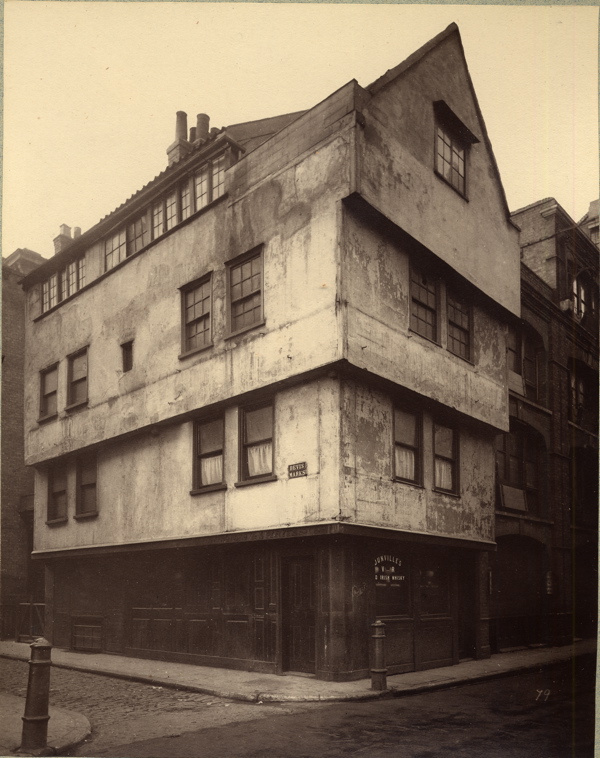
At the corner of St Mary Axe and Bevis Marks, this overhanging gabled house was destroyed in 1882.
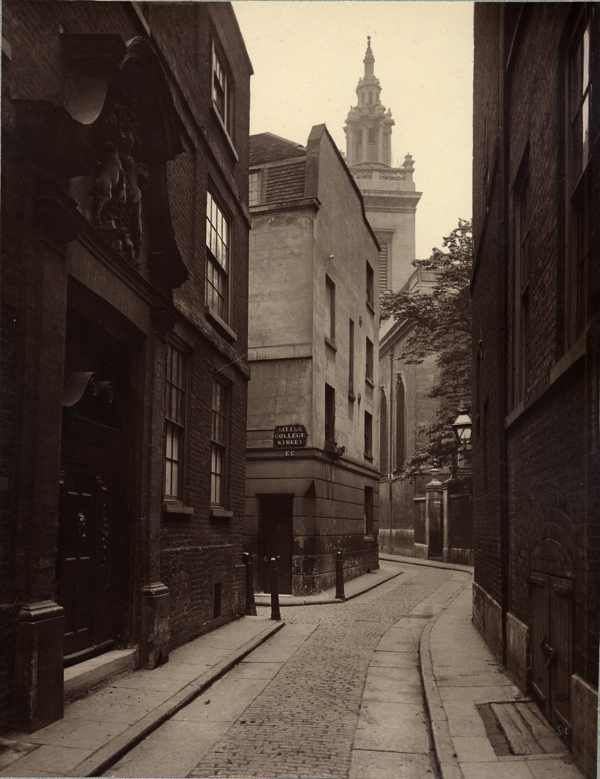
In College Hill.

St Giles Cripplegate, which now stands at the centre of Barbican complex.

Old buildings in Aldersgate St.

Shaftesbury House by Inigo Jones in Aldersgate St, demolished after this photo was taken in 1882.

Chimneypiece in the Sessions House, Clerkenwell Green, where Dickens was once a cub reporter.

In Cloth Fair, next to Smithfield Market.
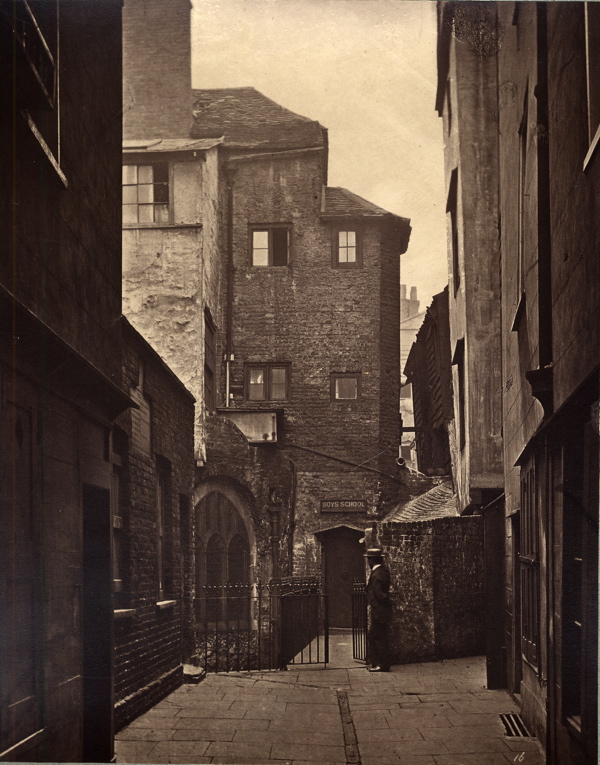
At the rear of St Bartholomew’s Church.
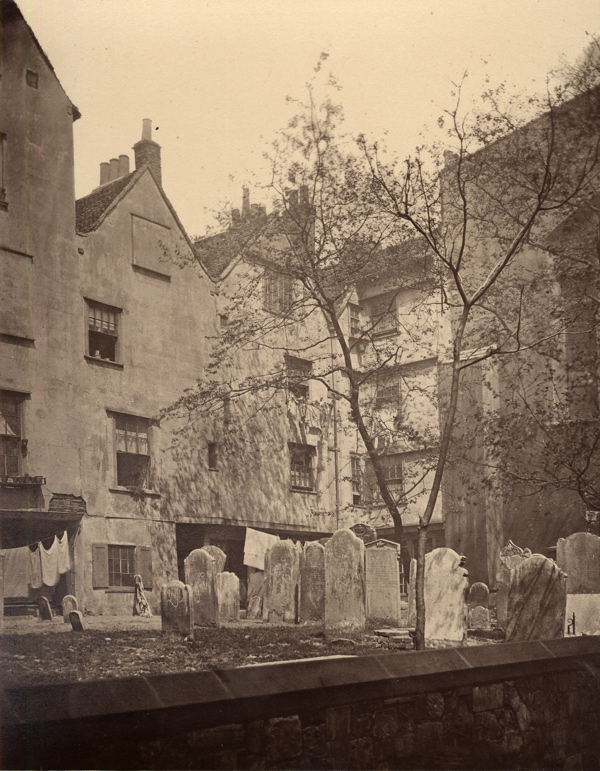
In the graveyard of St Bartholomew the Great.

In Charterhouse, Wash House Court.

The cloisters at Charterhouse.

St Mary Overy’s Dock

Queen’s Head Inn Yard.

White Hart Inn Yard.

King’s Head Inn Yard.
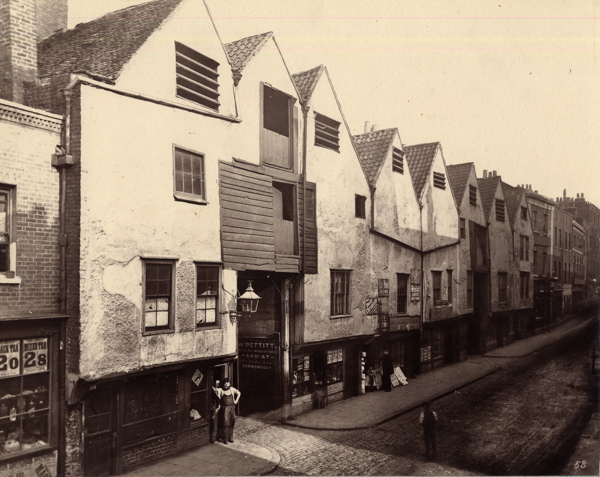
In Bermondsey St.
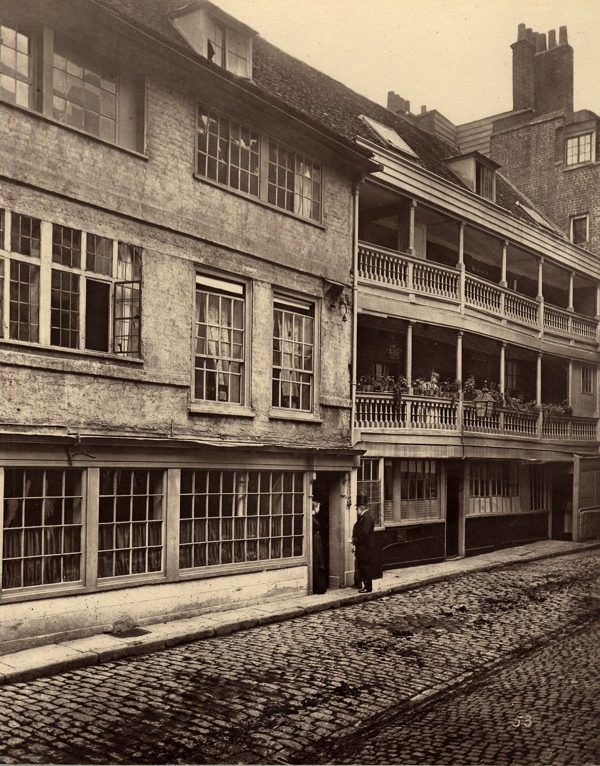
At the George, Borough High St.
You can see more pictures from the Society for Photographing Relics of Old London in The Ghosts of Old London and In Search of Relics of Old London.
Images courtesy Bishopsgate Institute
Lyndon Osborn, Nurseryman
This pen portrait serves as a taster for my full profile of Lyndon Osborn published in theTelegraph today, including an account of ‘How to propagate pelargoniums.’

This is Lyndon Osborn, a noble nurseryman from New Zealand, who has been trading in Columbia Rd Market for twenty years – although he spent the first seven years nearby in Ezra St, while he worked his way up the waiting list for a pitch in the market. “I have been thirteen years in the firing line,” he declared with characteristic Antipodean bonhomie, “but I had already built up quite a big customer base round the corner – and now I’ve discovered many others who only walk along Columbia Rd.”
Twenty years ago, I bought one of the tree ferns from Lyndon, which remain his speciality to this day, and today a magnificent array of fine specimens line my garden path.
These extraordinary plants lie dormant, permitting the trunk alone to be transported, apparently a dried-out husk – until you add water and it regenerates, sprouting tendrils from the top and resuming vigorous life in a new continent. Over this time – just like his tree ferns – Lyndon himself has put down roots and shown dramatic growth too, establishing a nursery in High Barnet. And I have found that because Lyndon rears his seedlings in London, they are acclimatised to the conditions which improves their chances of thriving in my garden.
In particular, Lyndon has become famous for his spectacular pelargoniums, especially the deep crimson “Lord Bute,” which I have spied in many of the discerning gardens of the East End over recent summers. The copyright that exists on more recent strains sent Lyndon back to propagate nineteenth century cultivars, more hardy and pest resistant that their modern counterparts.
Starting from one trolley in Ezra St Market, Lyndon has now ascended to Alfred Dunhill in Mayfair. “Just as the nineteenth century aristocracy gave their gardeners free rein, these clients let me do what I want, and they love the idea of it being a small nursery, supplying plants grown up the road. I plant them up four times a year, and last time I was planting at Alfred Dunhill, someone from Claridges came to speak to me…” confided Lyndon proudly, his green eyes shining in eager anticipation of what might follow.
I thought of Lyndon when I visited the magnificent fern garden at Malplaquet House, so it was no surprise to discover that he supplied the ferns and is the principal plant supplier to Todd Longstaffe-Gowan, landscape designer and gardener to the Queen – collaborating on many of his projects.
Lyndon is a popular character in the market, renowned for his relaxed, droll humour and fascinating mixture of plants, always quick with a cheery greeting and eager to strike up a conversations with customers who share his horticultural enthusiasms.
“It has re-ignited my interest in London. I don’t come here to make money, it’s a social event. I’ve gone from meeting people as customers, who have become acquaintances and then friends,” admitted Lyndon with a sentimental smile, expressing his affection for Columbia Rd, “From here, everything has snowballed and that’s why I have such high regard for the market.”

Lyndon Osborn’s pelargonium “Lord Bute,” photographed in my garden last Summer.
Portrait of Lyndon Osborn copyright © Jeremy Freedman
John Claridge At Whitechapel Bell Foundry
The Bell Foundry Public Inquiry continues at 10am today, with live-tweeting at @savethewbf. To watch the inquiry, email elizabeth.humphrey@planninginspectorate.gov.uk
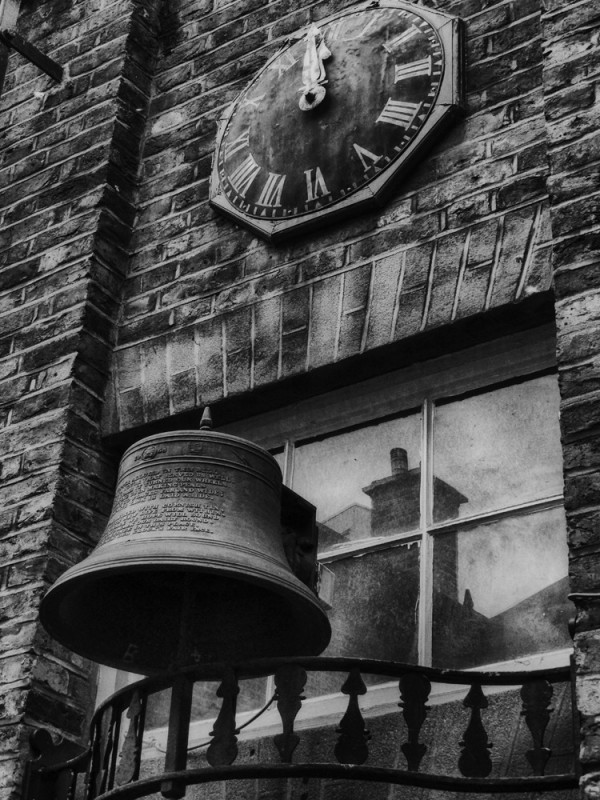
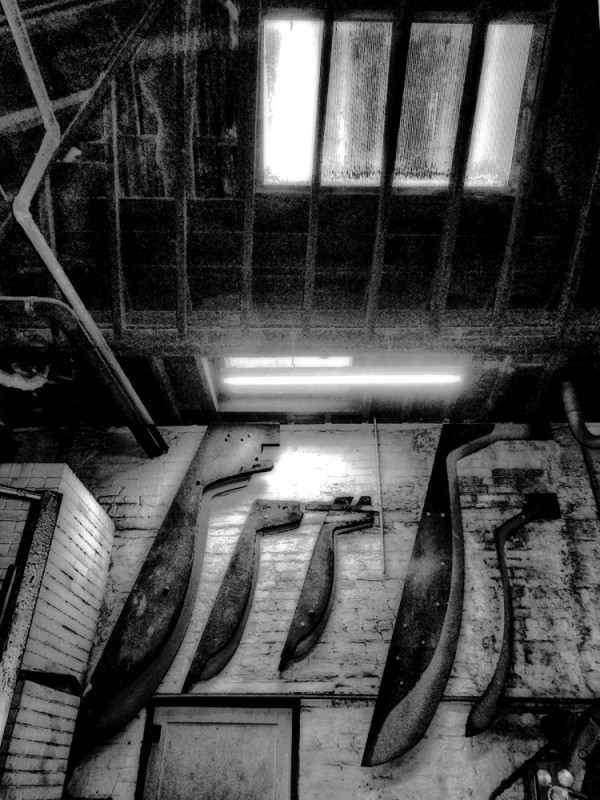
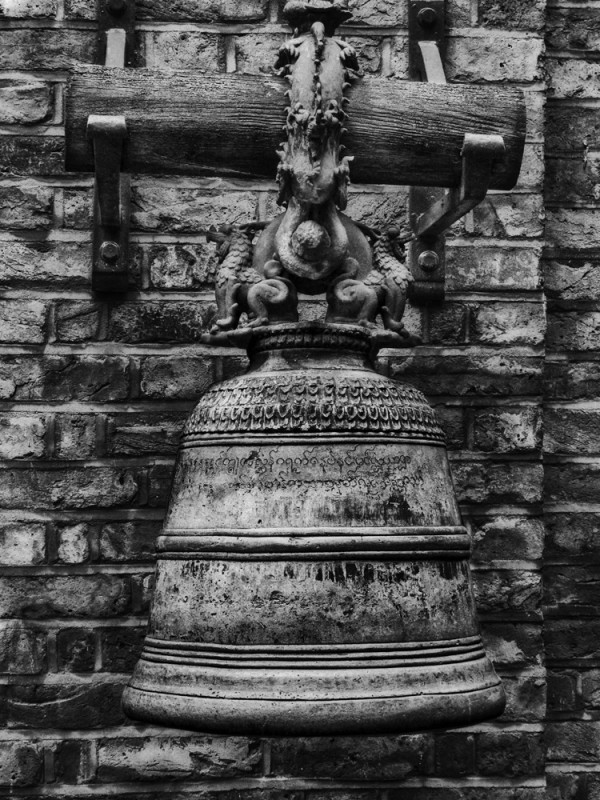
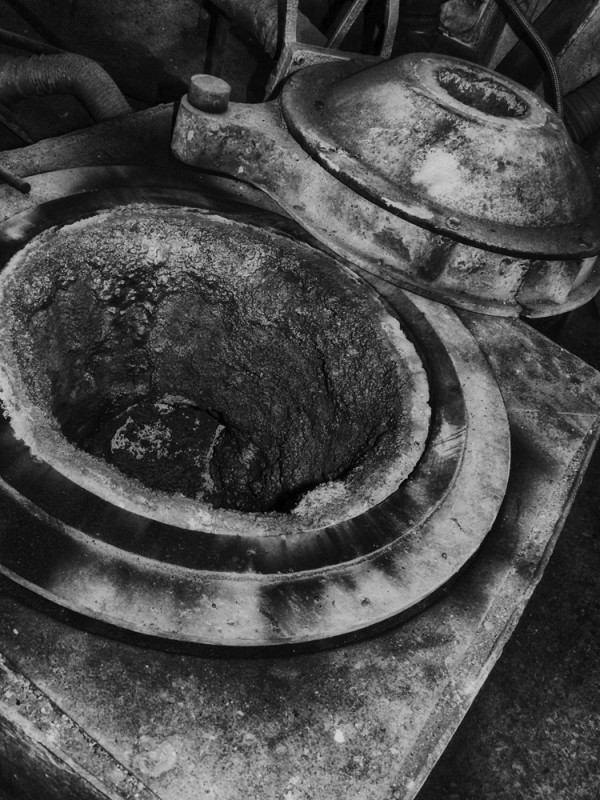
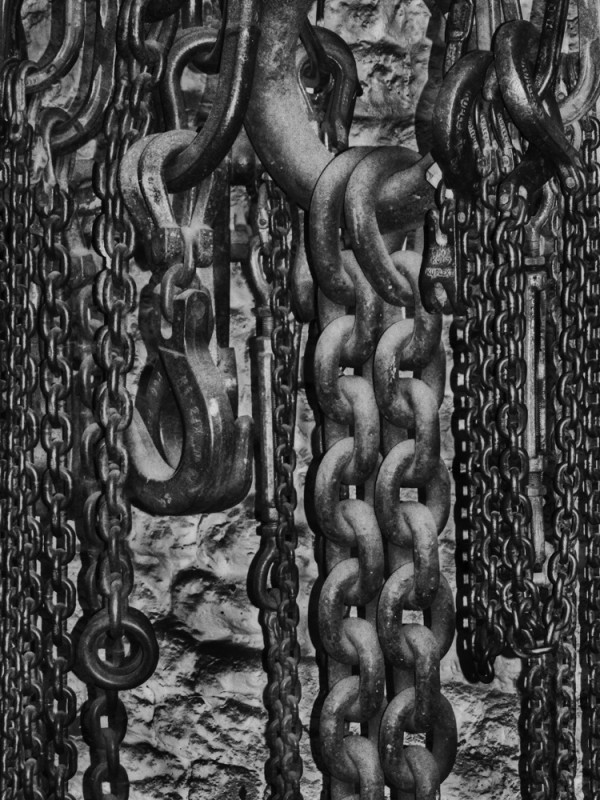
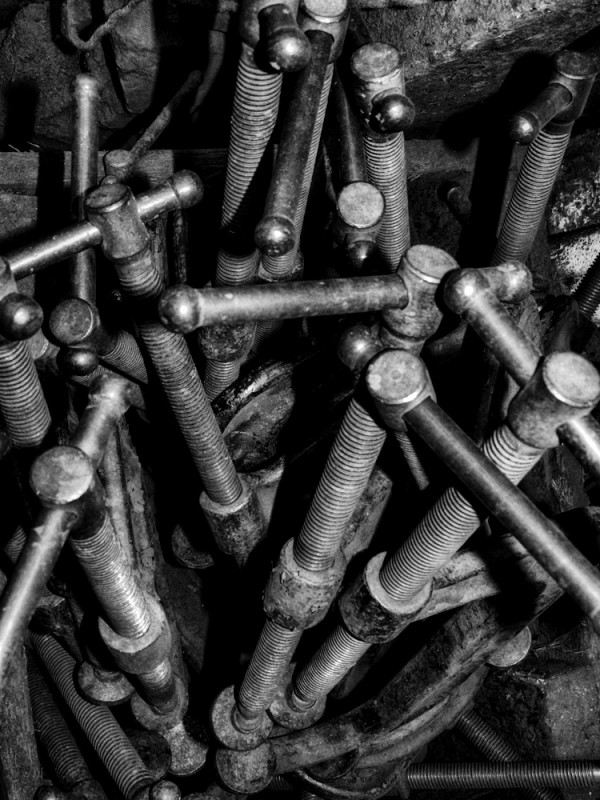
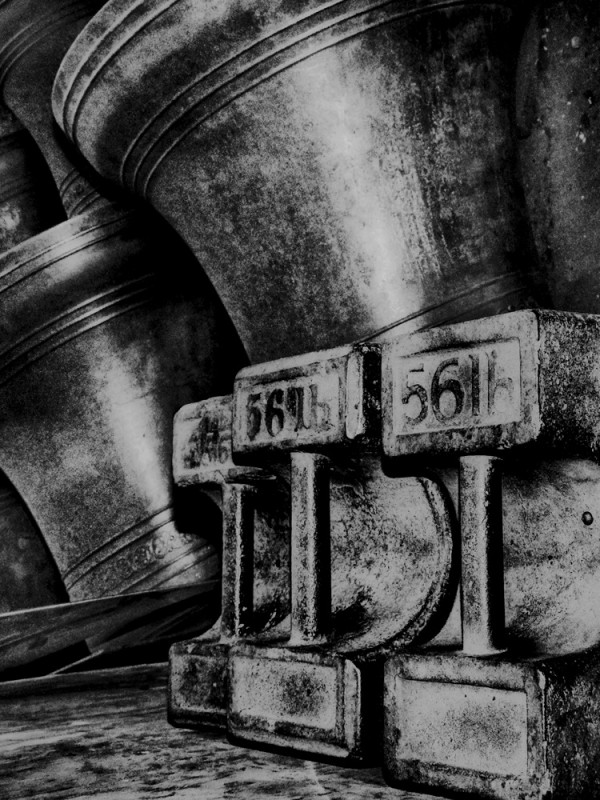
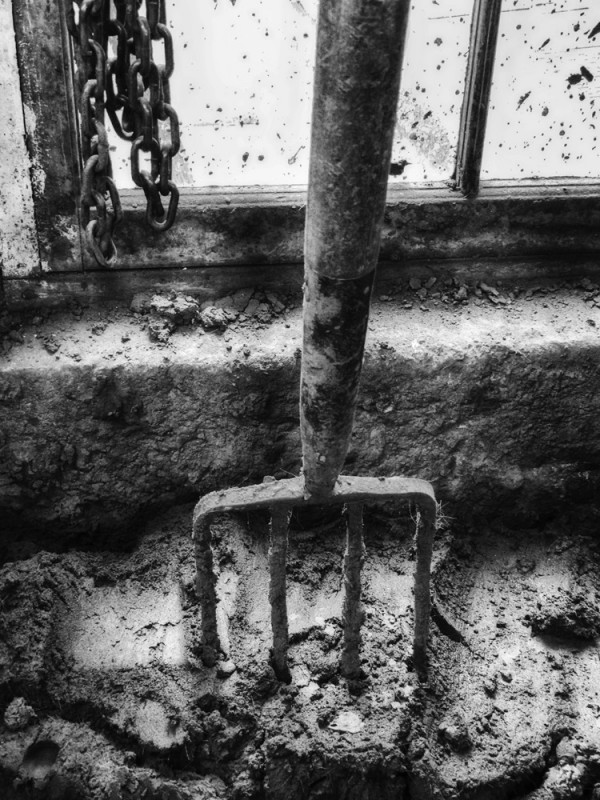
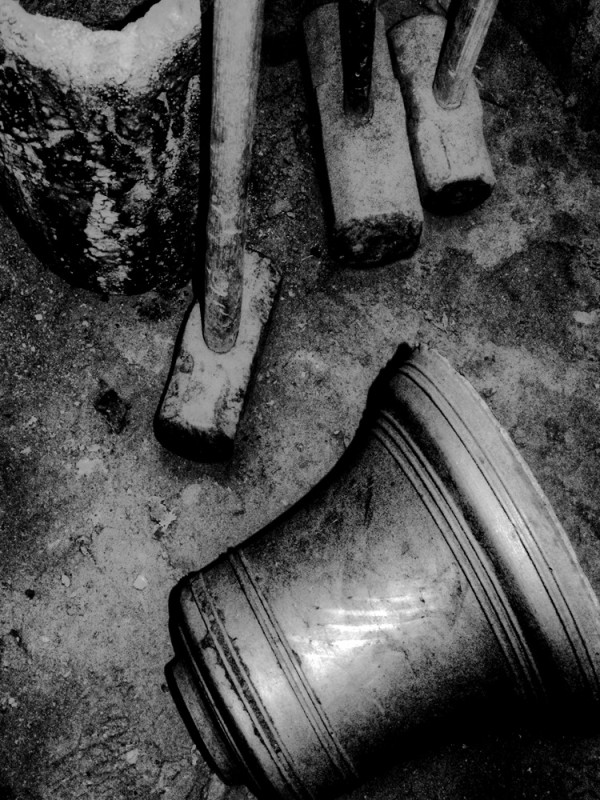
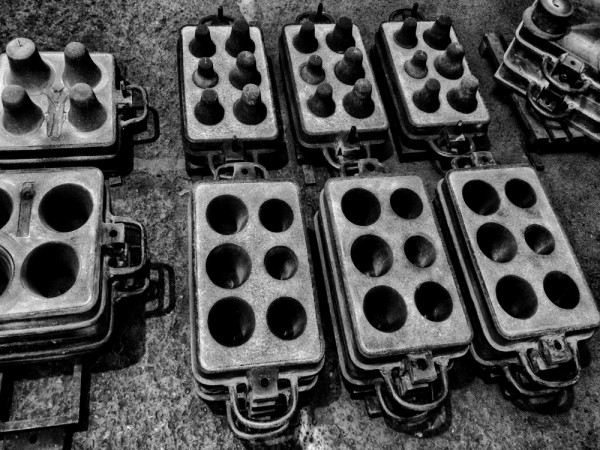
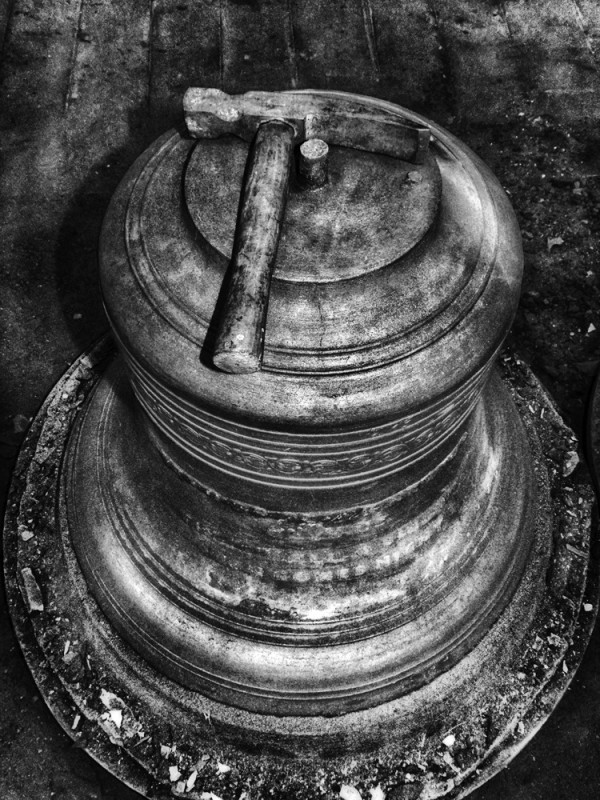
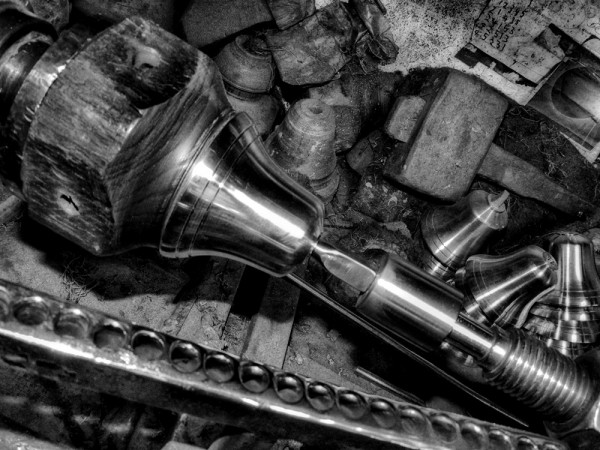
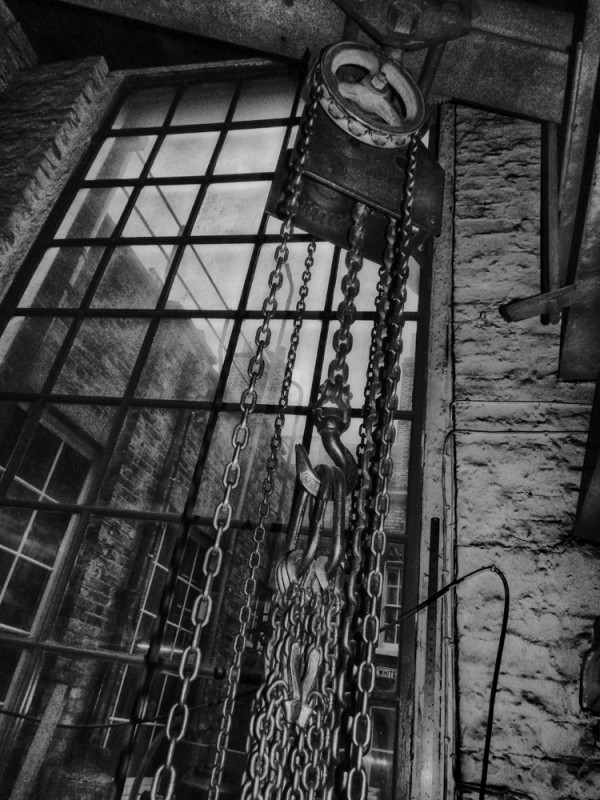
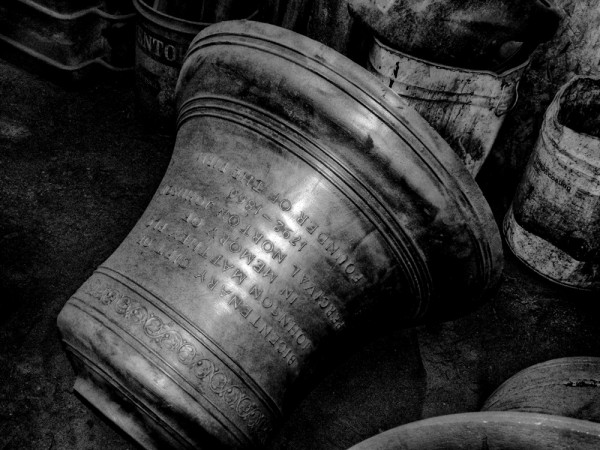
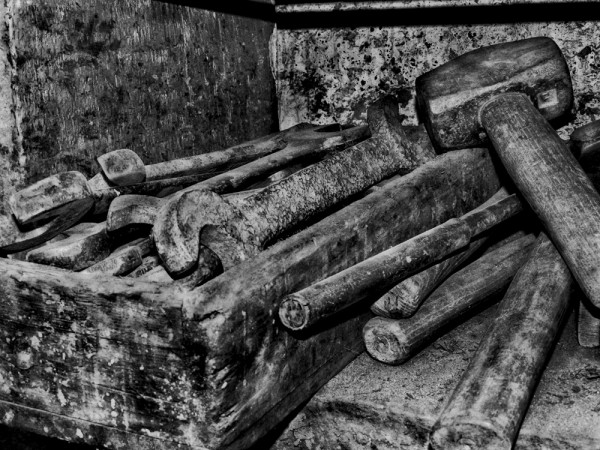
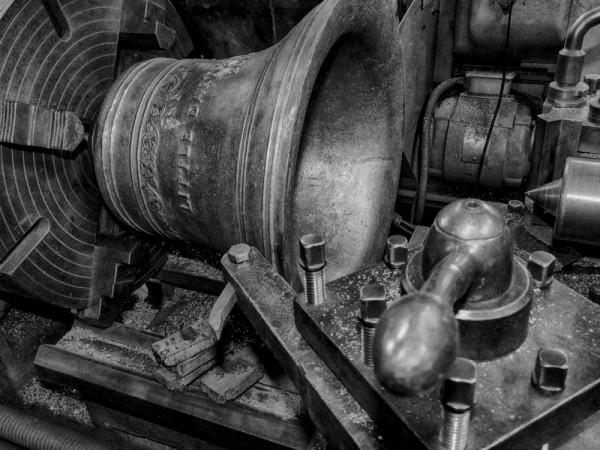
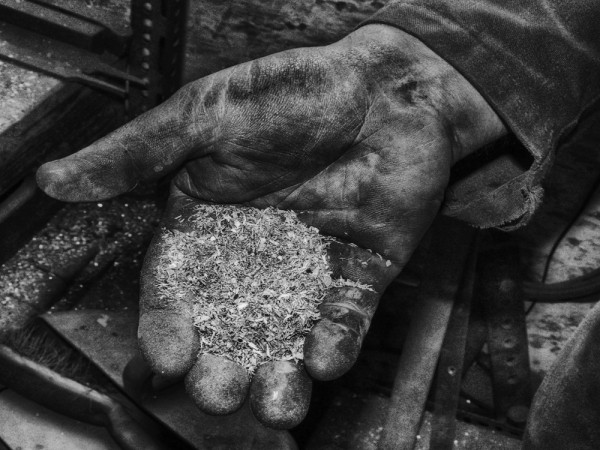
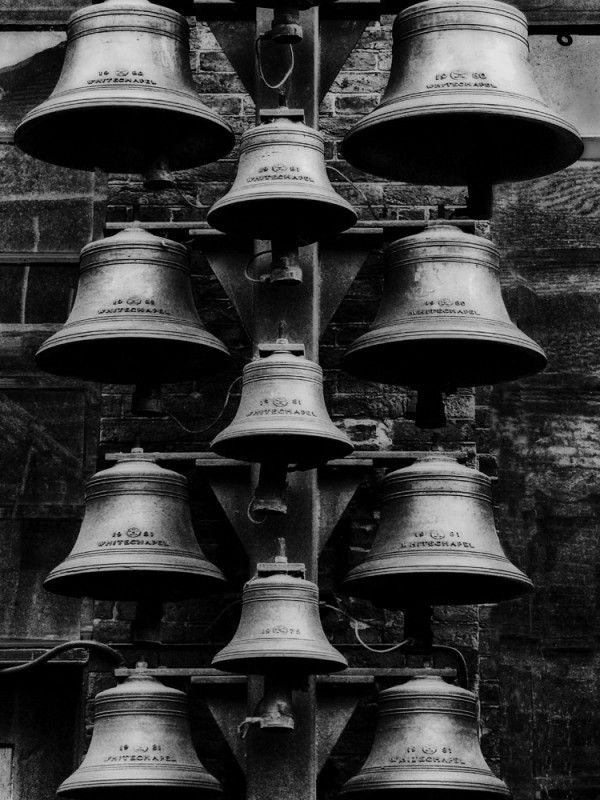
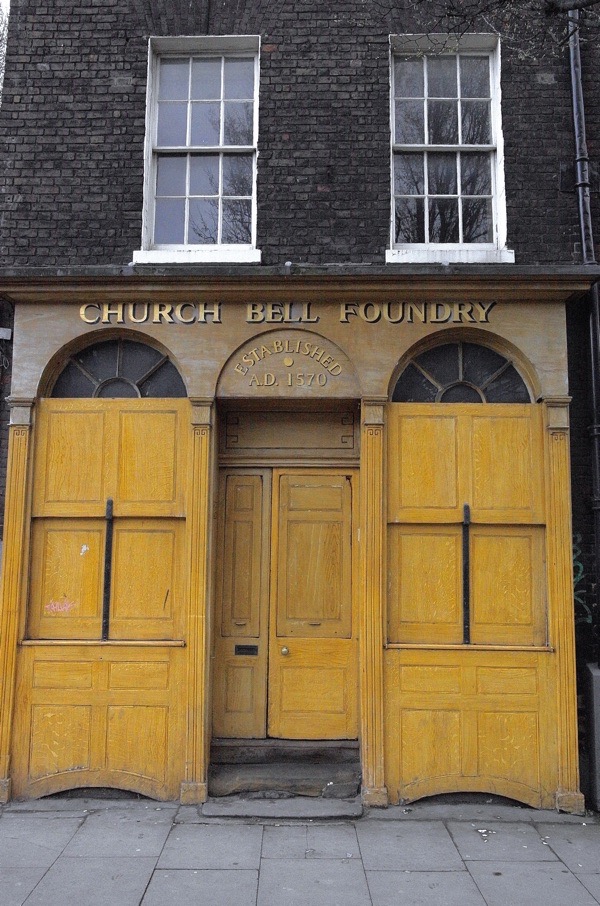
John Claridge first visited the Whitechapel Bell Foundry in 1982 to photograph the life of Britain’s oldest manufacturing company, founded in 1570. He returned in 2016, just before it closed, to take another set of pictures. Remarkably, little changed in the intervening years.
‘It was like walking through a time portal,’ he told me. ‘There was a very tactile feeling about the place, where craftsmanship held sway, and my pictures pay testament to that feeling.’

Click here to sign our petition to Save the Whitechapel Bell Foundry
You may also like to read about
The Opening Of The Public Inquiry
So Long, Whitechapel Bell Foundry
The Secretary of State steps in
A Letter to the Secretary of State
Rory Stewart Supports Our Campaign
The Fate of the Whitechapel Bell Foundry
Hope for The Whitechapel Bell Foundry
A Petition to Save the Bell Foundry
Save the Whitechapel Bell Foundry
Adam Dant’s Bells of Whitechapel
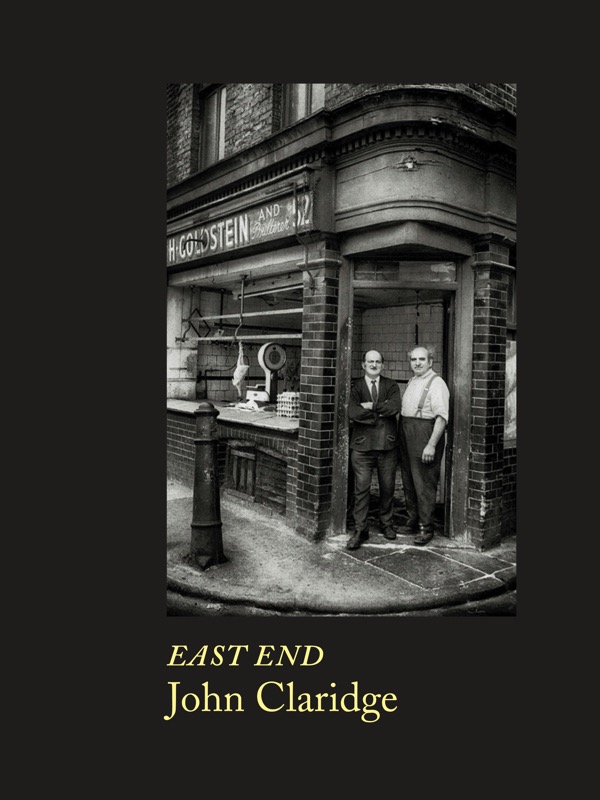
Click here to order a copy of John Claridge’s EAST END for £25
Dorothy Rendell At Whitechapel Bell Foundry
The Bell Foundry Public Inquiry continues at 10am today, with live-tweeting at @savethewbf. To watch the inquiry, email elizabeth.humphrey@planninginspectorate.gov.uk
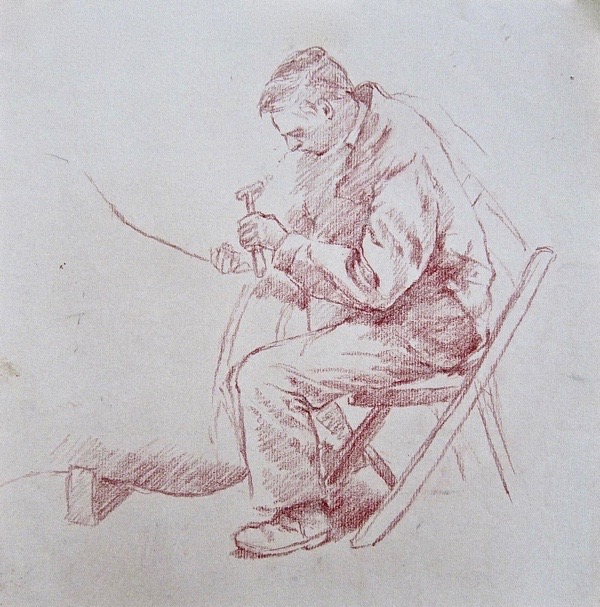
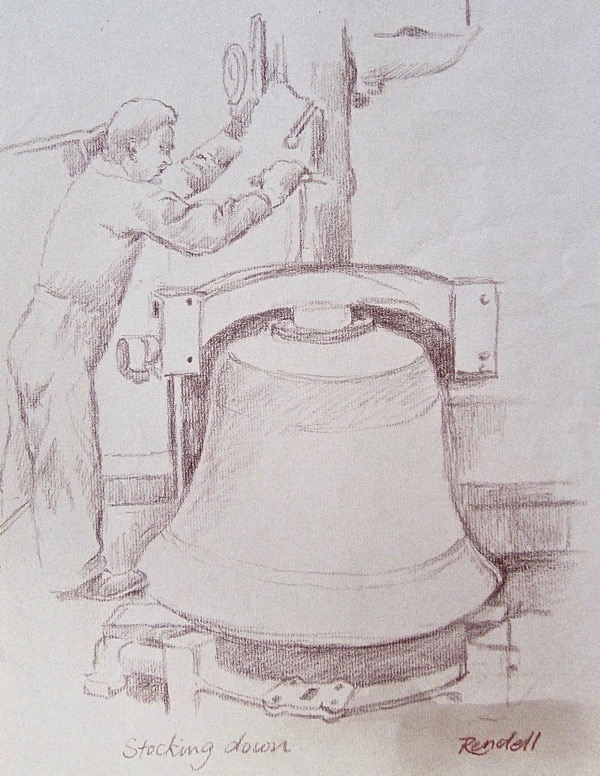
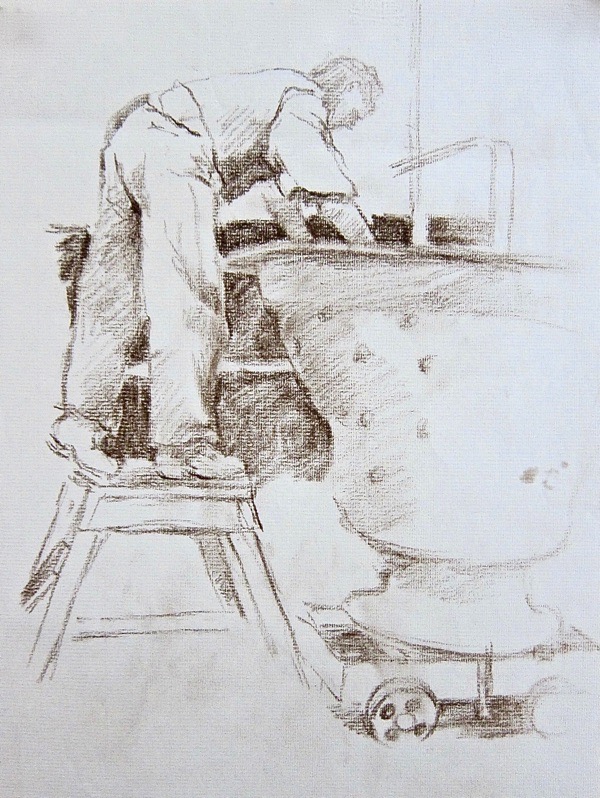
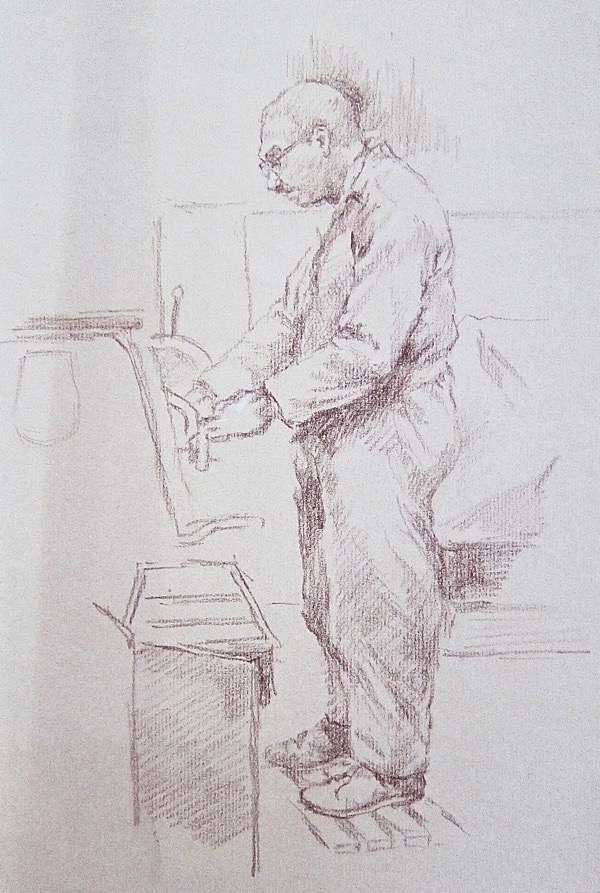
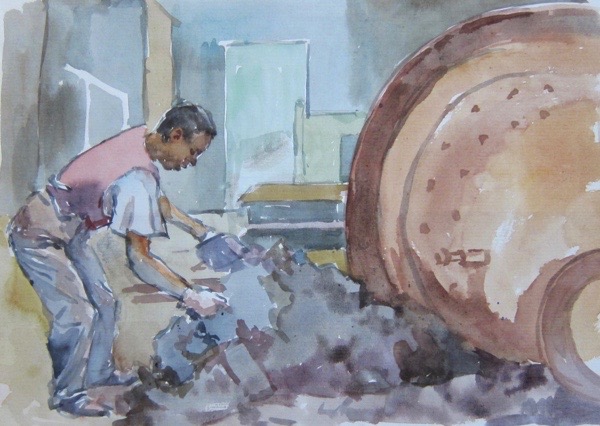
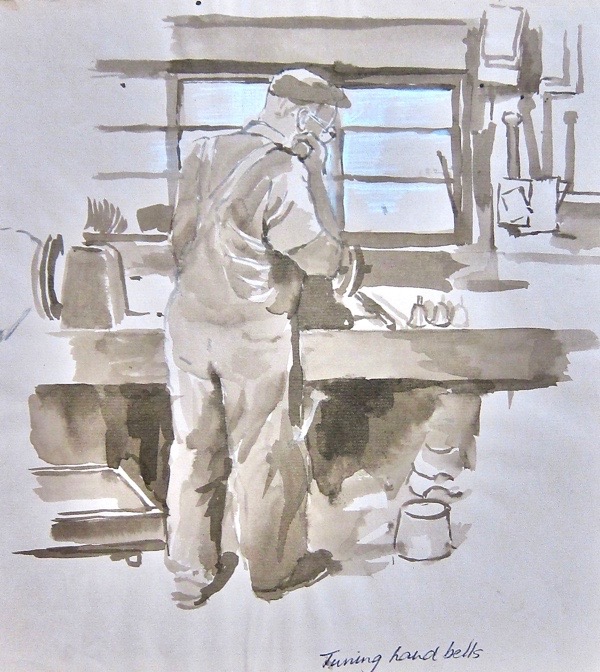
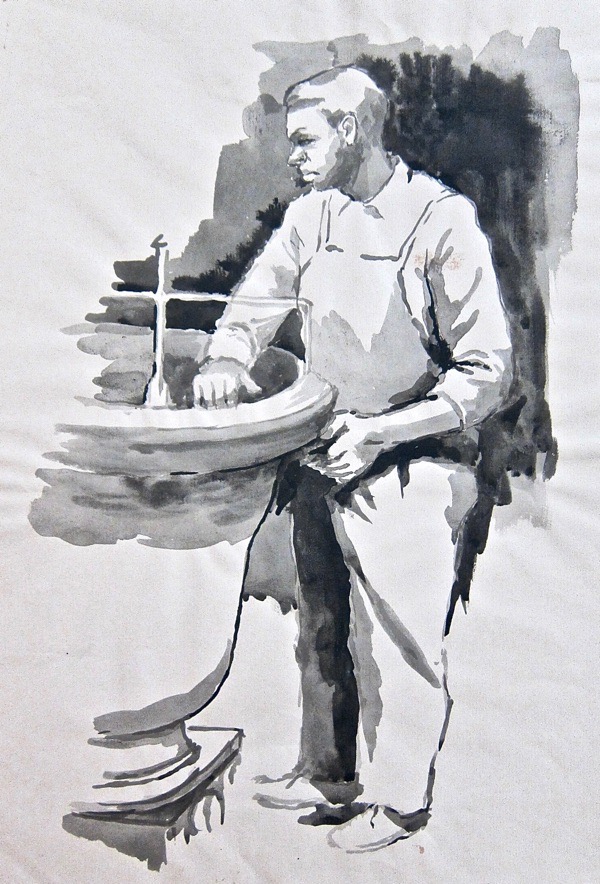
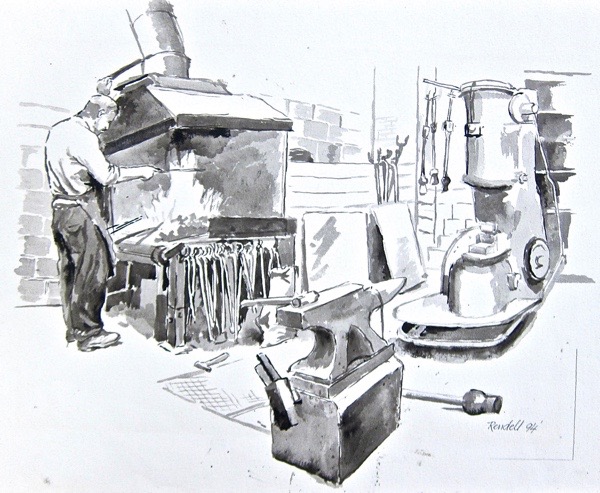
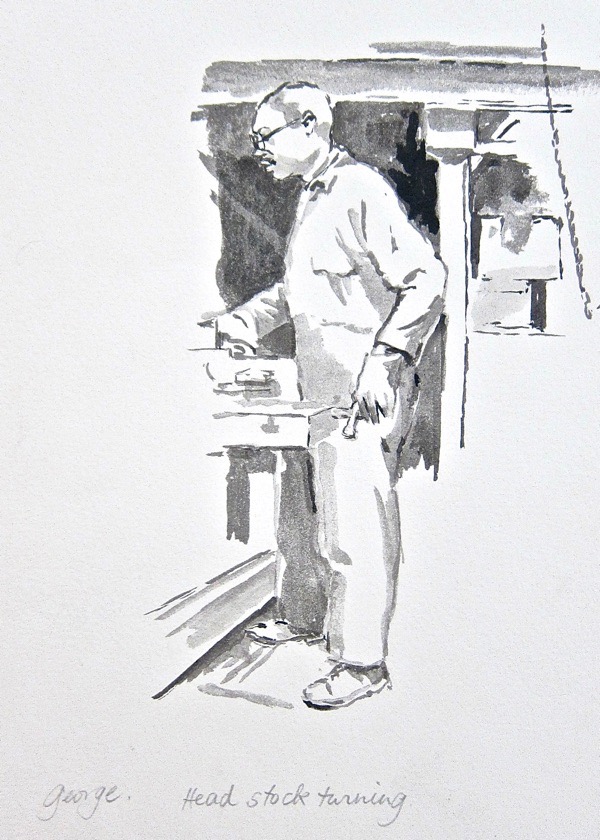
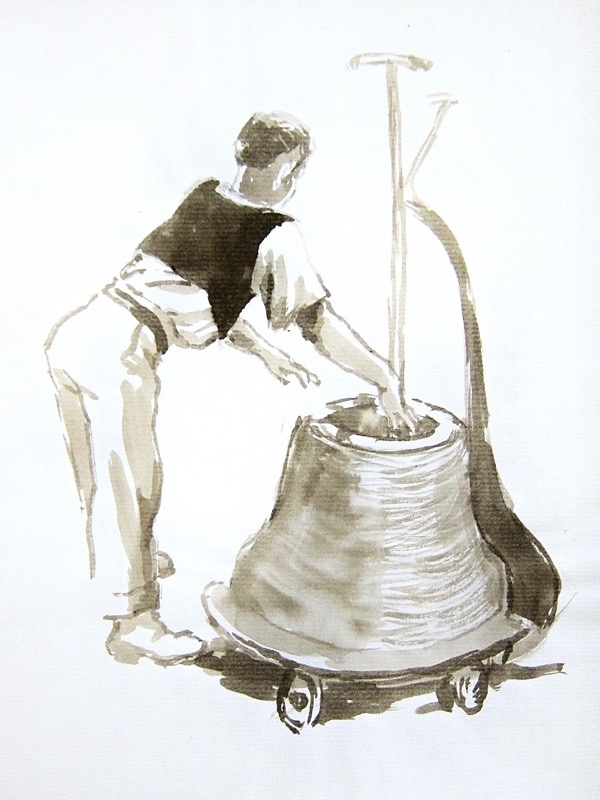
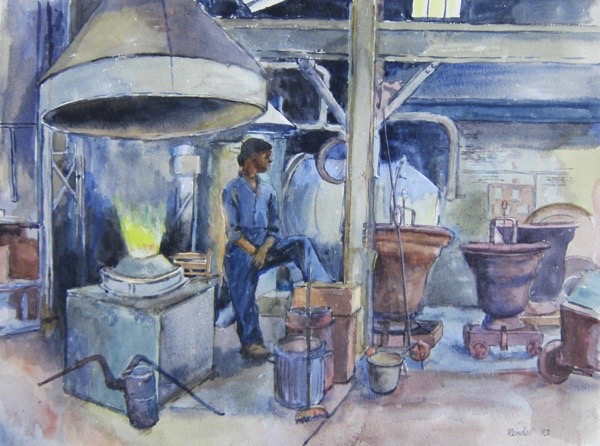
Artist Dorothy Rendell was fascinated by the Whitechapel Bell Foundry and made frequent visits over the years to record the life of this celebrated institution. Significantly, in her drawings Dorothy chose to focus upon the African-Caribbean and Asian workers who rarely appear in photographs of the foundry. These pictures are selected from the Dorothy Rendell Archive at Bishopsgate Institute.
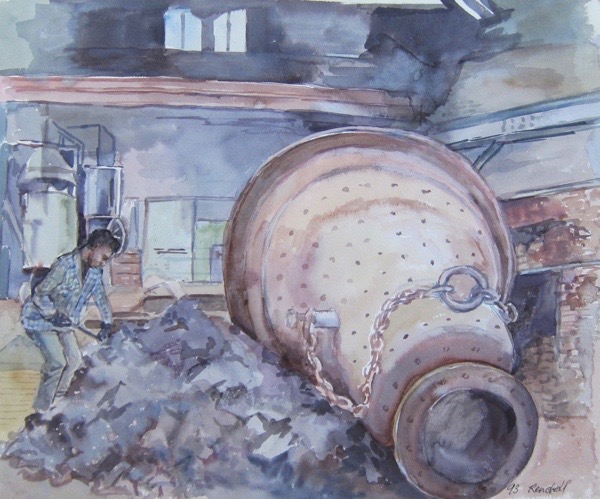
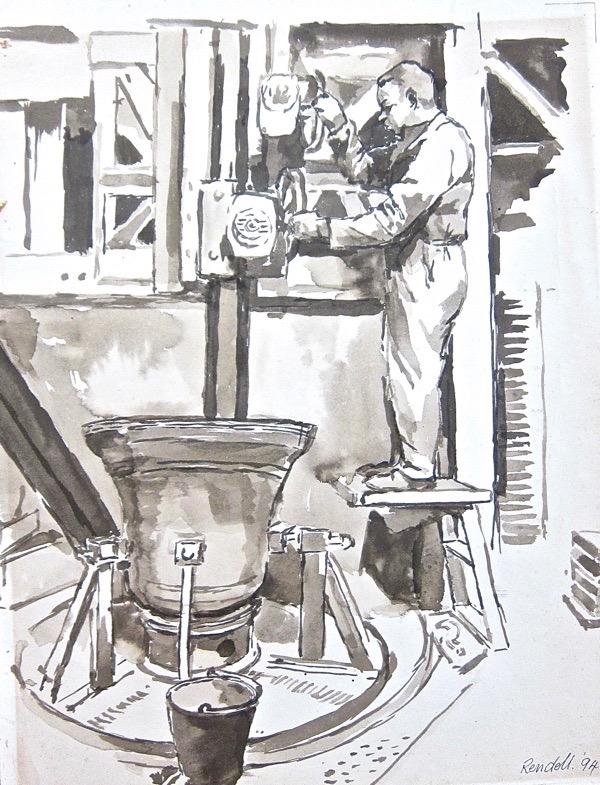
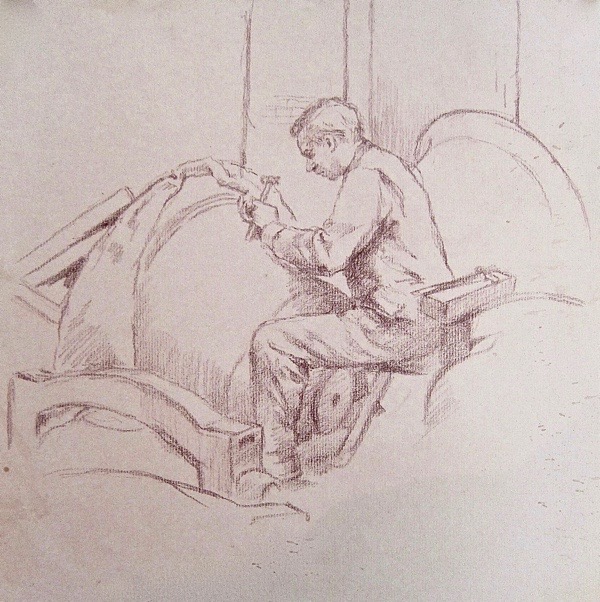


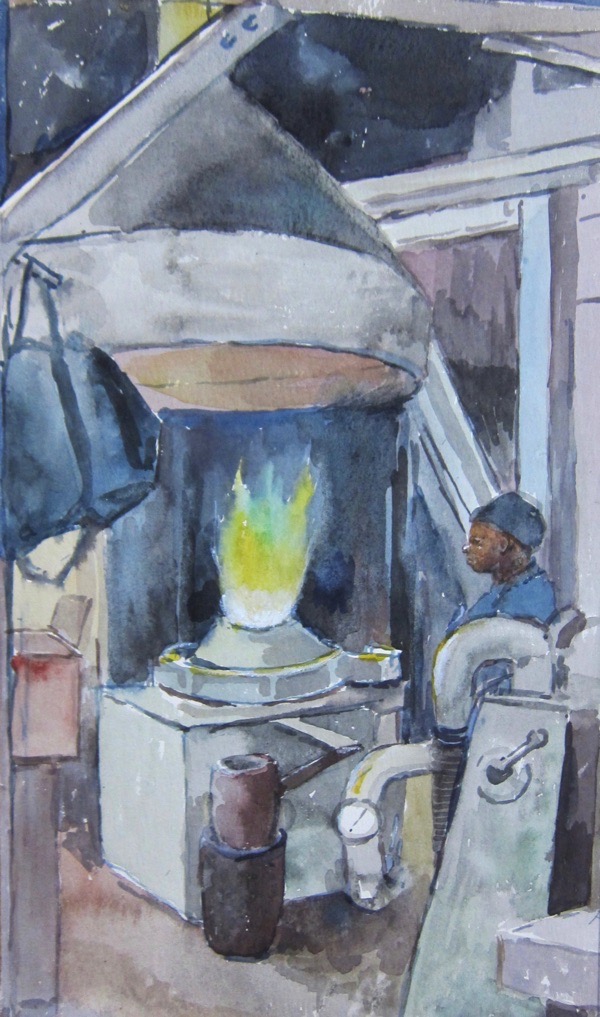

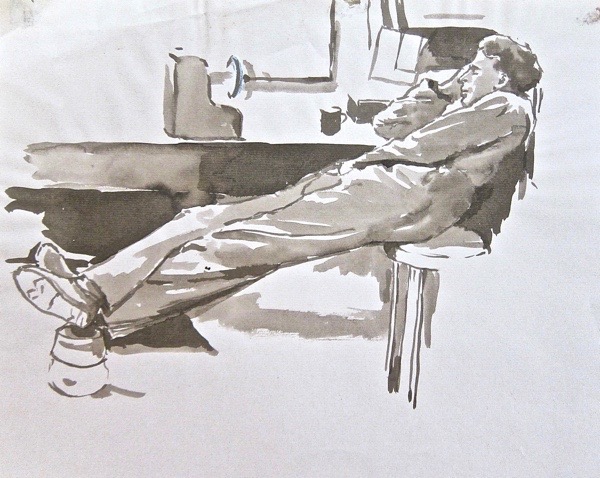
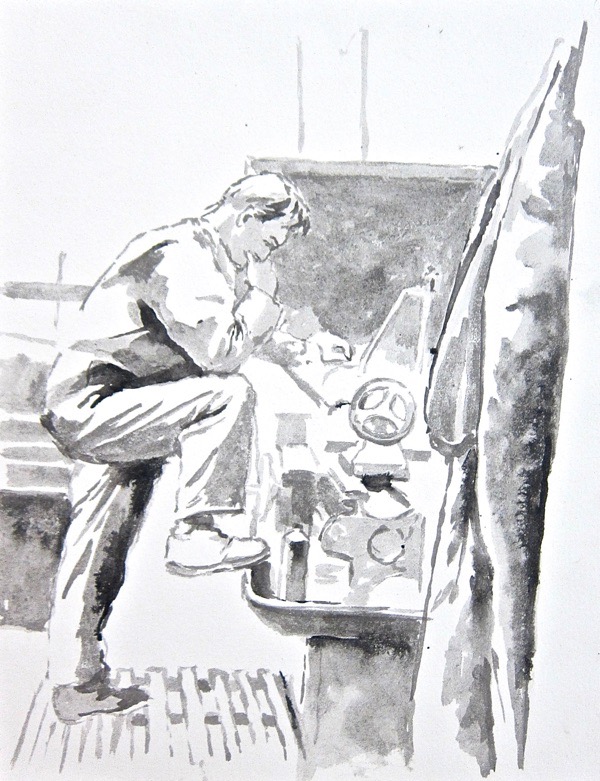
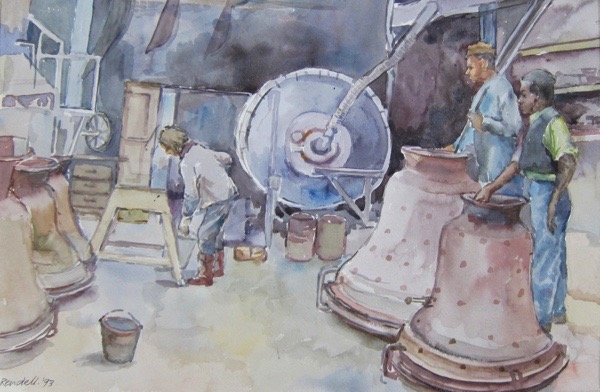
Images courtesy Bishopsgate Institute

Click here to sign our petition to Save the Whitechapel Bell Foundry
You may also like to read about
The Opening Of The Public Inquiry
So Long, Whitechapel Bell Foundry
The Secretary of State steps in
A Letter to the Secretary of State
Rory Stewart Supports Our Campaign
The Fate of the Whitechapel Bell Foundry
Hope for The Whitechapel Bell Foundry
A Petition to Save the Bell Foundry
Nigel Taylor, Tower Bell Production Manager
Today the hearing into the future of the Whitechapel Bell Foundry is paused while the Inspector undertakes a site visit. The Public Inquiry will continue on Thursday at 10am when live-tweeting @savethewbf will resume.
To watch the inquiry, email elizabeth.humphrey@planninginspectorate.gov.uk

“I do not want to see all the things that England once held dear just die, especially the crafts and industries that we once had” – Nigel Taylor
Perhaps no-one was better placed to bear witness to the tale of the closure of the Whitechapel Bell Foundry – the world’s most famous foundry – than Nigel Taylor, who worked there for forty years and was the senior foundry man. It was said that the closure of the foundry was inevitable due to the decline in demand for church bells, but Nigel Taylor has a different story to tell.
His is a sobering account which reveals that the shutting of the Whitechapel Bell Foundry was avoidable. Nigel asserts that it was a deliberate act by the bell founders who chose to sell up and sacrifice twenty-five jobs, rather than take action to modernise and ensure the survival of Britain’s oldest manufacturing business. Yet Nigel’s testimony also contains hope by asserting his belief that the foundry can have a viable future as a living foundry, rather than be ignominiously reduced to a bell-themed boutique hotel as has been proposed.
Nigel has been consumed by the culture of bells since early childhood and he is a passionate spokesman for those who make bells, those who ring bells, and all those who love bells.
“I am a Londoner, born in Hampstead. When I was a boy, my grandparents lived in Warwick, so as a small child I often heard the eight bells of St Nicholas. I was fascinated by the sound. I heard the sound of the bells of St Mary’s in Warwick as well. When I was five years old, I identified that they had ten bells not eight and they were a lower pitch. So my passion for bells was already there.
When I was six, we moved to Oxfordshire and the bells at Chipping Norton had not been rung for many years but they were rehung by Taylors of Loughborough. A friend of mine said, ‘They’re trying the bells out tonight, let’s go and listen.’ They told us, ‘You can’t learn to ring until you’re eleven.’ So when we were eleven, we went along to ring and my friend is still ringing the bells in that tower. Once I started to ring bells, I never looked back.
When I left school, I wrote to the Whitechapel Bell Foundry and asked, ‘Do you have any vacancies?’ I had an interview with Douglas Hughes – father of Alan Hughes the last bell founder – and he said, ‘We’ll start you off in the moulding shop.’ I had no experience. There were no college course in loam-moulding or anything like that. You could do an apprenticeship in an iron foundry in loam-moulding and some of the bell founders did that after they left school. But I learnt everything I know at the Whitechapel Bell Foundry.
My feelings about it were quite mixed when I arrived in 1976. I had to get used to a lot of bad language which was not tolerated at school in those days. There were an interesting variety of characters, some ringers and some not. I started off making up the loam which is a mixture of sand, clay, horse manure and all the rest of it. I was the one that introduced Jeyes Fluid into the mix, just to kill off some of the bugs. Then I made moulding bricks, using loam, and dried them in the oven. They acted as packing between the moulding gauge or template and the cast iron flask, filling the space between them. Then I started making cores and, after the head moulder retired in 2003, I got to do the inscriptions. I did the lot and I was running the entire foundry production by that stage as Tower Bell Production Manager, managing the making of the bells, the casting of the bells and the tuning of the bells.
I really liked doing the inscriptions. To begin with I made white metal copies of the inscriptions on old bells to transfer to the new ones when they were recast. Later, I made casts of inscriptions in resin and stamped them into the new mould while it was still damp. We also had various letter sets in different sizes, decorative lettering and stock friezes. We often put friezes on bells, at least one if not two or three. It was a very satisfying job, because a bell is likely to last for centuries. I used to put headphones on and listen to some music while I was working and I thought, ‘This is going to outlast me.’ I have lost count of how many bells I have made. I could count how many bells I have tuned because I have kept my notebooks, so I could go through and count them. It must be thousands.
Just before the Whitechapel Bell Foundry shut, we had an order for some bells from Thailand which required a special stamp. So rather than make it the old fashioned way, I went to a 3D print shop in Canary Wharf and they printed the design for one fifth of the cost of how we did it before. It was a highly significant moment, three months before the foundry closed down.
I want to see the Whitechapel Bell Foundry re-opened as a foundry. I believe it would be economically viable. The previous business could have been economically viable with the right kind of marketing and the right kind of management.
I would like to see local people involved in foundry work, because there are no other buildings in this locality which are suitable for this purpose. I would like to see apprenticeships and training in all aspects of casting – pattern-making, moulding, fettling, machining, polishing and tuning. There are a whole range of different skills to be taught and there would be employment for those people.
I would like to take an advisory role with regard to how best to make use of the building and set up the various workshops, and especially in the design and making of patterns for bells. The previous furnaces were oil-fired but my preference is for electric which would lower the emissions considerably.
I am in favour of modernising the foundry for the twenty-first century. In the last few years, it became increasingly difficult to obtain traditional materials. Quarries which supplied sand were becoming landfill sites, so we struggled to find sand that was suitable to produce loam. If you discard that system and use resin-bonded sand instead, the strength of the mould is no longer reliant upon which quarry the sand comes from and you can have a much higher success rate with your castings. It is cleaner too. We used to have clouds of loam dust floating around everywhere – it was a dirty job.
In the past, patterns were made of wood but now we can design the profile of a bell and digitally print the pattern in high-density polypropylene, which can be reused, making the process far cheaper. You can do it in one day instead of over a matter of weeks and you can make dozens of bells with one pattern that way. It is a huge difference.
There was a dip in sales around 2012/3 as a result of government spending cuts. I think bell founders Alan & Kathryn Hughes misinterpreted this as a terminal decline in bell founding, so when the market picked up they were not ready for it. It was obvious to me that they needed a good marketing strategy, but I saw them carry on with their old policy regardless and the Whitechapel Bell Foundry began to decline rapidly while Britain’s other bell foundry, Taylors of Loughborough, picked up the lion’s share of the work due to aggressive marketing. The Hughes incurred debts in the region of £450,000 but they were thrown a lifeline by the offer of purchasing the building. By then, the building was worth money and the business was worth nothing. So they took the lifeline and foundry closed in 2017.
In my estimation, Alan & Kathryn Hughes ran out of puff. They had two daughters who were not interested in the business. After three generations of ownership, it seemed the Hughes could only see it as a family business, so if no-one in the family was going to run it that was the end of business. That was certainly how it appeared to us, the staff, and it became apparent in the way the Hughes allowed the business to collapse.
I knew the Whitechapel Bell Foundry needed to put in more competitive quotes and carry out free inspections for prospective jobs. We were the only firm in the business that charged for quotations. It cost us a lot of work. We needed to introduce proper marketing, concentrate on their products and skilled staff – not the fact that it was a family business which was the oldest manufacturing company in England. Customers cared more about whether we could do a good job and how much it was going to cost. The Hughes might have introduced some new directors to bring fresh ideas but their notion of a family business prevented that.
So they did none of these things and twenty-five jobs were destroyed. I think the Hughes tried to block out their responsibility to their employees. I saw how Alan Hughes allowed circumstances to decline until they passed a point of no return. He once said to me, after he had announced that the foundry was going to close and we were all going to lose our jobs, he said ‘It’ll be quite interesting to dismantle it.’ It suggested he had formed a barrier to the emotions that must be inherent in anyone whose is going to close a business that has been in existence for over four hundred years.
In my opinion, the closure was avoidable. With the right strategy, I believe the foundry could have survived, or they could have sold the building and the business when it was a going concern and walked away with a nice amount of money in the bank. But their actions revealed they could only contemplate it as a family business. At present, there is a lot of work about. The bell market and the art foundry market are both very buoyant and I believe the new proposal is perfectly viable.
I am District Master of the Essex Association of Bell Ringers, and I still ring bells at least three nights a week and quite a lot at weekends. I am a traditionalist, I do not want to see all the things that England once held dear just die, especially the crafts and industries that we once had.”
Click here to sign our petition to Save the Whitechapel Bell Foundry
You may also like to read about
The Opening Of The Public Inquiry
So Long, Whitechapel Bell Foundry
The Secretary of State steps in
A Letter to the Secretary of State
Rory Stewart Supports Our Campaign
The Fate of the Whitechapel Bell Foundry
Hope for The Whitechapel Bell Foundry
A Petition to Save the Bell Foundry
Opening Of The Bell Foundry Public Inquiry
WE ARE LIVE-TWEETING THE PUBLIC INQUIRY @SAVETHEWBF FROM 10AM TODAY
If you want to watch, email to register: elizabeth.humphrey@planninginspectorate.gov.uk

Design by David Pearson with logo by Rob Ryan and type by Paul Barnes
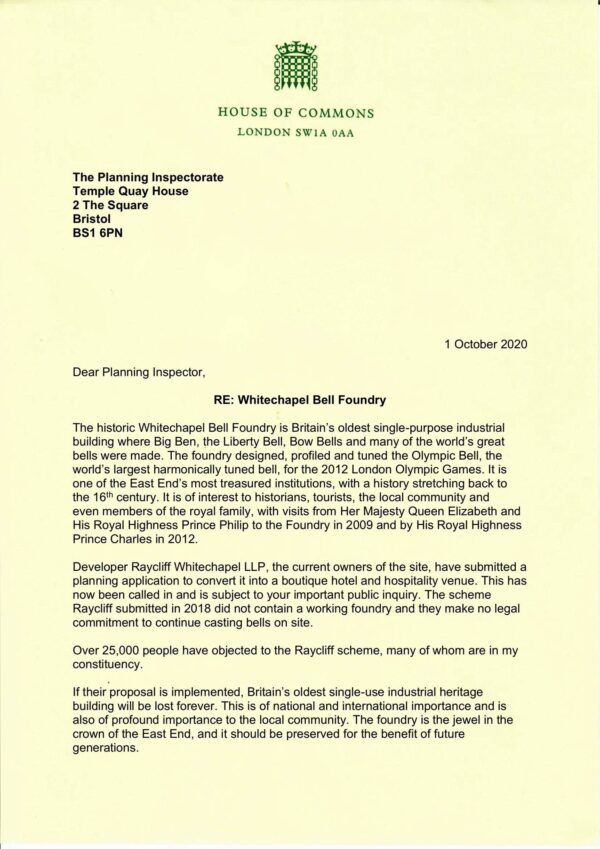
For four years we have been campaigning here at Spitalfields Life to keep the age-old culture of bell founding alive in the East End and today we take a big step towards this goal. At the opening of the Public Inquiry, I wish to announce THE LONDON BELL FOUNDRY as the name for the revived, fully-working foundry that will replace the Whitechapel Bell Foundry which closed in 2017.
Records of bell founding in Whitechapel date back to 1360, with a line of bell founders stretching back to 1420. In all these centuries, the foundry has had many up and downs. It has been known by many names from Lester, Pack & Chapman in the eighteenth century to Mears & Stainbank in the nineteenth century, with the most recent being the Whitechapel Bell Foundry.
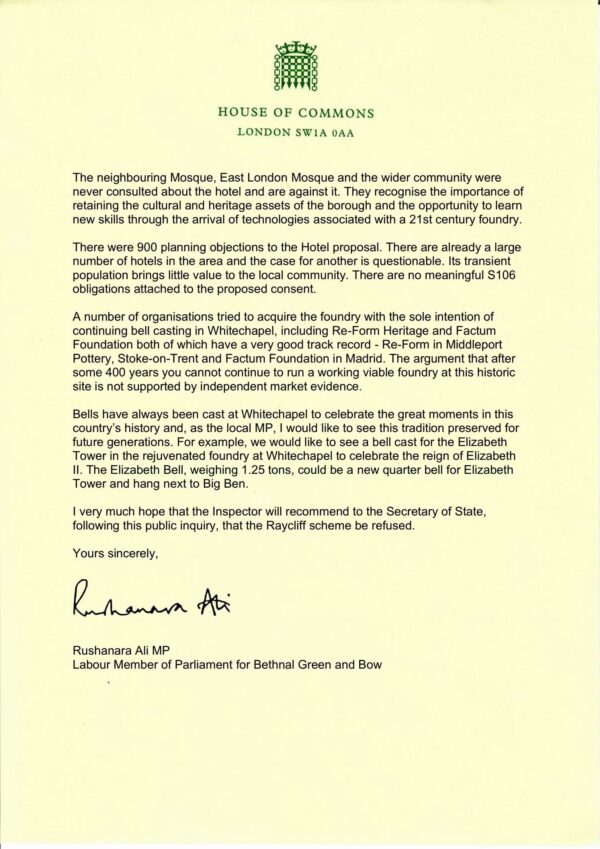
Now we look towards its future as THE LONDON BELL FOUNDRY under the management of Re-form Heritage who put Middleport Pottery back on its feet in Stoke as a model of genuine community regeneration. The operating tenants will be Factum Foundation, world leaders in digital casting, who plan to further the art of bell casting in Whitechapel with a marriage of old and new technology. The plan is to create a permanent centre for the celebration and casting of bells, with long-term training and education projects to sustain the skills for generations to come.
The foundry has always cast bells that mark significant moments in the history of our nation and others, from Big Ben and the Liberty Bell to the more recent Jubilee Bells and the largest ever bell, The Olympic 2012 Bell, which was designed, profiled and tuned in Whitechapel.
In line with this tradition, it is proposed that one of the first bells to be cast at THE LONDON BELL FOUNDRY will be the ELIZABETH BELL in celebration of the reign of our current monarch. This will be a replacement for the cracked quarter bell in the Elizabeth Tower at the Palace of Westminster. The current bell of one and a quarter tons will be scanned and the new bell will be traditionally cast from a mould created from a digitally repaired scan, thus establishing the pattern of blending old and new technology which will define the future of the foundry.
The ELIZABETH BELL will be cast under the supervision of Nigel Taylor, Foreman & Tower Bell Manager at the Whitechapel Bell Foundry for forty years, who will be in charge of refitting the foundry and the employment and training of new staff.
We are proud to announce the support of our MP Rushanara Ali and below we publish her submission to the Public Inquiry
Click here to sign our petition to Save the Whitechapel Bell Foundry
You may also like to read about
So Long, Whitechapel Bell Foundry
The Secretary of State steps in
A Letter to the Secretary of State
Rory Stewart Supports Our Campaign
The Fate of the Whitechapel Bell Foundry
Hope for The Whitechapel Bell Foundry
A Petition to Save the Bell Foundry












