
Adam Dant’s Bells Of Whitechapel
On the eve of the Public Inquiry which opens tomorrow, Tuesday 6th October at 10am, Adam Dant has produced this print of The Bells of Whitechapel and 50% of profits go to the campaign to Save the Whitechapel Bell Foundry.
If you want to watch the Public Inquiry you must register in advance by emailing elizabeth.humphrey@planninginspectorate.gov.uk

Click here to enlarge
ADAM DANT INTRODUCES THE BELLS OF WHITECHAPEL
“My print shows the historic significance of Britain’s oldest manufacturing business, across the globe and as a part of the deep fabric of London’s culture and community.
From St Mary le Bow, Cheapside, whose peal famously bestows the status of ‘cockney’ and was broadcast across occupied Europe as a clarion of freedom and liberty during the war, the bells of the City churches ring out. Stories of famous bells, such as the Liberty Bell, are detailed around the border which is decorated with a bellringing diagram.
Beyond Big Ben and Great Tom, a map of the globe is dotted with locations of a few of the countless bells the Whitechapel Foundry has cast. Its history spans the reigns of twenty-seven monarchs. Elizabeth II is depicted on her 2009 visit to this celebrated Whitechapel institution, in existence since the reign of Elizabeth I.
‘Oranges & Lemons’ has been updated to sing out the threat to the Whitechapel Bell Foundry, being ignominiously transformed into a boutique hotel with bell casting reduced to the production of souvenir handbells in the lobby espresso bar.”
Adam Dant has produced two editions
‘The Bells of Whitechapel‘ (30”x 22”) in an edition of fifty copies, each signed and dated by the artist. £250 with 50% of profits donated to Save the Whitechapel Bell Foundry.
‘The Bells of Whitechapel’ (30″ x 22″) in an edition of ten copies, each hand-coloured, signed and dated by the artist. £550 with 50% of profits donated to Save the Whitechapel Bell Foundry.
Contact atelierdant@gmail.com for purchase inquiries

So Long, Doorkins Magnificat
My cat Schrodinger is in mourning for Doorkins, Southwark Cathedral Magnificat, who died on Wednesday at the fine age of fifteen. Since the London Bridge terror attack of 2017, Doorkins stayed inside the cathedral and had retired to live with Verger Paul Timms in recent years.
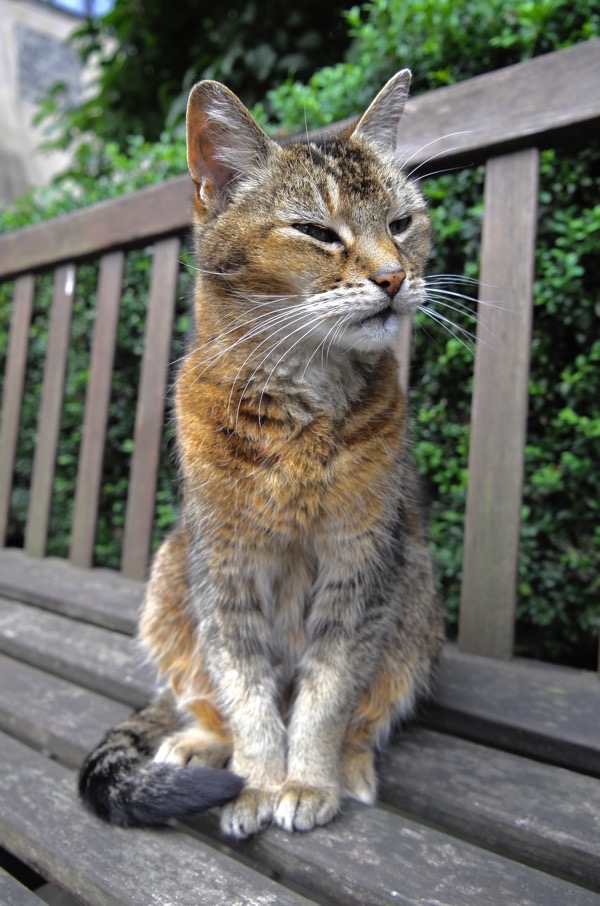
‘Pussycat, pussycat, where have you been? I’ve been up to London to visit the Queen’
When Elizabeth II undertook an official visit to Southwark Cathedral, she stopped in her tracks once she spotted Doorkins Magnificat, the Cathedral Cat. I was informed that her Majesty was fascinated to meet this working feline who embodies the lines of the traditional nursery rhyme, but I was not told if Doorkins also frightened a little mouse under her chair.
Verger Paul Timms was responsible for the Cathedral Cat – a duty that he oversaw with tender devotion and it was he who led me out into the courtyard where Doorkins liked to spend the quiet hours before noon. Sure enough, Paul only had to call and Doorkins appeared from a conveniently-placed stand of shrubs and shady undergrowth, running enthusiastically to greet us.
Quite a small cat, with delicate features and graceful movement, the gentle creature was happy to be petted and photographed while Paul Timms told me Doorkins’ story.
“One of my jobs as Verger is opening the cathedral in the morning and closing it at night, and one particular morning in 2008, a young cat appeared at the door to the courtyard when I opened it at seven. Remarkably, we’d just been having a conversation with the Dean about the mouse problem and we had decided that we should get a cathedral cat, when – lo and behold – Doorkins appeared.
At first, I wouldn’t see him for a couple of days but then he came back and I started feeding him, and he began to present himself every day at the door at seven. I called him ‘Doorkins’ because he was the cat in the doorway, although sometimes people think we named our cat after Professor Richard Dawkins, the Atheist. It was the clergy who came up with ‘Magnificat.’
The congregation are in love with Dookins and give money for food and for visits to the vet. They asked us to produce postcards and greetings cards with pictures of the Cathedral cat, and Doorkins even has a facebook page. The vet discovered Doorkins was a female and of Abyssinian breed. She certainly has her mood swings and, somedays, she will let you pet her but, on other days, you only have to look at her and she’ll scratch you.
They knew Doorkins in the Borough Market, she used to go over there and catch the mice. At first, she had divided loyalty and used to go to both the Market and the Cathedral but nowadays she is solely our Cathedral cat.
In the winter, Doorkins spends all her time in the cathedral. I open the door but she takes one look outside at the weather and walks back inside again. In the summer, she spends all her time outside. In the morning, she is in the courtyard and then in the afternoon she moves round to the churchyard. She’s very popular with visitors, they come to visit her and take her photograph, but when it gets too busy she goes down into the crypt where they can’t follow her, and just comes up every now and again to use her litter tray.
One day, a ginger cat appeared in the cathedral and they began having conversations, screetching at each other during services, so the Dean said, ‘One has to go.’ A Verger took Ginger home and adopted him. Another time, we had an an art installation created by an Artist-in-Residence with beautiful textiles and the Artist was scared what Doorkins might do to it, so she had to go to a cattery for three weeks, but she was quite happy once she came back and fell into her old routine again.“
On Friday, Dean of Southwark released this statement, “The community at Southwark Cathedral is saddened by the death of Doorkins. Like many before her, she found her way to us and was welcomed and made us her family and this place her home. She brought us so much pleasure and much joy to her many fans and followers. She met Her Majesty The Queen and was present at more services than most of us. She has been a blessing to us in so many ways. We will miss her.”
Paul Timms admitted, “In the past couple of weeks her health declined rapidly and during the night of the 30th September her health very suddenly and quickly deteriorated. She died in my arms to the sound of a familiar voice peacefully at 8.20pm. I miss her more than words can say, such was the impact she had on me and all who loved her so dearly.’”
A Thanksgiving Service for Doorkins will be held at 4pm on 28th October at Southwark Cathedral and a book of memories to leave pictures and stories can be found here.
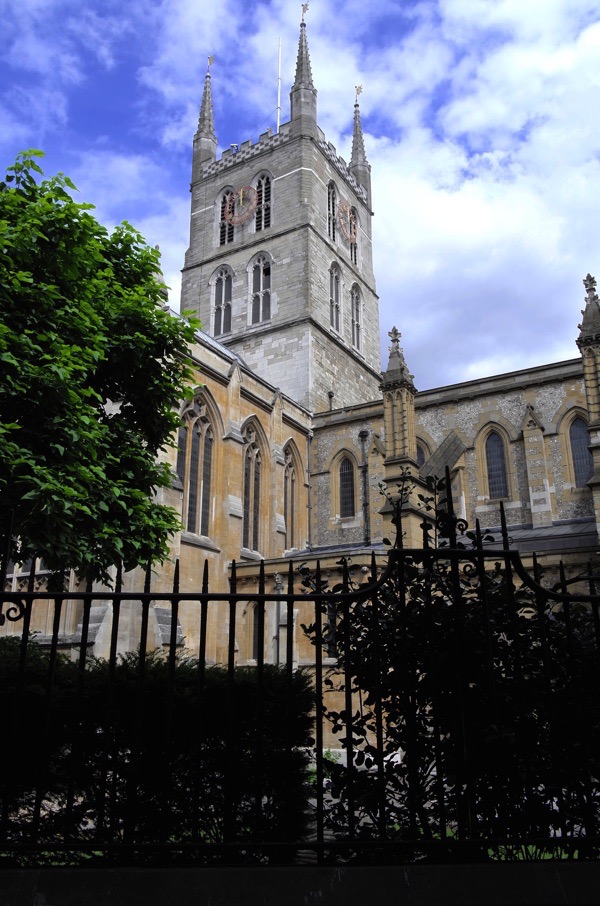
Southwark Cathedral
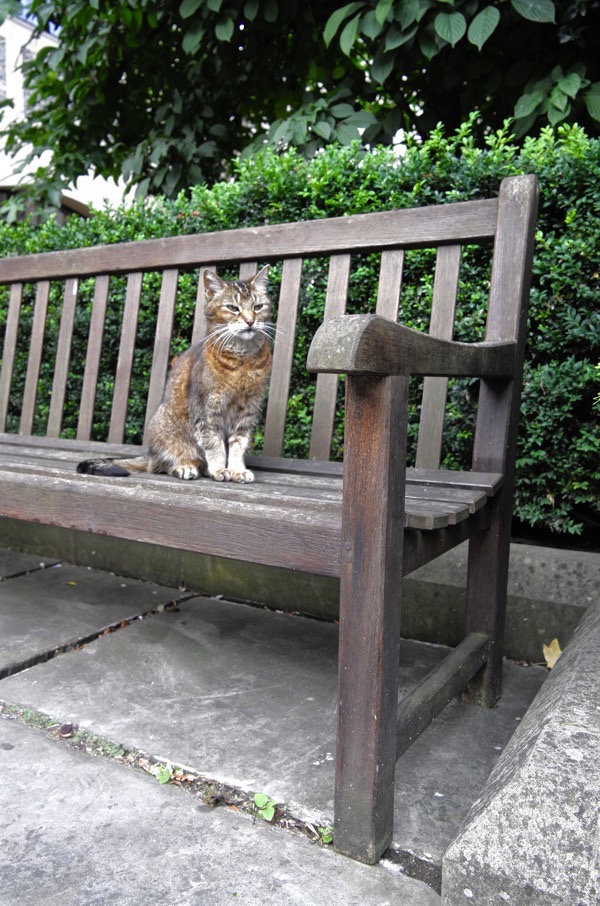
Doorkins Magnificat
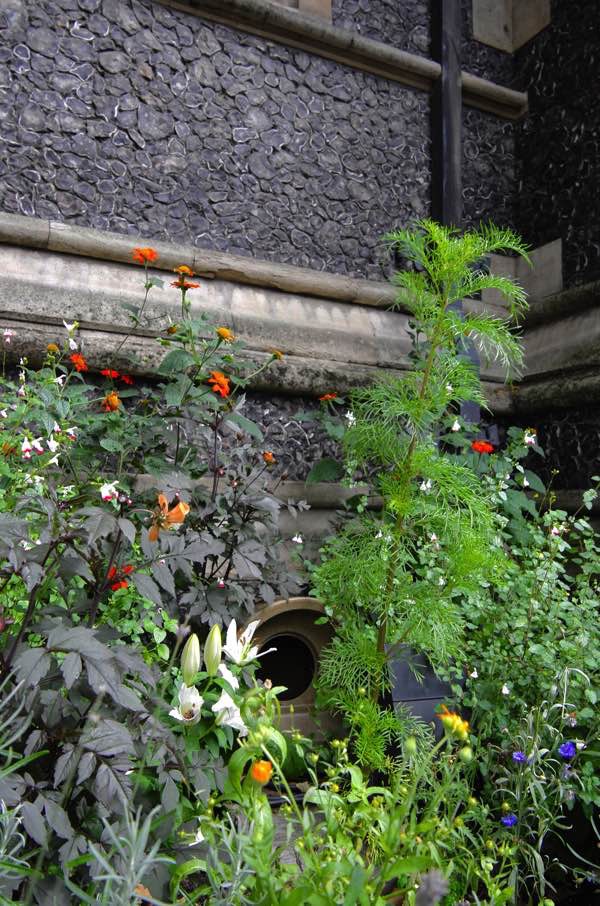
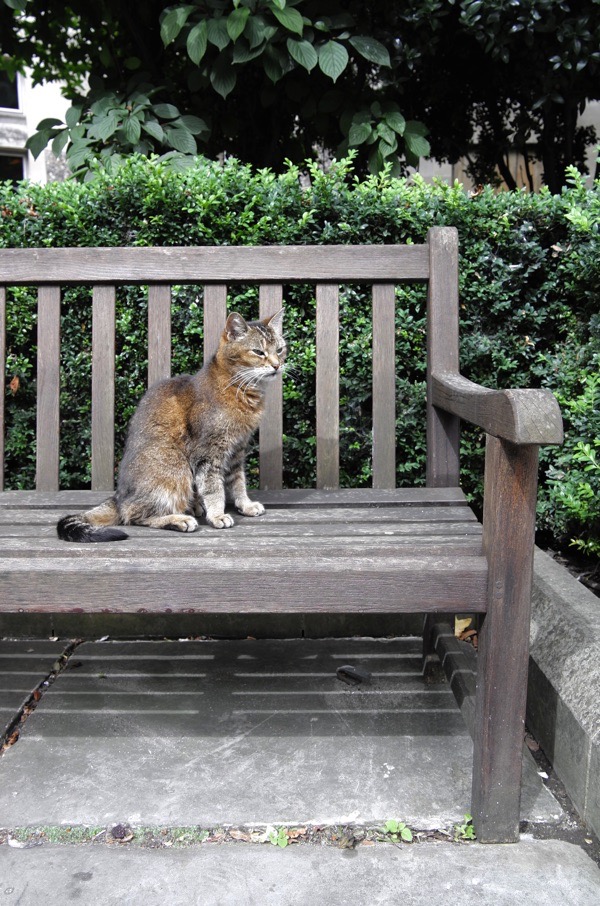
Doorkins’ summerhouse at the south side of the cathedral
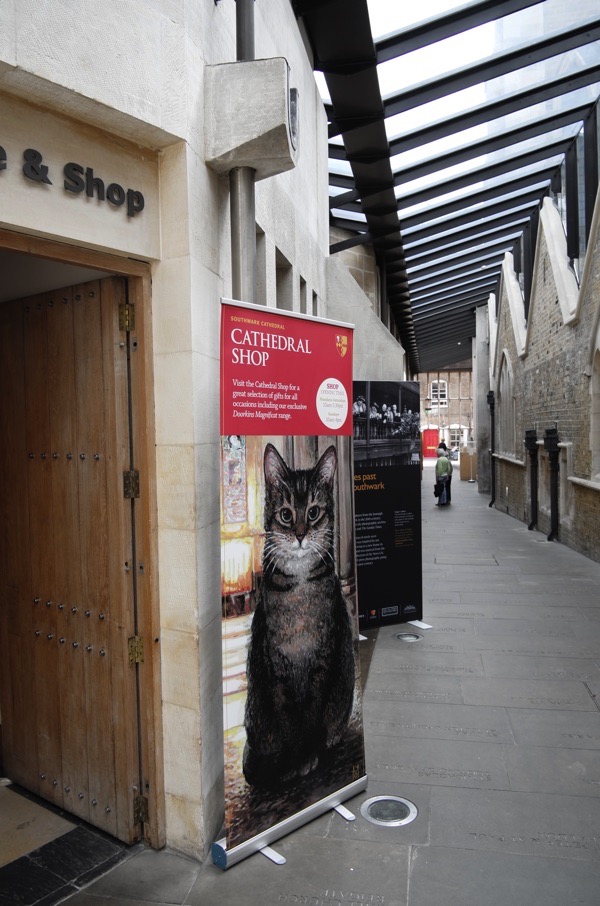
A painting of Doorkins greets visitors to the cathedral
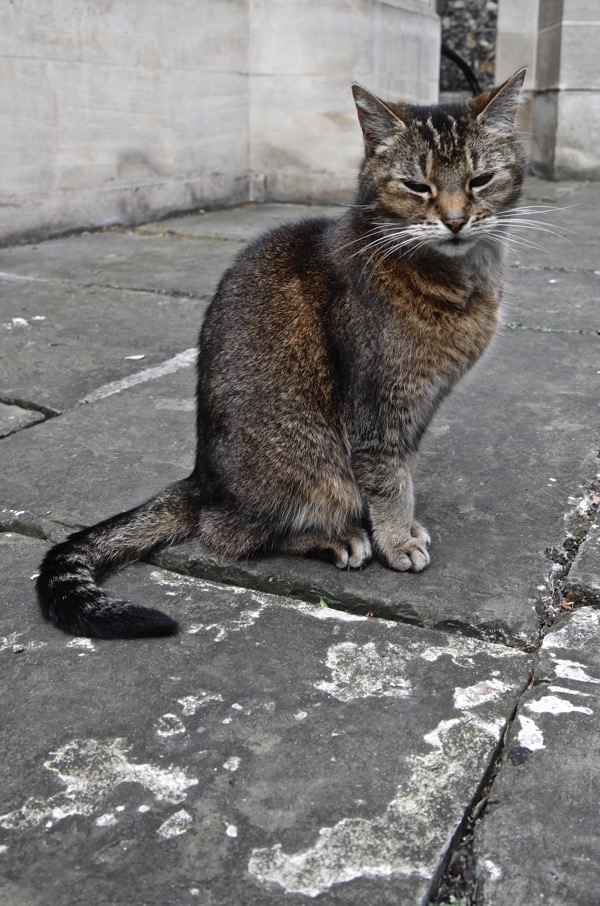
Doorkins shared the same colouration as the cathedral
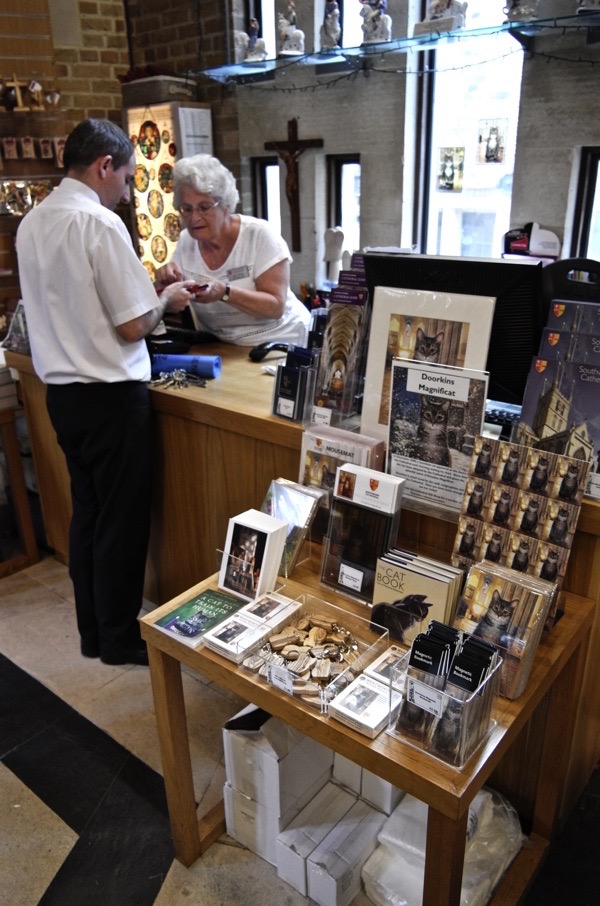
Doorkins merchandise in the cathedral shop
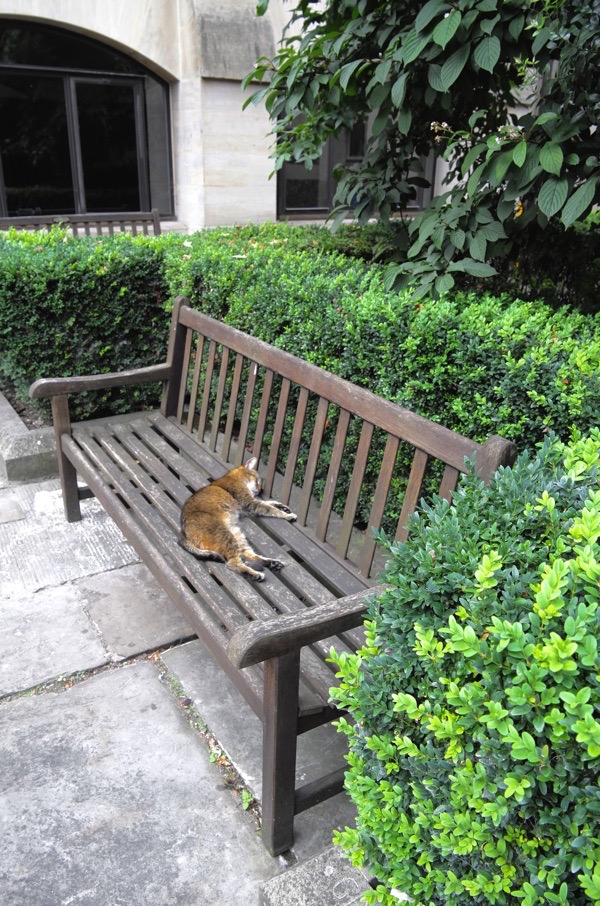
Doorkins recumbent in the cathedral yard
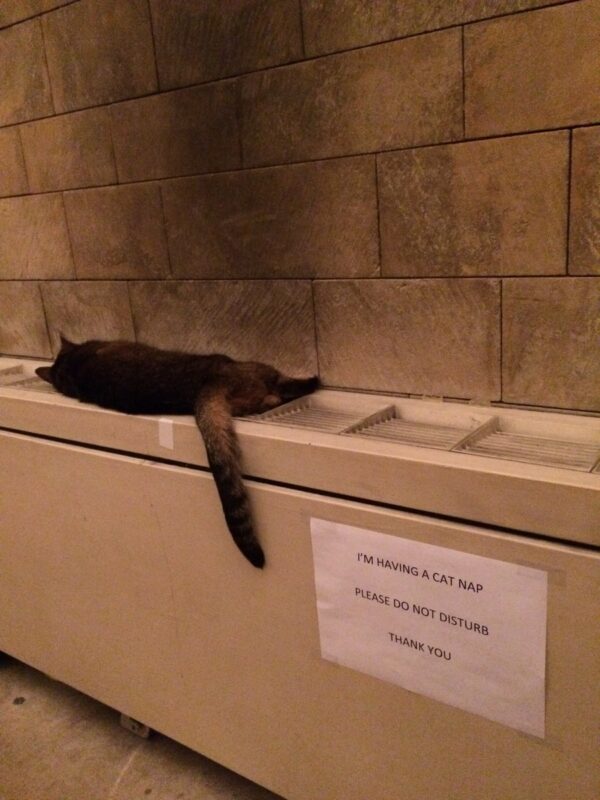
Doorkins sleeping through the Midnight Service on Christmas Eve
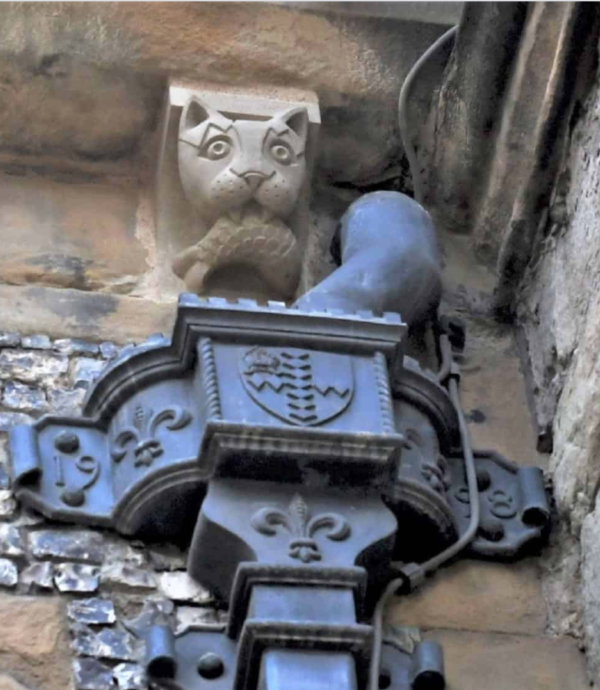
Doorkins has been immortalised as a stone corbel on the cathedral
You may also like to read about
Autumn In Spitalfields
The rain is falling on Spitalfields, upon the church and the market, and on the streets, yards and gardens. Dripping off the roofs and splashing onto the pavements, filling the gutters and coursing down the pipes, it overflows the culverts and drains to restore the flow of the Black Ditch, the notorious lost river of Spitalfields that once flowed from here to Limehouse Dock. This was the watercourse that transmitted the cholera in 1832. An open sewer piped off in the nineteenth century, the Black Ditch has been co-opted into the drainage system today, but it is still running unknown beneath our feet in Spitalfields – the underground river with the bad reputation.
The shades of autumn encourage such dark thoughts, especially when the clouds hang over the City and the Indian Summer has unravelled to leave us with incessant rain bringing the leaves down. In Spitalfields, curry touts shiver in the chill and smokers stand in doorways, peering at the downpour. The balance of the season has shifted and sunny days have become exceptions, to be appreciated as the last vestiges of the long summer.
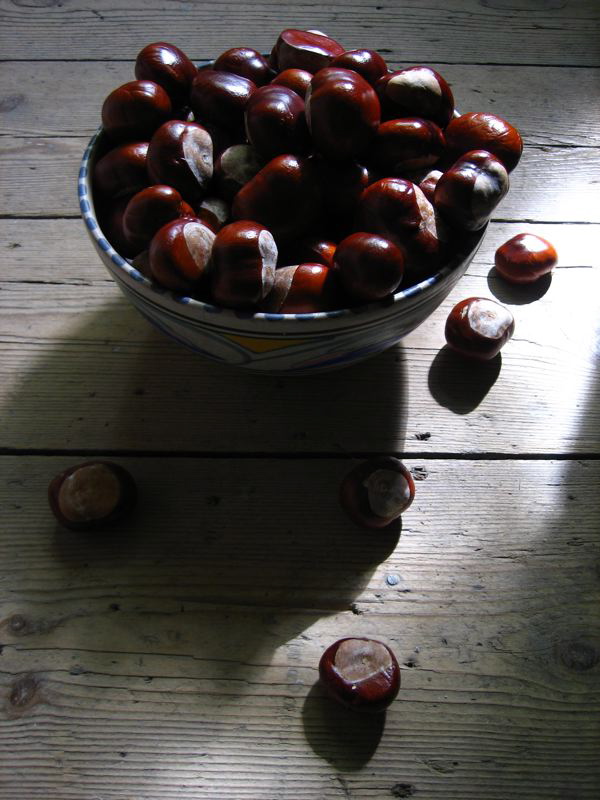
On such a day recently, I could not resist collecting these conkers that were lying neglected on the grass in the sunshine. And when I got home I photographed them in that same autumn sunlight to capture their perfect lustre for you. Let me confess, ever since I came to live in the city, it has always amazed me to see conkers scattered and ignored. I cannot understand why city children do not pick them up, when even as an adult I cannot resist the temptation to fill a bag. In Devon, we raced from the school gates and down the lane to be the first to collect the fresh specimens. Their glistening beauty declared their value even if, like gold, their use was limited. I did not bore holes in them with a meat skewer and string them, to fight with them as others do, because it meant spoiling their glossy perfection. Instead I filled a leather suitcase under my bed with conkers and felt secure in my wealth, until one day I opened the case to discover they had all dried out, shrivelled up and gone mouldy.
Let me admit I regret the tender loss of summer, just as I revel in the fruit of the season and the excuse to retreat to bed with a hot water bottle that autumn provides. I lie under the quilt I sewed and I feel protected like a child, though I know I am not a child. I cannot resist dark thoughts, I have a sense of dread at the winter to come and the nights closing in. Yet in the city, there is the drama of the coloured lights gleaming in wet streets. As the nights draw in, people put on the light earlier at home, creating my favourite spectacle of city life, that of the lit room viewed from the street. Every chamber becomes a lantern or a theatre to the lonely stranger on the gloomy street, glimpsing the commonplace ritual of domestic life. Even a mundane scene touches my heart when I hesitate to gaze upon it in passing, like an anonymous ghost in the shadow.
Here in Spitalfields, I have no opportunity to walk through beech woods to admire the copper leaves, instead I must do it in memory. I shall not search birch woods for chanterelles this year either, but I will seek them out to admire in the market, even if I do not buy any. Instead I shall get a box of cooking apples and look forward to eating baked apples by the fire. I am looking forward to lighting the fire. And I always look forward to writing to you every day.
Cockney Cats
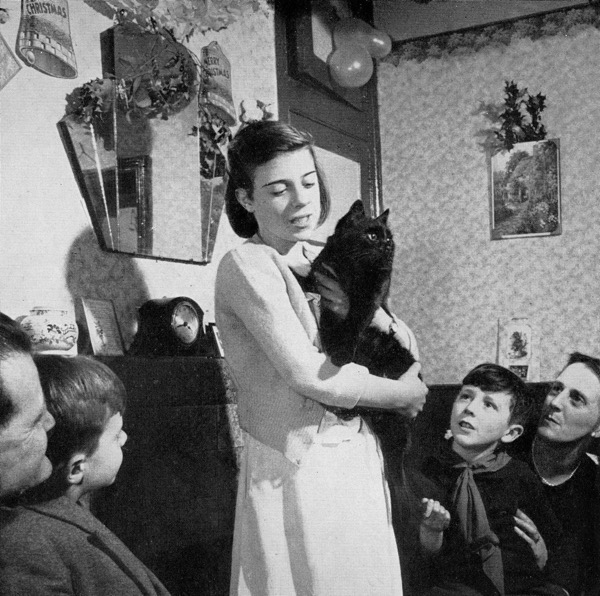
These are Cockney Cats by Warren Tute, with photographs by Felix Fonteyn from 1953, in the archive at Bishopsgate Institute
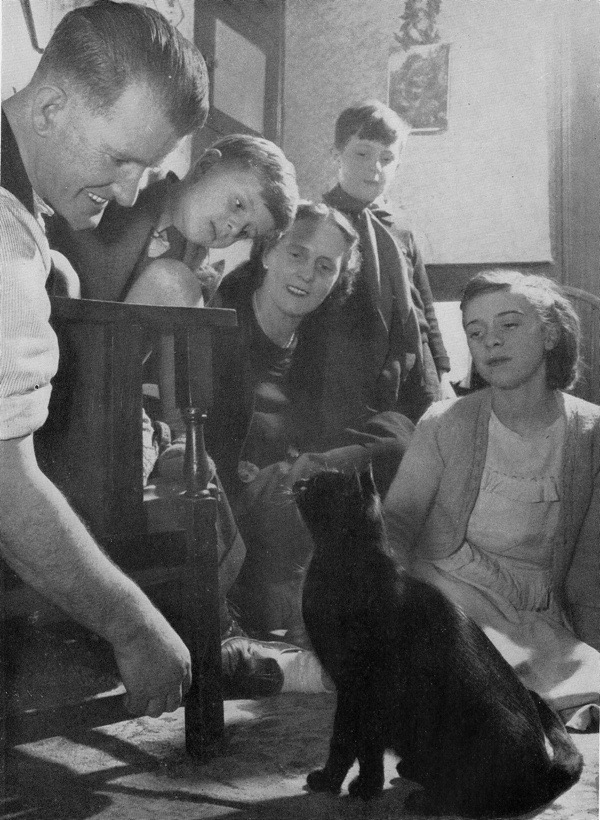
Micky is the centre of the Day family of Copley St in the parish of Stepney. The whole family pamper him and have a wonderful time
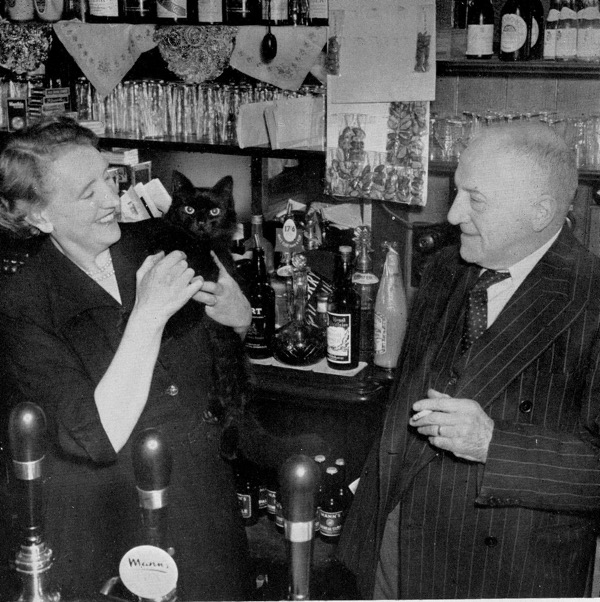
Bill on weekdays, William on Sundays, the cat at the Bricklayers Arms in Commercial Rd has a wonderful life since the Guv’nor Jim Meade was once a Dumb Animals’ Food Purveyor. At seventy-seven Jim looks back on a long and distinguished life in Stepney during his thirty-two years as Guv’nor.
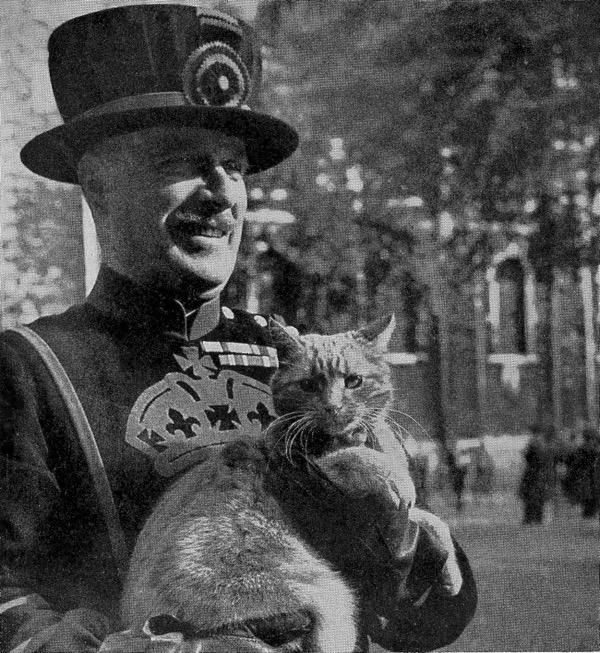
Yeoman Warder Clark & Pickles on Tower Green
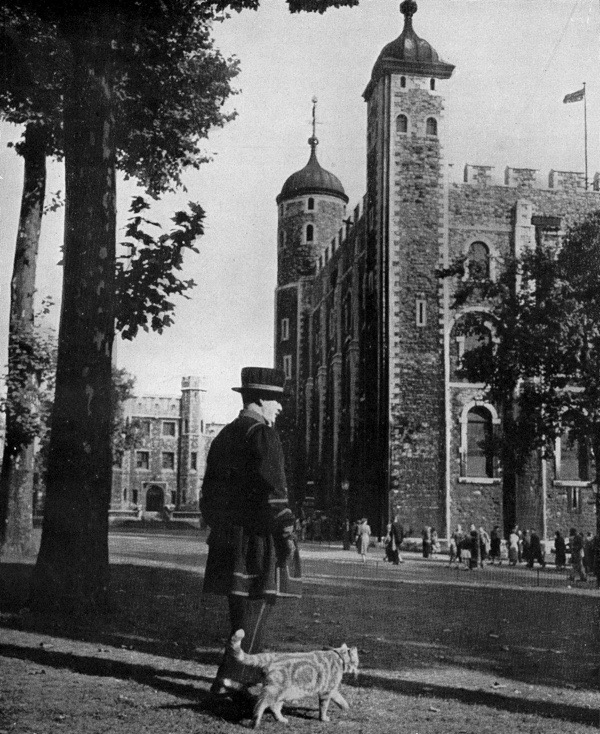
On duty at the Tower of London
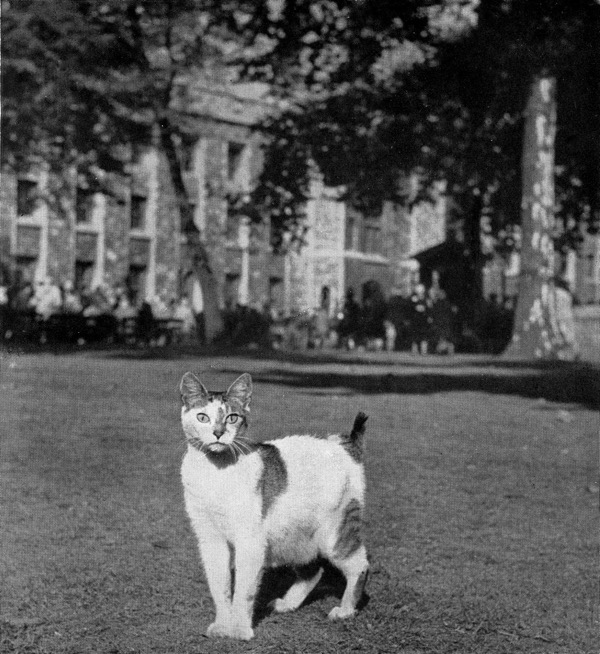
The tail-less cat of the guardroom who came out to watch Pickles being photographed
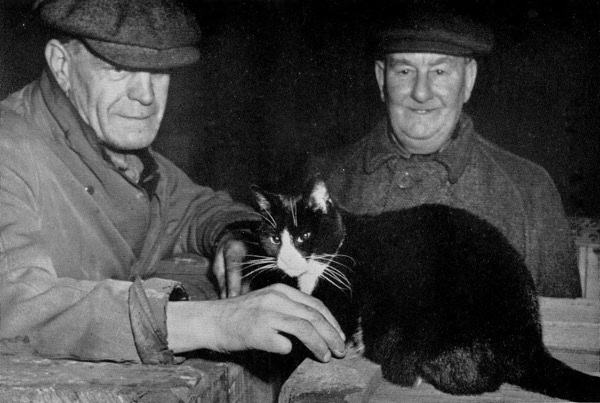
Min, Port of London Authority cat has many friends among the dockers and very good ratting at night
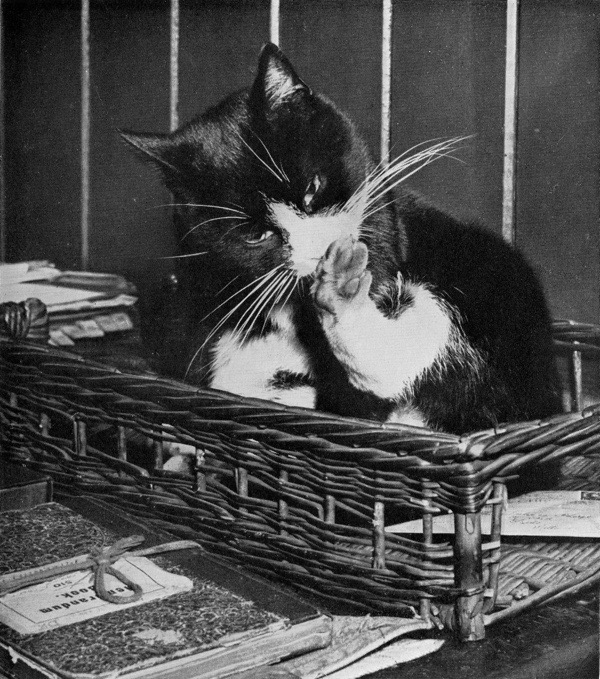
Min of the magnificent whiskers has made her home in the office of K Warehouse in the Milwall Docks
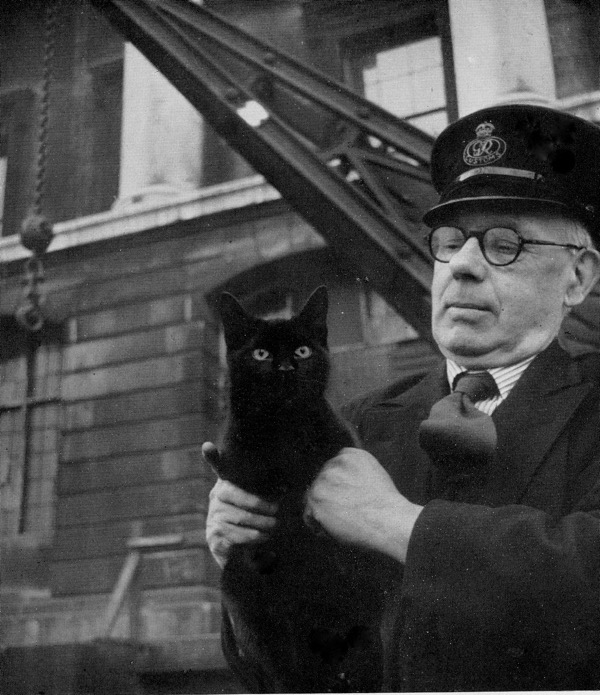
Customs & Excise cat guards the Queen’s Warehouse and is paid a Treasury Allowance of sixpence a day
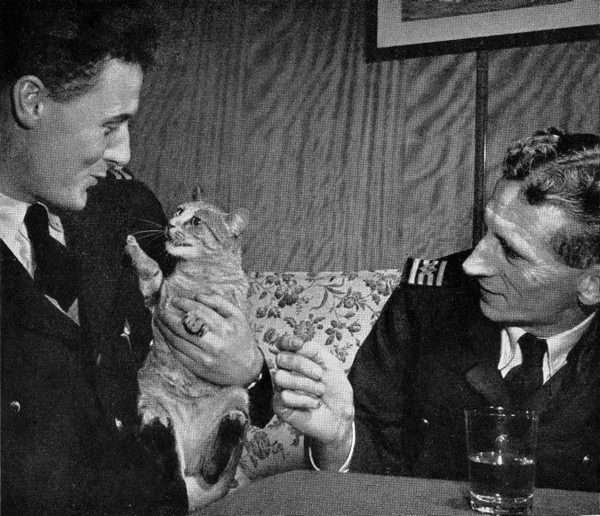
Mitzi has the run of her ship from the lifeboats to the Officers’ Mess
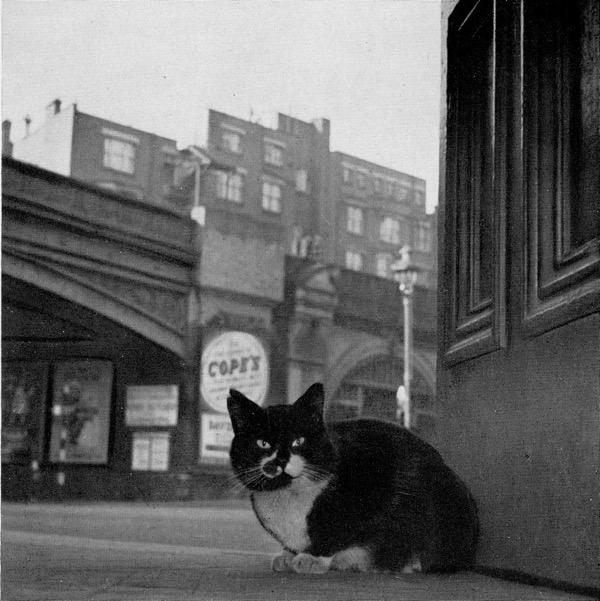
Old Bill the railway cat, his favourite position is the entrance to Blackfriars Station
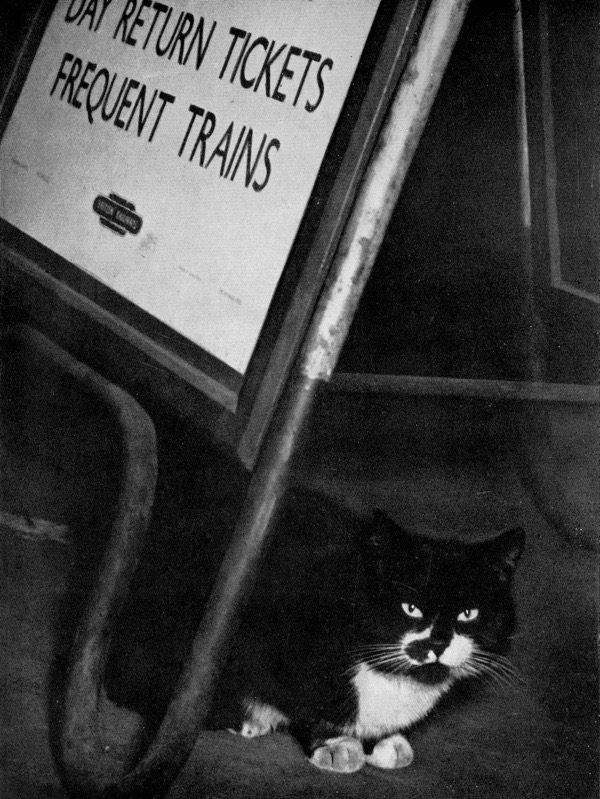
Old Bill takes cover when necessary in the rush hour
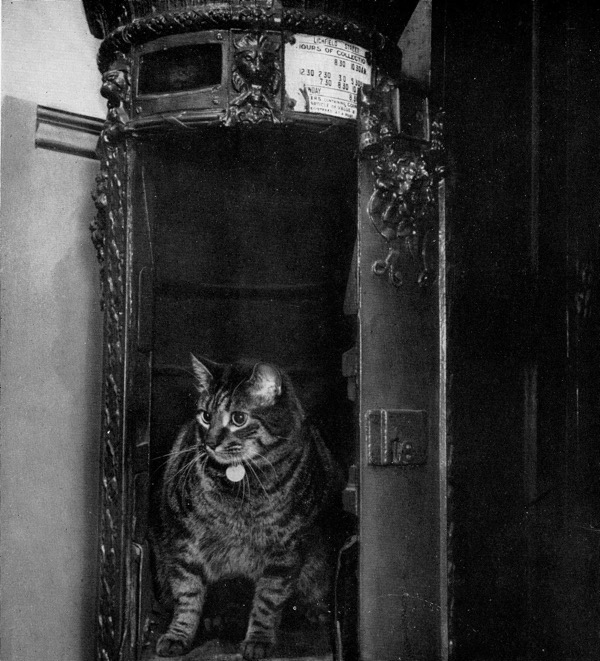
Tibs the Great (1950-64), the official Post Office cat at Headquarters, does not normally live in this 1856 pillarbox
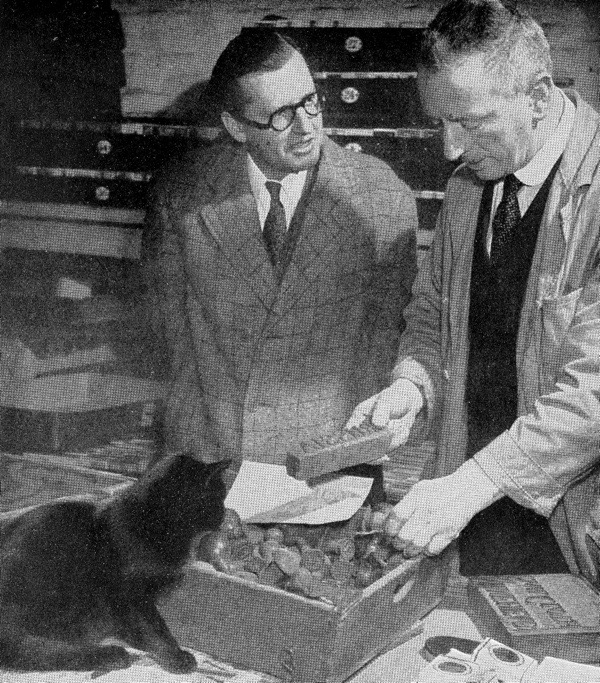
This cat’s curiosity unearthed a box of ancient stamps and seals, some dating back to Queen Anne
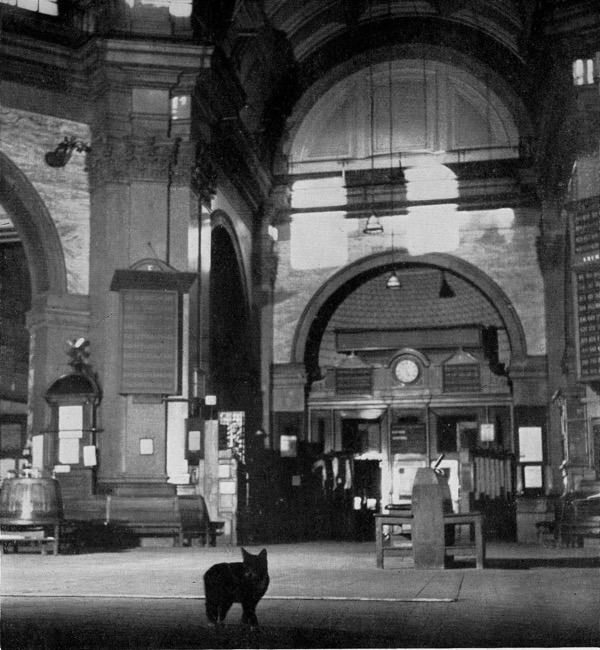
Minnie the Stock Exchange cat was a self-willed and determined kitten who adopted the dealing floor as her own preserve
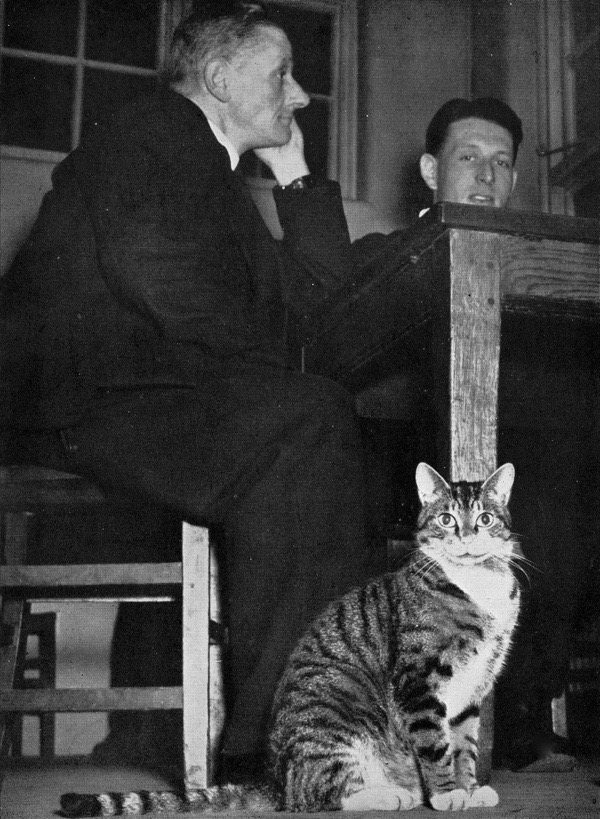
Minnie enjoys the banter in the tea room
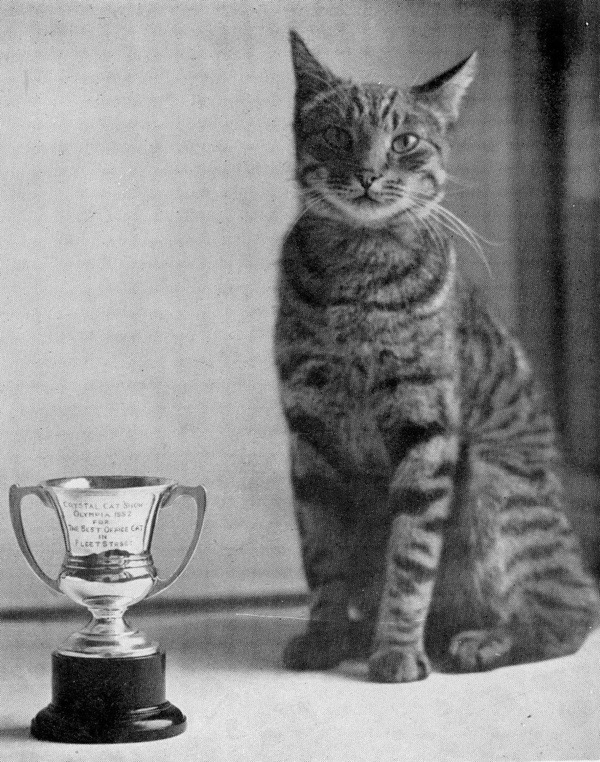
Tiger of The Times is the best office cat in Fleet St
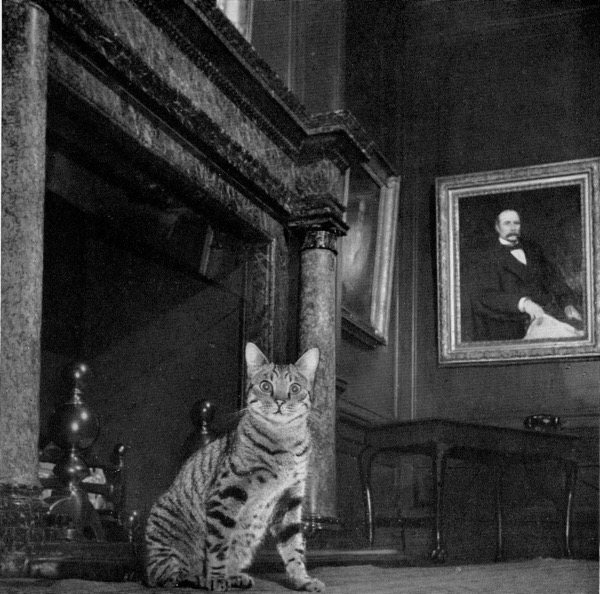
Tiger of The Times is equally at ease whether in the Board Room …
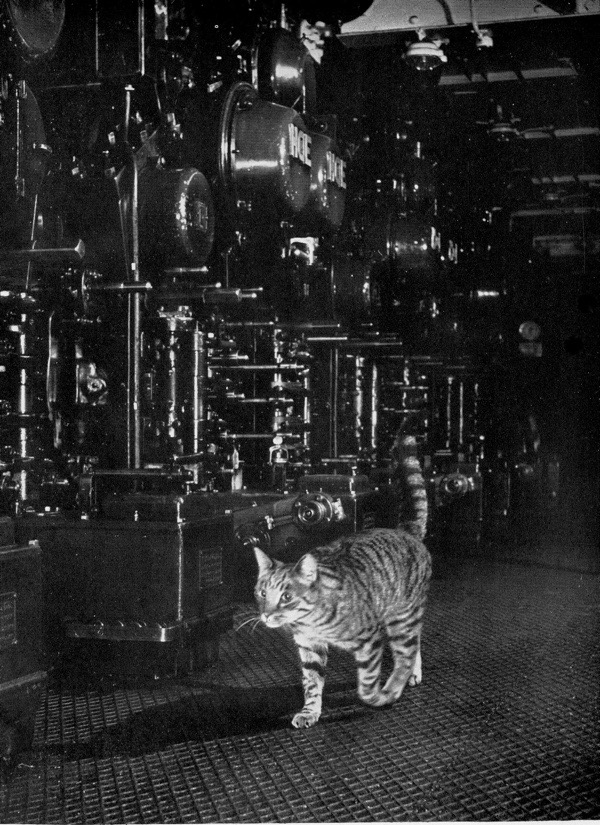
… or doing his rounds in the Print Room
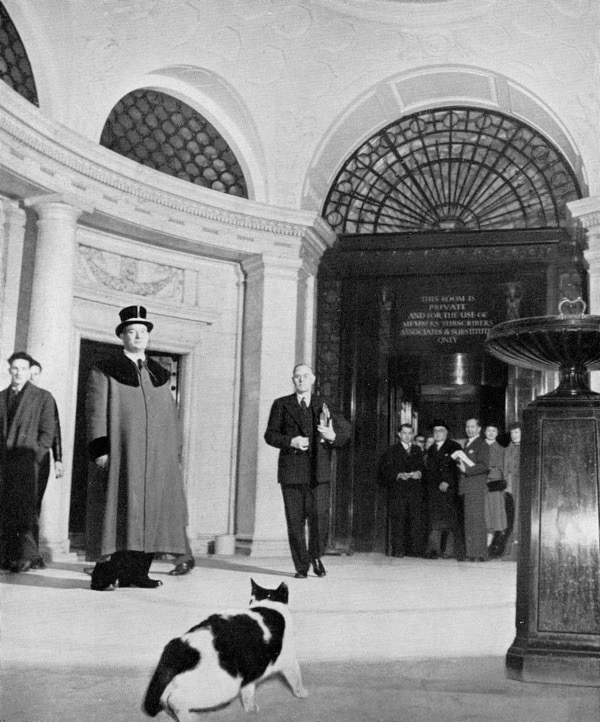
Sneaking back into Lloyds of London is difficult even for the resident cat
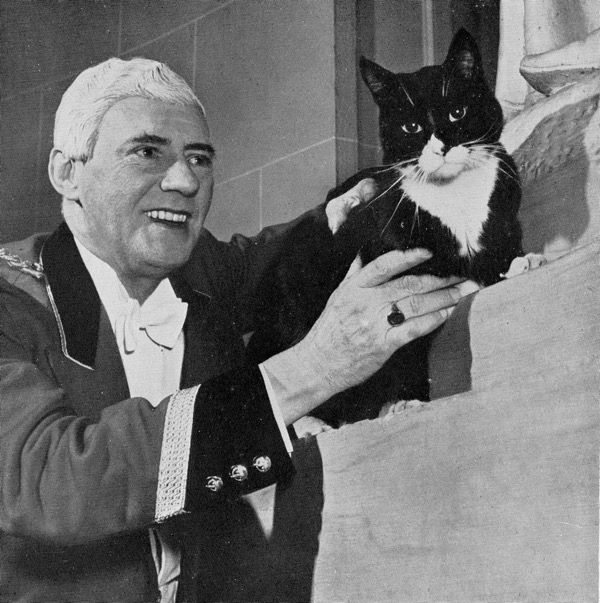
Cecil is the Front of House cat at the Theatre Royal Drury Lane
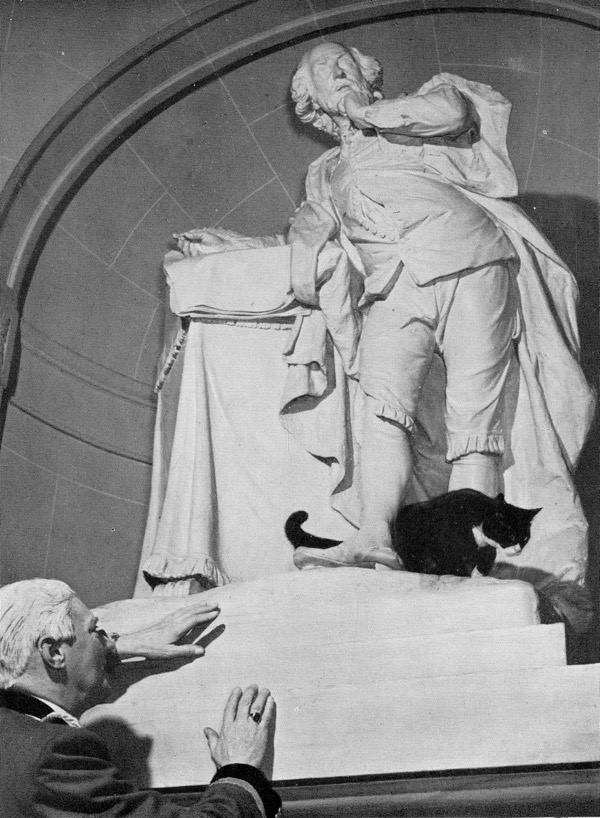
Cecil is very elusive in his many hiding places from which he has to be coaxed by the Royal Waiter before the performance can begin
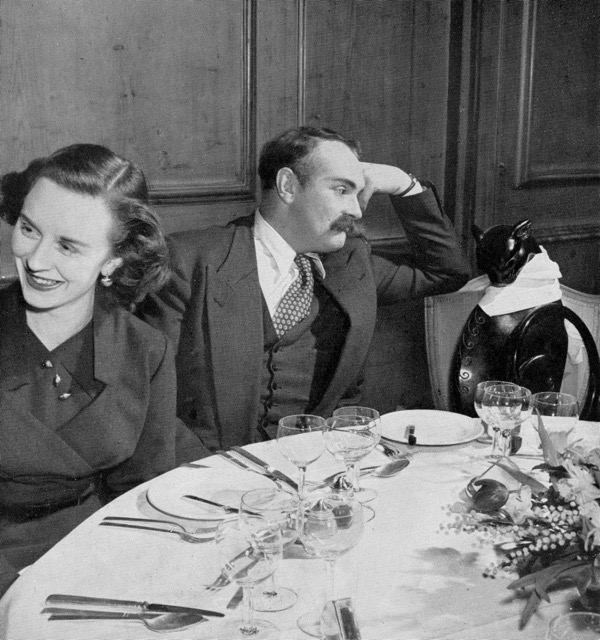
When thirteen people sit down to dine at the Savoy and the thirteenth guest is Jimmy Edwards, almost anything can happen. The famous black cat is invited to occupy the fourteenth place so that everyone can enjoy the sparkling conversation.

Bill at the Tower of London (1935-47)
Images courtesy Bishopsgate Institute
You may also like to take a look at
Schroedinger, Shoreditch Church Cat
Doorkins Magnificat, Southwark Cathedral Cat
The Cats of Spitalfields (Part One)
William Oglethorpe, Bermondsey Cheese Maker
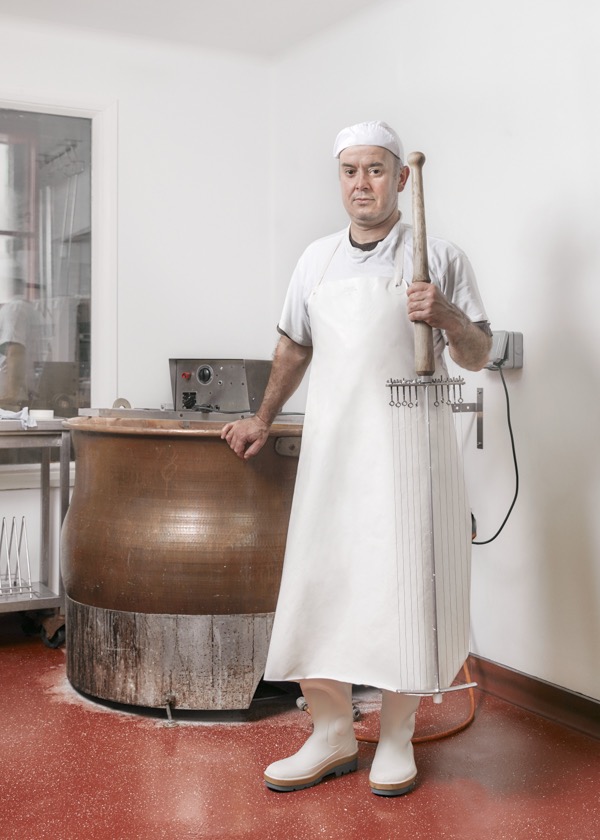
William Oglethorpe, Cheese Maker of Bermondsey
Everyone knows Cheddar, Stilton, Wensleydale and Caerphilly, but there is an unexpected new location on the cheese map of Great Britain. It is Bermondsey and the man responsible is William Oglethorpe – seen here bearing his curd cutter as a proud symbol of his domain, like a medieval king wielding a mace of divine authority.
When photographer Tom Bunning & I went along to Kappacasein Dairy under the railway arches beneath the main line out of London Bridge in the early morning to investigate this astonishing phenomenon, we entered the humid warmth of the dairy in eager anticipation and encountered an expectant line of empty milk churns.
Already Bill had been awake since quarter to four. He had woken in Streatham then driven to Chiddingstone in Kent and collected six hundred litres of milk. Beyond us, in a separate room with a red floor and a large glass window sat a hundred-year-old copper vat containing that morning’s delivery of milk, which was still warm. Bill with his fellow cheesemakers Jem and Agustin, dressed all in white, worked purposefully in this chamber, officiating like priests over the holy process of conjuring cheese into existence. I stood mesmerised by the sight of the pale buttery liquid swirling against the gleaming copper as Bill employed his curd cutter, manoeuvring it through the milk as you might turn an oar in a river.
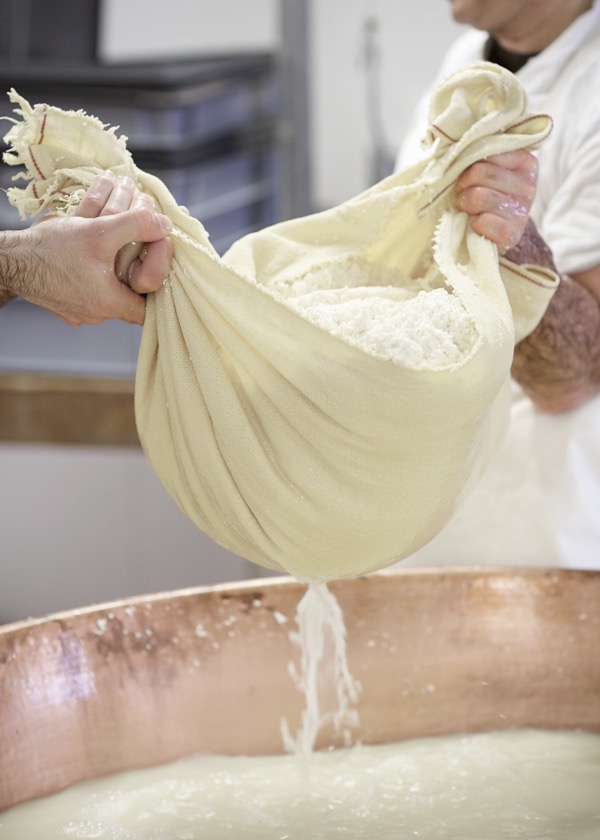
Taking a narrow flexible strip of metal, he wrapped a cloth around it so that the rest extended behind like a flag. Holding each end of the strip and grasping the corners of the cloth, Bill leaned over the vat plunging his arms deep down into the whey. When he lifted the cloth again, Agustin reached over with practised ease to take two corners of the cloth as Bill removed the sliver of metal and – hey presto! – they were holding a bundle of cheese, dredged from the mysterious depth of the vat. It was as spellbinding as any piece of magic I have ever seen.
“Cheesemaking is easy, it’s life that is hard,” Bill admitted to me with a disarming grin, when I joined the cheesemakers for their breakfast at a long table and he revealed the long journey he had travelled to arrive in Bermondsey. “I grew up in Zambia,” he explained, “And one day a Swiss missionary came to see my father and asked if I’d like to go to agricultural school in Switzerland.”
“I earned a certificate of competence,” he added proudly, assuring me with a wink, “I’m a qualified peasant.” Bill learnt to make cheese while working on a farm in Provence with a friend from agricultural college. “It was simply a way to sell all the milk from the goats, we made a cheese the same way the other farmers did,” he informed me, “We didn’t know what we were doing.”
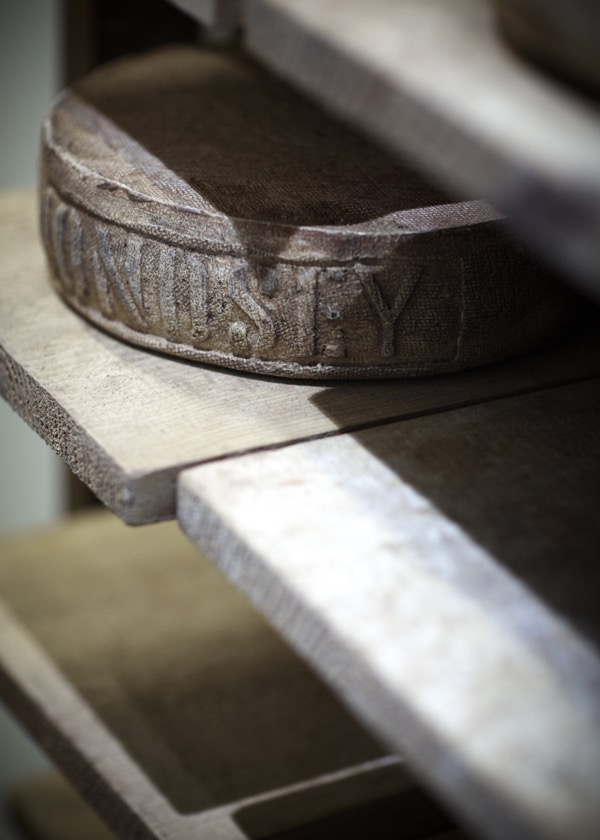
Bill took me through to the next railway arch where his cheeses are stored while they mature for up to a year. He cast his eyes lovingly over the neat flat cylinders each impressed with word ‘Bermondsey’ on the side. Every Wednesday, the cheeses are attended to. According to their type, they are either washed or stroked, to spread the mould evenly, and they are all turned before being left to slumber in the chilly darkness for another week.
It was while working for Neals Yard Dairy that Bill decided to set up on his own as cheese maker. Today, Kappacasein is one of handful of newly-established dairies in London producing distinctive cheeses and bypassing the chain of mass production and supermarkets to distribute on their own terms and sell direct to customers. Yet Bill chooses to be self-deprecating in his explanation of why he is making cheese in London. “It’s just because I can’t buy a farm,” he claims, shrugging in enactment of his role of the peasant in exile, cast out from the rural into the urban environment.
“I’m interested in transformation,” Bill confided to me, turning serious as he reached his hand gently down into the vat and lifted up a handful of curds, squeezing out the whey. These would form the second cheese to come from the vat that morning, a ricotta. All across the surface, nodules of cheese were forming, coming into existence as if from primordial matter. “I don’t want to interfere,” Bill continued, thinking out loud and growing philosophical as he became absorbed in observing the cheese form, “Nature’s that much more complicated – if you let it do its own thing that’s much interesting to me than trying to impose anything. It’s about finding an equilibrium with Nature.”
Let me confess I had an ulterior motive for being there. One day, I ate a slice of Bill’s Bermondsey cheese and became hooked. It was a flavour that was tangy and complex. One piece was not enough for me. Two pieces were not enough for me. Eventually, I had to seek the source of this wonder and there it was in front of me at last – the Holy Grail of London cheese in Bermondsey.
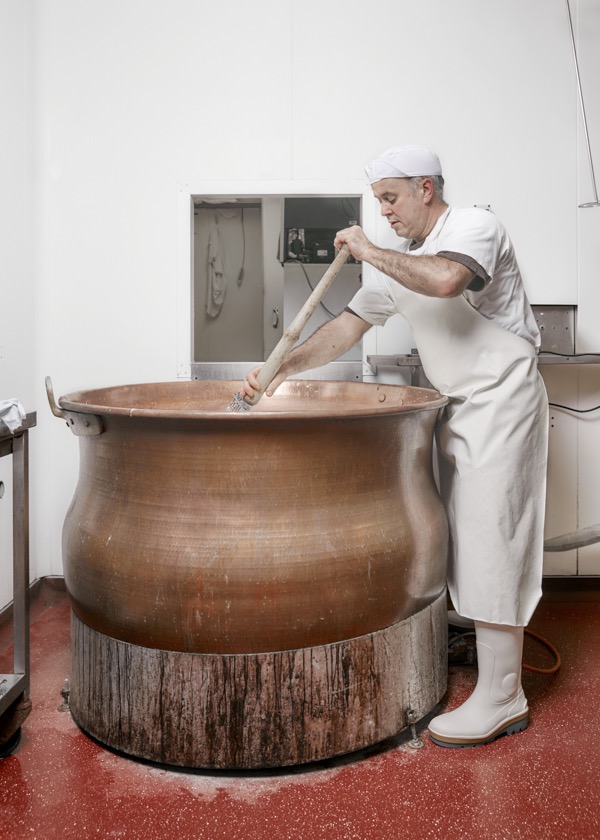
Cutting the curd
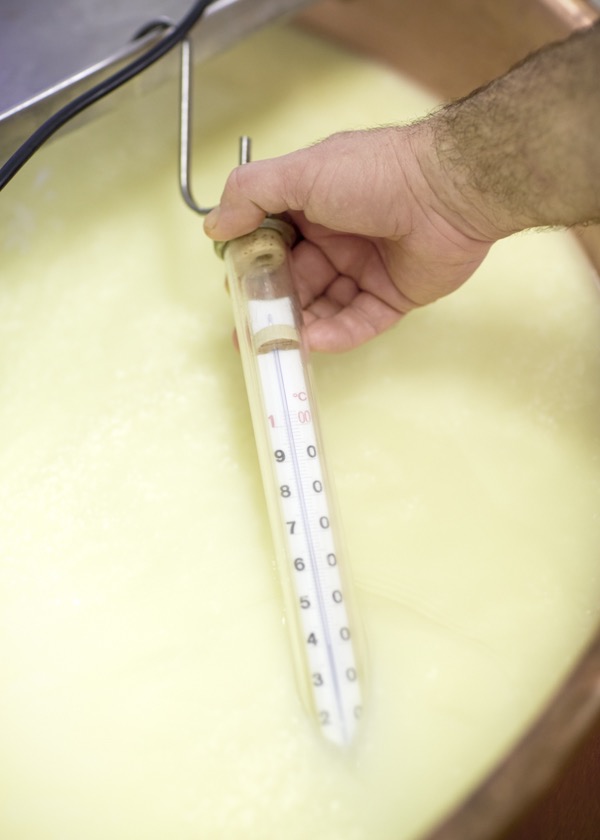
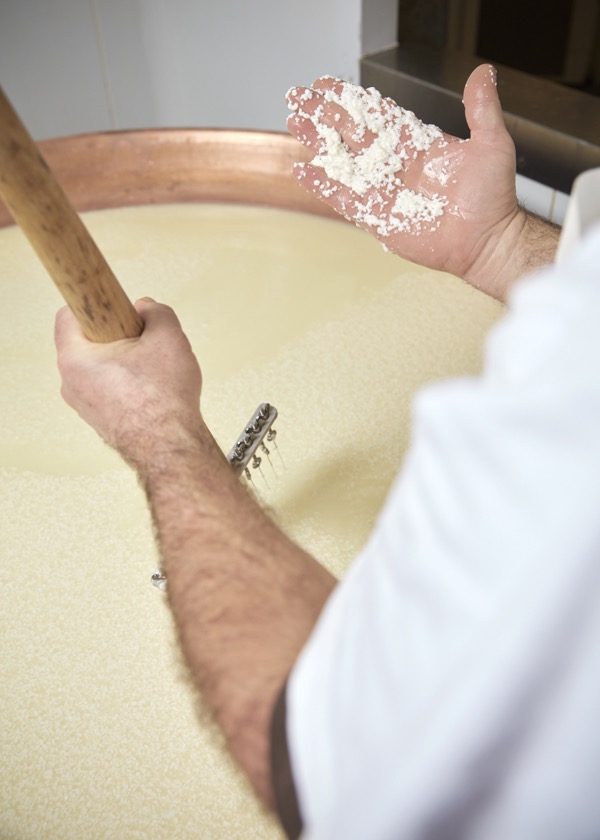
The curds
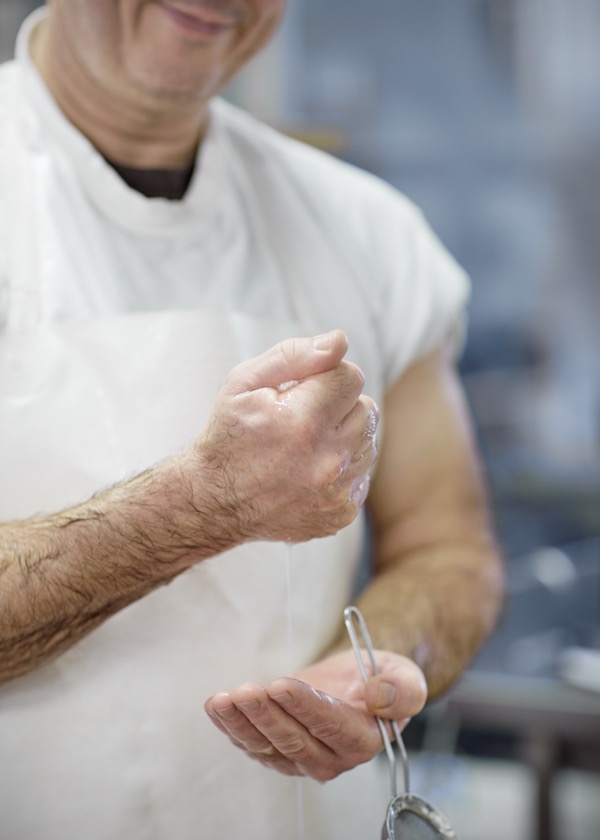
Squeezing the curds
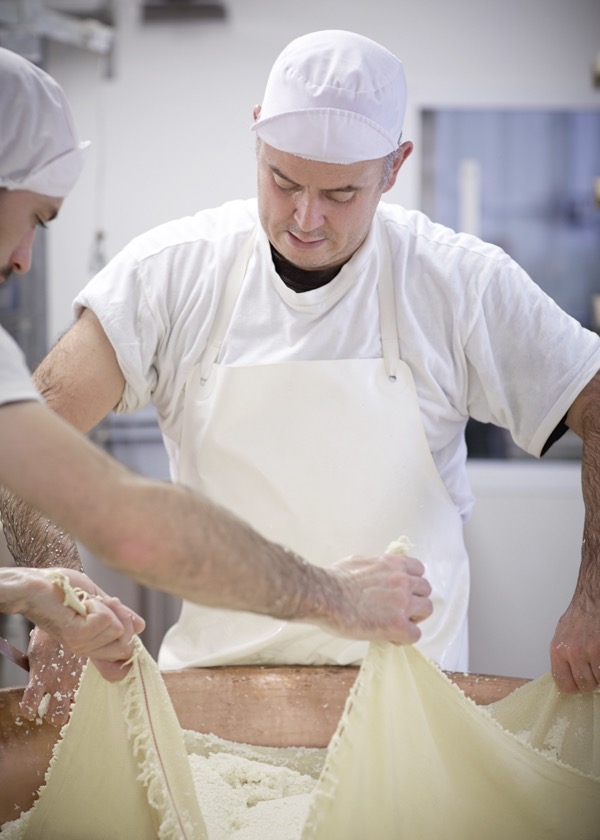
Scooping out the cheese
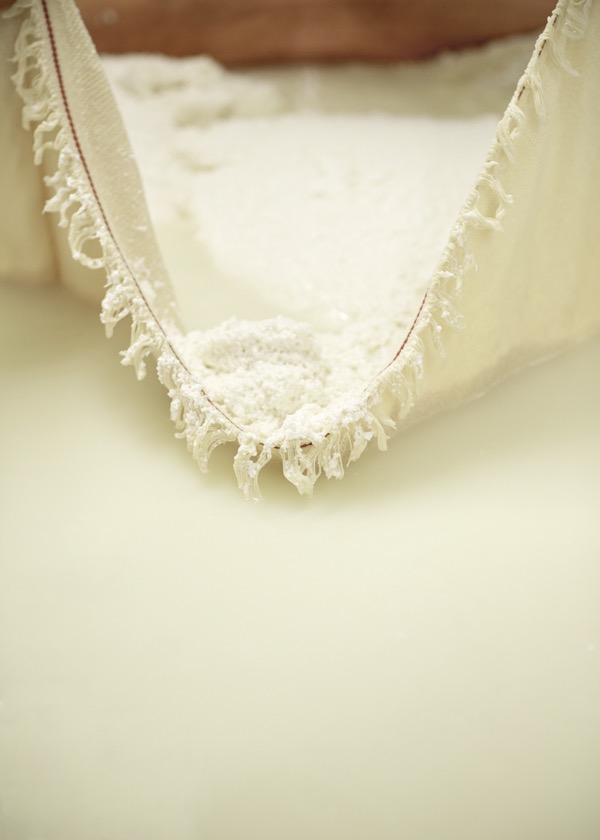
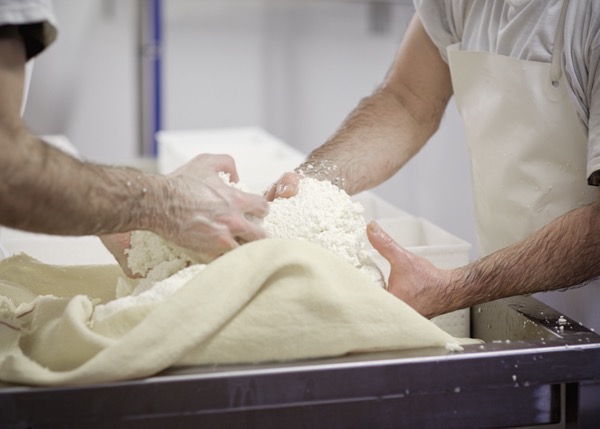
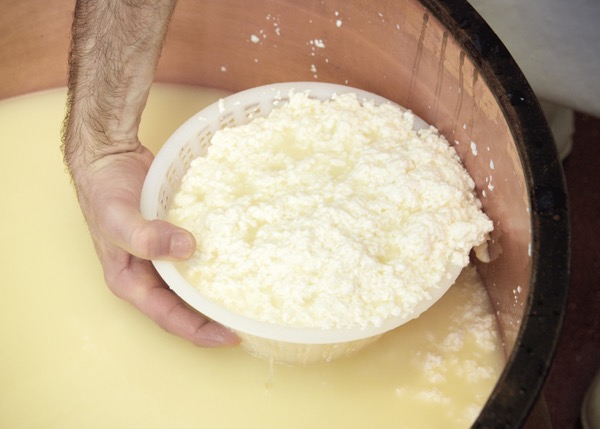
The second batch of cheese from the whey is ricotta
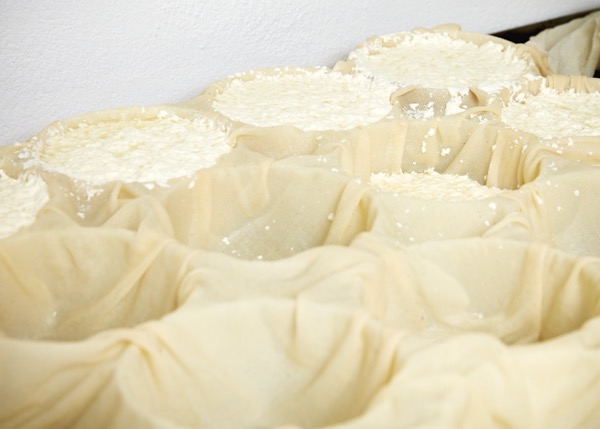
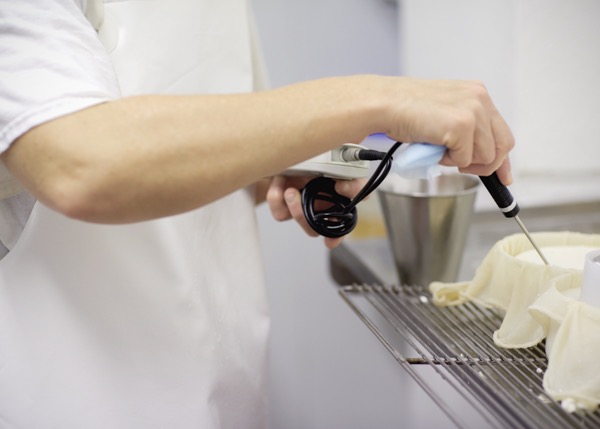
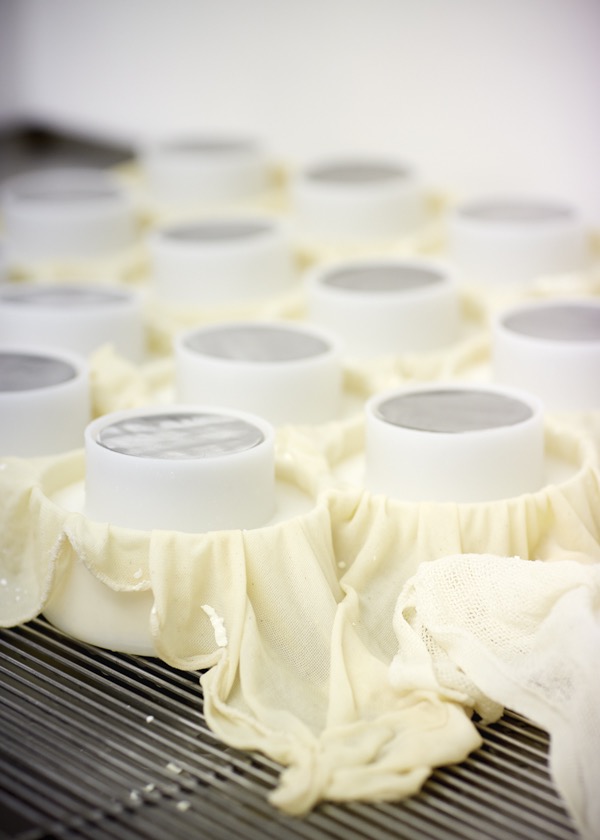
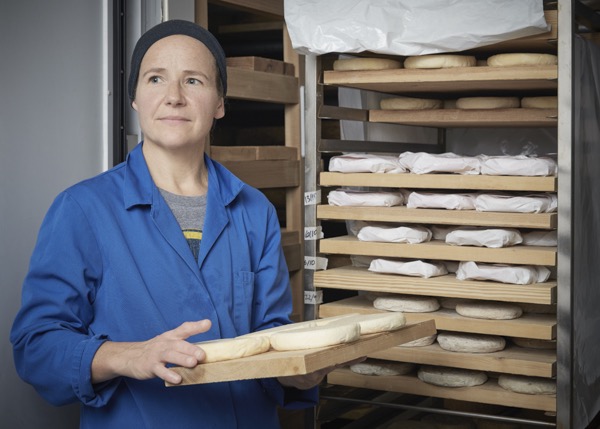
Jem Kast, Cheese Maker
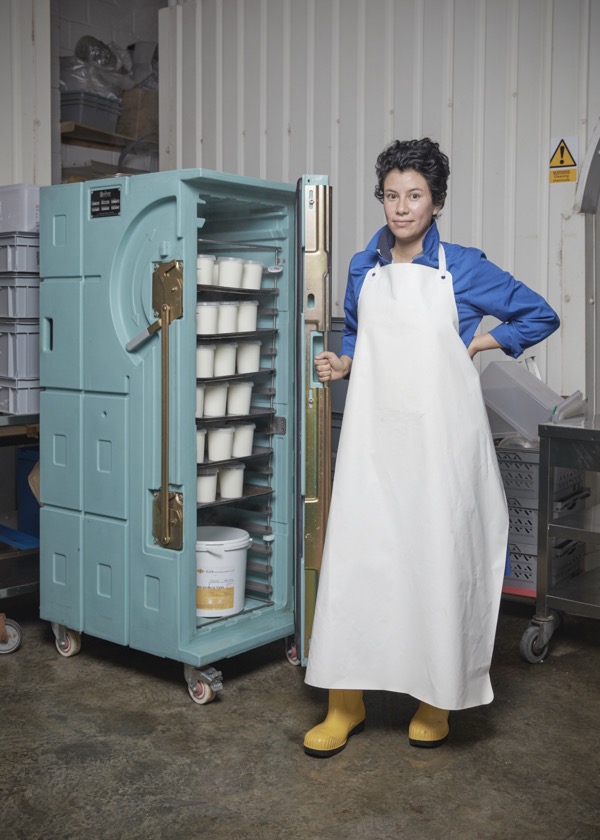
Ana Rojas, Yoghurt Maker
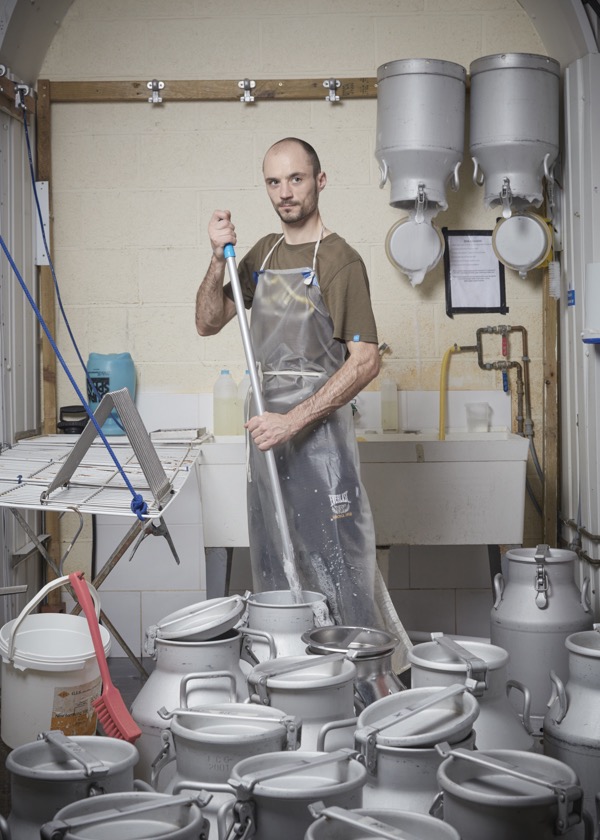
Agustin Cobo, Cheese Maker
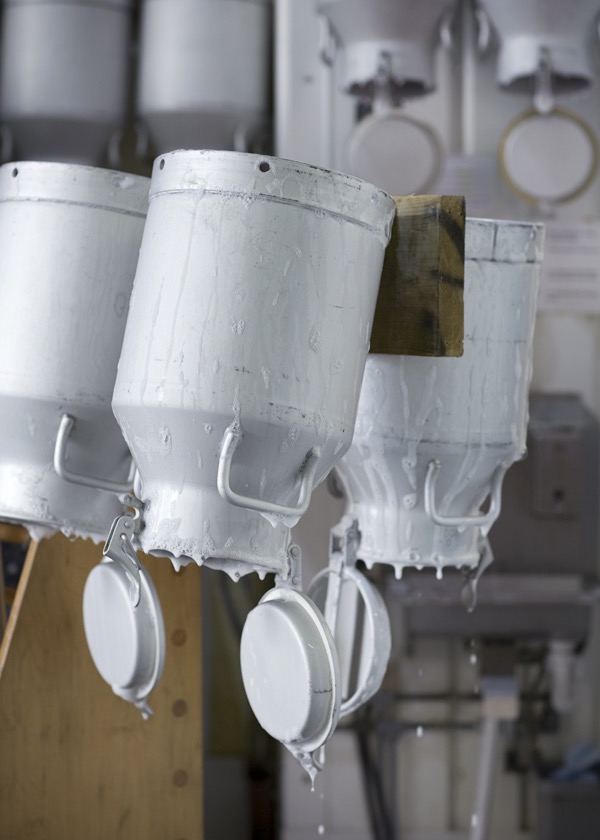
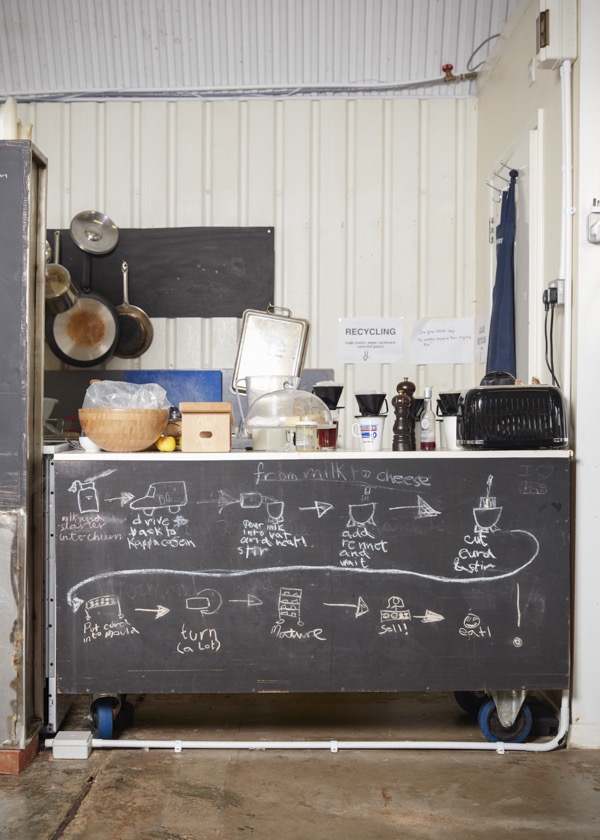
The story of cheese
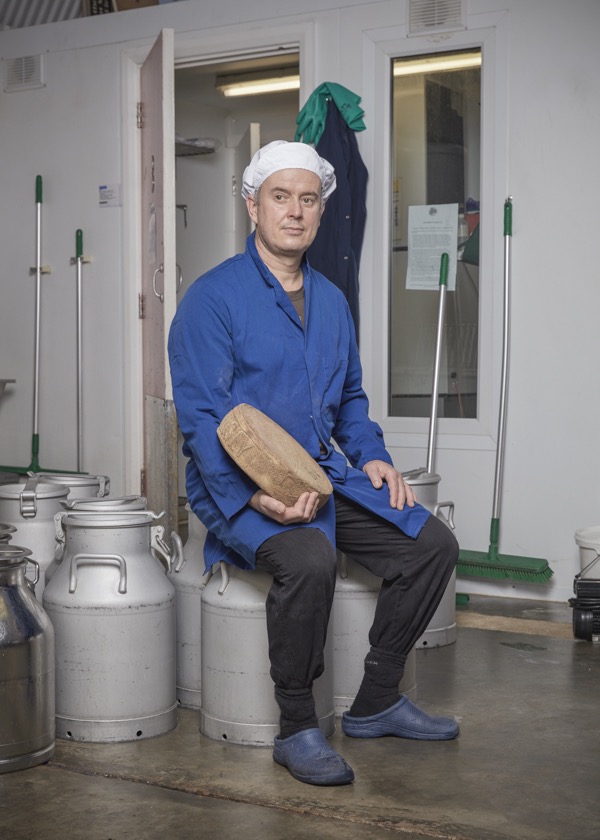
William Oglethorpe, Cheese Maker of Bermondsey
Photographs copyright © Tom Bunning
Visit KAPPACASEIN DAIRY, 1 Voyager Industrial Estate, Bermondsey, SE16 4RP
Nights Of Old London

The nights are drawing in and I can feel the velvet darkness falling upon London. As dusk gathers in the ancient churches and the dusty old museums in the late afternoon, the distinction between past and present becomes almost permeable at this time of year. Then, once the daylight fades and the streetlights flicker into life, I feel the desire to go walking out into the dark in search of the nights of old London.
Examining hundreds of glass plates – many more than a century old – once used by the London & Middlesex Archaeological Society for magic lantern shows at the Bishopsgate Institute, I am in thrall to these images of night long ago in London. They set my imagination racing with nocturnal visions of the gloom and the glamour of our city in darkness, where mist hangs in the air eternally, casting an aura round each lamp, where the full moon is always breaking through the clouds and where the recent downpour glistens upon every pavement – where old London has become an apparition that coalesced out of the fog.
Somewhere out there, they are loading the mail onto trains, and the presses are rolling in Fleet St, and the lorries are setting out with the early editions, and the barrows are rolling into Spitalfields and Covent Garden, and the Billingsgate porters are running helter-skelter down St Mary at Hill with crates of fish on their heads, and the horns are blaring along the river as Tower Bridge opens in the moonlight to admit another cargo vessel into the crowded pool of London. Meanwhile, across the empty city, Londoners slumber and dream while footsteps of lonely policemen on the beat echo in the dark deserted streets.

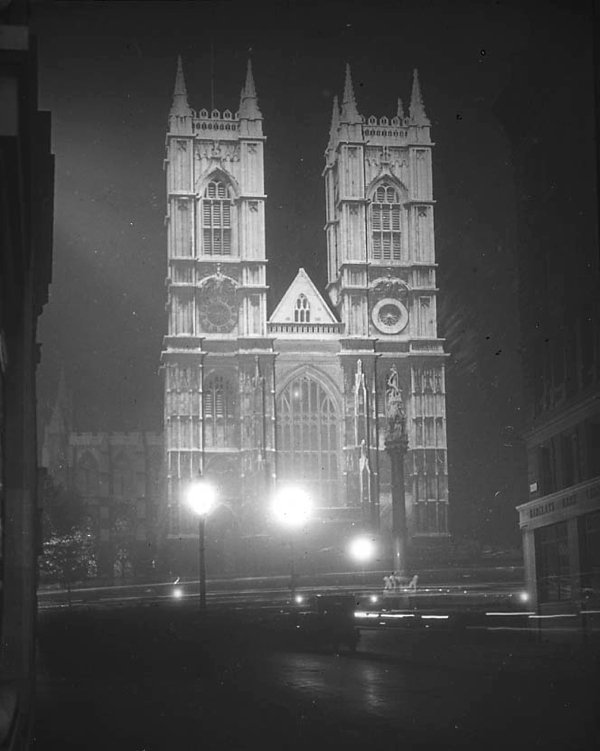


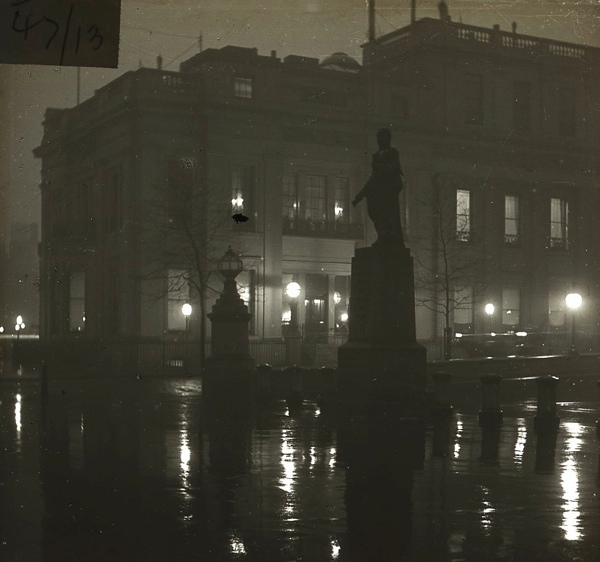


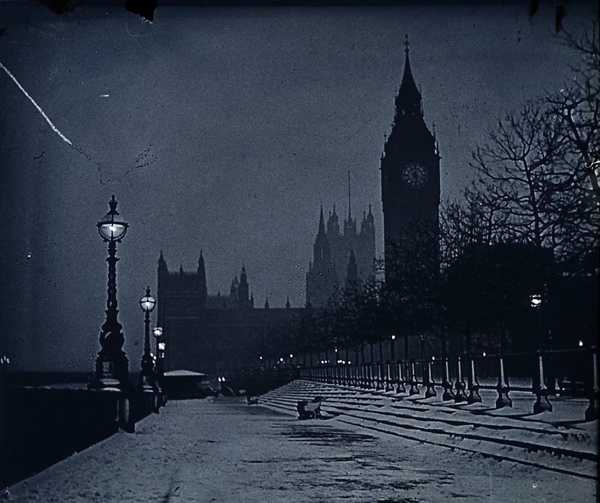


Glass slides courtesy Bishopsgate Institute
Read my other nocturnal stories
On Christmas Night in the City
On the Rounds With the Spitalfields Milkman
Other stories of Old London
Frank Derrett’s West End
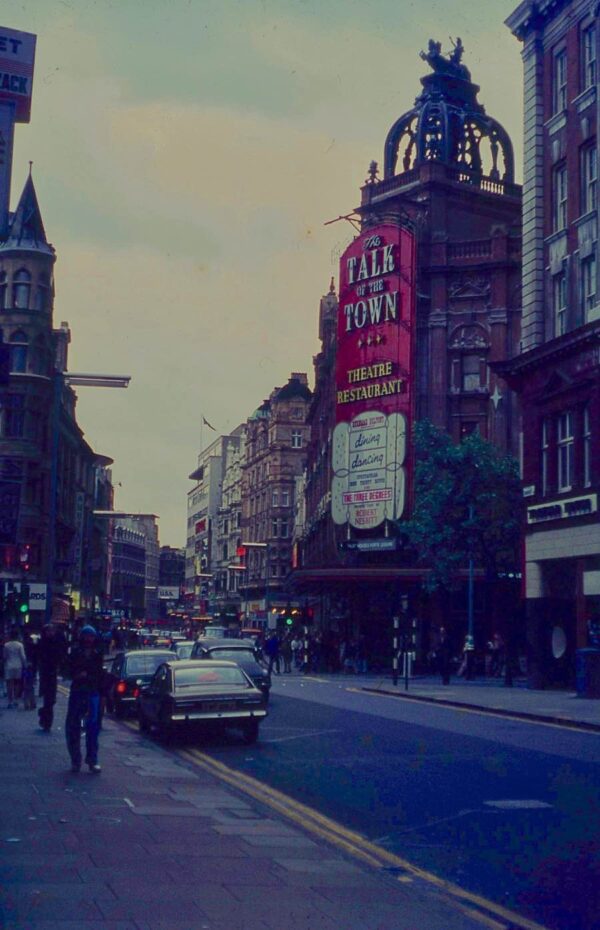
Cranbourne St
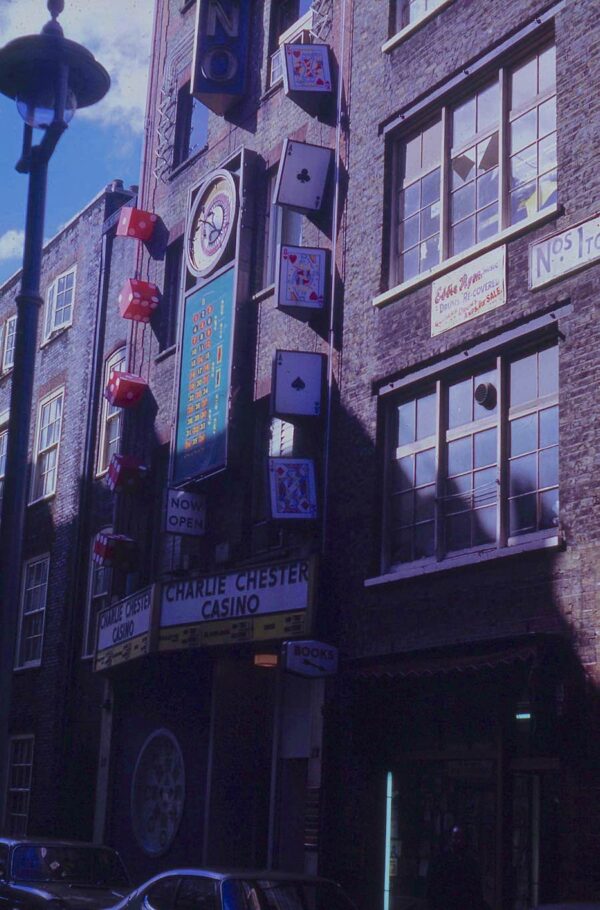
Fancy a stroll around the West End with Frank Derrett in the seventies?
This invitation is possible thanks to the foresight of Paul Loften who rescued these photographs from destruction in the last century. Recently, Paul contacted me to ask if I was interested and I suggested he donate them to the archive at the Bishopsgate Institute, which is how I am able to show them today.
‘They were given to me over twenty-five years ago when I called at an apartment block in Camden,’ Paul explained. ‘A woman opened the door and, when said I was from Camden Libraries, she told me a solicitor was dealing with effects of a resident who had died and was about to throw these boxes of slides into a skip, and did I want them? I kept them in my loft, occasionally enjoying a look, but actually I had forgotten about them until we had a clear out upstairs.’
Later this week, I will publish what we have learned about the life of Frank Derrett.
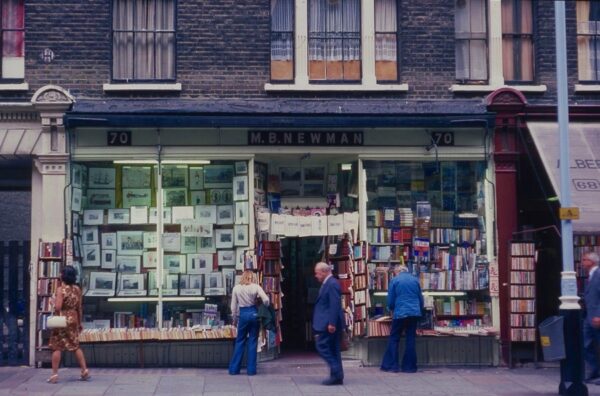
Charing Cross Rd
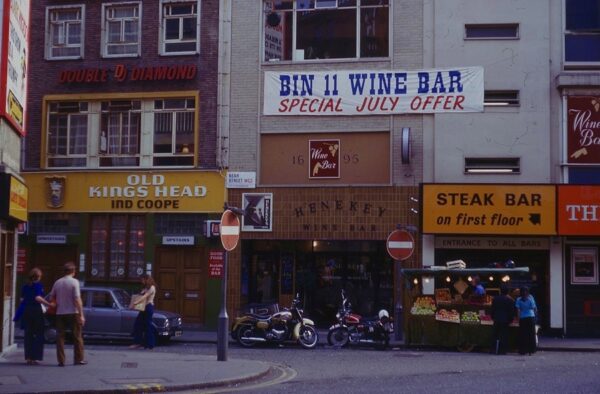
Bear St
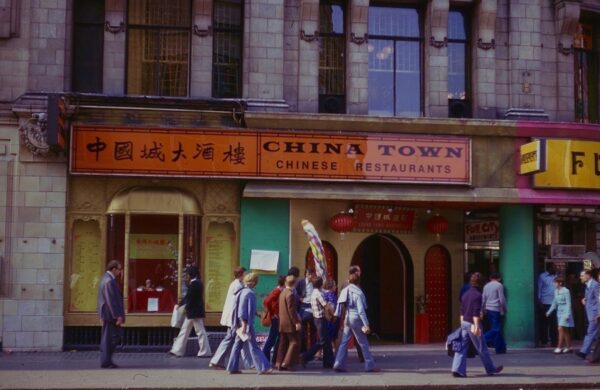
Coventry St
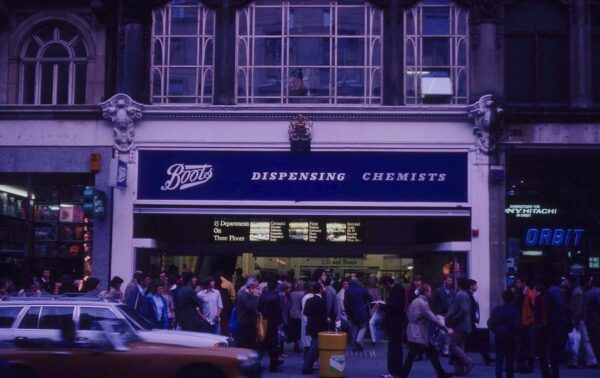
Regent St
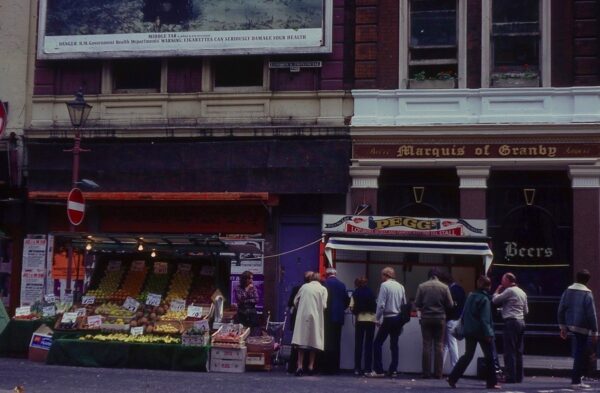
Earlham St
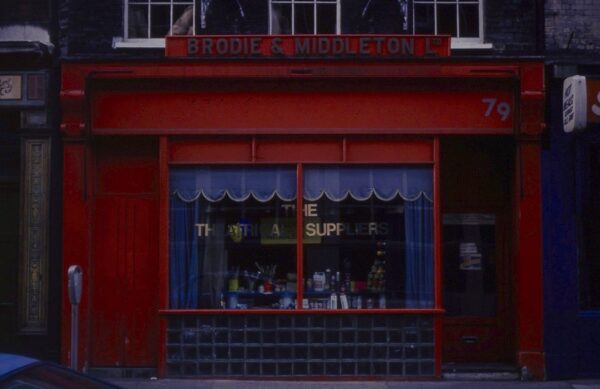
Long Acre
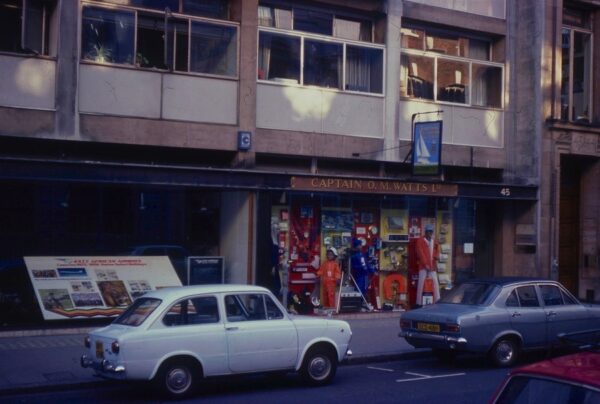
Dover St
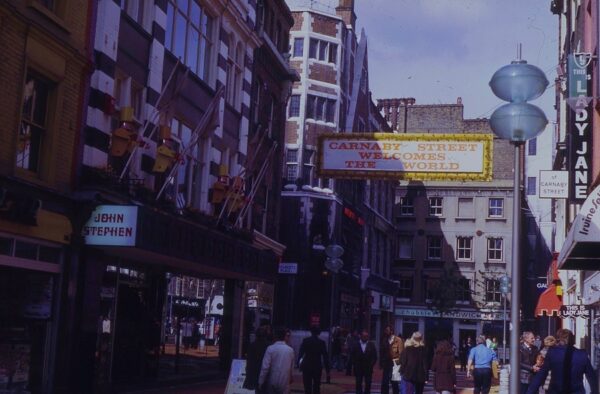
Carnaby St
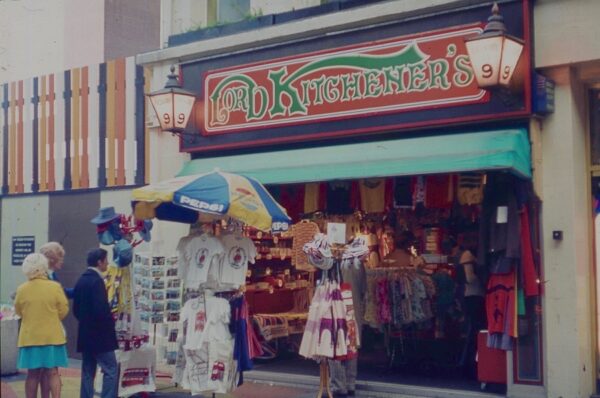
Carnaby St
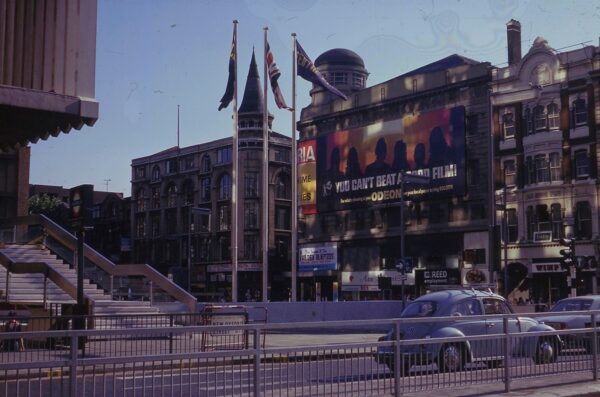
Charing Cross Rd
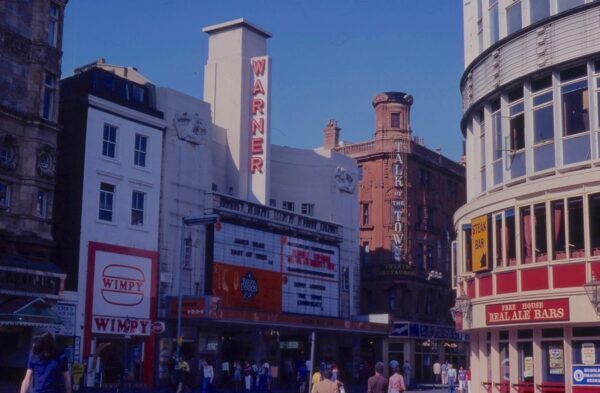
Cranbourne St
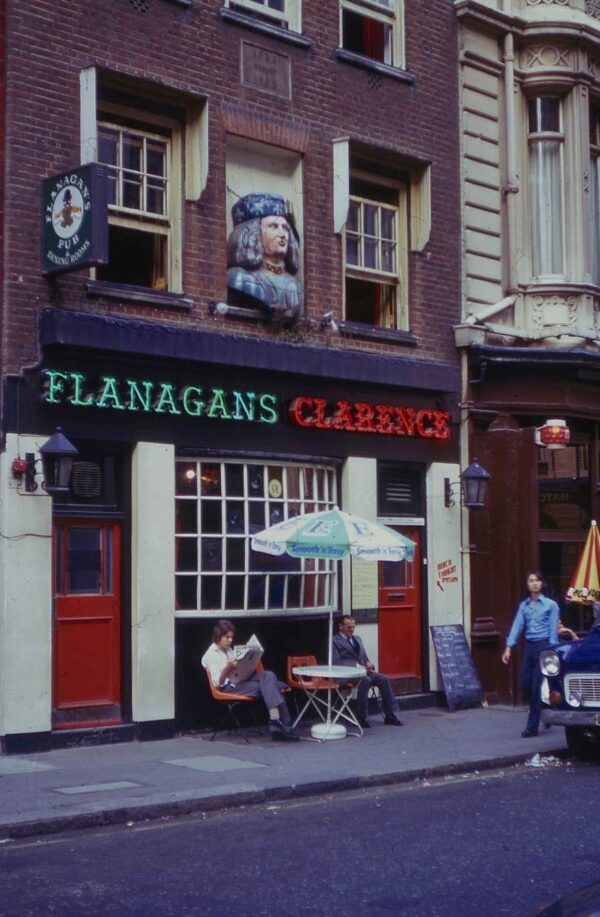
Dover St
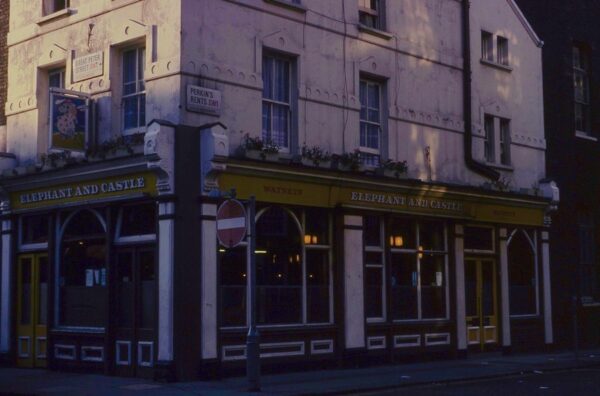
Perkins Rents
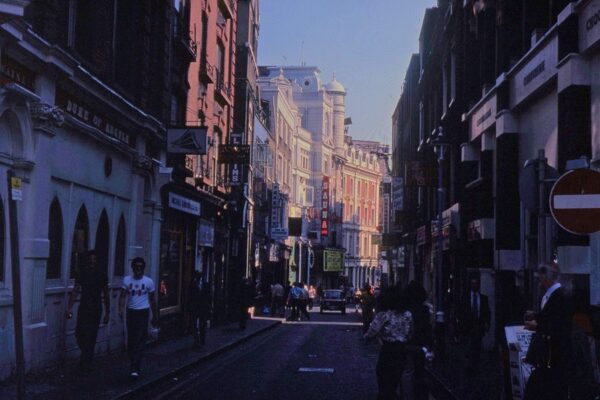
Great Windmill St
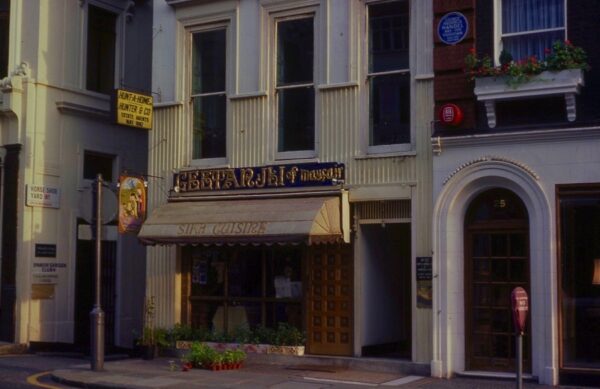
Brook St
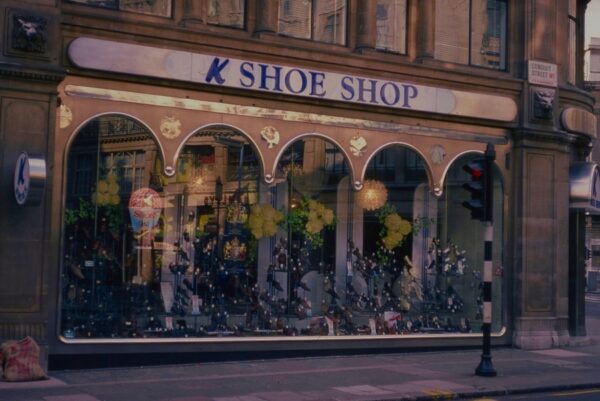
Conduit St
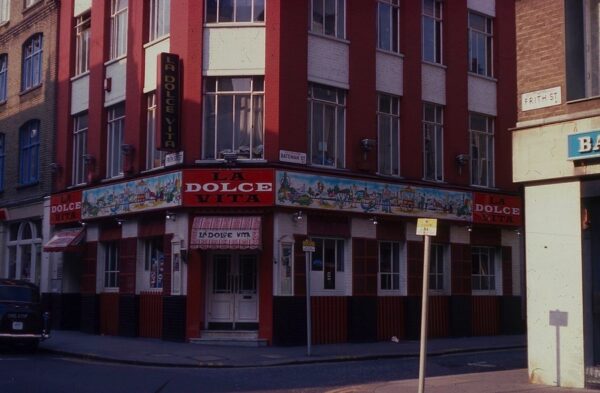
Frith St
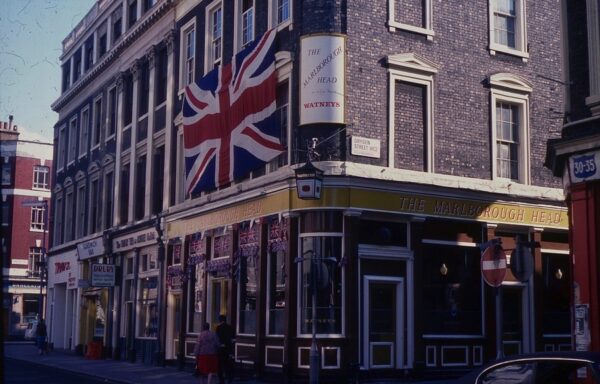
Drury Lane
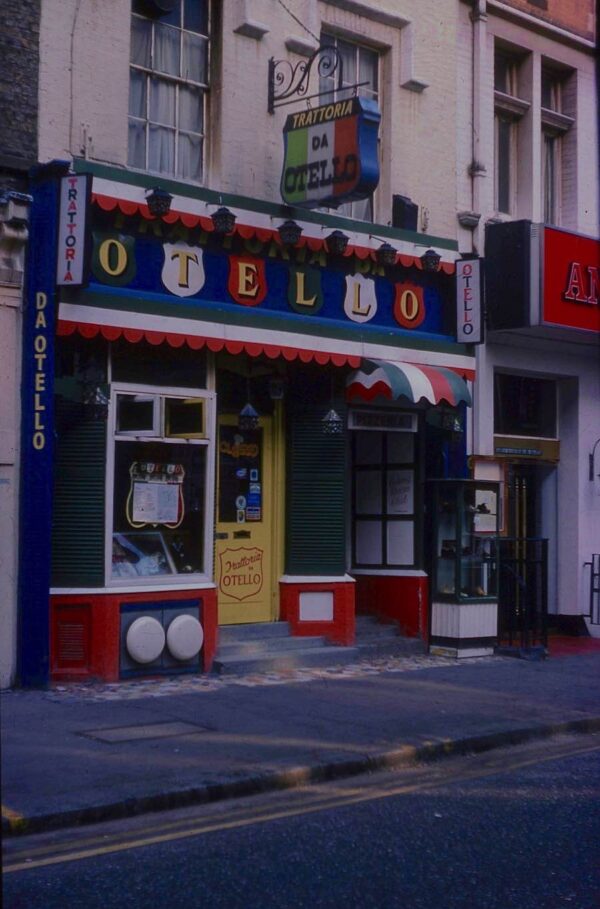
Dean St
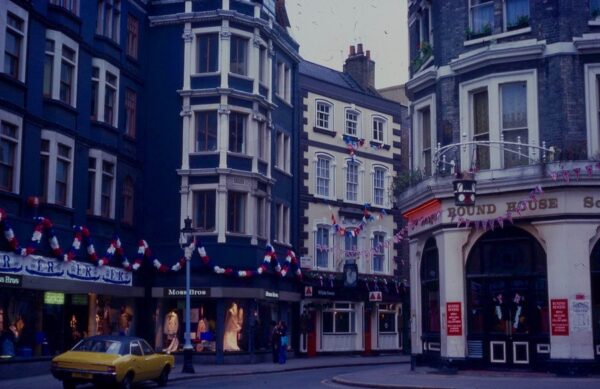
Garrick St
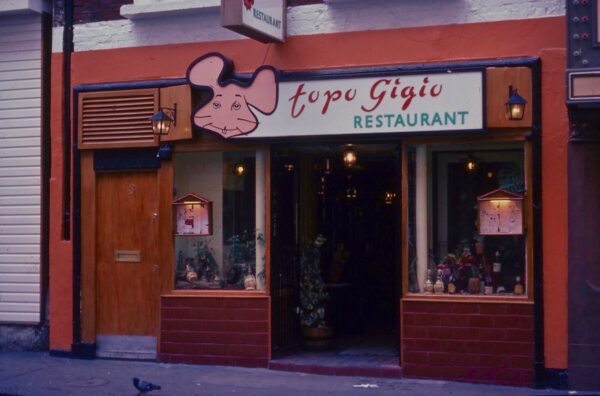
Great Windmill St
Archer St
Images courtesy Bishopsgate Institute
You may also like to take a look at












