
Gadsdons Of Brushfield St
Tickets are available for my walking tour now
Click here to book your ticket for THE GENTLE AUTHOR’S TOUR OF SPITALFIELDS

Peter Gadsdon
If you look carefully, can you decipher the words “H.Gadsdon & Sons Established 1835” on this wall in Crispin St ? This feint sign – painted out a generation ago yet still just legible if you know what you are looking for – constitutes the last visible evidence in Spitalfields of the five generations of Gadsdons who lived and worked here over three centuries as silk dyers, coach platers and ironmongers. It was pointed out to me by Peter Gadsdon, who came back to see how life has been ticking over in the old neighbourhood since his last relative departed, more than half a century ago.
Working from the starting point of a family tree in an old bible and, by writing to every Gadsdon in the telephone directory, Peter Gadsdon has worked conscientiously, reconstructing the history of his ancestors. “I wouldn’t say they lived in poverty, but some of the streets they inhabited – where Liverpool St Station is today – were classified as slums, and learning about their lives has made realise how lucky I am,” he admitted to me.
The return of descendants of former residents is a regular and welcome occurrence in Spitalfields. Commonly, I am the one to greet them and often they speak so vividly and with such knowledge that it feels – as it does in Peter’s case – as if they are the actual embodiments of their forebears returning from the past.
“I have always had an interest in the East End since I visited Club Row, Brick Lane and Petticoat Lane when I was a teenager. And although I knew that my father was born in Hoxton, I did not know about the connection with Spitalfields until I started to research my family history.
Henry, my great, great, great grandfather was born in City of London in 1774 and baptised in All Hallows, Lombard St. His father, also Henry, was a framework knitter who had three children and found it “difficult to maintain and educate them without assistance.” So he applied to have his son admitted to Christ’s Hospital charity school in Newgate St in the City of London, where young Henry was accepted. Christ’s Hospital was known as the Blue Coat School and his first year was at their preparatory school based in Hertford before progressing to the senior school in Newgate St where he stayed until his fourteenth birthday
On leaving in 1790, the charity school paid for Henry’s five year apprenticeship as a silk dyer at the cost of five pounds and then he set up his own business in Spitalfields, the centre of the silk industry. The first date we know for his business is 1805 in Holden’s Triennial Directory at 26 Paternoster Row, now known as Brushfield St. On a map from 1799, Brushfield St is shown divided in two – from Bishopsgate to Crispin St was named Union St, and from Crispin St to Christ Church was Paternoster Row. In the eighteen twenties, Henry formed a partnership with a Richard Harmer, listed as Gadsdon & Harmer, dyers, scowerers and calenders in Pigots 1828/1829 Directory.
The next we learn of Henry is in the Old Bailey records when a coat is stolen from his business premises in 1830. On retirement, he moved across the Thames to Deptford and his first wife Elizabeth, née Harvey, passed away shortly afterwards. The custom in those days was commonly to return the body to the parish where they had lived and she was buried in Christ Church, Spitalfields, where eight of her nine children had been baptised and one infant was buried.
In 1839, little more than a year later, Henry married for a second time to Charlotte Benskin and moved out to the hamlet of Hatcham, New Cross. He died in 1849 and is buried in Nunhead Cemetery nearby.
Of Henry’s children two of his sons followed him to Christ’s Hospital School and on the application it states “A wife and eight children, one already at Christ’s, six under the age of fourteen years old, income under one hundred pounds per annum.” They were supported at the school by the Skinners’ Livery Guild of which Henry was a member. Another of his sons followed Henry into the silk dying trade, but by now the silk industry in Spitalfields was in its last throes.
Henry had a younger brother, Richard, who also had a business in Union St. Richard trained as a coachplater, making ironmongery for horse drawn carriages. A description from an encyclopaedia of Carriage Driving is as follows – “His job was to make such parts of the carriage as the door handles. He also prepared metal furniture for the harness. The average wage in the first half of the eighteen hundreds, for a plater, was thirty shillings a week.” Another brother, George. was also a coachplater who lived in nearby Gun St and I would assume that he worked with Richard when he set up his business in the early eighteen hundreds.
Advertisements show that they sold American wheels for carriages, and varnishes, japan and colours for the carriage trade. As the years progressed, they also moved into the motor car business and an advert from the turn of the century announces Gadsdons selling foot warmers suitable for both carriages and motor cars. Today, there is still a premises with the Gadsdon name on it in Spitalfields at number 49 Crispin St, though I am not sure if this is the carriage firm or if it is another part of the extended family. In 1926, a new Gadsdon premises of four storeys was built at the corner of Brushfield St and Duke St.
Most of Richard’s offspring went into the business of coachplating and saddle-making. One of his grandchildren was fearful of being buried alive – no doubt influenced by sensationalist press reports of the time – starting his will with “In the first place, I direct that my medical attendant at the time of my decease shall sever my jugular vein as soon as he is of opinion that I have ceased to exist, so that there may be an absolute certainty as to my death having taken place.”
My direct Gadsdon ancestors lived in the area in nearby Bishopsgate up and into the nineteen hundreds. When my grandfather, in the third year of his upholstery apprenticeship, married his pregnant wife in Christ Church, Spitalfields they did not use the usual family church of St Botolph’s in the City. So did they marry in Christ Church to avoid prying eyes? He started his own upholstery business in Hoxton and, in 1907, he moved to the expanding hamlet of Highams Park, near Chingford. Living just down the road to the station, he was able to travel to Liverpool St Station to his business each day.”
Peter Gadson would be delighted to hear from anyone connected to his family and you can contact him direct at pgadsdon@yahoo.co.uk

Christ’s Hospital where Henry Gadsdon, Peter’s great, great, great grandfather was a pupil at the beginning of the nineteenth century.

The entry in Christ’s Hospital register recording the admission of Henry Gadsdon’s son George of Spitalfields in 1820.

From the Old Bailey records, recording the theft of Henry Gadsdon’s coat in Spitalfields in 1830

This map of Spitalfields by John Horwood (1794-99) shows the street we know as Brushfield St divided in two and named Union St and Paternoster Row.

Plans for the construction of Gadsdons on the corner of Brushfield St and Duke St in 1926.


A Gadsdon’s drill at the Museum of East Anglian Life

Wholesale Coach Ironmongers, C & B Gadsdon, 11 Brushfield St, London E1.

You may also like to read about
From Andy Strowman’s Album
Tickets are available for my walking tour now
Click here to book your ticket for THE GENTLE AUTHOR’S TOUR OF SPITALFIELDS
Andy Strowman, poet of Stepney, sent me these photos and the stories which accompany them.

Uncle Dave
Uncle Dave came to visit us from time to time. Maybe my mum knew in advance, it was like having royalty come to see you.
One time he came over during his work lunchtime and my mum made him something to eat, like chicken soup. I told him I was going back his way, so we went together to Whitechapel Station. He was just about to get off at Aldgate East Station when I announced that I was going for a job interview.
“Shush!” he said,” Someone will get there before you!’
“Before you go in, take your raincoat off and fold it neatly draped over your arm.”
I got the job! It was only washing up, but Uncle Dave gave me the confidence.
Another time, when Uncle Dave and I had not long left the synagogue on the holiest night of the year, the Jewish New Year, in Hebrew Rosh Hashonah, a drunk man approached us, and his stormy face and mad rolling eyes made me, a boy of about eight, very frightened.
Uncle Dave pointed upwards at the night sky with its dazzling stars like a Van Gogh painting and uttered, “Look! Look up there!” As the drunk man searched the sky, Uncle Dave pulled my arm and we escaped.
When seventeen, that came in very handy in rescuing me from peril.

Bar Mitzvah
My mum and dad were so excited, they hired caterers to come to our poor house in Milward St. I had never seem so much food and drink for our family and guests in my life. Before the event, the synagogue service and all the family guests, the news was published in the Jewish Chronicle.
My mum was frantic, it was a lot of stress. My grandfather who lived in Boston, Massachusetts, and was originally from Ukraine came over for the bar mitzvah.
My friend and I sat on the stairs while all the grown-ups drank and talk. So much noise, it was like a wood-machining factory.

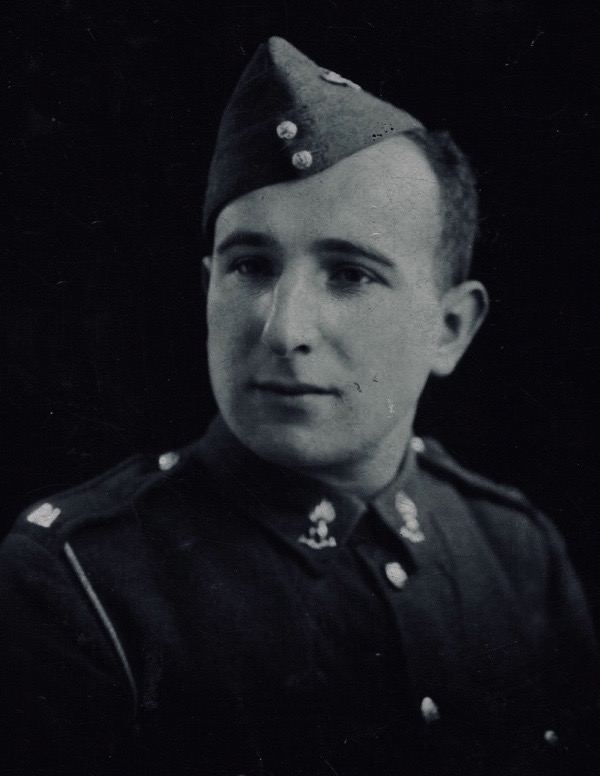
Uncle Jack
I like to remember the happy stories associated with him, like meeting my two young sons with giant Cadbury’s dairy milk bars. His generosity, such as when my mum was in hospital in Epsom, one of the patients needed their trousers mended and my uncle volunteered to do it, and brought them back to him.
His generosity was amplified by my friend Alan. Both were compulsive gamblers. After visiting the racecourse, Alan got off at Charing Cross main line station, a woman approached him and asked him for money. She said she was in a desperate state, so he gave her generously and she wanted to repay him.
One sunny day, Alan was sitting on a bench in Soho when this same woman came and repaid him.

Auntie Tina
Mental health can be a cruel teacher. Sadly, both my mum, Auntie Tina (Uncle Jack’s wife), Uncle Barney, and myself, have all had our share of it. Some can be attributed to circumstances, others to inherent cause but Auntie Tina had both.
Living in a high rise block of flats with disturbing neighbours nearby, being spat at in the lift, social isolation, can only lead to one thing. Her life was shorted much like Uncle Barney’s was.
Tina had come from Lisbon and had known more graceful days. The epiphany of lack of caring support and people hardly knowing neighbours, the ultimate question being, “Who could you ask among them if you have a serious problem?”

Reg & Valerie Parrish
Reg entered Bergen-Belsen concentration camp as part of the liberating forces. After what he saw there, all the dead bodies and Jewish people looking like skeletons, he vowed never to have any children and bring them into this world. Reg kept his word.
His sister, I believe her name was Valerie, was a member of ENSA, that entertained army troops during the war. She said, “We often ran the same risk as the soldiers in the war, and were caught up in shooting and bombing raids.”


Mum & Dad
My mum and dad were among the black cab taxi drivers who took children to the seaside for the day. These were children from care homes. In their case, the children were from Norwood Jewish care home.
The taxis were festooned with balloons and travelled as a long convoy to the seaside. There they had a good time – the children were fed and no doubt got an ice cream! I must admit to being jealous as going to the seaside was such a rare treat. To this day, the event still takes place by London taxi drivers. The Norwood home is I believe now closed though.
You may also like to read about
David Johnson’s Cafes
Tickets are available for my walking tour now
Click here to book your ticket for THE GENTLE AUTHOR’S TOUR OF SPITALFIELDS

Fredson’s Cafe, Alie St
David Johnson took these magnificent photographs of cafes in Kodachrome around 1980, published here for the first time today.
“When I lived in East London, I started this project to photograph some classic cafes, mainly in the East End – but also elsewhere as I came across them in my travels. I think it was the sign-writing and eclectic typography which were the main attractions. I realised that they were not going to be around much longer. Many were run by Italian families who started up in the post-war period. Annoyingly, I did not make a note of the locations – so if you can help, please leave a comment.”
David Johnson

Aeron Cafe

Bridge Cafe

Corner Parlour

Alfredo’s Cafe, Islington

Sign at Alfredo’s Cafe

Flock-In

Gee’s Cafe

George’s Cafe, Whitechapel

The Happy Fillet

Jim’s Cafe, Islington

Jubilee Cafe

Moon & Sixpence Cafe

Norman’s Nosh Bar

Norman’s Nosh Bar

Phyllis’s Cafe

Silvio Cafe

The Ninety Eight

The Village Rest

Viking Cafe

Magno Cafe

Leslie’s Cafe

Crawford Cafe

Cafe

Empire Cafe

Photographs copyright © David Johnson
You may also like to take a look at
David Johnson’s East End
Tickets are available for my walking tour now
Click here to book your ticket for THE GENTLE AUTHOR’S TOUR OF SPITALFIELDS

Liverpool St Station
Shall we take a tour around the East End in the early eighties in the company of David Johnson, courtesy of his wonderful Kodachrome images published here for the first time?
“My interest in London’s history goes back to the late sixties, when as a teenager I would take the train from Oxford and then, using a Red Bus Rover ticket and a copy of Geoffrey Fletcher’s The London Nobody Knows, discover some of the most interesting and off-beat parts of the capital. In 1977, seeking a job after graduating and with a strong interest in photography, I ended up in London selling cameras in Tottenham Court Rd. I first explored the old wharves and docklands before they disappeared and then, after moving to Dalston, the East End. Derelict buildings, faded signs, architecture on a human scale are all things which I liked to photograph then – and still do today.”
David Johnson
 Liverpool St Station
 Liverpool St Station
 Liverpool St Station

Artillery Lane

Brushfield St

Christ Church Spitalfields

Fashion St

Spitalfields barber

Hanbury St

Brick Lane

Homeless men in Spitalfields

The City from Spitalfields

Whitechapel Market

Wapping Police Station

Wapping

St Paul’s School, Wellclose Sq

Wapping High St

River Plate Wharf

Wapping

Wapping Pier Head

The Gun, Isle of Dogs

The Black Horse, Limehouse

Grove Place, Hackney

Empress Coaches, Hackney

Regent’s Canal

Cat & Mutton Bridge

Broadway Market

Broadway Market

George Tallet, Fishmonger, Hackney

Carr’s Pet Stores, Hackney

Trederwen Rd, Hackney
Photographs copyright © David Johnson
Dorothy Annan’s Murals
Tickets are available for my walking tour now
Click here to book your ticket for THE GENTLE AUTHOR’S TOUR OF SPITALFIELDS

1. Radio communications and television
Wandering down under Holborn Viaduct years ago, I was halted in my tracks by the beauty of a series of nine large ceramic murals upon the frontage of Eric Bedford’s elegant modernist Fleet House of 1960 at 70 Farringdon St. Their lichen and slate tones suited the occluded afternoon and my mood. Yet even as I savoured their austere grace, I raised my eyes to discover that the edifice was boarded up prior to demolition.
Thankfully, the murals were moved to a new location in the Barbican – where they lighten a gloomy passage and bring joy to thousands every day, both residents of the estate and visitors to the arts centre alike.
Each of the murals was constructed of forty bulky stoneware panels and it was their texture that first drew my attention, emphasising the presence of the maker. Framed in steel and set in bays defined by pieces of sandstone, this handcrafted modernism counterbalanced the austere geometry of the building to sympathetic effect.
Appropriately for the telephone exchange where the first international direct-dialled call was made – by Lord Mayor of London Sir Ralph Perring to Monsieur Jacques Marette, the French Minister of Posts, Telegraphs and Telephones in Paris at 11am on 8th March 1963 – these reliefs celebrated the wonders of communication as an heroic human endeavour. In 1961, the General Post Office Telephonist Recruitment Centre was housed there at Fleet House and they paid telephonists £11 week, plus a special operating allowance of six shillings and threepence for those employed on the international exchange.
These appealing works, enriching the urban landscape with a complex visual poetry, were created by Dorothy Annan (1908-1983) a painter and ceramicist with a Bohemian reputation who, earlier in the century, produced pictures in a loose post-impressionist style and was married to the sculptor Trevor Tennant. Although her work is unapologetic in declaring the influence of Ben Nicholson and Paul Klee, she succeeded in constructing a personal visual language which is distinctive and speaks across time, successfully tempering modernism with organic forms and a natural palette.
It was the abstract qualities of these murals that first caught my eye, even though on closer examination many contain figurative elements, illustrating aspects of communication technology – motifs of aerials and wires which are subsumed to the rhythmic play of texture and tone.
Once a proud showcase for the future of telecommunications, Fleet House had been empty for years and was the property of Goldman Sachs who won permission to demolish it for the construction of a ‘banking factory.’ I feared that the murals might go the same way as Dorothy Annan’s largest single work entitled ‘Expanding Universe’ at the Bank of England which was destroyed in 1997.
Yet the City of London planning authority earmarked the murals for preservation as a condition of any development. And today, you can visit them at the Barbican where they have found a sympathetic new permanent home, complementing the modernist towers, bringing detail and subtle colour to enliven this massive complex. The age of heroic telephony may have passed but Dorothy Annan’s murals survive as a tribute to it.

2. Cables and communication in buildings
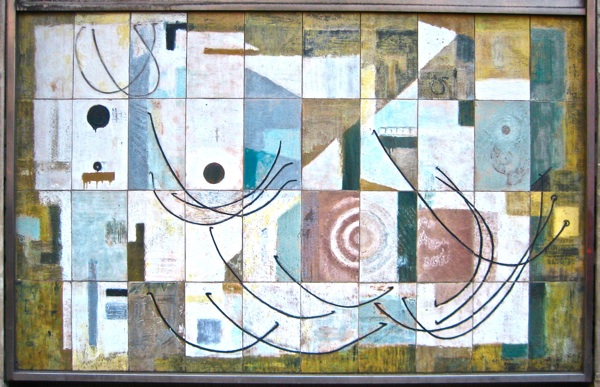
3. Test frame for linking circuits

4. Cable chamber with cables entering from street

5. Cross connection frame

6. Power and generators

7. Impressions derived from the patterns produced in cathode ray oscilligraphs used in testing

8. Lines over the countryside

9. Overseas communication showing cable buoys


Dorothy Annan’s murals upon Fleet House, Farringdon St, November 2011

Dorothy Annan’s murals at the Barbican Centre
You might also like to take a look at
Philip Lindsay Clark’s Sculptures in Widegate St
Whitechapel Lads
Tickets are available for my walking tour now
Click here to book your ticket for THE GENTLE AUTHOR’S TOUR OF SPITALFIELDS

These portraits were taken around 1900 at the Working Lads Institute, known today as the Whitechapel Mission. Founded in 1876, the Institute offered a home to young men who had been involved in petty criminal activity, rehabilitating them through working at the Mission which tended to the poor and needy in Whitechapel. Once a lad had proved himself, he was able to seek independent employment with the support and recommendation of the Institute.


The Working Lads Institute was the first of its kind in London to admit black people and Rev Thomas Jackson, the founder, is pictured here with five soldiers at the time of World War I

Stained glass window with a figure embodying ‘Industry’ as an inspiration to the lads

In the dormitory

Rev Thomas Jackson & the lads collect for the Red Cross outside the Mission

Click here to learn more about The Whitechapel Mission
You may also like to take a look at
George Parrin, Ice Cream Seller
Tickets are available for my walking tour now
Click here to book your ticket for THE GENTLE AUTHOR’S TOUR OF SPITALFIELDS

‘I’ve been on a bike since I was two’
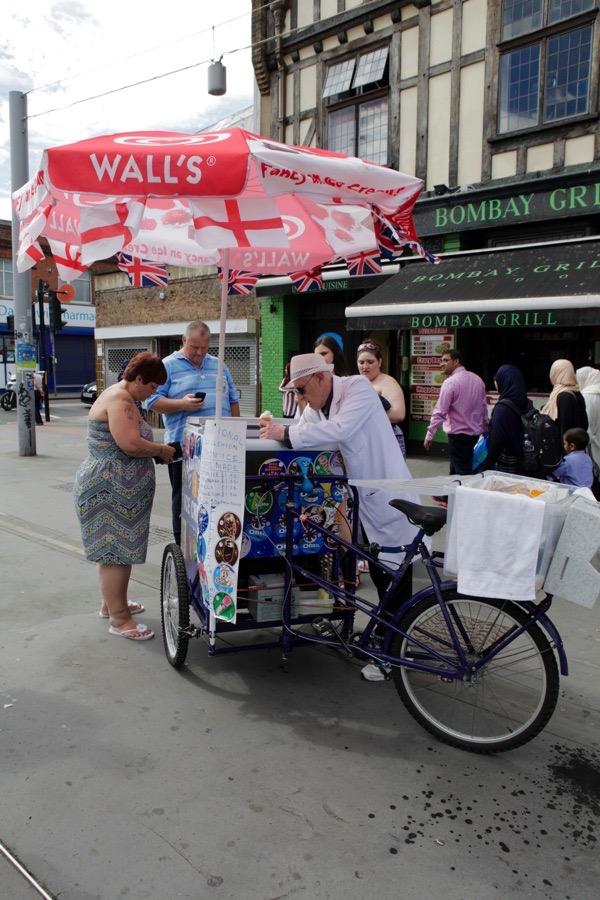
I first encountered Ice Cream Seller, George Parrin, coming through Whitechapel Market on his bicycle. Even before I met him, his cry of ‘Lovely ice cream, home made ice cream – stop me and buy one!’ announced his imminent arrival and then I saw his red and white umbrella bobbing through the crowd towards us. George told me that Whitechapel is the best place to sell ice cream in the East End and, observing the looks of delight spreading through the crowd, I witnessed the immediate evidence of this.
Such was the demand on that hot summer afternoon that George had to cycle off to get more supplies, so it was not possible for me to do an interview. Instead, we agreed to meet next day outside the Beigel Bakery on Brick Lane where trade was a little quieter. On arrival, George popped into the bakery and asked if they would like some ice cream and, once he had delivered a cup of vanilla ice, he emerged triumphant with a cup of tea and a salt beef beigel. ‘Fair exchange is no robbery!’ he declared with a hungry grin as he took a bite into his lunch.
“I first came down here with my dad when I was eight years old. He was a strongman and a fighter, known as ‘Kid Parry.’ Twice, he fought Bombardier Billy Wells, the man who struck the gong for Rank Films. Once he beat him and once he was beaten, but then he beat two others who beat Billy, so indirectly my father beat him.
In those days you needed to be an actor or entertainer if you were in the markets. My dad would tip a sack of sand in the floor and pour liquid carbolic soap all over it. Then he got a piece of rotten meat with flies all over it and dragged it through the sand. The flies would fly away and then he sold the sand by the bag as a fly repellent.
I was born in Hampstead, one of thirteen children. My mum worked all her life to keep us going. She was a market trader, selling all kinds of stuff, and she collected scrap metal, rags, woollens and women’s clothes in an old pram and sold it wholesale. My dad was to and fro with my mum, but he used to come and pick me up sometimes, and I worked with him. When I was nine, just before my dad died, we moved down to Queens Rd, Peckham.
I’ve been on a bike since I was two, and at three years old I had my own three-wheeler. I’ve always been on a bike. On my fifteenth birthday, I left school and started work. At first, I had a job for a couple of months delivering meat around Wandsworth by bicycle for Brushweilers the Butcher, but then I worked for Charles, Greengrocers of Belgravia delivering around Chelsea, and I delivered fruit and vegetables to the Beatles and Mick Jagger.
At sixteen years old, I started selling hot chestnuts outside Earls Court with Tony Calefano, known as ‘Tony Chestnuts.’ I lived in Wandsworth then, so I used to cycle over the river each day. I worked for him for four years and then I made my own chestnut can. In the summer, Tony used to sell ice cream and he was the one that got me into it.
I do enjoy it but it’s hard work. A ten litre tub of ice cream weighs 40lbs and I might carry eight tubs in hot weather plus the weight of the freezer and two batteries. I had thirteen ice cream barrows up the West End but it got so difficult with the police. They were having a purge, so they upset all my barrows and spoilt the ice cream. After that, Margaret Thatcher changed the law and street traders are now the responsibility of the council. The police here in Brick Lane are as sweet as a nut to me.
I bought a pair of crocodiles in the Club Row animal market once. They’re docile as long as you keep them in the water but when they’re out of it they feel vulnerable and they’re dangerous. I can’t remember what I did with mine when they got large. I sell watches sometimes. If anybody wants a watch, I can go and get it for them. In winter, I make jewellery with shells from the beach in Spain, matching earrings with ‘Hello’ and ‘Hola’ carved into them. I’m thinking of opening a pie and mash shop in Spain.
I am happy to give out ice creams to people who haven’t got any money and I only charge pensioners a pound. Whitechapel is best for me. I find the Asian people are very generous when it comes to spending money on their children, so I make a good living off them. They love me and I love them.”




Photographs copyright © Estate of Colin O’Brien
You might also like to read about
Matyas Selmeczi, Silhouette Artist


