
At S. Festenstein & Sons, Furriers
Click here to book for my tours through August, September and October
Click here to buy tour gift vouchers for your family and friends
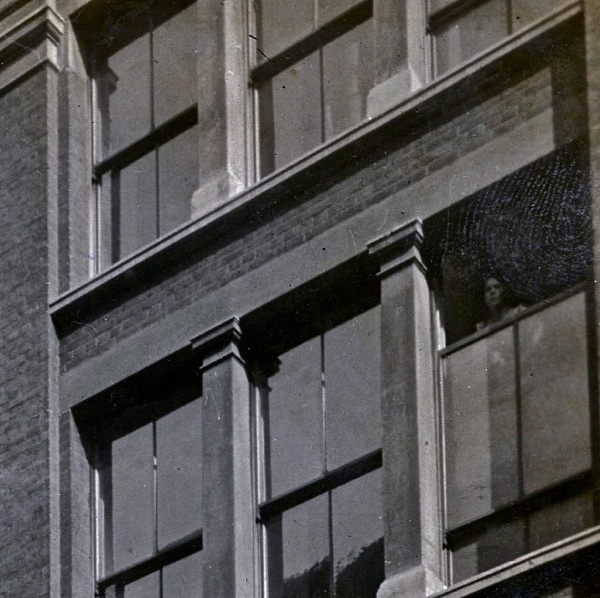
Observe this young woman peering from the upper window of S.Festenstein & Sons in Banner St, Bunhill Row, around 1900. She looks a little precarious, as if she had climbed up onto a table in her curiosity to look down at the photographer below. She did not know that Mr Festenstein was standing in the doorway in his top hat, three floors below, and I wonder if any comment was made when the photograph was shown to the proprietor later. Yet she had won her place in eternity, which is surely a satisfactory outcome from taking a five minute break?
Danny Tabi, the last furrier in the East End, told me that in 1967 he worked at Gale Furs in Fournier St, when James Mason was filming The London Nobody Knows in the street outside. There is a famous tracking shot that captures all the factory workers as they crowd the pavement and lean from the windows. Danny can name all of them and now regrets that – unlike the woman at Festensteins – he forsook his opportunity to be captured on film, just because he wanted to finish his piece of work in hand.
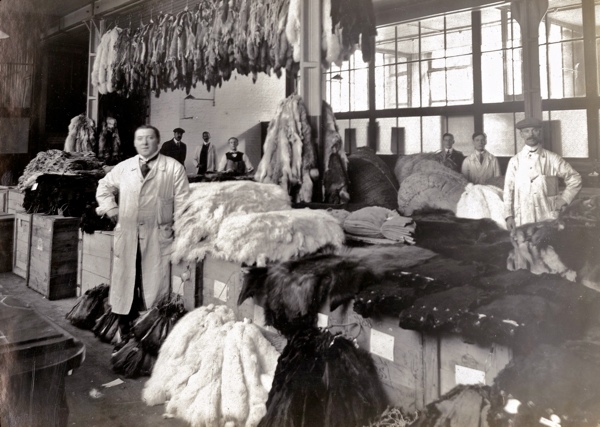
The fur trade flourished in East London for centuries, working with imported skins that came through the London Docks – and these photographs of Festenstein & Sons, one among hundreds of similar companies, record a trade that no longer suits the sensibility of our modern world and has almost vanished entirely today.
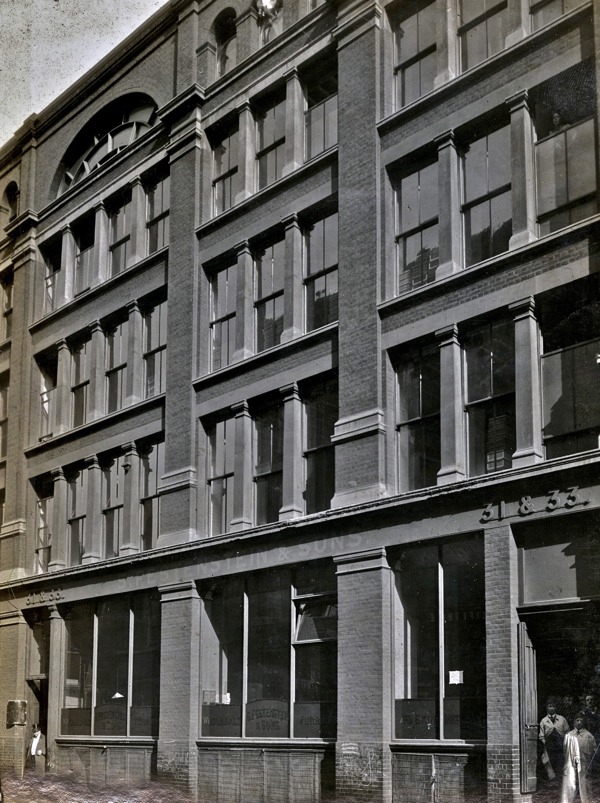
S. Festenstein & Sons, 31 & 33, Banner St, Bunhill Row, EC1
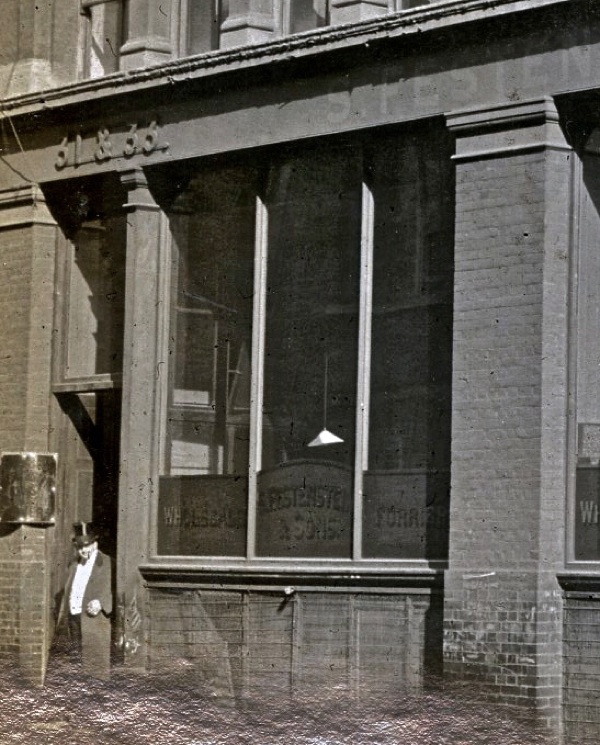
Is this Mr Festenstein in his silk hat?
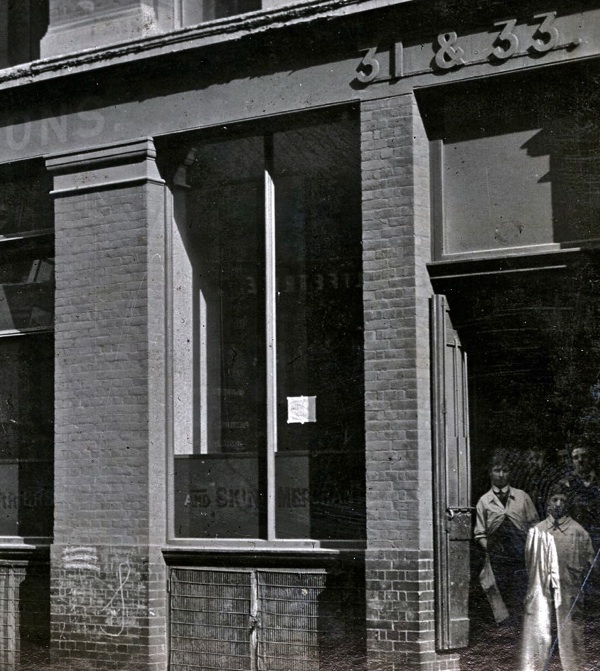
Factory workers step outside to watch the photographer
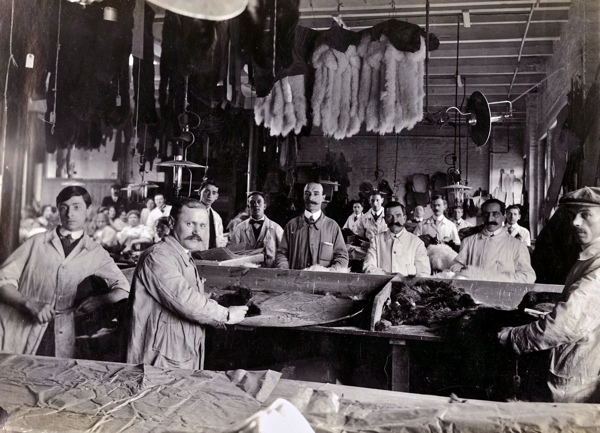
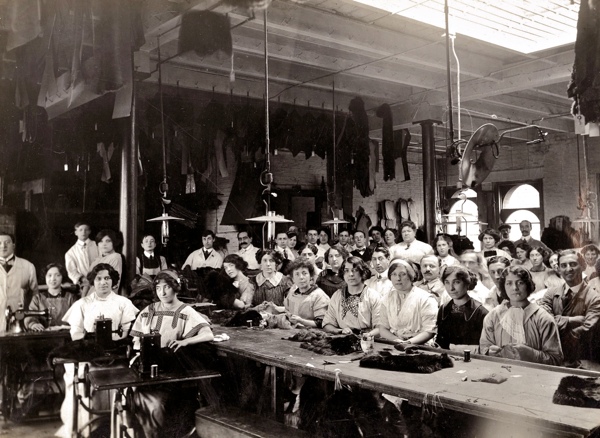
In the Factory
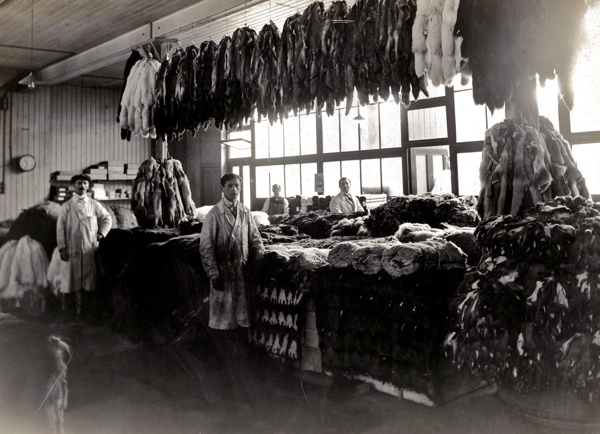
In the Skin Department
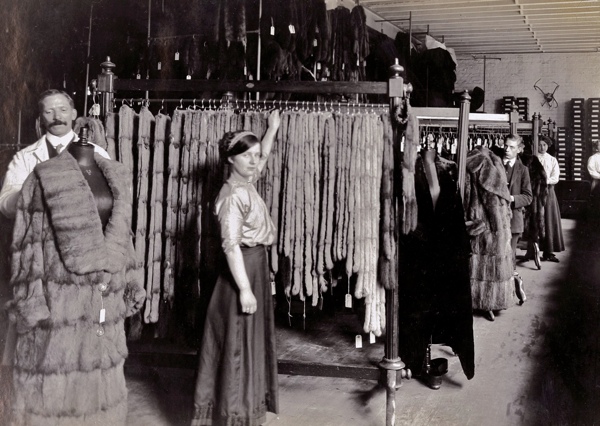
In the Showroon
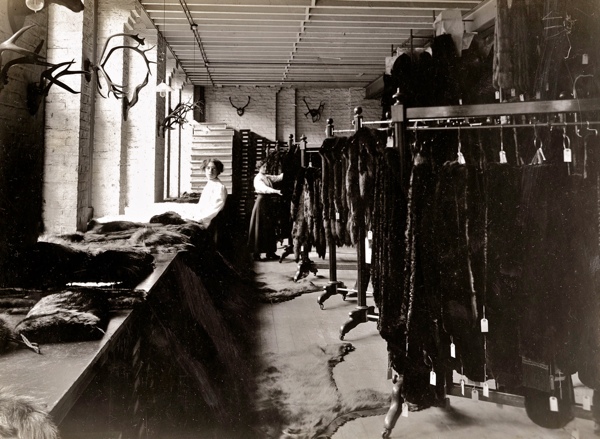
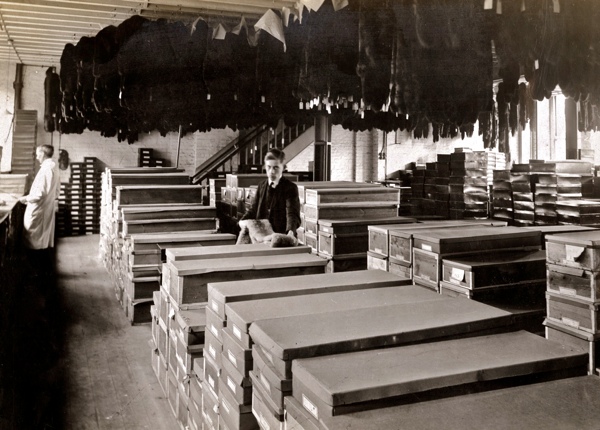
Home Order Department
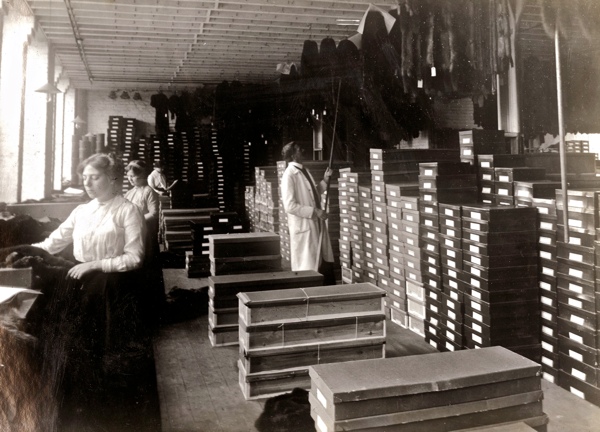
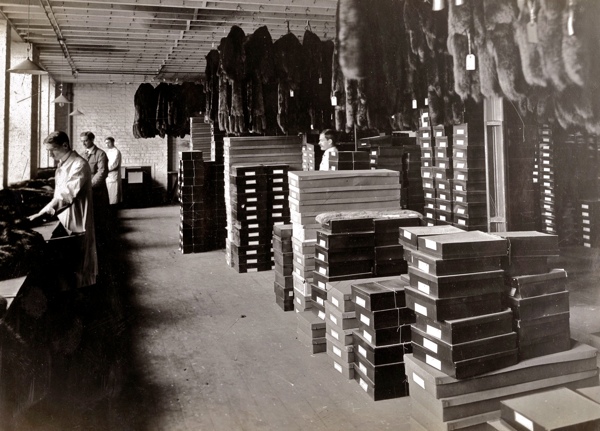
Overseas Order Department
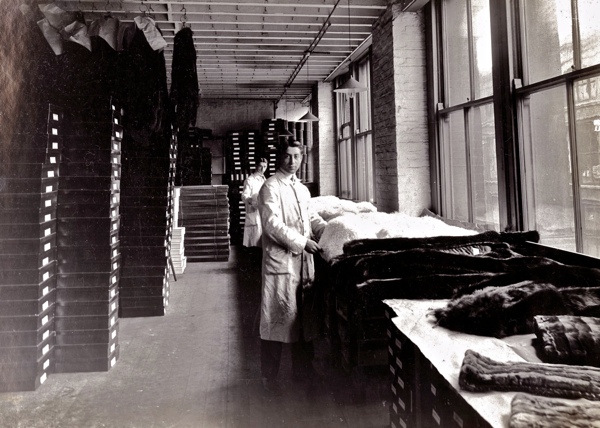
Images courtesy Bishopsgate Institute
You may also like to read about
Jimmy’s London
Click here to book for my tours through August, September and October
Click here to buy tour gift vouchers for your family and friends
Excerpts from ‘This is London‘ produced as a guide for servicemen & women in 1944
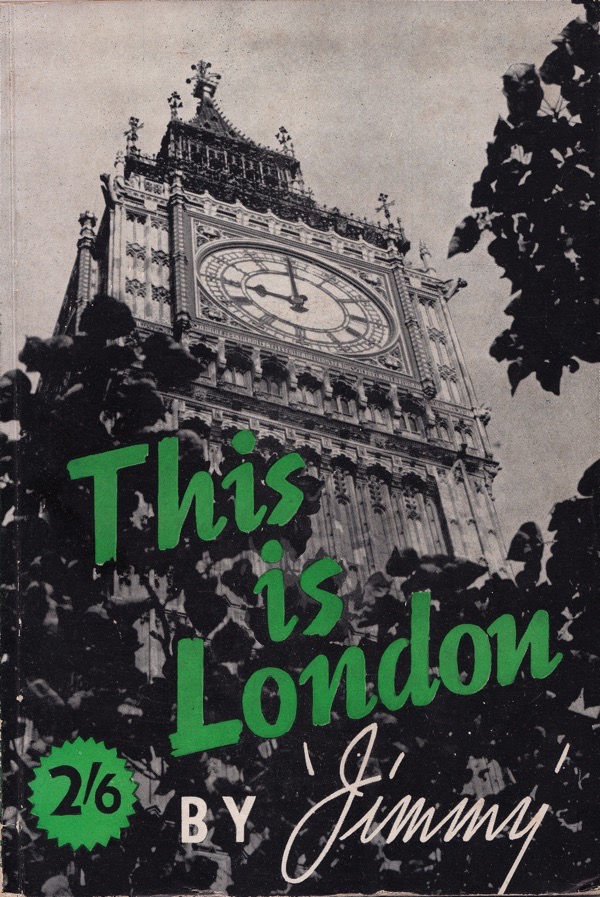
In these war-time days, when official guide books are not obtainable, a quiet perusal of ‘This is London’ will be of inestimable service to visitors, making a ‘leave in London’ something memorable and, as Jimmy says, well worth keeping a diary of.
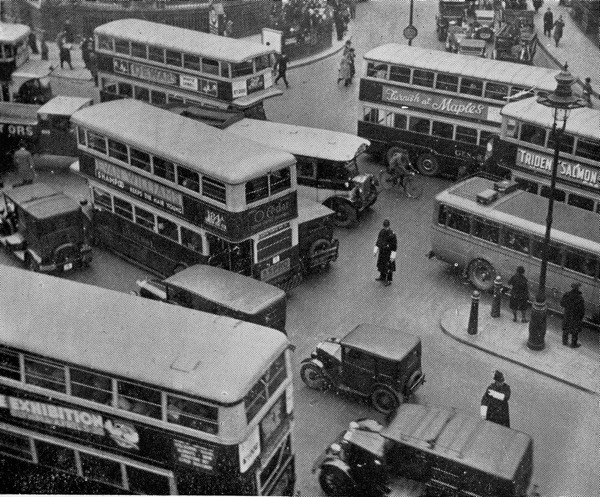
“..to the Bank..”
I don’t know anything about London and the sooner I set out to learn the better and the quicker I’ll know it. There’s only one way to learn about any town and that is to walk as much as you can. It’ll knock some of the strangeness out of you. You won’t feel you’re a stranger in the place. You won’t feel as if everyone is looking at you and telling themselves that you are a stranger. Believe me, it’ll help you feel a lot better.
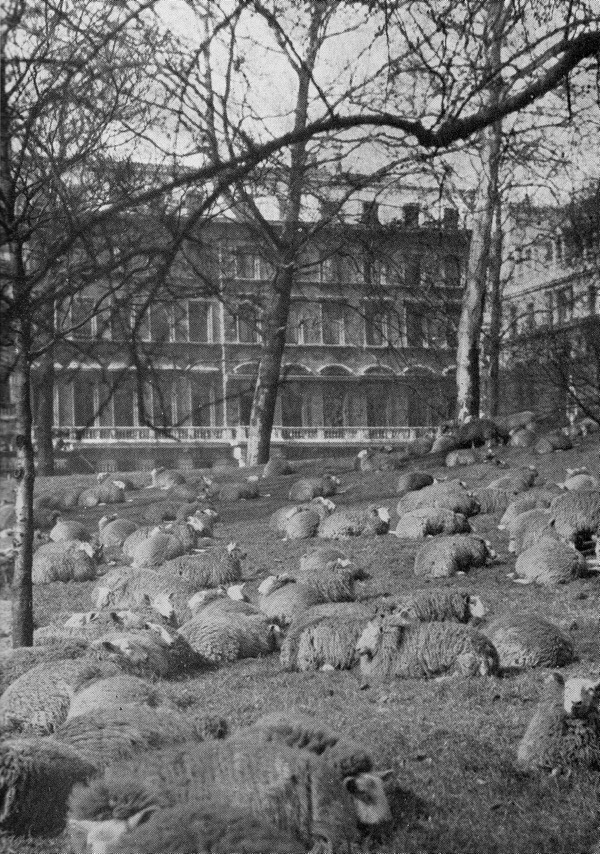
The Green Park
I wanted to walk along the pavements, to watch the people, to visit places whose names were so familiar to everyone in the world. Talk about walking the paths of history, I was tickled pink.
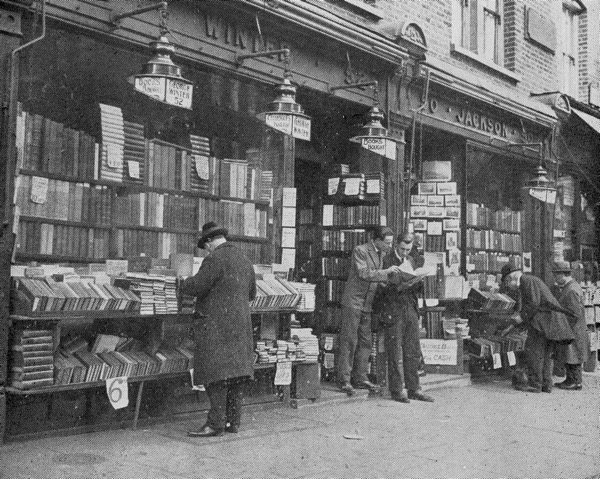
“…Charing Cross Rd as a Free Library…”
Whether you are a reader on no, it is well worth spending a few minutes, few hours for that matter, watching the various types of people who stand, hour after hour, at the bookshops, browsing. I’m firmly convinced that very many Londoners regard Charing Cross Rd as a Free Library, and I’m equally certain that booksellers look benignly on these non-profitable customers.
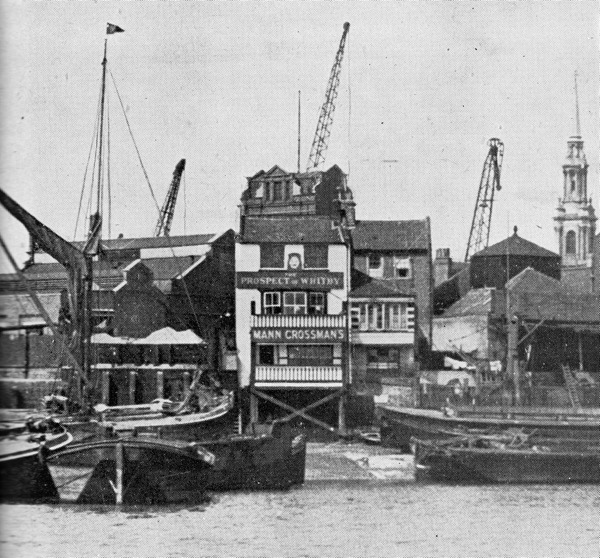
“…down Wapping Way..”
To find funny little pubs with funny little bars and mix with all kinds of people, I think it’s the wisest thing anyone could do and it’s what I’ve always longed to try. There are no tough spots. Go to the poorest quarter in the East End and you’ll meet with politeness. Go into a pub down by the docks. It may not be luxurious, but you’ll find that everyone is nice there. You’ll hear the occasional ‘damn’ and, if there’s no women in the place, you’ll hear much worse.
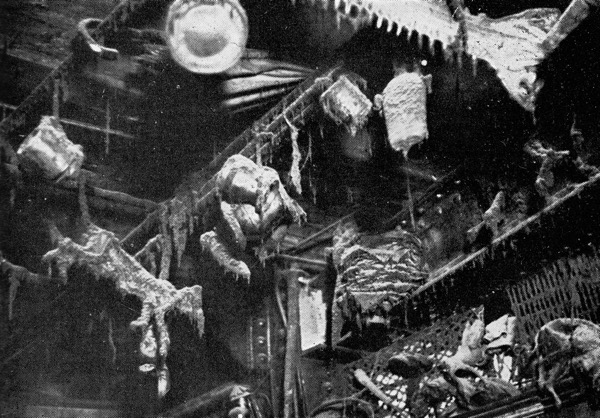
Dirty Dick’s I won’t forget in a hurry. A unique place if ever there was one. I think the story of the original landlord who allowed everything to get into such a disgusting state of dirt and cobwebs is more or less fictitious. It’s quite close to Liverpool St Station and, although it, like many other place, received some damage during the blitz, the landlord still carries on, just as do all other Londoners.
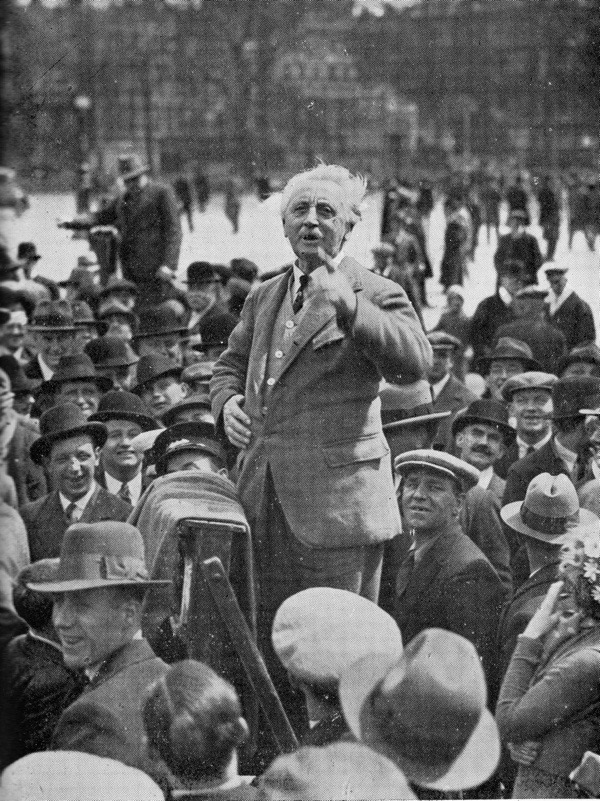
In Hyde Park, some of the orators take their job very seriously, others look upon it as a kind of rag, entering into cross-talk with their audiences with such obvious pleasure. I don’t think I would like to be an earnest speaker there for occasionally the heckling is terrific. How these speakers can possibly hope to make themselves heard, speaking as they do one against the other, is more than I can understand.
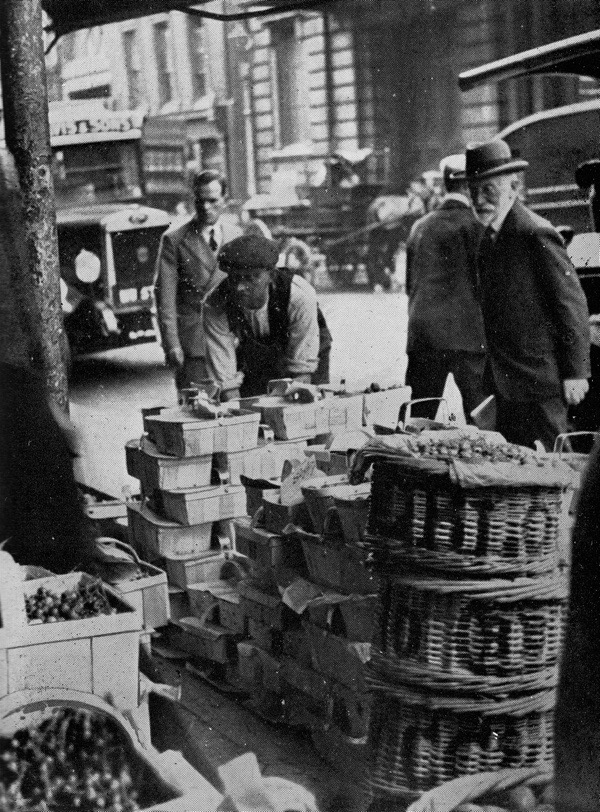
I went to Covent Garden Market and tried to understand what it was all about, tried to make sense of what the salesmen were saying. They have a jargon all their own while the porters astonished me by throwing enormous weights about with a nonchalance that is truly amazing.
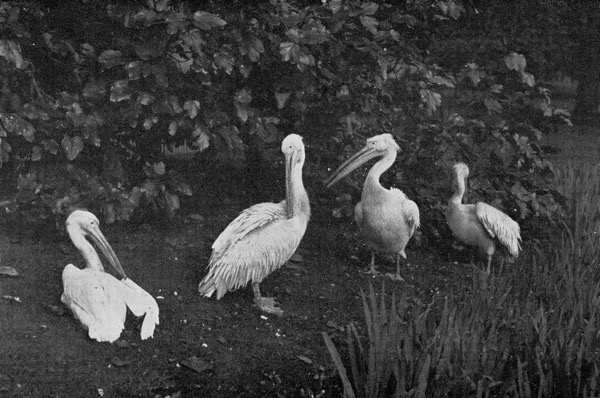
In St James’ Park
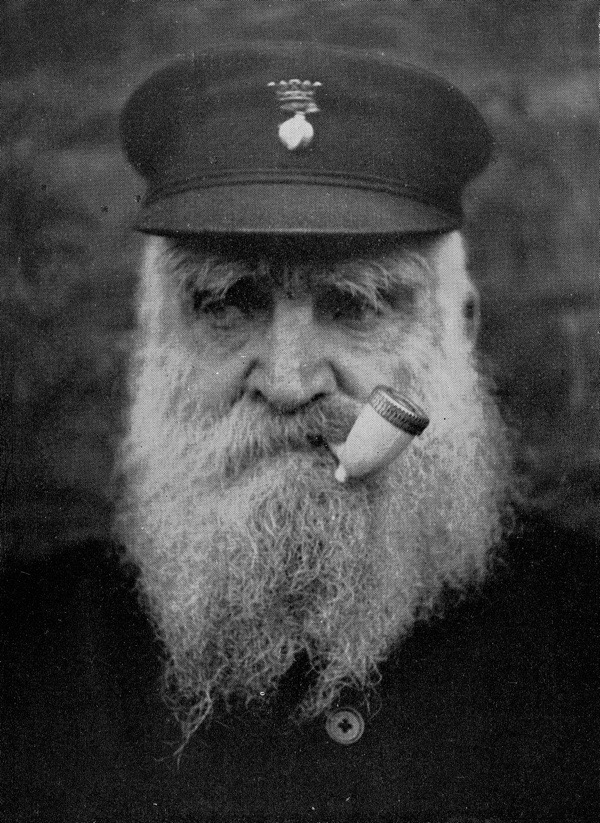
Where else but in London could one see the unexpected glimpse of a State trumpeter, his tunic, the scarlet and gold of medieval pageantry, glinting in the sun – and the inscrutable eyes of an aged Chelsea Pensioner who watched him fixedly?
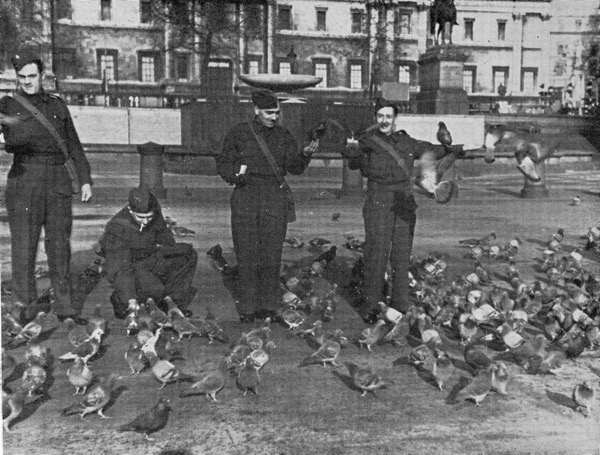
Of course, I’ve read my Pepys and that gives a very fair picture, but while I’m fond of seeing historical buildings, links with the past so to speak, I much prefer the present.
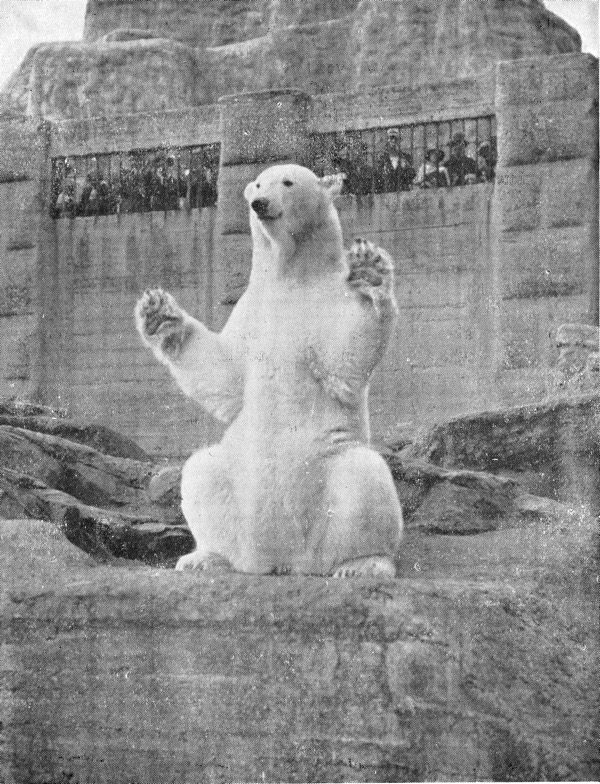
A fellow would have to be dead from the neck up if he couldn’t enjoy the London Zoo. The Zoo is obviously a Londoner’s playground, everyone is eager to see as much as possible and the groups around each cage or enclosure become, for the moment, a band of friends.
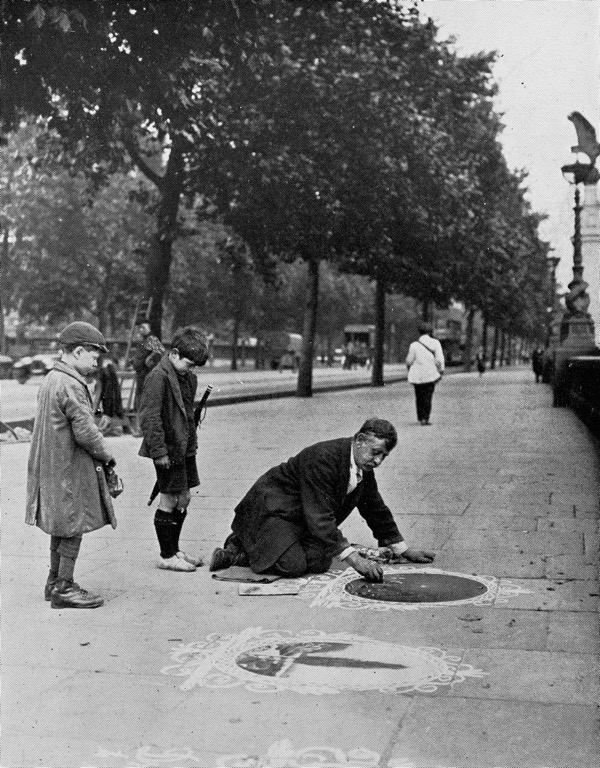
The Embankment where artists in chalk ply their trade and pray for fair weather …
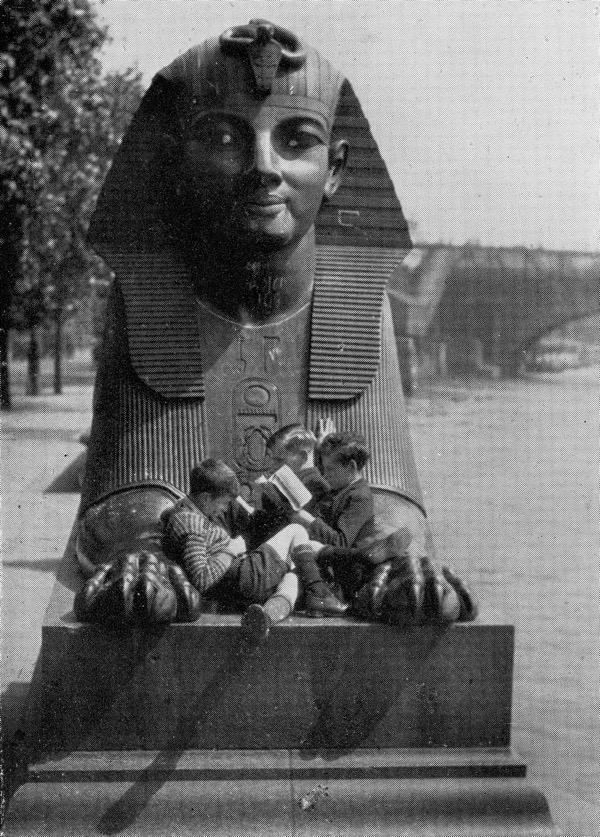
… and schoolboys read ‘penny dreadfuls’ in the shadow of mysterious Egypt.
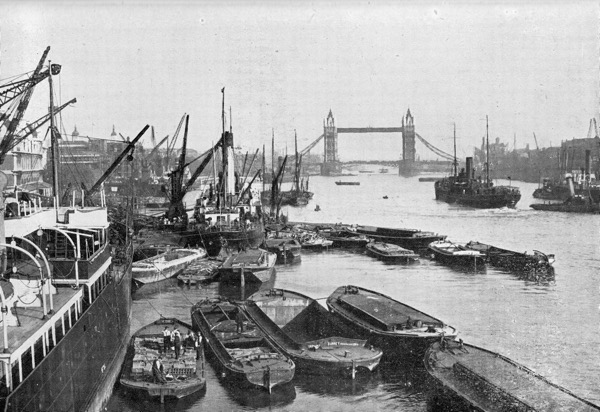
Thankyou London, for all those memories. Thankyou London!
London Salt-Glazed Stoneware
Click here to book for my tours through August, September and October
Click here to buy tour gift vouchers for your family and friends
As one who thought nobody else shared my passion for old salt-glazed stoneware, I was overjoyed when Philip Mernick granted me the opportunity to photograph these fine examples from his vast and historically-comprehensive collection which is greatly superior to my modest assembly.
In London, John Dwight of Fulham ascertained the method of the salt glaze process for rendering earthenware impermeable in 1671, thus breaking the German monopoly on Bellarmine jugs. Yet it was Henry Doulton in the nineteenth century who exploited the process on an industrial scale in Lambeth, especially in the profitable fields of bottle-making and drainpipes, before starting the manufacture of art pottery in 1870.
It is the utilitarian quality of this distinctive London pottery that appeals to me, lending itself to a popular style of decoration which approaches urban folk art. “I like it for its look,” Philip Mernick admitted , “but because nothing is marked until the late nineteenth century, it’s the mystery that appeals to me – trying to piece together who made what and when.”

Jug by Vauxhall Pottery 1810
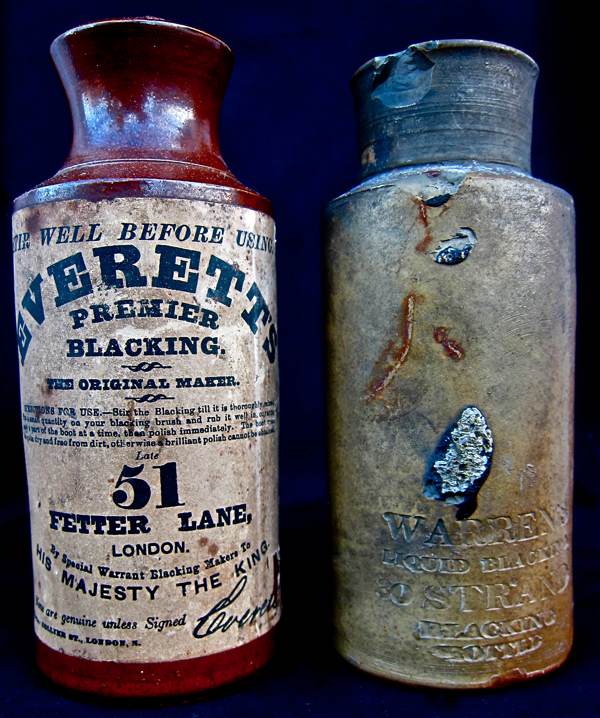
Blacking bottles – Everett 1910 & Warren 1830 (where Dickens worked as a boy)
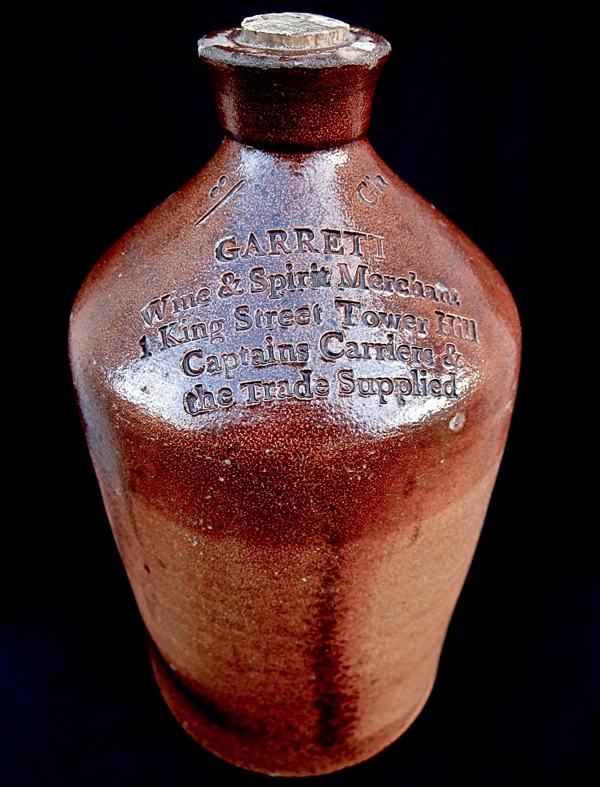
Gin Flagon, Fulham Pottery c. 1840
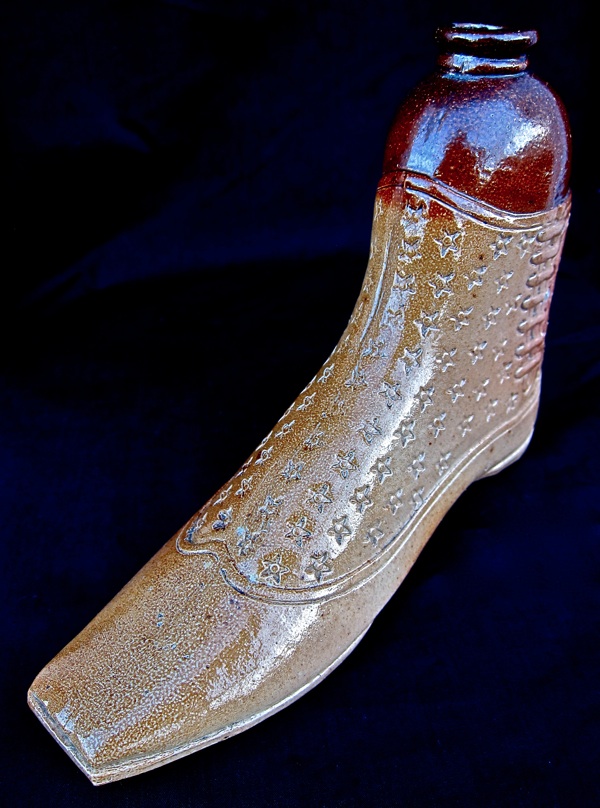
Spirit Flask in the shape of a boot by Deptford Stone Pottery c. 1840
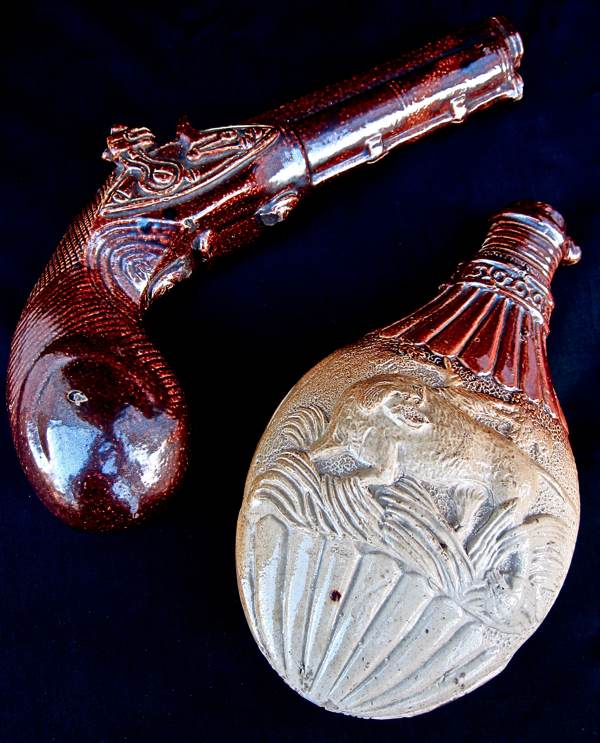
Spirit flask in the shape of a pistol by Stephen Green and in the shape of a powder flask by Thomas Smith of Lambeth Pottery c. 1840
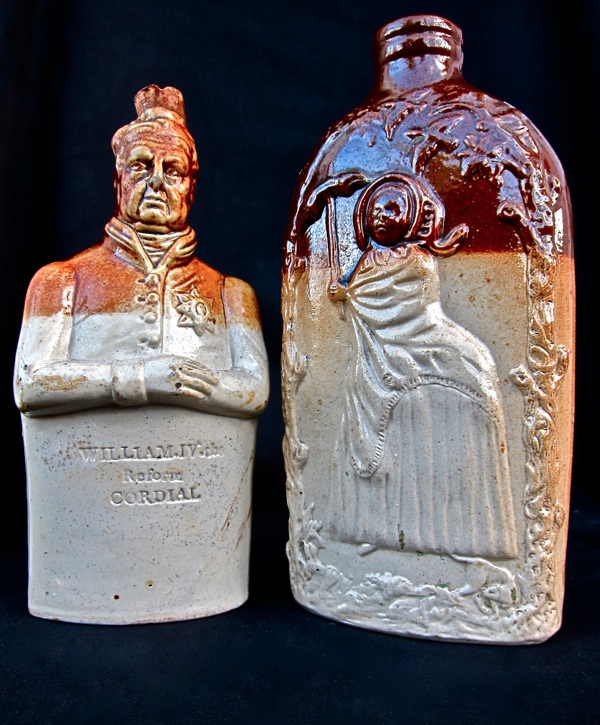
Reform flasks – Wiliam IV Reform flask by Doulton & Watts, eighteen- thirties, and Mrs Caudle flask by Brayne of Lambeth, eighteen-forties
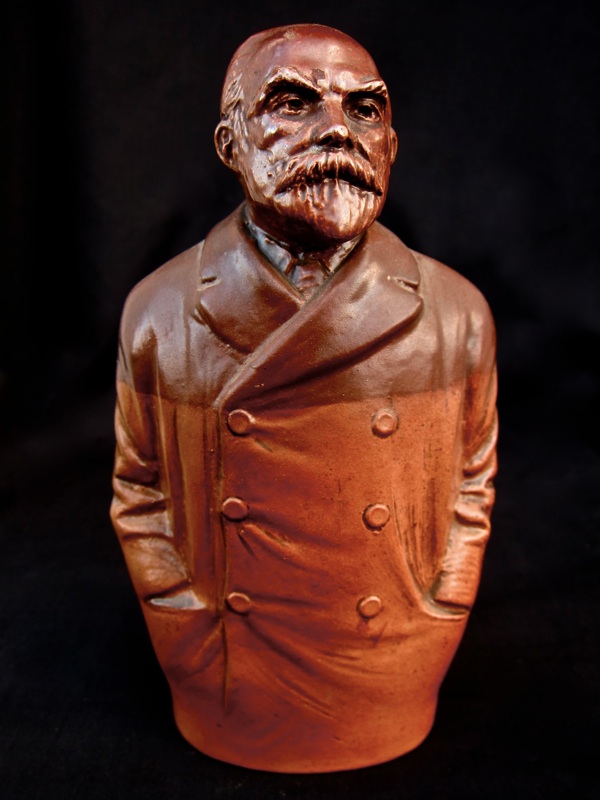
Spirit flask of John Burns, Docks Union Leader, Doulton Pottery 1910
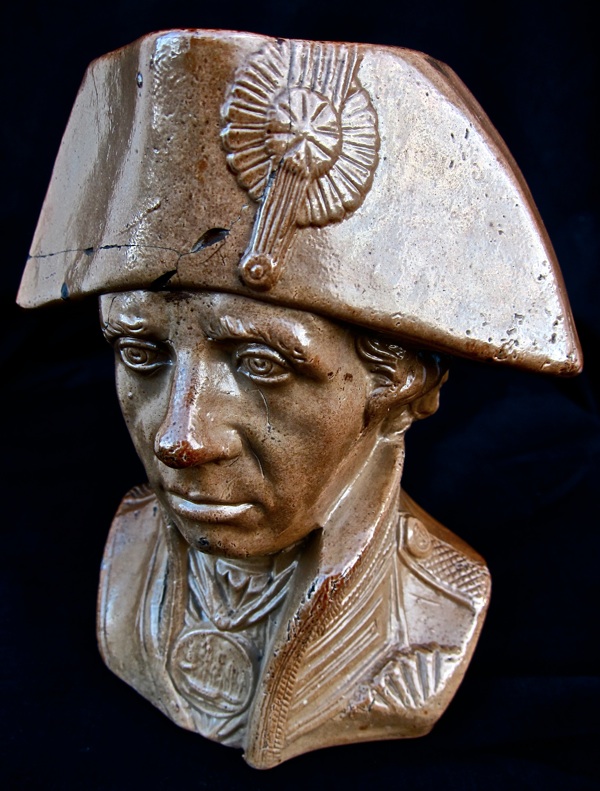
Nelson jug by Doulton & Watts 1830
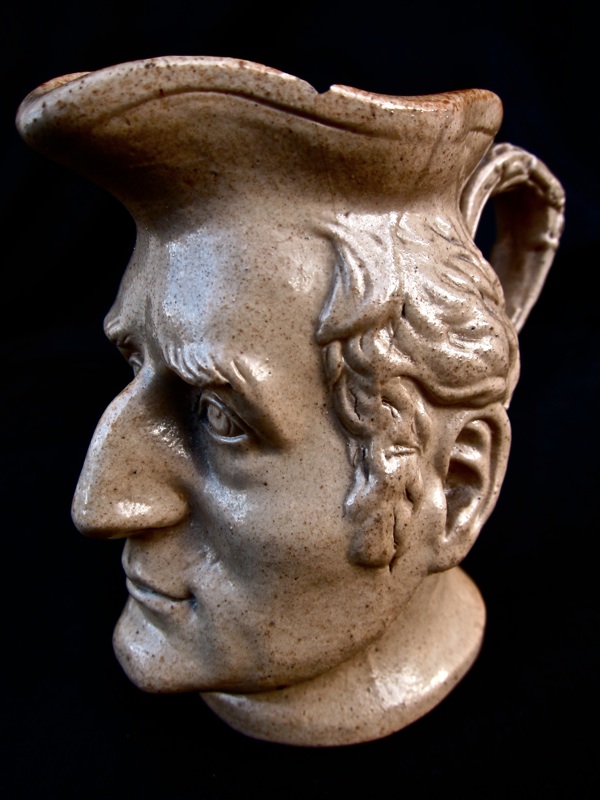
Duke of Wellington jug by Stephen Green of Lambeth Pottery 1830
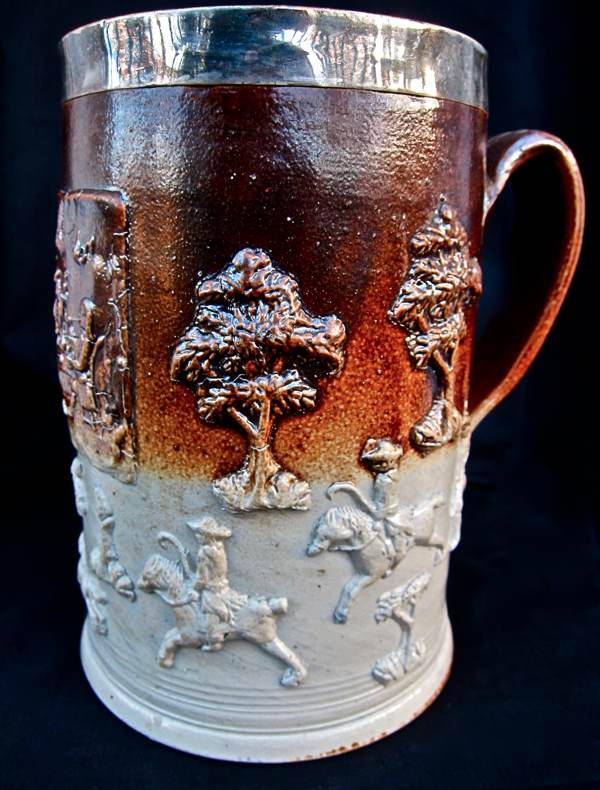
Mortlake Pottery Tankard, seventeen-nineties
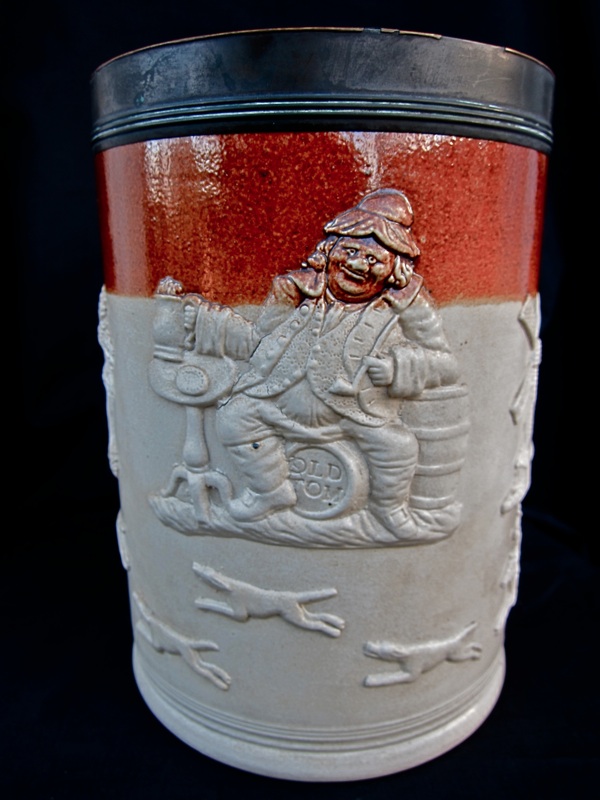
Old Tom figure upon a Fulham Pottery Tankard c. 1830
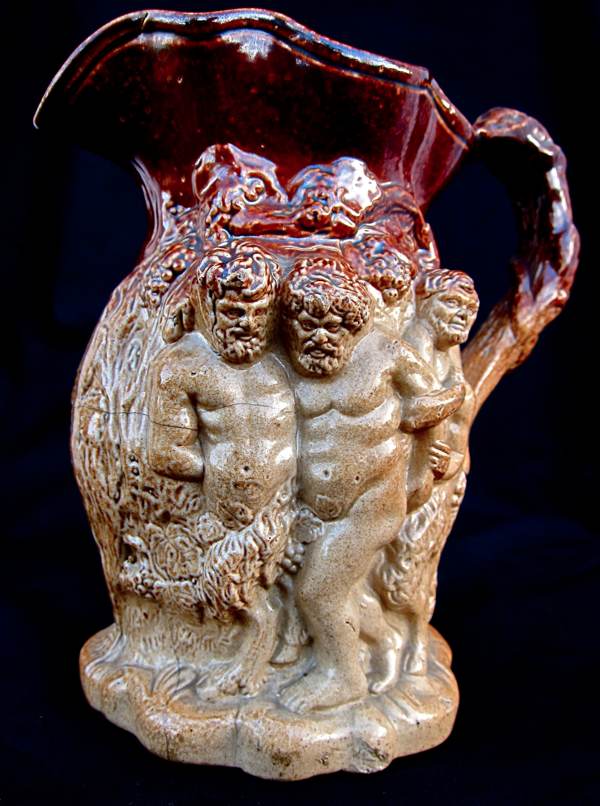
Silenus jug by Stephen Green of Lambeth Pottery c. 1840
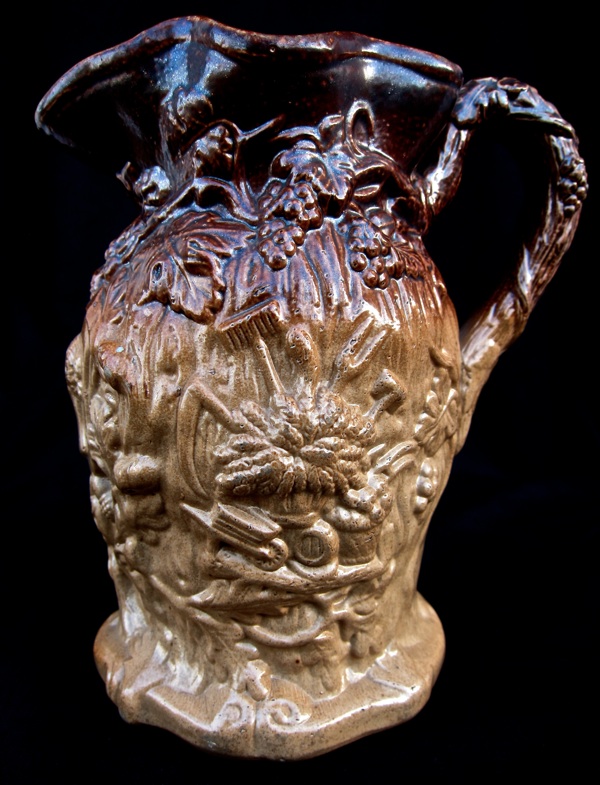
Victoria & Albert jug by Stephen Green of Lambeth Pottery 1840
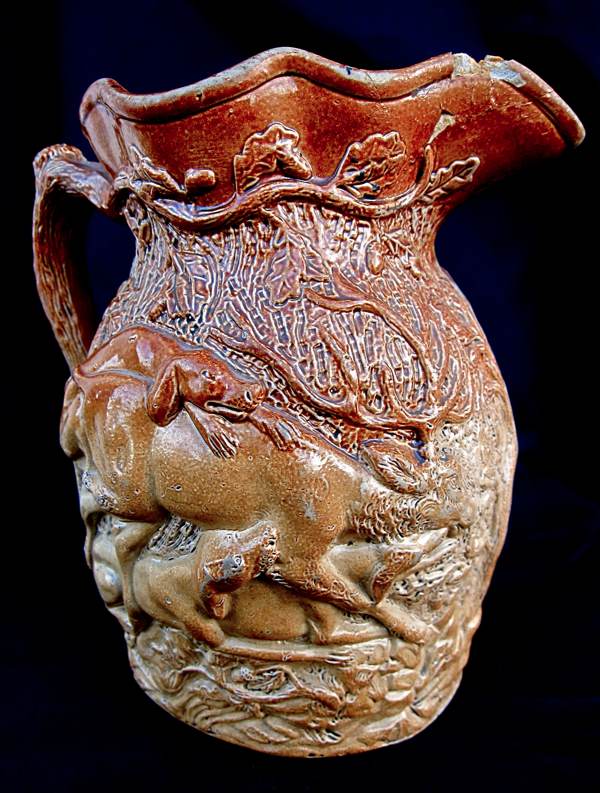
Stag hunt jug by Doulton & Watts c. 1840
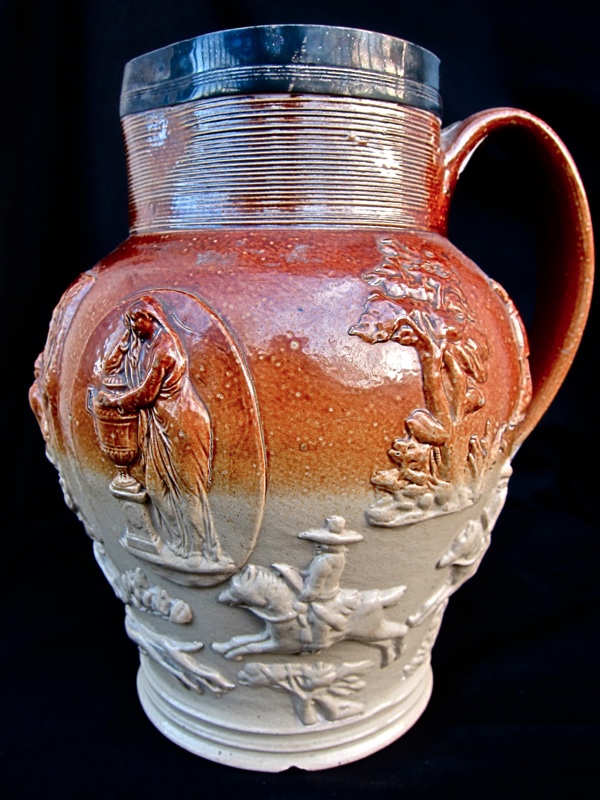
Mortlake Pottery jug, seventeen-nineties
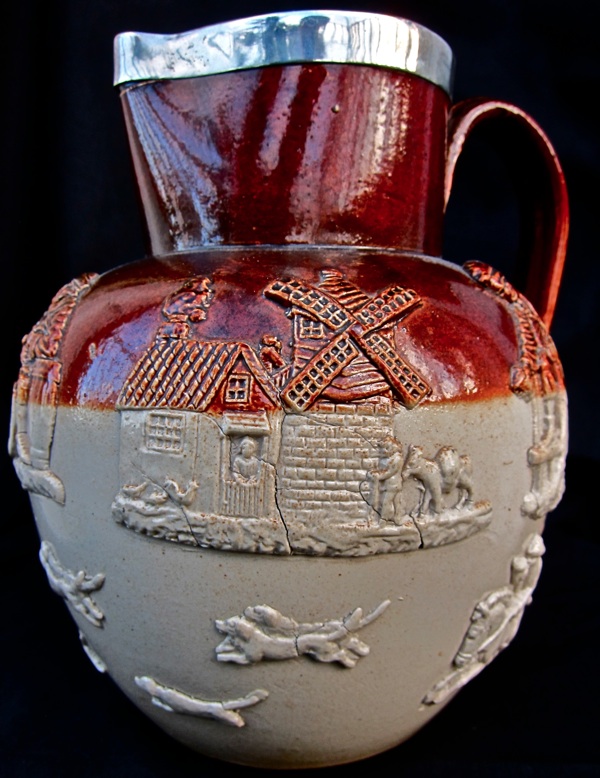
Doulton jug hallmarked 1882
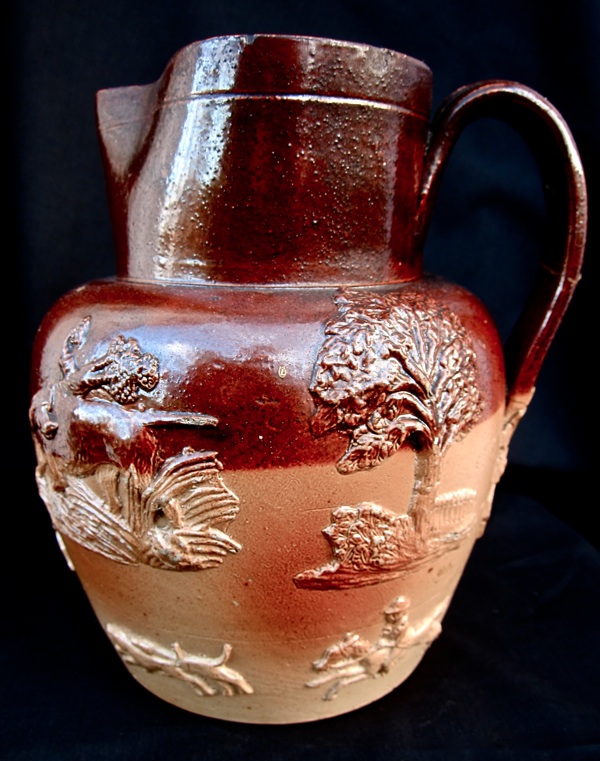
Jug by Thomas Smith of Lambeth Pottery 1840
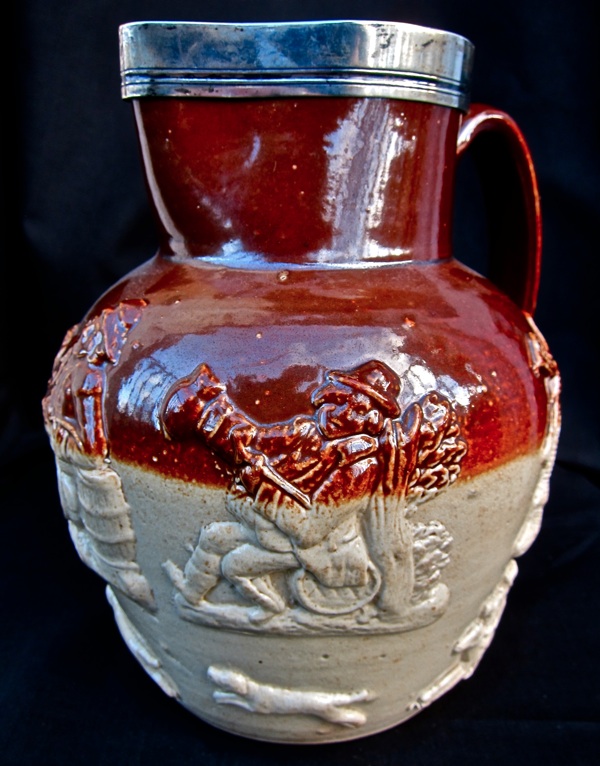
Fulham Pottery jug c. 1830
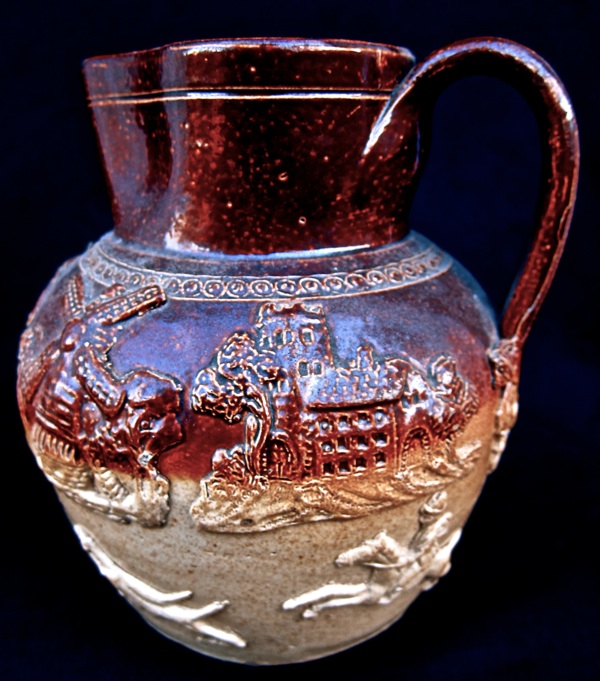
Stiff Pottery jug c. 1850
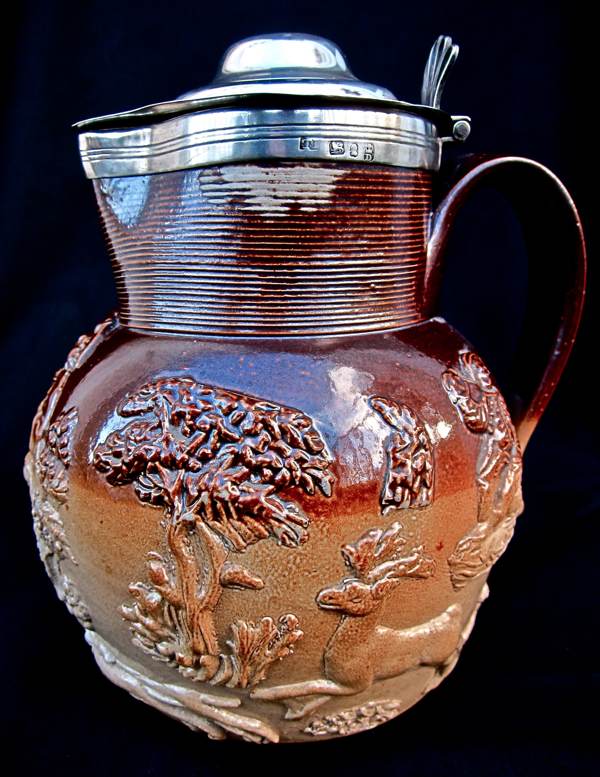
Mortlake Pottery jug 1812
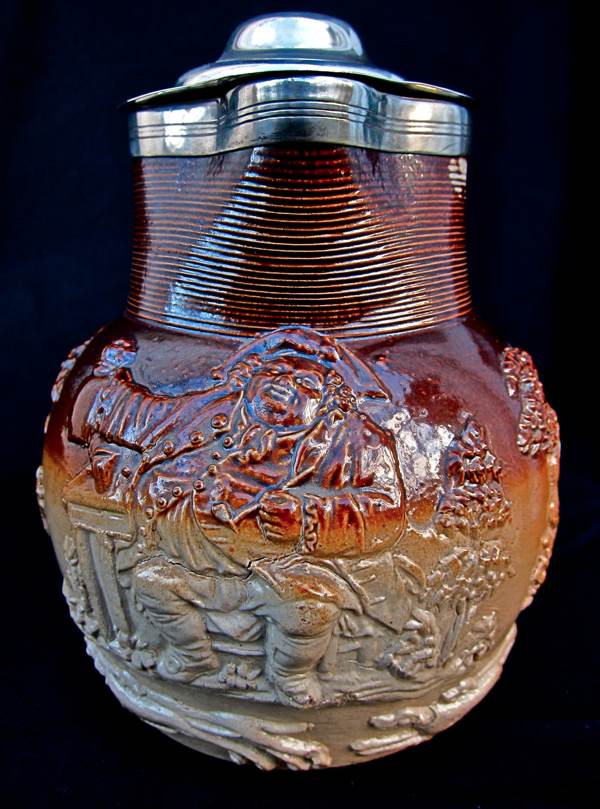
Figure of Toby Philpot on Mortlake jug
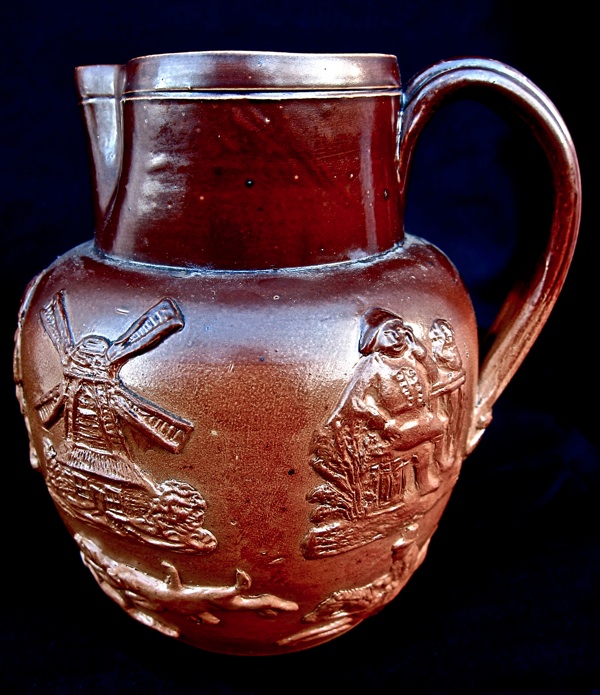
Deptford Pottery jug 1860

Stiff Pottery jug, with seller’s name in Limehouse 1860
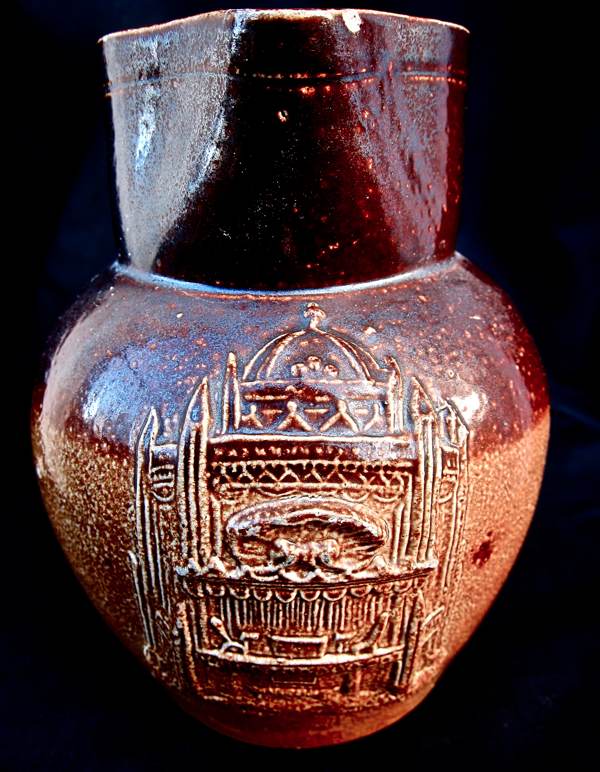
Vauxhall Pottery jug with image of the pavilion at Vauxhall Gardens and believed to have been used there in the eighteen-thirties
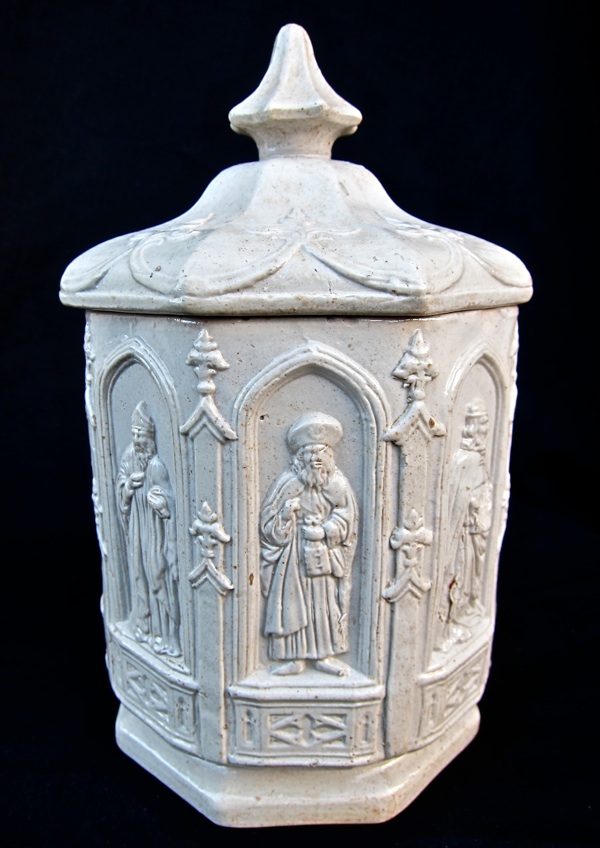
Tobacco jug by Doulton & Watts, eighteen-forties
You may also like to read my earlier article
At The Pet Cemetery
Click here to book for my tours through August, September and October
Click here to buy tour gift vouchers for your family and friends

I discovered a curiosity to view the garden of remembrance in Ilford where more three thousand of our fellow creatures lie interred and see how they have been memorialised by adoring owners as a means to assuage their sense of loss.
It is a commonplace to observe the peace that prevails in a cemetery yet this was my first impression, provoked by the thought of the cacophonous din that would result if all these dogs, cats, pigeons and budgies were confined together within this space while they were alive. On closer examination, the collective emotionalism of so many affectionate elegies upon the gravestones expressing both gratitude and grief for dead pets is overwhelming. Especially as most of the owners who placed these monuments are dead too – including Sir Bruce Forsyth whose beloved collie Rusty is interred here.
Between the twenties and the sixties, animals were buried continuously in this quiet corner of Redbridge but then the cemetery was closed and fell into neglect until 2007, when it was reopened with a celebratory fly-past of racing pigeons and a military ceremony by the King’s Rifle Corps. Especially noticeable today are the white marble headstones for heroic animals, carrier pigeons that delivered vital wartime messages, dogs that rescued survivors from buildings in the Blitz and ships’ cats that killed rats on naval vessels.
Yet in spite of the heroism of animals in war and the depth of feeling evinced by domestic pets, the cemetery is quite a modest affair, just the corner of a field hidden behind the People’s Dispensary for Sick Animals. Curiously, many of the owners attribute themselves as ‘Mother’ and ‘Father’ on the gravestones, declaring a relationship to their pets that was parental and a bereavement which registered as the loss of a member of the family.
Animals surprise us by discovering and occupying a particular intimate emotional space close to our hearts that we did not realise existed until they came along. They forge an unspoken yet eternal bond, entering our psyche irrevocably, and thus while we consider ourselves their custodians, they become out spiritual guardians.

In memory of Binkie, an Adorable Little Budgie Who Died

In Memory of our Dumb Friend, the Dog that God gave us, Trixie

Peter the Home Office Cat – Payment for Peter’s food was authorised by the Treasury thus, ‘I see no objection to your office keeper being allowed 1d a day from petty cash towards the maintenance of an efficient office cat.’ It seems that the money was requested not because Peter was underfed, but rather that he was overfed because of all the titbits that staff provided. It was felt that this ‘interfered with the mousing’, so if food was provided officially, the office keeper could tell staff not to give Peter any food.

In Loving memory of Our Boxers, Gremlin Gunner, Bramcote Badenia, Bramcote Blaise, Bramcote Benightful & Panfield Rhapsody

Be-Be, Our Little Dog So Loyal and True, Now He is in Peace God Bless You

In Loving Memory of our Darling Sally & Our Greyhound Swan & Our Cat Brandy Ball

In Loving Memory of Benny, a Brave Little Cat and Constant Companion to Those he Loved

Mary of Exeter, Awarded Dicken Medal for Outstanding War Service – A pigeon that made four flights carrying messages back from wartime France, returning seriously injured each time. On her last return, shrapnel damaged her neck muscles but her owner, Charlie Brewer an Exeter cobbler, made her a leather collar which held her head up and kept her going for another 10 years.

In Memory of Our Dear Pal Wolf

Mickey Callaghan, Here Lies Our Darling and You Always Will Be

In Memory of Simon, Served as ship’s cat on HMS Amethyst – Simon’s heroic ratting saving the crew from starvation during the hundred days the ship spent trapped by Communists on the Yangtze River in 1949. Simon was originally the Captain’s cat, a privileged creature who fished ice cubes out of his water jug and crunched them, but after he survived being blown up along with the Captain’s cabin, he was promoted to ‘Able Seacat’ and became pet of the whole crew. Unfortunately, the decision to bring the feline hero back to Britain proved the end of him as he caught cat flu in quarantine and died.

In Memory of Good Old Brownie

Memories of Our Faithful Doggie Pal Sally

My Babies Always In My Heart, Dede, Nicky, Sophie & Scruffy

In Memory of Rip DM, for Bravery in Locating Victims Trapped Under Blitzed Buildings – Rip was a stray who became the first search and rescue dog

In Memory of Jill who Adopted Us and Gave Us 15 Years of Loving Companionship

Shane, Bobby & Tina

In Loving Memory of Whisky, We Loved Him So, Mummy & Aunty Flo

Rusty, A Magnificent Irish Setter, We Were Better For Having Known Him, He Died with More Dignity Than That Most of Us Live – Rusty lived with Sir Bruce Forsyth in his touring caravan and performed on stage at the London Palladium. Rusty was a truly lovely fellow who performed all sorts of fantastic tricks, his favourite was to flip a biscuit off his nose and catch it in his mouth,’ recalled Sir Bruce, ‘But one day his back legs gave up on him. It was awful to witness – almost overnight he had become this pathetic, helpless animal. The only way I could take him outside for exercise was to grab hold of his tail and lift his back legs up, allowing him to walk on his front legs with his back end gliding along. This didn’t hurt him at all and he loved to be outside, but people in the street gave me filthy looks.’

In Fond Memory of Tops & Tiny Tim

In Loving Memory of Scottie Tailwaggger & Muffin

Our Buster, Faithful Intelligent Beautiful Golden Labrador

In Memory of Our Little Dog Sonny & Our Beloved Shandy, Quietly You Fell Asleep Without a Last Goodbye

In Loving Memory of Our Darling Poppet

Our Most Precious Snoopy

In Loving Memory of Perdix Crough Patrick, Bulldog

To the Dear Memory of Patch

In Loving Memory of Dinky & Dee-Dee

Beautiful Memories of Binkie, Golden Cocker Spaniel & Tender Memories of Joey, Blue Budgie

Nanoo, Sally & Rags

In Memory of Punch for Saving the Lives of Two British Officers in Israel by Attacked An Armed Terrorist

In Memory of Tiger & Rosie, Two Dear Old Strays

Peter, Loved by Everyone

Tim, Out Little Darling


You may also like to read about
A Charterhouse Sq Childhood
Click here to book for my tours through August, September and October
Click here to buy tour gift vouchers for your family and friends
It is my pleasure to present these extracts from the childhood memoirs of Grace Jackson, sent to me by her great niece Anna O’Donoghue who typed and published them. Grace lived at 5 Charterhouse Sq between 1880 and 1892, when it was the vicarage for St Sepulchre’s Church, with her parents, eight brothers and sisters, and her grandfather, who was the vicar for forty years.
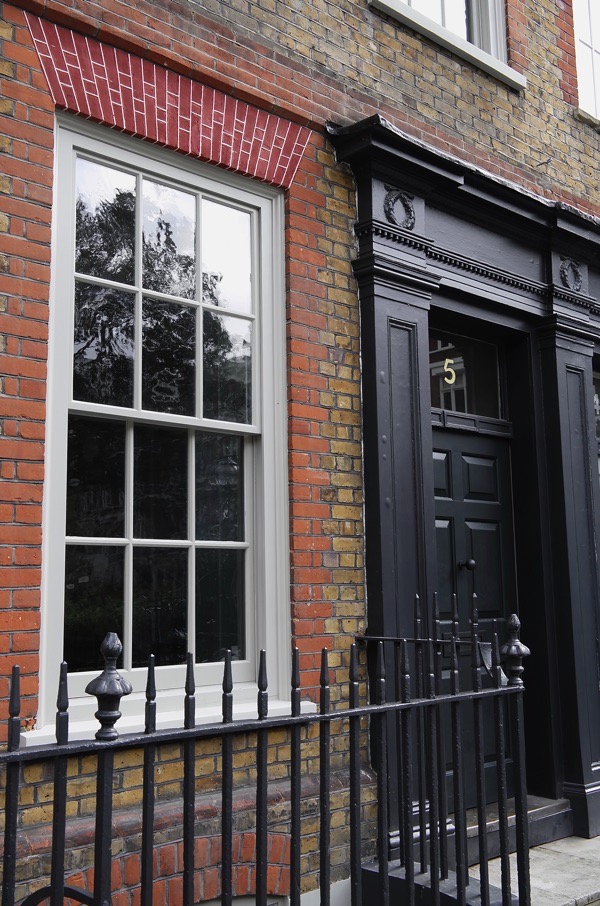
I was born at 5 Charterhouse Sq on January 26th 1880, one of a family of six boys and three girls. I was the seventh child of a seventh child but was never aware of any psychic powers. The only time when I was doubtful was when the craze for table-turning was popular and my name was spelt out as being the medium. I went straight off to bed and left the party to find another person to receive the spirit messages!
5 Charterhouse Sq was a house of four storeys with a basement kitchen and a flat roof, a favourite playing place with two attics opening on to it. The inner attic was used for keeping silkworms which made lovely golden cocoons. My chief concern about them was getting mulberry leaves from the two trees which grew in the central court of the Charterhouse. These had to be picked with caution as it meant going onto the grass, a practice not encouraged by the gardeners. I do not think we were ever looked upon very favourably by the latter as we were also fond of popping the fuchsia buds that grew along the cloisters which ran down two sides of the court.
We always enjoyed playing in the Charterhouse, although we were never sure of a welcome from the warden who kept guard at the gate, and we usually tried to step through when he was having time off in his little room. We liked it as it was a place of cloisters and little courtyards which made good places for playing in.
It was there that my brother Francis and I saw our first and only ghost. We had been told by a friend that if we stood at the far end of one of the little alleys at dusk and whistled three times, a ghost would appear at the opposite opening. And it did! We fled for our lives, screaming and rushing through the walled gardens, pursued by the ghost who, by now, was as frightened as we were disturbing the old pensioners. When we were eventually caught by the friend who had put us up to this escapade, we were all in a state of collapse.
Although we lived practically in the City, being only just without the sound of Bow Bells, we were lucky in having ample space to play in, having the square and the Charterhouse. After school hours we were also allowed to go into the playground where we all enjoyed roller skating. My brothers used to ride on penny farthing bicycles until the fast low one which I remember was called the ‘bantam cycle’ was introduced.
We were always interested in kneeling on the window seats and watching everything that was going on through the open window. There were large gates below us, which could be shut at night to keep the square private, and just inside these was a favourite place for men to settle their differences in a fight. We did not like watching these, but there were more interesting events like a dancing bear, a German band or a barrel organ and May Day processions. One year, I remember a Jack-in-the-Green on November 5th, and funerals with the hearse and the horses’ heads carrying large black plumes.
Balloons would pass over, and one morning the square was covered with small leaflets advertising some sort of drink. On some of these there was a coupon entitling the finder to a free bottle. Although we diligently searched for this coupon we had no success and were quite convinced that the gardener had come out very early. He was a very imposing figure with a very fine brown beard. He treated us very well and even allowed a few of us to have a small piece of earth as a border for our own plants.
The Lord Mayor’s Show was always a great occasion and we were usually given seats in the Civil Service Stores. Street vendors sold panoramic pictures of the show before it took place, which always amused us as they were naturally quite fictitious. I think they were sold as ‘1d plain’ or ‘2d coloured’. One year the Show came along our square, an unusual event, but it was a wet cold day and we were saddened afterwards on hearing that one of the children taking part had died from the effects.
When I was seven, the City was preparing to celebrate Queen Victoria’s Golden Jubilee and we were taken to see the illuminations. These largely took the form of metal shapes with fairy lamps hanging on them. I remember the row which was fastened along the entrance to the Charterhouse. On this and on other royal occasions, we would go along Ludgate Hill or St Pauls to watch the procession and see the Queen. My recollections of her were of a small black figure, rather unsmiling and not looking very regal.
Our nurse used to take some sort of paper with alarming pictures of the events that were likely to happen if Prince Edward ever became King. His accession, according to these papers, would usher in a time of violence. This made me feel very alarmed as I was a very nervous child and was not helped by these pictures, and by being taken by my nurse – who must have belonged to some Second Advent Society – to meetings about the end of the world. I remember my fear at seeing any red in the sky – not an uncommon sight as there were frequent fires in the City – believing this meant the end of the world and we should all be burnt up. My brothers had no fears of this sort and would often go on to the flat roof of our house at night from which there was a good view over the City, to see if there was a fire raging.
Our roof was a favourite playground, it had a tallish parapet and my brothers would occasionally walk along this to the horror of people below who would rush to ring our bell and warn mother what was happening. Personally, I found it made me feel quite dizzy enough even to look over, so there was never any fear of my taking part in this dangerous game.
My mother always seemed busy with her sewing machine so seldom came out with us, and my father, who was head of a room at the War Office was only seen at weekends. He was not really a family man and after office hours would go to his club – The Thatched House – until we younger children were well out of the way. We were all very fond of our parents.
Mother had a gift for telling stories in a very graphic way, although some of those told at bedtime were hardly suitable for a nervous child. Her re-telling of the Old Testament stories was always my favourite, and I am reported to have said after many hearings of the fiery furnace and the three children, ‘Make them really burnt this time’. So I suppose I liked horrors in spite of being easily frightened!
On Sunday afternoons, my father would often take us out. We were always asked if it was a ‘walking’ or a ‘riding‘ Sunday and always decided on the latter which meant a penny ride along the Thames Embankment. My older brothers were encouraged to walk, being given a penny if they went as far as Cleopatra’s Needle. We also enjoyed an occasional outing on a steamboat and one afternoon we went with our nurse for a picnic in Battersea Park. We evidently had return tickets for the steamboat which my nurse lost, and as we did not have enough money to pay for the return journey, we had to walk until we were near enough to home to pay the bus fare.
The Muffin Man with his bell and white cloth-covered tray on his head was always a welcome sound. The Cats’ Meat Man was also frequently heard and his wares were sold skewered to a stick. The Lavender Sellers were more popular with us with their song. Fire engines, with their steam funnels and the men in helmets sitting back to back were always an exciting sight, with the large brass bell clanging to clear the road. And the Lamplighter with his long rod, although so often seen, was usually watched with interest.
We lived near Smithfield Market and would often see sheep being driven along. The fish market was also close and as a luxury we used to buy a pint of winkles. I remember on one occasion, while gloating over my little bag, I walked into a lamp post which I suppose would make an impression on me, although it is a queer thing that some memories remain so vivid.
In the summer when the gardener in the square cut the grass, he would let us gather it and make a sort of nest. Then we would have a feast, keeping some buns and pink and white long-shaped sugar cakes we called meringues. Of course, an occasion like this meant saving up before we could buy them.
To augment our pocket money, we used to make paper spills and on May Day and November 3rd , my grandfather gave us each a tip, probably sixpence. He was instructed to do this by the manservant who looked after him and who, on these special days, insisted that my grandfather should have his purse handy in spite of his protests that he would not need it, not realising that we were going to invade his study during the morning with either a May Day greeting or a request to ‘Remember the Guy’.
My education cannot be called anything outstanding. We had one governess, Miss Burks, who taught us everything: Latin for my brothers, French, the piano and all other subjects for girls. She must have been fairly efficient as I could read the newspaper when I was six, a feat I was called upon to demonstrate to visitors. The facts of life were an entire mystery however, so when I read that the Queen was expecting to be put to bed I was thoroughly mystified and my embarrassed governess hastily made me continue reading.
My mother had never expected to have a large family having been told after the birth of her first child that she could not have any more. However, the babies arrived in quick succession and when the twins increased the number to four, my father was so overwhelmed that he omitted to register their births. So, in later years when certificates were needed, all that could be produced were those for my sister Dolly and brother Wilfred.
Every Christmas, my Godmother, Amy Tyrrell, took me to the pantomime at Drury Lane – the only time I ever went to a theatre. This was a great occasion and the stars were Dan Leno, Little Dick and, I think, Herbert Campbell. The performance always ended with what was called ‘a transformation scene’ which was followed by the Harlequinade with Columbine, the clown with the ‘red hot poker’ and, of course, Harlequin.

Grace Jackson as a young woman

St Sepulchre, Old Bailey

Gardens of the Charterhouse with one of the Mulberry trees
You may also like to read about
Jack Sheppard, Highwayman
Click here to book for my tours through August, September and October
Click here to buy tour gift vouchers for your family and friends

On the morning of 4th September 1724, an inconsequential thief named Jack Sheppard was to be hung at Tyburn for stealing three rolls of cloth, two silver spoons and a silk handkerchief. But instead of the routine execution of another worthless felon, London awoke to the astonishing news that he had escaped from the death cell at Newgate.
With the revelation that this was the third prison break in months by the handsome boyish twenty-two year old Jack Sheppard, he flamed like a comet into the stratosphere of criminality – embodying the role of the charismatic desperado to such superlative effect that his colourful reputation for youthful defiance gleams in the popular imagination two centuries later.
In the spring, he broke out through the roof of St Giles Roundhouse, tossing tiles at his guards. In the summer, with his attractive companion Elizabeth Lyon, he climbed through a barred window twenty-five feet above the ground to escape from New Bridewell Prison, Clerkenwell. And now he had absconded from Newgate too, using a metal file smuggled in by Elizabeth and fleeing in one of her dresses as disguise. Sheppard was a popular sensation, and everyone was fascinated by the inexplicable mystery of his unique talent for escapology.
Spitalfields’ most notorious son, Jack Sheppard, was born in Whites Row on 4th March 1702 and christened the very next day at St Dunstan’s in Stepney, just in case his infant soul fled this earth as quickly as it arrived. Unexceptionally for his circumstances and his time, death surrounded him – named for an elder brother that died before his birth, he lost his father and his sister in infancy. When his mother could not feed him, she gave him to the workhouse in Bishopsgate at the age of six, from where he was indentured to a cane chair maker, until he died too. Eventually at fifteen years old, he was apprenticed to a carpenter in Covent Garden, following his father’s trade, but at age twenty he met Elizabeth Lyon, his partner in crime, at the Black Lion in Drury Lane, a public house frequented by criminals and the infamous Jonathan Wild, known as the “Thief-taker General.”
On 10th September 1724, Sheppard was rearrested after his break-out from Newgate and returned there to a high security cell in the Stone Castle, where he was handcuffed and fettered, then padlocked in shackles and chained down in a chamber that was barred and locked. Yet with apparent superhuman ability – inspiring the notion that the devil himself came to Sheppard’s assistance – he escaped again a month later and enjoyed a very public fortnight of liberty In London, eluding the authorities in disguise as a dandy and carousing flamboyantly with Elizabeth Lyon, until arrested by Jonathan Wild, buying everyone drinks at midnight at a tavern in Clare Market, Lincoln’s Inn Fields. Back in Newgate – now the most celebrated criminal in history – hundreds daily paid four shillings to visit Sheppard in his cell, where he enjoyed a drinking match with Figg the prizefighter and Sir Henry Thornhill painted his execution portrait.
Two hundred thousand people turned out for Jack Sheppard’s hanging on 16th November, just two months since he came to prominence, and copies of his autobiography ghostwritten by Daniel Defoe were sold. Four years later, John Gay’s “The Beggar’s Opera,” with the character of Macheath modelled upon Sheppard and Peachum based upon his nemesis Jonathan Wild, premiered with spectacular success. Biographical pamphlets and dramas proliferated, with Henry Ainsworth’s bestseller of 1839 “Jack Sheppard” – for which George Cruikshank drew these pictures – outselling “Oliver Twist.” Taking my cue from William Makepeace Thackeray, who wrote that, “George Cruikshank really created the tale and Mr Ainsworth, as it were, merely put words to it,” I have published these masterly illustrations here as the quintessential visual account of the life of Spitalfields’ greatest rogue.
And what was the secret of his multiple prison breaks?
There was no supernatural intervention. Sheppard had outstanding talent as a carpenter and builder, inherited from his father and grandfather who were both carpenters before him and developed during the six years of his apprenticeship. With great physical strength and a natural mastery of building materials, he possessed an intimate understanding of the means of construction of every type of lock, bar, window, floor, ceiling and wall – and, in addition to this, twenty-two year old Jack Sheppard had a burning appetite to wrestle whatever joy he could from his time of splendour in the Summer of 1724.

Mrs Sheppard refuses the adoption of her little son Jack

Jack Sheppard exhibits a vindinctive character.
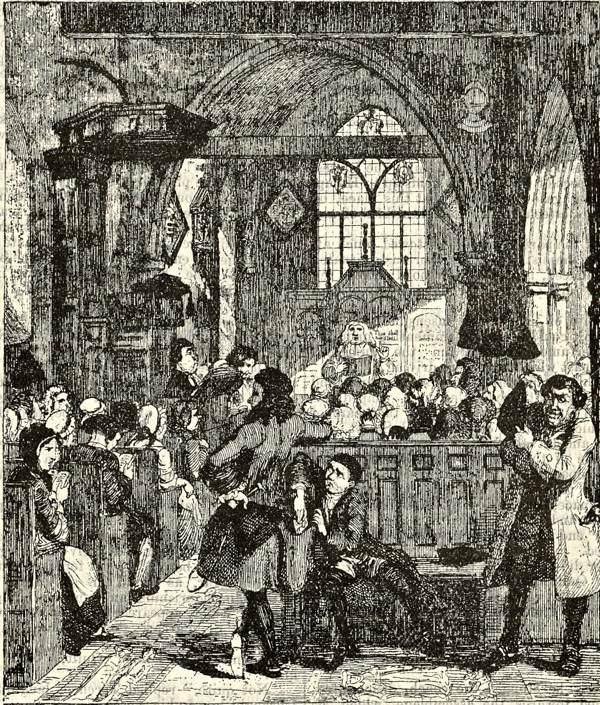
Jack Sheppard committing the robbery in Willesden church.
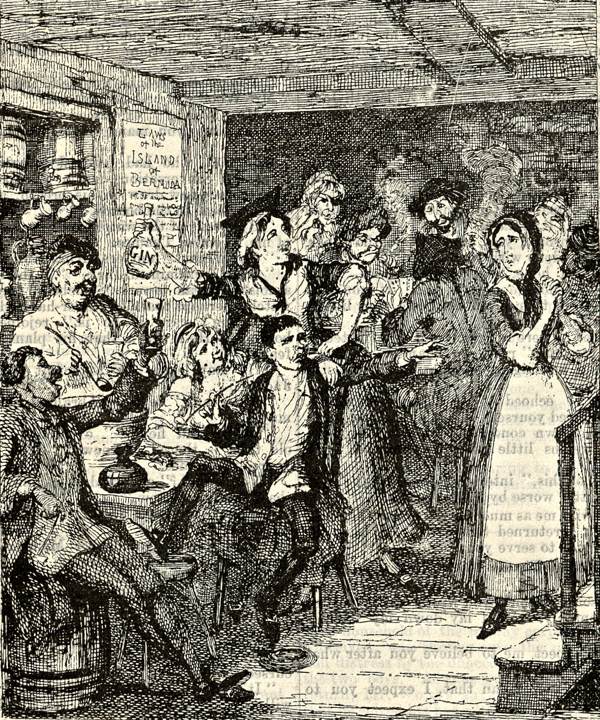
Jack Sheppard gets drunk and orders his mother off.
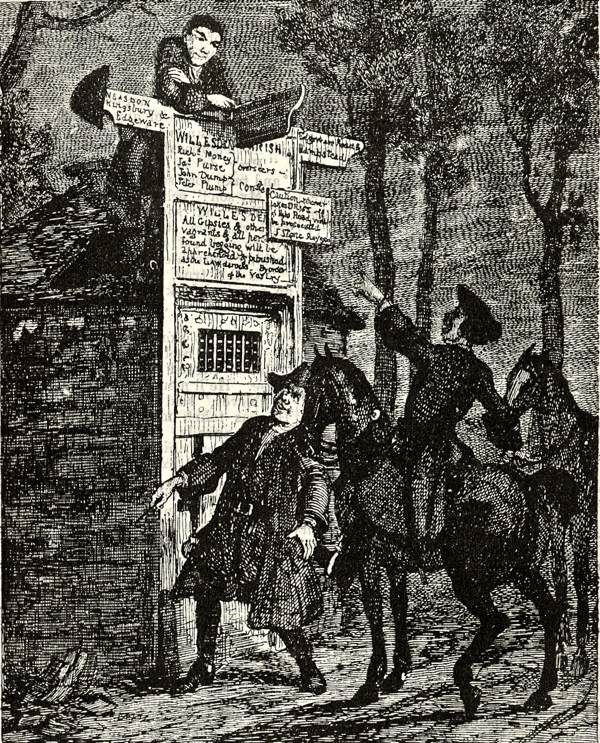
Jack Sheppard’s escape from the cage at Willesden.

Mrs Sheppard expostulates with her son.
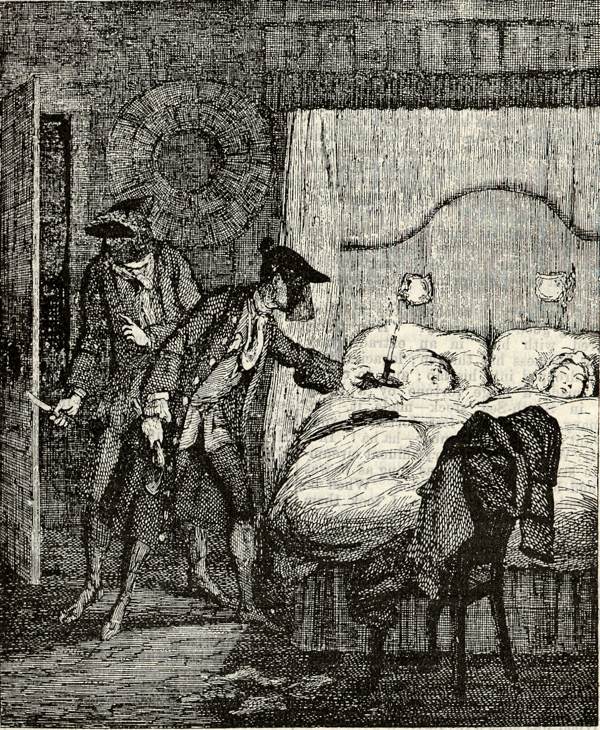
Jack Sheppard and Blueskin in Mr Wood’s bedroom.
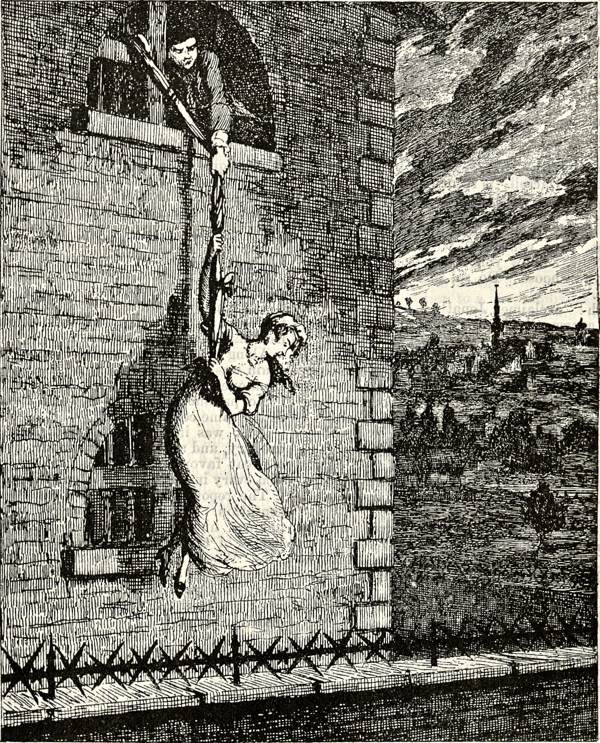
Jack Sheppard in company with Elizabeth Lyon escapes from Clerkenwell Prison.
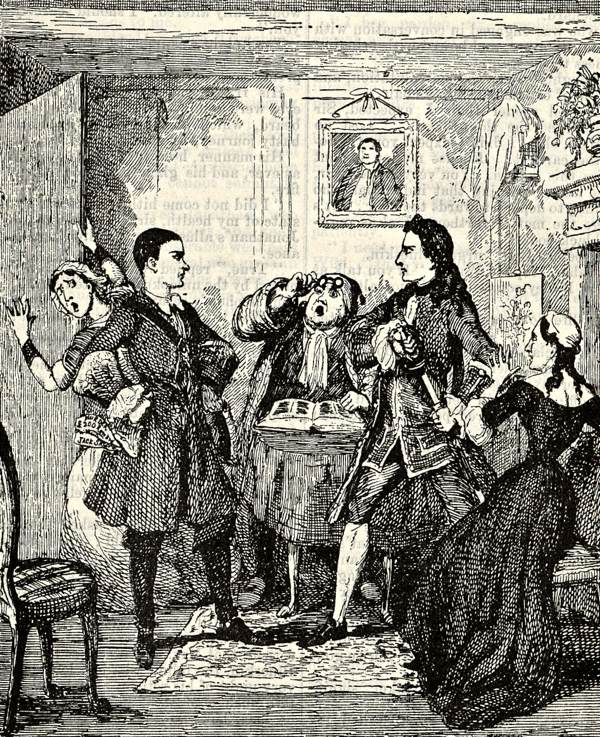
The audacity of Jack Sheppard.

Jack Sheppard visits his mother in Bedlam.
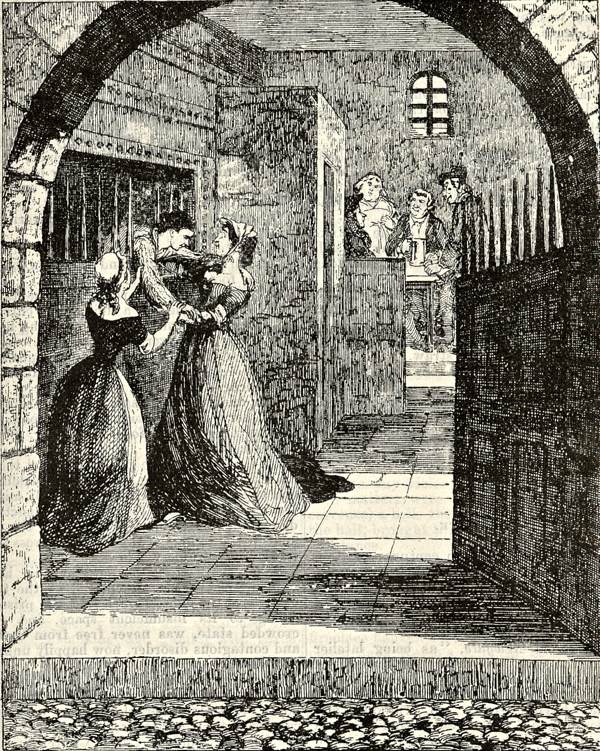
Jack Sheppard escaping from the condemned cell in Newgate.
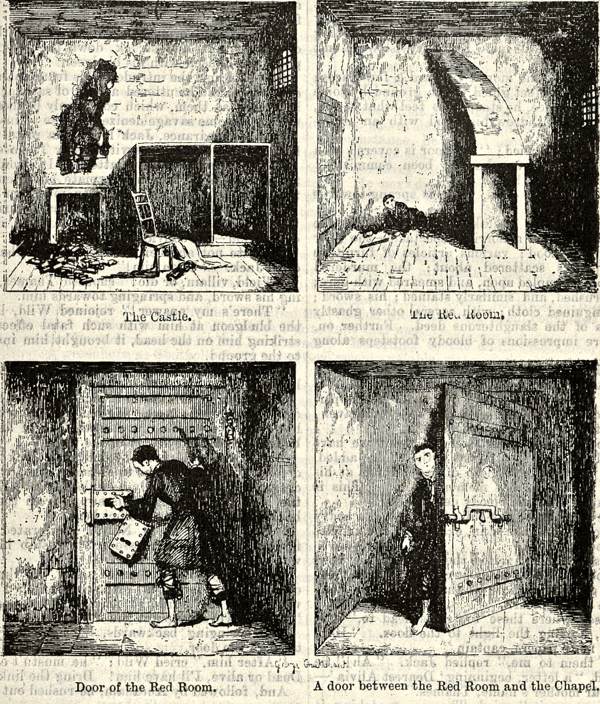
The first escape.
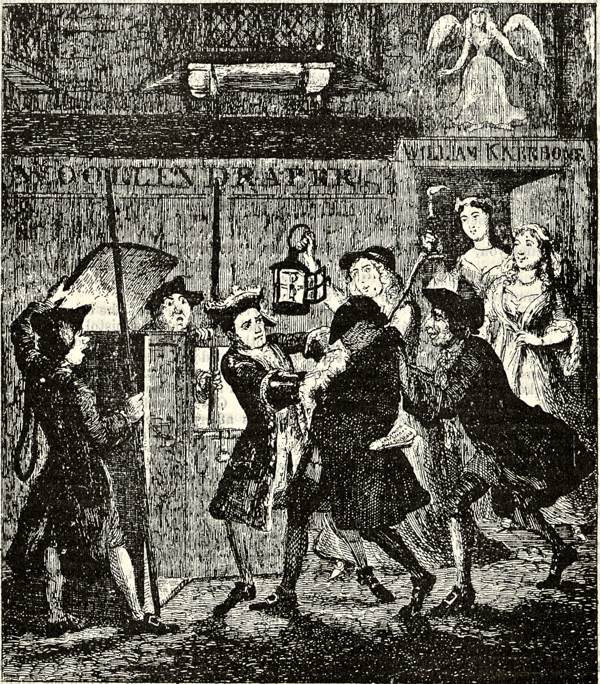
Jack Sheppard tricking Shortbolt, the gaoler.
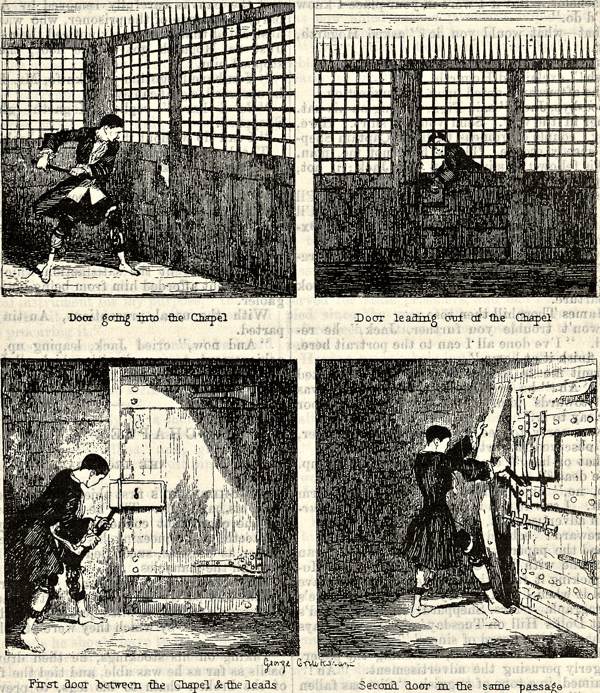
The second escape.
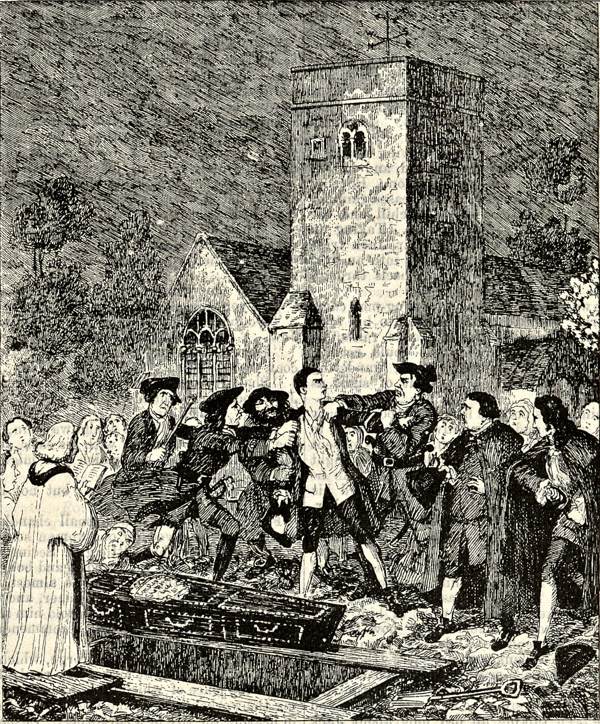
Jonathan Wild seizing Jack Sheppard at his mother’s grave in Willesden.

Jack Sheppard sits for his execution portrait in oils by Sir James Thornhill – accompanied by Figg the prizefighter (to Jack’s right), John Gay, the playwright (to Jacks’s left), while William Hogarth sketches him on the right.

Jack Sheppard’s irons knocked off in the stone hall in Newgate.


Jack Sheppard of Spitalfields (Mezzotint after the Newgate portrait by Sir James Thornhill, 1724) – “Yes sir, I am The Sheppard, and all the gaolers in the town are my flocks, and I cannot stir into the country but they are at my heels baaing after me…”
You may also like to read about
Dan Cruikshank’s Spitalfields Photographs
Click here to book for my tours through August, September and October
Click here to buy tour gift vouchers for your family and friends
Dan Cruickshank took these photographs between 1969 when he first came to Spitalfields and 1977 when he led the campaign to stop British Land destroying Elder St. “I did it to document the buildings that were here then,” he explained to me in regret, “but sometimes you’d go back the next Saturday and there’d be virtually nothing left.”
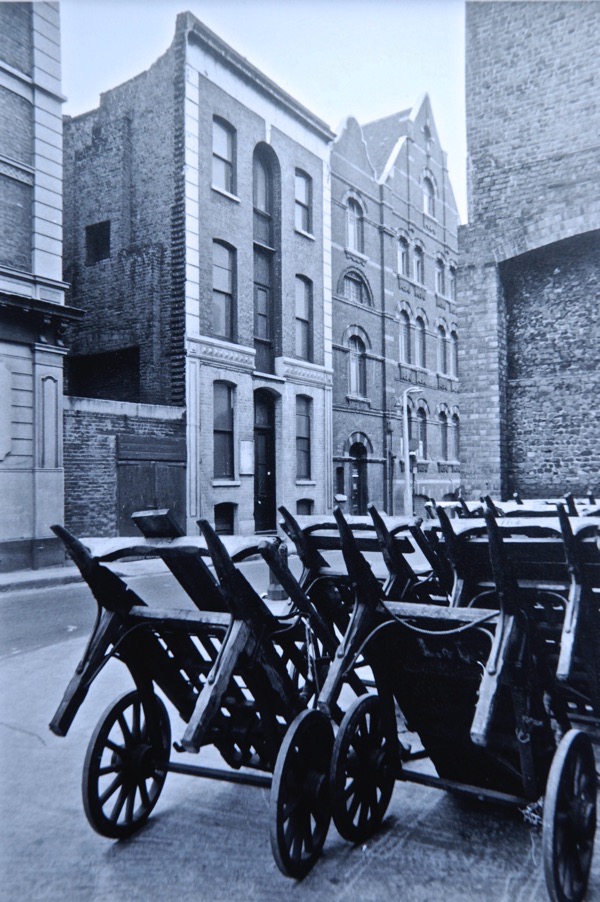
Barrowmakers in Wheler St
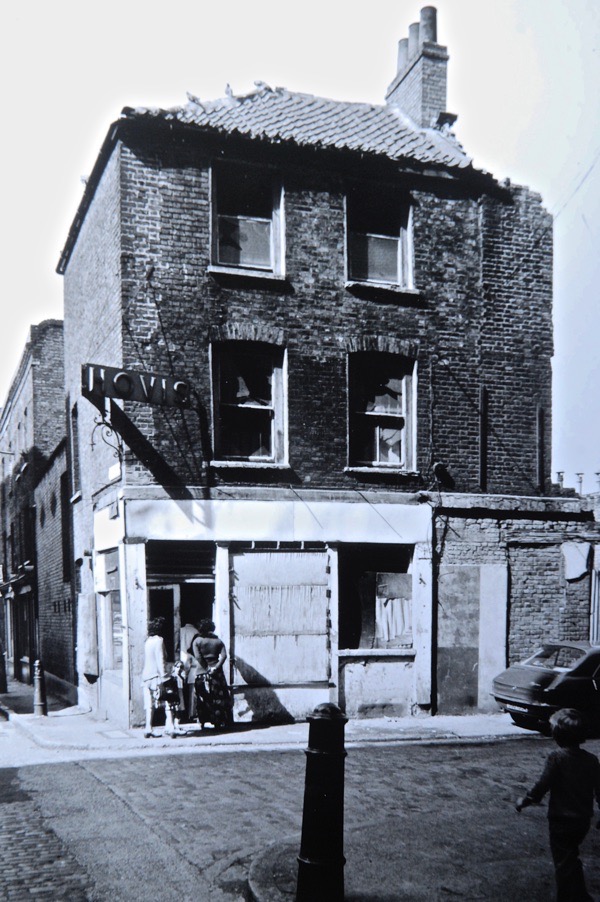
Baker in Quaker St
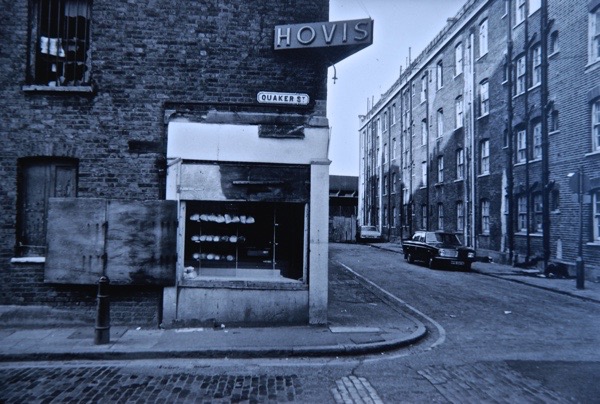
Quaker St and Railway Dwellings
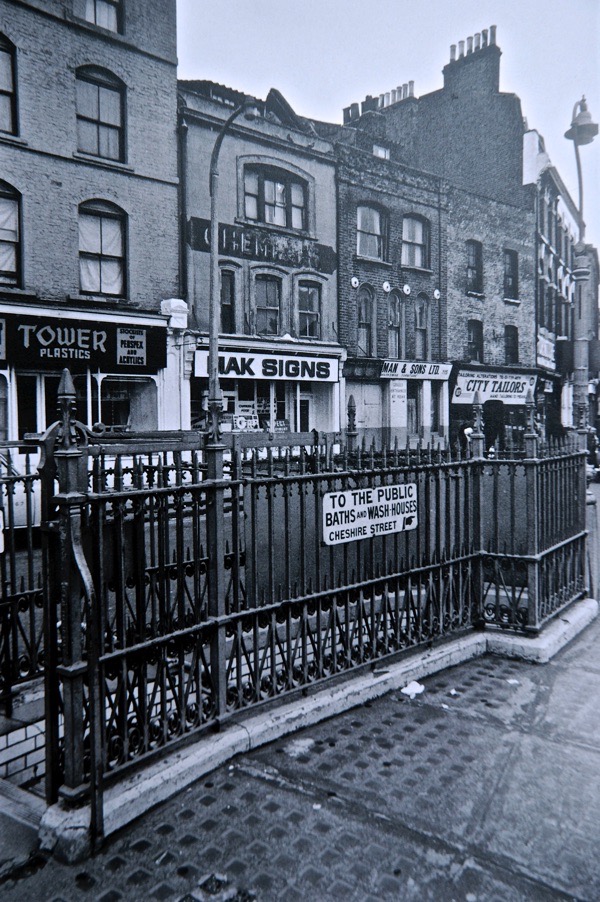
Junction of Bethnal Green Rd & Redchurch St
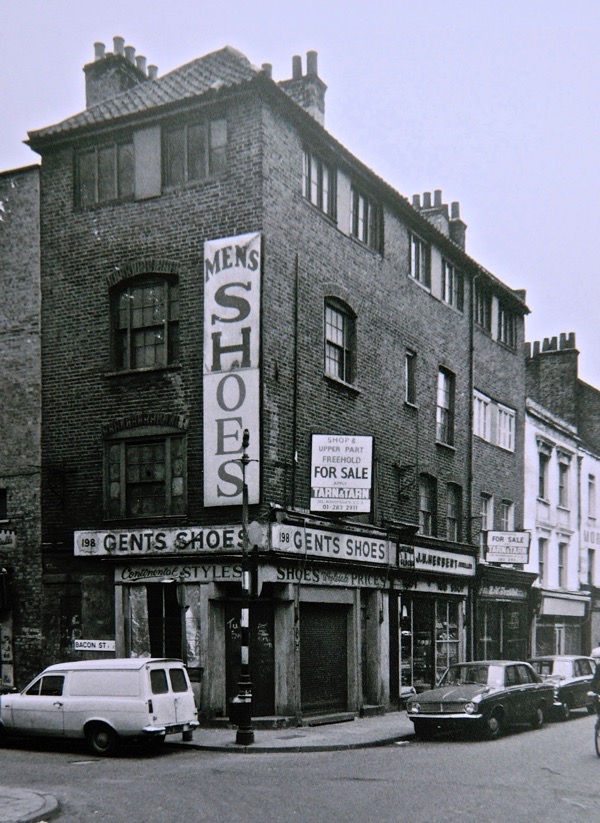
Weaver’s House at the corner of Bacon St & Brick Lane
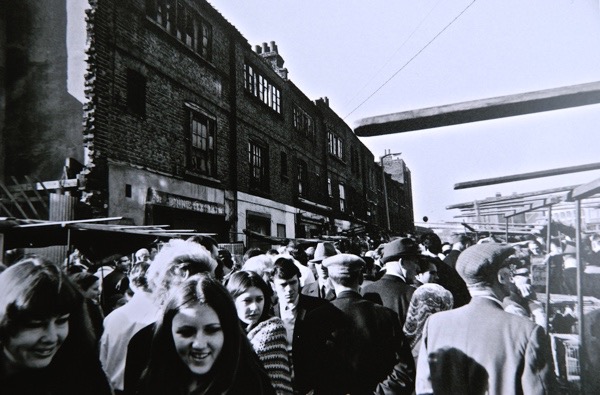
Weavers’ houses in Sclater St, now demolished
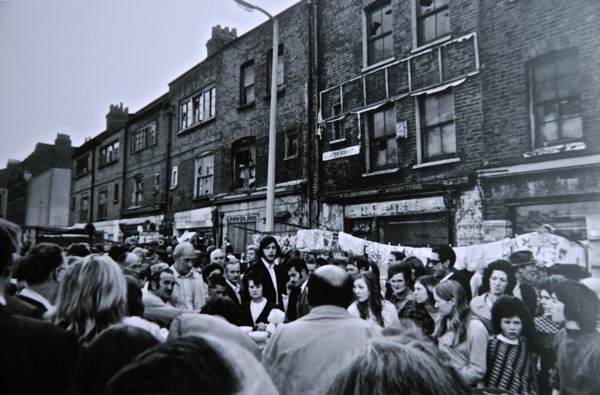
Weavers’ houses in Sclater St, only those in foreground remain
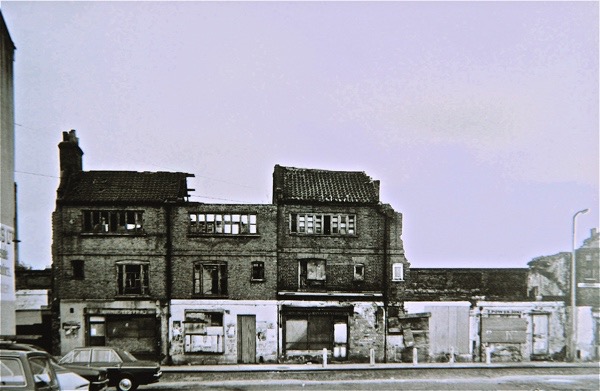
Weavers’ houses in Sclater St, now demolished
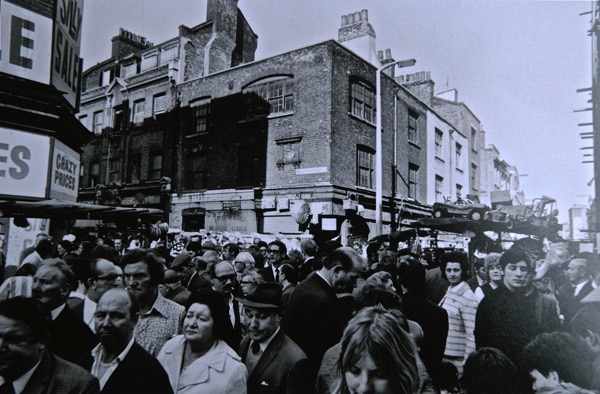
Corner of Sclater St & Brick Lane
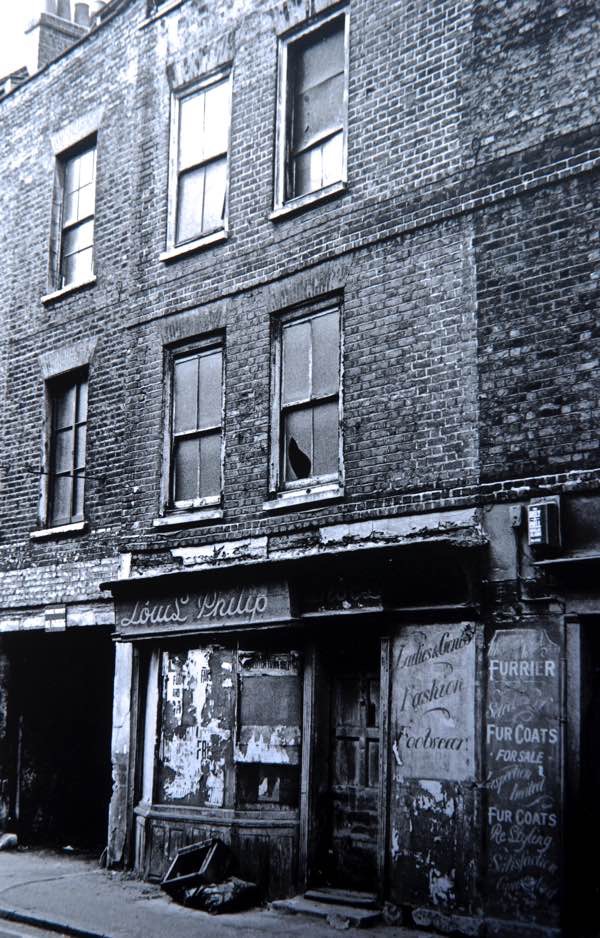
Houses in Hanbury St, now demolished
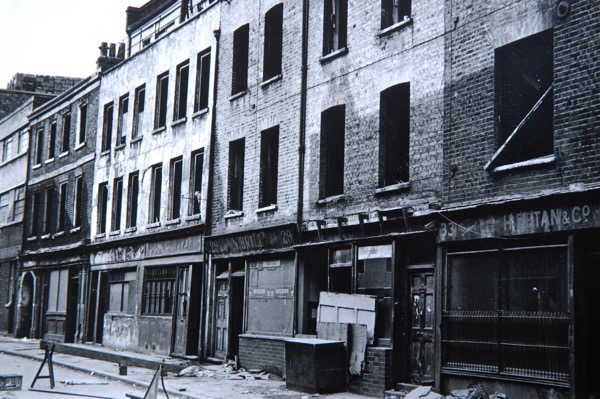
Houses in Hanbury St, now demolished
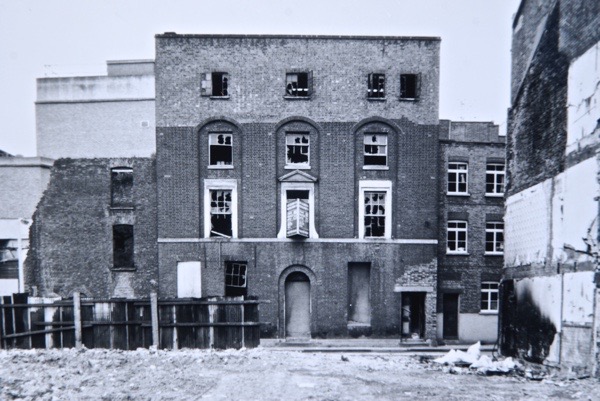
Old House in Calvin St, now demolished
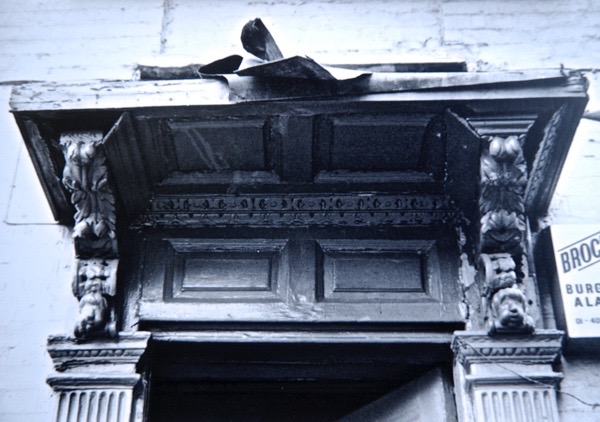
Elaborate doorcase in Wilkes St, now gone
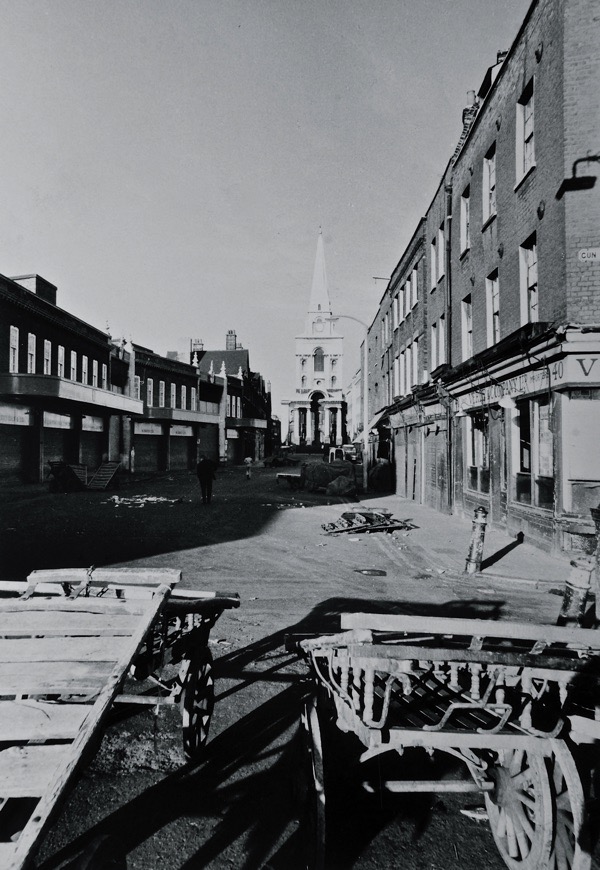
Brushfield St
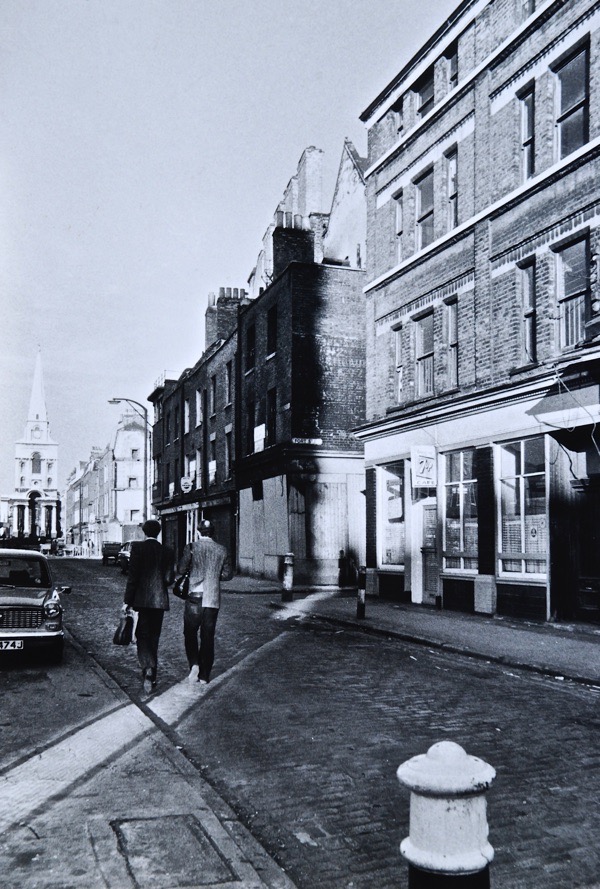
Brushfield St, buildings on the right now demolished
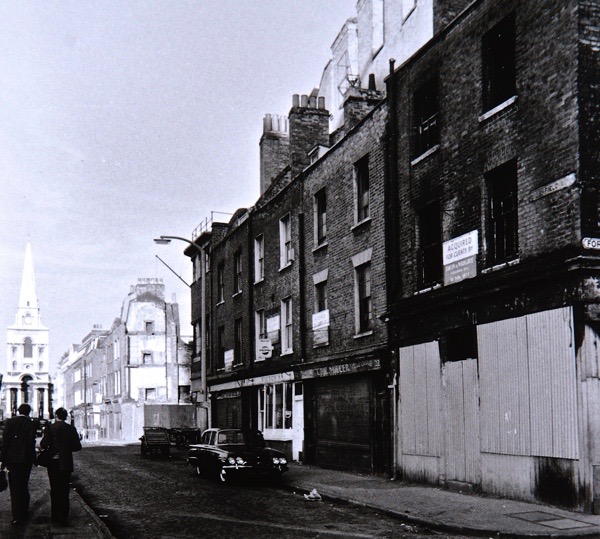
Brushfield St, buildings on the right now demolished
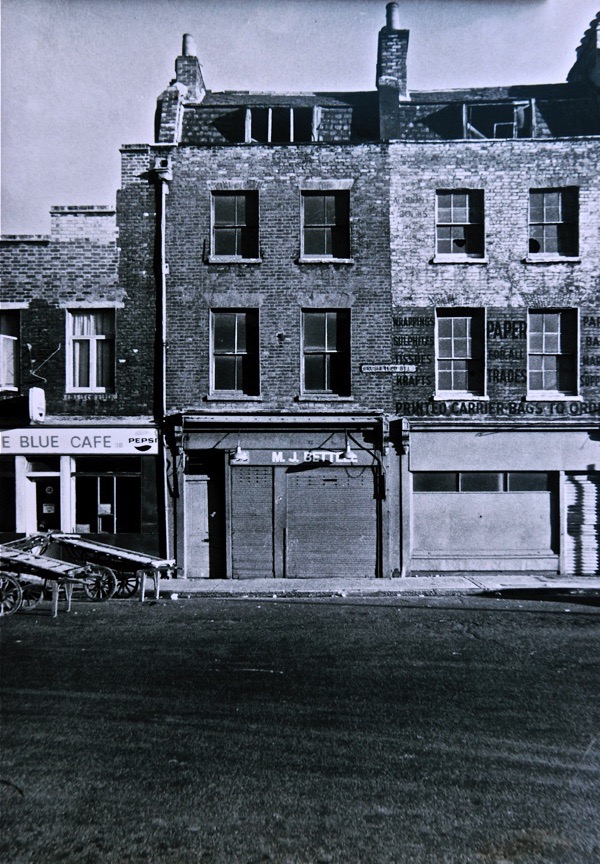
Buildings in Brushfield St, now demolished
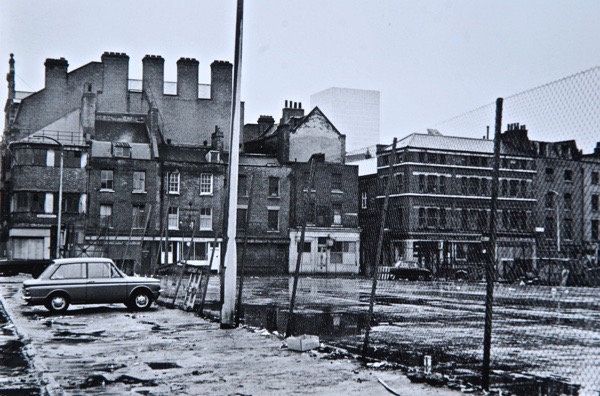
Brushfield St, buildings on the left now demolished
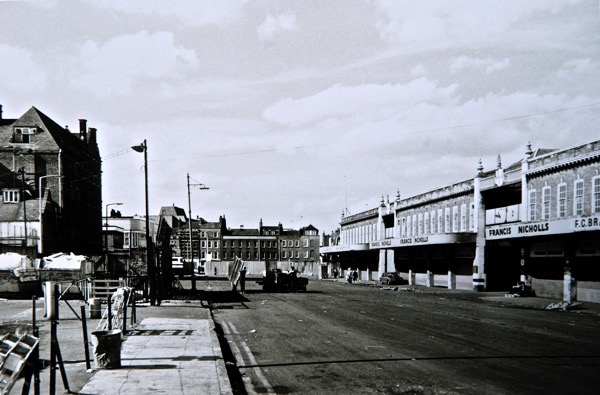
Looking from Brushfield St towards Norton Folgate
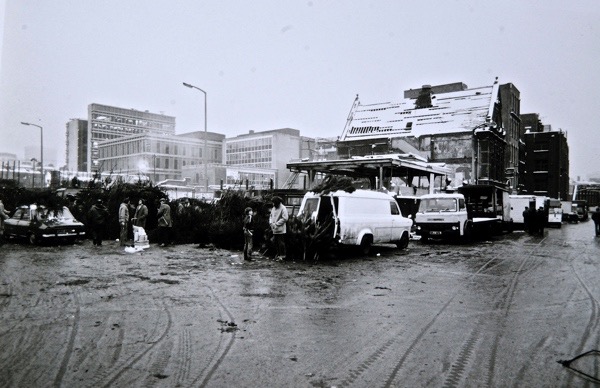
Selling Christmas trees in Spital Sq
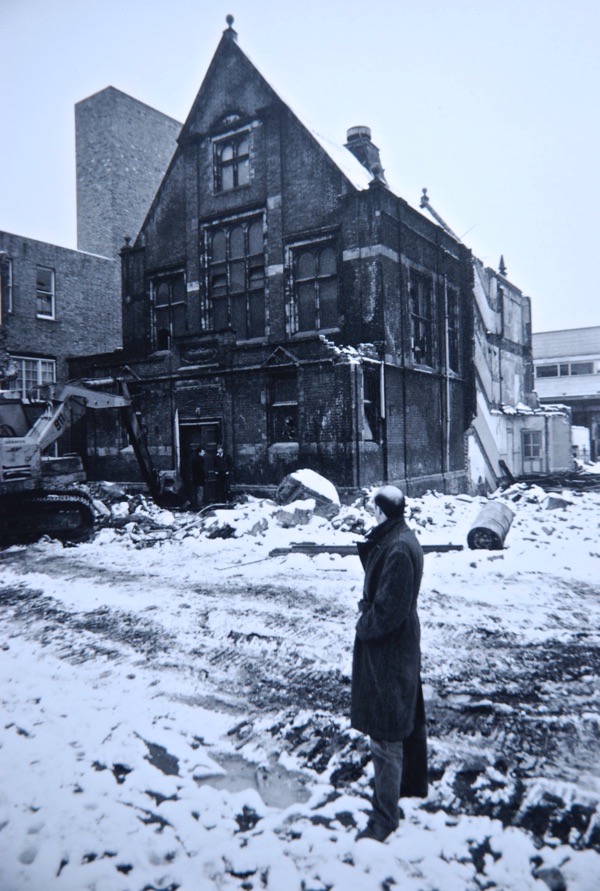
Spital Sq with St Botolph’s Hall
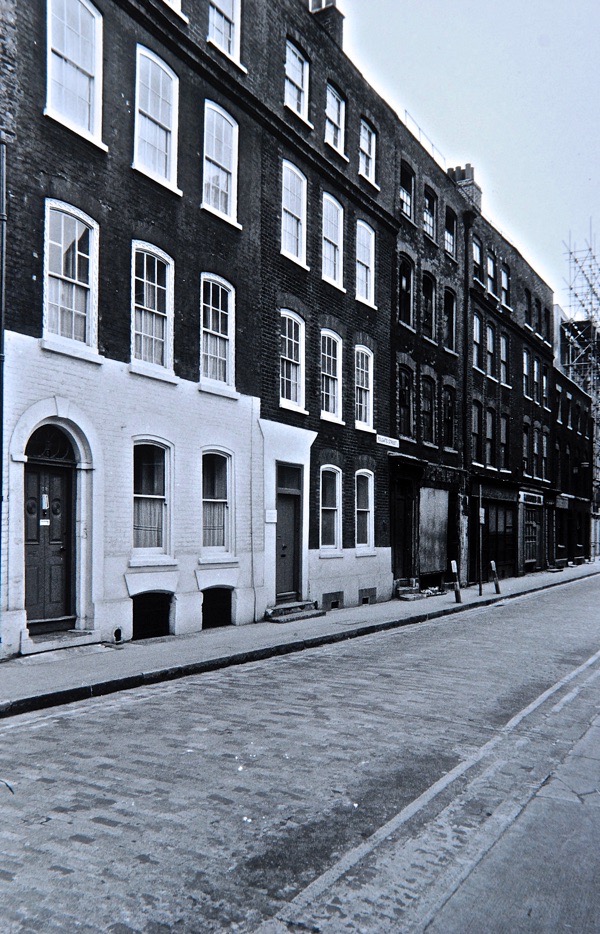
Folgate St with Dennis Severs’ House in the foreground, houses in the background now demolished
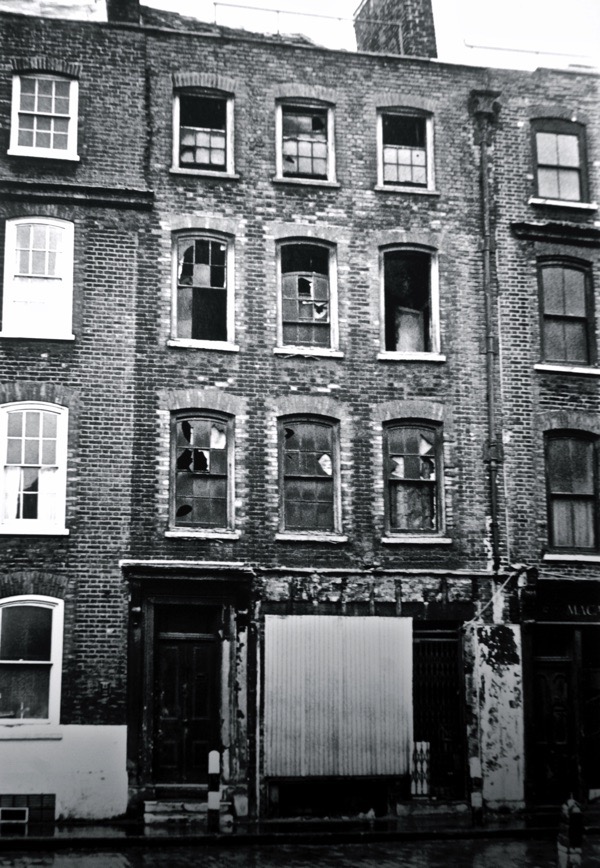
House in Folgate St, now demolished
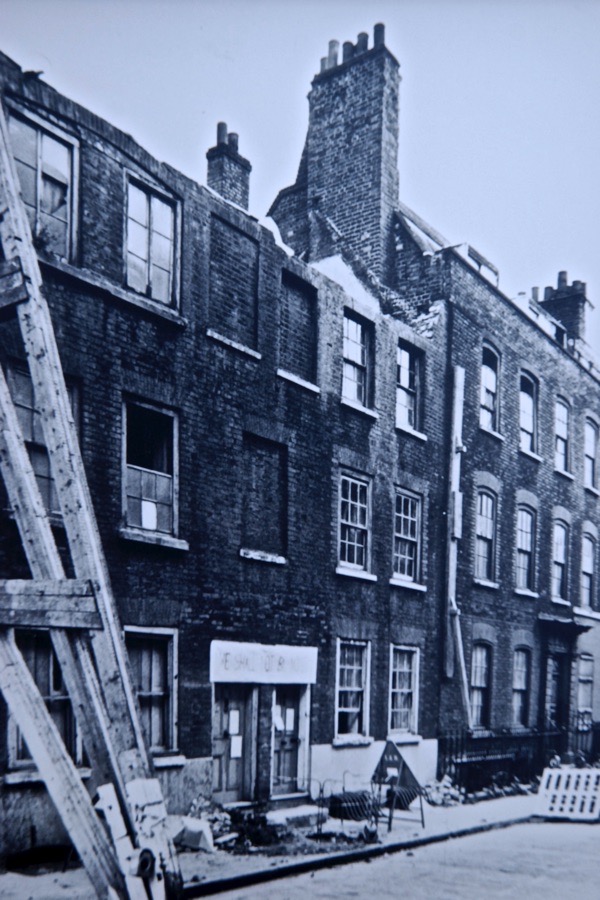
5 & 7 Elder St during squat to prevent complete demolition by British Land
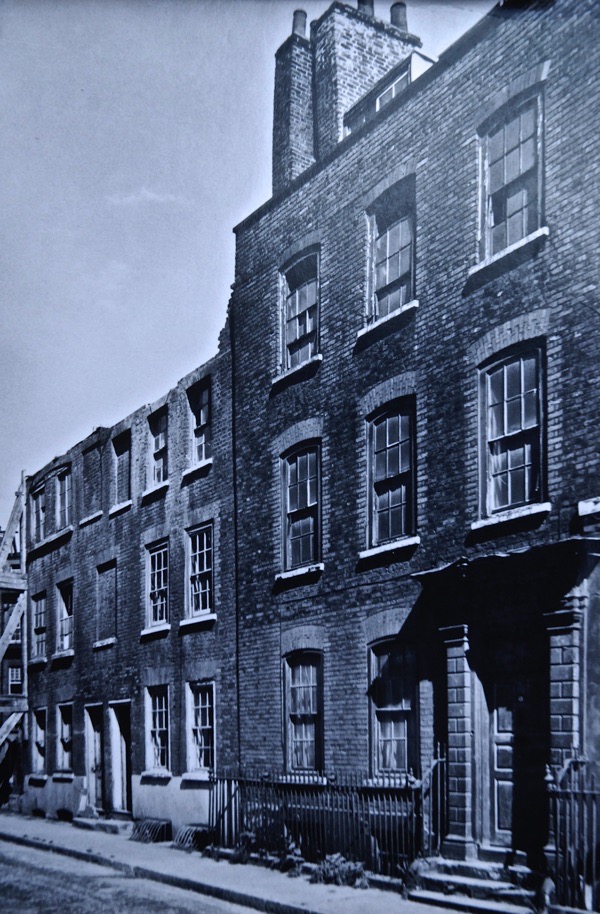
Partial demolition of 5 & 7 Elder St
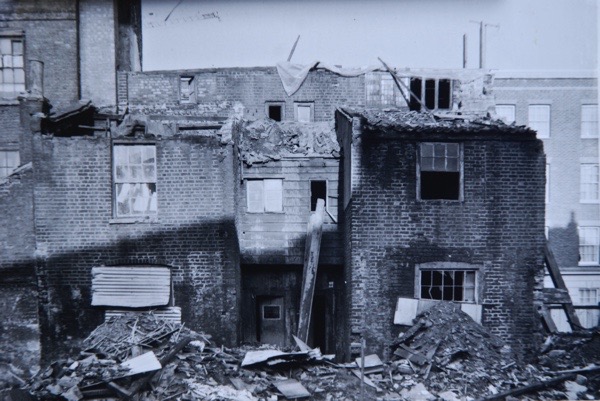
Rear of 5 & 7 Elder St during partial demolition
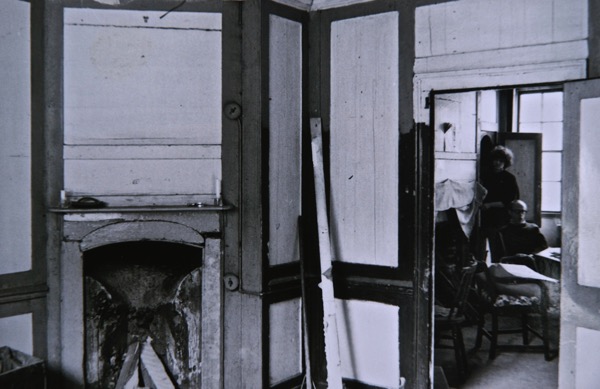
Inside 7 Elder St
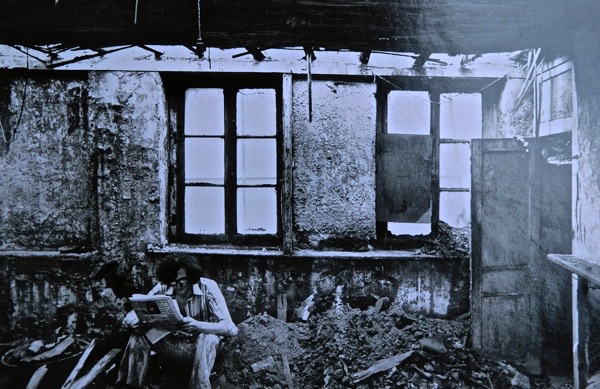
Douglas Blain of Spitalfields Trust reads a paper in the loft of 7 Elder St after the roof was removed
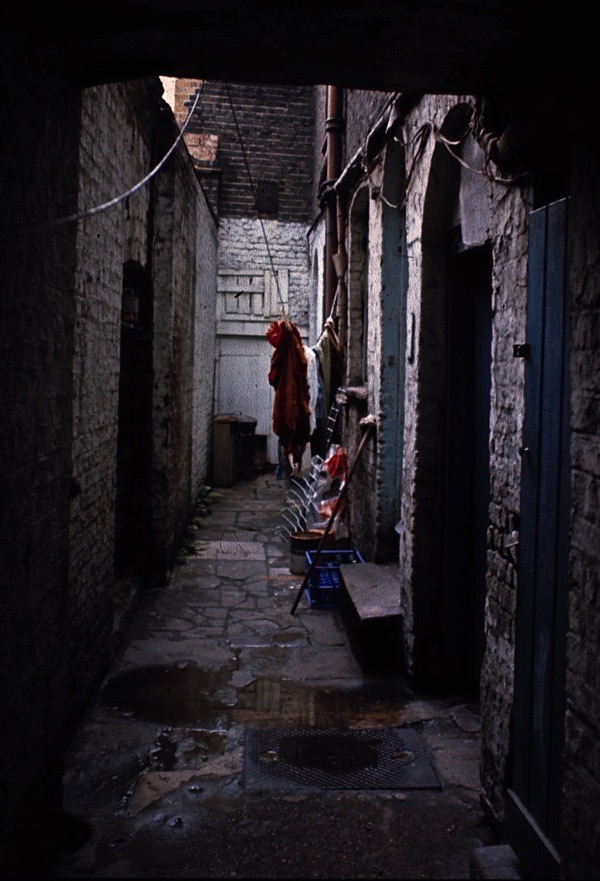
Alleyway off Folgate St
Photographs copyright © Dan Cruickshank
You may also like to take a look at
Philip Marriage’s Spitalfields
[youtube UMQBhsJCU7Y nolink]
Tower Hamlets Council Planning Committee will make a decision on Norton Folgate on 21st July so you have until then to object. Click here for your guide to how to object.












