At Waltham Abbey
Click here to book for my tours through August, September and October
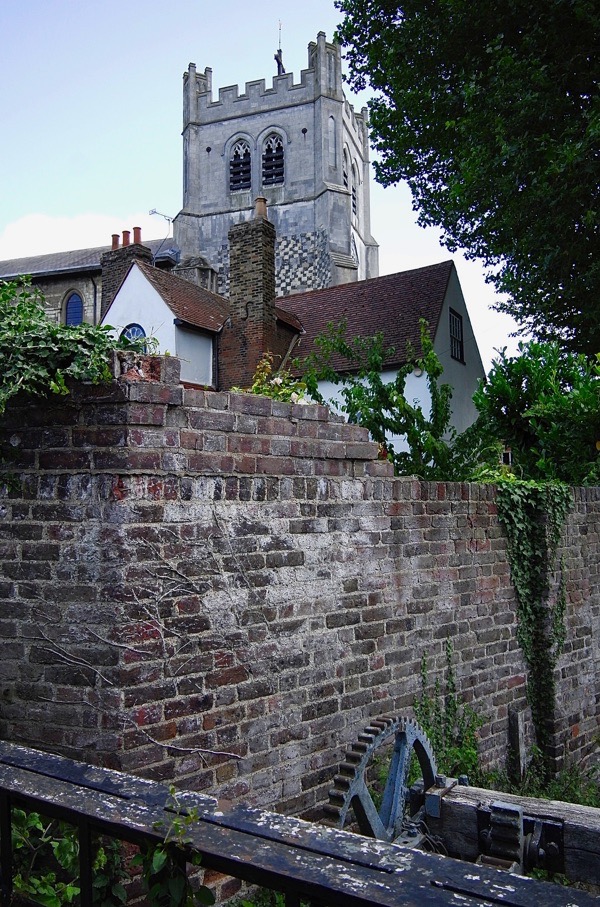
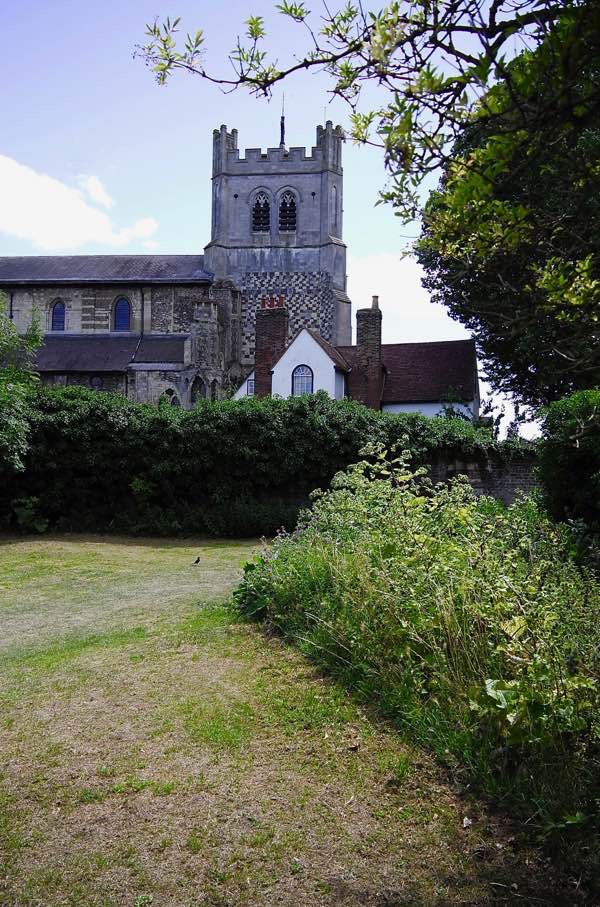
I cycled along the River Lea to Waltham Abbey. On my approach, even from the riverbank, I could see the majestic tower rising over the water meadows as the Abbey has done for the past thousand years, commanding the landscape and undiminished in visual authority.
Once you see it, you realise you are following in the footsteps of the innumerable credulous pilgrims who came here in hope of miraculous cures from the holy cross, which had reputedly relieved Harold Godwinson of a paralysis as a child before he became King Harold.
To the south of the Abbey church lies the market square, bordered with appealingly squint timber frame buildings punctuated by handsome eighteenth and nineteenth additions. Despite the proximity of the capital, the place still carries the air of an English market town.
Yet the great wonder is the Abbey itself, founded in the seventh century, built up by King Harold and destroyed by Henry VIII. Despite the ravages of time, the grandeur and scale of the Abbey is still evident in the precincts which have become a public park. Although the church that impresses today is less than half the size of what it was, it is enough to fire your imagination. An imposing stone gateway greets the visitor to the park where long, battered walls outline the former extent of the buildings. A tantalising fragment of twelfth century vaulting, which formerly served as the entrance to the cloisters, encourages the leap to conjure the cloisters themselves where now is merely an empty lawn. A walled garden filled with lavender and climbing roses draws you closest to the spirit of the place.
The outline of the former Abbey church is marked upon the grass and at the eastern end lies a surprise. A plain stone engraved with the words ‘Harold King of England Obit 1066,’ indicating this is where legend has it that he was laid to rest after the Battle of Hastings. I realised that maybe the remains of the man in the tapestry, killed by the arrow in the eye, lay beneath my feet. Coming upon his stone unexpectedly halted me in my tracks.
This was one of those startling moments when there is a possibility of history being real, something tangible, causing me to reflect upon the Norman Conquest. A thousand years ago, their power found its expression in the vast complex of buildings here, which were destroyed five hundred years ago as the expression of another power.
We too live in a time of dramatic transition, emerging from the shadow of the pandemic and accommodating to our country’s divorce from Europe. I cycled from Spitalfields to Waltham Abbey as a respite from the times, yet here I was confronting it in a mossy green churchyard. The equivocal consolation of the historical perspective is that it reminds us that empires rise and fall, but life goes on.
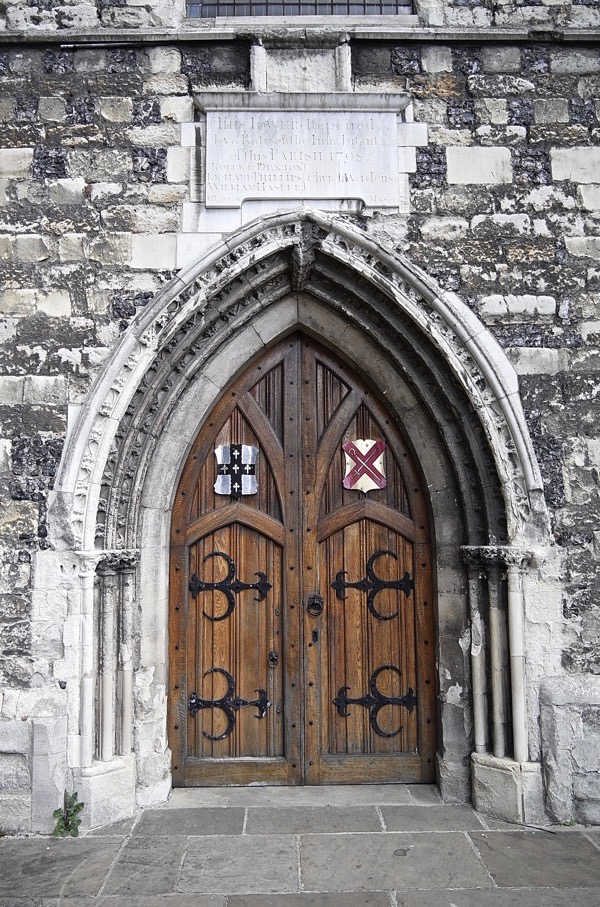
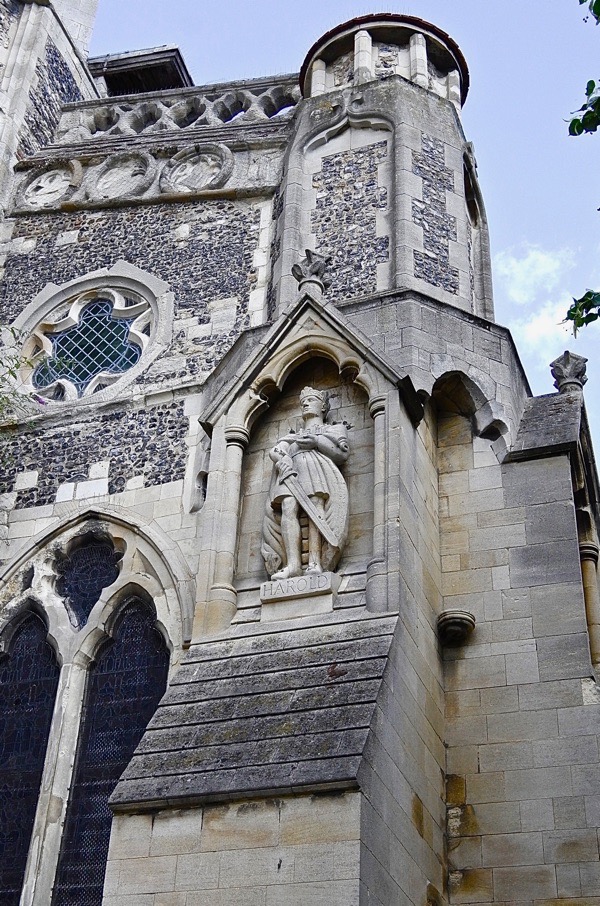
Effigy of King Harold
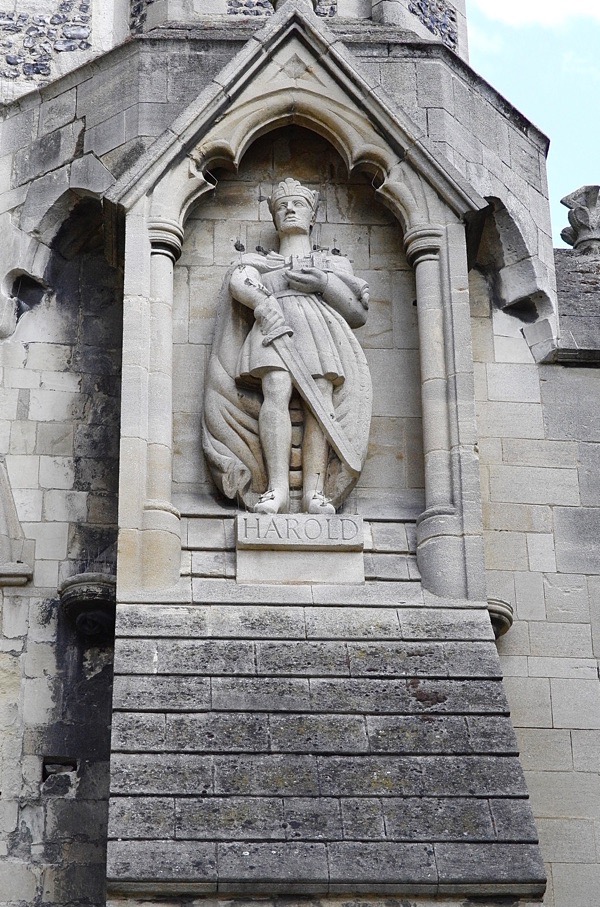
Harold cradles Waltham Abbey in his arm
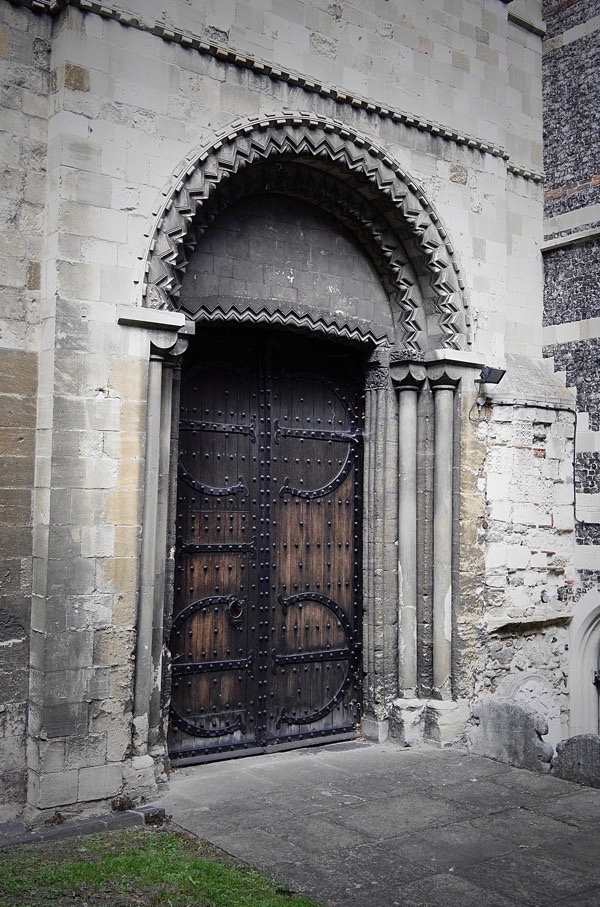
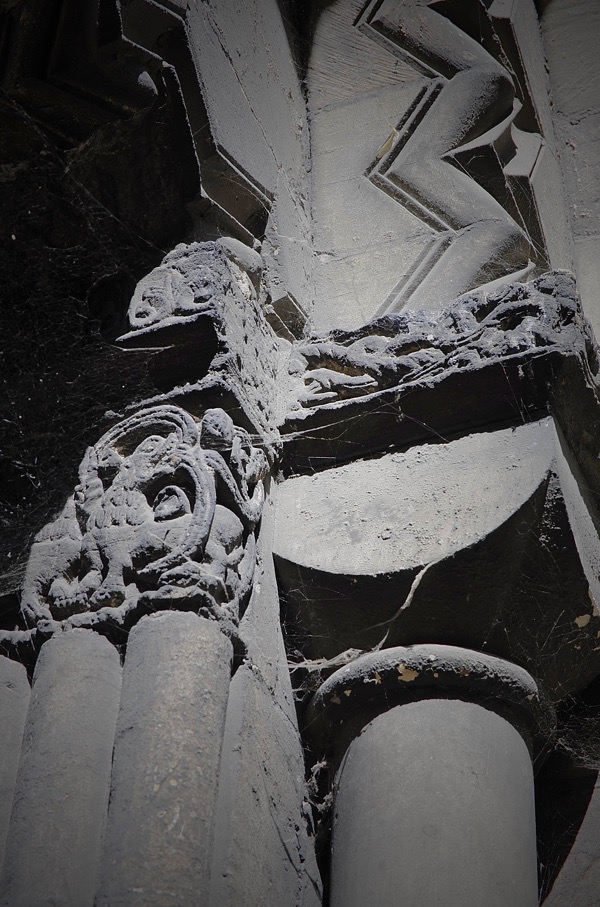
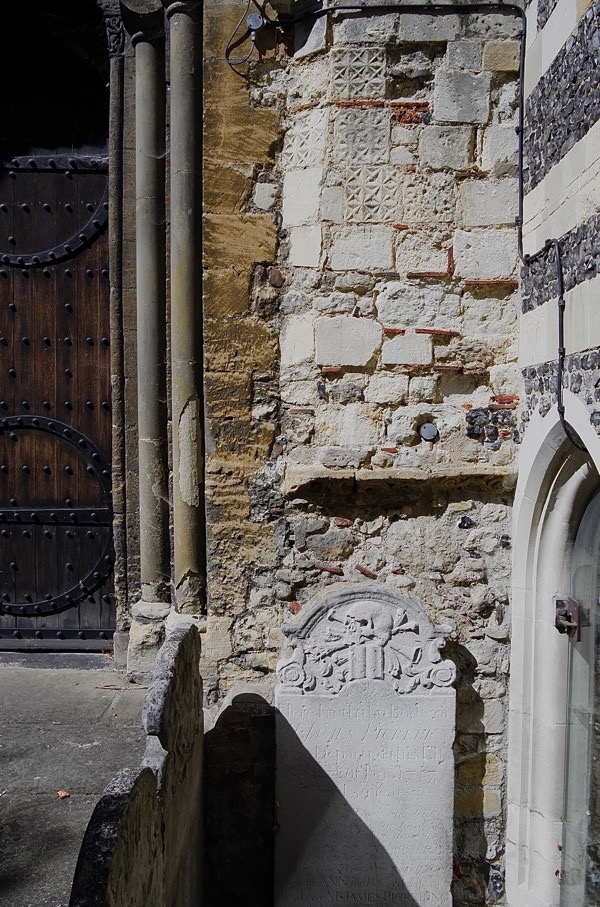
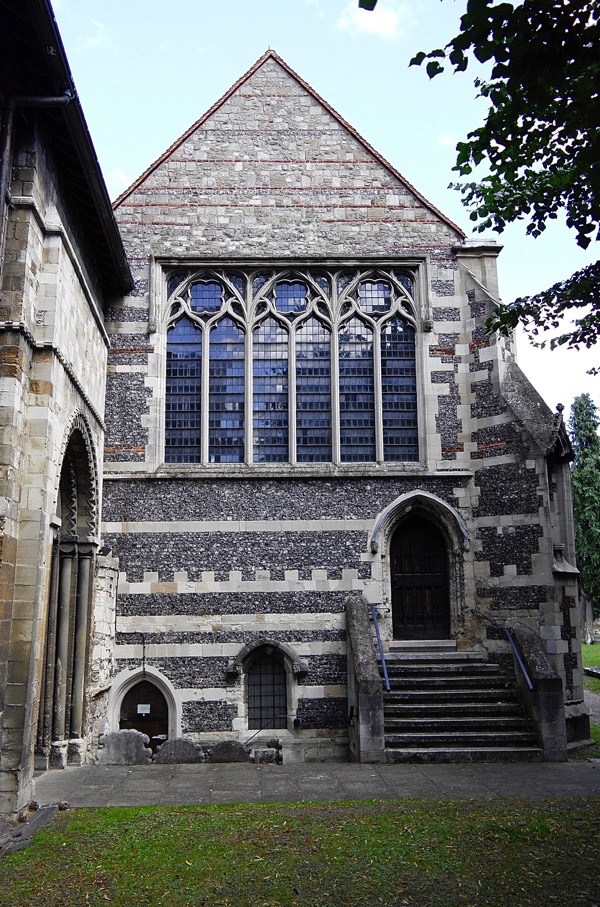
The Lady Chapel
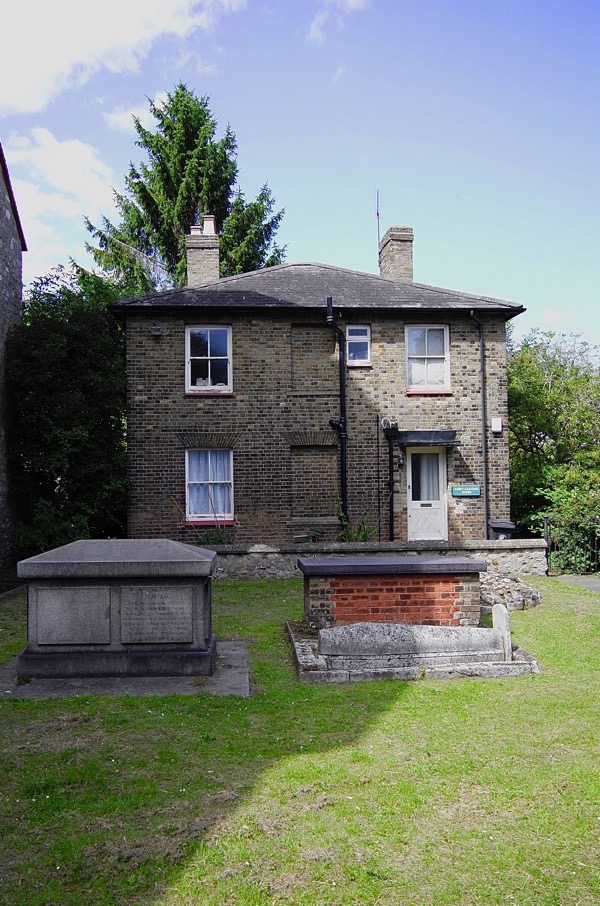
Victorian villa in the churchyard
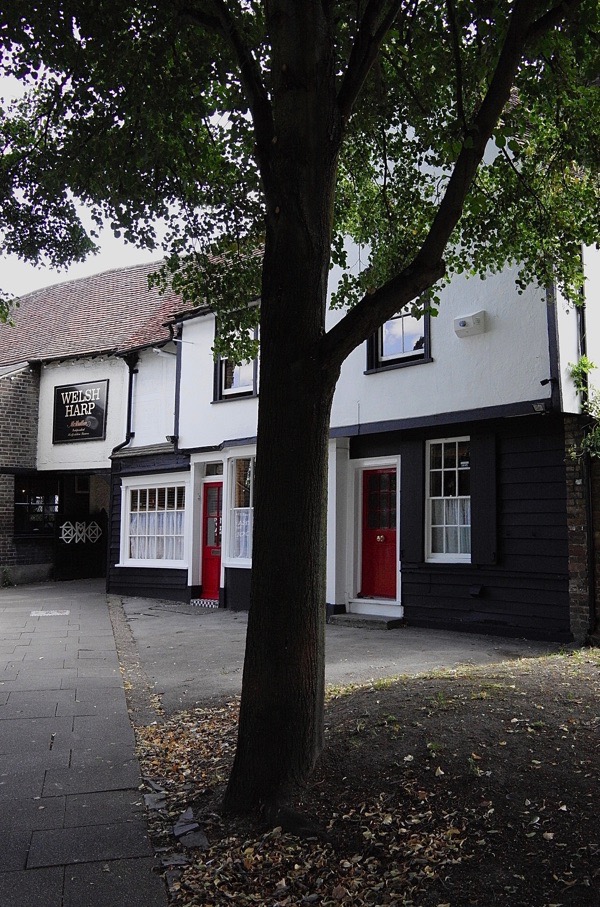
The Welsh Harp
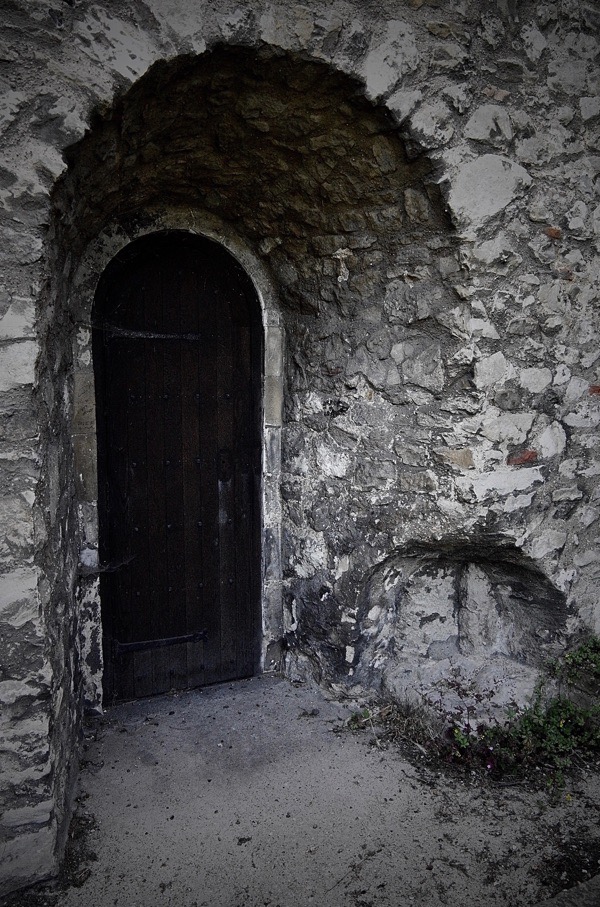
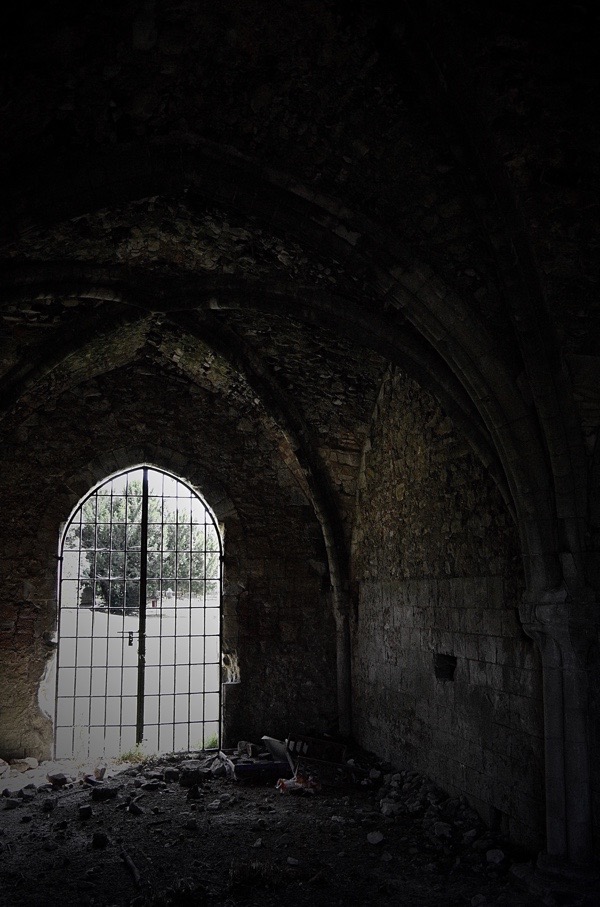
These vaults are all that is left of the twelfth century cloisters
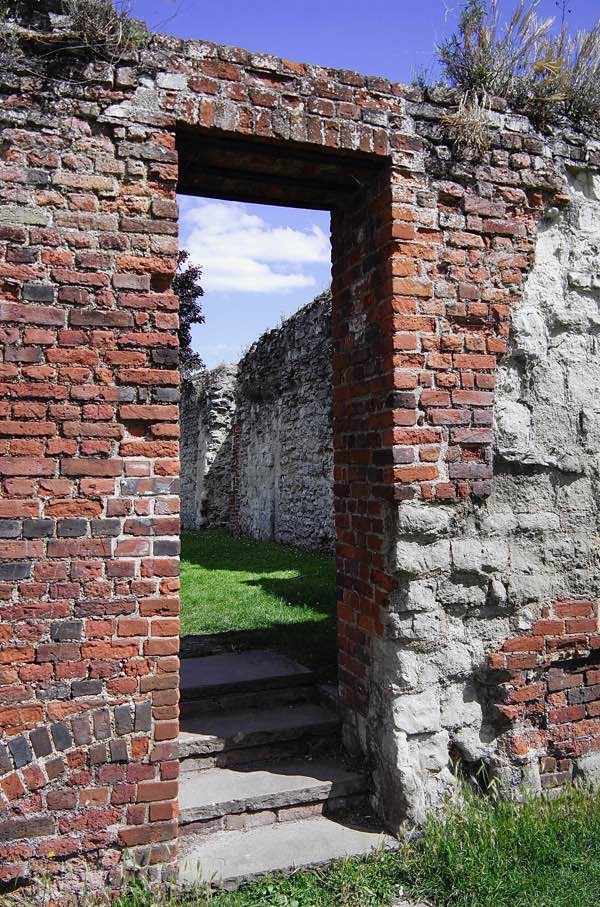
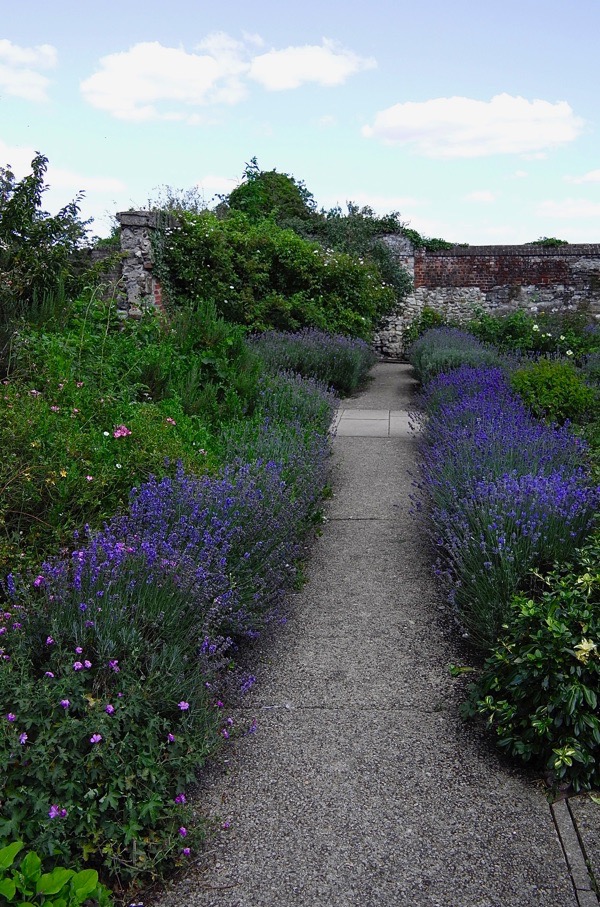
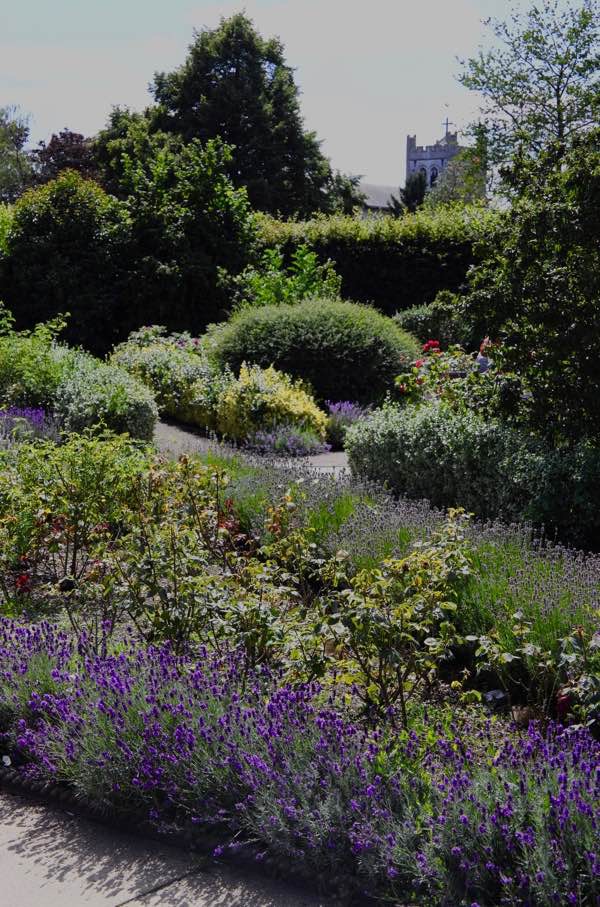
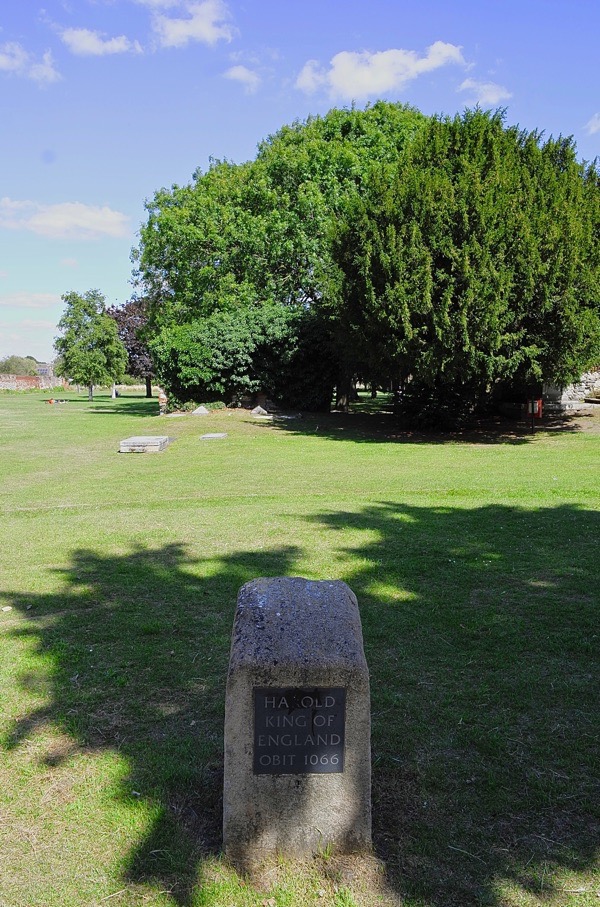
Here lies Harold, the last Anglo Saxon King of England
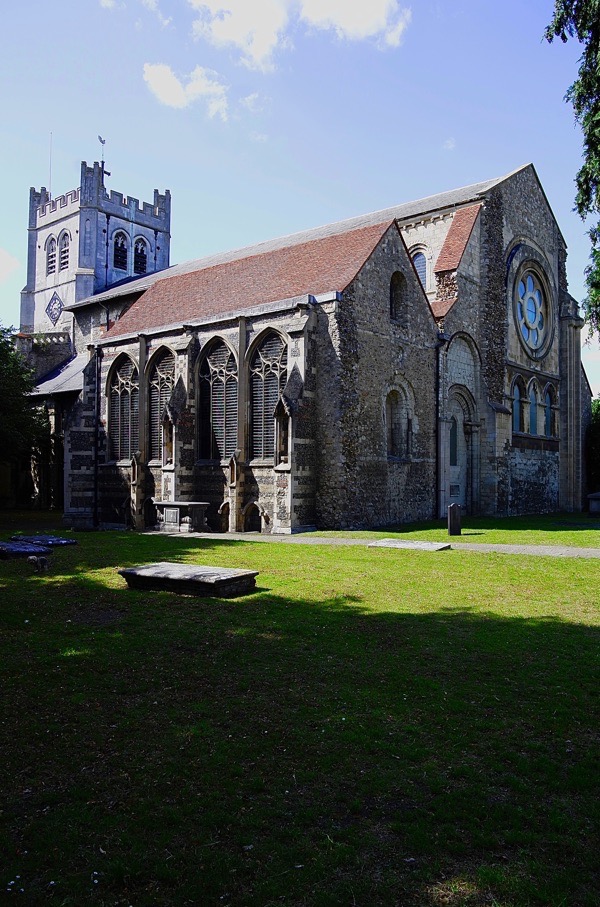
Waltham Abbey
You may also like to read about
Hopping Portraits
Click here to book for my tours through August, September and October
When Tower Hamlets Community Housing staged a Hop Picking Festival down in Cable St, affording the hop pickers of yesteryear a chance to gather and share their tales of past adventures down in Kent, Contributing Photographer Sarah Ainslie & I went along to join the party.
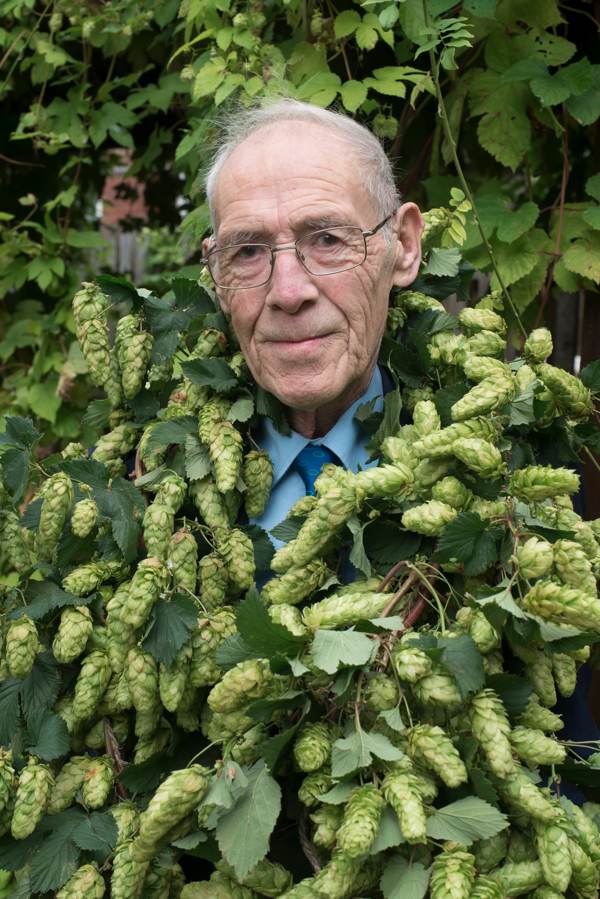
Connie Aedo – “I’m from Shovel Alley, Twine Court, at the Tower Bridge end of Cable St. I was very little when I first went hop picking. At weekends, when we worked half-days, my mum would let me go fishing. Even after I left school, I still went hop picking. Friends had cars and we drove down for the weekend, as you can see in the photo. Do you see the mirrors on the outside of the sheds? That’s because men can’t shave in the dark!”
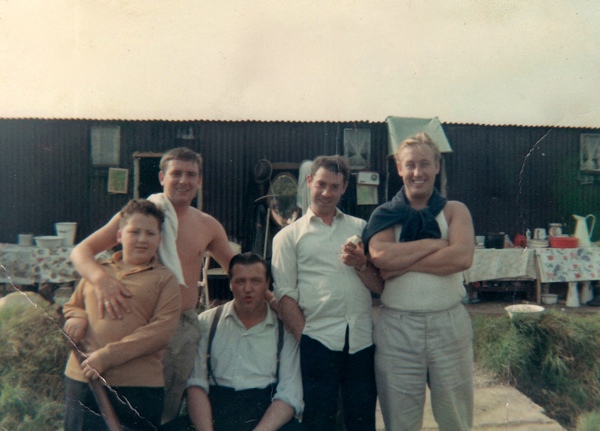
Derek Protheroe, Terry Line, Charlie Protheroe, Connie Aedo and Terry Gardiner outside the huts at Jack Thompsett’s Farm, Fowle Hall, near Paddock Wood, 1967
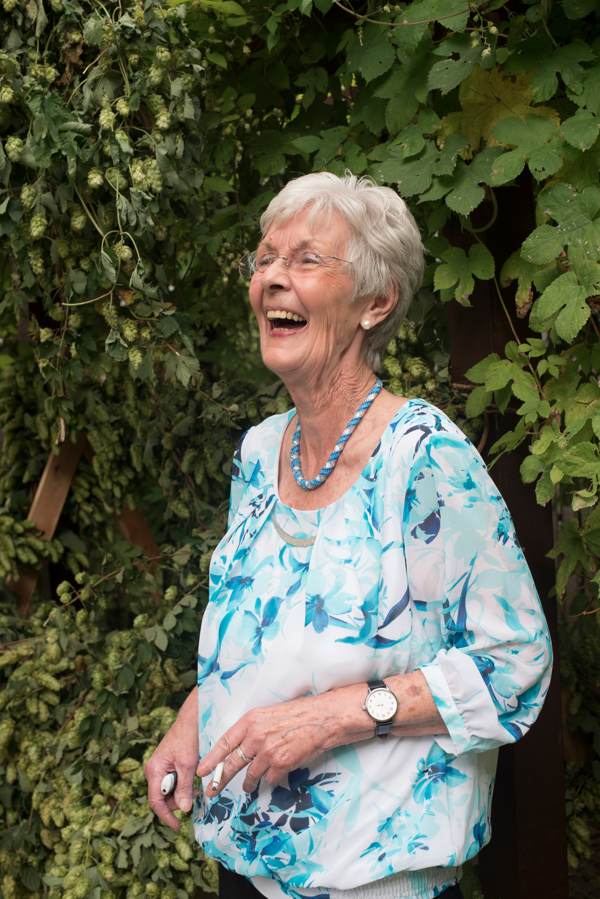
Maggie Gardiner – “My mum took us all down to Kent for fruit picking and hop picking. Once, parachutes came down in the hop gardens and we didn’t know if they were ours or not, but they were Germans. So my mum told me and the others to go back to the hut and put the stew on. On the way back, a German aeroplane flew over and machine gunned us and we hid in a ditch until the man in the pub came to get us out. My mum used to say, ‘If you can fill an umbrella with hops, I’ll get you a bike,’ but I’m still waiting for it. We had some good times though and some laughs.”
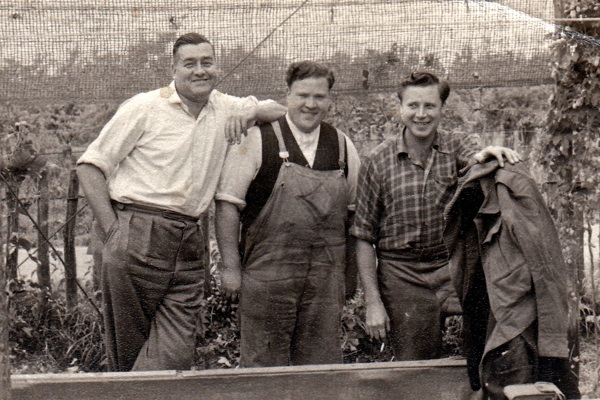
Alifie Rains (centre) and Johnny Raines (right) from Parnham St, Limehouse, in the hop gardens at Jack Thompsett’s Farm, Fowle Hall, Kent
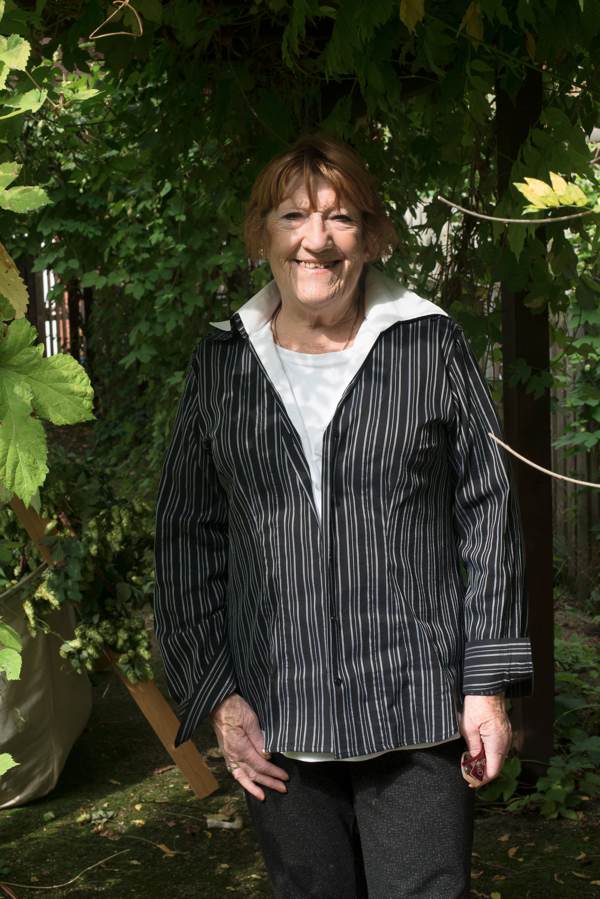
Vera Galley – “I was first taken hop picking as a baby. My mum, my nan and my brothers and sisters, we all went hop picking together. I never liked the smell of hops when I was working in the hop gardens because I had to put up with it, but now I love it because it brings back memories. ”
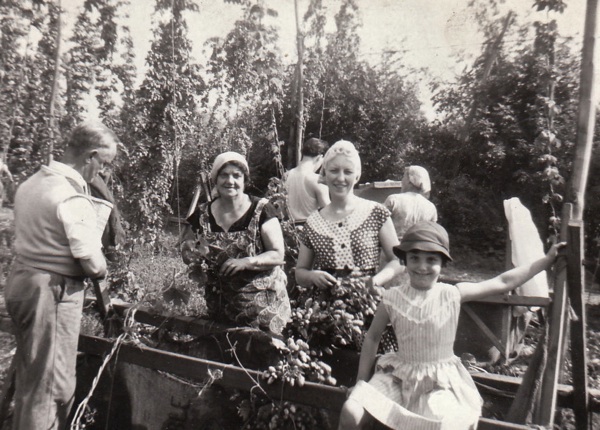
Mr & Mrs Gallagher with Kitty Adams and Jackie Gallgher froom Westport St, Stepney, in the hop gardens at Pembles Farm, Five Oak Green, Kent in 1950

Harry Mayhead – “I went hop picking when I was nine years old in 1935 and it was easy for kids. It was like going on holiday, getting a break from the city for a month. Where I lived in a block of flats and the only outlook was another block of flats, you never saw any green grass.”
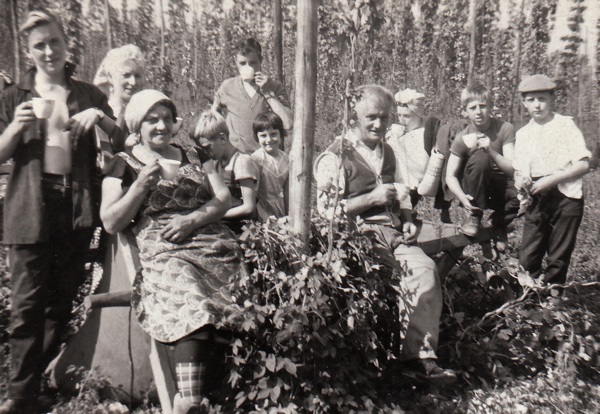
Mr & Mrs Gallagher with their grandchildren at Pembles Farm, 1958

Lilian Penfold – ” I first went hop picking as a baby. I was born in August and by September I was down there in the hop garden. M daughter Julie, she was born in July and I took her down her down in September too. We were hopping until ten years ago when then brought in the machines and they didn’t need us any more. My aunt had grey hair but it turned green from the hops!”
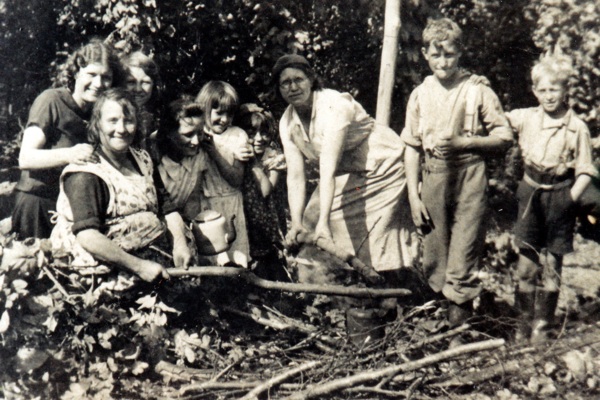
The Liddiard family from Stepney in Kent, 1930

Dolly Frost – ” I was a babe in arms when they took me down to the hop gardens and I went picking for years and years until I was a teenager. I loved it while was I was growing up. My mother used to say, ‘Make sure you pick enough so you can have a coat and hat,’ and I got a red coat and matching red velour hat. As you can see, I like red.”
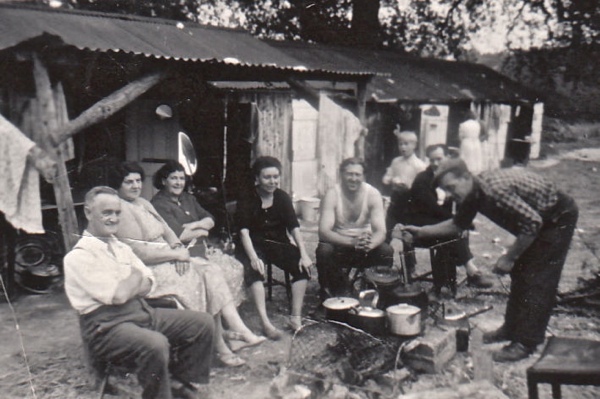
The Gallagher family from Stepney outside their huts at Pembles Farm, 1952
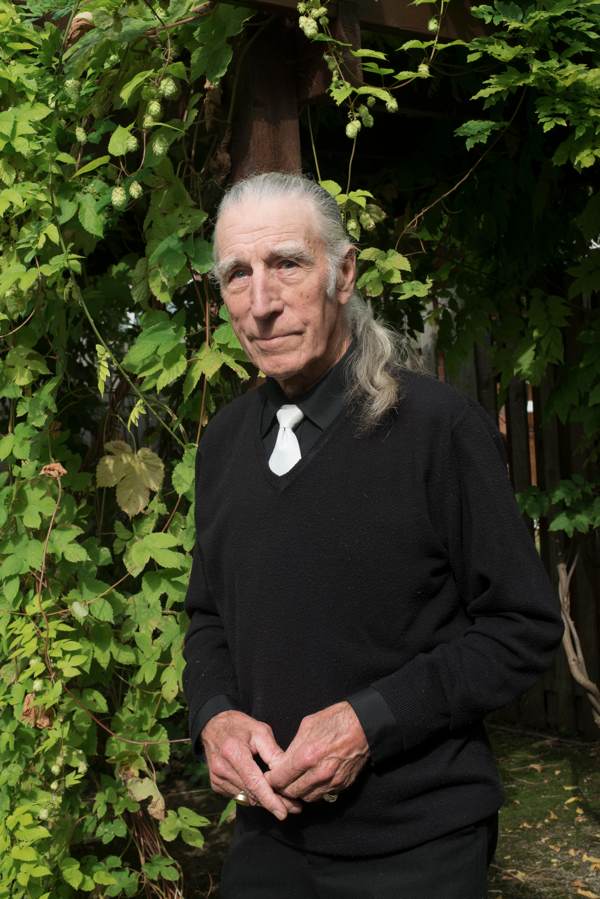
Charles Brownlow – “I started hop picking when I was seven. It was a working holiday to make some money. This was during the bombing, you woke up and the street had gone overnight, so to get to the country was an escape. You wouldn’t believe how many people crammed into those tiny huts. You took a jug of tea to work with you and at first it was hot but then it went cold but you carried on drinking it because you were hot. You could taste the hops in your sandwiches because it was all over your hands. There was a lot of camaraderie, people had nothing but it didn’t matter.”
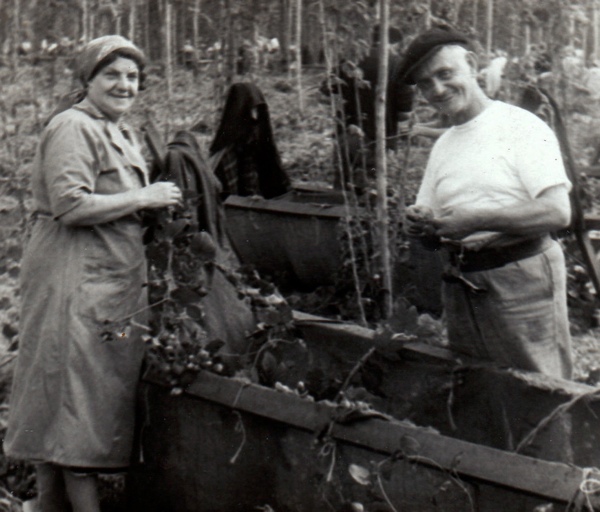
Mr & Mrs Gallagher from Stepney at Pembles Farm
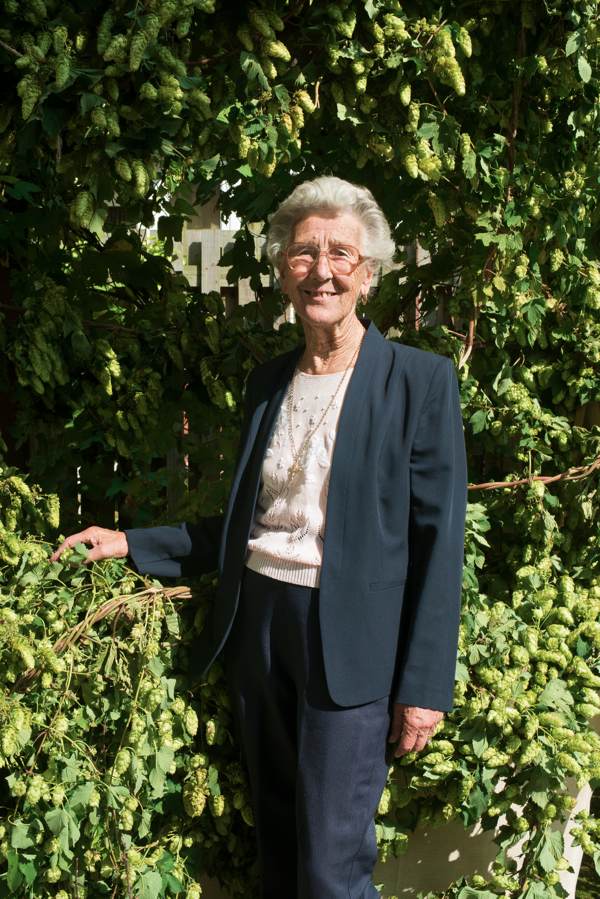
Margie Locke – “I’m eighty-eight and I went hop picking and fruit picking from the age of four months, and I only packed up last year because the farm I where went hop picking has been sold for development and they are building houses on it.”
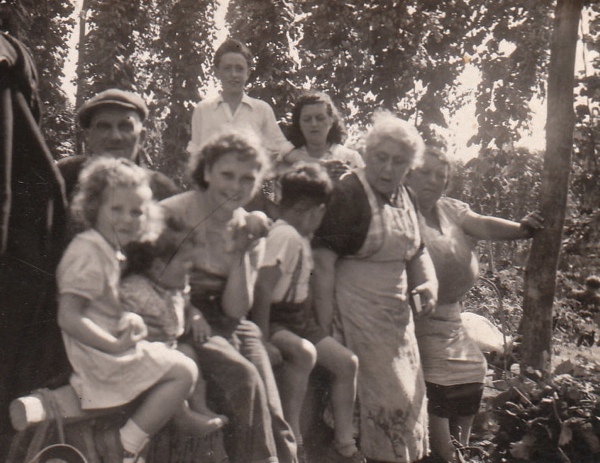
At Highwood’s Farm, Collier St, Kent
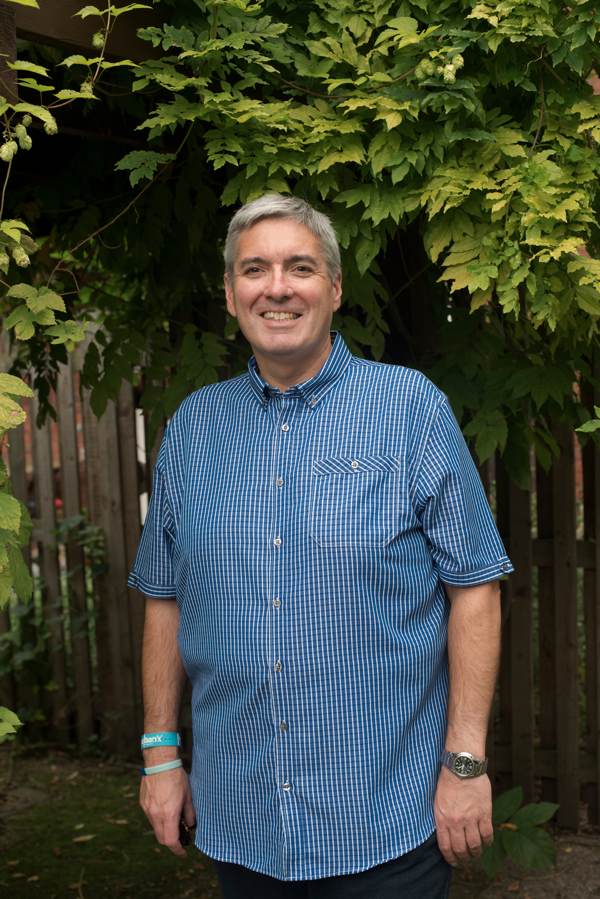
Michael Tyrell – “I was first taken hop picking in the sixties when I was five months old, and I carried on until 1981 when hops was replaced by rapeseed which was subsidised by the European Community. In the past, one family was put in a single hut, eleven feet by eleven feet, but we had three joined together – with a bedroom, a kitchen with a cooker run off a calor gas bottle and even a television run off a car battery. There was still no running water and we had to use oil lamps. My family went to Thompsett’s Farm about three miles from Paddock Wood from the First World War onwards. I have a place there now, about a mile from where my grandad went hop picking. The huts are still there and we scattered my uncle’s ashes there.”

Annie & Bill Thomas near Cranbrook, Kent
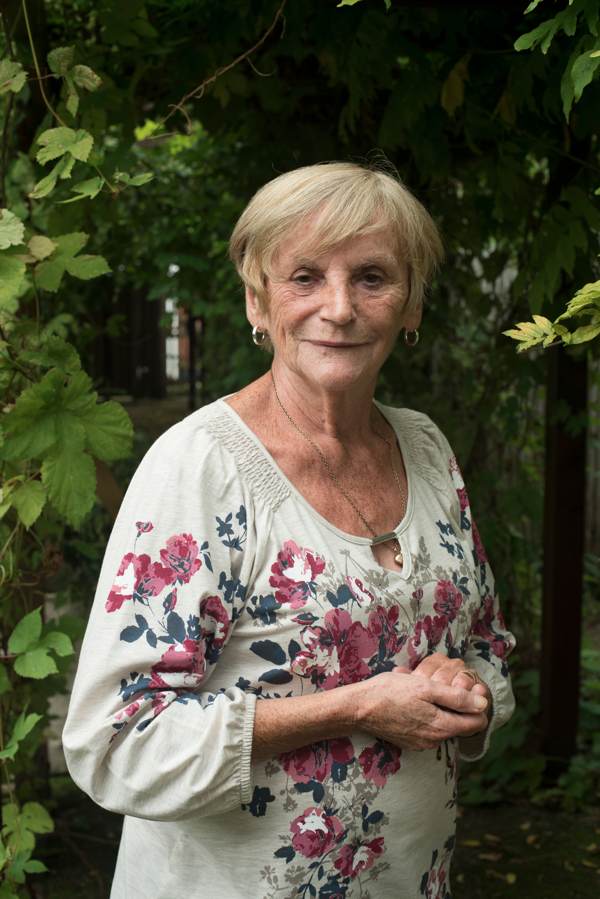
Lilian Peat (also known as ‘Splinter’) – “My mum and dad and seven brothers and three sisters, we all went hop picking from Bethnal Green every year. I loved it, it was freedom and fresh air but we had to work. My mum used to get the tail end of the bine and, if we didn’t pick enough, she whipped us with it. My brothers used to go rabbiting with ferrets. The ferrets stayed in the hut with us and they stank. And every day we had rabbit stew, and I’ve never been able to eat rabbit since. We were high as kites all the time because the hop is related to the cannabis plant, that’s why we remember the happy times.”
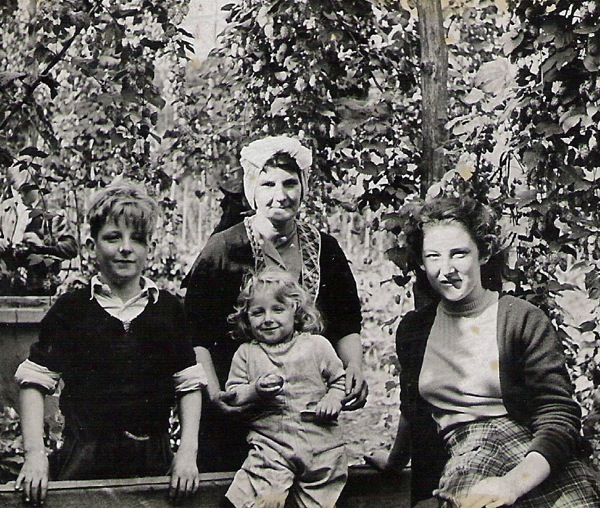
John Doree, Alice Thomas, Celia Doree and Mavis Doree, near Cranbrook, Kent
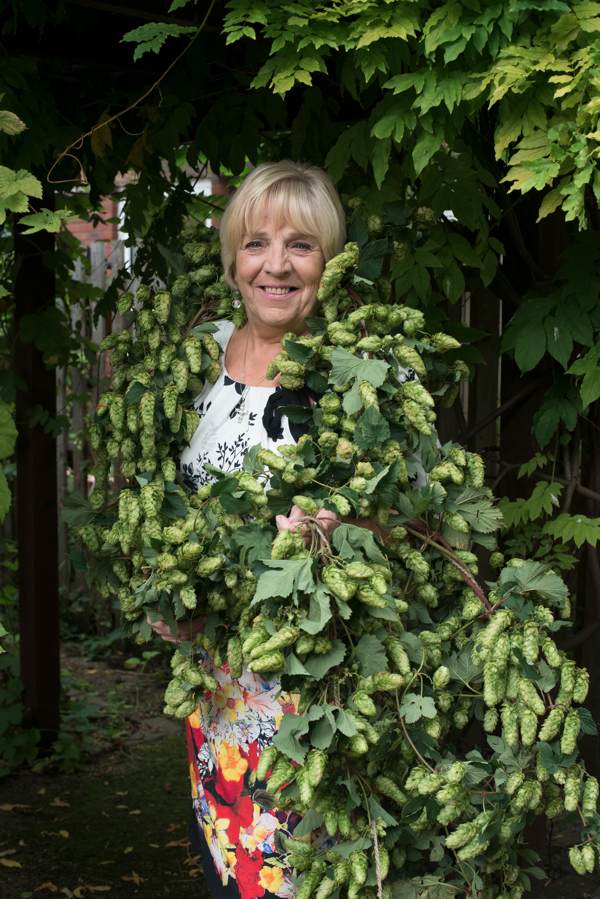
Mary Flanagan – “I’m the hop queen. I twine the bines. I first went hop picking in 1940. My dad sent us down to Plog’s Hall Farm on the Isle of Grain. We went in April or May and my mum did the twining. Then we did fruit picking, then hop picking, then the cherries and bramleys until October. We had a Mission Hall down there, run by Miss Whitby, a church lady who showed us films of Jesus projected onto a sheet but, if the planes flew overhead, we ran back to our mothers. We used to hide from the school inspector, who caught us eventually and put us in Capel School when I was eight or ten – that’s why I’m such a dunce!”
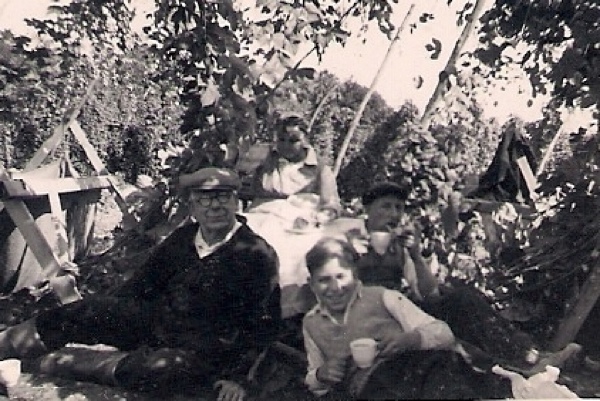
Annie & Bill Thomas with Roy & Alf Baker, near Cranbrook, Kent
Portraits copyright © Sarah Ainslie
Archive photographs courtesy of Tower Hamlets Community Housing
You may also like to take a look at
Roy Wild, Hop Picker
Click here to book for my tours through August, September and October
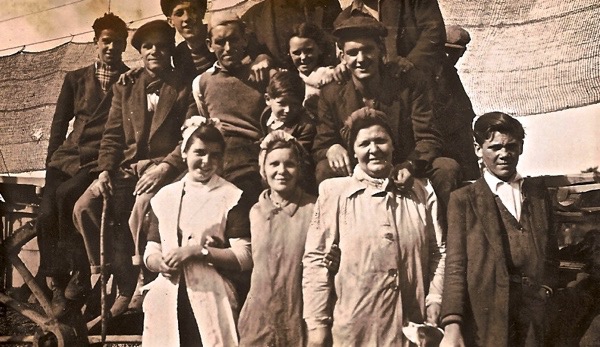
There is Roy standing on the right with his left hand stuck in his pocket – to indicate the appropriate air of nonchalance befitting a street-wise man of the world of around twelve years old – on a hopping expedition with his family from Hoxton.
Roy went hop picking each year with this relations until he reached the age of eighteen and, at this season, he always recalls his days in Kent. Still in touch with many of those who were there with him in the hop fields in the fifties, Roy was more than happy to get out his photographs and settle down with a cup of tea with a drop of whisky in it, and tell me all about it.
“I first went hopping with my family in 1948 when I was ten or eleven. We went to Selling near Faversham in Kent. The fields were owned by Alan Bruce Neame of Shepherd Neame, and he would employ people to pick the hops which he sold to breweries. We all lined up on the last day and he would pay each of us in person.
Some Londoners went by train from London Bridge St, all waiting on the station and carrying all their stuff with them. We were very fortunate, dad’s brother Ernie, he had an asphalt company and had an open backed lorry, for which he made a frame for a rain canopy, and we all went down to hopping together – our family, Ernie’s family, also Renee’s sister Mary and her family. Ernie would drive down to Hoxton and pick us up at Northport St, with all our bits and pieces, our bags and suitcases with bed linen and that type of thing, and away we’d all go down to Faversham. We’d go at the weekend, so we could spend a day unpacking and be ready to start picking on Monday.
There was us hop pickers from London but Neame would also employ ‘home-dwellers,’ these were Kentish people. The accommodation they lived in was far superior to what we were subjected to. We were given no more than Nissen huts, square huts made of corrugated iron with a door and that was about all, no windows. It was very, very primitive. We washed in a bowl of water and the toilet was a hole dug in a field. My mother would take old palliasses down with us from Hoxton and they would be stuffed with straw or hay from the barn, and that would our mattresses. The beds were made of planks, very basic and supported upon four logs to prop them up off the floor. You’d put the palliasses on top of the planks and the blankets on top of that. The huts were always running alive with creepy-crawlies, so anyone that had a phobia of that wasn’t really suited to hop picking.
There was another room next to it which was half the size, this was our kitchen. My dad would take down an old primus stove for cooking. It was fuelled by paraffin and the more you pumped it up the fiercer the flame, the quicker the cooking. It was only a small thing that sat on a box. The alternative to that was cooking outside. The farmer would provide bundles of twigs known as ‘faggots,’ to fuel the fire and we would rig up a few bricks with a grill where we’d put the kettle and a frying pan. They’d literally get pot-black in the smoke.
We usually went from three weeks to a month hop picking, sometimes the whole of September, and you could stay on for fruit picking. When we first started, we picked into a big long troughs of sacking hanging down inside a wooden frame. They were replaced by six bushel baskets. The tally man would come round with a cart to collect the six bushel baskets and mark your card with how much you had picked, before carrying the hops away to the oasthouses for drying.
At the time, we were paid one shilling and sixpence a bushel. You’d pick into a bushel basket while you were sitting with it between your legs and when it was full, you’d walk over to the six bushel basket and tip it in. My dad was a fast picker, he’d say ‘Come on Roy, do it a bit quicker!’ All your fingers got stained black by the the hops, we called it ‘hoppy hands.’
If you had children with you, they would mess about. Their parents would be rebuking them and telling them to get picking because the more you picked, the more you earned. Some people could get hold of a bine, pull the leaves off and, in one sweep, take all the hops off into the basket. Other people, to bulk up their baskets would put all kinds of things in there. they would put the bines at the bottom of the six bushel basket and nobody would know, but if you got caught then you was in trouble. My dad showed me how to fill a six bushel basket up to the five bushel level and then put your arms down inside to lift up the hops to the top just before the tally man came round.
The adults were dedicated pickers because you had to buy food all the time and being there could cost more money than you made. There was a little store near us called ‘Clinges’ and further up, just past the graveyard, was another store which was more modern called ‘Blythes’, and next door to that was a pub called the ‘White Swan’ and that was the release for all the hop pickers. They all used to go there on Saturday and Sunday nights and there’d be sing-songs and dancing, before going back to work on Monday morning. It was the only enjoyment you had down there, except – if you didn’t go up to the pub – you’d get all the familes sitting round of a weekend and reminiscing and singing songs, round a big open fire made up of the faggots
We worked from nine o’clock until about four, Monday to Friday. The owner of the hop fields employed guys to work for him who were called ‘Pole Pullers,’ they had big long poles with a sharp knife on the end and when you pulled a bine, if it didn’t come down, you’d call out for a pole puller and with his big long pole he’d cut the top of it and the rest if it would fall down. When it was nearing four o’clock, they’d call out ‘Pull no more bines!’ which was what all the kids were waiting for because by this time they’d all had just about enough. A hop field can be one muddy place and if you’re in among all that with wellingtons on it can get pretty sticky. If it was ready to rain, the pole pullers would also go round and call ‘Pull no more bines.’ Nobody was expected to work outside in the rain. We dreaded the rain but we welcomed the pole pullers when they called out, because that was the day’s work done until the following morning.
We looked forward to going hop picking because it was the chance of an adventure in the country. It was just after the war and we’d had it rough in Hoxton. I was born in 1937 and I’d grown up through the war, and we still had ration books for a long time afterwards. I was a young man in the fabulous fifties and the swinging sixties. In the fifties, we had American music and Elvis Presley, and in the sixties the Beatles and British music. Hop picking was being mechanised, they had invented machines that could do it. So we grew away from it, and young men and young women had better things to do with their time.”
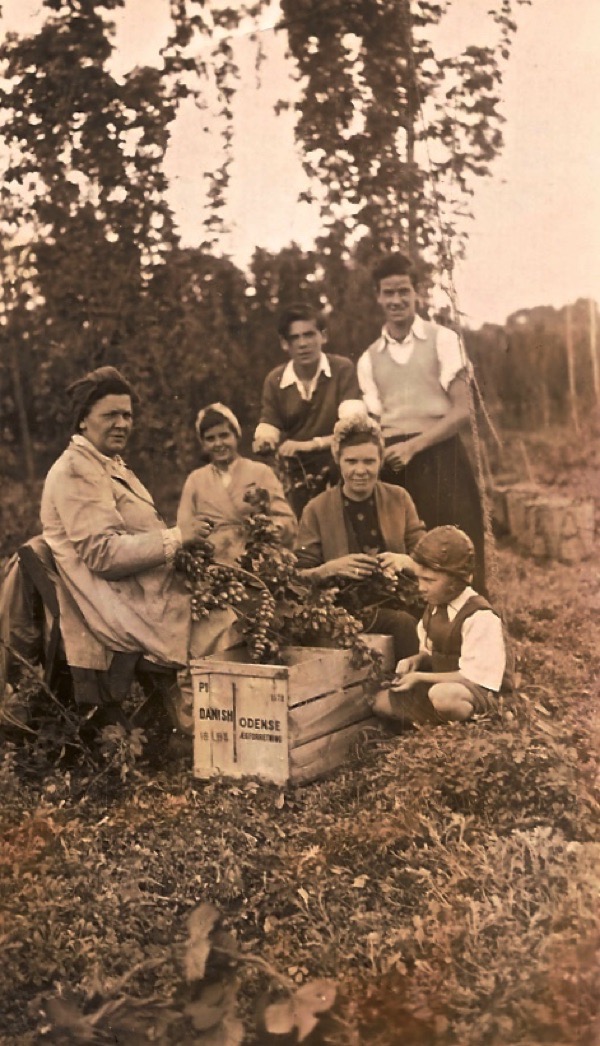
Roy stands in the centre of this family group
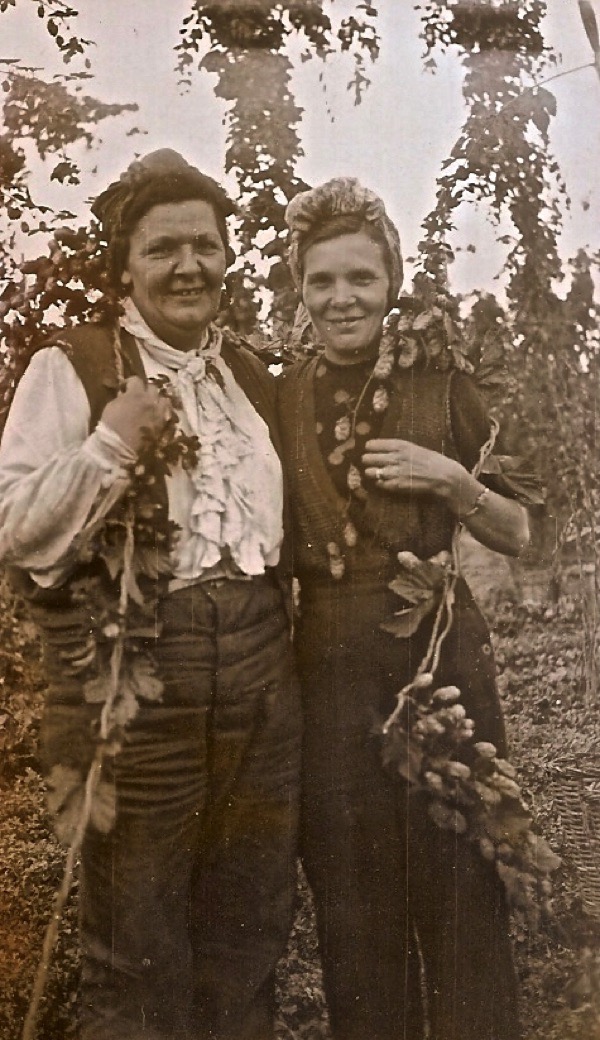
Renee Wild and Rosie Wild
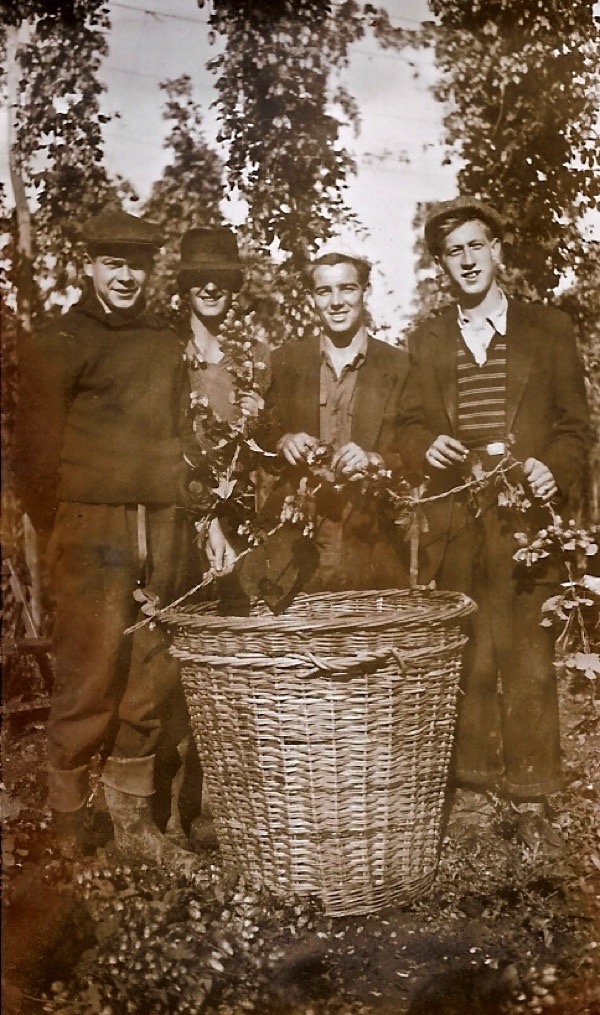
Picking into a six bushel basket
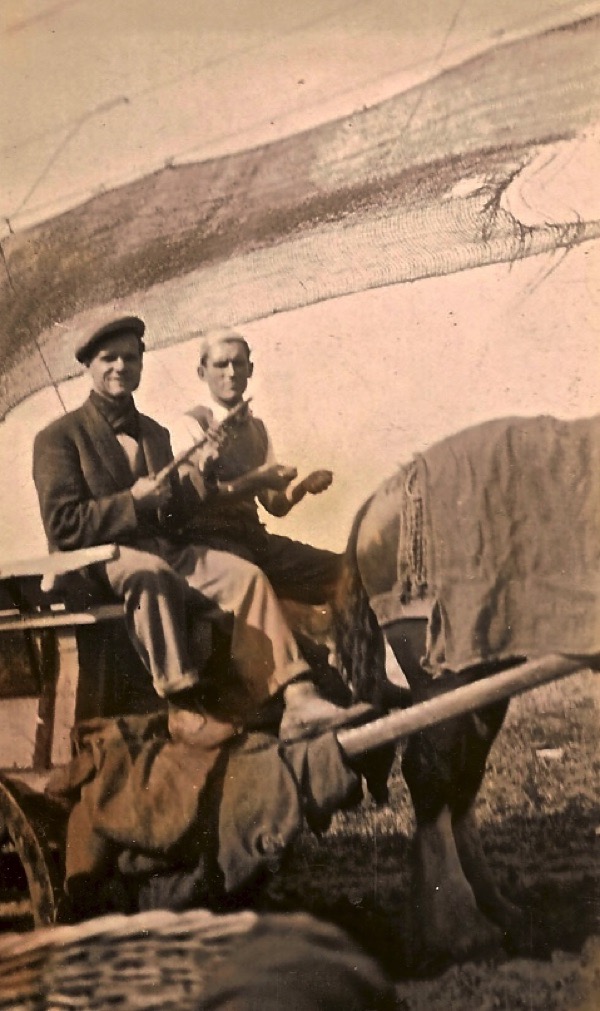
Roy’s father Andy Wild rides in the cart with his brother Ernie
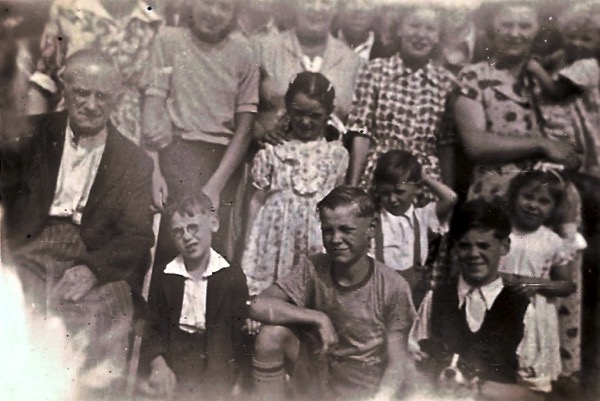
Roy’s grandfather Andrew Wild is on the far left of this photo
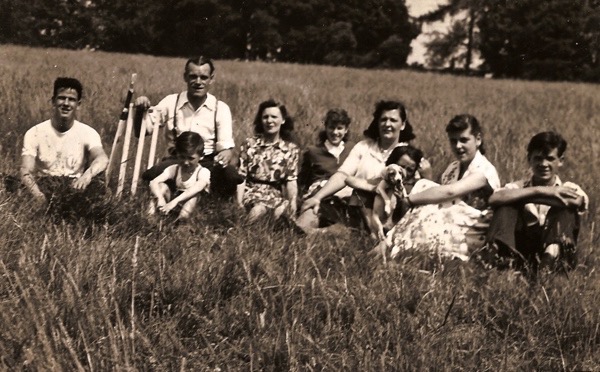
Roy is on the far right of this group
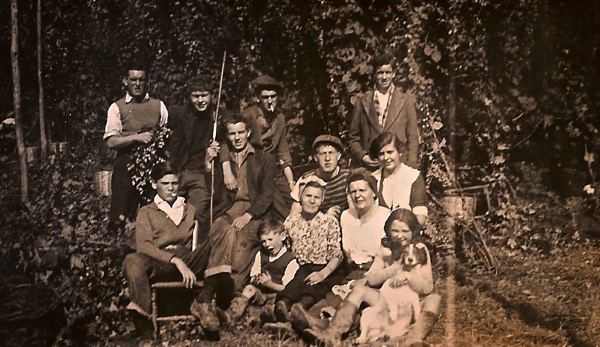
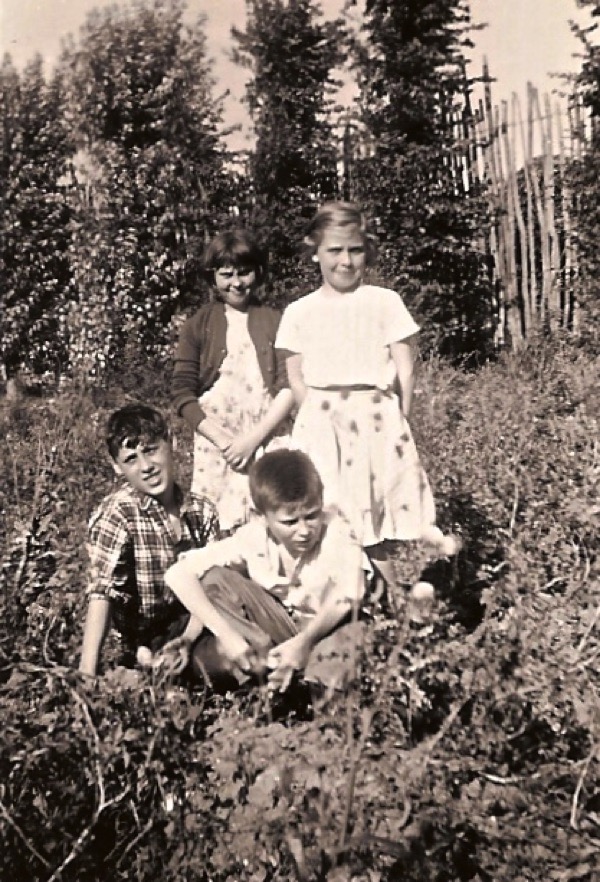
Roy sits in the left in the front of this picture
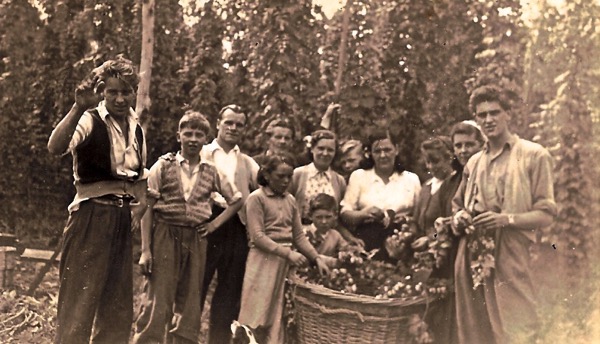
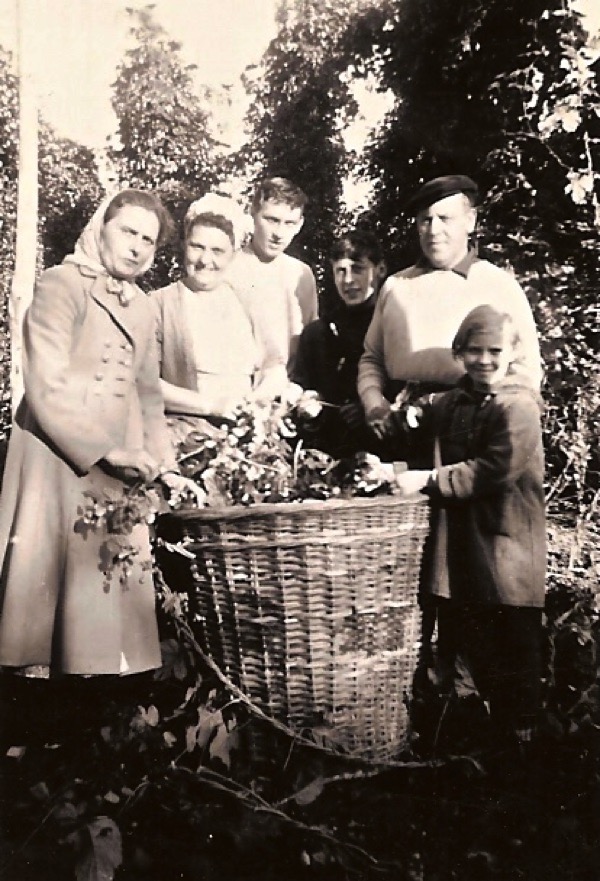
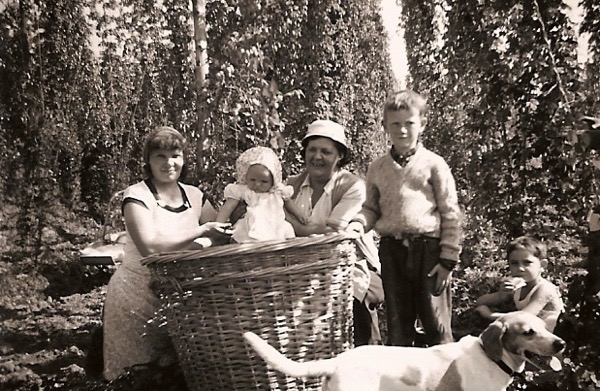
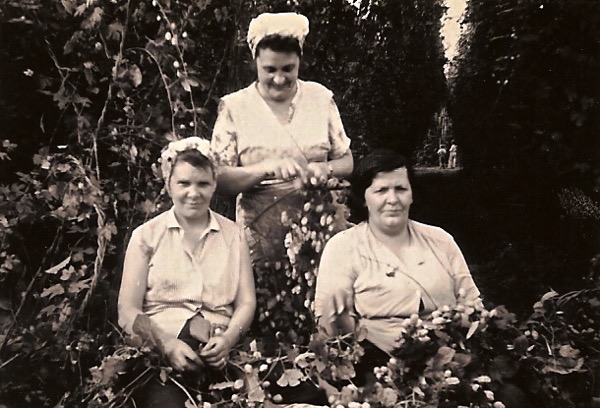
Rosie, Mary & Renee
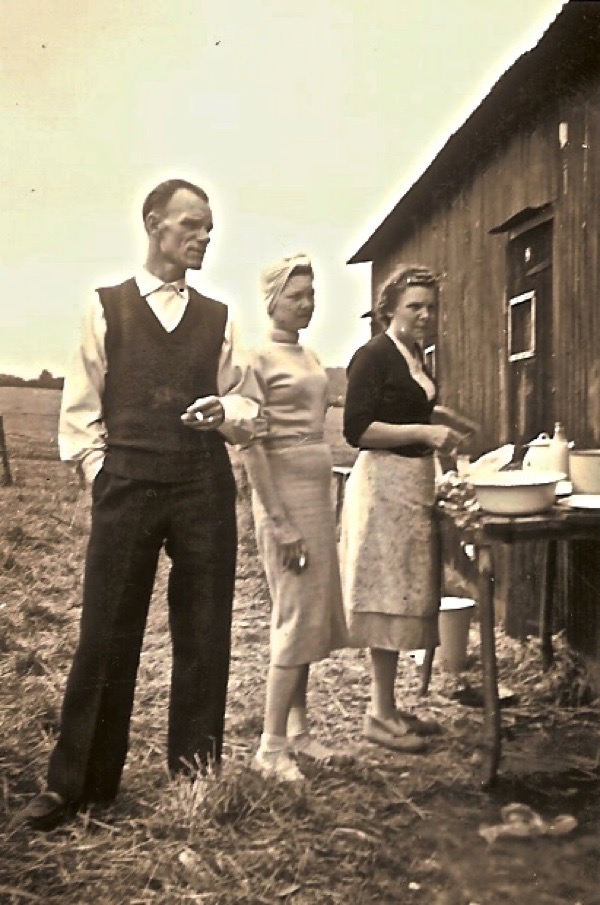
Roy’s father Andy Wild with Roy’s mother Rosie at the washing up and Pearl
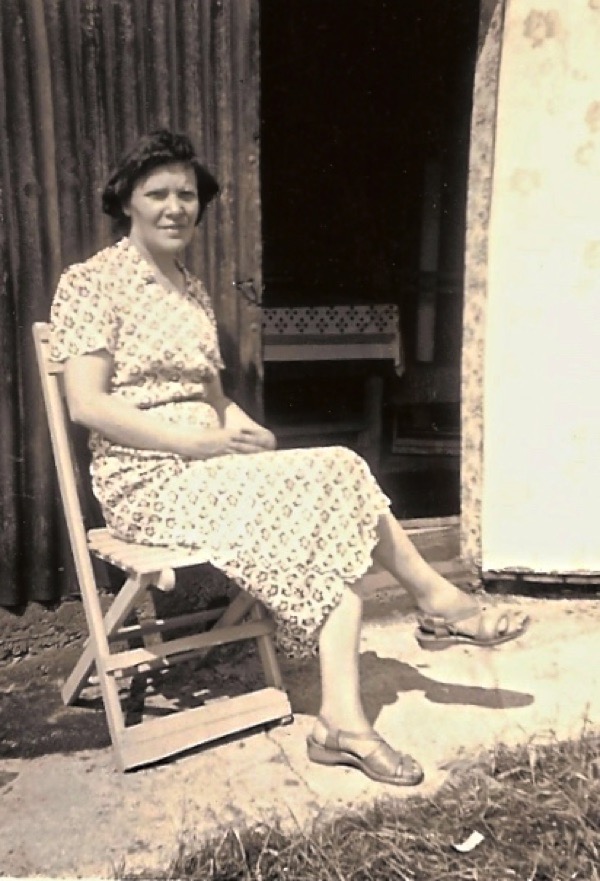
Roy’s mother, Rosie Wild
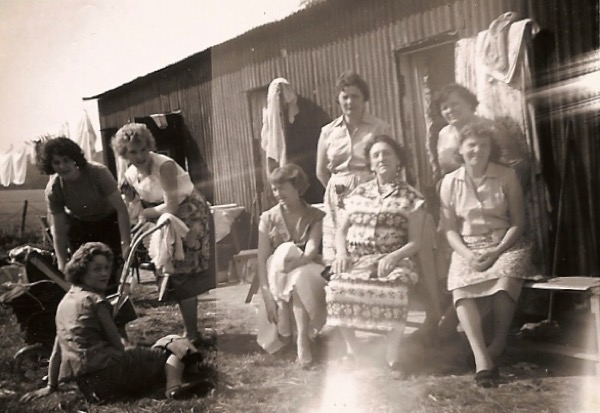
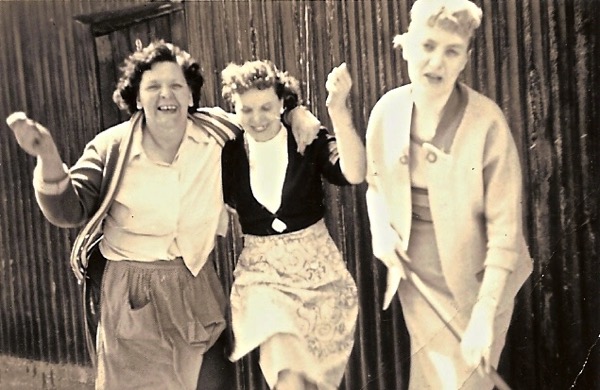
Renee, Mary & Pearl
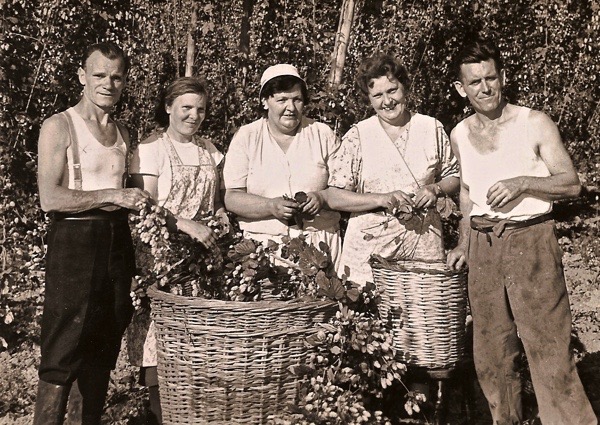
Roy’s father Andy stands on the left and his Uncle Ernie on the right
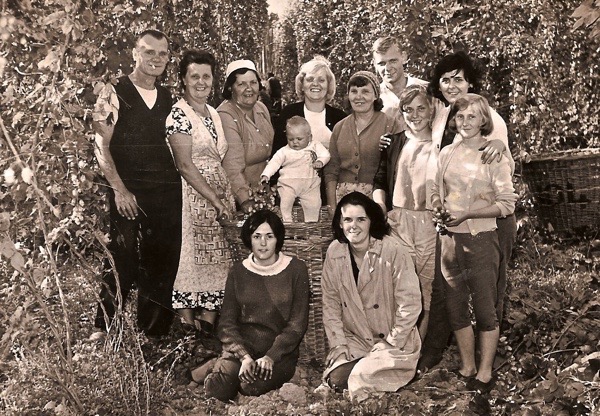
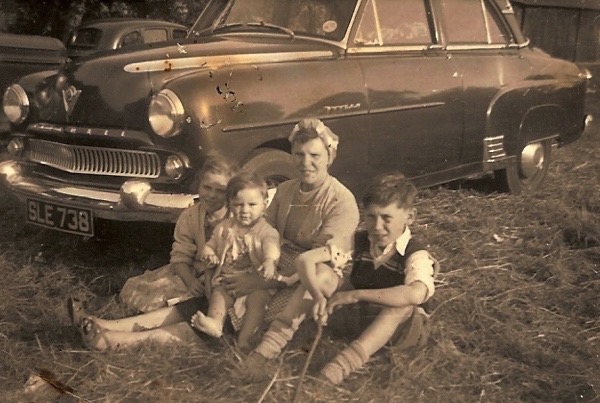
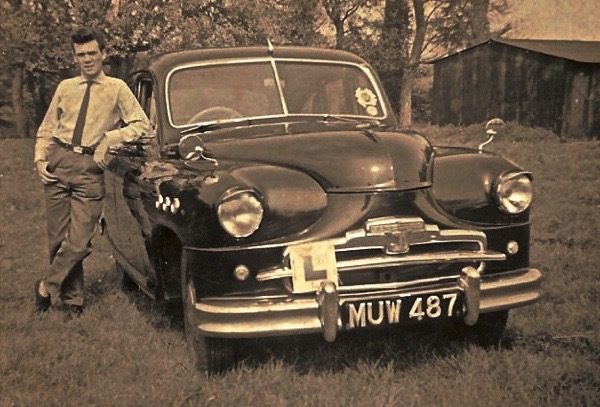
Roy
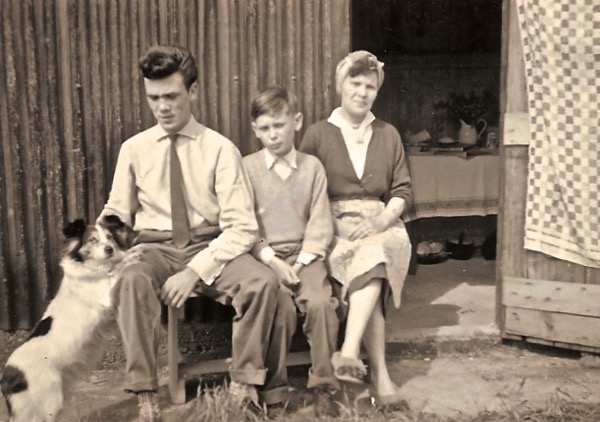
Roy (with Trixie) and Tony sit beside their mother Rosie
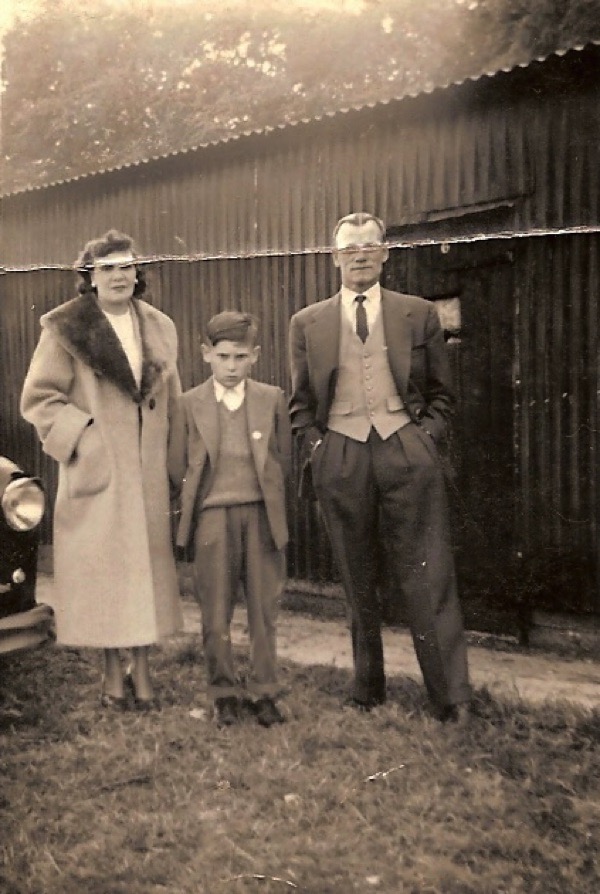
Roy’s mother and father with his younger brother Tony
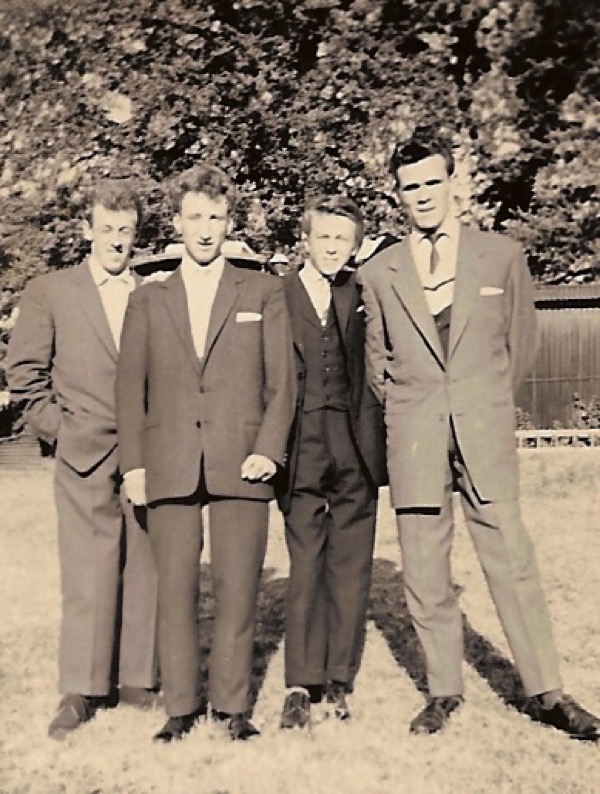
Roy stands on the right of this group of his pals
You may also like to read about
Hopping Season
Click here to book for my tours through August, September and October
Traditionally, this was the time when East Enders headed down to the Hop Farms of Kent & Sussex, embracing the opportunity of a breath of country air and earning a few bob too. This selection of hop picking photographs is from the archive of Tower Hamlets Community Housing.

Bill Brownlow, Margie Brownlow, Terry Brownlow & Kate Milchard, with Keith Brownlow & Kevin Locke in front, at Guinness’ Northland’s Farm at Bodiam, Sussex, in 1958. Guinness bought land at Bodiam in 1905 and eight hundred acres were devoted to hop growing at its peak.

Julie Mason, Ted Hart, Edward Hart & friends at Hoathleys Farm, Hook Green, near Lamberhurst, Kent

Lou Osbourn, Derek Protheroe & Kate Day at Goudhurst Farm

Margie Brownlow & Charlie Brownlow with Keith Brownlow, Kate Milchard & Terry Brownlow in front at Guinness’ Northland’s Farm at Bodiam, Sussex, in 1950

Mr & Mrs Gallagher with Kitty Adams & Jackie Gallagher from Westport St, Stepney, in the hop gardens at Pembles Farm, Five Oak Green, Kent in 1959

Jackie Harrop, Joan Day & George Rogers at Whitbread’s Farm, Beltring, Kent in 1949

Mag Day (on the left at the back) in the hop gardens with others at Highwood’s Farm, Collier St, in 1938

Pop Harrop at Whitbread’s Farm, Beltring, Kent in 1949

Sarah Watt, Mrs Hopkins, Steven Allen, Ann Allen, Tom, Albert Allen & Sally Watt in the hop gardens at Jack Thompsett’s Den Farm, Collier St, Kent in 1943

Harry Watt, Tom Shuffle, Mary Shuffle, Sally Watt, Julie Callagher, Ada Watt & Sarah Watt in the hop gardens at Jack Thompsett’s Den Farm, Collier St, Kent in the fifties

Harry Watt, Sally Watt, Sarah Watt holding Terry Ellames in the hop gardens at Jack Thompsett’s Den Farm, Collier St, Kent in 1957

Harry Ayres, a pole puller, in the hop gardens at Diamond Place Farm, Nettlestead, Kent

Emmie Rist, Theresa Webber, Kit Webber & Eileen Ayres in the hop gardens at Diamond Place Farm, Nettlestead, Kent

Kit Webber with her Aunt Mary, her Dad Sam Webber and her Mum, Emmie Ris,t in the hop gardens at Diamond Place Farm, Nettlestead, Kent

Harry Ayres with his wife Kit Webber in the hop gardens at Diamond Place Farm, Nettlestead, Kent.

Richard Pyburn, Mag Day, Patty Seach and Kitty Gray from Kirks Place, Limehouse, in the hop gardens at Highwoods Farm, Collier St, Kent

The Gorst and Webber families at Jack Thompsett’s Farm, Fowle Hall, Kent in the forties

Kitty Waters with sons Terry & John outside the huts at Pembles Farm, Five Oak Green, Kent in 1952

Mr & Mrs Gallagher from Westport St, Stepney, with their grandchildren in the hop gardens at Pembles Farm, Five Oak Green, Kent in 1958

Sybil Ogden, Doris Cossey, Danny Tyrrell & Sally Hawes near Yalding, Kent

John Doree, Alice Thomas, Celia Doree & Mavis Doree in the hop gardens near Cranbrook, Kent

Bill Thomas & his wife Annie, in the hop gardens near Cranbrook, Kent

The Castleman Family from Poplar hop picking in the twenties

Terry & Margie Brownlow at Guinness’ Northland’s Farm at Bodiam in Sussex in 1949

Alfie Raines, Johnny Raines, Charlie Cushway, Les Benjamin & Tommy Webber in the Hop Gardens at Jack Thompsett’s Farm at Fowl Hall near Paddock Wood in Kent
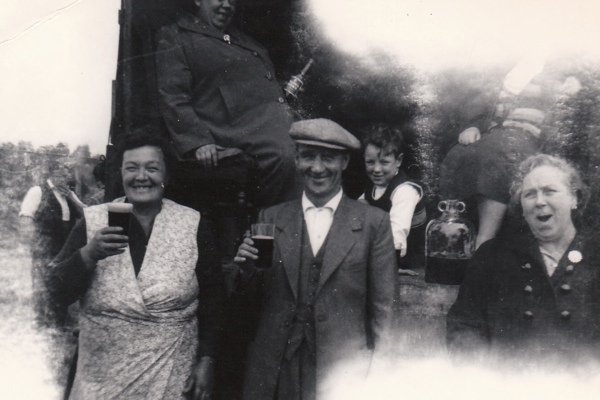
Lal Outram, Wag Outram & Mary Day on the common at Jack Thompsett’s Farm at Fowl Hall near Paddock Wood in Kent in 1955

Taken in September 1958 at Moat Farm, Five Oak Green, Kent. Sitting on the bin is Miss Whitby with Patrick Mahoney, young John Mahoney and Sheila Tarling (now Mahoney) – Sheila & Patrick were picking to save up for their engagement party in October

Maryann Lowry’s Nan, Maggie ,on the left with her Great-Grandmother, Maryann, in the check shirt in the hop gardens, c.1910

Having a rest in hop gardens at Whitbread’s Farm, Beltring, Kent in 1966. In the back row are Mary Brownlow, Sean Locke, Linda Locke, Kate Milchard, Chris Locke & Margie Brownlow with Kevin Locke and Terry Locke in front.

Margie Brownlow & her Mum Kate Milchard at Whitbreads Farm in Beltring, Kent in 1967. These huts were two stories high. The children playing outside are – Timmy Kaylor, Chrissy Locke, Terry Locke, Sean Locke, Linda Locke & Kevin Locke.

Chris Locke, Sally Brownlow, Linda Brownlow, Kate Milchard, Margie Brownlow, Terry Locke & Mary Brownlow at Whitbread’s Farm, Beltring, Kent in 1962

Johnno Mahoney, Superintendant of the Caretakers on the Bancroft Estate in Stepney, driving the “Mahoney Special” at Five Oak Green in 1947

The Clarkson family in the hop gardens in Staplehurst. Gladys Clarkson , Edith Clarkson, William Clarkson, Rose Clarkson & Henry Norris.

John Moore, Ross, Janet Ambler, Maureen Irish & Dennis Mortimer in 1950 at Luck’s Farm, East Peckham, Kent

Kate Fairclough, Mrs Callaghan, Mary Fairclough & Iris Fairclough at Moat Farm, Five Oak Green, Kent in 1972

A gang of Hoppers from Wapping outside the brick huts at Stilstead Farm, Tonbridge, Kent with Jim Tuck & John James in the back. In the middle row the first person on the left is unknown, but the others are Rose Tuck, holding Terry Tuck, Rose Tuck, Danny Tuck & Nell Jenkins. In the front are Alan Jenkins, Brian Tuck, Pat Tuck, Jean Tuck, Terry Taylor & Brian Taylor.

Nanny Barnes, Harriet Hefflin, “Minie” Mahoney & Patsy Mahoney at Ploggs Hall Farm

In the Hop Gardens at Jack Thompsett’s Farm at Fowl Hall, near Paddock Wood in Kent in the late forties. Alfie Raines, Edie Cooper, Margie Gorst & Lizzie Raines

The Day family from Kirks Place, Limehouse, at Highwoods Farm in Collier St, Kent in the fifties

Annie Smith, Bill Daniels, Pearl Brown & Nell Daniels waiting for the measurer in the Hop Garden at Hoathley’s Farm, Hook Green, Kent

On the common outside the huts at at Hoathley’s Farm, Hook Green, Kent – you can see the oasthouses in the distance. Rita Daniels, Colleen Brown, Maureen Brown, Marie Brown, Billy Daniels, Gerald Brown & Teddy Hart , with Sylvie Mason & Pearlie Brown standing.

The Outram family from Arbour Sq outside their huts at Hubbles Farm, Hunton, Kent. Unusually these were detached huts but, like all the others, they made of corrugated tin and all had one small window – simply basic rooms, roughly eleven feet square

Janis Randall being held by her mother Joyce Lee andalongside her is her father, Alfred Lee in a hop garden, near Faversham in September 1950

David & Vivian Lee sitting on a log on the common outside Nissen huts used to house hop pickers

Gerald Brown, Billy Daniels & Dennis Woodham in the hop gardens at Gatehouse Farm near Brenchley, Kent, in the fifties

Nelly Jones from St Paul’s Way with Eileen Mahoney, and in the background is Eileen’s mum, “Minie” Mahoney. Taken in the fifties in the Hop Gardens at Ploggs Hall Farm, between Paddock Wood and Five Oak Green.

At Jack Thompsett’s Farm at Fowl Hall, near Paddock Wood in Kent

Ploggs Hall Farm Ladies Football Team. Back Row – Fred Archer, Lil Callaghan, Harriet Jones, Unknown, Unknown, Nanny Barnes, Liz Weeks, Harriet Hefflin, Johnno Mahoney. Front Row – Doris Hurst Eileen Mahoney & Nellie Jones

John Moore, Ross, Janet Ambler, Maureen Irish & Dennis Mortimer in 1950 at Luck’s Farm, East Peckham, Kent

The Outram and Pyburn families outside a Kent pub in 1957, showing clockwise Kitty Tyrrell, Mary Pyburn, Charlie Protheroe, Rene Protheroe, Wag Outram, Derek Protheroe in the pram, Annie Lazel, Tom Pyburn, Bill Dignum & Nancy Wright.

Sally Watt’s Hop Picker’s account book from Jack Thompsett’s Den Farm, Collier St, Kent in the fifties

The Stranger’s Guide To London
Click here to book for my tours through August, September and October
Click here to buy tour gift vouchers for your family and friends
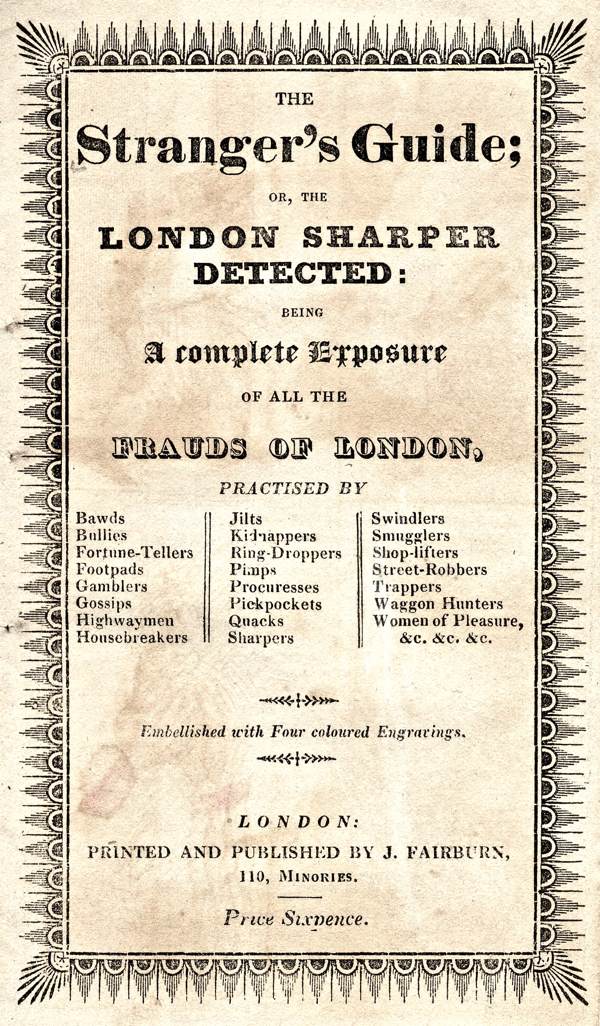
Any readers from out of town who are preparing a visit to the capital this summer might like to read these excerpts from The Stranger’s Guide, exposing all the frauds of London, that I found in the archive at the Bishopsgate Institute.
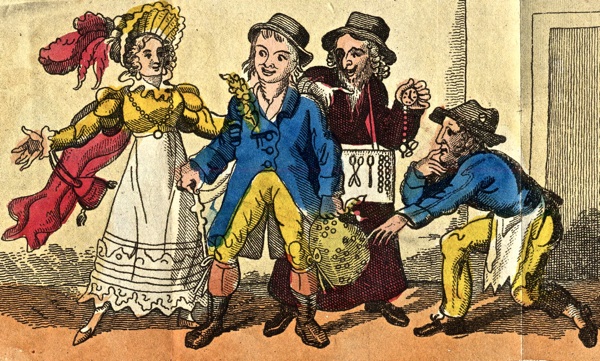
The Countryman arrived in London.
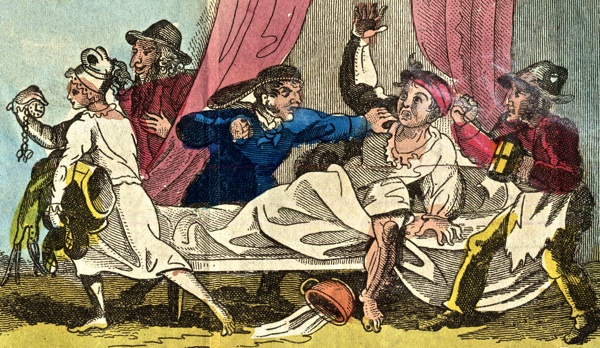
Beaten by bullies & robbed.
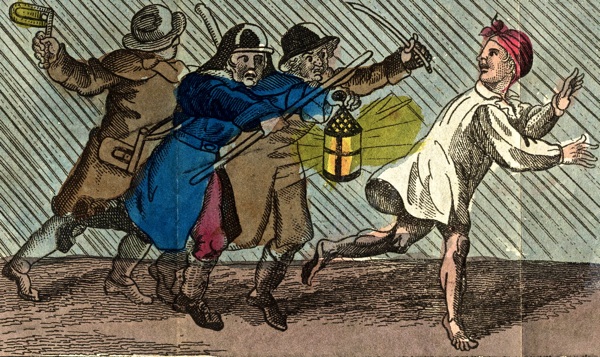
Escaped & chased by watchmen.
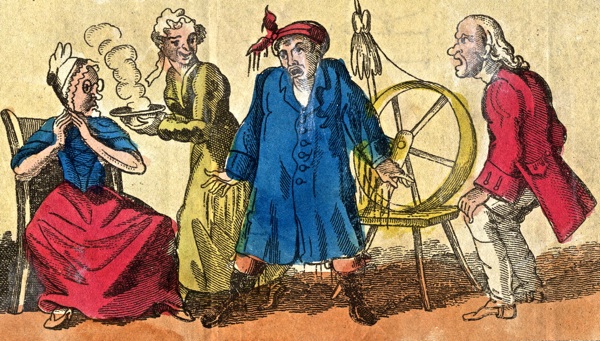
Returned home gives a queer account of London.
BAWDS – Beware, young women, of those who, without any knowledge, pretend to be acquainted with you, your families and friends. This is an old bait to entice young women to their den to be devoured by the ravenous wolves to whom the bawd is a provider. Beware, ye unthinking young men, of receiving letters of assignation to meet at her house, for such letters are calculated to ensnare you and bring you to misery and destroy your health, fame and fortune. Avoid, ye countrymen and women, the pretended friendships of strangers that welcome you to town upon the arrival of the coach and that accost you at the inns, as they generally attend there for that purpose. If you once permit them to converse with you, they will by their artful speeches, so far ingratiate themselves into your good graces as the engage your belief, get the better of your resolutions and at length bring you, by listening to their stories, to ruin and destruction.
BULLIES – Are dependent upon bawds & whores, sometimes the bully pretends to be the husband of the whore, whose bread he eats, whose quarrel he fights, and at whose call he is ready to do as commanded. It is very common for these women to bring home a gentleman and on entering the house ask the maid in a whisper if her master is at home. The maid according to former instructions replies, “No, he is gone out of town and will not return until tomorrow.” Upon which the gentleman is invited in and entertained with a story of the bully’s jealousy and the whore’s constancy. When the gentleman expresses a desire to leave and the bill being called for, he finds fault with the change, then the maid enters and says her master is below and immediately the bully appears and demands to know the gentleman’s business there – if means to debauch his wife? He then blusters and talks about bringing an action but at length is pacified by the bill being discharged.
DUFFERS – These are a set of men that play upon the credulity of both sexes, by plying at the corner of streets, courts and alleys, their contraband wares, which generally consist of silk handkerchiefs made in Spitalfields, remnants of silk purchased at the piece brokers, which they tell you are true India, and stockings from Rag Fair or Field Lane, sometimes stolen, sometimes bought at very low prices, which they declare are just smuggled in from France, and therefore can afford to give you a bargain, if you will become the purchaser. On the other hand, should you not purchase, you will get abused and your pocket picked, at which they are very dexterous. Or, should you give them money to change, they tell you they will step to the public house to get it changed and come again in an instant. Then you see them enter the house and discover later, upon enquiry, they have escaped by the back door, to your great loss and mortification.
FORTUNE TELLERS & CONJURERS – Almost all countries abound with these vermin. In London, we have several very famous in the Astrological Science, who pretend to a knowledge of future events by observations of the celestial signs of the zodiac. The better to carry on their delusions, they can tell you whether your life will be happy or miserable, rich or poor, fruitful or barren, and thousand incidents to please your fancy and raise your curiosity, insinuating at the same time (if they think you have money about you) that much good awaits you, therefore they must have a greater price for their intelligence. Who would not give or guinea, nay two – say they for the completion of their wishes, be it wisdom or wealth, rather than a half a crown to learn that they might live in folly and poverty the rest of their lives?
FOOTPADS – Are so numerous and so often described in the public papers that little new light can be thrown upon them and their practices. Daring insolence and known-down arguments are generally their first salute, after which they rifle your pockets and, if you have but little of value about you, they often maim or violently bruise you for want of that you are not in possession of. These shocking acts of these rapacious sons of plunder call for the interference of the magistracy to put a stop to their daring and consummate impudence as they exhibit, in and about the metropolis, skulking in bye-lanes, desolate places, hedges and commons, in order to waylay the unsuspecting stranger or countryman.
GAMBLERS – There are so many methods of gambling as there are trades and they move in so many spheres, from the most noble dukes and duchesses to the most abandoned chimney-sweeper, pretenders to honour and honesty, versed in various tricks and arts, by which many among the nobility and the gentry have squandered away their fortunes for the occupation of a Complete Gambler or in the true sense of the word, an Expert Gambler. The better to put you on guard against this villainy, I will mention several of the most fashionable and alluring passtimes at which various methods of deluding and cheating are practiced with some success, viz. gaming houses and horse races, cock-fighting, bowling, billiards, tennis, pharo, rouge et noir, hazard &c. together with routs, assemblies, masquerades and concerts, of a particular or private nature. In the latter of these, you will find notorious gamblers of the female sex, who deal in art and deception, as well as some more notorious male cheats who barter one commodity for another without a reference of credit or making it a debt of honour.
HANGERS-ON – These are a set of men of an indolent life, who rather than labour to gain a livelihood, will submit to any meanness that they may eat the bread of idleness. There are many kinds, some pretending to understand the sciences, others the arts, some set up for authors, others wits and the like. Hangers-on will eat or drink with you wherever you stay but will never offer to pay a farthing, however in lieu thereof, they will tell you an indecent story or sing you the latest lewd song. These you will easily find out and may easily get rid of by not treating or encouraging them upon your arrival.
HIGHWAYMEN – Are desperate and resolute persons who having spent their patrimony or lavished their substance upon whores and gamesters, take to the road, in order to retrieve their broken fortunes and either recoup them by meeting with good booty or end their lives in Newgate. The best means to avoid highwaymen is not to travel by night and in be cautious in displaying money, banknotes or other valuables at the inns you put up at, and be careful what company you join for fear they learn of whither you are going and for what purpose – if to pay or receive money, they will almost certainly waylay and rob, if not murder you.
JILTS – Are ladies of easy virtue, who, through an hypocritical sanctity of manners, and pretensions to virtue and religion, draw the countryman and inexperienced cit into their clutches. Of all whores, the jilt is the most to be avoided – for knowing more than others, she is capable of doing more mischief.
KIDNAPPERS or CRIMPS – A set of men of abandoned principles, who having lavished away their fortunes enter into the pay of the East India Company, in order to recruit their army – and, in time of war, when a guinea or two is advertised to be given to any person that brings a proper man, of five feet eight or nine inches high, these kidnappers lie in wait in different places of rendezvous, in order to entrap men for money.
RING-DROPPERS – These are a set of cheats, who frequently cheat simple people, both from the country and in London, out of their money, but most commonly practice their villainous arts upon young women. Their method is to drop a ring just before such persons come up, when they accost them thus, “Young woman, I have found a ring and I believe it is gold for it has a stamp upon it.” Immediately, an accomplice joins in, who being asked the question replies, “It is gold.” “Well” says the formers, “As this young woman saw me pick it up, she has the right to half of it.” As it often happens that the young person has but a few shillings in her pocket, the dropper says, “If you have a mind for the ring, you shall have it for what you have got in your pocket and whatever else you can give me,” which sometimes turns out to be a good handkerchief, cloak or other article. The deluded creature then shows the ring to another person in the street who informs her she is cheated by sharpers and the ring is not worth tuppence, being only brass gilt with a false stamp put on the deceive the unwary.
PICK-POCKETS – There are more pick-pockets in and about London than in all Europe besides, that make a trade and what they call a good living by their employment. The opera, playhouses, capital auctions, public gardens &c swarm with them. And, of late years, they have introduced themselves into our very churches and more particularly Methodist meetings. Therefore it would be prudent, when in a crowd, to keep one hand on your money and the other on your watch, when you find anyone push against you. Pocket books are only secure in the inside pocket with the coat buttoned and watch chains should be run through a small loop contrived for the purpose of securing the watch in the fob.
QUACKS – These are a set of vile wretches who pretend to be versed in physic and surgery, without education, or even knowledge of a common recipe. If they think the patient is able to pay handsomely, they make them believe their case is desperate and generally turn them out worse than they find them.
SETTERS – These are a dangerous set of wretches who are capable of committing any villainy, as well by trapping a rich heir into matrimony with a cast-off mistress as by coupling a young heiress to a notorious sharper, down to the lowest scene of setting debtors for the bailiff and his followers. Smitten at the first glance of a lady, you resign your heart and hand at discretion, which she immediately accepts, on a presumption that delays are dangerous. The conjugal knot being tied, you find the promised and wished-for land, houses and furniture, the property of another and not of yourself.
SMUGGLERS – These are a numerous race of people that have no other way of living than following the illegal practice of smuggling. Two different gangs are concerted in carrying on this wicked business, the first to import the goods from abroad and the other to dispose of them when landed, but if the first were taken and punished as they deserve, the latter would fall of course.
WAGON HUNTERS – These are errant thieves, that ply in the dusk of the evening to rob the wagons upon their arrival. They are equally skillful in cutting away portmanteaus, trunks and boxes from behind chaises &c, if not thoroughly watched, which is the duty of every driver to take care of, by attending to the vehicle under his charge and giving a good look-out.
Images courtesy Bishopsgate Institute
You may also like to read about
George Cruikshank’s London Summer
Click here to book for my tours through August, September and October
Click here to buy tour gift vouchers for your family and friends
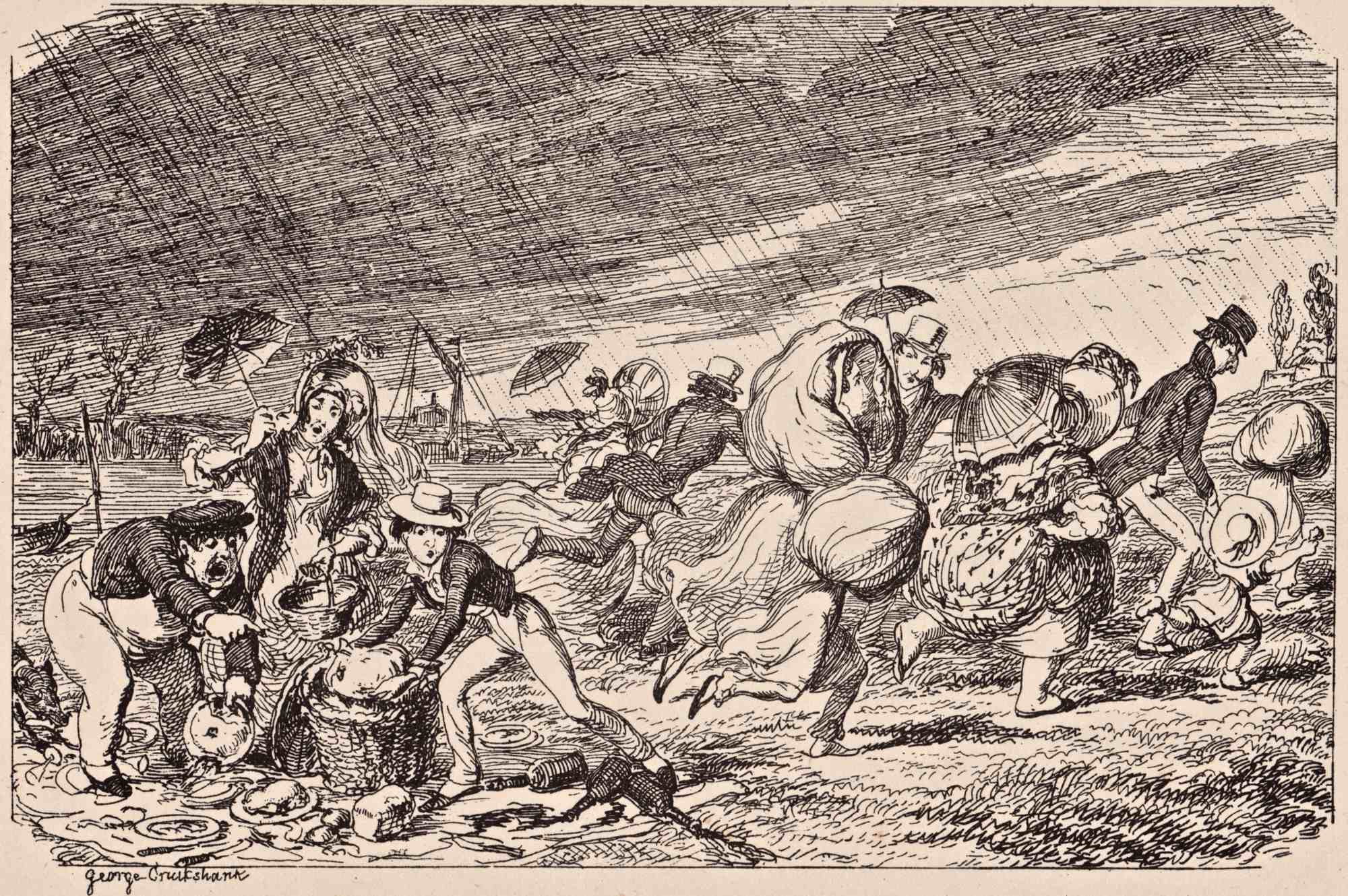
JULY 1838 – Flying Showers in Battersea Fields
Should you ever require it, here is evidence of the constant volatility of English summer weather, courtesy of George Cruikshank’s Comic Almanack published by Henry Tilt of Fleet St annually between 1835 & 1853, illustrating the continuum of festivals and seasons of the year for Londoners. (Click on any of these images to enlarge)

JUNE 1835 – At the Royal Academy
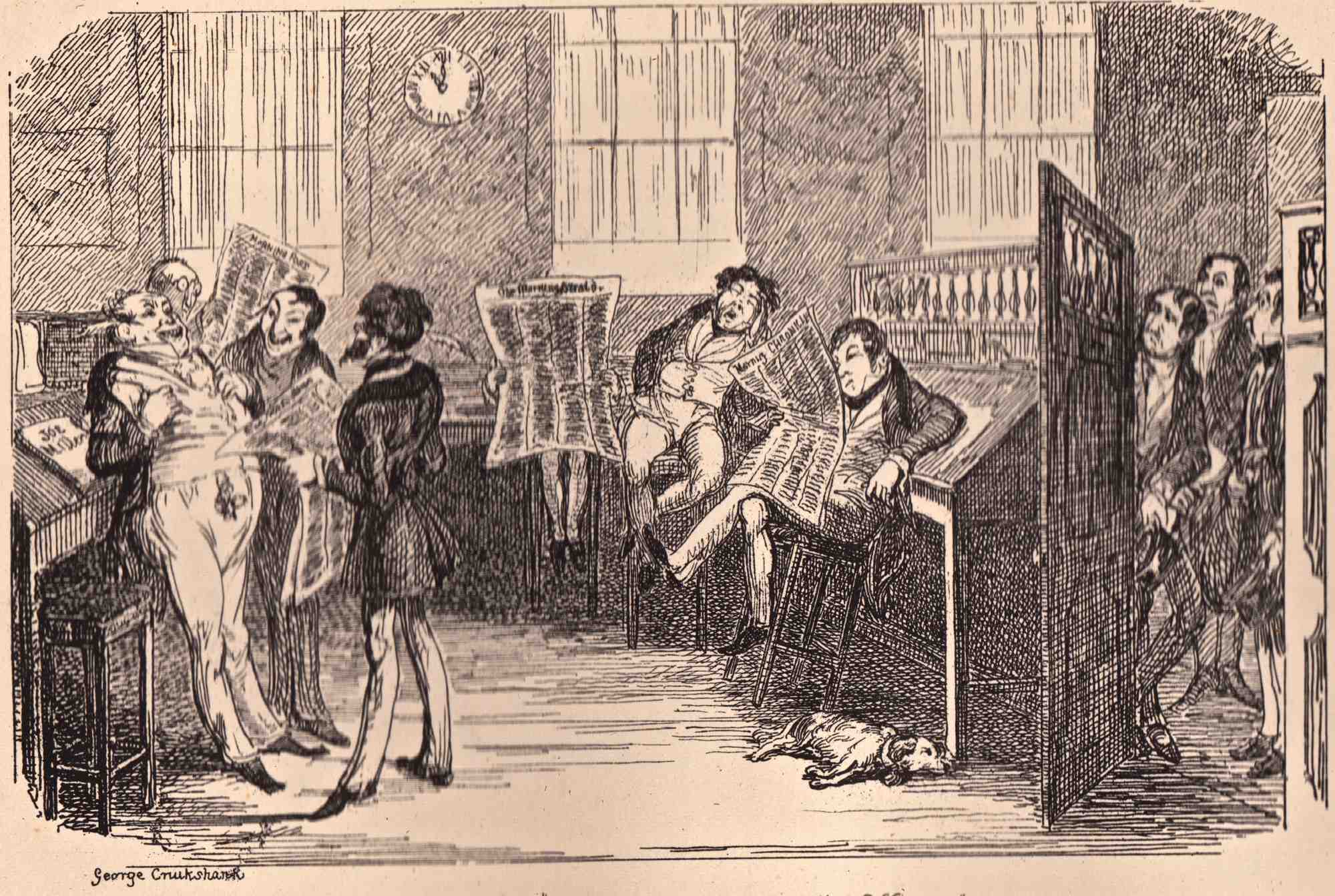
JUNE 1836 – Holidays at the Public Offices
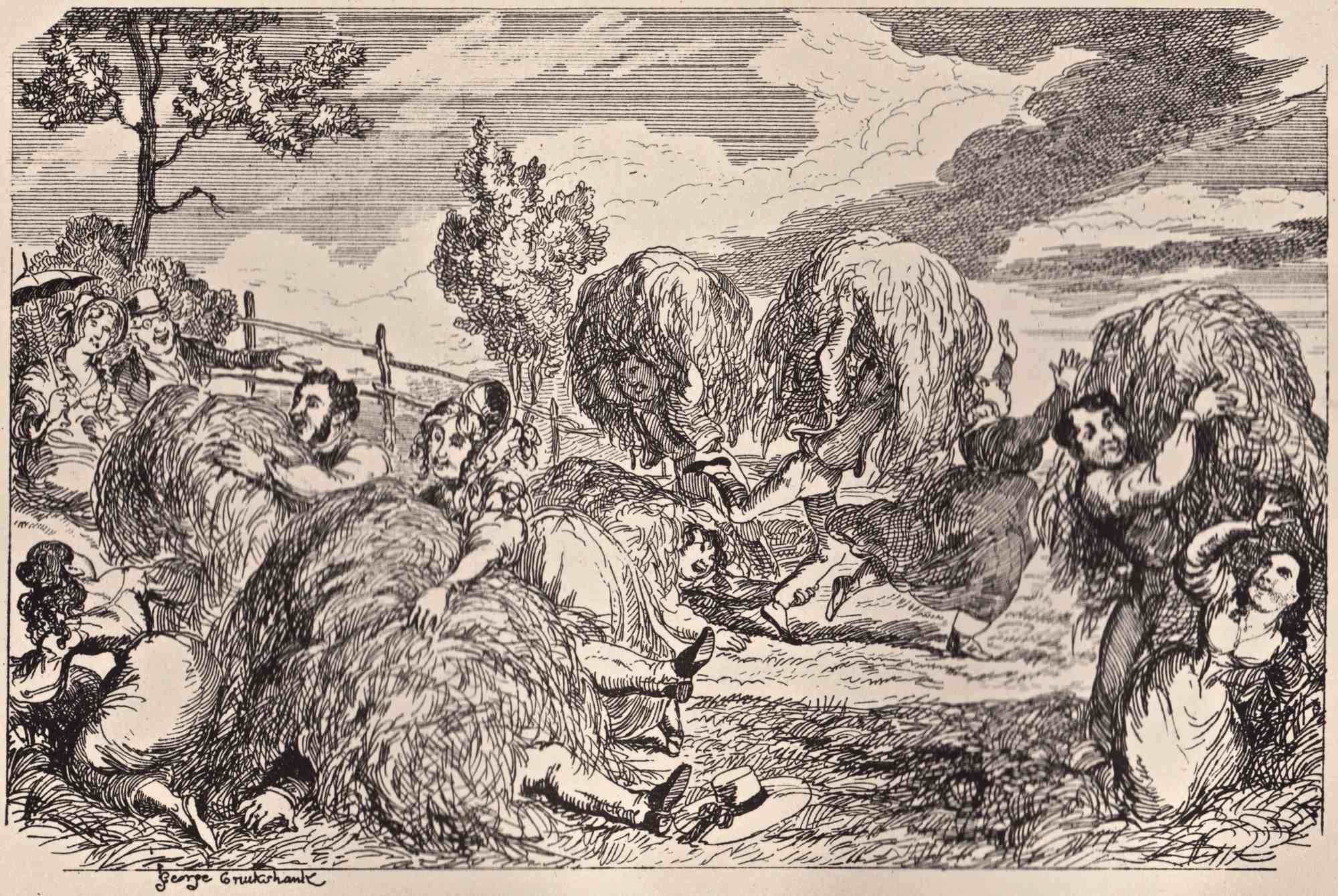
JUNE 1837 – Haymaking

JULY 1835 – At Vauxhall Gardens
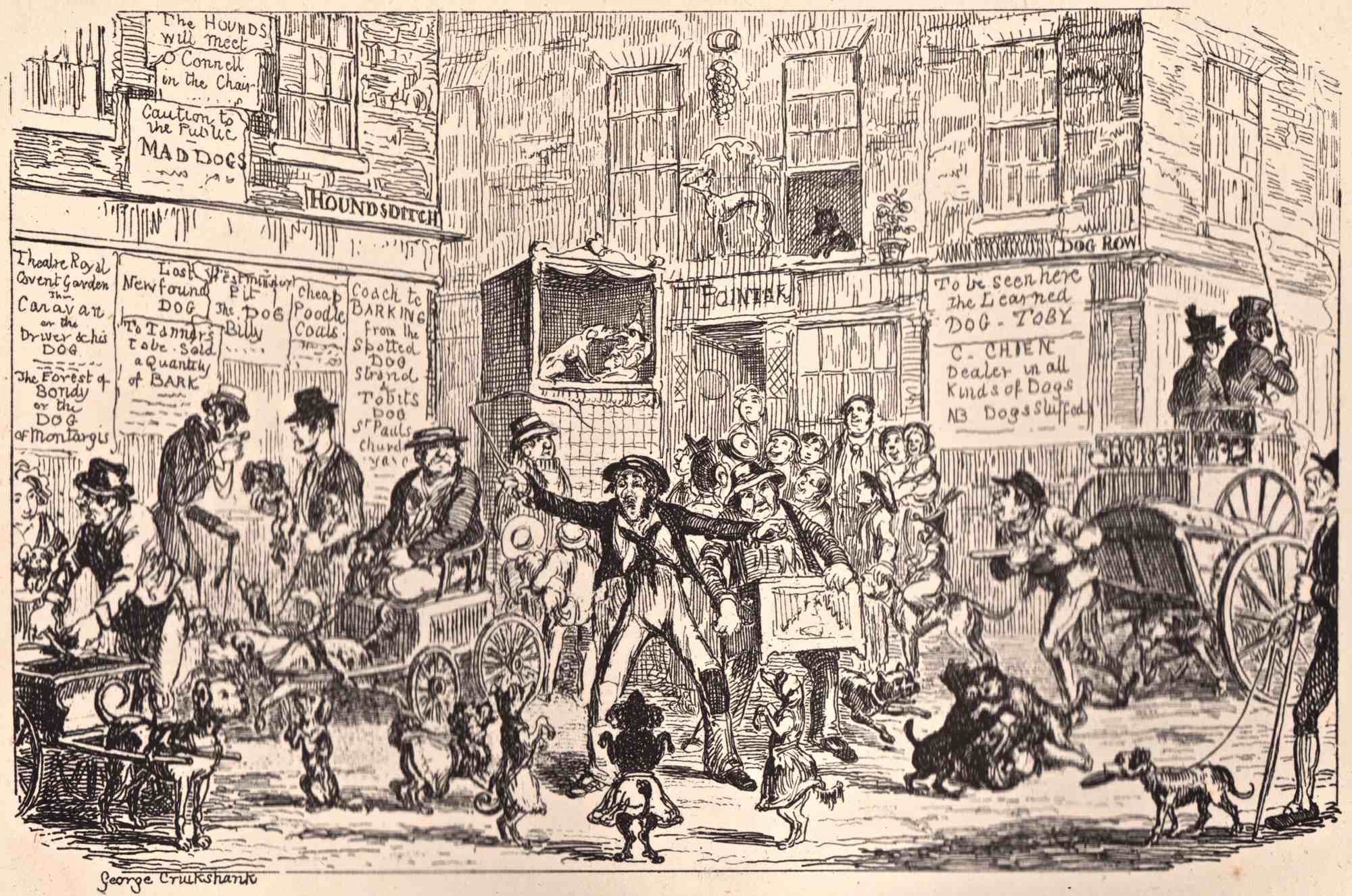
JULY 1836 – Dog Days in Houndsditch
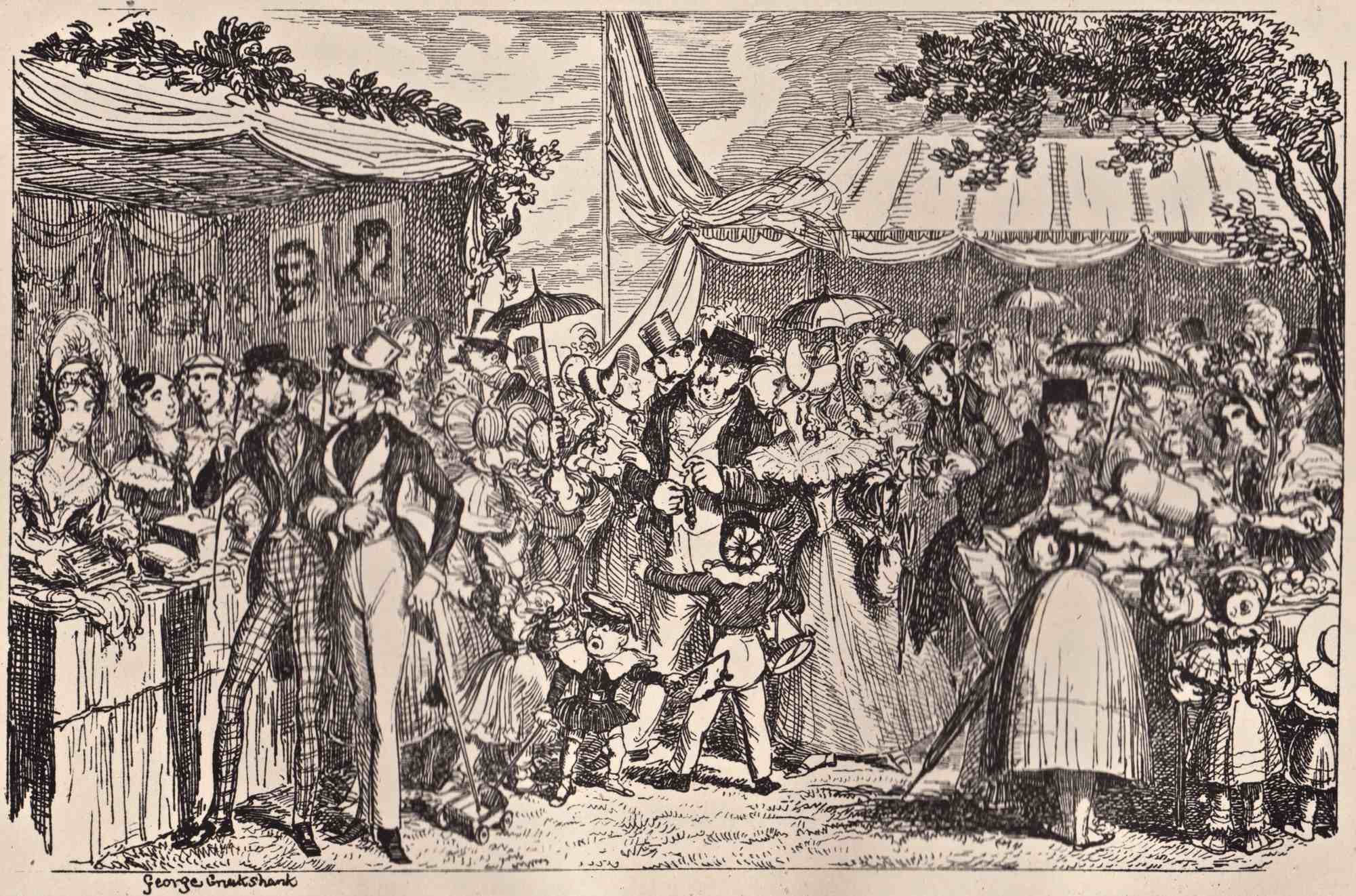
JULY 1837 – Fancy Fair
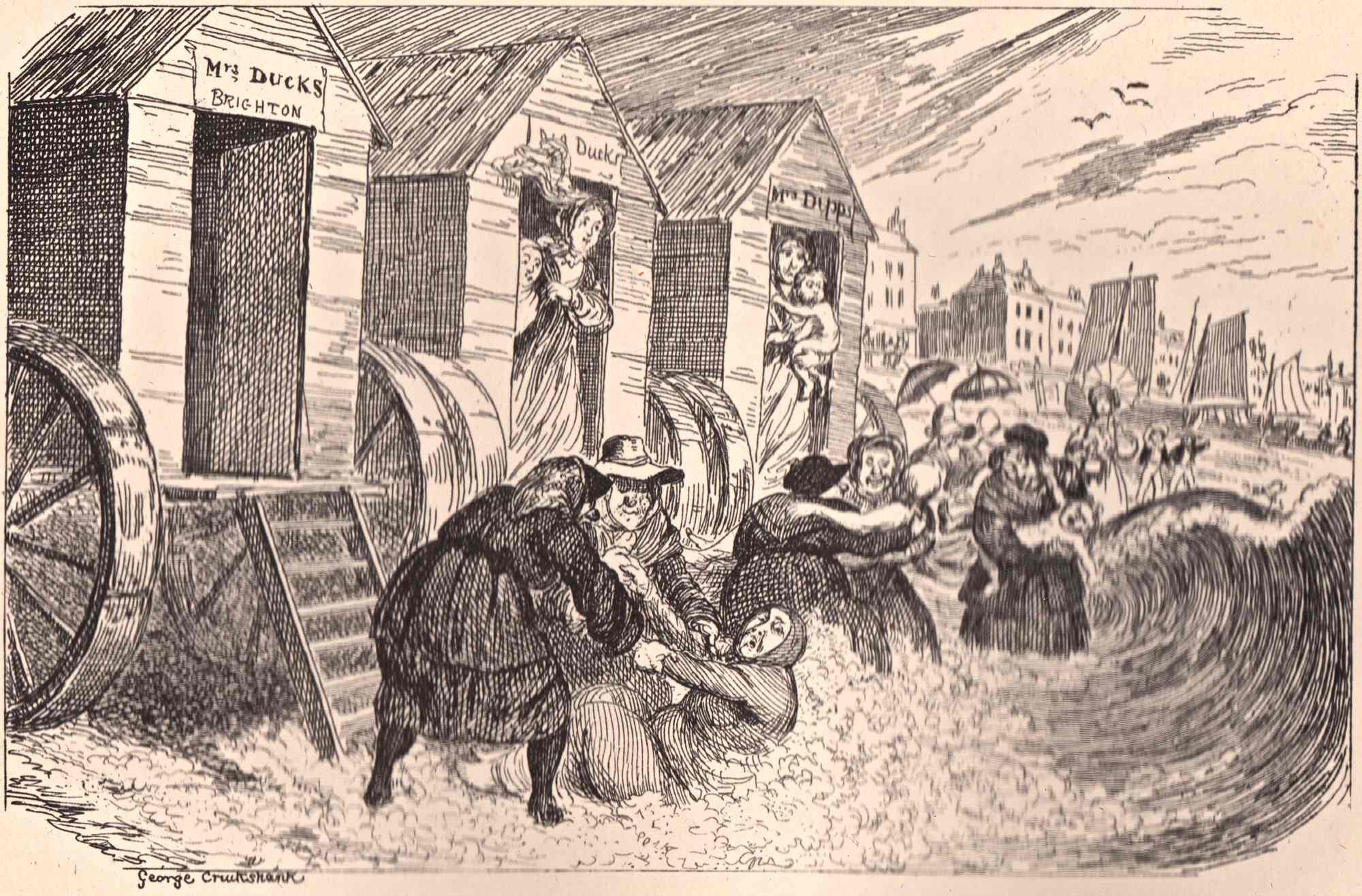
AUGUST 1836 – Bathing at Brighton
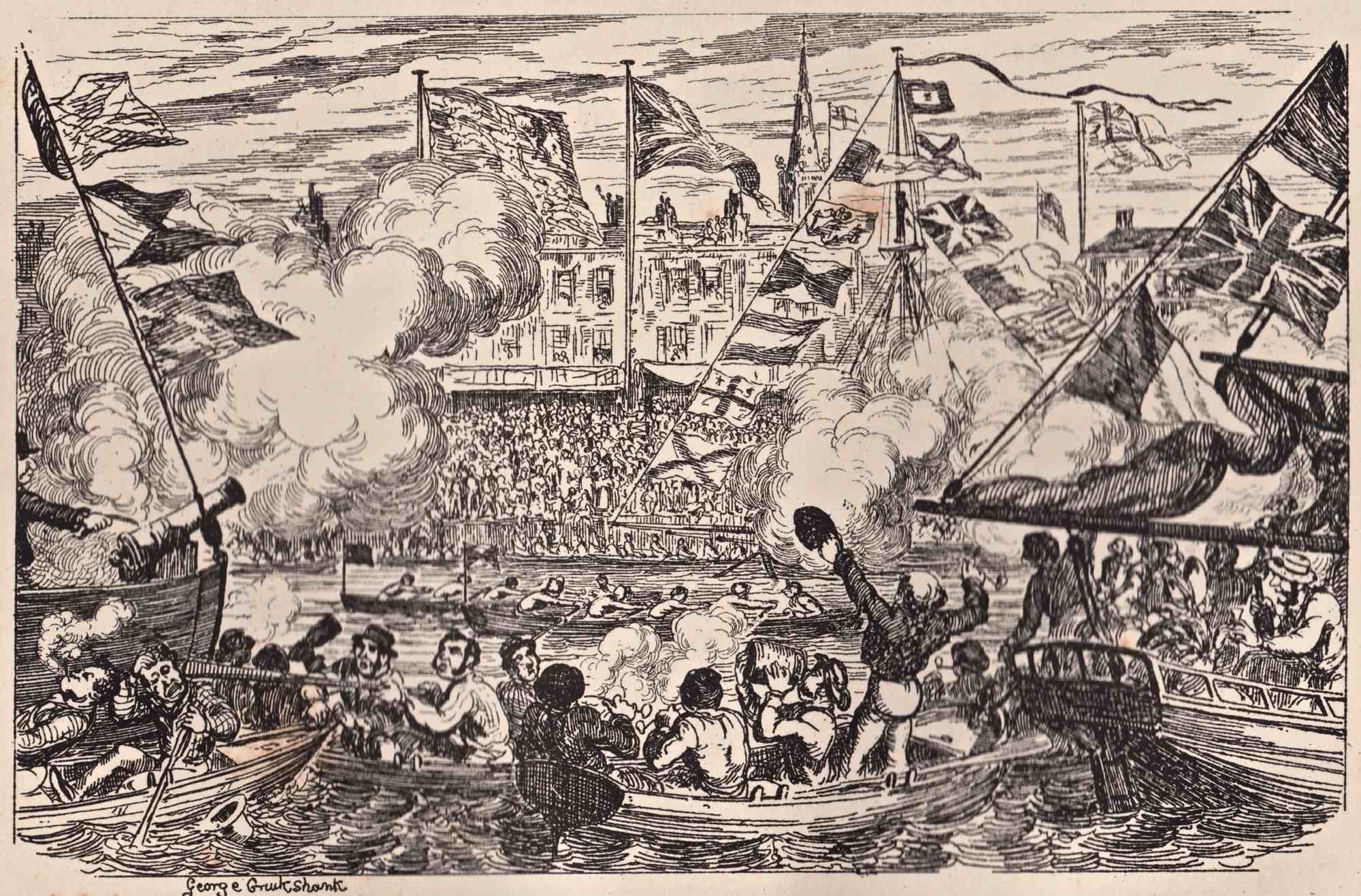
AUGUST 1837 – Regatta

SEPTEMBER 1835 – Bartholomew Fair
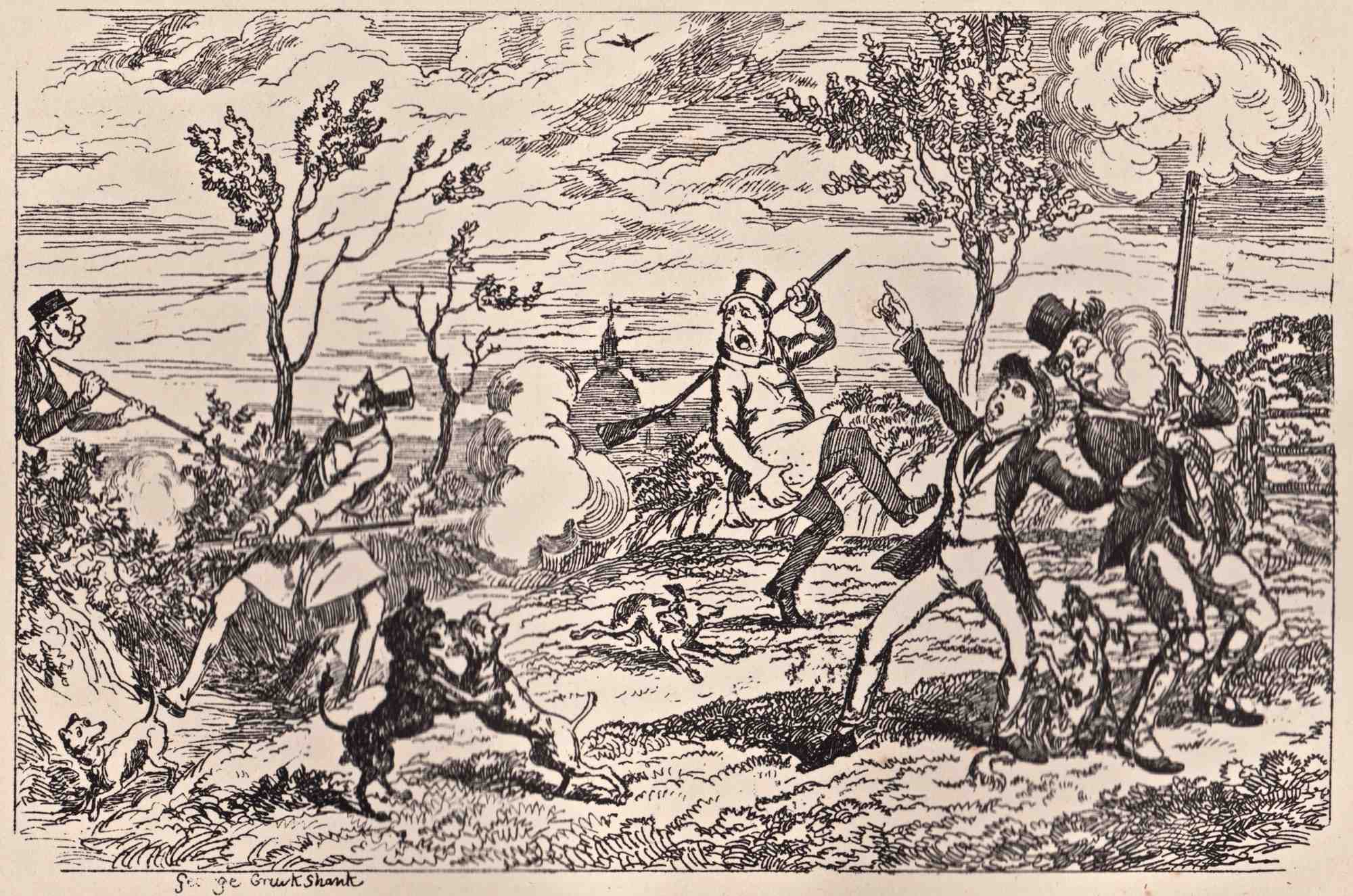
SEPTEMBER 1837 – Cockney Sportsmen
You may also like to take a look at
Bishopsgate Tavern Tokens
Click here to book for my tours through August, September and October
Click here to buy tour gift vouchers for your family and friends

The Ship Tavern, Bishopsgate
There are some artefacts that, in their detail and evidence of wear, can evoke an entire world. Although no larger than a thumbnail, these modest seventeenth century tavern tokens in the collection at the Bishopsgate Institute bring alive that calamitous era after the English Revolution when London was struck by the Great Plague in 1665 and then the Great Fire in 1666.
Bishopsgate was one of the few parts of the City spared by the Fire. It was lined with ancient taverns, used as points of departure and arrival for those travelling up and down the old Roman road north from the City of London. The part inside the City wall was known as Bishopsgate Within and the part outside the wall was Bishopsgate Without, and beyond, where the muddy road widened, was known as Bishopsgate St. The taverns served as hotels, drinking and dining houses, breweries and stables, couriers and coach offices, places of business and of entertainment, and were such significant centres of commerce that they issued their own currency for use as change.
There is a vibrant graphic quality in these miniature token designs, delighting in combining hand-lettering and familiar imagery with an appealing utilitarian irregularity. Long before universal literacy or the numbering of London streets, buildings were adorned with symbols and easily-recogniseable images like those graven upon the front of these tokens. The reverse carries the date and initials of the owner that issued the token, who may latterly be identified from the vintners’ records.
As well as those from Bishopsgate, there is one here from Spittlegate, now known as Widegate St, and another from Bedlam, now known as Liverpool St, which was formerly the location of the Hospital of St Mary of Bethlehem – of all the tokens here, The White Hart is the lone tavern that has weathered the centuries to survive into the present era.
After the Fire, rubble was spread upon the marshy land of Spitalfields, preparing it for the construction of the streets we know today, and, occasionally, charcoal is still uncovered when foundations are excavated in Spitalfields, recalling this distant event. In 1632, Charles I gave a licence for flesh, fowl and roots to be sold in Spitalfields and the market was re-established in 1682 by Charles II, defining the territory with a culture of small-scale trading that persists to this day.
Once, tavern tokens were unremarkable items of small monetary value, passed hand to hand without a second thought, but now these rare specimens are precious evidence of another life in another time, long ago in this place.

King’s Head, Spittlegate, Charles I

King’s Head, Spittlegate, issued by Vintner Thomas Avis in 1658

The Beehive, Bishopsgate Without, issued by Thomas Goss, 1652

The Mitre Tavern, Bishopsgate, issued by Robert Richardson 1644

The Flower Pot, Bishopsgate Within, issued by Ascanius Hicks, 1641

The Helmet, Bishopsgate Without, issued by Robert Studd

At the White Hart, Bedlam

The White Hart at Bedlam, issued by EE, 1637

Red Lion Court, Bishopsgate Without, issued by John Lambe

The Black Raven, Bishopsgate Without

The Black Raven, Halfpenny issued by Sam Salway

The Sunne, Bishopsgate Within

Lion Above a Stick of Candles, Bishopsgate Without

Lion Above a Stick of Candles, issued by Ralph Butcher, 1666

At the Sign Of The Boore, Bishopsgate Without

At The Sign Of The Boore, Bishopsgate Without

The Half Moone Brewhouse, Bishopsgate Without

Edward Nourse Next The Bull In Bishopsgate Street, 1666

The Mouth Tavern, Bishopsgate Without, issued by Robert Sanderson, 1638
Images courtesy Bishopsgate Institute
You may also like to look at
The Gentle Author’s Spitalfields Pub Crawl