
Marie Lenclos’ Walk In Stoke Newington
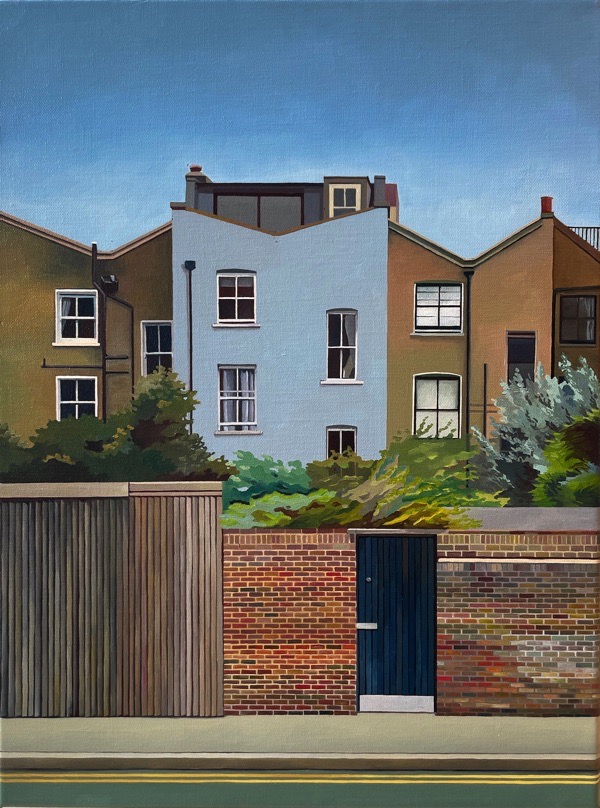
Blue Gate
A Walk in Stoke Newington is an exhibition of new oil paintings by Marie Lenclos opening on Monday 6th November. Marie walked for days exploring the streets, enjoying the shortcuts and alleyways, strolling along terraced streets, and observing the way light fell on buildings and walls. Her new paintings comprise a personal and intimate reflection on Stoke Newington, focusing on the stillness and tranquility of the place. Marie takes delight in colour and form, and the play of light at certain times of the day.
A Walk in Stoke Newington is at Everyday Sunshine Shop, 49 Barbauld Rd, N16 0RT, from 6th to 26th November, Thursday to Sunday, 10am to 4pm, for the duration of the show.
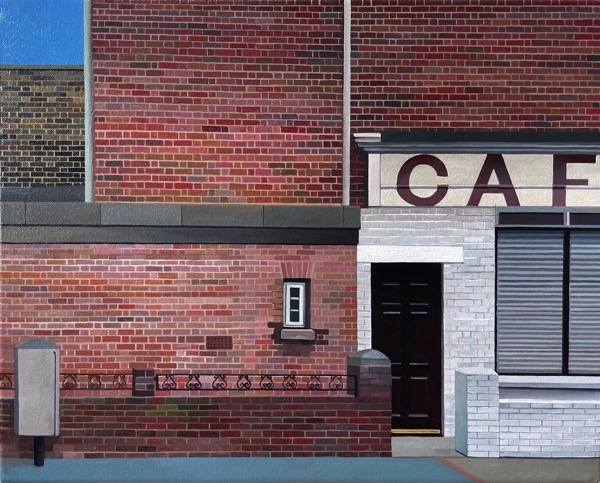
Caf
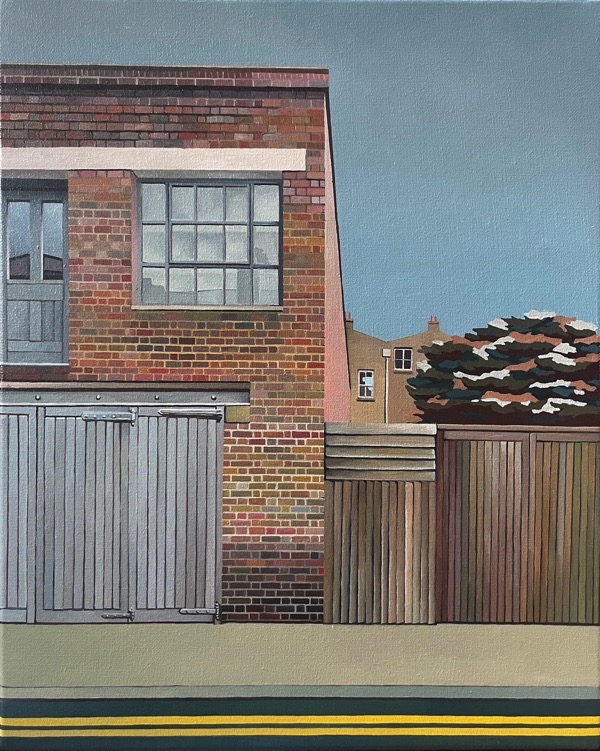
Church Walk
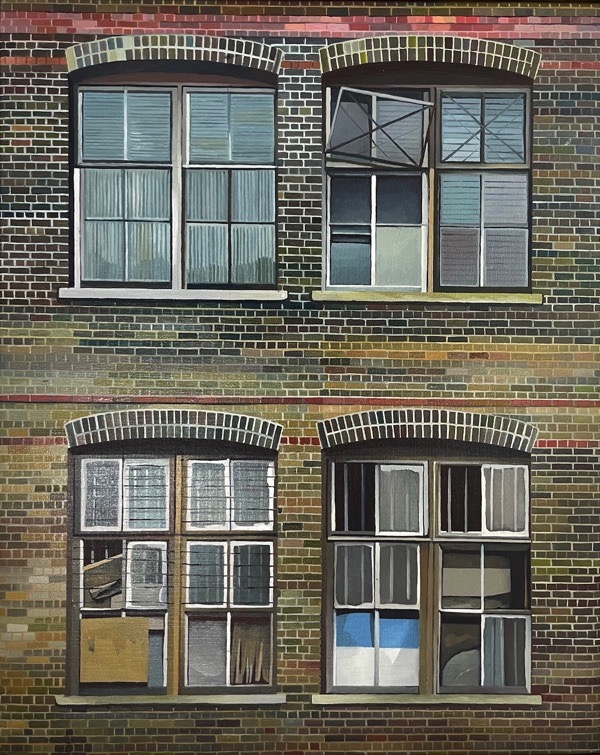
Church Walk Factory
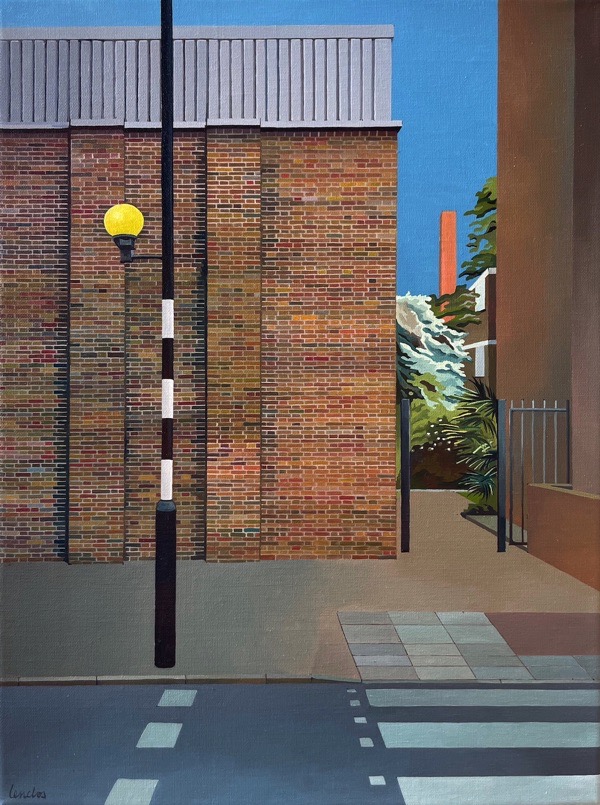
Crossing
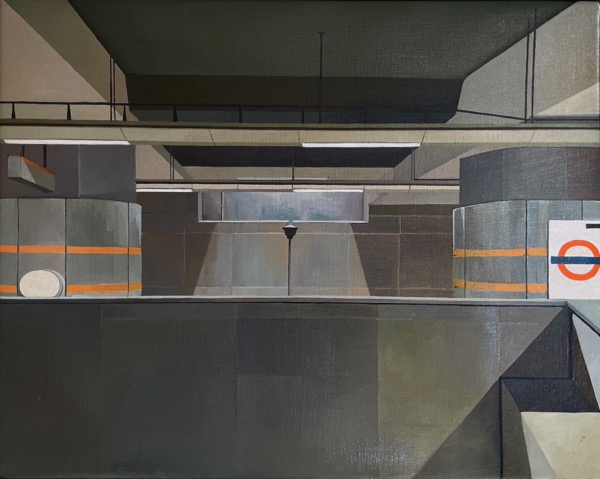
Dalston Junction
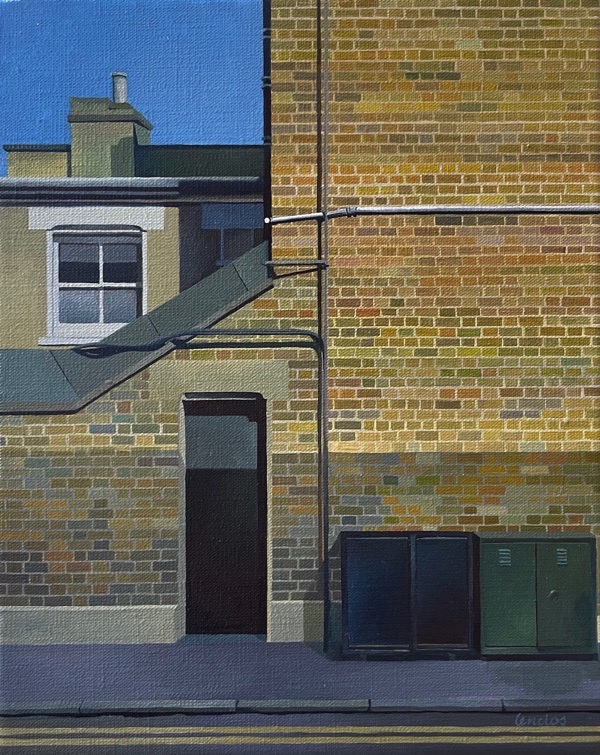
Edwards Lane
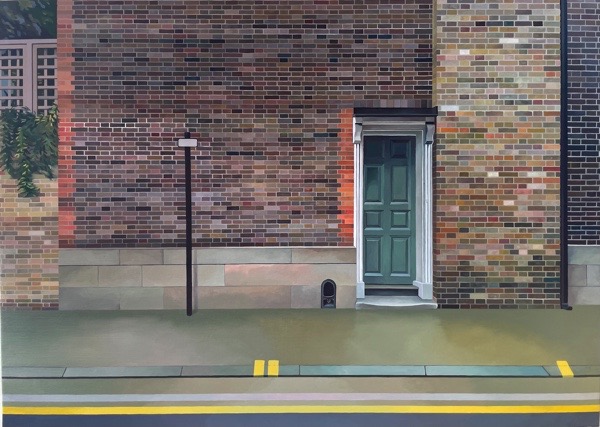
Green Door
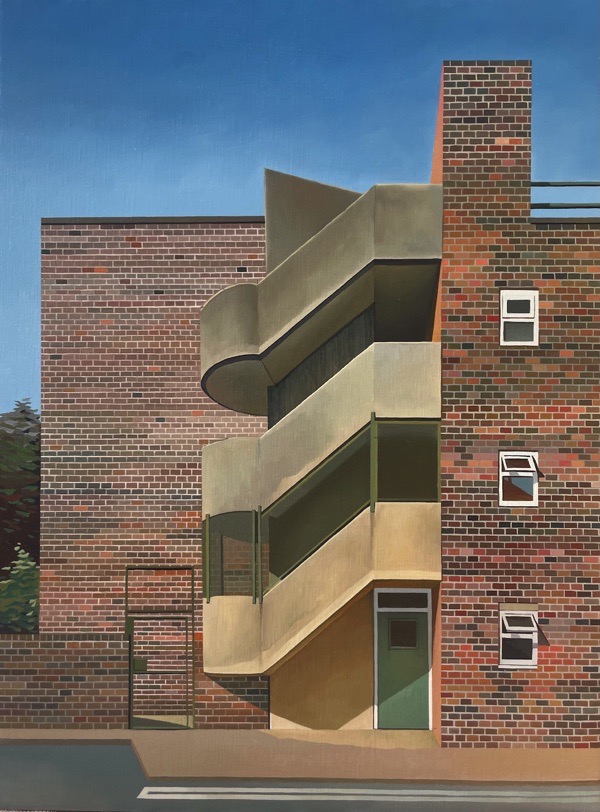
Stairs
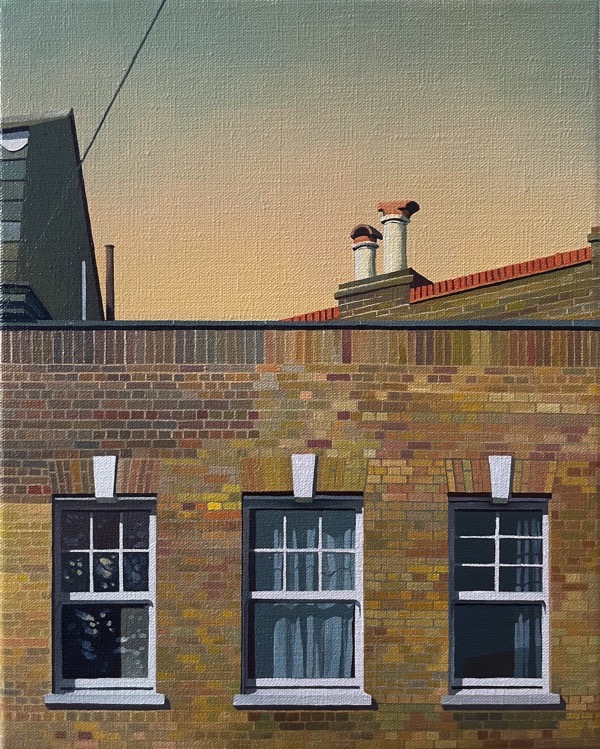
Three Windows
Paintings copyright © Marie Lenclos
Upon The Nature Of Gothic Horror
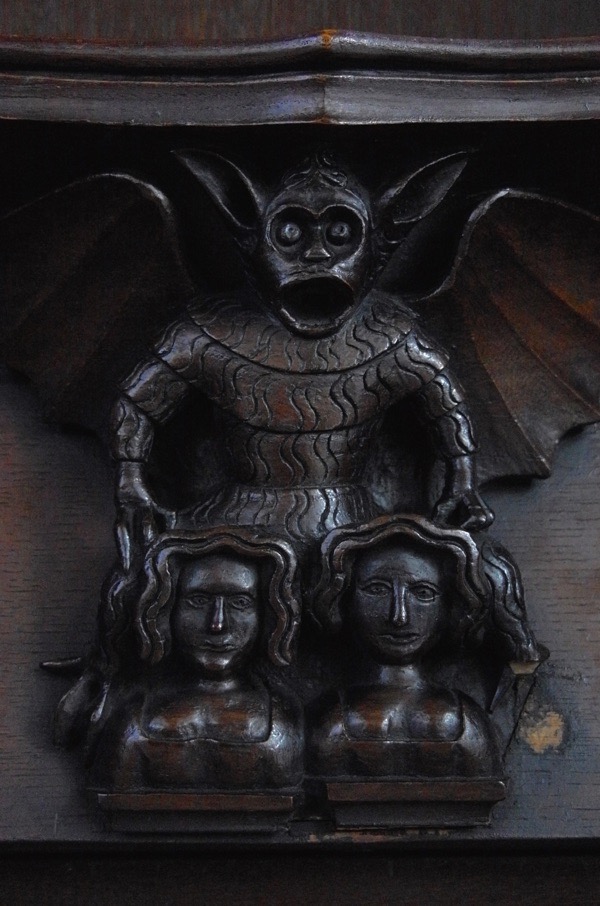
I believe I was born with a medieval imagination. It is the only way I can explain the explicit gothic terrors of my childhood. Even lying in my cradle, I recall observing the monstrous face that emerged from the ceiling lampshade once the light was turned out. This all-seeing creature, peering at me from above, grew more pervasive as years passed, occupying the shadows at the edges of my vision and assuming more concrete manifestations. An unexpected sound in my dark room revealed its presence, causing me to lie still and hold my breath, as if through my petrified silence I could avert the attention of the devil leaning over my bedside.
When I first became aware of gargoyles carved upon churches and illustrated in manuscripts, I recognised these creatures from my own imagination and I made my own paintings of these scaled, clawed, horned, winged beasts, which were as familiar as animals in the natural world. I interpreted any indeterminate sound or movement from the dark as indicating their physical presence in my temporal existence. Consequently, darkness, shadow and gloom were an inescapable source of fear to me on account of the nameless threat they harboured, always lurking there just waiting to pounce. At this time of year, when the dusk glimmers earlier in the day, their power grew as if these creatures of the shades might overrun the earth.
Nothing could have persuaded me to walk into a dark house alone. One teenage summer, I looked after an old cottage while the residents were on their holiday and, returning after work at night, I had to walk a long road that led through a deep wood without street lighting. As I wheeled my bicycle up the steep hill among the trees in dread, it seemed to me they were alive with monsters and any movement of the branches confirmed their teeming presence.
Yet I discovered a love of ghost stories and collected anthologies of tales of the supernatural, which I accepted as real because they extended and explained the uncanny notions of my own imagination. In an attempt to normalise my fears, I made a study of mythical beasts and learnt to distinguish between a griffin and a wyvern. When I discovered the paintings of Hieronymous Bosch and Pieter Breughel, I grew fascinated and strangely reassured that they had seen the apocalyptic visions which haunted the recesses of my own mind.
I made the mistake of going to see Ridley Scott’s The Alien alone and experienced ninety minutes transfixed with terror, unable to move, because – unlike the characters in the drama – I was already familiar with this beast who had been pursuing me my whole life. In retrospect, I recognise the equivocal nature of this experience, because I also sought a screening of The Exorcist with similar results. Perhaps I sought consolation in having my worst fears realised, even if I regretted it too?
Once, walking through a side street at night, I peered into the window of an empty printshop and leapt six feet back when a dark figure rose up from among the machines to confront my face in the glass. My companions found this reaction to my own shadow highly amusing and it was a troubling reminder of the degree to which I was at the mercy of these irrational fears even as an adult.
I woke in the night sometimes, shaking with fear and convinced there were venomous snakes in the foot of my bed. The only solution was to unmake the bed and remake it again before I could climb back in. Imagine my surprise when I visited the aquarium in Berlin and decided to explore the upper floor where I was confronted with glass cases of live tropical snakes. Even as I sprinted away down the street, I felt the need to keep a distance from cars in case a serpent might be lurking underneath. This particular terror reached its nadir when I was walking in the Pyrenees, and stood to bathe beneath a waterfall and cool myself on a hot day. A green snake of several feet in length fell wriggling from above, hit me, bounced off into the pool and swam away, leaving me frozen in shock.
Somewhere all these fears dissolved. I do not know where or when exactly. I no longer read ghost stories or watch horror films and equally I do not seek out dark places or reptile houses. None of these things have purchase upon my psyche or even hold any interest anymore. Those scaly beasts have retreated from the world. For me, the shadows are not inhabited by the spectral and the unfathomable darkness is empty.
Bereavement entered my life and it dispelled these fears which haunted me for so long. My mother and father who used to turn out the light and leave me to sleep in my childhood room at the mercy of medieval phantasms are gone, and I have to live in the knowledge that they can no longer protect me. Once I witnessed the moment of death with my own eyes, it held no mystery for me. The demons became redundant and fled. Now they have lost their power over me, I miss them – or rather, perhaps, I miss the person I used to be – yet I am happy to live a life without supernatural agency.
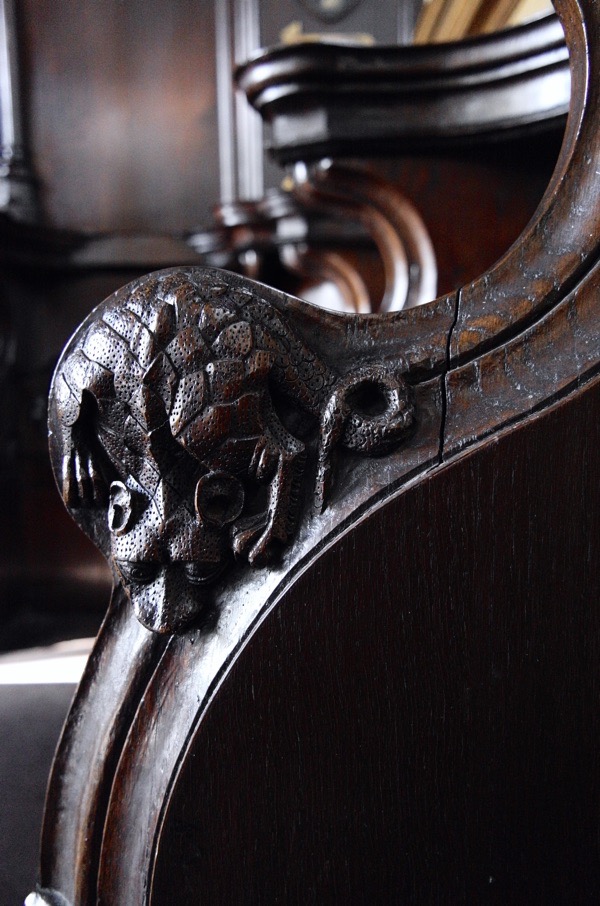
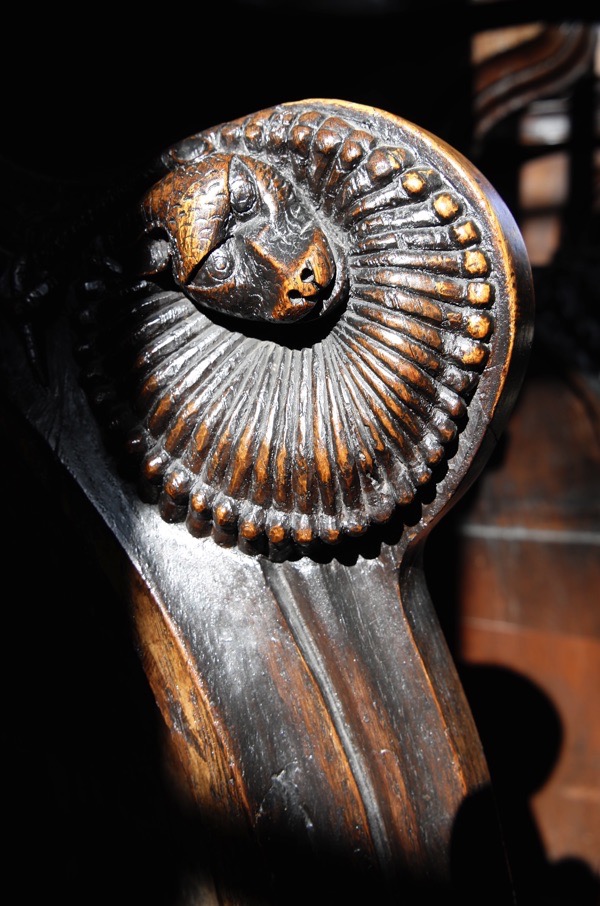
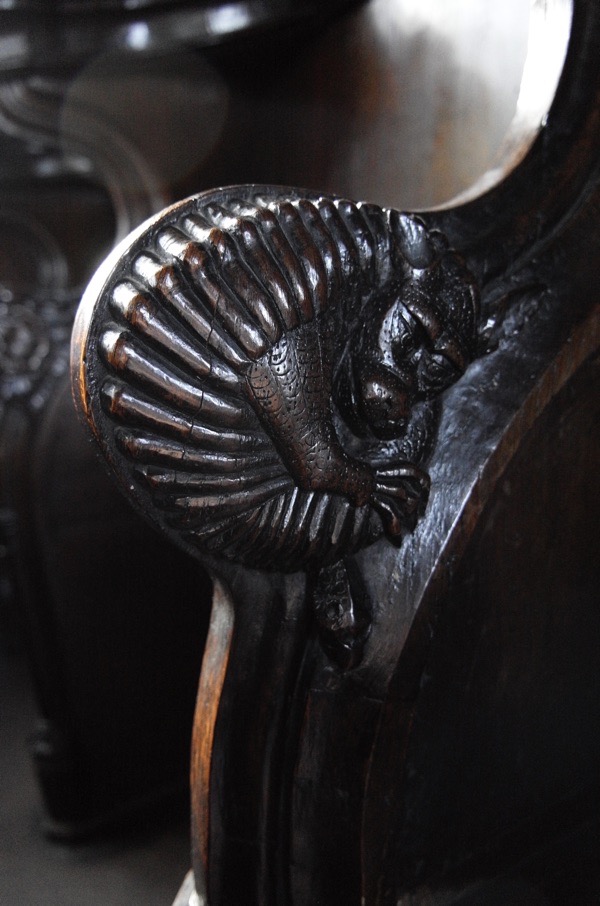
Fourteenth century carvings from St Katherine’s Chapel, Limehouse
The Dead Man In Clerkenwell

This is the face of the dead man in Clerkenwell. He does not look perturbed by the change in the weather. Once winters wore him out, but now he rests beneath the streets of the modern city he will never see, oblivious both to the weather and the wonders of our age, entirely oblivious to everything in fact.
Let me admit, although some might consider it poor company, I consider death to be my friend – because without mortality our time upon this earth would be worthless. So I do not fear death, but rather I hope I shall have enough life first. My fear is that death might come too soon or unexpectedly in some pernicious form. In this respect, I envy my father who always took a nap on the sofa each Sunday after gardening and one day at the age of seventy nine – when he had completed trimming the privet hedge – he never woke up again.
It was many years ago that I first made the acquaintance of the dead man in Clerkenwell, when I had an office in the Close where I used to go each day and write. I was fascinated to discover a twelfth century crypt in the heart of London, the oldest remnant of the medieval priory of the Knights of St John that once stood in Clerkenwell until it was destroyed by Henry VIII, and it was this memento mori, a sixteenth century stone figure of an emaciated corpse, which embodied the spirit of the place for me.
Thanks to the curator at the Museum of the Order of St John, I went back to look up my old friend after all these years. They lent me their key and, leaving the bright October sunshine behind me, I let myself into the crypt, switching on the lights and walking to the furthest underground recess of the building where the dead man was waiting. I walked up to the tomb where he lay and cast my eyes upon him, recumbent with his shroud gathered across his groin to protect a modesty that was no longer required. He did not remonstrate with me for letting twenty years go by. He did not even look surprised. He did not appear to recognise me at all. Yet he looked different than before, because I had changed, and it was the transformative events of the intervening years that had awakened my curiosity to return.
There is a veracity in this sculpture which I could not recognise upon my previous visit, when – in my innocence – I had never seen a dead person. Standing over the figure this time, as if at a bedside, I observed the distended limbs, the sunken eyes and the tilt of the head that are distinctive to the dead. When my mother lost her mental and then her physical faculties too, I continued to feed her until she could no longer even swallow liquid, becoming as emaciated as the stone figure before me. It was at dusk on the 31st December that I came into her room and discovered her inanimate, recognising that through some inexplicable prescience the life had gone from her at the ending of the year. I understood the literal meaning of “remains,” because everything distinctive of the living person had departed to leave mere skin and bone. And I know now that the sculptor who made this effigy had seen that too, because his observation of the dead is apparent in his work, even if the bizarre number of ribs in his figure bears no relation to human anatomy.
There is a polished area on the brow, upon which I instinctively placed my hand, where my predecessors over the past five centuries had worn it smooth. This gesture, which you make as if to check his temperature, is an unconscious blessing in recognition of the commonality we share with the dead who have gone before us and whose ranks we shall all join eventually. The paradox of this sculpture is that because it is a man-made artifact it has emotional presence, whereas the actual dead have only absence. It is the tender details – the hair carefully pulled back behind the ears, and the protective arms with their workmanlike repairs – that endear me to this soulful relic.
Time has not been kind to this figure, which originally lay upon the elaborate tomb of Sir William Weston inside the old church of St James Clerkenwell, until the edifice was demolished and the current church was built in the eighteenth century, when the effigy was resigned to this crypt like an old pram slung in the cellar. Today a modern facade reveals no hint of what lies below ground. Sir William Weston, the last Prior, died in April 1540 on the day that Henry VIII issued the instruction to dissolve the Order, and the nature of his death was unrecorded. Thus, my friend the dead man is loss incarnate – the damaged relic of the tomb of the last Prior of the monastery destroyed five hundred years ago – yet he still has his human dignity and he speaks to me.
Walking back from Clerkenwell, through the City to Spitalfields on this bright afternoon in late October, I recognised a similar instinct as I did after my mother’s death. I cooked myself a meal because I craved the familiar task and the event of the day renewed my desire to live more life.


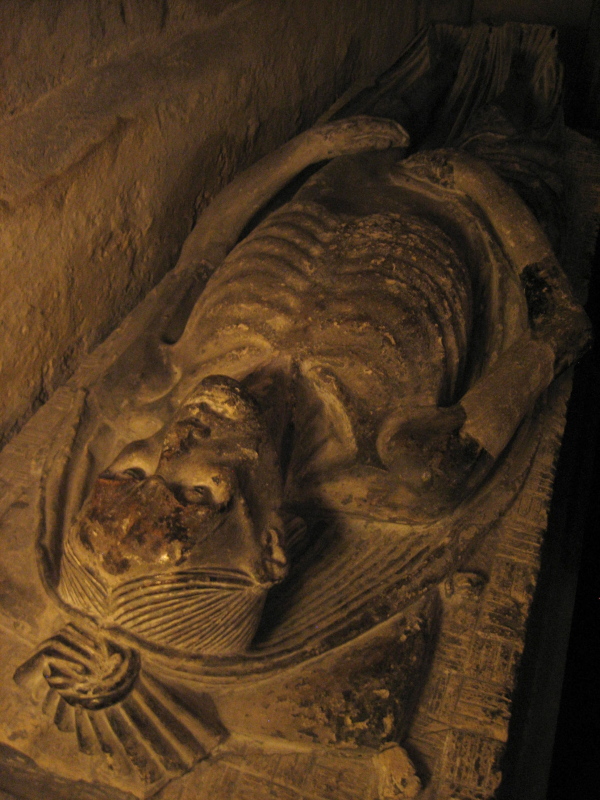


The Museum of the Order of St John, St John’s Gate, Clerkenwell, EC1M 4DA
Save Liverpool St Station Event
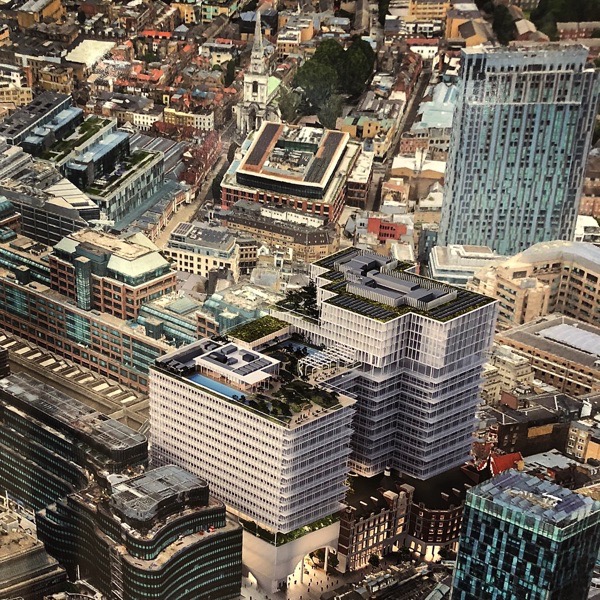
In the foreground of the developers’ visualisation, you can see how their nightmareish scheme for Liverpool St Station will look if built. Note the eleven storey tower block on top of the grade II* listed hotel. Courtesy Sellar/Herzog & de Meuron
Please come to our SAVE LIVERPOOL ST STATION campaign event at 7pm on Tuesday 7th November at Hanbury Hall, 22 Hanbury St, E1 6QR. Speakers include Griff Rhys Jones, Eric Reynolds and Robert Thorne.
Robert Thorne will talk about the history and evolution of Liverpool St Station. Robert was one of the GLC team that fought successfully to save it in 1976-77 and is the author of a history of the station. Since the seventies he has worked on numerous conservation projects, including at St.Pancras, Paddington and Bristol Temple Meads.
Eric Reynolds will analyse the flawed commercial case behind the redevelopment. Eric is a regeneration specialist, founder of markets at Camden Lock, Spitalfields, Greenwich and founder of Container City at Trinity Buoy Wharf, led the campaign to save Smithfield Market, and is Chairman of SAVE Britain’s Heritage.
Griff Rhys Jones will introduce the campaign to reject the proposed redevelopment of the station. Griff is a Welsh comedian, writer, actor and presenter well known through numerous television shows and documentaries. Less well known is his role as President of the Victorian Society since 2018.
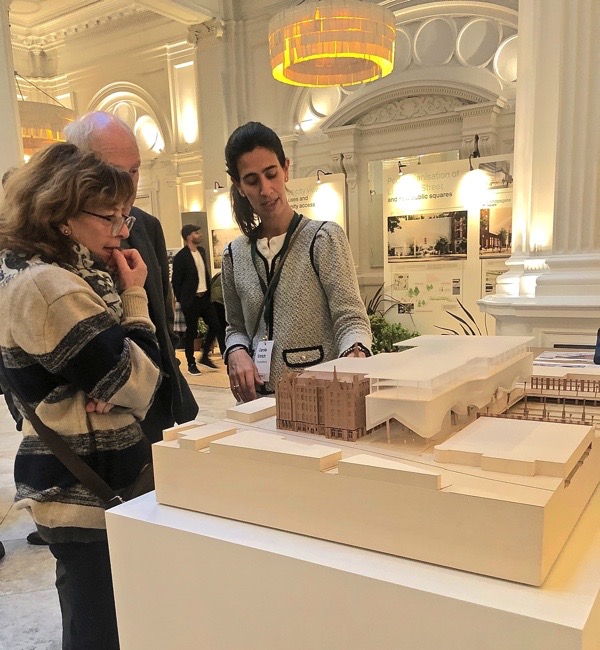
AT THE PUBLIC CONSULTATION
‘Where is the top part?’ I asked, when shown the lower portion of a model at the public consultation for the proposed redevelopment of Liverpool Street Station by Network Rail, Sellar & MTR . ‘We don’t have it,’ replied the developers’ representative. ‘So how can I judge the impact?’ I queried, growing suspicious and feeling I was being taken for a fool.
Then I was helpfully directed to a larger, much-smaller-scale, model of the surrounding urban landscape that included a great part of the City of London and in which I had to search to find the Liverpool Street proposal amid the forest of towers. The outcome was that while I could see this would be one more tower among many, the immediate impact upon the station and the former Great Eastern Hotel (designed by Charles Barry Junior and his son and partner Charles Edward Barry, 1883–84) was less discernible.
Yet I was swiftly disenchanted of my innocence when I saw the rendering of the view down Liverpool Street with an overwhelming tower of 11 storeys squatting on top of the fine Victorian hotel like a monstrous succubus in a nightmare. My feelings of nausea were compounded on learning that this would be supported by pilings through the grade II* listed hotel which would be converted to offices and replaced by a new five-star hotel in the block on top, boasting the advantage of City views.
London’s great railway stations – 19th-century cathedrals of glass and steel refracting the ever-changing changing patterns of light from our northern skies – are one of the architectural marvels of Europe. St Pancras, Paddington, Waterloo, King’s Cross and Liverpool Street are universally loved for their inspirational vaulted glass roofs. Euston, Charing Cross and Cannon Street exist as salient reminders of what has been lost through misguided redevelopment in the last century, removing the natural light by plonking ugly buildings on top.
When Liverpool Street Station (built between 1873 and 1875 for the Great Eastern Railway by chief engineer Edward Wilson) was last redeveloped between 1985 and 1992, the former labyrinthine palimpsest was clarified by the sympathetic extension of the 1870s glass roof over the platforms across the passenger concourse to meet the Great Eastern Hotel. Unfortunately, the new development proposes building over the concourse and replacing this part of the roof with a solid ceiling beneath the new office tower which itself will cast a long shadow, obscuring much of the daylight from the remaining Victorian glass vaults above the platforms.
The case put forward at the consultation was that passenger access to Liverpool Street Station needs upgrading and this ‘improvement to the public realm’ can be delivered at no cost to the taxpayer by sticking a massive office block on top of the station. Yet it is a false logic, because Network Rail – as a responsible operator — has a public duty to provide adequate access. It does not follow that such overdevelopment is either necessary or obligatory in order to achieve decent public access to the station.
My heart sank when I saw the artist’s renderings of the wild-flower meadow that the developers plan to plant on top of their block and the rooftop infinity pool which is to be open to all. These are cynical sops to the public. Architects Herzog & de Meuron presumably got this job because of their conversion of Giles Gilbert Scott’s Bankside Power Station into Tate Modern. The hope was that they would bring a similar magic to Liverpool Street Station, but the brief here is entirely misconceived and this is a scheme that risks damaging their reputation irrevocably.
Why is the City of London contemplating the construction of new offices at all when so many sit empty, post-Covid and post-Brexit? Flexible working patterns mean the financial industries will require far less office space in future. I see no evidence of the City advancing any cogent or enlightened vision that accommodates to this prospect.
Thankfully, Historic England are objecting to the new development and have revised and updated their listing of the station, adding the sensitively conceived 1985/92 vaulted-glass roof over the passenger concourse which was the result of a seminal conservation battle for the station in the 1980s. The hotel has also been upgraded from grade II to grade II* (the second highest level of protection).
I understand that, for the development to go ahead in its current form, this would have to be successfully challenged and overturned, so we must now brace ourselves for a mighty and possibly protracted fight over Liverpool Street Station. The planning application has been submitted to the City of London.
This article was commissioned by Apollo magazine
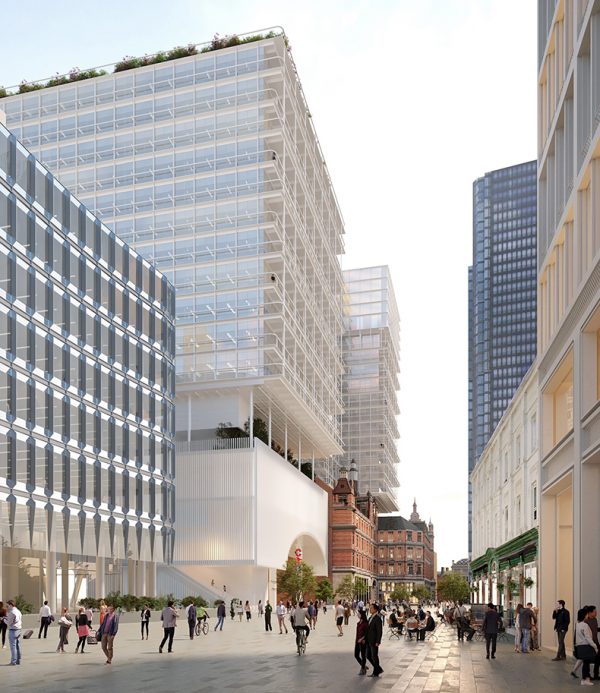
Developers’ rendering of proposed redevelopment of Liverpool Street Station. This is the view along Liverpool Street looking east towards the Andaz (formerly the Great Eastern Hotel). Courtesy Sellar/Herzog & de Meuron
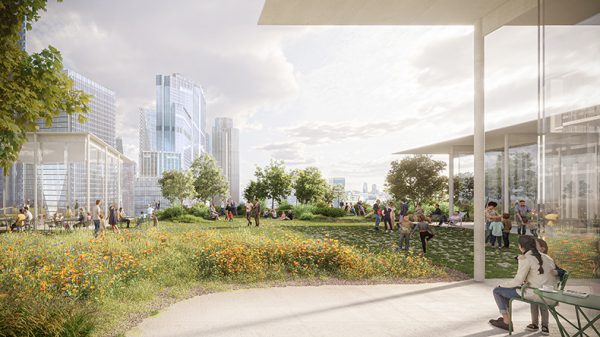
The proposed rooftop wild flower meadow Courtesy Sellar/Herzog & de Meuron
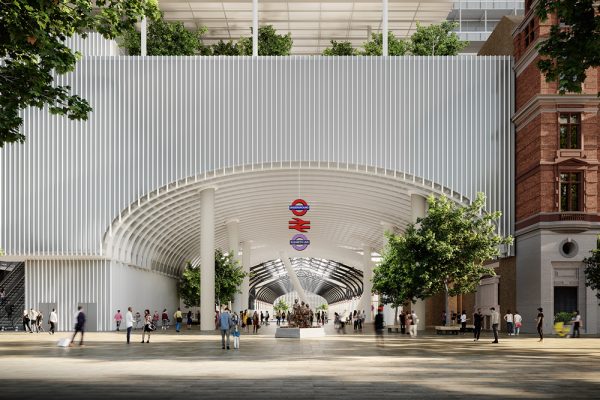
The proposed new entrance to Liverpool St Station Courtesy Sellar/Herzog & de Meuron
Viscountess Boudica & The Headless Horseman
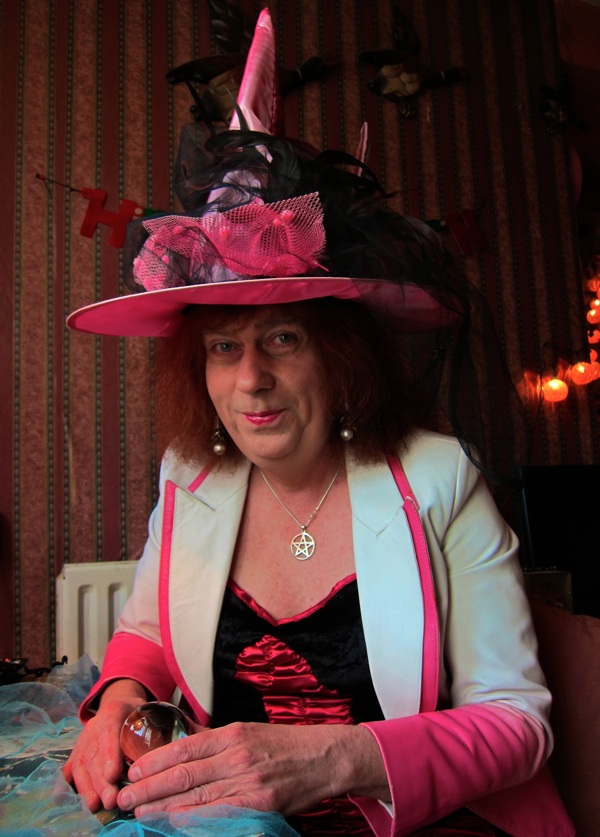
Viscountess Boudica consults her crystal ball
Halloween is a very important festival for Viscountess Boudica, formerly the wise woman of Bethnal Green before she was banished to Uttoxeter.
For days, she had been hanging up her pumpkin decorations, arranging her spooky knick-knacks and organising her witchy outfits in preparation for the big day. “I like it because it is the celebration of the Pagan New Year,” she admitted to me, as one who identifies herself with the Ancient Britons and still adheres to the pre-Julian calendar which contains only ten months.
Yet Viscountess Boudica is also highly sensitive to the significance of Halloween as the time when the spiritual and temporal worlds become permeable. And so, when I visited her to take this series of portraits recording her observation of the rituals and customs of the season, she confided to me this spine-chilling personal account of her first encounter with supernatural forces in the form of a Headless Horseman in Braintree.
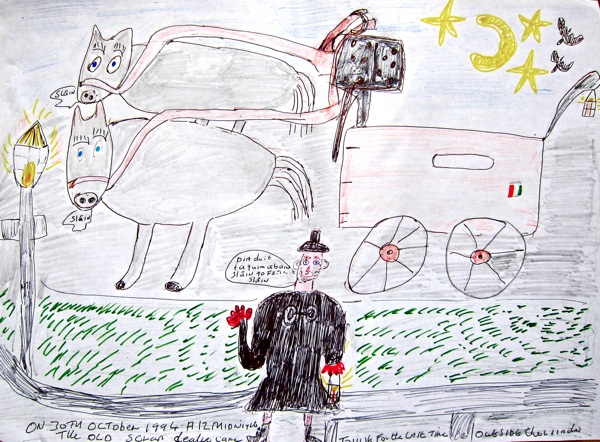
“I saw the Headless Horseman for the first time on April 20th 1987 when I lived at Plains Field near Braintree. One night, my friend Ted and I, we walked to the Three Ashes which was down a dark lane full of ditches and hedges and no light. We played darts and there was no-one else there, so I said, ‘It’s getting late and we have to walk back down the lane.’ So we left the pub and walked back in the dark and, after we’d left the lights of the houses behind, this old black iron street lamp appeared in the lane. I said to Ted, ‘Have you heard that Braintee Council was putting lamps up here?’ There was no moon and you could tell this was no normal lamp because it burned with a red flame.
Then we heard the sound of horses’ hooves approaching and, all of a sudden, the clouds parted and it was a full moon and we stood under the lamp as the Horseman appeared, coming closer with his cloak billowing. His big black horse reared up with piercing eyes and foaming at the nostrils. And the rider had no head! But when he lifted his cloak, there was his head with blue eyes and a long grey beard. Then the wind picked up and blew the clouds across the moon, and he took off towards Braintree. I said to Ted, ‘What do you make of that?’ He said, ‘It must be for a film,’ so I said, ‘I didn’t see any cameras.’
I said, ‘What are we going to do? We can’t tell anyone, they wouldn’t believe us.’ Braintree is known for its ghosts and Coggeshall has all the ley lines, so I thought, ‘I’m going to sleep with the lights on,’ and I did for six months.
After five years, in 1992, we decided to go back. Ted said, ‘You’ve got to wear exactly what you wore in 1987,” and we went there on the same day, April 20th, and walked down the lane to the pub but I said to Ted, ‘There’s no chance of seeing him again.’ I took a Polaroid Instamatic camera with me in case I could get a picture. It was five to twelve by the time we returned down the lane and I said to Ted, ‘I don’t think it’s going to happen.’
All of a sudden, the lamp appeared burning with the red flame and we heard the sound of hooves approaching. I said to Ted, ‘Your luck’s in.’ The beating of the hooves got louder but the Headless Horseman galloped past and he set off towards Braintree. Then he turned and came back and the great big horse reared over us and the cloak lifted up and I saw it had a red silk lining. The light grew brighter and I realised it was time, so I produced my camera and took a picture. Immediately, the light went out and he rode away, but when we reached the end of the lane the Headless Horseman was there waiting for us, blocking the path. So we turned and walked back the other way to the pub where we met an old lady.
We showed her the photograph, it was pitch black and all you could see was just the shape of the Horseman. Ted said, ‘I’ll take it to see if we can the resolution improved,’ and he said, ‘We’ll go back again in five years,’ but shortly afterwards he died and that was the end of it.”

Keeling the pot
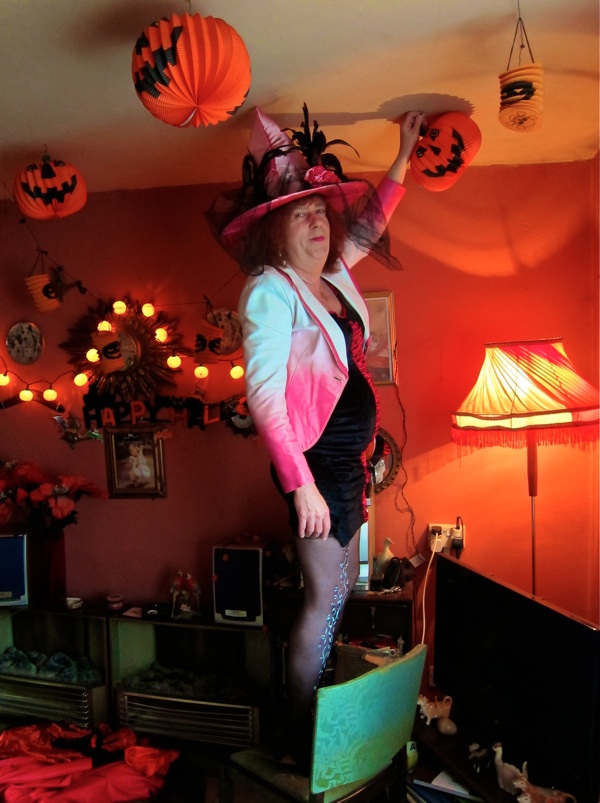
Hanging the lanterns
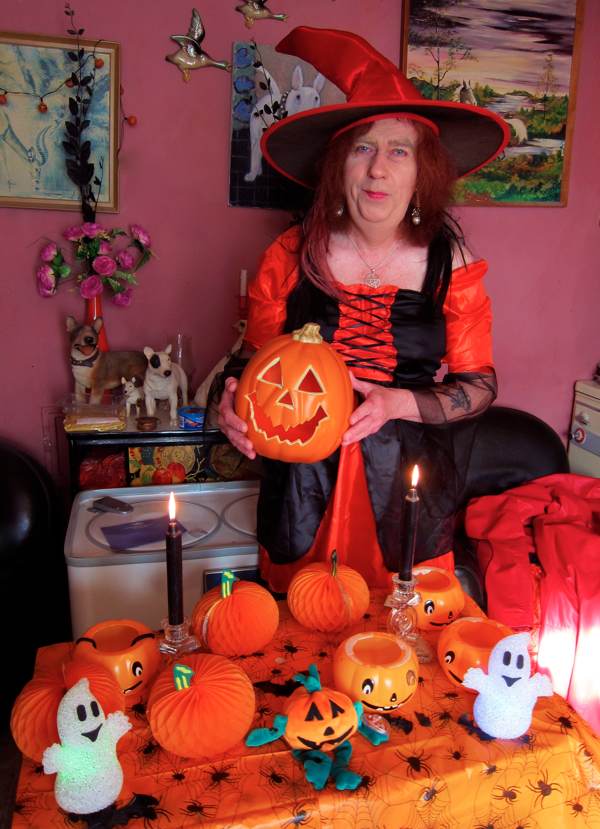
Preparing the altar

Brandishing her wand
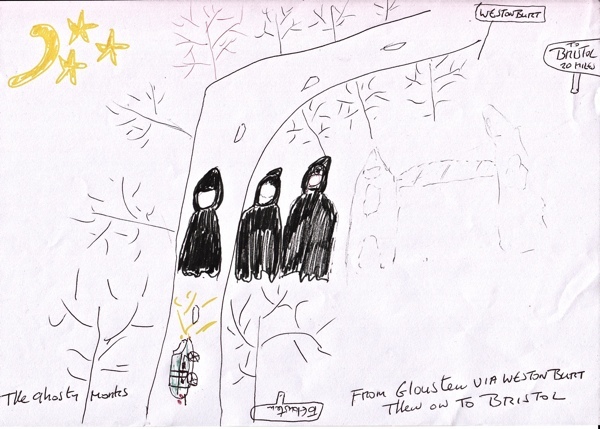
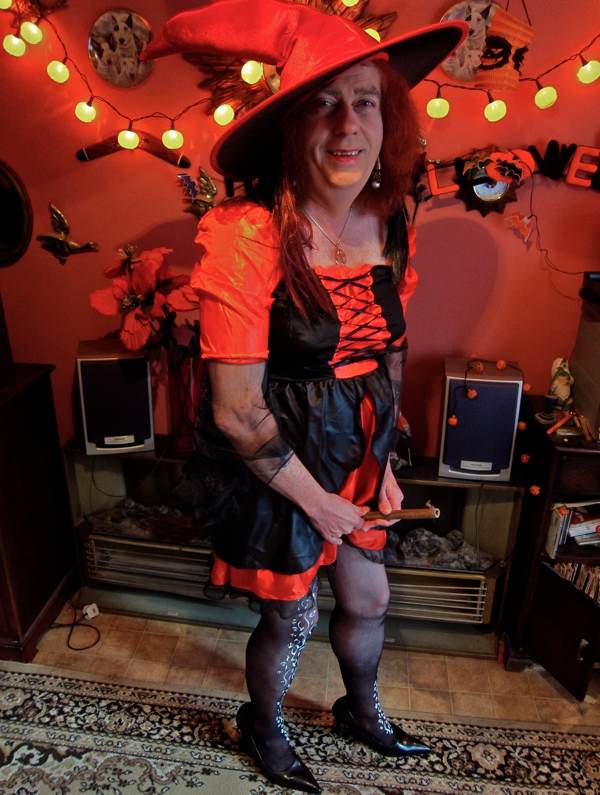
Working the broomstick
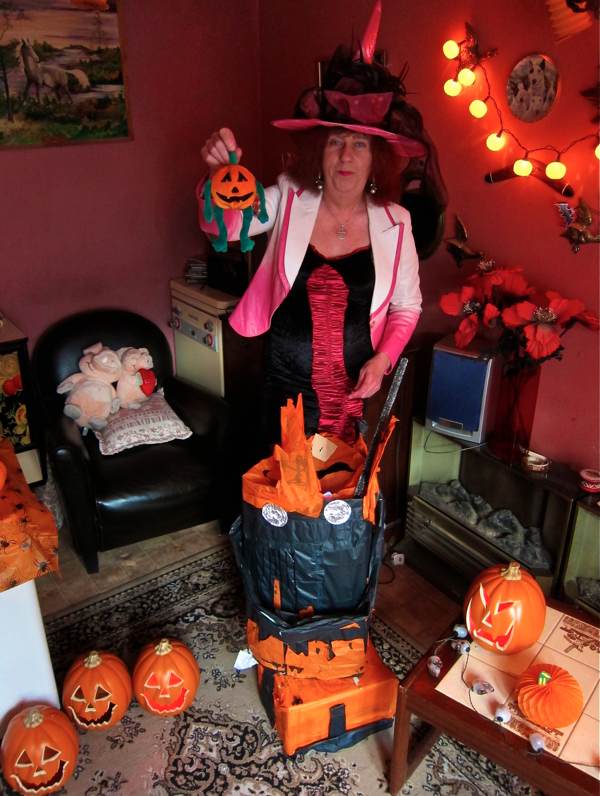
Mixing the brew
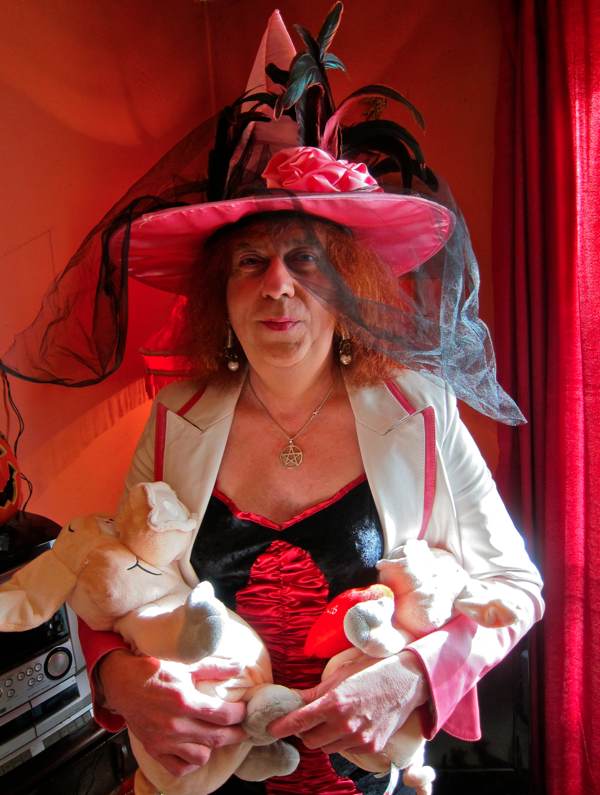
With her familiars, Keith & Paul
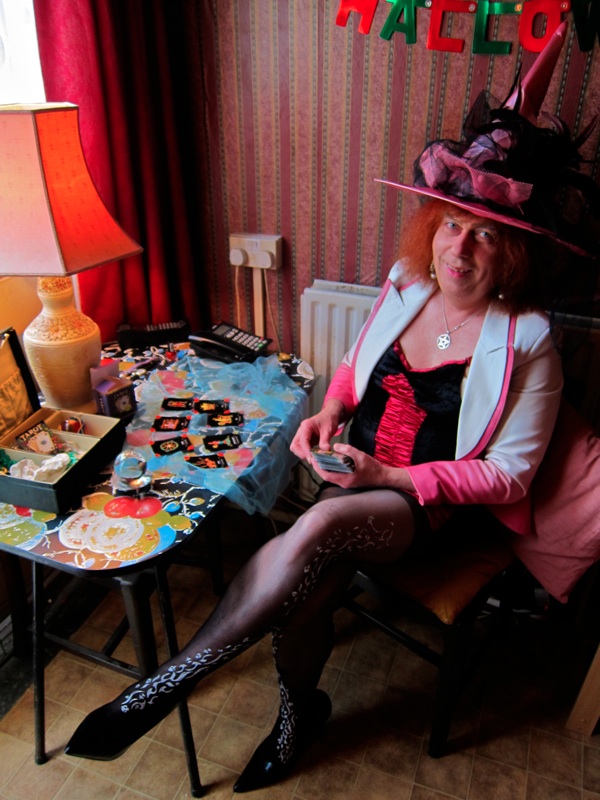
Consulting the Tarot
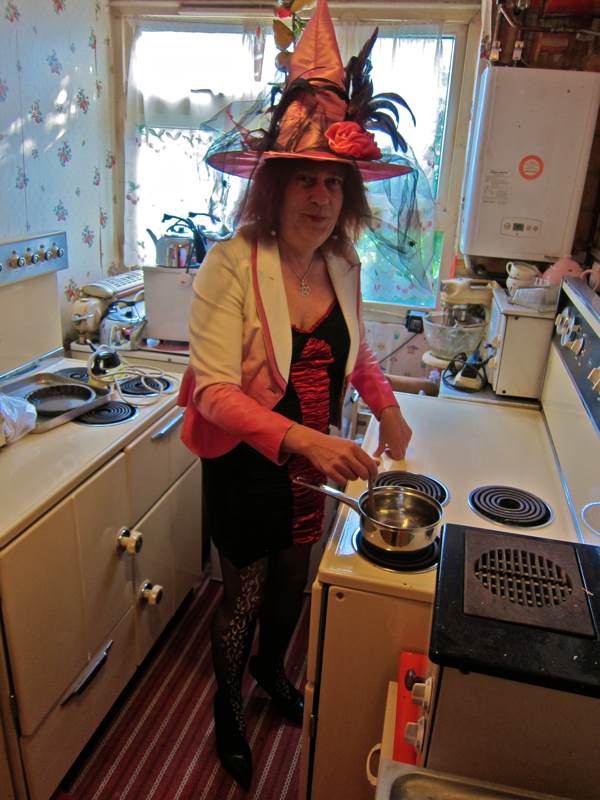
Cooking up a spell in the kitchen
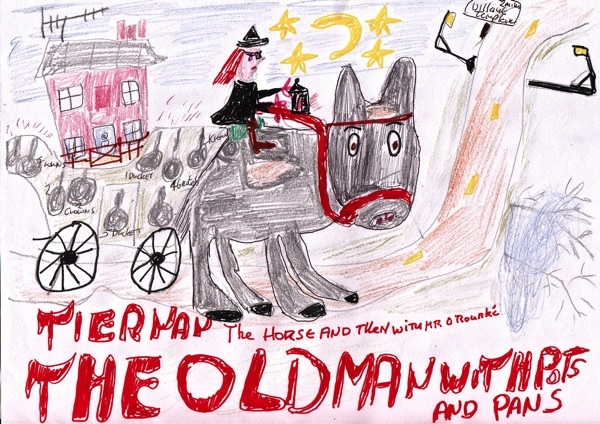
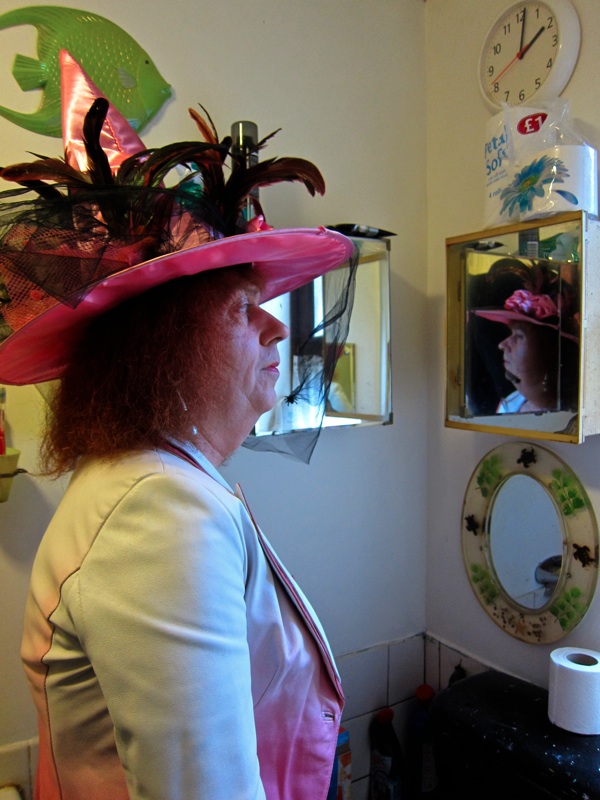
Seeing the future in her looking glass
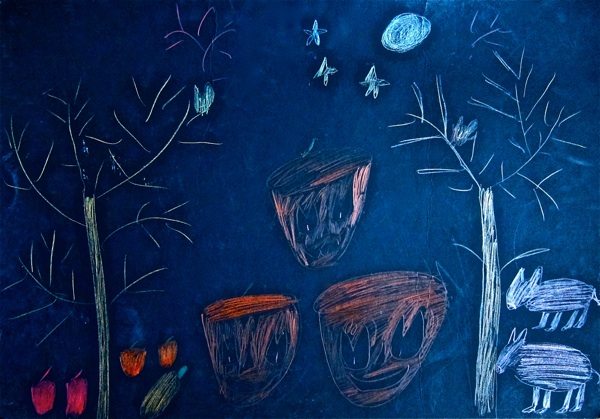
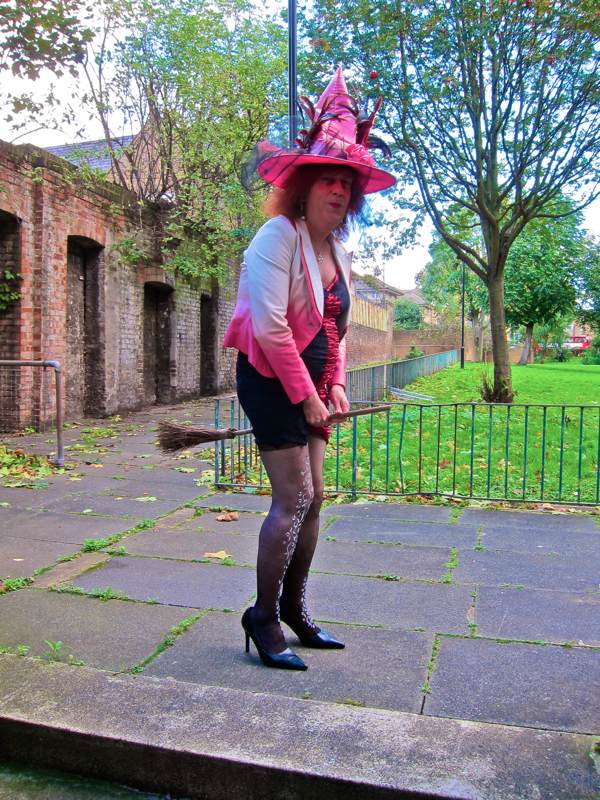
Setting out to bewitch Bethnal Green
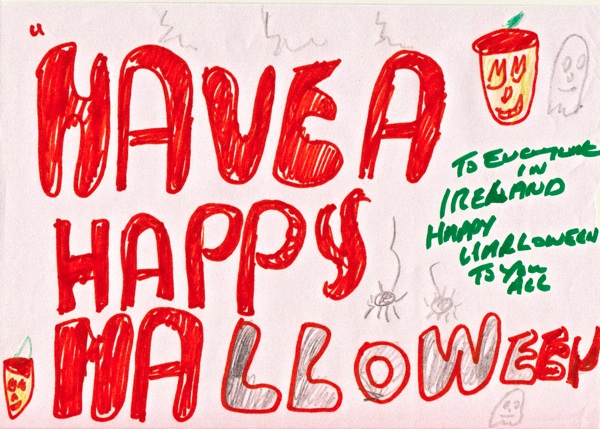
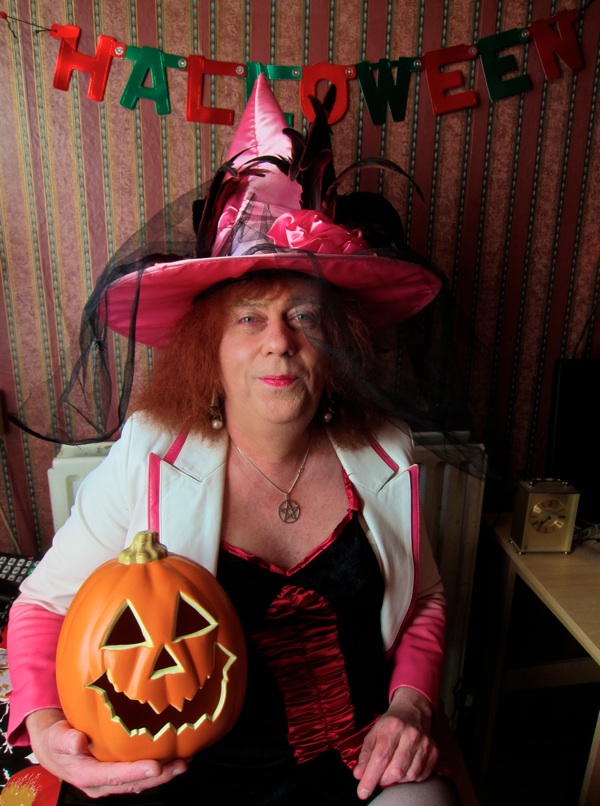
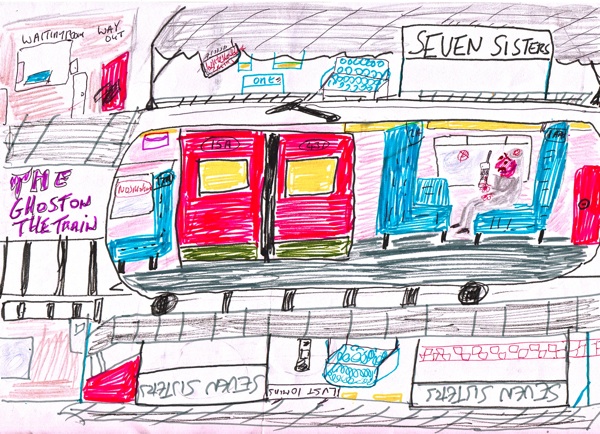
Viscountess Boudica – “The only ghostly experience I ever had in Bethnal Green was in the Underground – as I was going down the escalator, someone tapped me on the shoulder but when I turned round there was no-one there. I remember talking to a friendly clairvoyant who told me, ‘There was a witch in your family and that’s why these things happen to you.'”
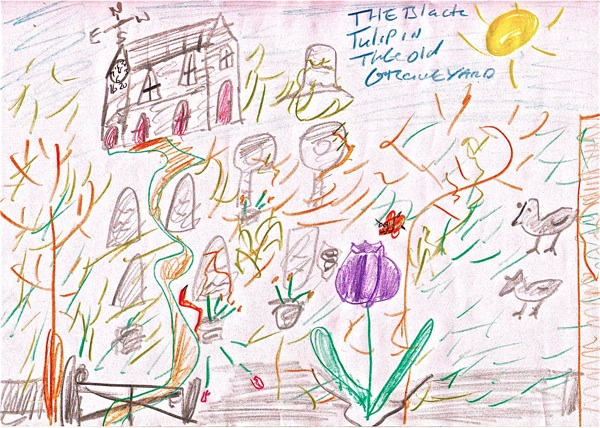
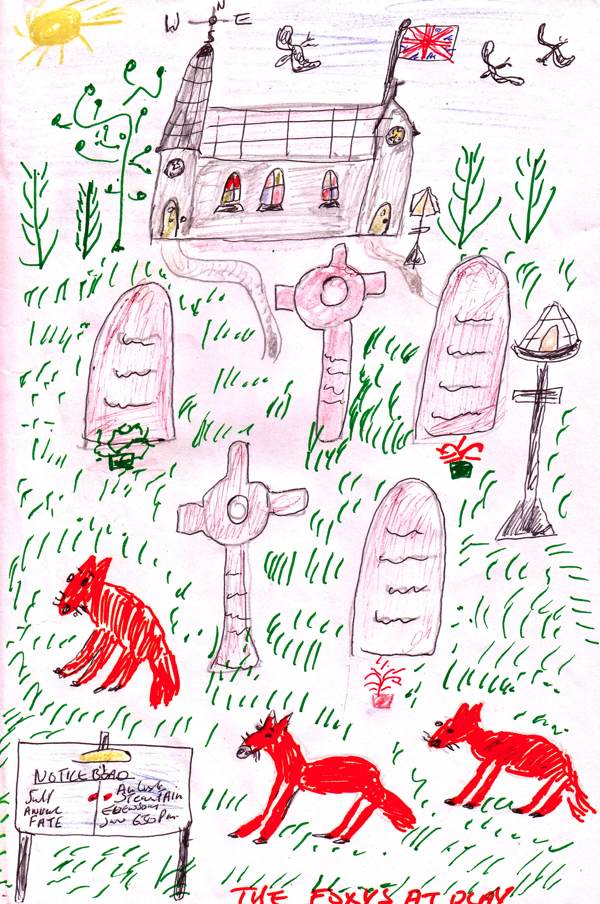
Drawings copyright © Viscountess Boudica
Be sure to follow Viscountess Boudica’s blog There’s More To Life Than Heaven & Earth
Take a look at
Viscountess Boudica’s Domestic Appliances
Read my original profile of Mark Petty, Trendsetter
and take a look at Mark Petty’s Multicoloured Coats
At The German Church In Aldgate
Click here to book for my last Spitalfields tour of the year
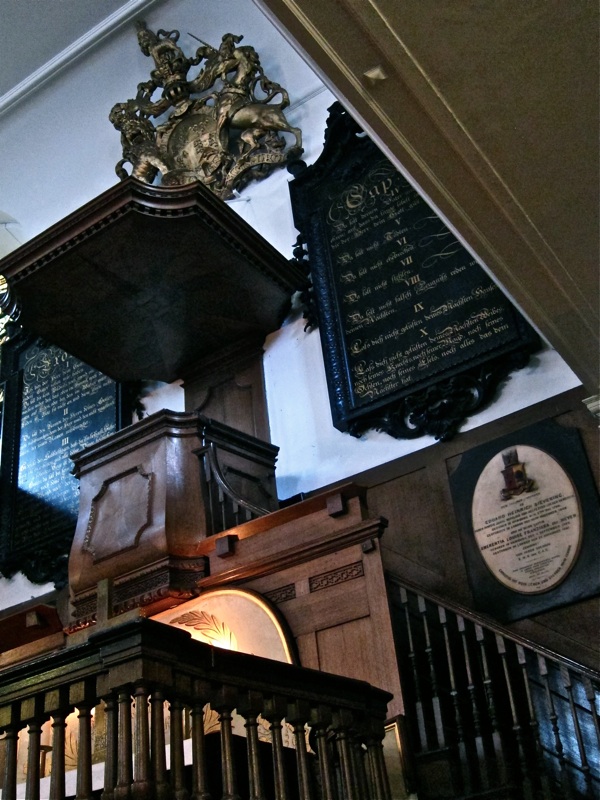
The Altar and Pulpit at St George’s German Lutheran Church, Alie St
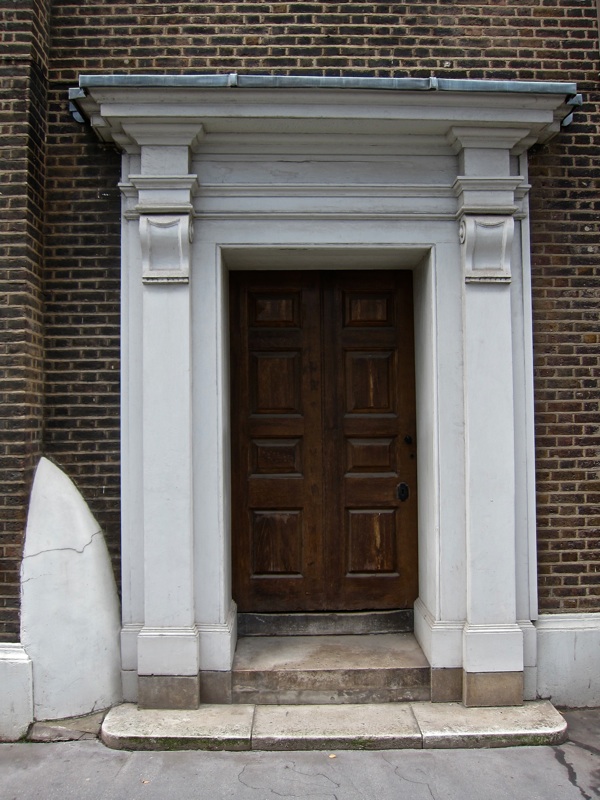
In Aldgate, caught between the thunder of the traffic down Leman St and the roar of the construction on Goodman’s Fields sits a modest church with an unremarkable exterior. Yet this quiet building contains an important story, the forgotten history of the German people in the East End.
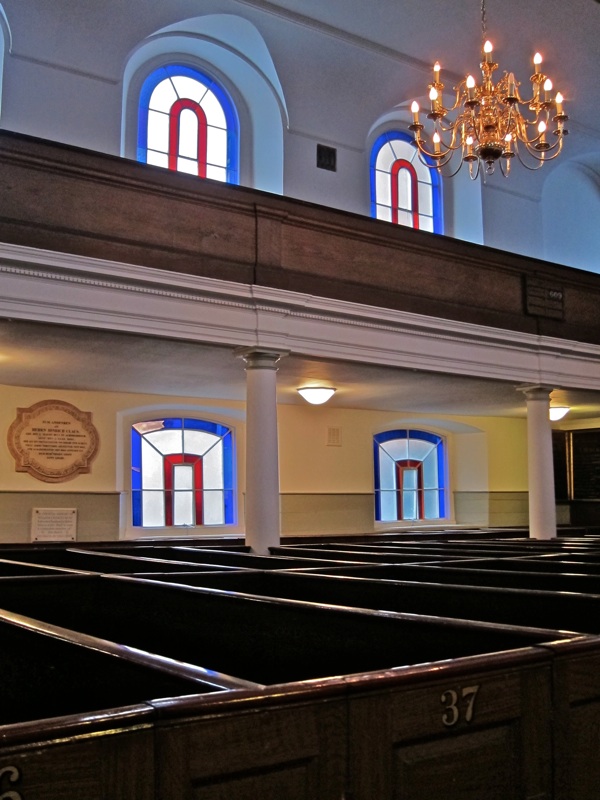
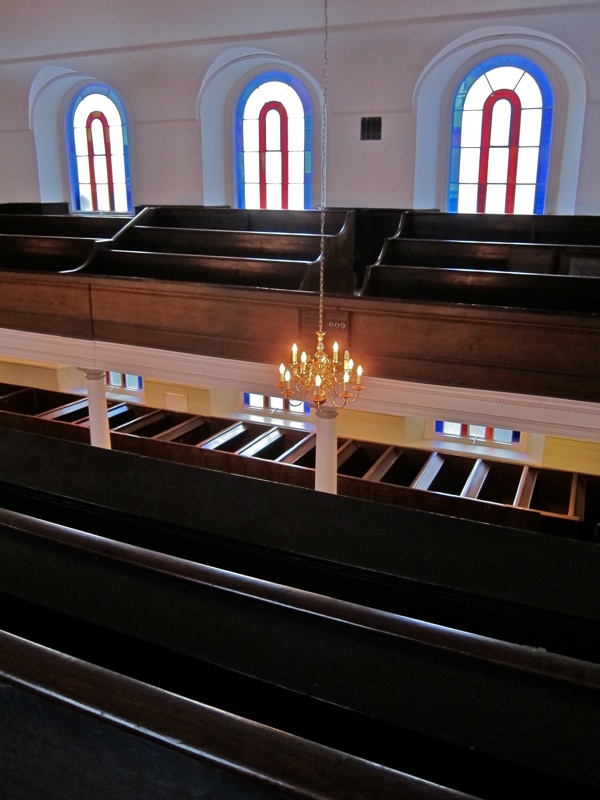
Dating from 1762, St George’s German Lutheran Church is Britain’s oldest surviving German church and once you step through the door, you find yourself in a peaceful space with a distinctive aesthetic and character that is unlike any other in London.
The austere lines of the interior emphasise the elegant, rather squat proportion of the architecture and the strong geometry of the box pews and galleries is ameliorated by unexpected curves and fine details. In fact, architect Joel Johnson was a carpenter by trade which may account for the domestic scale and the visual dominance of the intricately conceived internal wooden structure. Later iron windows of 1812, with their original glass in primary tones of red and blue, bring a surprising sense of modernity to the church and, even on an October afternoon, succeed in dispelling the gathering gloom.
This was once the heart of London’s sugar-baking industry and, from the mid-seventeenth century onwards, Germans brought their particular expertise to this volatile and dangerous trade, which required heating vast pans of sugar with an alarming tendency to combust or even explode. Such was the heat and sticky atmosphere that sugar-bakers worked naked, thus avoiding getting their clothes stuck to their bodies and, no doubt, experiencing the epilatory qualities of sugar.
Reflecting tensions in common with other immigrant communities through the centuries, there was discord over the issue of whether English or the language of the homeland should be spoken in church and, by implication, whether integration or separatism was preferable – this controversy led to a riot in the church on December 3rd 1767.
As the German community grew, the church became full to overcrowding – with the congregation swollen by six hundred German emigrants abandoned on their way to South Carolina in 1764. Many parishioners were forced to stand at the back and thieves capitalised upon the chaotic conditions in which, in 1789, the audience was described in the church records as eating “apples, oranges and nuts as in a theatre,” while the building itself became, “a place of Assignation for Persons of all descriptions, a receptacle for Pickpockets, and obtained the name St George’s Playhouse.”
Today the church feels like an empty theatre, maintained in good order as if the audience had just left. Even as late as 1855, the Vestry record reported that “the Elders and Wardens of the Church consist almost exclusively of the Boilers, Engineers and superior workers in the Sugar Refineries,” yet by the eighteen-eighties the number of refineries in the vicinity had dwindled from thirty to three and the surrounding streets had descended into poverty. Even up to 1914, at one hundred and thirty souls, St Georges had the largest German congregation in Britain. But the outbreak of the First World War led to the internment of the male parishioners and the expulsion of the females – many of whom spoke only English and thought of themselves as British.
In the thirties, the bell tower was demolished upon the instructions of the District Surveyor, thus robbing the facade of its most distinctive feature. Pastor Julius Reiger, an associate of Dietrich Bonhoeffer, a leading opponent of the Nazis, turned the church into a relief centre offering shelter for German and Jewish refugees during World War II, and the congregation continued until 1996 when there were only twenty left.
St George’s is now under the care of the Historic Chapels Trust, standing in perpetuity as a remembrance of more than two centuries of the East End’s lost German community.

The classically-patterned linoleum is a rare survival from 1855
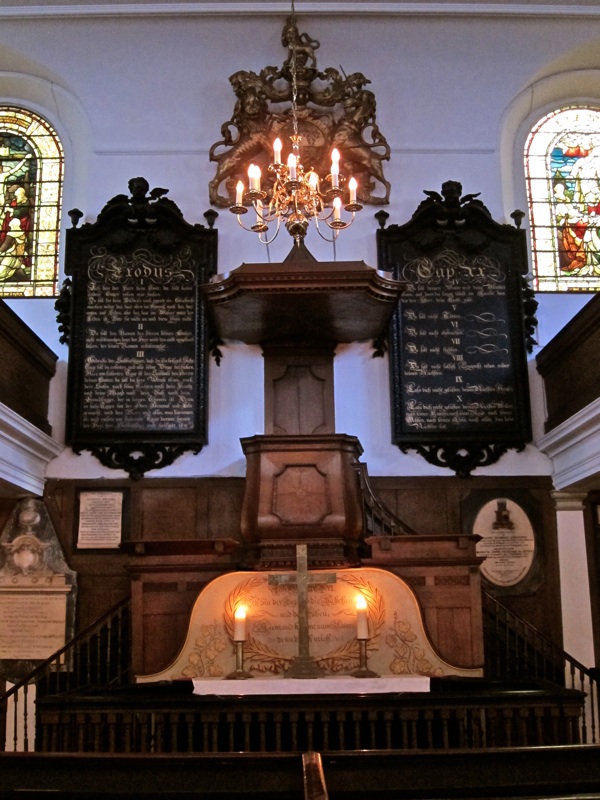

The arms of George III, King of England & Elector of Hanover
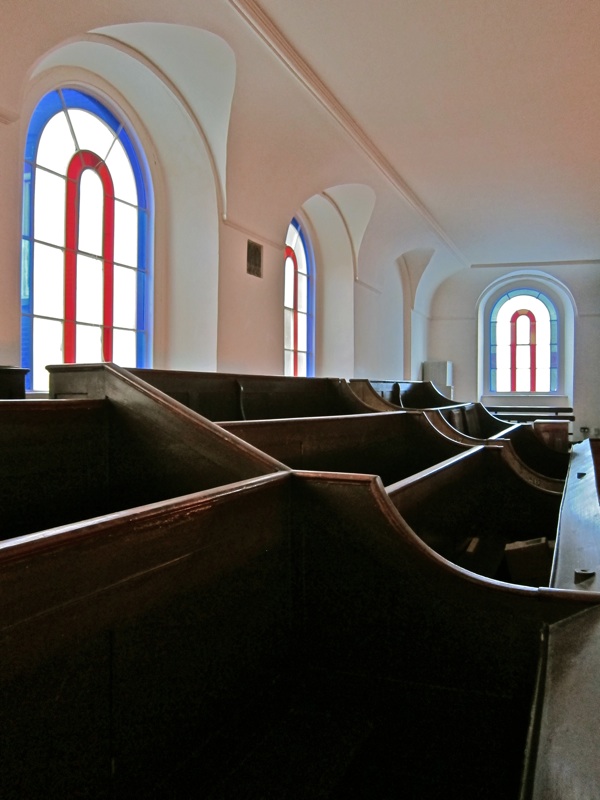
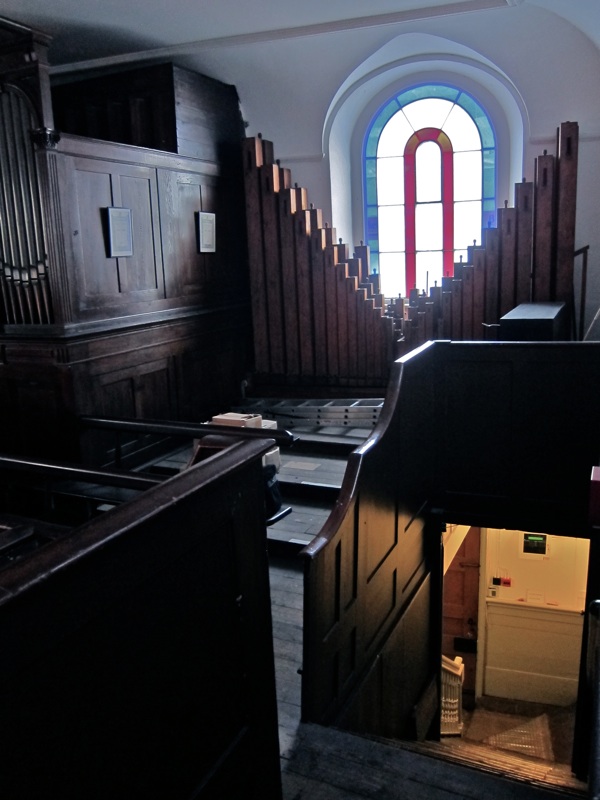



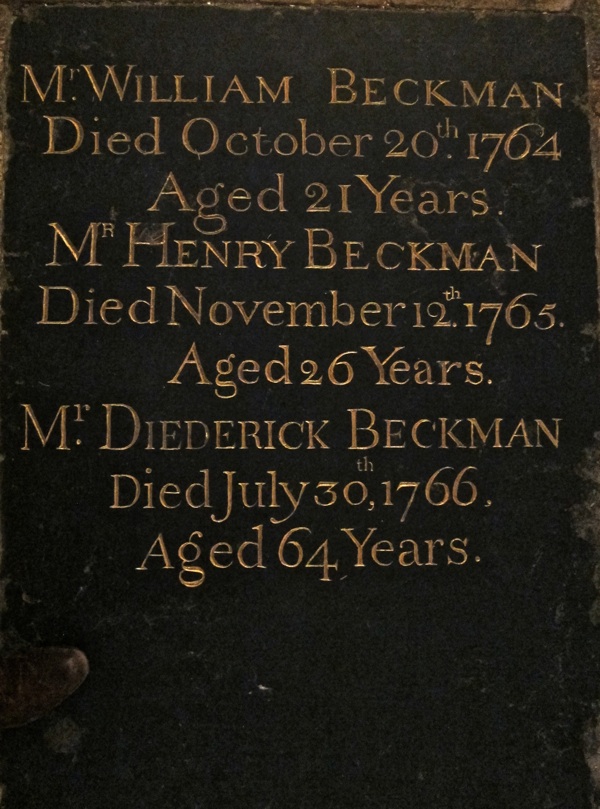
The principal founder of the church Diederick Beckman was a wealthy sugar refiner.
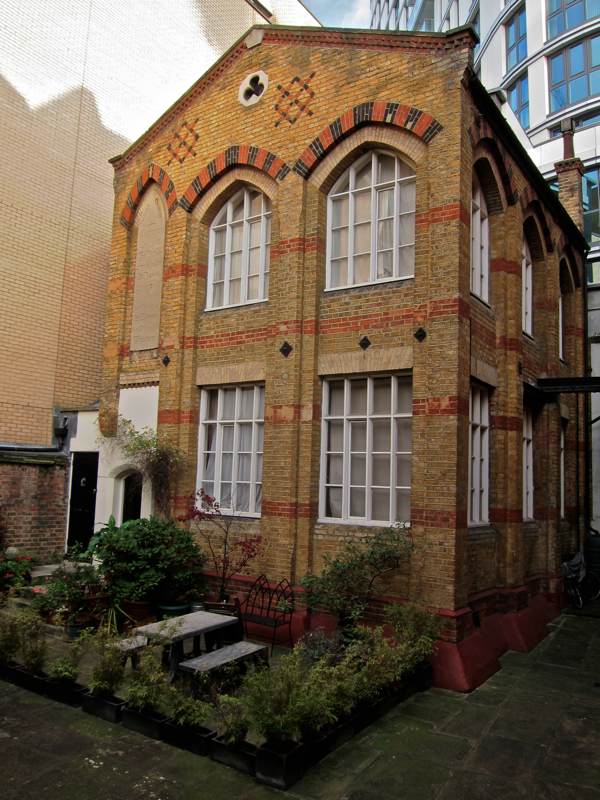
The Infant School was built in 1859 as gift from the son of Goethe’s publisher, W. H. Göschen

Names of benefactors carved into bricks above the vestry entrance.
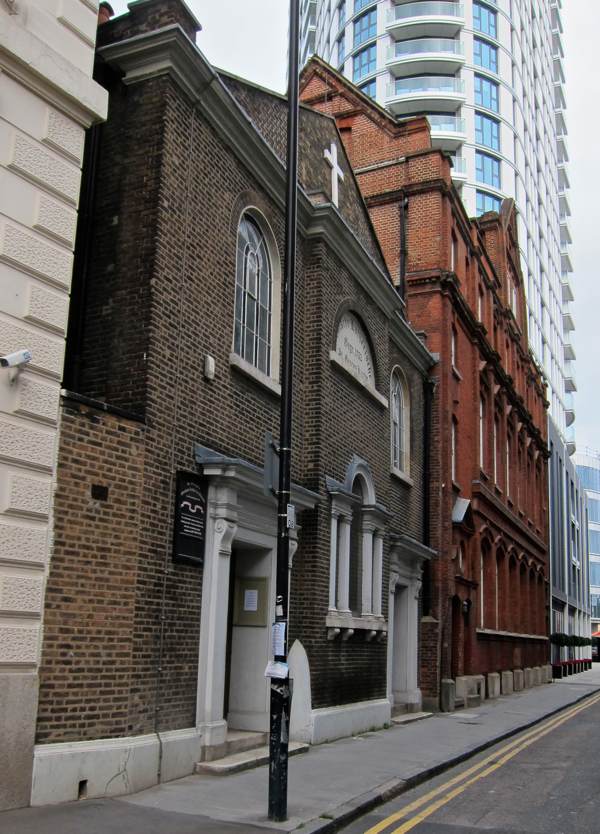
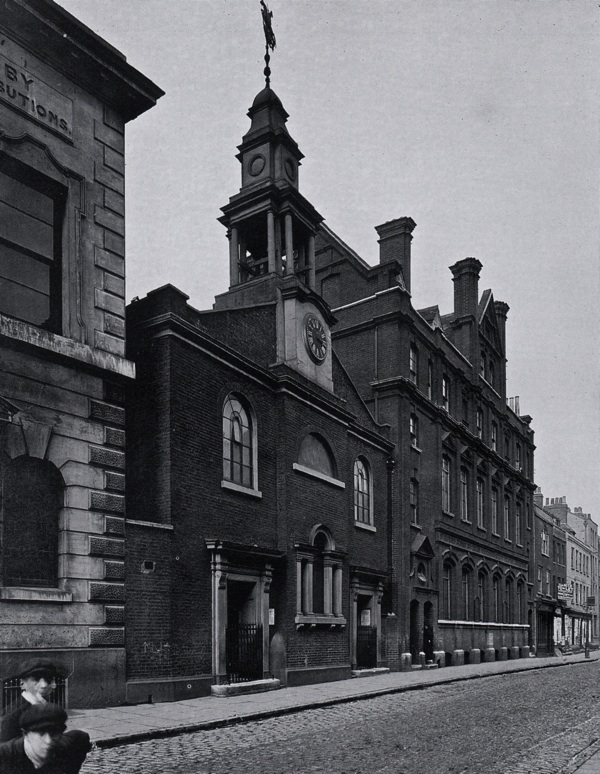
St Georges German Lutheran Church, c. 192o

The bell turret with weathervane before demolition in 1934
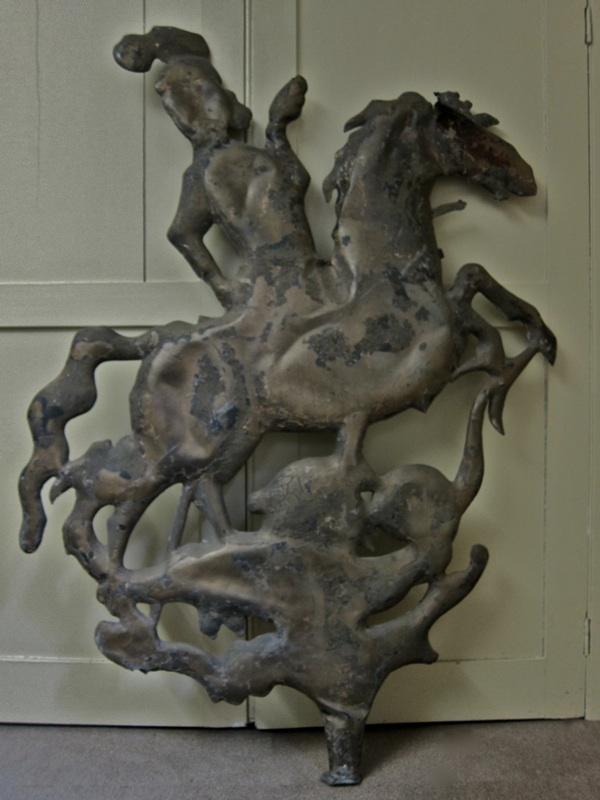
The original eighteenth century weathervane of St George & the Dragon that was retrieved from ebay
You may also like to take a look at
Fogs & Smogs Of Old London
Click here to book for my last Spitalfields tour of the year
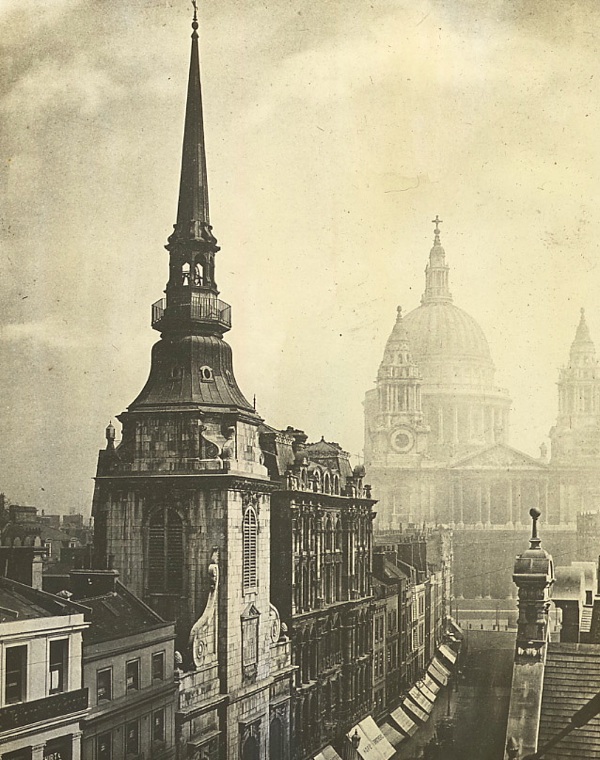
St. Martin, Ludgate with St. Paul’s Cathedral, c. 1900
At this time of year, when dusk gathers in the mid-afternoon, a certain fog drifts into my brain and the city itself grows mutable as the looming buildings outside my window merge into a dark labyrinth of shadows beyond. Yet this is as nothing compared with the smog of old London – in the days before anyone dreamed of the Ultra Low Emission Zone – when a million coal fires polluted the atmosphere with clouds of filthy black smoke carrying noxious fumes, infections and lung diseases. In old London, the city resounded with a symphony of fog horns on the river and thousands of people coughing in the street.
Looking at these glass slides of a century ago, once used for magic lantern shows by the London & Middlesex Archaeological Society at the Bishopsgate Institute, the fogs and smogs of old London take on quite another meaning. They manifest the proverbial mythic “mists of time,” the miasma wherein is lost all of human history, save the sketchy outline that some idle writer or other jotted down. Just as gauzes at the pantomime conjure the romance of fairyland, the hazes in these pictures filter and soften the images as if they were faded memories, receding into the past.
The closer I examine these views, the more I wonder whether the fog is, in some cases, an apparition called forth by the photographic process itself – the result of a smeary lens or grime on the glass plate, or simply an accident of exposure. Even so, this photographic fogging is no less evocative of old London than the actual meteorological phenomenon. As long as there is atmosphere, the pictures are irresistibly atmospheric. And old London is a city eternally swathed in mist.
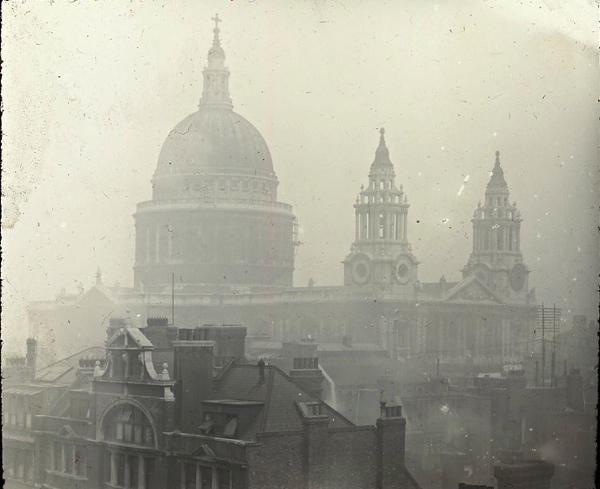
St Paul’s Cathedral from the north-west, c. 1920

Pump at Bedford Row, 1911

Cenotaph, 1919

Upper Thames view, c. 1920
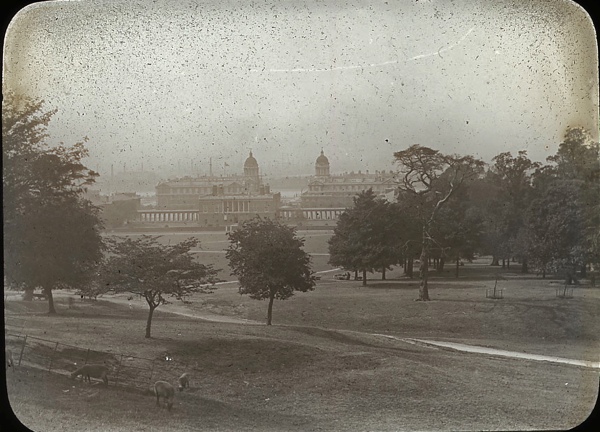
Greenwich Hospital from the Park, c. 1920

City roadworks, 1910

Looking north across the City of London, c. 1920
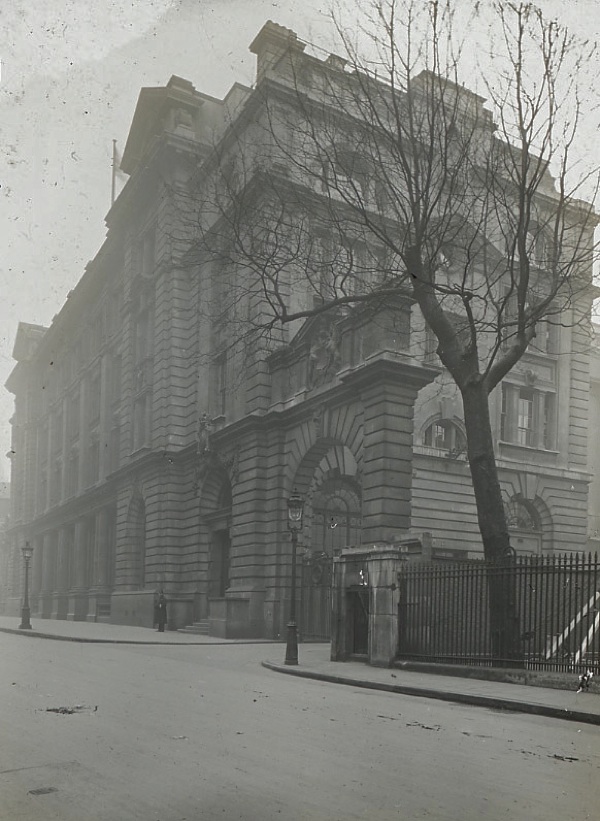
Old General Post Office, c. 1910

View eastwards from St Paul’s, c. 1910

Hertford House, c. 1910

New River Head, c. 1910

The Running Footman public house, c. 1900
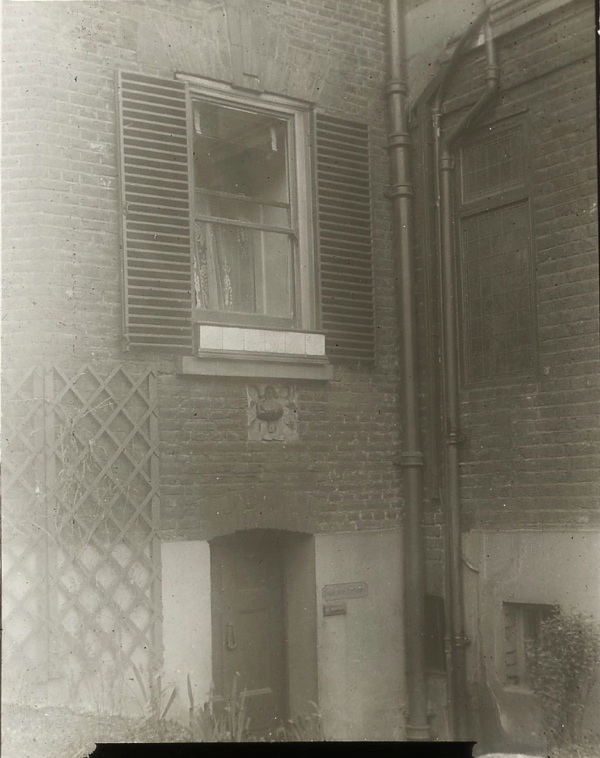
Unidentified building, c 1910

Church Row, Hampstead, c. 1910

Danish Ambassador’s residence, Wellclose Square, Wapping c. 1910

Church of All Hallows, London Wall, c. 1890

Drapers’ Almshouses, Bromley Street, c. 1910

Battersea Bridge, c. 1910

32 Smith Grove, Highgate, in the snow, 1906

Unknown public building, c. 1910
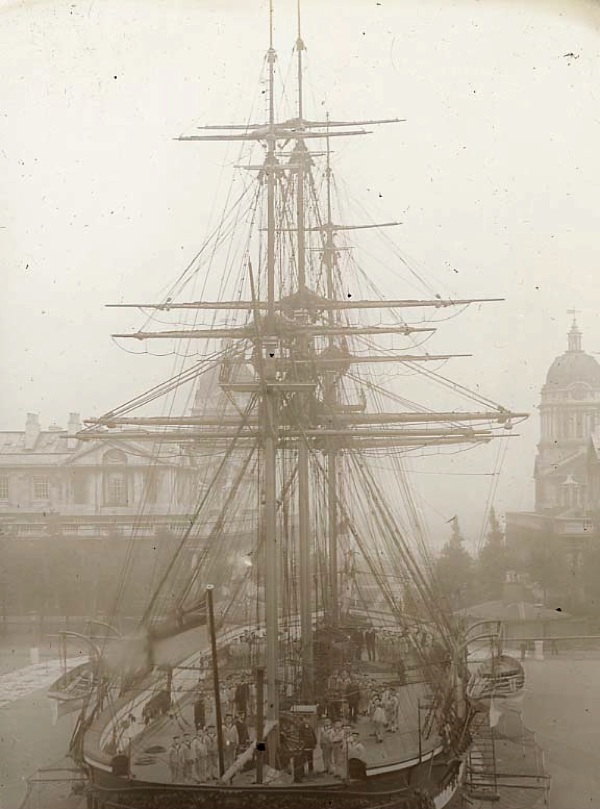
Training ship at Greenwich, c. 1910

Flooded moat at the Tower of London, c. 1910

The Woodman, 1900

Bangor St, North Kensington, c. 1910

Terrace of the Houses of Parliament, c.1910
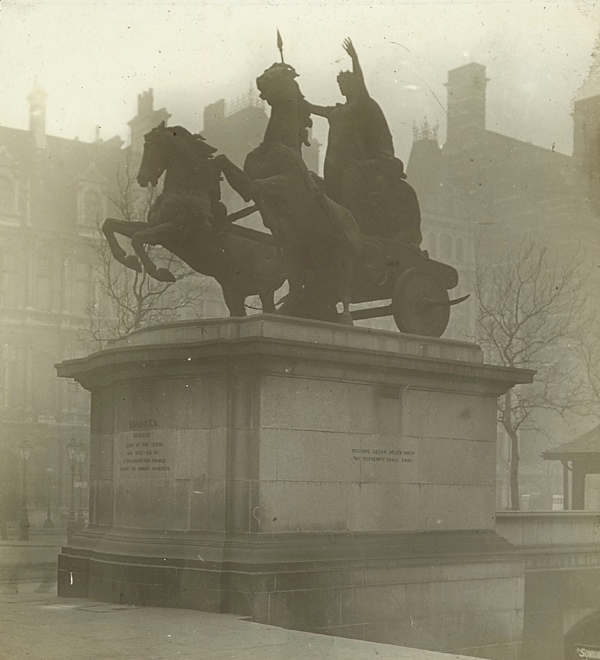
Statue of Boudicca on Westminster Bridge, c. 1910
Glass slides copyright © Bishopsgate Institute
You may also like to take a look at












