
Fogs & Smogs Of Old London
Click here to book for my last Spitalfields tour of the year
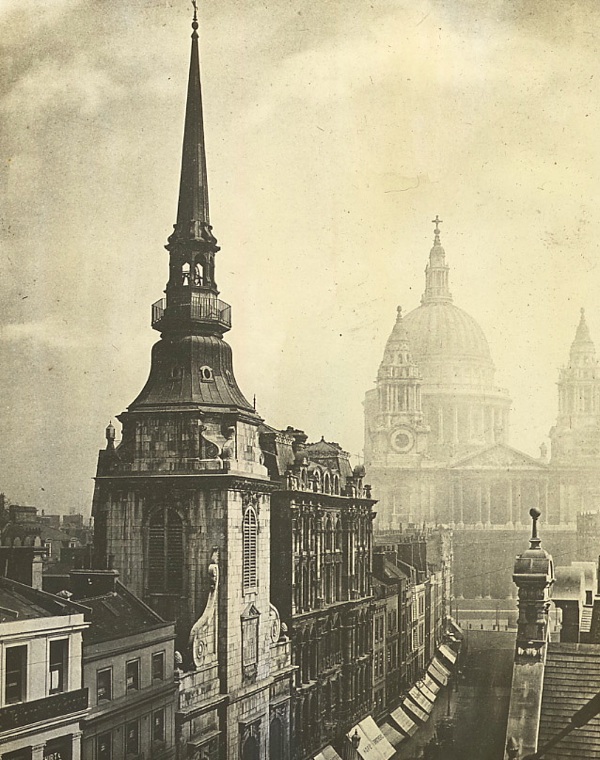
St. Martin, Ludgate with St. Paul’s Cathedral, c. 1900
At this time of year, when dusk gathers in the mid-afternoon, a certain fog drifts into my brain and the city itself grows mutable as the looming buildings outside my window merge into a dark labyrinth of shadows beyond. Yet this is as nothing compared with the smog of old London – in the days before anyone dreamed of the Ultra Low Emission Zone – when a million coal fires polluted the atmosphere with clouds of filthy black smoke carrying noxious fumes, infections and lung diseases. In old London, the city resounded with a symphony of fog horns on the river and thousands of people coughing in the street.
Looking at these glass slides of a century ago, once used for magic lantern shows by the London & Middlesex Archaeological Society at the Bishopsgate Institute, the fogs and smogs of old London take on quite another meaning. They manifest the proverbial mythic “mists of time,” the miasma wherein is lost all of human history, save the sketchy outline that some idle writer or other jotted down. Just as gauzes at the pantomime conjure the romance of fairyland, the hazes in these pictures filter and soften the images as if they were faded memories, receding into the past.
The closer I examine these views, the more I wonder whether the fog is, in some cases, an apparition called forth by the photographic process itself – the result of a smeary lens or grime on the glass plate, or simply an accident of exposure. Even so, this photographic fogging is no less evocative of old London than the actual meteorological phenomenon. As long as there is atmosphere, the pictures are irresistibly atmospheric. And old London is a city eternally swathed in mist.
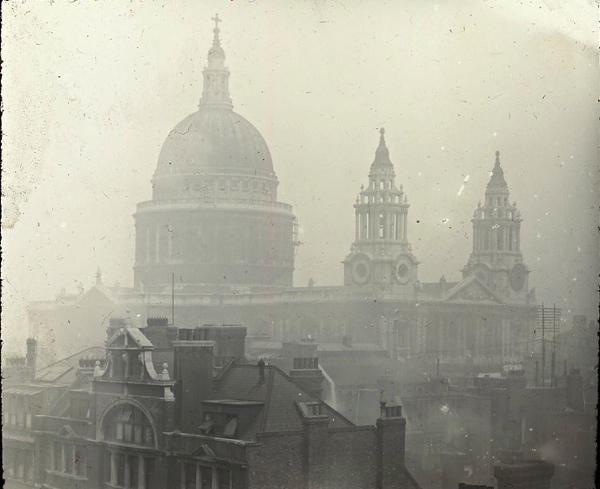
St Paul’s Cathedral from the north-west, c. 1920

Pump at Bedford Row, 1911

Cenotaph, 1919

Upper Thames view, c. 1920
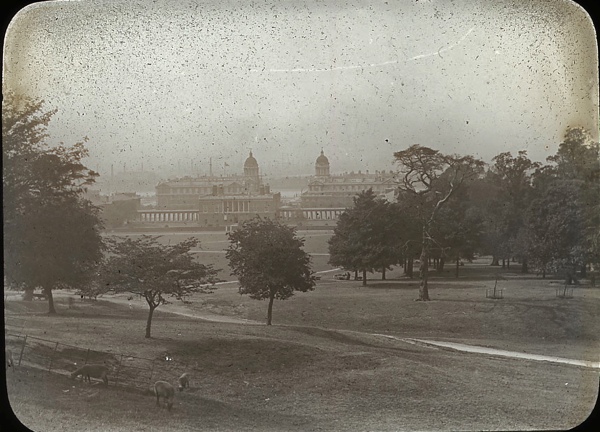
Greenwich Hospital from the Park, c. 1920

City roadworks, 1910

Looking north across the City of London, c. 1920
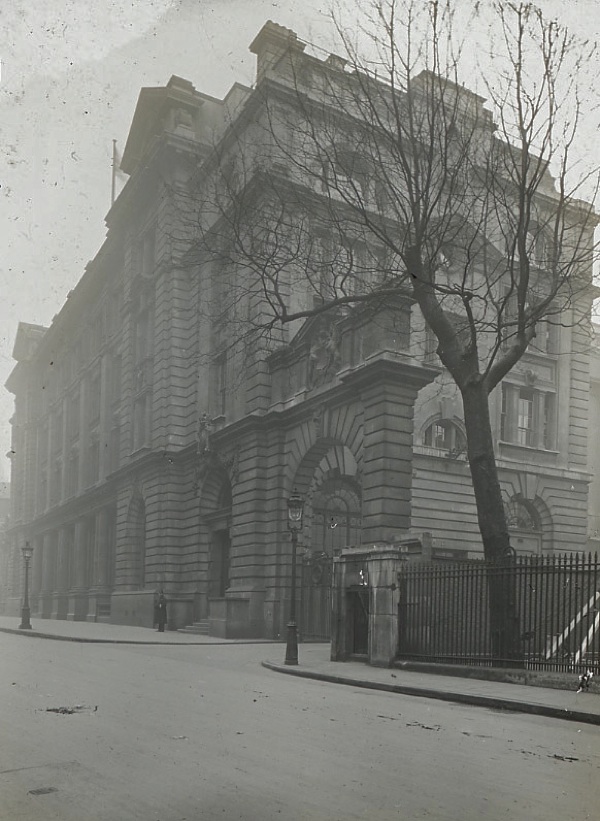
Old General Post Office, c. 1910

View eastwards from St Paul’s, c. 1910

Hertford House, c. 1910

New River Head, c. 1910

The Running Footman public house, c. 1900
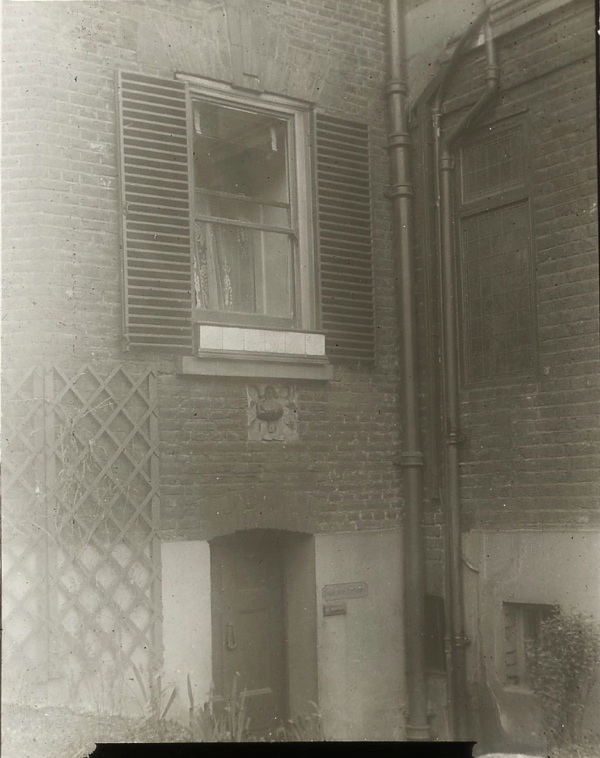
Unidentified building, c 1910

Church Row, Hampstead, c. 1910

Danish Ambassador’s residence, Wellclose Square, Wapping c. 1910

Church of All Hallows, London Wall, c. 1890

Drapers’ Almshouses, Bromley Street, c. 1910

Battersea Bridge, c. 1910

32 Smith Grove, Highgate, in the snow, 1906

Unknown public building, c. 1910
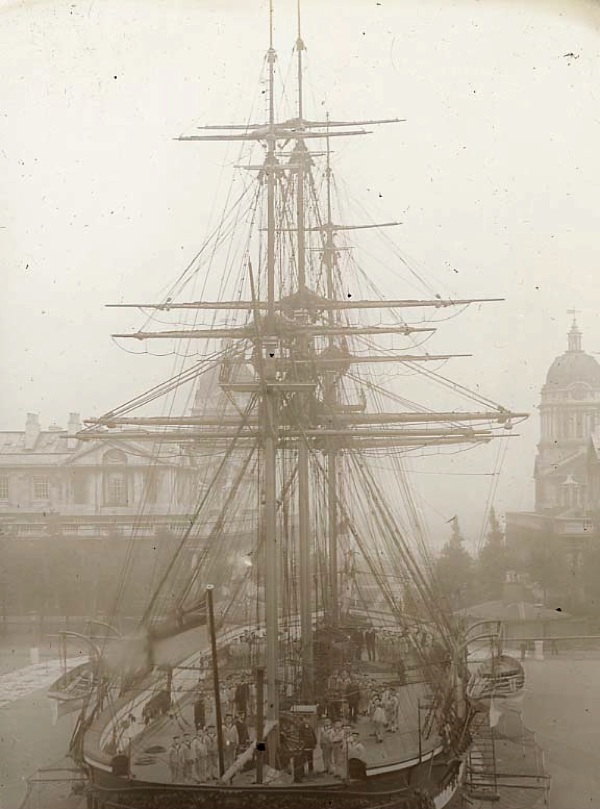
Training ship at Greenwich, c. 1910

Flooded moat at the Tower of London, c. 1910

The Woodman, 1900

Bangor St, North Kensington, c. 1910

Terrace of the Houses of Parliament, c.1910
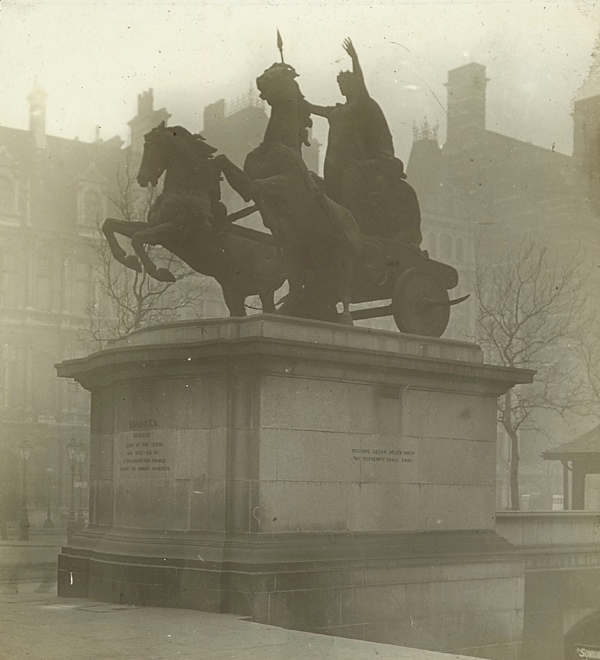
Statue of Boudicca on Westminster Bridge, c. 1910
Glass slides copyright © Bishopsgate Institute
You may also like to take a look at
Modern London, 1888
Click here to book for my last Spitalfields tour of the year
“The attention of our readers is now directed to the history of the rise and progress of leading business houses of London. We have endeavoured to give a review of those firms whose honourable dealings and straightforward methods, irrespective of the magnitude and class of their of operations, make them worthy of the mention they have received” – from Modern London, The World’s Metropolis, 1888

J G Ingram & Son, The London India Rubber Works, Hackney Wick – The business dates back in its foundation over forty years and was established originally by Mr Ingram in Hoxton, before – owing to its rapid development and the necessity for increased accommodation – the present factory was built fifteen years ago.

D H Evans & Co, Silk Mercers, Drapers & Outfitters, Oxford St – Within a comparatively short period of time, this notable concern has developed, through the energy and perseverance of its proprietary, from one shop of average size to one of the largest drapery establishments in London.

John Ward, Patentee & Inventor of Invalid Chairs, Carriages etc, Tottenham Court Rd –This notable business was formed upwards of a century and a half ago. Mr Ward is engaged in this very scientific industry upon a very extensive scale and his productions for the relief of the invalid are esteemed all over the world.

Charles Taylor, The Depository, Southwark, Opposite The Elephant & Castle – There are very few business establishments whose names are more familiar to the general public of London than the name of The Depository, as a monument to Mr Taylor’s vigorous ability and progressive spirit.

George Wright & Co, Billiard Table Manufacturers, Westminster Bridge Rd – During the time it has been in existence, this notable firm has led the way in inventions and improvements, thereby extending and improving the popularity of the game of billiards as a universal pastime for gentlemen.

Whittard, Crisp & Co, Leather & Hide Factory, Market St, Bermondsey – This is a house that occupies a very prominent position in the factoring trade of Bermondsey, and its name and commercial principles are well known and highly esteemed by a widespread circle of valuable connections.
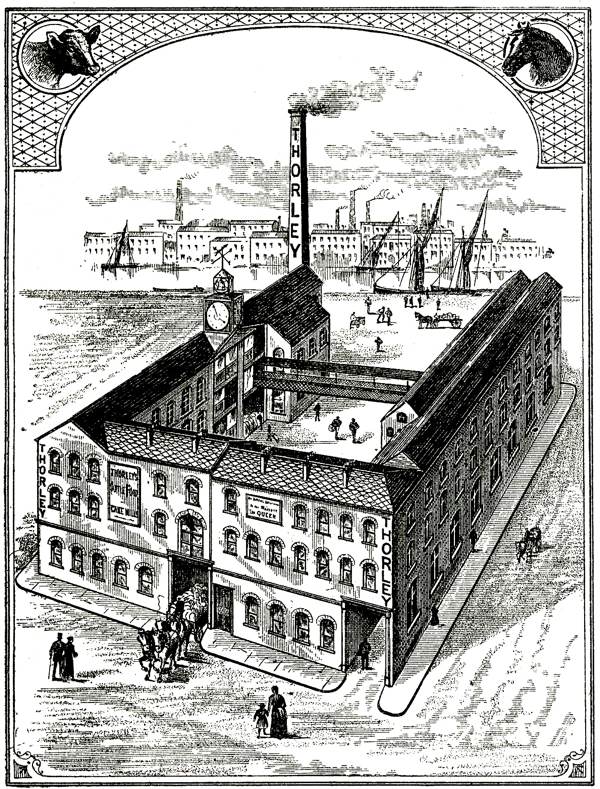
Thorley & Co, Cattle Food Manufacturers, Caledonian Rd, Kings Cross – Thorley’s Cattle Food is the first production of its kind to achieve a recognised position among agriculturalists and must be regarded as one of the great discoveries of a period that has been particularly prolific in great inventions.

P B Cow & Co, Patentees & Manufacturers of India Rubber & Waterproof Fabrics, Cheapside – It is now about forty years since Mr Peter Brusey Cow succeeded Mr Mackintosh, the inventor of the remarkable waterproof garment, in the control of this gigantic commercial concern.

W Walker & Sons, Cabinet Manufacturers, Bunhill Row – The history of the firm dates back to 1848 when the concern was founded by Mr W Walker and during the whole of the forty years that has elapsed since then the growth of the business has been continuous. A visit to their superb showrooms in Bunhill Row will reveal the very acme of artistic achievement in this branch of the industry.

W H Willcox & Co, Manufacturers & Merchants in Engineers’, Mill & Railway Furnishings & Supplies, Southwark St – Founded fifteen years ago by Walter Henry Willcox, the firm are in a position to supply everything in the way of engineers’ requisites – from a bolt to a steam engine.

Robert Adams, Patentee, Manufacturer & Specialist in Improved Builders’ Ironmongery & Building Appliances, Newington Causeway – The business in question was established in 1870 and has acquired the most eminent reputation in the special departments of mechanical industry and hardware supply to which its undertakings apertain.

W Wilfred Head & Mark, News & General Printers, Lithographers & Engravers, Fleet Lane, Old Bailey – This eminent firm was founded upward of a quarter of a century ago and carried on business in Johnson’s Court, Fleet St, taking the name ‘Dr Johnson Press’ which it still retains and under which it is widely known in the printing world.

Avern, Sons & Barris, Cork Merchants & Manufacturers, Minories – One of the principal house engaged in the great London Cork Trade, their corks obtained a medal in Paris in 1878 and find favour with bottlers all over the world.

Conrad W Schmidt, Varnish Manufacturer, Carpenters Rd, Stratford – There is probably no larger firm of varnish manufacturers in the United Kingdom or, for that matter, anywhere than that of Mr Conrad W Schmidt.

Grovers & Rockley, Musical Instrument Warehouse, The Grove, Stratford – This is the only establishment in the East End that embraces all departments in connection with the musical instrument trade. It was founded in the Kingsland Rd many years ago and was long since removed to its present location.

John Burgess & Son, Italian Warehousemen, Strand – Nowhere in London is the art of conservation, as practically applied to the preserving of certain classes of comestibles, more perfectly exemplified in some of its higher forms than at this famous old establishment at the corner of Savoy Steps.

Samuel Haskins & Brothers, Engineers, Manufacturers of Shop Fronts, Revolving Shutters Etc, Old St – This eminently reputed house originated in the year 1784 under the auspices of the grandfather of the present principals and has been conducted uninterrupted from that day to this by members of its founder’s family.

S E Norris & Co, Curriers, Leather Merchants, Belting Manufacturers, Shadwell High St & St Paul’s Works – This notable concern is one of the oldest in the trade and first came into especial prominence as far back as 1775, and, in the character and quality of their curried leather, this firm takes rank with the first in the kingdom.

Images courtesy Bishopsgate Institute
In Search Of Roman London
Click here to book for my last Spitalfields tour of the year

Roman London is still under construction
From Spitalfields, you have only to walk down Bishopsgate to find yourself in Londinium, since the line of Bishopsgate St follows that of Ermine St which was the major Roman road north from London Bridge. Tombs once lined the path as it approached the City, just as they did along the Appian Way in Rome.
The essential plan of the City of London was laid out by the Romans when they built their wall around Londinium at the end of the second century, after Boudica and her tribes burnt the settlement. Eighty years earlier, the Romans had constructed a fort where the Barbican stands today and, in their defensive plan, they extended its walls south to the Thames and in an easterly arc that met the river where the Tower of London stands now.
A fine eighteenth century statue of the Emperor Trajan touts to the tourists at Tower Hill, drawing their attention to the impressive stretch of wall that survives there, striped by the characteristic Roman feature of courses of red clay tiles, inserted between layers of shaped Kentish Ragstone to ensure that the wall would be consistently level.
Just fifty yards from here at Cooper’s Row, round the back of a hotel, is an equally spectacular stretch of wall that is off the tourist trail. Here you can see the marks of former staircases and medieval windows cut through to create a rugged monument of significant height.
Yet, in the mile between here and the Barbican, very little has survived from the centuries in which stone from the wall was pillaged for other buildings. It is possible to seek access to some corporate premises with lone fragments marooned in the basement, but instead I decided to walk over to All Hallows by the Tower which has a little museum of great charisma in its crypt. Here is part of the tessellated floor of a Roman dwelling of the second century and Captain Lowther’s splendid model of Roman London from 1928.
At the Barbican, a stretch of wall that was once part of the Roman fort is visible, punctuated by a string of monumental bastions which are currently under restoration. Walking up from St Paul’s, you come across the wall in Noble St first, still encrusted with the bricks of the buildings within which it was once embedded. Then you arrive at London Wall, an avenue of gleaming towers lining a windy boulevard of fast-moving traffic, which takes it name from the ancient edifice.
I was lucky enough to be permitted access to a secret concrete bunker, beneath the road surface yet above the level of the underground car park. Here was one of the gateways of Roman London and I saw where the wooden gate posts had worn grooves into the stone that supported them. At last, I could enter Roman London. In that underground room, I walked across the few metres of gravel chips that now cover the ground level of the former roadway between the gate posts, where the chariots passed through. Long ago, I should have been trampled by the traffic if I had stood there, just as I should be mown down if I stood in London Wall today. We switched out the light and locked the door on Roman London to emerge into the daylight again.
In the gardens of the Barbican, the presence of foliage and grass permits the bastions of the City wall to assert themselves, standing apart from the contemporary built environment that surrounds them. From here, I turned west to visit the cloister of St Vedast in Foster Lane, which has an intriguing panel of a tessellated floor mounted in a frame, and St Bride’s in Fleet St, where deep in the crypt, you can lean over a wall to see the floor of the Roman dwelling that once stood there, reflected in a mirror. The reality of these items stirs the imagination just as their fragmentary nature challenges it to envisage such a remote world.
By now, it was late afternoon. I was weary and the sunshine had faded, and it was time to make tracks quickly back to Spitalfields as the sky clouded over – yet I was inspired by my brief Roman holiday in London.

Eighteenth century bronze statue of Trajan at Tower Hill

Model of Roman London in the crypt of All Hallows by the Tower. Made by Captain Lowther in 1928, it shows London Bridge AD 400 – Spitalfields appears as a settlement of Britons beyond the wall.

Roman City Wall at Tower Hill

At Tower Hill

At Cooper’s Row

Lines of red clay tiles were inserted between the blocks of stone to keep the wall level


Tessellated floor in the crypt of All Hallows by the Tower

Timber from a Roman wharf preserved in the porch of St Magnus the Martyr

In the cloister of St Vedast Alias Foster

In the crypt of St Bride’s, Fleet St

Foundation of a Roman Guard Tower in Noble St

Outside 1 London Wall
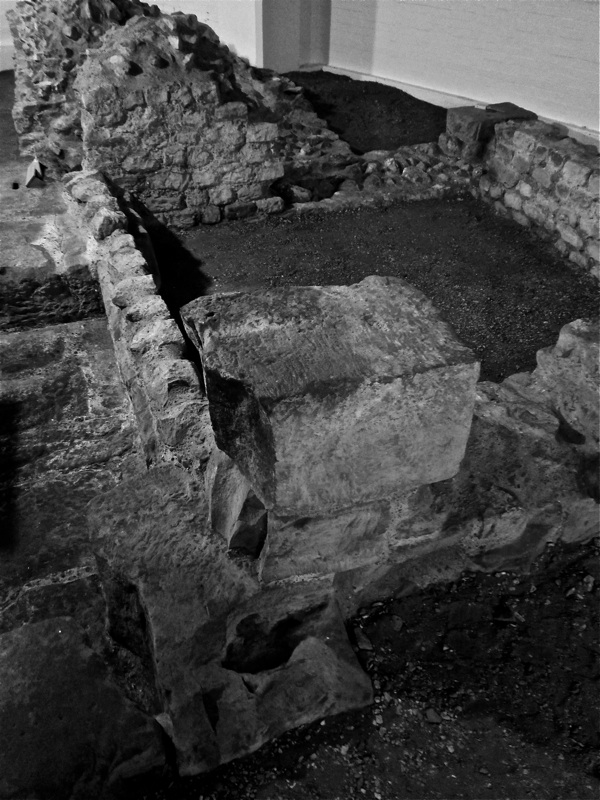
Part of the entrance gate to Roman London in the underground chamber

Model of the north west entrance to Roman London
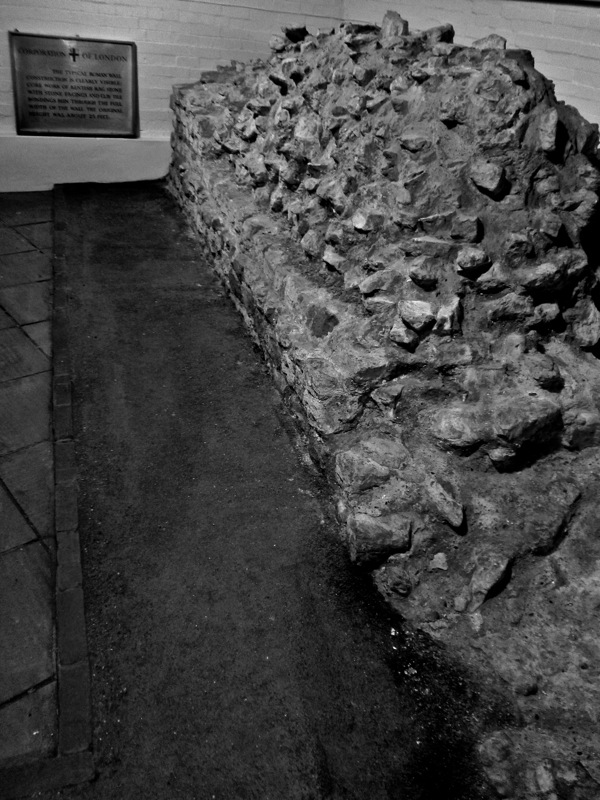
A fragment of wall in the underground chamber
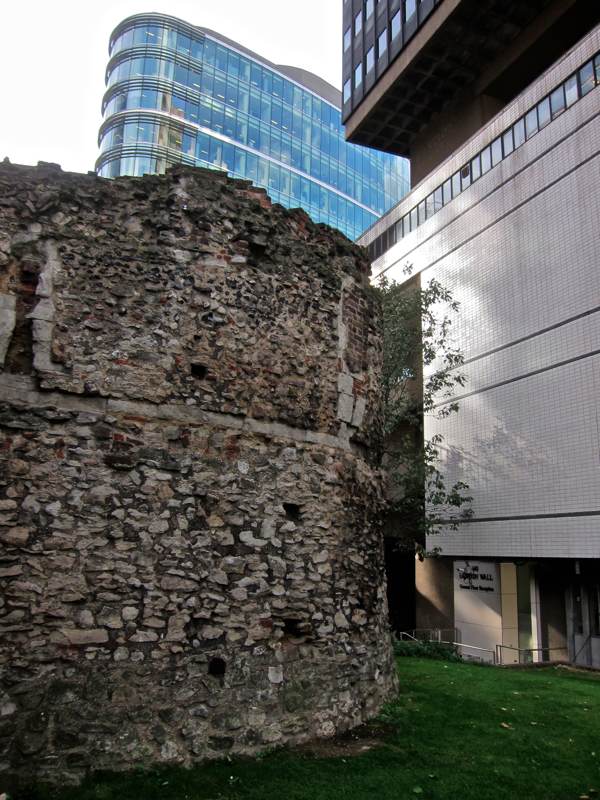
Bastion at London Wall

You might also like to read
The Gentle Author’s Pub Crawl
Click here to book for my last Spitalfields tour of the year
Feeling in need of exercise and refreshment, I set out on a walk to visit some favourite pubs along the way and I took my camera with me too.
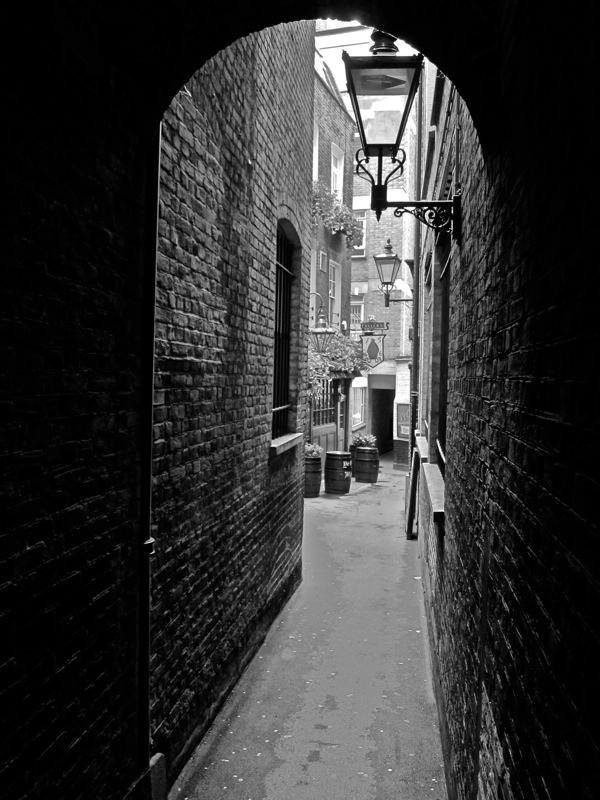
Mitre Taven, Hatton Garden, opened 1546
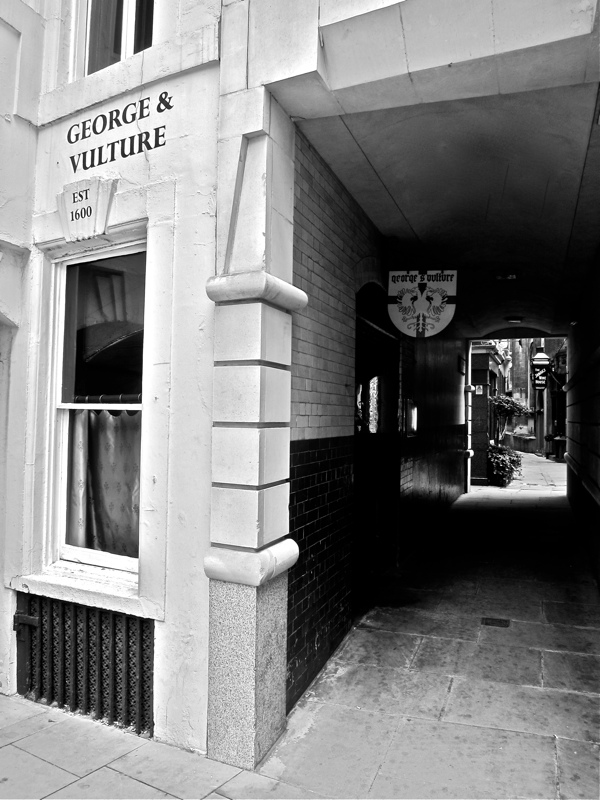
George & Vulture, City of London, opened 1600
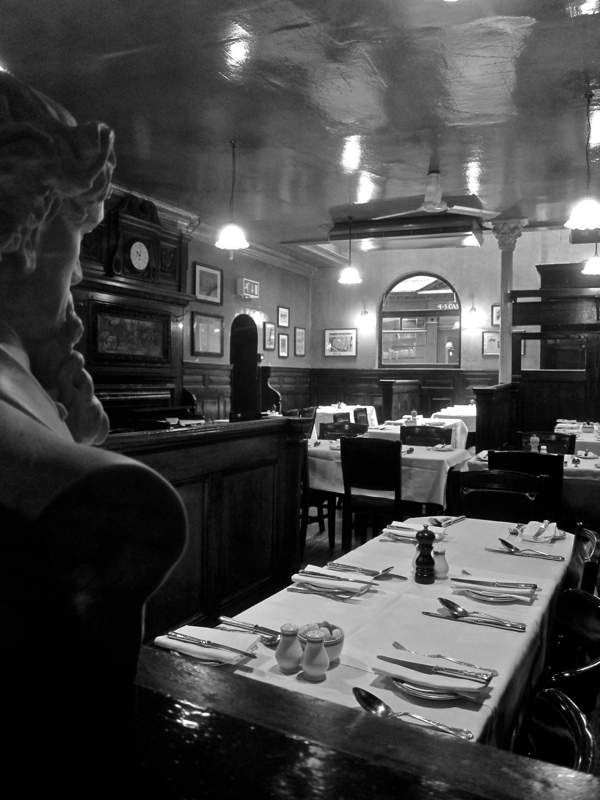
Bust of Dickens in the dining room at the George & Vulture

Jamaica Wine House, City of London, opened 1660
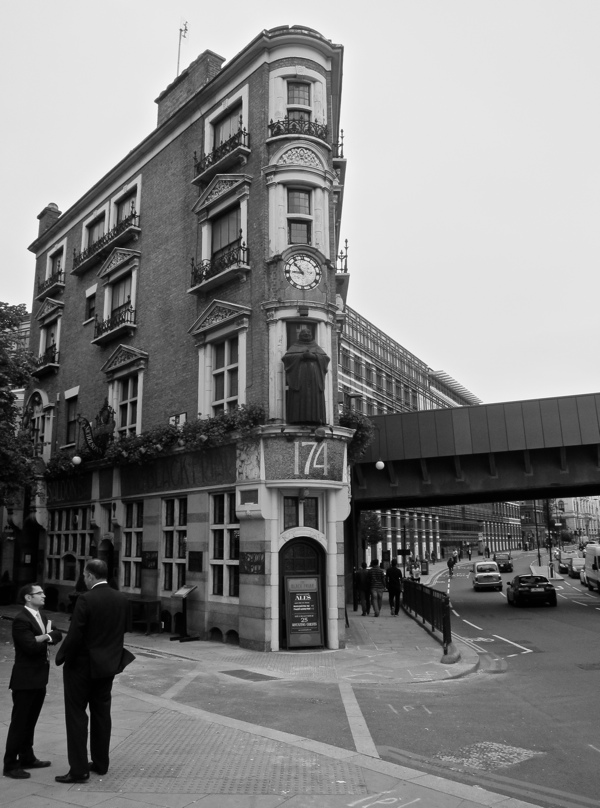
The Blackfriar, Blackfriars, opened 1905
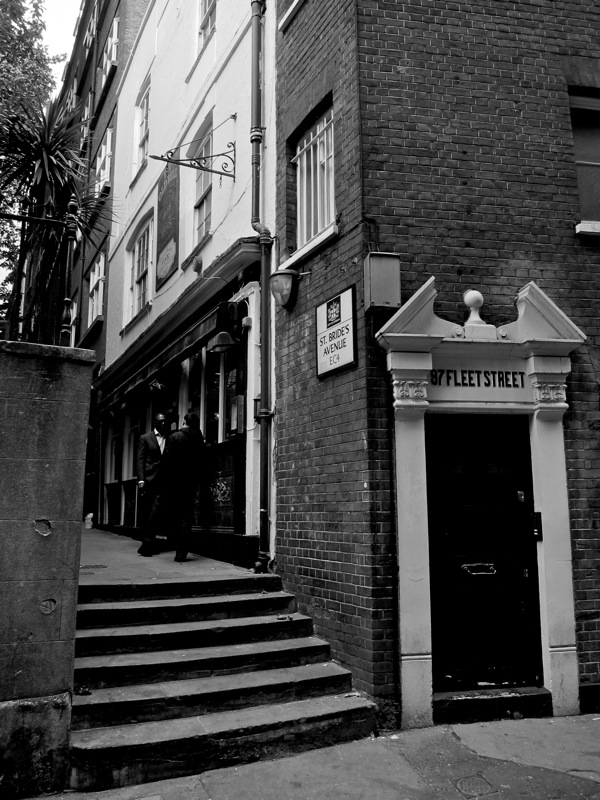
The Old Bell, Fleet St, opened in the sixteen-seventies
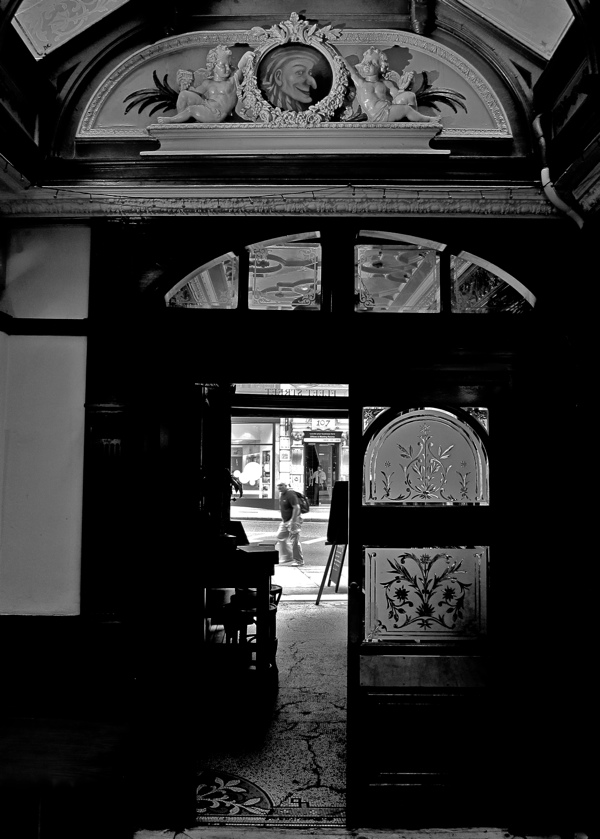
The Punch Tavern, Fleet St, opened 1839
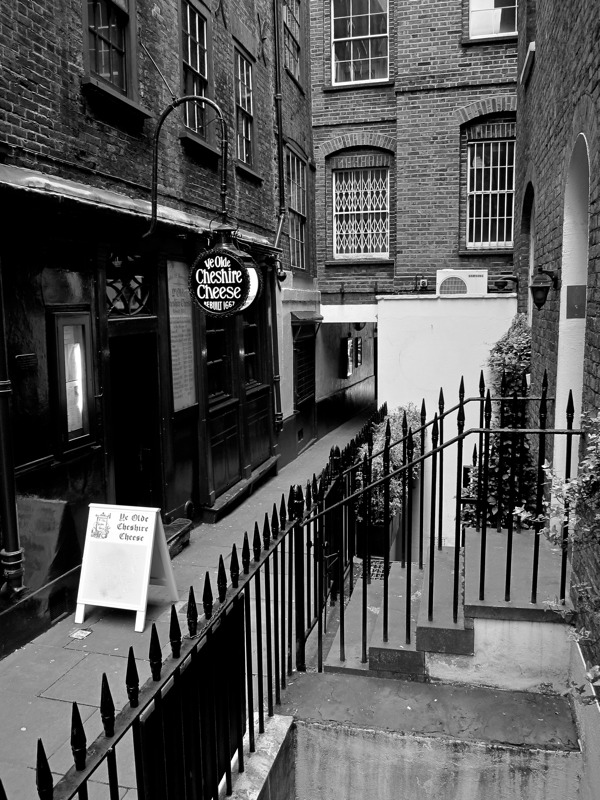
Old Cheshire Cheese, Wine Office Court, opened 1538
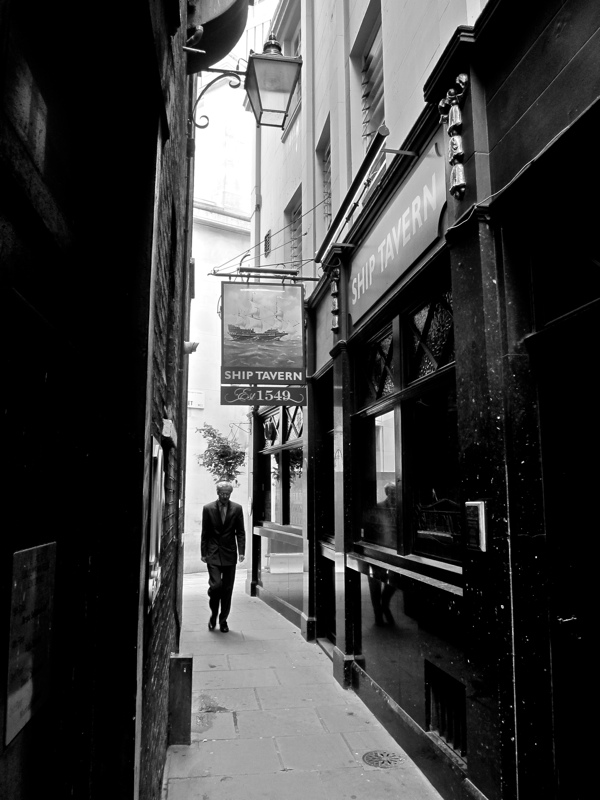
Ship Tavern, Gate St, opened 1549
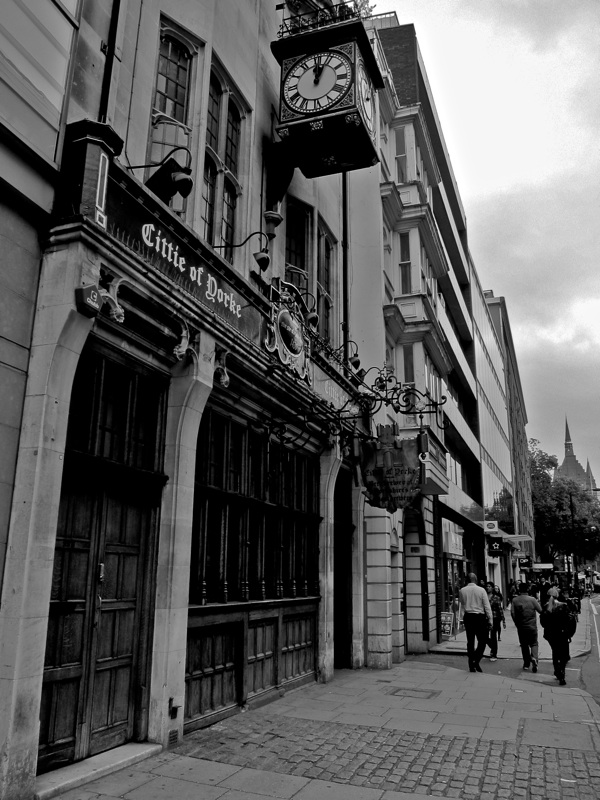
Cittie of Yorke, Holborn, opened 1696
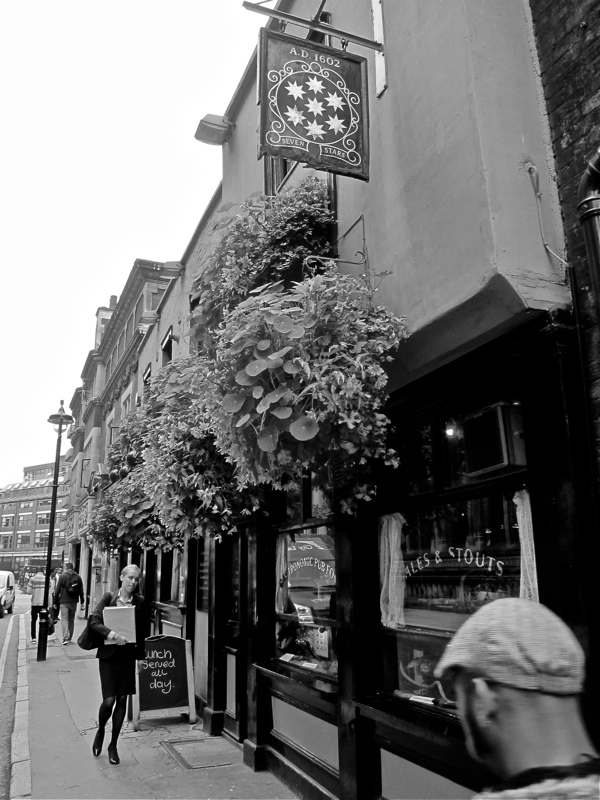
Seven Stars, Carey St, opened 1602
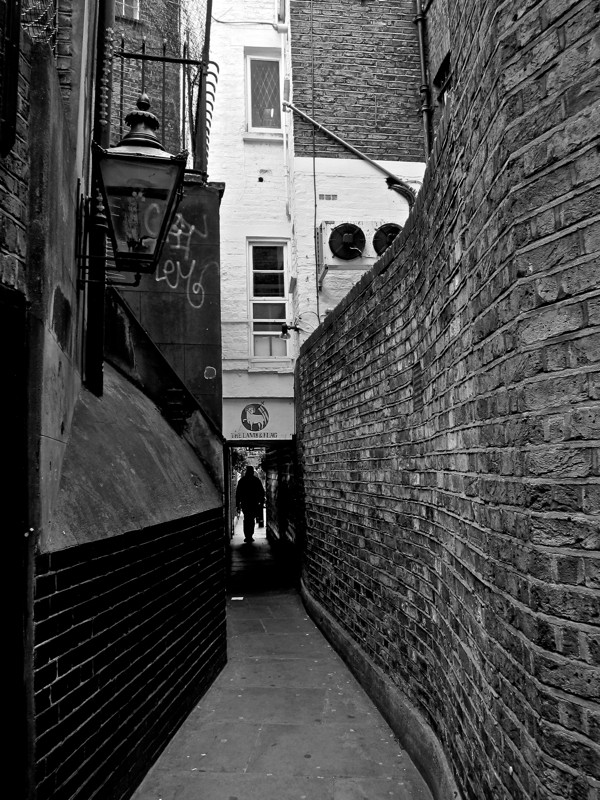
The Lamb & Flag, Rose St, opened 1623
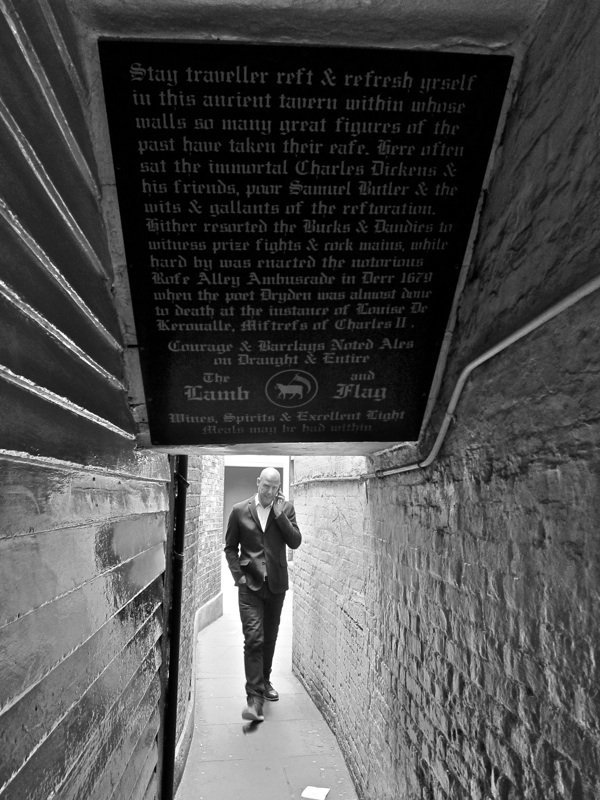
At the Lamb & Flag
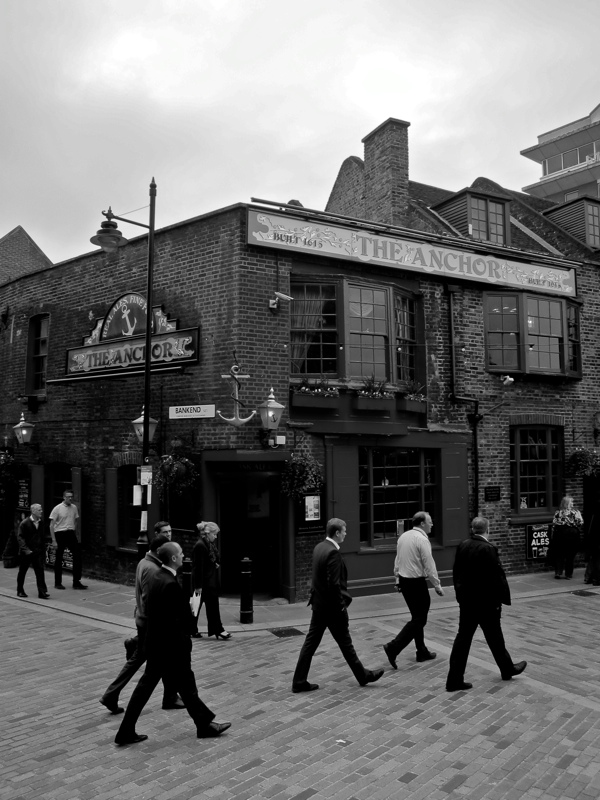
The Anchor, Bankside, where Samuel Pepys watched the Fire of London
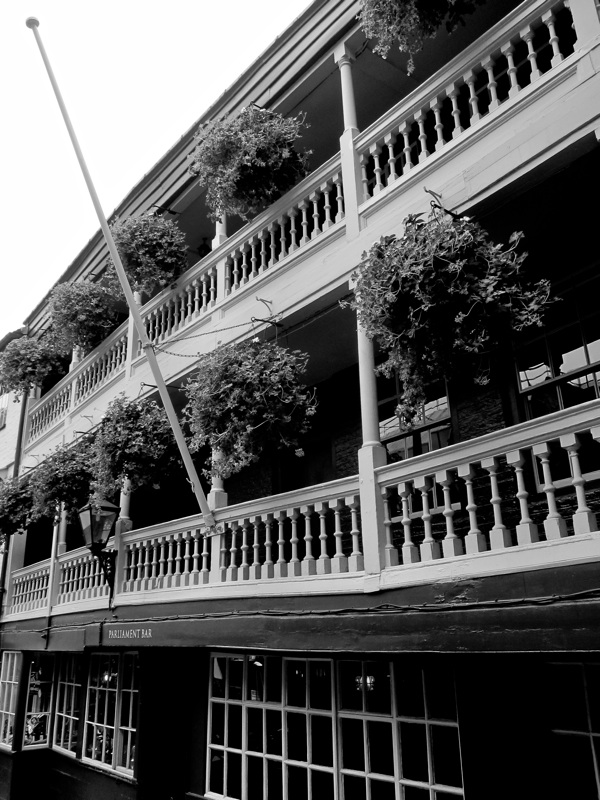
The George, Borough High St, opened in the fourteenth century
You may also like to look at
Planting Diaries
Click here to book for my last Spitalfields tour of the year
I am proud to present these extracts from PLANTING DIARIES, Gardens, planting styles and their origins by Siân Rees, a graduate of my blog writing course who has been publishing regularly for more than six years.
I am now taking bookings for the next writing course, HOW TO WRITE A BLOG THAT PEOPLE WILL WANT TO READ on November 25th & 26th.
Come to Spitalfields and spend a weekend with me in an eighteenth century weaver’s house in Fournier St, enjoy delicious lunches and eat cakes baked to historic recipes, all catered by Townhouse, and learn how to write your own blog.
If you are graduate of my course and you would like me to feature your blog, please drop me a line.
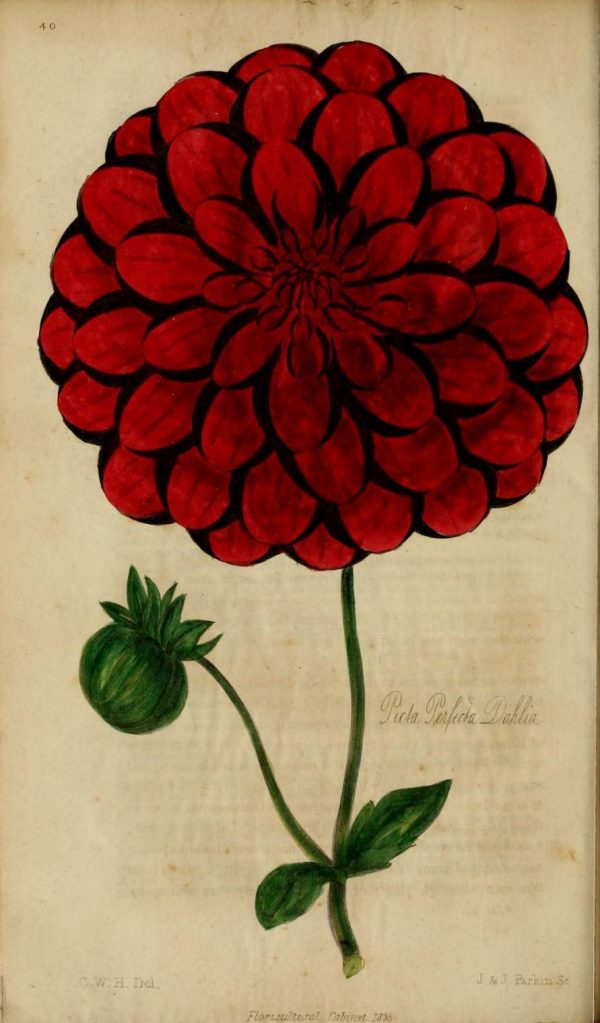
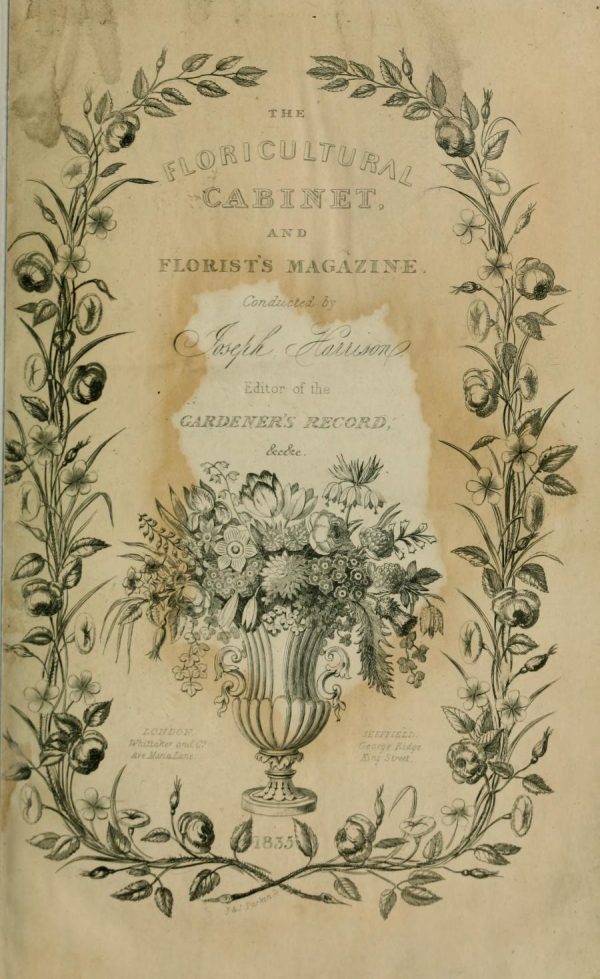
This plate showing a bright crimson ‘Picta Perfecta’ dahlia, with its beautifully shaped petals edged in black, was first published in The Floricultural Cabinet and Florist’s Magazine in 1835. Launched in 1833 by Joseph Harrison, a gardener and florist, his magazine reflects the appetite amongst amateur and professional gardeners alike for the cultivation of dahlias for show.
In the eighteen-thirties, dahlias were enormously popular garden and exhibition flowers, loved for their jewel colours, abundance of blooms and long flowering season. Starting in July, dahlia shows took place at regular intervals through the summer and early autumn. Harrison visited floral exhibitions all over the country, many hosted by newly formed horticultural societies, and published his accounts of these in the magazine.
Today his accounts give us valuable insights into the character and atmosphere of these shows. Dahlia shows ranged from those staged in public houses, such as the Baker’s Arms in Hackney Road, East London, and the Bull and Mouth Inn in Sheffield, to large exhibitions attracting huge crowds, such as the Metropolitan Society’s Grand Dahlia Show at Vauxhall Gardens in London. Many of the shows hosted dinners for members after the prizes had been given out, and some enjoyed dancing, and music from brass bands. Whatever their size, all the shows were united by appreciation for the dahlia and the spirit of competition.
Harrison’s attendance at these shows allowed him to meet the horticulturalists producing new dahlias, giving him an important overview of dahlia cultivation in England and contacts in the wider horticultural industry. He soon established himself as an influential voice informing taste and trends in gardening through his magazine, in much the same way horticultural journalists and garden designers do today.
With a format that gave advice on growing techniques from expert growers and seed and bulb suppliers, the magazine also encouraged amateurs to write in with questions and their own gardening tips. The Floricultural Cabinet was an instant success, boasting sales of 50,000 copies in 1833, its first year of publication.
Harrison appears to have understood the power of attractive colour images as a marketing tool to inspire readers to purchase his magazine, and the new plants he showcased. The dahlias in the coloured plates are accomplished artworks, portraying the flowers with accuracy and with a slightly naïve quality in the diagrammatic stylisation of the flowers. The ‘Picta Perfecta’ dahlia, praised in The Floricultural Cabinet for its perfectly round form and spectacular colours, was in fact a seeding raised by Harrison.
Harrison was meticulous in recording the names of prize winning dahlias as well as those of the judges and entrants. From his records, certain grower’s names re-appear, such as Mr Pamplin, a florist who lived in Islington, and raised the beautiful golden yellow dahlia ‘Pamplin’s Bloomsbury’ which was illustrated in the magazine.
Joseph Harrison (1798 – 1856) was born in Sheffield where his father worked as head gardener at nearby Wortley Hall, a position Joseph took over in 1828. He left Wortley Hall in 1837, setting up as a florist in Downham, Norfolk and eventually moving to Richmond, Surrey. As well as The Floricultural Cabinet, Harrison also edited The Gardener’s Record.
While they are an important part of our horticultural history, flower shows are by their nature ephemeral events. The plants, the exhibitors, and in some cases, even the venues where the shows took place are now long gone, but they live on in Harrison’s vivid descriptions.
Here follow extracts from The Floricultural Cabinet of three contrasting dahlia shows, documented by Harrison during his country wide tour of 1835. They start with the East London Dahlia Show, a small and well established local event with sixty stands of flowers on display. At the opposite end of the scale, Harrison is clearly captivated by The Bath Royal Flora and Horticultural Society’s Grand Annual Dahlia Show. Its decorations included an extraordinary figure of a Mexican chief made out of dahlias, to celebrate the country where the plant originated. But later in the season, Bath is topped by The Cambridge Florists’ Society Dahlia Show, with its model of a hot air balloon constructed out of 2,300 dahlia blooms and arranged around a chandelier:
The East London Dahlia Show
‘This exhibition took place, as usual, at the Bakers’ Arms, Hackney-road, and was well attended. Sixty stands of flowers were placed in competition, and the judges, Messrs, Alexander, Catleugh, and Glenny, placed them as follow :—
Stands of Twelve Blooms.—1, Mr. Dandy; 2, Mr. Crowder; 3, Mr. Rowlett; 4, Mr. Wade; 5, Mr. James; .6, Mr. Turner; 7, Mr. Dunn; 8, Mr. Williams; 9, Mr. Brown; 10, Mr. Riley; 11, Mr. Sharp; 12, Mr. Hogarth; 13, Mr. Green; 14, Mr. Buckmaster.
Stands of Six Blooms.—1, Mr. Williams; 2, Mr. Thornhill; 3,My. Dandy; 4, Mr. Crowder; 5, Mr, Wade; 6, Mr, Hogarth; 7, Mr, Dunn; 8, Mr, Carp
Sadly this pub that once stood at the corner of Warner Place and Hackney Road is now demolished.
The Bath Royal Flora and Horticultural Society’s Grand Annual Dahlia Show
‘The committee made extraordinary exertions to render this show the most splendid and attractive of the whole season, and they fully realized their purpose. The first object which met the view was a most singular figure on the right-hand lawn: it was that of a Mexican chief, holding a basket of flowers; the whole figure was composed of Dahlias, which, as our readers well know, came originally from that country ; and difficult as the task must have been, even the features of the countenance were very ingeniously delineated. This figure exhibited no less than 150 varieties of the Dahlia, in every imaginable tint, and of every gradation of size. A little beyond was the figure of a tree of considerable size, the trunk and every branch being composed of Dahlias of an equal number of varieties, and in the colour and size of the flowers.’
The Cambridge Florists’ Society
‘This Society had their grand Autumnal Show of Dahlias on Thursday, Sept. 24th, in the Assembly room at the Hoop Hotel. We have witnessed many floral exhibitions here and at other places, but we never before beheld any thing approaching the beauty and magnificence of this exhibition; on no previous occasion was the Dahlia exhibited in so high a state of excellence. We may expect to see great additions made to the colours and varieties of this very beautiful flower, but we much doubt if ever the grand stand of prize flowers displayed on this occasion will be surpassed in size or quality by that of any future show. The task of decorating the room was entrusted to Mr. Edward Catling, florist, of Cambridge; and nothing could possibly exceed the happy and elegant taste with which every ornament was executed. The sides and ends of the room were beautifully decorated with evergreens, wreaths, and Dahlias. At the head of the grand stand was an immense orange tree thickly studded with Dahlias, to represent the fruit in its various stages of growth, backed by a beautiful Fuchsia multiflora, 12 feet high, from the Botanic Garden. At the end of the room, was a prettily variegated crown entirely composed of Dahlias. But the grand attraction of all was a splendid balloon, wholly formed of Dahlia-blooms, suspended from the ceiling, the car of which appeared to be illuminated, from being placed over a gas chandelier. This ariel machine had a striking effect, the flowers being arranged in stripes to represent variegated silk; and we were told that more than 2,300 Dahlias were required to complete the balloon, exclusive of the car, from which two flags were pendent.—The afternoon show was attended by a numerous and respectable company; but the evening exhibition was crowded beyond all former precedent, owing to its being on the eve of the horse-fair, which gave the neighbouring country people an opportunity of witnessing the finest display of Dahlias ever seen in Cambridge. Upwards of 700 well-dressed persons were in the room at one time, and from eight to half-past nine o’clock the number amounted to little, if any, short of 3,000 persons, all with happy countenances, highly delighted with the fairy scene ; added to which were the musical strains of the Cambridge Military Band, who played several new and difficult pieces, with a precision and taste that would have done credit to veteran performers. After the ladies had withdrawn, more than 200 members and their friends sat down, with the splendid flowers before them, and enjoyed the scene with music, song, and toast. Fifteen new members were elected, and we rejoice to learn that the Society meets with the well-merited support of all classes.’
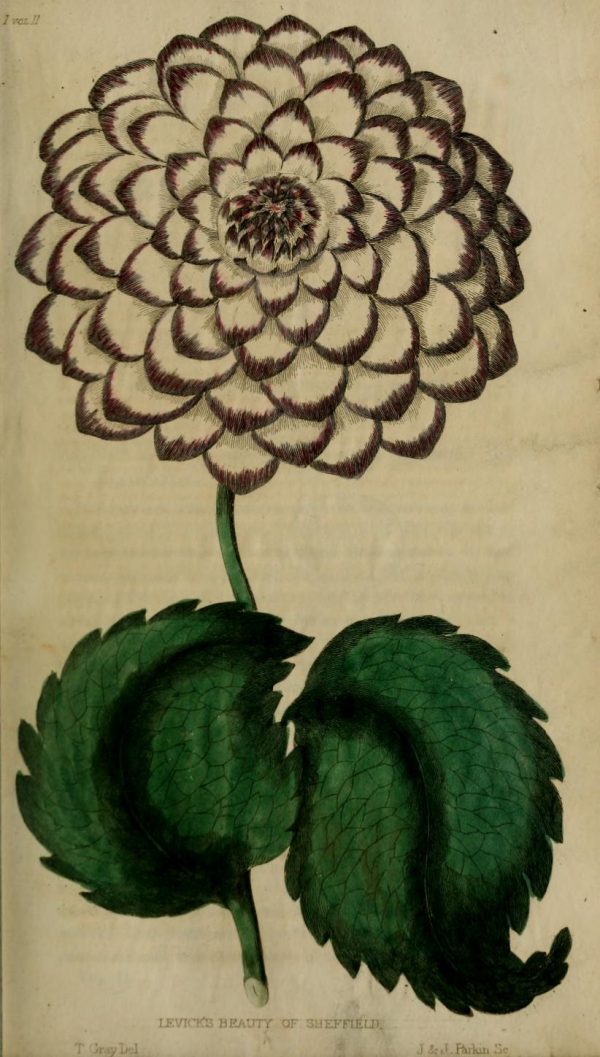
Levick’s Beauty of Sheffield
The Floricultural Cabinet
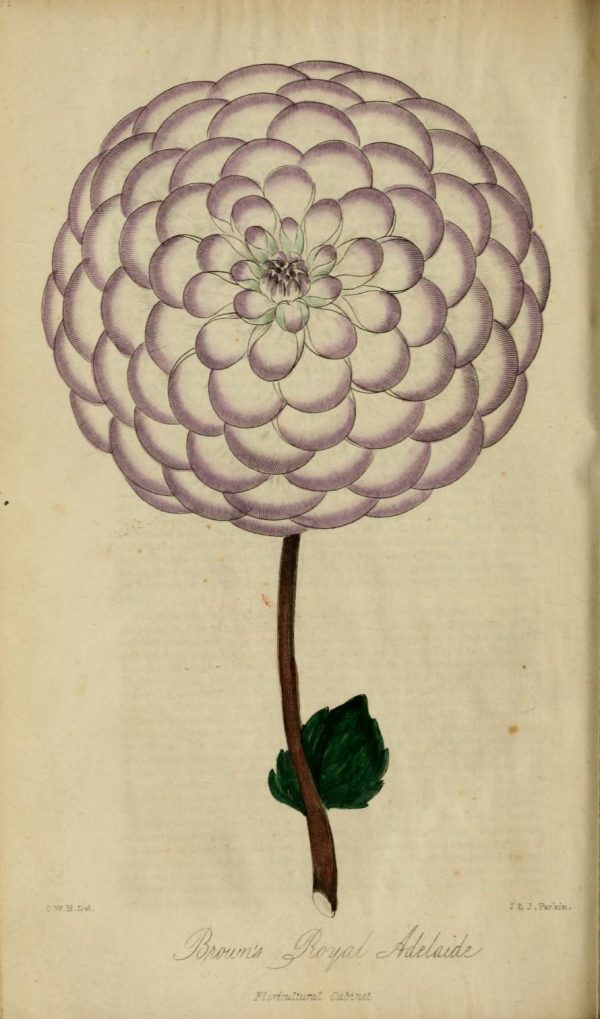
Brown’s Royal Adelaide
The Floricultural Cabinet
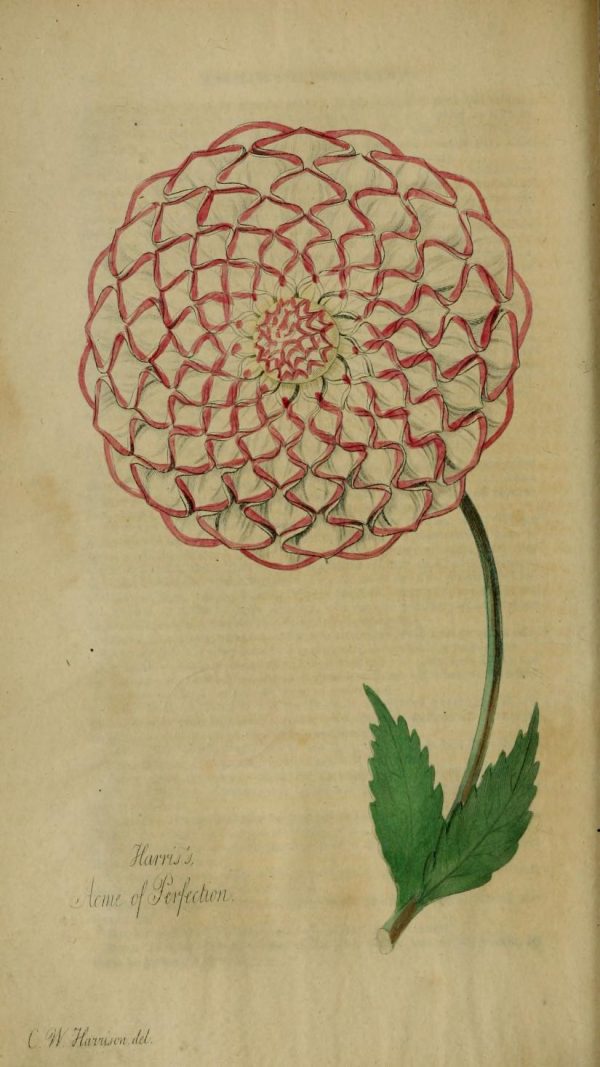
Harris’s Acme of Perfection
The Floricultural Cabinet
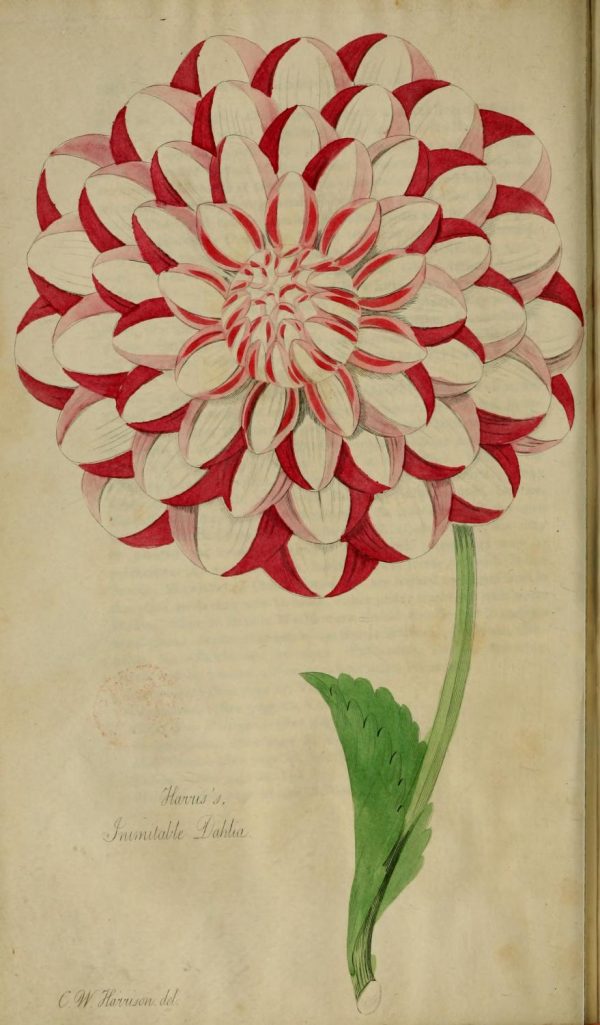
Harris’s Inimitable Dahlia
The Floricultural Cabinet
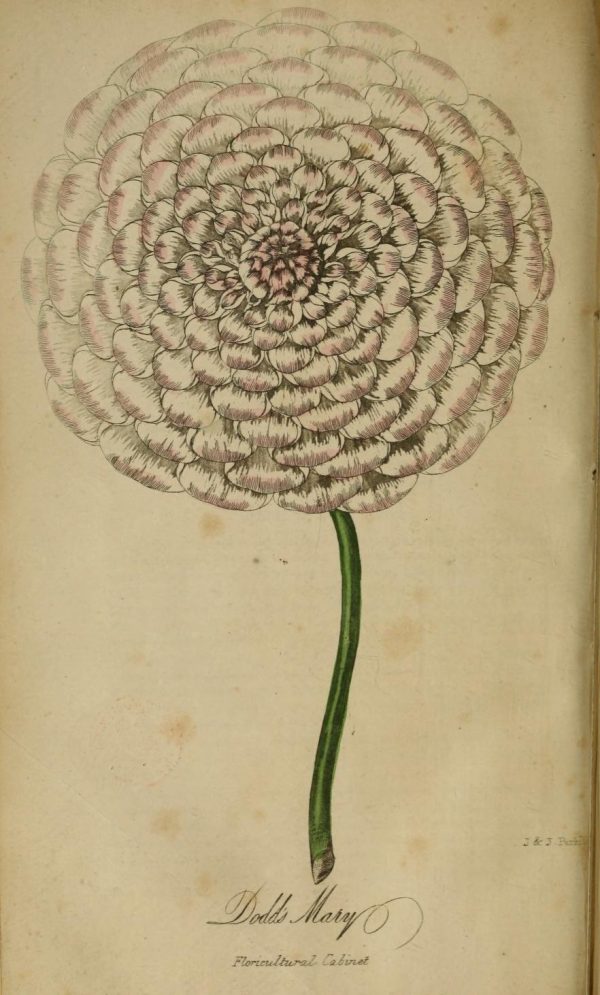
Dodd’s Mary
The Floricultural Cabinet
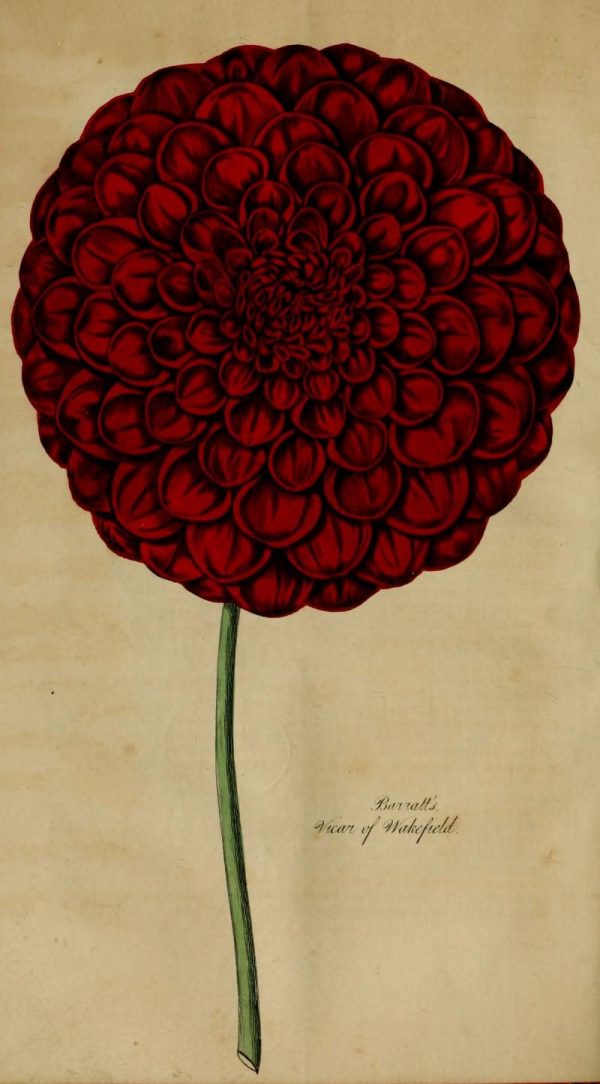
Barratt’s Vicar of Wakefield
The Floricultural Cabinet
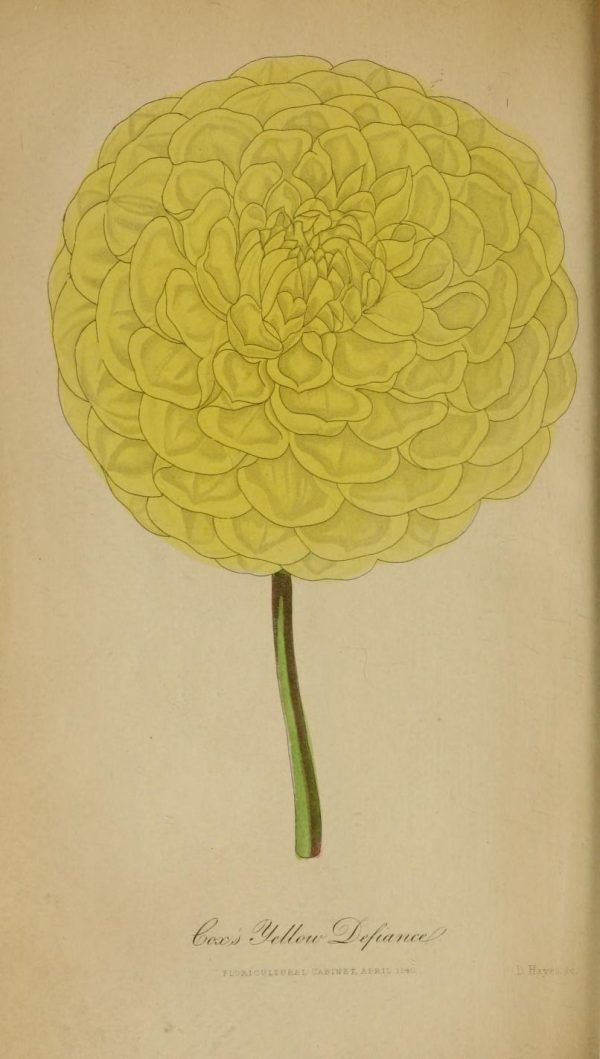
Cox’s Yellow Defiance
The Floricultural Cabinet
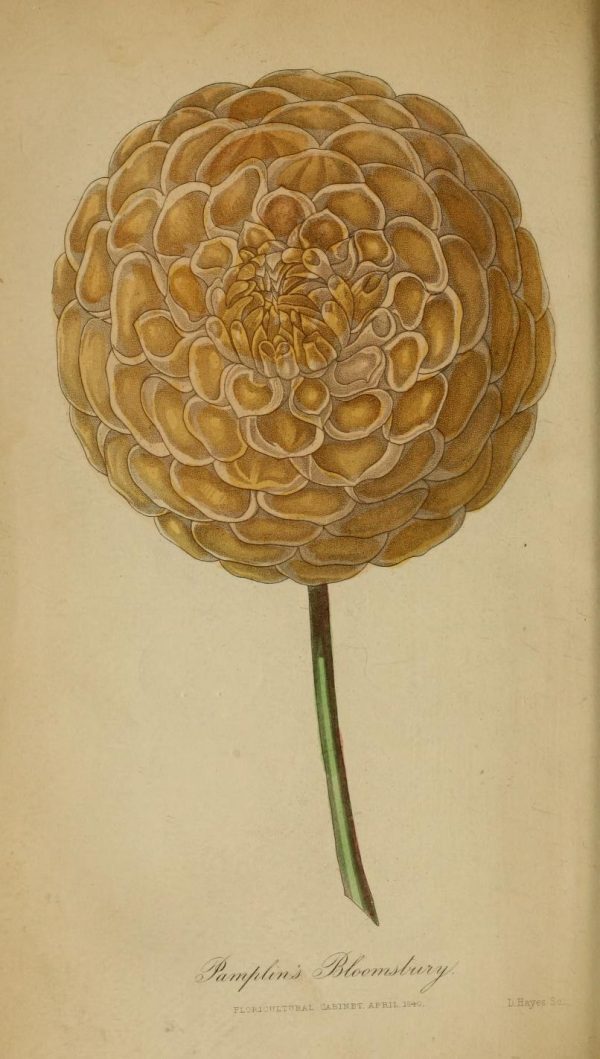
Pamplin’s Bloomsbury
The Floricultural Cabinet
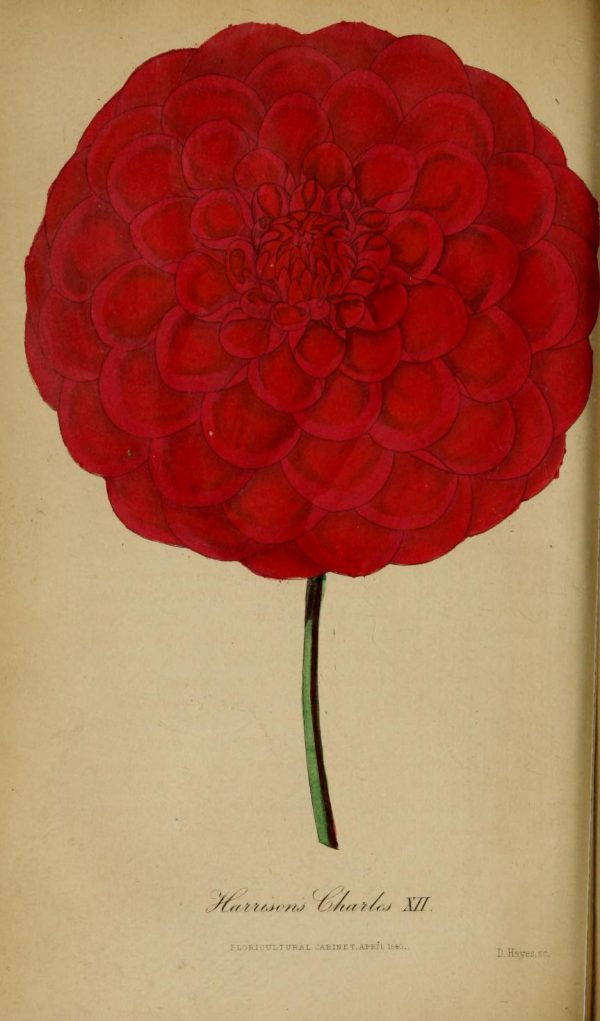
Harrison’s Charles XII
The Floricultural Cabinet
Images courtesy Natural History Museum
You might also like to read
A London Inheritance
Thank you to our over 300 donors who contributed £35,000 to relaunch Spitalfields Life Books. We will be in touch with patrons, supporters and friends to arrange delivery of rewards in due course.

I am proud to present these extracts from A LONDON INHERITANCE, a private history of a public city by a graduate of my blog writing course who has been publishing regularly for nine and a half years. The author inherited a series of old photographs of London from his father and by tracing them, he discovers the changes in the city.
I am now taking bookings for the next writing course, HOW TO WRITE A BLOG THAT PEOPLE WILL WANT TO READ on November 25th & 26th.
Come to Spitalfields and spend a weekend with me in an eighteenth century weaver’s house in Fournier St, enjoy delicious lunches and eat cakes baked to historic recipes, all catered by Townhouse, and learn how to write your own blog.
If you are graduate of my course and you would like me to feature your blog, please drop me a line.
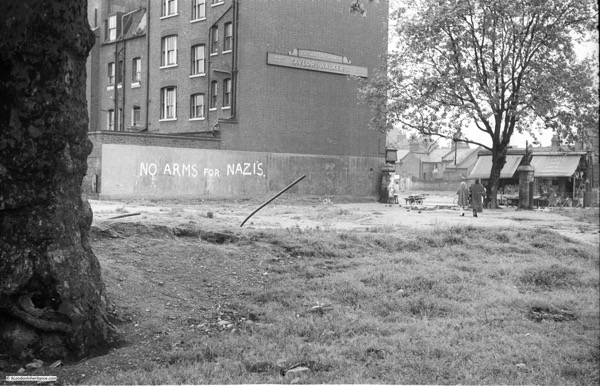
My father’s photograph from 1952
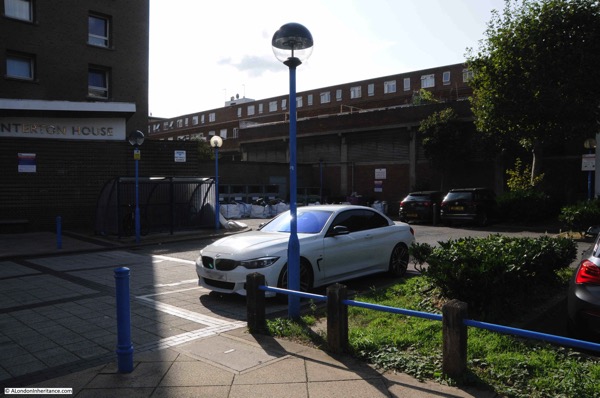
My photograph of the same view today
IN WATNEY MARKET & WATNEY ST, SHADWELL
In my father’s photo of 1952, the slogan “No Arms For Nazis” painted on the wall represented a concern about the level of Nazi sympathies still remaining in Germany in the aftermath of WWII. It was taken from the bombed site once occupied by a church, looking southwest towards the Masons Arms which faced onto Watney St and Watney Market.
In 1953, the US government undertook a survey which revealed residual undercurrents of Nazism in Germany needed to be taken seriously. It was claimed the growth of “nationalistic discontent among young men is ominous”. There was mass unemployment in Germany and economic grievances were intensified by the numbers of refugees from Eastern Europe.
This slogan “No Arms For Nazis”appeared at many sites in London and across the country, and the East Kent Times reported that in Ramsgate “Motorists and residents were startled to see on the parapet of the viaduct, high above the main Margate Road, the words ‘No Arms For Nazis’ painted in large white capitals.”
The southern end of Watney St meets Cable St, well known as the scene of the famous battle in 1936, when there were clashes between the Police, anti-fascists and the British Union of Fascists led by Oswald Mosley, who were attempting to march through the area.
In the thirties, this area was the scene of regular provocation of the Jewish community by members of fascist organisations. Watney St and Watney Market frequently appeared in newspaper reports of these events. On 30th of May 1936, the City & East London Observer carried a report titled “Fascists in Watney St.”
“There was great excitement among the many shoppers and stallholders in Watney Ston Sunday morning when about a dozen Blackshirts paraded up and down the market selling Fascist newspapers amid cries of ‘More Stalls for Englishmen’, ‘Foreigners Last and Nowhere’, while from another section of the crowd there were cries of ‘Blackshirt Thugs’, ‘Rats’, etc.
A great crowd gathered, and a Jewish girl, going up to one of the Blackshirts, bought a paper, tore it to pieces and stamped on the fragments. After this the police took a hand but they found it very difficult to keep the crowd on the move owing to the barrows in the market. Somebody picked up a cucumber from one of the stalls, but was prevented from throwing it at a Blackshirt.
A surprising number of the people present appeared to be in sympathy with the Blackshirts. The Blackshirts are, it is believed, about to open a branch in Stepney.”
A few months later, in July 1936, it was reported that the market place in Watney St “seems to be the chief hunting ground for Blackshirts selling their propaganda, who, according to reports, do their best to encourage hatred of the Jewish community.”
Many of the traders in the market were concerned about the lack of action from the authorities, and “rightly or wrongly, are of the opinion that the police are pro-Fascist”.
The traders were concerned that the Blackshirts were having a negative impact on their trade. Their actions and language put off many of the customers of the market, so when they arrived many of the traders packed up and left too. This all came to a head at the Battle of Cable St on 4th October.
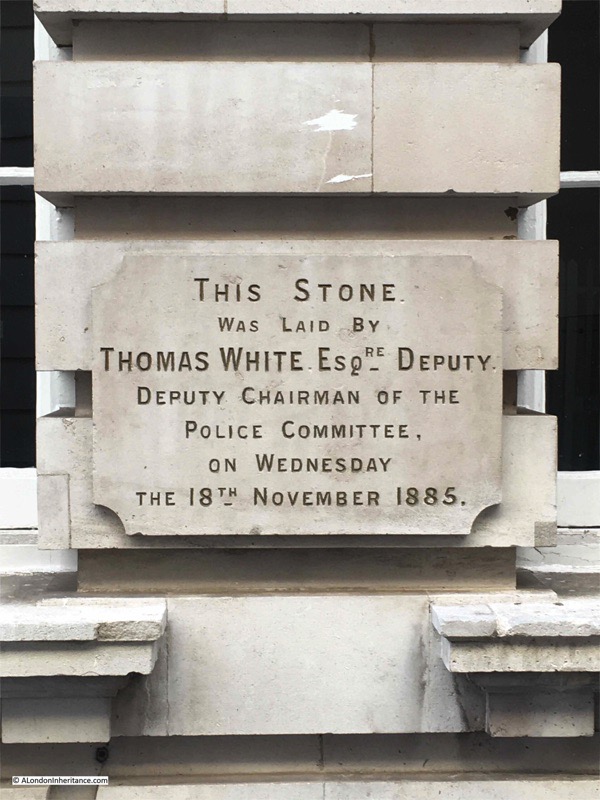
AT CLOAK LANE POLICE STATION
When I walked along Cloak Lane in the City a couple of weeks ago, I noticed this foundation stone on the corner laid by a Deputy Chairman of the Police Committee.
Plainly decorated and mainly brick with stone cladding on the ground floor, the building still projects a strong, functional image but the foundation stone is now the only reminder that this was built for the City of London Police and opened as Cloak Lane Police Station.
I cannot find the exact date when the new station opened, however it appears to have been built quickly since by 1886 newspapers were carrying reports about events there, including what must have been a most unusual use for the new police station.
“AN ADDER CAUGHT IN A LONDON STREET. There is now to be seen at the Police Station, Cloak Lane, City, an adder, about 15 inches long, which was seen in Cannon Street a morning or two ago basking in the sun on the foot pavement, although large numbers of persons were passing to and fro at the time.
A constable’s attention was drawn to the strange sight, and he managed to get it into a box and take it to the station. It is conjectured that it must have been inadvertently conveyed to town in some bale or other package of goods. The creature, which is pronounced to be a fine specimen, has been visited by large numbers of persons.”
I could not find any record of what happened to the adder after its appearance at Cloak Lane police station.
The River Thames features in a number of events that involved Cloak Lane police station. These often involved tragedy, due to the nature of police work and the dangers of the river, such as in April 1924:
“POLICEMAN VANISHES – BELIEVED TO HAVE BEEN BLOWN INTO THE THAMES. Police Constable Albert Condery is believed to have met with a tragic death by being blown into the Thames during a storm last night.
It is learned that Condery, who has been in the City Police Force for 20 years, left Cloak Lane Police Station last night to go on duty at Billingsgate Market. He was seen there by the sergeant, but later he was missed, and his helmet was found floating on the Thames near the market. The body has not been recovered.”
There were many strange events across the City. In November 1902, papers had the headline “EXTRAORDINARY AFFAIR AT BANK OF ENGLAND – ATTEMPT TO SHOOT THE SECRETARY. A sensation was caused in the Bank of England yesterday by the firing of a revolver by a young man who had entered the library. As he seemed about to continue his firing indiscriminately the officials overpowered and disarmed him. The police were called in, and he was removed to the Cloak Lane Police Station.”
He was unknown by anyone in the Bank of England and whilst at Cloak Lane, he was examined by a Doctor, who came up with the diagnosis that “the man’s mind had given way at the time”.
The very last report mentioning Cloak Lane Police Station was from December 1965 when an article titled “Foolish Driver in The City” . He was arrested on suspicion of being drunk and taken to Cloak Lane Police Station, where he “had to be supported by two officers because he was unsteady on his feet”. And so ended eighty years of policing from Cloak Lane.
The Oxford Sausage
We are getting very close to our target now after raised an astonishing £33,960 to relaunch Spitalfields Life Books. The crowdfund page remains open until we reach £35,000.
YOU CAN STILL VISIT OUR CROWDFUND PAGE & CONTRIBUTE HERE
I am proud to publish these extracts from THE OXFORD SAUSAGE by a graduate of last spring’s blog writing course. The author set out to write a spicy mix of Oxford stories from a house once belonging to a city sausage maker.
I am now taking bookings for the next writing course, HOW TO WRITE A BLOG THAT PEOPLE WILL WANT TO READ on November 25th & 26th. Come to Spitalfields and spend a weekend with me in an eighteenth century weaver’s house in Fournier St, enjoy delicious lunches and eat cakes baked to historic recipes, all catered by Townhouse, and learn how to write your own blog. Click here for details
If you are graduate of my course and you would like me to feature your blog, please drop me a line.
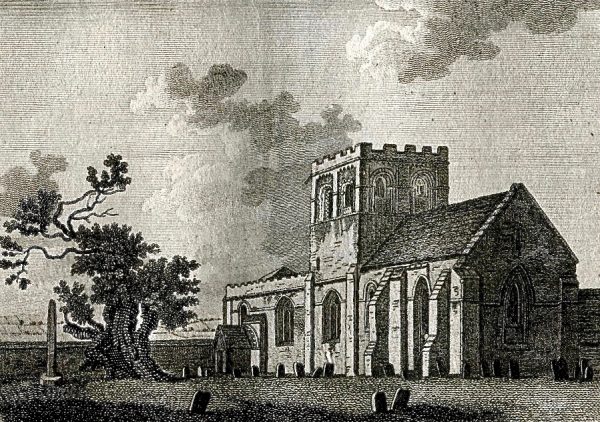
In 1785
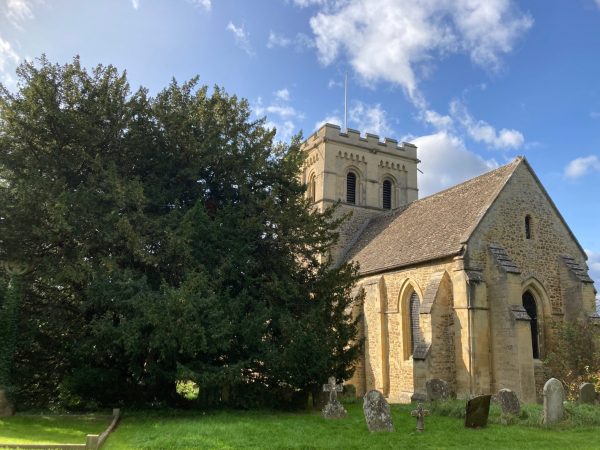
Today
THE OLDEST TREE IN OXFORD
In truth, I do have a bit of a soft spot for the yew tree. And therefore on a bright, sunny day this week I made a pilgrimage in its honour. I wanted to pay homage to this age-old tree. And I knew just the place to go.
Yews have lifespans of up to 3,000 years. In fact it must live to be at least 900 years before it can be considered ancient. In order to see one like that, I am told by the gardener at the Oxford Botanic Garden, I must head to St Mary’s Church in Iffley. That is where I will find Oxford’s oldest tree.
You can cycle all the way to Iffley along the river, whose banks at this time of year are high with Himalayan balsam and meadowsweet. It may be just under two miles from Carfax tower but I fancy I am off on a trip to the country. Though Iffley now forms part of the city’s suburban sprawl, it still calls itself a village and its pretty cottages and local shop make it feel that way.
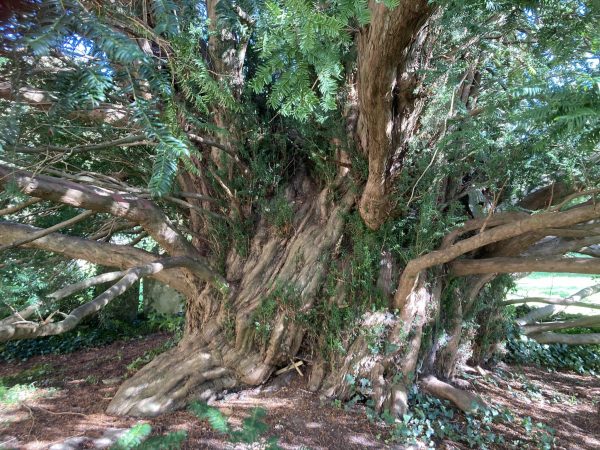
Across the water at Iffley Lock and up the hill and you find yourself in the churchyard of the Romanesque church of St Mary the Virgin. It has six yew trees in its grounds but there is no mistaking the one I have come to see. It is a giant amongst its kind, its top dwarfing the tower, its massive branches reaching wide, and then bending over to hide ivy-clad monuments and gravestones, its inner shelter dappled in sunlight. There you can see that the trunk is hollow, its bark rust red, furrowed and covered with large knots and nodules. But there is still a vigorous growth of evergreen needle like leaves that are laden with berries.
This one is thought to be over 1600 years old, so more than double the age of St Mary’s which was built around 1170. The church was almost certainly erected on a site of pre-Christian worship – druids considered the evergreen sacred – and there are references to pagan imagery on the building’s southern doorway in the form of carvings of centaurs, beak heads and the green man.
But there are more practical reasons for its inclusion as well. The yew’s poisonous berries prevented people grazing their livestock on church land. And its strong, flexible wood was perfect for making longbows, a stalwart of medieval weaponry. After 1252 it was mandatory for everyone to engage in archery practice, so great was the need for bowmen.
It is awe inspiring to think that the magnificent tree here ‘must have been full-grown long before the first Oxford spire was raised in the vale below’ – so reads an entry in Chambers Journal written in 1892. Here it is described as ‘an ancient tree, whose furrowed half-prostrate trunk seems ‘weary worn with care’, and as we stand beside its bending form, a feeling of sympathy, akin to that which we extend to a fellow human being stooping low with a load of years, rises within us.’ Hurrah to that, and here’s to another thousand years.
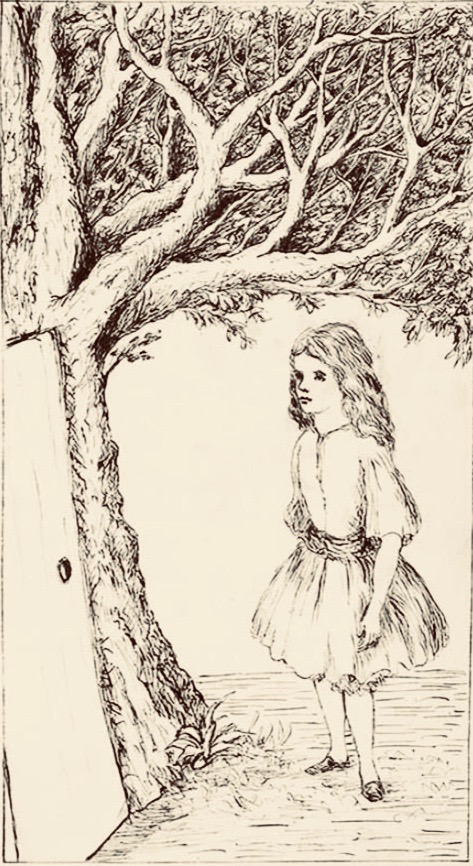
Lewis Carroll is thought to have often visited St Mary’s, Iffley, and it is said that this drawing he made for ‘Alice’s Adventures Underground’ was inspired by the great yew.
THE STONE SAINTS’ RETIREMENT HOME
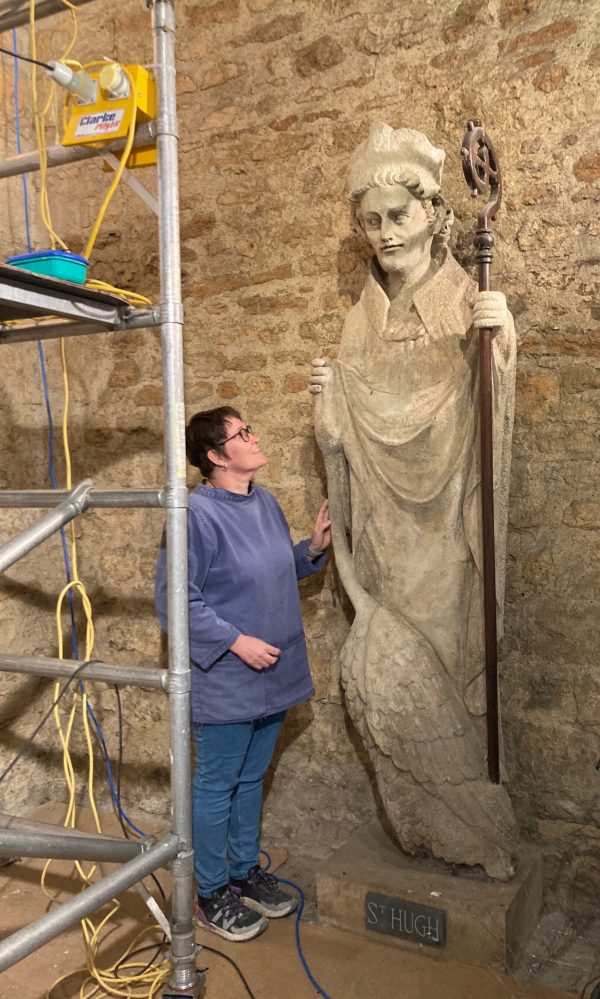
Antonia Hockton has been coming to New College twice a year for twenty-six years. She arrives as the students leave for the long vacation. For this is when her work as a stone conservator with the many statues, memorials and monuments can be undertaken without interruption. And so it is, late in the summer that I have managed to catch up with her. I wanted to find out more about her ancient profession. But I was also interested in a particular set of statues that once stood overlooking the city at the foot of the spire of the University Church of St Mary the Virgin. Replaced at the end of the nineteenth century, after languishing in the basement, they were bought here to New College fo rehabilitation.
I came across them when, after attending evensong in the chapel, I had taken a wrong turn. I found myself in the fourteenth century cloisters. There was no lighting and, despite only a gentle breeze, the rafters seemed to move and creak. Feeling spooked, I was just turning to go when a shaft of moonlight, hidden before by a cloud, illuminated the face of what looked like a seven foot giant. And there were nine more of these huge stone figures, some with staffs, others with croziers, crosses and mitres. They were arranged as sentinels on the corners and along the aisles of the covered walkways. I was totally smitten.
Returning in the daylight they have a gentler presence. Here are the saints of their day, St Patrick, patron saint of Ireland, St John the Baptist wearing a wool shirt, St Hugh with his tame swan, St Edward the Confessor and St Cedd. Also, St Mary the Virgin with baby Jesus, St William of York, St David, St Thomas à Becket and St Cuthbert holding the head of St Oswald. ‘They’ve become like old friends,’ explains Antonia, as she takes a break to introduce them. ‘I think it must be their stance. They are like biblical soldiers. I feel they are protecting me.’
These are not the original fourteenth century statues, which was when, according to Antonia, ‘the level of skill amongst stonemasons was at its peak.’ When Victorian architect TG Jackson took them down in 1896 to install these reproductions by George Frampton (famous for his Peter Pan statue in Hyde Park), his report was damning. Centuries of inclement weather, bad patching with totally inappropriate materials, and several inferior replacements had – he claimed – made them and much of the masonry a public hazard. There were finials and crockets that had fallen from above, piled around the church. Jackdaws had made nests behind the saints’ hollow backs, their once wooden croziers had rotted away and the metal bars that held them in place were completely rusted. On Sunday March 17th 1889, there was ‘serious alarm caused by the fall of the face of one of the statues close to the north door of the church, just after the congregation had entered for the University Sermon.’
‘There were bits missing and they were pitch black,’ remembers Antonia when, after a century of neglect, she was commissioned to perform her magic. Apprenticed at Lincoln Cathedral, working with stone was something she had always wanted to do. ‘Way back in my ancestry on my mother’s side there were French stonemasons ,’ she explains as we pause to admire the figure of St Cedd, her very first patient all those years ago. ‘Stonemasons were always journeymen, going from building to building, just as I still do. And I believe they came from France to the West Country and then one came up to the Midlands where I am from, where they happened to meet my great grandmum. Some of his work can still be seen on the Coventry Town Hall. ’
Dexterity and patience are the most important requirement for the job. A steady hand is essential too because a slip of the wrist could ruin months of work. What Antonia is doing is sympathetic restoration. ‘I was asked to put features back to how they would have looked,’ she explains in front of an imposing St Mary and a rather grumpy Christ child. Both have alarmingly large, out-of-proportion heads – apparently so when seen high up on the church they did not look too small. ‘For this one, I had to put a whole new head on the baby,’ she smiles. ‘People have said to me, ‘Couldn’t you have made him a bit prettier?’ but I had been given photographs from Jackson’s time as reference, so I can’t put my personality in really.’
When the statues were first carved, the stone came from local quarries, no longer extant. The belt of limestone is still there, running down from Lincolnshire, snaking across Oxfordshire and then under the channel to Northern France. As there was not enough height in these beds of stone to make the tall stature needed, they had to either be carved in sections or by what is known as ‘off the bed’. This is when they turn the block upward so the layers are stood on end. But this creates a vulnerability which explains the deterioration of the pieces. It was rain seeping in through the head that caused the face of that archbishop to fall off.
Antonia uses lime mortar to mould the shape. ‘It’s the same components as the blocks in the wall behind are made of,’ she says of the warm stone used to build the new college founded by William of Wykeham in 1379. ‘It’s just the seabed really. The bones of millions and millions of sea creatures. It’s amazing to think we dig something out of the earth that was once miles under the sea and carve it.’
Next to her stands St Hugh of Lincoln, the place where her work first started. He is my favourite figure, lovingly caressing the neck of his pet swan. And as I take my leave I cannot help but feel they both look serene and happy. St Hugh in his retirement with Antonia at hand should he require attention.
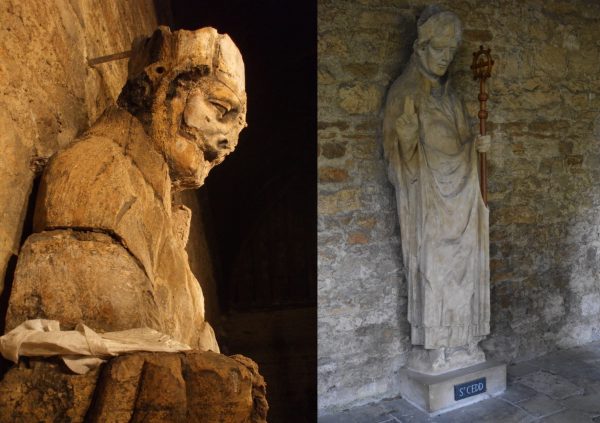
St Cedd, before and after
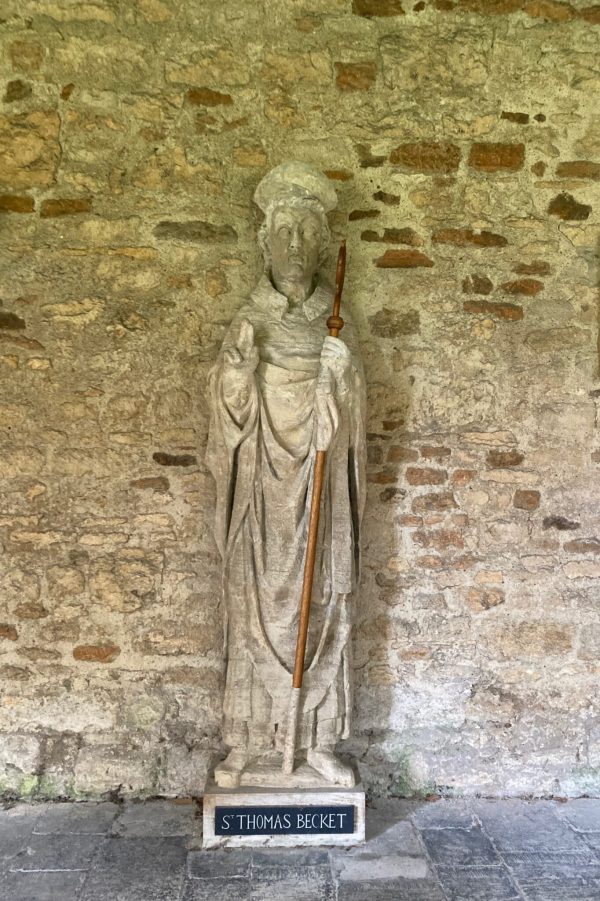
St Thomas à Becket
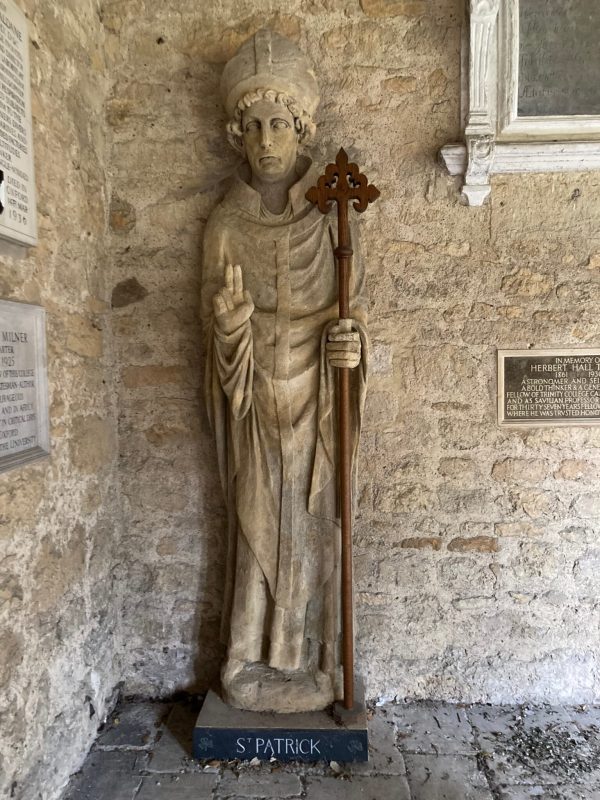
St Patrick, patron saint of Ireland
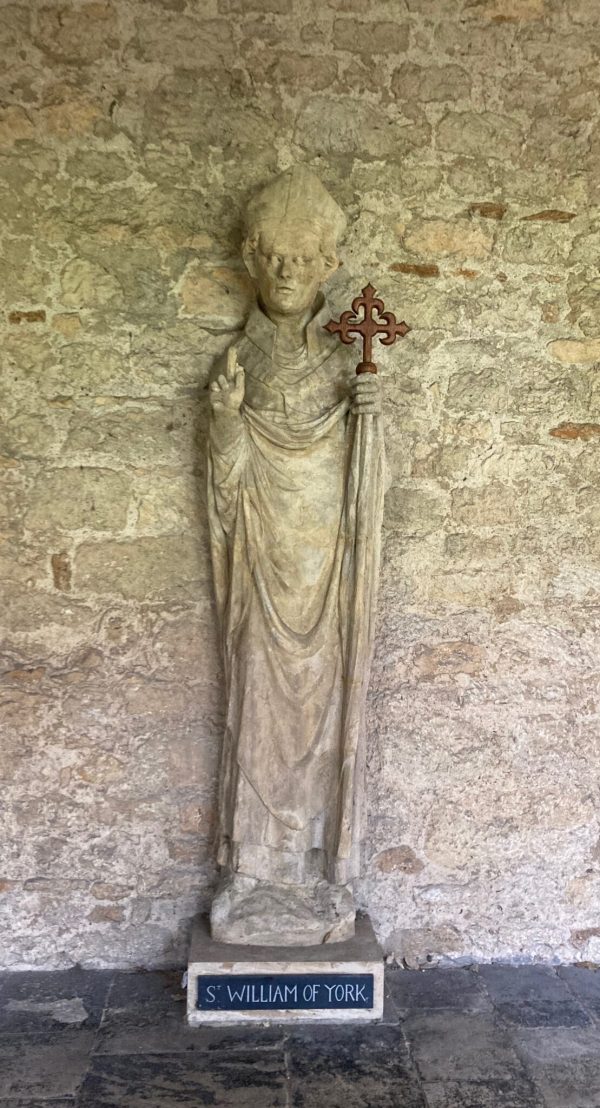
St William of York
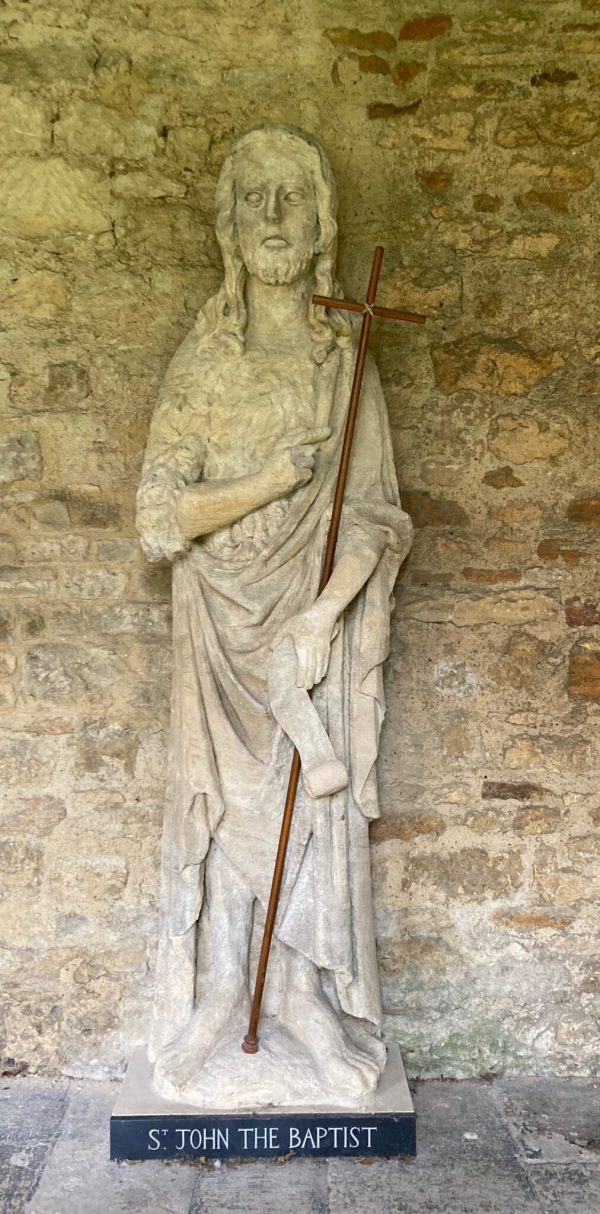
St John the Baptist
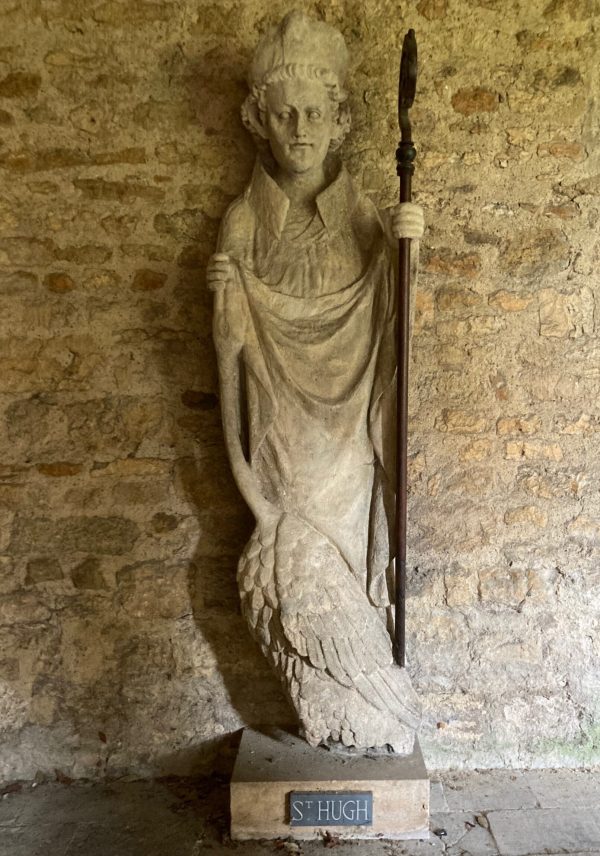
St Hugh with his pet swan
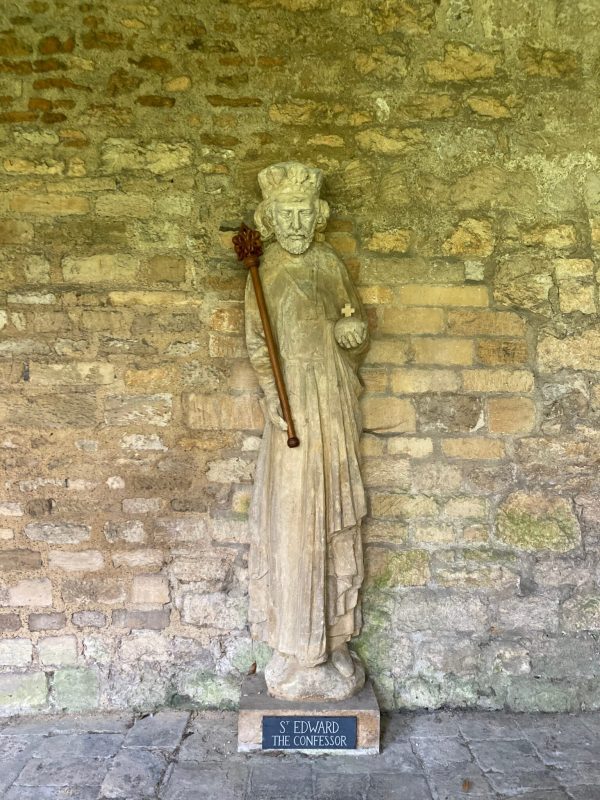
St Edward the Confessor
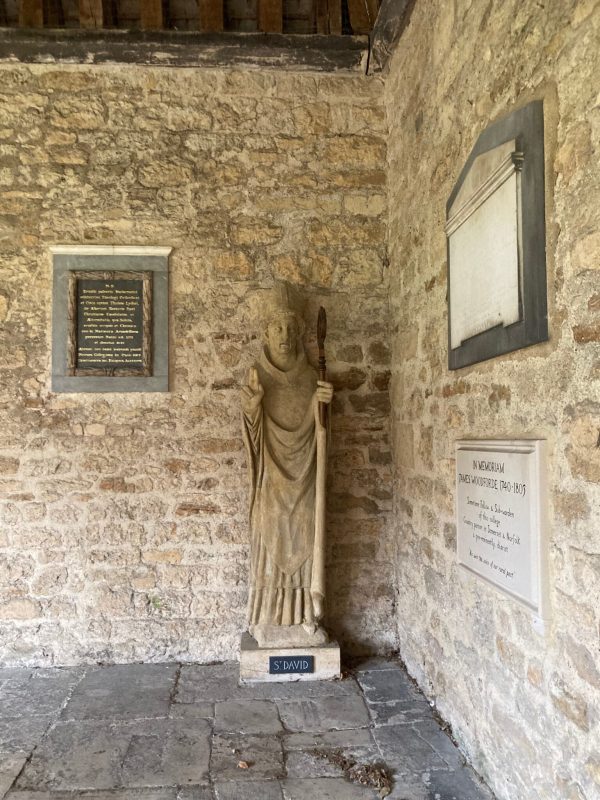
St David, patron saint of Wales












