
Lost Spitalfields
Click here to book for The Gentle Author’s Tours

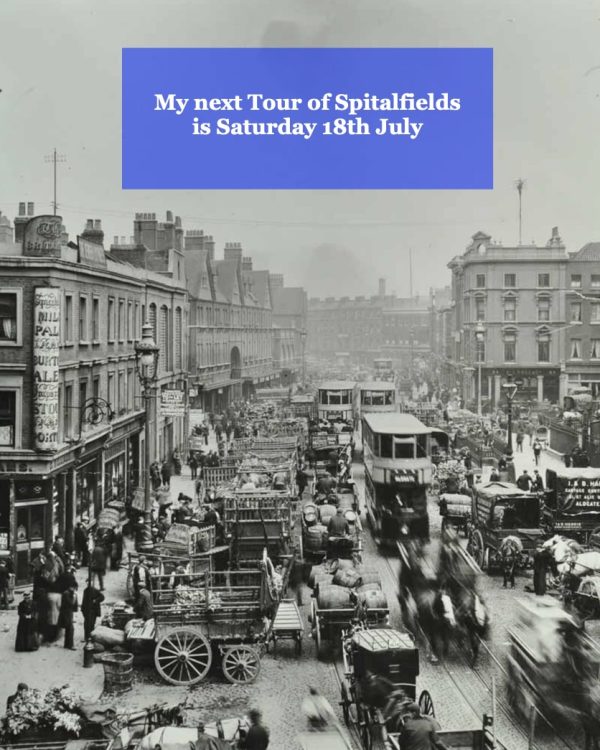
Looking towards Spitalfields from Aldgate East
London can be a grief-inducing city. Everyone loves the London they first knew, whether as the place they grew up or the city they arrived in. As the years pass, this city bound with your formative experience changes, bearing less and less resemblance to the place you discovered. Your London is taken from you. Your sense of loss grows until eventually your memory of the London you remember becomes more vivid than the London you see before you and you become a stranger in the place that you know best. This is what London can do to you.
In Spitalfields, the experience has been especially poignant in recent years with the redevelopment of the Fruit & Vegetable Market, the Fruit & Wool Exchange and Norton Folgate. Yet these photographs reveal another Spitalfields that only a few remember, this is lost Spitalfields.
Spital Sq was an eighteenth century square linking Bishopsgate with the market that was destroyed within living memory, existing now only as a phantom presence in these murky old photographs and in the fond remembrance of senior East Enders. On the eastern side of Spitalfields, the nineteenth century terraces of Mile End New Town were erased in ‘slum clearances’ and replaced with blocks of social housing while, to the north, the vast Bishopsgate Goodsyard was burned to the ground in a fire that lasted for days in 1964.
Yet contemplating the history of loss in Spitalfields sets even these events within a sobering perspective. Only a feint pencil sketch of the tower records the Priory of St Mary which stood upon the site of Spital Sq until Henry VIII ‘dissolved’ it and turned the land into his artillery ground. Constructing the Eastern Counties Railway in the eighteen-thirties destroyed hundreds of homes and those residents who were displaced moved into Shoreditch, creating the overcrowded neighbourhood which became known as the Old Nichol. And it was a process that was repeated when the line was extended down to Liverpool St. Meanwhile, Commercial St was cut through Spitalfields from Aldgate to Shoreditch to transport traffic more swiftly from the docks, wreaking destruction through densely inhabited streets in the mid-nineteenth century.
So look back at these elegiac photos of what was lost in Spitalfields before your time, reconcile yourself to the loss of the past and brace yourself for the future that is arriving.

Spital Sq, only St Botolph’s Hall on the right survives today

Spital Sq photographed in 1909

Church Passage, Spital Sq, 1733, photographed in 1909 – only the market buildings survive.

17 Spital Sq, 1725

25 Spital Sq, 1733

23 Spital Sq, 1733
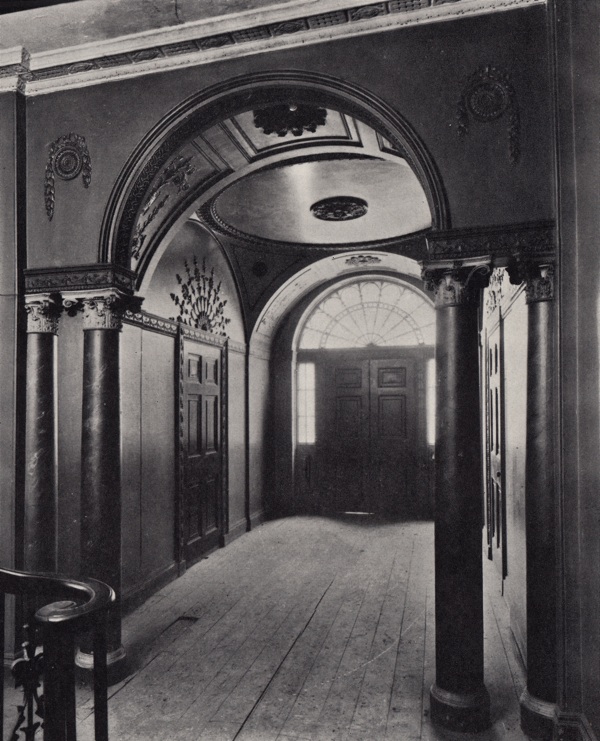
20 Spital Sq, 1723

20 Spital Sq, 1723

20 Spital Sq, 1732

32 Spital Sq, 1739

32 Spital Sq, 1739

5 Whites Row, 1714

6/7 Spring Walk, 1819

Buxton St, 1850

Buxton St, 1850

Former King Edward Institution, 1864, Deal St

36 Crispin St, 1713

7 Wilkes St, 1722

10 & 11 Norton Folgate, 1810 – photographed in 1909

Norton Folgate Court House, Folgate St, photographed in 1909

52 & 9a Artillery Passage, 1680s

Bishopsgate Goods Station, 1881

Shepherd’s Place arch, 1820, leading to Tenter St – photographed 1909
You may also like to read about













This really resonated with me. Every city has layers of history, and it’s easy to forget what’s been lost beneath modern development. The images make that sense of change feel incredibly real.
granny 1
Thank goodness for photography and personal recollection. I also miss the sounds and the smells of my era.My regular walk was from Barts and Smithfield market towards Spitalfields and The London One of my short cuts took me through a slaughter yard towards the Barbican Estate, still in development. The salty smells of blood and wet concrete coupled with the sounds of hose pipes and wet sweeping by men coming to the end of their working days with the tinny sound of transistor radios playing the ‘Sounds of the 70” filled the first 15 minutes of my afternoon walk.
Irreplaceable and irretrievable.
A remarkable set of pictures – but some profound doubts about their provenance. The picture of No 5 Whites Row has a merchants sign with the date 1924 clearly painted. Many other pictures suchas those of Spital Square dated in the early 1700s and a lovely picture of Artillery Passage dated 1680s. All long before the invention of photography in the 1850s and its application for this genre is generally not seen before the late 1860s.
While only a few such as those of Norton Folgate, correctly state when they were or might have been photographed ie. “Norton Folgate Court House, Folgate St, photographed in 1909”. I can only presume that the earlier dates refer to the the construction of the building but the description will mislead many.