
Larry Goldstein, Toyseller & Taxi Driver
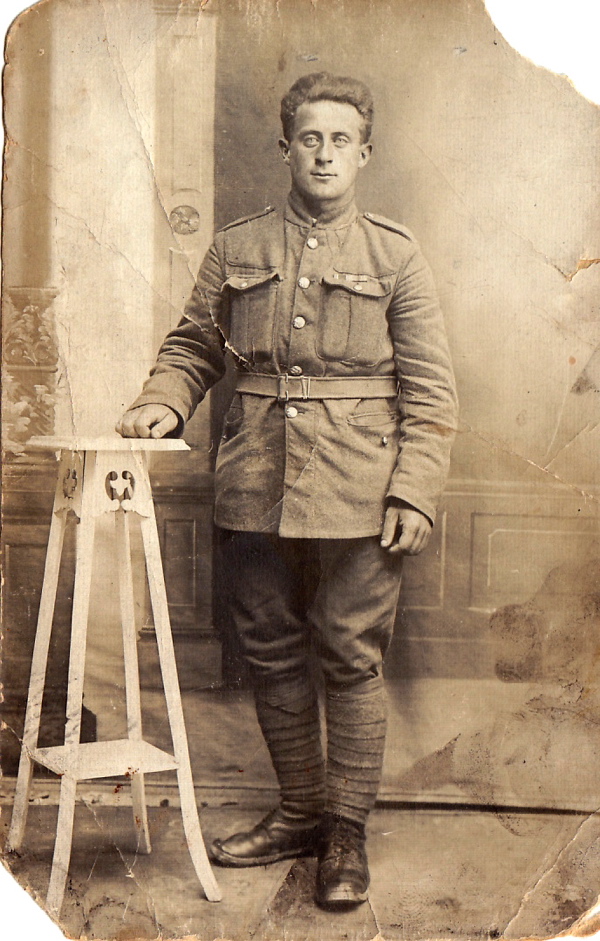
Larry Goldstein, who sells toys in Petticoat Lane each Sunday, showed me this photograph of his grandfather Joseph Goldstein, born in 1896 in the village of Inyema in Poland. Joseph had two elder brothers and, although there are no photographs of them, they are the true heroes of this story – because at the the time of the pogroms against the Jews, these two brothers realised they had enough money for one brother to escape, so they gave it to Joseph.
In 1915, at the age of nineteen, Joseph travelled to Brick Lane via Hamburg to join an uncle who had a business selling lemonade. Yet when he arrived by boat in the Port of London, Joseph was told he must either enlist or return to Poland. Joseph enlisted, occasioning the photograph you see above, and was sent off to fight in the First World War. He never learnt what became of his brothers and today the village of Inyema does not even exist.
Although these events happened nearly a century ago, they remain vividly in mind for Larry, Joseph’s grandson. “It is amazing that his brothers put him first, so that he could get out of the country and carry on the name Goldstein, when they were murdered or tortured by the Russians. It’s touching when you come to think about it,” Larry confided to me with quiet humility, during his hour’s lunch break from driving his taxi. These events have cast a certain tender emotionalism upon subsequent family history, because all are aware they are the descendants of the brother that survived to begin a new life in Spitalfields.
Having escaped Poland, Joseph was lucky enough to survive the First World War too. No wonder he got married in April 1918, as soon as the war was coming to its end, to Amelia (known as Milly). Milly Viskin was born in Pedley St, Spitalfields, in 1894 and her father was a cabinet maker. At first, they lived with her parents in Hare St (now known as Cheshire St) and he was able to get a job as a presser in Flower & Dean St, off Brick Lane.
Joseph & Milly had five children, Sid, Jack, Cecilia, Janet and Dave. And today it is impossible to look at the wedding day photograph of Joseph with his son Jack, taken in 1955, and not appreciate Joseph’s intense expression of pride upon this special day in the light of his personal history. To my eyes, the picture of Larry with his grandparents Joseph & Milly taken at his Bar Mitzvah in 1970, has a similar quality – it is the visual link between Larry in the present day and the world that Joseph knew in Poland, over a century ago. Larry fondly recalls visiting Joseph & Milly when he was child, “They always made you welcome and they were always there when you needed them, even though they had no money. They died very close to each other, within a year because they were so attached.”
Larry told me his father Jack and uncle Sid ran a stall with Joseph on Saturdays in Kingsland Waste selling photographic equipment. It was a precedent that Larry adopted once he got married, “My wife’s dad had a double-pitch in Church St, off the Edgware Rd, so he said we could have one, selling wooden boxes and china figurines. Then in 1972, we had some friends in Petticoat Lane who said we could sublet a pitch, and we changed our commodity over to Teddy Bears because the stall was licenced for toys. I had a friend who imported Teddy Bears and he said ‘I’ll give you a couple to try out’ and it took off from there.”
Nearly forty years later, Larry is still selling Teddy Bears on Petticoat Lane. His joyous display of brightly-coloured children’s toys is a landmark, and he is one of the very last Jewish traders today in what was once a Jewish neighbourhood.“Coach parties used to be dropped off at the Aldgate end of Petticoat Lane and Christmas clubs came to spend all their money,” he told me, describing the hey day of the market, “You had to get an affadavit from the Rabbi to trade in those days. Before the repeal of the Sunday trading laws, Petticoat Lane and Wembley were the only licenced Sunday markets, but now it’s only just worth my while.”
Larry is a hard-working, self-respecting individual, driving the taxi to make ends meet, as well as trading in the market. Once he had found a parking place in Spitalfields, Larry had less than an hour to tell me his story and drink a cup of tea before had to get back on the road. Yet in spite of whatever challenges he faces today, Joseph’s story sets everything in perspective for Larry Goldstein, who cherishes his childhood memory of his grandfather, “He was a very kind-hearted man. Although he spoke very little English, he always liked to bet on the favourites at the dogs, so my dad used to place the bets for him at the betting shop. His children and his grandchildren were his life. He was so grateful to be alive after what he had been through.”
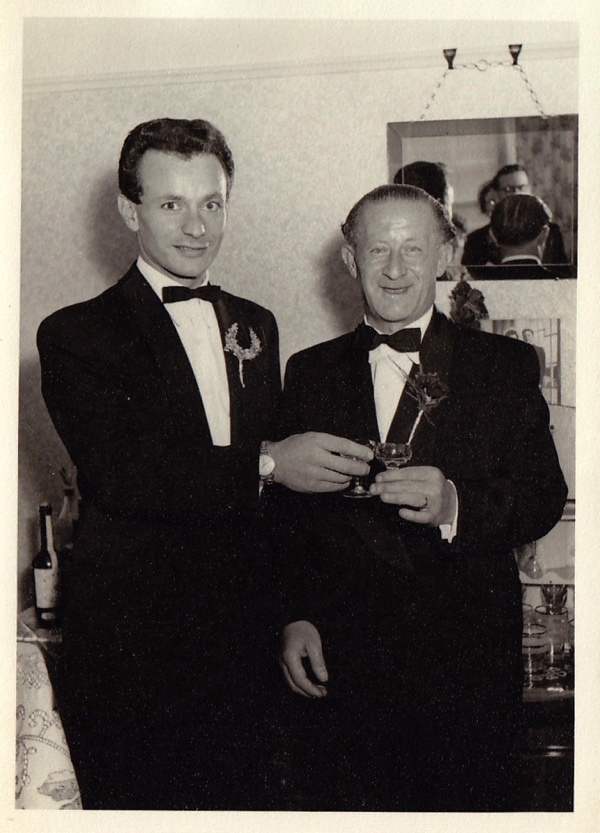
Joseph at the wedding of his son Jack in 1955.
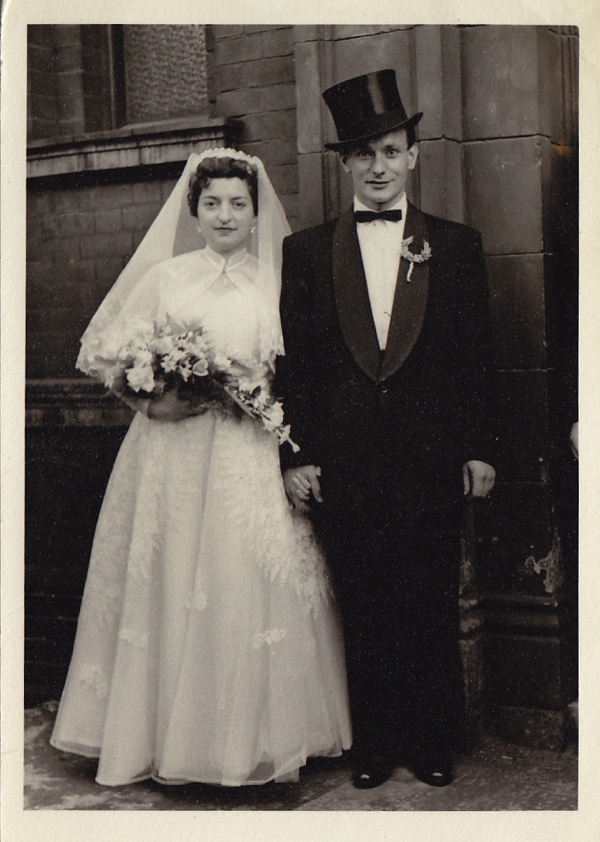
Larry’s parents, Jack & Phyllis Goldstein on their wedding day, 7th August 1955.
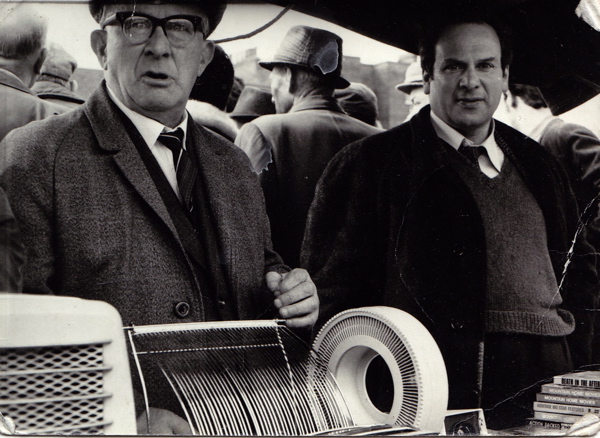
Joseph & Sid selling photographic equipment on the Kingsland Waste in the nineteen seventies.
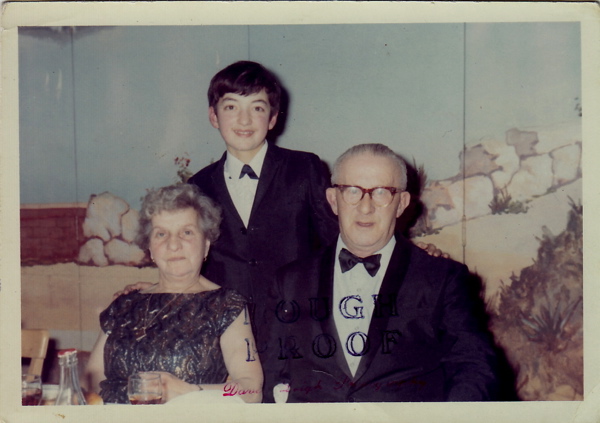
Larry with his grandparents Milly & Joseph at his Bar Mitzvah in 1970.

Milly & Joseph at the beach
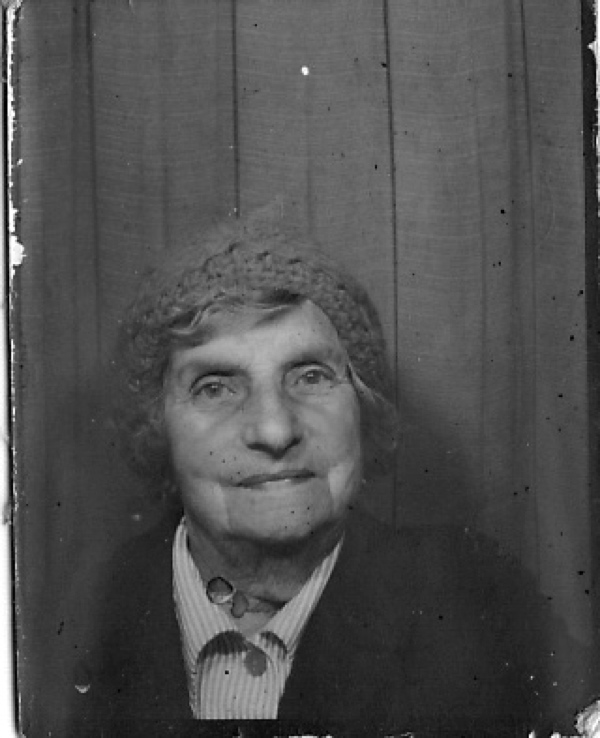
Milly Goldstein in her seventies
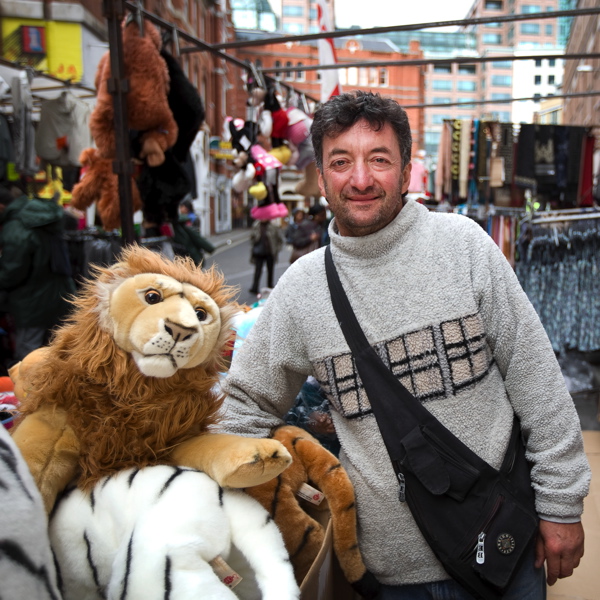
Larry Goldstein, one of the last Jewish stallholders on Petticoat Lane today.
Portrait copyright © Jeremy Freedman
Among the Mudlarks
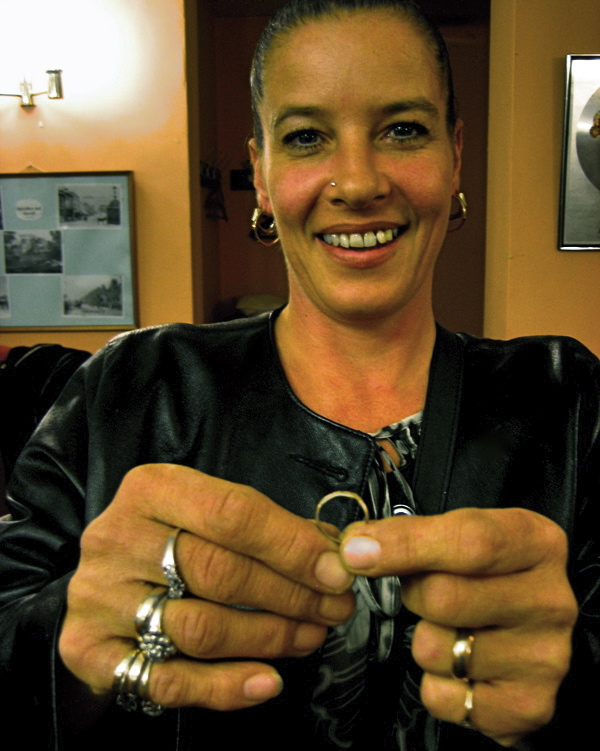
This is mudlark Rae, proudly displaying the gold ring from 1668 that she found in the Thames at Southwark. “It was a total piece of luck,” she admitted modestly, “the first ring I ever found. I had a little gander and there it was sitting on top of the mud.” The pleasingly irregular ring is delicately engraved with the name “Alex Cheenke” and the date “15th February 1668” on the inside, and has a curious design of a skull on the outside, extended like the skull in Holbein’s “The Ambassadors” in the National Gallery.
Rae explained it is an obituary ring – there was a custom for people to leave money to pay for others to wear rings in remembrance of them. The ring has special significance for Rae, because it is dated the day after Valentine’s Day and her daughter’s fiance, also named Alex, died on the day before Valentine Day, 13th February. And thus it was that a ring lost over three centuries ago in the Thames acquired a vivid new emotional meaning in the present day, connecting directly to its original purpose as a token of remembrance and bringing Rae into a personal relationship with the long distant Alex Cheenke.
Rae brought the ring along to the monthly gathering of the members of Thames & Field, the community of mudlarks presided over by Steve Brooker, where she was handing it to Kate Sumnal, the Finds Liaison Officer from the Museum of London, so that it could be studied and the location of its discovery plotted, adding to the greater picture of Thames archaeology. When I arrived at the meeting after walking through the dark suburbs of Bexleyheath, I felt I had arrived at the court of the Mud God, because as I came in from the rainy street into the harsh lights, I encountered Steve regaling an circle of attentive neophyte mudlarks with eloquent and impassioned tales of his spectacular finds in the Thames. It was an uninspiring lounge with an institutional atmosphere attached to the public library, but that was irrelevant to the mudlarks because they had all brought inspiration with them in tupperware boxes and plastic bags, containing recent discoveries to show. They were a diverse crowd of different ages and social backgrounds, of which the only common factors were that none of them was afraid of getting their hands dirty and they all shared a fascination with liquid history.
“I used to have a life,” confessed mudlark Euan with a wry smile, “I used to go jogging, but now I just jog to get to the river!” He got hooked when he found a female jaw bone on the beach in Chelsea outside the headquarters of MI5 and feared the worst, until the bone was identified as from the Bronze Age, approximately three thousand years old. Euan had a handful of nineteenth century coins to show me, “These were in the river six hours ago,” he admitted with glee, “What’s remarkable is how the Thames sorted them for me, all the pennies, ha’pennies and silver coins were collected together in separate locations within the same area.”
Mudlark Terry, a housepainter also had his eye on the river at Chelsea. “I was driving over the bridge on the way to work and, when I saw it was low tide, I really wanted to be down there on the beach searching.” he admitted shyly, just eight months into his new existence as a mudlark, “I love it, I really do because you never know what you are going to find down there. I went back in my lunch break and got my brand new white painter’s overalls covered with mud.” Terry had a little white pot to show me that once contained Holloways’s Embrocation for the Cure of Gout & Rheumatism, but it was a mere fraction of his haul from Wandsworth. “I found a bucket of whole bottles and I had to leave about fifty behind.” he informed me in delight tinged with disappointment. “It all started when I bought my boy a metal detector and I had a go with it,” explained Terry candidly, “He’s only seven, so he was bit young for it.”
The enigma of the evening was Woolwich John, a white-haired softly-spoken Irishman who drew a crowd of envious admirers for the Tudor dagger handle he had to show. “What some of these people have in a year, he can find in a week,” Steve Brooker whispered in my ear, out of reverence for John, the old fox standing nearby who has searched the beach at Woolwich every day for the last twenty-six years. “Just fit for lady,” announced John, a legend amongst mudlarks, as he passed me his elegant black dagger handle with ruffled head finial, raising his sprightly white eyebrows and peering at me in quiet satisfaction. “It’s artifacts, it’s history,” he said, to articulate my thoughts, as I turned the piece over in silent wonder.
While I could not resist the infectious delight the mudlarks took in their finds, equally I shall never forget mudlark Mike’s description of the “splatted musket ball with a human tooth stuck in it” that he found in the river at Greenwich. Lined up at a bus stop, you would never guess they were all kindred spirits, mudlarks unable to resist the call of the Thames offering up its secrets at low tide. Yet they share a mutual respect that cuts across everything else. And in each case, the connections they have discovered with other worlds and other times – all within London – serve to liberate them from the present moment and grant a fresh vision of the infinite possibility of life.
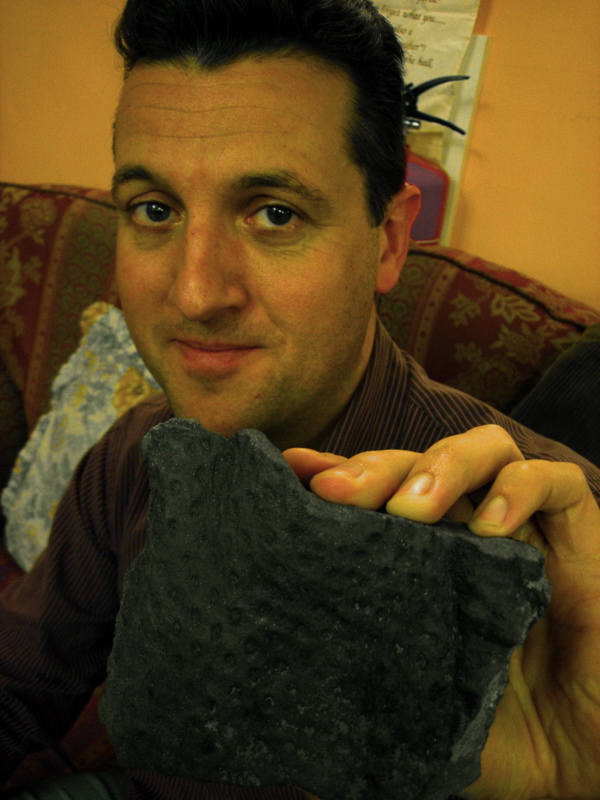
Mudlark Euan with the fossilised tree bark he found in the river in Southwark.
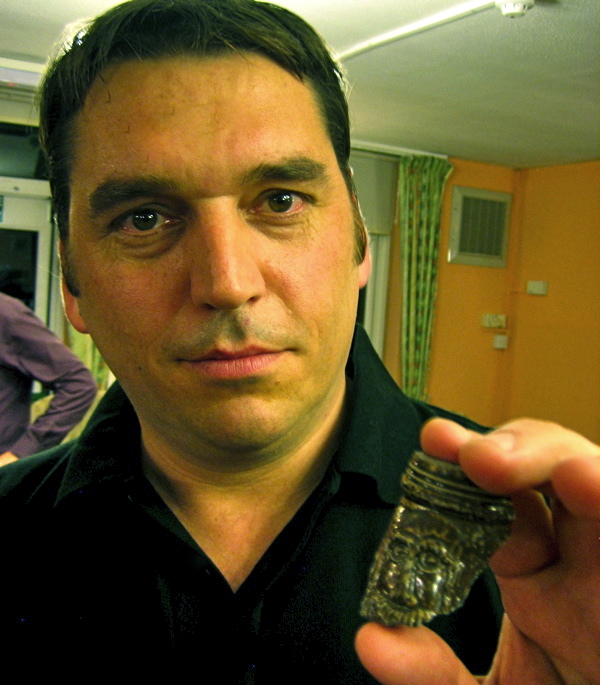
Mudlark Peter with a fragment of a Bellemine jug from a Tudor dump in Greenwich.
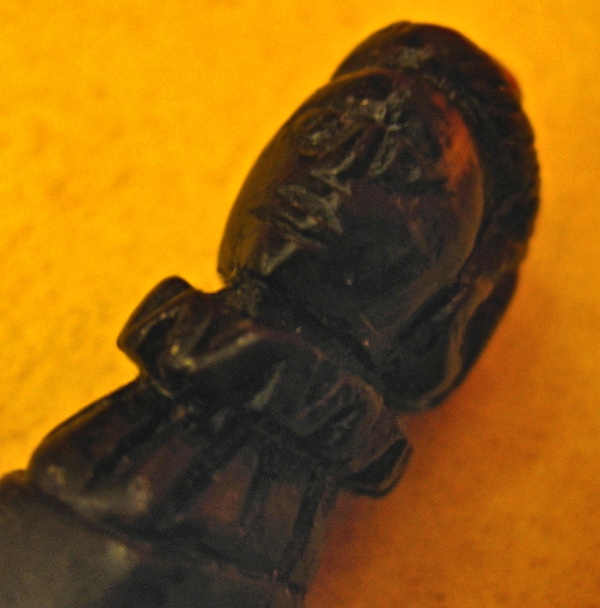
The handle of a Tudor dagger found by Woolwich John at Rotherhithe.
Columbia Road Market 55
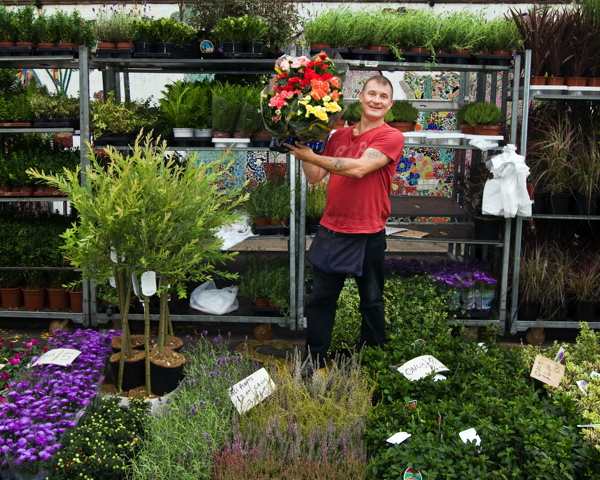
There was just me and the lonely fox on the streets of Spitalfields before seven this morning as I made my way up to Columbia Rd to have a chat with Anthony James Burridge. He is the first member of this celebrated family I have spoken with, but in coming weeks I hope to introduce you to them all, because their story is interwoven with that of the flower market here over several generations – the Columbia Rd aristocracy. “They might not all be called Burridge but there’s quite a lot of us working here, brothers, cousins, sisters and uncles,” explained Anthony with a cheery grin that belied the chilly morning, while at the next stall, his son (also Anthony James), who started three weeks ago selling winter bulbs, shivered in the cold.
Anthony started trading in Columbia Rd twenty-eight years ago at the age of twenty-two. “When I left school I was a marble fitter but then I joined the family business,” he explained, “My dad had a stall at the end and this pitch became available. My dad and all his brothers were in the business. It goes back to my nan who died fifteen years ago, she was here up to sixty years ago.” Anthony first came to Columbia Rd when he was five. “My dad would get me up and bring me down here in the Summer.” he told me, casting his eyes up and down the road affectionately,“In the sixties and seventies, this market used to be seasonal and we only traded twenty-five to thirty weeks of the year. Then it was only English produce but the variety of plants has been extended by bringing them from overseas.” Adding with a shrug of droll bemusement, “People no longer know the seasons for plants anymore, now that everything’s available all the time.”
Shrubs and small trees are Anthony’s speciality, including evergreen shrubs, conifers, Camelias, topiary, and Winter Chrysanthemums, though I spotted some interesting bedding plants including a special favourite of mine, Gentians. Over the years, he has learn what plants work best in the small gardens of the East End. When I asked Anthony how he dealt with the cold, he told me that he keeps the house plants in the van until it is time to sell them so they do not get spoilt by the frost, without realising that I was enquiring about his own welfare. “You get used to it. You put on an extra coat and an extra couple of jumpers. You pull your hat down over your ears and get on with it!” he declared with sparkling eyes of anticipation, looking up to the beautiful clear sky of dawn breaking over us and in hope of a sunny Autumn day that will bring plenty of eager customers to the flower market.
Photograph copyright © Jeremy Freedman
Joseph Markovitch of Hoxton
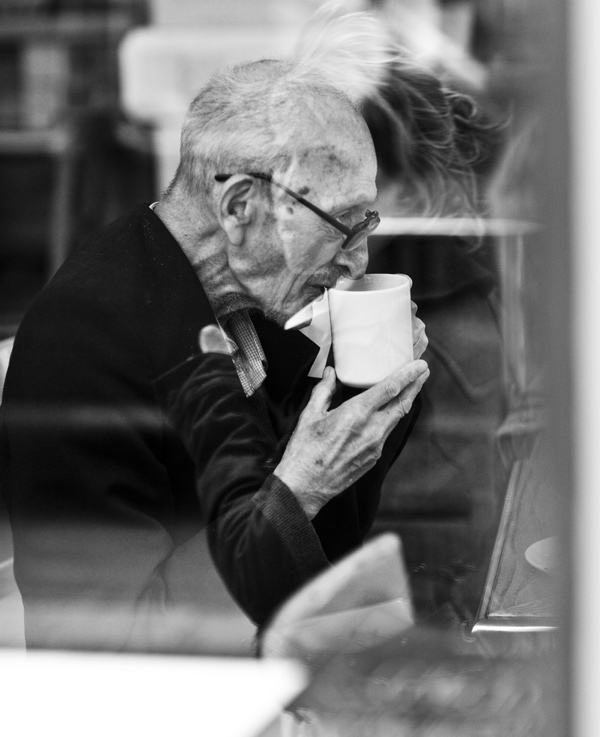
It was this hauntingly brilliant photograph – the reflection of a girl looking at Hoxton resident Joseph Markovitch drinking a cup of tea – that first drew my attention the work of photographer Martin Usborne. Within this single compelling picture, with its two figures that can barely be reconciled, is manifest the elusive relationship between those who have lived their whole lives in the East End and the young people who are drawn here through instinctive curiosity. Yet this fascinating photograph is itself the result of just such a relationship, Martin saw Joseph walking through Hoxton Sq one Summer’s day in 2007 and the two struck up an unlikely friendship. And in the following months, Joseph who has lived his whole life in Hoxton became a muse to Martin, the young working photographer with a studio in Hoxton Sq. The two remain friends today, and it is my pleasure to publish some of the tender portraits that have resulted from this remarkable collaboration, interspersed with Joseph’s own words.
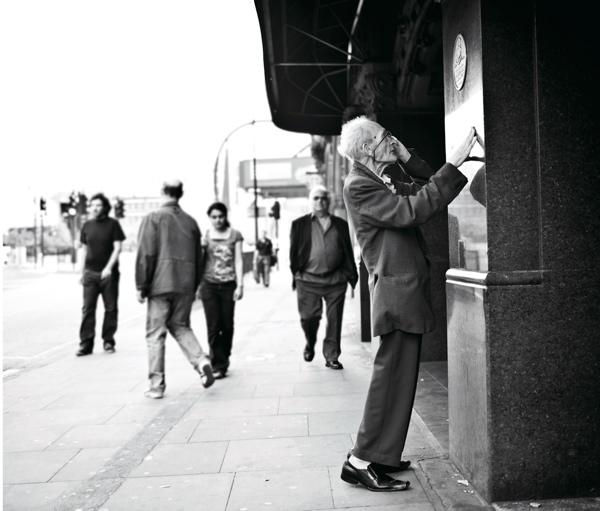
“This is where I was born, right by Old St roundabout on January 1st, 1927. In those days it wasn’t called a hospital, it was just called a door number, number four or maybe number three. The place where I was born, it was a charity you see. Things were a bit different back then.”
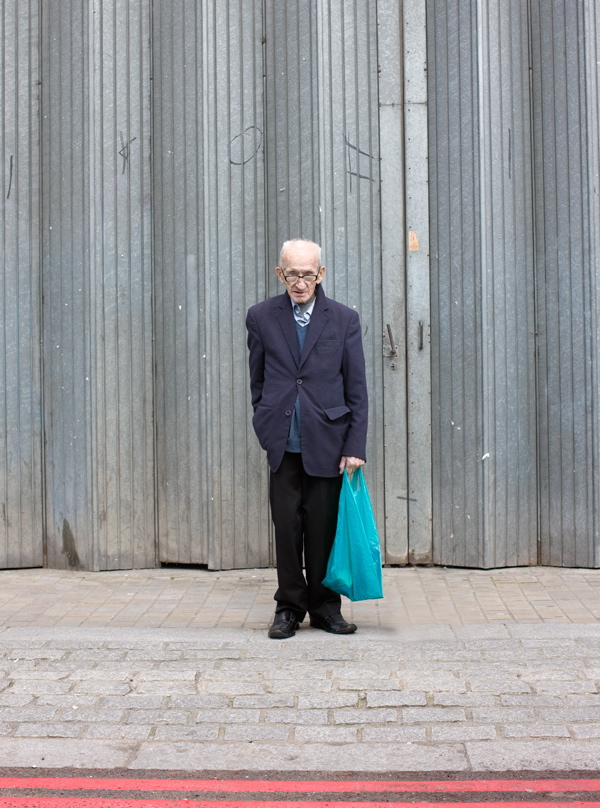
“When I get trouble with my chest I have to stand still. Last Saturday, a woman come up to me and said “Are you OK?” and I said, “Why?” She said, “Because you are standing still.” I said, “Oh.” She said she comes from Italy and she is Scots-Canadian, and do you know what? She wanted to help me. Then I dropped a twenty pound note on the bus. A foreign man – I think he was Dutch or French – said, “Mate, you’ve dropped a twenty pound note.” English people don’t do that because they have got betting habits. They take your twenty pounds and go and put it on the horses. It’s good to have all sorts of foreigners here.”
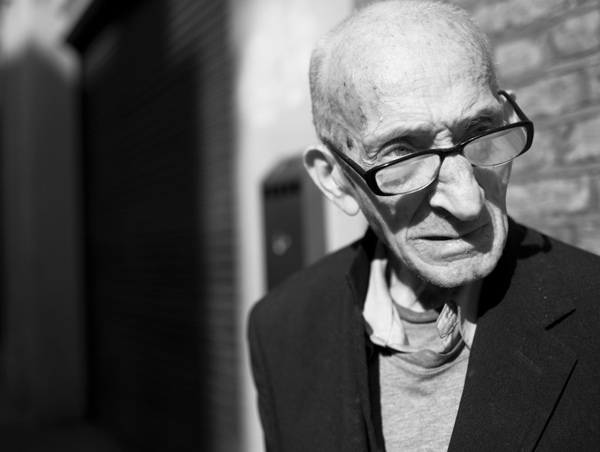
“I worked two years as a cabinet maker in Hemsworth St, just off Hoxton Market. But when my sinuses got bad I went to Hackney Rd, putting rivets on luggage cases. For about twenty years I did that job. My foreman was a bastard. I got paid a pittance. He tried to sack me but his father said, “You can’t throw Joe out of the firm, he is too good.” I used to shout at the foreman. The job was alright apart from that. If I was clever, very clever, I mean very very clever, then I would like to have been an accountant. It’s a very good job. If I was less heavy, you know what I’d like to be? My dream job, I’d like to be a ballet dancer. Or maybe a clown. But I know what I definitely do not want to be is a funeral director. What a terrible job! Or what about those people that study the stars? That’s a very good job. I’m interested in the universe. In how things began and what’s out there on other planets and lumps of energy that are millions of miles away. It’s more interesting than rivets. Hey, if a meteor landed in Hoxton Square, you think anyone could survive?”

“If I try to imagine the future. It’s like watching a film. Pavements will move, nurses will be robots and cars will grow wings…
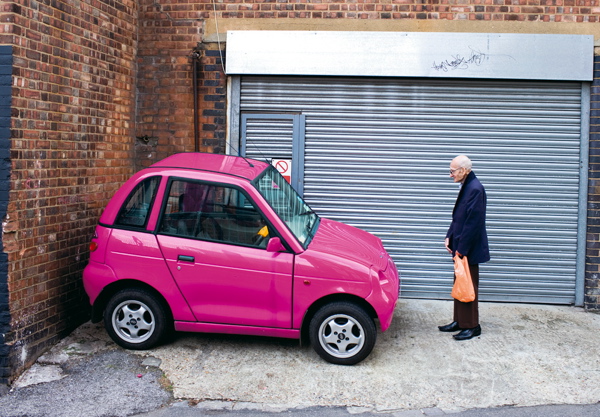
…you’ve just got to wait. There won’t be any cinemas, just computers in people’s homes. They will make photographs that talk. You will look at a picture of me and you will hear, “Hello, I’m Joseph Markovitch.” and then it will be me telling you about things. Imagine that!”
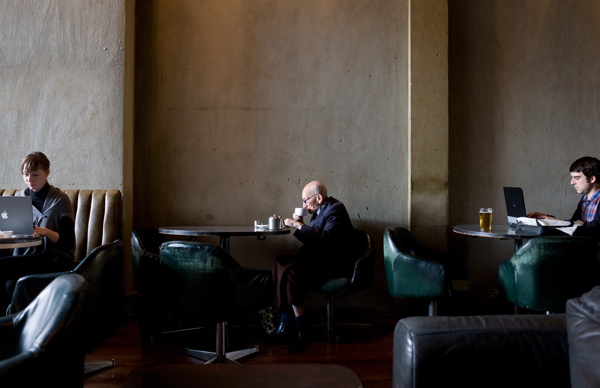
“My mother was a good cook. She made bread pudding. It was the best bread pudding you could have. She was called Janie and I lived with her until she died. I wasn’t going to let her into a home. Your mother is your best friend, you see. If she went to the butcher, even if she went early on a Friday, I left work early so I could go with her to the butcher. Your mother should be your best friend.”
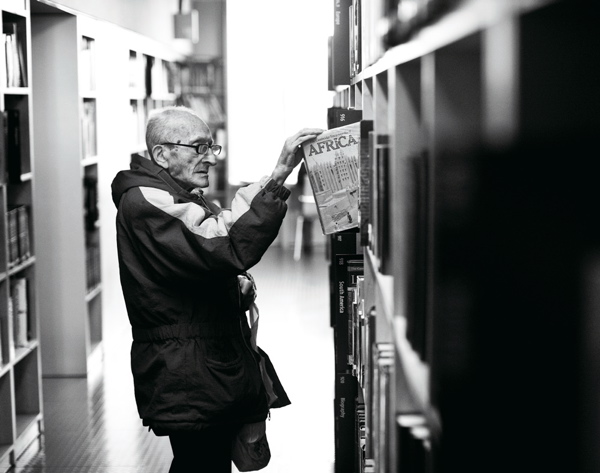
“I like to go to the library on Monday, Tuesday and … Well, I can’t always promise what days I go. I like to read about all the places in the world. I also go to the section on the cinema and I read a book called “The life of the stars.” But I only spend thirty per cent of my time reading. The rest of the time, I like to sit on the sofa and sit quite a long way back so I am almost flat. Did you know that Paul Newman’s father was German-Jewish and that his mother was Hungarian-Catholic? You know Nicholas Cage? He is half-German and half-Italian. What about Joe Pesce? Where are his parents from? I should look it up.”
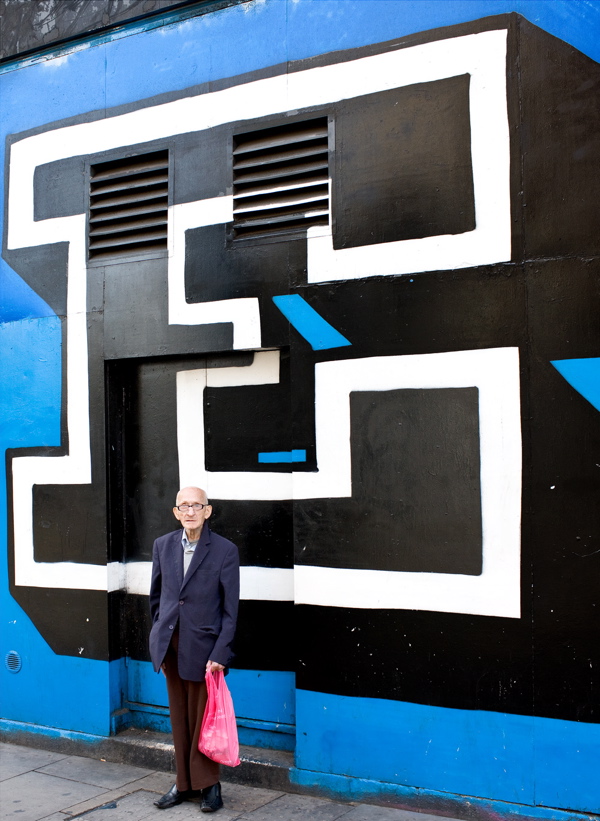
“A lot of young kids do graffiti around Hoxton. It’s nice. It adds a bit of colour, don’t you think?”

“I’ve never had a girlfriend. I think it’s better that way. I have always had very bad catarrh, so it wasn’t possible. That’s the thing, my health. And I had to look after my mother all my life. Anyway, if I was married, I might be dead by now. I probably would be, if you think about it. I would have been domineered all my life by a girl and that ain’t good for nobody’s health. I’m too old for that now. I would like to have had a girlfriend but it’s OK. You know what? I’ve had a happy life, I never starved. That’s the main thing, it’s been a good life.”
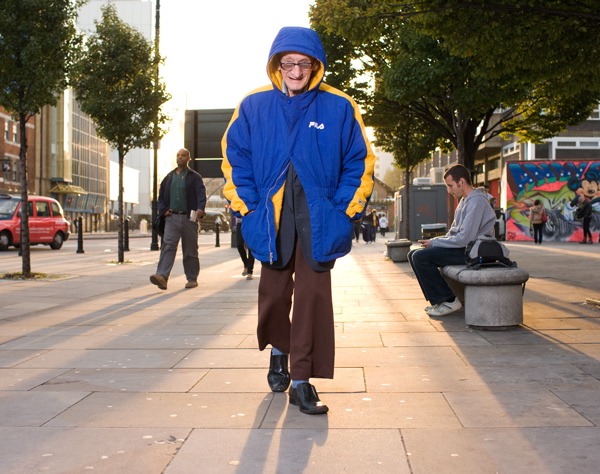
“Some things make me laugh. To see a dog talking makes me laugh. I like to see monkeys throwing coconuts on men’s heads, that’s funny. When you see a man going on a desert island, and he is stranded, the monkeys are always friendly. You think the monkeys are throwing things at your head but really he is throwing the coconuts for you to eat.”
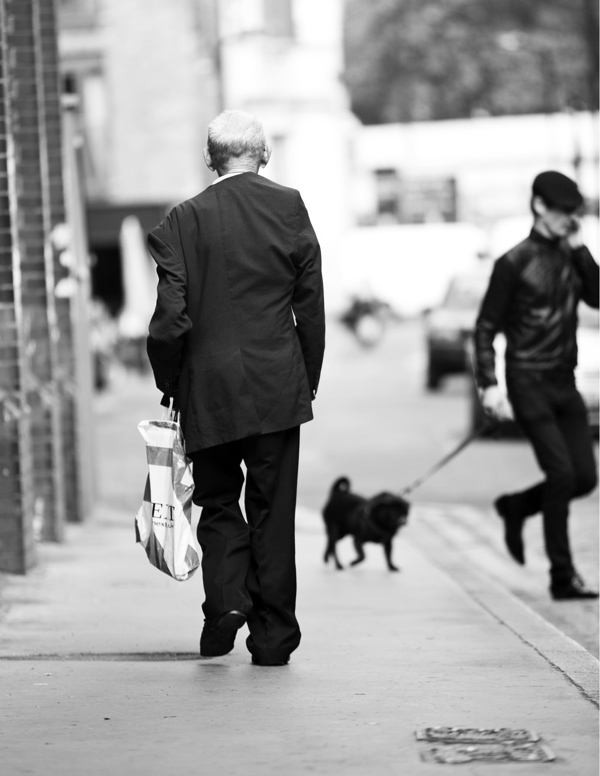
Photographs copyright © Martin Usborne
Pete Donne, Rough Trade

Every weekend, a wave of young people surges through Spitalfields and down Brick Lane, bringing riotous new life to these old streets. Some come to show off their outfits, some come to sell off their stuff, all come to participate in the crowded drama of the markets, shops, bars, clubs and galleries in which all kinds of cultural interchange and discovery are possible. At the hub of this whirling hurricane of excited humanity is Rough Trade East in the Truman Brewery, a cavernous independent record shop that opened up audaciously a few years ago with triumphantly perverse logic just at the time all the music chain stores in London were shutting. There are no fancy shop fittings in this whitewashed warehouse space but there are bicycle racks and there is a coffee shop. Crucially, the vinyl is at the front of the store and you can spend all day in here listening if you please.
Pete Donne has worked for Rough Trade since 1979 and was one of those responsible for this brilliant stroke of counter-intuitive thinking. Because if – like Pete – you have spent your working life in a record shop and delight in all the music culture that attends it, and that is your world, then you cannot simply give it up. You have no choice but to be resourceful and stage a transformation. “It got to the whites of the eyes time,” admitted Pete, “Survival required a bold step, something at odds with perceived wisdom. So we decided to open a shop that would be unlike any record shop that came before, and Spitalfields was where we chose to do it.”
When he dropped out of the London School of Economics at the age of nineteen to work in the local record shop in Aylesbury instead, Pete had no idea where it would lead. As he confided to me, “It was no more than a booth really, like a kiosk at a railway station. Two racks of records, an alleyway, two windows and an L-shaped bit where the live records were stored. A one man operation. No loo. You locked up for five minutes if you got caught short.” Earth Records was a sideline for the owner Dave Stopps who needed a ticket outlet for the ambitious concerts he was presenting at Aylesbury Friars, bringing in Sham 69, David Bowie, Roxy Music and Lou Reed, and not unsurprisingly, Pete got a taste for the excitement of it all. “Rough Trade used to send the records down to us every Friday night. It was such a thrill going down to the station and waiting for the box and immediately opening it up and going through the records. They were invariably brilliant. Then the next day a little coterie of in-the-know-punks would come in and buy them up.” he recalled.
Pete was offered a job by Rough Trade driving their Reggae van around London selling pre-release LPs, but at nineteen years old he found it too challenging. Then, in May of 1979, they invited him to work in their shop in Portobello, famous as a meeting place for musicians, journalists and everyone involved in the music industry, where he was to spend the next twenty years, “It became a nightmare on Saturdays, full of glue-sniffers and punks, happily that side doesn’t exist any more.” recalled Pete affectionately.
Set up originally as a hippy-influenced workers’ collective, Rough Trade became identified with the punk explosion. By the nineteen eighties, that had passed and the company hit problems, laying people off. Then one day in 1982 – “the year of the great change,” Pete calls it – he came to work as usual only to learn that the shop was going to shut. Pete talked with the others who worked in the shop, and a new phase began.“We decided to ask to take the shop over, and it was agreed in minutes” said Pete, uncertain to this day if it was a set-up and this was his expected response, “With a shake of a hand the record company and the shop parted company. There has been no contract to this day.” confirmed Pete. “We ploughed the indie furrow until 2006,” he continued, “until it became difficult to sustain an existence because the model was no longer functional. It’s a tough business and we were on the wrong side of the Mr Micawber equation.” The shop in Covent Garden was shut and Slam City Skates, a subsidiary, was sold.
This was the moment when Pete remembered Earth Records and that little coterie of in-the-know-punks in Aylesbury. And Rough Trade East was launched in Spitalfields, in the faith that there are people who love music and there has to be more to it than chart hits in the supermarket.“We brokered deals to get things for favours,” confided Pete, recognising it was make or break for the company,“and we managed to get it open in three months, at a fraction of the budget anyone envisaged possible. Now it has taken on its own life, a focal point for visceral and edgy creativity, not prescriptive or pompous.” And, unwittingly, Rough Trade has become the most recent inheritor of the long tradition of those that have come to Spitalfields to reinvent themselves.
In an era of dumbing-down there is something heartening in the rare and paradoxical success of a music store that has unapologetically brained-up. Speaking with Pete, I learnt that the egalitarian quality I like so much in Rough Trade, creating a cultural space where everyone meets as equals, has its roots in the inspiration that fired him thirty years ago, encountering the world of hippies and punks. This is a space of possibility where anything can happen. You might even stumble upon an unexpected Radiohead concert here. No wonder it is a place of pilgrimage.
Pete is no longer the nineteen-year-old gangly kid he was when he started out working in Earth Records in Aylesbury, although he still lives in Aylesbury and now commutes to Spitalfields every day. Once he turned down the job to drive the Reggae van, yet today he drives back and forth between Rough Trade East and the shop in Portobello, making deliveries. “My involvement in this turned what was a fleeting interest into a lifelong obsession,” he declared to me in wonderment, yet without regret.

New portraits of Pete Donne © Jeremy Freedman

Pete Donne (standing third from left) at Earth Records, Aylesbury 1979.

Pete in the eighties.
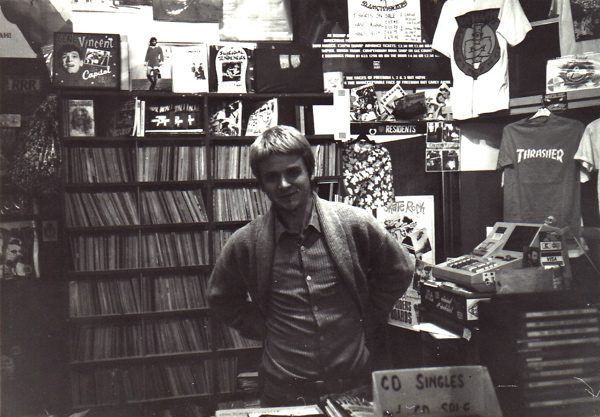
Pete in the nineties at Rough Trade, Portobello.

I am delighted to be joining forces with Rough Trade to present a series of Chit-Chats in which characters from the pages of Spitalfields Life interview each other live in front of an audience – after hours in the record shop in Dray Walk, Old Truman Brewery, Brick Lane. This occasional series commences next Thursday 21st October at 7pm with CHIT-CHAT #1 The Stripper & The Oral Historian, featuring my esteemed friends Lara Clifton, the celebrated stripper of Shoreditch, in conversation with Clive Murphy, the oral historian of Spitalfields and writer of ribald rhymes.
Admission is free and no booking is required. Do please come along to help me launch this auspicious new venture, I hope it will be amusing and informative, and we can all go along to the Golden Heart for a couple of drinks with Sandra afterwards.
Hugh Wedderburn, Master Woodcarver
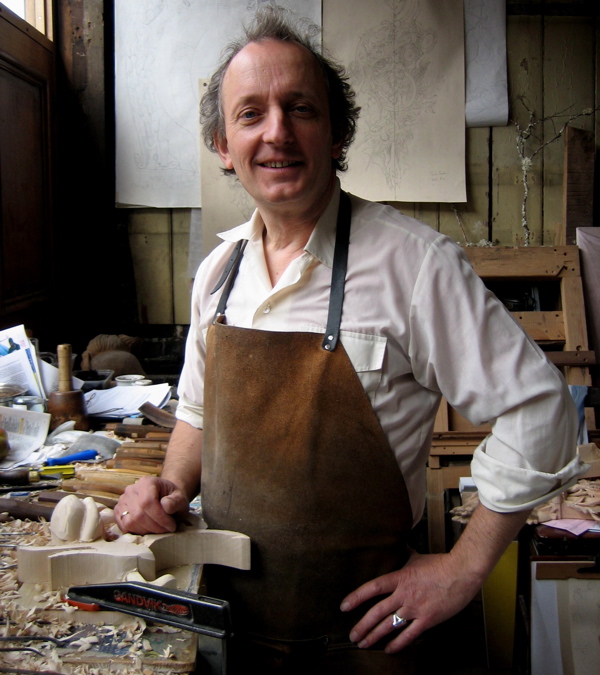
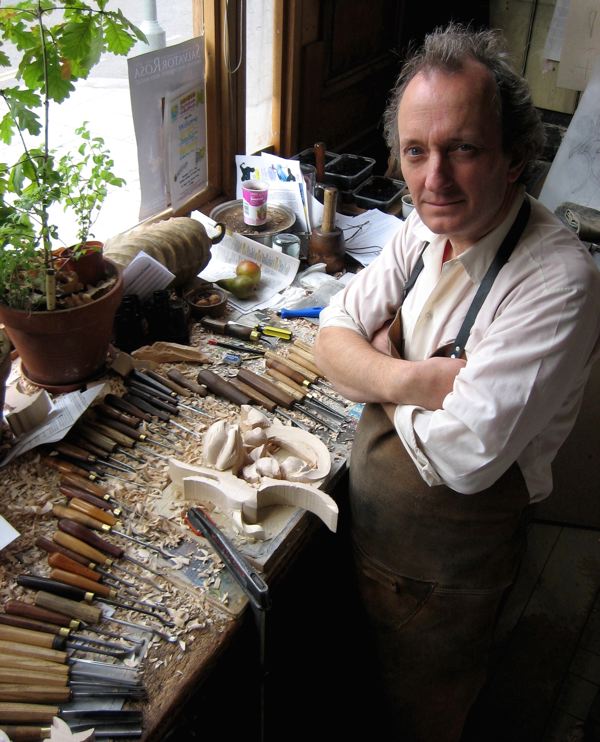
Hugh Wedderburn works every day carving wood in the window of an old shop in the Borough at the meeting point of two Roman roads, Stane St and Watling St. “The ancient approach to London,” Hugh delights to call it, aware that the nature of the work he does has not changed significantly in all the time these roads have been there. Fifty yards behind Hugh’s workshop, a fourth century Roman tablet was found recently that includes the earliest known usage of the name “London.” It gives Huw pleasure to contemplate these things, savouring his position at the centre of this age-old neighbourhood.
While the world races by Hugh’s window, and as the acorns in pots on his bench grow up to become trees, he patiently shaves away superfluous pieces of wood to reveal elegant forms of creatures and foliage, that were just waiting to be uncovered by his keen tools. Or rather, that is the way it seems, because the quality of Hugh’s carving has such natural veracity and grace that it belies the immense skill and laborious application it takes to bring it into existence.
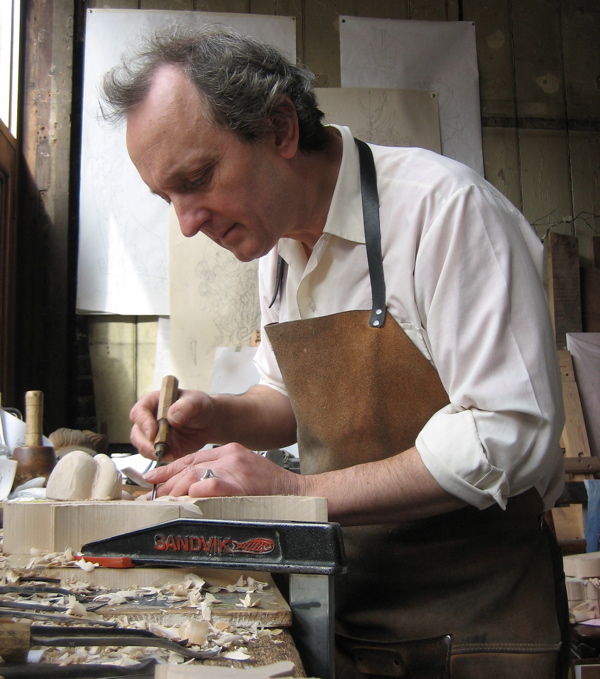
“The chisel makes the shape,” said Hugh, as if his involvement as woodcarver were merely incidental. “So you have to have the right chisel to make the form, and you need to have them in various bent shapes to do the awkward bits.” he added, referring to a handsome array of fifty diverse old chisels laid out in a crescent upon his bench surrounding the current piece of work, all perfectly-sharpened and interlaced with shavings. With these, Hugh can create the extraordinary intricate relief carving of baroque swags, flourishes and foliage that stands proud of the surface and defies the imagination to comprehend how mere mortals could carve it.
“I felt like I was coming home when I moved here to the Borough in 1996,” confessed Hugh brightly, peering out the window at the passersby in Tabard St,“because I was born in Nigeria and there are quite a lot people in Southwark from Nigeria.” In 2001, Hugh was contacted by Margaret Wedderburn Evans who told him they had a common ancestor in Robert Wedderburn, born in the West Indies in 1762 to a Scots’ father and a Jamaican mother. A campaigner against slavery, he came to London and joined the Spencerians, an English radical group that united the working men’s cause.
Today, Hugh’s ancestor is remembered for slogans such as,“It’s demeaning for the oppressed to petition the oppressor,” and “You can take away my weapons but I can still spit.” Sentiments that Huw quotes with relish and a gleeful smile. “I am the answer to the question of what happened to the first Afro-Caribbeans that came to London,” he said, holding up a lithe forearm to display his pale flesh. “Look, that’s what happened to them,” Hugh declared enigmatically, indicating that his perception of the world has a depth and complexity comparable to his work.
Hugh is at the top of his profession, yet in spite of his superlative skill the rewards are ultimately those of esteem rather than wealth. “It would be lovely to earn a fortune, but I get the satisfaction,” he admitted quietly, with a self-possessed grin, turning to the window again, “And I’m here in the middle of London. Office workers pass by on the way to their jobs and tell me how contented I look.”
When Hugh moved into his current workshop it had been a betting shop, but when he pulled out the shopfittings he found old matchboarding, now covered with organised lines of tools that form the background to his crowded yet harmonious work space. Sunlight pours in through the shop window, and filtered through the saplings in pots on Hugh’s work bench, it casts a soft light upon all the bits and pieces of work in progress, souvenirs of past works, cases of books and catalogues, working drawings, sculptures, driftwood and twigs.
“I wanted to be a sculptor but I didn’t want to go to art school,” explained Hugh, casting his eyes upon all the objects disappearing into shade at the rear of the shop. “So I found the City & Guilds School that teaches restoration” he continued, leading me purposefully to a table in a shadowy corner of the workshop,“and after that I became an antiques restorer. Then I made this table in the Queen Anne style and put it in an exhibition. It was shown in a magazine and that brought in a few private clients. And I realised how much more pleasure it was working for them than the antiques trade in general. The most interesting work is when an interior designer commissions a piece and gives you the freedom to be creative.”
I was fascinated to examine Hugh’s first table and see the marks of the chisel still fresh upon this bravura work. Without the varnish, staining and gilding that you expect of old furniture, it had another quality, and the clarity of the expressive wood carving came into relief. “There’s a snobbery about whether you’re an artist or not, as a woodcarver, because it’s a collaborative art,” mused Hugh, while I squatted down to admire the details of his extraordinary table,“but a musician interprets a composer’s work and that’s collaborative, yet it is not seen to compromise their integrity as a fine artist.” It was an interesting question, but not one to trouble Hugh very long because it was time to return to the bench and his current work.
Hugh started carving, making deliberate, slow confident strokes with a sharp chisel in absolute physical concentration, and a transformation came upon him. The man who had been so upbeat in conversation – flashing his startling grey eyes – was gone, and different, quieter, energy filled him. The clamor of the city retreated, the sound of Hugh Wedderburn’s wood carving was the only sound, and peace reigned.

This was Hugh’s first table.
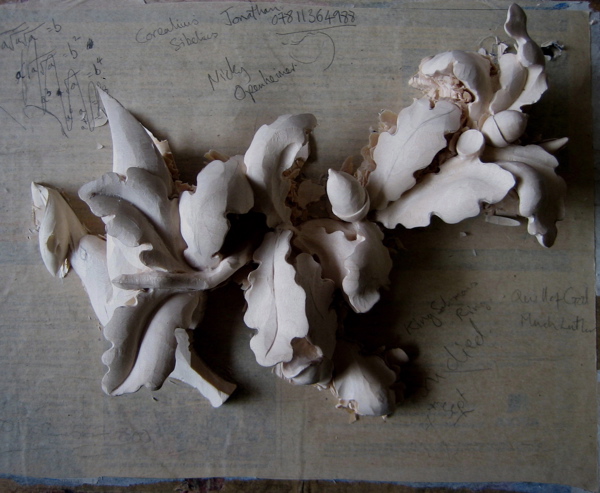
Hugh’s current work-in-progress, these acorns are a detail from a larger composition.

A mirror carved by Hugh Wedderburn to a design by Marianna Kennedy
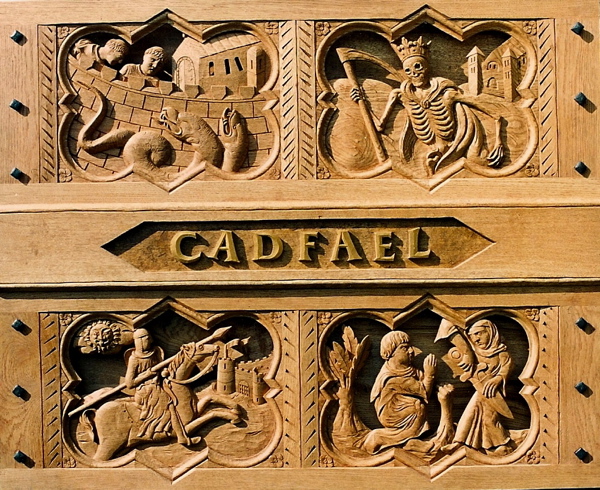
The title panel for the Cadfael television series, carved by Hugh in oak.
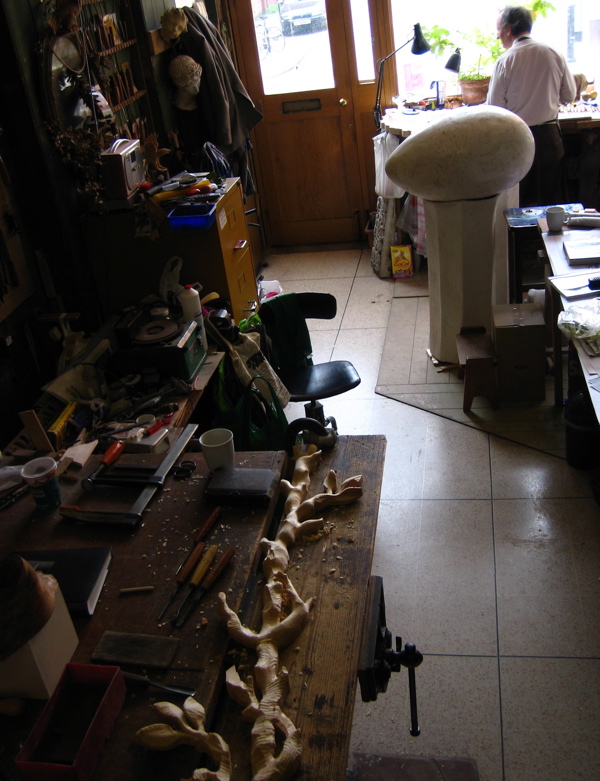
Work in progress upon a mirror frame by Marianna Kennedy sits upon the bench in Hugh’s workshop.
A Day Out from St Hilda’s
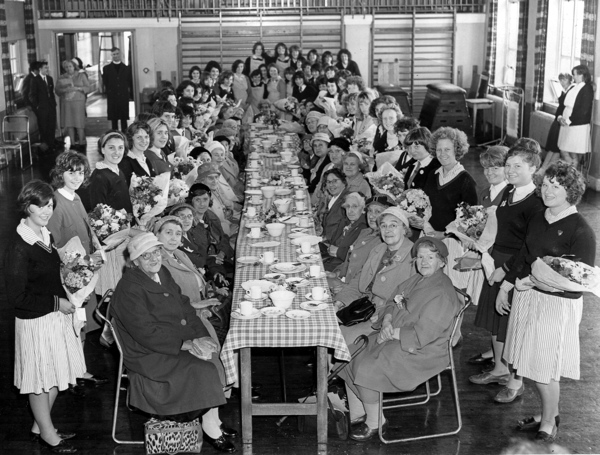
This may appear to be an innocent, heart-warming scene of schoolgirls waiting upon virtuous senior ladies with the vicar presiding from a distance. But a recent candid testimony from Rosemary Harvey, an ex-pupil of Cheltenham Ladies’ College – who came to do good works at St Hilda’s in Bethnal Green in 1965 when she was eighteen – tells a much more colourful story of how some posh girls got taken for a ride by a gang of sly East End women who knew how to enjoy a good knees-up.
“Wye Women’s Institute had asked them down to tea. Quite a long way to go in a coach. Now as far as we knew, one of the staff would come and we would be there to help. But at the last minute, the member of staff got off the bus and said, ‘Have a good day!’ or words to that effect, and almost the last words this person said was, ‘Whatever you do, do not stop at a pub.’ and he told the driver.
So, you know, we were out of London, and of course by about eleven o’ clock, we pull into a pub don’t we? What else? What else?! And they all get out, saying they had to go to the loo. Well, whether they did or not, they tanked up on liquid to replace it! They were in a pub, I mean to them, that was probably the highlight of the whole thing. All the women drank Guinness. They certainly got fairly merry. We did get them out of the pub, but with enormous difficulty. Then we went down to Wye and there was this lovely tea, all laid out by these very nice women with sandwiches with the crust cut off and fairy cakes and all of that. It wasn’t quite what they thought of as tea, but then I think they thought – rather like they thought about us – ‘They’re these strange people who live this peculiar way and we’d better be polite to them ‘cause they’ve made an effort’. But the tea wasn’t the thing. The advantage was seeing the countryside and it would start the memories of picking fruit when they were children. They remembered summers and going out and living in caravans and camping and camp fires and it was enormous fun.
Of course, we had to park in the same pub on the way back, me having told the coach driver very firmly not to do that. ‘Yes ma’am,’ and it made no difference. They were rolling drunk by the time they got home and there were some very raucous songs which we knew were naughty, but we didn’t know why because of the innuendos. They would start singing and there was a cheerleader, she would get them going, and a few of them would be sick. We got them all home, but it was a bit of a nightmare. I don’t know whether the staff thought this would be a good idea to see if we were up to being social workers, or whether they just disliked us so much they thought, ‘We’ll get our own back on them’. But actually the people on the coach were sweet to us and they kept coming and saying ‘She’s alright,’ ‘She’s ok, she had a drink with us’ and ‘You know, she laughed with us’. Which is not what they expected, I think they expected us to be very severe, coming from a different sort of culture.
We weren’t the first I’m sure.”
St Hilda’s was founded in 1889 by Cheltenham Ladies’ College as a charitable settlement where pupils came to live and work with the people of the East End, and it was suggested to Rosemary Harvey that she might like to go for a couple of weeks and work alongside the staff there upon leaving school. Brought up on farm in Devon, Rosemary was shocked by the urban deprivation and atmosphere of violence that she encountered, yet looking back forty five years later, she values it as a vital experience in her growing understanding of the world as a young woman.
“We thought we were going down there to help the poor but I don’t think we really had any clear idea about what we were going to do. Some of us dallied with the idea of going into social work which was a fairly new-ish idea then. You didn’t need a degree for it and it was slightly like going into nursing without actually having to do anything physical. There was nothing compulsory about going to St. Hilda’s, it was a bit like work experience really.
The place wasn’t as multi-cultural as it is today of course, but there were quite a lot of Jewish families there which tended to keep to themselves a bit. And there were black families, they had a much more outgoing louder lifestyle. Lots of drumbeats and lots of music everywhere and lots of smiles and that sort of thing. They were very well integrated as far as one could see. One didn’t expect them not to be, there was no expectation that people wouldn’t be accepted. So quite fun, quite different cultures. A lot of people though, had lived their lives in Tower Hamlets, but their children, who had made good, moved out. Hendon was the place if their children were successful, and there would be these big photographs of their children, saying you know ‘He’s now become a doctor,’ or a teacher or whatever and ‘They moved to Hendon’. ‘Do they come back and see you?’ Very often it was ‘Not often.’ You got the impression they were ashamed, they’d moved up the social scale. I can remember elderly people who were very proud of their children and not critical that they didn’t come, ‘Yes, oh yes, of course they come, they came for my birthday last year.’ And that to us seemed very strange, because families are families.
It was a very tough place but you couldn’t say it was totally unhappy. It was a very hand to mouth existence. I think that’s the bit that shocked us, we couldn’t imagine that at the end of the week you had no money to feed your family. That to us was a whole new concept, and I have to say we were probably pretty judgmental about that. We’d probably say, ‘They’re living above their means, they’re disorganised.’ I don’t think we actually had enough sense to think, ‘This is appalling, that people are paid so little that they can’t keep their families on it.’ I don’t think that crossed our minds. I don’t think we came away feeling sorry for them. Why should we? I don’t think they’d have wanted us to. In fact I think they might have thought, ‘Strange people, they don’t have this community spirit we do.’ Because I think they’d have found our lives as strange as we found theirs, and I don’t think they would necessarily have wanted to swap it.”
Rosemary’s experience was collected as part of an oral history project run by St Hilda’s East Community Centre, the contemporary incarnation of the St Hilda’s Settlement, still serving the people of the East End today. Alongside the pictures of the notorious ladies’ bus trip, it is my pleasure to publish a few other choice images from their archive because in spite of St Hilda’s mission to address deprivation, most of these beautiful pictures celebrate the joy it engendered.
A film “St Hilda’s East: the Story of a Community” telling the story of the settlement over one hundred and twenty years through personal testimony and archive material will be shown at the Rich Mix Cinema on November 8th. More details from St Hilda’s Archive
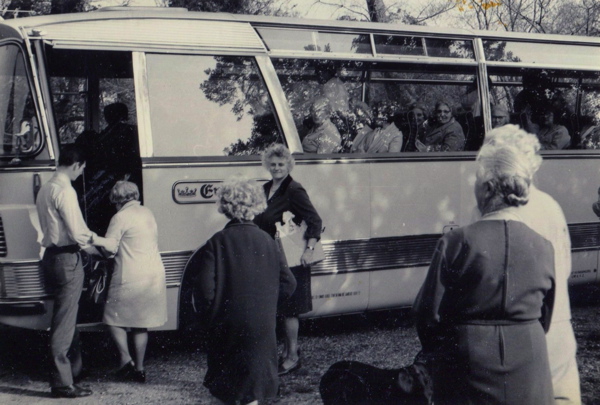
Ladies setting out on a day trip from St Hilda’s in anticipation of an intoxicating adventure.
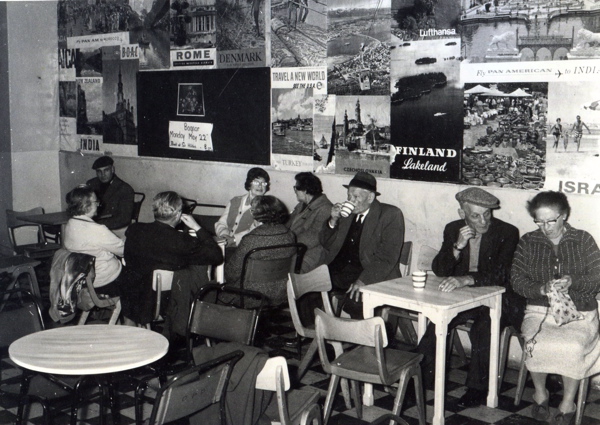
At St Hilda’s, travel posters illustrated the fantasy of exotic destinations while a day trip to Bognor Regis was advertised on the noticeboard.
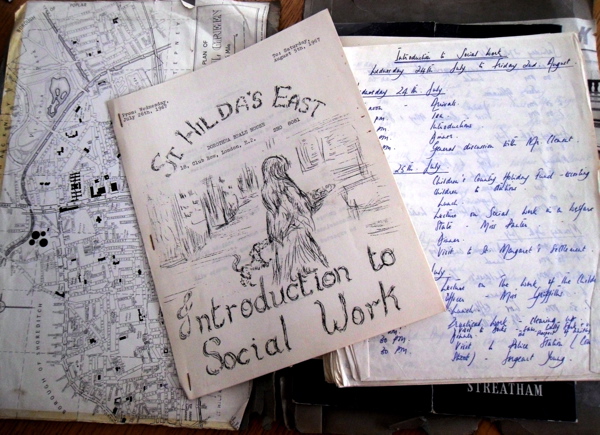
Documentation provided as induction to social work at St Hilda’s.
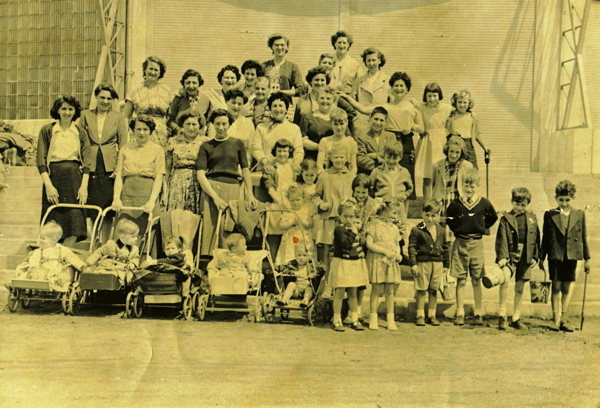
A young mothers’ trip to the seaside.
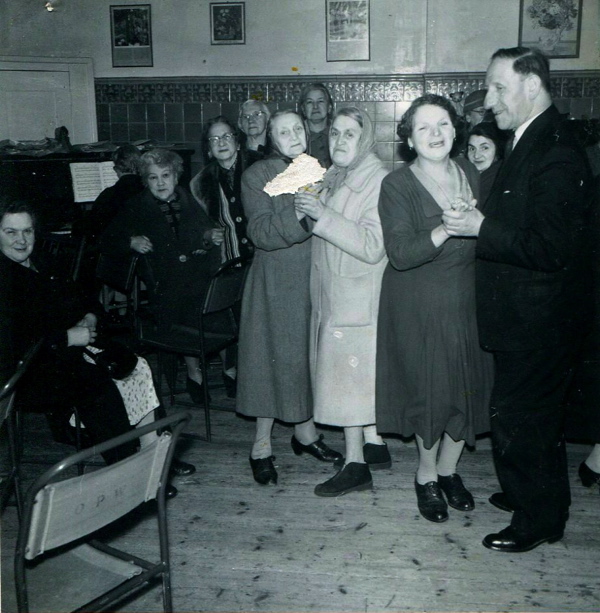
A dance for seniors.
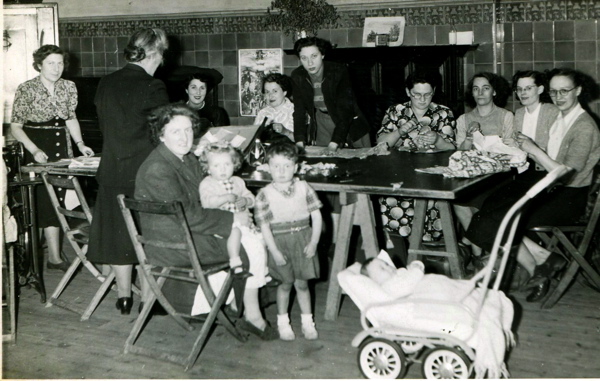
A sewing group.
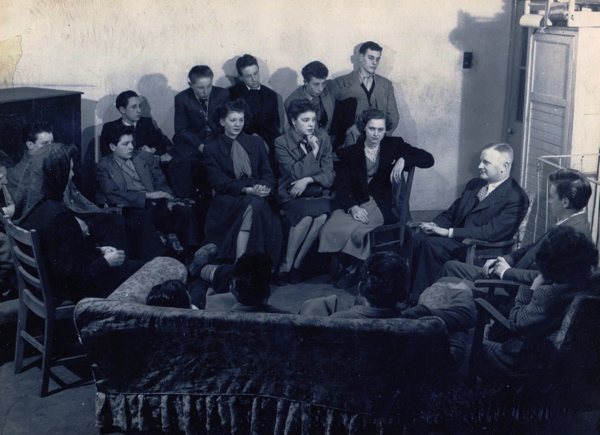
Mr Harris & the youth discussion group, 1952
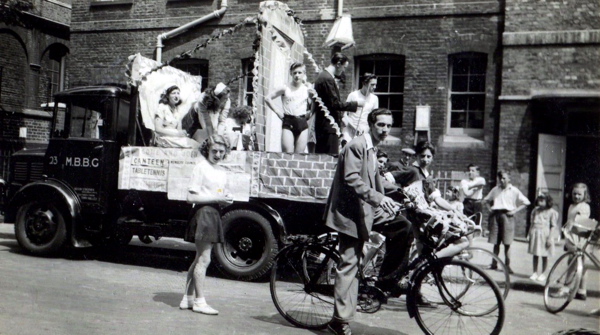
Carnival time.
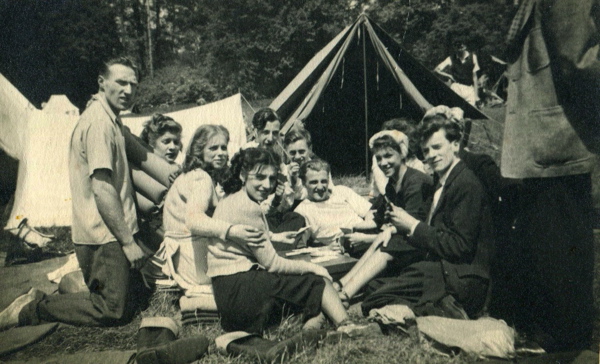
A camping trip in the nineteen forties.
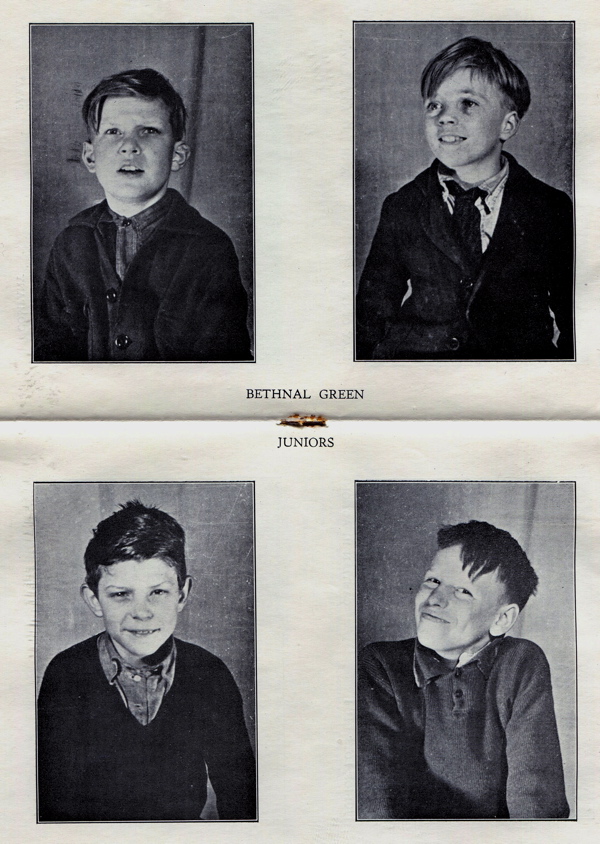
Four local ragamuffins.
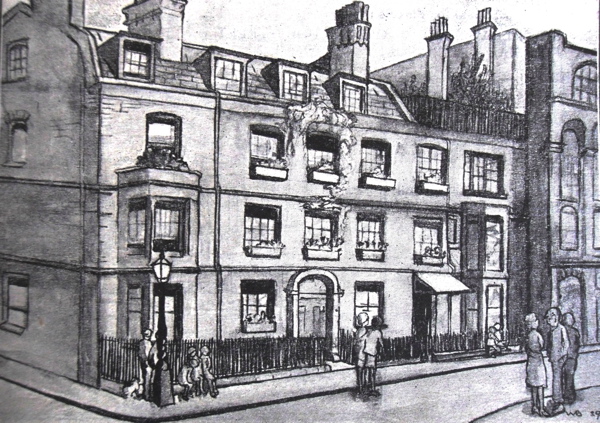
St Hilda’s opened in Old Nichol St in 1898 as the Incorporated Cheltenham Ladies’ Guild Settlement.












