
At the Strangers’ Rest Mission
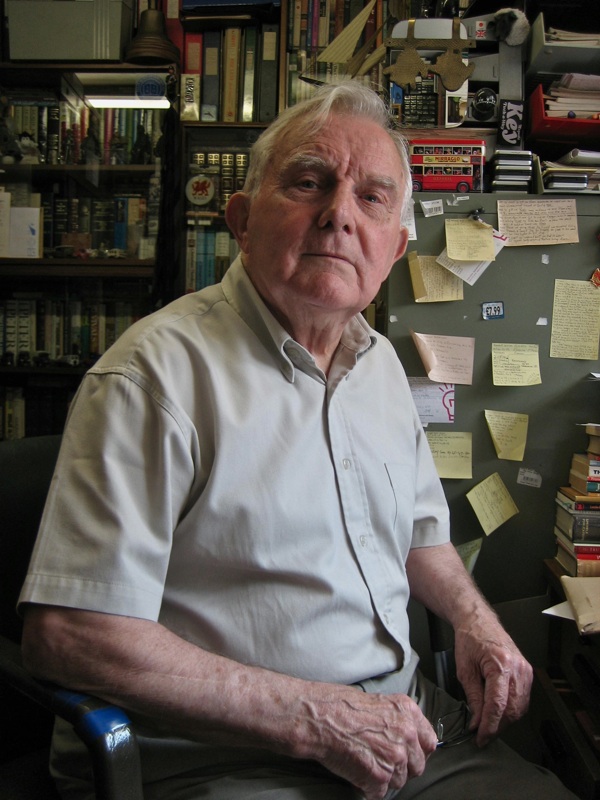
Pastor Gerald Daley
The Strangers’ Rest Mission is a plain brick building that drivers do not notice as they speed along the Highway through Wapping, in a neighbourhood where the deafening roar of the traffic never ceases and few people are to be seen upon the pavement. Yet the Mission has been here since 1877 when this was dockland, teeming with seafarers and others attracted “like flies to fresh meat” – as Gerald Daley puts it – who came to exploit the possibilities. In such circumstances, the Mission offered a refuge where a hearty welcome was extended to lonely sailors otherwise at the mercy of those who sought to separate them from their wages.
Pastor Gerald Daley came from Wales to the Strangers’ Rest in 1981 and has lived all these years with his wife Marion in the small flat attached to the chapel. Now at seventy-eight, he is due for retirement and awaiting a replacement, but in the meantime he spared me a couple of hours of reflection upon his time here and the history of the Mission itself. “I was born at the end of 1932, and my father was a union man who marched to London for jobs and he knew how much men suffered working in the docks, both at home in Swansea and in London,” explained Gerald, outlining all he knew of the East End before he came.
A self-declared evangelist and open-hearted preacher with natural rhetorical style and an eager nature, Gerald was converted when he was twenty-eight and working as an engineer. A fortuitous redundancy gave him the money to go to bible college and he was almost forty when he came to the Strangers’ Rest. With the docks had closed by then, the mission’s work had shifted towards those in need who lived in the vicinity.
“My concern was to serve the people,” Gerald said, “I used to go out and visit old people’s homes, and I used to go into schools and teach Religious Instruction and I would speak of the glorious benefits of the bible. Up until 1981, a lot of churches were being told about the poverty of the East End and sending clothes, which we distributed to people who wanted them, and we gave out food parcels at Christmas. We used to take people on trips to Felixstowe, it certainly made life more interesting.”
The Strangers’ Rest has more than six hundred supporters worldwide who send donations and all the correspondence keeps Gerald busy in his tiny crowded office until ten thirty each night, where he keeps some magnificent model boats and a stash of books of Giles cartoons to bring him light relief. “The goal is to have enough supporters to be self sufficient… “ Gerald admitted to me with a shrug, revealing that he struggles to balance the accounts, “but it’s what the good Lord has done and it gives us great purpose.”
Possessing a kind of holy innocence, Gerald is a target for conmen who come to the Strangers’ Rest with elaborate stories of distress designed to extricate money, which Gerald often gives. “It doesn’t harden you, but it wearies you,” he said to me with a wry smile, “you have to listen to a catalogue of catastrophes and woes. And we even had the offering stolen one Sunday morning.” Yet Gerald’s faith permits him to interpret these criminal interventions as divine agency. “God is not simply making us righteous,” Gerald told me with self-acknowledged pathos,“he is making us more holy by the challenges he sends to our self-righteousness.”
In his absolute belief, Gerald embodies the spirit that has sustained the Strangers’ Rest as the last mission of all those once associated with the docks. He carries the tale of Mrs Dagmar Andre, the Swedish millionairess who was not converted by chaplains upon the cruise ships she frequented, but by Gerald’s predecessor Bob Hutchinson – who ran the Mission for thirty-six years from 1935 until 1971, and rebuilt it after it was bombed with the largesse of Mrs Andre, in order that the good works might continue. And today Gerald has a small but committed congregation of older people who come for the weekly Sunday service followed by free lunch – “open to all,” he asked me to emphasise.
“When I preach I believe in total sincerity,” he asserted, his eyes shining with emotion – a statement he qualified later by declaring, ” Yet I may not be as excellent as I should be.” and mitigated unexpectedly, saying, “But you can always apologise if you are wrong.” And then he gave me selection of pamphlets and a bag of sweeties to take with me – before sending me off with a warm handshake, suggesting it was God’s providence that had sent me to him.
The Highway is one of the bleakest corners of the East End, and yet it is the location that has captivated Pastor Gerald Daley for nearly forty years. “I don’t go in for holidays a good deal, ” he said, as we sat in the empty prayer room with the traffic thundering outside, “I’m not against holidays, but I’m very happy where I am. It’s a work of delight.”
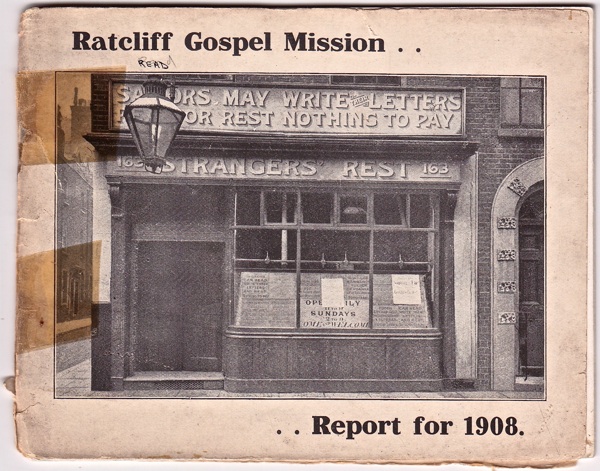
Sailors may write their letters – Read or rest, nothing to pay.
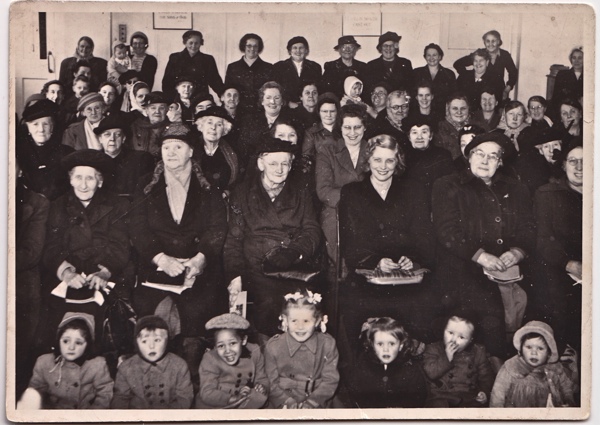
Ladies’ gathering, nineteen fifties.
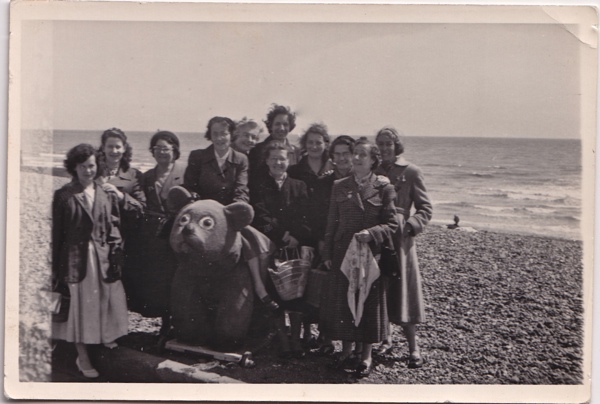
Ladies’ outing to the seaside, nineteen fifties.
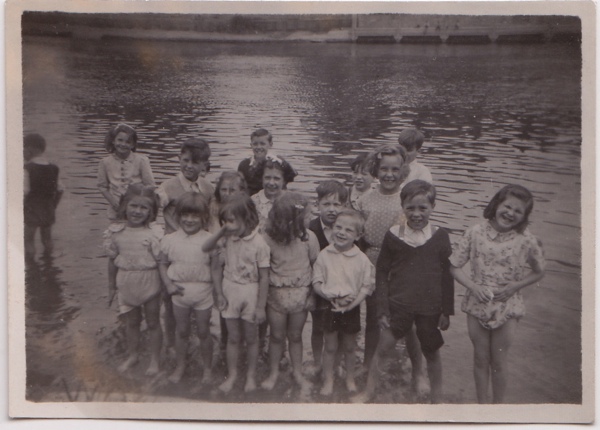
Childrens’ outing to Felixstowe.
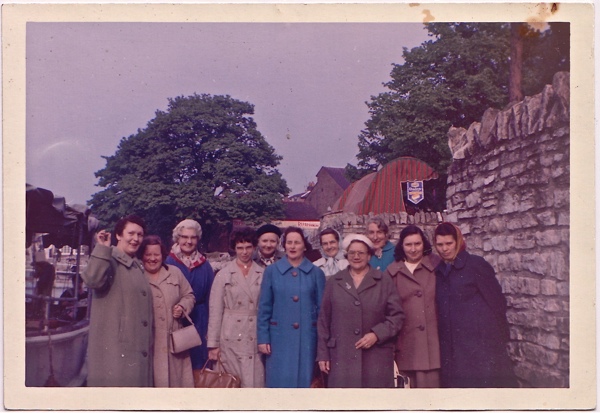
Ladies’ outing to Windsor, 1961.
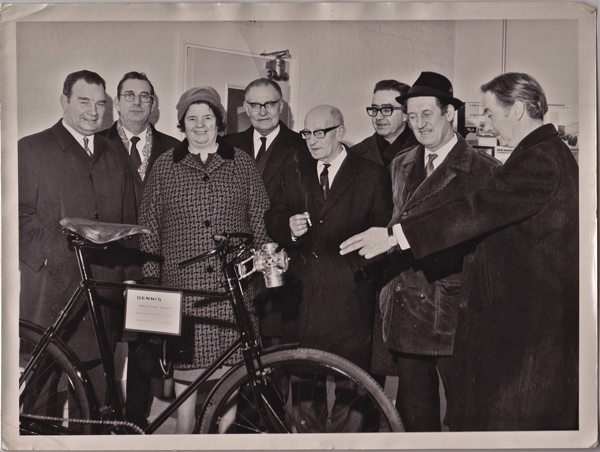
A visit by Mrs Armsby, the first woman to be mayor of Tower Hamlets.
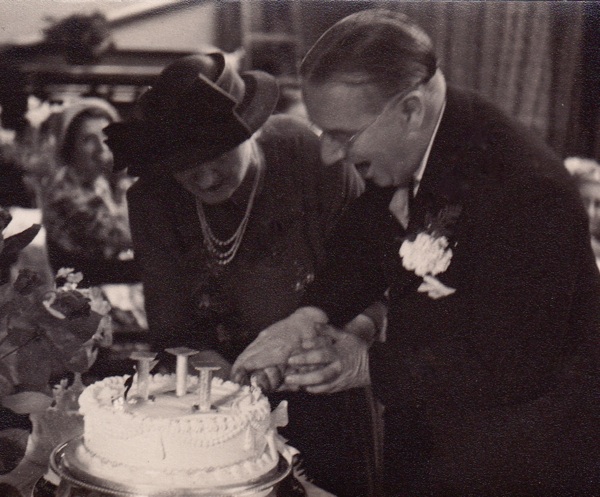
Millionairess patron Mrs Dagmar Andre & Mr Bob Hutchinson cut the cake.
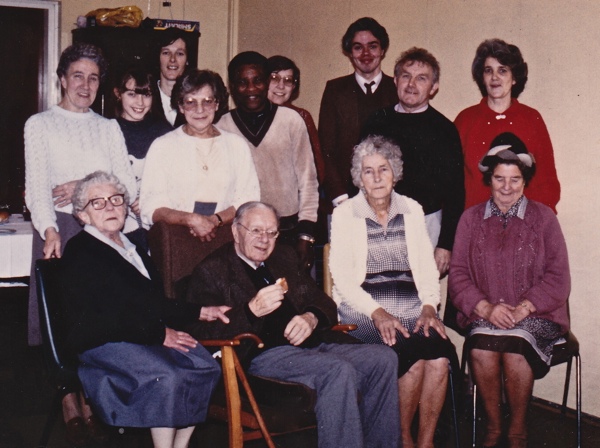
A visit to Bob Hutchinson, ex-superintendent of Strangers’ Rest Mission, at Pilgrims Care Home, 1987.
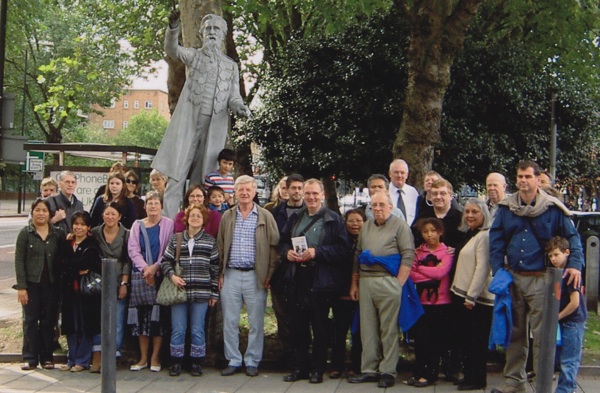
A walk from the Strangers’ Rest around sites of spiritual enlightenment in the East End – seen here at the statue of General Booth, Salvation Army Founder in the Mile End Rd.
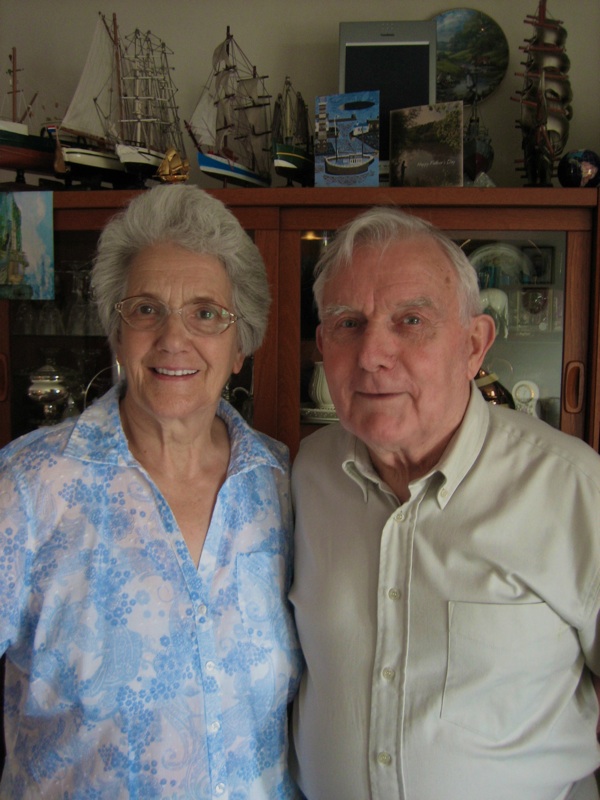
Pastor Gerald & Mrs Marion Daley
Spitalfields Antiques Market 24
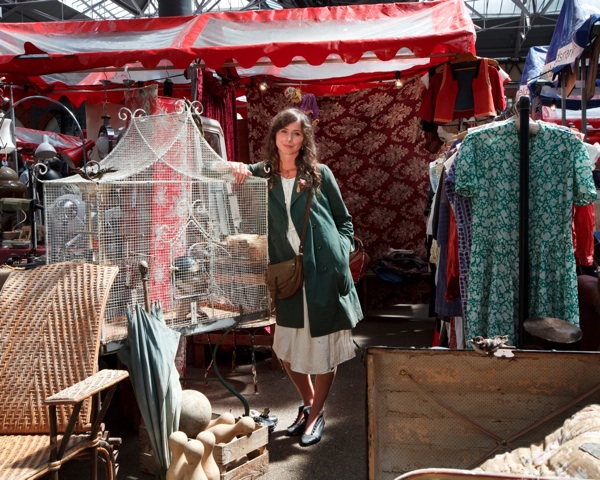
This is the alluring Marisa Lopez, who apologised to me for her appearance on account of having very little sleep – because she had just returned from France seeking new finds – but I think, in the light of this glamorous photograph, we can agree than no apology is necessary. “I only sell things I like, so if no-one wants to buy it at least I can wear it,” Marisa confided to me with a thin smile, lowering her eyes modestly, before casting a gaze over her collection of ravishingly beautiful old dresses, all chosen for their subtle colours and rich fabrics. Then, sitting upon a basketwork chair, in the sunlight filtering through the market roof, she clasped her hands in thought. “I feel very comfortable with this way of life.” she admitted, shading her face with her hand, “I work for myself – being on the road and sourcing things is fun. It’s creative and I can use my eye, and that, I think, is an art.”
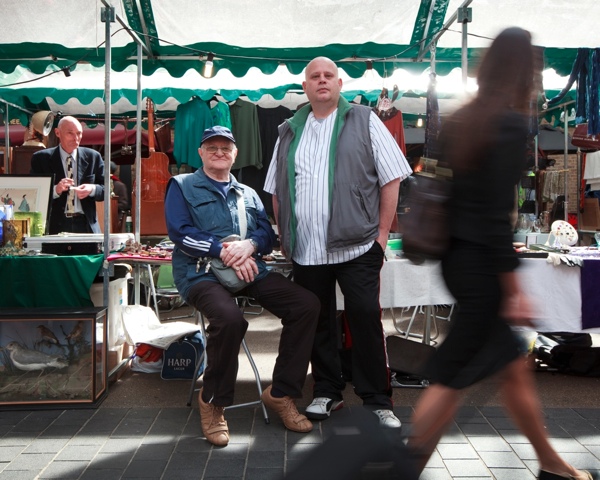
This is Steve & Paul, proud father & son, who have been stalling out together for three years. Born in the City Rd, Steve is a former East End tailor who started at fourteen, but since he retired in 1990 he has been dealing in unbreakables and other small items. “I’ve always been interested in coins, medallions and badges,” he assured me eagerly, “A lot I’ve had for years and I’m always looking out for anything unusual.” “I’m trying to learn off him,” added Paul, beaming at his father and managing to get a few words in. “I pick Paul up of a morning and he takes me round all the car boot sales.” continued Steve with a nod of gratitude. “At the moment, I don’t have to rely on it, this pays for holidays,” he whispered discreetly, “but if I had to rely upon this, it would be hard.” Then, for emphasis, Steve looked questioningly at his son and, on cue, Paul nodded in filial reassurance.
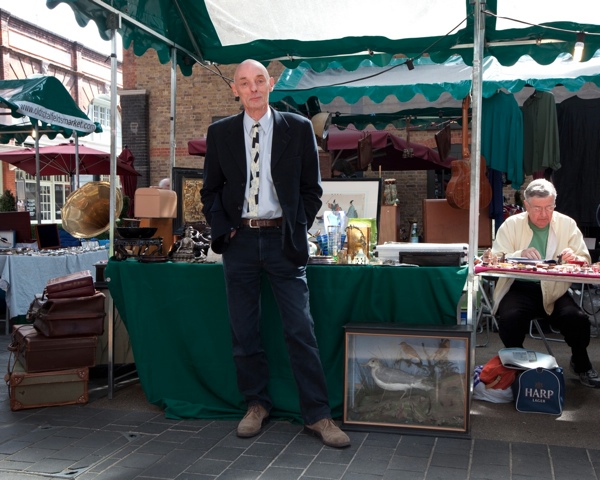
This fine tall gentleman is Alan Robinson, a paragon of discernment, sporting a narrow eighties’ silk tie of deceptive sophistication. “I’m a jacket sort of guy,” he declared recklessly, as if no further explanation was required for his natural formality of style in the face of the hegemony of casual dressing. Delighting in the independence of the antiques trade since 1979, Alan is currently supporting himself while completing his Phd in Visual Art at Goldsmith’s College, by selling leather suitcases, antique bronzes and other classy curios. Originally from Northern Ireland, Alan confessed he only recently discovered that his parents never told friends and family back home he was an antiques dealer, when they asked how his teaching job was going.
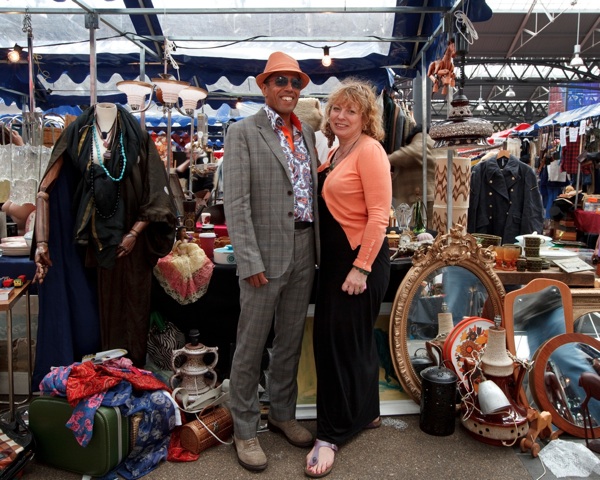
This is Jane Heslop & Paul Parker, a devoted couple on their first day trading in the market. “My husband is off in one of the pubs I expect, enjoying the local ambiance.” revealed Jane, when I found her sitting alone at her stall. Yet she seemed happy enough.“I’ve sold a few things, covered my costs and a bit on top of that – enough for dinner tonight!” she announced in visible satisfaction. Inspired by memories of visiting her grandfather’s upholstery workshop in Dalston Lane as a child, Jane – an independent woman who grew up in Hackney Wick – gave up her job as an indie cinema manager to train as an upholsterer and furniture restorer. “I’ve brought a bit of everything this week because I don’t know what sells here yet, “ Jane admitted to me with an optimistic grin, “but I hope to come back regularly if there’s space.”
Photographs copyright © Jeremy Freedman
Spitalfields Market Portraits, 1991
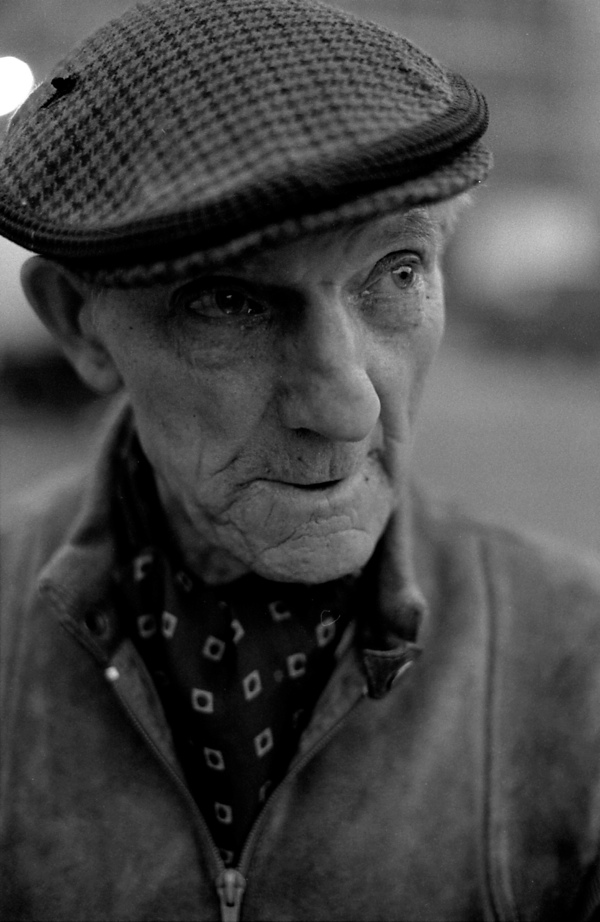
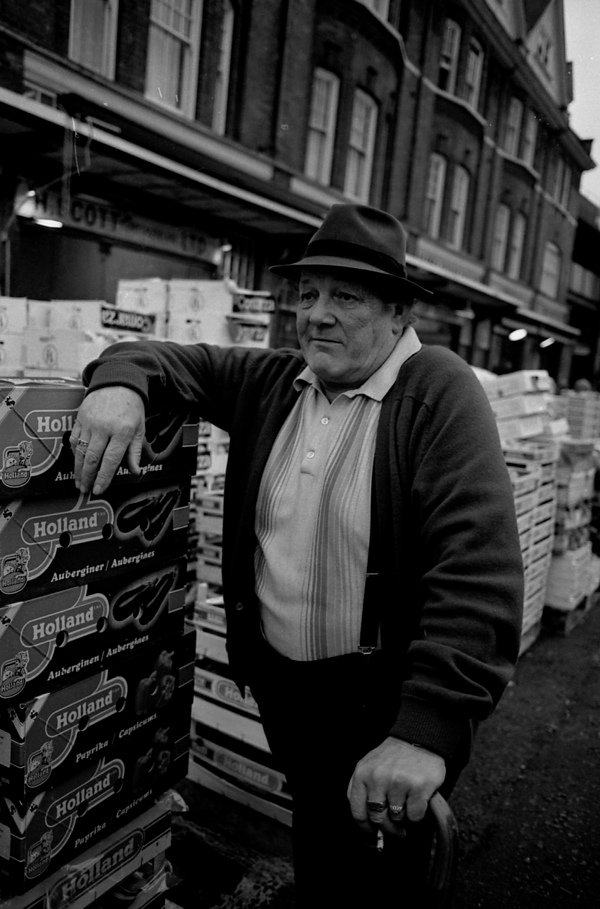
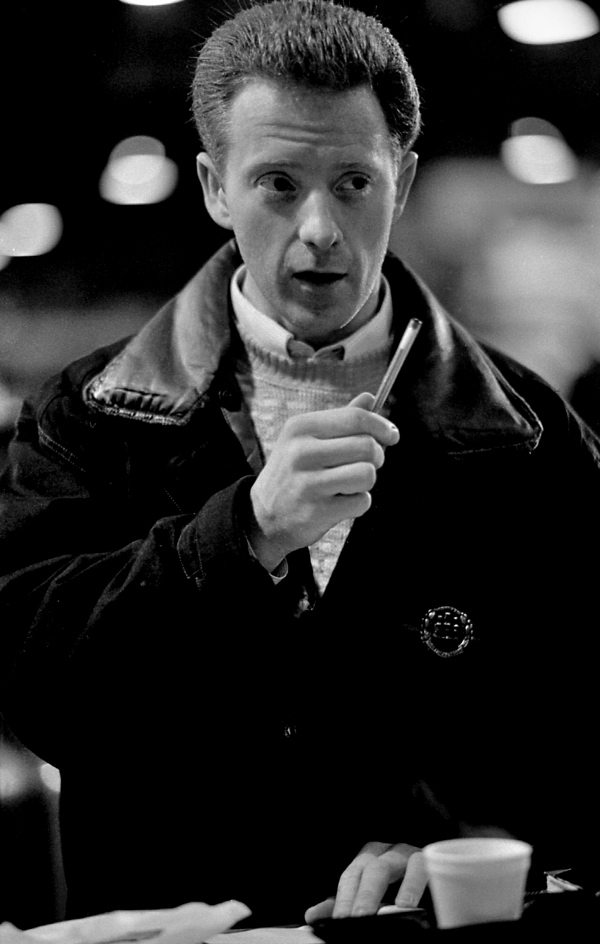
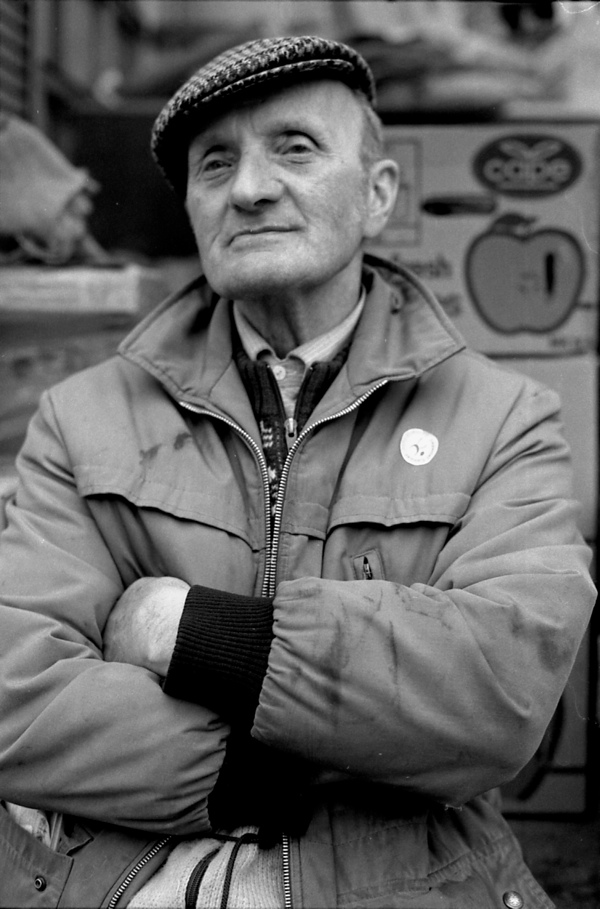
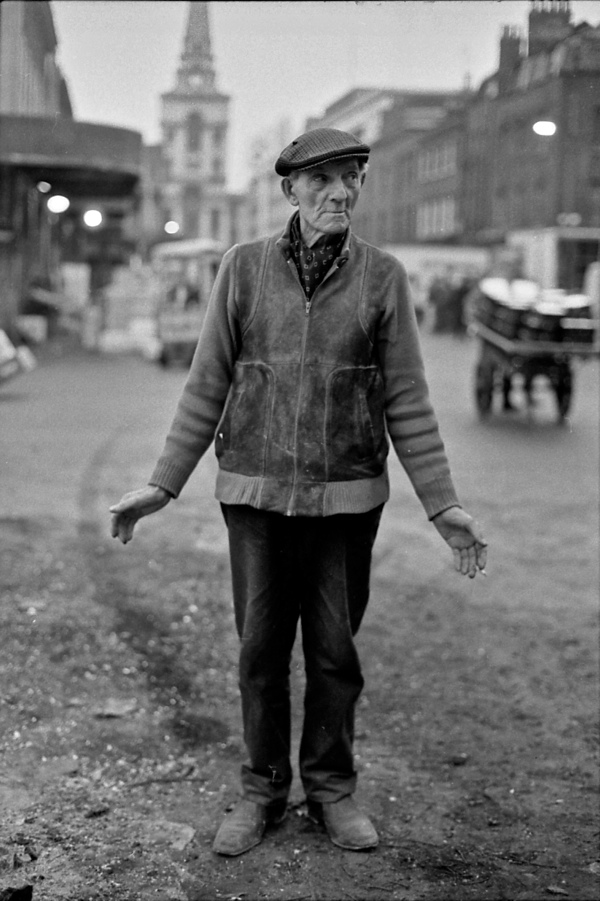
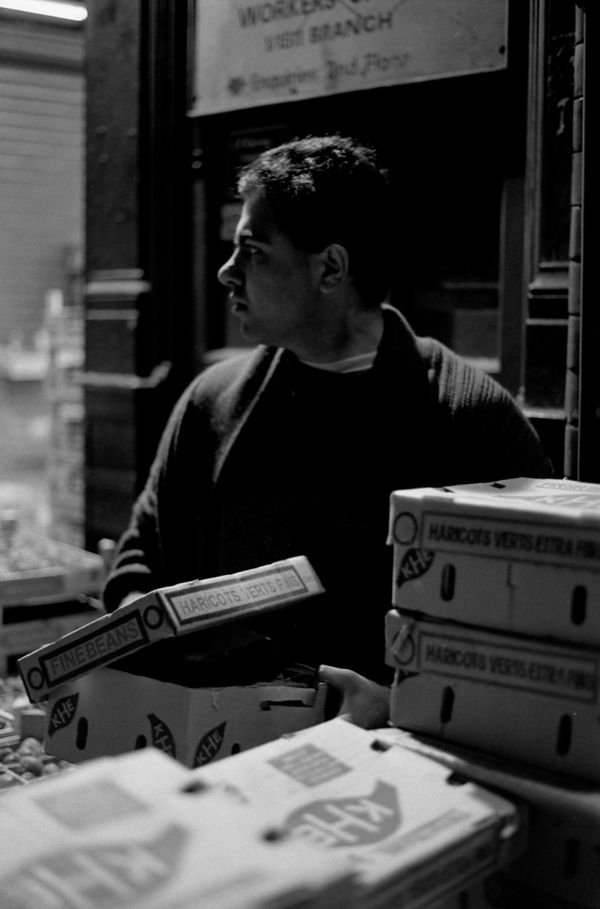
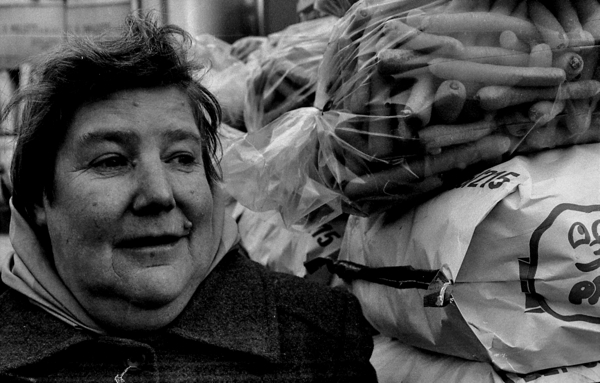
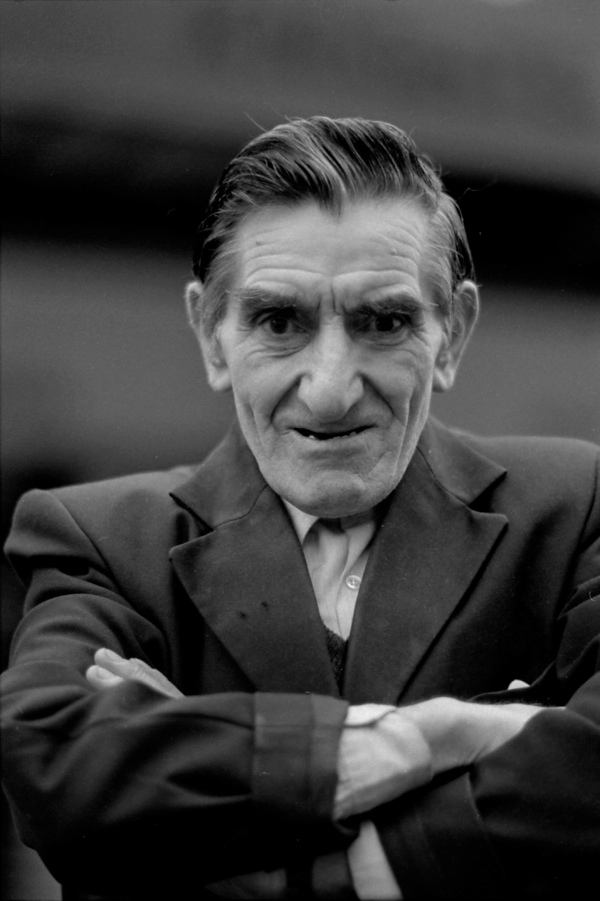
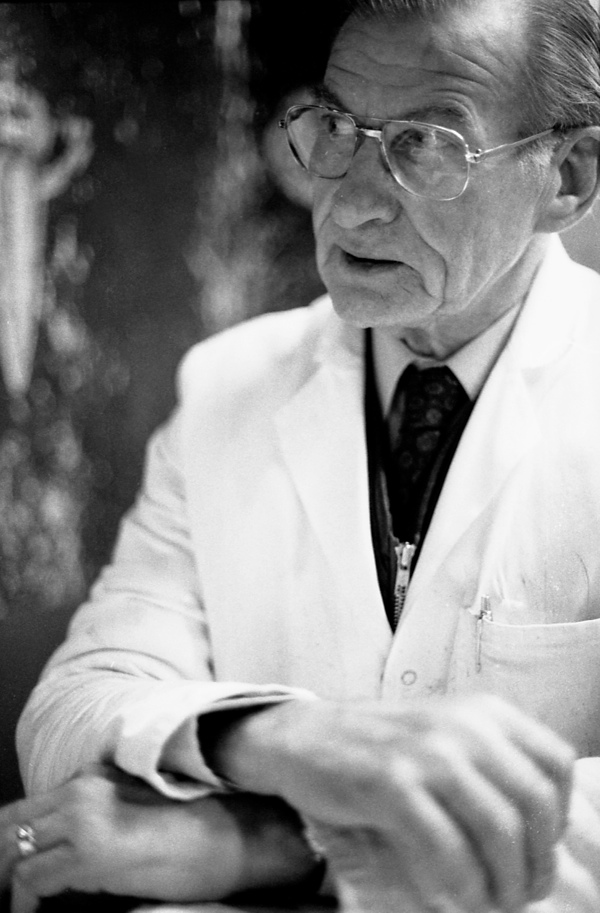
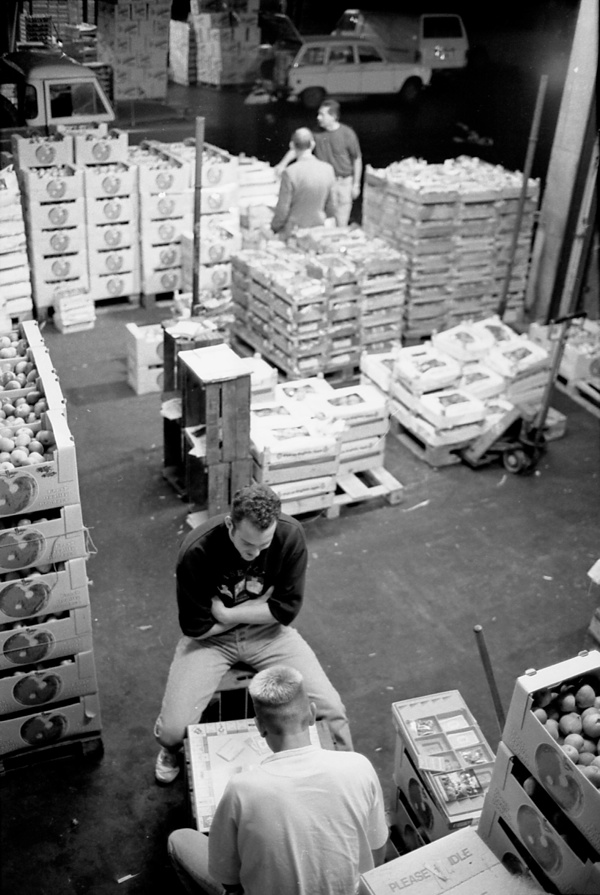
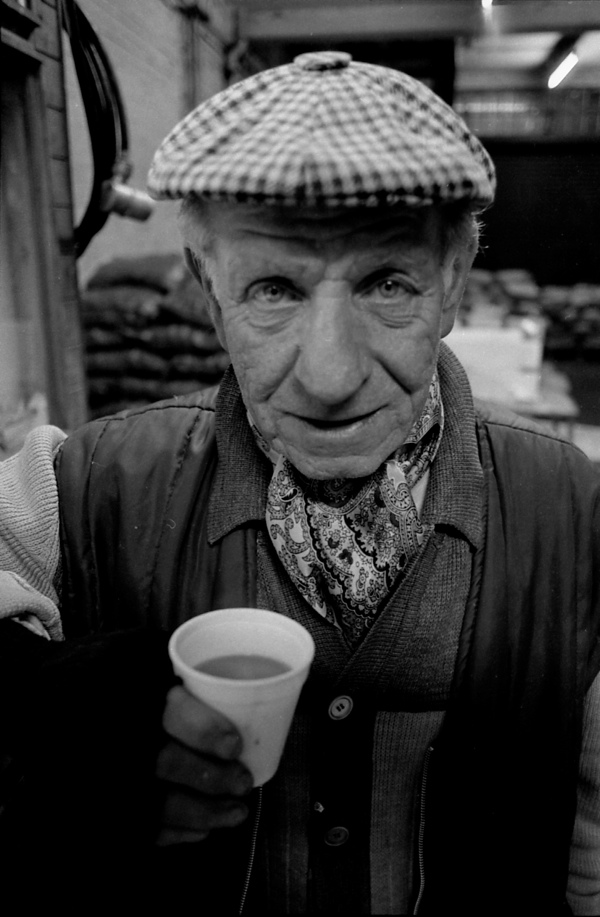
Following yesterday’s selection of nocturnal images chosen from more than three thousand photographs taken by Mark Jackson & Huw Davies in the last year of the Fruit & Vegetable Market in Spitalfields in 1991, it is my pleasure today to publish this gallery of portraits of market traders from the same source.
When Mark and Huw arrived at the market, they often separated to pursue different lines of inquiry, convened regularly through the night to compare results. Huw, the more more experienced photographer of the two, might set up the ambitious wide shots of the market and wait for figures to walk into the frame, while Mark, who did not even know how to load a camera at first, would chat with traders and snap portraits. And thus their different qualities complemented each other, so that today the body of pictures detailing the life of market exists as a totality in which the work of each photographer cannot be disentangled from the other.
All these portraits were the result of conversations as the photographers came to know their subjects. Always, conversation came first and once both parties were comfortable, the pictures were taken. As the traders came to appreciate the project, more were keen to have their portraits done, waving the photographers over and demanding a picture. It was an event that grew more frequent as the closure approached, and those who had spent their working lives there were desirous of being photographed in their market. They wanted their existence recorded along with their fellows.
There was a rigor imposed upon the endeavour by the cost of the film and the limitation of the budget, giving value to every single frame. At first, Mark & Huw bought cheap second hand cameras that broke and then they saved for months to buy new Nikon cameras and lenses, including a precious 35mm lens for portraits which they shared between them. And, to save money they bought great rolls of film and wound it into their cameras, but it quite often got damaged by fingerprints in the process.
Then, each weekend when the market was closed, Mark & Huw filled the bath in their tiny flat with smelly chemicals mixed up from powder and developed the week’s films, hanging them with clothes pegs on strings to dry – and sometimes the mix of the developer was wrong and the pictures came out too dark. Yet in spite of all these limitations, and the resultant pitfalls and mishaps, Mark & Huw were able to produce the splendid, emotionally-charged portraits which you see here and, thanks to them, we are able to meet the Spitalfields Market traders of 1991 face to face.














Photographs copyright © Mark Jackson & Huw Davies
You can see the original selection of
Mark Jackson & Huw Davies’ Photographs of the Spitalfields Market
and read about
Night at the Spitalfields Market, 1991

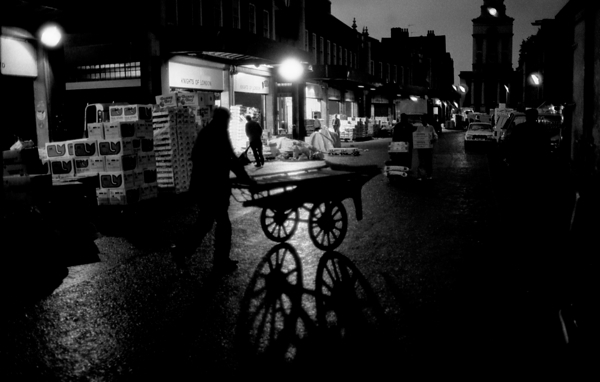
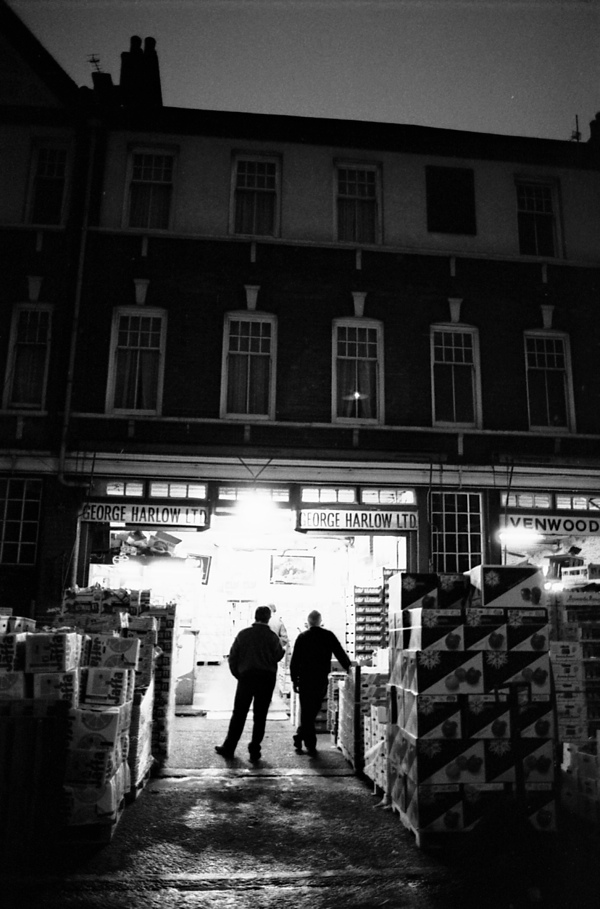
Last year, I published the first glimpse of the extraordinary unseen trove of over three thousand photographs taken by photographers Mark Jackson & Huw Davies during the last year of the Spitalfields Fruit & Vegetable Market before it moved out. Then I was only able to show you the few prints which existed, but now the Bishopsgate Institute has scanned all the negatives, it is my pleasure to publish more, chosen from the entire corpus of photographs recording the old market which traded in Spitalfields from 1638 until 1991.
In this selection, I have chosen pictures that convey the nocturnal drama of the market and although they were taken only twenty years ago, they seem now to be images from the eternal night of history – with fleeting figures endlessly running, fetching and carrying, pushing barrows from the flaring lights out into the velvet blackness, where a bonfire burns beneath the great tower of Christ Church, Spitalfields, looming overhead.
Mark Jackson & Huw Davies were poets with cameras, aware that they were in an epic world with its own codes and customs, and they recognised the imperative to record it before it disappeared. No one asked them and no one paid them – as recent graduates, Mark & Huw shared a tiny flat and worked, as a courier and in a restaurant respectively, to buy film and subsidise their project. Each evening they took the last tube to Liverpool St Station and spent the night at the market, taking pictures and befriending the traders, before going straight back to work again in the morning, often without any sleep.
Like many of the most inspiring cultural projects, this remarkable body of photography was the result of individuals pursuing their own passion – Mark & Huw were committed to record what no one else was interested to look at. Neither became photographers, their greater project to record all the London markets was reluctantly abandoned when they went off to pursue other careers, but their Spitalfields Market photographs remain as an unrivalled achievement in the photography of markets.
Mark & Huw had only the resources to print a tiny fraction of their photographs, which means that this is the first time anyone has seen many of these pictures. Although there is a vivid realism in these photographs, there is an ethereal quality too, especially as many figures exist as mere shadows against the glimmering lights of the market. After the recent architectural interventions, there is an emptiness in the Spitalfields Market now it has been cleaned up, a tangible absence of everything that is here in these pictures. The chaotic beauty of market life has gone and these shadows haunt the market today.






Photographs copyright © Mark Jackson & Huw Davies
You can see the original selection of
Mark Jackson & Huw Davies’ Photographs of the Spitalfields Market
and read about
You may also like to read
Ivor Robins, Fruit & Vegetable Purveyor
Grave Humour from Harrow
 Last year, I paid a visit to St Paul’s in Shadwell, overlooking the basin – once known as the sea captain’s church – in the hope of photographing, or at least transcribing some of the tombstones in the graveyard commemorating those whose lives were spent upon the seven seas. But to my disappointment, I discovered that all the stones had been erased by the elements and I was confounded in my quest.
And so – as you can imagine – it rang a bell for me when a beautiful, hand-printed, slim volume of inscriptions from tombstones mysteriously arrived in the mail, collected by the distinguished poet Leonard McDermid in Harrow churchyard.
As a trawlerman, artist, poet, typesetter and bookbinder of over fifty years experience, Mr McDermid is obviously a whizz with the display fonts and these epitaphs afforded the ideal opportunity for him to pull out all the drawers in his comp room. With typography of exemplary elegance, bound in austere black covers and hand stitched by the author, this collection, entitled Northwest Passage, is an honourable tribute to those seamen who might otherwise be forgotten – as the Earl of Ruislip outlines in his brief introduction.
“THE AUTHOR of this collection has done an admirable service in deciphering and recording some of the inscriptions which I am told were to be found until quite recently in the churchyard at Harrow. Unfortunately there is little point in visiting the churchyard now if one is bent on reading the original inscriptions. The effects of the weather, acid rain and Health & Safety Legislation have ensured that no traces remain – The Rt. Hon. Rupert Glance-Chalmondley P.C., C.B.E., R.N.V.R., J.P., The Earl of Ruislip, Ruislip Manor.”
As both poet and seafarer, Mr McDermid has unlocked a certain mordant lyricism in these neglected epitaphs. It has been said of Leonard McDermid’s work that he “wraps his meaning within a shell and hides it in the sea, where it may happily be discovered.” and these nautical inscriptions evoke a rich and strange poetry of seaborne jeopardy, which offers the ideal light relief whenever melancholic tendencies strike.

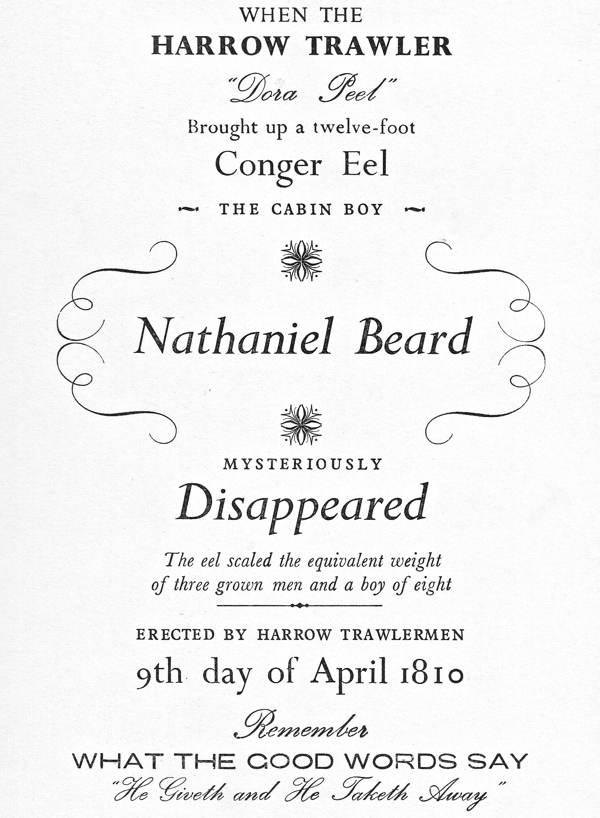
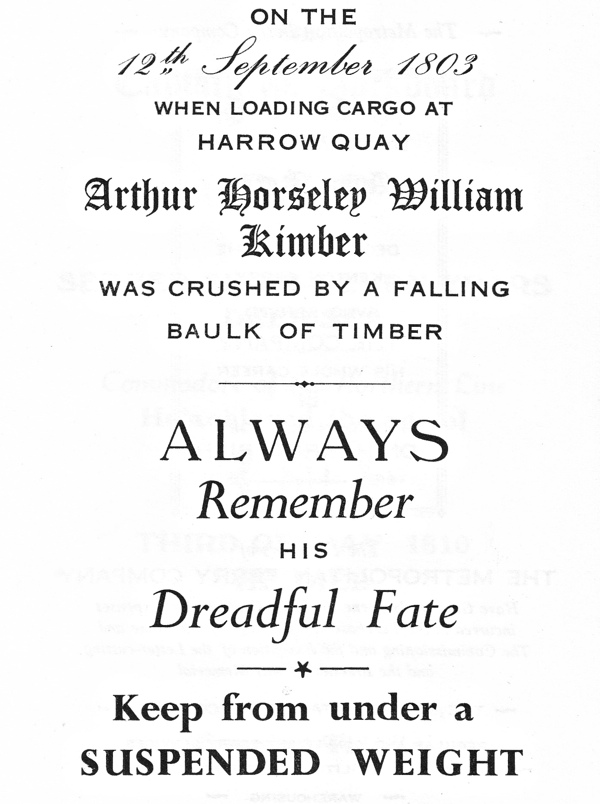
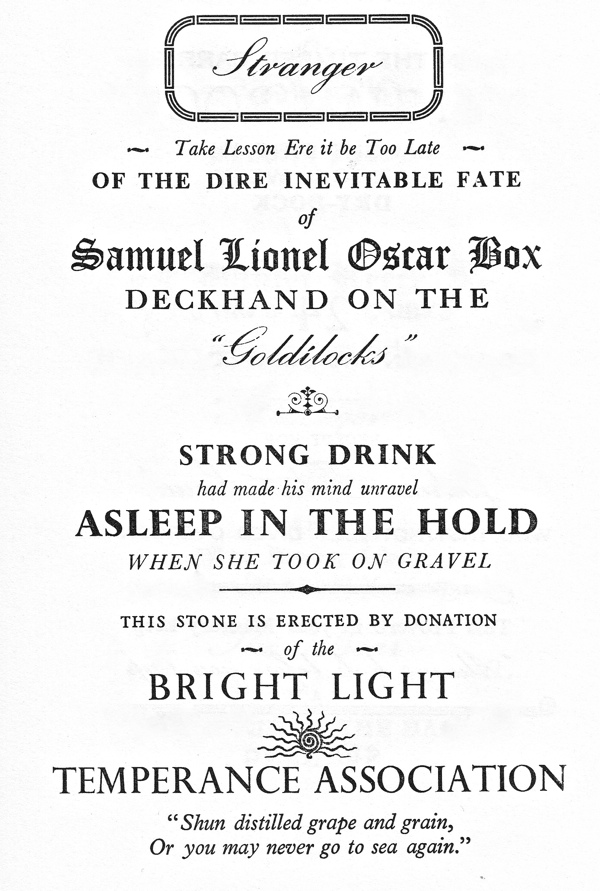
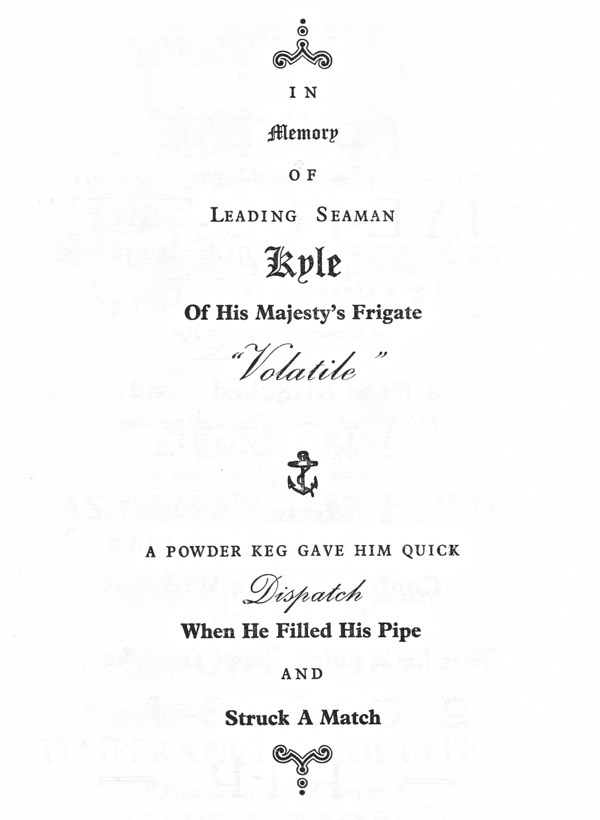
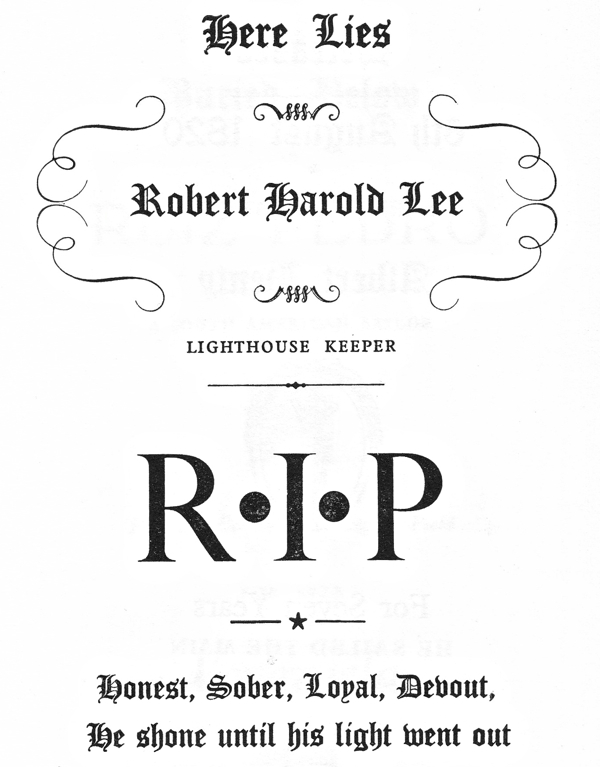 Texts copyright © Leonard McDermid
Copies of Northwest Passage, written, handprinted and bound by Leonard McDermid at The Stitchil Marigold Press can be obtained from www.theshopfloorproject.com
You may also like to read
Columbia Road Market 71

Each year at this time, I buy some Pinks from Columbia Rd to add to my small collection of Dianthus, for just a couple of pounds each. And to better appreciate the detail and scent of my new prized acquisitions, I keep them on the dresser for a few weeks in some of my old pots that I have found in the market, before I plant them out at the edge of a dry border in the hope to see them bloom again next Summer. In fact, the luscious Whatfield Ruby that I bought last year at Columbia Rd for three pounds has just finished flowering in my garden.
These distinctive flowers have been in cultivation since the medieval period (Shakespeare calls them “gilliflowers”). And the verb “to pink” dating from the fourteenth century, meaning to perforate – as in “pinking shears” – may be the origin of the common name, referring to their denticulated petals. In turn, the word “pink” as a colour may originate from these flowers that come in such elegant variety, and I love the subtle range of tones from sugared almond to coral, perfectly complemented by their silvery, grey green stems and narrow leaves.
Pinks evoke memories of my mother and grandmother’s gardens, where both had a cherished corners for Dianthus, and I always love to see them in the wild too, in their spindly natural incarnation – whether in the Hebridean machair, upon the cliffs in Dorset or high on the Pyrenees. Rich in association of many times and places, it lifts my spirits to encounter their subtle clove-like scent when I walk into the room each morning. These Pinks have brightened my house through the dullest cloudiest days this June.

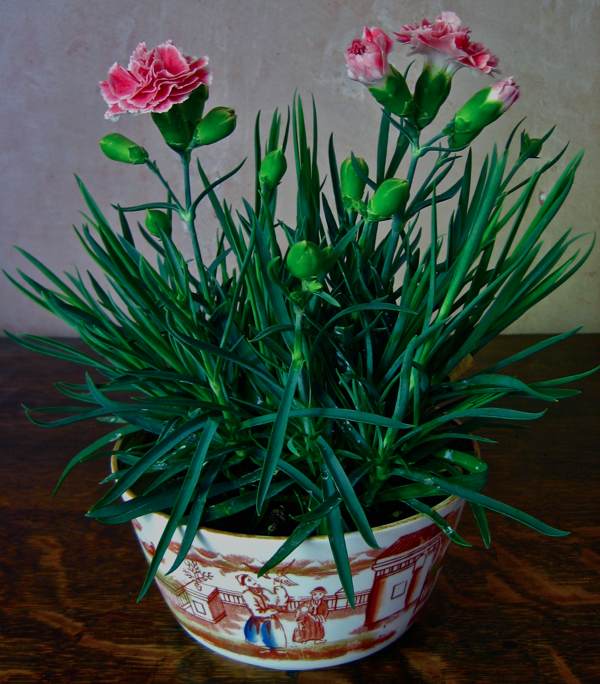

Whatfield Ruby
Emanuel Litvinoff, Writer

At ninety-six years old, Emanuel Litvinoff is taking it easy now, enjoying long afternoons of contemplation, gazing out from the tall windows of his tiny flat in a Georgian terrace in Mecklenburgh Square, Bloomsbury, to the tall plane trees where woodpeckers and crows are to be seen. Yet still he thinks back to the two tenements off Cheshire St where he grew up in the nineteen twenties.
In 1913, Emanuel’s mother and father fled Odessa to escape the pogroms in which thousands of Jews were killed – they travelled steerage and hoped to get to New York but they never made it beyond Spitalfields where Emanuel was born in 1915. When the First World War broke out, Emanuel’s father returned to Russia and never returned, which left Emanuel’s mother to bring up her family alone by taking in sewing. These were the circumstances in which Emanuel grew up, within the confines of his East End Jewish ghetto – “the small planet” as he termed it in his writing – and his beautiful account is full of feeling, remarkable for its emotional candour and lack of sentimentality, tracing the kindness and the cruelties of existence in a series of clear-eyed episodes from life of the young writer.
Although Emanuel won a scholarship to study the trade of his choice upon leaving school, he discovered that every one he selected was closed off to him as a Jew, and so he struggled, taking a series of menial jobs through the depression of the nineteen thirties and ended up working in the fur trade, nailing wet fur to boards. “It was tough,” admitted Emanuel. “I was often so hungry that I would hallucinate. We fought every day for our lives.” He remembers queueing for food in Whitechapel, applying to the Jewish Board of Guardians for a pair of boots and sleeping rough. Yet Emanuel was a born writer and in 1942 a slim volume of sombre poems was published, and when, on his first wife, Cherry Marshall’s, encouragement, he submitted a short story to an Evening Standard competition, he won a car. In the post-war literary world, Emanuel counted Dylan Thomas among the fans of his work as his writing took flight in the creation of articles, poems, novels and plays. And, with a strong moral sense enforced by his own experience Emanuel wrote a poem that challenged T.S. Eliot over the antisemitism expressed in his early work, and even Eliot had to admit, “It’s a good poem.”
All this I knew before I went to visit Emanuel Litvinoff, but when I walked into his room, lined with books and illuminated by floor-to-ceiling windows, where he lives with his second wife Mary McClory, I was touched by the modest presence of the man. Recently Camden Council have withdrawn the support for Emanuel which had been recommended by doctors at University College Hospital after Emanuel received treatment there, leaving Mary to take care of her husband without any assistance. Emanuel’s response is sanguine. “It seems the same as 1931 all over again,” he said, shaking his head in disappointment, “This is a depression caused by financiers and bankers, but it’s the poorest who are paying for it.”
Mary and Emanuel have been together for twenty-seven years and have a twenty-five year old son, Aaron. Now Mary has given up her job as a teacher to care for Emanuel full-time and while he sits perched in his chair wedged between bookshelves, she has created three elaborate balcony gardens for him to look out upon, growing rocket, beetroot, sweetpeas, nasturtiums and California poppies from seed and even potatoes in a pot. A sense of peace borne of mutual trust presides over this couple here in this quiet flat, looking down upon the old square. Mary brought out some original editions of Emanuel’s books which she had been looking at to compile a collection of his poetry and Emanuel was eager to examine these treasured copies, holding the pages right up to his nose and scanning the lines of verse as if for the first time, yet travelling a half-remembered journey in his mind.
Although frail, Emanuel certainly retains his charm and, when he stands, his physical presence, natural authority and stature become apparent too.“After a lapse of time, the past becomes a mythical country,” he wrote in 2008. A sentiment that has specific meaning for Emanuel Litivinoff as one who has travelled such an odyssey over almost a century and for whom the distant past of his childhood can be recalled only in fragments now – yet thanks to his extraordinary literary talent, it is a story and a world that exists forever in the pages of his masterpiece of autobiography, “Journey Through a Small Planet.”

Emanuel at his flat in Mecklenburgh Square, 2011.

Emanuel revisits Brick Lane, 1972.

Emanuel standing on the Pedley St bridge off Cheshire St in 1972

Emanuel with his brothers Abe and Pinny on 18th December, 1940.

Emanuel is the second from the right in the second row of this picture of class one at Wood Close School in the nineteen twenties.

The earliest photograph of Emanuel with his two brothers

Emanuel Litvinoff
New portraits copyright © Lucinda Douglas-Menzies
Find out more at www.emanuel-litvinoff.com












