
The Book Launch at Christ Church

As I left the house at quarter to seven and made my way through the dark foggy streets towards Christ Church, the bells began to ring. Turning the corner from Princelet St into Wilkes St, I met Stanley Rondeau the Huguenot – whose ancestor Jean Rondeau came to Spitalfields in 1685. Stanley was lingering outside number four where his forbears’ house once stood. “The bells are ringing for us,” I said to him and he gave me a sympathetic nod of recognition as we shook hands, before walking onwards to the church together.
Coming round into Commercial St, I had the biggest surprise of my life to witness hundreds of excited people gathering to be admitted into the church. With the clamour of bells echoing in my head, I climbed the steps quickly and made my way through the crowd to the door. “They’re not opening it until seven,” I was told by an authoritative bystander, causing me to break into a sweat, and so I hammered on the door. Thankfully, speaking the magic words, “I am the author,” assured my admission.
Once inside, I was greeted by my oldest friend from college days, now a teacher in Somerset, who had let her class go home early in order to get a train from Taunton and be in Spitalfields by seven o’clock. She brought me a bunch of primroses picked in a lane near Wiveliscombe that morning and we sat quietly in a corner, immediately absorbed in exchanging news.
Then the doors opened and great surge of people led by a contingent of magnificently attired Pearly Kings & Queens came into the church filling the nave and side aisles – a wonderful vision to see so many of those I have written about, all together in one place consuming Eccles cakes and beer. At once, readers were recognising those they knew from my stories and I saw many spontaneous introductions which ignited the party, firing up the social event at the core of the evening, as hundreds of people who had never met before entered into lively conversations with each other. It was the party of the year in Spitalfields. A night that will be discussed in The Golden Heart for months to come. I could have stood and watched the spectacle of it all evening. I could have spent all evening talking to all the friends that I made through my interviews – but it was not to be.
I sat down at a table and, even without announcing myself, I was handed a book to sign and then another and another. In fact, I signed three hundred in an hour and a half, concentrating my mind upon the practical task of maintaining the quality of my handwriting and spelling everyone’s name correctly. Yet most touching were the moments of connection as I shook hands or made eye contact with readers who had so graciously come to meet me. What an extraordinary, unforgettable moment of mutual recognition it was when we got to see each other at last, meeting in the temporal world. Now I know who I am writing to.

Rodney Archer, the Aesthete, escorts Sandra Esqulant, the Queen of Spitalfields.

Leila’s Cafe served the Eccles Cakes from St John with slices of Lancashire Cheese.

Truman’s Beer served Truman’s Runner Ale.

Elizabeth Hallet, Editor of Saltyard Books, introduced the book.

Andy Rider, Rector of Christ Church Spitalfields, made a blessing upon the book.

Mark Hearld, Artist, Elizabeth Hallet, Publisher & Angie Lewin, Artist.

Gary Arber, Printer & Flying Ace, with two admirers.

Stephen & Clive Phythian, Tailors from Alexander Boyd.

Nevio Pellici & Fiancée.

Matthew Reynolds of the Duke of Uke introduces the Ukelele Orchestra.

The Ukelele Orchestra played “Troubles are like bubbles.”

King Sour, Rapper of Bethnal Green.

Pearly Kings & Queens.

Captain Shiv Banerjee, Justice of the Peace.

Paul Gardner, Paper Bag Seller, autographs books for fans.

Jason Hart, WordPress Wizard, & Rob Ryan, Artist & Papercut Supremo.

Novelist Sarah Winman & stylish friend.

Mavis Bullwinkle & photographer friend.

Jodie Krestin & Pamela Freedman, formerly of The Princess Alice in Commercial St.

Paul Gardner, Market Sundriesman & Jo Waterhouse, Antiques Market Trader.

Nick Appleton, Animator & Paul Bommer, Artist.

Boudicca & admirers.

King Sour & his crew.

Paul Bommer, Artist, Kitty Valentine, Artist & Leo, Artist.

Carrom Paul, Proprietor of the Carrom Shop, supplied Carrom Boards.

Nikki Cleovoulou, Pamela Freedman & Renee Cleovoulou.

At one point the line stretched round to St John in Commercial St.
[youtube u2ej3o_ET2I nolink]
Photographs by Sarah Ainslie & Jeremy Freedman,
additional images by Alex Pink & Amy Smith
Film by Sebastian Sharples
Charles Goss’ Photographs

Borer’s Passage, entrance to Old Clothes Market, 16th July 1911
Stefan Dickers, Archivist at the Bishopsgate Institute was looking through a box of uncatalogued photographs recently when he recognised the handwriting of his predecessor, Charles Frederick William Goss – the first Archivist at the Institute, from 1897 -1941 – and he realised he had discovered a set of around fifty pictures taken one hundred years ago to record the streets in the immediate vicinity. Unseen for many decades, it is my privilege to publish the first ever selection from these fascinating photographs today.
It is not known if Goss took these photographs or if he commissioned then, yet his inscription upon the reverse of “Railway Tavern, London St. Taken 8th October, 1911. Printed 1st December, 1911. Demolished 1911.” suggests that he was the photographer. The son of a plasterer and of the first generation of his family to be literate, Goss built the foundation of the archive as his life-long vocation and later wrote, “The years I spent at Bishopsgate were the happiest years of my life.” And today, Stefan Dickers talks fondly of William Goss as if he were a personal friend, because Goss’ presence – signified by his careful copperplate handwriting – is everywhere in the archive.
Compared to the photographs by Henry Dixon by for the Society for the Photographing the Relics of Old London, taken in the eighteen eighties, which mostly show buildings straight-on and in which the people are incidental, many of Goss’ photographs possess a more apparent subjectivity. The nature of the set of the pictures manifests the purpose of recording the streets as they were in Goss’ time, but there is also a poetic sensibility at work that seeks to contrive artistic compositions and in which the presence of people is integral to the pictures.
In “Savage Gardens, east side, 5th June 1911” a boy is caught in the very moment of swinging a cricket bat. He is the only living thing in a picture filled by the architectural grid of the terrace behind him, and his presence reveals the tension – between recording the buildings and the fleeting drama of human life that passes before the lens – which characterise Goss’ pictures. Equally intriguing is “Doorway, 3 Fenchurch Buildings, 28th October 1911” in which a man stands in the shadow just within the door. The photographer could have asked this man to move or waited until he had gone, yet he chose to include him and by doing so he transforms what might be a routine architectural record into a compelling image of permanent enigma. The girl in the hat standing in “1 Savage Gardens, Aldgate, 5th June 1911” proposes another unknowable drama. The key element in the composition of the photograph, her presence invites speculation that cannot be resolved.
Goss’ abiding concern, reflecting his own family background, is manifest in the vast London collection at the Bishopsgate with its strong emphasis upon the lives of working people. A concern illustrated sympathetically in “Borer’s Passage, entrance to Old Clothes Market, 16th July 1911,” in which people become the central subject of the photograph, taking precedence over the buildings. This is an image that is closer to street photography than architectural documentation.
Goss’ curious pictures reveal something of the essential nature of photography as a medium premised upon the capture of the ephemeral moment. My own experience has taught me that setting out to make a photographic record of the present day sets you apart, even as you are in the thick of the crowd, and makes you more vividly aware of the transience of the drama of life surrounding you, imbuing the everyday with an irresistible poignancy. And, from the evidence of this set, I suggest that whoever took these photographs felt that emotion too.

Leadenhall St from Saracen’s Head, Aldgate, looking west, 16th July 1911

Phil’s Buildings, Houndsitch, 16th July 1911 – London’s largest second hand clothes market

Doorway, 3 Fenchurch Buildings, 28th October 1911

Love Lane, looking south, church of St Mary at Hill, 18th September 1911

7 Love Lane, Billingsgate Ward, 16th December 1911

Fish St Hill from Lower Thames St, 28th January 1912

1 Savage Gardens, Aldgate, 5th June 1911

Catherine Wheel Alley, Spitalfields, looking north

Savage Gardens, east side, 5th June 1911

Wrestlers Court, Bishopsgate, 1910

Railway Tavern, London St. Taken 8th October, 1911. Printed 1st December, 1911. Demolished 1911.

Charles Frederick William Goss (1864-1946), first Archivist at the Bishopsgate Institute
Photographs courtesy of Bishopsgate Institute
You may also like to look at the photographs of The Society for Photographing the Relics of Old London
In Search of the Relics of Old London
or the photographs of C.A.Mathew
In the footsteps of C.A.Mathew
or
Remembering the Camp at St Pauls
In the week that the City of London evicted the camp from St Paul’s Cathedral, it is salient to recall the moment of joy in October when it all started – upon the spot that is both where campaigners gathered to demand the Magna Carta in 1215 and where the Gunpowder plotters were executed in 1606.

Something extraordinary has happened at St Paul’s Cathedral. Inspired by the recent occupation of Wall St in New York, protestors gathered in the City of London to occupy the Royal Exchange on Saturday, yet the police made sure they never got beyond their rallying point on the steps of the Cathedral. But then – in an unexpected move – Canon Giles Fraser came out of St Paul’s to welcome them and ask the police to leave, effectively granting sanctuary to the protestors. And since Saturday, they have pitched a small encampment of tents beneath the towering West front of Wren’s great edifice, thus establishing a highly visible presence for themselves at the heart of Europe’s financial centre, with the blessing of the Cathedral authority.
In just a few days, this city within the City has established its own life, with a first aid post, legal advice centre, a cafeteria serving meals prepared from donations of food which are being received, a recycling centre and even a university offering seminars in alternative economics and a range of other relevant topics. “We all understand there’s something fundamentally wrong,” one of the tent occupants admitted to to me, citing the prolonged wars, global financial crisis and collapsing economies that are indicative of our time.
“Does the society we live in function to benefit the people who live in it, or for some other reason? – to benefit only the rich? – to benefit those in power?” he asked rhetorically, gesturing to the buildings of the City that surrounded us, “People are losing their homes, their jobs, they cannot pay their bills, and entire countries are going broke – that is why we are here.”
I stood among the sea of tents in the deep shadow of late afternoon with a bright October sky overhead and realised I had arrived in a different place, an intense emotional space, transformed by the presence of those camping there. Everywhere I looked, people were engaging in heated discussions about is right and what is wrong, and what should be done about it. City workers and other passersby had stopped to participate in debates, among the tents, those dwelling there were sitting in circles discussing their beliefs, and upon the steps of the Cathedral large crowds were gathering to participate in disputes filmed by television cameras. “This is not about Left or Right, it’s a human thing,” explained my host, recognising the wonder upon my face in reaction to the spectacle – “something needs to change.”
Yet to my eyes, a near miraculous change had already come about – because the presence of the camp gave everyone the opportunity to speak their minds publicly, to be heard and to listen. The combination of circumstances had delivered a rare moment of liberty, in which recognition of common humanity was uppermost as the basis for all interaction.
The quality of openness and mutual respect – and the possibility that complete strangers could open their hearts to share their beliefs about what kind of world they want to live in – was such that I can only describe this event as a spiritual one.
In front of the vast Cathedral, a man was reciting the sermon on the mount. All around, musicians were playing and the standard anonymity of the City streets was suspended. Normality was exposed as a charade because a group of ordinary decent people felt passionate enough to risk themselves, taking leave of their jobs and families and everyday lives, sleeping on concrete at the onset of Winter in Northern Europe to express their moral outrage at the direction our world has taken. And when you see this, it renews your hope.


[youtube 4UbgTgC5nMY nolink]

[youtube OL94wGGoQBQ nolink]


Spitalfields resident Robson Cezar, the King of the Bottletops, who became Artist-in-Residence at Occupy London, seen here on the cover of the Herald Tribune at the time of the National Strike.

Robson Cezar at Finsbury Sq last November.
You may also like to read about
Five Hundred Eccles Cakes

Justin Piers Gellatly, heroic leader of a secret order of baker knights
How long would it take you to make five hundred Eccles cakes? A day? A weekend? Or, would the first ones be stale by the time you had completed the job? Yesterday, I walked down across Tower Bridge in the spring sunshine to visit Justin Piers Gellatly, head baker at the St John Bakery in Druid St, Bermondsey, as he was making the five hundred Eccles cakes for tonight’s launch party at Christ Church. I did wonder how long it might take yet I discovered that – such is his expertise and facility – Justin can make five hundred Eccles cakes in an hour.
“The boys are good,” he said, giving due credit to his fellows,“but I have made a lot of Eccles cakes in my time. I have nimble fingers and cold hands which really helps – if you’ve got hot hands you can get into trouble with the puff pastry melting.”
I found Justin at the rear of the railway arch beneath the main line out of London Bridge, where the bakery moved from Spitalfields a little over a year ago. At St John Bread & Wine, he operated from a corner of the kitchen, taking the place over at night once the last diners had left, but here he has expanded to fill the entire arch and, with a staff of five, the baking continues twenty-four hours a day. Last year, Justin won the accolade of baking bread for the royal wedding breakfast, and nowadays he supplies forty restaurants, and you can buy his bread at Neal’s Yard Dairy and Selfridges too.
Already, the white-painted arch has changed colour as a result of all the activity within, imbuing it with a golden tinge that manifests the romance of this hidden endeavour – undertaken in a tunnel resembling a magic cave, where Justin presides like the heroic leader of a secret order of baker knights.
When I arrived, Justin had five hundred patties of the filling for Eccles cakes laid out waiting upon a tray of greaseproof paper. Shaped like hockey pucks, these are formed from a mixture of raisins, Muscovado sugar, butter, all spice and nutmeg. On the other side of the table, Justin had rolled out large slabs of puff pastry made to his own recipe and in no time at all he riddled it with as many holes as a gunslinger in a Western, by cutting out circles with his cookie cutter. Justin’s puff pastry, which bakes to a tasty flakiness, is an unapologetic departure from the cakes you will find at Eccles that are made with suet pastry.
Working assiduously, Justin folded the discs of pastry around the filling and then laid them carefully upon a tray, making three cuts in each one – symbolising father, son and holy ghost – before coating them with an egg glaze and sprinkling them with caster sugar. Next, Justin put his babies in the convector oven for fifteen minutes, giving time to pay attention to the raspberry jam he was making for doughnut filling and the granola he was crisping in the bread oven.
I discovered my five hundred Eccles cakes were an inconsequential challenge for the man who makes a thousand every week, as well as closely supervising all the bread and cakes that are produced here. Every day, I eat Justin’s brown sour dough bread, and his doughnuts and Eccles cakes are regular treats, with mince pies and hot cross buns in season. Thus the good things from this bakery have become an inextricable part of my life.
Others may strive fruitlessly to reinvent the wheel but – among his myriad achievements in baking – Justin has excelled at the rather more profitable ambition of reinventing the doughnut. Something that existed in the folk memory as the incarnation of sweet deliciousness had been ruined by mass-production and synthetic jam, until Justin started making his custard ones at St John and restored the doughnut to the pantheon of cakes for a whole new generation. Yet, where once Justin used to make forty on a Saturday at St John Bread & Wine, creating intense competition among residents in Spitalfields to get there before they sold out, now he makes six hundred that sell out equally quickly to the eager customers of Maltby St.“Our biggest thing is doughnuts – it’s a phenomenon!” he admitted to me, unable to resist swelling with pride, “People come up to me in the street and call out, ‘You’re the doughnut man!'”
Just as Justin said this, the oven beeped loudly interrupting our conversation, as if the Eccles cakes wished to remind us they were the centre of attention that day. Once Justin opened the oven, a wave of sugary aroma hit me and when he pulled out the tray, I saw a transformation had occurred. The dumpling-like parcels of pastry were reborn as the golden shining orbs of sweetness we call Eccles cakes. By the time I left the bakery, five hundred were ready and Justin told me he had even managed to get a rare night off too – so now we are all set for the launch party this evening.


Raisins, Muscovado sugar, butter, all spice and nutmeg.

Cases made of puff pastry from Justin’s personal recipe.

Sprinkling caster sugar

Justin puts the Eccles cakes into the oven. (Note the first sighting of hot cross buns this season.)

Justin was also making raspberry jam for doughnuts.

Turning the tray before cooking for a further five minutes to ensure the Eccles cakes are evenly baked.

An Eccles cake by Justin Piers Gellatly.
You may also like to read about
Night in the Bakery at St John
The Bread, Cake & Biscuit Walk
The Tart with the Heart of Custard
On Publication Day
[youtube FunIes3ff2I nolink]
“An elegantly presented, generous and good-natured book, it offers an antidote to the sense of disconnection a big city such as London can engender. A city is its people and here they are celebrated in a way that will resonate beyond the East End.”
Carl Wilkinson, Financial Times, 24/02/2012
“…these wonderful stories shine anew in an attractive, beautifully illustrated book format. We can’t recommend it highly enough.”
Matt Brown, Londonist, 28/02/2012
Click here to buy your copy direct from Spitalfields Life and have it signed or personally inscribed by the Gentle Author.
David Pearson, Designer

“I’ll do this to the day I die if I’m allowed to!”
This man is so busy that the only way he can keep still is to sit on his hands. He is David Pearson, a designer who has been responsible for some of the most distinctive books produced in recent years, and it was my good fortune that he chose to apply his talents to designing the book of Spitalfields Life. I needed someone who could find a way to let my stories be at home upon the printed page and David rose to the challenge superlatively.
Over the last year, there have been innumerable trips over to his long narrow studio in Back Hill, Clerkenwell – the traditional home of printing in London – as David’s ideas have evolved until, at the very beginning of this year, we arrived at the complete volume in which one hundred and fifty stories, three hundred pictures and innumerable illustrations all fit together to become one four hundred and fifty page book with its own unity of purpose. Now that the mighty task is done and we can draw breath at last, I took the opportunity to make a return visit and enquire more of David’s rare clarity of vision.
Starting as a junior text designer at Penguin as recently as 2002, David was given the job of selecting the titles for a history of the company’s cover designs. In two weeks, he went through the entire sixty year archive, taking each one off the shelf for two seconds and replacing it again. Not only did “Penguin By Design,” the book David compiled and designed, achieve unexpected popular success, reaching a readership far beyond aficionados of publishing history, but the research that he undertook granted him a unique and inspiring insight into the evolution of book design in this country.
“Everything I have done since has been based upon an application of that to my own work,” he admitted to me with blatant modesty and an easy relaxed smile, “Good design is about refinement and details – I’ve learnt it’s ok not to reinvent the wheel.”
On the basis of “Penguin By Design,” David was given the job to design the covers for Penguin Great Ideas, an experimental series of low-budget books with two-colour covers. “I’m not an illustrator and I can’t take photographs, so I decided to do all the covers with type,” explained David, almost apologetically. Yet David’s famous landmark designs for these books, derived from his knowledge of the history of Penguin covers, were a model of elegant simplicity that stood out in bookshops and sold over three million copies. “I saw people picking them up and they didn’t want to put them down!” he confided to me, rolling his eyes in delight, “They were a phenomenon.” Then he placed a hand affectionately upon a stack of copies of this series for which he has now designed one hundred covers.
“I was only ever good at one thing, I used to finish off other people’s drawings for them at school,” he revealed to me suddenly, looking up as he retreated from his previous thought, taking me back to the beginning by recalling his childhood in Cleethorpes and adding, “I decided not to be an artist because I always need a brief or I flounder, so instead I trained to be a designer.” David’s disarming self-effacement is entirely in contrast to what I had expected, knowing him only through his bold designs.
It was on the basis of David’s brilliant typographic covers for the Great Ideas series, that I leaped at the chance of having him take on Spitalfields Life – because I wanted a designer who could work with classic type in a modern way and create something with an attractive utilitarian quality, reflecting the contents and subject of the book. Before I met him, I braced myself to encounter a fierce typographer with an authoritarian manner but – to my surprise – there was David, chuckling like a schoolboy, and with his corkscrew curls and plain features resembling a saint that just stepped off the front of a Romanesque cathedral, and lounging comfortably with his lanky limbs outstretched.
For interest’s sake I sent David a copy of a page of Dickens “Household Words” from 1851, as the closest precedent I knew for a collection of short literary pieces. Dickens published these weekly and for tuppence his forty thousand readers in London received a pamphlet of half a dozen stories every Saturday morning – a publication that today would almost certainly be a blog. When David saw this, he decided to adopt the same two column structure for Spitalfields Life, recognising that this format brought a pace and a dynamism to the flow of the type, and the font he chose was Miller by Matthew Carter, a redesign of a Scotch Roman face of a century ago which possesses subtle details, and that he characterised as “resolute.” What most appeals to me about David’s designs is that they do not look “designed,” they look as if they arrived how they are naturally and the success of his work on Spitalfields Life means that I could not now imagine the book any other way.
Like me, David likes to work late into the night when the phone stops ringing and the emails cease. “It’s a way to be able to pay attention to everything to the Nth degree,” he confided to me, “I can’t work quickly.” In spite of his success, David works long hours and weekends in his tiny studio where he has been established for the past three years. “I’ll do this to the day I die if I’m allowed to!” he declared to me candidly, almost in a whisper.

David Pearson’s beautifully proportioned title page for Spitalfields Life.

Charles Dickens’ Household Words provided the inspiration for David Pearson’s page design.
 David Pearson’s page design for Spitalfields Life.

David designed this book and compiled the covers.

David’s redesign of the penguin for Penguin Books.

 Illustration by Joe McLaren

Artwork by Phil Baines


Illustration by Joe McLaren

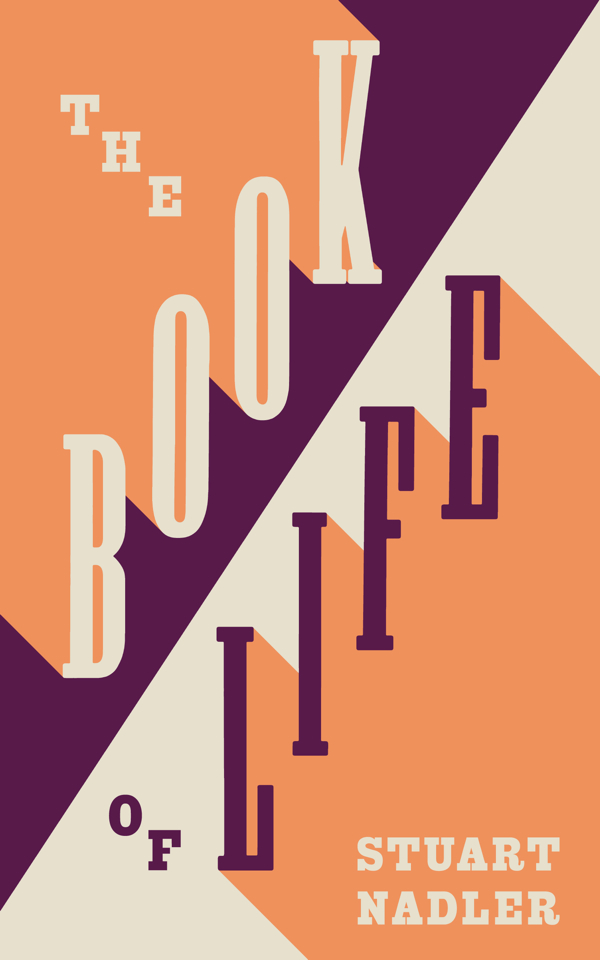


Cover design by David Pearson, Staffordshire dogs by Rob Ryan.
You may also like to read about
The Spitalfields Suite by Lucinda Rogers

Commercial St and Spitalfields Market
One of the joys of compiling the book of Spitalfields Life was the opportunity to commission a suite of six large detailed drawings of Spitalfields from Lucinda Rogers to be published as double-page spreads, interspersing my stories with vibrant images of the life of the streets. An exhibition of these magnificent original drawings for the book is at Rough Trade East in the Truman Brewery from now until April 1st and – as an exclusive bonus – anyone that buys a copy from Rough Trade gets a handsome set of six cards of these views included. Three of “The Spitalfields Suite” are reproduced here followed by my original profile of Lucinda Rogers which offers a retrospective of her work in the East End.

Brick Lane with the Brick Lane Mosque Minaret.

Fournier St

Lucinda Rogers’ original drawings of Spitalfields are on display at Rough Trade until April 1st.

Even before I met her, I always admired this view looking West over Spitalfields by Lucinda Rogers that is framed on the wall of the Golden Heart in Commercial St. It is a large drawing executed in vigorous lines placed with superlative confidence, and filled with subtlety and fluent detail to reward the eye. The pale cloud on the horizon high above the City – illuminating the grey Northern light of a London sky – is a phenomenon that anyone in Spitalfields will recognise. What I especially like about this drawing is that there are so few lines, enough to summon the drawing into existence yet without any superfluous gesture. And although there is no pretence to photographic realism, the vivid spatial quality is such that when you gaze into the deep spaces of the composition it can feel almost vertiginous, especially if you have had a few drinks.
The next work of Lucinda’s to impinge upon my consciousness was her portrait of Paul Gardner, which hangs up behind the counter at Gardners’ Market Sundriesmen in Commercial St, where his family have traded from the same building since it was built in 1870. Here you see Paul, in his world composed of paper products, at ease behind the counter in a characteristic pose of dreamy contemplation, ever expectant of the next customer to burst through the door demanding paper bags. The crowded symphonic detail of the bags and tags and signs in this masterful portrait manifest the contents of Paul’s extraordinary mind, possessing a natural facility to keep to track of all his stock, as well as working out all the prices, discounts for multiples and VAT percentages with ease.
I do not know what I expected when I met Lucinda Rogers for the first time, but I certainly was not prepared for her alluring poise, as she arrived looking chic in a tweed coat with dramatic long straight copper hair, pale skin and a huge ring with a rectangular stone – with an intensity of glamour as if she had stepped from a Jean Luc Godard movie. As we shook hands and I complimented her on her work, she flashed her hazel eyes with a generous smile, and I was momentarily disarmed to realise that she was looking at me with the same shrewd vision which she demonstrates in her elegant work. Once introductions were accomplished, we enjoyed several hours studying this remarkable set of drawings, which exist collectively as a unique portrait of our neighbourhood as it was in the first decade of this new century.
They were created by Lucinda between 2003 and 2008, for an exhibition at the Prince’s Foundation Gallery in Shoreditch and then for a feature in an Italian design magazine, Case da Abitare, as she explained to me, “I was offered an exhibition, so I decided to make it of the East End – because I had only drawn New York up until then – with the focus on Spitalfields and especially on people working. So not really about the buildings, but about recording the things that go on inside the buildings and how they are changing. Not like a photograph, but more about a particular day, your feelings, and what you choose to leave out or leave in to make the picture. You are making something that’s less factual and more subjective.”
The first drawing Lucinda made was of the B2B building in Usborn St at the bottom of Brick Lane. “The reason I did this drawing was because of the numbers that are cut out of plywood and nailed to the wall to advertise the sound studio where the soundtracks for Bollywood films are recorded. The floor beneath is occupied by the rag trade, the Jewish Monumental Mason is next door, in between is the Italian Coffee Shop, while in the background the Gherkin is being built and in the foreground is an apple core.” she told me, enumerating the diverse elements in her picture that coalesce to define the elusive mutable culture of this location, where today an estate agent occupies the property.
The modest aesthetic of these drawings upon tinted paper with just a few touches of colour is dramatically in contrast to their bold compositions and scale. Lucinda’s work is closer to cinema than photography, because confronted with the physical presence of the works you cannot resist turning your head to scan the extent of these images.“I see the finished drawing in my mind,” Lucinda said to me plainly, revealing an imaginative confidence that permits her to work without preparatory drawings, defining the structure of these pictures with her first deftly-placed bold brushstrokes.
Each was completed in a single session on location in the street or in the workplace, contributing to the spontaneity that all these drawings share. The fragile lines that conjure these images out of ether give them tremendous energy and life, whilst also emphasising their diaphanous transient quality of vision. As Lucinda Rogers admitted to me with philosophical smile and a gentle shrug of perplexity, “Everything that I draw changes…”

Paul Gardner at Gardners’ Market Sundriesmen.

Sunday in the Spitalfields Market at Christmas.

Leatherworkers at Hyfact Ltd, Links Yard, Spelman St.

KTP Printing, Princelet St.

Night in the kitchen at the Beigel Bake, looking out towards Brick Lane.

Big John Carter playing Boogie Woogie on Brick Lane.

Saffire furniture shop, Redchurch St.

At the rear of the Nicholls & Clarke building, Norton Folgate.

Columbia Rd Flower Market.

Eugene at North Eastern Motors, Three Colts Lane.

Junction of Middlesex St and Wentworth St, viewed from Petticoat Towers.

Phil at Crown & Leek joinery, Deal St.

B2B Building, Osborn St.

Sunrise wedding services, Hanbury St.

Bishopsgate Goods Yard with Spitalfields and City beyond, viewed from pool deck at Shoreditch House.
Drawings copyright © Lucinda Rogers


