
Colin O’Brien’s Kids on the Street

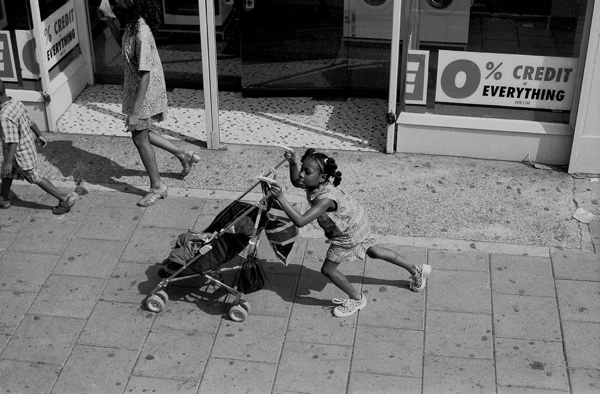
Spitalfields Life Contributing Photographer Colin O’Brien has been photographing children playing on the street since 1948 when, at eight years old, he snapped his pals in the markets of Hatton Garden and the bombsites of Clerkenwell that served as their playground. And now Colin has searched back through his archives, documenting the changing patterns of juvenile street life over more than sixty years, to create this exuberant selection of images for a new exhibition at the Museum of Childhood in Bethnal Green.
For Colin in his childhood – as for many others – the bombed-out ruins of London proved the largest adventure playground in the world and the streets of the city and its markets offered as much drama, distraction and delight that any child could wish for. These pictures show how children once inhabited the city and made it their own, exploring and discovering the world that they would inherit, learning to respect it dangers and savour its pleasures. Colin was especially fascinated by the age-old pastimes such as hopscotch and skipping games, and the ingenuity that children displayed in making their own amusement, turning any space into a playground.
Little did Colin know he was photographing the end of a certain street culture, as the age in which children could run freely passed away, and the television and then the computer encouraged them indoors. In the current climate of anxiety over perceived threats, today’s children have lost the freedom of previous generations and consequently are denied the opportunity to become streetwise at an early age. Yet Colin’s superlative photographs exist to remind us that the city belongs to children, as much as to everyone else, and removing their right to the streets sacrifices an important part of the urban experience of childhood.


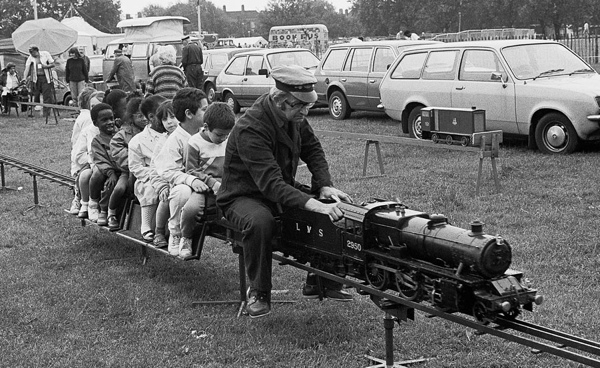


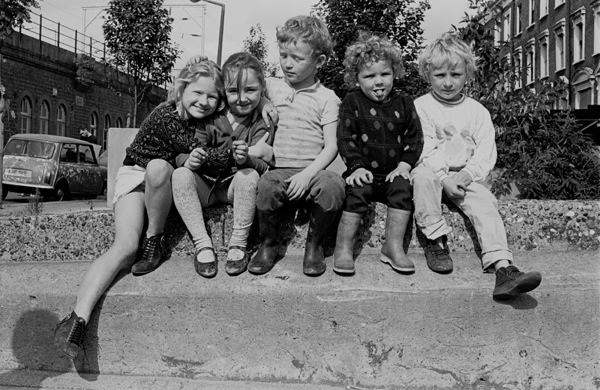


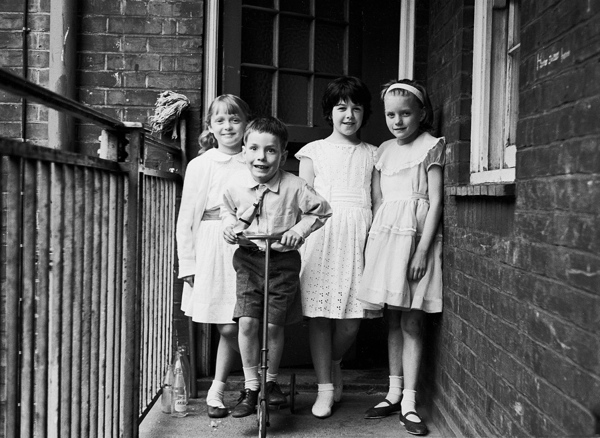
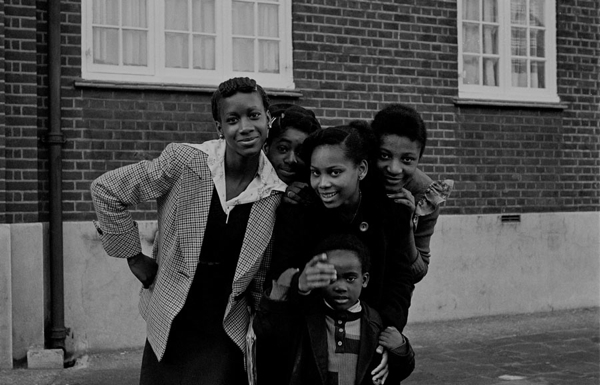




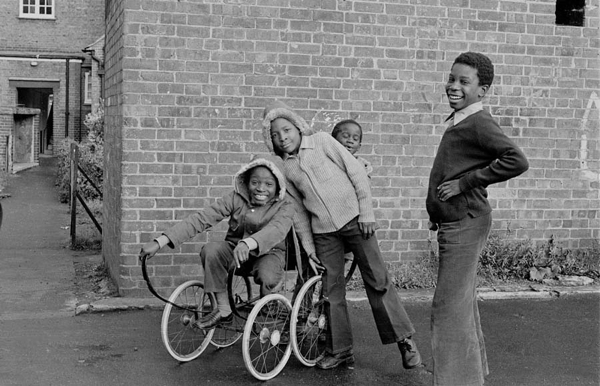


Colin’s photograph of his pals, taken in 1948 at the age of eight in Hatton Garden.
Photographs copyright © Colin O’Brien
Playing In or Out? the exhibition featuring Colin O’Brien’s photographs runs at the Victoria & Albert Museum of Childhood in Bethnal Green until November 4th 2012.
Take a look at more pictures by Colin O’Brien
Travellers’ Children in London Fields
Henrietta Keeper’s Collection

Henrietta Keeper, Singer
Henrietta Keeper (widely known as “Joan”), the vivacious octogenarian ballad singer who commonly performs at E.Pellicci in the Bethnal Green Rd on Fridays, invited me to round to her tiny flat yesterday to show me her remarkable collection of photographs and meet her daughter Lesley who is custodian of the family album. And it is my pleasure to publish some favourites here today.
These pictures show Henrietta’s life as it existed within a small corner of the East End on the boundary of Spitalfields and Bethnal Green in the nineteen fifties. On one side of Vallance Rd was Cranberry St where Henrietta’s mother-in-law Selina lived and took care of her daughters while the family waited for a house of their own. On the other side of Vallance Rd was Selby St where Henrietta’s husband Joe and his brother Jim ran Keeper & Co, making coal deliveries. And at the end of Vallance Rd was New Rd where Henrietta worked as a machinist at Bartman & Co making coats and jackets.
Having grown up in Bethnal Green during the war and brought her own family up though the austerity that followed, Henrietta is a woman of indefatigable spirit. Most remarkable of all, she sang throughout these years, winning innumerable singing competitions and giving free concerts – and she is still singing today.
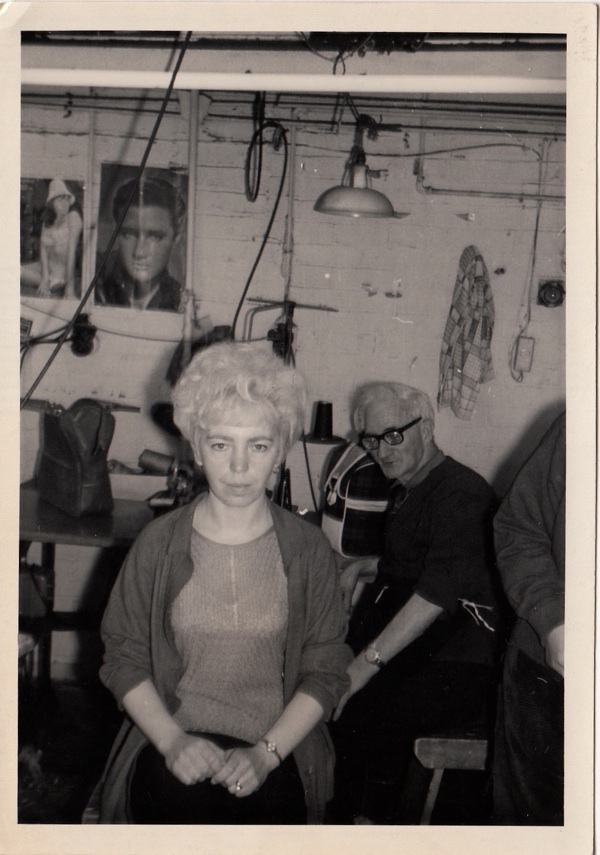
Henrietta with fellow machinist Izzie. “When I was nineteen I started here and I became the top machinist,” she explained, “I think my hair looks a bit like Barbara Windsor’s in this picture.”
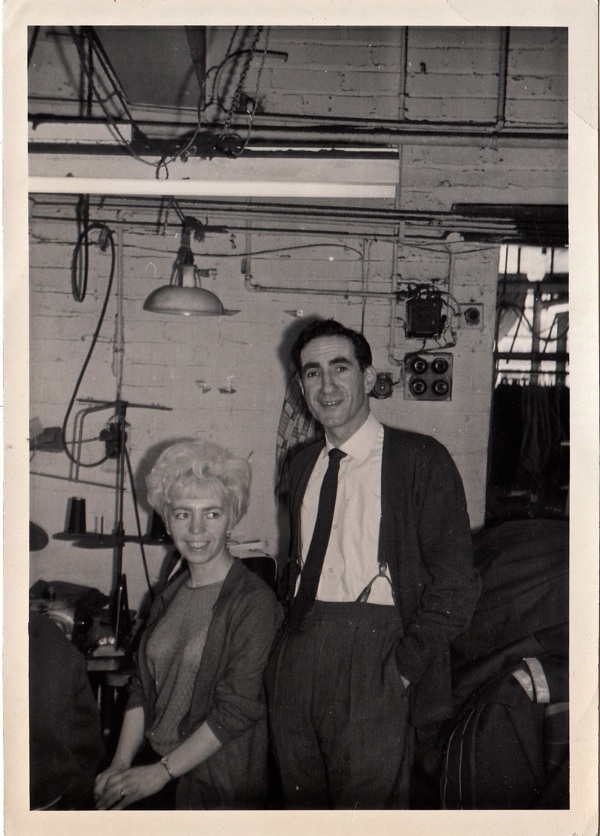
Henrietta with Mr Bartman at Bartman & Co.

“This is Selina Keeper, my mother-in-law at her house in Cranberry St. She was real Victorian lady. She used to whip the cup of tea off the table before you had finished it!” said Henrietta. And Lesley added, “She had a best front room that she kept under lock and key, and only once – when she unlocked it – did I go in, but she said ‘Get out!’ You couldn’t touch anything. It had to be kept perfect.”

“My husband Joe took this picture of his two best friends George Bastick and Leslie Herbert in Nelson Gardens next to St Peter’s Church, Bethnal Green. What a pity he isn’t in it?”

Coronation Day, 1953, celebrated at Hemming St, Bethnal Green. Lesley is in the blazer on the right hand side of the front row and Henrietta can be distinguished by her blonde hair beneath the Union Jack, peering round the lady in front of her.

“This is Jim Keeper, my brother-in-law, with his horse Trigger. My husband, Joe, worked with him and he had the biggest coal round in the East End – Keeper & Co. Joe was so strong he could carry a two hundredweight sack of coal on his back up the stairs of the buildings with ease. The brothers used to go home to lunch with their mum in Cranberry St and take Trigger with them. She always collected the horse manure for her roses while they were there and when the Queen Mother visited the East End, she leaned over the fence and said ‘This one should win best garden.'”

“Taken in 1947 at Southend, when I was twenty, this is Cathy Tyler, my sister Marie and me – I was known as Minxie at the time and we all sang together like the Andrews sisters. I was a bit shocked when I saw it because you can see I am pregnant. I thought, ‘Is that me?'”

Henrietta (far right) photographed with her workmates by a street photographer around Brick Lane during a lunch break in the fifties.

This is Henrietta’s daughter Lesley visiting Petticoat Lane with her grandfather James Keeper in 1953. “He was a delivery man with a horse and cart, they called it a ‘carman,'” Henrietta remembered, “he was also a cabinet-maker and he brought me beautiful polished wooden boxes that he made.”

Henrietta and her husband Joe with their daughter Lesley on a trip to Columbia Rd.

The two children on the right are Lesley and Linda Keeper playing at Cowboys and Indians with their friends in the nineteen fifties in Cranberry St while they lived with their grandmother. Lesley remembers Mrs Dexter across the road who called out “Play nicely on the debris!” to the children and you can see the bomb site where they played in the back of the photograph. Today Cranberry St no longer exists, just the stub of road beside Rinkoff’s bakery in Vallance Rd indicates where it once was.

Henrietta singing at a Holiday Camp at Selsey Bill in the nineteen sixties.
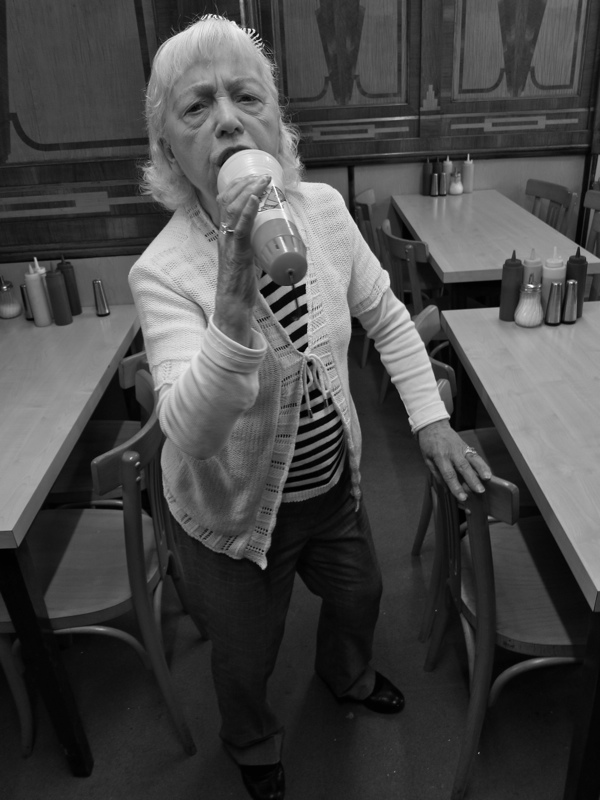
Henrietta singing at Pelliccis last week.

Henrietta Keeper, also known as “Joan”
You may like to read my original portrait
Dick Turpin, Highwayman
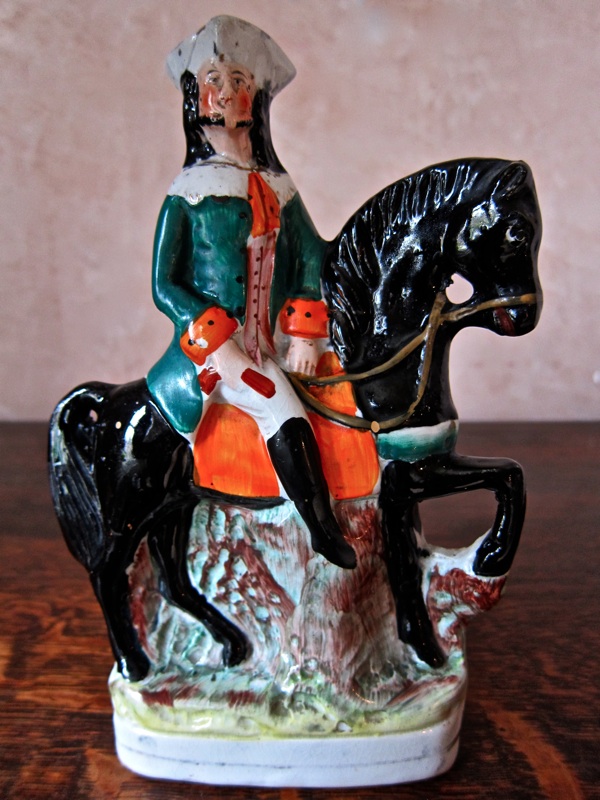
Dick Turpin upon Black Bess
There is a story that Dick Turpin was apprenticed as a butcher in Whitechapel, and – whatever the truth of it – he returned consistently to this area of East London, and there are further stories connecting him to the Red Lion in Whitechapel and the Nag’s Head in the Hackney Rd. Yet as one who led an elusive transitory criminal existence and who achieved fame only after his death, the actuality of Dick Turpin’s life remains uncertain, overshadowed by the vivid fictions that were contrived later.
Richard Bayes, landlord of the Green Man in Leytonstone, was author of one of the earliest accounts, published in 1739 shortly after Turpin’s execution in York.“He was placed apprentice to a Butcher in White-chaple, where he served his Time, he was frequently guilty of Misdemeanours, and behaved in a loose disorderly Manner…” wrote Bayes, emphasising the authenticity of his narrative by taking a role himself. After a horse theft near Waltham Forest in 1736, Bayes tracked the stolen animal to the Red Lion Inn in Whitechapel and attempted to retrieve it from Turpin’s accomplice Tom King when Turpin himself appeared in Red Lion St, a thoroughfare later subsumed into Commercial St.
“Turpin, who was waiting not far off on Horſeback, hearing a Skirmiſh came up, when King cried out, Dick, ſhoot him, or we are taken by G—d; at which Inſtant Turpin fir’d his Piſtol, and it miſt Mr. Bayes, and ſhot King in two Places, who cried out, Dick, you have kill’d me; which Turpin hearing, he rode away as hard as he could. King fell at the Shot, though he liv’d a Week after, and gave Turpin the Character of a Coward…”
Yet it was primarily due to Harrison Ainsworth and his illustrator George Cruikshank in the novel “Rookwood” of 1834 that the story of the butcher-turned-brutal-petty-thief from Essex was transformed into the myth of Dick Turpin – the swashbuckling highwayman who stole from the rich and gave to the poor while charming the ladies with his valour and flamboyant style. A century after Turpin’s death, highway robbery ceased to be a threat in this country, permitting the possibility of a romantic fiction upon the subject. In constructing the myth we recognise today, Ainsworth invented the notion of the death-defying ride to York upon Black Bess to establish an alibi. He ignored the banal fact that Turpin had been operating in Yorkshire for over a year before he was arrested under the name of John Palmer for shooting a “tame fowl,” and his true identity discovered after his arrest only when a letter he signed was recognised in the mail.
Born in Essex in 1705, Richard Turpin set up his own butchery business in Waltham and when trade was slow, he took to poaching venison in Epping Forest and became drawn into robbery as a member of the Gregory Brother’ Essex Gang – one of many criminal gangs that existed on the margins of large cities when times were hard and law enforcement ineffectual. Far from being the “gentleman” as that Ainsworth characterised him, Turpin was capable of savage violence to achieve his desired ends, which this account from Read’s Weekly Journal of February 1735 reveals – “On Saturday night last, about seven o’clock, five rogues entered the house of the Widow Shelley at Loughton in Essex, having pistols &c. and threatened to murder the old lady, if she would not tell them where her money lay, which she obstinately refusing for some time, they threatened to lay her across the fire, if she did not instantly tell them, which she would not do. But her son being in the room, and threatened to be murdered, cried out, he would tell them, if they would not murder his mother, and did, whereupon they went upstairs, and took near £100, a silver tankard, and other plate, and all manner of household goods.”
After the killing of Tom King, Turpin took refuge in Epping Forest where he shot one of the Forest-Keepers who tried to capture him, and the offer of a reward for his arrest for murder published in the Gentleman’s Magazine in June 1737 gives the only contemporary description – “Turpin was born at Thackſted in Eſſex, is about Thirty, by Trade a Butcher, about five Feet nine Inches high, brown Complexion, very much mark’d with the Small Pox, his Cheek-bones broad, his Face thinner towards the Bottom, his Viſage ſhort, pretty upright, and broad about the Shoulders.”
This account of the pock-marked broad-shoulder butcher does not quite match the devilishly handsome highwayman of popular lore, yet Turpin is recorded as meeting his death with remarkable courage. Sir George Cooke, Sheriff of Yorkshire, recalled that, “he behav’d himself with amazing assurance” at the execution and “bow’d to the spectators as he passed.” When it came to the moment and his head was in the noose,“he threw himself off the ladder and expired directly.” As the life of Dick Turpin ended, the legend of Dick Turpin was born.
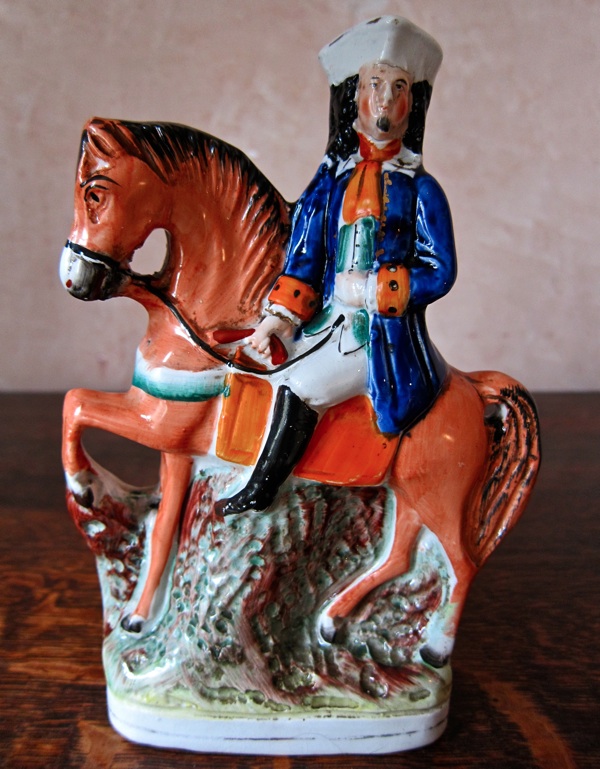
Dick Turpin’s accomplice Tom King – shot in Commercial St.
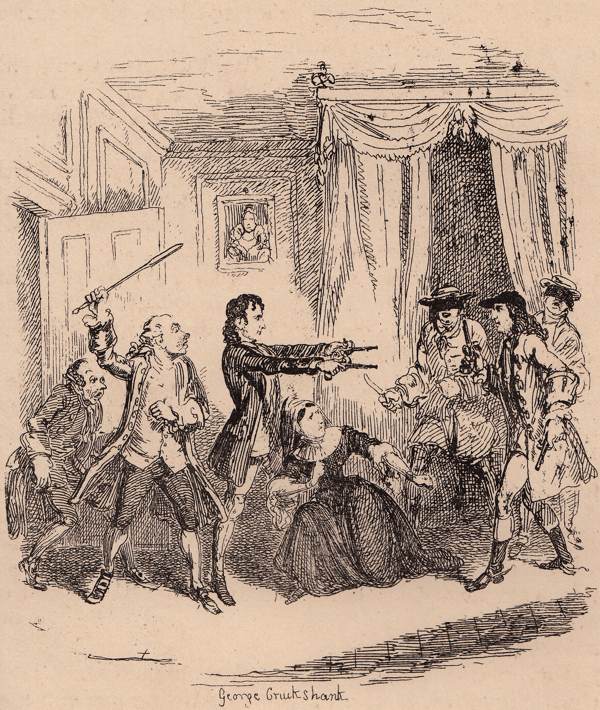
Rescue of Lady Rookwood by Dick Turpin.
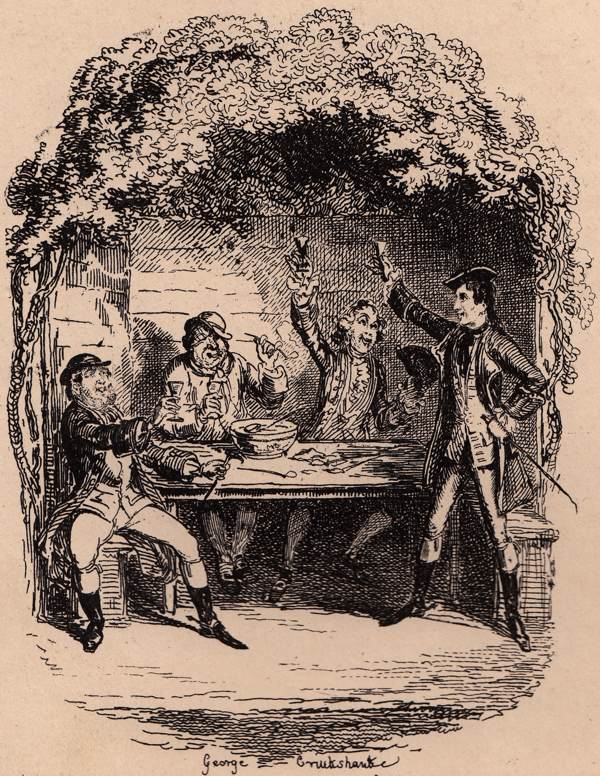
Dick Turpin & Tom King in the Arbour at Kiburn.
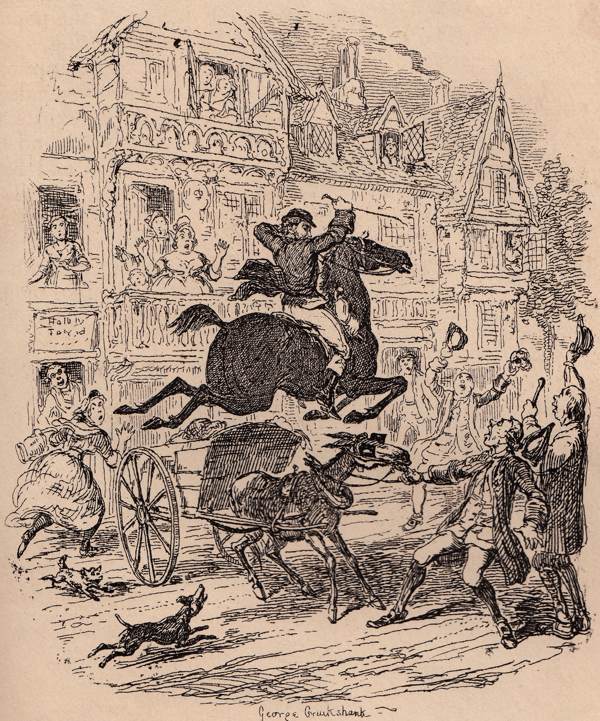
Dick Turpin’s flight through Edmonton.
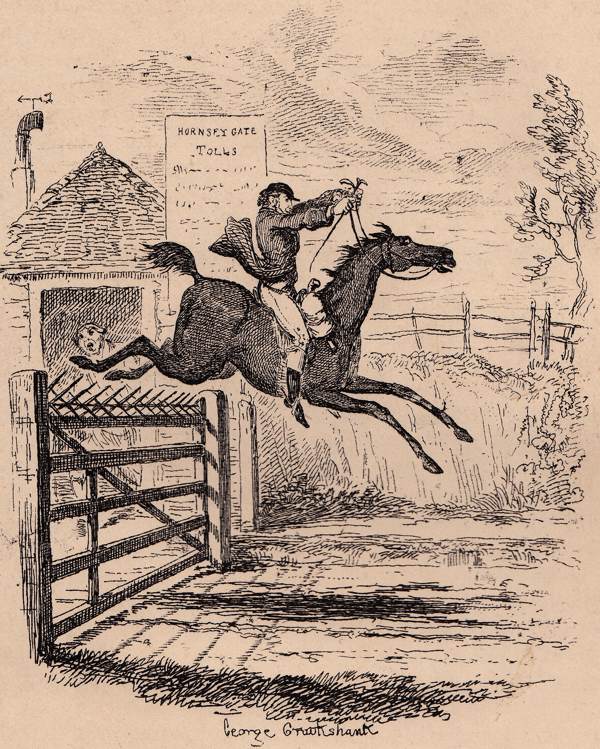
Dick Turpin leaps the Hornsey Gate.
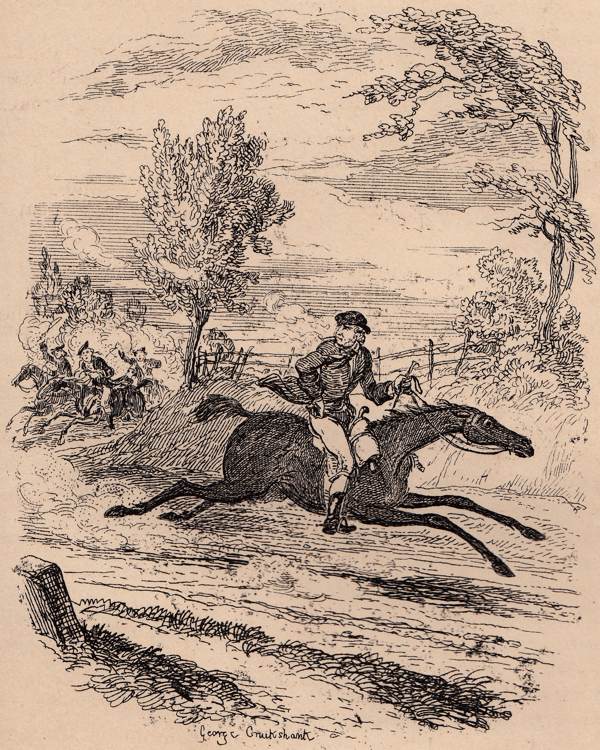
“I’ll let ’em see what I think of ’em!”
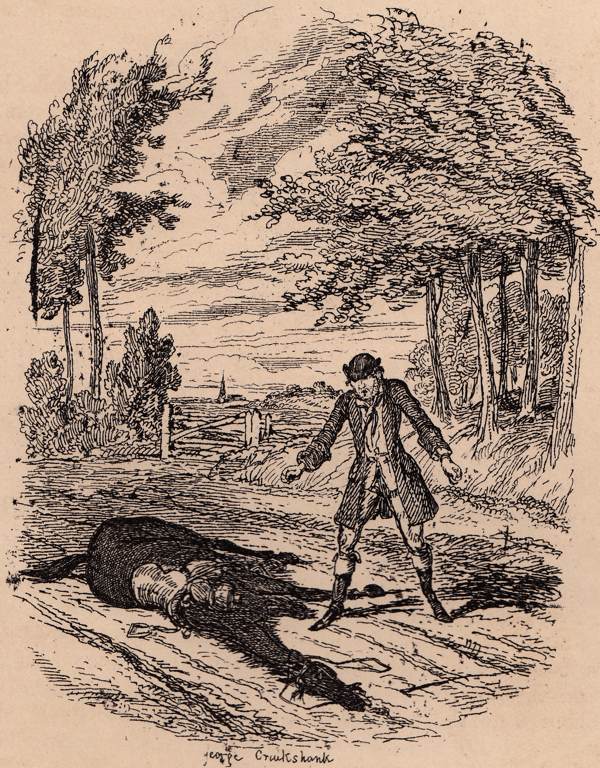
The death of Black Bess at the end of the ride to York.
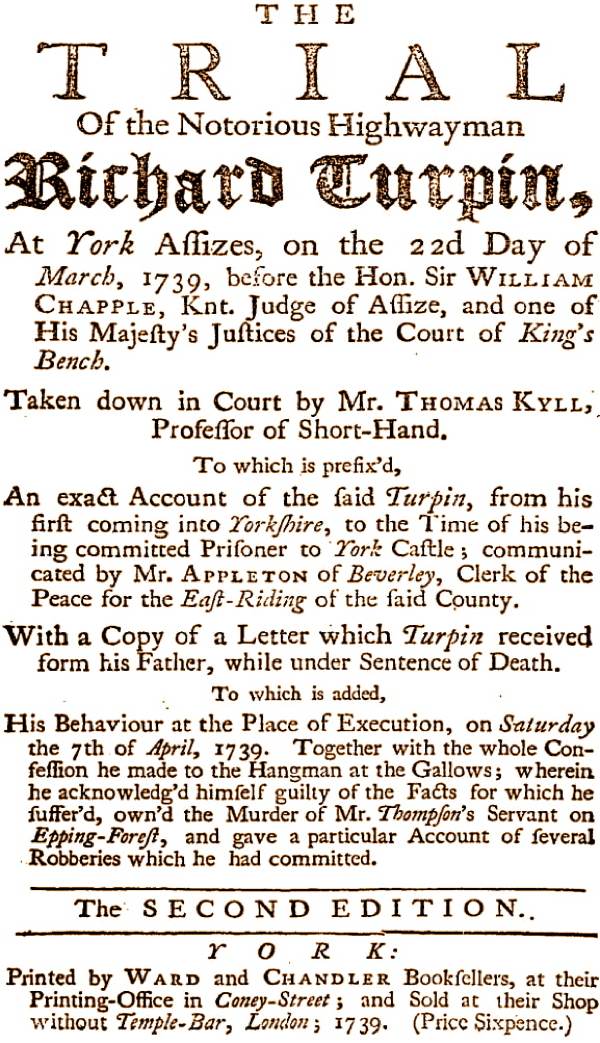
Cover of a pamphlet published in York after Turpin’s execution.
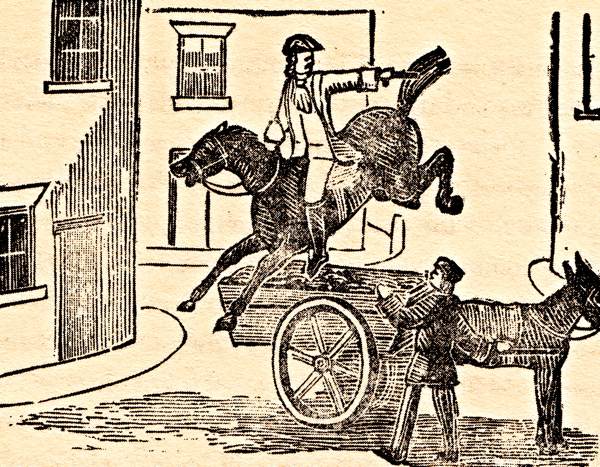
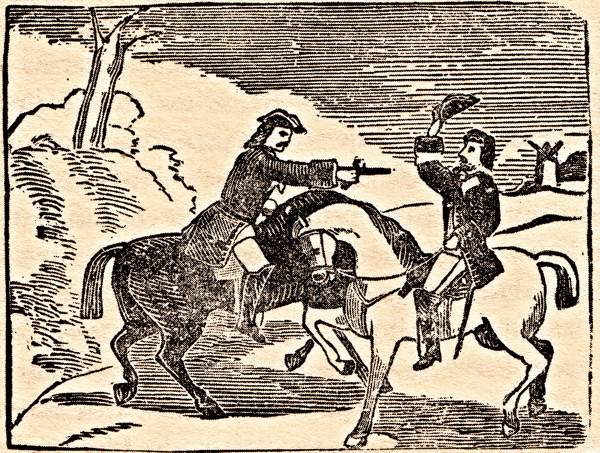
Plates from “The Life of Richard Turpin” by Richard Bayes.
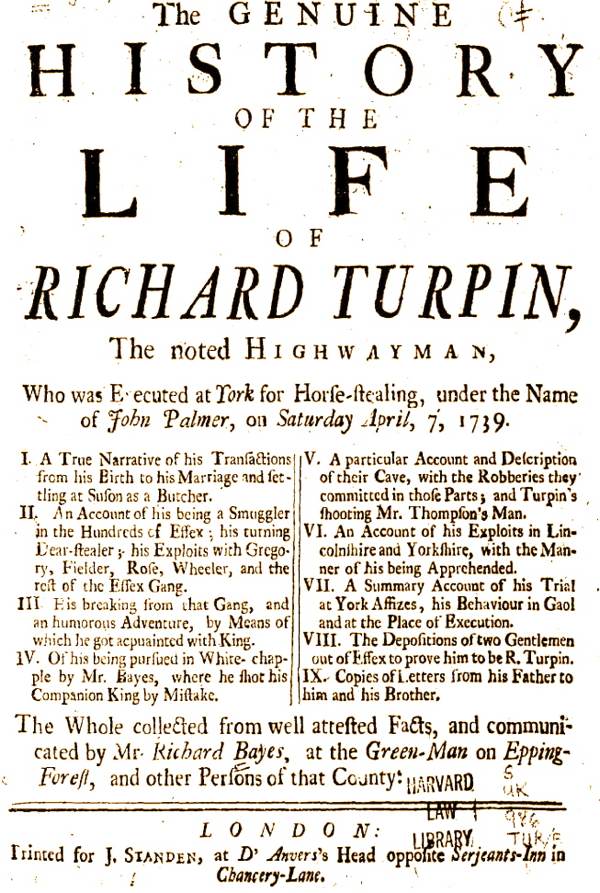
Title page of the life of Dick Turpin written by Richard Bayes, landlord of the Green Man in Leytonstone.
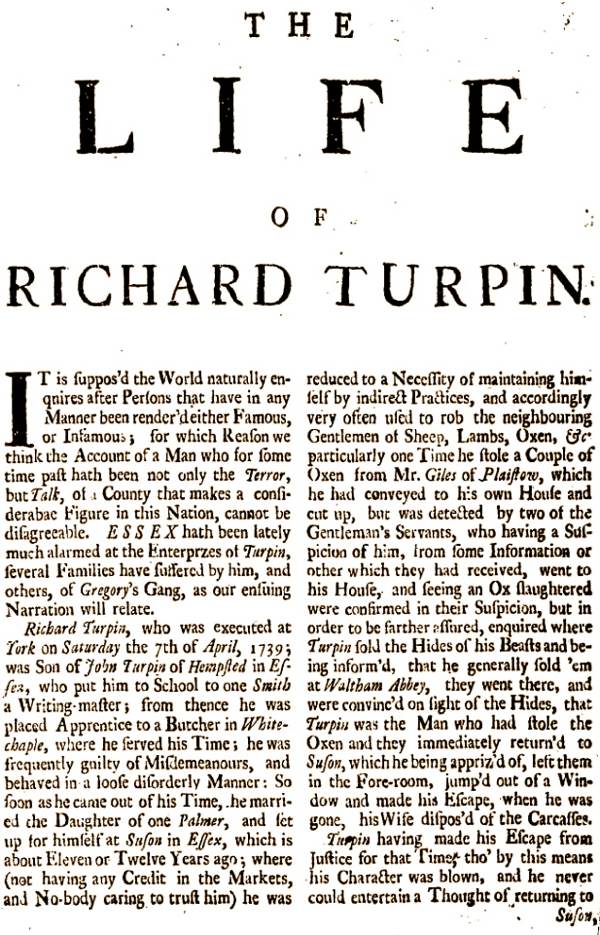
The opening page of Richard Bayes’account, placing Turpin as an apprentice butcher in Whitechapel.
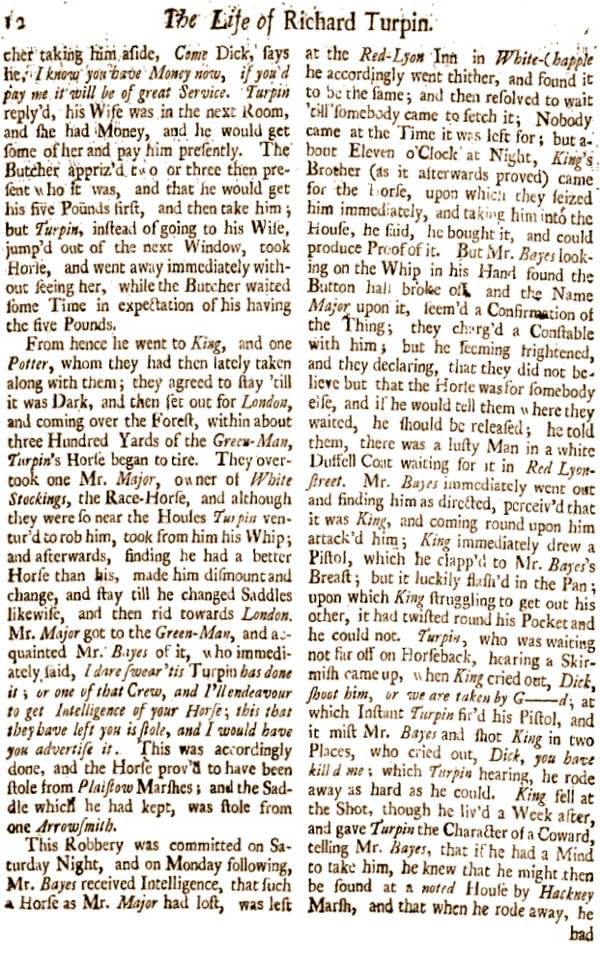 Richard Bayes’ account of his skirmish with Dick Turpin at the Red Lion in Whitechapel.
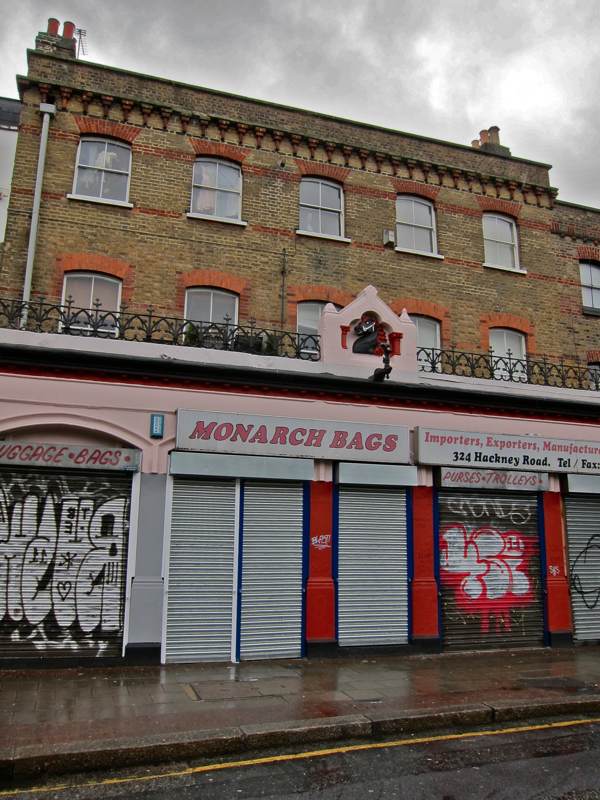
The former Nag’s Head opposite Hackney City Farm in the Hackney Rd. Dick Turpin was reputed to frequent an earlier coaching inn known as The Nag’s Head upon this site.
You may also like to read about
John Allin, Artist

Gun St, Spitalfields
John Allin (1934-1991) began painting while serving a six month prison sentence for minor theft, and achieved considerable success in the sixties and seventies with his vivid intricate pictures recalling the East End of his childhood. There is a dreamlike quality to these visions in sharp focus of an emotionalised cityscape, created at a time when the Jewish people were leaving to seek better housing in the suburbs and their culture was fading from those streets which had once been its home.
Returning from National Service in the Merchant Navy, Allin worked in the parks department planting trees, later as a swimming pool attendant and then as a long distance lorry driver – all before his conviction and imprisonment. After discovering his artistic talent, he devoted himself to painting and won attention with his first exhibition in 1969 at the Portal Gallery, specialising in primitive and outsider art. In 1974, he collaborated with Arnold Wesker on a book of reminiscence, “Say Goodbye: You may never see them again” in which he reveals an equivocation about the East End. “I saw it as a place where people lived, earned their living, grew up, moved on … they had dignity … I like painting the past with dignity…” he said in an interview with Wesker, “but what they’ve done to the East End is diabolical! They’ve scuppered it, built and built and torn down and torn out and took lots of identity away and made it into just a concrete nothing… But people go on, don’t they? Eating their eels and giving their custom where they’ve always given their custom … Funny how people can go on and take anything and everything.”
Like Joe Orton in the theatre, Allin’s reputation as an ex-con fuelled his reputation in newspapers and on television but he found there was a price to pay, as he revealed to Wesker, “You know how I started painting don’t you? In prison! Well, when I come out the kids at school give my kid a rough time … the silly bloody journalists didn’t help. ‘Jail-bird becomes painter!’ You’d’ve thought I’d done God knows what … I mean the neighbours used to say things like ‘Look at ‘im! Jail-bird and he’s on telly! Ought to be sent back inside the nick!’ I was the oddity in the district, the lazy fat bastard that paints. Give me a half a chance and I’d move mate.” In fact, Allin joined Gerry Cottle’s Circus, touring as a handyman to create another book, “John Allin’s Circus Life” in 1982.
Although he was the first British recipient of the international Prix Suisse de Peinture Naive award in 1979, the categorisation of Outsider or Primitive artist is no longer adequate to apply to John Allin. Twenty years after his death, his charismatic paintings deserve to be recognised as sophisticated works which communicate an entire social world through an unapologetically personal and emotionally charged visual vocabulary.

Spitalfields Market, Brushfield St.

Great Synagogue, Brick Lane.

Jewish Soup Kitchen, Brune St.

Christ Church School, Brick Lane.

Heneage St and Brick Lane.
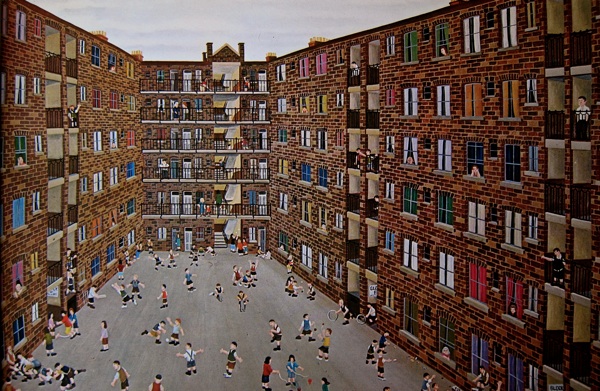
Rothschild Dwellings, Spitalfields.

Whitechapel Rd.

Christ Church Park, Commmercial St.

Wentworth St.

Fashion St with gramophone man in the foreground..

Churchill Walk.

Young Communist League rally, corner of Brick Lane and Old Montague St.

Hessel St.

Snow Scene.

Anti-Fascist Rally at Gardiners’ Corner, 1936.

Cole’s Chicken Shop, Cobb St.

Factory Workers.
You may also like to look at
Easter Flowers at St Dunstans
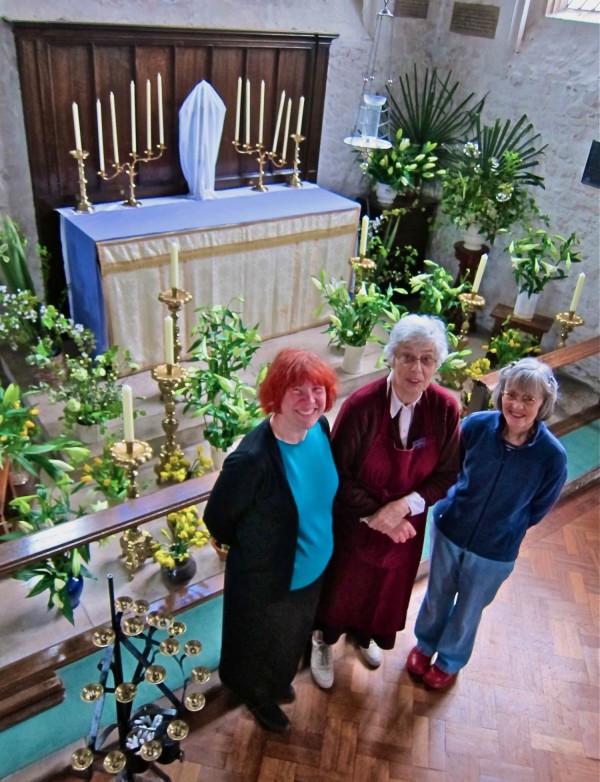
Sarah Edwards, Vera Hullyer & Maureen Gilbert, the flower ladies of St Dunstans
Last year, when Vera Hullyer told me about the Easter display which is the climax of the year in floral arrangement at St Dunstans, Stepney, I knew I had to return and see it for myself. And, arriving in the octagonal parish room at the rear of the church on Maundy Thursday, I discovered Vera and her long-time collaborators, Sarah Edwards and Maureen Gilbert, surrounded by fresh cut flowers and greenery, rather in the manner of those three nymphs frolicking in Botticelli’s painting of the harbingers of Spring.
“I used to help Joyce Graham, until she got too old to do it, and then it was handed over to me,” admitted with Vera with a self-deprecatory laugh and wielding a sprig of Hornbeam freshly picked in Tower Hamlets Cemetery Park that morning, confessing, “I’ve been doing it at least twenty years.” Although Vera, Sarah and Maureen do Christmas decorations and regular displays every Friday in the church for forty weeks of the year, they were in agreement that Easter was “the big thing,” and a sense of excitement pervaded.
Reflecting the season, the colours were green and white with highlights of pale yellow, with cut flowers supplied by Joanne the florist of the Roman Rd and greenery from the gardens ands parks of the East End. “The lilies are donated in memory of people and the list of names is placed on the altar.” explained Vera, to underline the gravity of the conception and lifting yet another vase to carry through to add to the epic display at the Altar of Repose in the south aisle. As we stood in front of the magnificent array of flowers, the vividness of their living quality emphasised by the ancient stonework of the church, Vera explained the iconography of her display which represents the Garden of Gethsemane and is complemented by candles, lit to burn through the night watch by parishioners until Good Friday, when the flowers are removed from the church to be brought back on Easter Day as a representation of the Garden of Remembrance.
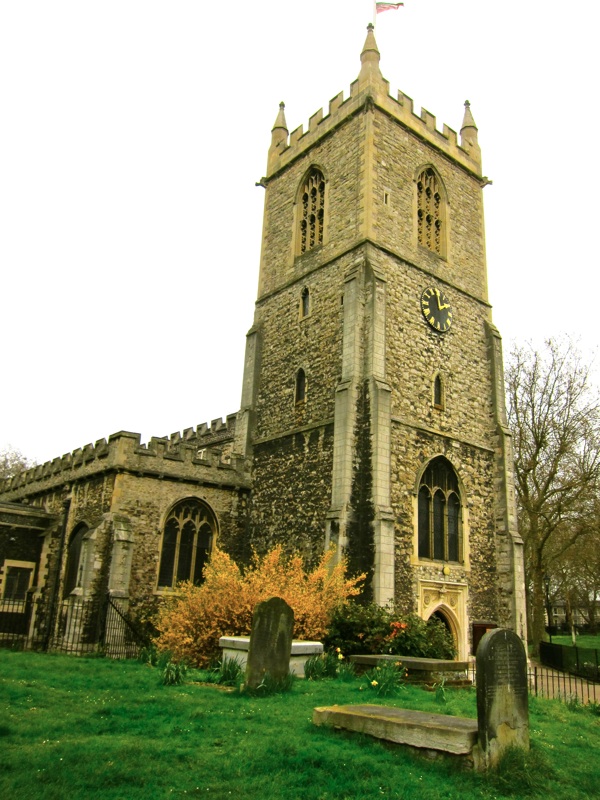
Begun by St Dunstan himself in 952, St Dunstans is the second oldest building in Tower Hamlets after the Tower of London and was once the parish church for entire borough, standing today both as a reminder of the East End’s distant rural past and of its relationship with the sea – as the mariners’ church, it still flies the red ensign today. Whilst I had been admiring the ladies’ handiwork. the dignified churchwarden Julian Cass hovered in the background and he took this moment, while the floral display received its finishing touches, to suggest I might like to accompany him up the tower.
Through an ancient lancet wooden door and up a narrowing stone staircase, we climbed. First, we came to the loft looking down onto the nave where the nineteenth century nativity figures spend the year, awaiting the next advent. Then we entered the cosy den that is the ringers’ room where Julian and his colleagues convene each Thursday for bell practice. Here were the painted boards recording peals of old. Here was a working model of a bell in its frame made by an apprentice at the bell foundry. Here were portraits of nineteenth century bell ringers. Here was a sign that read, “Do not swing the bells until the clock hammers been barred off and chiming mechanism released.”
Above, we entered a dusty chamber with an ancient lapboarded shed which contained the clock of 1805, now powered by electricity. As a reminder of when it was wound weekly, another arcane sign remains here, “Albert? Make sure you take the winding handle off the clock before leaving.” On the top floor, Julian and I clambered like spiders within the metal web of the bell frame where the legendary bells of Stepney hang, – cast in Whitechapel in the era of the Napoleonic Wars – before we emerged onto the tower roof, with views through the haze across the expanse of the East End to Canary Wharf in one direction and the City in the other, where once there was just fields.
For over a thousand years, Easter has been celebrated here at this modestly proportioned old stone church, and when I returned around midnight, I found it in darkness, save the candles illuminating the display at the Altar of Repose with a pale glow, in contrast to the rays of the full moon casting the nave in a cool blue light. Spring flowers glowed by candlelight that burned through the small hours while parishioners undertook their silent watch and the dawn rose over the East End on another Easter, welcoming the change of season after the long winter.

These nineteenth century nativity figures are stored away in the loft until next Christmas.

Julian Cass, church warden, in the ringers’ chamber in the tower.

The clock cupboard in the tower.

The church clock was made in Clerkenwell in 1805.

This graffiti on the door of the clock cupboard was written so long ago that no-one knows who Albert and Lawrie were.

The famous bells of Stepney were cast in Whitechapel during the era of the Napoleonic wars.

Looking towards Canary Wharf from the tower.

The finished display, with lilies paid for by parishioners in memory of their loved ones.

During the night’s vigil from Maundy Thursday to Good Friday.


Paschal candle ring by Maureen Gilbert.

Vera Hullyer

Full moon over St Dunstans on Maundy Thursday.
You may also like to read about
The Historic Cakes of Spitalfields

No doubt you have read of the historic houses in Spitalfields, of the historic church and the famous old market? Now – thanks to Fiona Atkins and her daughter Jenny at Townhouse in Fournier St – I am able to tell you about the historic cakes of Spitalfields. And the great beauty of this investigation into the baking of past times is that, rather involving the painstaking restoration of crumbling old piles, it can be accomplished in the kitchen where, with a little experimentation, the cakes can be baked afresh.
Naturally, I was eager to volunteer myself as a research assistant, in the conscientious pursuit of this endeavour, by offering my services in tasting the historic cakes once they were lifted, newly baked, from the oven.
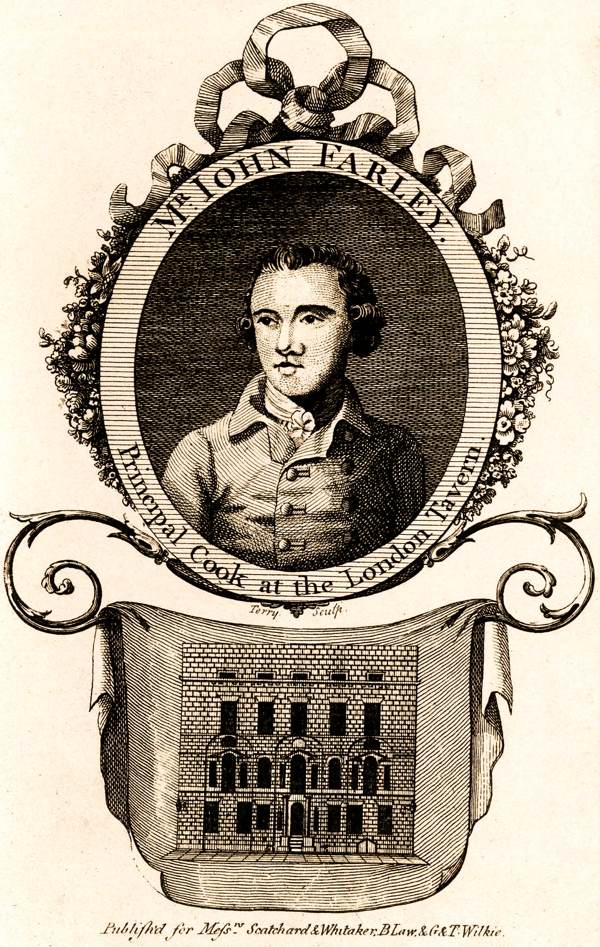
“I bought a collection of manuscript recipe books in a sale in Whitby.” explained Fiona Atkins, an Antique Dealer by profession, revealing the origin of her interest as she laid a selection of treasured booklets from different eras and of different sizes upon the table. Manuscript recipe books were handmade miscellanies, often meticulously handwritten, collecting together recipes and other useful household lore for future reference, and today these documents survive as intimate evocations of the domestic life of our forebears. Fiona considers herself lucky to have amassed her small library, before the American institutions began buying up all those that came onto the market, in recognition that these manuscript recipe books exist as rare historical records of the lives of women who left no other trace. “So then I became interested in cookery books,” continued Fiona with a philosophical shrug “and I came across John Farley’s ‘The London Art of Cookery, 1783’, recipes from the London Tavern in Bishopsgate – and I had no idea he was here!”
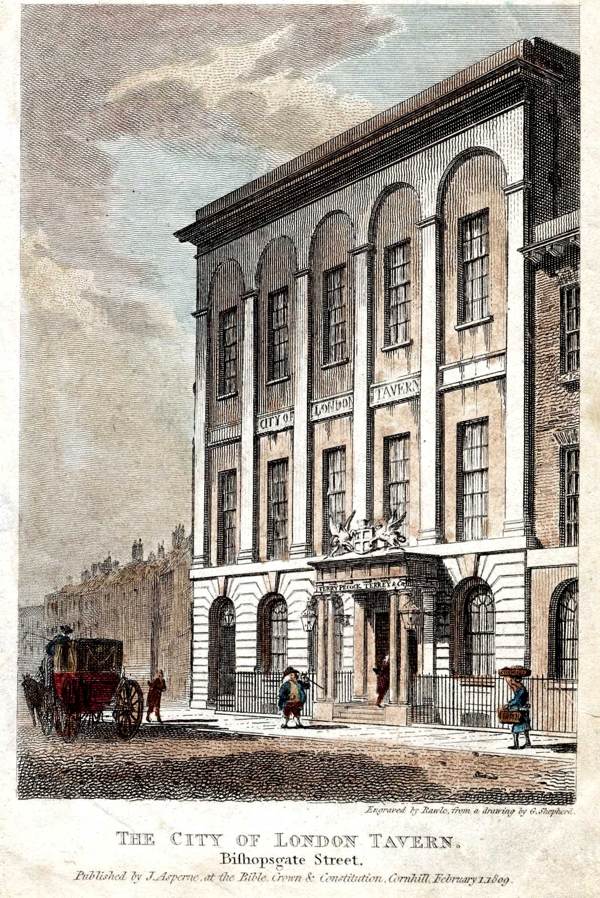
Towards the end of the eighteenth century, The London Tavern – on the west side of Bishopsgate at its southern-most extremity – was the principal destination for dining in the City, catering for as many as five hundred at a time, and when John Farley, the ambitious head cook, published ‘The London Art of Cookery,” he initiated the familiar modern trend of a chef producing a book which promotes his restaurant. Farley achieved great success with his cookery book running to many editions and it was a comprehensive volume, listing produce through the seasons and proposing menus for every month, as well as offering advice on culinary poisons, sustenance for the sick and recipes for seafarers.
Yet, pursuing her researches further as her collection grew, Fiona Atkins discovered that John Farley was unscrupulous as well as ambitious, lifting most of his recipes directly from earlier cookery books, specifically Hannah Glasse’s “The Art of Cookery Made Plain & Easy”of 1747 and Elizabeth Raffald’s “The Experienced English Housekeeper” of 1769. Farley took recipes from both these writers and simply altered the first and last sentences of each.
Once Jenny Atkins saw her mother lay these titles by John Farley, Elizabeth Raffald and Hannah Glasse upon the kitchen table in Fournier St, she was inspired to put the stolen recipes into practice and make manifest these enigmatic confections, as served in Spitalfields over two centuries ago. And when I visited Townhouse last week, I was greeted by the warm honey-sweet aroma of baking as I stepped through the door.
Already, there was an impressive array of cakes upon the table to greet me as I descended to the basement kitchen, hung with a collection of copper jelly moulds and old pans. “The most difficult part is the baking itself because our ovens are different,” admitted Jenny, cutting into the centre of a Fine Cake to discover if was cooked through. And although she concluded it needed more baking next time, the slice I enjoyed had a delicious fluffy texture reminiscent in colour and texture of panettone.
Jenny told me that the little buns upon a cake stand, sparkling in the morning sunlight, were French Biscuits.“What they call biscuits we call buns,” she informed me helpfully as I bit a tasty morsel from one of these cakes that had a subtle chewy crust, a little like that on a Madeleine, and a dense spongy interior which reminded me of a soft version of biscotti. Next, I moved on to the Little Plum Cakes which perversely do not contain plums but currants. These reminded me of the rock cakes that old ladies made for me as a child in Devon, yet they had a nuttier chewier texture and – stemming from an age before baking powder – to some they may seem a little heavy, while to others with a healthy appetite they might be satisfyingly substantial. Certainly, I did not require any lunch after my assiduous cake research that morning.
“The idea of cookery books was different then, they weren’t to teach how to cook but to give ideas to people who were clearly well-practised and knew what they were doing.” revealed Jenny – not an entirely inexperienced baker herself- as we sat surrounded by cakes on plates and stands. “I don’t think women used recipes in the way they do now, they read them once to glean ideas and they knew what to do,” she added, leafing through the old cook books and becoming absorbed by them.
It was my pleasure to participate in Jenny’s experiment, because it is apparent that frequent testing and informed judgement is required with these recipes. Just as cookery books were first compiled from manuscript recipe books, women copied recipes from cookery books back into their own personal manuscript books, each cook making the recipes their own – a process that is now mirrored as Jenny recreates these recipes under different circumstances to delight the taste of a different age.
So this is where your participation in this culinary investigation is required. You are all invited to come along to Townhouse in Fournier St, enjoy a light refreshment and contribute your own considered opinions upon the historic cakes of Spitalfields.
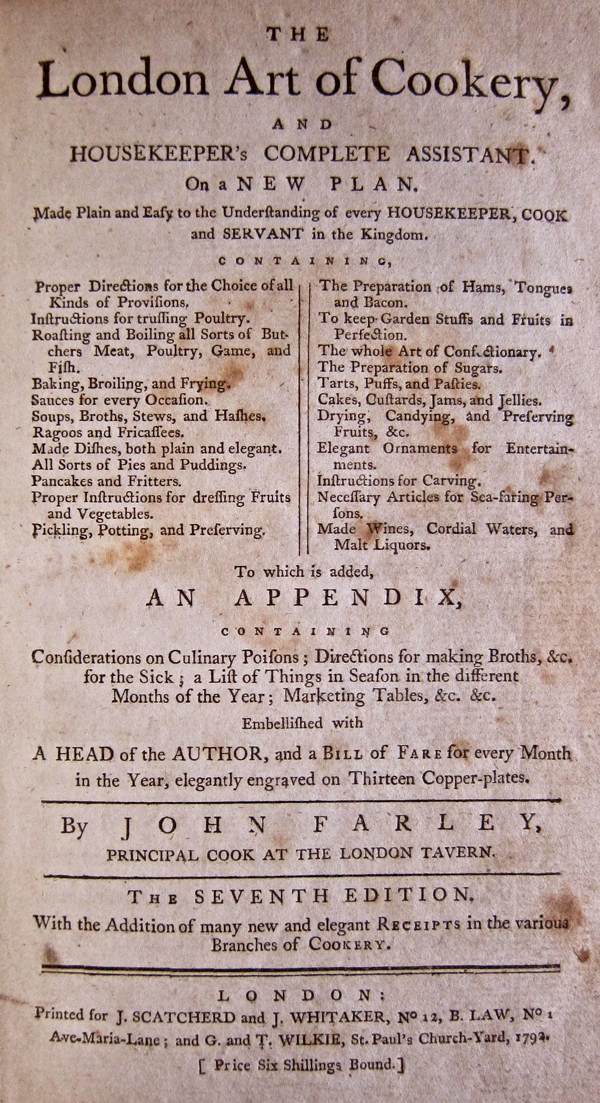
John Farley’s ‘The London Art of Cookery,’ recipes from the London Tavern in Bishopsgate, 1783.
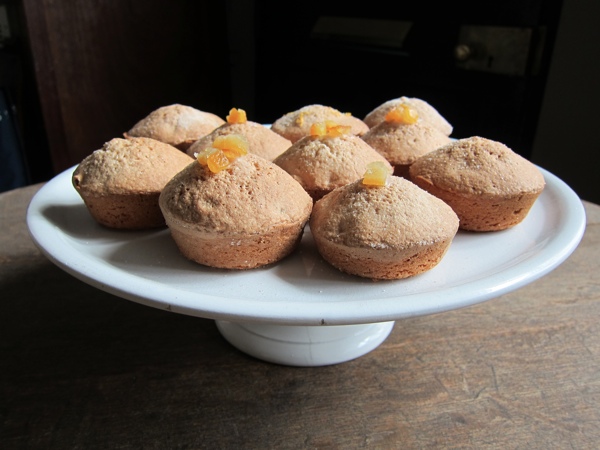
French Biscuits – Take a pair of clean scales, in one scale put three new-laid eggs, and in the other the same weight of dried flour. Have ready the same weight of fine powdered sugar. First beat up the white of the eggs well with a whisk, till they be of a fine froth. Then whip in half an ounce of lemon candied peel cut very thin and fine, and beat well. Then, by degrees, whip in the flour and the sugar, then put in the yokes and with a spoon temper them well together. Then shape your biscuits on fin white paper with your spoon, and throw powdered sugar over them. Bake them in a moderate oven, not too hot, giving them a fine colour on the top. When they be baked, with a fine knife cut them off from the paper, and lay them up for use in dry boxes.
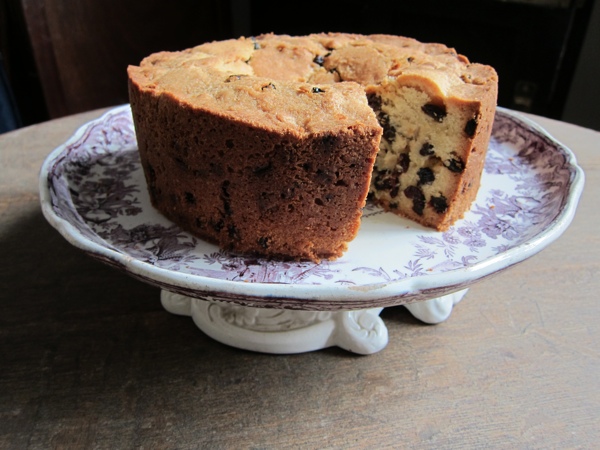
Fine Cake – Take a pound of butter beaten to a cream, a pound and a quarter of flour, a pound of sugar beat fine, a pound of currants, clean washed and picked and the yokes of six and the whites of four eggs. Beat them fine and mix the flour, sugar and eggs, by degrees, into the butter. Beat all well with both hands. Or you may make it thus – Take a pound of flour and a half pound of sugar, beat half a pound of butter with your hand, and mix them well together.
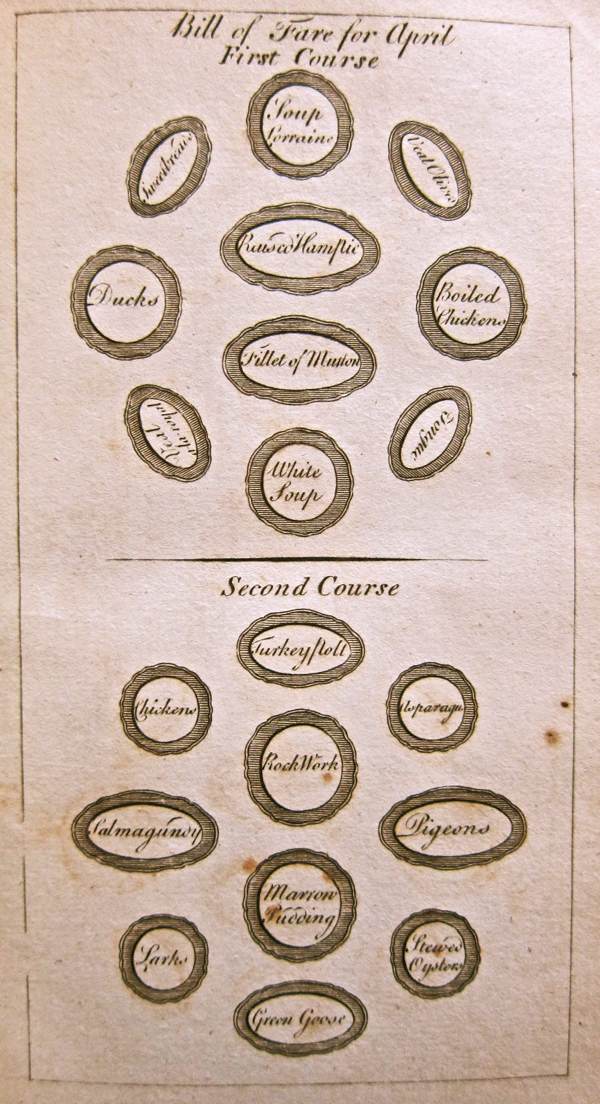
April’s menu at The London Tavern in Bishopsgate, 1783
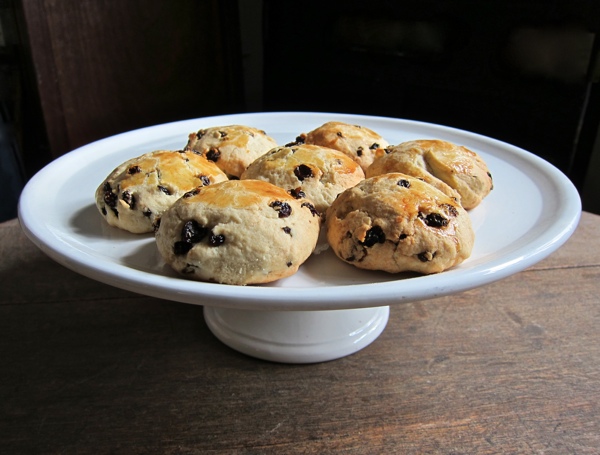
Little Plum Cakes – Take half a pound of sugar finely powdered, two pounds of flour well dried, four yolks and two whites of eggs, half a pound of butter washed with rose water, six spoonfuls of cream warmed and a pound and half of currants unwashed, but picked and rubbed very clean in a cloth. Mix all well together, then make them up into cakes, bake them in a hot oven and let them stand half an hour till they be coloured on both sides. Then take down the oven lid and let them stand to soak. You must rub the butter well into the flour, then the eggs and the cream, and then the currants.
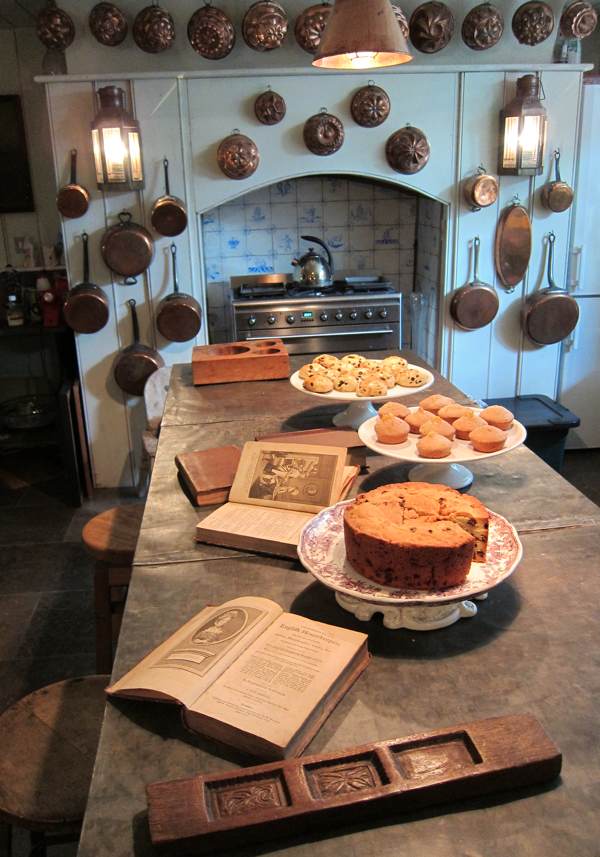
At the kitchen of Townhouse in Fournier St. The mould in the foreground is for biscuits.
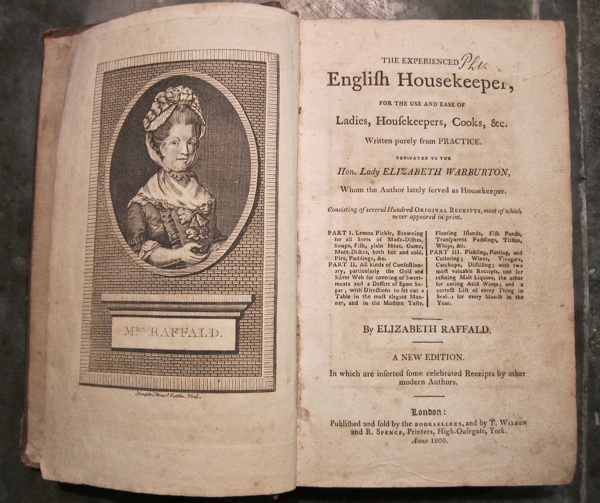
Elizabeth Raffald’s “The Experienced English Housekeeper” of 1769.
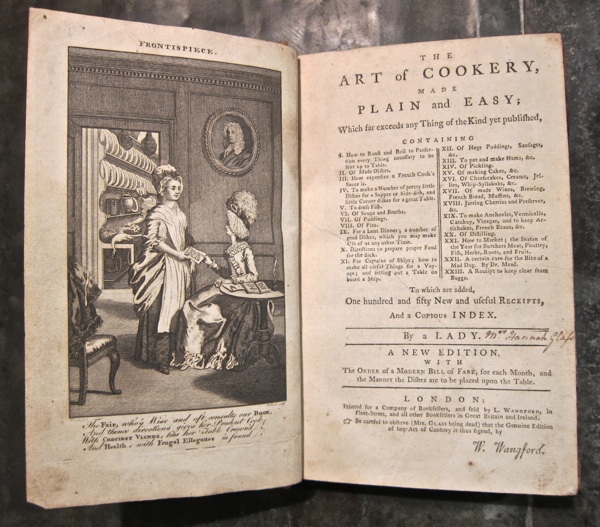
Hannah Glasse’s “The Art of Cookery Made Plain & Easy”of 1747.
Plate of The London Tavern courtesy Bishopsgate Institute
Fiona Atkins’ collection of early cookery books and manuscript recipe books is currently on display at Townhouse, 5 Fournier St, where visitors can partake of coffee and historic cakes baked by Jenny Atkins. You can also book to stay in the rooms above Townhouse by clicking here.
The Widow’s Buns At Bow
The ceremony of the Widow’s Buns is celebrated today in Bow, as it has been each Good Friday for as long as anyone can remember. Here is my account of last year’s event and if you get down there by three o’ clock this afternoon, you can witness this cherished East End ritual for yourself.

Baked by Mr Bunn’s Bakery in Chadwell Heath
On Good Friday, what could be more appropriate to the equivocal nature of the day than an event which involves both celebration of Hot Cross Buns and the remembrance of the departed in a single custom – such is the ceremony of the Widow’s Buns at Bow.
A net of Hot Cross Buns hangs above the bar at The Widow’s Son in Bromley by Bow, and each year a sailor comes to add another bun to the collection. And this year I was there to witness it for myself, though – before you make any assumption based on your knowledge of my passion for buns – I must clarify that no Hot Cross Buns are eaten in the ceremony, they are purely for symbolic purposes. Left to dry out and gather dust and hang in the net for eternity, London’s oldest buns exist as metaphors to represent the passing years and talismans to bring good luck but, more than this, they tell a story.
The Widow’s Son was built in 1848 upon the former site of an old widow’s cottage, so the tale goes. When her only son left to be a sailor, she promised to bake him a Hot Cross Bun and keep it for his return. But although he drowned at sea, the widow refused to give up hope, preserving the bun upon his return and making a fresh one each year to add to the collection. This annual tradition has been continued in the pub as a remembrance of the widow and her son, and of the bond between all those on land and sea, with sailors of the Royal Navy coming to place the bun in the net every year.
Behind this custom lies the belief that Hot Cross Buns baked on Good Friday will never decay, reflected in the tradition of nailing a Hot Cross Bun to the wall so that the cross may bring good luck to the household – though what appeals to me about the story of the widow is the notion of baking as an act of faith, incarnating a mother’s hope that her son lives. I interpret the widow’s persistence in making the bun each year as a beautiful gesture, not of self-deception but of longing for wish-fulfilment, manifesting her love for her son. So I especially like the clever image upon the inn sign outside the Widow’s Son, illustrating an apocryphal scene in the story when the son returns from the sea many years later to discover a huge net of buns hanging behind the door, demonstrating that his mother always expected him back.
When I arrived at the Widow’s Son, I had the good fortune to meet Frederick Beckett who first came here for the ceremony in 1958 when his brother Alan placed the Hot Cross Bun in the net, and he had the treasured photo in his hand to show me. Frederick moved out from Bow to Dagenham fifteen years ago, but he still comes back each year to visit the Widow’s Son, one of many in this community and further afield who delight to converge here on Good Friday for old times’ sake. Already, there was a tangible sense of anticipation, with spirits uplifted by the sunshine and the flags hung outside, ready to celebrate St George next day.
The landlady proudly showed me the handsome fresh 2011 Hot Cross Bun, baked by Mr Bunn of Mr Bunn’s Bakery in Chadwell Heath who always makes the special bun each year -” fabulous buns!”declared Kathy, almost succumbing to a swoon, as he she held up her newest sweetest darling that would shortly join its fellows in the net over the bar. There were many more ancient buns, she explained, until a fire destroyed most of them fifteen years ago, and those burnt ones in the net today are merely those few which were salvaged by the firemen from the wreckage of the pub. Remarkably, having opened their hearts to the emotional poetry of Hot Cross Buns, at the Widow’s Son they even cherish those cinders which the rest of the world would consign to a bin.
The effect of the beer and the unseasonal warm temperatures upon a pub full of sailors and thirsty locals rapidly induced a pervasive atmosphere of collective euphoria, heightened by a soundtrack of pounding rock, and, in the thick of it, I was delighted to meet my old pal Lenny Hamilton, the jewel thief. “I’m not here for the buns, I’m here for the bums!” he confided to me with a sip of his Corvoisier and lemonade, making a lewd gesture and breaking in to a wide grin of salacious enjoyment as various Bow belles, in off-the-shoulder dresses, with flowing locks and wearing festive corsages, came over enthusiastically to shower this legendary rascal with kisses.
I stood beside Lenny as three o’ clock approached, enjoying the high-spirited gathering as the sailors came together in front of the bar. The landlord handed over the Hot Cross Bun to widespread applause and the sailors lifted up their smallest recruit. Then, with a mighty cheer from the crowd and multiple camera flashes, the recruit placed the bun in the net. Once this heroic task was accomplished, and the landlady had removed the tinfoil covers from the dishes of food laid out upon the billiard table, all the elements were in place for a knees-up to last the rest of the day. As they like to say in Bromley by Bow, it was “Another year, another Good Friday, another bun.”

Peter Gracey, Nick Edelshain and Roddy Urquhart raise a pint to the Widow’s Buns.

Tony Scott and Debbie Willis of HMS President with Frederick Beckett holding the photograph of his brother placing the bun in the net in 1958.
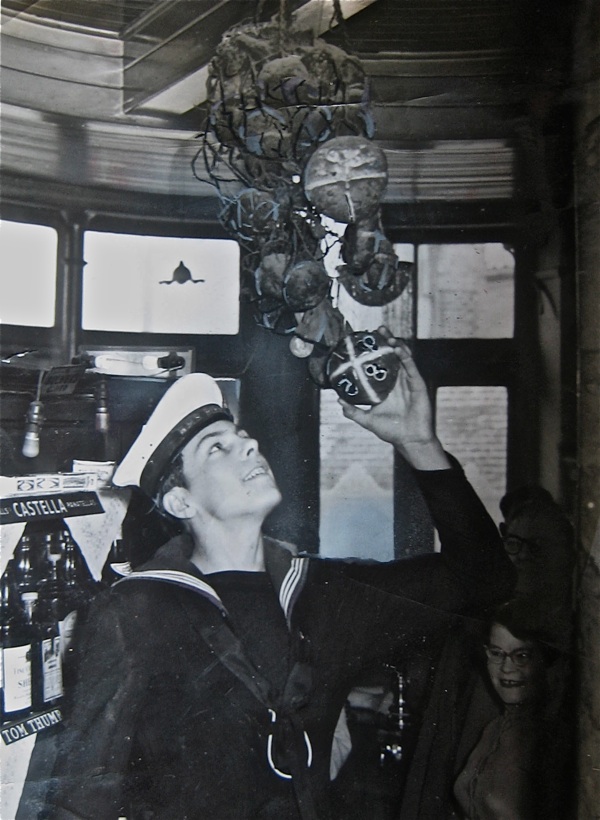
Alan Beckett places the bun on Good Friday, 4th April 1958.
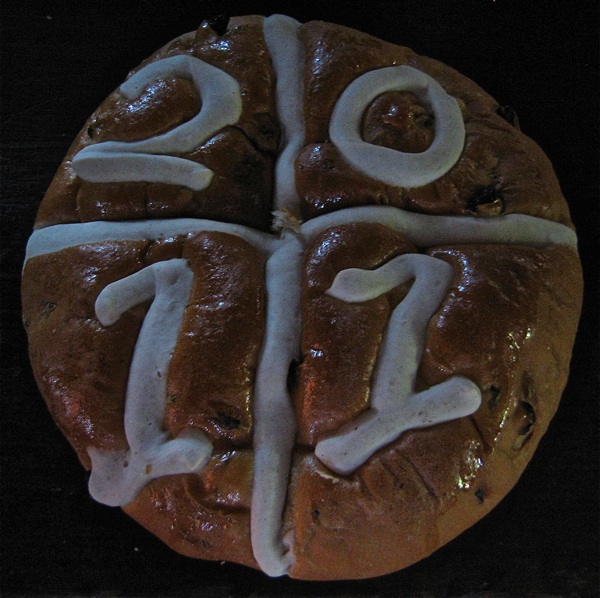
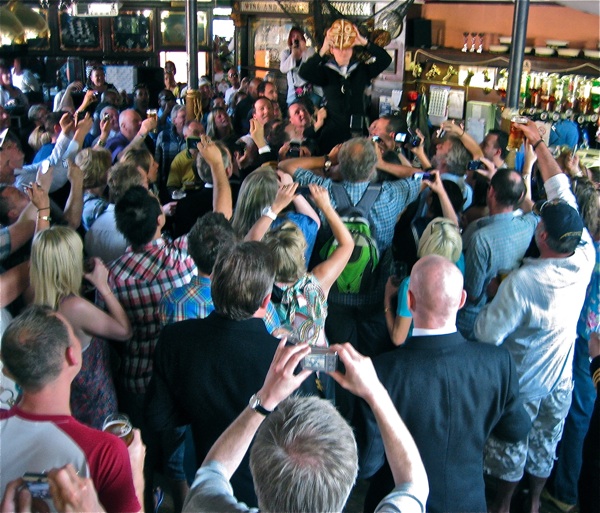
3 pm, Good Friday, 22nd April 2011.
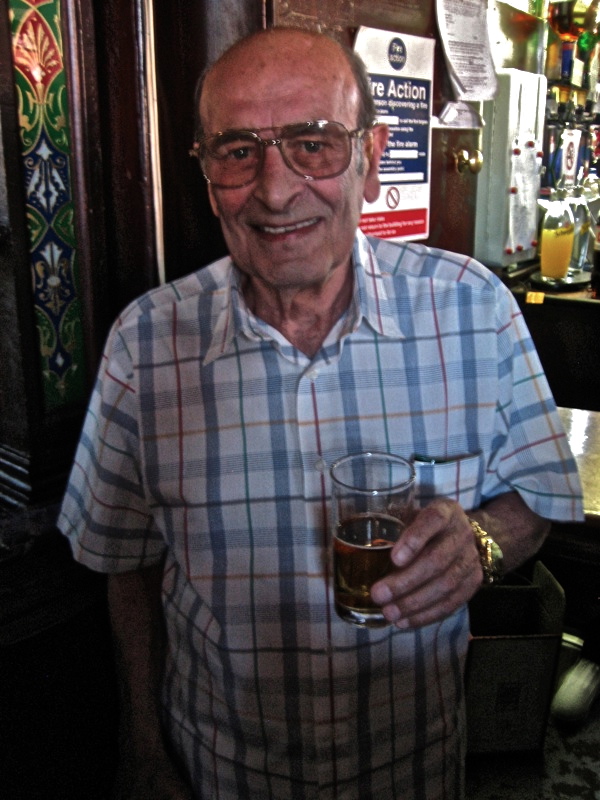
The Widow’s Son is the local for my pal Lenny Hamilton, the jewel thief.


A Widow’s Son of Bromley by Bow
by Harold Adshead
A widow had an only son, The sea was his concern, His parting wish an Easter Bun Be kept for his return. But when it came to Eastertide No sailor came her way To claim the bun she set aside Against the happy day. They say the ship was lost at sea, The son came home no more But still with humble piety The widow kept her store. So year by year a humble bun Was charm against despair, A loving task that once began Became her livelong care. The Widow’s Son is now an inn That stands upon the site And signifies its origin Each year by Easter rite The buns hang up for all to see, A blackened mass above, A truly strange epitome Of patient mother love.
You may also like to read about












