The Coles of Brushfield St
When Kate Cole saw Philip Marriage’s photographs of Spitalfields last week, it inspired her to write this account of her ancestors who once lived in Brushfield St which I publish here today. “When I started my family research in the mid-eighties, I quickly discovered the connection to Spitalfields Market.” Kate told me, “And, even though I have often visited the redeveloped market, when I think of Spitalfields, it is the eighties image that stays in my mind. So Philip Marriage’s photos proved irresistible and led me finally to tell the story of my Victorian grocer of Spitalfields Market.”
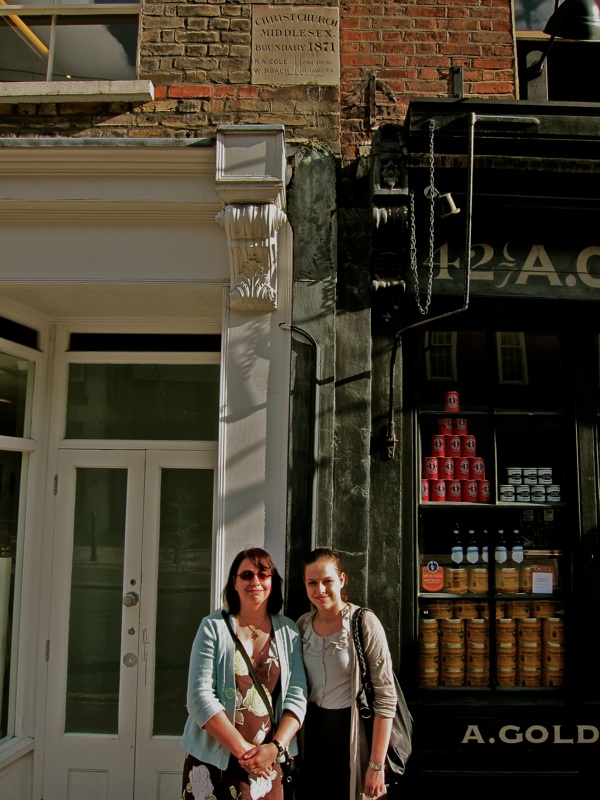
Kate Cole and her daughter Rose outside the former Cole’s grocery shop in Brushfield St.
I must be amongst a very rare number of twenty-first century Londoners who can visit the East London home of my ancestors and walk in their steps. Many of my Victorian ancestors lived in Bishopsgate in the City of London and Brushfield St in Spitalfields. Whilst I can no longer visit my ancestors’ substantial Bishopsgate home and factory, as it was compulsory purchased and swept away in the 1880s by the Great Eastern Railway so they could build the mighty Great Eastern Hotel in its place, I can still visit my ‘ancestral’ home in Brushfield St on the edge of Spitalfields Market.
Up until the 1870s, Brushfield St was known as ‘Union St East’. Halfway down, on the right-hand side – if you are walking from Bishopsgate – is a parade of shops all dating from the eighteenth century. Many readers may be familiar with the lovely restored Victorian frontage of the food shop A.Gold and the women’s fashion shop next door, Whistles. But have you ever looked above their signage and spotted a small plaque on the wall in between the two? This is from 1871, marking the parish boundary of Christ Church Middlesex and there on the wall, for all of London to see, is the name of my great-great grandfather, R. A. Cole.
In the 1850s, Robert Andrew Cole was a grocer and tea-dealer, living above his shop and trading from the premises which is now Whistles. Robert Andrew, along with his wife, Sarah Elizabeth (née Ollenbuttle) and their five children, William, Sarah, Margaret, Robert and Arthur, all lived in this terrace – first at 23 and then at 25 – for some thirty years from the 1850s until the 1880s, when the market was redeveloped and Robert Andrew Cole retired to Walthamstow. As an aside, I do find it ironic that today’s swanky redeveloped Spitalfields Market is now known as Old Spitalfields Market. In Robert Andrew Cole’s day, it was a brand spanking new, and perhaps an unwanted market with posh new buildings. Its very existence and construction was probably one of the reasons why the Coles gave up their shop and retired to the countryside of Walthamstow.
For many years, Robert Andrew Cole was also a churchwarden of Christ Church, Spitalfields and also the Governor and Director of the Poor of the parish. So he must have been amongst the wealthiest of this East London parish. In circa 1869-1870, Union St East was renamed Brushfield St, and it is possibly the renaming of this street which lead to the church boundary being marked in the wall in 1871. Hence, churchwarden R. A. Cole’s name was recorded for posterity in the brick-work. He must have been a very proud man when his name was unveiled on the terrace where he lived.
However, despite their standing in the community, the Cole’s time in Brushfield St was not entirely happy. Two of the Cole children, Sarah Elizabeth and William Henry, succumbed to a devastating outbreak of scarletina – then a deadly infectious disease. Both children were buried in Tower Hamlets Cemetery on 2nd August 1857. William was aged only twenty-two months and Sarah was a month short of her fourth birthday. One can only imagine the pain and horror experienced by their parents, along with the fear that their only surviving child, Robert, then aged five, might also fall victim to the terrible disease.
It must have been an awful time for this one Victorian family living in the shadows of Christ Church Spitalfields and the Fruit & Vegetable Market. However, their son Robert, did not become another victim (for, if he had, I would not be writing their story, as he is my great-grandfather). Eight months after burying their two children, a new child, Margaret was born, and a further year later, Arthur. Sadly, Margaret also did not survive childhood and once again, in 1869, the Cole family of Union St East buried another one of their own in Tower Hamlets Cemetery.
I have often pondered the fate of this small East End family. Of the five children, only two survived into adulthood and, of those two, only one had children of his own. Arthur Cole died a bachelor in his fifties and was buried in the second Cole family grave in Tower Hamlets Cemetery alongside his mother, grandparents, great-aunts, and great-uncles – true Londoners who worked, lived and died in the East End of the eighteenth and nineteenth century. Robert Andrew Cole, grocer and tea-dealer of Spitalfields Market, was buried in the same grave as his three children who had not survived childhood. While Robert Cole, the only child of Robert and Sarah Cole who went on to marry and father his own children, married Louisa Parnall, a member of a fantastically successful Welsh family of industrialists and philanthropists who had a substantial clothing factory on Bishopsgate.
When you are next in Brushfield St, stand and look up at the plaque marking the parish boundary of Christ Church, Middlesex. Then look down into the windows of Whistles clothes shop. The funeral processions of the Cole children must have stopped here on their way to Christ Church, before going to Tower Hamlets Cemetery. Imagine the tragedy and triumph that went on between those four walls and the drama of the daily family life of the Victorian grocer and tea-dealer, Robert Andrew and Sarah Elizabeth Cole.
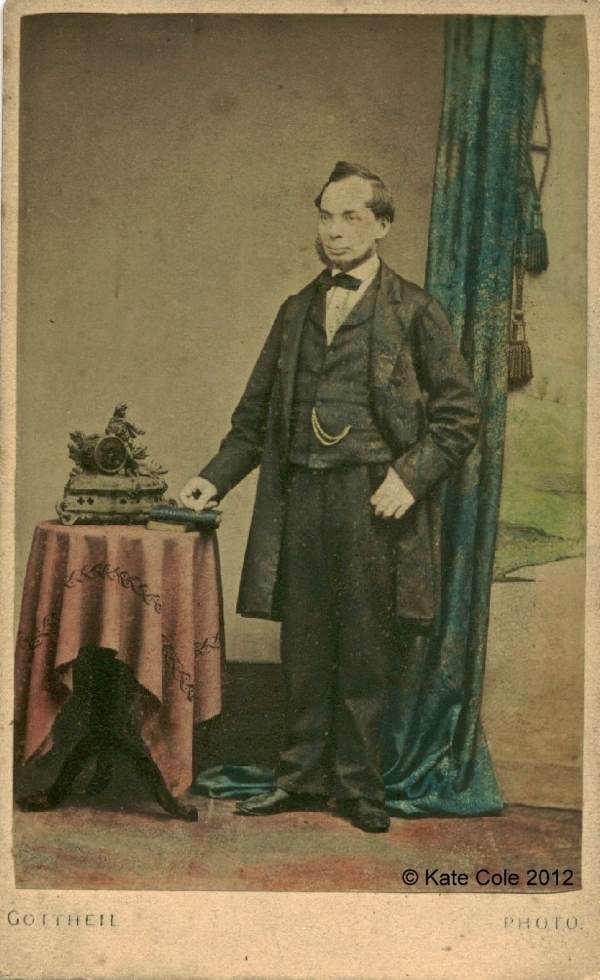
Robert Andrew Cole, born 10th February 1819, Anthony St, St George in the East, baptised 7th March 1819 in the parish church of St George in the East. Married 25th December 1850 St Thomas’ Church, Stepney to Sarah Elizabeth Ollenbuttle. Died March 1895 in Walthamstow. Buried in one of two Cole family graves in Tower Hamlets Cemetery. Grocer and tea-dealer of Spitalfields Market for over thirty years. Churchwarden of Christ Church Spitalfields and Governor and Director of the poor of the parish.
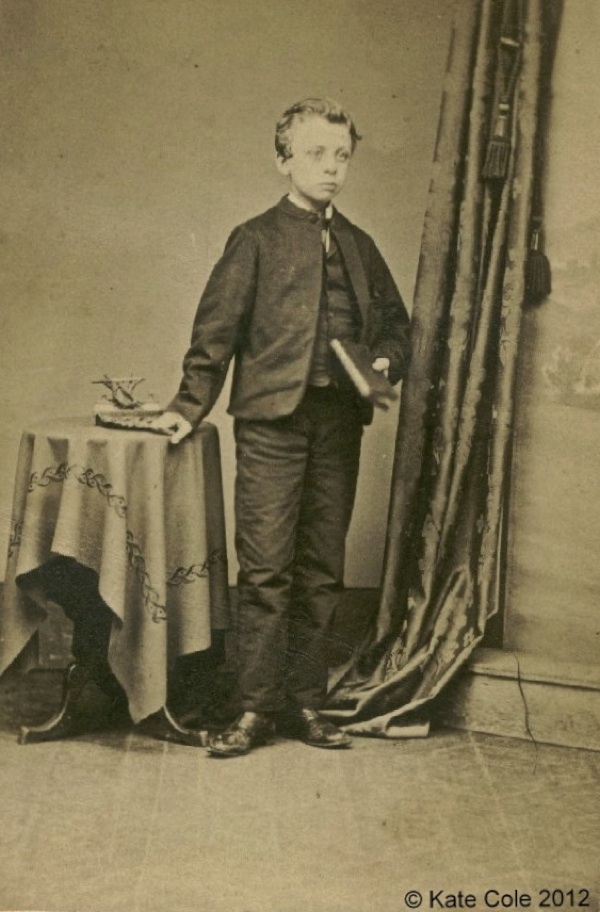
Robert Cole, eldest child of Robert Andrew and Sarah Elizabeth Cole, born 4th May 1852 in Tunbridge Wells. Married 11th January 1880 to Louisa Parnall (great-niece of Robert and Henry Parnall of Bishopsgate). Died 17th June 1927 in Raynes Park, South London. Buried in Putney Vale Cemetery. Grocer and teadealer.
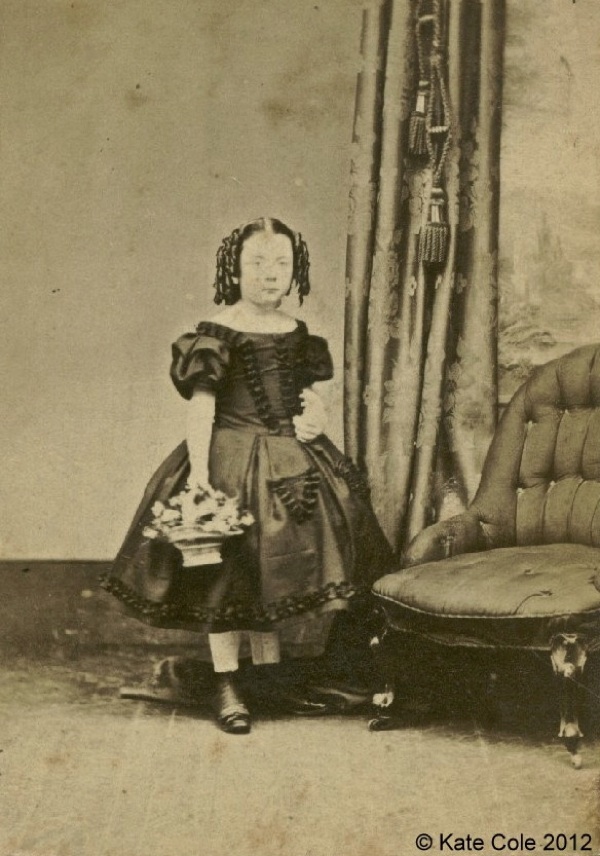
Margaret Cole, baptised 28th March 1858 at Christ Church, Spitalfields. Buried 20th January 1869 in Tower Hamlets Cemetery aged eleven years. The child in this photo looks to be about seven or eight years old, which dates all three photos to approximately the mid-1860s.
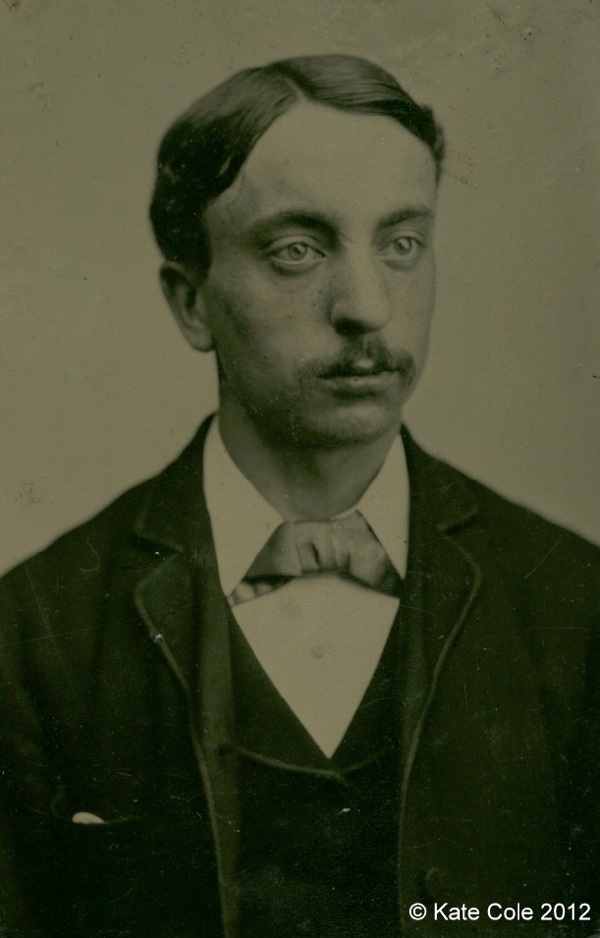
Robert Cole in 1879.
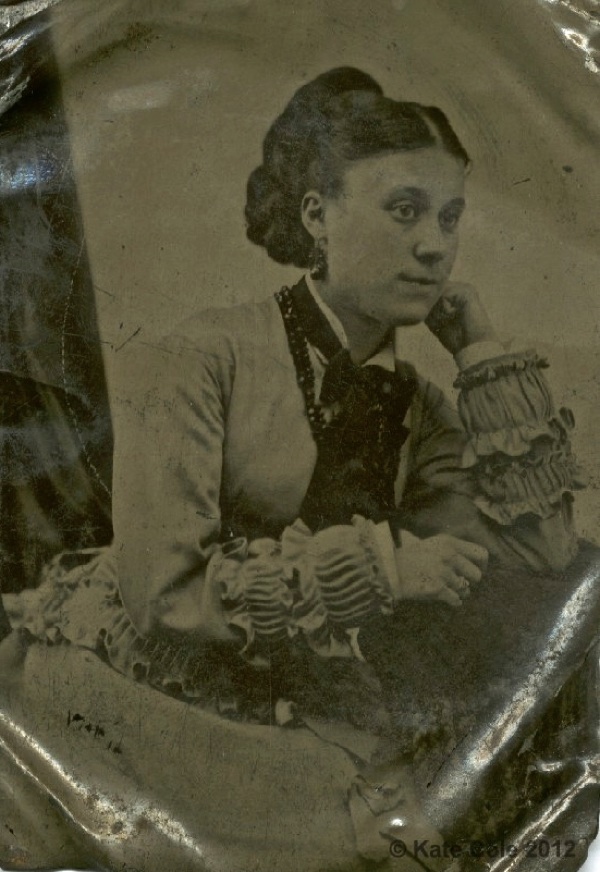
Louise Parnell – This tintype photo and the one of Robert above were possibly taken at their betrothal, before their marriage in January 1880.
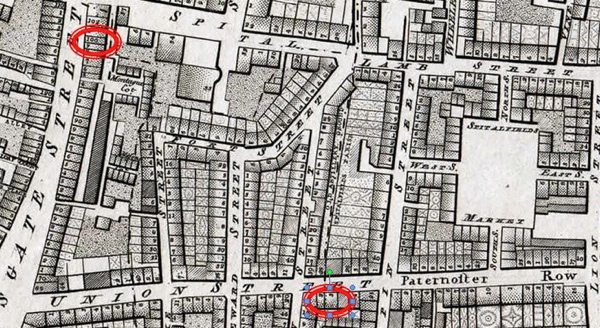
The locations of the Coles’ business in Brushfield St and the Parnell’s business in Bishopsgate.
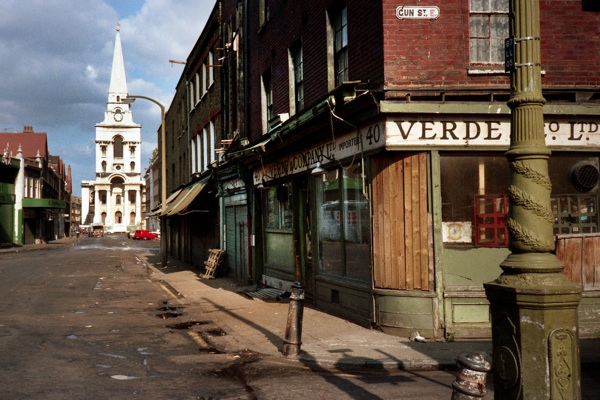
Philip Marriage’s photo of Brushfield St in 1985 with the former Coles premises indicated by the awnings.
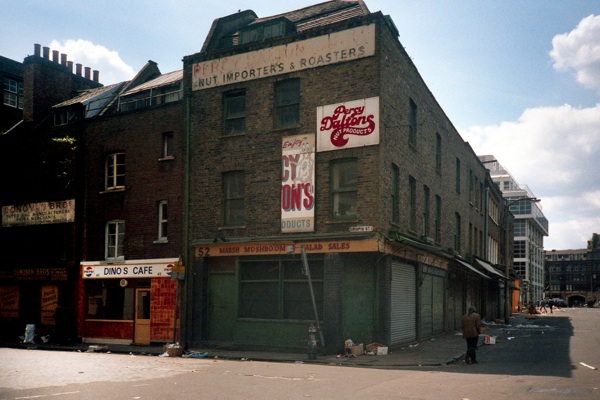
Brushfield St in 1985, looking from the east.
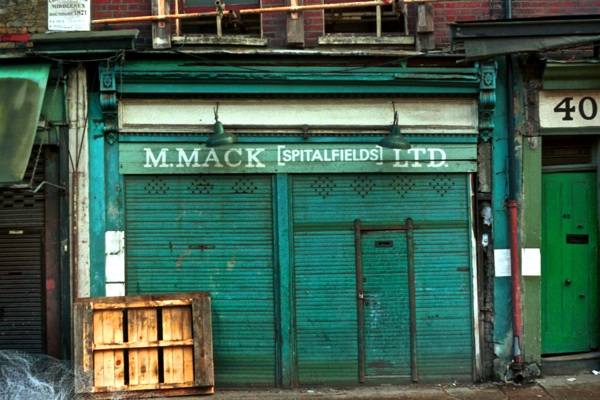
The boundary stone with R. A. Cole’s name is on the top left of this picture from the eighties.
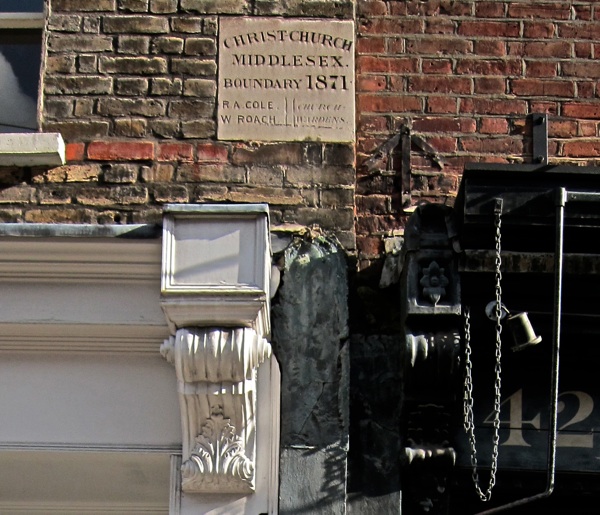
The boundary stone of 1871 in Brushfield St with the name of R.A.Cole.
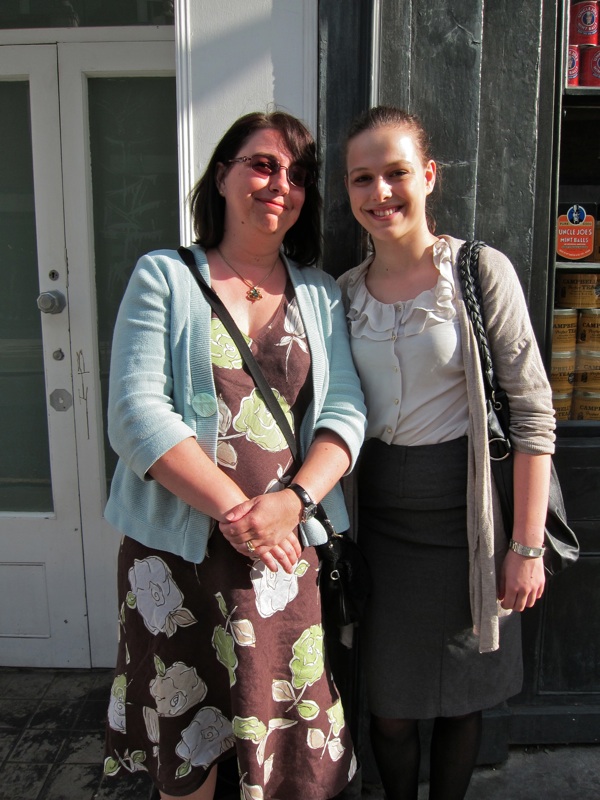
Kate and her daughter Rose are the sixth and seventh consecutive generations of their family to work in the Bishopsgate area. Kate works in Finsbury Sq and Rose has just started in Finsbury Circle.
Archive photographs of Brushfield St © Philip Marriage
Cole family photographs © Kate Cole
You might like to take a look at Kate Cole’s blog Voices of Essex Past
Working People & a Dog
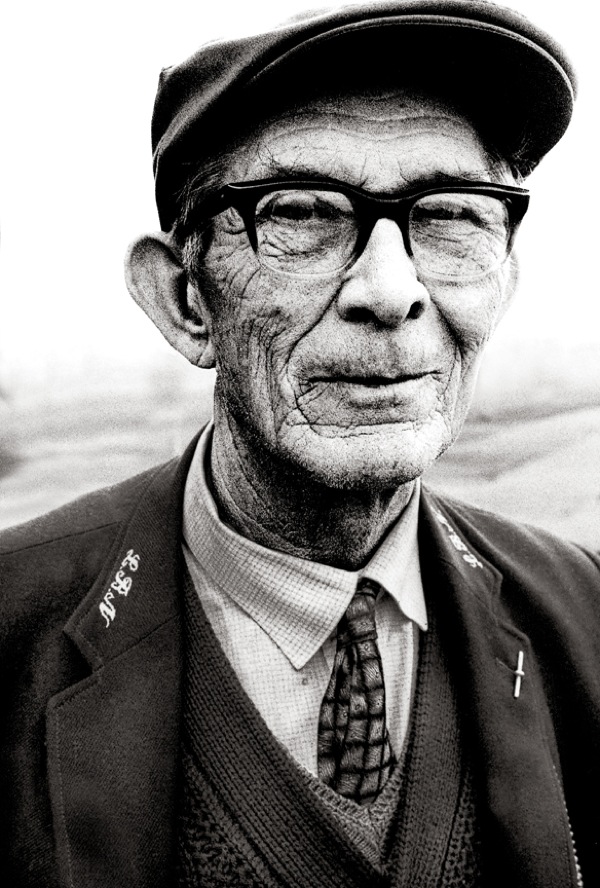
Groundsman, E.15 (1965)
“This is the groundsman at the Memorial Ground where I played football aged ten in 1954.”
Some of my favourite people are the shopkeepers and those that do the small trades – who between them have contributed the major part to the identity of the East End over the years. And when I see their old premises redeveloped, I often think in regret, “I wish someone had gone round and taken portraits of these people who once manifested the spirit of the place.” So you can imagine my delight and gratitude to see this splendid set of photos – published here for the first time – and discover that during the sixties photographer John Claridge had the insight to take such pictures, exactly as I had hoped.
When John went back ten years later to the pitch near West Ham Station where he played football as a child, he found the groundsman was just as he remembered, with his cardigan and tie, and he took the photograph you see above. There is a dignified modesty to this fine portrait – a quality shared by all of those published here – expressed through a relaxed demeanour.
These subjects present themselves to John’s lens as emotionally open yet retaining possession of themselves, and this translates into a vital relationship with the viewer. To each of these people, John was one of their own kind and they were comfortable being photographed by him. And, thanks to the humanity of John’s vision, we have the privilege to become party to this intimacy today.

Kosher Butcher, E2 (1962) – “The chicken was none too happy!”

Brewery, Spitalfields (1964) Clocking in at the Truman Brewery, Brick Lane.
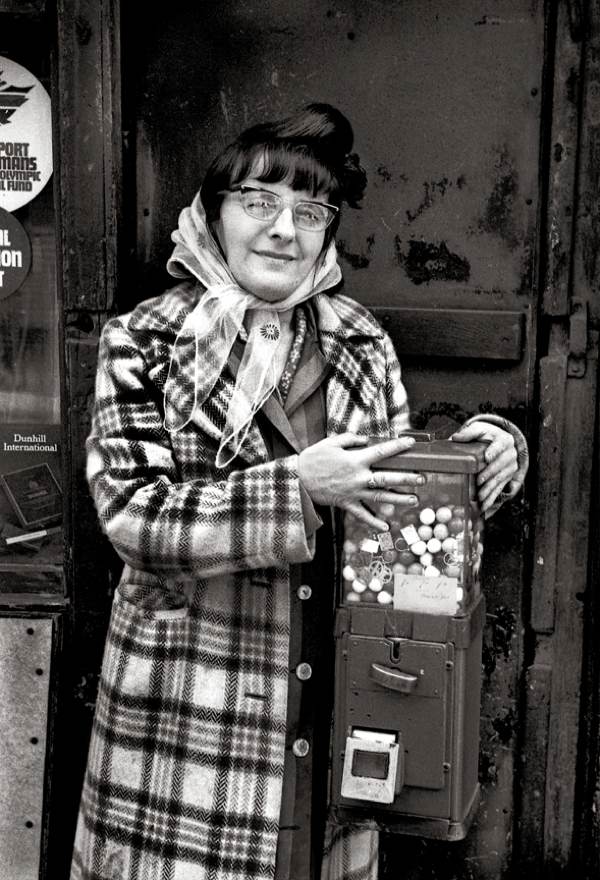
Lady with Gumball Machine, Spitalfields (1967) – “She came out of her kiosk and asked, ‘Will you photograph me with my gumball machine?'”

Saveloy Stall, Spitalfields (1967) – “It was a cold day, so I had two hot dogs.”

Whitechapel Bell Foundry, E1 (1982) Established in 1598, where the Liberty Bell and Big Ben were cast.
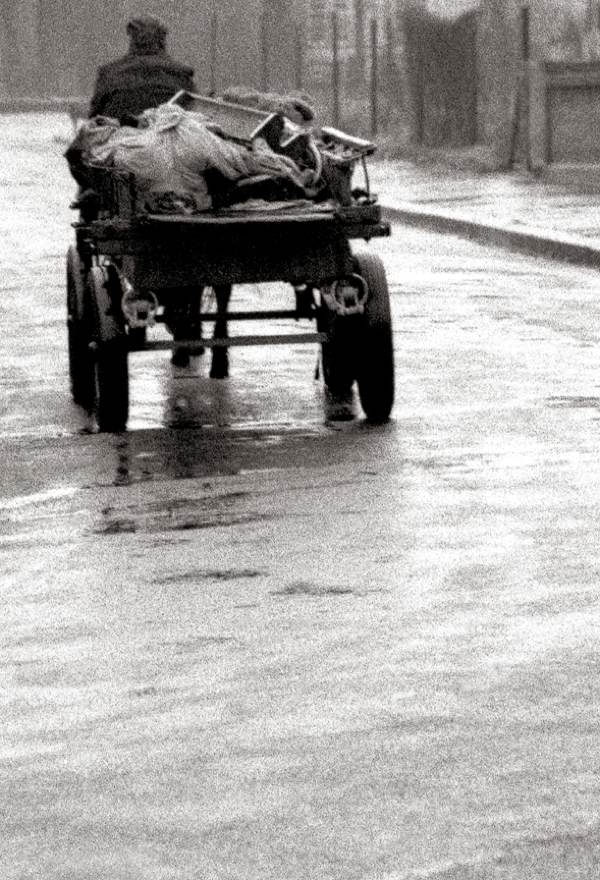
Rag & Bone Man, E13 (1961) – “Down my street in Plaistow, there were not many cars about – all you could hear was the clip-clop of the horse on the wet road.”
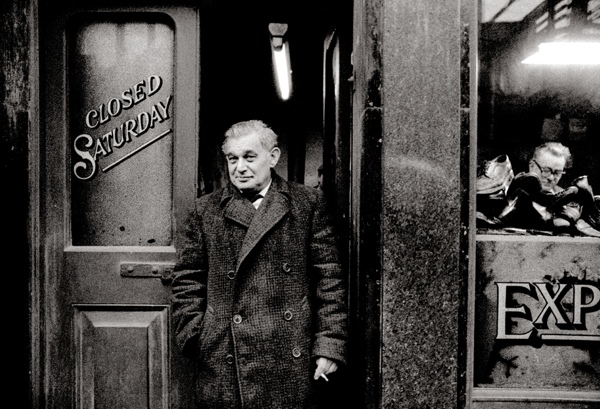
Shoe Repairs Closed Saturday, Spitalfields (1969) – “I asked, ‘Why are you open on Saturday?’ He replied, ‘I was just busy.'”

Spice, E1 (1976) – “Taken at a spice warehouse in Wapping. The smells were fantastic, you could smell it down the street.”

Portrait, Spitalfields (1966) – “This is a group portrait of friends outside of their shop. The two brothers who ran the shop, the lady who worked round the corner and the guy who worked in the back.”

Anglo Pak Muslim Butcher, E2 (1962)

Butchers, Spitalfields (1966) -“I had just finished taking a picture next door, when this lady came out with a joint of meat and asked me to take her photograph with it.”

Fishmongers, E1 (1966) Early morning, unloading fish from Grimsby.

Beigel Baker, E2 (1967) -“After a party at about four or five in the morning, we used to end up at Rinkoff’s in Vallance Rd for smoked salmon beigels.”

Newsagent, Spitalfields (1966) -“I said, ‘Shame about Walt Disney dying, can I take your picture next to it?’ and he said, ‘Alright.'”

Selling Shoes, Spitafields (1963) – “My dad used to tell me what his dad told him, ‘If you’ve got a good pair of shoes, you own the world.'”

Strudel, E2 (1962) – “You’ll like this, boy!’ I had just taken a photograph outside this lady’s shop. I said, ‘I think your window looks beautiful.’ and she asked me in for a slice of apple strudel. It was fantastic! But she would not accept any money, it was a gift. She said, ‘You took a picture of my shop.'”

Number 92, Spitalfields (1964)

Tubby Isaac’s, Spitalfields (1982) – “Aaahhh Tubby’s, where I’ve had many a fine eel.”

Junkyard Dog, E16 (1982) – “I was climbing over the wall into this junkyard. All was quiet, when I noticed this pair of forbidding eyes – then I made my exit.”
Photographs copyright © John Claridge
You may also like to take a look at
Along the Thames with John Claridge
At the Salvation Army with John Claridge
At the Mansell St Garage

Maurice Courtnell & his son Gary
Maurice Courtnell, proprietor of the Mansell St Garage, is not entirely optimistic about the Olympics coming to the East End next month. “It’s going to be worse than wartime!” he informed me gravely, “They’re turning people’s lives upside down, and for what?”
Fortunately, Maurice has taken precautions by installing a caravan into his garage where he and his son Gary will sleep for the duration of the Olympics, thus sparing themselves the risk of travelling back and forth to Basildon in the melée. And if things should descend into a dystopian nightmare, Gary has a Land Rover that he restored which could serve as their escape vehicle in the last resort. “We carried on, all through the war and the bombing,” Maurice assured me confidently, emphasising that he does not intend to let the Olympics interrupt his garage’s record of more that seventy-five years of service.
Such a combination of prudence and ingenuity is characteristic of the Courtnell family who run the East End’s oldest garage, started by Maurice’s father, Edward Courtnell, in 1935 in Mansell St. Amidst the fly-by-night world of motor repair, they have acquired such a reputation over the decades for trust and good service that the name of the garage has stuck, even though it moved from Mansell St more than thirty years ago, and no-one thinks it strange at all to find it half a mile from Mansell St in Cannon St Rd.
For over half a century, the Mansell St Garage took care of all the police cars for the City of London Police and, now that sufficient years have gone by, Maurice can admit – in discreet tones – that once upon a time the Mansell St Garage also did work for most of the notorious East End gangsters, tuning their motors. You might say that it created a certain equality back in the day, both for the cops and the crooks, when it came to the business of get-away vehicles and car chases.
Set back from the road, occupying a former World War II Ambulance station, the Mansell St Garage incarnates the oily romance of motoring superlatively. Sunlight streams through from windows high in the iron roof, casting a glow – upon all the utilitarian clutter that has arrived at its best arrangement through years of use, upon the gaudy adverts for motor parts and upon Maurice’s cherished photograph of the Queen with her favourite horse. Remarkably, for a garage, she is the only female whose photograph you will find on the wall here. “We’ve never displayed nude photographs of women,” Maurice asserted with pride, “because they come in as customers and we treat them with the greatest of respect.”
The surname Courtnell is an unusual one and I did wonder if Maurice might be of Huguenot descent, but he was quick scotch such an ignoble notion. “I’m a true Cockney, I’m proud of my country.” he declared, ” there’s no French in me!”
“My grandfather used to make steam engines and he was bare knuckle pugilist who fought in Hackney Wick. My father started the garage after he had been fleet manager for Goldsteins, clothing manufacturers. They gave him the garage in North Tenter St. All through the war, he was in the home guard and continued to run the garage when it was requisitioned for the RAF. He won a medal for shooting given by the City of London Gun Club and he took me down the Blackwall Tunnel and taught me to shoot, and then after the war I became top gun. I was sixteen when I joined the garage in 1949. My brother Terry was a speedway star who competed for Britain in the World Championship and my brother Edward, the eldest son, did bodywork at the garage until he went off on his own. Terry was killed in a car crash in 1956 and is remembered to this day as speedway legend.
My two sons work with me today, Terry and Gary. They’re the third generation in the business. Terry does the bodywork, Gary does electrics and I do MOTs – I’ve been doing them since it started in 1972. It’s a long, long while. I’ve met some lovely people, some very important people. I’ve always done work for the Tower of London and St Paul’s Cathedral and the London Hospital. You take people as you find them. In my life, I’ve seen them all come and go – first the Jewish people, next the Greeks and the Turks, then the Blacks after them, and now the Asians. They’re all good people. Not everyone’s a millionaire. We can repair cars that insurance companies would write off. Anyway life goes by and we get on very well with the Ministry of Transport. They come every three months to keep an eye on things.
I enjoy diving and I hope I can make eighty-one, and do a hundred foot dive and beat Jacques Cousteau who died at eighty. I shan’t ever retire. I come here because it’s my life. I’ve no interest in sitting indoors and watching TV, there’s no life in that. I’m an old timer, so if an old car wants repairing they’ll need me!”
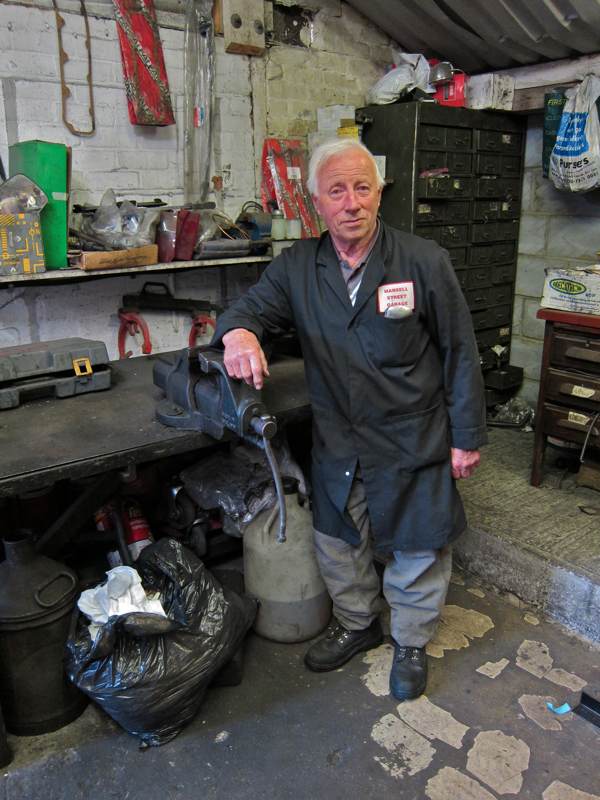
Maurice Courtnell, proprietor of the Mansell St Garage started by his father Edward in 1935.
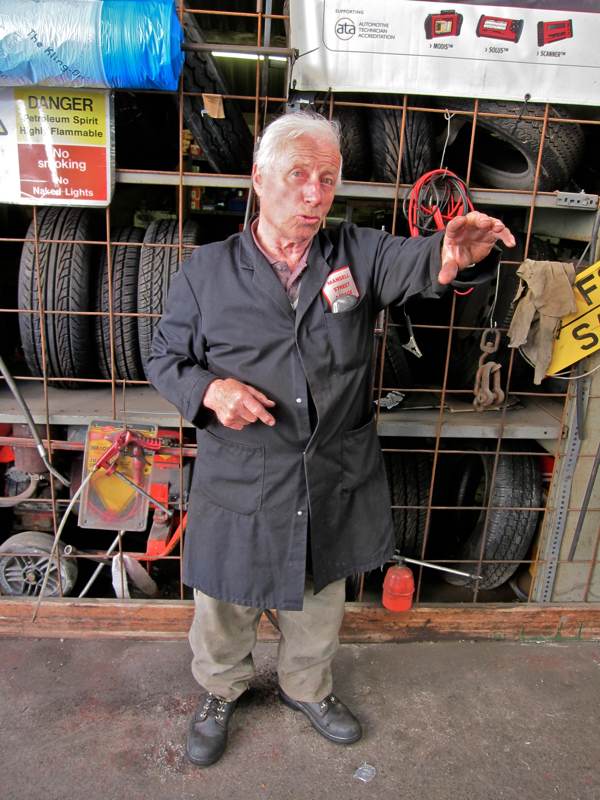
Maurice on the Olympics -“It’s going to be worse than wartime!”
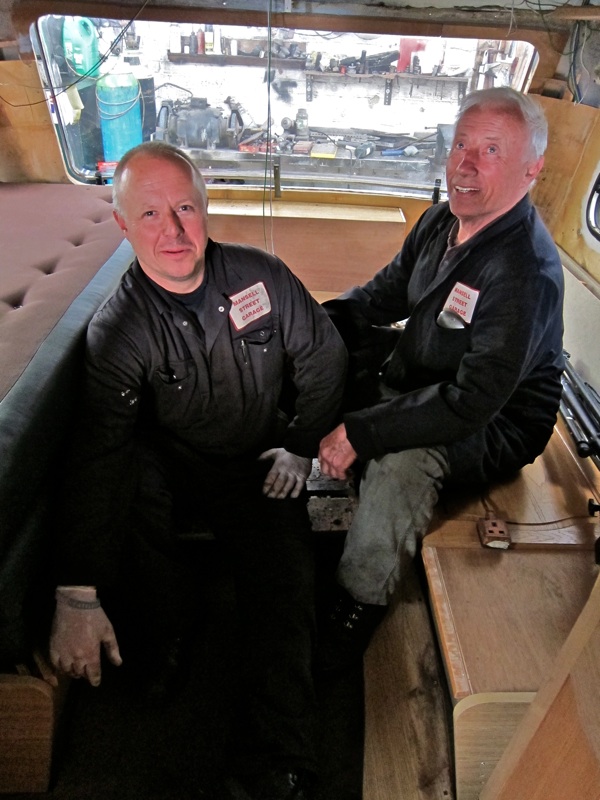
Maurice & Gary in the caravan where they will be sleeping for the period of the Olympics.
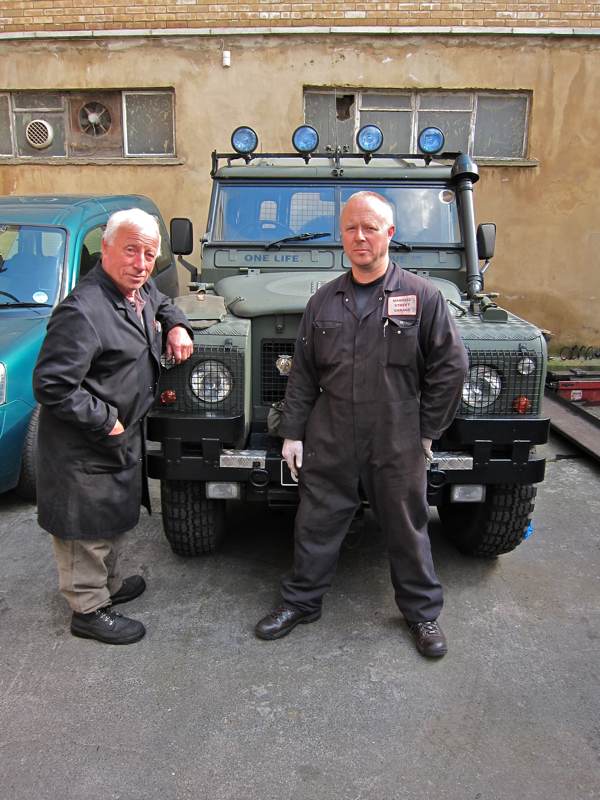
Maurice & Gary with Gary’s Land Rover that he restored himself.
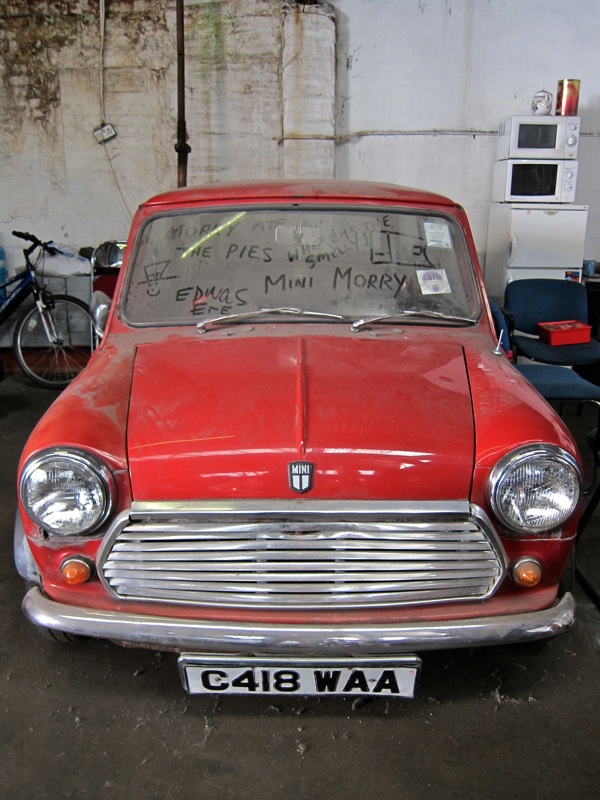
The mini that Maurice plans to have ready for his grandson to drive (currently fifteen years old).
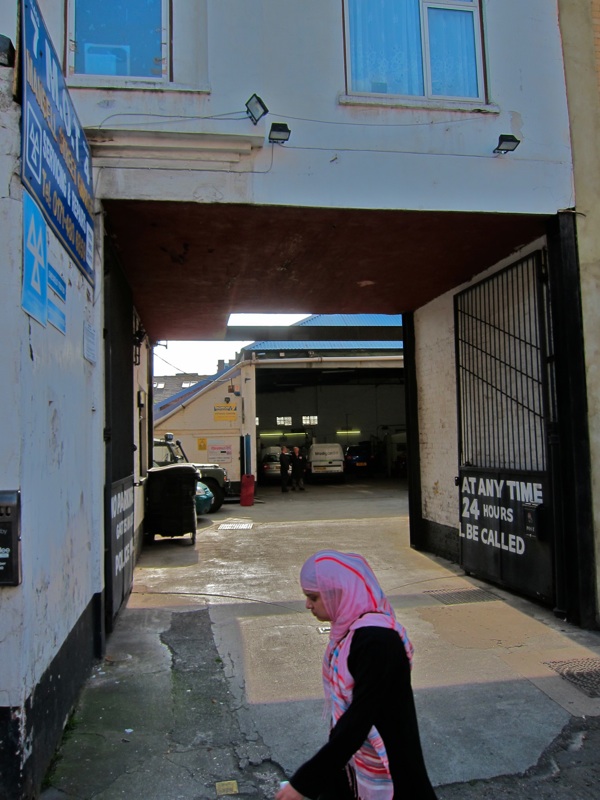
The entrance from Cannon St Rd.

Dean Stringer, striker for Leyton Orient, is proud to work at the Mansell St Garage.
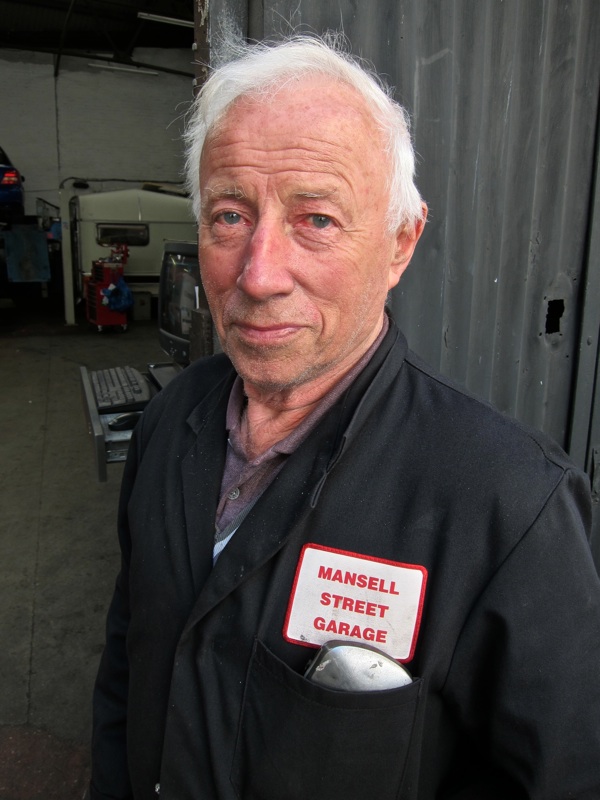
“I’m an old timer, so if an old car wants repairing they’ll need me!”
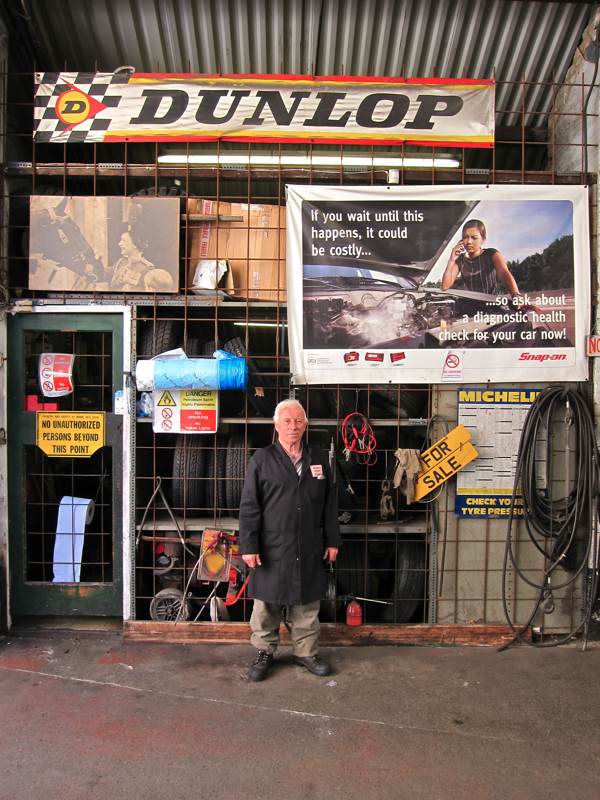
Mansell St Garage, 145-147 Cannon St Rd, London E1 2LX.
Read about Maurice Courtnell’s favourite curry house
You may also like to read
Chamber Music for a Wood Turner
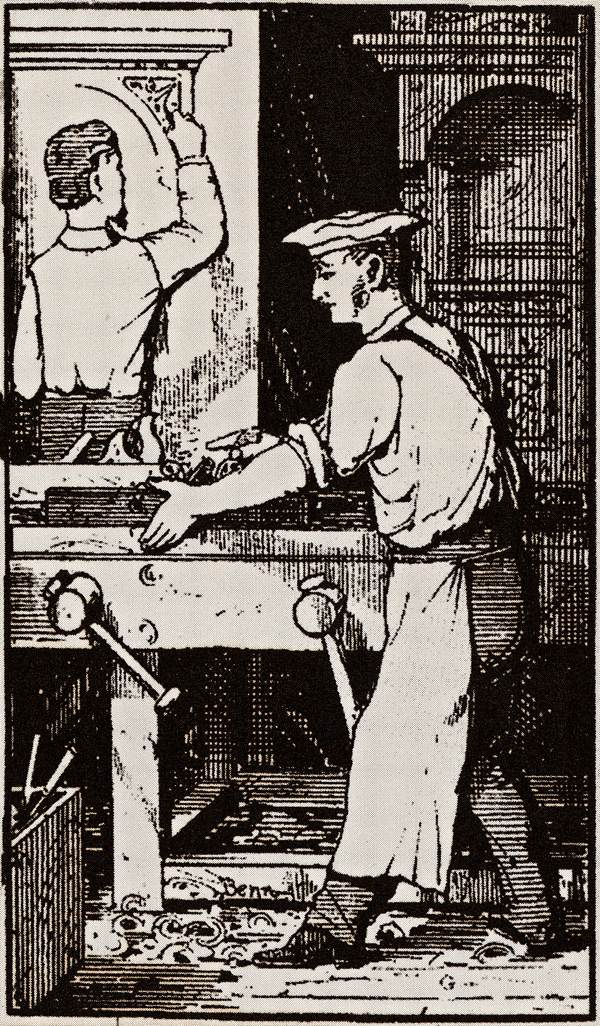
A century ago, the streets and byways of Shoreditch and Hoxton resounded to the din of cabinet makers and wood turners, pursuing their trades in the furniture industry that was once the primary occupation in these neighbourhoods, but which has almost vanished entirely now.
Yet Stephen Massil has found a means to bring back the melody of the furniture makers to Shoreditch, and celebrate their endeavours, by commissioning a piece of chamber music from Nicola LeFanu to mark the centenary of his father William Massil, a wood turner. And this new work is to receive its world premiere next Thursday 21st June, performed by the Heath Quartet with young bassoonist Bram van Sambeek, as part of the Spitalfields Music Summer Festival.
Stephen’s grandfather Hyman Massil was a wood turner who came to Britain in 1905 from Azarich in Byelorussia and found his first job in London at Franklin & Goldberg in the Hackney Rd, just a hundred yards from St Leonard’s, Shoreditch, where the music will be performed next week. Today, the premises of Franklin & Goldberg has become The Spindle Shop, and readers may remember my interview with Maurice Franklin, the wood turner who was born above the shop in 1920 and, miraculously, is still working there today.
By 1912, Hyman Massil had his own workshop round the corner in Coronet St where his brother Morris worked alongside him as “H & M Massil, Woodturner & Twister,” the latter referring to the barley-sugar table legs and spindles for staircases they made. In the late twenties, Hyam ‘s son William Massil joined the business and by then, as well as turnings for local furniture makers, they provided columns and finials for the elaborate cases used by the high quality clockmakers of Clerkenwell. William expanded the company, moving to larger premises in Hoxton St before the war and eventually to Marshmoor near hatfield in Hertfordfordshire in the post-war years, securing the British patent for the production of bowling pins in the nineteen fifties, at a time when there was a boom in bowling alleys. It was an extraordinary transition from traditional wood-turning into the modern era.
Becoming an authority in his field, William wrote a history of the largely unrecorded furniture trade as it left the East End, “Immigrant Furniture Workers in London 1881-1939 and the Jewish Contribution to the Furniture Trade,” published in 1997. “My father could go to exhibitions of furniture and identify which individuals made each piece,” Stephen told me in wonder, confirming of his father’s expertise. A man of culture, William took Stephen to concerts as a child and even arranged performances for young refugee musicians during the days of the Cold War. This passion for music made it a natural choice for Stephen to commission a work in his father’s memory.
“He was a Chippendale man, a mahogany and walnut man, but he was interested in modern furniture too.” recalled Stephen, revealing that William liked to listen to twentieth century composers as well as to Schubert and Mozart, and elucidating his wish that Nicola LeFanu’s commission should sit comfortably with classical pieces in a programme. “We are a Jewish family, Nicola LeFanu is of Huguenot descent, and we are premiering the work in St Leonard’s, so in other words it is a proper mixture for the area,” he continued enthusiastically, “I hope the piece will commemorate a life in Shoreditch and the way that different cultures go to make up a place.”
Finally – “I haven’t heard the work yet, ” Stephen admitted to me with a sly grin of anticipation, “How the composer puts furniture into the music is her problem.”
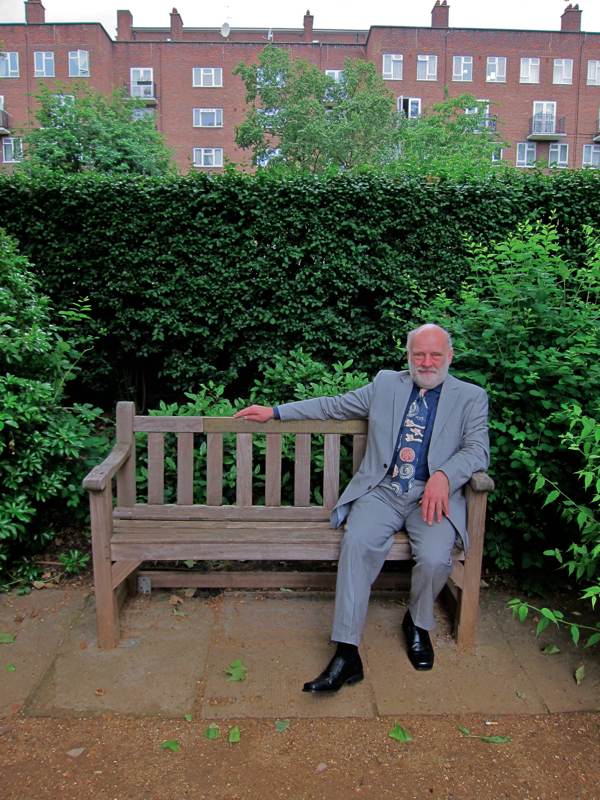
Stephen Massil sits upon the bench in the grounds of the Geffrye Museum, originally placed there in 2002 by his father William Massil to commemorate his grandfather Hyman Massil who first came to Shoreditch as a wood turner in 1905.
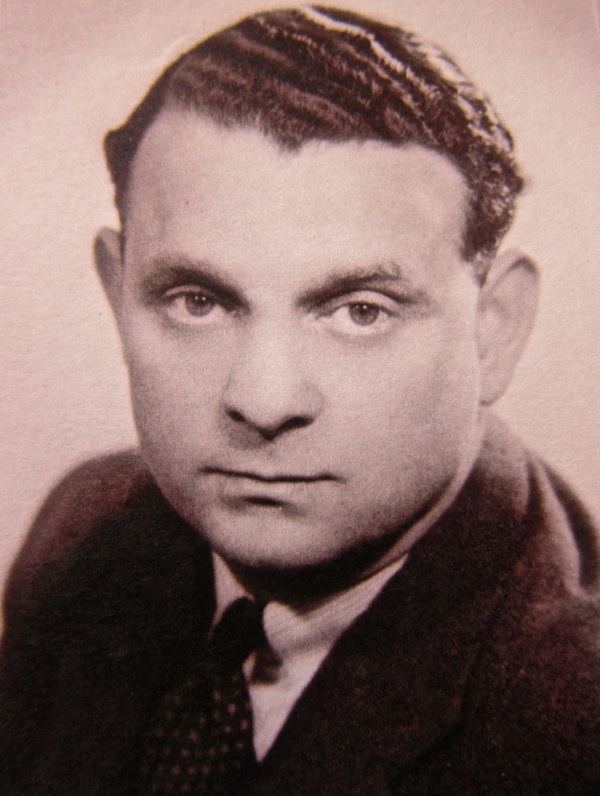
William Massil, Wood Turner (1912-2004)
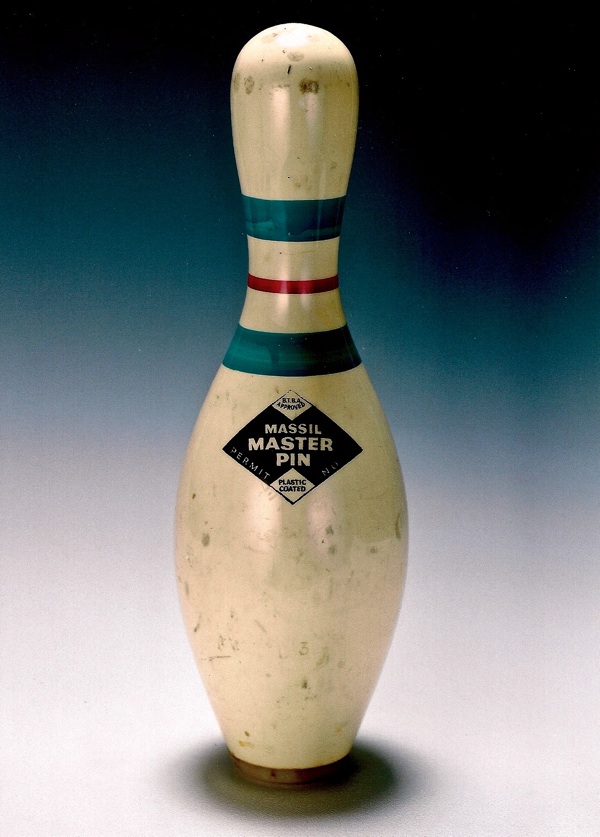
The Massil Master Pin, perfected by William Massil – the bowling pin that made his fortune.

Shoreditch Church where Nicola LeFanu’s piece commemorating William Massil will be premiered.
To find out more and book tickets for the concert click here.
.
You may also like to read about
Philip Marriage’s Spitalfields

On the corner of Gun St & Brushfield St, 1967
In Spitalfields, the closure of the Truman Brewery in 1989, and the moving of Fruit & Vegetable Market in 1991 and the subsequent redevelopment of the site in 2002, have changed our neighbourhood so rapidly that even the recent past – of the time before these events – appears now as the distant past. Time has mysteriously accelerated, and we look back from the other side of the watershed created by these major changes to a familiar world that has been rendered strange to us.
Such was my immediate reaction, casting my eyes over Philip Marriage’s beautiful photographs when they arrived in an envelope in the post recently, and which I have the pleasure of publishing for the first time today. Between 1967 and 1995, Philip visited Spitalfields regularly taking photographs, after discovering that his ancestors lived here centuries ago. And the pictures which are the outcome of his thirty-year fascination comprise a spell-binding record of these streets at that time, taken by one on a personal quest to seek the spirit of the place.
“I worked in London from 1959 to 1978 and, for the first ten years, I commuted from Enfield to Liverpool St Station. So I was aware of Spitalfields from that time, though my real interest started when I discovered that my great-great-grandfather was a silk weaver at 6 Duke St, Old Artillery Ground. And I found records of others sharing the Marriage (then French Mariage) surname in the area as far back as 1585.
My job – as a graphic designer and later Design Manager – for HMSO Books (the former government publishers) was based on Holborn Viaduct so I was near enough to Somerset House, the Public Records Office and the Guildhall Library to undertake family history research in my lunchtime. In the autumn of 1967, I visited Spitalfields with my camera for the first time to see if I could locate any of the places associated with my family. In those days colour print film was expensive and I mostly took transparencies, but later Ilford brought out a cheap colour film for a pound a roll which provided twenty small colour prints and each negative returned mounted in 2×2 cardboard mounts – quite novel, but affordable.
When I married in 1968 and moved to Hertfordshire, my family history researches came to an end. Then, in 1978, my job took me to Norwich where I’ve remained since. However, I occasionally found myself in London and, if time permitted whilst waiting for the Norwich train, I always nipped out of Liverpool St Station and down Brushfield St for a brief reminder of my favourite places.”

Crispin St, 1985.

Spital shop, 1970.

Parliament Ct, 1986.

H.Hyams, Gun St, 1970.

Corner of Fashion St & Brick Lane, 1979.

Fashion St, 1979.

Toynbee St, 1970.

The Jolly Butchers, Brick Lane, 1985.

The Crown & Shuttle, Norton Folgate, 1987.

Boundary Passage with The Ship & Blue Ball, 1985.

The Carpenter’s Arms at the corner of Cheshire St & St Matthew’s Row, 1985.

Brick Lane, 1985.

Tour in Hanbury St, 1985.

Corner of Wentworth St & Leyden St, 1990.

Brushfield St, 1990.

Mosley Speaks, 1967.

Fournier St, 1985.

Corner of Quaker St & Grey Eagle St, 1986.

Truman Brewery, Brick Lane, 1985.

E. Olive Ltd, Umbrella Manufacturers, Hanbury St, 1985.

E. Olive Ltd, Umbrella Manufacturers, Hanbury St, 1985.

Corner of Lamb St & Commercial St, 1988.

Brushfield St, 1990.

Spitalfields Market, 1986.

Brushfield St, 1985.

Gun St, 1985.

Brushfield St, 1985.

Christ Church, Spitalfields, 1985.
Photographs copyright © Philip Marriage
You may also like to look at
Alan Dein’s East End Shopfronts of 1988
Mark Jackson & Huw Davies, Photographers
At Sweet & Spicy

If you ever stood in Brick Lane, baffled by the array of curry houses and harangued by the touts, and wondered “Where do the locals eat?” then seek out Sweet & Spicy down on the corner of Chicksand St, where proprietor Omar Butt works conscientiously from eleven until eleven every day, in this celebrated Spitalfields institution opened by his father Ikram Butt in 1969. Established originally as a cafe, Sweet & Spicy was only the third curry house to open on Brick Lane and, such is the popularity of its menu, it has remained largely unchanged through all this time.
Come for lunch or dinner. You will meet Omar Butt, tall with lively dark eyes and a stature that befits an ex-wrestler, yet modest and eager to greet customers. Chose your food at the counter, let Omar stack up your tray, then take your place in the cafeteria-style dining room at the back, lined with posters reflecting the Butt family’s involvement in wrestling over generations, and enjoy your meal in peace and quiet.
Sweet & Spicy offers a simple menu of the essential curry dishes which are complemented by two house specialities, popular since 1969. Halva puri with chana (spicy chickpeas) which Omar describes as the “Pakistani breakfast,” – traditionally the food of wrestlers who, he says, were characteristically “big rough men that ate halva all day.” Omar makes the halva personally twice a week at Sweet & Spicy, exactly as it is done in the halva shops of Pakistan where they also display the same wrestling posters that he has on his wall. And the warm halva makes a very tasty counterpoint to the spicy chana – sweet and spicy, just as the name over the door promises. Most customers pop in for the famous kebab roll – his other speciality – a shish kebab served in a deep-fried chapati with onions and chili sauce. A snack to suit all tastes for just two pounds. “It has so many dimensions of flavour that people really like,” waxes Omar, his eyes gleaming with culinary pride.
There is an appealingly egalitarian quality to this restaurant where anyone can afford to eat, where Omar oversees every aspect of the food with scrupulous care and where people of all the races that live in Spitalfields can meet in a relaxed environment, unified by their love of curry – honestly cooked, keenly priced and served without pretensions. Twice a day, Sweet & Spicy fills up with the lunch and dinner rush, but drop by late morning for a Pakistani breakfast, or visit in the afternoon, and you will discover Omar taking a well-deserved break to read his newspaper and eager to chat. With an understated authority, he presides over a unique community hub that has evolved naturally, offering a refuge of calm and civility amidst the clamour of Brick Lane.
“I used to come here at six years old. I guess I was be the youngest busboy on Brick Lane, serving and clearing tables for quite a few years. My family have always been involved in wrestling. My grandfather Allah Ditta, he was professional wrestler in Pakistan and my uncle, Aslam Butt, was National Champion. I have done international freestyle wrestling and I’ve tried very hard at an Indian style where you wrestle in a sand pit. I have travelled and wrestled in America, here and in Pakistan.
I studied business after I left school and then I came to work here full -time at twenty-four years old. I am a self-taught cook and I taught myself how to cook everything. Each morning I do a little cooking when I arrive and then I spend the rest of the day upstairs serving customers. It’s important to me, to attend to everything. For a restaurant to have long life-cycle, the owner has to be able to cook as well.
We open seven days a week and I am here seven days, from eleven in the morning until eleven at night. It’s been non-stop lately because of the economic situation. No-one likes a recession, but it shows you what you are capable of. Before, I didn’t know that I was able to work seventy hour weeks, but it is possible. I have a wife and two kids and I live on the Isle of Dogs but, because I have spent so much of my time on Brick Lane, it’s like I live here as well.
We were always a cafe, whereas the others became restaurants serving English customers but here it has always been a mixed clientele. People used to come for snacks after the visiting the Naz cinema next door and we served the machinists working in the clothing factories. We have a long loyal gallery of locals. It’s a cosmopolitan place. Today I had an Asian sea captain who first came forty years ago, Bengali businessmen, a table of Cubans, and some born and bred East Enders who have been coming all their lives. We run the business off our regular customers. I often get young men who say their father brought them here as a child. There’s something about this place, it’s a father and son place.”

One of Omar’s collection of wrestling posters. His uncle and grandfather were champions in Pakistan.

In the cool of the curry house in the afternoon.
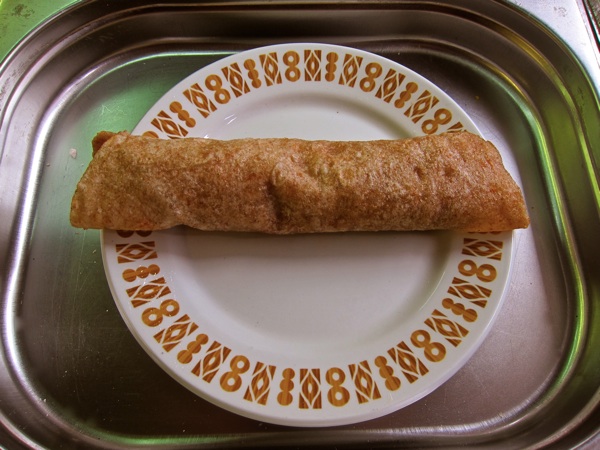
Sweet & Spicy’s celebrated £2 kebab roll – the burrito of Brick Lane.

Halva with puri £1.45 – traditionally the food of wrestlers. Served hot with chana as ‘the Pakistani breakfast.’


Faraz

Sweet & Spicy, 40 Brick Lane, London E1, 6RF.
You may also like to read about
The Battle for London’s Markets
Today I am republishing this piece that I wrote for The Guardian last week, which many readers may not have seen yet.
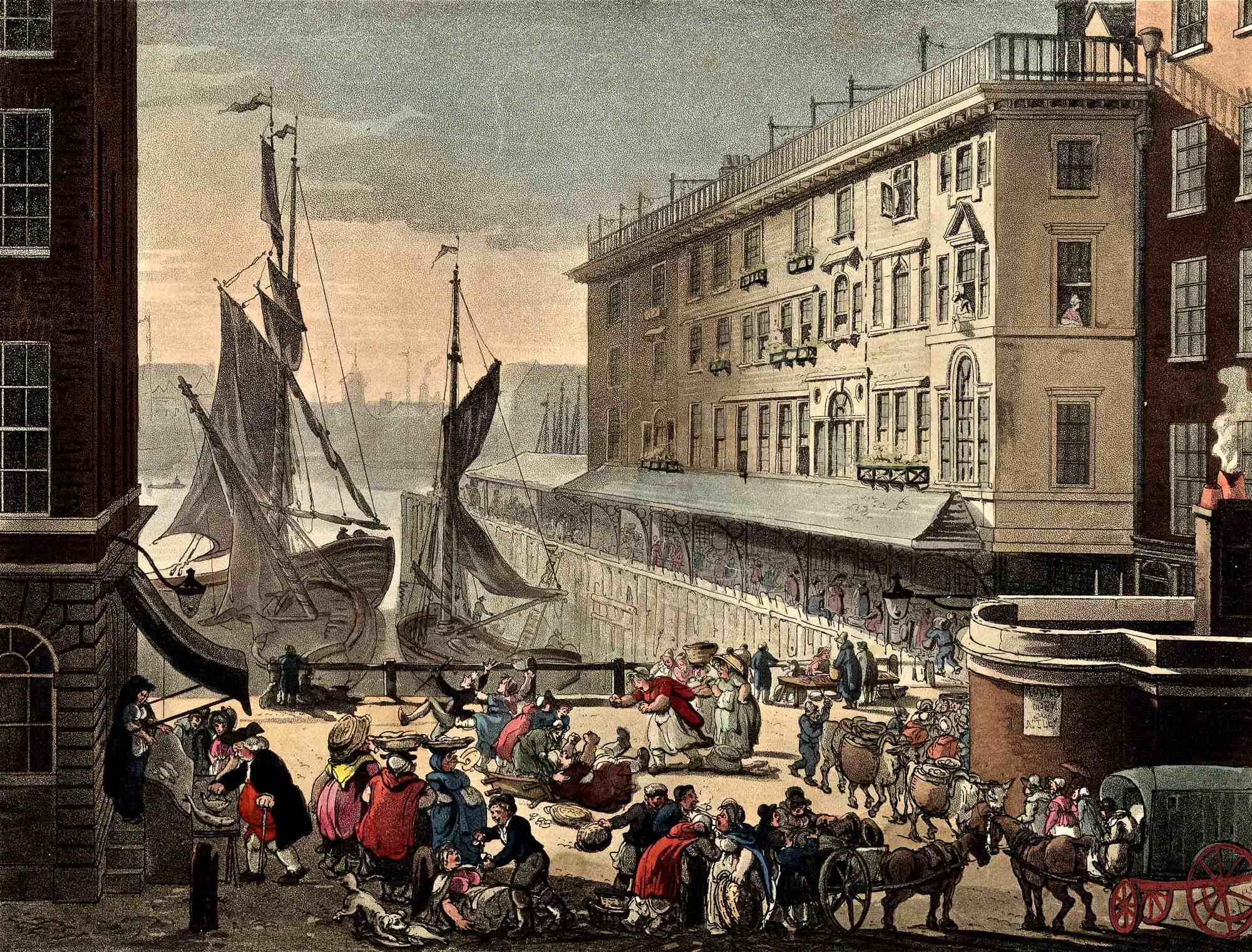
Billingsgate Market 1809 (click to enlarge)
In recent years, the term “marketplace” has become increasingly used to refer only to economic transactions, yet for the people of London the market has always been something more – an arena of possibility and a place of cultural exchange, bound up with the identity of the city itself since its earliest origins.
When Thomas Rowlandson was commissioned to draw the human figures onto Augustus Pugin’s architectural plates of Covent Garden Market and Billingsgate Market as part of the Microcosm of London in 1809, he delighted in the sharp contrast between the human idiosyncrasies of the traders and the uniform classical architecture of the new buildings that sought to contain the markets. This tension, between the essentially chaotic nature of markets and those who would like to control them, persists to our own day.
Within the last month, we have seen the abolition of the licensed porters of Billingsgate Market by the City of London Corporation acting with the support of the fish traders, who were eager to replace them with cheaper, unregulated labour. Yet the dramatic irony of this action only became apparent a few days later, when the traders themselves were given notice on their leases in the market by the City Corporation.
Now, as the fish porters consider whether to accept employment under poorer conditions, the traders have to ask themselves where their businesses are going to be in two years’ time. Both parties must be nursing bruised emotions and contemplating recent events in the light of the traditional honour code of markets, in which each man is only as good as his word.
The events at Billingsgate follow a pattern established when Covent Garden Market moved from central London to Vauxhall in 1979 – the loss of porters’ rights prior to transition to a new building and then redevelopment of the former premises into a shopping mall or corporate offices. The City of London Corporation has a plan to create a one-stop market for meat and fish at Leyton in east London, alongside the New Spitalfields Fruit & Vegetable Market that relocated there in 1991. And the human costs, such as those suffered by the porters at Billingsgate, are incidental to their grand scheme.
By purely following an economic imperative, the authorities miss the wider cultural function of markets. Aside from the cultural loss to the city, it ignores our need for alternative places to buy fresh produce that might counteract the dominance of the supermarkets – not just a marginal concern as Britain struggles with an obesity crisis. I cannot walk through Covent Garden today without my heart sinking at the sight of all the chain stores. There is an undeniable sense that the authentic life of the city has gone.
While these inner-city markets may no longer be effective as wholesale operations, they would be an asset to London if the buildings could operate as retail food markets, allowing smaller suppliers to offer a greater choice of fresh produce direct to the customer. We need only to look to the European continent to see how large food markets can be retained successfully at the heart of the city. The novelty and appeal of supermarkets is long gone and, if there is a street market nearby, you can readily be assured of better quality produce at a keener price.
In the East End of London, there has always been an understanding that if all else fails, if you cannot get a job, if you cannot afford to rent a shop, you can always sell things in the market – and, even if you have nothing to sell, you can always find things in the street and sell them. In fact, some of the largest chains such as Tesco, Sainsbury’s and Marks & Spencer had their origin in these modest circumstances. And it is here at the boundary of the City, in what has historically been London’s market district, that the battle for the life of London’s markets is being played out at street level.
The battle for London’s markets is not yet lost. Tower Hamlets council unexpectedly refused permission for the demolition of the London Fruit & Wool Exchange in Spitalfields recently, obstructing redevelopment into corporate offices and a shopping mall. And, in another heartening initiative, the independent shopkeepers and small traders of east London are currently banding together to launch a union – the East End Trades Guild – to fight for their survival in the face of avaricious landlords courted by chain stores who would like to create another Covent Garden.
By their very nature markets are contingent, and the history of London records many legendary lost markets that are long gone, from the forum of Londinium, through to Shepherd Market and Haymarket off Piccadilly in the 18th century, Clare Market in the 19th century and Caledonian Market in the 20th century. As manifestations of human resourcefulness, markets will always be with us and I put my faith in the ingenuity of the street traders to elude control and enliven the metropolis with their presence, because markets are the place where commerce becomes culture. They are the soul of our city.
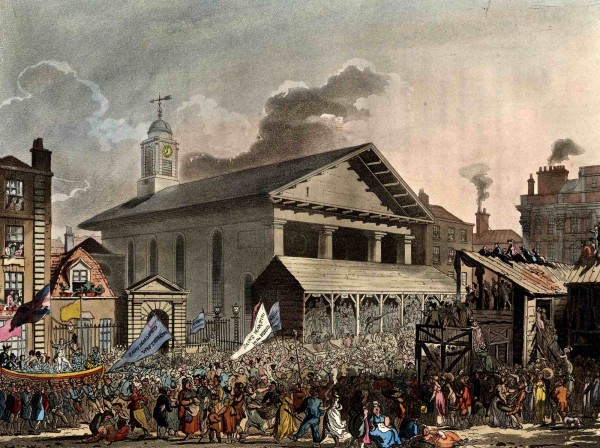
Covent Garden Market 1809
Archive images courtesy Bishopsgate Institute
Click here to see the article on The Guardian website along with a film and comments.
You may also like to read
The Last Porters of Billingsgate Fish Market
At The London Fruit & Wool Exchange