The Return Of Vicky Moses
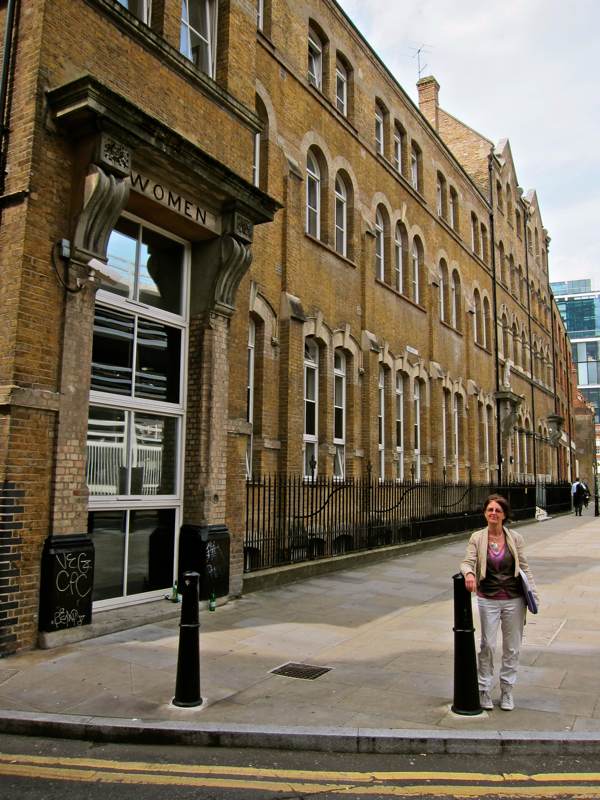
Vicky outside the former Providence Row Shelter where she stayed as a ten-year-old in 1958
Vicky Moses returned to Spitalfields for the first time in over fifty years while house-hunting last October, and had the strange experience of encountering her younger self at the Providence Row Shelter in Crispin St, where she had once stayed as child. Now Vicky has moved into a flat nearby in the Petticoat Tower and confesses that it is no accident that after all these years she has chosen to make her permanent home in Spitalfields.“The place feels comfortable to me,” she confirmed when I met her in Crispin St outside the former Providence Row Shelter yesterday.
“During the winter of 1958, my mother took myself, aged ten, with my sister and brother aged six and four, and a six-month-old baby, to London to get away from my violent father. Arriving at Victoria Station with just the housekeeping money, Mum had no option but to seek help. She went first to what is now The Passage, a charitable hostel in Carlisle Place in Victoria, but there was no help there for a family such as ours. Eventually – having walked right across London looking for somewhere to stay – by that evening we arrived at the doors of Providence Row in Spitalfields where we were given beds and this became our temporary home.
As a ten-year-old, I was able to take it all in and remember it well, even now. It was such a contrast to our suburban life, but we were safe and secure and with our mother, our rock.
My memories of Providence Row are these – From the street you went up steps to the door, and inside was a long large room with a huge wooden table running through the middle, and, on either side, along the walls, were wooden benches. Women and children were separated from the men who were downstairs.
Each night, before going to bed, we were given a mug of cocoa and a thick slice of bread and butter. We all went to bed about the same time. The dormitory had beds arranged, hospital-style, around the walls, facing into the room, and a double row ran down the centre. We were in the women’s dormitory, my sister and I sharing a single bed, Mum sleeping with my brother with the baby in-between. In the bed next to ours, an old woman slept fully clothed, muttering and snoring which I found most disturbing.
In the mornings, we went down for breakfast – a mug of tea and another thick slice of bread and butter. Then we had to go out as the refuge was closed during the day, so there was nothing to do but walk the streets.
Mum took this opportunity to show us the sights of London that were within walking distance. She showed us Billingsgate Fish Market and we went to St Paul’s, to Petticoat Lane Market where the crockery seller enthralled me with his banter and where I first tasted hot chestnuts, and to Fleet St and the Tower of London and Tower Bridge. I remember waiting and then eventually seeing the Bridge open and close for a ship to pass through.
There were the bomb sites too, fascinating places for a child. I read ‘An Episode of Sparrows’ by Rumer Godden when I was twelve and I saw the film version ‘Innocent Sinners’. It was all familiar to me because I knew the location, I’d lived there. ‘A Kid for Two Farthings’ was another film I saw not long after our stay – I must watch it again to relive those days, to see it again through my child’s eyes.
The days were very long and we had to be fed, which meant food on park benches. And it was cold. But eventually 5pm would come round and we could return to the refuge.
We should have been at school, of course, and my eleven-plus exam was approaching. I’d been learning long division of pounds, shillings and pence, so Mum taught me this at the shelter in the evenings. I knelt at the bench with a piece of paper on which Mum had written some sums and next to me were her spare coins to help me. The other residents must have thought this odd, but Mum was not to be deterred, the eleven-plus was important and preparation continued regardless of circumstances.
Next to us on the bench, sat another mother with her two daughters, the only other family I can remember. One daughter was my age, and the other was younger. I played with the older girl and we became friends, even though there was nowhere for us to go and play or even talk, other than by sitting beside each other on the bench.
The other residents came from an existence very different to mine. They were poor, desperate people from a Dickensian world – people whose problems were not solved by the new welfare state, but I didn’t feel threatened, and the nuns and lay staff were kind, and our Mum was our star.
When the time came for us to leave – we were moving on to stay with my uncle – I remember a nun came to the door to see us off. I can see her standing at the top of the steps. Mum needed to pop back inside to say goodbye to someone, and asked me to hold onto the pram and watch the others. She put her purse under the pram cover and went inside. Five minutes later she reappeared and went for her purse. It had gone. Someone had seen her go and distracted me from my task.
Those were strange days but ones I will never forget and, in many ways, I’m glad I had this experience though I wish the circumstances that led us there had been different.”
Vicky passed her eleven-plus exam in 1959.

Vicky (far right holding the baby) with her brothers and sisters in the spring of 1959, six months after their stay in the Providence Row Shelter.
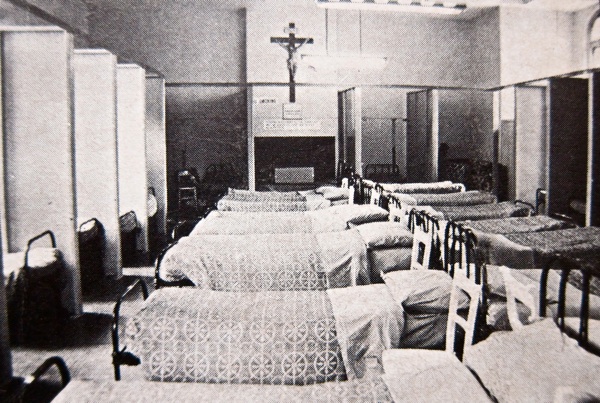
The dormitory – Vicky’s mother and her two youngest children slept in the bed in the foreground, while Vicky and her sister shared the next bed in the front of the picture.
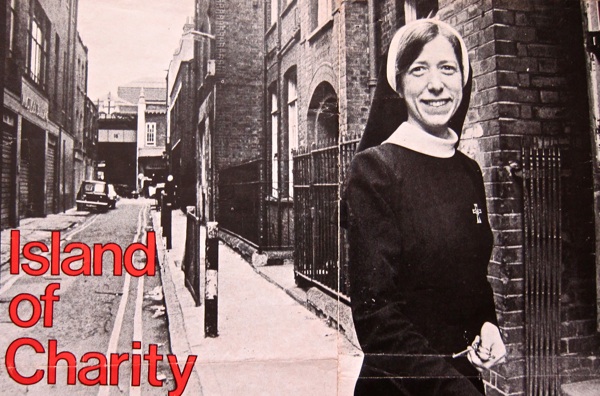
Sister Fidelma outside Providence Row’s Gun St entrance, pictured in Catholic Life, 1976.
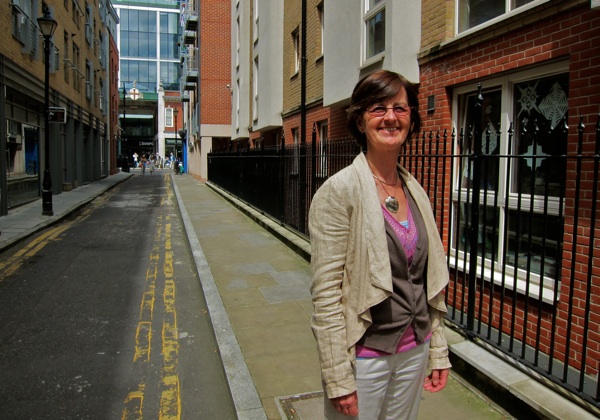
Vicky stands in Gun St where Sister Fidelma once stood.

The shelter seen from the corner of Crispin St and Whites Row, a century ago.
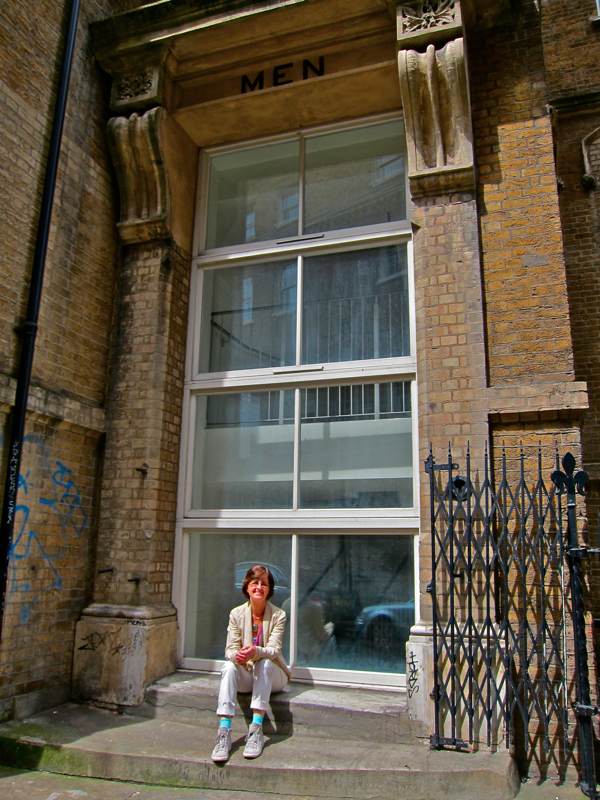
Vicky is now a resident of Spitalfields and the shelter has been converted as student accommodation.

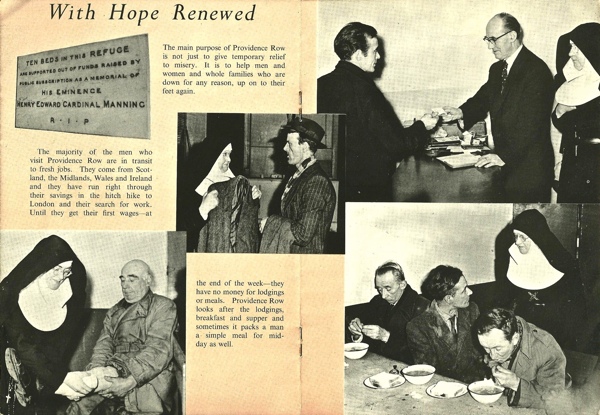
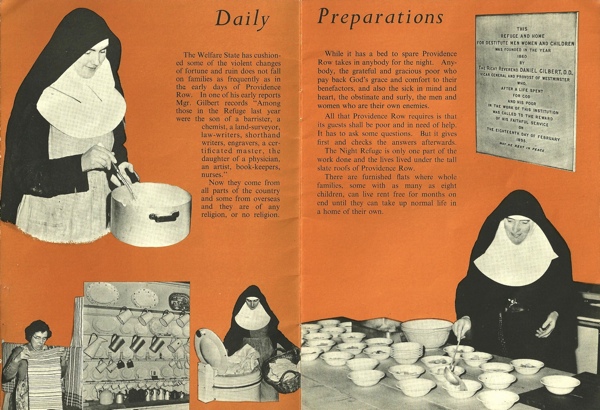
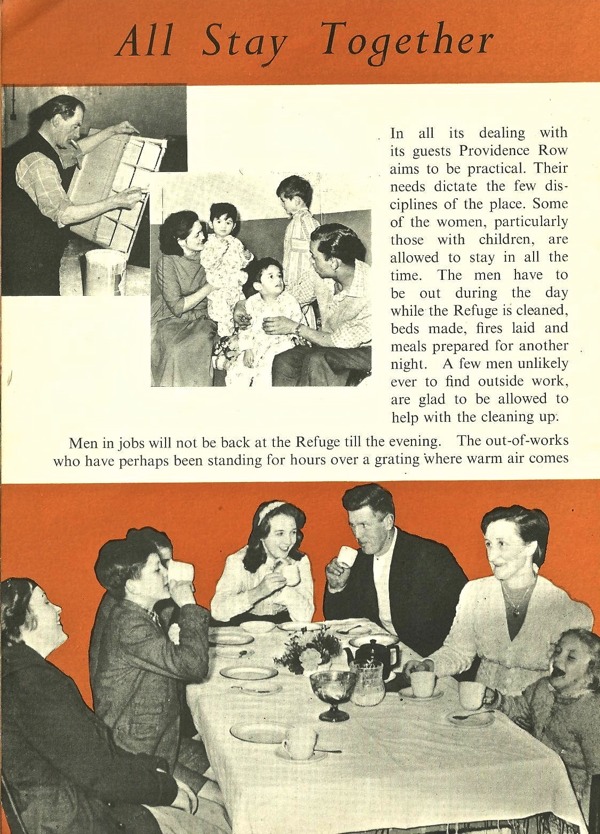
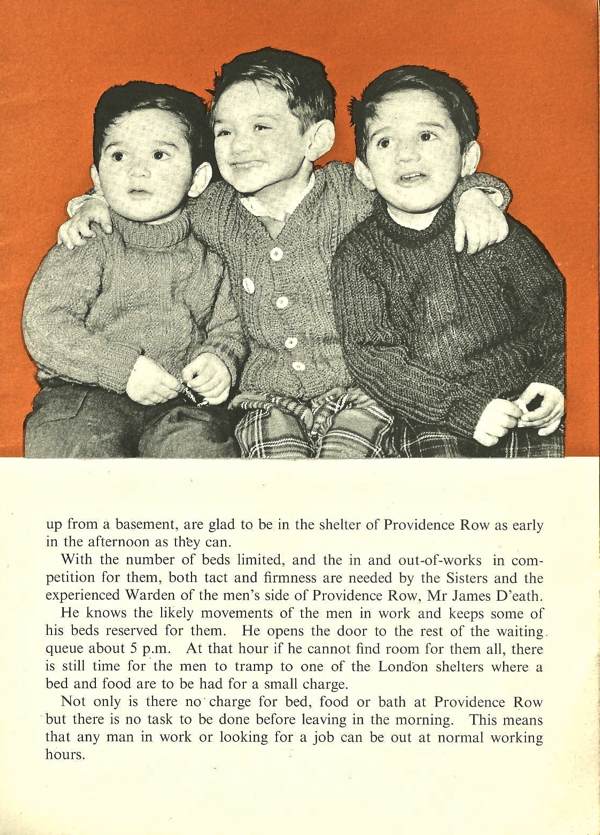
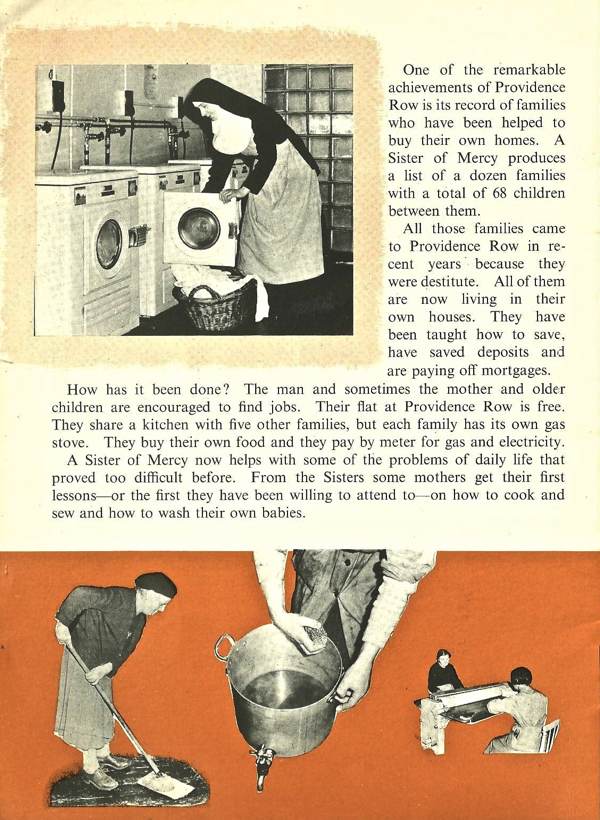

Extracts from a pamphlet produced by Providence Row in 1960.
Click here to read about the continuing work of Providence Row in Spitalfields.
You may also like to read about
Invasion Of The Monoliths
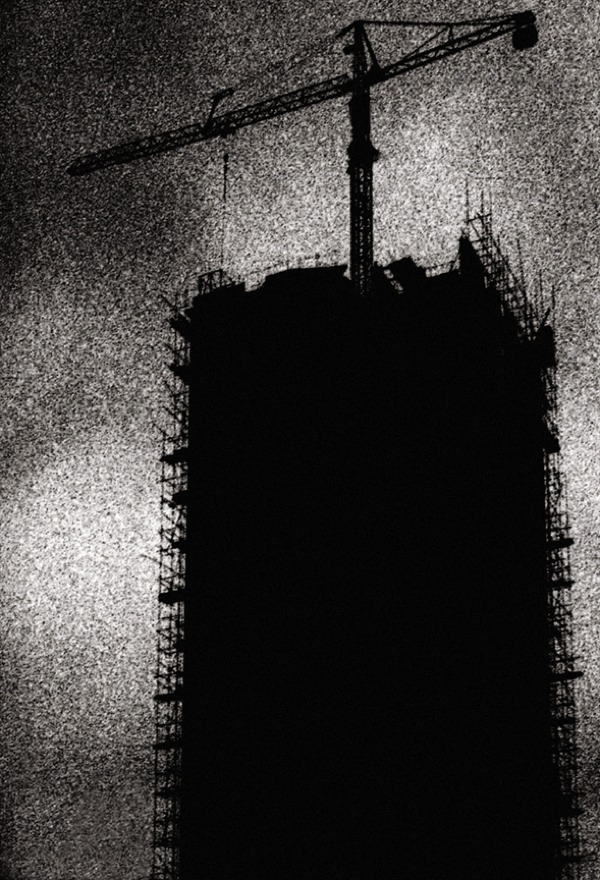
In the Beginning
“The rich got richer and the poor got bathrooms” – this is photographer John Claridge’s caustic verdict upon the invasion of the monolithic tower blocks in the East End of his youth, as recorded in this set of pictures taken between 1962 and 1982, and published here for the first time.
“In the terraces of two-up two-downs, people could talk over the garden fence but in the towers they became strangers to each other. The culture of how they lived was taken away from them, and I knew a lot of people that got fucked up by it.” John told me, still angry about the wilful destruction of communities enacted in the name of social progress. “It was a cheap shot. People were making a fortune out of putting up crap.” he revealed in contempt, “I don’t think anyone has the right to destroy other people’s lives in that way and tie it up with a silk ribbon.”
While in London’s richer neighbourhoods old terraces were more likely to be renovated and preserved, in the East End and other poorer districts pressure was exerted through slum clearance programmes to force people from their homes, demolishing swathes of nineteenth century housing in preference to simply installing modern amenities. In retrospect, many of these schemes appear to have been driven by little more than class prejudice and created more social problems than they solved, dislocating communities and systematically erasing centuries of settled working class culture.
John’s photographs record how the monoliths first asserted their forbidding presence upon the landscape of the East End, arriving like the Martian fighting machines in the War of the Worlds. “You made fun of it and got on with your life,” he admitted to me and, with sardonic humour – adopting titles from cinema and jazz – he confronts us in these pictures with a series of mordant graphic images that imprint themselves upon the consciousness.
Today, as new tower blocks rise at the top of Brick Lane and the proposal to replace the London Fruit & Wool Exchange in Spitalfields with a larger block is referred to the Mayor of London after being rejected by Tower Hamlets, John Claridge’s vivid photographs of the monoliths remain as resonant as ever.
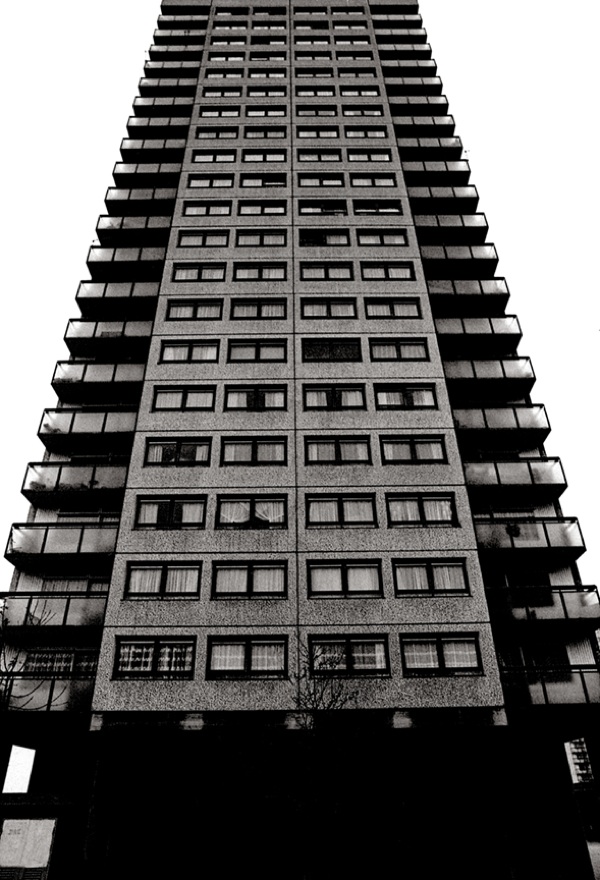
On Dangerous Ground – “They didn’t half put them up quick, I’m telling you.”
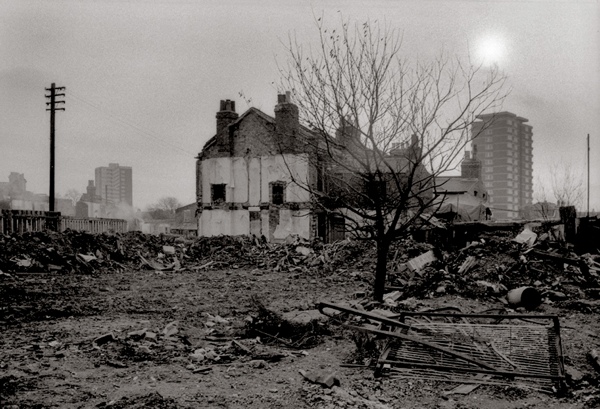
Gloomy Sunday

Room With a View – “Which is the view, from this window or from the block?”
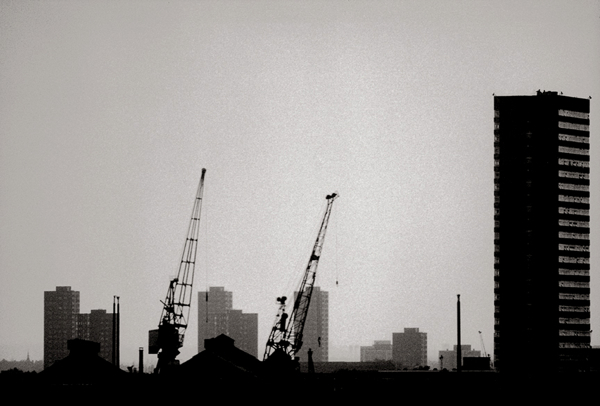
The Dark Corner
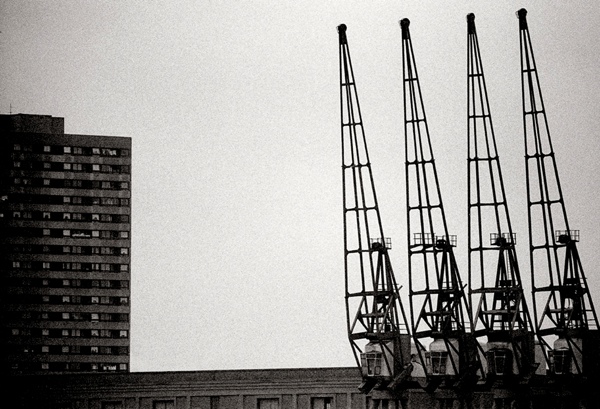
The Four Horsemen
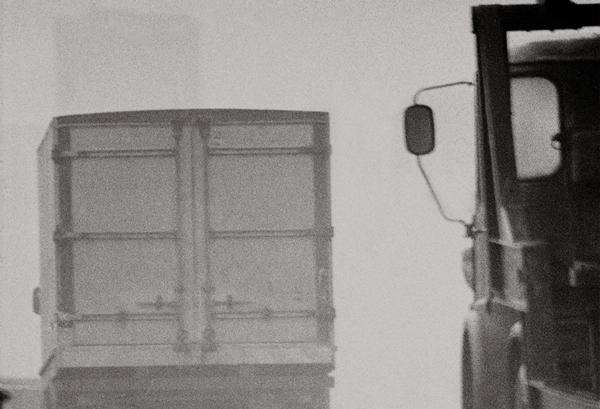
Foggy Day

Three Steps to Heaven
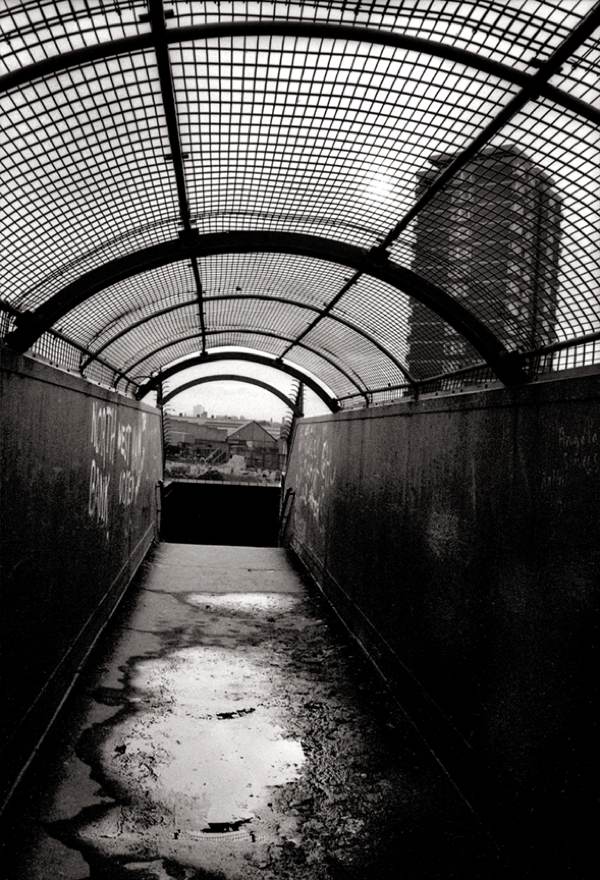
Caged – “An old lady who lived in a block in which the lift broke told me she felt like a caged animal.”

Freedom is Just Another Word – “Prefabs offered one kind of freedom and tower blocks offered another – but then the word didn’t mean anything anymore.”
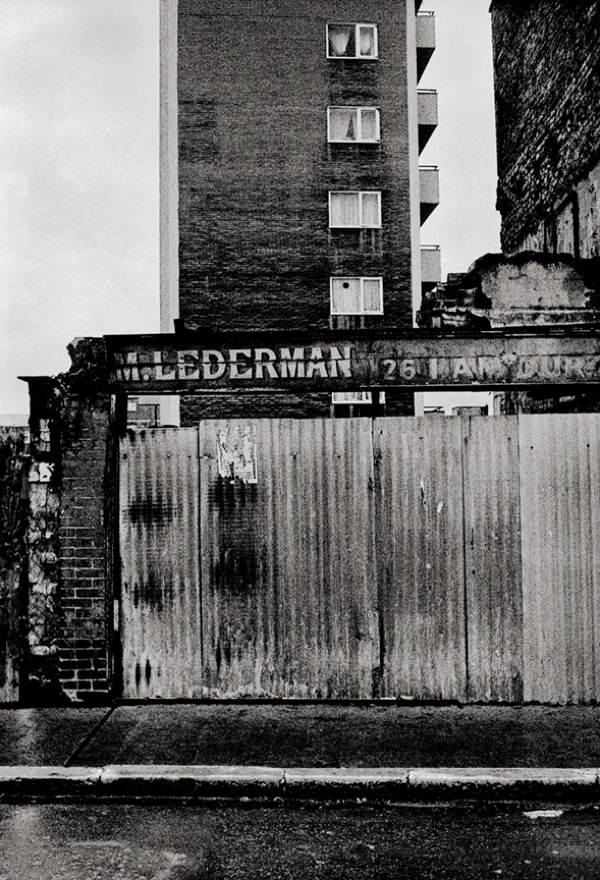
Stranger on the Third Floor – “Once the small businesses go, people became estranged from their local environment.”
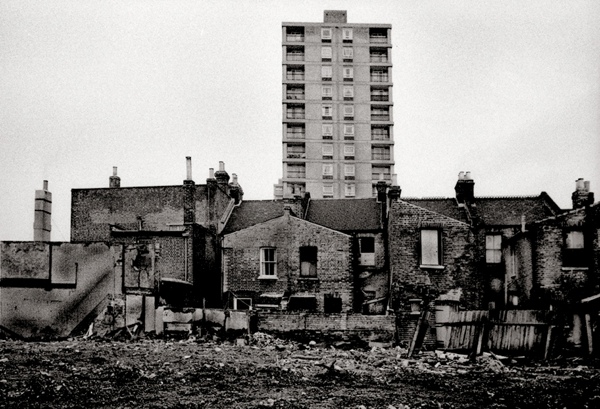
Odds Against Tomorrow – “There were still a few people left in this derelict terrace because they didn’t want to move out, but the odds were against them.”

House of Cards – “When a gas stove blew up and part of Ronan Point collapsed, my father, who was a qualified engineer, went to check it out – there were bolts missing and it had been constructed on the cheap.”

Dark Water -“These reminded me of apartment buildings in the Eastern Bloc.”
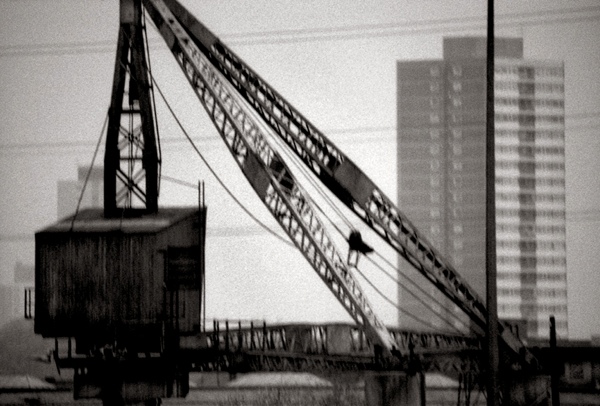
House of Strangers
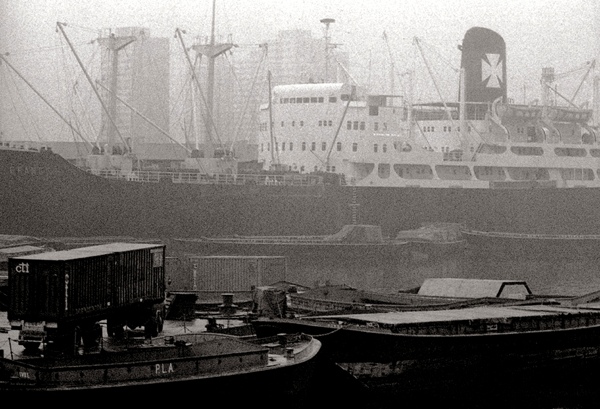
Undercurrent

Out of Nowhere
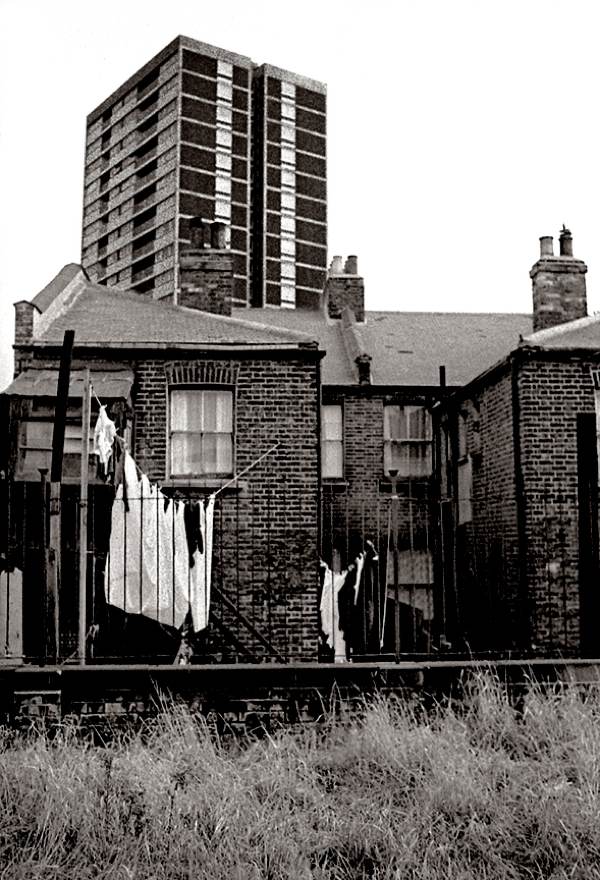
High Wall
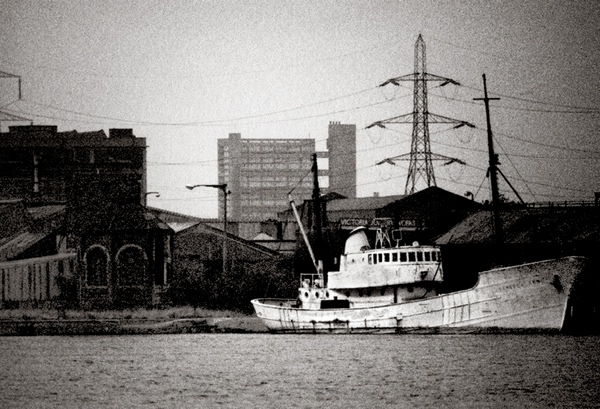
Dark Passage
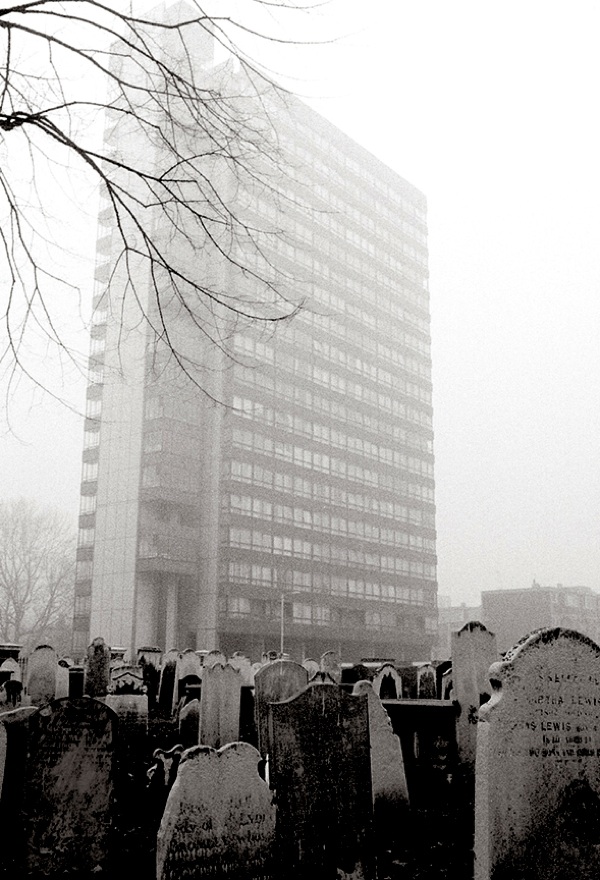
Lift to the Scaffold
Photographs copyright © John Claridge
You may also like to take a look at
Along the Thames with John Claridge
At the Salvation Army with John Claridge
A Few Diversions by John Claridge
Phil Maxwell’s Old Ladies in Colour
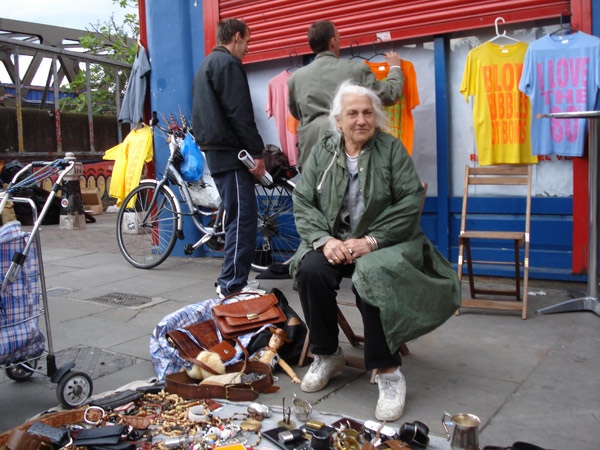
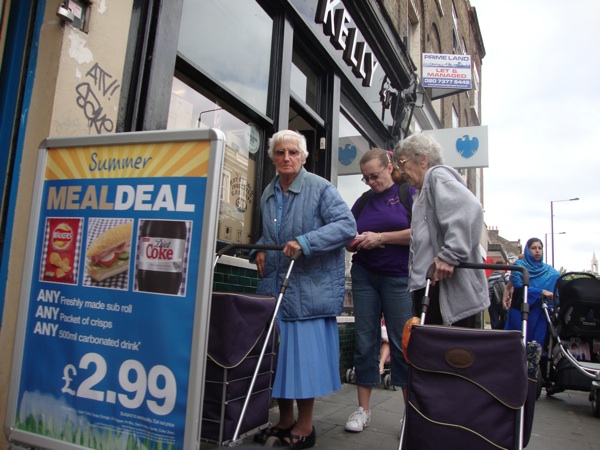
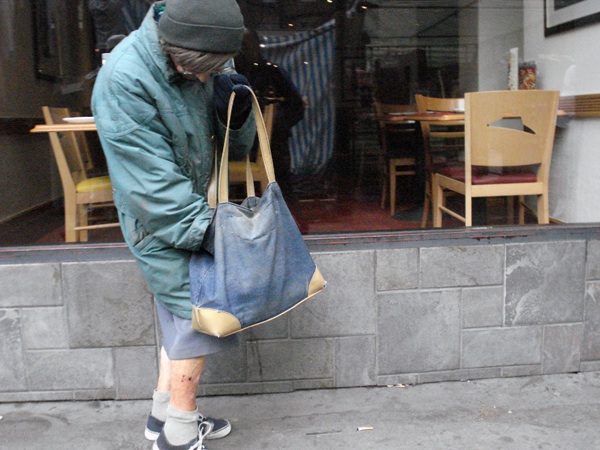
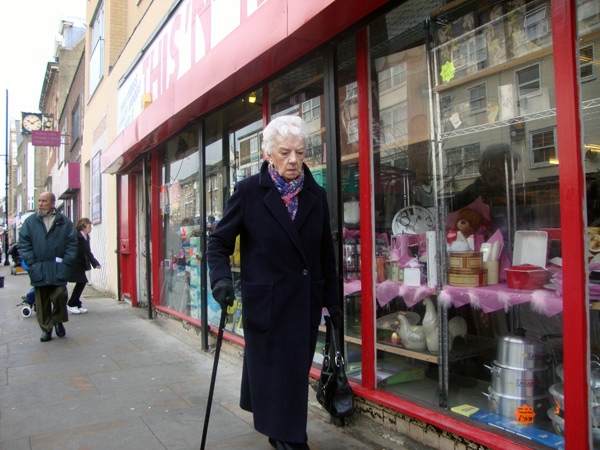
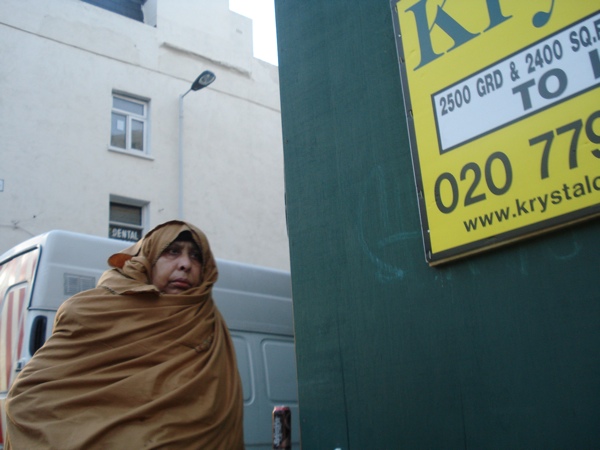
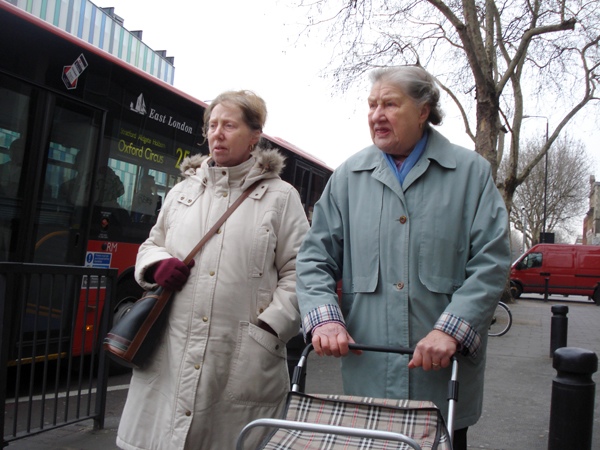
Previously, I published two selections of Phil Maxwell‘s black and white photographs of old ladies, but today I am publishing this collection of his more recent pictures of old ladies in glorious colour, just in case anyone should be under the misapprehension that old ladies are a thing of the past in the East End. As much we celebrate the flourishing of youth culture bringing new life to the streets, we cherish these spirited seniors. They are streetwise and they have got guts. We take consolation in their indomitable vitality, and draw reassurance that – thanks to their abiding presence – no Californian culture of make-overs, of everyone aspired to eternal youth and model-good-looks through dieting, waxing, plastic surgery, personal styling and strenuous exercise, could ever prevail here. As long as the old ladies are with us, we know the true spirit of the East End is alive.
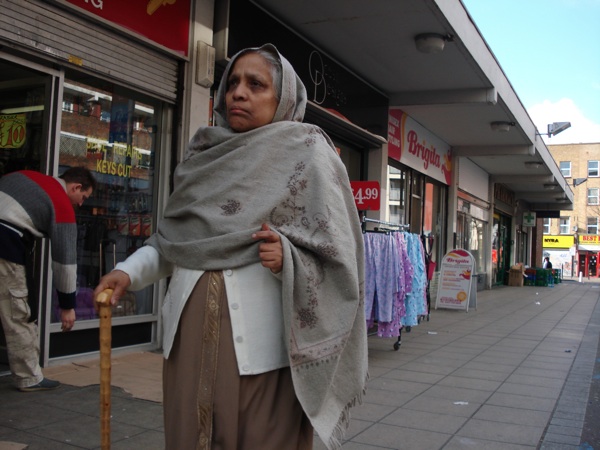
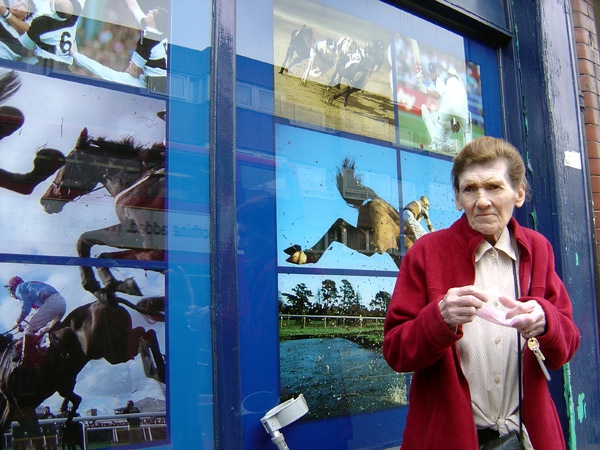
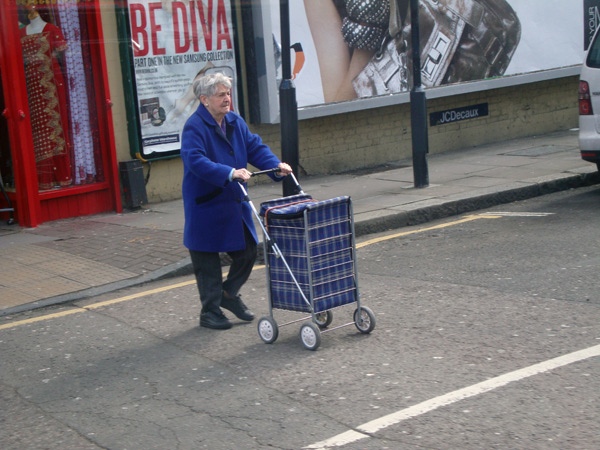
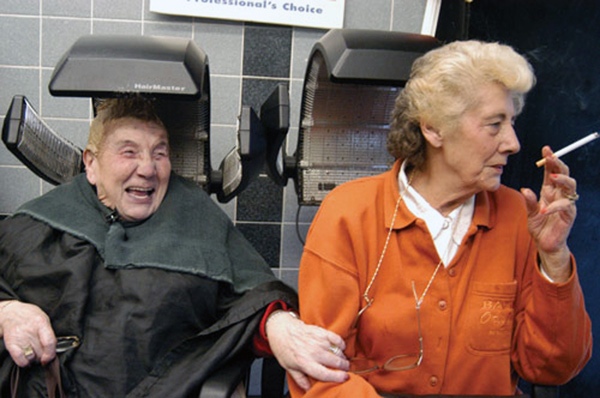
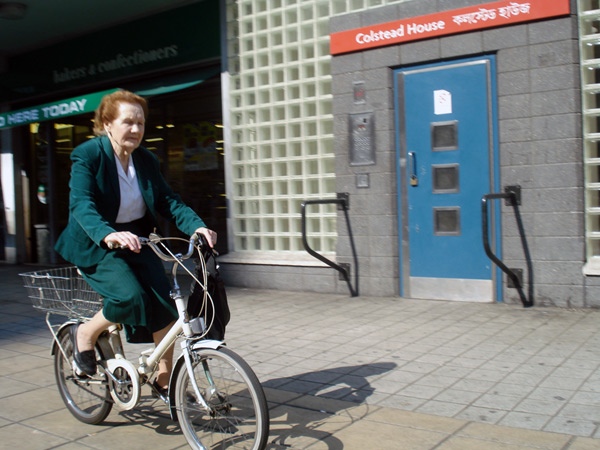
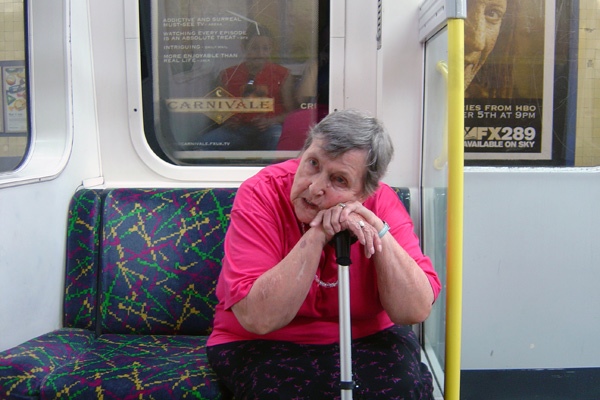
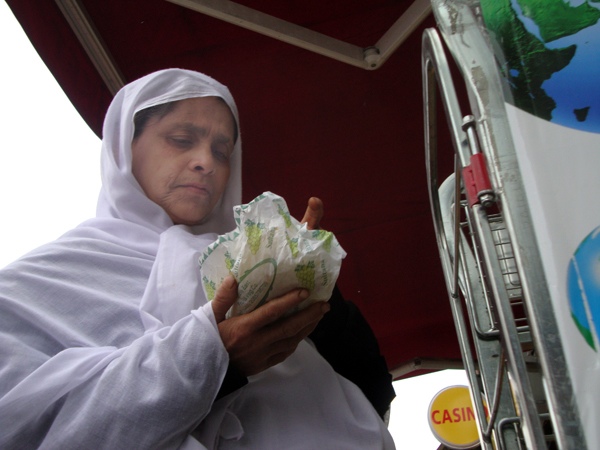
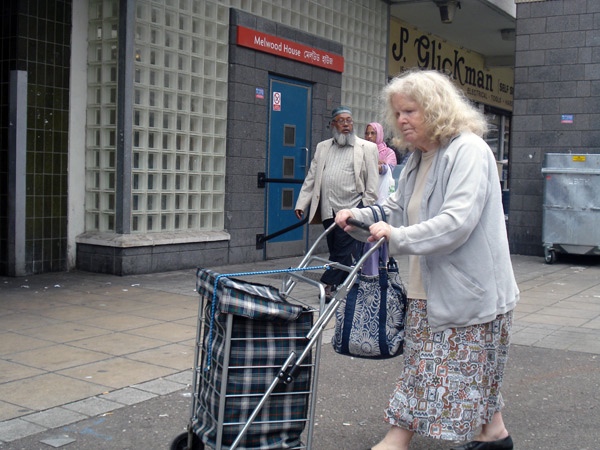
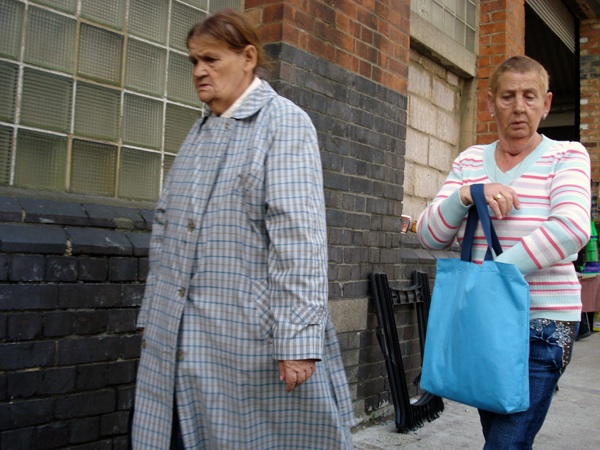

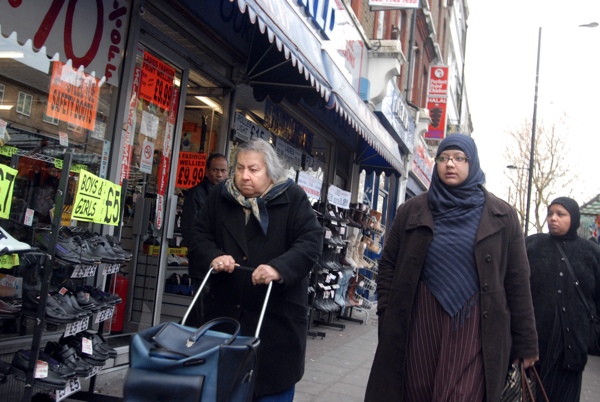
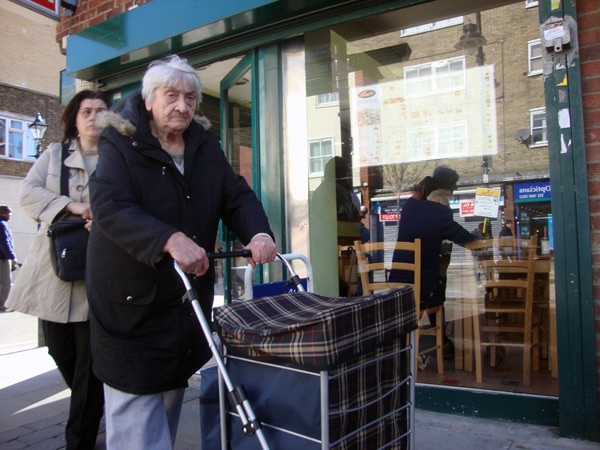
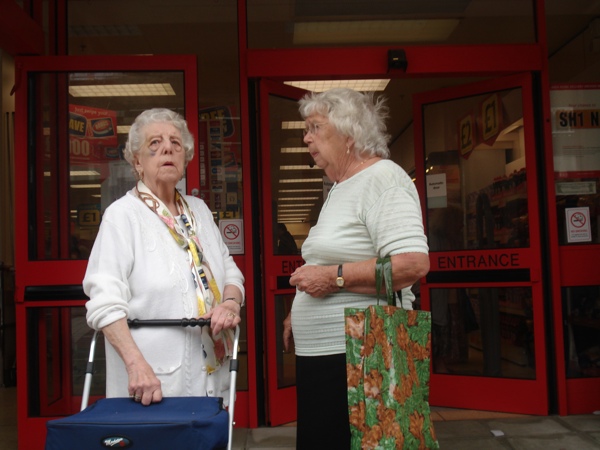
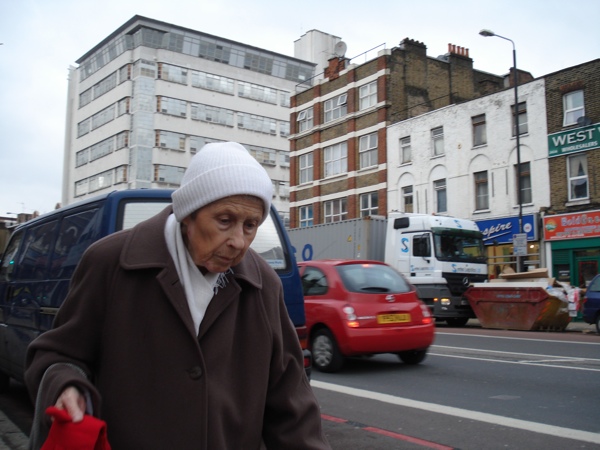
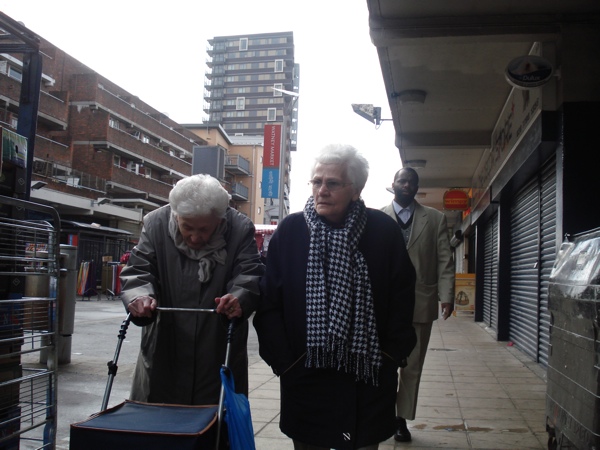
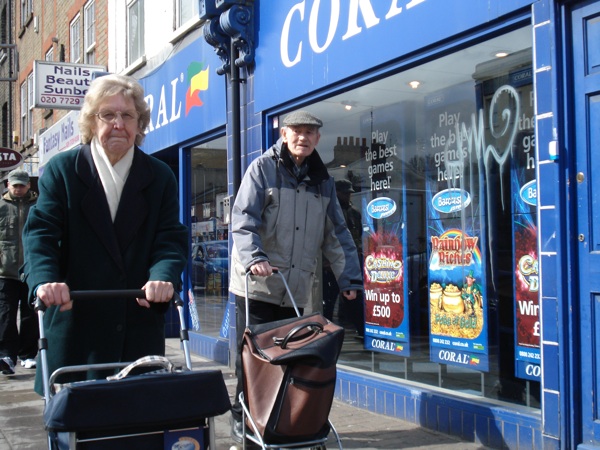
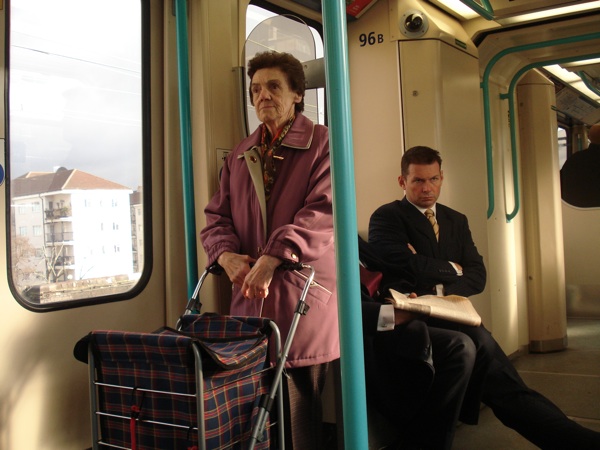
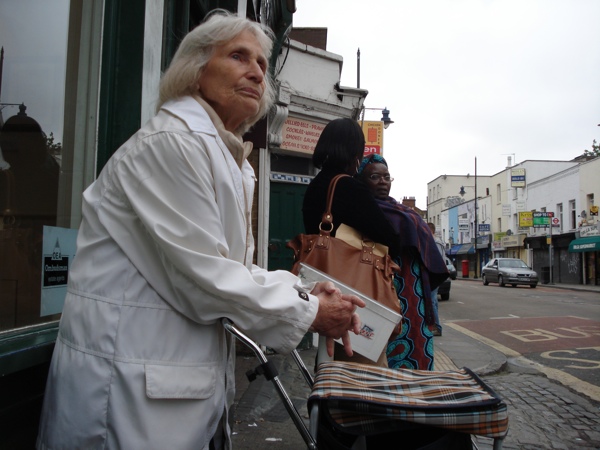
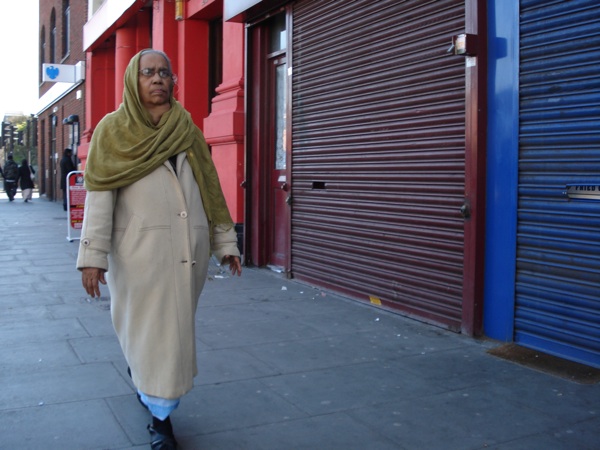
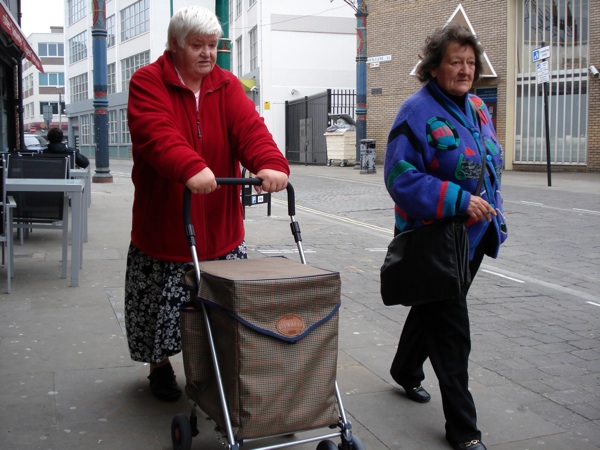
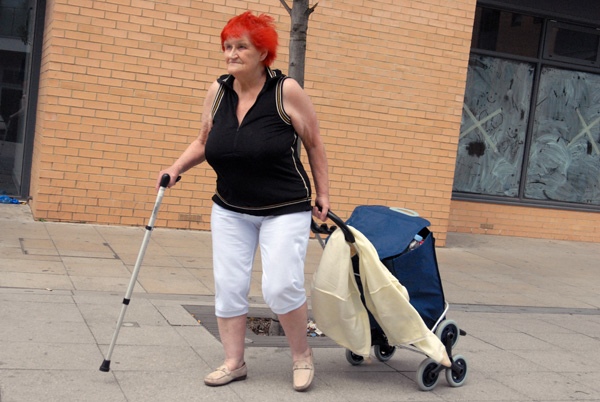
Photographs copyright © Phil Maxwell
Follow Phil Maxwell’s blog Playground of an East End Photographer
See more of Phil Maxwell’s work here
More of Phil Maxwell’s Old Ladies
Spitalfields Speaks
Today is the Spitalfields Music Midsummer Street Party and I am publishing these excerpts from Spitalfields Speaks – recordings of three people from Spitalfields Life by sound artist Duncan Chapman. At the party this afternoon, there will be a ‘Spitalfields Speaks Hut’ in Market St where you can record your own contribution to a collaborative sound-art piece to be performed at The Waterpoet at 4pm, or pick up headphones to listen while exploring the neighbourhood.

Can sounds become extinct? Can a house have a life of its own? Welcome to Rodney Archer’s eighteenth century house on Fournier St where he has lived since 1980. Rodney invites you to listen to the sounds that characterise it – the creaky stairs, the humming of the gas lights, the trickling water of the fountain… Click here to listen to the sound of Rodney’s bell.

Click here to listen to the sound of Rodney’s creaking door.

Click here to listen to the sound of Rodney’s gaslights.

Click here to listen to the sound of the fountain in Rodney’s garden.
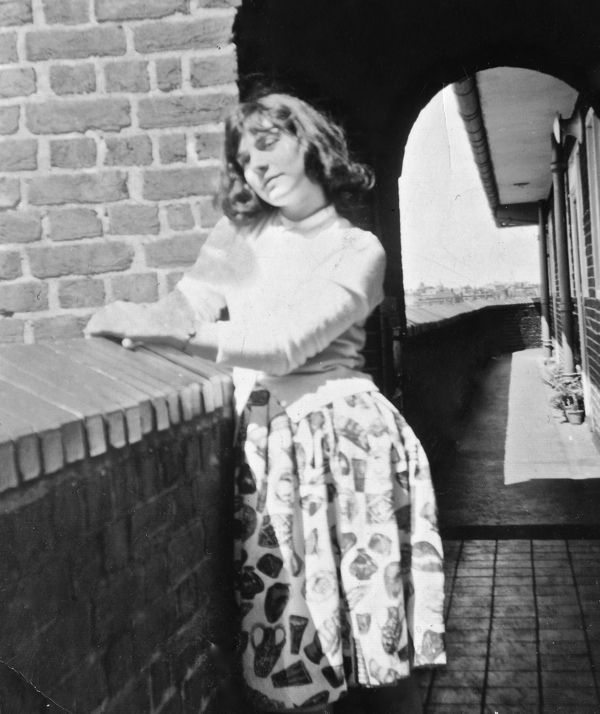
Marge Hewson has been the nursery nurse at Christ Church Primary School on Brick Lane since 1971. Every morning for the past forty-one years, she has collected schoolchildren from their homes on the Chicksand Estate and delivered them safely to school. Click here to listen to part one.
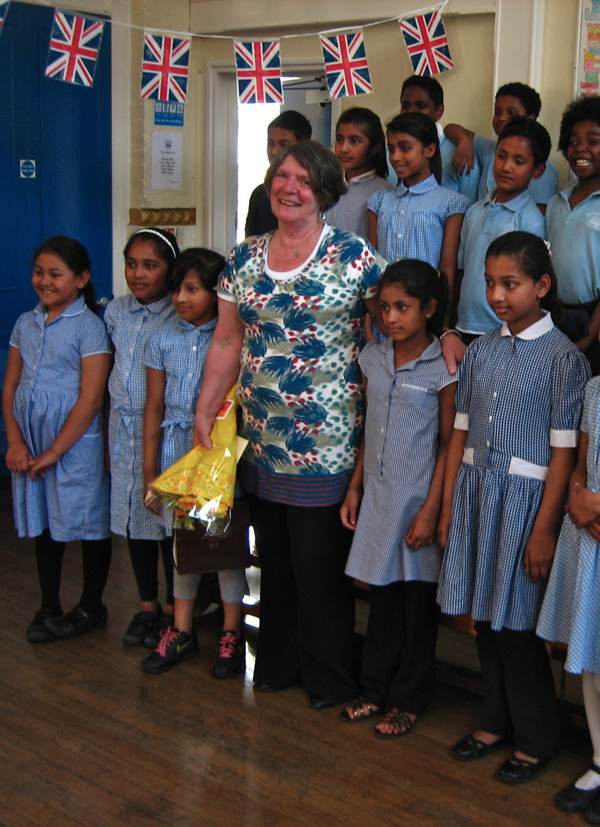
Join Marge on her daily journey – although it does not even cover a mile in distance, it covers a lifetime of stories and memories for Marge and the generations of schoolchildren who have joined her. Click here to listen to part two.

A former sea captain in the Merchant Navy and now a Justice of the Peace, Captain Shiv Banerjee takes you on a voyage from India to the East End, dropping anchor at various ports en route. Click here to listen to part one.
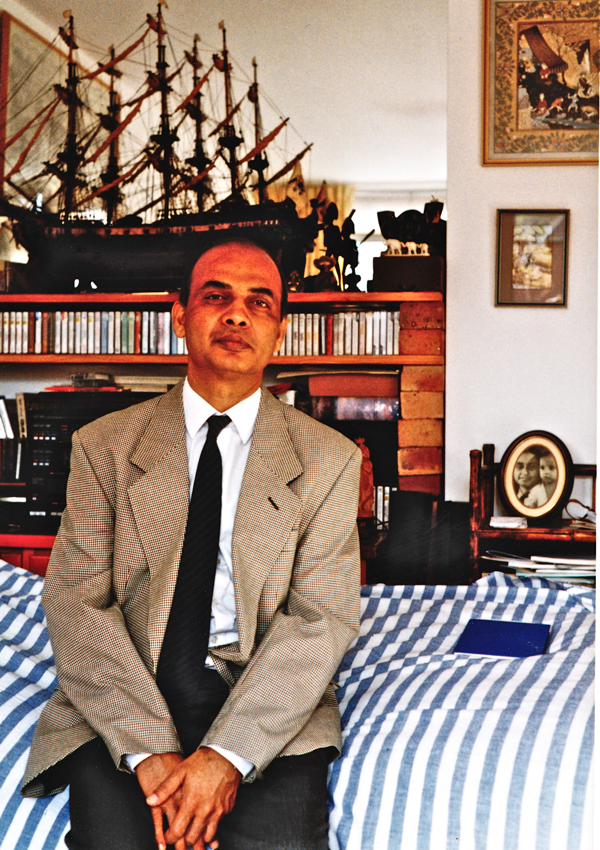
Shiv Banerjee talks about his life at Toynbee Hall in Spitalfields, where he arrived in 1975 and has lived ever since. Click here to listen to part two.
Photographs of Time Passing in Spitalfields
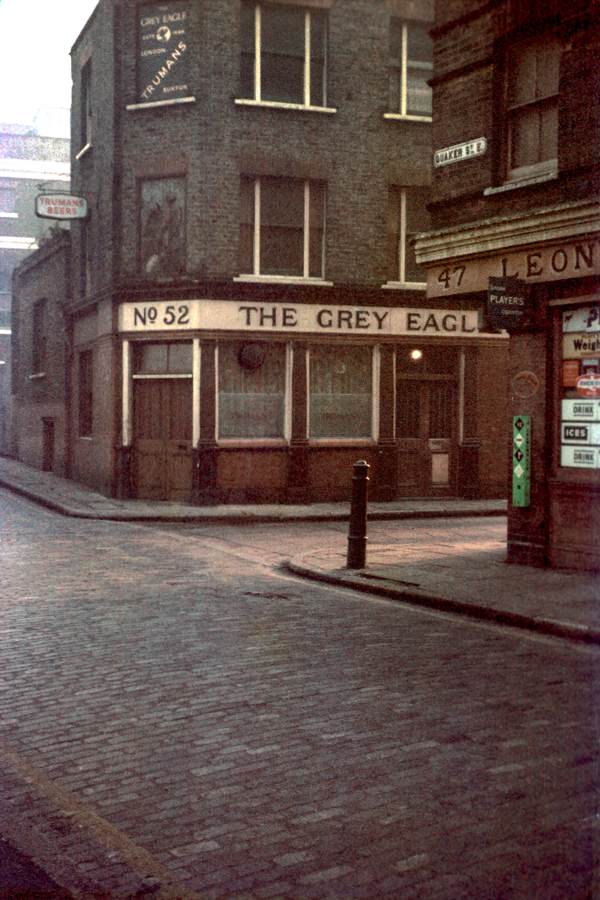
Quaker St, 1967
The passage of time in Spitalfields became visible to Philip Marriage as he made successive visits over three decades to take these photographs, which I publish here for the first time today. Working for HMSO publications in Holborn and commuting regularly through Liverpool St Station, he revisited Spitalfields sporadically over the years, drawn by a growing fascination with those streets where his ancestors had lived centuries earlier.
The poignant irony of these pictures is that while Philip came to Spitalfields in search of the past, he discovered many of the streets which interested him were retreating in time before his lens, disintegrating like phantoms into the ether, even as he was photographing them.
In 1967, when Philip Marriage first visited with his camera, he found a landscape scattered with bomb sites from World War II and he witnessed the slum clearance programme, as settled communities were displaced from their nineteenth century cottages and tenements into new housing complexes. Twenty years later, he encountered the opposing forces of redevelopment and conservation that were reshaping the streets to create the environment we recognise today.
But other, less obvious, elements affect our perception of time in these photographs too. Those pictures from 1967 exist in a lyrical haze which is both the result of air pollution caused by coal fires and the unstable nature of colour film at that time. By the eighties, the smog has been consigned to the past and better colour film delivered crisper images, permitting photographs which appear more contemporary to us.
Yet it was relatively recent events in Spitalfields, that came after he took his pictures, which render Philip Marriage’s photographs so compelling now – as windows into a lost time before the closure of the Truman Brewery and the Fruit & Vegetable Market.

Quaker St, 1987

Quaker St, looking west, 1967

Quaker St, looking west, 1987

Artillery Lane, 1967

Artillery Lane, 1985

Samuel Stores, Gun St, 1985

Samuel Stores, Gun St, 1986

Former Samuel Stores, Gun St, 1987

Verdes, Brushfield St, 1988

Verdes, Brushfield St, 1990

Poyser St, Bethnal Green, 1967

Poyser St, Bethnal Green, 1967

Cheshire St with Rag & Bone Man, 1967
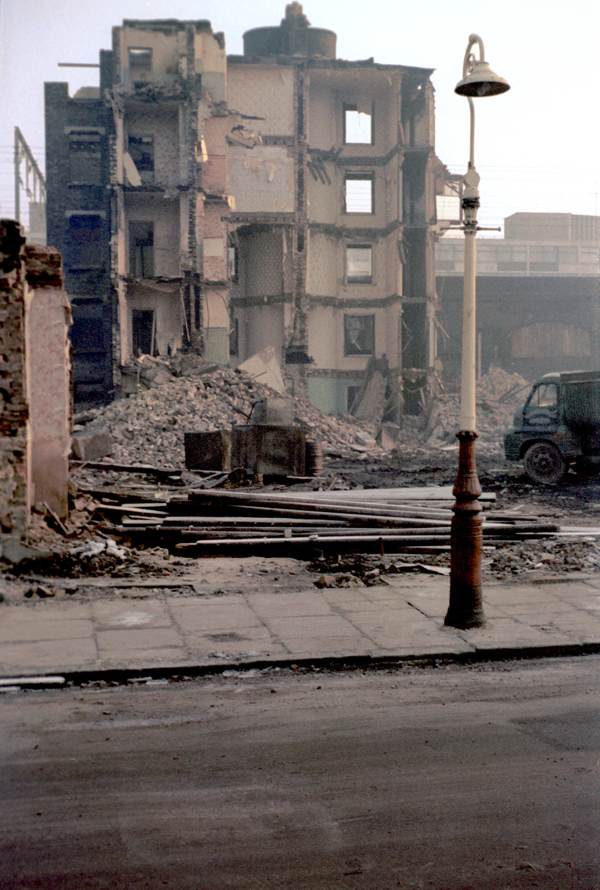
Middleton St, Bethnal Green, 1967
Photographs copyright © Philip Marriage
You may also like to take a look at
Philip Marriage’s Spitalfields
Alan Dein’s East End Shopfronts of 1988
Mark Jackson & Huw Davies, Photographers
The Unveiling of the Spitalfields Dioramas
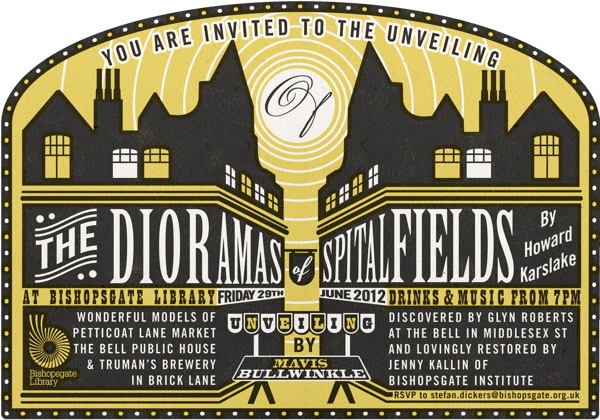
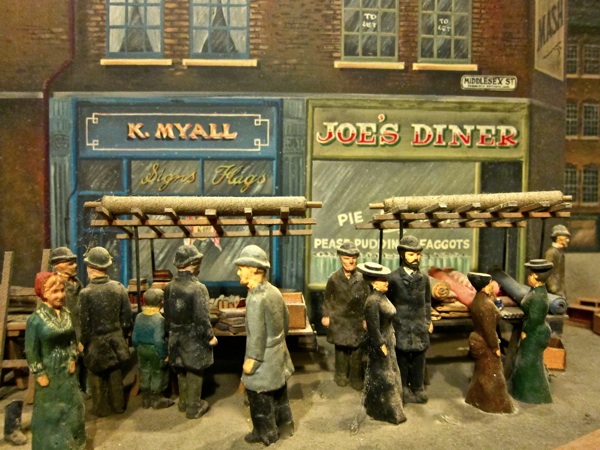
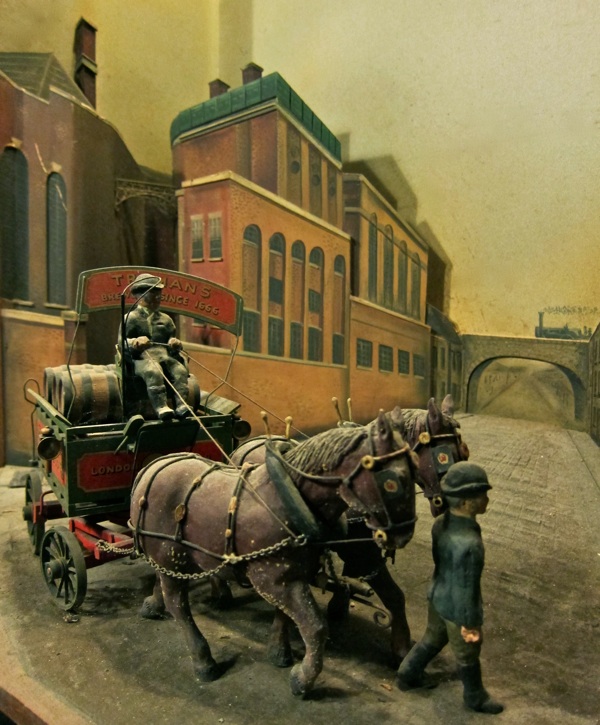
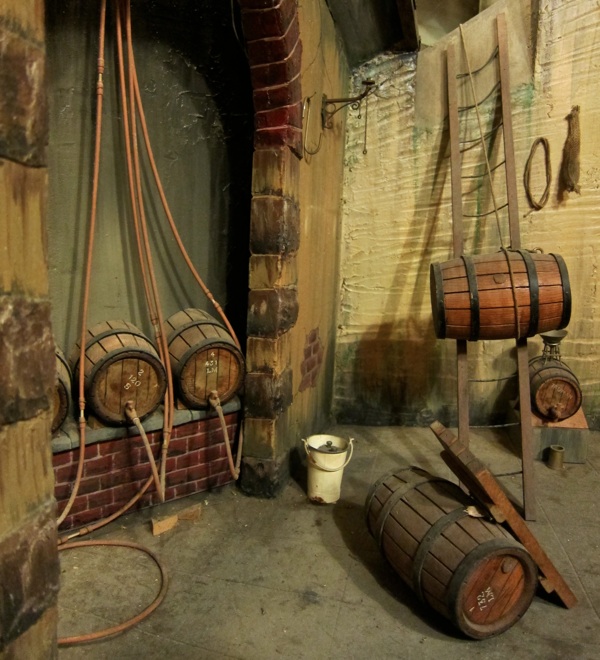
It is my great pleasure to invite you to a party to celebrate the unveiling of the restored Dioramas of Spitalfields at the Bishopsgate Library next week on Friday 29th June from 7pm. You may recall that back in March, Glyn Roberts, landlord of The Bell in Petticoat Lane, wrote to say he had discovered some neglected old models of Spitalfields in the cellar. Once upon a time, these beautiful dioramas by Howard Karslake enjoyed pride of place in the barroom, but when Glyn bought the pub three years ago they were dusty and damaged, and had been consigned to oblivion.
At that time, Glyn was looking for a new home for the dioramas and, thanks to my article, the Bishopsgate Institute agreed to take them. Now they have been lovingly repaired by Jenny Kallin and permanently installed in the library, and we hope you can be there at the grand unveiling by Mavis Bullwinkle followed by a knees-up with drinks and live music.
Please join us for an unforgettable evening to celebrate Spitalfields past and present. Be sure to email stefan.dickers@bishopsgate.org.uk to put your name on the list.




At the Truman Brewery Brick Lane, looking north.
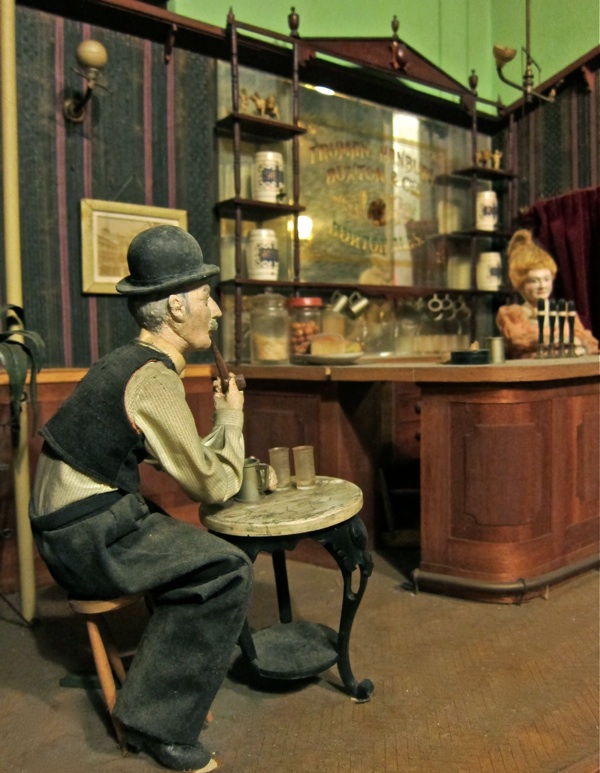
The barroom of The Bell.


The cellar of The Bell.
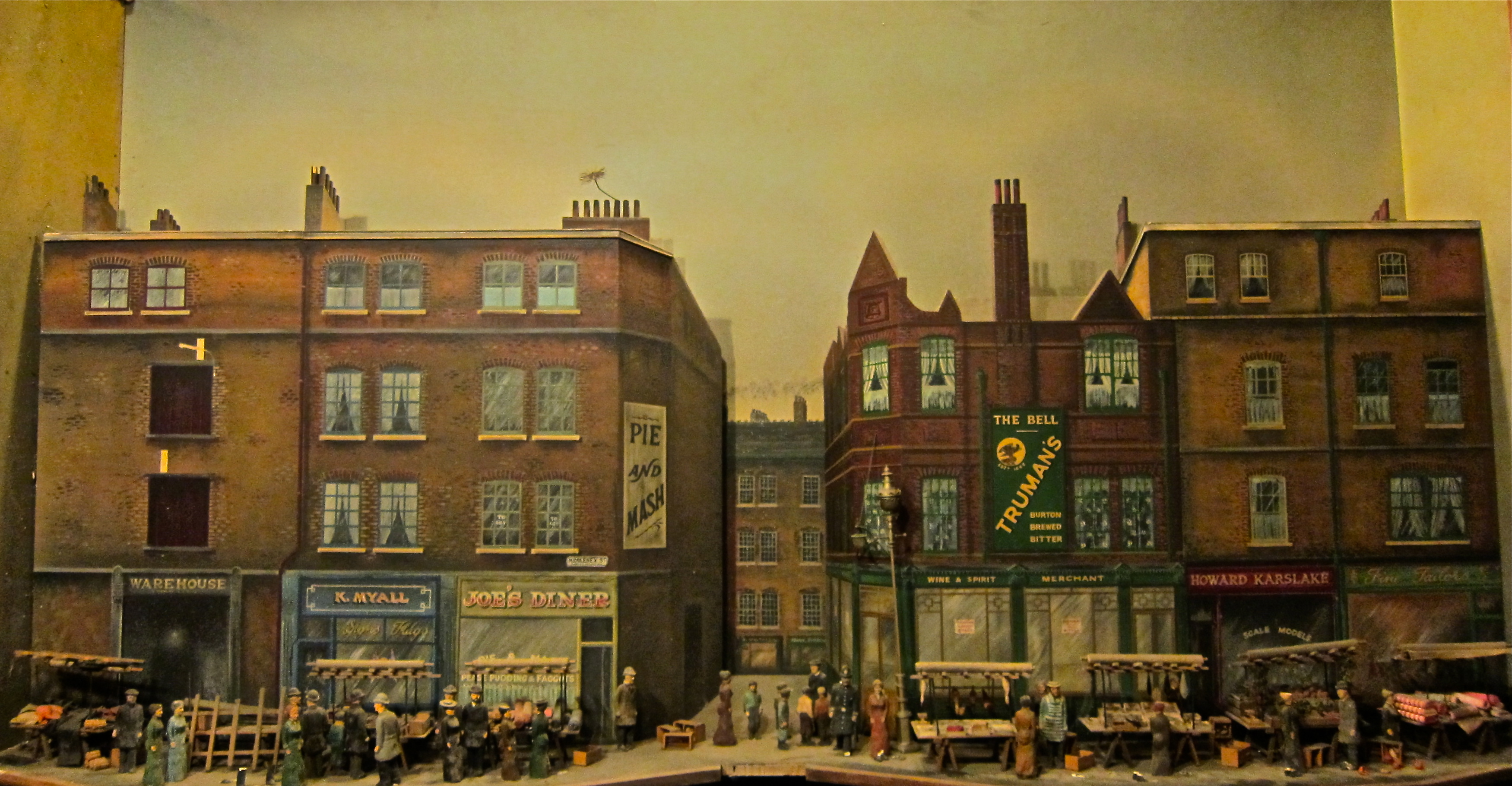
Click this picture to enlarge the diorama of Petticoat Lane
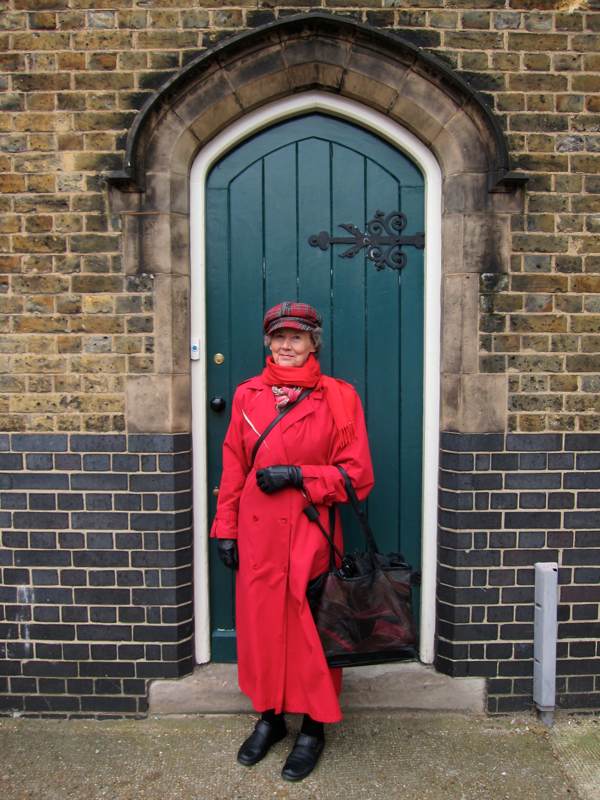
The celebrated Mavis Bullwinkle who will be unveiling the dioramas.
Invitation designed by James Brown
You may like to read my original story
Further Trade Cards of Old London
After publishing selections of trade cards that might have been found in the eighteenth century by rummaging in a hypothetical drawer, searching down the back of a hypothetical sofa, looking under a hypothetical bed, discovered beneath the hypothetical floorboards, or happened upon in the pockets of a hypothetical coat, it is my pleasure to show this further selection that fell out of a hypothetical book.
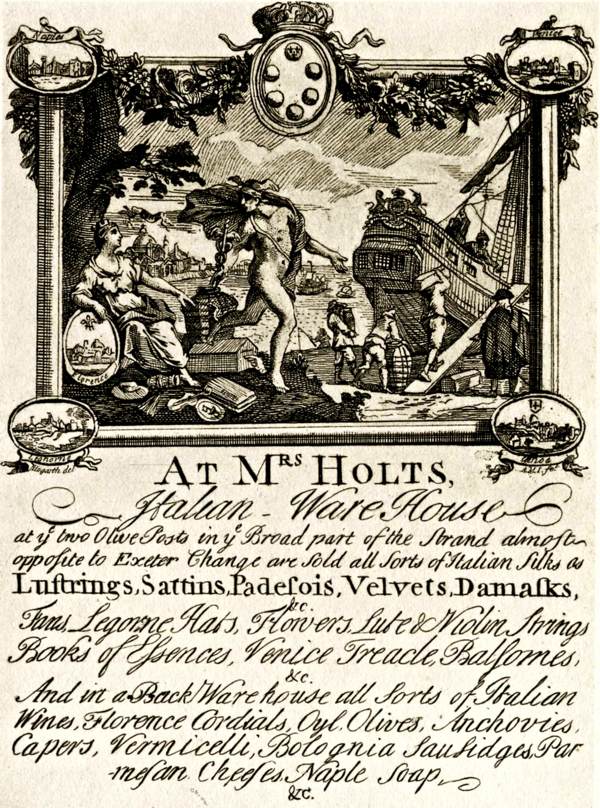


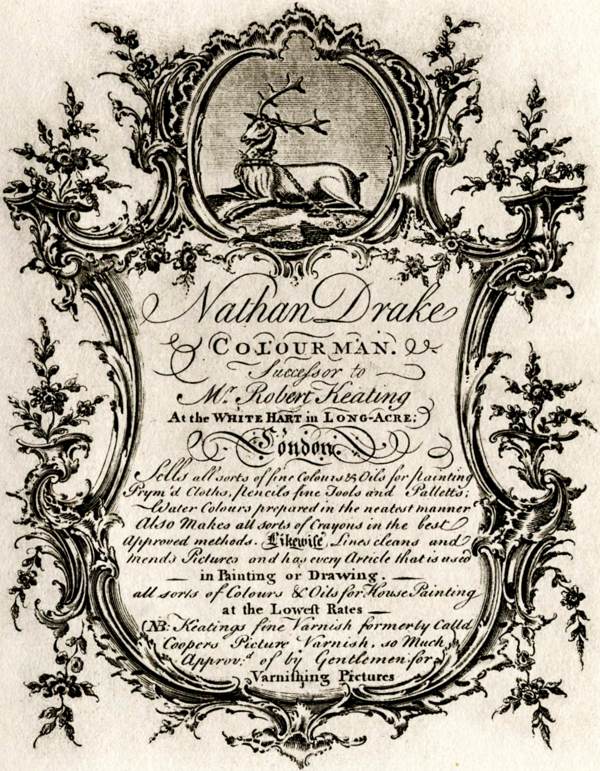

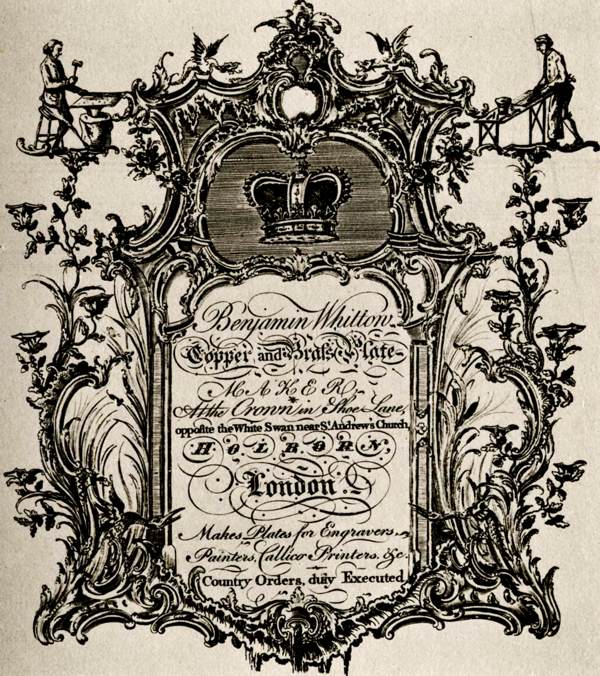

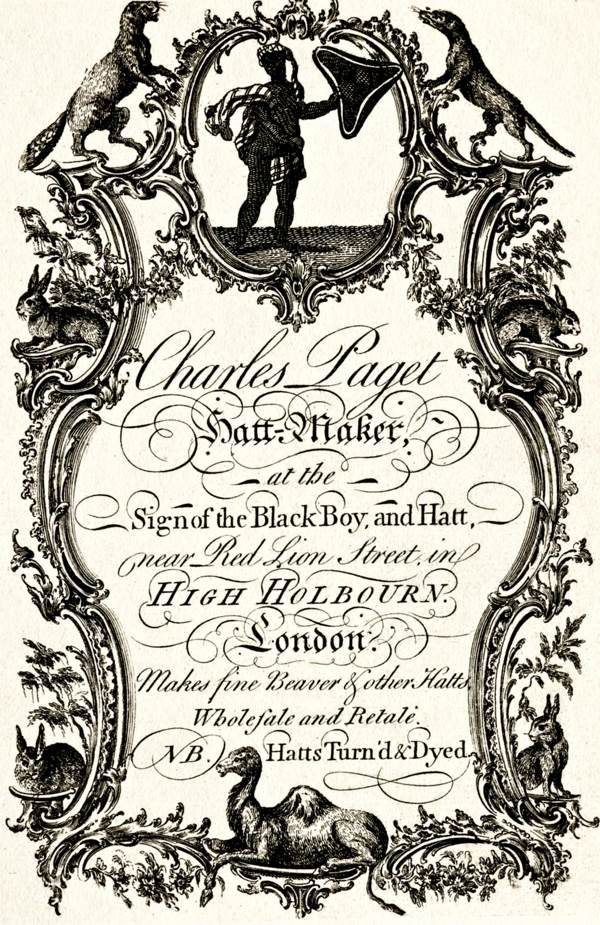

Images courtesy Bishopsgate Institute
You may like to see my earlier selections
More Trade Cards of Old London
Yet More Trade Cards of Old London