
The Chicken Shops of Spitalfields

Al-Halal Fried Chicken, 63 Brick Lane
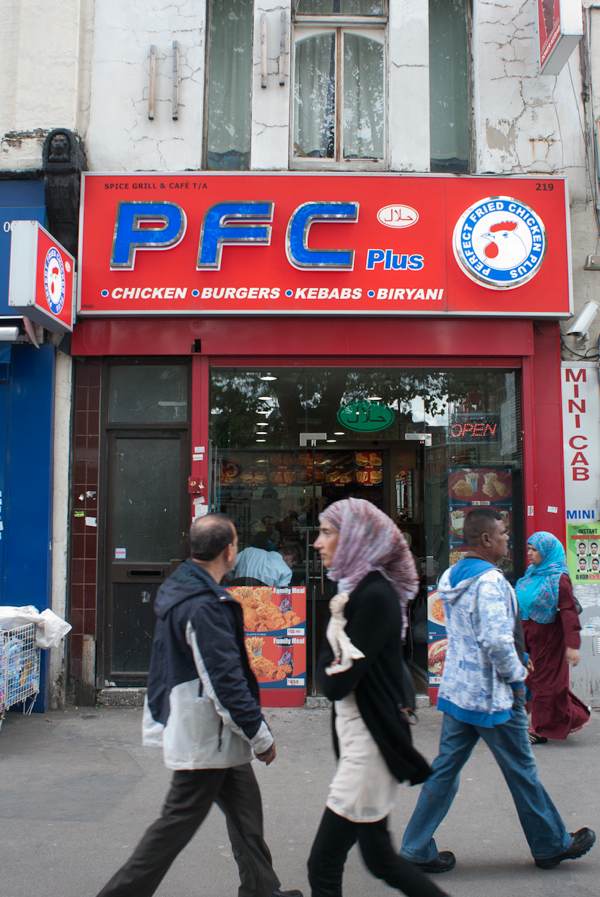
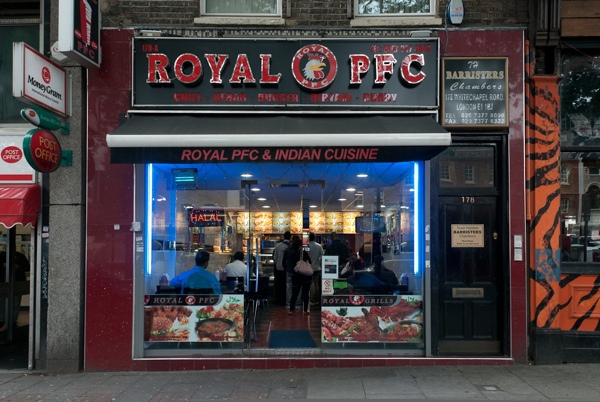
While the rest of humanity may strive towards perfection as an ever-unattainable goal, in the world of Fried Chicken perfection has already been achieved and is omnipresent – or so it appears from the number of Perfect Fried Chicken shops that line our East End streets. In fact, such is the familiarity of Perfect Fried Chicken that the acronym “PFC” is widely used and recognised among the cognoscenti. Yet, beyond this, several of the more ambitious Fried Chicken shops even claim to have surpassed perfection by advertising “PFC plus” upon their hoardings.
“What is this Fried Chicken that is beyond perfection?” I wondered as a mere PFC neophyte. And so I asked Spitalfields Life Contributing Photographer Sarah Ainslie to join me on a PFC safari to explore this fascinating phenomenon of the ubiquitous Perfect Fried Chicken shops.
My presumption was that the pace of fast food precluded the opportunity of any conversation, but at Perfect Fried Chicken Express in the Bethnal Green Rd, where we commenced our journey, we received the first of a series of friendly welcomes that were to characterise our itinerary. Sarah & I began mid-morning so that we could observe the accumulation of the lunchtime rush upon our tour and in Bethnal Green we found the staff wiping down the counters and making their final preparations for the day’s trading.
With so many mirrors, reflective surfaces and shiny plastic panels, interspersed by gaudy advertisements illustrating meal deals in graphic colour photography, all cast within a glimmering fluorescent glow, it is difficult to resist the fairground glamour of the Fried Chicken Shops. Yet circumstances are far from perfection in the trade, as Saba Kuru who has been manager of Favorite Fried Chicken for the past six years outlined to me. “The council used to decide how many chicken shops there could be in an area,” he revealed with distain, ” but now anyone can get a licence and you even have chicken shops next to one another. It means the price goes down and the chicken hangs around and gets dried out.” But at Favorite Fried Chicken, customers have no fear of dried-out chicken because Saba and his assistant Shakala keep the Fried Chicken moving fast, thereby ensuring its succulent consistency and maintaining the proud reputation of this jewel of a shop at the western end of Bethnal Green Rd.
Popping in briefly to shake hands with Moshin, who has been manager of Chicken Hut further down the Bethnal Green Rd for eight years, we crossed over to Brick Lane where, on the corner of Bacon St, we encountered the East End’s newest Chicken Shop. Operating under the unconventional name of Peppers and promising “Fresh and Healthy” Fried Chicken, there we were greeted by Junaig behind the counter who was keen to promote the opening offer of twenty-two halal chicken wings for just five pounds.
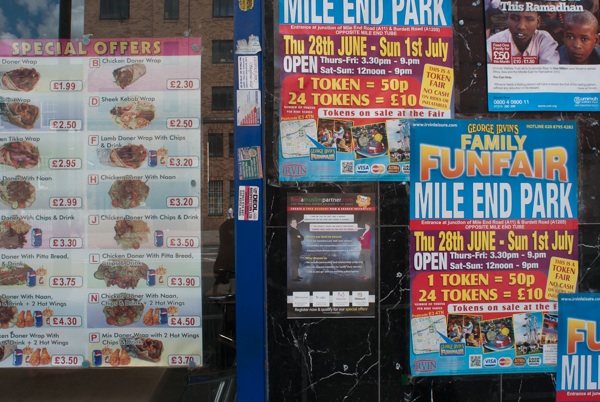
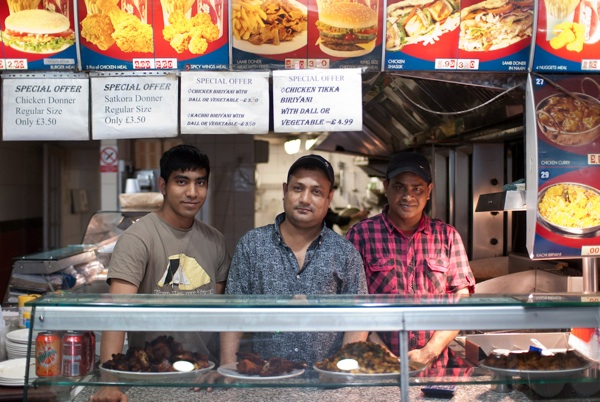
At 63 Brick Lane, we visited Spitalfields’ original Fried Chicken shop, Al-Halal Fried Chicken run by Mr Suhel for the past fifteen years. In this tiny sparkly shop, a team of four led by Mr Suhel were waiting, eager to serve. “The prices have not gone up in all the time I have been here,” Mr Suhel assured me, gesturing with a wry grin to his gleaming display of photographs of Fried Chicken meals each individually priced, “Competitiveness is the problem, because someone is always going to sell it 1p cheaper, meanwhile the wholesale price of chicken has gone from £20 to £30 a box.” And that was the limit of our conversation because there was now a constant stream of hungry customers ordering meals.
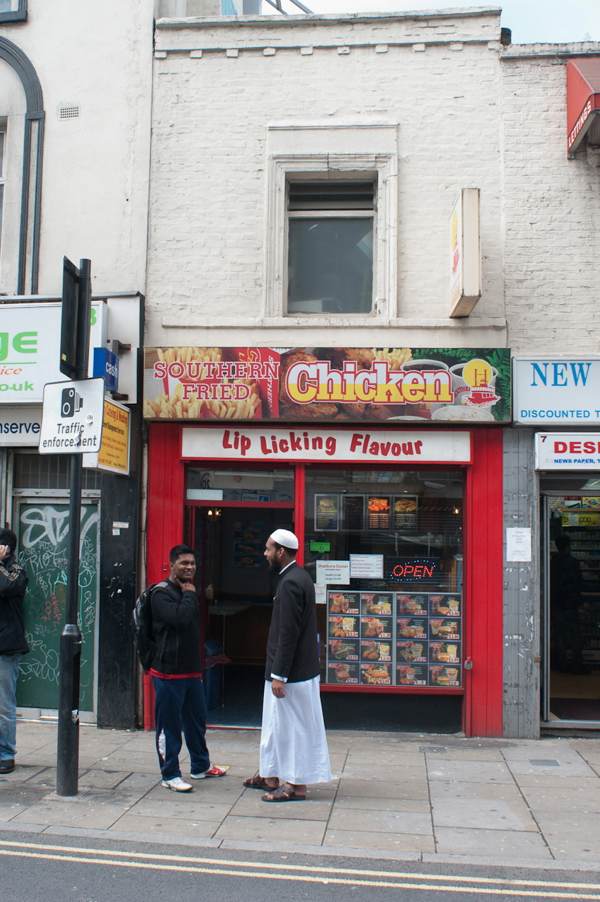
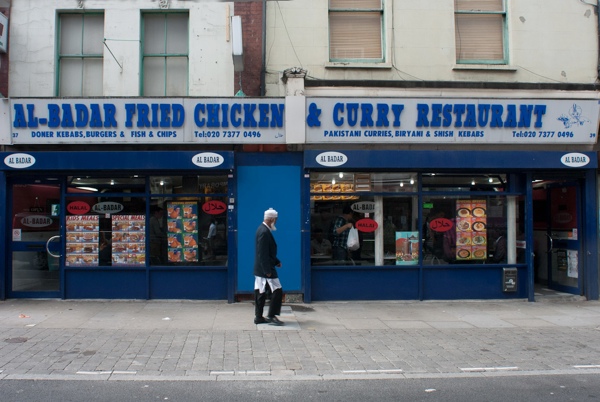
The lunchtime rush was in full flood and crowds prevented us venturing into the Al-Badar Fried Chicken & Curry Restaurant further down the Lane, in spite of the enticing smells that were drawing us there. In Osborn St, arriving at the south end of Brick Lane we paid a visit to Southern Fried Chicken, a tiny operation run by Abdul Basith for the last twelve years. The entire shop is no bigger than a domestic dining room and here we found the customers eager advocates for Mr Basith’s culinary skills. While Toufix Alam tucked into his Fried Chicken burger in delighted silence, his colleague at the next table extolled the superlative efficiency of the swift service which allowed her to make the most of her short lunchbreak. “Do you come here every day?” I asked, only to be met with a grin of amazement. “Only once a week,” was her reply and I realised that – much as she would like to come here each day – the need to watch her waistline precluded it.
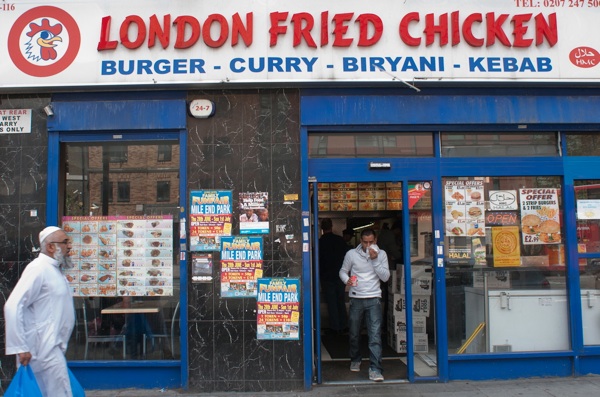
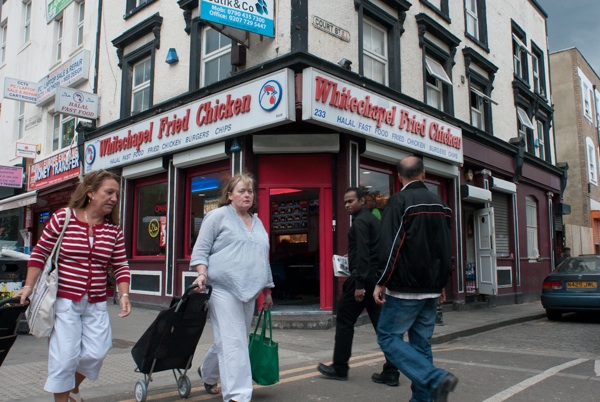
Turning the corner into the Whitechapel Rd, we entered a region where seemingly every other shop was a Chicken Shop, but unfortunately by now we had already eaten so much Fried Chicken that we could only walk past them all in wonder, admiring their permutations of design, their colourful posters and ingenious names. We had arrived at the culmination of our journey, in Chicken City. Everywhere, happy people were to be seen eating Fried Chicken.
Far from being the transitory anonymous spaces offered by fast food chains, the independently run Chicken Shops are safe havens from the clamour of the city, where anyone can eat for as little as one pound and be assured of a welcome too. No wonder people feel comfortable in Chicken Shops. No wonder people love them.

Mahee Abbasi at PFC Plus in Whitechapel.
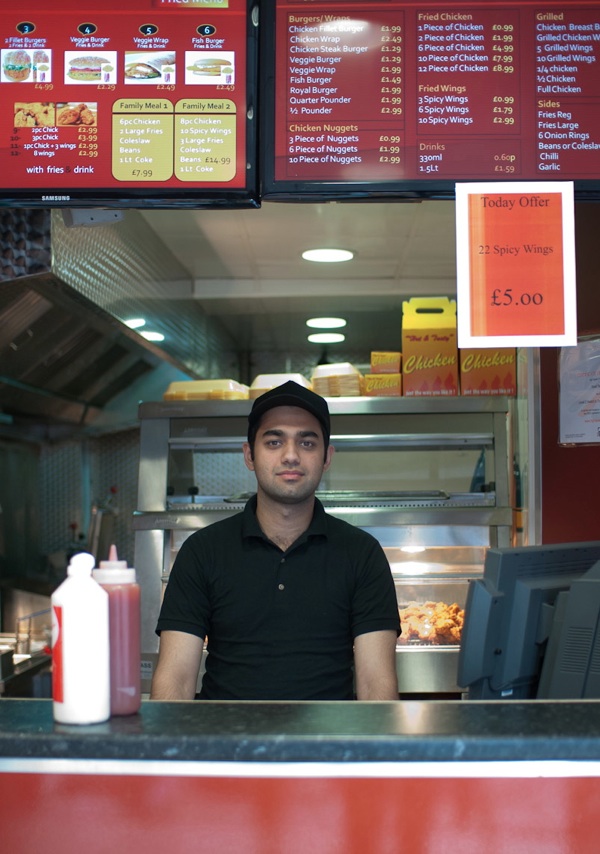
Junaig at Peppers in Brick Lane – “Twenty-two spicy wings for five pounds!”
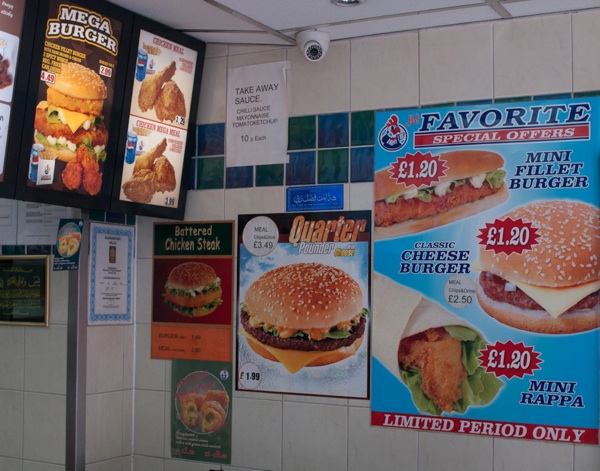
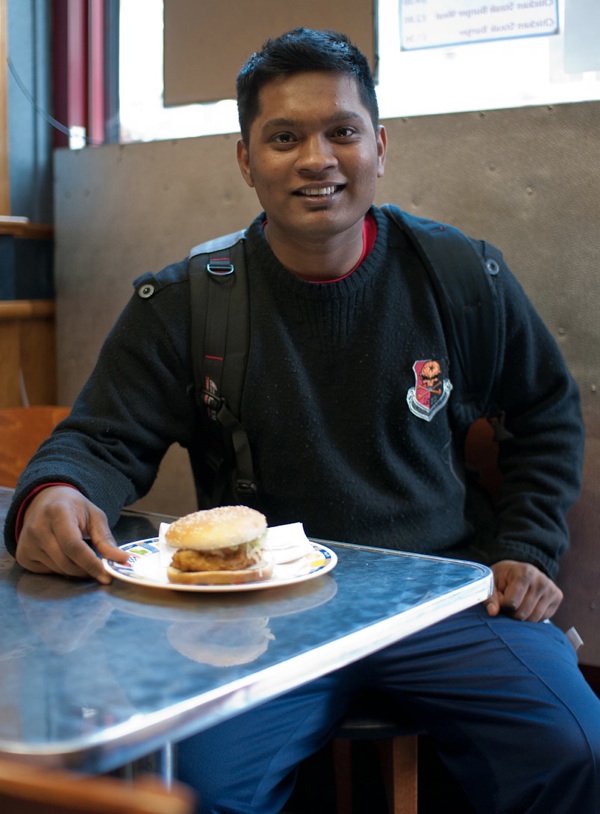
Toufix Alam with his Fried Chicken Burger.

Saba Kuru – “Everybody likes chicken and chips.”
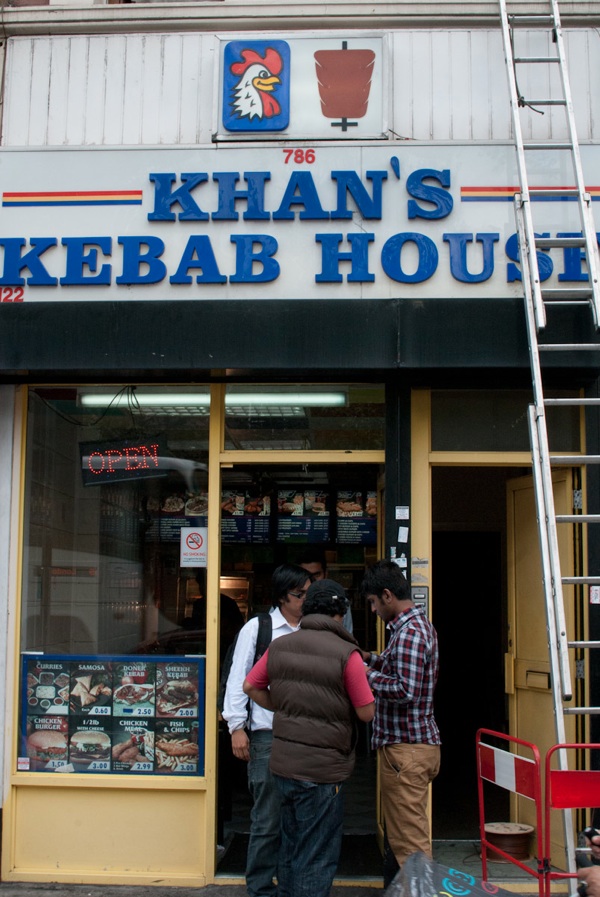
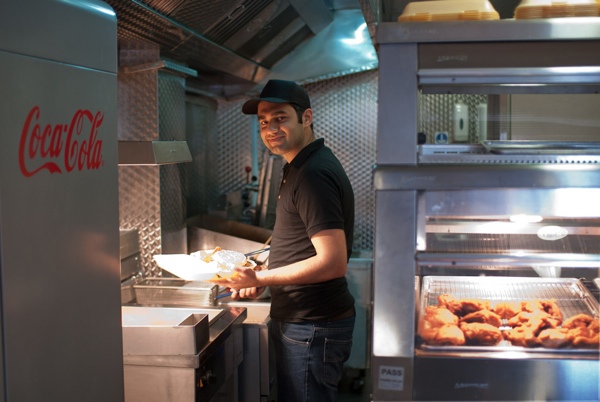
At Peppers, Spitalfields’ newest Fried Chicken Shop.

Shakala, customer assistant at Favorite Fried Chicken.
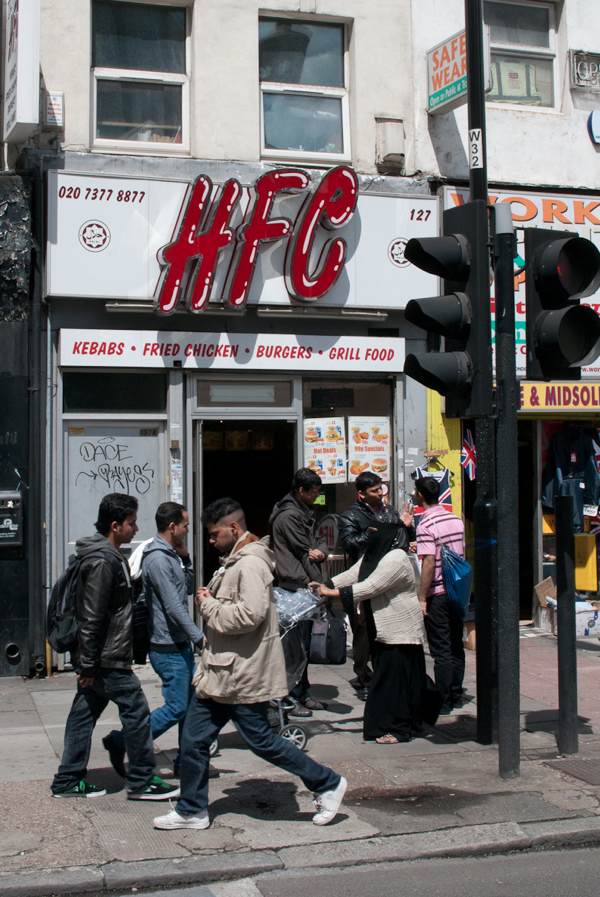
In Whitechapel’s Chicken City.

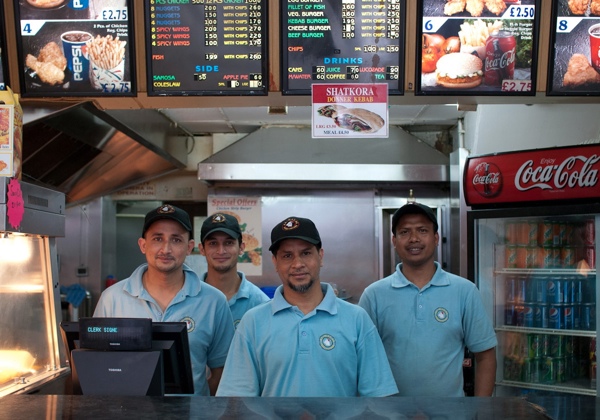
Mr Suhel and his team at Al-Halal Fried Chicken in Brick Lane.
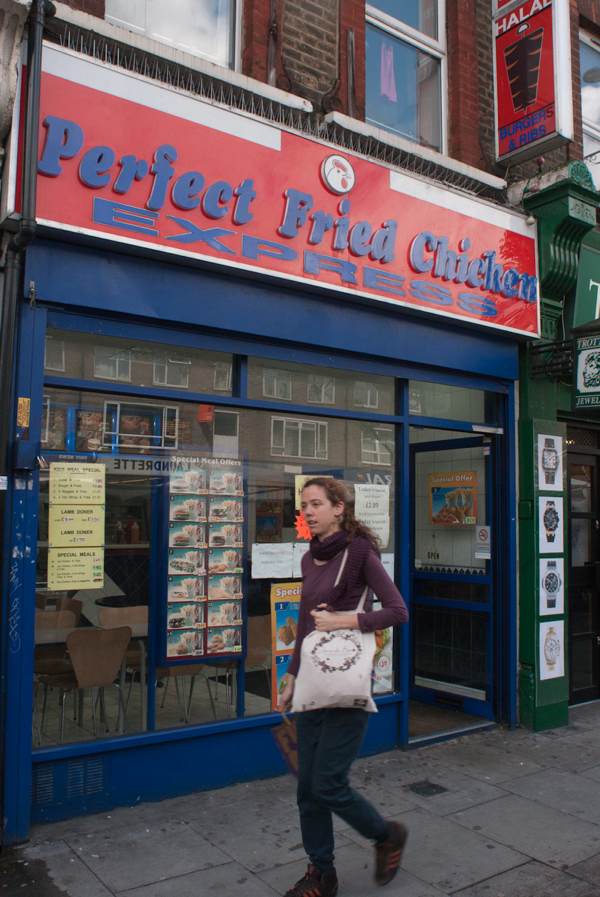


Afzol Miah at Perfect Fried Chicken Express.
Photographs copyright © Sarah Ainslie
[youtube EnZq4EPgZ90 nolink]
The fastest Chicken Shop in Ilford.
You may also like to read about
The Corner Shops of Spitalfields
The Lost World of the Laundrettes
People On The Street & A Cat

Brick Lane 1966
“Sometimes there is no reason, but you have to do it and that’s what makes magical things happen.” photographer John Claridge said, introducing this set of pictures published here for the first time,“There is no why or wherefore of doing it, because it’s not from the head – it’s from the heart.”
I took John’s declaration as a description of his state of rapture as he wandered the pavements of the East End to take these photographs of people on the street, going about their daily lives.“I used to get up early and walk around,” he confided to me and I understood the sense of loneliness that haunts these evocative pictures, in which the subjects appear distant like spectres, self-absorbed and lost in thought.
“The important word is ‘request'” said John, speaking of the photo of the man at the request bus stop, “He’s in some kind of world that we are not party to.” In John’s youthful vision – enthralled by the writing of Franz Kafka – the East End street became an epic stage where an existential drama was enacted, peopled by characters journeying through a strange landscape of forbidding beauty.
John knew he was photographing a poor society within a poor environment, but he was a part of it and held great affection for it. “Just another day of people walking around,” he concluded to me with uneasy levity – emphasising that while these images are emblematic of a world which time may have rendered exotic, it is also world that was once commonplace to him.

Whitechapel, 1960
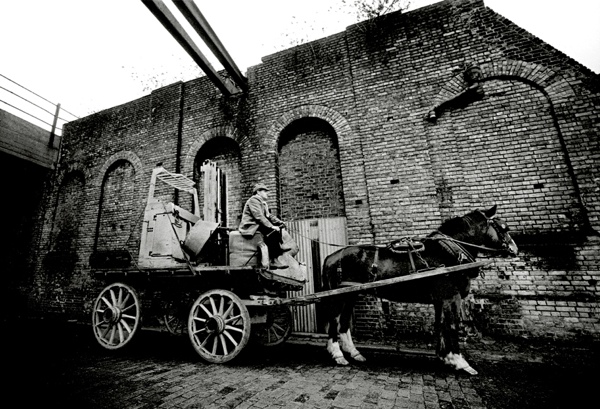
Whitechapel, 1981.

E13, 1962 -“This was taken from my window at home.”

Spitalfields, 1962 – “They look like they are up to no good.”

Whitechapel, 1968 -“Where did the boy get that peaked cap?”

Spitalfields, 1961. -“An old man stops to light up.”

Spitalfields, 1961 – “A moment, a story in itself.”

Whitechapel, 1982
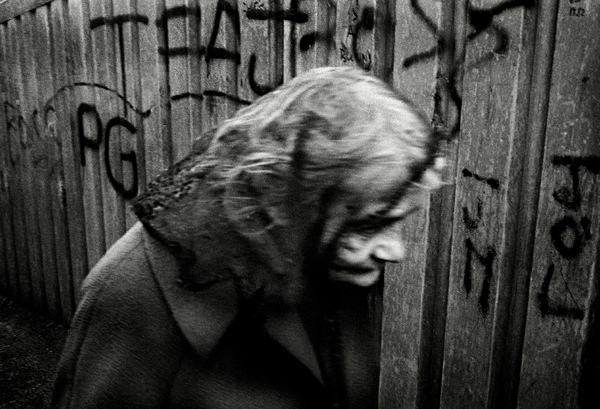
Spitalfields, 1982 – “I walked past her and just grabbed the picture as I went by.”

Spitalfields, 1962

Spitalfields, 1968 – “The dog is looking at the rubbish in exactly the same way as the man is looking at the rubbish.”

At the ’59 Club, 1973

Weavers’ Fields, 1959 An old lady walks across a bombsite in Bethnal Green.

Whitechapel, 1964

E16, 1964 –“The important word is ‘request.’ He’s in some kind of world that we are not party to.”

Whitechapel, 1982

E16, 1982 -“He’s going home to his dinner.”

Princelet St, 1962 – “Just a man and a pigeon.”

Spitalfields, 1968 -“I like the shadows, where they’re falling.”
Photographs copyright © John Claridge
You may also like to take a look at
Along the Thames with John Claridge
At the Salvation Army with John Claridge
A Few Diversions by John Claridge
Viscountess Boudica’s Blog

Viscountess Boudica Denvorgilla Veronica Scarlet Redd
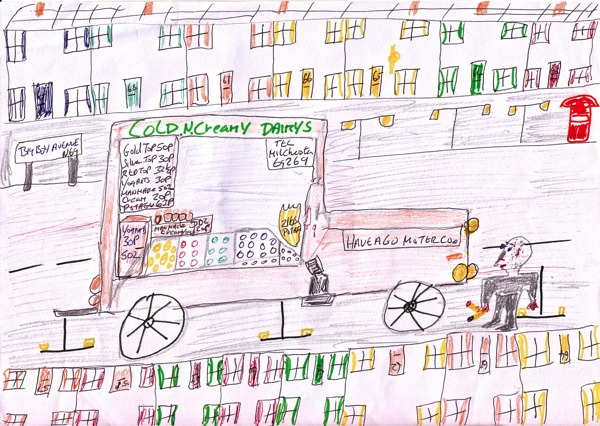
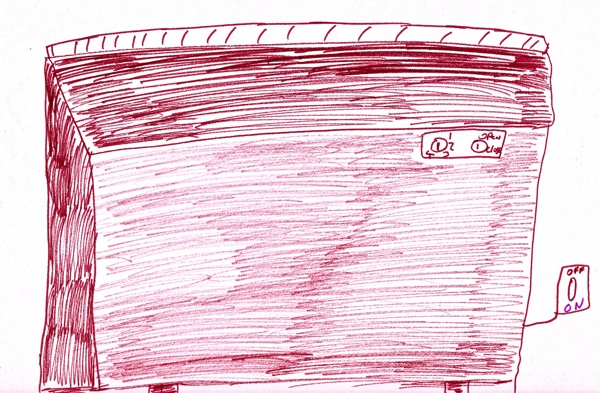
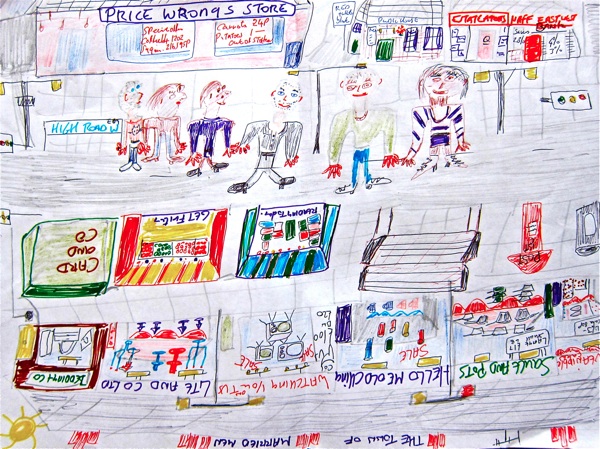
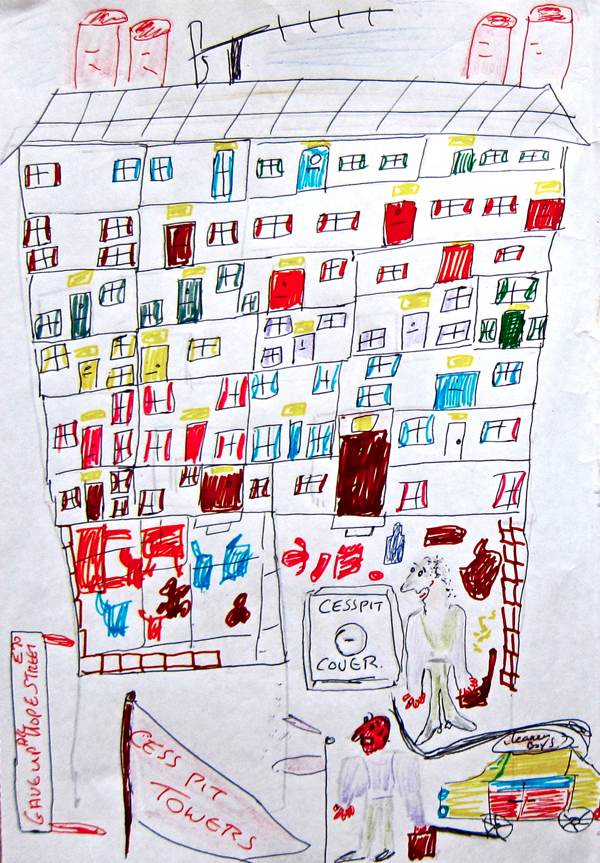
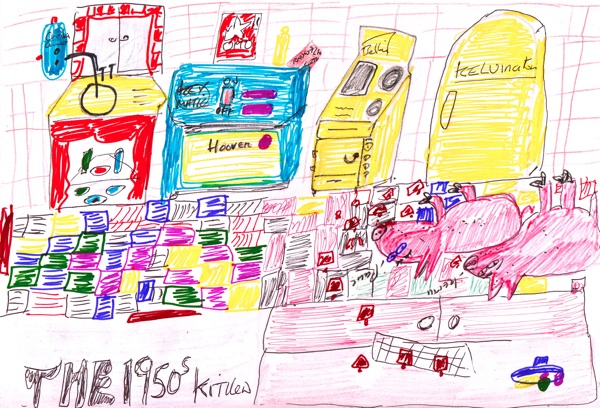
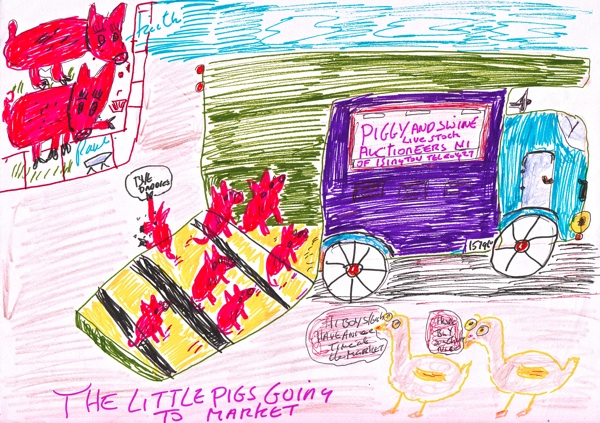
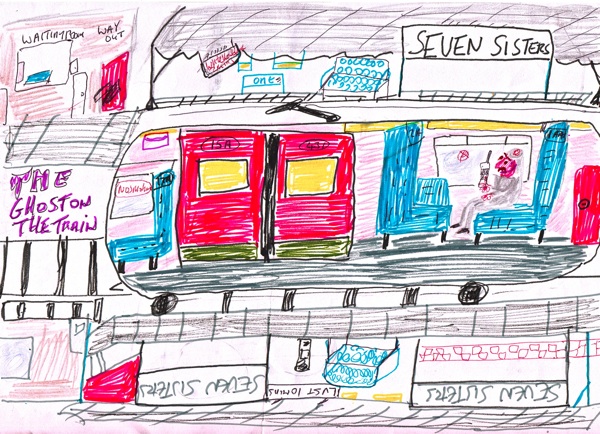
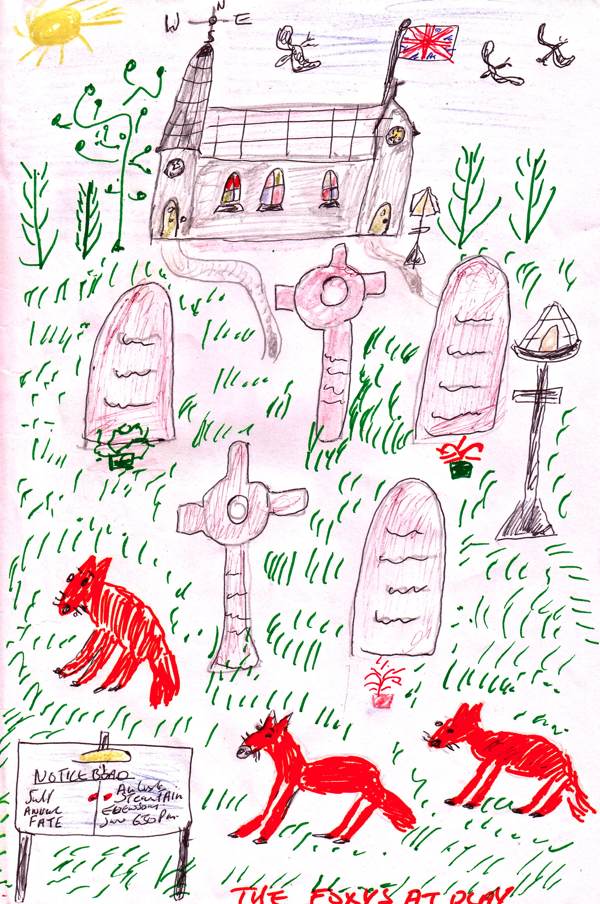
In recent weeks, I have had the privilege of assisting Viscountess Boudica in setting up her blog entitled There’s More To Life Than Heaven & Earth, comprising a string of short stories accompanied by vivid illustrations that will accumulate to become the autobiography of the Brick Lane Trendsetter formerly known as Mark Petty. “It’s regarding people in situations I once knew,” she explained to me, sitting eagerly at her keyboard, “and is mainly based on the Braintree years and the trouble I had there which led to me being forced out of town.”
Written from raw personal experience, these comic tales recount the sentimental education of the Viscountess through a string of disastrous emotional involvements. Yet in spite of the multiple humiliations, the violence and the angry phone calls, Boudica looks back on these experiences fondly, even showing compassion for her tormentors. “I always try to see the good in everybody,” she assured me with characteristic generosity of spirit.
“They’d all been in the nick and had criminal tendencies, such as gay-bashing, mugging, extortion or housebreaking.” she admitted, “And they were all in denial, they didn’t like gay men and so they tried to think of me as a woman. They thought of me as their bit on the side, I was the one to hem their trousers and cook their dinners.” Regrettably, the conflicted nature of these men always resulted in problems for Boudica – problems that became compounded when their girlfriends found out and turned jealous. “I think they tried to play us off against each other,” Boudica confessed to me, rolling her eyes for dramatic effect.
Combining magic realism with the humour of Carry-On films, Boudica’s blog is both an elaborate satire upon sexual repression and an unmediated portrait of a highly individualistic world view.“It’s a warning to others and I hope people will try to learn from my mistakes, because it’s a chapter in my life that’s finished.” Boudica assured me, looking forward, “Justin Timberlake would be my ideal man now. I sent him a watch and he sent me his picture back.”
There are just around a dozen stories on the site to date, but I have had a sneak preview of some of the wonders that are to come – and I publish a selection of Boudica’s drawings below – so I recommend you follow this unique endeavour as it develops. The Viscountess is waiting for your comments!
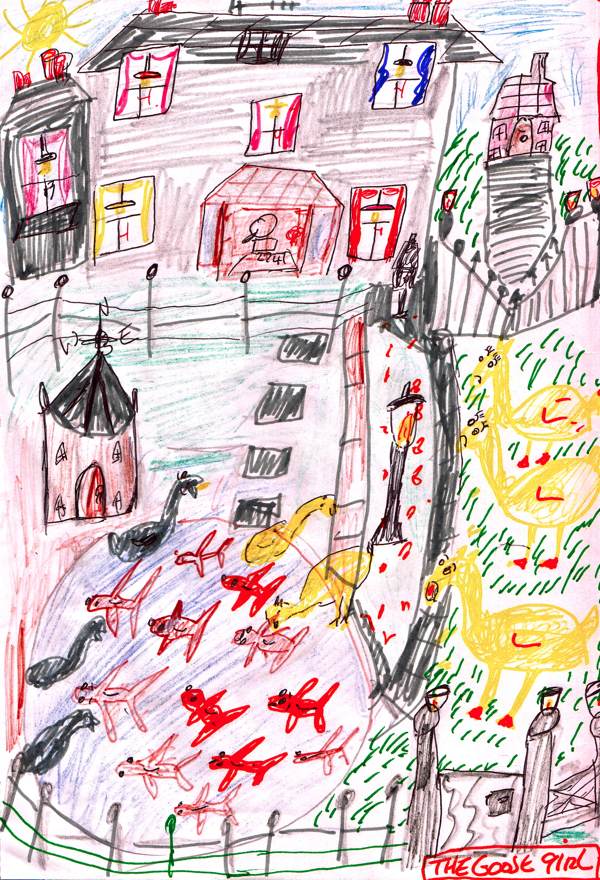


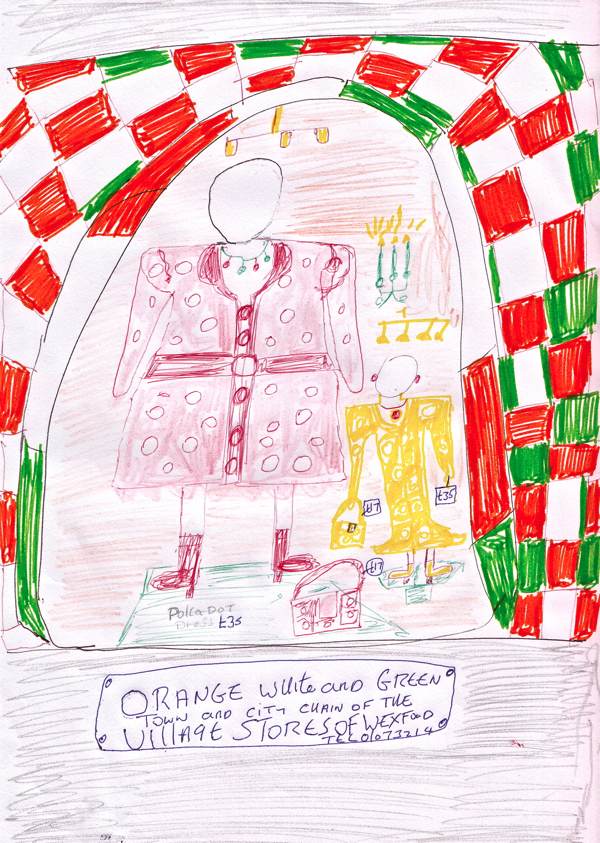
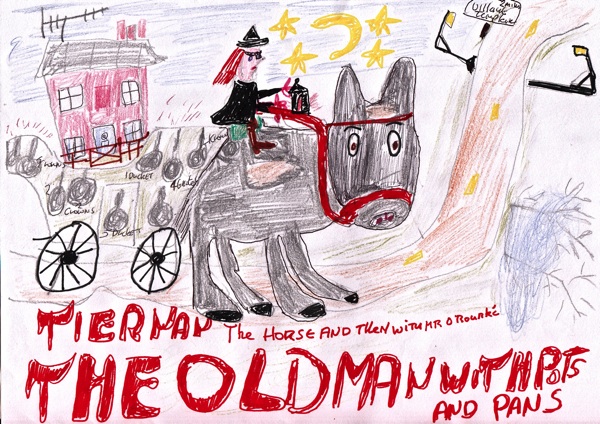
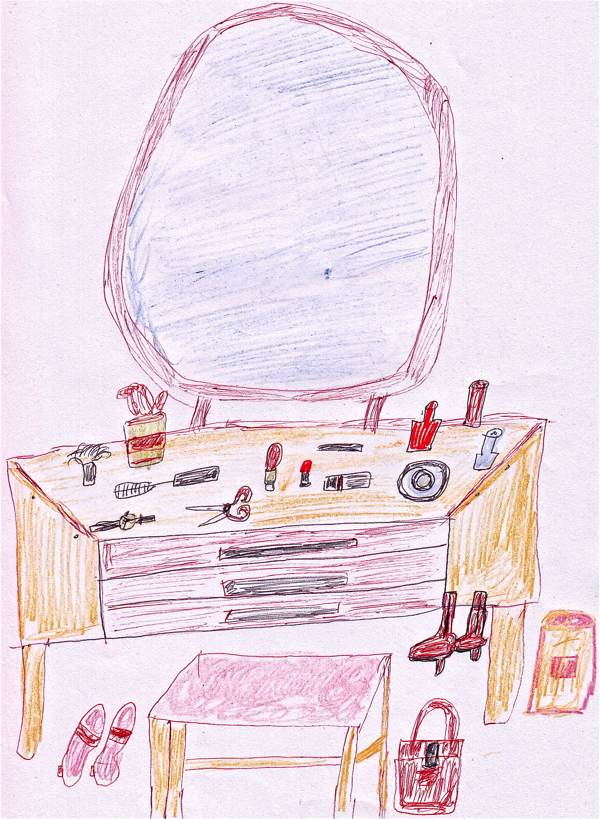
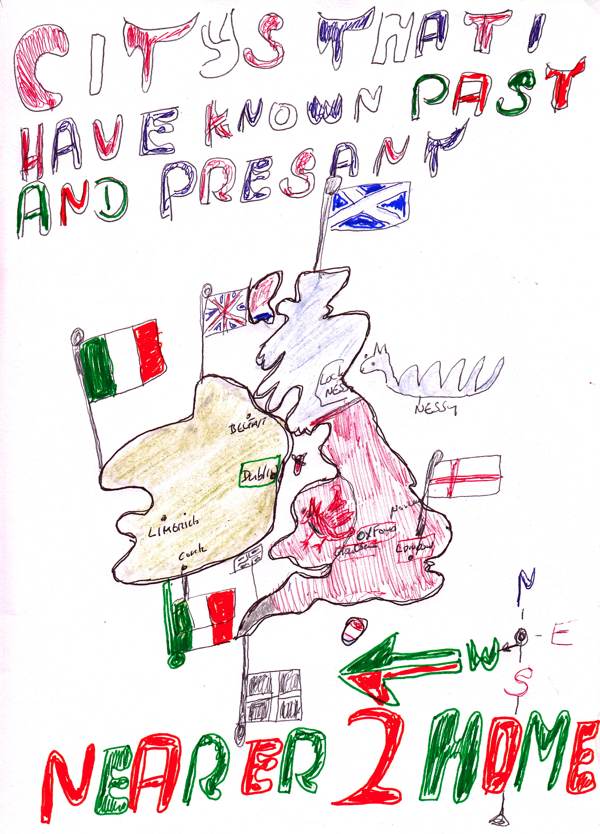
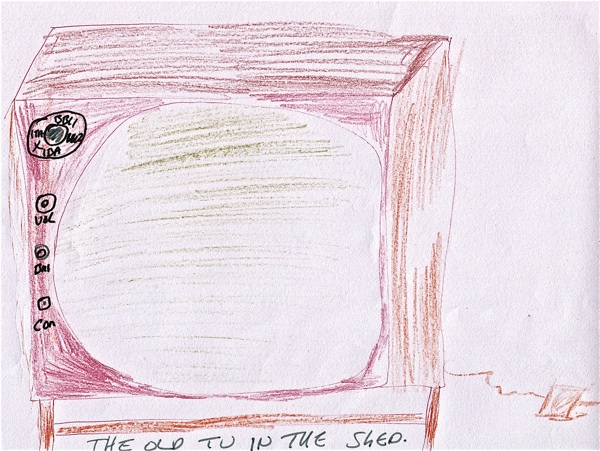
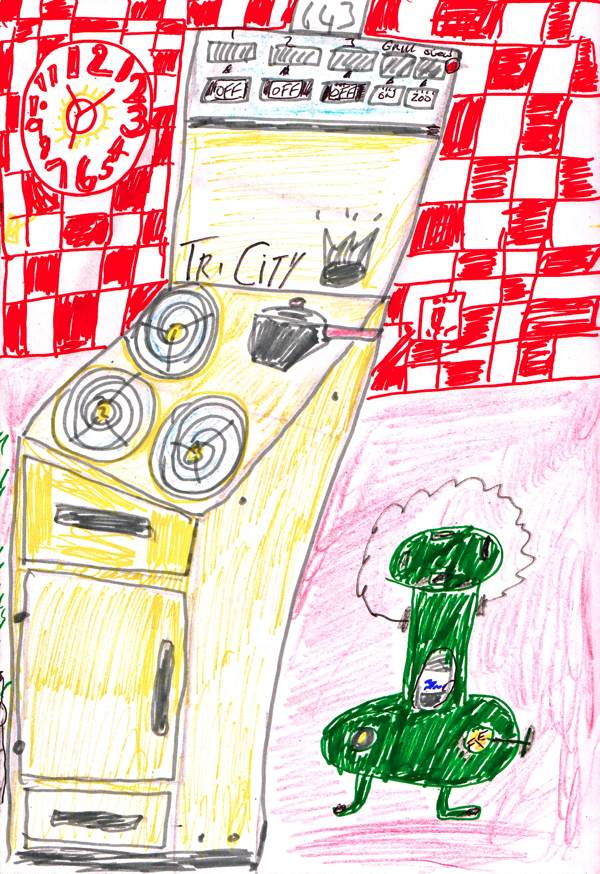
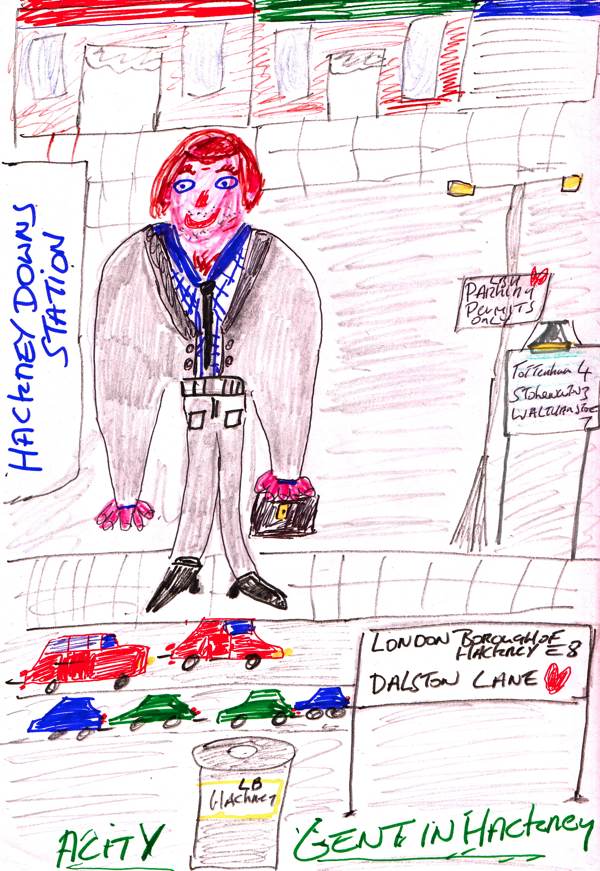
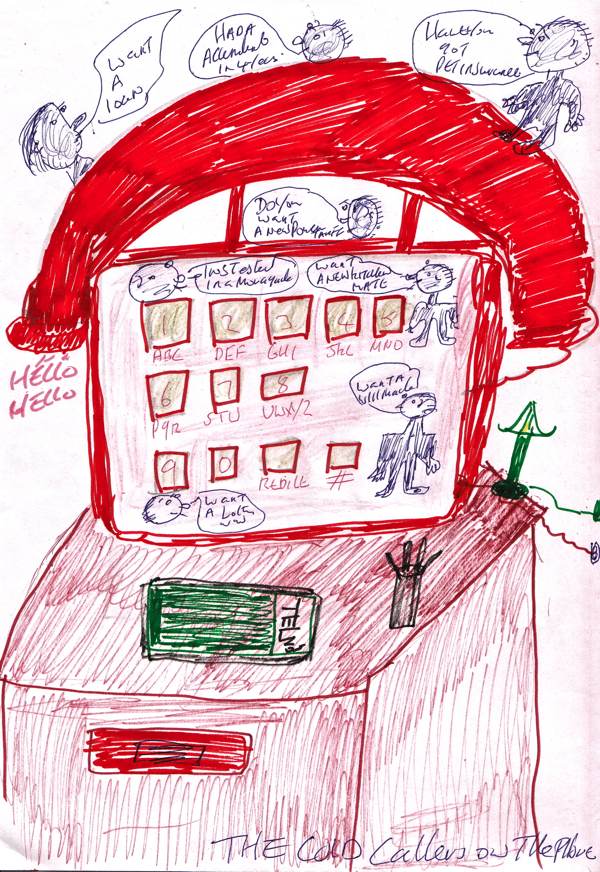

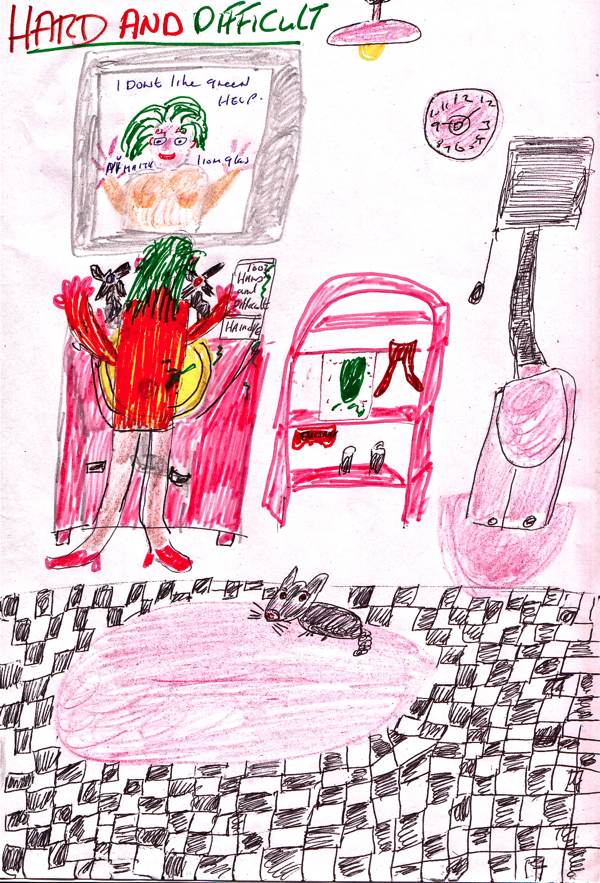
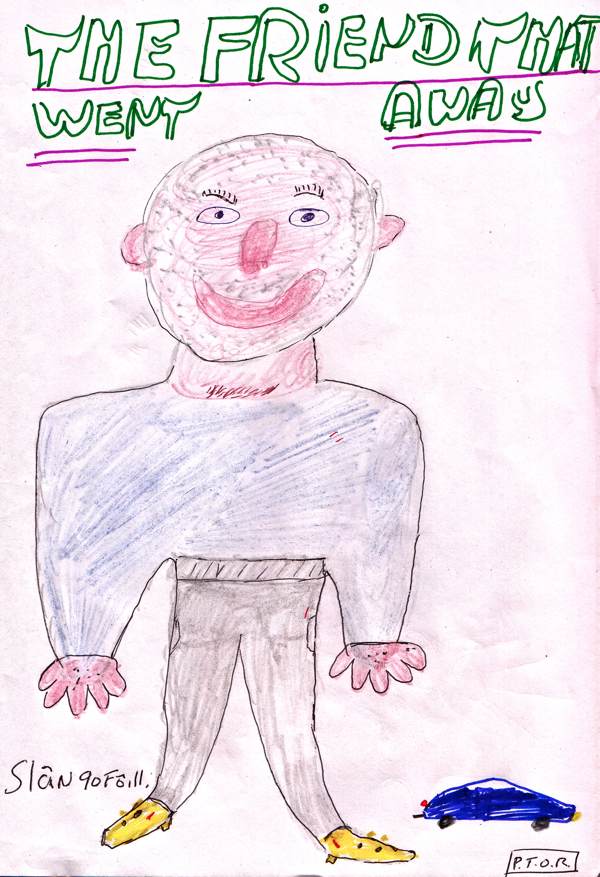
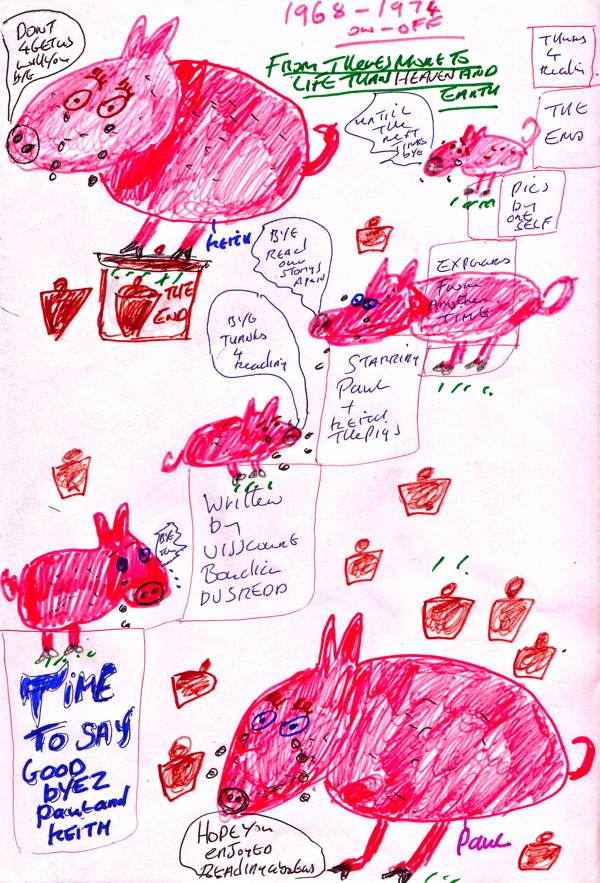
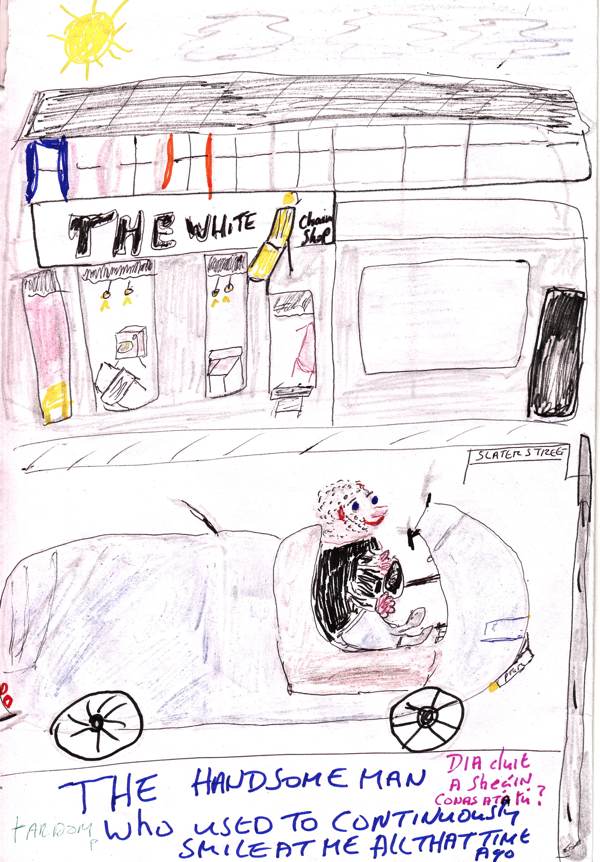
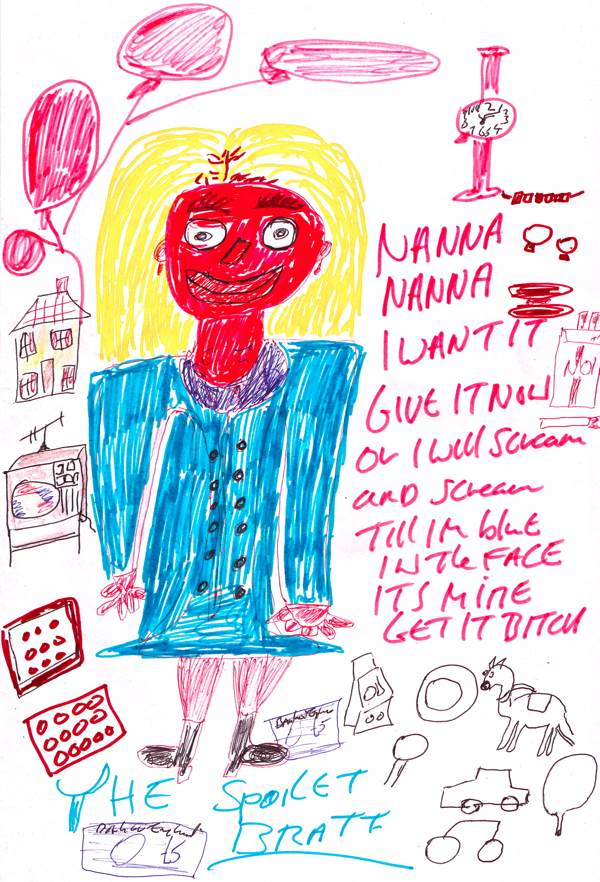
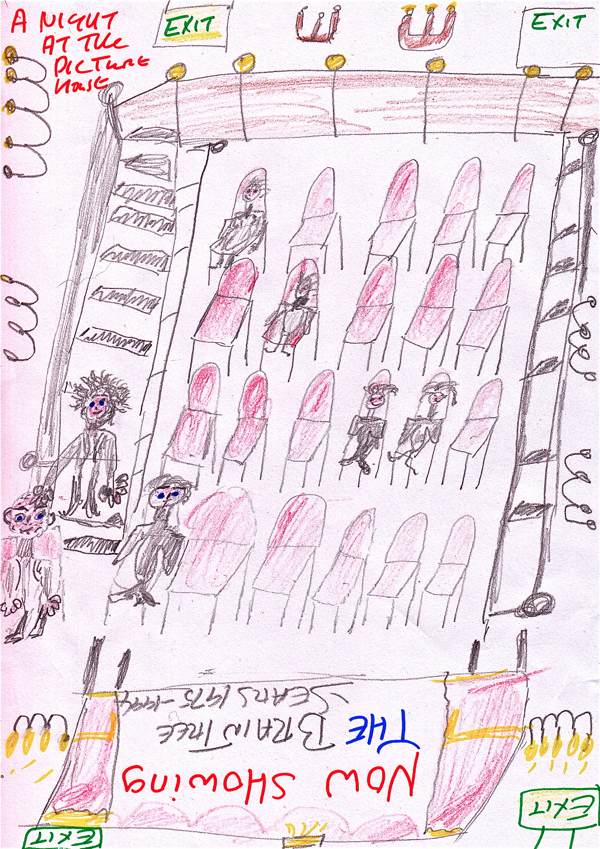
Drawings copyright © Viscountess Boudica
Follow There’s More To Life Than Heaven & Earth to read Viscountess Boudica’s stories
Read my original profile of Mark Petty, Trendsetter
and take a look at Mark Petty’s Multicoloured Coats,
Yet More Old Furniture Trade Cards
After recently publishing selections of old furniture trade cards that might have been found in the secret drawer of a hypothetical cabinet or discovered stashed behind a plate on the top shelf of a hypothetical alcove in the eighteenth century, it is my pleasure to show this further selection which had fallen down the back of a hypothetical armoire.


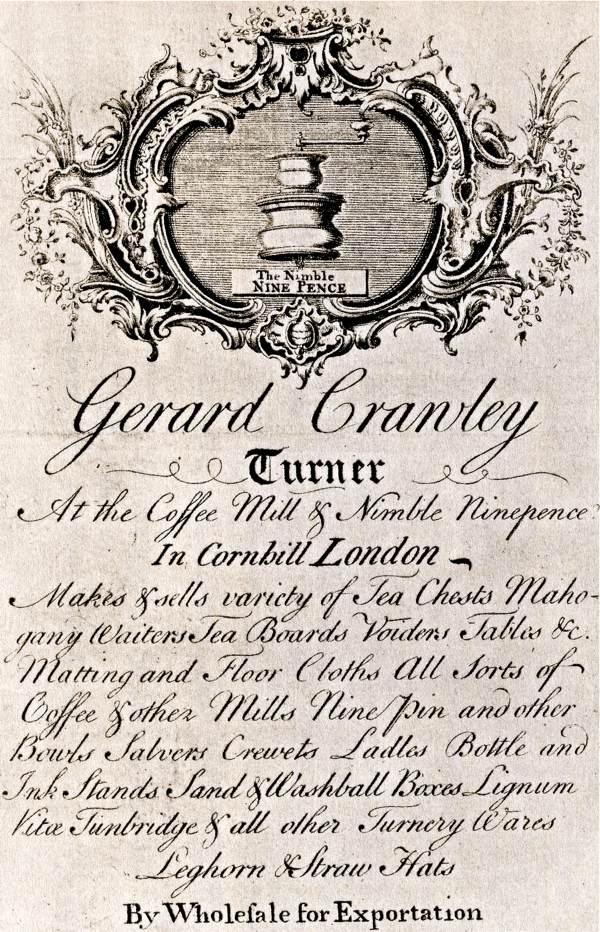


Images courtesy Bishopsgate Institute
You may like to see my earlier selections
Furniture Trade Cards of Old London
More Furniture Trade Cards of Old London
More Trade Cards of Old London
Yet More Trade Cards of Old London
Even More Trade Cards of Old London
Lillie O’Brien’s Quest For Loganberry Jam

Lillie O’Brien among the loganberries
As you can see, Lillie O’Brien sole trader of the London Borough of Jam has a passion for loganberries, that curious nineteenth century hybrid of the raspberry and the blackberry which possesses its own piquant flavour quite distinct from its cultivars – tart and pungent and tangy. Lillie has devoted herself to earning a living by making jam in small batches from fresh fruit as it comes into season and recently she has become captivated by the irresistible notion of loganberry jam.
Now is the season for loganberries but it only lasts two weeks and, when Lillie contacted Covent Garden Market, she discovered that none were to be found. There is no demand for loganberries, she was told. Yet the scarcity only sharpened Lillie’s resolve, recognising that if she found some, she could corner the market in loganberry jam for the whole of London. Many phone calls later, Lillie spoke with a fruit farmer in Kent who had just one line of loganberry plants, ready to pick. Having located the elusive berries, Lillie just needed some assistance with the picking, which was how I became her accomplice in the quest for this rare fruit.
After a week of floods, we expected the weather to be against us but yesterday morning dawned dry and sunny after the night of heavy rain, filling us with hope as we set out from East London towards Kent with buckets and pots in hand. Trudging through fields of strawberries, passing raspberries and blackberries, we came to the loganberries trained upon wires – since, in its trailing form, the plant bears a closer resemblance to the blackberry, even if the individual fruits look like extended raspberries. Once we arrived, Lillie clasped her hands and gasped in delight to set her eyes upon the object of her quest. We were not disappointed.
In fact, we found ourselves doubly the beneficiaries of this respite in the weather, because no-one else had been there to pick for several days and the plants were heavy with fruit, many turning the deep pink with a tinge of blue that is the sign of the ripe loganberry. Working on either side of the line, Lillie and I picked our way along systematically, working without a break and gathering over twenty kilos in just a few hours, stripping the plants of ripe fruit. The berries were sweet and aromatic, and soon our fingers were stained purple. For a couple of hours, we had the privilege to enjoy a blue sky and racing clouds for our loganberry picking, which could not have happened if the fruit were wet.
Yet by the time we reached London in the early afternoon, the clouds had already covered the sky again and the first raindrops were falling, which served to emphasise how lucky we were to have gathered our precious haul. As soon as we had carried the fruit into Lillie’s kitchen in Hackney, she filled her copper jam pan with two kilogrammes of loganberries and set straight to work, making jam to capture the flavour of the fruit within hours of picking it in the field. Once the berries in the pan upon the stove had broken down, Lillie added the sugar and tested the syrupy mixture constantly with her wooden spoon, to ensure that the consistency of the jam was satisfactory and avoid any overcooking of the fruit which would impair the flavour.
Within an hour, we had eight jars of loganberry jam, glowing a rich pink upon the table. It marked the proud achievement of our quest. Afterwards, I walked back through the driving rain in the premature dusk to Spitalfields and, once I arrived home, I took a spoon and sat alone in my living room with my jar of jam. Already it had set to a gelatinous consistency, and I ate a spoonful direct from the pot. At once, I was transported back to my few hours in the sun picking berries. There was a delicate natural sweetness to this jam that was not at all sugary, an intense fruit flavour with a flowery perfume and a delicious tang of citrus. Let me confess, I ate another spoonful of jam, and then, in the half light, I sat and contemplated the aftertaste of loganberries.
I had left Lillie completely absorbed in her task of making jam from all the loganberries we had picked. It may take her all day on Friday to complete the estimated batch of eighty jars of jam that our crop of berries should produce. Quite possibly, it will be the only loganberry jam for sale in London this summer, and you can buy your own pot of this rare preserve to enjoy for yourself from Lillie at Chatworth Rd Market in Hackney this Sunday.


A limited number of pots of loganberry jam will be for sale direct from Lillie O’Brien at Chatsworth Rd Market this Sunday. London Borough of Jam preserves are also available from A. Gold in Spitalfields, Leila’s Shop in Shoreditch and the E15 Bakery in London Fields.
You may also like to read about
Sammy McCarthy, Flyweight Champion
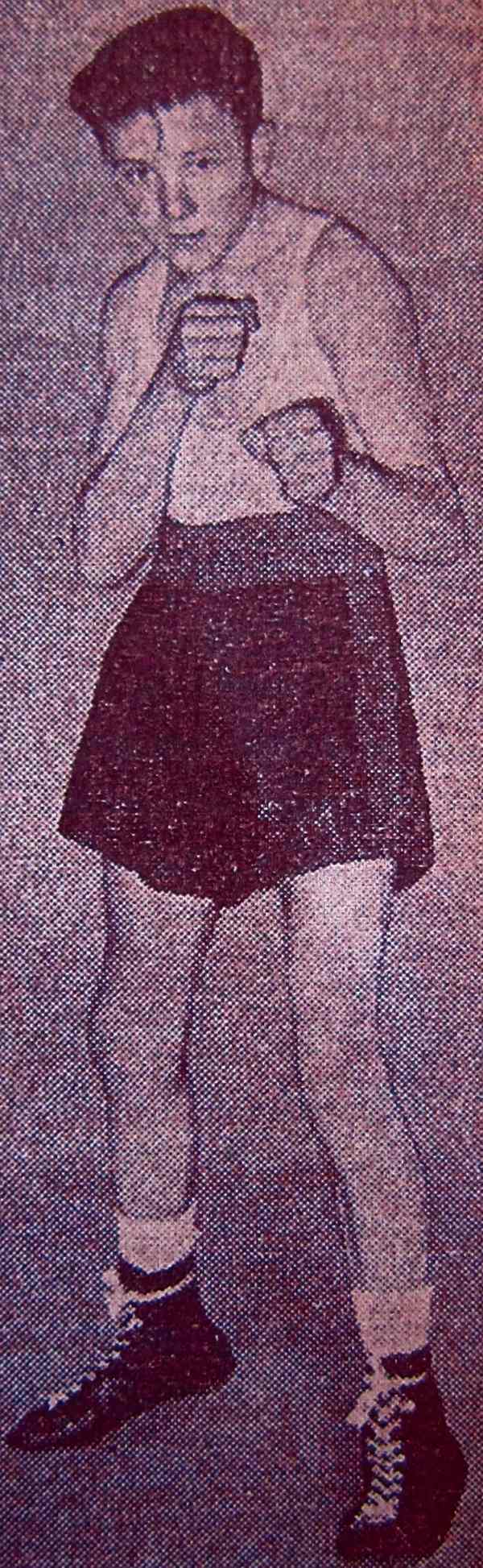
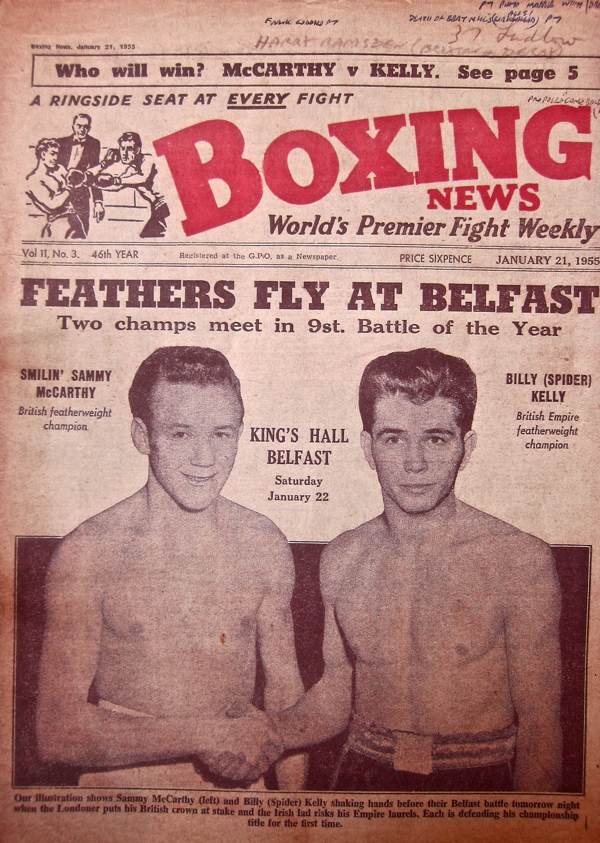
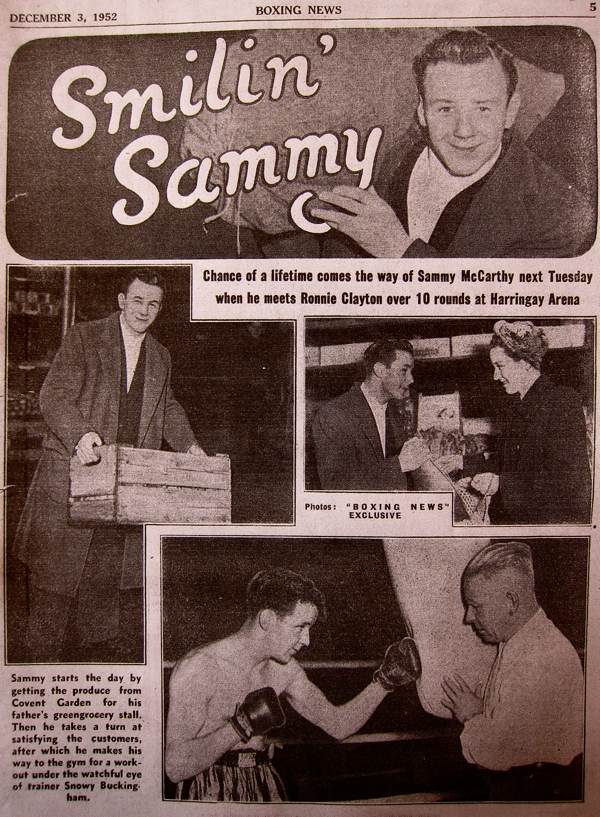
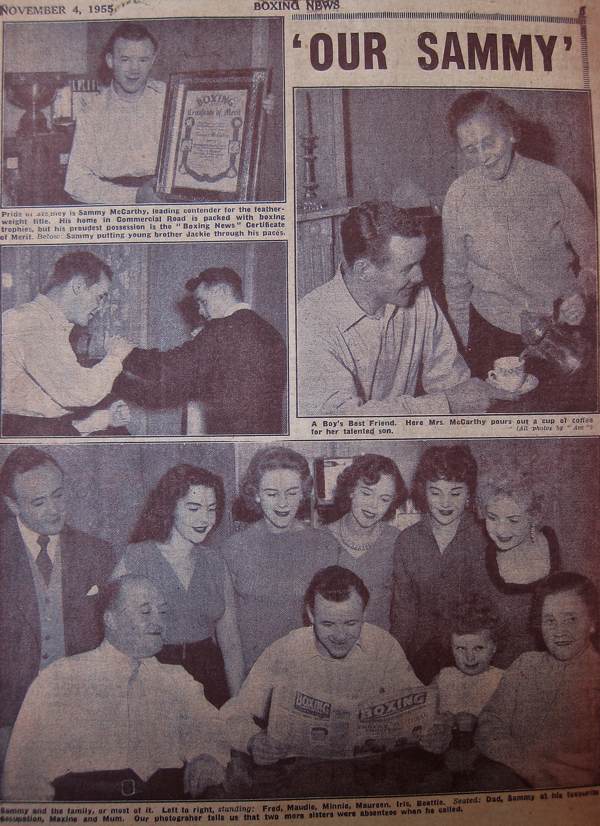
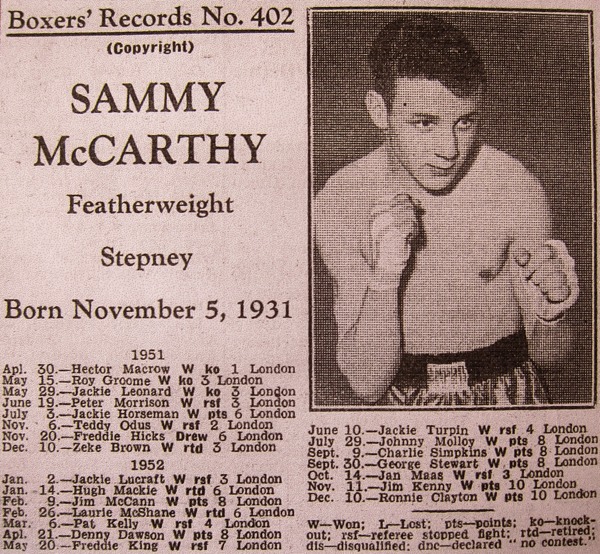
Let me tell you the story of “Smilin'” Sammy McCarthy, one of legends of East End Boxing. Voted “Best British Boxer of 1951” by Boxing Times, Sammy was a golden boy who won eighty-three out of his ninety amateur contests and represented England four times in the nineteen fifties, before becoming British Featherweight Champion twice and then Lightweight Champion after that.
Yet to this day Sammy is resolute in his refusal to be called a hero. With his impeccable manners and old-fashioned proper way of talking, he is the paragon of self-effacement – an enigma who modestly ascribes his spectacular boxing career to no more than a fear of disappointing others. His contemporaries informed me that only once I knew about his background, could I fully appreciate the true impulse behind Smilin’ Sammy’s suave temperament, but what I discovered was something far more surprising than I ever expected.
Born in 1931 as one of ten children, Sammy grew up in a terrace off Commercial Rd next to Watney Market as the son of costermonger. “My father used to go round the streets selling fruit and veg and we all helped him, and I helped him more than anyone but I always hated it,” Sammy revealed to me, explaining how he visited Spitalfields Market each day with his father in the early morning and stood outside the church while his father bought the produce. Then Sammy had to wheel the loaded barrow back to Stepney but, although it gave him the physical strength which made him a boxer, it was also was a source of humiliation when Sammy’s schoolmates jeered. “Subconsciously, I suppose I was a bit of snob – I wanted to be posh even though I didn’t know the meaning of the word.” he confided with a blush, expressing emotions that remain current even after all these years.
Sammy’s elder brother Freddie – whom he still visits each week, now aged ninety – was a boxer before him, and Sammy has a vivid memory of hiding under the table as a child, while his father and brother listened to the celebrated Tommy Farr and Joe Louis fight on the radio. “All the talk was of boxing and I so much wanted to participate but I was naturally timid,” he admitted to me shyly, “I was frightened of being frightened, I suppose – but after my fights I was always so elated, it became like a drug.”
Sammy joined the St George’s Gym in Stepney where his brother trained. “I absolutely loved it but each time I went, I was extremely nervous.” he continued, breaking into his famous radiant smile, “At fifteen I had my first fight and lost on points, so I didn’t tell my father but he found out and cuffed me for not telling him, because he didn’t mind.”
“I had a great following thanks to my two uncles who sold tickets and everybody in the markets bought them because my brother was already well-known. So there used to be coach loads coming to watch me box and I was always top of the bill, not because I was good but because I always sold plenty of tickets.” It was a characteristic piece of self-deprecation from a champion unrivalled in his era.
At nineteen, Sammy turned professional under the stewardship of renowned managers Jarvis Astaire and Ben Schmidt. “Every time I go to West End, I still go to Windmill St and stand outside where the training gym used to be. All the big film stars, like Jean Simmons and John Mills, they used to go there to the weigh-in before a big fight.” he told me proudly.
In spite of his meteoric rise, Sammy was insistent to emphasise his vulnerability. “Everyone’s nervous, but I was petrified, not of fighting but of letting the side down,” he assured me. “I’d rather fight a boxer who thought he could fight but actually couldn’t,” Sammy announced, turning aphoristic and waving a finger,“than a boxer who thought he couldn’t fight but really could.” And I understood that Sammy was speaking of himself in the latter category. “It makes you sharp,” he explained, “your reflexes are very fast.”
‘”I retired at twenty-six, but I didn’t know I was going to retire,” admitted Sammy with a weary smile,“I had to meet these people who were putting a book together about me and it turned out to be the ‘This Is Your Life’ TV programme. It was 1957 and they expected me to announce I was going to retire. I must have been a little disappointed but maybe I hadn’t seen I was slowing down a little.”
Married with two children and amply rewarded by the success of his boxing career, Sammy bought a pub, The Prince of Wales, known as “Kate Odders” in Duckett St, Stepney. You might think that Sammy had achieved fulfilment at last, but it was not so. “I hated every moment because I like home life and as a publican you are always being called upon.” he confessed, “I had a little money and I spent it all unfortunately.”
“My boxing career, it gave me confidence in myself. Boxing made me happy.” Sammy concluded as our conversation reached its natural resolution,” I didn’t enjoy the fights, but I love the social life. You meet the old guys and you realise it’s not about winning, it’s about giving of your best.” Living alone, Sammy leads a modest bachelor existence in a neatly kept one bedroom flat in Wanstead and he meets regularly with other ex-boxers, among whom he is popular character, a luminary.
And that is where this story would have ended – and it would have been quite a different kind of story – if Sammy had not confronted me with an unexpected admission. “I want you to know why I am divorced from my wife and separated from my children,” he announced, colouring with a rush of emotion and looking me in the eye, “I’m telling you, not because I’m boasting about it but because I don’t want you to make me out to be a hero.”
There was a silence as Sammy summoned courage to speak more and I sat transfixed with expectation. “I robbed banks and I stole a lot of money, and I was caught and I was put in prison for years.” he said.
“I think I was too frightened not to do it,” he speculated, qualifying this by saying,“I’m not making excuses.”
“I’m reformed now.” he stated, just to be clear.
“I was alright in prison because I’m comfortable with my own company and I read books to pass the time,” he added, to reassure me.
“But why did you do it?” I asked.
“Because we never had anything,” he replied, almost automatically and with an abject sadness. His lips quivered and he spread his hands helplessly. He had been referring back – I realised – to his childhood in the family of ten. A phrase he said earlier came back into my mind,“I can’t say that I experienced hardship,” he told me,“not by comparison with what my parents went through.”
Subsequently, a little research revealed that Sammy had been convicted three times for armed robbery, and served sentences of three, six and fourteen years. When I think of Smilin’ Sammy now, I think of his sweet smile that matches the Mona Lisa in its equivocation. It is a smile that contains a whole life of fear and pain. It is a smile that knew joy yet concealed secrets. It is a brave smile that manifests the uneasy reconciliation which Sammy has made with the world in the course of his existence.

Smilin’ Sammy McCarthy
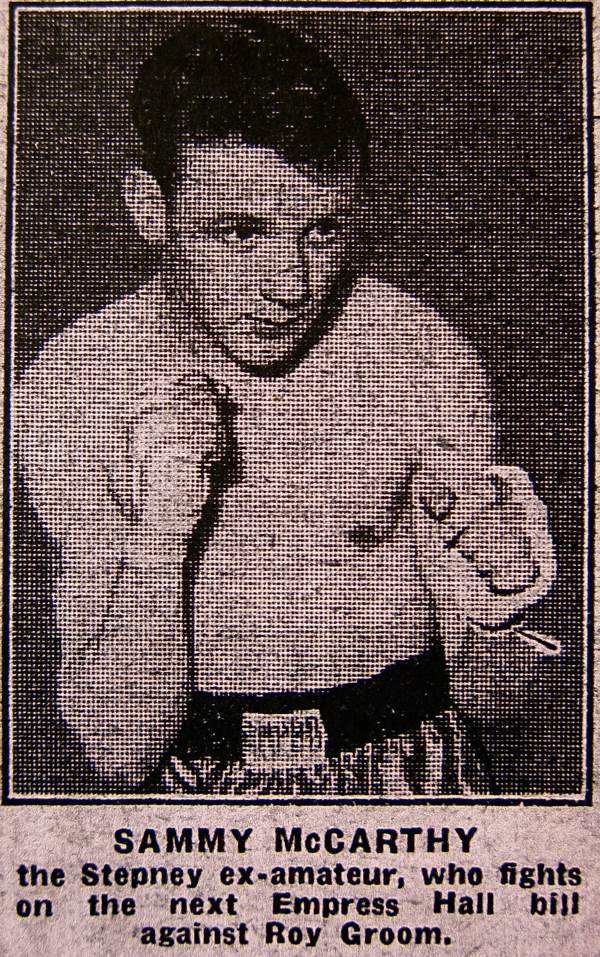
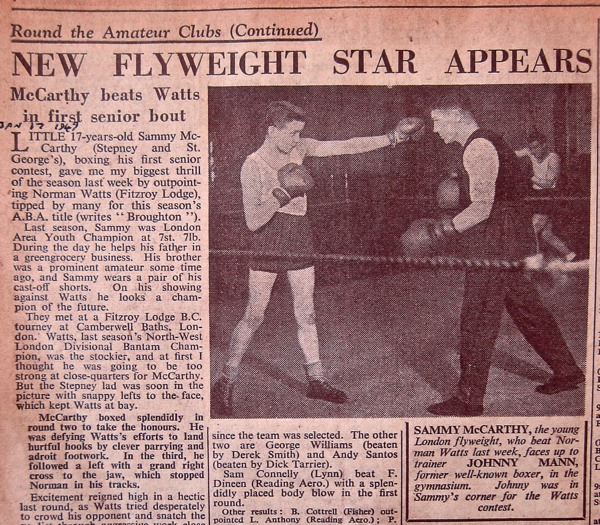
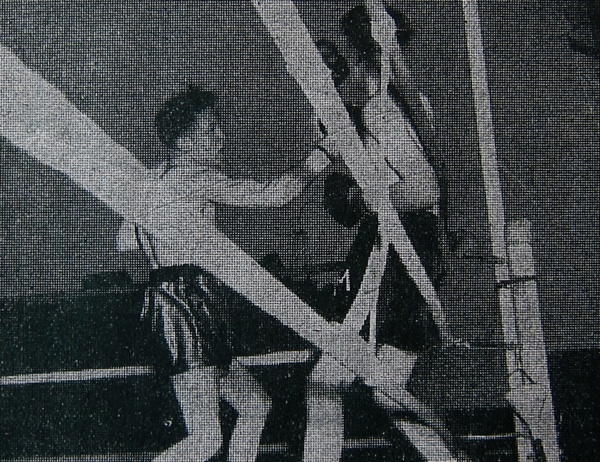
Sammy McCarthy, the Stepney Feather, has Peter Morrison against the ropes under a fierce attack at the Mile End Arena.
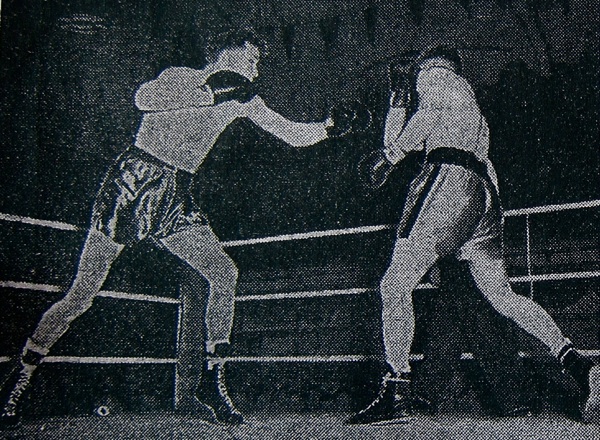
Sammy McCarthy makes Denny Dawson cover up under a straight left attack.
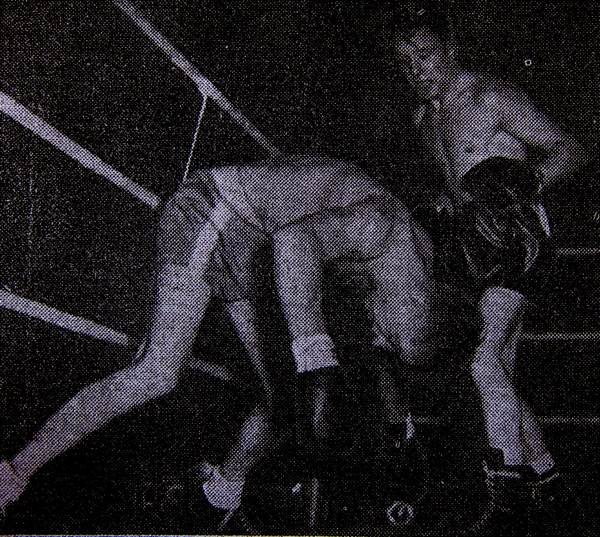
Jan Maas goes headlong to the canvas after taking a Sammy McCarthy “special” to the chin.
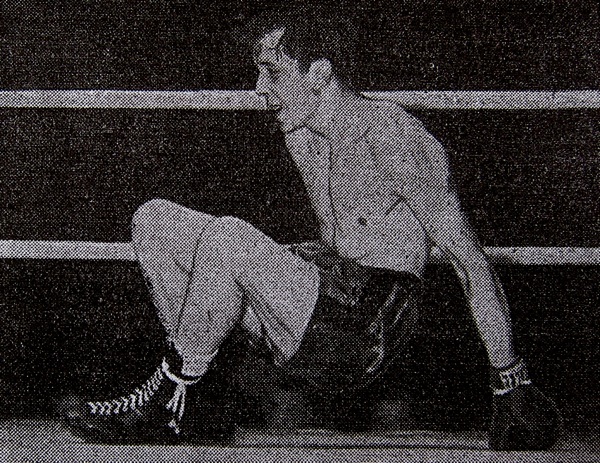
Still smiling! Not even a knockdown can remove the famous smile from Sammy McCarthy, as he goes down for a count of “eight” in the fifth round.
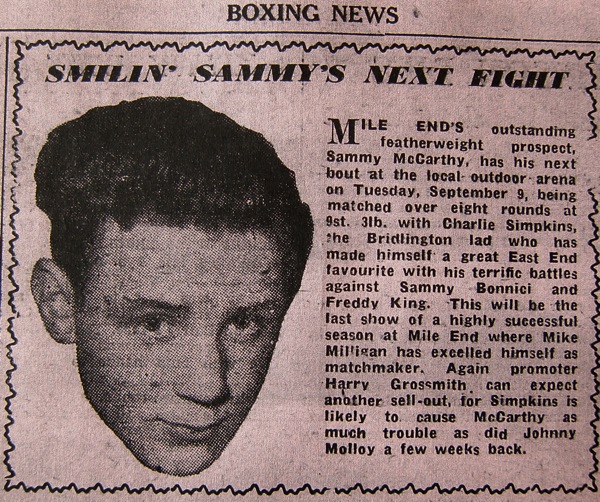
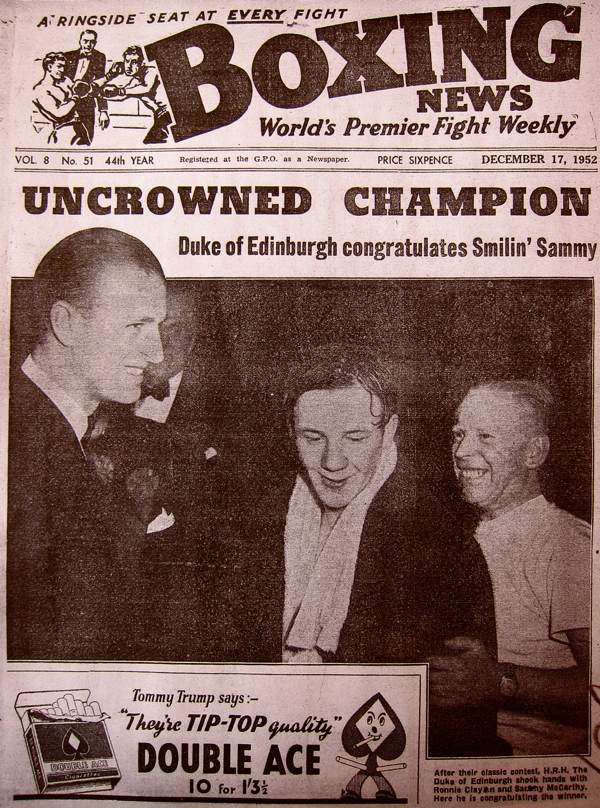
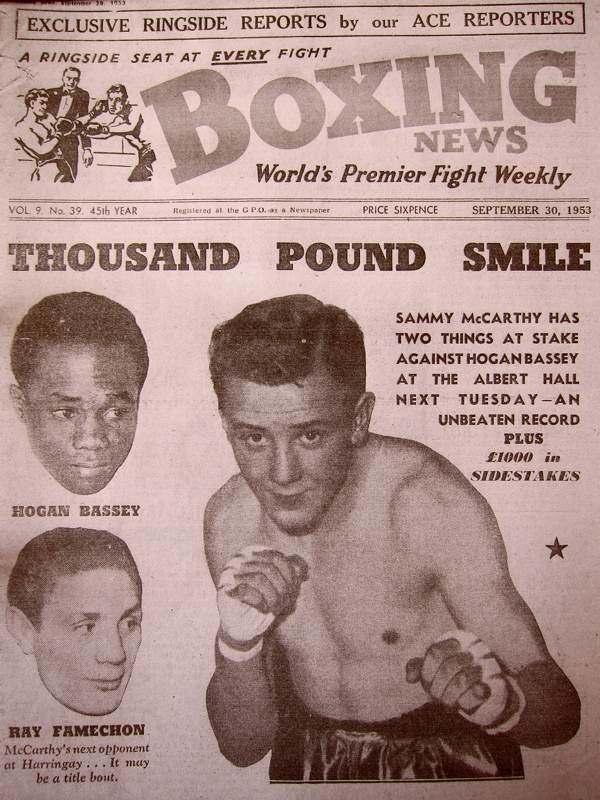
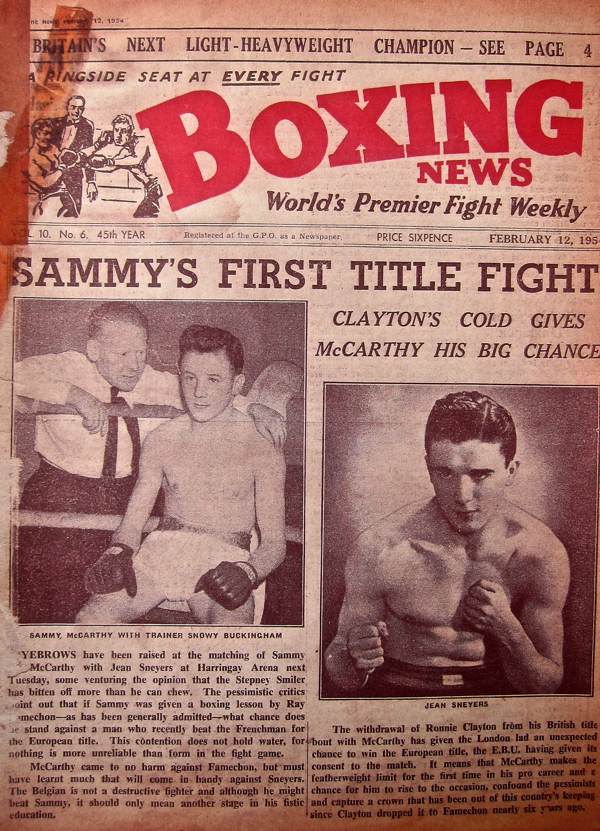
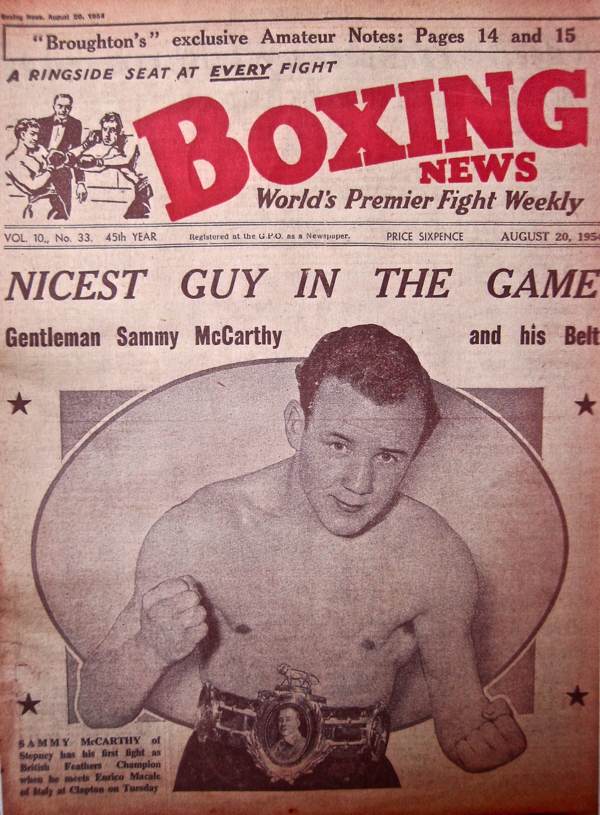
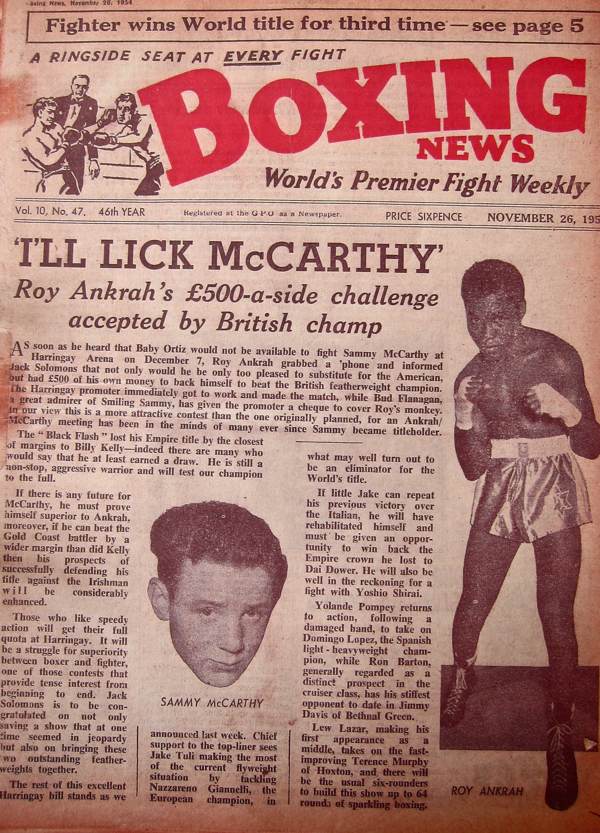
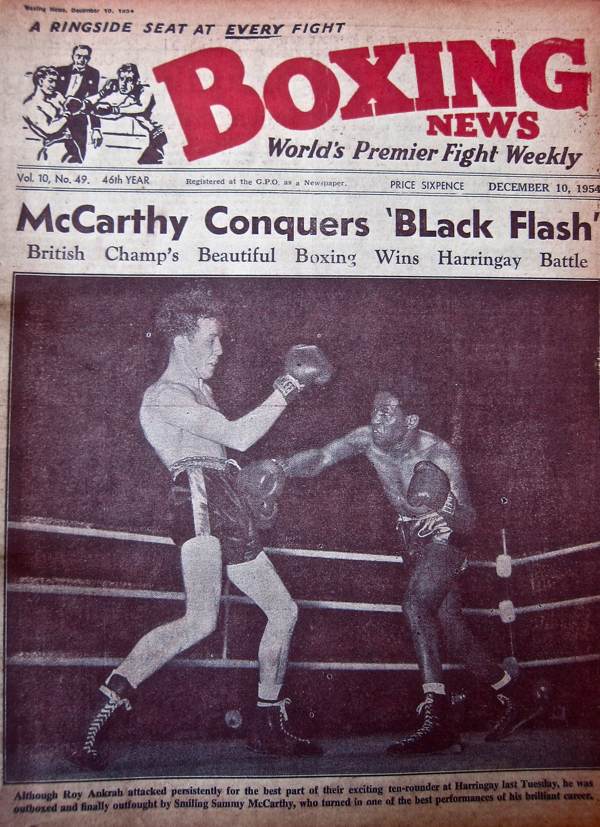

Smilin’ Sammy McCarthy
Boxers, Photographs of Boxing in London by Alex Sturrock with interviews by yours truly was published last week by Ally Capellino
You may also like to read about
Ron Cooper, Lightweight Champion Boxer
The Return Of Joan Rose
I am republishing my portrait from 2010 of Joan Rose, who is featured tonight in The Secret History of Our Streets, Arnold Circus on BBC 2 at 9pm, along with Aubrey Goldsmith whom I have also profiled, and many others that you will recognise from the pages of Spitalfields Life.

This gracious lady with the keen grey eyes is Joan Rose, standing in the door way of Leila’s Shop in Calvert Avenue on the spot where her father was photographed in 1900. Joan’s grandfather Albert Raymond opened the greengrocer’s shop in that year, running it with assistance of her father Alfred Raymond, who continued the business until it closed when he died in 1966. Much to Joan’s delight, in recent years Leila McAlister has picked up where Alfred Raymond left off and the place is once again filled with a quality selection of fresh fruit and vegetables for sale.
Joan is a remarkably spirited person with an exceptional recall for names and places throughout her long life. An educated woman and former teacher, she can place anyone within London by their accent. Although unsentimental about the past, she talks affectionately about her happy childhood here in Arnold Circus. In 1951 she left to get married and live in Beacontree, but the emotional memory of her time in Shoreditch remains vivid to her. “I am here” she said to me when I met her for tea at Leila’s Cafe and I understood what she meant, even if today she lives on the other side of London.
When she was growing up in the nineteen thirties, Joan told me, she helped her grandfather in the shop and he called her “tangerine” because she always stole tangerines, even though she could have as many as she wanted. “I used to sit on his lap in the corner of the shop and he told me all these stories about the neighbourhood and I thought they were all nonsense – but later I found they were all true. He had a set of Shakespeare in the flat up above the shop and he said, “There’s a plaque to Shakespeare in St Leonard’s Shoreditch.” After he died, I found the plaque and I cried because I had never believed him.”
Joan was very close to her grandfather Albert who taught her the exact science of stacking fruit and vegetables in tall pyramids (stalks up for apples, pears, plums and tomatoes, eyes up for oranges) and when he went to Spitalfields Market in the dawn to buy new stock, he took her with him and they had breakfast together at one of the pubs that opened in the early morning. He kept a pony and trap in the yard at the back of the shop and took Joan for rides around Arnold Circus – that was when she learnt that eight times round the bandstand was a mile.
Born in 1926 as the youngest of four daughters, Lily, Vera and Doris being the names of her sisters, Joan’s family lived in a series of different flats in the Boundary Estate as she was growing up, moving at one point from 20 Shiplake Buildings (eighteen shillings and sixpence a week) to 10 Laleham Buildings (twelve shillings and sixpence a week) to save money.
“Although we had a shop here, my mother went out working as a furrier’s machinist. We never realised that things were hard for our parents. My mother made our clothes and Mr Feldman made our winter coats. It was a system of favours, you deal off me, I’ll deal off you. People were poor but proud, they ate the cheapest food, monkfish or a pig’s head as a Sunday roast. My father hated Christmas because he saw people buy the best of everything and toys for their children, when they could barely afford a loaf of bread, and he knew they would end up in debt, running round to the pawnbrokers in Boundary Passage.”
Joan never felt that she was disadvantaged by her origins until she and her sisters went up to the West End to dances and met boys who asked where they came from. “If you said you were from Shoreditch, that was the last you saw of them,” Joan admitted to me, “We used to say we were from Arnold Circus because they didn’t know where it was.” Occasionally, charabancs of out-of-towners would slow down outside Raymond’s grocers’ shop and the driver would announce to the passengers “And these are the slums,” much to her grandfather’s ire.
Joan’s father was disappointed that he never had a son to carry on the business in his family name but he changed his opinion when World War II came along, declaring he was grateful to have four daughters and not to have a son to send to war. There was a hidden irony to this statement, because he had an illegitimate son, Terry Coughlan, who turned up in the shop once to buy an apple when Joan was serving and her father was out. In a youthful impulse and, to Joan’s eternal regret, she said to her father when he returned, “Your son was here!” Alfred went into the back of the shop, talked with her mother, then came out and said “I spoke to the boy.” That was the last that was ever said of it and Joan never met her younger brother again. Now Joan would like to find him, he will be seventy years old if he lives.
Joan describes the burning of London in 1940, when the warden knocked on all the doors in the Boundary Estate, telling the residents to take refuge in the crypt of St Leonard’s Shoreditch. She was not scared at all until she got down into the crypt and saw the priest in his black robes walking among the hundreds of silent people sitting in the gloom. It was this eerie image that filled her with fear. Joan remembers the wartime shortage of onions and the queue that formed outside the shop stretching all the way round Arnold Circus to Virginia Rd when they came into stock.
Although her grandfather refused to leave during the London Blitz, Joan’s father took the family to Euston and made the spontaneous choice to buy tickets to Blackpool where he quickly found an empty shop to open up as a greengrocer, and they lived there until the war ended. As they left Euston, the sisters sat crying on the train and the other passengers thought a member of their family had been killed in the bombing, when in fact the four girls were weeping for their wire-haired terrier, Ruff, that had to be put down on the morning they left London.
We leave Joan in that railway carriage travelling North, knowing that she will come back to London, get married, have children, become a teacher, have grandchildren, have great-grandchildren and live into the new millennium to return to Arnold Circus and discover that the greengrocers opened by her grandfather in 1900 has reopened again and life goes on and on.
When she speaks, telling her stories, Joan fingers the broad gold ring made from her grandmother Phoebe and mother Lily’s wedding rings. Once, it had the initials JR, standing for Joan’s maiden name Joan Raymond, and it was on her husband’s finger but now that he has gone and the initials have been worn away, Joan wears it as a simple gold band to contain all the memories that she carries of her family and of this place. To many of us born later, even familiar history can appear as unlikely fiction, but meeting someone with Joan’s generosity of spirit, eloquence and grace brings the big events of the last century vividly alive as reality. Joan does not bear grievances or carry complaints, she has not been worn down or become in the least cynical by her life, she is an inspiration to us all.

Raymond, 1900.

My photograph of Leila’s Shop, 2009.

Joan Rose’s grandmother and her father a a boy in 1900.

Joan Rose, 2010.

Joan Rose at Arnold Circus in 1940.

Joan Rose presides over the cutting of the cake at the celebration of the centenary of the Arnold Circus bandstand in 2010.
You may also like to read about
How Raymond’s Shop became Leila’s Shop
Joan Rose at Gardners’ Market Sundriesmen












