Views From A Dinghy By John Claridge
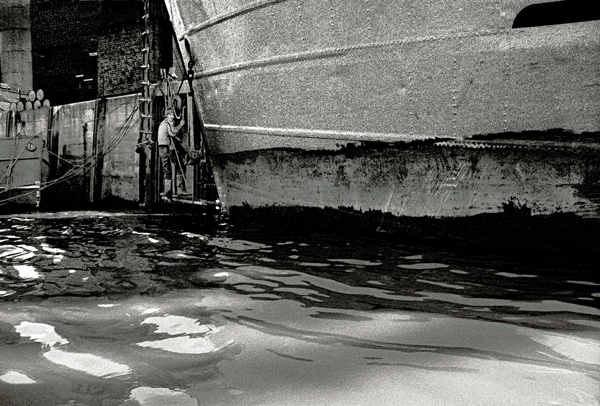
Ship maintenance, 1964
Take a trip down the Thames at a relaxed pace with Photographer John Claridge, in his tiny inflatable dinghy with outboard motor attached. The journey begins in 1961 when the London Docks were still working and ends in the nineteen eighties once they were closed for ever. This set of photographs – published here for the first time – are some of the views to be seen on that voyage.
Setting out at dawn, John’s photographic adventures led him through smog and smoke, through early morning mist, through winter fog and haze upon the river, all filtering and refracting the light to create infinite luminous effects upon the water. In the previous century, Joseph Mallord William Turner and James McNeill Whistler had attempted to evoke the distinctive quality of Thames light upon canvas, but in the mid-twentieth century it was John Claridge, kid photographer from Plaistow, who came drifting out of the London fog, alone in his dinghy with camera and long lens in hand to capture his visions of the river on film.
Look, there is a man scraping an entire boat by hand, balanced precariously over the water. Listen, there is the sound of the gulls echoing in the lonely dock. “It smells like it should,” said John, contemplating these pictures and reliving his escapades on the Thames, half a century later, “it has the atmosphere and feeling of what it was like.”
“You still had industry which created a lot of pollution, even after the Clean Air Act,” he recalled, “People still put their washing out and the dirt was hanging in the air. My mum used to say, ‘Bloody soot on my clean clothes again!'” But in a location characterised by industry, John was fascinated by the calm and quiet of the Thames. “I was in the drink, right in the middle of the river,” John remembered fondly, speaking of his trips in the dinghy, “it was somewhere you’d like to be.” John climbed onto bridges and into cranes to photograph the dock lands from every angle, and he did it all with an insider’s eye.
Generations of men in John’s family were dock workers or sailors, so John’s journey down the Thames in his dinghy became a voyage into a world of collective memory, where big ships always waited inviting him to depart for distant shores. Yet John’s little dinghy became his personal lifeboat, sailing on beyond Tower Bridge where in 1964, at nineteen years old, he opened his first photographic studio near St Paul’s Cathedral. John found a way to fulfil his wanderlust through a professional career that included photographic assignments in every corner of the globe, but these early pictures exist as a record of his maiden voyage on the Thames.
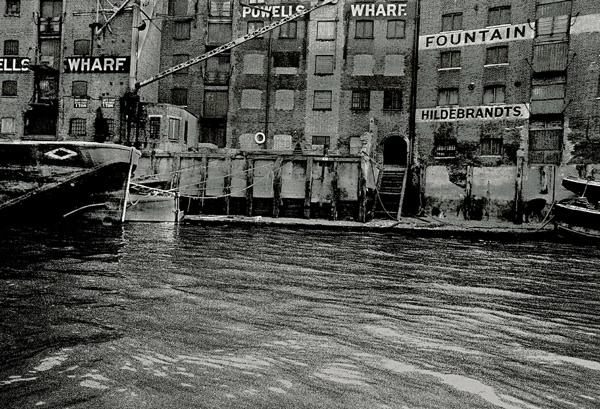
Across the River, 1965
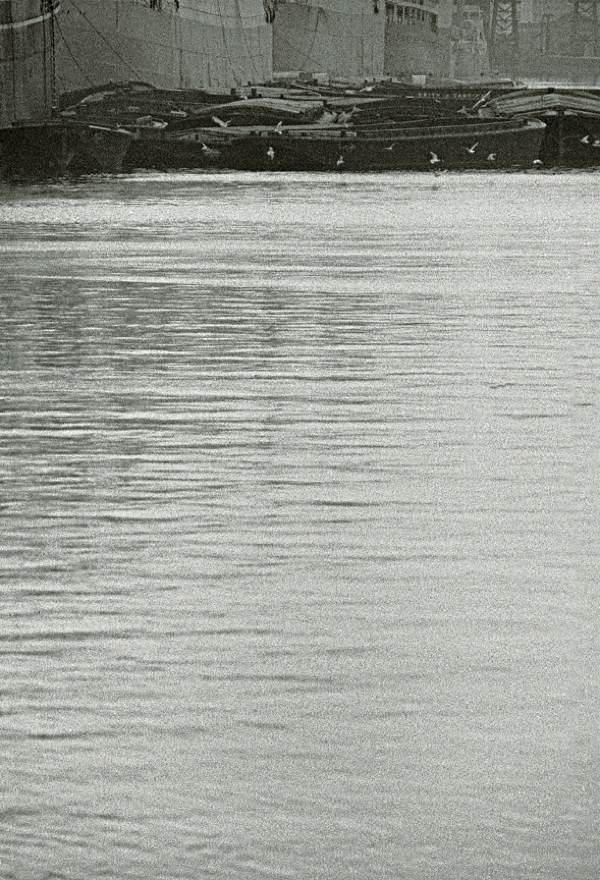
Gulls, 1961
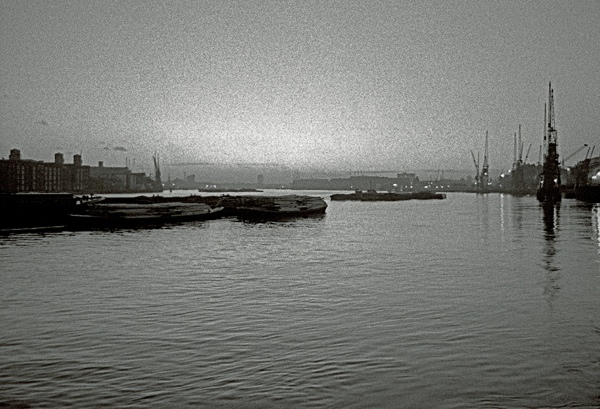
Quiet Evening, 1963
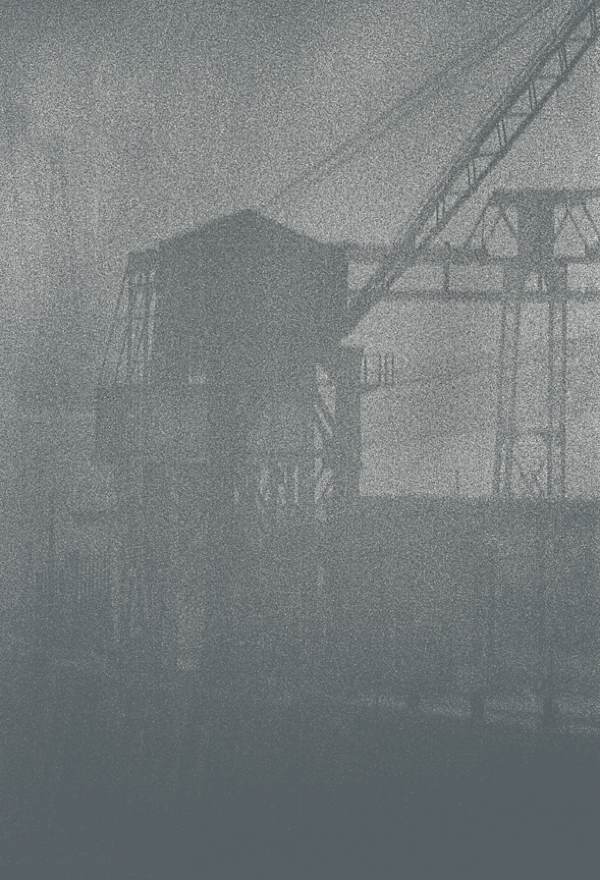
Smog, 1964
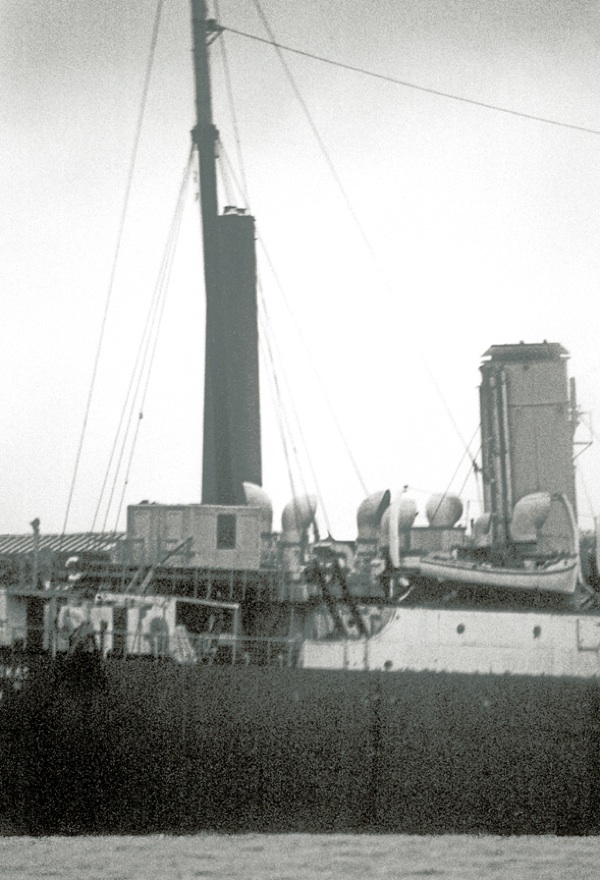
At Berth, 1962 – “It wills you to get on board and go somewhere.”

Three Cranes, 1968

Skyline, 1966 – “I climbed up into a crane and there was a ghostly noise that came out of it, from the pigeons roosting there.”
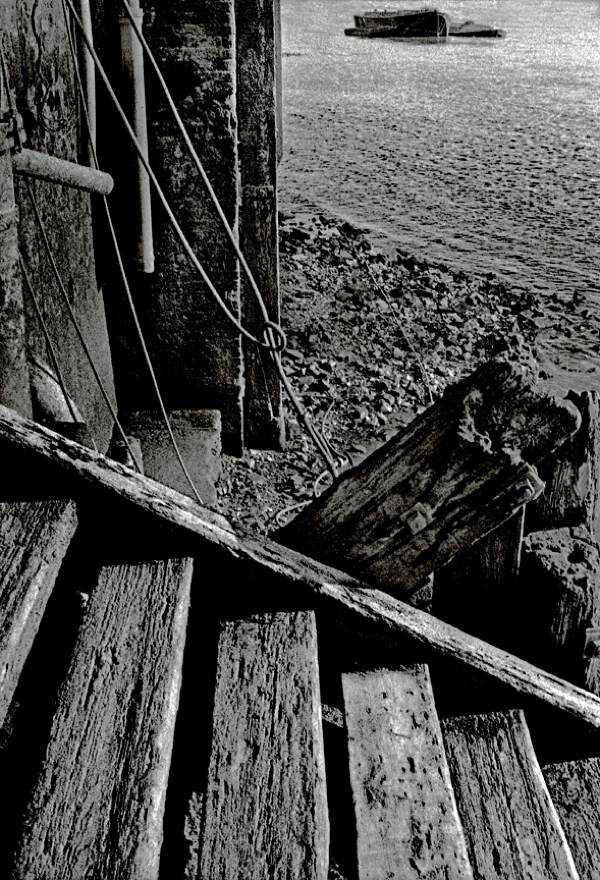
Steps, 1967
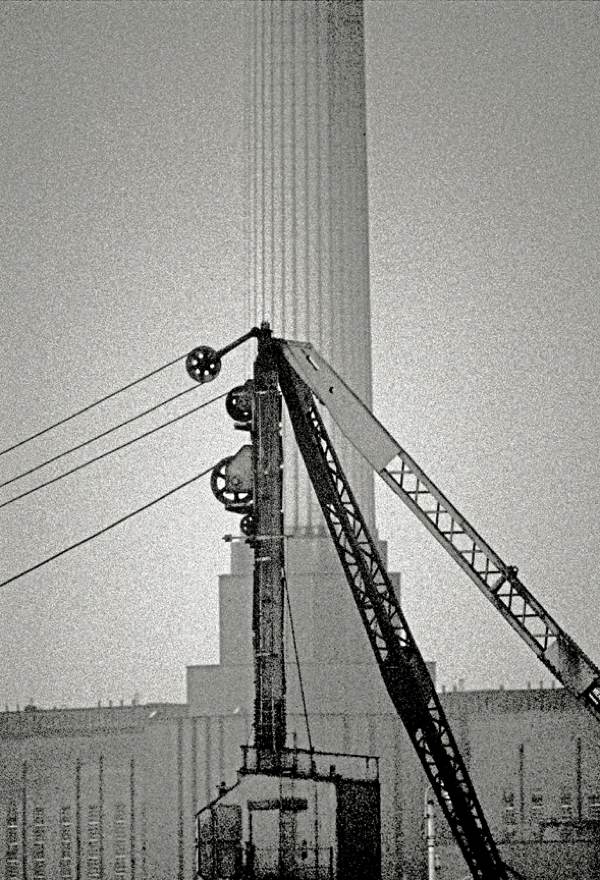
Crane & Chimney Stack, 1962

Spars, 1964

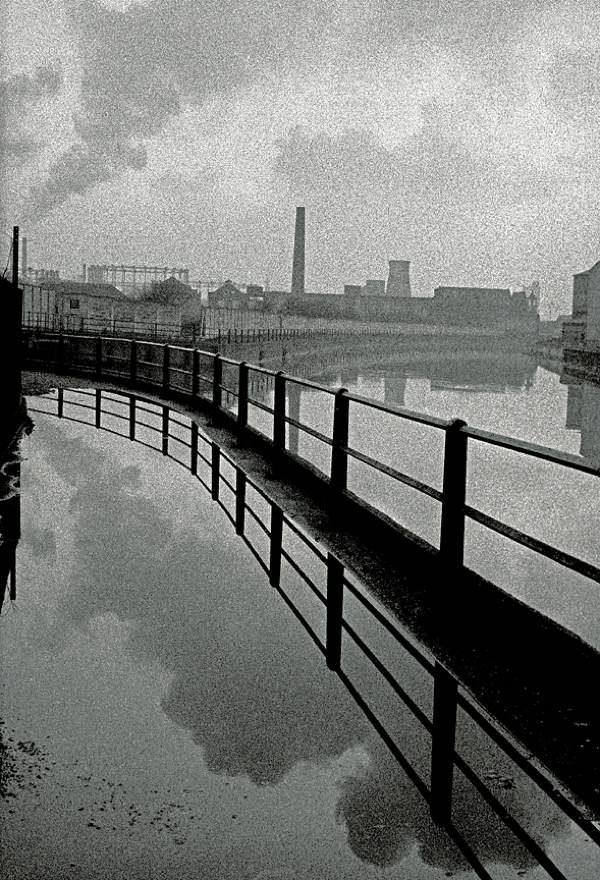
After the Rain, 1961
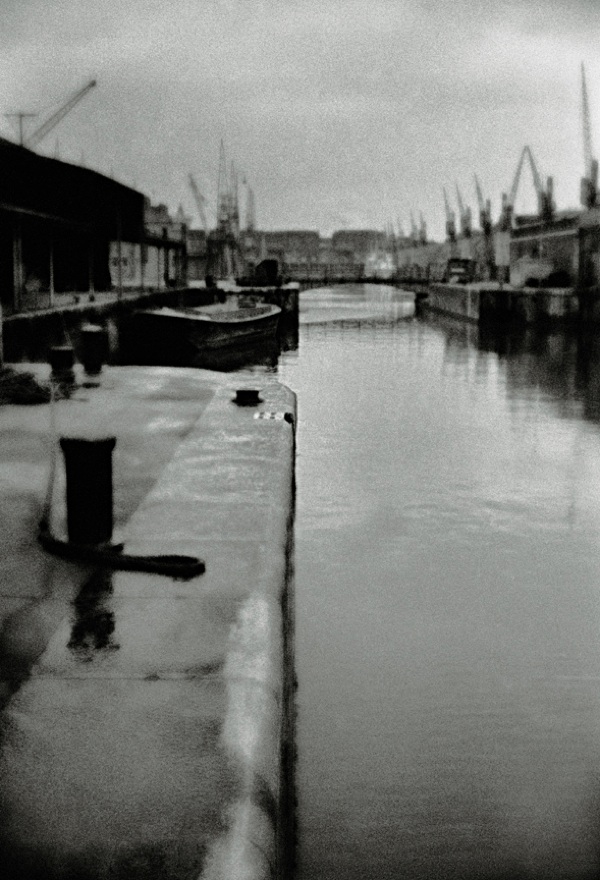
Capstan, 1968
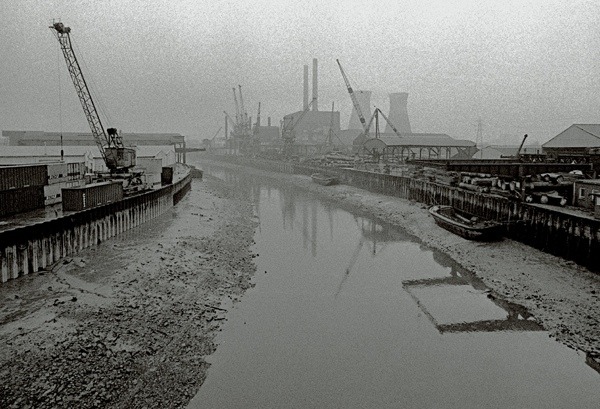
From the Bridge, 1962

Across the River, 1965
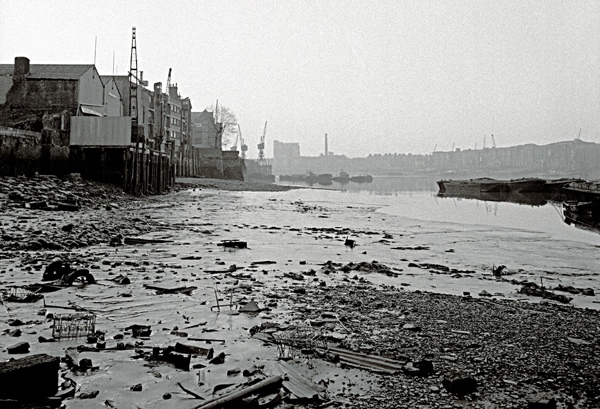
Wapping Shoreline, 1961 – “I got terribly muddy, covered in it, sinking into it, and it smelled bad.”
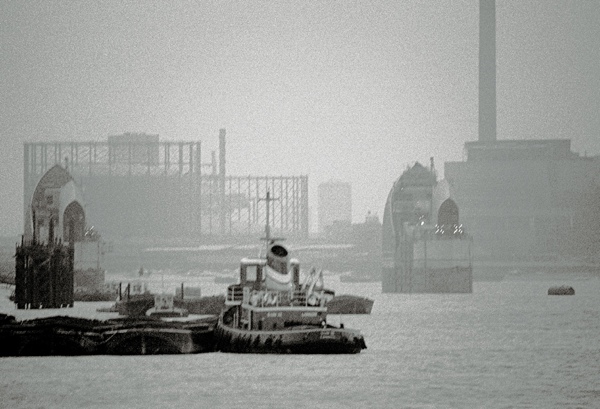
Thames Barrier, 1982
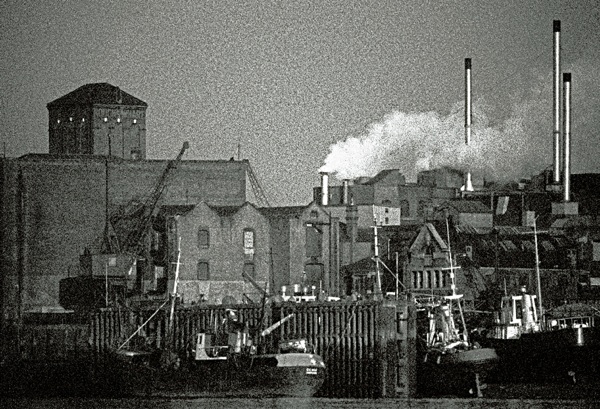
At Daybreak, 1982
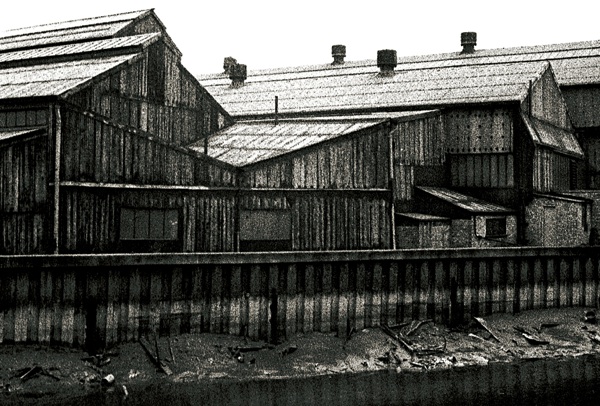
Warehouses, 1972
Photographs copyright © John Claridge
You may also like to take a look at
Along the Thames with John Claridge
At the Salvation Army with John Claridge
A Few Diversions by John Claridge
At The Canine Olympics
Our roving canine correspondents Photographer Sarah Ainslie and Writer Andrew McCaldon were there in Haggerston on Saturday to capture all the excitement of the biggest sporting event for dogs in the East End this summer, and they sent us this report.
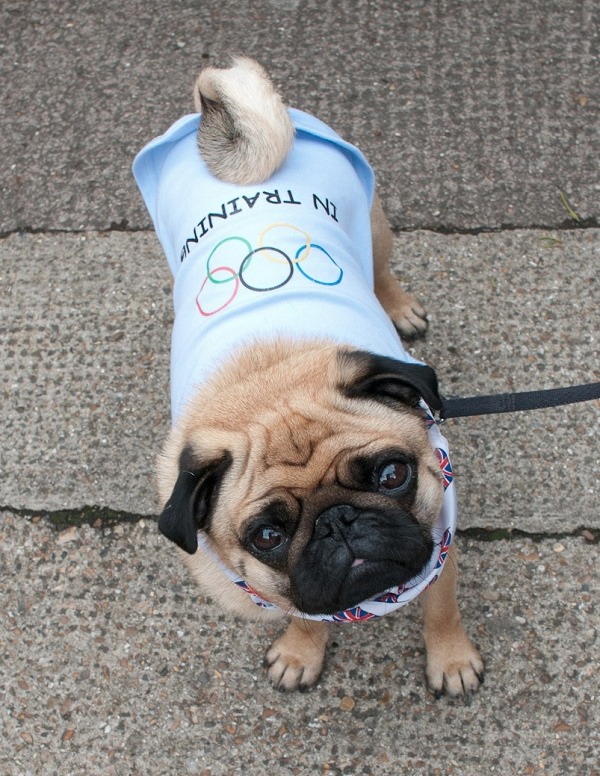
Douglas the pug
The many canines of our neighbourhood have no need of grand sporting festivals – for them jumping, catching balls, watching sticks fly through the air with intense anticipation, and running around in large circles are simply the activities of a normal day out. But, perhaps with an eye on forthcoming events, Sarah and I discovered our local dogs meeting this weekend and convening a small contest of their own.
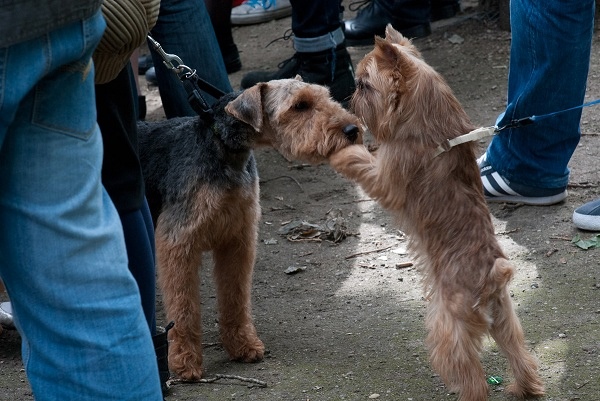
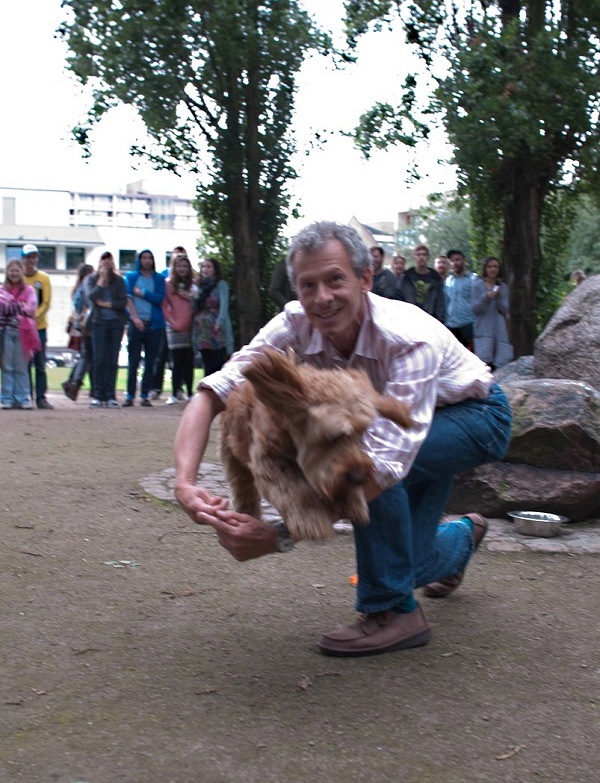
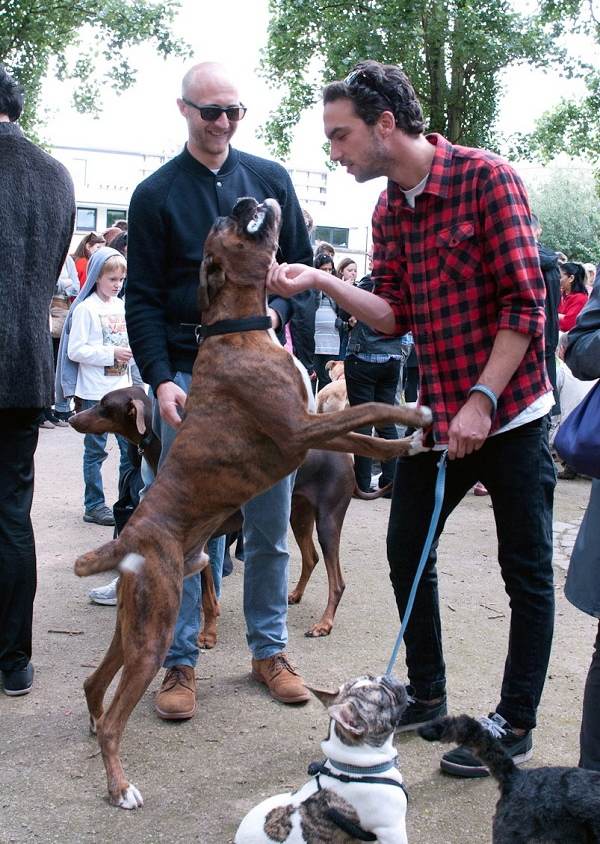
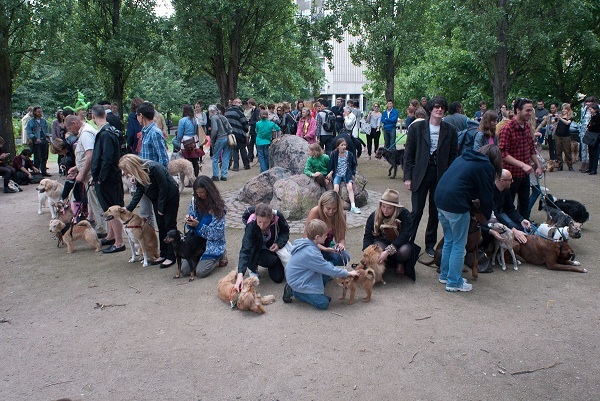
The relentless rain did not dampen the dogs’ spirits or their glossy coats and, as the gloom lifted, they processed with their owners to the normally quiet green beside Squirries St. This little patch of grass has probably never hosted such a rich and diverse canine congregation. Pedigree breeds walked alongside proud mongrels, Dalmatian tail wagged beside Sheepdog, German Shepherds greeted Italian Greyhounds. They came together in the green’s central circle which, ringed by plane trees, formed a natural arena and, seeing the animals take centre stage, we spectators instinctively withdrew to the perimeter as the happy hounds cavorted together.
I spotted many dogs, like Wellington, a Manchester terrier, in patriotic mood, resplendent in their union jack collars or neckerchiefs, but dissenters, like Louis, a poodle with attitude, wore an ironic God Save the Queen tee-shirt and punk chains. With an eye on the costume competitions, Oscar, a terrier, had gone for an aristocratic look, sporting a tux, bow tie and monocle. Not to be outdone, Chihuahua Buddy, just six months old, came dressed as Batman, an outfit partly inspired by his own (natural) fruit bat ears, while Nigel, a pug, ambled past me sullenly in the garb of a bee.
In classes such as ‘Best East End Dog’ and ‘Dog & Owner Look-a-like’ the canines took turns to try and catch the judges’ eye. Some revelled in the attention and struck a pose on cue, others refused to put on airs – as the opportunity to slurp a rival’s face or chew their tail became too distracting. But there must always be winners – and when they were announced, caught up in the excitement of our applause, the assembled dogs began a chorus of spontaneous barking that echoed around the square.
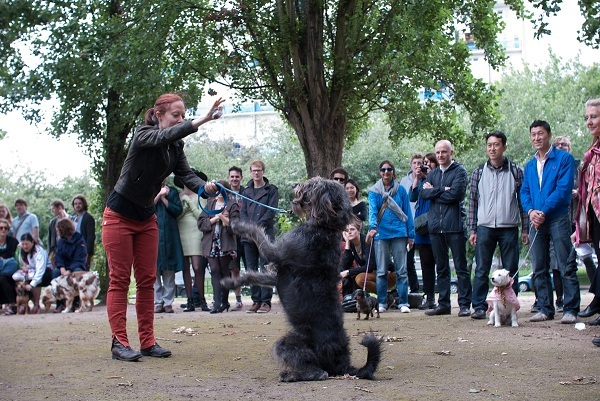
Dogs excelled in displays of athletic feats, such as ‘Walking Backwards on Two Legs’, ‘Rolling Over and Waggling Paws in the Air’, ‘Speaking on Demand’ and ‘Jumping Through a Hoop’. Chris, owner of a prize winning Cock-a-poo named Woodstock, revealed to me that, “He can learn anything in two days – one day of demonstration, another of practice and he’s got it!” But perhaps most impressive was the fact that, although some competitors only completed their event with the aid of stimulants (all-natural dog biscuits, I am pleased to report), many sprightly mutts performed solely for the love of the game.
Ultimately though, the spirit of the event was more social than competitive and, as always, it was heartening to see how dogs – very social animals – often unknowingly help their owners to become more gregarious and open themselves. Sheltering under the trees, committed dog lovers exchanged stories with passersby, admiring owners met fellow enthusiasts and children everywhere on the green, taking the opportunity of a dog to dote on, made a new friend for the day. Still, it was hard to resist the notion that it was the dogs themselves that were most enjoying the chance to be out and about in such exciting company – for whom such a rich variety of canine cousins to play with was a rare treat. Beyond the formal competitions, some young pups broke away, rough-housing and leaping about with abandon as old-timers sat lolling in the grass at a peaceful distance. For a few, the experience was overwhelming and Kramer, a tiny fourteen week old Boston terrier, making only his second public outing, remained inside his master’s coat.
And, for other dogs, their presence at the event in itself represented a change of fortune. There were audible gasps and then cheers as, during the ‘Rescue Dog’ event, spectators heard tales of mistreatment and neglect that had happily ended in each animal finding a home. Vadim, a beautiful, Siberian Husky, had a story with more than a touch of cinema’s rags-to-riches about it and Charlotte, his owner, beamed proudly as she recounted to me how, after spending three years chained up in a yard, Vadim now had his liberty, an agent, and an ad campaign for Laura Ashley to his name.
As the day darkened and the dogs’ thoughts turned towards their dinner bowls, the lively huddle of wagging tails and yapping pooches began to disperse. It was at this moment that a girl nearby looked around wide-eyed and longingly, before confiding to me, “I just want to steal someone’s dog and take it away!” Not being in a position to look after a dog myself, and witnessing the depth of joy and emotion each animal inspires in their owner, I was tempted to agree.
Yet while this exceptional gathering was for one day only, dogs do not ration out their infectious high spirits and exuberance to order or occasion. So I know that I only have to wander through one of the neighbourhood parks on any day of the week to see them at their never-ending running, jumping, catching games, and then I can walk on with a spring in my step.
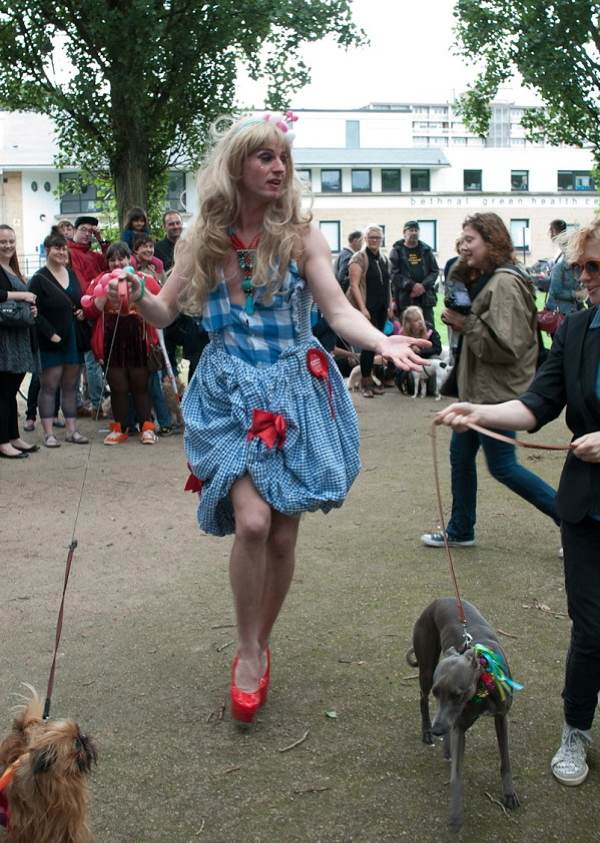
Jonny Woo – tranny dog walker.
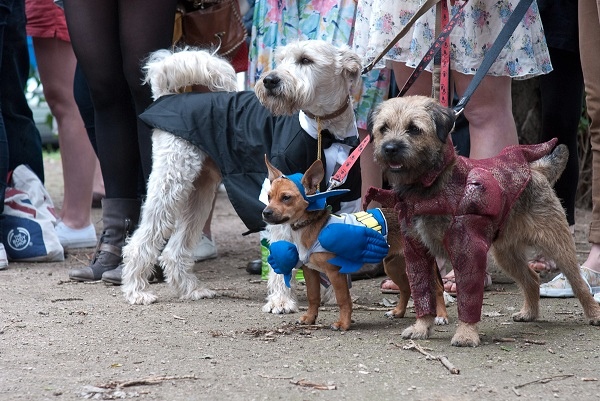
Oscar (as Prince Charming), Buddy (as Batman) and Sparky (as a velociraptor) wait anxiously for the judges’ verdict.
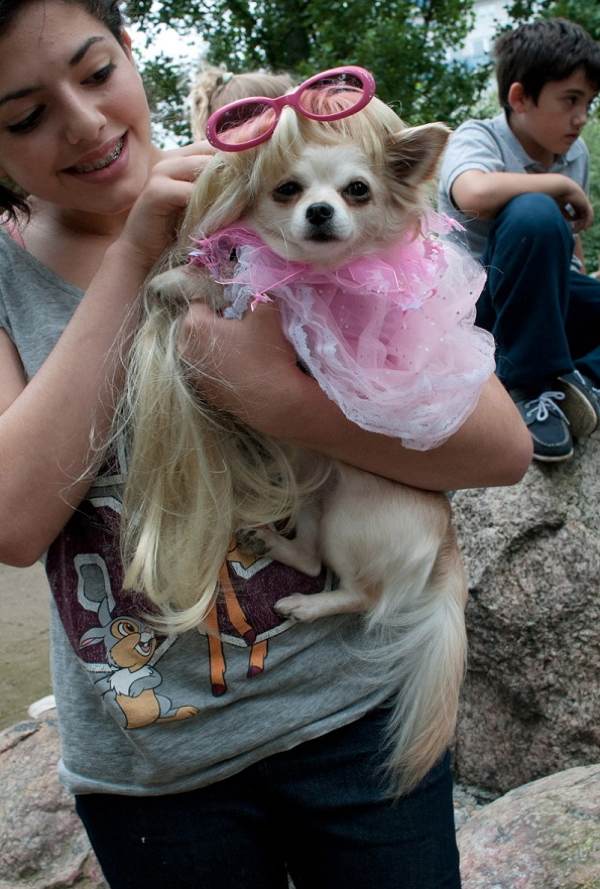
Yasmin with her dog Chloe, winner of the ‘Celebrity Look-a-like’ competition, dressed as Lady Gaga.

Wellington, a Manchester Terrier, in patriotic mood
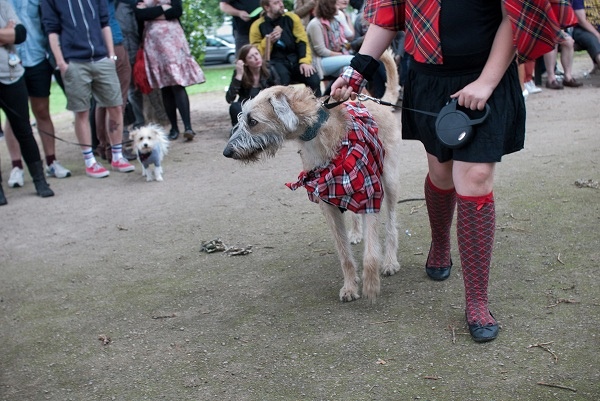
One year old Edward, a Deerhound-Greyhound cross.
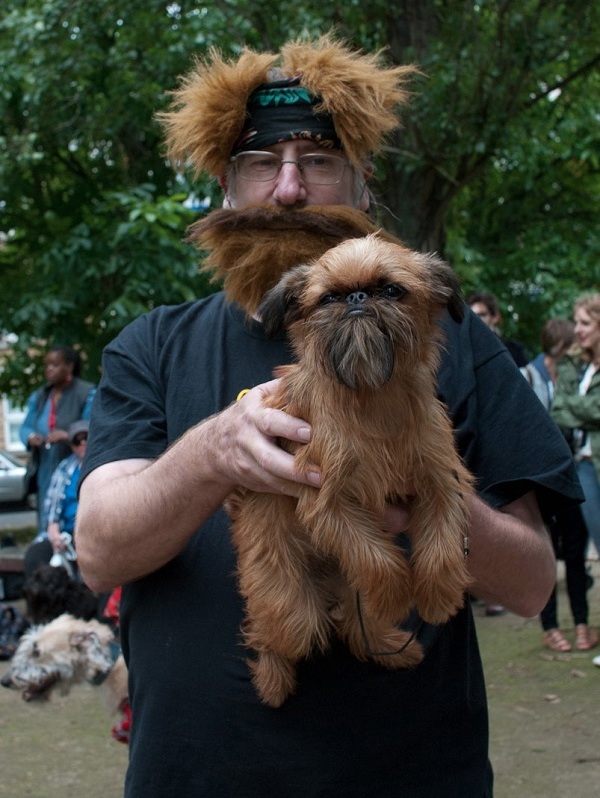
Isabelle and her owner Ian who took second place in the ‘Dog & Owner Look-a-like’ competition.
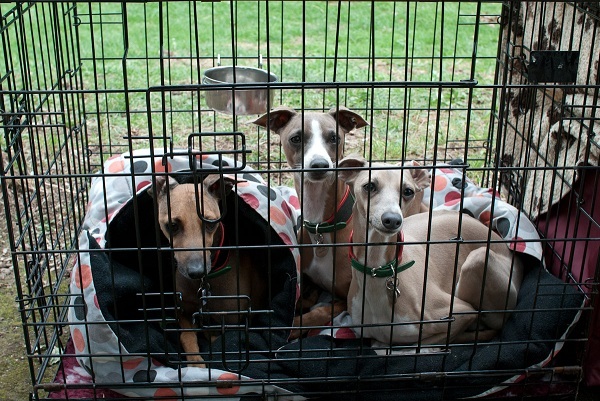
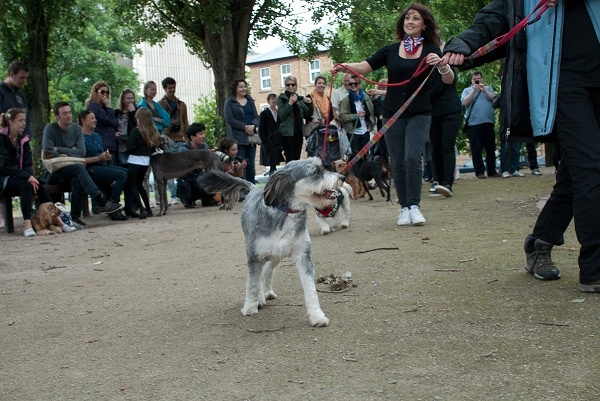
Rocco, proud winner of ‘Best East End Dog’.
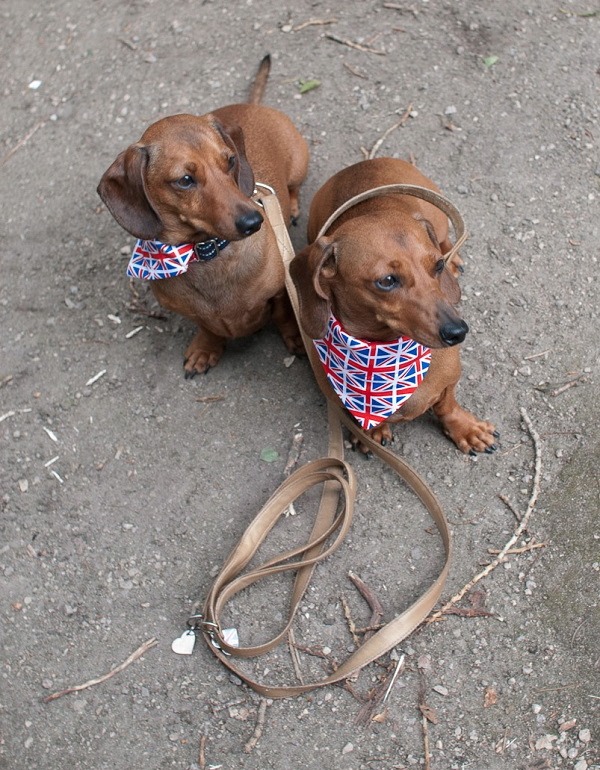
Lottie & Duke, two dashing Dachshunds from Muswell Hill.
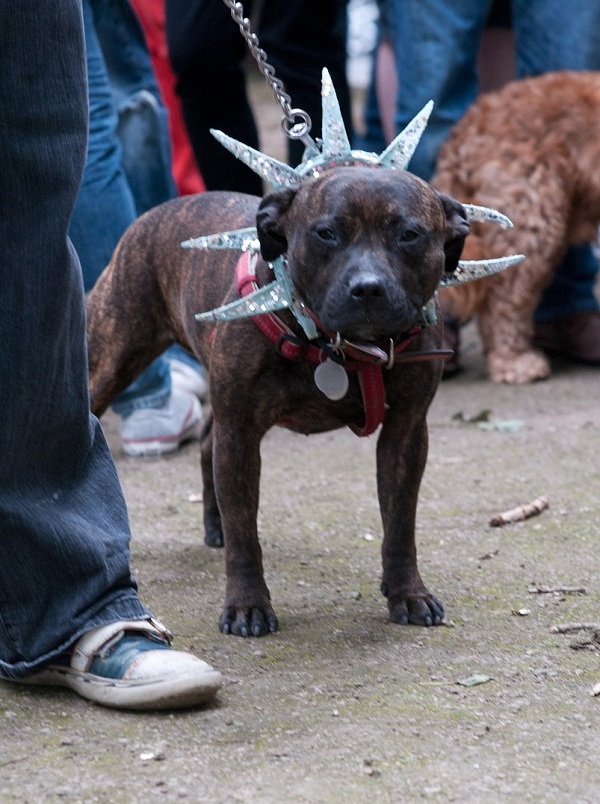
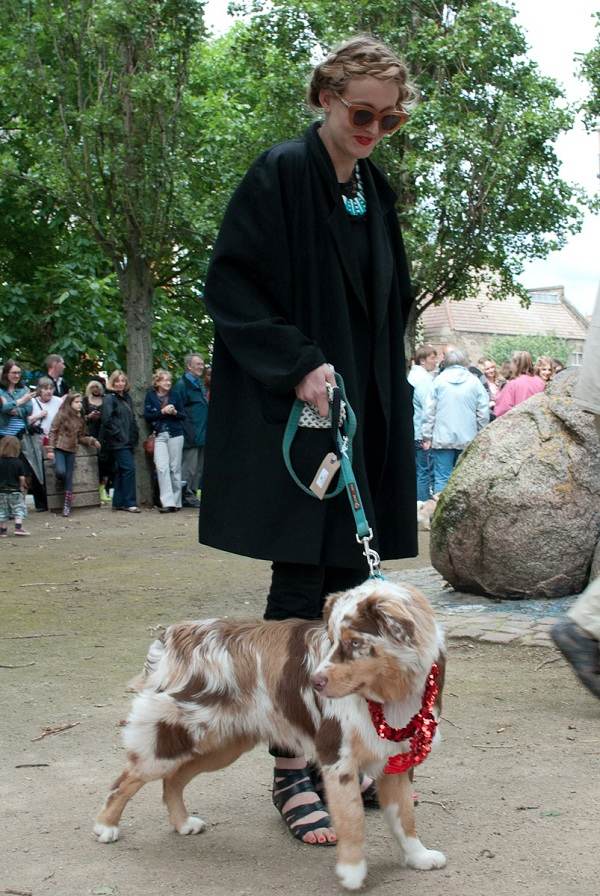
Emily-Jane escorts Australian sheepdog, Merlin.

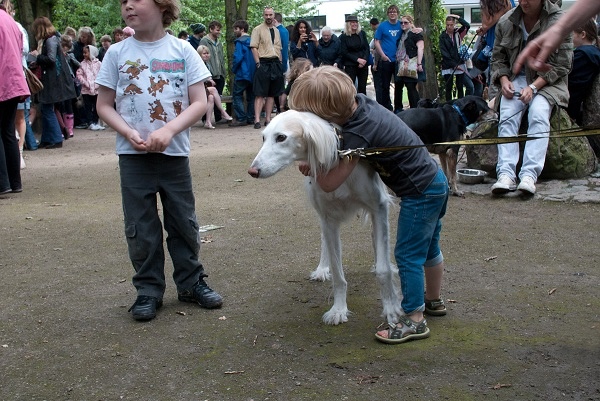

Peanut, a Hungarian Puli and winner of the ‘Best Puppy’ competition, with her owner Linzi King.
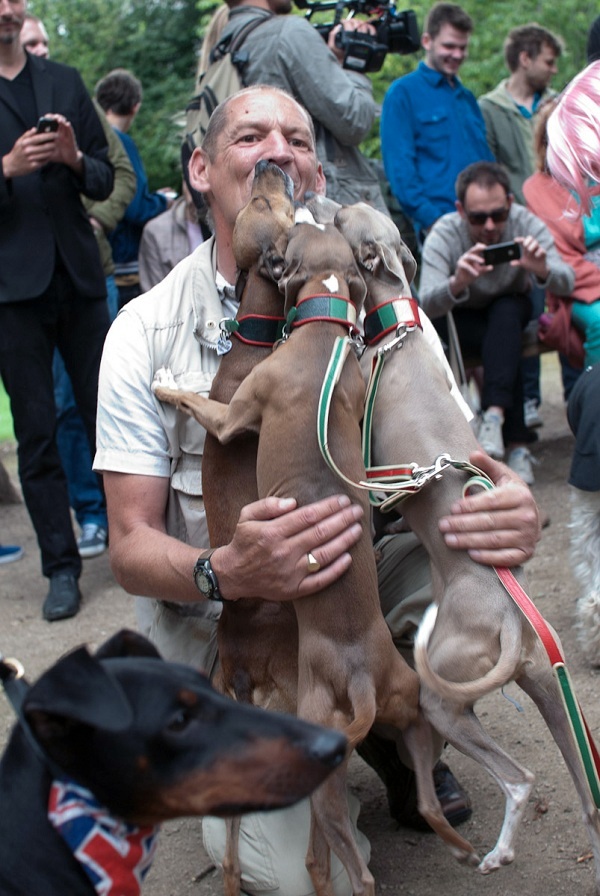
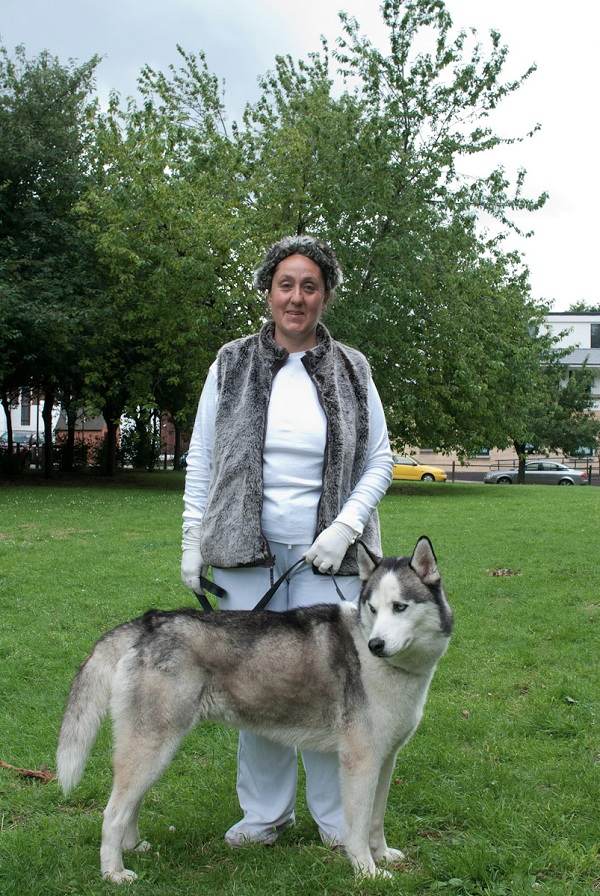
Vadim, a Siberian Husky, with his owner Charlotte Kasner, competing for ‘Dog & Owner Look-a-like.’
Photographs copyright © Sarah Ainslie
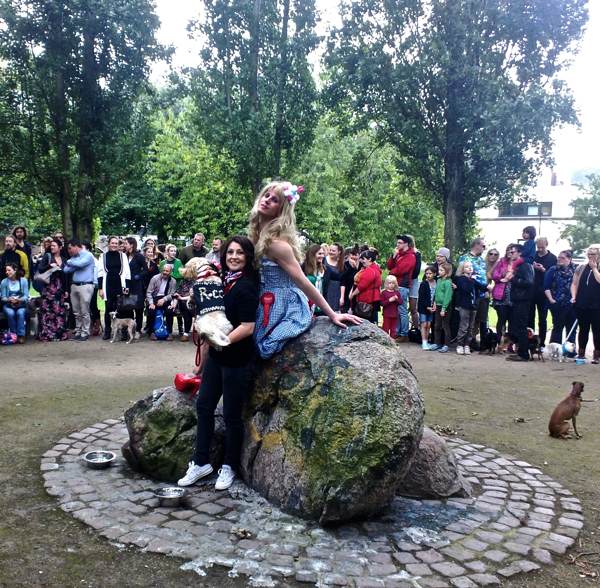
Photo of Rocco, winner of Best East End Dog submitted by his owner Claudia Waldron.
You may also like to read about
The Dogs of Spitalfields in Spring
Chris Kelly’s Cable St Gardeners In Colour
This summer, Photographer Chris Kelly returned to Cable St Community Gardens to take these vibrant portraits of the gardeners. Previously, Chris made a set of portraits in black and white, which became an exhibition and a book in 2005, and were featured on Spitalfields Life earlier this year.
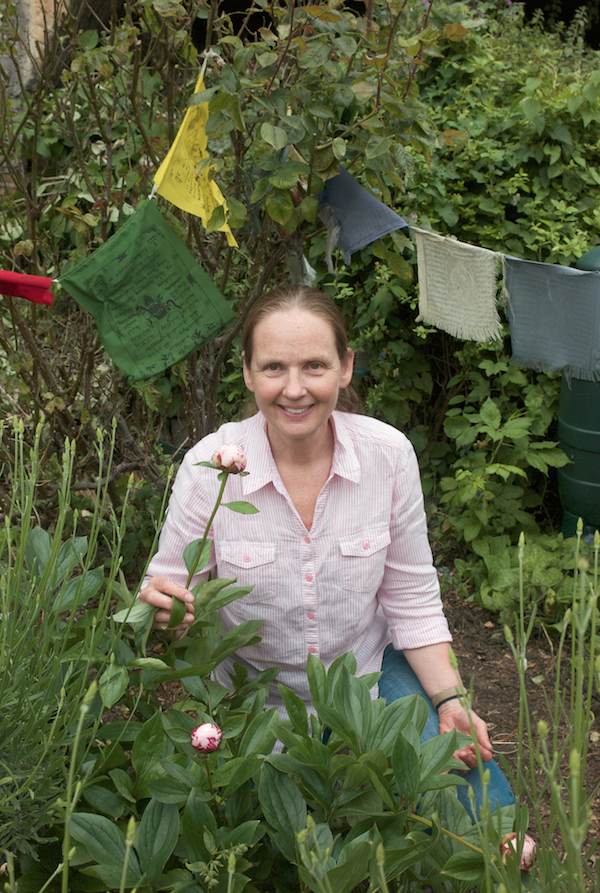
Jane Sill – I hope to grow more vegetables in future. Other plants have taken over the space, especially poppies. They remind me of my grandfather who was wounded and left for dead of the first day of the Battle of the Somme, 1st July, 1916. He survived, was nursed in France and eventually brought back to this country. The Tibetan prayer flags were brought back from Lhasa by a friend.
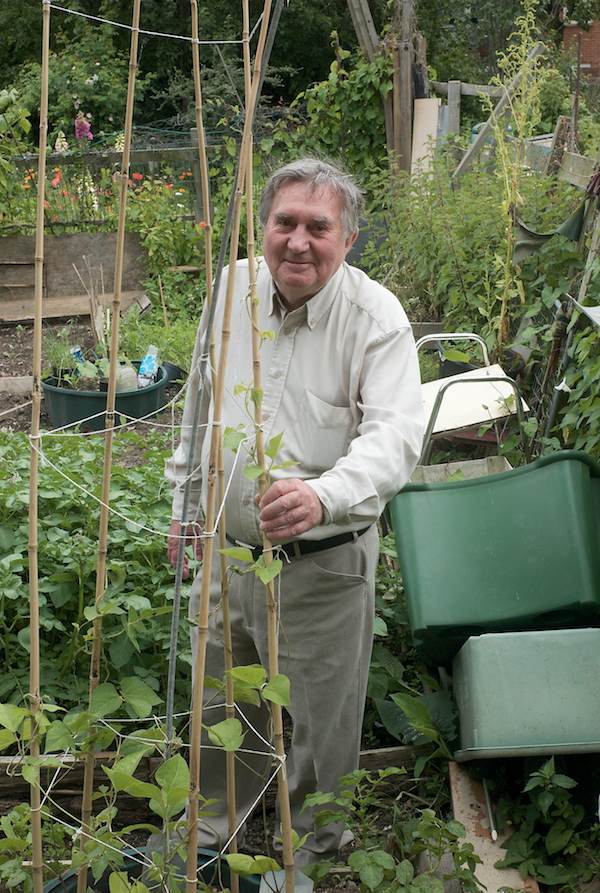
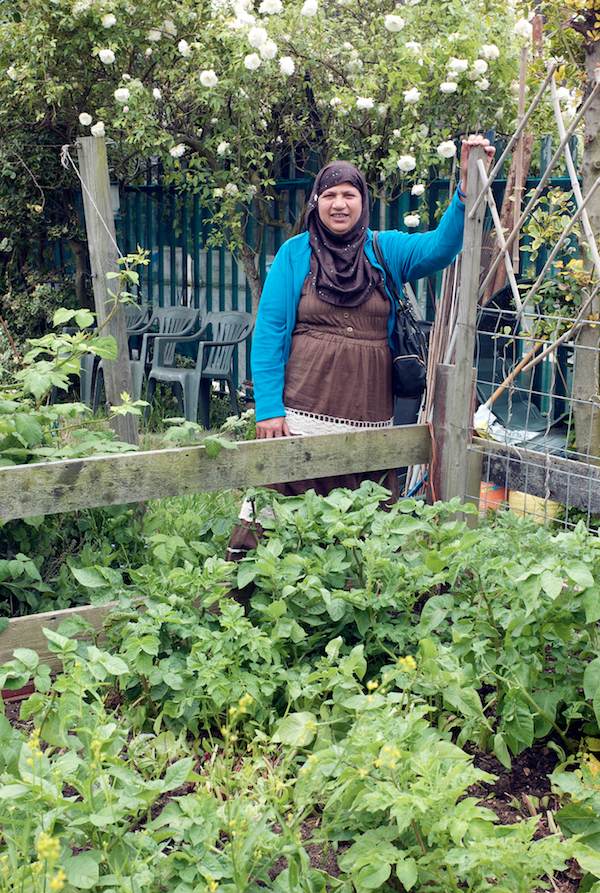
Anwara Begum – I’m growing more varieties of vegetables now. I have Bangladeshi pumpkins and different types of Bangladeshi cucumbers. I grow aubergines and chillies in my greenhouse – one of them is too hot even for me.
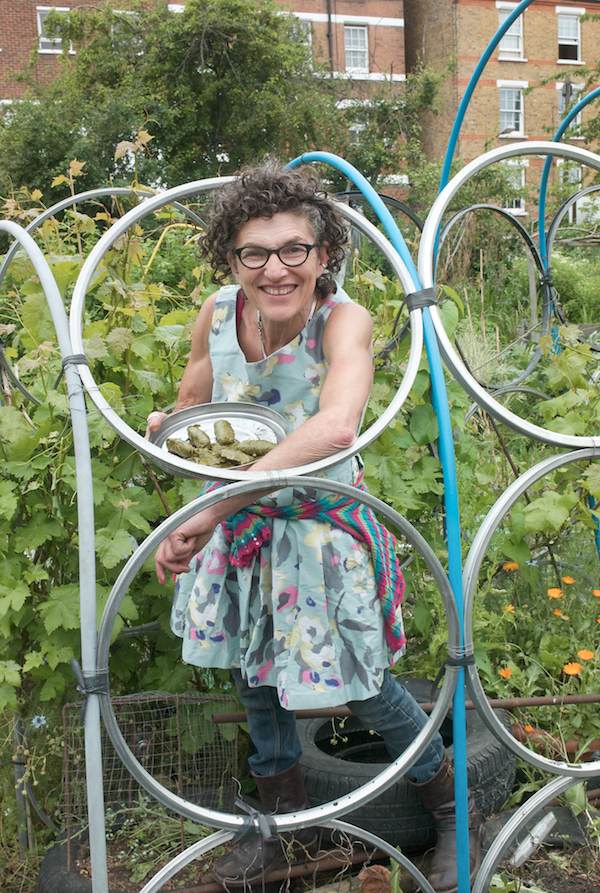
Manda Helal – Manda’s vines, pretty and delicious.
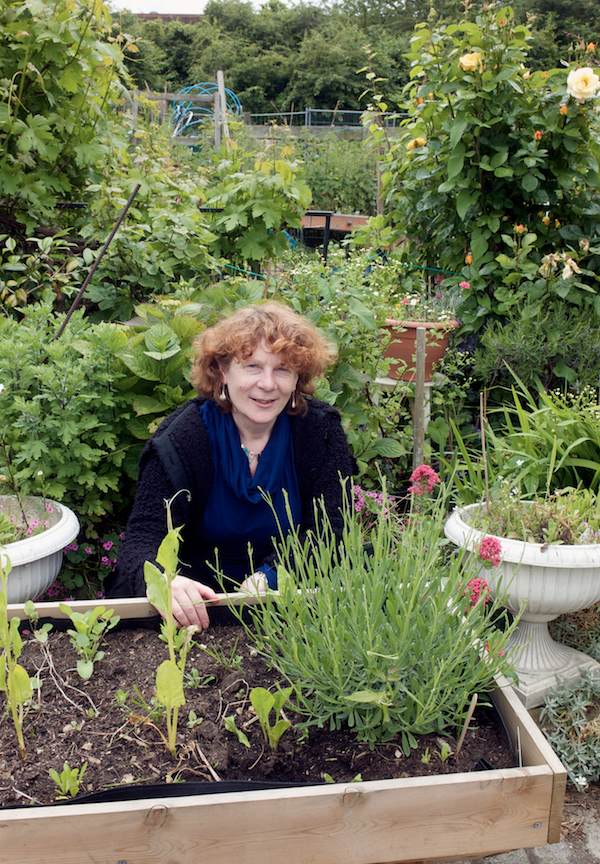
Marian Monas – I’ve been coming to the gardens for a few months. I live just around the corner. Eventually I hope to have a plot or to share one, but in the meantime I’m growing things in a raised planter. I’m happy with anything that grows really. I’ve got herbs, chard, rhubarb, lavender – and there are visits from a friendly rat.
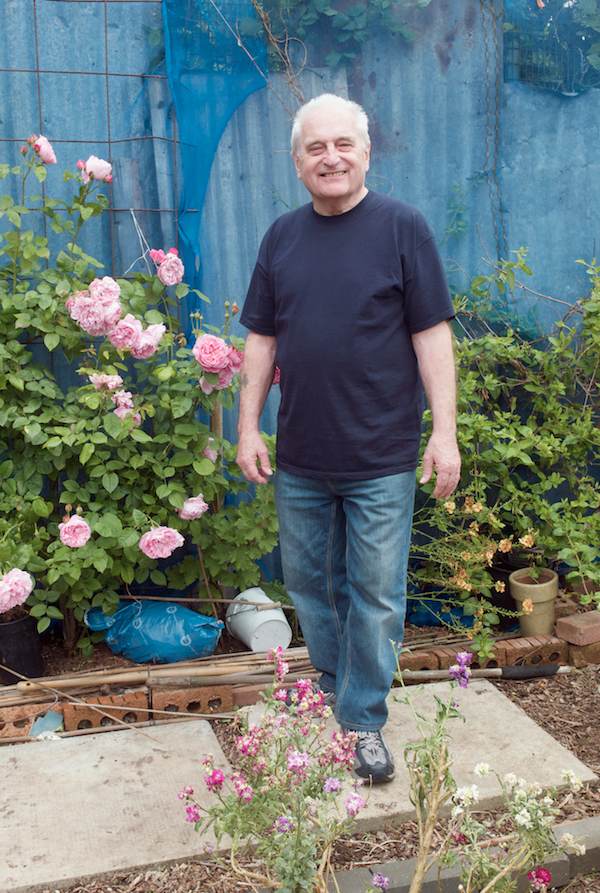
Ron Osborne – I was one of the original gardeners here back in the seventies and I had a plot for about ten years. Then I started the Shadwell Basin Project for local youth and became involved with other things. I came back when Gina got this plot and we both spend time on it, but it’s basically hers.
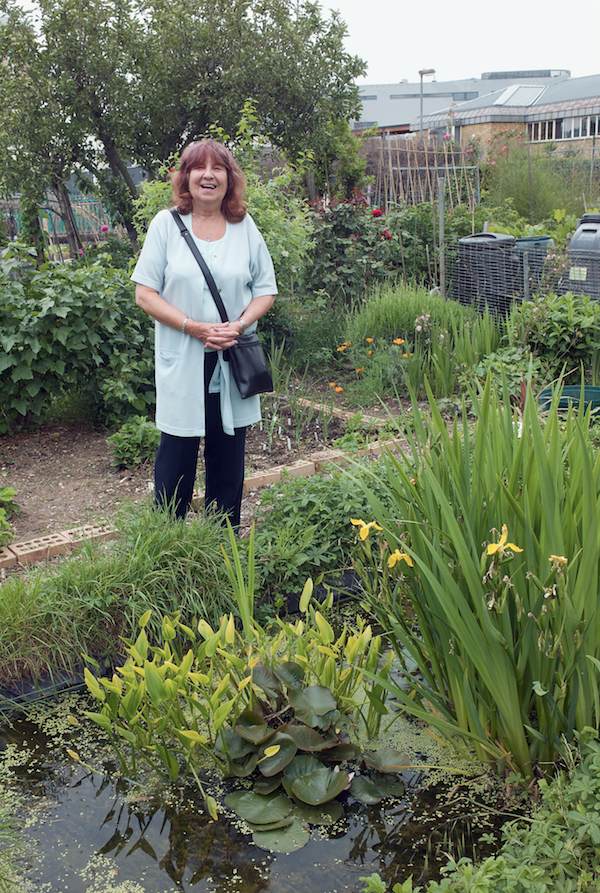
Anne Herbert – Anne moved out of the area in 2005 but always comes back to the gardens on Open Day and keeps in touch with some of the other gardeners. Part of Anne’s former plot is now a well stocked pond.
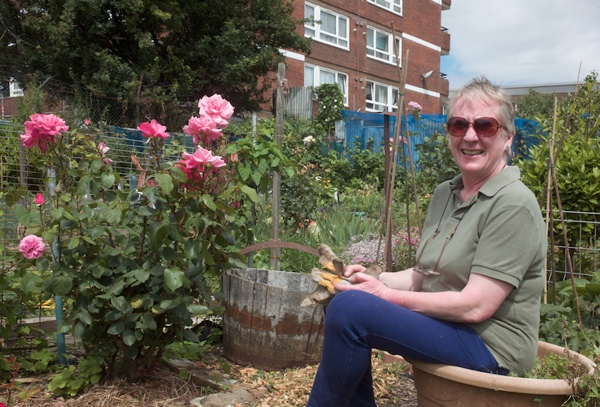
Ann Ahern – I moved to Tower Hamlets from Notting Hill in 1999 and I’ve had my plot here since 2005. I live just eight minutes away. I’m growing mixed flowers, a few vegetables and I have a pond. My nephew has a seed bed on part of the plot. I’m not so good with seeds.
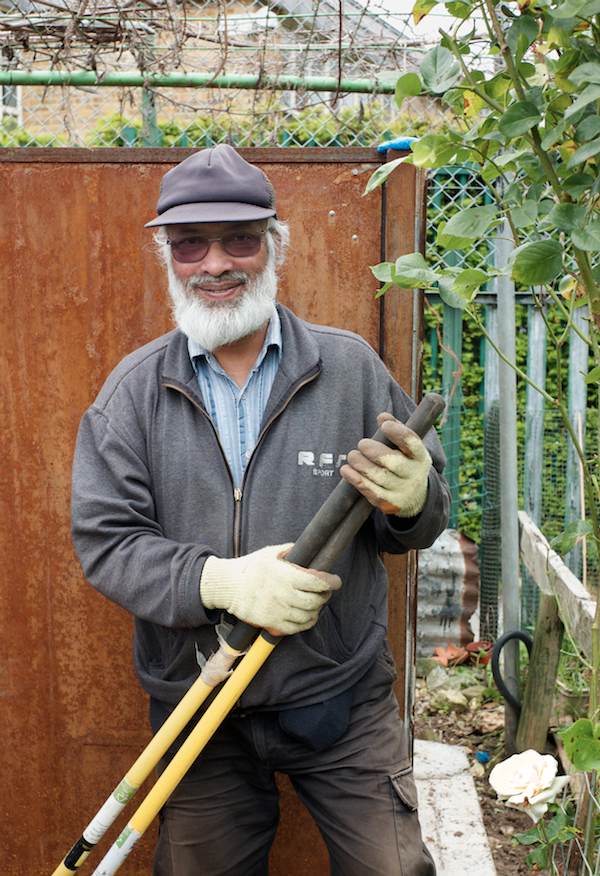
Monir Uddin – My latest project is to specialise in roses. I’m transplanting them, but they are quite tricky to grow and it takes at least a year for the roots to become established. I’m a photographer and I hope to photograph the roses for cards and calendars.
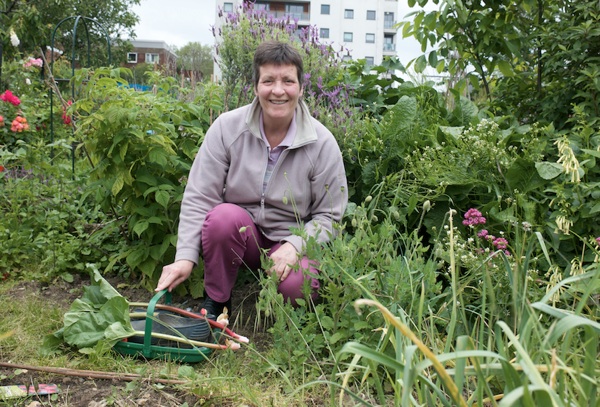
Helen Keep
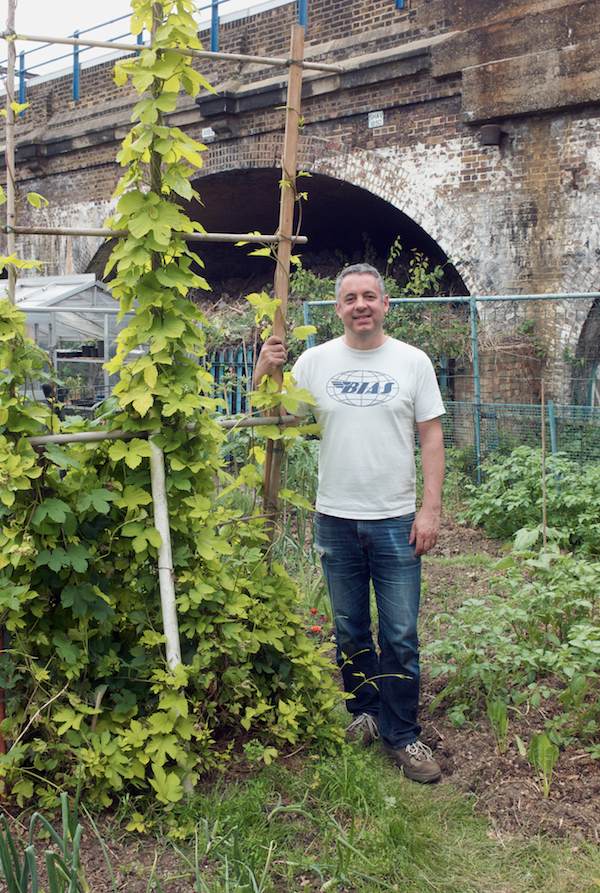
Emir Hasham – Emir’s plot houses one of two beehives introduced to the gardens recently.
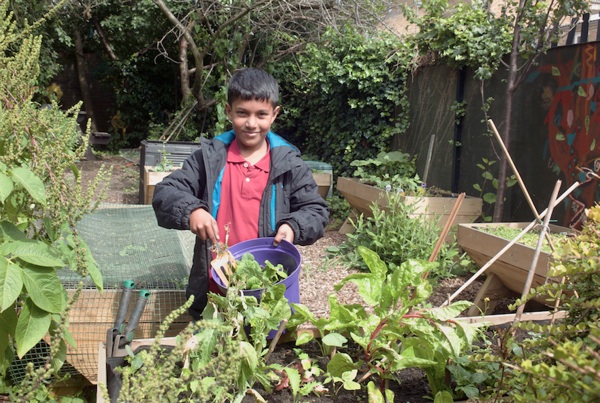
Hasan Chowdhury – I’m twelve and I’m the youngest gardener here. I first came with our neighbour Angel, who has a cat, and then Jane let me take over these raised planters. I’m growing spinach and potatoes, three different types of pumpkins, peas and coriander. I first learned about gardening from my mum and I like it because gardening is fun.
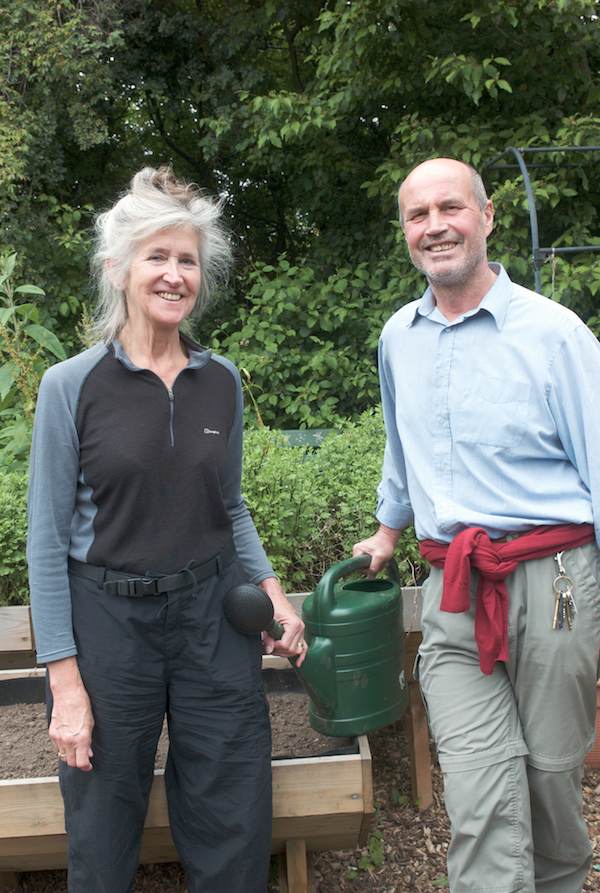
Suzanne & Mark Lancaster – We started gardening here fairly recently. It’s lovely to come to this beautiful oasis of flowers, birds and greenness in the heart of the East End. We live on busy Brick Lane, so it’s a joy to have somewhere so pretty and tranquil for a break. We hope to grow french beans, rhubarb and herbs in our raised planters.
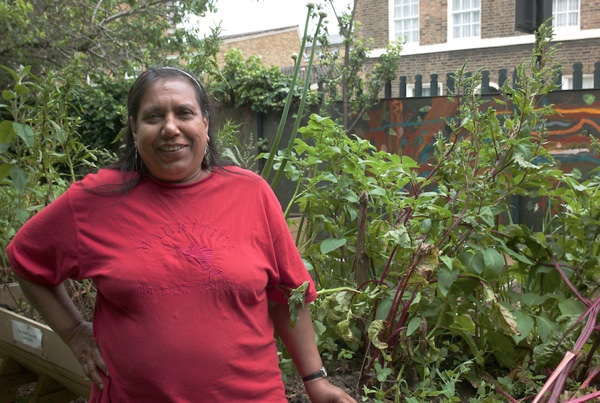
Devika Jeetun – I’ve been coming to the gardens for a long time. I had to give up my plot when I was caring for my brother and I’m on the waiting list now. I’m growing herbs and vegetables in raised planters – potatoes, tomatoes, runner beans, spring onions and coriander. And I’m looking forward to having a plot again.
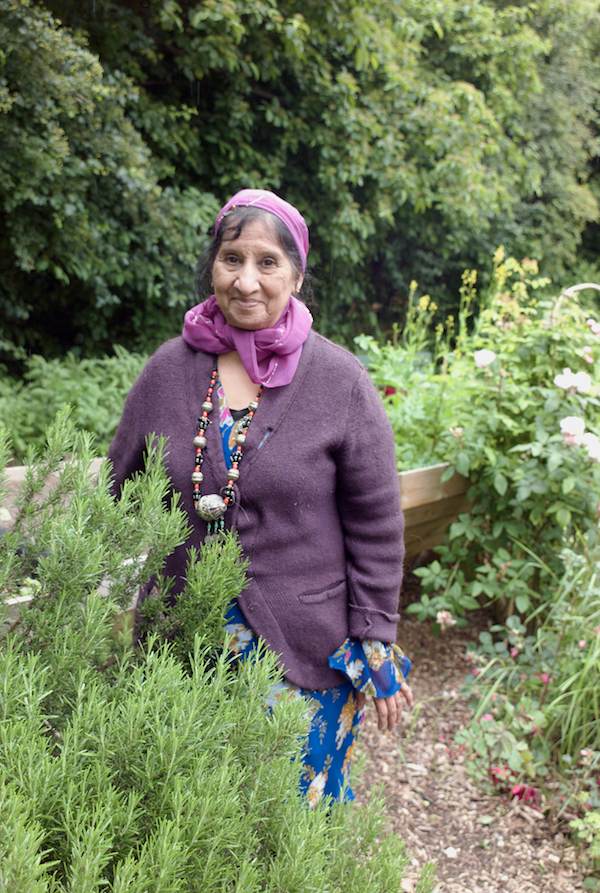
Balkis Karim
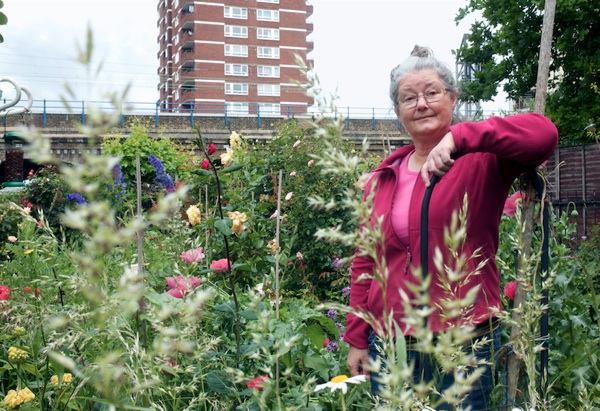
Annemarie Cooper – I’ve been gardening here for sixteen years and I don’t bother so much with vegetables now, my garden is basically a wildlife area. Those of us who encourage frogs have been using lion poo to keep the cats away from the ponds and it seems to work.
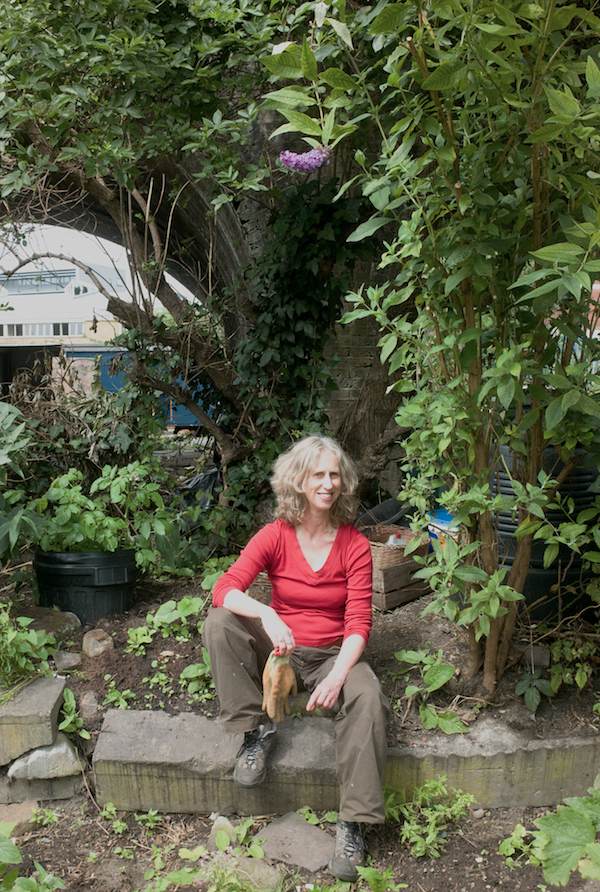
Sheila McQuaid – My gardening is more organised now. I come here at least twice a week. I’m growing different types of vegetables such as squashes and courgettes and I use the greenhouse for tomatoes. But the fruit has not been so good this year, so I’m growing more herbs, especially varieties of mint – I’m into mint tea in quite a big way.
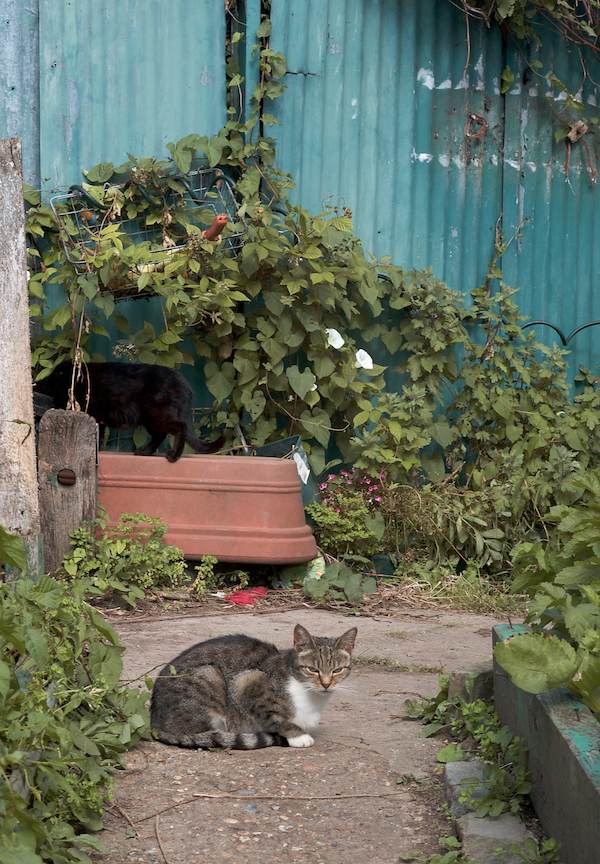
Photographs copyright © Chris Kelly
To learn more about Cable Street Community Gardens or buy copies of the Cable St Gardeners book, contact Jane Sill janesill@aol.com or visit www.cablestreetcommunitygardens.co.uk
You may like to see Chris Kelly’s Cable St Gardeners, 2005
or take a look at these other pictures by Chris Kelly
A Walk With Abdul Mukthadir
My friend Abdul Mukthadir – widely known as Muktha – and I indulged in a little time travel yesterday when we took a walk through the streets of Spitalfields. We met at the Herb & Spice restaurant in White’s Row as it was closing for the afternoon and the last businessmen were reluctantly finishing their beers and returning to their City offices.
Here, Muktha has worked as waiter for the last seventeen years and acquired a reputation among the clientele for the eloquence of his storytelling, drawing customers who arrive in hope that Muktha will join their table at the end of service and tell the charismatic tales of his grandfather who first came to this country as a sea-captain in the nineteen thirties.
Just a hundred yards round the corner, at the junction of Toynbee St and Wentworth St, Muktha pointed up to the corner flat of Wentworth Dwellings where he first arrived from Sylhet, aged ten years old with his mother and two sisters, to join his father in 1975. “We came at night,” he recalled “And next morning I looked out of the window at the market. It was something new to me. I was a bit scared to the see the white people that I had never seen before, only heard stories of.”
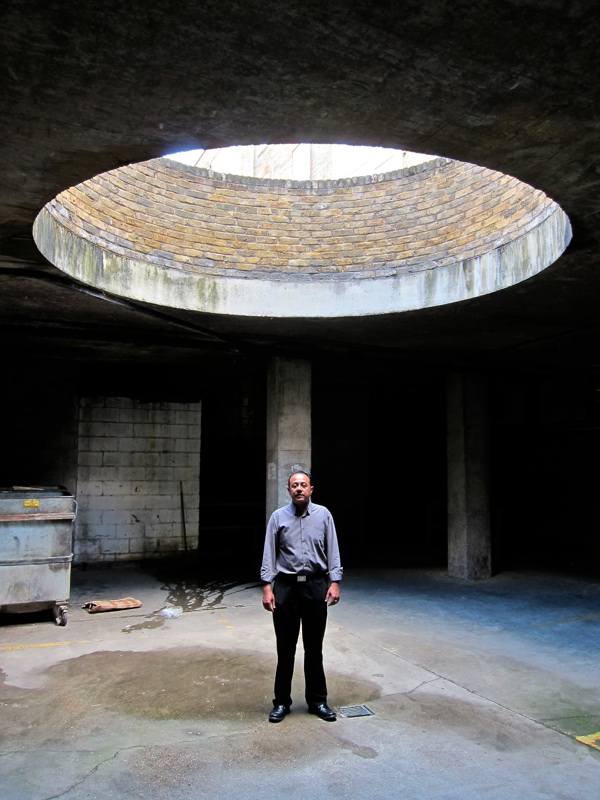
“It was very difficult for my mother to move around the flat, she had to hide.” admitted Muktha with a frown, speaking of the two-room dwelling where eight people lived, “The four of us shared one room and, only when the men had gone to work, could she go into the kitchen.” We walked through a passage into the yard at the rear of Wentworth Dwellings where Muktha had played in those days, now roofed over and converted to a car park, lit by a single shaft of daylight through a vast circular well in the ceiling. Muktha and I stood and exchanged a look of recognition in the surreal glow, acknowledging that the past was gone from this place.
After five weeks, the family were able to move into place of their own – an equally small flat around the corner in Goulston St. “My father had a friend who had married a white lady and they were moving out. So he said, ‘Why don’t you take my flat?’ and he took my father to the GLC housing office at the end of the street and they gave him the tenancy agreement right away.” Muktha told me. And we walked around to stand beneath the window of the first floor flat which had one bedroom, one living room, one kitchen and no bathroom just a shared toilet in the passageway, where Muktha lived with his parents and two sisters for four years. “My mother was very happy and, although I didn’t know where I was going, I felt this was my home.” he said, raising his eyes and glowing with delight to return to this hallowed place.
Since he was the eldest son and his father worked all hours, Muktha used to go round the corner to Cobb St, to the only Indian grocer, to do the shopping. But when we walked there we discovered that the shop is now an Argentinian restaurant. Muktha also remembers going to buy halal chicken in this street with his father.“He held the chicken by the neck and said a prayer before they cut it’s throat, and I used to like to see this,” he revealed with eyes shining in emotion.
“After the market shut, the place was dead, dark and scary,” Muktha confided to me as we turned the corner into the square behind the flats, where he played football as a teenager. “Only two or three hours after the English boys had finished playing, could we come out to play,” he admitted, casting his eyes around the empty space that is now a car park, “and, even then, they would come back, just to steal our ball. But we had one English friend called Nick, he was a good footballer, and he used to come and play with us. I wish I could see them again, those other boys. I wouldn’t even recognise them now. I hope they are alright.”
Yet there was a darker side to this yard, a child abductor who appeared regularly. “He gave sweets and money to boys and girls, so that he could get close and take them for a ransom,” said Muktha widening his eyes, “And one day, he tried to take one of us and we were all shouting and screaming, and my mother came out to stop him. She was brave as well as kind, and she was always the first to jump in.”
Although Muktha and his family moved out in 1979 to a better flat in Christian St, Stepney, with four bedrooms and a bathroom and toilet, he looks back on his Spitalfields years with great affection in spite of the poor housing and travails. “Even now, I spend more time at work here than I do in my own home.” he confessed to me with a modest grin, as he returned to Herb & Spice to resume service, “I’ve stayed working here all these years because Spitalfields my true home. And so, though I am working for someone else, I treat the customers in the restaurant as if they were guests in my own home.”
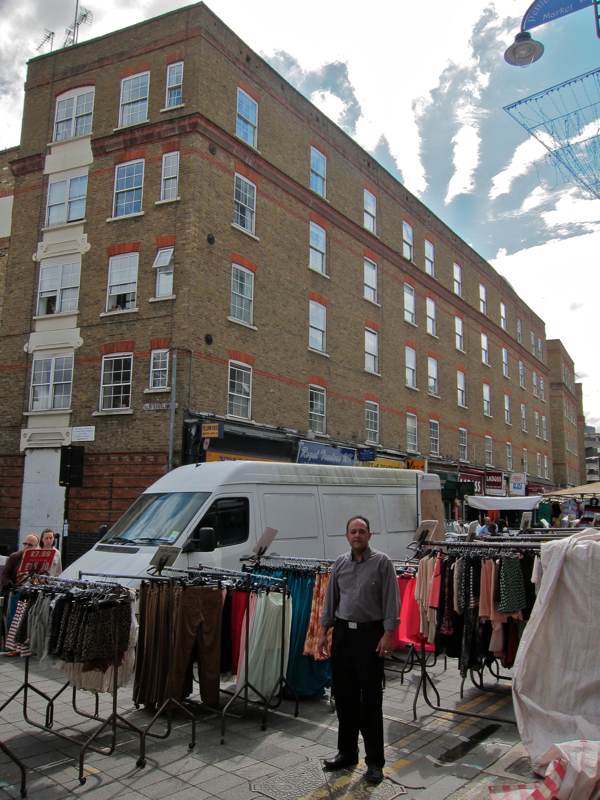
In Wentworth St – the window of the top flat on the corner was where Muktha first looked out and saw white people when he arrived as a ten year old in 1975.
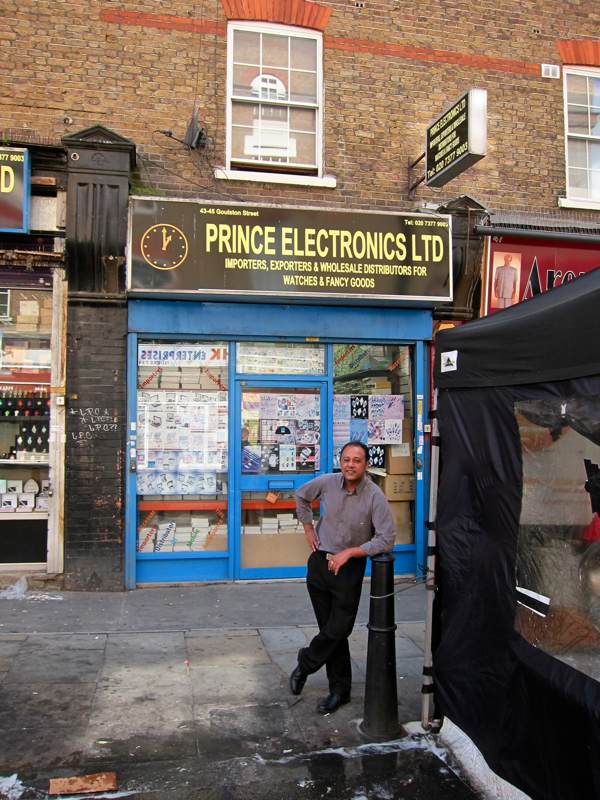
The window above the shop belongs to the flat in Goulston St where Muktha and his family lived from 1975 -79.
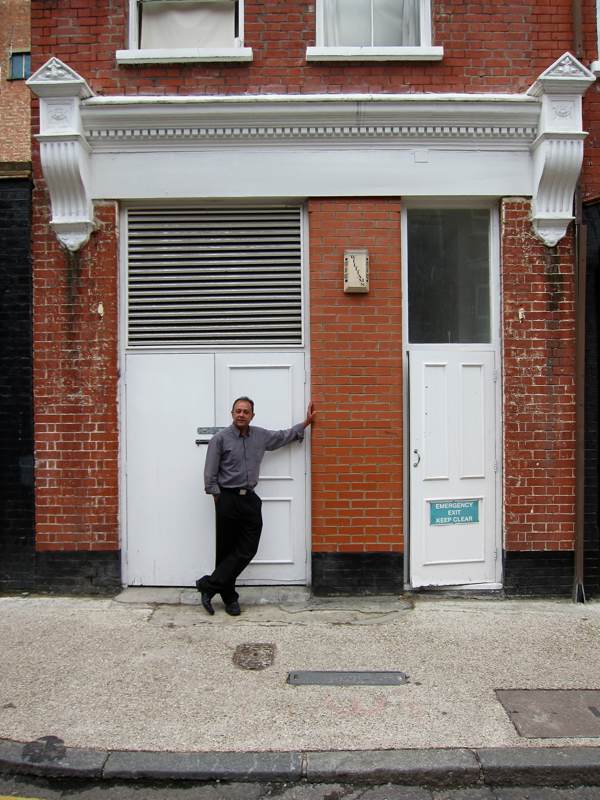
This former sweet shop in Cobb St was where Mukhta once bought a packet of crisps, custard cream biscuits and a can of Tango for 25p.
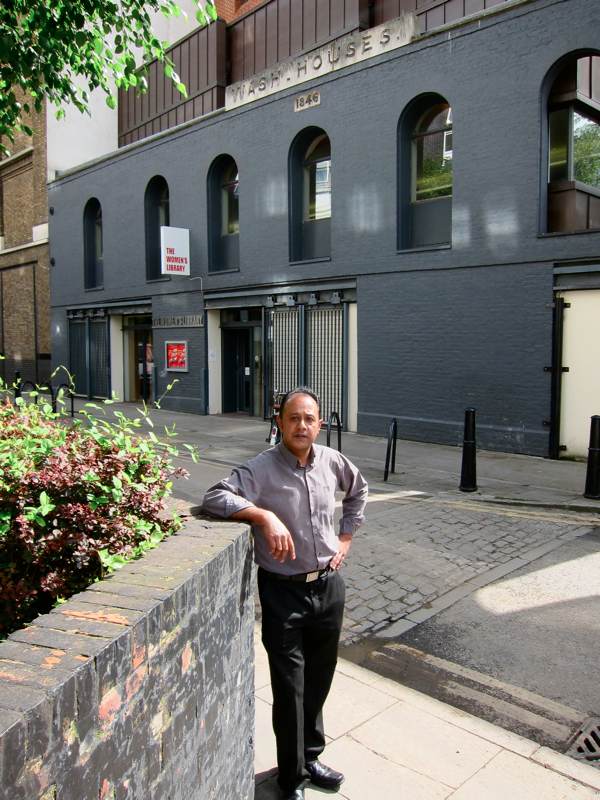
This is the facade of the Goulston St Wash Houses where Muktha and his family came to bathe.
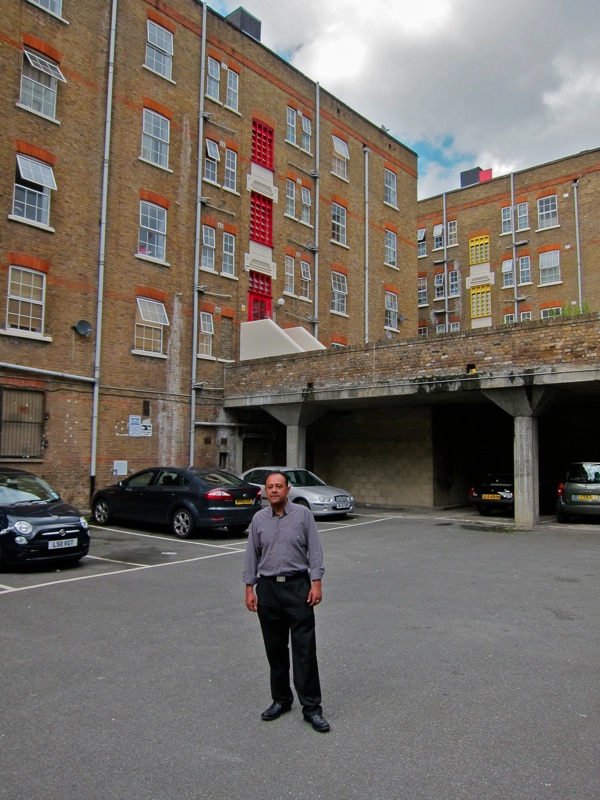
This is the yard where Muktha played football with Nick, his first white friend.
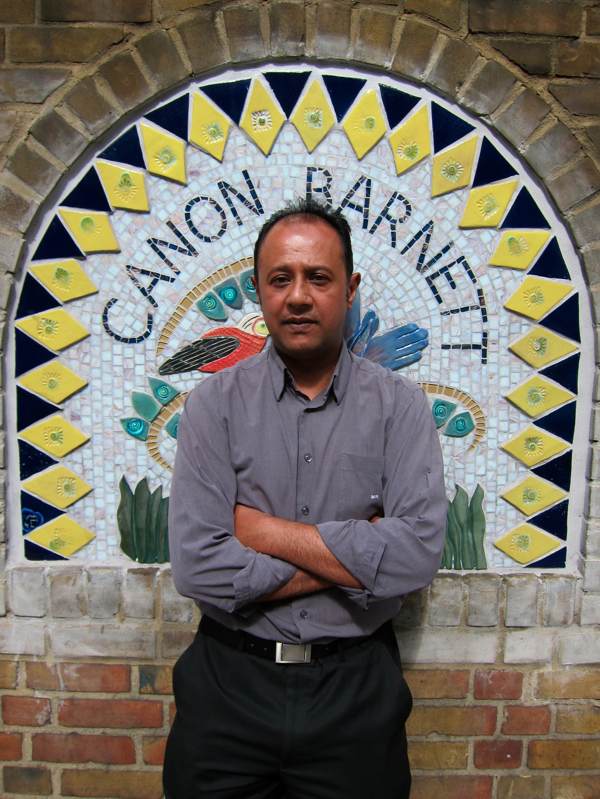
At Canon Barnett School, Muktha was lucky to discover the benign influence of the beloved Miss Dixon.
You may like to read my original profile of Muktha
More Furniture Trade Cards Of Old London
After recently publishing a selection of furniture trade cards that might have been found in the secret drawer of a hypothetical cabinet in the eighteenth century, it is my pleasure to show this further selection discovered stashed behind a plate on the top shelf of a hypothetical alcove.


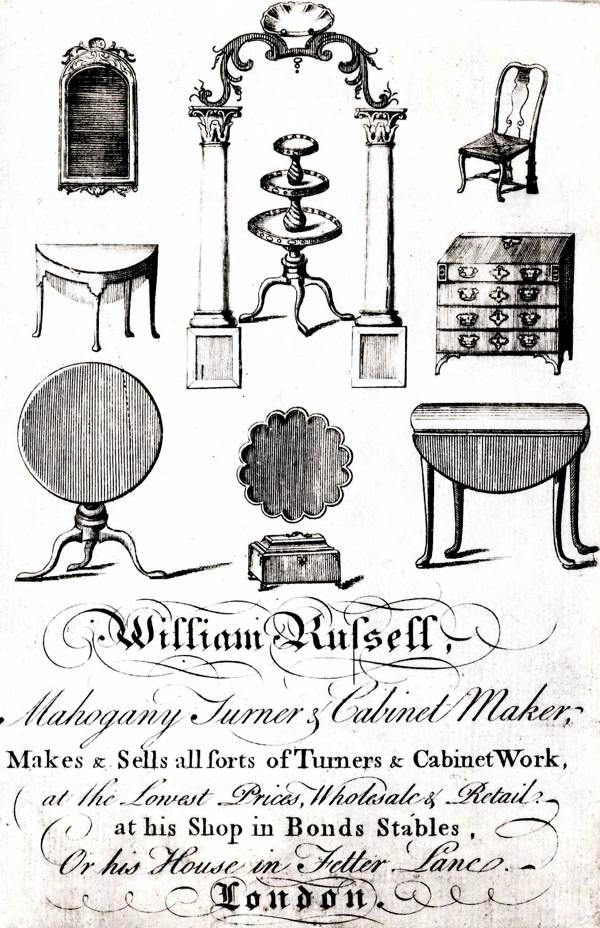
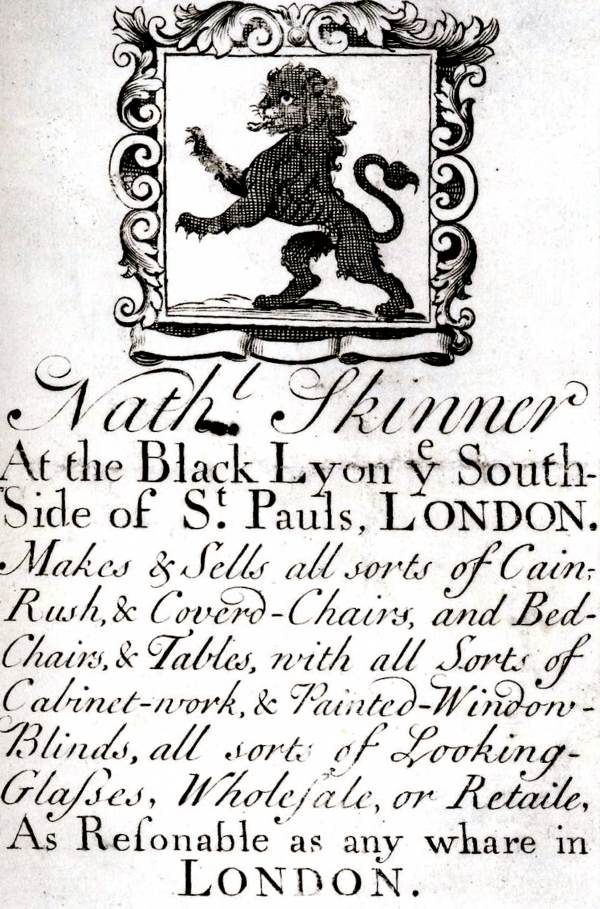
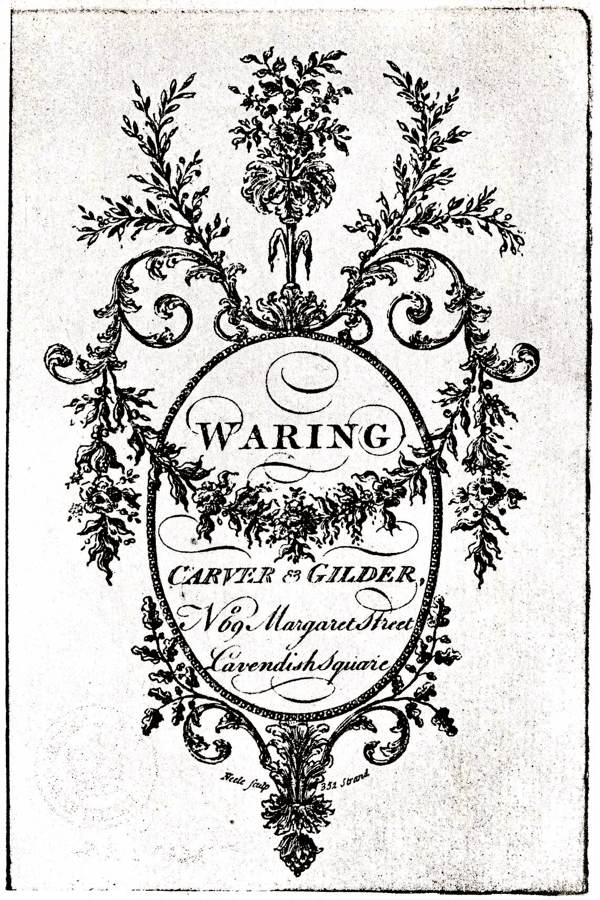
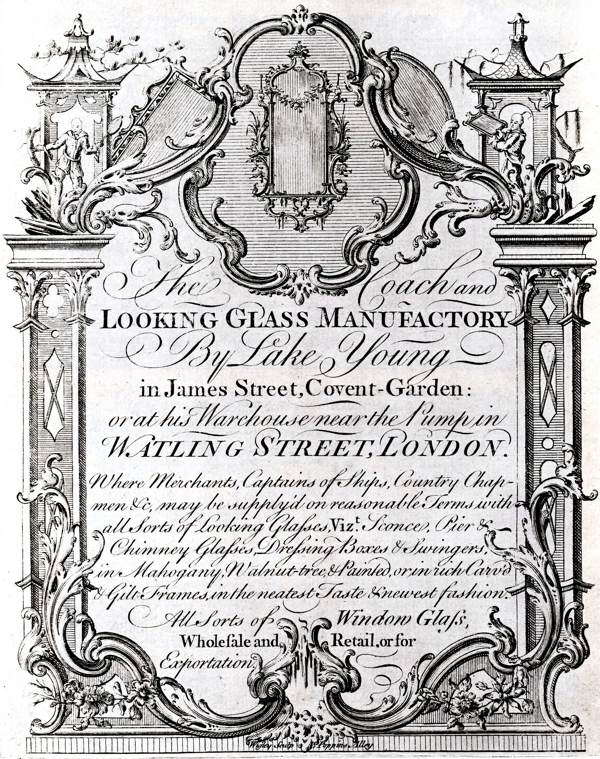

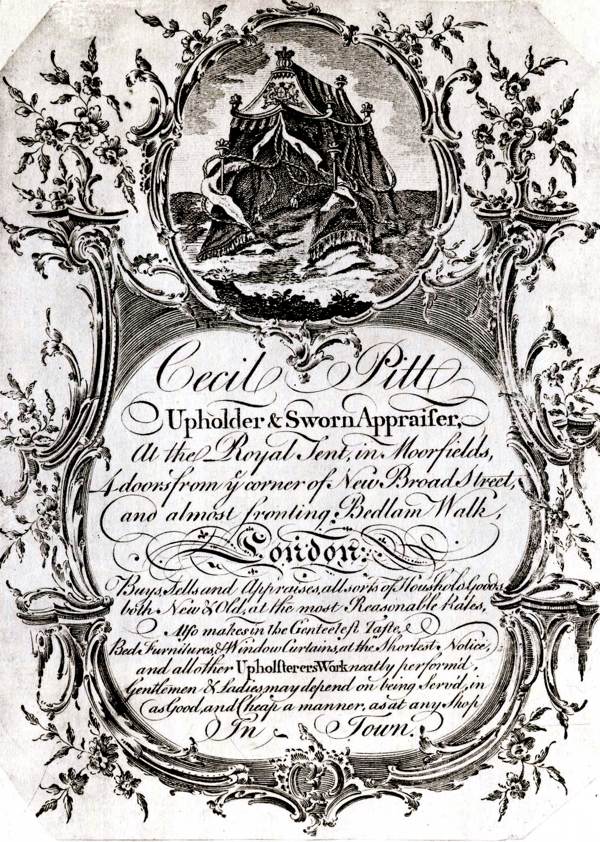

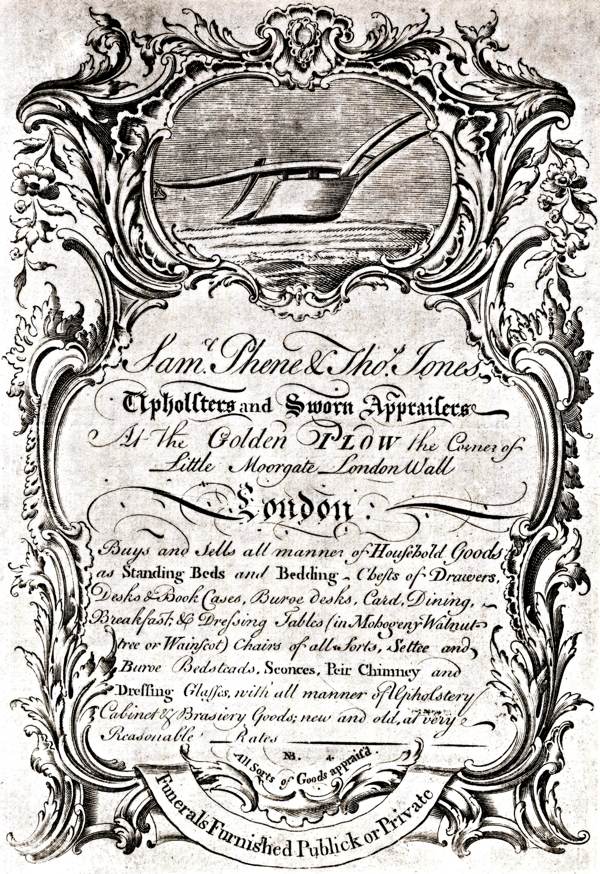

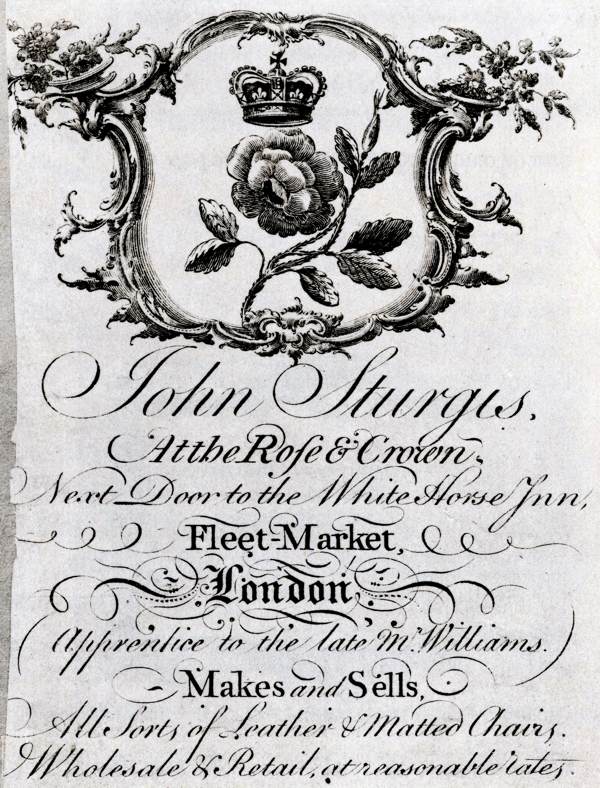

Images courtesy Bishopsgate Institute
You may like to see my earlier selections
Furniture Trade Cards of Old London
More Trade Cards of Old London
Yet More Trade Cards of Old London
Even More Trade Cards of Old London
Sebastian Harding, Illustrator
It is my pleasure to publish these excerpts from the work of illustrator Sebastian Harding who graduates this week from Camberwell College of Art, and whose Degree Show is exhibited in Shoreditch from today until Sunday.
“I’ve been in London for three years,” he told me, “and I got bored by the usual guides because there’s a lot of London you’re not encouraged to visit – such as Holborn, Smithfield and the City, but there’s been industry and life there for two thousand years.” So, Sebastian set out to create his own guidebook to Smithfield and evoke the vanished sights by constructing these characterful models of buildings that disappeared long ago. “Working as an illustrator in three dimensions, I wanted to make them more tangible and bring history alive.” he explained.

Many guidebooks talk of opening hours and prices, of queues and “must sees.” You need not worry about any of that with this tour, for all you are about to read about is gone. This book is for the intrepid traveller who is prepared to imagine as well as see. You will look in vain for a blue plaque, for this is a walk of lost lives and forgotten buildings. There is no necessary order in which to see these sights but all are within ten minutes of each other.
I hope you enjoy wandering among the ghosts of Smithfield’s dark and sordid past, and remember – the most gripping true stories have always contained an element of fiction.

The Fortunes Of War Public Tavern, Cock Lane – A Sinister Sidetrade.
Smithfield Market’s proximity to St Bartholomew’s Hospital betrays a lot about the British public’s distrust of the medical trade. It is fitting therefore to focus on one building that catered to both trades – The Fortunes Of War Public Tavern.
Let us place ourselves in the eighteenth century as we watch a student of anatomy making his way into the tavern. He is here, not as you would expect for his leisure, but for his studies. He is led by the landlord down dank mouldering stairs to the cellar. Rows of sacks give off a pungent smell of rotting meat, yet these are not the carcasses of swine or cattle but the bodies of recently dead Smithfield residents.
This was the secret trade of the Body Snatchers or Resurrectionists that supplied students and professors of anatomy with fresh corpses. For a God-fearing public, it was immoral and barbarous in the extreme, for this was a time when many believed a soul would only be granted into heaven if their corporeal body was intact, while being dissected meant an eternity in purgatory.

John Aston’s House, Charterhouse Lane – An Unfair Execution
John Aston was a priest in the parish of Smithfield, arrested at the same time as the influential protestant leader John Rogers. Queen Mary’s secret police randomly inspected any priests who had been advocates of protestantism before her ascension to the throne in 1553.
Unsurprisingly, the inspections would usually find a protestant bible or a mass being held. Typically, the raids were held on Sundays and John Aston’s misfortune was to be found eating meat in one of these raids. The tyrannical catholic religion of the sixteenth century forbade any consumption of meat on Sunday and he was burnt at the stake for this trifling pretence.

20 Cock Lane – Poltergeists in the Panelling.
The name of this street can be traced to its proximity to the market, where poultry would once have been traded, but it also serves also as a risqué innuendo, since for hundreds of years it was the preferred haunt of prostitutes. It was on this street that fraud, haunting, murder and sex were all intertwined in one story.
Late one November night in 1760,William Kent was away on business in Norfolk. His wife Fanny, wishing to alleviate the loneliness of her nights alone, invited Betty the youngest daughter of the Parsons – the landlord’s family – to sleep in her bed. In the night, Fanny was disturbed by scratching sounds like claws on wood and lay frozen with fear. On appealing to Mr & Mrs Parsons, she was told a shoemaker lived next door and her fears were assuaged. But the next night was Sunday when no good Christian would ever work, yet the scratching came again, brought to a terrifying end by a loud bang.
After William Kent returned the next night the sounds were not heard again. Then, two months’ later, after a furious row, Mr Parsons threw the Kents’ possessions out onto the street, even though William had not received a penny of the money he had loaned to his landlord the previous year. Subsequently, Fanny succumbed to smallpox and died on February 2nd 1761.
Some time later, the Parsons family began to hear the same scratching again and made sure it became a talking point for superstitious members of the community. The methodist preacher John Moore held a séance and ,when he asked if a spirit was present, a knock rang out. A second question followed – “Was the spirit that of the late Fanny?” Another knock. “Was Fanny murdered by her husband?” the reverend asked and then followed the loudest banging the party had heard.
Subsequently, William Kent was hanged, but afterwards the events were revealed as a fraud motivated by the feud between Mr Parsons and his tenant over the loan. Parsons was sentenced to three years in prison and three days in pillory, but later became regarded as something of a celebrity.

Mother Clapp’s Molly House, Field Lane – An Unusual Coffee House.
This was not a coffee house as we would know it, but rather a private club for gay gentlemen, where they could meet and form relationships without fear of discovery. The discretion of fellow members was crucial and entry was only permitted to those who knew a password. There were even gay marriage ceremonies conducted in locked rooms between men, with one donning a bride’s dress and the other a groom’s jacket. Mother Clapp herself presided over all, only leaving to get refreshments from the pub across the street.
Everything we know about this secret sub-culture stems from the raid by The Society For The Reformation Of Manners which had placed secret police inside the house. One man, a milkman, was hung for being found in the act of sodomy and Mother Clapp was sentenced to a day in the pillory. The crowd was so furious that they ripped the pillory from the ground and trampled it, and Mother Clapp died from the injuries sustained.

Sebastian Harding
The architectural legacy of the body snatchers can be seen in the watch houses that were built adjacent to most parish churches. An example of this may be seen at the church of St Sepulcre’s in Smithfield.
Illustrations copyright © Sebastian Harding
The Camberwell Illustration Degree Show including Sebastian Harding’s work opens tonight at the Red Gallery, 1-3 Rivington St, E2A 3DT and runs until midday Sunday.
A limited number of copies of Sebastian Harding’s Smithfield: A Selective History are available for sale at £7 and may be purchased from Sebastian at his show or email seb.harding1@gmail.com
Read an interview with Sebastian here
You may also like to look at
Lucas McKenna, Seamster
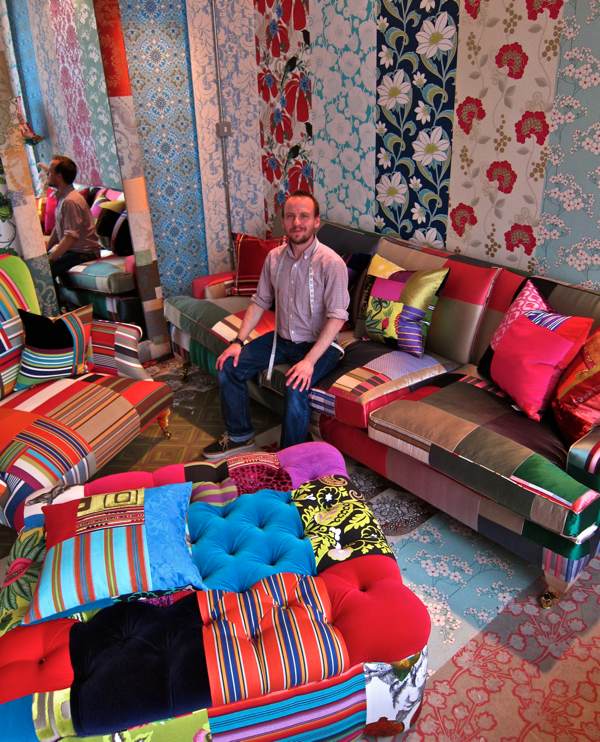
Lucas McKenna among examples of his handiwork
Seamster, Lucas McKenna, works in a basement in Shoreditch High St at the heart of the district that once housed London’s furniture and upholstery trade – now given a new injection of life by Lisa Whatmough who started Squint Limited seven years ago in Redchurch St, creating distinctive furniture in a contemporary style that maintains a skilled craft tradition. Lucas spends his days sewing all the different scraps of cloth together which go to make up the fabric of these pieces, conscientiously arranging colours and textures to achieve the subtle balance of harmony and contrast that gives them their appeal. Born in Stratford and living in Whitechapel, Lucas pursues a long-standing East End trade in a modern way.
“I studied graphic design but I have always enjoyed making things and I didn’t want to work solely in front of a computer.” he admitted to me,“My mum always made odds and ends, and wedding dresses, and I have been sewing from about fifteen or sixteen years of age.” At first, Lucas worked at a prop-making company in the Borough where he became head of the sewing department, then in Whitechapel for a vintage clothing company doing alterations and repairs, before he came to work for Lisa five years ago.
It is impossible to walk past the small frontage onto the street and not have your eyes drawn by the dazzling array of upholstery on display, yet few have seen the huge basement concealed beneath which is the centre of operations. The walls are lined with the rolls of silks, satins, velvets and deck chair stripes in lavish colours – the constituents of this particular art. To one side are two desks where orders are taken and Lisa’s dog Stanley sleeps upon an elegant sofa in a persuasive demonstration of the comfort of the upholstery. To the other side, furniture, lamps and mirrors are being wrapped in the signature patchwork style while – at the centre – Lucas works, moving between his ironing board, his sewing machine and his work table where he decides upon the best juxtapositions of textiles to achieve the optimum effect.
When I arrived he was working upon a piece of patchwork cloth to upholster a Chesterfield. All the work here is bespoke and no two pieces of furniture are ever the same. Lucas refers to a page with swatches of fabric selected by the customer and is guided by an upholsterer’s pattern which tells him the size and shape of the cloth that he needs to make. The work-in-progress was laid out upon the floor and, as we sat chatting, my appreciation grew as I recognised the deliberate composition of colour, pattern, texture and scale which Lucas had created. It was, in effect, a three-dimensional collage using larger blocks of colour to offset smaller patches of detailed pattern and in which lustrous silks shone beside velvets in rich hues that absorbed the light. Lucas worked by arranging pieces of fabric upon a flat surface but in his mind’s eye he was creating a sculptural form, with all the colours and patterns sitting in the ideal places upon the finished upholstery.
“Very few people can do what he does,” confided Lisa fondly, “Lucas is a perfectionist and gets to a level of quality that others cannot even approach.” When Lisa started her company, she worked with vintage fabrics and covered antique furniture, but the limited supplies of these led her to explore the possibilities offered by new fabric technology which offer more intense colours than ever before. “In this studio, we have to be quiet,” she informed me, “because everyone is making creative decisions as well as technical ones.” Less than ten years since it started, Squint has reinvented the art of traditional upholstery, employs ten people, sells through many of the top outlets and is about to open a shop in South Kensington. “Our primary overseas market is China,” Lisa revealed to me with a shy smile, “Chinese people don’t want Chinese goods, they aspire to what’s ‘Made in Britain.'”
And it is all more work for the seamster, delighting in the endless jigsaw puzzle and infinite permutations of combining fabric in upholstery. What especially fascinates me about this dramatic and exuberant work is the way it draws attention to the maker’s art. This is upholstery as high drama, in which the process of manufacture is made visible through the patchwork technique, leading the viewer to savour the sensuous quality of the fabric made tangible – in turn – by the ingenious contrasts within the design. Lucas spends at least a day making up the patchwork for a single piece of furniture and, for years to come, the owners can enjoy these ingenious colour arrangements, contemplating each one as a unique visual diary of a seamster’s life.
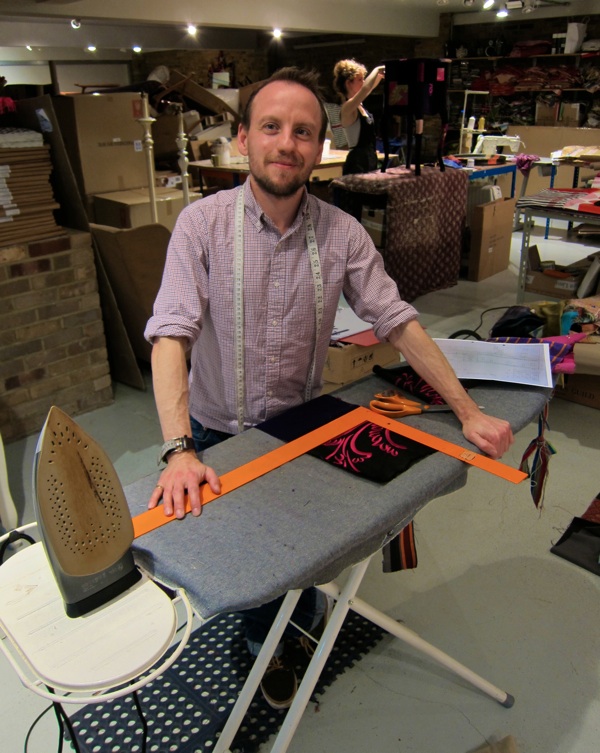
Lucas cuts the patches one by one.
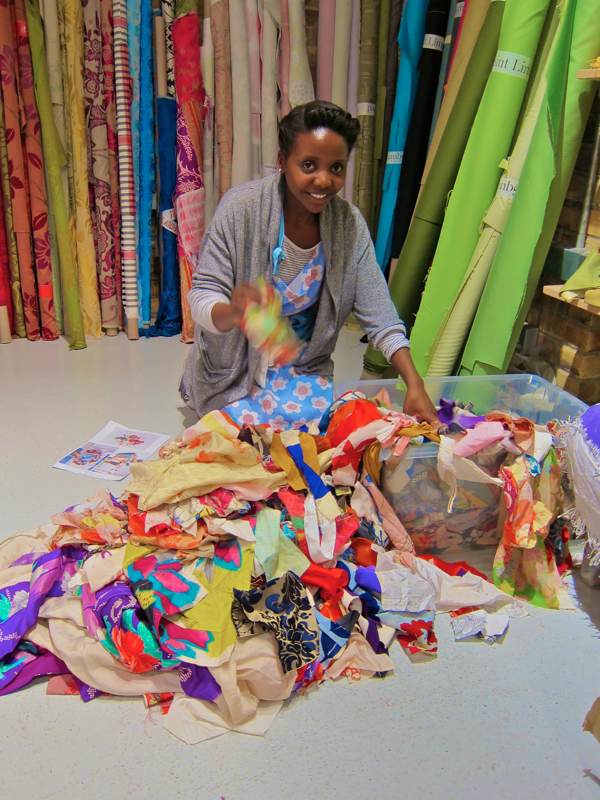
Inutu Lisselo sorts out scraps to wrap a mirror frame.
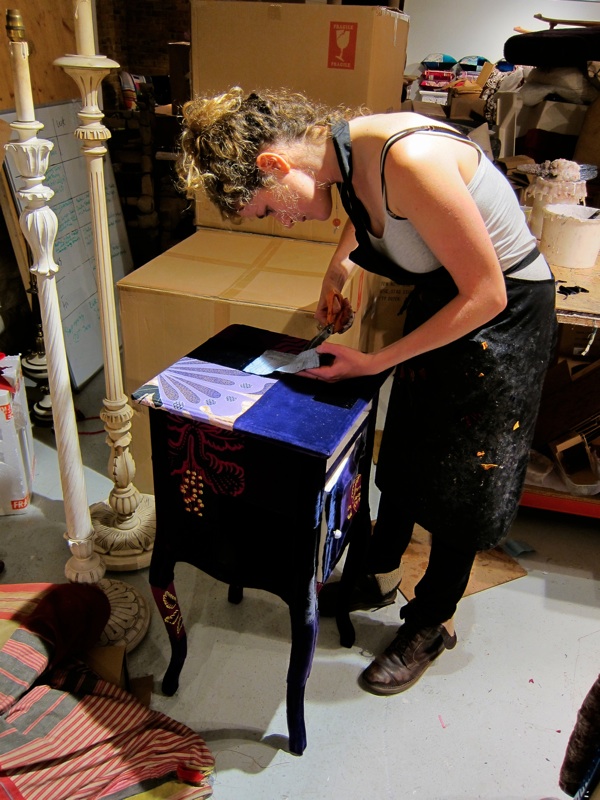
Rachel Postlethwaite wraps a side table.
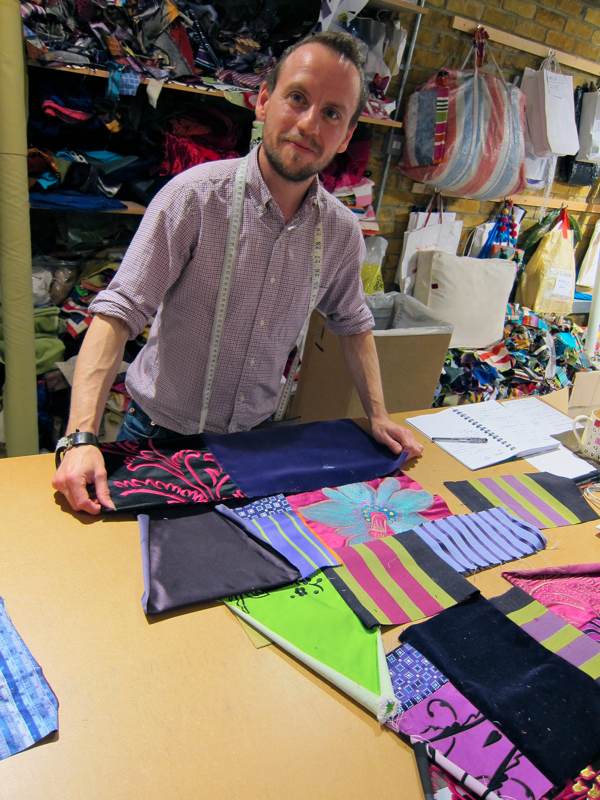
Lucas – “You have to look at each piece of work with fresh eyes.”

The Parker Knoll
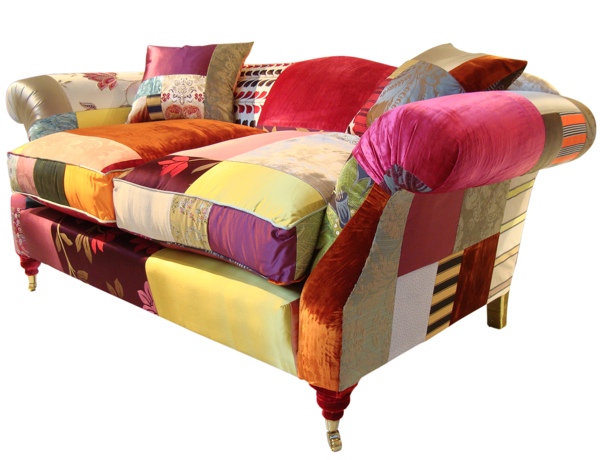
The Highgate

The Bloomsbury

The Vienna

The Peebles

The Vienna (Green)

The Peebles (Stripes)

The Chesterfield

The Hampton

The Peebles (Fluorescent)

The Roxborough

The English Chesterfield
The Parker Knoll (Purple)
Squint Limited, 178 Shoreditch High St, E1 6HU
You may also like to read about