
Remembering A S Jasper

Albert Stanley Jasper
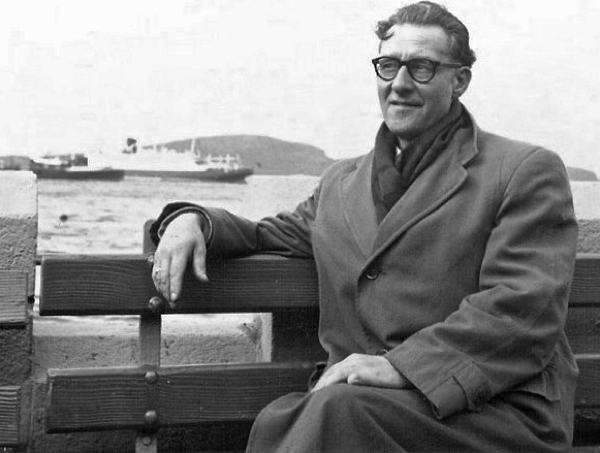
“The initials stand for Albert Stanley, but he was always know as Stan, never Albert,” admitted Terry Jasper, speaking of his father when we met at F. Cooke’s Pie & Mash Shop in Hoxton Market recently. A.S. Jasper’s A Hoxton Childhood is one of the classic East End childhood autobiographies, acclaimed since it was first published in 1969 when The Observer described it as “Zola without the trimmings,” and Terry is understandably proud to welcome a new edition this month.
“In the late sixties, my mum and dad lived in a small ground floor flat. Looking out of the window onto the garden one morning, he saw a tramp laying on the grass who had been there all night. My dad took him out a sandwich and a cup of tea, and told him that he wouldn’t be able to stay there,” Terry recalled, “I think most people in that situation would have just phoned the police and left it at that.” It is an anecdote that speaks eloquently of Stan Jasper’s compassionate nature, informing his writing and making him a kind father, revered by his son all these years later.
Yet it is in direct contrast to the brutal treatment that Stan received at the hands of his own alcoholic father William, causing the family to descend in a spiral of poverty as they moved from one rented home to another, while his mother Lily struggled heroically against the odds to maintain domestic equilibrium for her children. “My grandmother, I only met her a couple of times, but once I was alone with her in the room and she said, ‘Your dad, he was my best boy, he took care of me.'” Terry remembered.
“There are a million things I’d like to have asked him when he was alive but I didn’t,” Terry confided to me, contemplating his treasured copy of his father’s book that sat on the table between us, “My dad died in 1970, he was sixty-five – It was just a year after publication but he saw it was a success.”
“When he was a teenager, he was a wood machinist and the sawdust got on on his lungs and he got very bad bronchitis. When I was eight years old, the doctor told him he must give up his job, otherwise the dust would kill him. My mum said to him that this was something he had to do and he just broke down. It was very strange feeling, because I didn’t think then that grown-ups cried.”
Stan started his own business manufacturing wooden cases for radios in the forties, employing more than seventy people at one point until it ran into difficulties during the credit squeeze of the fifties. Offered a lucrative buy-out, Stan turned it down out of a concern that his employees might lose their jobs but, shortly after, the business went into liquidation. “He should have thought of his family rather his workers,” commented Terry regretfully, “He lost his factory and his home and had to live in a council flat for the rest of his life.”
“My dad used to talk about his childhood quite a lot, he never forgot it – so my uncle said, ‘Why don’t you write it all down?’ And he did, but he tried to get it published without success. Then a friend where I worked in the City Rd took it to someone he knew in publishing, and they really liked it and that’s how it got published. When the book came out in 1969, he wanted to go back to Hoxton to see what was still left, but his health wasn’t good enough.”
Terry ‘s memories of his father’s struggles are counterbalanced by warm recollections of family celebrations.“He always enjoyed throwing a party, especially if he was in the company of my mother’s family. It wasn’t easy obtaining beer and spirits during the warm but somehow he managed to find a supply. He was always generous where money was concerned, sometimes to a fault, and he had a nice voice and didn’t need much persuading to get up and sing a song or two.”
A.S. Jasper’s ‘A Hoxton Childhood’ is an authentic and compelling story of survival and of the triumph of a protagonist who retains his sense of decency against all the odds. “He said he would always settle for the way life turned out,” Terry concluded fondly.

Terry Jasper at F Cooke in Hoxton Market

Cover design for the first edition of A Hoxton Childhood drawn by James Boswell

William Jasper – “His main object in life was to be continually drunk”

Lily Jasper – “I asked her what made her marry a man like my father”

Stan (on the right) with his brother Fred

Stan and his wife Lydia

Terry as a boy

Terry in 1960

Terry with his dad Stan

Stan and his sister Flo
Stan

Terry with Stan & Lydia at Christmas

High jinks at a family Christmas party

A S Jasper – “So, out of so disastrous a childhood, I am now surrounded, in spite of poor health, with love and happiness.”
What Became of Stephen Long’s Antiques
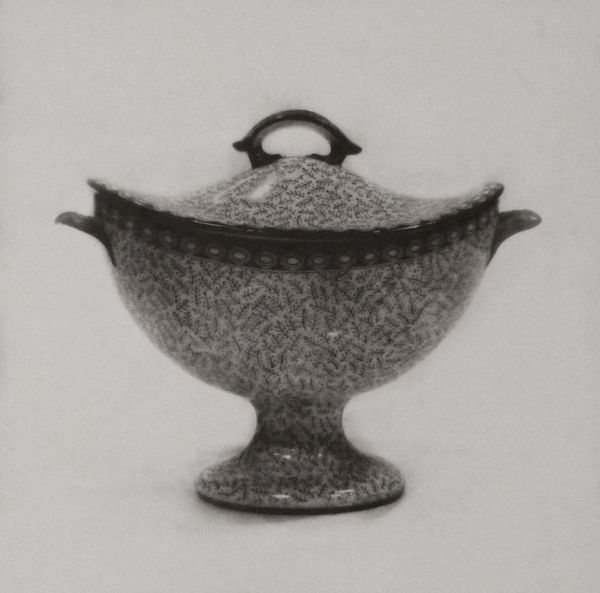
Solar plate etching by Jane Waterhouse
You may recall that I photographed the last day of Stephen Long’s celebrated antique shop in the Fulham Rd before the stock was removed for auction. Dennis Severs had bought china from Stephen Long’s shop for many years to furnish his time-capsule house in Folgate St, and it was David Milne, curator of the house, who took me over to visit the shop after Stephen Long died.
Although many of the contents were not of great monetary value, Stephen Long had a distinctive eye and collected items that appealed to him personally, combining them imaginatively to create displays that were artworks in their own right. He had an instinctive response to the human quality of artifacts, objects that carried their history of use and that evoked an entire world. For this reason, he was not troubled if antiques were damaged or inferior specimens, because it was the poetry of things which fascinated him.
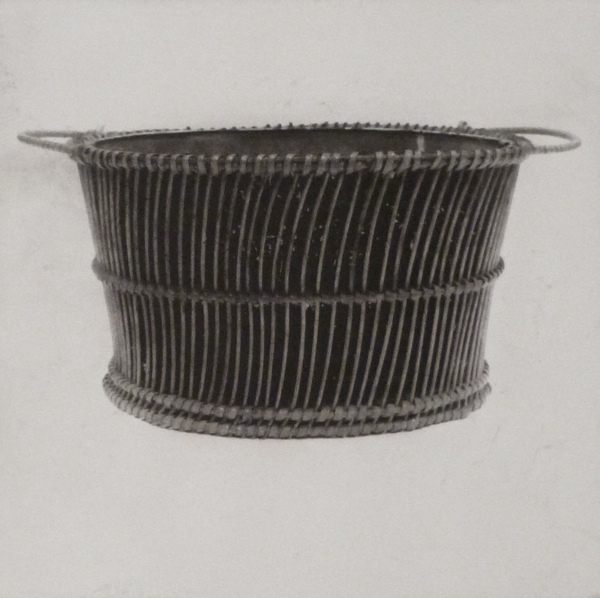
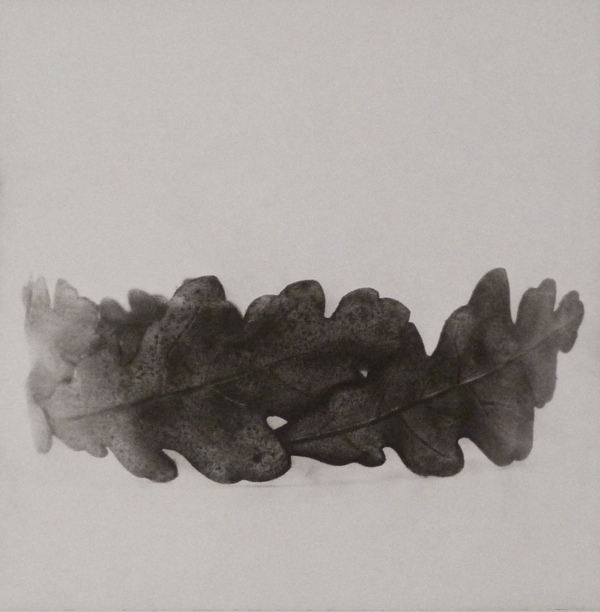
When Stephen Long’s shop was cleared out, everyone wondered what would become of his things. Yet artist and printmaker Jane Waterhouse became so inspired by the collection that she obtained permission from Cheffins, the Cambridgeshire auction house that was selling them, to photograph them all and she has now embarked upon a series of subtly-toned elegaic prints of the pieces that speak most powerfully to her. “There was a particular quality to Stephen’s eye that I felt a rapport with,” Jane admitted to me, “so I have produced these fugitive prints.”
“I felt I needed to do it with solar plate etchings as close to photographs as possible but not photographs, and the process is quite beguiling – you can expose the plates by laying them in the sun, she explained. At present, Jane has completed a portfolio of nine etchings entitled ‘Belonged,’ printed in pale silver and in a lustrous velvet black, and collected in a grey canvas portfolio. These ethereal images resemble ghosts of the objects, communicating presence without substance, which suits the subjects very well because now they are all gone, dispersed and sold to new owners. “Heaven knows where the objects in these prints are now,” Jane confessed with a shrug.
“It has been calculated that we interact with well over five hundred and twenty objects each day.” Jane assured me, “The vast majority we hardly register. Some we will take stock of – maybe the early morning cup of tea or coffee? Maybe a bag to leave the house with – for putting more things in? Objects may be useful, or practical function may not apply. There are, though, some objects that cannot be disregarded – those that are to be cherished. Objects that endure. These seem to have a kind of potency – an ‘aliveness.’
We surround ourselves with these objects, some inherited, some saved for, some found, others purchased on a whim. Some might be gifts. The selection of these pieces, the act of taking them into our homes and our lives may be strategic or not. These are objects, the gradual accumulations of things that speak not only of their owner but to their owner.”

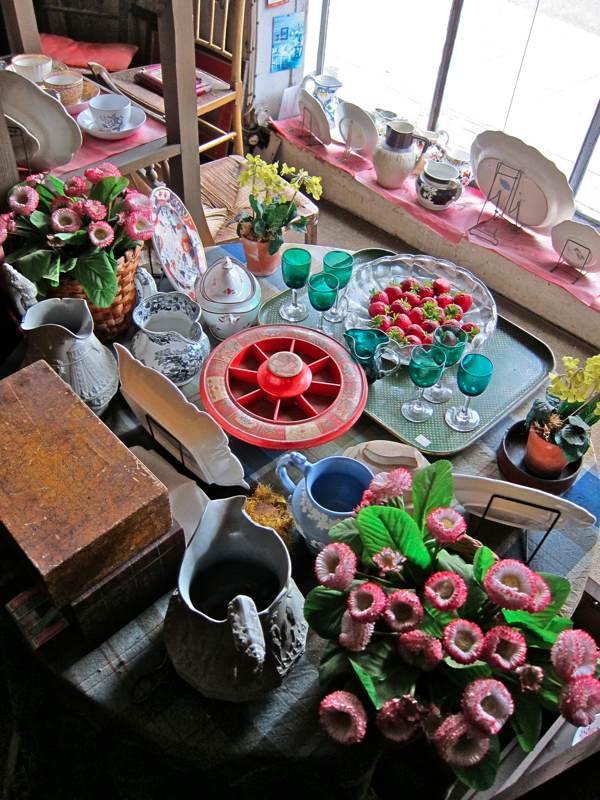
At Stephen Long’s antique shop
Zinc container with wicker frame
Oak leaf curtain tie
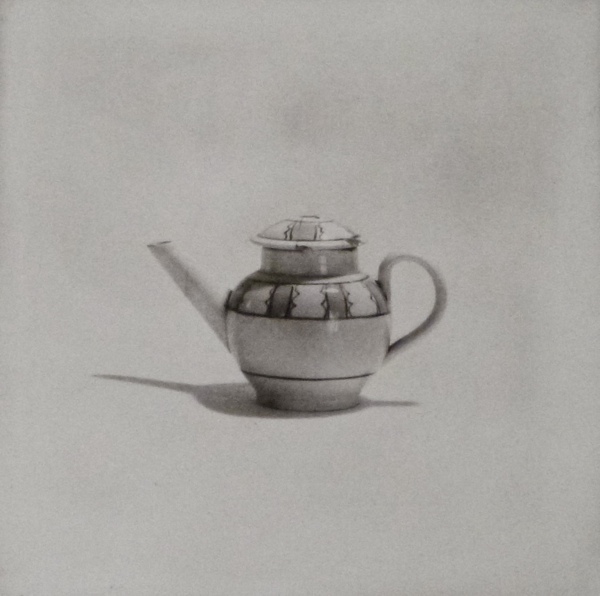
Eighteenth century teapot
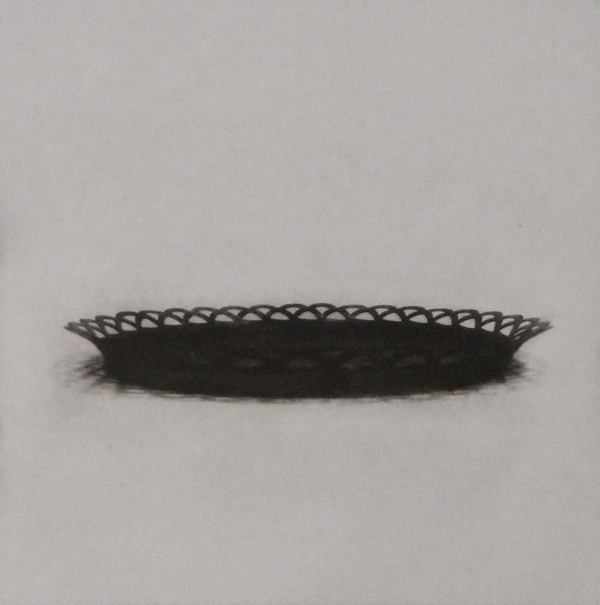
Steel tray
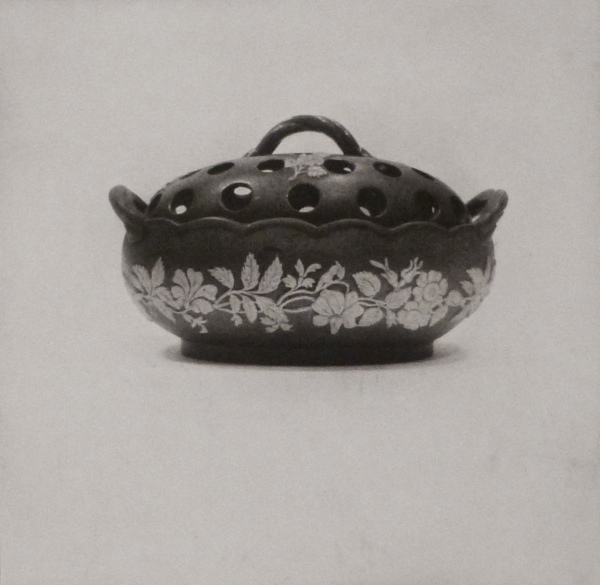
Posy dish
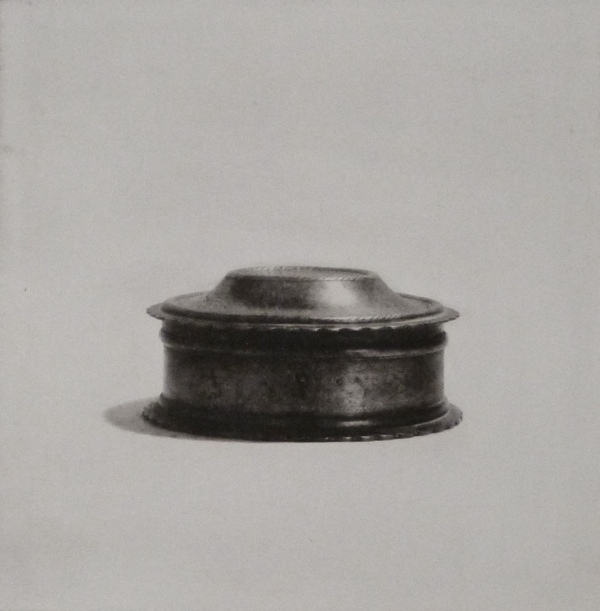
Metal base
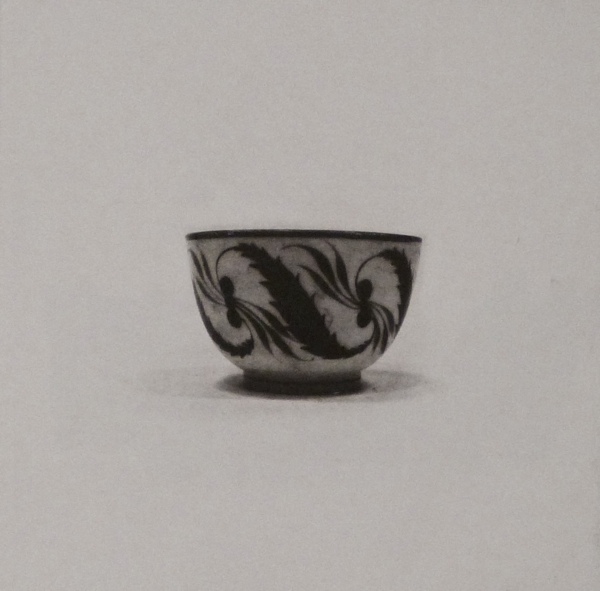
Tea bowl
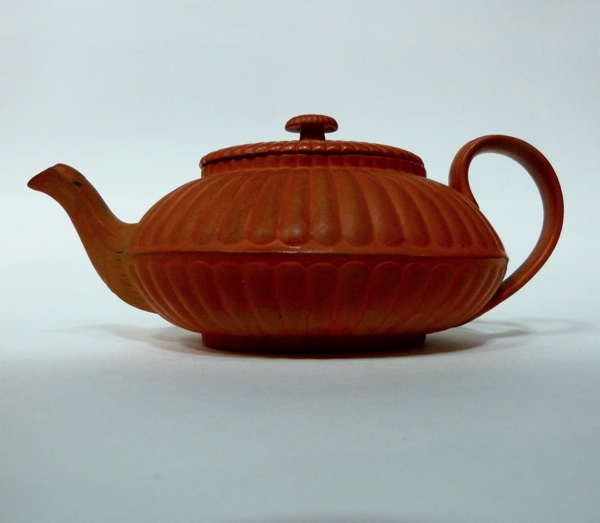
Nineteenth century teapot
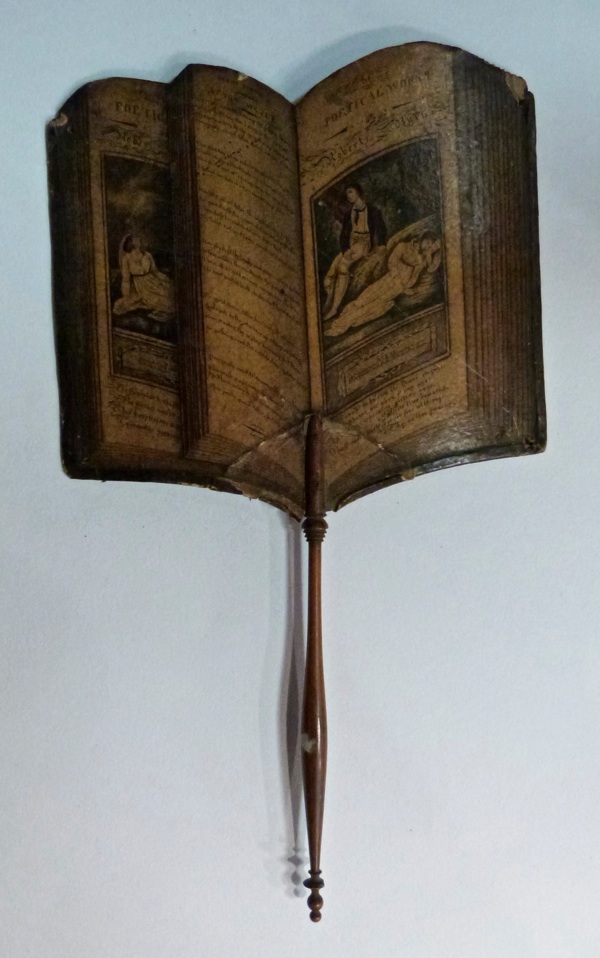
Eighteenth century hand-held fire screen
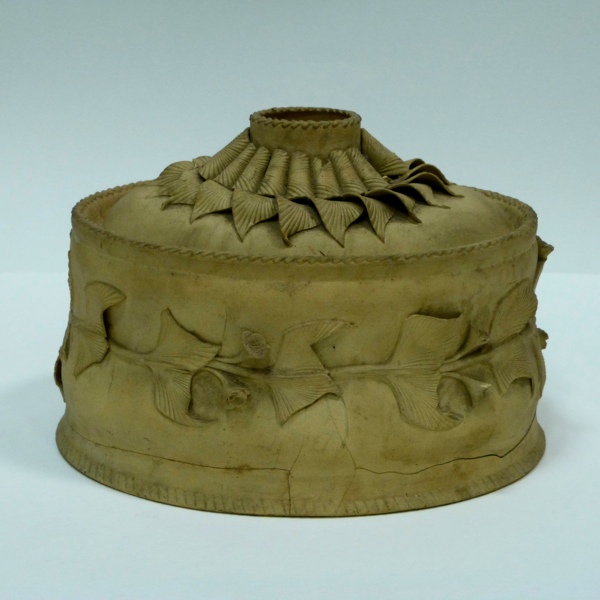
Pie mould
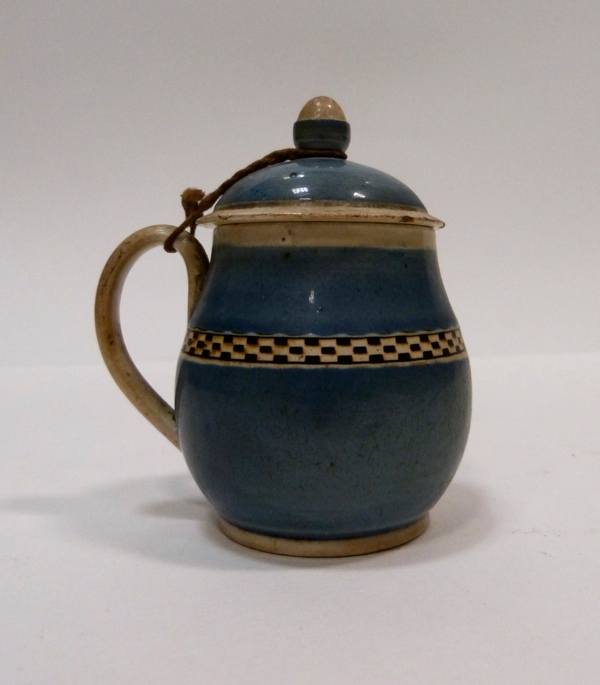
Mochaware pot
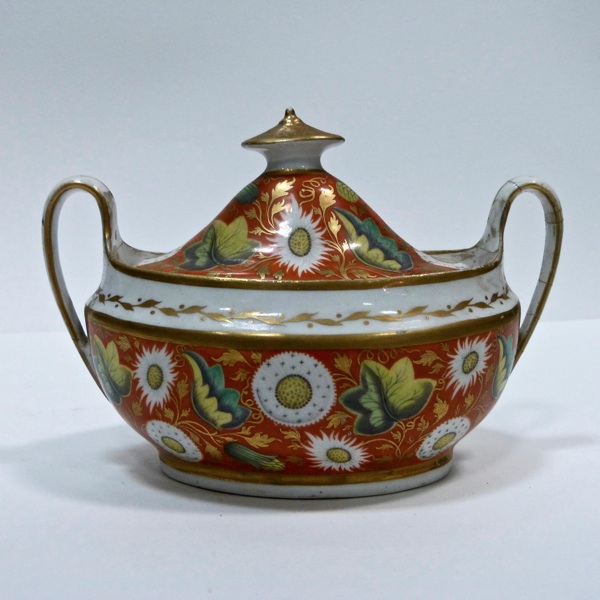
Tureen
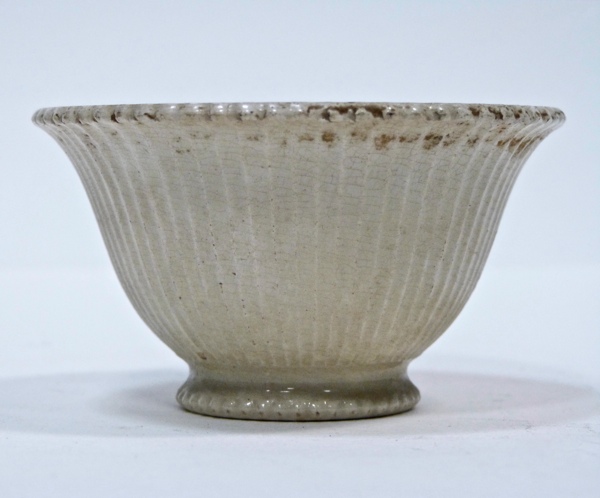
Ridged bowl

Staffordshire poodle
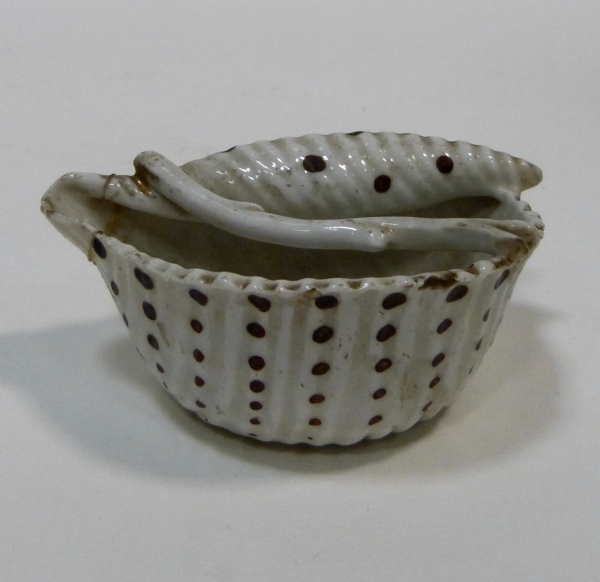
Shell-shaped dish
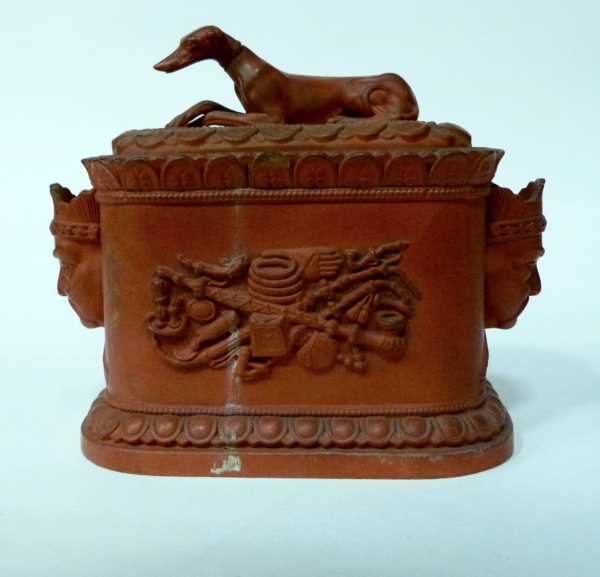
Nineteenth century ceramic box
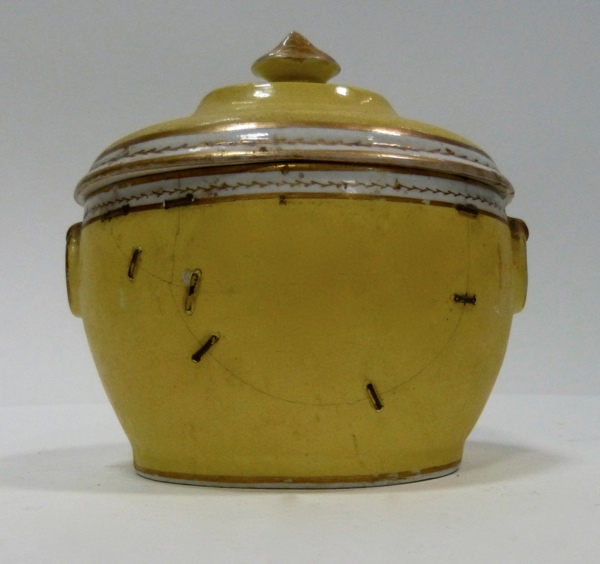
Pot mended with rivets
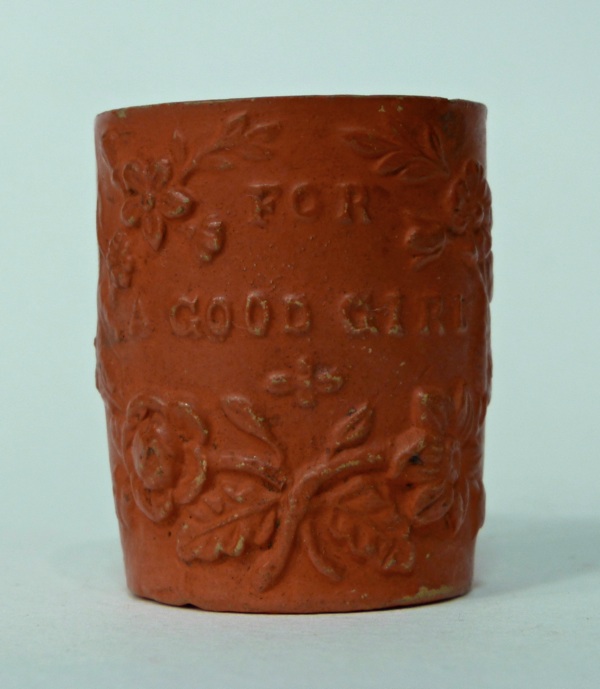
Earthenware mug
Prints & photographs copyright © Jane Waterhouse
Visit Jane Waterhouse’s website to learn more about her work and buy her prints
You may also like to read my original story
At Derry Keen & Co, Engravers

Don Keen, machine engraving with a pantograph
In Clerkenwell – an area of London where the engraving trade has been established for centuries, where Hogarth, Blake, Caslon and Cruikshank once practised their art – you may still find engravers at work today. Derry Keen & Co are a busy company who supply engraved trophies and undertake almost any manner of graving upon metal.
Don Keen will greet you from behind the front desk at this family business, started by his father Derek Keen and still trading under his pet name of ‘Derry.’ The shop is lined with glass cases displaying every kind of glitzy trophy you could imagine – from traditional silver cups, to statues, crests, plaques and medals, to those futuristic crystal awards that high-flyers stick on their shelves. Pass behind the desk into the ramshackle workshop at the rear and you immediately realise you are in a nineteenth century building. This is industry on a domestic scale, and the arrangement and contents of this cosy crowded space have evolved over the last thirty years to reach the optimal efficiency and comfort of working.
“Originally, my father started the business as ‘Rose & Keen’ in the fifties, they used to make copper trays and candlesticks in our front room in Navarino Rd, Hackney. My dad’s partner, Peter Rose, was a gun engraver and one day he shot and killed himself accidentally with one of the guns he had just engraved,” admitted Don gravely, revealing an unexpected danger of the trade, “In 1954, they had a shop in Grays Inn Rd and dad’s speciality was ‘bright’ cutting on silver cutlery, he was probably the best in this country. He and his brother Michael had a workshop off St John St and they opened this shop in 1977, with a hand-engraving workshop, a machine-engraving workshop and a small display of trophies.”
At this point, Don indicated a sturdy machine at the centre of the workshop, explaining that this was his cherished Taylor Hobson Model K Mark II. “My career had been lined up elsewhere, but dad said, ‘Why don’t you come and work for us? We need someone to do machine engraving,” he revealed, positioning himself on a stool in front of the device, “I had played upon this machine in my school holidays, and I remember the first job I was let loose on, it was engraving the text of Paul Revere on these Liberty Bowls to celebrate the Bicentenary of the American Declaration of Independence in 1976. There were 1976 silver punch bowls of which I had to do the bulk and I did it very slowly and very carefully. I was eighteen years old.”
Then Don took the black round base of a silver cup and clamped it in place, before slotting a long panel etched with the alphabet into the top of the machine. With his right hand, he guided a pantograph over the etched letters while moving the engraving tool over the base with his left hand, cutting the letterforms into it. Then he removed the base and rubbed a ball of white wax over the words he had incised and they appeared, as if by magic, crisp and regular upon the dark surface.
“We have to be confidential about some of our customers and the work we do,” Don informed me, lowering his voice for dramatic effect, “Often, we know the recipients of awards, so we have to agree not to go out and place bets before they win. We do a lot of sport, we do Crufts and work for the Royal Family, we do Number 10 – regardless of who’s in power – and we do a lot of military and corporate trophies. We do all the Formula One trophies and we supplied them in a sixties style for the film ‘Rush.'” Behind this modest shopfront and unassuming showroom, I had unwittingly discovered a glamorous power house, where the rewards for many of life’s big achievements are minted.
Once I had grasped the essentials of machine engraving, Don led me into the shop next door which can only be reached through the workshop connecting the two premises. Here Don’s brother Michael and his partner Frida Wezel sat peacefully at desks, intent upon their meticulous work as hand engravers.
Michael looked up from the stack of old silver plates that he was engraving with a crest and launched into a monologue about evolving techniques and styles through recent centuries, “In the seventeenth century, if you make a slip, you leave it – whereas in the nineteenth century it has to be clear and regular, and then there is Mr Bateman’s ‘bright’-cutting in the eighteenth century, made to catch your eye.” And he passed me a fork decorated with a border of lozenges that glittered, serving both to illustrate his point and as an example of the work at which his father excelled. Yet on that day, Michael was working in the seventeenth century style, matching the quality of line in an existing motif with one of his own that possessed a subtle irregularity, almost like a pen script.
Across the room, Frida looked up from the silver goblet she was engraving with initials. “It takes ten years to learn,” she assured me, “four years to learn how to do it and another four years to learn to do it well.”
“Four to eight years,” interposed Michael, correcting her.
“Ten years to get your lines straight,” proposed Frida, growing excited and gesturing with her graver, “to get the steadiness of hand and get all your letters.”
“At college, I learnt how to hold a graver but here I learnt how to do engraving,” Michael asserted to me, “I learnt by doing it and by working alongside my dad.”
“Lettering is the most challenging part of engraving,” Don announced, halting the dialogue and bringing everyone to accord, “It is not just a question of engraving the letters but of getting the spacing even. We do a Classic Roman and a Classic Script. Lettering is what we specialise in.”
This drew nods of approval from both engravers, as they nodded sagely, returning to the absorbed silence that is their customary mode.
“We’re all going to retire in ten or fifteen years but there’s nobody coming into the trade to run the business in future,” Don confided to me, crossing his arms fatalistically as he watched the engravers at work, “We’ve tried – we’ve had three apprentices and it takes years to teach them but as soon as they’ve learnt how to do hand engraving, they are off to do it from their own front room.”
“There’s always going to be hand engraving,” added Michael, reassuringly, in an unexpected burst of romanticism, “People are always going to want their names engraved inside their wedding rings.”
“We do engraving as it has been done for ever, since steel tools were made,” confirmed Don in agreement, “Hand engraving hasn’t changed, there’s still lot that a computer cannot do accurately.”
“In corners of Clerkenwell and Spitalfields, there are small workshops that keep these crafts going,” Frida informed me confidently and I could not doubt her – because here was the evidence before my eyes.
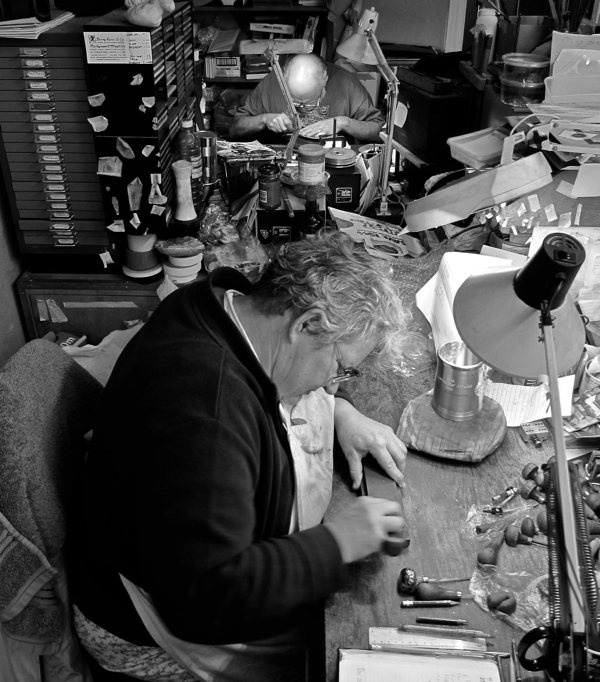
Frida Wezel & Michael Keen, Hand Engravers
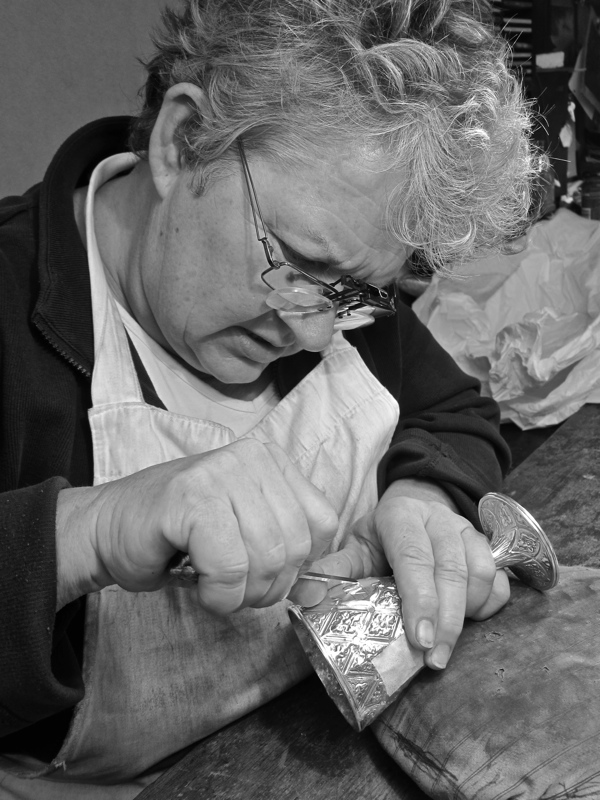
Frida Wezel engraves initials upon a presentation goblet
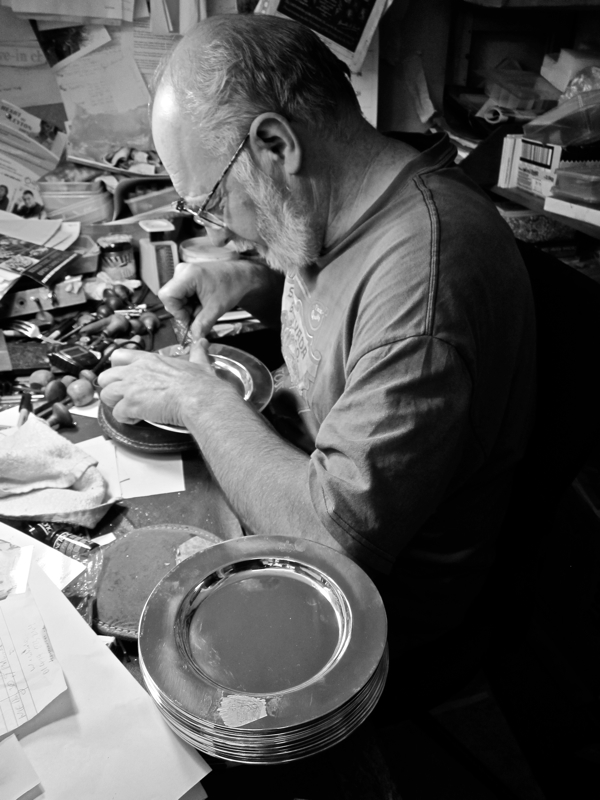
Michael Keen engraves a new crest upon an old silver plate

“Ten years to get your lines straight, to get the steadiness of hand and get all your letters.”
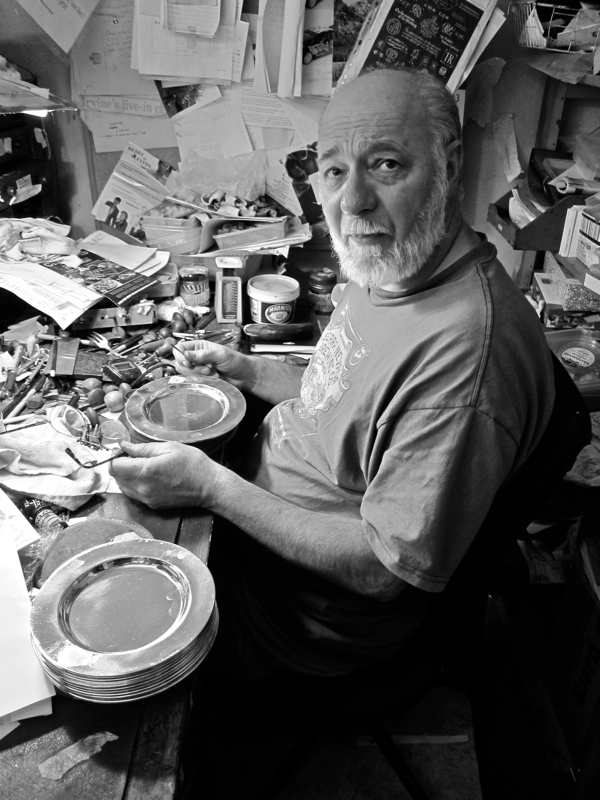
“At college, I learnt how to hold a graver and here I learnt how to do engraving. I learnt by doing it and by working alongside my dad.”
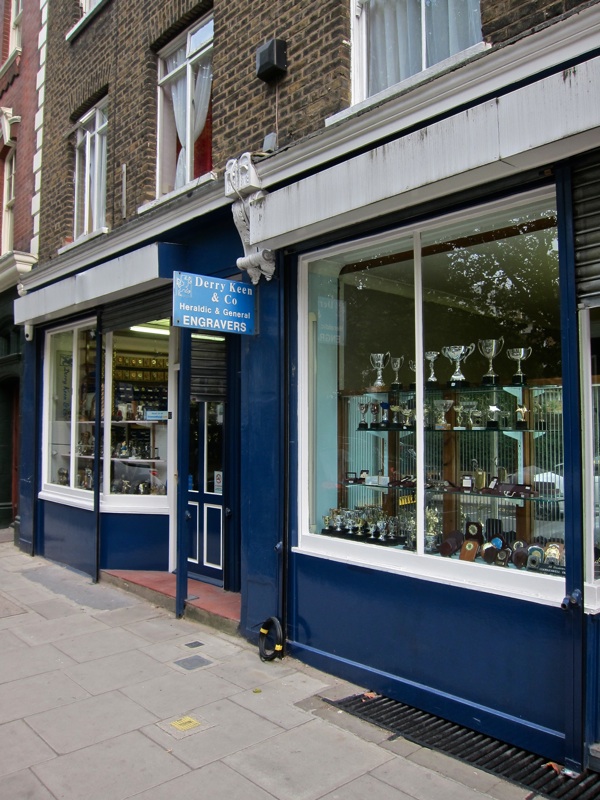
Derry Keen & Co, 65 Compton St. EC1V 0BN
You may also like to read
Colin O’Brien at Gerry Cottle’s Circus
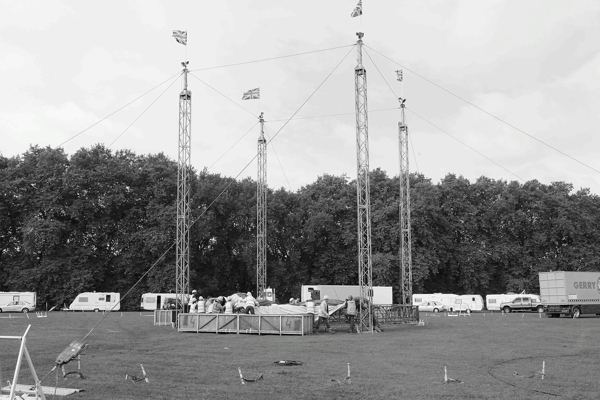
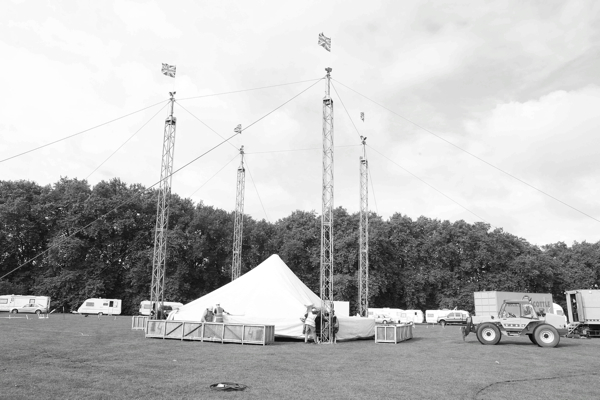
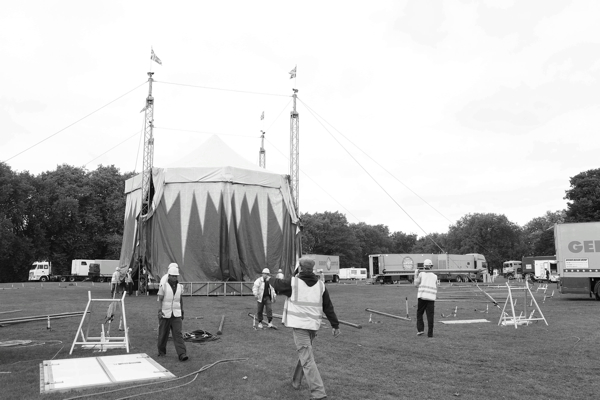
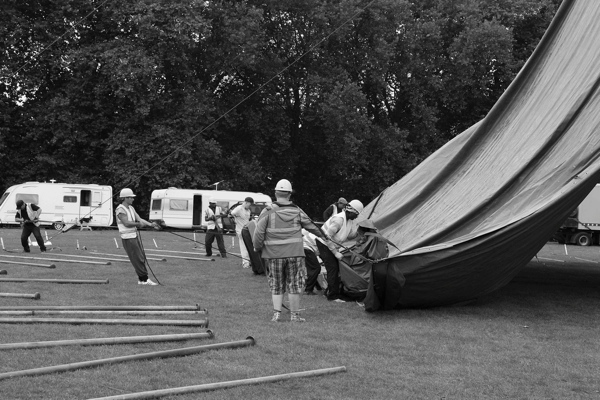
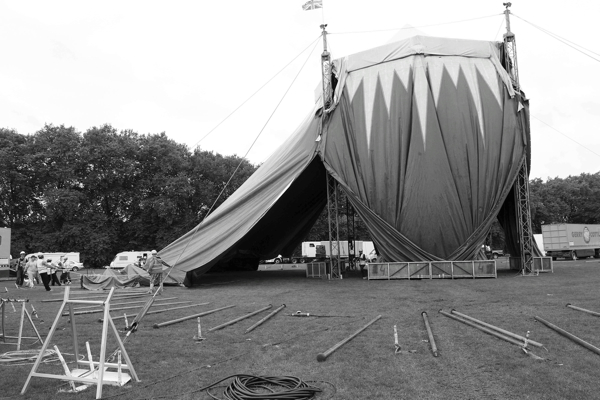
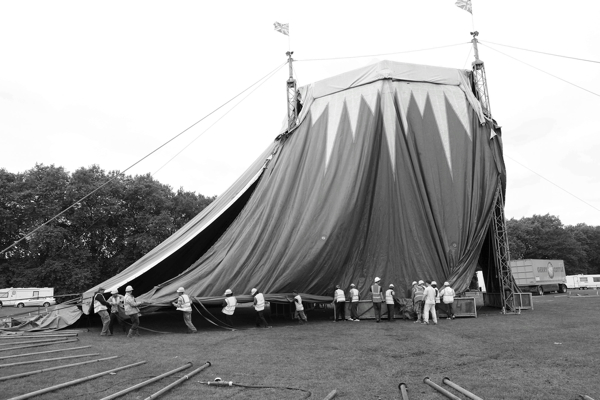
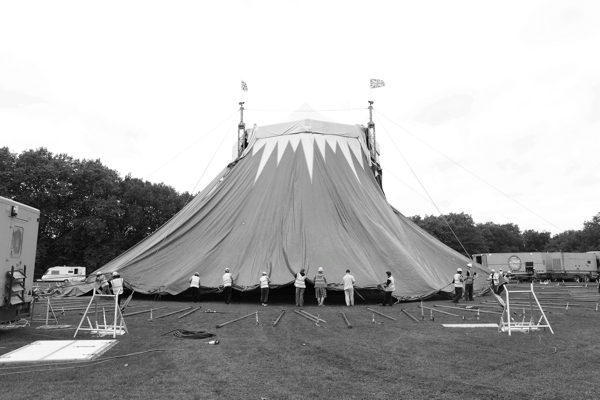
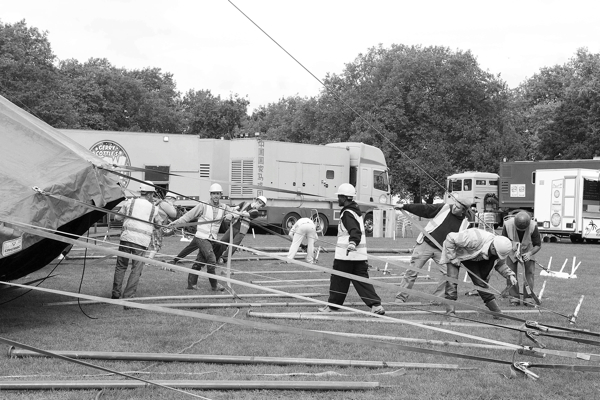
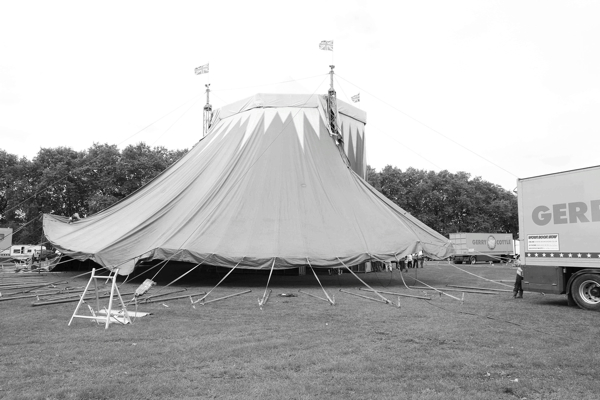
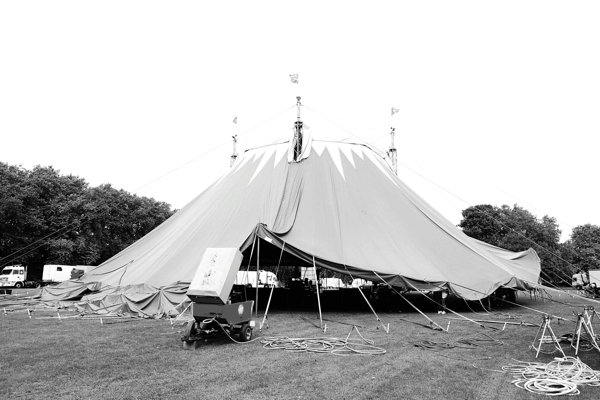
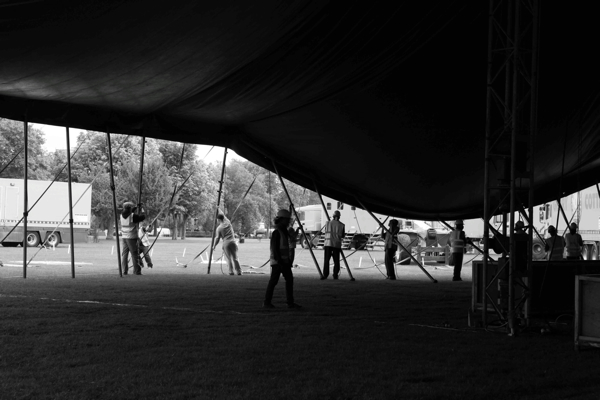
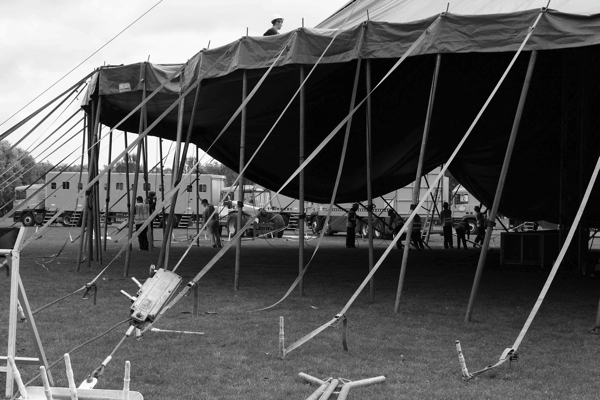
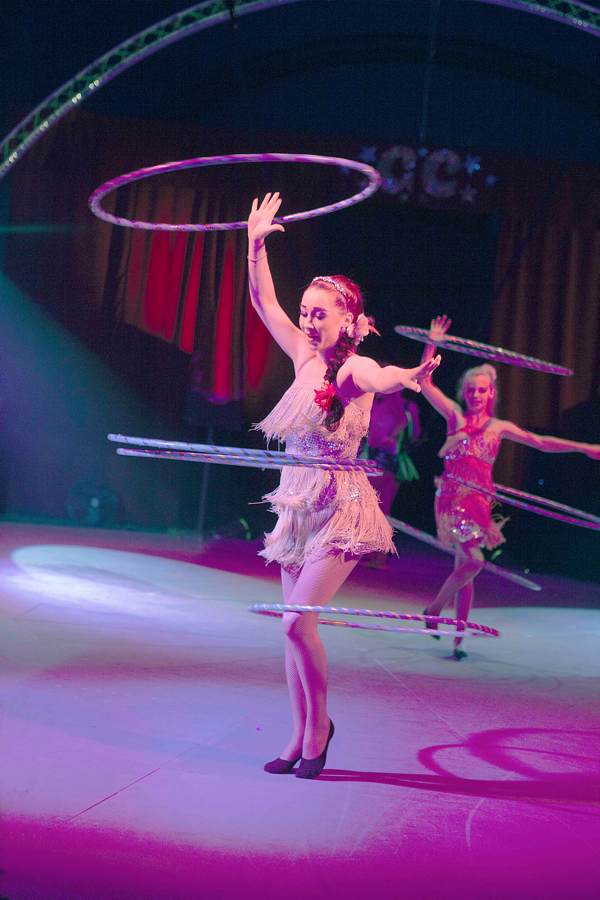
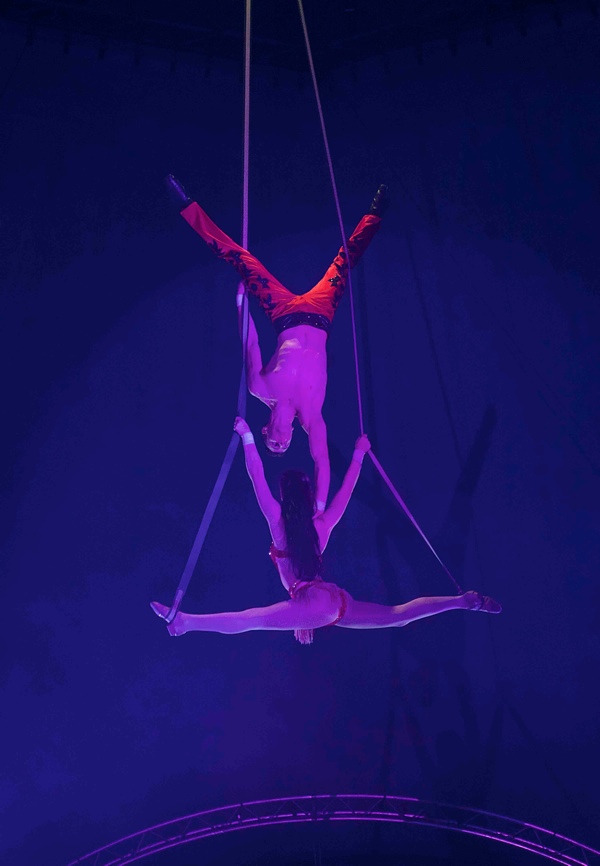
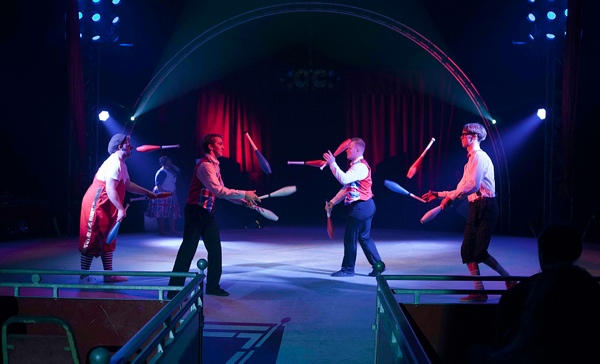
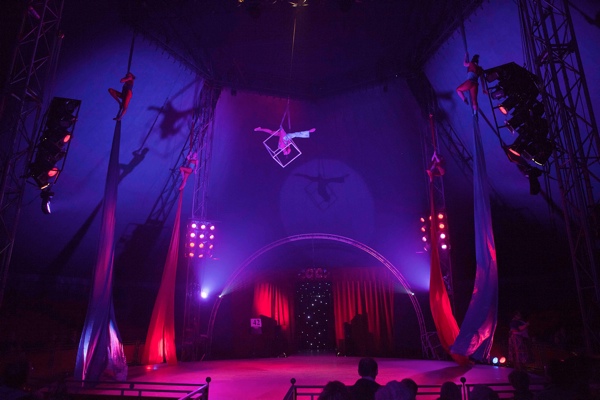
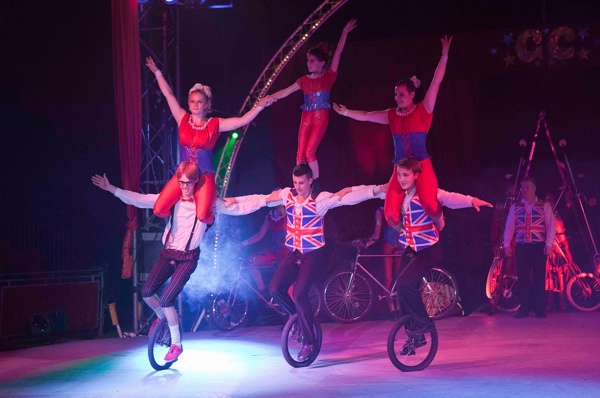
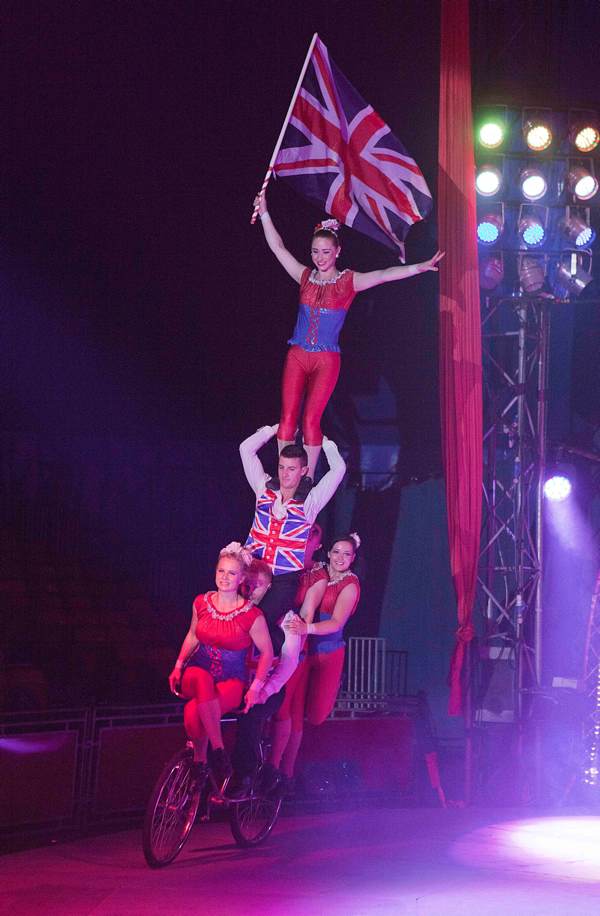
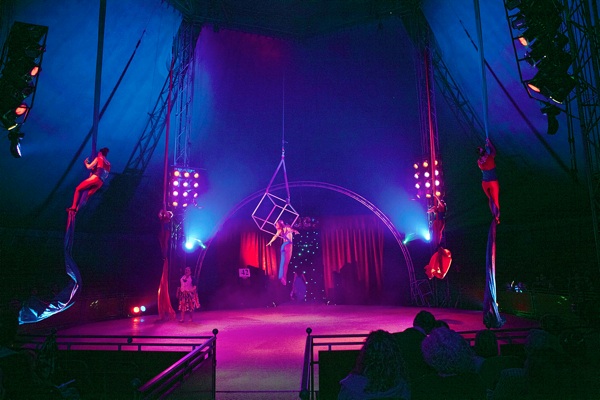
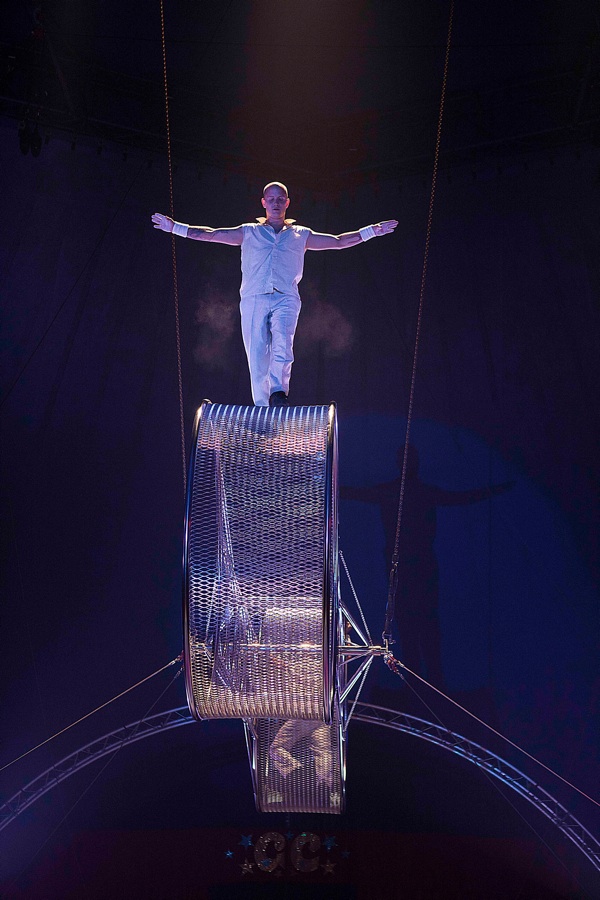
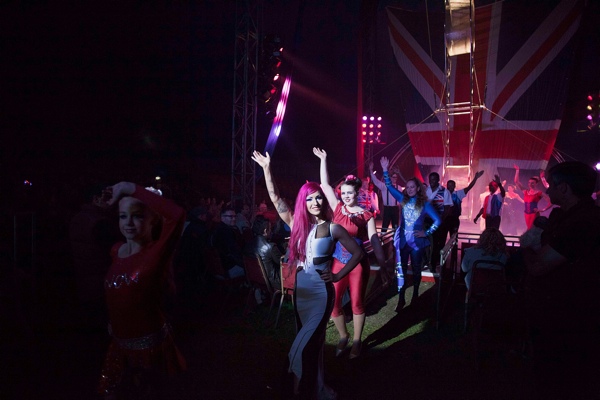
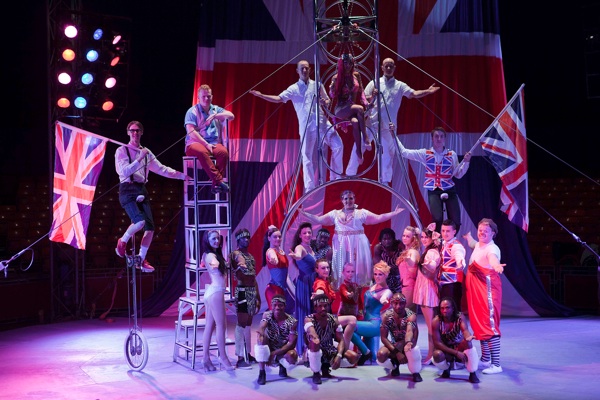
Last week, when Gerry Cottle’s Circus passed through the East End, Spitalfields Life Contributing Photographer Colin O’Brien went along to watch them set up the big top on Hackney Downs and took these portraits of some leading performers. Gerry Cottle’s Circus is currently performing at Alexandra Palace and you have until Sunday 6th October to catch one of their famous shows.
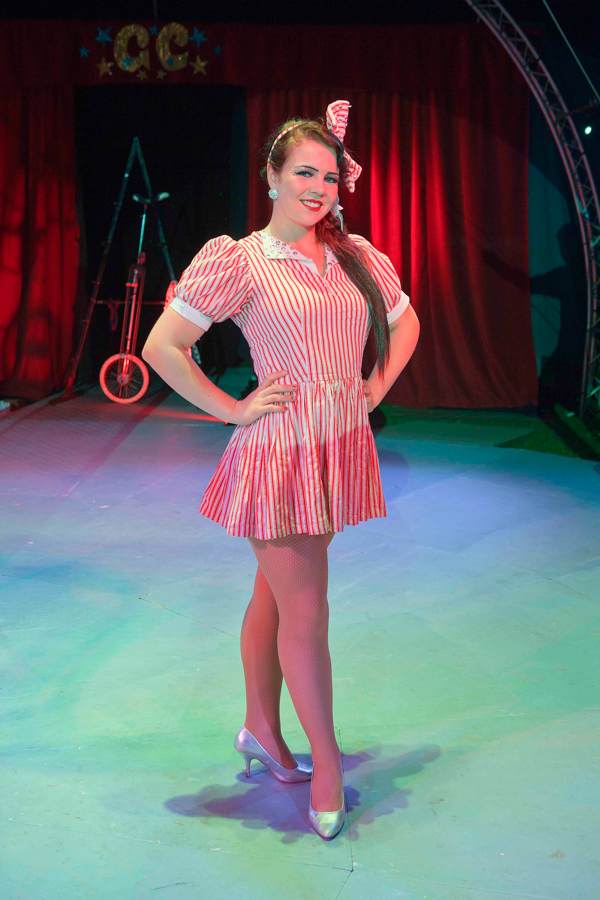
Chelsea Buckley
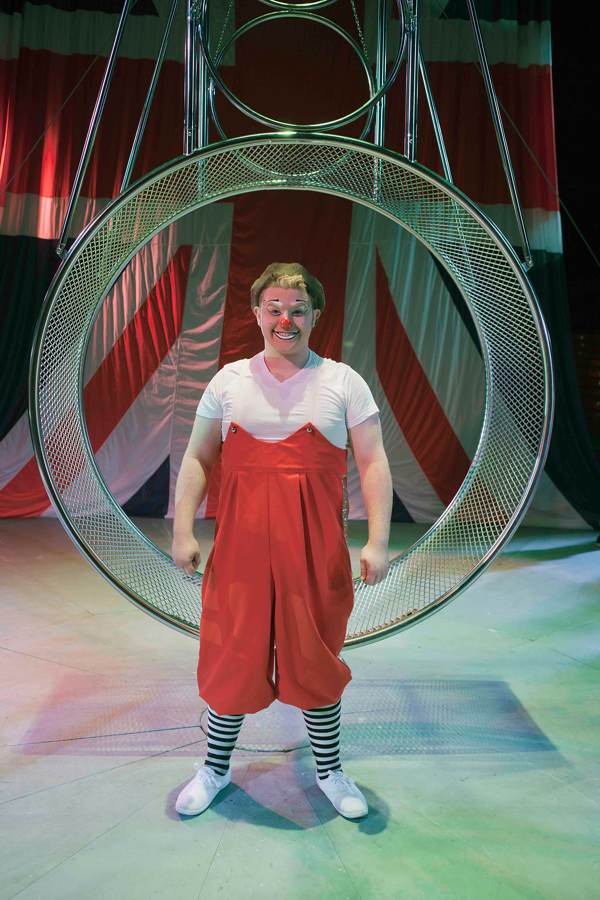
Gareth Ellis, performing as Bippo the Clown
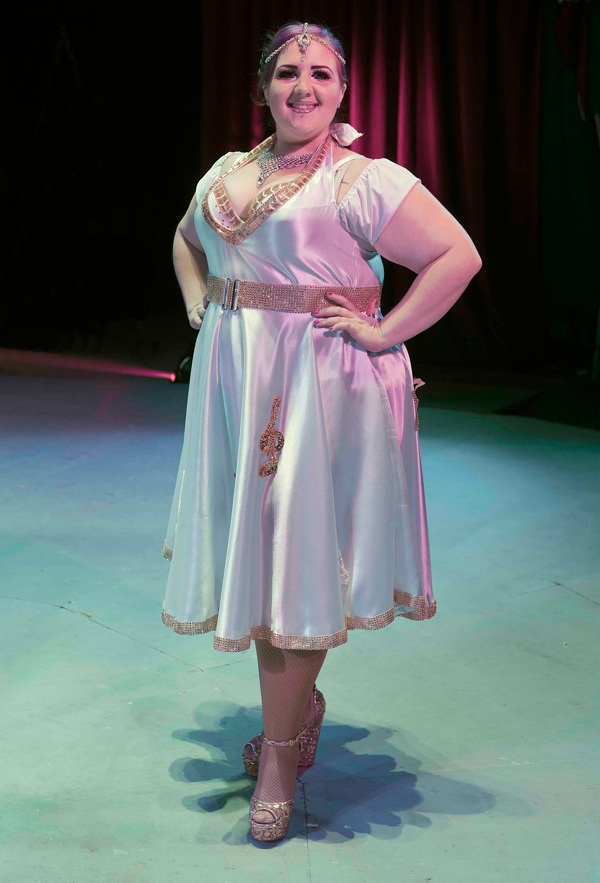
Olympia Enos-Knox
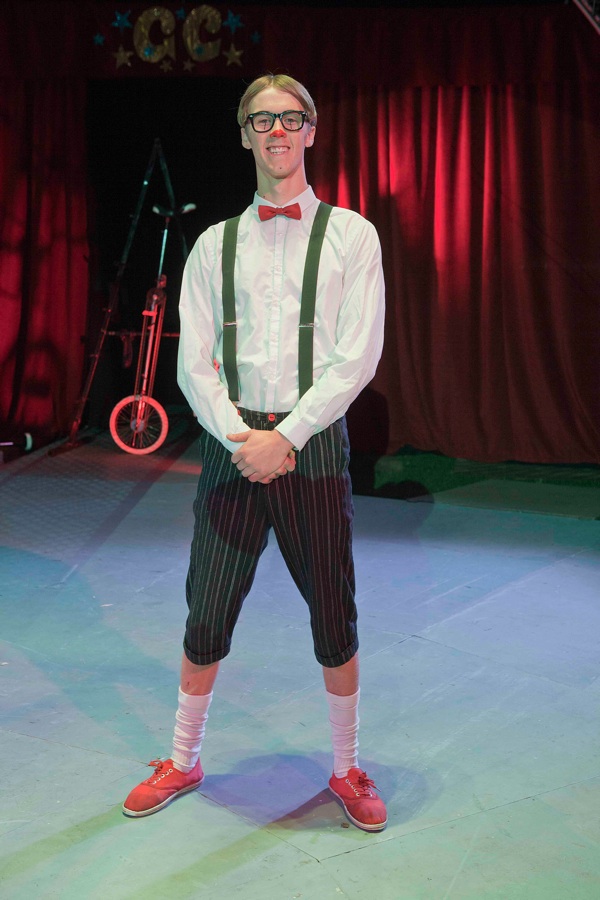
Ezra Tidman
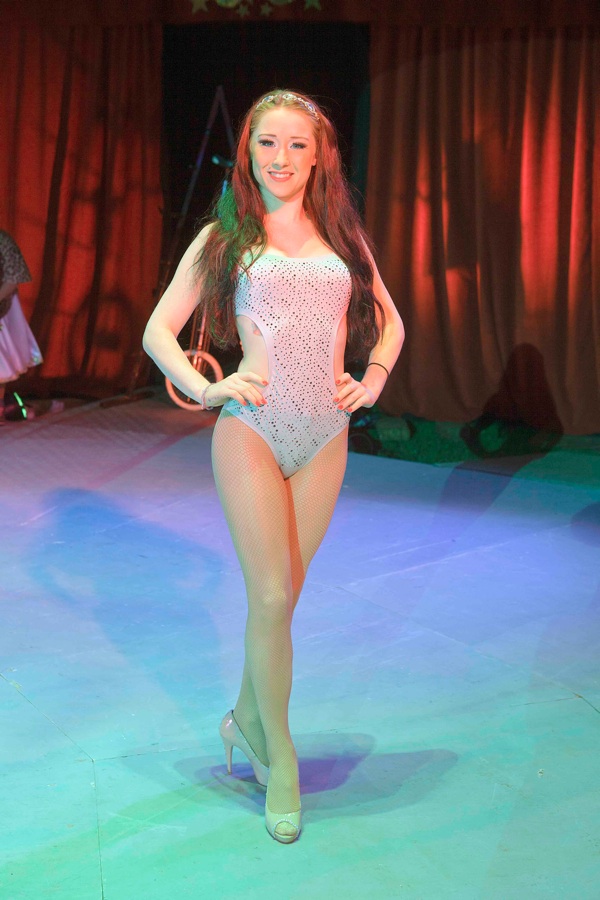
Ellen Ramsay
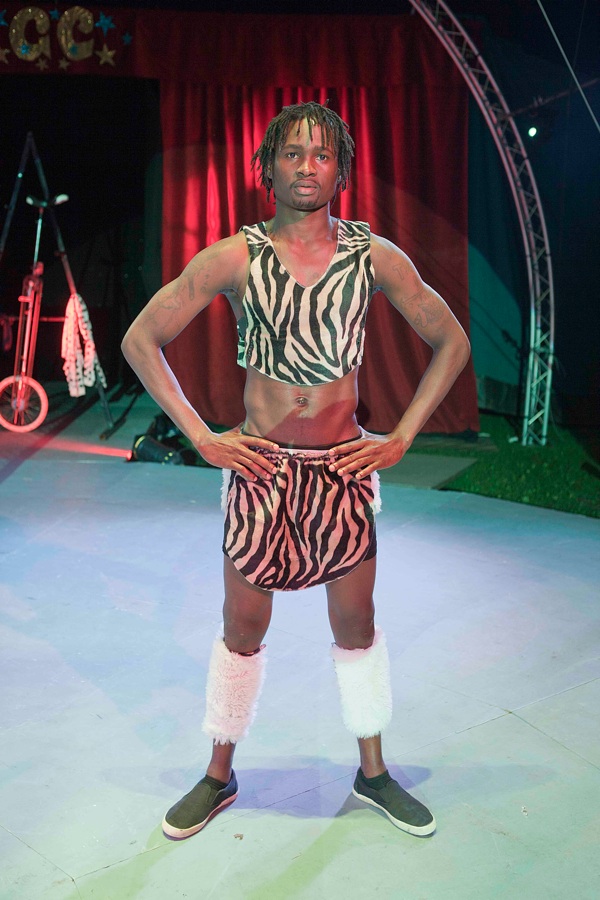
Fikiri
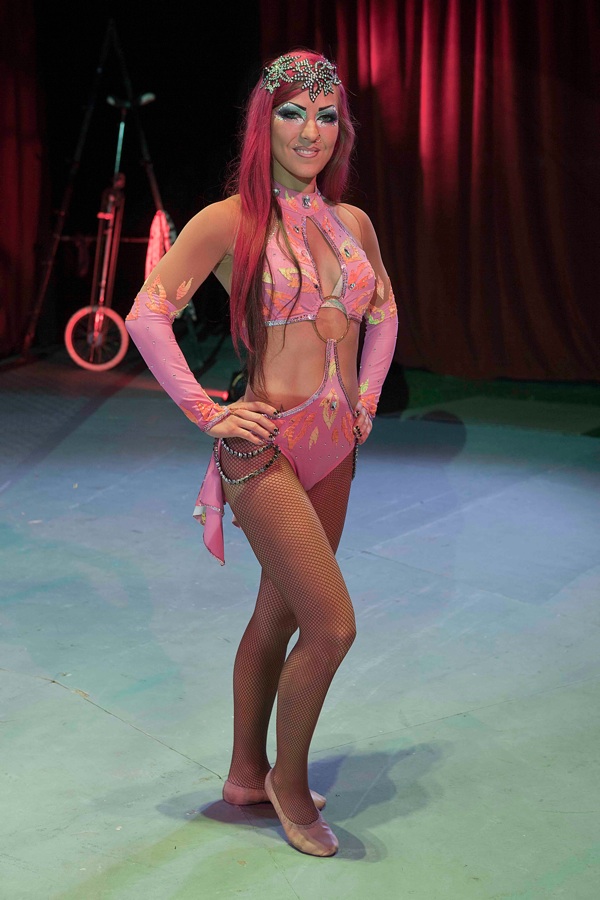
Bori Hegyi
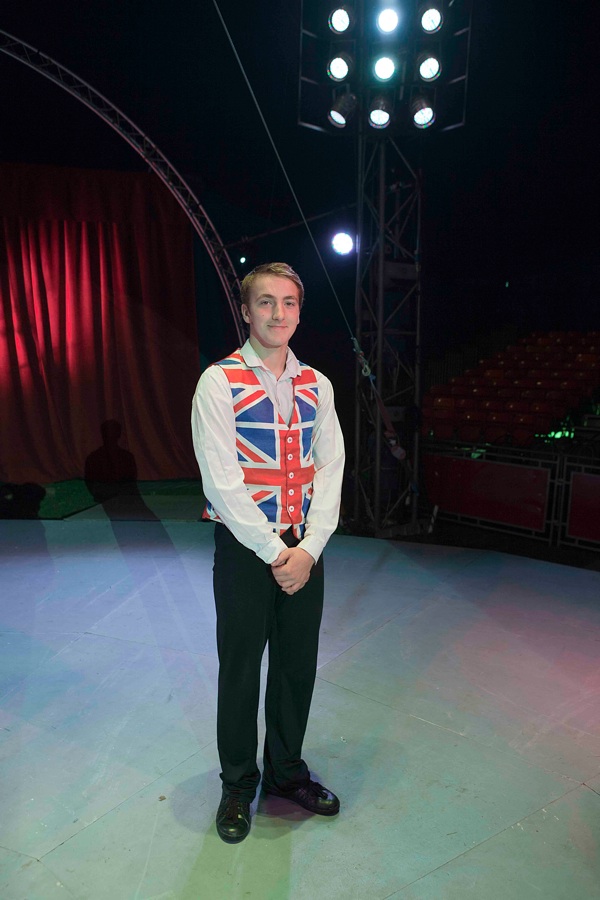
Charlie Jenkins
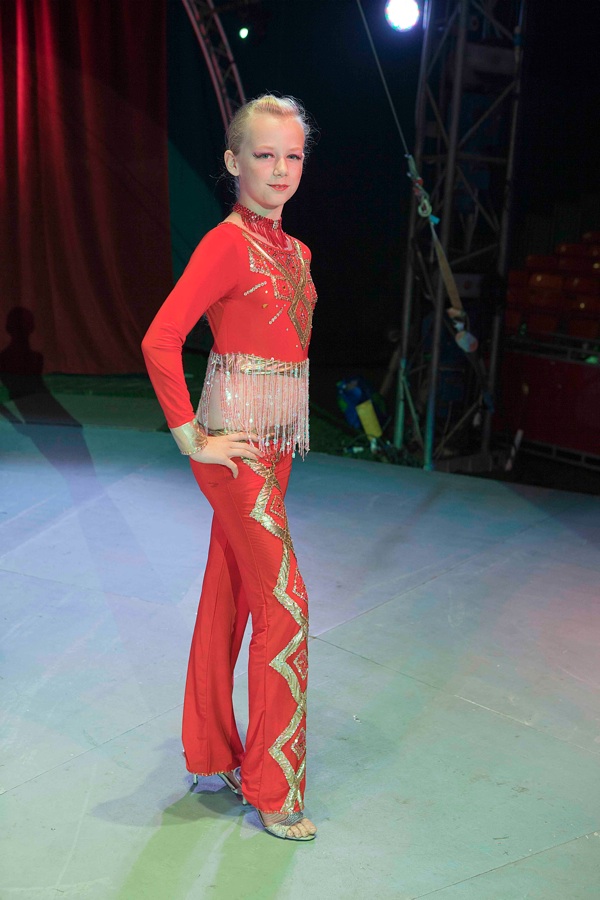
Lucy Fraser
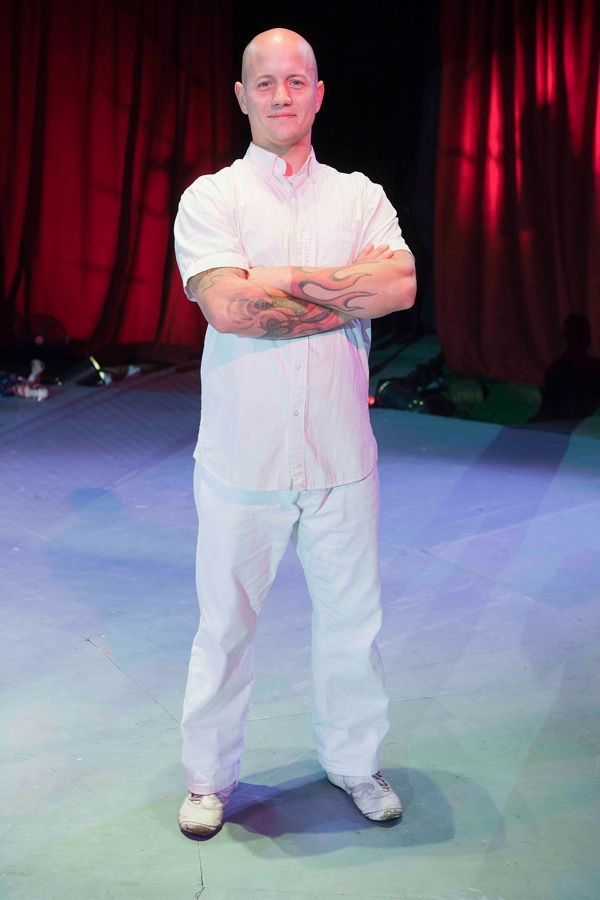
Laci Hegyi
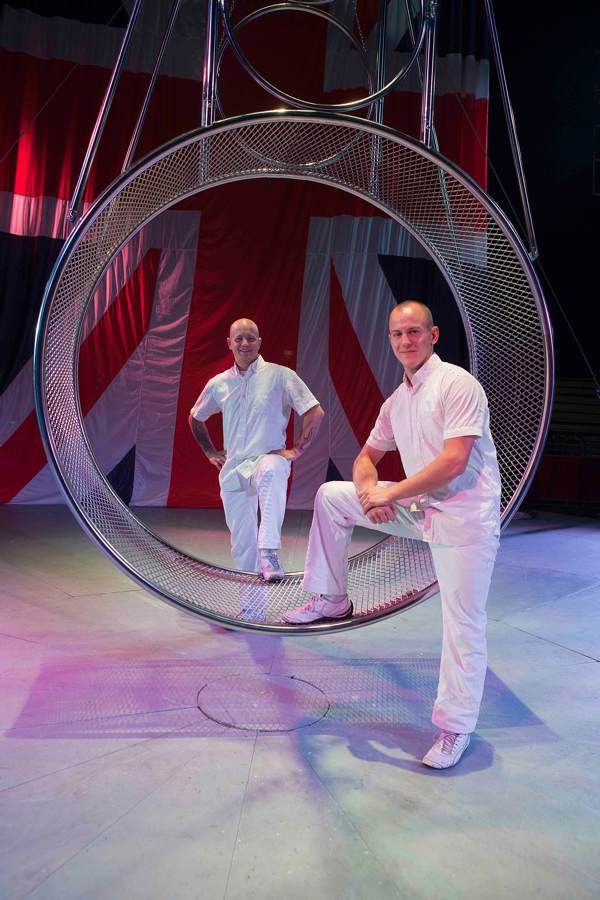
Laci & Adam Hegyi
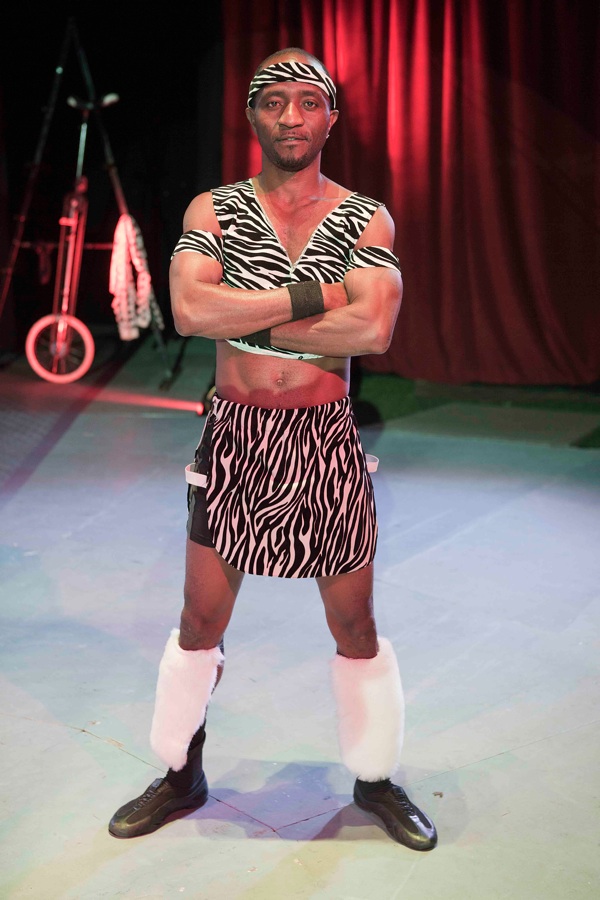
Dallas
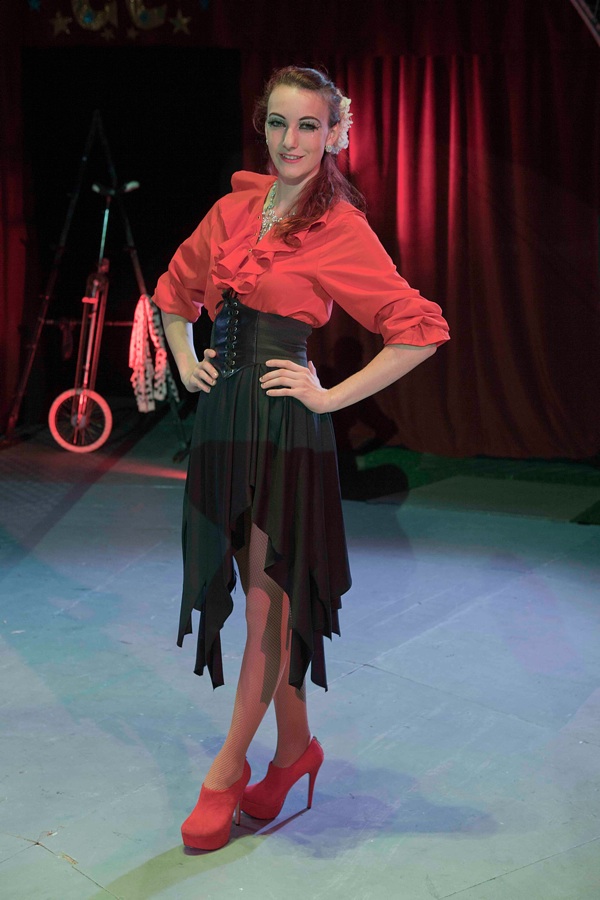
Yasmin Jonez
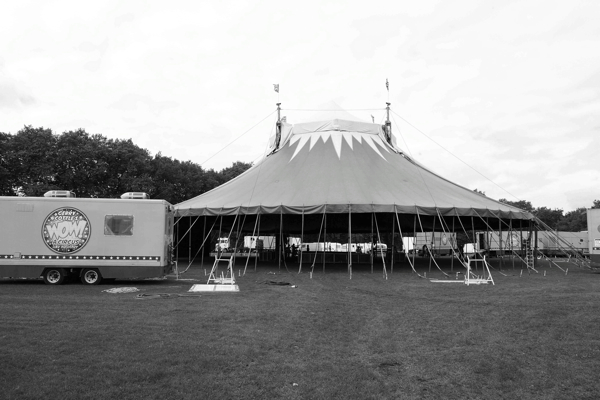

Gerry Cottle
Photographs copyright © Colin O’ Brien
You might also like to read about
Gerry Cottle, Circus Showman

Gerry Cottle
Gerry Cottle’s Circus set up their big top on Hackney Downs last weekend and you can catch them at Alexandra Palace for the next week – so, while they passed through the East End, I took the opportunity to meet the man behind the legend, Gerry Cottle himself. With robust swagger, I found him leaning against a caravan and munching his way through a Bakewell Tart while casting a custodial eye over the expectant audience arriving for the Saturday matinee.
Every inch the showman, Gerry saw Jack Hilton’s Circus at Earl’s Court in 1953 at the age of eight, when his parents took him along to the show, and from that day on he was simply biding his time until, at fifteen, he ditched his O Levels and ran away from his middle-class upbringing to join the circus. “It was the polar bears that got me,” he later admitted fondly.
Marrying Betty Fossett, a princess of Britain’s greatest and oldest Circus family – the Fossetts have been riding bareback for more than two centuries – Gerry embraced his destiny when he opened his own circus in July 1970, with just five performers including himself and Betty. The first venue was Sturminster Newton in a small second-hand tent that had previously been used for flower shows. By now, he had learnt juggling, stilt-walking, acrobatics, clowning and bareback horse riding.
It was the beginning of a twenty-year ascendancy that made Gerry Cottle’s name synonymous with circus in this country and involved the acquisition of elephants, lions, tigers, chimpanzees and polar bears. “I guess those glorious years in the mid-seventies were my heyday, I felt pretty invincible,” admitted Gerry, contemplating the fulfilment of his ambition to become Britain’s largest circus owner. Yet changing public opinion turned against the use of animals and, reluctantly, Gerry had to accept the inevitable loss of the beasts which were an integral element of circus for centuries. “Originally, people came to circuses because they had never seen these animals before,” he explained to me, “P T Barnum said, ‘A circus is not a circus without elephants and clowns’ – so if you can’t have elephants, you need to have good comedy.”
Steeped in circus lore and history, Gerry faced the creative challenge that has preoccupied the latter part of his career – of reinventing circus for contemporary audiences, without animals. He started with a Rainbow Circus that saw his three daughters – the Cottle Sisters – in the ring for the first time, followed by a Rock & Roll Circus and a Shark Show. Employing top stunt acts, acrobats, magicians and clowns, Gerry set out on a tour of the Far East that proved immensely lucrative. Flush with cash, he returned home and became the impresario who presented both the Moscow Circus and the Chinese State Circus in Britain, further boosting his fortune. Yet alongside this success, Gerry acquired a cocaine habit and a sex addiction. “I was a bad boy,” he confessed to me in roguish understatement, exercising his considerable charm.
Overcoming his demons, Gerry’s comeback was The Circus of Horrors in 1995, a gothic-themed performance constructed around dramatic stunts. Then, retiring to Wookey Hole in Somerset, Gerry started his own circus school with students drawn from the local population and this became the basis of his current circus, entitled ‘Wow,’ with a company of young performers eager to flaunt their impressive talents.
As one who has not been to the circus since I was a child, I was entranced to enter the big top filled with an audience that roared in excitement at this charismatic show. Combining music theatre, variety, magic, stunts and acrobatics,’Wow’ comprises fifty acts in one hundred minutes, introduced by a pair of clowns. The exhilarating pace, packed with fast-moving spectacle and comedy, is irresistible. Where once horses defined the circular motion which characterises a circus show, now bicycles and performers on roller skates fulfil this gesture. Rather than a sequence of unconnected acts, ‘Wow’ is distinguished by strong company work in which all members of the team give of their utmost, offering strong mutual support, and resulting in a show of palpable joy and delight.
After fifty years of working in circus, ‘Wow’ manifests Gerry’s unique and profound understanding of the medium. Approaching two hundred and fifty years after the first circus was opened by Philip Astley in Blackfriars in 1768, circus is still alive and evolving in this country, thanks – in no small measure – to the particular genius, distinctive passion, infinite tenacity and strength of personality of Gerry Cottle.

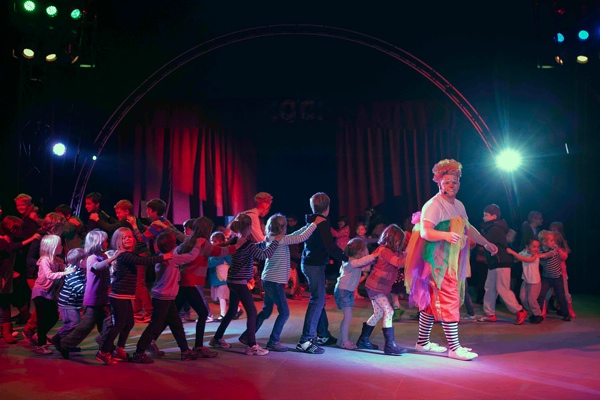

Photographs copyright © Colin O’Brien
You might also like to read about
David Carpenter, Ocularist
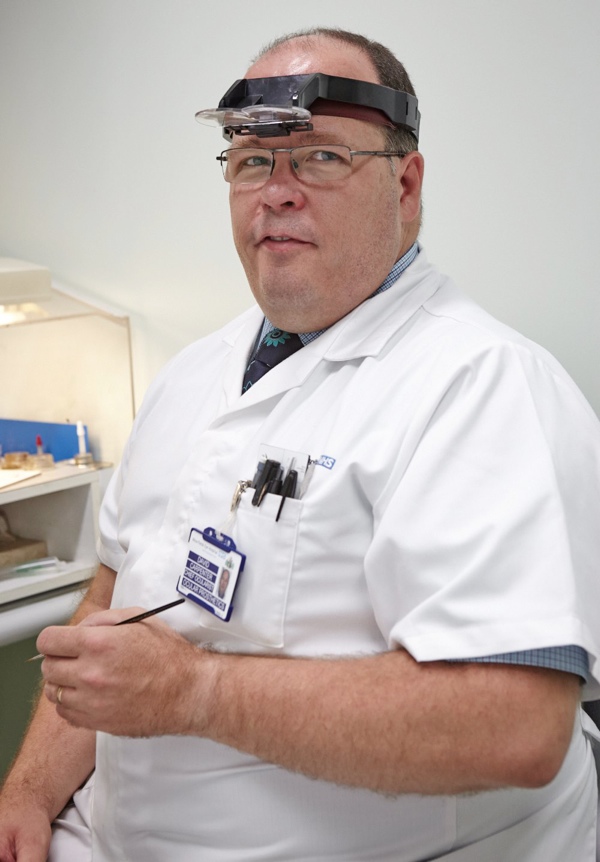
David Carpenter
In the nineteenth century, artificial eyes were sometimes made of lead-based glass, so if the owner were to walk in extreme cold temperatures and then enter a warm room with a blazing fire, there was always a danger their eye might explode – a risk that, thankfully, has been overcome these days through the prudent use of crystallite rather than glass.
This was just one of many memorable pieces of information upon the esoteric subject of glass eyes that I garnered when Contributing Photographer Patricia Niven & I visited David Carpenter, Chief Ocularist, at the Moorfields Eye Hospital in the City Rd this week. David and his team of four produce more than thirteen hundred eyes annually – each one hand-crafted and individually-painted – to replace those that get lost in the capital.
It may sound like an awful lot of eyes but David and his colleagues are so skilful that, if you were not looking for it, you would not notice the results of their handiwork. Such is their success in creating life-like eyes – David assured me – that you probably know people with artificial eyes but you do not even realise.
Yet there is far more to the work of an ocularist is than just technical expertise. “If people have to have an eye removed because they’ve had a tumour or a cancer, it’s akin to losing a limb,” David admitted to me quietly, “They put their life on hold – then, after surgery and the healing process, they come to me and I make the prosthetics. You give them an eye, but really you are giving them their life back. It can be a great moment when you give them their glass eye – often, they cry with joy and, sometimes, they give you a hug.”
As one who has wrought such transformations for the better in so many people’s lives – simultaneously a technician, an artist and a counsellor – David certainly carries his role lightly. “I make little model tanks, I made them as a kid and I’ve never stopped,” he confessed with a blush, revealing the early manifestation of his distinctive talent, “and when I applied for this job, I was able to show them to prove I could do modelling.”
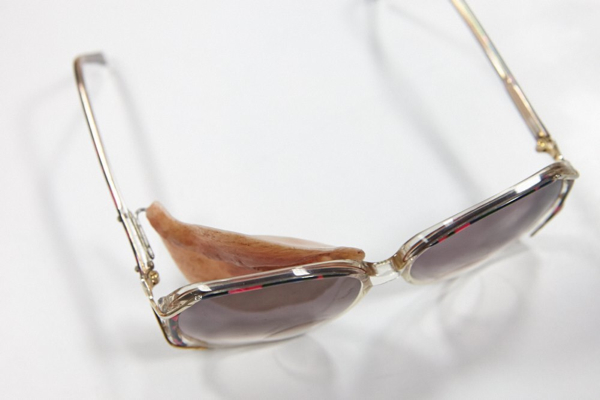
“Let me get out my box of bits to show you,” David suggested enthusiastically, pulling a container from a cabinet that looked it might contain a sponge cake, only it actually contained a selection of glass eyes and pieces of rubber prosthetics attached to spectacles.
Glass eyes are not round like marbles – as I had naively assumed – but curved like sea shells, so they fit neatly under the lid and can move in tandem with their living partner. David makes a cast to ensure that the eye fits its owner perfectly and then paints the pupil with the patient in front of him, using his expert judgement to match it exactly. “An eye is more than just one colour, you’ll need to use two or three colours to get the effect you want,” he informed me, “You start with a little black disc and you paint lines outwards from the centre and these striations of different tones blend to create the colour of the pupil. In the States, they have tried to do this digitally but the effect is flat whereas building up the layers of paint creates a more three dimensional effect.” Then David pointed out how unravelled strands of red embroidery thread are used to create the impression of veins upon the white of the eye and grinned with pleasure as he studied the convincingly life-like result.
It was surreal to stand in the workroom surrounded by lone eyes of every hue peering at us, yet this was David’s normal environment and the place where he is at home. “I just fell into it really,” he informed me with shrug and a gauche smile, picking up an eye and polishing it tenderly with his finger, “I was training as a dental technician, making teeth at a college in Hastings – because I planned to emigrate to Australia and work in dentistry – when I saw an advert for an apprenticeship on ocularistry. Once you have trained as a dental technician, the next step is to become maxillofacial technician – I can make noses, ears, fingers – in fact, any part of the body that might get accidentally severed.”
“I can’t make arms and legs though, there are other people who do that,” he qualified modestly, acknowledging his own limitations, “but I can reconstruct any part of the face that is missing including the eye.” And then he picked up the pairs of spectacles with realistic parts of facial anatomy, noses and eyebrows, attached and proudly explained they were particularly useful for older people who might otherwise mislay their replacement facial features.
“I’ve worked here for sixteen and a half years,” he said, turning contemplative suddenly and speaking as if to himself, “I’ve got patients that I first saw when they were little babies who are now grown up and still come back to see me – there’s some that are almost friends.”
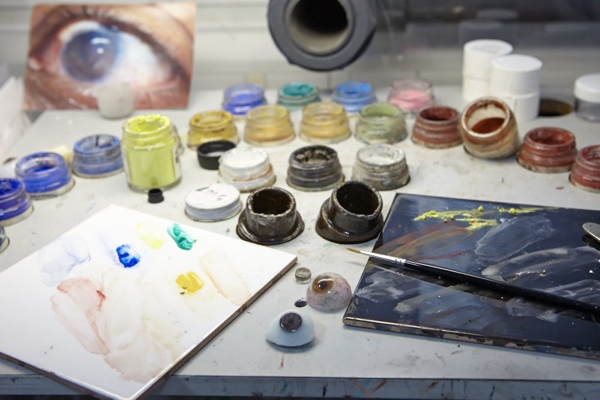
Painting artificial eyes
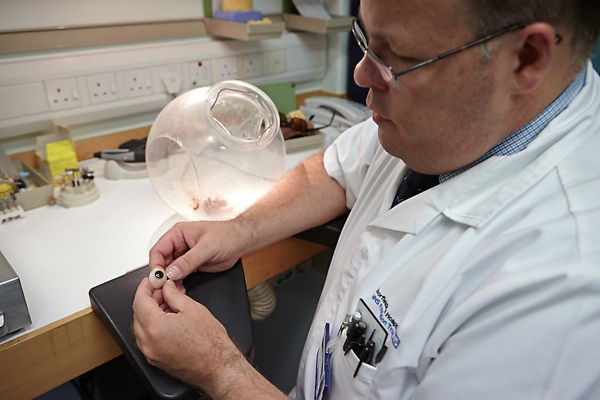
David scrutinises his handiwork critically
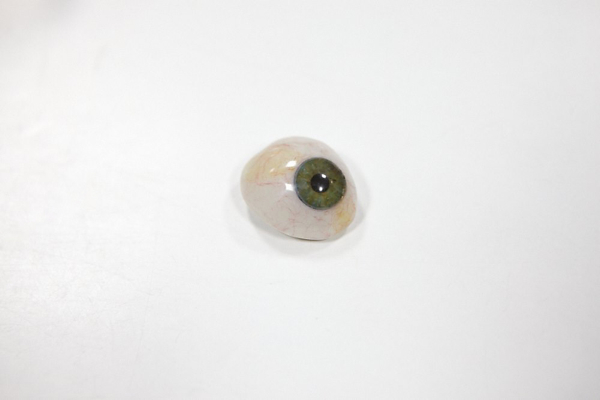
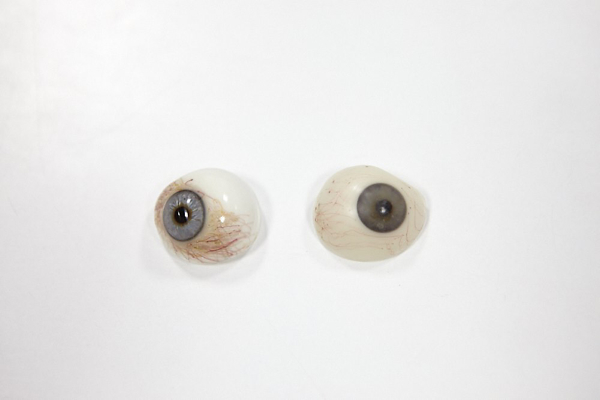
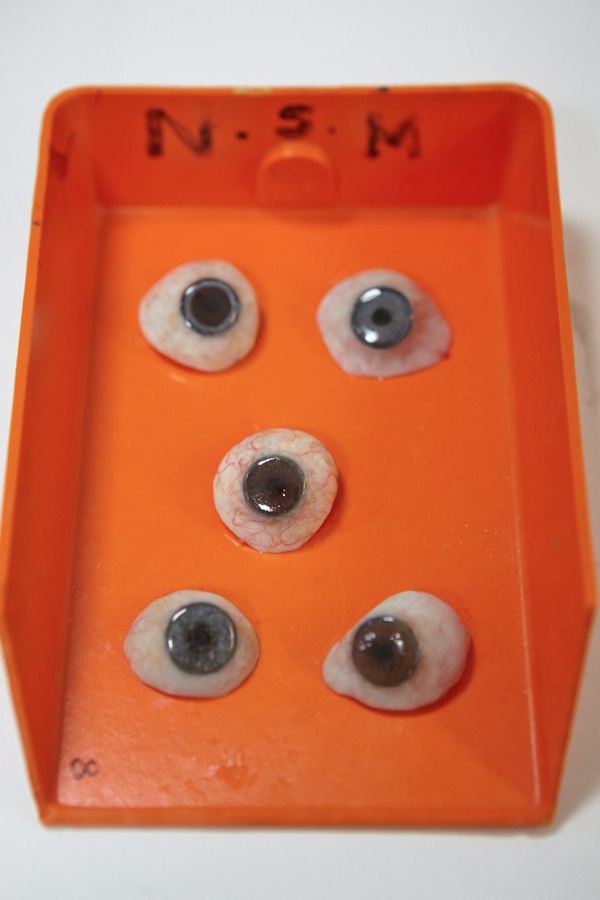
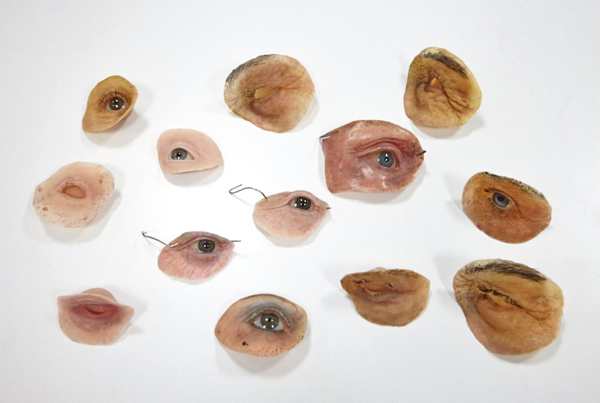
A selection of prosthetic eyes
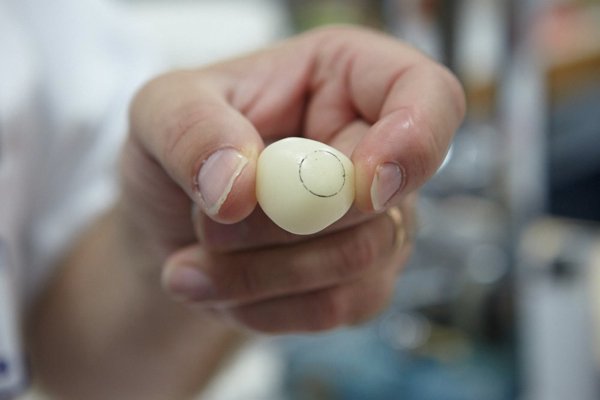
The white of the eye before the pupil is attached
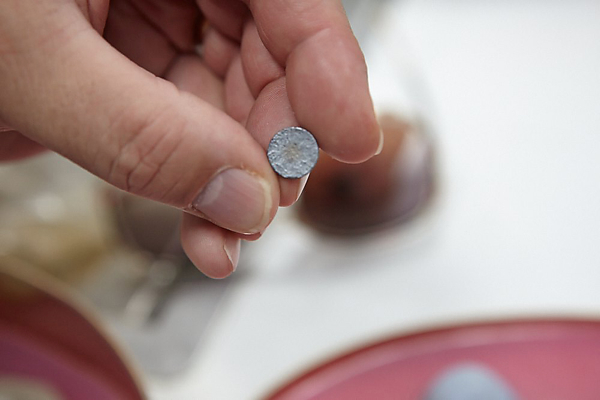
A pupil before painting
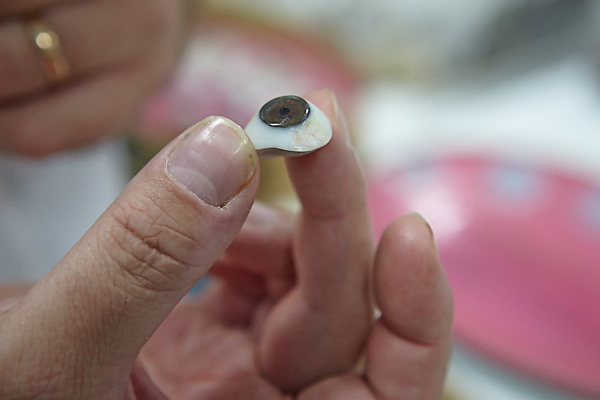
The pupil in place
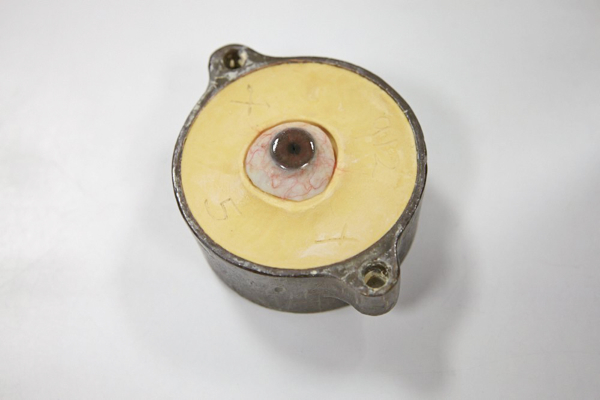
The finished eye emerging from the mould
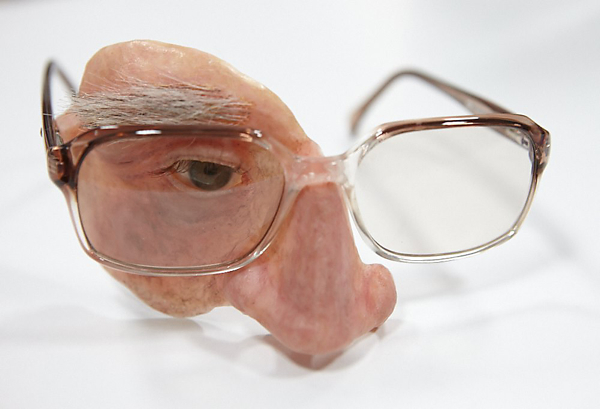
Prosthetic attached to a spectacle frame
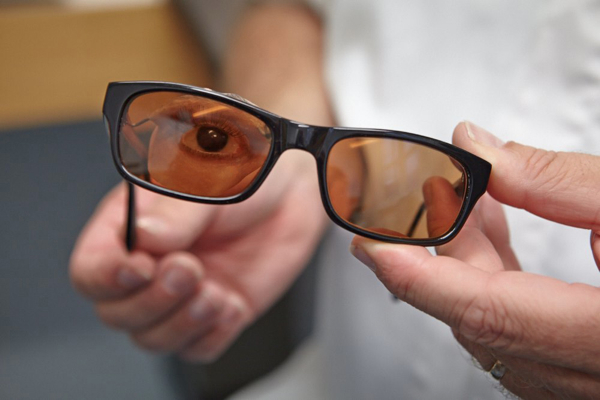
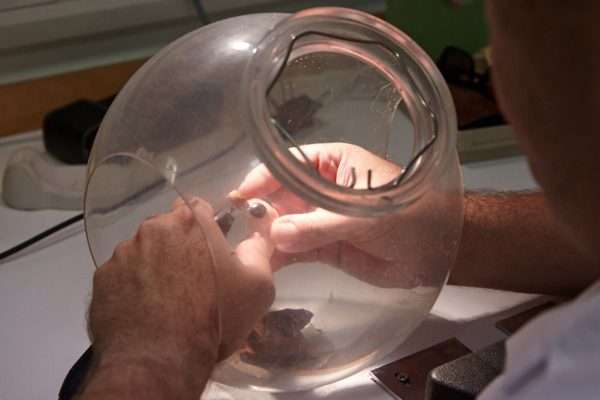
Polishing the eye
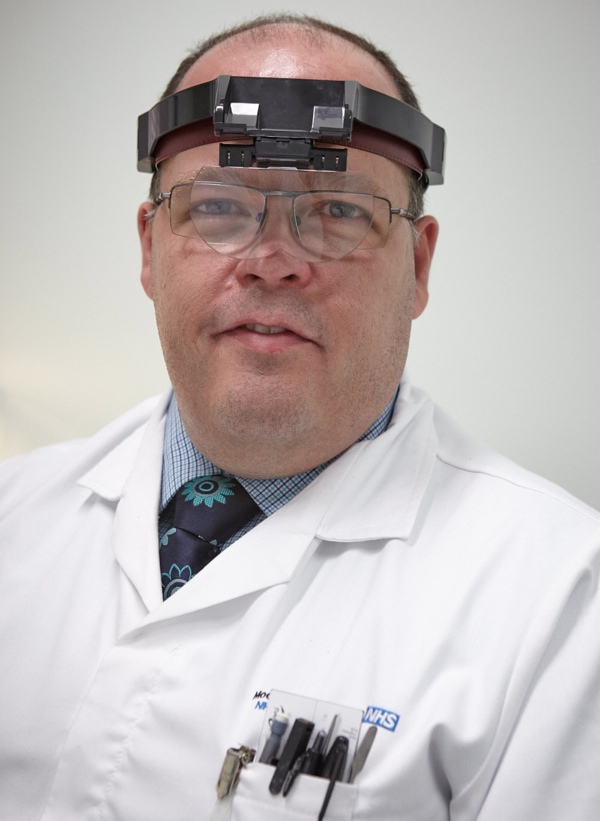
David Carpenter, Chief Ocularist at the London Eye Hospital
Photographs copyright © Patricia Niven
You might also like to read about
How To Write Your First Novel
Now that the days are drawing in and with long winter nights looming, I thought readers might contemplate the notion of writing a novel. And so, emboldened by the success of the blog writing courses I have been running, I invited three Spitalfields Life Contributing Writers – Rosie Dastgir, Kate Griffin & Sarah Winman, who have each written distinguished first novels – to devise a course to get you started. Meanwhile, I am teaching a course at The Guardian on 26 & 27th October entitled How to Write a Blog that People Will Want to Read, and we hope that between these two courses, we can offer you constructive assistance in your literary endeavours.
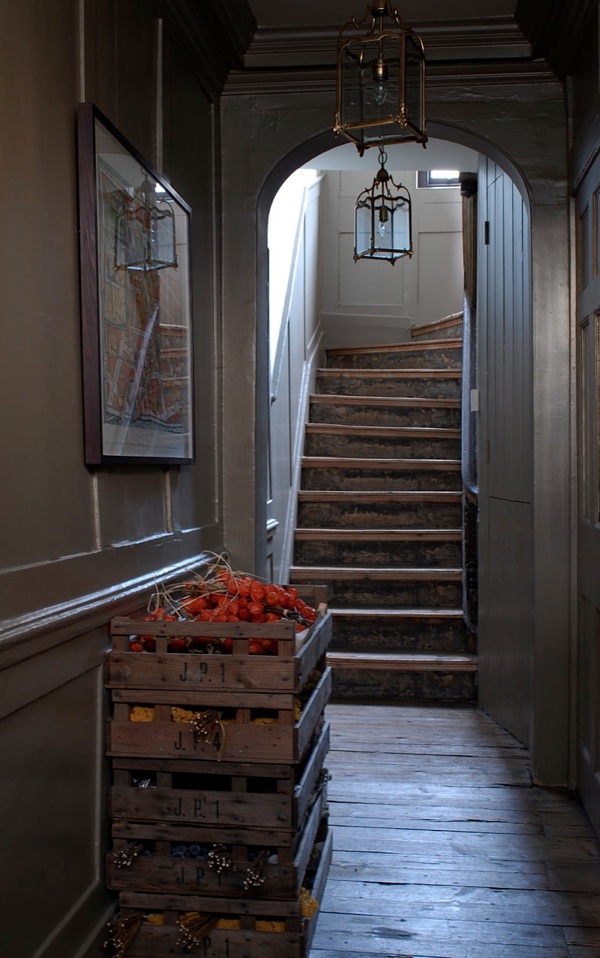
HOW TO WRITE YOUR FIRST NOVEL
Spend an inspirational weekend in an eighteenth century weaver’s house in Spitalfields in the company of three successful first-time novelists and explore how to write your novel.
Have you ever wondered how to find the story you want to tell?
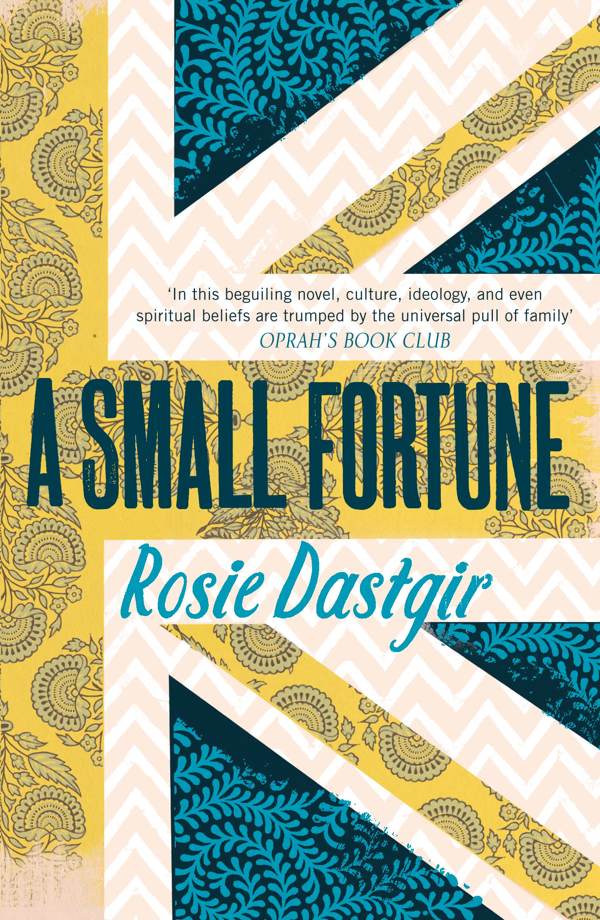
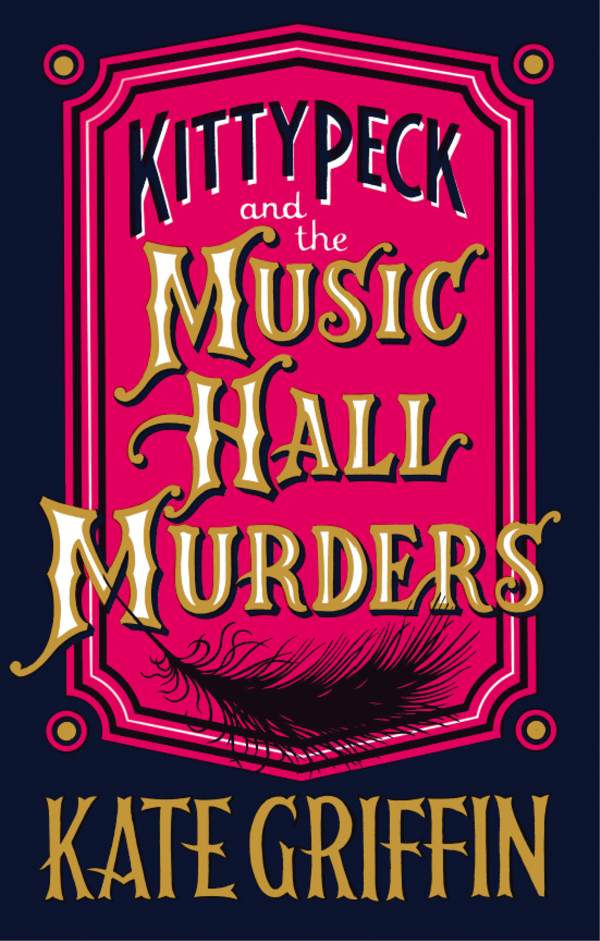
A two day course on how to begin writing your first novel, comprising a blend of talks by novelists, Rosie Dastgir (author of A Small Fortune), Kate Griffin (author of Kitty Peck & the Music Hall Murders) and Sarah Winman (author of When God Was a Rabbit), alongside practical exercises and discussion.
We suggest participants bring along an idea that they would like to pursue and, over the weekend, we’ll discuss and develop your work, and suggest possible approaches.
COURSE STRUCTURE
1. How Do You Get Started? Writing every day, learning to write without inhibition and finding a voice. Discovering your subject and researching it. We’ll offer a choice of writing prompts to get people moving forward with their ideas.
2. What Are The Elements of Writing Fiction? We’ll give a brief survey of narrative voice and point of view, and look at showing versus telling, intuition versus structure, and plot versus story.
3. Where Do Characters Come From? Are they born or made? How do you invent plausible characters? Drawing on examples in literature and working with practical exercises, we’ll address the elusive business of creating character.
4. Writing Dialogue. Finding your characters’ voices. How do you make characters distinctive from one another? We’ll show ways – with practical exercises – to inject life into your characters’ sentences.
5. Personal Stories. Why are so many first time novels autobiographical? How do you fictionalize your material? We’ll look at some first novels and see what works.
6. Our Practical Experiences Of Writing A First Novel. Strategies for finding an agent, getting a publisher – the pitfalls, highs and lows.
SALIENT DETAILS
The course will be held at 5 Fournier St, Spitalfields on Saturday 9th and Sunday 10th November from 10am -5pm. Lunch catered by Leila’s Cafe and tea, coffee and cakes by the Townhouse are included within the course fee of £250.
Accommodation at 5 Fournier St is available upon enquiry.
Email spitalfieldslife@gmail.com to book a place on the course.

Rosie Dastgir, author of A Small Fortune
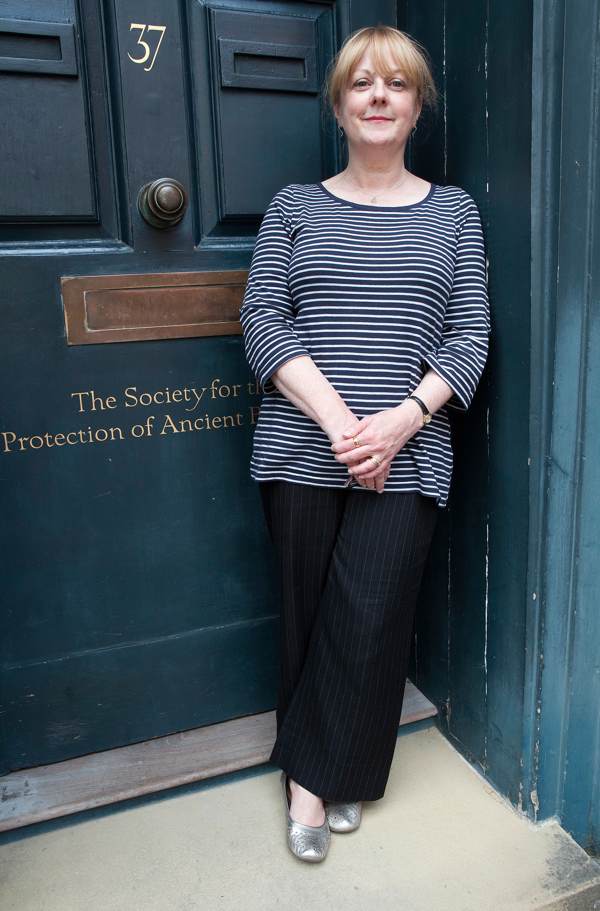
Kate Griffin, author of Kitty Peck & the Music Hall Murders
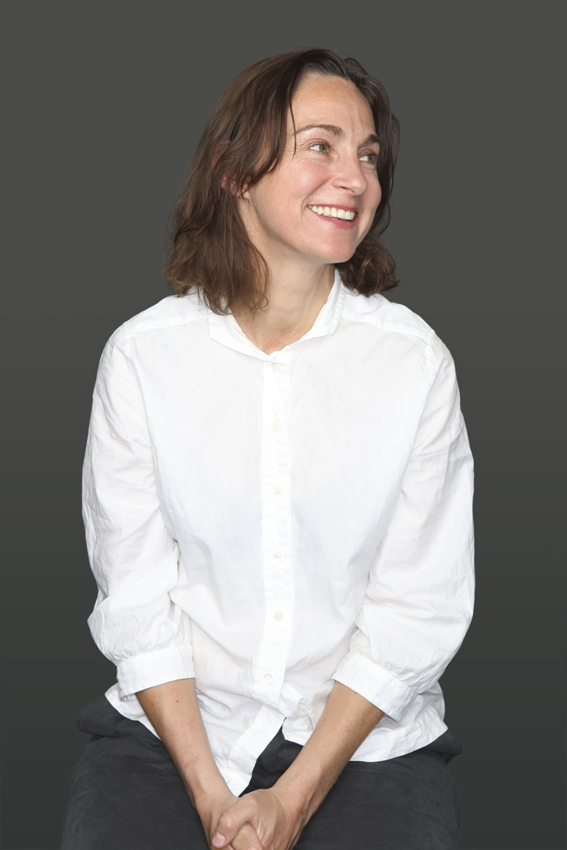
Sarah Winman, author of When God was a Rabbit

Portrait of Kate Griffin copyright © Colin O’Brien
Portrait of Sarah Winman copyright © Patricia Niven












