
Remembering The Queen Elizabeth Hospital For Children

Playing at Doctor – A Scene in the Hospital for Children, Hackney Rd, Bethnal Green
The former Queen Elizabeth Hospital for Children in the Hackney Rd is a landmark of deep significance for generations of East Enders, yet a decision to flatten it and replace it with densely-built generic ‘new slums’ type flats has been made by Tower Hamlets Council, without any public consultation, dismissing the option of integrating the old building into the housing scheme. As the decision goes to the Mayor of London, Boris Johnson, on Wednesday this week there is one last chance to save it. So today, I sketch a brief history of the tradition of care that had its home there for over one hundred and twenty years in the hope that this will not be erased.
In 1867 – Quaker sisters, Ellen & Mary Elizabeth Phillips, established a Dispensary for Women & Children in two rented rooms in Virginia Rd, Shoreditch. The previous year, at the time of the cholera epidemic in the East End, Ellen had worked in the cholera wards at the Royal London Hospital in Whitechapel through a connection to Elizabeth Garret, Britain’s first woman doctor. By 1871, the sisters had the lease at 327 Hackney Rd, on the site that would one day become their custom-built hospital to minister exclusively to the needs of sick children.
Just three years later, they laid the foundation stone for the building in adjoining Goldsmith’s Row, attracting Royal patronage and the support of Oscar Wilde who wrote a poem for their fund-raising publication. The attractive terracotta sunflower freizes upon William Beck’s building reflect the Arts & Crafts style of this era and, throughout the interior, details of iron work and ceramic tiled floors continue this decorative theme. In 1904, the building on Hackney Rd was added, defining the triangular shape of the complex which continued to expand, acquiring additional buildings to fulfil the needs of the hospital throughout the twentieth century.
Amalgamation with the Queen Elizabeth Children’s Hospital in Shadwell in 1942 delivered the name by which it was most commonly known. Charles Dickens was patron of this hospital, that he found operating in a sail loft in 1869 and for which he raised money to build a dedicated hospital building.
Thus, two nineteenth century philanthropic ventures combined to create an institution that was absorbed into the National Health Service and closed at the end of the twentieth century when the services it offered were fulfilled elsewhere, rendering it defunct. Yet in 1974, it was the largest children’s teaching hospital in Britain with three hundred students every year and Victoria Holt, General Practitioner, remembers her time there fondly – as the most inspirational part of her training.
“I worked there in 1988 when I was training to be a GP in Hackney. The Hospital served the East End but it was also used by Great Ormond St as the place where their nurses were trained – they had to spend some time ‘roughing it’ in the East End. What was so special about the Queen Elizabeth was that it was the opposite of Great Ormond St, it didn’t have a rarified atmosphere. You could literally walk in the door and be seen in the Accident & Emergency Department. It was a genuinely open door policy, whoever you were and wherever you came from – people who had grown up in the East End would bring their children there from Essex because it felt like home to them.
The complete range of all children’s illnesses came through the door and I learnt to distinguish between a not-very-ill and a very-ill child really quickly. I learnt so much there, it meant that even though I was incredibly young, I had this depth of experience in paediactrics. It was about an ethos – there was a collective wisdom in the community – people understood that you took your sick children there, because that hospital had looked after their families for generations.”
Sign the petition to save the Queen Elizabeth Hospital Building here

The Queen Elizabeth Hospital closed in 1996

The Queen Elizabeth Hospital opened on this site in 1872

“Each nurse shall attend to the children with care and kindness, and use every endeavour to make them happy.” – from the Hospital Constitution of 1874


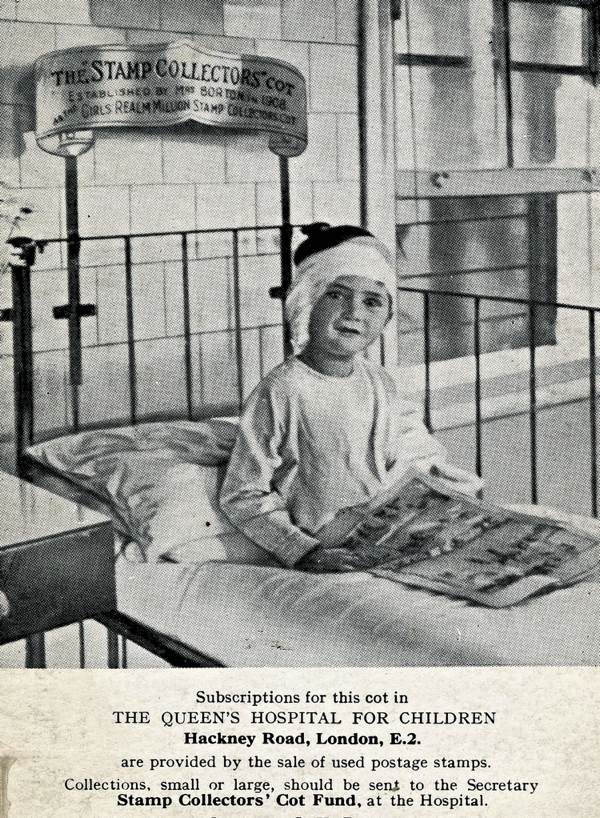

The Hackney Rd building opened in 1904

The Goldsmiths Row Building with its attractive sunflower freizes was opened in 1880

Victoria Holt is a GP who did part of her training at Queen Elizabeth Hospital for Children in 1988 – “The complete range of all children’s illnesses came through the door and I learnt to distinguish between a not-very-ill and a very-ill child really quickly. I learnt so much there…”
Portrait of Victoria Holt © Colin O’Brien
Archive images courtesy Prof Rob Higgins
At The Launch Of My Album
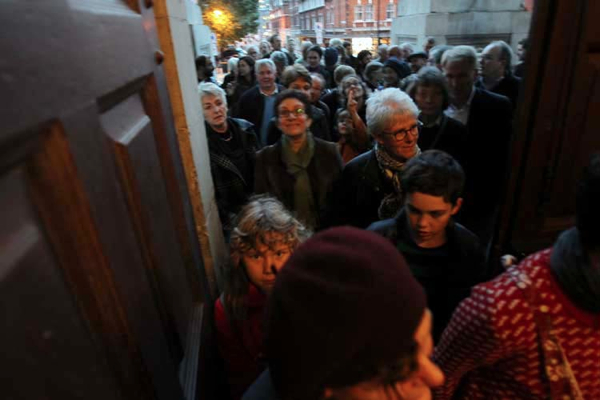
The crowds pour into Christ Church
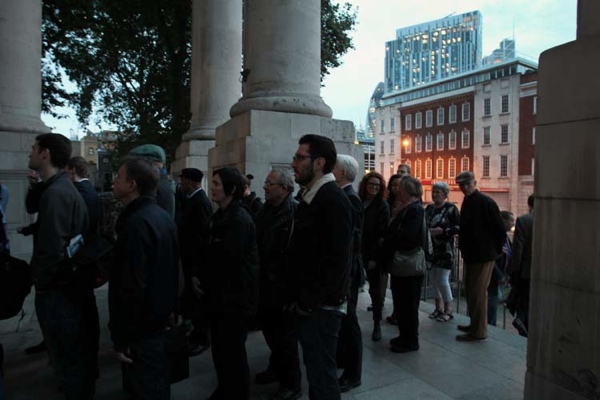
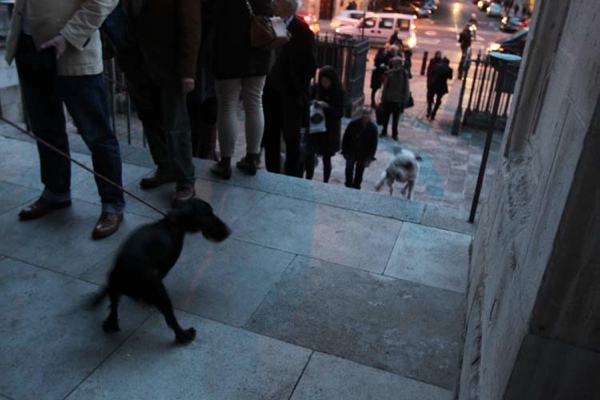
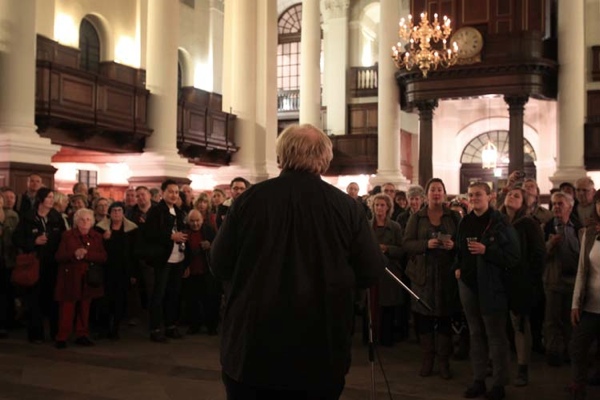
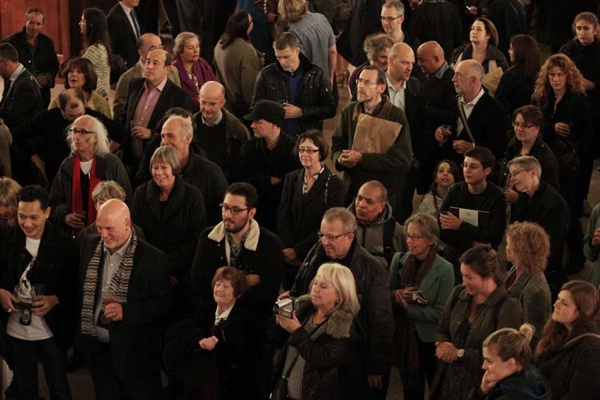
In Spitalfields, the October dusk was gathering as the bells rang out through the narrow streets to summon the crowds and, when the great wooden doors swung open, the excited throng poured in to fill the magnificent baroque church.
But Crudgie, London’s most famous motorbicycle courier, celebrated for his great height and astonishing facial hair, was already inside. Ever ingenious at finding ways in, “Don’t people realise there is a side door? “ he queried with more than a hint of swagger. I showed him his portrait in my Album. “Oh! Couldn’t you have airbrushed my nose?” he gasped, exclaiming in surprise at seeing himself. “It’s a very fine nose, Crudgie,” I reassured him, as he took consolation in a glass of Truman’s beer.
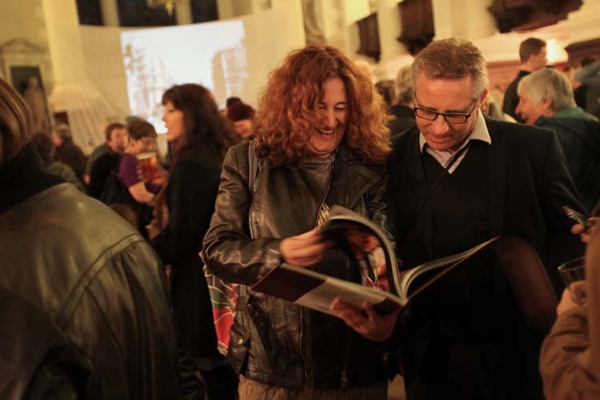
Just that morning, I had collected the huge screen sewn together by the tailor in Hanbury St from fabric supplied by Crescent Trading in Quaker St, and now favourite images from the Album appeared shining like apparitions in the gloom of the old church. After all the months that designer David Pearson and I worked through the night to make the most beautiful Album that we could for you, it was a joy to see people taking up the treasured copies and leafing through them with eager curiosity now.
With newly-purchased copies under their arm, guests were enjoying Justin Gellatly’s spicy buns and slices of his enormous ‘Cathedral Loaf ‘served by the team from Leila’s Shop. One by one, people from the Album appeared as if they had stepped from its pages to join the party.
There were Punch & Judy Professors meeting Wax Ladies from Wentworth St meeting Boxers photographed by John Claridge. There was Gary Arber the printer, Henrietta Keeper the ballad singer, Sandra Esqulant the Queen of Spitalfields, Clive Murphy the Oral Historian, Viscountess Boudica the Trendsetter from Bethnal Green, Mister Mondo representing the Pellicci regulars, among many others – and Aaron Biber, London’s Oldest Barber at ninety-one years old, was guest of honour. Meanwhile in a corner, Barn the Spoon produced an unfeasibly large pile of wood chips as he took the opportunity to show off his bravura spoon-making abilities by knocking up a few examples for guests.
Then it was time to sit at a table and inscribe copies of my Album and enjoy the rare opportunity of this special occasion to meet you, the readers. It was an extraordinary moment, as I sat signing books – after writing more than fifteen hundred stories over the last four years and two months – to realise how far we have come together. And it fills me with excited anticipation to continue in my chosen path through the years that lie ahead and discover where it will all lead…
Event photographs by Simon Mooney & paparazzi shots by Jeremy Freedman
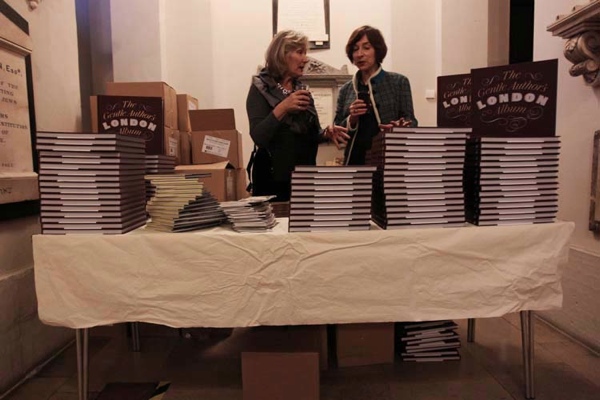
On bookshop duty, Charlie De Wet and friend enjoy a bracing drink before the doors open
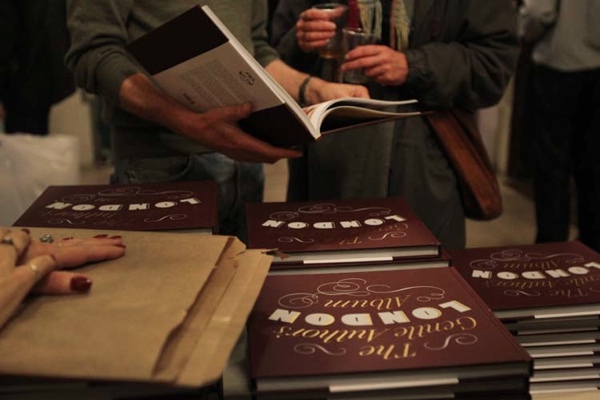
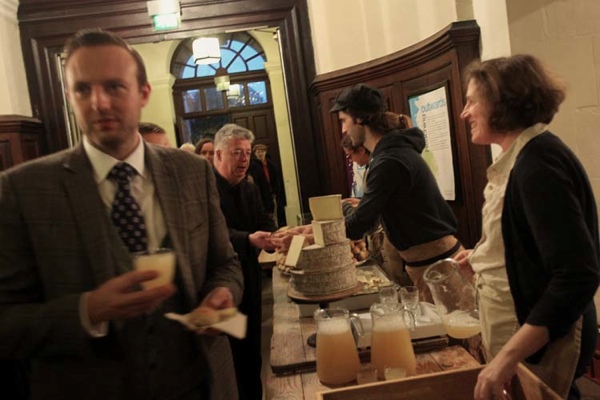
Leila McAlister serves Justin Gellatly’s spicy buns with slices of caerphilly to Punch & Judy Professors
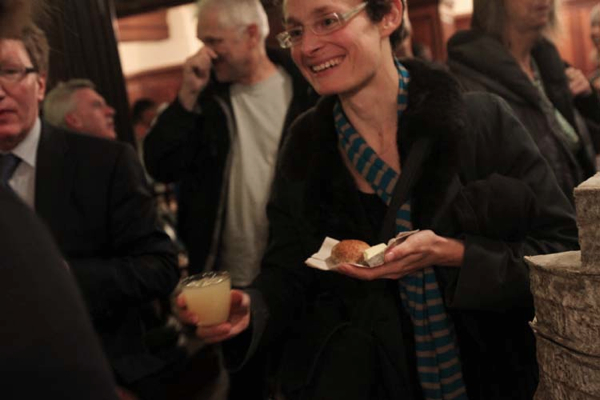
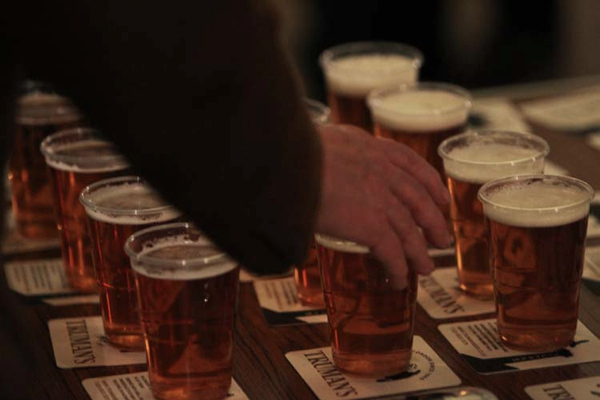
Glasses of Truman’s Swift & Swallow to quench our literary thirst
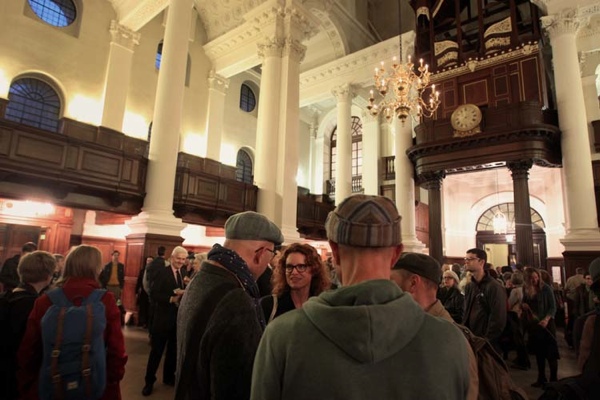
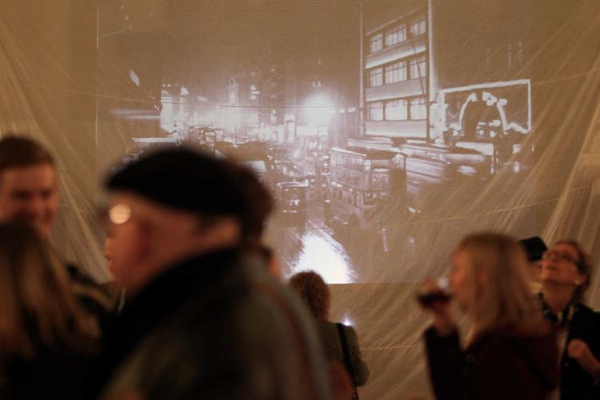
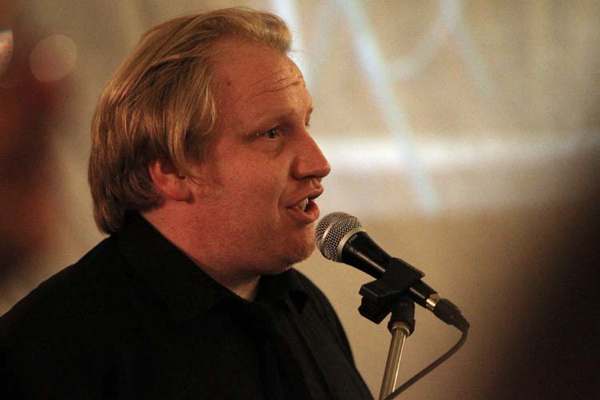
Stefan Dickers, Archivist at the Bishopsgate Institute, makes the speech of welcome
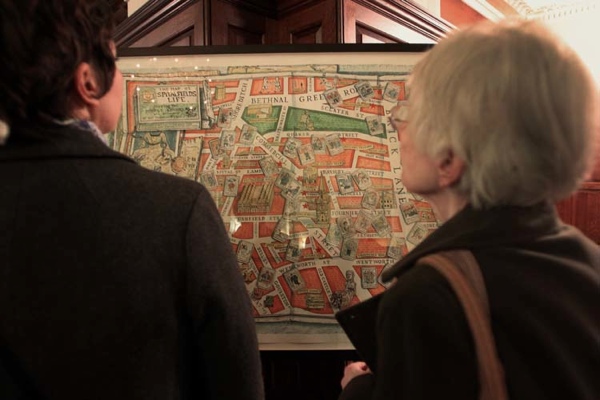
Admiring Adam Dant’s ‘The Map of Spitalfields Life’
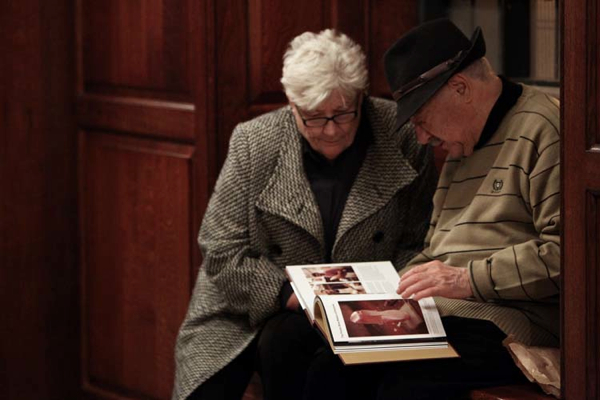
Actor Harry Landis settles down to look at the Album
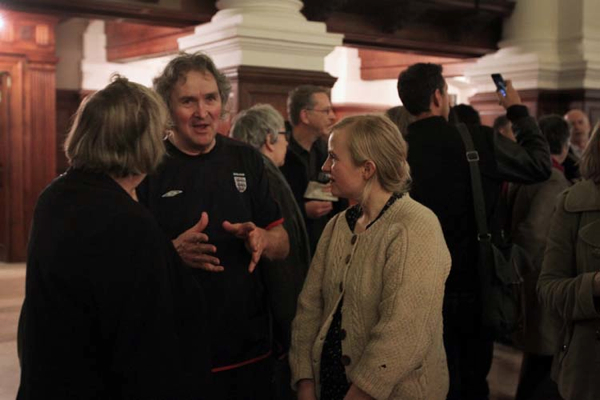
Paul Gardner regales Ros Niblett and Jo Waterhouse
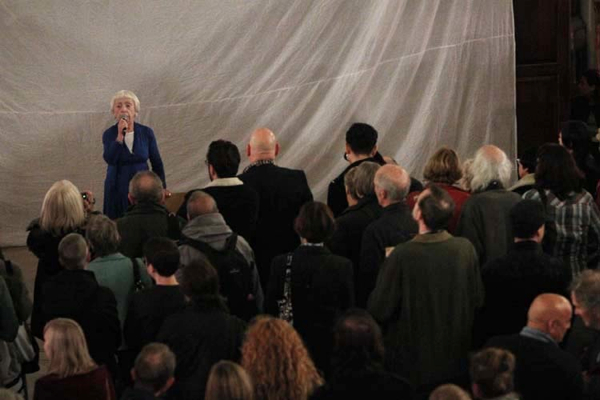
Tate & Lyle Concert Party Veteran, Henrietta Keeper, sings
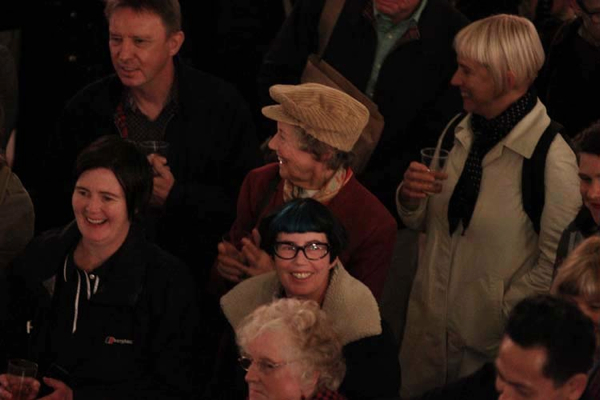
Roger Mills and Mavis Bullwinkle spotted in the crowd
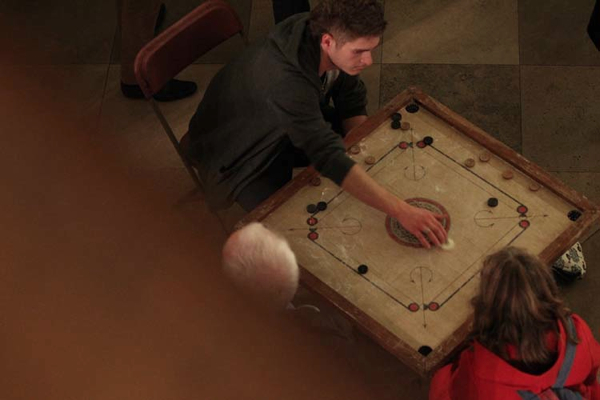
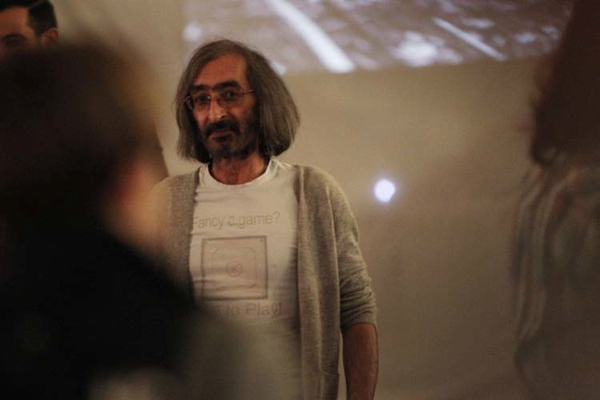
Carrom Paul was teaching the rudiments of Carrom
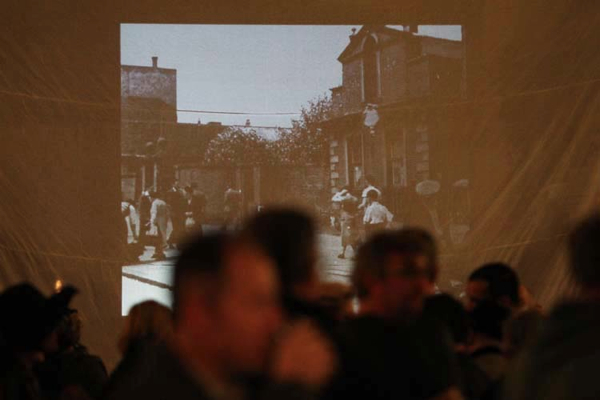
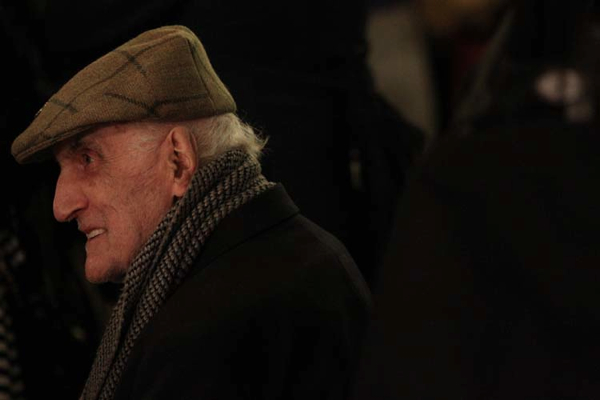
At 91 years old, Aaron Biber London’s Oldest Barber, was guest of honour
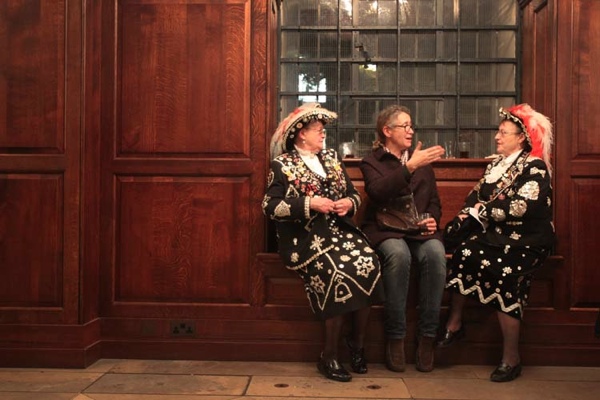
Pearly Queens enjoy a chinwag
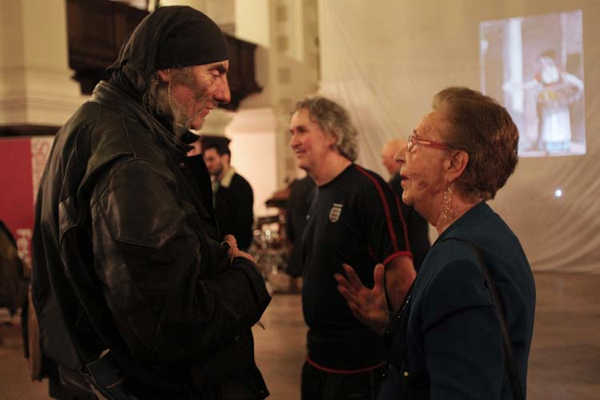
London’s most famous motorcycle courier, Crudgie, flirts with Joan Rose
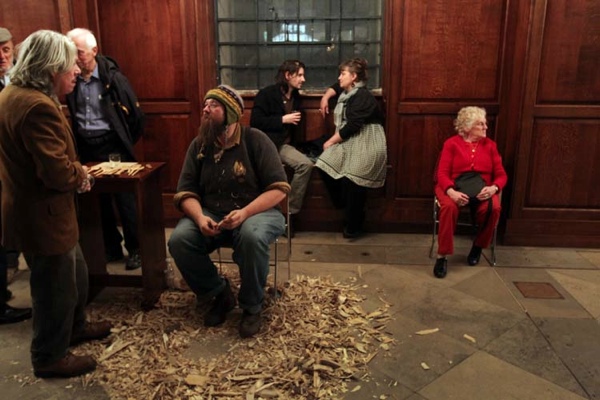
Barn the Spoon quickly produced a pile of wood chips
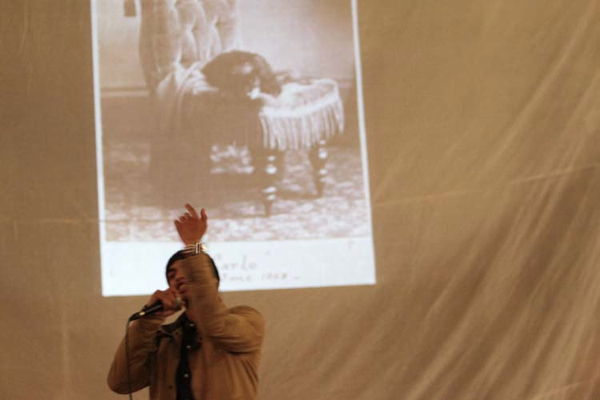
King Sour performed his poems
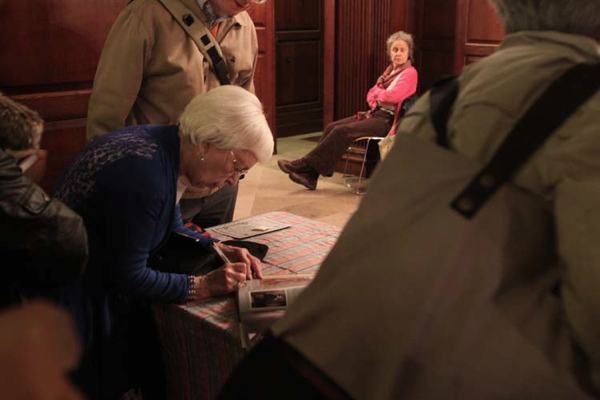
Henrietta Keeper signed autographs for fans
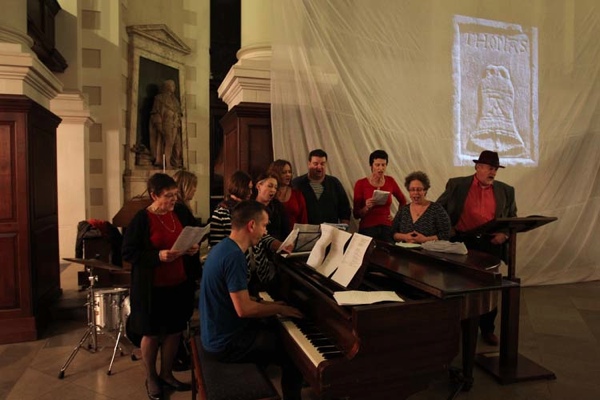
Staff of Bishopsgate Institute performed as ‘The Costermongers’
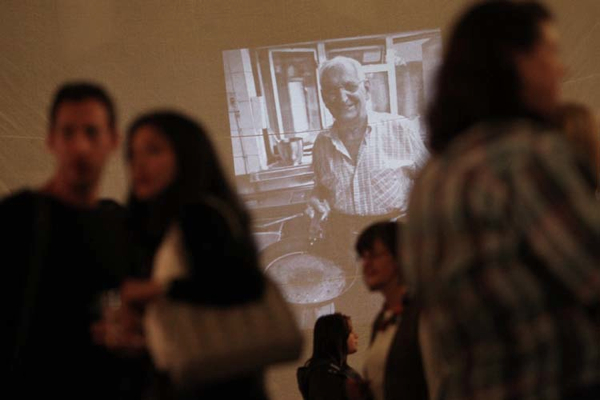
Remembering Philip Christou of Gina’s Restaurant
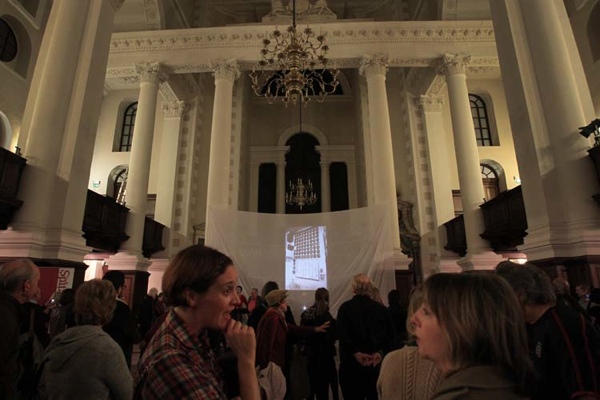
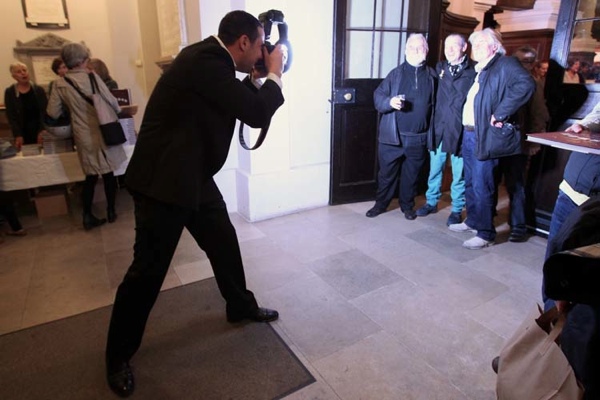
Photographer, Jeremy Freedman, got out his ring flash and turned paparazzi, as you see below
Pictures above copyright © Simon Mooney
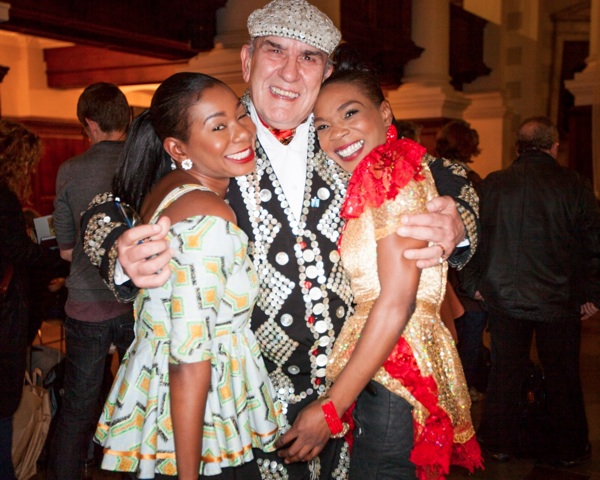
Pearly King grapples with Tayo & Abby Abimbola
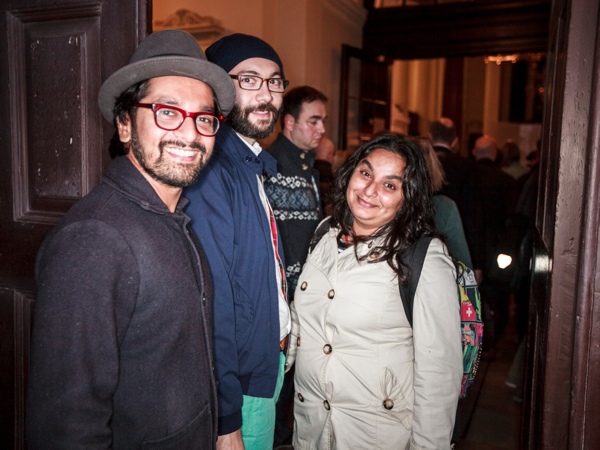
Delwar Hussain and Julie Begum
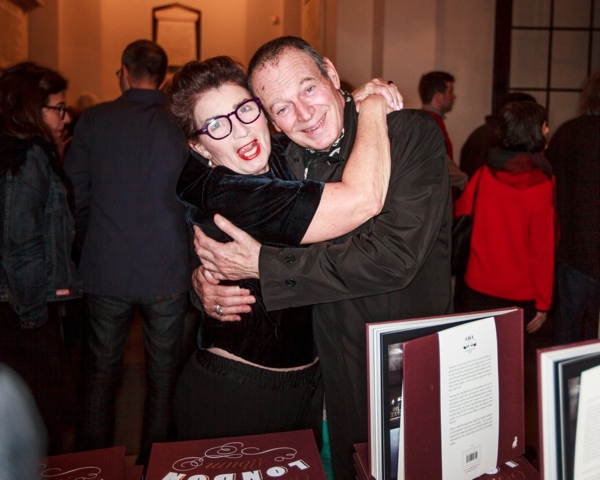
Landlady of The Golden Heart & Queen of Spitalfields, Sandra Esqulant, & Rodney Archer, Aesthete
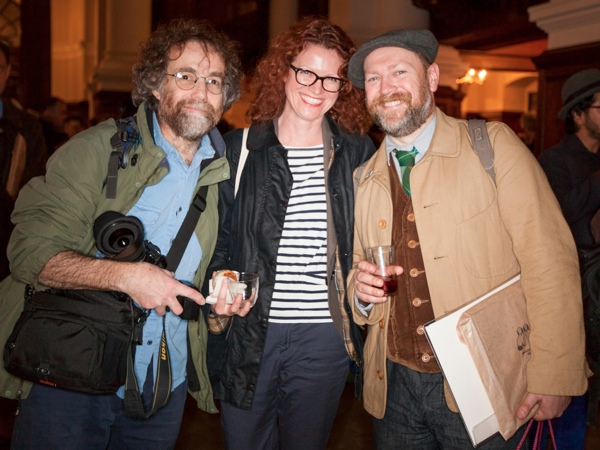
Photographers Bob Mazzer & Patricia Niven with Paul Bommer, Artist.
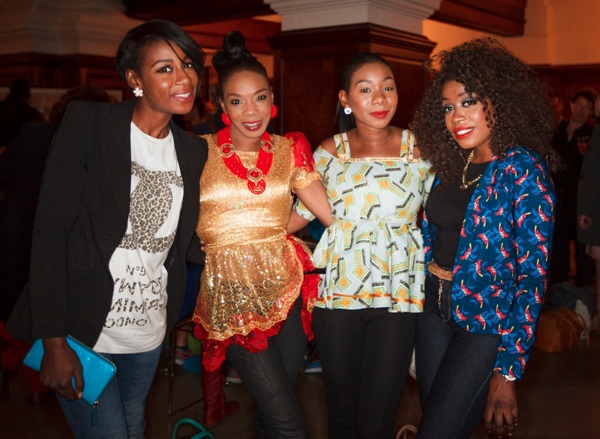
The glamorous Abimbola sisters of Franceskka Fabrics in Wentworth St
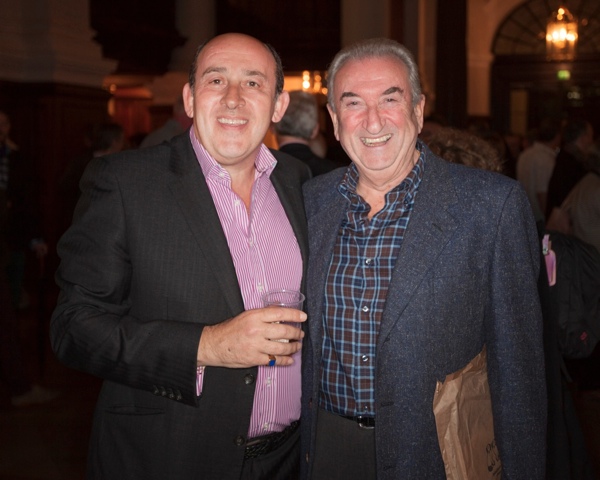
Henry Freedman with Philip Pittack of Crescent Trading
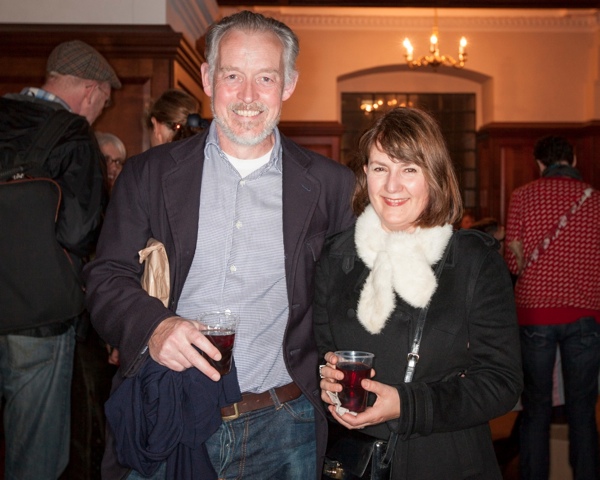
Angling Writer, John Andrews, & the Duchess
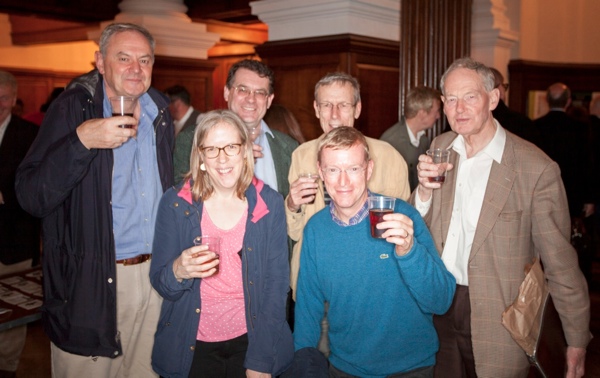
Cheers to the Spitalfields bell ringers!
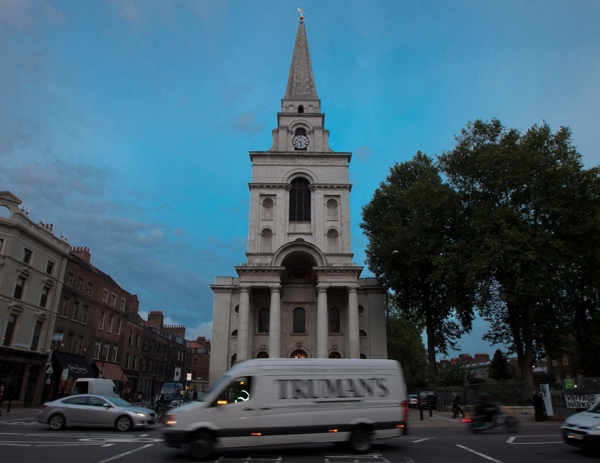
The Truman’s van arrives at Christ Church
Paparazzi shots copyright © Jeremy Freedman
You may also like to read about
Mr Pussy Gives His First Interview
Recently, Mr Pussy was featured by Tom Cox as ‘Literary Cat of the Week’ in Under the Paw.

Name?
Mr Pussy
Nicknames?
They call me ‘Rosemary’ as a tease sometimes – it is the name my first owner gave me as a kitten when she thought I was a girl. Hence the gender confusion.
Theme Tune?
Maybe it’s Because I’m a Londoner…
Age?
Twelve
Owners?
My first owner was a kind old lady called Valerie who loved gardening and taught me to love plants, but since her demise I live with the next generation.
Brief biography?
Born on the street in Mile End, then a wild five years in Devon catching rabbits and moorhens, but now back in the East End for good.
Catchphrase?
In the midst of life I woke to find myself living in an old house beside Brick Lane in the East End of London.
Favourite Habits?
Perching on a window sill and looking down imperiously. Licking up fresh running water in the sink. Sitting in patches of sunlight and on paper bags.
What constitutes a perfect evening for you?
Stretched out before the iron stove in an insensible stupor of warmth.
Favourite food?
I am partial to licking chicken liver pate off a finger.
Defining moment of your life?
The death of my mistress Valerie seven years ago. I search for her every day and still live by the routine that I established with her. I have not given up hope she might come back if I wait long enough. Like Hamlet, I wear my black coat in eternal mourning.
If you could do one thing to make the world a better place for felines what would it be?
Tell everyone to sit still.
If you could meet a celebrity who would it be and why?
William Shakespeare, because we share an instinctive appreciation of the lonely poetry of the night.
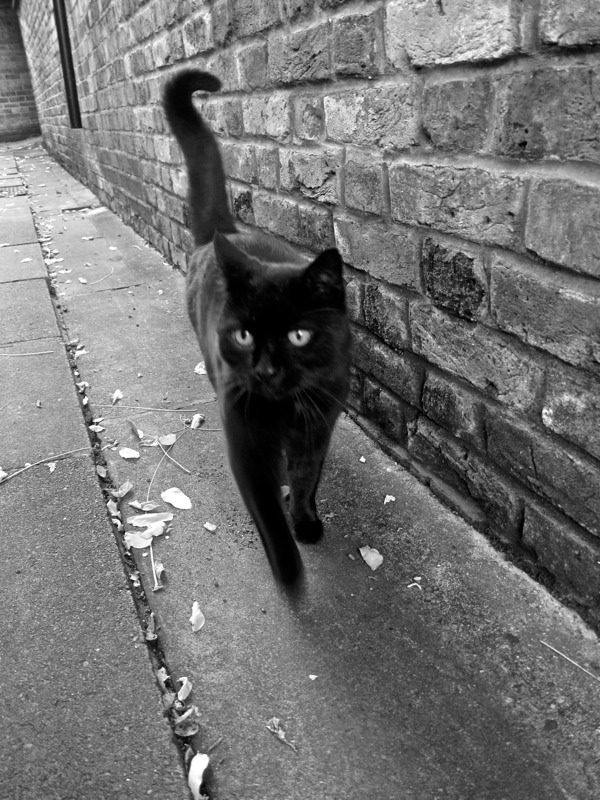
Here follows a selection of Mr Pussy’s photography
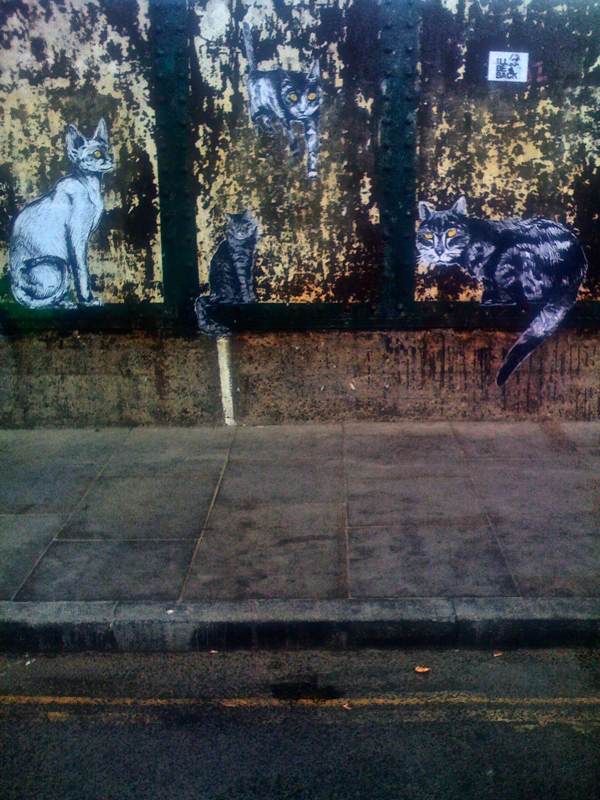
Interesting street art on Brick Lane
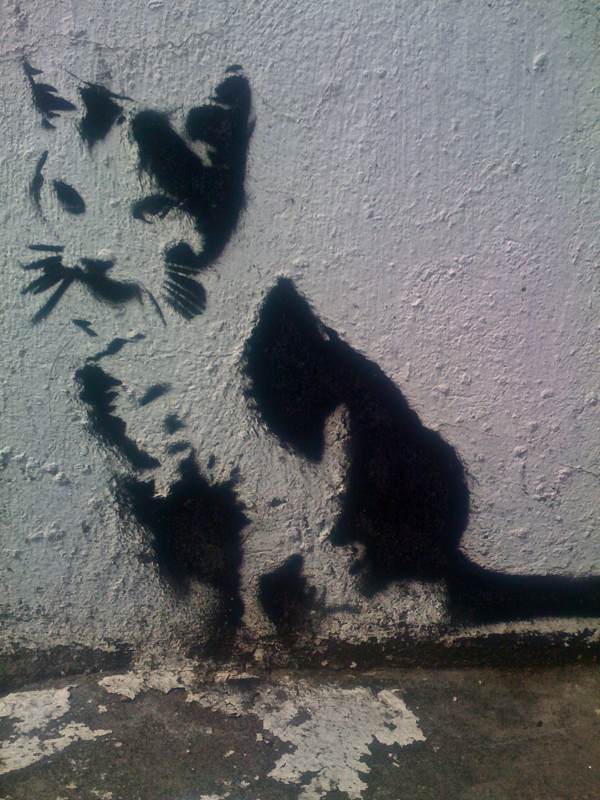
Masterpiece by Banksy

The cat that wrote the dictionary
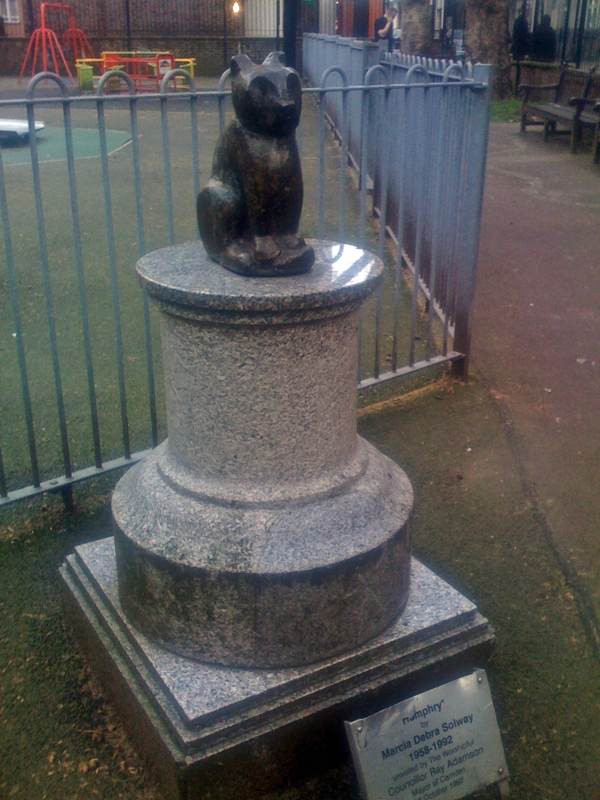
Attractive public sculpture in Bloomsbury
You may also like to read
and take a look at
The Cats of Spitalfields (Part One)
The Return of Justin Piers Gellatly
I visited Justin at his new bakery where he is making us 500 spicy buns for the launch party tonight.
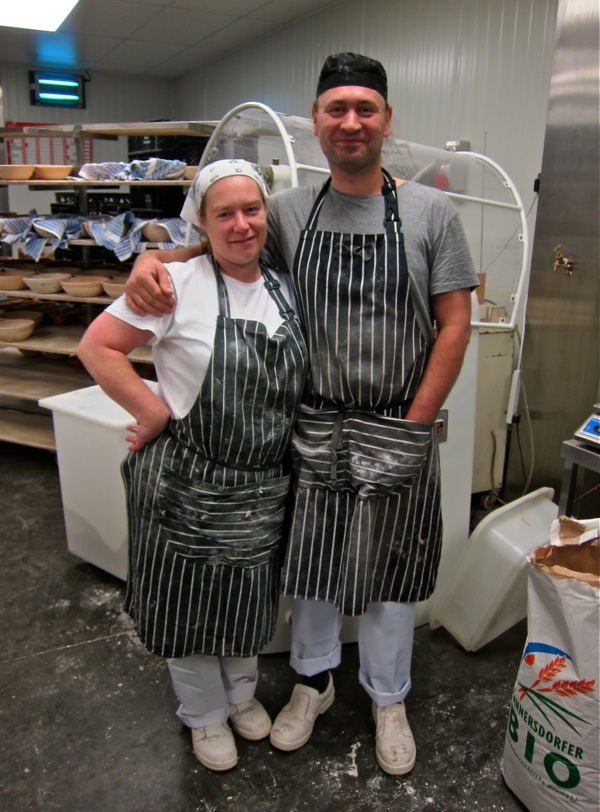
Justin & Louise Gellatly
I rose at four in the morning, walked down through the lonely City streets and crossed empty London Bridge to arrive at Borough Market where, in the shadow of Southwark Cathedral, Justin Piers Gellatly opened his new bakery recently. The reason I got up so early and why Justin’s progress is of such interest to me is that, for the last five years, I have been in thrall to his baking. Quite simply, Justin makes the best bread I ever tasted in my life. Some might describe him as a prince among bakers but I would call him the king.
This spring, after thirteen years, Justin left St John where he had been head baker, to take care of his sister who was unwell, but now he is back with a bakery of his own and he has brought his wife, Louise, along too. “I had planned to do something of my own eventually,” Justin admitted, “but Matt Jones of Bread Ahead offered me a partnership in the business, so I have complete control and I can do my own thing.”
It all started at a special service in Southwark Cathedral in September. “I made the sour dough starter in the Cathedral and the priest blessed it and I carried it back to the bakery and it’s gone like a rocket!” Justin confided to me, widening his eyes in wonder.
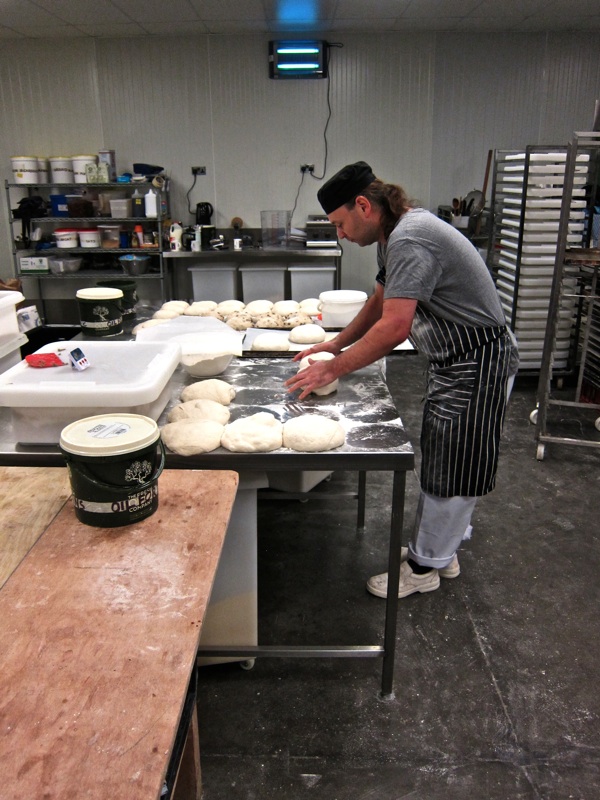
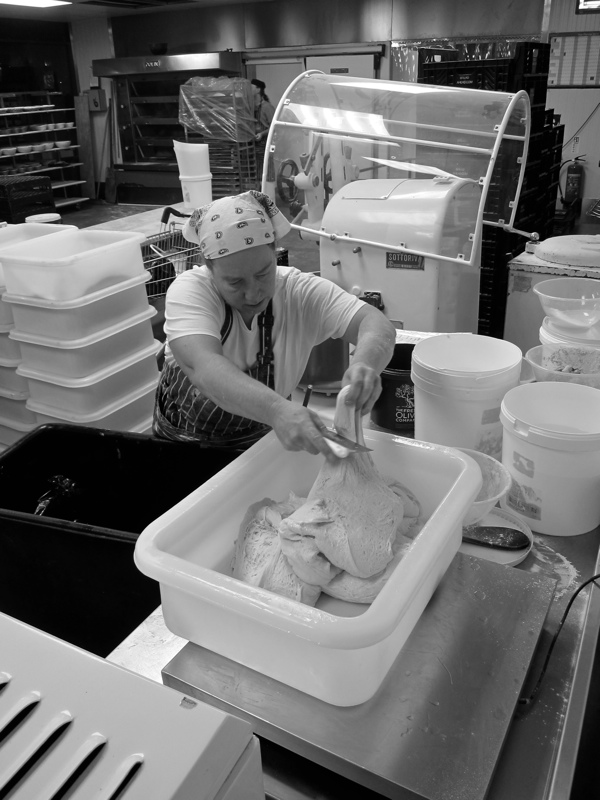
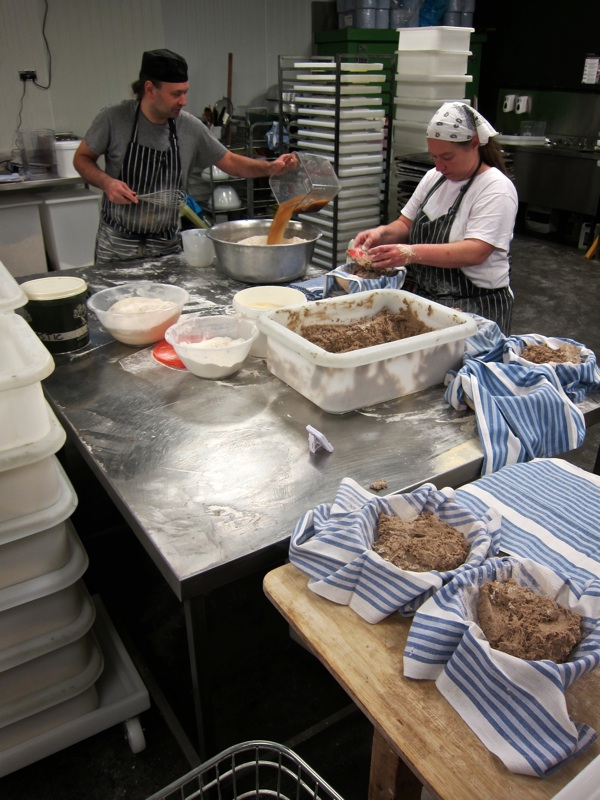
“We start at three or four in the morning and finish around twelve,” he continued wistfully, “we’re trying to avoid the nocturnal and see more daylight.” Across the other side of the bakery, Louise was man-handling heavy sacks. Previously a chef and now just a few weeks into her apprenticeship to her husband as a baker, she was making dough. “It’s the most important job,” Justin assured me while Louise wrestled with bags of flour,“but it’s also the least glamorous side of baking because it’s handling lots of heavy stuff.” Wiping perspiration from her brow and persevering with the task in hand, Louise did not disagree. “Louise is the focaccia queen,” he added in a respectful whisper, “she’s nailed it.”
With Justin wearing his square hat and Louise in her headscarf, and both swathed in their aprons, the pair look for all the world like medieval images of Mr & Mrs Noah from Noah’s Ark – and it was obvious they make an effective double act in the bakery too. “We have been together twenty-four years – since we were sixteen,” Justin revealed, “We ran off to Las Vegas and got married a few years back.”
The modestly sized new bakery supplies restaurants nearby and they sell their bread from a stall in the market six days a week – but soon they plan to open a baking school and teach others how to bake. “It will be a good thing,” Justin declared to me, turning evangelical, “because there’s not enough good bakers around.”
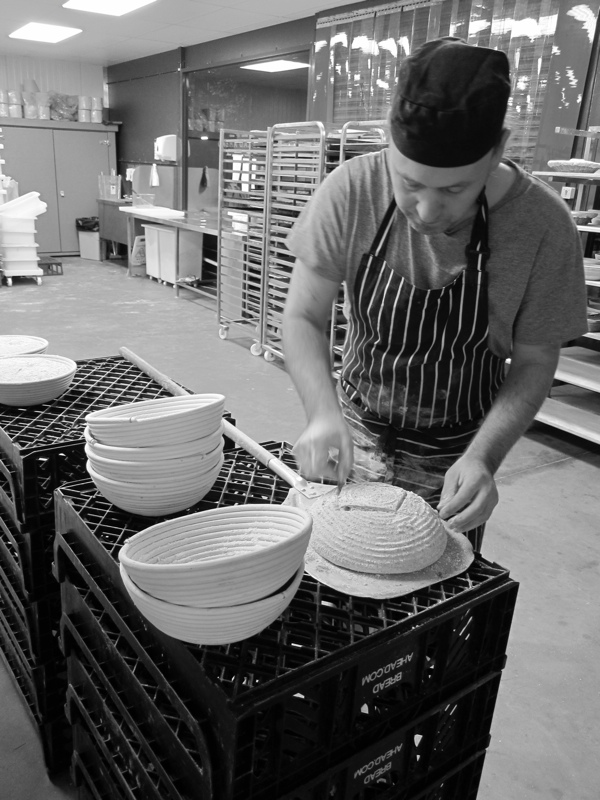
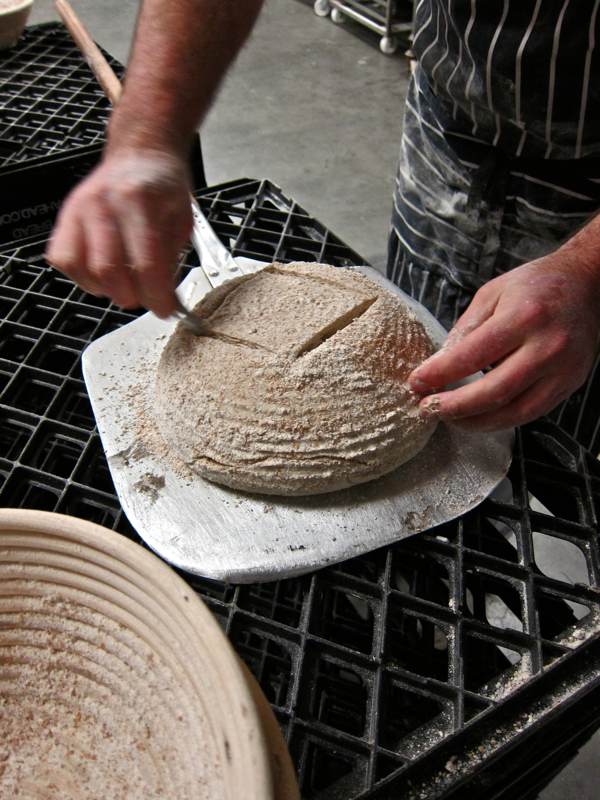
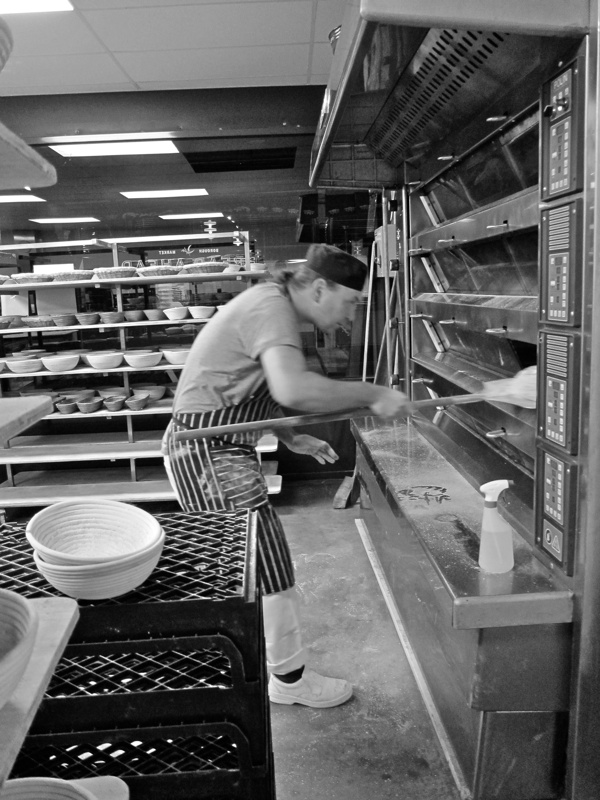
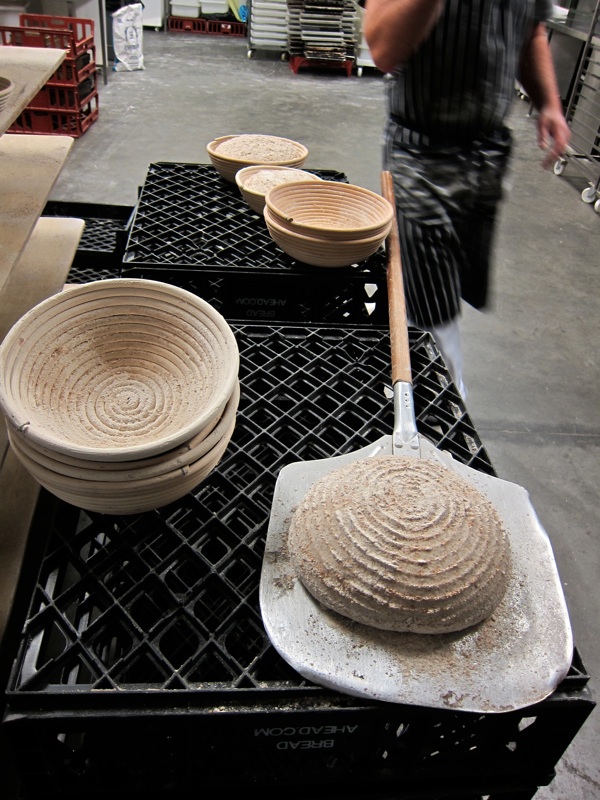
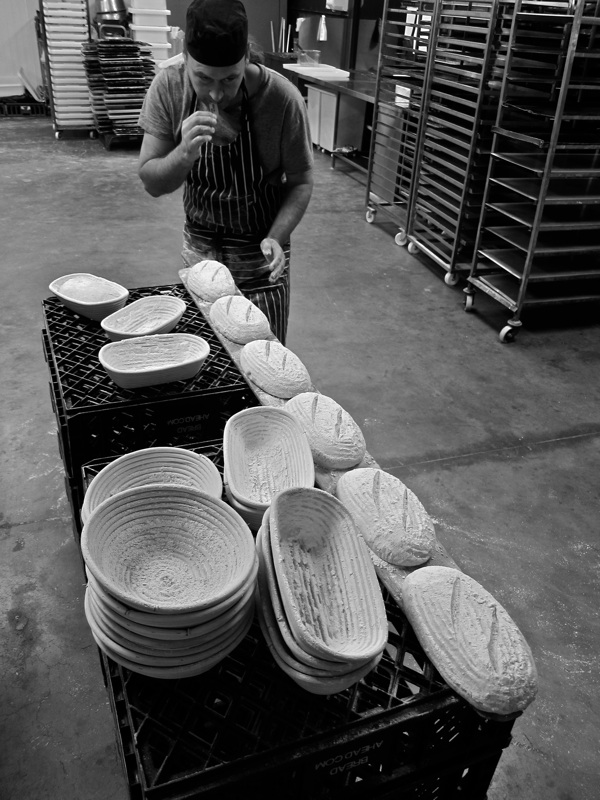
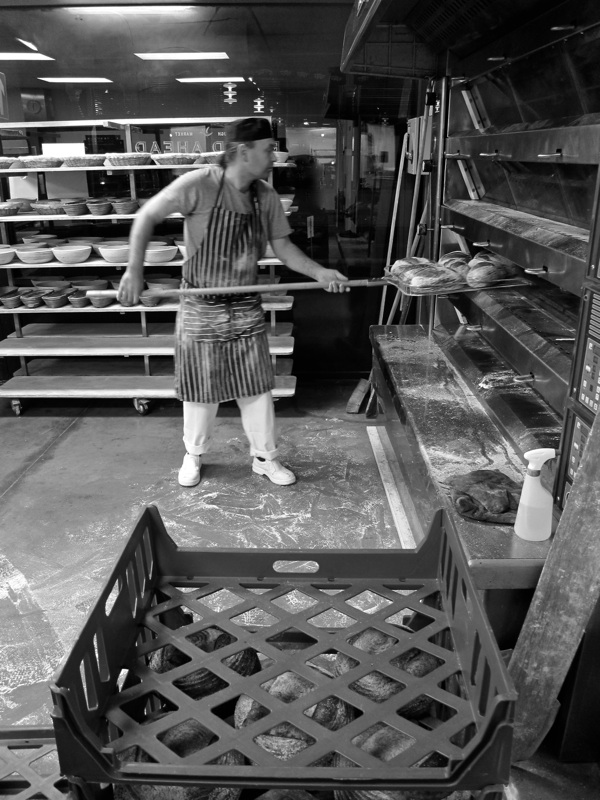
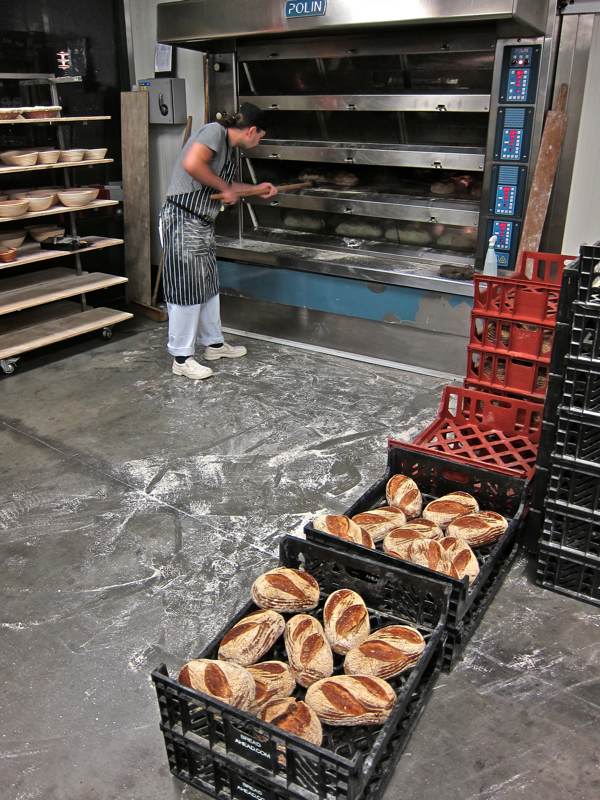
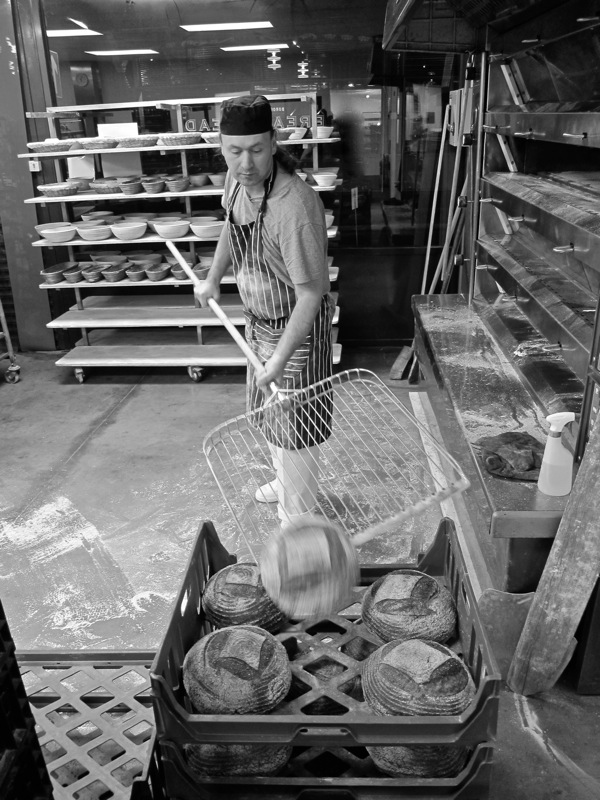
All this time, as we spoke, he had been working – taking the sour dough and white crusty loaves from their shaping baskets, tipping them onto the wooden peal (which he uses to put them in the oven), scoring them with a razor blade and baking them. Within fifty minutes, Justin was taking out his beautiful loaves, golden and brown, and they commenced their strange crackling sound as they cooled – which Justin calls ‘the loaves singing.’
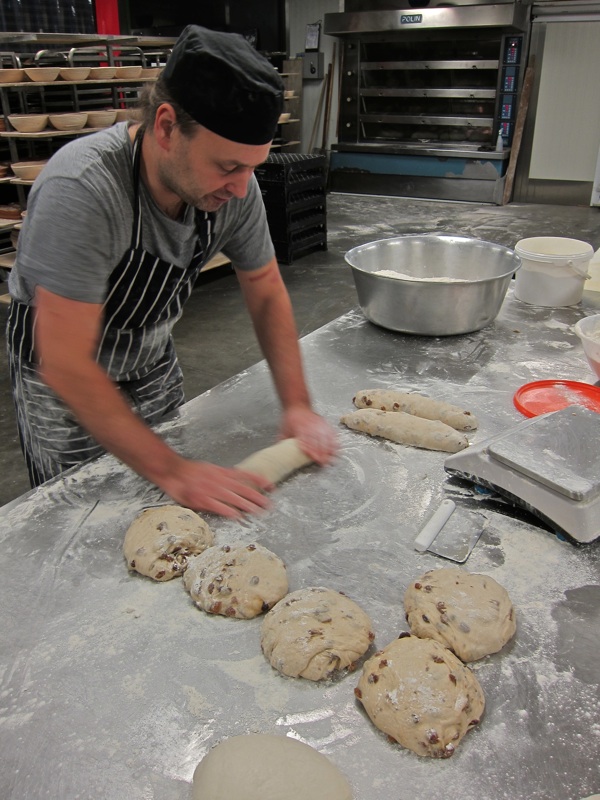
Then it was on to making raisin bread and spelt bread and rye bread and ginger loaf and bread pudding and cheese & olive sticks – and thus the night wore away and the pile of Justin’s baking grew and grew, like Rumpelstiltskin spinning straw into gold. Blue dawn rose over London Bridge Station and the Shard became visible, as much of it that was not concealed by cloud. The first trains of commuters were rumbling overhead while, from Justin’s warm humid world below, the hot fresh bread was being carried away to local restaurants and cafes for breakfast service. Justin’s night of work had produced seven hundred beautiful loaves, every one checked by him to ensure it met his personal standard.
With enviable stamina, Justin & Louise carried on working furiously but weariness overcame me and so, laden with gifts from the bakery, I stumbled home through the City where the pavements were now filled with grey-faced office workers filing to their desks. It was not yet daylight when I fell into my bed in Spitalfields and dreamed of the seven kilo ‘Cathedral Loaf’ that Justin promised to bake for the launch of my Album tonight.
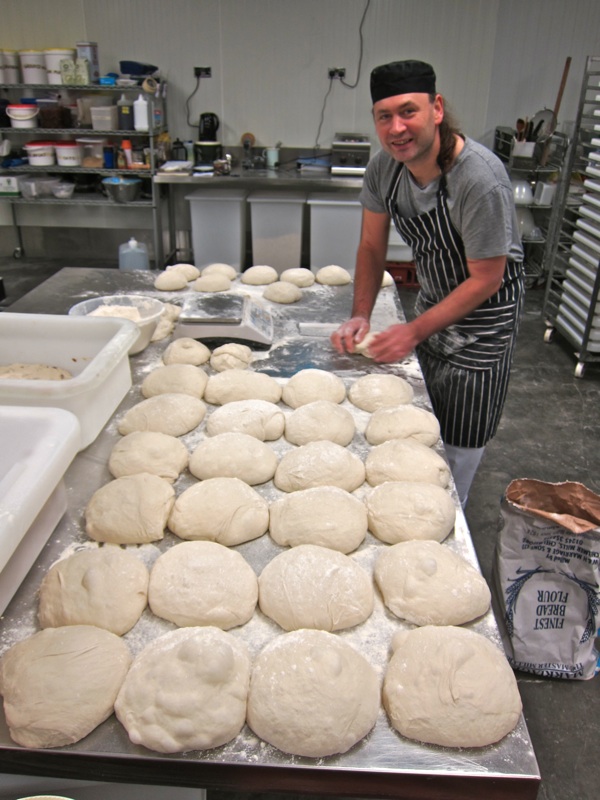


Bread Ahead, Bakery & Baking School, Cathedral St – Borough Market Stall, Mon – Sat
Read my other stories about Justin Piers Gellatly
Night in the Bakery at St John
On Publication Day For My Album
[youtube 1duFO-l3ydM nolink]
The Album is published with the generous investment of the following readers of Spitalfields Life – Fiona Atkins, Jill Browne, Dana Burstow, Rosemary Burton, Robson Cezar, Stephane Derone, Charlie de Wet, East London History Society, Gerald Elfein, David Ethier, Ceryl Evans, Diana Fawcett, Lynda Finn, Hardy Ford, Susie Ford & Jonathon Green, Janice Fuscoe, Deby Goldsmith, Libby Hall, Carolyn Hirst (on behalf of Rowland Hirst), Barry Jackson, Michael Keating, Richard Long, Anthony Loynes, Mirela Mardare, Philip Marriage, Irene Mcfarlane, Annie Medcalf, Jack Murphy, Museum of British Folklore, Tatiana Nye, Terry Penton, Sian Phillips & Rodney Archer, Jonathan Pryce & Kate Fahy, Honor Rhodes, Corvin Roman, Tim Sayer, Elizabeth Scott, Melanie Shaw, Vicky Stewart, Neville Turner, Robert Welham and J.M.Winkler.

CLICK HERE to buy your copy direct from Spitalfields Life and have it signed or personally inscribed by the Gentle Author.



Faber Factory Plus part of Faber & Faber are distributing The Gentle Author’s London Album nationwide, so if you are a retailer and would like to sell copies in your shop please contact bridgetlj@faber.co.uk who deals with trade orders.
Joe McLaren, Illustrator
Yesterday, I took a trip down to Rochester to deliver an advance copy of my London Album to illustrator Joe McLaren in person, as a gesture of thanks for drawing the pair of dogs that are the symbol of Spitalfields Life Books.
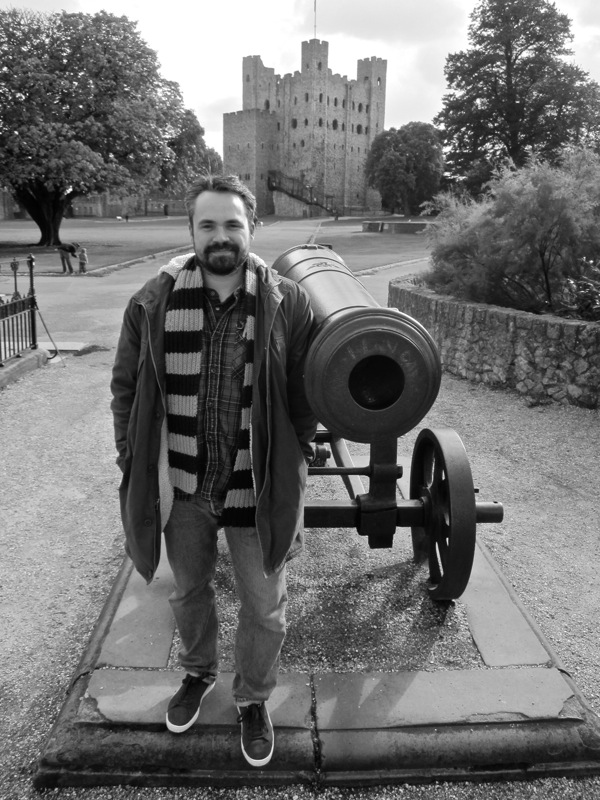
Joe McLaren at Rochester Castle
“When I realised I was an illustrator and not an artist, it was such a relief because I didn’t have to philosophise any more,” admitted Joe McLaren with a self-effacing smile,“now I do what people pay me to do to earn the butter for my bread.” Yet, in spite of his modest demeanour, Joe’s distinctive graphic illustrations are to be found on book covers in every bookshop in the land.
Joe and I were standing on top of Rochester Castle with panoramic views across the Medway and he explained that this part of the country has strong family connections for him. “My grandfather, Bernard Long, joined the Merchant Navy in Chatham at fourteen in 1925 and retired at sixteen to join the Royal Navy. By the end of World War II, he was Captain of a minesweeper and then he retired to Leyton where he became a police detective,” Joe revealed, “My mother remembers visiting them in their small house in Vicarage Rd.”
After graduating from Brighton College of Art and a spell in London, Joe and his girlfriend moved to a remote house in Lower Higham, upon the dramatic landscape of the Kent Marshes, where she had family and he found himself caring for the abandoned church of St Mary’s which Dickens featured in ‘Great Expectations.’ “I used to ring the bells once a year on New Year’s Eve,” Joe informed me fondly, “and we turned it into a cinema and showed David Lean’s film there. ‘Great Expectations’ was my first Dickens novel and I loved it, even though I had to read it at school.” Subsequently, Joe featured the church of St Mary’s in his cover design for a new edition of the novel.
While in London, David worked in the basement of Smythson in Bond St, applying the gold letters to monogrammed leather cases. “In 2008, I saved up enough money to live for three months and left to become a freelance illustrator,” he recalled, “If I ran out of money, I would have gone back to my old job but, after a couple of weeks, David Pearson rang up to commission me and it went from there. We’ve been friends ever since.” Book designer David Pearson compares Joe McLaren’s work to that of Reynolds Stone, the celebrated wood engraver who supplied vignettes for the covers of early Penguin Books, and Joe has created motifs in a comparable vein for David’s contemporary reinventions of Penguin designs.
“I have been influenced by Edward Bawden and he was influenced by heraldry,” Joe confessed, “Everything I do is in a flat space, so it doesn’t matter where the light’s coming from, you are portraying the thing itself.” There is a certain unique clarity of line and an intensity of image which characterises Joe’s work, making it instantly recognisable, catching the eye and then holding its focus.
Yesterday, Joe was working on a scraperboard view of Rochester Castle when I interrupted him. Few use scraperboard anymore, it has become a degraded technique that is consigned to children’s kits in craft stores, yet Joe excels in exploiting its unique graphic potential. Invented a hundred years ago, it was an innovation for engravers when images could be reproduced for printing using photographic technology and there was no longer any need to engrave onto metal plates.
Standing there upon the outcrop over the Medway on that bright autumn day, the sunlight imparted a crisp edge to the buildings, highlighting the lively textures and contrasted forms of the diverse architecture in Rochester and giving everything the appearance of a Joe McLaren illustration. In this inspiring environment, with family history and literary association enriching a landscape full of visual drama, Joe has found his home.
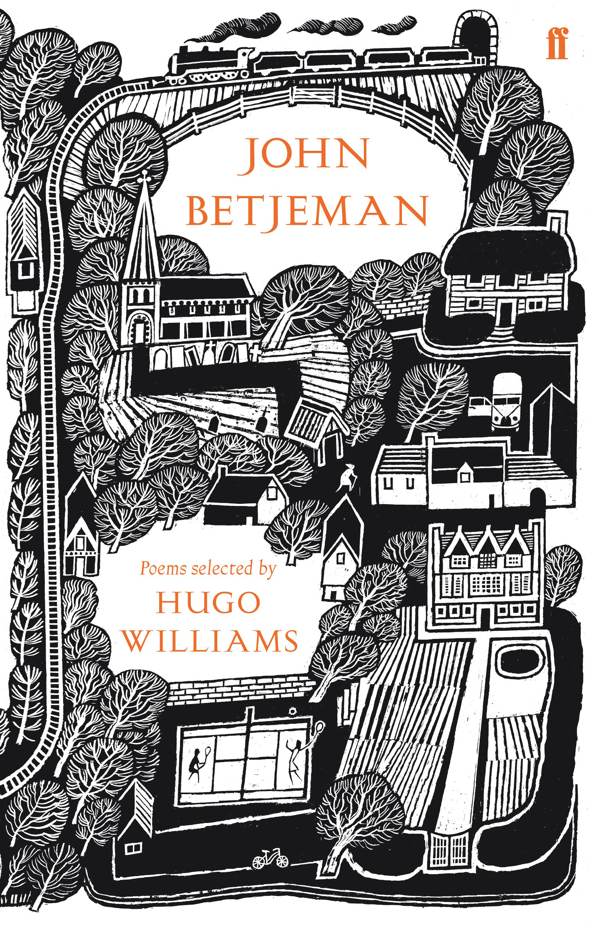
Selected Poems of John Betjeman, commissioned by Miri Rosenbloom for Faber & Faber
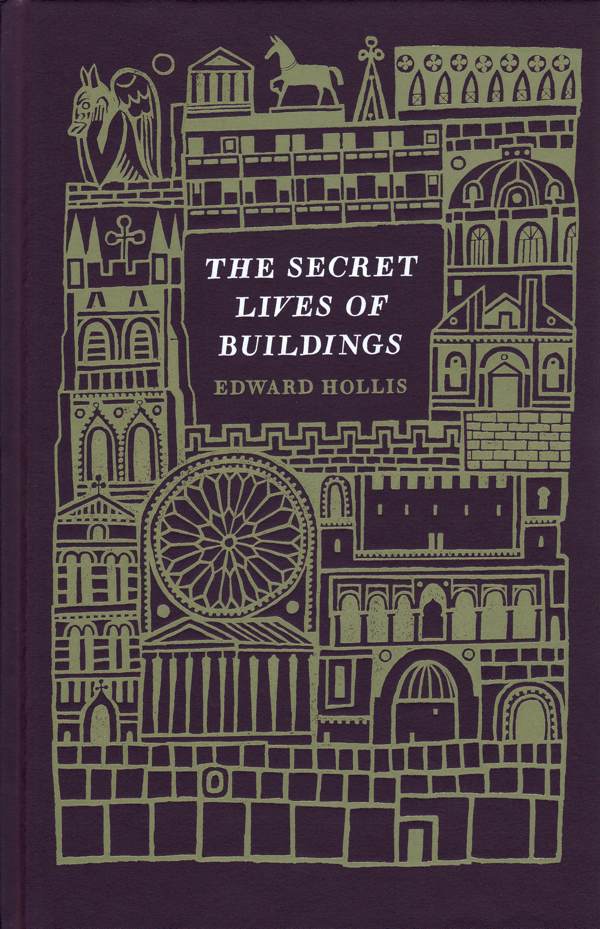
Secret Lives of Buildings by Edward Hollis, commissioned by David Pearson for Portobello Books
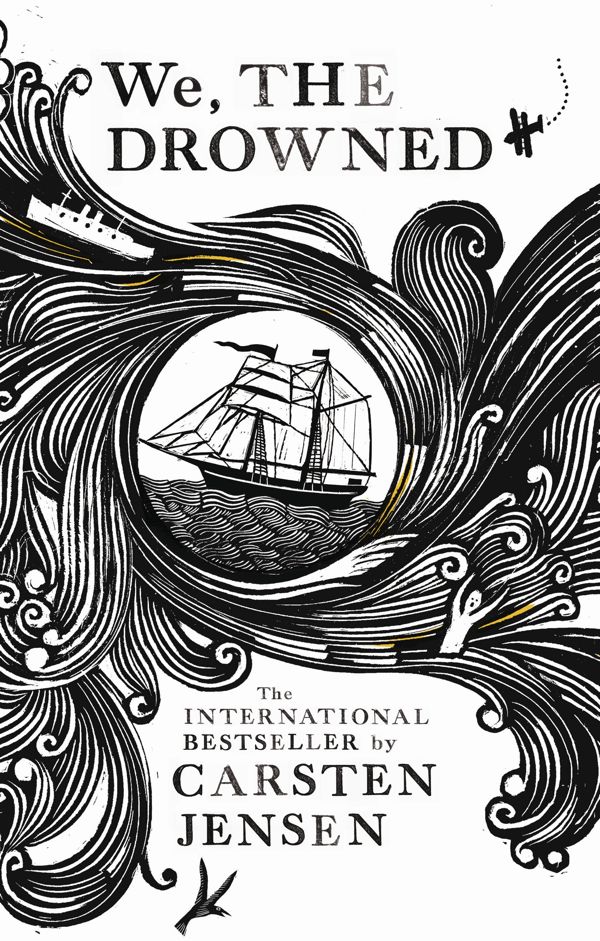
We, The Drowned by Carsten Jensen, commissioned by Suzanne Dean for Vintage
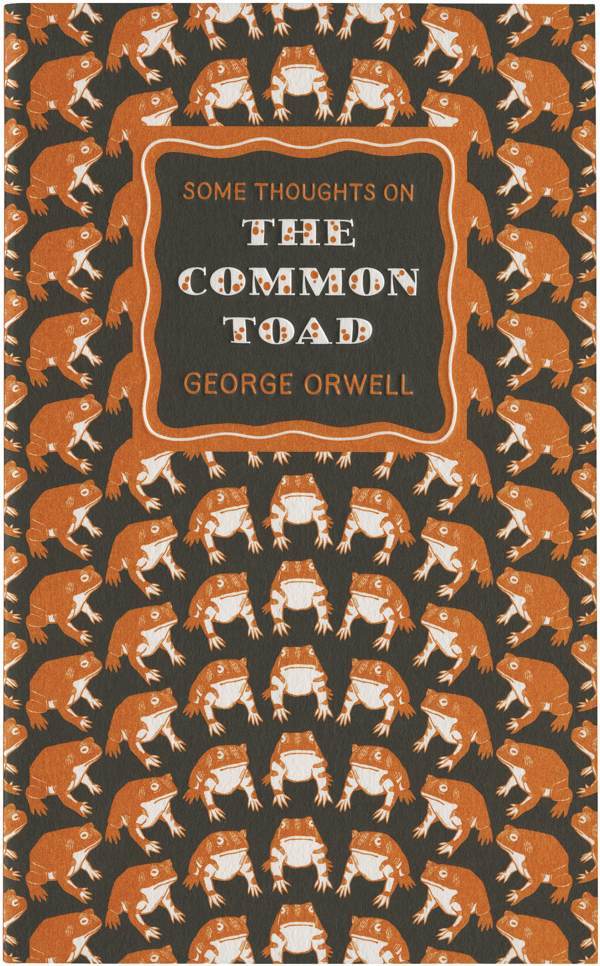
Some Thoughts on the Common Toad by George Orwell, commissioned by David Pearson for Penguin

Why Look at Animals? by John Berger, commissioned by David Pearson for Penguin
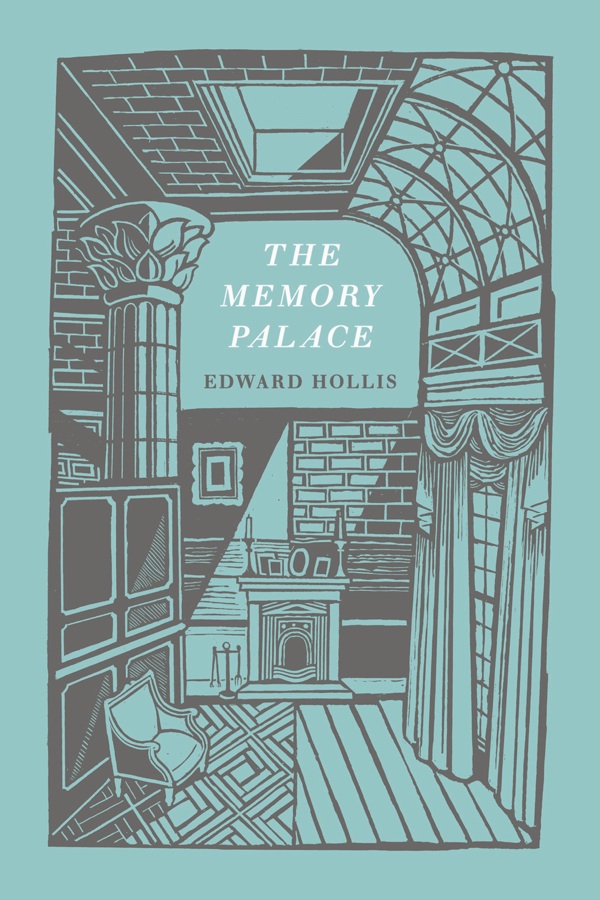
Memory Place by Edward Hollis, commissioned by David Pearson for Portobello Books
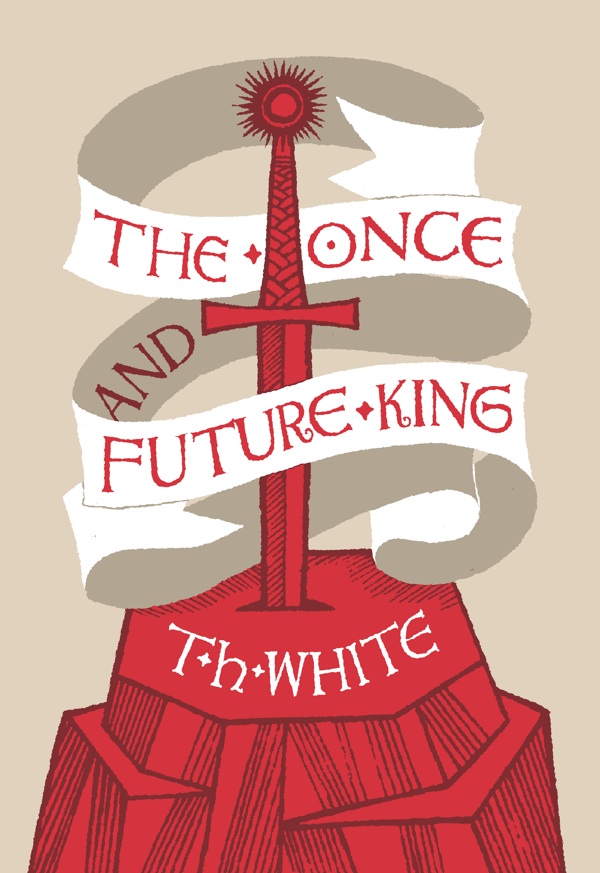
The Once and Future King by T.H. White, commissioned by Clare Skeats for Voyager Classics
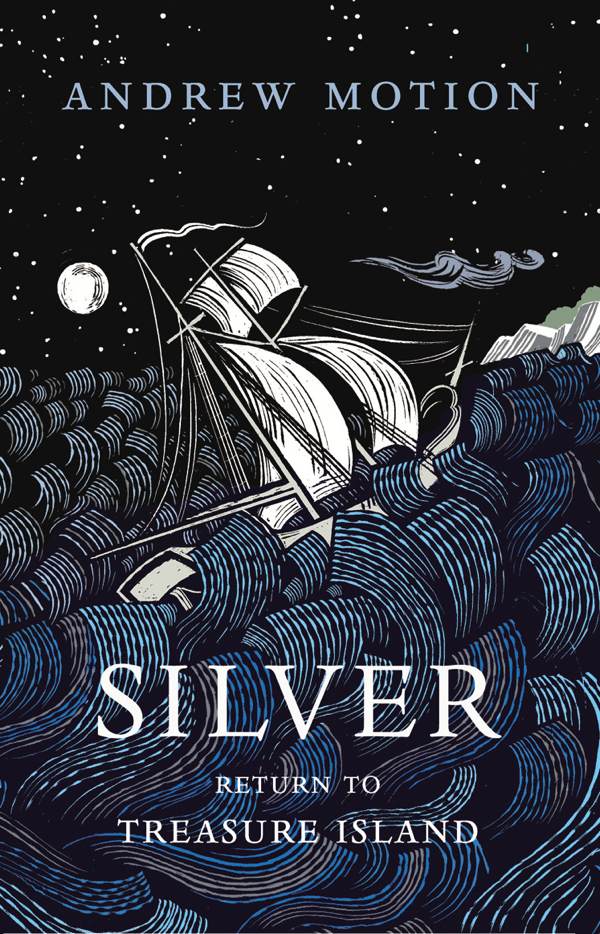
Silver by Andrew Motion, commissioned by Suzanne Dean for Vintage
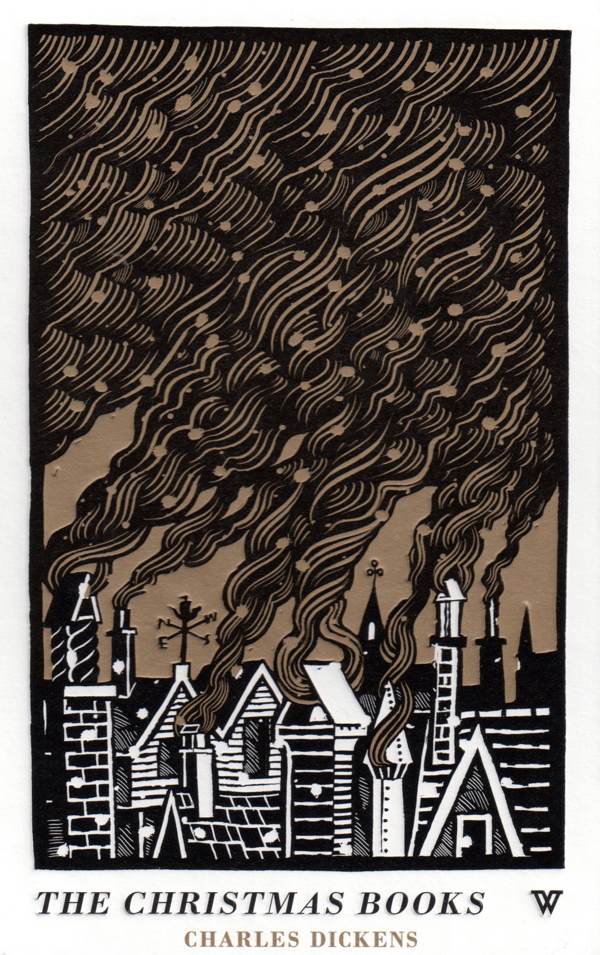
The Christmas Books by Charles Dickens, commissioned by David Pearson for Whites Books
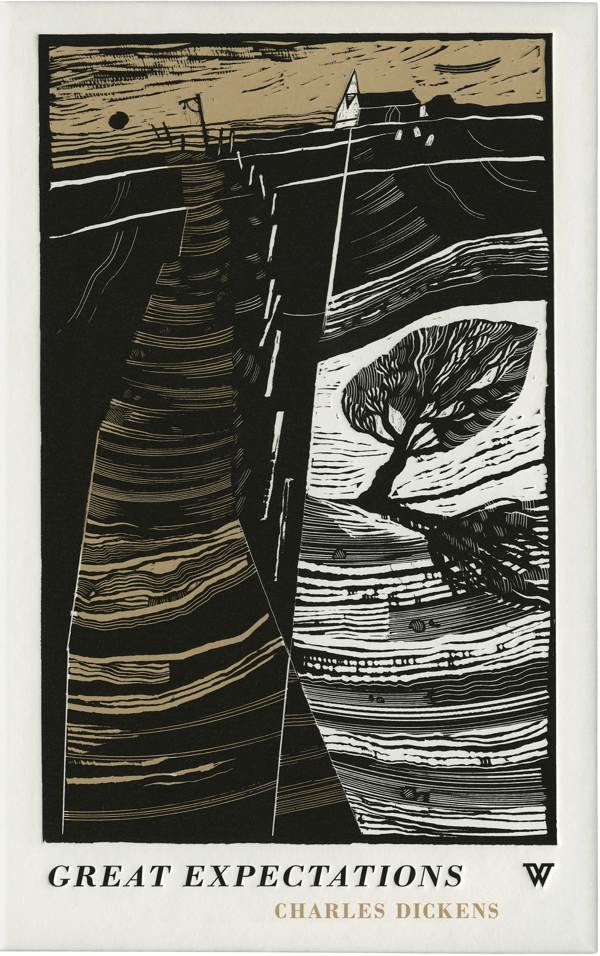
Great Expectations by Charles Dickens, commissioned by David Pearson for Whites Books

Logo for the Owl Bookshop, commissioned by David Pearson

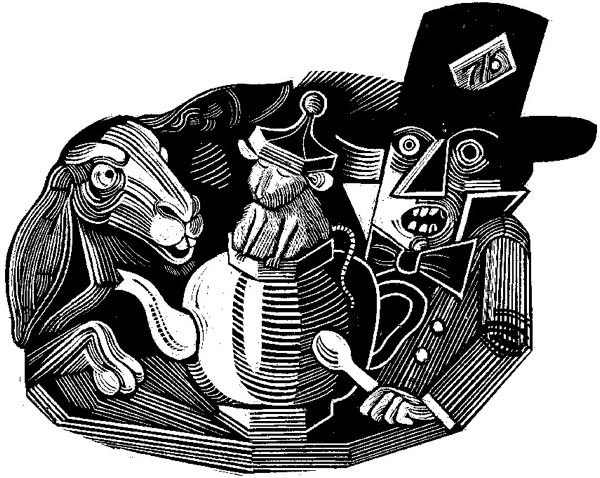
Illustrations for Alice in Wonderland for Whites Books
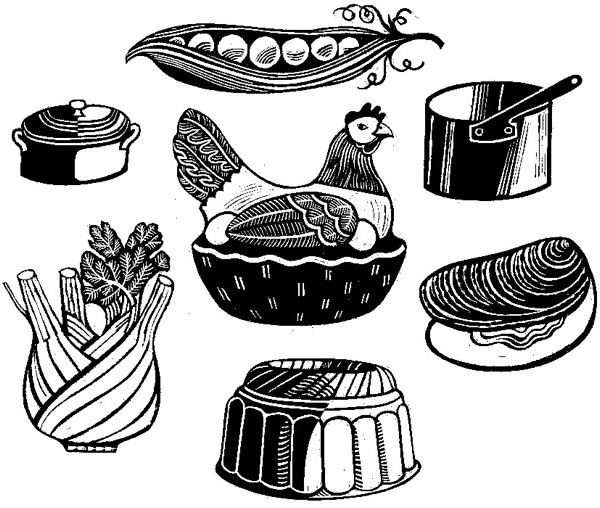
Illustrations for Potty! a cookery book by Clarissa Dickson Wright, for Hodder & Stoughton

Symbol for Spitalfields Life Books, commissioned by David Pearson
Illustrations courtesy of Joe McLaren
You may also like to read about
Here follow some snaps from my Rochester trip
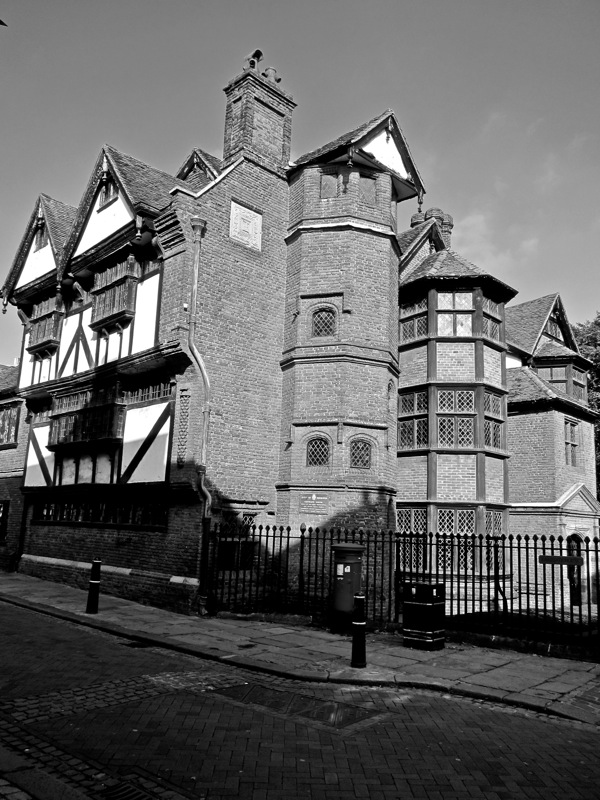
Eastgate House in Rochester High St
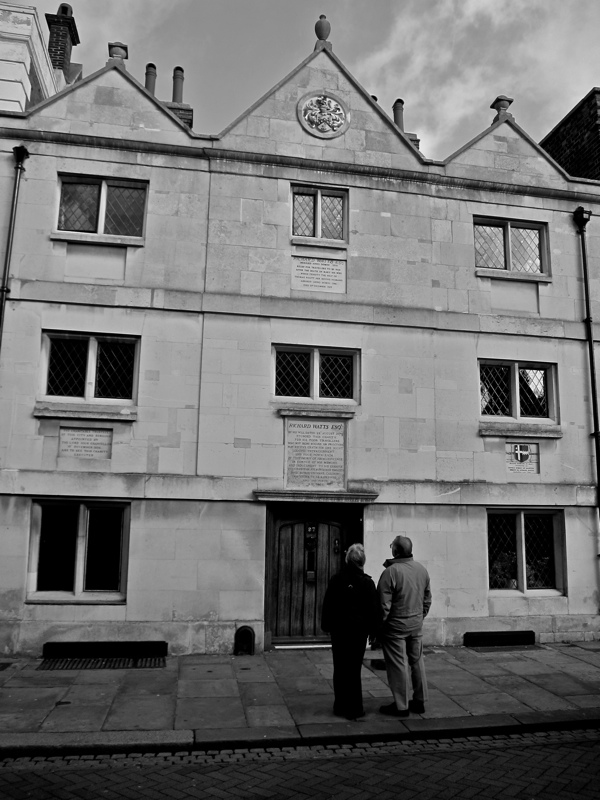
Lodging House for Poor Travellers, founded 1579 in Rochester High St
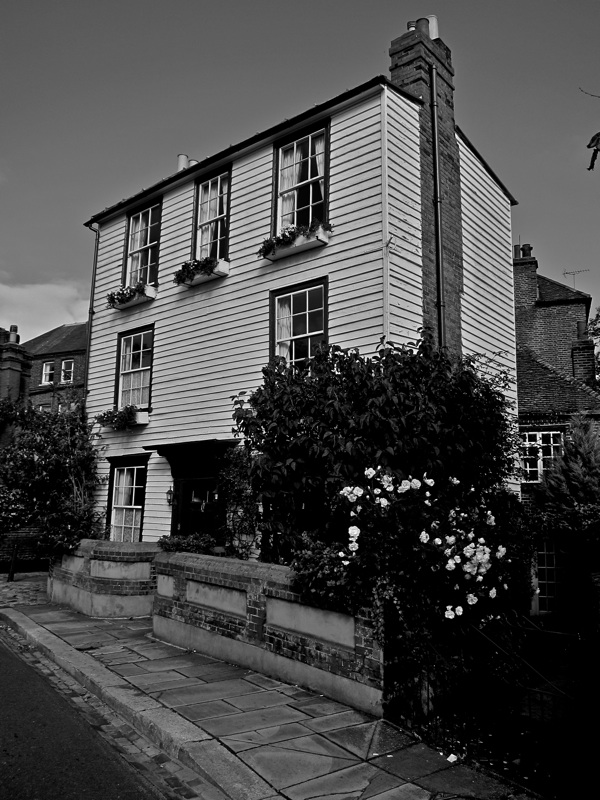
Old wooden house in the Cathedral Close, Rochester
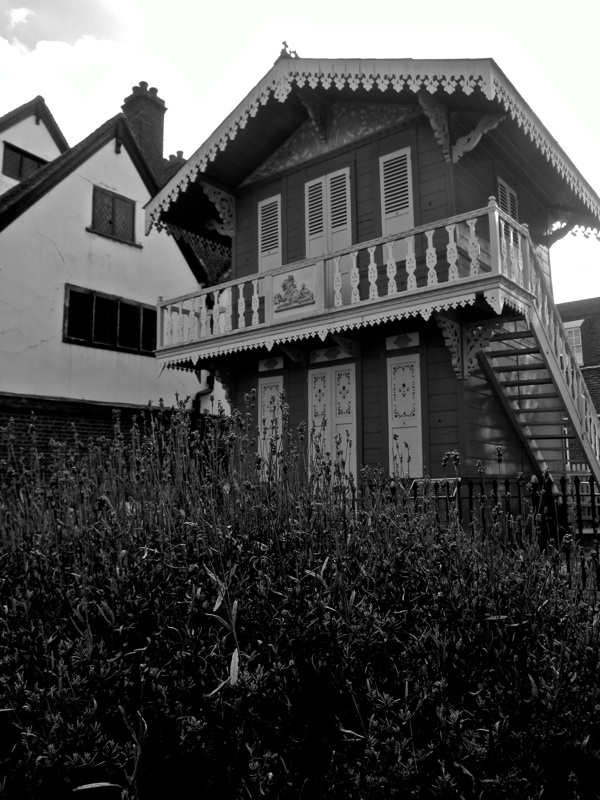
Charles Dickens’ writing cottage transplanted from his garden to a park in Rochester.
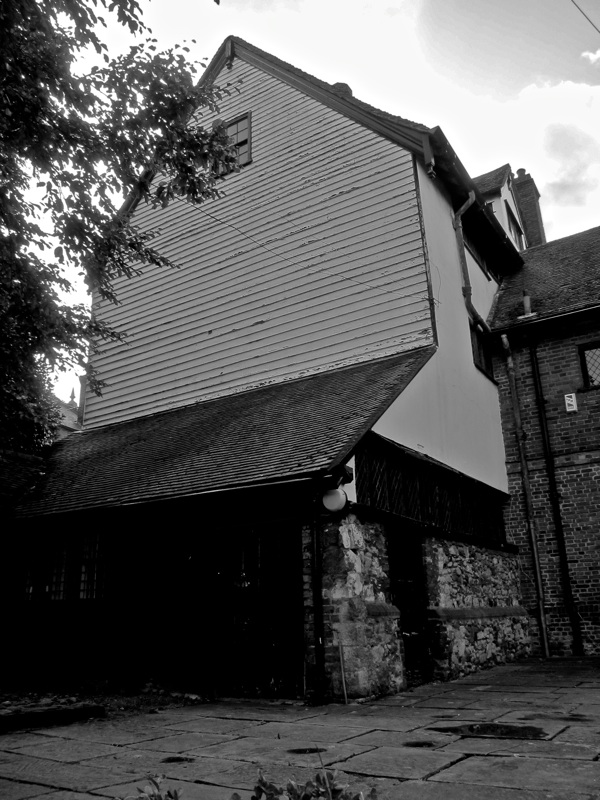
Old yard off Rochester High St
The Lantern Slides of Old London
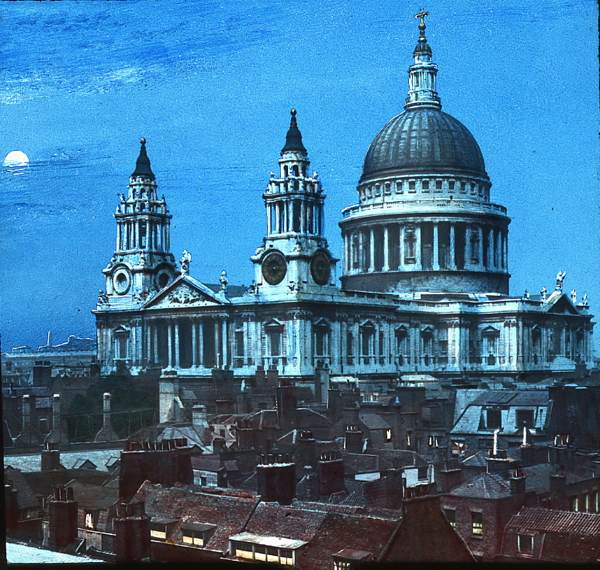


Two years ago, I became enraptured by a hundred-year-old collection of four thousand lantern slides. They were once used for educational lectures by the London & Middlesex Archaeological Society at the Bishopsgate Institute in Spitalfields. When Stefan Dickers became archivist there, he discovered the slides in dusty old boxes – abandoned and forgotten since they became obselete. Yet over the last decade, it has become apparent that these slides, which were ignored for so long, are one of the greatest treasures in the collection. And it is my delight to be the one responsible for publishing a selection of these wonderful images in print for the first time in my London Album this week.
When I was first offered the opportunity of presenting these lantern slides which have been unseen for generations, I was overwhelmed by the number of pictures and did not know where to start. The first to catch my fancy were the ancient signs and symbols, dating from an era before street numbering located addresses and lettered signs advertised trades to Londoners.
Before long, I grew spellbound by the slide collection because, alongside the famous landmarks and grand occasions of state, there were pictures of forgotten corners and of ordinary people going about their business. It was a delight to discover hundreds of images of things that people do not usually photograph and I was charmed to realise that the anonymous photographers of the London & Middlesex Archaeological Society were as interested in pubs as they were in churches.
The more I studied the glass slides, the more joy I found in these arcane pictures, since every one contained the rich potential of hidden stories, seducing the imagination to flights of fancy regarding the ever-interesting subject of Old London. Once I had published The Signs of Old London, I realised there were many other such sets to be found among the slides, as a result of the systematic recording of London which underscored the original project by the London & Middlesex Archaeological Society, a hundred years ago, and parallels my own work in Spitalfields Life, today.
If you cast your eye over the list of categories at the end of this story, that I chose to arrange these slides, you will see that I arranged them quite literally – in terms of doors, or night, or dinners, or streets, or staircases. I did this because I was interested to explore how the pictures might speak to me and to you, the readers. No evidence has survived to indicate in what sequence or order they were originally shown and it was my intention to avoid imposing any grand narratives of power or poverty, although these pictures do speak powerfully of these subjects. Recognising that objects and images are capable of many interpretations, I am one that prefers museums which permit the viewer to decide for themselves, rather than be presented with artefacts subject to a single meaning within an ordained story and so, with the Album, we have presented the pictures and invited the reader to draw their own conclusions.
Equally, in publishing the slides, we chose not to clean them up or remove imperfections and dirt. Similarly, we did not standardise the colour to black or a uniform sepia, either. Instead, we have cherished the subtle variations of hues present in these slides and savoured the beautiful colour contrasts between them, when laid side by side. There is a melancholic poetry in these shabby images, in which their damage and their imperfections speak of their history, and I came to glory in the patina and murk.
Above all, in publishing these pictures in my Album, I wanted to communicate the pleasure I have found in scrutinising them at length and entering another world imaginatively through the medium of this sublime photography.
Today I publish a serendipitous selection of glass slides which fascinate me but that did not make it into the book – to provide you with a little idle distraction to pass the time until the Album is published later this week.

In the Inns of Court
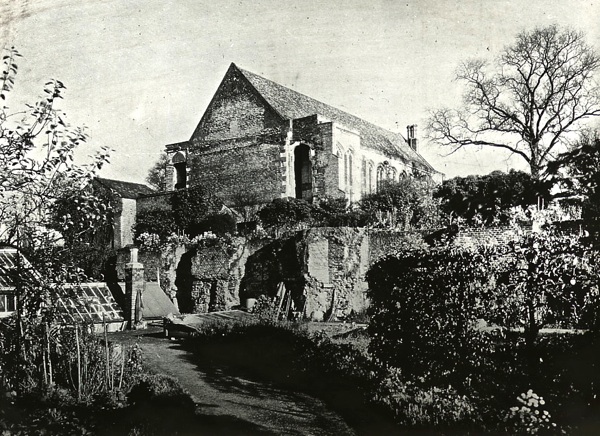
At Eltham Palace

At Euston Station
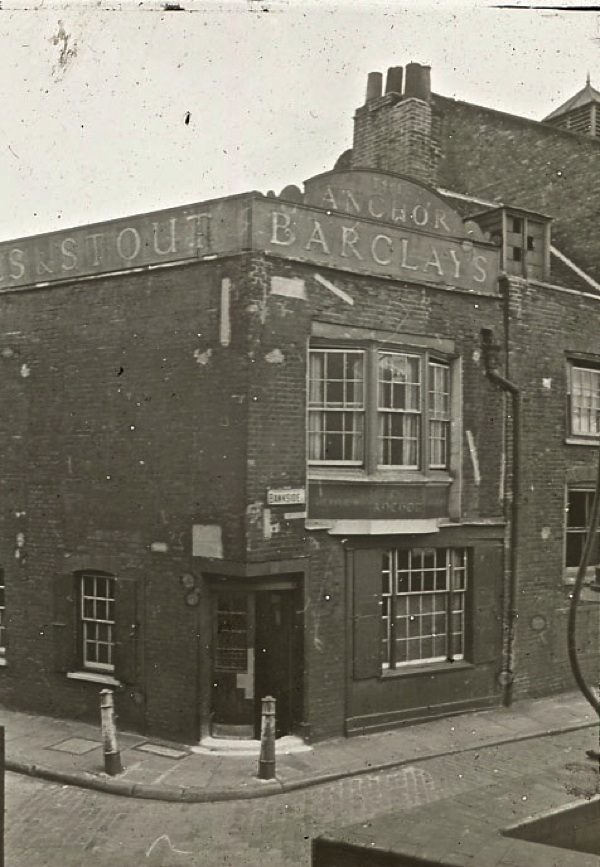
The Anchor at Bankside

Crocodiles at the Natural History Museum
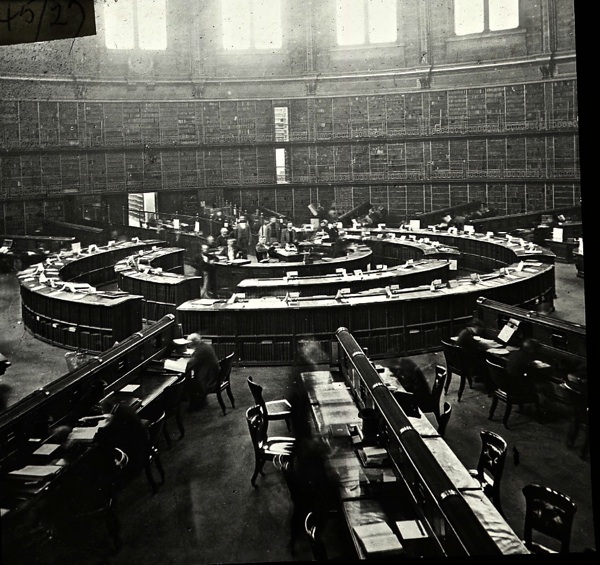
Reading Room at the British Museum
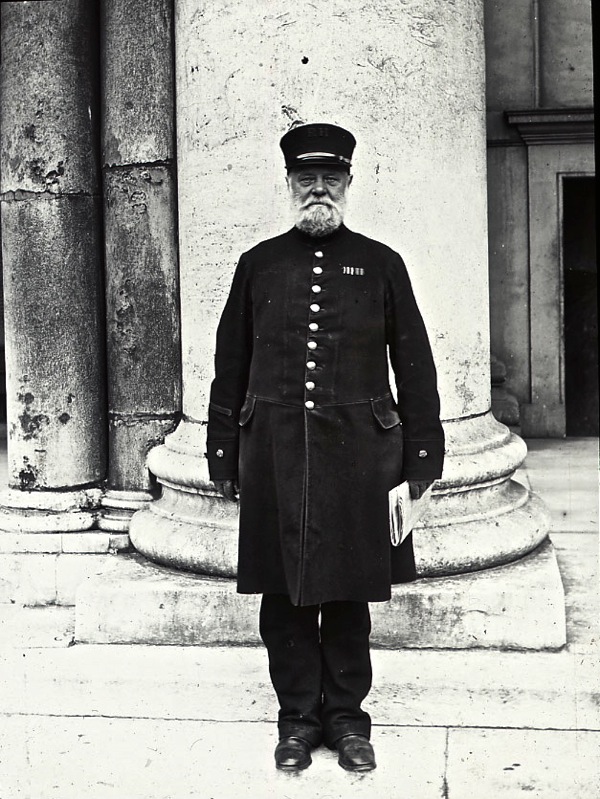
Chelsea Pensioner
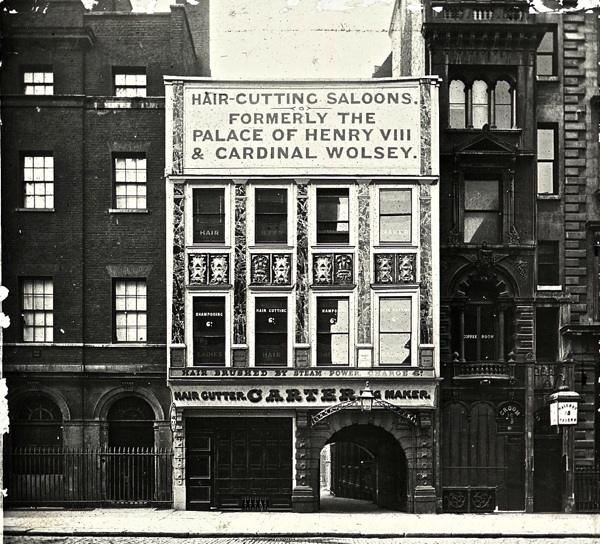
In Fleet St
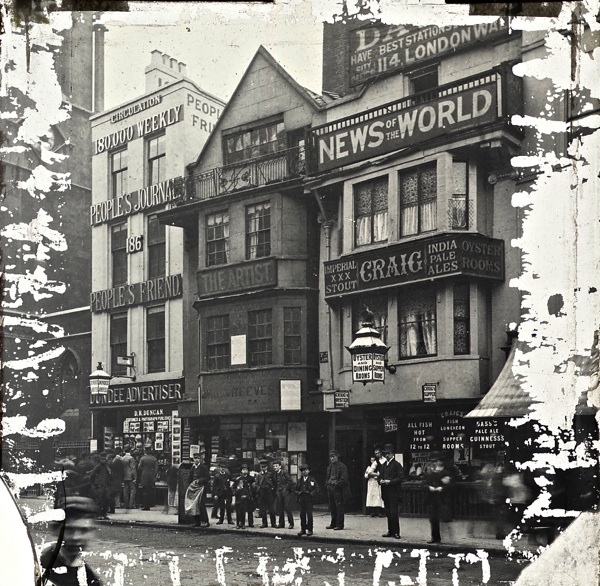
In Fleet St
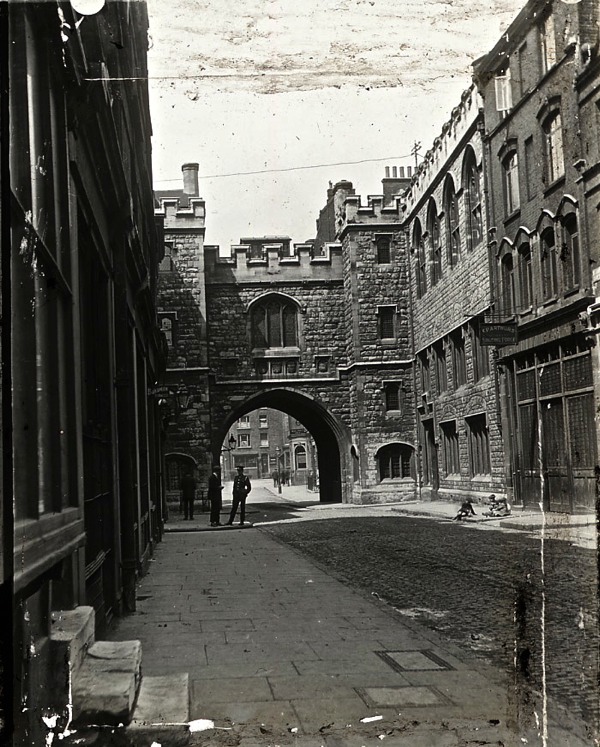
St John’s Gate, Clerkenwell

Between the inner & outer dome of St Paul’s

Along the Embankment

The Old Dick Whittington, Clothfair, Smithfield
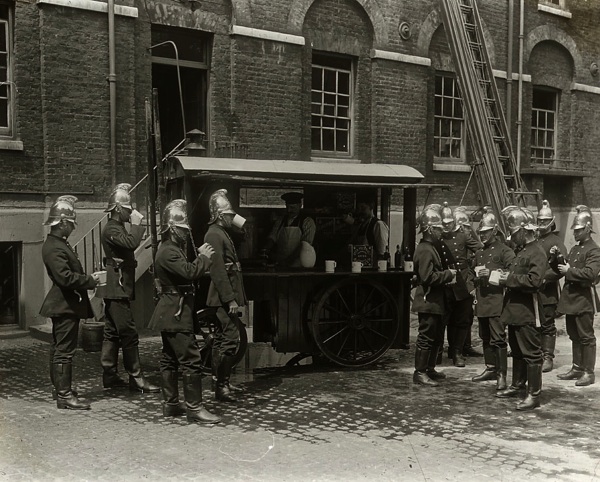
Firemen take a tea break

Lightermen on the Thames
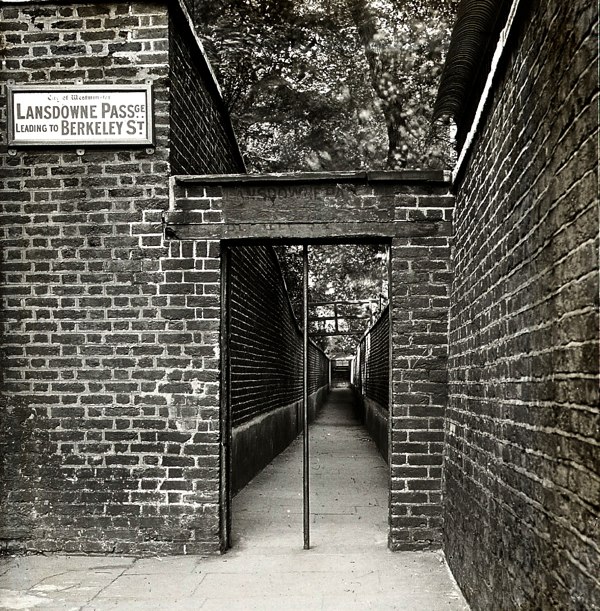

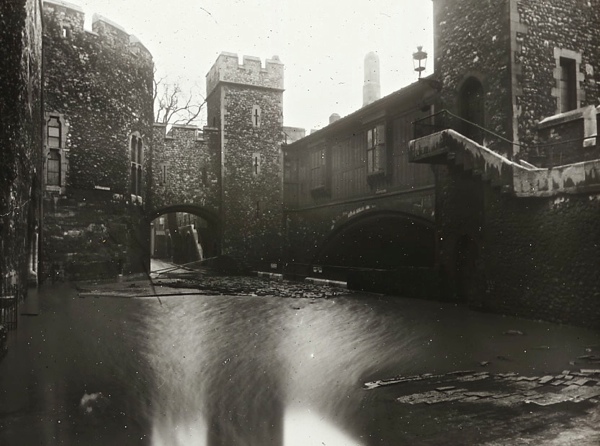
Flood in Water St, Tower of London

The White Tower, London’s oldest building
Glass slides courtesy of Bishopsgate Institute
Take a look at these sets of the glass slides of Old London
The High Days & Holidays of Old London
The Fogs & Smogs of Old London
The Forgotten Corners of Old London
The Statues & Effigies of Old London












