
The Return Of Doris Kurta
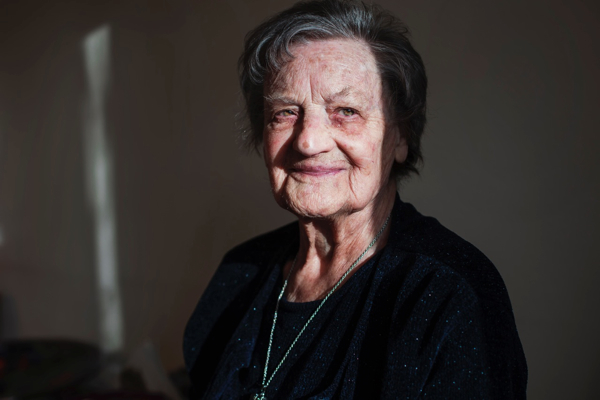
Taking advantage of a rare day of February sunshine yesterday, Doris Kurta took the opportunity to make a return visit to Bacon St where she grew up. “I’ve been back twice since 1938,” she admitted to me in excitement,“but this is the first time I’ve got out of the car. I’m just amazed, it’s a little bit frightening when I think how long ago it was.”
“Kurta isn’t my real name, we don’t even know what it was,” she confessed to me with alacrity, “My father came from a village called Kutna in Poland and he couldn’t speak English when he arrived and we think, when they asked his name, he thought they were asking where he came from so he said, ‘Kutna’ and they wrote down ‘Kurta.'”
Returning to the bustle of the Sunday market in Brick Lane, more than seventy years after she left it behind, offered an unexpected moment of contemplation for Doris. “We were very happy when we moved out,” she assured me unequivocably.
This emotionally-charged location reminded Doris of the fate her parents escaped by coming here. “My father lost all his family in Poland, except a nephew,” she explained, “My mother came from a large family on the border of Hungary and Romania. My grandmother told them, ‘As long as I am alive, the Germans will not take you.’ But, two days after my grandmother died, they came and took them and only one survived.”
Thus Bacon St is a significant address for Doris, even if almost none of the buildings of seventy years ago still stand. Bacon St was Doris’ childhood home and where her family’s fortunes turned around. Both her parents took flight from their homelands in fear yet, when the Kurta family left Bacon St – on 15th January 1938 – they were embarking on a new journey in expectation of a better life, and it was a hope that Doris saw fulfilled.
“I was born in Pelham St in Spitalfields but we moved to Bacon St when I was four months old and that’s where we lived until I was fourteen. Harry, my father, was a ladies’ milliner and Lily, my mother, also worked in millinery – sewing -and that’s how they met. She made everything we wore, even our overcoats. I had this wonderful pink coat that was a hand-me-down from my elder sister and it was still in good condition when I got it, but it wasn’t by the time I had finished with it. I remember there was a factory opposite that caught fire and my father wrapped me in that pink coat and took me to the window to watch. I had one sister, Annetta (known as Nita), an elder brother Sydney (known as Syd or Zelig) and a younger brother, Monty. 42 Bacon St was a huge house, but we lived in a flat with two small rooms for the six of us and a scullery with no running hot water.
At the rear, it sloped down in the yard and there were two cabinet-makers’ workshops, so there was always plenty of sawdust around and the boys used to make see-saws out of the planks left outside at the weekend. But it was a bit rough and my elder brother, Syd, fell off. My younger brother, Monty, couldn’t control the plank and it had a nail in the end which hit him and made a hole right in his head. I’m laughing now but it wasn’t a laughing matter at the time.
The area was mainly Catholic and Jewish in those days, and the Catholic priest was very friendly and he used to come round and try to explain his religion to us. He used to say to my mother, ‘I’m not going to try to convert you because you’ll end up converting me!’ The Catholics and the Jews kept apart but if anyone needed help, they’d go the distance, whoever it was.
Regularly, my mother would fill in forms to get us another flat from the Council but nothing ever came of it until one day a new social worker came round while my brother and I were doing our homework at the kitchen table. He said, ‘Is this where you do your study?’ and my mother said, ‘Look around, do you see anywhere else?’ He gave her a new form to fill out and within a week we moved.
We moved into the very first batch of council flats in Stoke Newington – Millington House in Church St. The rest of the block was empty and we were the first occupants. It was absolute heaven, we had three bedrooms, a living room and a kitchen but, best of all, a bathroom with a separate toilet. When we got there, the family lined up so that I could go into the bathroom first because they knew how important it was to me.
During the war, I worked in Bishopsgate at Cedar & Co, accountants near Liverpool St Station. One day, I was working late on my own on a Friday night and I got locked in. The boss had locked the outer door and I couldn’t get in touch with him because he lived in Surrey, and my own key was at Robert Dyas getting a spare one cut. So I called the Bishopsgate Police Station and told them my predicament. I’ve always carried a book with me so I settled down to read Benighted by J.B. Priestley while I was waiting. But the police and the fire brigade were in competition to get there first and they arrived in no time. I looked out the window to see a crowd had formed outside. They fixed a plank across from the next building and carried me safely over. When the officer asked me what happened, I said, ‘It was malice aforethought.’ I was trying to be funny but he didn’t get the joke because it was during the bombing and he had other things to worry about. One Monday, I came in to work and there was glass all over the place from the blast.
There were so many pubs in Bishopsgate, I would describe them as ‘character-forming.’ I’ve hardly ever been in a pub in all my life. I don’t drink. I’ve seen too much of what drink can do to people. We had two flats on each floor in Bacon St and, opposite us, lived a charming man yet when he was drunk he’d be terrible to his wife. He wouldn’t do it if she was in our flat, so she’d run across the landing when she heard him coming and he wouldn’t cross the threshold but stand and shout at her from outside, until my mother quietened him down. They had family wedding party once in the backyard and he got into fight with the bridegroom and they had to call my mother down to stop them, and she did. She was only five feet tall but she was wonderful. I don’t think I appreciated her enough at the time.
I became an auditor and we had clients who worked in the Spitalfields Market. When I first started, I didn’t know what an auditor was yet I took to it and I worked hard. People didn’t expect to see a woman doing that job but it was the war and they had no choice. It was difficult when the war stopped because the boys came back and expected to return to their jobs, so I just left and went to live in France for a spell. I went there at the invitation of the De Gaulle party and stayed in a house where boys who been in the resistance and survived the death camps were being taken care of. Then I lived in Paris in the Rue de Sevres for a year. I worked in a bank and my French wasn’t very good, so one of the customers asked me to speak in English on the phone. When I put the receiver down, everyone was giggling because apparently I spoke English with a French accent.
I acted with the Bethnal Green Players, we performed in Bethnal Green Tube Station during the war. There was a theatre and a cafe down there. Of course, we only performed comedy. Later I played the lead in G.K.Chesterton’s last play which was completed for us by Dorothy L. Sayers and we performed Shakespeare every summer at the George in Southwark. Arnold Wesker was a member and he always says I encouraged him to carry on with the theatre and it’s because of me he became a playwright!
On December 6th 1995, I moved from Stoke Newington to Edgware, where I live now, and my sister Nita came to live with me after her husband died.”
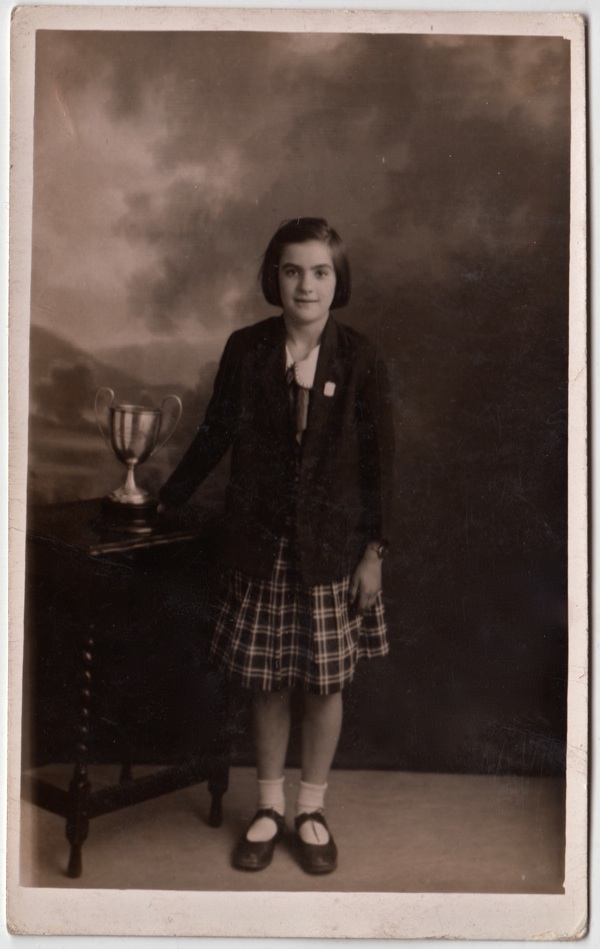
“I won the cup for gymnastics at the Bethnal Green Girls Club two years running. I didn’t get to keep the cup, but I still have my badge somewhere.”
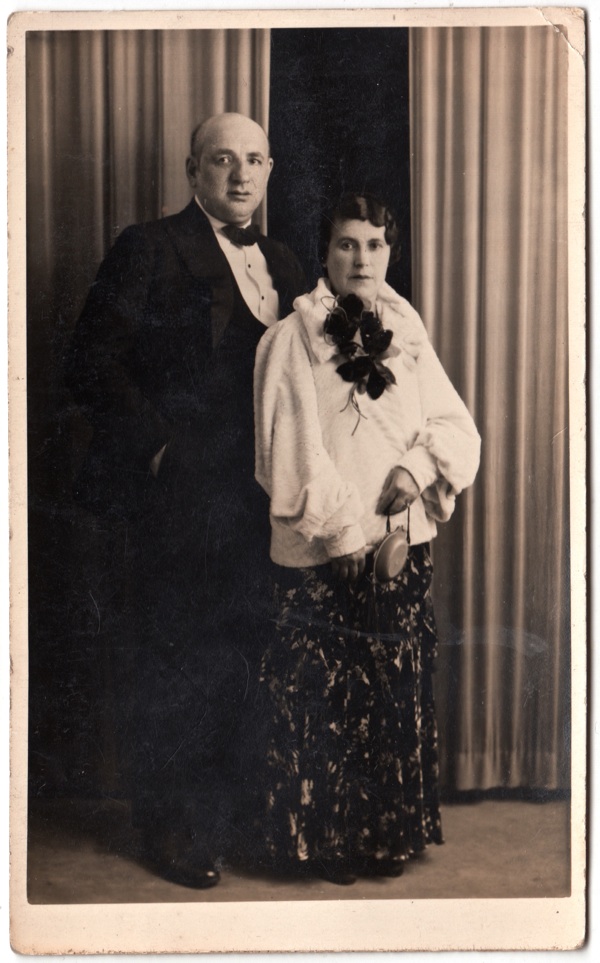
Harry & Lily Kurta
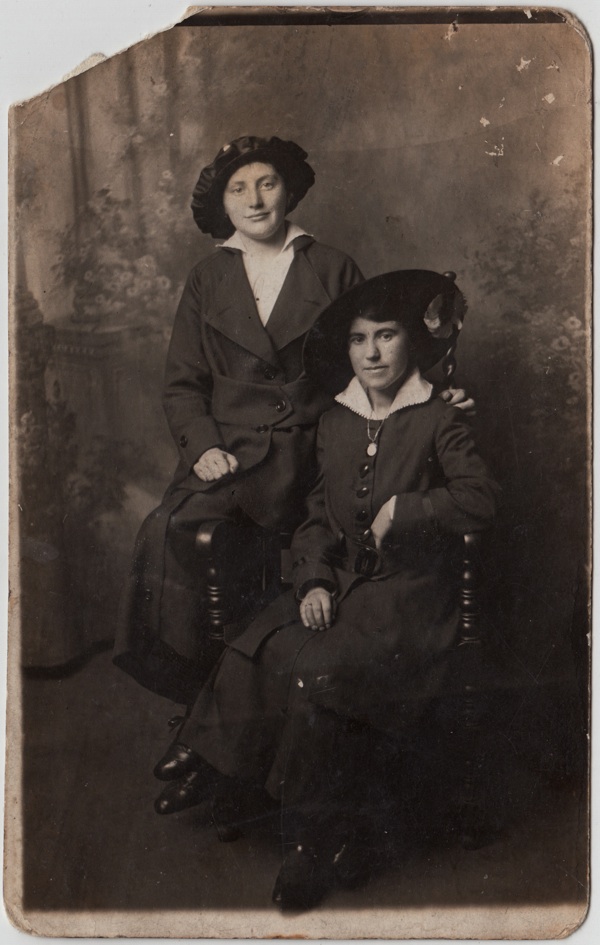
“This is my mother Lily with her friend”
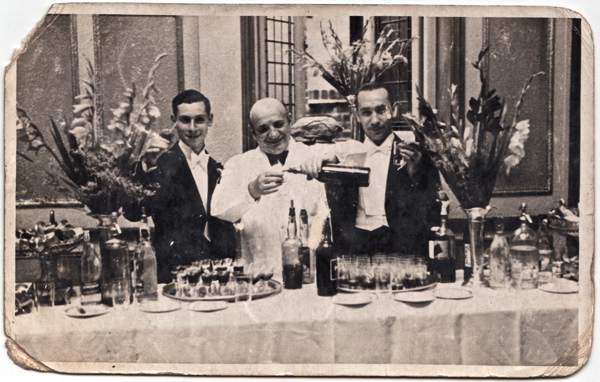
“Harry my father used to make extra money as a barman at the weekends”
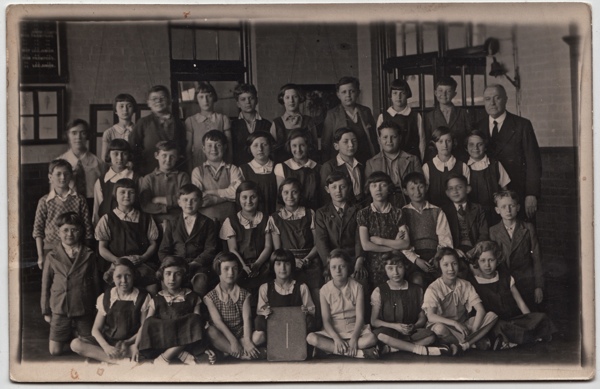
“I am the one holding the blackboard at the centre of this photo of my class at Wood Close School”
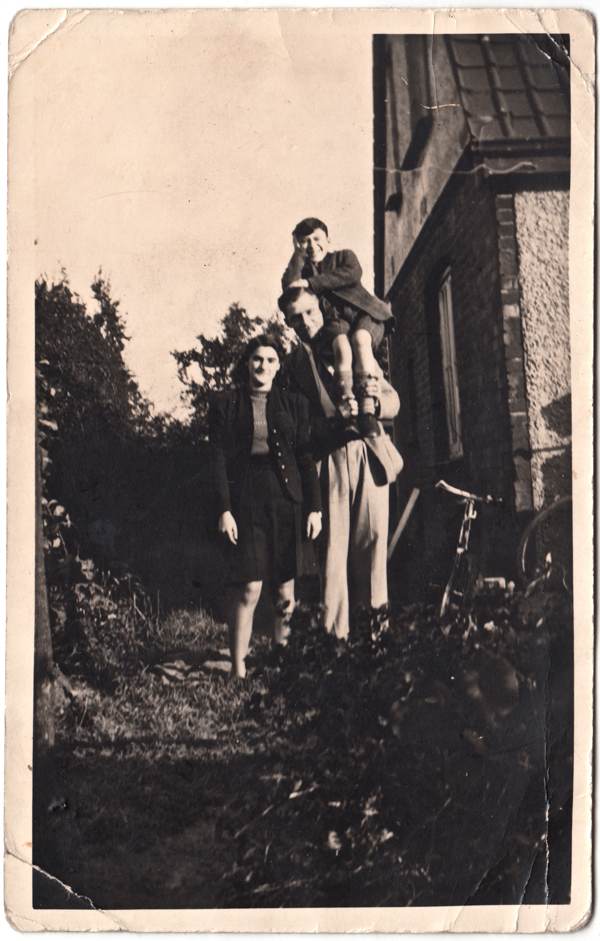
“When I was evacuated at the beginning of the war, we were supposed to be sent to Cambridgeshire but me and my brother Monty were sent to Much Hadham in Hertfordshire instead.”
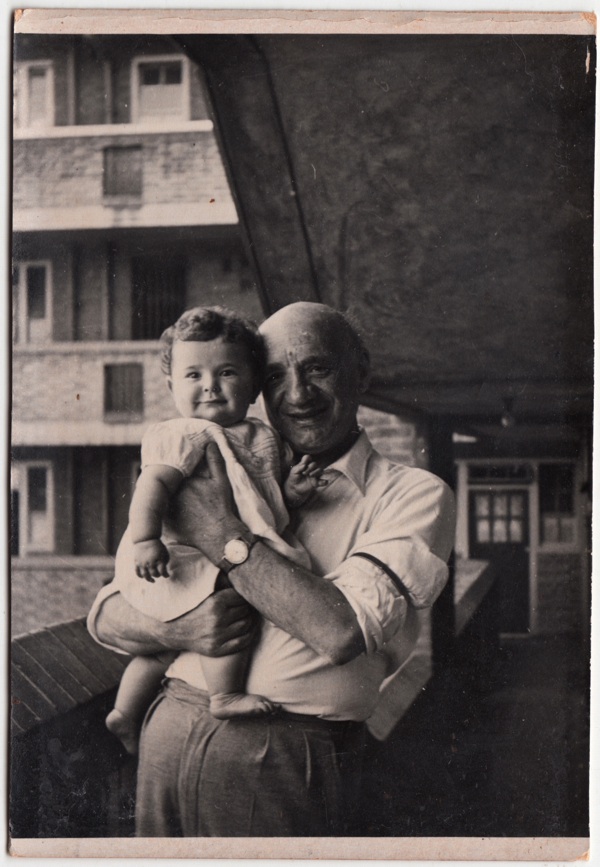
“This is my father with my younger brother Monty at Millington House in Stoke Newington”
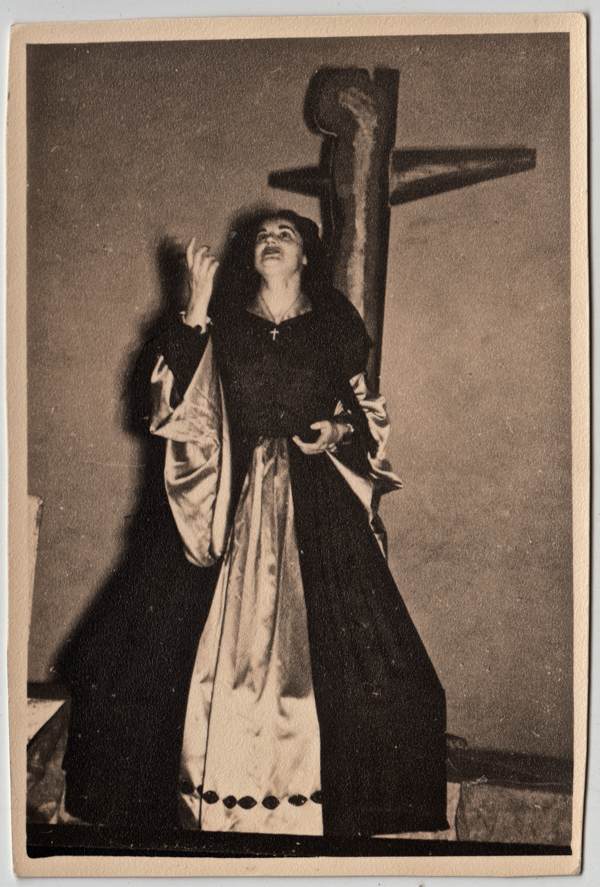
“This is me playing the lead in the premiere of G.K.Chesterton’s last unfinished play, completed by Dorothy L. Sayers”
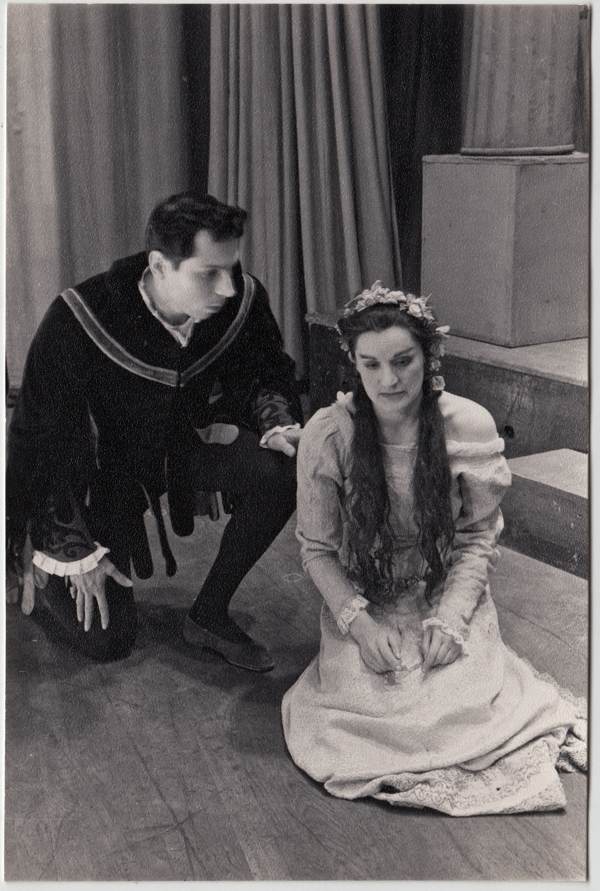
“This is me as Ophelia, performing at the George in Southwark”
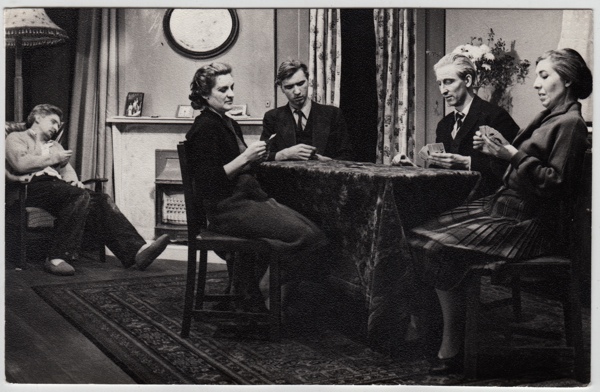
“This is me playing the role of Mother in Arnold Weskers’ ‘Chicken Soup With Barley.'”
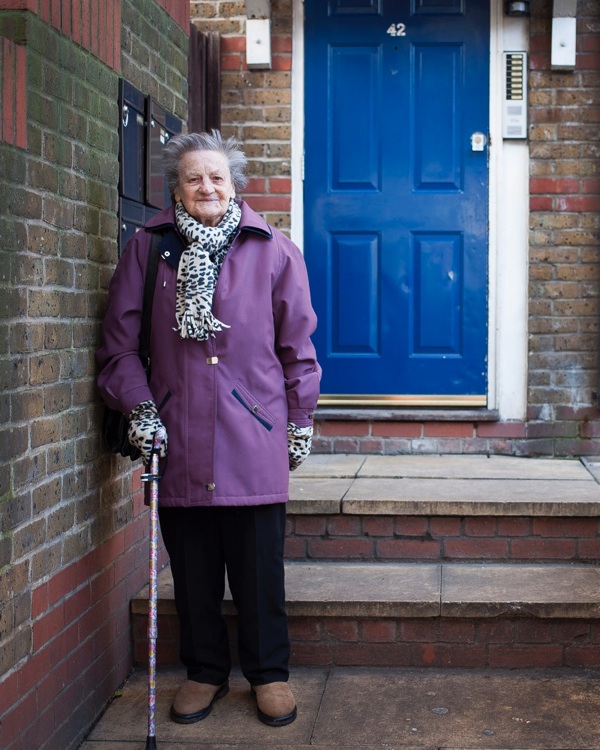
Doris outside 42 Bacon St yesterday, on the site of the building where she grew up
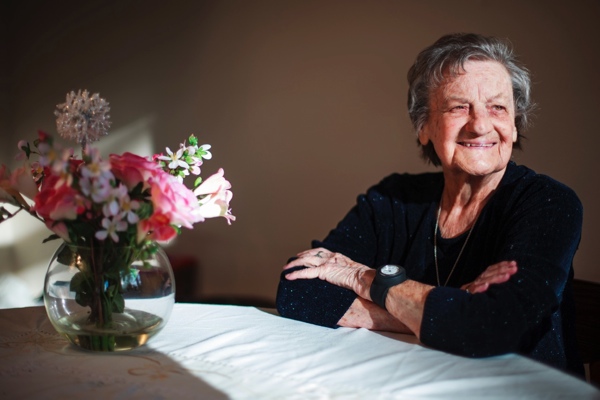
Doris Kurta
Portraits of Doris Kurta copyright © Jeremy Freedman
You also like to read about
The Gentle Author’s Piccadilly Pub Crawl
I set out to explore the pubs of Piccadilly in search of some Dutch courage for my MAGIC LANTERN SHOW at Waterstones Piccadilly next Wednesday 5th February at 7pm, when I will be showing around a hundred favourite pictures from these pages and telling the stories of the people and the places. Tickets are free but should be booked by emailing events.piccadilly@waterstones.com Who will join me for a celebratory drink at The Red Lion in Crown Passage afterwards?
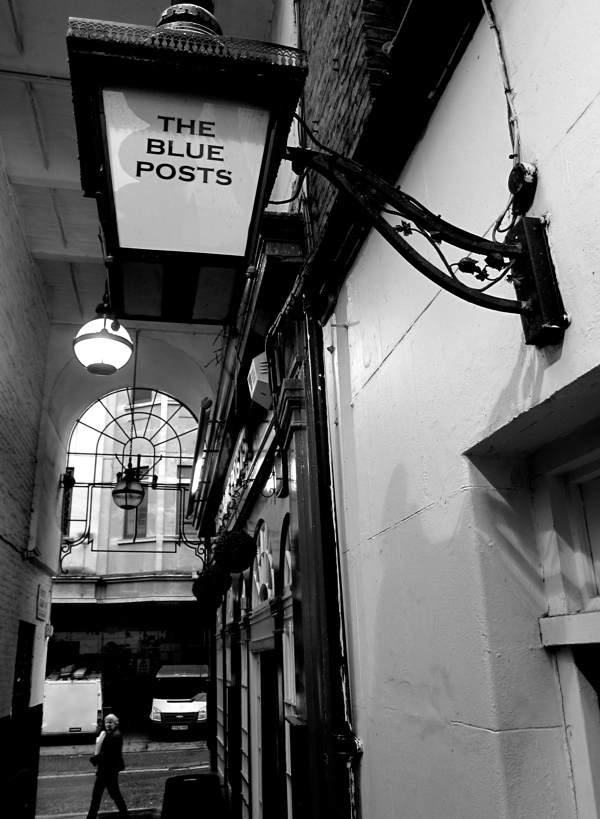
The Blue Posts in Rupert St, since 1842
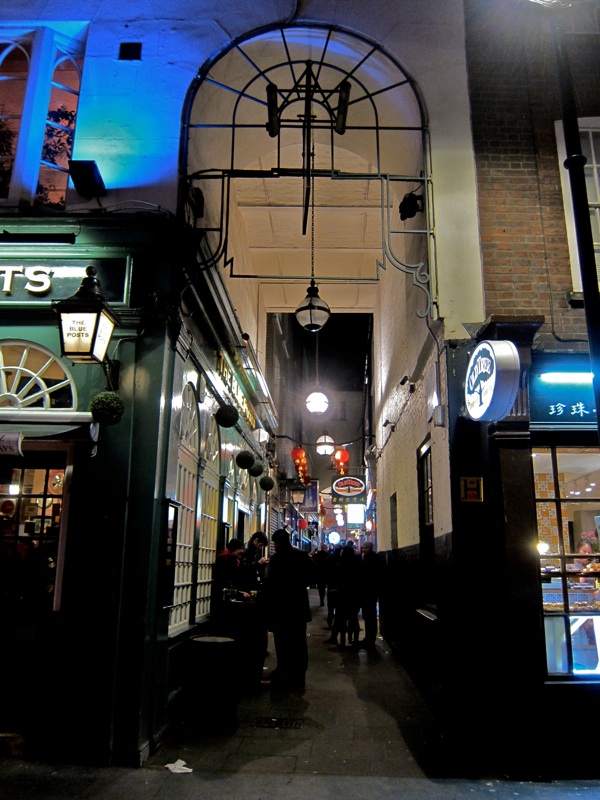
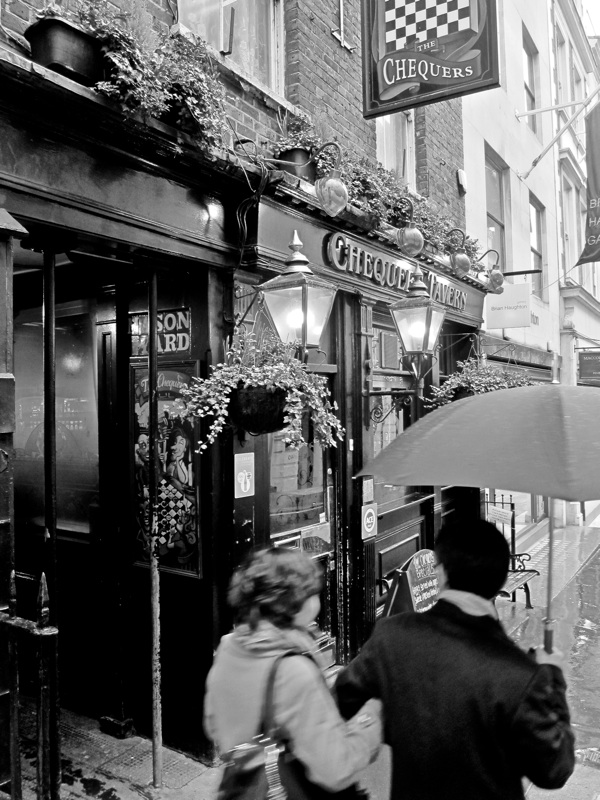
The Chequers in Duke St, since 1839
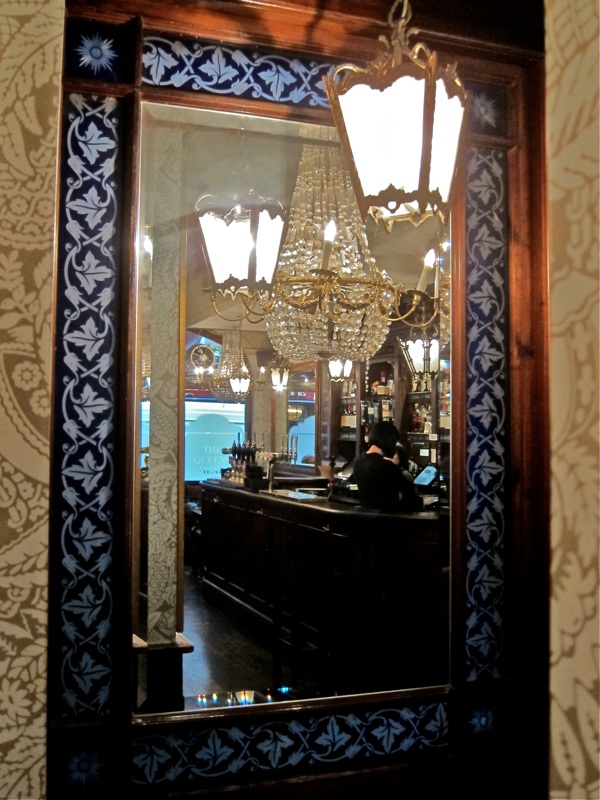
The Queens Head in Denman Street, a free house since 1736
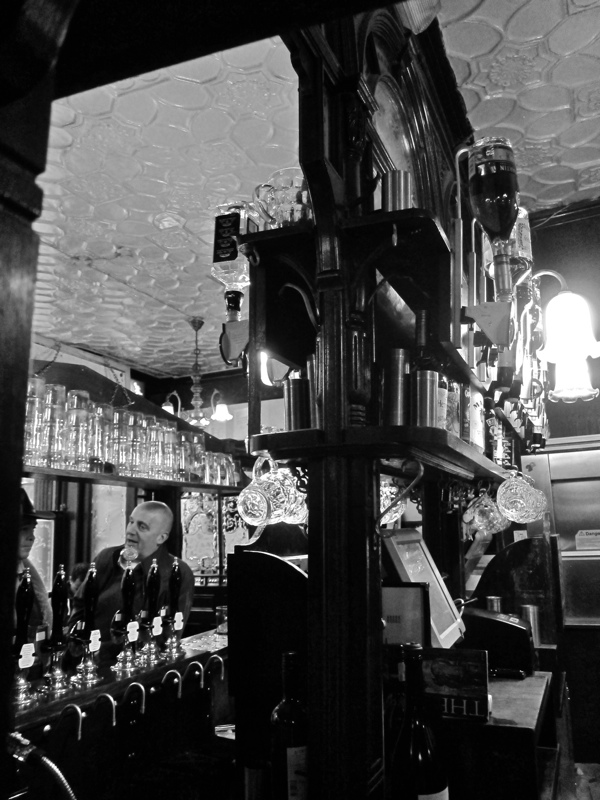
The Red Lion in Duke of York St ,since 1788
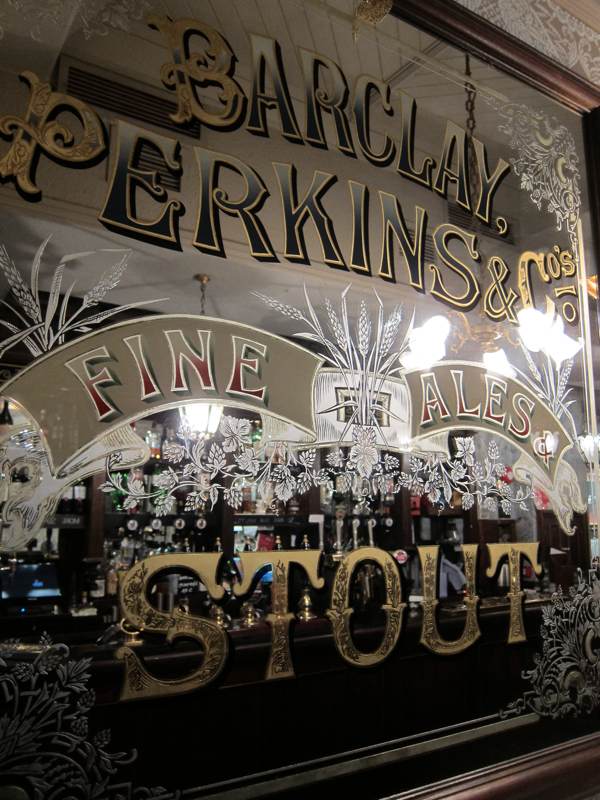
At The Queen’s Head
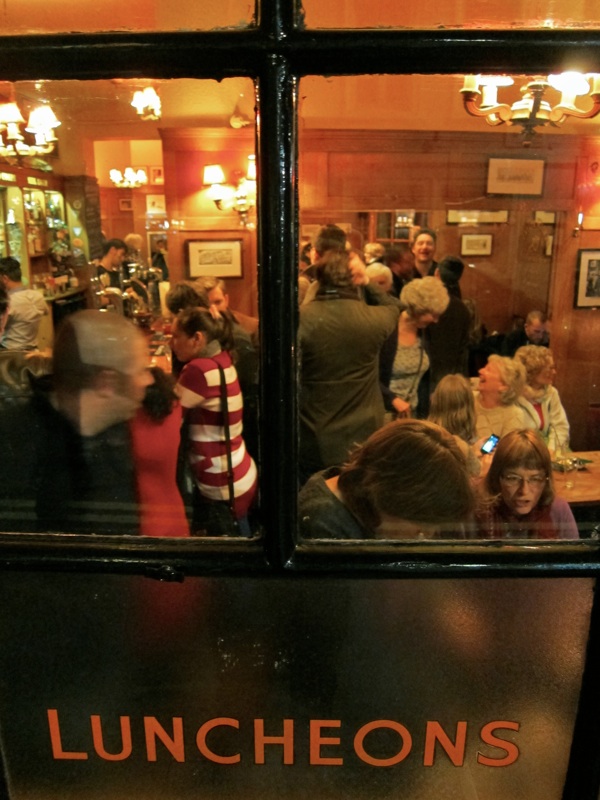
At The Coach & Horses in Greek St, since 1724

At The Blue Posts, Rupert St
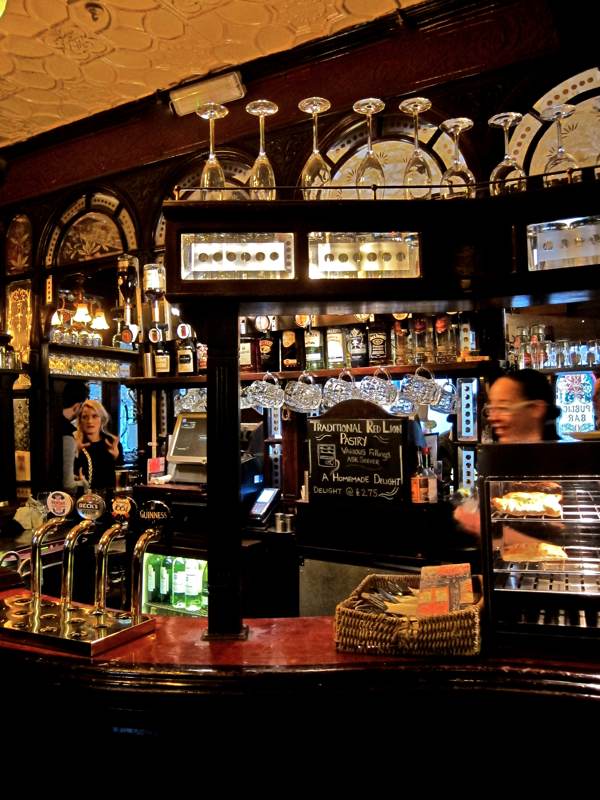
At The Red Lion, Duke of York St
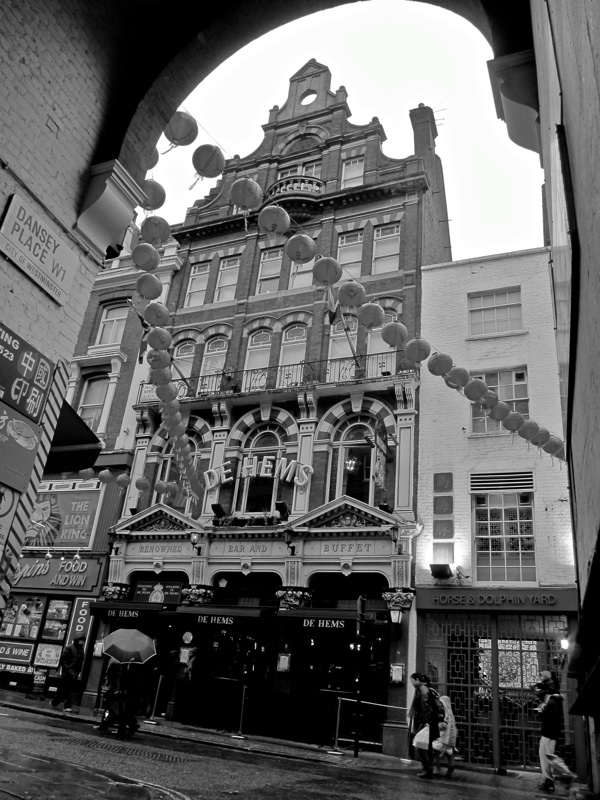
De Hems in Macclesfield St since 1900, formerly The Macclesfield since 1890 and The Horse & Dolphin since 1685
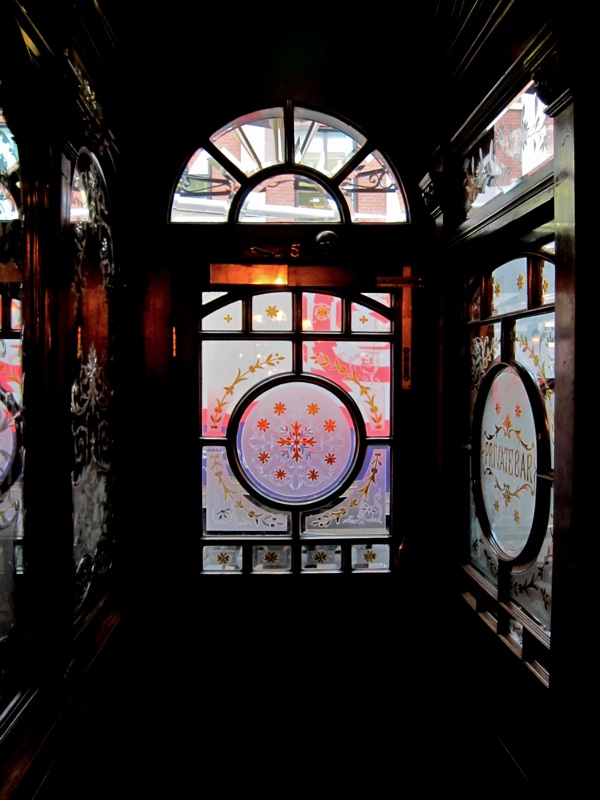
At The Red Lion, Duke of York St
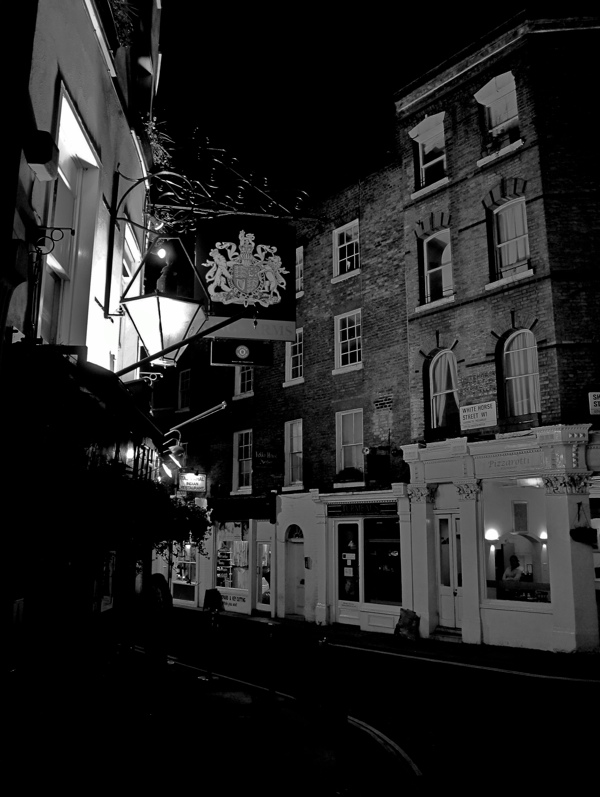
Kings Arms in Shepherd Market since 1660, known as The Jolly Butcher during the Common Wealth
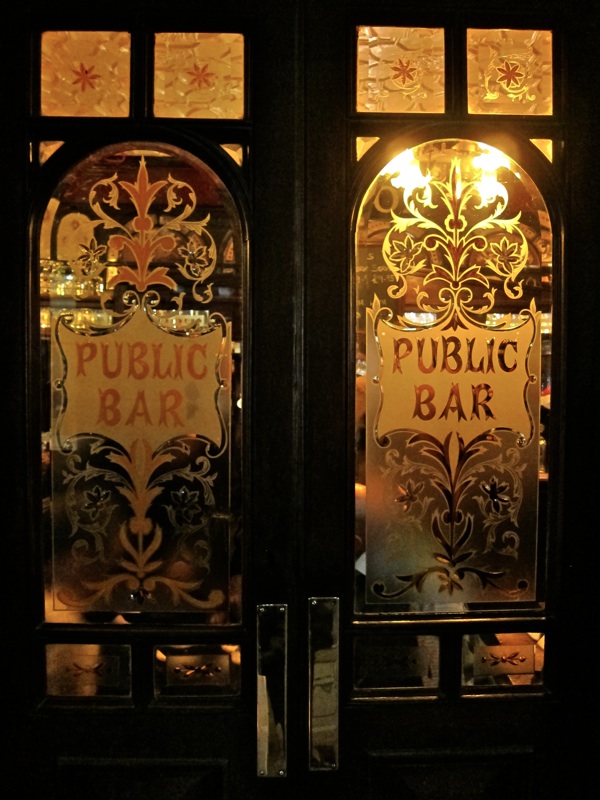
At the Red Lion, Duke of York St
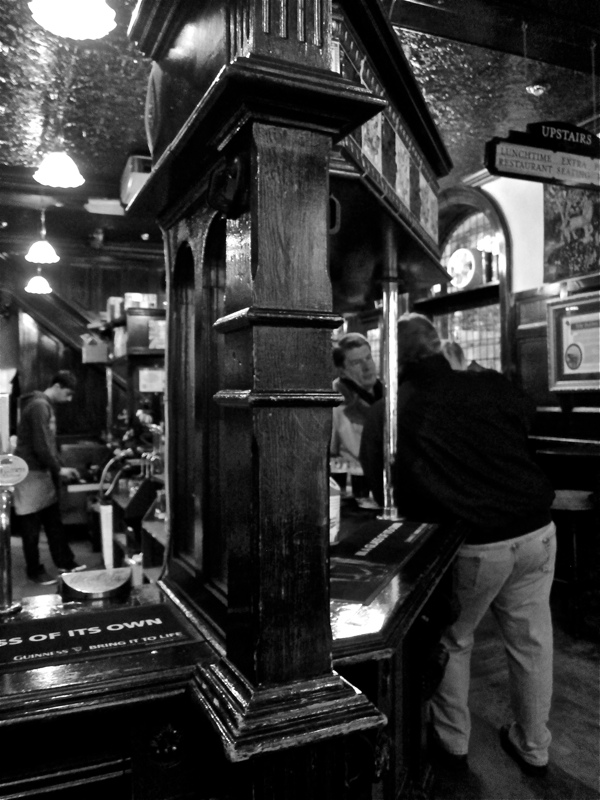
The Golden Lion in King St since 1721. Originally, the pub for St James Theatre next door from 1835, demolished 1957.
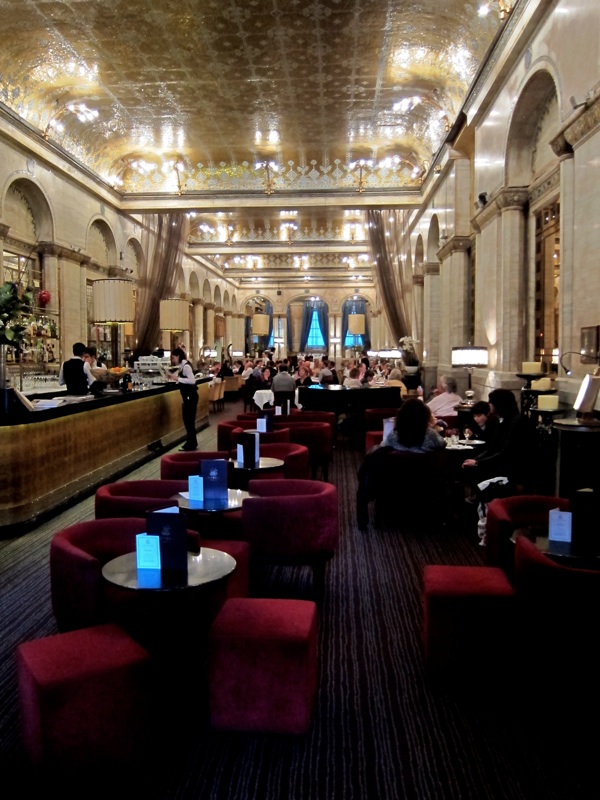
The Criterion opened in 1873, this was where Sherlock Holmes first met Dr Watson
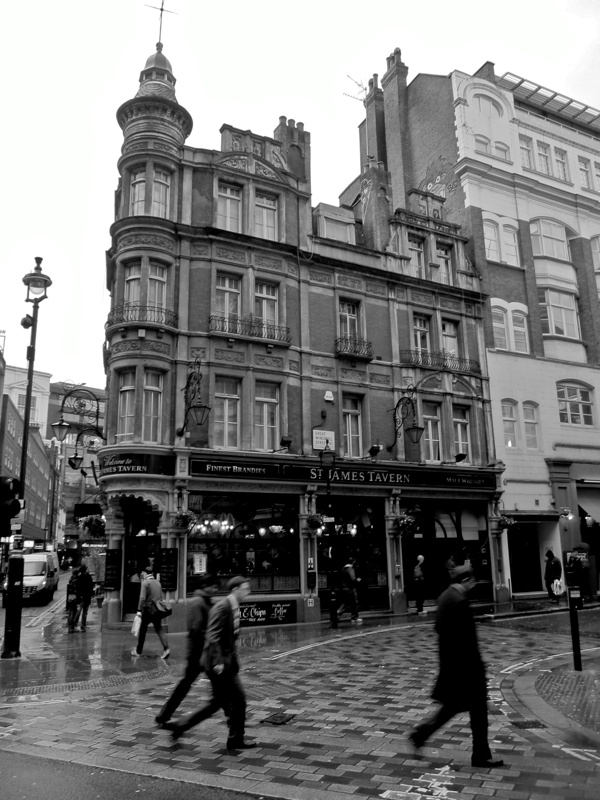
St James Tavern, Windmill St
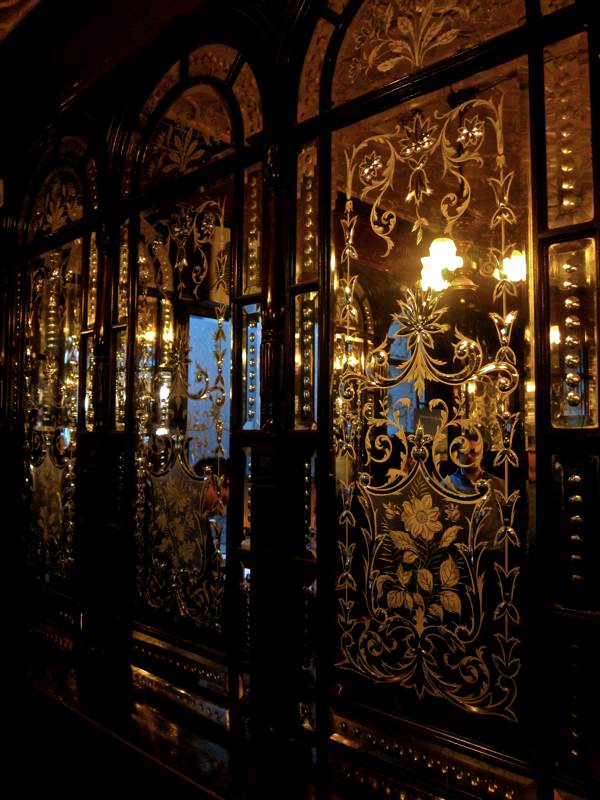
Nineteenth century mirrors of The Red Lion
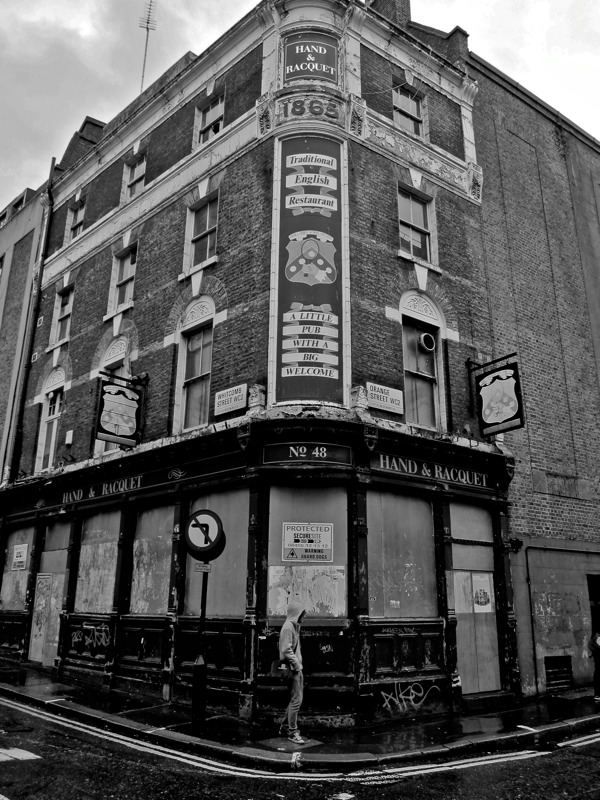
Hand & Racquet in Orange St since 1865, “A Little Pub with a Big Welcome”
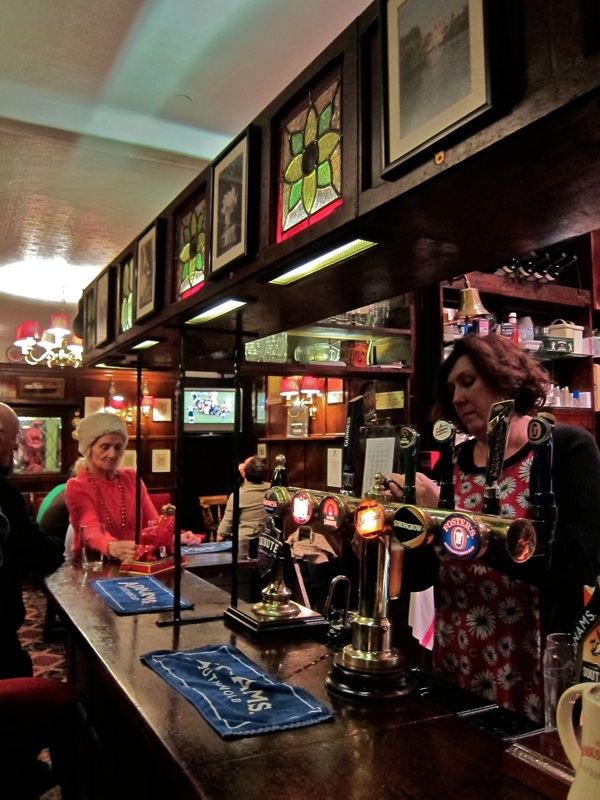
The Red Lion in Crown Passage
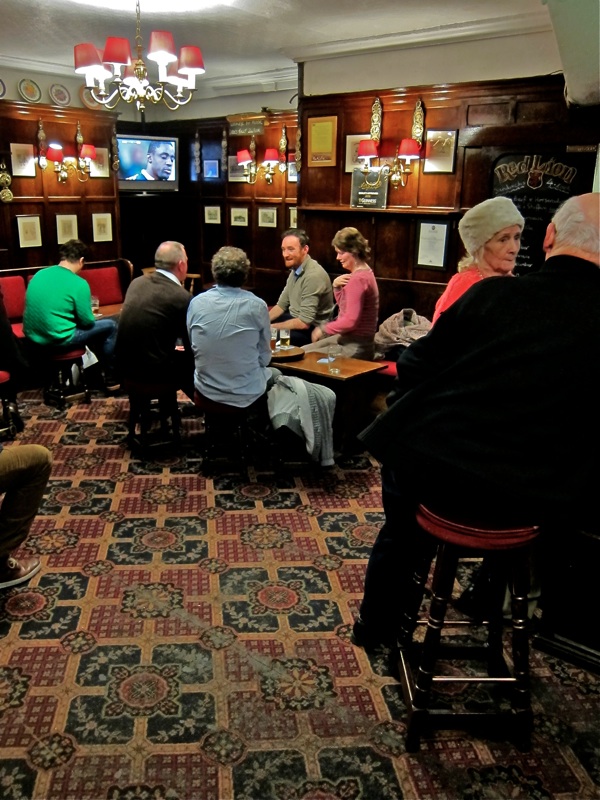
Regulars at The Red Lion in Crown Passaage
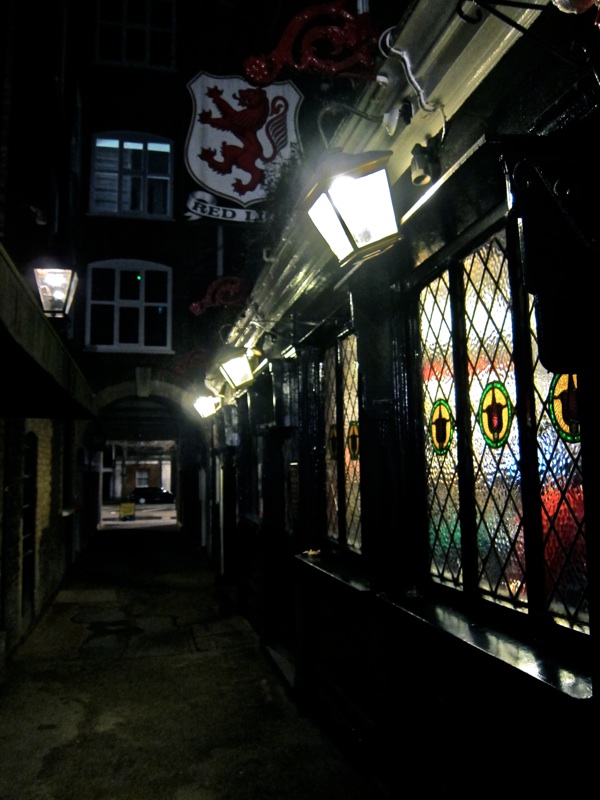
The Red Lion in Crown Passage is reputed to be London’s second-oldest licensed pub
You may like to read about my previous pub crawls
The Gentle Author’s Next Pub Crawl
The Gentle Author’s Spitalfields Pub Crawl
The Gentle Author’s Dead Pubs Crawl
In The World Of Phlegm
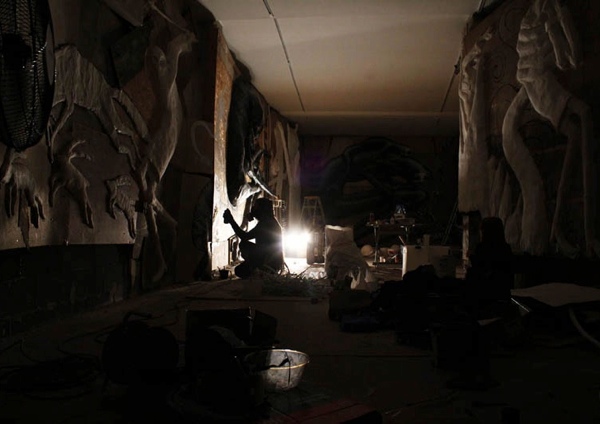
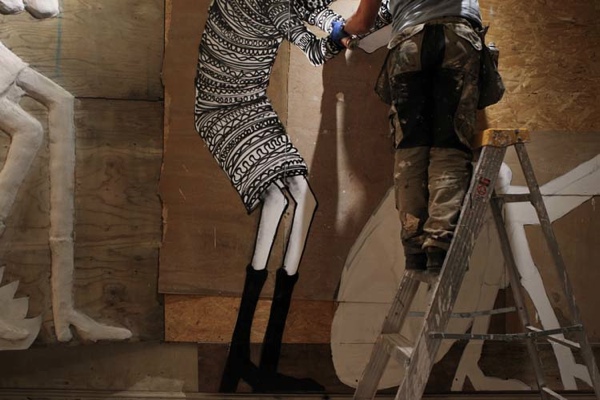
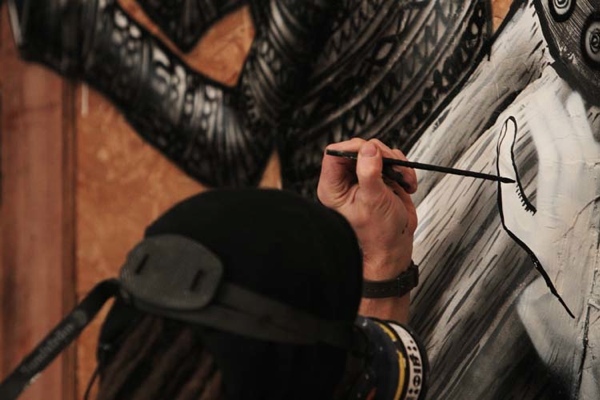
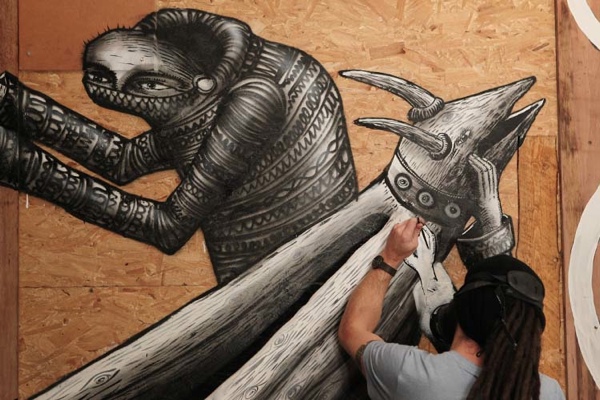
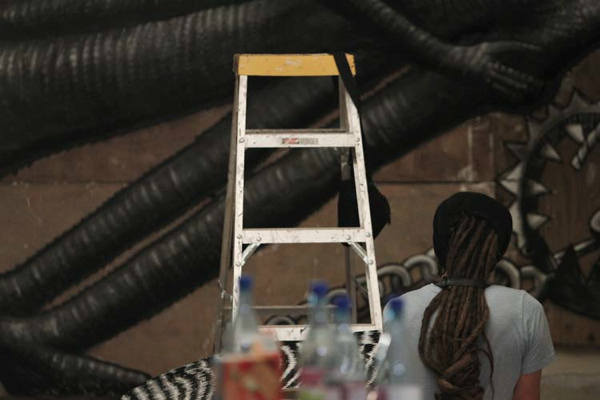
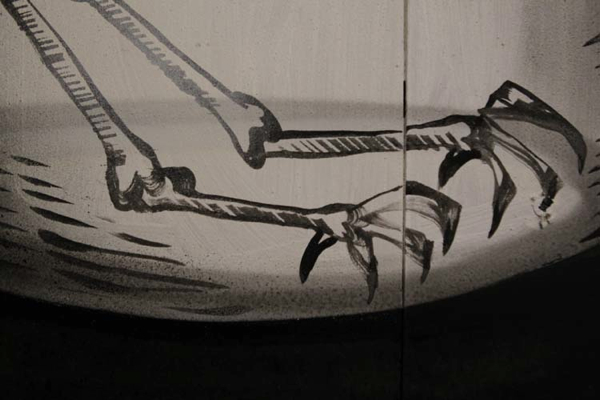
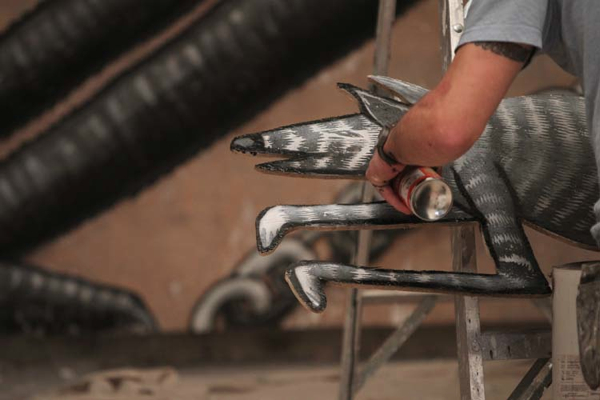
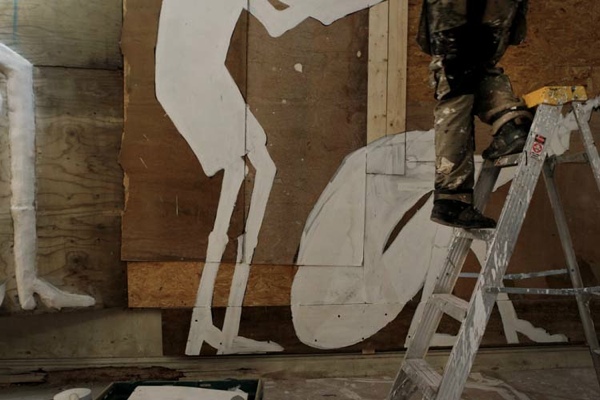
Here is Phlegm working through the small hours of the damp, dark January night to complete his installation entitled The Bestiary, which opens today at the Howard Griffin Gallery, 189 Shoreditch High St. Last week, Contributing Photographer Simon Mooney & I braved the downpour to go along and offer our encouragement.
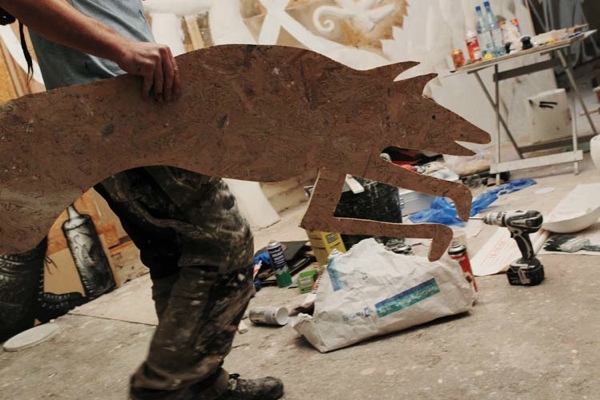
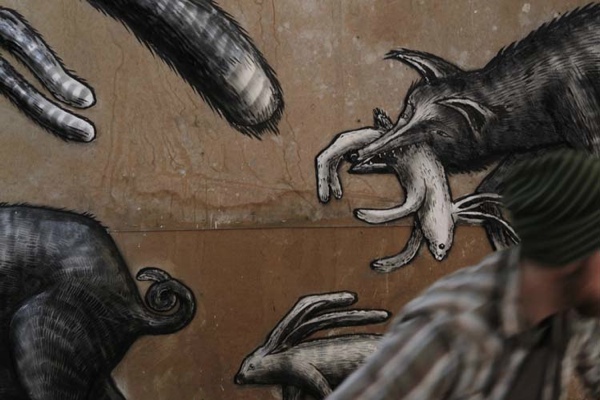
A street artist who became known for huge murals painted inside derelict factories in Salford and Rotherham, Phlegm has transformed the gallery beyond all recognition for his debut show. Since the middle of December, he has been at work lining the walls with an assortment of scrap timber, creating an irregular interior space that resembles a cave or the nest of some mythic creature. This is the lair of Phlegm.
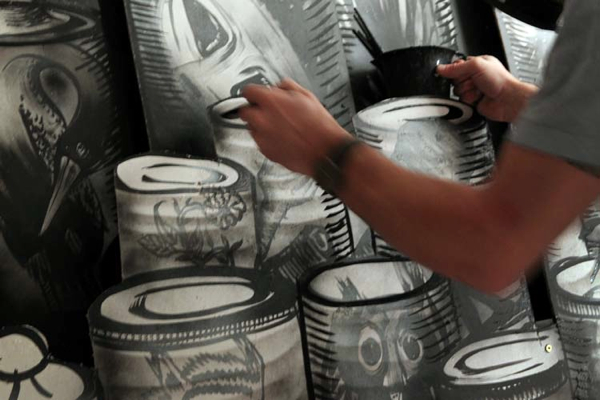
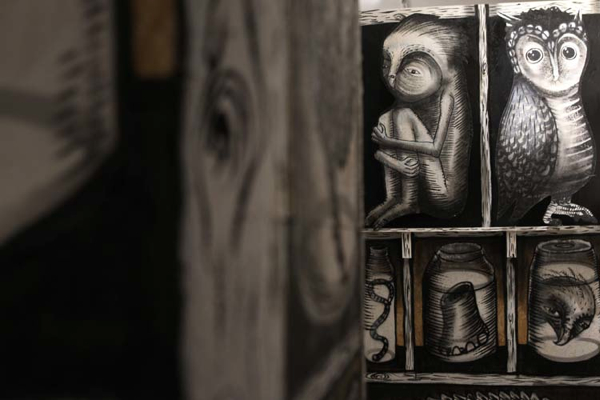
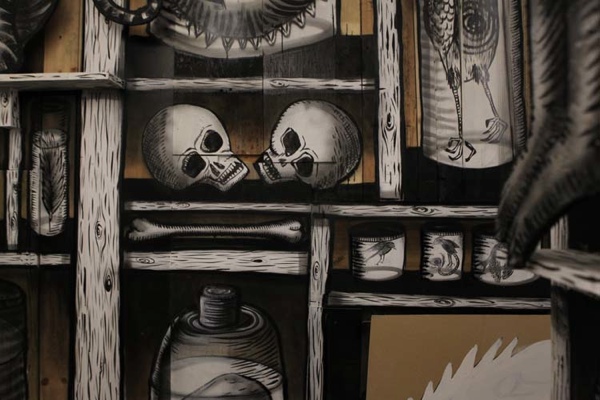
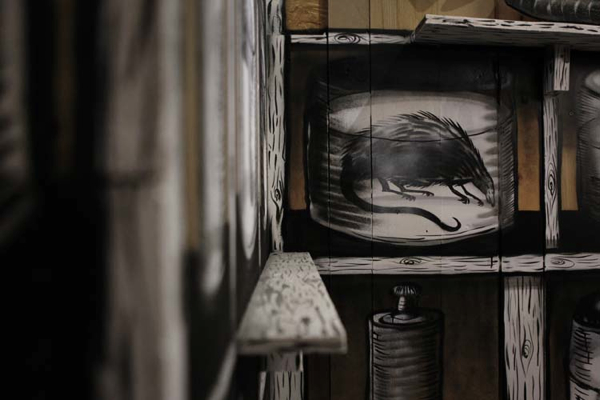
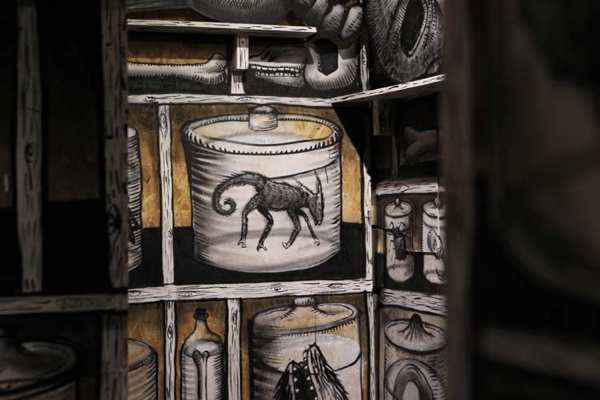
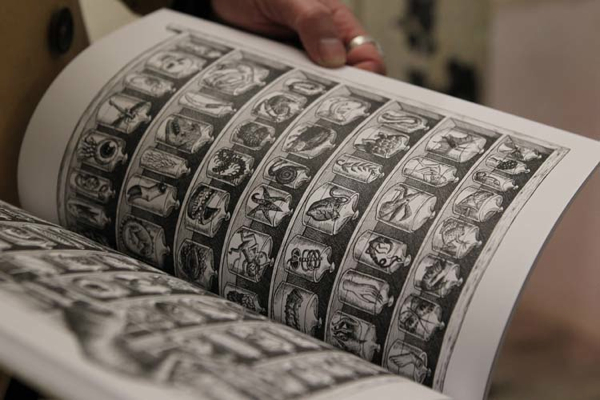
At first you enter a maze of partitions, painted with specimen jars containing animals, as if you were approaching the private museum of some obsessive collector, greedily snaffling up every species in the natural world. Beyond, you find yourself in a large chamber with a sequence of large monochrome compositions painted in plaster relief upon the walls. You think of the prehistoric artists who painted the caves of Lascaux and you think of Hieronymus Bosch’s Garden of Earthly Delights and you think of Maurice Sendak’s Where the Wild Things Are – and Phlegm’s work is a little of all these things, and something more.
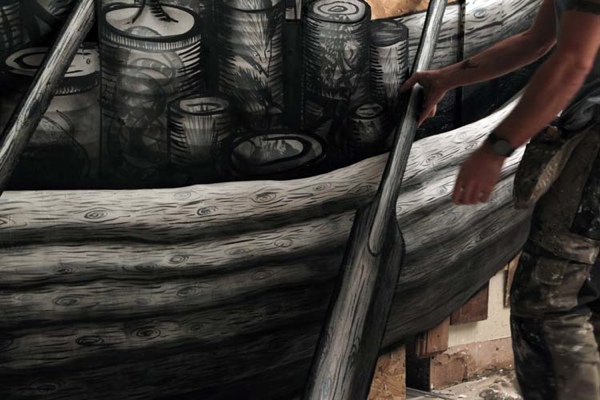
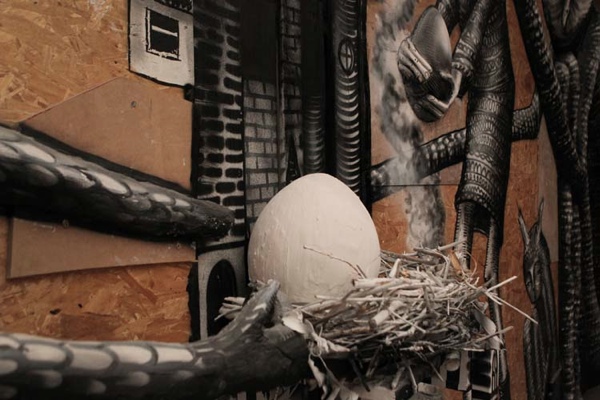
In Phlegm’s imaginative world, nature is an ambivalent force, brutal and violent, and burgeoning with sinister hybrids and aliens. To your right, an epic chase of animals hunting is scattered across the first wall, followed by a scene of the collection of eggs by semi-human creatures with stick-like limbs dressed in primitive Fair Isle shifts. At the rear, another creature crouches warily, carrying its young upon its back, while on the right a vessel is being loaded with specimens, just as we saw upon the shelves where we came in.
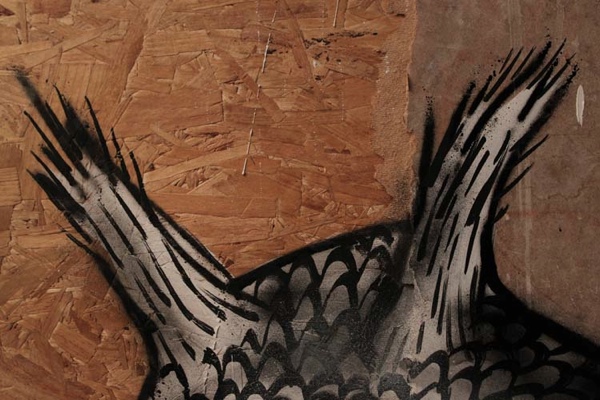
There is an exciting tension between the rough timber cladding, coated with plaster relief, and the finely hatched lines applied with an aerosol by Phlegm upon the surface, that pull the entire vision into focus, as if the whole thing were a mirage or nightmare hallucination conjured out of scrap. Yet Phlegm also exhibits a playful sensibility that underscores the comic book violence with a poignant levity, and the vitality of his work is irresistible.
A softly-spoken Northerner, with dark eyes, pale skin and locks down to his waist, Phlegm began as an illustrator – drawing elaborately detailed ink illustrations of his own private mythology and publishing them in zines, before transferring them onto walls at a vast scale. Like Roa, he has now become part of a global circuit of street artists, executing commissions in Canada, Norway, Sri Lanka, USA and elsewhere. This is Phlegm’s first gallery show and his first sculpture, and it is a breathtaking, wondrous thing to divert you in this grim season of the year.
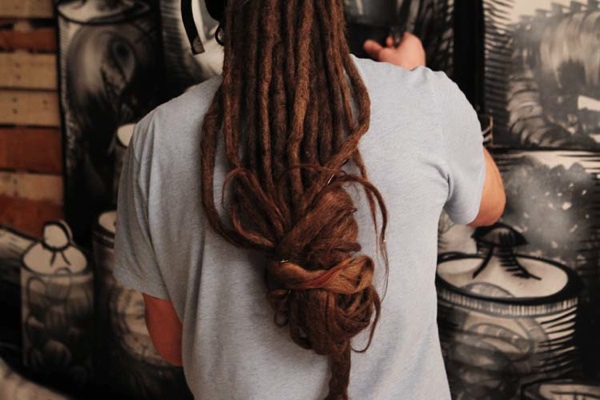
Photographs (except first picture) copyright © Simon Mooney
You might also like to read about
Mannie Blankett, Hairdresser/Furrier/Lifeguard
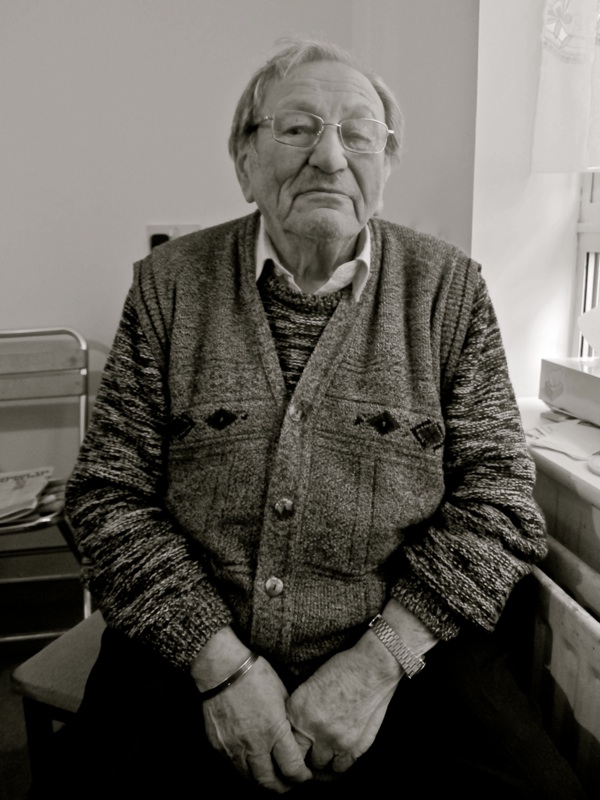
Mannie Blankett
“You can call me ‘Jack Of All Trades’ if you want,” suggested Mannie with a characteristic grin of self-effacement, when I asked his profession, as if he were more concerned to make things easier for me than to assert his accomplishments. Such is the philosophical detachment of one born in 1917, who saw the passage of the twentieth century, who is the last of a family of six children, and is a man at peace with himself.
While the January afternoon light faded outside, I was privileged to spend a few hours with Mannie in the peace of his modern flat looking down upon the Petticoat Lane Market.
“As a youngster, I remember going to the Pavilion Theatre in the Whitechapel Rd and seeing the boxing and wrestling. It was full of people and very popular. That was a long time ago, the end of the thirties, so you can imagine how old I am. The boxing ring was in the middle of the theatre with seats all round and upon the stage. It can’t have been expensive because I didn’t have anything. It must have been pennies. I remember an American boxer came over called ‘Punchy’ Paul Shaffer who knocked out all his opponents in the first round and there was Max Krauser the wrestler, a heavyweight who won all his fights.
I was born in Jamaica St and I left the East End at twenty years old, when the family moved to Stamford Hill in 1937. Jamaica St had all these bug-ridden houses then. We used to call them ‘red bugs,’ and they came out in the summer. Six of us shared a three bedroom house and we had no back garden or bathroom, and we had an outside toilet. Opposite, there was company that did deliveries by horse and cart, collecting and transporting goods. There were few cars around then, very few people had them, just the milkman, the baker and the coalman. I wish I could remember more about the old days. As a kid, my mother used to take me up to Brick Lane to buy clothes and I remember the market in Whitechapel all along Mile End Waste
My parents came from Poland. My father Harry was a furrier who had his own business in the West End and my mother Sarah had six children to bring up. Blankett & Sons had workshops around Oxford St and Soho, and I had a brother who worked there with my father. I went to South St School, then I won a scholarship to Mile End School in Myrdle St and I was supposed to stay until sixteen, but my mother took me out at fourteen. I didn’t want to work as a furrier, instead I worked as a hairdresser all over the East End, before my mother sent me to a hairdressing school to learn my trade for three years but I wasn’t keen on that – the hours were very long, eight in the morning until eight at night – so I went into the family business after all.
I worked there for a couple of years and I learnt all the parts of the trade, making patterns, cutting and nailing. At lunchtimes, I used to go swimming and sunbathing at the Serpentine Lido and I got chatting with the attendant and he said there was a job going as a lifeguard and suggested I apply. I worked at the Lido for five years, it was a seasonal job from Easter until September. At school, I had learnt to swim and won a bronze medal for lifesaving. I was in my late teens and I loved that job. In our English summers, you get weeks of rain and we used to sit and play chess all day.
I always wanted to travel and, one day, I saw an advert in the London Times offering return tickets to India for seventy-five pounds. So I got a ticket and it was to travel overland, so it took a month just to get there! I met this young lady, Pat Evans, and we used to write to each other. When I went to India, I gave up my flat in Blandford St, so she said, ‘When you come back you can stay at my place in Croydon for a night, if you need somewhere.’ I stayed ten years until she died. She used to do a bit of writing, she wrote stories and poems for magazines and had quite a few published. In Croydon, I got a job at the swimming pool in Purley Way, opposite where the old airport and I was there for five years.
I got called up in 1943 for three years and, when I came out, I did a bit of hairdressing and part-time work in the family business to get by. In the sixties, I worked in Housman’s Radical Bookshop in the Caledonian Rd and I was in the Peace Movement. I joined Campaign for Nuclear Disarmament and became one of the Committee of One Hundred, including Bertrand Russell, Arnold Wesker, Christopher Logue and Vanessa Redgrave. We had demonstrations and, when they were arrested, we would step in to fill their places – I was arrested a number of times too.
When I was in Croydon, I got friendly with a guy who liked to dress up in uniform and do historical re-enactments, and he told me there was a VE Day Celebration coming up in the East End and they had two big bands playing including one led by Glenn Miller’s brother. So we went along and I met this woman who lived in Petticoat Sq. She was called Rene Rabin and that was twenty-five years ago. That was how I came back to the East End, to live in Middlesex St. Now I’ve lived in Petticoat Lane for twenty years and I like it round here. I have travelled a full circle in my life. “

Mannie with his sister Anne and their parents Sarah and Harry Blankett in the thirties
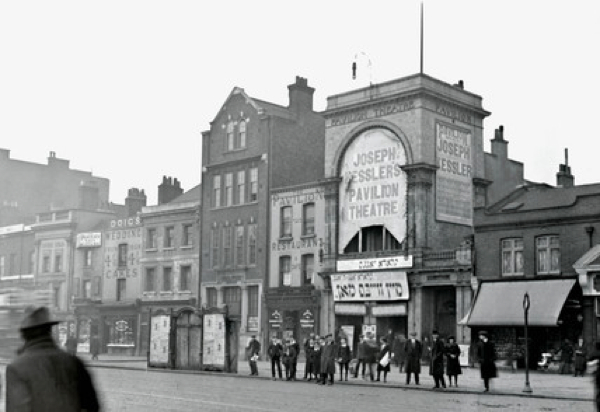
The Pavilion Theatre as Mannie knew it in the thirties
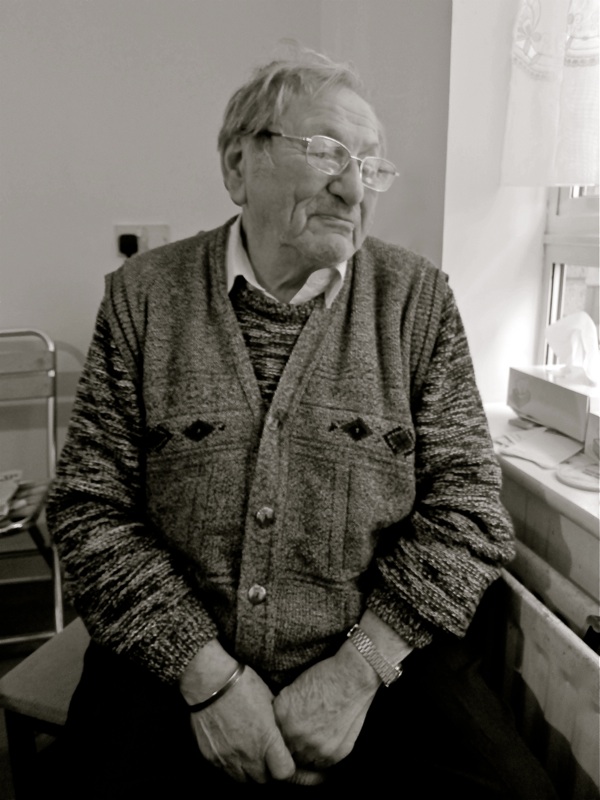
In his flat in Petticoat Sq, Mannie Blankett looks down upon the Petticoat Lane Market
You may also like to read these other Petticoat Lane Stories
Laurie Allen of Petticoat Lane
Billy & Charley’s Reliquaries
Courtesy of Philip Mernick, here are more of the wonderful zany works of Billy & Charley, the celebrated East End mudlarks-turned-forgers who created thousands of fake antiquities known as ‘Shadwell Shams,’ that successfully fooled the archaeological establishment in the nineteenth century.
There is a extra level of irony to these reliquaries, once produced to contain sacred relics, such as pieces of the’ true cross’ or body parts of saints which were believed to convey special powers to the owner, since they were always fakes produced to exploit the credulous and thus Billy & Charley were manufacturing fakes of fakes.
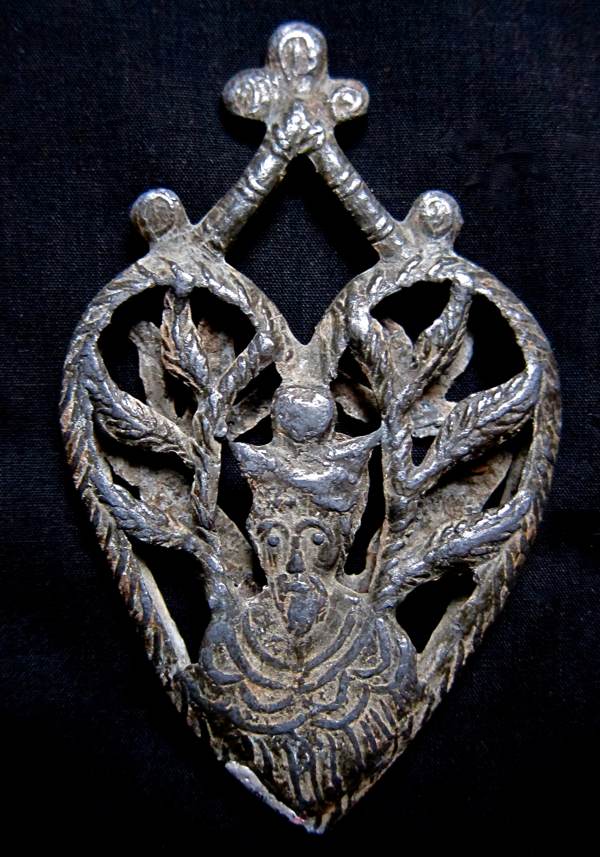
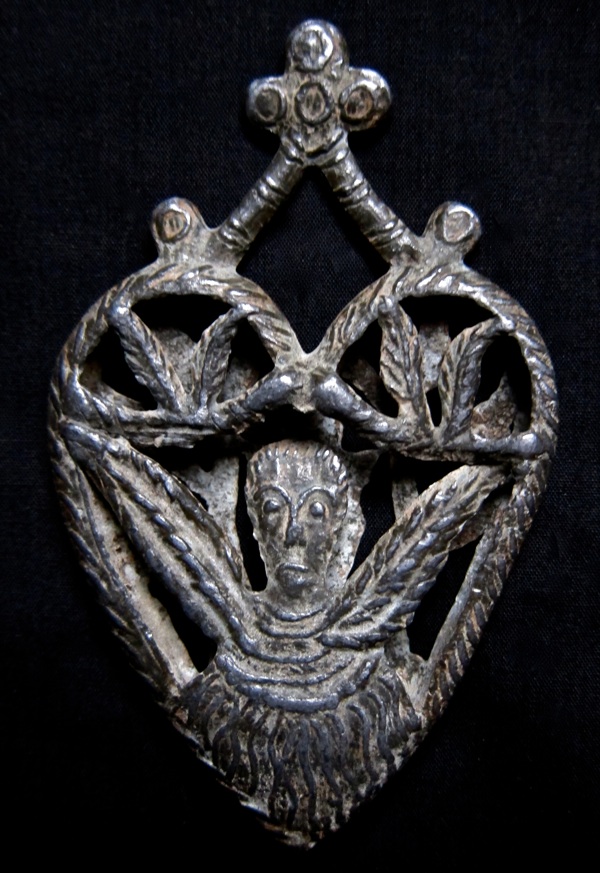
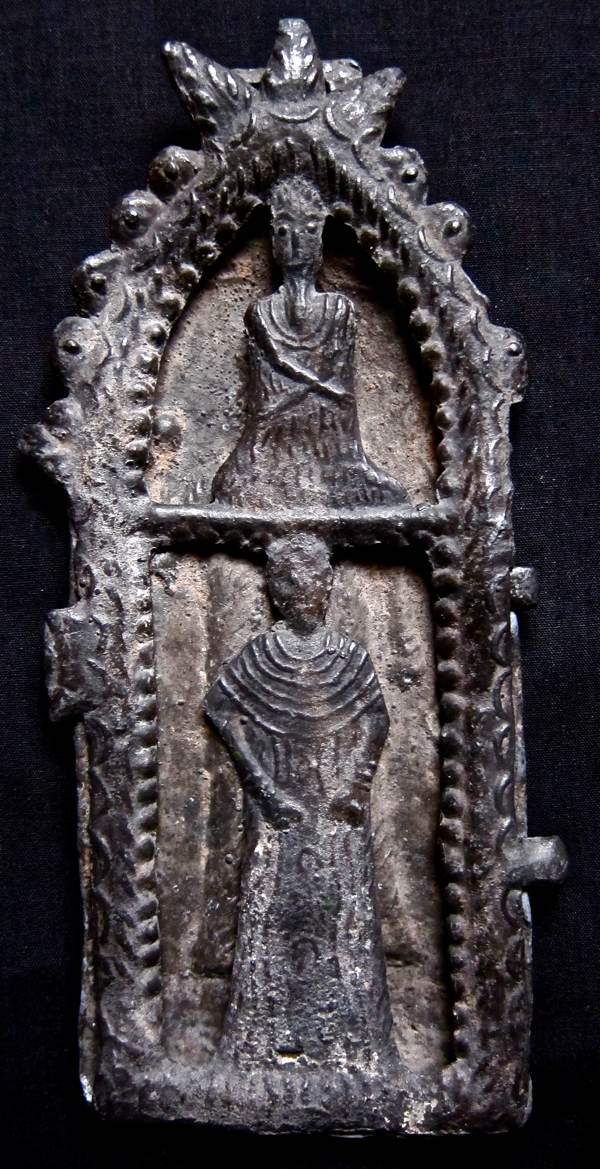
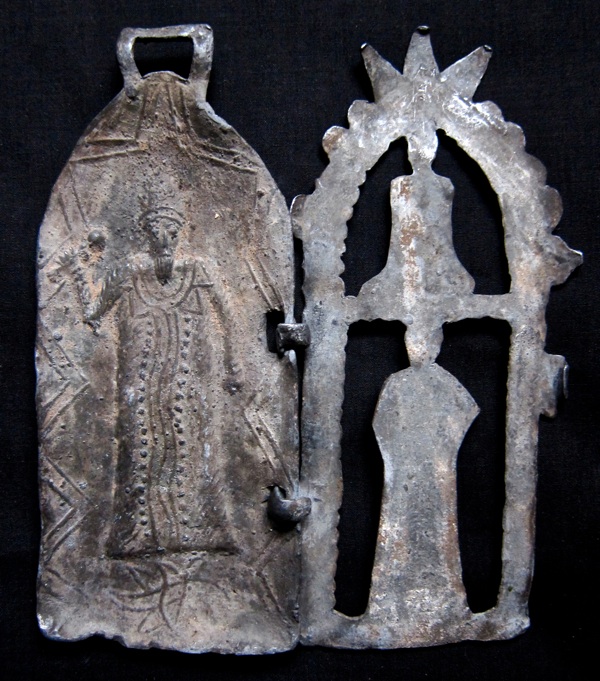
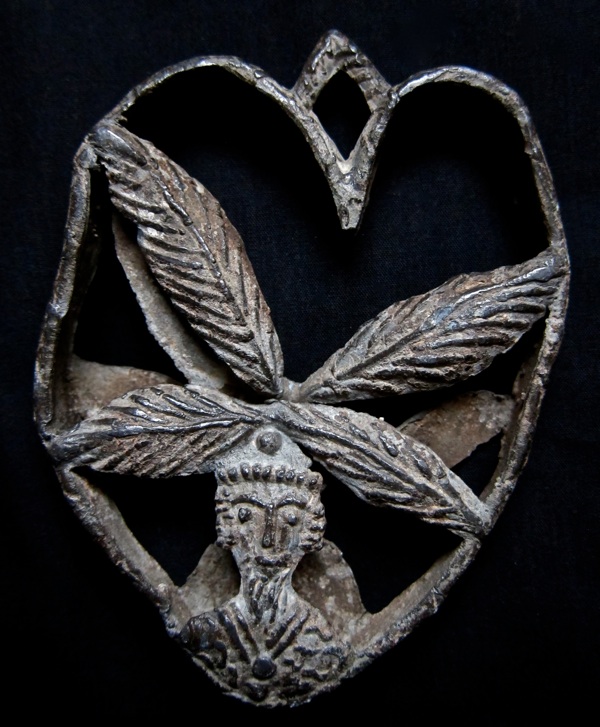
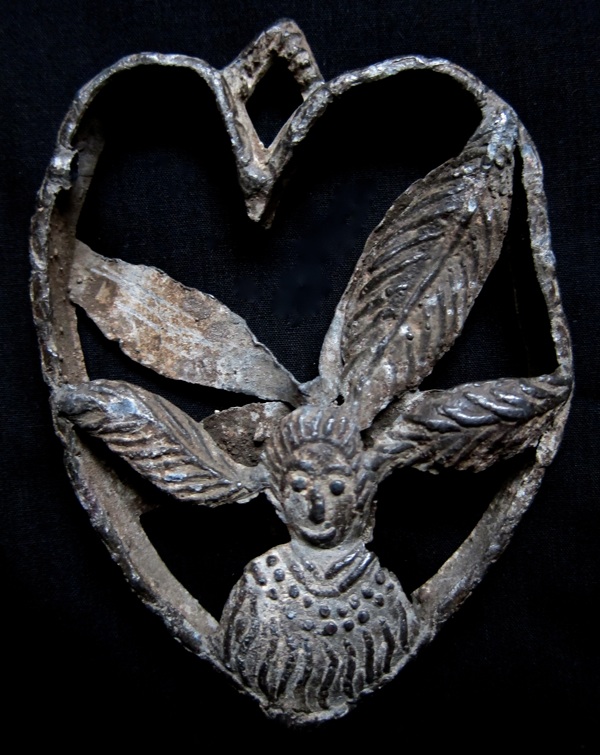
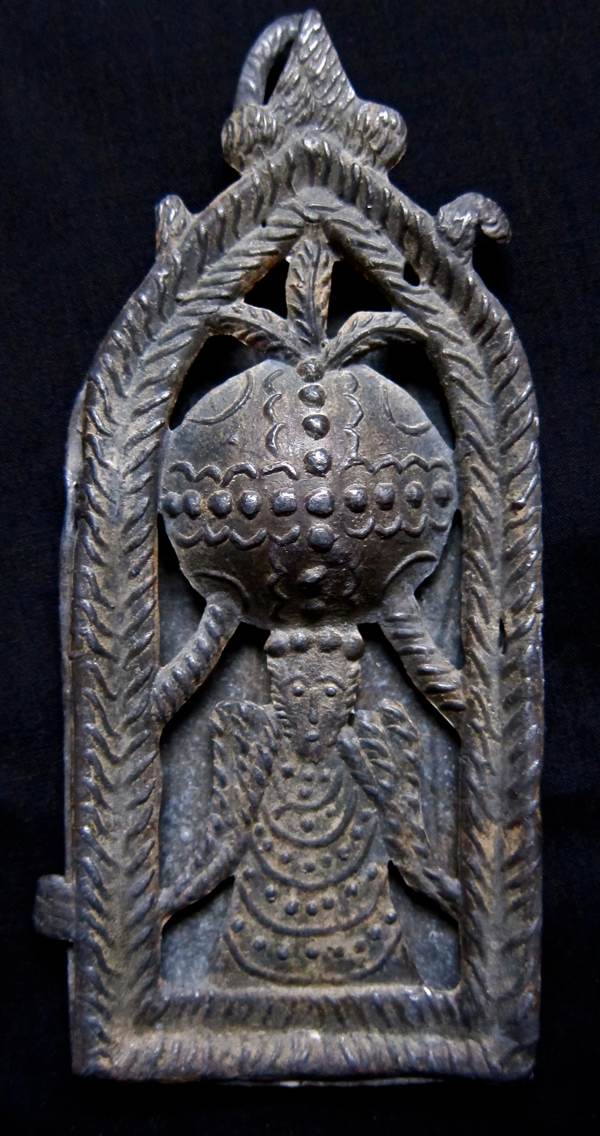
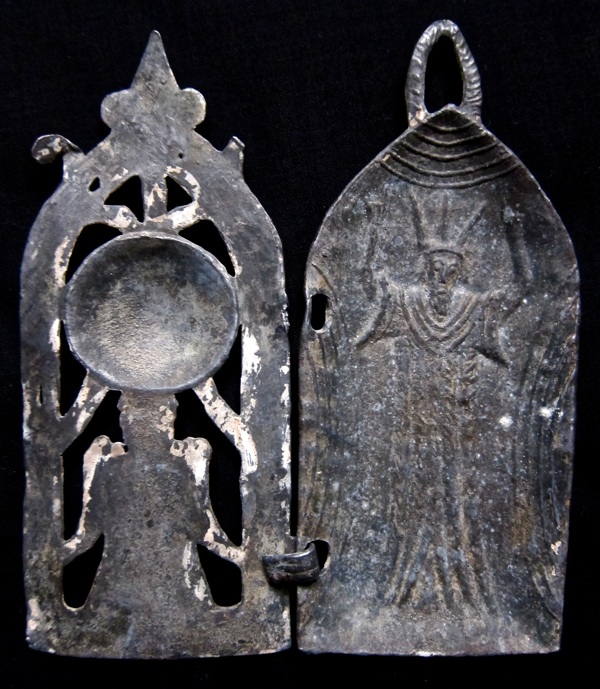
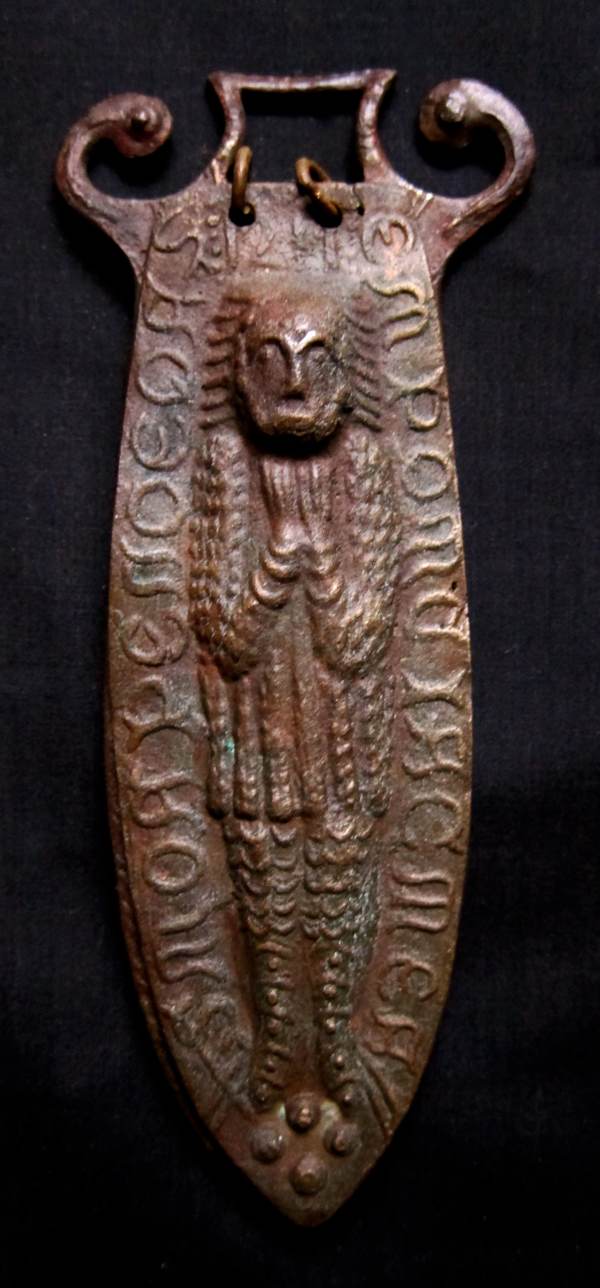
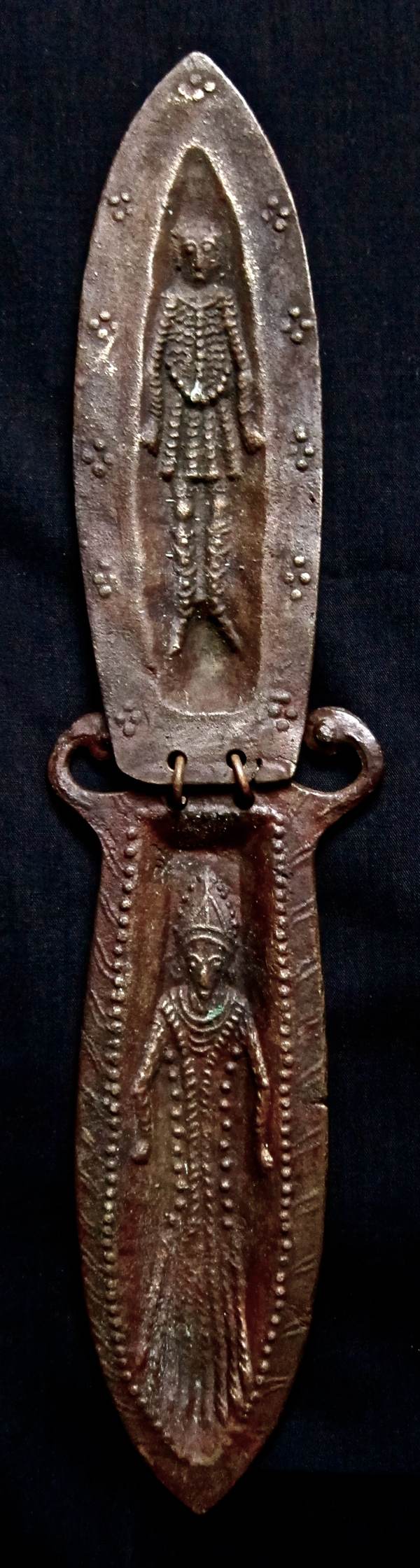
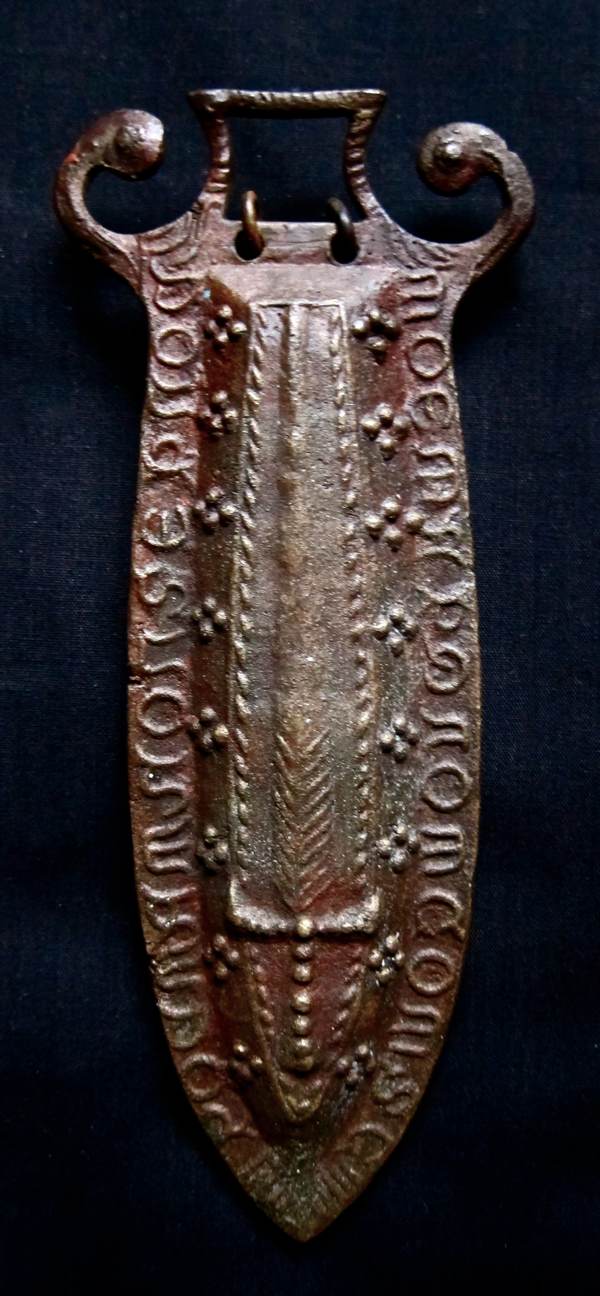
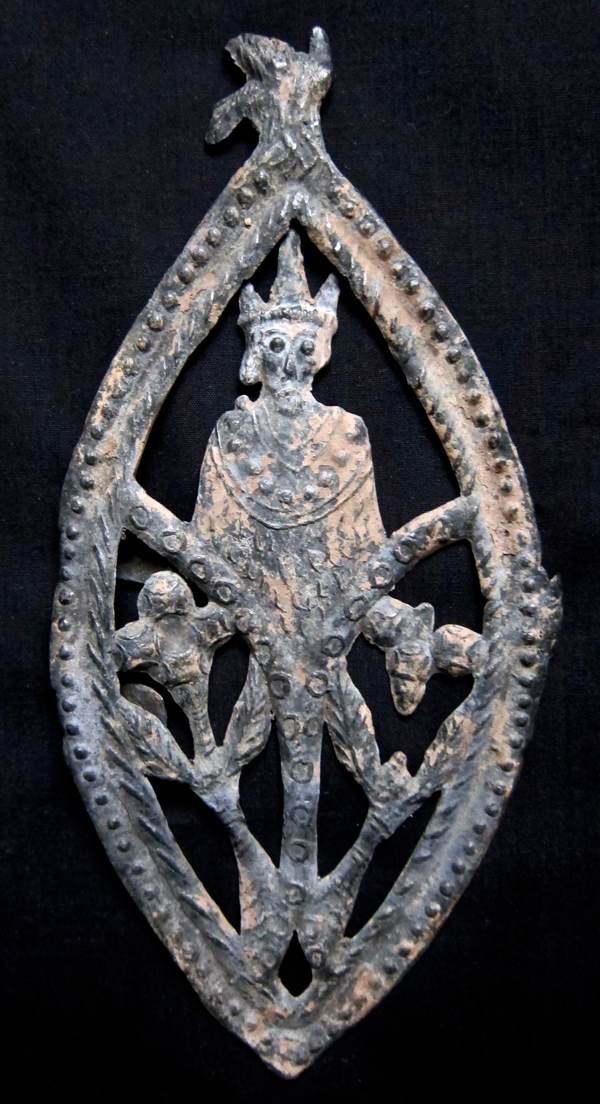
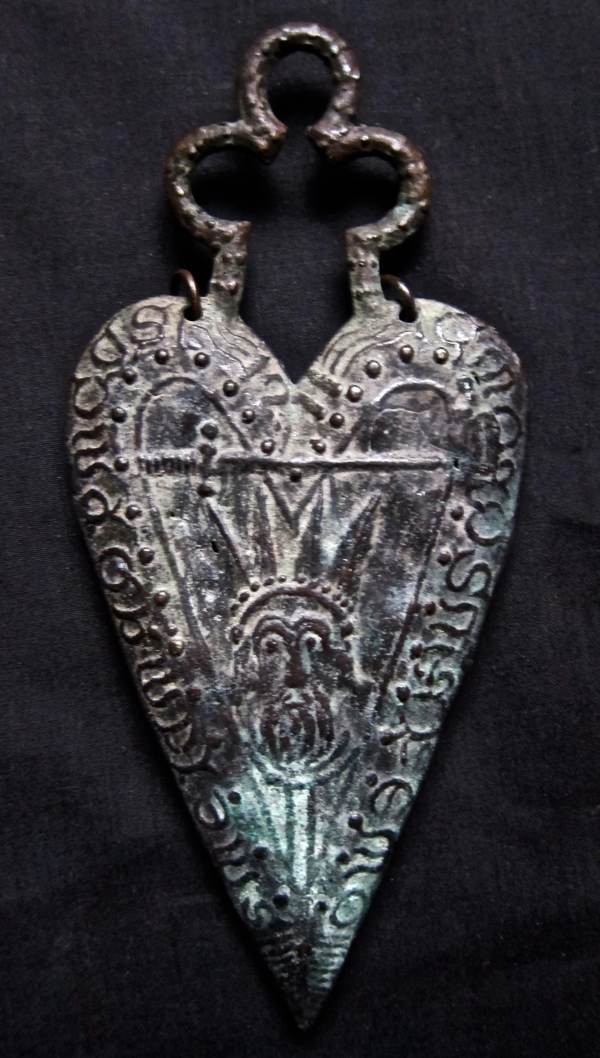
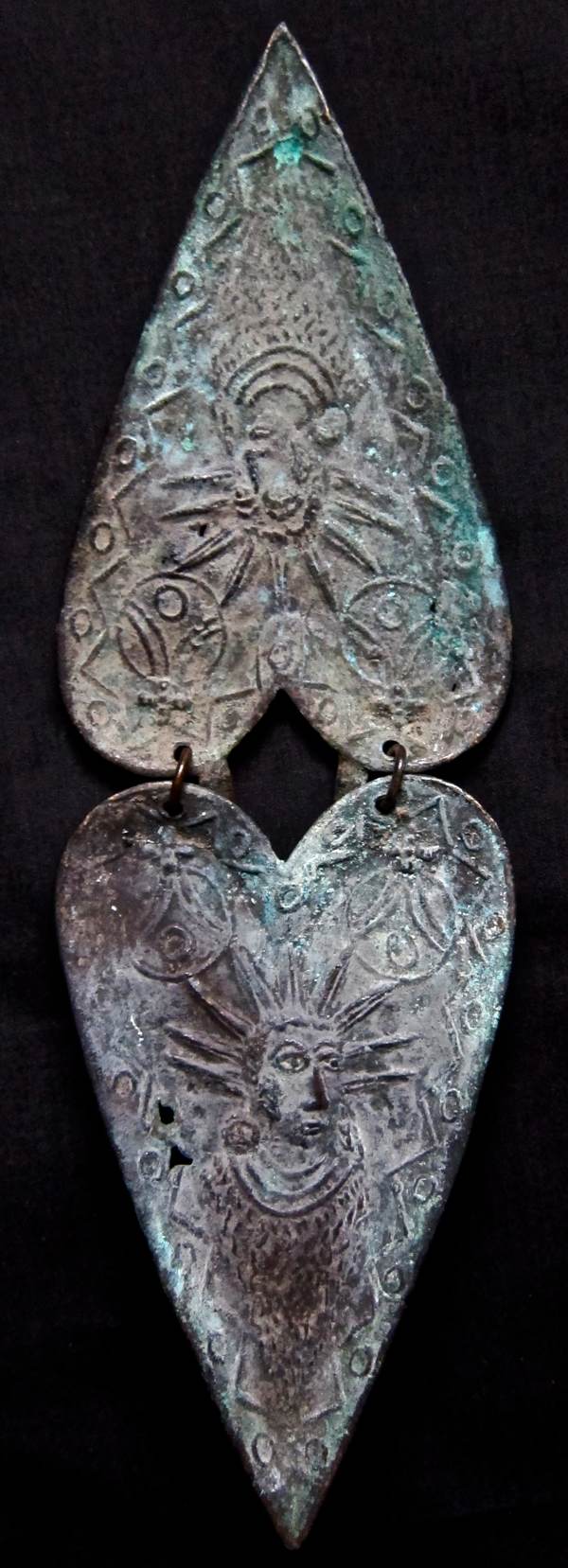
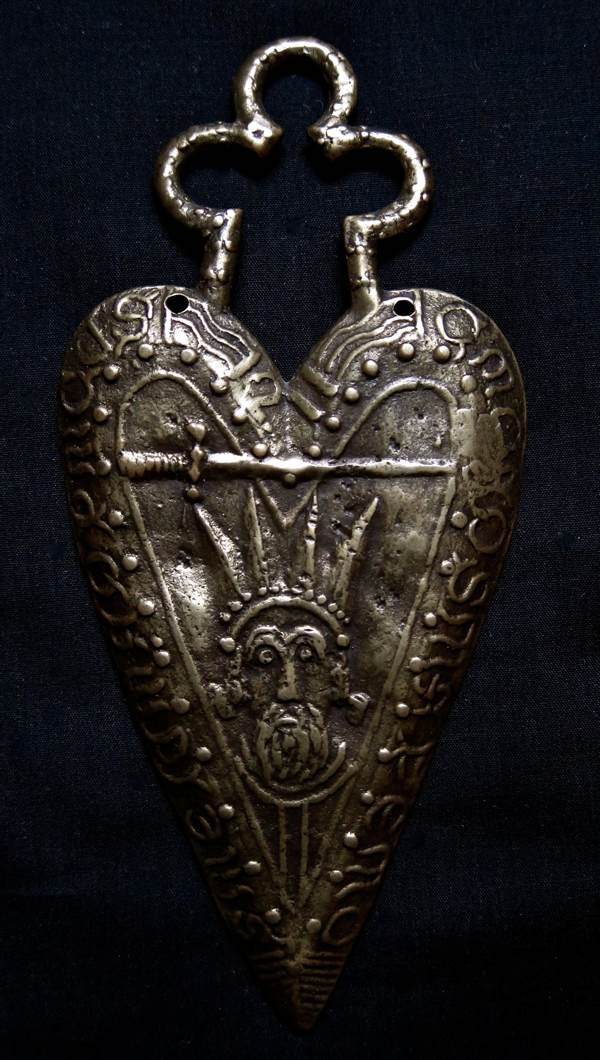
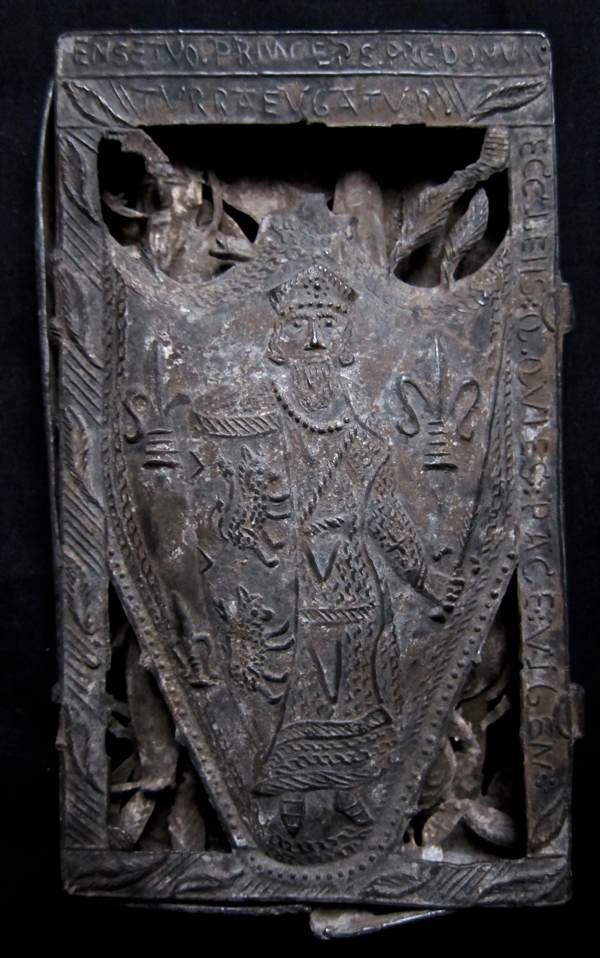
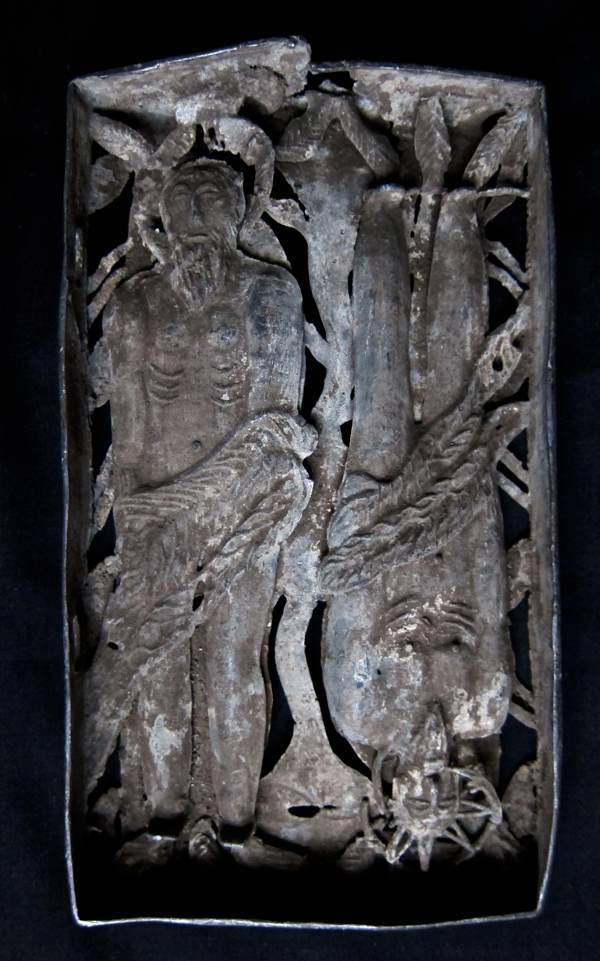
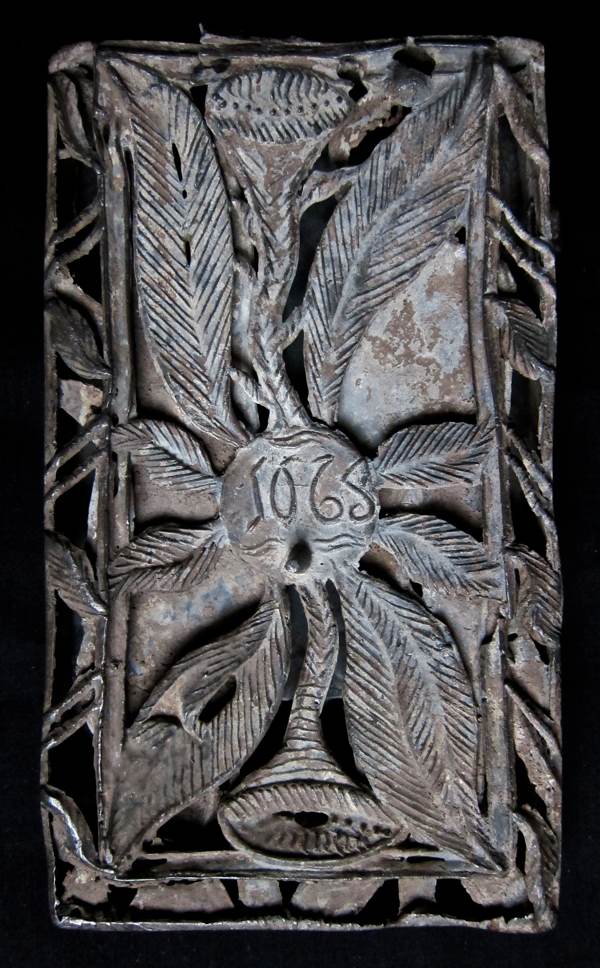
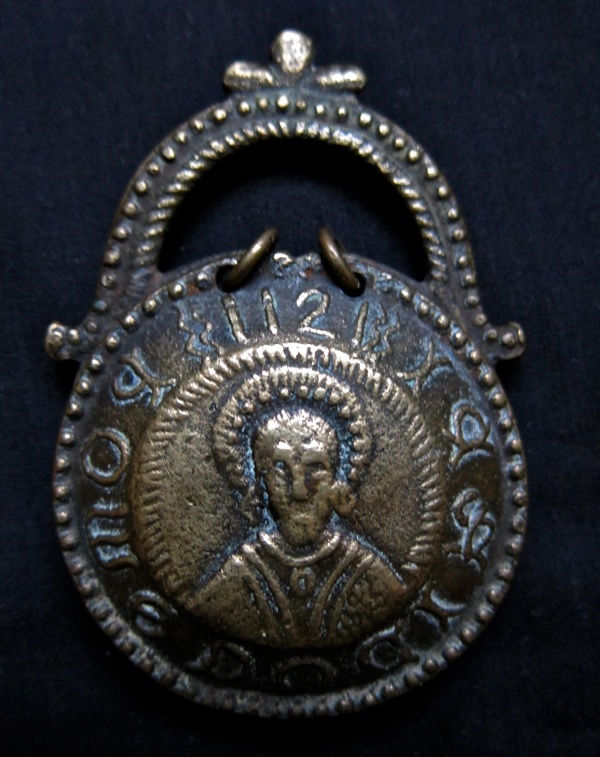
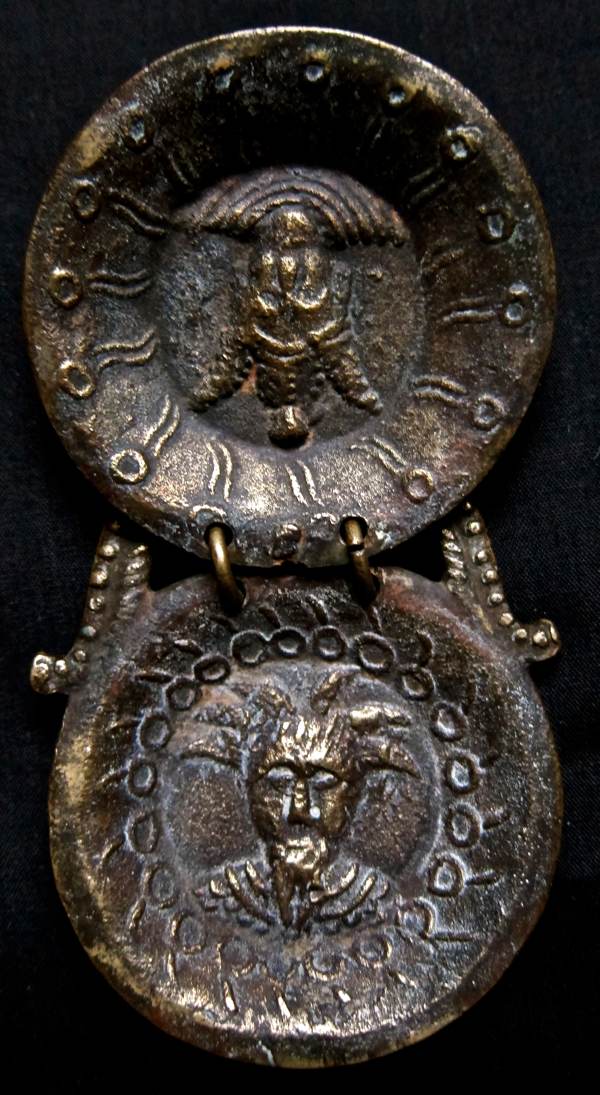
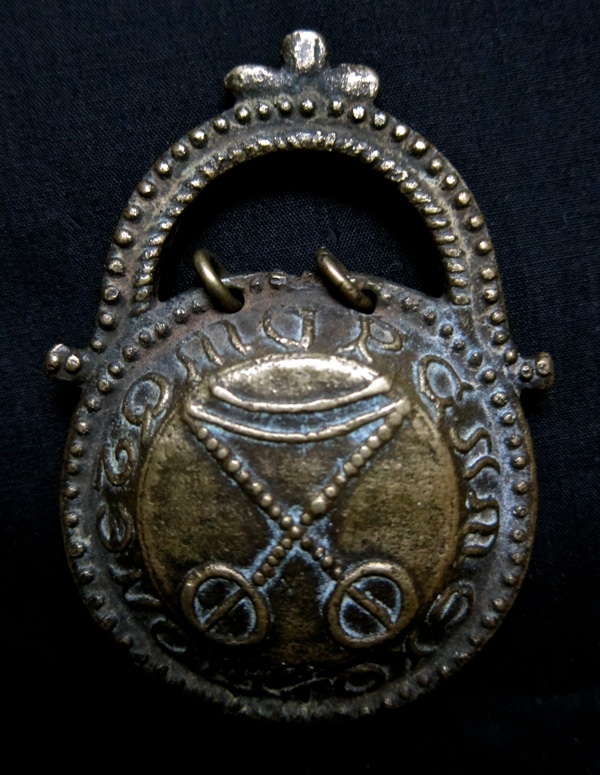
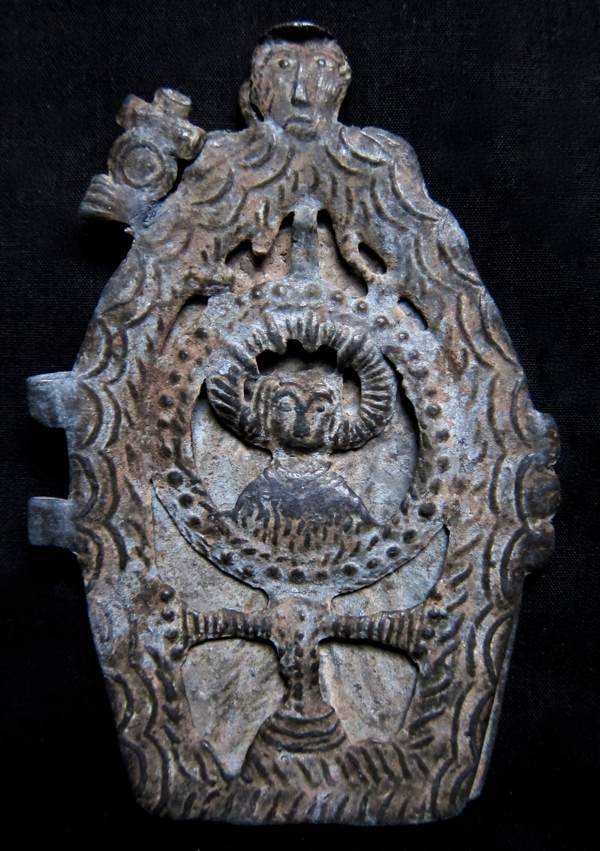
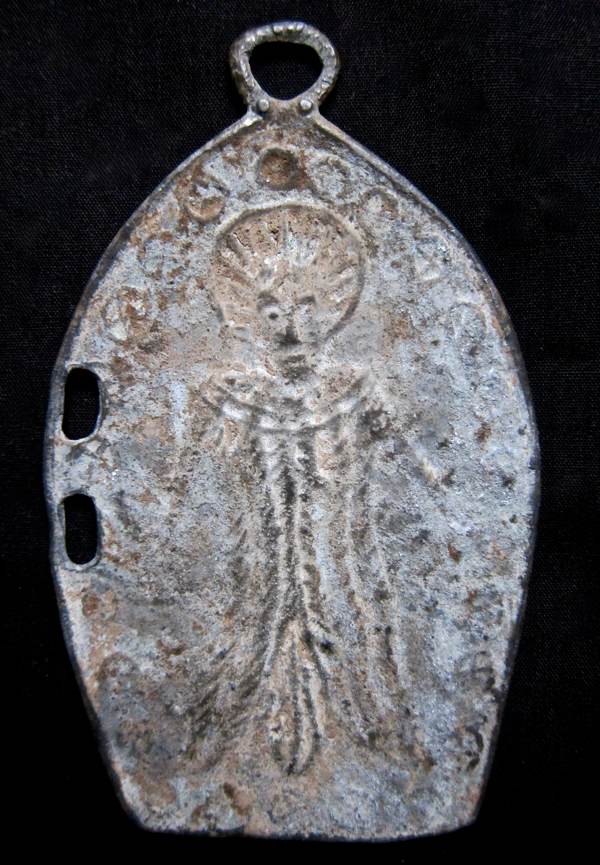
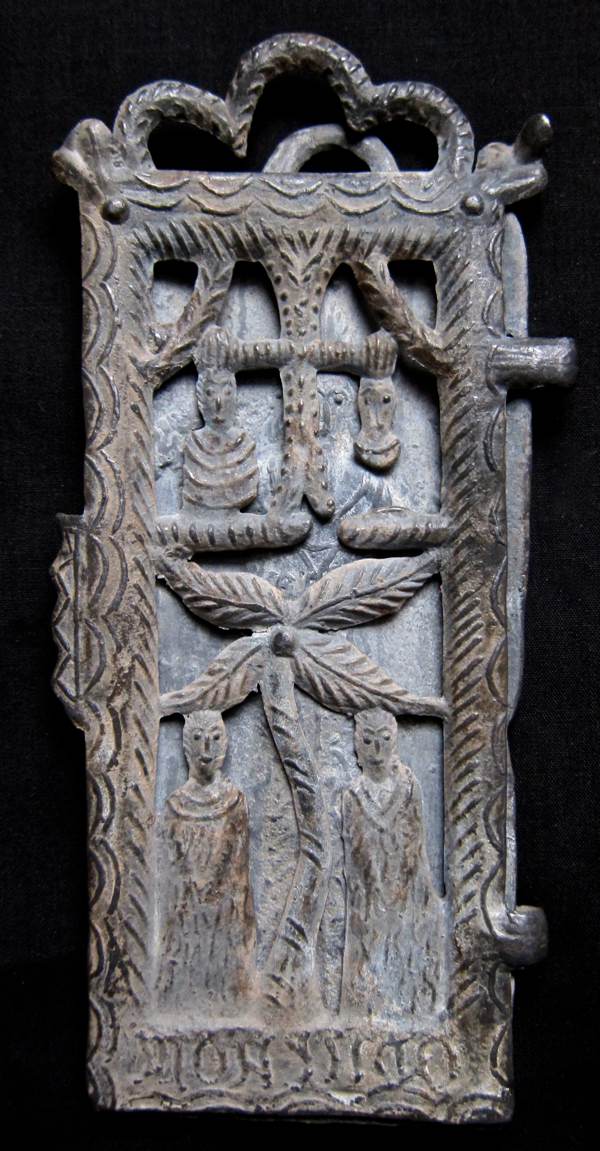
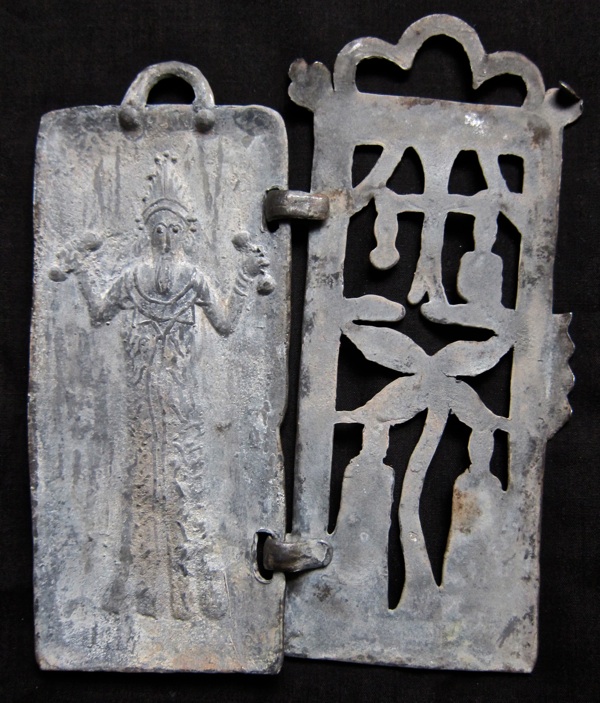
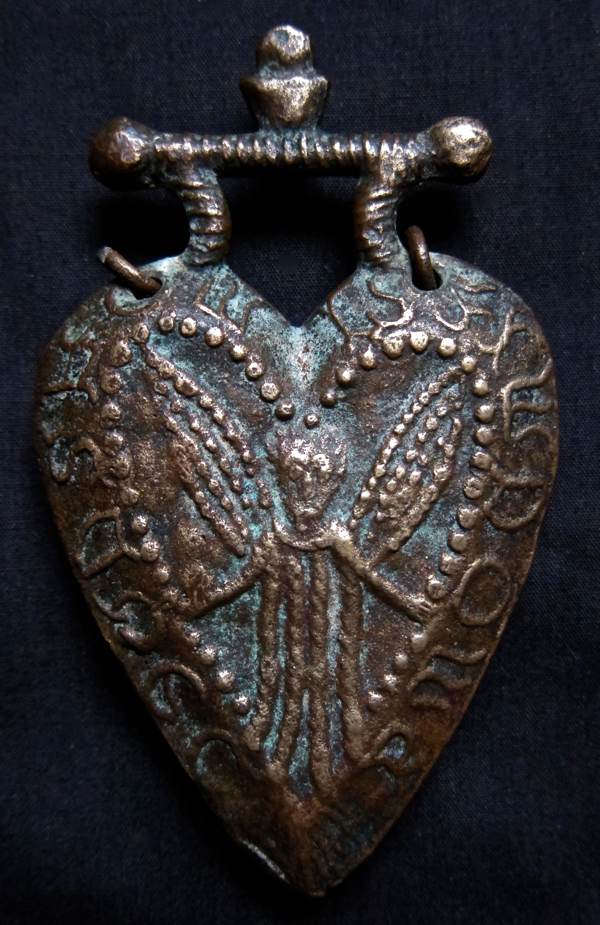
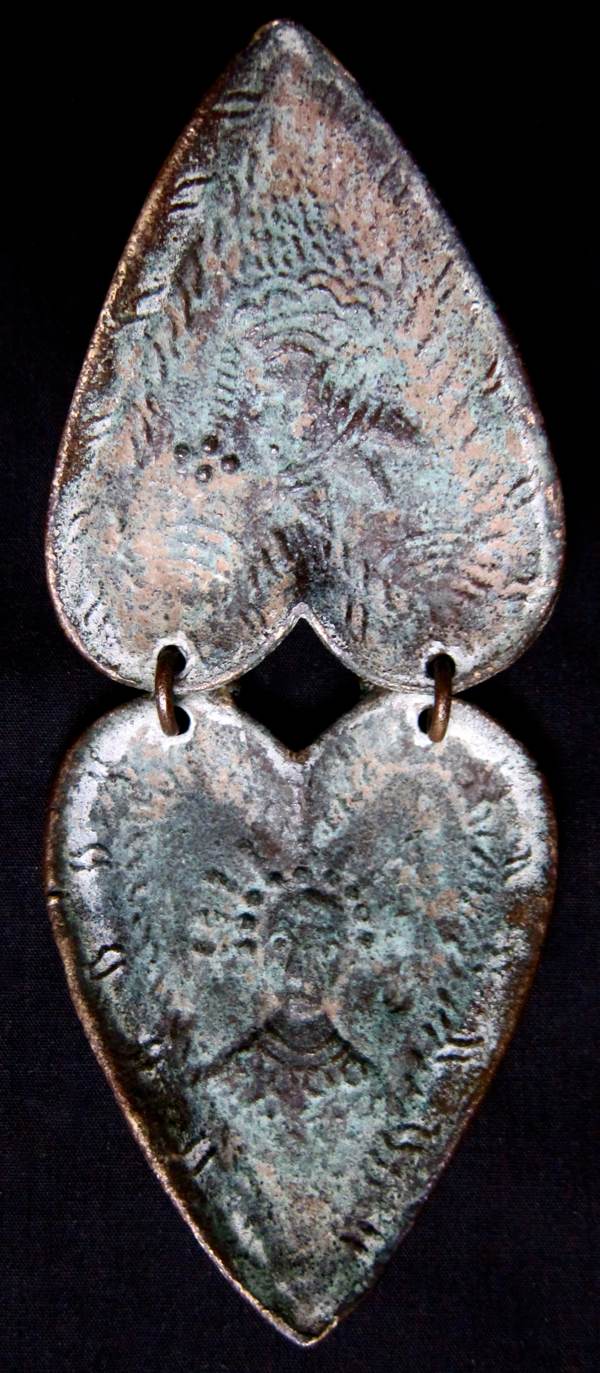
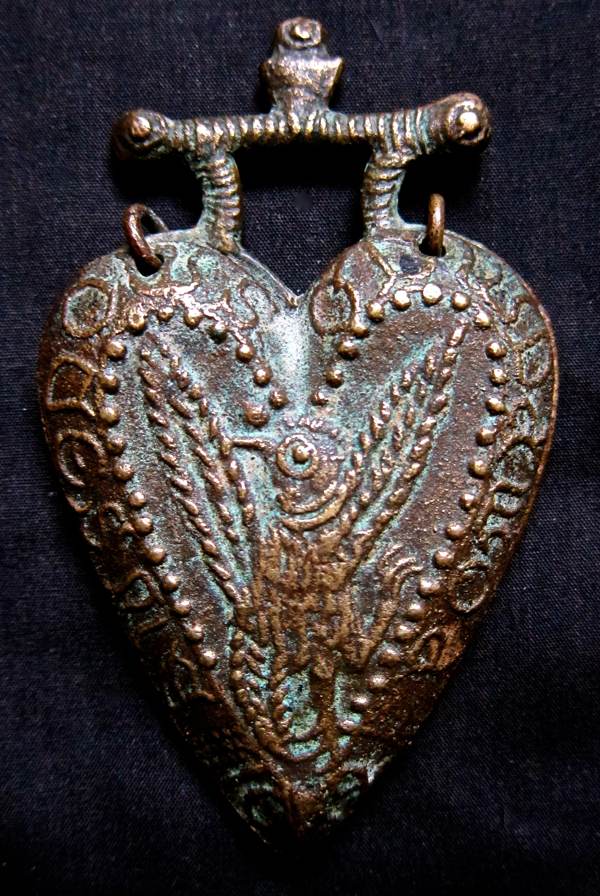
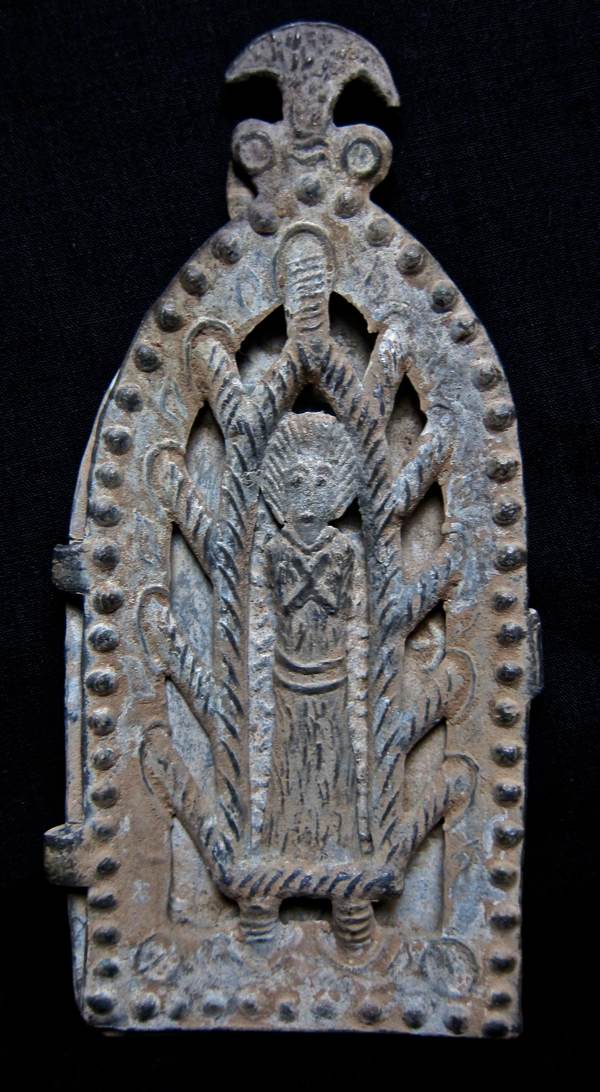
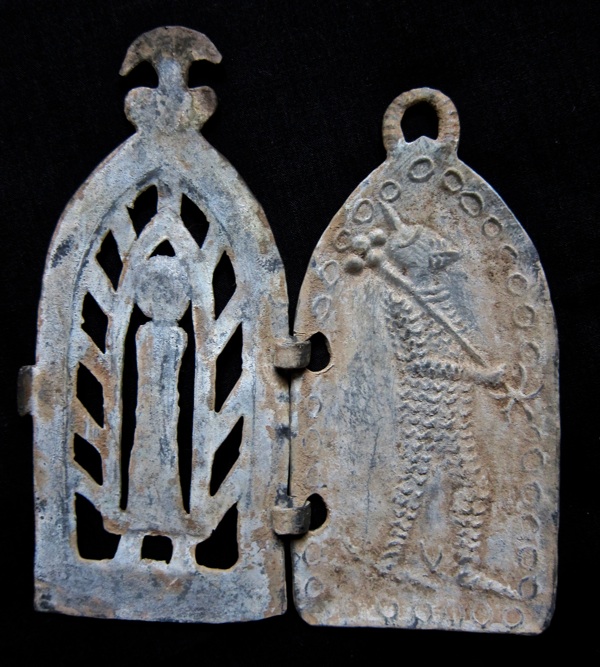
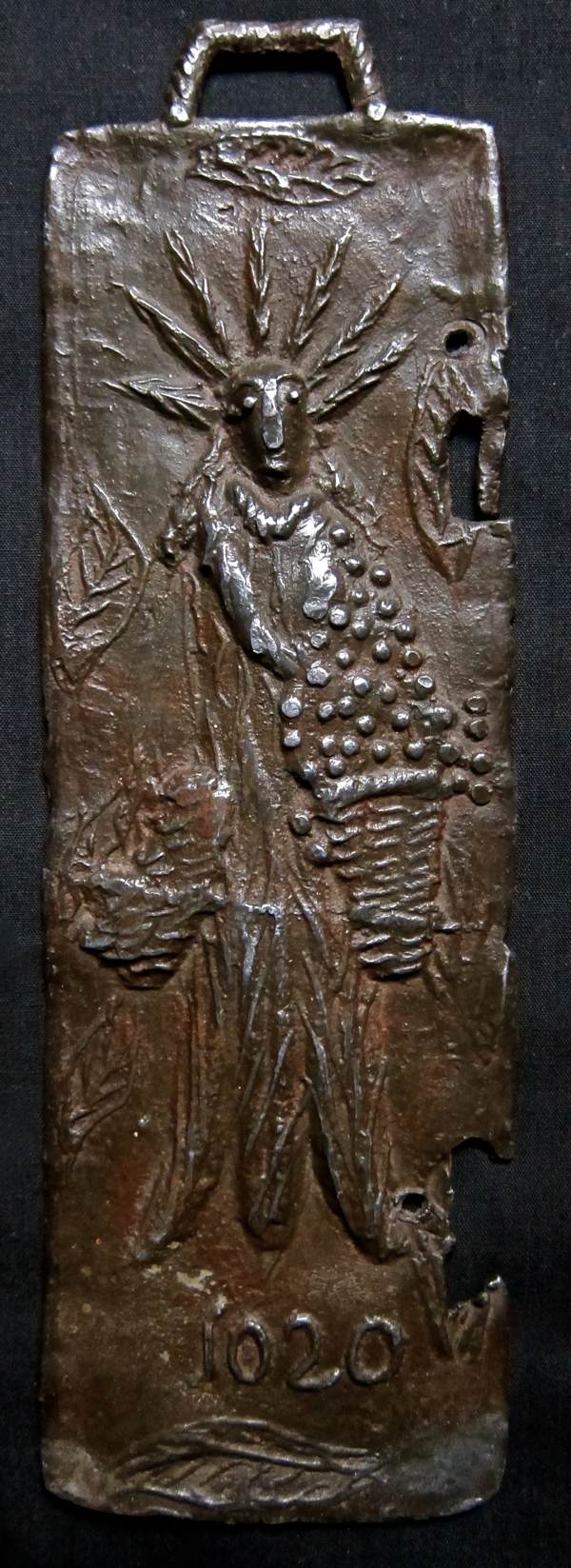
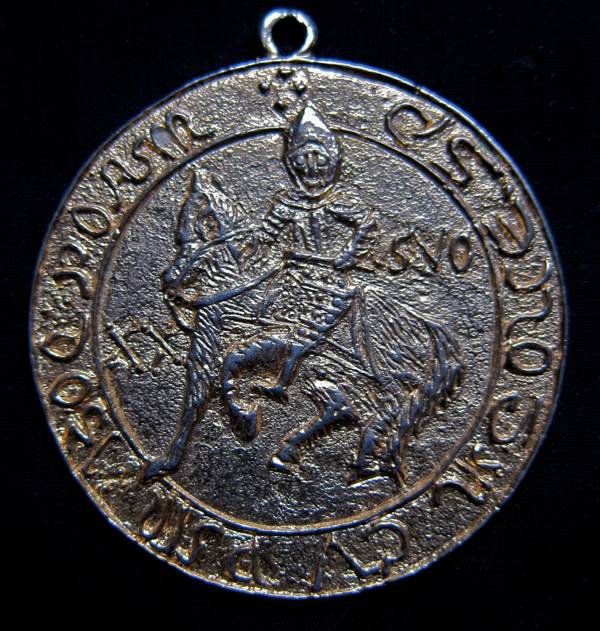
This is a fake Billy & Charley medallion given away with a women’s magazine in the nineteen-fifties – can anyone tell us which magazine?
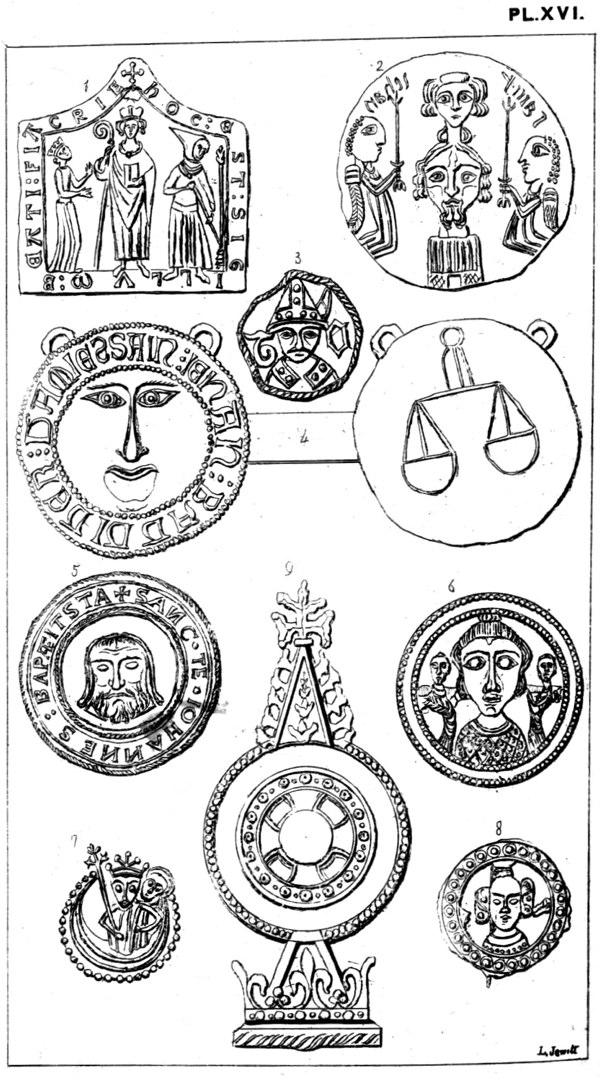
These are plates of medieval pilgrim badges from Charles Roach Smith’s Collectanea Antiqua, Volume II, 1848, that Billy & Charley may have used as the basis for their own designs
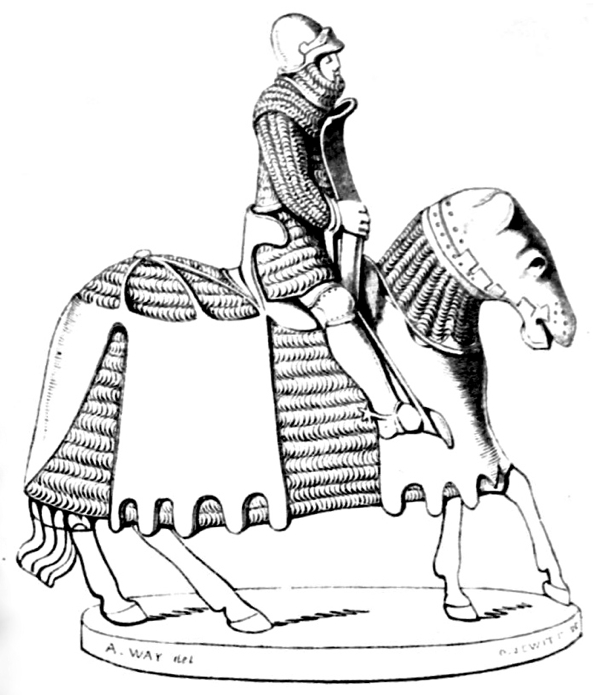
Plate from The Antiquaries Journal 1846
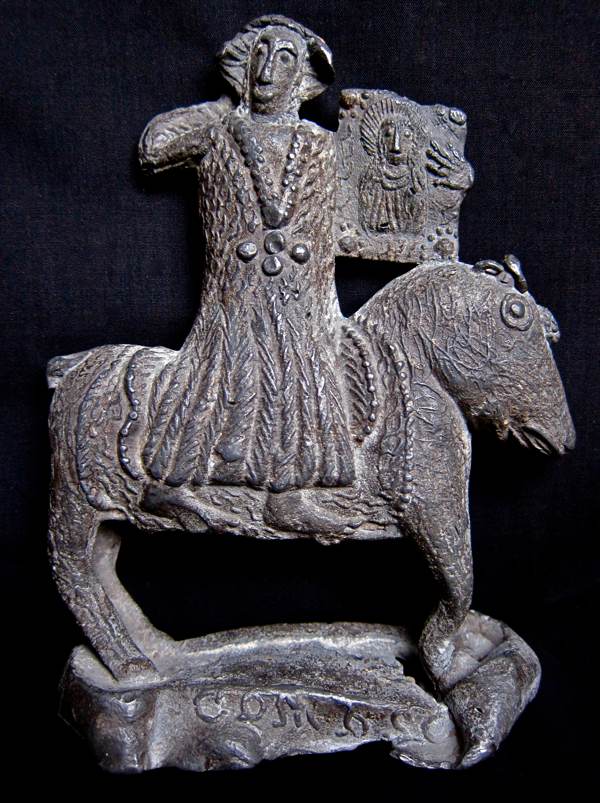
One of Billy & Charley’s ‘Shadwell Shams’ perhaps inspired by the historical engraving above
You may also like to take a look at
From My Scrap Collection
For some time, I have been collecting Victorian scraps of tradesmen and street characters, and putting them in a drawer. So these damp days at the end of January gave me the ideal opportunity to search through the contents and study my collection in detail. I am especially fascinated by the mixture of whimsical fantasy and social observation in these colourful miniatures, in which even the comic grotesques are derived from the daily reality of the collectors who once cherished these images.

Street Photographer
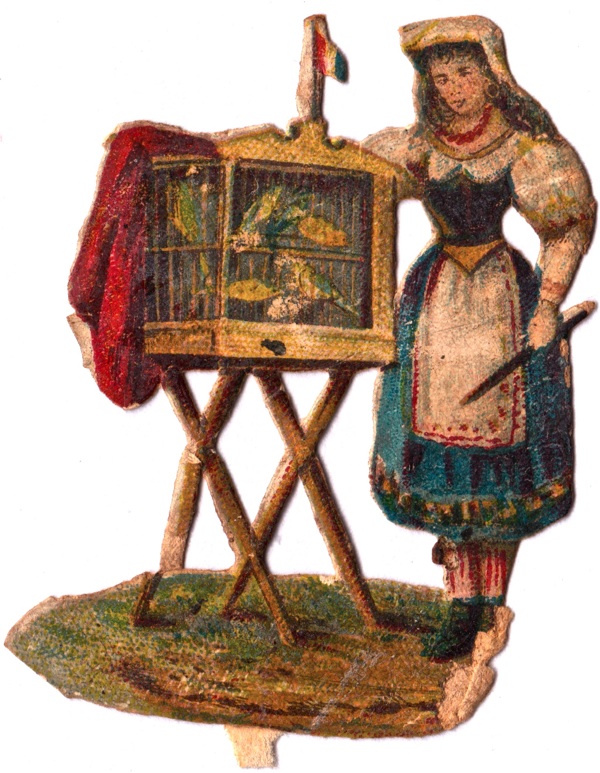
Exotic Birds
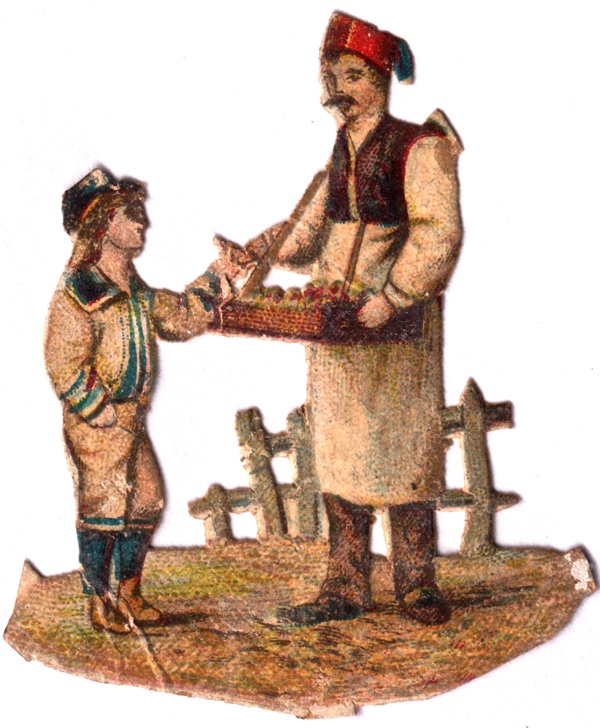
Sweets & Dainties
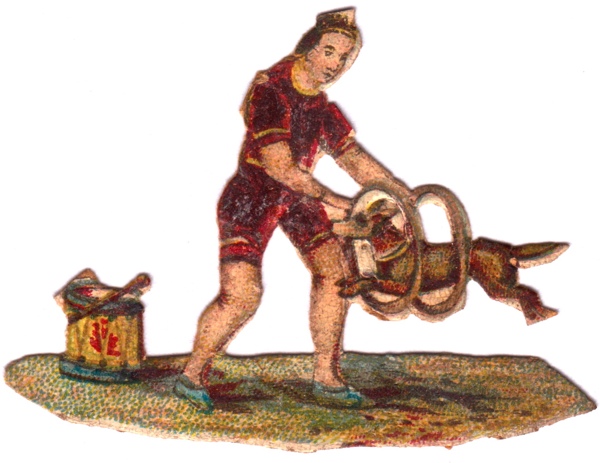
Acrobat & Performing Dog
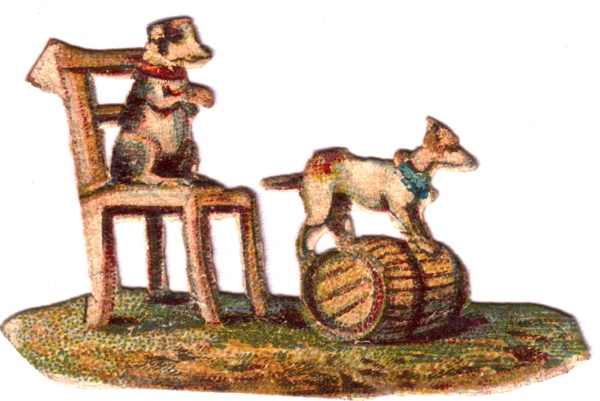
Performing Dogs
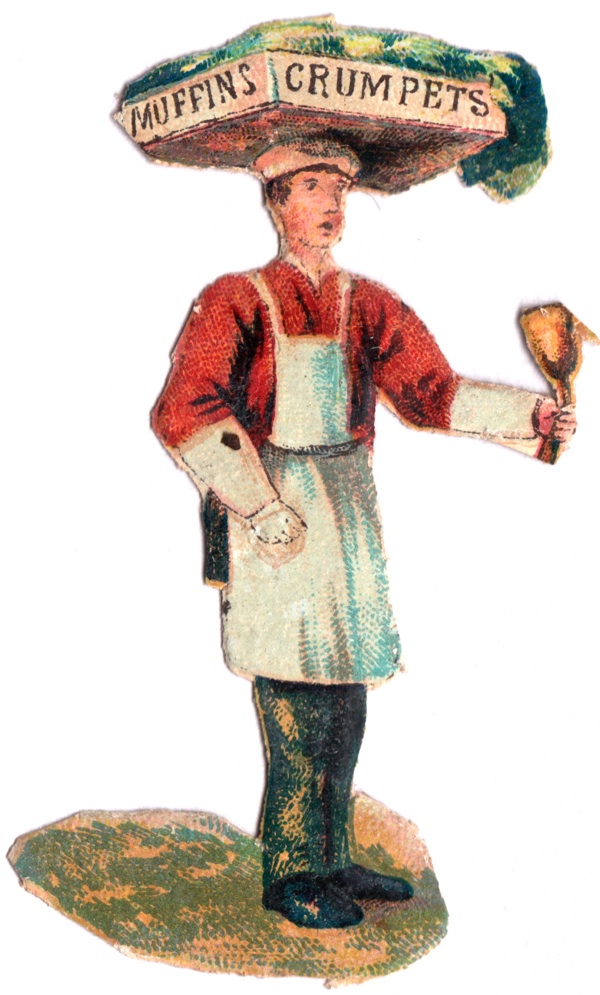
The Muffin Man

Street Musician

Street Musician

Baker

Smoker

Butcher
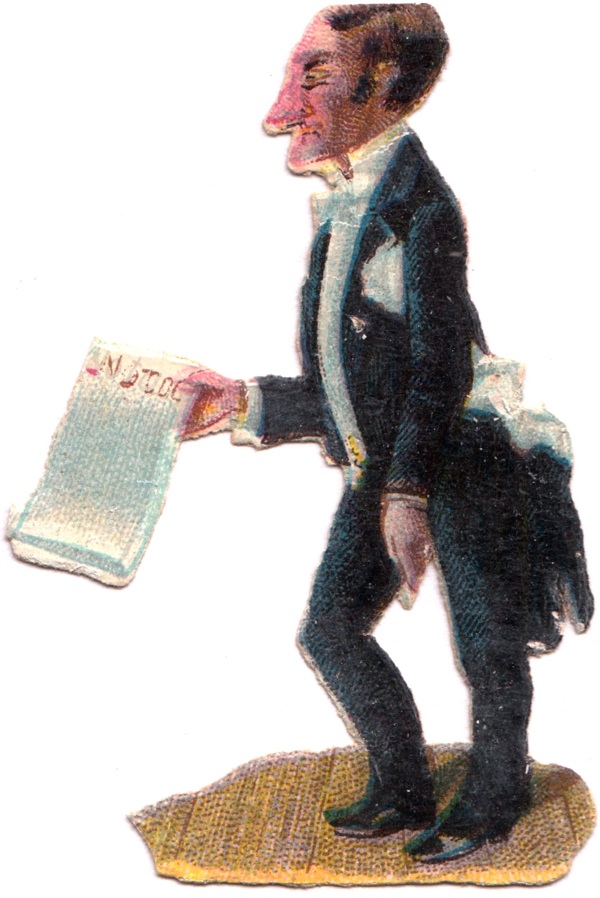
Waiter

Itinerant

Sweep

Naturalist

Lounge Lizard
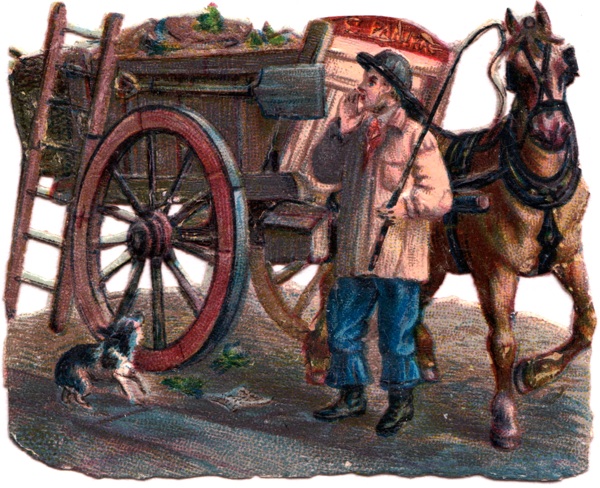
Dustman

Costermonger
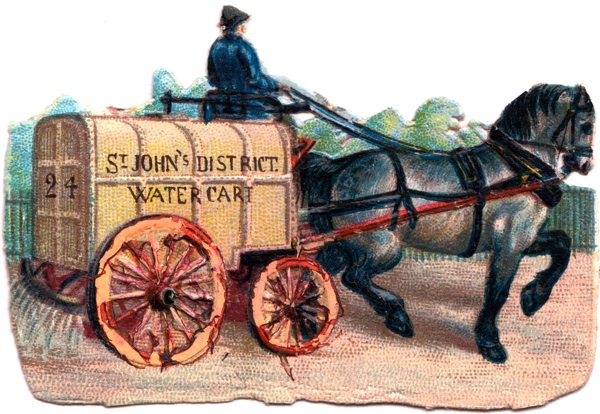
Spraying the roads
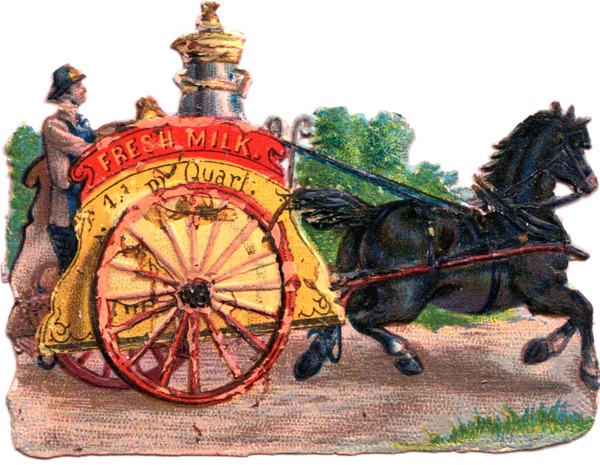
Milkman
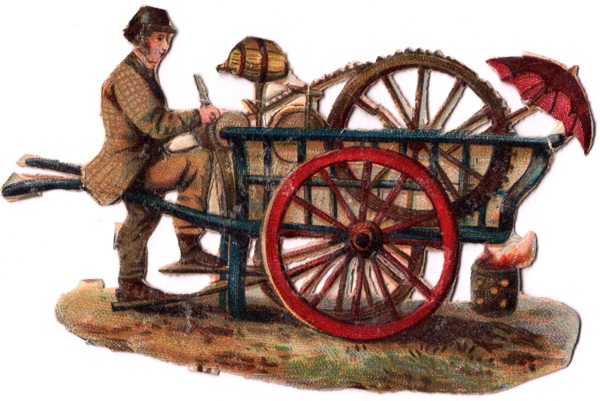
Knife Grinder
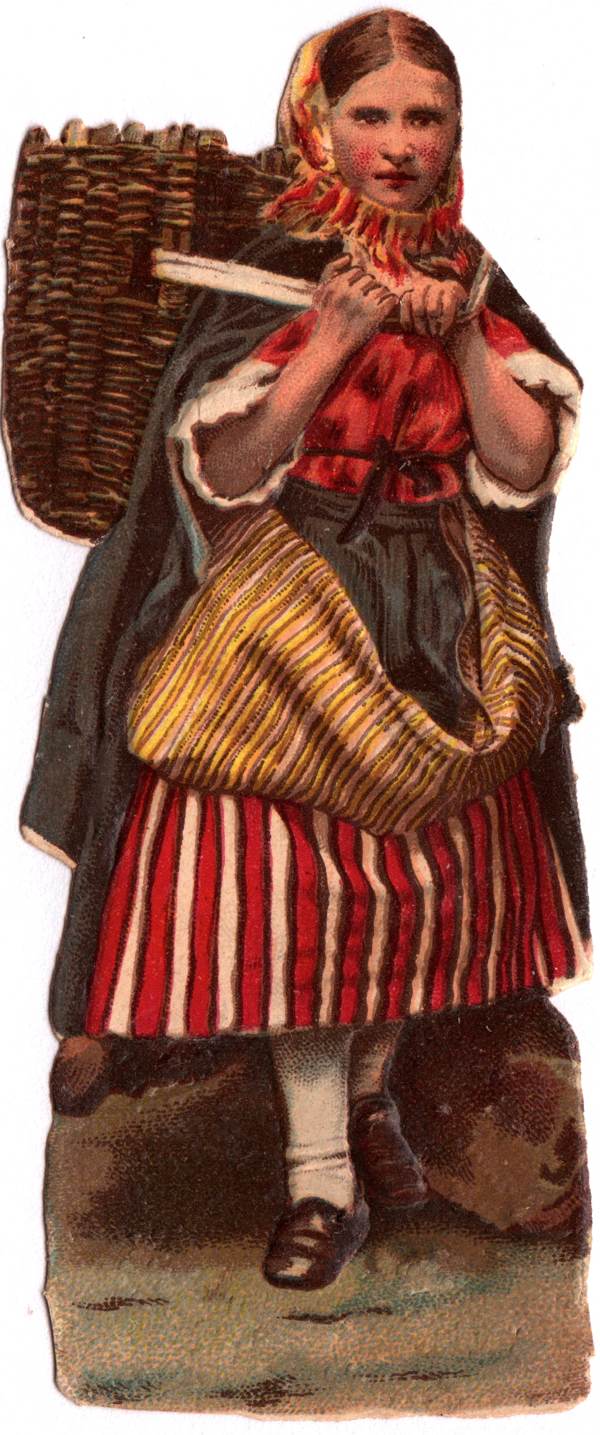
Scottish Herring Girls followed the shoals around the East Coast, gutting and packing the herring.
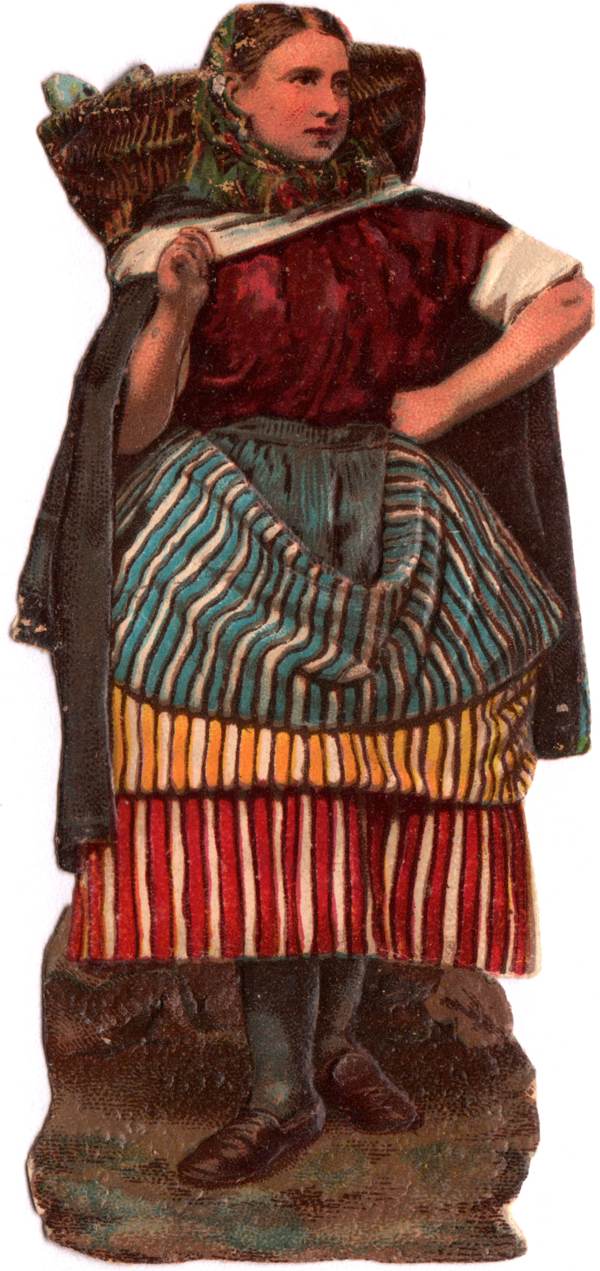
Herring Girl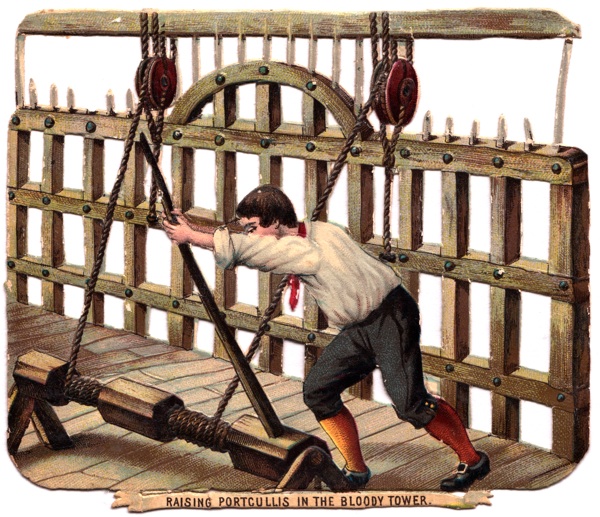
You may like to see these other scraps from my collection
The Gentle Author in Piccadilly

Next week, I shall be climbing aboard a number twenty-three bus at Liverpool St Station and going up west to alight in Piccadilly Circus, then walking down Piccadilly to just where this photograph was taken and entering Joseph Edgerton’s modernist shop front of 1935 that you can see on the right.
Originally opened as Simpsons of Piccadilly, today it is Britain’s largest Waterstones bookshop where I shall be giving a MAGIC LANTERN SHOW at 7pm next Wednesday 5th February showing one hundred of my favourite photographs of London old and new, selected from more than sixteen thousand pictures I have published on these pages, and telling the stories of the people and the places. It is my honour to present this as the inaugural event in The London Salon and tickets are free but should be reserved by emailing events.piccadilly@waterstones.com
Contemplating my trip to the West End inspired me to take a look through the collection of thousands of glass slides, once used for education lectures by the London & Middlesex Archaeological Society around a century ago at the Bishopsgate Institute, and show you these old photographs of Piccadilly.
Piccadilly Circus was my first view of London as I ascended the steep staircase from the underground on the western side and later, when I came to reside here, I felt that unless I went through Piccadilly at least weekly I was not really living in London. Stephen Spender once told me that he also enjoyed passing through Piccadilly and the thrill of feeling that he was at the centre of the world and – although I hardly ever seem to go there these days – whenever I see the cylindrical structure at the core of Piccadilly Circus, I still cannot resist the notion that it is the hub around which the earth revolves.

Rush hour in Piccadilly c.1900
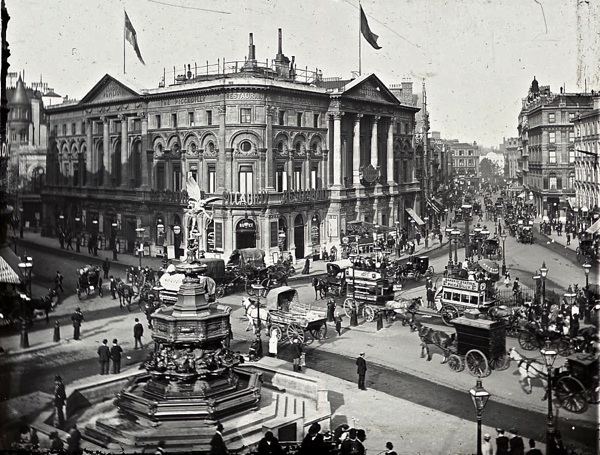
Piccadilly Circus, c.1900

Piccadilly Circus in the fog, c1910

Piccadilly Circus, c.1880

Piccadilly Circus, c.1930

In Piccadilly Circus, c. 1910

In Piccadilly, c.1920

In Regent St, c.1900

Outside the Royal Academy in Piccadilly, c.1930

Old shop in Haymarket, c. 1900

The Haymarket Theatre, c.1900
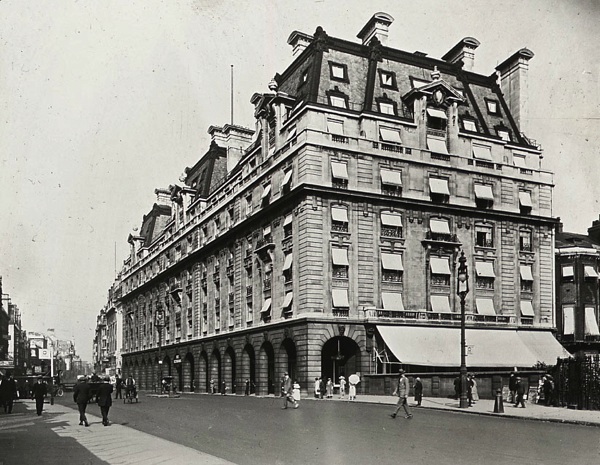
The Ritz Hotel, c. 1900

Commissionaire, c. 1930

Piccadilly and Green Park, c.1890

Walking down Piccadilly beside Green Park at the time of Victoria’s Jubilee, 1897
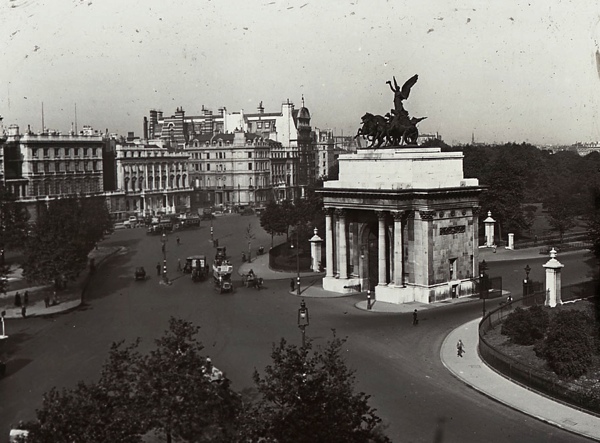
Wellington Arch at Hyde Park Corner, c.1910

Strolling at Hyde Park Corner, c.1920

St James Palace, c. 1900
Glass slides courtesy Bishopsgate Institute
THE GENTLE AUTHOR’S MAGIC LANTERN SHOW, Waterstones Bookshop in Piccadilly, 7pm Wednesday 5th February
You may also like to take a look at
The Lantern Slides of Old London
The High Days & Holidays of Old London
The Fogs & Smogs of Old London
The Forgotten Corners of Old London
The Statues & Effigies of Old London
The City Churches of Old London












