
Melvyn Reeves, Retired Civil Servant

Here is Melvyn at the Jane St Coronation Party in Stepney in June 1953. He is the one with the curls at the centre on the right, and to left you can see the legendary flyweight champion Smilin’ Sammy McCarthy bringing a touch of his celebrity glamour to the occasion. No wonder Melvyn was astonished at the drama and excitement of his childhood world in Jane St, and chose never to leave this favoured corner of the East End.
“When people call me a stick-in-the-mud, I say, ‘Yes!'” Melvyn admitted to me with a triumphant smile, “When they ask me, ‘Why did live you with your family, why didn’t you move away?’ I always say, ‘Why?'” When I went to my college interview, they said ‘Have you listed your university preferences in order of their distance from your home?’ and I said, ‘Yes, that’s right!” And I went to Queen Mary University in Mile End and got a first class degree in Maths.”
In 1961 Melvyn’s family moved from Jane St, when it was demolished, into a newly-built council flat just a few streets away. Fifty-three years later, Melvyn lives there alone – now that his parents have died and his sister has moved away. “I used to be fat but after I lost my mum it fell away and I went from eleven and a half stone to eight and a half stone,” he revealed. Yet Melvyn is happy to be at the centre of his own personal universe and, after a decade of being the sole occupant, he is contemplating the bold step of having the place redecorated this spring and replacing the chintz curtains and floral carpet with decor that suits his personal taste.
“I do miss having someone to argue with and someone to tell me what to do,” he confessed to me when I visited him there one rainy afternoon last week.
“I was born at the Maternity Hospital in Commercial Rd on 8th December 1949, I grew up in Jane St and I moved here with my mum, dad and sister when I was eleven. My mum was very upset when Jane St was demolished as a Slum Clearance because it wasn’t a slum! They used to have a contest to see who had the cleanest front step in the street.
We were the last family left in the street to go and it got very eerie. She had offers to move out to lots of places beyond the East End but she turned them all down and the lady from the council said, ‘If you keep turning them down, you’ll have nowhere.’ Then they suggested the Mountmorres Estate and we didn’t know where it was, but as soon as she realised it was nearby she was quite happy. She had been born just two streets away in Fenton St and she was reluctant to leave Jane St, but she was pleased when we got here because before we had no bathroom and only an outside toilet.
We weren’t poor, we were just the same as everybody else in the street. Those houses would be worth one and a half million each if we had them now. The first immigrants in Jane St were a Cypriot family at the top of the street and we children were too scared to go near them. There was a guy called ‘Dirty Dick’ who had a cockerel than ran out into the street, we never went near his house either. If we played football at the far end of Jane St, the mothers would come out of the houses and say, ‘You don’t live at this end of street, go back to your own end and play football.’ So I guess we were quite parochial in our way.”
Once he graduated from Queen Mary University, Melvyn returned to the Central Foundation Boys School in Old St where had been a pupil to work as a teacher. “I was only there for four years, but people locally still know me as Mr Reeves the Maths Teacher,” he told me, amused at the persistence of this former identity nearly forty years later. “I have never worked more than five miles from Stepney,” he continued, revelling at his personal success in securing an entire career of employment close to home, working as an Inspector for the Inland Revenue and then in IT at the Department for Environment, Food & Rural Affairs before retiring ten years ago.
Recently, Melvyn visited Mulberry School, built upon the site of his former home in Jane St, and showed the pupils his Coronation Party photograph as evidence of the wonders that once were there – and in the hope that they may have the good sense to follow his own example and enjoy the benefits of staying put.
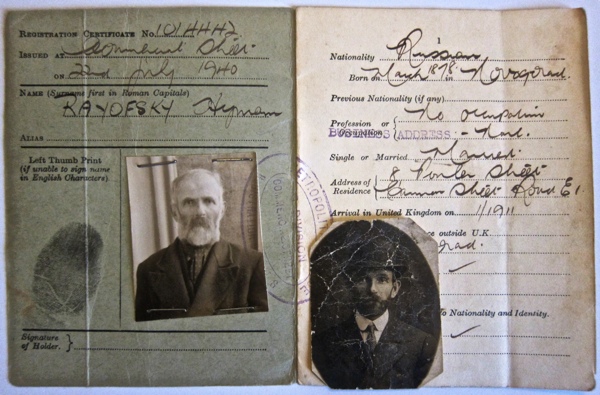
“My Russian grandfather, Hyem Ryefsky, was born in Novgorod in 1878 and died in Stepney in 1953”

“My Polish grandfather Henry Laibglit was born in Warsaw in 1880 and died in Stepney in 1967. He fought at Ypres during the First World War. He came to this country around 1900 and was a Market Trader in Petticoat Lane until the late fifties, selling all types of luggage and suitcases.”
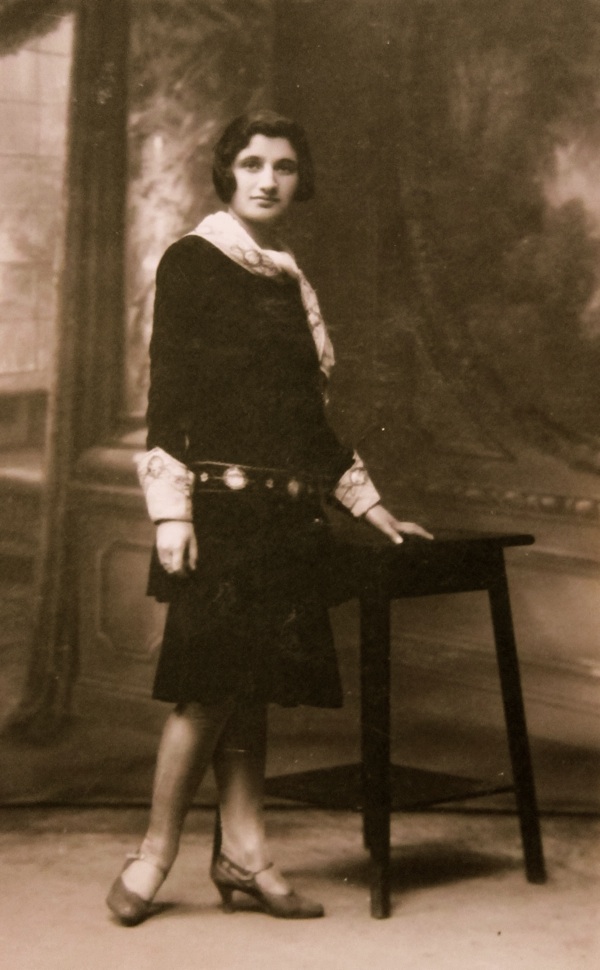
“My mum – Leah Esther (nee Laibglit), known as “Lily”, born on 28 April 1915 and died in May 2003.”

Lily’s Freedom Pass

Melvyn as a baby in Jane St with his dad and cousin Arnold “My Dad – Abraham, commonly known as “Alf”, was born on 20th June 1914 and died in June 1998. He was a cabinet maker before the war, a skilled riveter during the War and worked afterwards for the Post Office, sorting letters at the Eastern District Office in Whitechapel”

Melyvn as a toddler
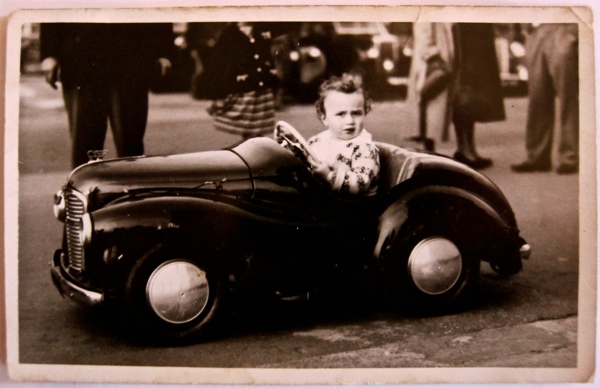
Melvyn’s first car
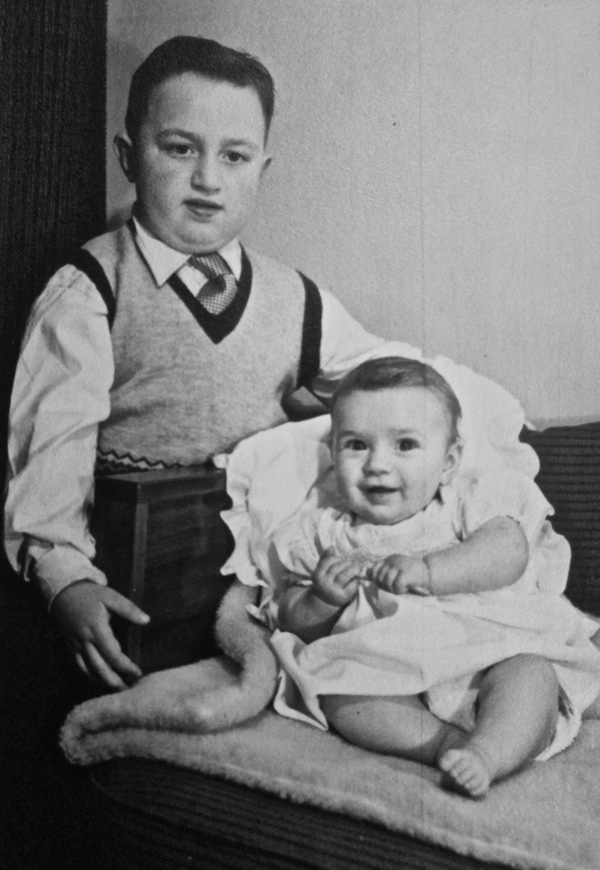
Melvyn and his sister Sheree
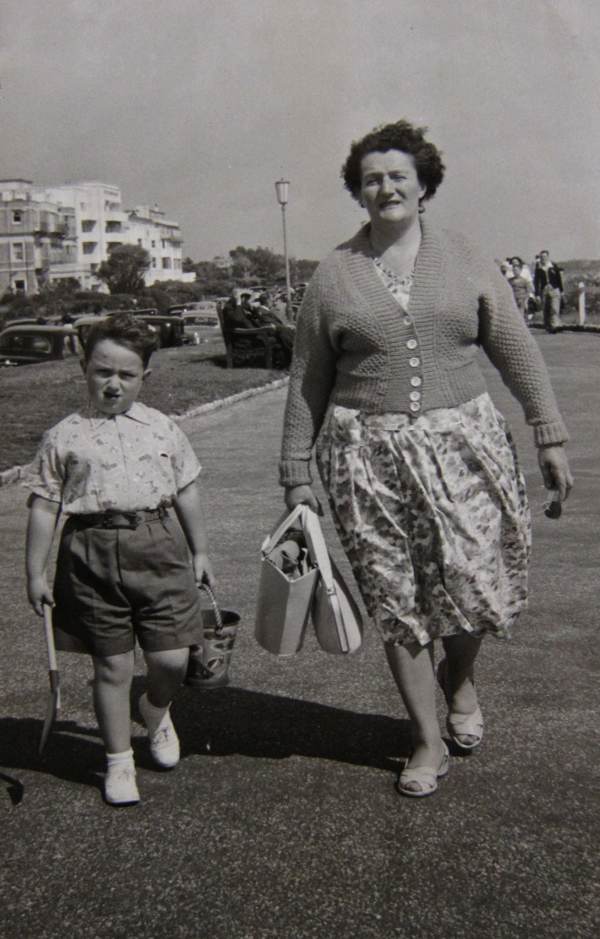
Melvyn on holiday at the seaside with his Aunt Polly
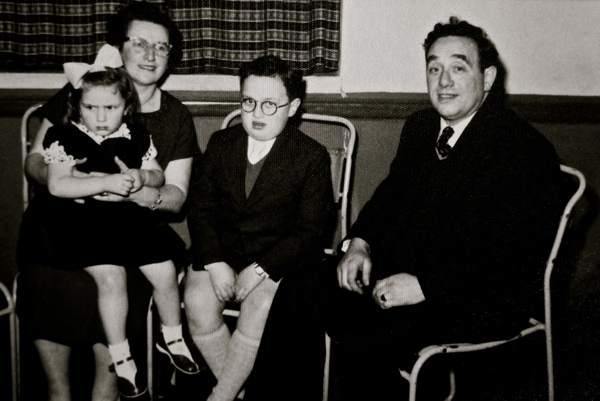
Melvyn with his parents Lily & Alf and his sister Sheree
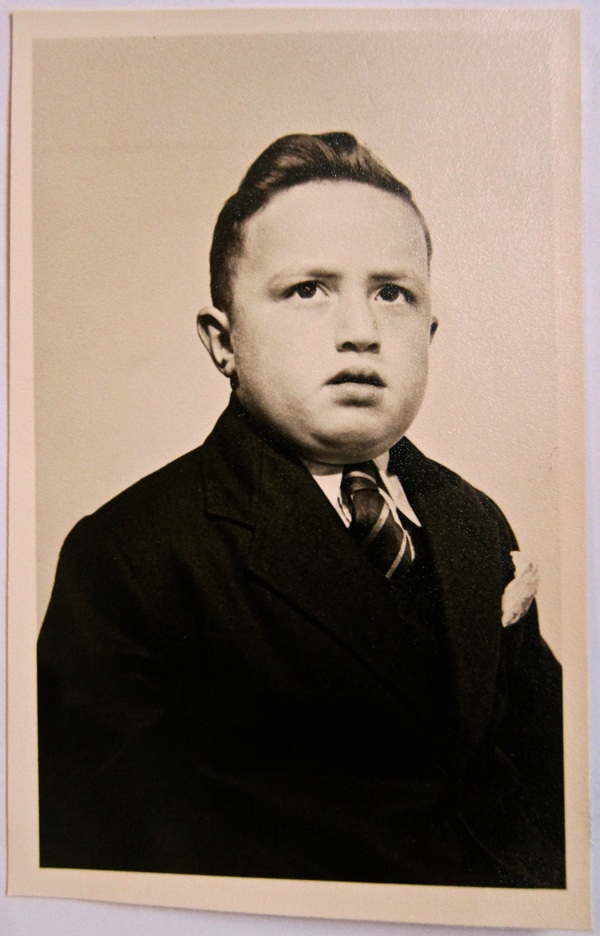
Melvyn as a schoolboy
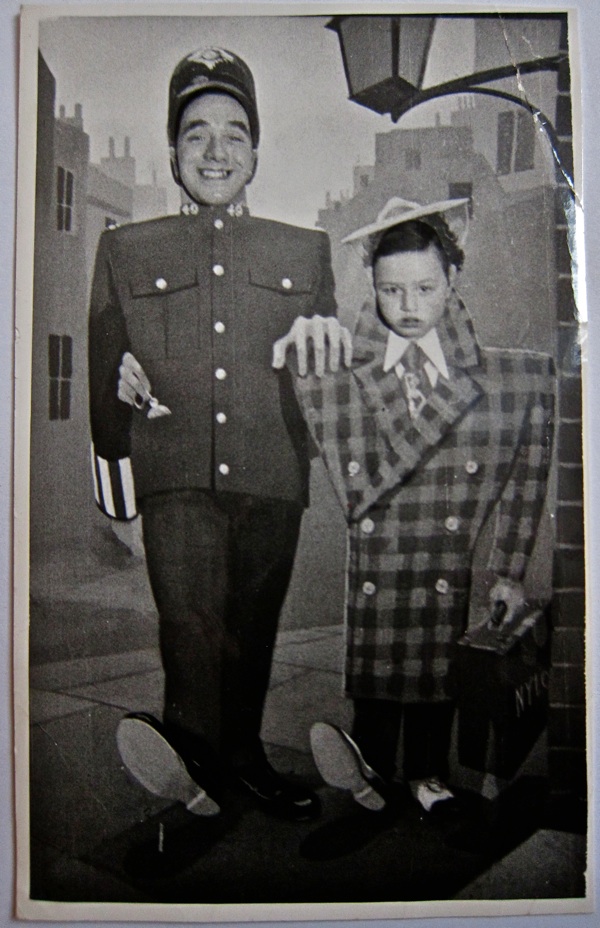
Melyvn and his dad have a bit of fun
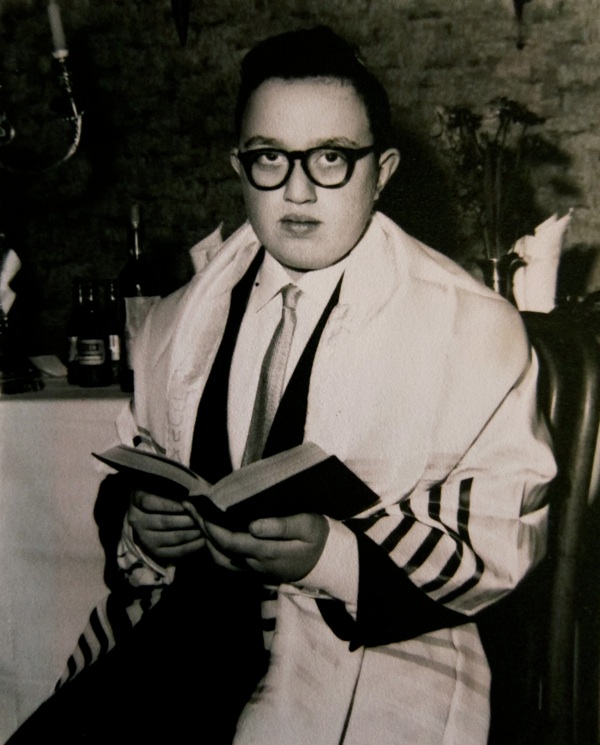
Melvyn at his Bar Mitzvah
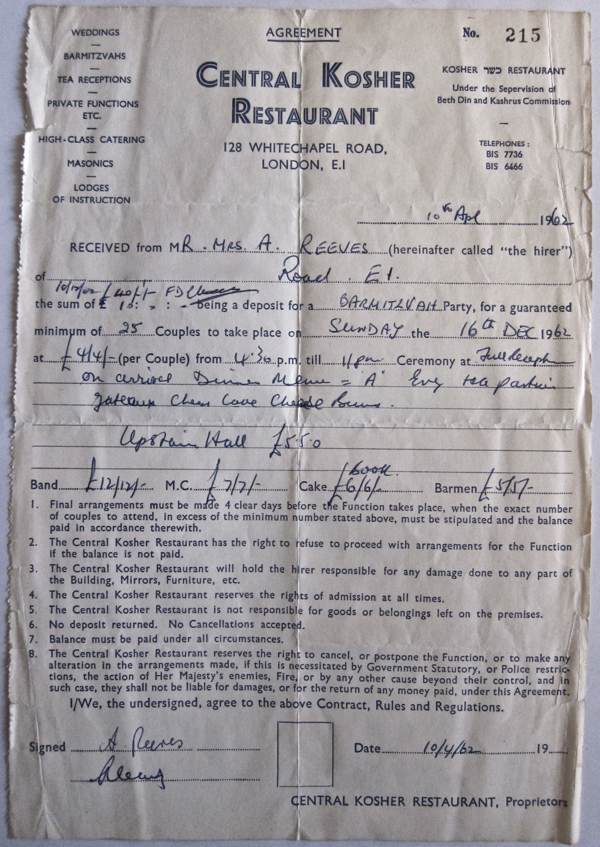
The receipt for Melvyn’s Bar Mitzvah party in Whitechapel, 1962
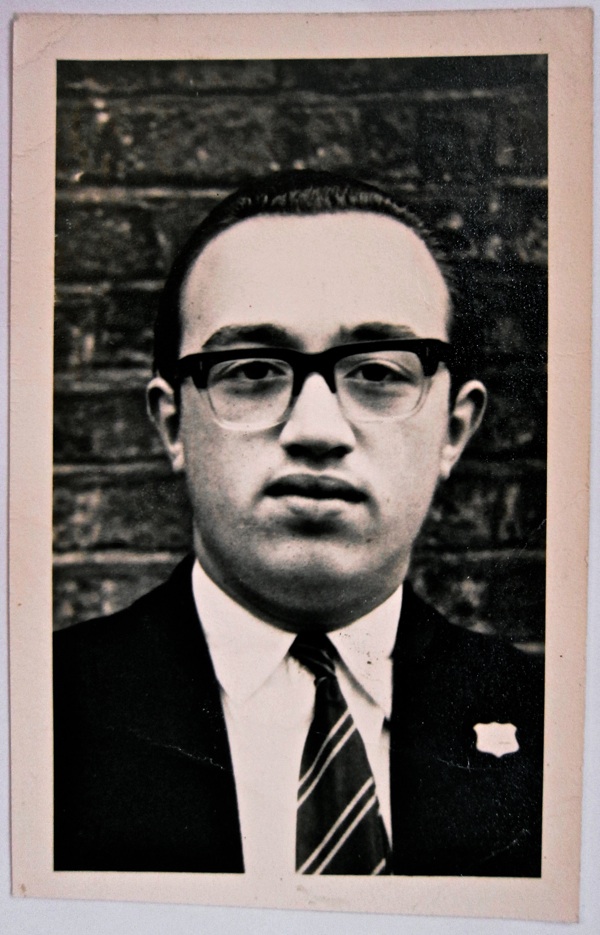
Melvyn as a young man
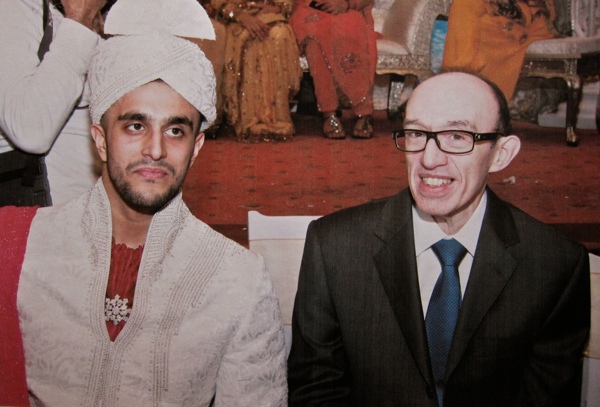
Melvyn at the recent wedding of his neighbour Nurul Islam
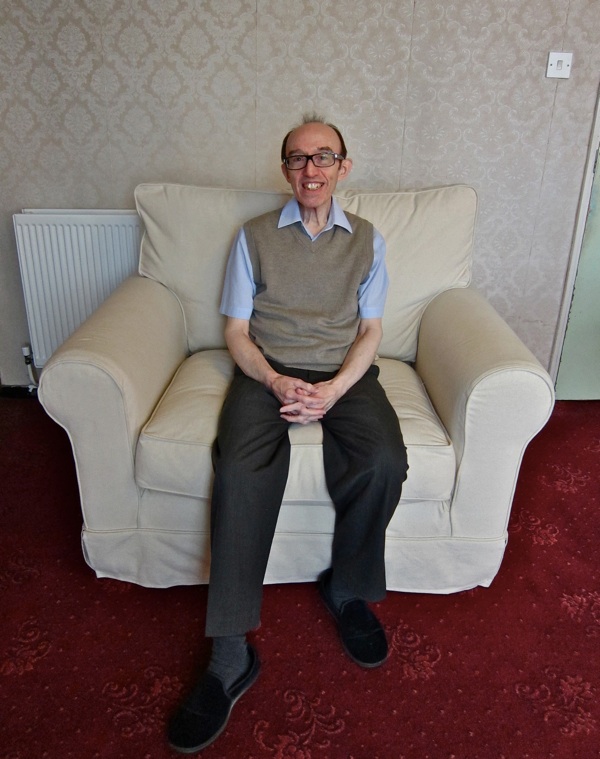
Melvyn Reeves
Images courtesy Tower Hamlets Local History Library & Archives
Read these other Stepney stories
At The Old Royal Naval College, Greenwich
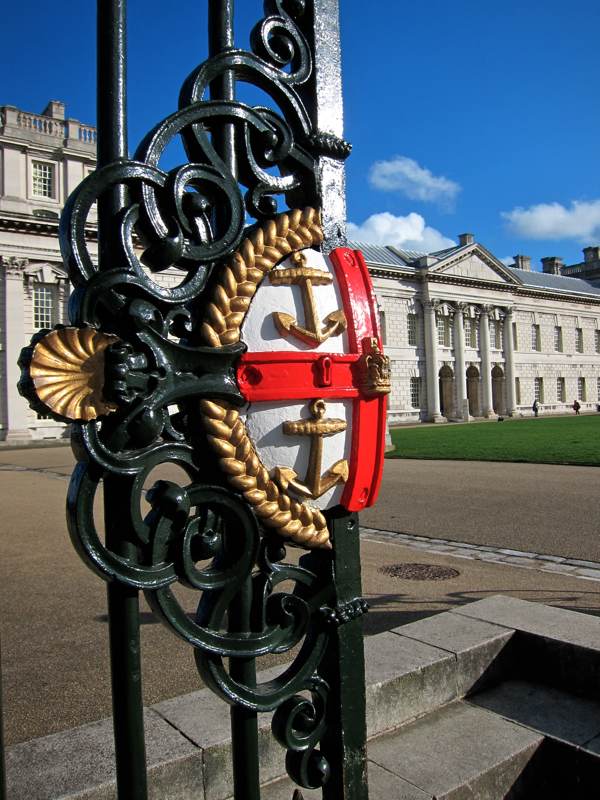
Water Gate at Greenwich
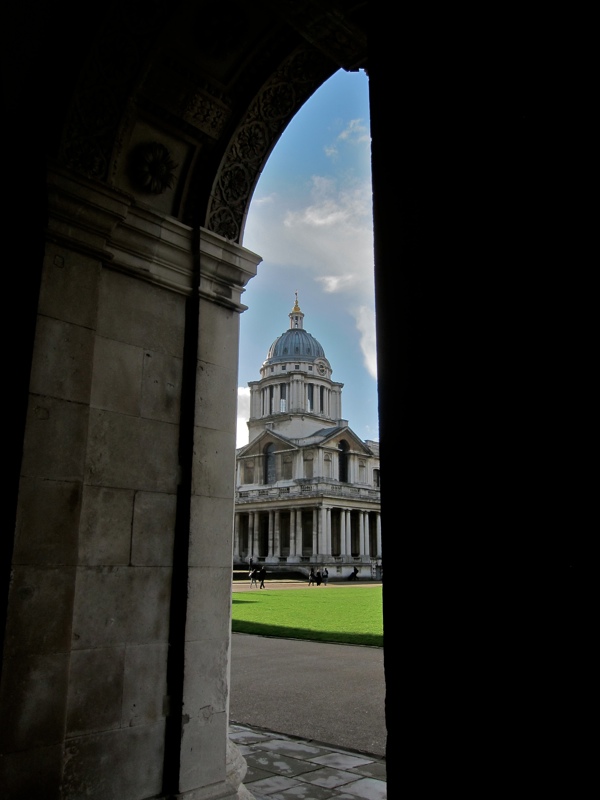
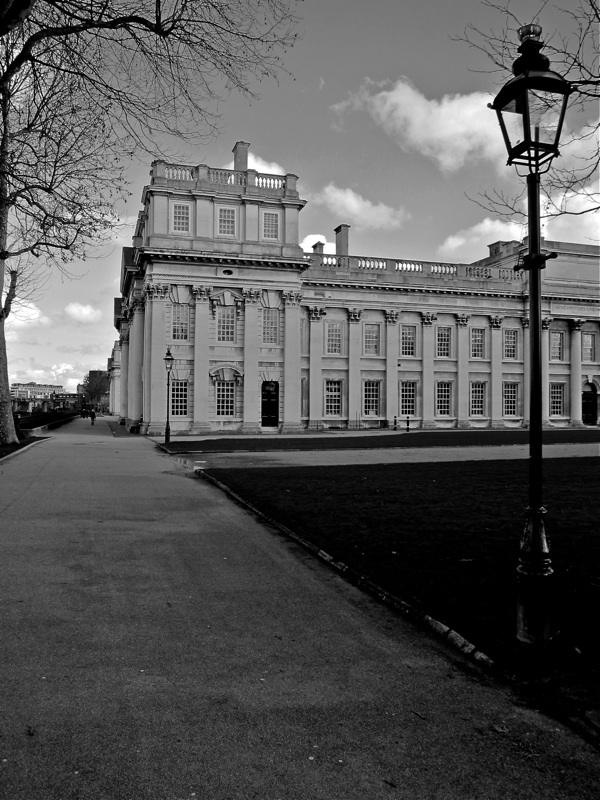
When Queen Mary commissioned Christopher Wren in 1694 to build the Royal Hospital for Seamen, offering sheltered housing to sailors who were invalid or retired, she instructed him to “build the Fabrick with Great Magnificence and Order” and there is no question his buildings at Greenwich fulfil this brief superlatively. On a bright February morning, you may discover yourself the only visitor – as I did last week – and stroll among these august structures as if they existed solely for your pleasure in savouring their ingenious geometry and dramatic spatial effects.
Since the fifteenth century, the Palace of Pleasaunce commanded the bend in the river here, where Henry VIII was born in 1491 and Elizabeth I in 1533. Yet Inigo Jones’ Queen’s House built for Anne of Denmark and the words ‘Carolus Rex’ upon the eastern extremity of the Admiral’s House, originally begun in 1660 as a palace for Charles I, are the only visible evidence today of this former royal residence abandoned at the time of the English Civil War.
It was Wren’s ingenuity to work with the existing buildings, sublimating them within the seamless unity of his own grandiose design by replicating the unfinished fragment of Charles’ palace to deliver magnificent symmetry, and enfolding Inigo Jones’ house within extended colonnades. The observant eye may also discern a dramatic overstatement of scale in architectural details that is characteristic of Nicholas Hawskmoor who was employed here as Wren’s Clerk of Works.
From 1705, the hospital for seamen provided modest, wood-lined cabins as a home-from-home for those who had spent their working lives at sea, reaching as many as two-thousand-seven-hundred residents at its peak in 1814, until superceded in 1869 by the Royal Naval College that left in 1995. Today the University of Greenwich and Trinity School of Music occupy these lofty halls but, in spite of its overly-demonstrative architecture, this has always been a working place inhabited by large numbers of people and the buildings suit their current purpose sympathetically .
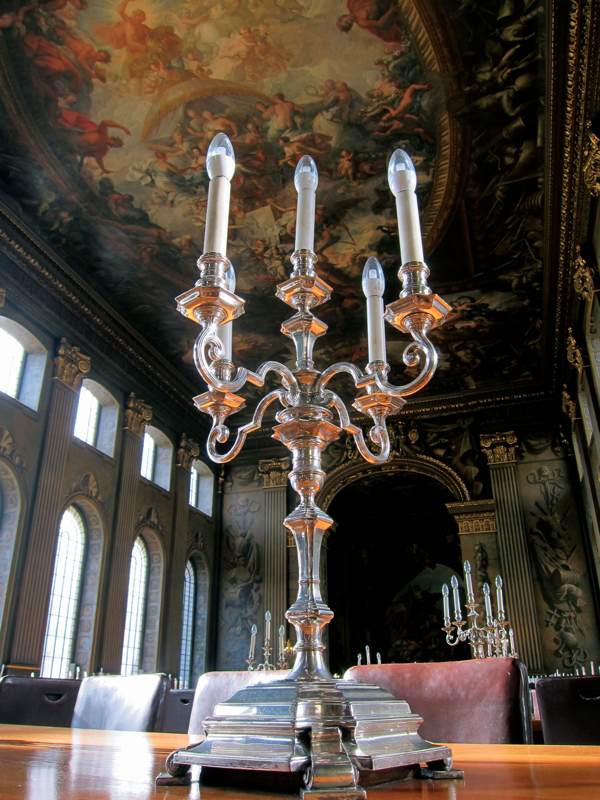
The Painted Hall is the tour-de-force of this complex, guaranteed to deliver a euphoric experience even to the idle visitor. Here the Greenwich Pensioners in their blue uniforms ate their dinners until James Thornhill spent eighteen years painting the walls and ceiling with epic scenes in the classical style celebrating British sea power and it was deemed too grand for anything but special occasions. Yet down below, the home-made skittles alley brings you closer to the domestic lives of the former residents – who once enjoyed fierce after-dinner contests here using practice cannon balls as bowling balls.
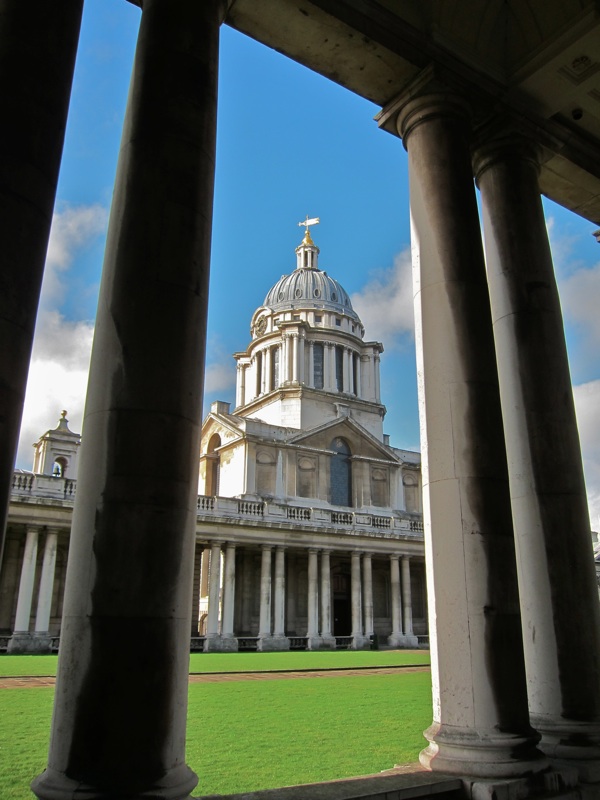
Exterior of the Painted Hall
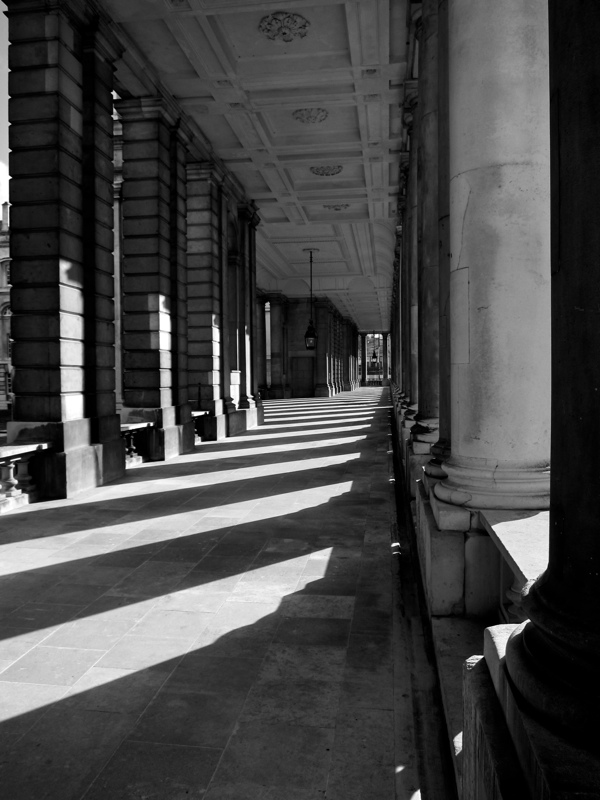
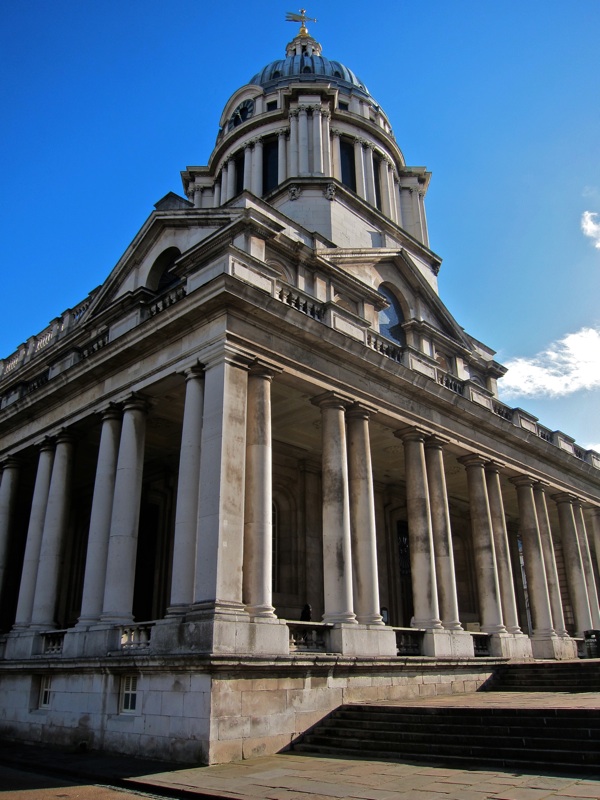
The Chapel
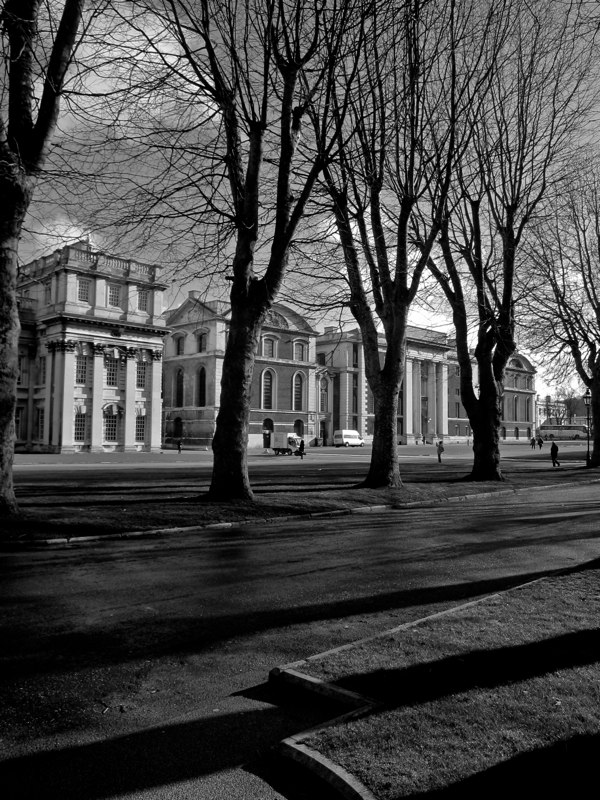
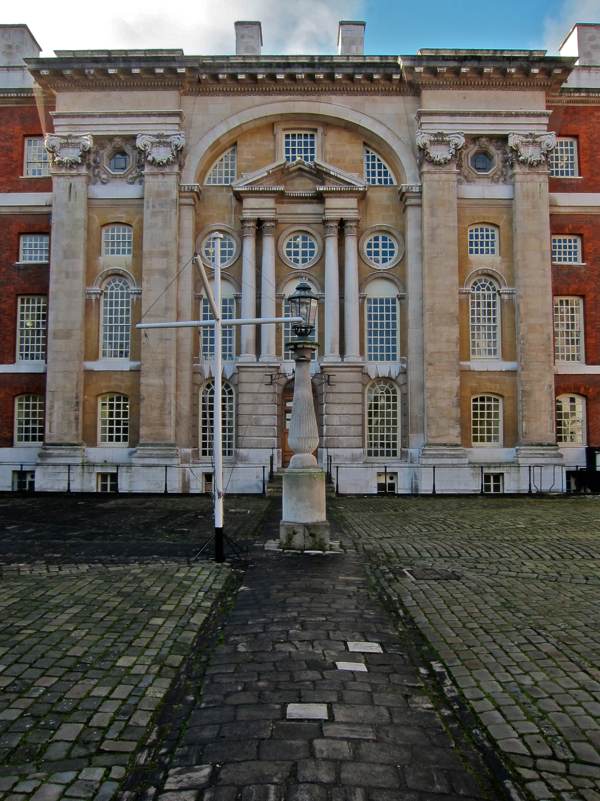
King William Court
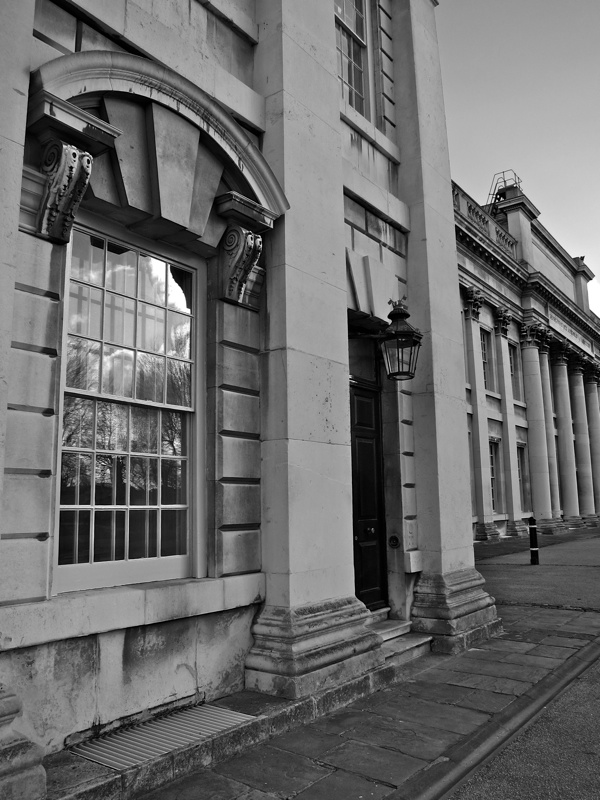

King William Court
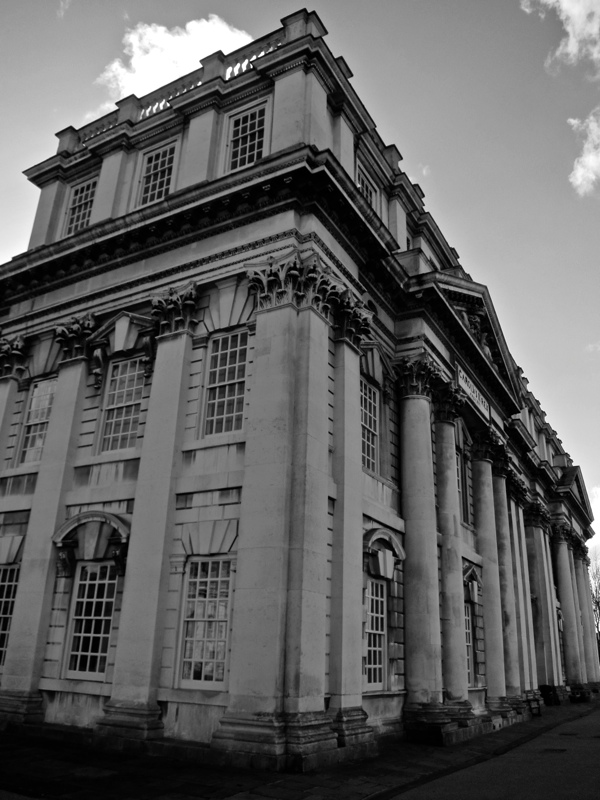
The Admiral’s House was originally built as a residence for Charles I. Abandoned in the Civil War, Queen Anne commissioned Wren to rehabilitate the unfinished palace as part of his design for the Royal Hospital for Seaman which opened in 1705
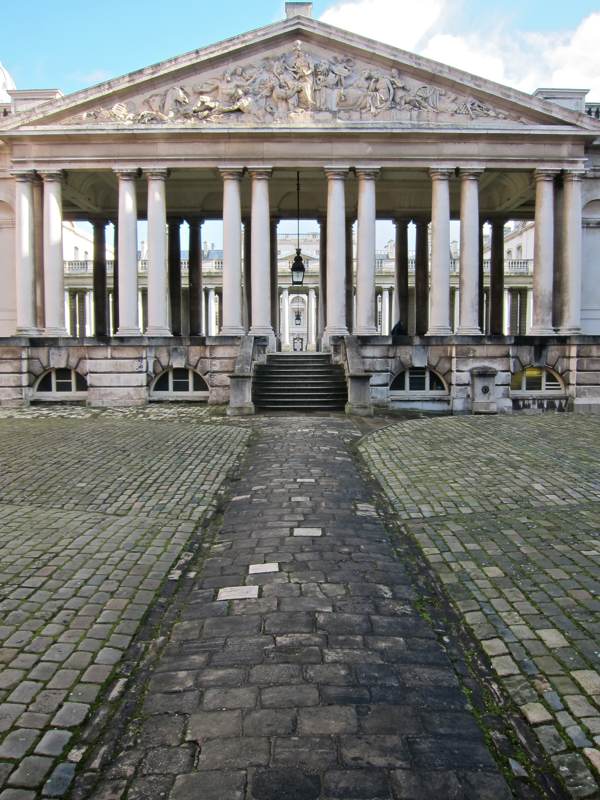
Inspired by the Elgin marbles, the elaborate pediment in Coade stone is a tribute to Lord Nelson
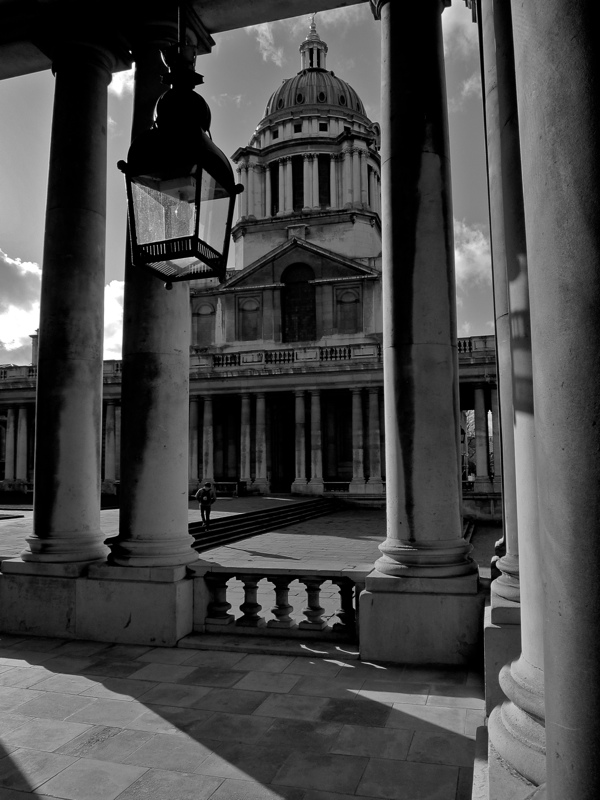
Exterior of the Painted Hall
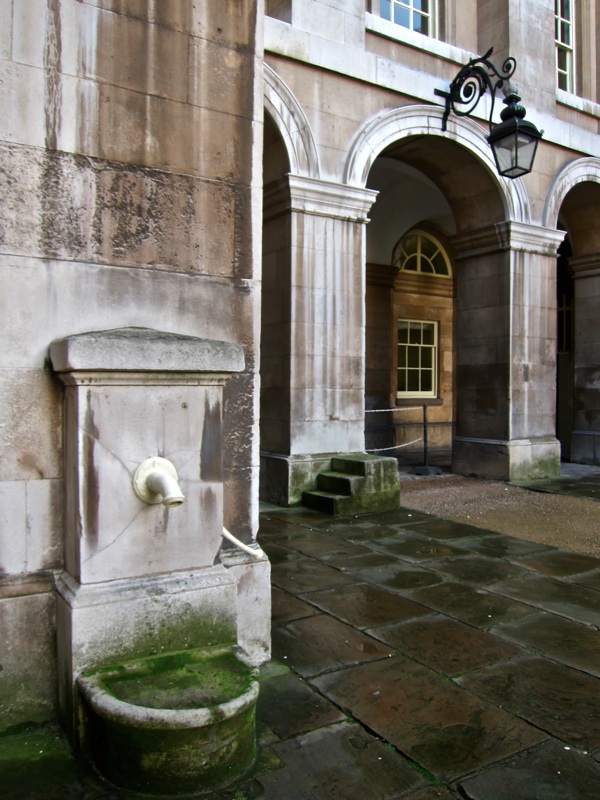
Pump and mounting block in Queen Anne Court
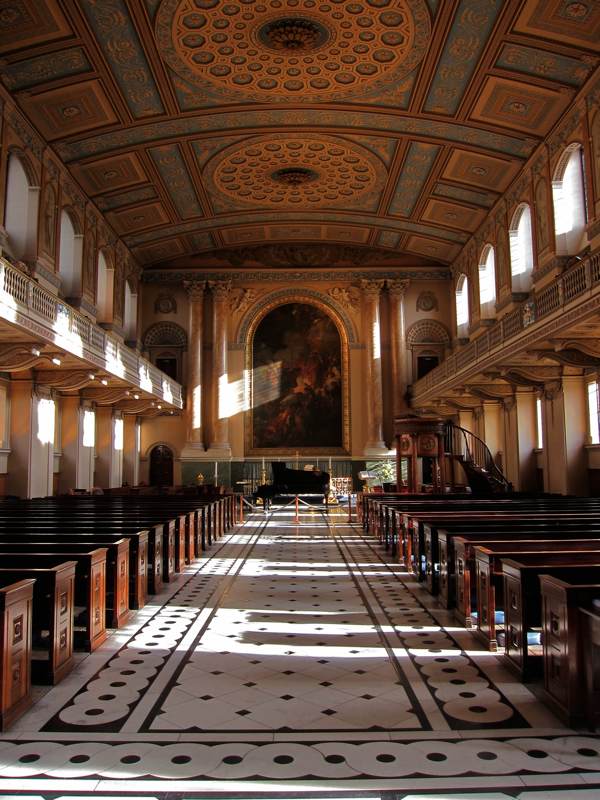
The chapel was completed to Wren’s design in 1751 and redesigned by James ‘Athenian’ Stuart in 1781
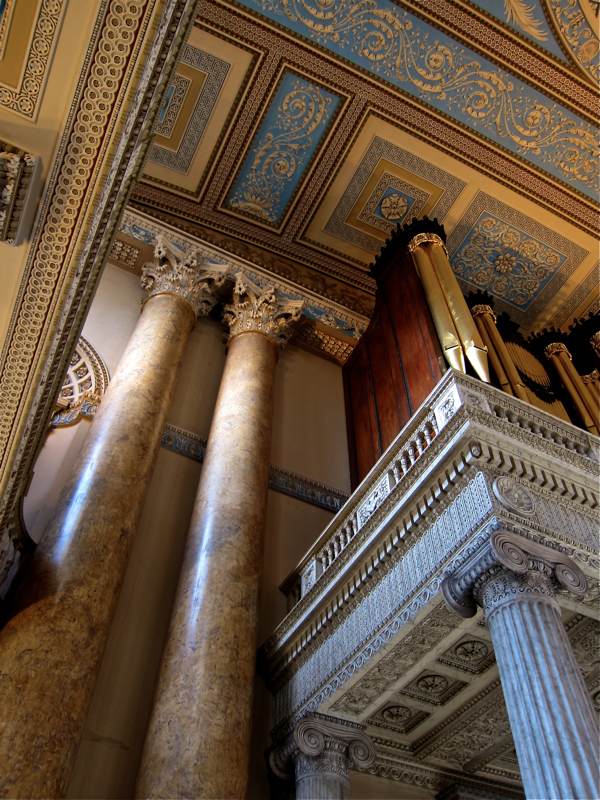
Plasterwork by John Papworth
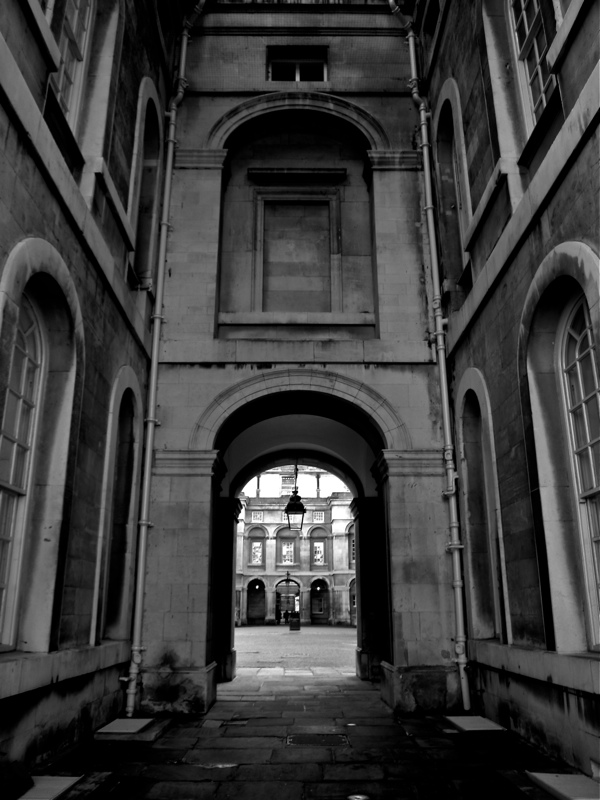
Queen Anne Court

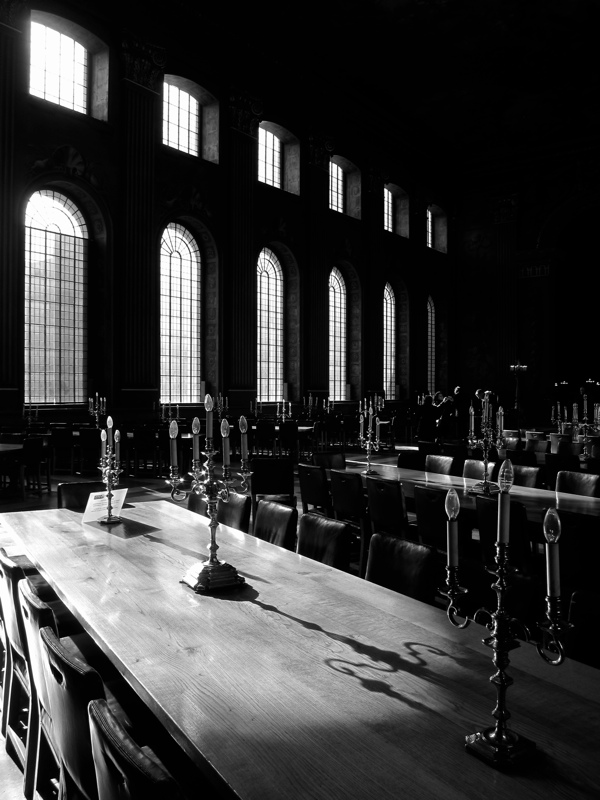
In the Painted Hall
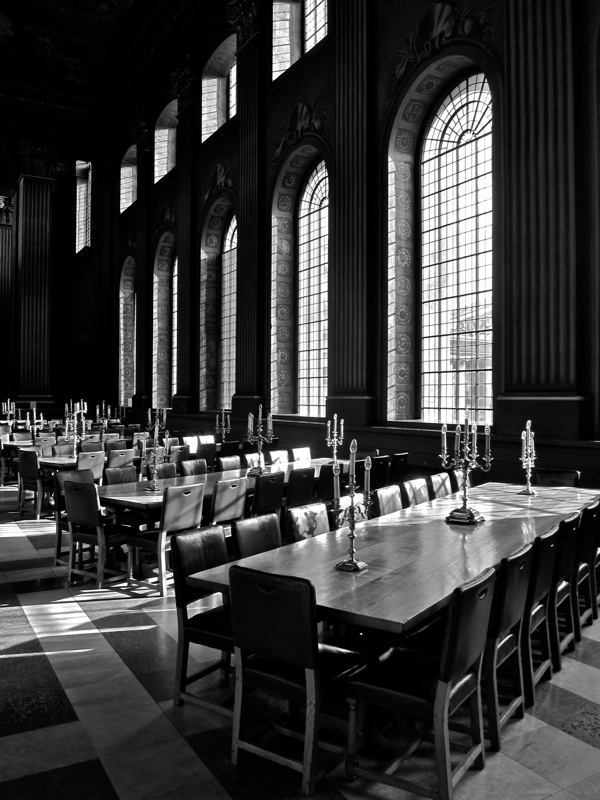
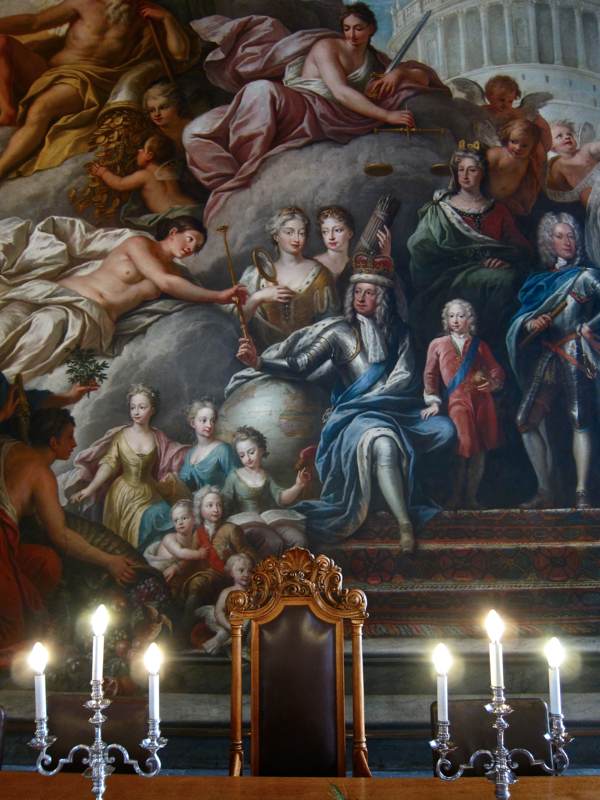
Begun in 1708, Sir James Thornhill’s murals in the Painted Hall took nineteen years to complete

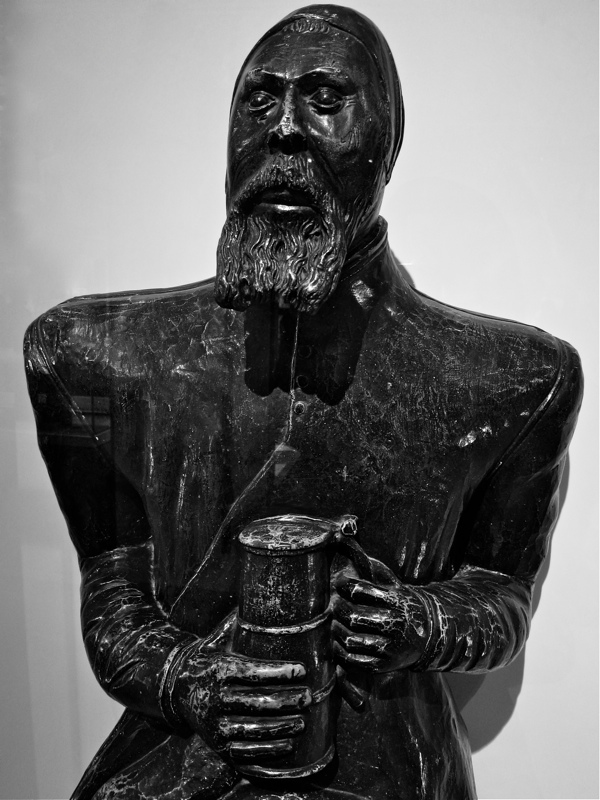
Man with a flagon of beer from Henry VIII’s Greenwich Palace
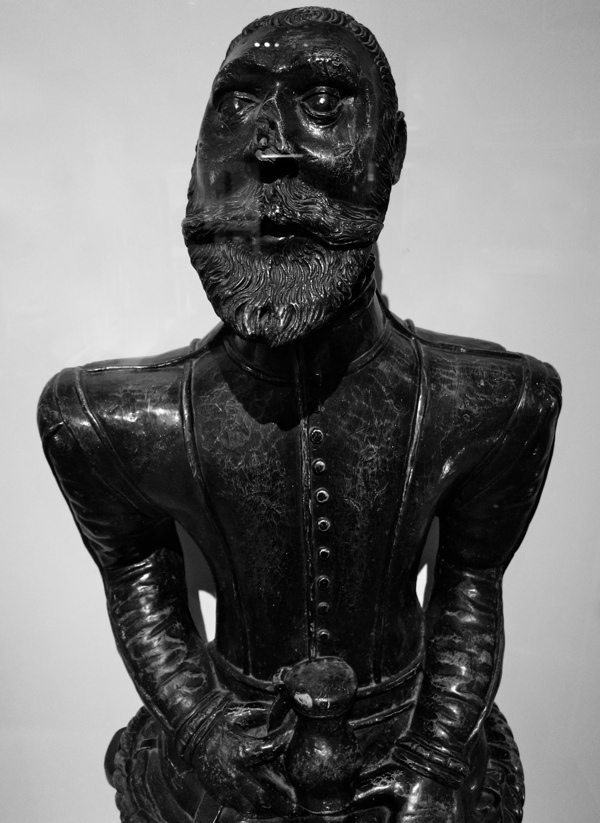
Man with a flask of gin from Henry VIII’s Greenwich Palace
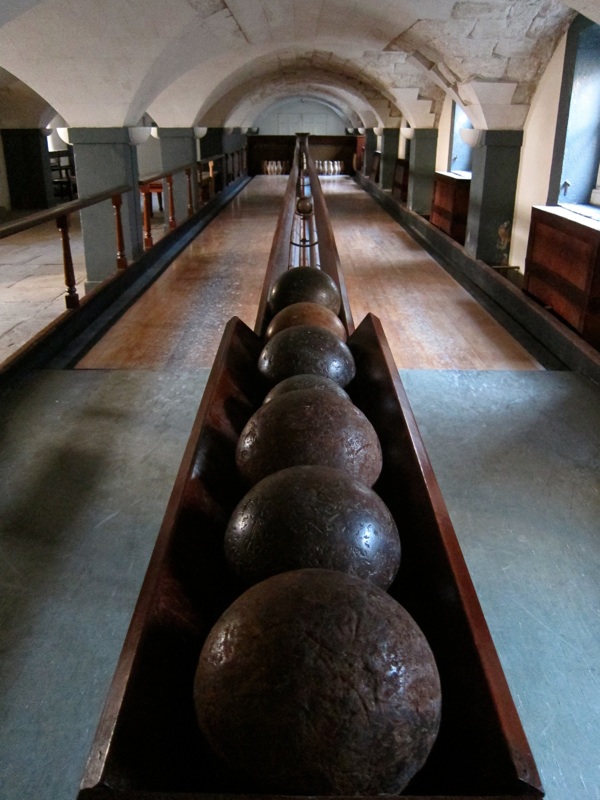
The Skittles Alley of the eighteen-sixties, where practice cannon balls serve as bowling balls
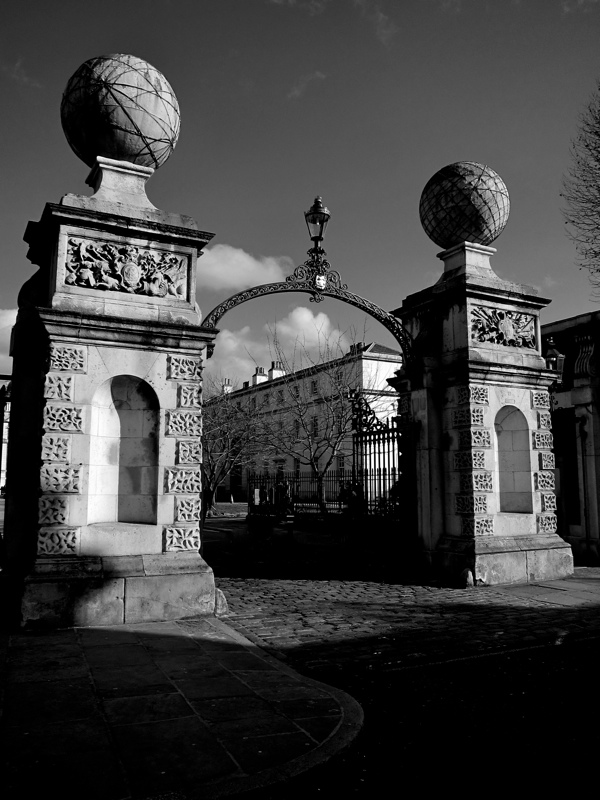
Entrance to the Old Royal Naval College
The Old Royal Naval College, Greenwich, is open daily 11:00 – 5:00 Admission Free
Geoff Perrior, Photographer
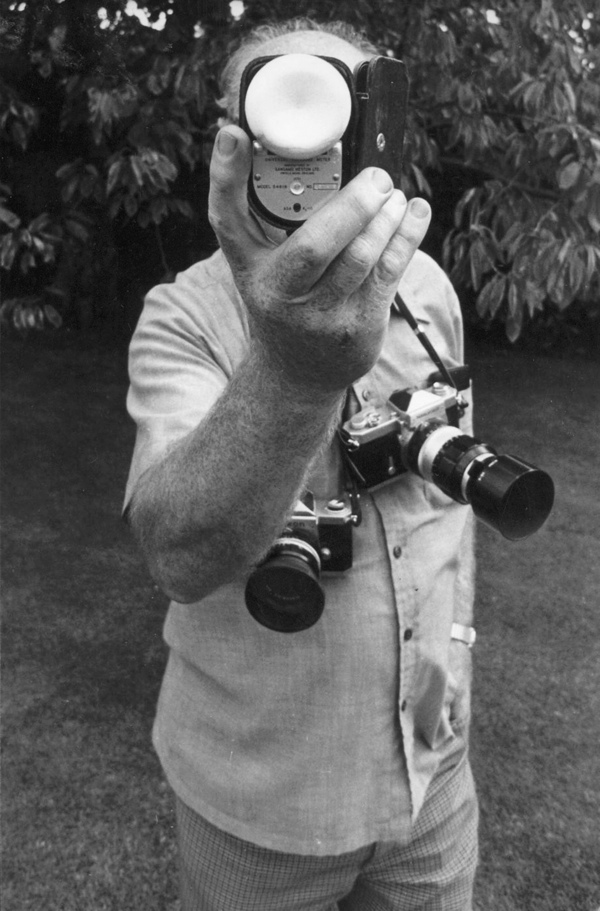
Geoff Perrior
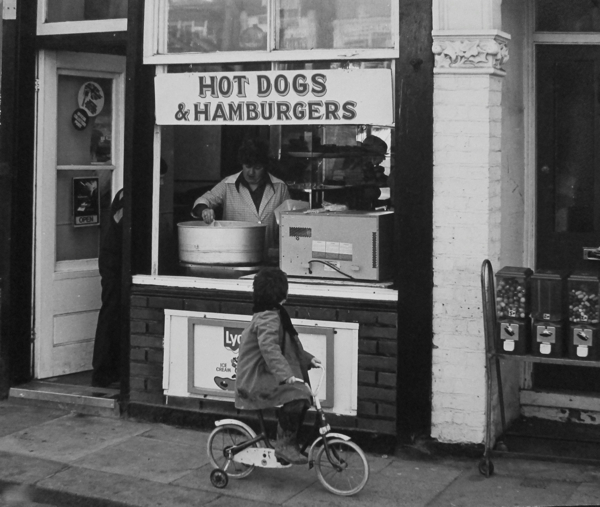
This small cache of Geoff Perrior’s photographs of Spitalfields taken in the nineteen-seventies was deposited recently at the Bishopsgate Institute Library by his widow Betty Perrior. Fascinated to learn more of the man behind these pictures, I spoke with Betty yesterday in Brentwood where she and Geoff lived happily for the last forty-two years.
“He was a character,” she recalled fondly, “he belonged to eight different societies and he was a member of the Brentwood Photography Club for fifty-three years, becoming Secretary and then President.”
“He started off with a little Voightlander camera when he was a youngster, but he graduated to a Canon and eventually a Nikon. He said to me, ‘I can afford the body of the Canon and I’ll buy a lens and pay for it over a year.’ Then he sold it and bought a Nikon. He only switched to digital reluctantly because he thought it was rubbish, yet he came round to it in the end. For twenty years, we did all our own developing in black and white.
Geoff & I met at WH Smith. I had worked at WH Smith in Salisbury for twelve years before I went on a staff training course at Hambleden House in Kensington and Geoff was there. We just clicked. That was in July, we were engaged in October and married a year later. I was forty-four and we were both devoted, my only regret is that we had just forty-two years together.
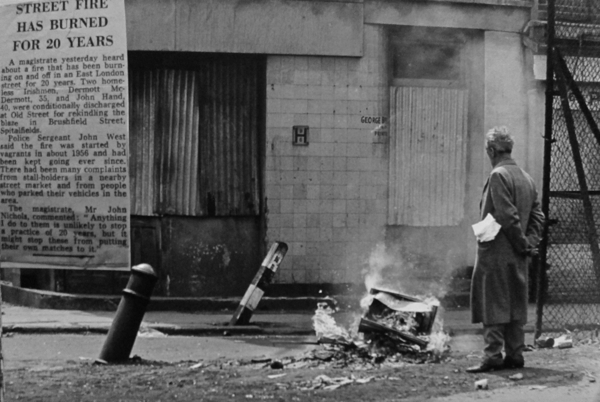
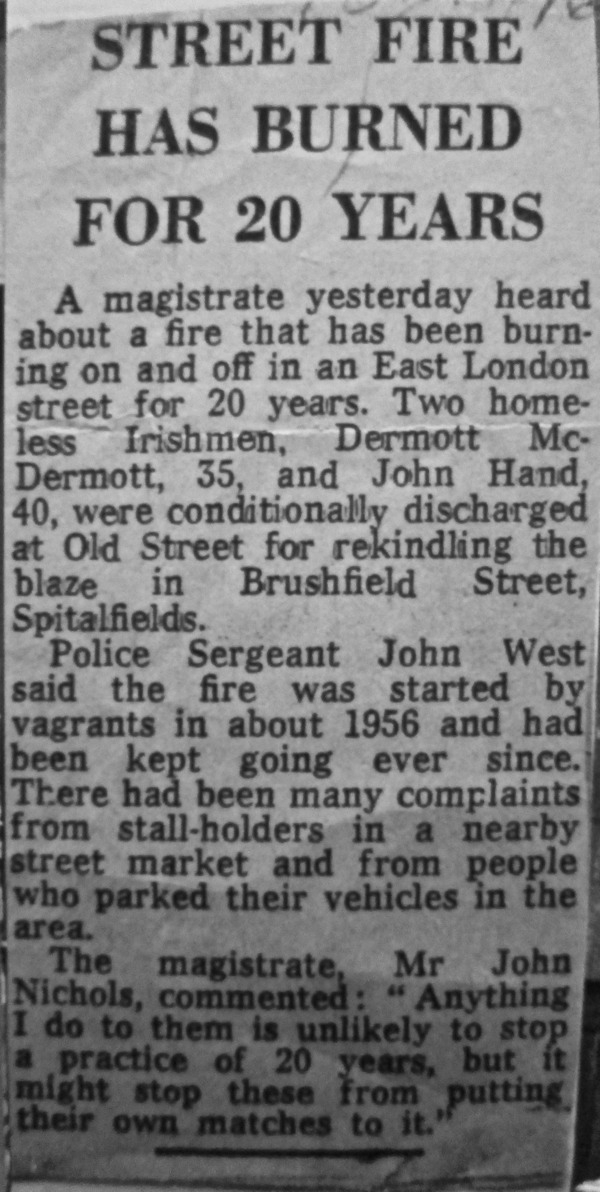
Geoff worked for WH Smith for thirty-seven years and for thirty years he was Newspaper Manager at Liverpool St Station, but he never took photographs in the station because it was private property. He used to do the photography after he had done the early shift. He got up at three-thirty in the morning to go to work and he finished at midday. Then he went down to Spitalfields. One of the chaps by the bonfire called out to him, ‘I love this life!’ and, one day, Geoffrey was about to take out ten pounds from his wallet and give it to one of them, when the vicar came by and said, ‘Don’t do that, they’ll only spend it on meths – buy him a dozen buns instead.’
Geoff had a rapport with anybody and everybody, and more than two hundred people turned up to his funeral. I have given most of Geoff’s pictures away to charity shops and they always sell really quickly, I have just kept a selection of favourites for myself – to remind me of him.”
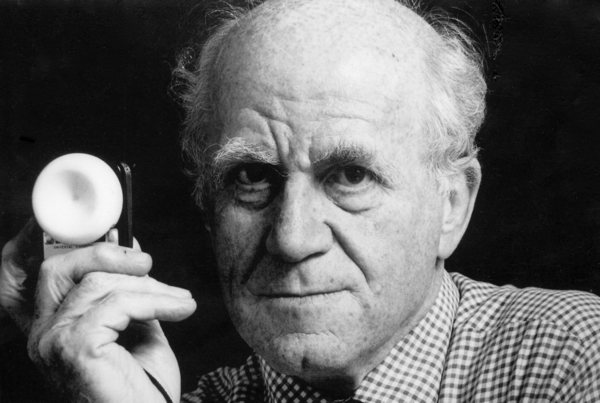
Geoff Perrior
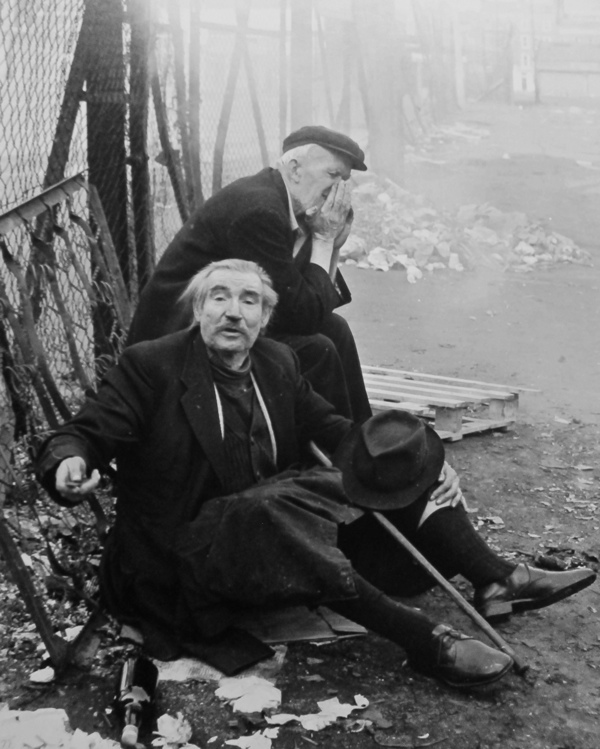
Sitting by the bonfire in Brushfield St
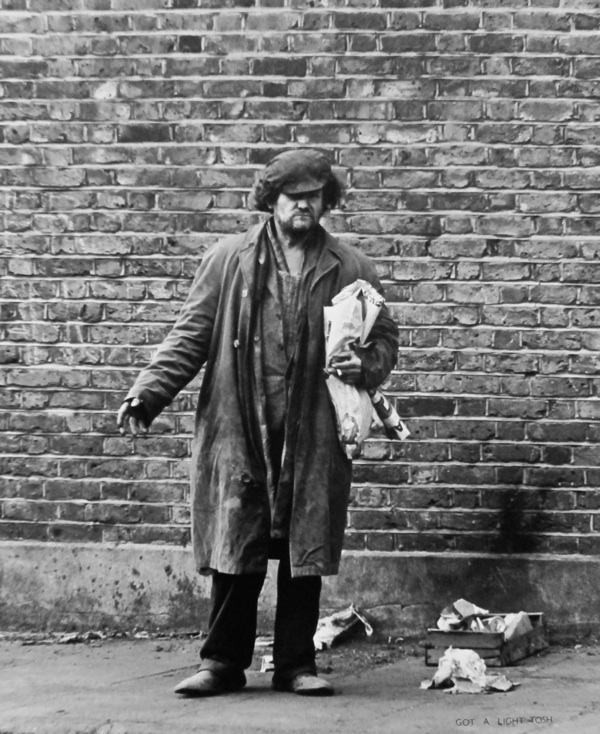
“Got a light, Tosh?”
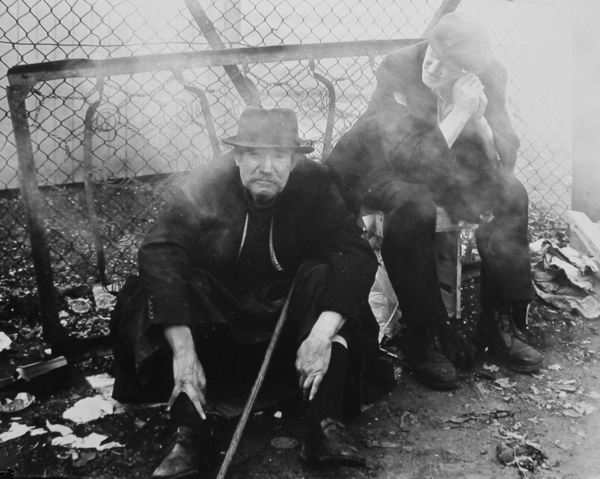
In Brushfield St
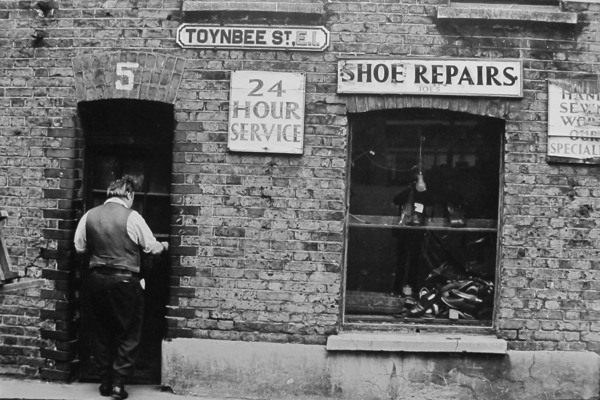
In Toynbee St
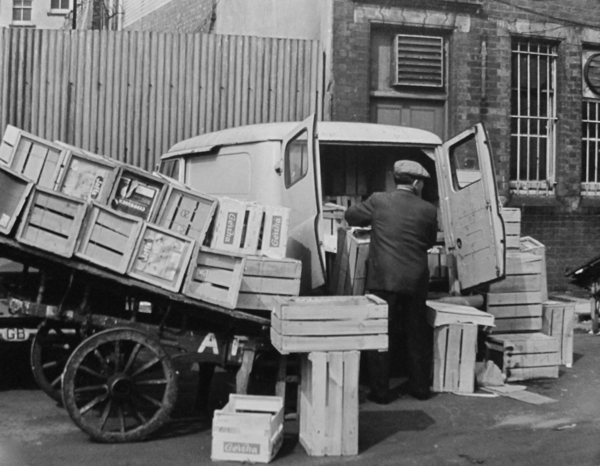
Spitalfields Market porter
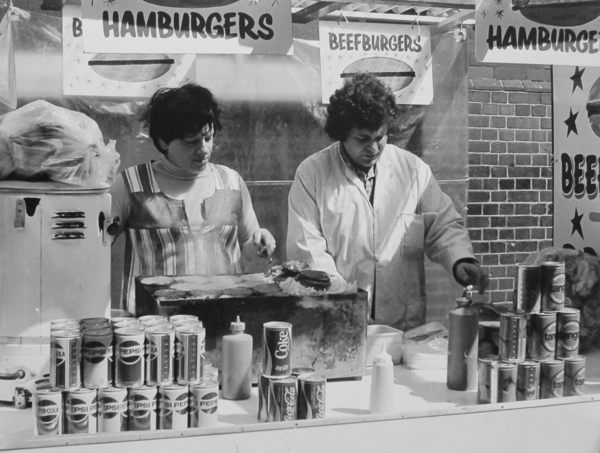
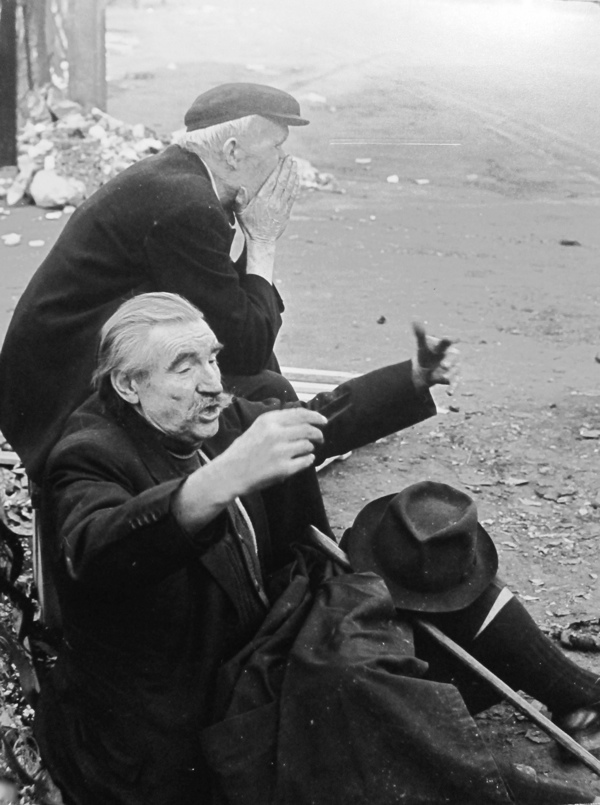
In Brushfield St
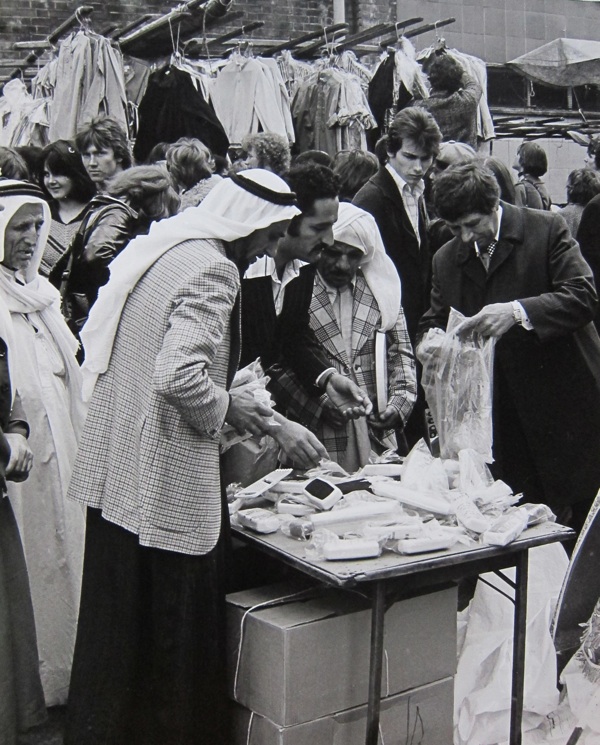
In Petticoat Lane
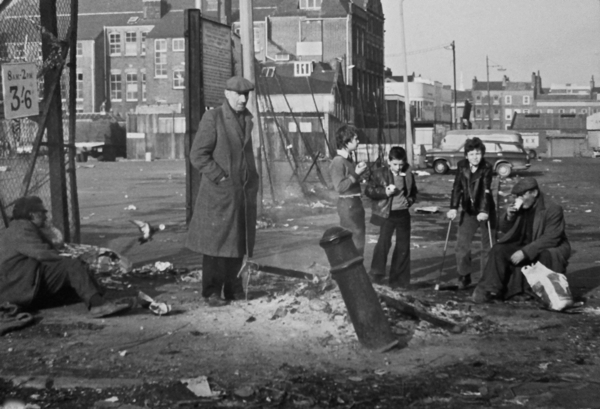
In Brushfield St
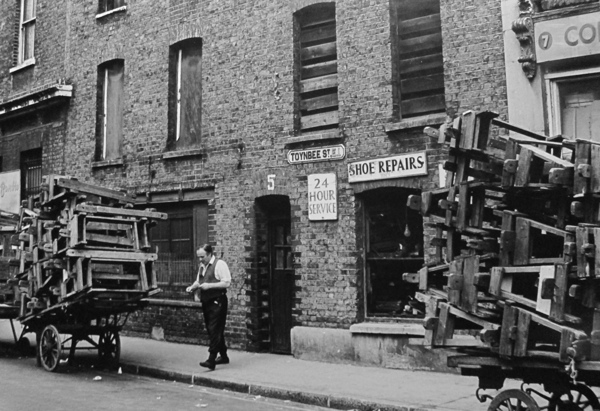
In Toynbee St
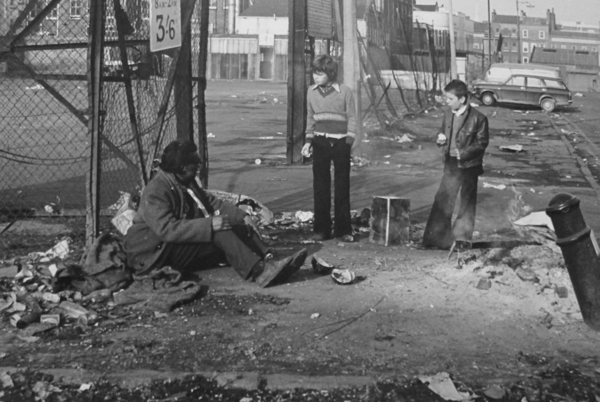
In Brushfield St
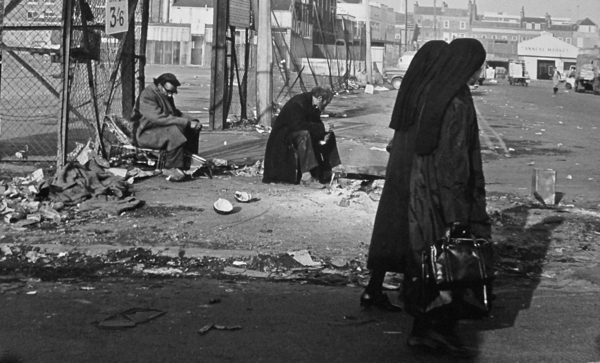
In Brushfield St
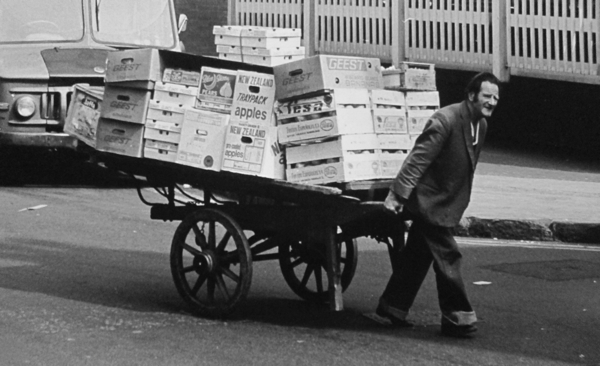
Spitalfields market porter in Crispin St
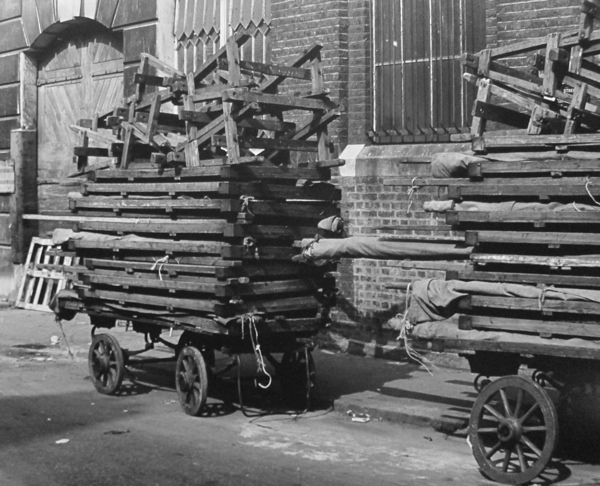
In Brune St
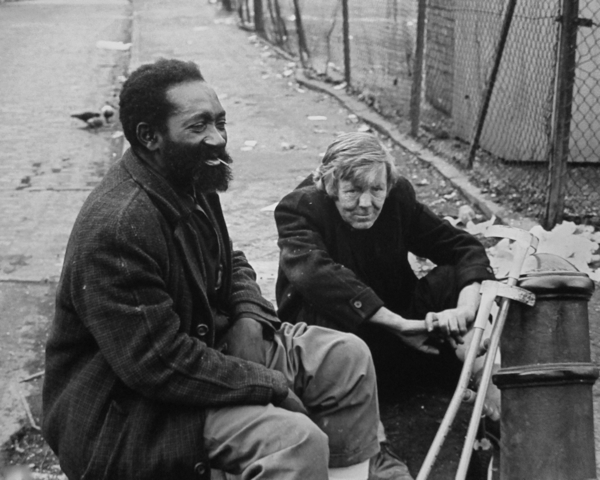
In Brushfield St
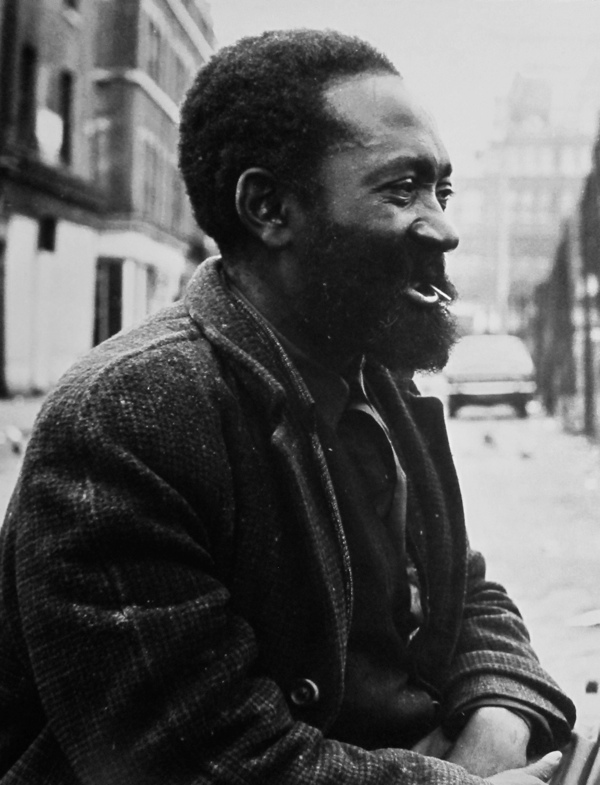
In Brushfield St
Images courtesy of Bishopsgate Institute
You might also like to take a look at
Dennis Anthony’s Petticoat Lane
Adam Dant’s Map Of Budge Row

Click on the map to enlarge and learn about Budge Row
It seems almost unimaginable now to envisage the City of London when it was densely populated and packed with thriving small trades, before the residents departed and the financial industry took over to deliver the Square Mile as we know it today. Yet London’s most creative cartographer, Adam Dant’s, new map of Budge Row is a just such an endeavour – by conjuring the multifarious life of one street in the City which no longer exists.
“I chose Budge Row as, like Bucklersbury and Walbrook, it has its roots in the birth of mercantile London, plus it was the site of the worship place of retired Roman soldiers known as the Mithraeum,” Adam admitted to me, “but if you visit it at this moment there is just a huge hole in ground – though I understand the new development plans to reinstate the street diagonally through the building as an indoor shopping causeway.”
Yesterday, Adam & I climbed up onto the roof of Number One Poultry to look down upon the site of the former Budge Row, now engulfed by the City’s largest building site, and wondered at the lost industry and culture of two thousand years in a single thoroughfare. “I think there’s a moment of recognition for Londoners, when they pass by and look into these huge excavations, of their part in a general urban continuum,” said Adam, thinking out loud, as we both peered down into the construction site.

Adam Dant in the City of London with the site of former Budge Row in the background
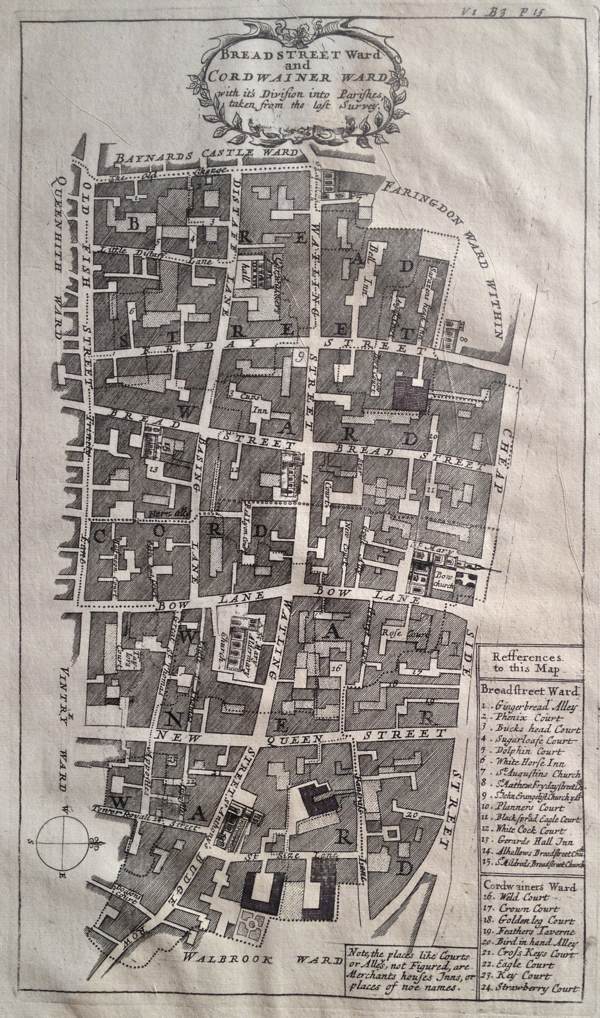
Budge Row is to be seen in the bottom left corner of this 1720 map of the City
Map copyright © Adam Dant
Bowing to popular demand, Adam Dant has agreed to produce a limited edition of his MAP OF THE COFFEE HOUSES. If you are interested to acquire a copy, email adamdant@googlemail.com
Dan Jones’ Paintings
Celebrating Dan Jones’ new exhibition The Singing Playground which opens tonight at Rich Mix in the Bethnal Green Rd, here is a gallery of his work spanning the last forty years.
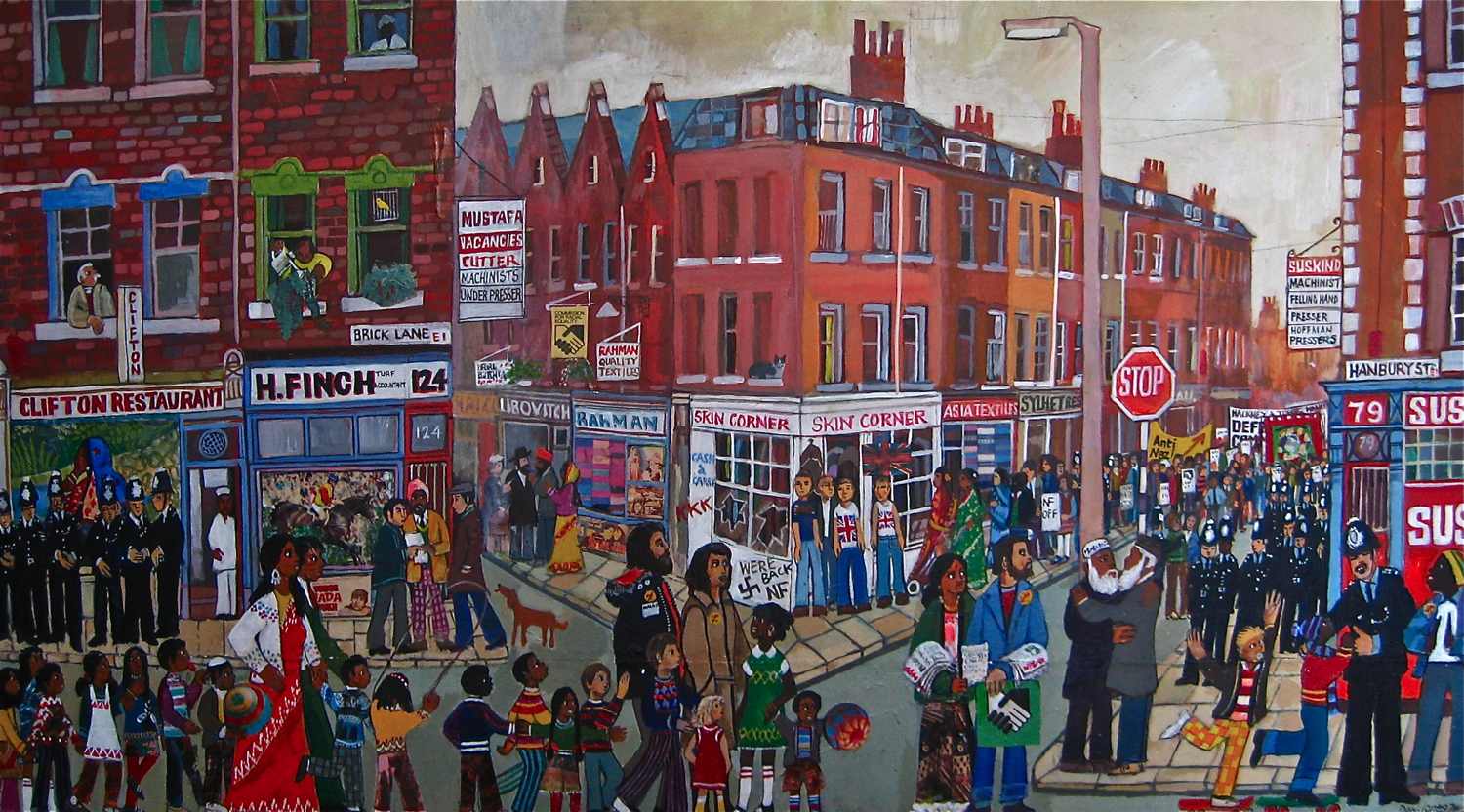
Click to enlarge Dan Jones’ painting of Brick Lane 1978
In Dan Jones’ exuberant and playful painting, Brick Lane is a stage upon which an epic political drama is enacted. From this vantage point at the corner of the Truman Brewery, we see an Anti-Racist demonstration advancing up Brick Lane, while a bunch of skinheads stand at the junction with Hanbury St outside the fortuitously named “Skin Corner.” Meanwhile, a policeman stops a black boy on the opposite corner in front of a partially visible sign reading as “Sus,” in reference to the “Sus” law that permitted police to stop and search anyone on suspicion, a law repealed in 1981. And in the foreground of all this action, life goes on – two senior Bengali men embrace, as Dan and his family arrive to join the march, while bystanders of different creeds and colours chat together. More than thirty years since Dan painted this scene, many of the premises on Brick Lane have changed hands, but recent attempted marches by the English Defence League bring the central drama of this picture back into the present tense.
Dan Jones’ mother was the artist Pearl Binder, who came to live in Whitechapel in the nineteen twenties, and since 1967, Dan has lived down in Cable St where he brought up his family in an old terraced house next to the Crown & Dolphin. A prolific painter, Dan has creating many panoramic works – often of political scenes, such as you see here, as well as smaller pictures produced to illustrate two books of Nursery Rhymes, “Inky, Pinky, Ponky” and “Mother Goose comes to Cable St,” both published in the eighties. In recent years, he has undertaken a series of large playground murals portraying school children and the infinite variety of their games and rhymes.
Employed at first in youth work in the Cable St area, and subsequently involved in social work with immigrant families, Dan has been a popular figure in the East End for many years, and his canvases are crammed with affectionate portraits of hundreds of the people that he has come to know through his work and political campaigning. Today Dan works for Amnesty International, and continues to paint and to pursue his lifelong passion for collecting rhymes.
There is a highly personal vision of the East End manifest in Dan Jones’ paintings, which captivate me with the quality of their intricate detail and tender observation. When Dan showed me his work, he pointed out the names of all the people portrayed and told me the story behind every picture. Like the Pipe & Drum Band in Wapping painted by Dan in 1974 – to give but one example – which had been going since the eighteen eighties using the same sheet music. Their performances were a living fossil of the music of those days, until a row closed them down in 1980. “They were good – good flute players and renowned as boxers,” Dan informed me respectfully.

The End of Club Row, 1983. The animal market held in Sclater St and Club Row was closed after protests by Animal Rights’ Campaigners.
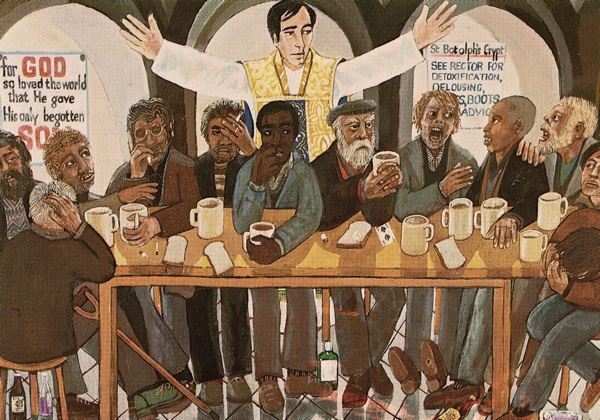
Last Supper at St Botolph’s, Aldgate. Rev Malcolm Johnson preaches to the homeless at Easter 1982.

Pipe and Drum Band in Tent St, Wapping, 1974.
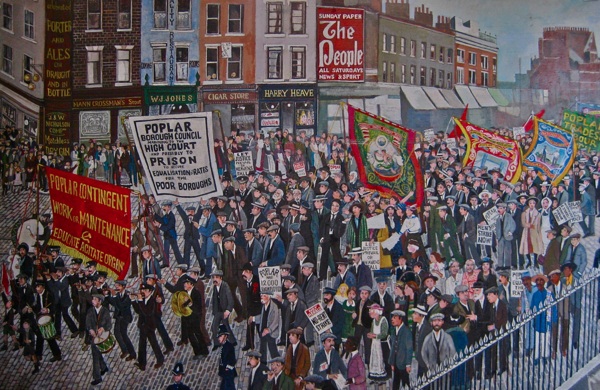
The Poplar Rates Rebellion of 1921

Parade on the the sixtieth anniversary of the Battle of Cable St, 1996
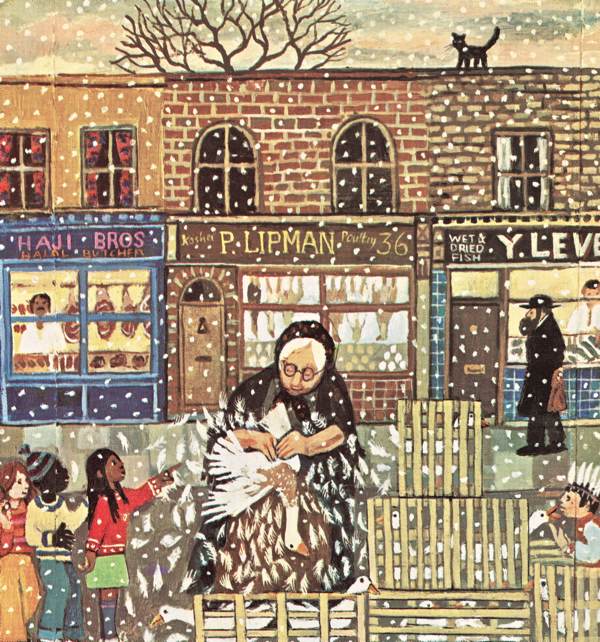
Live poultry sold in Hessel St.

Fishing at Limehouse Basin.

Tubby Isaacs in Goulston St, Petticoat Lane.

Palaseum Cinema in Commercial Rd

A Teddy Bear rampages outside the Whitechapel Bell Foundry.
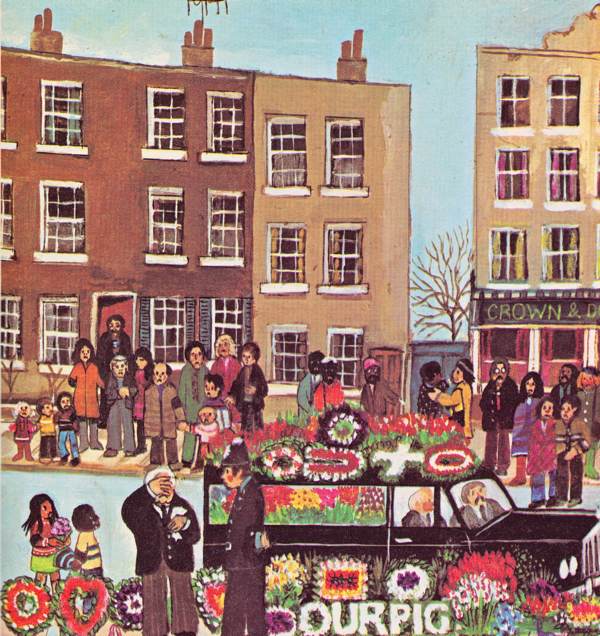
Funeral of a pig in Cable St, Dan Jones and his family come out of their house to watch.

Christ Church School, Brick Lane

Liverpool St Station
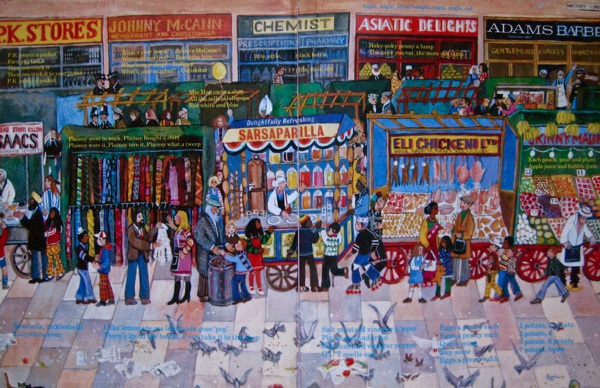
Watney Market
Paintings copyright © Dan Jones
Read my original profile of Dan Jones, Rhyme Collector
and Dan Jones’ mother Pearl Binder, Artist & Writer
Dan Jones, Rhyme Collector
In anticipation of his new exhibition The Singing Playground which opens at Rich Mix this Thursday, 6th February, here is my profile of Dan Jones, Rhyme Collector extrordinaire

Dan Jones
This is the amiable Dan Jones who has lived down in Cable St since 1967 and has made it his business to collect children’s rhymes, both here and all over the world since 1948. Dan has many hundreds in transcripts and recordings that are slowly yet inevitably converging into a book of around a thousand rhymes that he has been working on for some years entitled The Singing Playground which will be his magnum opus. He explained that the litany of classic nursery rhymes which adults teach children have barely altered since James Halliwell’s collection The Nursery Rhymes of England of 1842, when they were already old. In contrast, the rhymes composed and passed on by children are constantly changing and it is these that form the subject of Dan’s study.
When you enter the bright red front door of his house in Cable St, you can barely get through the passage because of a huge mural painted by Dan of the playground of St Paul’s School, Wellclose Sq, that is about ten feet tall and twenty feet long. Painted on wooden panels, it is suspended from the wall and jutting forward, which puts you directly at the eye level of many of the children in the painting and, thus confronted, you see that all the figures are surrounded by rhymes. The effect is magical and one reminiscent of Breughel’s Children’s Games.
As well as collecting rhymes, Dan is a painter who creates affectionately observed murals of children in school playgrounds, all painted in rich natural hues and with such levity and appreciation for the exuberant idiosyncrasy of childhood that I was immediately beguiled. I have always loved the joyful sound of the children playing in the school playground that I can hear from my house, but Dan has found a method to explore and celebrate the specific quality of this intriguing secret world through his scholarship and paintings.
Once you get past the mural, you find yourself in the parlour lined with more paintings. Some even protrude from behind the comfortable armchairs, which are arranged in a horseshoe, like an old-fashioned doctor’s surgery, indicating that Dan lives a very sociable existence and that this room has been the location for innumerable happy gatherings over the last forty years he and his wife, Denise, have lived here. There are bookshelves brimming over with all manner of books devoted to art and social history, and children’s books on the coffee table for the amusement of Dan’s grandchildren, who wander in and out as we are talking.
Rhymes spill out of Dan Jones endlessly and I could have sat all day hearing the fascinating stories of the origins of familiar examples and all their remarkable different versions over time and in different languages. Dan has a paradoxical quality of seeming both young and old at the same time. While displaying a fine white beard and resembling a patriarch in a painting by William Blake, he also possesses the gentle nature and spontaneous enthusiasm of youth. I can understand why children choose to line up in the playground to tell Dan their rhymes, as they do when he arrives in schools, and why old people too, when Dan puts on them on the spot asking “What rhymes do you remember from your youth?”, would summon whole canons of verse from the depths of their memories for him.
The heartening news from the playground that Dan has to report is that the culture of rhymes is alive and kicking, in spite of all the distractions of the modern age. The endless process of repetition and reinvention goes on with ceaseless vigour. Most rhymes accompany action and melody, which means that while the words may change, other elements – especially the melodies – can remain constant over centuries or across continents in different languages and cultures, tracing the historical movements of peoples.
Perhaps the most astounding example Dan gave me was Ching, chang, choller (paper, scissors and stone), a game used to select a random winner or loser, which was depicted in the tomb of a Pharoah four thousand years ago and of which there are versions recorded in ancient Rome, China, Japan, Mongolia, Chile, Korea,Hungary, Sweden, Italy, France and USA. Dan recorded it being played at Columbia Road Primary School. By contrast, I was especially delighted to Learn that Twinkle, Twinkle, Little Star was written by Jane and Ann Taylor in Islington in 1806 and to discover the Bengali version recently recorded by Dan at Bangabandhu School in Bethnal Green.
Sometimes, there is a plangent history to a rhyme, of which the children who sing it are unaware. Dan has traced the path of stone-passing games that were carried by slave children in the eighteenth century from West Africa to the Caribbean and then, two centuries later, brought to London by immigrants from the West Indies. Meanwhile, new rhymes constantly arise, as Dan explained, “Some burst forth just in one particular school playground to blossom like a spring flower for a few weeks and then vanish completely.”
Living in Spitalfields, surrounded by old buildings and layers of history, I am always fascinated to consider who has been here before. You have read the tales of the past I have collected from old people, but Dan’s work reveals an awe-inspiring historical continuum of much greater age. There is a compelling poetry to the notion that the oldest thing here could be the elusive and apparently ephemeral games and rhymes that the children are playing in the playground. I love the idea that these joyful rhymes, mostly carried and passed on by girls between the ages of eight and twelve – marginal to the formal culture of society – have survived, outliving everything else, wars and migration of people notwithstanding.
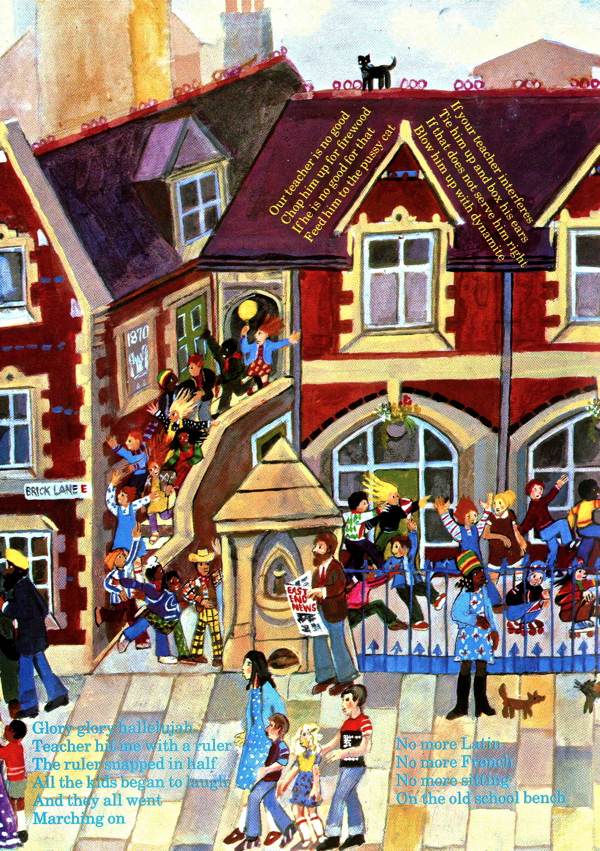
Dan’s wife Denise and his children, Davey, Polly and Sam walk in the foreground of his painting of Christ Church School, Brick Lane in 1982, as reproduced in his book Inky, Pinky, Ponky
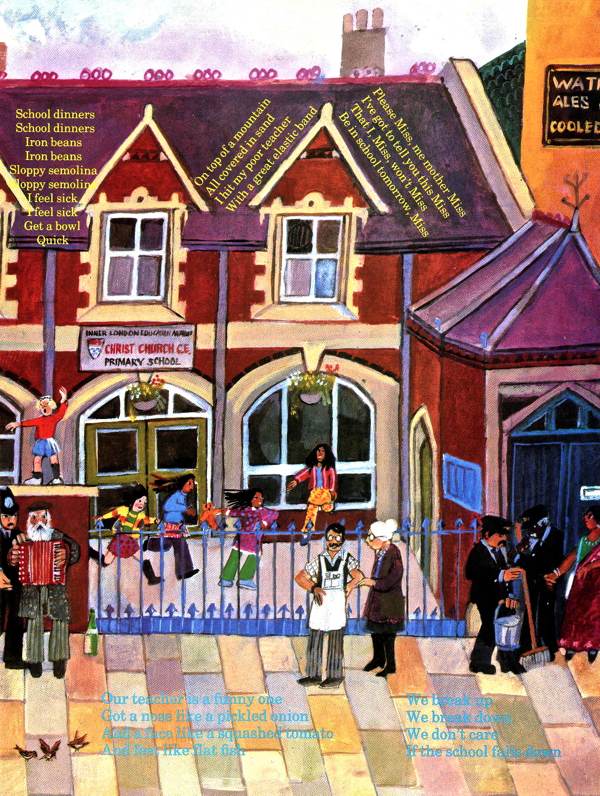

Click on the image to enlarge Dan Jones’ painting of St Paul’s School Wellclose Sq, 1977
The Singing Playground an interactive work commissioned by The Museum of Childhood where you can to listen to Dan’s Nursery Rhyme recordings
You may also like to read about
So Long, Samuel House
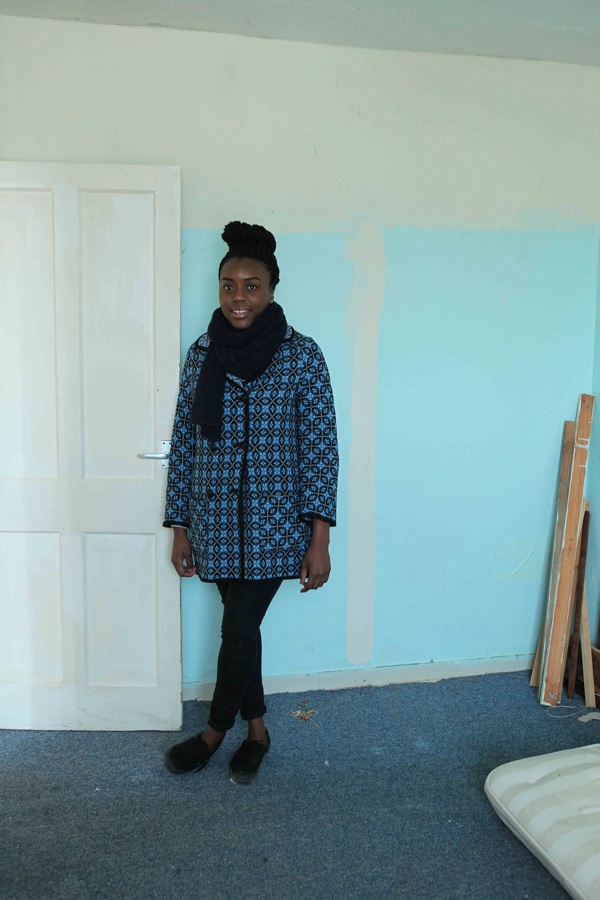
Elam Forrester says goodbye to Samuel House
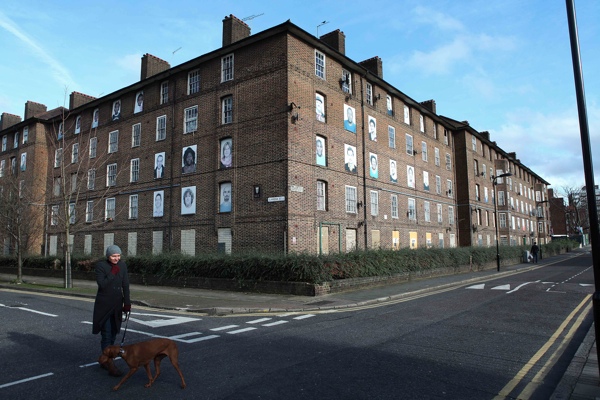
Once in Haggerston, there were Lovelace, Pamela, Lowther and Harlowe – handsome, robustly-constructed thirties housing developments, named after characters in Samuel Richardson’s didactic novels of eighteenth century London. The literary derivation of their names offered a cultural reference in tune with the buildings’ neo-Georgian architecture and promised a future based upon ideals of social enlightenment. Now the final tenants are moving out prior to the imminent demolition of Samuel House – named after Samuel Richardson himself – the only block still standing on the Haggerston Estate, and so Contributing Photographer Colin O’Brien & I went along to meet the last residents as they said farewell to their former homes.
Elam Forrester moved out with her family last week and returned yesterday to hand over the keys, but first she showed us around the empty flat. “I moved in here in 1995, when I was five, and ever since then it was supposed to be temporary,” she revealed, as we surveyed the empty rooms permeated with an unmistakeable smell of damp and blemished with a sinister mould. “When we moved in it had been a squat and the walls were black,” she recalled, “My mum asked the council if we could have it because it was vacant and we painted it up.”
“I thought I was going to feel sad but I’m not because I’ve spent so long preparing for this move,” she explained, referring to the decades of uncertainty and conflict that have found their outcome in the demolition of the council estate and its replacement by a new development with a mixture of private and social housing. Even though the current buildings could have been refurbished, 75% of the residents voted for the change, encouraged by the complete lack of maintenance and total neglect by the council over recent years, which inspired widespread grief among the occupants. “When I went to the Housing Office to request a repair, the man behind the desk told me my best hope was to take legal action against the council to demand they fulfil their responsibility,” admitted Steve Hart who moved here in 1984, at first squatting a vacant flat in which the lease had lapsed before becoming the legal tenant, “Ever since I arrived, there has been talk of getting us out.”
A deep melancholy prevails over Samuel House today. Now the empty flats have been bricked up and the windows sealed, it resembles some kind of gargantuan mausoleum. Yet the demise of the estate brought the residents together in an unexpected way that manifested a last flowering of the egalitarian spirit in which it had been built. “When we heard that we were finally being moved out, a new sense of community developed here,” Steve told me, “We came together to take joint legal action and get compensation for all the delays.”
Andrea Zimmerman, who moved here in 1997, agreed. “Because I have no family, I have never felt a sense of belonging before and this was the first place I felt at home, in which the older people became like family to me. The interesting thing was that, as people began to leave, those of us left behind became closer. I’ll really miss that feeling.” In collaboration with Lasse Johansson and Tristan Fennel, Andrea took large portraits of the residents which were posted upon the windows of vacant flats, presenting the brave face of Samuel House to the world, and she is now editing a feature-length documentary with David Roberts celebrating the people of Haggerston Estate. “They claim the new development is going to be a diverse community but it has always been everyone from everywhere here,” Andrea assured me, “We had Africans, Caribbeans, Vietnamese, Chinese, Israelis and more, even some East Enders. We had parties and bonfires, and everyone brought a dish from their own country.”
Over time, the decline of the Haggerston Estate attracted a population closer to the novels of Daniel Defoe than Samuel Richardson. “When I came here there was a lot of Irish and Jewish,” recalled Eric Phillip, the oldest tenant at eighty years old, a native of Grenada who came here at twenty and worked as a wood machinist at D.J.Simons in the Hackney Rd. “There were pubs all around and the Irish would drink and be cursing and fighting in the yard,” he remembered fondly. I visited Eric in his new flat just across the yard from Samuel House, where he had not had time yet to hang up his pictures. No stick-in-the-mud, Eric started smoking after the age of sixty. “I got a girlfriend who smoked, so I smoked too,” he bragged,“but my children, they said, ‘Dad, what you doing?’ I said, ‘Things change!’
Yet, from each of my conversations, I drew a sense of regret that Samuel House could not have been restored and reused, and those who had taken good care of their flats and wanted to stay, resented the enforced loss of their homes, voted out by those who had not made the same financial and emotional investment. Even though I encountered a consensus that the replacement flats were better than the decayed estate, I sensed a suspicion that the architecturally enforced hierarchy between tenants and owners in the new scheme will divide the community. It is a distinction manifest in small yet telling details – such as white cookers versus steel cookers, and recessed lighting in the private flats versus hanging bulbs in the social housing.
For the time being, the close bonds which were formed over these recent years of upheaval endure and have permitted the residents to support each other through the transition. “I’m happy here, but I’ll miss the canal,” Eric said to me in conclusion,“You could see people going up and down. It was busy and you could speak to them from your window.”
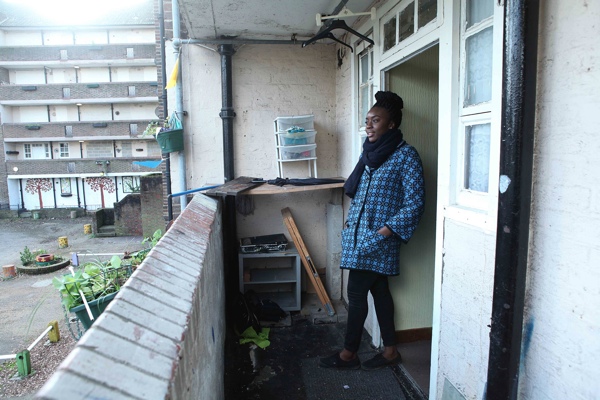
Elam takes a last look at her childhood home
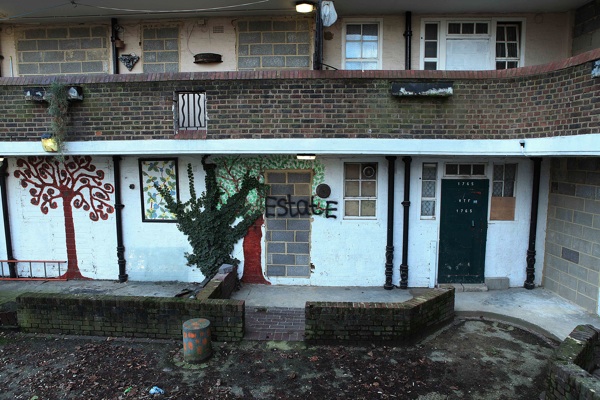
Vacant flats have been bricked up
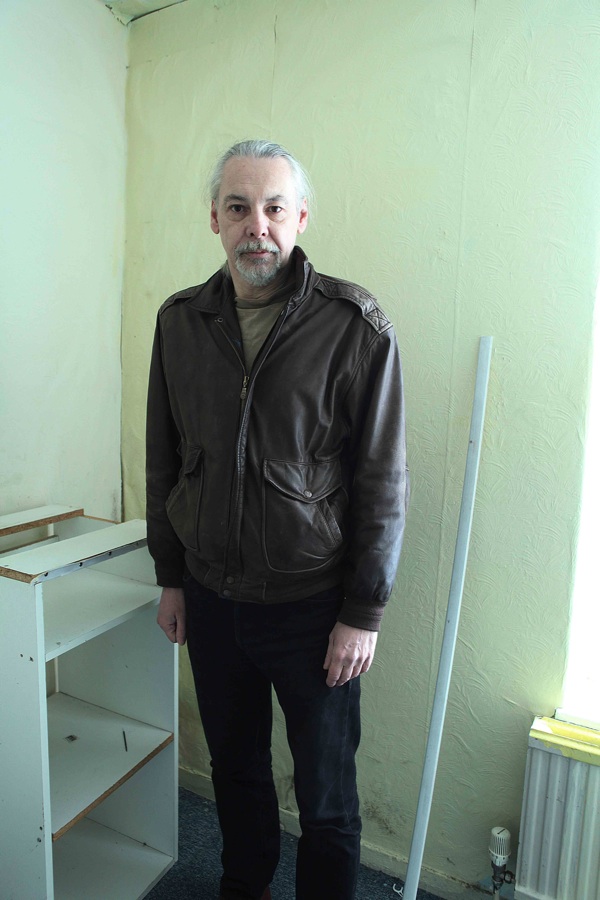
Steve Hart lived at Samuel House since 1984
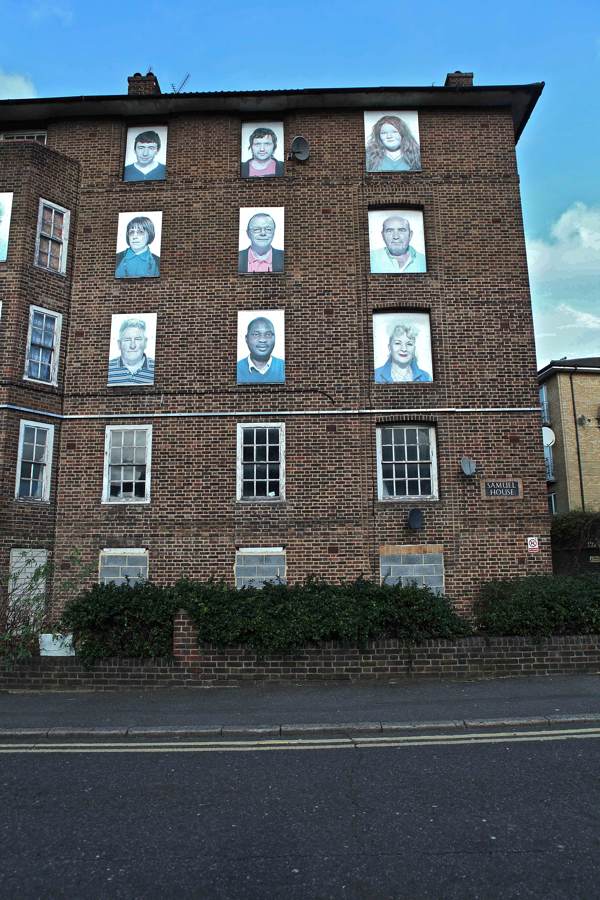
Former residents of Samuel House
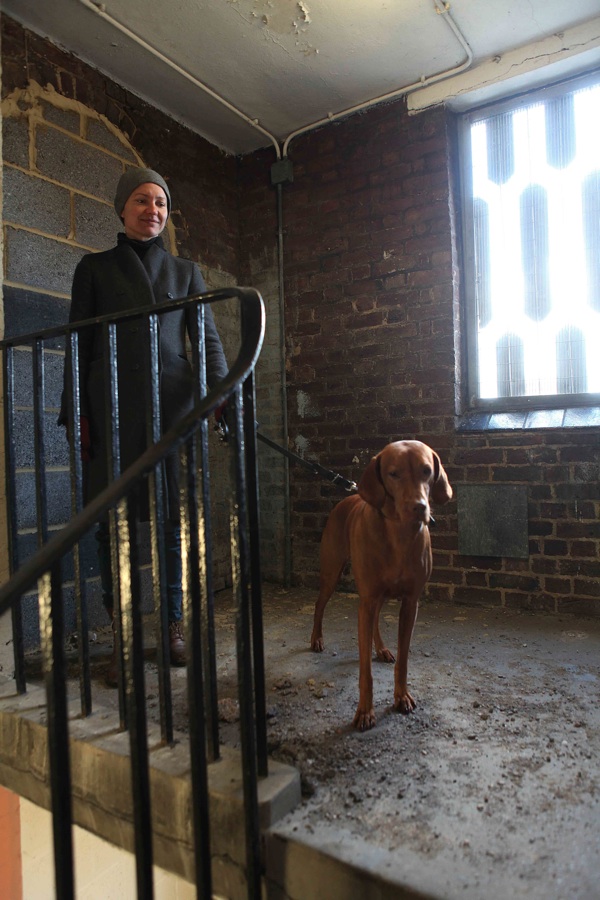
Andrea Zimmerman outside the entrance to the flat where she lived since 1997

Portraits by Andrea Zimmerman, Lasse Johansson and Tristan Fennel
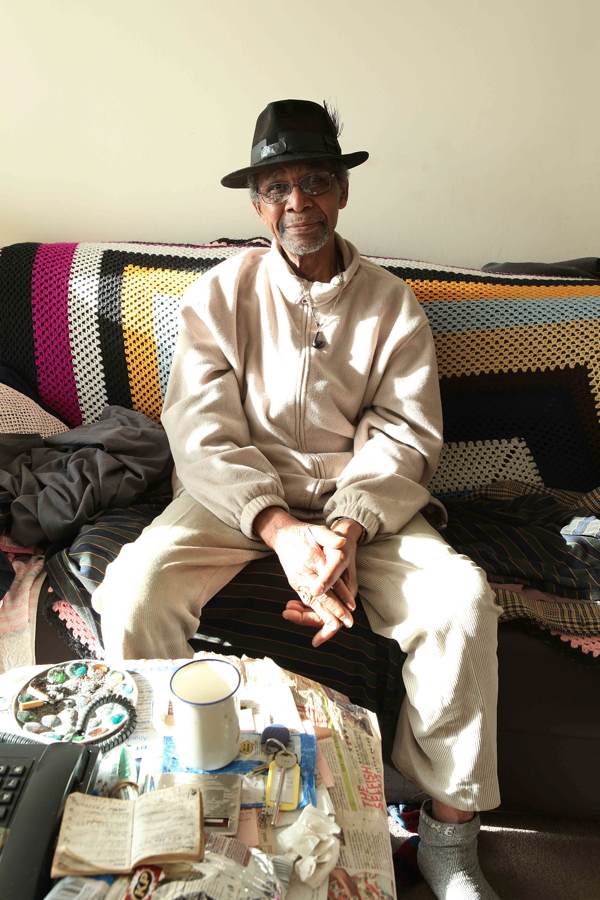
Eric Phillip at home in his new flat, across the yard from Samuel House
Photographs copyright © Colin O’Brien
You may also like to read about












